Blog

  • Trump administration considers building baseball park in Grand Teton National Park

    Trump administration considers building baseball park in Grand Teton National Park

    Major League Baseball has approached the Trump administration about hosting a game at a national park, officials from the White House and MLB confirmed Saturday.

    The administration has scouted locations in Grand Teton National Park to build a baseball park to host an MLB game, according to two other people familiar with the matter, who spoke on the condition of anonymity because they were not authorized to speak to the media.

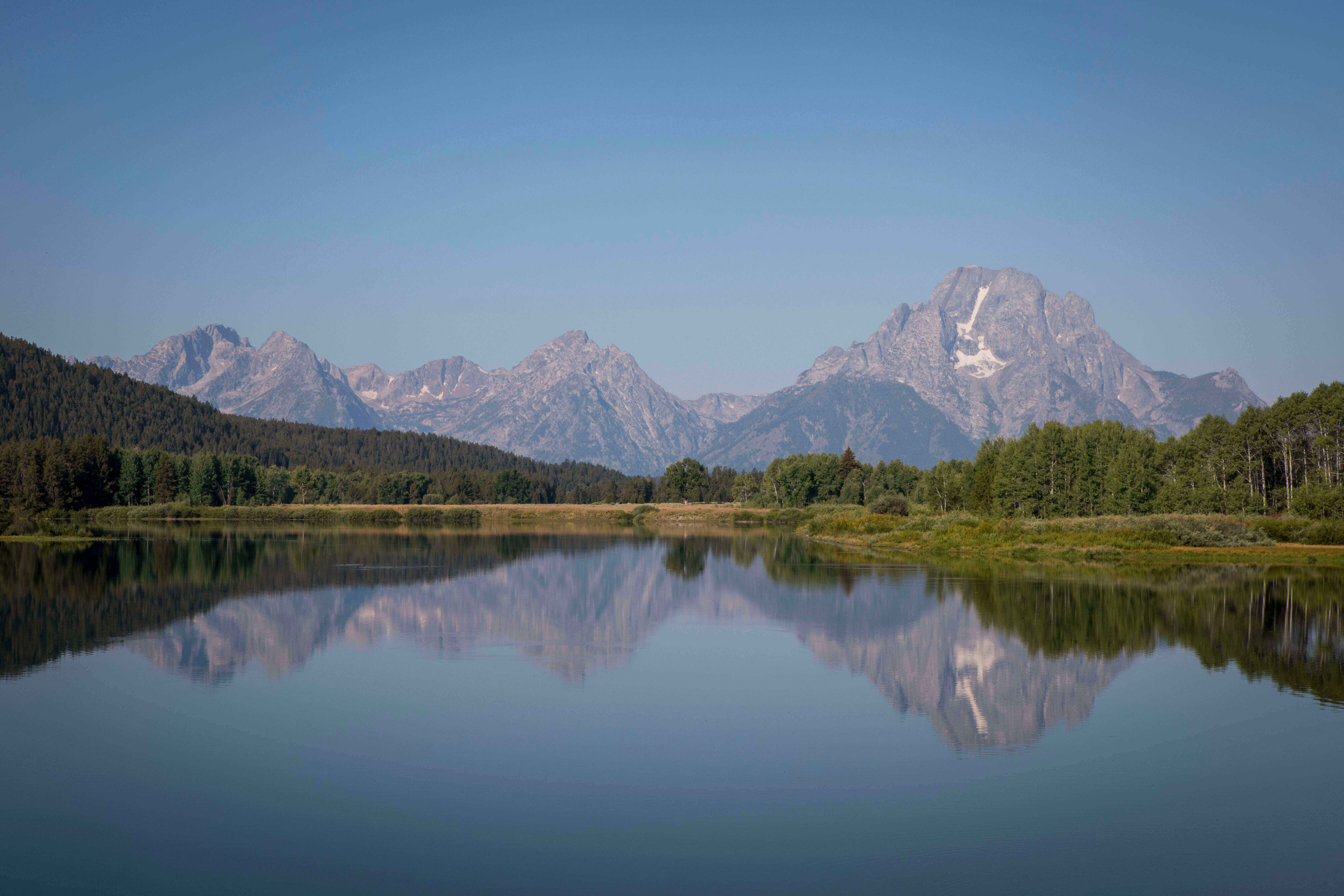
    Grand Teton is the country’s eighth-most-visited national park and is famous for its breathtaking views of the Teton Range of the Rocky Mountains. National parks are among the country’s most protected federal lands, and constructing a sports facility at Grand Teton could set a new precedent for the use of vast national park land in the Western United States.

    An MLB official, who spoke on the condition of anonymity because he was not authorized to speak publicly, said the league approached the administration after the success of MLB’s other stand-alone events, such as the recurring Field of Dreams game in Iowa. The idea of playing a game in a national park is one of several that MLB is exploring.

    The White House said in a statement that MLB asked the administration “if it was possible to host a game at a national park, similar to the Field of Dreams game.”

    “This is not a Presidential directive, nor is it being directed by the White House. It’s also not being driven by the Department of Interior,” the statement said. “Therefore, this is not a White House or Administration priority.”

    The White House said MLB has not made any decisions and the Park Service has not granted any permits. “If the MLB wants to go on site visits of national parks, that is their prerogative,” the statement said.

    It referred additional questions to MLB.

    National Park Service Deputy Director Frank Lands visited Grand Teton National Park in recent days and looked at three potential locations for a baseball park within the park’s boundaries, the two people familiar with the matter said.

    One of the sites that Lands visited is already disturbed land that is not pristine park property, these individuals said. Many parks have “bone yards” or storage areas for materials or equipment not being used.

    Lands, reached by phone Saturday evening, declined to comment.

    After publication of this piece, the White House said in a statement that Lands “has not been actively scouting sites” and was on an official trip to several national parks including Grand Teton, Yellowstone, and Grand Canyon.

    “The MLB happened to schedule their trip to Grand Teton at the same time that Frank was there,” it said. “It is incorrect to say that Frank is actively scouting sites. It is also incorrect to say that the administration is sending officials to scout sites.”

    A prized national park like Grand Teton is not an appropriate place for a baseball park, said Betsy Buffington, Northern Rockies regional director for the National Parks Conservation Association, an advocacy group.

    “It is irreplaceable. There is no other Grand Teton that is home to bears and wolves and bison, elk and pronghorn,” Buffington said in an interview. “So the idea that we would put a baseball stadium in Grand Teton National Park is just — what would the word be? — ludicrous. Crazy. Ridiculous. I mean, I just can’t fathom.”

    Luther Propst, a county commissioner for Teton County, Wyo., who met Lands this week on his visit there, said in an interview that the federal government had not sought county input and that Lands did not mention the issue.

    “Grand Teton National Park is about wild America, wildlife, opportunity for solitude, not for more amusement,” Propst said, calling the proposal for a ballpark “a radical departure from the tradition of national parks.”

    Since assuming office in January 2025, President Donald Trump has taken actions to drastically reshape the National Park Service. His efforts to shrink the government resulted in the Park Service losing a quarter of its staff, which has at times led to closures of some park facilities, fewer tours at national parks, and other disruptions. The president has sought to scrub the Park Service of signs and information related to historic racism, gender discrimination, and Indigenous persecution.

    The administration is also weighing whether to give a sliver of Yosemite National Park to a private developer to build road access to a resort in exchange for land of equal value. Park advocates say that giving up park land for goals other than conservation sets a new and dangerous precedent.

    Starting in 2016, MLB has staged single games at various locations across the country: once at Fort Bragg, in North Carolina; once in Omaha, tied to the College World Series; once at the historic Negro League ballpark, Rickwood Field, in Birmingham, Ala.; once at Bristol Motor Speedway, a NASCAR racetrack in Bristol, Tenn.; three times in Dyersville, Iowa, in the cornfield made famous by the movie Field of Dreams; and annually at Williamsport, Pa., tied to the Little League World Series.

    Most of those were played at permanent facilities, but after the Bristol game, racetrack officials disassembled the stadium and donated some of the materials.

    The Field of Dreams stadium was initially temporary, but the site was eventually expanded to make it permanent.

    The 2027 MLB schedule is set and includes a Field of Dreams game and a Little League Classic game, so no new specialty game can take place before 2028.

  • Tensions run high in Northern Ireland after contentious march blocked from historic flashpoint

    Tensions run high in Northern Ireland after contentious march blocked from historic flashpoint

    LONDON — Tensions ran high in Northern Ireland on Sunday after a contentious parade was blocked from making its way through the town of Portadown by thousands of protesters.

    The demonstrators, many wearing balaclavas, congregated on a street in the town, where many favor unification with the Republic of Ireland. They came after an early hours decision from the High Court in Belfast to give the parade the go-ahead.

    It’s the first time in nearly 30 years that the Orange Order parade has been allowed to go down the Garvaghy Road, which had been a notorious flashpoint between the communities in the years before the Good Friday Agreement of 1998 largely ended the bloodshed in Northern Ireland. During the so-called Troubles, some 3,600 people were killed while some 50,000 were wounded.

    Ending the Troubles meant balancing competing identities in Northern Ireland, which remained in the United Kingdom when the rest of Ireland won independence a century ago. Irish nationalists in the north — most of them Catholic — seek union with the Republic of Ireland, while largely Protestant unionists want to stay part of the U.K.

    Both sides appeared to be adhering to calls from across the political spectrum, including from British Prime Minister Andy Burnham, to avoid stoking tensions further.

    “I am hoping we will bring all of today’s events to a sensible and peaceful conclusion,” said Jon Boutcher, the head of the Police Service of Northern Ireland.

    Boutcher said there had been many “sensible voices” calling for calm which he thought had been “listened to by all parties.”

    Northern Ireland First Minister Michelle O’Neill, who represents Sinn Fein, the party historically linked to the Irish Republican Army, faced criticism for attending the unlicensed protest on the Garvaghy Road to support the local community.

    “She’s the head of an executive and she is prepared to willfully disregard the ruling of our courts, the determination by the statutory body charged with determining parades in Northern Ireland,” said Gavin Robinson, who is the leader of the Democratic Unionist Party, the largest pro-U.K. party in Northern Ireland.

    O’Neill, whose government is made up of a cross-section of Northern Ireland parties as part of the power-sharing agreement within the Good Friday Agreement, defended her actions, saying “the progress of the last 28 years have been brought into question by the actions of the Orange Order and those within political unionism that want to drag us backwards.”

    For days, there had been uncertainty about whether the parade, which celebrates Northern Ireland’s Protestant heritage and links with the U.K., would happen. It was given the final go-ahead at a court hearing concluded at 2:15 a.m. Sunday, a move that prompted the protesters to take to the street.

    The Orange Order is named after William of Orange, a Protestant prince of Holland who defeated the Catholic King James to take over the British throne in the 17th century.

  • Trump now says the Kennedy Center could be deadly. Months ago, it was ‘great.’

    Trump now says the Kennedy Center could be deadly. Months ago, it was ‘great.’

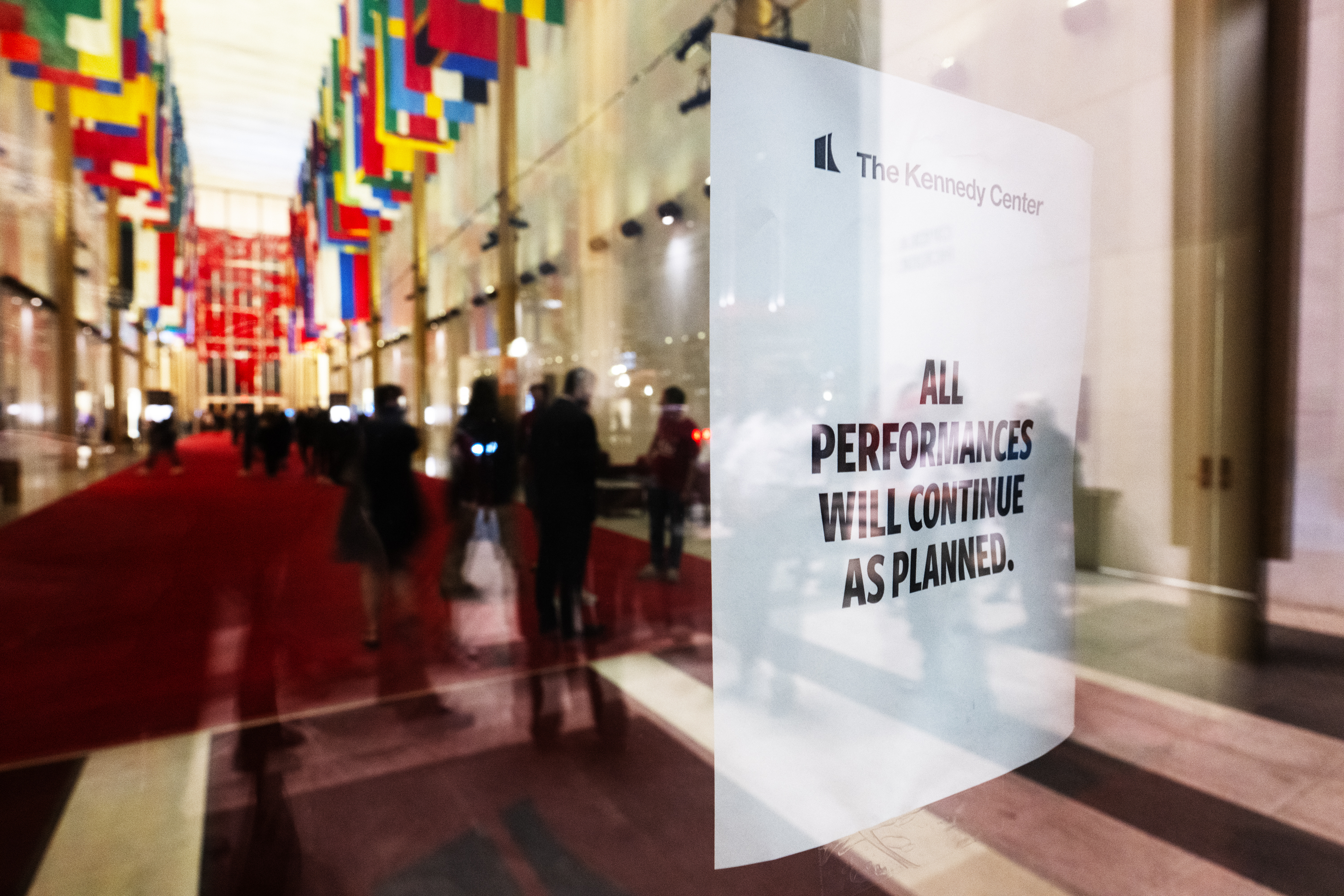
    President Donald Trump stood on the red carpet at the John F. Kennedy Center for the Performing Arts in December and declared his mission to fix the building, to “make it beautiful,” all but accomplished.

    “It was falling apart, and now it’s pretty much back,” Trump told reporters as he stood beside FIFA President Gianni Infantino ahead of the World Cup draw. “We’ve done a really great renovation job on it,” he added, predicting that remaining work would be complete within three or four months.

    By Trump’s telling, it was the culmination of a transformation he had set in motion shortly after returning to office when, vowing to end “woke” programming, he purged the Kennedy Center’s board of trustees and became its new chairperson.

    But less than two months after Trump’s victory declaration — after his name was added to the building, artists balked at performing there and income dropped further — his assessment of the center’s condition soured.

    In late January he hosted a starry red carpet premiere for the documentary Melania but days later announced that the center was so “tired, broken, and dilapidated” that its main building would need to close for two years. The building was “sort of dangerous,” he added that week, though it was deemed safe enough for Trump and the first lady to catch a performance of Chicago about two months later. By the end of April, executive director Matt Floca was testifying about dangerous roofing conditions and electrical equipment that he said posed a risk of fire or, in the worst case, explosion.

    Over the following months, the descriptions grew more dire. Trump said people entering the building were in “serious danger.” The center’s lawyers called it “structurally unsound” and “fundamentally unsafe.” This month, after a section of ceiling plaster fell in the Grand Foyer, Trump described the building as being in a “virtual state of collapse” and said the incident could have “killed” people.

    Yet many of the underlying physical problems cited by management were documented years before Trump took control — when Kennedy Center officials and their engineering consultants were planning to repair the aging building while continuing to stage performances.

    A dozen current and former Kennedy Center staff members interviewed by the Washington Post described a building that needed substantial repairs and routine maintenance but said they had not experienced conditions that led them to believe the building as a whole was unsafe. Some described elevators and escalators that frequently broke down, mice, and aging equipment. But the current and former employees, all of whom spoke on the condition of anonymity because they fear retribution, also recalled repairs being made around performances, often overnight, and said employees were regularly briefed on plans for larger projects.

    Some of those projects stalled out under the new leadership, former staffers said. Before Trump’s takeover, Floca had been hired to oversee improvements including a renovation of the building’s Eisenhower offices. Employees working there were told they would temporarily relocate to office space at the Watergate during construction, according to three former staff members.

    An executive had given the employees potted plants in anticipation of the move because, unlike their Kennedy Center offices, the temporary space had windows. But the renovation was paused after new leadership took control, and the move never happened, the employees said.

    “We all named our plants,” one former staffer said, “and then they slowly died on our desks.”

    On Thursday, a lawyer for whistleblowers told lawmakers about another project they say was cut short under Floca: The center planned $9 million roofing repairs, as part of the $257 million approved for renovations by Congress last year. But Floca canceled a contract that would have moved the project forward, according to the disclosure, which was reported Friday by the New York Times. Other money set aside for waterproofing was instead diverted to painting the center’s columns, the whistleblowers said.

    A Post review of engineering assessments, building plans, congressional budget requests, and court records found that many of the conditions now cited by management — including water intrusion, deteriorating steel and concrete, aging mechanical equipment, and failing plumbing — were identified before Trump’s takeover and incorporated into plans to keep the center open during construction.

    It was as the center’s financial and programming problems mounted, an employee at the Kennedy Center familiar with the renovation planning said, that discussions increasingly turned toward a complete shutdown. The employee said they came to believe an argument seized on by some staff, patrons, and Trump’s critics.

    “The whole reason to close the building is not because it needs to close for renovations,” the employee said. “The whole reason to close it is because we’re not going to be able to secure the artists or the audiences needed to make the economics work.”

    Kennedy Center leaders have since made new reviews that they say show immediate dangers to the public. An engineering assessment this month found widespread corrosion in the building’s heavy soffit panels, which form the underside of the exterior overhang, Floca said Wednesday in a sworn declaration. Separately, after severe storms Sept. 4, plaster fell 60 feet from the Grand Foyer ceiling into a public area below. The center did not rush to fix the damage. A consultant reported seeing the resultant “debris field” more than a week and a half later.

    In a statement, a Kennedy Center spokesperson did not comment on halted repairs but avoided blaming past leaders and said “it is completely understandable that staff felt comfortable” in the building because of their past experience and because they had not seen the most recent assessments or the danger firsthand. “Employees’ firsthand experience matters,” the spokesperson added, “and their work maintaining the building and supporting performances deserves recognition.”

    “The Center believes leadership teams, past and present, share a fundamental commitment to the Kennedy Center’s success and the continuation of its programming,” the spokesperson said. “There may be differences on priorities, timing, or the best way to deliver necessary improvements, but those differences should not be mistaken for differences in a commitment to the institution.”

    The dispute has made the state of the building a high-profile concern — escalated, in a recent fight to restore his name to the building, by Trump’s threats that it could be torn down. On Thursday, House Democrats asked the Government Accountability Office to start its own review of the center’s financial and physical health.

    The Kennedy Center, which opened in 1971, has never been an easy building to maintain.

    Within a few years, its flat roof was plagued with leaks. A parade of thunderstorms in July 1977 sent water through the roof, weakening plaster that fell from the Grand Foyer’s 60-foot-high ceiling. The center, the Post reported at the time, “went on with the show,” moving the Champagne bar and rerouting opera and theater patrons into adjoining halls.

    Officials at the time set up plywood walkways for visitors inside, then closed the roof terrace, restaurants, and, for about five weeks the following summer, the Concert Hall while crews undertook extensive waterproofing and other repairs. Contemporary Post coverage described water seeping into storage rooms, dressing rooms, and the Concert Hall and corroding or damaging parts of the building.

    Leaks remained a persistent problem for decades. The center kept renovating its spaces and systems while continuing to operate, periodically closing individual venues or sections of the building.

    The cycle became a routine headache for center leaders and lawmakers. In 1994, Congress sought to address more than 20 years of “severe deterioration,” passing a law that required the center to develop and annually update a comprehensive building plan that lays out future repairs and renovations.

    The center last comprehensively updated that plan in 2022, identifying extensive needs across the sprawling complex: structural repairs, waterproofing, fire-safety and evacuation improvements, replacement of aging chillers, upgrades to water and electrical systems, elevator repairs, and improvements to technical stage systems.

    But the plan called for work to be done in phases, scheduled around an operating performing arts center, accepting the higher costs and complexity involved.

    “Projects have been scheduled in such a way as to keep the facility operating to the maximum extent,” the plan said.

    A former senior Kennedy Center official who was directly familiar with the center’s capital planning said the current plans reflected how the center had long approached its physical needs.

    “Every single thing that I have seen,” aside from some of the new decorative changes, was included in the center’s comprehensive building planning, the former official said. The plans laid out not only what needed to be repaired but also when the work could occur and how it could be scheduled around performances.

    “The building remained open at all times,” according to the official.

    That didn’t mean every part of the building was always available.

    In November 2024, the official recalled, a small fire triggered the sprinkler system above the Opera House, sending large amounts of water into the theater below. The center relocated that night’s performance while workers dealt with the flooding. Such incidents, she said, were part of operating an aging and complicated building.

    Other longtime workers described a similar reality.

    David Berkowitz, a stagehand who has worked regularly at the center since 2002, said much of the equipment management wants to replace genuinely needs work. Freight elevators have repeatedly broken down, he said, and an enormous motorized lighting bridge in the Opera House is as old as the building and needs to be replaced.

    The dispute is not whether the Kennedy Center needs repairs, but whether its condition had deteriorated enough to require abandoning plans to repair it in stages while it remained open.

    That question became more pressing after Trump took over.

    In August 2025, Trump declared the center a “great gem” that needed “a little fix up and a little work.” In an October post he said the center would stay “fully open during construction, renovation, and beautification.”

    By Dec. 5, after inspecting work at the center, Trump said it was “pretty much back.”

    Then, 58 days later, Trump announced the center would close for two years.

    Trump said he had conducted a yearlong review with contractors, musical experts, arts institutions, and other advisers and concluded that closing the building would produce a faster, higher-quality renovation. In announcing the decision, Trump emphasized speed, construction quality, and the disruption of working around audiences and performances rather than saying the building was unsafe to occupy.

    Asked about the shift, White House spokesperson Liz Huston said in a statement, “For years, Democrats let the Kennedy Center rot, allowing water damage and crumbling infrastructure to turn a national treasure into a building in decay. As President Trump said, without his intervention, The Kennedy Center will inevitably continue to decline.”

    But in court-ordered disclosures, Floca identified four reports he relied on in recommending the shutdown: the center’s 2021 and 2022 building plans, a 2022 soffit report, and a 2024 leak investigation — all prepared before Trump’s second administration.

    Put together, the records left the judge skeptical. Floca said he had concluded by the fall of 2025 that closing the center was necessary, but U.S. District Judge Christopher Cooper noted that the possibility of a shutdown did not come up at board meetings that September or December.

    “No evidence in the record substantiates that timing,” he wrote of Floca’s account. And the evidence for an involved yearlong review of the kind Trump described “is nil,” Cooper wrote.

    Cooper also noted that the center’s former president, Richard Grenell, had been promoting the center as a major venue for America’s 250th anniversary — “quite a concerning idea if the Center is as dangerous as the Defendants now represent.”

    Craig Williams, an architect with decades of experience renovating performing-arts facilities who reviewed those reports for Rep. Joyce Beatty (D., Ohio), an ex officio Kennedy Center trustee challenging the closure in court, reached a different conclusion from Floca: A complete closure was not required for the deferred maintenance described in the reports, he said in a sworn declaration.

    When Cooper blocked the planned July shutdown, the center remained open but had already stopped booking new performances while the board reconsidered whether to close all or part of the building. Meanwhile, the lost bookings were helping propel a drop in ticket sales and fundraising: By late May, management projected about $124 million in revenue against a $220 million budget, leaving a roughly $23 million deficit despite substantial spending cuts.

    Floca has said a full closure is necessary because performing the extensive work around audiences would be unsafe and impractical. And by August, Delta Consulting Group had concluded that a two-year closure would be safer, faster, and substantially less expensive than rolling closures.

    The center spokesperson on Friday pointed to the recent engineering reports and said “the building exists to support the mission. Success should be measured by whether the Center can sustain excellent programming in a safe, reliable, and financially sustainable environment.”

    On Sept. 3, management received preliminary findings from engineering firm Walter P Moore’s inspection of the soffit system, according to a sworn declaration Floca filed Wednesday in federal court.

    Walter P Moore estimated that about one-third of the 278 panels — each of which weighs about 2,500 pounds and hangs roughly 60 feet above the plaza outside — were severely corroded and required immediate replacement, while nearly all the rest had some degree of corrosion. The firm said continued wear could mean the panels fall and endanger people below.

    Floca has pointed mainly to the soffits as his reason for closing the building. The second reason came Sept. 4, the day after the firm’s report, when plaster fell from the Grand Foyer ceiling after severe storms passed through the area. No one was injured.

    Center officials have described the incident in increasingly stark terms, as Trump and allies spread footage of the collapse on social media.

    Floca in a court filing Wednesday said the fallen material weighed about 150 pounds, and that more testing was needed. He also noted “ceiling irregularities” elsewhere in the Grand Foyer, reports of falling objects in the Hall of States, and continued leaks in the Hall of Nations.

    Floca has extended the emergency closure through Sept. 30 while engineers continue their work and said he will reassess it weekly. Portions of the building could reopen if engineers determine it’s safe, he said. The latest findings “should not be generalized into a claim that every interior space is structurally unsafe,” the center spokesperson said.

    Although leaders say this closure is not a full shutdown, layoffs have begun.

    That longer-term plan remains tied up in federal court. The judge has not blocked repairs, but a full closure can’t happen without his permission.

    Earlier this month, Cooper ruled in an increasingly intertwined dispute, blocking the board of trustees’ latest attempt to put Trump’s name back on the front of the building.

    Trump reacted by explicitly tying the fate of the building to getting his name displayed on the front of it. Hours after Cooper’s ruling, Trump said renovations won’t proceed until his administration gets appropriate recognition for rescuing the institution.

    “Frankly, if we don’t do that, it’s going to close,” he said later. “It’ll end up being ripped down.”

    Hours later, he was photographed aboard Air Force One studying a large printout whose partially visible headline appeared to read “Kennedy Center DEMOLIS[HED].”

  • A man was fatally stabbed Sunday morning in Fairhill

    A man was fatally stabbed Sunday morning in Fairhill

    A man was fatally stabbed early Sunday morning in the Fairhill section of North Philadelphia, police said.

    Philadelphia police were called about 2:45 a.m. to a reported stabbing in the 200 block of West Lehigh Avenue. When officers arrived, they found a man with a stab wound to his chest.

    The man, who authorities did not identify, was taken to Temple University Hospital, where he died, police said.

    No further details were immediately available, and the investigation is ongoing.

    Through Saturday, Philadelphia police had reported 129 homicides this year. That compares with 164 through the same date last year and 404 through the same date in 2021.

    Anyone with information can contact the Philadelphia Police Department by calling the police tip line at 215-686-TIPS (8477). Tipsters can remain anonymous.

  • A final day at the Academy of Natural Sciences brought tears, nostalgia, and disbelief

    A final day at the Academy of Natural Sciences brought tears, nostalgia, and disbelief

    Rene Garner cried even before the doors swung open Sunday to admit visitors to the last-ever day of operation for the Academy of Natural Sciences of Drexel University.

    “I feel so sad,” said Garner, a retired educator who brought classes to the museum for years and credits her son’s love of science to summers spent learning at the academy’s summer camp. “This was such a great big part of our lives.”

    Garner, a West Philadelphia resident, came with her son, Addison Garner, and her granddaughter, Sage Young, 7, to see the academy one last time.

    Garner was far from alone.

    About 8,000 fans streamed through the museum on Saturday, with some flying in from across the country to squeeze in one last visit, a museum leader said.

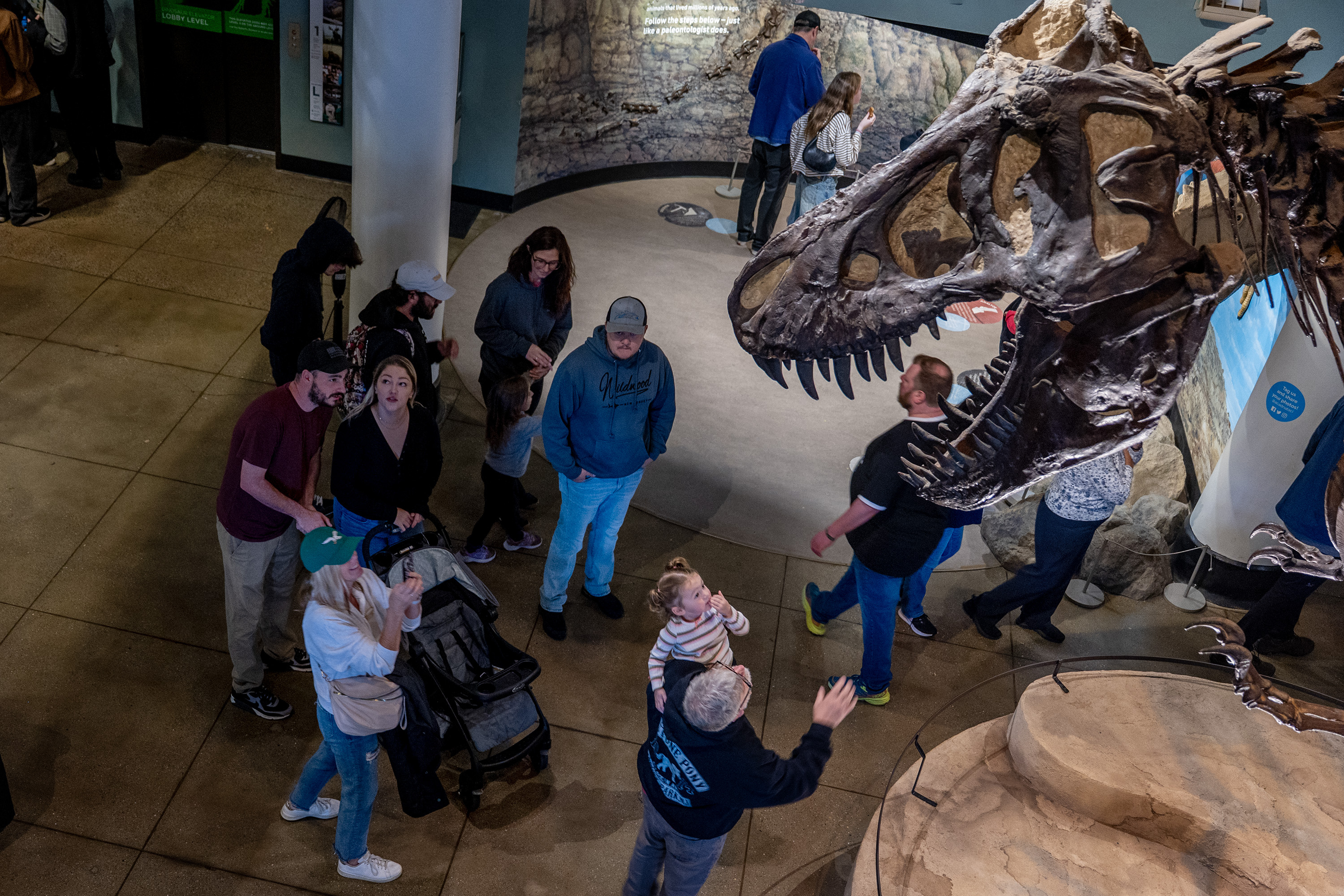
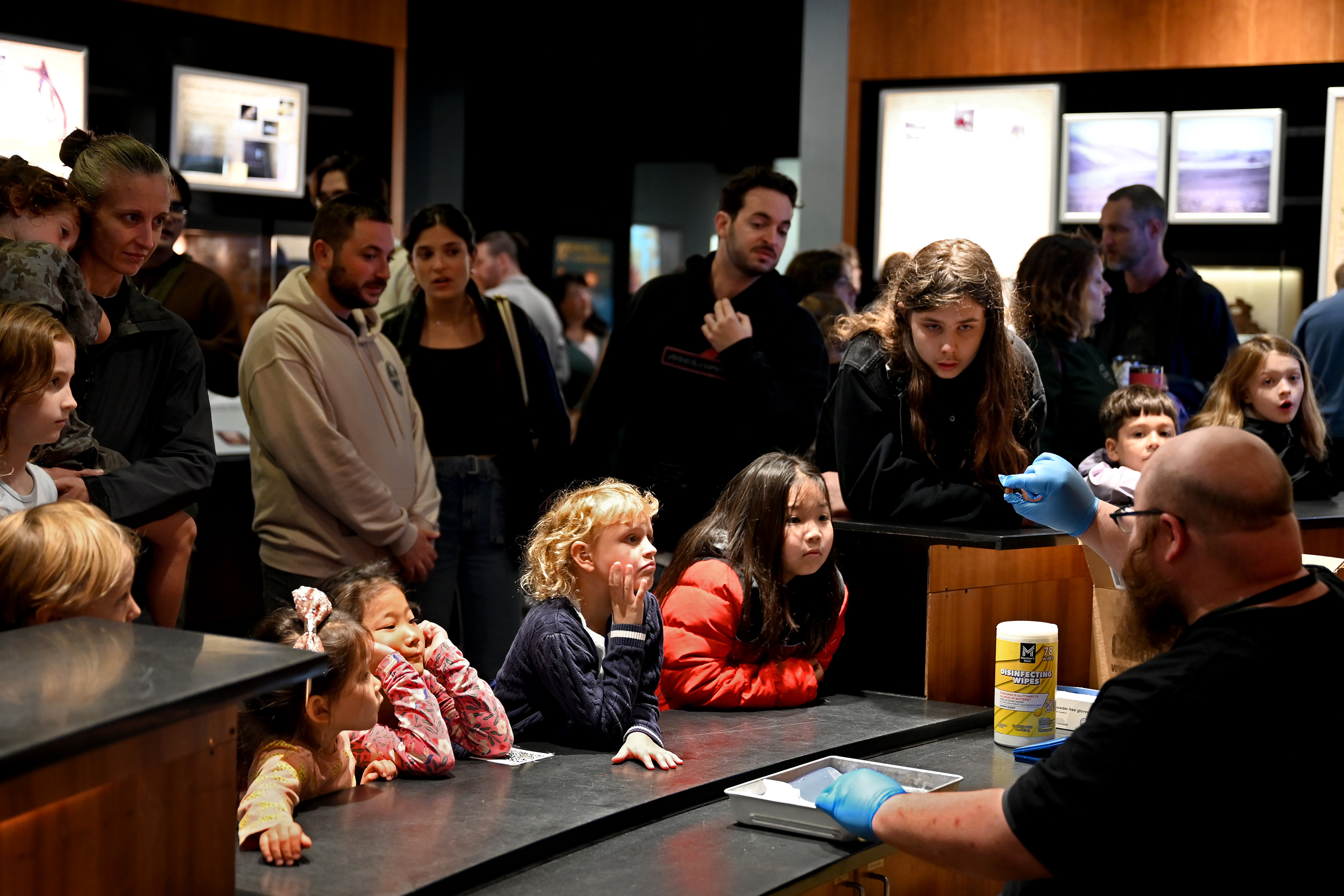
    On Sunday, a steady stream of visitors inside the museum took photos, touched the hard but smooth skin of a pangolin — a scaly anteater — being circulated by museum educators, and guided toddlers in dinosaur costumes through exhibits.

    “I can’t believe this,” one woman cried, peering over a second-floor balcony at a packed room full of visitors examining dinosaur bones.

    Drexel and the academy announced this month the museum was closing amid declining attendance and economic pressures. The academy has been open to the public since 1828, and is considered the birthplace of American paleontology.

    The William Penn Foundation offered Drexel a lifeline to keep the academy open for a year, saying it would pay operating costs while the museum studies the feasibility of its long-term survival.

    Drexel has not specifically said it declined the offer, but a spokesperson said that the university doesn’t have a viable proposal for a “permanent, sustainable path forward for the academy’s museum.”

    Sean White holds Camon, 2, while his wife, Michelle White, records them on the video screen “interacting” with a T. Rex inside the Academy of Natural Sciences of Drexel University on Sunday, Sept. 27, the last day that the museum was scheduled to be open. They were in another room room with a “green screen” that the computer combined into a single scene. Daughter Whenonah, 3, was also with the family from Abington. They had never been to the museum before and Michelle said, “We heard it was closing, so we just had to come before it’s too late.”Tom Gralish / Staff Photographer

    The foundation’s offer was on the minds of many on Sunday. Canvassers from a group attempting to save the academy chatted up visitors as they walked into the museum. They relayed their message from a billboard truck parked outside.

    “200 years of natural history can’t end on our watch,” the billboard said.

    Erin Kelly agreed.

    “My 11-year-old grew up coming here,” said Kelly, who lives in Kensington and brought her son, Phoenix Johnson, to the museum for one more lesson Sunday. “I’ve taught him about our city, and country, and cultural treasures just by coming here.”

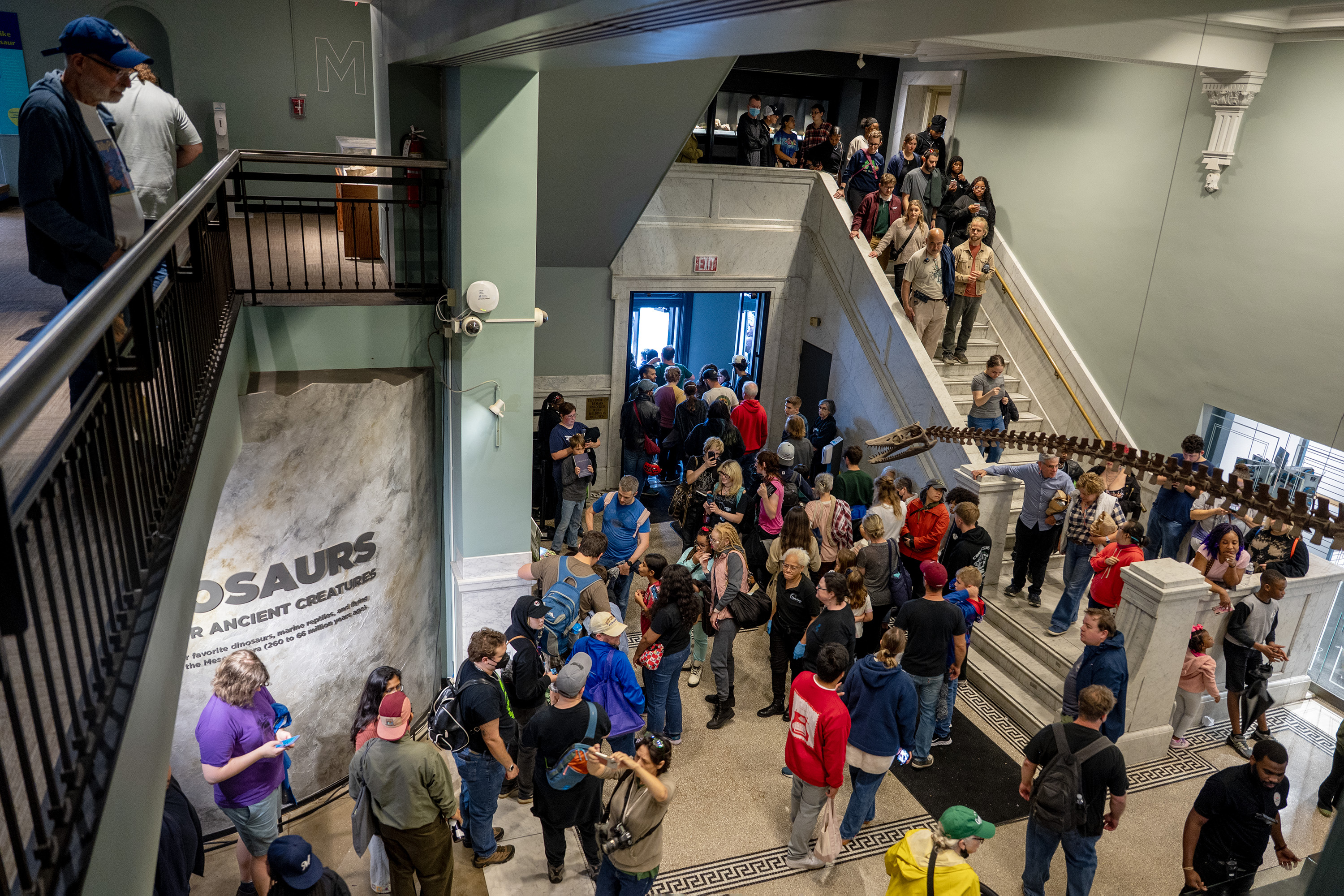
    Visitors crowd past the exhibits inside the Academy of Natural Sciences of Drexel University on Sunday, Sept. 27, 2026, the last day that the museum was scheduled to be open.Tom Gralish / Staff Photographer

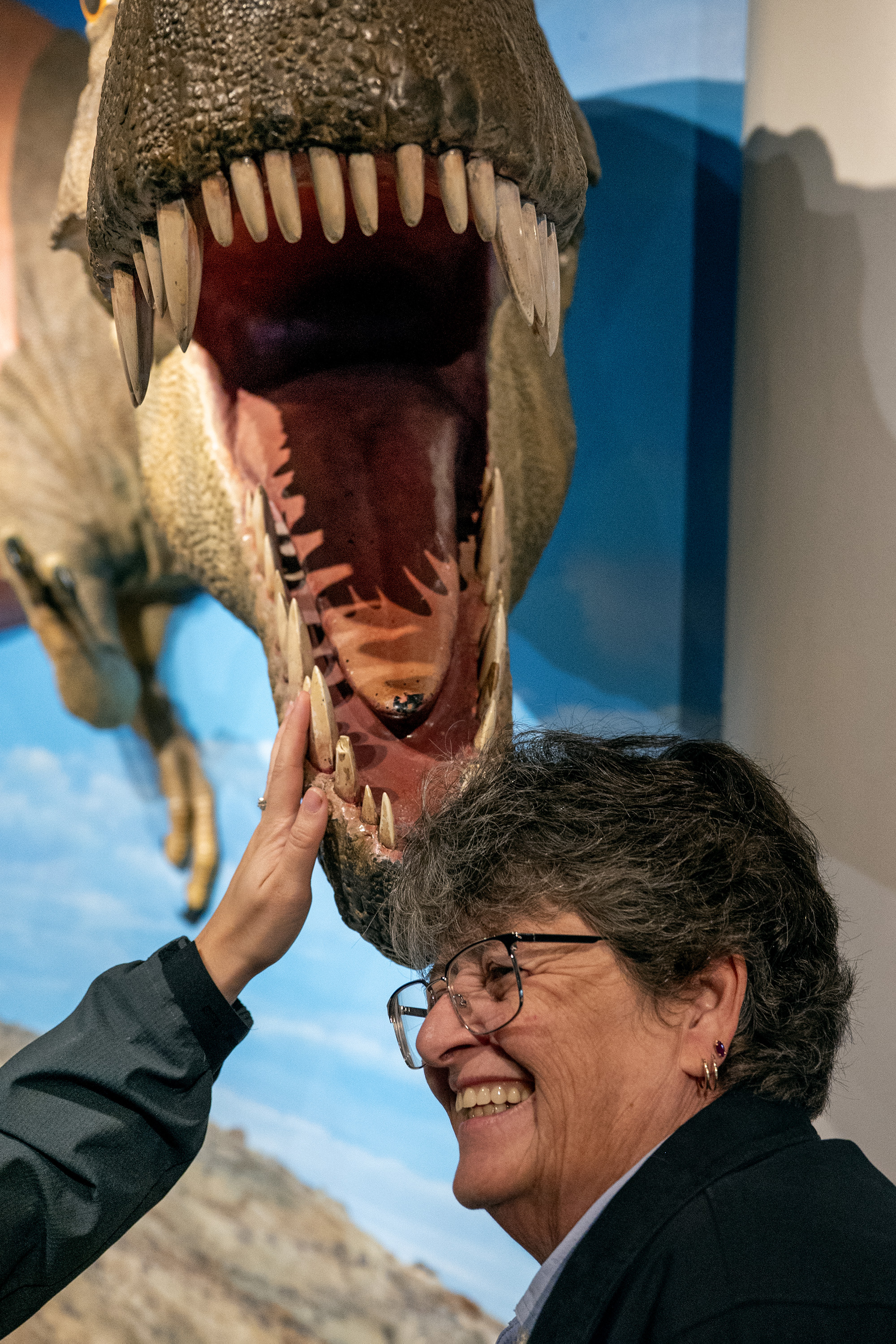
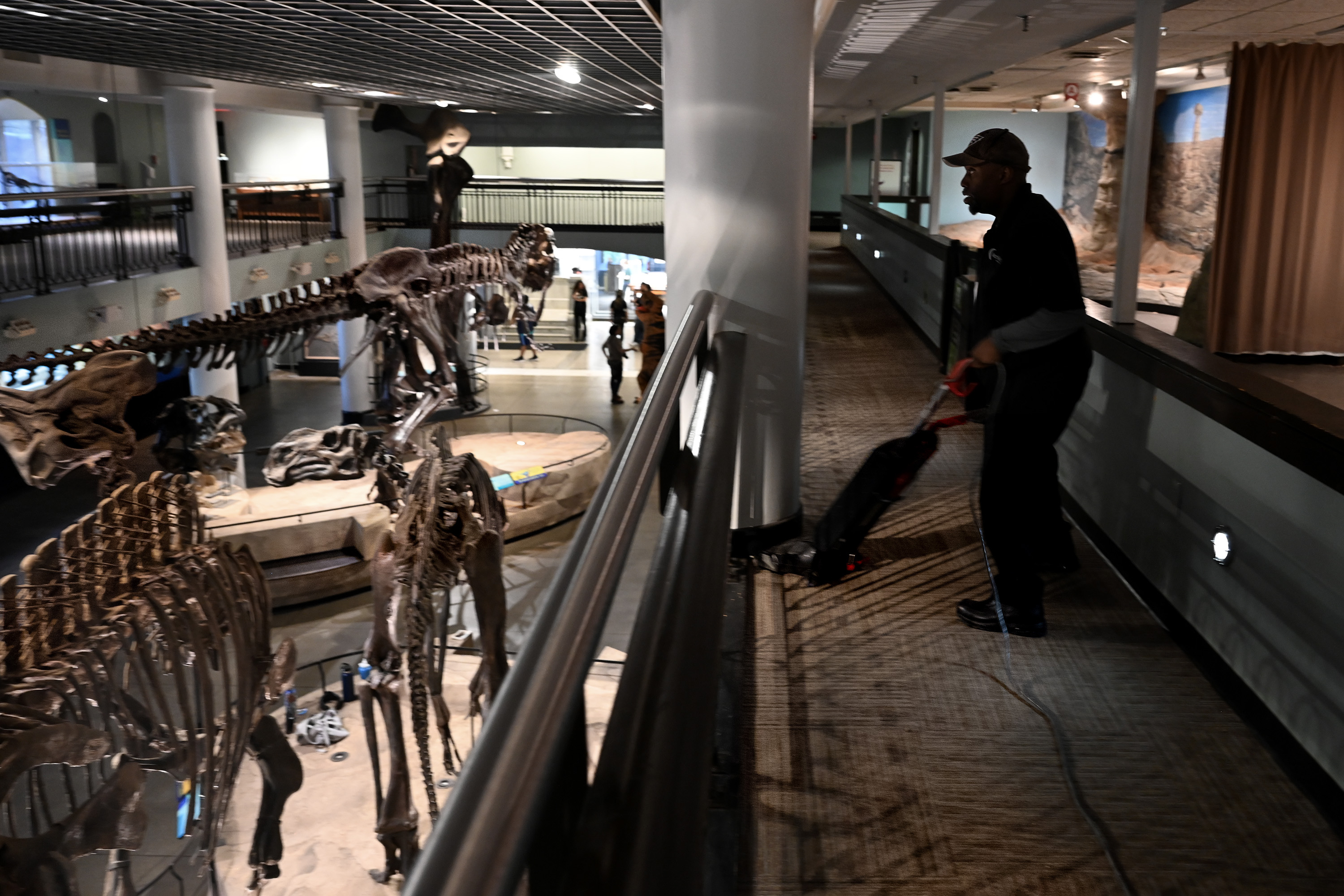
    In some ways, it felt like an ordinary Sunday at the museum — kids digging for fossils in the sand, parents pushing strollers, people fake-climbing into dinosaur mouths for photos.

    But there were definite signs of the end: the crowds, the activists handing out flyers, the picked-over gift shop, where signs told patrons that there was no stock left. A smiling, teal, stuffed dino purse seemed incongruous, a burst of cheer amid so much regret.

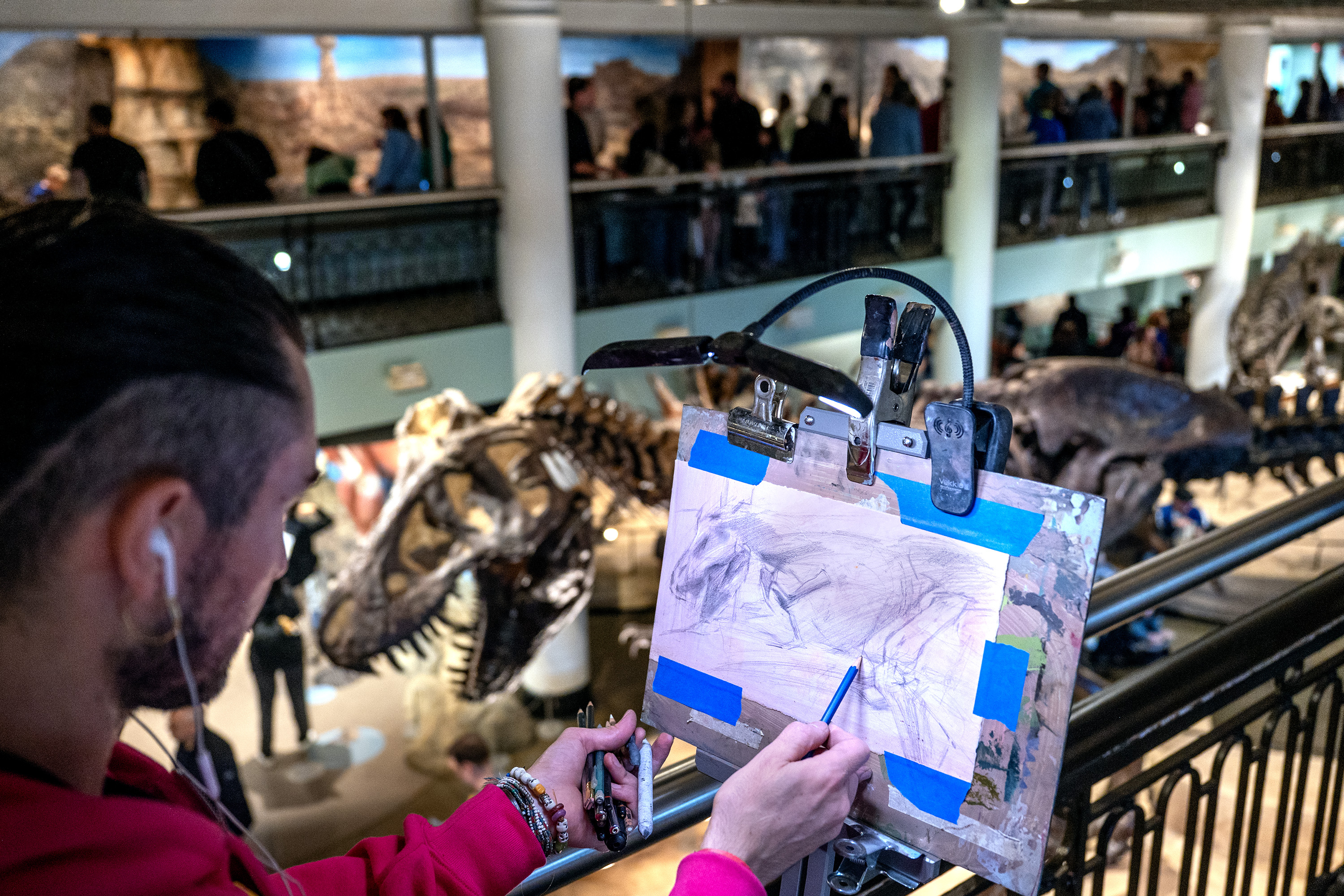
    Artist Thomas LaPine traveled to Philadelphia to witness the museum’s last moments. He set up his easel, unpacked his paper and pencils and oil pastels, and sketched.

    There was something magical in seeing people from all walks of life absorb the exhibits, LaPine said — watching children gain a sense of magic, a perspective on where the world has been, to perhaps think of where it’s going.

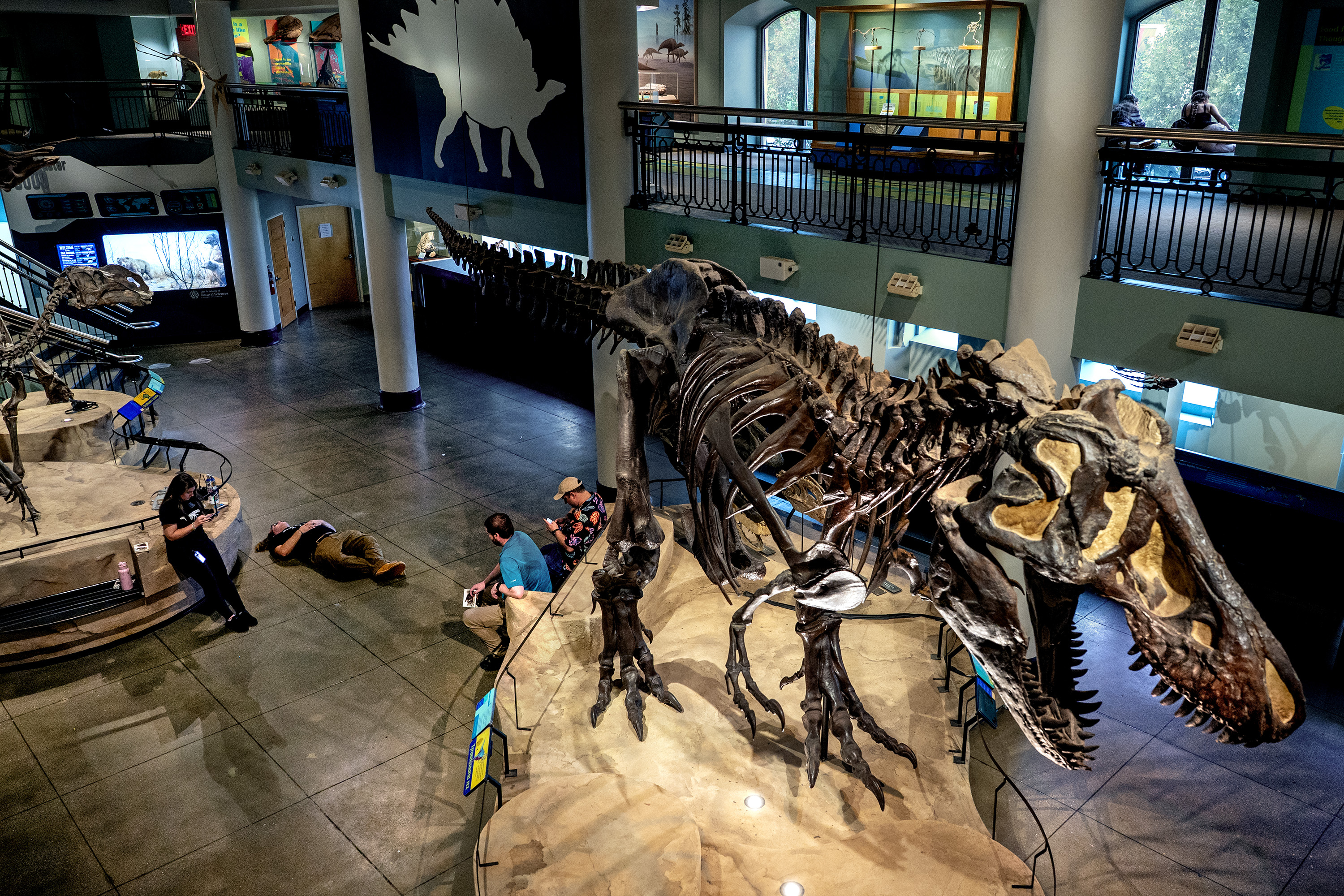
    Artist Thomas LaPine sketches a T. Rex inside the main dinosaur hall in the Academy of Natural Sciences of Drexel University on Sunday, Sept. 27, the last day that the museum was scheduled to be open.Tom Gralish / Staff Photographer

    “It’s a pretty big tragedy to me, a big deal; that’s why I’m here,” LaPine said. “I’m paying my respects.”

    LaPine said he planned to turn his sketches into a painting.

    “Hopefully, it’s a little time capsule of a time when people decided to cut off this resource,” he said.

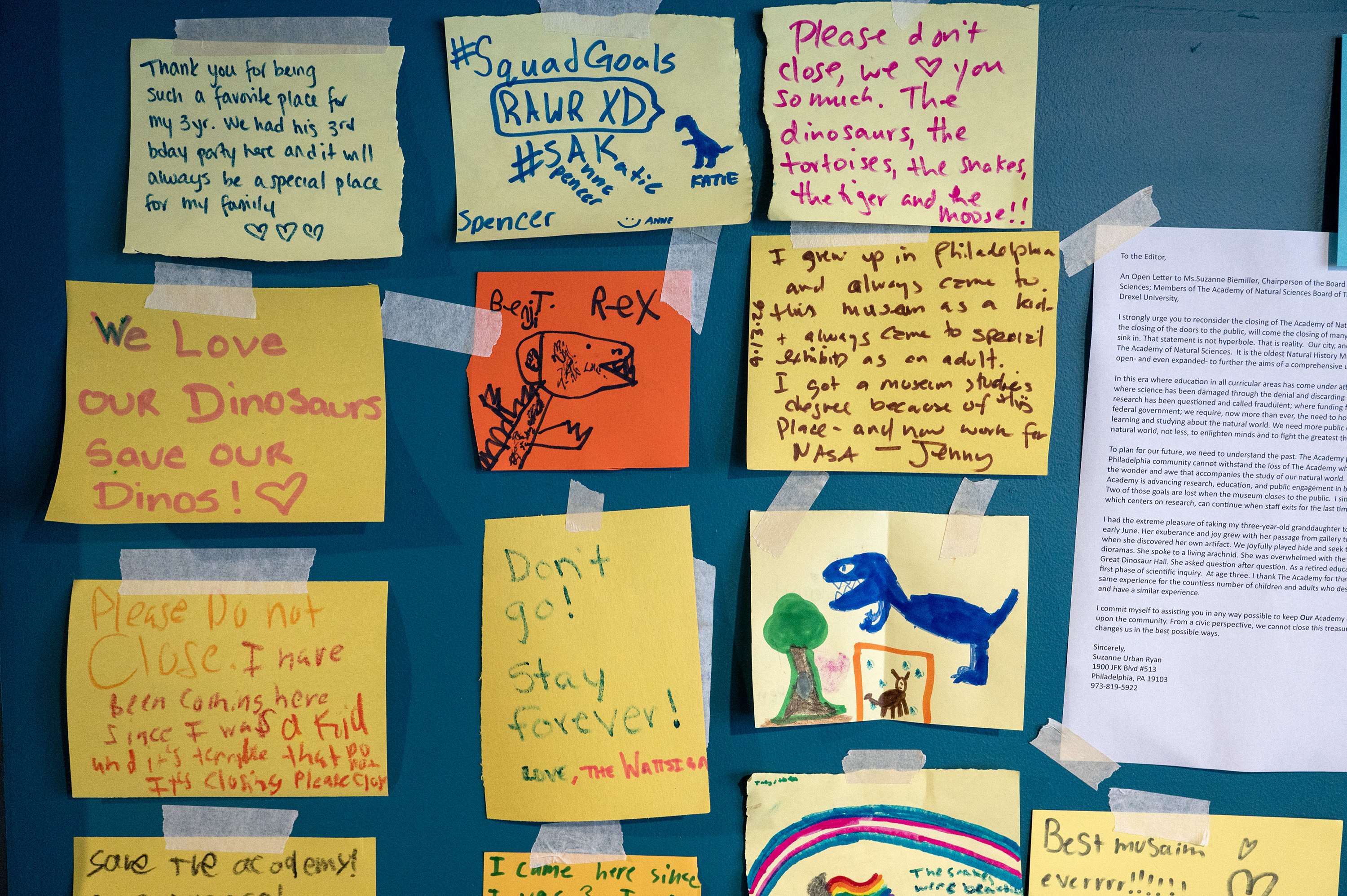
    In Outside In, a hands-on exhibit designed for young children that featured animals to meet and exhibits to climb on, the walls were papered with notes on colorful paper — messages about what the museum meant to families, pleas to save it.

    Visitors leave notes inside the Academy of Natural Sciences of Drexel University on Sunday, Sept. 27, 2026, the last day that the museum was scheduled to be open.Tom Gralish / Staff Photographer

    “Stay Open!” a child wrote on a pale yellow page, with a frowny face. “Love Henry.”

    “This has been a place of solace, fun and learning for me since childhood,” someone else wrote. “I was here before COVID, I was there after, and I’m here now. I hope this isn’t the last time.”

    A place of ‘incalculable value’

    Multiple politicians have urged Drexel to accept the William Penn Foundation’s offer.

    State Sen. Nikil Saval (D., Philadelphia) said in a statement that “the museum is of incalculable value to both our region and to international scientific and cultural fields,” and said the academy must remain on Benjamin Franklin Parkway.

    Visitors take selfies at a North American diorama inside the Academy of Natural Sciences of Drexel University on Sunday, Sept. 27, 2026, the last day that the museum was scheduled to be open.Tom Gralish / Staff Photographer

    City Councilmembers Nina Ahmad and Jeffery Young Jr. said in a statement that the foundation’s offer comes at a crucial time and allows officials the time “to take a breath and better understand how we got here and what we can do to keep the Academy open for hundreds of more years to come. All parties must be willing to explore every option to save this precious institution.”

    Mourning a friend

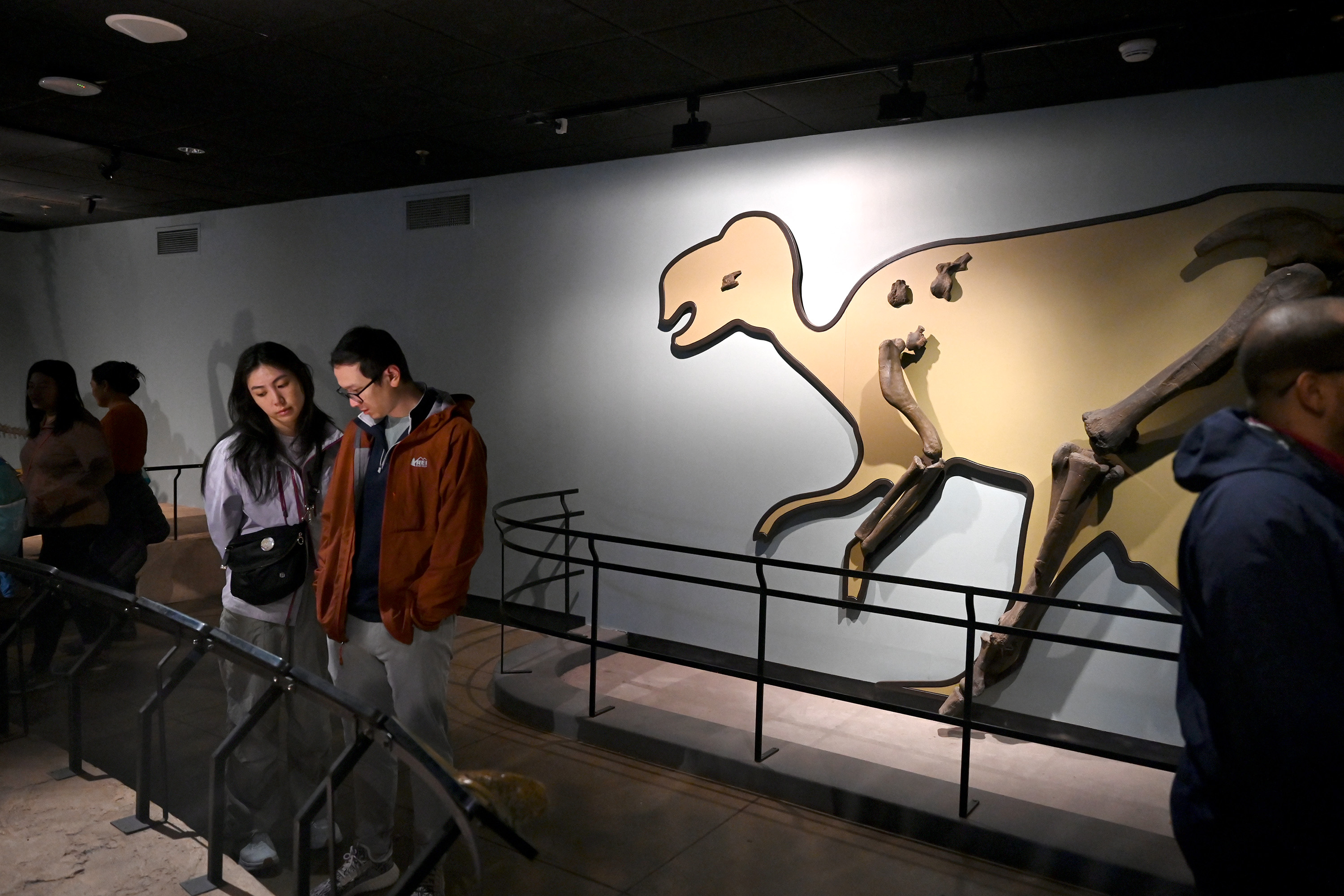
    The museum spent its final hours with those who loved it most: thousands of visitors, who basked in its wonders, staring starry-eyed at collections of dinosaur bones, taxidermy, and petrified bugs.

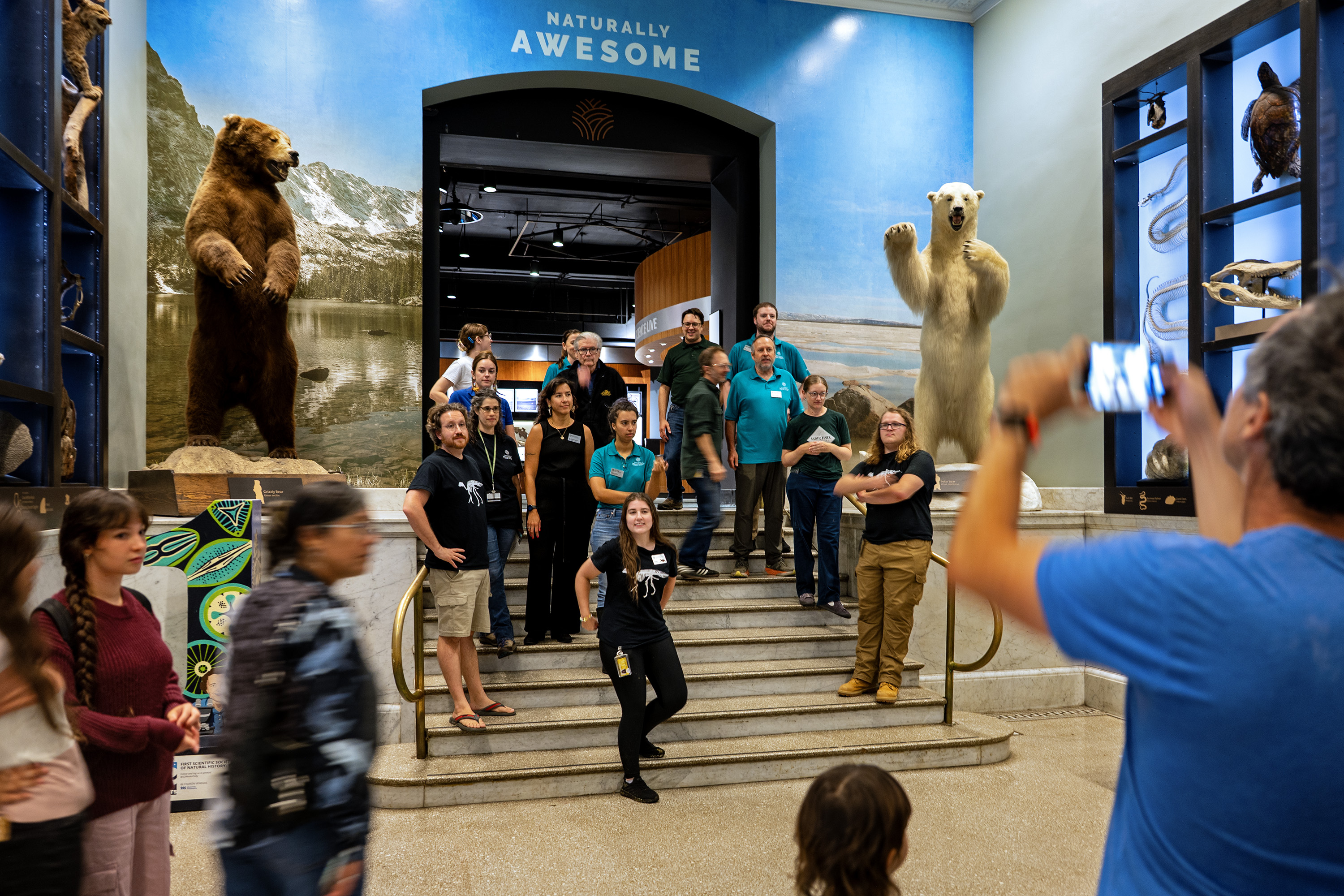
    Members of the museum staff pose for a photo in the lobby of the the Academy of Natural Sciences of Drexel University just after it closed at 5 p.m. Sunday, Sept. 27, 2026.Tom Gralish / Staff Photographer

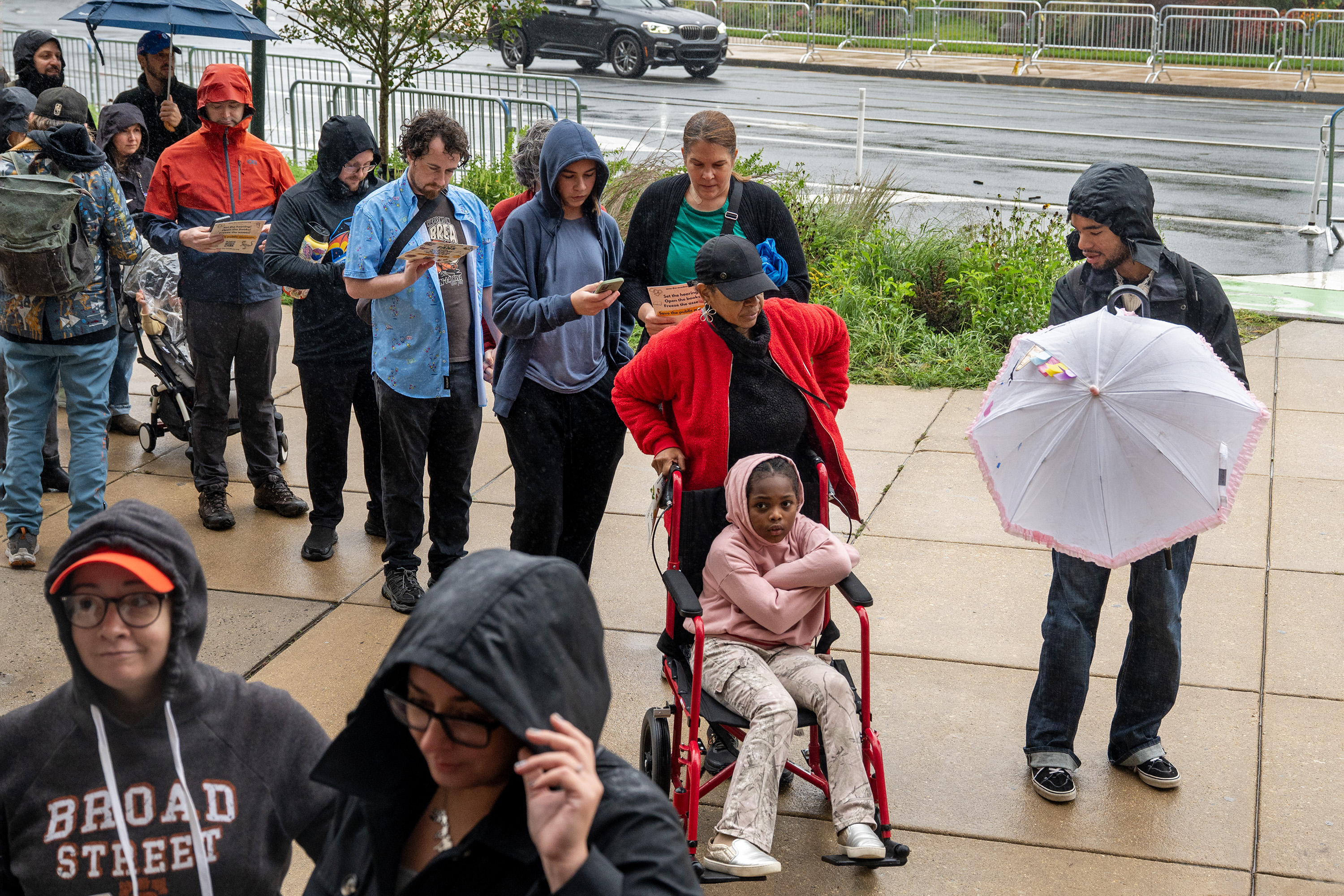
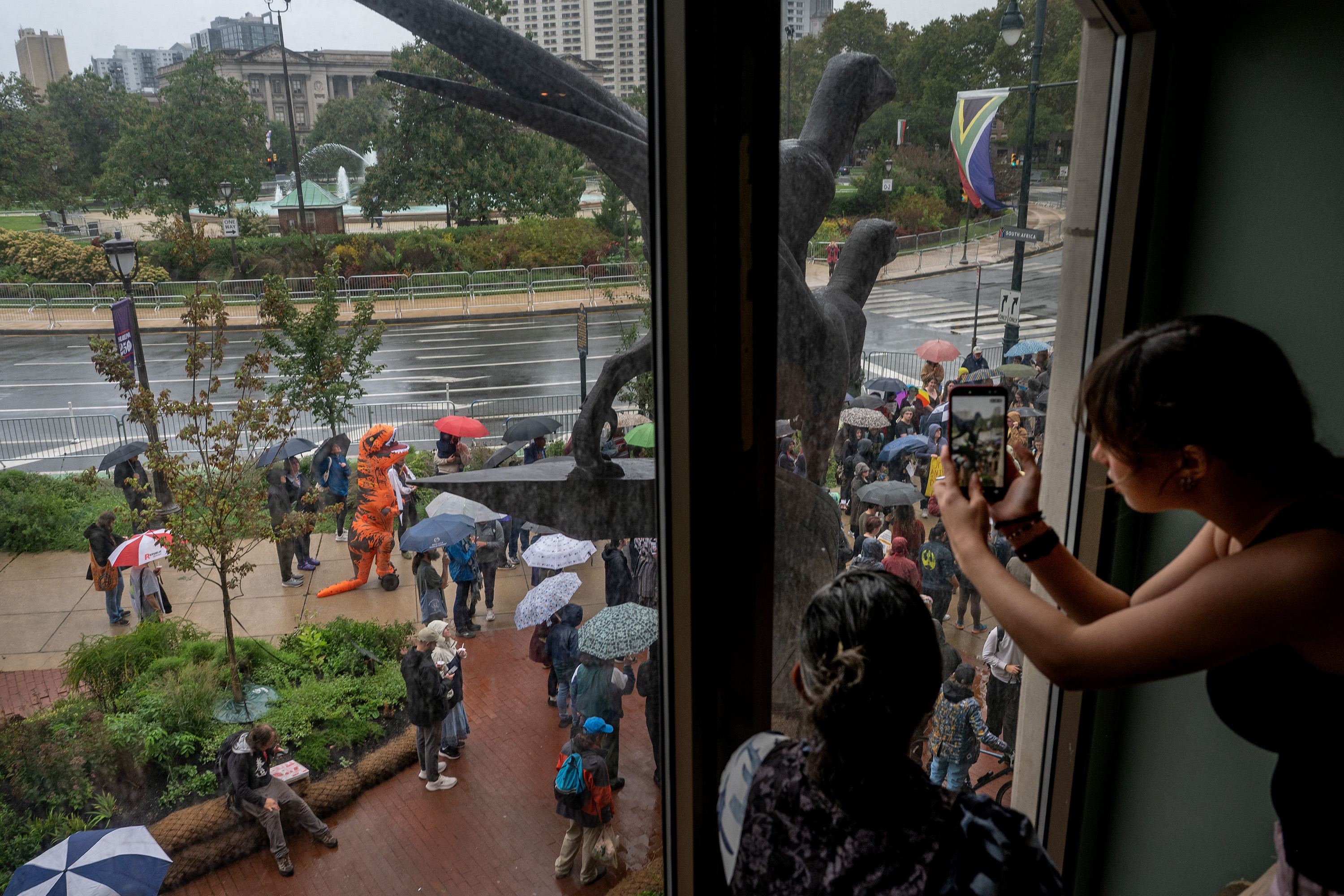
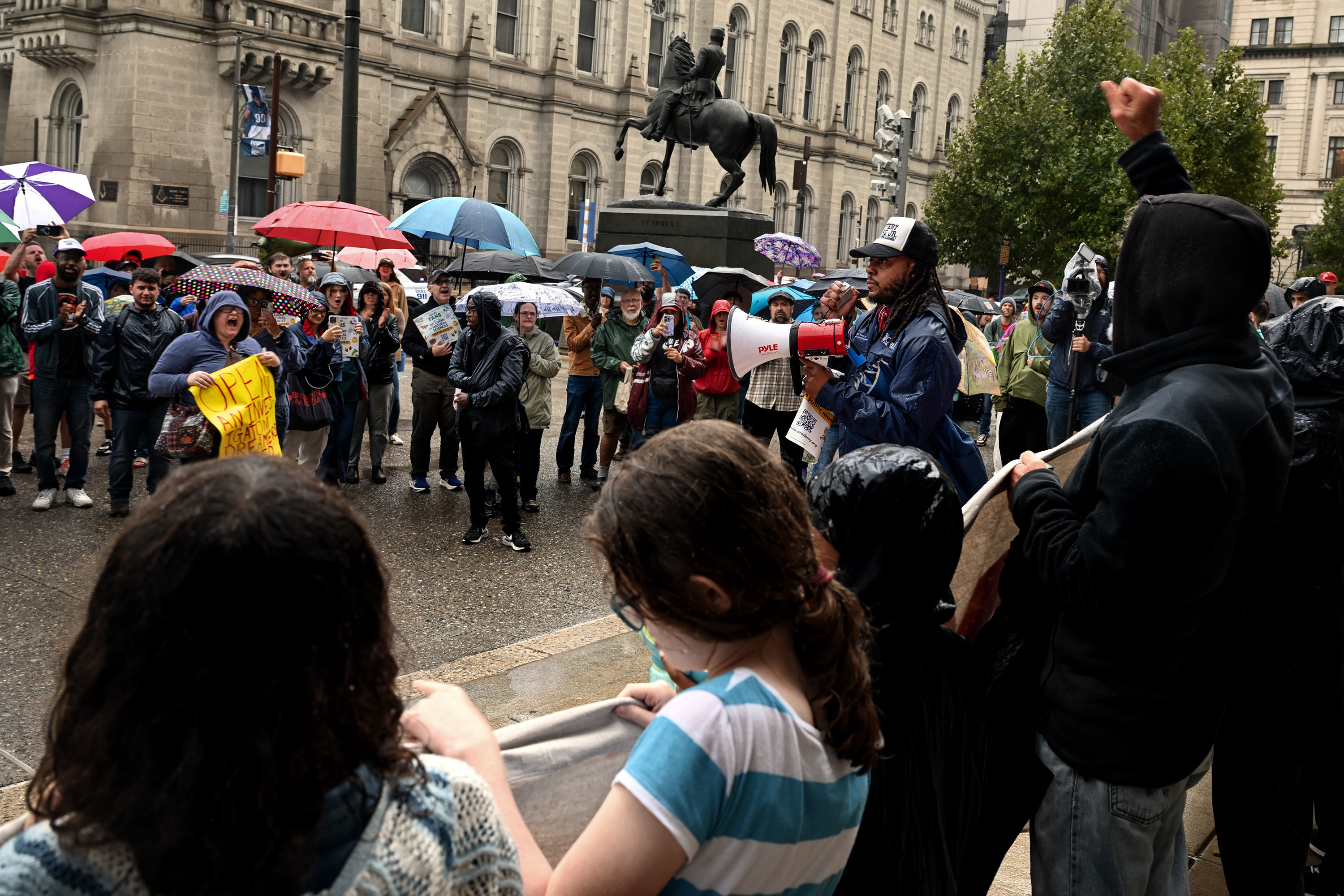
    At the minutes ticked toward 5 p.m. — closing time — hundreds processed out of the old Victorian building one last time and protesters chanted in the rain, holding aloft plastic candles for a planned vigil at Philadelphia City Hall.

    Suzanne Ryan, a retired teacher and grandmother who has volunteered at the academy since June, held a sign reading, “The Academy is a treasure and must be saved.”

    Emotion caught in her voice as she implored each departing guest to sign a petition to save the endangered museum (which by Sunday had well over 100,000 signatures.)

    She’s been livid about the closing. She became a docent because of her granddaughter’s love for the dinosaurs. And as an educator, she said: “You close museums, you close minds.”

    Visitors inside the Academy of Natural Sciences of Drexel University watch protesters from Save The Academy hold a vigil outside the museum just before it closes at 5 p.m. Sunday, Sept. 27, 2026.Tom Gralish / Staff Photographer

    In the steady rain Sunday evening, many protesters shouted angrily about Drexel University’s seeming coolness. They hoped and urged for a miraculous resurrection.

    “We’re trying to protect this place from Drexel University,” shouted museum member Corey Miller, of South Philadelphia. “They’re trying to shut down a 200-year-old institution with 30 days’ notice. It’s a public embarrassment.”

    “Don’t let Drexel off,” others chanted. “Tell Drexel to get out of the way.”

    Longtime visitors Christina Stone and her daughter, Tais Millan, a student at the University of Pennsylvania, spoke through tears.

    “Philly loves this museum and they can save it,” said Millan. “I don’t know why Drexel isn’t trying to save it.”

    Some parents said they belatedly brought their children to the museum on the final day just so they could share their childhood experiences.

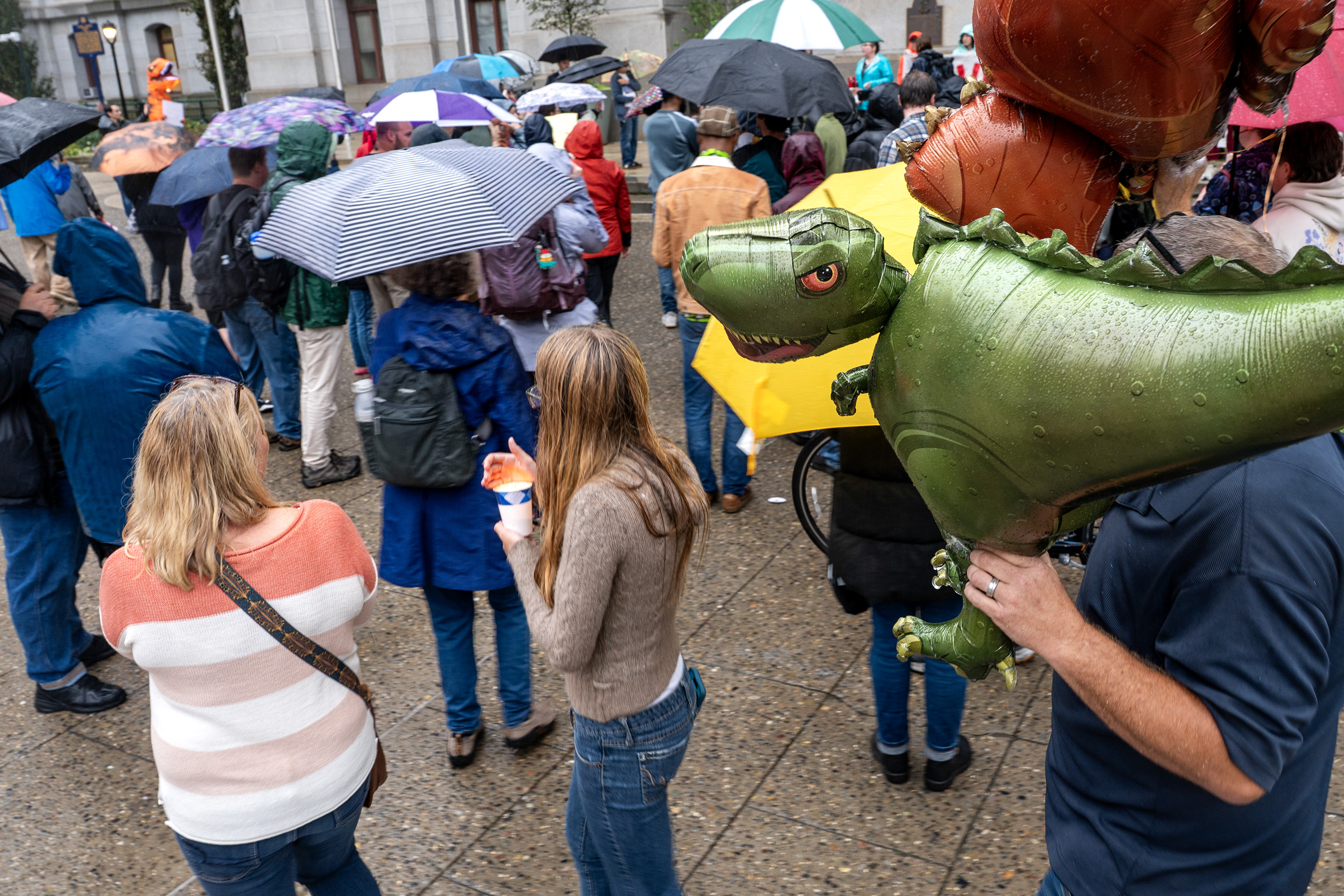
    Glenn McElroy (right) carries dinosaur balloons as he marches behind his wife Beth and daughter Parker, 15, to City Hall after attending a vigil for the Academy of Natural Sciences of Drexel University after it closed at 5 p.m. Sunday, Sept. 27, 2026. The Parkers are from Huntingdon Valley, Montgomery County.Tom Gralish / Staff Photographer

    Others, like Mary Fetter, said the day was an especially sad one for her daughters, Maeve, 10, and Margaret, 9, who are devoted visitors.

    “We’ve been going here four years,” said Maeve, holding her mother’s hand outside the shuttered museum. The museum is important to the identity of the city — and her family, Mary Fetter said as protesters began to march toward City Hall in the rain.

    The little girl is taking it hard, her mother said. She and her sister loved visiting the dinosaurs, the dioramas, and the live animals in the children’s rooms.

    Now it all may be gone. For good.

    “It’s really special to us,” said the little girl. “It’s hard to say goodbye.”

    Staff writers Peter Dobrin, Susan Snyder, and Mike Newall contributed to this article.

  • 2 giant pandas arrive in Atlanta under a US-China government agreement

    2 giant pandas arrive in Atlanta under a US-China government agreement

    BANGKOK — Two giant pandas arrived in Atlanta on Sunday morning as part of an agreement between the Chinese and American governments.

    Ping Ping and Fu Shuang departed Chengdu in southwestern China early Sunday aboard a dedicated “FedEx Panda Express” Boeing 777 aircraft, officials said. A new agreement between Zoo Atlanta and the China Wildlife Conservation Association makes Atlanta one of three zoos in the U.S. to house giant pandas.

    “This is a thrilling day for Zoo Atlanta and a historic moment for the City of Atlanta, the state of Georgia, and beyond,” Zoo Atlanta President and CEO Raymond B. King said in a statement. “We are elated to welcome Ping Ping and Fu Shuang and could not be more excited about sharing that joy with our Members, guests, city, and community in the coming weeks.”

    Zoo visitors will have to wait awhile to see Ping Ping and Fu Shuang, officials said. The bears will be quarantined for about a month in a biosecure area of the wildlife park’s new giant panda complex. Park officials haven’t confirmed a specific opening date.

    The pandas’ arrival was announced Thursday by Chinese President Xi Jinping during a three-day summit with U.S. President Donald Trump. The loan of the pandas was one of the few concrete outcomes to come out of the state visit, which saw expressions of goodwill between the leaders, but no fixes to any of the long-standing differences between the two countries.

    Atlanta said farewell to its last pandas in 2024, leaving the zoo without the bears. The new agreement was announced back in April, but without any dates.

    Ping Ping and Fu Shuang will be on loan to Zoo Atlanta for 10 years as part of the agreement. Both pandas were born in 2020 and were kept at the Chengdu Research Base of Giant Panda Breeding. Ping Ping, the male, has dark black circles around his eyes, while Fu Shuang, the female, has a forehead that protrudes a bit, according to the Xinhua News Agency.

    China has long used the pandas as part of its diplomacy globally, deploying the bears in loan programs as expressions of goodwill and letting loan agreements lapse when tensions arise.

    Xi had said the loan program was an example of “friendship between the Chinese and Americans.”

  • 5 men arrested near U.K. air base used by U.S. in Iran war on suspicion of preparing a terrorist act

    5 men arrested near U.K. air base used by U.S. in Iran war on suspicion of preparing a terrorist act

    LONDON — U.K. police said that five men arrested in the early hours of Sunday near an air base used by the United States during its war against Iran are being held on suspicion of preparing a terrorist act that appeared to involve three trucks.

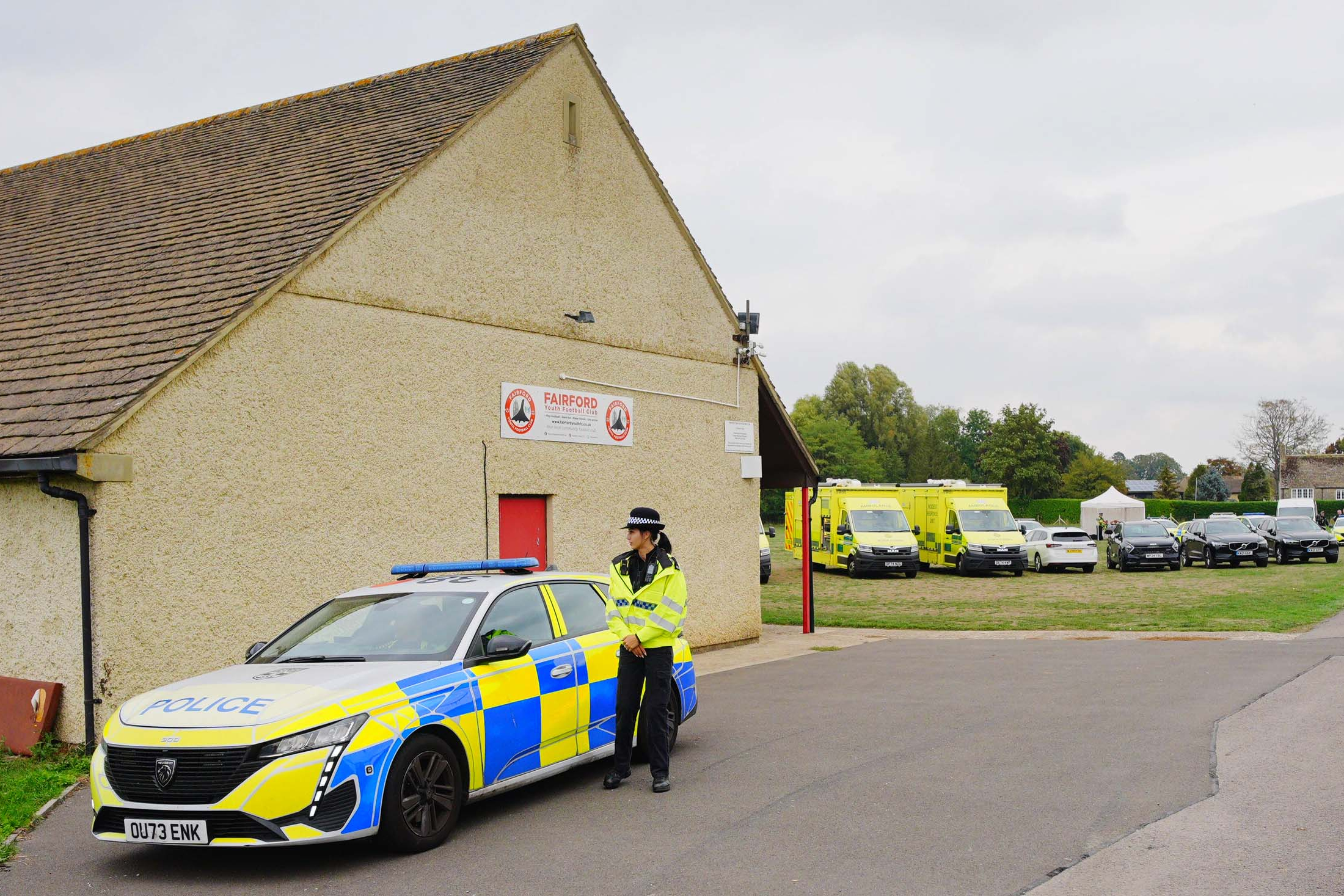
    London’s Metropolitan Police, which takes the lead on potential terrorist activities, said police received a call at 12:45 a.m. related to the three suspicious vehicles that appeared to be traveling toward RAF Fairford, a U.K.-owned base that is operated by the U.S. under an agreement dating back to the Cold War.

    Base is home to U.S. bombers striking Iran

    The arrests come at a time of heightened tensions around the threat from hostile states to the U.K., with Russia and Iran among those that have used proxies to commit crimes on their behalf on British soil. In March, officials said the number of national security cases involving activity by hostile states including Iran increased 50% in the six months to December 2025.

    Fairford has been used by American bombers for strictly limited strikes against Iranian missile sites under an agreement with former British Prime Minister Keir Starmer, who voiced opposition to the war after it was launched by the U.S. and Israel on Feb. 28.

    Authorities are investigating a link between the Fairford arrests and Iran as one possibility. Iran has previously indicated that a base used to attack its territory is a legitimate target.

    U.S. President Donald Trump praised those who were involved in making the arrests.

    “It was an amazing job. We had them under investigation. They were looking to do big damage to our fort. And working with the British worked out great,” he told reporters in Chicago on Sunday. “We had them under view for a long time and we got them.”

    Police feared an explosion

    The five men were initially arrested on suspicion of committing offenses under the Explosives Act in the Whelford area, which backs onto RAF Fairford, which hosts the headquarters of the U.S. Air Force’s 501st Combat Support Wing and the 420th Air Base Squadron.

    Aerial footage from Sky News appeared to show a bomb disposal robot roaming between three white trucks. The rear doors of two of the vans were open and large black items could be seen scattered around. The robot appeared to be working toward getting access to the third truck.

    Police gave no details as to the nationality of those arrested. Suspects arrested under the Terrorism Act 2000 can be detained for up to 14 days without charge, compared to the 24-hour limit for standard arrests, without an extension application.

    “We are in the early stages of an investigation, and five men remain in custody,” said Vicki Evans, the Met’s counterterrorism policing senior national coordinator.

    Evans said a 400-yard cordon was put in place around the three vehicles that raised suspicion while the army conducted examinations. As a precaution, around 85 households were evacuated while the examinations took place. Some were taken to a nearby recreation center.

    The U.S. embassy in London warned Americans to be cautious and mindful of their personal security.

    British Prime Minister Andy Burnham said he knew the incident would be “deeply concerning” for many. In a post on social media, Burnham thanked police and the armed forces for their response and said he was grateful to the residents who have been evacuated from their homes “while precautionary checks are carried out.”

    He urged people “not to speculate while the authorities establish the full facts.”

    The defense secretaries of the U.S. and the U.K., Pete Hegseth and Wes Streeting, have also spoken about the incident.

    British security officials say proxies linked to Iran have been behind a string of arson and sabotage attempts in the U.K. and other countries, many of them targeting the Jewish community. They have previously warned that Tehran could expand its targets in the U.K. if conflicts in the Middle East continue.

    Local residents evacuated

    Gloucestershire police said the situation appeared to be “contained” and urged residents to follow official advice while the investigation continues.

    Julian Tudsbery, who has lived in Whelford for 30 years, said another resident had reported seeing three “suspicious vans” in the village early on Sunday.

    “There were several police, three police cars in the drive, and they said you need to evacuate, there’s been a major incident, said he couldn’t elaborate,” he said.

  • Phillies move up start time of Sunday’s game vs. Rays due to rain

    Phillies move up start time of Sunday’s game vs. Rays due to rain

    The Phillies are moving up their start time for Sunday’s game against the Tampa Bay Rays from 3:05 p.m. to 2:30 p.m. due to inclement weather, the team announced.

    The nor’easter howling through the East Coast has left the Philadelphia region with heavy rainfall, which is expected to continue throughout Sunday afternoon and evening.

    The Phillies said the earlier start time should provide the best opportunity to play Sunday’s regular-season finale without interruption.

    And the stakes couldn’t be higher.

    After the Phillies fell 12-1 to the Rays on Saturday, it marked their fourth consecutive loss and one more opportunity to decide their playoff fate.

    If the Phillies win Sunday, they will clinch the third and final NL wild-card spot. If they lose and the Diamondbacks win, Arizona will get in.

    The Diamondbacks play the Padres at 3:10 p.m. ET in San Diego

  • A Philly woman won a NASA contest to design a food system for astronauts on Mars

    A Philly woman won a NASA contest to design a food system for astronauts on Mars

    A 25-year-old Philadelphia woman won the $300,000 first prize in a NASA competition to design food systems to improve how astronauts eat in space, and eventually how they will eat on Mars, the space agency announced Thursday.

    Chinyere “Chichi” Ukeje, a native of Bowie, Md., now living with her husband in Northeast Philadelphia, submitted a proposal called Adaptive Nourishment Infrastructure, or ANI, which is named after the Nigerian Earth goddess of harvest and fertility.

    Ukeje said in a phone interview Friday night that her family has roots in Nigeria and with the Igbo people, a major ethnic group in that country.

    With the Deep Space Food Challenge: Mars to Table competition, NASA asked participants to “explore innovative solutions for integrated space food systems that would provide safe, nutritious meals to astronauts living and working in space,” the agency said.

    NASA launched Mars to Table in January 2026 as a follow-up to the Deep Space Food Challenge, which NASA ran from 2014 to 2021 in collaboration with the Canadian Space Agency.

    The updated competition included entries from teams in 28 U.S. states and from a total of 33 countries. The total prize pool was $650,000 for five winning teams.

    Jennifer Edmunson, program manager for Centennial Challenges at NASA’s Marshall Space Flight Center in Huntsville, Ala., said in a statement: “The future of human space exploration will rely on innovative food systems, and it is amazing how much ingenuity this challenge has helped us identify from participants near and far.”

    The challenge was created to find ways to feed astronauts without having to send prepackaged foods, which would not be possible because of the sheer bulk for the many months a Mars mission would take.

    The core of the challenge was to create a working system for a 15-person astronaut crew for 500 Martian sols, which is the equivalent of around 513 Earth days.

    “The problem of feeding astronauts on Mars is more than just growing crops,” said Ukeje, who is studying for a master’s degree in computer science at Johns Hopkins University.

    After spending most of her childhood in Maryland, Ukeje went to Nigeria during high school. She then returned to the U.S. to earn her bachelor’s degree in computer science at the University of Maryland, Baltimore County, before moving to Philadelphia.

    NASA described Ukeje’s “ANI” as “a modular food ecosystem combining controlled-environment agriculture, fermentation and fungi cultivation, and closed-loop nutrient recycling through bioreactors with limited Earth-provisioned foods to produce 50% of the food away from Earth.”

    Ukeje’s complex winning entry included having astronauts heating food with portable electric lunch boxes. The astronauts would take cubes of nutritious food and prepare them into recognizable meals, and then they could have “taco night” or “Italian pasta night.”

    “You want them to feel at home when they are millions of miles from home,” she said.

    She was surprised she won first place, but not surprised that she did well.

    “I completely poured myself into this project,” she said.

    There are no restrictions on what she can spend her prize money on, but Ukeje said she expects some of it will go into further food technology research.

    Correction: A previous version of this article incorrectly spelled Chinyere Ukeje’s first name in a sub-headline and photo caption.

  • The Jersey Shore surveys the damage as the region emerges from a furious nor’easter

    The Jersey Shore surveys the damage as the region emerges from a furious nor’easter

    A weekend of devastating and unusual nor’easter storms prompted evacuations, waterlogged cars and businesses, and eroded idyllic beaches along the Jersey Shore.

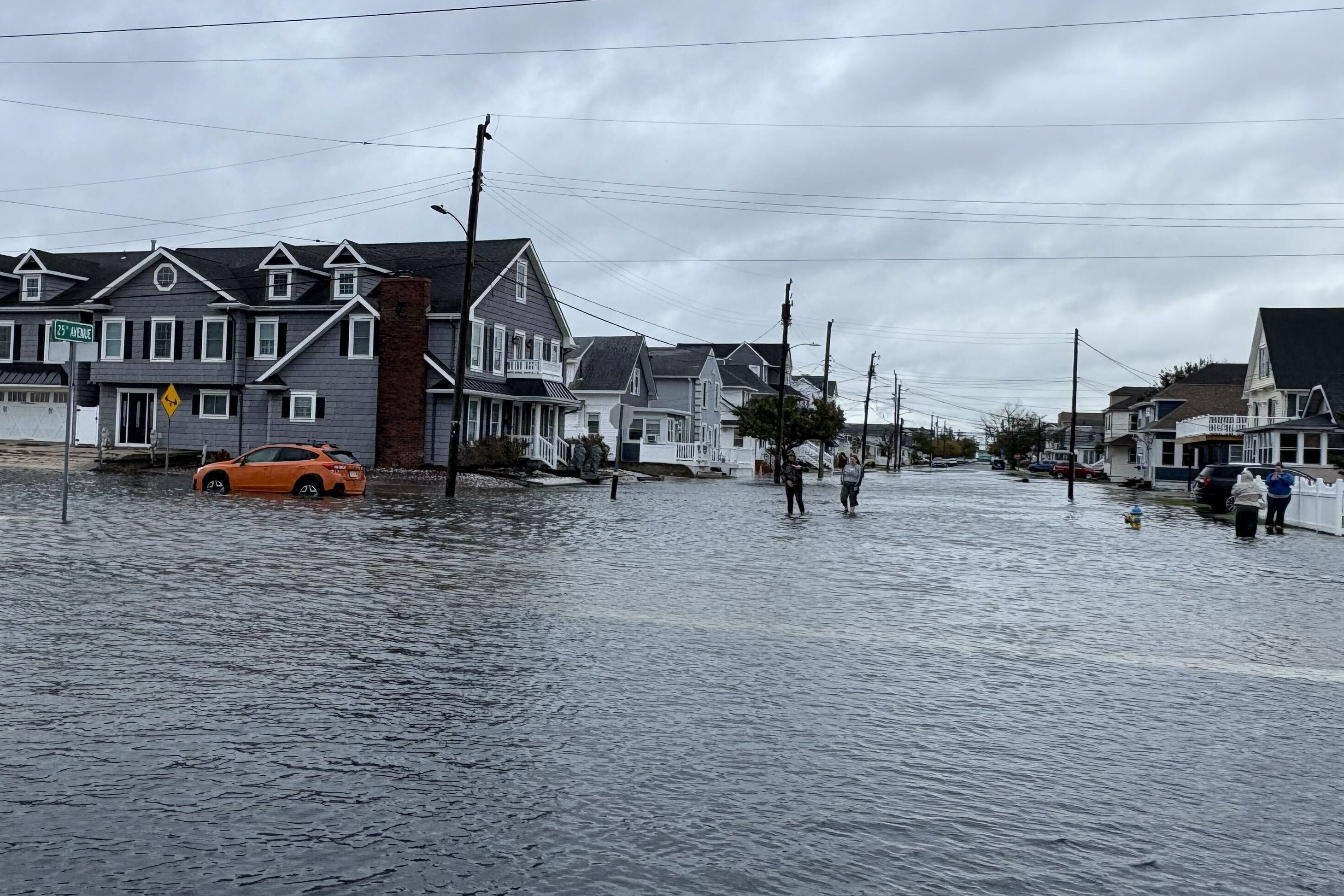
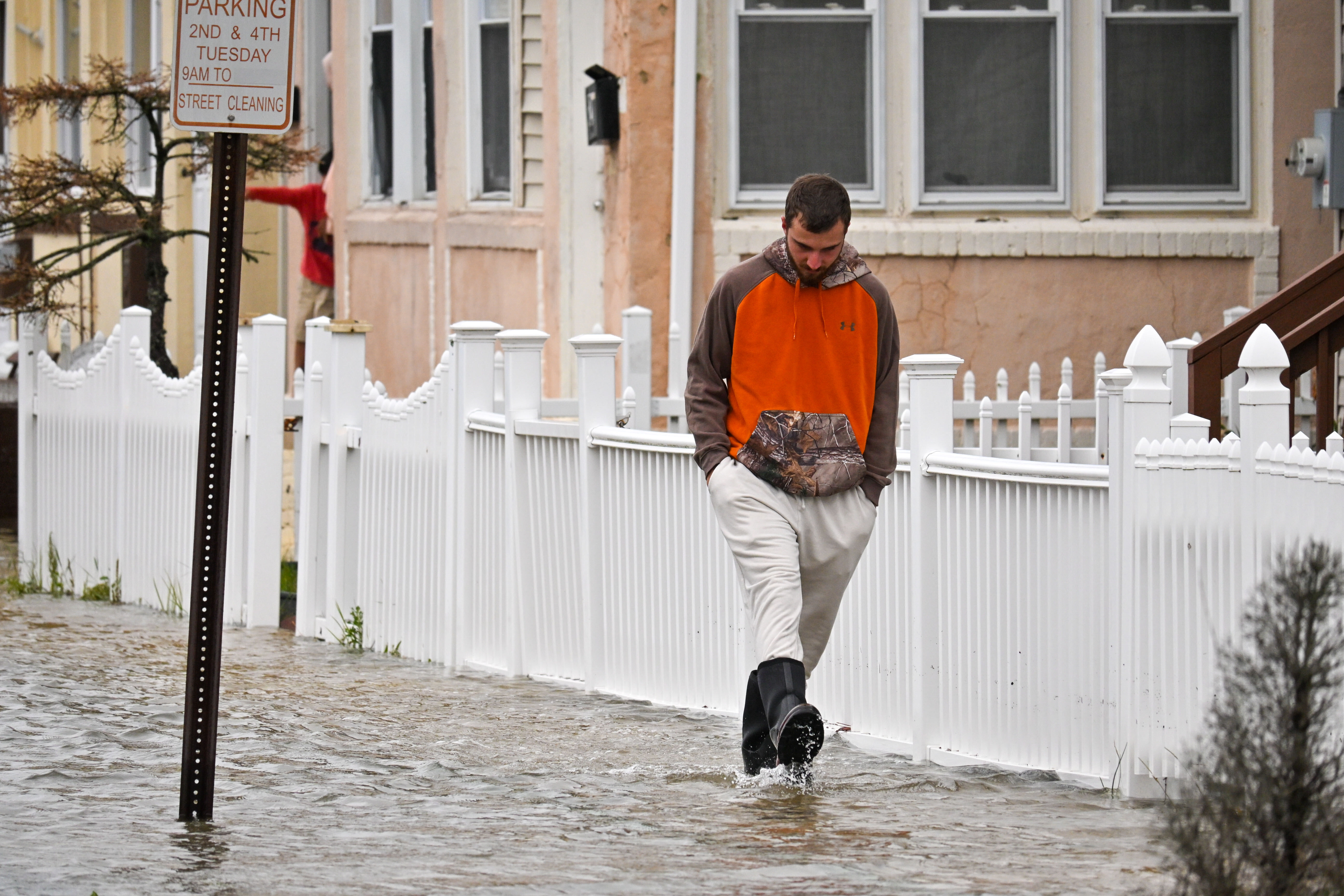
    In coastal towns, roaring floodwaters swallowed major thoroughfares and white-picket fences, as massive, salty waves pushed far past the Shore’s beaches and into residential areas. People waded through ankle- to waist-deep waters, and dozens had to be rescued from cars trapped on impassable roadways, New Jersey Gov. Mikie Sherrill said Sunday at a news conference.

    “Our Shore communities have been hit hard,” Sherrill said, warning “we’re not out of the woods just yet.” On Sunday, persistent showers lingered, and the threat of high winds and surges continued for the already weather-tested region.

    For some, the fury of the early-season nor’easter evoked memories of Superstorm Sandy in 2012 or 2016’s Winter Storm Jonas. No deaths have been reported in New Jersey, and the full scope of the damage likely won’t come into focus until the howling storm quiets.

    The forecast

    Sherrill, who declared a state of emergency Friday, said officials were concerned about possible flooding after high tide Monday morning.

    Sunday morning’s high tide had been expected to work its way into the back bays and lagoon communities, likely leading to moderate flooding with the possibility of isolated pockets of more severe flooding, said National Weather Service meteorologist Ray Kruzdlo. Water levels may take a few days to recede, he said.

    “I don’t think we’re going to see what we saw two high-tide cycles ago, but it’s still going to be impactful,” Kruzdlo said.

    The wind — which reached 74 mph in Surf City, according to Sherrill — was also starting to subside.

    “The low pressure responsible for this whole nor’easter, it’s kind of wobbling around a little bit,” Kruzdlo said. “It’ll get out of here within 24 hours.”

    More than 22,000 power outages were reported across New Jersey about 2:45 p.m. Sunday, according to the PowerOutage.us tracker. Meanwhile, NJ Transit officials were monitoring conditions, and most routes were operating on normal weekend schedules or with some delays because of downed trees. Portions of the River Line and Hudson-Bergen Light Rail were suspended Sunday.

    Across the Philly region, the heavy rain overnight and Sunday morning was headed out of town toward Wilmington, Kruzdlo said. There was a chance of showers overnight Sunday and early Monday.

    Despite the rain, the Philadelphia area experienced only some disruption Sunday: SEPTA ran with some delays, and Peco reported nearly 110 outages, affecting about 1,900 customers, Sunday afternoon. The Phillies game was moved up, and the annual Puerto Rican Day Parade was moved inside.

    Surveying the damage

    According to Sherrill, the early-season nor’easter caused severe dune loss in Atlantic City and Brigantine — with the Brigantine mayor calling it the worst tidal flooding since Sandy, the Press of Atlantic City reported.

    The storm reminded Sea Isle City Mayor Leonard Desiderio of Jonas — a historic winter storm with hurricane-force gusts that incited record tides at the Shore. Ocean City officials said Saturday morning’s tide (7.63 feet) reached nearly as high as the tide during Jonas (7.66 feet).

    “But this was pretty bad,” Desiderio said. “Until we can really evaluate everything, we don’t know the damage it has caused.”

    Gaetano Petinga walks through flood waters brought by a nor-easter Saturday, Sept. 26, 2026, in Atlantic City.Brett Sholtis / Staff

    In Margate City, areas that tend to flood during storms indeed flooded, and tidewaters entered some buildings, fire department Capt. Chris Hornig said.

    “After today, they’re going to be doing some cleanup, so hopefully this is the last big one this morning,” Hornig said.

    Hornig cautioned drivers to stay out of flooded areas: “People shouldn’t drive through floodwater. It’s salt water. It’s not good for their cars, even if they make it through.”

    Wildwood Mayor Ernie Troiano Jr. said flooding, there, contributed to multiple fires, including one caused by lithium batteries on an e-bike. Troiano said the Saturday morning tide surprised him with “the swiftness of it entering the streets.”

    “When it came up over the bulkheads, it just released and it just went flying,” Troiano said.

    As the tidewaters spread across the Shore, so did the videos and photos online.

    One widely shared video showed a waterlogged dining room at The Lobster House in Cape May. Then Internet jokesters enhanced the video, adding three lobsters serenely swimming out to sea. On Sunday, people drove up to the iconic seafood restaurant and market — closed due to flooding — to see for themselves.

    “We’ve had people in Florida and Virginia ask us about it,” Cape May resident Gary Bartlett said of the videos.

    Keith Laudeman, the third-generation owner of The Lobster House, explained that for three days, the water level outside the restaurant inched up — the result of relentless northeast winds holding seawater in the inlet.

    Saturday morning’s high tide was the “icing on the cake” that sent floodwaters pouring into front door.

    Laudeman dealt with flooding after Sandy and Storm Jonas. He said his team will have to wash everything with freshwater, scrub it down with antimicrobial soap, and replace carpeting.

    He hopes to have the restaurant open within three days, and plans for the fish market and coffee shop to be open Monday.

    As for the lobsters escaping to sea, Laudeman said anything is possible.

    “That’s a little far-fetched,” he said. “But if it adds to the story, then go ahead.”

    This is a developing story that will be updated.