Blog

  • Think U.S. government debt doesn’t affect you? Think again | Expert Opinion

    Think U.S. government debt doesn’t affect you? Think again | Expert Opinion

    The U.S. government’s debt recently hit $40 trillion. Beyond the shock value of a number so large, what does that actually mean for your economic life? Were you getting along fine when the debt was $39 trillion?

    It matters because persistent deficits and rising borrowing costs are fueling the affordability pressures households feel every day.

    Think of the debt as water in the tub and the annual deficit as the flow from the faucet. Of that $40 trillion, $32 trillion is held by investors here and abroad who buy our bonds; the $8 trillion difference is held in government trust funds. That public debt is about equal to 100% of U.S. gross domestic product, a near threefold increase over the past two decades.

    The war with Iran adds to the fiscal pressures, but the deeper problem is that we have, for years, been running recession-level deficits in good times and bad. It’s one thing to borrow historically large amounts in the face of an existential threat. After all, the U.S. hit its highest debt on record, 106% of GDP, following World War II. But heavy, routine borrowing is an entirely different scenario — a bad one.

    This fiscal posture most directly affects everyday Americans through higher interest rates.

    Long-term rates reflect many forces including inflation expectations, priorities of the Federal Reserve, global demand for safe assets, and investor confidence. But massive federal borrowing is an increasingly large part of the story.

    The 10-year Treasury yield has crossed 5% for the first time since 2023, up a full percentage point since the war with Iran began in late February. Mortgage rates followed, climbing from just under 6% to above 7%.

    That increase is costly. On a $400,000 mortgage, the difference between a 6% and a 7% rate is $265 per month — more than $3,000 per year, about what a typical household spends annually on gasoline. That helps explain why home sales have slowed to rates unseen since the housing crash, leaving many young families stuck as renters. The same arithmetic strains car loans, credit cards, and the loans small businesses need to expand and hire.

    Higher rates also increase the government’s own borrowing costs, putting more pressure on the federal budget. When debt is high, even modest rate increases drastically inflate the nation’s interest bill.

    Net interest on debt will reach approximately $1 trillion this fiscal year, surpassing military spending and roughly matching Medicare’s cost. That equates to over $7,000 per household, making interest the fastest-growing line item in the budget. The nonpartisan Congressional Budget Office projects this interest bill will double again to over $2 trillion annually within a decade, even assuming rates fall from current levels.

    There’s a circular logic to these budget dynamics. Consider the large budget package enacted last year.

    In an unfavorable trade-off for low-income families, last year’s tax cuts were partially offset by nearly $1 trillion in reductions to Medicaid and historic cuts to food assistance. Similar pressures are hitting the discretionary side of the budget, which funds everything from infrastructure to medical research to childcare. Ultimately, deficit-financed tax cuts and escalating interest costs can provide the political justification for cutting the programs that help families hardest hit by the affordability crisis.

    The pressure is also mounting on the tax side of the ledger.

    Tariffs generated nearly $200 billion in revenues last fiscal year, more than doubling the previous year’s total and costing about $1,500 per household. But that money is not paid by foreigners; it is collected from American importers and largely passed on to U.S. businesses and consumers.

    In effect, tariffs are a sales tax that falls hardest on families with the least room in their budgets. They may raise revenue for the Treasury, but they do so by making everyday life less affordable.

    The war with Iran is adding to the affordability squeeze by pushing energy prices higher. The U.S. average price of gasoline is back to nearly $4.50 a gallon this week, up about $1.50, or 50%, since the war began, and diesel has surged to a record price above $6 a gallon. Cars run on gasoline, but the economy runs on diesel. Trucks, trains, farm equipment, and delivery fleets depend on it, so higher diesel costs eventually show up in the prices of groceries and other essential goods.

    What can be done to help Americans deal with these pressures?

    Foremost, resolving the war with Iran and lowering tariffs. And it doesn’t take advanced math to see that repeated high-end tax cuts enacted without offsetting revenues only add to our debt.

    Also vital is a credible plan to stabilize the debt relative to the economy, targeting a deficit closer to 3% of GDP rather than the current more than 6%.

    Achieving this strictly via spending cuts would inflict further harm on vulnerable Americans, while tariffs are no substitute for a durable tax code. True fiscal health requires restraint and adjustments across both revenue and spending, and it takes a Congress and White House willing to say so.

    Global bond investors are losing patience. Interest rates are on the rise, and the U.S. Treasury’s efforts to stem the rise have done little to slow it. Investors don’t expect a balanced budget tomorrow, but they do expect a budget plan they can trust.

    If we provide one, long-term interest rates should moderate, the government’s interest bill should stop crowding out the rest of the budget, and the pressure to cut the programs families count on should ease. If we fail, investors will impose a plan on their own terms.

    The debt, the tariffs, the war, and the 7% mortgage are all of our own making. We can choose differently.

    Jared Bernstein is a senior fellow at American Progress. He was chair of the U.S. Council of Economic Advisers under former President Joe Biden.


  • 🍷 Dinner and a show | Morning Newsletter

    🍷 Dinner and a show | Morning Newsletter

    Good morning. It’s another soggy day in Philly and the Jersey Shore is reeling from a nor’easter battering the region this weekend.

    As the fall season sets in, plenty of must-see theatrical performances are in store. We rounded up the ones we want to see that are coming to the region, complete with places to grab a bite before or after curtain call.

    And a new poll reveals how Pa. voters feel about whether Gov. Josh Shapiro should pursue a bid for the White House.

    — Paola Pérez (morningnewsletter@inquirer.com)

    If someone forwarded you this email, sign up for free here.

    Your theatergoing plans, dinner and drinks included

    A variety of exciting productions are set to take center stage this autumn across the Philadelphia region.

    As part of our fall arts guide, arts and culture reporters Rosa Cartagena and Jenn Ladd picked 10 shows, along with options to sip and dine nearby to help you plan your experience.

    Here’s a preview of the pairings:

    🎭 With “The Addams Family: The Musical” at the Walnut Street Theatre, consider tasty tacos and margs at Hi-Lo Taco Co. for a family- (and budget-) friendly option, or go for funky Thai dishes at Dara.

    🎭 After “Horsegirl & Cowdaddy” at the Wilma Theater, stop by Kitchen & Kocktails for a Southern-tinged feast with favorites like fried green tomatoes and peach cobbler.

    🎭 And “Mamma Mia!” at the Academy of Music may compel you to keep the dazzling night going at Mr. Edison in the Bellevue Hotel. Look out for Craig LaBan-approved items.

    See The Inquirer’s list of 10 shows to look forward to, plus our recommendations for pre- or postshow dining near each respective theater.

    Keep going: Classical music is pitching a bigger tent than ever this fall. Here are the best offerings.

    A nearly even split

    As Gov. Josh Shapiro tries to stay “laser-focused” on winning reelection this year, voters in the nation’s most contested swing state are weighing their interest in his presidential prospects.

    A poll of likely voters by The Inquirer, the New York Times, and Siena University found:

    Voters overall are just about evenly torn on personally wanting the first-term Democrat to run for president — 43% to 44%.

    Almost two-thirds of Democrats support the governor seeking higher office.

    More than one in five Republicans also support a potential run by Shapiro, a sign of his moderate appeal in a key battleground.

    Michelle Baruchman, who reports on campaigns and elections, breaks down the data and explores the key issues that poll respondents said influenced their answers.

    What you should know today

    This week in history

    🎤 Here’s Tommy Rowan with a look back at Pope Francis’ visit in 2015.

    For the roughly 1 million people who descended upon Philly to try to catch a glimpse of Pope Francis over his two-day visit in September 2015, there was an unprecedented level of security.

    Center City was wrapped in a safety cocoon. Vehicles were kept out, and pedestrians were ushered through serious-looking metal detectors.

    Despite the restrictions, an overwhelming sense of joy permeated the city, as more than a million people united in celebration of a 78-year-old man and his relentless pursuit of a better world.

    Read on for the full story.

    ❓Pop quiz

    A Philly woman won a NASA competition to design what for astronauts on Mars?

    A) their space station

    B) their food systems

    C) their space suits

    D) all of the above

    Think you know? Check your answer.

    What we’re …

    🍝 Hungry for: Candy-shaped pasta from Fiorella.

    🕳️ Finding joy in: The unsuspecting beauty of a metal manhole cover.

    🏡 Learning: What Inquirer reporter Abigail Covington got wrong when purchasing a home, despite her own extensive reporting for “How I Bought This House.”

    🎧 Mixing: Music with Philly’s most famous barista during her perfect day in the city.

    🖼 Discovering: How the Philadelphia Museum of Art became home to the world’s largest Duchamp collection.

    🧩 Unscramble the anagram

    Hint: Philadelphia-born auto service chain

    BYE POPS

    Email us if you know the answer. We’ll select a reader at random to shout out here.

    Cheers to Kathy Wersinger, who correctly guessed Saturday’s answer: Museum of the Philadelphian. This new micro museum in Fishtown celebrates quirky Philadelphia lore and the viral locals who embody the spirit of the city.

    P.S. Kathy is also celebrating her 72nd birthday this weekend. Here’s to you! 🥳

    Photo of the day

    Artist and sculptor Zenos Frudakis in his Glenside studio.Tyger Williams / Staff Photographer

    This is Zenos Frudakis, creator of one of Philly’s most beloved public artworks — and also its most divisive one. Inquirer columnist Stephanie Farr takes us inside his studio, where she spoke with him about his career.

    🎶 Today’s track goes like this: “And the lady’s feeling like the moon that she loved / Don’t you know that the stars are a part of us?” I recently watched Practical Magic, so now this song is stuck in my head.

    One more musical thing: Legends Willie Nelson, 93, and Neil Young, 80, rocked out in concert together to a packed house at the Mann this week. Read pop critic Dan DeLuca’s dispatch from what he dubbed a “one-of-a-kind evening.”

    👋🏽 Thanks for reading. Have a great Sunday, and take care.

    By submitting your written, visual, and/or audio contributions, you agree to The Inquirer’s Terms of Use, including the grant of rights in Section 10.

  • For Cavan Sullivan, ‘the dream is reality’ in a successful USMNT debut

    For Cavan Sullivan, ‘the dream is reality’ in a successful USMNT debut

    ORLANDO — There were hints in the last few days that Mauricio Pochettino might choose to make Cavan Sullivan’s national team debut be a start against Peru, and they proved correct.

    When the word went out Saturday afternoon, there was plenty of excitement in the stadium and on social media. But when Sullivan was subbed out after just over an hour, he hadn’t made a highlight-reel play.

    Instead, he gave a performance that, had it been done by a veteran, would have been called perfectly solid.

    This should be seen as great news.

    Cavan Sullivan (left) celebrating with Justin Ellis (center) and the rest of the team after Ellis opened the scoring in just the fourth minute.Phelan M. Ebenhack

    Sure, there weren’t any of the flashy moments that Sullivan has delivered for the Union in recent weeks. In fact, on a few occasions in the first half, he chose to make quieter plays when he could have gone big.

    But for a 16-year-old to make those choices in his first senior national team game, with the nerves that surely were there on top of all the pressure he already faces?

    That made Sullivan worthy of the praise Pochettino lavished on him afterward.

    “I am so happy with his performance,” he said. “I feel really proud. Sixteen years old, and performing, and fighting, and playing with personality, with character.”

    Leading up to the game, Pochettino seemed intent on not singling out Sullivan or any of the other new young players on this U.S. roster until they had played a game. Now they had, with 11 of the 12 newcomers getting on the field, so Pochettino could let it out.

    “Of course, he’s a kid that absorbs a lot of pressure from the environment,” he said. “But I think now he’s with people, like he’s with people in his club, [so] that we are going to do everything to protect, and to help, and to support him to keep him evolving. And there’s no doubt that he’s very smart. He’s so great, and he only needs time — like Mathis Albert, like Zavier Gozo.”

    From there, Pochettino reeled off the names of almost every other newcomer on the squad, drawing laughter from the room. But he knows Sullivan is different because he’s younger than the rest; in fact now the second-youngest starter in team history.

    That’s why the manager spoke of “feeling a sense of responsibility, trying to guide him with discipline and professionalism, showing him the way, because at 16 he’s still a kid who needs to mature. There are many things — just like us, too, with 50 years — to keep learning, because it’s a constant learning process.”

    It’s 54 in Pochettino’s case, to be precise. But he could apply the night’s biggest point to players of every age, from his era to Sullivan’s now.

    “The language of football is, good players connect quick,” he said. “They don’t need too much time together.”

    Sullivan showed his fluency right out of the gate.

    ‘It’s pretty surreal’

    After the game, there were a few admissions that he is, in fact, new at this.

    One was that he couldn’t figure out how to get his parents down the stands after the final whistle so he could greet them.

    “I know now for next time that I can find a way to bring them down here,” Sullivan quipped.

    Another was his admission that yes, he was as nervous before kickoff as anyone would expect.

    “Of course there was nerves,” he said. “I was super excited. A little bit of both. Pregame was definitely nerve-wracking.”

    Cavan Sullivan (right) talking with Mauricio Pochettino at the start of training camp.Taylor Banner

    Beyond that, the national media got to see that Auston Trusty was right when he recently told The Inquirer about Sullivan’s humility. Spend time with Sullivan in person and you see the human beyond the Instagram highlights.

    “It’s crazy that I represented my country at the highest level with the men’s national team,” he said. “I’m really happy just to have done this. … The dream is a reality. It’s pretty surreal.”

    He saw the chemistry, too.

    “I just think, yeah, when you’re surrounded by players with such high quality, it makes it so much easier,” Sullivan said. “Like I said, I’m still learning. Chemistry’s a real thing, so, yeah, we’re taking it day-by-day, game-by-game.”

    He kept his goals for the rest of this camp simple: “Learn more and more from the coaches, and from the other guys, and hopefully get my first goal.”

    The games will get harder, especially facing regional rivals Mexico and Canada. But those goals seem achievable, perhaps even the last of them.

    ‘It shows maturity’

    Other players saw it too, starting with the one who lined up behind him on the right flank.

    “Knowing that he’s only 16, it shows maturity,” said right back Alex Freeman, who this year vaulted from Orlando City to Spain’s Villarreal to World Cup stardom before turning 22 in August. “Showing that he knows when to choose his moments, when to be flashy, when to take his chances and when to keep the ball. … He picked his moments to go one-v-one, he also cut in [at] moments to be able to combine.”

    He called Sullivan “a complete winger,” and said “as a first impression, it was amazing to see.”

    Gio Reyna also now counts as a veteran at age 23, having been to two World Cups. He started in the central attacking spot, with Sullivan out wide.

    “My message to him today was pretty simple: just play, play with your instinct, be yourself, do what he’s been doing the last eight to 12 weeks in MLS that brought him here,” Reyna said. “Obviously, he’s got a load of talent. Looking forward to continuing to see him develop — he’s only 16, which is crazy. But yeah, he’s been great.”

    Reyna admitted to being “surprised” to see in person that Sullivan is “a really, really hard worker … I didn’t think he was not going to work hard, but the work he’s shown has been great.”

    Cavan Sullivan (center) listening to a coach during a practice a few days ago.Jonathan Tannenwald

    It was not lost on anyone standing there that in normal-life terms, Reyna is still not far removed from the 2022 World Cup scandal that centered specifically on his work ethic. But maybe that made the words count a little more.

    Not for nothing, Pochettino continued his praise of the veterans for how they’ve welcomed the newcomers into the program. He knew he’d get a lot of questions about players like Sullivan, goal-scorers Julian Hall and Justin Ellis, and others. But he insisted that the spotlight be shared.

    “The headline is, the senior players deserve massive credit in the way that they treat, in the way that they guide, in the way that they support, in the way that they welcome, in the way that they create an environment very comfortable for them to feel like home,” Pochettino said. “I think it’s a massive value for us to have the senior players helping in this way.”

    This was just one night, and the 2030 World Cup is a long way away. For a first impression, though, this sure was a memorable one.

  • New doula directory will help Delaware County families find support

    New doula directory will help Delaware County families find support

    Family and friends cooked, cleaned, and took care of Alejandra McBride after she gave birth to her first child in Ecuador, so that the young mother could focus all her energy on her newborn.

    She felt much more alone when she gave birth to her second child 14 years later, in Delaware County.

    “I have friends who would come for a few minutes to see the baby – and then go,” said McBride, who lives in Springfield. “It was hard to recover.”

    Now she is training to be a doula through a new initiative in Delaware County to provide other women with support during and after pregnancy.

    McBride is among 30 doulas trained through the Delco Doula Collaborative, designed to build the maternity care workforce and expand patient resources in Philadelphia suburbs where prenatal care options have dwindled since last year’s closure of Crozer Health, which operated the county’s largest birth center.

    Earlier this month, an online directory launched where families can access doula services — which are covered by Medicaid and some private health insurance plans. Delaware County spearheaded the initiative with Family Village, an initiative of the Foundation for Delaware County that brings together support services for families and parents-to-be.

    “Every family deserves to feel supported, informed, and empowered throughout pregnancy, childbirth, and the postpartum period,” Lora Werner, director of the Delaware County Health Department, said in a statement. “By expanding access to this trusted support, we are advancing health equity and helping to build a healthier future for parents, babies and families across Delaware County.”

    Doulas are not medical professionals, but rather provide emotional support around pregnancy, and can serve as an advocate for patients.

    Research has found that parents who work with a doula experience lower rates of cesarean section births, reduced anxiety, and higher rates of breastfeeding, in part because they are more empowered to advocate for their wishes and feel heard by their medical providers.

    Doula training in Delaware County

    With part of a $600,000 grant from the U.S. Department of Labor’s Employment and Training Administration, the Delco Doula Collaborative provided free training and licensing assistance to 30 county residents.

    Participants work alongside certified doulas to learn about patient advocacy, childbirth education, and how to interact with patients.

    Family Village also helped participants apply for certification through CAPPA, a leading international doula certification organization, and a Pennsylvania license.

    Participants worked with a Medicaid billing consultant to help them establish their own Medicaid contract or join the organization’s contract. In Pennsylvania, doula services are covered by Medicaid. The government-funded health program covers about one-third of births statewide. Some private health plans also pay for doulas.

    The organization hopes to provide scholarships to support more certification training in the future.

    In the meantime, doulas who are already certified can join the collaborative for networking and additional training opportunities, and to be part of the online directory.

    Individuals interested in self-funding their initial doula training should visit the national CAPPA Website, or other doula organizations in Philadelphia or surrounding areas.

    For expectant parents, a doula can be a valuable resource, said Erica Loizos, the doula program coordinator for Family Village. They can talk to first-time parents about the stages of labor, postpartum care, and breastfeeding.

    Doulas play the critical role of advocating for the person who is giving birth at a time when medical attention often shifts to the baby.

    During labor and maternal medical appointments, some patients may struggle to speak up for what they want, or may not know what questions to ask. Doulas can coach them on how to advocate for themselves, or be the advocate, voicing their client’s wishes when they are unable to. Doulas often attend the birth to help advocate for the birthing person.

    “The most important thing is getting to know their family,” Loizos said of the service doulas provide.

    Zainab Waites, who works as a daycare teacher in Chester, embraced that mission. She has worked with eight families since beginning her training last year, many of whom were “really alone,” she said.

    “I always see myself as coming in to be a family member,” Waites said. “Whatever it is, even if you just want to complain about something, I’m here.”

    Learning from personal experience

    McBride said she was surprised how different pregnancy is treated in the United States, compared to where she grew up in Ecuador. Parents are faced with many more decisions and choices, which can be especially hard to navigate if they come from a different culture or do not speak English as their first language.

    “With my third birth, I was pretty much saying yes to whatever the doctor said,” McBride recalled. She didn’t know doulas existed, or that it was possible to push back against a doctor’s initial recommendation.

    McBride had a C-section because she didn’t know she could ask to wait a little longer to see if she would go into labor naturally.

    “Every woman is different,” she said. “My job is to advocate for these families and make sure they are delivering in a safe and warm place.”

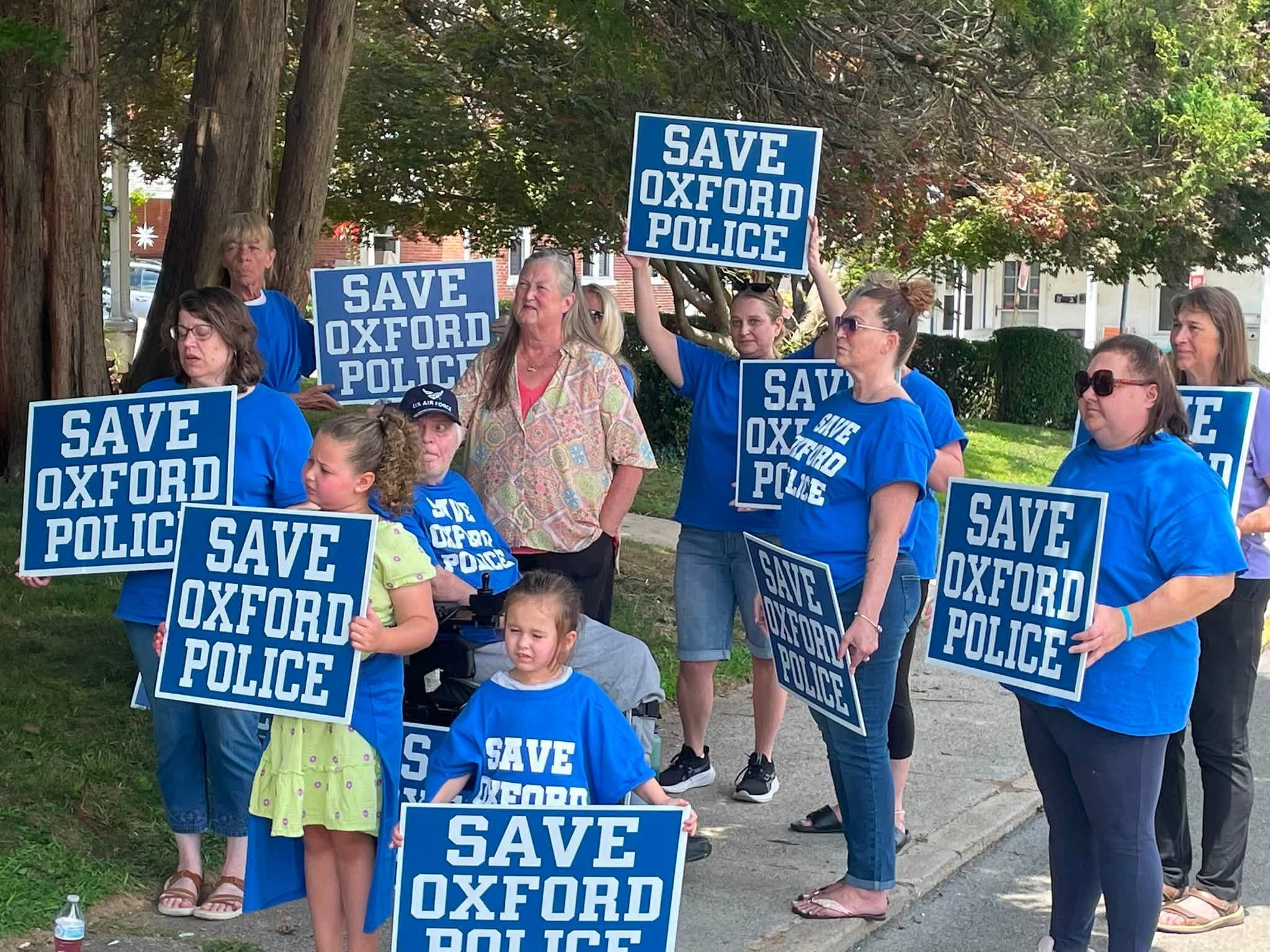
  • Oxford police officers, uncertain of their futures, resign as borough plans to close department and join regional force

    Oxford police officers, uncertain of their futures, resign as borough plans to close department and join regional force

    Three officers will resign from the Oxford Police Department ahead of the borough joining a regional department, with many officers saying the path to employment has felt uncertain and not guaranteed.

    The resignations — which the borough council approved Monday — come after Oxford’s officials approved, in a 5-2 split, to close the doors of their police department, citing ballooning expenses that outpaced the municipality’s revenue.

    Under the vote, the borough will become part of the Southern Chester County Regional Police Department, which serves New Garden, West Grove, and Avondale, on Jan. 1, 2027.

    To accommodate the growing geography, the regional department has pledged to hire 12 additional officers, with Oxford officials saying previously that their goal was for every officer to move over to the new force, if they wanted to. Oxford currently employs 11 full-time officers, including the chief, and several part-time officers.

    Applications for the regional department were sent out to Oxford officers earlier this month, with a deadline to submit by Friday. The applications were also posted publicly.

    But officers said that the road hasn’t been easy or transparent. In a meeting with The Inquirer at their station, the officers said that while it has been publicly stated that they are essentially guaranteed a job at the regional department, everything they have seen is “an opportunity to apply for a job.” Most officers spoke on the condition of anonymity out of fear of retaliation.

    Officers who are leaving said the uncertainty and the borough’s decision to close their department ultimately led them to seek new employment.

    Mayor Philip Harris said the borough was in active contract negotiations and declined to comment broadly on the situation.

    For the officers resigning, he acknowledged the community may “consider that to be in discord with the merger/joinder.” He argued that it “highlights and amplifies what we’ve been saying all along.”

    “It’s an incredibly difficult thing to recruit and retain officers,” he said. “They were recruited by other departments. They were offered better deals. That highlights some of the problems that brought us to this forefront.”

    Officers who have not resigned have begun meeting with the regional department leadership, they said. But with the clock ticking and no formal contract in front of them, the officers are worried about what employment could look like after Jan. 1.

    They are not sure what jobs they will get. With a cumulative experience of more than 280 years, they each have more than one year of service and have acquired rankings from corporal to sergeant. Those positions do not exist at Southern Regional, they say, making it unclear if they will lose rank in the transition.

    Because they have not seen a contract, they don’t know whether they should take a severance package. There are differences in pensions between the two departments that officers think will complicate the transition, too.

    “We have three that have secured jobs at other surrounding departments, and I haven’t seen one damn contract from Southern Regional,” one officer said. “What is my position going over there? How much am I making? What time am I carrying with me? My sick time, my vacation time, my seniority?”

    A yearslong process

    The move to regionalization has, essentially, been three years in the making, with borough officials long saying the police force costs more than it can afford. The borough has had several financial studies done in recent years examining the viability of the police department, and considering alternatives.

    Under the agreement with Southern Chester County Regional, Oxford borough would have two officers on patrol 24-7, like the current structure. Their shifts would begin and end at a local substation, ensuring no gap in coverage, as Oxford is roughly 16 miles away from the other municipalities under the regional department’s coverage. The 12 additional officers, hired as part of this expansion, would join a force of 21 full-time officers.

    There has been a growing trend of municipalities moving toward regionalization for high-price items in their annual budgets, like police, fire, and EMS. Public safety is at least 50% of the pie in most communities, experts have said.

    Regionalization, however, has not been perfect. Across the state, municipalities have joined and then withdrawn from regional services due to increasing costs under the agreement, according to a Keystone Municipal Solutions analysis, which studied police structuring in Oxford.

    Oxford officers said that there had been talks to merge with Southern Chester County Regional several years ago, but those discussions seemingly fell apart. Instead, officers recall, the department tried to make itself a possible regional hub — a force that could serve the municipalities that neighbor Oxford and currently use free coverage from the Pennsylvania State Police. Those talks also struggled to catch on.

    Officers still heard rumblings about joining the Southern Chester County Regional, but formally found out about the renewed effort when the Oxford Police Association received a letter from the borough council saying the start of union contract negotiations would be put on hold as the council explored a merger.

    Meanwhile, officers said, they are frustrated that the borough has not sought to slash costs in other areas, or will not wait for eligible members of the force to retire, where the pendulum on costs could swing back.

    “They have a champagne police department on a beer budget,” an officer said.

    Paul Frie, one of the officers who has accepted a position elsewhere, said that the borough’s decision to close its department caused him to look for other employment.

    “I can’t trust them to have my back,” he said. “I couldn’t work for them when they so haphazardly threw my job to someone else, because it’s not a guarantee.”

    Another officer, who has also resigned, said the uncertainty — and not knowing whether regionalization would stick — ultimately made the decision for him. It was hard: The officer grew up knowing many on the Oxford force, and said it was always a dream to work for the department.

    “I’m glad I got to fill it, partially,” said the officer, who spoke on the condition of anonymity. “It definitely sucks knowing this place isn’t going to be around.”

    This suburban content is produced with support from the Leslie Miller and Richard Worley Foundation and The Lenfest Institute for Journalism. Editorial content is created independently of the project donors. Gifts to support The Inquirer’s high-impact journalism can be made at inquirer.com/donate. A list of Lenfest Institute donors can be found at lenfestinstitute.org/supporters.

  • A large chess board with life-size pieces is posing questions about gender roles and hierarchy

    A large chess board with life-size pieces is posing questions about gender roles and hierarchy

    Like a lot of great art, the sculptor Donna Dodson’s latest work was born of childhood trauma.

    Growing up in the Midwest, Dodson would play chess with her older brother on a beautiful, hand-carved onyx chess set gifted to them by their grandparents — the siblings engaging in long, heated battles, again and again.

    And again and again, Dodson would inevitably fall short.

    “The humiliation of always losing created kind of a fire in me,” the 58-year-old, Massachusetts-based artist joked recently in a phone interview. “I think me making this chess set is somehow reclaiming my agency and dignity,” she said, referring to her art Match of the Matriarchs, which is a 24-by-24-foot chess set.

    The set, which appears in an exhibition of the same name at the Museum for Art in Wood, has the artist turning her attention to one of the world’s oldest games, examining — through the lens of chess — power, matriarchy, and the role of women in society.

    The exhibition is centered on a life-size, 32-piece chess set — all the pieces are women and range from roughly four feet to six feet in height. Dodson handcrafted them from salvaged wood.

    The pieces sit atop a massive board that will involve some kind of interactive element — the details of which are still being finalized before the show opens in November.

    Including what is believed to be the world’s only life-size chess set featuring all women pieces, the show aims to “transform the traditionally hierarchical game into a speculative arena of matriarchal power and ecological symbolism,” according to the museum’s program notes.

    “Minotaur,” a 31-inch-tall piece from sculptor Donna Dodson’s upcoming exhibit “Match of the Matriarchs” at Philadelphia’s Museum for Art in Wood.Brian Wilson

    “By placing the feminine at the forefront of a game so deeply associated with power, conflict, and hierarchy, Dodson asks us to reconsider its origins — and to wonder what may have been lost as the game evolved over time,” said Jennifer-Navva Milliken, executive director and chief curator at the Museum for Art in Wood.

    A second, smaller chess set — on a board roughly 12 feet by 12 feet — will be fully interactive, with visitors encouraged to stage their own matches, moving the pieces as their strategies demand.

    “By playing a game, or inviting viewers to come in and rearrange [the] art work, it creates a new art work every time,” Dodson said.

    In addition to Dodson’s work, the show will include about nine other artistic chess sets — including one designed by famed Pennsylvania artist Wharton Esherick, as well as a micro-set with pieces that can only be moved using tweezers.

    Prior to its debut at the Museum for Art in Wood, Dodson’s piece was on display at the Boston Sculptors Gallery and, most recently, at the World Chess Hall of Fame in St. Louis — though the Philadelphia version will include expanded programming.

    From candy striper to artist

    Dodson was never the artsy kid in school, she says. She attended Wellesley College in New England with plans of becoming a doctor, even working as a candy striper for a time. Her medical ambitions dwindled as she began to take to art in her mid-20s, along with her childhood love for chess.

    It wasn’t until she met Joseph Wheelwright, the noted Boston sculptor who would go on to become her mentor and teach her woodworking, that she returned to the game.

    Wheelwright, who died in 2016, would ask her to play during lunch breaks, and though he, too, would “clobber” Dodson — even while handicapping himself by taking several of his pieces off the board — the matches no doubt served as inspiration for Match of the Matriarch, she said.

    In Philadelphia, Dodson has found a fitting setting for her exhibit.

    The city is home to Jennifer Shahade, an author and three-time national chess champion, whose artwork will also be featured in the exhibit.

    “She has created a number of conceptual works and videos that recontextualize chess and chess sets as art,” Dodson said.

    The exhibition also coincides with the Philadelphia Museum of Art’s presentation from Marcel Duchamp — an artist famously infatuated with the game of chess who also occasionally incorporated the game into his work.

    The Museum for Art in Wood exhibit comes on the heels, meanwhile, of a worldwide resurgence in the game spurred by both the pandemic and the 2020 release of the Netflix series The Queen’s Gambit, which starred Anya Taylor-Joy and drove a wave of new interest in chess, particularly among girls and women.
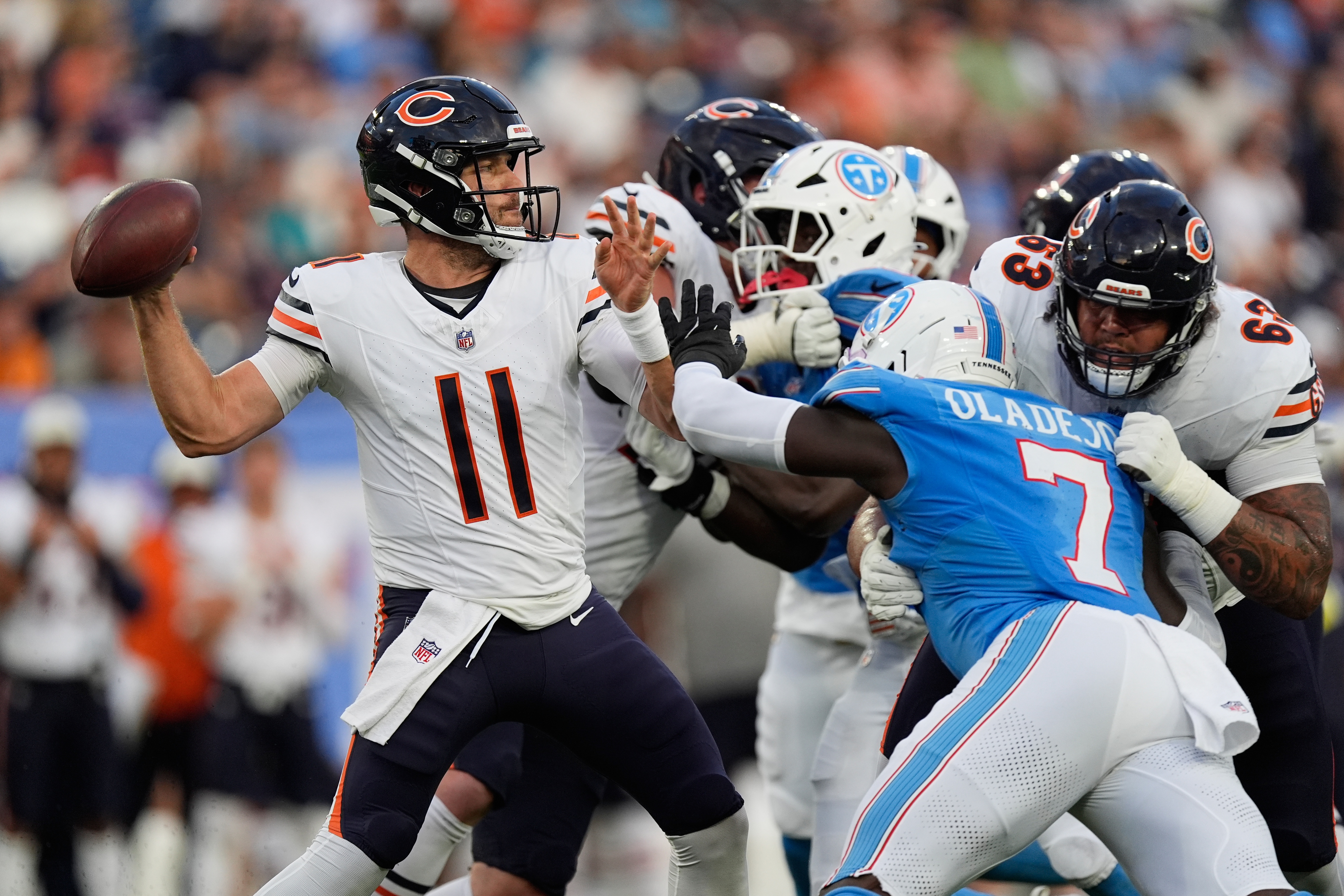
    “Tomboy,” a 42-inch-tall piece from sculptor Donna Dodson’s upcoming exhibit “Match of the Matriarchs.”Brian Wilson

    Dodson partakes in some form of chess daily, playing a weekly game in Maynard, Mass., where she now lives, as well as online.

    “I’ve become much more knowledgeable about the current chess community, what’s going on in the chess world, and have met some of the real-life champions in chess, which is all super exciting,” she said.

    Dodson, who will be present Nov. 7 for an artist talk at the museum, said she hopes the game’s universal charm will make the exhibit accessible to a wide audience.

    “I think a lot of people don’t feel comfortable going into art museums — they don’t feel that they know enough [about art] or whatever,” she said. “So I think the whole chess theme is very accessible — there’s a whole worldwide chess community of people who play for fun, play as a hobby, their kids play, their grandfather plays.”

    “Donna Dodson: Match of the Matriarchs” runs Nov. 6 through March 21, 2027, at Museum for Art in Wood, 141 N. 3rd St., Philadelphia. museumforartinwood.org

  • How did the Philadelphia Museum of Art become home to the world’s largest Duchamp collection?

    How did the Philadelphia Museum of Art become home to the world’s largest Duchamp collection?

    When the Philadelphia Museum of Art debuts its expanded Marcel Duchamp exhibit in October, it will be part of the first major U.S. retrospective of the mysterious forefather of modern art in more than a half century.

    Exploring the arc and range of the pioneering French American artist, who died in 1968, the show features 300 of Duchamp’s paintings, sculpture, film, photography, printed matter, design, and his unclassifiable works known as “readymades.”

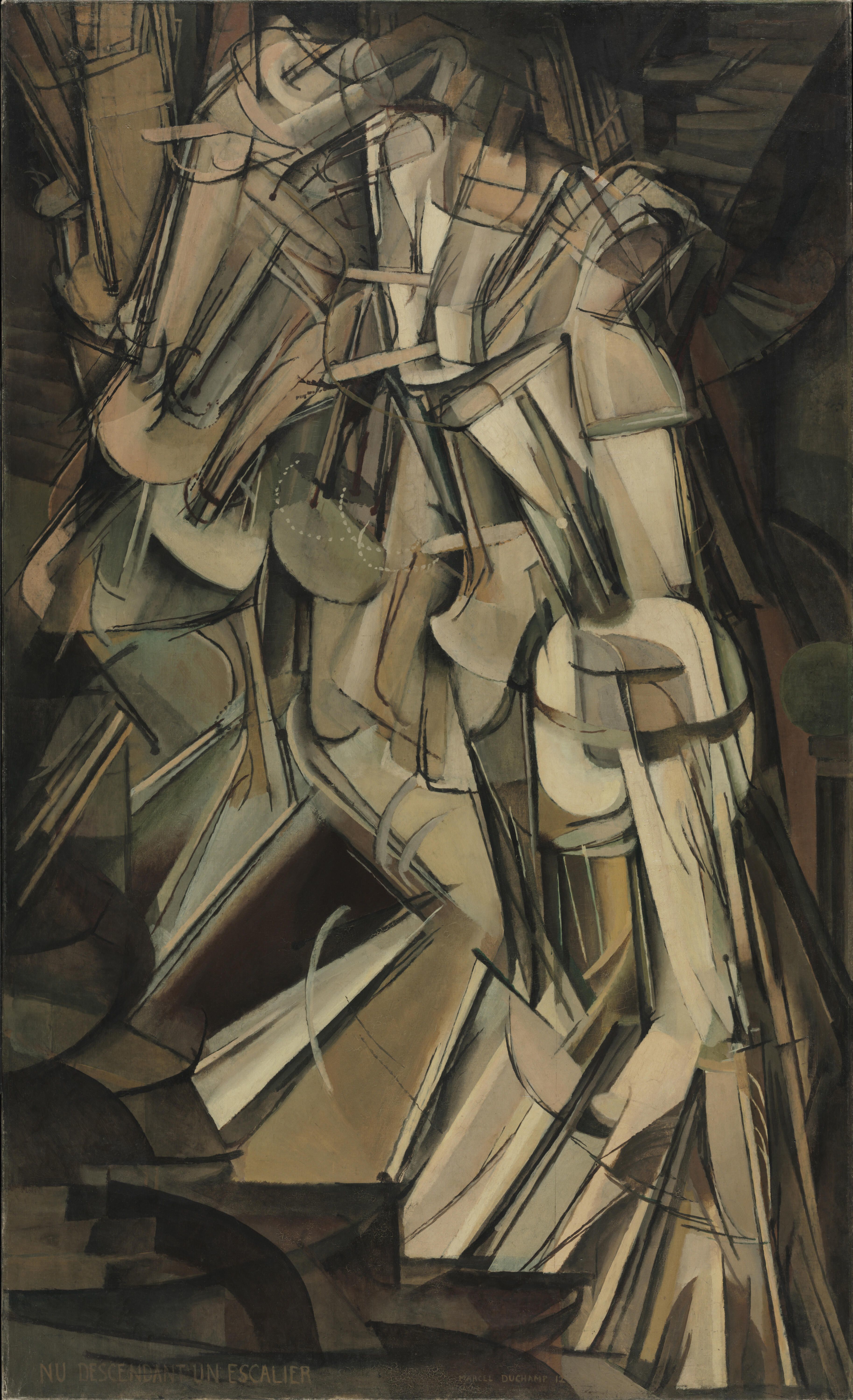
    “Nude Descending a Staircase (No. 2),” 1912, by Marcel Duchamp.Philadelphia Museum of Art, The Louise and Walter Arensberg Collection, 1950, © Artists Rights Society (ARS), New York / ADAGP, Paris / Association Marcel Duchamp

    After showing at New York’s Museum of Modern Art, the PMA show will run from Oct. 10 through Jan. 31, 2027. It includes Duchamp’s most celebrated creations, including his 1912 painting, Nude Descending a Staircase (No. 2), and his avant-garde masterpiece created between 1915 and 1923, The Bride Stripped Bare by Her Bachelors, Even. On hand will be Duchamp’s last major art piece, Étant donnés, a 1966 experiential assemblage he had been working on in secret and intended for the Philadelphia Museum of Art.

    “This is a once-in-a-50-years project,” said Philadelphia Museum of Art curator Matthew Affron.

    ‘Greatest collections’

    The monumental show also marks an opportunity to celebrate the museum’s preeminent relationship with Duchamp — and its lasting legacy and impact on the modern art world. No other art institution in the world has deeper Duchamp roots than the PMA, where the artist first helped install his works in 1954.

    Questioning the very definition of what art could be — he believed any ordinary object could be recontextualized as art — Duchamp broke the rules. But the artistic anarchist also maintained a decidedly rigid belief that his work should remain together on permanent display — in a monumental museum.

    Duchamp played a critical role in making Philadelphia that home.

    Philadelphia Museum of Art curator Matthew Affron in the Duchamp gallery on March 4.Tom Gralish / Staff Photographer

    After leaving Paris and its WWI-era artistic repression and moving to New York in 1915, the artist befriended patrons Louise and Walter Arensberg. With Duchamp’s careful guidance, the couple would amass the most fulsome collection of his works, and those of his contemporaries, anywhere.

    By the 1950s, Duchamp and his patrons had negotiated with museums, from the Museum of Modern Art in New York to the National Gallery in Washington, before being wooed by the PMA’s forward-looking director, Sidney Fiske Kimball.

    Recognizing Duchamp’s boundary-busting potential, Kimball offered what Duchamp wanted: space and control. Lots of it.

    “By the 1950s, Duchamp was becoming a forefather for modern artists,” said Affron. “Fiske was determined to be able to place a major section of modern art within the building.”

    Kimball displayed the Arensbergs’ gifted collection in a wing of the still-unfinished museum building on the Parkway, which he helped open in 1928.

    Along with other abstract and cubist works, the Arensberg collection helped form the foundation of the Philadelphia Museum of Art for 75 years.

    “It’s one of the greatest collections of modern art in an art museum,” Affron said.

    Legacy shaping pairing

    The unusually intimate relationship between artist and institution — the museum’s permanent display includes 200 Duchamp works and extensive archives — helped shape the artist’s legacy and established the Philadelphia Museum of Art as an essential destination for modern art pilgrims.

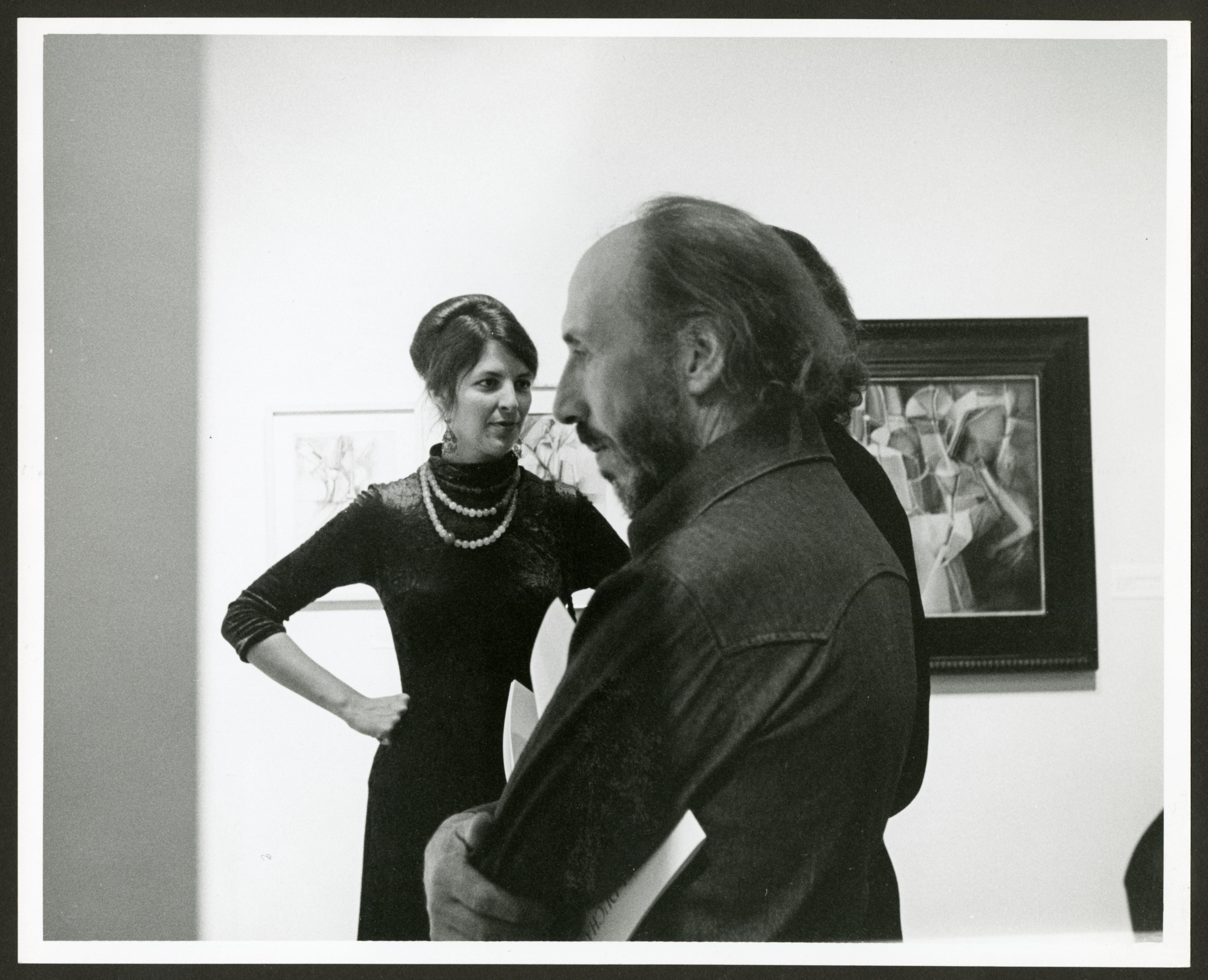
    At the 1973 opening of the Marcel Duchamp retrospective at the Philadelphia Museum of Art,
    Anne d’Harnoncourt at the center, with artist Richard Hamilton in foreground.Philadelphia Museum of Art Library and Archives: Marcel Duchamp Exhibition Records © Artists Rights Society (ARS), New York / ADAGP, Paris / Association Marcel Duchamp; Photographer: Patrick Radebaugh

    Under Duchamp’s direction, the museum initially displayed his works alongside those of contemporaries, like Picasso, Juan Gris, Piet Mondrian, Georges Braque, and Francis Picabia. Many of those works, also amassed by the Arensbergs, were on display at the museum’s temporary show, “Marcel Duchamp, Curator,” which ran through July 12.

    Curating the forthcoming retrospective with MoMA collaboration with the Centre Pompidou, Affron said he strove to present a faithful chronology of Duchamp’s work, including replica versions of his own art that he produced later in life.

    “One of the game-changing things Duchamp did was put into the question the value of original works of art,” Affron said. “He found a way of working between the originals and copies and when you lay his work out, you start to get a very interesting echo effect.”

    It only makes sense for it all to be back at Duchamp’s spiritual home — the Philadelphia Museum of Art, he said.

    “We are doing our job of taking care of his legacy,” the curator said.

    “Marcel Duchamp” runs Oct. 10 through Jan. 31, 2027, at Main Building, Dorrance Galleries and Galleries 281-283, Philadelphia Museum of Art, 2600 Benjamin Franklin Parkway, Philadelphia, philamuseum.org

  • 10 books with deep Philly connections for your fall reading lists

    10 books with deep Philly connections for your fall reading lists

    Blistering satire, bromance in Brazil, and short stories about women on the brink are among the selection of buzzy fall reads written or set in Philly.

    History plays a particularly important role in these Philly-centric books. They shine a light on little known facts, examine the city historic block by historic block, or tell stories of nature discoveries in faraway lands.

    As the days shorten and the winds cool, snuggle up with a mug of hot chocolate and one of these picks.

    Temple University’s writer-in-residence Camille Acker’s debut novel, “A Very Special Episode,” is a modern day satire about Washington’s Black eliteElizabeth Wellington

    ‘A Very Special Episode’ by Camille Acker

    Random House, $28

    Within the first few pages of Camille Acker’s satirical debut novel, A Very Special Episode, it’s clear D.C.’s high-profile Black elite are under interrogation. But West Philly-based Acker doesn’t forget to pay reverence to the legacy of the city’s Black institutions and its people.

    At the center of the 285-page novel is the Tenth, a fictional private club and reference to W.E.B. Du Bois’ Talented Tenth theory. Nina, the protagonist, shares a name with Du Bois’ daughter, Nina Yolande Du Bois. Her boyfriend is Booker T. Bruce — whose name is a nod to formerly enslaved 19th-century leaders Booker T. Washington and Blanche K. Bruce. These homages and juxtapositions are doubly interesting, considering Du Bois’ and Washington’s philosophy were at odds.

    Acker is a Temple University writer-in-residence known for the biting short stories in Training School for Negro Girls. However, much like those works, A Very Special Episode is grounded in the present. We are with Nina as she tries to keep the Tenth relevant, a darn near impossible job in today’s world in which Jim Crow manifests as gentrification and police brutality. And affluent African Americans willingly don the shackles of material wealth.

    A Very Special Episode was released Aug. 18.

    Former Philadelphia Inquirer journalist Natalie Pompilio and PBS’s “Antiques Roadshow” print and map expert Christopher W. Lane teamed up for this illustrated text “Historic Maps of Philadelphia: A History of the City of Brotherly Love in Rare Maps.”Reedy Press

    ‘Historic Maps of Philadelphia: A History of the City of Brotherly Love in Rare Maps’ by Natalie Pompilio

    Reedy Press, $42

    Former Inquirer journalist Natalie Pompilio combines her affinity for Old City and walking tours in this 176-page hardcover exploring Philadelphia’s past through historical maps.

    Historic Maps of Philadelphia: A History of the City of Brotherly Love in Rare Maps is an illustrated topographical study co-written with Christopher W. Lane, cofounder of the Philadelphia Print Shop and PBS’s Antiques Roadshow’s print and map expert.

    The maps in this book date to the 16th century when Philadelphia was home to the Indigenous Lenape tribe. They weave through colonial, antebellum, and early 20th-century Philadelphia and ends in the mid-20th century with highways that eased drivers’ trips and decimated historic neighborhoods.

    Historic Maps of Philadelphia was released Sept. 1.

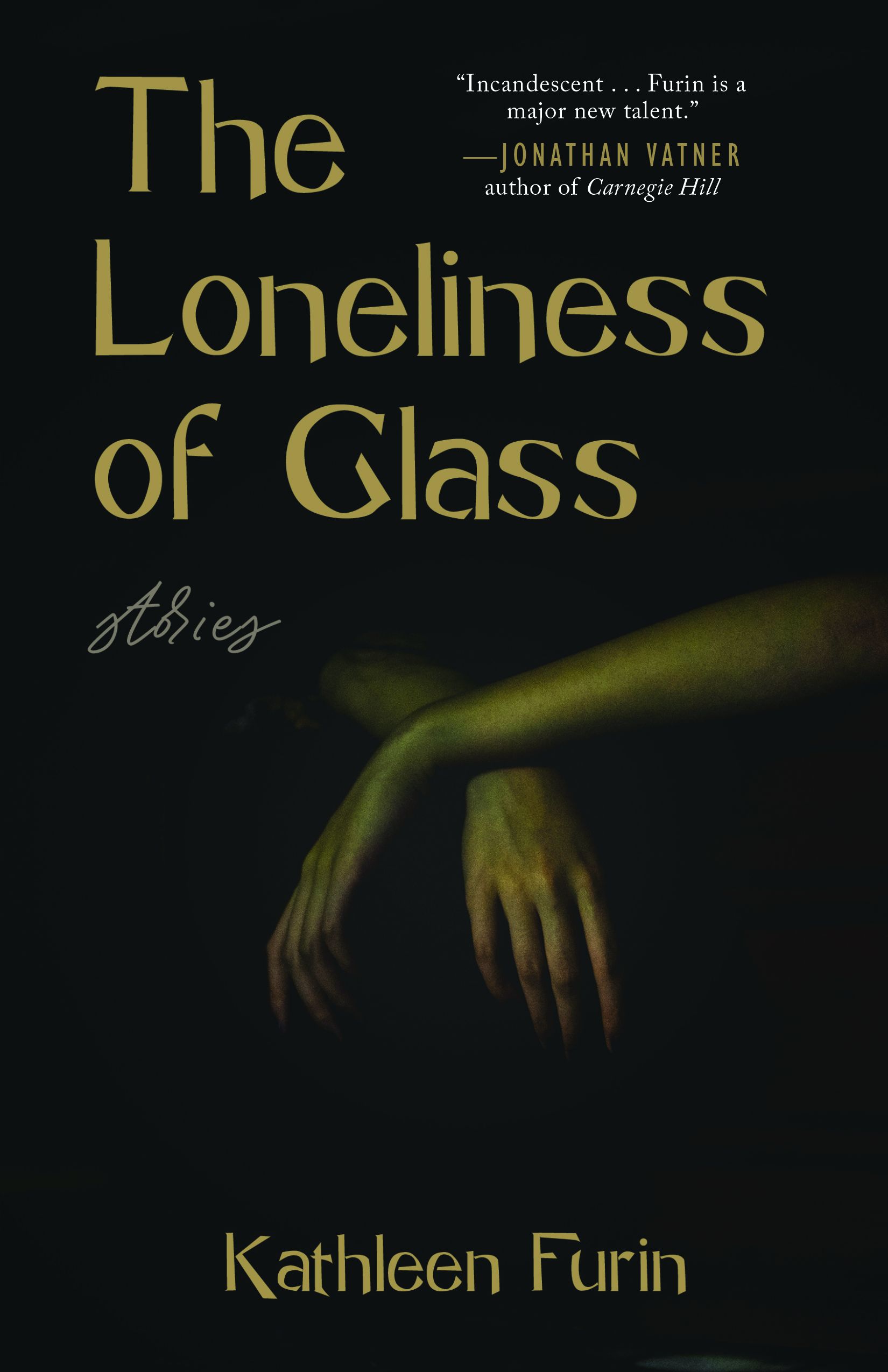
    West Mount Airy award winning short story writer Kathleen Furin’s first bound collection of short stories, “The Loneliness of Glass” centers strong, resilient, complex women who overcome the odds and learn to love themselves.Cornerstone Press

    ‘The Loneliness of Glass: Stories’ by Kathleen Furin

    Cornerstone Press, $24.95

    West Mount Airy-based book coach, equity and inclusion consultant for Germantown’s Just Strategies Hub, and award-winning short story writer Kathleen Furin will release her first bound collection, The Loneliness of Glass, in November.

    On Furin’s website, she describes her work as stories about strong, resilient, complex women who, through overcoming odds, learn to love themselves.

    The narratives in this 220-page paperback reflect that and include a piece about a young woman who loses her half sister in a tragic murder, and a woman in an interracial marriage who is forced to confront her preconceived notions about race when she visits her hometown.

    The Loneliness of Glass releases Nov. 3.

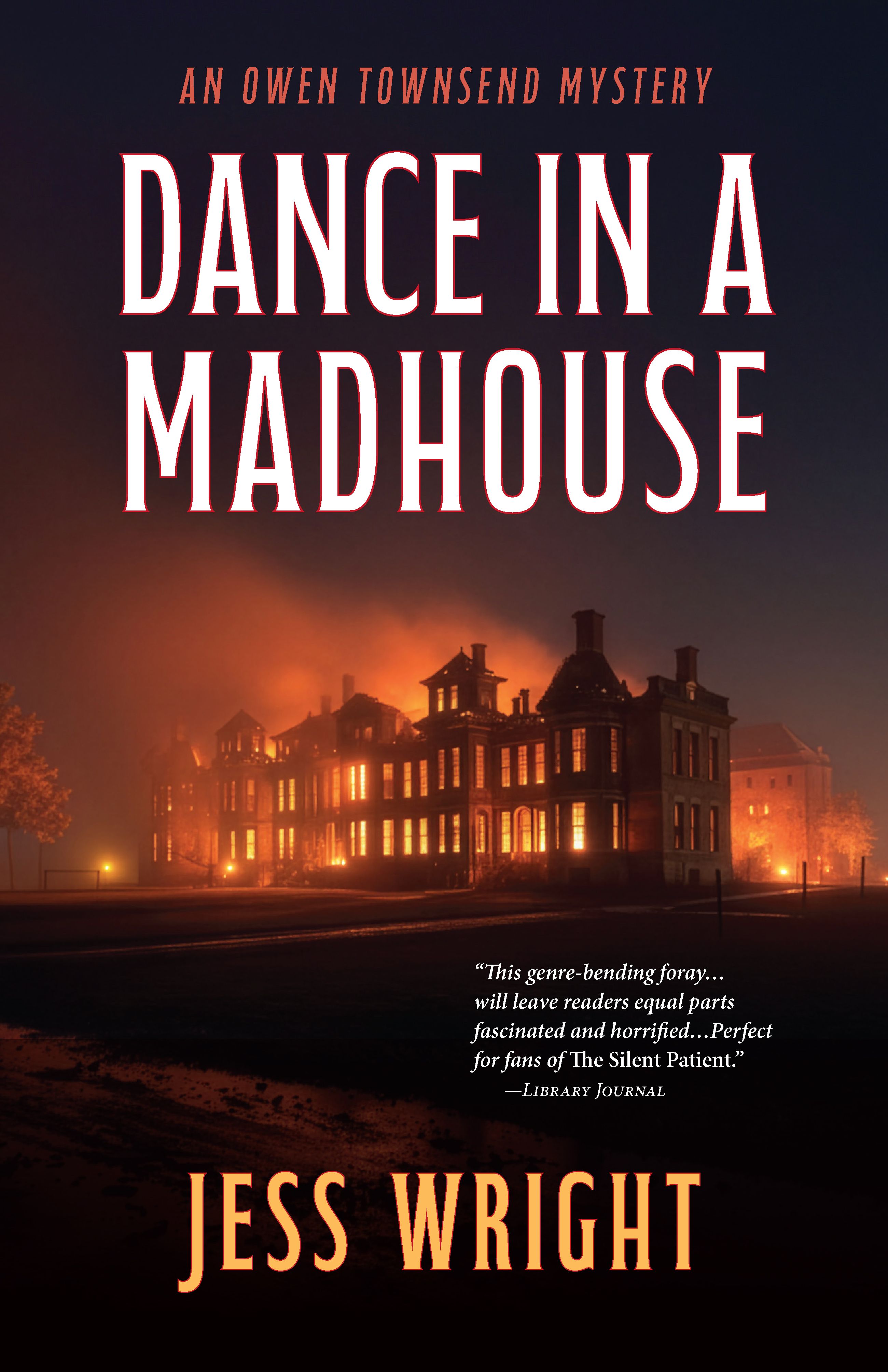
    Louisville, Ky.-based psychiatrist Jess Wright explores psychosis in early 20th-century Philadelphia in “Dance in a Madhouse,” the first installment in the Owen Townsend mystery trilogy.Montague Books

    ‘Dance in a Madhouse’ by Jess Wright

    Montague Books, $19.99

    Owen Townsend is a promising young medical school intern in 1905 Philadelphia when he gets locked up in the fictional Fairmount Lodge Asylum. Did he really lose his mind? Or, was he set up? Those questions are at the center of noted Louisville, Ky.-based psychiatrist Jess Wright’s mystery Dance in a Madhouse.

    Wright, a native of Hollidaysburg, earned his medical degree at Jefferson Medical College in 1969 and interned at Lankenau Medical Center in the early 1970s. This 288-page thriller is set against the backdrop of the Museum of Art when it was located in Memorial Hall and Boathouse Row, the library of the College of Physicians, and Jefferson Medical College. Dance in a Madhouse is the first book in a trilogy of Owen Townsend mysteries.

    Dance in a Madhouse was released Sept. 8.

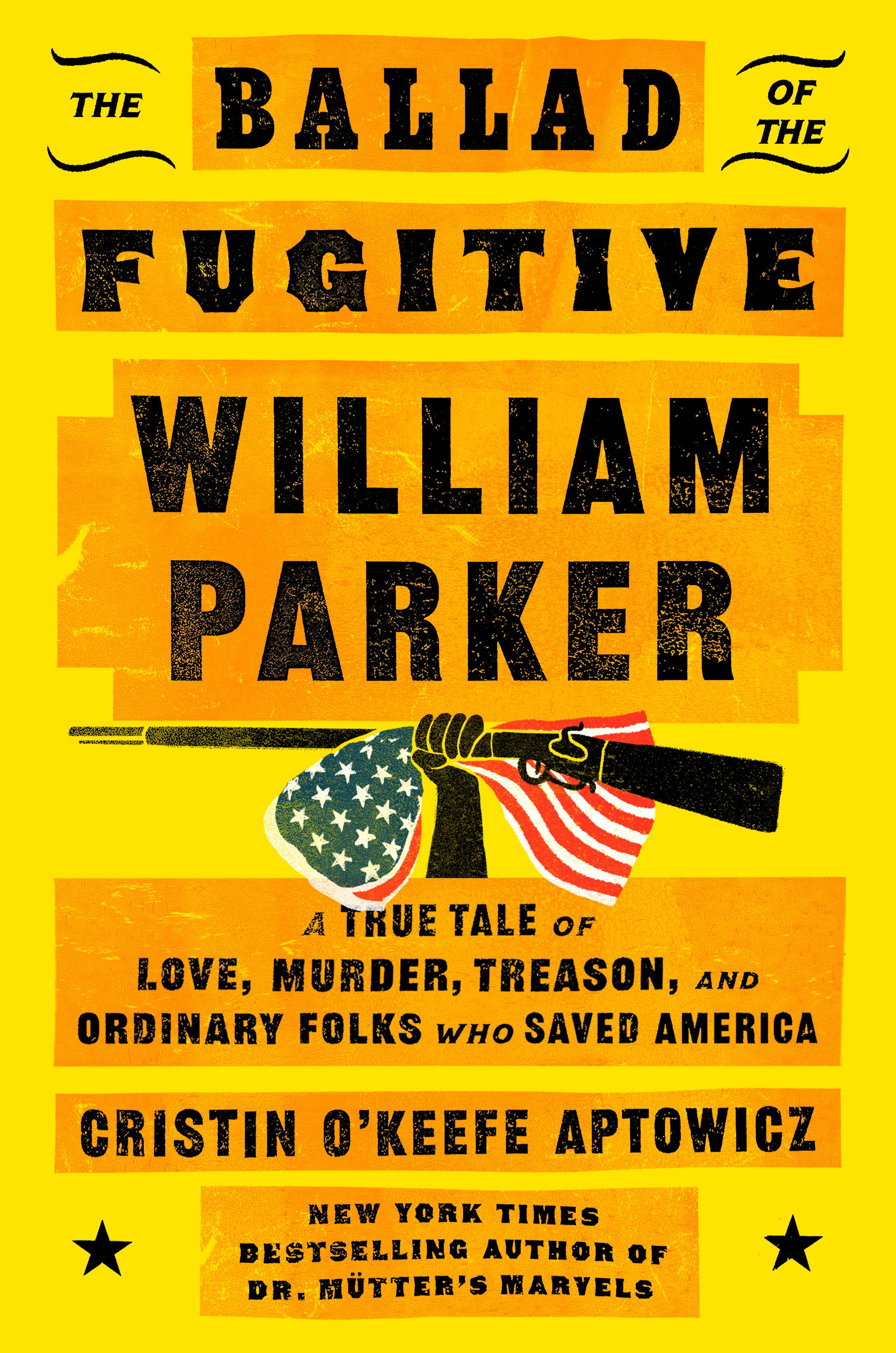
    Central High School graduate (Class 255) Cristina O’Keefe Aptowicz’s historical nonfiction drama of William Parker, an enslaved man who emancipated himself from a Maryland plantation as a teenager in 1839, created a new life for himself as a free man in Christiana, Pa. His freedom is threatened when his former enslaver was killed tried to re-enslave him.Simon & Schuster Books

    ‘The Ballad of the Fugitive William Parker: A True Tale of Love, Murder, Treason, and Ordinary Folks Who Saved America’ by Cristin O’Keefe Aptowicz

    Simon & Schuster, $31

    Poet, historian, New York Times best-selling author, and Central High School graduate (Class 255) Cristin O’Keefe Aptowicz’s latest work, The Ballad of the Fugitive William Parker, is the true story of a self-emancipated formerly enslaved man’s fight to remain free in early 19th-century Pennsylvania.

    Her 2014 steeped-in-Philly-history nonfiction book Dr. Mutter’s Marvels: A True Tale of Intrigue and Innovation at the Dawn of Modern Medicine spent three months on the New York Times’ bestsellers list.

    Shortly after her mother died, Aptowicz began exploring her mother’s side of the family tree. She discovered her maternal ancestors were seamstresses for the Underground Railroad, sometimes sewing new outfits for entire groups of freedom seekers in a single night. In her research, she kept coming across the names “William Parker” and “Christiana Riot,” names she, a lifelong Philadelphian, had never heard of before.

    The Ballad of the Fugitive William Parker is Aptowicz’s “best attempt to resurrect this important and necessary story and bring it back into the national spotlight where it belongs.”

    The Ballad of the Fugitive William Parker was released Sept. 8.

    “Winterset Hollow” is a fantasy book within thriller book by Allentown resident and social media sensation Jonathan Edward Durham.Union Square & Co.

    ‘Winterset Hollow’ by Jonathan Edward Durham

    Union Square & Co., $19.99

    When Diana Gabaldon — author of the Outlander novels that inspired Starz’s popular time-traveling series of the same name — refers to your book as “astonishingly powerful and multilayered” declaring it among the most interesting books she’s read in years, you might have written a literary winner.

    Such is the case for Allentown writer and social media content creator John Edward Durham, or @thisoneoverhere on Instagram, where he has 419,000 followers.

    Durham’s Winterset Hollow follows four fictional friends visiting the island that inspired their favorite fantasy novel, also named Winterset Hollow. But when they break into the writer’s abandoned estate, they discover that the truth behind their favorite adored book is dark, dangerous, and terrifying.

    First published in 2021 by Credo House Publishers, Union Square and Co. — a subsidiary of the New York’s Hachette Book Group — will release the new edition in October featuring the fictional book Winterset Hollow within Durham’s book.

    Winterset Hollow releases Oct. 6.

    Robert McCracken Peck, a retired senior fellow of the Academy of Natural Sciences of Drexel University, spent close to 50 years as the Academy’s official historian and photographer. “Travels on the Edge: A Naturalist’s Notes from the Back of Beyond” is a collection of essays and photos chronicling his adventures.University of Pennsylvania Press

    ‘Travels on the Edge: A Naturalist’s Notes from the Back of Beyond’ by Robert McCracken Peck

    American Philosophical Society Press, $29.95

    Retired senior fellow of the Academy of Natural Sciences of Drexel University, author, and Chestnut Hiller Robert McCracken Peck spent close to 50 years traveling the world as the official photographer, historian, and chronicler of scientific exhibitions for the academy.

    He discovered three new frogs in the Andes, collected several previously unknown species of fish on the Orinoco River, and studied rare insects in Africa and the Caribbean. He’s been on expeditions to Mongolia to study wildlife, witnessed the fall of the Berlin Wall, and traveled the Gobi Desert.

    Travels on the Edge: A Naturalist’s Notes from the Back of Beyond is the scholar and adventurer’s collection of essays accompanied with lavish illustrations and Peck’s original photographs. In 240 pages, readers are transported to the most remote parts of the world to witness the joys (and challenges) of scientific research.

    Travels on the Edge: A Naturalists Notes from the Back of Beyond was released Sept. 15.

    Ashton Lattimore’s “Runner” follows lady rumrunners from Martha’s Vineyard into Boston and down through New York City during the Harlem Renaissance.Penguin Random House

    ‘Runner’ by Ashton Lattimore

    Penguin Random House, $31

    Shortly after Ashton Lattimore completed the 2024 award-winning novel All We Were Promised, centering an enslaved women in antebellum Philadelphia searching for her freedom, she began writing Runner from her Bryn Mawr home.

    Lattimore has since moved to northern New Jersey, but her ties to Philadelphia’s historic organizations run deep.

    Runner follows lady rumrunners from Martha’s Vineyard into Boston, and down through New York City during the Harlem Renaissance. Will the protagonist Lena Jameson discover who killed her father? Will she be able to skirt the authorities on her tail during Prohibition? Or, will she lose it all simply because she’s a woman?

    Runner was released July 28.

    Omar Tyree’s latest book, “Touchdown in Brazil,” is a bromance between an Eagles fan from South Philly and a Green Bay Packers fan in Brazil during the 2024 game between the two teams. It was the first NFL game played in South America.Dafina, an imprint of Kensington Publishing Corp.

    ‘Touchdown in Brazil’ by Omar Tyree

    Dafina, an imprint of Kensington Publishing Corp., $37.99

    West Philadelphia native and veteran author Omar Tyree’s latest novel Touchdown in Brazil centers a Philadelphia Eagles fan who travels to Brazil in 2024 to watch his beloved Birds play the Green Bay Packers in the NFL’s first game played in South America.

    The protagonist, named Tony Costa, is an amateur sports better looking for a break from his wife and hoping for a win with the Birds. The Eagles win. But whether Costa — who befriends other husbands and fathers including a Packers devotee and the owner of a local sports bar during his trip — will learn to appreciate his family and take home the ultimate win, is up in the air.

    Touchdown in Brazil releases Sept. 29.

    Hilal Isler’s first short story in her collection, “Khadijah Number 2,” is set in the working class neighborhood in West Philly and comes to a climax in the opulent Rittenhouse Square.Northwestern University Press

    ‘Har Mar’ by Hilal Isler

    Curbstone Books, Northwestern University Press, $24

    Author Hilal Isler set “Khadijah Number Two,” the introductory yarn in her debut collection of short stories Har Mar, among the rowhouses of West Philadelphia and the luxe lofts, expensive gastropubs, and overpriced yoga pants on Rittenhouse Square.

    The story centers 25-year-old Turkish server and borderline alcoholic Ayla Erdoğdu. The devout 50-year-old Muslim woman Khadijah picks Ayla because she’s young, pretty, and flaky — just the energy she needs to sell her book. And she’s right. Khadijah’s novel is a hit and Ayla gets lost, becoming a second edition of Khadijah.

    Many of the selections in Isler’s 16-story debut work feature women of color. Some of are Muslim, some are not. But all of them are complicated and have a salty vibe.

    Isler attended the University of Pennsylvania and currently is an associate professor at the University of Austin.

    Har Mar was released July 15.

    An earlier version of this story listed an incorrect publisher for Robert McCracken Peck’s new book. It is the American Philosophical Society Press.

  • Jeff McLane’s keys to Eagles vs. Bears in Week 3 and a game prediction

    Jeff McLane’s keys to Eagles vs. Bears in Week 3 and a game prediction

    The Eagles travel to face the Chicago Bears at 8:15 p.m. on Monday at Soldier Field. Here’s what you need to know about the matchup:

    When the Eagles have the ball: Sean Mannion has another chance to get the ground game going against a run defense that ranks 20th in the NFL in expected points added per rush. It’s been a grind through the first two weeks. Landon Dickerson’s injury — or injuries — didn’t help matters in Week 1, and the shuffling of Cam Jurgens and Drew Kendall at left guard and center didn’t help in Week 2. But the play-calling hasn’t been great, either, with runs on obvious downs and condensed sets that have invited stacked boxes and made it difficult for blockers.

    There likely would be a learning curve with the new wide-zone blocking scheme. Mannion has had to lean on some of the Eagles’ past staple runs — with mid-zone and duo blocking — to offset the struggles on outside zone runs. But one of the main reasons for hiring the offensive coordinator was to bring elements of the Shanahan scheme here — primarily the under-center, play-action game — and that’s yet to really happen. The Eagles rank 28th in under-center usage and play-action passes. It’s tough to commit to the latter when you’ve done virtually squat on first down (1.8 yards per rush). We’re still talking about a small sample of games. Still, we would like to see progress from the unit helmed by run game coordinator Ryan Mahaffey and offensive line coach Chris Kuper in the coming weeks.

    Montez Sweat (right) is the pass rusher the Eagles will most have to account for. Matt Ludtke

    Bears defensive coordinator Dennis Allen employs a traditional 4-3 front. Veteran defensive tackle Grady Jarrett once was one of the better run-stuffers in the league, but he’s fallen off. Edge Montez Sweat is his best pass rusher. Jurgens and Kendall should have an easier task than they had last week against Jeffery Simmons. Still, Allen probably learned a thing or two from how Vikings defensive coordinator Brian Flores kept the Bears’ similar run offense in check last week. I would expect aggressive five-man fronts to force the Eagles into one-on-one blocking. Mannion may need to spread his formations to keep tight ends Johnny Mundt and EJ Jenkins from having to win at the point of attack. It hasn’t been pretty thus far.

    All three of the Eagles’ running backs — Saquon Barkley (stinger), Tank Bigsby (abdomen) and Will Shipley (foot) — were on the injury list this week. But they’re cleared to play. If the blocking can get any of the three to the second level against linebackers Devin Bush and T.J. Edwards, I think there could be potential for a house call if Allen is going to sell out against the run. That aggressiveness extends to how he calls it vs. the pass. The Bears have the fourth-highest blitz rate in the NFL at 43.3%. They play Cover-1 (36.2%) at more than double the league rate (18%) and Cover-3 31% of the time. So there should be opportunities for quarterback Jalen Hurts and receivers DeVonta Smith and Dontayvion Wicks to exploit single-high safety coverages with the susceptible Tyrique Stevenson and Jaylon Johnson at outside cornerback. Stevenson has a hamstring injury. If he can’t go, the Bears may move rookie slot Malik Muhammad to the outside.

    Allen has another rookie in the secondary — safety Dillon Thieneman — but Chicago’s first-round safety looks legit. He may be tasked with covering the recently acquired Zach Ertz in man situations. Thieneman was the Bears’ primary defender over tight ends in the first two games. Ertz is expected to suit up. What’s unknown is how much he’ll play and how effective he’ll be just nine months removed from major knee surgery. But if he’s close to the player he was before the injury, he could be a valuable option for Hurts over the middle on third down and in the red zone.

    When the Bears have the ball: This is the more intriguing matchup, with two of the best play-callers on their respective sides of the ball facing off. Ben Johnson got the better of Vic Fangio last season, especially on the ground in Chicago’s win. The Bears rushed for 281 yards and made a good Eagles defense look like it couldn’t get off blocks or tackle in space. How did they do it, and why are they likely to present the same challenge again? Well, for one, they have two good running backs in D’Andre Swift and Kyle Monangai. They also have an above-average offensive line led by road-grader right tackle Darnell Wright. But it’s Johnson’s scheme and play-calling that often is the star of the show. It’s a heavy under-center, play-action offense that runs the outside zone as much as any team.

    Ben Johnson got the better of the Eagles on Black Friday last season. Scott Kinser

    Johnson doesn’t have to dress it up much because of the talent he has up front and the cutback lanes his blockers create. The Bears rushed for 291 yards in the shootout win over the Panthers in the opener, with Swift and Monangai each eclipsing 100 yards. But Minnesota held the running backs to just 3.5 yards per carry in Week 2 behind Flores’ ultra-aggressive defense. Fangio may be the polar opposite of Flores. He likes to win with the lightest boxes in the NFL. But he may have to situationally devote an extra body to force the Bears to the air.

    Chicago likely is down to its third quarterback with starter Caleb Williams (hamstring, ruled out for Monday) and backup Tyson Bagent (concussion) dealing with injuries. Case Keenum is expected to be under center. The 38-year-old hasn’t had a start in nearly three seasons. Johnson likely will call a fair amount of quasi-run passes to help his quarterback, especially if the Eagles keep the run game in check. But the Eagles have allowed 127 yards per game on the ground and are ranked 25th in expected points added per rush. They had nine missed run tackles vs. the Titans last week.

    They had eight missed tackles last season vs. the Bears. That was the game that forced Jalen Carter to address his shoulders with minor surgery. He’s now playing with a wrist injury, and Fangio said he was surprised the defensive tackle played as well as he did last week, considering the soft cast he’s had to wear. The wrist and how it impacts Carter bear monitoring. The same could be said of the play of the Eagles’ safeties. Marcus Epps struggled in Tennessee. Howie Roseman signed slot cornerback Kenny Moore II to the practice squad on Tuesday, but Fangio doesn’t seem intent on moving any pieces. He did concede that Michael Carter II could play more safety.

    Johnson likely will try to attack the middle of the field. His play designs attempt to stretch defenses to give his quarterbacks throwing lanes on intermediate routes. Receivers Rome Odunze and Luther Burden are young and promising. Veteran slot guy Kalif Raymond is small and shifty and could give Cooper DeJean fits. Tight ends Colston Loveland and Cole Kmet have only a combined three catches through two games, but both can be a handful. The Eagles’ pass rush has been underwhelming, considering the O-lines they’ve faced thus far. The Bears have a stronger unit, although center Garrett Bradbury has been a liability in pass protection. Left tackle Ozzy Trapilo could return after missing the first two games.

    Kicker Jake Elliott has been quietly solid for the Eagles thus far. Yong Kim / Staff Photographer

    Extra point: The Eagles have yet to force a turnover. Fangio’s unit has been among the best in taking the ball away over the previous two seasons, so it may be just a coincidence. But it’s tough to win in the NFL if you’re net-negative in turnover differential. The Bears have three takeaways and giveaways apiece. It looks like weather conditions will be relatively benign, especially for Chicago. Kicker Jake Elliott has gotten off to a solid start this season and should have some confidence after connecting from 58 yards out in Nashville. Bears kicker Cairo Santos has a right hip injury. The Bears didn’t add an emergency replacement, but will Santos be 100%?

    Shawn Hochuli is the head referee, which could be good news for the Eagles, who are 6-0 in games officiated by him in the last five seasons. Maybe that’ll have little impact on the outcome, but there seem to be several factors in the Birds’ favor entering this matchup. I don’t think we yet know the defining characteristics of this team. It had to scrape by opponents with low outside expectations. But we’ve seen this version of the Eagles before: stack imperfect wins early until finding an identity.

    I probably would have picked the Bears if Williams was healthy. I wouldn’t underestimate Keenum with Johnson at the controls. But I can’t see Fangio getting fooled in the rematch. And I think that a confident Hurts is a dangerous Hurts, especially with the advantages the Eagles receivers have against the Chicago secondary. So I like the Eagles in a relative squeaker, maybe with Elliott kicking the game-winner.

    Prediction: Eagles, 27-24.

  • Eagles vs. Bears: Predictions, odds, injury updates, and why people are talking about kickoffs again

    Eagles vs. Bears: Predictions, odds, injury updates, and why people are talking about kickoffs again

    Once again, the way the Eagles interpret a rule and how they use it to their advantage, is under the microscope.

    NFL insider Jordan Schultz reported Friday that special teams coordinators were meeting Friday to clarify a rule “that some teams are believed to have misunderstood — or found a loophole in — through the first two weeks of the season.”

    Did you notice Braden Mann on the field holding for Jake Elliott on kickoffs in Week 2? It was really hot in Nashville, but it wasn’t windy. Special teams coordinator Michael Clay watches every snap of special teams play on Monday mornings. He noticed the Atlanta Falcons using a holder in Week 1 and decided to have the Eagles work on it.

    Mann angled the ball a certain way, and Elliott liked the way it looked in practice enough to use it in the game. The Eagles allowed 30.8 yards per kick return on five attempts in Week 1 and 25.3 on four returns in Week 2.

    “I’m sure it’s different for every kicker, but just the way I was able to make the ball move in the air, I liked what I was able to accomplish with that,” Elliott said Friday.

    Now, apparently, there’s an effort to make sure the 12th player on the field acting as the holder puts the ball on a tee and not the ground.

    Elliott said he didn’t think adding a tee to the equation would impact Mann’s ability to angle the ball for him to kick.

    “There’s a lot of attention surrounding it because there are nuances,” Elliott said. “And because they’re changing the kickoff rules so much, we’re obviously all trying to figure out what the best way to manipulate that is and kind of trying to figure out the best way to attack that and what gives us an advantage.”

    The Eagles have some experience with this kind of thing (see Push, Tush).

    Nick Sirianni was diplomatic when asked about it Saturday. “Everything we’re doing is within the rules of the game, and we’ll continue to do the things that we need to do that give us the best chance to win each and every game,” he said.

    — @Jeff_Neiburg

    If someone forwarded you this email, sign up for free here.

    ❓Have a question you want answered in a future edition? Email us back for a chance to be featured in the newsletter.

    How to watch Eagles vs. Bears

    The Eagles and Bears kick off 8:15 p.m. Philadelphia time. The game will air on ESPN and 6abc. The normal Monday Night Football crew will call the game. That means the polarizing Joe Buck on play-by-play with Troy Aikman as the analyst and Lisa Salters and Laura Rutledge doing the sideline reporting.

    Aikman is continuing to call games while his future remains unclear. The Athletic’s Andrew Marchand talked about that on his latest sports media podcast.

    Of course, the pomp and circumstance of MNF means viewers will have their fix of Jason Kelce, Pat McAfee et al. during the pregame and halftime shows.

    Like the old-school experience of listening on the radio or syncing up your television with the hometown call? Merrill Reese and Mike Quick will have you covered there on 94 WIP as usual.

    Looking to watch the game somewhere in the city with fellow Eagles fans? Here’s our latest list of places to watch.

    Final injury report

    Jonathan Greenard is questionable for Monday’s game.David Maialetti / Staff Photographer

    Will Jonathan Greenard make his Eagles debut? It’s possible.

    The edge rusher was listed as a full participant Saturday for the first time since joining the team and said he was optimistic. If he plays, he’ll likely be on a snap count.

    Eagles

    Out

    • TE Dallas Goedert, knee
    • WR Hollywood Brown, ankle
    • OL Fred Johnson, knee

    Questionable

    • EDGE Jonathan Greenard, pectoral

    Bears

    Out

    • QB Caleb Williams, hamstring
    • LB Noah Sewell, Achilles
    • DL Shemar Turner, knee

    Questionable

    • QB Tyson Bagent, concussion

    Storylines to watch

    Caleb Williams’ status, who might play quarterback in his absence, and how the Eagles will prepare have been major storylines this week.Nam Y. Huh

    Who plays quarterback for the Bears? That was the biggest storyline of the week, and the picture got a bit clearer on Saturday, when the Bears ruled out Caleb Williams and made Tyson Bagent questionable.

    All signs pointed toward third-string quarterback Case Keenum getting the call, but Bagent, who was concussed in his brief relief of Williams last week, was upgraded to a full participant Saturday and may play Monday.

    Surely Vic Fangio has been preparing all week as if Williams wouldn’t play. And the Eagles have plenty to worry about in their own building, too, after narrowly escaping Weeks 1 and 2 with victories.

    They got some good injury news themselves when Saquon Barkley (stinger) progressed to a full participant Friday and said he was “good to go” for Monday night’s game.

    Speaking of Eagles injuries, life without Dallas Goedert (sprained MCL) begins this week. The Eagles brought back Zach Ertz, who was “nervous” for his first practice on Thursday and could provide the team with an immediate impact on Monday if he plays. That decision, he said Saturday, is up to the coaches.

    Our Eagles Week 3 preview show

    What can we expect from Zach Ertz? What’s unexpected about the way the Eagles got to 2-0? Those answers and more are in this week’s Gameday Central pregame show.

    Eagles-Bears predictions

    Jeff McLane: Eagles 27, Bears 24

    Jeff Neiburg: Eagles 24, Bears 11

    Olivia Reiner: Eagles 24, Bears 17

    Ryan Novozinsky: Eagles 28, Bears 3

    Check out the reasoning behind our picks and McLane’s keys to the game. As for the rest of the country, here’s a look at the national media predictions for Monday.

    One number to know

    The Eagles have struggled on first and second downs so far this season.Yong Kim / Staff Photographer

    32nd

    That’s where the Eagles rank in success rate on first and second downs, according to Sportradar. As a reminder, there are 32 NFL teams.

    The Eagles average a league-worst 2.6 yards per play on first down. The Dolphins rank 31st at 3.2 yards. That is not the company you want to keep.

    The Eagles have survived, however, because they have been one of the best teams in the NFL on third and fourth downs.

    In fact, according to SumerSports, the Eagles have the largest difference in success rates between early downs and late downs to start a season since 2022.

    “We’re really close on a lot of our things on first and second down,” offensive coordinator Sean Mannion said Wednesday.

    We’ll see how close on Monday night.

    There are other numbers worth paying attention to, too.

    Latest Week 3 odds

    The point spread was up to 4½ points in the Eagles’ favor earlier in the week, but FanDuel and DraftKings had them as 3½-point favorites as of Saturday afternoon. The over/under at both books was 42½.

    Given the quarterback situation, oddsmakers aren’t expecting Bears pass catchers to make a big impact vs. the Eagles.

    What we’re saying about the Eagles

    Here’s what our columnists are saying this week, starting with Mike Sielski, who wrote about the intriguing coaching matchup between Nick Sirianni and Ben Johnson.

    Sielski: “Sirianni-Johnson might be the most compelling comparison and matchup Monday night. There are no two more polarizing coaches in the NFL for their demeanors and personalities, and neither appears in any hurry to apologize for who he is.” Read more.

    David Murphy: “With teams increasingly relying on nickel and three-safety defensive packages, and with defensive coordinators prioritizing versatility, tight end is a position that can decide which team has the matchup advantage on any given play. The question isn’t how close Ertz is to the player he was. It’s how close can he be to the players the Eagles suddenly need.” Read more.

    Marcus Hayes: “Since 2021, the year he was drafted just ahead of DeVonta Smith, Ja’Marr Chase has been targeted at least 10 times in 38 games. Justin Jefferson has been targeted at least 10 times in 39 games. CeeDee Lamb, 37. … Smith: 16. … The Eagles must feed Smith the way the Bengals feed Chase, the way the Vikings feed Jefferson, and the way the Cowboys feed Lamb.” Read more.

    What the Bears are saying

    Case Keenum could see his first regular-season action with the Bears on Monday night. He hasn’t started a regular-season game since 2023.George Walker IV

    Imagine you’re Case Keenum. You haven’t started a game since 2023. You’re the third-string quarterback behind Caleb Williams and Tyson Bagent. You’re in a fun offense with a fun coach on an ascending team. You’re 38, live in a great city, and there’s no pressure.

    Then imagine being Keenum this week, potentially thrown into the fire for a key early-season national television game, and the opposing defense has Jalen Carter, Jordan Davis, Moro Ojomo, and others.

    “Up front, those are some of the best two guys up front that are playing the game right now,” Keenum said Wednesday. “I think all over the board you look at playmakers that they have on the defense. So we got our work cut out for us.”

    Keenum, however, can take some solace in knowing that he’s 3-0 against Vic Fangio’s defenses.

    That’s if he ends up playing. With Bagent listed as questionable, it remains possible the No. 2 gets the nod.

    Keenum on facing Fangio: “They play tricks on your eyes. They do a really good job pre- and post-snap, and there’s not a lot of just tells to tell you what coverage it’s going to be in beforehand. So you have to be on your P’s and Q’s because they’ll mix up the pressure and simulate some pressure.”

    Read more about what the Bears are saying heading into Monday’s game.

    What the national media is saying

    Jalen Hurts has carried the Eagles over the first few weeks, and others are noticing.

    “My overall expectations for the Eagles’ offense will remain tempered until I see the line and the running game return to form,” Ben Solak wrote for ESPN, “but if Hurts can use his arm to guide them to wins through September and into October, they’ll have time to iron out their rushing issues.”

    Meanwhile, all Nick Sirianni does is win.

    He is now the fifth coach in NFL history — with a minimum of 50 games coached — to hold a career winning percentage of .700 or higher, joining Guy Chamberlin (.784, 1922 to 1927), John Madden (.759, 1969 to 1978), Vince Lombardi (.738, 1959 to 1967 and ’69), and George Allen (.712, 1966 to 1977).

    The Athletic’s Mike Silver on Sirianni: “It’s time for some Eagles fans — and Nick Sirianni haters everywhere — to give up on the fiction that he’s a glorified gym teacher whose success is solely due to a talented roster.”

    What else we’re reading and watching

    Thanks for reading. The weekly Eagles newsletter will be back on Saturday next week ahead of Sunday afternoon’s game vs. the visiting Los Angeles Rams.