Blog

  • U.S. announces another troop death as Israel warns Tehran’s attacks are coming close

    U.S. announces another troop death as Israel warns Tehran’s attacks are coming close

    DUBAI, United Arab Emirates — The United States announced another death of a service member as it launched more airstrikes at Iran on Sunday in response to the killing of U.S. troops, and Iran fired missiles toward Jordan that risked widening the conflict into neighboring Israel.

    Step by step, the U.S. and Iran have returned closer to all-out war as last month’s interim deal meant to permanently end the fighting has crumbled and shipping traffic in the Strait of Hormuz has largely stalled. Both sides have targeted civilian infrastructure relied on by millions of people.

    The U.S. military said the service member was killed in Iraq on Saturday during the “controlled detonation” of a downed Iranian drone.

    Earlier, the military said its strikes targeted Iran’s paramilitary Revolutionary Guard to retaliate for Friday’s killing of troops in Jordan. One service member was missing after that attack, and the military’s new statement said “unidentified remains” were found Sunday and were being examined. Since the war began, 17 U.S. service members have been killed.

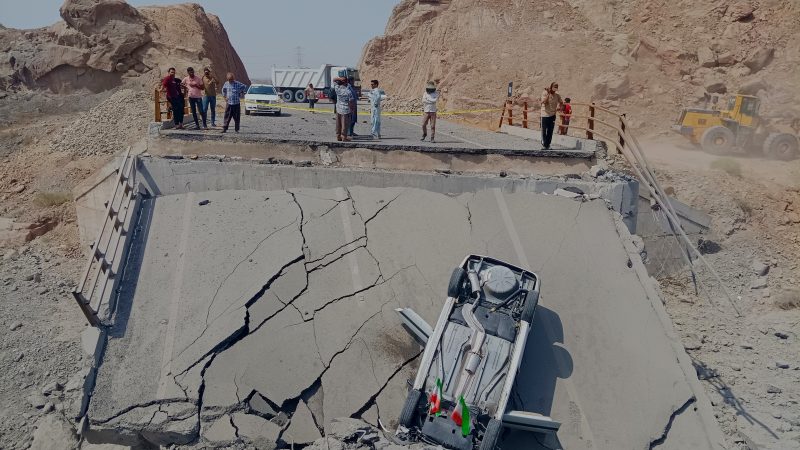
    The renewed exchanges of fire, now in their second week, have seen the U.S. target bridges, water desalination plants, and electrical facilities in Iran. Tehran has hit U.S.-allied countries throughout the Middle East.

    Kuwait, Jordan, and Bahrain again activated air defenses for incoming Iranian drones and missiles. Israel warned that missiles launched toward neighboring Jordan could cause fire to spill over into Israeli territory for the first time in weeks.

    Iran says a nuclear site under construction was hit

    The U.S. military’s Central Command said it hit “Iranian military coastal surveillance and air defense facilities, maritime capabilities, and missile and drone storage sites.” It said the attack was designed to degrade Iran’s ability to control the strait and “swiftly punish Islamic Revolutionary Guard Corps forces,” a power base in Iran’s theocracy that controls its ballistic missile arsenal.

    Footage released by the U.S. military appeared to show strikes carried out by fighter jets and by Tomahawk cruise missiles launched from the sea. One target site appeared to be in a valley of a mountainous region. The Guard often has missile bases and other military equipment tucked into mountain ranges.

    Iran’s atomic energy agency said U.S. strikes targeted the construction site of a planned nuclear power plant in the southwest, state television reported.

    Satellite images from Planet Labs PBC of the Darkhovin nuclear plant site showed earth clearing but little construction as of July 9. Iran did not previously announce it as being targeted.

    The International Atomic Energy Agency said the site, in the “very early stages of construction,” contained no nuclear material when the U.N. watchdog last visited.

    Jordan and nearly every Gulf Arab state have been targeted

    Jordan’s military said it shot down several Iranian missiles. The country hosts major U.S. bases and relies on U.S. air-defense systems. The missiles did not cause casualties or damage, according to Jordan’s military.

    Jordan later summoned Iran’s chargé d’affaires to protest, state-run television reported.

    Israel’s military said Iranian missiles launched toward the Jordanian port city of Aqaba just across the border could spill over, warning Israelis to expect the first air-raid sirens in weeks.

    Eilat, the Israeli city that neighbors Aqaba, cited security officials as saying two interceptors were launched from its outskirts to prevent the fall of debris.

    During the latest fighting, Iran has focused attacks on U.S.-allied Arab states rather than Israel, which launched the war with the U.S. on Feb. 28. “We are prepared to immediately resume combat,” the Israeli military chief of staff, Lt. Gen. Eyal Zamir, said.

    Kuwait said one of its power and water desalination plants was attacked for the second time in two days, causing fires. Its Ministry of Electricity, Water, and Renewable Energy said the power grid remains stable. In Kuwait, about 90% of drinking water comes from desalination.

    The secretary-general of the six-nation Gulf Cooperation Council, Jasem Mohamed al-Budaiwi, has accused Iran of war crimes for strikes on infrastructure and civilian facilities.

    International humanitarian law generally protects civilian infrastructure such as bridges and power plants from attack, but such sites can lose protections if used for military purposes. In such cases, attacks must be proportionate and minimize civilian harm.

    Strait of Hormuz remains key to the conflict

    U.S. President Donald Trump has threatened to target Iran’s power stations and bridges to try to compel Tehran to loosen its hold on the Strait of Hormuz, which saw one-fifth of global oil supplies transit before the war. Recent attacks suggest the U.S. military is carrying out that plan.

    The U.S. in the past week reimposed a naval blockade on Iranian ports to halt its shipments of crude oil. The military on Saturday said it had redirected six ships and disabled one since then.

    A maritime organization overseen by the U.S. Navy said Sunday that the threat to mariners is severe after previous Iranian attacks, “with deliberate hostile action considered highly likely.” It said traffic remained low, with eight transits on Saturday and three on Friday. The daily average before the war was almost 140.

    Iranian Supreme Leader Mojtaba Khamenei, in a statement Saturday, warned of “unforgettable lessons” if the U.S. keeps attacking the Islamic Republic. An Iranian negotiator said Tehran was suspending its commitments to the interim deal and accused the U.S. of violating it.

    The halfway point has passed in the 60 days the deal set out to negotiate the permanent end of the war and other issues, including Iran’s nuclear program.

    Iranian authorities on Sunday said at least 50 people have been killed and 517 wounded in the latest U.S. strikes. Iran has provided no overall information on its materiel losses.

    Far from the region, the war’s effects on the prices of fuel and other goods have hit some of the world’s most vulnerable areas hard.


  • Philly got a break from wildfire smoke Sunday, but will the fresh air last?

    Philly got a break from wildfire smoke Sunday, but will the fresh air last?

    After three days of dealing with smoky, particulate-filled air, many Philadelphians went outside Sunday to enjoy the sunshine, gentle winds, and relatively clear horizons.

    But hundreds of miles northwest in Ontario, wildfires continued to burn, posing a life-threatening emergency to some Canadians and leaving much of the United States susceptible to more rounds of smoke.

    Experts say the ongoing wildfires will threaten air quality in the region, while the longer dry seasons, droughts, and high winds associated with climate change mean that such fires — and the smoke they send downwind — may become more common.

    “I think we are headed into an era where we are likely to see more periods of air pollution from wildfire smoke reaching the East,” said Erica Smithwick, a Penn State geography professor. “We are not immune to these dangers anymore, and we’re going to have to learn to live with them.”

    Outdoor enthusiasts are on the Schuylkill River Trail Sunday, July 19, 2026, taking advantage of sunny, clear skies and moderate air quality after three days of bad air from the Canadian and Great Lakes wildfire smoke.Tom Gralish / Staff Photographer

    Walking along the Schuylkill on Sunday morning, Dion Carmichael was coming to terms with this.

    “You can tell everyone feels excited to be here today,” said Carmichael. The 29-year-old said her Fairmount neighborhood felt a bit “like a ghost town” the past few days as people stayed inside.

    She and her partner had to cancel a camping trip in New York, Carmichael said. She said it’s had her thinking about “the future of our planet.”

    “Global warming is a big factor in this. We should take care of our planet,” Carmichael said.

    Her partner, Canice Okereke, noted that he could still smell faint wood smoke in the air. That didn’t worry him personally. But it remains a threat for some of the people with health issues he helps in his job managing in-home care services for seniors. The past few days, simple tasks like walking to the pharmacy to pick up a prescription became a challenge for those with respiratory issues.

    A biker is on the Schuylkill River Trail Sunday, July 19, 2026, taking advantage of sunny, clear skies and moderate air quality after three days of bad air from the Canadian and Great Lakes wildfire smoke.Tom Gralish / Staff Photographer

    Sean Conway just finished leading a three-mile group run. The 26-year-old personal trainer said he never thought about wildfire smoke or air quality until Thursday, when one of his running partners told him he was better off staying indoors. He begrudgingly took to the treadmill, and then admitted his friend was right.

    “If you’re running for your health, why would you run in smoke? It’s like smoking a cigarette,” Conway said.

    In the short term, the worst of the wildfire smoke has passed, said AccuWeather senior meteorologist Bill Deger. But sensitive groups such as children and those with respiratory issues could still be affected, he said.

    Sunday’s moderately clean air is the result of a cold front from eastern Canada, he said. “Now we will have shifting wind directions over the next couple days. If the wind comes out of the west, we can have more of an uptick in that smoke, though I don’t expect it to be as bad as it was,” Deger said.

    As for weather, temperatures will drop into the 60s in Philly and into the 50s in the suburbs Monday night, giving air conditioners a break, he said. Higher humidity and “heavy, gusty thunderstorms” are forecast for Tuesday and Wednesday.

    “Hazy skies certainly look like a possibility, but as far as that ground-level pollution is concerned, it should not be as bad,” Deger said, adding that it is difficult to predict air quality beyond two or three days out.

    Boaters are on the Schuylkill Sunday, July 19, 2026, taking advantage of sunny, clear skies and moderate air quality after three days of bad air from the Canadian and Great Lakes wildfire smoke.Tom Gralish / Staff Photographer

    Smithwick said broader trends make more fires likely. High winds, droughts, and long dry seasons are all on the rise due to climate change. She noted, in addition to Ontario, wildfires are burning in Minnesota.

    “In the East, you don’t need large periods of drying to have wildfire conditions — two weeks or less. And when it happens upon an extended period of drought, those create the conditions for the wildfires,” Smithwick said.

    Canada and the Midwest have seen extensive fires before, Smithwick said, “but not at the frequency and scale that we’re seeing now.”

    This increase brings both ecological peril and human health risks, she said. These risks are often worse for disadvantaged communities where people may lack things like air conditioners and indoor air purifiers.

    In addition, some of the needed changes must occur on a larger scale, Smithwick said. One example: She said schools should be fitted with air monitors and purifiers.

    Smithwick encouraged people to monitor air quality indoors and outdoors, follow guidelines, stay indoors when needed, and stay cool.

    “Adjusting your behaviors to meet the moment can be difficult, but finding alternative activities can work.”

    Mikin Patel, 25, hangs in his hammock joining other outdoor enthusiasts on the Schuylkill River Trail Sunday, July 19, 2026, taking advantage of sunny, clear skies and moderate air quality after three days of bad air from the Canadian and Great Lakes wildfire smoke. Patel, who often bikes from his home in Fairmount to the river “just to chill,” said he hadn’t done so in the past few days. He was just on the phone telling his brother in California how great the weather was. “It finally got nice again,” he told him.Tom Gralish / Staff Photographer
  • Trump blasts ‘sanctuary’ states, but many still aid deportations

    Trump blasts ‘sanctuary’ states, but many still aid deportations

    As part of its full-court press on immigration, the Trump administration has increasingly sought to punish Democratic-led states that have tried to curtail their cooperation with federal immigration agencies.

    Trump officials argue that the policies of “sanctuary jurisdictions” have enabled the release of sex offenders, killers, and other criminals — the “worst of the worst” — and President Donald Trump has gone so far as to call the actions of blue-state leaders a “lawless insurrection.” The administration has threatened federal funding cuts, lawsuits, and travel restrictions if state and local authorities don’t fall in line.

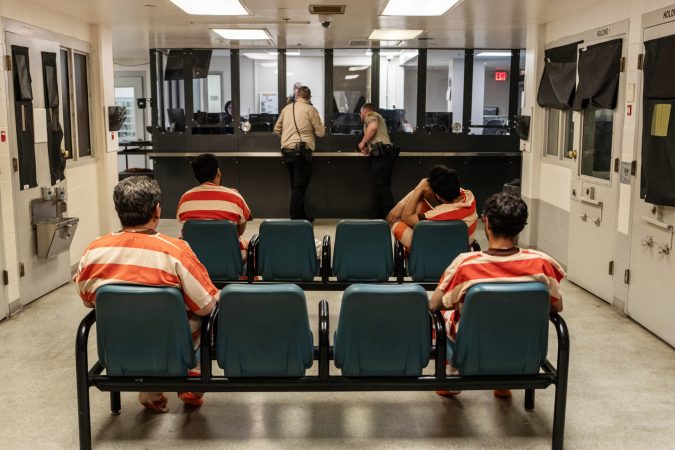
    But the very states the Trump administration is pillorying — from California and Minnesota to New York and Massachusetts — already cooperate closely with Immigration and Customs Enforcement on tens of thousands of criminal cases a year, regularly turning over people charged with or convicted of serious and violent offenses for detention and deportation.

    A New York Times review of policies, statutes, and practices in the 18 states targeted by Trump shows extensive cooperation and coordination with federal immigration agencies when it comes to people convicted of serious crimes. Data shows all but one of these states have sharply increased the number of people they have moved each month from local and state authorities’ custody into federal immigration custody during Trump’s second term, as compared with the last year of former President Joe Biden’s term.

    In 12 of them, the number of custodial arrests by Immigration and Customs Enforcement more than doubled, according to a Times analysis of ICE data obtained by the Deportation Data Project.

    The Trump administration has suggested that “sanctuary” states refuse to cooperate with ICE agents and deny them entry into jails. But by and large, these blue states have been assisting in federal efforts targeting violent offenders, while pushing back on the federal dragnets across the country that have ensnared immigrants without criminal records.

    At the height of a federal crackdown in Minneapolis earlier this year, Minnesota Gov. Tim Walz accused ICE of targeting people of color with no criminal background while failing to pick up hardened criminals in state custody ready to be transferred to the agency.

    The tensions have only been rising as federal immigration officials have received an infusion of dollars to carry out more operations and, in recent weeks, more than doubled their daily arrests, often with the help of local authorities in red states.

    State officials from blue and red states agree that cooperation with federal authorities is critical to criminal investigations, and none would dispute that the release of dangerous people into communities is bad for public safety or politically unpalatable.

    But governors and top law enforcement officials in Democratic-led states say they are trying to disentangle their role in criminal investigations from federal immigration enforcement. That delicate balance, they say, preserves their time and resources and engenders trust from immigrant communities.

    So-called sanctuary laws enacted in Democratic-led states do limit cooperation with immigration authorities in many ways. Most largely bar state and local officers from assisting federal agents on civil immigration violations and put parameters around ICE’s access to jails and prisons as well as designated protected zones, such as schools, churches, and courthouses. A slate of state court rulings and policies have also prohibited local and state agencies from holding people for immigration officers beyond their release dates. And many prohibit authorities in most cases from alerting ICE that an inmate is about to be released, though release dates for all offenders are publicly available online.

    Of all the states targeted, California, perhaps, has become the administration’s most prominent adversary. The state, which emerged as a battleground over “sanctuary” policies well before Trump first took office in 2017, barred state and local law enforcement agencies — including school police and security departments — from using public funds or personnel for civil immigration enforcement during his first term.

    But the Trump administration’s criticism has focused heavily on the idea that serious criminals are being allowed to walk free — something California has specifically sought to avoid.

    State lawmakers and law enforcement officials negotiated a list of exceptions to allow greater coordination when those wanted by ICE have criminal records or face serious criminal charges. Since 2019, the state’s corrections department has coordinated with the agency to transfer nearly 13,000 people convicted of murder, sexual assault, child molestation, or other grave felonies into federal custody.

    “Not all sanctuary policies are created equal,” said John Sandweg, a senior Department of Homeland Security official under the Obama administration.

    Many states or local jurisdictions with progressive politics “may not hand over someone convicted of driving without a license or some petty misdemeanor,” he added, “but would work collaboratively with ICE to ensure that individuals with violent criminal histories were not released in the streets.”

    Democratic officials have argued that local limitations on ICE cooperation ensure that victims of crimes can approach police without worrying about being swept up in unrelated immigration actions.

    “People need to feel comfortable talking to police,” said Ronnell Higgins, commissioner of the Connecticut Department of Emergency Services and Public Protection, the state’s top law enforcement agency. “Wherever you go, the police need the public’s help in preventing crimes and in solving crimes as well.”

    At the crux of this sanctuary debate has been a push for partnerships with ICE under a program known as 287(g). The initiative, a central pillar of the Trump administration’s mass deportation agenda, trains sheriff’s deputies, police, and highway patrol officers to act as immigration agents in the course of their daily duties, and the program has become a force multiplier for enforcement.

    Fifteen of the 18 states reviewed by the Times have passed laws that restrict their local and state law enforcement agencies from entering into contracts to help enforce civil immigration laws. The other three limit participation in the program under governor’s executive orders and state court rulings. But no states prohibit their officers from assisting federal agencies on criminal violations.

    All allow the transfer of inmates into federal custody if authorities present a criminal warrant signed by a judge.

    Trump’s fight with Democratic leaders over “sanctuary” policies dates to his first term. Since his return to the White House, his administration has only ramped up the stakes further. Last month, Republicans passed a sweeping immigration package signed by Trump. It includes $31 billion for ICE activities, such as supporting local and state authorities that have signed 287(g) partnerships with the agency, and earmarks another $350 million to expand enforcement operations in jurisdictions that refuse such partnerships.

    During budget negotiations in late May, Markwayne Mullin, Trump’s new Homeland Security secretary, floated the idea of pulling customs officers from airports in major liberal hubs, which business groups warned would lead to chaos for travelers and harm the economy. In recent weeks, Tom Homan, his border czar, has repeatedly vowed to flood New York with agents.

    Although neither of the plans has transpired, the administration’s strikes have turned Democratic-led cities and states into political foils in the rhetorical fight over immigration policy. That fight has played out in the public sphere and in the courts, where the Trump administration has had less success. Last month, federal judges dismissed, for now, federal government lawsuits challenging a Los Angeles ordinance and executive orders in several New Jersey cities that prohibit the use of city resources for federal immigration enforcement. (The decisions followed similar rulings last year in favor of Rochester, New York, and the state of Illinois.)

    In June, the Department of Justice and New York State sued and countersued each other over expansive immigrant protections the state passed a month earlier. The new rules, among other provisions, banned partnership agreements with ICE, barred all local, state, and federal officers from wearing masks and ended ICE contracts to house inmates with federal civil immigration violations.

    Testifying before the House Appropriations Committee days later, Mullin said “sanctuary governors and sanctuary mayors” were advising their local and state authorities to not cooperate with ICE. He argued that this hampered federal authorities’ immigration efforts, as well as investigations into human trafficking and retail theft.

    “And so it really handcuffs us,” he said.

    Asked whether exceptions or carve-outs for violent and serious offenders in state laws helped offset their restrictions on civil immigration enforcement, officials at DHS, the parent agency of ICE, suggested they had broader latitude under federal law to carry out immigration arrests than state statutes allow.

    In a statement, Lauren Bis, a Homeland Security spokesperson, suggested that the agency’s partnerships with law enforcement justified the surges in arrests.

    “When politicians bar local law enforcement from working with DHS, our law enforcement officers have to have a more visible presence so that we can find and apprehend the criminals let out of jails and back into communities,” she said.

    This article originally appeared in the New York Times.

  • The new Nike Air Force 1 shoes bear a striking resemblance to Gritty

    The new Nike Air Force 1 shoes bear a striking resemblance to Gritty

    Nike’s newest Air Force 1 shoes look a lot like … Gritty?

    The footwear giant recently unveiled part of its upcoming “Horse of a Different Color” collection, which reimagines the popular sneakers in shaggy “campfire orange” pony hair, a material eerily similar to the coat of the beloved Philadelphia Flyers mascot.

    The collection is — allegedly — inspired by the Shakespearean idiom, which was also referenced in The Wizard of Oz, according to Hypebeast and Women’s Wear Daily. But internet sleuths were quick to point out the resemblance to Gritty, or the Lorax, or a ‘70s shag carpet, or red-headed singer Ed Sheeran.

    “gritty force 1s” one user on X posted.

    Nike did not immediately respond to a request for comment on whether Gritty served as an inspiration. A spokesperson for the Flyers could not immediately be reached.

    “I will become indebted to Klarna for the [opportunity] to wear these to Flyers games this year,” another X poster wrote, referring to the financial company’s “buy now, pay later” service.

    Another said, “lol these would be great for the Gritty 5K.”

    The sneakers are expected to retail for $140, according to Hypebeast. While an exact release date hasn’t been announced, the shoes are likely to drop this fall.

    Maybe just in time for hockey season.

  • 2 years after a CHOP doctor was killed riding her bike, loved ones commemorated her

    2 years after a CHOP doctor was killed riding her bike, loved ones commemorated her

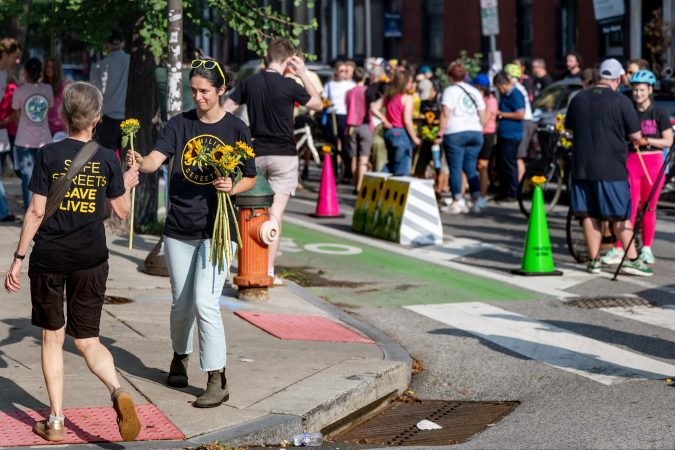
    Dozens of sunflowers bloomed near 18th and Spruce Streets on Sunday morning in memory of Barbara Friedes, as family, friends, and others gathered to remember the CHOP pediatric chief resident. They were marking the second anniversary of when she was struck on her bike and killed by a drunk driver in July 2024.

    The death has reverberated since then.

    Friedes’ death sparked public outrage and protests over traffic safety, with hundreds of cyclists calling for concrete-protected bike lanes, among other traffic safety improvements.

    For Catherine Dietrick, Friedes’ younger sister, there are no words or legislation that can bring her sister back.

    “The last time a crowd gathered right here was two days after my sister was killed. There was no angel bike yet,” she said, referring to a memorial bicycle placed at the site.

    “There were just people, a lot of flowers, notes, and a freshly power-washed street. Across the street, the steps of that house were still crumbled from the impact, and although these steps are fixed now, my sister never can be.”

    She sees the fight for safer roads for cyclists as something her sister would want to do to protect others.

    “I don’t know if a barrier between the bike lane would have saved my sister that day, but I know the lack of one didn’t, and to me, that’s terrifying,” Dietrick said.

    After the crash, in the fall of 2024, city transportation officials recommended $4.8 million in safety upgrades to bike lanes along Pine and Spruce Streets, including concrete barriers.

    A law signed by Mayor Cherelle L. Parker to prevent vehicles from stopping in city-designated bicycle lanes followed in December 2024.

    Separately, the city tried to establish new loading zones on Pine and Spruce Streets to ease pressure on the bike lanes, but neighboring residents sued, and on July 6, a judge upheld a temporary injunction blocking the action until the case is settled or goes to trial.

    Members of Philly Bike Action, an advocacy group, said the injunction delayed safety improvements, despite City Hall’s support.

    “Despite all that progress, our energy, all that public support, Spruce and Pine are still as dangerous today as they were the night that Barbara was killed,” said Jacob Russell, an organizer for Philly Bike Action.

    Although Philly Bike Action leaders said they understood the need to wait for the legal proceedings, they believed the city could move forward with a concrete barrier to keep cyclists safe.

    “We can’t wait another two to five years,” said organizer Jessie Amadio. “The barrier is not much bigger than the curves on the end of the road and will prevent cars from merging into the bike lane and hurting people.”

    A car is parked in the bicycle lane in the 1700 block of Spruce Street on Sunday, July 19, 2026, even as family, friends, and Philly Bike Action members gathered near Barbara Friedes’ angel bike at 18th and Spruce Streets for a memorial Sunday, July 19, 2026. Friedes, a 30-year-old Children’s Hospital of Philadelphia doctor, was killed on her bike at the intersection by a drunk driver in July 2024.Tom Gralish / Staff Photographer

    Attending the memorial, City Council President Kenyatta Johnson said preventing traffic violence has the same importance as preventing gun violence.

    “When a person is shot and murdered in the city of Philadelphia, we step up; we show up; we rally and come up with policies, and we also back it up with our budget,” Johnson said. “We have to also continue to make sure we are doing the same thing when it comes to traffic violence here.”

    As the crowd applauded, Johnson pledged he would remain committed to finding ways to protect cyclists in Philadelphia.

    Philly Bike Action members set up a barrier during the memorial with pink and green cones, and a Jersey barrier painted with 12 sunflowers, Friedes’ favorite flower, one for each cyclist who has died in a traffic accident since her death, the group said.

    “To the community members who oppose safer bike lanes, I understand that these changes may feel inconvenient. However, I ask you to consider the lives that you could be saving,” said Mary Dietrick, Friedes’ mother.

    “The decision before us is about more than paint, parking, or traffic patterns; it’s about the kind of city Philadelphia chooses to be.”

    A photo of Barbara Friedes rests against a tree during a vigil on the 1800 block of Spruce Street in Philadelphia, on Sunday, July 21, 2024. Friedes, a CHOP resident, was killed while biking on Spruce Street earlier that week.David Maialetti / Staff Photographer
  • DOGE was supposed to be dead. Its remnants are everywhere.

    DOGE was supposed to be dead. Its remnants are everywhere.

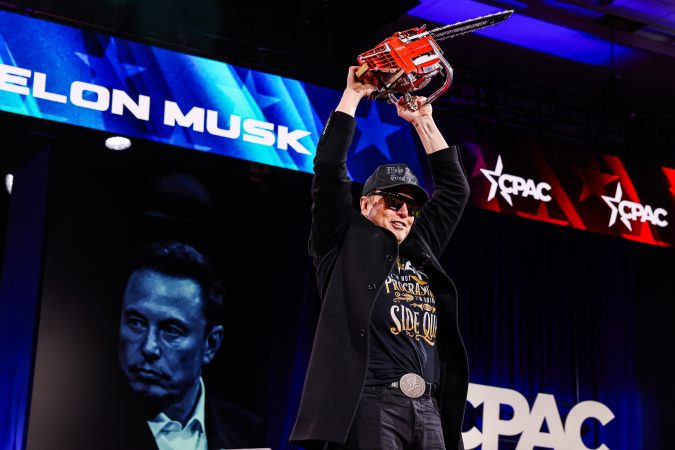
    When Elon Musk and Vivek Ramaswamy were initially tapped to co-lead the Department of Government Efficiency at the end of 2024, the billionaire duo promised DOGE’s last act would be to delete itself by a mandated end date: July 4, 2026.

    Numerous lawsuits filed by federal workers, states, and activists attempted to halt DOGE’s radical cost cutting effort, arguing Musk’s allies operated with little transparency and targeted agencies, grants, and programs enshrined by law.

    Now, DOGE’s website, built to house “receipts” documenting its attempt to cut $2 trillion from the federal budget, lies dormant, while posts from the DOGE X account have slowed to a trickle.

    But weeks after its 18-month end date has elapsed, DOGE has proved remarkably hard to kill.

    Instead, DOGE has evolved from its radical cost-cutting mission, with some of its members and agenda embedded across the government, continuing to reshape the federal bureaucracy behind the scenes.

    “DOGE is a way of life. … It never terminates,” former DOGE staffer Katie Miller said on X on July 4, the day of its supposed expiration.

    Nearly two dozen people hired or vetted through DOGE remain in government, including an influential diaspora filtered throughout the executive branch, according to a Washington Post analysis of court records and government documents.

    This includes Gavin Kliger, chief data officer at the Pentagon, and Jeremy Lewin, a senior adviser to Secretary of State Marco Rubio. Lewin, who oversaw much of the dismantling of the U.S. Agency for International Development, now directs the State Department’s foreign assistance programs.

    Meanwhile, the National Design Studio, which is run by former DOGE lieutenant Joe Gebbia, is seen by many of its members as the spiritual successor to DOGE, according to two people familiar with the organization, speaking on the condition of anonymity to discuss private conversations. Its chief engineer is Edward Coristine, the staffer known as “Big Balls,” who as a 19-year-old DOGE employee gained access to agencies including the State Department and the Department of Homeland Security.

    DOGE’s membership rolls were never made public, so it’s impossible to tally the total number of alumni sprinkled throughout the government. The Trump administration fought lawsuits to make DOGE staffers’ identities public, and some information has only come out recently through public records requests and legal challenges.

    Administration officials have retreated from DOGE’s plans, reversing cuts and bringing back workers.

    But the upheaval unleashed by the U.S. DOGE Service has left an imprint on the federal government, with consequences still rippling through Washington. DOGE forcibly reworked the operations at agencies such as the Social Security Administration, where staff members were reorganized to make up for losses on the front lines. Unemployment is up in the D.C. metro area since Donald Trump returned to the White House. Federal workers remain fearful of retaliation.

    Musk hinted that he hoped DOGE would outlive its initial wave of cuts. “Is Buddha needed for Buddhism?” Musk said as his time in government wound down last year. “Was it not stronger after he passed away?”

    Among a Republican caucus typically in lockstep, there is internal stratification over DOGE, even as several Trump administration officials have started DOGE-like initiatives. Late last year, the Office of Personnel Management launched a Tech Force to recruit young Silicon Valley types to government.

    When Vice President JD Vance introduced an anti-fraud task force, he did not associate it with Musk’s work.

    “I think that’s unfortunate that nobody has ever tried to take a systematic look at how much fraud there is in the federal government,” Vance said in a Fox News interview in February.

    The White House and Musk did not return requests for comment for this story.

    Democrats have continued to capitalize on anger over DOGE, demanding investigations into its staffers’ access to sensitive data and the fallout from cuts. Meanwhile, the debate remains — even among some Republicans — whether the effort was worth its dramatic fallout.

    “There were a lot of claims of billions and billions of dollars in savings,” Republican Sen. Thom Tillis (N.C.) said in a hearing this month with Russell Vought, director of the Office of Management and Budget. “I simply want to know where you booked them and where I can see it.”

    Max Stier, CEO of the Partnership for Public Service, said the government is continuing to bear the costs of DOGE’s work, such as the rehiring of federal workers, legal expenses from actions such as the sudden closure of the USAID and paying severance, and diminishing employee morale, resulting in productivity losses.

    DOGE and other Trump administration-led cuts have resulted in an economic cost of more than $165 billion, or more than $1,028 per taxpayer, according to Stier’s organization’s estimates. The costs include the loss of estimated economic benefits from terminated grants, the effect of severance payments, estimated legal expenses, and money spent on rehiring workers, for example.

    Contrary to the promises Musk offered during the early days, federal spending as a whole actually increased over the past year. Agencies are ramping up hiring plans after hundreds of thousands of federal workers left last year.

    For the first six months of Trump’s second term, DOGE was central to the administration. Musk frequently appeared in the Oval Office beside Trump, while his closest associates showed up at federal agencies with little to no warning and made consequential decisions, overruling career staff and even Trump officials. Musk touted cuts that he said would amount to a $2 trillion reduction in federal spending.

    Several of DOGE’s more limited priorities remain, including an ongoing effort to digitize federal retirement records that are housed in a Pennsylvania mine. At the end of June, the Office of Personnel Management announced it will no longer send anymore paper to the mine after DOGE engineers built a website to replace the paper forms.

    Inside some agencies, meanwhile, DOGE maintains a presence. There “are still an exceptional number that remain today and are more quietly operating behind the scenes,” said one staffer at the Transportation Department, speaking on the condition of anonymity for fear of retribution.

    At the General Services Administration, Thomas Shedd, a former Tesla engineer who at one point led Technology Transformation Services, has not left, even though he no longer appears to have any official job at the agency and is listed as a special government employee, according to a GSA employee who spoke on the condition of anonymity because they were not authorized to speak on the matter.

    Many of those aligned with DOGE who remain in government are working at the National Design Studio, which the White House created to modernize government websites and take on other brand initiatives. The National Design Studio says its mission entails “making the services Americans rely on easier to understand, access, and use,” a focus that echoes DOGE’s aim to upgrade outdated tech and the mandate of DOGE’s predecessor, the U.S. Digital Service. Its work, however, is more narrowly focused than either of those bodies.

    Two people close to DOGE, speaking on the condition of anonymity to discuss private conversations, said the design outfit, led by Airbnb co-founder Joe Gebbia, serves as the spiritual successor to its work. With about 100 people and weekly meetings focused on efforts such as TrumpRx and the design of the new food pyramid, they represent an evolution of the DOGE mission, but a significant culling of its mandate.

    Before the National Design Studio, Gebbia initially focused on redesigning the federal retirement online portal after previous administrations had not been able to fully digitize the process of leaving government. Although the young technologists had hoped to be done with the project in a few months, it took them longer than expected.

    At the tech- and politics-focused Hill and Valley Forum earlier this year, Gebbia and Coristine described work that was a far cry from Musk’s chainsaw-wielding approach to government transformation. Gebbia, for example, described pitching Trump and White House Chief of Staff Susie Wiles on the idea for the National Design Studio, saying there might not be another president who cares as deeply “about design, about aesthetics, about architecture,” as Trump.

    Not a single reference to the DOGE controversies was uttered during their 20-minute talk, and the friendly moderator, the CEO of the cloud-based design platform Figma, did not ask about it.

    While DOGE did not complete its far-fetched goal to cut $2 trillion, the slashing of foreign aid, research, and humanities grants has continued to have lasting effects. Health organizations in Africa said aid cuts hampered the global response to a deadly Ebola outbreak. And the administration had to ramp up a response to a screwworm reemergence after cuts at the Agriculture Department.

    The Post previously found that children in Congo had died awaiting lifesaving drugs after U.S. aid cuts under Trump. An Oxfam analysis found that the cuts to aid from the United States would lead “to the first rise in under-five child mortality this century.”

    Musk has denied such catastrophic impacts, even amid evidence of their occurrence. “There is not even a single dead child!” he said on X in June. “If there were, it would be worldwide headline news!”

    In some parts of the government, there is a dispute over whether DOGE is still there or not.

    At the Social Security Administration, as DOGE team members sought to find savings in the massive mandatory spending program, they were given access to the government’s most sensitive databases, which include the personal information of all Americans living and dead. They ultimately did not find the fraud Musk claimed was there.

    In an ongoing court case about DOGE’s access to agency data, the administration has reported that all DOGE members have left the agency and that it has no plans to bring the organization back to Social Security.

    Democracy Forward, a legal group challenging DOGE’s access to data, rebutted that and pointed to testimony that Social Security Administration chief information officer Michael Russo had previously identified himself as DOGE, and SSA general counsel Mark Steffensen fought to get DOGE members into sensitive databases. The two are still at the Social Security Administration.

    “Rumors of DOGE’s demise have been greatly exaggerated, and DOGE personnel remain at SSA,” plaintiffs told the court.

    The Trump administration also sought to get the case dismissed, citing that DOGE wouldn’t exist after July 4. But U.S. District Judge Ellen Lipton Hollander didn’t buy it.

    “Akin to a company that goes out of business,” Hollander wrote in a June 26 opinion, “the DOGE Temporary Organization cannot escape responsibility for the conduct it undertook while it existed simply by reaching its expiration date.”

  • Trump immigration officials seek to mend frayed ties with business as arrests spike

    Trump immigration officials seek to mend frayed ties with business as arrests spike

    The Department of Homeland Security under Secretary Markwayne Mullin is cultivating a relationship with business groups whose concerns about losing workers to aggressive immigration enforcement had been rebuffed by former secretary Kristi L. Noem.

    Earlier this month, DHS officials met at the agency’s Washington headquarters with the Essential Worker Immigration Coalition, which represents the U.S. Chamber of Commerce and major trade associations that depend on immigrant labor, according to several people with knowledge of the meeting, which has not been previously reported.

    It was the first such meeting to be reported since President Donald Trump reentered the White House. Business groups say they have been trying to gain a foothold at the agency since Immigration and Customs Enforcement arrests began to spike last year.

    Mullin did not attend the early July meeting — which included officials from ICE and Customs and Border Protection, said the people, who spoke on the condition of anonymity because they were not authorized to speak publicly — and the gathering did not produce an immediate change in policies. But two of the people said DHS officials said they want to meet regularly with the group to assess the impact of Trump’s mass deportation campaign and business needs.

    “It was cordial, it was constructive,” one of the people said. “It’s actually very welcome because the last secretary was absent, and her proxies were not very responsive.”

    A DHS spokesperson declined to comment on the meeting; coalition members declined to comment publicly.

    Immigration arrests have more than quadrupled since Trump took office, driven by a dramatic increase in traffic and neighborhood stops, workplace sweeps, and other public arrests, according to the Deportation Data Project. As a result, industries including agriculture, manufacturing, construction, healthcare, and elder care say they are reeling from shortages in jobs critical to the economy.

    Noem was dismissive of those concerns while overseeing chaotic enforcement operations that drew bipartisan outrage, especially after agents shot and killed two U.S. citizens in Minnesota in January. Trump fired her in March and turned to Mullin, a U.S. senator from Oklahoma and former plumbing company owner.

    Mullin brought Senate staffers with ties to the business community to DHS, business lobbyists said, and his staff quickly set about trying to mend relations.

    “It’s important to note that Mullin comes from the business community,” said Jennie Murray, president and CEO of National Immigration Forum, which represents Fortune 500 companies on Capitol Hill and was not part of the July meeting. “Under his leadership the agency does seem much more open to working with businesses and industry to focus on how their enforcement priorities and worksite compliance efforts can be better aligned [and] not negatively impact American businesses and the economy.”

    DHS officials declined to acknowledge a shift in approach but said they are trying to keep an open line to business and other moderate wings of the GOP.

    “Under Secretary Mullin, DHS is ensuring it remains a strong partner to American communities across the country by engaging stakeholders and industry partners that advance our mission to protect the homeland,” an agency spokesperson said.

    However, the spokesperson said, “Worksite enforcement remains a cornerstone of our efforts to protect public safety, national security, and economic stability while rescuing individuals who may be victims of labor trafficking or exploitation.”

    The outreach to business comes as Mullin faces the first crisis of his brief tenure at DHS: ICE agents shot and killed two people in less than a week — a 52-year-old Mexican man in Houston and a young Colombian man in Maine. Outrage over the shootings, including from Sen. Susan Collins (R., Maine), led Mullin to pause traffic-stop arrests last week, a decision Trump swiftly overrode the following day.

    Mullin now faces the challenge of proving that he can deliver on Trump’s core campaign pledge to deport a million people a year while avoiding the widespread backlash that helped sink Noem’s tumultuous reign.

    In recent weeks, DHS has sought to appease business groups even as it has dramatically ramped up arrests. Through the first 12 days of July, ICE is on pace to arrest the most people in a single month since Trump reentered the White House, with an average of more than 1,400 people a day. Meanwhile, the agency has agreed to partially walk back a plan to force green-card applicants to return to their countries of origin, which tech leaders said would severely impact their workforce. And it has agreed to open a guest-worker visa program to the dairy industry. Both actions followed intense lobbying by industry groups.

    This month, the Trump administration also extended the timeline for canceling work permits for hundreds of thousands of immigrants from Haiti and six other countries who are losing long-standing humanitarian protections after a Supreme Court ruling. Business groups — which had swamped the Trump administration with calls, letters, and other outreach warning of the potential fallout of the ruling on nursing homes and hospitals — rushed to take credit for that decision as well.

    “They listened to business and GOP lawmakers on the extension of work permits instead of terminating them immediately,” said Rebecca Shi, head of the American Business Immigration Coalition, a bipartisan group that represents 1,700 employers.

    While Noem’s advisers spoke occasionally with business leaders, they often dismissed requests, emphasizing that they were laser focused on removing undocumented workers, several business lobbyists said.

    “They were unapologetic about [their agenda],” said a lobbyist who spoke on the condition of anonymity because they were not authorized to speak publicly.

    Trump, who is known to take phone calls with and host dinners for business executives, hasn’t been immune to business backlash since immigration arrests exploded in 2025.

    Last June, during high-profile operations targeting worksites, the administration announced that farms, restaurants, and hotels would be spared further raids. The policy change — aimed at blunting potentially severe economic and political fallout — appears to remain largely intact a year later, pushing ICE agents toward neighborhood arrests and traffic stops to meet their deportation goals.

    But while certain industries have been shielded from workplace raids, other are being pummeled. In South Texas, raids on construction sites have mushroomed since Mullin replaced Noem, builders say.

    “It’s the highest it’s ever been,” said Mario M. Guerrero, a homebuilder and executive director of the South Texas Builders Association. “We got builders saying like, ‘Look, I’m done.’ These agents are showing up to jobsites, following work trucks, and going to Home Depots and picking up everyone.”

    It remains to be seen whether the budding relationship between DHS and business leaders will produce more far-reaching policy changes. Goals of the business community include expanding guest-worker visas and restoring protections for Haitians — demands that are staunchly opposed by much of Trump’s political base.

    Business leaders also ardently desire a path to legal status for the nation’s estimated 8 million undocumented workers (though they stress their support for removing those with criminal records). That politically fraught target has eluded policymakers in Washington for decades.

    On Friday, as he met with reporters about Trump’s campaign to force states to purge alleged noncitizens from their voting rolls before this fall’s midterm elections, Mullin continued to walk a fine line between reassuring a skeptical public and satisfying the president’s desire for maximum impact.

    While “I turn down the temperature with you guys,” Mullin told reporters, “we’re turning up the heat on the streets.”

  • Trea Turner looks to cut down on chasing — and he’s starting to see the results

    Trea Turner looks to cut down on chasing — and he’s starting to see the results

    In early June, as his struggles at the plate dragged on, Trea Turner had a conversation with Josh Studnitzer, the Phillies’ manager of hitting strategy.

    It was illuminating.

    “Just the way I was getting pitched was unbelievable in the sense that everything was on the edge of the plate, just nothing to hit really, and trying to do a little too much,” Turner said. “And sometimes it felt like I wanted to walk, but I couldn’t walk, because they were strikes.”

    According to StatCast data, 42.9% of the pitches to Turner this year have been on the edge of the strike zone. Out of all major league hitters, that ranks 21st highest.

    But learning that those numbers supported what he was feeling at the plate didn’t help him much. He was still going to have to find a way to turn things around, and get back to what helped him win the National League batting title in 2025.

    “Doesn’t matter, because it’s all about production, right?” Turner said. “I’m not the prettiest player or whatever you want to call it. I don’t do everything perfect, and I just find a way to help the team. … When I try to be perfect, it just sets me backwards. And I just have to be who I am.

    “Everyone likes to tell you all the things, that they even out, or this can’t happen the whole year. But after a while, it gets so old. How do you get better? How do you find more production?”

    Trea Turner was chasing at a 37.1% clip in June. He has cut that to 29% in July.Yong Kim / Staff Photographer

    One of the major keys is cutting down on chasing pitches outside the strike zone, which has been a major issue for Turner this season. Back in June, when he had that conversation with Studnitzer, Turner was chasing at a 37.1% clip. In July so far, he has cut that to 29%.

    In turn, that forces pitchers to attack him differently, and makes it more likely he gets pitches to hit, like the fastball he sent 414 feet on Saturday for his second homer in as many games after the All-Star break.

    “You’re definitely going to get pitched differently when you quit chasing. You keep chasing and swinging, they’re going to keep throwing it until you stop,” said interim manager Don Mattingly. “So he’s getting pitched differently. He’s creating the pitches. It’s like we talk about with [Bryce Harper]. He has to protect himself. If they’re not pitching to him, he needs to walk. Things like that. And I think that’s what you see with Trea, is that you’re not chasing as much, you’re getting better pitches.”

    Ahead of the All-Star break, Mattingly gave Turner an extra day off during the Phillies’ road series in Cincinnati because he was a “little banged up in the lower half.” Turner has been in the lineup all three games since the break.

    “I don’t know if we’re 100%, but I think we’re a lot better than we were before the break. Let’s put it that way,” Mattingly said.

    Turner still has the green light on the bases to steal whenever he feels he is able to, Mattingly said. Turner swiped his 17th base of the season on Saturday, which ties Bryson Stott for the team lead.

    Turner said that he doesn’t feel limited physically on defense. Where he feels the room for improvement lies in reading hops better.

    “Physically, there’s nothing to change,” he said. “Just keep doing the things that I’ve been doing the last two years with [infield coach] Bobby [Dickerson] and working on those fundamentals. But just reading the ball a little bit better.”

    Looking ahead to Dodgers series

    When Los Angeles comes to town on Monday, the Phillies will avoid facing Shohei Ohtani — on the mound, at least.

    Dodgers manager Dave Roberts told reporters Sunday that Ohtani will not make his next scheduled pitching start on Wednesday against the Phillies, due to lingering left knee soreness. Ohtani, who has a 1.79 ERA and 0.95 WHIP in 14 starts this year, opted out of the All-Star Game for the same reason. He has never pitched at Citizens Bank Park during the regular season, but was on the mound last year for Game 1 of the 2025 National League Division Series, when he held the Phillies to three hits and three runs over six innings.

    Shohei Ohtani has a .943 OPS and 22 homers in 93 games.Kyusung Gong

    The two-way star is, however, able to hit as normal, and is expected to be in the lineup as a designated hitter during the upcoming series. In 93 games, Ohtani has a .943 OPS and 22 homers.

    Extra bases

    Cristopher Sánchez (11-4, 2.62 ERA) is scheduled to start opposite Dodgers right-hander Emmet Sheehan (4-6, 4.81) in Monday’s series opener.

  • JD Vance is moving to a wealthy enclave outside D.C. Cue the gossip (and complaints).

    JD Vance is moving to a wealthy enclave outside D.C. Cue the gossip (and complaints).

    MIDDLEBURG, Va. — No one in town has seen the new neighbors perusing the cucumbers at the Safeway, or dining on $98-an-ounce caviar at the restaurant down the street, or browsing the main drag’s array of well-appointed antique stores, one of them displaying a $4,600 gold-laden mirror fit for a palace.

    For now, Vice President JD Vance is visible in the usual places, on television and social media, where powerful newsmakers are typically found.

    But word that Vance and his wife, Usha, are making a second home in Middleburg is dominating local chatter, the focus of which is less about MAGA and more about him bringing too much Washington — motorcades, helicopters, Secret Service — to an old-money enclave that views itself as an escape from Washington.

    “I can’t even paint my building without a permit — you’d think they would’ve had a town meeting to discuss it, but it just got dumped on us,” said Kenna Day, 35, a gift shop manager whose shoulder tattoo is the scripted French version of “Hell Is Other People.”

    “I worry it will be disruptive to the calm we have here,” Day said. “It’s why people come. It’s like walking into a Hallmark card. We all get along so well.”

    A couple of blocks away, Vladimir Maldonado, 24, a server at a Mexican restaurant owned by his family, said a patron had told him she had seen a caravan of 50 black SUVs in the area that she assumed was transporting the Vances to Middleburg.

    “She said, ‘Did you hear about the vice president moving down the street?’” Maldonado said. “I was like, ‘That’s crazy!’” Serving chips and salsa to the country’s second-in-command, he said, would be a thrill even though he doesn’t agree with Vance or President Donald Trump on most issues.

    “If he walks in here, I’d ask him so many questions, like tell me everything,” he said. “His picture would definitely go on the wall.”

    The White House did not respond to emails seeking confirmation of published reports that the Vances, who are expecting their fourth child later this month, are moving into a second residence at Wolver Hill Farm, a nearly 500-acre estate a mile from the Safeway on Middleburg’s main thoroughfare.

    Chuck Kuhn, whose JK Moving Services has relocated presidents and vice presidents, including Bill Clinton, Barack Obama, and Trump, purchased the property six years ago for $8.5 million. Kuhn, reached on his cell phone, declined to answer whether the Vances are living at Wolver Hill, saying, “My formal comment is no comment.”

    A person familiar with the arrangement, speaking on the condition of anonymity because they’re not authorized to talk about the matter, confirmed the vice president is leasing two of the farm’s four homes and said the Secret Service is expected to be a visible presence on the road leading to the property.

    The Vances also reside at the vice president’s official residence, the U.S. Naval Observatory, in Northwest Washington. The mansion, on 12 acres that are part of the observatory compound, includes 33 rooms, a pool, and hot tub.

    A town with one traffic light and a history of attracting dignitaries

    Set in Virginia’s rolling countryside an hour west of Washington, Middleburg has one traffic light and roughly 750 residents, a majority of whom voted for Vice President Kamala Harris in the 2024 election. The town is known for horseback riding and hunting, fences made of stacked stone and long winding driveways leading to multimillion-dollar homes.

    It is a world away from the hardscrabble Appalachian life Vance chronicled in his best-selling Hillbilly Elegy memoir.

    At any given time, an array of dignitaries — senators, congressional leaders, diplomats — can be spotted window shopping on Washington Street, Middleburg’s main commercial corridor, where decorative lawn jockeys stand sentry outside a few businesses. The well-heeled can also be found at the Salamander Resort, next door to Wolver Hill, where suites go for as much as $1,100 a night.

    Over the years, at least four presidents have owned homes or visited the town, including Lyndon B. Johnson, Ronald Reagan, and Obama. The Kennedys built a home in Middleburg in the early 1960s, a 167-acre estate they called Wexford that Jackie Kennedy sold after the president’s death, though she still visited after leaving the White House to ride horses with her children. Elizabeth Taylor and her husband Sen. John Warner lived in Middleburg until their divorce. Robert Duvall resided on a 360-acre farm in the area for several decades until his death earlier this year. In April, Queen Camilla visited a horse farm in town during King Charles III’s trip to the United States.

    Trowbridge Littleton, the town’s $400-a-month part-time mayor whose family’s local roots stretch back eight generations, said he had no firsthand knowledge of the Vances’ move to Middleburg, though he did see a cluster of black SUVs on the road leading to Wolver Hill the other day.

    Middleburg’s residents and seven-member police force, the mayor said, are accustomed to famous names coming and going, and predicted that the Vances would not disrupt life. “Everyone is welcome. We’re an open and friendly community, and we’ll manage it,” he said.

    Vances become a lively topic at cocktail hour

    Punkin Lee, 80, the owner of Journeymen Saddlers, a leather repair shop, has lived in Middleburg her entire life and can recall when Jackie Kennedy came into her place “and waited her turn, no different than anyone else.”

    “A lot of celebrities who have friends here come and visit, then you hear about it when you run into someone at the post office a couple of weeks later and they’ll say, ‘Did you see so and so?’” Lee said. “They came and went, and it was all quiet and nice.”

    The vice president and his family may be another matter, though, given his security detail and entourage, she said. “I don’t see how it can’t be different,” she said. “I haven’t seen them, and I don’t need to see them.”

    A place where residents have vented about the potential disruption is a private Facebook page known as “Middleburg Uncensored,” which became fodder for a recent Daily Beast article headlined, “Vance’s New Neighbors Rage as VP Brings Chaos to Horse Country.”

    Carol Henson, 81, a bookkeeper who has lived on the edge of town for more than three decades, was among those who complained about what she characterized as the “vile daily upset” the vice president would cause “our lovely little burg.”

    Henson, in a phone interview, said the “inconvenience is not what this is really about.” Referring to Trump’s policies, she said, “It’s just awful what they have been doing.” She described the vice president as “abhorrent.”

    “People don’t want to be mean,” she said of town residents. “They don’t want to be mean to outsiders. But there’s a big difference between JD Vance and Robert Duvall.”

    Where some in town see the Vances as a reason to rage, Christian Puccio, owner of an Italian restaurant, envisions opportunity.

    “For them to be out here is pretty cool,” said Puccio, who opened the Oak and Ember Tasting Room and Market six months ago just outside town. “If they’re around, I’d say come over. It would be cool to have anyone from public office in here. There’s no such thing as bad publicity. The guy is helping to run the country.”

    A computer repairperson, a guy everyone knows as Gomer Pyles (his birth name is Dennis), said he sees Vance’s presence as possibly catalyzing a different sort of opportunity.

    “If he comes into a restaurant, and we can talk to him, maybe he will change his ways,” said Pyles, 74, who moved to the area from California in 1981. “You can attack it, but you can also say, ‘What can I do to make this a benefit?’ I see it as an opportunity for change.”

    The change that Chris Gore, a retired CIA analyst, has observed in recent days is that his social circle has a fresh subject to enliven their cocktail hour.

    An 18-year resident who has voted for Republicans and Democrats, Gore said he listens “more than I talk” as his friends fret that Vance’s arrival will link Middleburg to Trump.

    The one consolation in Vance’s choice of real estate, Gore said, is that he’s renting. “That’s a relief,” he said. “If he bought, then we’d have to deal with him indefinitely.”

  • Vance’s remarks on Epstein and Israel echo conspiracy theories

    Vance’s remarks on Epstein and Israel echo conspiracy theories

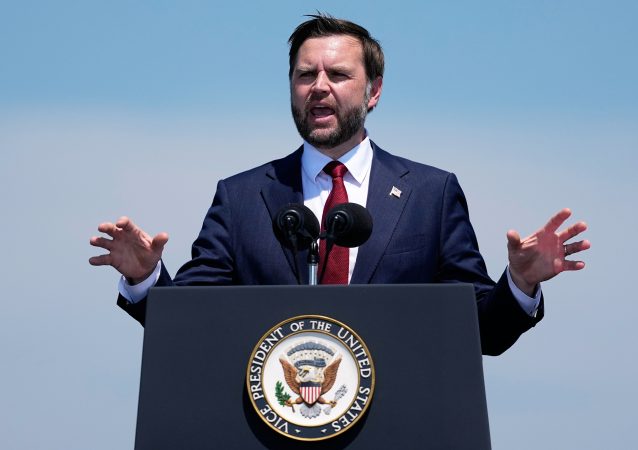
    Vice President JD Vance embraced claims that there were ties between convicted sex offender Jeffrey Epstein and the “highest levels” of Israeli intelligence, echoing conspiracy theories that have been a source of tension among conservatives.

    During an episode of his popular podcast, Joe Rogan said there was a widespread perception that Epstein’s financial support and drive to influence thinking at American universities stemmed from links to Mossad, Israel’s foreign intelligence service. Vance agreed that such a view exists, before asserting his own perspective.

    “Most people think he was Mossad,” Rogan, a frequent promoter of conspiracy theories, said of Epstein in an episode of The Joe Rogan Experience released Wednesday.

    “Yeah, Mossad or CIA, or some other deep state, whether in America or Israel or another country,” Vance replied.

    “He clearly had connections to the upper — the highest — levels of American intelligence,” the vice president added. “He clearly had connections to the highest levels of Israeli intelligence.”

    Although Epstein did have ties to a top Israeli leader, the millions of files released by the U.S. government related to Epstein have not turned up any conclusive proof that he was an intelligence agent or asset for Mossad, as Vance acknowledged.

    “I’ve asked, Were there like, were there documents connecting Jeffrey Epstein directly to our intelligence agencies or anybody else’s, and the answer is no,” Vance said. “But if that s— existed, it wouldn’t exist in 2026.”

    The comments, made during a nearly three-hour episode that covered a broad range of issues, marked a striking embrace of conspiracy theories from an official in one of the highest perches of the U.S. government. Such claims have been promoted by some powerful conservative figures, including Tucker Carlson, a longtime ally of Vance. They’ve also drawn accusations of antisemitism.

    Former Rep. Peter T. King (R., N.Y.), who strongly supports Israel, described Vance’s remarks as a “dog whistle” to a wing of the Republican Party that he said “is antisemitic, is anti-Israel, is conspiratorial, and is unhinged.”

    “It’s not like you’re a junior congressman,” King said in an interview on Saturday, referring to Vance. “You’re the vice president of the United States. Unless you know what you’re talking about, unless you have absolute facts to back it up, before you undermine an ally — before you undermine your own intelligence agencies — you better know what you’re talking about.”

    Asked for comment, Vance’s office provided a statement, attributed to an unnamed White House official, asserting that everything the vice president had said was true and to suggest otherwise was “in bad faith, stupidity, or both.” Aides from his office declined to clarify his remarks.

    The Israeli prime minister’s office, which also oversees the Mossad intelligence agency, did not immediately respond to a request for comment on Vance’s remarks. Prime Minister Benjamin Netanyahu has pushed back in the past on the idea that Epstein had worked for Israel.

    Some Republicans have wanted to see Vance take a more aggressive approach to denouncing antisemitism and show stronger support for Israel. His latest comments appeared to intensify concerns about his posture.

    Ben Shapiro, a prominent conservative podcaster who is Jewish and strongly supportive of Israel, wrote in a newsletter that Vance’s appearance on Rogan’s podcast had left him “concerned.”

    On his own show, Shapiro said Vance’s commentary had been “unworthy of the office” of vice president and had undercut core tenets of conservatism.

    “Conservatives, generally, are not in favor of baseless conspiracy theorizing,” Shapiro said, “because that undermines the idea that you have capacity in the world to act.”

    The online publication Tablet, which focuses on Jewish news and culture, published a column headlined “JD Vance’s Big Crashout” by journalist Lee Smith. It said the vice president had “attacked Jews and spread baseless rumors, for which he admits to having zero evidence, about some kind of dark plot involving Jeffrey Epstein.”

    Epstein, who cultivated associations with powerful people, including officials, from across the globe, had a yearslong friendship and business relationship with Ehud Barak, the center-left former Israeli prime minister.

    “Epstein seemed to be connected to the elements of the Israeli deep state that were left of center,” Vance told Rogan. “I’ve always found that fascinating.”

    Barak has said that Israeli leader Shimon Peres first introduced him to Epstein in 2002. Barak attended lunches and dinners at Epstein’s New York City town house and received some $2.3 million in payments from a foundation associated with Epstein. Epstein also invested a reported $1 million in a limited partnership established by Barak in 2015.

    Barak has said he did not witness or take part in any sexual abuse. “I now deeply regret having any association with him,” he said.

    And top Israeli officials have staunchly denied any formal relationship between the Israeli government and Epstein.

    “Jeffrey Epstein’s unusual close relationship with Ehud Barak doesn’t suggest Epstein worked for Israel. It proves the opposite,” Netanyahu posted on social media in February, after disclosures of emails between Epstein and Barak.

    Naftali Bennett, the former Israeli prime minister, denounced the theories of a clandestine relationship even more forcefully last year, after Carlson promoted them at a conference hosted by Turning Point USA, a major conservative organization. From the stage, Carlson said the question of whether Epstein had worked for Mossad was one “that every U.S. citizen has a right to an answer on.”

    At the time, Bennett wrote on social media, “The accusation that Jeffrey Epstein somehow worked for Israel or the Mossad running a blackmail ring is categorically and totally false.”

    Bennett added: “Epstein never worked for the Mossad. This accusation is a lie being peddled by prominent online personalities such as Tucker Carlson pretending they know things they don’t.”

    In his recent podcast appearance, Vance did not entertain all of the ideas about Israeli influence suggested by Rogan.

    Vance pushed back when Rogan raised an unfounded theory that the Epstein files had been used to blackmail the Trump administration into going to war.

    The vice president also cast himself as a “reasonable moderate” in the debate over Israel’s relationship with the United States, expressing confusion over why “many people” have accused him of being antisemitic.

    “I’ve never heard a good compelling argument for why I am an antisemite, even though I’ve been accused of being an antisemite by many people,” he said.

    This article originally appeared in the New York Times.