Blog

  • Dear Abby | Visits to husband’s grandkids have lost their appeal

    DEAR ABBY: I’m 56 years old and have been married for 12 years. I don’t want to drive an hour and a half to spend time with my husband’s grandbabies. I have done that on many occasions and choose not to do it anymore. I’m not into babies — or children, for that matter. He continues to ask me to go and can’t understand why I don’t want to. I have no problem with him going (I encourage him to go), but he won’t let up on me, and it’s driving me away. Am I wrong to prefer not to go?

    — CHILD-FREE IN CALIFORNIA

    DEAR CHILD-FREE: Has it occurred to you that your husband may not want to drive an hour and a half to visit the “grandbabies” any more than you do? He may need you for backup. Sometimes in a marriage, we do things for our partner that may not be our favorite pastime, but we do it for love. You should not have to make that pilgrimage every time your husband does, but the nice thing to do would be to accompany him more times than not. And do it with a smile.

    ** ** **

    DEAR ABBY: My husband is serving a life sentence, with the possibility of parole. He turned himself in a year and a half ago for a crime that happened 15 years ago. I met someone seven months ago. This man is involved in his church and has a ministry in which he feeds the homeless. I’m not sure at this point what our future holds. I feel so guilty at times. Please help. Any advice would be greatly appreciated.

    — CONFLICTED IN GEORGIA

    DEAR CONFLICTED: This is something I think you should discuss with your incarcerated husband. When you do, explain that you don’t think you can live like a widow, possibly for decades. Decide together how you should proceed. However, please remember you have been involved with this new person for a relatively short time, and there is no guarantee that your relationship will become permanent.

    ** ** **

    DEAR ABBY: Our friend “Leo” married a girl who treats him poorly. She degrades him in front of people about his finances, weight, looks, etc. They have been married only a couple of years and have no kids. Leo is a great person, and his mental health is getting beaten down daily. Should we say something to him? We want him to know we would support him if he wanted to divorce her. He has limited family — his friends are family.

    — STEPPING UP IN IDAHO

    DEAR STEPPING UP: Because you and Leo’s other friends believe he is being abused, I see no reason to remain silent and pretend it isn’t happening. An intervention may be called for, as well as an opportunity to reinforce the message that you are all there for him regardless of what he chooses to do about his marriage.

  • Horoscopes: Monday, July 20, 2026

    ARIES (March 21-April 19). The main tension today is between your desire to lead and your awareness that collaboration often brings about the best result — often, but not always. And what about today? You’ll figure out how to take initiative without needing complete control.

    TAURUS (April 20-May 20). Yes, your values differ from those of many around you. They may even conflict with what the group is collectively trying to accomplish. Even so, practical and logistical realities require participation. You’ll make it work while remaining true to what matters most.

    GEMINI (May 21-June 21). Being heard isn’t the same as being understood. Some conversations generate attention. Others create connection. You’ll know the difference by how you feel afterward. One leaves you energized. The other leaves you feeling strangely alone.

    CANCER (June 22-July 22). Like schools of fish and flocks of birds behaving as a single creature, there is a group mind influencing your scene on levels that feel practically primordial. But your need to express and assert your individuality will be stronger today.

    LEO (July 23-Aug. 22). You are quickly becoming a favorite of those with knowledge to impart. What you learn will apply in many areas of life, sometimes as metaphor, sometimes as a lesson with immediate applications.

    VIRGO (Aug. 23-Sept. 22). Not everyone will understand your vision immediately, and that’s perfectly normal. New ideas often need time before they make sense to other people. The challenge isn’t convincing everyone. It’s staying on purpose without becoming dependent on approval.

    LIBRA (Sept. 23-Oct. 23). You’ll have fresh ideas about who should be doing what. As you look at the division of labor, you’ll get a clearer sense of what belongs on your plate and what works better as a group effort. A few responsibilities are ready to change hands.

    SCORPIO (Oct. 24-Nov. 21). The golden question today: How do I express myself fully without forgetting that I’m part of something larger? The line between personal glory and collective good will reveal itself, and you will walk it with the grace of a veteran tightrope artist.

    SAGITTARIUS (Nov. 22-Dec. 21). You’re getting noticed, which is nice. Still, the more interesting question is what you want to do with that attention. For now, the answer can wait. Simply notice which doors begin to open.

    CAPRICORN (Dec. 22-Jan. 19). Your beliefs are evolving. Stay curious enough to let new information add nuance to the picture. What you learn now may not change your mind so much as broaden the context around it.

    AQUARIUS (Jan. 20-Feb. 18). You’re gravitating toward certain people and steering clear of others. Fair enough. Just don’t become so selective that you overlook an unexpected ally. Useful insight will come from an unlikely source.

    PISCES (Feb. 19-March 20). The gears don’t automatically run smoothly. They have to be fitted. You turn the machinery on and notice where it rubs, where the timing is off, where the shapes miss connection. It’s the fine tuning that makes it work.

    TODAY’S BIRTHDAY (July 20). It’s your Year of the Carousel, in which familiar themes return and enjoyment is no longer a reward for finishing the work — it’s part of the experience. You’re being carried in a beautiful spectacle of music and lights. More highlights: A hobby becomes a talent and an income stream. Close relationships glow with warmth, tenderness and just plain fun. You’ll sign a contract that protects and funds you. Libra and Pisces adore you. Your lucky numbers are: 7, 22, 16, 3 and 9.

  • Contractor, owner agree to $7.2 million resolution in 30th Street Station kickbacks case

    An Illinois-based masonry company and its owner have agreed to a $7 million resolution of civil claims stemming from a 30th Street Station renovation project, U.S. Attorney David Metcalf announced last week.

    Officials said Mark 1 Restoration Company, along with owner Mark Snedden, provided hundreds of thousands of dollars in gifts to an Amtrak official overseeing the project in exchange for “favorable changes to a contract.”

    “Integrity in federal contracting isn’t optional,” Metcalf said in a statement. “If you try to buy favors or submit false certifications, expect both civil and criminal consequences.”

    Snedden, along with three other Mark 1 executives, previously pleaded guilty to criminal charges in the case.

    Snedden admitted then that he and the three other executives conspired to provide more than $320,000 in jewelry, vacations, cash, dinners, entertainment, and even a dog, to Ajith Bhaskaran, the Amtrak official in charge of the renovation project. In exchange, officials said, the Amtrak employee made contract modifications that resulted in $2 million in over-billing to Amtrak as part of the project.

    Snedden was sentenced to 7 1/2 years in prison last year as part of the criminal case.

    As part of last week’s civil resolution, Snedden and his company agreed to pay $2.4 million and release Amtrak from any claim to $4.8 million “in additional funds that Amtrak retained or otherwise did not pay to Mark 1 after learning of the kickback scheme,” according to a release from the U.S. Attorney’s Office, Eastern District of Pennsylvania.

    “Bribery strikes at the heart of the rule of law,” said Wayne A. Jacobs, special agent in charge of the FBI’s Philadelphia Division. “Stealing and misusing federal funds is not only a crime, but it betrays the trust of the communities we serve and erodes confidence in the systems they rely on.”

  • JD and Usha Vance welcome a baby boy, the first child born to a sitting VP in more than 150 years

    JD and Usha Vance welcome a baby boy, the first child born to a sitting VP in more than 150 years

    WASHINGTON — Vice President JD Vance and his wife, second lady Usha Vance, on Sunday announced the birth of their fourth child, the first born to a sitting vice president in more than 150 years.

    Born Sunday, Alec Neel Vance joins older siblings Ewan, 9; Vivek, 6; and Mirabel, 4.

    Vance announced the birth on social media with a statement signed by him and his wife.

    “We are excited to announce that our baby boy, Alec Neel Vance, was born this morning. Usha and the baby are happy and healthy, and our kids are overjoyed to meet their little brother,” the statement said.

    They thanked doctors and staff at the Walter Reed National Military Medical Center and with the White House medical team.

    The Republican vice president’s growing family is in keeping with his passionate advocacy for Americans to have more children. He has also suggested that the 2025 killing of conservative activist Charlie Kirk, who was his friend, factored into the decision to have another child.

    Vance, a former U.S. Marine, repeatedly expressed alarm about declining birth rates in America as he launched his political career in 2021 with a bid for a U.S. Senate seat from Ohio. As vice president, he said in Washington at the 2025 March for Life anti-abortion rally, “I want more babies in the United States of America.”

    The vice president, who’s 41, has been accompanied on overseas trips by Usha Vance, 40, and their children, with the kids often pajama-clad as they board Air Force Two for the overnight flights.

    Usha Vance, the daughter of immigrants from India, had already been the subject of some public fascination because of her husband. Her pregnancy, which was announced in January, amplified that spotlight since it is rare for occupants of the United States’ highest public offices to add to their families while serving.

    The last time a sitting vice president became a new father was in the 1800s.

    Schuyler Colfax and his second wife, Ellen Wade, had a son, Schuyler Colfax III, in 1870 when Colfax was serving as vice president, according to the White House Historical Association. Decades before that, John C. Calhoun and his wife, Floride Bonneau, had a son, William, in 1829 when Calhoun was vice president, the association said.

    The newest addition to Vance’s family was part of a recent mini baby boom among top members of President Donald Trump’s administration. White House deputy chief of staff Stephen Miller’s wife, Katie Miller, recently gave birth to the couple’s fourth child, and White House press secretary Karoline Leavitt had her second child with her husband, Nicholas Riccio, in May.

    Usha Vance recently came under scrutiny after the New York Times’ fashion critic called attention to the stomach-hugging, coral maternity dress she wore for a Father’s Day episode of Storytime with the Second Lady, a video podcast she launched during the pregnancy.

    The Times wrote that the attention that Vance, Miller, and Leavitt had put on their pregnancies offered “an image of idealized womanhood that gives literal shape to the pronatalist movement,” which encourages couples to have as many children as possible to counter declining birth rates.

    The second lady responded on social media, writing, “Now that we know the political significance of my $8.75 coral maternity dress from Old Navy, can’t wait to hear what the New York Times has to say about my elastic-waistband pants and compression socks! In the meantime, enjoy my pregnancy fashion (or lack thereof) and a good story with your kids on Storytime with the Second Lady.” She later shared the receipt for the dress, and her husband applauded her frugality.

    “She bought a $50 dress for $8.75. America: meet your next director of the federal budget!” the vice president wrote on social media.

    JD Vance has said it was Kirk’s widow, Erika Kirk, telling them that she wished she’d had more than two children with her husband before he was assassinated last September in Utah that led him and the second lady to decide to grow their family. Usha Vance, a former attorney who once clerked for Supreme Court Chief Justice John Roberts, concurred — in part.

    “It was very powerful, what (Erika) said about her own family, and certainly very moving to both of us. I think I had already started to open my mind to the possibility,” Usha Vance said during a joint interview with her husband for CBS Sunday Morning that aired in June. “I wouldn’t say that this was, for me in any way, the decisive factor. But it came in the middle of a conversation that we were already having.”

  • Spain outlasts Argentina to complete a star-studded World Cup final

    Spain outlasts Argentina to complete a star-studded World Cup final

    EAST RUTHERFORD, N.J. — At the start of this World Cup, Spain was one of the biggest favorites to win it all. And in the end, it was the team that deservedly won the title.

    Spain’s second-half substitute Ferran Torres’ scored in the 106th-minute goal to fuel a 1-0 victory over Argentina. La Roja dethroned the reigning champions with a 20-2 advantage in shots over Lionel Messi’s side.

    It was Spain’s second men’s World Cup title in a brilliant era from 2008 to now, which also includes three European championships and a UEFA Nations League title. The country is also the first to hold the men’s and women’s World Cup crowns at the same time, thanks to the women’s team’s triumph in 2023.

    A sellout crowd of 80,663 was on hand in the Meadowlands — though with quite a few empty seats in the lower deck — and heaven knows what they paid to be there. Projections of $14 billion in revenue from this summer rose to $15 billion, the Guardian reported, with fans paying a lot of the bill.

    FIFA was no doubt also happy with the 11-page list of “VVIPs and Celebrities,” spanning Spain’s reigning King Felipe VI and its prime minister, Pedro Sánchez. Argentina’s president Javier Milei didn’t attend out of superstition, putting his fandom ahead of his friendship with President Donald Trump, who emerged to a chorus of boos during the trophy presentation.

    Madonna, Anna Wintour, Brad Pitt, Tom Cruise, and Mick Jagger alongside halftime show performers Shakira and Justin Bieber were also some of the names in attendance.

    From the sports world? How about soccer legends Ronaldo, Zinedine Zidane (who will soon be France’s manager), and Roberto Baggio; current U.S. women’s stars Rose Lavelle and Alyssa Thompson; the Eagles’ Saquon Barkley and the Chiefs’ Patrick Mahomes; a pile of basketball players led by Victor Wembanyama, Jalen Brunson, and Union part-owner Kevin Durant; Olympians Ilia Malinin and Mikaela Shiffrin; and tennis’ Carlos Alcaraz.

    They might even have watched the game, and if they did, they got to see other stars. Lionel Messi, Julián Álvarez, and Enzo Fernández started for Argentina against Spain’s Lamine Yamal, Dani Olmo, and Rodri, the last of whom captured FIFA’s Golden Ball, given to the player of the tournament.

    Lionel Messi (left) and Lamine Yamal battling for the ball during the first half.Julio Cortez

    But while it was a superbly sunny, surprisingly breezy, and thankfully wildfire-smoke-free afternoon, there wasn’t much action to enjoy early on. Instead, there was the first scoreless half of a men’s World Cup final since 2014. Spain outshot Argentina 3-0, with Yamal forcing a save in the fifth minute and Marc Cucurella firing narrowly wide from 18 yards in the 43rd.

    Perhaps that shouldn’t have been too surprising. Soccer finals are usually cagey, and on top of that Spain likes to win games by controlling them. Argentina, meanwhile, is often content to take its time and strike late. Messi’s renowned playing style exemplifies that: he often spends the first stretch of any game just walking, so he can watch how the opposing defense moves and find gaps in it.

    The other end of the field was a different story. Along with Spain having the better of the play in the first half, Argentina centerback Lisandro Martínez had to leave the game injured in the 44th, not long after picking up the first of his team’s eight yellow cards. Nicolás Otamendi replaced him, and Spain might not have minded seeing the 38-year-old come in.

    After the first halftime show concert in World Cup final history (which enough of the supposed American target audience didn’t like), Albiceleste manager Lionel Scaloni made another swap: Leandro Paredes for Nicolás González at left wing in their 4-4-2 setup.

    There were quite a few empty seats in the stands during the World Cup halftime show.Matt Slocum

    In the 58th, Scaloni made it three subs before his players had taken a shot by withdrawing right back and 2022 World Cup final hero Gonzalo Montiel for Nahuel Molina. Spain was starting to assert control by then, and four minutes later manager Luis de la Fuente upped the ante with a double-sub: Ferran Torres for Mikel Oyarzabal at striker and great playmaker Pedri for Fabián Ruiz in midfield.

    Spain’s big cluster of red-clad fans behind one goal could sense the momentum, even more when Yamal split two defenders and crossed for Torres to head right at Emiliano Martínez.

    Scaloni tried to bolster his side by sending defender Facundo Medina and midfielder Giuliano Simeone on for Cristian Romero and Rodrigo de Paul in the 70th. Those were his last subs in regulation, and Argentina still hadn’t recorded a shot. Meanwhile, a lot of firepower watched from the bench: midfielders Giovani Lo Celso, Nico Paz and Thiago Almada (formerly of Atlanta United), and especially striker Lautaro Martínez.

    De la Fuente, meanwhile, countered in the 75th with two more attacking moves. Nico Williams replaced Álex Baena at left wing, and Mikel Merino replaced Olmo in attacking midfield.

    It took until the 92nd minute for Argentina to finally register an attempt, and it wasn’t even officially scored a shot. But Messi was on the ball for enough of the buildup that the stadium held its breath.

    With everyone just about ready for extra time, the plot took a big twist. Fernández sent Pau Cubarsí flying into the air from a collision, and referee Slavko Vinčić quickly gave Fernández his second yellow card of the day. A red followed right afterward.

    But there were still no goals when regulation ended, making this the fifth men’s World Cup final of the last eight to require bonus sessions. The only one to reach penalty kicks with no goals was the last one in this country, 1994 at the Rose Bowl.

    Williams finally put the ball in the net in the 96th, which Spain fully deserved for its 15-0 lead in shots through 90 minutes. But the goal was ruled out for a foul in the buildup, and that was the right call.

    Argentina manager Lionel Scaloni (center) had lots of words for his players, but he left a lot of attackers on the bench.Seth Wenig

    Extra time grants each side an extra sub. Scaloni chose to use his not just to send in another defender, but to take off a striker: Álvarez for Marcos Senesi.

    The goal finally came in the 106th, and it was perfectly executed. Right back Pedro Porro hit a cross over the crowded 18-yard box, Williams headed it down, and Torres slammed the loose ball in with all his might.

    Everyone knew Spain deserved it, but Argentina wasn’t dead yet. In stoppage time of the extra time, officially the 122nd minute, Cubarsí had to scramble to clear a chance Messi and Simeone created. From the ensuing corner kick, Simeone shot over the bar.

    The clock read 125:01 when the final whistle blew. Most importantly, the scoreboard read 1-0 with Spain as the winner.

  • D.C. probation officers learned from a Philly youth organization about connecting with kids

    Probation officers from Washington traveled to Philadelphia to learn from a Philly youth organization that works with young people impacted by violence.

    The officers met with YEAH Philly, a group that works with Philadelphia youths charged with crimes, in an effort to incorporate some of their community-based practices into their own work.

    The tour, which took place Wednesday and Thursday, brought about 100 officers to Philadelphia’s Family Court and introduced them to public defenders. The trip was part of a larger project from the D.C. court system to learn from other youth programs to adapt their services.

    Probation officers can mimic some things YEAH Philly is doing, said Robert Bacon, D.C.’s assistant deputy director of court social services. What really struck him about the program is how it seemed to be able to connect with kids while making them feel safe.

    “We are trying to find a way to reach kids differently,” he said.

    But as a nongovernmental organization, YEAH Philly is not subject to the same restrictions that probation officers, as law-enforcement officers, are, Bacon noted.

    “They do a lot of the function that probation does without the weight of the court system,” Malcolm Woodland, the director of court social services said about YEAH Philly. Nonetheless, he noted that “the cloth that binds us is that we want to help young people.”

    In a town-hall-like dialogue, probation officers and leadership from YEAH Philly discussed how the organization was able to successfully build relationships with young people. James Aye, the founder of the organization, shared how they were able to help young people avoid violating their probation by providing them with food, arranging for and paying for repairs to their homes, and giving them skills on how to interact with their parole officers.

    A goal of the dialogue with YEAH Philly, Bacon suggested, would be to mimic its role as a community-based organization but in a more official capacity of a law-enforcement agency. YEAH Philly acts as a kind of probation-system model for them.

    In Pennsylvania, a probation office can represent an outsized part of a youth’s time in the justice system. Youths spent an average of 121 days under supervision between the initial charge and final disposition, according to the Pennsylvania Juvenile Court 2024 report. And just over 16% of youths found delinquent in Pennsylvania are put on probation, the report said.

    Some attempts have been made to reform the probation system locally. The Philadelphia’s District Attorney’s Office noted in a 2019 report that 72% of children sent to juvenile placement were there because they were not complying with their probation and not because they had committed another crime. As a result, the office committed to asking children to meet only three conditions as part of their probation. Conditions can range from drug testing, educational requirements, curfew, and regular meetings with probation officers.

    This was the experience of Haafith Collins, who spoke to the D.C. probation officers of his experience. Collins, now 19, had previously been on probation for four years.

    “I was only recharged when I was forced to live in a house that was uninhabitable, and I felt like I had no choice but to run away even though I was on house arrest,” he said.

  • Phillies look ahead to Dodgers after No. 5 starter Alan Rangel struggles in series loss to Mets

    Phillies look ahead to Dodgers after No. 5 starter Alan Rangel struggles in series loss to Mets

    Bring on the Dodgers.

    No, really, bring ’em on. So what if the two-time defending World Series champs are still the best team in baseball? The Phillies would sooner face them for three days than talk about what happened Sunday.

    Oh, all right. A few words about that:

    In the latest noncompetitive dud from a No. 5 starter (more on that later), Alan Rangel gave up five runs before some fans found their seats. The Phillies managed six hits and lost, 6-1, to the Mets to drop the first series after the All-Star break, their warts on display.

    But hey, that’s life when neither Cristopher Sánchez nor Zack Wheeler pitches in a series. That won’t be the case against the Dodgers. Sánchez is scheduled to start the opener Monday night followed by Wheeler in the second game.

    So, bring on the champs, right?

    “Obviously they’re a good team, one of the best,” said Alec Bohm, whose homer accounted for the offense. “I think just the opportunity is to win some games. I don’t think it’s anything crazy. It’s kind of getting down to that time of the year. We’re in the second half now. We just want to come in and take care of business.”

    Say this: It’s a measuring-stick series. The Dodgers are talented and endlessly deep, with the best record in baseball — 63-36, a 103-win pace, through the opener of a doubleheader at Yankee Stadium. Shohei Ohtani won’t pitch this week because of left knee pain, but he went 2-for-5 with a double and drove in two runs Sunday in Game 1 against the Yankees, so hitting won’t be a problem.

    Phillies starter Alan Rangel gave up two runs in the first inning and three in the second in a loss to the Mets on Sunday.David Maialetti / Staff Photographer

    The Phillies were still ascending from a season-opening 9-19 hole when they visited Dodger Stadium the last weekend in May. They lost two of three, including Wheeler’s only defeat in 15 starts.

    But they went 9-3 against the Dodgers over the last two regular seasons and lost three games by a total of four runs in the divisional round last year. Dodgers officials didn’t want to face the Phillies and were mostly relieved to survive the series.

    They could be headed for an October rematch, in which case the Dodgers’ uneasy feeling won’t likely subside if Sánchez, Wheeler, and Jesús Luzardo are lined up to pitch.

    To get there, though, the Phillies need more from the back of the rotation. They are 41-14 when Sánchez, Wheeler, or Luzardo start; in starts made by anyone else, they are 14-31, including 10 consecutive losses from the No. 5 spot.

    “Obviously,” interim manager Don Mattingly said, “you don’t want to have a day that we never win.”

    The Phillies haven’t won with a No. 5 starter since May 18. Since then, Andrew Painter got demoted to triple A, where the results have been mixed. Rotation depth is an organizational weakness. Rangel is the best (only?) option — and has a 5.75 ERA since replacing Painter.

    Rangel’s next start would be Saturday at home against the Yankees. Will he make it?

    “It’s something to talk about,” Mattingly said. “Now is not a great time to talk about that when you’re 10 minutes after the game. But I’m sure it’s something that everybody’s looking at.”

    With a day off Thursday, the Phillies could skip the No. 5 spot and have Sánchez, Wheeler, and Aaron Nola start on regular (four days’) rest. In that case, they would need a fifth starter only once before the Aug. 3 trade deadline — and not until July 28 in Miami.

    Bryce Harper pauses during a pitching change in the sixth inning against the Mets on Sunday.David Maialetti / Staff Photographer

    Before sending Rangel to the mound against the Mets, Mattingly wondered how the 28-year-old righty would fare after facing them three weeks earlier in New York.

    It’s safe to say the advantage went to the Mets.

    “My mind wasn’t there,” Rangel said through a team interpreter. “I wasn’t thinking about that. I wasn’t worried about that. I was just trying to make my pitches and just try to do that.”

    Rangel said he sensed some hitters seemed to change their approach “maybe a little.” He relies heavily on his changeup and deceptive over-the-top delivery to get soft contact. This time, the Mets fouled off a lot of pitches against him.

    “I think more than anything he just wasn’t able to put guys away,” Mattingly said. “Second time they’ve seen him. Everybody’s making adjustments.”

    To wit: Bo Bichette fouled off six consecutive pitches and worked an 11-pitch walk with two out in the first inning. Rangel then left a fastball over the plate to Francisco Lindor for a two-run homer into the second deck in right field.

    It got worse for Rangel in the second inning. Brett Baty led off with a single before Luis Torrens lined an RBI double. Juan Soto walked and Bichette singled to load the bases for Lindor, who stroked an RBI single. Carson Benge lifted a sacrifice fly to make it 5-0.

    How’s that for deflating in the rubber game of a series?

    “Well, it can be,” Mattingly said. “You know, getting down five early. With that, the guy on the mound today [Mets ace Nolan McLean], he was good. It puts you in a tough spot. … It feels like kind of all day you’re kind of out of it.”

    The Phillies won’t face the Mets again until September. Before that, New York is expected to be an active seller at the trade deadline, with several pitchers who could help the Phillies, perhaps none more than right-hander Clay Holmes.

    A closer-turned-starter, Holmes is rehabbing from a right leg fracture. If he shows he’s healthy in upcoming minor-league starts, he would fit the Phillies as a No. 5 starter down the stretch who could easily transition to a late-inning relief role in the postseason.

    In the meantime, here come Ohtani and the Dodgers.

    At least the Phillies will have Sánchez and Wheeler waiting for them.

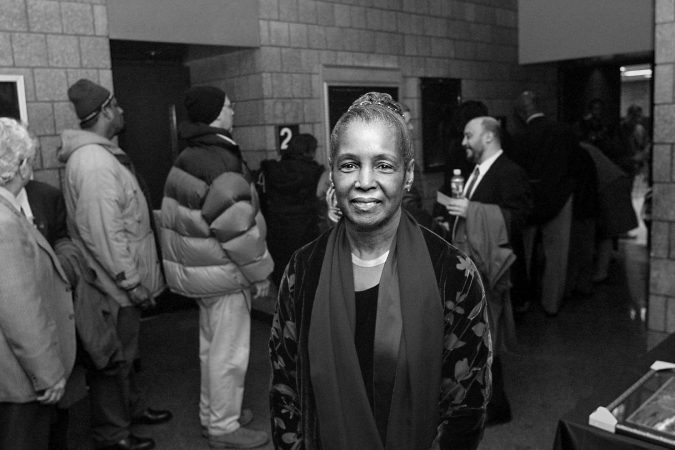
  • Lillian Roberts, crusading New York labor leader, dies at 98

    Lillian Roberts, crusading New York labor leader, dies at 98

    Lillian Roberts, a crusading labor leader hailed as a “tiger” — and briefly jailed — during her fiery tenure at the nation’s largest municipal workers union, which now represents more than 150,000 nurses, pothole fillers, zookeepers, and other New York City employees, died July 9 in Manhattan. She was 98.

    Her death, at a nursing facility, was from cardiac arrest, said Ivan Smith, her sister’s son, whom Ms. Roberts raised as her own after her sister’s death.

    Starting in the 1960s, Ms. Roberts established a reputation as a firebrand, working for — and, eventually, as a de facto partner of — Victor H. Gotbaum, the notoriously combative executive director of District Council 37.

    The district council — part of the American Federation of State, County and Municipal Employees, or AFSCME — has long been considered the nation’s most powerful public employees union, representing more than 1,000 job titles and nearly a third of the city’s municipal workers.

    Rising to prominence at a time when labor leadership was dominated by white men, Ms. Roberts, a Black woman, spent nearly 14 years as the associate director of District Council 37, which roughly quadrupled in membership during that period. Her biggest coup was unionizing 20,000 workers at the city’s public hospitals, in what the New York Times later called one of the largest organizing drives in American history.

    After a lengthy absence, she returned to District Council 37 as executive director in 2002, when she was 74, and served for 12 years.

    “I always felt that I had a job to do,” she said in an interview for the 2005 reference book Black Women in America. “It transcends whether I am male or female.”

    She added: “I never thought about not doing the job and not being aggressive.”

    In her quieter moments, she came across as the “embodiment of serenity,” the Times observed in 2002. But Ms. Roberts was often pugnacious.

    In 1968, she spent two weeks behind bars after leading a strike against three New York state mental hospitals, thus violating the state’s Public Employees’ Fair Employment Act, or Taylor Law, which bans public sector strikes. In the 1970s, she decried Mayor Abraham D. Beame’s plans to shutter several public hospitals, insisting that city residents would die as a result.

    “When Lillian’s angry, she can really blow her head off at people — those from her own side of the table as well as the other,” Deputy Mayor Basil A. Paterson, the city’s chief labor negotiator, told the Times in 1978. “But never in a meeting — she will always take them into another room to let them have it.”

    Lillian Davis was born Jan. 2, 1928, in Chicago, the second of five children of Henry Davis, a janitor and barber, and Lillian (Henry) Davis.

    The couple, who were transplants from rural Mississippi, struggled to survive during the Great Depression, and Lillian spent hours over a washboard helping her mother keep the household running.

    “I never really had a childhood,” she was quoted as saying in Black Women in America. “I had to be an old lady at a very young age.”

    An honors student in high school, she earned a scholarship to the University of Illinois Urbana-Champaign. But unable to afford room and board, she dropped out after less than two years.

    “I was so angry at society that here I was on welfare,” she recalled. “I did not want welfare, I was humiliated by it, and they were doing absolutely nothing to get me out of that situation.”

    Instead of receiving a diploma, she became the first Black nurse’s aide at the University of Chicago’s hospital, although she lacked the money to go on to nursing school. She remained in the aide job for more than a decade, eventually becoming active with her AFSCME local as a shop steward and secretary.

    She was taken under the wing of Gotbaum, then in charge of the Chicago district council of the AFSCME, who “noticed that I was aggressive, that I was responsible,” Ms. Roberts later said. In 1965, she followed Gotbaum to New York when he took over District Council 37.

    Ms. Roberts burnished her credentials as a labor hero by flouting Gov. Nelson A. Rockefeller and the Taylor Law during the 1968 hospital strikes. On her way into the 19th-century Civil Jail on West 37th Street, she was greeted with the chant, “Rocky in, Roberts out!”

    Sentenced to a month in jail, she was released after two weeks following a public outcry.

    In 1981, Ms. Roberts became the first Black woman to be appointed New York state labor commissioner, then known as the industrial commissioner, and she fought for improving workplace safety, for fair wages and for stronger unemployment insurance programs. After resigning in 1987, she joined the private sector as an executive at a health management organization.

    In addition to Smith, Ms. Roberts is survived by his brothers, Carl and Ralonzo Smith, whom she also raised as sons after her sister’s death. Her marriages to William Roberts and Enoch Jenkins ended in divorce.

    When she returned in 2002 to lead District Council 37, the union had “Cinderella-like, suffered through its own midnight,” the Times observed, “and turned into a squalid outfit in which officials embezzled millions of dollars and stuffed ballot boxes.”

    In essence, the Times wrote, she was coming back as a “fairy godmother.” But it was not all magic wands and glass slippers. Ms. Roberts clashed with the union’s board, as well as with Mayor Michael Bloomberg, a conflict that included sharp-tongued attacks over planned city layoffs in 2011.

    “The relationship between the mayor and Roberts,” the Times noted that year, “is far worse than that between previous mayors and leaders of District Council 37.”

    But she remained in her post until 2014, when she retired at 86. “This union,” she once said, “was my life’s work.”

    This article originally appeared in the New York Times.

  • Walt Odets, psychologist who delved into the minds of gay men, dies at 79

    Walt Odets, psychologist who delved into the minds of gay men, dies at 79

    Walt Odets, a psychologist whose work with gay men in the Bay Area at the height of the AIDS epidemic led him to write a book on a nearly taboo topic, the survivor’s guilt and depression experienced by men who were not infected with HIV, died July 5 at his home in Berkeley, Calif. He was 79.

    The cause was complications of Alzheimer’s disease, said his companion, Armen Davoudian.

    Mr. Odets’ 1995 book, In the Shadow of the Epidemic: Being HIV-Negative in the Age of AIDS, appeared more than a decade into the crisis — before effective treatments arrived and as thousands of men dying in their prime continued to grip gay communities in grief, fear, and anger.

    Mr. Odets, who was gay, wrote that there was also a “psychological epidemic” among those who were HIV-negative, who were “anxious and lonely in their ‘wellness.’”

    “For many,” he added, “survival is so difficult they sometimes wish they had not survived and sometimes hope they will not.”

    Speaking about this population, he acknowledged, was fraught.

    “It has often seemed selfish, inappropriate or simply ridiculous for the uninfected to have any important feelings about themselves,” he wrote. “Feelings about oneself seemed the exclusive right of those who were infected, sick or dying.”

    But such feelings mattered, he continued, because a sense of fatalism among HIV-negative men encouraged unsafe sex.

    Reviewing In the Shadow of the Epidemic for the New York Times Book Review, David L. Kirp, a professor of public policy at the University of California, Berkeley, wrote that it belonged on the same shelf as two classic studies of populations living with trauma: Robert Coles’ Children of Crisis, about the effects of racism, and Robert Jay Lifton’s Death in Life, about Hiroshima survivors.

    Walt Whitman Odets was born Feb. 4, 1947, in Los Angeles. He was the son of playwright Clifford Odets, the author of Waiting for Lefty, Awake and Sing! and other works, and an actor, Bette Grayson. An older sister, Nora, was born with a mental disability; their parents chose not to institutionalize her, and she grew up with the family.

    Both of his parents died by the time he was 16, and Mr. Odets spent part of his late adolescence in New York with his legal guardians, Lee Strasberg, the Method acting pioneer, and Strasberg’s wife, Paula.

    He received a Bachelor of Arts in philosophy from Wesleyan University in 1969. He was married to Paula Harrington, a journalist in the Bay Area, from 1983 to 1986. His sister died in 2008. His companion, Davoudian, is his only immediate survivor.

    Photography was Mr. Odets’ first career. His works are in the collections of the Oakland Museum of California, the Brooklyn Museum, and the Cantor Arts Center at Stanford University.

    After training in clinical psychology at the California Professional School of Psychology in San Francisco, he received his doctorate in 1989 and offered therapy in Berkeley to gay men as individuals or couples. In the years before his first book appeared, Mr. Odets was best known in the Bay Area as a fierce critic of AIDS prevention campaigns that had failed to slow infections among younger men.

    He juggled his practice with writing some of the earliest and most influential watch reviews on the internet in the late 1990s. He disassembled timepieces, examined their mechanics with a microscope, and wrote knowing assessments for TimeZone, a website catering to watch collectors and horology buffs.

    A quarter-century after In the Shadow of the Epidemic, he wrote an update on gay men’s psychology, Out of the Shadows: Reimagining Gay Men’s Lives (2019).

    Despite evidence of progress — treatments, beginning in 1996, that drove AIDS mortality sharply downward; same-sex marriage becoming the law of the land — Mr. Odets dismissed the notion that America had outgrown its deep homophobia.

    He wrote that shame remained an ever-present emotion for many gay men and “still often lurks unconsciously behind the most successful of gay lives.”

    Gay identity, he maintained, entailed far more than merely a physical attraction to other men. Because his mother had died when he was a child and his sister was disabled, his emotional attachment to his father, he wrote, was a major influence on how he understood what it meant to be a gay man.

    “I have emotional feelings for men that I’m cautious about with women,” he explained to Publishers Weekly. “That’s really the crux of the whole book, that being gay is a whole internal life and a sensibility, and it’s much broader and much richer than the conventional male identity that’s so heavily promoted.”

    Out of the Shadows ends with an affecting account of the lifelong bonds that Mr. Odets forged with a gay college classmate and the man’s live-in lover. For decades, they were a bicoastal throuple, which sometimes expanded romantically to others, including a partner of Mr. Odets’, Robb Caramico, who died of AIDS in 1992.

    “There’s sadness in Odets’ life story,” Benoit Denizet-Lewis wrote in a Times review of the book, “but there’s mostly resilience, tenderness and a willingness to fashion an unapologetic gay life, sometimes against all odds.”

    This article originally appeared in the New York Times.

  • After 39 days, Philly’s FIFA Fan Festival comes to an end

    After 39 days, Philly’s FIFA Fan Festival comes to an end

    For the past month-plus, the grounds of East Fairmount Park have been a buzzy constant for local and visiting soccer fans, a carnival-like collection of food, games, live music, and — most notably — the city’s official World Cup watch party.

    No longer.

    Sunday marked the conclusion of the 39-day marathon FIFA Fan Festival at Lemon Hill, as Argentina and Spain faced off in the 3 p.m. World Cup Final at MetLife Stadium in East Rutherford, N.J.

    For the last month and a half, the festival — which was free to attend — was met largely with positive reviews, as fans have flocked to the grounds even after the last World Cup game hosted in Philadelphia came and went.

    An ambitious endeavor years in the making, the event took up one million square feet of space and was billed, at least in part, as an accessible way for soccer fans to enjoy the World Cup, as skyrocketing game ticket costs had made live attendance impossible for many.

    In addition to soccer, the festival played host to a variety of concerts, including Leon Thomas, Bebe Rexha, and the All-American Rejects.

    “Having it at the park has been a great idea,” said Akio Wise, who is originally from North Philly and was in town visiting family from the West Palm Beach, Fla., area. “Everyone seems to be having a good time.”

    Indeed, it wasn’t lost on many how the festival — and the World Cup in general — had brought a sense of bliss to this notoriously curmudgeonly city.

    “People have just been nicer,” said Suzanne Bachman, 66, of Philadelphia, who joined the masses at Lemon Hill. “We needed something positive.”

    Fans began gathering early for Sunday’s final, with thousands of people lining the streets of the neighborhood surrounding the park, waiting for gates to open at 2 p.m.

    Some were old pros, having made multiple trips to the festival over the summer. Others wanted to make sure they got a taste of the event before it was shuttered.

    Cathy and Clyde Maynard, who are originally from Trinidad and Tobago, said they couldn’t let the experience pass without seeing it for themselves.

    Their verdict?

    “They did a nice job,” said Clyde.

    Some, certainly, weren’t ready to see it go.

    Asked whether he’d miss the festival, Oscar Bibian chuckled.

    “Of course,” said the 38-year-old, who lives in the Philly area. “Watching soccer and drinking a beer is great.”

    Not surprisingly, it wasn’t just soccer that brought people to Lemon Hill on the festival’s final day.

    “My wife wanted to get one of the bracelets,” said Wise.

    The ultra-viral — and difficult to procure — charm bracelets have been a social media sensation, and the primary objective of at least some of those in attendance. (As has been common all summer, Sunday’s line for the free bracelets, a Bank of America giveaway, snaked through the festival grounds.)

    But by game time, the festival’s main viewing area was packed with fans hoping for a dramatic conclusion to the summer tournament.

    As fans congregated around the main stage viewing area, and Michael Buffer bellowed, “This is the moment you’ve all been waiting for …” from the screen, it felt to some like the unofficial conclusion to a Philly summer that has included no shortage of high-profile events.

    “It’s too bad this is it,” said Bachman. “I don’t know what there is to look forward to the rest of the summer.”

    “But what can you do?” she added. “Just enjoy what you have.”