Blog

  • Pennsylvania’s biggest Medicaid insurer is building political clout

    Pennsylvania’s biggest Medicaid insurer is building political clout

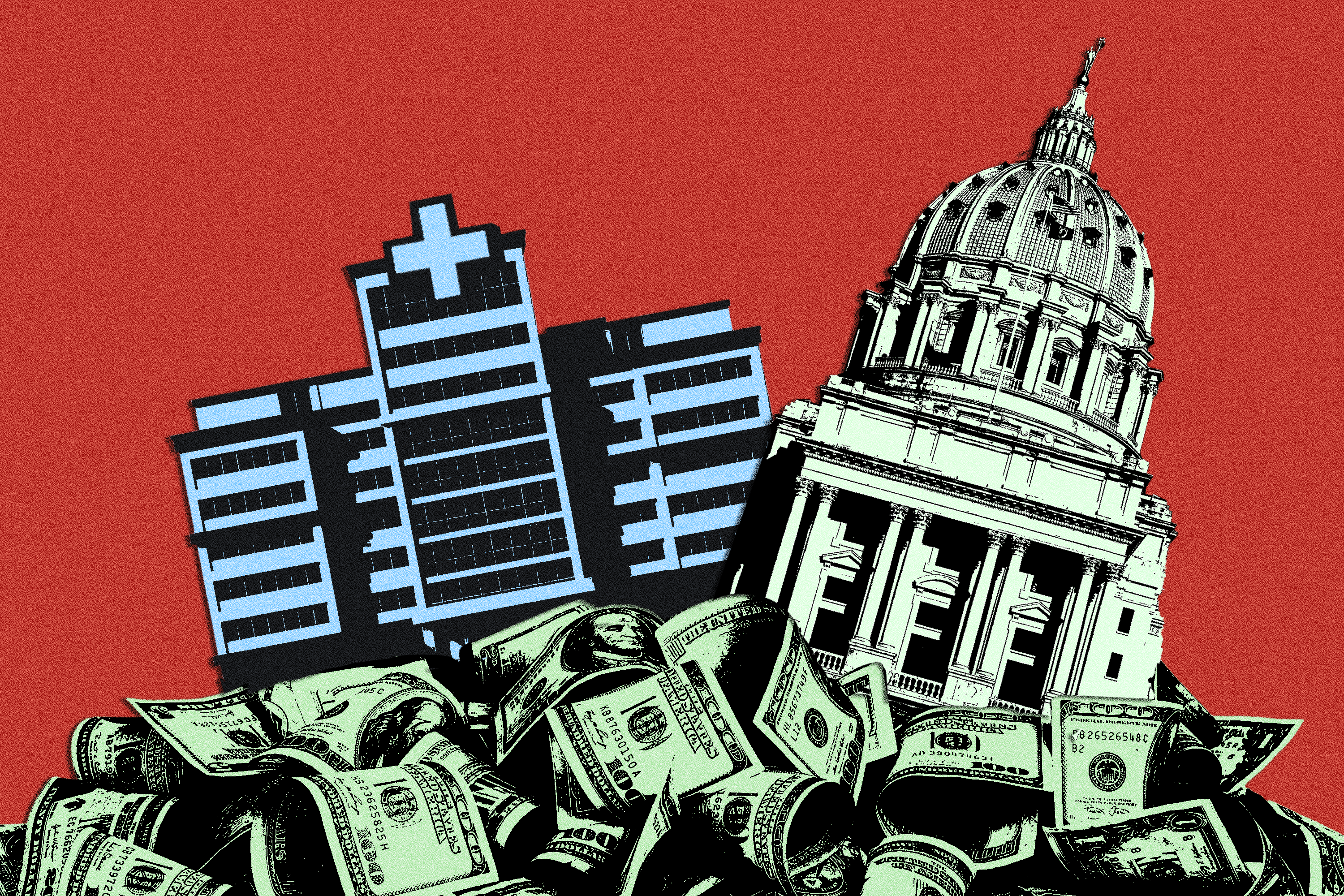
    Medicaid is a multibillion-dollar business.

    And the insurance company with the biggest piece of that business in Pennsylvania is making its voice heard in Harrisburg, Washington, and across the political landscape.

    Newtown Square-based AmeriHealth Caritas, an affiliate of the Philadelphia-based healthcare giant IBX, contributed $500,000 total last year to national Democratic and Republican groups that work to elect governors and state legislators, more than double what it gave those entities in 2020.

    As the GOP-led Congress passed legislation making deep cuts to Medicaid spending last year, AmeriHealth spent $1.7 million on federal lobbying, the most since at least 2008. And the company made charitable contributions aligned with causes promoted by political leaders in states where it does business — including a $5 million donation to food banks announced by North Carolina’s Democratic governor and 250 book bags for schoolchildren as a gift to the Democratic speaker of the Pennsylvania House.

    It all adds up to a growing influence operation run by a company in a competitive industry that relies on government for revenue. Last year, AmeriHealth generated almost $16 billion from Pennsylvania contracts — more than half its total revenue.

    Medicaid — a joint state-federal program that funds healthcare for low-income people, children, seniors, and individuals with disabilities — is also the single biggest cost driver in Pennsylvania’s budget. Almost three million Pennsylvanians, or more than one-fifth of the population, are covered by Medicaid.

    AmeriHealth’s corporate political giving has drawn criticism from some Republican state lawmakers, who call it an inappropriate use of taxpayer dollars.

    “That’s money that’s supposed to be going out to our hospitals, pharmacies, and disabled service providers,” said State Sen. Cris Dush (R., Jefferson).
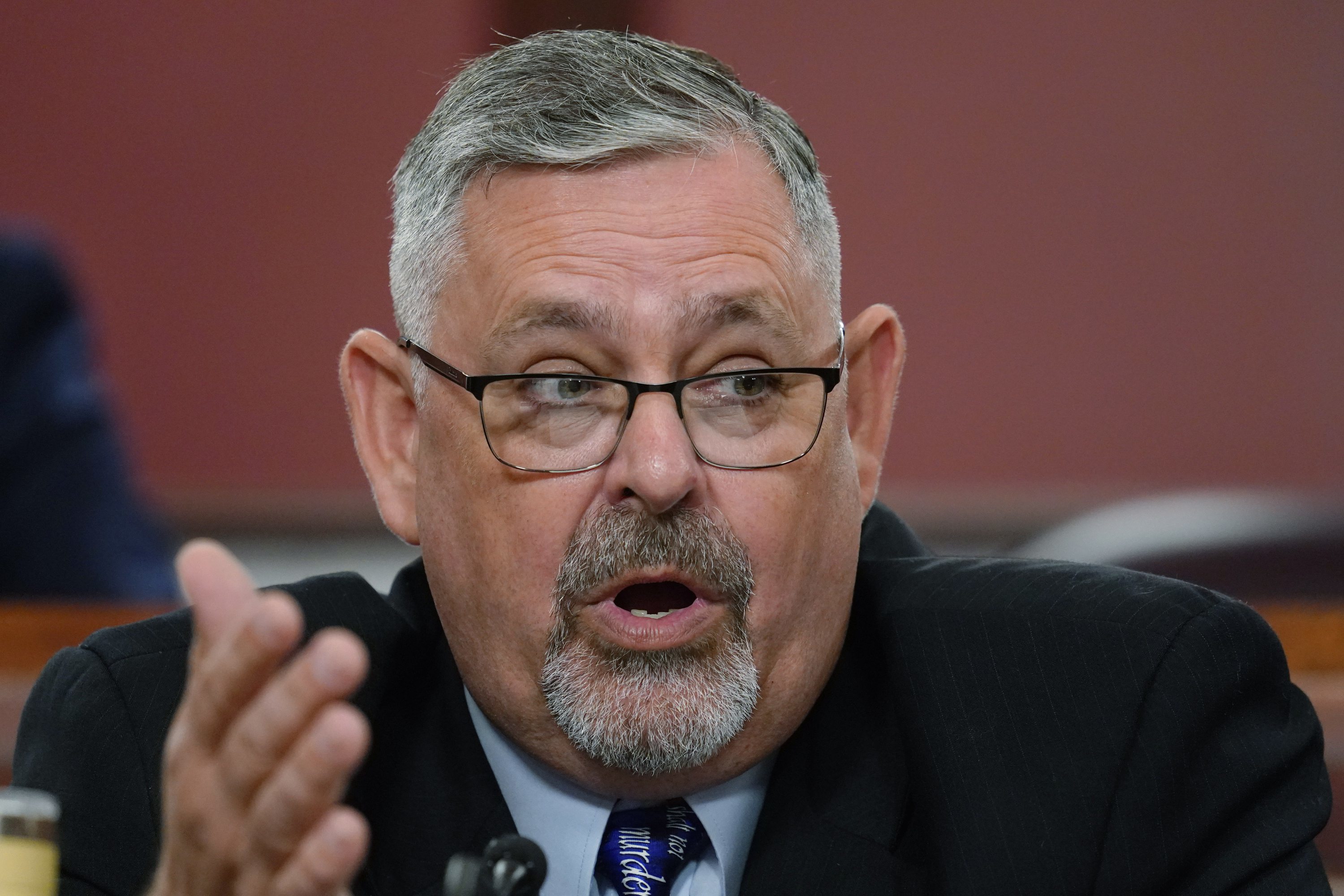
    State Sen. Cris Dush (R., Jefferson) in 2021.Matt Rourke / AP

    AmeriHealth’s increased political activity has come during a volatile period for Medicaid. Enrollment surged during the COVID-19 pandemic as a federal emergency declaration meant people didn’t have to reapply for benefits, even if they no longer qualified. Once states resumed verifying eligibility, insurers including AmeriHealth saw membership decline — and those most likely to maintain coverage were sicker than average.

    Now insurers are grappling with the biggest cuts to federal healthcare spending in history — $1 trillion over the next decade, mostly to Medicaid — in President Donald Trump’s big domestic policy legislation last summer. They are set to take effect next year.

    Lee Drutman, a senior fellow at New America, a Washington, D.C.-based think tank, said AmeriHealth’s political activity is part of a “tried-and-true playbook” in corporate America.

    “If you do business with the government or have contracts or regulatory interests, you want to make sure the people who are making the decisions have a nice warm feeling when they think about your company,” said Drutman, author of The Business of America is Lobbying. “The best way to give them that nice warm feeling is to contribute to their campaigns and their causes.”

    AmeriHealth said in a statement that it reviews all political contributions to ensure compliance with applicable laws and regulations and that the company does not make contributions “from legal entities that have state or federal contracts.”

    AmeriHealth did not say what revenue source it uses to fund its corporate political contributions and did not answer questions about whether it had any revenue streams that were not tied to tax dollars.

    “Our participation in the public policy process focuses on healthcare issues affecting our members and the communities we serve,” AmeriHealth said, adding that it supports organizations across the political spectrum.

    Donations to DGA and RGA

    Like most states, Pennsylvania contracts with private insurers — also known as managed care organizations (MCOs) — to manage Medicaid beneficiaries’ benefits.

    Federal law sets broad coverage requirements, but states have flexibility in determining which populations are eligible and which services to include.

    And every year, they set monthly rates they pay insurers for Medicaid enrollees. Federal regulators review the rates.

    “That all has a huge impact on the financial health, the success of the Medicaid managed care plan,” said Edwin Park, research professor at the McCourt School of Public Policy at Georgetown University.

    It is not surprising, then, that insurers like AmeriHealth donate to political groups that elect governors and state legislators.

    Among the groups that have benefited from AmeriHealth’s giving is the Democratic Governors Association, which in 2022 gave $7.2 million to then-Pennsylvania Attorney General Josh Shapiro’s successful gubernatorial campaign and which has given $750,000 to his reelection bid.

    From 2021 through last year, AmeriHealth gave $250,000 to the DGA annually, up from $100,000 in 2020. It gave $250,000 to the Republican Governors Association in 2025, up from $100,000 each of the previous two years.

    The donations put AmeriHealth in the top 10% of donors to each group in 2025, according to an Inquirer analysis of Internal Revenue Service data compiled by ProPublica.

    (function(){function e(){window.addEventListener(`message`,function(e){if(e.data[`datawrapper-height`]!==void 0){var t=document.querySelectorAll(`iframe`);for(var n in e.data[`datawrapper-height`])for(var r=0,i;i=t[r];r++)if(i.contentWindow===e.source){var a=e.data[`datawrapper-height`][n]+`px`;i.style.height=a}}})}e()})();

    The RGA has not invested in Pennsylvania’s gubernatorial election this year, in which Shapiro is favored against Republican state Treasurer Stacy Garrity.

    Pennsylvania law prohibits corporations and labor unions from making direct contributions to state campaigns, though those groups can form political action committees. PACs can raise funds from their employees or members and use that money to donate to candidates. AmeriHealth started a Pennsylvania PAC in 2022.

    However, corporations and unions can use their treasury funds — drawn directly from profits or member dues — to give unlimited amounts of money to groups such as the DGA and RGA. Those groups can donate to campaigns that may otherwise face restrictions on receiving corporate money, as in Pennsylvania.

    In response to written questions, neither AmeriHealth nor Shapiro’s campaign would say whether the governor or his representatives had solicited contributions from the company on the DGA’s behalf.

    AmeriHealth did not answer a question as to whether it had asked the DGA to designate some or all of its contributions to Shapiro’s race. Izzi Levy, a spokesperson for the DGA, said, “As a policy, DGA does not accept funds earmarked for any race or state.”
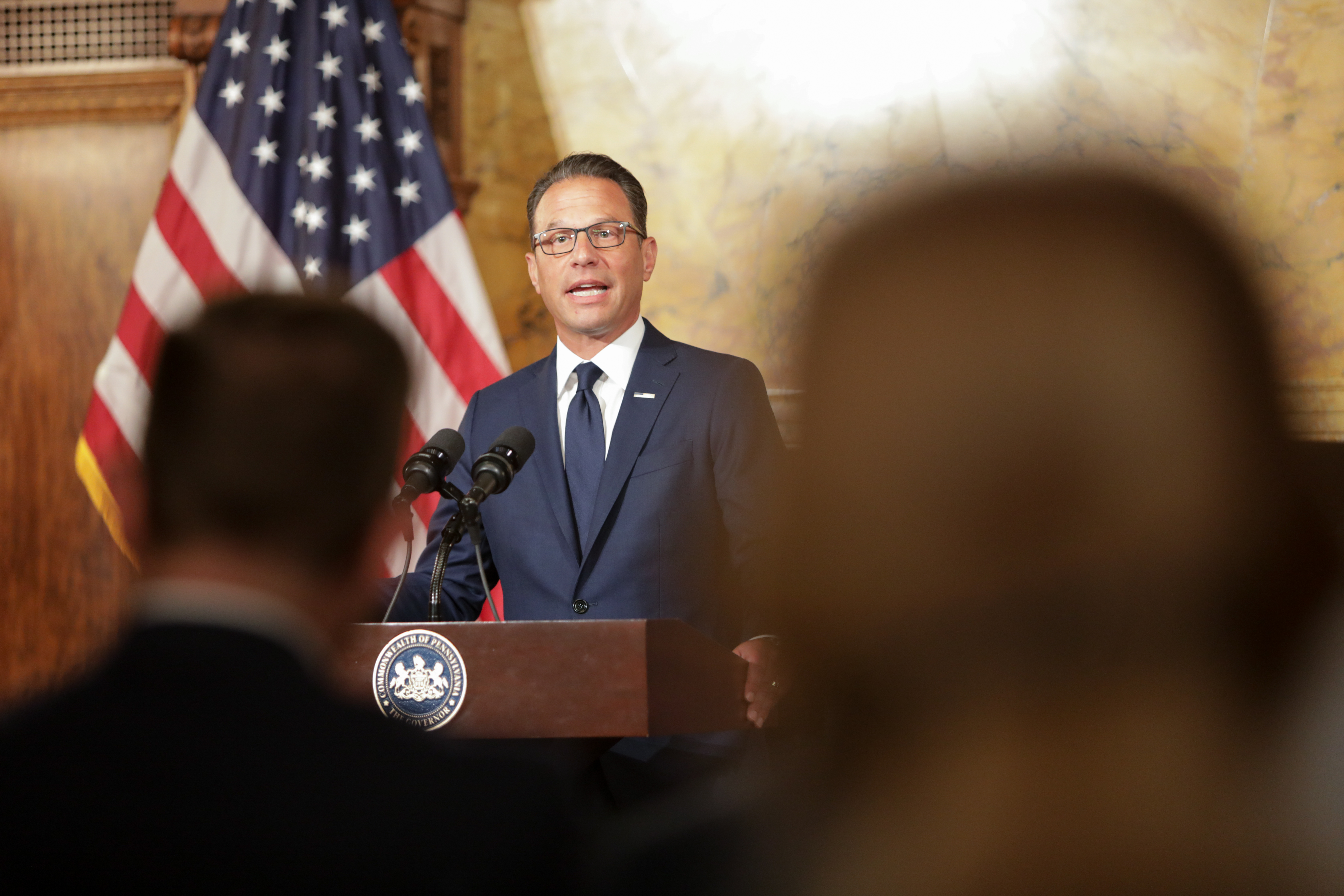
    Gov. Josh Shapiro in August.Kalim A. Bhatti / For The Inquirer

    “Corporations, labor unions, wealthy individuals want to have a powerful ally in a governor,” said Michael Beckel, an expert on money in politics at Washington, D.C.-based Issue One, a group that advocates for campaign finance restrictions.

    “Being able to give through a group like the DGA or an RGA is a way to help secure your position as a friend and ally, who then in turn might be somebody that [governors] listen to on policy matters,” he said.

    Many companies donate to these groups, but AmeriHealth’s corporate contributions have caught the attention of Pennsylvania lawmakers, including Senate President Pro Tempore Kim Ward (R., Westmoreland).

    “The money should be used as appropriated for Medicaid because we are struggling with the increased funding needs for the program,” she said, adding that it doesn’t matter which party benefits from the donations.
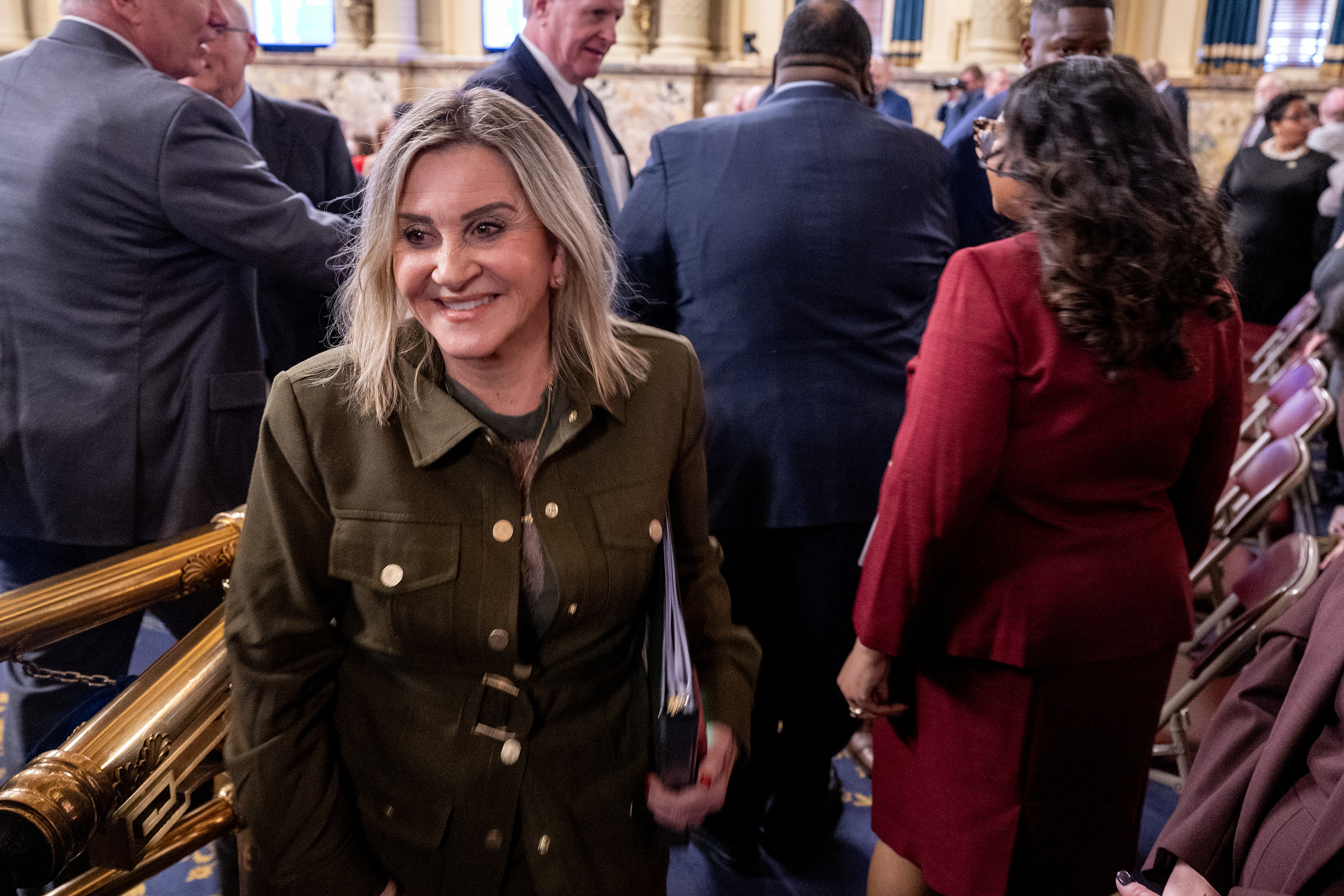
    Pennsylvania Senate President Pro Tempore Kim Ward in Harrisburg in February.Tom Gralish / Staff Photographer

    Ward said AmeriHealth has suggested that one of its contributions to the DGA “was comprised of the interest made off the principal of the Medicaid money.”

    “To be clear, no matter if the political contribution is made up from the principal or the interest from Medicaid funds, it is all government money and shouldn’t be used for political purposes,” Ward said in a statement.

    Under federal regulations, insurers are required to spend at least 85% of Medicaid funds on services for beneficiaries, leaving 15% for plan administration and profits. A spokesperson for the Pennsylvania Department of Human Services said AmeriHealth has complied with those rules.

    AmeriHealth isn’t the only Medicaid insurer that donates to the DGA, RGA, Democratic Legislative Campaign Committee, and Republican State Leadership Committee — the latter two of which work to elect state legislators across the country.

    The University of Pittsburgh Medical Center (UPMC), the No. 2 Medicaid insurer in Pennsylvania, has given three of the four groups a total of $330,000 since 2013, the year AmeriHealth significantly increased its giving. AmeriHealth gave $3.3 million over that period of time.

    By contrast, St. Louis-based Centene Corp. has far outspent AmeriHealth, giving a total of nearly $18.8 million to the groups since 2013. Centene is the No. 3 Medicaid insurer in Pennsylvania and the largest in the country, operating in 30 states.

    Neither UPMC nor Centene responded to requests for comment. Centene says on its website that its political activity is grounded in the company’s public policy positions “and the best interests of our business, our employees, and the members we serve, without regard to political party affiliation.”

    From West Philly to 13 states

    For-profit AmeriHealth is owned by nonprofits Independence Health Group and Blue Cross Blue Shield of Michigan.

    Formerly known as AmeriHealth Mercy, the company started as a pilot program in the early 1980s at a West Philadelphia hospital. It now operates in 13 states and Washington, D.C., and employs almost 10,000 people.

    AmeriHealth covered about 771,000 Pennsylvania residents enrolled for physical health — including for services such as medical visits, pregnancy and newborn care, and dental — and 176,000 for community services, including nursing homes, at the end of 2025. The company also manages benefits for behavioral health services.

    In addition to its Medicaid business, AmeriHealth also offers Medicare Advantage plans for people eligible for both Medicare and Medicaid, as well as Affordable Care Act health insurance marketplace plans.

    AmeriHealth had net income of $138 million last year after reporting a loss in 2024, though Independence Health — which includes insurer Independence Blue Cross — has continued to struggle financially.

    Pennsylvania’s Medicaid program cost $49.3 billion in state and federal funds for the fiscal year that ended in July 2025, according to the Independent Fiscal Office. The state share of Medicaid expenditures, $14.4 billion, accounted for 31% of total general fund spending, among the highest ratios in the country, according to health research nonprofit KFF.

    State spending on Medicaid was on track to increase 7.8% for the fiscal year that ended July 1, according to a June analysis by the IFO.

    AmeriHealth’s $15.7 billion in revenue last year from contracts with the Pennsylvania Department of Human Services and county governments was up from $14.2 billion the prior year and $11.4 billion in 2021 — a 38% increase over the four year-period.

    UPMC saw a 50% increase over that period, for $12.6 billion in revenue last year.

    (function(){function e(){window.addEventListener(`message`,function(e){if(e.data[`datawrapper-height`]!==void 0){var t=document.querySelectorAll(`iframe`);for(var n in e.data[`datawrapper-height`])for(var r=0,i;i=t[r];r++)if(i.contentWindow===e.source){var a=e.data[`datawrapper-height`][n]+`px`;i.style.height=a}}})}e()})();

    AmeriHealth has attributed its financial success last year — when it swung back to a profit a year after reporting losses in 2024 — in part to higher Medicaid rates as well as “work with state partners to support reliable access to high-quality care for the members we serve.”

    Ali Fogarty, spokesperson for the Pennsylvania Department of Human Services, said rate increases are necessitated by costs that insurers incur administering the Medicaid program.

    A big driver has been higher costs for GLP-1s, the drugs that manage Type 2 diabetes and obesity. Pennsylvania in 2023 started covering GLP-1s in Medicaid for weight loss only. Medicaid spending on the drugs in Pennsylvania increased from $223 million in 2022 to more than $1 billion last year, Fogarty said. The state stopped covering GLP-1s for weight loss this year.

    “Realities like this can drive rate increases to ensure stability of our Medicaid program and solvency of MCOs that coordinate care, in addition to typical year-over-year increases in costs of care and operations,” she said.

    AmeriHealth increased its lobbying, too

    AmeriHealth spent $1.7 million on federal lobbying last year, up from $970,000 in 2024 and $400,000 in 2023, according to data compiled by OpenSecrets, a group that tracks money in politics.

    The bill mentioned the most on the company’s lobbying reports in 2025 was H.R. 1, or the One Big Beautiful Bill Act. The sweeping domestic policy legislation — passed by the GOP-controlled Congress and signed into law by Trump — included $900 billion in cuts to federal Medicaid spending over the next decade.

    (function(){function e(){window.addEventListener(`message`,function(e){if(e.data[`datawrapper-height`]!==void 0){var t=document.querySelectorAll(`iframe`);for(var n in e.data[`datawrapper-height`])for(var r=0,i;i=t[r];r++)if(i.contentWindow===e.source){var a=e.data[`datawrapper-height`][n]+`px`;i.style.height=a}}})}e()})();

    The law reduces spending in part by imposing new work requirements on adults who are eligible for Medicaid under the Affordable Care Act, the 2010 law that sought to expand healthcare coverage. Pennsylvania expanded Medicaid in 2015.

    Those requirements take effect Jan. 1. The new law also includes provisions requiring more frequent eligibility checks and cost-sharing requirements for enrollees in the so-called Medicaid expansion group.

    The law’s Medicaid provisions are projected to increase the number of uninsured in 2034 by 7.5 million people, according to estimates from the Congressional Budget Office. About 300,000 Pennsylvanians could lose coverage due to the Medicaid restrictions, according to Shapiro’s administration.

    Medicaid insurers opposed the cuts. After the House passed its initial version of H.R. 1 in May 2025, Medicaid Health Plans of America — a trade group that represents AmeriHealth and other insurers — cautioned Senate leaders against legislative provisions “that have been found to increase churn, set up additional barriers to receiving coverage, disincentivize essential care, hamstring states in financing the program, and that will likely cause disruption that radiates across the health care system.”

    Republicans say the law will strengthen the integrity of programs like Medicaid and help ensure that able-bodied adults on public assistance are contributing to society. Democrats voted against the measure, accusing the GOP of cutting the safety net to finance tax cuts for the wealthy.

    The One Big Beautiful Bill Act has big implications for state budgets. Starting in October, states including Pennsylvania will be restricted in their ability to finance Medicaid through taxes on healthcare providers such as hospitals, nursing homes, and insurers. States have traditionally used that financing mechanism to help draw federal matching funds.

    Management consulting firm Oliver Wyman wrote that as states adjust their financing strategies, “plans may face more volatile rate-setting processes, delayed approvals, and growing tension between providers seeking to preserve revenue and payers managing constrained margins.”

    As H.R. 1 is implemented, insurers like AmeriHealth are maintaining a strong presence in Washington. Records show AmeriHealth spent $1.5 million on federal lobbying through June — almost as much as it spent all of last year.

    But as insurers seek to influence policymakers, they are facing increasing criticism from conservatives who say they have failed to improve patient outcomes, lower costs, or deter fraud. More broadly, Trump last year directed Health and Human Services Secretary Robert F. Kennedy Jr. to “take appropriate action to eliminate waste, fraud, and abuse in Medicaid.”

    “Medicaid managed care creates strong incentives to maximize enrollment, as plans are generally paid a fixed amount for each enrollee,” Brian Blase, a former Trump White House official and president of the Paragon Health Institute, wrote in June. “Improper enrollment, duplicate enrollment, and phantom enrollment increase payments flowing to MCOs.”

    The plans say they have taken action against fraud and abuse. The Medicaid Health Plans of America in a February report pointed to an inspector general report showing that insurers in recent years had steadily increased their fraud referrals to state law enforcement agencies.

    Pennsylvania’s GOP-led Senate in July passed a resolution, largely along party lines, directing the Legislative Budget and Finance Committee (LBFC) to audit the state’s Medicaid program. The resolution calls for a review of the “standards used in Pennsylvania to evaluate Medicaid managed care program contracts.”

    Democrats said they wanted to limit the scope of the audit, saying the state’s Medicaid program is already subject to federal reviews.

    The resolution does not carry the force of law, but its lead sponsor, Dush, said he hopes the bipartisan LBFC — a committee that consists of 12 legislators from both chambers of the General Assembly — agrees to take up the cause.

    Charitable giving

    When the federal government shut down last fall amid a congressional spending impasse, the Trump administration paused the disbursement of food assistance, known as SNAP benefits, which help low-income families pay for groceries.

    Within days of that announcement, North Carolina Gov. Josh Stein said the state would grant $10 million to local food banks — and that AmeriHealth Caritas and other private donors had also chipped in.

    AmeriHealth, which had won a Medicaid contract with the state in 2019, gave $5 million, according to Stein’s announcement. “With the help of generous partners, North Carolina is taking action to keep families fed,” Stein, a Democrat, said in a news release at the time.

    It’s an example of how AmeriHealth has made philanthropic gifts in line with causes promoted by political leaders in states where the company does business. Drutman, the lobbying expert, said supporting such causes can be seen as part of a company’s broader political strategy.

    “As long as government is an important player in an industry, either as a regulator or purchaser of services, companies can have a strong interest in making sure that people in power have a positive opinion of the company,” he said. “Usually, the positive opinion of a company is not free.”

    Stein’s office didn’t respond to a request for comment.

    AmeriHealth told The Inquirer that the company and its foundation invest in community organizations “to improve access to care and address needs such as maternal health and food insecurity.”

    “We invest in healthcare policy that is aligned with the needs of the nation’s most vulnerable populations,” the company said.

    Another organization it partnered with was the Hope Florida Fund, a charity founded by Casey DeSantis, wife of Republican Gov. Ron DeSantis. The Governor’s Office announced in March 2023 that AmeriHealth had contributed $100,000 to reduce reliance on public assistance and make grants to local nonprofits.

    The next month, the state started the bidding process for new Medicaid contracts. AmeriHealth ultimately lost its bid to remain in Florida, where it had operated since 2012. Gov. DeSantis’ office didn’t respond to a request for comment.

    Sometimes AmeriHealth’s gifts are smaller.

    Pennsylvania House Speaker Joanna McClinton, a Democrat who represents parts of West Philadelphia and Delaware County, reported on her 2025 financial disclosure form that AmeriHealth had donated 250 book bags at resource fairs in her district. She valued the gift at $2,500. A spokesperson for McClinton confirmed the gift but otherwise had no comment.

    Other companies including insurers Highmark Wholecare and Independence Blue Cross gave similar gifts, according to the disclosure.
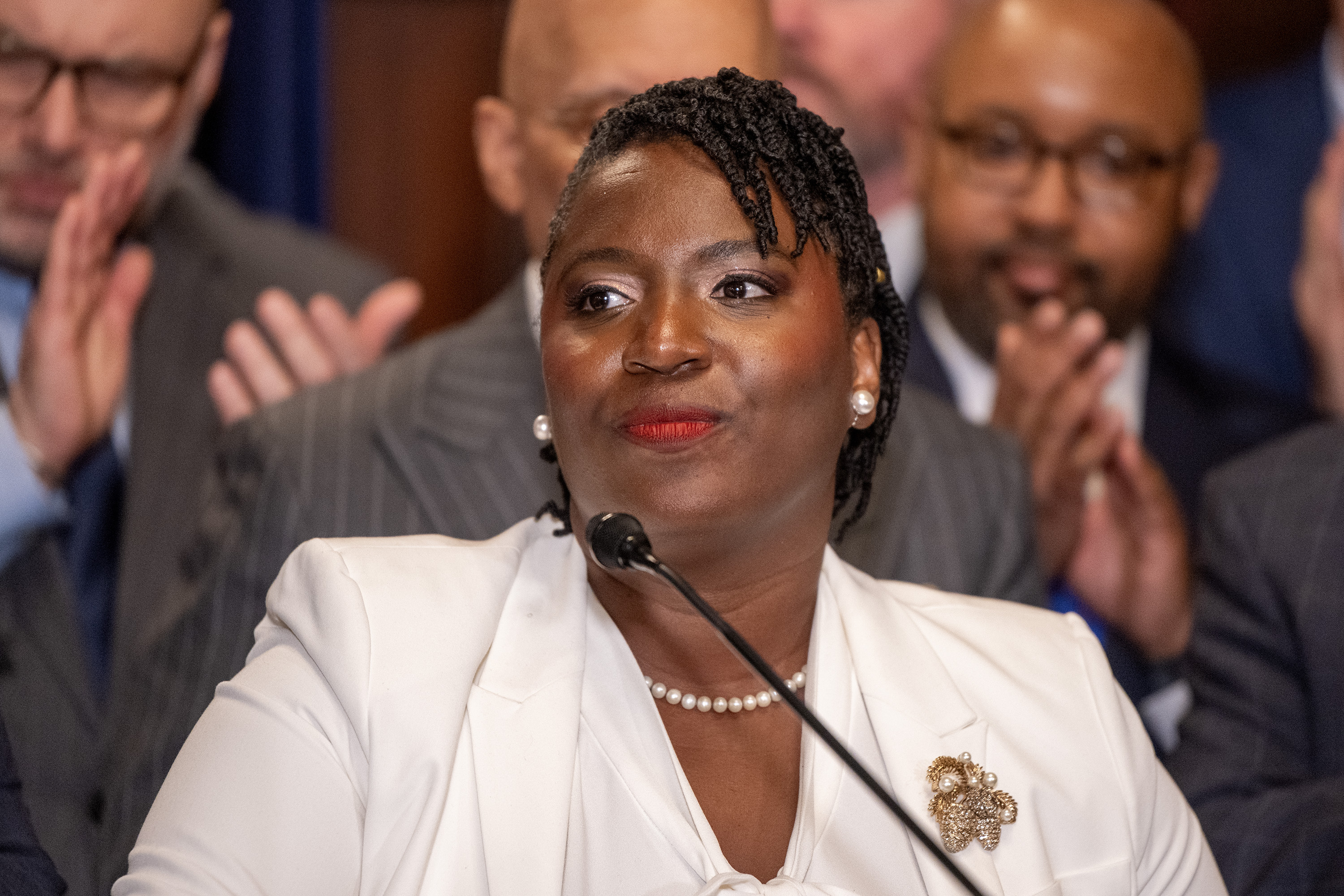
    House Speaker Joanna McClinton during a Feb. 3 news conference at the Capitol in Harrisburg.Tom Gralish / Staff Photographer

    AmeriHealth has won praise for some of its giving.

    In May, Val Arkoosh, secretary of the Pennsylvania Department of Human Services, visited the Greater Philadelphia YMCA’s Willow Grove branch to highlight a maternal health initiative that provides a free membership and programming for expectant moms.

    AmeriHealth’s foundation gave $50,000 over two years to the Greater Philadelphia YMCA to help fund the initiative. The Independence Blue Cross Foundation also made a contribution.

    Arkoosh’s office said in a news release that the initiative “aligns perfectly” with the Shapiro administration’s “Healthy Moms, Vibrant Futures” strategic plan.
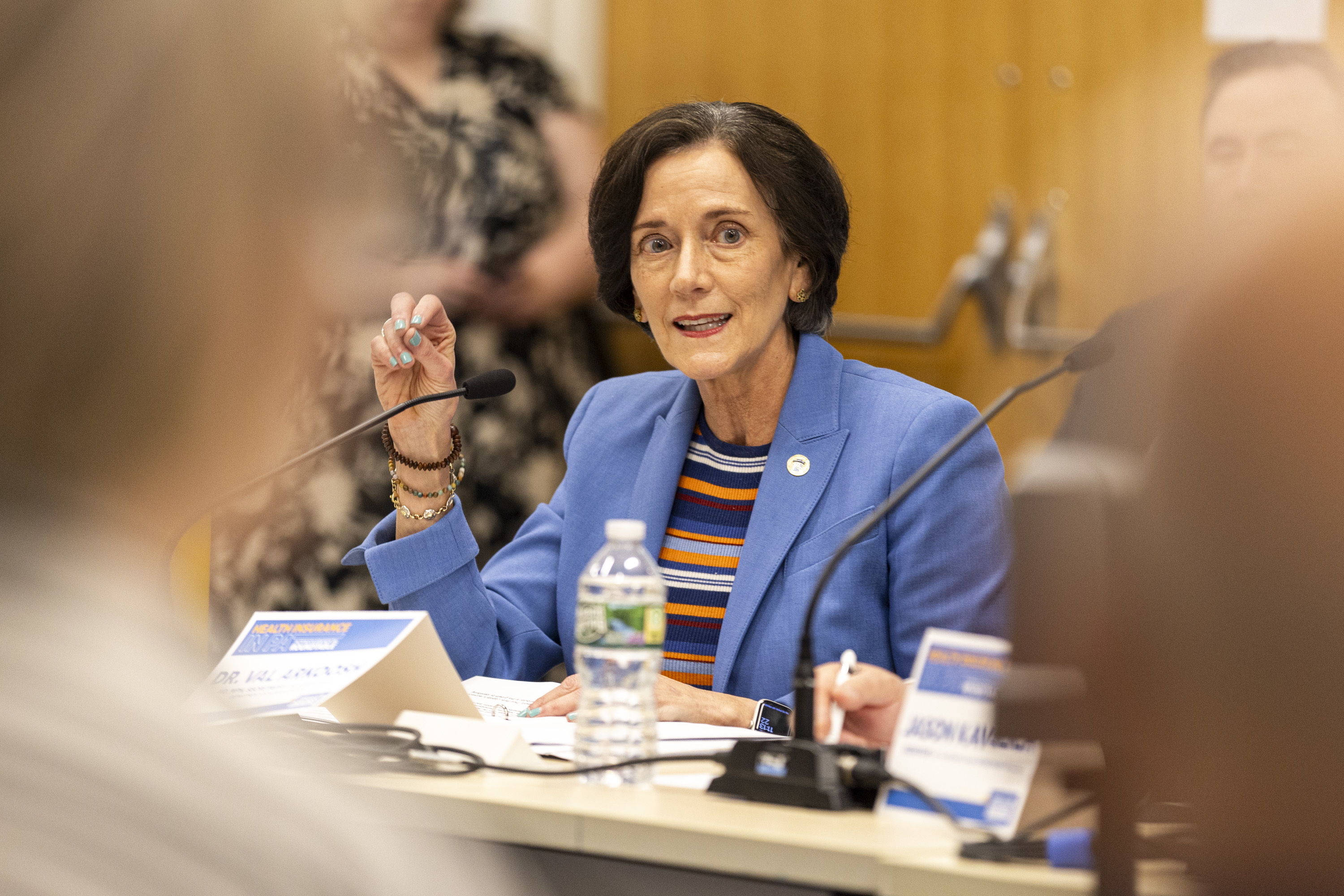
    DHS Secretary Val Arkoosh in 2025.Tyger Williams / Staff Photographer

    Fogarty, the DHS spokesperson, noted that the U.S. maternal mortality rate outpaces all other high-income countries and said Arkoosh, an obstetric anesthesiologist, is passionate about the issue. “We appreciate the many partners who work to address maternal mortality and are stepping up to support mothers and children in their community,” Fogarty said.

    AmeriHealth’s foundation said in a news release that “providing children with healthy beginnings will help them avoid adverse experiences later in childhood.”

    The release featured a photo of Arkoosh standing next to a YMCA executive and Steve Fera, an IBX executive and AmeriHealth Caritas Foundation board member.

  • Dolly Parton’s many contradictions hold lessons for Americans of all stripes

    Dolly Parton’s many contradictions hold lessons for Americans of all stripes

    Americans of all stripes are mourning the loss of singer and philanthropist Dolly Parton, who died on Aug. 26 at the age of 80.

    The outpouring of grief and mourning has exposed the complex and often contradictory identities Parton inhabited.

    She was self-proclaimed poor “trash” from rural Appalachia — and proud of it. She regularly wore loud makeup and big hair, and had even bigger breasts, but she made sure she was taken seriously as a businessperson by the music establishment and Hollywood. She was a multimillionaire who connected with the working class.

    Musically, Parton was a symbol of traditional country music, even as she crossed over into pop music in the 1980s. And she was a queer icon, yet, in her honor, the loudly anti-queer Trump administration ordered that flags be flown at half-mast.

    Her complexities and contradictions reflected Parton’s enormous contributions to American history and culture, which crossed all sorts of ideological lines and made her genuinely beloved.

    Dolly Parton’s aesthetic and style allowed her to celebrate a background that traditionally had been scorned. Women who were visibly sexual were branded trashy or sluts, and terms like “poor white trash” and hillbilly denoted racial and class hierarchies.

    Parton, however, dismissed these historical connotations from her first days in the spotlight. She admitted that her style was “gaudy,” or “tacky,” and confessed that as a little girl she idolized a woman her mother called “trash.” She responded with, “Well mama, I want to look like trash.” She also embraced the “trash” label to talk about her hyperfeminine body presentation, which included ostentatious costumes, long nails and big hair.

    As Parton’s star grew in the 1970s, and she refused to adopt markers of high-class femininity, she forced a rethinking of how society characterized women who had long been maligned for their sexuality and poverty.

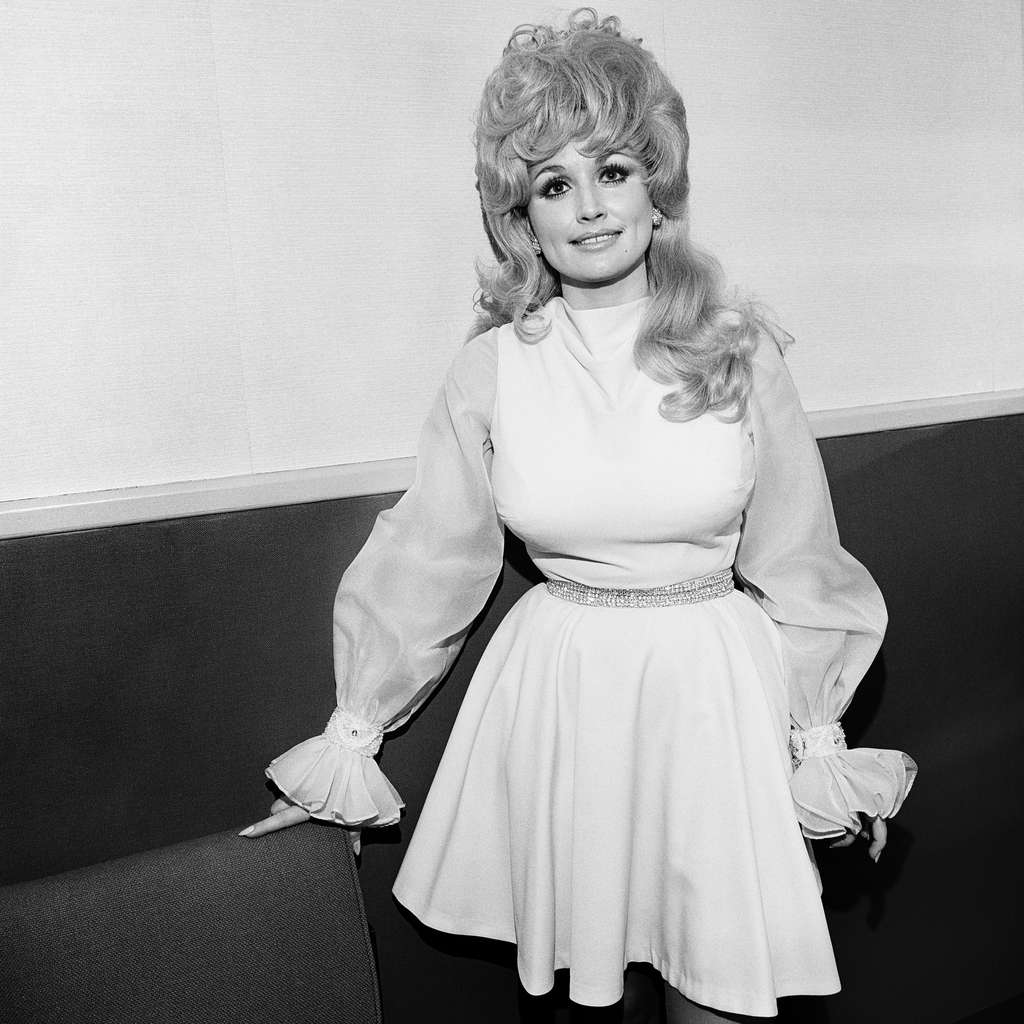
    Dolly Parton, Symphony Hall, Boston, 1972.HENRY HORENSTEIN

    For instance, in 1971, she released one of her biggest hits, “Coat of Many Colors,” which talked about her poor upbringing and a colorful coat that her mother made for her out of discarded rags. Her classmates ridiculed her, but rather than feeling ashamed, she felt pride in her “new” coat. This story demonstrated the hardscrabble, can-do spirit of the working class and illustrated the love Parton held for her family and her people.

    The song’s reception also highlighted Parton’s unique knack for reaching multiple audiences. While its cultural dynamics shined through initially, years later, the song gained a new dimension when it became an anthem for LGBTQ Americans because of its message of pride in one’s self and the colorful similarities the coat shared with the LGBTQ pride flag.

    “Coat of Many Colors” reflected how, throughout Parton’s career, her work subtly advocated for the marginalized. Nothing epitomized this better than “9 to 5,” one of her most famous songs and acting roles. In 1980, Parton released the iconic song as the theme for the movie of the same name.

    The movie spoke to women, who were entering corporate America at an unprecedented rate. Yet, the Supreme Court had not yet declared sex discrimination illegal, and they encountered an environment full of glass ceilings, discriminatory language, sexual harassment and societal expectations to succeed even while maintaining a traditionally gendered home life. The song and the film took a clear stance: women belonged in offices and deserved to be treated with respect, regardless of their hair color or bust size.

    In particular, Parton’s character Doralee spoke directly to the constraints clerical and administrative workers faced. Increasingly, as America deindustrialized, women constituted a growing percentage of the working class, and working class jobs became feminized. Invigorated by second wave feminism, working class women had been pushing for improved workplace conditions, including better wages and expanded opportunities for female administrative workers to move into management positions.

    Made By History sponsors. FOR USE ON MADE BY HISTORY STORIES ONLY.Inquirer Staff

    Parton’s title track directly addressed the frustrations driving these demands, lamenting, “They just use your mind and they never give you credit … for service and devotion you would think that I would deserve a fair promotion / Want to move ahead, but the boss won’t seem to let me / I swear sometimes that man is out to get me.”

    The song was classic Parton, both celebrating workers’ daily grinds and speaking clearly about class exploitation.

    The film itself presented these experiences of gender and class discrimination as part of a slapstick comedy. Yet, for mainstream audiences across the country, this softer, comedic approach to feminism and activism, made the very real plight of Judy (Jane Fonda), Violet (Lily Tomlin) and Doralee (Parton) relatable.

    Two years later, in 1982, Parton once again used an acting role to speak up for women who were denigrated as disposable items when she starred in the movie adaptation of The Best Little Whorehouse in Texas. Parton’s character Miss Mona was a brothel owner who was fighting against moral crusaders attempting to close her down.

    Denouncing the hypocrisy of men who privately availed themselves of women’s sexual services and then publicly shamed them as immoral, Parton’s character firmly established sex workers as people worthy of respect and dignity. Situated against the backdrop of a rising Moral Majority movement that fought to overturn reproductive rights, ban pornography and reverse anti-discrimination laws protecting people based on sexual orientation, Parton again used comedy to bring humor to a very real issue and, in doing so, made visible a group of people usually shunned by society.

    Her devotion to calling for acceptance of people excluded from mainstream society continued throughout Parton’s career. In 1991, she released the song “Family,” which referenced LGBTQ people for the first time and exhorted people not to turn their backs on family members who were different. “Some are preachers / some are gay / some are addicts, drunks and strays / But not a one is turned away when it’s family.”

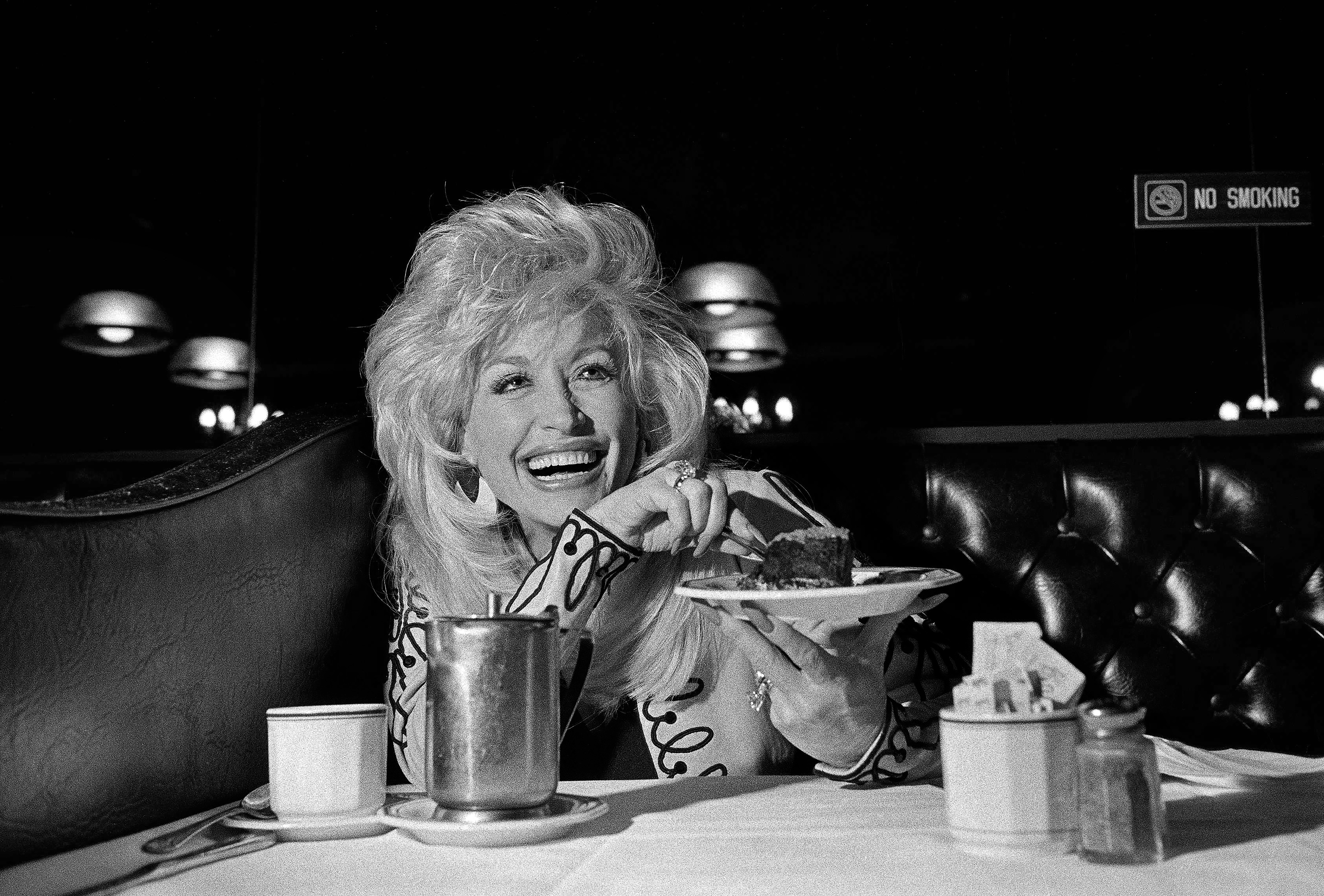
    Dolly Parton savoring a chocolate mousse cake in New York in 1992. EDWARD KEATING

    This was a powerful message at the height of the AIDS epidemic when gay men and intravenous drug users were among the most at-risk groups — both of contracting the virus, and of being shunned because of it.

    At a moment when society was ostracizing and legislating against LGBTQ people, Parton instead called for acceptance. She stood by her message in “The Family” over the following decades. In a 2009 interview, she endorsed same-sex marriage, and in 2016 she opposed bathroom bans that limited transgender people’s access to public toilets.

    Because of these stances, the LGBTQ community embraced Parton right back. Her songs and image have become mainstays used by drag performers, and in 2012 Parton related that she once lost a Dolly Parton look-alike contest to a drag queen. The ties between Parton and the queer community became so interconnected that, upon her death, CNN inadvertently aired an image of a drag performer during a tribute to the late singer.

    Parton famously said, “Honey, there is no such thing as the real Dolly Parton.” She created a life of contradictions, and while her hair and makeup may have been fake, the power Parton held was very real.

    She had a unique ability to transcend boundaries, allowing her to speak for people across classes, gender identities and sexualities. Her calls to support the downtrodden and shunned are her lasting legacy. Her ability to engage in such advocacy while continuing to be beloved across the political divide offers a lesson for all Americans.

    Elyssa Ford is associate professor of history at Washington State University. Rebecca Scofield is professor of history at the University of Idaho.

    Made by History takes readers beyond the headlines with articles written and edited by professional historians. Opinions expressed do not necessarily reflect the views of The Inquirer.

  • Penn Medicine gets $50 million gift from Stanley C. Middleman to support early-stage research

    Penn Medicine gets $50 million gift from Stanley C. Middleman to support early-stage research

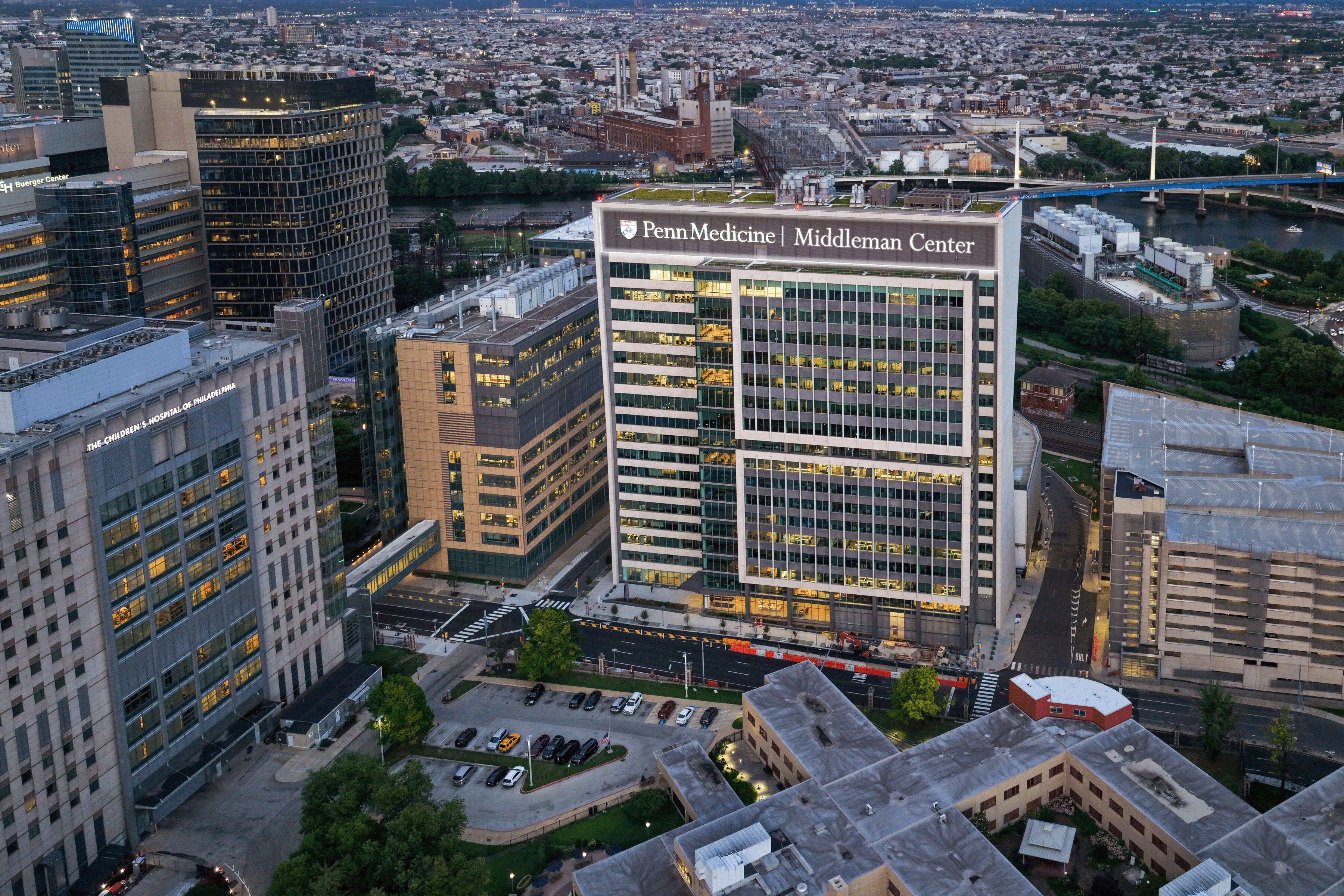
    Penn Medicine announced a $50 million gift from Stanley C. Middleman on Thursday to support early-stage research and will name a recently expanded building at 3600 Civic Center Blvd. in the businessman’s honor.

    Income from the fund will be used to accelerate work on therapies for cancer, autoimmune diseases, infectious diseases, and other serious conditions, with a goal of shortening the path from the laboratory to the market, Penn said.

    “I was born and raised in Philadelphia, and I’m proud to support Penn Medicine and the extraordinary work being done there to advance medicine and improve people’s lives,” Middleman said in a news release provided to The Inquirer in advance.

    The Middleman Center “will bring together the people and ideas” to support new approaches to treatment and scientific discovery, he added.

    The $50 million gift marks his first to Penn. He previously donated undisclosed amounts to his alma mater, Temple University, and to Children’s Hospital of Philadelphia, which named the main patient tower at its King of Prussia hospital for Middleman’s family.

    Middleman founded privately owned Freedom Mortgage Corp. in South Jersey in 1990 and grew it into one of the nation’s largest lenders before moving the company’s headquarters to Florida in the early 2020s.

    Middleman is among the owners of the Philadelphia Phillies.

    Boost for research at Penn

    The building being renamed for Middleman underwent a $376 million, 217,000-square-foot expansion that opened last year. It added seven floors, including as many as 37 labs. Penn originally opened the building in 2018 with eight floors and 250,000 square feet of office space, which has also been renovated.

    The new floors house the Colton Center for Autoimmunity at Penn and the High-Throughput Institute for Discovery, a specialized lab testing patient samples to help make diagnoses and guide treatments. The Middleman Center also includes a Biosafety Level 3 lab, which is specially equipped to handle infectious disease specimens.

    “Anchoring the western edge of Penn Medicine’s campus, the Middleman Center is uniquely positioned to bring together biomedical researchers, physicians, medical students, patients, and experts from engineering, business, and other areas of the University of Pennsylvania,” said university president J. Larry Jameson in the news release.

    “This creates an extraordinary environment for discovery — not just sparking ideas but seeing them all the way through to the moments where lives change for the better, as a result of discovery,” he said.

  • Nick Foles on joining Netflix, traveling to Australia, and his one big concern about the Eagles

    Nick Foles on joining Netflix, traveling to Australia, and his one big concern about the Eagles

    The San Francisco 49ers face the Los Angeles Rams Thursday night in the first-ever NFL game in Australia (8:35 p.m., Netflix), and the streamer is bringing an Eagles legend along for the time-bending ride.

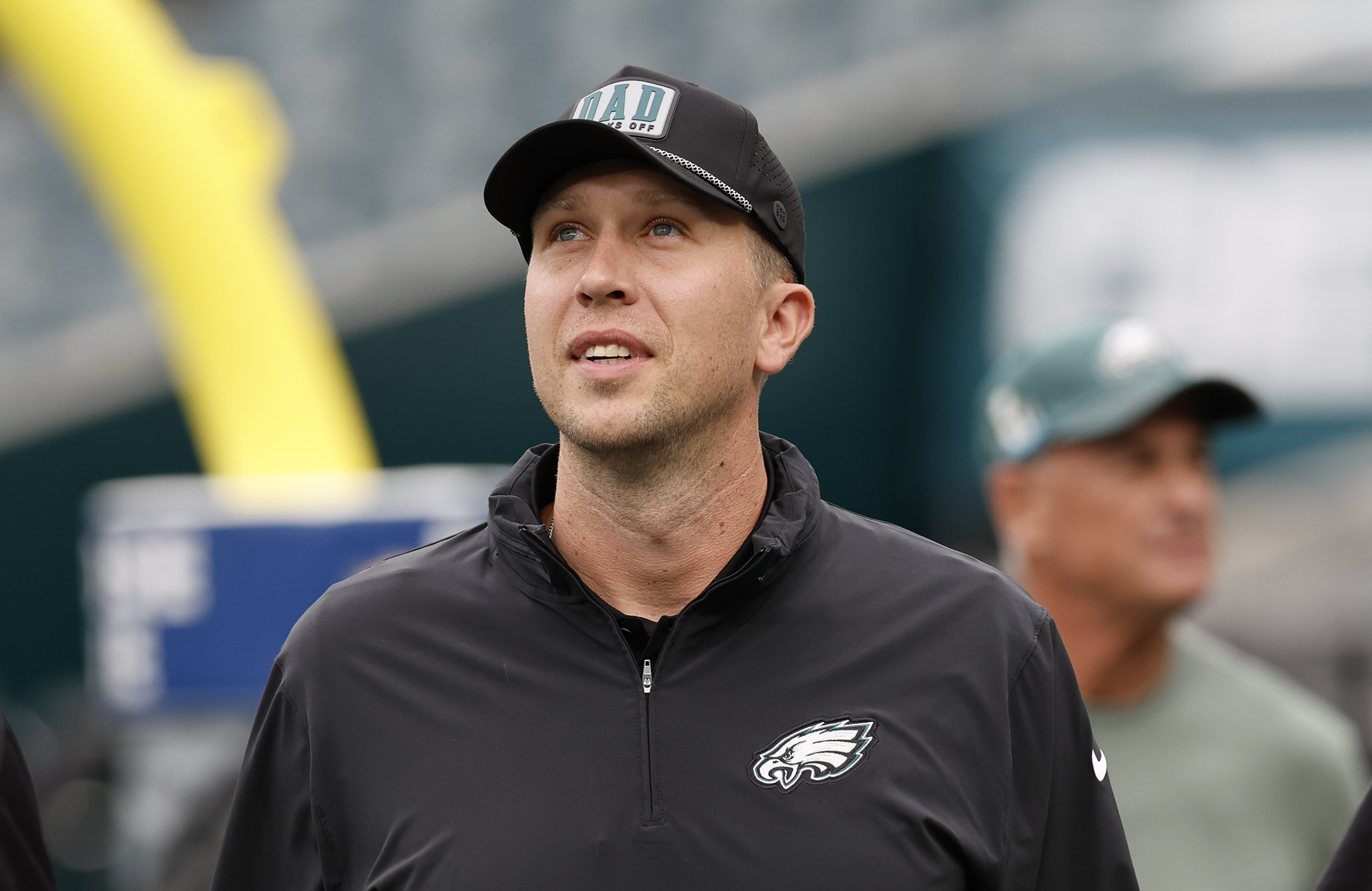
    Nick Foles, the Super Bowl MVP whose statue sits outside Lincoln Financial Field, will be part of Netflix’s NFL studio show this season, which includes Thursday night’s game at the Melbourne Cricket Ground, Thanksgiving eve, two Christmas Day games, and a Week 18 matchup.

    “These are primetime games. These are important games. And Netflix is obviously a huge company,” Foles said. “It’ll challenge me.”

    Alongside Foles for pregame, postgame, and halftime coverage will be host Elle Duncan, Hall of Famer Michael Irvin, and former Green Bay Packers defender Clay Matthews III. Calling the game will be Noah Eagle and Hall of Famer Luke Kuechly, the former Carolina Panthers linebacker who also landed a color analyst role this season with CBS.

    NBC is helping Netflix produce its five-NFL-game slate, and brought Foles and his new colleagues to their studios in Connecticut last month for something akin to a broadcast training camp. That included Foles and Matthews — the two TV newcomers — practicing situations without any preparation, including a mock kickoff.

    “They wanted to see if we could even handle going to transition, having a producer in our ear,” Foles said. “We understand we’re rookies at it, and we’re just hungry to learn. … They want us to be ourselves and have fun.”

    It’s a big jump for the Super Bowl champ, who is in his second season co-hosting The SZN podcast with his brother-in-law, former NFL tight end Evan Moore. But it’s also an ideal gig, allowing Foles to offer analysis to millions of viewers while only committing to a few extra days during the season.

    “It was really just the right time, right situation,” Foles said.

    It also offers him a chance to show off his nerdy side. While the game will kick off 8:35 p.m. Philly time Thursday, it will take place locally in Melbourne at 10:35 a.m. Friday, which could have an impact on the players. There’s also the long flight down, the longest Foles has ever taken.

    “I got my compression tights. … I’m literally geeking out on the science,” Foles said.

    If it feels like you haven’t heard much from Foles since he retired from football in 2024, that’s by design. He spent a year away from football to clear his head, spend time with his family, and coach his three children.

    He began to receive media offers, but opted instead to focus on building the podcast with Moore. That gave him a comfortable spot to find his voice talking about football, which drew the attention of producers at Netflix.

    Thankfully, Foles has plenty of broadcasters to turn to for advice, including Moore and former teammates like Jason Kelce and Brandon Graham. He also attends the same church as longtime Fox Sports college football analyst Joel Klatt, and squeezed some sage advice about the need to be quick.

    “On a podcast, you can be long-winded and get your point our there at the end,” Foles said. “He said ‘No, start with the main point and then have a meaningful explanation …’ That’s simplistic, but it makes a world of difference.”

    Unlike Kelce and Graham, Foles takes a quieter and more analytical approach to breaking down the game, which was on display last season when the Eagles offense struggled. He drew attention for comments he made about former offensive coordinator Kevin Patullo, but rather than just pile on, Foles tried to offer suggestions to help the team.

    “I’m not going to be one of those guys that just crushes someone,” Foles said. “Maybe the Cowboys.”

    Foles has one big concern about the Eagles

    Nick Foles is most interested to see how well new offensive line coach Chris Kuper helps the Eagles. David Maialetti / Staff Photographer

    While the Eagles aren’t slated to appear on Netflix this season, unless they land in their Week 18 game, Foles will spend plenty of time talking about the Birds on his podcast, which will air weekly on NBC Sports Philadelphia.

    Heading into the season, Foles expects Vic Fangio’s defense to be solid and the offense to rebound after last year’s struggles.

    It’s the offensive line he’s worried about. Specifically, how the loss of former offensive line coach Jeff Stoutland and his availability to develop players could impact the team.

    “If you look at the Eagles the last couple of years, when has their season fallen apart? When the offensive line gets banged up,” Foles said.

    While he has concerns, Foles said he’s heard nothing but good things about new offensive line coach Chris Kuper, who played eight seasons with the Denver Broncos and most recently served as offensive line coach with the Minnesota Vikings.

    He’s part of a big overhaul under new offensive coordinator Sean Mannion that includes a different run blocking scheme and a new approach at the line. Kuper told reporters the squad has “come a long way” as the Birds prepare for their season opener against the Washington Commanders Sunday, but only time will tell how the team performs.

    “There’s a lot of pressure on this guy. He played the position well. … [Kelce] said good things about him,” Foles said. “But I’m circling that.”

  • 2026 Chevrolet Equinox: Can a bargain SUV win our hearts?

    2026 Chevrolet Equinox: Can a bargain SUV win our hearts?

    2026 Volkswagen Tiguan SEL R-Line Turbo vs. 2026 Chevrolet Equinox ACTIV AWD: Midsize SUVs flying under the radar.

    This week: Chevrolet Equinox

    Price: $40,985 as tested. Panoramic sunroof added $1,495. More options packages noted below. Advantage, Equinox, by about 10%. But is it?

    What others are saying: “Highs: Attractive design, affordable pricing, impressive standard tech features. Lows: Lethargic acceleration, mediocre fuel-economy estimates, cabin is noisy at highway speeds,” reports Car and Driver.

    What Chevrolet is saying: “Made to do more.”

    Reality: Do more than what exactly?

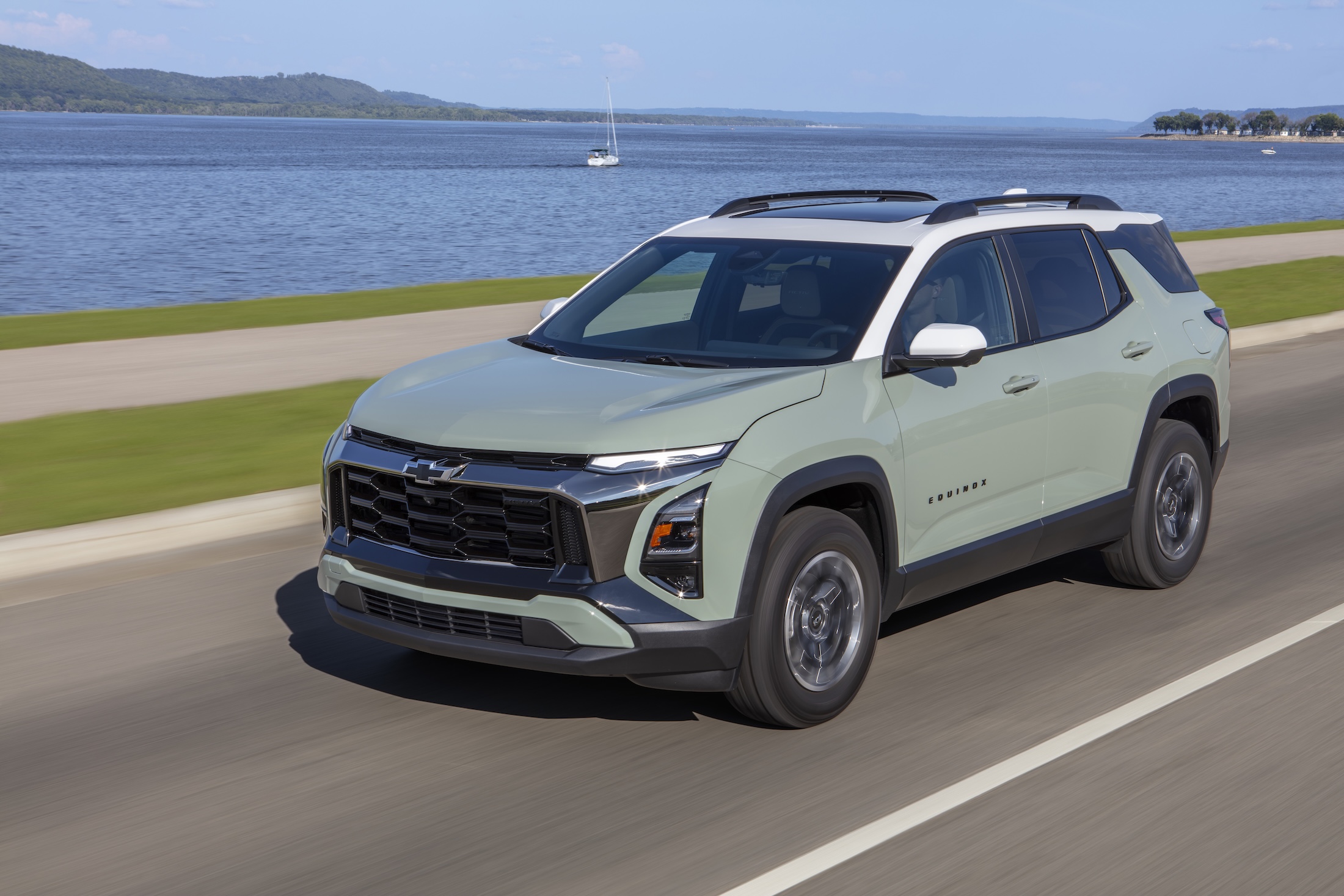
    What’s new: The Equinox was redone for 2025, so it pretty much carries over unchanged. The ACTIV trim is the lowest rung, not the level we usually get to test, as manufacturers like to show off their top tiers, so credit to Chevrolet for that.

    Competition: In addition to the Tiguan, highlights include the Buick Envision, Ford Escape, Honda CR-V, Hyundai Tucson, Kia Sportage, Mazda CX-5 and CX-50, Nissan Rogue, Subaru Forester, and Toyota RAV4.

    In and out: The Equinox ACTIV sits up surprisingly high for a small SUV, high enough to mention from the outset, so plan for some leg raises. I was surprised it features just 17-inch wheels; they looked bigger. (More upscale trims get 19s or 20s.) But with 8 inches of ground clearance, what usually amounts to a side note may explain a lot about the Equinox’s overall performance.

    Up to speed: The Chevrolet Equinox’s 1.5-liter turbocharged four-cylinder engine creates 175 horsepower, and it pales in comparison to the Tiguan’s 258.

    So does its performance. The all-wheel-drive Equinox takes 8.6 seconds to get to 60 mph, according to Car and Driver. And that’s the only engine choice you get. Advantage, Tiguan, by almost 2 seconds. That high profile may be slowing the Equinox down.

    Shifty: The all-wheel-drive Equinox gets an eight-speed automatic transmission. (Front-wheel-drive models are stuck with a continuously variable transmission.)

    The steering column holds the stalk, and triggers can be used to change gears if needed. It’s not a lot of fun.

    On the road: Speaking of not a lot of fun, neither are country roads in the Equinox — no zip, no zig, no other Z-words denoting any sort of hilarity or joie de vivre.

    And yet, neither are highways, where the bumps come with enhancement and the potholes kinda hurt, if I’m being honest. I expected the Equinox’s country-road indifference but not the lack of highway manners. Strong advantage, Tiguan.

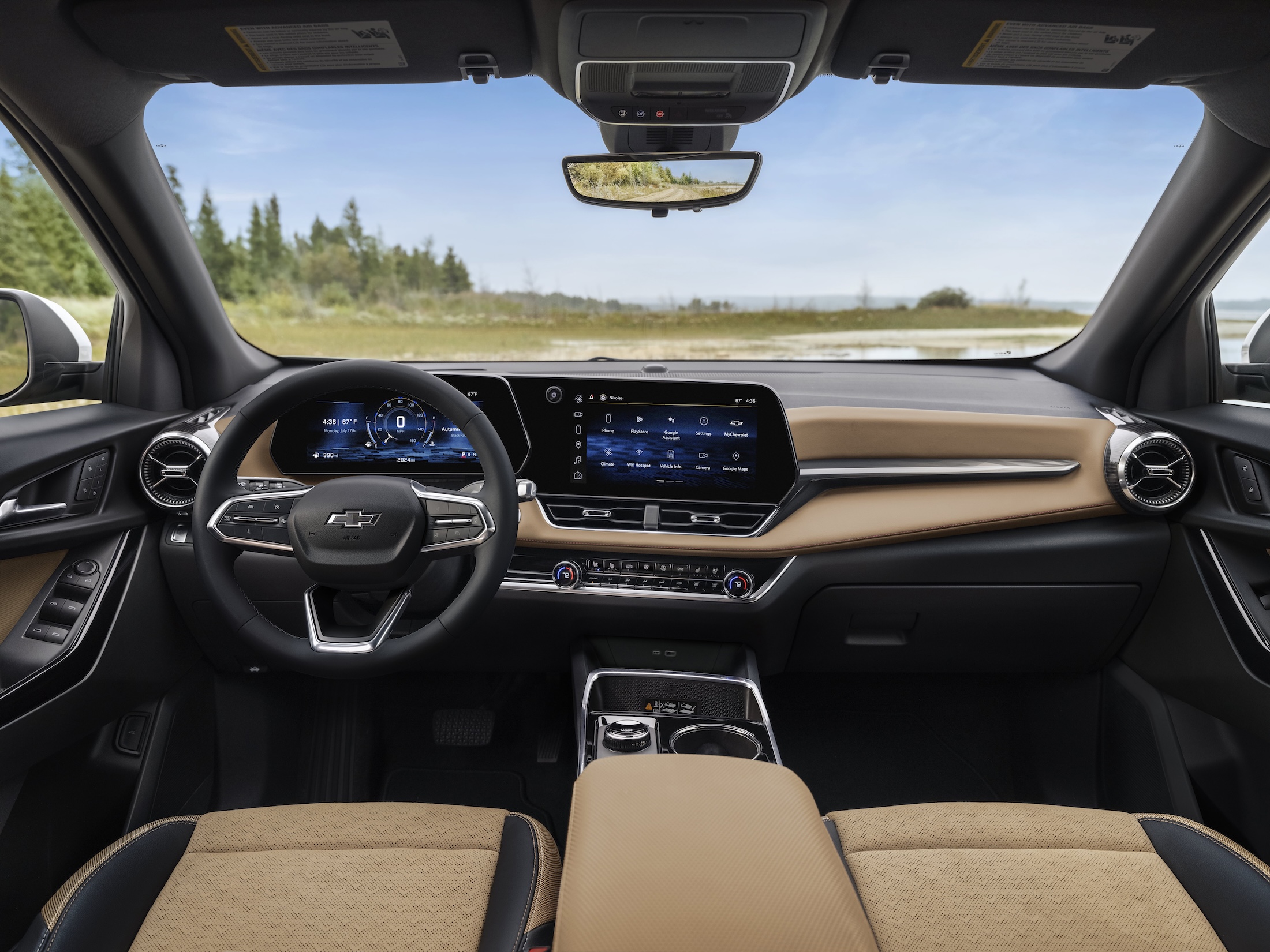
    The interior of the 2026 Chevrolet Equinox is comfortable in the front but not quite so much in the rear.GM-DESIGN

    Driver’s Seat: The Equinox seat was super comfortable and the materials seemed almost luxurious, not a given in a Chevrolet by any means.

    Front seats were heated for free, and ventilated with the help of a $945 package, which also heated the rear corner seats and added more power controls and settings to the front seats. We finally have a tie among the competitors in this category, although the Tiguan upgrades give it a slight advantage.

    I gave up a Subaru Trailseeker (think Outback EV) for the Equinox, and the Equinox seemed so much bigger and harder to see around or fit into snug spaces than the larger Subaru. The Equinox is shaped like a pyramid, while the Subaru has more vertical glass, allowing for better views all around. The short windows further hamper visibility to the side of the vehicle and into the corners.

    Friends and stuff: The rear seat feels very … adequate. It’s not uncomfortable, the fabric feels OK, the Evotex in between the microsuede holds you in place. The center spot is bit of a hump, but the floor is quite flat, helping with legroom there. Still, this would not have been as much fun for my fellow vacationers as the Tiguan, I’m certain.

    Cargo space is 29.8 or 63.5 cubic feet, as folded, about 10% smaller than the Tiguan.

    Play some tunes: The 11.3-inch multimedia display seemed much larger, so getting around the system is easy. A volume knob is the only old-timey control.

    Sound from the unnamed system was quite good, about an A, another tie with the Tiguan.

    Keeping warm and cool: All the HVAC controls are in toggles underneath the infotainment systems. They’re not hard to figure out but the typeface could be a little bolder. Advantage, Equinox.

    Fuel economy: 22 mpg average, which is not too far off the average for small SUVs. The Tiguan Turbo beat it by 5 mpg, though, while moving much more nicely, a real feat.

    Where it’s built: San Luis Potosí, Mexico. Parts are 55% Mexican and 11% U.S. and Canadian.

    How it’s built: Consumer Reports predicts the Equinox reliability to be a 1 out of 5.

    In the end: Its easy to see how the average price of vehicles is pushing upward, when another $4,000 gets you so much more SUV in this competition.

    I love a bargain, but Chevrolet just offers so much less, so Tiguan it would be.

  • The Temple Alumni Behind Philly’s Big Summer

    The Temple Alumni Behind Philly’s Big Summer

    This summer, Philadelphia threw a 250th birthday party and invited the world.

    In the weeks surrounding Independence Day, Philadelphia welcomed visitors to major sporting events — including six FIFA World Cup matches at Lincoln Financial Field and the MLB All-Star Game at Citizens Bank Park — and bolstered the city’s annual traditions, including the Wawa Welcome America festival, which served as the centerpiece of its semiquincentennial celebrations.

    Putting on the country’s largest Fourth of July party was a labor of love, requiring the vision and hard work of thousands of people behind the scenes, many of whom were Temple University Owls. The passion for the city they demonstrated in their roles can be traced back to their roots on North Broad Street, where they developed the skills and connections that prepared them for moments like this.

    “It’s Temple alumni who drive and run this city behind the scenes,” said Jacki Mowery, Phambassador program director at the Philadelphia Visitor Center Corporation. “The positive outcomes from this summer all tie back to what we experienced and learned at Temple.”

    Here’s how Mowery and three other Owls made Philly shine for the celebration of the century.


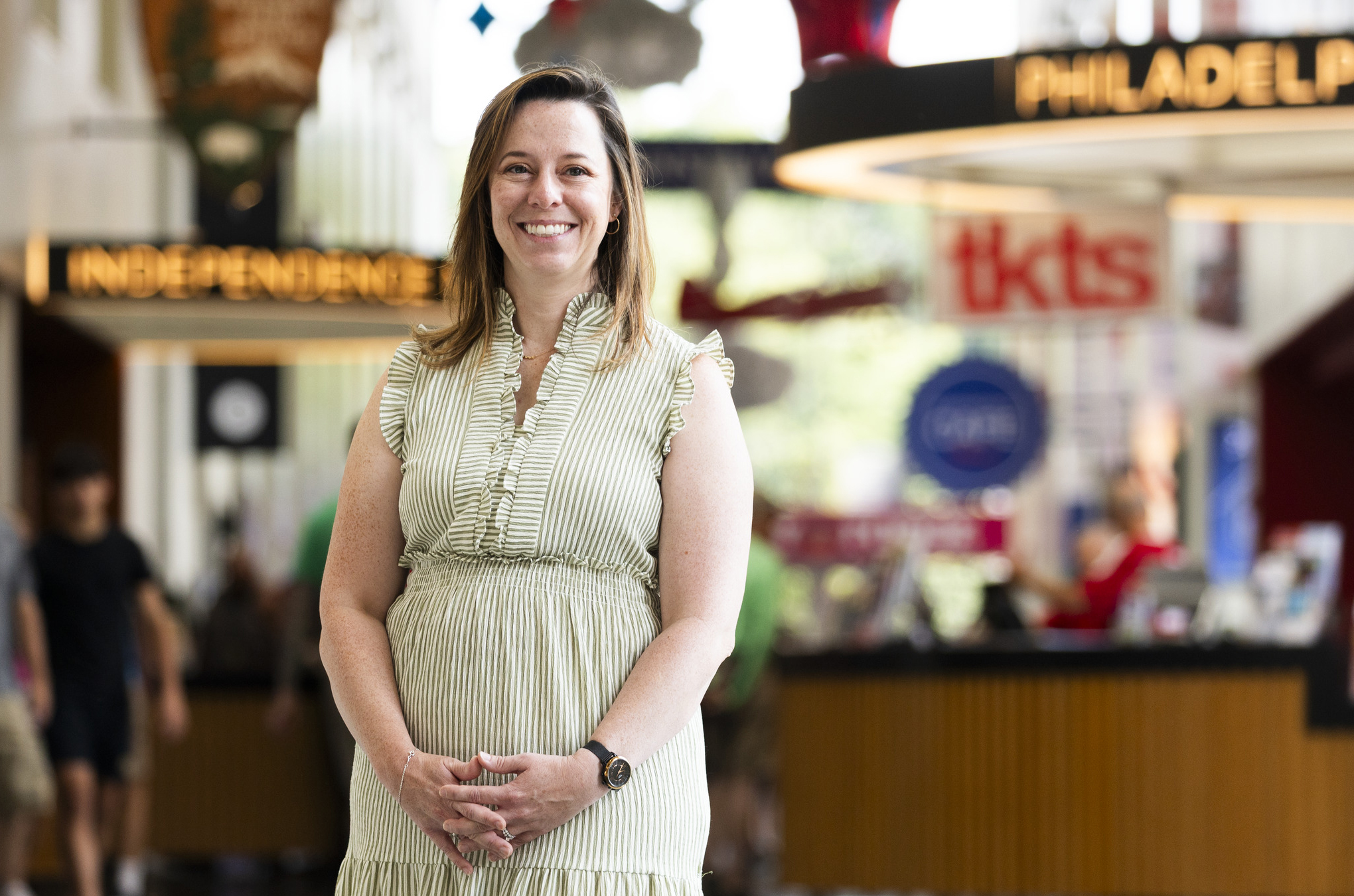
    Jacki Mowery

    Phambassador Program Director, Philadelphia Visitor Center


    As Phambassador program director at the Philadelphia Visitor Center Corporation, Jacki Mowery recruited more than 10,000 volunteers (including Temple students) to serve as stewards of the city by showcasing the best of Philly to visitors this summer. She structured the program and spearheaded activations, beautification projects, and celebrations in preparation for Philadelphia’s moment on the global stage.

    “My job has been to keep engagement going and to keep people excited, energized, and ramping up that love for Philly, which comes very naturally to me because I’ve always loved this city,” said Mowery, who majored in history as an undergraduate. She later returned to Temple for a second master’s degree in travel and tourism at the School of Sport, Tourism and Hospitality Management. Her graduate capstone project focused on how Philly can be known for food beyond cheesesteaks.

    Before joining the Visitor Center, Mowery worked in international education, managing study abroad programs at Temple and elsewhere. She once helped Philadelphians discover the world. Now, she helps the world discover Philadelphia. “I’ve gotten the chance to explore the world, but I always came back to Philadelphia and found the world here,” she said.


    Sean McClatchy

    Account Executive, Service & Retention, Philadelphia Phillies


    “Baseball is about as American as it gets,” said Sean McClatchy, an account executive with the Phillies’ season ticket sales and service team, graduate of Temple’s School of Sport, Tourism and Hospitality Management, and lifelong Phillies fan.

    McClatchy manages relationships with more than 350 clients and played a key role in ticket fulfillment for the 2026 MLB All-Star Game, coordinating VIP ticketing for the organization’s executives, partners, and business leaders while ensuring guests enjoyed a seamless game-day experience.

    He attributes his career opportunity with the Phillies to the resources offered to him at Temple. “I got this job because a guest speaker from the Phillies came to my class and I talked her ear off,” he said. “Here I am, eight years later.”

    For McClatchy, working for the Phillies is about more than baseball. “It’s become like family,” he said. “To work for the team I grew up rooting for in the city I love is pretty close to living the dream.”


    Whitney Constable

    Volunteer Program Coordinator, Philadelphia Soccer 2026


    Whitney Constable, volunteer program coordinator of Philadelphia Soccer, thrives behind the scenes where careful planning creates unforgettable experiences for fans. This summer, she managed the daily operations of more than 750 host city volunteers who welcomed people to FIFA Fan Fest and greeted them as they entered Lincoln Financial Field before World Cup games.

    “As someone who grew up in this region and attended Temple, it was special to play a part in welcoming international fans to share the love of soccer while showcasing Philadelphia’s history and culture at the same time,” said Constable.

    A graduate of the School of Sport, Tourism and Hospitality Management, Constable studied event and entertainment management with a concentration in tourism and hospitality. Through internships and contract work with Wawa Welcome America, Philadelphia’s Thanksgiving Day Parade, and the Pennsylvania Horticultural Society’s Flower Show, she gained the hands-on experience that prepared her for large-scale event operations.

    She hopes Philly left a lasting impression on visitors. “I wanted people to leave remembering not only the matches they attended, but also the kindness and hospitality they experienced here,” she said.


    Zorita Dorsey

    Festival Director, Wawa Welcome America


    After building a career behind some of the nation’s biggest live events — including managing entertainment at Walt Disney World, coordinating scripts for Miss America’s Outstanding Teen Pageant, and overseeing transportation for six consecutive Super Bowls — Zorita Dorsey was tapped to lead Wawa Welcome America in 2022.

    This year, as the Fourth of July tradition took on greater significance, the College of Liberal Arts grad was the driving force behind the signature event. At the same time, she served as producer of the Commonwealth Concert Series, helping bring marquee performances and civic celebrations to communities across Pennsylvania.

    Dorsey has remained closely connected to her alma mater throughout her career and will join Temple as an instructor this fall. “Temple shaped me into who I am,” said Dorsey. “I have always wanted to give back to the university that gave so much to me.”

    Read more about how Temple powers events and hospitality in Philly.

  • Fetterman’s shiftlessness is an insult to his office and all Pennsylvanians | Editorial

    News flash: U.S. Sen. John Fetterman is still an embarrassment.

    The Pennsylvania Democrat enjoys one of the cushiest jobs in America, but he can’t perform basic duties like voting, attending committee hearings, or meeting with constituents.

    Fetterman’s disdain for the job — which comes with a $174,000 annual salary, free healthcare, and months off at taxpayer expense — has been well documented. He whined about missing a family beach trip during a lengthy debate last year over Donald Trump’s costly and harmful One Big Beautiful Bill.

    Several major media outlets have chronicled the senator’s dysfunction. In May 2025, New York Magazine detailed Fetterman’s erratic behavior as staffers expressed concerns about his mental health since suffering a stroke. The New York Times quoted staffers who feared his mood swings and were warned not to get in the car if he is driving.

    The Washington Post reported on Fetterman’s clashes with Democratic colleagues and increased isolation, while Politico detailed efforts by Republicans to get Fetterman to switch parties.

    The Inquirer disclosed last year how Fetterman lashed out at representatives from the teachers’ union, and cited a half dozen former staffers who said he skipped meetings and spent hours alone in his office scrolling on his phone.

    “It’s pretty impossible to overstate how disengaged he is,” a departed staffer said.

    Last week, a devastating story in the Wall Street Journal underscored the senator’s disregard for voters and his job in a story headlined: “Behind Closed Doors, John Fetterman Shows Little Interest in the Work of a Senator.”

    The story included text messages between Fetterman and staffers that showed him dismissing executives from Children’s Hospital of Philadelphia (CHOP) who wanted to discuss Medicaid cuts and changes to vaccine policy.

    “Why do I have to keep having to meet with chop,” Fetterman texted an aide.

    “Because they’re worried about Medicaid cuts,” the aide wrote.

    Fetterman responded, “Well, I’m not,” before adding, “I’m convinced they just want free trips to DC.”

    Fetterman later told CNN that comment was a “dumb joke, and for that, I sincerely apologize.”

    In another exchange, Fetterman nixed a plan to attend a funeral for three police officers killed in the line of duty in York County, where he grew up. Apparently, Fetterman was put off by the time commitment.

    “3 hours??” he wrote, before adding that attending the services “may be a nonstarter.” The senator did not go, but said he sent flowers and met with the families later.

    The Journal reported that Fetterman also stiffed three disabled veterans who traveled to Washington to meet with him, alleging he was ill, only to appear later that day on Fox News to talk about Israel and the war in Iran.

    Apparently, teachers, healthcare officials, police, and veterans take a backseat while Fox News and the Israel-Hamas war command Fetterman’s full attention. The senator has appeared on the conservative news outlet roughly 60 times this year and has gone on two junkets to Israel since 2024. (He even made a cameo at the GOP convention in Dallas Wednesday night to praise Trump and boost Republicans before the midterms.)

    The Journal reported that Fetterman told aides he wanted to introduce a resolution to force lawmakers to vote on whether the war in Gaza constituted a genocide. But instead, Israel’s ambassador to the U.S., Yechiel Leiter, suggested he write an op-ed explaining his support for Israel, while many Democrats have turned against the country because of killings and destruction in Gaza.

    Leiter even supplied the talking points. But Fetterman’s aides did not tell him about the talking points out of fear that the op-ed would violate the Foreign Agents Registration Act.

    Fetterman did not publish the op-ed, but the incident reinforces the perspective of critics who argue that his tenure has been marked by complacency and carelessness: He was either unaware of the potential ramifications of penning the essay, or he chose to ignore them — both explanations should concern Pennsylvanians.

    Like the previous reports, Fetterman called the Journal story a “hit piece.” The sad truth is the reports from his own staffers paint a picture of a lazy, unengaged, and unstable senator who is not up to the job.

    Last year, this Editorial Board said Fetterman should either do his job effectively or step away.

    In the private sector, most workers who fail to perform their basic job duties get fired. Unless Fetterman resigns, voters will get their chance to oust him in 2028.

  • Yemen risks a return to civil war as Iran-backed rebels target a crucial shipping route

    Yemen risks a return to civil war as Iran-backed rebels target a crucial shipping route

    CAIRO — Yemen is moving closer to a return to civil war as Iran-backed rebels threaten a crucial shipping alternative to the Strait of Hormuz.

    Here’s a look at the intensifying conflict along the Red Sea that could tear the Arab world’s poorest country apart once more and potentially send oil prices even higher above the $100 per barrel mark.

    What’s happening could return Yemen to civil war

    Yemen is home to over 40 million people who fear a return to the civil war that killed 150,000 and brought many others to the brink of famine in one of the world’s most sprawling humanitarian crises. A ceasefire with Yemen’s internationally recognized government and a wider coalition backed by the Saudis began in 2022.

    Now that truce is buckling.

    Yemen’s troubles are in part because of its strategic location at the southern tip of the Arabian Peninsula and alongside the Bab el-Mandeb Strait at the southern end of the Red Sea. It’s one of the busiest global shipping lanes and one that the world is turning to as Iran continues to target ships on the Strait of Hormuz.

    The civil war left many Yemenis hungry and beyond the reach of aid. In a significant advance, Houthi and Yemeni officials said the Houthis had taken over Yemen’s port city of Mokha, which has been held by Yemen’s internationally recognized government.

    That endangers another crucial entry point for food and other assistance.

    The Houthis’ takeover of Mokha puts them about 50 miles from the Bab el-Mandeb, creating further complications for shipping on the Red Sea — and not only for neighboring Saudi Arabia. The United States has shown signs of wanting to wrap up the Iran war and get oil-laden vessels on the move everywhere, not broaden the fight.

    Houthis’ grievance with Saudis could affect global oil

    The ceasefire’s fragile calm held until weeks ago, when the Houthis tested a Saudi-led blockade of rebel-held areas. The Saudis struck the international airport in the rebel-held capital, Sanaa, which the Houthis called an attempt to prevent a plane carrying Houthi leaders from returning home after attending the funeral of Iran’s late supreme leader Ayatollah Ali Khamenei.

    The Houthis already objected to the Saudis’ backing of Yemeni government forces, which the rebels say have been pounding them this week with dozens of airstrikes after the rebels attacked several oil facilities and utilities in Saudi Arabia, wounding dozens of people.

    Now, with the Iran war choking the Strait of Hormuz, the Houthis have a new way to inflict pain on their neighbor by declaring a blockade against Saudi Arabia and targeting its efforts to ship its oil via the Red Sea.

    The Houthis’ backer, Tehran, doesn’t object to causing the U.S.-allied Saudis pain as it tries to limit oil shipments from the Gulf in service of its war aims.

    This week, Saudi Foreign Minister Prince Faisal bin Farhan said the path was not closed to diplomacy but that his country would not hesitate to defend itself.

    Houthis have been relatively unscathed by the recent war

    Among Iran’s armed proxies in the region, the Houthis have had a lower profile than Hezbollah in Lebanon and Hamas in Gaza. That, as well as their relative distance, has helped shield them from Israeli attack in the nearly three years since the war in Gaza began.

    But the Houthis were quickly targeted with U.S. airstrikes when they tried to insert themselves into the regional conflict by targeting what they called Israeli-linked shipping on the Red Sea off Yemen’s west coast. Those attacks soon faded.

    Now, the Houthis are back with a different target, aiming at ships and other assets of Saudi Arabia as it seeks to get its oil out to the world via the Red Sea and the Bab el-Mandeb strait. That Red Sea corridor usually sees $1 trillion of goods move through it per year.

    The Houthis are “no longer just positioned on the northern part of the western coast; they now control a much larger stretch of the coastline, bringing them closer to the areas around Bab al-Mandeb,” said Ahmed Nagi, a senior analyst on Yemen at the International Crisis Group.

    For global oil consumers already worried about Iran’s attacks on vessels trying to transit the Strait of Hormuz, the threat to yet another global shipping lane is a flashing danger sign, especially with the price of crude oil again trading above $100 a barrel.

  • Six advantages for Democrats in the midterms … and six advantages for Republicans

    Six advantages for Democrats in the midterms … and six advantages for Republicans

    President Donald Trump’s low approval ratings and widespread economic discontent, along with historical trends, point to a clear Democratic advantage come November and the midterm elections. But Republicans also see reasons for optimism, and it’s not just about gerrymandering.

    Six factors working in Democrats’ favor:

    Out-of-power parties typically pick up seats in the midterms

    The Democrats’ most basic advantage is the fundamental pattern of midterm elections: The party that controls the White House usually loses seats.

    In midterms from 1934 to 2018, the president’s party bled an average of 28 seats in the House and four in the Senate, according to the American Presidency Project at the University of California, Santa Barbara.

    If Democrats added 28 House and four Senate seats this cycle, they would win majorities in both chambers. The House, in particular, is seen as a promising target for Democrats this cycle, in part because Republicans are clinging to a razor-thin advantage in that chamber.

    Trump is deeply unpopular

    Parties have occasionally defied the historical trend and won seats in the midterms on the strength of popular presidents.

    But this year, Trump is widely expected to hurt Republicans’ chances. His approval rating, dampened by voter disenchantment with the war in Iran and stubbornly high inflation, has recently sunk to the lowest level of his second term. The New York Times polling average currently shows that 58% of Americans disapprove of the president’s job performance, while only 38% approve.

    Voters are dissatisfied with his handling of immigration and the war with Iran. Trump is also losing ground with white working-class voters on the economy. And he is deeply unpopular with voters of color without college degrees.

    House races in particular tend to follow the national mood closely, and analysts see Democrats as favorites to win the House.

    The Iran war has driven up prices, and voters are focused on inflation

    Polls consistently show that the economy and inflation are the top issues for voters. And voters say they are unhappy with the economy under Trump.

    His war with Iran, now in its seventh month, has driven up the price of oil, fertilizer, healthcare and other goods and services, as well as mortgage rates. Gas costs more than $4 a gallon, and the AAA motor club reported that drivers over Labor Day weekend were facing “the highest gas prices ever for this time of year.”

    By July, consumer prices were up 3.7% from a year earlier, according to the Federal Reserve’s preferred inflation gauge, far above the Fed’s target rate of 2%. The cost of diesel, which powers the farming economies of key midterm battlegrounds, hit a record high Friday.

    Senate Minority Leader Chuck Schumer, D-N.Y., said his party’s candidates were competing in challenging territory by keeping their campaigns focused squarely on costs.

    “Americans see what’s happened,” Schumer said in an interview. “They’re paying more, and getting less.”

    Democratic candidates are outraising their rivals

    In five of the six most closely watched Senate contests, Democrats had outraised Republicans through the first half of the year, according to campaign finance filings. In some races, such as those in Texas, Ohio and Alaska, the gap was vast.

    Democrats’ fundraising advantage in two other states, North Carolina and Georgia, has helped to transform races once seen as toss-ups. Analysts with the Cook Political Report, a nonpartisan election forecaster, now say both races lean toward Democrats.

    The large hauls suggest enthusiasm for individual Democratic candidates. But Republican groups still have a huge money advantage over Democratic ones.

    Several Democrats have shown strength in states Trump carried

    Two popular, moderate Democratic Senate candidates in the South, Sen. Jon Ossoff of Georgia and former Gov. Roy Cooper of North Carolina, appear to have maneuvered into particularly strong positions. Both have vast fundraising advantages and clear polling leads.

    Democrats are also bullish about the chances of former Rep. Mary Peltola, a Democrat, to flip a Senate seat in Alaska. She is running on “fish, family and freedom.” Her Republican opponent, Sen. Dan Sullivan, must contend with two other Republicans on the ballot, including one with the same name.

    Peltola, the lone Democrat on the ballot, led Sullivan by more than eight percentage points in a nonpartisan primary in August.

    Democratic primaries have set turnout records

    One clear reflection of Democratic energy going into the fall: the huge turnout the party has recorded in primary after primary. Some primaries, including ones in Michigan and Texas, set midterm records for the party.

    Strong turnout in primaries is not necessarily predictive of a strong performance in the general election. But Republicans acknowledge that there has been a significant enthusiasm gap between the two parties this primary season and describe it as one of their starkest challenges heading into the fall.

    Six factors working in Republicans’ favor:

    Republicans won the gerrymandering war

    In a burst of rare mid-decade redistricting, Republicans were able to give themselves a structural advantage in House races by redrawing maps to carve out more safe red seats.

    Congressional maps are typically drawn just once a decade to reflect population shifts after the census. But after Trump urged lawmakers in Texas to draw new maps favoring Republicans, Democrats and Republicans across the country engaged in an intense, cross-country redistricting tug of war to try to shift the House map in their favor.

    Aided by favorable rulings in state and federal courts, Republicans emerged with a national map that tilts in their favor and could help them counter a difficult political environment. Seven Republican-led states had redrawn their maps while only two Democratic-led states did so.

    The new maps could position the Republican Party to net roughly five to 10 additional House seats. Still, despite that edge, the House battle is still seen as tilting toward Democrats because of the political climate.

    The GOP is sitting on a mountain of cash

    The main Republican groups have a large overall financial advantage — totaling hundreds of millions of dollars — over the main Democratic ones, and the Democratic National Committee is in debt.

    Republican advertising spending has eclipsed Democrats’ ad spending in all the top six Senate races except for the contest in Texas, according to the ad-tracking firm AdImpact.

    Trump’s super political action committee, MAGA Inc., which has raised hundreds of millions of dollars and had long resisted tapping its war chest to help the party in the midterms, recently made its first general-election investment, a $10 million ad buy in Texas.

    Still, it is not yet clear how much the group will spend overall and which races it will target. Trump said Friday that he planned to spend “probably” $400 million to $500 million on the midterms, but that he also expected “to have money left over.”

    The Democratic brand is weak

    Trump may be deeply unpopular. Yet Democrats might eagerly trade their approval ratings for his.

    One Quinnipiac poll in July pegged Trump’s approval rating at 32%, worse than usual for him. But it measured congressional Democrats’ approval rating even lower — at 23%.

    Still, the same poll suggested that voters were eager for Democrats to win back Congress. It also indicated that Democratic voters were far more motivated than Republican voters to go to the polls. But Republicans have seized on a series of recent Democratic primary victories by left-wing candidates and democratic socialists to try to paint the party as out of step with many voters.

    The Senate map tilts to Republicans’ advantage

    Republicans hold 53 Senate seats. For Democrats to win back the chamber, they need to flip seats in four states while defending their own most vulnerable ones. Five of the six most competitive Senate races are in states Trump won in 2024. Four are in states he carried by double digits.

    And even among three other relatively competitive Senate battlegrounds where Democrats are seen as having an advantage — Georgia, New Hampshire and North Carolina — two are states that Trump captured two years ago.

    Democratic divisions could complicate their paths in two key states

    In Maine, where Sen. Susan Collins has been seen as one of the most vulnerable Republican incumbents, the Democrats’ initial nominee, Graham Platner, was accused of rape in early July. Platner denied the allegation but eventually dropped out of the race, requiring his party to scramble to find a new nominee outside the usual primary process.

    The candidate that the Maine Democratic Party settled on, Troy Jackson, had finished third this year in Maine’s primary for governor. Some Maine Democrats were dissatisfied by the rushed convention process and many are anxious about Jackson’s chances in a short campaign he had not planned for.

    In Michigan, where Democrats hope to keep a seat that is being vacated by a retiring senator, Democrats are still trying to heal the wounds after a tense, expensive primary race that centered on disagreements about Israel. Some Jewish Democrats in Michigan have declined to immediately support the candidate who won the nomination, Abdul El-Sayed, a progressive who has been a forceful critic of the Israeli government.

    The stock market is strong, and crime is down

    Wall Street has been on a remarkable, three-year run of gains. There have been some signs that inflation is cooling, too. And the Labor Department reported that hiring was unexpectedly strong in August, with the unemployment rate steady at 4.1%.

    Republicans can also point to positive trends on crime, an issue that has often swayed elections over the years. Today, violent crime rates are extremely low by historical standards.

    “Republicans have a real chance at defying history in November because of our candidates, massive war chest, and enthusiasm behind President Trump’s agenda,” Joe Gruters, chair of the Republican National Committee, said in a statement.

    Still, voters say that the economy is their No. 1 issue — and polls suggest that they don’t approve of how Trump is handling it.

    This article originally appeared in The New York Times.

  • Home from college, 2 weeks later

    Home from college, 2 weeks later

    Last month, Daii’yaHnna Fleming posted a video of her move-in day at Southern University in Louisiana. As a bleary-eyed rising freshman, she lugged a half-dozen candy-hued suitcases on her trip from Las Vegas to Baton Rouge. After arriving, she began to settle into her new life on campus, stocking up on school supplies and setting up a side business doing makeup from her dorm room.

    Then the trouble began. The ample walking across campus aggravated her health issues, and Fleming didn’t feel safe commuting to her job near campus. One night, she decided to join friends for an off-campus party. “I had never really been to a party, and I really just did not like it at all,” Fleming, 17, said. “I got really fed up with everything.”

    On the way back to her dorm, Fleming texted her mother and told her she was coming home for good. She had been in college for two weeks.

    In a TikTok video about her decision to switch to her university’s online program, Fleming panned over her dorm room. “I’m not gonna force myself to be uncomfortable and unsafe, ’cause randos think I should be,” she wrote in the caption, adding, “I don’t care about the college experience. I just want my degree.”

    In the thousands of comments underneath her post, as well as under similar viral videos of other students moving out or dropping out and sharing it online, a firestorm of debate has been playing out: Are Generation Z students too unwilling to face discomfort, to the point of missing out on a formative experience? Or are older generations valorizing struggle?

    Though leaving campus early is nothing new — and the rate of college dropouts has declined slightly in recent years — social media has put a magnifying glass on students’ struggles and prompted a wider discussion about generational differences. As they face shrinking federal financial aid and a tough job market with no guarantees, some say they are reconsidering whether college is worth the staggering tuition fees. Others say they are switching to online school or becoming commuter students.

    Many of the videos, like Fleming’s, focus on the mental health impacts, saying they feel anxious and overwhelmed. One student mentioned a towed car and more homework than they expected. Another expressed concern about wasting tuition money on an experience they disliked that affected their mental health.

    The debate touched a nerve.

    In response videos, millennials and Gen Xers have been pleading with students to hold on and tough it out.

    “Everything worth having is not easy,” said Ebony Simpson, a mother of a college sophomore who posted one of those videos.

    She said that students needed to put themselves out there. “It’s for you to sit up and say, ‘Oh, they’re having a cookout, let me go,’” Simpson said.

    Her daughter, Adrianna Bankston, said she struggled as a freshman last year at a Georgia university. The idea of leaving “was a thought that we all had when we first got here,” Bankston, 19, said. She didn’t leave her room much during that first week, she said. But she had a realization: “I need a friend group. I need to go out and do stuff.”

    She pushed herself to meet people at parties and campus events, and she’s learned a lot. “I did have fun,” she said. “I found out not everybody is your cup of tea.” She said she now had a busy social life and great people around her.

    Rates of college dropouts have declined: According to a report from the Education Data Initiative, 22.9% of all students who entered college as freshmen in fall 2024 did not return in fall 2025, down from a prepandemic average of around 24%.

    Yet the videos highlight real issues for those working to fight college attrition. “Kids are not weak,” said Sarah Manville, an assistant dean and adviser at Case Western Reserve University in Cleveland. “They’re extremely resilient — but there’s something about this phenomenon that they cannot persist through.”

    Feeling homesick in the first few weeks is normal, but Manville said she noticed some younger students were reluctant to seek help. “My concern is students are not giving themselves enough of a chance to be successful,” she said, “and that’s where I think that fear-based decision making comes in.”

    Michael Williams, a New York City-based college access and success professional, said, “I’ve noticed a definite dip this year and last year, compared to prior years, in how socially adjusted and how much, like, social emotional competency this set has compared to the prior classes.”

    Students also face grim job prospects, amid worries of artificial intelligence encroaching on entry-level jobs, and steep tuition. “The barriers to entry just keep compounding in this particular moment,” Williams said.

    The costs of dropping out or moving home will vary from school to school, but student loans are generally easier to cancel in the first two weeks.

    Fleming said she had not yet paid the fee for room and board for this year. Another student who posted a video on TikTok said in a comment that she had received a refund from her university after leaving.

    Back home in Las Vegas, Fleming said she felt good about her decision: “If I would have stayed longer, it would have made everything harder.”

    She’s doing well in online business management classes and has dreams of law school. But she hasn’t discounted the idea of returning to Southern: She’d like to spend more time with her suite mate, who’s now a close friend, and other classmates she met from her stint in Baton Rouge. But if she returns, perhaps next year, she plans to live off campus.

    This article originally appeared in The New York Times.