New York Mayor Zohran Mamdani says his administration is still weighing whether to arrest Israeli Prime Minister Benjamin Netanyahu when he arrives in the city in September for the U.N. General Assembly.
But the mayor told the New York Times podcast The Interview that he was still working with his staff to determine if ordering the New York Police Department to detain Netanyahu would be legal. He emphasized that he would follow the law.
“That’s an active conversation with our legal department. … What we’ve seen at the national level is a desire sometimes to write your own laws, to go outside of the bounds of legality. That’s not something we have an interest in,” Mamdani said.
“I believe that Prime Minister Netanyahu belongs in the Hague,” the mayor said, referring to the home of the International Criminal Court.
The ICC, a tribunal that investigates genocide, war crimes, and crimes against humanity, issued an arrest warrant for Netanyahu in 2024 for war crimes and crimes against humanity in Gaza.
President Donald Trump and his predecessor, Joe Biden, have blasted the ICC for the warrant. The positions of both administrations has been to support Netanyahu during the war in Gaza, which Israel launched after the Oct. 7, 2023, attacks on Israel by Hamas militants who killed some 1,200 people and took 251 hostage.
Before a ceasefire last year, Israel’s retaliatory offensive killed 73,250 Palestinians, according to Gaza’s Health Ministry, which does not differentiate between civilians and combatants but says the majority of casualties are women and children.
Israel’s ambassador to the United Nations, Danny Danon, wrote on X on Saturday that Mamdani’s comments “will not change a thing.”
Netanyahu, Danon said, “will come to New York, address the United Nations General Assembly with pride, and stand before the world to state Israel’s truth and its unwavering right to defend its citizens.
Mamdani, who became mayor in January, said during his campaign that he intended to arrest Netanyahu if elected.
When the ICC issued arrest warrants targeting Netanyahu and his former defense minister, Yoav Gallant, in 2024, the prime minister called the decision an “antisemitic move with one goal: to deter me, to deter us, from exercising our natural right to defend ourselves against our enemies who seek to destroy us.”
And since Trump returned to office for a second term, he has targeted the ICC for its actions against Israel over the country’s war on Gaza. His administration has levied sanctions against the ICC, including sanctions targeting ICC officials for their role in the Israeli probe. He also issued an executive order last year accusing the ICC of engaging in “illegitimate and baseless actions targeting America and our close ally Israel.”
America’s support for Israel has been a divisive issue for Democrats.
Earlier this week, 103 House Democrats voted to cut off military aid to Israel for the next fiscal year. Though the vote signaled a growing disconnect between the Democratic leadership’s long-standing support for Israel, the amendment failed.
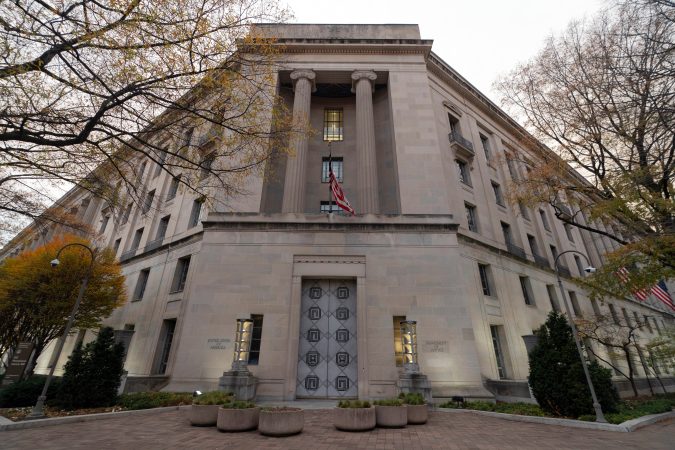
WASHINGTON — The Trump administration has filed a first-ever petition to a secretive and dormant court created 30 years ago to consider government requests to deport so-called “alien terrorists” from the United States.
The Alien Terrorist Removal Court was established in 1996 but had never received a petition until this past Wednesday, when the Justice Department filed an application seeking the removal of an individual whose name is withheld from the single-page document posted on the court’s website.
The chief judge of the five-member court, Joan Ericksen, said in a written response to the petition that a hearing was held on Thursday during which the court had “questions about the nexus that the government alleges between the actions of the respondent and the specific sections and subsections it invokes with respect to those actions.
“The answers persuaded the Court that the Government could benefit from the opportunity for more thoughtful consideration,” wrote Ericksen, a federal judge in Minnesota.
She directed the Justice Department to provide more information by Wednesday.
The court’s authorities emerged from the Antiterrorism and Effective Death Penalty Act of 1996, which permits the attorney general to file under seal applications for the deportation of a suspected “alien terrorist.” If an application is granted, the court must hold a public hearing at which the government has the burden to prove that the individual satisfies that definition. Applications must be approved by the attorney general or deputy attorney general.
Federal law says that an individual could qualify as an “alien terrorist” by, among other factors, having “engaged in a terrorist activity,” endorsing or espousing terrorist activities, and by belonging to a political or social group that encourages terrorist activity.
The court has been dormant since its creation, having received — until last week — no applications and conducting no hearings, according to a summary posted on the Federal Judicial Center website. It is comprised of five judges selected by Chief Justice John Roberts.
The Trump administration has moved aggressively over the last year to carry out deportations, including invoking a 1798 wartime law, the Alien Enemies Act, to remove Venezuelan migrants who officials accuse of being part of a terrorist gang. During a hearing in that case last year, the Washington judge presiding over it, James Boasberg, indicated that the Alien Terrorist Removal Court would be the natural forum to consider a request for deportation on national security grounds.
“In fact, Congress has an answer for us, doesn’t it? Because they created the Alien Terrorist Removal Court,” he said. “So if there’s a national security concern with having these hearings…you can always go to the ATRC, which would be a first, but that’s what it’s there for, right?”
The petition was first reported by Court Watch, an independent news site.
WASHINGTON — The Associated Press surveyed more than 1,000 Jewish adults in the U.S. to better understand their views on Israel’s military actions in Gaza, their opinions of the political parties, and their experiences with prejudice in the United States.
The survey of 1,022 Jewish adults — including people who identify as Jewish by religion and religiously unaffiliated people who identify as Jewish through culture, ethnicity, or family background — offers a rare detailed accounting of a key demographic that sits at the very center of some of the nation’s most divisive political debates.
Here are five takeaways from the AP-NORC survey:
Jewish adults have complicated views about Israel, war in Gaza
About 7 in 10 Jewish adults overall identify as Jewish when asked about their religious affiliation. The rest, about 3 in 10 Jewish adults, say they are atheists, agnostics, or have no particular religious affiliation, but still identify as Jewish in other ways.
While about 8 in 10 of those with a religious affiliation say Israel’s immediate military response to Hamas’ attack on October 7 was “justified,” only about half say Israel’s ongoing military operations in Gaza are justified. Among Jewish adults without a religious affiliation, only about half saw Israel’s immediate response as justifiable. Now, only about 2 in 10 say the ongoing military operations are acceptable.
About one-quarter of Jewish adults with a religious association believe Israel has committed genocide against Palestinians in Gaza, an accusation that’s been leveled by some major human rights organizations and a team of independent experts commissioned by the United Nations. That accusation has been vehemently denied by Israel and the U.S. government. Roughly 4 in 10 Jewish adults without a religious affiliation say Israel has committed genocide.
About one-third of Jewish adults in the survey say they feel “very” or “somewhat” safe as a Jewish person in the U.S. today, while about one-third feel “very” or “somewhat” unsafe. The remaining roughly 3 in 10 say they feel neither safe nor unsafe.
A significant share of Jewish adults, about 3 in 10, say they or someone in their household has experienced physical assault, verbal abuse, online harassment, or damaged property because of their Jewish background over the last year, according to the survey.
The survey points to how Jewish adults’ attitudes toward their own personal safety have changed over a relatively short period as more Americans became critical of the United States’ close alliance with Israel and the war in Gaza. The poll found that Jewish adults who feel a close emotional tie to Israel are particularly likely to feel unsafe in the country today.
Most American Jews don’t feel politicians support Jewish people
Few Jewish adults believe that President Donald Trump — or the Democratic or Republican parties — are doing a good job supporting Jewish people in the U.S.
Only about 2 in 10 Jewish adults say Trump supports Jewish people in this country “extremely” or “very” well. That’s similar to the slight share who find the Republican Party and the Democratic Party highly supportive, but Jewish adults are more likely to say the Democratic Party is at least “somewhat” supportive.
Americans overall are more likely than Jewish adults to see Trump as “extremely” or “very” supportive of Jewish people in the United States. About 3 in 10 U.S. adults say Trump is highly supportive of Jewish people, compared to about 2 in 10 Jewish adults.
The poll also found most Jewish adults have negative views of Trump. About 7 in 10 Jewish adults have a “very” or “somewhat” unfavorable opinion of Trump, compared to about 3 in 10 who have a favorable view.
Division over whether protesting Israel is a form of antisemitism
The war in Gaza began with Hamas’ Oct. 7, 2023, attack on Israel that killed roughly 1,200 people, most of them civilians. Israel responded with a yearslong counterattack that has killed more than 73,000 people, according to the Gaza Health Ministry, which is part of the territory’s Hamas-run government. Its casualty figures are viewed as generally reliable by U.N. agencies and international organizations but don’t distinguish between civilians and militants.
The poll found that about half of Jewish adults say protesting an event that is supportive of Israel is not a form of antisemitism, but roughly 4 in 10 say it is. About 1 in 10 are uncertain.
Jewish adults are more unified in deeming some actions as definitively antisemitic. The overwhelming majority say vandalizing synagogues or Jewish-owned businesses because of Israel’s actions is antisemitism. The same goes for denying the reality or scope of the Holocaust, putting responsibility for Israel’s actions on Jewish people in the United States, or saying Israel shouldn’t exist as a Jewish state.
Support for Israel less of a priority for younger Jewish adults
About half of older religious Jewish adults — those 45 and older — say that supporting Israel is “extremely” or “very” important for their Jewish identity. By contrast, only about 4 in 10 younger religious Jewish adults emphasize support for Israel.
Younger Jewish adults are more likely to prioritize other forms of connection, like celebrating Jewish holidays. About 7 in 10 Jewish adults under 45 say celebrating Jewish holidays is at least “very” important to their Jewish identity, compared to about half of older Jewish adults.
WASHINGTON — Federal agents around the country were told in recent days that the FBI would no longer investigate confrontations with immigration agents — cases that sometimes yield evidence that could be used to prosecute Department of Homeland Security agents implicated in violent encounters, according to people briefed on the decision.
If enacted, such a change would sharply limit law enforcement scrutiny of immigration agents, as the Trump administration draws mounting criticism over killings at the hands of federal officers. In the past two weeks, two fatal shootings by Immigration and Customs Enforcement agents in Texas and Maine have thrust the government’s tactics back into the spotlight.
FBI managers around the country received a written notice informing them of the change Thursday, according to the people familiar with the matter who spoke on condition of anonymity to describe internal communications. The same day, some ICE agents around the country were notified by their FBI counterparts.
The guidance shared with them said that the bureau would stop investigating claims of assaults against Department of Homeland Security agents, the people said. Even though such investigations are intended to determine whether the officers were in fact attacked, they can provide a crucial means of gathering evidence implicating the agents themselves.
A joint statement by the Justice Department and the Department of Homeland Security, however, denied that any such change was underway.
“The relationship between DHS and DOJ in investigating assault on federal officer cases has not changed, and FBI will continue to investigate in accordance with agency policy,” the statement said. “This administration has been clear, anyone who assaults law enforcement will be prosecuted to the fullest extent of the law.”
Under the change, responsibility for investigating cases involving federal immigration officers would likely fall to Homeland Security Investigations, an arm of ICE, effectively leaving the agency to investigate itself, according to guidance circulated among FBI and ICE agents.
Cases involving an assault on a federal officer have been a source of tension inside federal law enforcement agencies for more than a year. White House and Justice Department officials have pushed prosecutors to bring charges in as many of them as possible, particularly as Americans protest the administration’s immigration crackdown.
Under the federal statute, felony charges can be brought against anyone who “forcibly assaults, resists, opposes, impedes, intimidates, or interferes” with a federal law enforcement officer.
Trump administration officials have claimed that language means anyone who makes physical contact with an agent should be charged with felony assault, which is punishable by up to eight years in prison.
“It’s abhorrent to ever, ever touch a law enforcement officer, which is why anytime anybody does that and it’s a federal officer, we’ll prosecute them,” the acting attorney general, Todd Blanche, said in an interview in May on CNN.
An investigation by the New York Times found that the Trump administration had filed charges against more than 550 people for assaulting federal officers. Of the more than 400 cases that had been resolved, nearly half had unraveled, with charges being thrown out or withdrawn, or the defendants being acquitted.
Under the Trump administration, when ICE agents have shot and killed people, the FBI has been assigned to scrutinize a narrow question: whether the agents were assaulted before the gunfire.
While the bureau in past administrations has investigated potential civil rights abuses and law enforcement misconduct, it has been limited from doing so in high-profile ICE shootings over the past year, according to law enforcement officials.
However, FBI investigations involving an assault on a federal officer could yield evidence that is valuable to other cases, including future civil rights investigations or prosecutions of an ICE agent. If that responsibility shifts to Homeland Security Investigations, it would leave a gap in holding immigration agents to account, according to the people familiar with the matter.
Homeland Security Investigations does not have jurisdiction to investigate civil rights violations, so putting the change into practice would make it far less likely that shootings of unarmed people by ICE agents would be investigated to determine if the agents broke federal law.
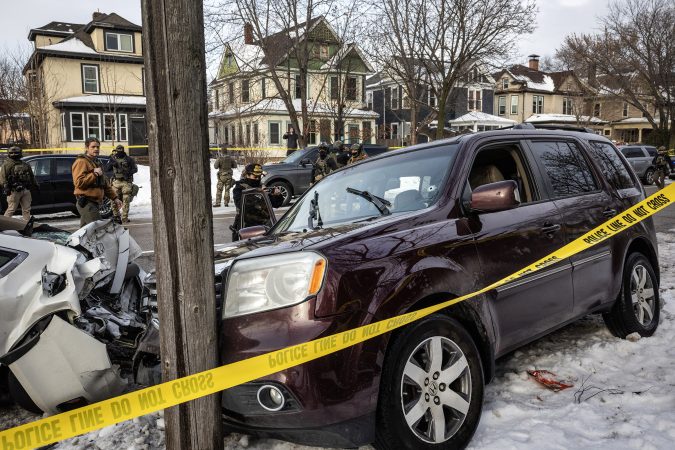
The enforcement crackdown in President Donald Trump’s second term has resulted in nearly two dozen people being fired on by federal immigration agents since January 2025. Six people, including three U.S. citizens, have been killed as a result of those shootings, nearly all of which involved officers firing into vehicles.
On July 7 in Houston, an ICE agent killed Lorenzo Salgado Araujo, a Mexican immigrant who had lived in the country for more than three decades, during a traffic stop while he was driving to work with three passengers. He was not the target of the ICE operation, federal officials later acknowledged.
In Maine on July 13, an ICE agent shot and killed a Colombian man, who was also in his vehicle. He was identified as Joan Sebastian Guerrero, according to a spokesperson for Sen. Angus King, a Maine independent.
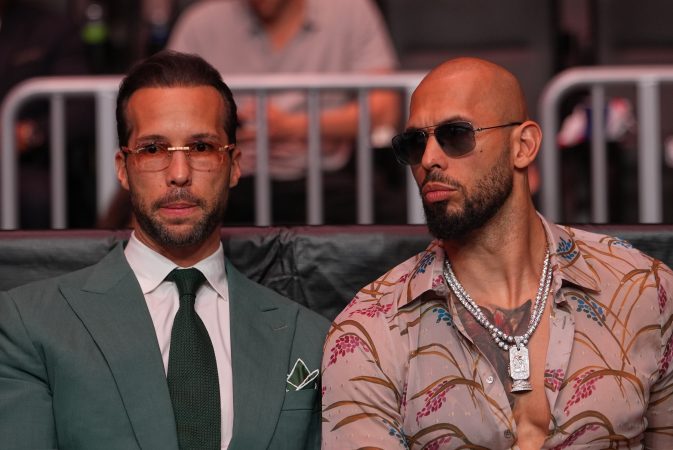
LONDON — Influencer brothers Andrew and Tristan Tate were arrested Saturday in Miami after U.K. prosecutors said they brought further rape and sex trafficking charges against them.
Britain’s Crown Prosecution Service said the new charges relate to four further victims and were brought after authorities received evidence from Bedfordshire Police in southeastern England. The charges include rape, assault, trafficking, and offenses relating to “indecent images of a child and extreme pornography.”
The charges announced Saturday, which bring the total number of alleged victims in the U.K. to seven, are the latest in a long-running international legal saga involving the brothers that has spanned the U.S., Britain, and Romania. The brothers have denied wrongdoing.
Here are some things to know about the Tate brothers:
Who the Tate brothers are
Andrew Tate, 39, and Tristan Tate, 38, are dual U.S.-British citizens known for their social media empire promoting wealth, male dominance, and misogyny.
Andrew Tate is a former professional kickboxer and self-described misogynist who has amassed more than 10 million followers, most of them boys and young men, on X. He has been banned from platforms like YouTube, TikTok, and Instagram for violating hate speech guidelines.
He also runs an online academy where he says he teaches young men how to get rich and attract women. Tristan Tate is also a former kickboxer.
The brothers are avid supporters of U.S. President Donald Trump.
What the Tates are charged with
Andrew Tate and his brother have faced multiple charges in the U.K. and Romania, where they moved in 2016.
British prosecutors said the new charges relate to alleged offenses that took place between 2010 and 2017. They said Andrew Tate was charged with seven further counts of rape, three counts of arranging or facilitating trafficking for sexual exploitation, three counts of assault, and 19 charges for offenses relating to indecent images of a child and extreme pornography.
Tristan Tate was charged with one count of sexual assault, two counts of rape, and three counts of arranging or facilitating sex trafficking.
The Crown Prosecution Service said in a statement it “has requested the extradition of the Tates from the U.S. They have been arrested and await extradition proceedings to the U.K.”
The Tates already face previous charges of rape, bodily harm, human trafficking, and controlling prostitution for gain relating to three other alleged victims in the U.K. between 2012 and 2015.
In June, a U.K. High Court judge threw out a legal bid by the Tates to be told the names of their accusers.
In Romania, the siblings were arrested in late 2022 along with two Romanian women. The four were accused of participating in criminal schemes to lure women for sexual exploitation. They denied those allegations and the Romanian case hasn’t gone forward because of legal and procedural problems.
The case hasn’t been closed, and there is also a separate legal case against the brothers in Romania.
Andrew Tate has repeatedly claimed that prosecutors in Romania have no evidence against him and that there is a political conspiracy to silence him.
How the extradition process could work
The brothers are expected to appear this week in a U.S. federal court, where a judge will make an initial determination about whether they meet the conditions for extradition. If they do, they are unlikely to get bail, which is rarely granted to those held for international extradition.
The decision about whether to order the extradition will then fall to U.S. Secretary of State Marco Rubio. While the State Department has some discretion to deny extradition requests from the U.K., it has granted nearly every British request since ratifying a strengthened extradition treaty in 2007.
One exception came during Trump’s first term, when the U.S. declined an extradition request for the wife of a former American diplomat involved in a fatal crash in England, citing diplomatic immunity. The rejection prompted an international outcry.
Why the Tates were in the U.S.
British police previously sought the Tates’ extradition to the U.K. once their legal proceedings in Romania concluded.
But in February 2025 they were allowed to leave Romania after authorities lifted travel restrictions, and they flew to Florida on a private jet.
Romania’s foreign minister said at the time that a U.S. official in the Trump administration had expressed interest in the brothers’ legal case in Romania.
Trump said he knew “nothing about” the case when asked if his administration pressured the Romania government to release the Tates.
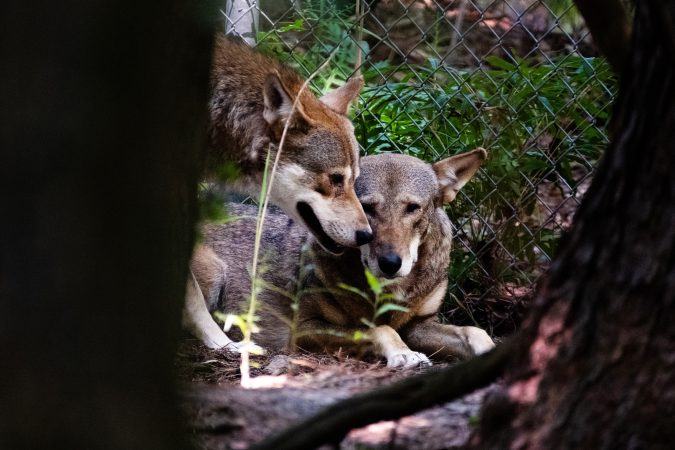
Nearly two dozen red wolf pups were born in the wild this spring in eastern North Carolina, giving a remarkable boost to one of the most endangered species on the planet.
“It’s inspiring to see these underdogs making another incredible comeback,” said Will Harlan, southeast director for the Center for Biological Diversity, in an statement about the births.
The 23 pups born in the wild this year marked the most since 2013. While not all the pups ultimately survived, their arrival briefly doubled the number of red wolves living on the landscape.
There are only 22 known adult or adolescent red wolves living on or near the Alligator River and Pocosin Lakes national wildlife refuges, according to the U.S. Fish and Wildlife Service, which oversees the decades-long effort to restore a native animal that once roamed widely throughout the southeastern United States.
The number of wild adult red wolves had dipped perilously into the single digits in the not-so-distant past, but the modest population growth of recent years remains far below the number needed for red wolves to sustain themselves over time.
That makes this year’s births a joyous and encouraging moment for those invested in resurrecting a species that has long stood on the brink of extinction.
“This is such a huge improvement over the disastrous years of 2019 to 2021, when no pups were born in the wild at all for four years straight — a trend that was rapidly becoming a death knell for a species that typically only lives for three to six years in the wild,” said Ron Sutherland, chief scientist for the Wildlands Network, who has long worked on red wolf issues.
Federal officials said four litters of red wolf pups were born to breeding pairs in the wild earlier this spring. Some died early on — survival of red wolf pups in the wild is typically around 50% — but a significant number remain.
“With the mortalities of some of the young pups detected during our monitoring, we know there are a minimum of 12 pups remaining in the wild and possibly up to 16,” the agency wrote in a recent update.
“The other four pups do not have transmitters, but we confirmed their presence on the landscape as recently as late May. We will continue to monitor the pups using radio telemetry and remote sensing cameras,” the statement added.
The push to save red wolves in the wild has experienced dramatic ups and downs over the past four decades on North Carolina’s Albemarle Peninsula, with its massive swamp forests, farmland, and marshes.
Red wolves had been hunted to near-extinction in the 1970s and were reintroduced to eastern North Carolina in 1987. By 2011, more than 120 roamed the wild. But that growth did not last, and their numbers eventually plummeted.
Among the most significant threats facing red wolves over time were unnatural deaths at the hands of humans. Vehicle strikes along Highway 64, a popular route to the Outer Banks, and other roads have become the largest cause of mortality for red wolves. Others have died of gunshots.
The fate of the species also has risen and fallen alongside shifting priorities of the federal government, conflict with nearby landowners, scientific disputes, and legal challenges.
Changes in federal policy and personnel, as well as legal challenges from conservation and environmental groups, have led to a recommitment to the recovery program.
While officials have outlined plans to strategically release some of the nearly 300 captive-bred wolves into the wild over time, the ongoing birth — and survival — of new pups in the wild is an essential element to reestablish the species across its native region.
“We’ve still got a long way to go,” Joe Madison, the red wolf recovery program manager in North Carolina for the U.S. Fish and Wildlife Service, told the Washington Post one morning in 2024 as he drove through the Alligator River refuge. “I don’t think anybody thinks it’s going to be easy or short.”
He spoke at the time about how the work of restoring endangered red wolves is slow and tumultuous, but very much worth it.
“They are a missing piece of the ecosystem out here,” he said. “And without that, things are out of whack.”
Sutherland said that while this spring’s surge of births is promising, one key will be to make sure the world’s most endangered wolves, young and adult, have the best chance to survive and thrive on the landscape.
A key piece of that is unfolding now, as state and federal officials have committed tens of millions of dollars toward building wildlife crossings over the next several years in an effort to reduce traffic-related deaths near the refuges where red wolves roam. Environmental groups have helped to raise millions more.
“Wolves can grow their population quickly when they are protected from mortality,” Sutherland said, “and when there are enough unrelated animals out there to form pairs, and we could see some remarkable growth over the next few years.”
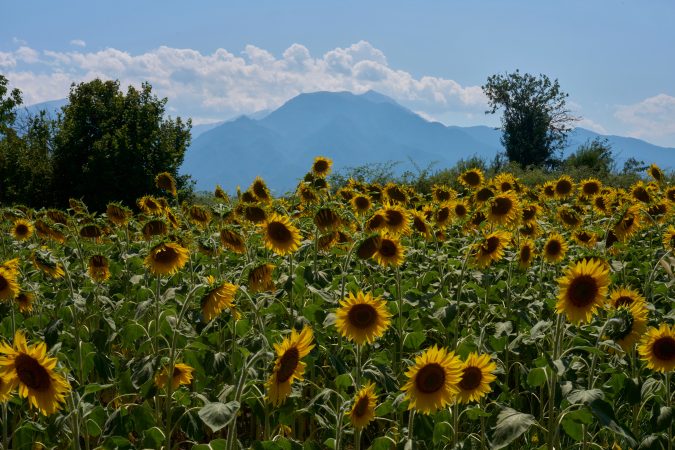
LITOCHORO, Greece — Snow-capped for much of the year, Mount Olympus, mythological home of ancient Greece’s Olympian gods, has captured the imagination through the millennia. The mountain rises to 9,573 feet from a base practically at sea level, and the ancient Greeks believed the throne of Zeus, king of the gods, stood on the highest of its craggy, often mist-shrouded peaks.
Now, modern Greeks hope their tallest mountain will be inducted into UNESCO’s World Heritage List as a mixed cultural and natural site. The nomination was set to be discussed as the World Heritage Committee meets in Busan, South Korea, from July 19 through July 29.
“Olympus is our life. It is the place we grew up in,” said Evagelos Geroliolios, mayor of Dion-Olympus, based in Litochoro, the mountain’s main town. “It is the place we see every day, but at the same time, it is also a place which carries with it myth, history, biodiversity, extraordinary beauty, and a very great cultural weight.”
Seat of the gods
Few locations are as central to ancient Greek mythology as Mount Olympus. It was here that Zeus was said to have established his court after overthrowing his father, Cronus, in a 10-year war that ended the reign of the Titans.
Interest in Olympus may receive another boost with the theatrical release of Christopher Nolan’s The Odyssey, a new adaptation of Homer’s epic, in which the mountain serves as the home of Zeus and the Olympian gods who influence Odysseus’ journey.
On one of Olympus’ lower peaks, excavations have uncovered an open-air sanctuary, with the oldest finds dating to the Hellenistic period, which ran from 323 B.C. to 30 B.C. According to Greece’s original UNESCO nomination, the sanctuary is believed to have been one mentioned by the ancient philosopher and historian Plutarch, who in the 2nd century wrote of processions to one of Olympus’ peaks for animal sacrifices to Zeus.
The mountain retained religious significance into the Christian era. A chapel on the peak of Prophet Elias, at 9,196 feet, is believed to be the highest altitude chapel in the Christian Orthodox world. The mountain’s Enipeas Gorge holds the remains of a monastery founded in 1542, while a roughly 20-minute walk from there leads to the Holy Cave of St. Dionysios, a chapel built into a cave from where a small spring flows, believed to carry holy water.
The mountain’s slopes, which reach practically to the sea, also host a wealth of flora and fauna, including endemic species. It is this blending of culture, myth, natural beauty, and biodiversity that locals hope will see their mountain declared a World Heritage site.
“It is a place we love. It is a place that many people from all over the world visit to see, to live, to experience. We want to protect it,” Geroliolios said. Its inclusion on UNESCO’s list would be “something very big that goes beyond not just local boundaries, but national boundaries. It is something that concerns the entire world. It is very important.”
Inclusion in World Heritage List far from certain
Greece began the process to have Mount Olympus recognized as a World Heritage site in 2014, inscribing it on its Tentative List — the mandatory first step in any nomination. The Tentative List is where countries include sites they can then formally nominate over the next five to 10 years.
The nomination process includes a preliminary assessment followed by submission of a full nomination file, which is then evaluated over 14 months by advisory bodies, including the International Council on Monuments and Sites and the International Union for Conservation of Nature.
Recommendations by the advisory bodies are then discussed during the World Heritage Committee’s annual meeting, where representatives of 21 countries vote on nominated sites.
Greece’s Mount Olympus nomination is far from certain. A draft of the Busan meeting’s agenda indicates the committee will refer the nomination back to Greece and request further details.
Still, locals hope the mountain’s cultural and natural wonders will secure it a place and will play a role in gaining more protection for the mountain.
The need for protection
The mayor, Geroliolios, said inclusion on the World Heritage list “places some greater obligations on our part to protect this environment.”
Environmental protection is also foremost in the mind of mountain guide Babis Marinidis, president of the Alpine Club of Litochoro.
Including Olympus on UNESCO’s World Heritage list would likely attract more people to the mountain and the surrounding area, Marinidis said. “How many people can this mountain, this ecosystem, bear?” he asked. Although much of Olympus was designated a national park decades ago and there are regulations in place, many are openly flouted, with Marinidis saying visitors regularly ignore “no swimming” or “no camping” signs.
The ever-growing number of visitors had led local authorities to consider imposing entrance fees and registering visitor numbers. “I used to be against that,” Marinidis said. “But now with so many people, I believe some limit must be imposed.”
Mount Olympus has claimed many lives
The mythological home of the gods attracts hikers and mountaineers from across the world. While technical climbing experience isn’t mandatory to reach the summit, the mountain is also not to be trifled with.
With its combination of changeable weather and treacherous terrain, it has claimed many lives. The most recent fatality was on July 11, when a 64-year-old Greek hiker died after collapsing on a trail. In May, rescue crews found the body of a 25-year-old Spanish man days after he went missing while attempting to reach the summit in the snow.
“You need to be careful,” and safety measures must always be kept in mind, said 32-year-old hiker Triantafyllos Giannospyros, who was visiting the mountain for the first time. “But with care and with good organization, it isn’t something you should be afraid of.”
Stavroula Vourou, who runs a hotel in Litochoro, the town from where many hikers set off, echoed his sentiment.
“Everyone sets off to go up and conquer a mountain that needs respect,” she said. “You respect this mountain, it respects you too.”
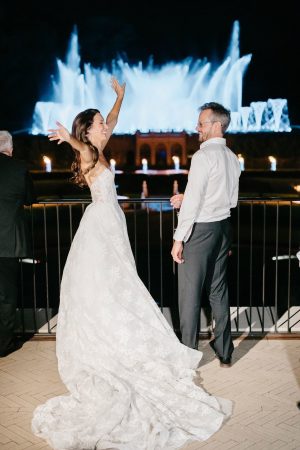
Streams of water shot up and danced at Longwood Gardens during the gender reveal for Danielle Alura’s baby.
The water flashed blue and pink to the tune of Linkin Park’s “What I’ve Done.” On a downbeat, all of the fountains turned one color and fire burst out.
“Next thing you know, I’m witnessing blue on my favorite fountains in the entire world,” Alura said.
It’s a boy.
The water flashed blue and pink before landing on blue.Courtesy of Danielle Alura
Alura and her husband, Curt Clemens, had planned the gender reveal as a surprise finale to their wedding reception on June 18. Longwood Gardens ordinarily hosts nighttime illuminated fountain performances at the five-acre Main Fountain Garden in Kennett Square. However, this show was custom-made for the reveal.
The couple, from Kennett Square,found out they were expecting a baby via surrogacy during their engagement, roughly six months before their wedding. Alura said they were anxious to start a family due to their ages, with Alura being 37 and Clemens 44.
They had both hoped for a boy.
“We’re just so, so over the moon about it,” she said.
In a video posted Saturday that captured the moment the gender was revealed, cheers roared from the crowd as Alura jumped up and down.
The gender wasn’t a surprise to the couple, though it was for many of their wedding guests.
Griffin, the baby boy being celebrated, had arrived just two weeks before on May 31. He was three months early — born premature, just as Alura and her husband had been.
Alura is a singer who was crowned Miss Global USA 2023, while Clemens is a woodworker.
“We were prepared to have a preemie, and we have extra confidence because we’re walking examples ourselves,” she said.
Danielle Alura is a singer and her husband, Curt Clemens, is a woodworker.Courtesy of Danielle Alura
Not long ago, I was a celebrated exiled writer, one of the most visible faces at City of Asylum Pittsburgh — a grassroots organization that helps endangered writers build new homes and new lives in Pittsburgh. Today, I am alone, unable to find a job, without health insurance, and, if I remain in this situation, I may soon be unable to pay my rent and find myself — God forbid — homeless.
My story begins in Algeria — the country that prompted Salman Rushdie and other writers to first establish the “parliament of writers” internationally in 1993 because of the alarming number of attacks on, and assassinations of, writers in the country in the ’90s during the civil war. This is the same country that had earlier welcomed the international Black Panthers, and many African liberation movements since its independence from France.
In 2015, I was the first Algerian to call for the legalization of same-sex marriage. I started speaking up on taboo topics, crimes against children, for example, and family laws that relegated women to second-class citizens and prioritized men in the family. In 2017, I was interrogated for hours about one of my novels, which highlighted the participation of the LGBTQ community in the war of independence against the French — another taboo topic.
In 2019, I broke the greatest taboo of all in Algeria, calling for the truth to be told about the 20,000 young men kidnapped during the civil war.
I was tried and sentenced to pay a fine for using humor to criticize the presidential elections in 2020, and then in 2021 I was interrogated for hours about two articles I had written: one in which I criticized the president, the other, a call to liberate “God” from politics.
I was already in the U.S. when I was sentenced, in absentia, to a year in prison in Algeria for those same articles.
I say escape because I chose myself, for the first time in my life. I chose to live. In 2017, PEN International contacted me and proposed that I get in touch with the International Cities of Refuge Network, a Norwegian organization that has a network of many cities of asylum around the world. In 2021, I got Artist Protection Fund funding, and through that, I got a fellowship with the City of Asylum Pittsburgh and Carnegie Mellon University.
City of Asylum welcomed me in Pittsburgh and gave me an important period of safety and opportunity. During this period, I taught Arabic and worked at Carnegie Mellon, where I also studied translation as part of the employee educational benefits while holding a fellowship there. These opportunities changed my life, and I am grateful for them.
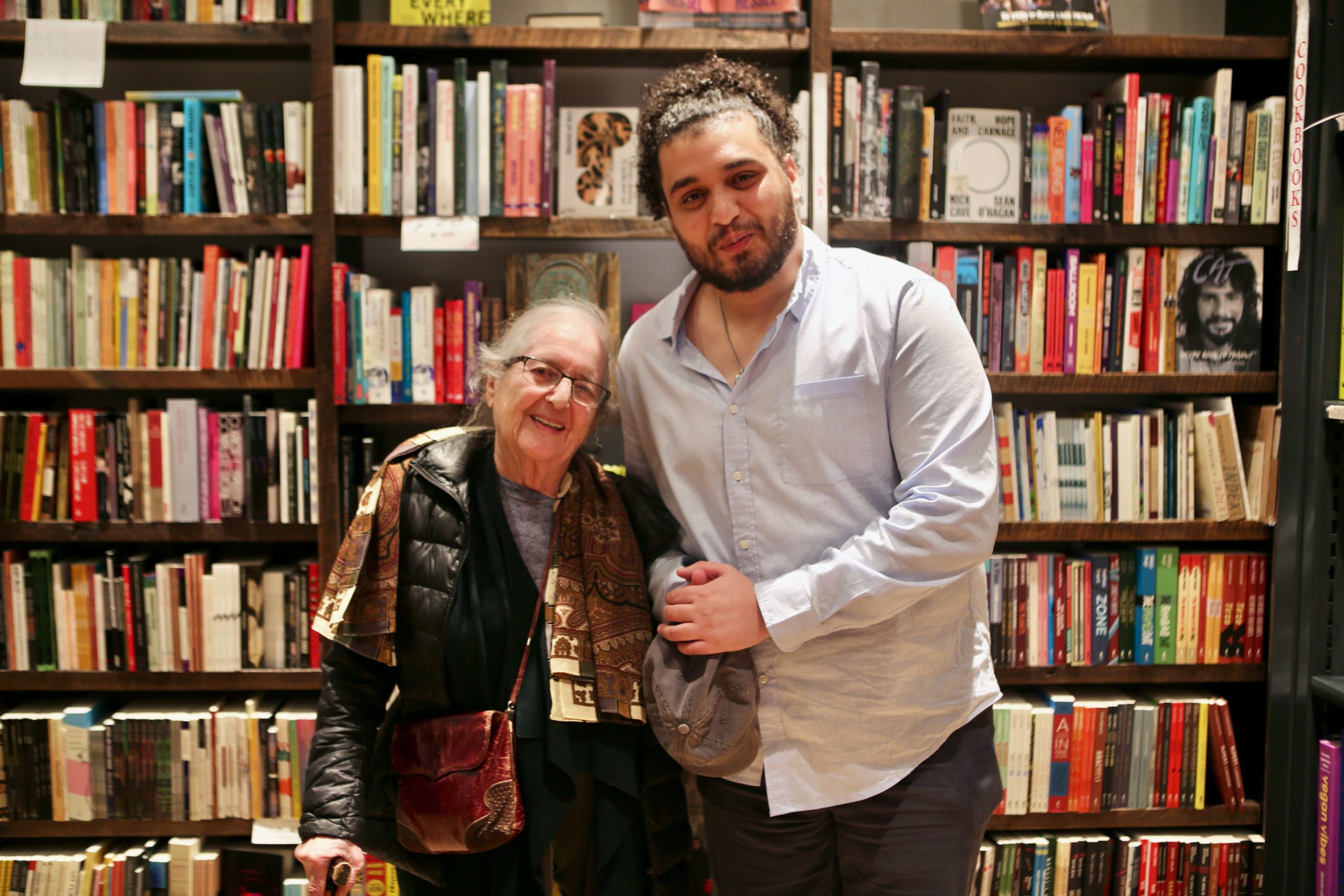
Elaine Moukhtefi with Anouar Rahmani in Pittsburgh in 2025. Moukhtefi — an American writer, translator, and activist — worked with Frantz Fanon in support of the anti-colonial Algerian National Liberation Front in the 1950s and ’60s. She helped welcome members of African national liberation movements, including Nelson Mandela and the international Black Panther members, to Algeria before she was forced to leave the country in 1974. Rahmani says that meeting her in Pittsburgh “was the most beautiful surprise in my life.”Courtesy of Anouar Rahmani
But eventually, as happens with fellowships, programs end, and the difficult question of what comes next begins.
Excitedly, I began applying for jobs related to my degrees and experience. When that didn’t pan out, I applied for translation jobs and positions requiring Arabic or French. I applied for work that matched my résumé, and for work that did not. Being an immigrant, I lowered my expectations and looked for work almost anywhere. To give you the full picture, I applied for cleaning jobs, including one cleaning hotel toilets in Pittsburgh.
I hoped to find anything that would protect me from the bitter winter cold and the eyes of racists. Above all, I wanted a job that would preserve my dignity and my life. I did not have many conditions. Any legal work would have been enough to begin my life again. But perhaps because of a curse, bad luck, or something beyond my ability to understand or predict, I was not successful.
Today, I live afraid, on the verge of homelessness, in debt, without health insurance, and without a passport because the Algerian Embassy will not renew mine. I do not know where to turn or what to do. All doors seem closed to me. And all that comes to mind is the applause of audiences at the many events where I was once a guest speaker, on days when I truly believed myself to be an “important” person. Now it seems like a joke.
Anouar Rahmani (left) and Kenya C. Dworkin y Méndez, from Carnegie Mellon University, in a public conversation and preview of Rahmani’s novel, “The End of the Third World,” at a City of Asylum Pittsburgh event in 2025.Courtesy of Anouar Rahmani
We do not matter much as immigrants. U.S. Immigration and Customs Enforcement hunts immigrants down, and politicians direct hateful rhetoric against us. We are labeled with the ugliest descriptions in the media. I am a queer immigrant from Algeria. I have become almost everything some politicians in this country hate.
After the Gaza War, many Arab and Muslim scholars and students spoke with me about their fears. When students were arrested during pro-Palestinian protests, many of us became afraid in a country that had promised us we would not need to be afraid again.
I am afraid. Do I have the right to say this? Or must I live within a diplomatic discourse that allows only gratitude to be expressed after a rescue?
I need to write about the difficult side of rescue, the “after the rescue” nobody speaks about.
This photo shows House Poem, a home painted by Huang Xiang, the first exiled writer in the City of Asylum Pittsburgh residency program, in December 2020. City of Asylum Pittsburgh is a nonprofit organization that is part of an international network of support to writers and artists threatened by a lack of freedom of expression in their home countries./ AP
My story is perhaps personal, but it is bigger than me. It is about exiles brought into this country with hope — who later discover how fragile their survival is. While we are often presented as examples of success, many exiles live in psychological, economic, and legal fragility and under indescribable pressure.
The danger for an exiled writer, scholar, or artist does not end simply because a fellowship ends. I do not doubt the sincerity of the people and the organization that brought me to America and sheltered me. I am not trying to blame my failures on it or on others. But I want us to reconsider the rescue model on which it is built and to work toward sustainable mechanisms of support.
Perhaps the end of a fellowship should be announced with the same energy as its beginning. When an exiled writer or artist arrives, organizations often use newsletters, social media, institutional networks, and public events to introduce the new fellow to a city. The arrival becomes news. But the departure, and the professional uncertainty that may accompany it, can happen almost silently. Why not use the same networks to announce that a fellowship is ending and that a writer, scholar, or artist is entering the job market? Visibility should not disappear precisely when it may be most vital to survival.
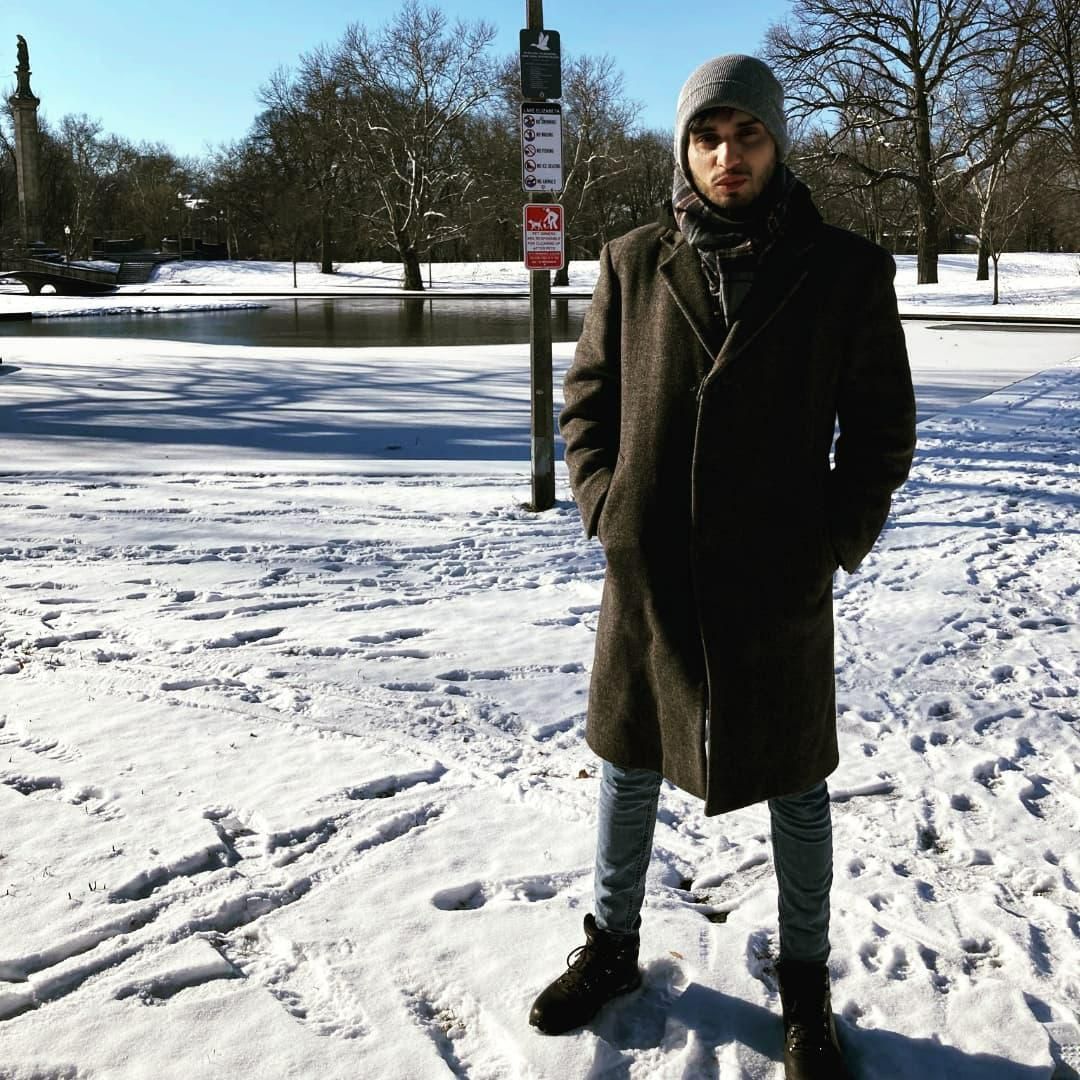
Snow welcomed the author when he first arrived in Pittsburgh as a City of Asylum and International Cities of Refuge Network fellow in January 2022.Courtesy of Anouar Rahmani
Host organizations can make introductions, advocate, and help open doors that are often inaccessible to a newcomer navigating a foreign labor market. Many exiles have advanced degrees, years of professional experience, and strong résumés. What they lack is access: knowledge of the hidden mechanisms of the local job market, professional references, institutional introductions, and networks capable of converting experience into employment.
Most importantly, the path toward employment after a fellowship should be treated as part of the fellowship. This work should begin even before the fellow arrives. What credentials may need recognition or supplementation in the host country’s labor market? What legal barriers to employment might exist? These questions should be asked from the beginning, revisited throughout the residency, and followed beyond its formal end.
I want to be clear about what I am saying. City of Asylum Pittsburgh helped me in many ways. I am not dismissing that assistance. The question is not whether individual people tried to help me. The question is whether the fellowship model itself is adequately designed for what happens after the fellowship ends.
What matters in the idea of rescue is not the moment of rescue itself, but the possibility of survival afterward. We do not want to remain symbols of rescue; we want to survive.
All of us want to be beings breathing under the sky — but not in fear that it is about to fall on our heads.
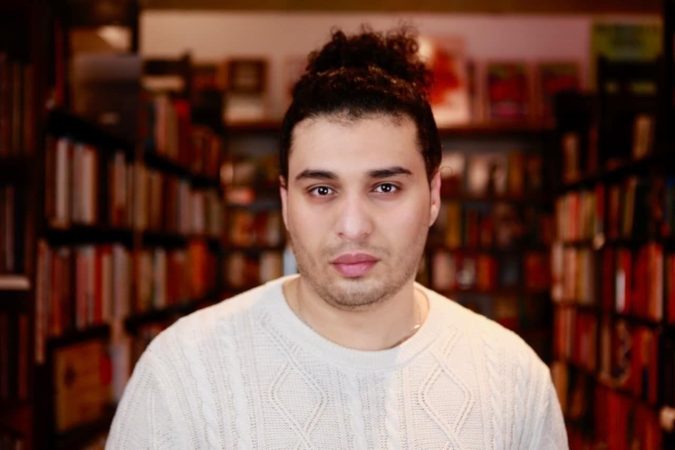
Anouar Rahmani is an Algerian novelist, writer, journalist, and internationally recognized defender of freedom of expression. Rahmani’s literary and public trajectory has positioned him as one of the most visible contemporary Algerian voices confronting censorship, religious and moral authoritarianism, and the criminalization of imagination.
Thousands of New Jersey employers will have to provide protected family leave beginning this past Friday under an expansion of the state’s family leave law signed by then-Gov. Phil Murphy shortly before he left office in January.
The change expands the number of companies that must comply with the New Jersey Family Leave Act and decreases the amount of time it takes for an employee to become eligible for the law’s job protections.
The law gives workers who take family leave the right to return to their same job, or one with the same pay, benefits, seniority, and other terms of employment, upon their return. State officials estimate another 400,000 will gain protections as a result of the changes that take effect Friday.
“No one should have to choose between caring for themselves or a loved one and keeping their job,” acting Labor Commissioner Kevin D. Jarvis said in a statement. “These changes strengthen one of New Jersey’s most important worker protections by ensuring more people can take the time they need with the confidence that their job will be there when they return.”
The law provides 12 weeks of unpaid, job-protected leave over a two-year period for workers bonding with a new child, responding to a health emergency, or caring for a seriously ill family member. It does not cover an employee’s own illness, which falls under a separate program.
The law previously captured businesses with at least 30 employees. Under the changes taking effect Friday, companies with 15 or more workers companywide must provide family leave.
The change also loosens rules on who qualifies. Previously, workers needed to be on the job for a full year and have worked at least 1,000 hours. Under the new rules, workers are eligible once they have worked for three months and 250 hours. Officials said this change will protect more part-time employees and recent hires.
Although the leave is unpaid, some employees can be eligible for partial wages via state Family Leave Insurance, which guarantees up to 85% of their weekly pay, to a cap of $1,119 in 2026.
The July 17 change is the first of three scheduled steps to expand the law. The employee threshold drops to 10 or more workers July 17, 2027, and to five or more workers July 17, 2028.
Business groups had opposed the change, warning that expanding family leave eligibility could make New Jersey small businesses less competitive.