With a century of life under his belt, it’s not easy to get much past World War II veteran Stephen Anderson.
But last Tuesday, Anderson was surprised to return home to find a large 100th birthday celebration in his honor with gifts, commendations, and even a letter from Gov. Mikie Sherrill waiting for him.
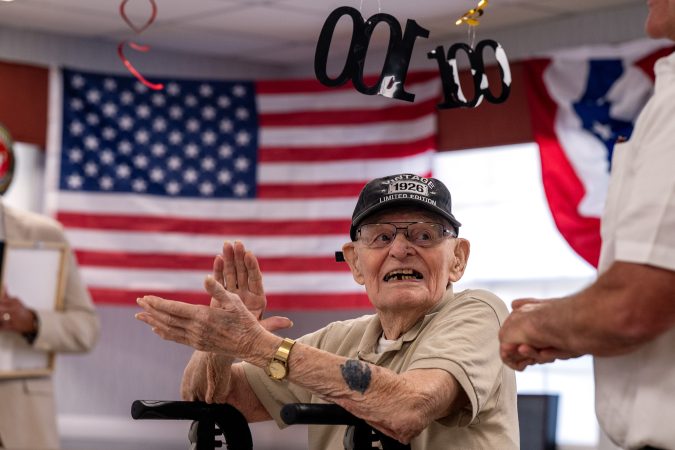
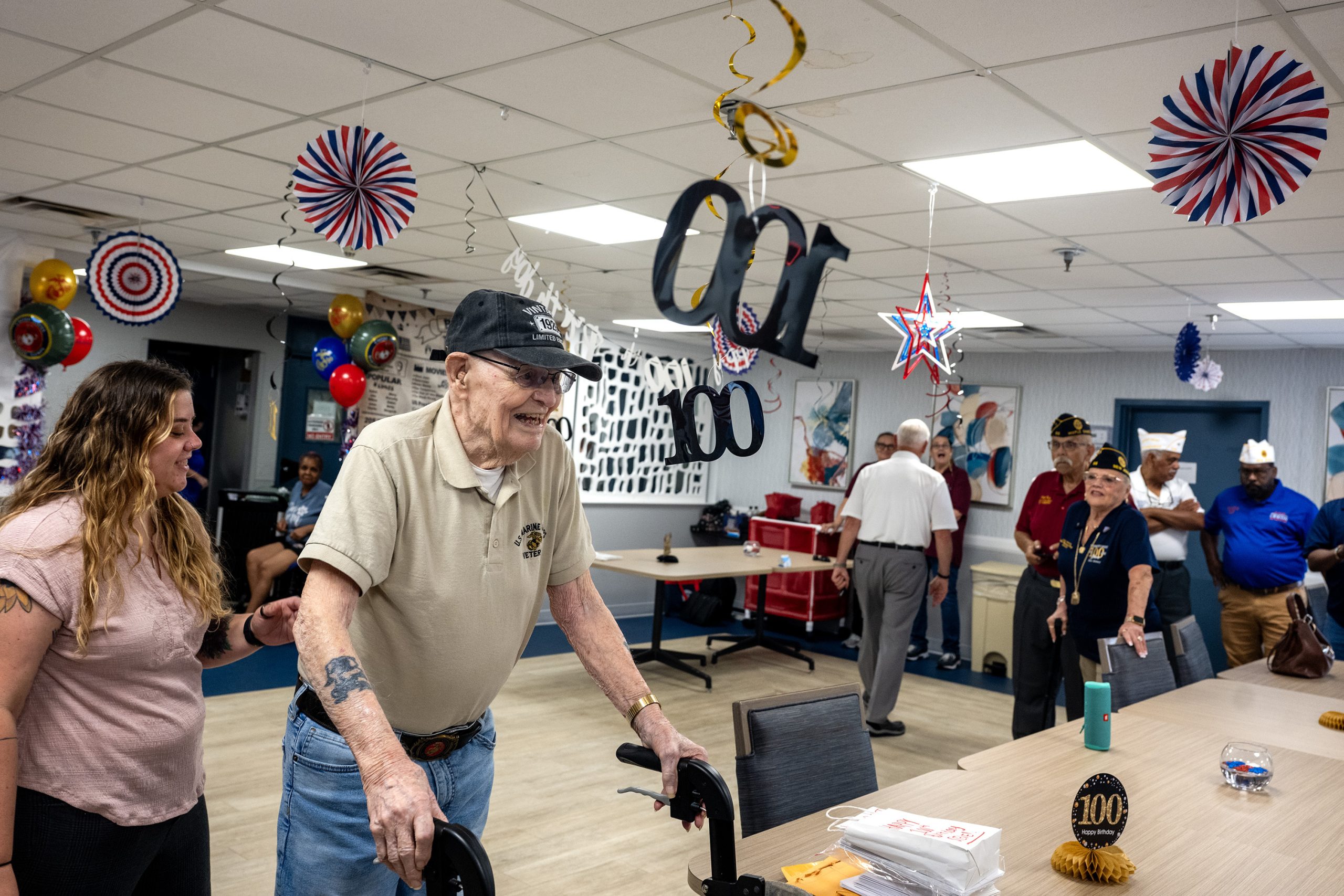
Wearing both a T-shirt and belt buckle emblazoned with the United States Marine Corps emblem, Anderson entered the dining room at the Wynwood Rehabilitation and Healthcare Center in Cinnaminson with a big smile as his friends, fellow veterans, neighbors, and more sang “Happy Birthday.” Each of Anderson’s arms are adorned with prominent dark tattoos that have now mostly faded to outlines, the finer details lost to time.
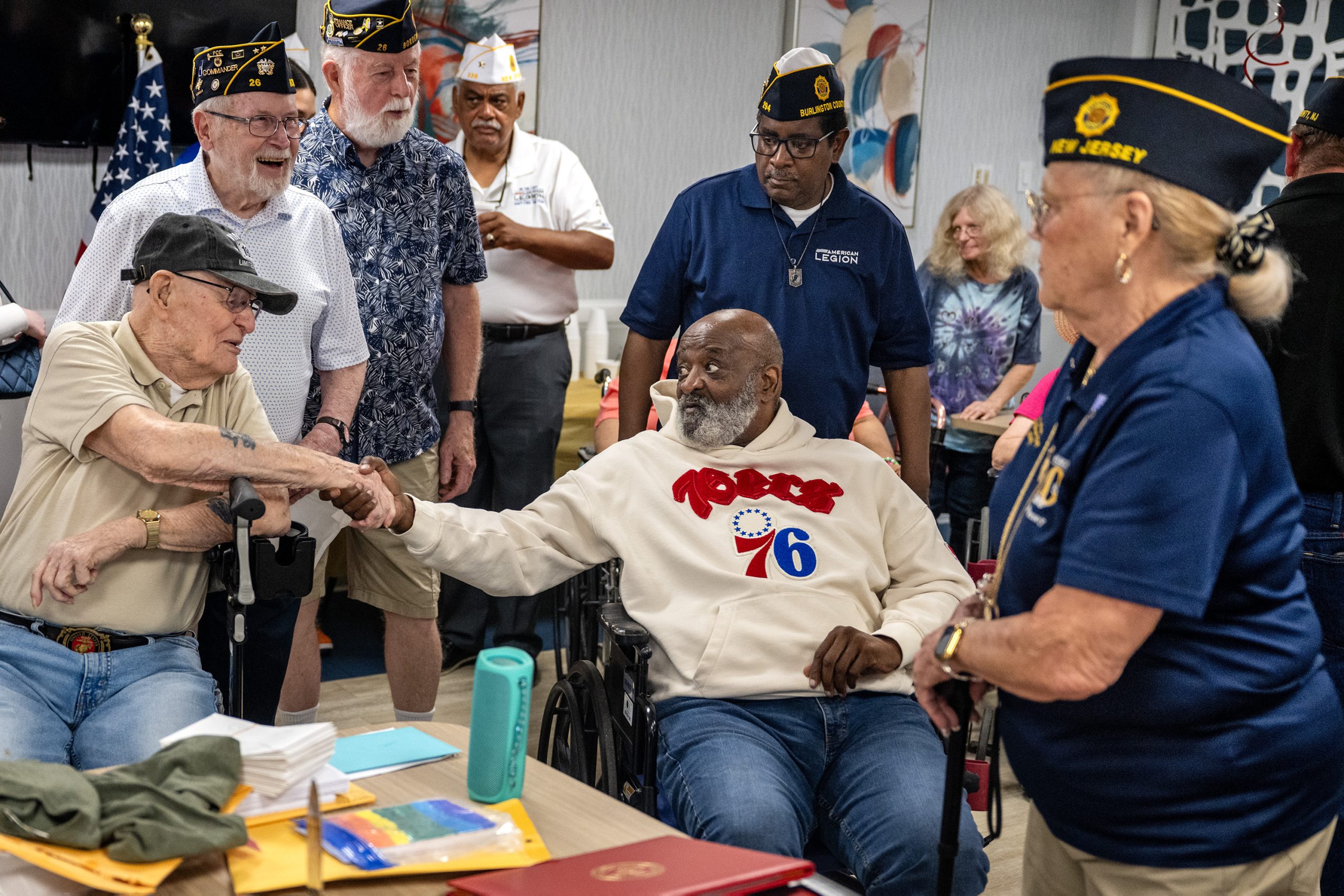
As cupcakes and ice cream were passed around, Anderson was quick to laugh as he joked with the staff and reunited with longtime friends from the American Legion, where he has been a member for 82 years.
“It’s amazing,” he said in between bouts of banter with old friends.
“It’s great because I can’t get out like I used to,” he said. Now, everyone’s come to him.
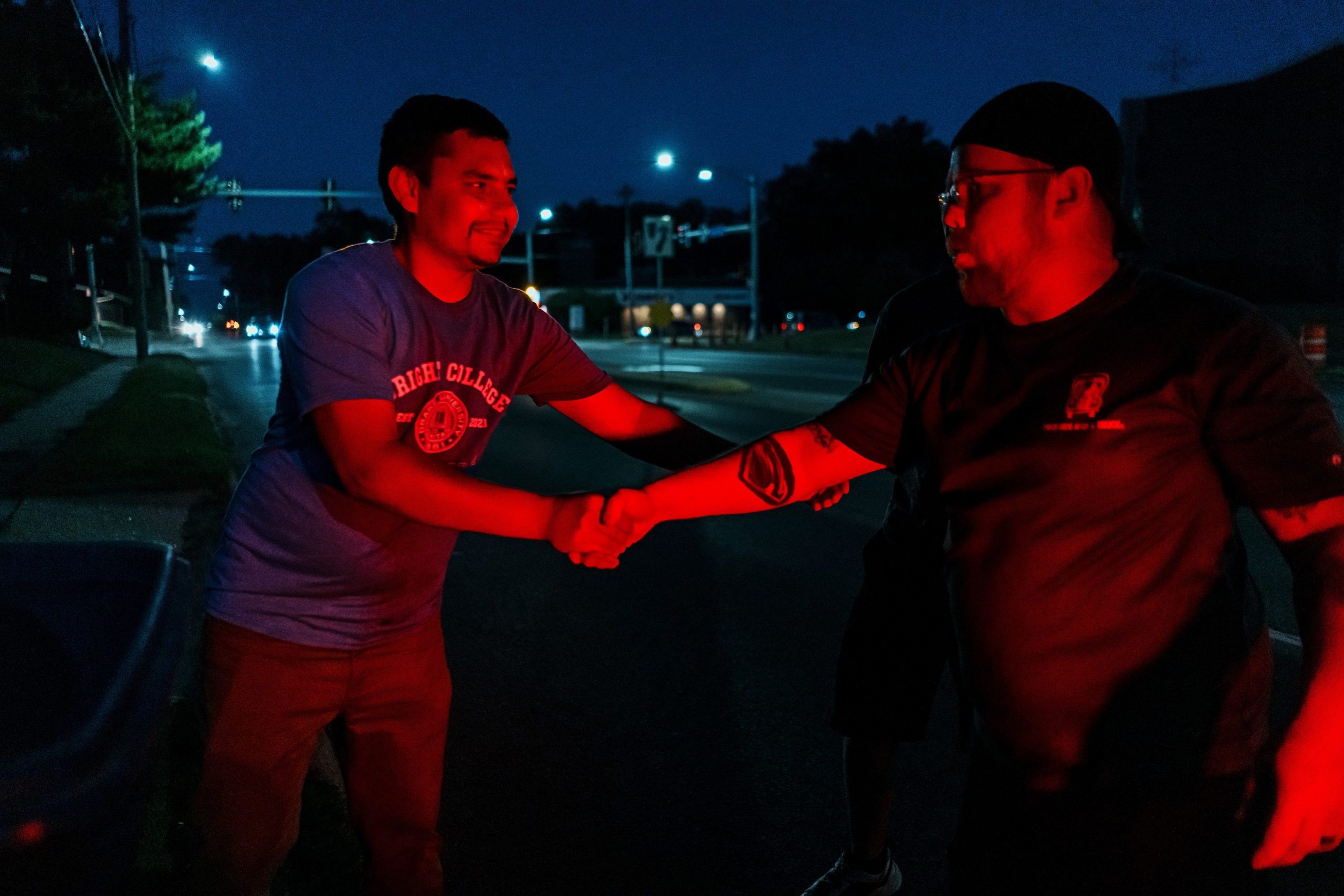
WWII U.S. Marine Corps (and U.S. Air Force) veteran Stephen Anderson is surprised by fellow vets who attended his 100th birthday party Tuesday at the Wynwood Rehabilitation & Healthcare Center in Cinnaminson.Tom Gralish / Staff Photographer
The party was put together by the staff at Wynwood, where he has lived since 2023 and has since become a beloved resident.
Stephanie Ward, Wynwood’s director of social work, was the driving force behind the celebration, organizing the party and contacting the Legion, the Tun Legacy Foundation, and the governor’s office to recognize Anderson for his lifetime of service.
“He’s so amazing, he’s got a kind heart,” Ward said. “All the veterans always have a special place in my heart and this big milestone, you’ve got to celebrate it.”
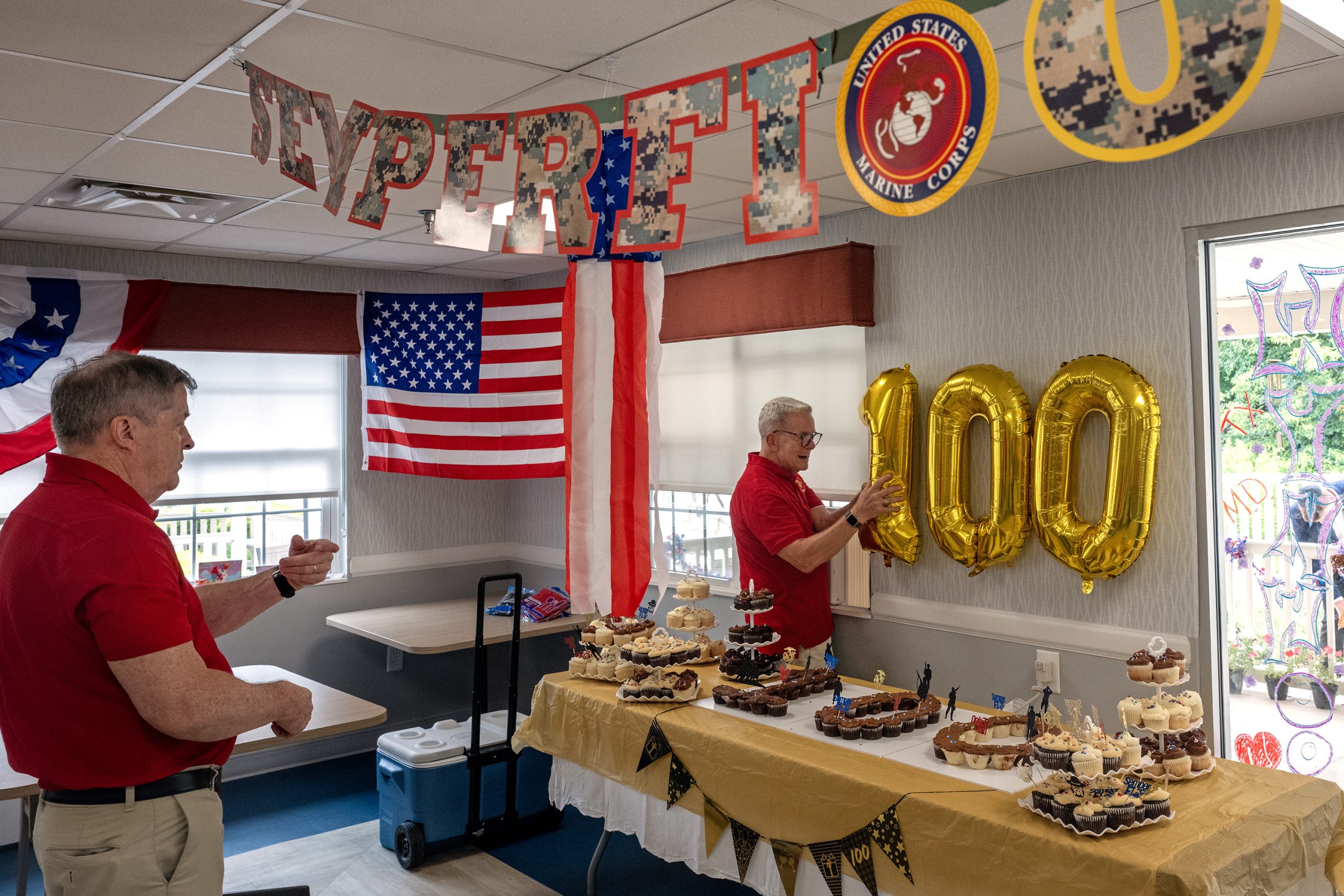
Cupcakes, including one with topping of iconic flag raising at Iwo Jima, at the 100th birthday party for WWII U.S. Marine Corps (and U.S. Air Force) veteran Stephen Anderson at the Wynwood Rehabilitation & Healthcare Center in Cinnaminson. He was presented with a letter from Gov. Mikie Sherrill, and letters from both the commandant and sergeant major of the Marine Corps, and more. Tom Gralish / Staff Photographer
Not one to draw attention to himself, she joked that Anderson would probably give her a hard time for setting up the elaborate surprise party for him.
“I’m going to get yelled at later,” she said with a laugh. “But he deserves everything.”
Separated by oceans and decades, it is clear that Anderson’s military service is still close to his heart.
Originally from Massachusetts, he enlisted in the Marines at just 17 years old and was quickly sent to fight in some of the most harrowing battles of WWII, the Korean War, and the Vietnam War. A rare two-branch veteran, Anderson also served in the Air Force from 1961 to 1963.
“Where he fought is legendary. Saipan, Okinawa — some of the largest battles of the war,” said Patrick Dailey, a Marine and founder of the Tun Legacy Foundation, which is working to rebuild Philadelphia’s historic Tun Tavern, where the Marine Corps was born in the 17th century.
WWII U.S. Marine Corps (and U.S. Air Force) veteran Stephen Anderson arrives for his 100th birthday party with Stephanie Ward (left), director of social services at the Wynwood Rehabilitation & Healthcare Center in Cinnaminson.Tom Gralish / Staff Photographer
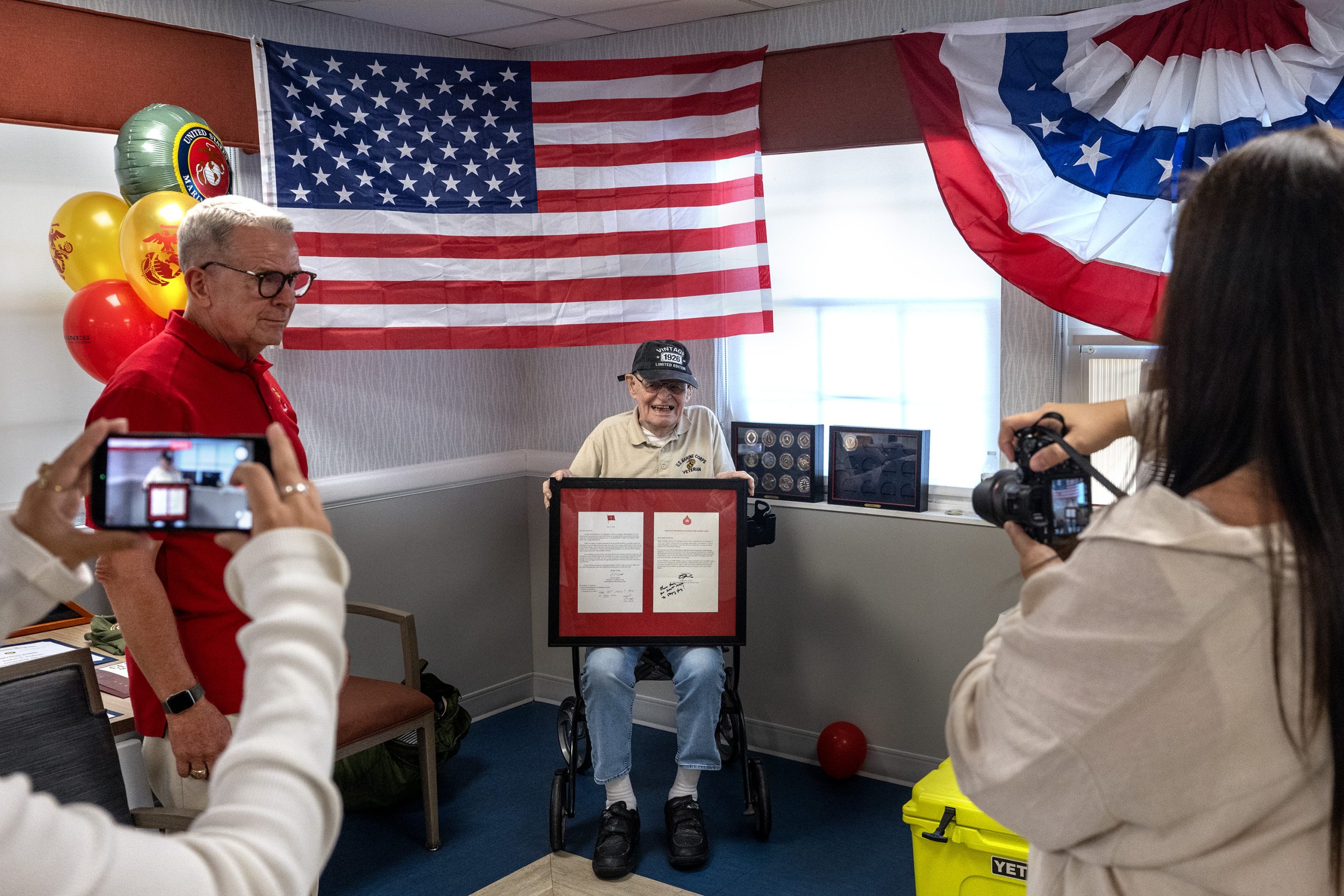
To honor his years of service and sacrifice, Anderson was presented with official letters from Gov. Mikie Sherrill, the New Jersey legislature, and various levels of American Legion leadership.
Anderson seemed particularly moved by messages from his fellow Marines — personal letters from the Marine Corps commandant, the highest-ranking officer, and the sergeant major of the Marine Corps, the most senior enlisted member of the service.
He was also gifted an American flag that was flown over the U.S. Marine Corps Memorial by troops in Washington, D.C., on July 4 for him.
WWII U.S. Marine Corps (and U.S. Air Force) veteran Stephen Anderson (left) is greeted by his roommate Michael Evans (right) at his 100th birthday party Tuesday at the Wynwood Rehabilitation & Healthcare Center in Cinnaminson.Tom Gralish / Staff Photographer
While Anderson said he expected some of the Wynwood staff might be up to something for his birthday, he said he was not anticipating the celebration that had formed around him.
Brought to New Jersey in the 60s “by Uncle Sam,” as he put it, Anderson spent many years living in Burlington and has long been a dedicated member of American Legion Local Post 39 based in Roebling, at one point serving as commander.
Looking back, he said one of the best parts of the job was simply getting to drive all over rural South Jersey.
“I kind of miss that, I used to travel all the back roads,” he said with a smile.
WWII U.S. Marine Corps (and U.S. Air Force) veteran Stephen Anderson is photographed with letters and proclamations following his 100th birthday party Tuesday at the Wynwood Rehabilitation & Healthcare Center in Cinnaminson.Tom Gralish / Staff Photographer
Anderson has lived “a lifetime of service to the military, to the country, to the American Legion,” said longtime friend Chuck Robbins, a former national vice commander of the American Legion who worked with Anderson.
“You couldn’t ask for a more outstanding vice commander. Somebody who did their job to the fullest and always had my back — I will never forget the service you gave to me,” he said as he presented Anderson with a letter from the national commander of the Legion.
Looking at the flag in its shadow box, numerous framed commendations, piles of birthday cards and more laid out on the table before him, Anderson joked with Ward that they’d need to work out a plan to accommodate all of his gifts.
“You better get me a bigger room!” he said, laughing.
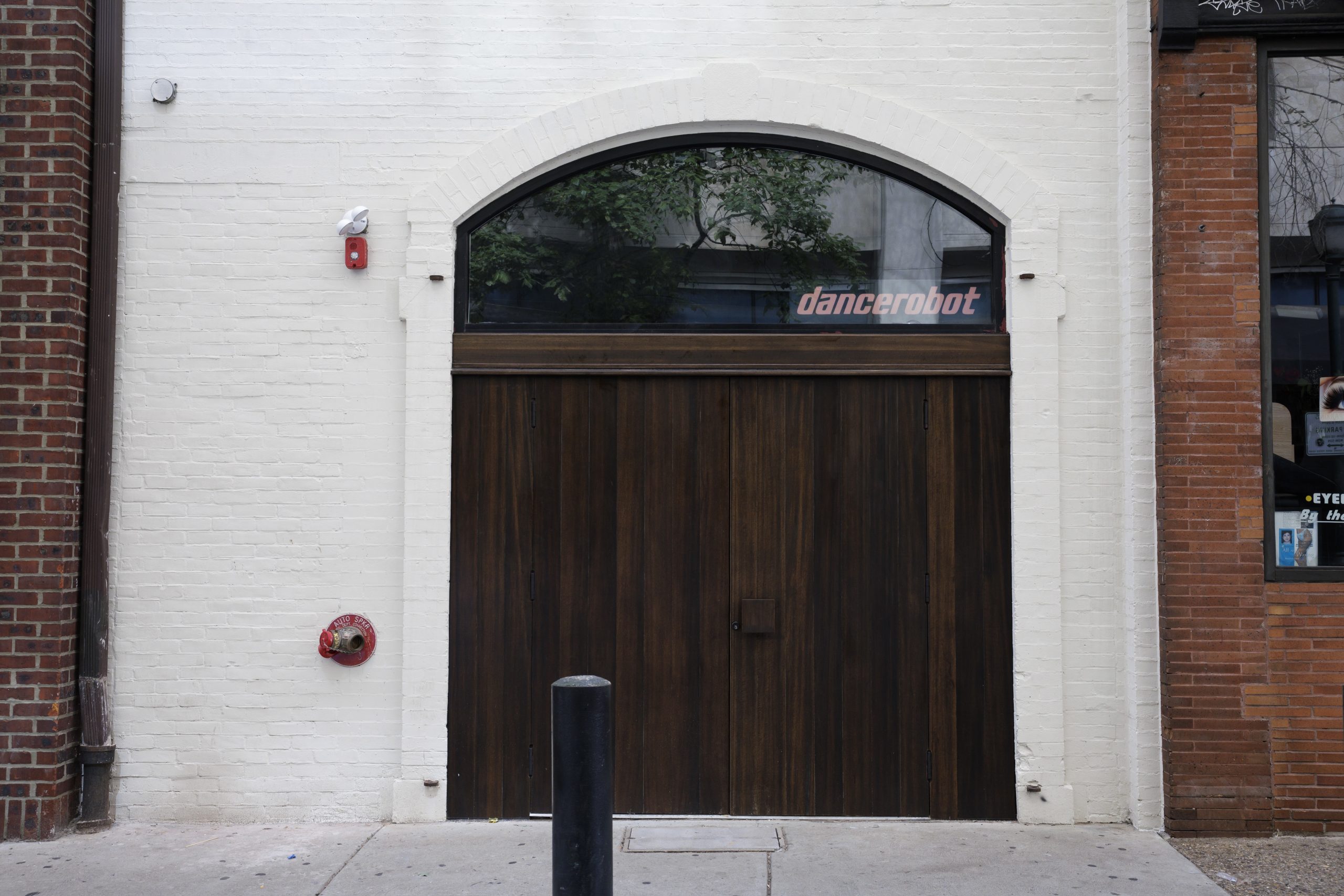
Chef Justin Bacharach hadn’t read up on the history of 1710 Sansom St. before he opened dancerobot there in September. He knew it was previously a bottle shop with a deli, but was otherwise too busy to give it much thought.
That changed just before opening night, when Bacharach’s business partner, chef Jesse Ito, brought in a copy of The Frog Commissary Cookbook. A regular at Royal Sushi gifted it to the James Beard Award-winning chef, telling Ito that dancerobot was once home to the Commissary, a legendary counter-service spot that was part of Philadelphia’s dining renaissance when it opened in 1977.
The gift triggered an immediate reaction: “It was the first cookbook that I really put eyes on and paged through,” Bacharach, 35, said. His parents kept a copy in their Bucks County home, and his mother baked the book’s most famous recipe, an elaborate carrot cake, for special occasions.
“This is fate,” Bacharach said. Now, more than 30 years after the Commissary closed, the cake is once again being served at the same Sansom Street address.
Written by Steven Poses, Anne Clark, and Becky Roller, and published in 1985, The Frog Commissary Cookbook pulled together recipes from the Commissary, its innovative older sibling Frog, and Poses’ other restaurants. The peach-colored volume, peppered with Roller’s charming illustrations, quickly became a Philly staple. It taught home cooks and industry professionals alike how to entertain and introduced them to ingredients then unfamiliar to many Philadelphians, such as Sichuan peppercorns, Thai curry pastes, and good-quality balsamic vinegar.
Steve Poses, owner of the now-closed Frog and the Commissary, at work on his cookbook website in 2009. The restaurateur is a co-author of “The Frog Commissary Cookbook.”MICHAEL BRYANT / Staff Photographer
Today, The Frog Commissary Cookbook remains an essential part of Philadelphia’s culinary fabric. But it still feels like a secret: beloved locally, yet relatively unknown elsewhere.
“This was the book that everyone wanted because it was our book,” said Lexy Bloom, a Philadelphia native and editorial director at Knopf Cooks, a major cookbook publisher. It was Philly’s version of The Silver Palate Cookbook,the era’s national breakout cookbook. “Everybody had it; everybody cooked from it,” she said.
The Frog Commissary Cookbook allowed home cooks to make recipes like the carrot cake and strawberry heart tarts that they knew and loved, but also had “this really interesting global palate that I think was unusual at the time and exciting to people,” Bloom said. “This book is so playful and experimental.”
A post about the book in the 183,000-member Vintage Philadelphia Facebook group elicited nearly 1,000 comments. Some were about copies passed down through generations. Others described editions that were packed up as keepsakes. At least one was about a copy lost in a divorce and later replaced at an estate sale.
An illustration by Rebecca Roller from “The Frog Commissary Cookbook,” which is still available in e-book form.Illustrations reprinted with permission by Doubleday, an imprint of Penguin Random House, LLC
“Each tear and mark tells a story of countless delicious meals shared with family,” said one commenter with a tattered book. When it came out, another added, young women like her were “so excited to cook something that their mothers couldn’t.”
Barb Cohan-Saavedra, who owned the longstanding French-Mexican restaurant Paloma, used to serve The Frog Commissary Cookbook’s cheesecake. “I now have 1,500+ cookbooks and this remains one of my favorites,” she wrote.
(The book has also played an important part in this author’s life — particularly the sweet recipes, like the heart tarts developed by Clark, my unofficial culinary tutor and teacher at the Philadelphia School.)
For help, just call
The cookbook included a note in early editions: “Because this book is the result of a living organization, should you have a problem with any recipe in the book, just call us … or write to us,” it read. “We will find someone who can help you.”
From the book’s 1985 publication until the Commissary’s 1994 closure, the restaurant received three to five calls a week from readers, Poses estimated in a recent interview. One of them was Nanci Schwartz Gilberg, 75, of Penn Valley, who called about making the book’s Champagne cream sauce for capelliniwith bay scallops for a party of 100. Wondering if she could prepare the dish ahead of time, she rang the restaurant. Someone there asked if she would like to speak to Poses.
The authors’ note from “The Frog Commissary Cookbook” encouraged readers to call the restaurant directly if they had any questions.Illustrations reprinted with permission by Doubleday, an imprint of Penguin Random House, LLC.
“Are you kidding? I would love it,” Schwartz Gilberg remembered responding. Poses recommended making the sauce á la minute. Schwartz Gilberg ultimately didn’t follow his advice, but the recipe worked anyway, she said.
Answering questions was simply “part of the commitment we made,” Poses said. “It was part of the philosophy from the very beginning: ‘How can we help?’”
The result struck “the note of a community cookbook,” explained Bloom, likening it to volumes published by churches and synagogues that were popular at the time. “It gives a great sense of how essential the Frog/Commissary was.”
Even before the book came out, the restaurants’ staff would write down recipes for guests who asked. And while Frog and the Commissary closed in 1987 and 1994, respectively, Poses and Clark still field the occasional questions.
A carrot cake — and a culture — endures
Like its inspirations, The Frog Commissary captured a time when Philadelphia’s culinary scene started to push beyond steakhouses, red sauce joints, and fish houses to create its own version of New American food. Alongside Western recipes like country pâté and chicken with brandied mustard cream sauce were ones for Thai beef and Siamese chicken curries enriched with pastes that Thai kitchen staffers introduced to Poses.
The book is also a time capsule of the 1980s, an era when corn oil was more common, salt was less important in desserts, and people weren’t debating over the term “fusion.”
An illustration by Rebecca Roller of a woman sitting on a lobster from “The Frog Commissary Cookbook.”Illustrations reprinted with permission by Doubleday, an imprint of Penguin Random House, LLC.
The restaurants’ — and subsequently the book’s — recipes drew inspiration from the team’s travels and heritage, plus the Foods of the World series published by Time-Life. The staff would taste and discuss everything as a group. “We were not afraid to tweak it and make it ours,” Clark said. “If it didn’t taste good, it didn’t fly.”
The Commissary and its accompanying market were a favorite of High Street Hospitality founder Ellen Yin. In some ways, they inspired her to open Fork and its erstwhile offshoot Fork: etc, she said. The book’s sidebars on setting up a bar and serving oysters taught her how to entertain.
For a time, the book remained in the group’s cookbook library at the old High Street on Market. When staff needed ideas for canapés or instructions for making spring rolls, Yin would tell them to look through its pages. “These passed hors d’oeuvres are classic,” she said.
The exterior of dancerobot at 1710 Sansom St., where Anne Clark’s carrot cake recipe from “The Frog Commissary Cookbook” is being served on Fridays and Saturdays.Monica Herndon / Staff Photographer
Now out of print, the cookbook has staying power thanks to an e-book (including one available from the Free Library of Philadelphia) and a steady stream of copies that cycle through the city’s used bookstores. Many of its recipes — mushroom-barley soup, vegetarian chili with bulgur, and the chocolate chip fudge cake referred to as “killer cake” — are still home-cook staples.
But, most of all, readers bake and reminisce about Clark’s carrot cake. At dancerobot, slices are available on Fridays and Saturdays, and may eventually become a permanent offering, Bacharach said.
It’s a mostly faithful adaptation. When the restaurant’s pastry chef and baker, Sophie Wieber, tested the cake, Bacharach tasted something slightly new: “You did something different. I think I know what it is,” he said. It was more salt — Wieber’s only tweak — “and it was perfect.”
To some, its newfound maturity can feel like a betrayal, or as a sign that the town is growing up.
For instance, blue-collar neighbors say the town’s upscaling comes at a cost, and that it no longer feels like a “workingman’s beach.” Property values have skyrocketed, bringing new revenue to the town while also making the place feel oversaturated.
And on any given busy summer weekend, Sea Isle can swell to 70,000 people, compared to its year-round population of 2,019.
“Is it still pleasant on Pleasure Avenue?” asks Shore reporter Amy Rosenberg.
That’s the name of Kurt Vile’s new album, marking yet another spotlight on the city in his music.
Ahead of a show with his band the Violators at Connor Barwin’s Make the World Better Concert on July 25, pop critic Dan DeLuca spoke with Vile about the roots of his record and much more, including:
🎸 His top five Philly artists. Two of them are Purling Hiss guitarist Mike Polizze and psychedelic folk singer Meg Baird.
💿 His thoughts on the streaming era. He’s a fan of physical media, but likes that fans can listen to his entire catalog on demand. “I can tell that they know all of my music,” Vile said. “I just feel that people are connected.”
🌳 What he loves about his neighborhood. “I love that there’s forest, and I have room to think.”
The Pennsylvania Emergency Management Agency opened three resource centers this weekend in Philadelphia to aid the hundreds of people who experienced damage from last weekend’s major storms.
Taylor Farms is recalling iceberg lettuce that had been shipped to retailers in 27 states, including Pennsylvania and New Jersey, due to potential contamination of the cyclospora parasite.
A ship-repair company’s long-term contract with General Dynamics Electric Boat is expected to sustain about 700 jobs in Philadelphia through work on U.S. Navy submarines.
Lawmakers in Harrisburg have funded the SEPTA special prosecutor position through the end of the year, but the office’s fate beyond that is uncertain.
Despite concerns about hazardous air conditions, a Guinness World record-breaking crowd attended comedian Shane Gillis’ Friday night show at the Linc.
🎤 Here’s Tommy Rowan with a look back at the defiant Phillies fan who helped make foul balls a ballpark souvenir.
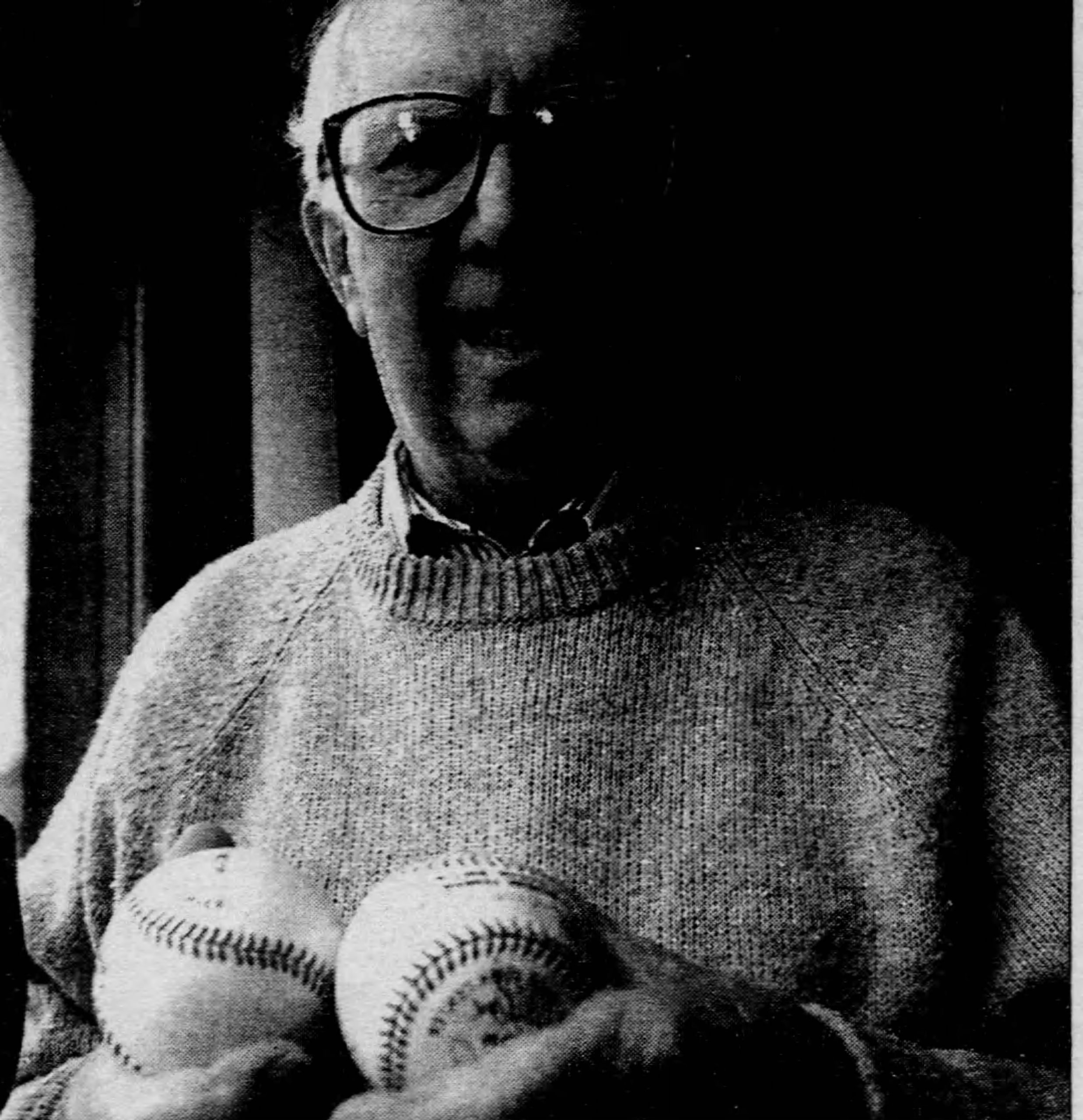
It may be important to note that Bob “Toughie Reds” Cotter did not pay for his ticket to that fateful Phillies-Cubs game on July 18, 1923.
The kid and his brother, Raymond, climbed up a rain spout and into the ramshackle ballpark unofficially nicknamed (derisively by The Inquirer) “Baker Bowl.”
But not paying the price of admission seemed to pale in comparison to his attempt at taking home the foul ball he caught in the right-field stands.
Pat Dailey (left) and Ken Hopper prepare a room at the Wynwood Rehabilitation & Healthcare Center in Cinnaminson, N.J., Tuesday, for a surprise 100th birthday party for WWII U.S. Marine Corps veteran Stephen Anderson.Tom Gralish / Staff Photographer
In medical school, I was taught to choose medications based on how well a medication works and its risk or side effects. Cost was rarely mentioned, as if safety and efficacy were the only factors in the equation.
But to patients, cost is not negligible. Money spent on medications or healthcare will not be there for something else — whether putting food on the table, childcare, or other needs.
In my dermatology clinic, I see cost as an important “side effect” to pay attention to, and often the biggest reason for patients not filling their prescriptions.
Consider a couple examples of how the exact same hair loss treatment can cost more in one form compared to another:
The most common and effective over-the-counter hair loss treatment is topical minoxidil, best known under the brand name Rogaine. Forms of topical minoxidil marketed for women can cost 40% more than the exact same medication labeled for men — my colleagues and I published a study to prove it.
Another medication, finasteride, is commonly prescribed in 1-milligram tablets to treat hair loss in men, and in 5-mg tablets to treat enlarged prostates. According to GoodRx, 30 tablets of finasteride 1 mg cost about $30 for a one-month supply, and 30 tablets of finasteride 5 mg also cost $30.
I’m always looking for ways to save my patients money. So like many other doctors, I have prescribed the finasteride 5-mg tablets and directed patients to cut them in fourths with a pill splitter.
I often advise women to use the minoxidil marketed for men, because it’s cheaper for the same medicine. Why should women pay more for the same thing — a pink tax?
Here are some tips to help you navigate a system rife with irrational and unfair pharmaceutical pricing:
Co-pays can be based on the number of pills, or number of fills. Ask your doctor if you can save money by splitting pills (note: not all pills can be split), or by getting longer-term medications prescribed as a 90-day supply.
Many pharmacies offer a $4 (or other discount) formulary price for a 30-day supply. For instance, without insurance or any other program, you can usually get common prescription steroid creams for $10 for a 90-day supply. A full month of terbinafine, the common medication for toenail fungus, can cost around $10-15 without insurance. Strangely, sometimes certain medications may cost more out of pocket with insurance — it never hurts to ask.
Some over-the-counter prescriptions can be just as effective as more expensive prescription options. For acne, topical adapalene is similar to topical tretinoin, and an excellent option if you don’t have insurance.
Discount programs may offer coupons, and some pharmacies may offer discounts, e.g., GoodRx discounts and Mark Cuban’s Cost Plus Drugs pharmacy.
The pharmacies we use matter — for instance, if you use a telemedicine app like Hims or Keeps, it will likely cost you $90 every three months to get minoxidil or finasteride. My latest hot tip: In most states, Costco does not require membership to let anyone use their pharmacy, and instead of perhaps $360/year from Hims or Keeps or even regular pharmacies, for a full year supply of finasteride, it may only cost you $50-60.
The same prescription can carry dramatically different costs, depending on the pharmacy, the formulation, or a discount program. Before deciding you can’t afford a medication, ask your doctor or pharmacist if they know of a less expensive way to get the same treatment. My tips can save you hundreds of dollars a year.
Editor’s note: This story has been updated to clarify the cost of terbinafine without insurance.
Jules Lipoff practices as a board-certified dermatologist and Pennsylvania medical director for The Dermatology Specialists and serves as a clinical associate professor (adjunct) in the Department of Dermatology, Lewis Katz School of Medicine.
In the days after Sept. 11, 2001, as the country reeled from the deadliest terrorist attack in modern American history, some inside the U.S. government asked whether refugee admissions should continue at all.
I was serving in government at the time, and I remember those debates well. The fear was real to all of us — even those of us working in national security. Across the national security community, officials were asking difficult questions: Could another attack be coming? Were there vulnerabilities in our immigration system? How could we protect the country while remaining true to our values?
President George W. Bush assigned the late Assistant Secretary of State Gene Dewey and me to help address those questions in the months after 9/11. Even in a moment of profound grief and uncertainty, we concluded that refugee resettlement remained both a moral obligation and a strategic asset. President Bush believed America could protect its security without abandoning its humanitarian commitments, commitments that have long defined our nation as a refuge for people fleeing persecution and violence.
Rather than dismantling the refugee program, we strengthened it, and over the years, empirical evidence has indisputably shown that refugees are a net positive for our country. The security measures developed in the years after 9/11 became the foundation for some of the most rigorous vetting procedures in our immigration system.
Looking back, I believe that decision made America stronger. Refugees have enriched our communities, strengthened our economy, served in our armed forces, and contributed to every aspect of American life. Just as importantly, our commitment to refugee protection sent a message to allies around the world that the United States would not abandon its values out of fear.
Security and compassion were not competing principles then. They are not competing principles now.
That is why it is so painful to watch what is happening today. Refugee resettlement was initially halted for almost everyone, and then access to the program was narrowed to a historic low and limited to white Afrikaners from South Africa. This radical change left thousands of approved refugees in limbo, including families who were cleared for travel to the United States, only to be told at the last hour that they would not be allowed to come after all.
At the same time, recent decisions affecting humanitarian protections, including the loss of Temporary Protected Status for many Syrians and Haitians, have left thousands more facing profound uncertainty and possibly large-scale deportation. Whatever one’s views on immigration policy, these changes represent a significant departure from America’s long-standing role as a place of refuge for people fleeing war, persecution, and political violence.
The consequences extend beyond those directly affected. They reshape how the world understands America’s commitments.
Shir Agha Safi, 30, (left) is thanked by a mover in Des Moines, Iowa, for his military service in Afghanistan.Marcus Yam / MCT
Nowhere is that more evident than in the case of our Afghan allies, who were gravely endangered when denied access to the program. Many Afghans risked their lives working alongside American soldiers, diplomats, aid workers, and intelligence personnel. Their service made them targets of the Taliban and other extremist groups. For decades, the United States asked these men and women to trust us. When we fail to honor our commitments to them, the consequences extend far beyond Afghanistan. It sends a message to future partners around the world that America’s promises may be temporary and its commitments conditional.
I am equally devastated by the retreat from U.S. leadership in lifesaving humanitarian aid abroad — a retreat reflected in the Organization for Economic Cooperation and Development’s (OECD) finding that American development assistance fell by nearly 57% in 2025, the largest reduction by any major donor in any year on record, even as conflict around the world drives displacement to record highs.
Our nation’s anniversary should be a time to celebrate refugees, immigrants, and those who came to this country with contributions. Instead, I watch it being scapegoated — used as a political symbol by people who have never sat across from a refugee family, never reviewed a vetting file, never seen what resettlement actually looks like on the ground.
I think of the families still separated, still waiting. I think of the engineers, first responders, agricultural workers, HVAC technicians, and construction workers who are not coming to fill jobs this country needs.
As president of the Jesuit Refugee Service and after more than three decades working on these issues at the U.S. Department of Homeland Security, I have interviewed, spoken with, and read about the horrors refugees have endured. Through their eyes, I have seen the worst of what people can do to one another. But I have also been deeply humbled by their accomplishments, their hope, and their love for the countries that took them in.
I think of Nam Loc Nguyen, the first Vietnamese boat person to receive U.S. citizenship — naturalized exactly five years to the day after he arrived. He built a career serving others. When Kabul fell in 2021, Nguyen and fellow Vietnamese Americans raised funds and opened their own homes to resettle Afghan families. Refugees helping refugees: gratitude paid forward across generations.
Forty-six years after the fall of Saigon, that commitment continues. Last year, Nguyen joined us at our JRS Advocacy Day to explain the importance of refugee admissions and humanitarian protection to congressional staffers, many of whom were not even alive on 9/11. Nguyen was there to bear witness to what resettlement made possible — not just for him, but for the families he has since helped welcome home.
I think of the Bhutanese community in Pennsylvania, one of the largest Bhutanese refugee communities in the country. During the COVID-19 pandemic, many Bhutanese refugees, alongside refugees from around the world, worked on the front lines as nurses, home health aides, and other essential workers. While much of the country stayed home, they cared for elderly Americans, staffed hospitals and nursing facilities, and helped hold communities together during a time of extraordinary uncertainty.
And I think of the dozens of refugees I have met who served in the U.S. military or with the U.S. military abroad, before they were even naturalized as citizens, who took up arms to defend a country that had not yet fully claimed them as its own.
As an American, I believe our country is stronger because of the refugees we welcome. They remind us that America remains a place of opportunity, renewal, and second chances.
For more than three decades, I have had the privilege of witnessing refugees rebuild their lives, raise families, serve their communities, and contribute to the nation that welcomed them. Many refugees are revitalizing rural America by refueling its economy and essential services. In a time when so many Americans have grown cynical about our institutions and our future, refugees often see something we sometimes forget: the enduring promise of the American dream.
They remind us not to give up on our country, or, more importantly, on one another. If refugees who have lost everything can still believe in this nation’s promise, so can we.
As our nation marks its 250th birthday, rather than relitigate the politics of 2025 or 2026, I hope we will remember something deeper about who we are.
Refugee resettlement has never been a one-sided act of charity. It has always been an exchange of hope, resilience, and shared responsibility.
At Jesuit Refugee Service, we see that truth every day. Refugees are not separate from the American story; they are part of it. They remind us that our nation is at its best when we keep our word, welcome those fleeing persecution, and remain confident enough in our values to extend a hand to others.
Kelly Ryan is the president of Jesuit Refugee Service USA. She is a former deputy assistant secretary of state for population, refugees, and migration, with more than three decades of experience across the U.S. Departments of Justice, State, and Homeland Security.
Global consumers want more protein in every bite, but the dairy industry is struggling to give it to them.
Athletes and older adults have long used smoothies and shakes blended with whey protein concentrate — a powdered byproduct of cheese-making — to build or maintain muscle. More recently, food companies have sprinkled it into everything from breakfast cereals, Pop-Tarts, and potato chips to bagels, tortillas, and Starbucks drinks to meet growing consumer demand.
The average U.S. supermarket now has 38,708 products advertising their protein content, according to NielsenIQ, a market research company. But the eagerness to appeal to ingredient-focused shoppers is causing shortages of food-grade whey protein and pushing prices to new records.
“Demand is very firm and seemingly outpacing supply for right now,” said Kathleen Wolfley, vice president of Ever.Ag Insights, a data provider and consulting company for the agriculture industry.
Wholesale prices for whey protein began rising in 2024, and the pace accelerated last year and so far this year, Wolfley said.
Whey protein concentrate with 80% protein — the type often used by food makers and supplement companies as a booster — is trading on the dairy commodities market at more than $13 per pound in the U.S., up 250% from a year ago, according to Ever.Ag. Whey protein isolate, a more refined version that contains at least 90% protein, is 150% more expensive than last year, the company said.
That’s raising prices for consumers. U.S. prices for whey protein concentrate powder have increased by around 15% over the past year, while more premium whey isolate powder has seen steeper gains, according to Datasembly, a price-tracking company.
It’s a similar story in Europe. In late May, 80% whey protein concentrate hit a record average of 26,450 euros ($30,518) per metric ton, a price more than double from less than a year earlier, according to DCA Market Intelligence, a Netherlands-based commodity pricing firm.
Here’s what’s happening with whey protein and when strained supplies might be alleviated.
Curds and whey
Milk contains two proteins: casein and whey. During the cheese-making process, the casein — which forms solid curds — is separated from the liquid whey, which is dried to form a powder. Every pound of cheese yields nine pounds of whey, according to the U.S. Department of Agriculture.
U.S. milk consumption has fallen for decades as Americans shifted to beverages like sodas. But the appetite for cheese remained strong, Wolfley said. A nation of cheese-eaters generated a lot of whey protein, and some of the excess used to be exported to China and other countries.
The domestic hunger for high-protein snacks and meals is now keeping more whey protein in the U.S. for use as a food additive or a nutritional supplement. U.S. exports of 80% whey protein concentrate and whey protein isolate to China fell 47% from January through April compared to the same four-month period a year ago, according to Vesper, an Amsterdam-based company that tracks commodity prices.
“There simply isn’t enough product for the U.S. customer, and exports have therefore been paused as much as possible,” said Jasper Endlich, a Vesper dairy analyst.
China is seeking more whey protein from Europe, which also is seeing shortages thanks to reduced U.S. exports, Endlich said.
Whey and weight loss
Use of GLP-1 weight-loss drugs is one of the factors that has supercharged demand for whey protein concentrate, Wolfley said.
Obesity drugs like Wegovy and Zepbound are designed to suppress the appetites of people taking them. The foods they do eat need to be nutritionally dense, experts say. GLP-1 users often are advised to consume enough protein to help them feel full for longer and to retain muscle mass as they lose weight.
Around 6% of obese and diabetic patients in the U.S. and 2% of obese and diabetic patients worldwide were using GLP-1 drugs last year, according to an estimate by the investment bank Morgan Stanley. Some estimates have put GLP-1 use as high as 12% of the U.S. adult population, since not everyone on GLP-1 drugs is obese or diabetic.
Food and nutrition companies are creating added-protein products to attract those consumers as well as people who think drinking protein shakes to replace meals will help them lose weight.
Pricey protein
Tight supplies and higher costs have caused some manufacturers to increase the prices consumers pay for protein powder or protein-enriched products.
Now Foods, an Illinois-based maker of health foods and nutritional supplements, said tubs of whey protein powder are consistently the biggest seller in its sports nutrition category. But after two years of paying more for raw ingredients, the company raised the price of its own whey protein products earlier this year.
Bryan Morin, the sports brand manager at Now, said the company doesn’t anticipate further price increases on whey protein powder this year. It’s trying to absorb some of its increased costs by cutting back on discounts. It’s also considering expanding its portfolio to include products made with milk protein concentrate, a powder that contains less whey and is cheaper.
“From our perspective, broader market dynamics continue to indicate a tight and evolving protein landscape,” Morin said.
More on the whey
Wolfley, at Ever.Ag, said manufacturers are investing in whey protein production, which should eventually improve supplies. But the relief won’t be immediate.
Glanbia, an Irish nutrition company, said in November that it planned to increase its whey protein isolate production in New Mexico, but the additional capacity won’t be in place until 2027. In February, Canadian dairy company Agropur said it intended to increase whey protein manufacturing at plants in Quebec, Nova Scotia, South Dakota, and Wisconsin by 2029.
In the meantime, higher prices could cause some consumers to stop buying whey protein powders, especially at a time when groceries are getting more expensive overall, Wolfley said. Reduced retail demand might reduce shortages at the wholesale level.
“The supply-demand dynamics could start to improve, but I don’t know if that’s a tomorrow dynamic or within a year. Some of these things are going to take time,” Wolfley said.
SEA ISLE CITY, N.J. — This is not the same old Sea Isle.
Jason and Kylie Kelce are mired in a four-year wait for membership to the Sea Isle City Yacht Club. They are currently No. 78 of 251, up from last year’s 149.
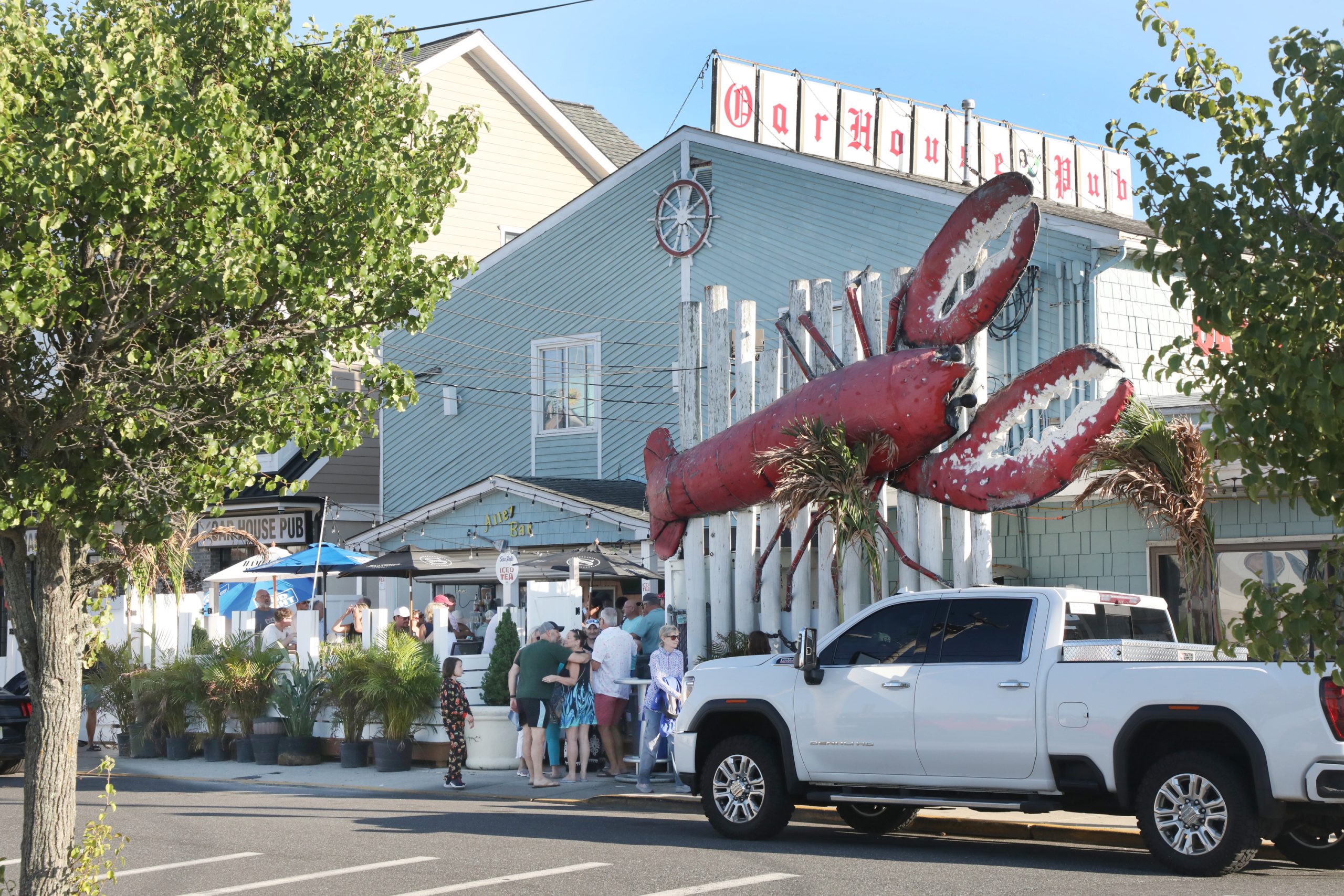
Neighbors are fighting over noise from the Oar House Pub, which expanded this year into two nearby buildings.
Prices in this Shore town have skyrocketed: The median home sale price for the three months ending in May 2026 was $1.8 million, according to Redfin, up 27% from the year before. For May alone, it was $2.2 million.
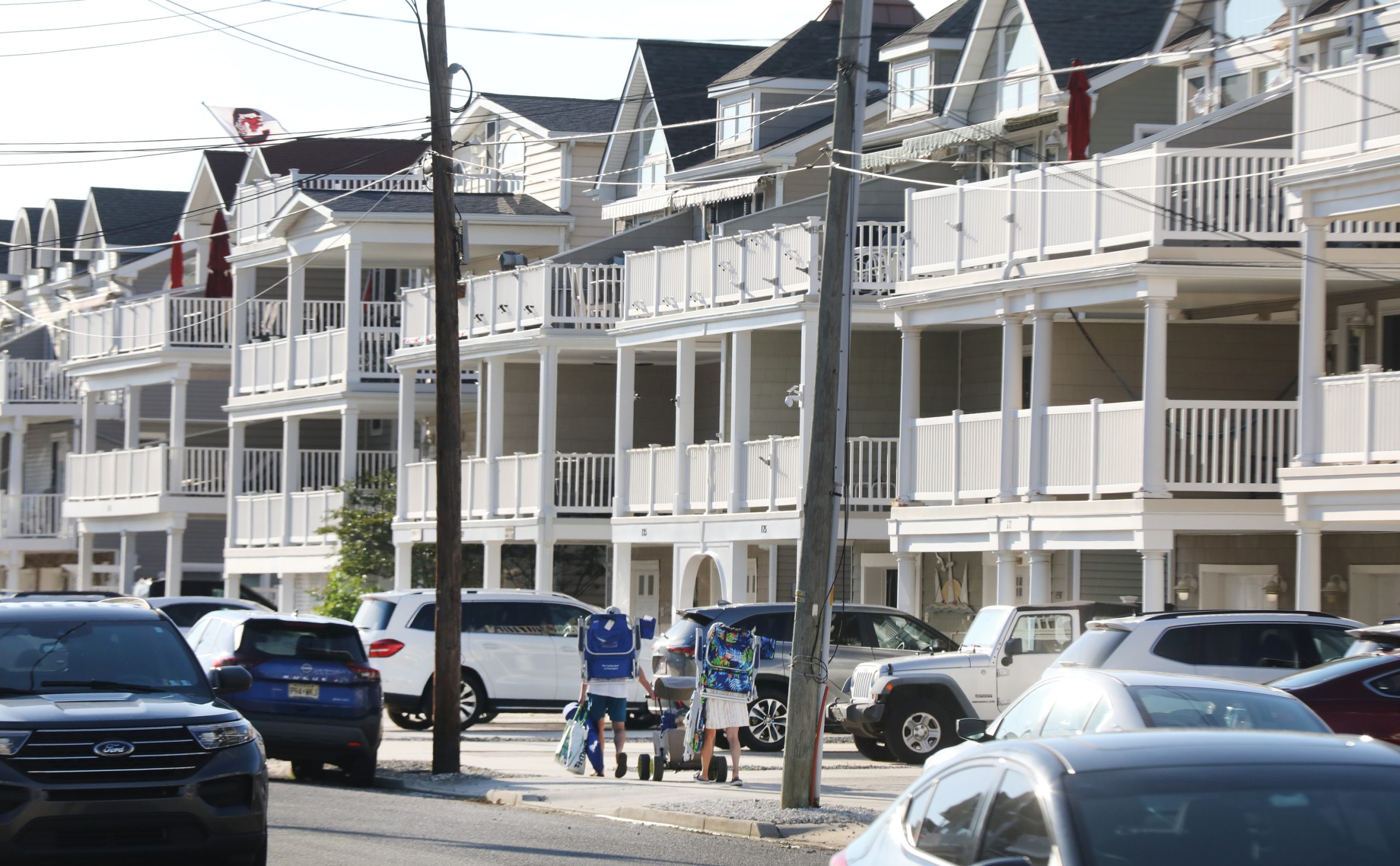
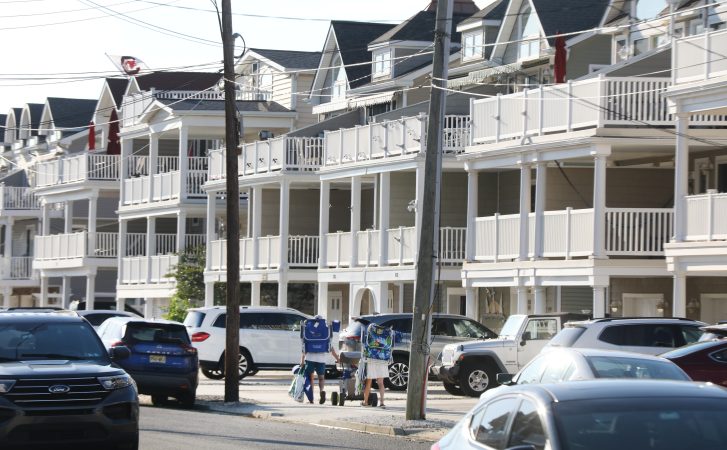
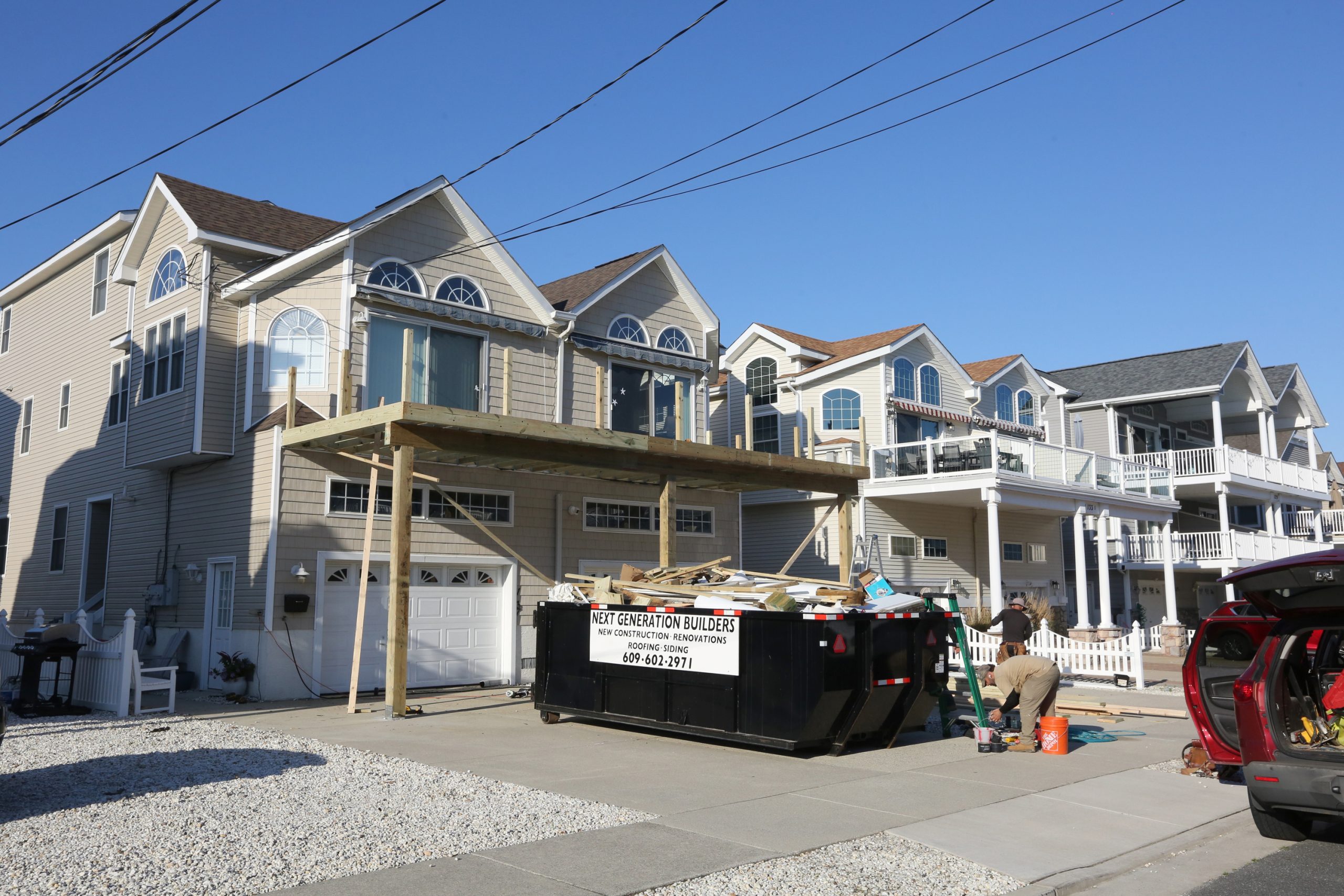
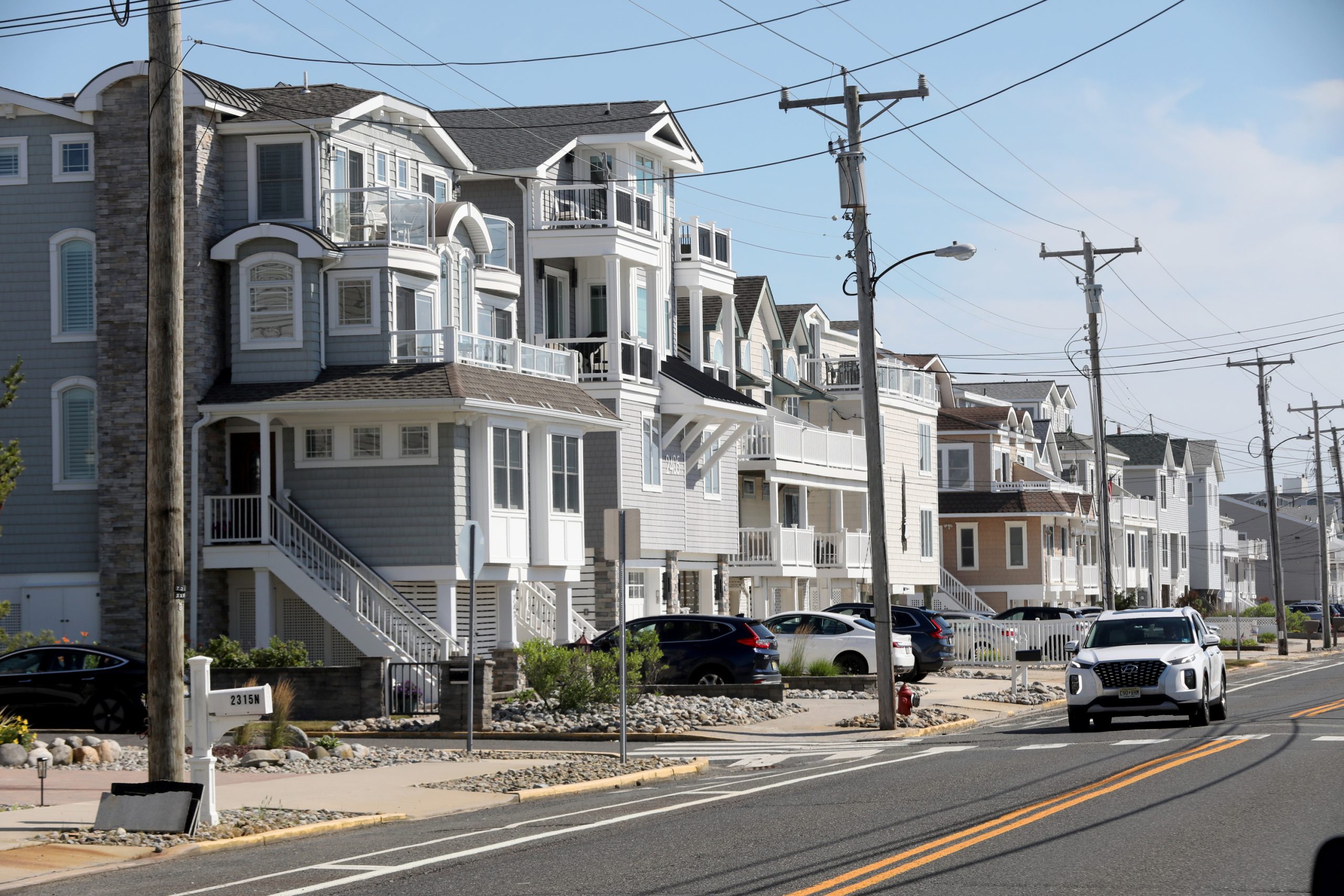
Blocks in Sea Isle are stuffed with new, side-by-side construction, multiple SUVs in pebbled front yards, with few trees or backyards. People sunbathe in their driveways. Silverados have near-collisions with Audis in the Acme parking lot, as golf carts idle out front.
Is it still pleasant on Pleasure Avenue?
People line the beach in Sea Isle City on Wednesday, June 25, 2025 in Sea Isle City, NJ.Monica Herndon / Staff Photographer
Depends on whom you ask. For some, the changes feel more like a maturing of Sea Isle, certainly an upscaling, from the beloved Shore town’s raucous old party days. Houses cost too much to risk renting to the rowdy Shore house crews of years past, homeowners say.
But for others, the town’s rash of new construction, the pricing out of old blue-collar regulars, the impossible parking, even the price of an entree at a restaurant all feel like a betrayal.
Workingman’s beach
Colin Ratner, 53, of Fairmount, global director of sales at a medical software company, raves about Sea Isle’s enduring charms, a place where his daughters have found a sense of freedom they don’t have in Philadelphia, riding their bikes barefoot and playing outdoor basketball games to cheering crowds.
“In Philly, they’re not leaving the street without us knowing where they’re going,” he said. “Here, it’s like ‘Come back before we go to sleep.’ I call Sea Isle Middle America.”
Colin Ratner and his wife, Cindi, of Center City, at their home in Sea Isle City for the summer think the town has matured in a good way, Wednesday, June 24, 2026.Vernon Ogrodnek / For The Inquirer
A rowhouse dweller in Philly, he is not bothered by the density or the parking crunch. “Our property[value] has more than doubled since 2018,” he said. “I’m seeing less renters, and more people using their property, less of the crazy house parties. It’s really kind of settled down.”
Jo Ferenchak bought in 2017 and rents out to cover costs. Her parents bought their Sea Isle house in 1977, she said, for $20,000.
“When my parents bought their house, it was called the Working Man’s Beach,” she said via Facebook message. “No more!”
In a sign of the times, she said her children and grandchildren love to go mini golfing, “but we go to Pirate Island in Avalon because it is so hard to find parking at Pirate Island in Sea Isle.”
‘Saturation point’
It has been more than a decade since a town survey found that 62% of responders said traffic was a problem. The survey, taken for a master plan, drew comments that included “Feeling of too much density and congestion,” “Seashore feeling is being lost,” and “We’ve reached a saturation point.”
Things are more overstuffed than ever, many residents, summer and year-round, say.
Sea Isle’s year-round population is 2,019, fairly stable despite some declines in the years after Hurricane Sandy and some increases after COVID-19. But it can swell to 70,000 on a busy summer weekend.
The change in the housing stock is more dramatic. Between 1990 and 2020, there were about 17% more units created, mostly for seasonal residents, according to the city’s data. Although some old bungalows remain, the town is essentially built out, city officials say.
Sea Isle even proposed partnering with a mainland town to essentially outsource its required share of affordable housing units as required by New Jersey law, but that was not allowed.
New construction off 57th Street, in Sea Isle City, Wednesday, June 24, 2026.Vernon Ogrodnek / For The Inquirer
In a town long known for its rowdy bar scene, there is less tolerance than ever for the spillover effects in dense neighborhoods.
In June, a dispute erupted between the Oar House Pub and its neighbors, including Mike’s Seafood owner Mike Monachetti, a prominent figure around town and a pal of the Kelces’.
Monachetti told the city council that the noise from the pub was regularly so loud “the water cups were vibrating on the tables” at his place.
“Think about what you’re doing,” he scolded the council. “My neighbors suffer from noise, loud noise, smoke going right up into their properties, and, yes, people out on the streets, beer cans on my property. Please, look at your own laws and ordinances. You are putting an alcohol license closer to a church, as well as underneath a residence that was never intended to be a bar.”
Council President Michael Jargowsky, 64, says with the town nearly entirely built out, there is not much to do in terms of stemming overdevelopment.
The city is always looking at adding parking, he said, though he notes that not everyone wants to cross the causeway and see a multistory parking garage.
“Our town has changed a lot physically,” said Jargowsky, a former city police officer who grew up in Sea Isle and paid $205,000 in 1995 for a century-old bungalow. “A lot of single-family bungalows and Victorian homes are now the side-by-sides: three bedrooms went to a combined 14 bedrooms in some places.”
The increase in property value has brought new revenue to the town, and a robust capital project agenda, including a new community center. Longtime residents who sold, or whose children sold, did very well, he noted.
Some things about the town have stayed the same.
“You still see a lot of banners for Delco,” he said.
The Oar House Pub, off 42nd Place, at right, would like to expand to the empty lot adjacent to it, and found itself in a controversy with neighbors over the noise, in Sea Isle City, Wednesday, June 24, 2026.Vernon Ogrodnek / For The Inquirer
‘Like a bad AI-generated image’
Rick Kane, who worked at a family friend’s business for eight years in Sea Isle and lives just on the mainland, said the town is a shell of its former self.
“Many of the affordable family restaurants and cheap bars are gone, replaced by high-dollar places,” Kane said. “Sea Isle has lost its charm and personality. It’s now like a bad AI-generated image of a ‘Shore town.’”
Eagles cornerback Cooper DeJean signs autographs for fans as a celebrity bartender at former Eagle Jason Kelce’s annual Team 62 fundraising event for the Eagles Autism Foundation at the outdoor Paddy’s Green in Sea Isle City, Wednesday, June 24, 2026.Vernon Ogrodnek / For The Inquirer
Christopher Capuzzi, 42, a New York City capital markets attorney originally from Delaware County, said he bought on Long Beach Island even though his extended family gathers in Sea Isle and continues to own houses there.
Capuzzi said he paid $2.8 million in 2022 for a 3,500-square-foot house on LBI, one house from the ocean.
On LBI, he said, “My money’s stretched a lot further, and we actually have trees.”
“When it came time for me to buy, I just felt like Sea Isle has gotten so overdeveloped, the way they cram homes in, every home is basically a side-by-side. The garages don’t fit a single car in them. Parking has become a nightmare.”
Some things haven’t changed
For some diehards, like the 165 members of the extended Mannion family of West Chester and other Philly burbs that for a half-century has rented a half-dozen houses in Sea Isle for the last two weeks in June, the Sea Isle memories compound every year, albeit as the rents, along with all the new construction, go up.
It is a destination they wouldn’t change for anything, family members say.
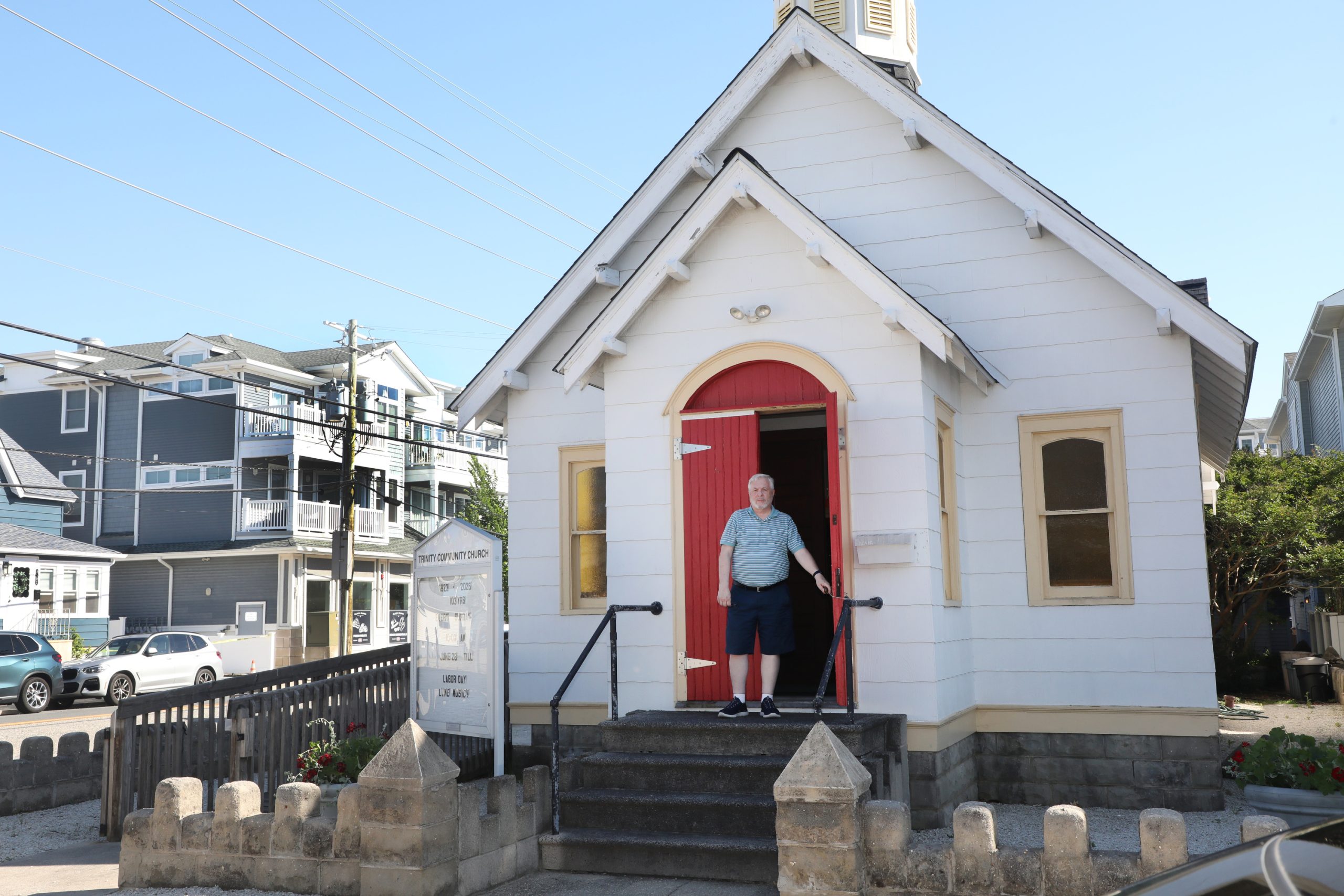
Over at Trinity Community Church of Sea Isle City, pastor Chuck Swanson says his church has been a constant amid all the changes. A seasonal nondenominational place of worship, the church has been at 85th and Landis for 103 summers.
Chuck Swanson, pastor of the historic Trinity Community Church, off 85th Street and Landis Avenue, in Sea Isle City, says the resort town has significantly changed in that the old character of the town has been fundamentally altered, but the change is mostly good and the city is preparing for the future, Wednesday, June 24, 2026.Vernon Ogrodnek / For The Inquirer
“Sea Isle City has changed a lot of late,” Swanson said. “Lots of destruction of older homes and construction of new ones … the old character of the town has been fundamentally changed. Change is mostly good and the city is preparing for the future.
“One thing that hasn’t changed is our church.”
Jim Albright of Bordentown, whose family has owned a house in Sea Isle since 1998, said the town is no longer affordable for most people.
“My dad was an electrician for GM and my mom was an elementary school teacher in Trenton, and on their salaries they were able to buy this house,” he said. “They would absolutely be priced out now.”
Homes along Landis Avenue, here near 23rd Street, have grown higher as the summer bungalows are replaced with more elaborate, and expensive, contruction in Sea Isle City, Wednesday, June 24, 2026.Vernon Ogrodnek / For The Inquirer
The Kelces can still make Sea Isle the center of the party universe when they hold the Eagles Autism Foundation fundraising days every year in June, but Albright and others see a vibe shift.
“There’s been a massive influx of money. You can tell even by looking at the cars being driven around town,” Albright said.
Regina Lewallen lived full time in Sea Isle from 2020 to 2025. “We loved how friendly everyone was,” she said.
But in those five years, the town transformed, she said. “Many houses were torn down, more people bought homes, parking became scarce, and it was obvious that the powers that be didn’t have a specific plan for what Sea Isle City could be,” she said.
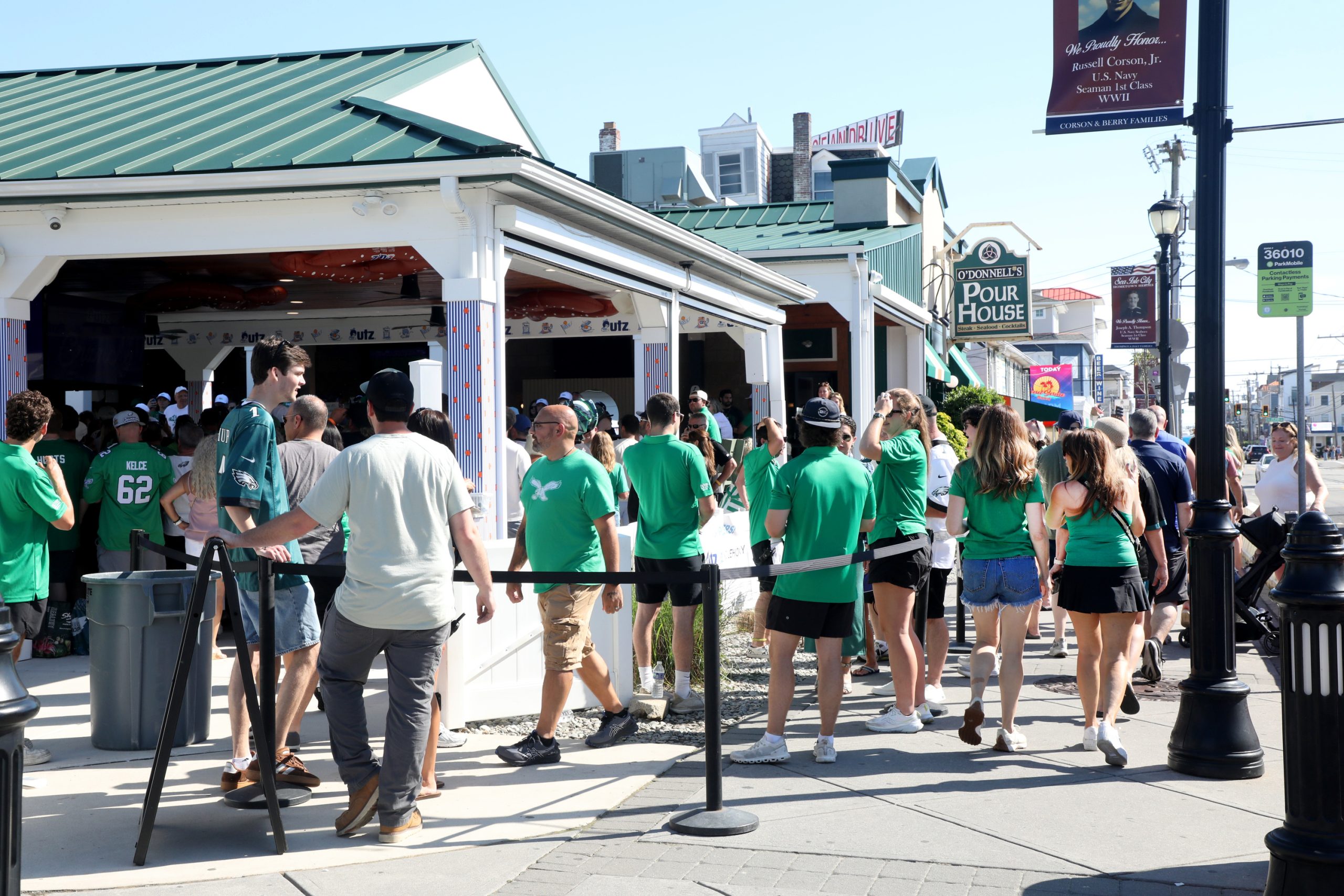
Former Eagle Jason Kelce draws large crowds when he hosts his annual Team 62 fundraising event for the Eagles Autism Foundation at the outdoor Paddy’s Green in Sea Isle City, Wednesday, June 24, 2026. The two-day event features celebrity bartending and a Beer Bowl, drawing thousands of fans and raising hundreds of thousands of dollars for the cause.Vernon Ogrodnek / For The Inquirer
Jen DiMartino, 54, of West Chester, has been going down to Sea Isle for more than 50 years, to 36th and Pleasure Avenue, the third generation of her family to call Sea Isle its summer home.
She says she misses the “ma and pa shops and everyone knowing who you are,” but says there is still pleasure to be found.
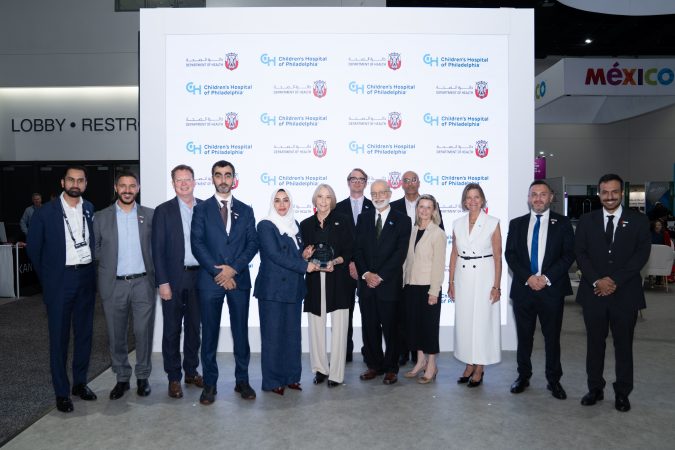
Under a five-year agreement signed last month between Children’s Hospital and the Department of Health – Abu Dhabi, CHOP will train scientists from the UAE on all aspects of gene therapy development.
The collaboration will focus on building local expertise in base-editing therapies for liver metabolic disorders, genetic clotting disorders, urea cycle disorders, and central nervous system conditions.
This latest partnership builds on CHOP’s longstanding relationship with Abu Dhabi, which in recent years has included a partnership to advance research in pediatric oncology.
Since founding its Global Health Center in 2007, CHOP has also collaborated with Brazil to build a CAR-T cell production center and with Botswana to advance clinical care and research.
CHOP declined to comment on the finances of the new partnership.
Five CHOP labs will host the UAE trainees, who will each spend 18 months to two years in West Philadelphia. Their training will span the bench to bedside — including learning how to design and manufacture the therapies, test their efficacy, and meet regulatory guidelines.
The first cohort is expected to start in early 2027.
“It’s hard to convey 25 years of knowledge in a few years of training,” Beverly Davidson, CHOP’s chief scientific strategy officer said.“But by bringing multiple individuals with different areas of focus together at the same time, we can help accelerate that.”
She learned of UAE leaders’ interest in expanding their personalized medicine efforts at the Abu Dhabi Future Health Summit in April 2025. That discussion inspired her and CHOP scientist Lindsey George, who was also in attendance, to devise the training program.
“Our ambition is to ensure these innovations are developed responsibly and become more accessible to patients in Abu Dhabi, the region and beyond,” Noura Khamis Al Ghaithi, undersecretary of the Department of Health – Abu Dhabi, said in a statement.
Prioritizing key disorders
Part of the agreement involves working with Abu Dhabi scientists to identify and prioritize key disorders, Davidson said.
The Emirati Genome Program has sequenced nearly one million genomes — making it one of the world’s largest DNA databases —in hopes of capturing the genetic diversity of UAE citizens.
Starting in January 2025, the UAE now requires couples to undergo genetic screening prior to marriage.
“Both the Department of Health and the Children’s Hospital of Philadelphia believe this to be a long-term commitment to providing improved healthcare for UAE citizens,” Davidson said.
Editor’s note: This story has been updated with the correct title for Beverly Davidson, CHOP’s chief scientific strategy officer.
Philadelphia has beenflush with tourists flocking here for the World Cup and the nation’s 250th, patronizing local restaurants, bars, and stadiums.
And in the aftermath, bar owners are weighing the exact size of any World Cup sales boom, how it compares to an Eagles’ Super Bowl run, and whether Philadelphia truly is a 4 a.m. bar town as the state allowed some establishments to stay open later.
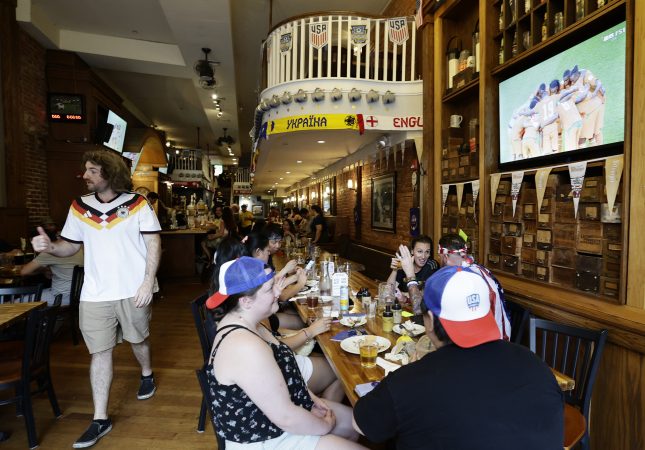
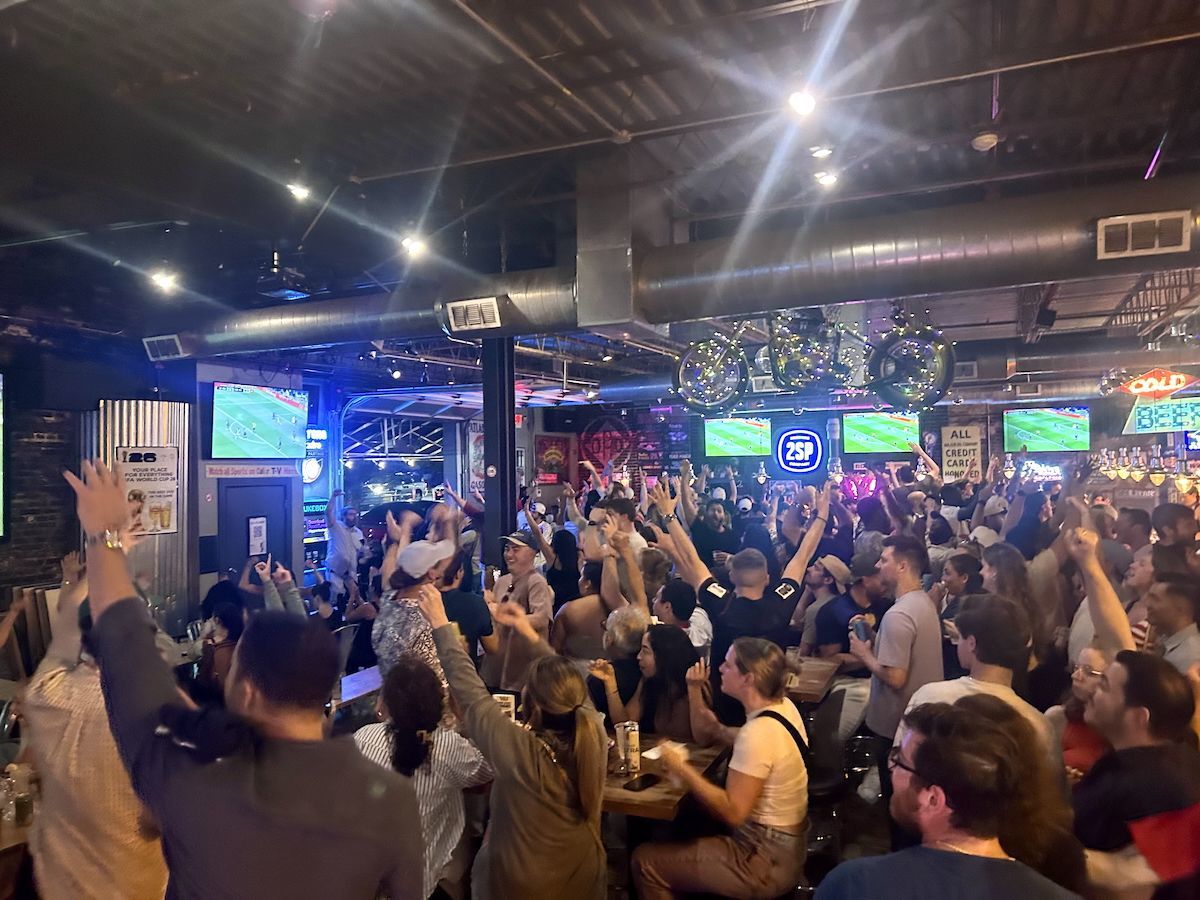
One thing is clear: If the bar had TVs playing World Cup games, it had a chance at cashing in on fans eager to experience the game with others.
Sports bars and tourism hot spots made out well
Jason Evenchik’s Garage bars in Fishtown, Passyunk, and Rittenhouse saw “a nice bump in sales” throughout the World Cup, driving business up 30% to 40%, he said. Evenchik said the TV bars fared better than usual during what’s typically a summertime lull — and much better than when World Cup games were being broadcast from Qatar in 2022.
Lucy’s Rittenhouse, a sports bar from FCM Hospitality’s Avram Hornik, also did well during the afternoon and evening games, especially when Team USA played, Hornik said. And it attracted patrons during its 2 a.m. to 4 a.m. shift, thanks to a Philadelphia 250 Permit, a temporary license that allows eligible bars to serve alcohol two hours past the city’s usual 2 a.m. closing time.
“I don’t think it could have gone better,” Hornik said. FCM also operates the Center City nightclub Concourse, the family-friendly taproom Craft Hall, and riverside deck Morgan’s Pier, among other bars.
“It was a mix of tourists. A lot of South Americans stayed out later because they’re used to places open late. Europeans we found like to camp out at a bar and stay for a while. There was also just a lot of Philadelphians who were happy to have some place to go and experience this moment,” Hornik said.
Even bars without TVs like the decades-old Fergie’s Pub, nestled smack dab in Center City’s bar scene, saw a tourism boom, said owner Fergie Carey, attracting tourists to its authentic Irish experience. Carey evendecided to open for the Fourth of July, when the bar usually closes, because there was so much foot traffic. But having no TVs can have repercussions.
“The most people I’ve ever seen leave our pub because there are no TVs was on the Fourth of July,” Carey quipped.
Evenchik and Hornik also saw lower engagement at some of their bars with little to no TVs or sports vibe, such as Evenchik’s Vintage wine bar, which he said suffered a 30% decline in sales during World Cup weeks. Hornik’s neighborhood restaurant and bars like Rosy’s Taco Bar or Harper’s Garden didn’t necessarily take a sales hit, but their private dinner party business “almost disappeared during the time of World Cup,” he said.
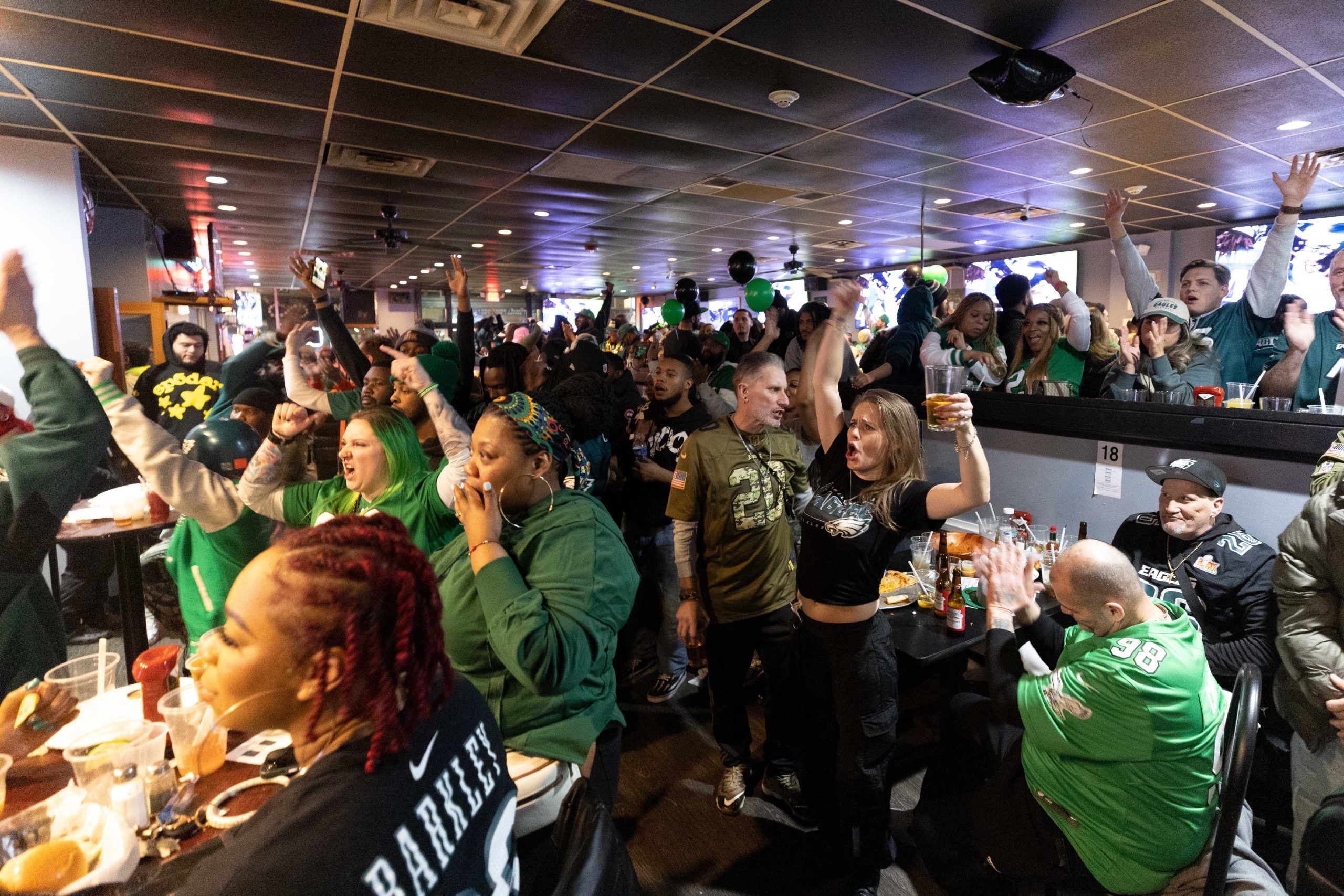
Fans react to the Eagles play the Chiefs in the NFL Super Bowl LIX, in a bar near Frankford and Cottman Aves., Saturday, Feb. 8, 2025, in Philadelphia.Tyger Willliams / Staff Photographer
The World Cup pales in comparison to a Super Bowl at Philly bars
While the sports bars and hotter tourism areas saw a World Cup sales bump, bar owners say it was nothing compared to the revenue brought in from the Eagles going on a playoff-to-Super Bowl run, or the Phillies in the World Series.
“I don’t think there’s anything that compares to Philly sports fans and their loyalty to our Philadelphia teams when they do well,” Hornik said.
When a Philly sports team is doing well, Evenchik said, people seem more willing to go out and celebrate on the town.
“In those times we see a bump in the sports bars, but also everywhere else, including restaurants, because everyone’s so joyous,” Evenchik said. “The World Cup doesn’t really get close to the Super Bowl madness.”
At Philly’s oldest craft and woman-owned brewery, Dock Street, bartender Jessica Head and assistant general manager Abby Stover said they’ve been relishing the fervor of World Cup fans for every game, regardless of who is playing.
“The World Cup finals are truly similar to us Philadelphia sports fans in their passion and how much they are willing to ride for their teams, but nothing can beat a good Eagles playoff run,” Stover said.
“With an Eagles playoff run, we get the bursts during the games once a week, and the energy is undeniable. But the World Cup is really something so special,” Head said. “We’re so lucky we get to see that excitement every single day during the tournament.”
Fans watch a Team USA match at the Fishtown sports bar, Garage, during the 2026 World Cup.(Courtesy of Jason Evenchik)
4 a.m. bars in Philly aren’t as popular as believed
Hornik applied for the Philadelphia 250 Permit at several of his bars.
But only Lucy’s really enjoyed the benefits of 4 a.m. closing times. FCM’s other nightlife-oriented locations generally didn’t take advantage of their permits, Hornik said.
While Hornik found success at Lucy’s, others have said the 4 a.m. party culture in Philadelphia just didn’t materialize.
“I’ve spoken to a couple people who are involved in some of the bars that had a 4 a.m. license, and everyone kind of universally agreed that it cost a bit more than it was worth,” Evenchik said.
The permit itself cost $500 to apply for, and another $250 for safety training from the city.
Additionally, only a handful of the 104 World Cup matches were broadcast close to times near Philadelphia’s usual 2 a.m. closing time. “It didn’t really make sense because none of the games were really that late,” Evenchik said.
World Cup fans share pizza and beer while watching matches at Dock Street South on Washington Avenue in South Philadelphia during the 2026 World Cup.(Courtesy of Renata Vesey)
What lasts is the cultural exchange
Neighborhood bars largely didn’t see a boom like Center City and established sports bars, but the World Cup did bring more business and, occasionally, international tourists, said Renata Vesey, creative director at Dock Street, which operates a brewery along Washington Avenue and a taproom in Fishtown.
“When Côte d’Ivoire played, we got a big crew of Ivorians of all ages,” Vesey said. “It happened to be on a Sunday that we were also hosting a line-dancing event, so it was just such a random, cool mix of people and interests and vibes.”
Bars were livelier and more crowded than usual, and Dock Street opened for a few games on Mondays, when it is normally closed,she said.
Hornik’s neighborhood bars and restaurants like Rosy’s continued to draw their usual crowds as well. But what stands out to him is the role that Philadelphia bars and restaurants played in making the city one of the more memorable places to watch the World Cup, he said.
“It’s not just our job to entertain them for one night, but to make them want to come back here,” Hornik said. “I think that Philadelphia did a great job of showing how great a city Philadelphia is.”
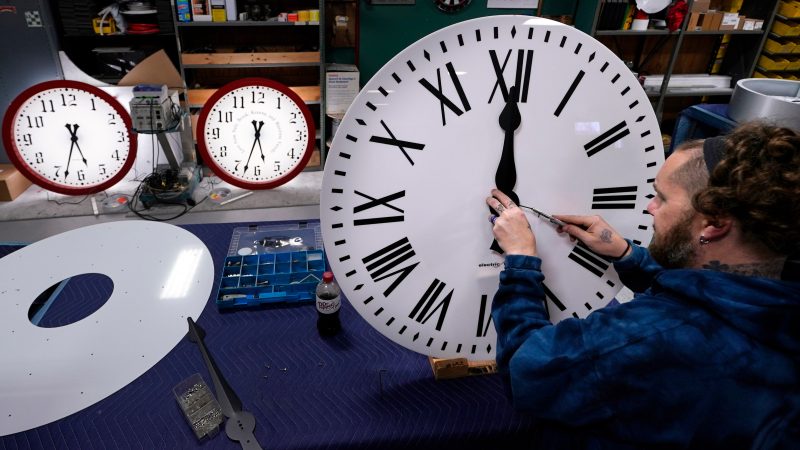
Think about it. It’s 8:30 in the morning, and the sun hasn’t quite come up yet to start the day. Now it’s 6 o’clock in the evening: the sun has set, you’re home from work, the temperature outside is 20 degrees, you don’t live in the Deep South, so really that extra hour of daylight hasn’t given you any benefit or incentive to spend time outdoors on this winter day.
It was a sneaky trick the House pulled by forwarding a permanent daylight saving time measure to the Senate. This experiment was tried once before, and it took less than a year to undo that mistake. It should be about science and human nature, but it is now based on politics and the wants of a few. Let’s hope the Senate is more in tune with the needs of the nation as a whole and rejects a repeat of a bad idea.
J.C. Hoffmeier, Cinnaminson
. . .
Sleep scientists continue to lobby for permanent standard time, but their biological arguments are losing the political debate for a simple reason. They ignore the devastating real-world costs of a 4:30 p.m. winter sunset.
Biology does not operate in an economic or social vacuum. While medical groups focus strictly on morning circadian rhythms, lawmakers must govern the entire picture. Permanent standard time creates a kind of sun curfew that carries major mental health, public safety, and economic liabilities. When the sun disappears early, human behavior shifts in predictable ways.
Families retreat indoors to screens, which freezes local retail, dining, and outdoor recreation. Forcing the evening rush hour into darkness reduces visibility and produces a structural spike in pedestrian fatalities and car accidents. Early evening darkness creates predictable public safety concerns. Studies consistently show that brighter evening hours reduce robberies because early evening darkness creates easier conditions for crime.
The remote workforce faces its own burden. Standard time pulls the sunrise drastically early on the East Coast, and companies naturally anchor their schedules to that morning sun. This forces West Coast remote workers into exhausting routines. To match a 7:30 a.m. East Coast start time, a remote worker in Oregon must wake up by 4:30 in the morning. Instead of encouraging flexible communication, our institutions cling to rigid clock uniformity.
The toll of dark afternoons, measured in seasonal depression, higher crime, economic stagnation, and remote worker burnout, is simply too high. A modern and active society needs light.
Christophe Perrenoud,Beaverton, Ore.
Join the conversation: Send letters to letters@inquirer.com. Limit length to 150 words and include home address and day and evening phone number. Letters run in The Inquirer six days a week on the editorial pages and online.