Blog

  • State Dept. again deems Cuba a threat amid talk of U.S. push for regime change

    State Dept. again deems Cuba a threat amid talk of U.S. push for regime change

    The Trump administration issued a report on Monday alleging that a multi-decade Cuban influence campaign in the United States has had “remarkable success” in infiltrating “the highest reaches of the U.S. government,” backing “left-wing terrorism on American soil” and turning “America against itself.”

    The 100-page report, released by the State Department and titled “Cuba: The Capital of 21st Century Communism,” summarizes decades of Cold War-era subversion plots by the impoverished Caribbean island that coincided with years of unsuccessful covert U.S. efforts to decapitate its communist government.

    The report also makes pointed claims against left-wing American groups, listing the Democratic Socialists of America, a rising activist organization that backs a number of Democratic lawmakers, under a section about “front groups and fellow travelers.” It suggests that Cuba has influenced recent political upheavals in the U.S., including “the George Floyd riots and the rise of antifa,” referencing the protests that began after Floyd’s killing and a loosely knit movement of far-left activists who militantly oppose fascism.

    The threat posed by Cuba is described in far more dire terms than those employed by U.S. intelligence officials and State Department diplomats over several decades, reviving speculation that the Trump administration is establishing a pretext for overthrowing the communist government in Havana, a longtime goal of Secretary of State Marco Rubio.

    “From its earliest years in power, the Cuban regime has believed that its own survival and strategic interests were inextricably linked to the advance of the revolutionary left inside the United States,” the report says. “The Cubans trained and armed tens of thousands of left-wing guerrillas, oversaw violent insurgencies that plunged multiple continents into chaos, and backed deadly extremist attacks across the United States.”

    The reference is apparently to Cuban support for left-wing revolutions in Latin America and Africa, largely in the 1970s and early 1980s. During that period, at the behest of the Soviet Union, then its primary backer, Havana sent its military forces to Angola and Ethiopia to support Moscow-favored Marxist groups.

    The report’s publication drew support from some Republican lawmakers. Rubio has already emerged as the de facto head of U.S. policy toward Venezuela, another socialist Latin American state, after a U.S. military operation in January to arrest its president, President Nicolás Maduro.

    “Cuba is next!” Rep. Carlos A. Gimenez (R., Fla.) wrote on X.

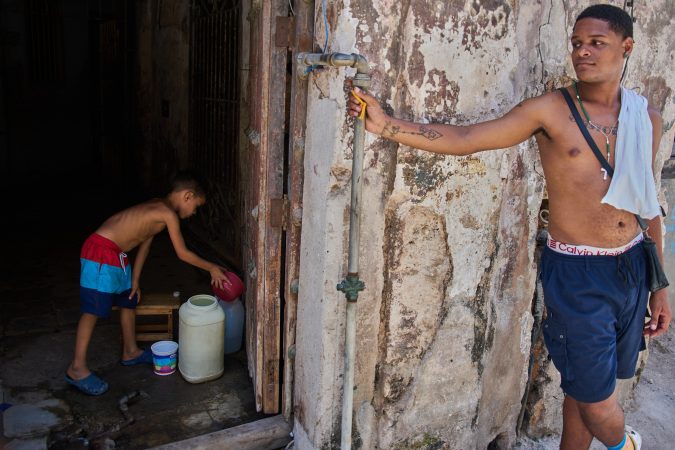
    The ominous words of the report stand in contrast to the way President Donald Trump has talked about the economically devastated island, which has been under a 60-year U.S. economic embargo and a six-month-long U.S. naval oil blockade as its national electricity grid has repeatedly gone dark in this summer’s sweltering heat. Trump told reporters last month that Cuba had “sort of collapsed” and that he would “handle” it as soon as his government moves on from the war in Iran.

    “As soon as that’s done, on our way back, we’ll just make a little brief stop,” he said, without spelling out a plan.

    While the State Department report acknowledges Cuba’s troubled economic situation, it attempts to bring modern-day relevance to its revolutionary origin story.

    “The Cubans devoted themselves to recruiting, cultivating and mobilizing a global coalition of activists, intellectuals, and political groups around this cause, building a sprawling revolutionary network that shaped a disproportionate share of America’s most famous and influential extremist movements, from the Black Panthers and the Weather Underground through to antifa,” the report says. “Today, that network continues to maintain ties to powerful leftist nonprofits, anti-ICE collectives, socialist groups, and Marxist militant organizations across the United States.”

    The report goes into great detail about the history of alleged Cuban plots against the U.S., often referring to now-defunct left-wing groups that saw their height of relevance more than 50 years ago.

    It contains some new allegations, including what it describes as a plan by a Cuban activist group to target U.S. military sites and immigration detention facilities if the U.S. moves toward military conflict, citing a document that states the plan was to “make it politically and materially costly for the U.S. government to wage war on Cuba.”

    The State Department said the activist group, the National Network on Cuba, is a key counterpart of the Havana-based Cuban Institute of Friendship with the Peoples (ICAP) — an “international solidarity” group founded in 1960. The U.S. government announced sanctions on ICAP last month, alleging that it supported “Cuban intelligence and counterintelligence activities.”

    The report also alleges Cuban support for the Democratic Socialists of America, a political movement that has seen such members as New York Mayor Zohran Mamdani assume positions of influence in the Democratic Party. The report states that while the democratic socialists are an organic group, they have traveled to Cuba in delegations that were linked to ICAP and other groups recently sanctioned by the State Department.

    Rubio, the son of Cuban immigrants to the U.S. who left before the 1958 revolution, has campaigned against the communist government in Havana since his time as a senator. Since becoming leader of the State Department last year, he has overseen an expansion of the sanctions policy targeting Cuba, a move that critics said would worsen the island’s economic crisis.

    Rubio last week hosted a ministerial event at the State Department during which he sought to rally support for what he described a resurgence of “far-left political terrorism.” At that event, he told the assembled foreign officials that Cuba’s “sprawling intelligence and ideological network helped to build the far left in our country and in our hemisphere.”

  • Yemen’s Iranian-backed Houthis say they will block Saudi shipping at Red Sea gateway

    CAIRO — Yemen’s Iranian-backed Houthi rebels on Monday announced they are imposing a maritime embargo against Saudi Arabia in retaliation for a blockade on Yemen and a recent attack on Sanaa International Airport, threatening another vital waterway for global shipping and raising fears of renewed conflict.

    A Houthi military spokesperson, Yahya Saree, said in a video statement that the maritime ban against Saudi Arabia will be effective immediately, describing it as an “equation of ‘an eye for an eye.’”

    There were few details on how the embargo might work, but the deputy head of the Houthi media office, Nasruddin Amer, said on X that the Bab al-Mandeb strait will be closed to the Saudis in response to what he called the kingdom’s “unjust blockade on Yemenis for over 10 years.”

    Bab el-Mandeb, at the southern tip of the Arabian Peninsula, is the gateway to the Red Sea through which around 12% of the world’s trade usually passes. A fourth of global container trade transits through the 20-mile-wide strait to and from the Suez Canal.

    The Houthis earlier demonstrated their ability to disrupt shipping there when they targeted ships for months over the Israel-Hamas war in Gaza, with over 100 vessels attacked. It is unclear whether the Houthis will resume that level of attack against neighboring Saudi Arabia.

    There was no immediate response from Saudi Arabia. The kingdom already faced pressure as it uses its East-West Pipeline to the Red Sea as an alternative to the Strait of Hormuz, which remains in the grip that Iran imposed shortly after the U.S. and Israel attacked it on Feb. 28. The Saudis have been sending millions of barrels of crude oil a day through the pipeline.

    Saudi Arabia leads a coalition against the Houthis and imposed an air and sea blockade on Yemen in 2015. Yemen’s civil war began in 2014 when the rebels seized the capital, Sanaa, and much of northern Yemen and forced the government into exile. A truce was reached in 2022.

    That truce has been threatened in recent days after the Houthis said the Saudis struck the Sanaa airport in an attempt to affect a flight carrying Houthi leaders back from Iran, where they attended the funeral of Supreme Leader Ayatollah Ali Khamenei. The plane landed safely at another airport.

    The Houthis then launched missiles and drones at Saudi Arabia’s Abha International Airport in the most significant confrontation in years.

    By allowing a direct international flight to land without the approval of the Saudi-led coalition, the Houthis sought to establish a new reality in which they could independently make decisions over Yemen’s airspace, experts told the AP.

    “We affirm the right of our great people to respond to the blockade with a blockade,” Saree emphasized on Monday, adding that Houthis are prepared to confront “any foolish act committed by the reckless Saudi enemy … with a comprehensive and decisive escalation.”

    Houthi-run Al Masirah TV broadcast footage of hundreds of supporters gathering in the city of Ibb, south of Sanaa, to back the embargo against Saudi Arabia. Similar rallies were held in the governorates of Saada, Marib, Hajjah, and Taiz.

    The Houthis are a crucial part of Iran’s so-called “Axis of Resistance,” which also includes militant groups in Lebanon, Iraq, and the Palestinian territories.

    The rebels have had a large stockpile of drones, but several Houthi members previously told the AP that the stockpile is running low after its attacks during the Israel-Hamas war. The Iran war has further impeded the flow of weapons, said the members, who at the time spoke on condition of anonymity because they weren’t authorized to talk to the media.

    The U.S. and Israel responded to the Houthis’ earlier attacks on shipping with a punishing air campaign across Houthi-held areas in Yemen until a deal that saw the rebels stop their assaults.

    Disrupting transit through the Bab al-Mandeb forces shipping firms to route vessels around the Cape of Good Hope off South Africa, significantly increasing costs. The U.S. government in the past has said going around the cape would add about 2,700 miles to the journey from Saudi Arabia to the U.S.

  • Pope Leo XIV will present inaugural Villanova University sustainability award created in his name

    Pope Leo XIV will present a new Villanova University-created award in his name that recognizes outstanding leadership in sustainability at a conference in Italy in October, another sign of the school’s close ties to the pontiff.

    It will be several weeks before Villanova and Notre Dame officially open their basketball seasons in Rome with a men’s and women’s doubleheader on Nov. 1.

    While Villanova has had a longstanding relationship with the Vatican, including an internship program that sends students there every year, both events signify the Catholic university’s deepening relationship with the Vatican and Italy since Pope Leo, a Villanova graduate, became pope last year.

    In 1977, Pope Leo, then known as Robert Prevost, earned a bachelor’s degree in mathematics from Villanova and in 2014 received an honorary doctorate from the university.

    The medal winner — an international honor — will be announced in September and then presented in October at the university’s International Sustainability Conference, Responding to the Cries of the Earth and the Poor, in Castel Gandolfo near Rome, the school said. The conference, which is expected to draw 300 participants including academics, church representatives, and leaders from the public and private sectors, will be held Oct. 12 to 15.

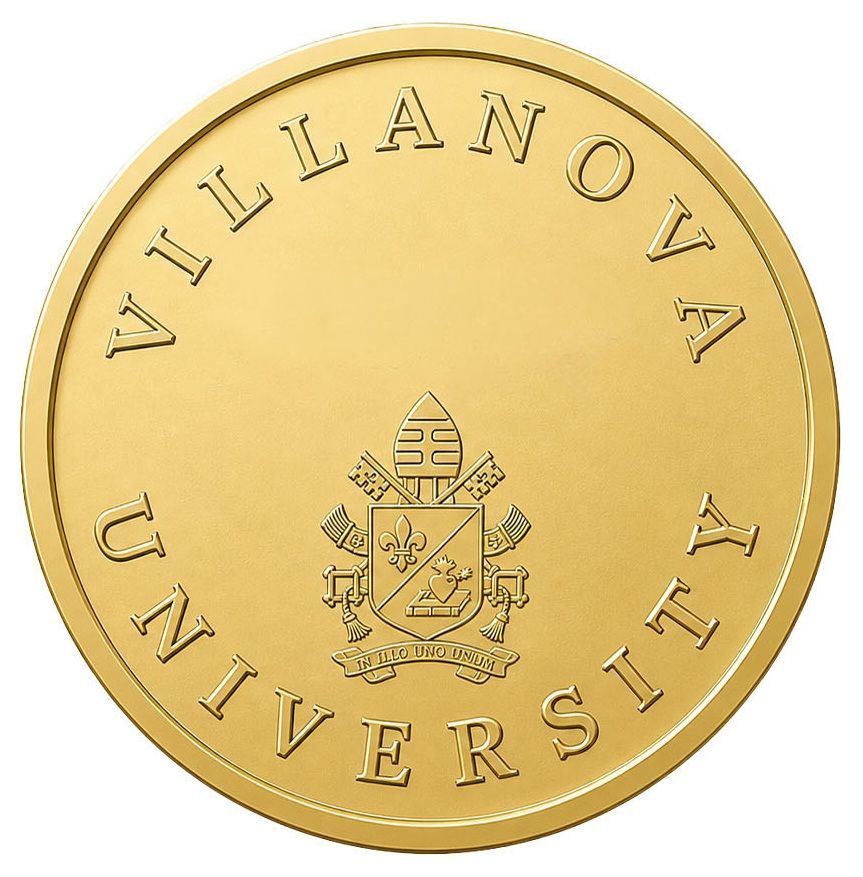
    The front side of a new international medal recognizing leadership in sustainability that Villanova University will award in Italy in OctoberCourtesy of Villanova University

    It is the university’s second sustainability conference, the first to be held in Italy. Its first conference in 2024 was on Villanova’s campus.

    “The Pope Leo XIV Sustainability Medal reflects a deeply held belief at Villanova University: that care for our common home and care for one another are inseparable,” the Rev. Peter M. Donohue, Villanova University’s president, said in a statement. “By recognizing leaders whose work advances both environmental stewardship and the common good, we hope to inspire meaningful and lasting impact in communities around the world.”

    The back of the new international medal that Villanova University will award for the first time in Italy in OctoberCourtesy of Villanova University

    The award, which will be a biennial honor, will recognize those who have advanced “sustainability, ecological responsibility and integral human development,” the school said. It specifically will highlight those who excel at “integrating care for the environment, social justice, concern for vulnerable populations, and responsible stewardship of economic and natural resources.”

    The winner can come from any field or discipline and will be selected by a committee of members of the university’s Sustainability Leadership Council. The award includes a monetary component, but details are still being determined, a university spokesperson said.

    The medal will feature Pope Leo on one side and Villanova University’s name on the other and is meant to highlight the pope’s commitment to sustainability, the school said.

  • Ex-soldier started a fire and fired a pellet gun outside a New York federal building, FBI says

    Ex-soldier started a fire and fired a pellet gun outside a New York federal building, FBI says

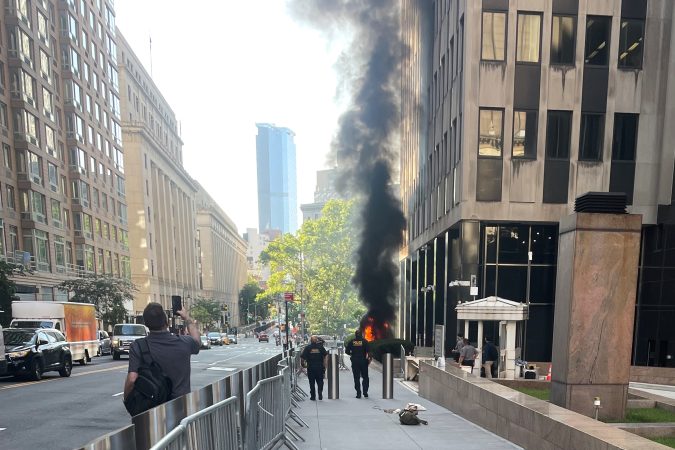
    NEW YORK — A former U.S. Army soldier set off fireworks, lit a fire, and fired a pellet gun in front of a New York building housing an immigration court and other government offices Monday morning, an FBI official said.

    Andrew Arrabaca, who was a mechanic on Patriot missile systems, is in custody and has been interviewed, said James Barnacle, assistant director in charge of the FBI’s New York field office. No charges have been announced yet against Arrabaca, and it was not immediately clear if he has a lawyer.

    “Mr. Arrabaca was looking to injure people and harm people,” Barnacle said at a news conference.

    Arrabaca was tackled by a security officer and taken into custody about 8:20 a.m. as flames erupted outside an entrance to the building at 26 Federal Plaza, which has become a focal point for demonstrations against the immigration policies of President Donald Trump’s administration.

    Barnacle said Arrabaca, 43, “came armed with bad intentions” and had various weapons, including a pellet gun, knives, axes, a hammer, and a machete. Arrabaca fired five to seven pellets from an airsoft rifle toward the building, he said.

    “He is an anti-American, anti-government extremist,” Barnacle said.

    He said Arrabaca had a cart with “anti-ICE literature” on it and “yelled derogatory terms” toward Immigration and Customs Enforcement as he was being arrested. New York City Police Commissioner Jessica Tisch said Arrabaca had a sign affixed to his cart that read “ICE off our streets” and was wearing a military style helmet.

    “In that post-arrest interview, he did say he was targeting the building and he was OK if he hurt or killed people going in and out of the building, whether they were federal employees or civilians,” Barnacle said.

    Barnacle said three people had minor injuries: one civilian and two government employees. DHS said a bystander was grazed by the fireworks, and the security officer who tackled the person sustained minor injuries, the agency said. The New York Fire Department said one person was transported to the hospital, but their injuries weren’t life-threatening.

    Barnacle said the civilian who was injured was an immigrant who had a hearing Monday.

    “What occurred outside 26 Federal Plaza this morning was deeply disturbing,” New York Mayor Zohran Mamdani said on social media. “I’m relieved no one was seriously injured and that a suspect is in custody.”

    Mamdani said his team was in touch with police and will support the federal investigation. The FBI said its New York Joint Terrorism Task Force was investigating.

    The building houses several government offices — including the New York office of the FBI — and the immigration court where agents have carried out chaotic and sometimes violent arrests in the hallway as migrants leave hearings.

    Videos and photos from the scene showed a fire with a plume of smoke on the sidewalk outside the building, as well as officers restraining a person and taking them away.

  • A man is in critical condition and a dog is dead after Kensington shooting

    A man was critically injured and a dog was killed when someone opened fire in Kensington on Sunday evening, authorities said.

    The incident happened just after 10:45 p.m. in a lot on the 2400 block of Kensington Avenue, according to police.

    Police arrived to find the man shot multiple times in the legs and abdomen, and officers transported him to Temple University Hospital, where he was placed in critical condition.

    A dog was found dead in the lot, and officers determined the animal had been shot.

    Police have not identified a suspect or a motive in the shooting, and they continue to investigate.

  • FDA retracts test result but still links Taylor Farms lettuce to cyclosporiasis

    FDA retracts test result but still links Taylor Farms lettuce to cyclosporiasis

    The Food and Drug Administration said Sunday that a laboratory finding showing cyclospora contamination in a sample of shredded iceberg lettuce supplied by Taylor Farms de Mexico was a false positive.

    But the agency did not back away from its conclusion that the company remains linked to a multistate outbreak of cyclosporiasis through its traceback investigation.

    “It does not mean they are walking it back,” Susan Mayne, a former head of the FDA’s center on food safety that oversees outbreak investigations, said in a text message Monday. “Absence of evidence (of a positive test result) is never evidence of absence.”

    Numerous outbreaks are solved on the basis of basic disease detective work, talking to people who have fallen ill, tracing back what they ate, and finding connections among others who were infected. Laboratory tests are one part of a wider investigative analysis.

    The FDA said laboratory experts reanalyzed the sample and determined that the initial result “does not represent true amplification and should be considered a false positive.” The agency said there are currently no confirmed positive product samples for cyclospora.

    Cyclospora is detected by running chemical reactions that double the amount of DNA in a sample until there is a noticeable signal, said Don Schaffner, a food scientist at Rutgers. Detecting a parasite after just a few tests points to a strong presence, but that conclusion weakens as more and more tests are run — one potential source of false positives, he said.

    “If you have a sample that, let’s say, has no cyclospora DNA, but you run enough reactions,” he said, “you’ll eventually amplify noise — stuff that’s not real — and it’ll turn into something that’s real.”

    The updated laboratory finding — that the FDA did not find the parasite in a particular lettuce sample — does not change the rest of the agency’s investigation. The sample that the FDA tested was not part of the original recall; the evidence around the recall is based on epidemiological and traceback determination linking the outbreak to Taylor Farms-supplied iceberg lettuce.

    The top line of the notice on the FDA website continues to say: “Do not eat recalled iceberg lettuce from Taylor Farms de Mexico.” It says the FDA’s investigation is ongoing.

    In a statement late Sunday, Taylor Farms spokesperson Mindi Mayhew said the company had “completed a voluntary recall of iceberg from central Mexico.” She said the recalled product was limited to iceberg lettuce grown and processed in central Mexico.

    All other Taylor Farms products, including all Taylor Farms-brand products available for purchase, are not involved in the recall, she said. “We are committed to working with public health authorities as the ongoing outbreak investigation continues.”

    Taylor Farms announced Friday that it was initiating a recall hours after it said it was voluntarily removing iceberg lettuce sourced from central Mexico from the U.S. market.

    Unlike a voluntary product hold or removal, a recall requires a company to actively notify customers and work to recover affected products from commerce, making it a broader and more costly response.

    Late Friday, Taylor Farms de Mexico published a detailed 27-state recall list covering all iceberg lettuce sourced from central Mexico and distributed from June 29 through July 16. The products — many of them bulk food service packages — had “best if used by dates” extending to Aug. 3.

  • South Philly’s former ‘micro-bookstore’ has a new and expanded storefront on Passyunk Avenue

    South Philly’s former ‘micro-bookstore’ has a new and expanded storefront on Passyunk Avenue

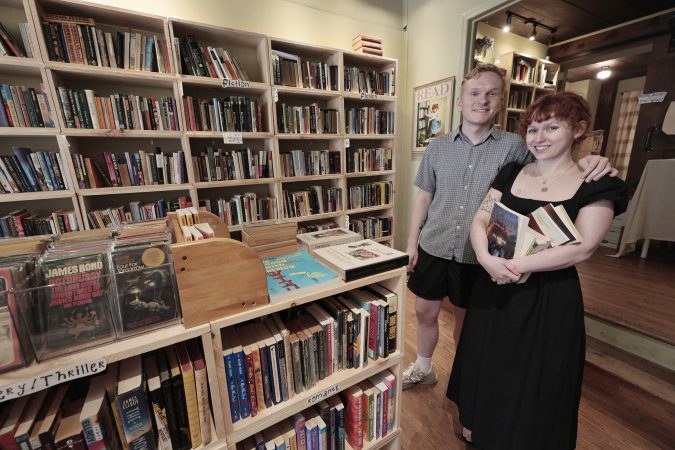
    When Ariel and Simon Censor opened their tiny used bookshop — Little Yenta Books — in the back of a South Philly children’s dressmaking shop in February, they knew it was an unconventional setup.

    What the couple — in life and now books — could not know is just how fast they would outgrow the space.

    And although they’re relinquishing the unofficial appellation as Philadelphia’s tiniest used book shop, the pair has moved their impressive literary thicket from their 150-square-foot loft space into a full-sized rented storefront on Passyunk Avenue.

    The problem was a great one: Business is booming.

    “People were telling us that they would walk by because it was way too crowded and they couldn’t fit,” said Ariel Censor, sitting behind the counter of the new shop, located at 1912 E. Passyunk Ave., home of the former Civil Stock General Store, which closed earlier this year. “We also just ran out of shelf space. We had way more books than we could fit.”

    Little Yenta Books co-owner Ariel Censor stocks the shelves with books at the new shop on East Passyunk Avenue in Philadelphia on Friday, July 17, 2026.Elizabeth Robertson / Staff Photographer

    The popular used bookstore — the only one along Passyunk — has nearly tripled its titles in the new storefront, which they opened last month. That means a whole lot more of the popular and literary fiction, classics, vintage sci-fi, poetry, and rare books customers have been buying up.

    “People really complimented our curation,” Censor, 27, said of the shop’s success. “People thought our taste was good, and our prices were good, and that they are really happy to have us.”

    The couple — Haverford College grads who live in the neighborhood — opened their initial tiny shop as a passion project, after holding used book pop-ups in South Philly bars.

    Simon Censor, of Providence R.I., and Ariel Censor, of New York City, opened Little Yenta Books, in East Passyunk in February. They have now moved into a larger space nearby.Tyger Williams / Staff Photographer

    Situated speakeasy-style, in a postage-stamp-sized loft above the Painted Lady children’s boutique, the shop burst with over 1,500 titles.

    Now, with its green-and-white striped awning, stained-glass light fixture, and charming decor, the new shop has a spacious, homey feel.

    “One thing we got with the little shop is that people really liked that it wasn’t overwhelming,” said Censor. “They could look at every book. We have tripled the amount of books but wanted to make it feel manageable and still have a real eye to curation. I’m really excited about the mix of modern and classics that we have.”

    The expanded shop comes with expanded hours, with Little Yenta Books now open every day except Tuesday and Wednesday.

    On a recent afternoon, Aine McCauley, 24, dropped in at the new shop on her way home from work. She perused the shelves before landing on a copy of André Aciman’s 2008 coming-of-age novel, Call Me by Your Name.

    “It’s so awesome,” she told Censor about the shop. “You have every good book in here.”

  • Andy Burnham becomes the U.K.’s seventh prime minister in a decade after Starmer resigns

    Andy Burnham becomes the U.K.’s seventh prime minister in a decade after Starmer resigns

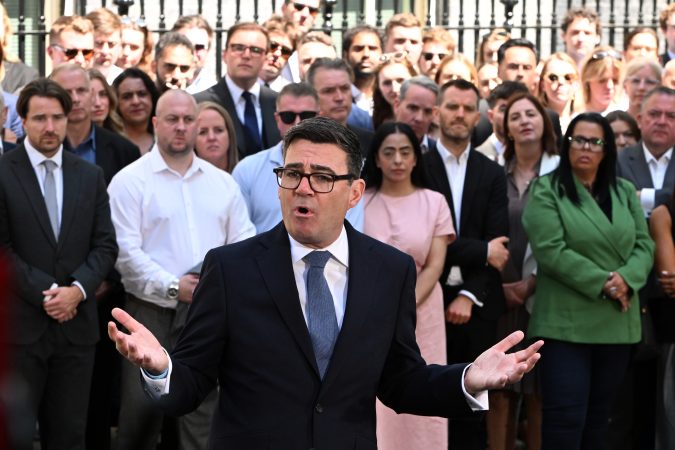
    LONDON — Prime Minister Andy Burnham acknowledged his precarious perch Monday as the seventh British leader in just over a decade as he set out an ambitious but vague vision to create a new political and economic establishment.

    Burnham used his inaugural speech as prime minister to renew his theme of decentralizing power as he promised to end street sleeping by homeless people. He said he would deliver a “circuit breaker” for a system he says has taken wrong turns since the 1980s when many public services were privatized.

    “We will change politics to make it more collaborative, more about problem-solving than point-scoring,” he said. “We will take power out of here and carry it into every postcode in the land so that they can do more and in doing more, build a new economy where we put life’s essentials back under stronger public control to make them affordable to you again.”

    After weeks as leader-in-waiting, Burnham officially became prime minister during a meeting with King Charles III at Buckingham Palace, where the monarch asked him to form a government.

    He succeeded Keir Starmer, who stepped down just two years after winning a landslide election victory, on a day when Britain’s political turbulence gave way, at least temporarily, to smooth choreography.

    Buckingham Palace has released a photo of the king and Burnham shaking hands. The ceremony known as “kissing hands” marks the transfer of power, but didn’t actually involve any hand kissing.

    Burnham said he was “acutely conscious” of the revolving door he was walking through at 10 Downing Street.

    “This a moment for reflection and new resolution,” he said. “It requires my generation of politicians to raise our game and rise to the new challenge. Britain needs to show the world that we can regain our stability once again, and that is our challenge to make politics work, to make it work better.”

    Burnham became the seventh U.K. prime minister since 2016 in a now well-rehearsed handover after replacing Starmer as leader of the center-left governing Labour Party on Friday. Starmer announced last month he would resign after missteps and judgment errors that eroded his standing with his party and the public.

    Just over an hour earlier, Starmer made a short farewell speech in the same place outside the prime minister’s residence, saying, “My work is done.”

    The outgoing leader said Britain is now “stronger and fairer than it was two years ago,” when he took office.

    “I go with good grace, I go with a smile, and I go proud of everything that we have achieved,” Starmer said before heading to Buckingham Palace to offer his resignation to the king. It was an offer “His Majesty was graciously pleased to accept,” the palace said in a statement.

    Changing leaders in midterm

    Britain’s parliamentary democracy allows governing parties to change leaders, and thus prime ministers, without the need for a general election. The next national poll doesn’t have to be held until 2029, though Burnham can call one sooner if he wants.

    Burnham was the only candidate in a contest to become the party’s new leader, securing nominations from 379 of the 403 Labour lawmakers in the House of Commons.

    Burnham will confront many of the same struggles as his predecessor: a sluggish economy, a cost-of-living crisis, overstretched public services, concerns about migration, and foreign affairs that include wars in Ukraine and the Middle East.

    The new leader pledges a new style of politics

    The former mayor of Greater Manchester previously pledged to make politics “less toxic,” improve living standards across the country, and “bring back the hope we have all been missing.”

    Critics and supporters alike will be clamoring for details of how Burnham plans to fulfill his pledges when he announces parts of a 10-year plan today.

    “Fundamentally, it only will work if you can generate significant economic growth, because it’s the lack of growth that’s really holding the country back,” said Joshi Herrmann, who has followed Burnham’s career as founder of Manchester news site the Mill.

    Attention will quickly turn to who Burnham will appoint to his Cabinet. He’s expected to make changes to Starmer’s top team, especially to the biggest jobs of Treasury chief, foreign secretary, and home secretary.

    Burnham has praised Starmer’s achievements, saying he would “build on the foundation laid” by his predecessor.

    Starmer became Labour leader in 2020 after one of the party’s worst election defeats, and led it to a landslide victory four years later. But he was soon defeated by the challenges of governing.

    At his final Prime Minister’s Questions session in Parliament on Wednesday, Starmer defended his government’s record on the international stage — especially its support for Ukraine — and its domestic policy achievements. He mentioned stronger protections for working people, a reduction in child poverty, a law designed to stop official cover-ups after tragedies, and higher defense spending.

    “In 6½ years, I took our party from a historic defeat in 2019, changed it so it was fit to face the country, and won a landslide general election victory in 2024,” Starmer said in his final remarks before leaving Downing St, hand-in-hand with his wife, Victoria.

    “Since then, it has been the privilege of my life to serve you and this great country as prime minister. I am confident that Britain is now stronger and fairer than it was two years ago.”

  • Access to high school sports in Pa. depends on where you live, a new report finds. Here’s a breakdown.

    Access to high school sports in Pa. depends on where you live, a new report finds. Here’s a breakdown.

    More than 30% of high school students in the affluent Radnor and Wallingford-Swarthmore districts played sports in the 2024-25 school year.

    In the Philadelphia school district, less than 10% of high school students did.

    The disparities are part of a pattern, with fewer students playing sports in lesser-resourced urban schools, according to Research for Action, a Philadelphia-based educational research organization that released a report Thursday analyzing high school sports participation rates across Pennsylvania.

    The report, which looked at sports as another barometer of opportunities available to students, found participation varies widely — as does school spending on sports programs.

    It also found a link between funding and sports participation, with more students on average playing in higher-spending districts.

    “The degree to which a student may have access to school athletics really depends on what district they’re in,” said Maja Pehrson, the report’s lead author.

    Here’s what the report found — and what questions it raises about access to high school sports in Pennsylvania.

    There are big differences in sports participation rates

    Participation in school sports “hasn’t really been looked at very much,” Pehrson said. Research for Action analyzed data that school districts and charter schools are required to report to the Pennsylvania Department of Education on athletic opportunities.

    The report found participation rates in the 2024-25 school year ranging from 5% in some school districts, to a handful of districts with rates above 40%.

    Topping the list locally were Jenkintown School District, at 35%, and Springfield Township School District in Montgomery County at 34%; followed by Radnor and New Hope school districts, at 31%; Wallingford-Swarthmore, at 30%; West Chester, at 28%; and Upper Dublin, at 27% — all majority white, relatively affluent districts.

    Below the Philadelphia school district’s 9.6% rate were Upper Darby, at 9%; William Penn and Norristown, at 8%; and Chester-Upland, at 6% — all districts that are majority non-white and high-poverty.

    Overall, large, urban districts tended to have the lowest participation rates, meaning “almost half of Pennsylvania high school students are enrolled in districts where the likelihood of participating in a school athletics team is relatively low,” the report said.

    Those “very low” participation districts — with 5% to 17% of students participating — also offered fewer sports per 1,000 students than high-participation districts, the report found.

    Naima DeBrest, a spokesperson for the Philadelphia district, said the district had expanded athletic opportunities in recent years “by introducing new sports such as girls wrestling and girls flag football” and creating intramural programs at the elementary and middle school levels.

    Despite “common challenges” faced by urban districts, “the district remains committed to expanding access to high-quality athletic opportunities and ensuring students have meaningful opportunities to participate in sports that support their academic success, well-being, and overall development,” DeBrest said, noting that the district’s rate is comparable to other urban districts.

    <iframe title="Sports Participation and Athletics Spending Among Local School Districts" aria-label="Table" id="datawrapper-chart-dyc1W" src="https://datawrapper.dwcdn.net/dyc1W/1/" scrolling="no" frameborder="0" style="width: 0; min-width: 100% !important; border: none;" height="971" data-external="1"></iframe><script type="text/javascript">(function(){function e(){window.addEventListener(`message`,function(e){if(e.data[`datawrapper-height`]!==void 0){var t=document.querySelectorAll(`iframe`);for(var n in e.data[`datawrapper-height`])for(var r=0,i;i=t[r];r++)if(i.contentWindow===e.source){var a=e.data[`datawrapper-height`][n]+`px`;i.style.height=a}}})}e()})();</script>

    There are also big gaps in spending

    The report found a relationship between money and sports participation rates. Among the 10% of school districts deemed most underfunded by a state formula calculating what schools need to adequately educate students, more than half had “very low” sports participation rates, while more than two-thirds had “very low” or “low” participation, according to the report.

    And looking at what districts spend on athletics, it varied widely, the report found. Districts with “very low” participation reported spending an average of $409 per high school student on athletics, while “very high” participation districts — with 28.2% to 61.6% of students participation — spent an average of $939 per student.

    Locally, the Jenkintown, West Chester, Phoenixville, and Colonial school districts reported spending more than $1,100 per high school student on athletics, compared with $145 per high school student in Philadelphia.

    The report noted that those figures don’t fully reflect spending on school sports. Many districts didn’t report any spending on athletic facilities, for instance; Pehrson said it was likely hard for schools to calculate how much of their overall facilities spending was tied to athletics.

    The data also don’t reflect any activities fees paid by students.

    Charters have lower participation rates — but in line with Philly

    Statewide, brick-and-mortar charter schools, which are publicly funded but independently run, reported lower rates of sports participation. On average, 8.4% of charter high school students participated in sports, compared with 18.1% in district schools. (Cyber charter schools reported no participation; charter students who participate in district programs are counted by districts.)

    Rather than a difference between the charter and district sectors, however, the gap could largely be a product of school district conditions, the report said. Half the state’s charter high schools are located in Philadelphia, where the charter sports participation rates largely mirror the district’s, the report said.

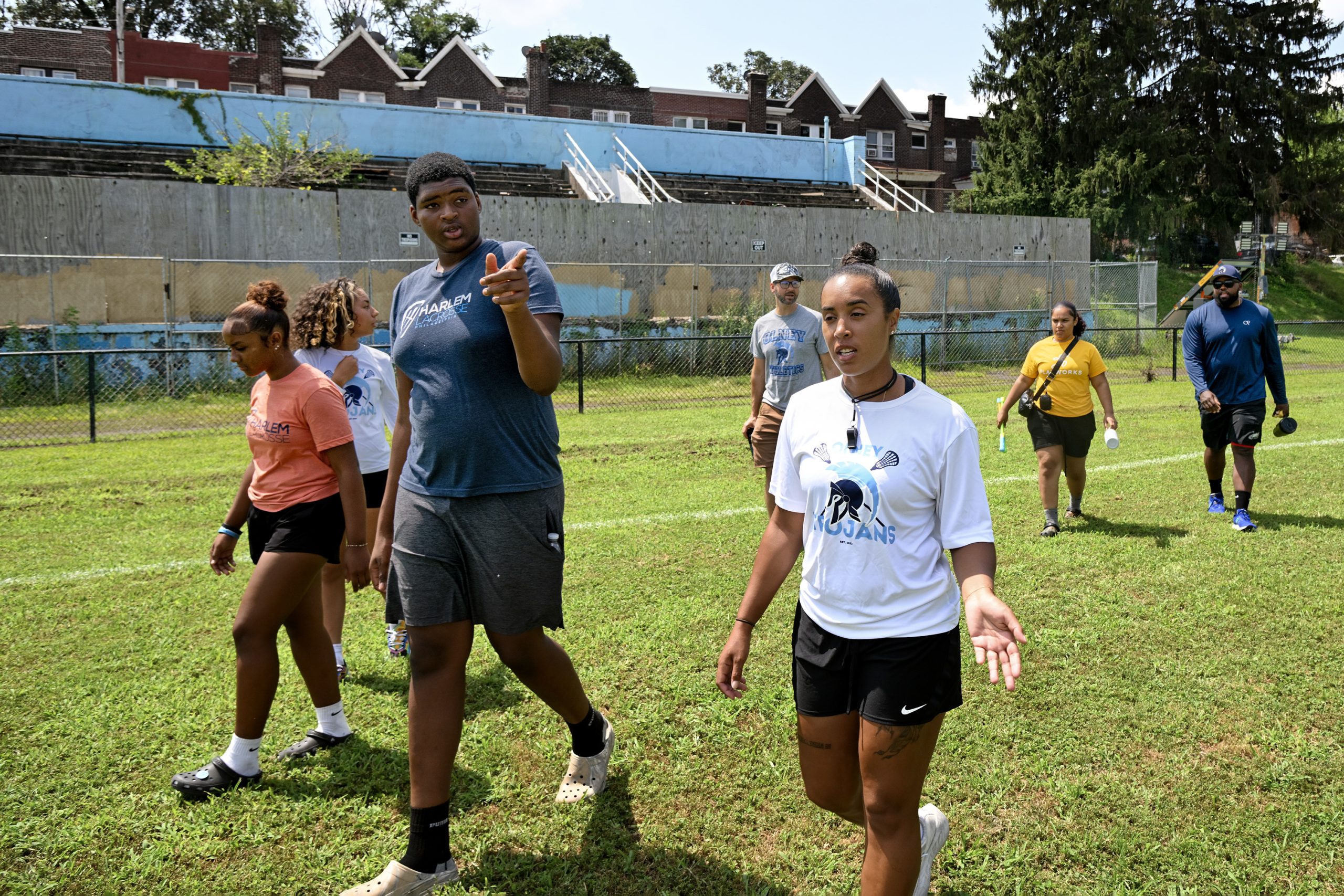
    In front of their boarded up dilapidated stadium, Olney High School athletes Cindi Lizardo (from left), Emma Blanco, Sidi Traore; and principal Michael Roth, coach Siena Childs, recent graduate Ysis Rivera, and athletic director Jorge Gonzalez point out the deplorable condition the sports facilities are in July 24, 2025. Olney High School, which spent a decade under charter management, was turned back over to the Philadelphia school district in 2022.Tom Gralish / Staff Photographer

    Gender gaps persist

    Boys participated in sports in 2024-25 at a higher rate than girls — at an average rate of 20.3% compared with 15.8%, the report found.

    And those gaps persisted across different types of school districts, the report found. For instance, in districts with “very low” overall sports participation, 14% of boys participated, compared with 10% of girls. In districts with “moderate” participation, 24% of boys participated, compared with 19% of girls. And in “very high” participation districts, 35% of boys participated, compared with 30% of girls.

    What’s driving the disparities?

    The report found that access to high school sports in Pennsylvania “is not evenly distributed and is strongly shaped by structural conditions.”

    “Districts with fewer athletic opportunities are more likely to be urban districts with large high schools and more students of color, and they tend to offer a narrower range of teams and spend less per student on athletics, limiting the extent to which students can engage,” the report said.

    But district funding alone isn’t responsible for disparities, the report noted. The gender gap, for instance, is found in well-funded and poorly funded districts.

    The pattern of higher-spending districts seeing more participation “doesn’t line up neatly for every district,” Pehrson said, noting that the data can’t fully answer questions about what’s driving differences in participation.

    Other possible factors could include transportation and sports outside of schools, Pehrson said.

    DeBrest, the Philadelphia spokesperson, noted that urban districts may also have limited athletic facilities, and practice space “and the need for some students to balance academics, work, or family responsibilities.”

    Pehrson hopes the findings prompt more investigation into the availability of school sports, which “are a key part of students’ educational opportunities,” Pehrson said — from boosting physical and mental health, to promoting social-emotional skills and building community.

    “There are clear disparities in terms of sports opportunities students are having,” Pehrson said. “Why is that, and how can we move forward and try to figure out these differences?”

    Editor’s note: This story has been updated to reflect that Jenkintown and Springfield Township were the local districts with the highest sports participation rates.

  • Ebola death toll in Congo rises to at least 930, including dozens of health workers

    Ebola death toll in Congo rises to at least 930, including dozens of health workers

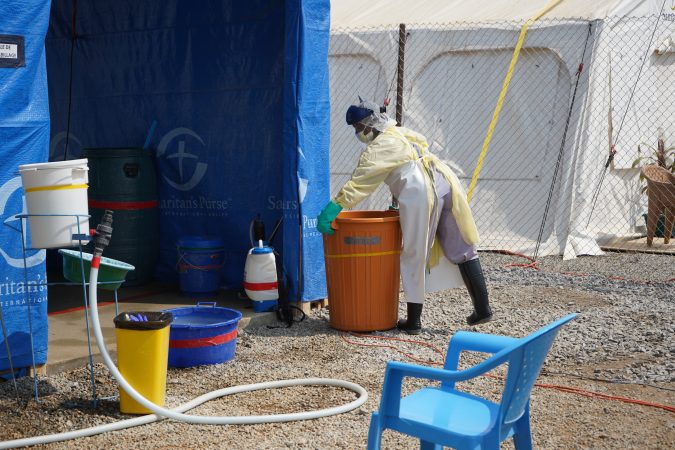
    BUNIA, Congo — The death toll in Congo’s Ebola outbreak has risen to at least 930, the country’s Ministry of Health said on Monday, with 37 new deaths reported in a 24-hour span Friday into Saturday, one of the highest totals.

    The deaths were recorded out of the 2,344 cases confirmed as of Saturday, the health ministry said.

    The Ebola outbreak that was declared in eastern Congo on May 15 is the fastest-growing Ebola outbreak on record. The Bundibugyo virus responsible for the outbreak is less common than others that cause Ebola disease, and there is no approved vaccine or treatment.

    Ebola is highly contagious and can be transmitted to people from wild animals. It spreads in the human population through contact with bodily fluids such as vomit, blood, or semen, and with contaminated surfaces and materials such as bedding and clothing. The disease is rare but severe and often fatal.

    The surge in deaths comes as safety fears have restricted the response in the worst-affected province of Ituri. A total of five provinces have been affected, all in the eastern region where rebel violence is rampant.

    At least 12 attacks — mostly fueled by skepticism and rumors — have been recorded against health facilities and teams since the outbreak was declared in mid-May, authorities said Saturday. Many health workers meanwhile have walked off their jobs as they protest lack of payment.

    At least 36 health workers infected with the virus have died.

    The World Health Organization last week expressed concerns that 80% of new Ebola cases were emerging from unknown chains of transmission, a sign the outbreak is spreading faster than health officials can track despite an expanding response.

    In the more than two months since the outbreak started, it recorded an average increase of about 272 cases and 111 deaths per week, according to data from Congo’s Health Ministry. The data also show that the weekly increases accelerated over time, particularly in July, when both reported cases and deaths rose more rapidly than in the earlier weeks.

    The ministry’s latest update said that 724 patients are currently in isolation and in hospitals, and that it is intensifying response efforts in affected health zones.

    “Patient care and support capacities are consolidating, with 22 new recoveries recorded in 24 hours,” the ministry said.