Blog

  • Republicans don’t want to go there again on Trump’s 2020 election fraud claims

    Republicans don’t want to go there again on Trump’s 2020 election fraud claims

    For weeks, President Donald Trump had privately floated the idea of delivering a televised address to detail claims of foreign interference and purported election fraud — “shocking” new discoveries, he’d go on to say, that had been covered up by the so-called “Deep State” and should be a central focus of elected officials.

    Advisers initially steered him away from the idea for a primetime address, but it was quickly resurrected. Dozens of cabinet members and close aides gathered to watch his speech in the East Room on Thursday, dutifully standing and applauding when he finished. The next morning, Trump bragged about the “great reviews” and “big audience” for the address.

    But outside of the president’s list of frequently dialed contacts and the clips assembled of White House-aligned influencers praising his speech, the primetime address failed to galvanize conservatives, with some publicly questioning his focus on 2020 as the midterms approach. Republicans fighting to maintain congressional control this fall largely sidestepped the message.

    By the weekend, the White House-aligned commentators and members of Congress who had pushed the Trump team’s talking points about the speech had seemingly moved on. The muted response underscored a broader political reality: Many Republicans facing voters this fall have shown little interest in making Trump’s renewed focus on the 2020 election central to their campaigns as they head into a midterm complicated by the president’s weak standing with independent voters.

    As Trump’s favorite cable network Fox News largely ignored the address Friday morning, former Republican National Committee chair Michael Whatley, the Trump-endorsed GOP nominee for Senate in battleground North Carolina, held a 34-minute campaign event largely focused on public safety.

    ‘We’re going to talk about the economy and what I’m going to do to make sure everybody makes more and keeps more. We’re going to talk about our military and our national security,” Whatley said. “But the number one issue that we want to talk about in this election cycle, that we need to talk about in this election cycle, is keeping our kids and our communities safe.”

    Asked by a reporter afterward about Trump’s latest messaging, Whatley, who has previously boosted some of Trump’s 2020 election fraud claims, said he is a “big proponent of election integrity,” and of the signature election legislation Trump has pressed Congress to pass.

    Whatley predicted that his race will be “decided within a percentage point,” though he has consistently trailed former Democratic Gov. Roy Cooper in polling by much more than that. He is fighting to succeed retiring Sen. Thom Tillis, a moderate Republican who has had a turbulent relationship with Trump and regularly asserts his independence from the president.

    The “clear and simple” explanation for why most Republican candidates aren’t clamoring to talk about the 2020 election is that voters are focused elsewhere, said Paul Shumaker, a veteran Republican strategist and longtime political adviser to Tillis, who declined to comment directly on Trump’s speech.

    “If candidates are not talking about the economy, if candidates are not talking about affordability, if they’re not talking about how they’re going to make people’s lives at home cheaper and less expensive, then they’re not talking about the issues that voters care about,” he said.

    Democrats seized on the address, which Trump promoted as revealing “really big news,” to accuse the president of laying the groundwork to challenge election results if Republicans lose this fall. Some of Trump’s own hard-right allies, meanwhile, complained the speech amounted to little more than rhetoric, lacking a concrete plan to hold anyone accountable for the purported fraud.

    Trump had initially wanted to give the televised address a few weeks earlier, in late June, according to two people with knowledge of White House deliberations about the speech, but advisers managed to put it off. As an alternative idea — and to avoid a primetime address — the president’s team also mulled the idea of presenting the declassified information to reporters during a White House briefing to be held soon after press secretary Karoline Leavitt returned to work late last month.

    Ultimately, Trump got his way.

    Briefings with Trump on the new material continued into last week. Administration officials, in consultation with some outside Trump allies, reexamined old FBI files and other records dating back to the first Trump administration. But the documents later posted to the White House website largely reflected information that was publicly known and still did not prove foreign countries had hijacked votes or that election officials in the United States conspired to rig the 2020 election against Trump.

    Matthew Bartlett, who served as a State Department appointee in Trump’s first term and is now a Republican public affairs strategist, described Trump’s Thursday speech as “mess,” and said the lack of new evidence undercut Trump’s broader effort to pressure Republicans into passing the Save America Act, “which he has oddly weaponized against his own party.” He said many Republicans seem to be thankful Trump’s message didn’t successfully break through.

    The pervasive sentiment afterward, Bartlett said, seems to be, “If the president makes outrageous claims about an election and no one is listening, did it even happen?”

    Two Republicans opposed to Trump’s Save America Act, Tillis and Sen. Lisa Murkowski (R., Alaska), indicated in interviews afterward that Trump’s speech did not change their position. Senate Republican leadership has long maintained the legislation does not have the votes to pass, but Trump has continued to lambast senators for not doing so.

    Sen. John Cornyn (R., Texas), a co-sponsor of the Save America Act who is retiring after losing his primary election this spring to a Trump-backed challenger, was similarly dismissive. “There wasn’t a whole lot new” in Trump’s speech, he said Friday at the Aspen Security Forum. Foreign adversaries have long tried to “sow discord” and influence American elections, Cornyn said, “but the bottom line is none of this would have changed the outcome.”

    “We have 109 days until the midterm elections, and I don’t understand talking about what happened six years ago in light of these upcoming elections,” Cornyn said.

    The speech also fell short with Trump’s hard-right supporters who wanted a more aggressive response.

    Former Trump adviser Stephen K. Bannon, who hosts the popular MAGA War Room show, said the president’s focus on passing his election bill is no longer enough, arguing the legislation could not take effect before the midterms even if Congress passed it immediately. He said arrests should be made in connection with the “cover-up” of alleged election fraud in 2020, and that Trump should issue a “national security emergency executive order.”

    “It’s too late for the Save America Act,” Bannon said Friday. After Homeland Security Secretary Markwayne Mullin gave a news conference Friday following up on Trump’s claims from his speech about large numbers of illegal immigrants on voter rolls, Bannon told his listeners that he was “decidedly unimpressed” and didn’t hear “any sense of urgency or any real action plan.”

    Prominent right-wing ally Laura Loomer questioned on social media as Trump spoke whether any of the information he was sharing was new.

    The White House did not respond to a request for comment.

    Americans continue to give Trump largely negative reviews on his job performance, as they have for months, according to a recent Washington Post-Ipsos poll. Trump’s renewed focus on his 2020 election loss comes as polls continue to register voters’ frustration with his handling of the economy and the Iran war.

    And while Republicans are not losing by a wide margin on a hypothetical midterm ballot, despite Trump’s deep unpopularity, Republican voters currently aren’t as energized to turn up at the polls, the survey found.

    Democrats are 10 points more likely to be certain to vote this year than Republicans, compared with their two-point edge in 2018.


  • U.S. military says it’s carrying out its 10th consecutive night of strikes on Iran

    U.S. military says it’s carrying out its 10th consecutive night of strikes on Iran

    DUBAI, United Arab Emirates — The United States military said late Monday it was carrying out its 10th consecutive night of strikes on Iran in a push to reopen the Strait of Hormuz. The renewed bombings came following the death of another American service member, and after Iran launched attacks on American allies Kuwait, Jordan, and Bahrain, home of the U.S. Navy’s 5th Fleet.

    U.S. Central Command said on social media that the latest strikes “are designed to further degrade Iranian military capabilities used to attack commercial shipping” in the strait.

    Even as the U.S. and Iran inch closer to all-out war again, glimmers of hope appeared on the diplomatic front, as Iran’s interior minister traveled to Pakistan, a key mediator in the conflict, for talks.

    The interim deal signed last month that was meant to end the fighting has crumbled. Shipping through the Strait of Hormuz — a vital supply route for world energy supplies — has largely stalled. And as fighting intensifies, both sides have targeted civilian infrastructure relied on by millions of people.

    A new potential threat to world energy markets emerged Monday after Iran-backed rebels in Yemen said they planned to prevent Saudi Arabia from shipping in the Red Sea, an alternate route for oil exports during the war.

    The escalation has pushed oil prices higher in recent weeks. Benchmark Brent crude traded Monday above $88 a barrel and regular gasoline in the U.S. climbed to an average of $4 a gallon, keeping pressure on Americans’ wallets ahead of midterm elections this fall.

    The U.S. military identified two soldiers who were killed in Jordan in attacks that left a third person missing. Separately, the military confirmed another death in Iraq on Saturday during the “controlled detonation” of a downed Iranian drone. President Donald Trump took to social media on Monday to warn that “Every time Iran kills an American Soldier they will pay for that killing many times over!”

    Trump was planning to attend a ceremony on Tuesday evening at Dover Air Force Base, where at least one service member’s remains were due to arrive.

    Ninth night of Iran strikes by U.S. targets infrastructure

    The U.S. military’s Central Command said its ninth straight night of airstrikes targeted “Iranian military command centers, air defense and coastal surveillance sites, maritime capabilities, missile and drone launch sites, and communications networks.” Last week, the U.S. struck bridges and a tower at an Iranian port.

    Iran’s state-run IRNA news agency reported that the American strikes killed at least one person around Tabriz, a northwestern city about 325 miles from the capital, Tehran. Tabriz is believed to host underground missile bases run by Iran’s paramilitary Revolutionary Guard.

    U.S. strikes likely also hit Bandar Imam Khomeini in Khuzestan province, Sirik and Jask in Hormozgan province, and Konarak and Chahbahar in Sistan and Baluchistan province, IRNA reported.

    The British military’s United Kingdom Maritime Trade Operations center said Monday evening that a second ship had been attacked a day earlier in the Strait of Hormuz, this one off the coast of the United Arab Emirates.

    The other vessel caught fire in the Strait of Hormuz after being hit by a projectile near the coastline of Oman. The crew abandoned the vessel, which was adrift and still ablaze hours later, the UKMTO said.

    The route around Oman has been the one the U.S. military has encouraged ships to travel to avoid Iran’s control. The Guard later claimed it was targeting tankers in the strait.

    Tehran also hit U.S.-allied countries throughout the Middle East.

    Kuwait said its air defenses fired at an incoming barrage, and Jordan’s armed forces said Monday evening they had shot down three Iranian missiles, adding that there had been no material damage or casualties. There was no immediate word from Iran.

    Bahrain’s Foreign Ministry condemned Iranian drone strikes targeting the country’s air traffic systems, saying they endanger travel for civilians.

    Strait of Hormuz remains key to the conflict

    A new pressure point could emerge for world energy markets as Yemen’s Houthi rebels announced on Monday a maritime embargo against Saudi Arabia. The Houthis, who are backed by Iran, said they would block shipping between the Red Sea and the Gulf of Aden in response to an attack on Sanaa International Airport last week that they blamed on Saudi Arabia.

    With the Strait of Hormuz blocked up, Saudi Arabia has been relying on a pipeline to the Red Sea to get millions of barrels of oil out to market. The Houthis earlier demonstrated their ability to disrupt shipping there when they targeted ships for months over the Israel-Hamas war in Gaza, with over 100 vessels attacked.

    There was no immediate response from Saudi Arabia.

    Trump has threatened to target Iran’s power stations and bridges to try to compel Tehran to loosen its hold on the Strait of Hormuz, through which one-fifth of world oil supplies were shipped before the war. Recent attacks suggest the U.S. military is carrying out that plan.

    The U.S. in the past week reimposed a naval blockade on Iranian ports to halt its shipments of crude oil. The military says it has redirected seven ships and disabled one since then.

    A glimmer of hope for diplomacy

    Pakistan has intensified diplomatic efforts in recent days to resuscitate the interim ceasefire reached last month that called for resolving remaining issues tied to the war within 60 days. The truce unraveled after both sides resumed attacks on each other’s military installations and other infrastructure.

    Iranian Interior Minister Eskandar Momeni arrived in Islamabad on Monday for two days of talks with Prime Minister Shehbaz Sharif and others. Momeni’s counterpart, Pakistani Interior Minister Mohsin Naqvi, expressed optimism.

    “God willing, We will have good news,” Naqvi said.

    On Sunday, U.S. Secretary of State Marco Rubio told reporters that the U.S. is still open to negotiating with Iran but that “it has to be real.”

    “If the door opens to diplomacy — if the guys that want to do something productive for Iran win and take control of that system, or take control of the negotiations — that’ll be a very positive development,” Rubio said. “That’s not where we are tonight, unfortunately.”

    Iranian authorities on Sunday said at least 50 people have been killed and 517 wounded in the latest rounds of U.S. strikes. Since the war began on Feb. 28, 17 U.S. service members have been killed.

  • Philly flavors reign supreme at Atlantic City water ice festival

    Philly flavors reign supreme at Atlantic City water ice festival

    Philly is synonymous with water ice — it’s number two on Inquirer’s 76 iconic foods list for a reason. And over the weekend, two Philly shops claimed the top spots at Ocean Casino Resort’s first water ice competition.

    The festival, at the Atlantic City resort’s TopGolf Swing Suite, featured 14 vendors from New York, Pennsylvania, New Jersey, and Delaware.

    Siddiq’s Water Ice and the Yummy Palace took first place in separate categories at the Water Ice Festival at Ocean’s Casino Resort.Ocean Casino Resort

    The coconut water ice from Chinatown’s the Yummy Palace won best traditional flavor. The lime mojito from West Philly’s Siddiq’s Water Ice was crowned the best nontraditional flavor.

    The winners took home a trophy and a championship belt, along with an overnight stay in a VIP suite, $500 dining credit, two spa treatments, and two tickets to a show of the winner’s choice. The winning flavors will be featured for three months at Scoops in The District.

    From 2 to 5 p.m., guests of the family-friendly, ticketed event enjoyed unlimited tastings, engaged in photo opportunities and face painting, and sampled offerings to vote in the Water Ice Flavor contest. The event was hosted by social media influencer Aunt Mary Pat.

    Other Philly water ice vendors included Philadelphia Tropical Treats, South Philly Ice, John’s Water Ice, and Philadelphia Water Ice Factory. But only covers the surface of just how many shops the city has to offer — consider the Inquirer water ice map for more options.

    Inside Water Ice Festival at Ocean’s Casino Resort.Ocean Casino Resort

    Cherry Hill’s Primo Water Ice, Mahwah’s The Ice Factory, Patterson’s Gelotti, Wilmington’s Fusco’s Water Ice & Ice Cream, Sicklerville’s Rosati Ice, Williamstown’s Stio’s Water Ice & Ice Cream, and Bensalem’s Volpe’s Italian Ice also participated.

    “We’re thrilled to have seen the excitement from the hundreds of guests that joined us on Saturday for Ocean’s first-ever Water Ice Festival,” said Bill Callahan, general manager of Ocean Casino Resort. “Fans voted for their favorites, and we’re excited that two local businesses were recognized as the best of the best! We look forward to making this an annual summer tradition for years to come.”

  • Senators demand ICE answers and body cameras after 2 fatal shootings in Maine and Texas

    Senators demand ICE answers and body cameras after 2 fatal shootings in Maine and Texas

    WASHINGTON — Dozens of Democratic U.S. senators and the Independent senator from Maine pushed for more details Monday from Immigration and Customs Enforcement about the agency’s vetting practices for new agents and how officers conduct vehicle pursuits, even as they demanded that body cameras be swiftly rolled out to all officers.

    The demands came in a letter spearheaded by Maine’s Independent Sen. Angus King, signed by 38 Democratic senators, and sent to the Department of Homeland Security, which oversees ICE. The demands follow two deadly shootings in which ICE officers shot and killed immigrants in Houston and Maine.

    The Associated Press reported last week that the ICE officer in Maine who opened fire and killed a man from Colombia had a history of violent behavior toward family members that was detailed in family court records.

    The officer’s first ex-wife, Ashley Brouillette, told AP he was physically violent with her, including once throwing boiling water at her while she was holding their child.

    His second ex-wife, Lucinda Brouillette, sent a statement over the weekend alleging “a persistent pattern of abuse, intimidation, manipulation, fear, and control.”

    “Throughout our marriage and in the years that followed, I have feared for a long time that his anger, aggression, and escalating behavior would eventually result in severe, life threatening violence, and I often believed I would be the one on the receiving end of it,” she wrote.

    Hundreds of pages of family court documents describe their turbulent marriage, and the years after. Lucinda Brouillette told the court he had stalked and harassed her and physically and verbally abused his daughter, according to multiple requests for temporary protection orders. Brouillette tackled his teenage daughter and smashed spaghetti in her hair, and during another outburst, he dragged his daughter around the house as she cried, she said.

    “Dave needs counseling or something for his PTSD & depression,” she wrote in an application for a temporary protective order on behalf of his teenage daughter, which a judge granted in 2021.

    In court filings, David Brouillette said that his second ex-wife had slandered him.

    Multiple family members told the AP the government should have never given him a gun, badge, and the authority to patrol city streets as the Trump administration ramps up its mass deportation agenda.

    The senators’ letter on Monday listed new measures to increase accountability at the agency, including transparency about whether ICE considers records from family court of domestic violence or abuse when vetting new recruits.

    “We remain supportive of removing dangerous convicted criminals from our communities, but this goal can and must be achieved without endangering these very communities in the process. By no stretch could either of the victims in Texas and Maine be characterized as ‘the worst of the worst,’ making these tragic deaths even more egregious,” the senators wrote. “The American people deserve clarity and accountability.”

    They said ICE should immediately start wearing uniforms or vests that clearly identify them as “ICE” instead of the more generic “POLICE” or “POLICE ICE.” Civil rights groups and advocates have often criticized ICE for not wearing uniforms or clear identification on their ballistics vests identifying them as deportation officers.

    Senators also demanded to know what changes were being made to how officers conduct traffic stops and vehicle pursuits.

    The shootings in Maine and Houston both involved ICE officers shooting at people who were in vehicles at the time. In the wake of the Maine shooting, Homeland Security temporarily stopped officers from conducting vehicle stops except in specific situations. But just a day later, after fierce criticism from some MAGA supporters, President Donald Trump said on social media that traffic stops should continue.

    Homeland Security said last week that it was adding new training in crowd-control measures, high-risk vehicle stops, live-fire exercises, and medical training, in response to what they called coordinated attacks against their officers and ICE facilities.

  • N.J. e-bike law requiring registration, insurance now in effect

    N.J. e-bike law requiring registration, insurance now in effect

    New Jersey’s overhauled e-bike rules are now in effect, meaning thousands of riders across the state must be licensed, registered, and in some cases insured for the first time.

    Under a law signed by then-Gov. Phil Murphy before he left office in January, e-bikes fall into two groups: low-speed electric or pedal-assist bikes that top out at 20 miles per hour, and faster, throttle-powered bikes that can reach up to 28 miles per hour.

    The lower-speed bikes must now be registered with the state Motor Vehicle Commission. Riders of the higher-speed bikes must register them and obtain liability insurance to ride them.

    Riders of both types must be at least 15 years old, hold a valid driver’s license or a special e-bike license issued by the Motor Vehicle Commission, and wear a helmet regardless of age. Riders can face fines of up to $50 per violation.

    As of July 15, the commission had issued more than 4,100 e-bike registrations and 250 e-bike permits, agency spokesman William Connolly said.

    “MVC is working hard to service as many riders as quickly and efficiently as possible,” Connolly said.

    Out-of-staters who bring their e-bikes across state lines will have to register their bikes in New Jersey and get licenses if they don’t have a regular driver’s license.

    The push for tighter regulations followed a string of fatal e-bike crashes around the state. Murphy’s office cited “numerous dangerous crashes” when he signed the bill, while bill sponsor state Senate President Nick Scutari (D-Union) has argued that e-bikes have gotten faster and more powerful and that younger, inexperienced riders are using them.

    Nationally, e-bike injuries rose by 293% from 2019 to 2022, according to Columbia University researchers.

    Bike advocates opposed the new law, saying it adds unneeded barriers for cyclists.

    This story originally appeared on New Jersey Monitor.

  • Citizens Bank says it has ended lending to private prison companies used by ICE

    Citizens Bank says it has ended lending to private prison companies used by ICE

    Citizens Bank no longer funds two private-prison companies that house people detained by federal immigration services, the company said in a statement on its investor page Friday.

    The federal government has purchased some facilities it had been using from private prison operator CoreCivic and plans to buy some from the GEO Group, so those companies no longer need as much capital, according to the bank. Citizens now finds it “appropriate to exit” those lending relationships, the bank said.

    Citizens, based in Rhode Island, has the largest bank branch network in the Philadelphia area, according to FDIC data, and ranks among the dozen largest U.S. commercial banks.

    Opponents of the facilities have asked for “assurances in writing” from Citizens Bank that the GEO Group and CoreCivic relationships are over, said Peyton Fleming, a spokesperson for De-ICE Coalition, which organized protests against the bank.

    Earlier this month, CoreCivic announced the sale of two prisons in California to the U.S. for $1.5 billion.

    Protests against Avelo Airlines’ role in transporting deportees for immigration agencies ended last winter after ICE purchased its own airplanes.

    A billboard near the Route 420 exit of I-95 North in Delaware County pressuring Citizens Bank to stop funding private prison operators who housed deportees for federal agencies.Indivisible Highlands

    De-ICE in a statement Friday called Citizens’ decision “an important victory for the people who refused to let a major bank finance human suffering brought on by ICE detention activities of the current federal administration.”

    De-ICE backers sponsored signs, trucks, a billboard on northbound I-95 near the Route 420 exit, a flyover banner before the Major League All-Star Game, and pickets in the region urging Citizens to drop the prisons. The group took credit for the decision, said Debbie Travers, a healthcare consultant and a leader of Indivisible Highlands and Beyond, a Wilmington-based group opposed to aggressive worker and family deportations.

    Citizens, one of the few big banks to finance private prison companies, also was targeted in New Jersey and other states by local ordinance proposals urging towns to withdraw public accounts from Citizens. Jersey City and Montclair voted earlier this summer to withdraw more than $300 million in total from Citizens, according to NJ.com.

    This truck, adorned with illuminated signs urging “Citizens Bank Stop Financing ICE Detention Centers,” was parked near a Citizens branch in Delaware as part of a national protest March 5. Organizers said they visited 68 branches, including several in the Philadelphia area.Joseph DiStefano

    In its statement, Citizens said that due to privacy concerns, it hadn’t previously commented on its relationships with private prison owners and U.S. Immigration and Customers Enforcement detention center operators CoreCivic, which Citizens had served since 2011, and the GEO Group, which Citizens has financed since 2018.

    Activists, including Philadelphia and Delaware chapters of Indivisible, complained that Citizens funding enabled the GEO Group, of Boca Raton, Fla., to operate the Moshannon Valley Processing Center in central Pennsylvania, Delaney Hall in New Jersey, and more than a dozen ICE prisons where conditions have been criticized. CoreCivic, of Brentwood, Tenn., ran the Elizabeth Detention Center in New Jersey, among others.

    Protest organizers, including local branches of Indivisible, said they had marched outside at least 70 of Citizens’ 988 full-service branches, including locations in Center City and Northwest Philadelphia last winter and spring.

    The bank said it has been “disappointed that the activists have dragged it into what is largely a political matter” and complained they mischaracterized the bank as anti-immigrant, pointing to its record of funding agencies that serve immigrants and other nonprofit support.

    Citizens also said bank regulators don’t allow them “to deny banking services to individuals and to lawful businesses based on political or religious considerations, a practice referred to as ‘debanking.’”

    The federal Office of the Comptroller of the Currency, a bank regulatory agency in the Treasury Department, is reviewing banks and has threatened to punish them for politically motivated debanking, citing private prison operators, gun makers, and oil companies among the industries the administration wants to protect.

    Banks “must consider these regulatory and contractual frameworks in making decisions on who to bank or not bank,” Citizens said. “Fair access to bank funding should be something all should agree with. Political concerns should be addressed through political channels.”

    De-ICE spokesperson Fleming said group members believe “public conscience and community resistance” helped change the policy, adding that “doing some good does not cancel out the harm caused by these business relationships.”

    In 2019, eight large U.S. banks including JPMorgan Chase & Co. and Citibank agreed to stop funding private-prison operators.

    In 2024, Citizens’ banking arm agreed to lead a group of lenders raising $1.3 billion for the GEO Group, which operates 82 prisons for state and federal agencies, some of which house immigration detainees.

    Last year, Citizens led a group of lenders, mostly smaller Southern banks, in raising $500 million for CoreCivic, to pay down debt and “for general corporate purposes.”

  • As defaults on student loans surge, millions are trying to get their lives back on track

    As defaults on student loans surge, millions are trying to get their lives back on track

    Life after college did not go as Ashley Dreahn planned.

    After starting out as a teacher, she went back to school — and took out more loans — in hopes of landing a higher-paying job in the chemical processing industry. It never materialized, and then came Hurricane Harvey, a job loss, and a car breakdown. By 2022, she was so broke she filed for bankruptcy.

    She found work at a Texas prison and was rebuilding her life, saving up for weight-loss surgery, when this spring she heard from a credit-monitoring service. The student loans she thought had been discharged in bankruptcy had ballooned to $94,298 with interest, and she had to start making payments. She was in default.

    “I absolutely broke down,” said Dreahn, 40.

    Across the country, the number of borrowers with defaulted student loans jumped by more than 4.2 million from April 2025 to March 2026, according to an Associated Press analysis. The surge includes many who went off track in 2024, when loan payments started coming due again after a pandemic-era freeze.

    Hundreds of thousands more are months behind on payments, and another surge in defaults could be on the way. Millions of borrowers are facing higher monthly payments as the government dismantles its most affordable income-driven repayment option, the SAVE plan, one of several changes the Education Department says are intended to simplify a fragmented system.

    Borrowers enter default after missing payments for nine months, and the consequences can upend lives. Default hurts credit ratings and can lead to the debt being sent to collections.

    “I am seeing despair and outrage and despondency and just a very wide mix of pretty extreme emotions, the likes of which I have not seen before,” said Alan Collinge, the founder of Student Loan Justice and the author of The Student Loan Scam.

    The federal government can garnish wages and Social Security payments from borrowers in default, but the Trump administration in January walked back plans to begin collections on their loans. A Moody’s Analytics report this spring said garnishments are likely to begin within the next year, warning of “an additional headwind in an increasingly fragile economy.”

    Taking out student loans was all too easy

    Dreahn enrolled at Texas Woman’s University in 2004 as the first in her family to go to college. She cobbled together jobs, babysitting and working at a call center and an automotive shop. But she still needed to borrow heavily.

    “There was one point where they were like, ‘If you don’t come up with the money, we’re dropping you from your classes,’” said Dreahn, who earned a degree in history with an emphasis on education and social studies. “And it was, ‘OK, what do I need to sign?’”

    She said no one explained what taking out loans truly meant.

    “You just kind of trust these advisers and trust these financial aid people that this is what you’re supposed to do,” Dreahn said.

    While teaching, she took out more student loans to earn a pair of associate degrees from a public community college in Texas. She received a job offer at a chemical refinery, but it was rescinded because she was over the weight limit for the company’s safety equipment.

    She filed for bankruptcy in 2022 in hopes that it would “erase everything.” She checked her online credit report afterward. For each student loan, the report read: “Nice! You’ve paid off 100% of this loan.” The message is sometimes shared with borrowers when student loans are consolidated or transferred to new companies — even when the person still owes money.

    Student loans are rarely discharged in bankruptcy. Borrowers must prove the loans pose an “undue hardship.” The process is cumbersome, and few qualify, advocates say.

    But Dreahn didn’t know any of that.

    “I was so relieved, like, ‘OK, now I can start life over,’” she said. “‘I can save some money.’”

    She started working last year as a supervisor at a prison in Huntsville, about 70 miles north of Houston, and was living in an RV park to save money when she received the default notice.

    “I just feel like, where is that light at the end of the tunnel now that I thought I had?” Dreahn said.

    The wave of defaults started after pandemic

    As a pandemic relief measure, the federal government allowed borrowers to suspend student loan payments until 2023, and President Joe Biden’s administration then provided a one-year grace period. That ended in fall 2024, allowing loans to enter into default after nine months of missed payments.

    A surge in defaults followed, and today around 9.5 million borrowers — over 1 in 5 — are in default, including those whose loans were well past due before the pandemic, according to the AP analysis. The previous record for borrowers in default had been 8 million in December 2019.

    There are also 870,000 borrowers with loans between 181 and 270 days late, on the edge of default, according to federal data.

    Meanwhile, 33% of borrowers at for-profit schools nationally were at least 90 days late on payments, more than twice the rate of borrowers at public schools, additional federal data shows.

    Most private colleges that offer traditional degrees are nonprofit. For-profit colleges generally offer career-focused degrees and credentials and often serve students of color. Career Education Colleges and Universities, an association of private trade schools, has created a task force to reach out to students about the importance of loan repayment, said Jason Altmire, the group’s president and CEO.

    “We take it seriously,” he said.

    Borrowers struggle to make sense of changes

    Some borrowers are so overwhelmed by their debt and changes to the federal student loan system that they’ve stopped paying.

    Barbara Howaniec, a 63-year-old psychiatric nurse-practitioner from Auburn, Maine, already has defaulted. She borrowed around $62,000 for her master’s degree from New York University, graduating in 2001. But after two decades of payments, she still owes around $67,000 with interest. She had put her loans in deferment for short stints while her children were young, unaware that interest would continue to accumulate.

    Howaniec had hoped to have her loan forgiven after 25 years under an income-based repayment plan. But then came a letter saying the repayment schedule had changed and she owed 355 more payments. By the time she finished paying, she would be 91.

    She made call after call, but she said the advice varied by whoever picked up the phone. Last year, as she paid for her own children’s college, she quit paying her own loans.

    “I had already paid what I had borrowed. I’m like, no, I’m not going to pay anymore,” Howaniec said. As a self-employed person, she said she doesn’t have to worry about the government garnishing her wages.

    Shannon Khan, a 46-year-old mental health worker from Webster, Texas, hasn’t paid her student loan for two months as she investigates her options.

    She did not have to pay anything while enrolled in SAVE, but she was moved last fall to another income-driven repayment plan, with a required monthly payment of $847. She thought she was close to having her remaining balance forgiven, but she recently learned her payment will jump to $1,683 a month — an amount her loan servicer said she will need to pay for nearly a decade.

    She has spent hours on the phone trying to get answers.

    “It’s just a bunch of chaos and confusion,” Khan said.

    Some hunt pathways out of default

    Dreahn had never been entirely clear how much she was borrowing when she was a student. As an adult, the process remained opaque. She had multiple loans transferred to different loan servicers. And then her loans were deferred when she went back to school.

    “It’s a huge, huge mess,” Dreahn said. “It’s almost like it just gets sold off and you’re just lost in the system somewhere until you figure out that, ‘Oh, they want $700 this month. What?’”

    Now in default, she hopes she might one day qualify for Public Service Loan Forgiveness. It requires borrowers to make 10 years of payments while working at a nonprofit or for the government.

    “I’m trying to figure out: One, how I’m going to make it work. And two, what do I give up?” Dreahn said. ”How do I manage buying groceries as well as making sure the bills are covered and this payment never gets missed?”

    Lately, she thinks back on the chemical processing plant job she almost got.

    “That was a six-figure career that I lost due to my weight,” she said, her voice breaking. “The money that I’m trying to save now that was going to be for surgery is going to be paid to student loans instead.”

  • Bucks County sheriff’s deputy took naked pics of people in custody and shared them, DA says

    Bucks County sheriff’s deputy took naked pics of people in custody and shared them, DA says

    A Bucks County sheriff’s deputy used his personal cell phone to take naked pictures of two people he encountered as part of his job, including a mentally ill man at whose home he was serving an arrest warrant, prosecutors said Monday.

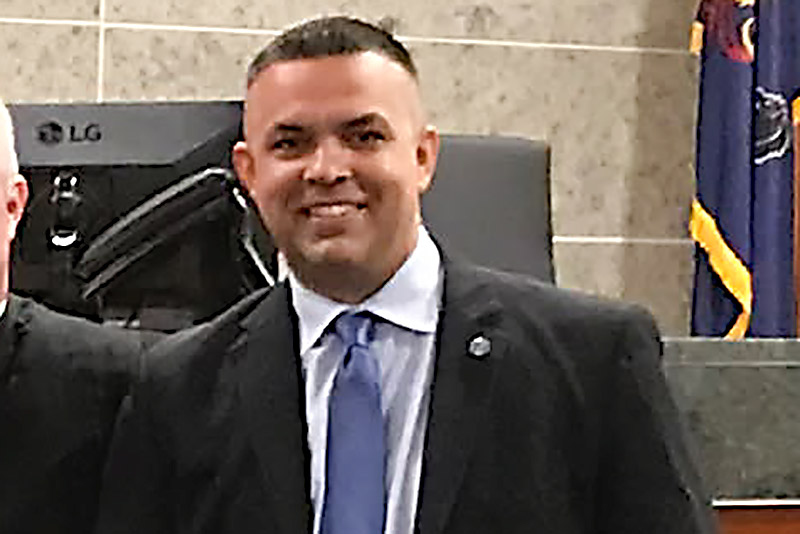
    Ryan Gaffney, 46, has been charged with official oppression for taking the photos, as well as unsworn falsification to authorities for lying about the photos and attempting to dissuade investigators by sending them doctored screenshots of his phone’s photo library.

    Gaffney, of Feasterville, shared the photos to get “his kicks” with civilian employees at the Bucks County Justice Center, Bucks County District Attorney Joe Khan said at a news conference Monday.

    “Mr. Gaffney’s conduct is a disgrace. It’s an abuse of the trust given to him by the sheriff’s office and by taxpayers,” Khan said. “When a deputy sheriff breaks the law, and lies about it, he erodes the public trust that our law enforcement officers work every day to build.”

    Gaffney was charged via summons, and has not yet been arraigned on the charges, court records show. He was fired from his position with the county sheriff’s office in June, officials said Monday.

    Ryan Gaffney was sworn in as a Bucks County sheriff’s deputy in 2023.Courtesy Bucks County Commissioners

    Gaffney’s attorney, Paul Lang, said Monday that he will “address this case in court, not through one-sided social media posts or press conferences.”

    “Ryan Gaffney deserves due process, not trial by publicity,” Lang said. “These are allegations, not facts, and we look forward to answering them where they belong, in a courtroom.”

    The photo of the first victim was taken Jan. 30, when Gaffney and four other sheriff’s deputies served a warrant at the man’s home in Middletown Township, according to the affidavit of probable cause for his arrest.

    When the deputies arrived, the document said, the man was naked from the waist down, and asked deputies to allow him to put pants on. Before he could do so, Gaffney used his personal cell phone to take a photo of the man’s genitals, according to the affidavit.

    A review of Gaffney’s body-worn camera footage showed that he placed his hand over the camera while taking the surreptitious photo. Other deputies at the scene said they were unaware that Gaffney had taken the photo until later.

    One of those deputies saw Gaffney sharing the photo with female civilian employees at the courthouse, and reported his conduct, the affidavit said. Investigators later learned he had also texted the photo to other contacts in his cell phone.

    Bucks County Sheriff Danny Ceisler said Monday that he reported Gaffney’s conduct to Khan’s office immediately after learning about it.

    The former deputy’s behavior, Ceisler said, “was beyond unacceptable and not in any way representative of the highly professional deputies who serve this county with integrity every day.”

    While investigating the case, county detectives found that Gaffney had taken a photo of another person during a separate arrest in December 2024.

    A photo of that person’s buttocks, taken while he was handcuffed, was shared with 12 people, including other members of the sheriff’s office’s warrant division, the document said.

    While being questioned by investigators, Gaffney denied taking the photographs and signed a sworn affidavit affirming that. Through his attorney, he also provided screenshots of his phone’s photo library that showed the photos were not on the device.

    However, investigators downloaded the contents of Gaffney’s phone, and were able to recover both images, which had been deleted.

    Gaffney was sworn in as a sheriff’s deputy in June 2023.

    Before joining the office, Gaffney served in Iraq with the Air Force in 2005, and as a part-time officer with Penndel Police, according to Bucks County Commissioners.

    Gaffney also works as a part-time officer with Hulmeville Borough Police, one of three members of the police force in the small municipality, and was sworn in there in late 2022, according to a borough newsletter published in January 2023.

    Hulmeville Police Chief John Baran did not respond to a request for comment Monday.

  • Cut the number of choices you make each day. Your brain will thank you

    Cut the number of choices you make each day. Your brain will thank you

    Jeans that fit perfectly. The ideal Netflix show for a Tuesday night. Your one and only soulmate. Modern life promises that with enough options, you will happily find the best of everything.

    But behavioral scientists say the increasing flood of choices — whether it comes to shopping, social lives, or relationships — is doing the opposite.

    The idea that more choice is better is baked into Western culture, but research shows that having more options can make people anxious, indecisive and, paradoxically, less happy with what they pick, said Barry Schwartz, an emeritus psychology professor at Swarthmore University and author of The Paradox of Choice.

    “There have been hundreds of studies showing that there can be too much of a good thing,” Schwartz said.

    To minimize the mental noise, he said, limit the number of choices you make, and your brain will thank you for it.

    More is often more confusing

    Schwartz offered several examples of cases where more options left people worse off.

    In the case of Medicare Part D prescription drug plans, people in states with more choices were less likely to choose any of them, he said. The same goes for 401(k) investments. The more options a company had, the less likely employees were to sign up, even when the employer offered matching money.

    Less consequential choices are no different. Schwartz pointed to one often-cited study that showed shoppers at a gourmet grocery store bought more jars of artisanal jam when they were presented with six flavors rather than with a wider array of 24. In a follow-up study, students were more likely to complete an extra-credit assignment when they were given six topics to choose from instead of 30.

    Schwartz’s research expanded on those findings to learn the emotional responses to this phenomenon.

    “Instead of being liberated by all this choice, you’re paralyzed,” he said. “You can do anything, and you can’t figure out which of those many things to do.”

    People also often end up making worse decisions since more options suggest more potentially bad outcomes, he said. And once someone finally decides from all the possibilities, they may be less satisfied with even a good choice because they fear there was a better alternative.

    Schwartz said the satisfaction problem is especially acute for people whose aim is to get the best, whom psychologists call maximizers.

    “People who are maximizers especially suffer from the proliferation of options,” he said. “Only the best will do.”

    The tendency isn’t true for all people in all situations, Schwartz noted. Car buffs will gladly dive into the details of nearly unlimited choice when buying a new one.

    “But you don’t feel that way when it comes to buying jam,” he said.

    The brain doesn’t like making decisions

    Daniel Willingham, a psychology professor and neuroscience researcher at the University of Virginia, said the phenomenon occurs because the brain is designed to save people from having to think.

    Problem-solving requires more energy than relying on memory, a fact that has roots in evolutionary survival mode, Willingham said. When faced with a goal, whether it be an immediate need like responding to a threat or something longer term like finding shelter, the mind first searches for what’s worked before. The problem-solving part of the brain only kicks in afterward.

    “Another way to put it is that if you’re thinking, things are not going well,” he said.

    That explains why sometimes people move through parts of their day on autopilot, he said. Throughout the day, people are confronted with hundreds of situations where they could do something different, but they almost always take the same route to work.

    Schwartz said the proliferation of choices also has become tangled with identity in the social media age, where everyone can easily compare their choices to others.

    “When all you’ve got to choose from is Lee’s and Levi’s, nobody expects the jeans they buy to fit perfectly,” he said. “When there are 2,000 options, well, now, dammit, you do expect your jeans to fit perfectly.”

    Limit your choices and move on

    David Epstein said that after researching his book, Inside the Box: How Constraints Make Us Better, he began to shift away from his maximalist tendencies. Now, he limits his opportunities for making choices, such as when he bought 10 of the same well-fitting T-shirts in different colors.

    He was following the example of Herbert Simon, a psychologist and 1978 Nobel laureate in economics, who had three sets of clothes and ate nearly the same thing every day. Simon introduced the term “satisficing,” a combination of satisfying and sufficing that means setting good-enough criteria for decisions and moving on.

    Epstein sets satisficing rules for himself when shopping online by first focusing on the purpose of the purchase.

    “When I find one that does that, I’m buying it, instead of reading all the reviews and getting sucked into, ‘Well, this one has all these other features.’”

    Willingham and Schwartz suggested farming out some decisions. If you’re looking for a new phone, find a friend who is happy with theirs and buy that one.

    For larger decisions like financial planning, you’ll be happier if you rely on someone else’s professional expertise, Willingham said.

    “If you’re thinking, ‘Well, I’m a clever guy, I can figure that out,’ I think 9 times out of 10, you’re fooling yourself,” he said.

    Schwartz acknowledged that for people who have trouble making decisions, changing is difficult. But it’s worth it.

    “What happens over time is you find it easier to make decisions, you end up more satisfied with the decisions you make, and all of a sudden, you’ve got an extra two hours in every day,” he said.

  • Trump says Qatari-gifted AF1 to be ‘maxed out’ following questions of security

    Trump says Qatari-gifted AF1 to be ‘maxed out’ following questions of security

    President Donald Trump said Sunday that the new Qatari-gifted Air Force One will be sent to be “maxed out,” amid questions about the jet’s security technology. Trump will stop flying on the jet and return to an older plane while those upgrades take place over about one month, the White House said Monday.

    “It has a lot of capability, but as I understand it, in about a month or so, they’re going to send it to have it be maxed out,” he said speaking in front of the aircraft at Joint Base Andrews in Maryland. It is unclear what exact upgrades Trump was referring to.

    “The new Air Force One is perfectly safe for the President’s travels, but will receive additional upgrades and enhancements in the fall which will take approximately one month to complete,” Karoline Leavitt said in a statement on Monday.

    “During that time, the President will fly on the old Air Force One,” she said.

    The new plane is a Boeing 747-800 worth $400 million and was donated by Qatar in an unusual deal between the U.S. and Qatari governments, which raised ethical, legal, and national security concerns at the time it was donated and accepted by the Pentagon last summer. The Air Force said in May that the aircraft — now with a dark blue, red, and gold paint scheme — had undergone modification and flight testing.

    After the accelerated modification process, Trump began flying on the new jet this month.

    The Air Force previously told the Washington Post that it “coordinated closely with appropriate government entities to ensure all functional mission requirements were strictly met for transporting the President.”

    The FBI opened an investigation of the New York Times, issuing subpoenas to several reporters, after the outlet published reporting citing sources who said the aircraft lacked some of the defensive countermeasures previous planes had, including advanced antimissile capabilities. The Times reported that a senior FBI official contacted Times journalists before the article was published to caution against doing so, citing national security concerns. The official also asked for the journalists’ sources, which they refused to provide.

    Trump arrived at the NATO summit in Turkey earlier this month on the gifted jet but, in a surprise switch, did not use that plane when he left.

    Trump denied then that security concerns prompted the change but suggested that Iran could have tried to attack the plane. Reporters flying with the president were asked to close their window blinds as they departed Ankara.

    “They asked you to close your windows; they probably feel that way [about possible threats]. They didn’t ask me to close mine, but if they did, I would’ve done it,” Trump said.

    The Qatari jet is meant to serve as a bridge between the older, roughly 35-year-old Air Force One planes and two new Boeing 747s that the company is retrofitting for $3.9 billion. Features will include antimissile defense systems, electronic anti-hacking protection, and advanced communications systems to use with the Pentagon.

    Nearly a decade of delays have meant that the new planes may not be ready by the time Trump’s second term ends. And costs have increased to an estimated $5.6 billion, an overrun for which Boeing is on the hook, according to the Government Accountability Office.

    The inside of the gifted jet has largely been kept the same as the design meant for the Qatari royal family, with cream-and-tan leather seating on the decks, photos showed. The Qatari plane is expected to be gifted to Trump’s presidential library at the end of his term.