Blog

  • Ten months of inspections at Nazareth Hospital: July 2025 – April 2026

    Ten months of inspections at Nazareth Hospital: July 2025 – April 2026

    Violations between July 2025 and April of this year.

    The hospital is located in Northeast Philadelphia and is part of Trinity Health Mid-Atlantic.

    Here’s a look at the publicly available details:

    • July 1, 2025: Inspectors came to investigate a complaint but found the hospital was in compliance. Complaint details are not made public when inspectors determine it was unfounded.
    • Feb. 18, 2026: Inspectors came to investigate a complaint but found the hospital was in compliance.
    • April 13: Inspectors visited for a special monitoring survey and found the hospital was in compliance.
  • Dick Allen documentary tour makes a stop in Philly, telling ‘a great story that nobody’s told’

    Dick Allen documentary tour makes a stop in Philly, telling ‘a great story that nobody’s told’

    When production started for My Father, Dick Allen, it was supposed to be a one-hour documentary on the former Phillies star. Four years later, it’s a five-part series, featuring interviews with sportswriters, Allen’s loved ones, and former coaches and players.

    The cast is loaded with Hall of Famers, including Mike Schmidt, Goose Gossage, and Andre Dawson. For co-executive producer Sharon Pannozzo, the biggest surprise was seeing just how enthusiastic everyone they asked was to participate.

    “Not one person batted an eye and said, ‘Well, I can’t do that. You know, I don’t have time’. Everybody made time,” she said.

    Over the past few months, the documentary’s production team has put on screening events across the U.S., as they look to find a partner to license the series. On Thursday night, they stopped in Philadelphia, where Allen played nine of his 15 seasons. Fans were given the chance to see the third episode of the series, which focuses on Allen’s first stint with the Phillies from 1963-69. Following the screening was a panel moderated by The Inquirer’s Matt Breen. The participants included director Andy Billman, graphic designer Todd Radom, Allen superfan and co-producer Andy Wooley, and Allen’s son, Richard Jr.

    “Being here is like being at home,” said Allen Jr., known affectionately by his dad as Doobie. “I’ve grown up seeing that Phillies P and the Phillies logo my entire life.”

    Allen Jr. also serves as a producer for the series. Well before filming even started, one of his greatest passions in life was preserving his father’s legacy. For decades, Allen Jr. advocated for his father’s induction into the Baseball Hall of Fame. Allen died in 2020 at 78.

    Dick Allen finally got into the Baseball Hall of Fame in July of 2025, almost 50 years after he stopped playing. Monica Herndon / Staff Photographer

    Allen, who hit 351 career home runs, fell off the ballot in 1997 but was brought up for consideration by the Veterans Committee in 2014. He fell short by just one vote. Allen was brought up again in 2021 but also came up short. Last summer, he finally got into Cooperstown after 20 attempts, receiving 13 of 16 votes from the Classic Era Committee.

    “You can work on a film in the film business for years sometimes, and then all of a sudden it comes together,” said Pannozzo. “We would’ve told the story whether Dick got into the Hall of Fame last year or not … but we had a good ending.”

    When Allen was inducted last summer, Pannozzo and Allen Jr. were given a tour of the Hall of Fame storage vault. The artifact that stuck with Allen the most was a questionnaire his father had filled out at 18 years old, right after he started playing for the Class D Elmira Pioneers. Allen was deeply moved by that piece of paper.

    “My whole life, [baseball was] all he talked about, and I thought, OK, OK, OK, and then I get there, and it’s like, ‘Oh my gosh, he really wasn’t lying,’” Allen Jr. said.

    Another meaningful experience for Doobie was visiting Little Rock, Ark., where his father had played for the triple-A Travelers in 1963. It was that year that the Phillies moved their affiliate from Buffalo to the South. Allen had previously never been to the South and begged the organization to assign him elsewhere, but he didn’t have a choice.

    Inquirer sports reporter Matt Breen (left) moderates a discussion on the life and legacy of Phillies legend and Hall of Fame baseball player Dick Allen in the Montgomery Auditorium at the Parkway Central Library on Thursday.Yong Kim / Staff Photographer

    Allen became the first professional Black baseball player in the city of Little Rock, and it was a brutal year for him. Fans shouted slurs his way at the ballpark, in the parking lot, and throughout the city. Little Rock was also segregated, meaning that Allen was isolated from his teammates except when at the ballpark. He refused to return to the city with any of his kids.

    But the documentary dedicated a whole episode to the horrors Allen faced during his time in Arkansas. When Allen Jr. explored the city for the first time, however, he wasn’t doing it alone. Hall of Fame pitcher Ferguson Jenkins, who also played for the Travelers, volunteered to go through the city with Doobie. Jenkins was very close friends with Allen and overlapped in Little Rock with him briefly in 1963.

    “[He] pretty much substituted for my father, going to the high school, you know, and Little Rock … that would be my favorite part,” Allen Jr. said.

    At this point, the team does not have a deal lined up with a distributor for the film. But they know how important it is to be able to tell the story of Dick Allen to a younger generation of fans who did not see him play.

    “This is a great story that nobody’s told,” said Pannozzo. “Now we have to sell our project.”

  • A man was found engulfed in flames on Kensington Avenue

    Police found a man engulfed in flames along Kensington Avenue Friday morning in what fire department officials called a “non-suspicious” fire.

    Police responded to the 3400 block of Kensington Avenue Friday morning for a report of a screaming person. Upon arrival, a person passing by said a 34-year-old man was found on the ground engulfed in flames.

    Philadelphia Fire Department medics responded to the scene and transported the man to Temple University Hospital, where he was placed in critical but stable condition.

    The circumstances surrounding the incident remain under investigation by the East Detective Division, but the Fire Marshal’s Office ruled the fire to be “non-suspicious.”

    Anyone with information regarding this incident is encouraged to contact the East Detective Division or submit an anonymous tip through the Philadelphia Police Department’s tip line at 215-686-TIPS (8477).

  • Former U.S. Soccer president quits role as top adviser to FIFA boss amid World Cup scandal

    Former U.S. Soccer president quits role as top adviser to FIFA boss amid World Cup scandal

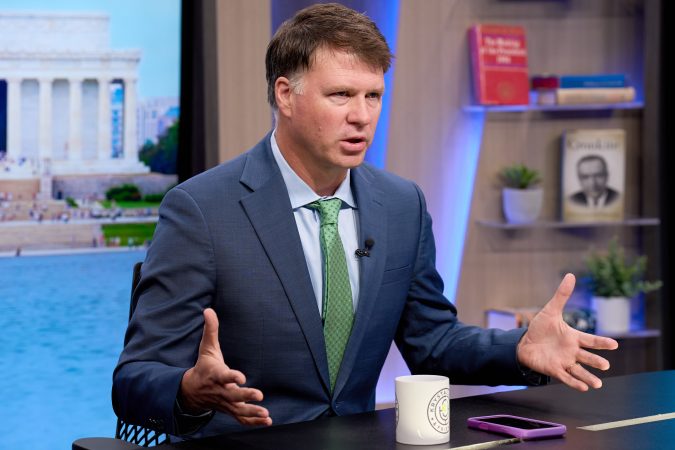
    GENEVA — Two senior FIFA officials criticized Gianni Infantino’s World Cup sell-off plan Friday with one resigning as a presidential adviser and a second saying staff were deceived by a project that must not go ahead.

    Carlos Cordeiro, who represented the soccer body on the White House Task Force for the World Cup, resigned in protest at the private equity plan.

    “I cannot stand by while FIFA considers selling a stake in the World Cup,” Cordeiro, a former U.S. Soccer Federation president and Goldman Sachs banker, said in a statement resigning as adviser to FIFA President Gianni Infantino that urged other senior FIFA staff to speak out.

    Cordeiro was president from 2018-20, and vice president for two years before then. After resigning from U.S. Soccer amid a controversy in the women’s team’s battle for equal pay, FIFA hired him as a senior adviser to the organization and eventually Infantino.

    FIFA’s chief operating officer Kevin Lamour said in a statement to the Associated Press staff were “deceived” by Infantino’s lack of openness planning the private investor scheme and “deserve better than contempt and intimidation.”

    “It is the project of one person,” Lamour, a longtime colleague of Infantino at both FIFA and UEFA, wrote. “Not only must this project not go ahead … but the time has now come for football political leaders to ask themselves the right questions and make the right decisions.”

    Lamour did not resign the post he held since 2024 but said he had a duty to his colleagues.

    “And if that means I lose my job, then so be it” the French official said. “I will understand and respect that decision. At least I’ll sleep well tonight.”

    Ties to Trump’s family

    Cordeiro often joined Infantino on working visits to meet U.S. President Donald Trump at the White House in recent years.

    “Let me be clear. I had no involvement in this proposal, and I oppose it unequivocally,” Cordeiro said, calling the $20 billion commercial subsidiary “a bad deal for football.”

    “Football has been central to my life, and after more than 35 years in banking, I understand both the value of this asset and the consequences of giving part of it away” he said. “That is why this proposal should be rejected.”

    Infantino has proposed spinning off FIFA’s commercial businesses — including World Cups and Club World Cups for men and women — into a $20 billion subsidiary with 20% owned by private investors.

    The “anchor investor,” described by FIFA, is a New York-based investment firm created by Joshua Kushner, the younger brother of Trump’s son-in-law Jared Kushner.

    “FIFA already has access to extraordinary financial resources. The organization sits on billions of dollars in reserves and no debt,” Cordeiro said, noting FIFA’s revenue of $15 billion over the last four years tied to the men’s World Cup just ended.

    “Against that backdrop, selling a permanent stake in football’s most valuable asset to raise $4.2 billion makes little sense. It is mortgaging football’s future without any compelling justification,” he said.

    Cordeiro said he shared five years working for FIFA alongside Infantino with “dedicated, principled people who care deeply about the game.”

    “I hope they, too, will speak up,” he wrote, “because decisions of this magnitude should be made in the interests of football, not those who stand to profit from it.”

    Infantino has been president of FIFA for more than 10 years and had seemed sure to be reelected unopposed next March. FIFA has set a Nov. 18 deadline for challengers to come forward.

    FIFA blames the media

    UEFA threatened to boycott all FIFA games and events until the plan is dropped. North America’s CONCACAF also rejected Infantino’s offer of one-off $20 million payments to each member federation by a mid-September deadline.

    Asia’s soccer body that has been a key ally in Infantino’s 11-year presidency opposed the investor plan and said FIFA must urgently review its management style.

    The Asian statement came hours after FIFA blamed the media and doubled down on pursuing the project which now seems to have a majority of the 211 in opposition.

    “Our planned consultation process was disrupted by incorrect media reports,” FIFA said in a statement early Friday. “We will proceed with this consultation process to ensure that each [member] has the ability to express its vote based on facts.”

    The next FIFA event that would be targeted by the threatened European boycott is within weeks — the Women’s Under-20 World Cup hosted by Poland from Sept. 5. The senior women’s World Cup is next summer in Brazil.

    In November, FIFA will hold an online congress to award the 2031 women’s World Cup to a joint bid of the U.S., Mexico, Jamaica, and Costa Rica; and the 2035 women’s World Cup to the British group of England, Scotland, Wales, and Northern Ireland.

    Inquirer staff writer Jonathan Tannenwald contributed to this article.

  • Montco parts supplier for SEPTA conspired to rig bids, federal prosecutors say

    Montco parts supplier for SEPTA conspired to rig bids, federal prosecutors say

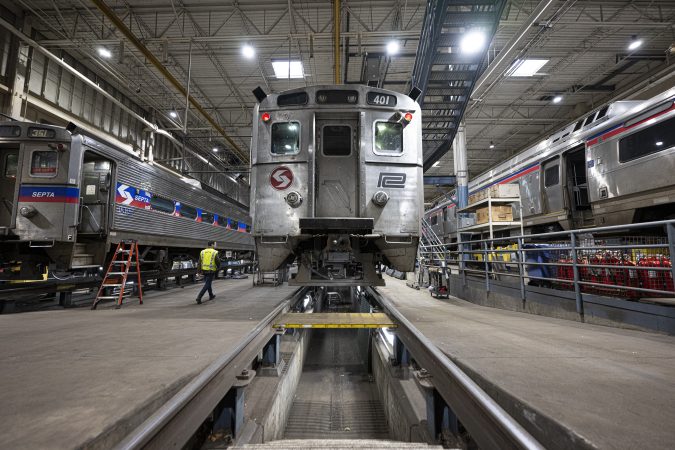
    Federal prosecutors have charged a Montgomery County rail parts supplier and its owner with participating for eight years in a bid-rigging conspiracy involving SEPTA contracts.

    Hatfield-based Qual-Tran Products Co. LLC and owner Cathleen Shive colluded with competitors and others, including a former SEPTA employee, to manipulate the transit agency’s competitive bidding process, according to a charging document filed July 23 in the U.S. District Court for Eastern Pennsylvania.

    Invoices show SEPTA did $20.3 million worth of business with Qual-Tran from 2007 to 2025, authority spokesperson Andrew Busch said. The transit agency says it bought a variety of train and railway parts from the company, many of them for Regional Rail.

    A person answering the phone at Qual-Tran’s listed telephone number declined to comment. Lawyer Fortunato Perri is representing the company according to court records and declined to comment Friday.

    “SEPTA’s Office of Inspector General has been working closely with the Department of Justice on this matter and will continue to do so as the investigation moves forward,” Busch said.

    Qual-Tran distributes after-market parts to transit systems and freight railroads across the country.

    The company specializes in overhead catenary wires, which transfer power to passenger trains, as well as other equipment such as current sensors and third-rail contacts, according to its website and coverage in trade publications.

    SEPTA won’t have a complete picture of how much money was involved in the alleged scheme until the government reveals more details as the case progresses, Busch said.

    Qual-Tran was able to reverse-engineer replacement parts no longer made for older rail cars in SEPTA fleets, he said.

    The U.S. Attorney’s Office for Eastern Pennsylvania declined to comment on the case beyond court records.

    Qual-Tran and Shive, prosecutors allege, conspired with five people and two corporations, none identified by name in court records. They created the appearance of competition for SEPTA work while deciding among them which company would win some contracts, the charging document says.

    The alleged scheme ran from 2016 to 2024, according to the charges. Shive, the documents say, joined Qual-Tran in 2011 and became the president and owner of the company in 2024.

    They face antitrust charges of unlawful restraint of trade in interstate commerce.

    Prosecutors described five transactions.

    In one September 2023 instance, the government said, Shive asked a senior resource controller with SEPTA to arrange for a second corporation to deliberately submit a higher bid of $3,310 each for “30 manhole frames and lids.” Qual-Tran won the contract by quoting a lower price.

    SEPTA confirmed that the senior resource controller mentioned in the charging documents is no longer employed by the agency.

  • Biggest project yet planned for Manayunk’s Venice Island with more than 800 homes

    Biggest project yet planned for Manayunk’s Venice Island with more than 800 homes

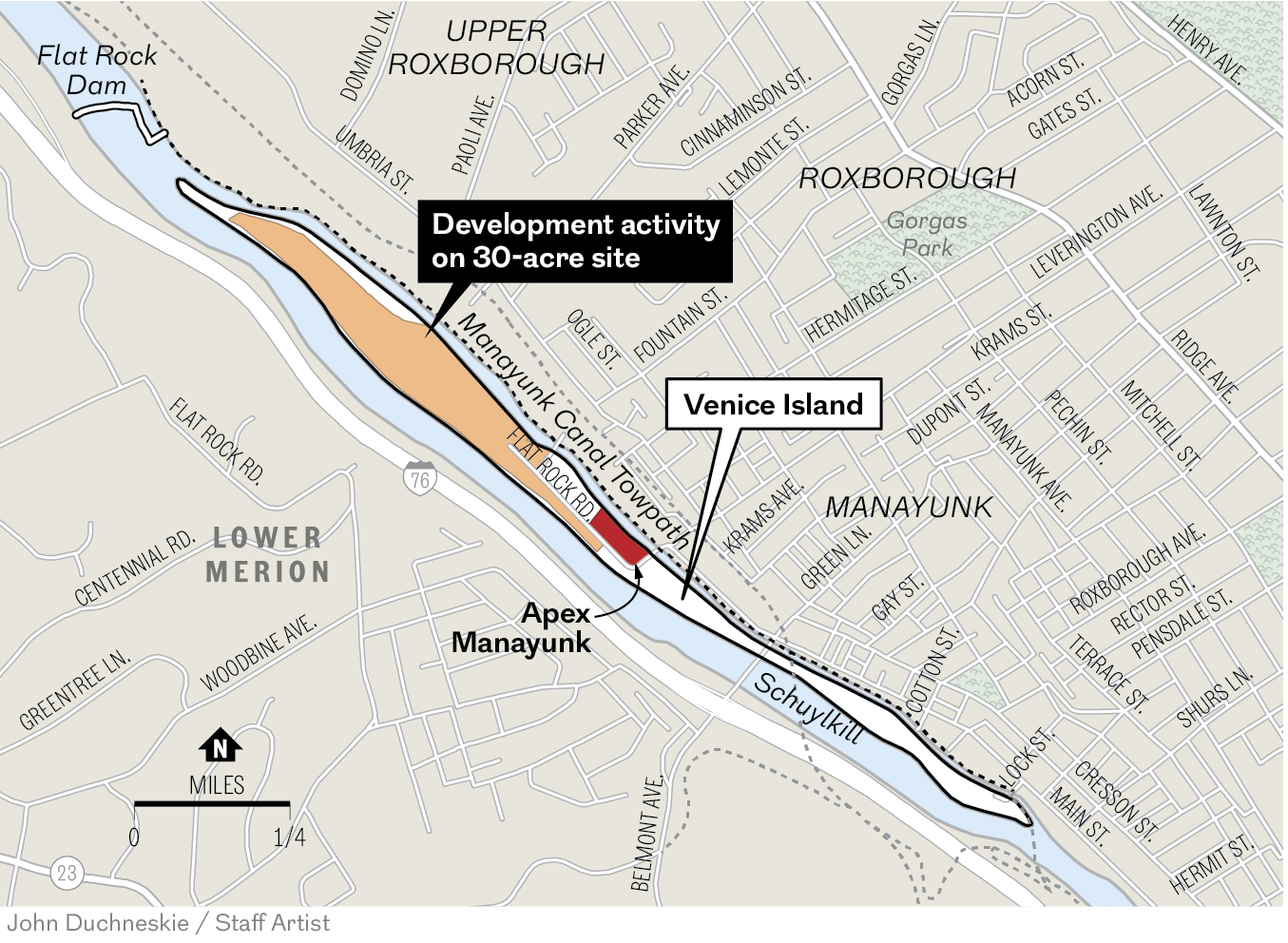
    A developer is planning to build 807 housing units on 30 acres of Manayunk’s Venice Island, bringing an end to years of questions by residents about what would become of the land.

    Manayunk Renaissance LLC told members of local neighborhood groups about the plan during an informal meeting Wednesday. Councilmember Curtis Jones Jr., who represents Manayunk, also attended.

    The company confirmed the plans to The Inquirer on Thursday.

    “Venice Island is one of the most unique areas in Philadelphia, with water views on both sides, proximity to trails and outdoor space, and easy access to both SEPTA and I-76, all within walking distance of one of Philadelphia’s great neighborhoods — Manayunk,” Hercules W. Grigos, an attorney for the company, said in a statement.

    The meeting with community leaders was meant to solicit feedback on the project, which is on the former PaperWorks mill site. Neighborhood input would then be used to “refine the proposal,” Grigos said.

    Manayunk Renaissance LLC said in a statement that it plans to build multiple types of housing at what it calls The Flat Rock at Venice Island. The proposal includes 159 townhouses, 126 duplexes (with 252 units), and 396 apartments.

    John Hunter, an architect and zoning chair of the Manayunk Neighborhood Council, who attended the briefing, has long argued at community meetings against more waterfront housing because he’s concerned about flooding and overdevelopment.

    “It’s unfortunate. It follows a trend,” Hunter said of the plan. “It’s more suburbanization of Manayunk, more residential. There’s no commercial there; it’s not balanced.”

    The company noted that it would be the fifth residential project on Venice Island, although it would still require a zoning change.

    Flat Rock would also be its largest development, by far.

    Apex Manayunk has about 128 units, the Locks has 60 townhouses, and the Isle has roughly 160 apartments. A 181-unit project is also planned by Rock Urban Development, a scaled down version of an earlier proposal.

    Where would the new housing be built?

    The 30-acre site at 5000 Flat Rock Rd. lies on the northwestern side of the island. Manayunk Renaissance LLC purchased the property in 2021 for $23 million, according to city records. The property takes up about 45% of the island’s land mass.

    Some area residents had been hoping for either open space or less dense development with commercial uses mixed in.

    The developer plans 500 parking spaces for the 800 proposed residential units, according to Hunter. That would fall short of the typical one-to-one standard in Manayunk, he noted.

    Manayunk Renaissance LLC did not respond to a question about the parking.

    Who is behind the project?

    It was not immediately clear who is backing Manayunk Renaissance LLC. The company shares an address with A.P. Construction, a South Jersey-based construction company, with an office at the Navy Yard.

    A.P. Construction boasts a portfolio of big projects in the region, including work on bridges, stadiums, and the Manayunk Bridge Connector Trail and Park.

    Hunter said the developer told residents at Wednesday’s meeting that Philadelphia-based Varenhorst would be the architect. The company also designed the Locks, an earlier residential project on the island.

    Map of planned development on a 30-acre site on Venice Island in Manayunk.John Duchneskie

    Flooding concerns

    Hunter said residents are particularly concerned about flooding. Hurricane Ida in 2021 hit Manayunk hard and inundated some of the buildings on the island.

    Hunter and others fear more building will leave Venice Island residents trapped in another big storm, while contributing to even more flooding as runoff flows into the river and canal.

    The 5000 Flat Rock Rd. property lies just below the Flat Rock Dam.

    Venice Island, one of the lowest-lying areas of the city, is a narrow wedge of land, just shy of 70 acres and roughly 1.7 miles long between the Schuylkill River and Manayunk Canal.

    The island falls within a high-risk, 100-year-floodplain designated by the Federal Emergency Management Agency (FEMA), meaning it has a 1% chance of flooding in any given year.

    In September 2021, as Manayunk experienced flooding from Hurricane Ida, people take in the view from Rector Street of the fast running water at the canal that runs along Main Street and feeds into Schuylkill River.ALEJANDRO A. ALVAREZ / Staff Photographer

    In a statement — also shared with neighbors — Manayunk Renaissance LLC said it had hauled in 400,000 cubic yards of soil to raise the site between 9 and 11 feet, bringing it at least 18 inches above flood elevation.

    The company said it had approvals from FEMA, the Pennsylvania Department of Environmental Protection, and the Philadelphia Water Department for the new grading and height.

    Manayunk Renaissance also said it razed a dilapidated 512,000-square-foot mill building and is working to clean up lead and asbestos.

    Manayunk Renaissance said in its statement that it is finalizing an agreement with SEPTA to create an emergency exit from the island via Umbria Street, where the Ivy Ridge railway station is. The company said it would pay all construction costs.

    Hunter said he and others were told during the meeting that the route includes building a bridge over the canal that leads to an on-grade crossing at the railway equipped with three gates. That new road would be reserved for emergencies.

    Zoning is an issue

    The property is zoned for industrial uses, so the developer would either need City Council to change the land use rules legislatively or seek relief from the Zoning Board of Adjustment.

    “After five-plus years of work and planning, Manayunk Renaissance is ready to present its vision to the community and seek city approval to change the zoning,” the company statement said.

    Community support would be a boon for the developer in either case. Having the backing of neighborhood groups is often a positive factor at the zoning board and could sway Councilmember Jones if they go the legislative route.

    The company argues that the existing zoning allows warehouses, data centers, and other projects that “would be inconsistent with the community’s direction.”

  • A new media ecosystem is taking root on the left, reshaping Democratic politics

    A new media ecosystem is taking root on the left, reshaping Democratic politics

    NEW YORK — Farah Berent, a physician assistant in Holland, Michigan, used to learn about politics from channels like ABC, CBS and CNN. But that changed as she decided that coverage of the war in Gaza was irreparably biased.

    “I couldn’t stand all the lies on the stations,″ said Berent, arguing that there wasn’t enough attention being paid to Palestinian suffering. “I started going to Instagram to get my news.”

    Berent is among many progressive-minded Americans who have sworn off legacy media institutions. They’re turning to a widening mix of independent podcasts, social media accounts and digital news sites, part of an increasingly influential ecosystem that has boosted this year’s wave of anti-establishment, left-leaning candidates who may not have gotten as much attention otherwise.

    Liberals remain more likely than conservatives to trust mainstream outlets, but the splintering echoes how conservatives skeptical of their party created a collection of insurgent news sites years ago. The shift has elevated individual commentators with opinions on the news, some of whom have proven influential in driving people’s votes.

    Ryan Grim, a co-founder of Drop Site News and a veteran of online political debates, said progressive politicians have sought out his platform to reach voters. In a change from previous election cycles, “they have ways to get covered even if the mainstream just basically ignores them,” he said.

    One of those candidates is Abdul El-Sayed, who is running for U.S. Senate in Michigan and faces the more moderate U.S. Rep. Haley Stevens in the Aug 4. primary.

    “I think in a lot of ways, where traditional media has been gatekeepers, we’re watching that gatekeeping function fall away,” El-Sayed said.

    Anti-establishment media has exploded lately

    These changes have been on display this year in places like New York City, where a slate of progressive congressional candidates endorsed by Mayor Zohran Mamdani defeated establishment-backed candidates.

    Sara Hyler, a policy analyst in East Harlem, originally planned to support incumbent Rep. Adriano Espaillat in last month’s Democratic primary. But then Hyler started learning about progressive outsider Darializa Avila Chevalier through YouTube videos and podcasts, including from the liberal media company MeidasTouch.

    “My actual beliefs are to the left of Democrats. I don’t want a moderate,” said Hyler, who ultimately voted for Avila Chevalier in hopes she could help nudge Congress toward progressive policies.

    The rise of independent media has been part of a digital transformation that transcends politics, as chronically online Americans are turning toward news from social media and content creators. But it’s not just the popularity of smartphones driving that change.

    “There’s a complete lack of trust in any and all institutions now,” said Mike Nellis, a Democratic consultant who hosts a podcast, writes a Substack and posts political analysis on social media. “That has led people to turn to individuals, and so now you’re picking your flavor of person to listen to.”

    Among conservatives, faith in mainstream media and in the more moderate wing of the Republican Party faltered years ago, with the rise of the Tea Party movement paving the way for an alternative right-wing media ecosystem, including sites like the Daily Caller, Breitbart and The Blaze. Trump also tapped into a loose constellation of podcasts, including “The Joe Rogan Experience,” for his successful comeback campaign.

    Reece Peck, a media culture professor at the College of Staten Island, said the left-wing version of that has happened slowly, beginning with the momentum of Sen. Bernie Sanders’ first presidential run in 2016. At the time, left-wing, anti-establishment YouTube accounts and podcasts like “The Young Turks” and “Chapo Trap House” were gaining attention but didn’t reach the majority of Democratic voters.

    Now Democrats have realized their faith in institutions didn’t prevent Trump’s return.

    “The ground has been made fertile for an anti-establishment media politics, where it just wasn’t quite there with the voter base in those previous cycles,” Peck said. Even older, moderate liberals, he said, have started to ″throw their hands in the air and look for alternatives.”

    YouTube accounts like ”Secular Talk” and “Breaking Points,” streamers like Hasan Piker and new digital journalism organizations like More Perfect Union and The Lever are among those that have seen their audiences multiply.

    Grim said Drop Site has amassed 800,000 free and 60,000 paid subscribers since launching two years ago — more than he’d anticipated.

    Saul Levin, a Michigan progressive organizer who recently started his own podcast about artificial intelligence data centers, said Trump’s attacks on the existing media landscape are part of the reason for that growth.

    “The investigations and raids on numerous different journalists, the appointment of specifically aligned billionaires to lead various major news agencies, is very troubling,” he said. “Creators and new media outlets are stepping in and trying to fill gaps.”

    Alternative media is prominent in the Michigan primary

    The Michigan primary will be the latest test of the evolving media ecosystem, which El-Sayed, a longtime podcaster himself, has tried to harness. Various progressive outlets, creators and organizers have aggressively promoted his campaign.

    El-Sayed said the rise of independent media has let voters compare news across different channels and notice biases, but he doesn’t turn down opportunities on legacy media, either.

    “I go on Fox News, I go on podcasts, I Twitch stream, we have a YouTube channel,” he said.

    Stevens, who received endorsements from outgoing incumbent Sen. Gary Peters, Michigan Gov. Gretchen Whitmer and Senate Democratic Leader Chuck Schumer, has a more traditional approach. She’s also backed by the American Israel Public Affairs Committee, or AIPAC, and its affiliated groups, which have spent close to $30 million on the race.

    Stevens’ campaign declined to comment for this story.

    Reporting from progressive outlets has influenced how the race has unfolded. For example, Stevens parted ways with a campaign consultant when Drop Site revealed that she had also worked for tech company Palantir, which is controversial in liberal circles because of its government contracts involving immigration enforcement.

    Democratic officials said Trump’s return to the White House has also revived interest in the party’s official channels. The Democratic National Committee’s relatively new digital media offering, a rapid-response clipping and messaging account with the handle @FactPostNews, has amassed more than 2 billion impressions on Threads, X, Facebook, Instagram and Bluesky in 2026 alone.

    “I remember thinking to myself, there’s a chance that this flops and doesn’t get any traction,” said DNC Deputy Chief Mobilization Officer Paulina Mangubat. “It’s been really, really successful.”

    At times, the mix of new voices on the left has erupted in public tensions.

    Grim recently faced criticism for boosting failed Democratic candidate Graham Platner in Maine, and he was accused of trying to undermine the credibility of the sexual assault allegation that torpedoed Platner’s campaign. Grim said while he recognized people were angry, his reporting on the allegation was meant to share additional context.

    “If we’re going to litigate allegations in the court of public opinion, we can’t pick and choose what details we want to share with the public out of a fear of how they’ll be received,” he said.

    More recently, when Drop Site interviewed progressive U.S. Rep. Ro Khanna of California, one of its journalists pressed Khanna on whether Hamas was justified to attack Israeli soldiers on Oct. 7, 2023. Khanna refused to agree.

    But Grim said those are the kinds of tough questions independent media are there to ask — and that American voters increasingly want to see their representatives in Congress answer.

    “People want to see you being accountable to questions, and if they don’t agree with you, sometimes that’s fine,” he said. “I think the smarter politicians are starting to recognize that.”

  • Despite good intentions from the city, Philly’s streets remain deadlier than those in New York and Chicago | Shackamaxon

    This week, a couple of big names leave City Hall, Philadelphia’s Vision Zero struggles, SEPTA’s biggest woe, and LeBron James comes to town.

    Managing Director Adam Thiel and City Solicitor Renee Garcia are leaving.Tyger Williams/Heather Khalifa

    Topline turnover

    Philadelphia Mayor Cherelle L. Parker has experienced some turnover during her first term, but this week saw the biggest personnel changes yet. Managing Director Adam Thiel and City Solicitor Renee Garcia are both leaving city government. They’ll be replaced by Carlton Williams and Monique Galloway.

    While Thiel hasn’t answered questions about his departure, it also isn’t very surprising.

    As Inquirer reporters have thoroughly documented, Thiel’s attention has been pulled in multiple directions. In addition to his job with the city, he also serves in the Army Reserve and works as a consultant. In fact, he made more money working outside of city government than he did in it.

    Thiel always claimed that his extra jobs did not create a conflict with city work, but this was harder to believe as time went on. He missed five months of work last year because of his Army duties alone. His absence during events like the month of snowcrete was conspicuous. Indeed, it was Williams who seemed to step into the role of coordinator.

    Garcia’s departure is a little more surprising, especially given her central role in defending the administration’s toughest calls.

    When Parker endorsed the proposed and then canceled Sixers arena on Market Street, Garcia spent hours testifying about the deal at City Council. It also fell to Garcia to defend Parker’s cautious approach to the Trump administration, including the choice to allow some of Council’s “ICE Out” agenda to become law without the mayor’s signature. She’s absorbed a lot of political arrows on Parker’s behalf.

    A sign of how important these roles are to Parker’s success? Both were replaced immediately. Meanwhile, the city still lacks a permanent commerce director over a year after Alba Martinez left the role.

    Robert Tomas of Philadelphia was part of a group that biked from the Art Museum to City Hall to protest what they see as a lack of commitment to traffic safety from the mayor in 2024.Elizabeth Robertson / Staff Photographer

    Blurred vision

    Philadelphia’s roadways remain overly dangerous. In fact, according to a report compiled by City Controller Christy Brady, the city’s fatalities outpace our peers.

    Our traffic fatality rate of 9.04 deaths per 100,000 residents is triple New York’s 2.86 and roughly double Washington’s 4.73. The next closest city, Chicago, came in at 7.15. This means that Philadelphia’s streets are significantly more dangerous than comparable communities.

    To be clear, City Hall is trying to bring these numbers down. Alongside the Philadelphia Parking Authority, city officials have blanketed the roads with speed cameras, which have successfully reduced crashes and fatalities along corridors like Roosevelt Boulevard.

    The city is also working to lower speed limits. While 25 mph may feel slow behind the wheel of a car, research quantifies just how much danger pedestrians face because of a vehicle’s speed. At 20 mph, pedestrians have a 10% chance of death and a 25% chance of serious injury. At 30 mph, this jumps up to a roughly 25% chance of death and a 50% chance of severe injury. At 40 mph-plus, there’s a 50% chance of death, and severe injury is nearly a guarantee.

    This explains why speed limits on roads like Broad Street are set to 25 mph. Given the cameras only give out tickets once a driver is 11 mph over, setting them higher would leave pedestrians exposed to dangerous conditions.

    It is easy for opponents of speed cameras, street redesigns, or concrete protections for cyclists to complain about the supposedly all-powerful and nefarious “bike lobby,” but the data are quite clear. Philadelphia needs to do much more to protect its most vulnerable road users.

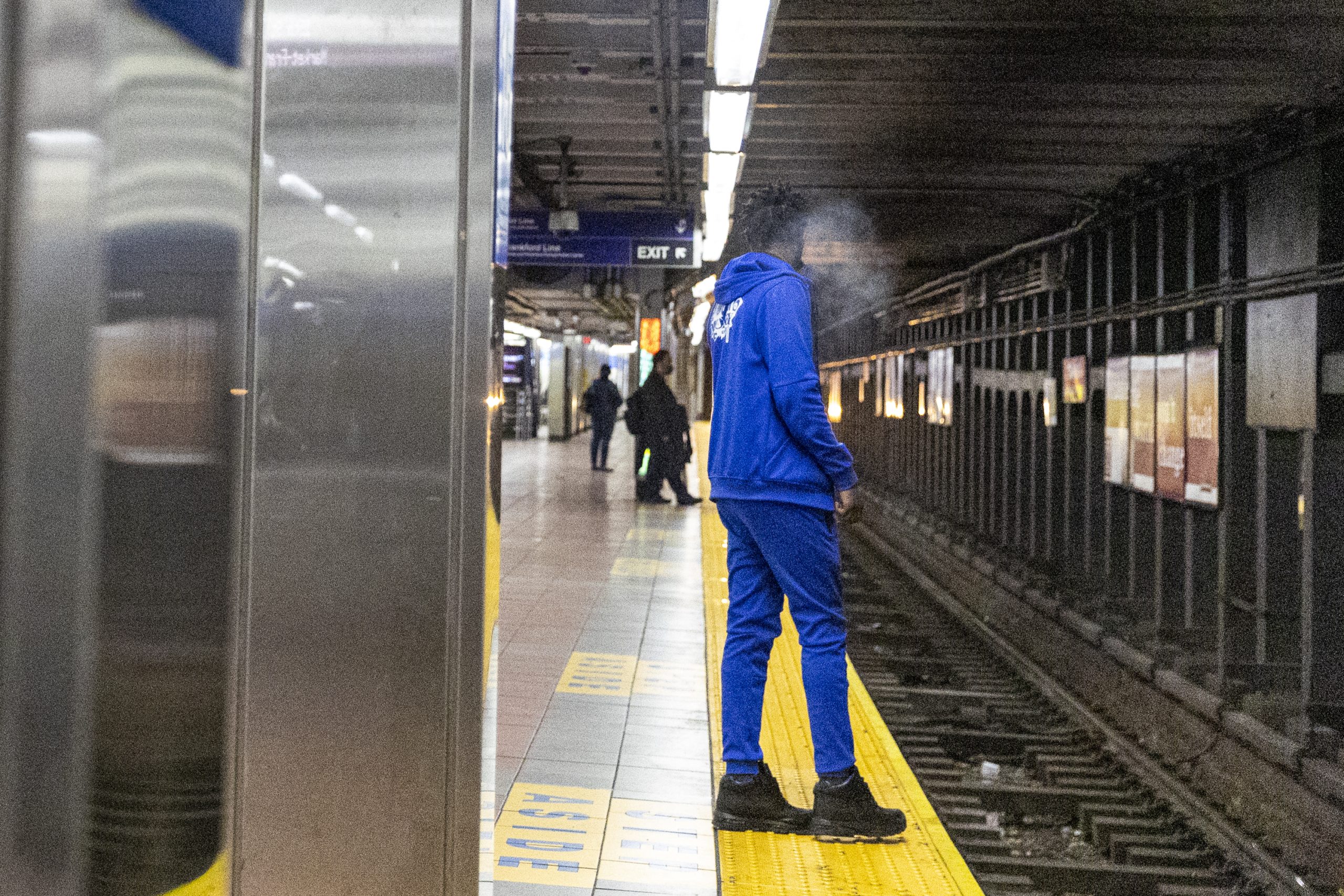
    A person smoking at the inside one of the SEPTA stops in Philadelphia.Tyger Williams / Staff Photographer

    Up in smoke

    After yet another year without a funding deal from Harrisburg, mass transit advocates and their supporters decided to raise awareness by embarking on a 24-hour public transportation marathon. They were joined, at least for part of the journey, by a plethora of elected officials.

    Raising awareness is important because SEPTA won’t survive without sustainable funding from the General Assembly. Still, a trip down to Washington this week reminded me of a problem that can’t be blamed on Harrisburg: the behavior of some of SEPTA’s riders.

    To be clear, the Washington Metropolitan Area Transit Authority system struggles with behavioral issues as well. Fare evasion, especially on bus routes, is out of control. Smoking on the metro, however, seems to be far less common.

    On SEPTA, however, it is ubiquitous.

    More than one person I’ve confronted over it has claimed, “I didn’t know you weren’t allowed to smoke down here.”

    It would be unfair to compound the frustration of riders who already deal with this phenomenon by failing to fund adequate service. At the same time, the constant smell of cigarettes and marijuana must be addressed. Even if SEPTA secures sustainable funding in next year’s budget, it won’t fulfill its potential until quality of ridership issues like smoking have been addressed.

    There’s no question in my mind that this behavior keeps people from riding the system. Beyond the discomfort of secondhand smoke, it also sends a message that the stations and vehicles are out of control. This makes them feel dangerous, even if SEPTA has posted record declines in serious crime.

    Every rider who doesn’t take the subway because of the dive bar atmosphere costs the system money. Some people have even resorted to taking buses, which are slower (and are more expensive for SEPTA to operate), just to avoid showing up at work smelling like a music festival.

    I’ve spent plenty of time in bars that allow smoking and I support the legalization of recreational marijuana. But it is one thing to engage in these behaviors in your own home or at a place of business where it is welcomed. It should never happen on public transit.

    Everyone’s excited about the King coming to town.Courtesy of Giphy.com

    The King’s landing

    When Philadelphia was first mooted as a potential landing spot for LeBron James’ swan song, I was a bit skeptical. After all, how often do good things happen for the Sixers?

    That changed when I heard about a conversation between Gov. Josh Shapiro and the Akron, Ohio native. It isn’t that Shapiro has superpowers when it comes to persuasion. In fact, my guess was that LeBron was most of the way toward choosing Philadelphia when that interaction happened. If the discussion hadn’t gone well, I doubt Shapiro would have ever mentioned it.

    After all, if Shapiro had publicly lobbied LeBron, only for the legend to land elsewhere, he’d have looked inept and desperate. Now, he looks savvy.

    Although there are reports that James may live in New York City while playing for the Sixers, his decision to take his talents to South Philadelphia is another corrective to the old and tired narratives about our city.

    Like a lot of Philadelphians, I can’t wait for the Xfinity Mobile Arena to become the court of King James.

  • 60,000 migrants crossed into Spanish territory of Ceuta, but most soon left voluntarily

    60,000 migrants crossed into Spanish territory of Ceuta, but most soon left voluntarily

    CEUTA, Spain — About 60,000 migrants crossed from Morocco into Spain’s tiny Ceuta territory in 24 hours, Ceuta’s president said Friday, a figure that is equivalent to 70% of the population of the city in North Africa. At least 57 migrants died on the journey.

    But most of the people who made the crossing soon returned voluntarily, the Spanish government said, after the sudden arrival of so many migrants triggered chaos and a humanitarian crisis.

    Some migrants swam several miles through the sea and faced down authorities who tried to turn them back with water cannons, tear gas, and warning shots. Those who died included some who drowned or were killed in a stampede to cross a breakwater barrier near a border checkpoint.

    Spain deployed its armed forces and additional police to restore order in Ceuta, which sits on the Strait of Gibraltar at the entrance to the Mediterranean Sea and has been a Spanish possession since 1580. On the Moroccan side of the border, security forces clashed with migrants. The chaos also had ripple effects abroad, with Italy and France pledging to tighten their controls on people arriving from Spain.

    “The situation that Ceuta is going through is absolutely unsustainable,” Ceuta President Juan Jesús Vivas told journalists.

    Meanwhile, migrants from Morocco also attempted to cross into Melilla, Spain’s other territory at the tip of North Africa, where they clashed with police.

    Spanish prime minister condemns border breach

    Spanish Prime Minister Pedro Sánchez visited Ceuta on Friday and condemned the border breach, which he described as “a violation of Spain’s territorial integrity.”

    Sánchez blamed human smugglers for the crisis, saying they “deceive so many young people and ultimately lead many of them to their deaths,” whether in the ocean or in the city.

    The Spanish Interior Ministry released its own figures shortly after Vivas spoke, estimating that some 50,000 people had crossed from Morocco since Thursday. It added that 48,300 had already returned to Morocco by Friday evening, with hundreds more going back by the hour.

    Rachid Sbihi, who leads a local workers association representing Civil Guard officers, described the situation as a “serious humanitarian crisis,” saying thousands of migrants, including unaccompanied children, were left sleeping in parks and on sidewalks, while others roamed the streets aimlessly.

    “It’s chaotic,” Sbihi said.

    The Moroccan Interior Ministry did not immediately respond to a request for comment on the migrant figures released by the Spanish authorities.

    European Commission President Ursula von der Leyen said the images from Ceuta “are unacceptable.”

    “We cannot allow anyone to come to our Union without abiding by our rules,” she said Friday in an online statement. “Dangerous crossings must stop immediately. Smuggling networks must be dismantled. And returns must be swift, as our rules allow.”

    Dozens died in the chaos

    Some of the 57 people who died had drowned, Sbihi said, but some were killed in a stampede to cross the breakwater fence at Tarajal Beach, an urban beach near a border checkpoint with Morocco. The waters near the border fence were littered with buoys, shoes, and other abandoned belongings.

    Many young Moroccans who crossed into Ceuta told the Associated Press that they had hoped to find better work opportunities in Spain but were returning given the mayhem in Ceuta.

    “There’s nothing at home. I’d have to work 12-hour shifts for a meager wage. That’s why I came here,” said 21-year-old Abdulah Buji, who hails from the city of Tetouan. “But I haven’t found any opportunities here either, so I have to go back.”

    Moroccan police used water cannons and fired warning shots into the air to prevent migrants from crossing into Ceuta, according to rights groups in Morocco.

    Morocco’s ambassador to Spain said the situation in Ceuta had unfolded against Morocco’s wishes.

    “We have always prioritized legal, orderly, and safe migration for all,” Karima Benyaich said. She did not comment on what prompted the migrants to cross into Ceuta.

    To reach Ceuta, on the northern African coast, migrants often swim from the Moroccan town of Fnideq, covering about 3 miles to reach Spanish territory. Others attempt the crossing from the nearby town of Belyounech, where the distance is shorter.

    Border surge linked to Supreme Court ruling

    The authorities in Ceuta and Madrid have linked the border surge to a recent decision by the Spanish Supreme Court, which ruled that migrants arriving by sea could not be summarily deported, unlike those who cross by land or climb the border fence.

    Sánchez said migrant smugglers misinterpreted the ruling.

    The interpretation of the Supreme Court’s ruling “spread like wildfire over the past few hours through the networks of human trafficking organizations,” triggering the surge, Sánchez said.

    Spain has bucked anti-immigration trend

    Sánchez has bucked the anti-migration trend that has gained ground across Europe and in the U.S.

    Earlier this year, his government moved to give residency and work permits to hundreds of thousands of migrants already living in the country without permission.

    Sánchez, a Socialist, argued that it would be good for the economy and the demographics of an aging Spain. Migrants who entered irregularly after Jan. 1 this year were not included.

    His critics have jumped at the opportunity to attack his policy, saying it encouraged more migrants to come.

    “Sánchez allows Spain to be invaded through Ceuta,” Spanish conservative politician Isabel Díaz Ayuso wrote on X.

    The U.S. expressed its support for “the people of Spain, and all Europeans, against this egregious violation of their sovereignty and human rights.”

    In a post on X, the U.S. State Department added that “this unacceptable incident is the direct result of the Spanish Government’s deliberate efforts to enable and facilitate mass illegal migration into Europe.”

    Sánchez on Friday defended his migration policy and distanced it from the events in Ceuta.

    In the tumult, Italy temporarily suspended its open-border Schengen agreement with Spain, reimposing border controls for air and sea. The Interior Ministry said the decision amounted to a “closure” of the borders, but experts said it was merely a resumption of border controls. The agreement allows travelers to fly between the two countries without presenting passports.

    French Interior Minister Laurent Nunez said France would also strengthen border checks with Spain.

    The crisis in Ceuta “has nothing to do with the regularization of migrants adopted by the Government of Spain, as is being falsely claimed by some,” the Spanish government said in a statement late Thursday after Italy’s announcement.

    Pressure grows on second Spanish territory in Africa

    Migrants from Morocco also attempted to cross into Melilla, the other Spanish territory at the tip of North Africa.

    There was widespread chaos in Bni Nsar, the Moroccan town bordering the Spanish territory, where migrants clashed with police, throwing rocks and setting police vehicles ablaze, according to local media and rights groups. They reported injuries among security forces and the arrest of dozens of people attempting to cross.

    Like Ceuta, Melilla is a self-governing Spanish city. Many Moroccans consider both cities to be occupied territory.

  • Big oil companies reap billions off the Iran war

    Big oil companies reap billions off the Iran war

    Oil companies have delighted Wall Street this week by reporting multibillion-dollar windfalls in their earnings statements, with ExxonMobil and Chevron on Friday reporting a combined $26.5 billion in profits during the second quarter of the year.

    But the immense profit stemming in large part from the war in Iran, and coming at the expense of motorists struggling to pay for a tank of gas, is fast making the companies a ripe political target.

    The oil majors are largely sitting on those unanticipated billions, according to an industry analysis by the research firm Wood MacKenzie.

    They are reluctant to reinvest the profits in expanded drilling that could eventually increase the world’s fuel supply, the firm found, as an abrupt end to the war could push prices for crude down considerably before the firms are able to recoup the cost of new rigs.

    With gas prices averaging more than $4 per gallon nationwide, and midterms in the not-too-distant future, lawmakers eager to assign blame for voter frustrations are taking aim.

    Exxon and Chevron early Friday posted their blockbuster earnings for the quarter that ended last month.

    Chevron disclosed $12 billion in earnings, reflecting a $9.6-billion jump over the same quarter last year and the firm’s biggest profit since 2020. Chevron CEO Mike Wirth attributed it in a statement to “disciplined investment and strong execution that drove record U.S. upstream production, record crude throughput in our U.S. refineries, and exceptional reliability across key assets.”

    ExxonMobil said Friday its earnings were $14.5 billion, more than double what the company reported for the same quarter last year. CEO Darren Woods said the quarter “was shaped by disruption, but defined by execution,” for the company.

    The disclosures followed Shell’s earnings report Thursday showing the company doubled its quarterly profits between this year and last.

    The staggering earnings are part of a bigger $425 billion annual windfall that Wood MacKenzie estimates is coming to the broader industry if prices for a barrel of crude average $90 for the year, which many analysts project they will.

    That was roughly the cost of oil on Friday morning. It has soared as high as $120 since the U.S. and Israel attacked Iran in late February, leading to the closure of the Strait of Hormuz, through which one-fifth of the world’s oil and natural gas is shipped.

    “Oil companies know they are going to be in for political criticism,” said Bob McNally, founder of the research firm Rapidan Energy Group. “This is like one of those classic movies from the 1960s that keeps coming back around. We all know there is going to be a lot of theater when oil prices are going up.”

    The companies declined to answer questions about their profits at a time of high gas prices.

    Asked about the windfalls oil companies are reporting this week, White House spokesperson Taylor Rogers shifted attention from the firms to Iran. She said, “Oil and gas prices will plummet back to preconflict levels” as the U.S. military neutralizes Iran’s ability to disrupt the flow of crude.

    President Donald Trump had previously put the companies on notice that the Justice Department would be investigating potential price gouging. The threat has populist appeal but could prove challenging to carry out. Industry officials said privately they have seen no evidence an actual investigation is happening.

    Dustin Meyer, senior vice president of policy, economics, and regulatory affairs at the American Petroleum Institute, said government scrutiny would not be a matter of concern.

    “These markets are transparent,” Meyer said. “It is not the first time government has looked at them. Every single time they do, they find the same thing. Not only is there no gouging, but gouging is impossible for an oil market this size with this many participants.”

    Democrats in Congress, though, have seized on high prices at the pump in the run-up to a hotly contested midterm election that will determine which party controls both the House and Senate.

    As the likelihood of windfall profits came into focus last month, Sen. Sheldon Whitehouse (D., R.I.) and Sen. Elizabeth Warren (D., Mass.) wrote a letter to oil executives demanding details of how they may have profited from the war or lobbied the White House to execute it in ways that benefit them.

    Woods told CNBC Friday that Exxon tries “to make sure not just the U.S. administration but frankly administrations all around the world … understand our perspective of what we see and how things are playing out, so they have the best information to make policy decisions.”

    “We very much stick in our lane with respect to here is what we see, here is how we think it could potentially play out, and make sure policymakers have our best thinking when they are putting together their decisions and the approach they want to take,” Woods said.

    Rep. Brad Sherman, a California Democrat, is among those pushing for more government intervention.

    He said motorists “need to fill their gas tank today, and they either need to be paying a lower price, or second best, they need to be getting a rebate check from the government.” He has proposed legislation that would impose a windfall tax on U.S. oil companies until the war with Iran is over, the strait is reopened, and U.S. benchmark crude oil prices drop below $75 per barrel.

    In the past, the industry has tended to argue that such levies would take away cash it needs to invest in expanded drilling that could effectively help lower prices. But the companies are not making those investments right now, amid concerns the war will have ended and oil prices will have dropped too low to make the rigs profitable by the time they are finally operating months — or even years — from now.

    And even if the firms were investing, Sherman said, drivers would still be suffering.

    “When we’re paying these outrageous prices at the pump, nobody’s saying, ‘Oh, that’s great! The oil companies are going to invest this in additional oil production,’” he said.

    For the moment, at least, his proposal is more a political tool than a viable policy plan in this Congress, which is controlled by Republicans staunchly opposed to a windfall profit tax.

    But if prices remain high, analysts say, sentiments could shift, and the government may be more inclined to step in to try to bring relief to consumers, including by limiting exports of U.S. oil.

    Regulators and lawmakers have already mostly exhausted their options for bringing down prices without dramatic market interventions. Government petroleum reserves have been depleted and sanctions on countries like Venezuela and Russia have been lifted to bring more fuel into the market.

    “There are not many tools left in the tool kit to bring down prices,” said Denton Cinquegrana, chief oil analyst at Dow Jones Energy. “But the general public who has to buy gasoline certainly does not want to hear that, especially amid an affordability crisis that has taken over this country.”

    Windfall profit taxes have a fraught track record in the U.S., according to Tyler Priest, an associate professor of history at the University of Iowa.

    The last one enacted in 1980 after the oil shocks of the 1970s generated far less revenue than lawmakers projected and was ultimately repealed after economists concluded it discouraged some domestic production while adding significant complexity to the tax code.

    Democrats have structured their latest proposals differently, focusing the tax only on profits above a historical benchmark and steering the revenue generated toward consumers. But experts are conflicted on its potential effectiveness. Priest noted that the plans are narrowly targeted at large oil companies, but more than 70% of U.S. oil comes from smaller producers.

    Shon Hiatt, an energy scholar at the University of Southern California Marshall School of Business, said a windfall profit tax imposed in Britain in 2022 was followed by a sharp decline in production there.

    “The incentives to take risk and invest in production are drastically reduced,” he said, which can ultimately lead to “lower production, and in some cases, scarcity.”

    Others argue the decline predated the tax and was caused by a number of factors, including aging oil fields and a shift toward renewables.

    Even if such policy proposals stall in the U.S., lawmaker attacks are only likely to intensify in the coming months. Analysts are already projecting the companies will post a fresh round of windfall profits in the next reporting period.

    It falls days before the election.