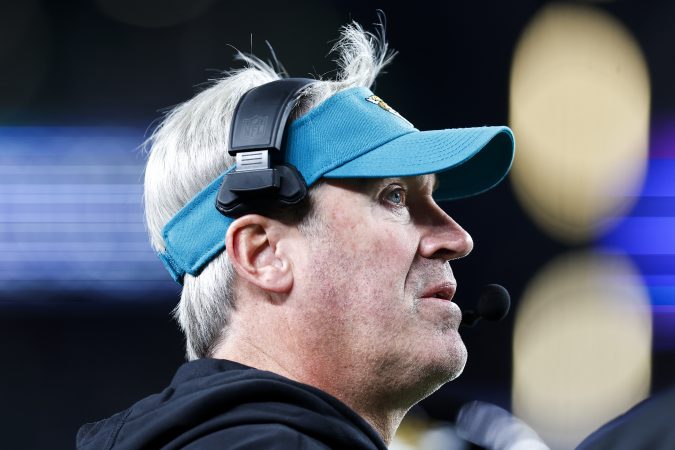
Doug Pederson is following the well-worn path from coaching to broadcasting, but his first-ever TV gig might be a bit of a head scratcher.
The former Eagles head coach and Super Bowl LII champ is joining CBS this season to call 10 college football games on CBS Sports Network, beginning with Maryland vs. UConn on Sept. 12.
Outside of playing quarterback at Northeast Louisiana University, Pederson has no direct connection to the college football world. But as he made clear to CBS, his ultimate goal isn’t to have a second career as a college football analyst.
“My goal, my passion, is to get back to the NFL,” Pederson said. “But when it’s all said and done, this is a great opportunity to get my feet wet with the broadcasting side, get some really good coaching and insight [on] how it all kind of works.”
CBS certainly has plenty of NFL games, so Pederson could end up as an NFL analyst or land a role on a studio show like The NFL Today. But he could also see himself returning to the sidelines following head coaching stints with the Eagles and Jacksonville Jaguars, where he spent three years before being fired following the 2024 season.
“I’m not closing the door to coaching,” Pederson said, “But this keeps me involved and sharp and connected to the game.”
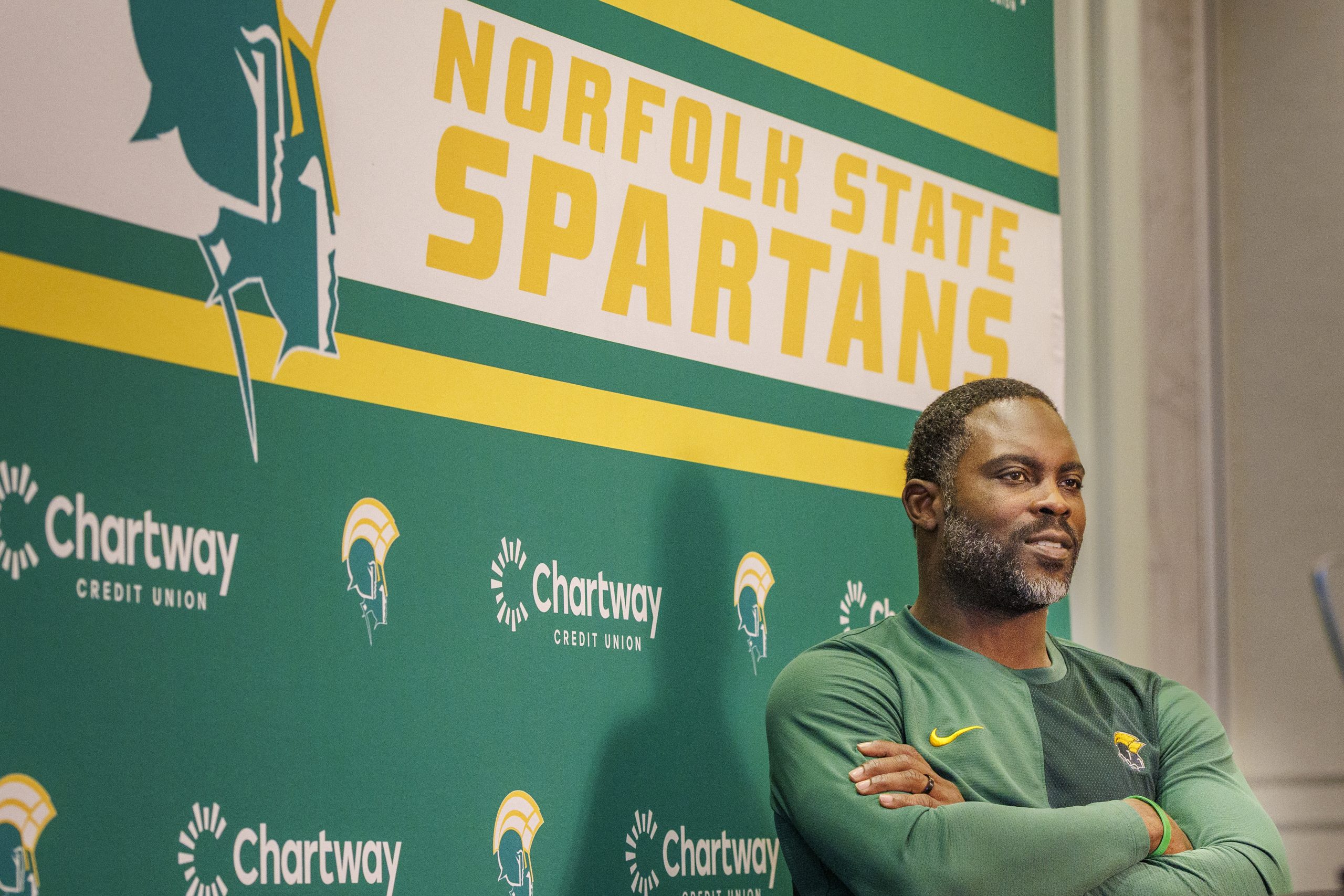
Ex-Eagles quarterback Michael Vick turned a Fox gig into a head coaching job with Norfolk State.Alejandro A. Alvarez / Staff Photographer
He wouldn’t be the first to use broadcasting to land a coaching job. In 2022, former New Orleans Saints head coach Sean Payton spent a season as a Fox analyst before landing a job with the Denver Broncos. Closer to home, Joe Girardi turned a role with the MLB Network into a short-lived job as the manager of the Phillies. And former Eagles quarterback Michael Vick used broadcasting as a path to becoming the head football coach at Norfolk State.
For now, Pederson’s focus is on broadcasting. A month before the start of the college football season, Pederson doesn’t know who his play-by-play partner will be or if it’ll be the same person each week. He does know his schedule, which includes North Dakota State, Kennesaw State, and three UConn games. About the closest he’ll get to Philly is calling a University of Delaware game in Newark, Del.
While this will be Pederson’s first time broadcasting games, he did travel to Los Angeles to audition with Fox, where he called a mock game alongside veteran play-by-play announcer Chris Myers. He’s also sought advice from a host of broadcasters ranging from Kirk Herbstreit to Greg McElroy — and even longtime ESPN veteran Chris Berman.
“I understand football and how it works, and being able to describe it is a different thing,” Pederson said. “So it’s going to be a learning experience.”
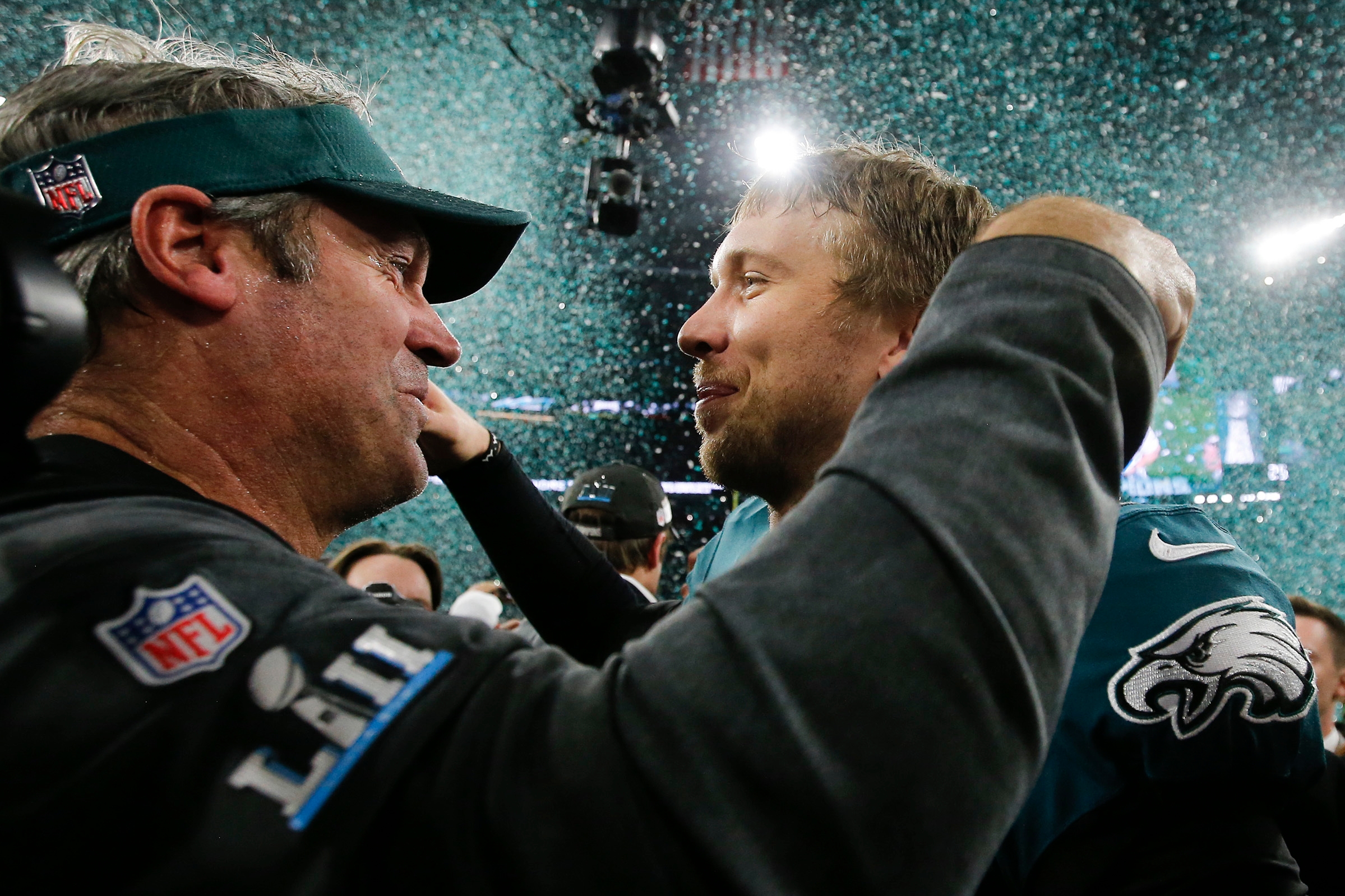
Former Eagles head coach Doug Pederson won Super Bowl LII behind the heroics of backup quarterback Nick Foles.Yong Kim / Staff Photographer
After coaching high school football for four years, Pederson was hired as the Eagles offensive quality control coach in 2009 by then-head coach Andy Reid. He followed Reid to the Kansas City Chiefs in 2013, where he served as the team’s offensive coordinator for three seasons before being hired as the Eagles head coach in 2016.
In Philly, Pederson amassed a 42-37-1 record in five seasons, but his tenure includes the Birds’ improbable championship run during the 2017 season behind backup quarterback Nick Foles. A statue celebrating Pederson and Foles for the “Philly Special” play stands outside the Linc, though it was temporarily removed during the World Cup last season.
“They could’ve just put a soccer ball over the top if it,” Pederson joked.
SEATTLE — The 15-year-old arrested after a shootout at a food festival near Seattle’s Space Needle over the weekend was armed with a ghost gun with an extended magazine, police said Tuesday.
Police Chief Shon Barnes told a news conference that the weapon was a 9 mm gun from Polymer80 — a now-defunct company that was once a leading manufacturer of ghost gun parts.
Investigators also recovered two other weapons and 14 shell casings that had been fired by weapons of two different calibers, he said.
Shooting killed 3 people and injured 4, including a toddler
The shooting in the waning hours of the three-day Bite of Seattle festival left three people dead, including a 19-year-old gunman, and at least four people injured, including a toddler. Authorities say they believe the violence was gang-related, and they are reviewing any available surveillance video and interviewing victims and witnesses in an effort to identify others who may have been involved.
An eighth person with a possible gunshot wound checked themself into a Seattle hospital after the shooting, but checked out before investigators could conduct an interview, Barnes said. Legal obstacles have prevented detectives from obtaining the patient’s identity, he added. It’s unclear if the injury was related to the festival shooting or whether the person might have been involved in it, but Barnes asked for the person to come forward and speak with investigators.
Ghost guns lack serial numbers law enforcement can use to trace them
Ghost guns are privately made — often homemade — firearms that lack serial numbers used to trace them. They have often been purchased without a background check. Law enforcement officials say ghost guns, including those made with 3D printers, have been used in violent crimes across the U.S.
Lawsuits and state-level bans eventually pushed Polymer80 out of business in 2024, and last year, the U.S. Supreme Court upheld a rule adopted under former President Joe Biden requiring companies to treat gun kits like other firearms by adding serial numbers, running background checks, and verifying that buyers are 21 or older.
The weapon the 15-year-old had been shooting when he surrendered to police was equipped with an extended 33-round magazine, Barnes said. The magazine still had 19 rounds in it.
At the scene Sunday night, police also recovered a 9 mm handgun that they do not believe was used in the shooting.
And on Monday, as food vendors were allowed to return to the area to clean up and collect their equipment, a third weapon was discovered: a Glock 45 model 9 mm with a switch allowing it to fire fully automatically, Barnes said. Police believe that gun was fired during the shooting. It had an extended 40-round magazine, with 21 rounds remaining in it.
Police believe there were at least 3 shooters
In a document filed in juvenile court in Seattle on Monday, police said they believed there were at least three shooters: the 15-year-old, an acquaintance who died at the scene, and “at least one other unknown suspect.” Authorities had earlier said they believed there were two.
A judge on Monday ordered the 15-year-old to be held in juvenile detention for investigation of assault and firearms charges pending further hearings. The King County prosecutor’s office said it expected to receive the case from police on Wednesday for a charging decision. Hong Tran, a public defender assigned to the teen’s case, declined to comment in an email to the Associated Press on Tuesday.
The King County Medical Examiner’s Office on Monday identified the dead as Carlos Israel Sanchez Villalba, 44; Ashley Whitehead, 56; and Junior Cee Niko Semo, 19.
Victims remembered as a kind man, and a ‘free spirit’
Villalba was a husband and father of three known for his kindness and willingness to help others, according to a GoFundMe campaign launched Monday to help his family with funeral expenses. He died from a gunshot wound to his torso, while Whitehead died from a gunshot to her pelvis, and Semo died from multiple gunshot wounds, according to the medical examiner’s office.
Whitehead had just moved to Washington from Alabama a year ago and was enjoying the festival with one of her adult daughters when she was shot, her cousin Michelle Whitehead told the Associated Press. She was taken to the hospital and died in surgery, she said.
Ashley Whitehead adored her two adult daughters, and also loved nature and arts and crafts, her cousin said.
“I would consider her just a free spirit. She had the best sense of humor, the best gorgeous smile,” she said.
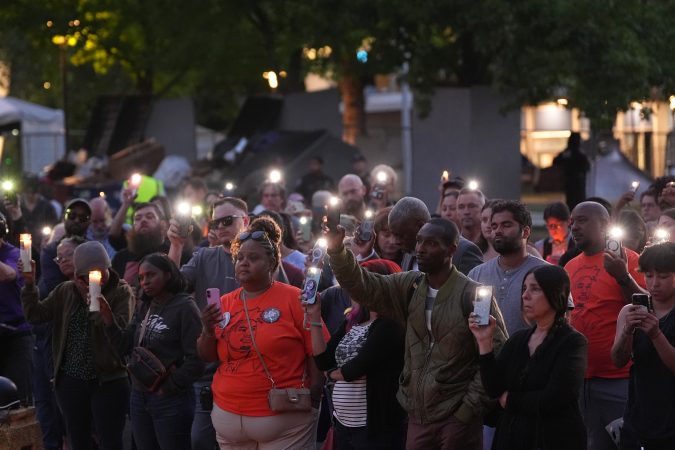
During a vigil Monday night at the center, Michelle Whitehead stood among dozens of others with a sign that said “Whitehead Strong” as the group held a moment of silence and raised up flashlights on their phones to honor those that had been killed. Candles and flowers were arranged around them.
The four wounded included a 2-year-old boy, two men, ages 23 and 27, and a woman, 39, all of whom were discharged, a hospital spokesperson said.
One of the victims was walking a bicycle when struck, the court document said. The toddler was with his mother.
WASHINGTON — President Donald Trump and Ukrainian President Volodymyr Zelensky met Tuesday ahead of Sen. Lindsey Graham’s funeral, with the two leaders discussing ways for Ukraine to produce its own powerful weapons and “other ideas that could help” in its ongoing war against Russia.
The sit-down in the Oval Office, which was closed to the media, followed a consequential meeting at the NATO summit earlier this month in Ankara, Turkey, where Trump announced that the U.S. will give Ukraine a license to make Patriot defense systems — a long-running request from Kyiv to counter Russian missile attacks.
In a post on social media after the meeting, Zelensky thanked Trump for the “good meeting” and the Republican administration’s efforts to aid Kyiv in the long-running war, which began more than four years ago when Russia invaded Ukraine.
“The President and I discussed licenses for Patriot interceptor production and several other ideas that could help,” said Zelensky, who also noted that he offered condolences to Trump for the death of Graham, a close ally. “We also spoke about diplomacy – it’s important that the diplomatic process be reinvigorated.”
White House press secretary Karoline Leavitt said both the Zelensky meeting and a separate, later sit-down with Israeli Prime Minister Benjamin Netanyahu were “positive and productive.”
Trump welcomed Zelensky to the White House as the Ukrainian leader traveled to Washington to honor Graham, whose final act as a public official was visiting Kyiv and securing an agreement on a package of sanctions that seek to punish countries that purchase Russian oil, gas, and other exports.
In a Fox News Channel interview on Tuesday, Trump recalled Graham’s hawkishness and said the Republican South Carolina senator’s support for Ukraine never wavered. Trump said Graham had suggested it was time to make a deal with Iran but had no similar suggestion for the Russia-Ukraine war.
“Ukraine, he’s very militant about,” Trump said on Fox & Friends. “I mean, Lindsey liked war, to be honest with you.”
The Trump administration’s embrace of Zelensky comes as a far-right activist with the U.S. president’s ear had a recent, widely publicized change of heart on Russia’s war against Ukraine.
Laura Loomer, known primarily for her incendiary social media posts and her influence with Trump, has been traveling through Ukraine, witnessing Moscow’s barrage firsthand, and interviewing Zelensky while admitting she was “bamboozled by Russian propaganda.”
Loomer said she spoke to Trump after she met with Zelensky in Ukraine last week and she expects to meet with the U.S. president once she returns from her trip.
“It’s looking good for Ukraine, right?” Loomer said during an interview with the Associated Press. “Going into this meeting next week at the Oval Office is looking pretty good.”
Ahead of the meeting, Zelensky also warned that Russia has been aiding Iran as the war persists by capturing satellite imagery of U.S. bases in the Gulf region that later appear in Iran. The Ukrainian president also asserted that there was a “clear correlation” between Russia’s images and subsequent Iranian strikes.
“The purpose is clear,” Zelensky said earlier this month. “None of us in the world should turn a blind eye to one very simple fact: Evil always seeks ways to make things worse and spread further.”
But on Monday, Trump downplayed any impact of potential Russian assistance for Iran.
“I don’t think they’ve been doing it, certainly not at a high level,” Trump told reporters on Air Force One as he traveled to Michigan. “And if they have, it has been very un-impactful.”
Still, he said he would raise the issue with Russian President Vladimir Putin.
Zelensky has a busy itinerary during his latest visit to Washington. Besides his White House meeting, Zelensky was to head to the Capitol to meet with senators on Tuesday evening after Graham’s funeral at Washington National Cathedral, according to a person with knowledge of the meeting who was not authorized to discuss it publicly and spoke on the condition of anonymity.
Republican leadership is hoping to advance Graham’s sanctions legislation this week, although the Senate is juggling several other priorities before lawmakers leave Washington for their August recess.
The bill has dozens of backers from both major political parties and is seen as the main policy tribute to Graham, who died unexpectedly this month from a tear in his aorta. It imposes tariffs on goods from the world’s top five purchasers of Russia oil or natural gas, including China and India.
The legislation also includes sanctions against Putin; senior Russian political and military leaders; and Russian financial institutions and energy projects.
Federal politicians would be barred from using campaign contributions to fight or settle sexual misconduct allegations under a bill announced Tuesday by two House members from opposite sides of the political spectrum.
The proposal, from Reps. Ro Khanna (D-California) and Anna Paulina Luna (R-Florida), aims to further shape the debate over how Congress should move forward from a spate of sexual misconduct scandals this spring, which prompted the creation of a bipartisan working group to revise the policies protecting Capitol Hill staffers. Both Khanna and Luna have been active on the issue.
Khanna said politicians would behave better if they had to rely on their own financial resources when they get into trouble rather than being able to dip into campaign accounts or legal-defense funds.
“That creates this culture of impunity where people think they’re untouchable,” Khanna said in an interview.
“There’s such a power asymmetry,” he said, because of “the extraordinary legal advantage that elected officials have.”
The progressive Khanna came into national prominence last fall as he helped force the release of federal investigative files related to financier and sex offender Jeffrey Epstein, over the objections of President Donald Trump.
Khanna is collaborating on the bill with the conservative Luna, one of several Republican women lawmakers who have begun demanding more consequences for alleged sexual misconduct by their colleagues. She led the charge in April against Sen. Ruben Gallego (D-Arizona), filing a complaint with the Senate that was dismissed last month with no findings that he violated federal law or broke Senate rules.
The bill would prohibit elected officials and candidates for federal office from using campaign donations or a legal-defense fund to cover legal fees related to claims of sexual assault, sexual abuse or sexual harassment. If they are not held liable, they could be reimbursed for expenses.
Luna said the proposed change is overdue and would serve as a “massive deterrent” amid a culture of sexual misconduct on Capitol Hill that has gotten out of hand.
“It is not what the Founding Fathers intended for members of Congress,” she said. “It’s a perversion of the system.”
The proposal would also make campaign contributions off-limits for paying settlements or court-ordered judgments for sexual misconduct claims, as well as for private investigators and other research into the accusers.
Khanna said that politicians would still be able to tap into their savings to defend themselves like most other Americans but that they should not be allowed to fundraise for what frequently amounts to public relations activities more than actual legal work.
“In most of the cases, they’re being used to smear survivors,” he said.
The bill emerged from conversations with activists supporting women who have come forward in recent months with accusations of sexual misconduct by politicians, including former congressman Eric Swalwell (D-California).
In April, the San Francisco Chronicle spoke to a former Swalwell staffer who said he sexually assaulted her. CNN reported more allegations of inappropriate behavior, and a second woman accused Swalwell of raping her. He has categorically denied the allegations of sexual misconduct, calling them a political hit job, though he acknowledged some “mistakes in judgment.”
Swalwell dropped out of the race for California governor and then resigned from office within days. But he has since spent $50,000 from an old congressional campaign account, as well as hundreds of thousands from contributions to his gubernatorial bid, on prominent defense attorney Sara Azari. Her firm hired a private investigator to look into the allegations, according to NOTUS.
“Many of those women were forced back into hiding, and this ordeal is still not over for them,” said Cheyenne Hunt, an influencer who worked with some of the accusers and subsequently launched the advocacy group Reckoning Action.
That’s retaliation, Hunt said, and a “bad-faith use” of campaign funds.
“No donor gives to a campaign thinking, ‘Yes, I want my money to go toward harassing a survivor,’” she said. “This truly feels like such a no-brainer.”
Despite bipartisan support for the bill, its prospects are uncertain. Congress has struggled to pass major legislative priorities this year, and only two months of floor time remain for the rest of the session.
Other ideas for improving how Capitol Hill handles sexual misconduct complaints are also circulating. A group that says it represents more than 1,500 congressional staffers released a letter this month calling to expand legal representation for employees, make independent investigations easier to trigger, and provide more time to file workplace claims.
With the blessing of congressional leadership, the Republican and Democratic women’s caucuses united in the spring to develop recommendations for making Congress a safer work environment. Their proposed solutions are forthcoming.
House Speaker Mike Johnson (R-Louisiana) recently said he would support banning lawmakers from having sexual relationships with any congressional staffers, not just their own subordinates.
WASHINGTON — Kentucky Gov. Andy Beshear, a rising national figure in the Democratic Party, is calling on the state’s Republican Sen. Mitch McConnell to either prove that he is fit to continue serving after his lengthy hospital stay or resign from office.
Beshear made the demand in a letter after McConnell’s office said Monday that the 84-year-old senator had not yet been medically cleared to leave the rehabilitation facility where he has been undergoing physical therapy. The office said he would miss a major Kentucky political event and upcoming Senate votes. McConnell was hospitalized June 14 and disclosed weeks later that it was the result of a fall.
Beshear, who is widely viewed as a potential presidential candidate in 2028, first urged McConnell in early July to release more information about his condition after weeks of public silence. His letter Tuesday marked a significant escalation.
“I am calling on you to directly and verbally address the people of Kentucky and provide proof of your capacity to serve, or resign,” Beshear wrote to McConnell.
Beshear also sent a letter to Senate Majority Leader John Thune, urging him to investigate McConnell’s condition if the senator does not demonstrate that he is capable of continuing to serve.
McConnell and Thune’s offices did not provide comment on the letter.
McConnell, who led Senate Republicans for nearly two decades, has long guarded his personal life. Since he was hospitalized last month, his office has issued major updates on July 12 and July 27, each accompanied by a single photograph.
But public scrutiny of aging elected officials has intensified after several recent health episodes and deaths in office, including the deaths of California Sen. Dianne Feinstein in 2023 and South Carolina Sen. Lindsey Graham earlier this month, as well as President Joe Biden’s decision not to seek reelection after concerns about his age and health became a dominant political issue.
In the absence of regular public updates from McConnell himself, speculation about his condition has grown online.
“All of this speculation and even this letter could have been avoided with a minimal amount of transparency,” Beshear wrote to Thune.
No texting, no photos, no distractions. With mobile devices locked away in Yondr pouches, Jill Scott’s four-night stand at the Met Philly is a phone-free experience.
In her run of sold-out shows at the Broad Street opera house that kicked off Friday and — with a couple of days off in between — finishes Wednesday night, there’s no intermediary technology to separate Jilly from Philly.
Which really is “The Way” — the title of one of her signature hits, from her 2000 debut Who Is Jill Scott? Words and Sounds, Vol. 1 — it should be.
When it comes to building community, Scott is up there with the best. Her staunchly loyal following has lived through trials and tribulations with the singer-songwriter-poet-rapper-and-actress from just ‘round the way at 23rd and Lehigh in North Philly for a quarter-century.
At Monday night’s 2-hour, 23-song show, that bond was evident from the get-go.
Following an opening set by Camden trumpeter and bandleader Arnetta Johnson, who is also scheduled to perform Wednesday, Scott opened with five straight tracks fromTo Whom This May Concern, her sixth album, which came out in February and is her first in 11 years.
The first, “Dope S—,” featured a prerecorded spoken word piece by poet Maha Adachi Earth that offered a taste of what was to come: “I been manifesting visions, oh chile, I been making them all come true … I make love, I be good, I do dope s—.”
That was followed by “Be Great,” a horn-fired banger cowritten with Adam Blackstone and Trombone Shorty that featured video screen images of HBCU marching bands while sousaphonist Adam Smith II — who otherwise played guitar — prowled the stage.
That song threw down a challenge, to her audience, and to Scott herself: “All my life I want to do good, wanted to be good, to feel free of a history that made me cry,” she sang over a rugged funk groove.
Then, she gave it a second thought: “I’ma go ahead and be great. Why not?”
The new songs were warmly received by an audience that has grown up with Scott, 54, since she emerged from the turn-of-the-century neo-soul scene at the Black Lily nights at Old City club the Five Spot.
The crowd was approximately 70% female, and as almost entirely Black as, for instance, the crowds at Connor Barwin’s Make the World Better concerts this past weekend at the Dell Music Center were almost entirely white.
Jill Scott at One Philly: Unity Concert for America on the Benjamin Franklin Parkway on July 4. Scott performed at the Met Philly on Monday, July 27, on her tour for her new album “To Whom This May Concern,” but no photography was permitted. She will return to the Met for one more show on Wednesday, July 29. Yong Kim / Staff Photographer
To Whom is a jam-packed, musically diverse return from Scott, of which she is justifiably proud. She wove 14 of the album’s 19 tracks into her set.
“Liftin’ Me Up,” which included a snippet of Jackie Wilson’s “(Your Love Keeps Lifting Me) Higher and Higher” was one To Whom highlight.
Another was “Pay U on Tuesday,” in which Scott, who now lives outside of Nashville, Tenn., excoriated deadbeats — “You in jail again this weekend? You ain’t got your child support, for real? — in the style of 1920s blues belters like Bessie Smith and Ma Rainey.
Scott keeps up a lively, theatrical but heartfelt rapport with her people, about love, loss, self-care, and finding the way to fulfillment. And the audience is happy to talk back.
At different junctures, the video screen depicted a house with boxes of troubles outside labeled “Self Doubt” and “Ugliness,” packed up to be disposed.
On “The Math,” the screen showed algebraic equations while Scott sang about behavior that does not add up to equal self-esteem. “Do the math, Jill!” a woman standing behind me enthusiastically shouted out. “Do the math!”
As well as Scott’s new music went over, the crowd-pleasers came from the benchmark albums that kicked off her career. All night long, she was in excellent voice, not only singing, but rapping on “Norf Side” and “BPOTY.”
She had plenty of help from fans who rose from their seats and joined in full-throated unison on the neighborhood stroll of “A Long Walk” and tender “The Way” from her debut, and “Cross My Mind” and “Golden” from 2002’s Beautifully Human: Words and Sounds, Vol. 2.
FILE 3/28/00 Photography by Peter Tobia Black Lily, the soul-rap club event that showcases female artist held at the Five Spot in Center City. Jill Scott, pop soul singer, delights the crowd with wonderful vocals.Peter Tobia / Staff Photographer
Scott’s 10-member band is of the highest caliber. The three male backup vocalists known as the Pipes supported her ably throughout. When the star left for a costume change — from one blue gown to another, with an ankle-length poofy white coat added for the second half — the trio kept the vibe alive with a winning version of Al Green’s “Let’s Stay Together.”
“This is live music!” Scott intermittently stated throughout the evening, reminding the room that nothing they were hearing was canned. “This is live music!”
She added, before “He Loves Me (Lyzel in E Flat),” that “Philadelphia keeps music alive.” The city continues to produce the world’s best musicians, said the singer, who grew up less than three miles away from the Met, on the 2300 block of Oakdale St. Other artists come to her shows to lure players away for their own bands, she added, “but they always come back.”
With that, she introduced pianist Eric Wortham II, who has also toured with Adele and Jazmine Sullivan. He played a delicate intro to “He Loves Me (Lyzel in E Flat),” which came to a close with Scott’s showstopping operatic vocal flourishes.
Special praise at the end of the show was reserved for bass player Duane “DW” Wright, with whom the singer shares music director duties. Scott was sexually frank throughout the evening, but she got down got and dirty during the finale when DW was spotlighted.
Album cover of Jill Scott’s sixth studio “To Whom This May Concern” is a portrait of Jill Scott by muralist Marcellous LovelaceMarcellous Lovelace
She called him a “whisperer” with a specialty in women’s sexuality. Wright laid down a deliciously provocative groove just to prove her right, and the audience leaned in, paying particularly close attention.
Jill Scott with Arnetta Johnson and Freebird at the Met Philly, 858 N. Broad St., at 7:30 p.m. Wednesday July 29, themetphilly.com.
Set list for Jill Scott at the Met Philadelphia, July 27, 2026
A corporate fad of “tokenmaxxing” on artificial intelligence technology is hitting its limits as workplaces throwing AI at everything are seeing the costs rise without a similar spike in productivity.
What started as tech industry-fueled springtime hype over squeezing as much AI-generated work as possible out of products like OpenAI’s ChatGPT and Anthropic’s Claude has shifted to a summertime backlash.
“It’s very easy to create something you don’t need with AI,” said Vincent Gusdorf, head of AI analytics at Moody’s Ratings and author of a new report that recommends a more disciplined approach.
“Tokenmaxxing” refers to maximizing usage of tokens — the building blocks of generative AI that correspond to small pieces of text that an AI system reads or writes. Each token is about three quarters of a word. And there’s typically a limit to how many you can use, with pricier versions of AI products offering higher caps.
“As bills started to pile in, people realized that those new tools are quite expensive and you need to use them wisely,” Gusdorf said.
Tech executives cast high AI usage as a badge of honor
Just a few months ago, Silicon Valley executives were promoting high token consumption as a signal of high-performing employees. The stereotypical tokenmaxxer was staying up late — perhaps ignoring their significant other — while orchestrating an army of 24-hour AI agents performing work on their behalf.
OpenAI CEO Sam Altman said in May he was “excited to see what will happen with tokenmaxxing startups, both for how they work internally and the products they can build.”
Nvidia CEO Jensen Huang said “if your $500K engineer isn’t burning $250K in tokens, something is wrong.” Facebook parent Meta had an internal competition rewarding token usage.
The trend boosted revenue for leading AI large language model developers like Anthropic and OpenAI, but it fizzled as it became apparent it wasn’t necessarily the best strategy for everyone else.
Microsoft CEO Satya Nadella has admitted that tokenmaxxing can be addictive but warned in a recent blog post that customers of those models are paying twice for AI, first in spending on tokens and second by feeding all their proprietary data to them. While promoting Microsoft’s own approach, Nadella’s comments were unusual in the way he raised doubts about the data protection assurances of leading AI providers.
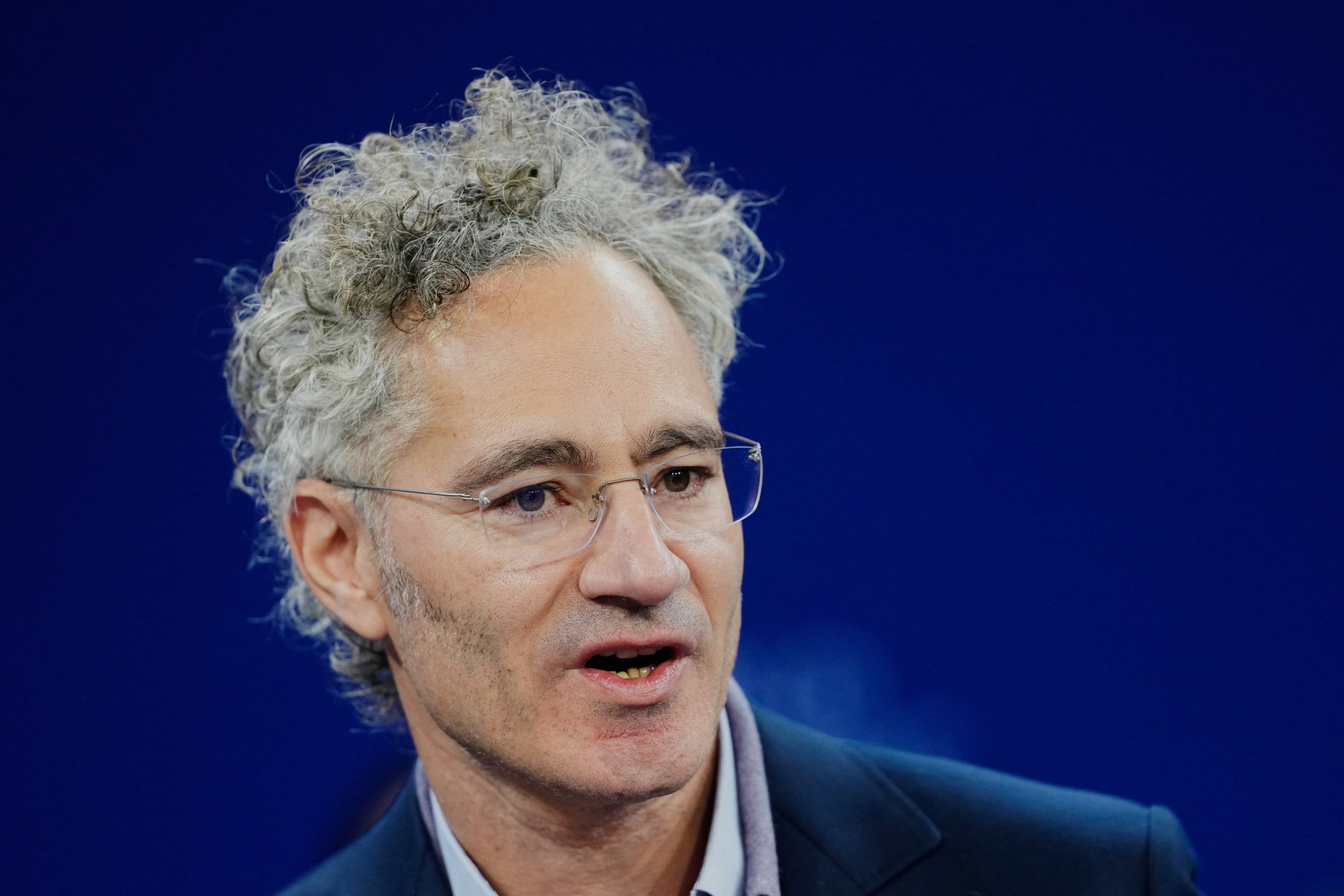
Alex Karp, CEO of the software firm Palantir Technologies speaks during the Annual Meeting of the World Economic Forum in Davos, Switzerland, on Jan. 20.Markus Schreiber
Palantir CEO Alex Karp went further, telling CNBC earlier this month that something had gone “completely wrong.” He said he was channeling the voice of American businesses privately “livid” about paying so much for tokens that create no value.
Workplaces look more for better ‘routing’ of their AI work
Bain & Company management consultant Jue Wang said many of the big businesses her firm advises have been taking a closer look at returns on their AI investments.
“The token cost for them has been doubling, almost every other month,” she said. “Let’s say $200 per developer per month. Multiply that by 20,000 developers, which is often what we’re dealing with at these companies, and that quickly gets you to a number that is not a line item that any general manager has planned for.”
Sometimes that just means not using the AI equivalent of a sledgehammer to crack a nut.
“Not everything needs a Claude Opus 4.6,” she said of one of Anthropic’s more capable models suited to software engineering or deep research. “And yet you see so many companies, so many users, default to using Opus for everything, including generating emails.”
That’s led to a search for tools that do AI “model routing” — in which easier queries get automatically sent to cheaper and more efficient AI systems and more complex tasks go to more powerful models.
Open-source AI models built in China offer less costly alternatives
Software developer Hassan El Mghari said companies’ sticker shock over the “ridiculous amount of money” spent on subscriptions to AI products from leading U.S. companies has led many away from rewarding high usage.
“It’s better to kind of just empower employees on how to use this stuff and let them use AI when and however much they need to,” said El Mghari, who leads developer experience at the startup Together AI, which supplies developers with a variety of “open-source” AI models.
At the same time, those who favor racking up as many tokens as possible are having a field day with new open-source models from Chinese startups like Moonshot’s Kimi or Zhipu’s GLM, which nearly match the capabilities of top U.S. models at a fraction of the price.
“There is some validity to the theory that this could push tokenmaxxing a little bit further,” said Raffi Krikorian, the chief technology officer at Mozilla. “But if we look at the industry overall, I think it’s realizing that tokenmaxxing is a dumb thing.”
It’s similar, Krikorian said, to how software companies once considered how many lines of code a programmer wrote to be a good metric of productivity. That later fell out of favor.
“I think tokenmaxxing is moving through the exact same pattern,” he said. “I think this is going to be an interesting blip that we’re all going to look back to laugh at in a year.”
A state board that oversees the City of Philadelphia’s finances signed off on Mayor Cherelle L. Parker’s five-year financial plan on Tuesday, despite a structural deficit and significant uncertainty about future federal funding.
The Pennsylvania Intergovernmental Cooperation Authority, which was established in the early 1990s to monitor the city’s finances amid a severe fiscal crisis, must every year approve the five-year budget plan agreed to by the mayor and passed by City Council. The board voted 5-0 to green-light the plan.
In June, Parker and Council agreed to a $7.1 billion budget for the fiscal year that began on July 1, as well as a five-year financial plan in which the city is projected to spend more than it generates in four of those years. This fiscal year, the city is projected to spend about $550 million more than it brings in.
As has been common in recent years, the city’s budget relies on reserves and an existing surplus to avoid a significant deficit. The city is projecting that this year it will have a $364.6 million fund balance, which is the amount of money left over in the city’s general fund after liabilities are accounted for. That balance is set to decline in each of the next five years.
Parker administration Finance Director Rob Dubow said the city is on track to unlock hundreds of millions of dollars in additional revenue once its pension fund is fully funded, a major milestone that is projected to take place in fiscal year 2033.
Also on Tuesday, Alan C. Kessler was unanimously elected to serve as chair of the PICA board after Kevin Vaughn, who has chaired the board for a decade, announced he would not seek reelection to the position. He intends to remain a board member, he said.
Kessler, who has also served on the board for about a decade, is a commercial litigation attorney. He is a prominent fundraiser in the Democratic Party and has long been active in local and national politics.
As for the city’s financial position, board members on Tuesday also discussed potential risks that are largely outside the Parker administration’s control, such as the funding issues that both SEPTA and the Philadelphia School District have faced in recent years. The transit authority has warned of the possibility of debilitating service cuts, and the public school system is borrowing hundreds of millions of dollars just to pay its bills.
Parker had earlier this year proposed implementing a tax on rideshare services to generate about $50 million a year for the district, but Council members rejected her plan.
Administration officials identified existing funding for the district to stave off planned staff cuts. Dubow said Tuesday that cuts were made in each year of the five-year plan to make up for that money, but that the hope is to reach an alternative, recurring revenue generation plan before the cuts would take effect.
The biggest uncertainty for Philadelphia’s finances, the board said, is the federal government and potential policy shifts affecting funding under President Donald Trump. PICA officials warned in a report that while the city has so far sustained only limited losses as a result of slashed grants under the Trump administration, the city “will not be able to absorb federal funding reductions at a greater scale without significant service reductions.”
The city received more than $2.2 billion in aid from the federal government in fiscal year 2024, the most recent data available. More than half that money was for healthcare and other social safety net programs for poor and disabled residents.
The president has repeatedly threatened to cut off federal funding to cities like Philadelphia that are led primarily by Democrats and have relatively permissive local immigration policies. However, those efforts have been tied up in litigation.
A more pressing concern for the city, PICA officials wrote, could be the changes made last year to the enrollment criteria for social programs like Medicaid and the Supplemental Nutrition Assistance Program (SNAP).
Philadelphia is one of the poorest big cities in the nation, and hundreds of thousands of residents rely on government assistance. The Pennsylvania Department of Human Services has estimated that changes to Medicaid instituted under the Trump administration will leave more than 73,000 Philadelphians without coverage by next year.
And, the PICA report warned: Changes to federal programs can have ripple effects.
“The fiscal crisis that precipitated the creation of PICA in the 1990s,” officials wrote, “was in part due to dramatic reductions in federal programs for vulnerable individuals that the City tried to manage but was incapable of replacing.”
LeBron James chose the 76ers because he believes their new-look roster offers the best available option for him to push for a final NBA championship.
And the window is small, because James’ contract fits his age.
The 41-year-old signed a “one-plus-one” deal, aka a two-year, $8 million contract with a player option on the second season. That forced the Sixers to do some roster tinkering for salary-cap purposes, waiving guard Dalen Terry before officially signing James on Sunday.
It is fitting that James is likely to be in Philly for two seasons. At all three of his title-winning stops, he achieved that feat in the second year.
For those eager to proclaim that the Sixers are immediately championship-or-bust for the 2026-27 season, let that history serve as a reminder that it can take time even for a star-studded roster to figure things out.
Here is how James reached the NBA’s mountaintop at each previous stop:
After “The Decision” teamed James with Dwyane Wade and Chris Bosh to create the “Big Three” in Miami, the Heat turned an infamously shaky 9-8 start into 58 victories and the Eastern Conference’s No. 2 seed. James, Wade, and Bosh all made the All-Star team.
Miami advanced to the NBA Finals, beating the Sixers in the first round along the way. But the Heat lost to the Dirk Nowitzki-led Dallas Mavericks, falling short of a championship in the first season of the “Heatles.”
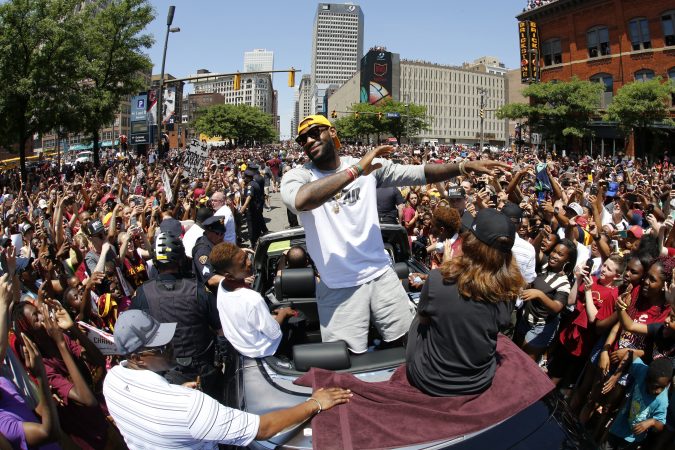
LeBron James celebrates his first NBA title in 2012 with the Miami Heat. J Pat Carter
Second season
Following the NBA lockout, the Heat finished 46-20 and second in the East standings at the end of the shortened regular season. James won his third NBA Most Valuable Player award, and first with the Heat. James, Wade, and Bosh were All-Stars once again.
In the playoffs, Miami beat the Boston Celtics in a thrilling seven-game Eastern Conference finals series. Then they topped the upstart Oklahoma City Thunder — then led by a young Kevin Durant, Russell Westbrook, and James Harden — to win James’ first NBA championship.
Though that Heat team did not accomplish the “not five … not six … not seven …” declaration of James’ flashy Miami introduction, it did win back-to-back titles (and reached four consecutive NBA Finals) before he returned home to the Cleveland Cavaliers.
2014-16 Cleveland Cavaliers
First season
James’ new “Big Three” with Kyrie Irving and Kevin Love also got off to a slow start at 19-20. After trading for J.R. Smith, Iman Shumpert, and Tomofy Mozgov midseason, the Cavaliers finished second in the East standings with a 53-29 record. James and Irving both made All-NBA teams.
Cleveland advanced to the NBA Finals but lost to the Golden State Warriors to begin that team’s dynasty.
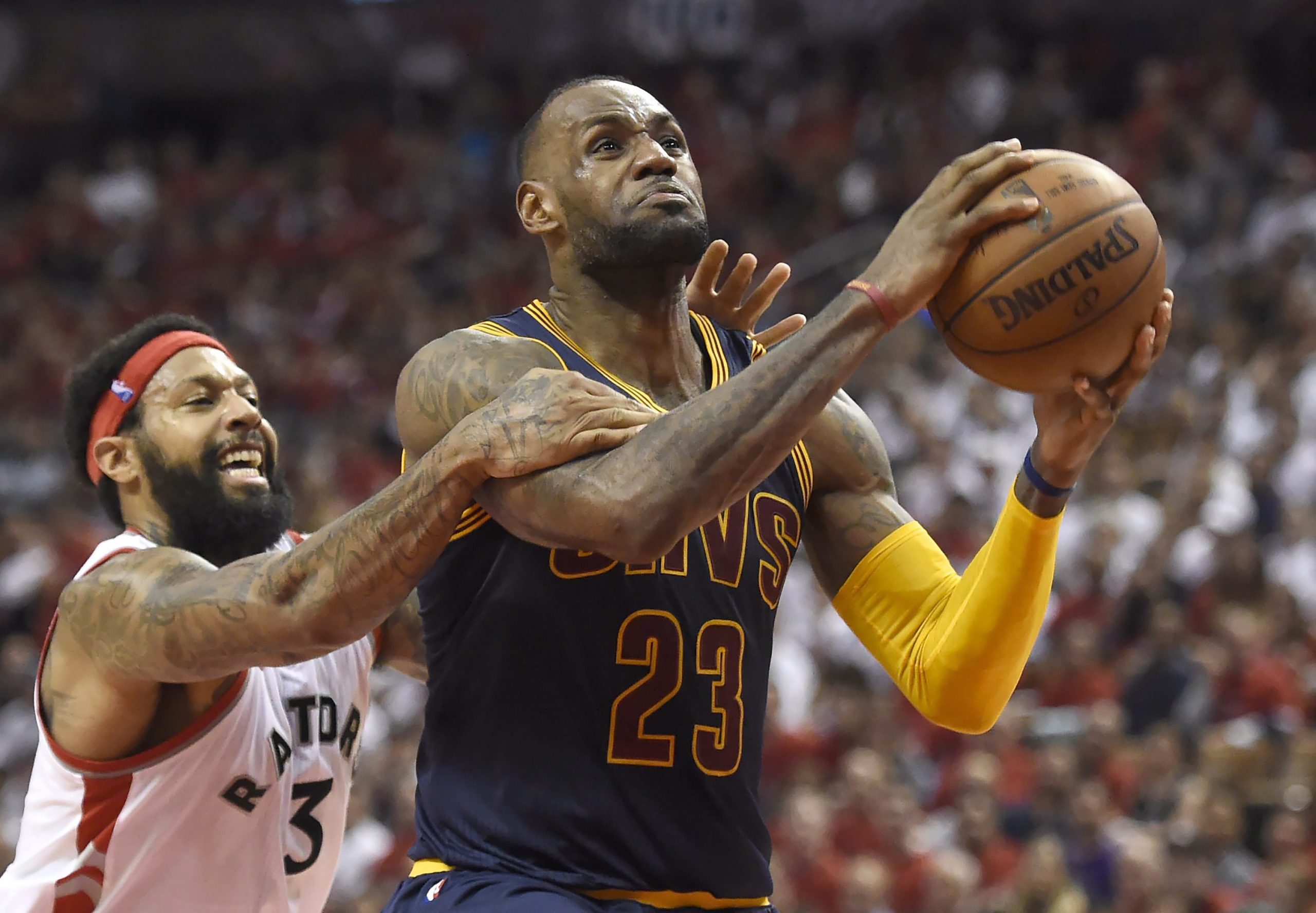
Toronto Raptors forward James Johnson fouls Cleveland Cavaliers forward LeBron James during a playoff game in 2016.Frank Gunn
Second season
The Cavaliers underwent a critical midseason shakeup when, despite holding the East’s best record at the time (30-11), they fired coach David Blatt in January. They elevated then-assistant Ty Lue, who has since become one of the NBA’s most-respected coaches. Cleveland went on to finish the regular season 57-25 and atop of the Eastern Conference.
That playoff run then culminated in an unbelievable, storybook Finals against the Warriors. The Cavaliers became the first team to overcome a 3-1 Finals deficit, and won a dramatic Game 7 to deliver the franchise’s first NBA championship. James’ crunch-time block on Andre Iguodala, which preserved a tie before Irving’s go-ahead three-pointer, is considered a historic playoff moment.
James stayed with Cleveland for two more seasons — he reached the Finals each time to create a personal streak of eight in a row — but the Cavaliers lost again to Golden State both times.
2018-20 Los Angeles Lakers
First season
James in free agency joined a Lakers team primarily with young players, including Brandon Ingram, Lonzo Ball, and Josh Hart. They slogged through an injury-riddled 2018-19 season — James only played 55 games — and missed the playoffs. It was the first time since 2006 that a James team had failed to reach the postseason.
Team president Magic Johnson stepped down at the end of the season in an abrupt and now-famous “I’m not gonna be here” news conference, and coach Luke Walton and the team also parted ways.
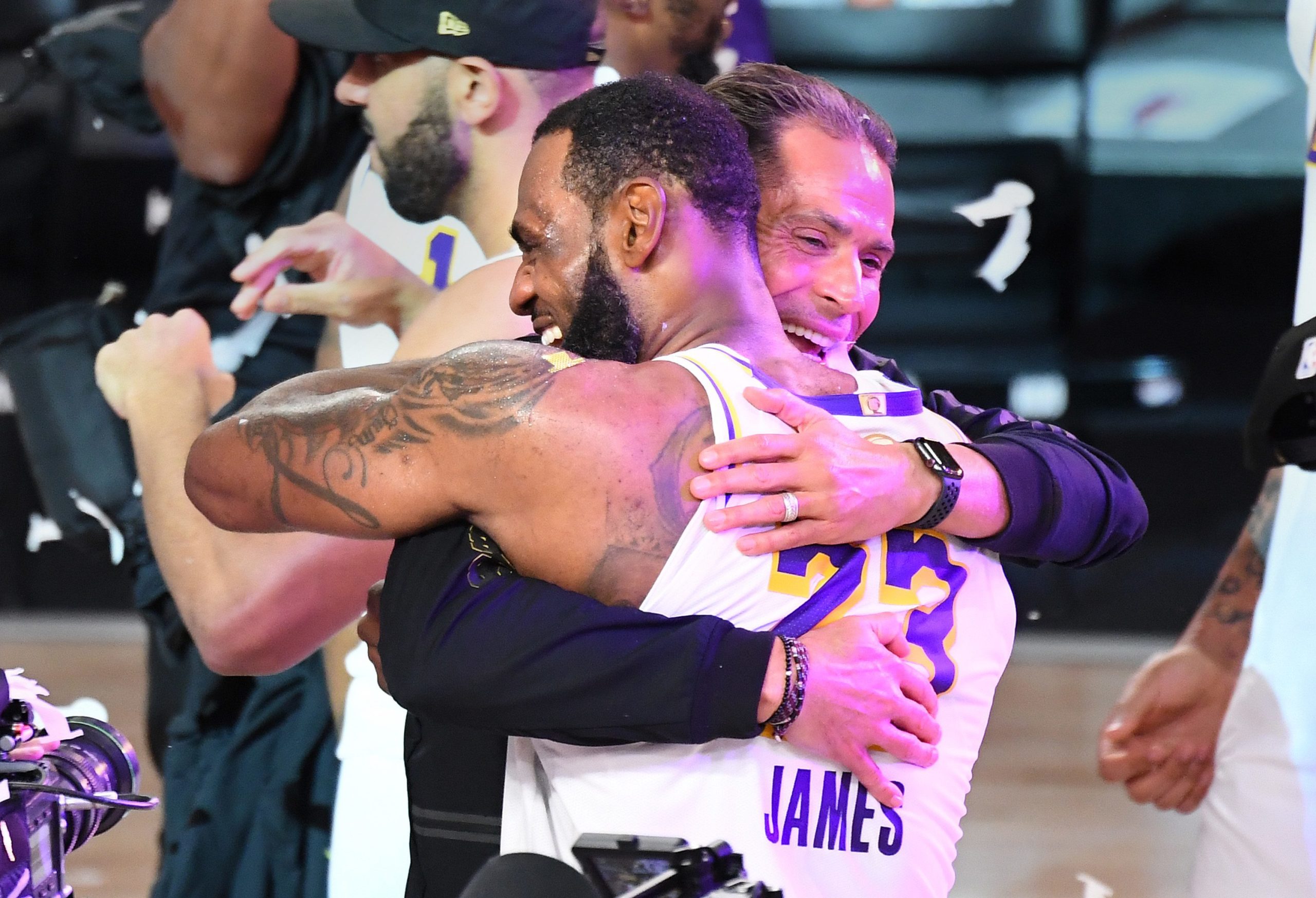
LeBron James hugs general manager Rob Pelinka after the Lakers won the NBA title in 2020.Wally Skalij / MCT
Second season
Under promoted executive Rob Pelinka, the Lakers acquired star big man Anthony Davis in a blockbuster trade and added former Sixers Danny Green and Dwight Howard as veteran complements.
The Lakers recorded the Western Conference’s best record (52-19) during a regular season interrupted for more than four months and then shortened because of the onset of the COVID-19 pandemic. James and Davis were both named first-team All-NBA.
The Lakers’ “bubble” playoff run at Disney World ended with topping the Heat to clinch the storied franchise’s first title since 2010. Some critics will put an imaginary asterisk next to it. But that will likely go down as the most bizarre circumstances under which any NBA team will win a championship.
Newly released audio tapes, disclosed by a conservative activist group, appear to show Joe Biden sharing classified information with a biographer and sometimes claiming memory lapses during interviews that occurred before his election to the presidency in 2020.
About three hours of audio and 117 pages of transcripts — with many redactions — were released by the Oversight Project, an arm of the Heritage Foundation, after Biden lost a prolonged legal fight to keep his conversations with his memoir ghostwriter, Mark Lewis Zwonitzer, private.
“They didn’t even know I had this,” Biden told Zwonitzer in October 2016, near the end of his second term as Barack Obama’s vice president, as he talked about sensitive foreign policy matters handled by the administration.
In one 2017 session, after Biden had left the West Wing and before he’d launched his own presidential campaign, he appeared to admit retaining classified information from his time as vice president.
“I just found all the classified stuff downstairs,” Biden said. “I wrote the President a handwritten 40-page memorandum arguing against deploying additional troops to Iraq — I mean, to Afghanistan on the grounds that it wouldn’t matter, that the day we left would be like the day before we arrived.”
The potentially classified information itself is redacted in both the audio and transcripts that the Oversight Project released.
The right-wing group first sued to obtain the tapes after Special Counsel Robert Hur decided in 2024 not to charge Biden for how he handled classified information. Biden cooperated with Hur’s inquiry and told the special prosecutor during his presidency that he did not intentionally mishandle any classified material.
Hur, who obtained the tapes as part of his inquiry, said in announcing his decision that he believed a jury would find Biden a sympathetic figure because of his age and what Hur described as a “poor memory” — a statement that became a flashpoint in public debate about Biden’s age and fitness for the presidency.
Biden was 74 when the interviews began. He was 81 and seeking reelection when Hur released his report in early 2024, though Biden later ended his campaign for a second term after a halting debate performance against Republican Donald Trump.
The tapes contain instances of Biden being unable to recall some dates and details of topics he was discussing with Zwonitzer. Biden also showed a command of many details, recalling meetings and details of conversations referenced in the notes he shared.
At the Oversight Project, vice president of litigation Jeff Clark insisted the tapes prove Biden’s decline.
“The tapes have always belonged to the American People, the Oversight Project just delivered them to their rightful owner,” Clark said in a statement. “The knowledge of his deterioration was well-established.”
A Biden spokesperson blasted the release as politically motivated.
“President Biden’s conversations for a book a decade ago that discussed his late son are private, and were provided to the Department of Justice on the express condition they stay that way,” said TJ Ducklo. “Reversing course and making them public is just the latest example of this Administration weaponizing the DOJ for political retribution.”
Biden initially sued to stop the Department of Justice from releasing the material, claiming the conversations were private. But he dropped his suit after a divided panel of appeals court judges rejected his bid. Biden could have petitioned the Supreme Court to intervene or asked for a rehearing by the full U.S. Court of Appeals for the District of Columbia Circuit.
In a 2-1 ruling, a three-judge panel from the circuit court found a “substantial” public interest in disclosing the material.