A 48-year-old man suspected of being the hit-and-run driver who killed 20-year-old Temple University student Bryce Wolfe on Kelly Drive in June was arrested Thursday, the U.S. Marshals Service said.
Derek Reid was taken into custody on the 7200 block of Briar Road in the city’s West Oak Lane section, authorities confirmed.
The U.S. Marshals Service said Reid also was being sought by the Philadelphia Police Department’s Special Victims Unit on charges of rape and related offenses involving an underage boy in 2021.
Wolfe, who had just completed his sophomore year at Temple University, was riding his red 2004 Triumph motorcycle on Kelly Drive the night of June 24 when he was struck by a white SUV making an illegal turn onto Reservoir Drive, near the Strawberry Mansion Bridge, Philadelphia police said.
His body became lodged under the SUV and he was dragged for more than a mile, police said. He died at the hospital the next day.
Police later released surveillance images of the SUV suspected in Wolfe’s death. Investigators believe the SUV was a 2001-08 Chevrolet Trailblazer, possibly with damage on the driver’s side, with possible red paint transfer, a broken rear windshield, and a discolored passenger-side front wheel.
The suspected vehicle was located earlier this month, police said.
Police on July 7, 2026, released images of the suspected SUV, believed to be a white 2001-08 Chevrolet Trailblazer, that fatally struck 20-year-old Bryce Wolfe, a Temple University student, on June 24.Philadelphia Police Department
Lori Wolfe, Bryce’s mother, said the Philadelphia police called earlier on Thursday to let her family know that the suspected driver was in custody.
“We were happy they made an arrest,” she said. “I felt there would be an arrest because the accident investigation department of Philadelphia worked very hard to bring justice to Bryce.”
She added: “Although none of this gives our son back to us, the person responsible should be charged with murder. He drug our son for a mile and left him to die in the street.”
Philadelphia District Attorney Larry Krasner on Friday announced that Reid was charged with homicide by vehicle, accident involving death, involuntary murder, and recklessly endangering another person.
Krasner confirmed that Reid was facing charges for a violent sexual assault against a minor, including rape, statutory sexual assault involving a victim between 8 and 11 years old, and related offenses.
After Reid was apprehended by the U.S. Marshals Service, he allegedly admitted to being the driver of the SUV that fatally struck Bryce Wolfe, Krasner said.
Reid was being held on $750,000 bail for the fatal hit-and-run, and $750,000 for the 2021 rape, Krasner said.
“The devastation Defendant Derek Reid inflicted on these two families is horrific. No one deserves to have their son taken away in such a careless way. We will pursue these charges to the fullest extent of the law,” Krasner said in a statement.
“This office also has zero tolerance for predators who brutalize the vulnerable, to include our children and young people. We are standing with these families during their journey of healing and we will do everything we can to seek and secure justice,” Krasner said.
Bryce Wolfe, of Conyngham, a borough in Luzerne County, was an actuarial science major in the Fox School of Business and had just completed his sophomore year.
In an obituary written by his parents, Bryce was described as having lived his life “with a fearless spirit of adventure and a genuine love for the outdoors.”
He “found joy in seeking new challenges and embraced every opportunity to experience the world to its fullest. Whether carving down snow-covered slopes while skiing, exploring miles of trails on his bicycle, or riding motorcycles through rugged dirt tracks and open roads, he felt most alive when he was in motion,” Lori Wolfe and Clarence Wolfe III wrote.
Bryce had started a summer internship and acquired the Triumph to ride while he stayed in Philadelphia, his mother said in a recent interview.
Said Lori Wolfe, “It was the first motorcycle he bought and insured all by himself.”
On April 28, @PhillyPolice SVU charged Derek Reid, 48, with rape, sexual assault, and corruption of a minor. In 2021, he allegedly assaulted a juvenile male. @USMS_Philly apprehended Reid in the 7200 block Briar Rd. He is also a suspect in a June 24 fatal hit and run on Kelly Dr. pic.twitter.com/6zArgJcTKL
— U.S. Marshals Service Philadelphia (@USMS_Philly) July 30, 2026
SAN ANTONIO — Tens of thousands of immigrant children who arrived in the United States as unaccompanied minors in recent years may be forced to face a judge alone after a federal contract providing them legal representation expired on Friday.
The leaders of several nonprofit organizations that provide legal services to immigrant children say they will need to scale back or shutter their operations altogether starting next week. Collectively they represent about 24,000 children who crossed the nation’s southern border without a parent. The groups have spent much of the last year providing legal counsel even though the federal government has not reimbursed them.
Without a renewed contract, the legal aid organizations say many children with pending cases before an immigration judge will have to defend themselves without a lawyer. Most do not have a legal status in the country but can potentially qualify for asylum or a special visa. Many do not speak English as their primary language, and attorneys say they are more likely to be ordered deported if they do not have a lawyer.
Michael Lukens, executive director of the Amica Center for Immigrant Rights, which provides children legal representation in the Washington, D.C., area, said the contract’s expiration comes as immigration judges and enforcement officers are pressuring unaccompanied minors to return home by signing voluntary departure forms.
“The best chance that a child has for a fair day in court and due process is to have an attorney at their side,” Lukens said. “It’s very clear the government is trying to take away that one piece of the puzzle.”
The Office of Refugee Resettlement, which falls under the Department of Health and Human Services and oversees the shelters that house unaccompanied minors, said in a statement Thursday that the agency remains “fully compliant with its legal and regulatory obligations and does not act in any way that could dissuade a child from seeking appropriate legal relief.”
ORR officials said they offered to extend the existing contract so long as the providers share information about their clients. Several nonprofit leaders said the federal government was asking for confidential information about the children they serve and their sponsors — who are usually parents or relatives seeking family reunification. The organizations said they are legally and ethically unable to disclose such data and fear authorities could use it to target families during enforcement operations.
The Trump administration tried to halt some funding for attorneys to represent unaccompanied minors shortly after taking office last year. In February 2025, officials notified the Acacia Center for Justice that the organization needed to stop all work related to a $200 million contract that funds various groups providing the children with attorneys. But a few days later, officials reversed course and restored it without explanation.
Nevertheless, the Trump administration stopped reimbursing legal aid organizations who operate under the contract last November. The groups estimate they are owed $65 million in payments, and some have had to dip into their reserves in order to keep working.
Congress passed bipartisan legislation nearly two decades ago that mandates the funding to protect children from exploitation. The federal government, providers argue, is obligated to pay these organizations with the money lawmakers appropriated.
“They are clearly trying to destroy the program by grinding down the financial health of nonprofits,” Lukens said. “We have seen layoffs and furloughs and we will see a lot more of that if these invoices are not paid.”
The legal services program also allows attorneys to monitor conditions inside federally funded shelters that house unaccompanied minors, some of which are not regulated by state officials. Many of the children in shelters are waiting to be reunited with parents or relatives, who can claim them by providing identification and financial and biometric information to the government to prove their relation.
Fewer than 2,500 children are currently in federal custody, and on average they are staying there for 117 days — four times longer than they did a year ago, federal data shows.
Melissa Lopez, the executive director of Estrella del Paso, a legal services provider, said the complexity of the nation’s immigration laws make it necessary for children to have legal representation. She recounted the case of a 7-year-old boy who went before an immigration judge in Texas. He told the judge he wanted to return to his home country, where his father had been deported.
His lawyer helped him navigate the best way to do that. Immigrants can file for a voluntary departure to leave the country and avoid a deportation order with more severe consequences, but a young child, she said, would not know the difference or how to do that.
“We cannot expect a child to have the level of understanding of these legal differences,” Lopez said. “It’s absurd.”
Lopez said her organization will likely have to scale back its services in far west Texas and southern New Mexico. A year ago, Estrella had a team of 30 staff employees and attorneys. She expects just three staff members to continue serving 243 children in the weeks ahead. The organization is still waiting on $1.2 million in federal reimbursements for legal services provided through July, Lopez said.
“It’s not a question of can philanthropy fill the gap,” Lopez said. “The issue is the federal government is not meeting its obligations under the law.”
Glen Hansard, the Irish singer-songwriter who fronted the Frames and won a best song Oscar for “Failing Slowly” from the 2007 film Once, is being mourned worldwide after his death at 56 in a motorcycle crash in Dublin this week.
Bruce Springsteen paid tribute, saying Hansard was “always nothing but a great musician, a good friend and a generous and gracious man.” Ed Sheeran called him “an incredible human, an incredible force.” U2’s Bono said he was “a choir of angels in one man.”
Hansard’s loss is being felt particularly keenly in Philadelphia where he established deep connections in the music community in recent years.
Beginning in 2025, and continuing this past winter, Hansard spent weeks working on an album with producer Charlie Hall of the War on Drugs.
The sessions, which included Philly musicians, such as guitarist Kevin Hanson, pianist Luke Carlos O’Reilly, and drummer Nazir Ebo, as well as Drugs bassist Dave Hartley and Wilco guitarist Nels Cline, were held at Elm Street Studios in Conshohocken, which is owned by Rob Hyman of the Hooters.
Hansard’s Philadelphia story included a gig at the Non-Commvention in 2015 when the singer, who began his career as a busker on the streets of Dublin, played World Cafe Live accompanied by two young violinists he saw playing for tips on Walnut Street.
“Unforgettable gig all around,” said promotor Jeffrey Ziga of R5 Productions. “The church show was supposed to be a small and intimate thing before that new record came out and he was going to come back around. It’s so sad.”
From left: Glen Hansard, Nels Cline, and Charlie Hall at Elm Street Studios in Conshohocken in January. Irish singer-songwriter Hansard, who died Jul 29 in a motorcycle crash in Dublin, was working on an album of new music produced by Hall, who plays drums in the War on Drugs and produced the Philly Specials holiday albums.James Farrell
Hall and Hansard met in 2023, when the War on Drugs played Eddie Vedder’s Ohana Festival in California.
“Glen came into my life like a tsunami of love and affection,” Hall said of Hansard, who was raised in the household of an alcoholic father and left home as a teenager to sing on the streets.
“My dad was quiet, angry, shut down,” Hansard told the New York Times in 2012, “so my thing is: I express everything that’s there. I want to get it all out.”
“We were just instantly friends,” Hall said. “He just led with total honesty and put himself out there. He was the most compassionate person I’ve ever known. He was just always concerned with those without.”
“He said, ‘We can go anywhere you want,’” recalled Hall, who spoke on the phone while sitting on the stoop of the St. Albans Street house in the Devil’s Pocket neighborhood where Hansard would stay while in town.
“And I was like, ‘Come to Philly. It’s beautiful here, and you’re gonna love it.’ I just surrounded him with all my favorite people. And I knew instantly that what we were doing was special.”
Hansard first came to Elm Street to work with Hall and his crew in March 2025 and then again in January this year.
“He was here for that biblical snowstorm,” said Hall, and Hansard had never shoveled snow before. “He just took a shovel and was shoveling everybody’s stoops on St. Albans Street. It was just, ‘Oh my God, this is too funny.’”
Philadelphia music producer and the War on Drugs drummer Charlie Hall (left) and Irish singer-songwriter Glen Hansard in Asbury Park in April. Hansard, 56, died on in a motorcycle accident in Dublin on July 29.Danny Clinch
“I was like a fly on the wall,” Hyman said. “Glen came out, and Charlie brought in a bunch of musicians to experiment and jam.”
Hansard, who this year released the career-spanning Don’t Settle collections, Transmissions East, Vol. 1 and Transmissions West, Vol. 2, had an abundance of creative ideas, Hyman said.
“Glen was constantly writing and had a bag full of notes and songs. He’s just one of those guys who made everybody feel super important and interesting, and he himself was just nonstop storytelling. He had met everyone and done it all but was just very down to earth.
“A rugged guy but with a very sweet and friendly side. I’m just reading these tributes and everybody is saying these same things about him, and they’re all true. It’s the same guy we got to know and love.”
Cline, who has his own long history with Philadelphia, came to Conshohocken to work with Hansard. “What a marvelous experience it was,” he said in a Facebook post. “I’m pretty sure everyone who came into contact with this man felt his warmth, passion and massive talent. I sure did.”
For Hansard, who is survived by his wife, Maire Saaritsa, and their son, Christy, 3, the holy trinity of songwriters was Bob Dylan, Leonard Cohen, and Van Morrison. His priceless pinch-me story about being invited to Morrison’s 50th birthday party is easily found on the internet.
Snacktime first met Hansard when its members were hanging around backstage at the Newport Folk Festival in July 2025.
“We all had our horns out,” said sousaphonist Sam Gellerstein. “And Glen walked by and asked us if we knew Van Morrison’s ‘Into The Mystic.’”
They did.
Markéta Irglová and Glen Hansard appear after performing during the 80th Academy Awards in Los Angeles on Feb. 24, 2008. Mark J. Terrill
“We hopped up with him. It went super well. So then he was like, ‘Hey, I’m playing Philly, let’s do it again. Here’s a handful of songs.’
“And then he started sending me more and more. Basically after the set was over, we had improvised an entire set of music. We were making up arrangements as we went along. It was magical. You don’t often meet people in this industry that are so beautiful and generous and genuine.”
The music that Hansard made at Elm Street is essentially finished, Hall said, though when he spoke to the singer last weekend, Hansard was eager to return to do more recording.
“He loved it here,” said Hall. “I mean, he wanted to call [the album] Philadelphia, first of all. I don’t know if that’s what it will be. But that’s what he always called it.”
The album, which also includes vocal contributions recorded remotely from k.d. lang, Sharon Van Etten, and Rachel Goswell of Slowdive, “is devotional music,” Hall said. “It’s soulful and burning with a sort of quiet fire.”
It’s not clear when it will be released, but “it’s beautiful and I hope his fans get to hear it because he worked really hard on it.”
Hall is heartbroken at the loss of a friend and musical partner.
“But it’s everybody’s loss,” he said. “The thing about Glen is that he made everybody he came in contact with feel heard. So that connection that I feel with him is not unique. He made everybody feel that way.”
Glen Hansard’s funeral will be held at St. Patrick’s Cathedral in Dublin, Ireland, on Tuesday, Aug. 4, at 1:30 p.m. That’s 8:30 a.m. Philadelphia time. It will be livestreamed at RIP.IE.
PUERTO MORELOS, Mexico — Swaths of seaweed are blanketing the beaches and coastlines of the Caribbean and Gulf of Mexico, suffocating shorelines and snuffing out marine life while spooking visitors in areas that depend heavily on tourism.
Some 27 million metric tons of self-sustaining sargassum have been recorded in the Atlantic, Caribbean, and Gulf of Mexico in July, according to a report released Friday by the University of South Florida’s Optical Oceanography Lab.
This year marks the first time that scientists have observed sargassum growing in large quantities in areas including the Caribbean and Gulf of Mexico, instead of being swept into those areas by ocean currents.
The algae usually reproduces asexually as it travels from Western Africa, said Brian Barnes, a marine scientist and research assistant professor at the University of South Florida. “None of this is normal,” he said. “Every year is a little bit of a new story.”
The Great Atlantic Sargassum Belt has been growing since 2011, dumping an increasing amount of seaweed along coastlines in the Caribbean and Gulf of Mexico. Experts have said that agricultural runoff, warming waters, and changes in wind, current, and rain could be factors.
The sargassum that began reproducing in the region earlier than usual this year stems from a record 40 million metric tons reported last year.
“The 2025 bloom was so big it never really left,” Barnes said. “It was enough to start a new bloom locally.”
Seaweed threatens tourism
Sargassum levels in the Caribbean reached record levels in June, while the amount present in the Gulf hit 5 million metric tons in June, nearly double last year’s record, according to the University of South Florida.
Scientists expect 2026 to be the second largest amount of sargassum recorded in the Atlantic, Caribbean, and Gulf of Mexico, noting that June alone saw 34 million metric tons, which was only 10% lower than the year-earlier period.
Mexico said Thursday it plans to invest $115 million to tackle the blooming algae, which poses an environmental and economic threat. The government estimates that up to 9,000 tons reach its Caribbean coastline on the worst days. Given current resources, Mexico says it can only gather 1,200 tons of sargassum a day.
On a recent evening, Alan Vázquez closed the restaurant where he works as a waiter in the popular tourist town of Playa del Carmen because there were no customers. He had resisted closing for several hours, hoping he would receive a tip and salvage the day, but vast quantities of decomposing sargassum are turning the famed turquoise waters black, driving away tourists.
“It’s sad that such a beautiful and lively place … has ended up like this,” Vázquez said.
He fears suffering the same fate as four of his colleagues who were laid off two months ago due to a drop in tourism that has devastated hotels and businesses in the state of Quintana Roo, one of Mexico’s tourism gems, where sales fell 30% in the first half of the year, according to estimates from local businesses.
In Puerto Rico, sargassum blankets the waters around popular tourist areas, including La Parguera.
“I don’t recall ever having that much concentration in so many places at once,” said Waldemar Quiles, the U.S. territory’s natural resources secretary.
Much of the record sargassum reported last year ended up along Puerto Rico’s coastline, prompting the governor to declare a state of emergency.
It surpassed the previous record set in 2022 with a peak of some 22 million metric tons.
“It’s not a one-off event anymore,” said Emmanuel Maldonado González, an environmental sociologist at East Carolina University. “It’s becoming a growing hazard.”
Experts warn proliferation will worsen
Patches of sargassum in open waters provide a healthy breeding ground for wildlife, including turtles, fish, and seabirds, and can be “a bit of an oasis of life in the middle of the ocean,” Barnes said.
But once it’s closer to shore, it reduces oxygen in the water, smothers mangrove roots, and blocks sunlight from reaching coral and sea grass.
Once it washes ashore it can prevent newly hatched sea turtles from reaching the ocean, while the heavy machinery used to remove it from beaches risks destroying fragile turtle nests, scientists say.
“The coastlines are not built for this,” Barnes said.
In the U.S. Virgin Islands, people are walking up to 25 feet on mats of seaweed before even reaching the water, according to Amy Dempsey, an environmental consultant.
“This is by far the worst I’ve seen it in the last five years,” she said. “We are getting slammed in the Virgin Islands.”
The smell of rotten eggs permeates communities where large piles of decaying sargassum emit ammonia and hydrogen sulfide.
“The effects of these gases on people can be severe,” warns the U.S. Environmental Protection Agency, noting it can cause nausea, headaches, and lung irritation.
Used in composting and bioenergy production
Officials on the French Caribbean island of Martinique recently opened a shelter to temporarily house those affected by the toxic gases after residents protested.
So far this year, crews in Martinique have collected more than 11,500 tons of sargassum — including 638 tons in four days alone this month — according to government data. Sea barriers catch some of the seaweed, while crews on shore collect the remainder by hand, storing and processing it for composting and bioenergy production.
Researchers at the University of South Florida and the U.S. National Oceanic and Atmospheric Administration used artificial intelligence and found that from 2003 to 2022, macroalgae blooms increased by more than 13% per year in the tropical Atlantic and Western Pacific.
Overall, the blooms reached 16.9 million square miles, according to a study published earlier this year.
The United States has brokered a pathway to a deal between Hamas and the Israeli government for the Palestinian militant group to lay down its arms in Gaza in exchange for an eventual Israeli withdrawal from the territory, U.S. officials said Thursday, a potential breakthrough to end nearly three years of conflict there.
The framework was a potential step toward an Israeli pullout from Gaza and the eventual rebuilding of the territory, much of which has been reduced to rubble. But on Friday morning, Israel remained conspicuously silent on the deal, and after years of fighting, there was little trust between the sides.
President Donald Trump portrayed it as “a HISTORIC agreement for the COMPLETE DISARMAMENT of Hamas and all other armed groups in Gaza. This is a monumental step toward lasting PEACE and SECURITY,” in a post on social media.
He said that the agreement envisioned Hamas disarming in stages, with the Israeli military pulling out of the territory gradually and being replaced by an international stabilization force that would work in partnership with a revamped Palestinian police force to provide security.
As of Friday, Israeli Prime Minister Benjamin Netanyahu’s office had not commented officially on Trump’s announcement, raising questions about where Israel stands on the latest development.
Hamas said in a statement Friday that Israel’s “commitment to halting the killing and ending its aggression is the fundamental prerequisite and the first step towards implementation” and that a “framework and timetable for what has been agreed upon” must be established.
A U.S. official said Hamas had agreed to the framework through Egyptian mediators. The official suggested that the plan didn’t diverge from what Israel agreed to nearly a year ago as part of a deal to free hostages — but acknowledged the possibility that the Israeli position has changed in the meantime.
“We’re not asking Israel to do anything other than agree to the 20-point plan that they agreed to initially, and so we’re very confident they will adhere to it. If they don’t, obviously, President Trump will be very, very disappointed,” a U.S. official said, speaking on the condition of anonymity to discuss the sensitive negotiations. Israel agreed to the plan in September 2025.
But the official acknowledged the challenges: “We’re going to try to do something very, very impossible,” the person said.
The road map leaves major implementation questions unanswered. U.S. officials characterized it as a step-by-step plan to hand power in Gaza to Palestinian authorities that are not Hamas, which launched an attack on Israel on Oct. 7, 2023, that was met by an intense Israeli response. The composition of the new Palestinian administration was not fully clear, for instance, nor which countries would contribute to the international forces, or when they would deploy.
“This agreement is a critical step towards Gaza finally being governed by a new Palestinian government that will work closely with the Board of Peace to help the Palestinian people. At the same time, Israel will have the security it deserves, with Gaza no longer used as a base for terror attacks,” Trump wrote.
Israel has long insisted that Hamas disarm first. Hamas had called for Israeli forces to withdraw first. The White House on Thursday did not clarify how that deadlock will be overcome.
On Friday, an Israeli official, speaking on the condition of anonymity to discuss sensitive diplomatic issues, reiterated Israel’s long-standing position. “Israel demands the complete disarmament of Hamas, including the removal of weapons from Gaza and the full demilitarization of the Strip, as a prerequisite for any process,” the official said.
That would be a rejection of the step-by-step plan envisioned by Nickolay Mladenov, the director general of the Board of Peace, the Trump-backed group that was set up in the aftermath of the 2025 deal to release the remaining hostages that Hamas seized during the October 2023 attack.
Hamas said in its statement that any decision to give up heavy weapons was contingent upon a variety of factors, including “a complete cessation of all forms of aggression” and Israel’s “withdrawal from the Gaza Strip.”
Throughout the week, the Israel Defense Forces have continued to conduct strikes in Gaza, on Friday announcing that the IDF had killed a Hamas supply officer and Hamas supply commander.
The political calendar in Israel may create a challenge in the short term. Netanyahu faces elections in October and is likely to face political pressure not to take actions that look like concessions to Hamas before then. One U.S. official said that the plan may take “200 to 350 days” to implement, saying that the emphasis was more on the concrete steps required to push the deal forward rather than the calendar.
Egypt, Qatar, and Turkey have all served as mediators during the extensive negotiations, with Egypt hosting senior Hamas officials in recent weeks for the final drive toward an agreement, U.S. officials said.
Netanyahu met with Trump on Tuesday while he was in Washington for the funeral of Sen. Lindsey Graham (R., S.C.).
The mediation efforts have taken place against the backdrop of the war in Iran, which historically was Hamas’ biggest backer. Its ability to support the Palestinian group has suffered over three years of escalating attacks by Israel and the U.S. that culminated in the February joint attack on Tehran and its leadership.
The humanitarian situation for the up to 2 million Gazans who remain packed in the Hamas-controlled part of the enclave “remains brutal,” according to the World Food Program. Residents in the territory are surrounded by the Israel Defense Forces, and “families lack water, sanitation and medicine,” the group said.
The question of which side moves first has posed a challenge to disarming Hamas and securing the withdrawal of Israeli forces from Gaza. Some of the elements in the proposal unveiled Thursday echoed ideas that were floated by the Biden administration but never successfully implemented.
“This potential announcement by Hamas on disarmament could be meaningful,” Ilan Goldenberg, who worked on Gaza issues in the Biden White House, wrote on X. “The million dollar question will be how Israel responds. And I would put good money on Bibi … doing absolutely nothing to reciprocate.”
The Israeli military has cleared more than 60% of Gaza’s territory of Palestinians, and Netanyahu in May said that he had ordered Israeli forces to extend their control to 70% of the land. Gaza’s Palestinian residents are packed into the remainder of the territory, which is under Hamas control.
Hamas has previously stated that the group is open to “freezing or storing” its weaponry, but has said that such a move would only be taken once a clear path to a Palestinian state is established. The group has also said even if it disarms it will never forgo the “right to resist.”
Under the framework, the group would also disclose the extensive underground tunnel network that runs under much of Gaza so that the tunnels could be destroyed.
The Trump administration has also struggled to stand up a military force that it has said will take over control from Hamas for the management of the territory. The international stabilization force was announced in February, but since then countries that previously committed troops to the force put their commitments on hold indefinitely, including Indonesia, Morocco, Kazakhstan, Kosovo, and Albania.
The international force would be commanded by U.S. Army Maj. Gen. Jasper Jeffers.
On the call Thursday, the administration did not provide updates on these specific commitments, but one official stated that the U.S. has “commitments for over 5,000 troops now from different countries that are participating and looking to continue to build it.”
In a statement on Friday, the National Committee for the Administration of Gaza — which is a technocratic team of Palestinians meant to organize governance of the strip — said that it “welcomes the progress announced yesterday regarding the road map, and the opening of a path toward beginning its implementation.”
The fate of an assistant Delaware County fire chief accused of hurling racist threats at a woman during a tense confrontation in 2024 is now in the hands of a judge.
John Romano, 48, was charged with ethnic intimidation, terroristic threats, and related crimes after a woman, who is Black, told police he called her the N-word, along with another racial epithet, while she was stopped in traffic because Romano’s forklift was blocking traffic on Hook Road in Darby Township in November 2024.
Romano, of Secane, served as the assistant fire chief at the Sharon Hill Fire Company, an all-volunteer station, but was suspended by borough officials after his arrest, pending the outcome of his trial.
During Romano’s one-day bench trial Wednesday before Judge Margaret J. Amoroso, the woman testified that a line of cars, whose drivers started honking out of frustration, had lined up behind hers. The road was blocked, she said, because Romano was using the forklift to load Christmas trees at J&P Fencing, a business he co-founded.
After the car in front of hers squeezed through a small gap near the forklift, the woman said, Romano got out of the forklift, “rushed” to the passenger-side window of her car and demanded to know why she was honking at him.
From the outset, she said, Romano was “on full-blast rage.”
He called her the N-word, as well as another slur, she said, and took a picture of her license plate, telling her he would “take care” of her at her home. When she said she was calling the police, Romano told her to do so, saying he knew the county sheriff.
“I really couldn’t believe this was happening in the year that we were in,” she said.
Body-camera footage played in court showed Romano initially admitted to the responding Darby Township officers that he called the woman the N-word, but, minutes later, walked back the statement.
He also told the officers that the woman is “a wild animal, and I’m tired of dealing with them,” the footage showed.
That comment, said Assistant District Attorney Shuaiyb Newton, demonstrated Romano’s mindset and proved his guilt.
“It’s clear beyond all doubt that a threat was made from a man to a woman that he would find her and take care of her, a man who was upset, a man who was screaming, and a man who hates her,” Newton said. “And it’s clear the hatred he had for this stranger was based on nothing more than what she looked like.”
Romano’s attorney, Chris Boggs, disputed that. He said the confrontation was “more akin to a road-rage incident,” and was not a case of ethnic intimidation.
Romano, upset at the car horns honking, would have said “awful things to anyone in that circumstance,” he said. Because the driver was Black, Boggs said, he used the racial epithet.
But Boggs said Romano did not threaten violence.
“If this was something more than transitionary anger, something that happens in the moment … he’s going to be using specific threats of violence,” the lawyer said.
Amoroso is expected to deliver her verdict in the case on Aug. 31.
SACRAMENTO, Calif. — California Gov. Gavin Newsom and his wife made between $1.7 million and $2 million annually from 2022 through 2024, and they paid about half a million a year in federal and state taxes, according to tax returns released by his office.
The Democrat’s office released more than 700 pages of tax filings spanning four years for reporters to review, offering a window into Newsom’s finances as he prepares to leave office and considers a 2028 presidential bid. Newsom’s office did not release returns for 2025, because the couple filed for an extension and will complete those returns in October.
The returns show the Newsoms’ income has remained relatively consistent since when he took office in 2019, when the couple reported $1.7 million in annual income. The exception was in 2021, when the family sold a house for nearly $6 million in Marin County, making roughly $800,000 from the sale. That year, they made $4.2 million and paid more than $1 million in federal and state taxes. They earned roughly $2 million in 2022.
The release of the couple’s tax filings comes as their finances have been under scrutiny after the U.S. Justice Department launched investigations into the Newsoms, the governor announced last month. Newsom has blasted the probes as politically motivated.
It was the first time Newsom released returns since 2022.
Newsom made nearly $200,000 annually from serving as governor, but most of his income comes from winery and restaurant businesses that he put in a blind trust when he took office. The returns don’t name each individual business, making it impossible to know which ones gained and lost money.
The PlumpJack Group, a company he owns that includes a suite of wineries and restaurants, is now run by his sister and cousin.
His wife, Jennifer Siebel Newsom, a film director, lost money most years from Girls Club Entertainment, a production company she founded. The business produced Miss Representation, a 2011 documentary about disparaging portrayals of women and girls in media, and two other films.
The Newsoms paid between roughly $14,000 and $44,000 a year for childcare for three of their four children, according to the tax filings.
They gave between $40,000 and $65,000 in gifts to charity each year, mostly through monetary donations. They also donated thousands of dollars worth of clothing, toys, and other items to thrift stores and nonprofits, including in 2022, when they gave away Armani business wear they originally bought for $45,000 to a racial justice organization in Oakland.
More than a dozen Philadelphia-area contractors have sued apartment developer Post Brothers, alleging the company failed to fully pay for all the work they did.
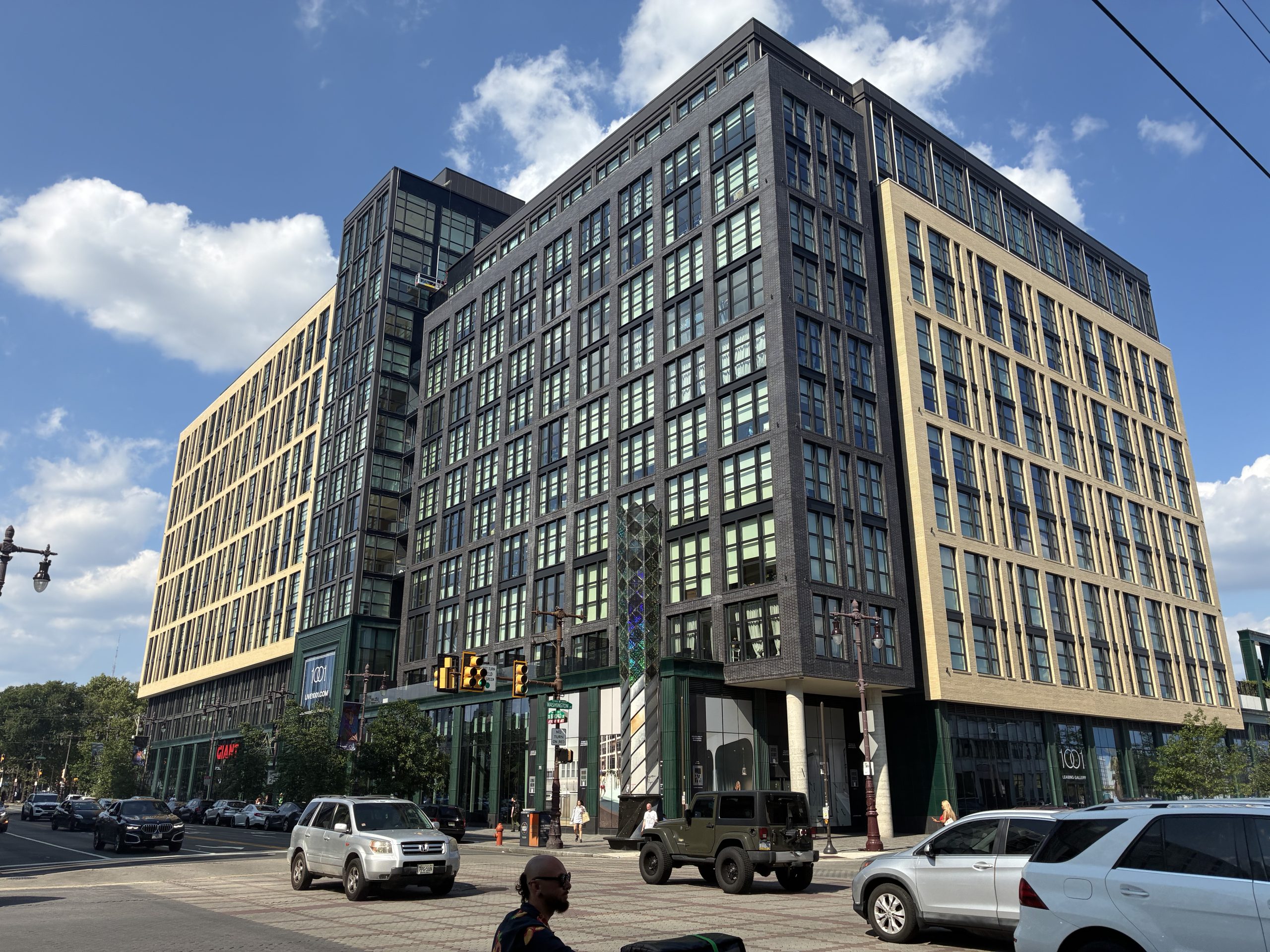
In state and federal courts, the building and professional-services contractors, most of them affiliated with the city’s carpentersunion, allege Post Brothers owes more than $9million for work at the 630-unit One Thousand One apartment complex at Broad Street and Washington Avenue in South Philadelphia.
“The Post Brothers want to take a Donald Trump business model where they don’t want to pay their contractors,” said James Hocker, assistant executive secretary-treasurer of the Eastern Atlantic States Regional Council of Carpenters.
One of the contractors, Healy Long & Jevin, a concrete construction company based in Wilmington, allegesthe Post Brothers mismanaged the project at Broad and Washington and should pay an additional $14 million.
Post Brothers alleges it’s Healy that should pay them a larger sum — for poor performance. Healy’s lawyers did not respond to a request for comment.
Doylestown-based Apollo Contractors and other smaller contractors filed the next-largest claim, for $5.8 million.
According to Apollo’s complaint, the developer “doesn’t have adequate funds because the owners” used company funds “for their own personal benefit and expenses.” Healy has made similar claims.
Post Brothers in court papers called the union contractors’ lawsuits “without merit.” The development company argues that the conflict is about who should bear the costs of inflation.
“Subcontractors who agreed to a price in 2022 experienced 30% inflation probably throughout the course of the project,” which is wrapping up this year, said Michael Pestronk, CEO of the Post Brothers, who runs the company with his brother Matthew.
But “the way that contracts work, our financing works, we pay lump sums for agreed scopes of work,” Pestronk said. “It’s up to the subcontractors to fix their costs and allow for that.”
He also says the fraud allegations are baseless and just an example of contractors “throwing [stuff] at the wall” to see what sticks.
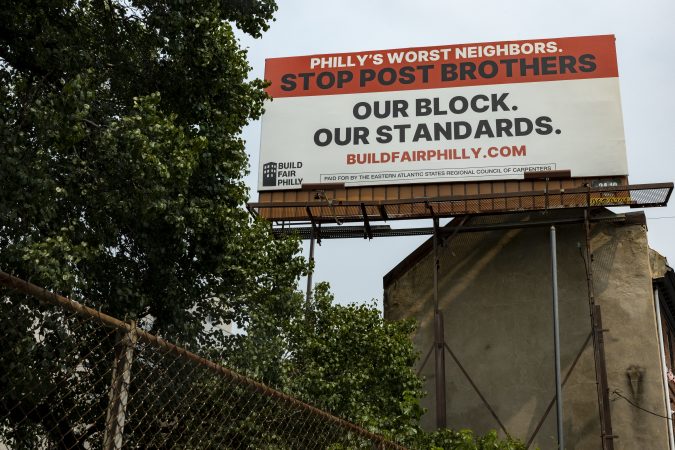
The carpenters have launched a pressure campaign against Post Brothers, including nine billboards denouncing the company along Philadelphia’s highways.They say contractors at the Broad and Washington site had to pay union members and contribute to health and pension funds, despite not being fully remunerated.
“That’s why they’re fighting hard to get what is owed to them because they have a lot of money on the street, and it’s jeopardizing their business,” Hocker said. “But they made their employees whole.”
Post Brothers has made a counterclaim against Healy, accusing the concrete contractor of “false billing” and other violations. A judge rejected a motion from union-aligned Healyto dismiss the developer’s counterclaim.
Pestronk says the legal saga is a manifestation of high interest rates and inflation in the construction market. Multifamily residential construction outside the city’s wealthiest neighborhoods has slowed dramatically. Office construction has ceased, and industrial sites do not require as many building trades.
“Subcontractors and general contractors are feeling much more hungry today than two years ago,” Pestronk said. “Their pipelines are totally dry.”
The Post Brothers development at Broad Street and Washington Avenue, which is at the heart of the conflict with the carpenters union.Jake Blumgart
What’s in dispute
One of the largest dollar-value claims againstPost Brothers is a joint demand for $5.8 million from a group of businesses, led byApollo Contractors, a carpentry, drywall, and finishing firm, and Fluid Works, a plumbing contractor, based at the same Doylestown address.
Apollo and Fluid are owned by members of the Sharpan family, who are also partners with the Pestronks in another business, Mega Supply in Bensalem. The Sharpans are separately suing the Pestronks over money they say the Pestronks owe Mega Supply.
The Apollo-Fluid Works complaint, filed in Philadelphia Common Pleas Court last August, was the first to include fraud allegations.
Apollo says that the Pestronks paid Apollo to improve “their respective private residences” even as they owed millions to the contractors for work in Philadelphia, according to Apollo’s complaint. Attached to the suit are invoices for more than $200,000 worth of carpentry, painting, tile and drywall work that Post Brothers paid Apollo to perform at Michael Pestronk’s Eagle Farm in Villanova in 2021 and 2022.
The groundbreaking for the Broad and Washington project was in December 2021.
The Apollocomplaint alleges that Post Brothers knew they didn’t have enough money to pay for the work but didn’t tell the contractors until the work was done.
Early in July, Healy amended its federal complaint, pending before Judge Michael Baylson, to add similar claims. The Post Brothers denies those allegations and says the contractors have not offered detailed support for the allegations.
“They are preposterous,” Pestronk said.
Healy also demanded Post pay an additional $14 million for “mismanagement” at the Broad and Washington site that made the work difficult to complete and unprofitable. Post filed a counterclaim blaming Healy for “defective performance” that cost the developer $17 million. Each has asked the judge to dismiss the other’s allegations beyond the original complaint.
Other lawsuits asked sums well under $1 million. Some have been in settlement talks; others are slated for trial.
Post Brothers’ history with unions
In addition to the nine billboards condemning the Post Brothers, the carpenters union hasan electronic messaging truck attacking the company rolling around the city.
The carpenters union’s electronic messaging truck outside City Hall, denouncing the Post Brothers.Eastern Atlantic States Regional Council of Carpenters
The clash is the latest conflict between building trades unions and the company, which has always used an “open shop” mix of union-and-unorganized workers on their job sites.
In 2012, the Pestronks sought to redevelop a former textile mill at 12th and Wood Streetsinto a 164-unit apartment complex called the Goldtex building, using an open shop model.
The Philadelphia Building Trades Council, an umbrella group that covers many of the construction unions,fought for 100% union representation on the site.
Union workers blocked access to the site — sometimes bringing construction to a standstill — and the Philadelphia sheriff’s office had to enforce a court order that protests stay backfrom the building. Violent tactics by protesters were caught on video.
Relationships between the Post Brothers and the building trades have never been that contentious since, althoughthey’ve never been tension-free either. The company still uses a mix of organized and nonunion labor.
“We worked very hard to develop a relationship with Post Brothers over the last 10 to 15 years,” said Hocker of the Eastern Atlantic States Regional Council of Carpenters. “There was some bad blood [but] … we were able to secure some work on some of the Post Brothers’ work, specifically around concrete.”
According to both the carpenters and the Post Brothers, the project at Broad and Washington employed greater numbers of union workers than some of their other major projects recently, such as Piazza Alta in Northern Liberties.
“We were trying to play nice with the unions, and we made a commitment to hire these contractors at frankly greater expense than we otherwise would have incurred to try to foster relationships,” Michael Pestronk said. “And it turned out not to have gone well.”
Besides the billboards and messaging truck, there have been periodic pickets at Broad and Washington, but according to Pestronk, nothing remotely comparable to the protests over the Goldtex building years ago.
The carpenters are not a part of the Philadelphia Building Trades Council or the Philadelphia AFL-CIO. Other unions have not joined the campaign against Post Brothers, although the carpenters say they have invited them to partake.
The union also has released a larger campaign,Build Fair Philly, meant to highlight what they consider unscrupulous development in the city. The billboards critical of Post Brothers bear the larger effort’s emblem. They also are trying to build alliances with neighborhood groups.
“Post’s practices ultimately affect the whole market, and we welcome anyone who wants to be part of holding developers accountable,” Hocker said.
Pestronk shrugs off the conflict. He notes that the Post Brothers continue to build in Philadelphia and says the current conflict does not compare to his company’s earlier struggles with the trades.
“When that was going on, that was something I spent a lot of time thinking about and figuring out what to do every day,” Pestronk said. “This is less than 1% of that. These are just some [nonsense] lawsuits that just go on in the normal course of business.”
U.S. intelligence agencies have assessed that Iran was likely behind a coordinated cyberattack on more than 30 municipal water systems in Minnesota this week, according to several U.S. officials.
The FBI is investigating the attack, which comes as a five-month-old military conflict between the United States and Iran threatens to escalate.
Though intelligence agencies have not definitively concluded that Tehran is responsible, the hack follows urgent warnings by federal cybersecurity officials that Iran for months has been targeting internet-exposed devices that control operations at water, wastewater, and energy facilities in the U.S. and, in some cases, causing disruptions.
Intrusions have been noted at several water and energy systems across the country since shortly after the war began on Feb. 28, said Joe Slowik, director of threat research for Dataminr, a real-time commercial intelligence platform.
“It is not a secret that these things have been taking place since the spring,” he said. “There have been disruptions in multiple critical infrastructure sectors. It’s a big deal.”
The New York Times earlier reported that federal and state investigators believe Iran was likely responsible for the Minnesota attacks.
At least one system was briefly offline and another saw its remote sensors disrupted, but the state’s information technology agency notes that there are no active requests for Minnesotans to modify their drinking water usage.
The attacks took place on Sunday and Monday, according to a statement by Minnesota IT Services, the information technology agency.
The agency, as well as the affected municipalities, are working with state and federal authorities to share threat intelligence and remediate the attack.
Nate George, the mayor of Braham, Minn., said in an online statement that his city’s public works department discovered the attack early Monday morning. After learning at least four other Minnesota communities were affected, they determined the plant had been hacked.
“Public works isolated the affected system, restored a backup, and restarted the plant within approximately 90 minutes,” George said of the city’s response, noting that Braham’s residents received water from the city’s water tower while the plant was offline.
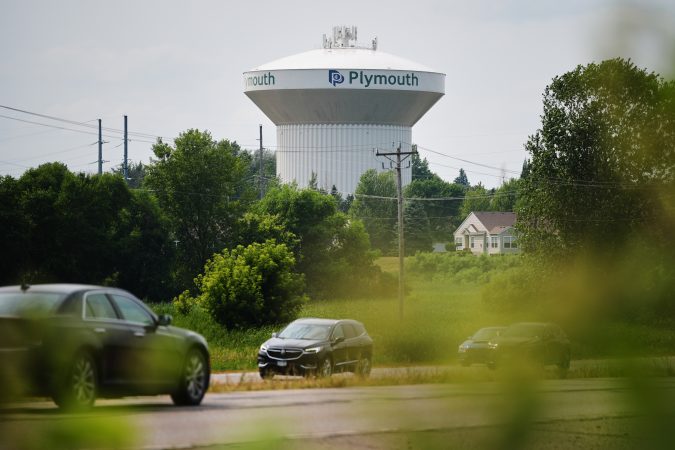
In the city of Plymouth, several devices that control the water and sewer systems’ operations were hacked and taken offline but have now been restored, said Michael Thompson, the city’s public works director. The water supply was not affected, he added. But devices known as programmable logic controllers, or PLCs, which operate on the city’s cellular network and track water level, pressure, pump operations, and equipment alarms, were impacted.
Iran has been actively targeting the U.S. with cyberattacks since the war started on Feb. 28, but most have not drawn headlines.
Kurt Gaudette, head of intelligence for Dragos, a cybersecurity firm that specializes in protecting critical infrastructure, noted a pattern with attacks in March and in Minnesota: the targeting of small utilities that use internet-exposed controllers with default passwords. “It’s very low-hanging fruit,” Gaudette said.
He said he has seen such attacks in the past, notably in late 2023, when a PLC at a municipal water pumping station in Aliquippa, Pa., was hacked. The attack, which caused no major disruption, was claimed by a group affiliated with Iran’s hard-line Islamic Revolutionary Guard Corps and known as CyberAv3ngers.
The Aliquippa station used PLCs made by an Israeli firm, Unitronics, which were targeted by the hacking group across the U.S., Britain, Israel, and Ireland. Israel had just begun its invasion of Gaza in response to the attack by the Palestinian militant group Hamas that killed about 1,200.
In general, Iran’s goal with cyberattacks seems to be less outright destruction than to deliver psychological effects to two audiences, said Alex Orleans, head of threat intelligence at Sublime Security, an email security company.
“The first is the American people, to make us freak out and to turn sentiment against the war by making it look like it’s not worth the costs, when in reality our systems are pretty resilient,” Orleans said.
The second is the Iranian regime itself, he said. “They want to show their bosses that they’re contributing to the war effort.’’
Slowik, who tracks foreign cyber threat actors, said that the events in Minnesota and other states, including in the Eastern U.S., are the work of Iran’s Islamic Revolutionary Guard Corps’ Cyber Electronic Command.
Iran’s actions “reflect a desire or need to say, ‘Hey, we can hit you too, even if it’s not New York City or Los Angeles,” Slowik said.
The Department of Homeland Security’s Cybersecurity and Infrastructure Agency issued advisories in April and July noted that the IRGC was exploiting PLCs.
On Thursday, the agency issued a new advisory saying that it is seeing “a significant increase” in cyber threat actors targeting programmable logic controllers in the water and wastewater system sectors. CISA urged they be disconnected from the internet as soon as possible and that default passwords be changed.
In March, the IT systems of a major medical equipment maker, Stryker, were disrupted for two to three weeks by a hacktivist front group known as Handala, which the Justice Department said is operated by Iran’s Ministry of Intelligence and Security.
Handala also claimed earlier this year to have hacked the personal email account of FBI Director Kash Patel.
Philadelphia’s only free sexual assault exam center was so strapped for funding last spring that Drexel University, its former operator, started drafting a closure announcement.
The school was facing financial strain of its own, and state funding to rape crisis nonprofits was tied up amid a prolonged budget impasse in Harrisburg. Emergency funding from the city was tangled in City Hall’s lengthy contracting process.
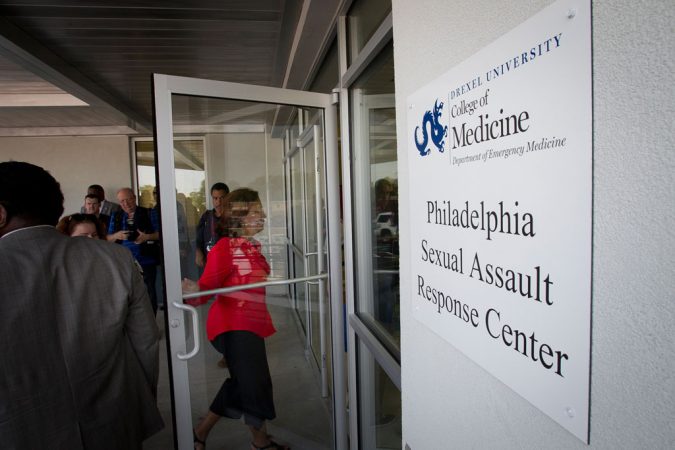
At the time, there was no plan for who would run the Philadelphia Sexual Assault Response Center (PSARC), where roughly 300 rape survivors a year go for the sexual assault exams used to collect forensic evidence that are commonly known as “rape kits,” which often play a key role in prosecuting assaults.
Fast-forward to this month, when Mayor Cherelle L. Parker’s administration announced the city’s public health department will assume all control of PSARC. Officials presented the news as the culmination of a careful, collaborative handoff, and one city staffer framed the transition in a news release as “seamless.”
But hundreds of emails obtained by The Inquirer through a right-to-know request and a review of public records tell a far messier story. The emails show that for more than a year the fate of PSARC lurched from one near-miss to the next and that a failed bid process forced the city to take over the center’s operations when no one else would.
Taken together, the records offer a granular view of how a critical piece of the city’s safety net for sexual assault survivors nearly broke. And they portray a chaotic process in which the city for months sought to transfer control of the center from Drexel to the nonprofit WOAR Philadelphia Center Against Sexual Violence, even as WOAR faced its own budgetary implosion.
Over the course of the last year, the exam center never shut its doors to patients. But it came close on several occasions, a collapse that would have had ripple effects in hospital emergency rooms across the region that typically route sexual assault patients to the center.
If PSARC suspended operations, hospitals would have to find specially trained staff — of which there are few — to perform the exams.
“Philadelphia emergency rooms were not ready for that,” said Lila Slovak, director of the Philadelphia office of the Women’s Law Project, who spent months warning city officials that PSARC was in danger. “They did not know that [the center] was at risk of closing. It was not on anybody’s radar.”
Crystal Yates-Gale, the city’s deputy managing director for health and human services, said in a statement that the final outcome — the city running the center — is ultimately what is best for sexual assault survivors.
“We are proud to have secured the continuity of vital services for victims of crime in a dignified, victim-centered, culturally-competent atmosphere in Philadelphia,” she said.
The exam room at the Philadelphia Sexual Assault Response Center, in Philadelphia, Pa., on Friday Dec. 6, 2024.Tyger Williams / Staff Photographer
She said WOAR was transparent with the city about its financial position.
“Like most Commonwealth-funded providers, we planned on the assumption that funding would resume,” Anthony said. “The impasse instead ran 135 days. By the time it ended, we had drawn down our reserves.”
A lifeline center on a shoestring budget
PSARC, located at 300 E. Hunting Park Ave. in North Philadelphia, has two full-time staff members and a network of about 15 contracted nurses trained to perform sexual assault forensic exams, provided free under Pennsylvania law. The procedures are intended to gather physical evidence, such as DNA left behind by an assailant, and to document injuries that may aid investigators in a future criminal investigation.
Many hospitals lack the specialized staff required to perform sexual assault forensic exams, so they refer patients to PSARC or work with PSARC to have a trained nurse dispatched to the hospital.
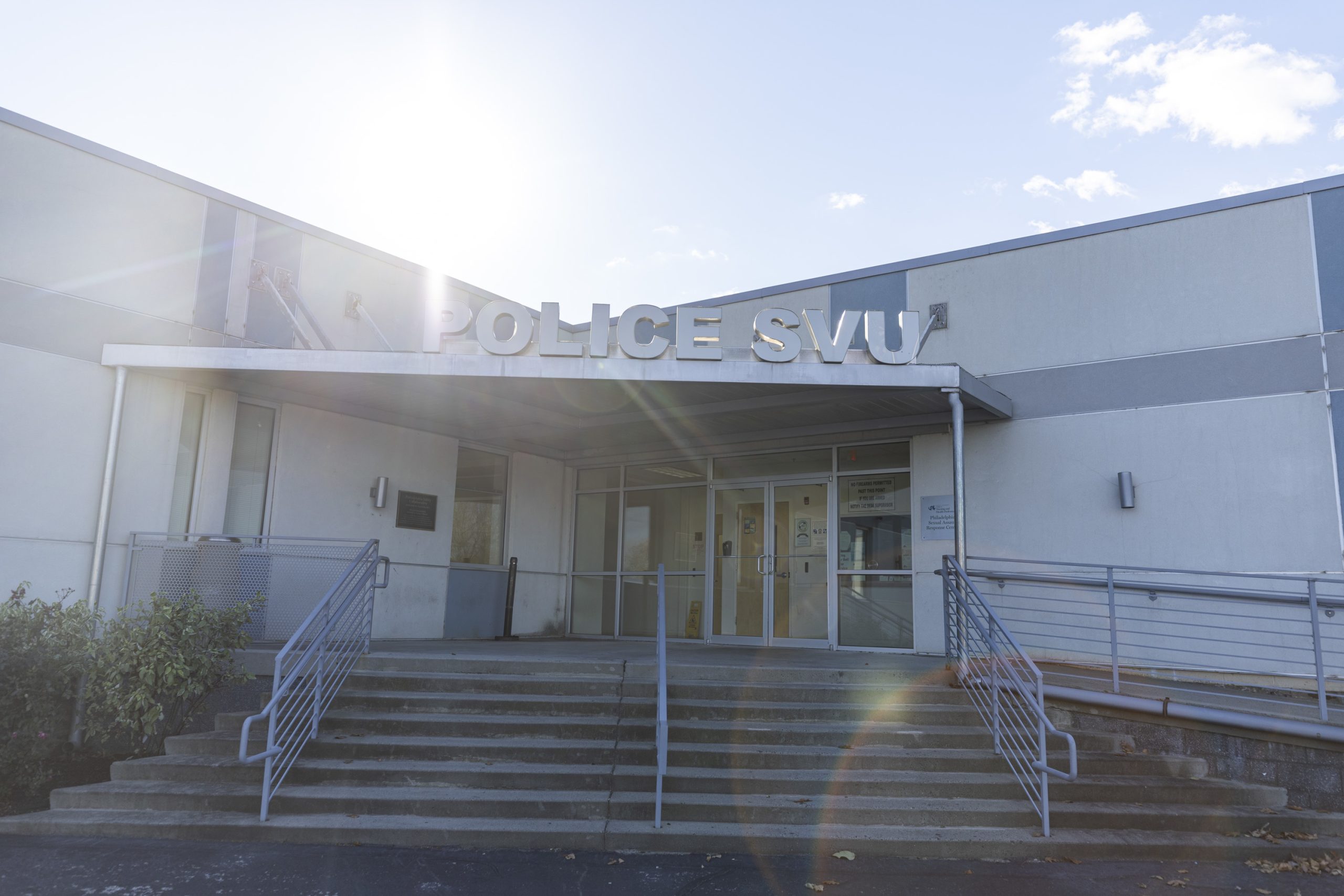
The center is located next to the Philadelphia Police Special Victims Unit, but patients are not required to report the assault to law enforcement in order to have the free exam performed.
The Police SVU where the Philadelphia Sexual Assault Response Center, in Philadelphia, Pa., on Friday Dec. 6, 2024.Tyger Williams / Staff Photographer
Founded in 2011 and initially operated by the now-shuttered Hahnemann University Hospital, PSARC has been run since 2019 by Drexel University’s College of Nursing and Health Professions. For most of that time, the operation ran on a shoestring budget.
Until last year, PSARC received no dedicated city funding. The state reimbursed Drexel about $1,000 for each patient treated, with Drexel absorbing substantial losses, according to records. The exam reimbursements can take months to flow from the state.
Brian Keech, then Drexel’s senior vice president for government relations, shared a financial analysis with city officials last year that laid out an annual shortfall averaging more than $175,000.
As Drexel cut staff and benefits across the university last year amid declining enrollment and a $63 million annual operating loss, its leaders told the Parker administration that the school could no longer manage PSARC on its own.
In a series of emails last spring, Keech pressed the city for a funding commitment for the center and warned that, without one, the university would have to tell hospitals to stop referring patients for sexual assault exams.
“We’ve begun to prepare the closure announcement,” Keech wrote in a May 20, 2025, email to Adam Geer, the city’s chief public safety director. “Obviously we’re hopeful we can avoid this scenario, but we do have to adequately prepare area hospitals that they will have to begin providing sexual assault services come July 1 if PSARC closes.”
By early June, the city had found the money.
The scramble to save PSARC
Yates-Gale, the city’s deputy managing director, said in a June 2025 email to Drexel officials that the administration had identified $250,000 in emergency funding to keep the center running.
The plan was for WOAR — the nonprofit formerly known as Women Organized Against Rape — to operate PSARC. The city would support its efforts by routing those funds to WOAR through an existing health department contract.
Meanwhile, WOAR was itself under severe financial strain amid the state budget impasse that left community organizations across Pennsylvania unfunded. WOAR’s leaders told city officials that they could not make payroll without the check from the city.
PSARC was left in limbo. The handoff deadline from Drexel to WOAR was moved from Aug. 1 to Sept. 1, with Drexel agreeing to cover an extra month of payroll to bridge the gap. Then, on Aug. 28 — three days before the already delayed transfer — WOAR’s board chair, Joanne Strauss, wrote in an email to city officials that the organization “will not be acquiring” PSARC.
She provided no reason other than saying the organization was “further evaluating the proposed transaction.”
City officials were alarmed. Within an hour, the city’s victim advocate, Adara Combs, emailed Drexel officials to say she was “deeply troubled” by the sudden shift.
Two weeks later, WOAR appeared ready to operate the center again. The group’s board of directors voted unanimously to approve the acquisition, and money from the city began flowing to WOAR to operate the rape exam center — more than $80,000 in total.
Anthony, of WOAR, said in a statement the board’s approval of the acquisition of the sexual assault center came as the nonprofit thought the state budget impasse would come to an end and was “contingent on conditions related to funding and our ability to responsibly take control of PSARC.”
“It became clear that those conditions were not resolved,” she said.
Drexel continued to pay to operate the rape crisis center, and WOAR wired the university the city funding it had received. Drexel operated PSARC, with an additional $167,000 in help from the city, until June 30.
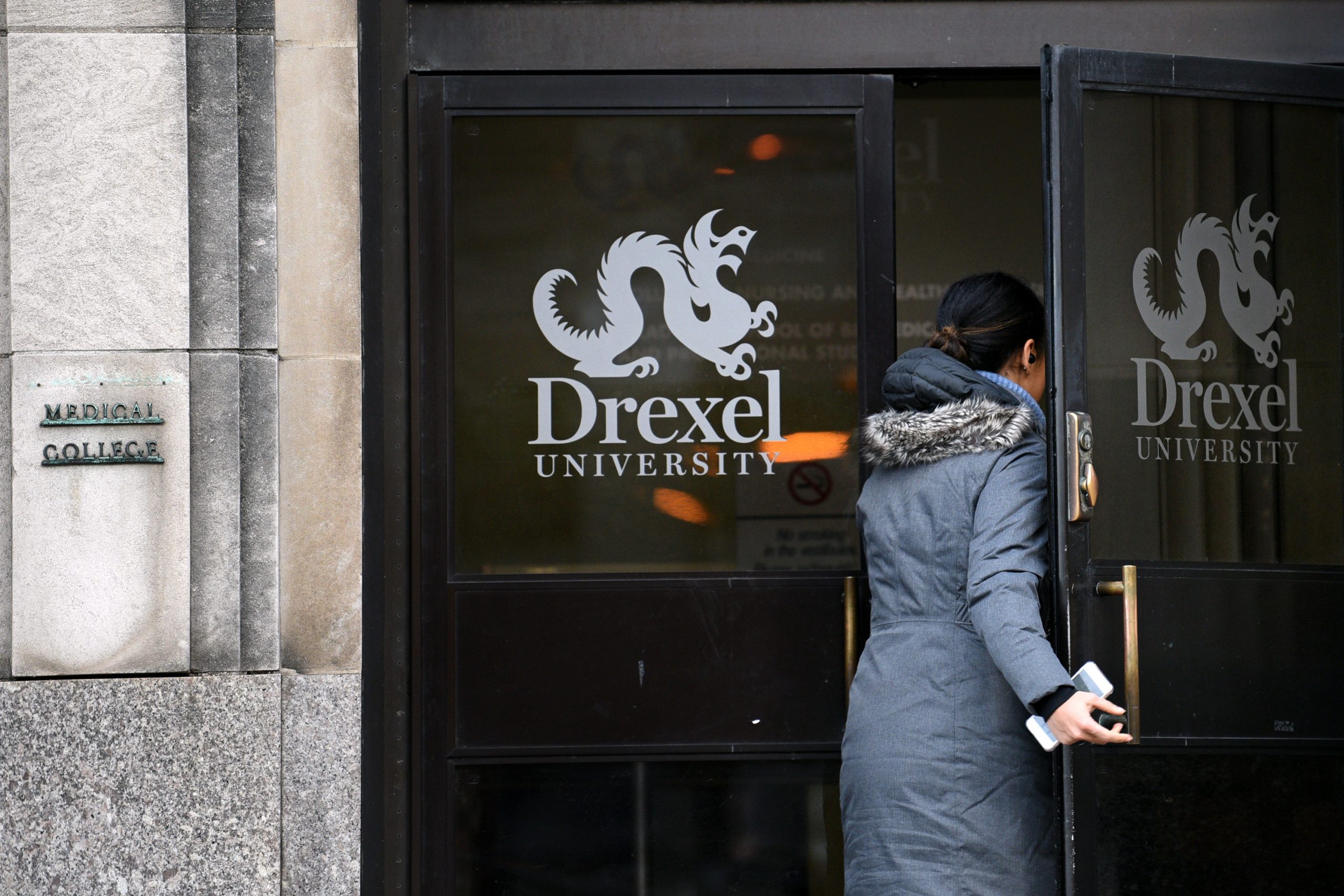
The 15th Street entrance to Drexel University College of Nursing and Health Professions Feb. 19, 2020. The college has the largest bachelor program in the three-state region.TOM GRALISH / Staff Photographer
The back-and-forth saga highlighted a central question: Why did the city seek to transfer a critical service to WOAR despite the nonprofit’s existing financial problems?
Slovak, of the Women’s Law Project, said it made sense that WOAR stepped up to take over the center’s operations, given its mission to treat and prevent sexual violence. It is common in other cities for rape crisis centers to manage forensic exam facilities.
But overseeing hundreds of sexual assault exams each year, she said, would have been a major expansion of WOAR’s scope because it “is about more than just providing emotional support or accompaniment for survivors.”
Yates-Gale said WOAR was a natural choice to assume operations of the center. The group had an existing contract with the city and its mission aligned with that of PSARC.
“Drexel agreed to continue operations until another suitable alternative organization could be identified,” she said, “and the entirety of the funds for the program were transferred back to them.”
Britt Faulstick, a Drexel University spokesperson, said the school “worked closely with city leadership to ensure a smooth transition.”
Another failed effort to find an operator
The city’s $250,000 in emergency funding bought PSARC time. But the same question remained: Who would run it long-term, and where would they find the money?
This spring, Parker’s budget proposal, which was approved by City Council in June, included $300,000 for the center. The city put the operation out for bid, seeking an outside organization like another hospital or nonprofit to run it.
City officials met on April 13 with potential operators, including representatives from area hospitals that depend on the center, such as Temple University, the University of Pennsylvania, and Jefferson Einstein Philadelphia. Several expressed concerns about PSARC’s finances.
According to a public recording of the meeting, multiple attendees suggested that $300,000 a year in city funding would not be enough to cover PSARC’s operations and salaries for medical staff who must be available 24-7.
The exam room and desk space when patients are in at the Philadelphia Sexual Assault Response Center, in Philadelphia, Pa., on Friday Dec. 6, 2024.Tyger Williams / Staff Photographer
“This has never been something that’s been profitable, so it’s always needed another source of funds to keep it stable,” one hospital representative said. “It’s the money, right, to keep it open and to be able to run this as a service for the city and keep it maintained so you’re not back in this ‘we don’t have it’ in six months.”
Combs, the city’s victim advocate, told potential bidders that they were welcome to “reimagine” how PSARC operates and propose new funding streams.
But hospital representatives remained skeptical and pressed the city to find a different solution, citing a moral urgency.
“It would be a tremendous tragedy if we lost the resources of PSARC in the city,” said a representative from Jefferson Einstein Philadelphia Hospital.
“I think we all agree,” said Azucena Ugarte, director of the Philadelphia Office of Domestic Violence Strategies. “That’s why we’re doing this.”
But following the meeting, no one bid.
The city takes over
With no outside bid to operate Philadelphia’s only free rape exam center, the options in front of city officials were either to let it close or to take control themselves.
The city chose the latter. Parker administration officials framed it as a lasting solution.
Faulstick, of Drexel, said the school will continue to train nurses in sexual assault examination to help ensure the care is available. He said PSARC is “positioned for continued growth and long-term sustainability.”
Others have questions about the stabilization plan.
City Councilmember Nina Ahmad, who represents the city at-large and held a hearing earlier this year about PSARC funding, said that the $300,000 annual allocation to the center is likely inadequate and that she will push for more dollars in future city budgets.
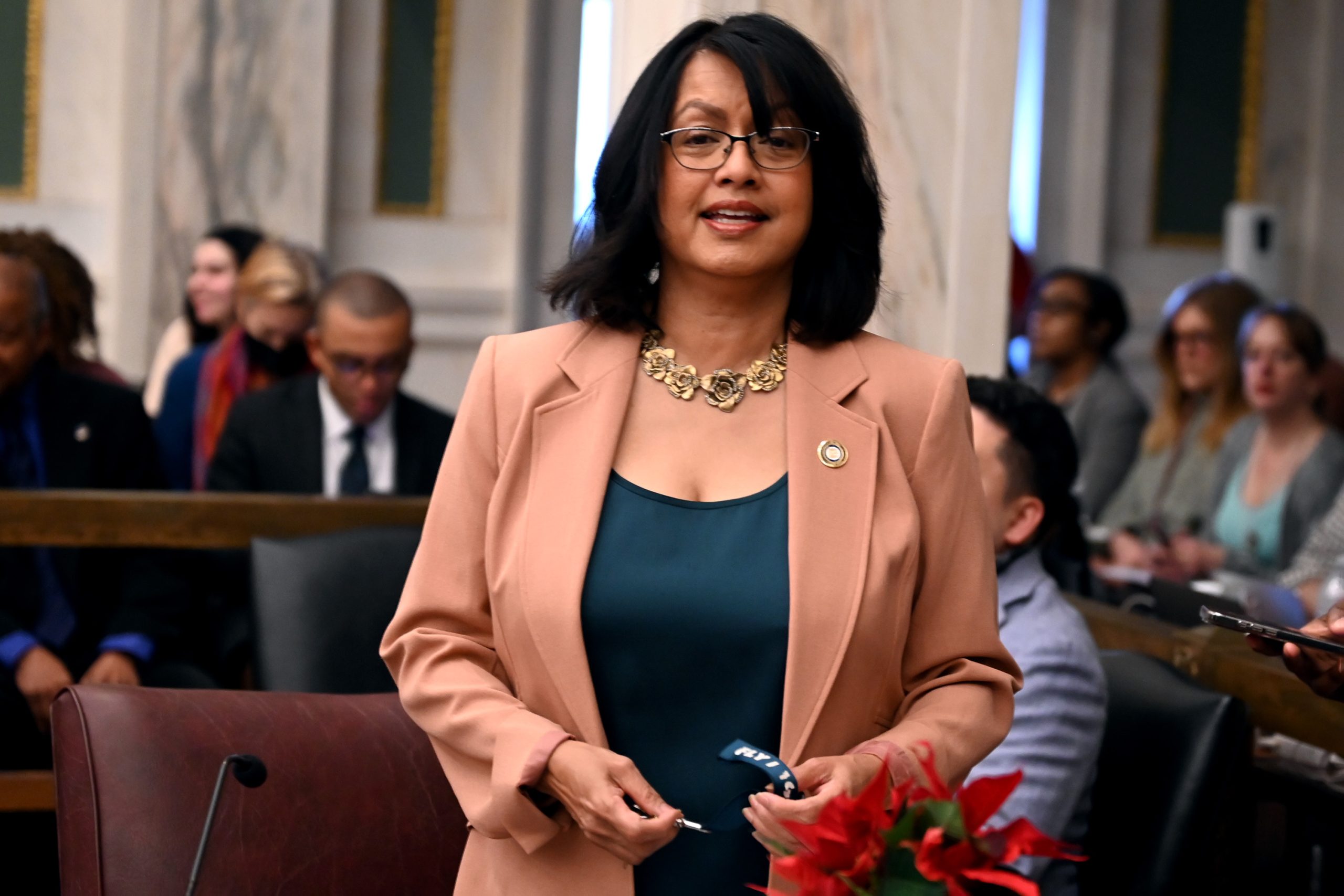
Councilmember Nina Ahmad in chambers as City Council meets Dec. 11, 2025.Tom Gralish / Staff Photographer
Ahmad also said she expected more buy-in from hospitals, noting they would have been saddled with the responsibility of providing sexual assault exams if PSARC had shuttered.
“I am not surprised,” she said in an interview, “but I’m still disgusted that we have not come together on this. … This is evidence being collected, [and] this is how we prevent future rapes.”
Slovak said ensuring PSARC’s financial survival will take more than a change in management. It will require cooperation, including from hospitals, the city, and the state, to work together “so that survivors aren’t sacrificed in the budget gamesmanship.”
Still, she said, the city “can really be this positive, central, coordinating force.”
“And I do feel confident at this point,” Slovak added, that the center “is going to move in a good direction from here.”