Blog

  • U.S. stocks rise to finish a wild July as Amazon soars, Apple sinks, and inflation worries worsen

    U.S. stocks rise to finish a wild July as Amazon soars, Apple sinks, and inflation worries worsen

    NEW YORK — U.S. stocks rose Friday to finish a wild July for Wall Street as Amazon leaped, Apple sank, and rising oil prices worsened worries about inflation staying high.

    The S&P 500 climbed 0.7% after veering between gains and losses through the day. The Dow Jones Industrial Average added 276 points, or 0.5%, and the Nasdaq composite rallied 1% after briefly losing all of an early 1.3% jump.

    It’s a fitting finish to July for the U.S. stock market, which lurched up and down as oil prices shot higher because of the war with Iran and worries grew about whether Big Tech’s massive investments in artificial-intelligence technology will translate into profits and whether chipmaker stocks soared too high in the euphoria around AI.

    Friday’s gains sent the S&P 500 to its first winning week in three, but the main measure of the U.S. stock market nevertheless finished the month with a tiny loss.

    Amazon led the market with a leap of 15.3% after reporting much stronger profit for the latest quarter than analysts expected. Its profit more than tripled from a year earlier, thanks in part to an acceleration of growth in its cloud computing business.

    Analysts said that could be a signal Amazon’s huge AI investments are paying off, and Amazon increased its forecast for how much it will spend on investments this year.

    The reaction was similar to what Microsoft got a day before, when its stock soared to its best day in nearly 18 years on signals that its AI investments may also be yielding higher profits.

    Chip companies selling the processors and computer memory that such “hyperscalers” are scrambling to buy swung sharply again on Friday. Micron Technology, for example, went from an early jump of 6.4% to a loss of 6.5% before finishing with a fall of 5.9%.

    More firmly on the losing end of Wall Street was Apple, which dropped 7.4% despite reporting stronger profit for the latest quarter than expected. Its forecast for revenue growth in the current quarter fell short of expectations, which executives pinned on a supply crunch in components getting vacuumed up in the AI boom.

    All told, the S&P 500 rose 52.09 points to 7,489.72. The Dow Jones Industrial Average added 276.97 to 52,485.03, and the Nasdaq composite climbed 251.68 to 25,373.85.

    The gains came despite another rise in oil prices as uncertainty continues about when the war with Iran will allow crude to flow freely again from the Middle East.

    The price for a barrel of Brent crude rose 1.2% to settle at $87.93 after careening between $72 and $102 earlier in July.

    Higher oil prices have pushed the cost for a gallon of regular gasoline to an average of nearly $4.11 across the United States, up from $3.85 a month ago, according to AAA. More expensive oil also puts upward pressure on prices for virtually every product that rides on a ship, plane, or truck before getting to a customer.

    The worries about inflation sent yields in the bond market even higher.

    The yield on the 10-year Treasury rose to 4.71% from 4.68% late Thursday and from just 3.97% before the war with Iran sent oil prices shooting higher. That’s a notable move for the yield, which moves higher when investors’ expectations for inflation, economic growth, and other factors in upcoming years are rising.

    The leap for the 10-year yield has already sent the average long-term U.S. mortgage rate to its highest level in a year.

    Longer-term yields jumped on Wednesday after the Federal Reserve’s chairman, Kevin Warsh, promised again to get inflation back down to 2% but refused to say how he plans to get it there. The Fed voted again to keep its main interest rate steady on Wednesday, even though inflation remains well above 2%.

    Hikes to rates by the Fed could restrain inflation, but they could also slow the economy and undercut prices for stocks and other investments. President Donald Trump, who nominated Warsh to lead the Fed, has lobbied for lower interest rates instead of higher.

    Warsh has told financial markets that he does not want to give hints about what the Fed will do with interest rates, saying he wants to get direct, “unfiltered” messages from them rather than echoes back of what the Fed has suggested.

    “The Fed is facing a growing credibility problem,” economists at Bank of America wrote in a report. Unless data comes in showing less pressure on inflation in the interim, “it is imperative for the Fed to pass the September test by hiking rates and delivering an internally consistent narrative.”

    AP Business Writers Chan Ho-him and Elaine Kurtenbach contributed to this report.
  • Trump hails a ‘unique’ Cabinet meeting at Camp David as he seizes on Spain’s migration crisis

    Trump hails a ‘unique’ Cabinet meeting at Camp David as he seizes on Spain’s migration crisis

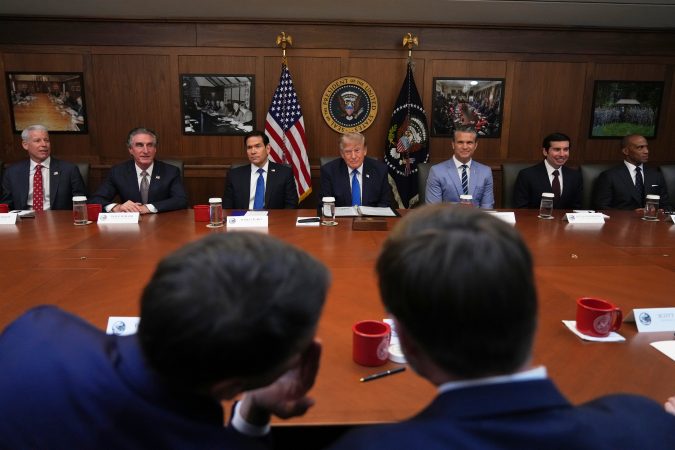
    CAMP DAVID, Md. — President Donald Trump took Friday’s cabinet meeting on the road to Camp David, using the historic rustic backdrop of the presidential retreat to boast of his administration’s achievements while seizing on a migrant crisis in Spain to make his case for why voters should keep the Republican Party in power.

    The cabinet meeting, the 13th such gathering of Trump’s second term, came just three months before the November midterm elections that could serve as a check on his power if Democrats take control of one or both chambers of Congress. His warnings about Spain echoed language he used ahead of the 2018 midterms, when he warned of caravans of migrants headed to the southern U.S. border.

    “You know, I saw Spain yesterday, and I watched the catastrophe that took place. It looks like an invasion of a country by hundreds of thousands of people,” Trump said. “And that same thing is going to happen to us if the Republicans don’t get elected. Except worse, much bigger.”

    Some 60,000 migrants crossed from Morocco into Spain’s tiny Ceuta territory over the past 24 hours. Roughly half of them have already made their way back voluntarily, according to the Spanish government, but at least 57 have died on the journey.

    Separately, he deflected blame for a series of cyberattacks that targeted 30 water systems in Minnesota on the state’s “grossly incompetent” Democratic leadership. Officials have not publicly identified who was behind the attacks, though the FBI, the Cybersecurity and Infrastructure Security Agency, and other agencies warned in an advisory last week that Iranian hackers have been targeting water and wastewater systems and the operational controls of other critical infrastructure sectors.

    “They blame it on Iran,” Trump said, without offering evidence. “I don’t think so. I think I blame it on Minnesota because they’re grossly incompetent.”

    The president regularly convenes his cabinet throughout his terms as a setting to promote his administration’s policies while fielding questions on the news of the day, but what made Friday’s meeting unusual was that it was at Camp David, the government-owned retreat nestled in Maryland’s Catoctin Mountains, where Trump held one cabinet meeting during his first term.

    Trump began the meeting by noting it was “something very unique.” The White House called it the first-ever televised cabinet meeting from the presidential retreat.

    “It’s Camp David, and this room is a very, very special room,” Trump said.

    Secretary of State Marco Rubio and Defense Secretary Pete Hegseth were among the cabinet officials who spoke before Trump took questions from journalists. The public portion of the meeting ended after about an hour.

    Trump fields questions on Iran, Hamas deal, and Blanche confirmation

    In the lengthy question-and-answer session, Trump commented on the latest developments regarding the war in Iran and a deal he announced Thursday that he said would lead to the disarmament of the Palestinian group Hamas.

    He also lamented that a $1.8 billion anti-weaponization fund to compensate his allies was “dead” and appeared to back off a pledge he made earlier this month to grant Ukraine a license to manufacture Patriot air defense systems.

    “I don’t think this would ever happen, but, you know, there’s people that, you give that technology, they can someday turn on you,” Trump added. “You look at war, that’s happened a couple of times over the years, right? So we have to be very careful.”

    On the Hamas agreement, Trump acknowledged that the agreement that would also lead to Israel’s withdrawal from Gaza will have “ups and downs.” Still, he called it a “great breakthrough” that has been helped along by the U.S. and Israel’s war with Iran, which has served as Hamas’ prime backer.

    Trump also remarked on the anti-weaponization fund that is holding up the confirmation of Todd Blanche as his attorney general, saying the pot of money is “dead” and that “I wish it weren’t, to be honest with you.”

    The president continued to defend the people who could potentially benefit from the fund, mainly those who stormed the Capitol on Jan. 6, 2021, to stop the certification of Democrat Joe Biden’s victory over him.

    “Their families have been ruined,” Trump said. Those people “wanted to go to a rally or an event and ended up spending the rest of their lives in horror.”

    Trump said Blanche has been a “pawn in this whole thing.” Blanche, who was present, did not speak in the public portion of the cabinet meeting.

    Camp David has been a retreat for presidents since FDR

    The camp’s primary purpose is to provide presidents a place to rest, relax, and recharge. It was established in 1942 during Franklin Roosevelt’s presidency and has been used by every president since.

    Roosevelt had enjoyed relaxing aboard a presidential yacht, but the military and the U.S. Secret Service began to worry about his safety on open water during World War II. As a result, Roosevelt asked the National Park Service to find sites within 100 miles of the White House that he could use for rest.

    He chose what is now known as Camp David. He gave it the original name of Shangri-La, from James Hilton’s novel Lost Horizon. President Dwight Eisenhower renamed it Camp David, after his grandson and father.

    Trump spent more weekends at the retreat in his first term but has visited sparingly in his second, most recently in June for Father’s Day.

    In 2019, during his first term, Trump announced on social media that he had canceled a secret weekend meeting at Camp David with Taliban and Afghanistan leaders — scheduled for just days before the anniversary of the Sept. 11, 2001, attacks — after a bombing in the capital of Kabul killed a dozen people, including a U.S. soldier.

    Presidents throughout history have turned to Camp David when they needed security and privacy for sensitive diplomatic talks with foreign leaders. Jimmy Carter took the leaders of Egypt and Israel there in 1978 for talks that produced the Camp David Accords, a peace agreement between the two countries.

    The 180-acre retreat, which is run by the Navy and guarded by Marines, has a cabin named Aspen that’s reserved for the president, plus about a dozen other cabins for guests. A main lodge has conference rooms, a dining room, and an office for the president.

  • Authorities release early ransom note in Nancy Guthrie case, hoping someone recognizes it

    Authorities release early ransom note in Nancy Guthrie case, hoping someone recognizes it

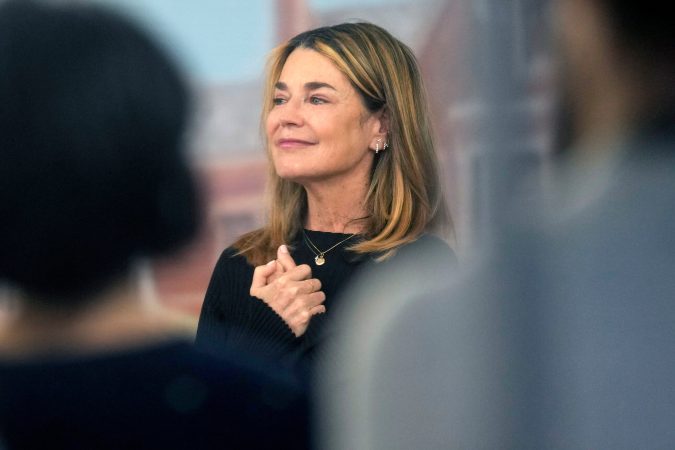
    TUCSON, Ariz. — Authorities released an early ransom note in the investigation into the disappearance of Nancy Guthrie in hopes that someone will recognize the writing style. A second note released Friday indicated Guthrie died shortly after she was kidnapped.

    Both notes initially went to a Tucson television station days after the 84-year-old mother of Today show host Savannah Guthrie went missing from her home outside Tucson on Feb. 1. Authorities have not said whether Nancy Guthrie is still alive.

    The Pima County Sheriff’s Department said, “We believe these distinctive linguistic characteristics may be recognizable to someone who knows or has interacted with the notes’ writer.”

    The first note, sent Feb. 2, said Guthrie was safe but scared and would be released unharmed once her captors received $4 million in cryptocurrency, with the ransom amount increasing if the first demand was not met.

    It said Guthrie would be released within 12 hours if the payment was received. It also included a threat to kill her if the ransom wasn’t paid.

    “Your mother is aware of this and her life is in your hands,” the first note read. “It is in the best interest of everyone to have this completed as soon as possible.”

    The second note to the family said Guthrie died shortly after she was taken. “She is buried in nature now,” the second note said. “Nothing you could have done could have changed the outcome.” The note ends with an apology, “We are truly sorry.”

    The sheriff’s department said the notes reveal a distinctive pattern of word choices and provide insight into the writer’s mindset. The agency said someone who knows the notes’ writer may recognize the patterns.

    In a statement, the sheriff’s department also went further to appeal to people who may know something about the case, saying it may be difficult to come forward due to a personal relationship with someone involved or just for their own safety.

    “We recognize relationships and loyalties change over time as do people and their perspectives,” the sheriff’s department wrote. “It is not too late to come forward.”

    The sheriff’s office also said Friday that two videos recovered from Guthrie’s doorbell camera might be from two separate days and indicate an unidentified male prepared ahead of when Guthrie was taken. Authorities are seeking information on anyone who was behaving differently, changed their physical appearance, suddenly left the Tucson area, or had a noticeable or unexplained interest or disinterest in the case.

    “Investigators continue to pursue every available technological and investigative lead,” the sheriff’s office said. “However, community members remain a vital resource as we seek to provide answers for Nancy’s family.”

    Also, two men detained and released early in the investigation into Nancy Guthrie’s disappearance are seeking a combined $3 million against a southern Arizona sheriff’s department. In a legal claim, they say they were wrongfully held by law enforcement.

    The claim made Thursday against Pima County Sheriff Chris Nanos’ department centers on the separate detentions of Carlos Alfredo Palazuelos and Daniel Maddow on Feb. 10. It said they were released hours later but have suffered from having been mentioned in the investigation.

    Nanos’ office declined to comment on the notice of claim, a necessary precursor to filing a lawsuit against government entities.

    Despite an intense search involving thousands of law enforcement officers and volunteers, there has been no sign of the mother of three since she was reported missing. Her children, including the NBC host, have made heartbreaking video pleas for help, but to no avail.

  • A Bucks County Quaker school’s abrupt closure has left families wondering where their money went

    A Bucks County Quaker school’s abrupt closure has left families wondering where their money went

    On June 1, Kent Groff wrote two $2,400 checks toward his grandchildren’s tuition this fall at United Friends School, a small Quaker early childhood and elementary school in Quakertown.

    The checks were cashed on June 4, Groff said. He was shocked when a little more than a month later, United Friends announced it would be closing — in five days.

    In a July 10 letter to families, the school’s board of trustees said it could not open for the fall school year because not enough students were enrolled.

    “Unfortunately, with slow enrollment activity in early summer and unexpected late attrition, it became clear that there was no sustainable path forward,” the board said in the letter, noting that the school had built a “conservative” budget on 80 students, but only 50 had committed to attend.

    The news stunned families, who said they were given no warning that the school, which had been open for 42 years, was on the brink of closure.

    “I was like, there’s no way this can be true. There has to be something that can be done,” said Kelly Kringe, Groff’s daughter, who had just picked her children up from a camp at United Friends when she got the email announcing the closure.

    Kringe, whose two children had attended United Friends last year and who also paid tuition for the coming fall, said there was “never any plea for help” from the school: “Nobody really knew anything.”

    The board — which did not list individual trustee names in the July 10 letter — said it was preparing answers to questions including “how prepaid tuition will be addressed during the wind-down process.”

    On Friday, the board said it had followed steps prescribed by the National Association of Independent Schools for closing. It directed families to contact a lawyer, Alex Moretsky, with “questions about tuition reimbursement, compensation or billing.”

    Kringe said she called Moretsky but got a message that he was out of the office. Moretsky did not immediately respond to a request for comment Friday.

    Before Friday, some families said they had not gotten any answers from the board to their questions.

    Groff, for instance, said he got no response to an email he sent the board that read in part: “I’m inquiring on how to get refunded for next year’s tuition that I already paid. … Thanks again for providing 42 years of excellence.”

    The board did not respond to a list of questions sent by The Inquirer. United Friends’ head of school, Daena Berdougo Remondelli, did not respond to a request for comment.

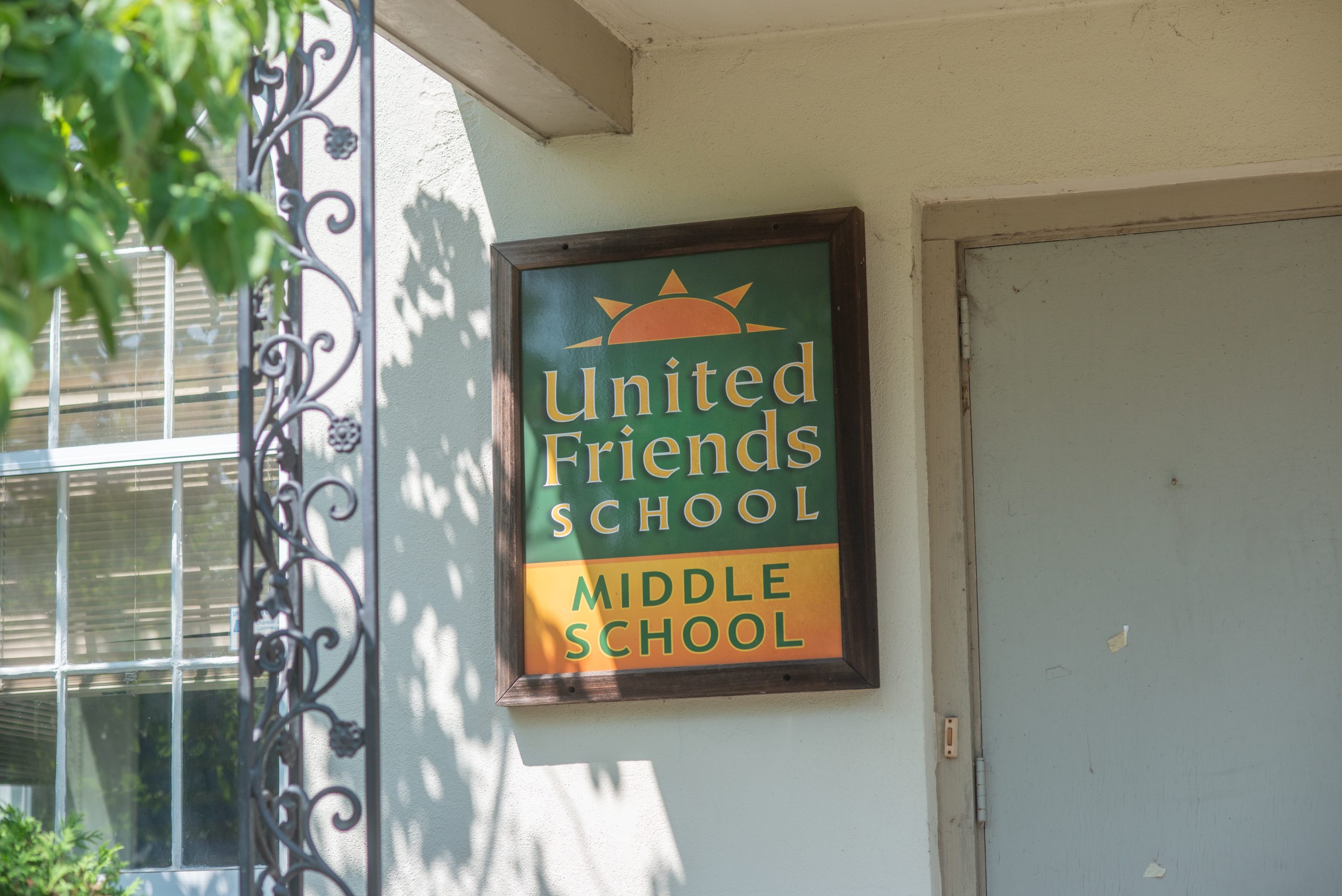
    A sign at United Friends School in Quakertown.William Thomas Cain / For The Inquirer

    The names of the school’s board members are not listed online. One board member, Bob Wirtschafter, said in a brief phone interview last Monday that he could not comment on what would happen with prepaid tuition.

    “We know we owe them,” Wirtschafter said, adding that “I can’t say anything.”

    Wirtschafter, who said he had been on the board for 32 years, said he had “seen all kinds of rumors” about the school’s closure, including that there was financial wrongdoing.

    “I can tell you, it was all about tuition,” Wirtschafter said. There were 60 students enrolled for the coming year in April, but by May, “we lost five families because of the economy,” he said. The school charged $20,000 a year in tuition.

    Wirtschafter said the school had been “struggling for years.” It closed its middle school and sold its building last year, he said, which “kept us alive for another year.”

    County records show United Friends sold several properties for $800,000 in May 2025 to AA Property Holdings LLC.

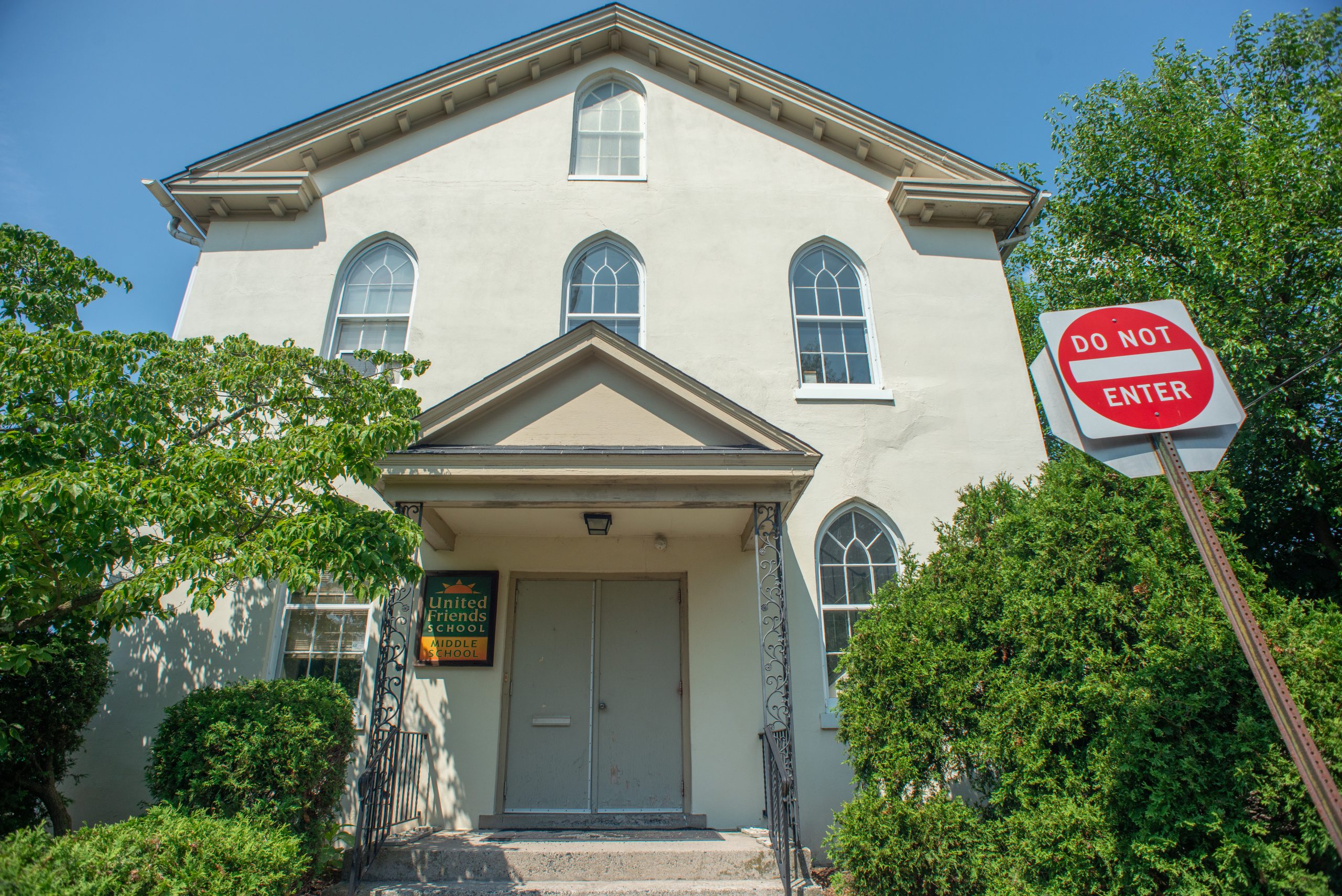
    One of the original school buildings at United Friends School in Quakertown.William Thomas Cain / For The Inquirer

    The LLC is registered to a Sellersville address owned by Mateen Afzal, whose family founded a manufacturing company in Bucks County and who is listed as director of the Afzal Family Foundation. A message sent through the foundation’s website was not returned this week.

    With the drop in enrollment headed into the fall, “we just couldn’t make it work,” Wirtschafter said. “We decided we had to close.”

    He said United Friends was not alone among small Quaker schools facing similar troubles, citing Cambridge Friends School in Massachusetts.

    Cambridge Friends announced in May that it would be closing after the end of the 2026-27 school year.

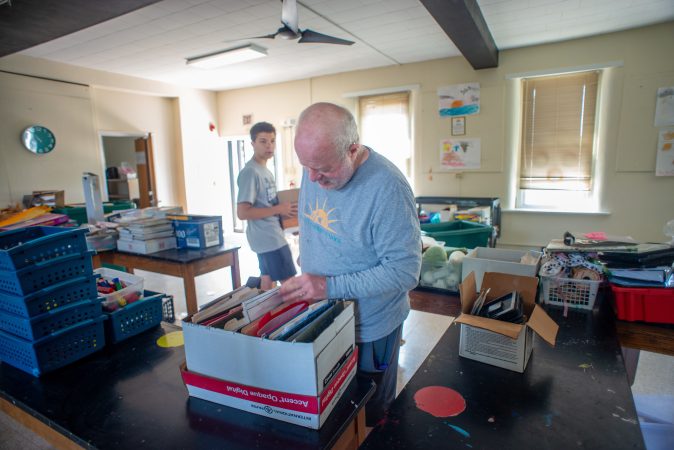
    A week after announcing its closure, United Friends sent another message to families, inviting them to a “voluntary two-day work effort” to clean out the school on July 24 and 25.

    “Community members who are unable to participate in person are welcome to support these efforts by making a voluntary contribution to help offset the costs associated with the cleanup,” the board said in the message.

    A sign announcing a “liquidation sale” at United Friends on July 25.William Thomas Cain / For The Inquirer

    “Can you imagine the sheer anger that hit the teachers and the parents? We just closed your school, we took all your money, can you help us clean up and donate more money?” Groff said.

    In his efforts to reclaim his tuition payments, Groff went to his bank and the bank where United Friends had deposited the checks, with no success. He said he also contacted the Quakertown police and the Bucks County District Attorney’s Office.

    Manuel Gamiz, a spokesperson for the district attorney’s office, said the county’s consumer protection division was taking complaints from families and “attempting to mediate these matters.” Anyone affected can call 215-348-6060 or, toll-free, 1-800-942-2669, Gamiz said.

    Groff went to small claims court, but a clerk told him it would be difficult to file a claim because “you won’t be able to serve their papers,” he said. “There’s nothing that exists,” given that the school already closed. Groff said he does not know if the board of trustees has an address.

    Groff, who has another daughter who attended United Friends, said the schools and teachers were “absolutely wonderful.”

    “That’s why this is just so devastating and shocking,” he said.

  • Hungary braces for a full shutdown of the Paks nuclear plant as the Danube River hits record lows

    Hungary braces for a full shutdown of the Paks nuclear plant as the Danube River hits record lows

    BUDAPEST, Hungary — Hungary’s only nuclear power plant will shut down for the first time in its history due to record-low water levels on the Danube River, Prime Minister Péter Magyar said Friday, adding that the plant may not come back online for several weeks as the river is expected to continue receding.

    The Paks nuclear plant, located around 50 miles south of the capital Budapest, is operating at less than half its normal capacity, producing 965 megawatts of power rather than the usual 2,000.

    The plant uses water from the Danube to cool its reactors, but the exceptionally low water level has tested the ability of pumps to bring sufficient quantities into the plant.

    Speaking at a news conference at the plant on Friday, Magyar said further reductions in output were imminent later Friday and that the entire plant will likely be powered down by Tuesday or Wednesday. He stressed that the shutdown can be performed safely and poses no risk to the public or environment.

    The Soviet-built, four-reactor plant at Paks accounts for nearly half of Hungary’s electricity production. If it is powered down, it will be the first time in its 44 years of service.

    Hungary and much of Central Europe has been in a prolonged period of drought in recent months, disrupting tourism, agriculture, and industry and confronting residents with the realities of climate change. Water levels are not expected to rise on the Danube in the coming days or even weeks as no significant rainfall is forecast.

    Magyar said Friday that the Danube’s water level has only risen on three occasions in the month of August in the last 20 years, and added that the level at Paks could recede to as low as negative 57 inches — far below the previous record of negative 39 inches set in 2018.

    A level of negative 52.7 inches requires the full powering down of the plant, he said. A negative reading means the river has fallen below the gauge’s zero reference level, not that the river is empty.

    Hungary’s government has requested that companies that consume large quantities of energy voluntarily reduce their consumption to help stabilize the energy supply, particularly in peak demand hours between 5 p.m. and 10 p.m.

    Magyar said Hungarian energy conglomerate MOL had committed to reducing its electricity needs by 65 megawatt-hours, a decrease of 40% from its normal consumption.

    Magyar announced Friday that his party had recommended suspending parliamentary sessions planned for Monday and Tuesday in the interest of conserving energy. He also ordered that all state institutions turn off decorative lighting by Monday.

  • Philly tenants have reached a deal with their landlord over unsafe conditions and could get rent refunds

    Philly tenants have reached a deal with their landlord over unsafe conditions and could get rent refunds

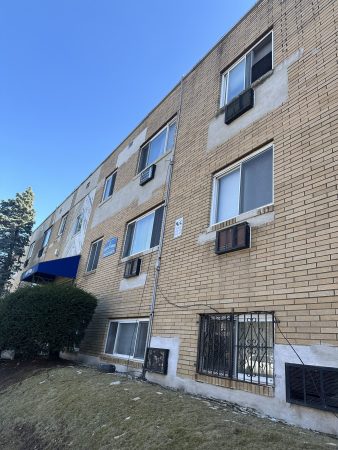
    West Oak Lane tenants who sued one of Philadelphia’s biggest landlords over unsafe conditions will get rent forgiveness and refunds if their class-action settlement is approved.

    According to the settlement, which was preliminarily approved in Philadelphia’s Common Pleas Court this week, Philadelphia-based Odin Properties and affiliated companies have agreed to forgive an estimated total of $67,000 in unpaid rent and associated late fees, and to refund a total of $75,000 for roughly 70 tenants of the Bentley Manor apartment building.

    Philadelphia law prohibits landlords from collecting rent if they have a serious violation from the city’s Department of Licenses and Inspections that has been outstanding for at least 30 days from when they received notice.

    In November 2024, the department declared the 71-unit Bentley Manor apartment building in West Oak Lane unsafe, saying property conditions presented an “immediate danger or hazard to health, safety, and welfare.” The agency cited loose and missing bricks on exterior walls and a leaning parapet.

    Tenants are entitled to rent relief and refunds for the time period of Dec. 14, 2024, through April 28, 2025, according to the settlement.

    The agreement provides for the largest known per-tenant award in a class-action lawsuit under Philadelphia’s rental license and certificate law, according to the Philadelphia-based nonprofit Public Interest Law Center and the Philadelphia-based Hausfeld law firm, which sued on behalf of Bentley Manor tenants in March 2025.

    “A settlement was possible because Odin took real steps — on its own — to comply with Philadelphia law,” Madison Gray, staff attorney at the Public Interest Law Center, said in a statement. “All landlords should follow suit.”

    Odin Properties’ affiliate companies own and manage roughly 2,000 housing units in Philadelphia.

    Soon after Bentley Manor tenants sued in March 2025, Odin Properties made necessary safety repairs at the building. Fernrock Apartments 2 LP, an affiliate of Odin Properties that owned Bentley Manor during the time period covered by the settlement, sold the apartment building for more than $6.2 million in December, according to city records.

    “Our residents are incredibly important to us and have been since our founding,” Philip Balderston, CEO of Odin Properties, said in a statement. “All of our properties are free and clear of City of Philadelphia violations and current on licensure, and we look forward to being positive catalysts for our communities long into the future.”

    Dawn Colbourne, one of three named plaintiffs in the class-action lawsuit against Odin Properties, moved into Bentley Manor in 2023.

    “We all deserve a safe place to live, no matter who we are,” Colbourne said in a statement. “This agreement is a step forward in making sure that happens, and I’m glad that we’re taking this step together.”

    The settlement agreement still needs final court approval. Between now and a court hearing scheduled for Oct. 26, the roughly 70 people who are eligible for rent relief — including two former tenants — will be notified about the preliminary settlement and given the opportunity to object to the agreement or ask to be excluded from it.

    Will Hanna, an associate at Hausfeld, said in a statement that the law firm is “proud of the settlement reached in this case and believe this will provide meaningful results for Philadelphians.”

  • Regulators propose overhaul to law governing how banks lend to low-and-middle income communities

    Regulators propose overhaul to law governing how banks lend to low-and-middle income communities

    NEW YORK — The Trump Administration has announced an overhaul to the rules governing a critical piece of Civil Rights-era legislation, most notably a reduction in the number of banks that will need to fully comply with the law.

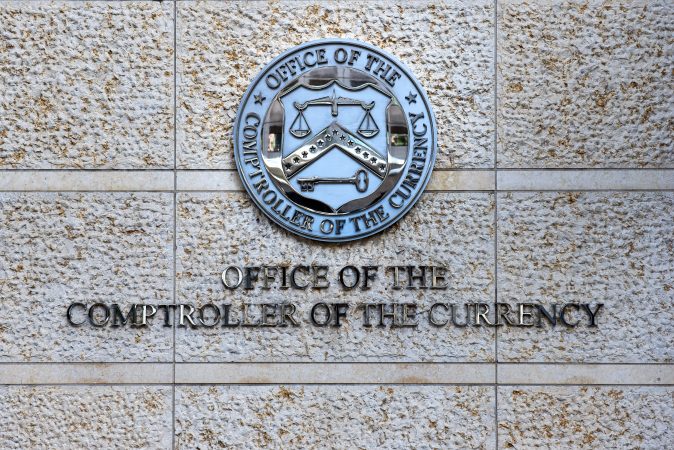
    The Office of the Comptroller of the Currency and the Federal Deposit Insurance Corporation on Friday jointly announced the proposed changes to the Community Reinvestment Act, a law that requires regulators to document how well banks do in lending to low-to-middle income neighborhoods. It would be the first major revision of the law’s rules and regulations in nearly three decades.

    Under the proposed revisions, bank examiners would put more weight on the lending banks do in certain communities and geographies, and less on how many branches they open or how much in deposits they take in from a local community.

    The number of banks that would need to comply with the law would be reduced as well. The definition of a small bank will increase from banks with under $412 million in assets to banks with $1 billion in assets. Banks between $1 billion and $10 billion in assets will now be classified as an intermediate bank.

    This would reduce the number of banks who need to comply with parts of the CRA by 800 banks. Only 86 banks, or roughly 3% of all institutions, would be subject to the full extent of CRA under the new regulations.

    Another change that is likely to be fought over relates to how banks give money to community development groups. Under the CRA, banks can donate money to local organizations that do poverty or low-income housing work in their communities to show they are providing resources to a local community. The new regulations could narrow the groups and programs that banks could donate to in order to meet those obligations.

    In a summary of the changes, the bank regulators said these changes would ensure community development grants “are not diverted to activist causes or consumed by excessive operating costs.” Banks would also need to collect more detailed information on who gets their community grants, including addresses, which would give more transparency to who is receiving grants from banks.

    That change could negatively impact groups like the National Community Reinvestment Coalition, an umbrella group for community development groups that often receive money from banks under the CRA. The new rules discourage banks making grants to national organizations and instead focus their grants on local groups.

    Jesse Van Tol, the CEO of NCRC, said that it was “unfortunate” that the bank regulators were politicizing grant making under the CRA.

    “CRA was created to work for low-to-middle income people. A lot of these changes are going to discourage banks from making grants, particularly in rural areas, where I expect there will be significant drops in activity,” Van Tol said.

    The proposal announced Friday by the OCC and FDIC did not include the other major bank regulator, the Federal Reserve. Banking groups had been pushing for a joint proposal from all three regulators, to make sure all three were aligned on the same requirements under the CRA.

    The CRA was passed in 1977 to combat redlining, a practice whereby banks would discriminate against the poor and minorities by choosing not to lend or open branches in minority-majority neighborhoods or in poor neighborhoods.

    The law is complex, requiring banks to document how they do business in the cities and areas they operate in. Banks must sit for regular examinations to see whether they are complying with the law. A bad CRA examination could restrict a bank’s ability to open new branches or merge with another bank or have other consequences. The data collected through CRA is also used by the Department of Justice in redlining cases.

    The last major revision of the CRA’s regulations happened in 1995, and there have been repeated attempts by administrations of both parties to update the rules to reflect how banking and financial services have changed in the past 30 years. But those revisions have repeatedly failed, either due to opposition from other regulators, the banks, or community groups, or have been blocked by courts. The Biden administration tried its own revisions of the CRA rules but those changes were blocked by courts in Texas.

    The proposed rules will now go out for a 60-day comment period where they will be finalized after banks, community groups, and other parties have a chance to weigh in on the changes.

  • The Sixers had a blockbuster offseason. How will that change life for their role players?

    The Sixers had a blockbuster offseason. How will that change life for their role players?

    The 76ers’ latest foray into NBA free agency started with a whimper, as was the case for much of the league at large. What was once a sudden rush of signings has become a slow trickle as star players sign mega-extensions rather than hit the open market.

    For the Sixers that meant June 30, when teams were allowed to negotiate with upcoming free agents, ended with Dean Wade as their big offseason addition. Then the floodgates opened, as Jaylen Brown was traded to Philly on July 1 and LeBron James, eventually, chose the Sixers on July 24 as the team to potentially close his storied career.

    Over the course of mere weeks, Wade went from a surefire starter on a team with playoff aspirations to a key reserve for a franchise with a title-or-bust reality. And he isn’t the only one whose role will shift after the Sixers executed one of the NBA’s flashiest offseasons.

    To this point, the focus has been squarely on the Sixers’ star-studded starting lineup of James, Brown, Tyrese Maxey, Joel Embiid, and VJ Edgecombe. But how has life changed for the Sixers’ new additions and returning role players since James’ signing? Let’s take a closer look.

    Dean Wade: Wade will experience the biggest swing from James’ signing. A former Cavaliers forward with connections to president of basketball operations Mike Gansey, Wade signed a four-year, $39 million deal to serve as the Sixers’ starting power forward and defensive closer.

    While there is talk of James playing point guard, he will slide into that open power forward spot because of his size and experiencing defending all five positions. That will theoretically relegate Wade to the bench to start and end many games. But James is 41 years old, so he will need to pace himself in the quest for his fifth title. Embiid has also played only 96 games over the last three seasons, so there should be room for Wade to make an impact.

    Anfernee Simons: Simons started his career as a score-first complement to Damian Lillard, assuming the role of CJ McCollum in Portland and signing a big four-year, $100 million contract. Trades to Boston and Chicago and an injury entering free agency lowered Simons’ value, making him available on a two-year, $12.3 million deal with a player option, the equivalent of a prove-it deal for a former No. 1 option.

    In past seasons, the Sixers have desperately needed scoring punch off the bench. This year, they’ll be searching for more ways to stagger their stars, which could take some opportunities away from players like Simons.

    Labaron Philon Jr.: The Sixers’ lone draft pick this season, Philon Jr., was selected at No. 21 when the Sixers fan base was still worried about replacing the production of Jared McCain, who was sent to Oklahoma City in one of the most unpopular moves of Daryl Morey’s six-year tenure in Philly. Philon made good on that expectation to some extent, with the offensive spark plug flashing scoring and ballhandling ability at NBA Summer League that appears set to translate to real production in the 2026-27 season.

    Philon will now transition to a more developmental role on a team with title-or-bust expectations. Maxey and Edgecombe will start in the guard spots and Simons will be the first guard off the bench. But while Philon may have to wait to show what he can do, he will have the opportunity to learn from some of the best players in the league.

    Dominick Barlow: Fresh off a lost 2024-25 season, the Sixers were searching for ways to get better on the margins while paying max money to Maxey, Embiid, and Paul George. Enter Barlow, whose two-way deal was converted to a standard contract after he emerged as a key contributor at the power forward position. Barlow played in 71 games, including 59 starts, and averaged 7.7 points and 4.8 rebounds in 2025-26.

    He will move to a more traditional backup power forward position this season, with James, Wade, and Brown likely playing forward and crowding a position that was once a weakness. Barlow’s rebounding and ability to run the floor will still be an asset, but in much smaller doses.

    Justin Edwards (right) played clutch defensive minutes in the Sixers’ playoff defeat of the Boston Celtics. Monica Herndon / Staff Photographer

    Justin Edwards: Edwards is another find for Philly, joining the team after going undrafted out of Kentucky in 2024. Edwards, a former star at Imhotep Charter and a Philly native, averaged 10.1 points and 3.4 rebounds as a rookie. While his numbers dropped, Edwards proved himself in his second season, taking on tough defensive assignments and key minutes in the Sixers’ first-round playoff win against the Boston Celtics.

    Ariel Hukporti: After playing a small role on the New York Knicks’ title team, Hukporti picked the Sixers this summer in search of more opportunity. Embiid’s health issues were well-documented, and so were the struggles of Adem Bona and former Sixer Andre Drummond. Hukporti, 24, will still get a shot to fill the position of backup center, though the Sixers might use fewer traditional lineups than they have in the past. Embiid has vowed that his health has improved and he hopes to play more than 38 games this year.

    Adem Bona: The Sixers’ returning backup center is in a similar position to Hukporti. He shared minutes with Drummond last season and showed flashes on defense. But Bona struggled on offense in his second NBA season, often struggling with decision-making and finishing at the rim. Bona, who can be retained on a club option next summer, enters a critical year in his young career.

  • Social media companies sued over deaths of four teens as pressure, lawsuits over child safety mount

    Social media companies sued over deaths of four teens as pressure, lawsuits over child safety mount

    The families of four teenagers who died by suicide are suing Meta, TikTok, Snapchat, and YouTube over what they describe as “years of escalating harms” from using their platforms that eventually resulted in their deaths.

    The lawsuit, filed Thursday in the Superior Court of Delaware, is the latest in a flurry of suits filed against the social media giants that alleges their platforms are addictive and dangerous.

    The complaint was filed on behalf of four families from Texas, North Carolina, Minnesota, and Tennessee whose children died over a 14-month period starting in July 2024 through September 2025.

    The Social Media Victims Law Center is bringing the suit on behalf of the families, and its founding attorney, Matthew Bergman, said it’s “particularly salient” that the children in this case died “long after” similar suits had been filed.

    “These platforms continue to kill kids, despite the platitudes of their executives,” Bergman said in an interview. “This is a clear and present danger to the health and safety of children, not just in the United States but around the world.”

    The four teens who died by suicide each experienced harms including social media addiction, severe sleep deprivation, depression, anxiety, and suicidal ideation after years of using the social platforms, the complaint states. Livi Castro died at age 13, Riv Kelleher at 14, Nathaniel Chambers at age 17, and Dawson Holden at 18.

    The complaint alleges the social media companies knew they were causing harm to young users.

    A spokesperson for Google, which owns YouTube, said in a statement that “providing young people with a safer, healthier experience has always been core to our work. In collaboration with mental health and parenting experts, we’ve built services and policies to provide young people with age-appropriate experiences, and parents with robust controls. We send our deepest sympathies to the families and are reviewing the claims in this lawsuit.”

    Representatives for Meta, TikTok, and Snap did not immediately respond to requests for comment.

    Sacha Haworth, executive director of The Tech Oversight Project, said in a statement that parents, activists, and whistleblowers have come forward and met with lawmakers for years and “while Congress has dragged its feet, more children have died.”

    Federal legislation of social media has moved at a glacial pace. The Senate passed the Kids Online Safety Act — which had the support of parents’ groups and children’s advocacy organizations — exactly two years before this lawsuit was filed. The House of Representatives never voted on that version of the legislation, and the House and Senate are currently disagreeing on key provisions they think should be included.

    Meta, YouTube, TikTok, and Snap are facing numerous state and federal lawsuits over harms to minors. Meta is on trial in Tennessee this week for a lawsuit brought by the state attorney general claiming that the company deliberately designed its platforms, notably Instagram, to make them addictive to young people, and did not warn them of its dangers. And in August, Meta is heading to trial in federal court in Oakland, Calif., to face four of dozens of states that sued the company in 2023. That lawsuit says the company is contributing to the youth mental health crisis by designing addictive features and violated federal law by collecting data on kids under 13 without parental consent.

    Not all lawsuits are successful, and many are settled out of court. Last week, a Florida teenager dropped his case against Meta that was set to go to trial in state court in Los Angeles, without receiving any payment from the company. Meta had argued that the teen only used his Instagram and Facebook for just minutes a day, on average, and created most accounts only after hiring a lawyer in his case.

    Still, the mounting court cases can get expensive, even for a company like Meta Platforms. Earlier this week Meta said it had $2.4 billion in legal expenses in the second quarter, which contributed to a relatively unusual 14% profit decline.

  • Barbara Gillette Price, prolific painter, fine arts teacher, and former president of Moore College of Art and Design, has died at 87

    Barbara Gillette Price, prolific painter, fine arts teacher, and former president of Moore College of Art and Design, has died at 87

    Barbara Gillette Price, 87, formerly of Philadelphia, celebrated painter and designer, former president of Moore College of Art and Design, former dean of Cranbrook Academy of Art in Michigan, former vice president for academic affairs at the Maryland Institute College of Art in Baltimore, fine arts teacher, mentor, and role model, died Friday, April 24, of age-associated decline at a hospital in Granada, Spain.

    A lifelong artist and longtime educator, Ms. Gillette Price liked to skip her high school classes in the 1950s and wander around the galleries at the Philadelphia Museum of Art. In sixth grade, she told The Inquirer in 1994, her artistic talent drew attention from the teacher when her drawing of a female form was all too accurate.

    She took Saturday classes at Temple University’s Tyler School of Art and the Fleisher Art Memorial when she was young, and earned a scholarship to the old Philadelphia Museum School of Art. She married artist Melville Price in 1957, moved to Tuscaloosa, Ala., in 1958, and earned bachelor’s and master’s degrees in fine arts at the University of Alabama.

    She joined Cranbrook Academy of Art in 1978, the Maryland Institute College of Art in 1982, and Moore in 1994. At each stop, she renovated nearby old buildings into studios and galleries, expanded curriculum, and invigorated students with international and innovative programs.

    At Moore, she increased enrollment, established a career center, and personally refurbished her three-story studio on North Second Street into a gallery where students exhibited their work and handled logistics and publicity. She also forged working relationships with the Philadelphia School District and other art institutions, supervised an advertising campaign for female artists, and served as a role model for working artists in academia.

    “That’s why I think my presence at Moore is a good thing,” she told The Inquirer in 1994.

    In 1998, Rochelle Levy, then chair of Moore’s board of trustees, said: “Barbara has really been our ambassador out there. She has set an incredible role model for the students as a woman artist.”

    Ms. Gillette Price left Moore in 1998, moved to Spain in 2000, taught art to primary school students, and continued to create and show her work. “Her commitment to arts education helped shape generations of creative thinkers,” former colleagues at Moore said in a tribute. “Her legacy lives on through the institutions she helped strengthen, the students she inspired, and the vibrant body of artistic work she leaves behind.”

    Ms. Gillette Price was featured in The Inquirer when she joined Moore in 1994.Newspapers.com

    As an artist, Ms. Gillette Price was a colorist and inspired by what she called her “labyrinth of imagination.” She expressed herself often in themes and collages, and was adept at abstract and figurative works on canvas, paper, wood, silk, and other textiles.

    One critic said her work “is of an inherent elegance that emerges from excellent craftsmanship and an intelligent narrative.”

    She showed in dozens of solo and group exhibitions in Spain, Philadelphia, Maryland, Michigan, Washington, and elsewhere, and liked to work in the gallery as well as her studio. She painted about nature, light, woman’s perspectives, isolation and fear during the COVID-19 pandemic, and other topics.

    “I seek to make the ordinary extraordinary,” she said on her website, barbaragilletteprice.com. “I am inspired by images I accumulate as I travel and view the world about me. This takes the form of remembered landscapes, figurative compositions, and subtle political statements.”

    She was active in the Civil Rights Movement in Alabama in the 1960s, worked with the Woman’s Caucus for Art in Washington in the 1970s, and taught ceramics, painting, and drawing at the old Corcoran School of Art and Design in Washington and elsewhere. She belonged to the College Art Association and was on boards at the National Association of Schools of Art and Design, the Philadelphia Art Commission, and other organizations.

    She earned grants for her painting and wrote essays and white papers about art. In one paper, she said: “The arts are the humanizing element in the education of the citizens of the 21st century.”

    Barbara Amelia Gillette was born June 26, 1938, in Philadelphia. She and her family spent many summers in Atlantic City, and she graduated from Philadelphia High School for Girls.

    She took piano lessons, attended Saturday concerts at the Philadelphia Orchestra for years, and hung out with high school boyfriend Edward Cutler and others at jazz clubs and the Gilded Cage coffee shop.

    Melville Price died in 1970, and she reconnected with Edward Cutler. They married, had a daughter, Michelle, and lived in Washington. They divorced later, and he died earlier.

    “I consider my mother’s greatest achievement to be the way she showed up as a parent,” her daughter said. “Her artistic legacy can be found in her paintings, drawings, textiles, and exhibitions. Her personal legacy lives on in the people she inspired, mentored, encouraged, and welcomed into her life.”

    Ms. Gillette Price created in the galleries as well as her studio.Barbara Gillette Price

    In addition to her daughter, Ms. Gillette Price is survived by a son-in-law, Eric Maroldo, and other relatives. A sister died earlier.

    Services were held earlier.

    Donations in her name may be made to Alhama Street Animal Protection in Granada, Spain.

    Ms. Gillette Price (right) and her daughter, Michelle, were close. Courtesy of the family