Blog

  • Rowdy residents at Plymouth Township zoning meeting draw rebukes as they push back on big data center plan

    Rowdy residents at Plymouth Township zoning meeting draw rebukes as they push back on big data center plan

    The crowd at a raucous Plymouth Zoning Hearing Board meeting on Thursday repeatedly shouted down an attorney and expert witness representing developer Brian O’Neill’s plans for a hyperscale data center on the site of a closed steel mill.

    The hoots and hollers, which included some expletives, provoked repeated pleas for order from the board’s solicitor David Sander, who said the outbursts interfered with the court reporter’s ability to make accurate transcripts of the meeting.

    Although the two-and-a-half hour meeting was largely procedural, it was emblematic of flaring tempers throughout the region when it comes to data centers.

    The hearing, the first of at least several quasi-judicial proceedings, was held at Colonial Middle School to accommodate the number of residents expected to attend. Many have expressed fears about potential power and water usage, and pollution by a data center.

    The hearing also came on the heels of a recent social media post by Pennsylvania Gov. Josh Shapiro calling O’Neill’s plans “the exact wrong way to do development,” and public opposition by township council and Montgomery County commissioners.

    O’Neill, stung by the attacks, went on the offensive in the days before the meeting, releasing a study showing the economic might he says the data center will flex. In an interview with The Inquirer, he called his proposal the “opportunity of a lifetime” for the township, and said officials have bowed to political pressure by residents misinformed by social media.

    But residents at Thursday night’s meeting weren’t interested in the economic argument, which was set to establish who could testify and which experts could be admitted as the township considers zoning for the site.

    Frances Wood, who lives on West Elm Street, about 400 feet from the steel mill, was allowed to testify after outlining her personal health concerns regarding the data center’s potential air emissions.

    “I walk my dog every day by that building,” she said. “I also have respiratory distress and asthma related to my health as well. I will be breathing the air immediately because it is right there.”

    Residents interjected so frequently during Thursday’s meeting that Sander admonished them, especially after someone shouted an epithet.

    “We can’t get a record, and the zoning board can’t decide this case if we can’t hear the questions and answers because someone’s screaming and yelling at everything that the witness says or the counsel says,” Sander said.

    O’Neill’s lawyer, Edmund J. Campbell Jr., suggested there should have been security at the meeting.

    “I would ask that those who repeatedly disrupt the proceedings be removed,” Campbell said, to more jeers.

    What is O’Neill’s data center proposal?

    O’Neill wants to build a 2 million-square-foot data center at the shuttered Cleveland-Cliffs steel mill at 900 Conshohocken Rd., a 66-acre site along the Schuylkill. It would sprawl over 10 existing buildings as part of a reuse of a current industrial-zoned site.

    O’Neill, who did not testify at Thursday night’s meeting, cited Alan Wood, who founded what became the now-closed Cleveland-Cliffs steel mill, as an example of a job creator. That’s the same site where O’Neill wants to build a data center.

    And he noted John Ellwood Lee, who founded the nearby Lee Tire and Rubber Company, the site of which O’Neill has since developed into an office park. Both the steel mill and tire company once employed thousands.

    O’Neill said he hoped to kick-start thousands of construction jobs.

    “We’re bringing new technology to town, and we’re bringing it in a way that is sensitive to our neighbors and sensitive to the town,” he said.

    The hyperscale AI data center just outside Conshohocken would generate $21.11 million a year in taxes, according to a report O’Neill commissioned by 4Ward Planning. And it would create 5,000 construction jobs a year over a three-year period, the report said. It would result in 371 “direct data center jobs” and 468 “indirect and induced jobs,” according to the report.

    But opponents of the plan are concerned about light, noise, and air pollution. They worry about emissions from on-site power generation that’s been proposed, water use, and the impact on electricity costs, as well as the proximity to existing homes.

    O’Neill has said the facility would provide its own on-site electricity generation via natural gas-fired turbines. The operation, he has said, would be cooled by a closed-loop system that does not require outside water.

    O’Neill said the facility would utilize “dark sky standards” to ensure there is not light pollution, with outdoor lighting “less than a single soccer field.”

    He asserts that the proposed data center would not violate local noise ordinances and that his team has hired sound consultants.

    O’Neill has not named an operator or tenant, but said he is “negotiating with multiple large tenants.” He has indicated those tenants would be related to life sciences.

    (function(){function e(){window.addEventListener(`message`,function(e){if(e.data[`datawrapper-height`]!==void 0){var t=document.querySelectorAll(`iframe`);for(var n in e.data[`datawrapper-height`])for(var r=0,i;i=t[r];r++)if(i.contentWindow===e.source){var a=e.data[`datawrapper-height`][n]+`px`;i.style.height=a}}})}e()})();

    Who decides whether to allow a data center?

    O’Neill has applied for a special zoning exception so the data center can be built in the township’s heavy industrial zoning district. He argues that zoning should include data centers.

    The township zoning code allows a warehouse or laboratory, but does not specifically cite data centers.

    The township council has taken the position that a data center is not the same use as a warehouse. They said O’Neill’s application for a special exception must be decided by the zoning hearing board.

    If that exception is granted, the project would move onto the township’s land development process, which includes additional reviews, public meetings, and approvals.

    Richard Roseberry, an engineer at Colliers Engineering & Design who O’Neill hired, testified during Thursday’s zoning meeting that data centers fit in with other heavy industrial uses.

    But Charles Campbell, an attorney representing nearby property owners, said O’Neill’s team has not supplied enough information to make informed decisions, including a drawing of what’s being proposed.

    “It’s clear as day that this application is insufficient,” Campbell said. “It does not include what the applicant intends to put on the property. It talks generally about a data center … but does not provide a scale plan as required.”

    What does O’Neill say?

    Under Pennsylvania law, O’Neill argues, municipalities must have zoning for all legitimate land uses, and data centers have been recognized by the courts as a legitimate commercial or industrial use. Developers have, as a result, targeted industrial or commercial zones for data center proposals.

    A municipality cannot ban data centers under Pennsylvania law. As a result, many municipalities have raced to craft ordinances to limit their impacts.

    But municipalities are allowed to treat a land use not specifically mentioned in a zoning ordinance as a special exception or conditional use. That requires a developer to go through a zoning hearing board.

    If a municipality refuses to classify data centers as a legitimate use, a developer can file what’s known as a “substantive validity challenge,” which O’Neill says he has done because some township officials are on record as saying they don’t support his application.

    “If they don’t work with us in good faith, we’re going to get it by right,” O’Neill said.

    Sander, the zoning hearing board solicitor, ended Thursday’s hearing without setting a date for the next, saying it would likely continue in September.

    This story has been updated to say that developer Brian O’Neill did not testify at the meeting, and clarified the estimated number of jobs that would be associated with the data center.
  • Senators head for the exits without meeting Trump’s demands for voting bill

    Senators head for the exits without meeting Trump’s demands for voting bill

    WASHINGTON — Senators headed for the exits in the predawn hours Saturday, ending for now a crushing standoff over President Donald Trump’s demands that they stay in session to pass a strict proof-of-citizenship voting bill before the summer recess.

    While they wrapped up many key priorities in the overnight votes, advancing Trump’s SAVE America Act was not among them.

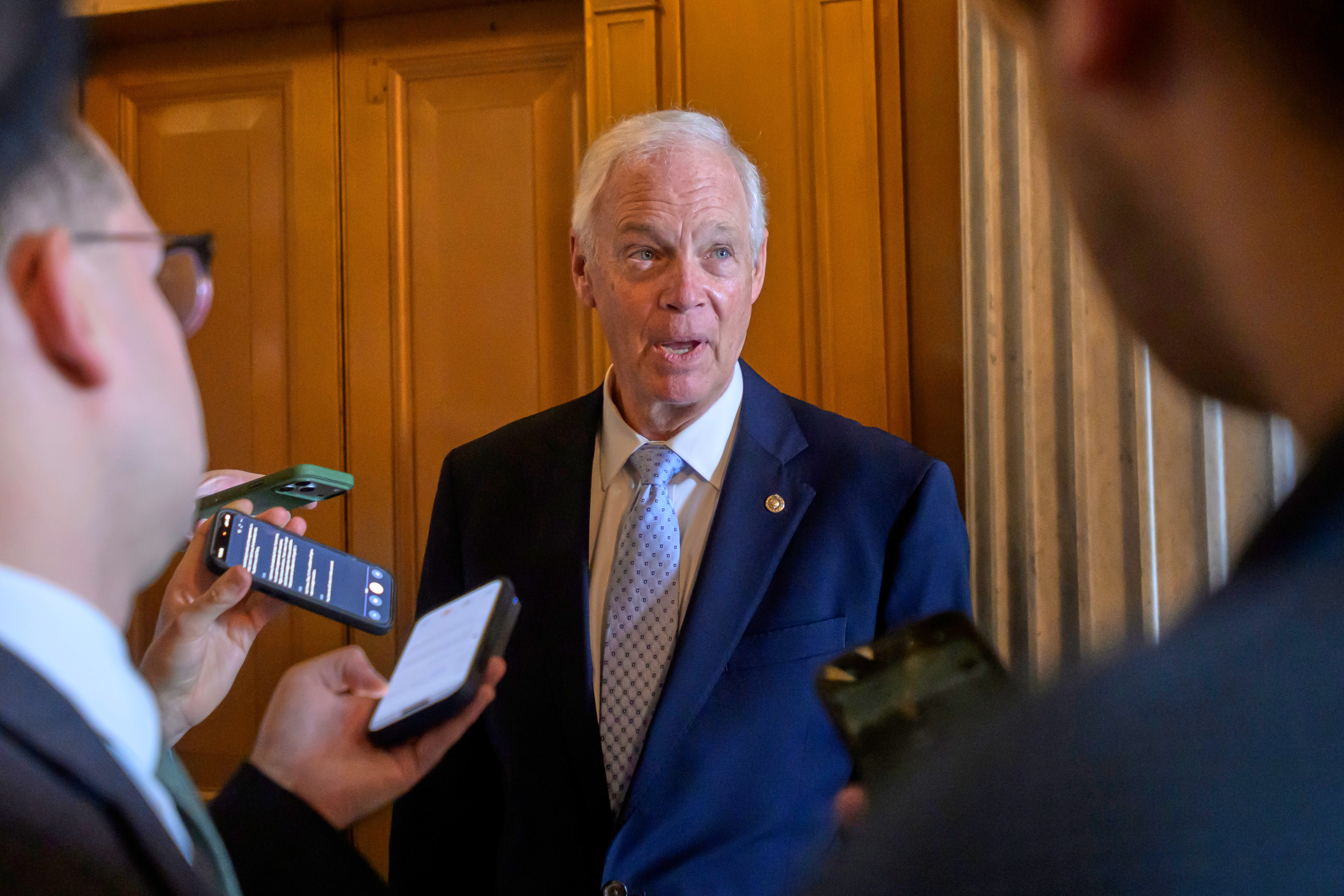
    Instead, Republican senators who had brought the chamber to a standstill spoke to Trump late in the evening about an alternative plan: They would try again to approve elements of the voting bill as part of a broader GOP budget package to fund the Iran war and replenish the Pentagon when they return to work in September.

    “Obviously, with the president at his direction, this is what he wants to do,” said Sen. Ron Johnson of Wisconsin, the GOP budget committee chairperson, flanked by Sens. Mike Lee (R., Utah) and Rick Scott (R., Fla.) after their phone call with the president.

    The sudden wind-down after weeks of Trump ramping up his demands shows just how deeply the president is able to reach into the halls of Congress to set the agenda or disrupt it, the executive directing the affairs of the legislative branch. While Trump is often seen as a de facto speaker of the House, he is trying his hand at mastering the Senate.

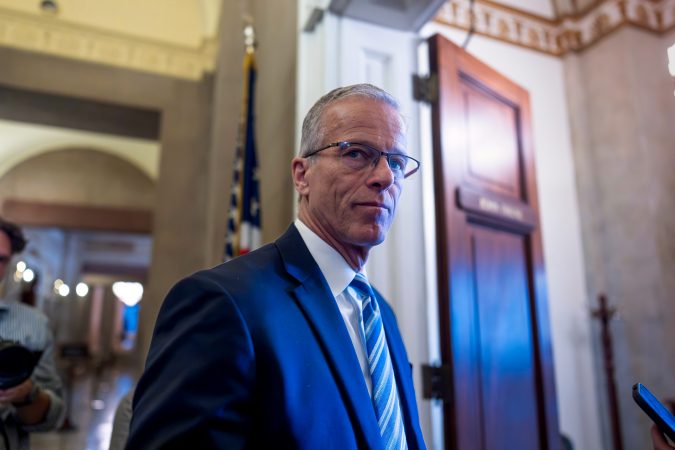
    Trump had poked and prodded Senate Majority Leader John Thune for weeks to pass the SAVE America Act, a bill that does not have enough support from the Republicans who hold majority power, let alone the Democrats whose votes would be needed to advance it in the Senate.

    The president has gone so far as to insist the Senate abandon its filibuster rules to jam the SAVE America Act past the 60-vote threshold that is typically needed to advance legislation in the chamber — something Thune and most senators have no interest in doing.

    “John’s trying. He’s trying hard. I really believe that. But if he doesn’t get there, it would be unfortunate,” Trump said in an interview with Punchbowl News that posted Friday.

    Trump’s pressure couldn’t overcome Thune’s reality

    Thune himself has worked to carefully balance the often unusual demands of the president with the political reality of his slim GOP majority. Republicans are down one vote with the prolonged absence of Sen. Mitch McConnell of Kentucky, the former leader, who said this week he was released from a rehabilitation center and is recovering at home.

    “I think everybody’s, for the most part, on the same page,” Thune (R., S.D.) said about the trio’s call with Trump, adding that eventually the Senate would have to tackle another budget bill.

    During a daylong session that dragged for nearly 20 hours, Thune successfully powered through a lengthy list of other Trump priorities. Senators confirmed the president’s pick of Todd Blanche as the attorney general, passed a sweeping Russian sanctions package to aid Ukraine, and approved a bipartisan package to fund the government into December in an early step toward avoiding a government shutdown.

    The Republicans also tried to push forward a slimmer voting bill that would require people to show IDs before casting ballots for federal elections. It failed to advance, largely on a party-line vote with Democrats opposed.

    But the failure to make progress on the SAVE America Act had erupted as an online crusade for Trump’s allies in Congress, amplified by activists urging them on.

    Led by Lee, a growing group of senators was refusing to adjourn for the summer break without passing Trump’s priority voting bill.

    At dinnertime, Thune gathered all the Republican senators for a meeting as the standoff deepened at the Capitol. There was no immediate way forward for the SAVE America Act or the broader budget bill. Thune encouraged the trio of senators to talk to the president, which they did, before regrouping back at Thune’s office.

    “We had about a two-hour conference meeting trying to figure out, you know, what we need to do to, to come to an agreement, to accomplish what the president wanted,” Johnson said. “Then we had discussion with the president, he agrees.”

    Lee acknowledged he was disappointed by the outcome, but said he understood the political reality of the situation.

    “We are not in a position right now where we have the wherewithal to pass it,” Lee told reporters at the Capitol, after the three senators emerged from Thune’s office following their call with Trump.

    Near daybreak, when the Senate did call for the vote to adjourn, Lee and others objected with hearty nos.

    On the simple voice vote, the ayes had it, and the motion to adjourn was adopted.

  • Senate passes bill to avert government shutdown before midterm elections

    Senate passes bill to avert government shutdown before midterm elections

    The Senate overwhelmingly approved a measure early Saturday to fund the government through Dec. 11 and temporarily block the White House from giving political appointees more control over federal grants.

    The 90-6 vote came after Republican leaders worked for hours through the night to reach an agreement that would allow them to vote on multiple priorities before leaving town for the five-week August recess.

    Just 6 senators — Bill Cassidy (R., La.), Tim Kaine (D., Va.), Ed Markey (D., Mass.), Rand Paul (R., Ky.), Bernie Sanders (I., Vt.) and Elizabeth Warren (D., Mass.) — opposed the funding measure, which would avoid a politically perilous shutdown ahead of the Nov. 3 midterm elections. But it still must be approved by the Republican-controlled House, where the appetite for rebuking the White House on grant funding was unclear.

    The bill, like a similar House measure passed last month, would fund the government past a Sept. 30 deadline. The Senate bill also would finance a number of requests from the White House, including funds for housing and nutrition programs. And it would extend expiring authorization for veterans’ healthcare programs.

    But the big difference between the House and Senate bills is the Senate’s decision to include a provision regarding federal grants. That provision would temporarily block the White House budget office from adopting a rule change to give political appointees more power over discretionary grant funding, diminishing the power of independent peer reviewers.

    Proposed in May, the rule change would require political appointees to review grants before they are awarded to ensure they advance the president’s priorities and do not support projects the administration opposes, including those that “fund, promote, encourage, subsidize, or facilitate” diversity, equity, and inclusion principles or “deny the biological reality of … the sex binary.” It also would give agencies the power to end grants at any time.

    Trump administration officials say the rule would add needed oversight to federal grant-making, ensuring federal funds aren’t wasted or misused. But Senate Appropriations Committee Chairperson Susan Collins (R., Maine) said it has the “potential to politicize grants and harm small, rural communities, families, and biomedical research.”

    Collins and Sen. Patty Murray (Wash.), the lead Democratic appropriator, worked together to craft the bipartisan Senate measure. House lawmakers could take it up after they return from recess at the end of August.

    If the provisions added by the Senate draw backlash, however, lawmakers could quickly find themselves in a rush to negotiate a compromise before the government runs out of funding on Sept. 30.

    Senate Republicans also initially hoped to hold a vote on a separate $150 billion budget framework to help fund the Iran war and impose new restrictions on voting ahead of the midterm elections, but Republicans scrapped that plan late Friday night.

    Republicans grappled during a two-hour closed-door meeting Friday night with whether to take up the budget framework, with which several Republicans had expressed concerns.

    A small group of Republicans spoke with Trump after the meeting and agreed to push off the vote until September, according to Sen. Ron Johnson (R., Wis.), the chairperson of the Senate Budget Committee.

    “We’re in total agreement,” Johnson told reporters. “There was no argument about it.”

    The Senate also agreed early Saturday morning to vote in September on legislation to regulate college sports led by Sens. Ted Cruz (R., Texas) and Maria Cantwell (D., Wash.). The back-and-forth over whether to vote on the bill before leaving for recess was one of several interlocking issues that kept the Senate in session late into the night.

    Senate Democrats blocked a bill during the early Saturday vote series that would require voters to show photo identification. Senate Republicans held a procedural vote on the measure in lieu of voting on the Save America Act, a more expansive bill that would impose stricter election rules which President Donald Trump had demanded the Senate pass before leaving Washington. Senate Majority Leader John Thune (R., S.D.) has said repeatedly that the Save America Act does not have enough support to pass.

    The decision to postpone the vote on the budget resolution came hours after Republicans unveiled the $150 billion spending framework, which was significantly larger than a $95 billion plan approved last month by the House. Johnson said Senate leaders intend to spend only about $105 billion.

    The smaller number tracks closely with the House package. Both would allot $60 billion to the Pentagon, which faces an urgent budget shortfall caused largely by the war with Iran, and $13 billion for intelligence needs related to the war. They also would provide $12 billion for farmers struggling to keep pace with inflation.

    Senate Republicans will seek to use up to $20 billion for election-related measures, Johnson told the Washington Post. That’s twice the amount provided in the House package. Republicans hope to use that money to pass some parts of the Save America Act, although it’s unclear how much of it would be allowed under reconciliation, the special process Republicans would use to pass the bill without Democratic votes.

    The delay in considering the measure will give Republicans time to revise their plan and win over skeptical senators.

    Sen. Thom Tillis (R., N.C.) has said he will not support a package that included elements of the Save America Act. Sens. Susan Collins (R., Maine) and Lisa Murkowski (R., Alaska) also signaled opposition to the budget resolution, while Sen. Bill Cassidy (R., La.) complained about the lack of budget cuts to cover the cost of the new spending and avoid adding to the nation’s $39.9 trillion debt.

    Sen. Roger Wicker (R., Miss.), the chairpersons of the Senate Armed Services Committee, and other Republicans, meanwhile, have called for increasing the amount of funding for the Pentagon.

    The budget framework is the first step in the reconciliation process, which would allow Republicans to evade a Democratic filibuster and move the bill with a simple majority instead of 60 votes. But both chambers must approve identical budget frameworks to set funding levels before beginning work on the actual legislation — and time is running out before the midterms.

    The Senate is set to recess until Sept. 14 and is scheduled to be in session for only three weeks before recessing again. Congress already faces a towering agenda during those weeks.

  • Federal court approves settlements that will pay New Jersey $2.5 billion for PFAS contamination

    Federal court approves settlements that will pay New Jersey $2.5 billion for PFAS contamination

    A federal judge in Camden approved settlements with DuPont and 3M that will pay New Jersey up to $2.5 billion over the next quarter century to remediate damages from decades of manufacturing and use of PFAS chemicals in the state.

    The order Friday by Renée Marie Bumb, chief U.S. district judge for New Jersey, ends a legal battle over so-called forever chemicals that started in 2019 and resulted in agreements last year that survived objections by counties, municipalities, and others over the settlement’s structure.

    “This is truly a historic moment for New Jersey, which has experienced disproportionate and extensive pollution impacts from decades of PFAS manufacturing and use by DuPont and 3M,” Ed Potosnak, acting commissioner of the New Jersey Department of Environmental Protection, said in a news release.

    The DuPont portion of the settlement covers two South Jersey manufacturing sites: Chambers Works in Pennsville and Carney’s Point, Salem County, and Repauno Works in Greenwich Township, Gloucester County. Two additional DuPont locations covered by the settlement are in Middlesex and Passaic Counties.

    3M did not manufacture per- and polyfluoroalkyl chemicals in New Jersey, but it sold a significant share of the firefighting foam that contained PFAS. It was used in military facilities, firefighter training academies, state government, and local fire departments across the state, according to state officials.

    Neither DuPont nor 3M responded to emails requesting comment Saturday.

    The approved agreements call for annual payments over 25 years. 3M will pay a total of $400 million to $450 million and DuPont and related companies will pay a total of $875 million into funds used to restore natural resources and abate damage to drinking water systems, according to Bumb.

    The DuPont entities are responsible for additional remediation commitments worth $1.2 billion, Bumb said.

    PFAS have been manufactured in the United States since the 1940s to make household, consumer, and industrial products. The World Health Organization in 2023 classified them as likely carcinogens. Health experts have associated them with high cholesterol, developmental issues in fetuses, and other health problems.

  • Tyrese Maxey becomes Spider-Man in artwork gifted to him by a Florida man: ‘just blessing them with a piece for the man cave’

    Tyrese Maxey becomes Spider-Man in artwork gifted to him by a Florida man: ‘just blessing them with a piece for the man cave’

    Inside the Graham Athletics and Wellness Center at Penn Charter, 76ers guard Tyrese Maxey leaned forward, staring at a painting gifted to him by 33-year-old Florida native Brett Marron, also known as 1uv1bmarron on social media.

    “I got to get a picture of this,” Maxey said.

    “This is for you,” Marron said.

    “I definitely got some wall space to fill,” Maxey responded.

    The painting by Los Angeles-based artist Savvy featured Maxey in a red, white, and blue uniform. But it was unlike his typical Sixers jersey. Instead, the two-time All-Star was dressed in a Spider-Man suit climbing on a Philadelphia skyscraper, battling his enemy, Mysterio.

    With one hand holding onto the building, the other shot web at the villain — but at the end of the web was a special collectible professional sports authenticator slab taped onto the canvas that featured the same design.

    “When I started my brand, I was just on Maxey’s page and I saw that he was a die-hard Spider-Man fan,” Marron said. “So, when I saw that … I just had this inspiration where it would be cool to have him as Spider-Man shooting the web at his PSA slab.

    “And once I had the idea, I didn’t even know that I was going to get the piece to Maxey. I was just confident that he loved Marvel, I knew the piece would be dope and I just made it happen.”

    Maxey is known as a Marvel superfan. In an interview on The Tonight Show, he named an Avengers starting lineup with NBA players — making himself or Donovan Mitchell, famously nicknamed “Spida,” Spider-Man. His fandom also was evident this spring when he and his partner, Myra Gordon, named their daughter Marvel.

    Maxey has seen Spider-Man: Brand New Day twice, and it has only been out for a little over a week.

    “I loved it, man,” he said. “I went to the premiere, that was amazing, and watched it again — I forget when I watched it, but I watched it again, and it was just really good. I think the biggest thing for me was they brought him back down to a street-level character. We love seeing Spider-Man in space and fighting Thanos and stuff like that. But it was really cool to see The Punisher and Hulk and then Jean Grey. That was all really cool, and I enjoyed it.”

    Marron didn’t initially have plans to actually get the piece to Maxey, but one of his followers reached out to help. He had known Maxey’s uncle and business manager, Brandon McKay, since high school and reached out about arranging a time to give Maxey the art.

    ”We tried to catch him at the end of the season, but it didn’t work out, and we just sat on the piece for a few months until this came up, and we made it happen,” Marron said.

    Marron has been building his brand, 1uv1, for the last six months. It focuses on making art that gives sports card collectors a way to display those cards through fine art. So with every card made, there’s a painting on canvas to go along with it.

    Marron has gifted his art to several athletes, including Sixers legend Allen Iverson, Eagles defensive tackle Jalen Carter, and Las Vegas Raiders defensive end Maxx Crosby.

    ”My brand, 1uv1, is big on just gifting art to different GOATs out there,” Marron said. “Just go from city to city just blessing them with a piece for the man cave.”

    Marron also gifted Maxey a portrait of him and LeBron James that was painted by Philly artist Bill Strobel.

  • Why a child’s stuffed bunny is blowing up a political race — and the internet

    Why a child’s stuffed bunny is blowing up a political race — and the internet

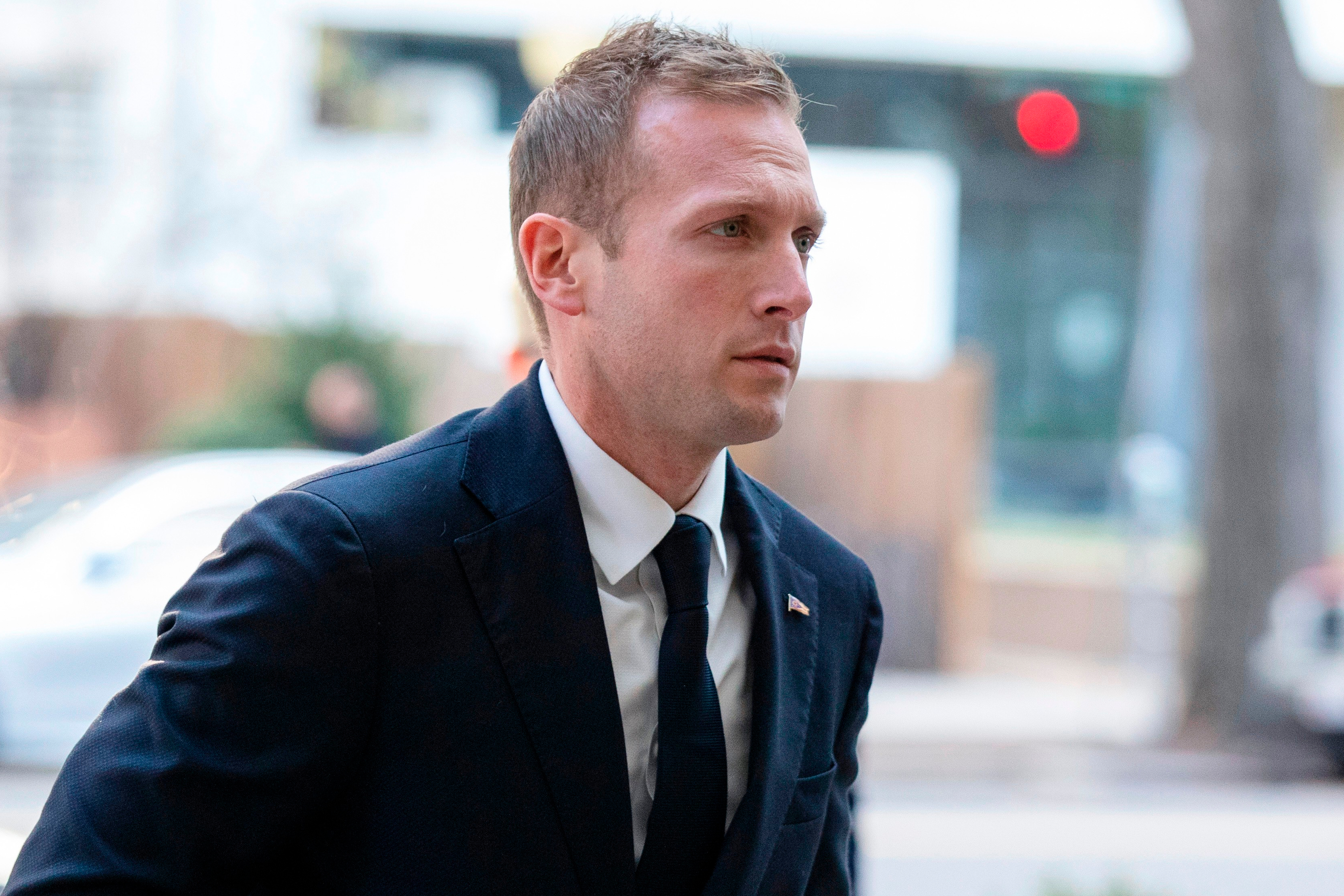
    Until now, the mom in Pennsylvania had never heard of Rep. Max Miller or the “little blue bunny.” But she knew all about Buddy.

    Her 10-year-old daughter would not sleep without that pink blanket attached to a teddy bear’s head. Long missing an eyebrow, the plushie looked forever quizzical.

    “He’s the most precious thing in the world to her,” said Beth Tyson, a 47-year-old family therapist.

    Though she rarely had time to stay on top of politics, let alone a House race in Ohio, Tyson kept reading about what she suspected was another little girl’s most precious thing in the world. All over the country, parents on social media seemed equally invested in the saga of a stuffed animal that turned a MAGA firebrand’s reelection campaign into a national news frenzy.

    Miller, 37, has faced domestic violence and physical abuse allegations for years, most recently from his ex-wife, the mother of his 2-year-old daughter. But no detail has broken through quite like the “little blue bunny.” Conservative colleagues who previously had avoided commenting on Miller’s personal life called this week for his resignation after his former father-in-law, another powerful Ohio Republican, accused the second-term congressman of holding his granddaughter’s stuffy “hostage” for 48 hours.

    “This girl is crying at night because she can’t sleep without her little blue bunny, and his answer is, ‘I’m just not going to give it to you,’” Sen. Bernie Moreno told reporters Tuesday.

    Miller, who has denied all claims of abuse, posted screenshots on X the next day that he said exonerated him. His ex-wife’s team had sent the wrong “conduit” to fetch the bunny, he said, according to the text messages between the two, which delayed the handoff by 14 hours — not 48.

    She asked him to please just leave it in the mailbox, according to the exchange, which racked up 2.3 million views. CNN’s Jake Tapper asked the question on so many minds, “Did you hold this doll hostage?”

    “No, Mr. Tapper,” Miller replied, asserting that doing so would be “incredibly disturbing.”

    On this, the internet agreed.

    “What kind of father wouldn’t deliver the bunny himself, knowing that it helps his little girl sleep at night?” one commenter asked.

    “This does not make you look better,” added a reporter for Gateway Pundit, a far-right news site.

    “There are literally thousands of fathers reading those tweets and thinking: ‘When my daughter lost her favorite toy, I led a search party as if for a downed NATO nuclear warhead. And when that failed, I paid $300 for a replica on eBay,” posted David Frum, a former speechwriter for President George W. Bush.

    Suddenly, the standoff over a toy in Ohio had sparked passionate chatter nationwide.

    “Everybody gets it, no matter which side of the aisle they are on,” said Jon Krosnick, director of the Political Psychology Research Group at Stanford University. The little blue bunny, he added, “communicates so powerfully to all of us.”

    Perhaps everyone has loved their own snuggle buddy or knows someone who does. Parents posted about the little blue bunnies in their homes (and the secret replacements in their closets). Tales of lost comfort items read like horror stories.

    “We have six backup monkeys,” said Danielle Baumann, a 35-year-old mother of twin toddlers following the Ohio tale from Los Angeles.

    Her daughter is especially attached to what she believes is the sole Punch, always trying to feed him dinner.

    “I can’t even imagine her losing him for one night,” Baumann said.

    The image of a child separated from a beloved pal cuts to our emotional cores, said Eve Ng, an Ohio University professor who studies mass communication. It also resonates in a world that consumes information in snippets.

    “This visual is particularly powerful,” she said, “because it manages to sum everything up in one symbol.”

    Tyson, the family therapist, didn’t want to pass judgment or wade into politics. She doesn’t have much of a stomach for America’s us-versus-them clashes, anyway. But she often speaks to the power of stuffies. Adults, she believes, should handle them carefully.

    Buddy has been her daughter’s companion since she was a baby. The girl still grasps it in her fingers at night. Him — not it. They used human pronouns for Buddy. Kids tend to be magical thinkers, Tyson said, so that thing is real.

    From her work, she knew a stuffy can soothe a young nervous system. Getting super attached to one, she added, is a healthy sign that a child can form a secure bond.

    “It can be something to tell secrets to,” she said, “or something that helps you cope, or something that makes you feel safe.”

    Randi Jaffe, 39, wondered if anyone had posted a picture of the little blue bunny. As the founder of the Lost Stuffy Project, she has replaced synthetic critters lost in the California wildfires or Texas floods.

    Now she wanted to source a duplicate for an embattled congressman’s kid. “She could keep one at Mom’s and one at Dad’s,” Jaffe said, working through a possible solution to the impasse.

    Of course, those parents might have to make sure the second bunny had the same degree of wear and tear as the first. A pristine replacement can register to a tiny person as a stranger. But not always. She thought of one survivor of the Los Angeles blaze, a girl who had lost her purple rabbit named Bubbles.

    “WANTED,” Jaffe had posted to her Instagram followers with a photo of the out-of-production Squishmallow.

    Someone in Canada replied that she had a Bubbles to spare, and where could she ship it?

    Later, Jaffe received a tender email.

    “Since the fire there have been so many things that felt impossible to replace,” the girl’s mother wrote, expressing her gratitude. Her daughter had lost so much, she added, “and Bubbles somehow became the symbol of it all.”

  • Iran makes new strait demands, the UAE says a ship was targeted

    Iran makes new strait demands, the UAE says a ship was targeted

    Iran issued dramatic new demands for the Strait of Hormuz to reopen as the United Arab Emirates said one of its ships was targeted by an Iranian missile. Yemen’s military attacked the country’s Iranian-backed Houthi rebels. And Turkey’s Kurdish peace bill won approval in parliament.

    Here’s a look at developments across the Middle East on Saturday.

    Iran says strait won’t open until the U.S. ‘corrects’ behavior

    Iran’s politburo-like body known as the Supreme National Security Council said the Strait of Hormuz will not open until the United States “corrects its behavior,” issuing new demands that could shake up talks on a deal to manage the waterway and traffic on it.

    Iran’s state broadcaster published the statement by the council’s secretary, Mohammad Bagher Zolghadr, who is also a commander in the powerful Revolutionary Guard.

    The U.S. must never threaten Iran again, the statement said, and must permanently end the war with Iran and its armed allies in the region. The U.S. must lift the naval blockade of Iranian ports and withdraw its military from the area. It also must “completely compensate” Iran for war damage, lift sanctions, and “unconditionally” release frozen assets.

    There was no immediate comment from the U.S., which has wanted an acceptable deal first on the strait before ending the blockade. According to the interim deal signed in June, a schedule to end sanctions and plan on compensation would be part of the final deal, and negotiations would address frozen assets.

    The end of a 60-day period to negotiate a final deal will end in just over a week but could be extended.

    Iran has said it was close to reaching a separate deal with Oman to manage the strait, which runs between the two countries. Iranian Foreign Minister Abbas Araghchi earlier Saturday said they were close to reaching an agreement on navigation, “specifically the determination of a transit route.” But the waterway’s reopening is contingent on other conditions, he said in remarks shared on social media.

    Oman, a mediator Gulf Arab country which has said relatively little on the talks, said in a statement Saturday that the discussions were ongoing “in a positive and constructive atmosphere,” and condemned attacks on ships on the strait.

    The strait, crucial to global supplies of oil and natural gas, had been considered an international waterway before the war.

    Iran attacks vessel in Strait of Hormuz, UAE says

    A vessel owned by Abu Dhabi’s state-owned ADNOC oil and gas company was attacked while transiting the Strait of Hormuz, Emirati authorities said earlier Saturday. The Foreign Ministry said Iran fired the missile as part of attacks on commercial shipping.

    ADNOC in a statement said there were no casualties following the attack early Saturday. The company said over a dozen of its vessels have been attacked by missiles and drones while transiting the strait since the United States and Israel launched the war on Iran in February. One crew member has been killed and 20 others wounded, it said.

    ADNOC didn’t elaborate on the attack’s location or any damage.

    Later, the United Kingdom Maritime Trade Operations Center said a vessel east of the town of Khasab, Oman, had been struck by a projectile that caused a fire that was put out, with the vessel and crew safe. It was not clear whether this was the ADNOC incident.

    Yemen’s military attacks Iran-backed Houthis

    The attacks were in response to the Houthis’ recent strikes in central and eastern Yemen. Col. Majed al-Nazili, spokesperson for Yemen’s military, said the attacks targeted the rebels’ “sites and capabilities” on multiple front lines, without elaborating.

    The escalation between the Houthis and Yemen’s internationally recognized government and its backer, a Saudi-supported coalition, threatens to reignite Yemen’s civil war following a 2022 truce.

    Turkey’s Kurdish peace bill wins approval in parliament

    A Turkish draft law aimed at advancing a peace effort with the country’s Kurdish insurgents passed its first hurdle in parliament on Saturday. A committee approved the measure. It is expected to be approved in the general assembly next week.

    Last year, the Kurdistan Workers’ Party, or PKK, declared its decision to disarm and disband as part of the peace initiative aimed at ending the decades-long conflict with the Turkish state.

    The draft legislation defines the procedures for the group’s disarmament and rehabilitation of some PKK members. The measures would come into effect once Turkey’s National Security Council confirms that the group has disbanded and surrendered all weapons.

    The conflict has killed tens of thousands of people since it began in the 1980s. Turkey and its Western allies consider the group a terrorist organization.

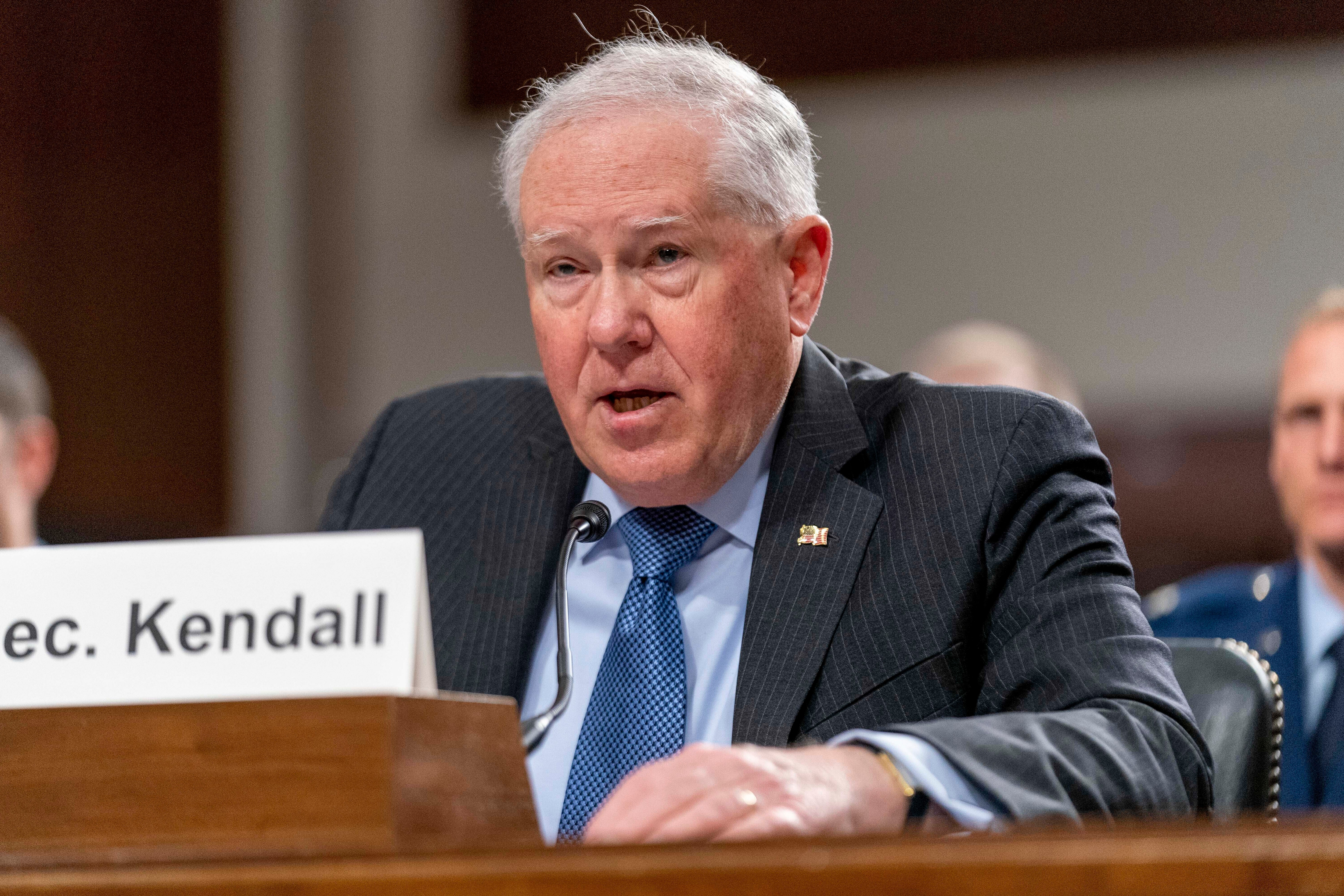
  • Pentagon strips security clearance from former Air Force secretary

    Pentagon strips security clearance from former Air Force secretary

    The Trump administration has revoked the security clearance of Frank Kendall, who served as Air Force secretary under President Joe Biden, accusing him of disclosing classified information about Air Force One to the media.

    Kendall has recently been quoted in the New York Times and the Wall Street Journal, in stories scrutinizing the security features of the Boeing 747 gifted by Qatar, the plane President Donald Trump is using as his official presidential aircraft.

    Kendall told the Times that he was “surprised to see this plane used outside the U.S.,” given how speedily it was modified after the Qatari royal family gave it to the United States. To the Journal, Kendall expressed skepticism that the plane had been “maxed out” with security features, as Trump has said it would be.

    In an X post Friday night, Pentagon spokesperson Sean Parnell said Kendall was being stripped of access to classified information and his ability to hold any sensitive position following “unauthorized disclosure of classified information regarding Air Force One’s capabilities.”

    “Safeguarding classified information is a non-negotiable duty. Those who violate that trust forfeit the privilege of access and any role requiring it,” Parnell wrote.

    Kendall could not immediately be reached for comment Saturday. The former Air Force chief, who also served in the Defense Department during the Obama administration, told the Journal he was “mystified” by the revocation of his security clearance.

    “I’ve been extremely careful to not say anything that could be classified, and as far as I know I have not said anything classified,” Kendall said, adding that so far he had not been told what classified information he had supposedly revealed.

    The luxury airplane gifted by Qatar has raised ethical, legal, and security concerns since Trump announced the unusual arrangement last year. Fresh questions about the new Air Force One’s security arose last month after Trump switched jets at the last minute for part of his travel back from the NATO summit in Turkey.

    Trump denied that security concerns were behind the switch of planes for the first leg of his trip — but also suggested that Iran could have tried to attack his plane, saying he was “number one on their list” of people to assassinate.

    The White House said last month that Trump would tentatively return to flying on an older Air Force One while the Qatari-gifted jet received unspecified “additional upgrades and enhancements” that would take about a month to complete.

  • Eagles tackle Lane Johnson says 2026 will ‘probably’ be his final season

    Eagles tackle Lane Johnson says 2026 will ‘probably’ be his final season

    Lane Johnson is considering retiring following the 2026 season, the five-time All-Pro right tackle said Saturday.

    “As you get older, things change in your life,” Johnson said at a news conference. “Priorities. Your children get older, parents get older. It puts things in perspective. So it’s looking like, potentially, this is probably going to be my last year. I am getting to that point where priorities away from football are starting to merge.”

    Johnson, 36, is entering his 14th NFL season, all with the Eagles. He cited his parents’ health issues as one of the reasons for his announcement. He was a key member of the Eagles’ Super Bowl championship teams in the 2017 and 2024 seasons. He has earned six Pro Bowl selections and five All-Pro honors, including first-team citations in 2017 and 2022.

    Johnson was excused from four days of practice earlier this week because of a personal matter. He returned to practice Friday morning, albeit in a limited role.

    Johnson is part of an offensive line that is adjusting to a new scheme under first-year coordinator Sean Mannion and a new position coach in Chris Kuper, who succeeded longtime coach Jeff Stoutland.

    “Not that I don’t enjoy it,” Johnson said. “I love this game and preparing for it, but that’s kind of where I’m at in my career. I’m looking forward to this year playing the best I can and stay healthy.”

    Johnson said his decision is a motivating factor toward another All-Pro honor. He said he feels slighted when he reads NFL offensive lineman rankings and doesn’t see his name.

    “I still feel like I can be a premier tackle in this league,” Johnson said. “I’m here, my team supported me, and I’m where I need to be.”

    In Johnson’s absence this week, 2026 third-round pick Markel Bell took the bulk of the first-team right tackle reps. Johnson praised the 6-foot-9, 346-pound Bell on Saturday.

    “He’s one of the best rookies I’ve been around,” Johnson said.

    Johnson posted four straight All-Pro seasons from 2021 to 2024, but was limited to 10 games in 2025 because of a Lisfranc foot injury suffered in Week 11 vs. the Detroit Lions. He also missed the Eagles’ wild-card loss to the San Francisco 49ers. Fred Johnson replaced him during that stretch.

  • Senate narrowly approves Blanche as attorney general, capping a tough confirmation fight

    Senate narrowly approves Blanche as attorney general, capping a tough confirmation fight

    The Senate narrowly voted to confirm Todd Blanche as attorney general early Saturday morning, cementing President Donald Trump’s former criminal defense lawyer as the head of the Justice Department despite rare pushback from Republicans that had left his nomination in doubt.

    Sen. Bill Cassidy (R., La.) provided the crucial vote for Blanche as two other Republicans — Sens. Lisa Murkowski of Alaska and Susan Collins of Maine — sided with Democrats against the nominee. Sen. Mitch McConnell (R., Ky.), who has been absent from the Senate since he suffered a fall in June, missed the vote.

    The 50-49 vote at 4:31 a.m. — right before the Senate left for a five-week recess — gives Blanche the imprimatur of Senate confirmation in a job he has held on an acting basis since Trump fired former attorney general Pam Bondi in April.

    But it hardly amounted to a full-throated endorsement.

    Cassidy, despite voting in Blanche’s favor, joined Murkowski and Collins in publicly raising questions about the politicization of the Justice Department under Trump. The three also voiced concerns about Blanche’s role in a controversial deal struck this spring to resolve the president’s legal claims against the IRS — an agreement that included a now-scuttled proposal for a $1.8 billion fund to compensate people who claimed they were victims of political prosecutions.

    Two other Republican senators — John Cornyn of Texas and Thom Tillis of North Carolina — expressed similar reservations and threatened earlier in the process to vote against the nomination, although both ultimately backed Blanche.

    Explaining his decision, Cassidy described it as a choice between Blanche — who before his time as Trump’s personal lawyer had spent years as a federal prosecutor and a partner at a prestigious Manhattan law firm — and the possibility that Trump might pick someone worse.

    “Mr. Blanche is not perfect, and he will tell you this, but the choice is not between perfection and Mr. Blanche,” Cassidy said on the Senate floor Friday. “It is between Mr. Blanche and another acting attorney general who may not run the department as effectively under President Trump and who, indeed, may not be as good as Mr. Blanche.”

    For his part, Blanche said after the vote that he was “deeply honored by the trust and confidence President Trump has placed in me” and thanked the Senate for staying late for the vote.

    “To the dedicated public servants of the Department of Justice,” he said in a post to social media, “thank you for your work each day to uphold the law and keep our country safe.”

    With the confirmation fight now behind him, Blanche sheds the “acting” part of his title and, with it, any doubt about his authority as the head of a cabinet agency that Trump has made central to his second-term agenda.

    Since returning to the White House last year, the president has eroded the Justice Department’s long tradition of independence, demanding it pursue prosecutions of his political enemies and directing resources toward rewarding his allies.

    Meanwhile, the department has been ravaged by vacancies, low morale among career staff, and increasing credibility problems with federal judges.

    Blanche, first as Bondi’s No. 2 and then as the department’s acting leader, has played a central role in that transformation, although his boosters in Congress have praised his efforts to step up fraud enforcement, prosecute illegal immigration and combat violent crime.

    “America is safer with Todd Blanche at the helm of the Justice Department,” said Sen. Chuck Grassley of Iowa, the Republican chair of the Senate Judiciary Committee.

    Cassidy called aspects of Blanche’s track record troubling, but he cited the bond Blanche built with Trump as he defended him in four criminal cases during his years out of office. The senator said he hoped that trust would strengthen Blanche’s ability to talk the president out of decisions that run contrary to the rule of law.

    But Democrats insist that, at every turn, Blanche has proven unable — or unwilling — to do just that.

    Since becoming acting attorney general, Blanche has defended the president’s “right” to intervene in criminal investigations and his controversial pardons of those who attacked the U.S. Capitol on Jan. 6, 2021. He has breathed new life into probes of Trump critics, including investigations of former FBI Director James B. Comey, former CIA Director John Brennan and Cassidy Hutchinson, a former White House aide from the president’s first term who testified against him in Congress.

    “This nation deserves an Attorney General who loves the Constitution more than he loves the President. Sadly, for our nation, Todd Blanche, is not that person,” Sen. Dick Durbin of Illinois, the top Democrat on the Senate Judiciary Committee said in a statement Saturday.

    But it is the out-of-court deal Blanche announced this spring to resolve a lawsuit the president filed against the IRS earlier this year, over the leak of his tax returns to the media, that has drawn the most unified criticism from lawmakers.

    In addition to the taxpayer-backed nearly $1.8 billion payout fund, the deal also extended unusual tax protections to Trump, two of his sons and their businesses, shielding them from any preexisting tax audits.

    Lawmakers from both parties decried the agreement, describing the proposed payouts as a “slush fund” designed to reward Trump’s allies, and denouncing the tax provisions as a corrupt exercise in self-dealing from a president who has often complained of burdensome audits.

    Facing bipartisan pressure, Blanche walked back plans for the fund. But Cornyn and Tillis, both of whom are not running for reelection after Trump declined to support them, demanded written assurances from Blanche that the president would not later reverse that decision before they agreed to support his nomination.

    Blanche ultimately relented, issuing statements late last Sunday declaring the fund officially dead and clarifying that the deal’s tax provisions protected the Trumps only from past tax audits and would not prevent the IRS from reviewing their finances in the future.

    But critics have questioned whether Blanche’s written pledges hold any legal weight, given that they were not signed by Trump and his legal team, and could be ignored by the president at any point.

    Murkowski raised that possibility in a statement Friday announcing her decision to vote against Blanche’s nomination. The only reason the payout fund was now off the table, she said, was because Blanche needed Senate support for his nomination.

    “Once we vote, that will end, and there is no telling what the future holds,” she said.

    “The country needs an attorney general who will check the worst impulses of this administration,” Murkowski added. “I hope Mr. Blanche is able to achieve that if confirmed, but I simply do not have confidence that will be the case.”