Like everyone else, Sixers announcer Alaa Abdelnaby was shocked when news broke LeBron James was coming to Philadelphia.
Now he’s settling into the reality of calling games featuring the future Hall of Famer, who passed up a return to Cleveland to sign a two-year deal with the Sixers.
“I don’t think it was a farewell swan song he was looking for,” Abdelnaby said. “He’s still looking to win.”
It’s a wild swing for Abdelnaby, who is entering his 11th season calling Sixers games. His was hired in the middle of “The Process” and Philly lost 72 games during his first season as a color analyst. Now the team is coming off an exciting playoff upset of the Boston Celtics and added two superstars in James and Jaylen Brown.
“In Philadelphia we’re not used to having nice things,” Abdelnaby joked. “All eyes are going to be on you. I think everybody has to pick up their game a little bit.”
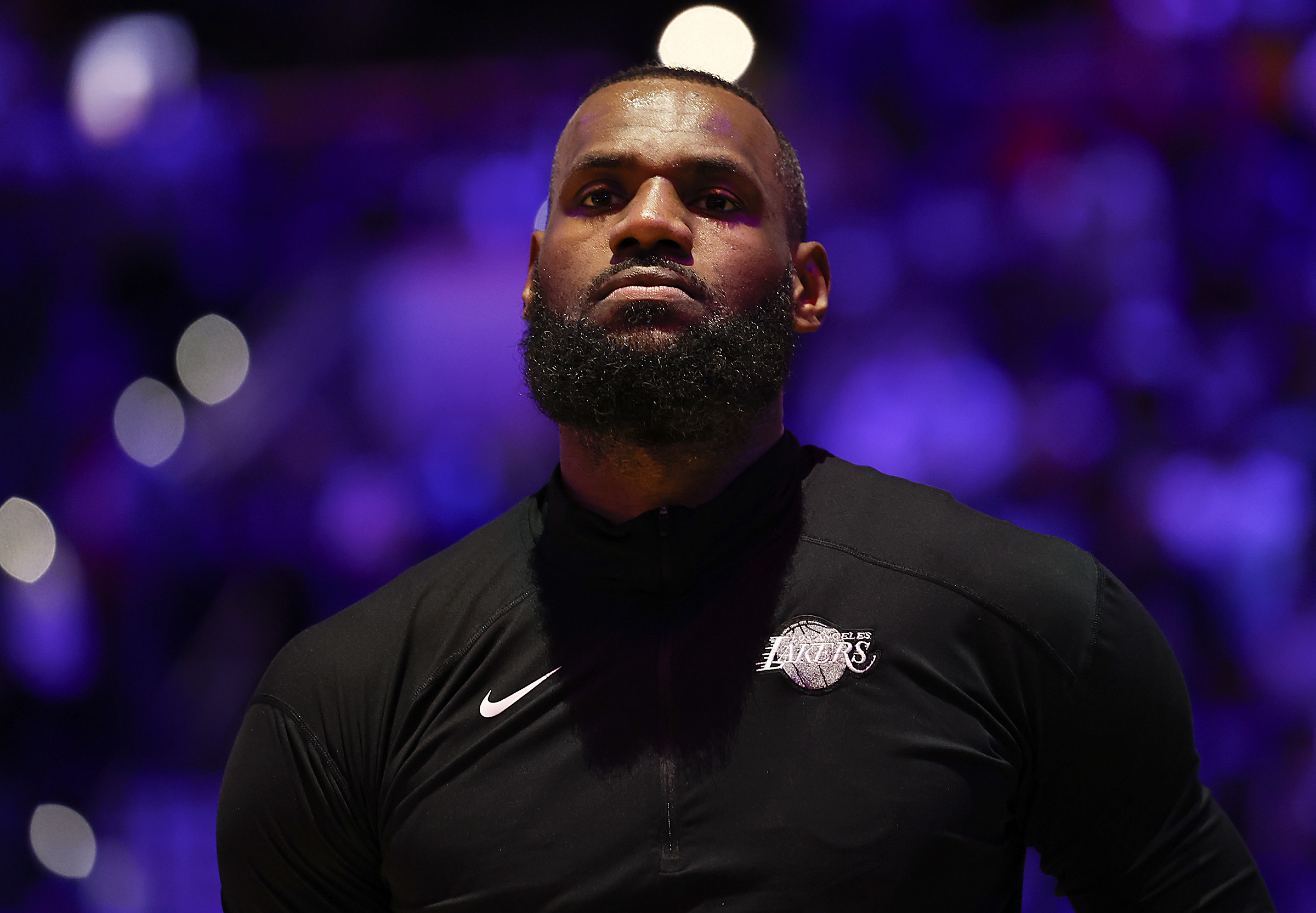
LeBron James chose Philly over Cleveland, Miami, Los Angeles, and San Francisco. Yong Kim / Staff Photographer
That’s true for the network as well. Alexandra Matcham, the vice president of content for NBC Sports Philadelphia, said it was budgeting in hopes of staffing up for the season.
“If you get a generational talent on your team, it could easily become a situation where the people that work for us are burnt out by December, and you don’t want that,” Matcham said. “You need extra help.”
That’s a welcome change in an era where regional sports networks like NBC Sports Philadelphia have been hit hard by cord cutting. How things shape up remains unclear, but Matcham said there are several possibilities.
“It’d be helpful if somebody who’s followed and covered him were on our staff,” Matcham said. “Maybe we add people like that.”
For years, NBC Sports Philadelphia and its predecessor, Comcast SportsNet, turned to reporters like Serena Winters and Taryn Hatcher for Sixers broadcasts. The network is weighing whether to add a third voice alongside Abdelnaby and play-by-play announcer Kate Scott, but the role wouldn’t be confined to baseline updates.
“As I’m talking to my colleagues, I’m not even calling it a reporter role because I feel like it’s going to give them a stereotype I don’t necessarily mean,” Matcham said.
“I think you need a voice on the court where Alaa and Kate can’t be to give us insight, do pre- and postgame interviews, analysis, all of that,” Matcham added. “It’s a very hard job to do.”
A lot more national TV exposure for the Sixers
NBC Sports Philadelphia announcers Kate Scott and Alaa Abdelnaby will be in the spotlight this season. Steven M. Falk / Staff Photographer
While the NBA hasn’t released its 2026-27 schedule, Matcham expects NBC Sports Philadelphia to air fewer Sixers games.
The network, which has broadcast Sixers games since 1997, is guaranteed at least 67 games this season as part of its deal with the NBA. It’s widely expected the league will take 15 Sixers games — the most allowed under their current TV deal — and put them in exclusive national windows on ABC, NBC, and Amazon’s Prime Video.
“LeBron’s arrival in Philadelphia instantly becomes one of the biggest stories in sports and adds even more star power and intrigue to an already loaded NBA schedule,” said Justin Byczek, NBC’s executive vice president of programming and rights management. “His move elevates some of the league’s most historic rivalries, including highly anticipated battles with the defending NBA Champion New York Knicks.”
Another 19 games are expected to air nationally and on NBC Sports Philadelphia as side-by-sides on Peacock, ESPN, and NBA TV. That’s 34 national games for the Sixers, compared to just 14 when the schedule was announced last season.
Under the NBA’s current media rights contract, every NBA team is guaranteed at least two national broadcasts. Only the most popular teams land 34, the max allowed under the 11-year, $76 billion TV deal.
It’s a great outcome for the NBA. The Lakers remain relevant with Luka Dončić, while James’ decision to join the Sixers will juice interest in matchups against the Knicks, Cleveland Cavaliers, Denver Nuggets, and Miami Heat, who were spurned by LeBron but landed Giannis Antetokounmpo. There’s also the Sixers-Celtics rivalry, already heightened by Philly trading for Jaylen Brown.
“Christmas Day and all the top-level NBA nights, you’re going to see the Sixers,” said Jon Lewis, a TV ratings expert who runs the Sports Media Watch website. “Plus the national networks will have LeBron on the East Coast to showcase in that 8 o’clock window. That’s primetime, after all.”
What remains unclear is what impact James will have on NBC Sports Philadelphia’s viewership numbers. Last season, the network averaged 86,000 viewers per game, according to Nielsen numbers obtained by The Inquirer. That was a 25% increase compared to the 2024-25 season, when the Sixers lost 58 games and missed the playoffs.
Lewis said he would expect local ratings to go up in Philly if the 41-year-old stays healthy and the Sixers are big-time contenders. But he also noted just one Lakers game was among the 30 most-watched NBA games last season
“I would set expectations higher,” Lewis said, “just not overwhelmingly high for where he is at this point.”
The interest will also carry over to the Sixers three preseason games, beginning with their Oct. 8 matchup on the road against the Brooklyn Nets. Historically NBC Sports Philadelphia hasn’t covered those road preseason games, but that could change with James on the team.
“It’s the first preseason game with LeBron in a Sixers jersey,” Abdelnaby said. “So if our bosses were to say, ‘Listen, we’re covering that,’ I wouldn’t be surprised.”
NBC Sports Philadelphia is also looking to create more content to meet the high level of interest James will draw. That includes everything from adding and upgrading cameras throughout the arena to tinkering with in-game graphics and production equipment.
“Every game is going to mean something big,” Matcham said, “so everything we do has to show that off.”
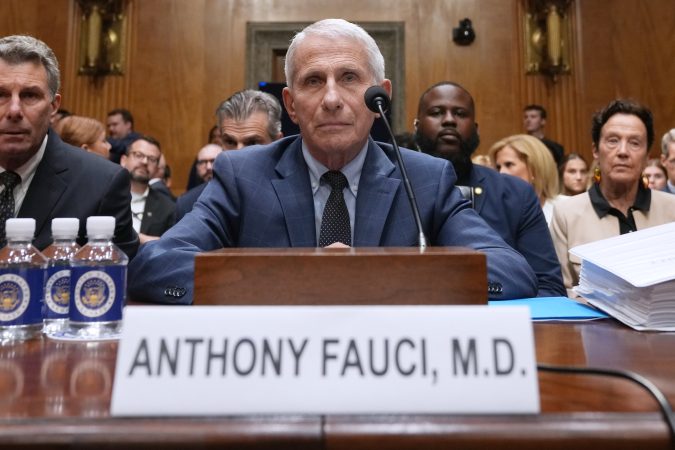
WASHINGTON — Dr. Anthony Fauci on Wednesday repeatedly invoked the Fifth Amendment and declined to answer dozens of questions from senators in a Republican-led committee hearing about his handling of the COVID-19 pandemic.
The decision, at least for now, shielded Fauci from answering questions that could expose him to accusations of lying under oath. Though he received a pardon in early 2025 from Democratic President Joe Biden, some Republicans pursuing a yearslong campaign for his arrest had suggested he could still face charges for any perjury committed during Wednesday’s hearing.
The scientist, who helped lead the nation’s COVID-19 response, was subpoenaed to testify under oath by Republican Sen. Rand Paul of Kentucky, who has long had an antagonistic relationship with Fauci.
In response to angry, sometimes mocking, questions from Republican senators, Fauci declined to answer more than 100 times, injecting new drama into partisan divides that have festered for years about the origins and handling of the pandemic. Fauci himself has become a polarizing figure, even receiving death threats that prompted him to seek security.
In his opening statement, Fauci said Paul has an “obvious obsession with calling for my prosecution.”
“The only conclusion I can reach is that the sole reason he is calling me before this committee is to get me to say something, anything, that could vindicate his repeated public pledges that I end up, in his words, quote, behind bars, unquote,” Fauci said, adding that while it pained him to do so, he was following his attorney’s advice by taking the Fifth.
Republicans accuse Fauci of lying
In the combative hearing, Paul and other Republicans accused Fauci of lying in earlier testimony about the origins of the coronavirus, something the longtime National Institutes of Health scientist has forcefully denied. Democrats called the hearing a politically motivated attempt at entrapping Fauci and praised the scientist for his work during the pandemic.
With Fauci declining to answer questions throughout, Paul dominated the approximately three-hour hearing, listing a litany of accusations and detailed questions.
“Today will be the capstone to Anthony Fauci’s 40 years of abuse of power at NIH,” Paul said. “History will judge, but the facts as we now know them paint a sordid tale of dishonesty, misjudgment and ultimately the hubris, the likes of which the world has never seen.”
In one heated moment of the hearing, Paul ejected Fauci attorney David Schertler from the room after he tried to speak without being recognized. In a statement, Schertler said the removal was “outrageous and demonstrates the completely biased and baseless nature of this proceeding.” In another statement, he called Paul’s accusations about Fauci “false and disgraceful.”
Democratic senators praised Fauci and said he didn’t deserve the treatment he was getting.
“This hearing is designed to entrap you,” said Sen. Maggie Hassan of New Hampshire.
Paul has long argued Fauci should be criminally investigated based on his belief that the scientist was dishonest in previous testimony to Congress.
The senator announced late in the hearing that the committee would vote next week on whether to hold Fauci in contempt for declining to answer questions. He did not say whether he would push for a criminal contempt referral to federal prosecutors or another charge. He also raised questions about whether Fauci’s pardon affects his eligibility for Fifth Amendment protections.
Paul released some of Fauci’s diary
Leading up to the hearing, Paul released more than 1,000 pages of Fauci’s personal diary covering the pandemic years. Pointing to some notes about early efforts at understanding how the virus emerged, Paul said on social media that what Fauci “wrote privately and what he told the country are two different stories.”
Some of the diary entries — including Fauci’s uncertainty in the pandemic’s earliest days as scientists around the world raced to understand the new virus and how best to curb it before vaccines could be created — already were reflected in a 2024 memoir and in interviews at the time.
But they have nonetheless drawn attention from people who blame Fauci for mask mandates, school closures, and other policies they believe infringed on their rights as hundreds of thousands of people were dying.
Earlier Wednesday, President Donald Trump wrote on social media that he stopped relying on Fauci over the course of the pandemic because he felt the scientist made bad decisions on masks, shutdowns, and other issues.
Health Secretary Robert F. Kennedy Jr., a longtime anti-vaccine activist before entering public office, said on social media that his department found the diary entries in government property and gave them to the committee.
Dozens of disease experts defend Fauci
Scientists also scrambled to Fauci’s defense ahead of the unusual hearing — the second time he has been back before Congress to discuss pandemic origins since leaving the government in 2022. While the COVID-19 pandemic introduced him to millions of Americans, he talked the nation through numerous outbreaks over decades, including HIV, Ebola, and the 2001 anthrax attacks, while advising seven presidents.
In a public letter, more than 150 infectious-disease experts and other scientists wrote that “no credible evidence has been produced to support these absurd charges” and that they are “urging our elected representatives in Congress stop these witch-hunts.”
Among topics discussed at Wednesday’s hearing was whether NIH-funded research in China may have played a role in how the pandemic started.
Many scientists believe the virus most likely emerged in nature and jumped from animals to people, coming to light when it spread at a wildlife market in the Chinese city of Wuhan. There’s no new scientific information supporting that the virus might instead have leaked from a laboratory, a theory Paul champions. A GOP-led subcommittee that studied the question in 2024 did not find any evidence linking Fauci to wrongdoing.
Fauci has long said publicly that he was open to both theories but that there’s more evidence supporting COVID-19’s natural origins.
Republicans also have accused Fauci of lying about whether his agency funded what’s known as gain of function research — the practice of enhancing a virus in a lab to study its potential real-world impact — at a lab in Wuhan.
The NIH for years gave grants to a New York nonprofit called EcoHealth Alliance, which used some of the funds to work with a Chinese lab studying coronaviruses commonly carried by bats. But the definition of gain of function covers both general research and especially risky experiments to enhance the ability of potential pandemic viruses to spread or cause severe disease in humans. Fauci has previously stressed he was using the risky experiment definition and that “it would be molecularly impossible” for those bat virus experiments to have turned into the pandemic virus.
Trump, a Republican, last year paused some federally funded gain of function research, and on Tuesday his administration announced new rules to tighten oversight.
When Chuong Nguyen saw the listing for his Brewerytown home, he knew without a doubt it was the one.
Unlike other emotional tales of fraught homebuying searches ending in showings that feel kismet, Nguyen‘s connection to this house was rooted in one clear reason: It had the rare distinction of being a Zero Energy Ready multifamily home in Philadelphia. For Nguyen, a devotee to living with a small environmental footprint, an energy-efficient home was a must.
The aesthetic of the home, however, was a bonus. Designed by Bright Common, a Philadelphia studio devoted to creating low carbon emission buildings, the sleek two-unit building completed in 2018 is sheathed in black corrugated metal. That gives it a Scandinavian vibe that appealed to Nguyen, who works as a design strategist with Vanguard. Inside, the all-electric building is equally sleek and modern.
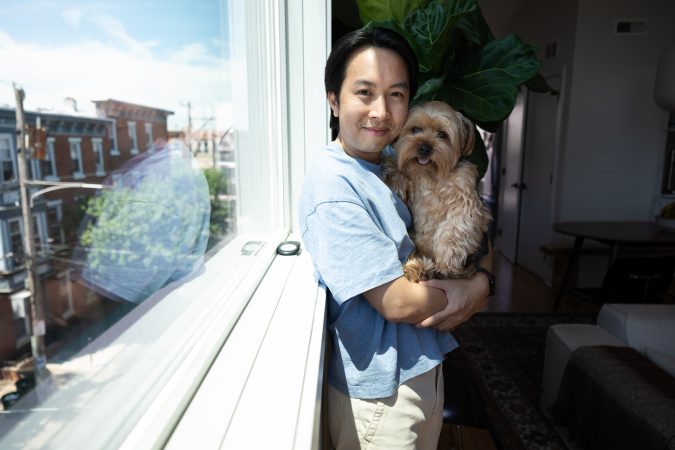
Nguyen’s home, completed in 2018, is designed to be energy efficient.Erin Blewett / For The Inquirer
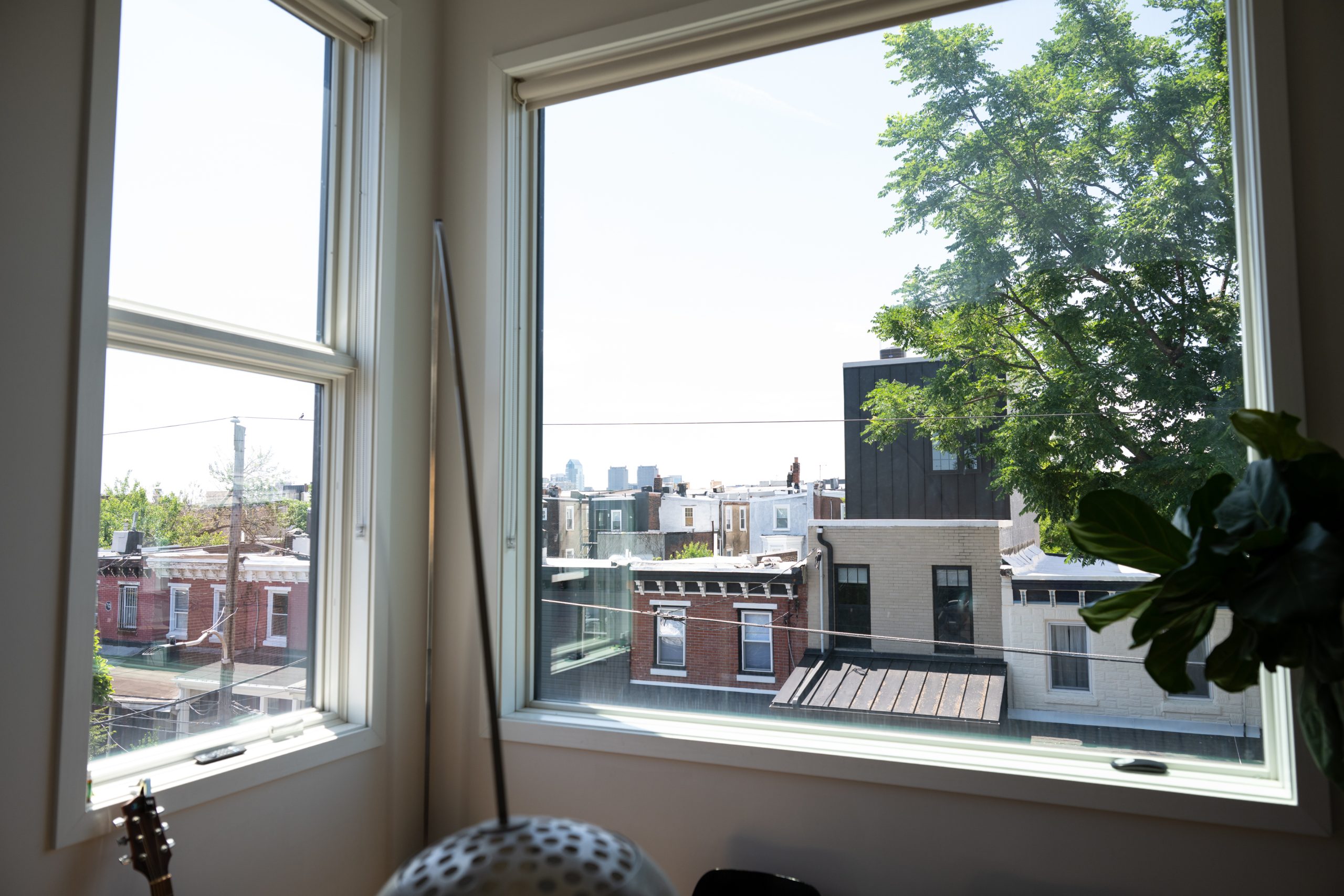
Nguyen lives with his Yorkie-poo, Milo, in the top unit, a two-bedroom with massive windows that not only frame views of Philly’s skyline but also invite in enough sunlight to heat the home throughout the year. (More on that later.)
He rents the bottom two-bedroom unit on Airbnb as The Dubbel, a pun coined by Bright Common that references both the building’s Brewerytown location and its two-unit configuration.
Nguyen, 36, has honed his low carbon footprint philosophy since childhood. Growing up with two parents and two siblings in a one-bedroom house in Ho Chi Minh City, Vietnam, he learned that life could happen happily in small spaces. An eight-year stint in France for university and the beginning of his career backed that up and also introduced Nguyen to thinking about his carbon footprint.
The dining area gets a spacious feel thanks in part to a tall mirror against the wall.Erin Blewett / For The InquirerThe primary bedroom has a simple design. Erin Blewett / For The Inquirer
“Living in France for so long, they really have ways to live small and be conscious about energy, be conscious about the environment,” he said. “Living small provides a coziness. It’s kind of a mindset I carry with me all along the way.”
Nguyen landed in the Philadelphia area after a one-year layover in Houston, which he hated because of its urban sprawl and oversized McMansions. After six years living with a roommate in South Philly as he saved for a home of his own, he purchased his Brewerytown house in October 2022 for $600,000.
Energy-efficient homes like Nguyen’s often cost more up front, but there’s relief down the line in reduced utility costs. Nguyen said he spends about $100 a month on all his utilities throughout the year. The cost to heat the home is almost nil, he said, as the windows provide warming sunlight year-round, and the home’s insulation keeps it temperate.
“Unless it’s under 22 degrees, I don’t even need to turn on the heat,” he said. The house doesn’t have solar power, but it was built for it, with all the necessary infrastructure and an ideal roof pitch for solar panels.
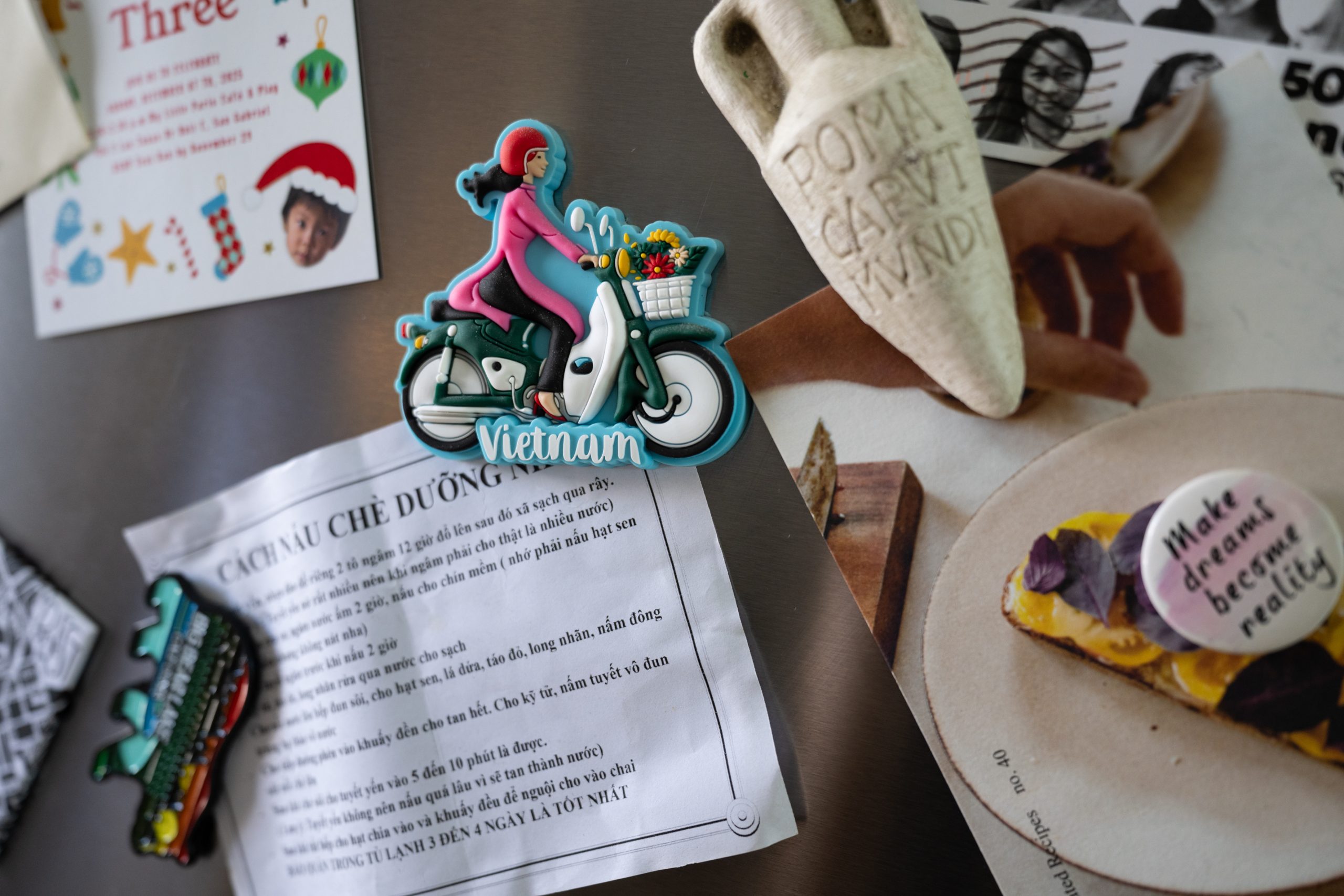
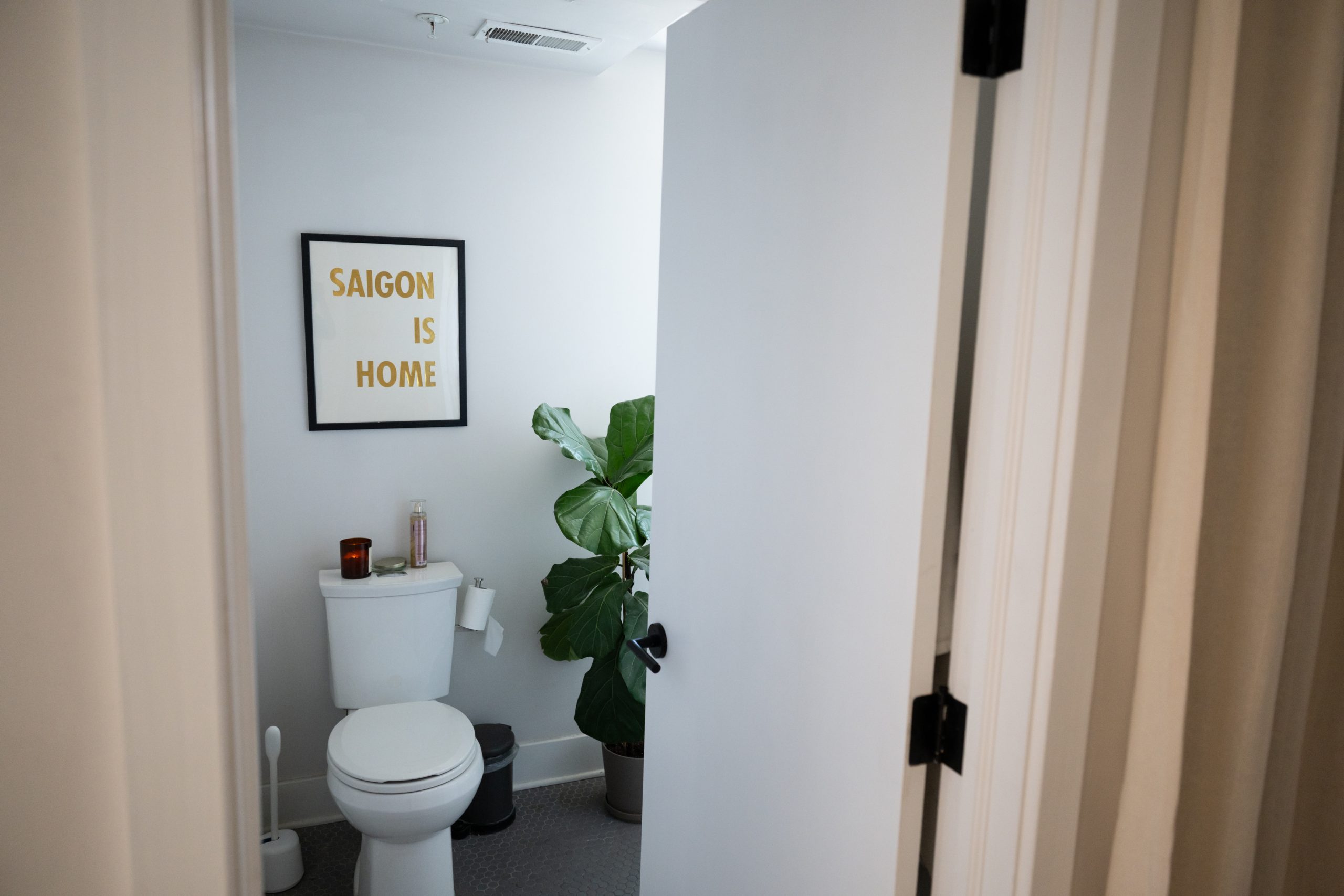
Magnets on the refrigerator include a reminder of Vietnam, where Nguyen grew up.Erin Blewett / For The InquirerThe bathroom continues a theme of clean lines, with another nod to Nguyen’s childhood home.Erin Blewett / For The Inquirer
Nguyen did have an unexpected cost right after buying the house when he learned he needed to replace the energy recovery ventilator (ERV) system to the tune of $6,000. It exchanges stale indoor air with fresh outdoor air while transferring heat and moisture between the air streams. Its functioning is essential to the home’s energy-efficient design.
Nguyen said his home inspector missed that it wasn’t working properly before the sale closed because he didn’t recognize the system — one downside to owning a first-of-its-kind, energy-efficient building.
Large windows in the living area provide a view of the neighborhood.Erin Blewett / For The Inquirer
But still, the expenditures were worth it to Nguyen because they speak to his beliefs.
“It was a lot of investment, but I feel like it’s worth that for my lifestyle, for what I want to do and the ethics I believe in,” he said.
Adding to the home’s eco-friendliness, Nguyen furnished it in secondhand finds, mainly from Facebook Marketplace.
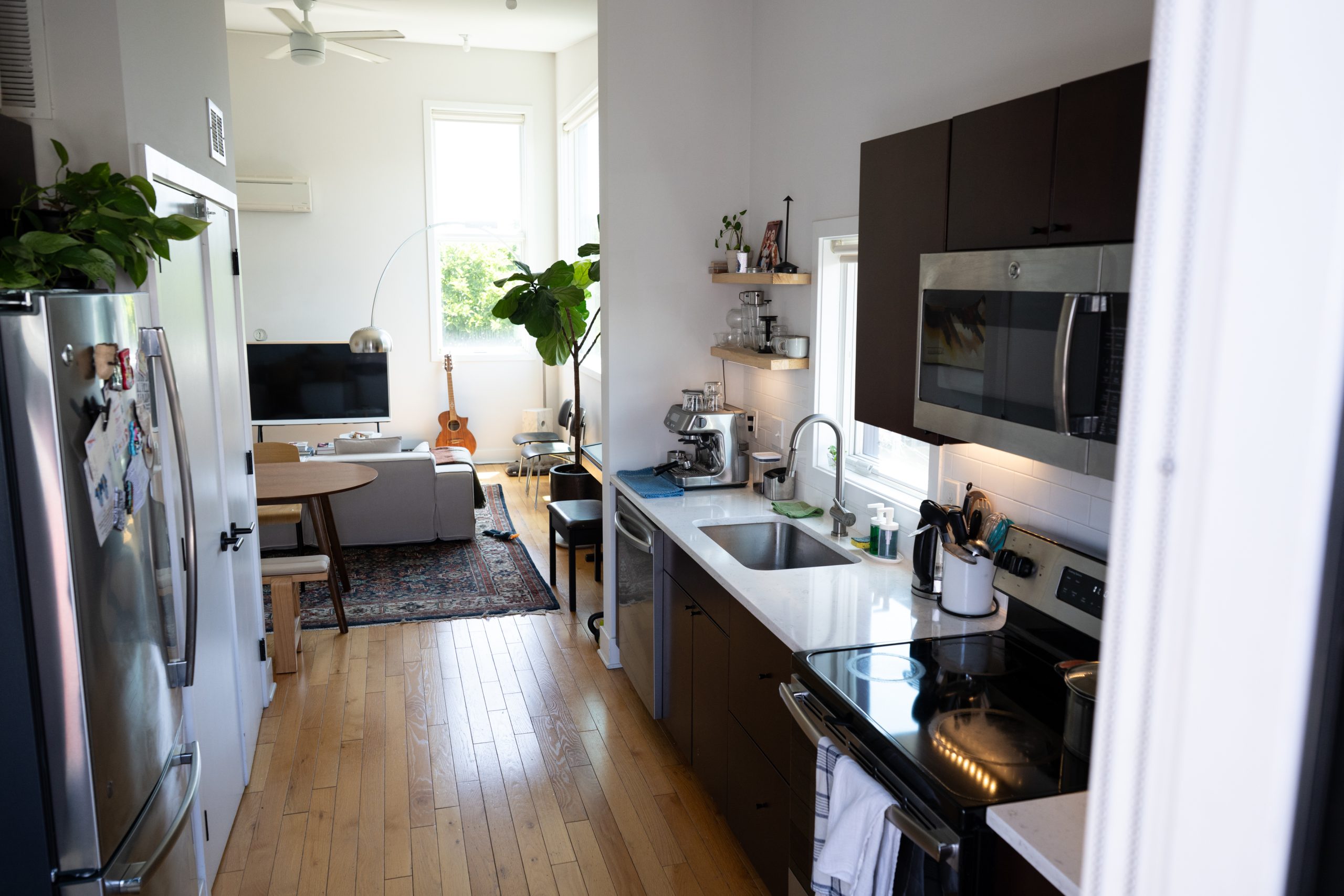
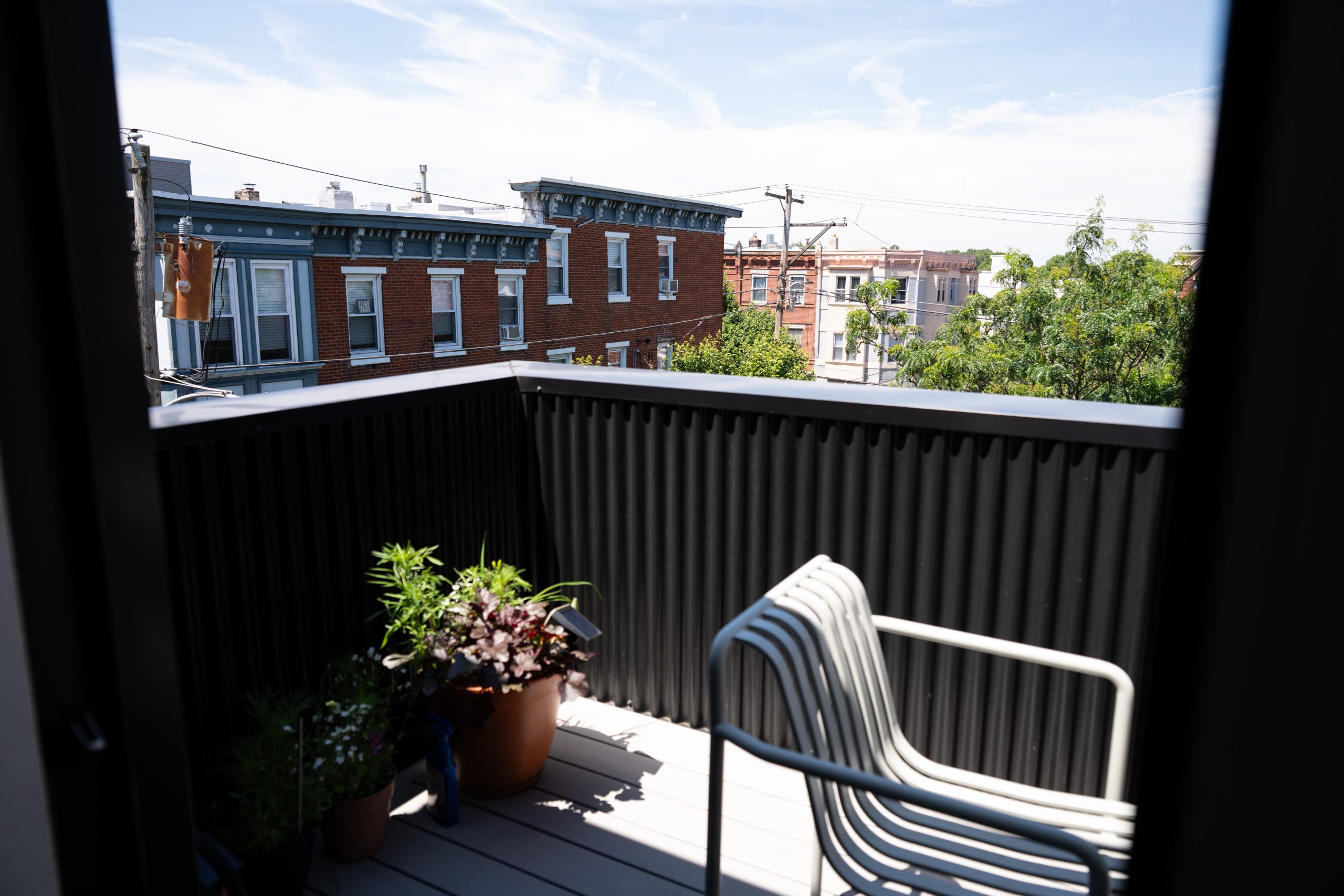
The kitchen leads into the living area.Erin Blewett / For The InquirerThe view from Nguyen’s balcony.Erin Blewett / For The Inquirer
He made a day trip to Princeton to pick up the Flos Arco lamp that lights his living room. He had to carry it up the long flight of stairs into his apartment alone, one step at a time, owing to its heavy marble base. Nguyen also scored a Hay patio set — usually over $1,000 from Design Within Reach — from a Facebook Marketplace seller in Mount Airy for $200.
Another huge perk for him is the home’s location just a 15-minute walk from the Art Museum and Fairmount Park. He said the neighborhood knows him and Milo for the orange booties Milo wears throughout the year and the sound they make trotting down the street.
Nguyen’s dog Milo enjoys the Brewerytown area, and is well known by his neighbors.Erin Blewett / For The Inquirer
He loves the neighborhood and the community on his block, recalling the long table his neighbor sets up on Halloween to paint banners and how the lot that backs up to his, unbuilt on and dotted with trees, was saved by his neighbors from future development because it provides a green reprieve for the area.
Nguyen added of his community, “It’s really lovely to have that.”
Is your house a Haven? Nominate your home by email (and send some digital photographs) at properties@inquirer.com.
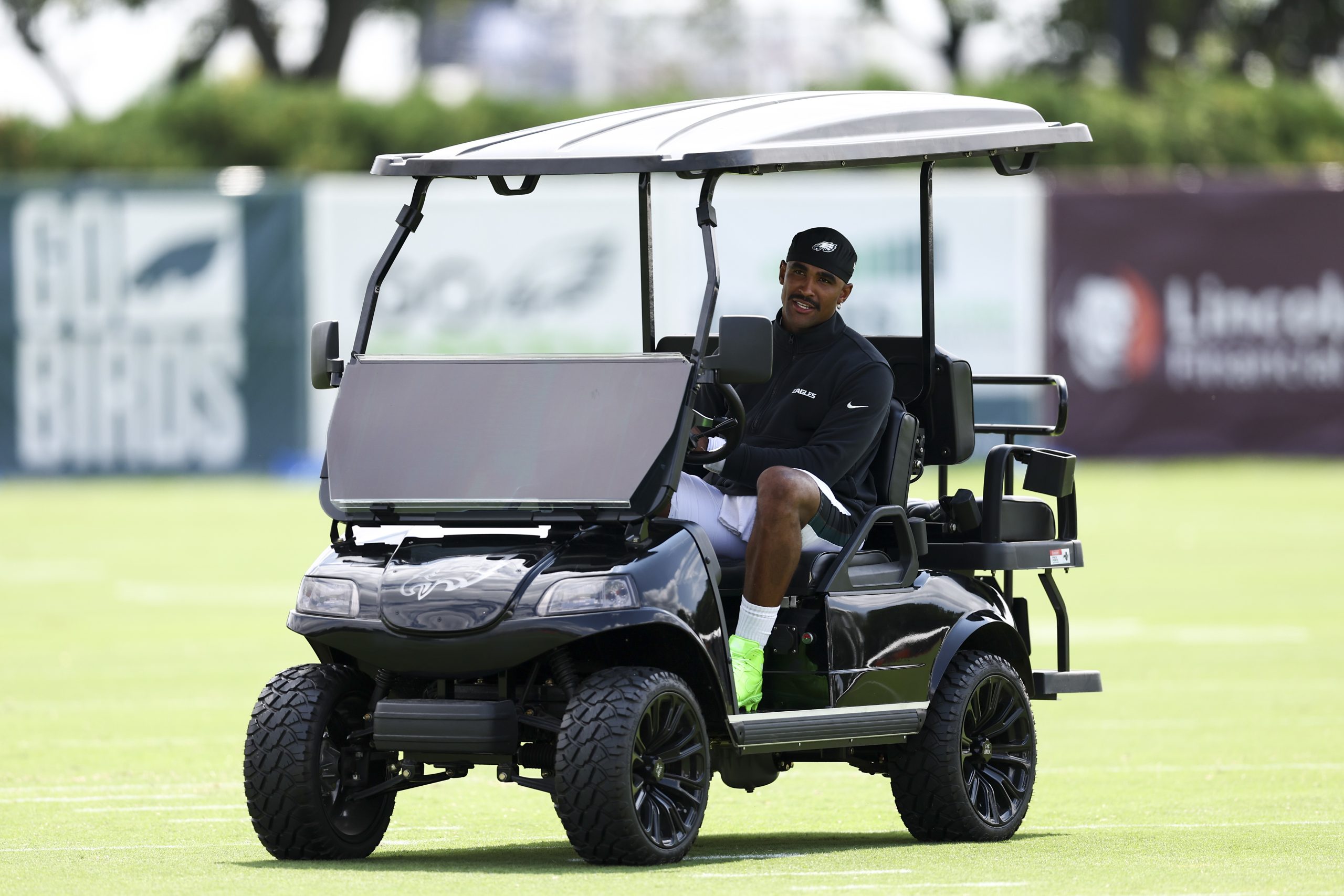
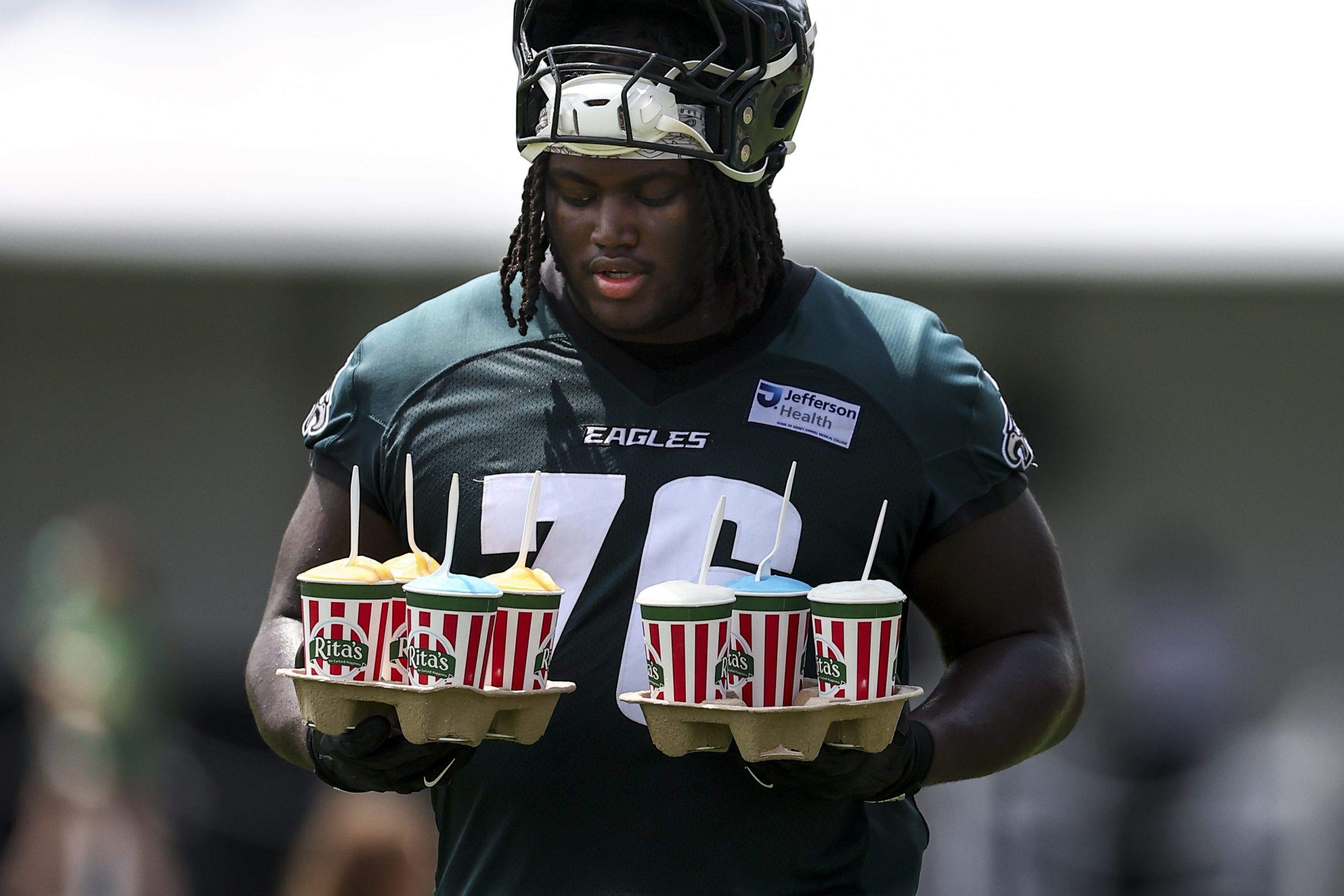
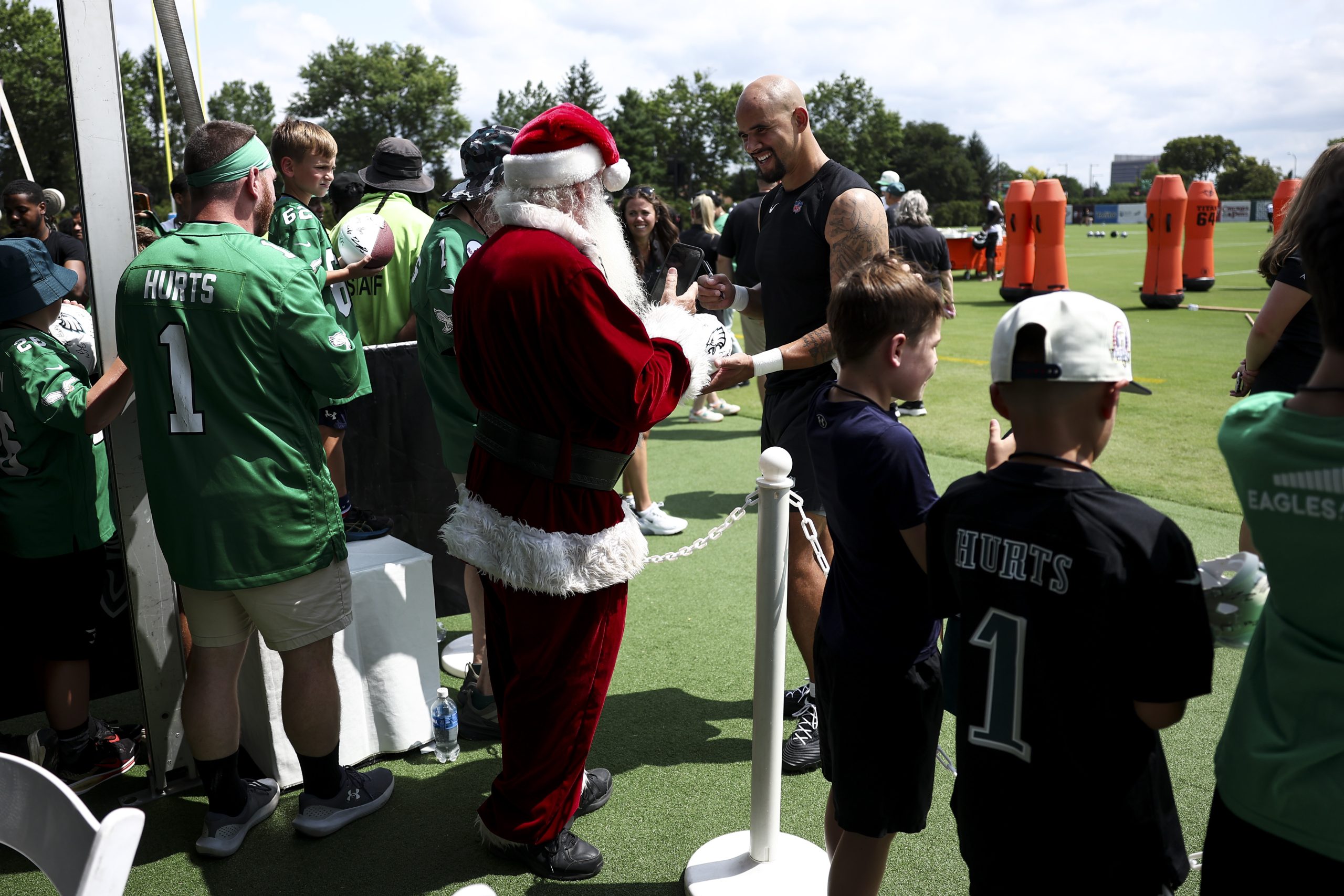
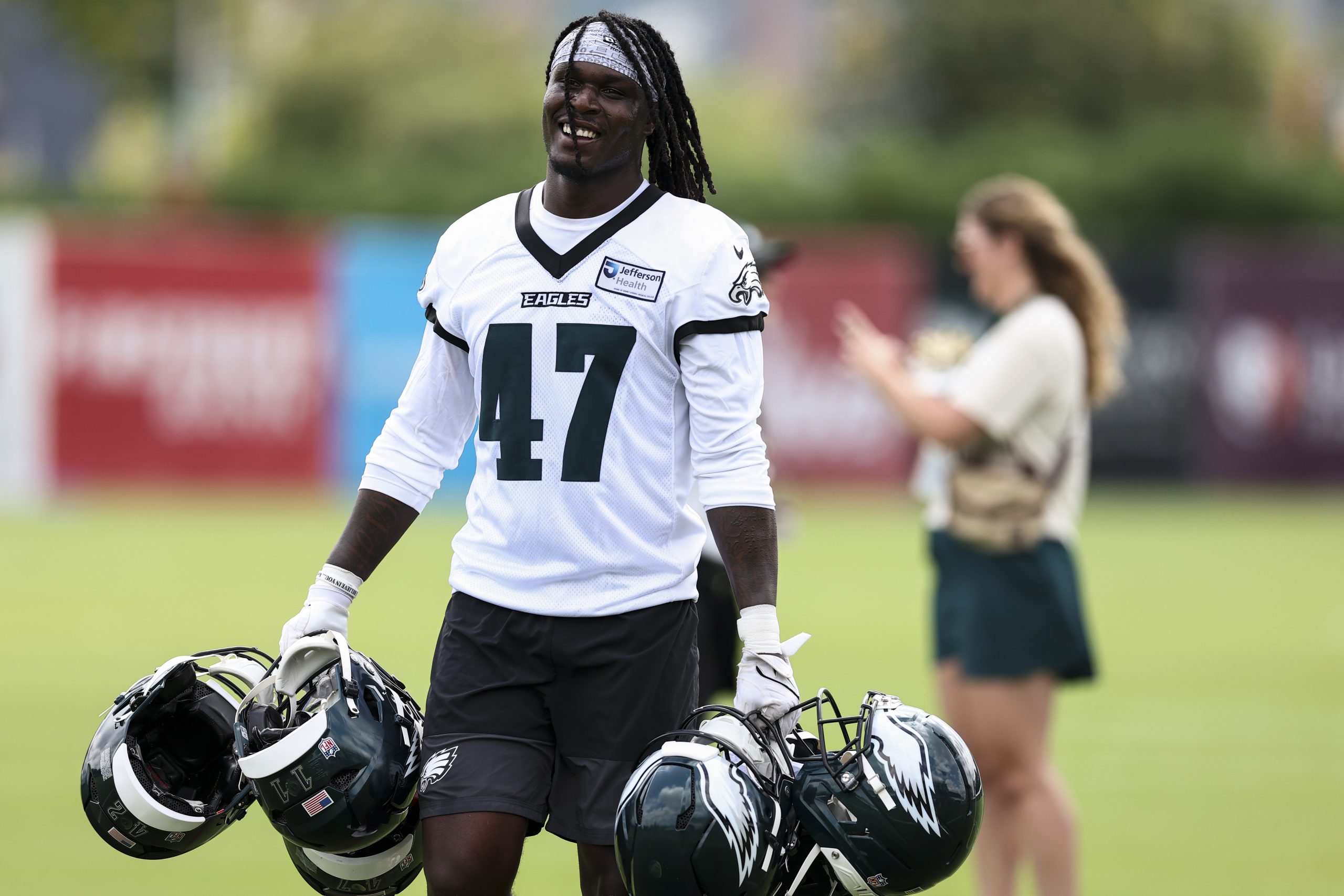
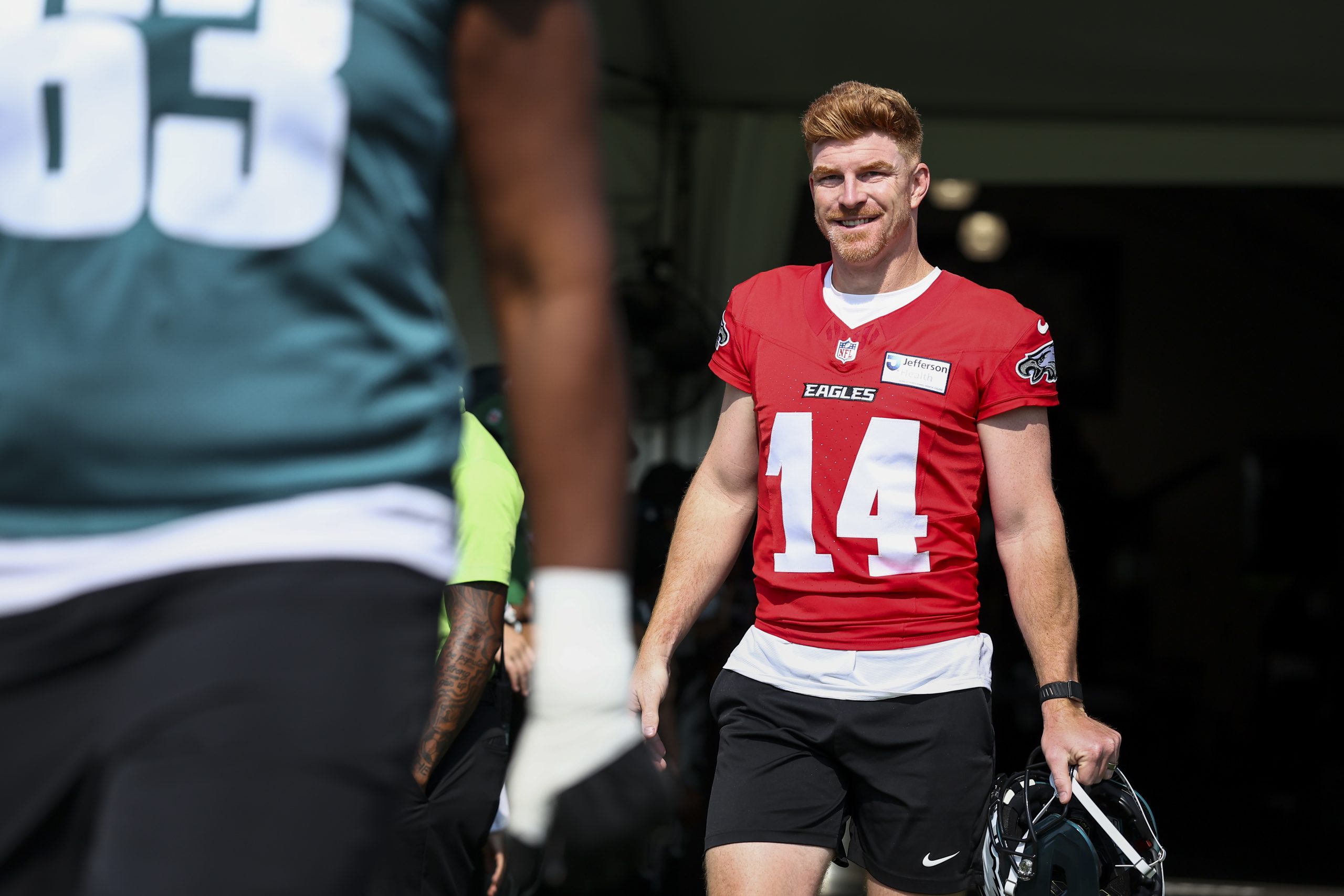
Jalen Hurts drives a golf cart during the first day of Training Camp.Monica Herndon / Staff PhotographerRookie guard Micah Morris carries Rita’s for his teammates.Monica Herndon / Staff PhotographerLinebacker Zack Baun signs an autograph for Santa.Monica Herndon / Staff PhotographerRookie linebacker Deontae Lawson carries his teammates helmets.Monica Herndon / Staff PhotographerNew backup quarterback Andy Dalton takes the field. Monica Herndon / Staff Photographer
// Timestamp 07/29/26 12:58pm
‘It’s huge’: Jalen Hurts on LeBron James coming to Philly
Jalen Hurts on LeBron James joining the Sixers: "I think for what he represents in sports and sports culture, it's huge, and I think it's huge for the city of Philadelphia. So it'll be exciting to have a figure like that in the city. What he's done, one of the greatest to ever do… pic.twitter.com/ZhW3EfTu1N
Jalen Carter got paid by the Eagles… and Jalen Hurts
"I took that five-dollar bill, and I went and gave it to Jalen Carter, and I smacked it on his chest, and I said, 'Let me put five on top of that.'" 😂 pic.twitter.com/C9o7dzcUIi
Jalen Hurts on being intentional about the team coming together and being on the same page, off of Nick Sirianni’s team meeting yesterday: “100 percent alignment, zero percent entitlement.”
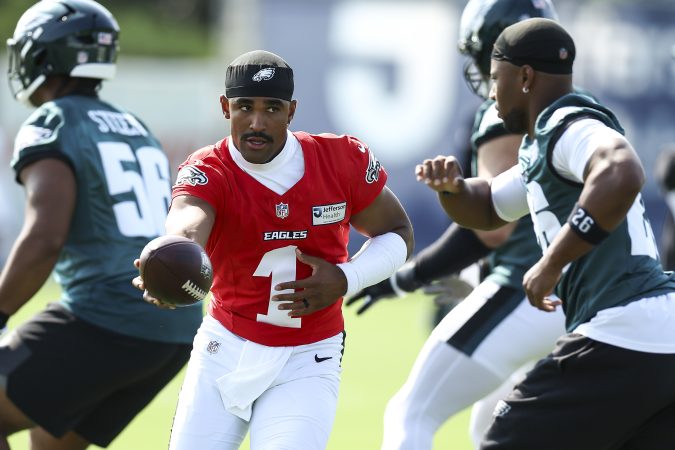
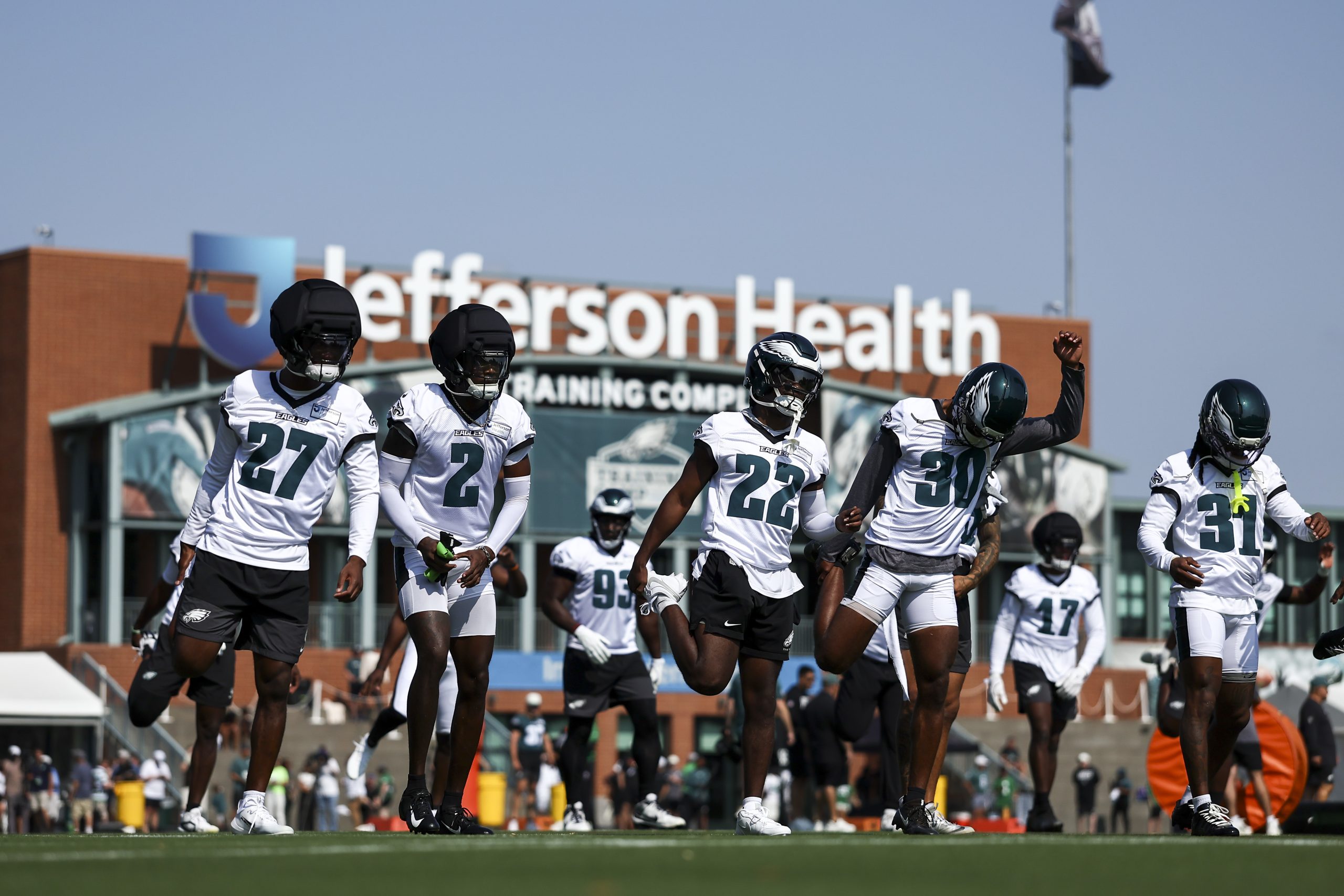
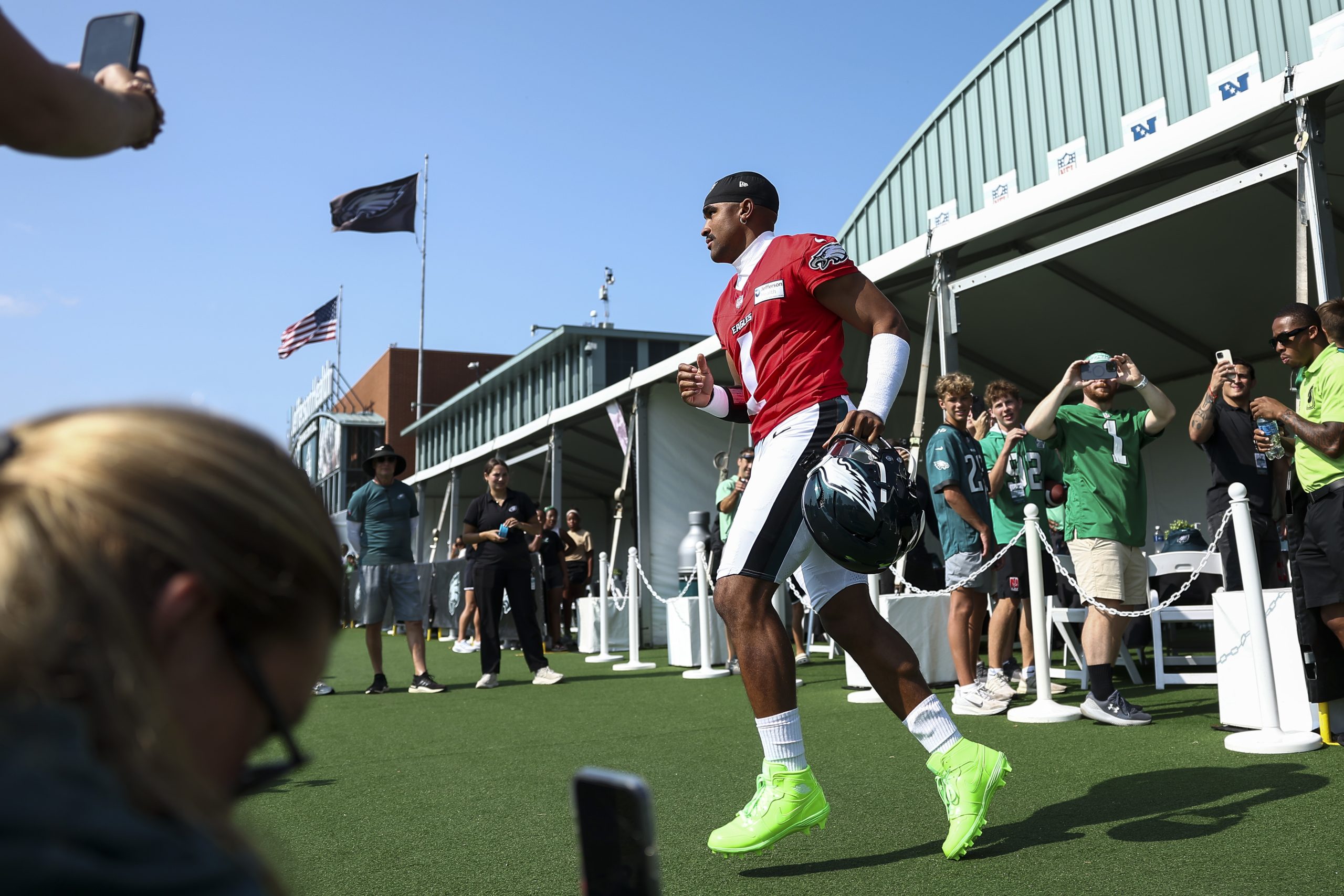
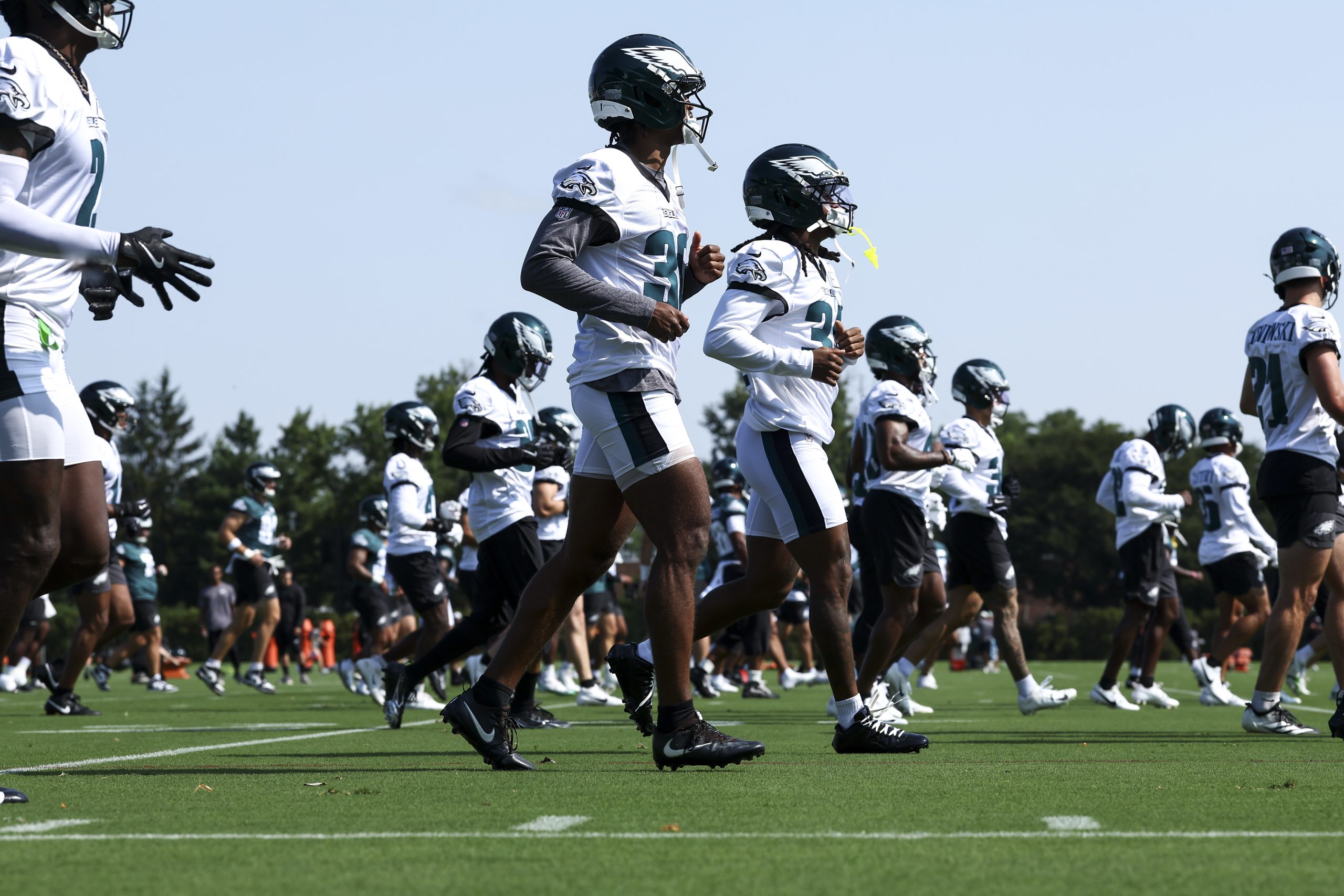
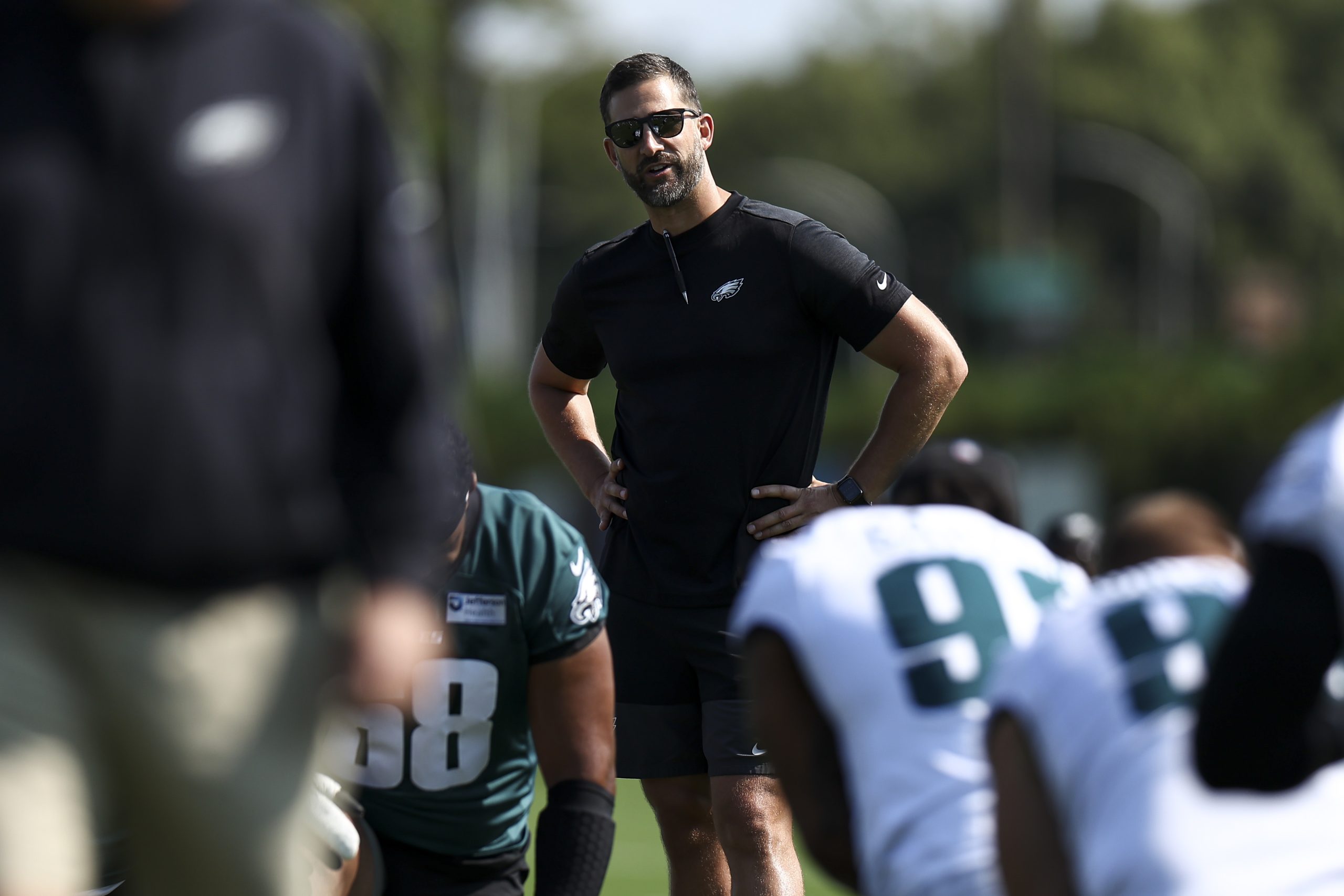
Eagles players work out during the first day of training camp at the Jefferson Health Training Complex Wednesday. Monica Herndon / Staff PhotographerJalen Hurts takes the field ahead of his sixth season as the Eagles’ starting quarterback. Monica Herndon / Staff PhotographerEagles players warm up. The team’s first preseason game is Aug. 15. Monica Herndon / Staff PhotographerEagles head coach Nick Sirianni speaks with players.Monica Herndon / Staff Photographer
// Timestamp 07/29/26 11:34am
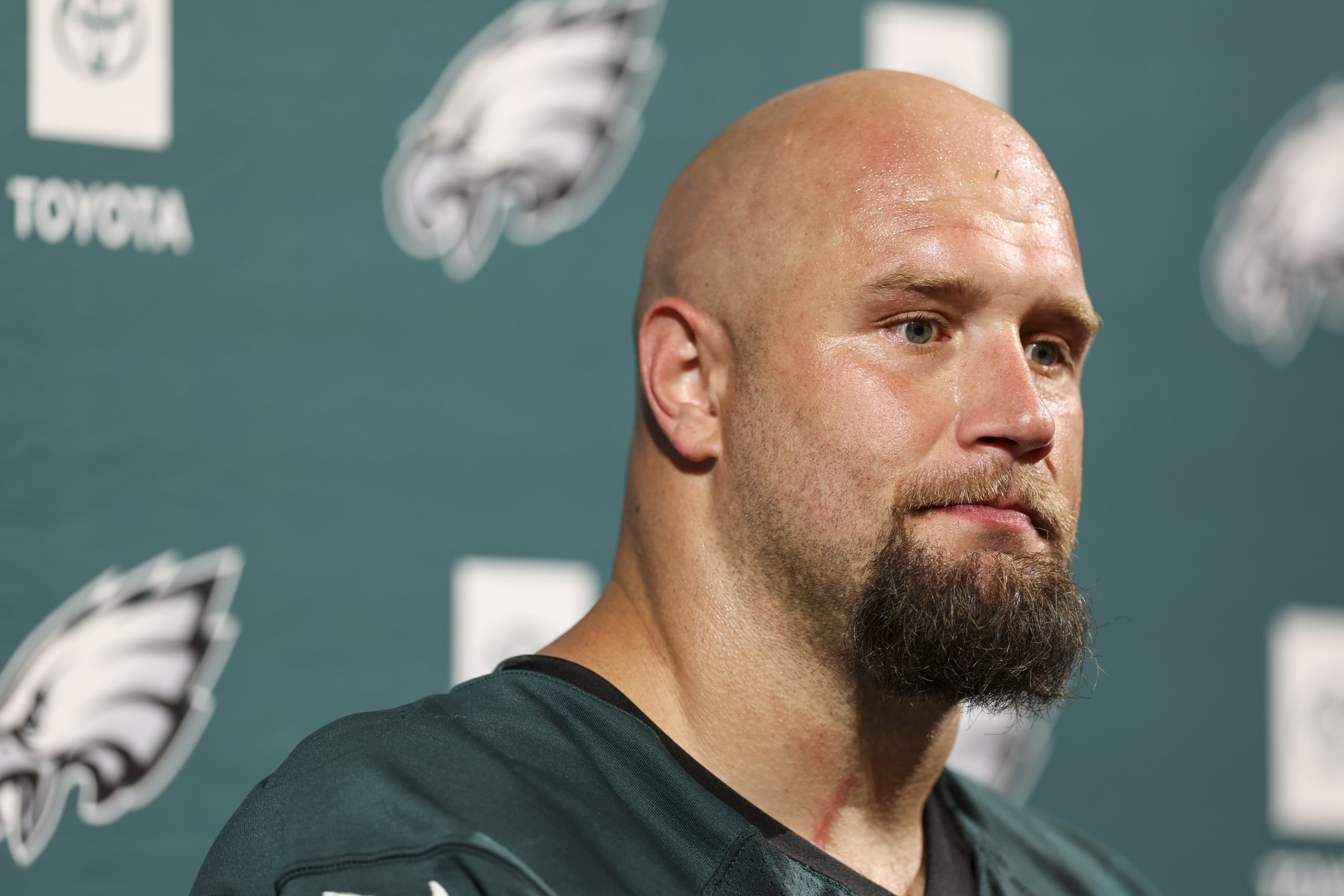
Lane Johnson praises new offense as less predictable
Eagles offensive tackle Lane Johnson speaks with reporters.Monica Herndon / Staff Photographer
Following the Eagles first practice, veteran Lane Johnson praised the new offense under new coordinator Sean Mannion.
“What I like is everything looks very complex to the defense. To the offense it’s pretty simplified,” Johnson told reporters. “It’s very O-line friendly compared to maybe some past years.”
“A lot of its under center,” Johnson added, “So as far as defenses being able to pic up on reads, I believe it’s more difficult.”
Andy Dalton is today’s No. 2 QB. Tanner McKee just stepped in with the 3s. Nick Sirianni wasn’t interested in labeling anything before practice started.
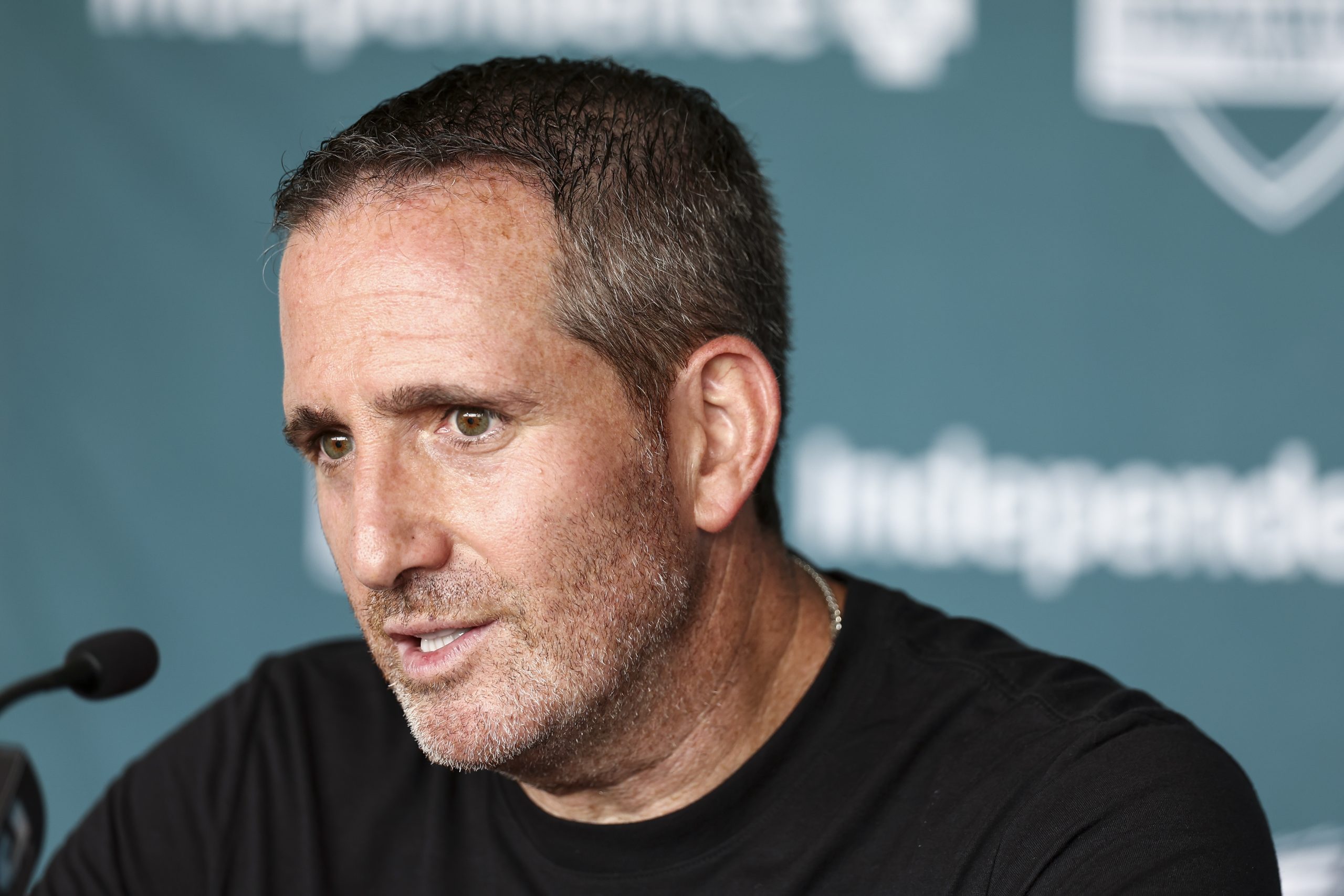
Howie Roseman not concerned about Jonathan Greenard injury
Eagles general manager Howie Roseman speaks to reporters ahead of the team’s first practice. Monica Herndon / Staff Photographer
Ahead of the Eagles’ first practice of training camp, general manager Howie Roseman said he wasn’t concerned about Jonathan Greenard’s long-term health.
“One of the things we know about Greenard, he’s going to be ready to play,” Roseman said. “He’s going to be ready to play when we start the season… This is nothing we’re concerned about.”
Eagles have options on Greenard injury, including Brandon Graham
#Eagles don’t believe Greenard’s injury will keep him out long term, but it gives them the ability to save a roster spot if it extends into the regular season.
Perhaps it compels them to get Brandon Graham into camp, but that isn’t my sense right now. https://t.co/fHGbo7T1Mw
Watch: Nick Sirianni speaks to reporters ahead of first practice
// Timestamp 07/29/26 9:10am
New Eagles LB Jonathan Greenard out with injury
The Eagles traded two draft picks for Jonathan Greenard in April.David Dermer
Eagles training camp is not off to the best start.
Ahead of their first training camp practice on Wednesday, the team revealed that outside linebacker Jonathan Greenard is being placed on the Physically Unable to Perform list (PUP) due to a pectoral strain sustained while lifting before camp. It is not expected to be a long-term concern.
The Eagles traded third-round picks in 2026 and 2027 for Greenard on April 24. He then signed a four-year, $100 million contract with $50 million guaranteed.
Eagles linebacker Jihaad Campbell is moving on from No. 30.Yong Kim / Staff Photographer
There’s a new No. 11 in town.
The number formerly worn by A.J. Brown now belongs to second-year linebacker Jihaad Campbell, the Eagles announced Tuesday night on the eve of the team’s first practice of training camp.
Campbell wore the number during his final season at Alabama, but it obviously was taken when the Eagles drafted him in the first round in 2025. He wore No. 30 during his rookie season.
Campbell is embarking on his second NFL training camp this week. The runway has been cleared for him to assume a starting off-ball linebacker job next to Zack Baun after Nakobe Dean departed in free agency. Campbell had a second shoulder surgery in as many years following his rookie season and missed most of the offseason program.
Brown, meanwhile, is already a few days into his first camp with New England. He is now wearing the No. 1.
Linebacker Jonathan Greenard speaks with reporters during mini-camp last month.
The Eagles’ biggest splash of the offseason came during a draft weekend trade for Jonathan Greenard.
The Eagles acquired the 29-year-old edge rusher and a seventh-round pick in exchange for two third-round picks. Greenard was limited by injury and had three sacks in 12 games last season, but had 12 sacks in each of the previous two seasons.
Greenard subsequently signed a four-year, $98 million deal with the Eagles. Another addition to that position is Arnold Ebiketie, who signed a one-year deal.
It was a relatively quiet free agency period for the Eagles, but they did land former Seahawks cornerback Riq Woolen on a one-year deal worth at least $12 million. Woolen, 27, thrived in man coverage last season, and the Eagles plan to have him on the field at all times, hence DeJean playing safety in the base defense. They also signed veteran corner Jonathan Jones.
Replacing A.J. Brown won’t be easy, but the Eagles gave themselves some options before they reached draft weekend in Hollywood Brown (free agency) and Dontavion Wicks (trade).
Other newcomers on offense include blocking tight end Johnny Mundt and backup quarterback Andy Dalton.
Marcus Epps will face competition to land the safety spot being vacated by Cooper DeJeanYONG KIM / Staff Photographer
Safety is one of the few spots on the field where a starter is written in pencil and not pen.
If you’ve been paying any attention to the Eagles since the spring, you know that Cooper DeJean is slated to move from nickel to safety in base defense. But the Eagles, like most NFL defenses, use nickel and dime packages much more often than base. So the spot next to Andrew Mukuba mostly will be manned by someone not named DeJean.
Vic Fangio indicated that Marcus Epps is in the pole position for the job to replace Reed Blankenship, but the 30-year-old will have to earn it. There will be competition from converted nickel Michael Carter II, seventh-round pick Cole Wisniewski, veteran special teamer J.T. Gray, and long shots like Andre’ Sam, Kapena Gushiken, and Maximus Pulley.
Don’t count out another roster addition, too, if Howie Roseman decides the Eagles need to upgrade the safety spot.
What’s the vision for Andy Dalton (left) as the depth chart stacks up behind Jalen Hurts?
The Eagles have a quarterback controversy. Sort of.
Andy Dalton and Tanner McKee alternated reps with the second-team offense during the offseason program, and it’s unclear which is the preferred backup to Jalen Hurts.
The team also drafted Cole Payton in the fifth round, and it seems pretty unlikely they make room for four quarterbacks on the initial 53-man roster given the talent elsewhere.
So, what gives?
The Eagles would love to find a trade partner for McKee, who is entering the final year of his contract. But if they can’t, does that put Dalton in jeopardy of being cut (or traded)? Payton is a bit of an unknown, but he has an intriguing athletic profile, and while the Eagles cut a sixth-round draft pick last year (Kyle McCord), they probably would be hesitant to expose Payton to waivers given his traits. Otherwise, maybe he joins Clayton Thorson as a recent fifth-round pick who hits the chopping block.
A first look at new offensive coordinator Sean Mannion
Jeff Lurie and Howie Roseman speak with new offensive coordinator Sean Mannion.
Offensive coordinator Kevin Patullo’s firing started the offseason. The Eagles took a big step back offensively last season and the first-year coordinator essentially fell on the sword. There were issues beyond scheme and play-calling. The offensive line wasn’t as healthy, Jalen Hurts was inconsistent at times, and Saquon Barkley wasn’t as effective behind a banged up line.
But Patullo’s replacement, 34-year-old Sean Mannion, is slated to bring changes to the offense, especially when it comes to run-blocking schemes and Hurts taking snaps from under center and utilizing play-action passes.
Mannion, who was Green Bay’s quarterbacks coach last season, isn’t the only notable new face on offense. Longtime offensive line coach Jeff Stoutland is no longer with the team, and new position coach Chris Kuper is in charge of teaching and deploying those new blocking strategies.
Other new coaches on offense include Josh Grizzard (pass game coordinator), Ryan Mahaffey (run game coordinator/tight ends), Jerrod Johnson (senior offensive assistant). Parks Frazier, last season’s pass game coordinator, is now the quarterbacks coach.
On defense, Vic Fangio lost defensive backs coach Christian Parker, who is the new coordinator in Dallas. The Eagles promoted Joe Kasper to take over Parker’s defensive pass game coordinator duties and hired Roy Anderson (cornerbacks) and Mike Pellegrino (secondary).
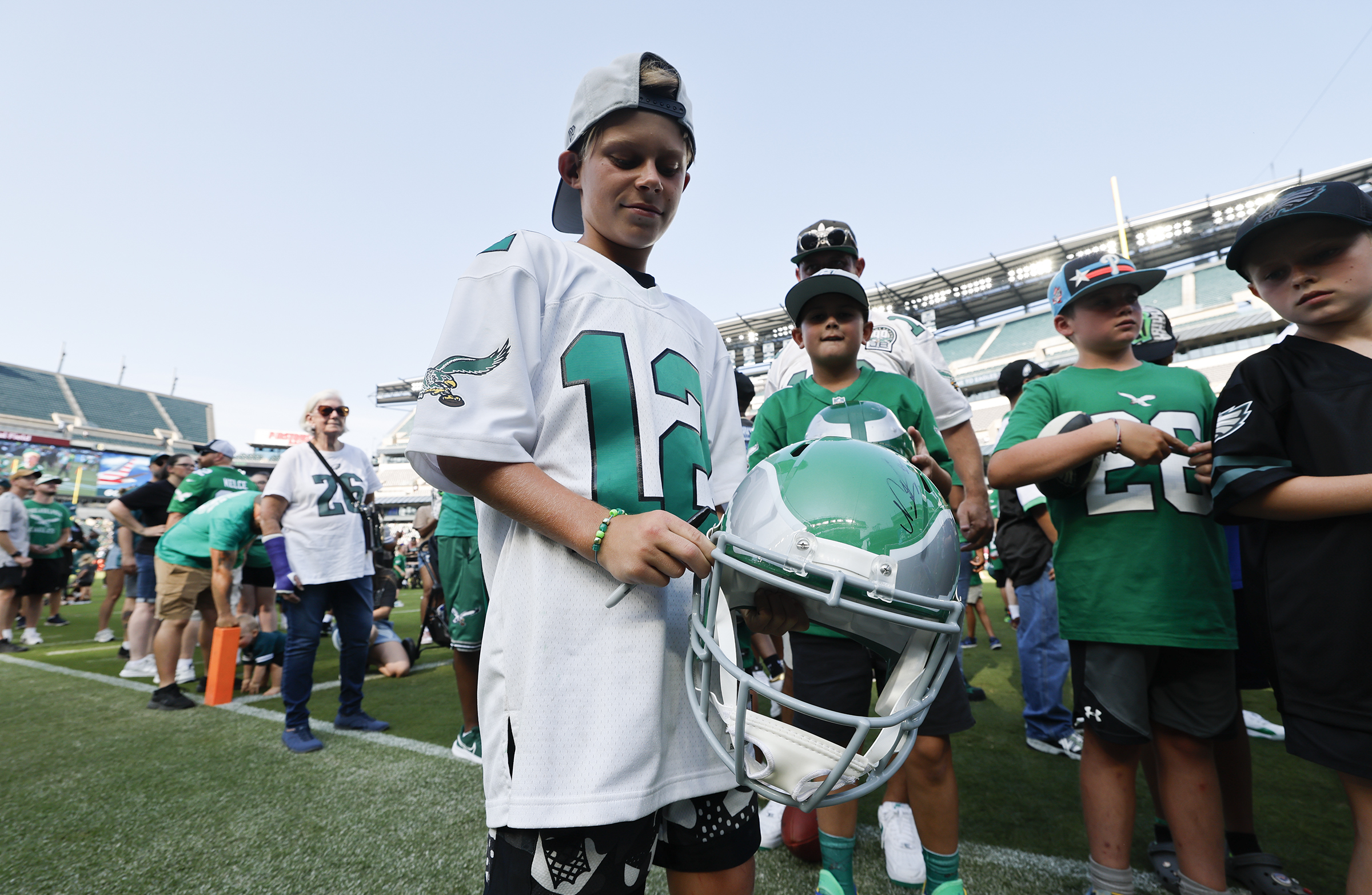
An Eagles fan holds his helmet for an autograph at the team’s open practice in 2025.Yong Kim / Staff Photographer
For the fourth-straight year, the Eagles will hold just one open practice to fan.
This year’s open practice at Lincoln Financial Field will take place on Sunday, Aug. 25 at 6 p.m. The Eagles are charging $15.40 a ticket, up from $10.25 last year, with proceeds going to autism research. At least parking is free.
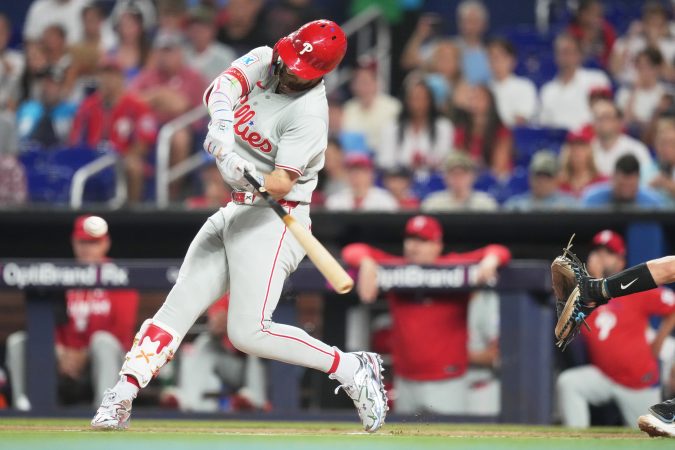
MIAMI — With the MLB trade deadline days away, Bryce Harper believes the Phillies have some shopping to do.
Tuesday night’s 1-0 loss to the Marlins marked the club’s fourth consecutive series loss after the All-Star break, and it came against a team that had lost 12 straight games until it met the Phillies. Afterward, Harper was straightforward about how he views the club entering Monday’s trade deadline.
“I think we need some help,” he said. “I think we’ve proved pretty much all year, we’ve done a pretty good job, but anytime you can get some help in here and reinforcements, I think it helps.”
— NBC Sports Philadelphia (@NBCSPhilly) July 29, 2026
It’s no secret that the Phillies need a right-handed hitting outfielder. The Phillies’ current crop of righty bats have a .221 batting average and .640 OPS, which rank last in baseball. They also have struggled for most of the season against left-handed pitching.
But the Phillies’ lack of pitching depth, in the rotation and bullpen, also has become magnified. The team has lost the last 11 games started by the No. 5 spot in their rotation, while the bullpen has been a revolving door of struggles and injuries.
Both of Dave Dombrowski’s major offseason adds, Adolis García (right latissimus dorsi tear) and Brad Keller (UCL tear in his right elbow), are out for the year because of injury.
When asked whether the help would be best in the form of an arm or a bat, Harper’s answer was straightforward.
“I think both,” he said. “I think obviously everybody knows what we need. … We need both.”
Is he confident the Phillies will have reinforcements in both come Monday night?
“I don’t know. We’ll see,” he said. “I mean, that’s a Dave question. So, yeah, I mean, we’ll see.”
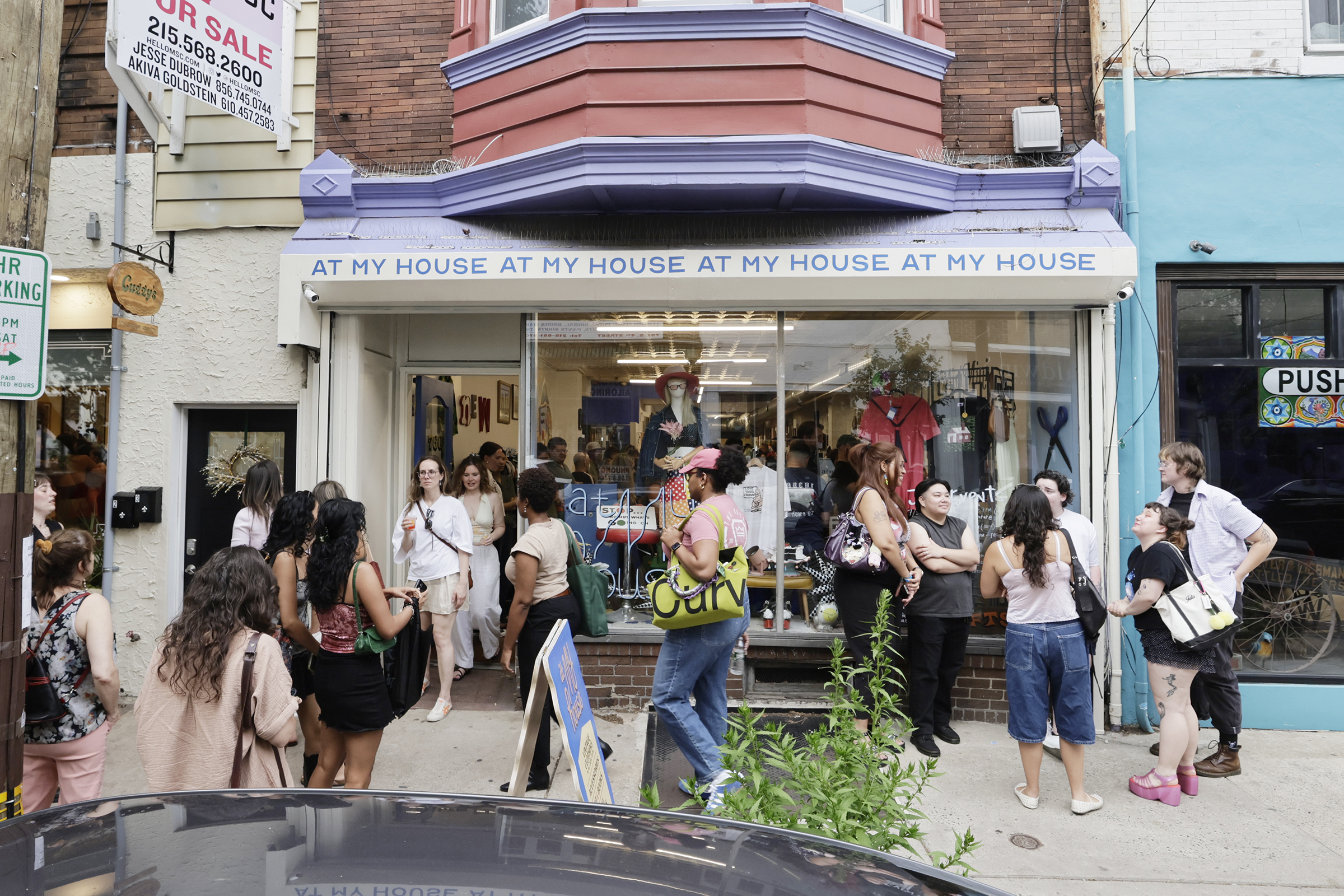
It’s a warm Friday evening in July, and the Queen Village neighborhood is abuzz. Philadelphians are grabbing dinner and perusing the many shops. One shop, particularly, has attracted a crowd that it can barely contain.
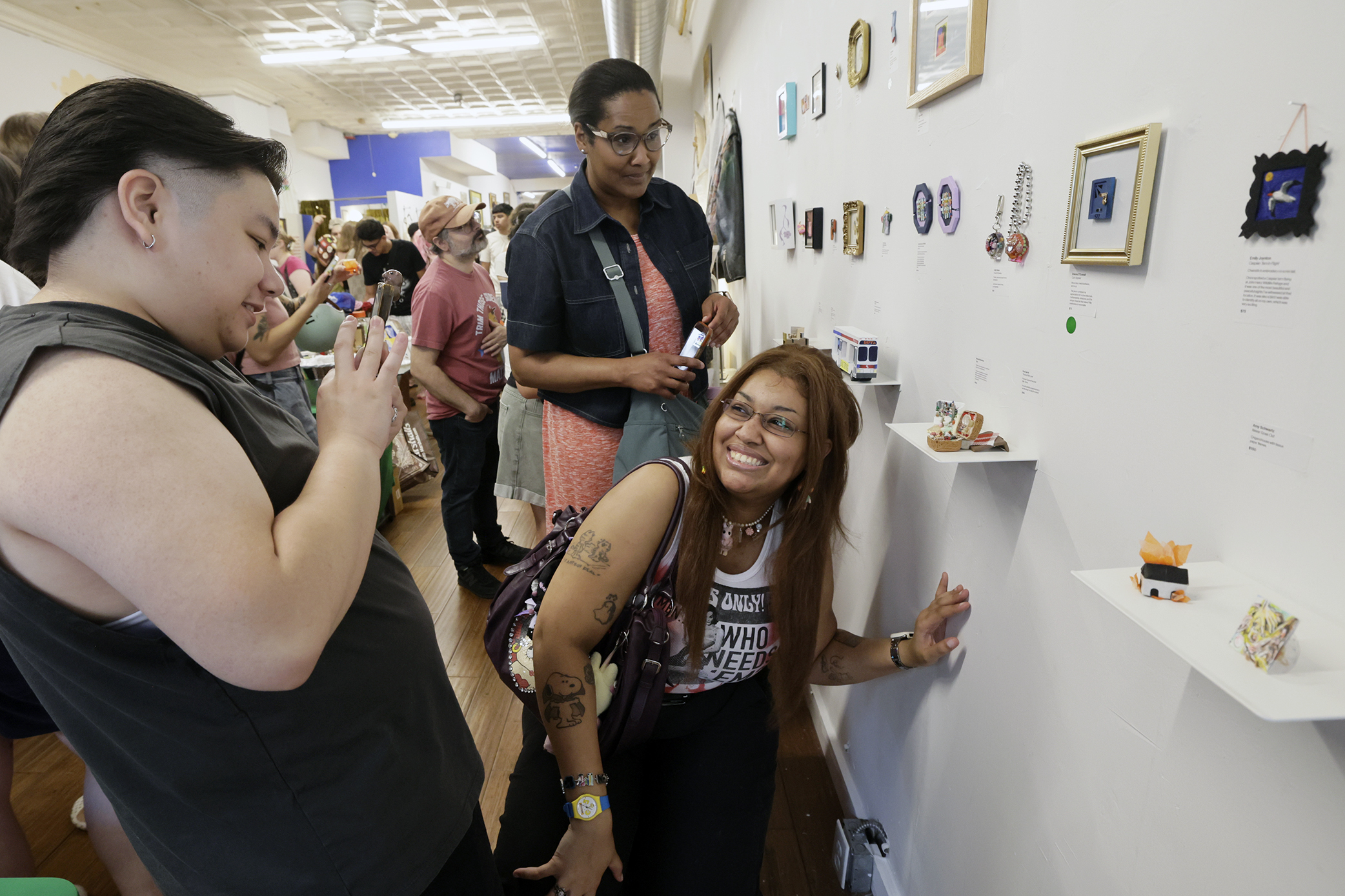
Inside the vintage store At My House, people are immediately amazed by the knickknacks that surround them. They grab a cocktail and line up for the main event, waiting their turn to view a wall at the front of the store displaying a range of art pieces — all of which you can hold in the palm of your hand.
A large crowd gathers at the opening / public reception of “The Mini Mini Art Show” at At My House on July 24, 2026. Every artwork in the exhibition measures 1.5 inches by 1.5 inches — about the size of a postage stamp.Elizabeth Robertson / Staff Photographer
On Friday, Kelly Braun, founder and owner of At My House, hosted the second annual mini-art show, dubbed the “Mini Mini Art Show.” Last year, the show invited artists to make art that was 3 inches by 3 inches.
Braun upped the ante this year.
“This year, we realized we needed to go mini-er,” she said. “It needed to be more extreme, more silly, more ridiculous. So we cut it in half.”
Artist Fabiola Lara (right) explains her tiny art print vending machine during the opening reception of “The Mini Mini Art Show” at At My House on Fourth Street in Philadelphia on July 24, 2026. Elizabeth Robertson / Staff Photographer
All of the art on display at “Mini Mini” is about 1.5 inches by 1.5 inches — about the size of a postage stamp. While last year’s artists were invite-only, this year’s show is a mix of submissions and invited artists.
On the wall are displays of tiny clothing items, makeshift houses and rooms, and some original drawings. All of the artwork is for sale, with items ranging from $60 to $300.
There are even miniature illustrations of classic art, like Vermeer’s Girl With a Pearl Earring and Botticelli’s TheBirth of Venus, created by the event’s cohost, Fabiola Lara.
“I draw from everyday life, which is why a lot of my prints are Philadelphia-themed. Today, I wanted to take a break from Philadelphia-themed stuff, and literally take the theme of mini art and take the opportunity to do something different,” Lara said. “I’ve always loved to draw, it’s my favorite way to be creative.”
Crysral Nguyen (left) takes a photo of clay artist Marley Richardson in front her polymer clay art on display at the opening / public reception of “The Mini Mini Art Show” at At My House on Fourth Street in Philadelphia on July 24, 2026. Both ladies are from Philadelphia.Elizabeth Robertson / Staff Photographer
Lara, a Chilean American artist, has been making mini art since 2024, when she started her mini art vending machines, of which there are now 13 across the city. Anyone can insert four quarters to get a business card-sized piece of original art by Lara, or two quarters for a roughly stamp-sized one.
“I think fine art in museums is so focused on large-scale, which is great,” said Lara, “but also you have to have the studio space for it, and it’s expensive. I love that people still turn out for this tiny stuff, which is actually really hard to make.”
Exhibition hosts Kelly Braun (middle) and Fabiola Lara (right), celebrate at “The Mini Mini Art Show” at At My House on July 24, 2026. Elizabeth Robertson / Staff Photographer
At My House opened its doors in January of last year, and has since become a thriving vintage clothing and homewares shop and event space. When it’s not hosting a mini art show, it hosts collage nights, book clubs, photography pop-ups, platonic speed dating, and even lamp-making workshops.
“The Mini Mini Art Show” is on display through Aug. 2 at At My House, 760 S. Fourth St., Philadelphia. atmyhou.se
President Donald Trump asked the Supreme Court on Tuesday to overturn an $83 million judgment against him for defaming advice columnist E. Jean Carroll, who accused him of sexually assaulting her decades ago.
Trump’s attorneys asserted in court filings that the Supreme Court’s 2024 decision granting presidents sweeping immunity for actions taken in office shields him from liability in the high-profile case.
“This is the first case in our Nation’s history in which a court has imposed damages liability on a President for his conduct in office,” the attorneys wrote.
Separately, the Justice Department petitioned the high court Tuesday to allow the federal government to replace Trump as the defendant in the case.
Should the justices permit the swap, it would potentially clear the way for the Trump administration to ask for the massive judgment to be voided because the federal government cannot be sued for defamation. Lower courts have denied similar requests by the agency.
Justice officials argue that the United States should be substituted as the defendant under a law that grants federal employees some immunity from civil damages for actions taken within the scope of their employment.
They said that some of the comments at issue in Carroll’s defamation claim occurred during Trump’s first presidency.
“Absent this Court’s intervention, the sitting President is facing nearly a hundred million dollars of personal liability for conduct that was well within the scope of his federal office,” the Justice Department wrote. “That alone deserves this Court’s attention.”
Trump’s and Carroll’s attorneys declined to comment on the appeal Tuesday night.
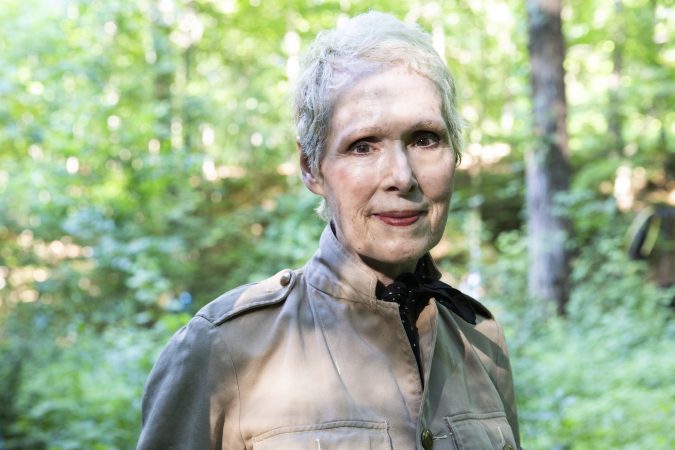
A Manhattan jury awarded Carroll the money in 2024, following a civil trial in which she testified that Trump attacked her in a dressing room at the Bergdorf Goodman department store in Manhattan in the mid-1990s. Trump denies the allegations.
Carroll first went public with the claims in 2019, prompting angry rebukes by Trump. Trump said the allegation that he had sexually assaulted Carroll was a “complete con job,” a “Hoax” and a “Scam” concocted to sell her memoir.
At other points, he said she was too unattractive for him to take an interest in her and accused her of lying. The comments prompted years of threats and attacks against Carroll by Trump’s supporters.
An appeals court panel upheld the $83.3 million verdict in September and denied Trump’s request in April for the full court to rehear the case. The moves paved the way for Trump’s appeal to the Supreme Court.
In November, Trump appealed to the Supreme Court a $5 million verdict in a separate defamation case Carroll brought against the president.
The jury found Trump liable for sexually abusing and defaming Carroll. In June, the Supreme Court let stand that verdict against Trump.
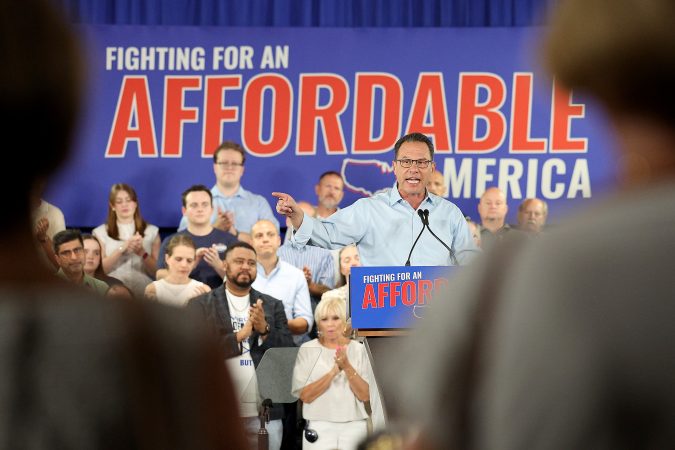
BETHLEHEM — It was not by happenstance that House Minority Leader Hakeem Jeffries (D-New York) chose a union hall here in the Lehigh Valley to launch the final 100-day sprint toward the midterm election. “This is ground zero for the battle to control Congress,” the speaker-in-waiting declared.
The same could be said for the centrality of this state — and this election — to the presidential aspirations of a Democrat who shared the stage Sunday with Jeffries: Pennsylvania Gov. Josh Shapiro.
Were the popular governor to run nationally in 2028, and the current assumption is he will, what happens in his crucial state in November could be a compelling argument not only for his electability but for his ability to carry others over the finish line.
This year, Pennsylvania holds four of the House races that Democrats consider to be among their top opportunities for flipping Republican-held seats. That’s more competitive races than in any other state, according to the House Democrats’ campaign operation.
President Donald Trump carried three of those districts in 2024. But in the 2022 gubernatorial election, Shapiro, then the state’s attorney general, won all four by double digits against a far-right opponent.
“Pennsylvania is always the ultimate swing state, the state that kind of decides it all,” Shapiro, who is running for a second term, said in an interview. “And so it is not a stretch to imagine if we win these races here, that’ll create a Democratic majority in the U.S. House.”
Shapiro is a heavy favorite against the Republican gubernatorial nominee, State Treasurer Stacy Garrity. He has raised more than $50 million to run up the score, and create an updraft that could help candidates lower on the ballot.
He has also had a hand in who those candidates are. Shapiro endorsed the Democratic candidates in all four of Pennsylvania’s most hotly contested congressional districts in their primaries. One of them, Bob Brooks, spent 20 years as a firefighter in Bethlehem and was Shapiro’s pick in a hard-fought primary to take on Republican incumbent Ryan Mackenzie. In 2024, Mackenzie beat Democratic Rep. Susan Wild by one percentage point.
As he prepared to introduce Shapiro here on Sunday, Brooks emphasized his background as an outsider who can relate to the pressures that ordinary people are under: “I have to be honest. Running for Congress was not on my Bingo card. I’m not a politician. Far from it, actually. I’m a regular working person, like so many of the faces that I see in this room.”
Meanwhile, Keystone State Democrats are also hoping to flip the state senate, where Republicans have a 27-23 majority, while also maintaining their narrow hold on the House. If they can do it, they would be looking at their first unified hold on state government in more than three decades.
Shapiro has pledged he would use that power to raise the minimum wage to $15 an hour, from its current $7.25; fund mass transit; build more housing and codify abortion rights into state law.
All of which could be rolled into a national message, the outlines of which became apparent as the governor talked about his agenda. “We all need to do our part to stop the chaos and cruelty and corruption of Donald Trump,” he said, “and that’s going to require us here at the state level having a trifecta so that we can pass policies that help the people of Pennsylvania while Trump is hurting them.”
Having seen his state vote twice for Trump, in 2016 and 2024, Shapiro is working to build up the Democratic infrastructure. He recently unveiled a multimillion-dollar effort that party officials say is the largest coordinated midterm operation in the state’s history. It boasts having opened 27 offices across the state and hiring nearly 100 full-time organizers.
The governor has also addressed one of the more worrisome trends for Pennsylvania Democrats: Their voter registration advantage over Republicans had dropped precipitously over recent election cycles.
Between 2020 and 2024, the registration gap between the two parties had fallen by more than half, to 325,000 Democrats from 686,000 Republicans. It was a warning sign that Trump was going to win the state and its 19 electoral votes.
This year, with the midterms approaching, the numbers are starting to turn around; Democrats have added nearly 25,500 to the registration rolls, while Republican numbers have dropped by more than 4,500, according to voter registration data analyzed by PennLive.com.
Retooling and professionalizing the party is a project that Shapiro began almost a year ago, he said, and now, “I’m investing millions of dollars in helping elevate other Democrats on the ballot, spending my time campaigning for people like Bob Brooks and others.”
If all of this works as he hopes, it might be the foundation for a presidential campaign. Unknowable at this point, however, is whether the Democratic base in 2028 will be looking for a Mr. Fix-It whose appeal stretches across party lines, or will move further leftward in its fury at the establishment.
Shapiro insists — as presidential candidates nearly always do at this stage of the game — that none of this is his concern at the moment.
“What I’m focused on are these midterms,” which in Pennsylvania “will be decided on a razor’s edge,“ Shapiro said. “Folks are fed up and angry and frustrated. The best way to demonstrate that, the best way to show that we’re against what Trump is doing, is to show up and vote in record numbers.”
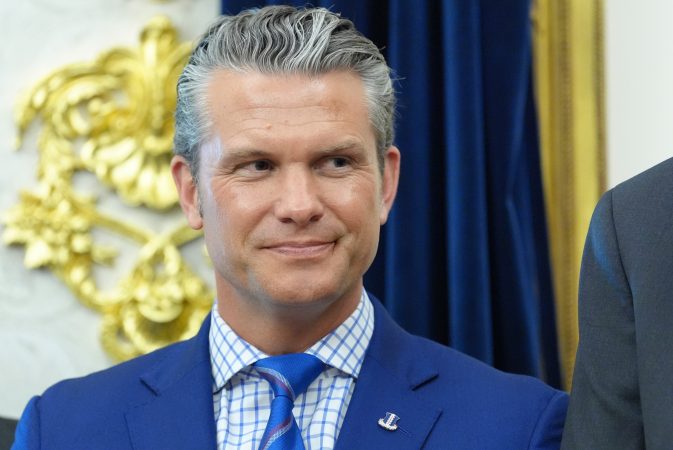
On July 15, Defense Secretary Pete Hegseth announced that his department will test all military personnel over the age of 30 for low testosterone. In his video posted on X, he explained the move in terms of military dominance. It would give U.S. soldiers an “edge of lethality” and ensure they “have the biological foundation” to maximize their performance.
This decision ties into larger concerns on the political right about the need to foster manhood, emphasizing aggression and physical strength. Testosterone has long served as a cultural marker of traditional masculinity, so it’s not surprising that Hegseth would focus on the hormone. After all, he’s performed pull ups on camera and issued a DOD-HHS fitness challenge with Secretary Robert F. Kennedy Jr.
Yet, Hegseth’s move isn’t just a reflection of his personal priorities for the military. It’s also part of a long history of rhetoric about American manhood in military medicine that has elevated traditional ideas about masculinity and aimed to exclude gay men and women from military service. Indeed, dating back to the late 19th century, decisions about U.S. soldiers’ health have exposed fierce debates over definitions of American manhood.
At the dawn of the 20th century, disagreements over imperialism dominated American politics. Proponents of American expansionism, like Sen. Albert J. Beveridge (R-Ind.), wanted to see the U.S. acquire territories in the Caribbean and the Pacific.
Worries about manhood and the health of military personnel were at the core of these debates. Many Americans linked military power to the male body and, in turn, the inability or unwillingness to fight or govern “dependents” to boyhood. Champions of imperialism like Beveridge associated the physical strength of enlisted men as synonymous with the strength of the nation, and they framed territorial acquisitions as a way for the U.S. to demonstrate its manliness to other nations.
Even anti-imperialists, who opposed territorial expansion, worried about American manhood. One of their main arguments against acquiring the Philippines was that it would degrade both individual and national manhood. They feared an imperial project in the Pacific would mean American soldiers would succumb to drunkenness and venereal infections in the tropics.
Army officers, for their part, argued that the military could improve the nation’s men. During the 19th century, many people had seen military service as debasing partly because low pay and harsh punishments meant those who joined the Army were men on the margins of society with few alternatives. But now, medical officers explained, through efficient military hygiene, soldiers would become better citizens as they learned discipline, cleanliness and order.
The imperialists won the foreign policy debate. After the Spanish-American War of 1898, Spain relinquished all claims on Cuba and the U.S. gained sovereignty over Puerto Rico, Guam and the Philippine Islands. Yet, that didn’t end the contest over manhood.
In fact, once the U.S. took over these lands and sent military personnel abroad, concerns over soldiers’ behavior and masculinity only intensified.
Gendered rhetoric saturated debates about whether enlisted men’s consumption of alcohol would improve or harm their health. Purity Reformers cheered the passage of legislation that ended the sale of alcohol at the army canteen. They saw drunkenness as unmanly. Additionally, inebriated men contracted sexually transmitted infections (STIs) at higher rates, which, the reformers believed, emasculated soldiers by rendering their bodies weak and infertile.
Military medical officers who opposed the anti-canteen law feminized their male political opponents, complaining that these “abstinence ladies” were trying to tell officers how to run the army.
These debates became especially intense over the Philippines, which U.S. troops oversaw in the years after the war. The problem was, by 1907, roughly one in three enlisted men serving in the Philippines had an STI. For those who saw the experience of military service not only as a place to prove one’s manhood but also to improve it, these rates of infection posed a problem that was at once medical and gendered.
In response, the U.S. military followed in the footsteps of European colonizers and launched a system of regulated prostitution whereby medical officers inspected women who sold sex to soldiers, sent them to a designated hospital if they found signs of infection and, otherwise wrote “free from disease” on their inspection booklets. The Army thus sanctioned a manhood marked by heterosexual sex with Asian women in a colonized territory.
When reports of this approach hit the anti-imperialist and temperance press in America, however, the public outcry pressured political and military leaders to stop the most visible aspects of this program. Progressive Era reformers fiercely opposed what they saw as government-run prostitution. They decried the sexual double standard that punished women suspected of selling sex but did nothing to stop either the men profiting from women’s sexual labor nor the male consumers. They also challenged claims that men had to have sex with women in order to be healthy.
Made By History sponsors. FOR USE ON MADE BY HISTORY STORIES ONLY.Inquirer Staff
While the efforts to regulate prostitution didn’t completely abate, the military also launched a push to divert enlisted men in the Philippines away from sex and the risk of STIs, especially by creating alternative avenues for recreation. Military authorities built boxing rings and established baseball diamonds to fill men’s leisure time with traditionally masculine physical activities marked by aggression, strength and speed.
By the time the U.S. joined the First World War in 1917, social reformers had formed the American Social Hygiene Association to fight prostitution and stop the spread of STIs. Many occupied positions of leadership in the Army, and a definition of military masculinity based on restraint held political sway.
General John J. Pershing, for example, who led the American Expeditionary Force, declared the French maisons tolérées off-limits to his soldiers. The military also enacted strict protocols requiring men who admitted to sexual activity with women in France to report to prophylaxis stations immediately following “exposure” to prevent the spread of disease.
At the same time, Raymond B. Fosdick, a Progressive reformer, served as chairman of the Commission on Training Camp Activities (CTCA) overseeing educational and recreational programming for enlisted men. He promoted competitive sports as crucial to ensuring soldiers’ health. Fosdick claimed, “it does not do any good in dealing with red-blooded young men merely to erect a series of verboten signs along the roadside; you must have something positive for them to do.”
As in the Philippines, U.S. troops constructed arenas for boxing and wrestling, along with football and baseball fields at camps in France. In 1917, the Army released Fit to Fight, an educational film for soldiers. The film’s hero Billy Hale was a former college quarterback who refused contact with prostitutes, embodying the ideal of strength in chastity.
It was a vivid example of how military leaders tried to frame the combination of athletic pursuits and sexual restraint as the key to healthy manhood and military success. They also argued that living up to this ideal was a necessity so that soldiers could become husbands and fathers after the war.
As reformers and officers openly discussed manhood and soldiers’ health they simultaneously painted a bleak portrait of womanhood. They saw women near training camps as sexual predators with dangerous intentions and as the locus of disease. Meanwhile, women at “home” had a purity that needed protection from soldiers who had worked elsewhere. In neither case were women “fit to fight.”
A full century later, testosterone testing is resurrecting many of the stereotypes that saturated these debates. It paints a picture of soldiers as masculine and virile in a way that excludes openly gay men and women. And this is coming only a decade after all combat jobs opened to women and 15 years after the end of Don’t Ask Don’t Tell, which had required gay and lesbian soldiers to hide their sexual orientation. Additionally, it links the health of male soldiers — through their sex drives and sexual activities — to the bodies of women.
Hegseth’s emphasis on testosterone follows on the heels of striking women from promotions lists in both the Army and Navy. Testosterone testing, in tandem with this move, as well as Hegseth’s criticisms of women in combat roles and his aversion to openly gay men in the military, bolsters a manhood that reserves power for cisgender, heterosexual men and relegates women to roles with less authority.
Experts have pointed out the decision’s departure from evidence-based medicine. Testosterone levels are actually poor indicators of actual strength. But the decision nevertheless has political purchase thanks to longstanding images about what constitutes the ideal soldier.
Pamela Maddock is an affiliate of the History Department at the University of Sydney and is working on a book, “Access to Women: Sex, Race, and Disease in the U.S. Army, 1853-1919,” that examines the U.S. Army’s management of sexually transmitted infections in different geographic contexts outside the US. She teaches at the Williston-Northampton School.
Made by History takes readers beyond the headlines with articles written and edited by professional historians. Opinions expressed do not necessarily reflect the views of The Inquirer.
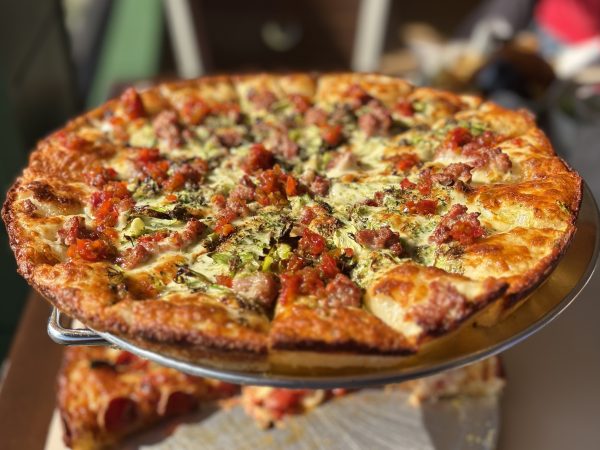
Gluten-free pizzas are generally less than exciting, as Craig LaBan notes, with textures ranging between pressboard and Styrofoam. At Barclay Pies, it’s not like that at all. Even the mozz sticks and their conventional pizzas are well worth a stop.
Wild Yeast Bakehouse, Wayne’s new sourdough bakery, has a living room vibe, writes Jenn Ladd. That makes sense, because the founder started baking out of his living room.
Saif Manna started baking during the pandemic in his Temple dorm room. He’s opening a brick-and-mortar home for his Levantine and Palestinian pastries, and tomorrow is the first day.
Ba Le Bakery in South Philly is practically synonymous with the city’s bánh mì scene. Now, writes Kiki Aranita, a third generation is expanding the business dramatically.
Two Sweet Boutique has had an interesting problem in its new location in Washington Township, writes Sarah Nicell. It’s selling out. Want that banana pudding? Get there early.
After four decades, The Frog Commissary Cookbook remains a Philadelphia icon — “our book,” says one acolyte. Contributor Devra Ferst takes a stroll down memory lane and winds up at the Commissary’s original location, where the current restaurant occupant bakes its carrot cake.
Oroshi, a new omakase restaurant at Broad and Lombard Streets, is part of a minitrend of faster, less expensive omakase experiences. The lights are bright and the decor is spare, but Kiki Aranita walked away happy after 90 minutes.
Here’s a twist: Local food brands such as Philly Pretzel Factory are working to accommodate consumers who are eating less and “protein-maxxing,” Olivia Prusky writes.
Craig visited an old fave — Porcini in Rittenhouse — and found the pastas have not lost a beat even after three decades. And yes, it’s still a BYOB.
Scoops
Chef Nic Macri and restaurant-ops specialist Suzanne O’Brien are proving you’re never too old experienced to open your first restaurant. They’re partnering with Stephen Simons on a spot just off 13th and Sansom in Washington Square West, and Macri describes the menu as “Philadelphia cooking with an Italian accent.”
Anh Em, a Vietnamese bar-restaurant and bar from husband-and-wife team Victor Nguyen and Anna Huynh, is aiming for an Aug. 8 grand opening at 1252 S. 21st St. in Point Breeze, the former Madira. Nguyen, a longtime Philadelphia hospitality veteran who bartended at Mad Mex in the late 1990s, co-owned a Chinatown bubble tea shop in the early 2000s and later spent 15 years managing Tango, is realizing a longtime goal of opening his own place. The roughly 45-seater will pair Vietnamese comfort food (pho and bánh xèo alongside home-style dishes) with a 20-seat bar pouring 24 local drafts and a small cocktail list.
Andorra Kitchen & Tap will join Andorra Shopping Center’s $32 million glow-up by Federal Realty, possibly in the fourth quarter. Spanning 6,900 square feet in the former Applebee’s, the restaurant is positioning as an all-day neighborhood gathering place serving breakfast/brunch, lunch, and dinner, with a full bar and dedicated coffee area for the morning. Owner Emmanouil Lagoudakis says he was drawn to Andorra-Roxborough for its “wonderful energy.”
Restaurant report
333 Belrose, one of the Main Line’s old-guard restaurants, has reopened after a dramatic renovation that flipped the bar with a dining room, opening up the layout. The menu is still “nothing too cerebral, nothing too crazy,” as chef Ross Essner told me, adding that there’s one dish he will never take off the menu.
Toll Man Joe’s, whose South Philly run was abbreviated by the pandemic, will resurface at the former Mixto on Pine Street near 12th. The owners hope to get the sports bar open in just a few weeks.
Pomelo Rooftop Terrace, atop the new Brandywine hotel in Radnor and counterpoint to Merrick’s Tavern off the lobby, will grand-open Aug. 8. It’ll be open year-round with indoor-outdoor seating. Weekend brunch begins Aug. 22.
The region’s last Brio Italian Grille, in Cherry Hill’s Towne Place at Garden State Park, closed abruptly Monday, two months after its Marlton location shuttered. The site 42Freeway joined the Facebook account A View From Evesham in first reporting that steakhouse Fogo de Chao will occupy the Cherry Hill location, citing township permits. A rep from Fogo declined my request for comment.
Briefly noted
Flash back to 2023, when chef Dionicio Jiménez and Mariangeli Alicea Saez of Cantina la Martina, La Baja, and the Cantina on the Go locations went to Mexico with Inquirer critic Craig LaBan and photographer Jessica Griffin for articles that won a James Beard Award in 2024. The restaurateurs are using part of that trip as inspiration for a five-day excursion to Oaxaca they’re planning for Oct. 30–Nov. 4. (LaBan and Griffin, who also met with Tequilas’ David Suro for a lesson in mezcal and tequila production during that 2023 trip, will sit this one out.) Limited to eight guests, the experience will feature family celebrations, cultural traditions, home-cooked meals, a private mezcal tasting, artisan visits, and special dinners, including one from Jiménez himself. It’s $2,000pp plus airfare. Details via cantina@cantinaonthego.com.
Nine Philadelphia bartenders will throw down Patrón Tequila-based cocktails in the Dirty Rocks Cocktail Competition from 3-7:30 p.m. Sunday at Fringe Bar (140 N. Columbus Blvd.). Attendees will determine the winner among Matt Welch (R&D), Kari Rosenfeld (Bourbon & Branch), Kevin Castro (Soufiane at the Morris), Roland Bui (Com.Unity Consulting), Damian Langarcia (Drams by Damian), Chris Harrop (Known Associates), Tony Jimenez (Static), Jackie Miller (Fringe Bar), and defending champion Jessica Stark (Trestle Inn). Also: a DJ, pizza truck, food and drink specials. Admission ($20) includes three tasting votes; VIP tickets are $45 and include a welcome cocktail, gift bag, and 10 votes. Cocktails: $5-$12. Tickets via DirtyRocks.com.
2nd Street Festival returns to Northern Liberties from noon-10 p.m. Sunday, transforming the stretch from Spring Garden to Girard Avenue into a festival with more than more than 50 restaurants and food trucks, 10 beer and cocktail gardens, two live music stages, and family activities.
❓Pop quiz
Name the brand that Wawa has partnered with on a hot-selling tote bag.
Owner Rayyan Kayyali sounded discouraged but not defeated when we caught up yesterday, more than two months after a gas explosion destroyed his Overbrook Park bagel bakery on the very morning of its reopening following another blast in March. He said he is waiting for a new burner pipe for the oven, and “so far, I haven’t seen a dime” from the insurance company. Meanwhile, lords Jeffrey Gladstone and Andy Rubin of Herbert Yentis & Co. say they have not charged him rent since the first explosion. Kayyali vows to rebuild and reopen.
📮 Have a question about food in Philly? Email your questions to me at mklein@inquirer.com for a chance to be featured in my newsletter.
By submitting your written, visual, and/or audio contributions, you agree to The Inquirer’s Terms of Use, including the grant of rights in Section 10.