A New York City-based commercial real estate lender has asked a federal judge to force a sale of the Bourse building on Independence Mall after work ground to a halt on a hotel development amid the dissolution of a partnership between real estate magnate Dean Adler and Keystone Development + Investment.
As the two former partners fought a battle for control of the Bourse in Delaware Chancery Court, the property has racked up millions in liens and missed at least one mortgage payment.
The lender, KKR Real Estate Finance Trust, says it is owed more than $24 million in the latest turn in the legal drama surrounding the 131-year-old Beaux Arts building.
The loan also funded the purchase of 400 Market St., which was developed as planned.
The loan agreement required Adler’s development team to show that the hotel project was near completion by the end of May 2026. But earlier this year, the Bourse’s development team “abandoned its plans to redevelop a portion of the Bourse property into a hotel and ceased work on the hotel conversion,” the complaint says.
Adler had decided to scrap the hotel and event space plan and his partnership with Keystone, the Philadelphia Business Journal reported in April. Instead, Adler said he plannedto go into business with PMC Property Group, Philadelphia’s largest apartment owner, to convert the Bourse into a multifamily property.
Keystone filed a breach of contract suit and accused Adler of failure to provide promised funding for the project. Adler, in turn, accused Keystone of unauthorized spending and “gross negligence.”
The two are fighting in Delaware Chancery Court for control of the property and its future. In a March ruling, reported by Law360, a judge ruled against Adler’s attempt to oust Keystone.
The legal conflict between the two former partners has put KKR Real Estate Finance Trust’s investment at risk. By abandoning the plan and stopping construction, the suit says, the Bourse’s development team defaulted on the mortgage with more than $24 million of the principal outstanding.
The Bourse’s owners also racked up more than $2 million in liens filed by at least five contractors for failure to pay for their work and failed to make a mortgage payment starting in June.
KKR Real Estate Finance Trust is asking a federal judge to issue a judgment of $24.2 million plus interest and fees and to order a public auction of the Bourse building to pay back the debt.
Keystone declined to comment on an active lawsuit, but a spokesperson said the firm remains “confident” that it will prevail in the litigation against Adler in Delaware Chancery Court.
For his part, Adler said that he believes the legal cases with Keystone will soon be concluded and that KKR will follow.
“I believe we are near resolution on the Bourse lawsuit with Keystone,” he said. “And then we will resolve KKR’s potential foreclosure and be ready to revitalize the Bourse like we did at 400 Market.”
The former development partners purchased the nearby office building at 400 Market in the same deal as the Bourse and successfully converted it into apartments. KKR Real Estate Finance Trust made clear that building is not included in the lawsuit.
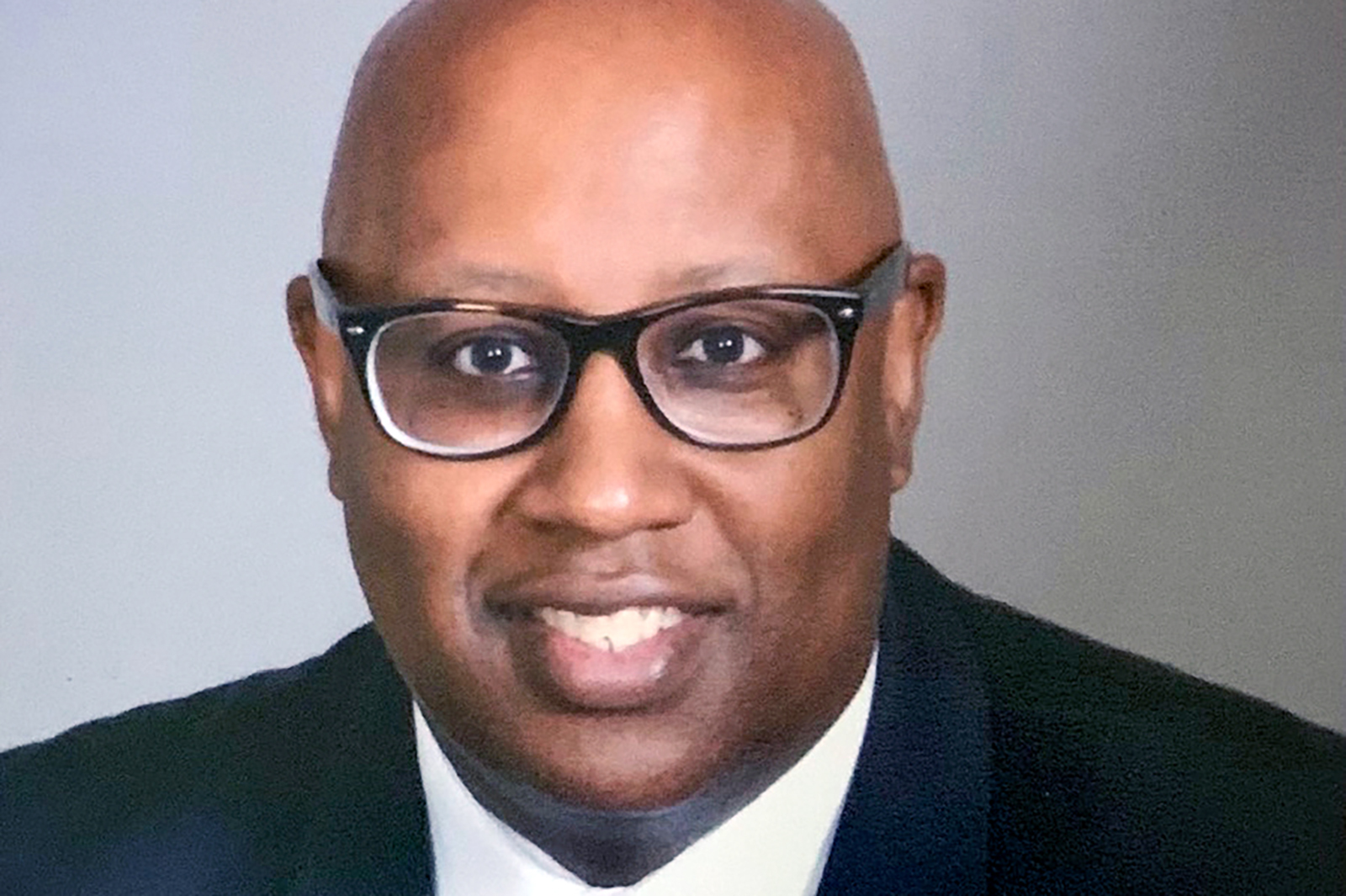
“This year has tested our community in ways none of us anticipated,” Scriven said in a resignation letter released by the district. “I have come to believe that the district is best served by a fresh start under new leadership, and that stepping aside now is the right and necessary step to allow Cheltenham to move forward.”
The resignation is effective immediately.
“The board has accepted Dr. Scriven’s resignation, and we thank him for his dedicated service to Cheltenham public schools,” school board president Leah Mulhearn said in a statement. She said Cheltenham’s director of business services, Joshua Sweigard, would serve as acting superintendent, pending a vote by the board at its next meeting Tuesday.
After canceling last year’s football season in October amid hazing allegations, the Montgomery County district announced in January that an investigation it commissioned had concluded that a “student-on-student” assault occurred on Sept. 3, witnessed by nearly 20 students.
The district failed to uncover that an earlier assault had occurred in August, Montgomery County prosecutors said. A grand jury report characterized the district’s investigation as flawed from the beginning, saying employees were dismissive when the 15-year-old victim’s mother reported on Sept. 7 that he’d been assaulted, and had wrongly taken the team’s head coach, Terence Tolbert, at his word that he didn’t instruct the boy not to tell his parents.
The employees included Tolbert. who was among the coaches charged with endangering the welfare of a child and conspiracy, “in every step” of their investigation, according to the report.
Scriven responded in a statement last week, saying that Tolbert wasn’t involved in planning the investigation. The superintendent said that “every report brought to the district’s attention was addressed based on the information available at the time.”
He didn’t respond to a number of questions about other failures alleged by the grand jury, including that employees were confused about mandatory reporting requirements, and that five football coaches lacked state-required clearances for completing training on reporting child abuse.
Football parents have also expressed frustration with the district’s response to the assaults, which also led to the cancellation of the upcoming season. Some told the Inquirer this week they urged Cheltenham not to hire Tolbert due to alleged bullying during his tenure as Abington’s coach.
In May, the school board had expressed its support for Scriven, sending a community message that acknowledged “concerns around safety and student conduct” that had challenged the district.
“Five years ago, the board invested in Dr. Scriven and his vision for the district. We continue to support him and his vision. He is a strong strategic thinker,” the board said in the May statement.
“Serving this district has been one of the greatest privileges of my life,” Scriven said in his resignation letter Thursday. He said he was “deeply proud of the work we accomplished together, and I remain hopeful for Cheltenham’s continued success.”
Editor’s note: This story has been updated to correct the year that Brian Scriven graduated from Cheltenham High School. He graduated in 1983.
Immigration advocates say at least 10 people have been arrested by ICE at Philadelphia International Airport since July 12, including a 68-year-old grandmother and the young babysitter of three children.
That comes amid a nationwide push by the Trump administration to increase arrests at American airports, spurring immigration attorneys to warn noncitizens with limited documentation that travel has become risky, including for those with valid work permits or pending applications for relief.
“People might not think Philly is being targeted, but we are,” said Vivian Chang, executive director of Asian Americans United, an advocacy group. “They’re trying to threaten people, trying to intimidate them — you can’t work freely, you can’t travel freely, you can’t fly.”
She said the arrests in Philadelphia include three people originally from Indonesia and others from India, Ukraine, China, Chile, and Argentina. Another person, a religious leader, was briefly taken into custody and released, she said.
Chang described the arrests in Philadelphia as especially troubling because the airport is owned and operated by the city.
She questioned why that property would not be subject to Philadelphia’s recent “ICE Out” legislation, which bars U.S. Immigration and Customs Enforcement from conducting operations on city-owned lands and bans access to city-owned spaces, absent a judicial warrant.
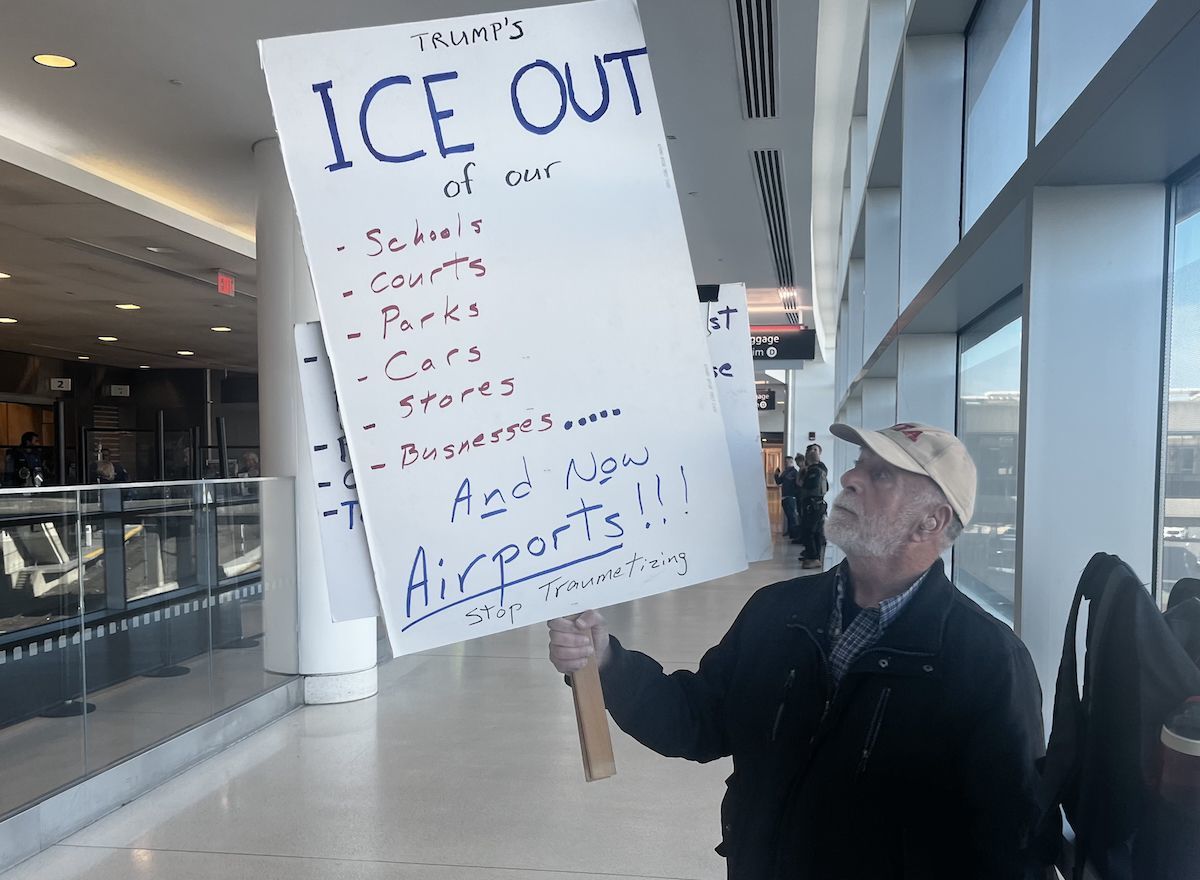
Steve Papelian, 73, drove more than an hour from Nazareth, Pa. to the Philadelphia International Airport to protest the deployment of ICE agents to international airports across the U.S. on March 24. The former school teacher believes that ICE should target criminal activity, not “moms and pops with kids,” he said.Henry Savage / Staff
Sam Scavuzzo, chief of staff for the city law department, said in a statement that “federal law enforcement access to particular areas of the airport is governed by federal law.”
A spokesperson for the Department of Homeland Security said airport arrests are occurring because the Trump administration “reversed the horrendous Biden-era policy that allowed aliens in our country illegally to jet around our country.”
“Under President Trump, DHS will no longer tolerate this. This administration is working diligently to ensure that aliens in our country illegally can no longer fly unless it is out of our country to self-deport.”
The department said “being in detention is a choice,” and the federal government is offering people who are here without permission a $2,600 payment and a free flight home.
Self-deportation can preserve the right to later come back to the U.S., absent the penalties that accompany a government deportation.
DHS said people who do not leave voluntarily “will be arrested and deported without a chance to return.”
On July 11, what started out as a fun soccer trip for a South Philadelphia babysitter ended with her being arrested and ultimately moved across the country to an ICE detention center in New Mexico.
Steven Melchiorre, 35, a health worker, said that at 7 a.m. that day he dropped off his girlfriend, Iliana Lick, 30, to fly to Kansas City. Originally from Buenos Aires, she planned to see the Argentina national team play in the World Cup.
On July 11, what started out as a fun soccer trip for a Philadelphia babysitter ended with her being arrested and ultimately moved across the country to an ICE detention center in New Mexico. Iliana Lick legally entered the U.S. in 2023, though her visa later expired. She cares for the children of two South Philadelphia families.Courtesy of Steven Melchiorre
She texted Melchiorre from inside the airport to say the line was short, then did not answer his reply.
After a while, he said, Lick phoned, crying, to say she had been arrested by ICE. She was moved from Philadelphia to the Cambria County prison, which holds prisoners for the agency in south-central Pennsylvania, and in the following days was transferred to ICE facilities in Louisiana, Texas, and New Mexico.
Late Friday afternoon, an immigration judge in New Mexico set bond for Lick at $10,000, according to her boyfriend. He immediately began working to post that bond and bring her home. It was not clear how quickly Lick might be released.
DHS said Lick was arrested during a targeted operation, having overstayed her visa.
The department noted that work authorization or a pending application for immigration relief, both of which Lick has, do not confer legal status to be in the United States.
ICE began to deploy agents at U.S. airports in March, and the move was announced as a way to assist at checkpoint lines during a partial government shutdown.
The deployment quickly proved controversial, as travelers and labor unions objected, saying the agents were intimidating and lacked aviation training.
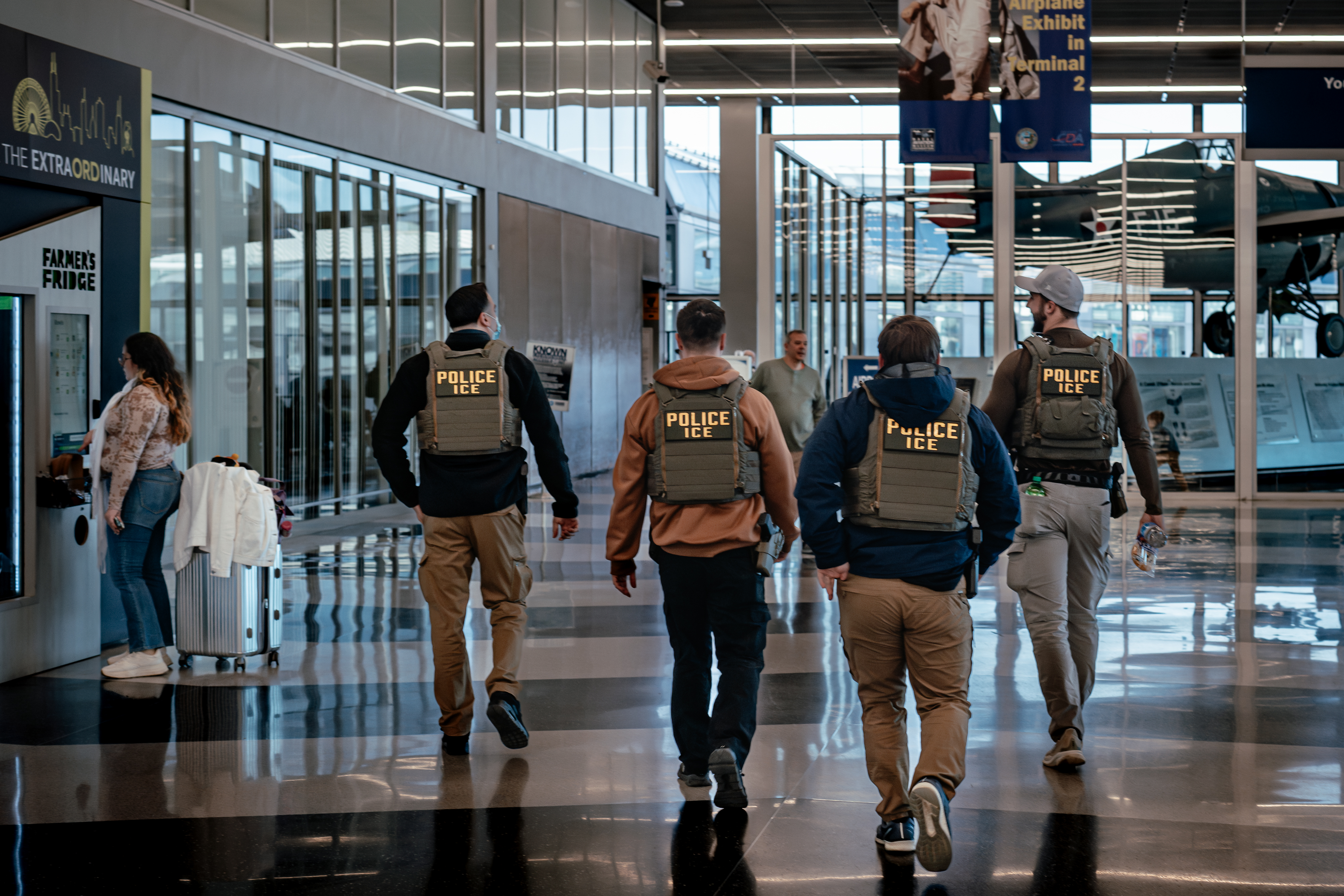
A group of federal immigration officers walk through O’Hare International Airport in Chicago on March 23, 2026. From large cities like Chicago and Las Vegas to small suburbs outside Milwaukee and San Antonio, immigrants have been picked up and detained at courthouses, ICE check-ins and traffic stops, with daily arrests doubling in the last week of June and continuing to climb.JAMIE KELTER DAVIS
Airports rank among the most sensitive public spaces in the country, traversed by millions of people, including U.S. citizens, noncitizens, and mixed-status families, California immigration lawyer Andrew Neitor wrote for the American Immigration Lawyers Association, a legal group.
The introduction of ICE agents, he said, blurs critical lines between airport security and immigration enforcement, around what authority is being exercised and by whom, and over the legal protections due to people who may be arrested.
“ICE was not intended to be omnipresent in daily civic life,” Neitor said. “Yet its footprint has expanded from courthouses to neighborhoods, workplaces, and even parking lots, shifting from targeted enforcement to visible, normalized presence.”
Last year, the Transportation Security Administration and ICE signed a memorandum of agreement that outlined how ICE would share information with TSA to identify people in whom ICE was interested, according to the memo, obtained through the Freedom of Information Act by the watchdog group American Oversight. The agreement said sharing the data would enhance national security, transportation safety, and immigration management.
On Tuesday, U.S. Rep. Rashida Tlaib of Michigan introduced a bill, the No TSA Data for ICE Act, that would bar the agencies from coordinating to conduct what her office called “a dramatic violation of privacy rights.”
The bill would ban TSA from sharing passenger names, birth dates, and other data that enable ICE to target immigrants who are in the process of changing status, including those awaiting visa extensions or who recently married U.S. citizens.
“TSA is readily offering up our immigrant residents to suffer at the hands of ICE agents so they can fulfill their daily arrest quota,” Tlaib said in a statement. “Immigrants should be able to safely fly in this country without the fear of arrest or deportation.”
Today ICE is making record numbers of arrests across the country, not only at airports but also at places that were once considered off-limits, including routine immigration check-ins.
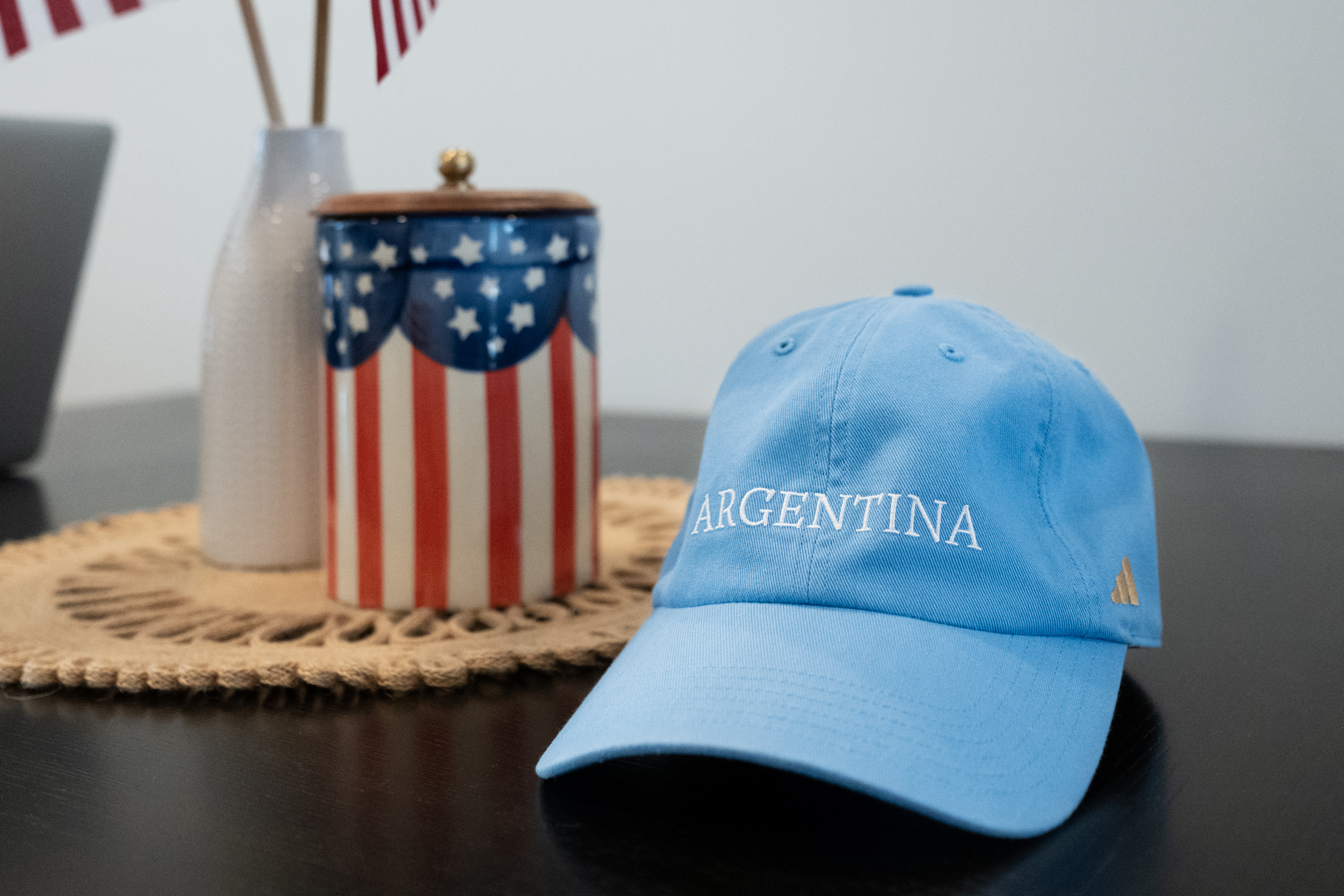
A hat belonging to Iliana Lick sits on a table in the home she shares with her partner, Steven Melchiorre, in the Point Breeze neighborhood of Philadelphia on Tuesday, Aug. 4. Lick has remained in ICE custody since her detention at Philadelphia International Airport on July 11, 2026.Erin Blewett / For The Inquirer
In June in Philadelphia, a 36-year-old survivor of slavery who had fled Mauritania, a mostly desert land in West Africa, filed suit in federal court over the issue. He accused ICE of having unlawfully rescinded a policy that generally allowed immigrants to pursue their cases without fear of arrest.
Nationally, the rate of ICE arrests topped 1,300 a day in June, and grew again to a record 1,474 a day during the first 11 days of July, Syracuse University professor and immigration-data analyst Austin Kocher reported.
Some of those being arrested at airports had legally entered the United States, then stayed after their visas expired. That includes some, like Lick, who were seeking to legally change their immigration status while in the U.S.
Lick, now of Point Breeze, legally entered the country in 2023. She held and extended a visa, and holds work authorization and a REAL ID driver’s license, her boyfriend said. She was trying to adjust her status before her visa expired and continued to do so afterward, Melchiorre said.
Lick works taking care of three children for two South Philadelphia families.
Britni Zahodnick and her husband, Zane Schultz, have employed Lick as a babysitter for their two young children, ages 4 and 1, for more than a year. They described her as soft-spoken, kind, attentive, funny, thoughtful, and a good listener.
“She was very quickly thought of as family,” Schultz said.
Trust does not come easily for any parent preparing to place their children in another’s hands, but Lick won theirs, the couple said.
“All the things you would look for in a caretaker for your kids,” Zahodnick said.
Illiana Lick with partner Steven Melchiorre in New York City. On July 11, what started out as a fun soccer trip for a Philadelphia babysitter ended with her being arrested and ultimately moved across the country to an ICE detention center in New Mexico. Iliana Lick legally entered the U.S. in 2023, though her visa later expired. She cares for the children of two South Philadelphia families.Courtesy of Steven Melchiorre
Melchiorre acknowledged that ICE had legal authority to detain Lick. He said people should follow immigration laws — but the couple thought Lick was doing so. They did not know domestic flights were in question, having flown in the past without incident.
Melchiorre said he was surprised and frustrated by her arrest, “because Iliana has not committed any crime, hasn’t missed any fees, hasn’t missed any court dates. She wasn’t trying to dodge immigration. Being detained, it’s similar to how criminals are treated.”
On the first day of the rest of their season, Alec Bohm practiced picking throws out of the dirt at first base; Bryson Stott worked on cutoffs and relays at third; Bryce Harper ran down fly balls in the outfield.
For Luis Arraez, the best available hitter in an extreme seller’s trade market, the Phillies finally took Harper up on his standing offer to move back to the outfield and displaced three-fourths of their infield.
Creative, right? But the one infielder who didn’t switch positions happens to be among the worst defenders in the sport this season, based on both the eye test and metrics.
Was there discussion of moving Turner off shortstop?
“There was not,” president of baseball operations Dave Dombrowski said. “Not at this point, no.”
OK, let’s dispel a myth/social media fabrication: Turner didn’t decline to switch positions. The Phillies never asked him to. Not after Harper set all of this in motion by raising his hand to go to the outfield.
Phillies shortstop Trea Turner (left) works with second baseman Luis Arraez, his new double-play partner, before a game this week.Jose F. Moreno / Staff Photographer
None of these moves are permanent. Harper will return to first base next season; Stott will go back to the middle infield; Bohm is a pending free agent. This is a 49-game experiment to add a three-time batting champion to the middle of a lineup that needed more sizzle.
Arraez brings sizzle, spice, and a knack for forcing the action with his uncanny ability to put the ball in play. Team officials think that will outweigh eight weeks of possibly weakening a defense that wasn’t steady in the first place.
When the Phillies move Turner, they want it to be for good.
In time, they will move him. Turner turned 33 in June and is under contract for seven more years. The conversation about vacating shortstop will come … eventually. Maybe even after this season.
But Turner hasn’t played the outfield in 10 years, since a 45-game cameo as a rookie with the Nationals in 2016. He played 49 games at second base after getting traded to the Dodgers in 2021. Otherwise, it has been shortstop.
For now, the Phillies are focused on helping Turner get better — or at least closer to last season, when he played the best defense of his career en route to a fifth-place finish in the National League MVP race.
“Trea’s won a World Series as a shortstop [with the Nationals in 2019]; he’s won a division back-to-back years; he’s played a high level of shortstop last year; he’s still athletic,” infield coach Bobby Dickerson said on The Inquirer’s Phillies Extra podcast. “All those things I don’t see diminishing. He can stay at shortstop.
“How does it happen? He’s got to put a chip on his shoulders and say, ‘The way to quiet everybody is to make plays, to do my job and do it right and do it good. I always talk about shortstop as the quarterback position. Out on the field, quarterbacking is a person that calms everything down instead of creating more chaos. We’ve got to get back to leading as a shortstop — make plays, play it calm, let everybody breathe. That’s the only way he stays there.
“My job is to help him stay there. I’ll feel like I failed if we don’t get this done. I’ve seen him play it. And until he’s moved, he’s our shortstop, and we’re going to get after it every day and get it done.”
Turner entered the weekend with 18 errors, second-most behind Nationals shortstop CJ Abrams. He ranked last among shortstops in defensive runs saved (minus-11), according to Sports Info Solutions, and third-to-last in Statcast’s fielding run value (minus-8).
In four games out of the All-Star break, he made four errors. He had six in 17 games through Wednesday. The past week has been better, with diving plays to his left to take hits from Jake Rogers last Friday night in Baltimore and the Nationals’ Jorbit Vivas and Daylen Lile at home Tuesday and Wednesday.
It’s also not coincidental that Turner’s downturn in the field began amid early-season struggles at the plate. Although he has turned it around over the last six weeks, he was hitting .216 with a .595 OPS on June 15.
“The offense at the beginning of the year was probably in his head a little bit,” Phillies radio analyst and former shortstop Kevin Stocker said on Phillies Extra. “He struggled out of the gate offensively, which has always carried him, and sometimes when you take that out to the field, you’re still kind of thinking about it … and then the routine play eats you up.
“It’s a classic case of kind of getting the yips. You don’t know whether to charge the ball, whether to go back on a ball, and that is the worst when you get that as an infielder. It’s incredibly difficult to get out of that.
“The other night, he made an amazing play going to his left. The angle plays, you don’t have time to think about it, [and] you make it. It’s that routine play. … What the Phillies need is Trea needs to make the routine play. The great plays are great, but if you don’t get the routine out and you give an extra out to the bullpen that has been struggling, it’s trouble.”
But in uprooting three infielders, the Phillies left Turner alone.
For now.
“We didn’t even discuss it with him at this point,” Dombrowski said. “He’s done it before and he works hard at it. He’s our shortstop, and that’s where he’s staying right now.”
Phillies top prospect Gage Wood has been a starter this season at double-A Reading.David Maialetti / Staff Photographer
Gauging Wood
Fire up the flux capacitor, and time travel to Oct. 4, 2025.
It’s Game 1 of the division series. The Phillies lead, 3-2, in the seventh inning at home against the Dodgers. David Robertson gives up a leadoff single and hits a batter before Matt Strahm allows a three-run homer. The Phillies lose, 5-3.
Now, travel to Oct. 5, 2024. It’s Game 1 of the division series. The Phillies lead, 1-0, in the eighth inning at home against the Mets. Jeff Hoffman gives up a leadoff single, a walk, and an RBI single before Strahm allows the go-ahead single, a sacrifice fly, and another single. Orion Kerkering enters and yields an RBI single and a sacrifice fly. The Phillies lose, 6-2.
The point is, the bullpen is the source of Phillies playoff disappointments dating to Craig Kimbrel’s meltdowns in Games 3 and 4 of the 2023 NLCS in Arizona. They have Jhoan Duran in the ninth inning now, but getting to him could still be problematic even after the deadline additions of Caleb Kilian and veteran lefty Brooks Raley.
At present, the starter-to-Duran bridge consists of Jonathan Bowlan, José Alvarado, Kerkering, Tim Mayza, Kilian and Raley.
Maybe it will be enough. History says it won’t.
So, hard-throwing Alex McFarlane likely will get another look after retiring Shohei Ohtani in his major league debut July 22. Since then, he gave up one hit and two walks in three scoreless outings in triple A.
Rival scouts wonder if the Phillies will push top prospect Gage Wood to the big leagues as a reliever. Wood, who has a 4.32 ERA in 11 starts in double A, pitched out of the bullpen as a freshman in college at Arkansas.
“Would I consider it?” Dombrowski said. “We have not discussed that at all at this point.”
Key words: “At this point.”
The Phillies are monitoring Wood’s innings — 68 and counting — with no plans to shut him down before the end of the minor-league season.
“He’s a good prospect and we really like him,” Dombrowski said. “But we haven’t talked even talked about that.”
Phillies president of baseball operations Dave Dombrowski didn’t trade for a starting pitcher at the deadline.Heather Khalifa / Staff Photographer
False start
A partial list of starting pitchers who got traded before the deadline: Tarik Skubal, Kevin Gausman, Clay Holmes, Robbie Ray, Casey Mize, Freddy Peralta, Luis Castillo, Foster Griffin, Dustin May, Tyler Mahle, José Soriano, Spencer Arrighetti, Jameson Taillon, Kris Bubic, Braxton Garrett, Dean Kremer, and Connelly Early.
The Phillies got none of them.
OK, so they weren’t trading for Skubal. And given the lack of top-end talent in the farm system, Dombrowski conceded the Phillies were unable to beat the returns for some starters. The Cubs (Gausman and Holmes) and Padres (Ray and Mize) were especially aggressive with their prospect packages.
But Dombrowski also said the Phillies discussed, then dismissed pitchers whom they didn’t view as upgrades over rookie Andrew Painter.
“The choice came in, do you end up getting a guy that’s a fifth starter that you don’t think is as good as your guy that you have now and option the guy that you think has a better chance to win to help your depth, or do what we’re doing?” Dombrowski said. “And we figured we’d do what we were doing and help our bullpen.”
It’s riskier than the infield realignment. Much riskier.
Unlike the Cubs and Padres, the Phillies didn’t need to trade for pitchers who could start postseason games for them. Not as long as Cristopher Sánchez, Zack Wheeler, and Jesús Luzardo are lined up. But they still have to get to the postseason, which is more difficult with a 5-23 record from the fifth-starter spot.
The Reds held Brady Singer, even though the return likely didn’t have had to be much greater than the value of the compensatory draft pick they will get if they give him a qualifying offer. Adding someone like Singer to slot behind Aaron Nola, with Painter in reserve, would’ve helped, a point that was reinforced Wednesday when Painter tweaked his left hamstring and exited after four innings.
Painter is expected to make his next start, Mattingly said, but surely, the Phillies were holding their breath. They won’t exhale much over the next seven weeks.
“I always worry after you get past the trade deadline,” Dombrowski said. “I worry about our depth everywhere if you have injuries.”
But the state of the rotation feels like an especially dangerous game.
In trading for Luis Arraez at the deadline, the Phillies displaced three-fourths of their infield but left Trea Turner at shortstop. To help make sense of it all, pennant-winning former shortstop and current radio broadcaster Kevin Stocker joined Phillies Extra, The Inquirer’s baseball podcast. Watch here.
You can also subscribe to the podcast version of Phillies Extra on Spotify or Apple Podcasts.
Sen. Bill Cassidy (R., La.) said Friday that he will vote to confirm Todd Blanche as attorney general, giving President Donald Trump’s pick to lead the Justice Department the last expected vote he needs to be approved by the full Senate.
Cassidy made the announcement on the Senate floor just hours after Sen. Lisa Murkowski of Alaska, another critical GOP vote, said she would oppose Blanche’s nomination. Sen. Susan Collins (R., Maine) announced earlier this week that she would also be voting no.
But with Cassidy’s support now in hand, the Senate’s Republican leadership is expected to move forward with a vote on Blanche’s confirmation as soon as Friday after weeks in which the acting attorney general’s prospects appeared to be in doubt.
With all Democrats expected to oppose Blanche and Sen. Mitch McConnell (R., Ky.) absent for health reasons, a no vote by Cassidy would at minimum have forced an embarrassing delay in the full Senate’s confirmation vote.
Cassidy said Friday he shared concerns raised by Murkowski and Collins over the “politicization” of the Justice Department under Trump and the controversial deal Blanche oversaw this spring to settle Trump’s claims against the IRS, which included a now-scuttled plan for a nearly $1.8 billion fund to compensate people who claim they were victims of political prosecutions.
But the senator couched his decision to back Blanche, who previously served as Trump’s personal defense lawyer, as a choice between the current nominee and the prospect that Trump could pick someone worse.
“Mr. Blanche is not perfect, and he will tell you this, but the choice is not between perfection and Mr. Blanche,” Cassidy said. “It is between Mr. Blanche and another acting attorney general who may not run the department effectively under President Trump and who, indeed may not be as good as Mr. Blanche.”
He added: “I’ll be criticized for this vote. What’s new?”
The fact that Blanche’s nomination was in doubt at all early Friday and hinging on Cassidy’s vote underscored the growing unease that has emerged in some corners of the president’s party over the Justice Department’s direction.
It also highlighted the extent to which Trump’s attacks on GOP lawmakers whom he deems insufficiently loyal have prompted an increased willingness among Republicans to buck his demands.
Cassidy lost his bid for reelection this year after Trump backed his GOP primary rival, Rep. Julia Letlow (R., La.). He has repeatedly criticized the president since then and threatened to vote against administration priorities.
“I have a history with Mr. Trump, but that history does not matter one bit,” Cassidy said Friday in explaining his vote on Blanche.
The senator said he came to his decision after weeks of conversation with Blanche and current and former Justice Department officials, including former attorney general William P. Barr. Barr resigned late in Trump’s first term amid disagreements over the president’s false claims that the 2020 election had been stolen.
Barr, Cassidy said, advised him to back Blanche’s nomination, suggesting that as the lawyer who guided Trump through the criminal prosecutions he faced during his years out of office, Blanche had established a unique trust with the president, which could enable him to talk Trump out of bad decisions.
“I am realistic that President Trump can be unrelenting,” Cassidy said. “This will be true no matter who the attorney general is. And this is the rationale for having a Senate-confirmed attorney general with more leverage to push back.”
Since returning to the White House last year, Trump has eroded the Justice Department’s long-standing tradition of independence while demanding it pursue prosecutions of his political enemies and reward his political allies.
Blanche has overseen many of those efforts serving first as the No. 2 official under then-Attorney General Pam Bondi and then as the department’s acting head after Trump fired Bondi in April. He has defended the president’s “right” to interfere with criminal investigations and his controversial pardons of those who attacked the U.S. Capitol on Jan. 6, 2021.
Democrats have decried Blanche as a uniquely dangerous nominee who thus far has proved unable or unwilling to talk the president out of decisions that run contrary to the rule of law. As his confirmation battle has worn on, more and more Republicans have expressed similar concerns.
Earlier this week, Sens. John Cornyn (R., Texas) and Thom Tillis (R., N.C.), two members of the Senate Judiciary Committee, had threatened to kill Blanche’s nomination in committee over reservations they harbored about the out-of-court deal Blanche oversaw to resolve Trump’s lawsuit against the IRS over the leak of his tax returns to the media.
In addition to the taxpayer-backed payout fund, the deal also provided unusual tax protections to Trump, two of his sons, and their businesses, shielding them from any preexisting tax audits.
The fund proposal drew immediate bipartisan backlash with Democrats deriding it as a “slush fund” designed to reward Trump’s allies, forcing Blanche to walk back the proposal days after its announcement.
But Cornyn and Tillis, who are leaving the Senate after this year after tangling with Trump, demanded written assurances from Blanche that the president would not later reverse that decision before they agreed to support him.
Blanche ultimately relented, issuing statements late Sunday declaring the fund officially dead and clarifying that the deal’s tax provisions protected the Trumps only from past tax audits and would not prevent the IRS from reviewing their finances in the future.
But critics have questioned whether Blanche’s written pledges hold any legal weight, given they weren’t also signed by Trump and his legal team, and could be ignored by the president at any point.
Murkowski raised that possibility in her statement announcing her decision to vote against Blanche’s nomination Friday. The only reason the payout fund was now off the table, she said, was because Blanche needed Senate support for his nomination.
“Once we vote, that will end, and there is no telling what the future holds,” she said, adding later: “The country needs an attorney general who will check the worst impulses of this administration. I hope Mr. Blanche is able to achieve that, if confirmed, but I simply do not have confidence that will be the case.”
Despite pledging his support for Blanche, Cassidy echoed Murkowski’s concerns. He said Blanche showed “poor judgment” in signing off on Trump’s IRS deal and added that he was “particularly concerned about episodes of apparent lawfare — DOJ bringing suits against political enemies.”
The Justice Department has, at the president’s demand, launched probes of critics including former FBI director James B. Comey, New York Attorney General Letitia James (D), former CIA director John Brennan, ex-White House aide Cassidy Hutchinson, and Democratic lawmakers who recorded a video this year calling on military service members to resist illegal orders.
“A never-ending cycle of prosecuting political enemies undermines the rule of law, degrades the public’s trust in our institutions, and makes our politics more extreme when we need to unite to solve the big problems of our time,” Cassidy said.
President Donald Trump took another stab at restricting automatic citizenship for people born in the United States after the Supreme Court rejected his earlier attempt.
In two executive orders signed Thursday, Trump reached for different legal maneuvers to test the limits of the 14th Amendment’s guarantee of birthright citizenship.
The first order said children would be ineligible if born to “alien enemies,” members of foreign terrorist organizations, or foreign lobbyists. The second order said children of people who fraudulently request tourist visas for the purpose of giving birth in the U.S. would not become citizens.
Trump harshly criticized the Supreme Court’s June decision reaffirming that the 14th Amendment grants citizenship to nearly everyone born on U.S. soil, including the children of undocumented immigrants, striking down his executive order from the first day of his second term.
The new orders marked a fresh effort to overcome that setback and deliver on a campaign promise by expanding the categories of people who the administration argues fall outside the constitutional guarantee. Constitutional scholars broadly agree that the president lacks the authority to eliminate birthright citizenship unilaterally.
“We had a bad decision, very unfair decision,” he told reporters in the Oval Office on Thursday. “Our country suffers because of it, and we’re ending it a different way.”
The new orders were certain to face legal challenges, and if they survive, would affect far fewer people than the original. An estimated 15 million undocumented immigrants live in the U.S., while only a few thousand people are foreign lobbyists registered with the Justice Department.
No significant populations of U.S. residents are designated as alien enemies or foreign terrorists, making that provision largely symbolic. The administration faces ongoing litigation over whether it can deport alleged gang members by treating them as alien enemies.
The second executive order draws on the president’s authority under the Immigration and Nationality Act to control international travel, according to White House Deputy Chief of Staff Stephen Miller, who appeared with Trump at the signing.
“People come here, pretend to be a tourist, pretend to be a visitor, say they want to go to Disneyland, they want to go visit a monument or go to a national park. But the real reason they’re here is to have a child, to make that child automatic citizen, leave our country and then have a U.S. citizen child,” said Miller, arguing that lying on a visa application amounts to fraud and invalidates the visa.
There is no official data on “birth tourism.” In 2024, fewer than 10,000 babies were born in the U.S. to people with foreign addresses, out of 3.6 million total live births, according to data from the Centers for Disease Control and Prevention analyzed by the nonpartisan Migration Policy Institute.
Trump’s initial executive order sought to deny automatic citizenship to children of unauthorized immigrants and foreigners on temporary work, student and tourist visas — a population that some studies found numbers more than 150,000 a year. That order was based on a reinterpretation of the 14th Amendment, which was ratified in 1868 and grants citizenship to those born on U.S. soil who are “subject to the jurisdiction” of the federal government.
Two coalitions of Democrat-led states and several immigrant rights groups filed more than half a dozen lawsuits against the Trump administration. Those challenges led multiple federal courts to temporarily halt the administration from implementing the citizenship ban.
A divided Supreme Court upheld birthright citizenship in June in one of the most closely watched cases of the recently concluded term. Writing for the 5-4 majority, Chief Justice John G. Roberts Jr. said the framers of the 14th Amendment intended to extend citizenship to virtually all people born on U.S. soil with limited exceptions for the children of diplomats and others.
“Citizenship, then and now, was the right to have rights — to freely participate in our political community. The Framers of the Fourteenth Amendment extended that promise to ‘every free-born person in this land,’” Roberts wrote. “We keep that promise today.”
The Trump administration had argued for a narrower reading of the amendment, saying its language did not apply to people who were here illegally or temporarily because they had not demonstrated the necessary political allegiance to the country.
The Supreme Court’s ruling marked a major loss for Trump, who had attended the oral arguments at the high court in April, becoming the first sitting president to do so.
Amanda Frost, an immigration law professor at the University of Virginia, said significant parts of Trump’s new executive orders appear largely unconstitutional and at odds with the Supreme Court’s decision.
“This is my very clear legal take: He cannot issue an executive order that saying that children of birthright tourism — even if the mother violates immigration law to come to the United States — are not U.S. citizens,” Frost said.
Likewise, David Bier, an immigration expert at the libertarian Cato Institute, said Trump cannot credibly argue that undocumented immigrants in the U.S. who are declared by his administration as “enemies” of the country are not subject to the jurisdiction of the U.S. government.
“None of the [Supreme Court] justices adopted the logic that illegal immigration is an invasion or any of those types of thing,” Bier said “None of the conservatives used that line of argumentation.”
Bier added that the president’s efforts on birthright tourism are “pretty obviously contrary to what the Supreme Court just ruled and are likely to get no further than the prior order did.”
But if you’re true to this, you already know they are the best places to get delicious fruits, veggies, and other tasty treats directly from your local farmers, bakers, and artisans.
Costs to transform a dilapidated property into a public park in Tredyffrin have ballooned to $1.7 million. Officials say it’s an investment, but some residents worry it’s too high.
A new study shows it is possible to tap the earth formore efficient heating and cooling for two Philadelphia School District buildings at once, providing a potential path to cleaner energy.
Cira Green in Philadelphia was named one of the best sunset spots in Pennsylvania. Pittsburgh and Erie also got nods, the former ranking in the top 10, as did two in Delaware and three in New Jersey.
🌳 Your outdoorsy experience
Last week, I asked if you’d noticed any spotted lanternflies in your area this season. John S. in Manayunk shared what he’s seen:
The lantern fly population is stable here although I do not tolerate their presence.
The little ones as big as specks appear in mid April. Through July 4th there are the bigger stage red and black ones. Finally the adults appear second week in July. Their presence dwindles by mid October.
I suspect there are folks that are unaware of lantern flies. The presence of lantern flies in the house, car, and on people are a problem.
Definitely. It’s a shame they’re rather strangely beautiful (mostly when their bright red-and-black underwing is visible inflight.) Thanks for the dispatch, John!
🎤 Now we’re passing the microphone to food writer Kiki Aranita.
Philadelphians know it’s officially peak summer thanks to a recent announcement: the beginning of BLT season at Middle Child, where the seasonalsandwiches draw lines down the block.
“We become Pat’s and Geno’s but instead of making cheesesteaks all day, we’re making BLTs,” said Matt Cahn, the owner of the Center City sandwich shop Middle Child and Fishtown’s Middle Child Clubhouse. You won’t see fresh tomatoes on the menu at any other time of the year, but come mid-July: “It’s just BLT, BLT, BLT,” said Cahn.
You could say tomato season is Middle Child’s Super Bowl.It is intense but short. BLTs are only made for about four weeks, when tomatoes are at their best. It started on July 22 and each location makes roughly 200 to 250 sandwiches per day.
While there are other top-tier tomato sandwiches in town — don’t miss the River Twice entry, adorned with gamtae and a quenelle of caviar, for example, or Loretta’s in Headhouse, with herbed aioli and the same vaunted produce as Middle Child’s — none stir up quite as much fervor. — Kiki Aranita
Check out this New Hope-area estate and its magical gardens. It used to be open to the public as Paxson Hill Farm Nursery and Gardens until 2024. The property just hit the market this week.
👋🏽 See you out there.
By submitting your written, visual, and/or audio contributions, you agree to The Inquirer’s Terms of Use, including the grant of rights in Section 10.
Welcome to Shackamaxon, a weekly politics column focused on what’s happening at City Hall and in Harrisburg. It is named for the place where the Lenape chiefs would meet to conduct the people’s business, which is now known as Penn Treaty Park.
This week’s edition questions a plea deal, looks at Center City’s efforts to bring back daytime foot traffic, and examines the legacy of the Philadelphia wage tax.
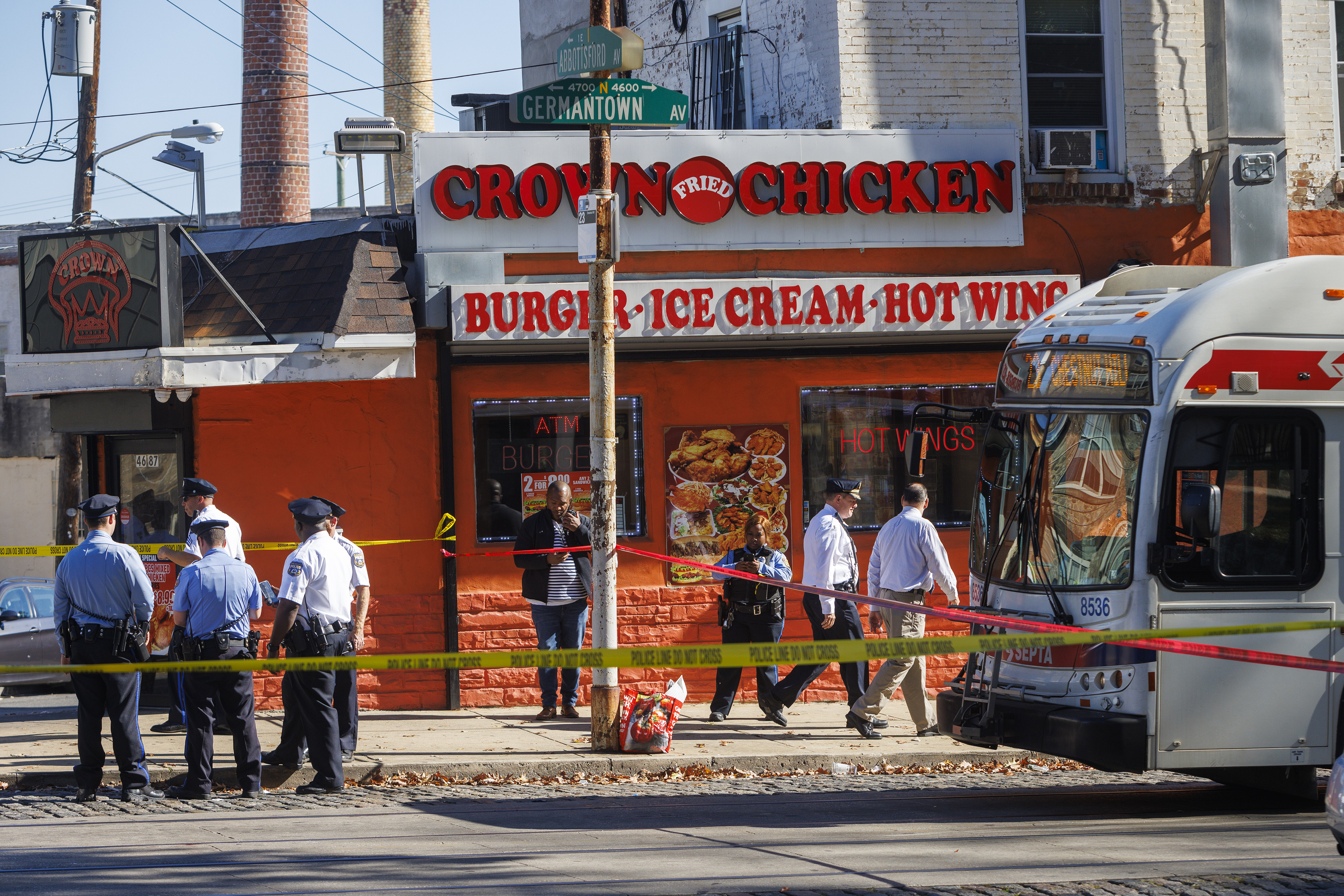
SEPTA Transit and Philadelphia Police at the scene of the fatal shooting of SEPTA bus driver Bernard Gribbin in Germantown in October 2023.Alejandro A. Alvarez / Staff Photographer
Deterrence desired
On Oct. 26, 2023, Bernard Gribbin became the first city transit operator to die by gunfire while on the job. Family members called him “the best of the best,” and described the 48-year-old Army veteran as a man who loved Philadelphia, who proudly took out-of-town relatives on tours of the city when they came to visit, and who served the public by working as a bus operator — a demanding, underpaid, and utterly essential job.
Gribbin’s murder sent shock waves through the city’s transit agency. His colleagues were left angry and afraid.
Around that time, reporting from Mensah Dean at the Trace identified a spate of attacks against public employees. During the next contract negotiations, the Transport Workers Union demanded SEPTA install bulletproof glass to protect drivers. Operators report that management, which has long emphasized de-escalation, became even more strict about the kinds of interactions bus drivers and train conductors are permitted to have with unruly passengers. For many, this undermined their sense of stewardship of their vehicles.
The death of Gribbin seemed like a case in which prosecutors could send a message that violence against SEPTA workers will be met with serious consequences. Instead, District Attorney Larry Krasner opted to accept a plea bargain.
Gribbin’s killer, Zhontay Capers, was able to secure a conviction for third-degree murder this week, rather than first, which was her original charge. Pennsylvania law defines first-degree murder as a willful, deliberate, and premeditated killing. Given Capers shot six times and that surveillance video showed her with a firearm shortly before the shooting, there would seem to be a strong case.
Of course, there could be complications I don’t know about. Perhaps another passenger was armed, a witness recanted, or Capers stood a good chance of being declared incompetent to stand trial. Prosecutors often accept plea deals in cases in which going to court presents too much risk.
Yet, Krasner’s office refused to comment on any of these possibilities when asked. Instead, they called it an example of individual justice. Capers now faces up to 40 years in prison, rather than a life sentence. Unlike Gribbin, she may one day again enjoy the unfettered company of friends and family.
Of course, individual justice is important. And if the circumstances of a particular case merit a third-degree charge, then so be it. But Krasner has not provided any additional information or shed any light on his office’s decision-making.
Every killing is a tragedy that deserves justice, but Gribbin’s death had a magnified impact. Capers’ actions also caused public servants to be fearful of coming into work, and resulted in millions of dollars’ worth of unplanned spending in installing the protective glass.
The public deserves a fuller account of why the plea deal happened.
Happy Hour at the Air Grille Garden at Dilworth Park in 202, part of the midweek Center City District Sips after-work events.TOM GRALISH / Staff Photographer
Eventful days
Like most big city downtowns, Center City is a major employment hub. More than 300,000 people work there, representing around 42% of jobs in Philadelphia.
According to Clint Randall, the vice president for economic development at the Center City District, the amount of downtown office space has remained relatively stable for decades. That’s despite the rise of residential conversions and remote and hybrid work arrangements. Still, people are coming to the office less often, and momentum on bringing workers downtown on a more regular basis has stalled.
Thankfully, Randall and his colleagues have a plan to ensure the city’s commercial core remains as essential as it can be by leveraging its status as a regional host, with events seen as both a short- and long-term way to make Center City more vibrant.
Randall cited Center City Sips as a way to bring more people into town on Wednesday evenings during the summer. Philadelphia Open Streets, the FIFA World Cup, festivities around the MLB All-Star Game, and other smaller events have proved a major boon. They’ve brought out not just those who live and work in Center City, but also people from around the region and the world who may not otherwise have had a reason to come.
I asked Randall about the potential for event fatigue among locals. With Center City adding thousands of new residents each year, would this create pressure to draw down on hosting? Randall said that vibrancy is what brings many people to live downtown in the first place. As inconvenient as it can be to live next to major festivals, it is also a major amenity.
My own experience bears this out. I may not have made it to the Eagles’ Super Bowl parades if they hadn’t marched down Broad Street, not far from my South Philly home. Our friends and family also enjoyed the convenience of having a place to sit down and use a nonportable restroom.
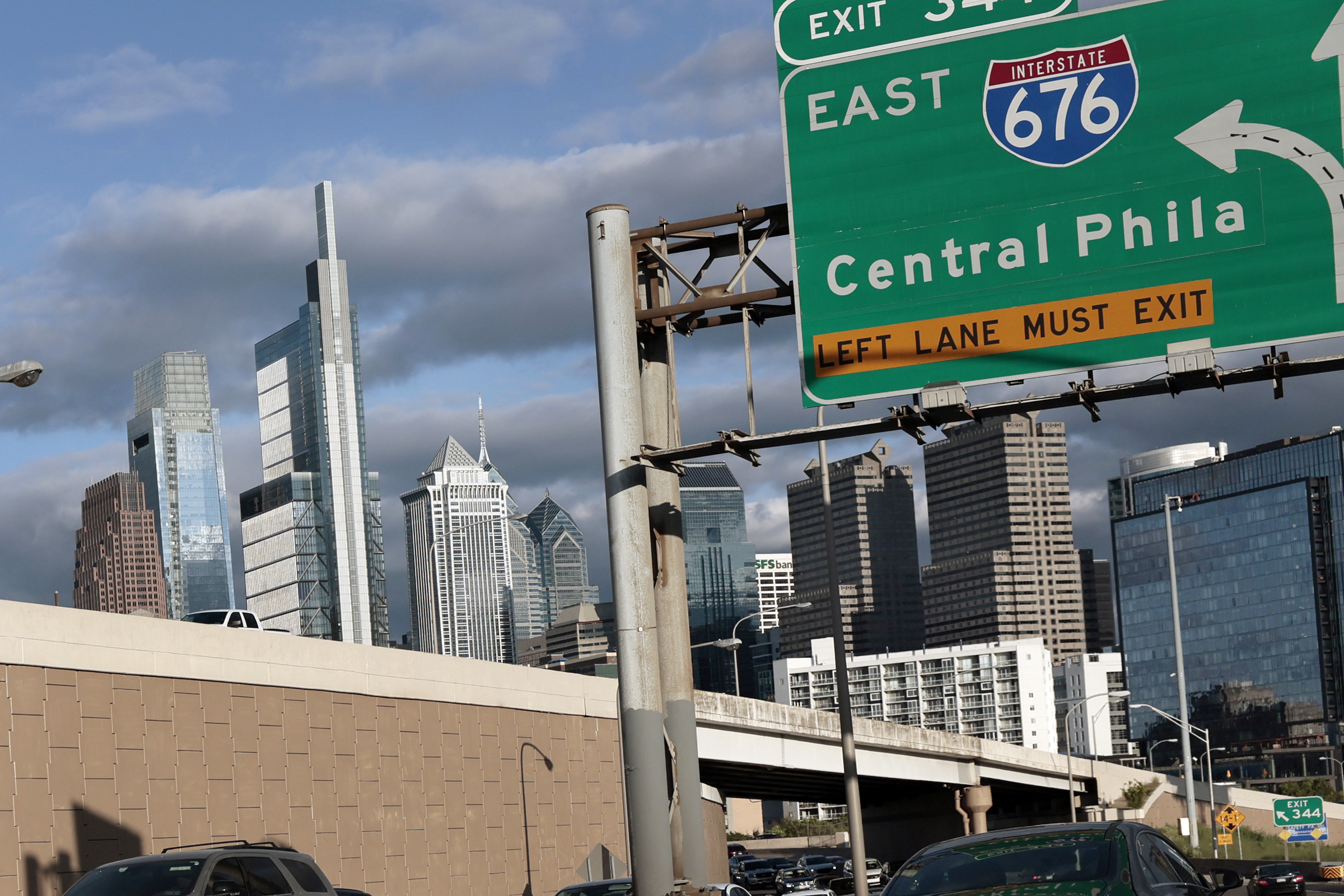
A view of the Center City skyline as seen from the Schuylkill Expressway, where it intersects with the Vine Street Expessway, in May.Elizabeth Robertson / Staff Photographer
Tax switch
When Philadelphia became the first American city to institute a wage tax all the way back in 1940, the idea seemed like a no-brainer. After all, where else were people supposed to work? Suburban rail stations were packed to the brim with commuters, the Interstate Highway System did not yet exist, and anyone who wanted access to skilled workers had little choice but to open offices in Center City.
Today, however, the region looks different.
While Center City remains a major regional hub, Philadelphia has lost tens of thousands of jobs to suburban office parks. Most Delaware Valley residents drive themselves to work, and hundreds of thousands of people have moved to the suburbs. This has left us with an important policy question: How much of this shift is simply due to national cultural trends, and how much of it was caused by public policy?
A new study from René Livas and Matthew Jacob at Harvard University, working with the Progress and Poverty Institute, attempts to answer this question. They say there is a clear link.
As the wage tax rate rose between 1940 and 1976, jobs fled to the suburbs. Since City Hall began decreasing the tax in 1995, jobs have started to flow back into Philadelphia. In fact, the city recently overtook Montgomery County as the top host for office jobs in the region.
The researchers’ proposal for replacing the wage tax is based around switching to a land value tax, an idea that is popular among economists. Separate tax rates for land and property are already legal in Pennsylvania, and the city already splits the two in its own property assessments.
The idea, however, may be politically fraught. Homeowners already resent the chaos of the city’s regular assessments. Additionally, determining how much of a property’s value is inherent to its location may be easier said than done. While an 80/20 split between structural and land value is often cited as standard, levying the two individually would require significantly more research from the city’s Office of Property Assessment.
In an email, Livas suggested phasing in the switch, which would help avoid big increases. He also said that the city’s existing programs, like the homestead exemption and Longtime Owner Occupants Program, should help alleviate the burden on homeowners.
The data suggests the city could add around 26,000 jobs if this reform is pursued.
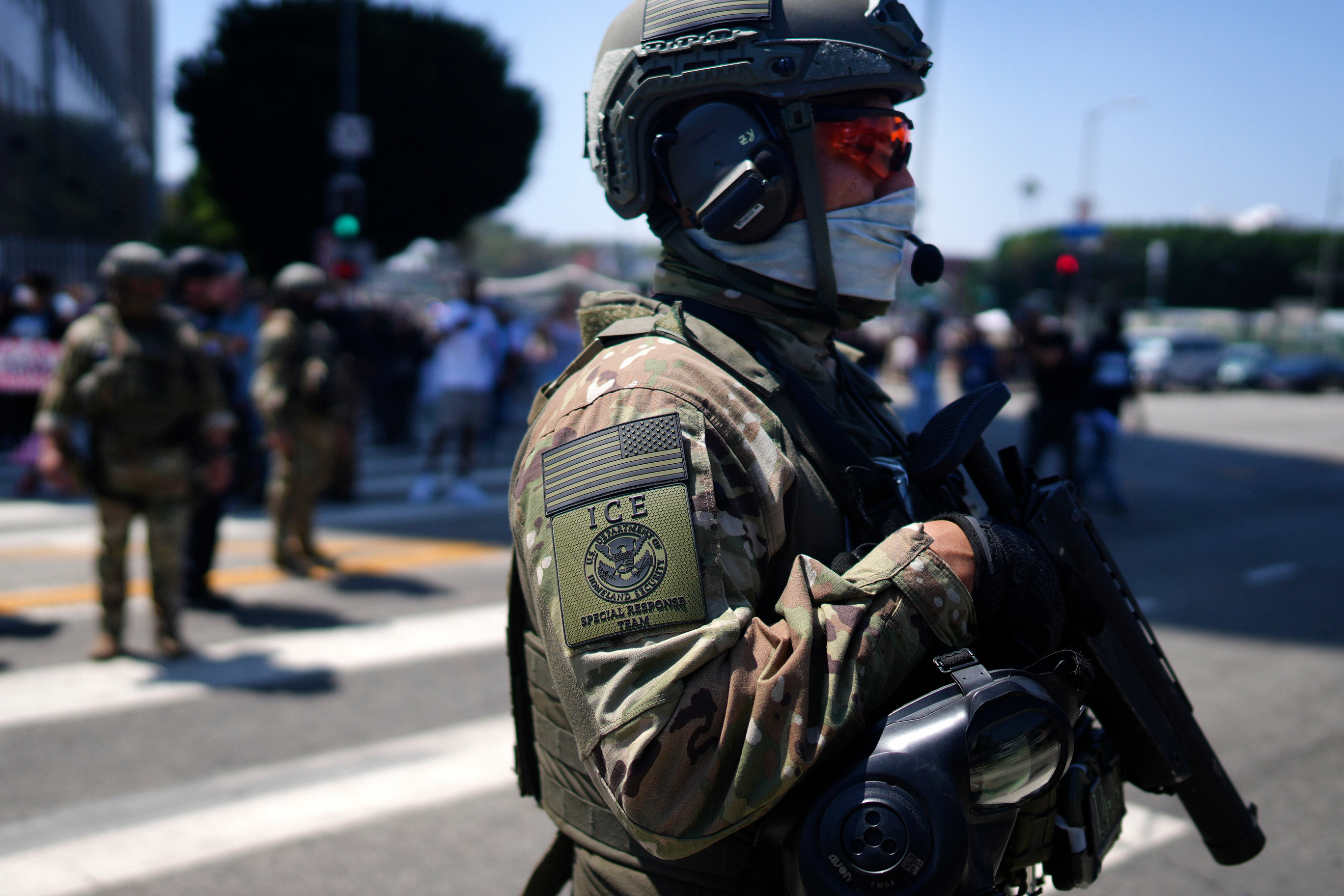
Immigration and Customs Enforcement is moving to equip officers with body cameras in the next two months but the agency’s policy gives it broad control over what footage will be made public by specifying any releases must be in its “best interests.”
After years of delays, ICE said its field officers nationwide will have body-worn cameras by the end of September. The rollout comes after recent fatal shootings by officers enforcing President Donald Trump’s immigration crackdown have intensified pressure for accountability that the cameras could provide.
But the agency’s body-worn camera policy could mean taxpayers who are pitching in tens of millions of dollars to pay for the cameras may be kept in the dark about some high-profile confrontations, at least in their immediate aftermath.
The policy says ICE will promptly release video of shootings and other encounters in which its agents cause death or serious injury only after determining “it is in the best interests of the agency” to do so. That gives its director discretion to release recordings that reflect well on the agency’s image while working to keep others secret, experts on body camera policies said.
Such selective releases are routine in some law enforcement agencies but usually not so clearly contemplated in policy, according to professor Christopher Schneider of Brandon University in Canada, a co-author of the new book Police Body-Worn Cameras: Media and the New Discourse of Police Reform.
“In some ways, ICE is saying the quiet part out loud,” he said. “Body-worn cameras are being used as contemporary image-work tools to present the police to the public in the most favorable way possible.”
Body camera policy allows withholding some video
The policy requires officers to activate cameras during routine enforcement activities, including while making arrests, executing search warrants and responding to emergencies.
After shootings or other serious confrontations, a committee that includes top ICE officials and lawyers will review footage and recommend whether to release it promptly, according to the body camera policy issued in February 2025.
If the answer is yes, the recording could be released within 72 hours. But if the ICE director finds that “specific and compelling circumstances” justify withholding the video, they have the authority to block or indefinitely delay the release, the policy says.
The policy does not elaborate on such circumstances, and ICE did not respond to a question from the Associated Press about how it would make such decisions.
Practices vary widely in the U.S. In Chicago, a police watchdog agency routinely releases body camera video of shootings and other serious use-of-force incidents within 60 days. In Philadelphia, the police department very rarely uses its discretion to release video of specific incidents and has no policy for when to do so.
Even when footage is released, ICE’s policy will require the redaction of all officers’ identifying features such as their faces, names, and badge numbers to preserve their privacy.
Schneider, who has studied body cameras since their use began spreading a decade ago, said he does not expect ICE to release footage of fatal shootings like those last month in Houston and Maine.
He noted ICE’s sister agency, Customs and Border Protection, has not released footage of the January shooting of Alex Pretti in Minneapolis even though it was captured on agents’ cameras. CBP Commissioner Rodney Scott told lawmakers in February that the video and other materials were under investigation and would be made public “when it’s appropriate.”
ICE says all officers will have cameras by end of September
ICE spent $30.9 million in July to purchase body camera equipment from Axon, the Arizona-based company that also manufactures Tasers, federal spending records show.
Neither shooting was recorded with body cameras. That news angered members of Congress, who had given ICE $20 million to purchase body cameras in a bill passed to end a partial government shutdown on April 30.
ICE said body cameras have been sent to more than half its field officers and the rest will receive them by the end of September. That timeline pushes back estimates from earlier public statements. Maine Republican Sen. Susan Collins, who backed funding for cameras, said last month that the agency informed her they would be deployed by the end of August. ICE had said earlier that they would be issued by mid-September.
ICE officers working in the Houston area, where the agency sent more than 800 cameras, are among those who have started training, according to U.S. Rep. Henry Cuellar, a Texas Democrat and member of the House Appropriations Committee.
At least one member of every arrest team will be required to have a camera, the agency said.
“I think the American people need to see what that officer sees and hears,” White House border czar Tom Homan said July 19 on CBS News’ Face the Nation. “And if you look at the data, body cameras actually exonerate agents more than they, you know, provide evidence of wrongdoing.”
Schneider said he expects ICE to release recordings that promote the agency’s mass deportation program by portraying officers as brave and immigrants as dangerous criminals.
“Much of what law enforcement does is convince the public that we need them and feel safe and they do all this good stuff for us,” he said. “The more bad stuff the public sees, the more angry the public gets. And this causes problems for the police brand.”
ICE has taken years to adopt body cameras
ICE began testing body cameras in 2021 during President Joe Biden’s administration and distributed 1,400 devices three years later, saying use would expand as funding became available.
After returning to office in 2025, President Donald Trump rescinded a Biden order that required federal law enforcement agencies to use body cameras.
ICE did not buy body cameras even after it received a historic $75 billion infusion in Trump’s signature policy bill in 2025 and began hiring thousands of new officers. The two July purchases from Axon were made through an existing government contract that began in 2023, records show.
“This is not hard to deploy, but they’ve slow-rolled it,” said Jason Houser, who was ICE chief of staff under Biden and helped implement the agency’s pilot program.
Houser said the Trump administration should have equipped officers with body cameras when it expanded mass arrests and traffic stops. Doing so only after several shootings and pressure from Congress “is clearly a political response” that will not make officers or the public safer, he said.
“This doesn’t fix the problem of putting officers in a place where they’re not trained or equipped to carry out the style of operations that the administration is asking them to do,” he said.