Blog

  • Beloved author Benjamin Alire Sáenz, first Latino PEN/Faulkner winner, dies at 71

    Beloved author Benjamin Alire Sáenz, first Latino PEN/Faulkner winner, dies at 71

    NEW YORK — Benjamin Alire Sáenz, an award-winning fiction writer and poet who drew upon his sexuality and his life on the Southern border, has died at age 71. He was the first Latino to win the PEN/Faulkner prize.

    Mr. Sáenz, who produced a story collection that won the PEN/Faulkner prize and a young adult novel that received acclaim from readers and reviewers and condemnation from censors, died last week in El Paso, Texas, after a lengthy illness, according to a spokesperson for Simon & Schuster Children’s Publishing. Additional details were not immediately available.

    Mr. Sáenz, born in Old Picacho, N.M., was an ordained Catholic priest who eventually left the order and came out as gay. His Aristotle and Dante Discover the Secrets of the Universe, the story of two Mexican American boys falling in love, was published in 2012 and received a pair of citations for outstanding LGBTQ+ literature: a Stonewall Honors Book Award and the Lambda Literary Award.

    Hamilton playwright Lin-Manuel Miranda, who narrated the audio edition and helped produce a 2023 film adaptation, wrote in an Instagram post that he was “heartbroken” over Mr. Sáenz’s death.

    “Rest easy, maestro,” Miranda wrote. The movie starred Max Pelayo and Reese Gonzales as the title characters and also featured Eva Longoria.

    The novel’s love story led to its being removed temporarily from a school district in Granbury, Texas, and to bans in Russia and in Belarus.

    Mr. Saenz’s other books included the sequel Aristotle and Dante Dive into the Waters of the World, the poetry collection The Book of What Remains, and such adult novels as In Perfect Light and Names on a Map.

    He received the PEN/Faulkner award in 2013 for Everything Begins & Ends at the Kentucky Club, a story collection set in El Paso, and across the border in Juarez, Mexico. Starting in the 1990s, he taught for decades at the University of Texas at El Paso, where he had received a master’s degree in creative writing. He served as chair of the school’s creative writing department before retiring in 2016.

    Next month, Simon & Schuster will publish When the World Was Happy, which draws in part upon the loss of his niece in 1990 in a Las Cruces, N.M., bowling alley shooting. He was reminded of that tragedy by the 2022 school shooting in Uvalde, Texas.

    “That was when I decided that this was not gonna leave me alone until I wrote about it,” he wrote in an author’s note shared by the publisher. “I wanted to write a book about how people survive and live through something as senseless as this.”

  • Gov. Shapiro makes an unexpected cameo in his friend and fellow criminal justice reform advocate Meek Mill’s new music video

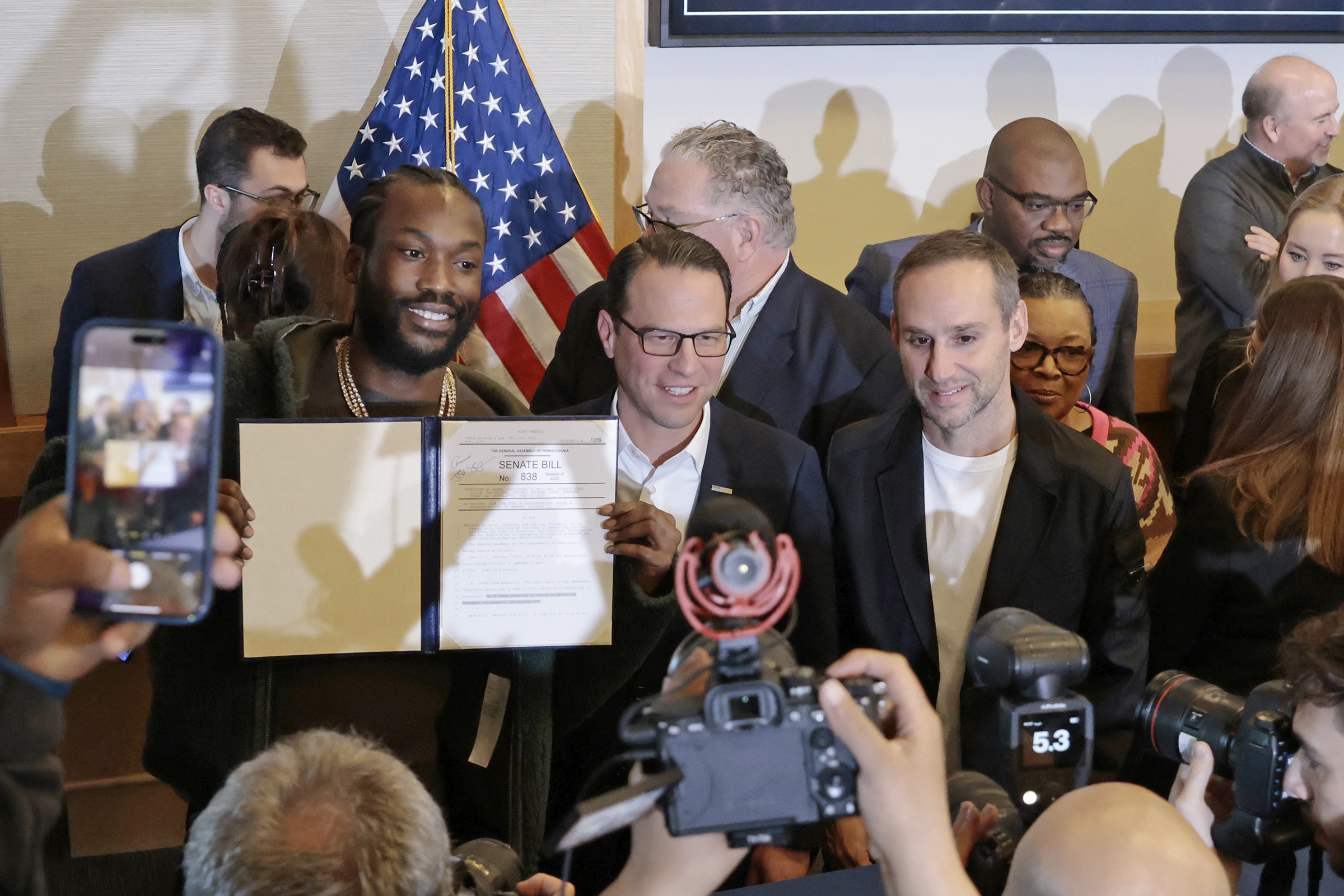
    Gov. Shapiro makes an unexpected cameo in his friend and fellow criminal justice reform advocate Meek Mill’s new music video

    Meek Mill’s newest single “Nightmares to Dreams” has a surprising cameo star: Pennsylvania Gov. Josh Shapiro.

    The North Philly rapper calls it a “full circle Philly moment.”

    Shapiro appears a little more than a minute into the music video, hugging and conversing with the rapper, with whom he’s built a friendship over the past decade.

    The clip of Shapiro and Meek Mill is from a brief meeting the two had before Meek took the stage July 4 at the One Philly: Unity Concert for America, according to state officials.

    The song is a spirited sequel to Meek’s 2012 anthem and title track of his debut studio album, Dreams and Nightmares.

    The update features a similar melody as the original but with a more frenetic, more menacing instrumental on the song’s back half. Shapiro’s appearance in the song’s music video marks a convergence of some key themes in Meek’s life and music career.

    “‘Nightmares to Dreams’ is about coming from North Philly, surviving everything that came with that, chasing a dream, and then using what I built to create opportunities and make change for other people,” Meek, also a criminal justice reform advocate, said in a written statement to The Inquirer.

    With “Dreams and Nightmares,” the career of the rapper born Robert Rihmeek Williams began to take off. But he remained on probation with a decade of legal woes stemming from a 2008 drug and gun charge. Court-imposed restrictions disrupted his ability to travel and work, he said, and years of supervision limited his freedom and his musical ascension.

    “I was selling out shows, taking care of my family, and representing my city, yet the system still controlled my life,” Meek said in the statement. “That probation nightmare followed me for years and sent me back to prison because of technical violations.”

    Meek Mill closes day 2 of the Roots Picnic 2025 while performing on the Fairmount Park Stage at the Mann Center on Sunday, June 1, 2025.Yong Kim / Staff Photographer

    In November 2017, the rapper was sentenced to two to four years in state prison following a string of nonviolent technical probation violations.

    It was this court decision by former Common Pleas Court Judge Genece E. Brinkley that brought the incident to then state attorney general Shapiro’s attention.

    “Meek got a real raw deal,” Shapiro said in an appearance on the Higher Learning podcast in March.

    After Meek’s sentencing, Michael Rubin, founder and CEO of the sports platform Fanatics and a mutual friend of Meek’s and Shapiro’s, urged Shapiro to look closely into Meek’s legal battle.

    The #FreeMeek campaign was launched soon after Meek’s sentencing and Shapiro urged Rubin to broaden the mission of the movement, he said on the podcast. The campaign became a national push for criminal justice reform for those who fell victim to systemic corruption.

    Meek Mill in Amazon’s Free MeekAmazon

    The Pennsylvania Supreme Court ordered Meek to be released from prison on bail in April 2018. In January 2019, he cofounded the nonprofit Reform Alliance, with Rubin, Robert Kraft, and Jay-Z. The aim was to mount a five-year campaign to overhaul Pennsylvania’s probation system.

    “What happened to me wasn’t just my story,” Meek said. “It was happening to millions of people across this country. That’s why we created Reform Alliance. We wanted to turn one person’s experience into a movement that changes the system for everyone.

    “Gov. Shapiro understood this issue was bigger than me” said Meek, “He told us to put a bill on his desk, and when we did, he kept his word.”

    Shapiro signed Act 44 into law in December 2023. It creates new pathways for eligible Pennsylvanians to receive early termination hearings, finish probation after demonstrating sustained progress, and limits incarceration for technical violations of probation.

    The act “created a more proportionate approach to technical violations, the same kind of noncriminal missteps that repeatedly sent Meek back to prison and derailed the progress of too many others,” Reform Alliance CEO Jessica Jackson said in a statement.

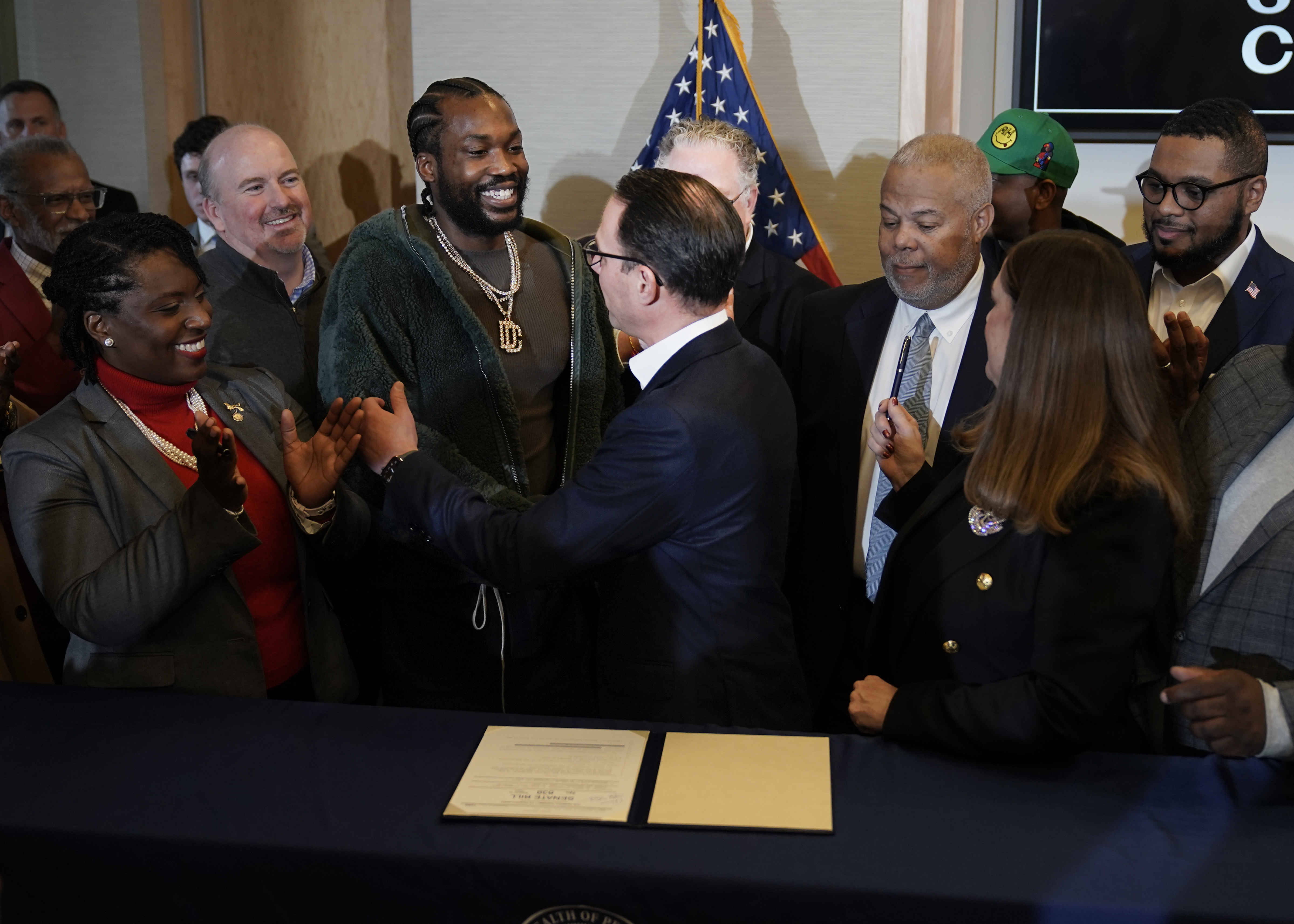
    Rapper Meek Mill (center left) and Pennsylvania Gov. Josh Shapiro move to embrace during a ceremonial bill signing in Philadelphia, Friday, Dec. 15, 2023. More criminal records in Pennsylvania can be sealed from public view and fewer people might be kept on probation or in county jails, under legislation signed by Shapiro. (AP Photo/Matt Rourke)Matt Rourke

    Shapiro commends Meek for opening his eyes to the failures of the Pennsylvania criminal justice system and for working to ensure others didn’t face the same barriers as him.

    “I’m a more compassionate person and understanding person for what he’s taught me over the years. And I appreciate him,” Shapiro said to Higher Learning podcast hosts Van Lathan and Rachel Lindsay. “There are a whole lot of people who are no longer incarcerated, who shouldn’t have been incarcerated in the first place, because of policies I’ve changed in Pennsylvania, decisions I’ve made on pardons and clemencies because of lessons Meek has taught me.”

    Meek has even informed his musical tastes, the governor said.

    When they first sat down for a dinner at Rubin’s house, Shapiro admitted he wasn’t a fan of the rapper’s music. “I really find a lot of your music quite offensive,” Shapiro recounted telling Meek.

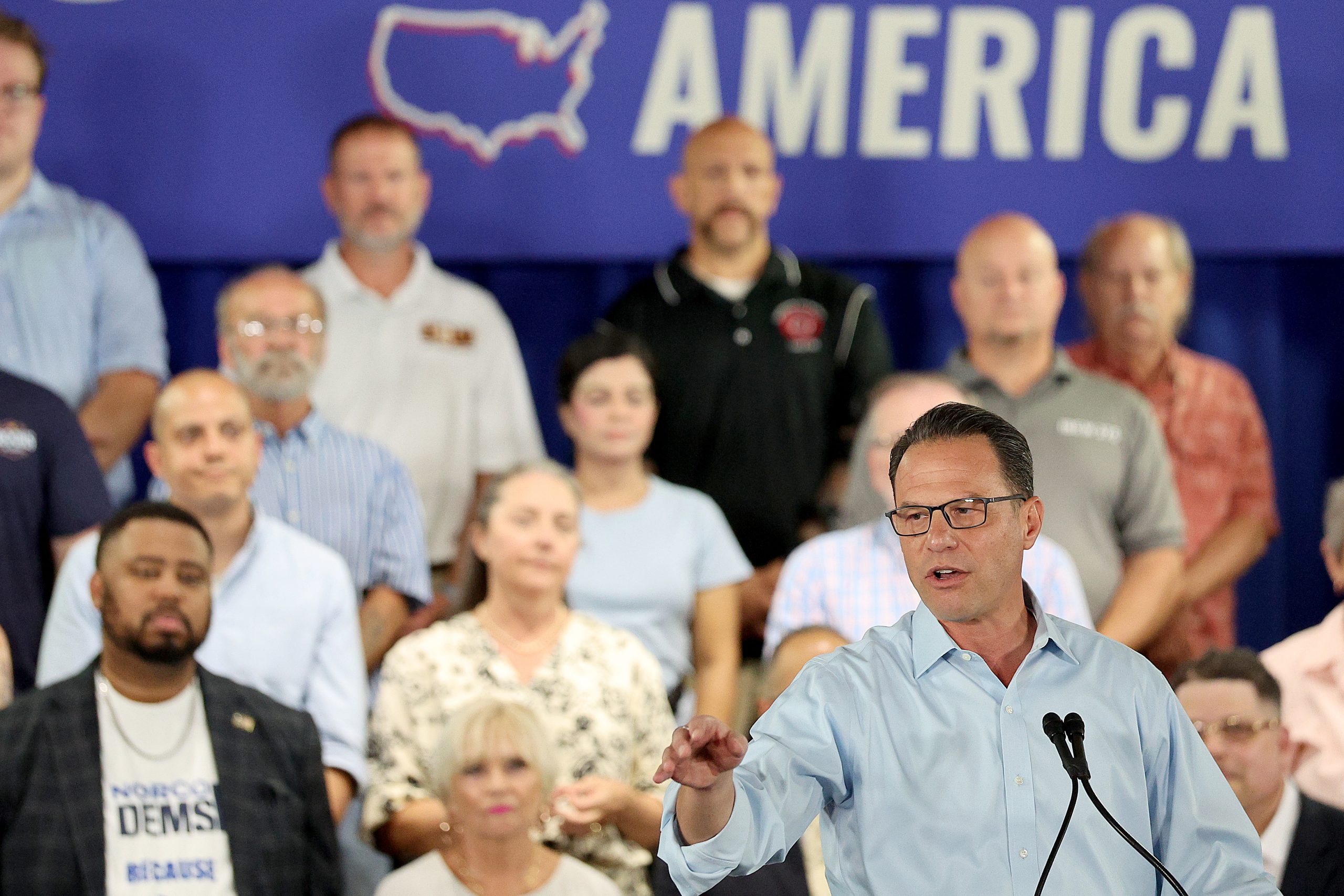
    Pa. Gov. Josh Shapiro addresses the audience during a rally for Congressional candidate Bob Brooks at the United Steelworkers Union Hall in Bethlehem, Pa., on Sunday, July 26, 2026.David Maialetti / Staff Photographer

    But after Meek played his songs and explained the meaning behind the lyrics, “it opened up my eyes a lot more into understanding his music, the way he thinks, the way he approaches things,” Shapiro said.

    Years later, Meek said his music and circumstances have changed vastly.

    That is what is reflected in the video to “Nightmares to Dreams,” which includes Philly landmarks and other high-profile cameos from the likes of Philadelphia Mayor Cherelle L. Parker and Million Dollaz Worth of Game hosts Wallo267 and Gillie da King.

    It illuminates his North Philly roots, the distance he has traveled, and the change his advocacy has inspired.

    What was once a nightmare is shaping up to be a dream, with a friendship with the governor to boot.

  • Sydney Towle, content creator who documented life with cancer, dies at 26

    Sydney Towle, content creator who documented life with cancer, dies at 26

    Sydney Towle, a social media content creator who projected enduring optimism as she chronicled her life with a rare form of cancer, has died, according to her family. She was 26.

    Ms. Towle was diagnosed with cholangiocarcinoma, an aggressive form of cancer in the bile ducts, in August 2023. Her mother, Elizabeth Morrow, and brother, Austin Towle, posted a video to her TikTok account confirming she died Wednesday.

    “Syd went peacefully last night after an almost three-year long battle with cholangiocarcinoma,” her brother said. “She fought really hard, and we’re so proud of her, and we thank all of you for your support over the years.” Ms. Towle’s mother said they appreciated the messages of support and that “she will not be forgotten.”

    Her family described her as “an endless ray of sunshine” and a friend to many. Sydney Elizabeth Towle was born in Newburyport, Mass., on Nov. 15, 1999, and grew up in Hobe Sound, Fla., according to the New York Times. The newspaper reported that she died at the National Institutes of Health in Bethesda, Md.

    At the time of her diagnosis, Ms. Towle already had a presence on social media where she shared videos from her everyday life. She often posted from the beach and loved the outdoors. She was an avid surfer and runner.

    Once she received the diagnosis at age 23, she began posting her unvarnished reality of the disease and treatment while holding fast to her hobbies, style, and positive attitude. She had over 1 million followers on TikTok alone.

    In a video posted days after she was diagnosed, Ms. Towle said, “I’m in good spirits, I’m smiling. If anything, it just makes me appreciate life more.” That essentially became the ethos that guided her online presence, where she shared videos of herself running, going out with friends, and traveling alongside videos from a hospital bed or at chemotherapy appointments.

    In a column this year advocating for increased funding for research of the rare disease, Ms. Towle’s mother wrote that she had seen her daughter become “a beacon of hope for so many” through her candid online presence. “Thousands of people send her messages, stop her on the street, and leave comments on her videos, describing how her vulnerability has helped them through their own struggles,” Morrow wrote in February.

    Ms. Towle graduated from Dartmouth College in 2022, where she studied government and environmental studies. She worked as a social media manager at Epic Games.

    She had posted on her LinkedIn account about plans to run the 2026 New York City Marathon in November to raise money for the Cholangiocarcinoma Foundation. She had raised more than $10,000 for the nonprofit that advocates for research and provides patients and caregivers with resources.

    “I know it might seem crazy to try to run a marathon with everything going on,” she wrote on the platform months ago. But she noted the importance of hope in her experience with the disease. “Hope keeps us alive, it keeps us going, it makes the impossible seem possible.”

    Ms. Towle is survived by her mother and brother. Her father, Philip Towle, died in 2016.

  • Chester County police are investigating a shooting that left a woman dead, 9-year-old girl wounded

    Chester County police are investigating a shooting that left a woman dead, 9-year-old girl wounded

    A woman was killed and 9-year-old girl was wounded in a shooting at a home in East Goshen Friday morning, according to Chester County investigators.

    Officers from the Westtown-East Goshen Police Department were dispatched just before 11 a.m. to a unit at the Summit House condominium complex on West Chester Pike for reports of a shooting, Chief David Leahy said.

    Inside the unit, the officers found a woman in her 40s dead from a single gunshot wound, he said. Authorities did not release the woman’s identity. The girl, who was also shot, was treated at the scene by paramedics, and was alert, conscious and able to speak with investigators, he said.

    Investigators found a gun not far from the woman’s body that they believe was used in the shooting.

    There was no information available on a motive or a potential suspect in the case.

    District Attorney Chris de Barrena-Sarobe said there is no threat to the public, and declined to comment further, citing the active investigation.

    “We have just as many questions as you do, and we don’t want to put out any incorrect information,” de Barrena-Sarobe said.

    He said his heart goes out to the family of the victims.

  • Saudi Arabia, Turkey, and Pakistan have signed a key defense agreement

    Saudi Arabia, Turkey, and Pakistan have signed a key defense agreement

    ANKARA, Turkey — Saudi Arabia, Turkey, and Pakistan signed a defense agreement on Friday that would treat an attack on one as an attack on all three, officials said, solidifying cooperation among the three regional powers at a time of growing security concerns.

    The agreement was signed in the Saudi holy city of Mecca by Saudi Crown Prince Mohammed bin Salman, Turkish President Recep Tayyip Erdogan, and Pakistan’s Prime Minister Shehbaz Sharif, according to statements from all three countries.

    The so-called Mecca Joint Defense Agreement between the three Sunni Muslim-majority states brings together oil-rich Saudi Arabia and nuclear power Pakistan as well as Turkey, which has NATO’s second-largest army and a rapidly growing defense industry. It would increase cooperation and deterrence at a time of increased regional uncertainty and threats from the war in Iran.

    Commitment to joint deterrence

    “The agreement is intended to strengthen collective deterrence against any act of aggression, and stipulates that any armed attack against any one of the three states shall be regarded as an attack against them all,” the statements read.

    “It further provides for the enhancement of all aspects of defense cooperation among the three States,” the statements said.

    Saudi Arabia, whose critical infrastructure and oil facilities have come under attack as part of the war in Iran, has been looking to diversify its defense partnerships.

    In September, Pakistan and Saudi Arabia signed a mutual defense pact that also defines any attack on either nation as an attack on both.

    The agreement also comes amid rising tensions between Turkey and Israel over Gaza and other regional conflicts, including the war in Iran and Lebanon.

    The deal highlights how far relations between Saudi Arabia and Turkey have shifted toward alignment and partnership, after being highly strained just a few years ago, including over the killing of Saudi journalist Jamal Khashoggi in Istanbul by Saudi operatives.

    Iran criticizes the deal

    In Iran, Ebrahim Rezaei, a member of the Iranian Parliament’s National Security and Foreign Policy Commission, criticized the deal on X, saying it would not bring security to Saudi Arabia.

    “The Saudis should know that a paper agreement with Turkey and Pakistan will not bring them security, just as years of one-sided ‘milking’ by the Americans did not bring them security. Change your policies so that you do not have to #BegForSecurity from others,” he wrote.

    Saudi Arabia says deal is not a military axis or religious bloc

    A statement from Saudi Arabia insisted that the agreement does not amount to a military pact and would not affect the kingdom’s existing partnerships.

    “The agreement does not represent any orientation toward building a military axis or sectarian/religious bloc, and it is not linked to nuclear endeavors or an arms race, but rather to building sustainable self-reliant capabilities,” the statement read. “The agreement does not come at the expense of the Kingdom’s strategic and strong relations at the Gulf, Arab, and international levels.”

    Erdogan said the agreement was based on “collective deterrence” and would deepen cooperation in defense, support joint defense industry projects, and bolster efforts to combat terrorism.

    “The agreement, which also reaffirms the right of defense as defined in Article 51 of the UN Charter, targets no country and is open to the participation of all brotherly countries that aim for the peace, prosperity, and stability of our region,” the Turkish president said on X.

    A Turkish government official described the agreement as “purely defensive in nature” and “not against any specific actor.” The deal does not annul or replace any bilateral or multilateral agreements between these states or with other states and organizations, the official said. He spoke on condition of anonymity because he was not authorized to discuss the issue publicly.

    Long‑standing security ties

    Sharif described the agreement as a “historic pact” that would serve as a “shield of peace” for the three countries and the wider Muslim community.

    In a post on X, he also praised Pakistan’s army chief, Field Marshal Asim Munir, saying his “untiring efforts and utmost dedication” had contributed significantly to the agreement.

    In Islamabad, defense analyst Abdullah Khan described the agreement as a natural evolution and formalization of decades of strategic ties among Pakistan, Saudi Arabia, and Turkey, saying a changing regional security environment and the evolving nature of warfare had increased the need for closer cooperation.

    Khan said the pact was “purely defensive” and not directed against any country, with collective deterrence intended to raise the cost of aggression and prevent conflict.

    The analyst said the three countries bring complementary strengths to the arrangement: Pakistan’s military experience and expertise in managing escalation, Saudi Arabia’s economic strength and regional influence, and Turkey’s advanced defense technology and industrial capabilities.

    Abdolreza Davari, an Iranian analyst and former politician, downplayed the risks the new defense pact poses to Tehran as it seeks to assert control over the Strait of Hormuz. Iran has already shown it can stand up to two of the world’s leading military powers, the U.S. and its ally Israel, he said.

    “What difference does it make? Will it be more difficult than the pressure the U.S. and Israel have created on Iran? Is the power of the U.S. and Israel greater or these three countries?” he said in a phone call from Tehran.

    Turkey and Pakistan unlikely to engage in large troop deployment

    Hamish Kinnear, a Middle East analyst for the risk intelligence company Verisk Maplecroft, said Turkey and Pakistan were unlikely to send large numbers of troops to assist Saudi Arabia. The deal was expected to allow deeper coordination in diplomacy, defense production, and technology transfer.

    “Token deployments are possible, but it is doubtful that Ankara and Islamabad want to become heavily involved in an anti-Houthi military operation. Pakistan, which already held a bilateral collective defense pact with Saudi Arabia, has not been a significant partner in anti-Houthi operations so far,” Kinnear said in an emailed note.

    “More likely is increased Ankara-Islamabad-Riyadh coordination on diplomacy, weapons development, and technological transfer, with Saudi capital boosting the defense sectors of Turkey and Pakistan,” he added.

    Ozgur Unluhisarcikli, director of the Ankara office for The German Marshall Fund think tank, said the agreement was the culmination of the countries’ shared concerns over regional fragmentation, civil conflict, and armed nonstate groups.

    “This is a reflection of their growing desire for greater regional stability,” Unluhisarcikli said.

  • Lane Johnson returned to Eagles practice on Friday. His teammates were grateful to welcome back their ‘cornerstone’

    Lane Johnson returned to Eagles practice on Friday. His teammates were grateful to welcome back their ‘cornerstone’

    Lane Johnson returned to Eagles training camp practice on Friday after he missed the last four sessions with an excused absence that was not injury-related.

    Johnson, the six-time Pro Bowl, two-time All-Pro right tackle, was a limited participant in his first practice back from roughly a weeklong hiatus. He participated in individual drills to start the day, then observed from the side during team drills, as the Eagles are gradually progressing his workload.

    The team has not disclosed the specific reason for Johnson’s absence.

    Before practice, Nick Sirianni expressed a sense of confidence in the 36-year-old Johnson as he returns to an Eagles team that is in the process of learning a new offense orchestrated by Sean Mannion.

    “Lane can pick things up very fast,” the Eagles head coach said. “Phenomenal football player. I’m not concerned there. You get to see a little portion of each day out at practice. But there’s 12 more hours of the day where they’re in walkthroughs, they’re in meetings, and things like that, so there’s so much more going on than some of the things you guys get to see here.”

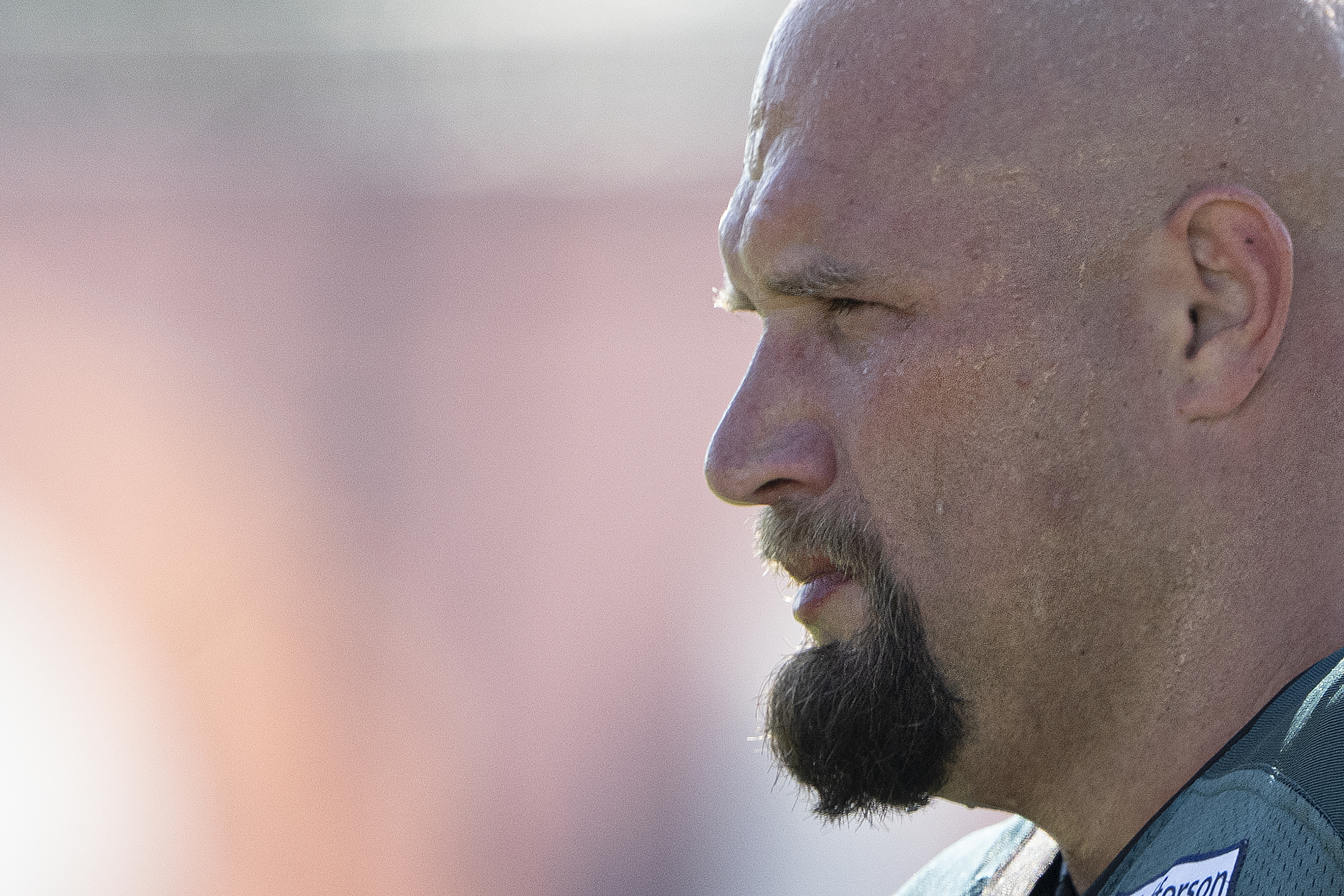
    Lane Johnson was excused from four practices for undisclosed, non-injury-related reasons. Jose F. Moreno / Staff Photographer

    Even though Johnson did not participate in team drills, his teammates still felt — and appreciated — his presence.

    “He has a calming presence,” Jordan Davis said. “When I see him, I’m like, ‘All right, this is Lane.’ And one day, I’m not going to be able to say that I have him in the locker room. It’s just very good to have him out here. And everybody knows he’s a baller, man. He’s a f— baller. Lane, man, he’s a cornerstone, bro.”

    The Eagles have been forced to replace their cornerstone at right tackle in team drills over the past week. On Friday, third-round rookie Markel Bell commanded those snaps with the starting offense. Bell, who is the tallest player on the team at 6-foot-9, 346 pounds, is relatively new to the position, as he primarily played at left tackle through two seasons of junior college and two seasons at Miami.

    “I think what you see with Markel is just his length and how big he is and how hard he is to get around in the pass rush,” Sirianni said. “Just working on getting on the same page with the combination blocks. There’s so many things that go on there with the offensive line of having to work in tandem.

    “I’ve seen progression there, and that’s what you want with all your players.”

    Davis growing as a pass rusher

    Speaking of progression, the Eagles are looking for Davis to continue to evolve his pass-rush game as he enters Year 5.

    He has made gradual improvement, which Vic Fangio said dates back to the end of the 2024 season. Around that time, the 6-6, 336-pound Davis improved his conditioning, allowing him to move better on the field.

    “He needs to be 6-6 when it’s to his advantage, and he needs to bend his knees and be 6-3 when he needs to be,” Fangio said on Wednesday. “When you’re in better shape, weighing less, that’s easier to do and you can do it for a longer time. That’s what’s made his game take off.”

    Jordan Davis (90) emphasized the need to stay low when rushing the passer. Jose F. Moreno / Staff Photographer

    Davis flashed his progress in practice on Friday, bolting into the backfield in 11-on-11s for a would-be sack of Jalen Hurts. More sacks could be in store for Davis in 2026. When the season begins, he will have the opportunity to build on his career-high 4½ sacks from last season.

    Davis likely couldn’t have fathomed that total during his rookie season, as the run-stuffing defensive tackle didn’t notch a sack all year.

    “Even when we watch our old film from Year 1, Year 2, it’s a crazy experience just to see how far I came,” Davis said. “But I think the beautiful part about this game is that we still have so much further to go. We just keep working at it.

    “I always say Rome isn’t built in a day. You have to keep working at it, and Rome is an empire [that] lasted for a very long time. So we just got to keep building that so it can be sustainable and still be long-lasting.”

    Davis has learned that the low man often wins in the trenches. He credited defensive line coach Clint Hurtt with helping him feel at ease in uncomfortable positions by running drills that utilize a lineman chute, which enforces the importance of keeping a low pad level.

    “When you’re a pass rusher, you always want to be low,” Davis said. “You want to keep your center of gravity low … And I also notice it now when I’m driving and I’m bull rushing. I’m not bull rushing up high. I’m bull rushing more low.

    “Sometimes I feel like I’m about to tilt over, bro. And [when] I feel like I’m about to tilt over, I know I’m at the perfect height.”

  • Senate confirms Hamilton to lead FEMA and clears more than 70 other Trump nominees

    Senate confirms Hamilton to lead FEMA and clears more than 70 other Trump nominees

    The Senate on Friday confirmed Cameron Hamilton as head of the Federal Emergency Management Agency, returning the former Navy SEAL to the embattled agency he led temporarily last year only to be fired after he publicly opposed eliminating it.

    Hamilton was among a group of 74 nominations approved by the Senate, including President Donald Trump’s pick to lead the Transportation Security Administration, David Cummins, and his choice for ambassador to Brazil, Daniel Perez.

    Upon his swearing in, Hamilton will take over an agency whose future has been uncertain since Trump threatened to get rid of it days into his second term. Hamilton’s nomination signaled that Trump may be moving on from that idea, but his Republican administration is still promising drastic changes in how the government handles disasters.

    Hamilton will have to shepherd that overhaul while stabilizing an agency of more than 20,000 employees recovering from Kristi Noem’s chaotic tenure as Department of Homeland Security secretary, during which FEMA saw mass staff departures, disruptions to grant programs, and delays of disaster aid.

    While her successor, former Oklahoma Sen. Markwayne Mullin, has worked to reverse some of the upheaval, Democrats are accusing Trump of politicizing disaster relief. Trump has approved 80% of disaster requests from Republican governors but only about 60% from Democratic governors, a July analysis by the Associated Press found.

    In his June hearing before a Senate committee, Hamilton pledged to advocate for FEMA and its workforce while promising to ensure FEMA is “objective, is fair and reasonable, follows the law, and is consistent in the approach to how we adjudicate and process claims and requests for disasters.”

    He also maintained that the agency is burdened by bureaucracy and cannot be expected to respond to every disaster. “We would need to strike a new balance to encourage cost reasonableness and cost savings,” he said.

    Hamilton was fired from a temporary role leading FEMA

    Hamilton had limited emergency management experience before Trump named him FEMA’s temporary leader in January 2025. Formerly a critic of the agency, Hamilton has said he came to appreciate FEMA’s mission. His tenure proved short after he broke with Noem and other DHS officials over FEMA’s future.

    “I do not believe it is in the best interest of the American people to eliminate the Federal Emergency Management Agency,” Hamilton told a House panel in May 2025. He was fired the next day.

    His stand drew admiration among some emergency management professionals.

    “It tells you exactly who he is and how he will lead when the pressure is highest and the easy answer is the wrong one,” Pete Gaynor, FEMA administrator in Trump’s first term, said in a statement supporting Hamilton’s confirmation.

    The National Emergency Management Association said it welcomes Hamilton as the FEMA administrator.

    Still, some FEMA staffers have remained wary of Hamilton’s role in controversial decisions last year like canceling a multibillion-dollar resilience grant program.

    FEMA has been an agency under siege

    Hamilton will take over in the middle of a busy summer disaster season that has already brought destructive wildfires and dangerous flooding and as FEMA manages more than 1,000 open disaster declarations. He will be FEMA’s first permanent administrator in Trump’s second term, overseeing an agency eager for stability.

    More than 4,300 employees separated from FEMA in the 2025 budget year, more than 1,500 through voluntary reductions, resulting in a “loss of institutional knowledge and experienced personnel,” according to a Government Accountability Office report.

    Since replacing Noem in March, Mullin has rehired for some eliminated positions and rescinded a rule that any expense greater than $100,000 needed to be approved by the secretary’s office — a requirement that backlogged billions of dollars in disaster aid.

    But DHS has also introduced policies stirring up new controversy. Twenty-five states and the District of Columbia sued the Trump administration last month over new election security requirements in FEMA counterterrorism grants to states.

    The Trump administration and lawmakers are advocating for sweeping changes to federal disaster response. At a meeting of governors last weekend, Mullin called FEMA “bloated.”

    “The biggest reform you’re going to see is more responsibility is going to go back to your states,” Mullin said, with “FEMA there for worst of the worst, not every storm.”

    In May, a Trump-appointed FEMA Review Council recommended major changes to how the federal government supports states, tribes, and territories during disasters. That could speed assistance but might reduce how much and how often FEMA helps. Many of the suggested changes require congressional action.

    Gaynor told the AP he expects that Hamilton will work quickly to make changes within his authority. “I think his biggest priority in general is making the whole recovery system simpler for disaster survivors, for states and locals to navigate, to make it less of mystery, and cut out red tape,” Gaynor said.

    Senate approves 74 nominations, including for airport security

    Other nominees confirmed included Cummins as head of the Transportation Security Administration, an agency also facing persistent challenges, particularly after this year’s record partial government shutdown left TSA employees working for weeks without pay. The funding lapse prompted thousands of officers to call out of work and about 1,100 to quit.

    Cummins is a former senior vice president at the government contractor Serco, which runs air traffic control towers at 60 American airports. He is taking over as the Trump administration seeks to expand private airport screening and cut thousands of TSA jobs.

    The Senate also confirmed Perez, a close friend of Secretary of State Marco Rubio and a former speaker of Florida’s House of Representatives, to be the next U.S. ambassador to Brazil.

    Perez has been central to an ongoing diplomatic dispute between the Trump administration and the government of Brazilian President Luiz Inácio Lula da Silva.

    Earlier this week, the State Department said the Brazilian government’s refusal to accept Perez’s appointment was a main reason for its decision to revoke the visa of Brazil’s ambassador to the United States. International diplomatic protocols demand that host countries approve any foreign ambassadors before they can take their posts.

  • Commodore Barry Bridge is getting a paint job and restoration, and traffic is jammed

    Commodore Barry Bridge is getting a paint job and restoration, and traffic is jammed

    Canvas shrouds the Commodore Barry Bridge as workers blast clean and repaint the high steel trusses holding up the roadway.

    The $220 million project, expected to finish in 2028, has caused havoc this summer with commuter and Shore-bound traffic on a crucial link between Delaware and Gloucester Counties.

    Traffic is squeezed into one lane in each direction from 7 p.m. to 5 a.m., and residual morning delays have been reported. Crews sometimes also have to close lanes or temporarily stop all traffic during daytime to move equipment and materials.

    It is a major undertaking for the Delaware River Port Authority, the bistate agency that owns and runs the Commodore Barry, as well as the Walt Whitman, Ben Franklin, and Betsy Ross Bridges.

    As they move along the 13,912 feet of the bridge, industrial painting crews first sandblast layers of old paint and protective coatings that have built up over the years.

    They work from suspended platforms in enclosed spaces of canvas, with containment systems that capture the gritty material used to clean the steel, lead-based paint, and other grime.

    Although that up-in-the-air work is most visible to motorists, massive repairs are going on underneath, on the deck, and in the support structures below that, including the piers in the river.

    Crews are removing crumbling concrete and replacing it, repairing the drainage system, and installing 14,000 feet of new electrical conduits and wire, DRPA officials say.

    The rehab began in spring 2025, with replacement of the movable “zipper” barrier that separates lanes of bridge traffic. It was finished last summer.

    The bridge opened in 1974 after five years of construction.

    Earlier, people relied on ferries to cross from one state to another.

    In 1930, the Chester-Bridgeport Ferry began running, with a capacity of 60 cars per trip. Six years later, the ferry’s boats were added to the federal highway system, as moveable parts of U.S. Route 332.

  • Appeals court rules Trump can’t build White House ballroom without congressional approval

    Appeals court rules Trump can’t build White House ballroom without congressional approval

    WASHINGTON — A federal appeals court on Friday ordered President Donald Trump’s administration to halt construction of its $400 million ballroom at the White House because the project lacks congressional approval.

    Trump doesn’t have the unilateral authority to build a 90,000-square-foot ballroom where the White House’s East Wing stood before he ordered its demolition last fall, according to the decision by a three-judge panel from the U.S. Court of Appeals for the District of Columbia Circuit.

    The Republican president said in a post on social media that he would be appealing what he called an “unjust decision” to the U.S. Supreme Court.

    Friday’s ruling marked the second time this week the Trump administration has made headlines for construction plans that have been called into question. An assessment by the National Park Service found that a 250-foot-tall triumphal arch that Trump has proposed building could compromise the historical significance of dozens of sites near its planned location on a traffic circle between the Lincoln Memorial and Arlington National Cemetery.

    In a 2-1 decision on the ballroom, the appeals court sided with historic preservationists who sued to stop construction of the massive structure, which has begun to rise aboveground on the east side of the White House, according to the most recent aerial photos of the site. The court said it would stay its ruling for two weeks to give the administration time to appeal to the U.S. Supreme Court.

    “Whether or not a massive ballroom should be constructed is for Congress to decide and is not a matter for Executive self-help,” the court wrote.

    “This holding has nothing at all to do with whether the proposed ballroom is desirable, or not, as a matter of policy. This ruling does not even necessarily mean that the Defendants may not ultimately construct the ballroom.

    “What it does mean,” the court continued, “is that the Defendants may not do so during the district court’s expeditious litigation without securing Congress’s authorization, as the Constitution and laws require.”

    Trump insists Congress’ approval is unnecessary

    The president reacted to the ruling with a lengthy post on social media in which he quoted from a dissenting opinion issued by Judge Neomi Rao, whom he nominated. He also described the plans for the facility to include bomb shelters, a hospital and medical facilities, “Top Secret Military Facilities,” and other security features.

    “The Military and Secret Service are viewing this horrendous, politically motivated, and unlawful ruling as a National Security threat to our Nation in that the entire Complex is being built for the protection of our Country and, additionally, all future Presidents,” Trump wrote.

    After the lower court earlier this year ordered a halt to aboveground construction, the president argued that permission from Congress to build the ballroom was unnecessary because public money was not being used to pay for it.

    Trump has said he has raised hundreds of millions of dollars from corporations and wealthy people, including himself, to cover the construction costs.

    But the Trump administration requested $1 billion for the ballroom, which Congress refused in May. In June, Democrats warned that $350 million in funds from a tax cuts law appeared to have been redirected for the ballroom.

    The National Trust for Historic Preservation, the nonprofit organization that brought the lawsuit against the Trump administration, said Friday’s decision affirmed “the American people’s right to voice their opinions about the historic places they cherish,” including the White House.

    “From the beginning, our position has been clear and consistent: the law states that only Congress can authorize the construction of a ballroom at the White House,” Brent Leggs, the group’s president and CEO, said in a statement. “We are pleased with the DC Circuit Court’s decision to uphold the District Court’s preliminary injunction, which although stayed for 14 days will block any above-ground ballroom construction unless and until Congress takes action.”

    The divided appeals court panel upheld an April 16 order from Leon for the Trump administration to halt aboveground work on the ballroom. Leon, who was nominated to the bench by Republican President George W. Bush, allowed construction to continue on underground work on a bunker and other “national security facilities” at the site.

    The appeals court case was assigned to Judges Rao, Patricia Millett, and Bradley Garcia. Millett was nominated to the court by Democratic President Barack Obama. Garcia was nominated by Democratic President Joe Biden. Both Millett and Garcia backed the decision, while Rao opposed it.

    Preservationists challenge Trump in court

    The National Trust for Historic Preservation sued to challenge the project in December 2025, a week after completion of the East Wing demolition to make way for a ballroom that Trump says would hold 999 people.

    Government lawyers have argued that the project — the biggest structural change to the White House in more than 70 years — must move forward because it includes critical security features to guard against a range of threats, such as drones, ballistic missiles, and biohazards.

    “These upgrades, alterations, and improvements are essential to protecting the President, his family, and his staff, as well as the White House itself, and the entire project flows from them,” government attorneys wrote in a court filing.

    Attorneys for the preservation group countered that the lack of a White House ballroom doesn’t constitute a national security emergency.

    “That commonsense conclusion is not clearly erroneous, and there is no basis to disturb it,” they wrote.

    In an initial ruling that the government also appealed, Leon barred aboveground work on the ballroom from proceeding without congressional approval. In response, the appeals court instructed the judge to reconsider the national security implications of stopping construction.

    In his most recent decision, Leon ordered a stop only to the aboveground construction of the planned ballroom. The judge stressed that the White House is free to proceed with underground work, including the construction of any bunkers, military installations, and medical facilities.

    On April 2, Trump’s ballroom won final approval from the 12-member National Capital Planning Commission, which is charged with approving construction on federal property in the Washington region.

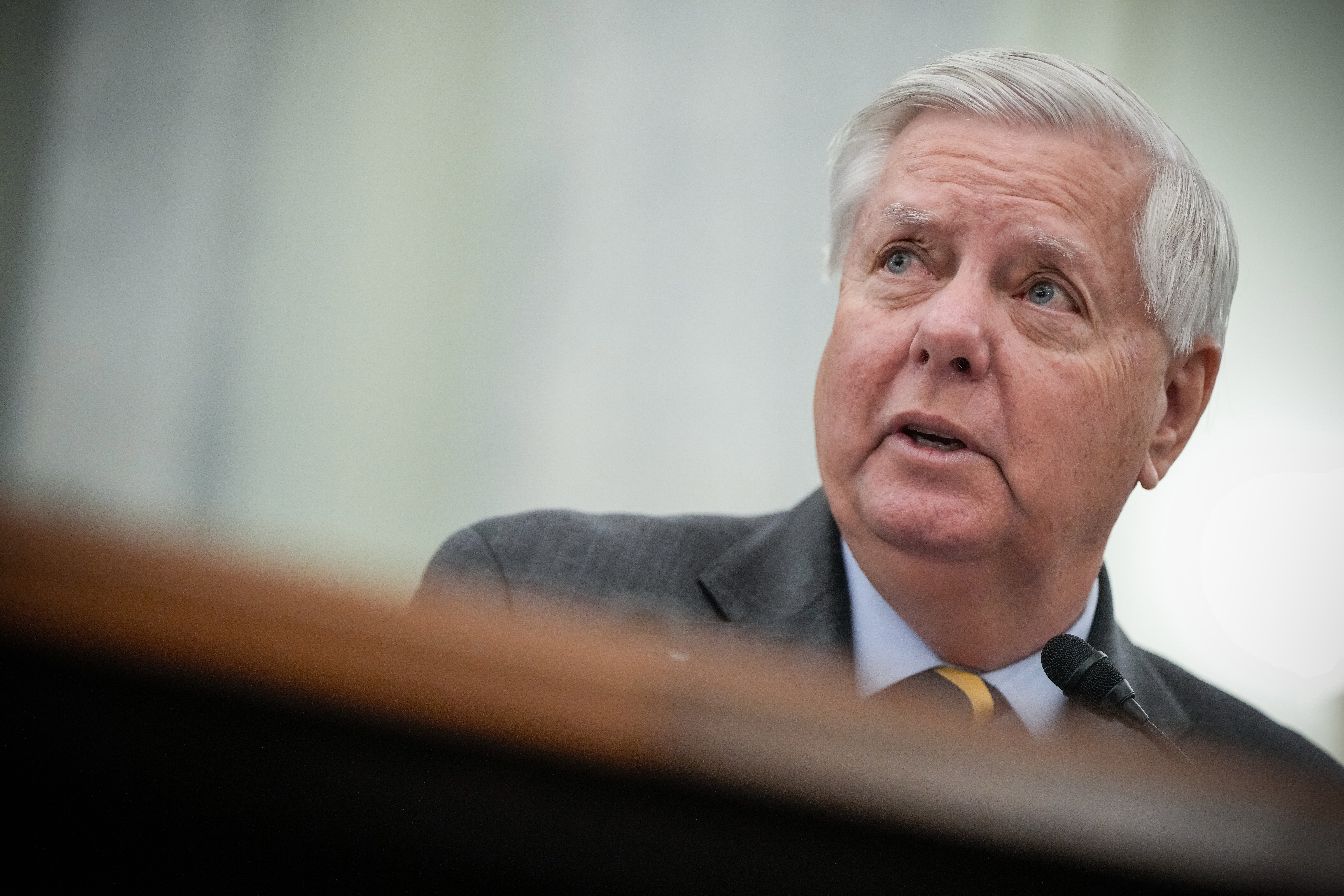
  • Senate passes sweeping Russia sanctions bill negotiated by the late Sen. Lindsey Graham

    Senate passes sweeping Russia sanctions bill negotiated by the late Sen. Lindsey Graham

    WASHINGTON — The Senate overwhelmingly approved a punishing Russian sanctions package Friday, the result of a yearlong campaign by the late Sen. Lindsey Graham to reinforce U.S. support for Ukraine and try to force President Vladimir Putin’s hand as the grinding war drags on.

    The bipartisan legislation, which passed the Senate 86-11, would penalize countries that continue to buy Russian oil, gas, and other exports, seeking to deprive Putin of revenues fueling the war. It comes after Ukrainian President Volodymyr Zelensky visited the Capitol hours after Graham’s funeral, met with senators from both parties, and watched from the gallery as the Senate took the first procedural votes last week on the sweeping legislation.

    “Today, President Zelensky is watching from Ukraine — and Putin is watching from Moscow,” said Sen. Richard Blumenthal (D., Conn.), who had worked with the late South Carolina senator on the package.

    “I would like to think Lindsey Graham is watching, too,” he said. “Today we say to the people of Ukraine: You are not alone. And today we say to Vladimir Putin: You will not conquer Ukraine.”

    The sweeping show of force from the Senate is the most substantial move yet during President Donald Trump’s second term to shift the dynamic of the more than four-year war, which has now churned longer than World War I. Congress has struggled to ensure U.S. funding and munitions flow to Ukraine, but Trump has given a nod to the sanctions package, putting pressure for the House to take it up for a vote and send it to the White House for his signature.

    Graham and Blumenthal had announced a deal with the White House on the sanctions legislation on July 10 after more than a year of negotiations with the White House. Graham, who had just returned from Ukraine, died suddenly the next day, likely from an aortic tear.

    The bipartisan package that carries Graham’s name allows the president to impose tariffs on the world’s top five purchasers of Russian oil or natural gas, including China and India. It provides exceptions for countries that import less than 15% of their natural gas from Russia and are taking steps to reduce those imports.

    The legislation also includes sanctions on Putin, senior Russian political and military leaders, Russian financial institutions, and Russian energy projects. It would expand U.S. sanctions to target older, reflagged oil tankers that Russia uses to circumvent existing U.S. sanctions on Russian oil and energy revenues.

    Democrats and some Republicans have been wary of giving Trump broad authority to slap tariffs on imports that have spiked prices for goods, worried about inflation and high costs of living for Americans. Those voting against the final package were mostly progressive Democrats.

    The negotiated bill also includes waiver authority for the president, allowing the White House to waive sanctions or restrictions if the president certifies to Congress that the waiver is in the national interest.

    Sen. Darline Graham (R., S.C.), who was appointed by the state’s governor to fill her brother’s seat, said he was determined to bring an end to the Ukraine war, and she was honored to carry on his work. “This legislation hits Putin where it hurts,” she said.

    Bill sends ‘a moral signal’ to Ukraine and its allies

    Zelensky told senators during last week’s private meeting at the Capitol that Ukraine is making gains in the war, but still needs more help from the U.S. He publicly thanked them for the sanctions package and said it would send a “big signal” to Ukraine and its allies of U.S. support.

    Republican Sen. Todd Young of Indiana, who attended the meeting, said the sanctions legislation “is important as a moral signal to a country that is weary and tired, though holding its own.”

    New Hampshire Sen. Jeanne Shaheen, the top Democrat on the Foreign Relations Committee, said advancing the legislation now, ahead of Russia’s own elections, will put pressure on Putin to seriously revisit prospects for a peace deal. And she warned that every time the U.S. backs away from tough actions, Russia ramps up its attacks.

    “If we can’t shut down the funding for the war machine that Russia is using against Ukraine, then they’re going to keep at it,” she said.

    Some say the bill would give Trump too much tariff power

    The Senate defeated an amendment by Republican Sen. Rand Paul of Kentucky and Democratic Sen. Ron Wyden of Oregon that would have removed the new tariff authority for Trump. Paul says it would be too costly for taxpayers, while Wyden and other Democrats say they don’t want to give Trump any new authority to impose tariffs.

    “We’ve got folks who are walking an economic tightrope here in America,” Wyden said.

    Sen. Raphael Warnock (D., Ga.), who had held up passage of the package over the tariff authority, said he received a written commitment from the Trump administration through U.S. Trade Representative Jamieson Greer that ensures guardrails. The tariffs would be lifted once the countries are no longer on the lists of those purchasing Russian oil and gas, or helping to evade sanctions, he said.

    “We should not have to choose between putting a check on Putin’s aggression and putting a check on this president’s tariffs regime,” Warnock said. If Trump “oversteps his power, we will see him in court.”

    Other Democrats say that while they are wary of giving Trump any new powers, they don’t want to jeopardize the help for Ukraine.

    “Weighing that against the boost for Ukraine, I think it’s important to support Ukraine right now,” said Connecticut Sen. Chris Murphy (D., Conn.).

    Package next goes to the House

    The momentum from the Senate is expected to press the House to act swiftly on the Russia sanctions package when lawmakers return to session at the end of the month.

    The House had already passed a separate measure in June that would provide security and reconstruction aid to Ukraine and sanction key segments of the Russian economy.

    That package pushed by Democrats drew bipartisan support from Republicans, overriding objections from GOP leaders who warned the bill would undermine negotiations designed to achieve a comparable but stronger result.