Blog

  • Pirro, in rare move, convenes special grand jury in Washington

    Pirro, in rare move, convenes special grand jury in Washington

    The Justice Department has convened a special grand jury in Washington, a rare legal body that officials say could pave the way for federal prosecutors in the nation’s capital to investigate some of its biggest and most controversial cases.

    Unlike a typical grand jury, a special grand jury can release a potentially critical report about the subject of an investigation, even if prosecutors do not find enough evidence to bring the person to trial.

    D.C.’s special grand jury is to be overseen by Steven Vandervelden, one of U.S. Attorney Jeanine Pirro’s top allies in her office, according to three government officials familiar with the matter, who spoke on the condition of anonymity to discuss a matter that has not been made public.

    Pirro has relied on Vandervelden to investigate some of her office’s most controversial cases, including a probe into then-Federal Reserve Chair Jerome H. Powell and an inquiry into allegations that the D.C. police force purposely skewed its crime statistics.

    It is unclear what the new special grand jury will be tasked with probing, but those interviewed said it is a notable move, especially given President Donald Trump’s interest in prosecuting his adversaries.

    Special grand juries, on the rare occasions when they are convened, are typically used to pursue investigations of government officials or probe broad conspiracy cases and organized criminal activity. (A group of corruption cases that prosecutors deem to be linked could qualify as the latter.)

    Steve Friedland, a law professor at Elon University, said strict procedures govern how special grand juries can be used — but that there is also flexibility.

    “This could be very interesting,” Friedland said. “Each administration has its own approach to how it enforces the law and how it uses the tools available to it.”

    The U.S. attorney’s office in D.C. declined to comment.

    There is no known recent precedent for a special grand jury in Washington, legal experts said, although they said they could not entirely rule out that one has escaped public notice.

    They are more common in larger jurisdictions home to more than 4 million people, including in New York and Texas, where federal guidelines says one must always be available, under the belief that organized crime is more common in larger areas.

    On the state level, Georgia prosecutors convened a special grand jury to investigate alleged interference in the 2020 presidential election by Trump allies in the state. On the federal side, a special grand jury was empaneled in Houston more than 20 years ago to investigate Enron, a powerful energy company that was engulfed in a massive fraud scandal.

    “They are very unusual,” said Niki Kuckes, a professor at Roger Williams University with expertise in the grand jury process. “Sometimes they can issue a report, which a regular grand jury can’t do.”

    The convening of the special grand jury comes as Pirro and top Justice Department officials face pressure to deliver on cases that Trump wants prosecuted. Todd Blanche, Trump’s former personal lawyer, was recently confirmed as attorney general, solidifying his position atop the department.

    Pirro’s record in moving against the administration’s perceived enemies has been mixed at best. Her office has failed to successfully prosecute a man accused of throwing a Subway sandwich at a federal agent; six Democratic lawmakers who released a video advising service members to reject illegal orders; and Powell, whom Trump accused of mishandling a renovation project.

    Last week, the president suggested Pirro’s job was in jeopardy after she dismissed charges against a former Olympian who had been accused of vandalizing the Lincoln Memorial Reflecting Pool. The officials familiar with the convening of the special grand jury said that prosecutors submitted the paperwork for it before Pirro dropped the Reflecting Pool-related charges.

    In general, grand jury proceedings are a secretive part of the legal process in which prosecutors present evidence and jurors vote on whether there is evidence to charge someone with a crime.

    A special grand jury has several unique characteristics. The 23 members focus only on a single case — or a string of cases that prosecutors present as related — instead of juggling a variety of matters like most grand juries. And a special grand jury’s ability to issue a report at the end of an investigation sets it apart.

    That report can name specific individuals even if prosecutors do not find enough evidence to bring the people to trial, as long as the report shows that there is a “preponderance of evidence” of wrongdoing. That is a significantly lower standard than the “guilt beyond a reasonable doubt” that is needed to convict someone.

    Anyone named in a report has the opportunity to testify before the special grand jury and present witnesses for their defense. And according to Kuckes, a judge must sign off on the report before it is publicly released, ensuring the report meets the requirements for citing someone by name.

    “It’s a very protective scheme. A majority of the grand jurors have to decide to issue the report,” Kuckes said. “And a special grand jury has to be set up to investigate some criminal wrongdoing. You can’t just have one to issue a report.”

    In other ways, special grand juries resemble ordinary ones. To win an indictment, prosecutors must convince a simple majority of the jurors that there is “probable cause” to believe a crime was committed. Grand jury proceedings also take place in private, to protect the privacy of those who are interviewed but not implicated in a crime.

    The law recognizes that special grand juries are only to be convened in unusual cases. In most jurisdictions, including D.C., they must be requested by the U.S. attorney general or their designee. Paperwork to establish them must go through the district’s chief judge; in Washington’s case, that is James E. Boasberg.

    A special grand jury generally runs for 18 months, although it can wrap up its work sooner — or its tenure can be extended in six-month increments by a judge, with the total time not to exceed 36 months.

    Pirro has regularly found herself caught between Trump, who has publicly demanded that his adversaries be prosecuted, and the liberal Democrats who live in Washington and populate its legal system. The flash point has often been grand juries, whose members in the Trump era have sometimes declined to indict people despite prosecutors urging them to do so, something that traditionally is very unusual.

    Those people include the six Democratic lawmakers who appeared on the video about illegal orders, as well as several defendants whom Pirro tried to charge with felonies during last year’s federal law enforcement surge.
  • This taxpayer-funded warehouse is key to Philly port’s expansion. But who gets to work there?

    This taxpayer-funded warehouse is key to Philly port’s expansion. But who gets to work there?

    Cleo Winfield has worked at a warehouse located inside the Packer Avenue Marine Terminal in South Philadelphia for 22 years, stacking bananas and other cargo that are unloaded from ships docked on the Delaware River.

    Now his job is at risk.

    The warehouse, currently operated by an affiliate of Holt Logistics Corp. and staffed by members of a longshoremen’s union, is expected to be razed to make space on the terminal to stack more shipping containers.

    As part of a port development plan, the Philadelphia Regional Port Authority (PhilaPort) — the Pennsylvania state agency that owns the city’s seaport facilities and leases them to private tenants — has built a new taxpayer-funded, Holt-operated warehouse a mile from the Packer Avenue terminal.

    Gloucester City-based Holt says it has a deal to staff the new facility with workers represented by Teamsters Local 929. Holt has longshore work available for the members of International Longshoremen’s Association Local 1291, the company says, but it has been unable to reach an agreement with the union. A contract extension expired in June.

    The ILA counters that such an arrangement would strip Winfield and 30 other warehouse workers of their seniority — sacrificing wages and benefits they’ve accrued over the years.

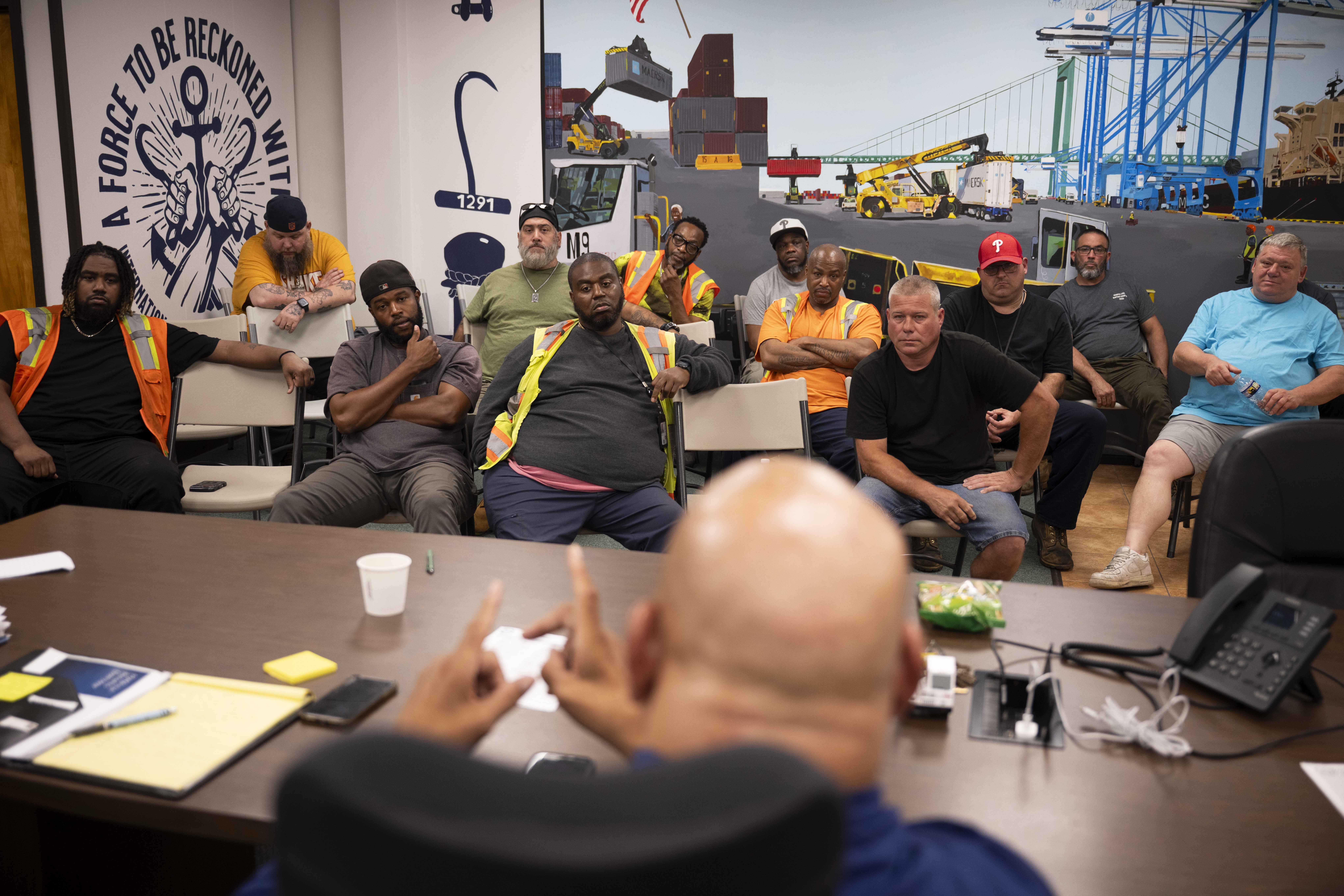
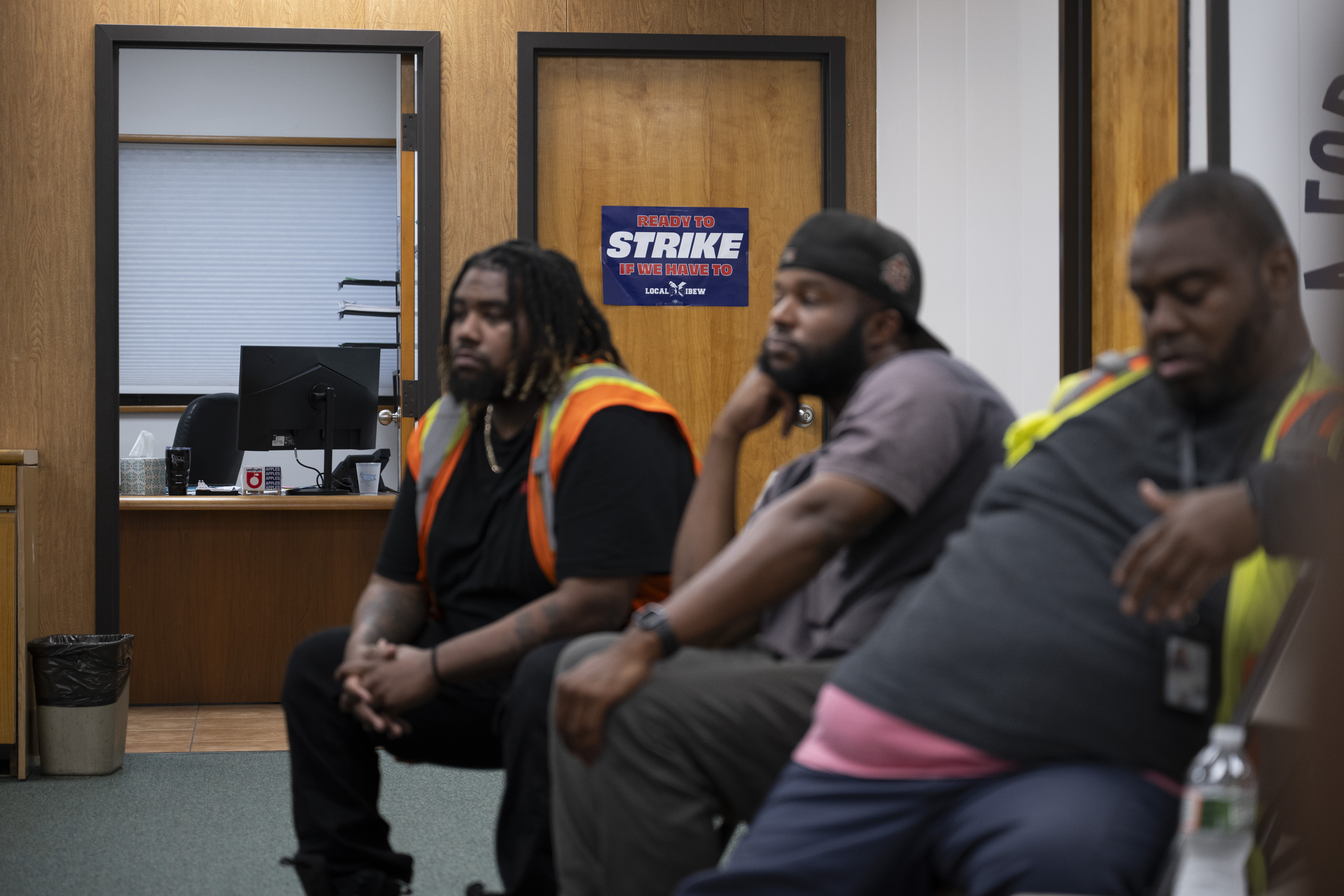
    He and the other ILA members who attended Monday’s union meeting in Port Richmond voted unanimously to authorize a potential strike “if and when necessary,” a development that would require approval from their parent organization.

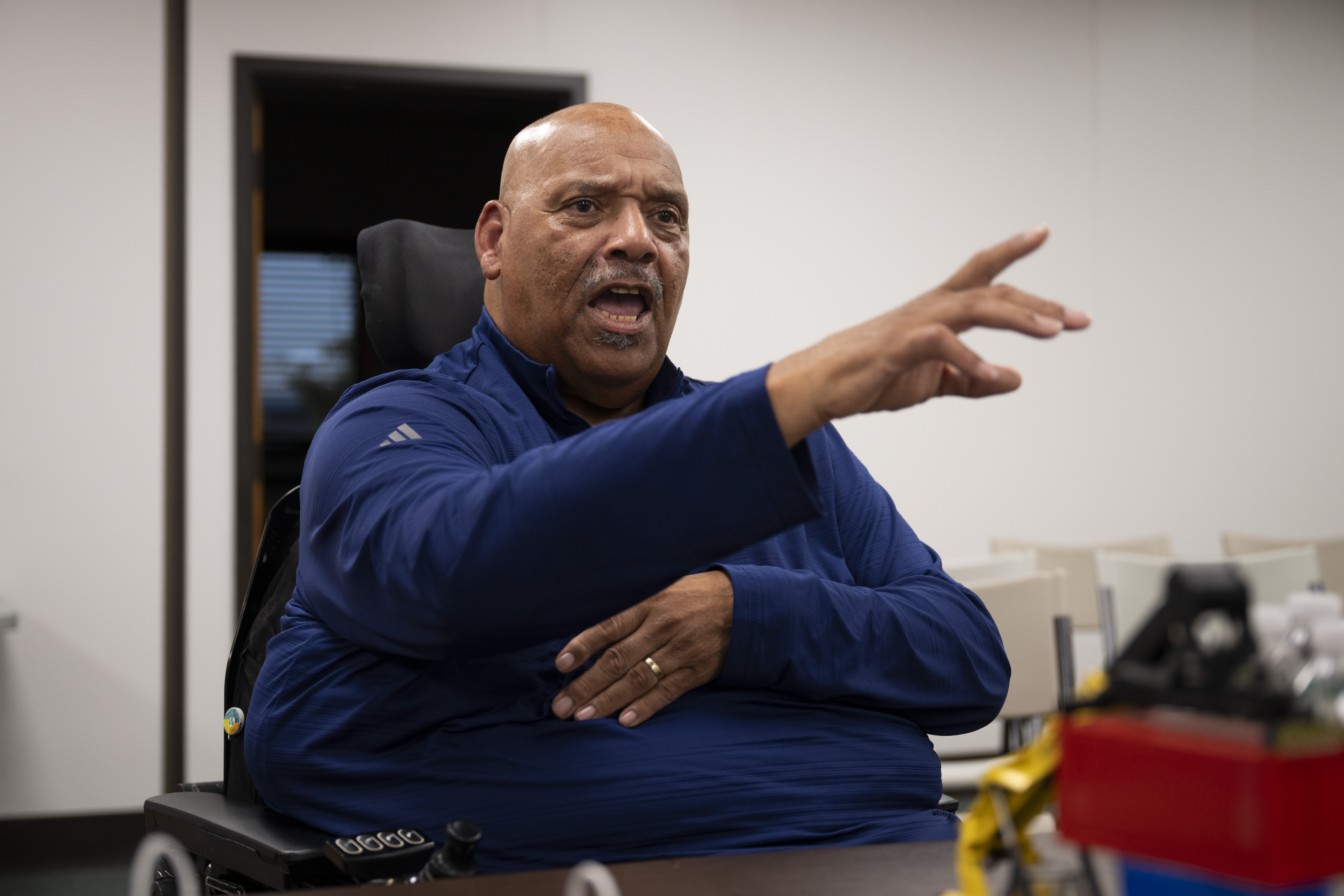
    International Longshoremen’s Association Local 1291 members attend a union meeting.Joe Lamberti / For The Inquirer

    “Been there so long. That’s really all I know, man,” said Winfield, 57. “Raised my family with that job, put my son through college, man. I’m still paying the student loan on that. … I just want to be able to take care of my family.”

    Holt said in a statement that the workers are all “productive and hardworking ILA members.”

    “To be clear, there is more than enough terminal and stevedoring work for these men at Packer, and we remain interested in bringing them on if the ILA agrees,” the company said.

    Regardless of the outcome, the episode has laid bare growing pains at the Port of Philadelphia, which has seen hundreds of millions of dollars of public and private investment over the past decade — as well as disputes over competition and labor. That includes $85 million in state funds that were allocated to the new 165,500-square-foot warehouse, according to PhilaPort. Holt invested $81 million in the building.

    Boise Butler, president of ILA Local 1291, said he wants Holt to be a healthy employer. “But don’t screw them,” he said, motioning to his members. “Don’t screw us. OK? Because it’s not necessary.”

    Port development

    Philly’s port is relatively small compared to the biggest U.S. container ports, but it’s seen steady growth in recent years and is a major gateway for refrigerated cargo, especially fresh fruit.

    Container volumes have more than doubled since 2016, from about 400,000 units that year to almost 900,000 in 2025.

    During that time, the U.S. Army Corps of Engineers completed the three-decade-long deepening of the Delaware River from 40 to 45 feet, which allowed the port to accommodate bigger ships.

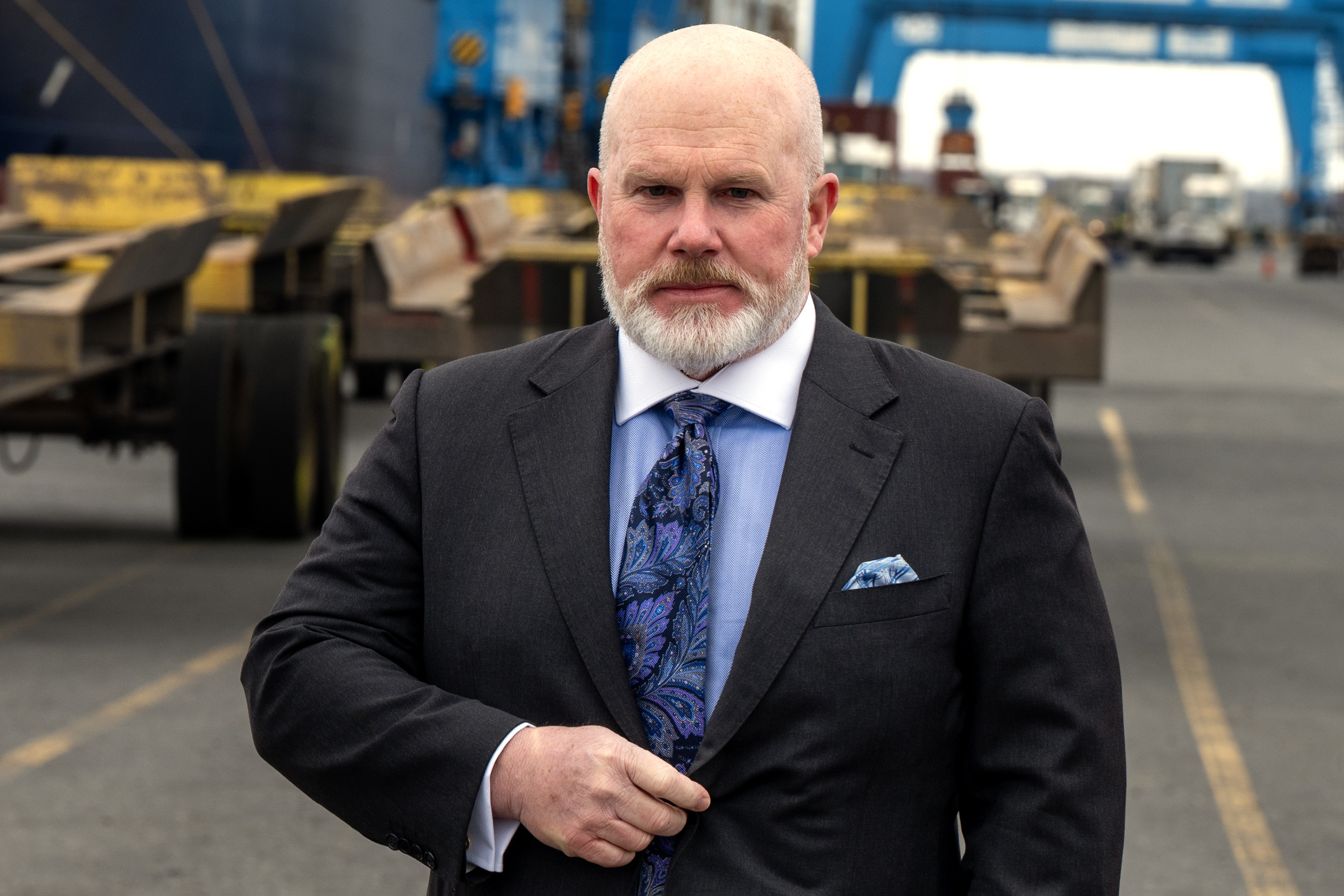
    Leo Holt, president of Holt Logistics Corp., at the the Packer Avenue Marine Terminal in South Philadelphia in April 2025.Tom Gralish / Staff Photographer

    And Democratic Gov. Tom Wolf’s administration invested more than $500 million in Philadelphia’s port expansion. That included more than $120 million for a distribution center near Packer Avenue featuring two warehouses totaling 365,000 square feet.

    The distribution center “is an important step to improve port facilities and bring more traffic to the port,” Wolf said when construction began on the first warehouse in 2021. Leo Holt, president of family-owned Holt Logistics, said at the time that warehouse space “puts Philadelphia more fully into the last-mile business.”

    The PhilaPort Distribution Center in South Philadelphia.Courtesy Holt Logistics Corp.

    Teamsters and longshoremen at odds

    The warehouses were built at the site of the old Food Distribution Center, a wholesale market that opened in the late 1950s and employed Teamsters for decades.

    To Rocky Bryan Jr., that history is important. “We’ve been on that location there since the ’50s,” said Bryan, president of Teamsters Local 929, which represents about 3,000 members in three states.

    Rocky Bryan Jr., president of the Teamsters Local 929, pictured in 2022.Tom Gralish / Staff Photographer

    The first so-called dry warehouse opened three years ago, and there’s no conflict over that facility. About 15 Teamsters work there, Bryan said. The disagreement revolves around the second, refrigerated warehouse, with both the Teamsters and the longshoremen’s union making claims to the territory.

    “To us, it’s all one warehouse. It’s our jurisdiction,” Bryan said, adding that a collective bargaining agreement is already in place. “It’s traditional Teamster work, which is truck driving and warehousing.”

    As it happens, the ILA warehouse workers used to belong to the Teamsters but voted to join the longshoremen’s union in 2009, according to the ILA’s Butler.

    Butler points to another piece of history. When the Food Distribution Center closed and a new Philadelphia Wholesale Produce Market opened on Essington Avenue near the airport in 2011, the same Teamsters who worked at the old facility continued to work at the new one, he says.

    ILA Local 1291 President Boise Butler speaks to his members in Philadelphia.Joe Lamberti / For The Inquirer

    The same principle should apply today, Butler says: Some of his members have been working at the Packer Avenue refrigerated warehouse since the late 1990s, and they should be able to “follow their work.”

    Butler added, “I knew the Holts was gonna try to turn this into a union against union. I’m not fighting with Rocky.”

    Butler — who serves alongside Bryan on PhilaPort’s board — has sought to elevate the dispute to political leaders, writing in an April memo to PhilaPort management and Democratic Gov. Josh Shapiro’s staff that Holt has “refused to commit to hiring” the ILA members.

    “In effect, that will mean that taxpayer money was used to subsidize Holt Logistics’ desire to expand its refrigerated warehouse cargo operation, all while ending the careers of 31 warehouse workers in the process,” Butler wrote.

    Representatives for PhilaPort and Shapiro’s office declined to comment.

    Gov. Josh Shapiro meets with officials of the Teamsters Local 929 as he visits the Packer Avenue Marine Terminal in South Philadelphia in April 2025. Tom Gralish / Staff Photographer

    Holt maintains that traditional longshore work is available to the workers. Butler said it’s “not impossible to do that” but added that they would lose their seniority.

    That’s because the warehouse workers belong to a separate bargaining unit from the 500 longshoremen in Local 1291 who work the docks at Packer Avenue and other Delaware River ports.

    In the final year of the union’s recently expired contract, warehouse workers with at least three years on the job were paid a minimum wage of $30.59 an hour, plus a $4.25 hourly annuity contribution for retirement. It also included provisions for health insurance, overtime pay, and vacation.

    “A lot of us put over 20 years here, and a lot of us is at the age where we don’t want to start over,” said Lonnie Boyd, 50, an assistant shop steward who’s worked at the Packer Avenue warehouse since 1998. “We can’t afford to start over.”

  • An overnight Ukrainian blitz damages Russia’s Black Sea naval stronghold, Zelensky says

    An overnight Ukrainian blitz damages Russia’s Black Sea naval stronghold, Zelensky says

    KYIV, Ukraine — Ukrainian anti-ship missiles and drones blitzed a major Russian naval base on the Black Sea coast in a “unique” nighttime operation, Ukrainian President Volodymyr Zelensky said Wednesday.

    Cutting-edge drones developed by Kyiv since Moscow’s full-scale invasion over four years ago have repeatedly targeted Russian ships in the Black Sea, including warships and oil tankers.

    Ukraine’s air and sea drones have succeeded in limiting the movements of Russia’s once-dominant Black Sea navy, Kyiv officials say, in one of the country’s biggest accomplishments of the war.

    But Ukrainian officials believe Russian President Vladimir Putin is bent on pressing ahead with the war, despite his bigger army’s slow and costly progress on the battlefield and U.S. diplomatic efforts to find a settlement.

    Putin is planning “an additional rapid mobilization of several hundred thousand Russians by the end of the year,” Zelensky said Tuesday night on social media, citing Ukrainian intelligence reports.

    Those reports have said recently that Russia is expanding production of ballistic missiles and jet-powered drones, both of which are hard for Ukrainian air defenses to counter.

    Ukraine also is trying to scale up its weapons manufacturing through agreements with partner countries.

    Russia shows no sign of a new mobilization

    Neither Putin nor other senior Russian officials have hinted at a possible major call-up of forces to fight in Ukraine. Some officials have accused Kyiv of trying to rattle the Russian public with talk of a mobilization.

    Russian lawmaker Andrei Gurulyov brushed off reports of a possible autumn mobilization. “It is the enemy deliberately spreading rumors about mobilization in order to destabilize the situation inside Russia,” he was quoted as saying by pro-Kremlin online outlet Tsargrad in comments published Monday.

    After the widely unpopular partial mobilization of some 300,000 men four years ago, Russia has relied on volunteers attracted by relatively high pay. However, the decree declaring the partial mobilization that Putin signed in September 2022 is open-ended, allowing authorities to resume it if needed.

    Ukraine says it hit Black Sea port infrastructure

    The Ukrainian military “carried out a unique operation targeting the naval base in Novorossiysk — the last major stronghold of the Russian fleet in the Black Sea,” Zelensky said in a social media post Wednesday. The attack struck air defenses, piers, and other port infrastructure, he added.

    Russia relocated most of its naval ships to Novorossiysk after Ukrainian strikes on the main Black Sea base at Sevastopol on the Crimean Peninsula earlier in the war.

    Hundreds of Ukrainian drones attacked Novorossiysk, Anapa, and Gelendzhik and the Temryuk district of the Krasnodar region overnight, said Gov. Veniamin Kondratyev.

    An 8-year-old child was one of three people killed in the attack on the region, Kondratyev said. He added that 24 others in the region were wounded. Dozens of residential buildings were damaged, Kondratyev said, and debris from downed drones fell on the grounds of four industrial plants.

    The strikes damaged two of Novorossiysk’s three grain terminals, with one of them halting operations, the Russian business daily Vedomosti reported.

    Russia’s Defense Ministry said its air defenses downed more than 500 Ukrainian drones.

    Struck Russian port is also a key oil hub

    Novorossiysk also is home to the Grushovaya oil terminal, one of the largest international hubs in southern Russia for petroleum products. No reports indicated it had been hit.

    In February, the U.S. State Department expressed its displeasure about Ukraine’s attacks on Novorossiysk, saying they affected U.S. oil interests in ⁠Kazakhstan.

    The Caspian Pipeline Consortium operates a pipeline from the Caspian coast in northwestern Kazakhstan to Novorossiysk. The pipeline handles much of the crude exports from three major Kazakh fields in which major U.S. energy companies, Chevron and ExxonMobil, have stakes.

    With the militaries of European countries boarding and detaining sanctioned Russian oil tankers at sea, hurting the country’s trade and heaping economic pressure on Moscow, Putin on Wednesday threatened retaliation for what he termed “piracy.”

    Speaking on a visit to a Russian warship taking part in a naval exercise in the Pacific, Putin said Western countries are breaking international maritime law by seizing ships they say are part of Moscow’s ” shadow fleet ” of sanctions-dodging merchant vessels.

    “It’s nothing but piracy and robbery,” Putin said. “If this is done, we will be forced to respond in kind.”

    On the Crimean Peninsula, which was illegally annexed by Moscow in 2014, air defenses downed 115 Ukrainian drones over Sevastopol overnight, said Mikhail Razvozhayev, the city’s Russian-installed head. He added that 10 apartment buildings and 25 private houses were damaged.

    Russian drones kill 2 and destroy a shopping mall in Ukraine

    Ukraine’s air force said Russia fired 138 long-range drones as well as an unspecified number of missiles during the night, with damage recorded at 16 locations.

    In the Kherson region of southern Ukraine, a large-scale Russian drone attack overnight killed two people and wounded two others, said regional head Oleksandr Prokudin.

    The attacks also destroyed a shopping mall in the southern city of Zaporizhzhia, according to authorities.

    Missiles and long-range drones hit fuel reservoirs and infrastructure used for unloading and storing military cargo in the port of Chornomorsk in Ukraine’s Odesa region, Russia’s Defense Ministry said.

    A bulk cargo vessel carrying military equipment and a tanker loaded with oil for the Ukrainian armed forces also were hit in Odesa, it said.

  • A drone is haunting our neighborhood. I’m not amused.

    A drone is haunting our neighborhood. I’m not amused.

    I didn’t have Peeping Tom drones on my bingo card for 2026.

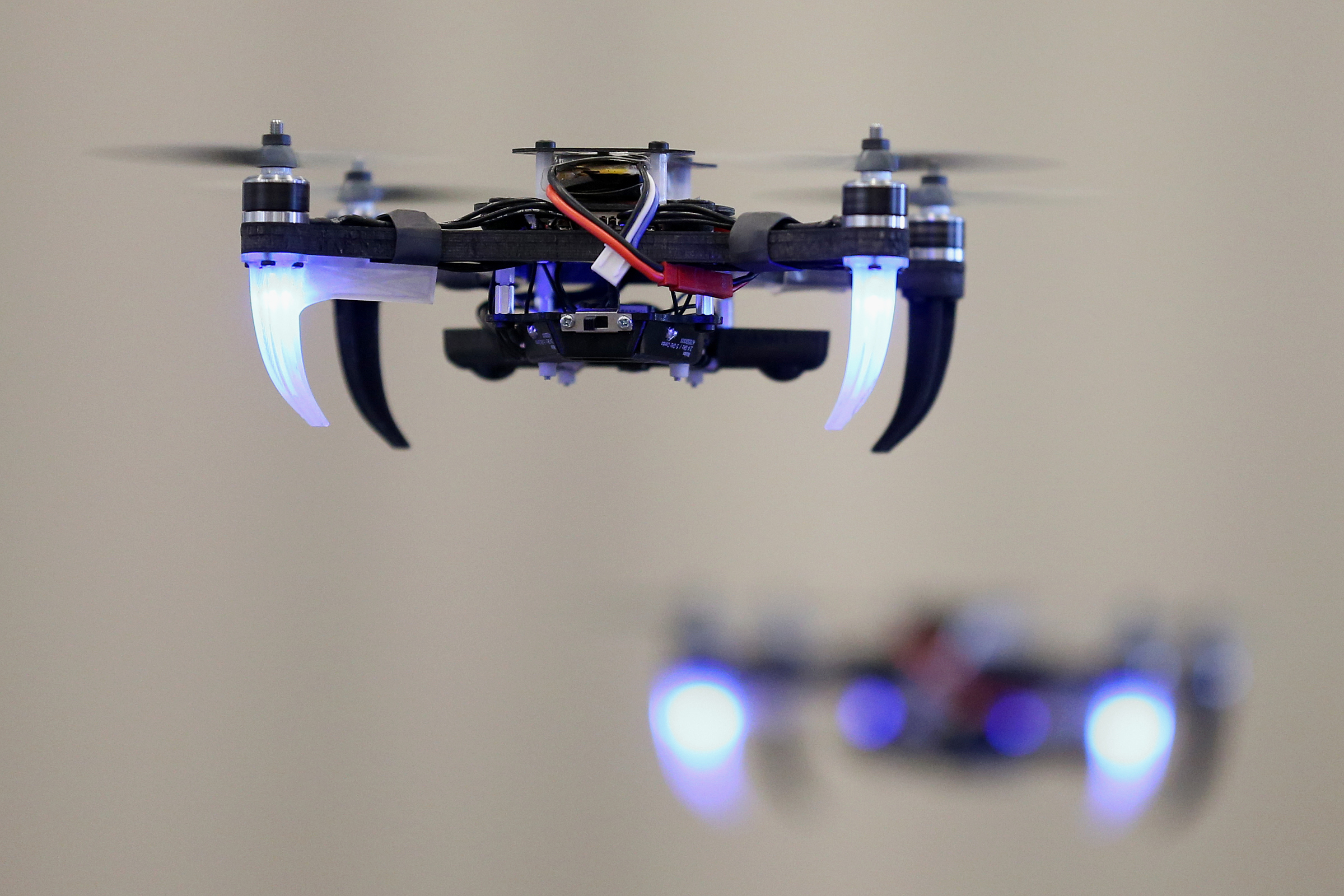
    But then, on July 14, the West Brandywine Police Department let residents of Wallace Township in Chester County know, via Facebook, that for a month or so, they’d been investigating (and had witnessed) a drone flying over homes along several roads in my neighborhood at night, between 8 and 11 p.m.

    “It has been reported that this drone may be photographing properties, including inside the homes,” stated the police department’s Facebook page. “Those residents that live in that area are being urged to be mindful of this aircraft, and to be diligent, especially if you have skylights on the roof. These drones can be equipped with high resolution cameras and have extreme zoom capabilities.”

    Huh. Creepy.

    Since we don’t have young children whose images, captured without our consent, might find their way onto the more sinister reaches of the web, and since our house isn’t full of luxury goods to be cased, I didn’t worry much.

    Maybe if the drone operator chanced to peep through our windows, he’d take pity seeing the proliferation of dust bunnies and proactively book us a deep-cleaning service appointment?

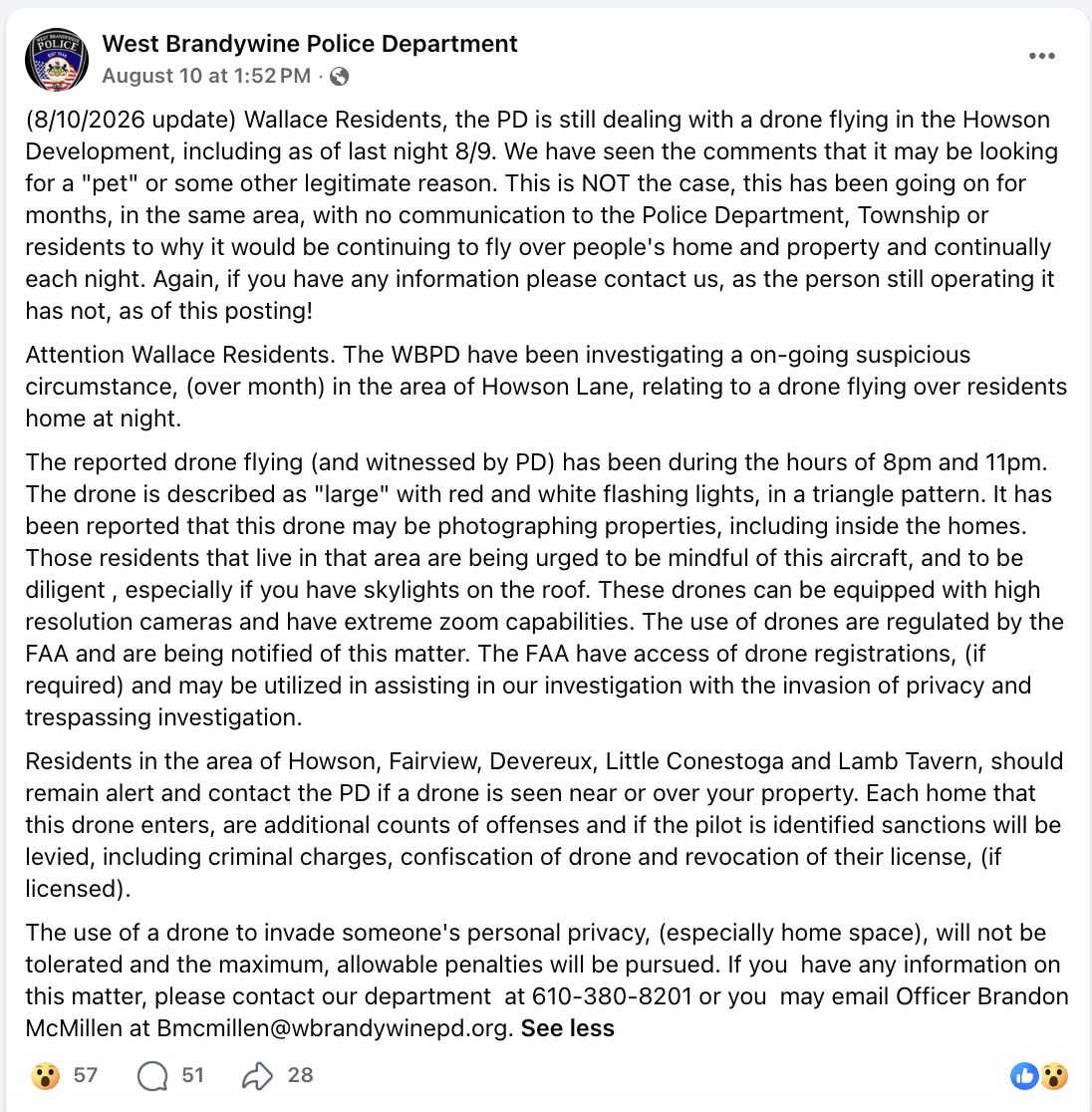
    But the West Brandywine Police Department’s Aug. 10 update upped the ante: “We have seen the comments that [the drone] may be looking for a ‘pet’ or some other legitimate reason. This is NOT the case.”

    Screen capture of the West Brandywine Police Department’s Facebook post on Aug. 10 updating residents of Wallace Township on the continued drone sightings.Screen capture

    It is particularly disconcerting because Pennsylvania regulations stipulate that for nighttime flying the drones “need to remain within line-of-sight of the remote pilot on the ground.” Even if you aren’t unnerved at the idea of someone deploying a little electromechanical spy to look into your windows at night (when the lights inside make people and things clearly visible in a way they wouldn’t be during the day), the idea that the person doing so is on your property — or close enough to keep the drone in sight — should be.

    I can easily imagine folks who already feel vulnerable — the elderly, women living alone, or people who have experienced domestic partner abuse or who have filed for protection orders — being terrified by that prospect.

    The thing is — despite the West Brandywine Police Department’s gratifyingly proactive approach to residents’ privacy concerns — it is the Federal Aviation Administration that’s in charge. The state reports that some 11,000 people have an FAA remote pilot rating, and if this peeping drone is flown by a registered pilot, there may be little anyone can do.

    Pennsylvania Act No. 78 of 2018 prohibits local regulation of unmanned aircraft. It also codifies uses to be considered unlawful, stipulating, for example, that conducting “surveillance of another person in a private place” is a summary offense and subject to a fine up to $300. But the legislation tees up the drone operator’s defense argument for them with this exception: “the person did not knowingly or intentionally conduct surveillance of another person in a private place.”

    Responses to West Brandywine PD’s Facebook posts about this have been predictably mixed in this libertarian-leaning corner of the county. Outrage and worry about surveillance and invasion of privacy, of course, but also lots of drone-flying enthusiasts who chafe at any talk of curtailing their ability to pilot their unmanned craft wherever and whenever — property owners be damned.

    Also, since there are a lot of hunters in this neck of the woods, there are a good number of comments about shooting the drone down if it is sighted. I hasten to add that — as tempting as it might be to shoot the flying snoop right between its blinking red lights — drones are considered aircraft, and it is a federal felony to damage or disable them — punishable with a fine of $250,000 and up to 20 years imprisonment.

    If you think none of this should matter to you because, hey, you don’t live in Wallace Township and no drone has been haunting your nights, think again. Aerial surveillance by drones is widespread, and largely unregulated. According to the Electronic Privacy Information Center, there are “no clear rules protecting individual privacy against drone surveillance. Despite the fact that drone surveillance implicates significant First Amendment and Fourth Amendment interests and common law privacy rights, the law around conducting aerial surveillance very much remains in a gray area.”

    Regardless of what happens at the federal level, I hope that what has been unfolding in Wallace Township prompts Pennsylvania legislators to reconsider Act 78’s limits on local regulation of unmanned aircraft in order to better protect residents from unwarranted and nuisance drone surveillance.

    Meantime, the West Brandywine Police Department wants residents to contact them if they see the drone on their property.

    “Each home that this drone enters, are additional counts of offenses and if the pilot is identified sanctions will be levied, including criminal charges, confiscation of drone and revocation of their license, (if licensed),” the police department wrote in its latest Facebook post. “The use of a drone to invade someone’s personal privacy, (especially home space), will not be tolerated and the maximum, allowable penalties will be pursued.”

    And maybe, just maybe, the fines accrued cumulatively will be enough to make drone operators think twice before unleashing their propeller-driven ghouls to hang around our windows in the middle of the night.

  • Dogs can tell when you’re happy, sad, or frustrated, study shows

    Dogs can tell when you’re happy, sad, or frustrated, study shows

    If you’ve spent any time with dogs, it’s probably not news to you that they can sense the difference between positive and negative human emotions. A pup may match your excited energy when it’s time for a walk or check on you if you appear glum. But canine brains might have a deeper understanding of human emotions than you might think, a new study suggests.

    Researchers put dogs (awake and unrestrained) in MRI scanners to see the activity in different regions of their brains while the pooches looked at images of human facial expressions.

    They found one thing they already knew: Dogs can tell the difference between joy and a blank stare, and between happy and angry faces.

    But then the brain scans showed something novel: The dogs were making distinctions between fear and anger, and fear and sadness, showing they can tell the difference between somewhat nuanced negative emotions.

    “As far as we know, it’s the first time there is proof that dogs can distinguish between faces expressing two [similar] emotions,” said Laura V. Cuaya, a co-author of the study and postdoctoral researcher at the SCAN-Unit, University of Vienna.

    The study, which included two separate experiments, was published this month in the Cell Press journal iScience. It was started at the National Autonomous University of Mexico, then expanded to Eötvös Loránd University in Hungary.

    In the first experiment, eight pet dogs were shown images of happy and neutral human faces that were unfamiliar to them. Happy faces elicited a stronger response in a part of the brain known as the right temporal cluster extending to the caudate nucleus, which is notable because it’s associated with rewards, Cuaya said.

    “Other studies show, for example, that this activation is related when the dog is expecting a snack or a food reward, but also when they hear praise,” she said.

    The team was interested in learning whether the same brain regions would be activated if dogs were exposed to images of negative human emotions as well as happy ones.

    They designed the second experiment with 12 pet dogs, comparing brain regions where happy faces as well as those exhibiting sadness, anger, and fear were processed.

    The results suggested “there is a distinction between happiness and the negative emotions,” said Raúl Hernández-Pérez, a postdoctoral researcher at the SCAN Unit and lead author of the study.

    The researchers ran a whole-brain analysis to look at patterns of response for those three negative emotions. “We found that in a different part of the brain, there can be a distinction between fear and anger and between fear and sadness,” Cuaya said.

    She added that there did not seem to be a difference in processing between sadness and anger.

    The researchers stressed that these findings do not mean dogs understand or experience emotions in the same way humans do.

    “What they have demonstrated here is that the dog brain can distinguish human faces that are showing different emotions, but it does not show that the dog brain is perceiving, processing those emotions,” said Clive Wynne, founding director of the Canine Science Collaboratory at Arizona State University, who was not involved with this study.

    The study’s limitations

    Undergoing an MRI is hard enough for a human who understands why they need to remain still, so “the dogs that are able to do this MRI work are very specific types,” said Molly Byrne, principal investigator of the Dog Lab at Pace University. The researchers worked mostly with border collies, and they pointed out that this breed is highly skilled at following social cues and particularly willing to interact with humans.

    More studies are needed to determine whether other breeds show similar brain activity, the researchers said.

    “A border collie is bred for a job like herding,” said Byrne, who was not involved in this study. “Over the course of many generations, they selected the dogs that listen the best and pay the most attention to what humans have to say.”

    It’s also notable that the dogs studied are family pets, Wynne said. “These are dogs who are around people more or less 24/7 and have to keep paying close attention to people.”

    The dogs in this study were shown a static photograph of a human face, but in real life, whole-body cues probably help canines gauge human mood. “People look at faces to find emotion,” said Wynne, noting that as a species, we have flexible, expressive faces. Dogs are known to use different signals for emotional expression, wagging their tails to show happiness or raising their hackles in anger.

    “If you imagine the world from the dog’s perspective, the body is more important,” Cuaya said. With this in mind, she and Hernández-Pérez are running an experiment in which the dogs watch videos of people acting out various emotions with faces digitally obscured.

    Unanswered questions about how dogs perceive human emotions

    Dog cognition is a relatively new field, and very few labs in the world do these kinds of studies. The hope, experts said, is that future research can address bigger questions not only about how dogs perceive us but the nature of animal minds in general.

    While we can peer into a dog’s brain using an MRI, for example, we don’t know whether they’re thinking about our emotions with real meaning.

    “We know how we feel when we see a lot of happy faces,” Cuaya said. “But we are not sure if for them it is a happy face.” An interesting next step, Byrne said, would be to see whether dogs behave differently after exposure to human emotions: Are they more eager to cooperate with a smiling face than a frowning one?

    There’s also some debate among experts about how big a role domestication has played in a dog’s ability to pay such close attention to humans, noted Evan MacLean, director of the Arizona Canine Cognition Center at the University of Arizona. Have domesticated dogs evolved to be fundamentally tuned in to us? Or would other species behave similarly if they had the same opportunities to observe and interact with humans?

    Either way, it’s clear that dogs are able to make “some pretty fine distinctions with respect to human emotions,” MacLean said. “Certainly, their behavior suggests that they can discriminate between emotional states in people, but this is a rare look inside the brain at what’s going on.”

  • Sixers will open NBA Cup play against Knicks, face Hawks on MLK Day as NBA schedule release continues

    Sixers will open NBA Cup play against Knicks, face Hawks on MLK Day as NBA schedule release continues

    The new-look 76ers continue to be featured in premier games during the NBA’s 2026-27 schedule release.

    They will play at the Atlanta Hawks on Martin Luther King Jr. Day (Jan. 18, televised by NBC and Peacock at 2:30 p.m.) and a road game against the Dallas Mavericks on Presidents Day (Feb. 15 at 2:30 p.m.), per the NBA. Those nationally televised matchups follow the Sixers’ Christmas Day game at the Los Angeles Lakers in LeBron James’ return to his former NBA home.

    The NBA also announced Wednesday that the Sixers will host the New York Knicks on the first night of NBA Cup group play on Oct. 30 (Amazon Prime Video). It will be the Sixers’ second matchup against the defending champions in the season’s first two weeks, following an opening night visit to Madison Square Garden on Oct. 20.

    The Sixers’ other NBA Cup group play games will be Nov. 6 at the Cleveland Cavaliers (Prime), Nov. 25 vs. the Miami Heat (ESPN), and Nov. 27 at the Indiana Pacers.

    The NBA announced Tuesday that the Sixers also will play their home opener Oct. 22 against the Cavaliers, another former James team. The remaining schedule will be released Thursday afternoon, per the NBA.

    The Sixers are coming off a transformative offseason in which they added the legendary James and All-NBA wing Jaylen Brown to a core already featuring All-NBA guard Tyrese Maxey, former NBA MVP Joel Embiid, and rising star guard VJ Edgecombe. They are considered title contenders in a deep Eastern Conference.

    Sixers’ 2026-27 announced games

    Oct. 20 at New York Knicks

    Oct. 22 vs. Cleveland Cavaliers

    Oct. 30 vs. New York Knicks

    Nov. 6 at Cleveland Cavaliers

    Nov. 25 vs. Miami Heat

    Nov. 27 at Indiana Pacers

    Dec. 25 at Los Angeles Lakers

    Jan. 18 at Atlanta Hawks

    Feb. 15 at Dallas Mavericks

  • Wildfire smoke is a growing danger to unborn babies, study finds

    Wildfire smoke is a growing danger to unborn babies, study finds

    Amid a summer when wildfire smoke has often filled the skies, a new study is adding to the body of research about the growing impact of fire-fueled air pollution, this time raising the alarm about prenatal health.

    Wildfire pollution has become an increasing proportion of the pollution that pregnant mothers and their unborn babies are exposed to, according to a study published this month.

    The new study by University of Maryland researchers found that out of the air pollution unborn babies are exposed to, the share of exposure to wildfire-generated microscopic air pollution more than doubled between 2003 and 2019.

    The study did not discuss specific health outcomes for the prenatal exposure and births it analyzed, but previous studies have suggested that fine-particulate-matter pollution, known as PM 2.5, caused by wildfires can be more harmful than other forms of air pollution.

    Studies have linked wildfire smoke to poor pregnancy outcomes and a variety of early-childhood health issues. The particles are small enough to enter the lungs and bloodstream, and they have also been linked to lung damage, respiratory disease, and cancers.

    “We know that if we prevent PM 2.5 exposure in the prenatal period, these infants are going to grow to be healthier, more productive adults,” said Michel Boudreaux, an associate professor of health policy and management at the University of Maryland and one of the study’s authors.

    The research also refers to the continued way pollution from wildfires cuts into improvements made in the United States’ air quality in the past two decades.

    Researchers credit the Clean Air Act for reducing pollution from cars and industrial facilities.

    But wildfire smoke has cut into those gains, according to several studies in recent years. A 2023 study found that, since 2016, wildfire smoke has eroded the equivalent of around four years of air quality progress in most of the country.

    Wildfire pollution occurs inconsistently, Boudreaux said, flaring up when mega-fires break out in different regions.

    It remains a small share of the PM 2.5 Americans are exposed to, but annual levels of wildfire smoke stayed consistent as other sources of pollution declined over the past two decades, the new study found.

    Boudreaux’s study modeled air pollution across the country from 2003 to 2019, both including and excluding pollution created by wildfires, and used birth records to estimate the air pollution exposure to prenatal infants over this period. Researchers also analyzed the regions they studied by demographics and access to healthcare services.

    The study found that the proportion of wildfire smoke in annual air pollution has increased by several percentage points from 2003 to 2019.

    The greatest increase was in the Northwest, where around 13% of prenatal PM 2.5 exposure could be attributed to wildfires by the end of the decade. Regions with poor access to hospital facilities and maternal care, which were largely rural, had lower average PM 2.5 levels but faced the largest proportion of pollution from wildfires.

    The new study also found that wildfires accounted for more than 70% of “exceedance days” — days where PM 2.5 levels exceeded 35 micrograms per cubic meter, an Environmental Protection Agency standard — by 2017 and 2018. Wildfire-attributable exceedance days stayed constant over the period studied, while exceedance days from other sources declined sharply.

    “Because we’ve done such a good job of decreasing these non-wildfire sources, the share of ‘exceedance days’ that are due to wildfire smoke has increased,” Boudreaux said. “If we want to continue making progress on this … we have to start thinking about, how do we protect people from wildfire smoke?”

    Academics not involved in the study said the work was limited by its scope and that the 2020s have seen a larger increase in wildfires after the study’s time frame. The five-year period from 2020 to 2025 was the smokiest on record in the United States, a study last year found.

    “The last six years have just looked fundamentally different,” said Marshall Burke, a global environmental policy professor at Stanford University.

    Michael Brauer, a professor at the School of Population and Public Health at the University of British Columbia, said further research is needed on the health risks of wildfire smoke, such as the effect of spikes in wildfire pollution at different stages of a pregnancy.

    Burke said the study’s focus on prenatal exposure highlighted the breadth of air pollution’s impact across the population.

    “We typically think of vulnerability to air pollution in terms of people with respiratory or other preexisting conditions,” Burke said. “But here, this is showing that pregnancy … really widens the lens of who we think as vulnerable.”

  • What does Trump’s executive order on vaccines mean for my kids?

    What does Trump’s executive order on vaccines mean for my kids?

    President Donald Trump issued last week a sweeping executive order aimed at changing how and when American children are vaccinated, defying guidance from major medical groups and sparking confusion among parents.

    The directive calls for reducing the number of recommended childhood vaccines, spacing out the shots, and splitting up the MMR (measles, mumps and rubella) vaccine. The White House says the effort is to align the United States with its peer nations. The potential changes would diverge from long-standing federal guidance around immunizations, which medical experts credit with halting the spread of deadly preventable diseases in the United States.

    But the bottom line is that federal vaccine recommendations have not changed yet.

    Implementing Trump’s directives would require a lengthy administrative process and probably a legal battle, even as Trump has privately urged his deputies to move faster.

    “An executive order is not an automatic change to the schedule, because that’s not the legal way it’s done,” said Dorit Reiss, a professor at the University of California College of the Law at San Francisco whose research focuses on public health law.

    States, not the federal government, generally set vaccination requirements for school attendance.

    The order has drawn opposition from major medical organizations, such as the American Medical Association, the American Academy of Pediatrics, the American Cancer Society Cancer Action Network, and the American College of Obstetricians and Gynecologists.

    In January, federal health officials reduced the number of vaccines recommended for children, but a federal judge halted those changes in March, citing a flawed process.

    Has the childhood vaccine schedule changed since Trump’s executive order?

    No, there have been no changes to the childhood immunization schedule.

    Executive orders are documents guiding federal agencies to pursue policies important to the president.

    The White House is calling for the Department of Health and Human Services’ Task Force on Safer Childhood Vaccines to craft proposed changes within 90 days. The long-defunct panel was revived last year after a push from anti-vaccine activists. That task force makes recommendations to improve vaccine safety, not to recommend what should be the optimal vaccine schedule, Reiss said.

    Legal experts say that’s not how vaccine changes are typically made. Usually, vaccine recommendations come from an independent vaccine advisory panel to the Centers for Disease Control and Prevention. The agency then decides whether to sign off on recommendations from the Advisory Committee on Immunization Practices.

    “The task force isn’t the entity Congress designated to make vaccine recommendations,” said Richard H. Hughes IV, an adjunct professor of law at Georgetown and attorney at Epstein, Becker & Green who also represents plaintiffs suing the administration over previous vaccine changes.

    What should I do about getting my children ready for school?

    Medical experts say parents are likely to be confused by the latest announcement. They should talk to their pediatricians.

    The immunization schedule from the American Academy of Pediatrics, endorsed by major medical organizations, has not changed.

    The timing of shots, and how they are grouped, has been well studied so they are given when the immune system is best able to be trained to recognize and make the body stronger to fight off an infection from a particular disease if it is exposed to one, said Andrew Racine, president of the AAP and a pediatrician who has been treating children for more than 40 years.

    “When parents have questions about vaccines or about any other aspect of their children’s health, we encourage them to speak with their pediatricians because pediatricians are best positioned to give parents sound advice about vaccines or anything else,” he said.

    Will insurers cover the shots?

    Insurers probably would still cover childhood vaccines even if Trump administration officials change the schedule.

    “If this EO were to withstand legal scrutiny, it appears insurers should still cover recommended vaccines for free,” Jennifer Kates, a senior vice president at KFF, a health policy research and news organization, wrote in an email. She added that spacing the shots over multiple visits is already an option for parents.

    Major insurers have also previously indicated they would continue to cover vaccines even in the face of potential changes. White House officials told reporters on Monday that they believed health insurers would continue to cover vaccines currently on the childhood immunization schedule regardless of whether recommendations change.

    What changes does Trump want?

    Taken together, Trump’s proposed changes would mark his most significant attempt to fundamentally alter vaccine policy in the United States.

    Here are some of the order’s main directives:

    • Fewer universally recommended shots: Vaccines against 11 diseases — including measles, mumps, rubella, polio and whooping cough — would remain recommended for all children. Immunizations for other diseases, such as hepatitis A and B, would be recommended for certain high-risk groups or through shared decision-making between parents and doctors. Both the flu and the coronavirus shots would be included in the shared decision-making category.
    • Break up the MMR shot: Trump wants the combined measles, mumps, and rubella vaccine replaced with three individual shots, which are not currently available in the United States. Such a shift would diverge from the practices of several peer nations federal health officials have cited as models for change.
    • Alternative adjuvants to aluminum: The order seeks alternatives to aluminum-containing ingredients used to strengthen the body’s immune response to some vaccines. Some high-level Food and Drug Administration officials believed last year that it would be infeasible to take aluminum adjuvants out of vaccines.
    • Space out immunizations: The order states that “to the maximum extent feasible, all childhood immunizations should be administered at separate medical visits.”

    Should I be getting my child individual shots of the MMR vaccine?

    Individual shots are not available in the U.S., so practically speaking, that is not an option.

    And making them available would not be as simple as splitting the existing MMR vaccine into three shots. Merck, which makes one of the MMR vaccines used in the U.S., said each individual vaccine would essentially be considered a new investigational product and would require development, clinical trials, and FDA review to demonstrate its safety and effectiveness.

    The process could take years — potentially as many as 10 — before the vaccines could be approved and manufacturing and commercialization could begin, a Merck spokesperson said in a statement Tuesday. White House officials said Monday they plan to work with the private sector to make that option available.

    Splitting up the MMR vaccine would also differ from the approach taken by several comparable countries the Trump administration has cited as models for U.S. vaccine policy. Denmark, Australia, and Canada give MMR immunizations in a combination vaccine. Britain this year began replacing the MMR shot with a four-in-one vaccine that also protects against chicken pox.

    Major medical organizations strongly recommend the combination MMR vaccine, the safety and effectiveness of which has been well studied.

    Two doses of the vaccine are 97% effective in preventing measles, which can result in serious complications, including pneumonia, swelling of the brain, and, in rare cases, death from respiratory and neurological complications.

    Medical experts and public health officials have already seen a drop in the percent of parents willing to give the MMR vaccine to their children, and as a consequence, U.S. measles cases are at a 35-year high.

    Merck said there is no published scientific evidence showing a benefit from separating the MMR vaccine into three individual shots. Combination vaccines can also make it easier for children to receive all their recommended vaccines on schedule, the company said; giving the components individually would require more injections and could lead to delayed or missed immunizations.

    Why is this happening now?

    Trump has long questioned whether the number of childhood vaccines can cause autism, in defiance of decades of research finding no link. The president’s musings have become more prominent during his second term with the selection of Robert F. Kennedy Jr. to lead the nation’s health department. Kennedy, the founder of a prominent anti-vaccine group, has a lengthy history of disparaging vaccines and has sought to reshape the nation’s immunization system, to the alarm of public health experts who say he is eroding confidence in long-standing measures.

    Medical and public health groups say there is no new scientific evidence that would justify the changes Trump is seeking. Instead, they say the executive order comes amid a broader push by the administration to overhaul federal vaccine policy.

    “There’s nothing that has changed. The science about vaccines and their efficacy has not changed,” the AAP’s Racine said. “The distribution of viruses and other pathogens in our environment has not changed. The children in this country have not changed in the last 48 hours.”

  • ‘One week at a time’: Ross Tucker talks CBS promotion as Tony Romo drama could impact an Eagles game

    ‘One week at a time’: Ross Tucker talks CBS promotion as Tony Romo drama could impact an Eagles game

    Tony Romo’s arrest and subsequent absence forced CBS into a game of NFL musical chairs, and one of the beneficiaries is a familiar Philly voice.

    Ross Tucker, the Eagles preseason announcer on NBC10 since 2019, is jumping to the No. 2 booth at CBS alongside veteran play-by-play voice Ian Eagle.

    It’s a big promotion for Tucker, a Wyomissing native and former NFL offensive lineman, though for now it’s just Week 1. He’ll replace former Houston Texans star J.J. Watt, who will fill in for Romo alongside Jim Nantz in CBS’ No. 1 booth.

    “I’m getting hundreds of text messages from people congratulating me. It’s kind of crazy,” Tucker said.

    When Romo comes back is anyone’s guess. CBS placed him on indefinite leave following his arrest in Wisconsin on July 23 for suspicion of operating a vehicle while under the influence. He’s scheduled to appear in court Monday, Sept. 21, at the end of Week 2.

    “I don’t think they have a timeline on anything,” Tucker said. “It sounds like we’re taking it one week at a time.”

    One reason CBS bumped Tucker up is that he and Eagle already have a great rapport in the booth. The two have called at least 20 games together on Westwood One, including the Eagles’ playoff loss to the San Francisco 49ers last season.

    “There’s a real comfort level and familiarity there,” Tucker said. “And he has the quickest wit of almost anybody I’ve ever been around.”

    In just one example, during Westwood One’s radio broadcast of a 2024 Thursday Night Football game between the Eagles and Washington Commanders, Ross reacted to a play made by Birds defender Zack Baun with the call, “Baun. Zack Baun.”

    “Ian, with no hesitation, said, ‘Shaken and stirred!’” Tucker said. “I wasn’t expecting him to have a follow-up … but he’s just so good.”

    In addition to his role with CBS, Tucker will call all three Eagles preseason games — two on NBC10 with Scott Graham and one on CBS alongside Andrew Catalon. He’ll also call his fair share of Thursday Night Football games on Westwood One, which has given him something of an upper hand leading into Sunday’s games on TV.

    “Sometimes on the field talking to players and coaches, I’ll ask them about the game I have Sunday and their opinion on it, and I’ll get good insight there,” Tucker said. “So there’s a lot of value in doing both.”

    The only downside for now is he will no longer call games alongside Phillies announcer Tom McCarthy, whose friendship with Tucker goes back to calling his college football games at Princeton.

    Instead, McCarthy will pair up former running back Robert Turbin, who has been a college football analyst for CBS Sports Network since 2022.

    Former NFL defender and South Jersey native Logan Ryan will replace Charles Davis alongside Catalon. Davis is shifting over to college football, where he’ll join a stable of analysts that includes former Eagles head coach Doug Pederson.

    The other new face for CBS is former Carolina Panthers linebacker Luke Kuechly, who was inducted into the Pro Football Hall of Fame last week. Kuechly was also recently hired by Netflix as the streamer’s top NFL analyst, where he’ll call games alongside Noah Eagle.

    Romo could miss an Eagles game … if he’s gone that long

    Tony Romo, seen here before a 2022 game, is on indefinite leave at CBS. Michael Ainsworth

    Romo wasn’t in New York on Tuesday for CBS’ media day event, a result of his indefinite suspension from the network following his arrest in Wisconsin last month.

    The former Cowboys quarterback, entering his 10th season with CBS, was arrested and charged with suspicion of operating a vehicle while under the influence. He was also cited for having an open container in the vehicle and refusing to take an intoxication test. Bodycam footage of his arrest has been widely shared on social media.

    David Berson, president of CBS Sports, told reporters it’s an “evolving situation” and there’s “no timetable or final decision” on when — or if — Romo could be back in the booth.

    “Fortunately, we have a very deep bench, and I’m really proud of the way everyone’s stepping up and responding,” Berson said.

    The Eagles have two games scheduled to air on CBS. Romo had been slated to call the Birds’ Week 11 matchup against Aaron Rodgers and the Pittsburgh Steelers on Nov. 22, but that’s uncertain until his legal situation is resolved.

    Sports media pundits have speculated that this could be a convenient way for CBS to move on from Romo and his reportedly $18-million-a-year contract, which runs through the 2029 season. But police have yet to release the results of his delayed blood alcohol test, and CBS could find itself ensnared in a nasty legal battle if it attempts to force Romo out using a morality clause in his contract.

    “There is no extant reality in which CBS fires its No. 1 NFL analyst for ‘unsafe passing on the right’ or ‘crossing the gore area,’” Sportico’s Anthony Crupi wrote.

    Other top announcers and sports media personalities have been able to come back from drunken driving incidents.

    In 2009, Charles Barkley was suspended by TNT for six weeks after being arrested on New Year’s Eve for driving under the influence. Barkley ultimately pleaded guilty and served three days in jail.

    Jalen Rose was suspended but later returned to ESPN after his DUI arrest in 2011, despite waiting three weeks to tell the network. Al Michaels was arrested for DUI in 2013, but NBC took no disciplinary action and he didn’t miss any Sunday Night Football games since his legal issues were resolved before the start of the season.

    Quick hits

    Former Eagles cornerback Darius Slay Jr. is headed to CBS. Monica Herndon / Staff Photographer
    • Former Eagles defender and Super Bowl champ Darius Slay is headed to CBS as a studio analyst on The NFL Today+, the network’s streaming Sunday pregame show. He’ll be joined by fellow former NFLers Russell Wilson, Antonio Pierce, and Kyle Long. CBS Sports betting analyst Mackenzie Brooks, a Philly native and Central Bucks West alumna, will also contribute to the show.
    • 94.1 WIP won’t have an Eagles sideline reporter during Birds radio broadcasts for the first time since 2010. The move comes after the station laid off its previous Eagles sideline reporter, Devan Kaney, as part of companywide cutbacks in March.
    • Former Sunday Night Football sideline reporter Michele Tafoya easily won the U.S. Senate Republican primary in Minnesota on Tuesday night. She’ll face Democrat Peggy Flanagan in November’s midterm elections.
  • An eclipse and planet show are due Wednesday, but meteors may be the stars in Philly’s skies

    An eclipse and planet show are due Wednesday, but meteors may be the stars in Philly’s skies

    A partial eclipse will occur Wednesday, along with a planetary alignment that doesn’t happen all that often.

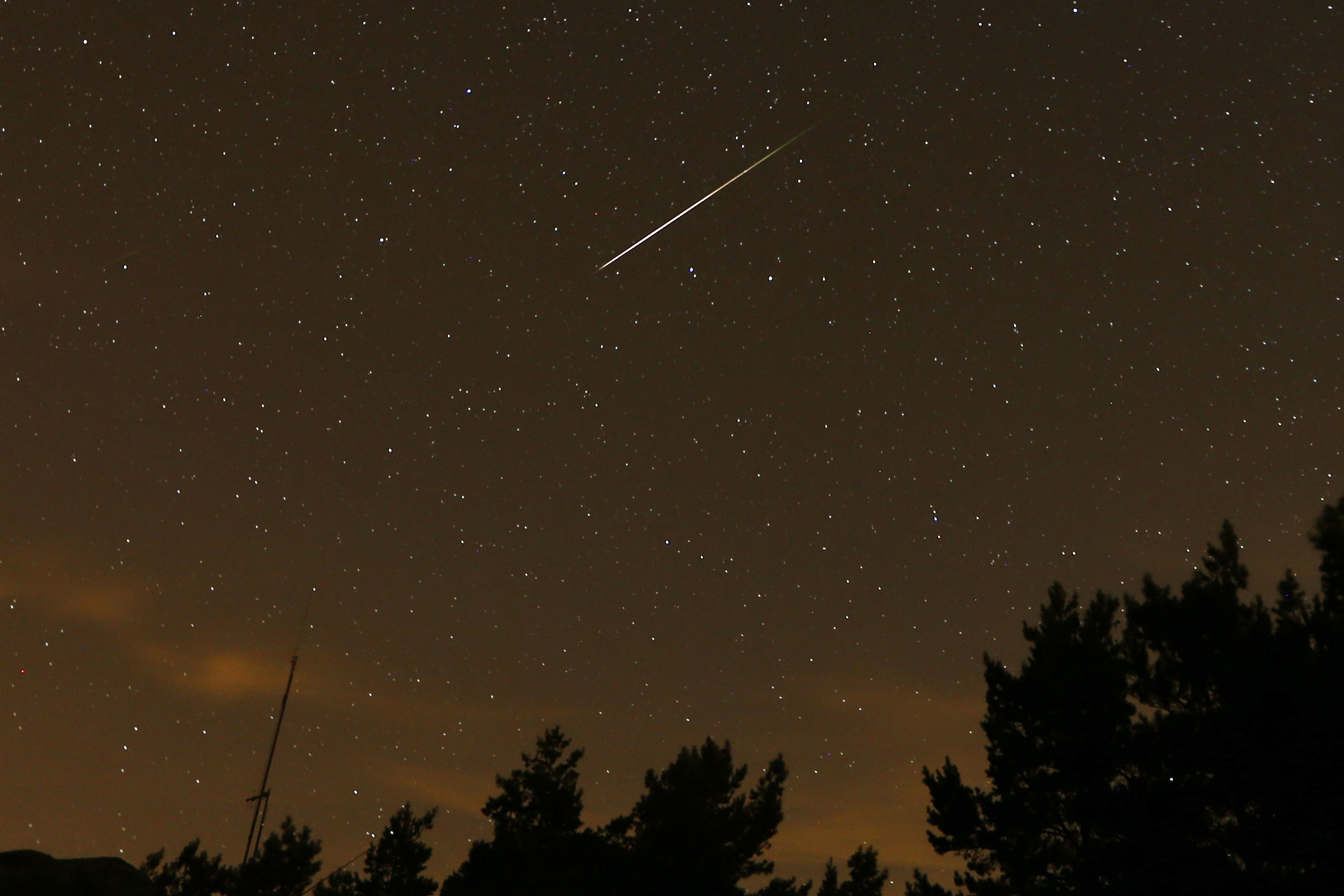
    For star power, however, the annual Perseids meteor shower, which will be peaking late Wednesday night and early Thursday, may outshine them both as the moon gets out of the way to prepare for its big night at the end of the month.

    The Perseids should put on quite a decent show this year for those who have access to reasonably dark skies and do not mind staying up a little late.

    These things can produce 50 to 100 meteors an hour under ultra-dark sky conditions, but you won’t see that many above light-polluted Philly.

    Above the darkness-challenged Philadelphia Museum of Art, you might be able to catch 10 an hour, said Bill Cook, NASA’s meteoroid guru at the Marshall Space Flight Center in Huntsville, Ala.

    The potential spoiler in all this would be the state of the skies, which are expected to be sunny Wednesday. But just how cloud-free they will be at night is not clear just yet, said Patrick O’Hara, meteorologist with the National Weather Service in Mount Holly.

    The weather service is calling for mostly clear skies late Wednesday night, but some clouds may roll in after midnight, and it says the forecast contains “a frustrating level of uncertainty.”

    About the eclipse

    The eclipse has been generating media attention, and it is going to be a spectacular show — if you happen to be in Greenland or Iceland or northern Spain, places that will experience the haunting magic of totality, which will occur around 1:45 p.m. Philly time.

    Locally?

    “Philly just isn’t in the right place for any good eclipse viewing this time around,” said Teddy Kareta, assistant professor of astrophysics and planetary science at Villanova University.

    Only about 8% of the sun will be blocked out at Philly’s latitude, said Dwight Dulsky, with the Bucks-Mont Astronomical Association.

    Said Kareta, “That’s a small enough change that … I don’t think I’d even notice.”

    Dulsky said the Bucks-Mont group “will be doing some safe solar viewing” of the eclipse in the marina parking lot of Nockamixon State Park, in Upper Bucks County.

    If you’re jonesing for a totality experience, NASA will be showing the whole thing live on YouTube.

    The parade of planets

    Early risers (or late stay-uppers) on Wednesday can admire a planet parade in the western sky, or at least some of its participants.

    Four planets — Jupiter, Mercury, Mars, and Saturn — will be lined up and visible to the unaided eye, said Kareta, though Jupiter and Mercury may be elusive, since they will be close to the horizon.

    The line may be slightly less orderly on the 13th, but may not look much different from the perspective of the average earthling, Kareta added.

    If you miss the planet show, Kareta advises that these things may be special but are not exactly rare. A similar alignment occurred “about a year ago,” he said.

    “As an astronomer,” he said, “I find these planetary alignments more fun and beautiful than I find them super interesting.”

    The Perseids are about to peak

    Several hours after the moon gets in the sun’s way Wednesday, it will be fortuitously out of the way for the annual Perseid meteor showers.

    As many as 50 to 100 meteors per hour may appear at their absolute peak, which this year would be in the early morning hours of Thursday.

    You would not find that absolutely dark sky anywhere around the city, but NASA’s Cook estimates that about 20 an hour might be visible over, say, Malvern. Similar numbers may appear in the open spaces of Valley Forge National Historical Park.

    Elsewhere in the great Philadelphia city-state, French Creek State Park, bordering Chester and Berks Counties, is a favorite among local sky watchers, and the prime viewing area is open all night.

    At least a few watch parties are planned, including one by the Bucks-Mont group from 8 to 11 p.m. at the Nockamixon park, Dulsky said.

    Also, the McKaig Nature Center in Upper Merion Township, Montgomery County, will be taking a busload of meteor-gazers to a clearing overlooking the McKaig Woods.

    The Perseids are so named because they appear to radiate from the constellation Perseus, but they show up all over the sky. They are the most popular among the 30 or so showers visible in the night sky annually.

    The Geminids, in December, outnumber the Perseids, but people prefer warmth with their meteor-watching. Plus, NASA reports that the Perseids are by far number one for those spectacular fireballs.

    The meteors are the result of debris from the comet Swift-Tuttle, one of the larger meteor-producing comets, having a diameter of about 15 miles.

    The earth encounters Swift-Tuttle detritus every year around this time, and those cosmic pebbles become bright streaks as they enter Earth’s atmosphere at 130,000 mph. If they’re big enough, they explode into fireballs.

    Cook says that while the moonless skies offer the ideal background, this will not be an especially prolific year for the Perseids. He said the 2028 harvest will be more abundant, when the earth passes through “a denser stream” of the comet’s sheddings.

    That once-in-a-blue-moon event

    The moon will be returning later in the month, on Aug. 31, as the second full moon of August, thus a “blue moon.” Like those planetary alignments, it is something to expect once in a blue moon.