The U.S. Treasury Department permanently repealed a rule Tuesday that required businesses formed in the United States to report who owns them to federal financial-crimes investigators.
Foreign companies and pooled investment vehicles (such as mutual funds or hedge funds) must still report information about foreign owners. But they will no longer have to identify Americans who help them register to do business in the United States, according to a Treasury Department advisory. And Treasury will delete any information it has already collected about U.S. business owners, the advisory said.
In a statement, Treasury Secretary Scott Bessent said the new rule eliminates “a burdensome reporting requirement for millions of law-abiding business owners without compromising our national security.”
Senate Banking Committee Republicans quickly thanked Treasury for “standing up for job creators.” But Democrats and some national security experts criticized the move, which they said would make it easier for drug cartels, human traffickers and money launderers to use anonymous shell companies to avoid detection.
Richard Nephew, who led anti-corruption efforts at the State Department during the Biden administration, called the move “a terrible decision that opens up the U.S. to financial crime, money laundering and corruption.”
The reporting requirements were implemented in January 2024 during the Biden administration as part of an effort to curb illicit finance. It stemmed from the Corporate Transparency Act, which was included in the National Defense Authorization Act and enacted into law in 2021 after Congress overrode President Donald Trump’s veto. It required U.S. and foreign companies doing business in the country to report information about “beneficial owners” — people who have “substantial control” over the company or own at least 25% of it — to Treasury’s Financial Crimes Enforcement Network (FinCEN).
The CTA was supported by law enforcement officials, the American Bankers Association, and human rights advocates, who said it would combat the corrupt use of anonymous companies, known as shell companies. But it immediately drew fire from the National Small Business Association, which pushed Congress to repeal the act and sued the Treasury Department, arguing that the reporting requirements disproportionately affected small-business owners.
In March 2025, the Trump administration announced that it would temporarily suspend reporting requirements for U.S. businesses and American owners of foreign companies. On Tuesday, Treasury made that decision permanent. In a FAQ on the new rule, Treasury said FinCEN and federal law enforcement agencies have multiple alternative sources of information to prevent domestic companies from engaging in money laundering or financing terrorism that it does not have for foreign companies.
Small Business Administration Administrator Kelly Loeffler praised the decision, writing on social media that it will save American businesses $6.7 billion in compliance costs over the next decade.
Sen. Elizabeth Warren (Massachusetts), the top Democrat on the Senate Banking Committee, called the decision “a gift to cartels, criminals, and U.S. adversaries that exploit shell companies to move millions through our financial system.”
Editor’s note: This article has been updated to correct the background of the implementation of the Corporate Transparency Act.
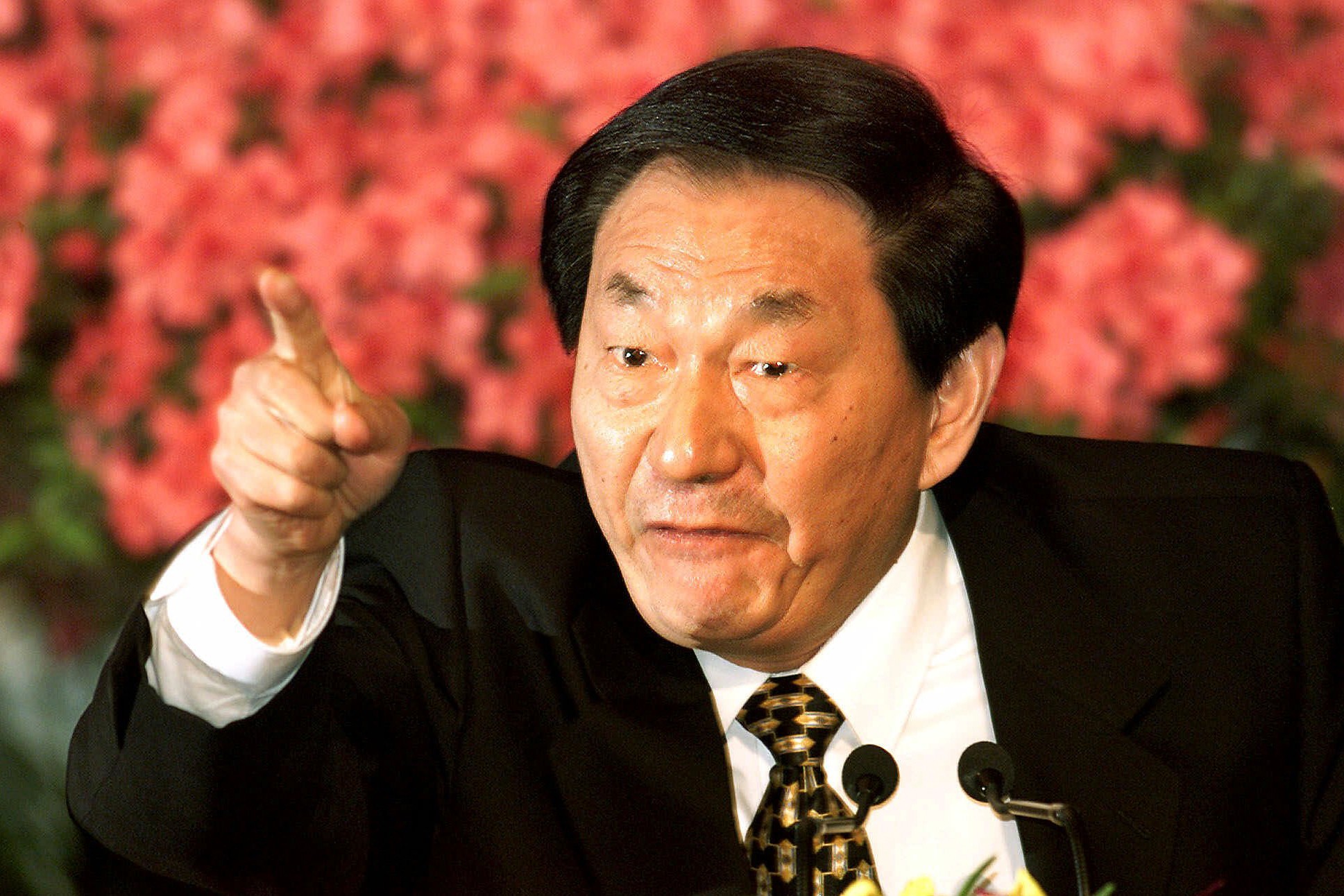
BEIJING — Former Chinese Premier Zhu Rongji, the impatient, sharp-tongued reformer who helped ignite China’s explosive economic boom by forcing wrenching change on state industry in the 1990s and leading the country into the World Trade Organization, has died of illness, state media reported Wednesday. He was 97.
Mr. Zhu died in Beijing at around 11 a.m. on Wednesday, the official news agency Xinhua reported.
Once sent into rural exile to do manual labor for praising reforms in other communist countries, Mr. Zhu pushed through a dizzying array of changes as premier, China’s top economic post, from 1998 to 2003 under former President Jiang Zemin.
Mr. Zhu clashed with Communist Party conservatives and state industry bosses as he pushed state-owned companies to become efficient and profitable. That cost millions of layoffs, but helped propel China to overtake Japan as the second-largest economy behind the United States in 2010.
Building on former leader Deng Xiaoping’s 1979 reforms, Mr. Zhu is credited with supplying the resourcefulness and tenacity to push through history-making changes such as China’s WTO membership, which helped to transform China into the world’s biggest exporter.
Those changes helped to keep economic growth above 8% a year from 2000 to 2010, peaking at 14.2% in 2007.
A spiky personality who fought corruption and conservatives
Named premier in 1998 at age 69, Mr. Zhu became a popular figure by criticizing official bungling and graft and accepting blame when the government fell short. His demanding style earned him the nicknames Boss and Zhu Fengzi, or Madman Zhu.
“I have prepared 100 coffins here — 99 for corrupt officials and one for myself,” Mr. Zhu said in 1998, according to the party newspaper People’s Daily.
Mr. Zhu ranked No. 3 in the party hierarchy behind Jiang and Li Peng, chairman of the ceremonial legislature, the National People’s Congress. But he was a technician without his own power base. Mr. Zhu complained that allowed officials to ignore his orders.
Mr. Zhu made his name as a deputy premier in the 1990s by crushing inflation. He enforced price controls and cut off loans to money-losing state companies, rebuffing resistance by local leaders — a pattern Mr. Zhu would repeat as he fought conservatives over the pace of reform.
Mr. Zhu led efforts to secure WTO membership following marathon negotiations that began in the 1980s. That status would enshrine free trade as a national commitment, giving Mr. Zhu a tool to force local officials to stop protecting favored companies.
Mr. Zhu’s campaign was nearly derailed when he went to Washington in 1999 with market-opening concessions to win U.S. endorsement of the WTO bid. The Clinton administration rejected the offer as inadequate, while his political enemies at home accused him of offering too much, but Zhu survived and China went on to join the body in December 2001.
Mr. Zhu launched China’s home ownership boom in 1998 with an initiative to sell apartments owned by state companies. Families rushed to buy, and within a decade the majority of urban housing was privately owned.
Still, Mr. Zhu was less an advocate of free enterprise than a skilled bureaucrat who carried out party orders to whip state industry into shape.
Mr. Zhu showed no interest in privatizing the economy. He played a key role in drafting plans in the 1990s to turn banks, airlines, oil companies, and other enterprises into profit-oriented corporations but to retain government ownership.
Zhu stood out for admitting official failings
Born Oct. 23, 1928, in Mao Zedong’s home province of Hunan, Mr. Zhu paid an early price for his willingness to take risks and speak out.
After a start as an economic planner, his career went into a 22-year eclipse when he was labeled a “rightist” in 1957 for praising reforms in Hungary and Yugoslavia. He was banished to the countryside during the 1966-76 Cultural Revolution to do manual labor.
Rehabilitated in 1979, Mr. Zhu rose swiftly, becoming deputy Shanghai party secretary in 1987 and mayor the next year.
As mayor in 1989, Mr. Zhu gained a reputation for moderation when he placated protesters and pledged not to call in the military.
“He managed to defuse, with considerable subtlety, a tense political situation that could have developed into localized violence or worse if the military had felt it necessary to intervene,” wrote Australian diplomat Shelley Warner in the 1991 book The Pro-Democracy Protests in China: Reports from the Provinces.
Mr. Zhu’s boss, Jiang, would soon be called to Beijing by Deng and made party leader. Mr. Zhu was named deputy premier in 1991 and joined the party’s ruling Standing Committee in 1993.
Mr. Zhu broke with the leadership’s stance of infallibility by admitting and taking blame for official failings.
In 1998, after summer floods killed 4,150 people and officials were accused of embezzling money meant for anti-flood dikes, Mr. Zhu complained some barriers were no stronger than bean curd.
Three years later, he apologized on national television for his cabinet’s failure to protect the public after an explosion in a schoolhouse in southern China killed at least 42 people, most of them children.
Mr. Zhu enlivened the party’s bland image by cracking jokes in public, sometimes at his own expense. Laughter erupted at a 1999 news conference when he said a recent photo “made me look like a dead man.”
One of Mr. Zhu’s proudest triumphs as deputy premier was to craft a tax system that required local officials to hand more revenue to Beijing. He said in 1996 that he deserved a Nobel Prize in economics for that.
Mr. Zhu rarely appeared in public after leaving office as premier.
Mr. Zhu was married to Lao An, a fellow Hunan native. Their son, Yunlai, also known as Levin Zhu, is a former CEO of China International Capital Corp., a government-owned investment bank.
Their daughter, Yanlai, led a charity organization supporting schoolchildren that was backed by Zhu Rongji.
Two people charged with participating in an international scheme to rig basketball games for professional gamblers pleaded guilty in Philadelphia’s federal court Wednesday — the latest development in a scandal that shook the sports world when prosecutors unveiled a sprawling set of indictments earlier this year.
The pleas entered by Bradley Ezewiro and Alberto Laureano mean that half the 26 people charged with participating in the scheme have admitted their crimes in court or have signaled in paperwork that they intend to do so before trial.
None of the defendants has been sentenced, and cases remain pending against some of those charged with taking more active roles in the conspiracy — including Shane Hennen, a former Philadelphia resident and prolific sports bettor whom prosecutors have described as a key organizer.
Still, Wednesday’s guilty pleas — which proceeded with little fanfare — served as a notable moment in a case that has attracted widespread attention as federal authorities across the country in recent years have increasingly been unveiling charges in sports gambling-related prosecutions.
The U.S. Attorney’s Office announced the charges in January, saying it had arrested 26 people, including 20 basketball players, for participating in a multiyear scheme to fix games in the NCAA and the Chinese professional league.
The scam was relatively straightforward, prosecutors said: Professional gamblers and some basketball trainers bribed players to underperform in games, and bettors then wagered against the players’ teams at various sportsbooks. The conspiracy involved dozens of games and millions of dollars in fraudulent bets, prosecutors said.
Some of the bets were placed by Hennen or others in Philadelphia, prosecutors said, including a six-figure wager on a Chinese basketball game at Rivers Casino’s sportsbook in Fishtown.
And some of the NCAA players charged with participating in the scheme spent time in the Philadelphia area, although none was accused of accepting bribes while playing for a local university.
Ezewiro and Laureano each pleaded guilty Wednesday to bribery-related charges. Both were accused in court documents of playing supporting roles in the scheme.
Laureano served as a “fixer” who recruited players into the conspiracy and sometimes delivered them bribe money, prosecutors said.
Ezewiro joined the operation in 2024 while playing for St. Louis University, and also worked with another fixer to identify other players to bribe, prosecutors said.
Their pleas came several days after other accused coconspirators also pleaded guilty.
Over the last week, two former players at the University of New Orleans — Cedquavious Hunter and Dyquavion “Jah” Short — admitted accepting bribes while they played on that team.
And last week, Shawn Fulcher pleaded guilty to taking bribes while playing at two schools, prosecutors said: the State University of New York at Buffalo and Alabama State University.
U.S. District Judge Nitza I. Quiñones Alejandro has scheduled sentencing hearings in the coming months for the people who have pleaded guilty.
A trial for the remaining defendants, meanwhile, is currently scheduled to take place early next year.
Immigration and Customs Enforcement officers may soon be outfitted with gloves that can deliver painful electric shocks intended to gain compliance from combative individuals.
ICE plans to spend up to $20 million to purchase thousands of “conductive distraction and de-escalation devices” for officers and agents by March, according to a notice published Monday by the Department of Homeland Security.
The devices are known as the G.L.O.V.E., which stands for Generated Low Output Voltage Emitter, and are manufactured by Compliant Technologies LLC of Lexington, Ky. They have been used in recent years by some jails and police departments.
DHS said Tuesday that it was working on a response to an Associated Press inquiry and offered no immediate comment. Jeff Niklaus, the founder and CEO of Compliant Technologies, wrote in an email, “Unfortunately, we are unable to speak on this subject.”
The notice said the solicitation for a no-bid contract could be published as early as Friday.
Compliant Technologies says the devices function as a normal pair of patrol gloves until officers press a switch to activate their electrical mode. The gloves must be applied directly to someone’s skin to deliver a pain stimulus that typically helps an officer gain compliance within seconds, according to the company.
“It’s immediate and sharp, and it will distract you. I call it like a bee sting,” said John Peters, president of the Institute for the Prevention of In-Custody Deaths, who is studying how the device has been used. “If the officer is getting any type of resistance from the person, this is certainly an effective tool.”
Peters said he believed ICE’s planned purchase would likely be the largest from the company to date. He said he could envision ICE officers using the gloves to help remove uncooperative subjects from cars and houses and in and out of detention facilities.
“For smaller officers or weaker officers or older officers, I think it has a great advantage” because it can produce faster takedowns and shorten confrontations, he said.
The manufacturer warns the device should not be used as punishment, against people merely exhibiting “verbal defiance or belligerence” or on high-risk populations such as children, pregnant women, or elderly or disabled people.
Jenn Rolnick Borchetta, deputy project director on policing at the American Civil Liberties Union, said the public should have no confidence that ICE officers will use the devices appropriately. She questioned why the devices would be necessary for civil immigration enforcement and noted those getting shocked might have no advance warning.
“ICE spent the last year showing this country they are too quick to use force. Now they will be able to deploy electric shocks with the slight push of a button that maybe nobody else can see them do,” she said. “Introducing gloves that can so easily be used to deliver terrible pain in encounters is a recipe for harm to the public.”
Supporters say the devices are generally used in specific jail and transport situations, rather than broadly to patrol on the streets. They have been used to subdue violent suspects who are refusing to get into squad cars and inmates who are harming themselves and threatening officers, according to Compliant Technologies.
Peters said he expected the devices to be misused by a small number of employees, as with other policing technologies, but he said they are unlikely to cause injuries. He said it would be important for ICE to have robust policies and training in place.
To use the device, officers must complete a course and be recertified every two years, the manufacturer says.
Battleship New Jersey will soon undergo another facelift through a $24.25 million redevelopment project tackling work on and off the ship.
The project, which could take about two years to complete, includes an expanded visitor center, double the parking, and a new event space.
Marshall Spevak, Battleship New Jersey’s CEO, said it is the biggest capital investment in the ship since it opened its doors 25 years ago.
Big J, nearly 2½ football fields long, returned to the Camden waterfront in June 2024 after the World War II-era vessel was dry-docked in Philadelphia for 78 days while it received multimillion-dollar routine maintenance, repairs, and a paint job for the first time in three decades.
Back on the water, the Battleship New Jersey Museum and Memorial announced plans Wednesday for infrastructure improvements to the ship, along with landside renovations, that are scheduled to start during the second or third quarter of 2027.
The visitor center at 62 Battleship Place has not changed much since the USS New Jersey went public in 2001, Spevak said.
Camden Mayor Victor Carstarphen finishes his talk on the Battleship New Jersey during a news conference Wednesday, Aug. 12, 2026 to announce the museum’s multimillion-dollar renovation. Tom Gralish / Staff Photographer
At the time, the center was deemed temporary. At less than 4,000 square feet, Spevak said, the structure was comparable to a Butler building — a cost-effective, ready-made storage warehouse — and to a shipping container.
But after 25 years, the nonprofit is looking to build something permanent.
“Right now, we do what we can,” Spevak said. “But this entire project is building a campus that’s worthy of the ship.”
The new $9.5 million visitor center, at the same address, will be about 8,700 square feet, more than double its current size. The facility, three stories with a roof deck, will include a new store, a small cafe with a commercial kitchen, exhibit and collection spaces, and offices for staff.
The plan will also add a level to the current parking lot at Wiggins Marina, which will double visitors’ parking options to 240 spaces.
Battleship New Jersey’s new visitor center, set to start construction in 2027, will sit along the Camden waterfront in South Jersey. This rendering by PS&S shows the northeast aerial view of the upcoming center.PS&S
That $5 million parking project will allow all visitors to park in one place, Spevak said, and hopefully resolve confusion drivers currently face when their GPS devices lead them to various spots along the waterfront.
Battleship New Jersey will also undergo $6 million in upgrades on board, including a new private event space on the main deck, painting and repairs to the ship’s superstructure, new exterior lighting, accessibility improvements, a better generator system, more than $1 million in bathroom renovations, pier repairs, elevator shaft fixes, and more.
The U.S. Army Corps of Engineers is also set to dredge Big J’s berth, or remove sediment and silt from where the ship currently sits. Spevak said that likely will not take place until the second half of 2027, when the ship will close for a couple of weeks while it temporarily relocates during the dredging process.
PS&S, an architectural and engineering firm based in Cherry Hill, is leading the project, Spevak said, with help from engineering firm Pennoni. A general contractor has not been assigned to the project yet, though Spevak said that decision could come later this year.
Battleship New Jersey’s new visitor center, set to start construction in 2027, will sit along the Camden waterfront in South Jersey. This rendering by PS&S shows the west elevation of the upcoming center.PS&S
The New Jersey Economic Development Authority will support the project with $19.9 million in tax credits awarded through its Cultural Arts Facilities Expansion program, according to Camden County officials. The program incentivizes capital projects at arts and culture spots statewide.
Because Battleship New Jersey is a public charity and does not pay taxes, the nonprofit has a buyer lined up to purchase the tax credits, Spevak said, which will allow the organization to pay down its debt service on the project.
Spevak said the nonprofit could not have pursued the renovations, which he hopes will help revitalize the Camden waterfront, without the state program.
“This project is what will keep us growing on the waterfront,” Spevak said.
After the tax credits, the outstanding project costs come from “a mix of Battleship funds, revenue, and investments along with a grant from the Camden County Open Space & Historic Preservation Fund,” Spevak said in an email.
Camden County will help out, too.
Spevak said the county will support the structure by giving the nonprofit a long-term lease for the parking garage, provide some cash equity, and guarantee the bond required for the project, which allows Battleship New Jersey to borrow using the county’s bond rating and get better interest rates.
The Montgomery County Intermediate Unit’s board of directors plans to tighten its professional development and travel policies after learning in March that its leaders had used their agency credit cards to purchase overseas trips — including a 14-day African safari — without the board’s knowledge.
Mark Klein, an attorney and former schools superintendent who conducted a two-month investigation into the trips, told board members at a virtual meeting Tuesday night that, going forward, the board should require Montco IU leaders to receive board approval for travel.
The current policy, which Klein said includes no such requirement, is “in conflict with many of the school districts that are in the area.” He noted that it is not an unusual policy for an intermediate unit.
The outside investigation began after The Inquirer reported in March that the Montco IU’s executive director, Regina Speaker, and its assistant executive director, Sandra Edling, had used their procurement cards to book about $40,000 worth of international travel since 2023.
Speaker has defended the 2023 trip she and Edling took to Kenya and Tanzania, which culminated a yearlong academy for education leaders run by the School Superintendents Association, known as AASA.
The itinerary included a trip to a tribal school, as well as 11 nights in “handpicked hotels,” six sightseeing tours, and eight wildlife drives in search of zebras, monkeys, lions, baboons, cheetahs, hippos, elephants, wildebeests, and “the exceedingly rare black rhino.”
“Everything was through the lens of leadership,” Speaker previously told The Inquirer. “It was about that process of survival of the fittest, and how are you a leader, and what do you prioritize.”
At Tuesday night’s meeting, however, Speaker apologized for the lack of “adequate transparency” around her travel.
“For anyone who felt disappointed, concerned or uncertain because of my decision, I sincerely apologize,” Speaker said. “I never take your confidence or trust for granted. I remain committed to serving with integrity, humility, and transparency.”
Records obtained by The Inquirer last year through a Right-to-Know request showed that Speaker in May 2023 made about $9,000 in purchases related to the Africa trip without providing receipts. The only mention of Africa in the records appeared months later when she purchased a Tanzanian eVisa for $139.
The Montco IU’s then-board president did not sign off on the expenses until after Speaker had returned from Nairobi.
Klein did not directly address those issues in his presentation Tuesday. He recommended that the intermediate unit conduct an audit of how procurement cards are used.
Speaker, whose base salary was $298,000 last year, also traveled to South Korea and Singapore for 11 days in April 2025 as part of a $13,000 leadership academy.
The profile of Dr Regina C. Speaker on Montgomery County Intermediate Unit’s website.Courtesy of MCIU
Gary Ledebur, a Montco IU board member who also sits on the board of the Upper Merion Area School District, said that while Speaker, according to Klein’s findings, did not violate any policies, “I think Dr. Speaker took advantage of this lack of policy.”
“In my opinion, she exhibited an error in judgment,” Ledebur said. “I wish she had chosen not to go on these trips.”
The intermediate unit, which provides support services to more than 200 area schools, is one of 29 state-mandated agencies in Pennsylvania. It has a $198 million budget and receives a mix of local, state, and federal funding.
The full 21-person board, which is composed of members from each school district board in the county, will meet later this month. It is expected to accept Klein’s recommendations.
“We have found some gaps in our policies, and now that we know that, we’re going to do better,” Margaret Wright, president of the intermediate unit’s board, said Tuesday night.
Expense reports show that in March 2025, Edling, whose base salary last year was $215,000, used her procurement card to make about $7,000 in purchases related to what is described on the purchasing log only as a “conference.” The documents did not name a location or offer specifics.
The Inquirer reported that the expenses were for a planned 10-day trip to Germany, Switzerland, and Austria in October 2025 sponsored by AASA, the same superintendents group that organized the African safari.
“Ascend into the Alps for an evening of true Swiss hospitality,” reads the itinerary. “As you feast on beautiful views from your hosts’ mountain chalet, enjoy traditional food, entertainment and fun Swiss games and activities.”
Two school visits were also planned, according to a brochure, in addition to quick-tempo Viennese waltz lessons, an underground train ride into Austria’s ancient Hallein Salt Mine, and a “journey to crazy King Ludwig’s fairy tale castle of Neuschwanstein.”
Edling ended up not going on that trip. Speaker said the IU subsequently froze all travel amid Pennsylvania’s budget impasse that had held up much of the intermediate unit’s funding. (The cancellation also came after The Inquirer had requested the records. Speaker said the IU was able to get a refund for that trip.)
After The Inquirer’s story was published, about 50 people showed up for the Montco IU’s next board meeting, which are usually sparsely attended. At least 225 more joined by Zoom. Intermediate unit employees expressed outrage.
“The trips felt deceptive and intentionally secretive, and I struggle to understand how they related to our mission,” Liz Forcellini, an occupational therapist at the IU, told the board, adding that some staffers were paying for supplies with their own money.
Public finance experts said the trips raised larger questions about whether taxpayers should pay the full cost of professional-development outings that include substantial leisure time. Some school administrators who went on the Africa safari paid for it out of pocket, including the head of a New Jersey education service agency who said she also took vacation days.
“Most of us would consider it a dream trip,” Andrew MacLeod, a personal care assistant at the IU, told the board at the March 25 meeting.
The saga took a bizarre turn the following evening when Kimberly Wheeler, then a member of the Montco IU board, falsely stated at a public meeting of the Souderton Area School District’s board of directors that The Inquirer reporter who wrote the story “right now is under investigation with the Philadelphia police for misleading information, and reporting on inaccurate information.”
Sgt. Eric Gripp, a Philadelphia police spokesperson, said in June that the department does not conduct criminal investigations of journalists for their reporting.
Wheeler later walked back her remarks about a police investigation and said she had been “going by the word of Dr. Speaker.”
Asked for comment at the time, Speaker sent a 2023 news release issued by Philadelphia Sheriff Rochelle Bilal’s office complaining about a story that had exposed financial problems in her office that year. It made no mention of a police investigation.
Staff writer Maddie Hanna contributed to this article.
Food insecurity nearly doubled in New Jersey since 2020, with some 1.2 million people struggling to regularly afford food here, according to a nonprofit analysis of federal data.
Statewide, 13% of Garden State residents could not always count on three meals a day in 2024, the latest federal figures available, up from 7.4% in 2020, according to a new analysis of U.S. Department of Agriculture figures released by the nonprofit advocacy group Feeding America. That included nearly 330,000 children, the analysis found.
Hunterdon County had the least food insecurity in 2024, with just 7.2% of its residents struggling to put food on the table, while Hudson had the highest rate, with 19.1%, Feeding America found.
Feeding America has surveyed food insecurity since 2011 and produces the annual “Map the Meal Gap” study to help illustrate the scope of the problem. Nationwide, nearly 48 million people — 14.4% of Americans — meet the federal definition of food insecure, meaning the household did not earn enough to always afford food.
The latest report notes that the U.S. Department of Agriculture has since canceled its collection of food-security data.
“Feeding America is collaborating with the nationwide network and partners to explore alternative data sources to ensure local updates can continue in 2027 and beyond,” the organization said.
In New Jersey, close to 900,000 people benefit from federally funded food stamps, which provide cash payments based on their income level to help them afford groceries. These payments, which average $194 a month, have been shown to reduce stress and boost the local economy, prompting some $33 million in direct spending between 2023 and 2025, according to a report commissioned by the state Department of Human Services, which oversees the food stamp program, formally known as the Supplemental Nutrition Assistance Program, or SNAP.
“SNAP remains a critical lifeline that helps ensure families can meet their basic needs and maintain food security,” Human Services Commissioner Stephen Cha said when the office released that data in June.
New Jersey’s food stamp program costs $1.9 billion annually, most of it traditionally covered by federal funding. Feeding America said it would have cost another $920 million to eliminate food security in New Jersey in 2024.
Changes enacted by the Trump administration recently shifted some of the cost of the food stamp program to state governments. Other changes, including new rules requiring certain recipients to prove they are working, in school, or caring for a loved one at least 20 hours a week, could reduce benefits for some people and force at least 47,000 people from the food stamp program entirely, experts warn.
In 2022, the state launched the New Jersey Office of Food Insecurity, as part of the Department of Agriculture, to help more families access nutrition. New Jersey had the fifth-lowest prevalence of food insecurity nationwide in 2024, according to the office.
NAQOURA, Lebanon — As the cars advanced down the coastal road here at the southwestern tip of Lebanon, the flags came into view. The yellow and green banner of Hezbollah. The red, white, and green tricolor of Iran. Finally, a few miles from the border, the blue and white standard of Israel.
“Turn back,” an Israeli soldier warned, in English, through a megaphone. “You don’t have authorization.”
The convoy of church officials and humanitarian workers, approved by United Nations peacekeepers to visit three towns inside Israeli-occupied Lebanon, retreated to seek new authorization.
For the few inhabitants who have remained in southern Lebanon since Hezbollah and Israel renewed fighting in March, such incidents have become common. Israeli officials say they need to occupy the 75-mile-long, 6-mile-wide buffer zone to dismantle Hezbollah’s infrastructure and prevent the group from launching drone and missile attacks into northern Israel.
The announcement by Secretary of State Marco Rubio in June of a preliminary deal in which Lebanon would disarm Hezbollah and the Israel Defense Forces would gradually withdraw from the country has had little impact on daily life here. Instead, Israeli officials have indicated they are unlikely to end the occupation soon, and residents are seeing parallels to the Israeli security protocols that vex Palestinians in the occupied West Bank.
“We are trapped in a prison,” said Ayoub Khreish, mayor of Ain Ebel, a predominantly Christian town an hour east of Naqoura. Even ambulances need permission to enter and leave, he said. “We drive and we pray.”
President Donald Trump is attempting to keep the peace here in part to advance talks with Iran. Tehran has repeatedly tied a ceasefire with the United States and Israel to an Israeli withdrawal from Lebanon. Israeli strikes on Beirut in June almost derailed a deal, and Iran signaled over the weekend that it would not reopen the Strait of Hormuz unless attacks in Lebanon stopped.
A damaged and abandoned Lebanese military checkpoint just north of the Israeli buffer zone in Naqoura, Lebanon.Guy Peterson
Trump, hosting Lebanese President Joseph Aoun in the Oval Office last month, pledged support for the war-torn country, including an easing of flight restrictions. When asked about the withdrawal of Israeli troops from Lebanon, he said, they were “in the process of redeployment.”
Under a U.S.-brokered deal, Israel has carried out a small, phased withdrawal in “pilot zones” and ceded control to the Lebanese Army. But there have been no indications of a more substantial redeployment on the horizon.
In a visit to occupied south Lebanon on Wednesday, Israeli Defense Minister Israel Katz vowed to maintain the buffer zone. He asked troops to prepare for a “long-term presence on the ground.”
The IDF has increased strikes elsewhere in southern Lebanon in response to what it says are ceasefire violations by Hezbollah.
Israeli Prime Minister Benjamin Netanyahu told Fox News last month that some Lebanese Christian towns had “asked to be annexed to Israel” for protection against Hezbollah militants. He did not name the towns or provide evidence. Last week, a map published by the Israeli Foreign Ministry appeared to incorporate southern Lebanon into Israeli territory. (It was later deleted.)
Officials in several Christian towns quickly refuted Netanyahu’s claim. “We do not want to be part of Israel,” Sandy Diab, a native of Ain Ebel, told the Washington Post. “We are very proud to be Lebanese.”
The aid convoy was organized by L’Oeuvre d’Orient, a Catholic nonprofit based in Paris, which coordinated with U.N. peacemakers and the U.S.-led mechanism monitoring the ceasefire between Hezbollah and Israel.
A convoy of aid vehicles drives just north of the Israeli buffer zone in Naqoura, Lebanon, last month. Guy Peterson
Most of the 15 convoys the group has sent here since the fighting resumed in March have reached their destination uninterrupted, its director said, but conditions on the ground are fluid. The Christians who have remained in southern Lebanon, the Rev. Hugues de Woillemont said, ”are showing remarkable courage and determination.”
Like many in southern Lebanon, Christians have been caught in a war they did not choose. The conflict has cut them off from the rest of the country; at its height in March and April, fuel and internet interruptions left many dependent on outside aid.
The continuing scarcity of basic goods in Ain Ebel is driving up prices, Khreish said. “Everything here is 25 percent more expensive than Beirut.”
Farmers leaving their homes to tend to their crops in the countryside need prior approval, the mayor said, and ongoing airstrikes by both sides have scared away the honeybees that produced honey.
The aid convoys have been escorted by U.N. peacekeepers. Their term expires at the end of the year; who will take over their role is unclear.
“What [the people here are] saying, and you don’t need a diploma to understand, is that they want to live, live in peace” said Col. Maxime Laudet, an officer with the French contingent to the decades-old U.N. Interim Force in Lebanon.
The Rev. Hugues de Woillemont meets with the French captain of the United Nations Interim Force in Lebanon. Guy Peterson
Laudet’s troops worked with L’Oeuvre d’Orient to help renovate a sports facility here to give local youth more recreational opportunities and to prevent a further decline in the population. “They’re a bit upset because ties with the north are complicated.”
Only a few towns in the buffer zone remain inhabited. Katz has said the IDF had destroyed 24 Lebanese villages and currently occupies 270 square miles of Lebanese territory.
The majority Shia population, which Hezbollah claims to represent, has mostly fled.
The people who remain, De Woillemont said, are “exhausted and anxious.”
“Their request is very simple,” he said. “To be able to live safely and with dignity on their own land, without being forced to leave.”
Bryson Stott has worn plenty of unusual cleats over the years, from his many Phillies-themed kicks to last year’s Elmo-inspired Sesame Street footwear to honor his daughter, Braxtyn.
That’s thanks to a partnership with Ryan Stevens and his company, NXT LVL Customs, which dates to 2023. And the latest cleats Stevens and NXT LVL Customs have unveiled for Stott honor an iconic baseball movie.
On Thursday, Stott will wear a custom pair of cleats for the Phillies’ Field of Dreams game (7:30 p.m., Netflix) against the Minnesota Twins in Dyersville, Iowa, where the 1989 Field of Dreams movie was filmed. The design features late Phillies legends Harry Kalas, Tug McGraw, Roy Halladay, Darren Daulton, Robin Roberts, and Richie Ashburn emerging from a cornfield, just like the old MLB stars did in the movie.
“Basically, you have these old-time legends come out of the cornfield, and I was like, ‘OK, well, how can we kind of spin that to make it like the Phillies legends from the past that have passed away?’” said Stevens, who lives in Downingtown.
“When I was looking up some of the shots from [Field of Dreams], I found this really cool shot. It was during the daytime, and you had the legends coming out of the cornfield. And something that stuck out of me right away was the catcher in the movie [John Kinsella]. The way he was positioned, it kind of looked like Darren Daulton. … Then I started thinking about some of the other legends. So I was like, ‘Well, how can I incorporate someone from every era or every era as far as I could go?’”
From left: Tug McGraw, Roy Halladay, Darren Daulton, Robin Roberts, Richie Ashburn, and Harry Kalas featured on Bryson Stott’s “Field of Dreams” cleats designed by Nxt Lvl Customs and Stadium Locker.Courtesy of Ryan Stevens
Stevens knew he “didn’t want to do a silhouette or didn’t want to do a cartoon version of it,” and after he got the stamp of approval from Stott to pursue his idea, he enlisted the help of Stephen Hatala, the owner of Stadium Locker, a sports art studio, to bring the design to life. The pair had worked together on four other cleat projects.
Hatala, who lives about an hour from Stevens in Bucks County, creates realistic portraits and has only transferred portraits onto cleats four or five times, he estimates. The process began with measuring the cleats to account for uneven surfaces and a pencil-drawn sketch on white paper.
“I only had five days to paint them. We were in definitely a time crunch, and I actually finished putting the last stroke on the cleats as [Stevens] was pulling up in the driveway to pick them up,” said Hatala, who grew up a Phillies fan. “I met Bryson once before. Didn’t do cleats for him. But this time he actually got to acknowledge my artwork, which is very important to me. I like getting recognition for things that I do, and especially the Field of Dreams [cleats]. It’s a once-in-a-year chance.”
Stevens and Hatala delivered the cleats to Stott last week. What did he think of the design?
“I didn’t really tell him anything about it,” Stevens said. “This time, he was pretty taken aback. … We’ve been teasing it to him for a while, saying it was our best pair we’ve done, but, yeah, it was it was a really cool reaction.”
Added Hatala: “It just brought a little pleasure to myself. I’m like, ‘Oh wow, he’s really enjoying these cleats.’ I’d rather be in person seeing the reaction than seeing it on a screen.”
Orion Kerkering’s “Field of Dreams” cleats designed by Nxt Lvl Customs.Courtesy of Ryan Stevens
Stott won’t be the only Phillies player, past or present, with custom cleats from NXT LVL Customs on Thursday night. Phillies pitcher Orion Kerkering, outfielder Edmundo Sosa, and utility man Kody Clemens, who’s now with Minnesota, also will wear Stevens’ custom cleats.
Stevens says Clemens “wanted like the dark from the movie poster background, with the stadium lights peering down on the corner,” while Kerkering’s Adidas cleat has a “gradient dark background with the blues and the purples and the pinks, and we made the Adidas logos look like corn.”
Kody Clemens’ cleats for the Field of Dreams game on Thursday night.Courtesy of Ryan Stevens
Stevens is excited for his cleats to be on Thursday night’s national broadcast, while Hatala will attend the game in person.
“I think MLB does an incredible job with the movie, the field, the whole entire aura that comes with the Field of Dreams,” Hatala said. “The cornfield itself is a really cool graphic visual in the background, and also there’s nobody in the outfield. … I have never been there, but I’m expecting [MLB] to make it feel like a big-time high school game.”
LOS ANGELES — The Los Angeles Lakers are being sold for the second time in a year, going to businessmen Josh Kushner and Bob Iger for a record-breaking price.
This sale agreement is $12.5 billion, according to a person familiar with the terms who spoke to The Associated Press on condition of anonymity Wednesday because neither side revealed specific details of the latest stunning development with one of North America’s marquee sports teams.
ESPN first reported that Kushner and Iger are buying the NBA’s most valuable franchise. The Lakers were valued last year at $10 billion — a record for a pro sports team — when Mark Walter purchased a controlling stake from the Buss family, which had owned the team since 1979.
Kushner, a venture capitalist, and former Walt Disney Company CEO Iger had been working together on landing a possible NBA expansion team for Las Vegas. By buying the Lakers, they don’t have to wait until the possibility of expansion in the 2028-29 season at the earliest.
The sale still will need approval from the NBA’s board of governors, and that process can take several weeks. The next board meeting is set for September in New York.
The $12.5 billion price tag is not only a record for U.S. pro sports but a new summit in skyrocketing NBA franchise values. Only three years ago, Michael Jordan sold his majority stake in the Charlotte Hornets for a $3 billion valuation, while the Boston Celtics were sold last year to private equity mogul Bill Chisholm at a valuation of just over $6 billion.
Walter’s agreement to purchase a controlling stake in the Lakers at the $10 billion valuation last summer obliterated that mark, and now Iger and Kushner have pushed the bar even higher.
The 66-year-old Walter’s shocking decision to sell the Lakers after just 10 months of official ownership is reverberating throughout the team’s massive fan base, which appeared to be uniformly excited about the purchase last year. Walter has stewarded the Los Angeles Dodgers into the most successful stretch in franchise history, with three World Series championships in the past six seasons as the most aggressive spenders in baseball.
Multiple media outlets last month reported that Walter’s business empire is under scrutiny from both federal prosecutors and the Securities and Exchange Commission in tax fraud investigations.
The 41-year-old Kushner’s capital holding company, Thrive Eternal, was set to be the “anchor investor” in FIFA President Gianni Infantino’s plan to sell stakes in future World Cup profits. Infantino abandoned the idea on July 31. Kushner’s brother is Jared Kushner, son-in-law of U.S. President Donald Trump.
Josh Kushner currently owns a minority stake in the Miami Heat, and he previously owned a stake in the Memphis Grizzlies.
The 75-year-old Iger became one of Hollywood’s most well-known executives while he ran Disney for two lengthy stints between 2005 and last March, when he stepped aside. Iger and his wife, former sports journalist Willow Bay, are the controlling owners of NWSL team Angel City FC.
Walter’s purchase of the Lakers was approved by NBA owners last October. He originally bought a 27% minority stake in the team in 2021 before purchasing control of the team last year.
Walter and his partners also have ownership interests in the WNBA’s Los Angeles Sparks, English Premier League club Chelsea, the Professional Women’s Hockey League and the new Cadillac Formula 1 racing team.
When Walter bought his controlling interest in the Lakers, the deal specified that Jeanie Buss would stay on as the team’s governor. With new ownership, it’s unclear whether Buss will have a continuing role in the team she inherited along with her siblings from her father, Jerry Buss, who died in 2013.
The Lakers have won 17 championships going back to the franchise’s origin in Minneapolis, the second-most in NBA history behind Boston’s 18. It is a global brand, always at or near the top of the league’s merchandise-sales rankings.
This record sale price comes just weeks after LeBron James, the league’s all-time leading scorer, left the Lakers after eight seasons to become a free agent. James ultimately decided to sign with the Philadelphia 76ers.
The Lakers won their most recent title in 2020, and they have made the playoffs in each of the past four seasons. Their current roster is built around NBA scoring champion Luka Doncic, who is signed through the 2028-29 season.