Blog

  • Russia accuses Telegram CEO Pavel Durov of aiding terrorism in its latest digital crackdown

    Russia accuses Telegram CEO Pavel Durov of aiding terrorism in its latest digital crackdown

    Russian authorities said Wednesday they had charged Pavel Durov, the founder and CEO of the popular messaging app Telegram, with aiding terrorism, the latest step by the Kremlin to bring the internet and digital communications under its control.

    The charges against the Russian-born Durov, who lives abroad, came as authorities have sought to restrict the use of Telegram as part of a widespread crackdown on online freedom that followed Moscow’s full-scale invasion of Ukraine in 2022.

    The Federal Security Service, or FSB, said in a statement it had accused Telegram’s administration of failing to remove “numerous channels, chats and bots” allegedly used by “Ukrainian intelligence agencies, terrorist and extremist organizations to prepare and coordinate acts of sabotage and terrorism, mass murder, and cyber fraud” in Russia, which resulted in “numerous human casualties.”

    The FSB accused Ukrainian security services of using a popular dating chatbot on Telegram to lure and recruit Russians for “sabotage and terrorist activities,” and said 46 users of the chatbot, from 12 to 22 years old, have been detained in Russia over the past year for assaulting law enforcement officers, arson and other acts.

    It also said it was adding the name of the 41-year-old billionaire to international wanted lists.

    Durov had said earlier this year that Russian authorities opened a criminal investigation against him, and he accused them of fabricating pretexts to restrict access to Telegram as part of an attempt to “suppress the right to privacy and free speech.”

    If convicted, he could face up to life in prison in Russia.

    Telegram, which boasts of more than 1 billion users worldwide, did not respond to a request for comment. Its official website links to an account on X that on Wednesday posted am image of Durov raising a middle finger to the camera.

    Telegram’s website says that the company is based in Dubai and that Durov, who holds dual citizenship in France and the United Arab Emirates, lives there, too.

    Russia has sought to censor the internet

    Under President Vladimir Putin, Russian authorities have engaged in multipronged efforts to rein in the internet, adopting restrictive laws and banning websites and platforms that don’t comply and focused on improving technology to monitor and manipulate online traffic.

    Popular social media platforms, such as Facebook, Instagram and X, have been banned in Russia; YouTube has been throttled; popular messaging apps, such as Signal and Viber, have been blocked, and the most popular ones — WhatsApp and Telegram — have been restricted.

    Russia’s popular Facebook-like social media platform Vkontakte, founded by Durov long before he launched Telegram, had come under the control of Kremlin-friendly companies. Russia tried to block Telegram between 2018-20 but failed.

    While it’s still possible to circumvent some of the restrictions by using virtual private network services, many of them are routinely blocked, too.

    At the same time, Russia actively promotes what it calls a “national” messaging app known as MAX, which critics say could be used for surveillance. The platform is touted as a one-stop shop for messaging, getting online government services, making payments and other activities. It openly says it will share user data with authorities upon request, and experts also say it doesn’t use end-to-end encryption.

    The Telegram restrictions have elicited widespread discontent in Russia, and this year activists in multiple regions tried to organize protests against it, but authorities quashed nearly all their attempts.

    Military bloggers also have denounced the crackdown, arguing the app is an indispensable communications tool for Russian troops in Ukraine and for activists running crowdfunding campaigns to help Moscow’s forces.

    The government initially promised not to restrict Telegram on the battlefield, but a different message later came from the Kremlin. At a meeting with Putin for International Women’s Day, a servicewoman called Telegram “an adversarial communications tool” and agreed with him when he said that “the use of communications systems that are not ours, not under our control, poses a danger to personnel” in battle.

    Despite the restrictions, multiple Russian officials still use Telegram and regularly update their “channels” — its term for blogs — on the platform. The Kremlin’s Telegram page had more than 284,000 followers as of Wednesday.

    Durov was arrested in France in 2024

    In 2024, Durov was arrested in Paris amid allegations that his platform was being used for illicit activity, including drug trafficking and the distribution of images of child sexual abuse. French authorities handed him preliminary charges for allegedly allowing criminal activity on the platform. In March 2025, Durov said he had returned to Dubai after spending “several months” in France.

    The Kremlin at the time criticized the French authorities for their move against Durov as selective. Putin’s spokesman Dmitry Peskov said at the time that “yes, indeed, terrorists use Telegram. But terrorists also use cars. Why aren’t they arresting the CEO of Renault or Citroen?”

    Peskov didn’t respond to a request for comment on what made Russian authorities change their position.

    The Paris prosecutor’s office told The Associated Press that Durov remains under formal investigation, facing an array of potential charges for alleged criminal activities linked to Telegram. French investigators have questioned him repeatedly, most recently this month, the office said in written comments Wednesday.

    Russia is accused of using Telegram as a recruitment tool

    Russia itself has faced accusations of using Telegram coordinate and recruit people to carry out acts of arson and sabotage in Ukraine and across Europe. In the U.K., a British man was recruited, likely by Russian military intelligence, on the platform to organize a plot in 2024 to set fire to a warehouse in London containing satellite equipment for Ukraine. He was also asked to kidnap a pro-Ukrainian exiled Russian billionaire living in London.

    Dutch teenagers were arrested in the Netherlands in September after being contacted by Russian hackers on Telegram who wanted them to map Wi-Fi networks in The Hague. The city is the location of many sensitive organizations, including the International Criminal Court — which has issued an arrest warrant for Putin — as well as the Organization for the Prohibition of Chemical Weapons and Europol which helps European countries fight international crime.

    Moscow has repeatedly denied involvement in acts of sabotage in Europe.

  • Trump’s attacks on mail balloting and concerns over delays turn midterms spotlight on Postal Service

    Trump’s attacks on mail balloting and concerns over delays turn midterms spotlight on Postal Service

    Roughly six weeks before the first midterm ballots are mailed out, the U.S. Postal Service is emerging as a pivotal player in an election season that will determine control of Congress.

    President Donald Trump is seeking greater control over mail balloting through an executive order while a change to how the agency processes mail is leading to criticism that it’s failing to deliver ballots on time.

    Democratic officials have raised concerns over the past week about how quickly the Postal Service will process ballots after tens of thousands of them in California and hundreds in Wisconsin arrived at local election offices too late to be counted in elections earlier this year. The top election offices in Kansas and Michigan are urging voters who want to cast their ballots early to avoid the mail and instead drop them off in person.

    The Postal Service replied to those concerns by saying it remains “committed to fulfilling our role in the electoral process.”

    “We provide a secure, efficient, and effective way for citizens to participate when policymakers decide to use mail as part of their elections,” it said in a statement Tuesday.

    Trump’s order puts more focus on mail ballots

    The Postal Service faced similar questions about mail delivery in 2024, but the scrutiny this year is heightened because of an executive order Trump issued in March that seeks to create a national voter list to guide the Postal Service in deciding who gets a mail ballot.

    The order has sparked multiple lawsuits and federal court orders, leading to a case now before the U.S. Supreme Court in which the administration is asking the justices to allow it to impose its restrictions on mail balloting.

    Trump has lied for years about voter fraud to try to explain away his loss to Democrat Joe Biden in 2020, and mail balloting is a favorite target, even though he has used the method himself. During a recent stop in Michigan, he falsely characterized mail balloting as “inherently corrupt” and added, “Hopefully there will be no mail-in ballots.”

    A 2025 report from the research group Brookings identified about four cases of fraud for every 10 million mail ballots cast.

    Despite Trump’s attacks, the method remains popular with voters of both major parties. In 2024, nearly 30% of U.S. voters cast their ballots by mail, according to federal data. In Michigan, where competitive U.S. House and Senate races could help determine the balance of power in Congress, the state said it has sent out more than 2 million absentee ballots for the state’s Aug. 4 primary.

    “We want to keep vote by mail. We want to protect it. We want to expand it,” said Jonathan Smith, president of the 200,000-member American Postal Workers Union, which launched a campaign in April promoting it and is opposed to turning the Postal Service into an election administrator. “Why? Because it works.”

    Legal battles intensify over Trump’s order

    The Postal Service proposed a rule in June in line with Trump’s executive order that would create a national list of eligible voters, based on databases kept by other federal agencies. Only those on the list would be eligible to receive mail ballots.

    Democratic officials in nearly two dozen states filed a federal lawsuit in Massachusetts. A federal judge there blocked Trump’s order last month, and an appeals court upheld that ruling, prompting Trump’s appeal to the Supreme Court. But the appeals court for the District of Columbia refused Tuesday to block the order in a separate case, calling a legal challenge premature.

    Democratic senators and governors have written to the Postal Service urging it to abandon efforts to implement Trump’s order.

    “Donald Trump has shown he’ll stop at nothing to meddle in our upcoming elections,” Wisconsin Sen. Tammy Baldwin said in a statement to The Associated Press. ”At best, this new push will exacerbate already severe delays for mail-in voters and at worst, it will stop eligible Americans from casting their ballots.”

    In a letter to Democratic senators earlier this month, the heads of the Postal Service said they were abiding by the court rulings that had halted the executive order. But Smith, of the postal workers union, told the AP on Tuesday that USPS information technology staffers who are union members are working on a planned portal for the list of eligible voters “behind the scenes.”

    The Postal Service declined to respond to Smith’s statements and said it could not comment about whether it’s moving forward with work related to Trump’s order because of the litigation.

    The postal workers’ union opposes the plan for a portal, a national list of eligible voters and using that list to determine who can receive a mail ballot. Smith said it shouldn’t be postal workers’ responsibility “to decide who can vote and who can’t vote.”

    A plan to consolidate mail processing centers upsets officials

    The Postal Service has been under financial stress for years and has been consolidating mail processing into fewer regional centers. Mail travels an average of 139 miles to reach one and sometimes 500 miles, according to a recent Brookings report.

    In January, a group of mostly Democratic senators said it was concerned about a decision to end twice-daily mail dispatches from local post offices to regional processing centers. The result is that mail arriving after the only daily dispatch would go out the next day.

    California officials said the change was a factor in the state rejecting more than 148,000 ballots from its June primary, with 63% of them arriving too late despite a seven-day grace period. Officials worried that some ballots were postmarked at processing facilities the day after they were dropped off at a post office, possibly invalidating them. Wisconsin officials also said hundreds of ballots from an election in April arrived late.

    The Postal Service said postmarks generally are being applied with automated equipment at processing centers, “in the same manner and to the same extent as before.” It said someone who wants to make sure their ballot envelope gets a timely postmark can get a free one applied by a postal worker.

    A report on the 2024 election by the USPS Office of Inspector General said the Postal Service handled more than 59 million pieces of ballot mail from Sept. 1 to Nov. 15 that year and that 97.3% arrived on time.

    Some state election officials advise voters to avoid the mail

    The Michigan secretary of state’s office is advising voters to hand-deliver ballots to their local clerk’s office or a drop box.

    “We’ve seen these issues over a number of election cycles now — they’re always concerning, and that’s why we’ve put out that guidance,” said Deputy Secretary of State Aghogho Edevbie.

    The Postal Service said its Michigan centers are not seeing processing delays.

    In Kansas, concerns about late ballot deliveries in the state’s 2024 primary election prompted a quip on the social platform X from Secretary of State Scott Schwab, a Republican: “The Pony Express is more efficient at this point.” Asked his view now, spokesperson Whitney Tempel said Schwab still believes “keeping your ballot out of the hands of the federal government is best.”

    Jamie Shew, a Democrat elected to oversee elections in Douglas County, home to the main University of Kansas campus, said his office is trying to change voters’ perceptions.

    “I think voters are used to, you can drop it off on Friday and we’re going to receive it by Election Day,” Shew said Tuesday. “That’s just not the reality.”

    California’s state budget includes $10 million for social media campaigns and other efforts to discourage last-minute ballot mailings.

    And the Postal Service said it hasn’t changed its own longstanding advice for voters: They should get their ballots in the mail at least a week before their state’s deadline for receiving them.

  • This Lebanese couple is among those returning to shattered homes under US-brokered deal with Israel

    This Lebanese couple is among those returning to shattered homes under US-brokered deal with Israel

    ZAWTAR AL-GHARBIEH, Lebanon — Mahasen Faqih and her husband returned this week to their village in southern Lebanon, digging through the debris of their home in search of their belongings, as part of the U.S.-brokered “pilot zones” agreement in which Israel agreed to withdraw in exchange for the disarmament of the Iran-backed Hezbollah militant group.

    The couple fled north shortly after the start of the latest Israel-Hezbollah war, in early March. Now, their home in Zawtar al-Gharbieh — one of three zones where Israel agreed to turn over control to the Lebanese army — is among homes so damaged that they’re unlivable. But Faqih said they’ve vowed to stay, settling inside the large grocery shop that they own in the village as they wait to have their home demolished and rebuilt.

    “Zawtar is our small homeland, and we are very happy,” Faqih, 58, said. “We will sleep here to tell the Israelis that we will stay in our land and will not leave it, no matter what happens.”

    A week after the Lebanese army took control, only about 15 families have returned, according to Mayor Abed Ezzeldine, who says nearly half the village’s 500 homes have been destroyed and many others damaged.

    Hezbollah is strongly opposed to the initial deal reached between Israel and Lebanon — which remain technically in a state of war since Israel’s establishment in 1948 — and to the direct talks between the nations, ongoing for nearly three months.

    The latest Israel-Hezbollah war began March 2, when the Lebanese militant group fired rockets into Israel two days after Israel and the U.S. launched their war on Iran. Israel has since invaded Lebanon and occupied dozens of villages in the south along its border.

    Under the deal, Israeli forces are supposed to withdraw from some occupied areas of southern Lebanon. But the location of the initial pilot zones generated some controversy in Lebanon. Israeli troops weren’t present in most of the areas, raising questions about how a withdrawal could happen. In Zawtar al-Gharbieh, it’s unclear whether troops were on the ground. But they were in adjacent areas, and the village was under heavy fire, preventing civilian residents and the Lebanese army from entering until last week.

    The Israeli military has destroyed 24 centuries-old villages and 15,000 to 20,000 houses in Lebanon, Israeli Defense Minister Israel Katz told a TV station Tuesday. He said Israeli troops control 270 square miles of southern Lebanon and “are preventing raids on the communities.”

    Residents return to damaged or destroyed homes in Zawtar al-Gharbieh

    On Tuesday, as Faqih sifted through debris, she was able to recover only nine plates from the kitchen. That room and the main sitting room were knocked out, with the ceiling partially collapsed. On the home’s other side, an Israeli strike left a hole in the main bedroom’s ceiling.

    “We are gathering what remains of what we have collected over 45 years,” Faqih said, noting that she’d already sold $20,000 in jewelry to repair the home from damage in the 2024 Israel-Hezbollah war — something she can no longer afford. She hopes the government will help them rebuild.

    Mayor Ezzeldine said Zawtar al-Gharbieh is “disaster-stricken.”

    “You can see some homes standing, but they are not suitable for living and cannot be renovated,” he said. The municipality is doing its best to bring water by tanker trucks to residents who return, he said, and he hopes about 100 families will be in the village by week’s end.

    Lebanese army bulldozers were clearing debris from the village’s streets. In the main square, trucks with mounted machine guns were parked near a partially destroyed blue-domed mosque. About 100 yards away, an armored personnel carrier blocked a road leading to the adjacent village of Zawtar al-Sharqiyah, which is fully occupied by Israeli troops.

    During The Associated Press team’s visit Tuesday to Zawtar al-Gharbieh, three strong explosions occurred in occupied areas, and brown smoke billowed.

    More Lebanon-Israel talks scheduled

    In his comments Tuesday to Channel 14, an ultranationalist station in Israel, Defense Minister Katz said that in the 24 villages destroyed in Lebanon, “there were Shiites who acted as enemies on behalf of Hezbollah and threatened our borders, our residents, and constantly carried out provocations.”

    “Not house by house, not incrimination — all these villages, their destruction has been completed,” he said.

    His comments and the return of some residents to the pilot zone come as technical teams from Lebanon and Israel are scheduled to hold another round of talks in Rome over three days starting Aug. 4.

    In Beirut, a Lebanese foreign ministry official said the talks will focus on finding other pilot zones to be handed over by Israel’s military to the Lebanese side. The official spoke on condition of anonymity in line with regulations.

    But in Zawtar al-Gharbieh, mayor Ezzeldine said he wouldn’t call the pilot zone successful so far. Israeli troops are still stationed nearby, with drones continuously flying over the village, he said, adding that only the Lebanese army’s presence is reassuring residents.

    Faqih said that her family does not feel secure and that if Israel expands the pilot zones by a village every couple of months, it will take years “for it to withdraw and for the south to be liberated.”

    “We don’t have safety, not even 1%,” she said. “I am not happy with the situation at all.”

  • Federal judge dismisses Trump administration’s lawsuit seeking New Jersey voter records

    A federal judge on Wednesday dismissed a lawsuit from President Donald Trump’s administration that sought New Jersey’s unredacted voter files.

    The case — one of more than two dozen lawsuits filed by the Trump administration against states ahead of the midterm election — predates New Jersey’s recent disclosure that thousands of noncitizens had been registered to vote in 2023 and 2024 due to a glitch in the motor vehicle system.

    The Justice Department attempted to use that news as leverage in the case, but it was unsuccessful.

    U.S. District Judge Zahid N. Quraishi ruled the department did not have the authority to compel New Jersey to hand over its unredacted records.

    “The Constitution’s architects chose to delegate election administration to the states, recognizing local governments have the deepest understanding of their constituents’ circumstances,” Quraishi wrote in the ruling, which granted New Jersey’s motion to dismiss the lawsuit.

    Quraishi has become the 18th U.S. District Court judge to rule against the Trump administration on the issue, according to data from the Brennan Center for Justice.

    The Trump administration will likely appeal the case, as the president and his allies have made election security a focal point ahead of the November midterms. It is mounting an appeal in a similar case in Pennsylvania.

    The ruling in the state’s favor came a day after New Jersey Gov. Mikie Sherrill formally told the Justice Department she would not release personal information about noncitizen voters who had been mistakenly added to the state’s voter rolls ahead of the 2024 election.

    Sherrill announced last week that about 6,600 noncitizens had been registered to vote due to a glitch in the automatic voter registration system at the New Jersey Motor Vehicle Commission. She said fewer than 400 had cast ballots and there was no evidence they had affected election results.

    On Tuesday, she said the New Jersey Department of State had begun removing 4,500 voters from the rolls. But there is a chance the rest could actually be citizens, so counties will review those about 2,000 individuals to ensure no eligible voters are disenfranchised, she said.

    Following Sherrill’s disclosure last week, Assistant U.S. Attorney General Harmeet Dhillon requested the full names, dates of birth, nationalities, and home addresses of the individuals who were erroneously registered, as well as additional information about the noncitizens who voted, within a week.

    Sherrill had publicly indicated she would not hand over the data, but her letter Tuesday put it on the books.

    The Justice Department’s request has no legal basis, Sherrill said in a Tuesday letter to Dhillon, and sharing “extensive personal information about thousands of New Jersey residents” is limited by state and federal privacy laws.

    “Here and always, I remain committed to protecting New Jerseyans’ personally identifying information,” Sherrill wrote, reiterating her stance from the previous week, when she cited concerns about federal data breaches under Trump.

    In response to Sherrill’s rebuffing, Dhillon said the Justice Department’s request was rooted in the legal authority to “keep ineligible voters off its rolls” and vowed to obtain the information “through all legal means!”

    Sherrill’s “refusal to cooperate with federal law enforcement does nothing to protect law-abiding NJ voters,” Dhillon said on X.

    Sherrill on Tuesday criticized the Trump administration for “weaponizing the government against individuals that disagree with them.”

    She pointed to an issue during her campaign last year in which the federal government provided personal information about her that should have been redacted, like her Social Security number, to an ally of her Republican opponent. The National Personnel Records Center director apologized at the time and called it a rare error, but Sherrill claims her data were “weaponized” against her.

    Sherrill has not shied away from the issue of voter access in New Jersey as it becomes a national talking point in the debate over election security after last week’s revelation that thousands of people had been improperly added to the voter rolls when applying for driver’s licenses and identification cards.

    On Tuesday, she championed a new law, the John R. Lewis Voter Empowerment Act, that offers a slew of policies meant to increase voter participation.

    The erroneous registrations took place between June 2023 and June 2024 under former Gov. Phil Murphy’s administration due to a software glitch in New Jersey’s motor vehicle system, which processes the automatic registration when citizens obtain an ID or a license unless they decline.

    Even though they checked “no” when asked if they were a U.S. citizen, the noncitizens were registered anyway.

    Sherrill pointed a finger at her predecessor but a spokesperson for Murphy said the former governor had “no knowledge” of the glitch.

    U.S. Rep. Jeff Van Drew, a South Jersey Republican, said he planned to hold hearings over the issue and called on Sherrill to answer a slate of questions.

    Sherrill said Tuesday that her administration had hired a law firm to conduct an independent bipartisan investigation. One of the firm’s main partners worked under former Republican Gov. Chris Christie as attorney general and was later appointed by Christie to the Senate, she noted, saying “we have nothing to hide.”

    Christie said in a post on X that Sherrill “made the right choice tapping my former AG Jeff Chiesa to lead the independent investigation into New Jersey’s voter rolls.”

    “Jeff won’t hide anything from the public,” he said. “You can count on it.”

    But the New Jersey GOP questioned Wednesday why Sherrill would not comply with the Justice Department if she “has nothing to hide.”

    “She ran on transparency and accountability,” the party said in a post online. “Apparently, those were campaign promises that expired the moment she was sworn in.”

    Republicans have seized on the noncitizen voter registrations to make the case for the SAVE America Act, which would require proof of citizenship like a passport or birth certificate to register to vote.

  • Oil prices jump, while the Dow drops more than 1,100 as sinking AI stocks drag Wall Street lower

    Oil prices jump, while the Dow drops more than 1,100 as sinking AI stocks drag Wall Street lower

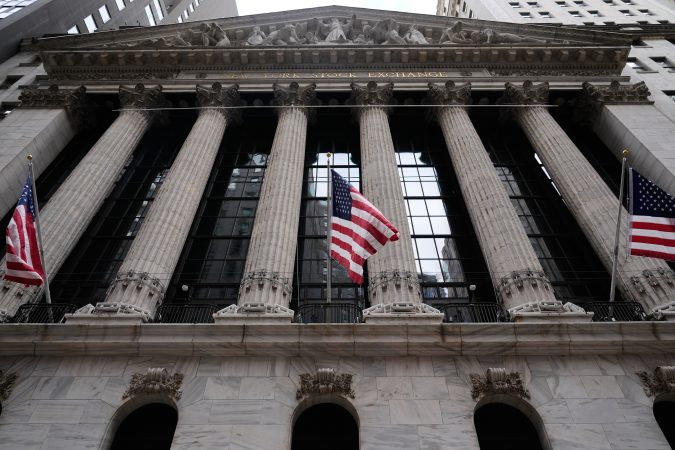
    NEW YORK — Oil prices got back to jumping on Wednesday, while sinking technology stocks dragged Wall Street lower amid uncertainty about what the Federal Reserve will do to get high inflation under control.

    The S&P 500 fell 1.5% after swinging sharply between gains and losses in the last hour of trading. The Dow Jones Industrial Average dropped 1,153 points, or 2.2%, and the Nasdaq composite slumped 1.7% to fall 9.8% below its record set last month.

    The action was more decisive in the oil market, where the price of Brent crude leaped 7.3% to settle at $88.09 per barrel after fighting resumed in the war with Iran and raised worries about the global flow of oil.

    Brent oil’s price had swung as low as $72 early this month and as high as $102 last week on uncertainty about whether the United States and Iran could reach a deal to allow oil tankers to move freely again from the Middle East to customers worldwide.

    The swings have raised worries that inflation will reaccelerate, and traders came into the day betting on a roughly 34% probability that the Fed would raise its main interest rate in the afternoon, according to data from CME Group.

    Higher rates can keep a lid on inflation, but they can also slow the economy and undercut prices for stocks and other investments.

    Fed officials instead voted to keep the federal funds rate steady, though three members of the policymaking committee did want to raise rates. The Fed’s chairman, Kevin Warsh, implied the bond market may already be doing some of the work to restrain inflation, and he pointed to how yields have climbed since the central bank’s last meeting six weeks ago.

    He reiterated his commitment to get inflation back to 2% following years of faster-than-hoped increases in prices, but he also stuck to his plan of giving financial markets fewer clues about what the Fed may do with interest rates in the near future.

    With less guidance from the Fed, financial markets may be set for more volatile trading amid the uncertainty.

    “Did the Fed take an explicit change in its policy rate today?” Warsh asked rhetorically in a news conference following the Fed’s decision. “No, but I think that’s the beginning of the story.”

    Treasury yields swiveled up and down following the Fed’s decision and Warsh’s insistence on not guiding the market.

    The yield on the two-year Treasury, which closely tracks expectations for Fed action, fell to 4.24% from 4.26% late Tuesday.

    But the 10-year Treasury yield, which moves more with expectations for inflation and economic growth in upcoming years, went in the opposite direction. It jumped to 4.68% from 4.61% late Tuesday.

    That’s up from 3.97% before the war with Iran sent oil prices much higher, and the increase has already sent long-term U.S. mortgage rates to their highest level in nearly a year.

    Higher rates particularly hurt stocks seen as the most expensive, and scrutiny has already been rising on makers of computer chips and other winners of the frenzy around artificial-intelligence technology.

    The recent surges for sellers of computer processors and memory are backed by real revenue and profits, but the exceptional growth won’t be sustainable if AI does not produce as much profit and productivity as hoped.

    The skepticism has hit South Korea’s stock market in particular because it’s dominated by two tech giants, Samsung Electronics and SK Hynix. Seoul’s Kospi index tumbled 6% Wednesday, a day after it plunged 10.8%, and trimmed its gain for the year so far to 34.4%.

    SK Hynix’s stock in Seoul dropped 9.6%. It reported record amounts of revenue and profit for a quarter thanks to strong demand because of AI. But its 257% growth in revenue still wasn’t enough to meet analysts’ expectations.

    On Wall Street, Nvidia was the heaviest weight on the S&P 500 after the chip company fell 3.6%.

    KLA Corp., whose products and services help make semiconductors, lost 10.8% even though it reported stronger-than-forecast profit and revenue for the latest quarter. Expectations were high after its stock surged nearly 150% in this year’s first six months.

    On Tuesday, gains for stocks outside of AI helped offset weakness for tech companies. Analysts have been saying such a rotation in the market from AI to less-loved areas could be healthy, but the majority of U.S. stocks fell with tech on Wednesday.

    Hims & Hers Health tumbled 14.7%, for example, after the Federal Trade Commission, Utah and California alleged it shared consumers’ sensitive health information about medical conditions with third-party advertising platforms despite claiming its services maintain consumers’ privacy. Hims & Hers said their lawsuit is contorting “the law to try to manufacture claims,” which it called baseless.

    All told, the S&P 500 fell 112.63 points to 7,316.15. The Dow Jones Industrial Average dropped 1,153.18 to 51,594.14, and the Nasdaq composite sank 433.97 to 24,442.94.

    In stock markets elsewhere around the world, indexes were mixed. Hong Kong’s Hang Seng rose 2%, and Japan’s Nikkei 225 fell 1.5% for two of the bigger moves.

  • Akira Suwa, award-winning photojournalist at The Inquirer, has died at 84

    Akira Suwa, award-winning photojournalist at The Inquirer, has died at 84

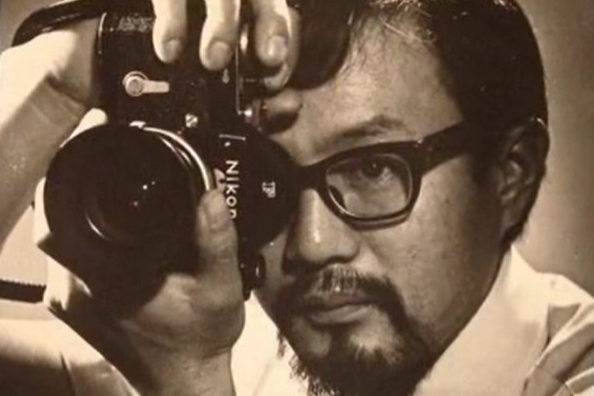
    Akira Suwa, 84, of Laurel Springs, Camden County, award-winning longtime photojournalist at The Inquirer, mentor, and lifelong green-thumb gardener, died Tuesday, July 14, of complications from dementia at his home.

    Born in what is now South Korea and reared in Japan, Mr. Suwa came to the United States for good in 1967 as a landscape designer and amateur photographer. When a landscaping job at a Florida garden center dried up, he polished his photography skills and, from 1969 to his retirement in 2014, worked as an award-winning staff photographer at the Tampa Tribune, the St. Petersburg Times, the Palm Beach Post, and The Inquirer.

    He joined The Inquirer in 1977 and, for 37 years, provided readers with thousands of illustrative, dramatic, stylish, and emotion-evoking photos from assignments around Philadelphia, South Jersey, and the world. He took poignant photos after the Three Mile Island nuclear accident, the fall of the Berlin Wall in Germany, and the Sept. 11 terrorist attacks, and during Operation Desert Storm in Saudi Arabia and the 1998 Winter Olympic Games in Japan.

    He sent back tragic and heroic images of conflict and despair from Libya and Brazil. He photographed drug traffickers in Colombia and was detained by authorities in China.

    Before the Inquirer, Mr. Suwa took photographs for the Palm Beach Post, the St. Petersburg Times, and the Tampa Tribune.Courtesy of the family

    Locally, he photographed athletes celebrating and commiserating, politicians and celebrities walking and waving, fashion models on runways, and restaurant specialties on tables. Former Inquirer colleagues called him a “brilliant photojournalist” and a “funny, engaging and terrific colleague” on Facebook.

    One former colleague said: “Akira told thousands of great stories with his camera.” His family said in a tribute: “Akira believed every story was worth telling.”

    Before the Inquirer, Mr. Suwa took photographs on all kinds of assignments for the Palm Beach Post, the St. Petersburg Times, and the Tampa Tribune. His father was an avid amateur photographer back in Japan, and Mr. Suwa honed his own emerging photo skills at nights and on weekends in Florida before joining the Tribune in 1969.

    He won several awards from the National Press Photographers Association and was named the 1973 Florida Newspaper Photographer of the Year by the University of Florida. He mentored young photographers and students, and one former student said: “He taught me so much about making the best photos possible.”

    Mr. Suwa photographed his wife, Deborah, often.Courtesy of the family

    Away from the lens, Mr. Suwa enjoyed tending his backyard garden in South Jersey, watching the birds flit about the feeders, and chasing the squirrels away. His mother was a serious gardener in Japan, and he studied agriculture in California as an exchange student while earning a degree at Tokyo Agricultural University in 1966.

    In 1964, he took a year off from college to work as a busser in the Japan pavilion at the World’s Fair in New York. “I fell in love with America, especially New York City,” Mr. Suwa wrote in an autobiography he shared with his family. “I was young and motivated to do something different from my peers back in Japan.”

    Akira Suwa was born Dec. 22, 1941, in what was then Taegu, Korea. He and his family fled Korea for Japan as refugees after World War II, and he grew up mainly in Osaka.

    He never formally studied photography, but his innate camera skills got him a job with a photo studio in Florida in the late 1960s.

    Mr. Suwa photographed these Mummers in 1978. Akira Suwa / Staff Photographer

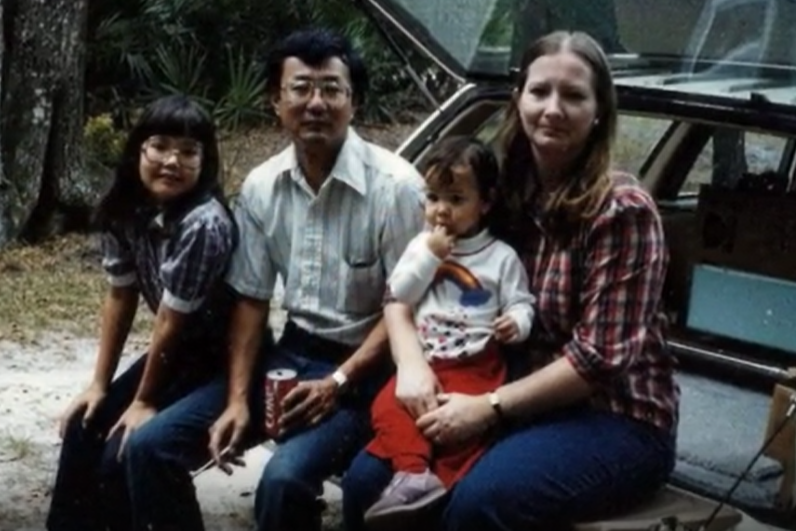
    He met Deborah Carter through a mutual friend at the studio, and he took her to see the musical Hello, Dolly! on their first date. She was smitten, she said, and they married in 1969, and had daughters Jasmine and Keiko.

    They settled in Laurel Springs when he joined The Inquirer and traveled to Japan several times to visit family and friends. “We enjoyed the best of both cultures,” his wife said.

    Mr. Suwa listened to jazz and built his own home computers. He liked to play pranks on the girls, his daughter Keiko said, but was simultaneously warm, serious, and practical. “If there was a job to do,” she said, “he would get it done.”

    His daughter Jasmine said: “He was forthright, sincere, and full of integrity.”

    Mr. Suwa and his family traveled to visit family in Florida and Japan. Courtesy of the family

    He doted on his wife and their grandchildren, and his family praised “his sharp eye, his mischievous sense of humor, and his devotion to his family.” His wife said: “He had my back and was as honest as the day is long.”

    Friends called him “the kindest person,” “wonderful and enormously talented,” and “a caring person to everyone.” He was interviewed by Photo Lounge in 2022 and said: “I just take pictures, and I like people.”

    His wife said: “He was my human, my person, my guy.”

    In addition to his wife and daughters, Mr. Suwa is survived by two grandchildren and other relatives. A brother died earlier.

    Visitation with the family is to be from 1 to 3 p.m. Saturday, Aug. 1, at Gardner Funeral Home, 126 S. Black Horse Pike, Runnemede, N.J. 08078.

    Donations in his name may be made to the Committee to Protect Journalists, Box 2675, New York, N.Y. 10108; and the Animal Welfare Association, 509 Centennial Blvd., Voorhees, N.J. 08043.

  • Ex-Comcast employee was hit in the face with a pie and tied to a chair for low sales, lawsuit says

    Ex-Comcast employee was hit in the face with a pie and tied to a chair for low sales, lawsuit says

    Sales low? You might get a pie to the face.

    That’s what a former Comcast retail employee says would happen, according to a new lawsuit filed against the Philadelphia-headquartered company.

    David Figueroa, a former employee at a retail location in Connecticut, alleges a store manager subjected workers to hazing and assault, forcing him to quit within a month of employment. That treatment included a monthly ritual where an employee was tied to a chair and smashed in the face with a cream pie. The antics were also videotaped.

    Comcast, the $125 billion-a-year media and communications giant, operates hundreds of retail stores nationwide. The stores act as point-of-sales locations for Xfinity products, including internet and TV products. They also offer equipment swaps and general customer support.

    “The Company has zero tolerance for harassment, humiliation, or any behavior that compromises a respectful and safe workplace,” Comcast spokesperson John Demming said in a statement. “This matter is in litigation so we will not comment on the specific allegations, other than to say that we disagree with the claims in the complaint and its characterization of the alleged events, and intend to fully respond through the legal process.”

    According to a lawsuit filed on behalf of Figueroa against Comcast, he was hired as a retail sales consultant in February at a retail location in Plainville, Conn., about 15 minutes outside of Hartford.

    But Figueroa said he was quickly rattled by his direct supervisor, the store’s manager, for her treatment of the staff. That store manager is not named as a defendant in the lawsuit. Demming declined to comment on the manager’s current employment status, citing personnel matters.

    The lawsuit says the store’s manager tracked employee sales metrics on a whiteboard in the back office that all employees could see. In the corner of that whiteboard, employees’ names were correlated to an emoji. The employee with the lowest monthly sales was listed next to an upset-looking emoji with a pie on its face, according to photos included in court documents.

    “[The chart] identified the employees who either had been recently assaulted or were scheduled to be assaulted in this way,” the lawsuit says.

    On Feb. 25, Figueroa witnessed a coworker being tied to the chair and assaulted in the face with a pie. The store manager “ordered, was present for, and videotaped this assault, as did the Plaintiff and other coworkers,” the lawsuit says. The coworker who struck the tied-up employee “had better sales results” and was ordered “to assault his poorer performing co-worker, in front of his peers,” the suit says.

    Figueroa’s coworkers showed him a video of another pieing incident where the assistant sales manager was hit in the face with a pie because of a poor survey score from a customer, according to the lawsuit.

    He attempted to report the incident to the store’s regional manager, who instructed Figueroa to send a text message documenting his concerns. According to the lawsuit, the regional manager “never responded” to Figueroa’s complaints about the store’s “hostile and violent work environment,” leading to his resignation.

    The Plainville retail location could not be reached for comment.

    Figueroa “suffered a pervasive and ongoing fear of being subjected to management-condoned assaults and public humiliation in the workplace,” the lawsuit says. Now, he’s suing Comcast for damages, including past and future financial, emotional, and reputational harm caused by the incident, along with court fees.

    It’s not the first time Comcast has found itself in a lawsuit involving a former employee. As reported on by The Inquirer, several past lawsuits waged by former employees have touched on hostile work environments at different Comcast stores, facilities, and call centers.

    The company reported lower profits last week, citing drops in domestic residential broadband customers in the second quarter.

  • Fed leaves interest rate unchanged but with 3 dissents as Warsh praises ‘good family fight’

    Fed leaves interest rate unchanged but with 3 dissents as Warsh praises ‘good family fight’

    WASHINGTON — The Federal Reserve left its key interest rate unchanged Wednesday, although three officials dissented in favor of higher rates as the central bank wrestles with how to deal with persistently high inflation.

    The Fed’s rate-setting committee reached its decision after two days of deliberations, marking the fifth straight meeting at which the benchmark rate was kept at around 3.6%.

    Some economists and Wall Street analysts had predicted the Fed would hike its rate by a quarter point. But while the decision to stand pat could be seen as good news for consumers, they might not feel much relief with the average credit card rate still near 20% and mortgage rates the highest since last August.

    Inflation has been stuck above the central bank’s 2% target for more than five years. The Iran war has generated uncertainty over the economic outlook and has driven energy prices higher, intensifying inflationary pressure and creating a quandary for Fed policymakers. In addition, the vast amounts of money being spent by technology companies on artificial intelligence are both driving manufacturing and have resulted in increased prices for items such as computer chips and electricity. President Donald Trump’s tariffs on foreign goods are also adding to inflation pressures.

    The three officials who dissented — Beth Hammack, president of the Federal Reserve Bank of Cleveland; Neel Kashkari, president of the Minneapolis Fed; and Lorie Logan, president of the Dallas Fed — had previously called for or signaled that they would be open to raising rates to combat high prices.

    “The dissents send a clear message: The Fed is not yet convinced the inflation battle has been won,’’ said Seema Shah, chief global strategist at Principal Asset Management.

    At a news conference following the rate decision, Fed Chair Kevin Warsh reiterated the Fed’s commitment to combating inflation. At the same time, Warsh said, “We have no magic wand. This isn’t something we’re going to be able to carry out in days or weeks.”

    Warsh said he welcomed vigorous debate at the committee meeting. “I asked for a good family fight and I got one,’’ he told reporters at a news conference.

    Warsh, who was appointed by President Donald Trump, has sought to bring a number of changes to the Fed including giving financial markets fewer signals about the Fed’s thinking on interest rates. He said he believed that reticence was a factor in the bond market pushing up yields in the past few weeks as it weighed new economic data. The yield on the 10-year Treasury has risen from around 4.50% in mid-June to 4.64% just ahead of the Fed’s rate decision.

    The market is “learning to play the ball and not the referee,” Warsh said.

    Coming into Wednesday, traders on Wall Street saw a 33% chance the Fed would issue a rate hike, although most expected policymakers to hold off, reluctant to risk disrupting financial markets. But they give a 55% chance of a rate hike in September, according to data from CME.

    Trump, who had persistently pressured the Fed to cut rates, voiced support for Warsh. “He’s fantastic. He’s a brilliant guy. Smart. I know he’d love to see lower interest rates, but he’s got a board and it’s a political board and they want to keep rates up,” Trump told reporters.

    Fed officials likely want to see more economic data before changing the benchmark rate. On Thursday, the Commerce Department delivers the first look at April-June economic growth and it will also publish the Fed’s preferred inflation measure — the personal consumption expenditures (PCE) price index — for June.

    Adding uncertainty to the Fed’s decision-making process is the rising violence in Iran. The price of oil briefly blasted past $100 a barrel last week on intensifying fighting. It’s since settled down on hopes the United States and Iran can find some way to reduce tensions.

    Yet early Wednesday, Jordan intercepted missiles launched from Iran early just hours after the U.S. military said it knocked down another Iranian barrage launched against American forces in the Middle East, ending a brief pause in fighting.

    After the U.S. and Israel attacks on Feb. 28, Iran shut down the Strait of Hormuz — through which a fifth of the world’s oil and natural gas pass. That caused the greatest disruption in oil supplies in history and sent energy prices surging. They’ve since bobbed up and down depending on the ever-changing state of the conflict and negotiations to de-escalate it, but the average cost for a barrel is $10 to $15 more today than it was at this point last year.

    Inflation has exceeded the Fed’s 2% target since early 2021 when the U.S. economy overheated as it roared back from COVID-19 lockdowns. Inflation peaked at just over 9% in mid-2022 and began to drop in the face of 11 rate hikes by the Fed in 2022 and 2023. But progress has more or less stalled.

    So-called core inflation — which excludes volatile food and energy prices — cooled in June, partly because apartment rents aren’t rising as fast as they had been. And a temporary drop in gasoline prices last month also helped contain overall inflation.

    But several Fed policymakers have been arguing that the Fed will have to raise rates to return inflation to the 2% target.

    “Sternly staring at inflation until it melts before our withering gaze is not an option,’’ Christopher Waller, an influential member of the Fed’s governing board, said in a speech this month.

  • Southern Europe burns as 3 firefighters die and France battles blaze 4 times the size of Paris

    Southern Europe burns as 3 firefighters die and France battles blaze 4 times the size of Paris

    LEGE-CAP FERRET, France — An uncontained wildfire four times the size of Paris threatened to surge again in southwest France on Wednesday — as three firefighters died in Greece and crews across southern Europe confronted a punishing mix of heat, drought, and strong winds.

    The deaths on Crete brought a fatal new dimension to a wildfire emergency stretching from the Atlantic coast to the eastern Mediterranean. At the peak of the evacuations, a third of a million people were driven from homes and vacation sites in France and Spain.

    In France’s Gironde region, the country’s biggest blaze had not spread during a calm night, authorities said. But as temperatures approached 104 F Wednesday afternoon and winds strengthened, the reprieve threatened to be short-lived.

    The landscape was so combustible that investigators believe routine brush-clearing work near a high-voltage line may have sparked the inferno, even though the work appeared to comply with regulations.

    At the command center in Lège, firefighters bent over maps spread across a car hood, tracking three danger zones: northern Cap-Ferret; the wooded corridor around Marcheprime, Cestas, and Saint-Jean-d’Illac; and a military site near Martignas, where a major outbreak forced a large deployment.

    Both firefighters and residents mobilize

    More than 2,200 firefighters and over 20 aircraft remained mobilized, backed by crews from across France and European partners.

    “We strike quickly and strike hard at any new smoke emissions,” Gironde fire commander Matthieu Jomain said.

    Beyond the command center, civilians were trying to hold the line themselves. At Souge, volunteers flooded the edges of dirt tracks while a local digger driver plowed through still-burning soil, trying to keep flames from crossing back when the expected west wind arrived. In Lacanau, residents pumped water from a lake into tanks headed for hot spots and firefighters’ cisterns.

    “If one day the fire starts in our neck of the woods, I know very well that all the people here would do the same for us,” said Flavien Dubuch, 33, who drove from Saint-Émilion with his father to help.

    Hottest day this week

    The advance of major fires in the Landes and Var regions has been halted. That left Gironde as France’s biggest remaining wildfire battle, Interior Minister Laurent Nuñez said.

    The Gironde fire forced 220,000 people to flee at the peak of the crisis. Tens of thousands have since been allowed home, but authorities warned that the danger had not passed.

    Extreme heat strips moisture from vegetation and drives down humidity, turning grasses, brush and forest litter into faster-burning fuel.

    Investigators believe contractors working near a high-voltage line for power-grid operator Enedis ignited the blaze while using a brush-cutting machine, Bordeaux prosecutor Renaud Gaudeul said.

    Météo-France said Wednesday would be the hottest and driest day of the week, with elevated wildfire danger across every region of France. Drought now covers mainland France and Corsica, with soils nearing the record dryness reached in August 2022.

    Smoke from the Gironde and Landes fires also pushed particulate pollution higher across both departments, regional air-quality monitors said.

    More evacuations ordered in France

    Gironde authorities ordered 4,000 more people out of tourist sites along the Atlantic coast on Tuesday, widening what may be France’s largest peacetime evacuation.

    “The situation remains complicated. That’s clear. We’re not out of the woods,” said Gironde prefect Sophie Brocas, who also authorized 60,000 evacuees to return to three Bordeaux suburbs untouched by fire.

    The opposing movements — thousands ordered out of coastal resorts as others returned with mobile phones on and emergency bags packed — captured how precarious the situation remains.

    The disruption was spreading beyond the burn zone into Bordeaux’s peak tourism season.

    Edouard le Grix de la Salle, who runs Château du Grand Verdus with his brother, said official appeals to avoid the region threatened its wine-tourism trade. “How did they not think about protecting that sector?” he told The Associated Press.

    At one point the Gironde blaze created a black thundercloud, electrified and lit from within, that generated lightning, violent winds and new fires beyond the original front. The pyrocumulonimbus was the first recorded in France.

    Fire in Greece turns deadly for firefighters

    Two firefighters died Wednesday while battling a wildfire in the Rethymno region of Crete, Greece’s fire department said. They were among about 125 firefighters confronting flames fanned by strong winds, with four helicopters and four water-dropping planes deployed.

    The circumstances of their deaths were not immediately clear. The department said they died “in the line of duty to protect the lives and property of citizens and the natural environment.”

    A third firefighter also died Wednesday outside the fire perimeter, after tackling a separate blaze in Greece’s southern Peloponnese region.

    Tens of thousands return home in Spain

    At the height of the crisis, roughly 330,000 people were driven from homes and vacation sites across France and Spain.

    Tens of thousands of people began returning home in central Spain after firefighters made progress around Madrid and Ávila. Evacuation orders were lifted for about 20,000 people in the Madrid region, while stay-at-home restrictions ended for another 14,000.

    But 10,000 people remain under evacuation orders in Castellón, where a fire was still out of control as Spain braced for its fourth heat wave of the summer.

    More than 1,160 square kilometers (448 square miles) have burned across France this year, according to the Interior Ministry.

    Europe is the world’s fastest-warming continent, warming at more than twice the global average, according to the European Union’s Copernicus climate service. Western Europe recorded its hottest June on record, with extreme heat and widespread dryness contributing to the spread and intensification of fires in France and Spain, Copernicus said.

  • Wills Eye doctor George Spaeth, 94, reflects on his award-winning research and humanistic approach to medicine

    Wills Eye doctor George Spaeth, 94, reflects on his award-winning research and humanistic approach to medicine

    As a resident training at Wills Eye Hospital, George Spaeth was perplexed by a 7-year-old patient’s symptoms.

    Her legs angled inward, her hair was straw-colored with an odd consistency, and she had intellectual disabilities.

    She had come in for faulty vision caused by her lenses — the part of the eye that enables vision by focusing light — becoming loose. Spaeth’s job was to simply prepare her for surgery to remove her lenses.

    Yet, he couldn’t help but fixate on the constellation of symptoms she presented with — and the unknown cause underlying them. Nothing in his medical texts fit her profile.

    “She didn’t look like anything I’d ever seen before,” he said.

    He asked nurses to collect her urine for testing, and discovered it was full of an amino acid called homocysteine.

    In 1962, he diagnosed the little girl with a previously unknown rare metabolic disorder called homocystinuria (HCU) — making her one of the first patients in the United States to receive the diagnosis.

    An Illinois-based nonprofit dedicated to the disease, HCU Network America, presented Spaeth this month with their HCU Hero Award for his significant contributions to the detection and treatment of the disorder.

    In the fall, the Chestnut Hill resident will also collect a leadership award from the Wills Eye Hospital Alumni Society and the Laureate Award from the American Academy of Ophthalmology.

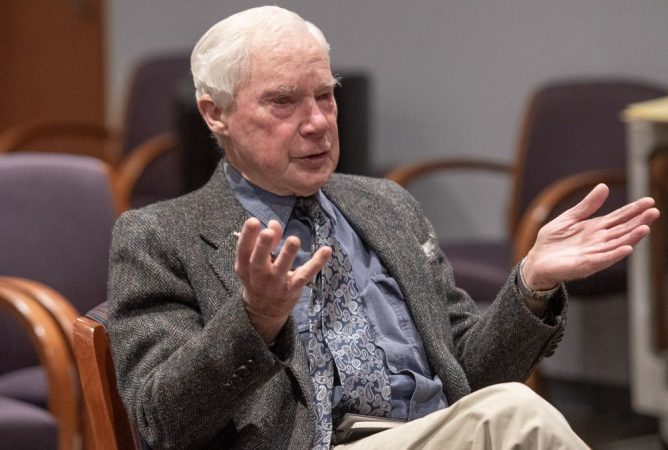
    The honors have given the 94-year-old ophthalmologist an opportunity to reflect on his decades-long career dedicated to research, finding the humanity in medicine, and emphasizing the importance of humility and curiosity.

    “The most important thing that I think any person in any field can do is say I don’t know,” he said.

    George Spaeth will be honored with a leadership award from the Wills Eye Hospital Alumni Society this fall.Courtesy of George Spaeth

    Solving a mystery

    When Spaeth told patients “I don’t know,” he tried to follow up with, “maybe we can find out.”

    Through studying the biochemical pathways involved in HCU, he landed on a potential treatment: vitamin B6.

    When his patient took it, the homocysteine levels in her urine dropped.

    Spaeth was the first to publish on this finding, which led to an uptake in the vitamin’s usage, said HCU Network America emeritus director Margie McGlynn. It works in about 50% of patients with the disorder, and is still used today.

    His work also helped spread awareness of the eye symptoms of the disorder, enabling earlier diagnoses.

    McGlynn’s sister, who first presented with severe nearsightedness, was diagnosed with HCU in the 1960s by an ophthalmologist who had recently read about the condition in a medical journal.

    “I firmly believe that it was Dr. Spaeth’s work and publication on this patient that made this ophthalmologist aware,” McGlynn said.

    Spaeth wrote to schools for children with intellectual disabilities and asked if they had any children that fit the symptom profile.

    When they sent urine samples, some came back positive for the disorder.

    One of the children he diagnosed at Willowbrook State School in Staten Island ended up dying. The boy’s mother told Spaeth she also had a daughter who was 2 years old and seemingly fine.

    “We better test your daughter,” Spaeth urged, given that the condition was inherited.

    He examined the boy’s sister, tested her urine, and diagnosed her with HCU.

    Spaeth started her on the vitamin treatment. Without it, she was likely to end up like her brother.

    Decades later, he received a call from her mother.

    “She was just admitted to medical school,” he recalled her saying.

    Finding the humanity in medicine

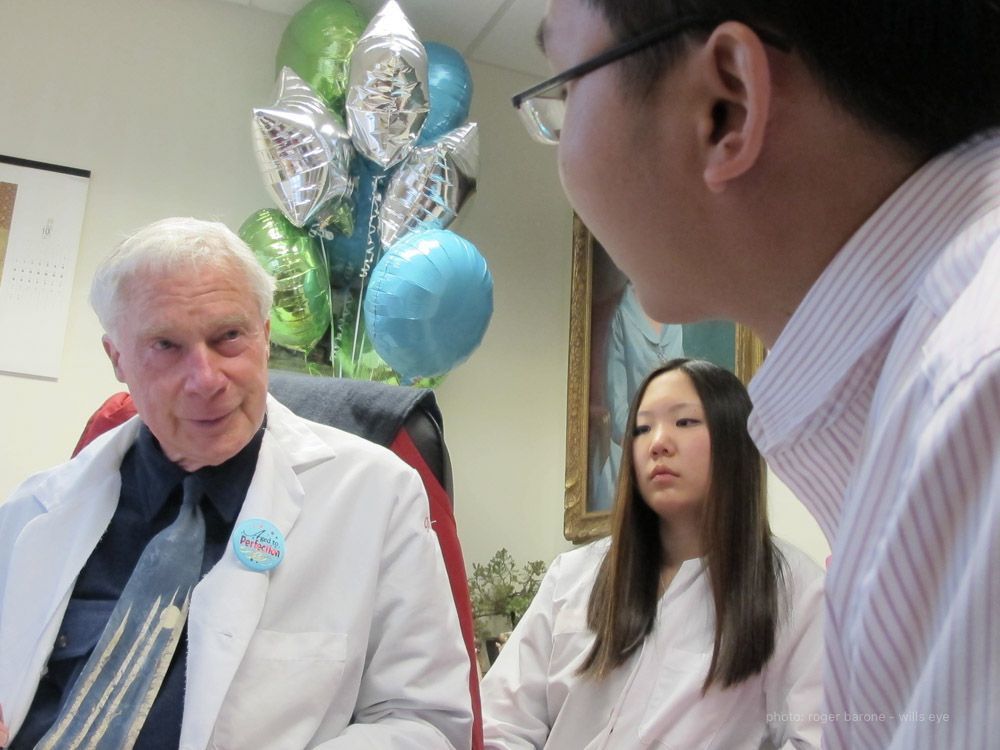
    Janine Tabas, vice chairman of the Wills Eye Alumni Society, said the society chose to honor him with their leadership award in recognition of his lifetime of accomplishments in patient care, teaching, and mentorship.Courtesy of George Spaeth

    Growing up, Spaeth dreamed of becoming a poet or composer, “but I’m no Bach, and I’m no Mozart,” he said.

    He studied history as an undergraduate at Yale University before pursuing medicine — the same profession as his father, renowned ophthalmologist Edmund Spaeth.

    He found he loved connecting with his patients, through finding out what they loved, and what they feared.

    “I was a great believer in putting my hand on the patient’s arm while I was talking to them and finding out who they were,” he said.

    In his field, glaucoma, he would often see the same patient for two or three decades.

    Spaeth operated on a 19-year-old college student suffering from severe headaches in 1969, and has stayed in touch with her ever since.

    Over the years, he watched her grow up and marry a wonderful man. When he fell and broke his leg, she came to visit.

    “I just think about what that means,” he said.

    Spaeth stopped seeing patients in 2013 to spend time with his wife, Ann, whose breast cancer had returned and stopped responding to treatment. She died that year.

    In the years since, Spaeth wrote and published a book for his late wife, Hope for Awareness, about “how lucky I was to be married to an amazing woman, and how unaware I was of how lucky [I was],” he said.

    ‘One of the forefathers’

    Janine Tabas, vice chairman of the Wills Eye Alumni Society, described him as “one of the forefathers of glaucoma” and “an absolute gentleman.”

    The society honored him with their leadership award in recognition of his lifetime of accomplishments in patient care, teaching, and mentorship, she said.

    When Tabas was a first-year resident at Wills Eye in the 1990s, Spaeth served on the senior faculty. She was struck by his humility and the way he treated everyone as equals.

    Spaeth invited her whole cohort to his home for dinner, where they sat on his living room floor together. He also asked her to play tennis, knowing that was one of her interests.

    “I was a lowly resident,” Tabas recalled. “And here was the chairman of glaucoma. The guy whose name was on every book in the lobby.”

    She has since continued Spaeth’s tradition of inviting the residents out to play tennis.

    George Spaeth stopped seeing patients in 2013.Courtesy of George Spaeth

    When asked why he thought he was being honored with awards this year, Spaeth pointed to the importance of having humanity and humility and not being “a real jerk.”

    “Remember, the most important thing you can do is become a good person,” he said. “If you’re a good person, the likelihood is that you’ll have a good career.”