Blog

  • From ‘a Delco girl’ to the Big 5 and South Jersey, the Philly area is well-represented in the WLL championship

    From ‘a Delco girl’ to the Big 5 and South Jersey, the Philly area is well-represented in the WLL championship

    The Women’s Lacrosse League is filled with players tied to the Philadelphia area, so it’s fitting that the league’s inaugural championship is coming here.

    On Saturday, the Maryland Charm (4-3) will face the California Palms (5-2) in the WLL’s championship at Subaru Park in Chester (5 p.m., ESPN). The game will be the finale to a doubleheader with the Premier Lacrosse League.

    The Philadelphia Waterdogs (7-3) will take on the New York Atlas (3-8) at 2 p.m. The WLL, which boasts four teams, is owned by the PLL.

    Here are some notable names from the Charm and the Palms with ties to the area:

    Emily Parros, Maryland Charms coach

    Before she was coaching the Charms, Emily Parros turned heads at Strath Haven. Parros (formerly Emily Garrity) was named a first-team U.S. Lacrosse All-American following her senior year with the Panthers in 2009.

    “I’m a Delco girl,” Parros said. “So it’s special to me. That stadium’s probably no more than 15 minutes from my house where I grew up. So it’s just a unique experience as a coach.”

    After high school, Parros was a two-time captain at the University of North Carolina before launching her coaching career. She has made assistant coaching stops at James Madison, East Carolina, and with the Tar Heels. After a season as an assistant with the Charm, she was named the team’s head coach in December.

    As a player, Parros helped lead Team USA to its ninth World Lacrosse Women’s Championship title in 2022. Now, she is looking to win a championship as a coach.

    “I think these players have really put in the time on and off the field with each other to be able to create those electric moments on the field,” Parros said. “We have very good talent, and I think anytime you have talent, it can be interesting to see how it meshes on the field. One of my favorite things about this team is that there is no ego. We all go to bat for each other. We celebrate every success, and it’s just been a lot of fun.”

    Maryland Charms coach Emily Parros (left) rallies her team during a game in Week 2.Nick Ieradi / Premier Lacrosse League

    Anna Brandt, California Palms midfielder

    Anna Brandt, a former standout at Penn, expects to see action on Saturday for the Palms.

    The three-time All-Ivy selection left the Quakers as the program’s all-time leader in goals (206). Brandt, who graduated in 2025, is looking forward to reconnecting with familiar faces this weekend. Penn coach Karin Brower and assistant Nicole Spencer will be in attendance.

    “The four years [at Penn] were the best,” Brandt said. “I had the best time with the Penn coaches and staff. And playing on Franklin Field was always really special. I still remember my last game I played there and just how much that meant. I never knew if I would get a chance to be back, or let alone play a championship game in Philly. So to be back in the cities that really I feel like launched my lacrosse career is super special.”

    This season, Brandt has logged 11 goals. She will play an important role Saturday as she faces off against the upper echelon of women’s lacrosse players.

    “I mean, the level is insane,” Brant said. “It’s like every single person on your scouting report is an All-American, a Tewaaraton winner [honoring the nation’s top college lacrosse player], finalist, national champion. There’s no weak links anywhere throughout this entire league. You really got to put your best foot forward every time you step on the field.”

    Cassidy Spilis, Maryland Charm midfielder

    Tabernacle (Burlington County) native Cassidy Spilis put together an impressive high school career at Seneca before becoming Rutgers’ all-time leader in career goals (266), points (281), and draw controls (313).

    “I got a ton of people coming,” Spilis said. “I think my mom invited probably every person she knows in the South Jersey area, so we’re all really excited. I think playing on the East Coast, there’s just such a big demographic of these girls who are starting to love the game of lacrosse. To have the ability for them to come see a game like this, it’s super awesome.”

    On May 29, the Charm and Palms matched up for the only other time this season in Baltimore, and Maryland won, 18-17, in overtime. Spilis scored the game-winning goal with 11 minutes, 40 seconds left in the extra period, and she’s hoping to take lessons learned from that game into Saturday.

    “[The Palms] have a lot of great players,” Spilis said. “I think one of their biggest strengths is just their middies and their speed in the midfield. That was something that we really learned on the fly during the last game, just trying to compete with that midi speed and stopping in transition.”

    Marie McCool, California Palms midfielder

    Moorestown High School alumna Marie McCool has experience playing at Subaru Park. Ten years ago, McCool helped lead North Carolina to a national championship at the Union’s stadium.

    “What made it so much even more special — obviously, winning a national championship is amazing — was the fact that I was close to home and I had so many friends and family in the stands and got to enjoy the win with them,” McCool said. “It’s definitely a full-circle moment. … I get to be back here in a championship game, competing in the place that I call home.”

    The Moorestown native will have reminders of home behind every corner. The hotel that the Palms are staying in hosted McCool’s high school prom. She is also looking forward to ordering cheesesteaks with Charm goalie Caylee Waters, who played with her at North Carolina.

    “I know we’re on different teams,” McCool said. “But when we won the national championship, we got some late-night cheesesteaks together. She’s like, ‘We gotta run it back, no matter what happens.’”
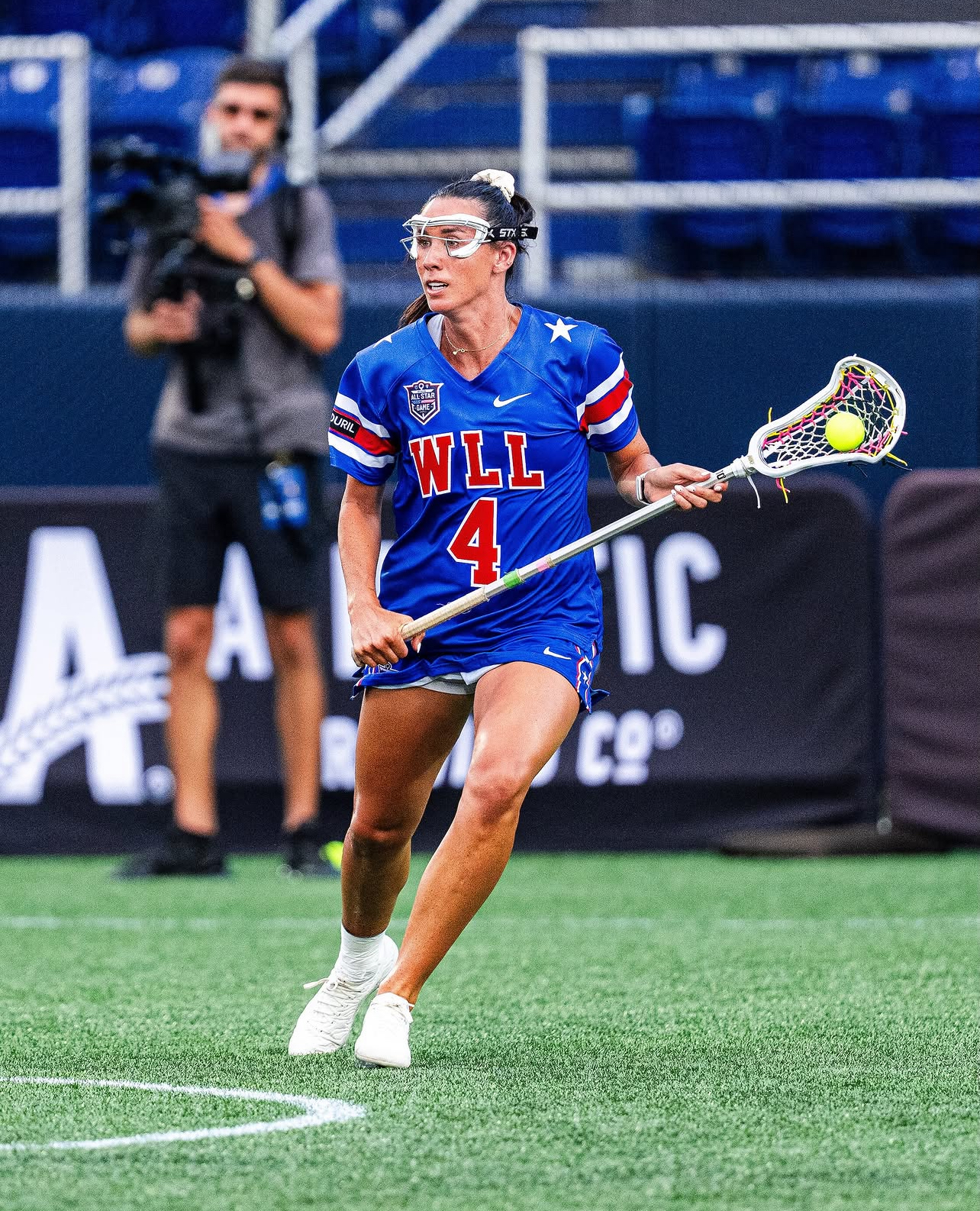

    Moorestown native Marie McCool is a former UNC lacrosse star and was an All-Star this season.Women's Lacrosse League
  • The Big Picture: Golf at Merion, former stars return, and the best photos from a busy week in Philly sports

    The Big Picture: Golf at Merion, former stars return, and the best photos from a busy week in Philly sports

    Normally, this time of the summer is a slow period for sports, but you wouldn’t know that if you’ve been spending time around Philly. Not only are the Eagles in camp and the Phillies and Union about to hit their seasons’ stretch runs, but there’s also the U.S. Amateur at Merion Golf Club, Tyrese Maxey and his friends showing out for charity, the Rumph Classic, and much more to come.

    But before we look toward events still ahead — like UFC 330, the Philly Cycling Classic, and the Ennoble Care Philly Open — let’s take a look back. Each Friday, Inquirer photo editors pick the best sports images from the last seven days. Here’s what we saw this week …

    Justin Matthews, of Canada, hits out of a bunker on the first hole during the Round of 64 at the 126th U.S. Amateur Championship at Merion Golf Club on Wednesday.Tyger Williams / Staff Photographer
    Golf fans watch players tee off near the 17th hole during the U.S. Amateur at Merion.Jose F. Moreno / Staff Photographer
    Charlie Barrickman, 18, of West Chester, tees off on the sixth hole on Monday.Jose F. Moreno / Staff Photographer
    Golf fans watch players tee off during the second day of the U.S. Amateur at Merion. Jose F. Moreno / Staff Photographer
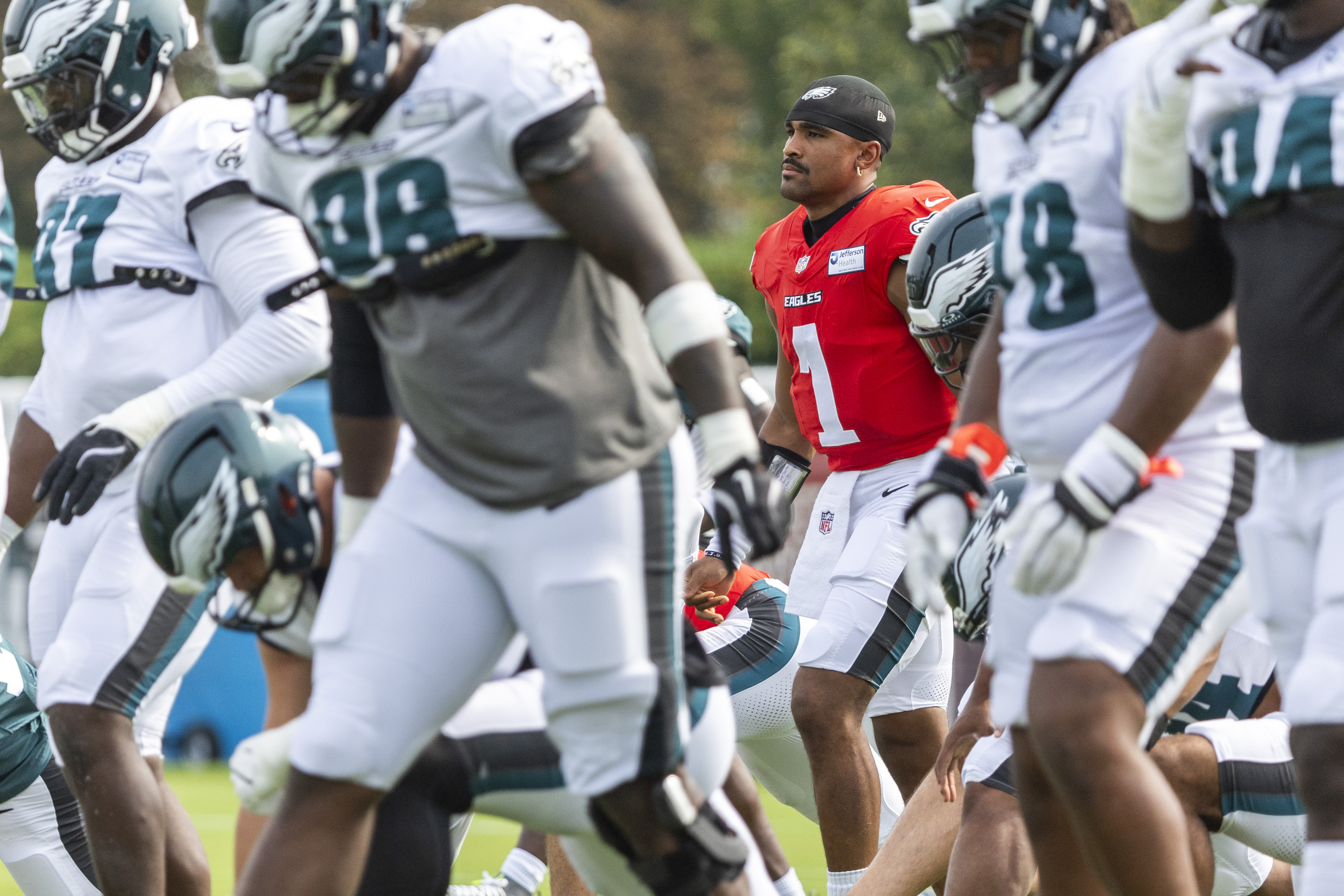
    Eagles quarterback Jalen Hurts warms up before a training camp practice on Tuesdsay at the Jefferson Health Training Complex.Tyger Williams / Staff Photographer
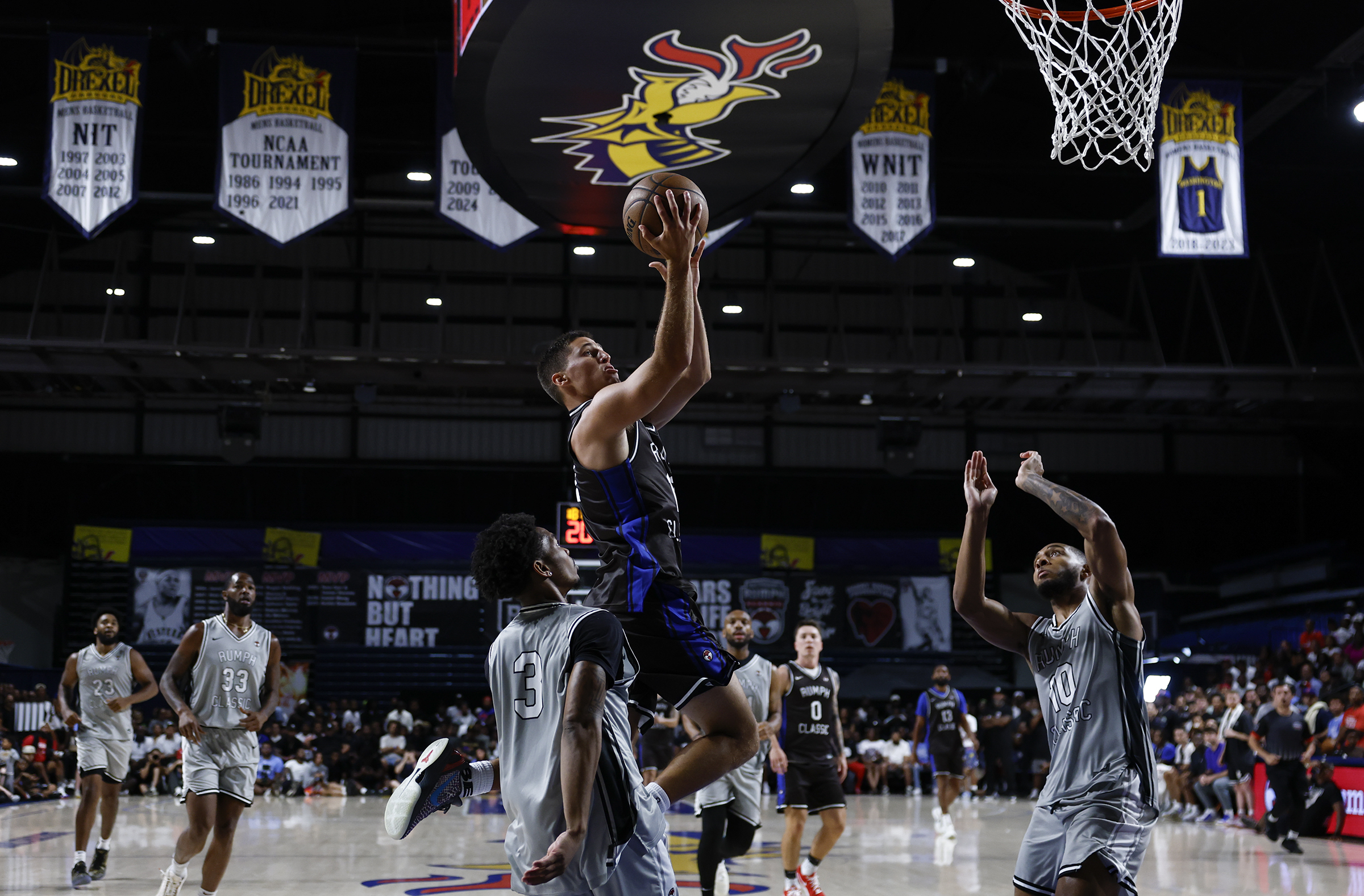
    Team TBB’s Collin Gillespie, a former standout at Villanova, drives to the basket during the Rumph Classic men’s final at Drexel’s Daskalakis Athletic Center on Monday.Yong Kim / Staff Photographer
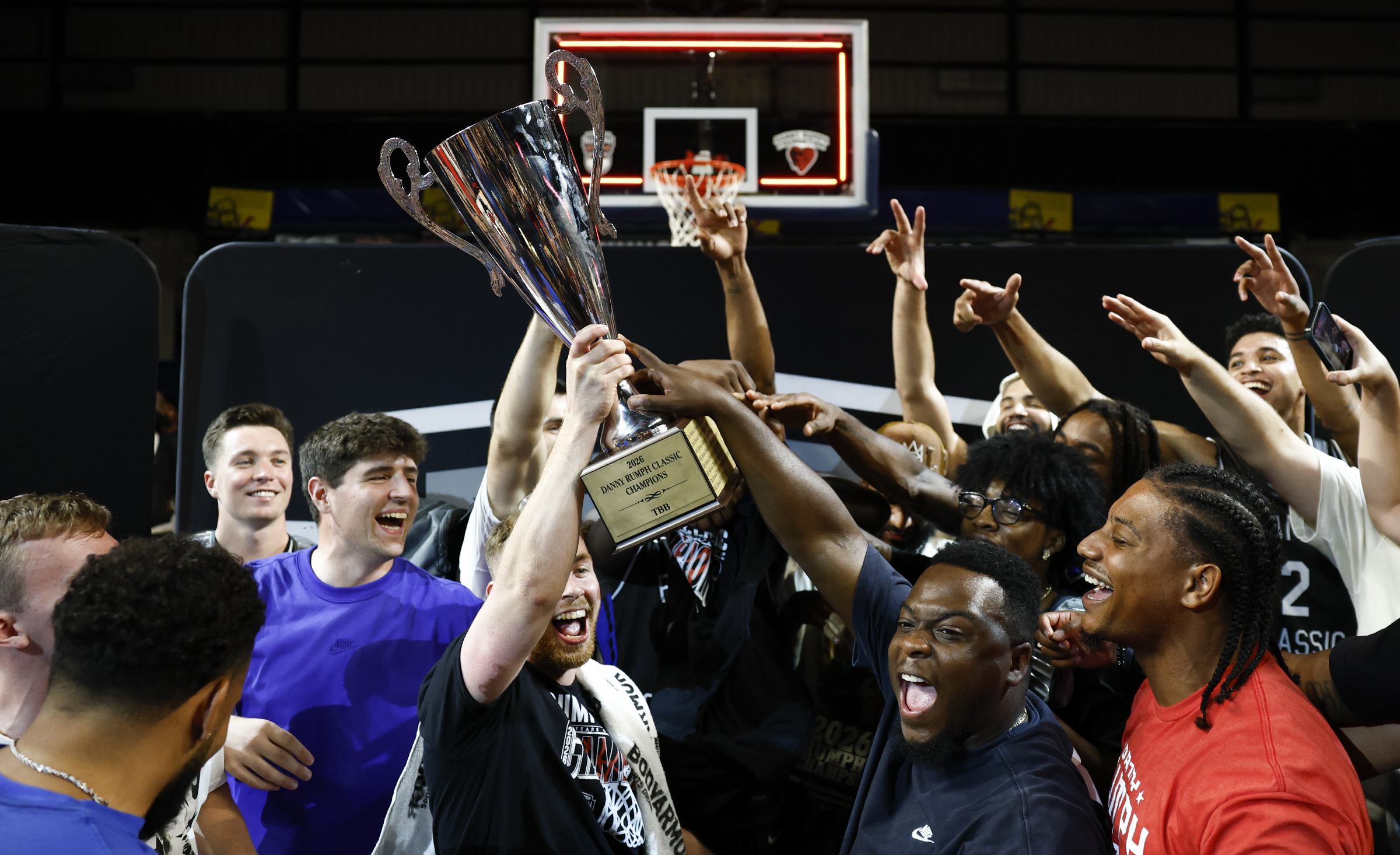
    Members of Team TBB hold the 2026 Danny Rumph Championship trophy after winning the Rumph Classic on Monday.Yong Kim / Staff Photographer
    The Union’s Bruno Damiani (left) heads the ball against Necaxa’s Alexis Peña during the second half of the teams’ Leagues Cup group stage game at Subaru Park on Sunday.Yong Kim / Staff Photographer
    Danley Jean Jacques (right front) runs with the soccer ball past Necaxa defenders.Yong Kim / Staff Photographer
    Former Phillies Shane Victorino (center) and Bobby Wine (seated) talk during the team’s Alumni Weekend festivities at Citizens Bank Park on Sunday.Monica Herndon / Staff Photographer
    Phillies center fielder Derek Hill celebrates after hitting a walk-off RBI single during the 12th inning of Sunday’s game against the Toronto Blue Jays. The Phillies won, 7-6.Monica Herndon / Staff Photographer
    Luis Arraez avoids the tag by Toronto Blue Jays catcher Brandon Valenzuela to score on a sixth-inning sacrifice fly on Saturday.Yong Kim / Staff Photographer
    Kyle Schwarber (left) tags out Toronto Blue Jays right fielder Jesús Sánchez. Schwarber, typically the designated hitter, has been getting some reps at first base following Bryce Harper’s move back to right field.Yong Kim / Staff Photographer
    Derek Hill, with his arms raised, celebrates with teammates after his walk-off hit on Sunday.Monica Herndon / Staff Photographer
    Sixers guard Tyrese Maxey (right) held his Friends & Family Weekend that included a skills camp at William Penn Charter School on Saturday.Tyger Williams / Staff Photographer
    Tyrese Maxey plays defense as he works with young kids at his 1% Skills Camp, a part of his foundation’s Friends & Family Weekend.Tyger Williams / Staff Photographer
    Pedestrians walk past a new LeBron James mural by artist Chenlin Cai at 10th and Arch Streets in Chinatown.Jose F. Moreno / Staff Photographer
    Former Phillies second baseman Chase Utley thanks fans while getting inducted into the team’s Wall of Fame on Friday.Yong Kim / Staff Photographer
    A rainbow sits over Citizens Bank Park before Chase Utley’s Wall of Fame induction ceremony.Yong Kim / Staff Photographer
  • ‘It never gets old’: Homecoming weekend takes on extra meaning for some pro men’s lacrosse players

    ‘It never gets old’: Homecoming weekend takes on extra meaning for some pro men’s lacrosse players

    It’s homecoming weekend for the Premier Lacrosse League’s Philadelphia Waterdogs at Subaru Park, and there’s a lot on the line.

    The Waterdogs (7-3) are competing for the No. 1 seed in the Eastern Conference in the final weekend of the regular season, needing one more win to secure it. The top seed will give the Waterdogs a bye to the semifinals on Sept. 7 in Salt Lake City.

    Philly will play the New York Atlas (3-8) on Saturday (2 p.m., ESPN), followed by the Women’s Lacrosse League championship between the Maryland Charm and California Palms (5 p.m., ESPN). On Sunday, the Waterdogs will face the Maryland Whipsnakes (5-6) at 1 p.m. (6abc). The Denver Outlaws (6-5) and California Redwoods (5-6) will play at 3:30 p.m.

    Defender Gavin Adler is no stranger to Waterdogs-Atlas games. But this year, he’s on the other side of things.

    Adler, last season’s Dave Pietramala Defensive Player of the Year, helped the Atlas beat the Waterdogs in the PLL semifinals at Subaru Park en route to a league title. Then, in the offseason, Adler signed with Philly and will face his former team for the second time this season. The Waterdogs previously beat the Atlas, 11-10, on July 24 in Denver.

    “[Last time] I made it a point to not let my personal feelings become a distraction for my teammates, and we approached it like any other game, and this weekend will be the same,” said Adler, a New York native. “Obviously, we’re competing at the top, and we’ve all got the same goals. So, just taking it game by game, and not letting that be a distraction, but I’d be lying if I said it wasn’t personal.”

    Gavin Adler has been on both sides of the New York Atlas-Philadelphia Waterdogs matchup.PLL

    While Adler will be playing his first game in front of Philly fans as part of the Waterdogs, others are familiar with the environment and will be having their own homecoming this weekend.

    Here are some local players to watch during the Waterdogs’ homecoming weekend:

    Michael Sowers, Waterdogs

    Attackman Michael Sowers leads the PLL in points (41) and assists (20) and is a five-time All-Star.

    The Dresher native led the Waterdogs to their first PLL championship at Subaru Park in 2022 and is an MVP contender this season. Sowers graduated from Upper Dublin High School and played at Princeton and Duke.

    “It’s really special, and I’ve been fortunate to be able to do it for a couple of years now,” Sowers said. “It never gets old, frankly, and the opportunity to play in Philly, we’ll probably have like 50 to 60 people in the crowd in front of friends and family. It’s awesome.”

    Matt Traynor, Atlas

    Traynor returns to Subaru Park with the Atlas after being a part of its 2025 championship team.

    Traynor, a Penn State graduate, grew up in Downingtown and attended Malvern Prep. The two-time All-Star is tied for the most goals (17) among New York’s midfielders and has 23 points this season.

    TJ Malone, Whipsnakes

    Malone, a West Chester native and Haverford School alumnus, has 23 goals, tied for the fifth-most in the league, and seven assists (30 points).

    The left-handed attackman was a 2025 All-Star selection and the 2024 Rookie of the Year after coming back from three surgeries during his time at Penn State where he was tabbed as the 2023 Big Ten Player of the Year.

    Luke Wierman, Outlaws

    Wierman, a West Chester native and Henderson graduate, is fourth in the league in ground balls (68) this season. The faceoff specialist’s best game of the season came against the Whipsnakes on Aug. 1, when he won 25 of 28 faceoffs for an 89.3 faceoff percentage. He has a 52.3% faceoff winning percentage, good for sixth in the PLL this season.

    Wierman graduated from Maryland in 2024 and was part of the 2022 perfect season and NCAA championship team.

    Big 5, big names

    Several players competing this weekend are not originally from the Philadelphia area but attended college here.

    Penn and Penn State have the most nonlocal athletes playing this weekend. Penn has Whipsnakes James Shipley and Emmet Carroll, as well as the Redwoods’ BJ Farrare.

    In addition to multiple local players, Penn State also features Alex Ross (Atlas), Jack Posey (Whipsnakes), and Kevin Parnham (Outlaws).

    New York’s Reid Bowering and Liam Kammar played at Drexel, while Levi Anderson played at St. Joseph’s.

    CJ Kirst in action for the Philadelphia Waterdogs as a rookie last season.Courtesy of PLL

    History watch

    Along with Adler, several other PLL stars will be playing at Subaru Park this weekend. That includes fellow Waterdog CJ Kirst, who is on the brink of setting the league single-season goals record. He’s at 30 goals through eight games, tied with the Boston Cannons’ Marcus Holman’s record of 30, which he set in 10 games in 2023.

    Kirst, the 2025 No. 1 overall pick in the PLL draft and a northern New Jersey native, will have many friends and family in the stands of Subaru Park as he chases history.

    “Super excited to have that opportunity, and regarding what’s ahead, regarding the milestones, I’m not trying to think too much about it,” Kirst said. “I think just going out there and trying to go win two games is the mentality I’ve had these past couple weeks … I know we’re super excited for what’s ahead.”

  • Cheltenham made a deal with a developer to build a $4.5M pool complex. A lawsuit alleges they’re breaking bidding rules.

    Cheltenham made a deal with a developer to build a $4.5M pool complex. A lawsuit alleges they’re breaking bidding rules.

    Cheltenham Township is buying a pool complex from a private developer for up to $4.5 million, which a resident’s lawsuit alleges violates public bidding rules.

    The township commissioners approved a contract last month to lease 2.7 acres by Ashmead Road and Front Street to Melrose Pool LLC for $10 per year. Cheltenham agreed to pay up to $4.5 million for three public pools and a 5,000-square-foot building that Melrose Pool will build under the lease agreement.

    Matthew Areman, president of the seven-member Cheltenham commissioner board, vowed this week that the township would share additional details in the “coming weeks and months,” but a lawsuit filed July 22 in Montgomery County Court by Cheltenham resident Sam Thacker alleges the agreement is illegal. He claims it bypasses competitive public bidding laws that would normally apply to a town’s public pool, and wants a county judge to void the contract and issue an injunction to halt the project.

    A Montgomery County judge has given Cheltenham and Thacker until Aug. 21 to file their legal arguments, but time is short: Under the lease, the township has to decide on a final pool plan by the end of August.

    What the suit alleges

    Areman said last year the pool parcel is worth several million dollars, according to the commissioner board’s meeting minutes.

    If the township is leasing that land to the developer for just $10 per year, Thacker said, he believes the lease agreement also violates Cheltenham’s township code, which requires the use of “a system for obtaining independent appraisals … to assure that the township is obtaining adequate compensation” when skipping bidding on real estate leases. Thacker told The Inquirer he was unable to find a fiscal assessment for the pool project through Right-to-Know requests or a town spokesperson.

    Township officials declined to explain the legal reasoning behind the leaseback agreement with Melrose Pool.

    But in an FAQ posted this week, officials wrote Cheltenham had “received estimates from multiple pool consultants indicating that constructing a comparable standalone replacement pool would cost approximately $6-8 million.”

    Holly Fishel, the policy and research director for the Pennsylvania State Association of Township Supervisors, who did not comment on Cheltenham specifically, said she had heard of leaseback agreements with townships before but was not sure of the legal mechanisms. In situations where a township is doing construction work on land it owns, “you would need to be doing the bid,” Fishel said.

    But in this case, a private company is doing the work on land it has leased.

    “That can’t be right that you can just evade public bidding requirements by saying something is a lease when it’s clearly a public construction project,” Thacker said.

    Cheltenham is paying up to $4.5 million for three pools

    A preliminary plan for the Melrose plot includes three pools of different sizes, but the July 15 lease notes that the developer is to provide a final plan by this week.

    The township will then have two weeks to approve or deny the final pool plan.

    Upon completion of the work, Cheltenham would pay up to $4.5 million for the new pools, or pay an additional rent up to $382,500 per year until the township comes up with the $4.5 million.

    The two-week timeline for the township to approval a final pool plan is what led Thacker to file his lawsuit.

    “The contract is structured essentially to rush this forward as quickly as possible,” Thacker said. “We have no idea if $4.5 million is a good price.”

    The figure is cheaper than the $6.1 million estimated in 2023 to redo the Conklin Pool, which the Melrose pools would replace in 2027. The township has one other public pool, in Glenside.

    But other residents have questioned whether it is even possible to build three public pools for $4.5 million, given the Conklin pool estimate.

    Private development planned beside pool

    The pool is part of a larger redevelopment of the former Melrose Country Club — at 116 acres, one of the largest properties in Cheltenham — that includes new townhouses and commercial space.

    The lower price tag for the new Melrose pool comes in part from construction efficiencies, Cheltenham wrote this week, since the property will already require site preparation, grading, and utilities for the new buildings.

    The property’s developer, an LLC associated with BG Capital, gave the township the 2.7 acres for free last December to advance public welfare and for an unspecified “advantage” to the developer.

    BG Capital and the LLC’s attorney did not respond to a request for comment, but court filings Tuesday for Melrose Pool LLC argued that the bidding process Thacker cited under the state’s procurement code does not apply “to the landlord/tenant relationship” between Cheltenham and the LLC because the code applies only to state agencies.

    Melrose Country Club project changed

    Some residents, including Carl Freedman, have raised concerns at public meetings about the larger project. An earlier plan included both a pool and a community center, Freedman said, and would have allowed more much-needed commercial space.

    Cheltenham’s recently approved long-term township plan calls for bringing in more business to bolster the struggling tax base.

    Freedman, an architect who sits on the Cheltenham Planning Commission, said the panel no longer supports the project and is sending the township a letter to that effect.

    “The loss of the community center is what is making the retail unmanageable,” Freedman said, because the center would have drawn potential shoppers to the site. “This project has taken a left turn.”

    Chloe Mohr of the Montgomery County Planning Commission, which reviews local development projects and offers recommendations, said the county commission plans to release a new review of the revised plans late next week.

    This suburban content is produced with support from the Leslie Miller and Richard Worley Foundation and The Lenfest Institute for Journalism. Editorial content is created independently of the project donors. Gifts to support The Inquirer’s high-impact journalism can be made at inquirer.com/donate. A list of Lenfest Institute donors can be found at lenfestinstitute.org/supporters.

  • Data centers are good business but bad politics. Josh Shapiro tries to thread the needle. | Shackamaxon

    In this week’s Shackamaxon, the race for City Council kicks off, SEPTA police officers step in front of the cameras, and a Big Tech reckoning comes for the Ambitious Abingtonian.

    Councilmember Jeffery “Jay” Young Jr. during the Barber’s Hall community legacy celebration on Aug. 1.Yong Kim / Staff Photographer

    Contrarian challenge

    In political circles, the legislative lineage of Philadelphia’s 5th Council District is one of the city’s most esteemed and iconic. The first person to represent the residents of the 5th in City Council was Raymond Pace Alexander, the civil rights leader who was later appointed as the first African American judge on the Court of Common Pleas. The seat has also been held by Cecil B. Moore, Ethel Allen, and John Street. Few other districts can boast such an impressive list of luminaries.

    Today, its occupant is someone very different, Council’s quarrelsome contrarian, Jeffery “Jay” Young Jr.

    Of course, there’s nothing wrong with “good trouble” or sticking out from the crowd. Moore himself was famously pugnacious, with the former Marine once quoted as saying that “The imported Gandhi philosophy of nonviolence that still exists in the South will not be accepted in Philadelphia, where we believe in self-help and self-defense.” Allen was also a maverick, styling herself as a “B.F.R. — a Black, female Republican, an entity as rare as a Black elephant and just as smart.”

    Moore and Allen, however, were quarrelsome on behalf of the people they represented, and contrarians at a time when Black Philadelphians were mostly excluded from the halls of power.

    Moore successfully desegregated Girard College, paving the way for Young himself to attend decades later.

    Allen broke barriers, too, becoming the first Black woman to hold a seat on City Council, and served the community directly as a physician.

    Young, however, starts fights that help nobody. Worse, no one seems to understand why he’s fighting in the first place.

    From delaying repairs at the Cecil B. Moore Library to blocking popular housing proposals, Young’s actions frequently bring him in conflict, rather than concert, with the community he was elected to represent.

    It is unsurprising, then, to see that he’s already attracted a declared challenger for his seat, months before election season kicks off in earnest.

    Jalon Alexander has a big advantage over the opponents Young (almost) faced in the past: He’s managed to successfully get onto the ballot before, during the 2023 City Council at-large election.

    While he brings his own ideas to the table, Alexander is also clearly running in opposition to Young’s choices. The cybersecurity attorney grew up in Strawberry Mansion, and still lives there, but is running a campaign built to find support across the district’s geographic and political spectrum.

    Kellan White, at this point a potential candidate, presents another strong alternative. White managed Rebecca Rhynhart’s 2023 mayoral campaign, which was successful across much of the 5th District. He has a deep knowledge of city politics and policy, and a Rolodex of contacts that any political journalist would be jealous of. Unlike Young, both Alexander and White are willing to answer the phone to talk to reporters, community leaders, and their constituents.

    At this point, even if a dozen candidates run against him and split the opposition vote, Young may still face an uphill battle.

    When I’ve criticized other Council members, I always get calls or emails from constituents who defend their choices. In nearly three years writing about Young, not a single person has offered a defense.

    A SEPTA Route 38 bus at 15th and Market Streets in May.Alejandro A. Alvarez / Staff Photographer

    Spotlight on SEPTA

    A few readers have asked me about film crews they’ve seen following SEPTA police around stations and transit vehicles recently. Media Relations Director Andrew Busch confirmed that the A&E Network is filming a docuseries, which will be broadcast next year.

    Personally, I’m looking forward to watching it. SEPTA’s roughly 250-strong police force is charged with patrolling more than 285 train and trolley stations, and nearly 3,000 vehicles. They are also in the midst of substantial declines in serious crime, which occurred alongside a crackdown on fare evasion and a surge in enforcement for quality-of-life issues. That’s a story worth showing.

    Less worthwhile would be a series focused on Kensington and the city’s drug epidemic. That’s a real part of SEPTA’s policing duties, but is often exploitative when told by outsiders.

    Gov. Josh Shapiro announces a $20 billion investment by Amazon in Pennsylvania data centers in Salem and Falls Townships in 2025.Commonwealth Media Services

    Data-driven

    Ever since the creation of the first computer, there have been concerns about its role in the future. It doesn’t help matters that many tech CEOs, like OpenAI’s Sam Altman, regularly express a kind of contemptuous attitude toward humanity and human needs. At one point, Altman said that artificial intelligence would “lead to the end of the world.” How inspiring!

    This has put public officials in a tough position over their support of data centers.

    For generations, states and cities have competed to attract investment. But these days, cash is flowing into an industry opposed by 74% of voters. Seeing an opportunity, challengers from across the political spectrum are using data centers in their political attack ads, while incumbents are scrambling to explain themselves.

    This isn’t run-of-the-mill NIMBYism, either. According to one report, only 8% of data center opponents live near one.

    Gov. Josh Shapiro, the Ambitious Abingtonian, exemplifies this conundrum. He was an early advocate for embracing data centers, but with polls tightening for his reelection efforts, he’s been forced to adapt.

    Of course, there’s a certain opportunism to state Treasurer Stacy Garrity’s embrace of the techlash.

    Her own party has been quite supportive of data centers. President Donald Trump has called them “tremendous.” Pennsylvania state Senate Majority Leader Joe Pittman has long advocated for the centers, which represent a particular opportunity for his own community, which has, in his words, “a long and storied history when it comes to the production of electricity.” U.S. Sen. Dave McCormick, the highest-ranking Republican in Pennsylvania, is married to Meta executive Dina Powell McCormick. Meta is one of the four companies investing a total of $1.5 trillion in new data centers.

    Pennsylvania Senate Republicans declined to pursue Shapiro’s proposed “GRID” initiative, which would have required the centers to produce their own electricity, conform to environmental standards, and make community benefits agreements in exchange for permitting assistance.

    Many of the current pitchfork-wielding politicos may themselves be forced to pivot when in office. Voters may hate data centers, but they also hate tax increases and service cuts.

    Loudoun County, Va., which is known as data center alley, has averted both. Local authorities have cut property tax rates by nearly 30% over the last decade, and the centers pay roughly half of the county’s property tax revenue. Given the increasing share of Pennsylvania’s budget that is paid through the extractive gambling industry, the need to invest more in schools and transportation, and the continuing structural deficit, it is no surprise politicians initially saw the AI boom as an opportunity.

    Now, state leaders will have to pick their poison.

    If they pursue data centers, they’ll face voter backlash. If they continue to embrace gambling, they’ll contribute to the impoverishment of their own constituents. If they stop investing in education or allow transit agencies to fail, they’ll weaken the commonwealth’s economy going forward. If they raise taxes, they’ll take the blame for that, too.

    While the data center surge may seem sudden to many, it is also a response to demand. Both businesses and individuals are increasingly using AI in daily life.

    Ironically, many social media posts about data centers include AI-generated text and images. It is a bit like if the Women’s Christian Temperance Union had fundraised with a booze cruise.

  • Nolan’s women in The Odyssey may be truer to history than Homer

    Nolan’s women in The Odyssey may be truer to history than Homer

    Christopher Nolan’s new film The Odyssey has generated tremendous debate over, among other things, the casting of non-white actors, including Lupita Nyong’o, who portrays Helen. The argument that these choices don’t honor the original epic has been leveled at the portrayal of the women in the film more generally as well. As one scholar has written, Nolan’s Odyssean women “lack the sexual and intellectual complexity of Homer’s poem. Their desires, agency and choices are either not as vibrant or lost.”

    It is true that in Homer’s Iliad and Odyssey women are relatively empowered. They are not often under the thumb of men, not threatened, endangered or cowed. And yet Nolan’s creative choices about women, while differing from the ancient texts, do come closer to capturing the actual historical truth of women’s lives in the ancient Greek world.

    Homer’s epics offer a variety of fascinating and often powerful female characters throughout: from Helen to Andromache, along with the goddesses who strut through Olympus and down to Troy and Ithaca, female characters often seem nearly as empowered as their husbands, lovers, and brothers. There is only the occasional hint at a power imbalance, such as when Zeus threatens to hurl Hera from heaven, or in cases where a woman has been enslaved, such as for Briseis, Achilles’ “prize” in the Iliad.

    One reason for this variety and complexity of female characters might be that, in the archaic period (c. 800 – 500 BCE) of ancient Greece, women were not viewed as particularly threatening. Within the aristocratic system, where powerful families ruled the roost, women had a significant and socially acceptable role to play, unlike in the more male-centered world of the classical Greek polis, in which the bonds of male citizenship were considered crucially important, and familial or female interference was understood as a risk to these bonds. Homer’s epics belong to the archaic period where women were not so systematically feared as they came to be later, and thus there was space for more interesting and complex characterizations.

    Yet Nolan takes a different approach than Homer, presenting his female characters as facing greater danger and with less agency. Most notably, he depicts the face of Helen (Nyong’o) as having been half mutilated. It is her husband Menelaus who exposes the terrible scarring to half her face, thrusting it toward Odysseus’ son Telemachus with an angry and mocking gesture that suggests he was the perpetrator of the violence that left her so disfigured.

    Second, he shows the witch Circe (Samantha Morton) as terrified of rape and violence, particularly at the hands of soldiers, a nod surely to Madeline Miller’s trenchant take on the character in her novel Circe. Third, he portrays Penelope (Anne Hathaway) as under pressure to remarry by a collective of unseen elders who are absent from Homer’s Odyssey. Finally, even Athena (Zendaya), who appears at Odysseus’ side through most of the film, is revealed to have been a young priestess of Athena—perhaps a shade or a representation of the hero’s guilt—who was the victim of savage slaughter in the sacking of Troy.

    In Homer’s Odyssey, by contrast, Helen appears in Sparta to be in fine form and unscathed by the war or its domestic aftermath; Circe is formidable, cunning, and in control, and not apparently afraid of any man; Penelope is not under the thumb of any Ithacan elders, though she does face a great deal of pressure from the suitors; and Athena is in no danger of butchery.

    So how are Nolan’s choices justified? He may have decided to follow the historical record in this regard, rather than be true to the literary text. Though the realities faced by ancient Greek women garner precious little space in the early written record, we can glean from Greek tragedy that some of the harsher realities portrayed in Nolan’s Odyssey would have rung true.

    From Aeschylus’ Agamemnon, first produced in 458 BCE, we have a description—practically a vision—by Clytemnestra of Troy’s downfall as savage and violent. We find, too, a portrait of Athena’s priestess Cassandra as victimized and destroyed by the god Apollo, only then to be enslaved (for sex, it is insinuated) by her master Agamemnon.

    Euripides’ play, Trojan Women, produced in 415 BCE, digs even deeper into the painful realities of women when their homeland has been destroyed. Here we have Cassandra driven mad by the rape she suffered at the hands of a Greek “hero.” We watch the baby of the widow Andromache ripped from her arms to be thrown from the Trojan ramparts. We learn that the old queen Hecuba will endure a life of servitude to none other but the wily Odysseus. In Euripides’ play Hecuba, she evades this fate by casting herself into the sea—but only after having two of her own children brutally murdered by her former allies and enemies.

    There are countless other examples to be found in Greek literature of women victimized at the hands of men and their brutal whims: Antigone is thrown into a tomb by her uncle so that she will die of starvation, a fate she too evades by suicide; Danae is cast into a trunk by her own father with her infant to die at sea, though she is eventually saved; Coronis, a woman in a lyric poem by Pindar, is burned alive for daring to sleep with a mortal man after she has been bedded by Apollo.

    Made By History sponsors. FOR USE ON MADE BY HISTORY STORIES ONLY.Inquirer Staff

    Although there is a certain degree of ghoulish spectacle in these tales, nothing from our historical record of the period suggests they are unrepresentative of women’s actual reality in ancient times. First, there is the extreme and unremarkable likelihood of widespread domestic violence, referred to jokingly in Old Comedy and in images from vases. Moreover, it was known and accepted practice that when a city-state was defeated in war—a widespread fact of life—its male population was eliminated, while its female population was systematically raped and enslaved, a reality that comes up frequently in the histories of both Herodotus and Thucydides. Indeed, the enslaving of a young woman, explicitly for the purpose of rape, is the inciting incident of both Homer’s Iliad and Herodotus’ Histories.

    And such forms of repression and violence have persisted long since ancient times. Rape and brutality against women have been common forms of violence for as long as there have been wars. Incidents of femicide within families (often accompanied by infanticide) also persist.

    It is truly fascinating to experience Homer’s strong and dazzling women; everyone should pick up a translation and do so. But in removing the agency from female characters that Homer gave them, Nolan reveals at greater depth their vulnerability and humanity in a way that is much closer to the historical truth of how women actually lived in the ancient Greek world.

    Sarah Nooter is the Edward Olson Professor of Classics and Theater and Performance Studies at the University of Chicago. She is the author, most recently, of Greek Poetry in the Age of Ephemerality.

    Made by History takes readers beyond the headlines with articles written and edited by professional historians. Opinions expressed do not necessarily reflect the views of The Inquirer.

  • Hurricane warning is issued for the Big Island of Hawaii as Tropical Storm Lala approaches

    Hurricane warning is issued for the Big Island of Hawaii as Tropical Storm Lala approaches

    HONOLULU — Tropical Storm Lala formed Thursday in the Pacific Ocean and is expected to become a hurricane while approaching the Big Island of Hawaii, where it could bring heavy rain and flooding this weekend, forecasters said.

    The storm is forecast to bring rain to the Hawaiian Islands starting late Friday as well as high winds and dangerous surf, the National Hurricane Center said.

    A hurricane warning is in effect for Hawaii County and a tropical storm watch is in place for Maui County including the islands of Maui, Lanai, Molokai and Kahoolawe, forecasters said.

    Lala was about 455 miles east-southeast of Hilo, Hawaii, and about 670 miles east-southeast of Honolulu with maximum sustained winds of 60 mph while moving west-northwest, the Miami-based center said.

    Lala is forecast to strengthen into a hurricane as it approaches the Big Island. It’s expected to be near the island Saturday. A hurricane warning means hurricane conditions are expected, and it is typically issued 36 hours before potential tropical-storm-force winds.

    The system could bring rainfall totals of 8 inches to a foot across Maui and the Big Island, with as much as 25 inches possible across the Big Island, forecasters said. That could produce life-threatening flooding and mudslides, the center said.

    Also in the Pacific, Tropical Storm Hernan formed Thursday but wasn’t threatening land and was weakening while moving south.

    Hernan was about 1,505 miles west-southwest of the southern tip of the Baja California peninsula of Mexico with maximum sustained winds around 40 mph, the center said.

    In the Atlantic Ocean, former Tropical Storm Cristobal weakened and degenerated into a post-tropical remnant low on Thursday, the center said. It was about 500 miles west of the Azores and didn’t threaten land.

  • American missionary kidnapped in Niger said to be released from captivity

    American missionary kidnapped in Niger said to be released from captivity

    Kevin Rideout, an American missionary pilot who was seized in Niger last fall, is in U.S. custody and on his way to the United States, two U.S. officials said on Thursday.

    The release of Rideout, a 50-year-old pilot who was kidnapped in October outside his home in Niger’s capital, Niamey, while working with an evangelical group, has been a priority for the White House and the military’s Africa Command since his abduction.

    Details of how and precisely where Rideout was released were unclear late Thursday, said the two officials, who spoke on the condition of anonymity to discuss operational matters. It was also unclear which terrorist or criminal group held Rideout at the end of his captivity, as he may have been moved recently, one of the two officials said.

    Rideout was in FBI custody and in good health based on proof-of-live images that were provided to U.S. officials in the past 48 hours, one of the officials said.

    The White House and Pentagon did not respond immediately to requests for comment late Thursday.

    Rideout had been working in Niger as a Christian missionary for 19 years. He was also a pilot for Serving in Mission, an organization based in Charlotte, North Carolina, that describes itself as a “global mission family serving in 70 countries” with a focus on outreach to communities with few Christians.

    In the past year, the U.S. military has been helping neighboring Nigeria with training and surveillance in its fight against jihadis. Nigeria also allowed the United States to fly surveillance missions from its bases, in part to try to locate Rideout.

    In December, the United States carried out missile strikes in northwestern Nigeria that President Donald Trump said targeted Islamic State group fighters. That operation was in coordination with the Nigerian military, the Pentagon said at the time.

    Thousands of Christians and Muslims have been killed in Nigeria in land disputes, sectarian violence and terrorism, which Christian activists and Republican lawmakers in the United States have viewed as the persecution of Christians. There is no clear evidence to show that Christians are attacked more frequently than any other religious group in Nigeria, analysts say.

    In May, U.S. and Nigerian forces killed Abu Bilal al-Minuki, one of the Islamic State group’s highest-ranking leaders, in an operation in Nigeria.

    U.S. officials said that al-Minuki oversaw the Islamic State group’s global operations, media, recruitment and finances. In that position, the officials said, al-Minuki was directly involved in plots like the kidnapping of Rideout.

    This article originally appeared in The New York Times.

  • How Washington learned to pressure Iran without war

    How Washington learned to pressure Iran without war

    Since Israel and the United States bombed Iran’s nuclear facilities in June 2025, President Donald Trump has vacillated between war, sanctions, and diplomatic negotiations in order to thwart Iran’s nuclear capabilities. Trump opened his second term by signing National Security Presidential Memorandum 2, which imposed maximum pressure on Iran as multiple rounds of indirect talks continued. In February, the U.S. and Israel struck Iran again, this time killing Supreme Leader Ali Khamenei and targeting nuclear and military infrastructure.

    No U.S. missiles over the decades had ever directly struck the Iranian mainland itself.

    A ceasefire followed within days, but subsequent fighting and failed attempts at diplomacy have made it impossible to sustain.

    It is unsurprising that the Trump administration is struggling to reach a deal on nuclear proliferation with Iran that matches the scope of the 2015 Joint Comprehensive Plan of Action (JCPOA), more commonly called the Iran nuclear deal. President Barack Obama’s negotiators secured not just Iran’s cooperation but also Russia’s, China’s, and Europe’s to effectively and broadly secure U.N. Security Council authorization and policy. In return for JCPOA-related sanctions relief, Iran reduced its enriched-uranium stockpile by 98%, capped enrichment at 3.67%, and accepted expanded atomic monitoring.

    Over the past three and a half decades, American presidents have created a system to pressure Iran that works through relationships with everyone but Iran.

    Sanctions let presidents extract cooperation, concessions, and leverage on a variety of issues from other nations and corporations in the process. War extracts nothing from anyone but Iran.

    The system of selective pressure against Iran took shape during the 1990s. After the Cold War came to a close, the George H.W. Bush and Bill Clinton administrations worked with Congress to forge a range of options short of war for handling Iran. American sanctions traditionally traced a simple logic: punish whoever sold Tehran weapons and the means to build them.

    The first measures focused on proliferation. In the aftermath of the Iran-Iraq War, Congress worried that Tehran was rebuilding its military by acquiring sophisticated weapons and dual-use technology abroad. The 1992 Iran-Iraq Arms Non-Proliferation Act, signed by President Bush, made it U.S. policy to oppose transfers that could contribute to Iranian acquisition of chemical, biological, or nuclear weapons.

    This law continued a convention of giving Washington a way to penalize weapons transfers without going to war, but its limits soon became apparent. Weapons sanctions could harm suppliers after the transfer, but they did not necessarily deprive Tehran of the money to purchase the technology or expertise in the first place.

    By 1996, Congress went after ordinary trade. Congress and President Clinton increasingly viewed Iran’s energy sector as the financial bedrock that allowed Tehran to fund the actions Washington sought to deter. Rather than solely punish whoever supplied Iran with weapons, Congress sought to limit the revenue and investment.

    The Iran and Libya Sanctions Act (ILSA) threatened any foreign company with complete exclusion from American credit, export licenses, and government contracts if it invested more than $40 million in Iran’s oil and gas sector — regardless of whether the company did anything weapons-related.

    For the first time, ordinary commerce with Iran became a foreign relations trigger with the United States. The leverage was not a naval blockade, but access to the American economy itself.

    The Russian-American relationship led to the testing and development of these new mechanisms. Washington and Moscow had three main issues over Iran: nuclear reactor technology and training, a multibillion-dollar natural gas field, and missiles.

    The two governments did not have identical agendas. Americans wanted to prevent Iran from acquiring nuclear weapon expertise and missile technology, while also maintaining its relationship with Russia. Russians wanted to preserve valuable commercial and strategic ties with Tehran, including nuclear and energy contracts, without sacrificing its relationship with the United States.

    They both aligned on a functional U.S.-Russian relationship with some limits on proliferation, but differed sharply over how much Russian cooperation with Iran was acceptable.

    Nuclear reactors, gas, and missiles all received different political treatments. Classic diplomatic negotiations led to Russian President Boris Yeltsin agreeing to remove the uranium enrichment feature from Russia’s contract, even though the Bushehr reactor’s sale was legal under international law. As a light-water plant under International Atomic Energy Agency safeguards, it fell under the long-standing international nonproliferation treaty, leaving the United States unable to block the sale but still able to negotiate parts.

    When Russia’s state-owned natural gas company Gazprom, alongside other international companies, sought a contract to develop the South Pars gas field, the largest natural gas field in the world, it put ILSA to its first real test. The $2 billion project involved several state-owned energy companies: France’s Total, Russia’s Gazprom, and Malaysia’s Petronas.

    In response, Clinton issued a waiver for the international gas companies investing in Iranian energy. The administration pointed specifically to increased cooperation from the European Union on counterterrorism and nonproliferation to issue the waiver.

    While the United States never formally used ILSA to sanction a company during this period, the atmosphere could then help the Clinton administration to negotiate with Russia on missile concessions.

    Deputy Secretary of State Strobe Talbott captured the strategy in a sentence: “In a sense we are linking the two [missiles and energy], and in another sense we are not.” The vagueness was deliberate and useful for the differences in agendas on both sides.

    Talbott pressed Russian Foreign Minister Yevgeny Primakov to blacklist Sanam, the Iranian missile entity attempting to acquire the technology, and the Russians did. Russia enacted new laws to pursue weapons and nuclear proliferation crimes, while increasing arrests and coordination between the FBI and Russia’s Federal Security Service. Clinton’s veto and the related tools gave American negotiators something to offer and Russia something to gain.

    These policies helped the American-Russian relationship endure. Every waiver, every delay, every selectively enforced sanction since 1992 had been less a negotiation with Iran than a negotiation with someone else about Iran.

    Waiving petroleum sanctions became the unspoken rule for the next 12 years. Until 2010, no American administration ever sanctioned a foreign company for investing in Iran’s energy sector.

    The ILSA was renamed the Iran Sanctions Act (ISA) and expanded under the Comprehensive Iran Sanctions, Accountability, and Divestment Act in 2010 (CISADA); the Iran Freedom and Counter-Proliferation Act of 2012 (IFCA) toughened the consequences even more. These later acts added stricter enforcement measures and sanctioned major non-Western oil providers from China, Belarus, and Venezuela, while a special rule exempted allied companies in exchange for promises to halt investments.

    By 2015, Washington could bargain with a sanctions system far broader than the ILSA. The JCPOA, or the Iran nuclear deal, either waived portions or removed designated Iranian institutions from the ISA, CISADA, and IFCA. The relief was substantial and conditional: Foreign firms and nations could again partake in specified oil, banking, shipping, and investment transactions with Iran while the underlying American statutes remained available if the bargain collapsed.

    Made By History sponsorsInquirer Staff

    Meanwhile, sanctions tied to terrorism, human rights abuses, and ballistic missiles continued.

    Discretion applied to war, as well. Bush considered strikes and held back for more nuclear enrichment proof. Obama rejected the military option as a matter of philosophy by arguing that war would buy less than diplomacy and cost the international coalition to enforce sanctions. Trump himself, in his first term, ordered a strike and called it off 10 minutes before execution, and Joe Biden sought to de-escalate. These four administrations had varying rationales and scenarios, but all were aligned in keeping force as a reserve option.

    In his second term, Trump had access to the same policy options, including specific sanctions on industry sectors, supply-chain options laws, and relational pressure.

    The lesson? A mix of pressure and exemption — not blanket coercion — worked. It allowed American presidents to lean hard on some part of a foreign nation’s relationship with Iran while tolerating others. Even the JCPOA, for all the criticism it drew, followed this strategy: it converted decades of accumulated third-party pressure into a deal. War trades a system built on the compliance of others for a strike that compels nothing from anyone but Iran itself.

    Holly Harris is a doctoral candidate in history at Southern Methodist University, where she studies the collapse of the post-Cold War security relationship between the United States and Russia.

    Made By History takes readers beyond the headlines with articles written and edited by professional historians. Opinions expressed do not necessarily reflect the views of The Inquirer.

  • 🚲 Cycling down the Shore | Outdoorsy Newsletter

    🤩 How about those Perseid meteor showers? I think I caught four or five in the late night sky.

    Here’s what we’re doing today:

    ☀️ Your weekend weather outlook: Mostly sunny skies. Sunday may bring showers.

    — Paola Pérez (outdoorsy@inquirer.com)

    If someone forwarded you this email, sign up for free here.

    Hop on

    Last week, we scoped out some of the Jersey Shore’s best farmers markets. This time, we’re exploring the area on two wheels.

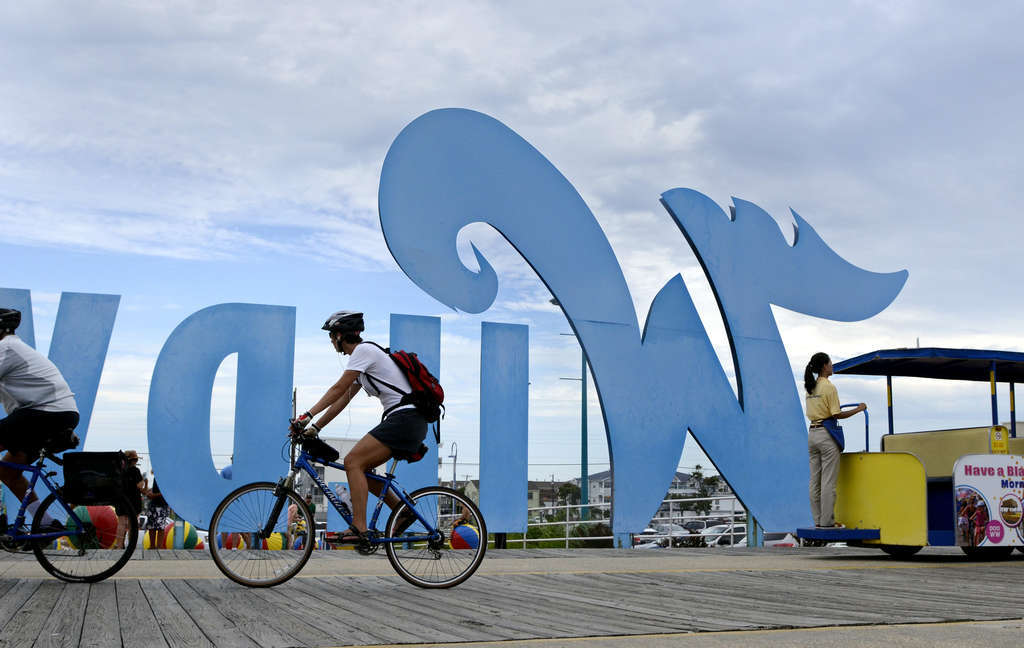
    🗺️ From Cape May to Long Beach Island, there are plenty of scenic routes to ride along, including breezy boardwalk paths, lighthouse rides, and wildlife trails.

    🚲 No bike? No problem. Our guide also shows you where to rent one nearby.

    💡 Important tips: Check local bike rules, bring a lock if you plan to stop for food or shopping, always wear a helmet (even on short trips), and don’t forget sunscreen and water, especially on longer routes.

    Find the full guide here.

    News worth knowing

    🌳 Your outdoorsy experience

    A partial solar eclipse is seen above the Houses of Parliament in London, Wednesday, Aug. 12, 2026. (AP Photo/Kin Cheung)Kin Cheung

    Did you capture any cool visuals of the Perseid meteor showers or the solar eclipse this week? What else are you doing or seeing out there?

    This is your moment to shine, dear reader. I’m on the hunt for new stories and would love to hear from you. Email me with your recent or distant memories in nature (pictures, if you have them, are welcome). You may see it featured right here.

    One free lawn cut at a time

    🎤 Now we’re passing the microphone to New Jersey education reporter Melanie Burney.

    With the afternoon sun beating down, Keith Benson and his childhood friend Brian Turner meticulously tended to a lawn in Camden’s Parkside neighborhood on a recent Friday.

    They took turns pushing a red lawn mower that left neat lines in the lush grass. They edged up the perimeter and pulled weeds from the sidewalk in front of the property on Bradley Street.

    A short time later, the pair completed the job, packed up their equipment and sped off to their next assignment in Benson’s burgundy Ford-150 pickup.

    They didn’t get paid and they didn’t want any payment, except possibly a cold bottle of water.

    Benson, a Camden High history teacher, and Turner, a litigator and personal injury lawyer at a Cherry Hill law firm, are spending the summer working for free. They want to give back to the city where they have lived and worked.

    “I’m grateful to be able to do it,” said Benson, 46. “We have to pass that on.” — Melanie Burney

    Discover how and why the duo started to give back to their community through lawn care.

    Paola’s picks

    🎶 An oddity: A Villanova scientist translated data from black holes into sound. Take a listen.

    📸 A view: This week’s total solar eclipse as seen from Valencia, Spain.

    🦅 A tribute: Jackie, a famous bald eagle from Big Bear, California, died this week from illness.

    🌅 A song: “Golden Hour” by Luna Li.

    🥾 An activity: The Friends of the Wissahickon’s guided hike series kicks off this Sunday. The first hike is sold out, but you can register for future ones here (free).

    🦎 A friendly view

    Hi, little buddy.Paola Pérez

    I made a friend in New Orleans this summer.

    👋🏽 Take care out there!

    By submitting your written, visual, and/or audio contributions, you agree to The Inquirer’s Terms of Use, including the grant of rights in Section 10.