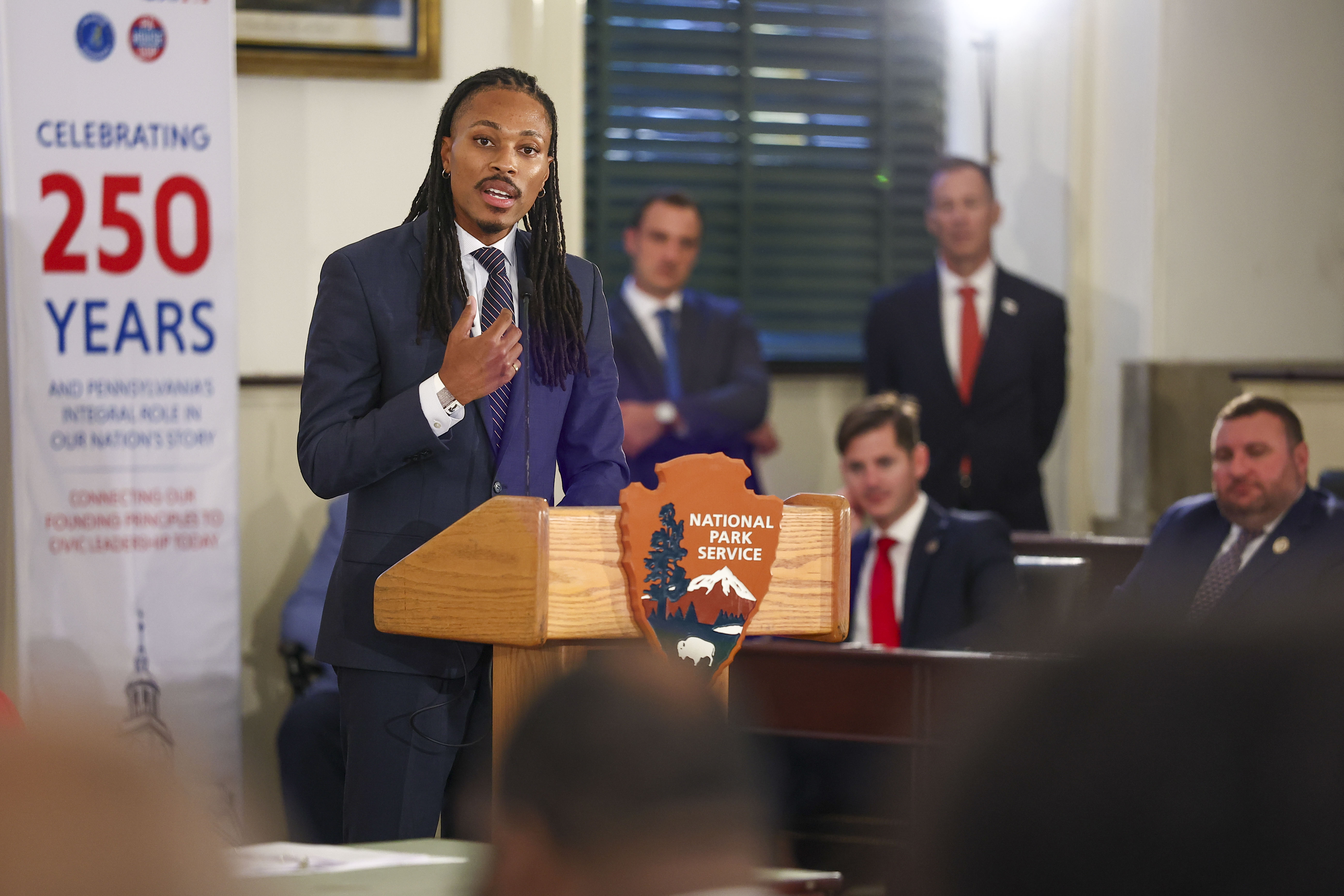
The Pennsylvania House Republican Caucus chastised a GOP state legislator Thursday after hereportedly hurled a homophobic slur earlier in the week at Democratic State Rep. Malcolm Kenyatta of Philadelphia, who is gay.
State Rep. Aaron Bernstine, a Republican who represents portions of Butler and Lawrence Counties in Western Pennsylvania, also allegedly said in a Harrisburg bar that Kenyatta had lost weight, which Bernstine allegedly attributed to AIDS, according to reporting by PennLive. Kenyatta was not present when the alleged remarks were made.
“The alleged conduct is troubling and does not comport with the values and professionalism Pennsylvanians expect of their state lawmakers,” Republican Caucus spokesperson Jason Gottesman said in a statement.
“All elected officials, regardless of party or position, must act in a manner consistent with the expectations of their constituents. When they fall short of that standard, it is upon them to take personal and individual responsibility for their actions quickly and appropriately.”
Kenyatta didn’t respond to several requests for comment, but other Democrats expressed their outrage on his behalf, including the Democratic National Committee, for which Kenyatta serves as vice chair.
“Hateful, homophobic, and racist attacks like this have absolutely no place in our politics, our communities, or our country,” DNC chair Ken Martin said in a statement.
The Democratic leaders of Pennsylvania’s Legislative LGBTQ Equality Caucus, as well as the Black Caucus, demanded Berstine’s immediate resignation in a joint statement Thursday, saying that Bernstine’s “unacceptable” conduct has rendered him “unfit to serve.”
“We are calling on all House members, but especially Republican leaders, to denounce his behavior, to join us in demanding his resignation, and for Republican leaders to identify the steps they will take to guard against this kind of pathetic behavior within their caucus,” said the statement from Black Caucus Chair Napoleon Nelson (Montgomery County), and LGBTQ Equality co-Chairs Ismail Smith-Wade-El (portions of Lancaster County), and Jessica Benham (portions of Lancaster County).
Bernstinedenied that he made the comments.
“The allegations attributed to me are false. This is a political attack,” he said in a statement Thursday.
He also referenced an altercation he had at the bar that same night with individuals he identified as being with the Pennsylvania Building Trades Council. Saying he was the subject of threats, he added that he alerted local police.
Berstine went on to criticize reporters who initially broke the story. “Reporters should scrutinize elected officials, including me,” he said. “But scrutiny is not a license to publish falsehoods or omit critical context. We are exploring all available legal remedies.”
The Philadelphia House Delegation posted a statement on X Thursday afternoon, calling for Bernstine’s resignation in response to his “alleged disgusting, hate-filled tirade.”
House Democratic leadership said it was “exploring potential next steps” and that majority party looks forward to “hearing what repercussions Republican House leadership will impose for his abhorrent behavior.”
Expulsion requires two-thirds majority in the House, which could happen if some Republicans crossed the aisle in the narrowly divided chamber.
In 2020, House Republican leaders called for Bernstine’s resignation after videos of him encouraging his young son to smoke and curse surfaced. Soon after, Bernstine was reelected, and the demands quieted.
Three years earlier, in the midst of Black Lives Matter demonstrations in which motorists were blocked, Bernstine posted on X, “If anyone EVER tries to stop my car on a highway with negative intentions… I will not stop under any conditions.”
Staff writers Gill McGoldrick and Michelle Baruchman contributed reporting.
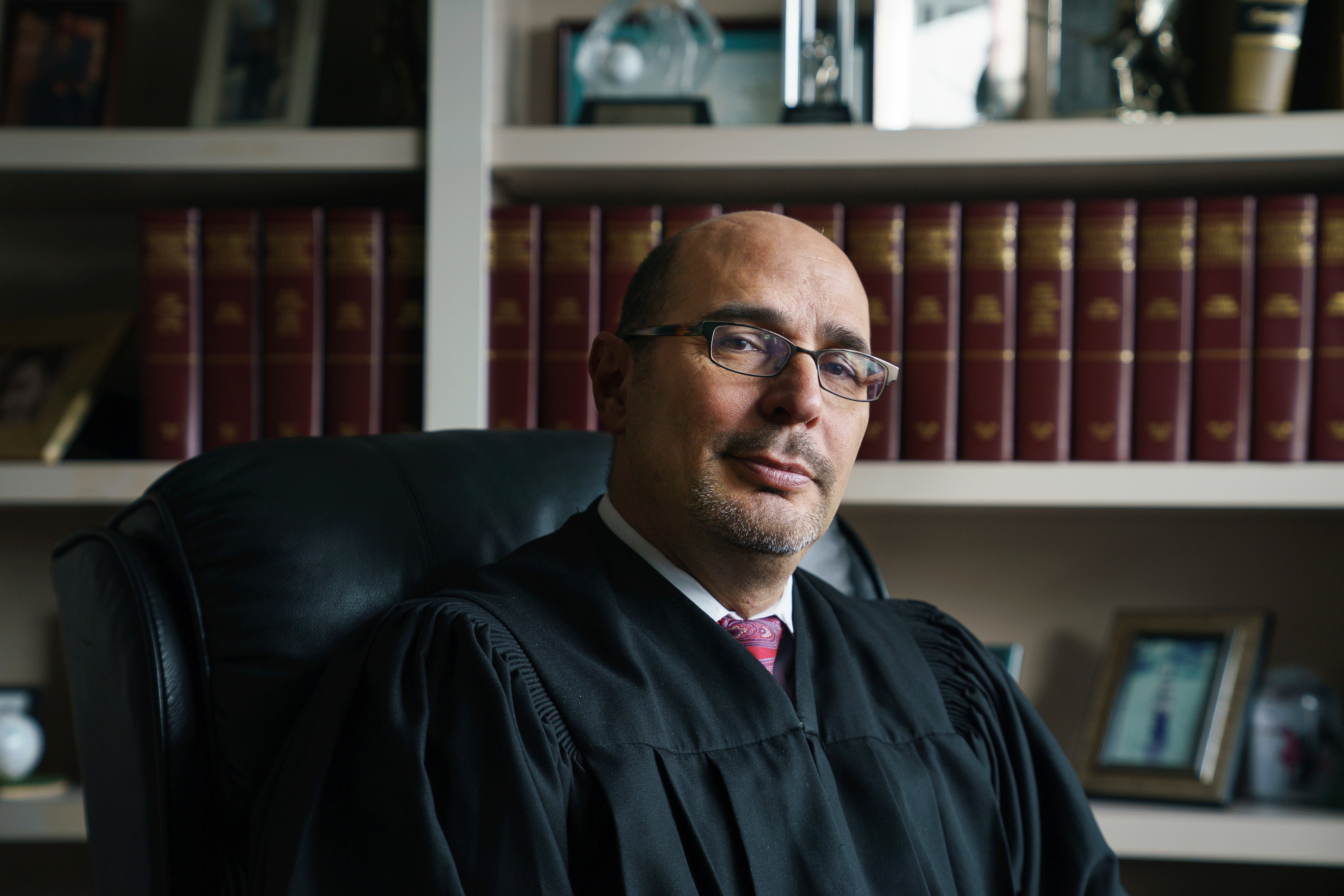
HARRISBURG ― Pennsylvania’s Judicial Conduct Board on Thursday urged a judicial disciplinary court to permanently remove a Philadelphia judge from the bench, saying he had displayed a pattern of unethical and “boorish” behavior that culminated in an effort to influence a colleague’s decision in a criminal case last year.
Common Pleas Court Judge Scott DiClaudio showed “little respect for the court and little respect for the rules of the court,” said Elizabeth Hoffheins, deputy counsel for the Judicial Conduct Board.
DiClaudio had a history of disciplinary issues, she said, and he had not taken adequate responsibility for his actions.
“Anything less than removal would fall short of restoring the public’s trust,” Hoffheins said.
The board’s request came after two days of testimony before the Court of Judicial Discipline, which is expected to determine DiClaudio’s fate as a judge in the coming months.
DiClaudio acknowledged Thursday that his remarks to fellow Common Pleas Court Judge Zachary Shaffer were improper, but insisted it was a complete misunderstanding and was never meant to tilt the scale of justice.
“I wish I never said it. I regret ever saying it,” DiClaudio said of the comments to Shaffer. “I wasn’t thinking.”
Shaffer testified that he was on the bench in his courtroom on June 12, 2025, when DiClaudio’s personal assistant, Gary Silver, walked in and said DiClaudio wanted to see him.
Shaffer said he and his clerk, Nicole Vernaccio, had been in touch with DiClaudio that week about buying T-shirts from the cheesesteak shop owned by DiClaudio’s wife. They assumed the request was to go pick them up.
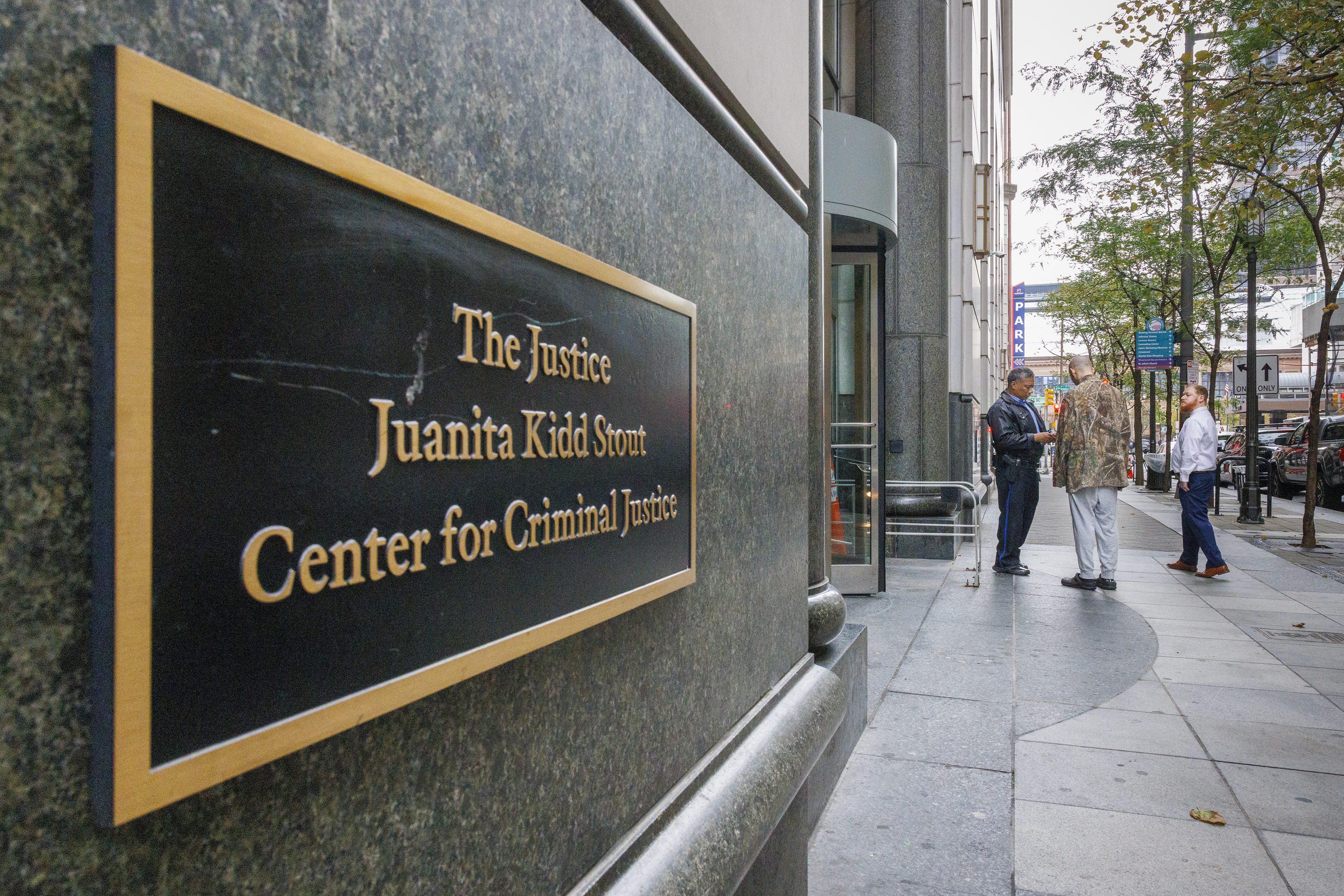
The exchange occurred in the robing room of DiClaudio’s former courtroom inside the city’s criminal courthouse. Alejandro A. Alvarez / Staff Photographer
The two walked to DiClaudio’s courtroom, then gathered in his robing room. They spoke for several minutes about various topics, he said, before DiClaudio asked Vernaccio to leave. Vernaccio also testified that she was asked to step out.
Shaffer said DiClaudio then pulled out a piece of lined paper with “Dwayne Jones, courtroom 905, and Monday’s date” written on it.
DiClaudio held it out at his side, he said, then looked at him and said, “OK?”
Shaffer said he was confused, and hesitantly said, “OK.”
He said DiClaudio ripped up the paper and threw it away.
As Shaffer started to leave, he said, DiClaudio told him: “‘You probably would have done the right thing anyway.’”
Shaffer said he was shocked and believed DiClaudio was suggesting he should give a favorable sentence to Jones, who was scheduled to appear before him in the coming days on charges of illegal gun possession connected to a fatal shooting.
Shaffer reported the conversation to his supervisors the next morning, and they referred the matter to the Judicial Conduct Board. He recused himself from Jones’ case.
The board charged DiClaudio with multiple ethical violations last September. He was later suspended without pay.
All of this came to be, DiClaudio said, after he attended the Roots Picnic in June 2025 — where he said he hung out backstage with Philadelphia rapper Meek Mill. In the common area, he said, Jones approached him and said he had a forthcoming sentencing before Shaffer.
DiClaudio said he didn’t know Jones, and told him only that his colleague was “a good judge who would do the right thing.” When Jones handed him his business card, he said, he put it in his wallet, not wanting to be rude.
DiClaudio denied that he later summoned Shaffer to his courtroom, despite an audio recording that showed that shortly before his assistant went to retrieve Shaffer, DiClaudio asked: “Is Judge Shaffer on the bench right now? Can you call down there and see if he’s still on the bench please?”
DiClaudio said he only asked about Shaffer because he had just addressed a case where a defense attorney Shaffer is dating did not appear in court. He said he wanted to ask Shaffer why she didn’t show. (The courtroom audio confirmed that DiClaudio addressed the woman’s case just before inquiring about Shaffer.)
He said he did not instruct Silver to visit Shaffer, and was surprised when the judge walked in.
Once inside the robing room, DiClaudio said, he, Shaffer, and the clerk discussed various topics. It was only as Shaffer went to leave, he said, that he picked up his phone and wallet holding Jones’ business card, and remembered the concert exchange.
He said he took out the card and told Shaffer: “I saw this guy at a concert. I told him you’re a good judge and you’d do the right thing.”
Then, he said, he tossed it into the trash.
“It was improper and wrong. There was no good reason to say that even though it wasn’t my intention to influence the case,” he said Thursday, adding: “I never wanted him to do anything with that statement other than to say thank you.”
The board had initially said that DiClaudio sought to sway the case because Jones was a friend of Meek Mill. Jones, in an interview last year, also said he was a friend of the artist’s.
DiClaudio, too, is close to Mill.
But Hoffheins did not introduce evidence of that during Thursday’s hearing. She said this week that the board still believed that to be true, but did not need to prove a motive in its case.
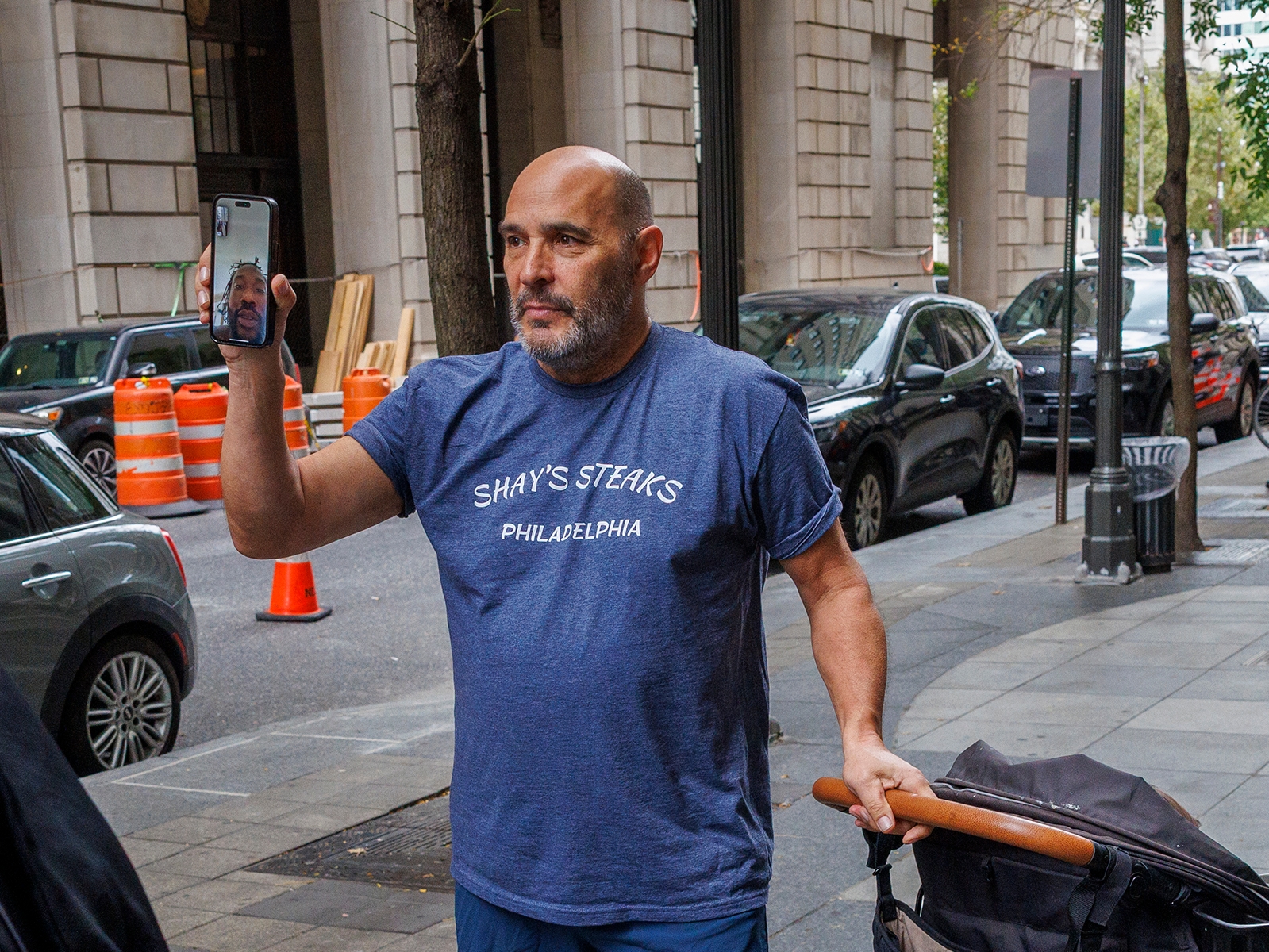
Common Pleas Court Judge Scott DiClaudio speaks with rapper Meek Mill on Facetime outside the Philadelphia courthouse on Sept. 16, 2025. DiClaudio, while on the call, approached the family of Tyree Musier, whose murder conviction was overturned, and said he thought they would appreciate Mill saying hello.Alejandro A. Alvarez / Staff Photographer
“This remark was not simply a compliment, not simply an off-the-cuff remark,” she said. “It was calculated to occur three days prior to this man’s sentencing.”
DiClaudio was elected to Common Pleas Court in November 2015, and took the bench in January 2016. Before his suspension last year, he mostly heard cases filed by people seeking to have their murder convictions overturned.
He presided over many high-profile exonerations and wrongful-conviction cases, and approved the release or resentencing of dozens of people who had been serving life in prison.
DiClaudio was known for working long hours, moving cases efficiently, and thoroughly explaining his decisions to the families of victims and the defendants. But he was also unconventional in his at times brash communication style on the bench.
That was on display again Thursday. He often rambled in a stream of consciousness from the stand, breathlessly veering between accepting responsibility, disputing Shaffer’s testimony, and even relaying his colleague’s dating history. His attorneys, Samuel Stretton and George Bochetto, struggled to reel him in.
“Just stop,” Stretton interjected several times.
Hoffheins pointed to the display, as well as DiClaudio’s previous disciplinary record, as proof of a pattern of misconduct.
Before becoming a judge, DiClaudio was censured by the Pennsylvania Supreme Court for “serial misconduct,” including violating legal ethics rules. Shortly after he took the bench in 2016, Hoffheins said, the Judicial Conduct Board sent him a private disciplinary letter for engaging in “boorish behavior” toward his court staff.
Then, in 2020, the Court of Judicial Discipline determined that he violated the code of conduct for judges when he failed to report debts on annual financial disclosure forms and repeatedly defied a judge’sorders to pay thousands of dollars in overdue bills to a Bala Cynwyd fitness club. He was suspended for two weeks, and placed on probation through 2026.
And last April, the Judicial Conduct Board accused him of using his position as a judge to promote his wife’s cheesesteak shop, eroding public trust in the judiciary, and abusing the prestige of the office for personal gain. DiClaudio has denied the allegations, and the case remains ongoing.
“What I am hearing, what I am feeling, is a persistent theme of your doing things and saying things … that are not wise,” said Judge Charles L. Becker, of the disciplinary panel.
Judge Carolyn Nichols called it “a painful trail of incidents.”
In a final plea, DiClaudio, 63, said if he returned to the bench, he would only work the few weeks necessary to secure his pension and lifetime health insurance to support his wife and two young children. Then he would retire, he said.
He teared up as he spoke of his children and defended his integrity and career.
“I talk a lot, but it’s my greatest strength and my greatest weakness,” he said. While he might be a “crazier judge,” he said, he’s “a judge who makes the right decisions.”
“That may be an explanation,” Becker said, “but, frankly, I’m not sure that’s a defense.”
Stretton, in his closing remarks, asked the panel for mercy.
“Yes he did something bad. And some of his conduct here can get a little rambunctious,” he said. “… But I see a great, decent judge. He’s done a lot of good in the community and on the bench. He’s well-respected.”
The tribunal will now weigh the matter, a process that could take months.
Kylie Kelce and Catherine, Princess of Wales have a lot in common. Both women played field hockey, are mothers to young children, and are in the public eye alongside their husbands. However, when it comes to royal formalities and etiquette, that may be where the similarities end.
In the most recent episode of her podcast, Not Gonna Lie with Kylie Kelce, the Narberth native addressed a flub she made in a past episode when she invited the Princess of Wales, who’s also known as Kate Middleton, onto the show.
“Princess Kate, Duchess of Cambridge, if you ever wanted to come on and chitchat about some field hockey and maybe kids. I don’t know. We got a couple things in common,” Kelce said in the Sept. 24 episode.
Unbeknownst to her, Kate Middleton’s formal title is Catherine, Princess of Wales.
Listeners were sure to point out her mistake, with Kelce apologizing in the “rage bait” section of the episode. One commenter wrote that Kelce would need to “clean up her act” in terms of language if the Princess of Wales were to join her for a conversation. And Kelce did not dispute it.
“First of all, you’re correct. … Agreed,” she said.
Despite this, Kelce acknowledged that she knows when to tone it down.
“Would I curse at her face? No,” she said. “Here’s the thing. I love curse words. I love it so, so much. I love curse words. You guys know that. But at the end of the day, I am respectful of the situations that I am put in, at least being respectful to the people I am speaking to.”
She went on to apologize to Catherine, saying that she always wishes to respect people’s chosen names.
As for a future collaboration? The offer still stands.
“I would love to speak to the Princess of Wales, OK?” Kelce said. “Because of many reasons. She is an incredible woman. She has children. She played field hockey. She battled cancer. There are so many things that I would love to speak to her about.”
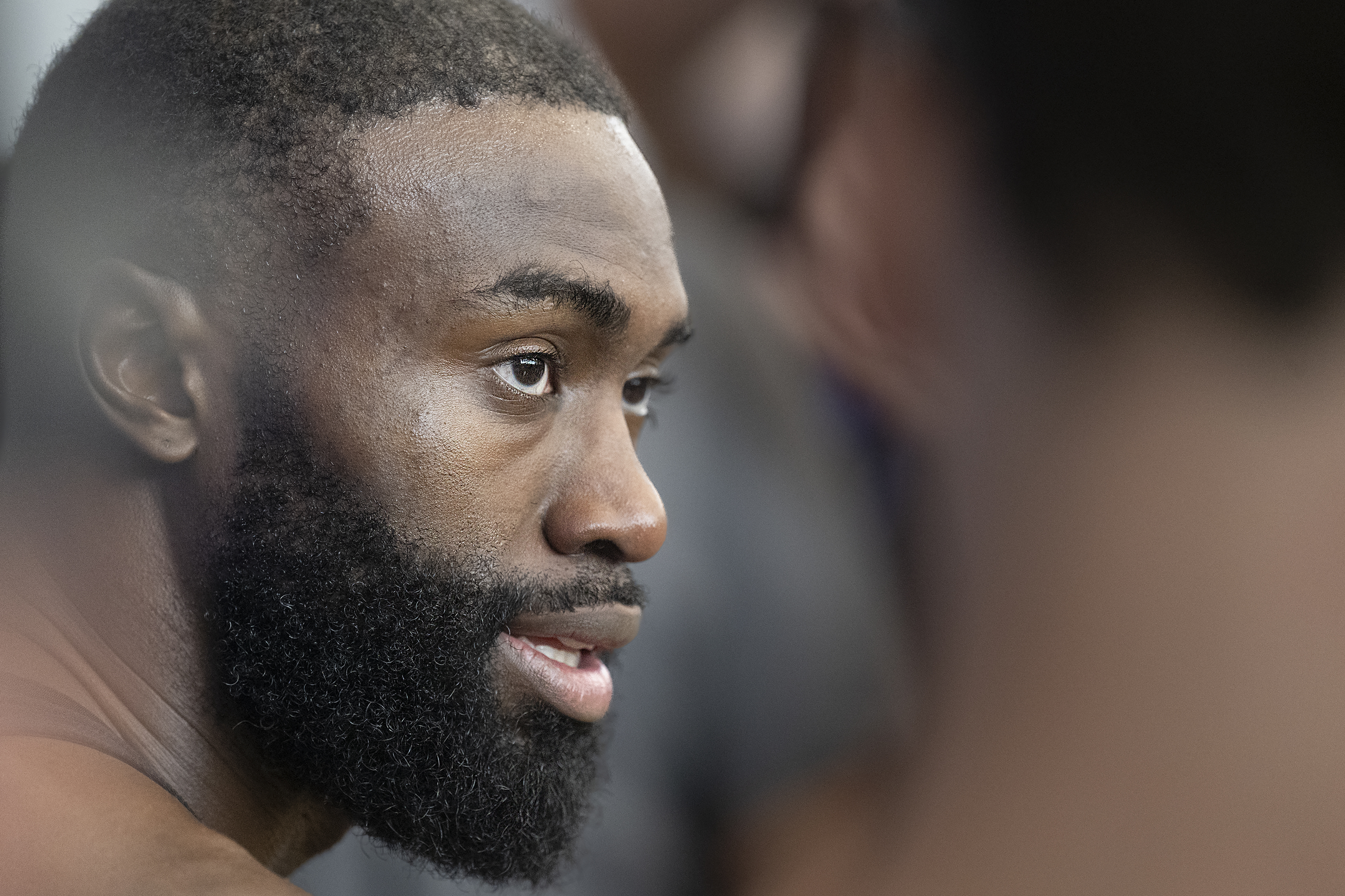
As the 76ers concluded practice Thursday and media came into their facility, Jaylen Brown was again the last one to leave the floor.
After working on some post-ups and back-to-the-basket moves on Wednesday, Brown was participating in small group workouts with members of the player development staff and players like Justin Edwards and Rayan Rupert.
That facet of training camp — the ability to work with and impart knowledge to some of the younger players — has been a highlight for Brown so far.
“A lot of them have shown me a lot of respect,” Brown said. “Ask me questions, or ask to jump in my workouts, and I’m welcome and I’m open to all of that, being a teacher. I was a guy who was always asking questions, so I appreciate it when the young guys are asking questions.”
It’s all part of an acclimation process that Brown said earlier this week was happening in “phases” as he moves from Boston to Philadelphia. In fact, he said, most of his things were arriving in Philadelphia on Thursday from Boston.
“It took a lot to find a place, it wasn’t hard, but it wasn’t the easiest either,” Brown said.
Part of moving is making sure his family is situated, including Brown’s 85-year-old grandfather.
“I gotta pick and choose my battles with him,” Brown said with a smile. “He’s excited, but it is a bunch of little stuff that goes into just, not just making sure that I’m comfortable, but my family as well. Everybody around here has been super accommodating, so I’m grateful for that.”
Among the most accommodating, Brown said, was guard Tyrese Maxey, who has gone out of his way to make sure Brown has been comfortable in his transition. Brown has taken note of the effort Maxey is putting in to make sure Brown and all the new Sixers feel at home, a sign of Maxey’s growing leadership as he enters year seven.
Here’s more Jaylen Brown today on moving from Boston to Philadelphia, the chance to have a special season, and how accommodating Tyrese Maxey has been.
“He’s trying to make me feel comfortable, even if I don’t need it, but I appreciate it. … Tyrese has been a great host.” pic.twitter.com/07KzgqabCv
“He’s overemphasized trying to make me feel comfortable, even if I didn’t need it,” Brown said. “He’s been a great host.”
Like any profession, basketball players thrive most when they are comfortable on and off the court. The goings on of everyday life — the hassle of moving, making sure your family is OK — can filter into the workspace.
So far, so good on that front though, Brown said, as the talent-loaded Sixers have been through three practices. The first two, coach Nick Nurse said, were heavy on scrimmages and defense, while Thursday was more of a “mental” and recovery day. Nurse spent the first two days working more on defense with Thursday being the first day they started installing some of the offense, like sets and out-of-bounds plays.
Brown isn’t so worried about the Sixers coming together on the offensive end.
“It won’t be as hard because we got so much talent,” Brown said.
He echoed what several Sixers and Nurse said over the last week, which is that the defensive side is going to require more focus, given the need to play on a string and communicate.
“Clear communication, identifying coverages and holding each other accountable,” Brown said. “Getting back on defense as well. So we’ve been working on that. That’ll be a part where, it’s just a whole new system, whole new calls. I gotta like, download my brain to a different algorithm to make sure I’m not calling the wrong stuff. Because the names are different.”
Chalk that up as another adjustment from one team and city to the next.
As Maxey said earlier in the week, it was “awkward,” but in a good way, seeing Brown in a Sixers jersey. It’s a process that is taking a lot of recalibration for everyone. Like for Nurse, who battled against Brown when he coached the Toronto Raptors and Sixers.
“It looked the same as it looked coaching against him,” Nurse said Tuesday. “You’re out there and you’re looking at him and you say, ‘Man, this guy’s really tough. Really good.’”
For Maxey and Embiid, who have been his rivals for years. For fans, who were used to disliking him in that Celtics green. And for Brown too, who has to re-wire his brain after 10 years of defensive calls with the Celtics. Just one of the many things that take getting used to in Philadelphia.
“Some of the terminology, they use the same words, but it’s a whole different coverage,” Brown said. “… So you gotta be able to like, make sure I’m calling the right stuff. Make sure everybody’s on the same page. Make sure when we come out of the timeouts, out of the huddles, we all know what we’re in. We all know what we’re supposed to be doing.”
New Jersey farmers whose fruit crops were damaged or destroyed by an unexpected four-day freeze last spring could apply for grants to help them recover their losses under new legislation that would earmark $60 million in state funding for such relief.
The late-April cold snap zapped peach, apple, pear, cherry, and other early-blooming trees, as well as shrub, vine, and ground crops like blueberries, strawberries, and grapes at farms both statewide and throughout the eastern U.S. from Virginia to Michigan. Many growers lost 30% or more of their fruit crops, with some reporting total losses. Officials estimated damages in New Jersey would top $300 million.
Assemblywoman Dawn Fantasia (R., Sussex) applauded the state and federal response, with both Gov. Mikie Sherrill (D) and the U.S. Department of Agriculture making statewide disaster declarations that cleared the way for farmers to apply for emergency loans and other relief assistance.
But in the weeks afterward, farmers called for direct financial aid, with many saying the freeze was the most catastrophic of their lifetimes. So Fantasia recently introduced a bill that would allocate $60 million for grants impacted farmers could apply for, with priority given to those hardest hit. The bill would require the state agriculture secretary to report within a year how the money was spent and advise if more aid is needed.
Seven Republicans signed on to co-sponsor the bill. Sen. Parker Space (R., Sussex), who’s also a farmer by trade, will sponsor the bill in the upper chamber, Fantasia said.
Fantasia said $60 million in aid for farmers is far from the controversial budget add-ons that annually bloat the state budget and make GOP legislators howl in protest.
This year, state budget appropriations critics deride as “pork” included $500,000 for pickleball courts and millions for other “really beautiful things that are absolutely wants and not needs,” Fantasia said. Farm relief “is not a want. It’s a need,” she added.
Farming has a sprawling footprint in New Jersey, she said. Almost 10,000 farms generated nearly $1.5 billion in sales in 2022, federal data shows. They employ about 25,000 farmworkers, the bill says.
“We can sure as hell take $60 million from the general fund and give it to an industry that spans the entire state and brings in over a billion dollars to the state of New Jersey,” Fantasia said. “We’re talking about people’s livelihoods and ability to keep jobs and stay in their homes.”
April’s freeze came as farmers already were struggling with rising labor, fertilizer, and fuel costs. Some smaller farms rely on a single season for their annual income, prompting industry observers to predict the freeze would force some growers to cut staff, sell off acreage, or quit farming altogether.
For those reasons, Fantasia expects legislators from both sides of the aisle will support the bill.
“There’s no question here: Severe losses happened. No product to sell. Devastating to the economy. Devastating to the jobs in New Jersey. I think it’s a no-brainer,” she said.
Hunterdon County farmer John Melick lost much of his peach, apple, cherry, plum, and pear crops to the April freeze.
Crop insurance has helped him recover, he said. But he welcomes any assistance the state wants to offer the fruit-growing industry, noting it would be most beneficial for smaller farmers, those without diversified crops, and the few who couldn’t afford or thought they didn’t need crop insurance.
“It’s not going to put me out of business if I don’t get it, but I won’t turn it away either,” Melick said of state aid.
He’d be more excited for Trenton’s intervention if legislators could control the weather, he joked, because the recent rainy stretch has kept customers away.
“I’m hoping for sunny weekends for October, so that the 30% crop that I do have I can sell to pick-your-own customers,” Melick said. “When it rains every Saturday and Sunday, they’re not coming out.”
John Baer was the son of a Harrisburg newspaperman. He literally grew up in the Pennsylvania state Capitol. And he never left.
His father, John H. Baer, was a political reporter for what is now the Patriot-News in Harrisburg, and Mr. Baer spent many Sunday afternoons hanging around the old Capitol press room while his father worked on stories. Decades later, in 1972, Mr. Baer joined the Evening News in Harrisburg as a reporter and went on to work for nearly 50 years in that same press room.
“I’m probably unique in Pennsylvania politics and journalism,” Mr. Baer said in a 2020 oral history interview for Pennsylvania State University. “I dare say there probably aren’t any who can say they worked in the same state capitol newsroom that their father did.”
In 1987, the Daily News hired Mr. Baer to cover state politics in Harrisburg. He became a political columnist for the newspaper in 2000, and his plainspoken, no-holds-barred stories later appeared in The Inquirer as well. Before he left the papers in 2019, he covered hundreds of political campaigns, conventions, and elections, and wrote about thousands of local, state, and national politicians.
Mr. Baer’s column on politics appeared in The Inquirer and Daily News from 2000 to 2019. Newspapers.com
“He was the most feared reporter in my eight years in Harrisburg,” former Gov. Ed Rendell said. “He did his work. He did his digging. He really cared about the issues.”
On Thursday, Sept. 24, Mr. Baer died of cancer at his home in New Cumberland, Pa. He was 79.
For 32 years, Mr. Baer was a hard-hitting, award-winning political reporter and columnist for The Inquirer and Daily News. He was also a columnist for PennLive and the Patriot-News, onetime public TV producer and show host, former press secretary, author, teacher, and mentor.
Many of those Mr. Baer covered in Harrisburg, Philadelphia, and Washington praised his “deep integrity” and “fierce independence,” and called him a “keen observer of Pennsylvania politics” and “a heavyweight in Pennsylvania political reporting” in online tributes. State Rep. Ben Waxman called Mr. Baer a “legendary Capitol journalist.” U.S. Rep. Dwight Evans said he was “authentic and a one-of-a-kind journalist.”
Mr. Baer told Penn State he wanted to “let people see the inside of the game in Harrisburg.” His Inquirer.com online profile reads: “John Baer has written about politics and government since 1987. Neither subject ever fails to provide him with stories of policies and politicians walking on or skirting by paths to perdition.”
In addition to covering nine Pennsylvania governors, the impeachment trial of President Bill Clinton, and the ascensions of Presidents Barack Obama and Donald Trump, Mr. Baer wrote about the execution of serial killer Gary Heidnik, the pleas for more research funding by a cancer victim, and the battle of a state policeman’s widow to receive her husband’s pension benefits.
He said some of his favorite columns were the mea culpa pieces he wrote at the end of each year that highlighted things he got wrong. “I truly just had a ball at the Daily News,” he told Penn State. “I just loved it. … I’ve always said I had no adult supervision, and it was wonderful.”
Mr. Baer joined PennLive in 2019, and his last column was published in July. “The depth and breadth of his knowledge was beyond compare,” said Amy Worden, his editor at PennLive.
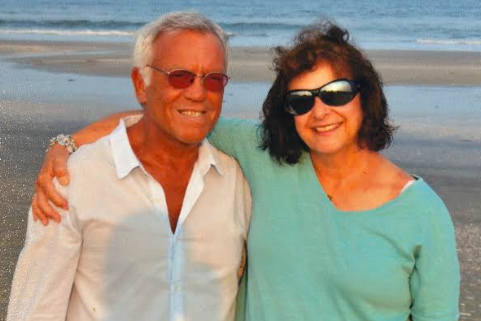
Mr. Baer and his wife, Rosemary, married in 1969.Courtesy of the family
Before the Daily News, Mr. Baer spent 14 years in total as a reporter for the Patriot-News, an award-winning public TV producer and show host for WITF in Harrisburg, and a press secretary during Lt. Gov. Bill Scranton’s unsuccessful run for governor in 1986.
He wrote freelance stories for Philadelphia Magazine and national publications. He was a frequent guest on political TV and radio shows and moderated several statewide candidate debates.
A lifelong foodie, he also reviewed Harrisburg-area restaurants for a magazine under the pseudonym “the Phantom Diner.” His book, On the Front Lines of Pennsylvania Politics,was published in 2012.
“He was so good at writing strong opinions with depth,” Paul Vigna, a retired Daily News editor, said.
Mr. Baer earned awards for his journalism and was inducted into the Pennsylvania News Media Hall of Fame in 2024. He was cofounder of the Pennsylvania Press Club and onetime president of the Pennsylvania Legislative Correspondents Association.
In tributes, colleagues praised his “sharp wit” and called him a “journalism giant,” “terrific writer,” and “mentor to many of us.” The internship program at the Pennsylvania Legislative Correspondents Association is named in his honor.
“He was an All-Star, a Hall of Famer,” Vigna said. Rendell said: “He didn’t take any BS.”
John Baer was born June 25, 1947, in Harrisburg. He graduated from Bishop McDevitt High School in 1965 and earned a bachelor’s degree in English at Mount St. Mary’s University in Maryland and a master’s degree in education later from Temple University.
He coached basketball and football teams while teaching English for three years at Trinity High School in Harrisburg after college. He married Rosemary Ruggieri in 1969, and they had sons Johnny and James.
Mr. Baer and his wife hosted many memorable Christmas parties and enjoyed road trips to Georgetown University basketball games, New York Mets baseball games, and their sons’ many sporting events. He played racquetball and tennis, and ran a marathon at 50.
He was a longtime member of St. Theresa Catholic Church in New Cumberland. “He liked interesting people and had lifelong friendships,” his family said in a tribute. “He loved his friends.”
On Facebook, colleague Diana Robinson said: “Here’s to you, John Baer. You’ll always be The Most Interesting Man in Harrisburg.”
In addition to his wife and sons, Mr. Baer is survived by three grandchildren and other relatives.
Services were held earlier.
Donations in his name may be made to Vickie’s Angel Foundation, 511 Bridge St., Box 174, New Cumberland, Pa. 17070.
A 13-year-old boy was charged with murder and related crimes after fatally shooting a 16-year-old boy in a Norristown home, authorities said Thursday.
The shooting happened the morning of Sept. 22 at a residence on the 700 block of Arch Street, where prosecutors said Daniel Hawkins-Boyce fatally shot the victim, William Boyd.
Hawkins-Boyce came into possession of a Ruger .380 handgun a week before the shooting, according to the affidavit of probable cause for his arrest. It was not clear how he did so. He told police he “found” it, the document said.
Hawkins-Boyce and Boyd were hanging out in the home’s basement and had recently smoked marijuana when he accidentally discharged the firearm, striking Boyd in the face, the affidavit said.
Hawkins-Boyce called 911, and detectives arrived to find him on the front porch with his mother, where he told them he was responsible for the shooting.
Hawkins-Boyce did not live at the home where the shooting occurred, authorities said. He told investigators that he’d taken the gun to meet Boyd, and that he’d checked to make sure it wasn’t loaded.
In the basement, he told police, he left the gun unattended when he went to the use the bathroom for 10 or 15 minutes.
When he returned, he said, he noticed the gun was in a different position than where he left it.
Hawkins-Boyce told police he began scrolling the social media app TikTok and tapping the gun’s trigger with his index finger, and the gun went off.
After the shooting, he ran home and awakened his mother to tell her what happened, the affidavit said.
Montgomery County District Attorney Kevin Steele said in a statement Thursday that evidence showed the teen had “recklessly fired the firearm at the victim.”
The firearm was reported stolen in Philadelphia in June, according to the affidavit.
Steele said Hawkins-Boyce was charged as an adult in accordance with state law, but he said the case would likely move to juvenile court after a review from a judge.
The teen was arraigned on Sept. 30 and is being held at the Montgomery County Juvenile Detention Center on a $200,000 bail.
He is expected to appear in court for a preliminary hearing on Oct. 14.
U.S. Immigration and Customs Enforcement officers have been ordered not to engage in high-speed car chases and to make vehicle stops only if they have completed specific training, under new internal guidance issued after several drivers were shot in encounters with ICE.
A memo sent to officers in ICE’s Enforcement and Removal Operations division and obtained by The Associated Press warned they are not authorized to chase vehicles that fail to pull over under any circumstances. Instead, officers should take down the vehicles’ information for further investigation, according to the memo signed by ICE’s executive associate director Marcos D. Charles and dated Wednesday.
The new guidance comes after ICE-initiated vehicle stops have repeatedly escalated when drivers have refused to cooperate or tried to flee. ICE agents have fired their guns during more than a dozen such encounters since last year, killing at least four people and wounding several others.
President Donald Trump’s administration has faced internal tension over how to handle traffic stops, which are seen as particularly high-risk encounters.
After fatal shootings of drivers in Maine and Texas in July, ICE officers were directed to temporarily pause most vehicle stops. But the next day, Trump went on social media to direct the agency to continue traffic stops, calling them “one of ICE’s most important and effective Crime Fighting tools.”
ICE has faced intense pressure from the White House to deport more people who are in the country illegally, and its arrests have reached record numbers. At the same time, the agency’s rapid hiring spree last year resulted in some poorly vetted and trained officers hitting the streets.
ICE and the Department of Homeland Security had no immediate comment on the policy guidance.
The new memo outlines steps intended to improve the safety of vehicle stops for ICE officers, drivers they are targeting, their passengers, and the public.
The memo told ICE’s field office directors that they must ensure vehicles used for traffic stops have lights and sirens that let the public know they are law enforcement vehicles when activated. All officers on the scenes of vehicle stops must wear and activate their body cameras, under the guidance.
In addition, only officers who have completed one of five specific agency training courses can conduct vehicle stops. Officers who have not completed the training courses can only participate in vehicle stops “in a support capacity” as passengers and cannot be the drivers of any of the vehicles involved.
The guidance says ICE officers can continue to use a controversial technique known as pinning, which is defined as “using a vehicle or physical barrier to trap or stop a car,” but only if they have received special training. Similarly, only trained officers can use spike strips that deflate tires to prevent drivers from fleeing.
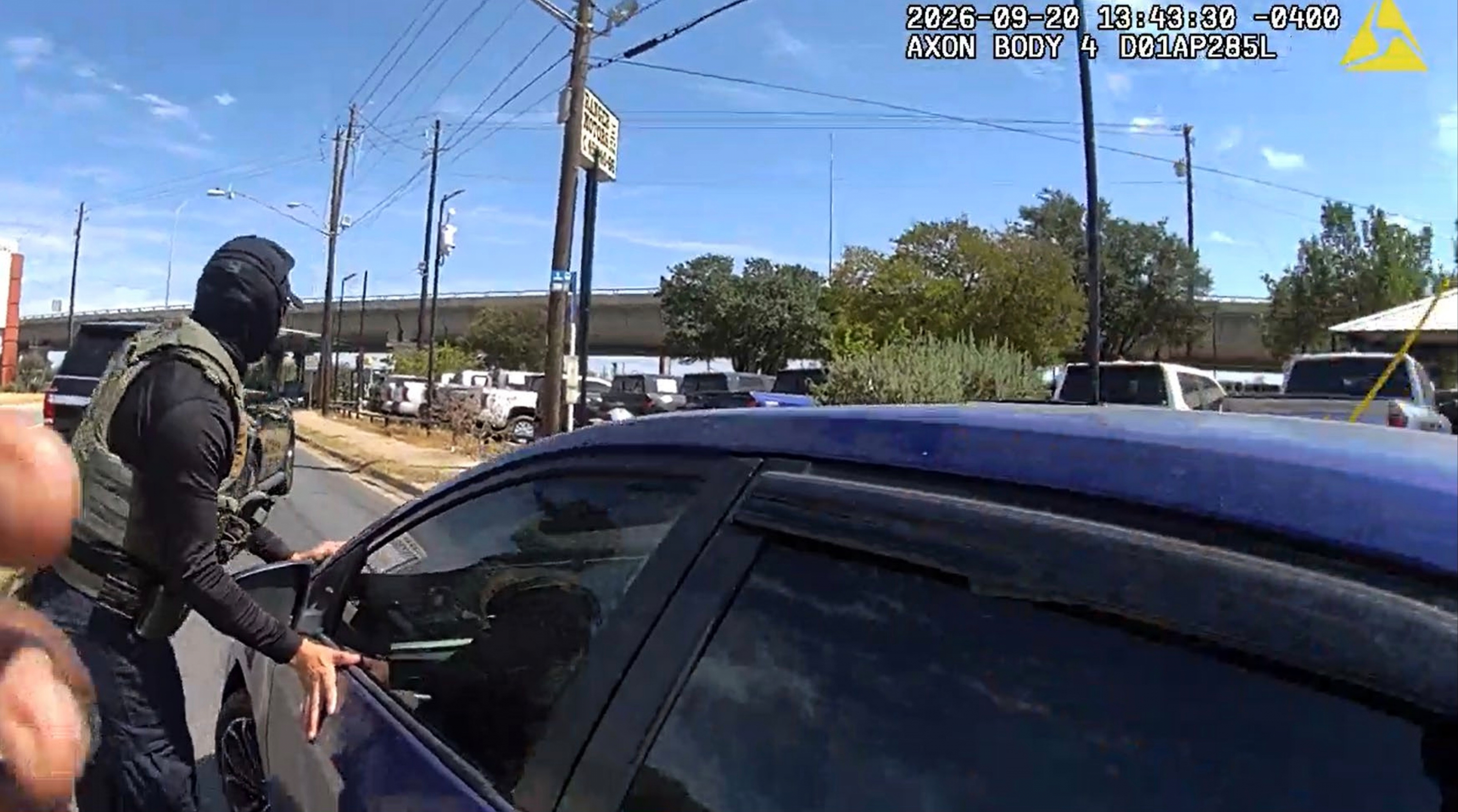
The memo came the day that courtroom testimony highlighted ways in which two ICE officers involved in a vehicle stop, pursuit, and shooting that wounded a delivery driver in Austin last month would not have complied with the new guidance.
During a bond hearing for Wilber Rafael Garces Perez, testimony showed that the officer who shot him wasn’t wearing a body-worn camera. The ICE officer who did have a camera was driving in a separate car and turned it off during the pursuit.
Prosecutors presented surveillance video that showed an ICE agent chasing Garces Perez at high speeds through residential streets after he fled an initial traffic stop.
Garces Perez faces federal assault charges after investigators say he struck an ICE officer with his driver’s side mirror. That officer then shot into Perez’s vehicle, lodging a bullet in his back, officials say.
Attorneys for Garces Perez have called the charges against him “retaliation” and have argued that the camera footage was inconclusive because it didn’t fully capture the moment when he allegedly tried to flee.
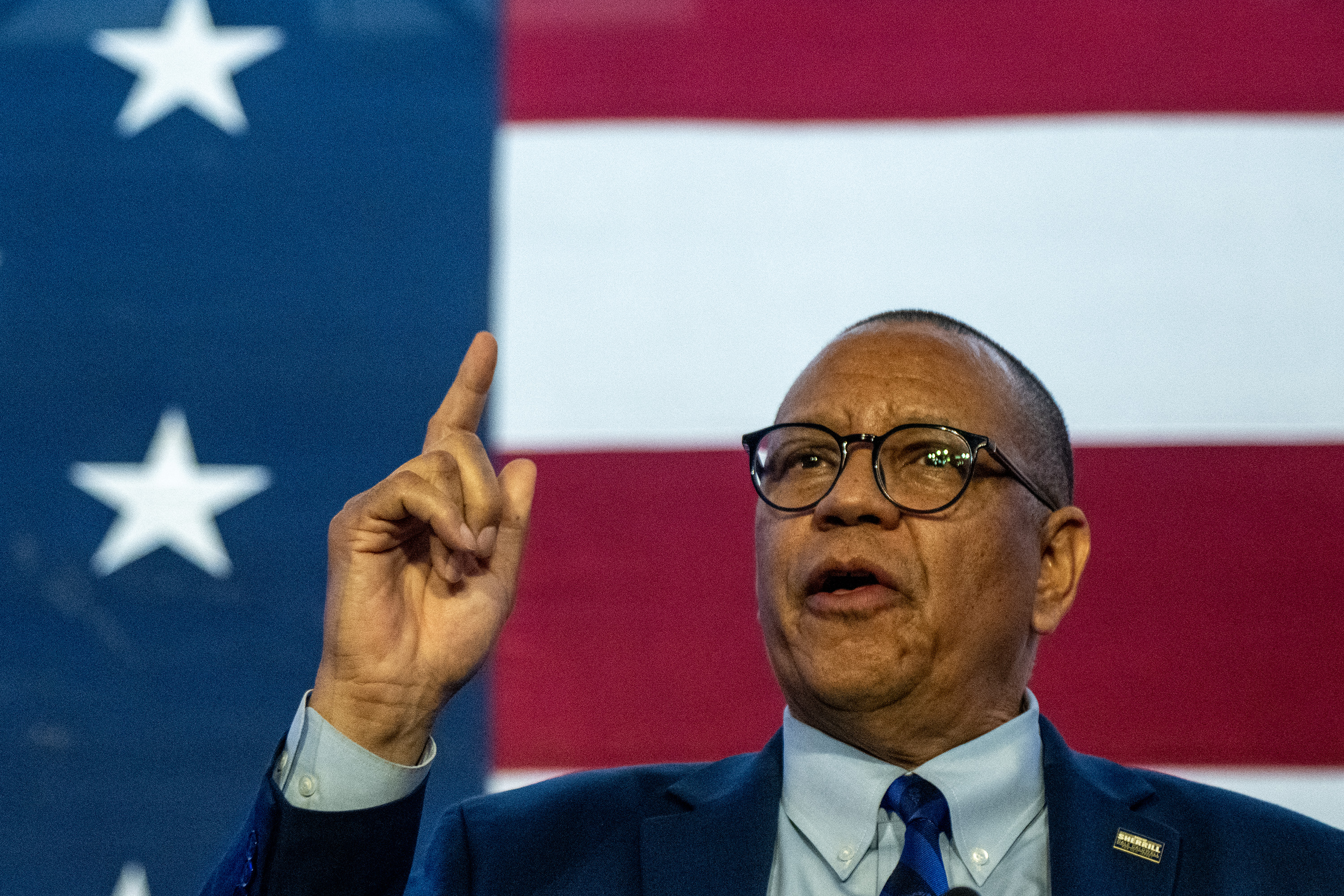
Former New Jersey Lt. Gov. Dale Caldwell, who resigned last week after investigators found that he had made inappropriate and sexually charged comments to women and violated ethics rules, is now being investigated by his church, according to an email from a bishop reviewed by The Inquirer.
Cynthia Moore-Koikoi, the bishop of the Eastern Pennsylvania and Greater New Jersey Episcopal Area, sent a brief email to colleagues on Sept. 25, just hours after Gov. Mikie Sherrill announced Caldwell’s resignation that day.
“I write to inform you that I have received a complaint concerning Rev. Dale Caldwell, Lt. Governor of New Jersey and licensed pastor. The complaint is being processed according to the policies and procedures of the United Methodist Church,” the bishop’s email said.
In an email to the Inquirer Thursday night, Moore-Koikoi elaborated, saying she had suspended Caldwell from his pastoral duties until the investigation was done.
“Because we hold clergy to a high standard, we take the allegations made in the report seriously,” Moore-Koikoi’s statement said. “Following the publication of the report about the former Lt. Governor, I received a complaint based on the concerns raised in the report. In order to protect the well-being of Rev. Caldwell, the congregation, and all those involved, Rev. Caldwell has been placed on suspension while the complaint is processed.”
A spokesperson for the bishop clarified that the complaint “is based on what was already under investigation.”
In her email to members, Moore-Koikoi asked that they pray for him “and all those impacted by this process,” the email said. Moore-Koikoi included a Bible verse, 1 Corinthians 4:5a: “Therefore judge nothing before the appointed time; wait until the Lord comes.”
In an interview earlier Thursday, Caldwell said he was not facing any new allegations of impropriety. He said the Eastern Pennsylvania and Greater New Jersey Episcopal Area was simply “investigating the investigation, based on the same information.”
“It’s a piling on, and it’s crazy,” said Caldwell, the senior pastor at Covenant United Methodist Church in Plainfield.
At the time, he said no one has asked him to step aside. Caldwell could not immediately be reached for comment on the bishop’s statement saying she had suspended him.
Caldwell and his attorney have vociferously denied the former lieutenant governor and secretary of state did anything wrong and have criticized the findings of the four-month investigation by former Attorney General Christopher Porrino, who served under Gov. Chris Christie.
Caldwell, 66, left his job as president of Centenary University to run with Sherrill last year. The investigation found that Caldwell hit on a female staffer’s friend, and that when she turned him down, he told the staffer that ambitious women like them needed a man in a position to help them “but you young women are looking for young sperm.”
Caldwell denied making the comments, “but we did not find his denial credible,” Porrino’s report said. The state trooper accompanying Caldwell that day told investigators he never heard Caldwell make that statement.
Caldwell said Thursday he could not understand why they “disregarded” the testimony of the trooper, ”who was two feet away.”
The report said Caldwell also repeatedly brought personal guests to ticketed events without clearing it with the ethics officer and without paying for the extra tickets. The practice continued even after warnings, attending an ethics training, and being told about the investigation.
In releasing the report, Sherrill said it “lays out a pattern and practice of long-term concerning behavior.”
His attorney said when Caldwell “learned that reimbursement was appropriate in one particular situation, he reimbursed $175 for the event.”
Caldwell said he resigned “for the good of the state of New Jersey” because the matter distracted from the Sherrill administration’s important work.
When asked to comment, a Sherrill spokesperson referred to the governor’s earlier comments defending the thoroughness of Porrino’s investigation.
Caldwell and his attorney have said they are weighing their legal options. When asked what he might do, he said he could “sue for harassment.” He lamented “there was something wrong with the American system of justice” because it would take an enormous amount of money to prove he did nothing wrong.
“I can leave with my head up. I have a 22-year-old daughter and she was seeing all these people attack her dad,” Caldwell said. “I have a good life and opportunities. The number of supporters are many more than the detractors.”
Staff writer Aliya Schneider contributed to this article.
This story has been updated to reflect Caldwell’s suspension from his pastoral duties.
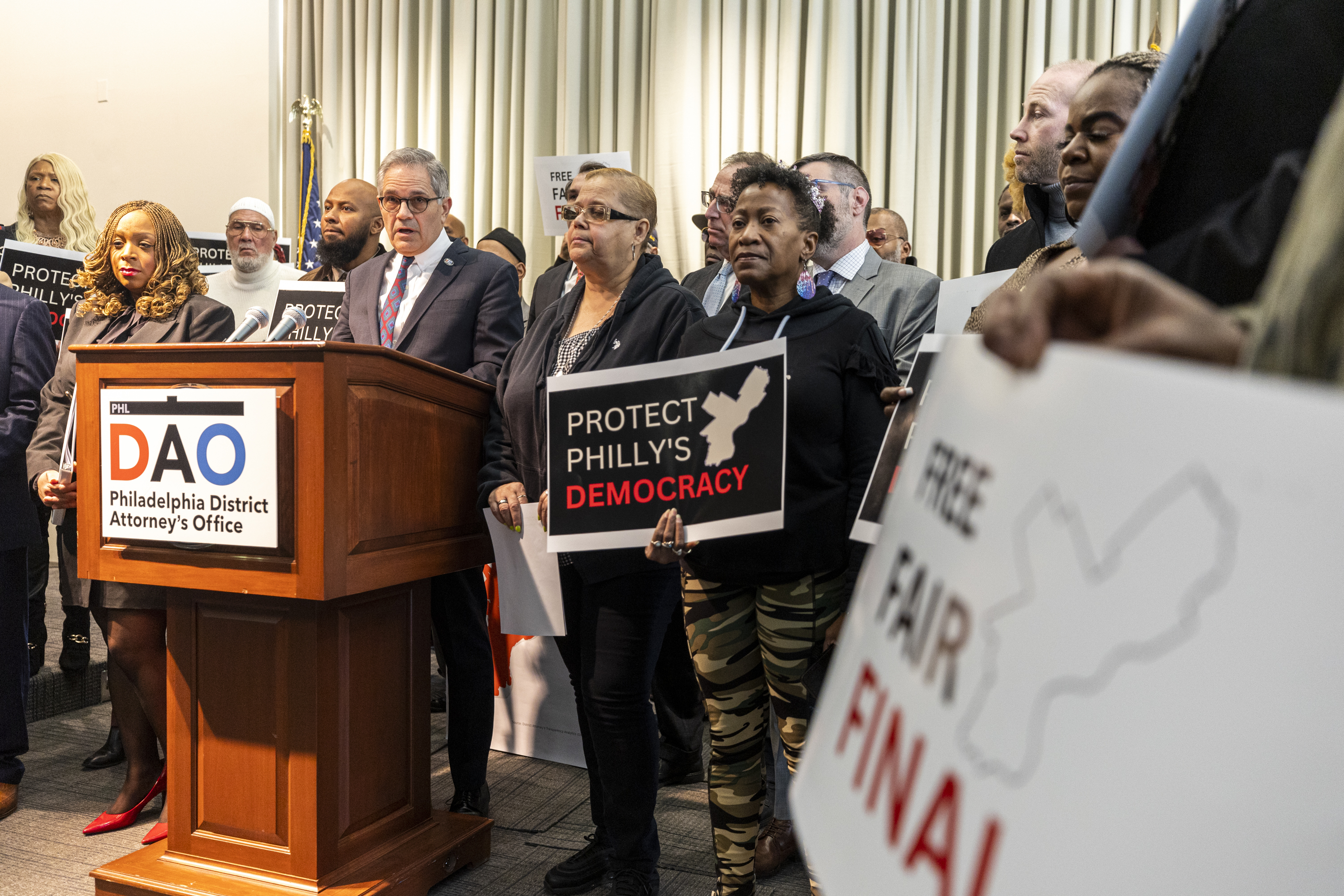
All seven justices rejected District Attorney Larry Krasner’s argument that the law unconstitutionally strips the authority of an elected district attorney by granting jurisdictions to crime “within” SEPTA to a special prosecutor appointed by the Pennsylvania attorney general. But they did not unanimously agree on the reason.
The special prosecutor can investigate crimes in all counties in which SEPTA operates, but can take over cases unilaterally only in Philadelphia.
Chief Justice Debra Todd wrote in the majority opinion that the part of the special prosecutor law specific to Philadelphia serves a “legitimate state interest: promoting public safety through the protection of SEPTA employees and riders by supporting the prosecution of crimes within SEPTA, and specifically, SEPTA-related crimes in Philadelphia.”
The law responds to “public safety concerns regarding increased SEPTA-related crime in Philadelphia, and the belief that such crimes were not being sufficiently prosecuted,” Todd wrote.
State Attorney General Dave Sunday, who is authorized to appoint the special prosecutor, said the law “has paid great dividends in holding violent offenders accountable” for crimes on SEPTA.
“Our mass transit prosecutor will continue to prosecute criminals who have killed and assaulted other individuals, perpetrated acts of gun violence, and stolen SEPTA property,” Sunday said in a statement.
A spokesperson for the district attorney’s office did not return a request for comment.
The special prosecutor’s office has become more active in the last year after a slow start. The office initially hired a sole attorney and did not prosecute a case until 2025, two years after its creation. The office has since taken on a portfolio of around two dozen cases, a spokesperson for the attorney general said. Serious crime on SEPTA has trended downward, according to the agency, falling around 20% in mid-2026 compared with the same period the previous year.
Earlier this year, the special prosecutor,Michael Untermeyer, took on an assault case involving a woman accused of pepper-spraying and punching a conservative influencer during a viral confrontation on a SEPTA bus. And a representative for Sunday’soffice said the prosecutor was preparing for a homicide trial in November, and the office was recently referred a case involving an assault on a SEPTA bus driver.
The ruling is the latest in which the Supreme Court has shown willingness to take away from Krasner functions that county prosecutors traditionally havehad sole discretion over. The justices in June found that Philadelphia prosecutors had engaged in a pattern of misleading judges when seeking to overturn murder convictions, and instructed judges to notify the state attorney general’s office so it can review cases when Krasner’s office makes such requests going forward.
But the ruling on the SEPTA special prosecutor might be short-lived.
Krasner’s lawsuit called the law an “unconstitutional, radical, and unprecedented measure” amounting to a “shocking usurpation of power.”
In June, Commonwealth Court issued a 4-3 decision against Krasner, finding the law constitutional. In the majority opinion, Judge Anne E. Covey said the act “does not clearly, palpably, and plainly violate the Pennsylvania Constitution.”
In a Thursday concurring opinion, Justice David Wecht emphasized the ways the special prosecutor law was tailored to Krasner specifically.
The law disqualifies anyone who worked at the Philadelphia district attorney’s office as of roughly the beginning of Krasner’s tenure from serving as special prosecutor, the justice noted. And the measure was set to expire a year after Krasner’s second term ended (he has since won a third, which began in January).
The special prosecutor law is “tailored to hamstring Philadelphia’s thrice-elected and sitting District Attorney’s customary prerogatives relative to crime within the jurisdiction that office serves,” Wecht wrote.
“But none of that matters,” he said, because since 1951 the Pennsylvania Constitution has allowed for laws ”regulating the affairs of the City of Philadelphia.”