The latest figures released by the Health Ministry on Thursday showed that 4,018 people have died among 8,300 cases recorded since the outbreak was declared in eastern Congo on May 15.
Some health workers, meanwhile, gathered at the epicenter in Ituri Province to demand payment for wages owed them. The protesters, who included surveillance team members, waved placards saying, “No money, no data!” and “No payment for months.”
Some of the workers haven’t been paid for August and September, said Biongi Beiza, one of the protesters in Bunia, Ituri’s capital. “There is no explanation from the administration,” he said.
Congolese authorities did not immediately address the issue. Front-line workers have gone on strike several times since the outbreak began, further hampering efforts to contain the disease.
A senior U.N. official said an Ebola-hit displacement camp housing a transit center for infected patients was burned by soldiers earlier this week as they were looking for weapons in Kigonze, on the outskirts of Bunia, forcing 19,000 people in the camp to flee.
Creating such transit and treatment centers has been a struggle, requiring money and staff, all of which are in short supply, said Julien Harneis, the U.N. senior Ebola coordinator. “When we lose a center, that means we lose capacity, we lose investment, and we have to start again. And above all, it means that people do not get access to the care that they really need,” Harneis said.
Infected aid worker evacuated to the Netherlands
An aid worker with Médecins Sans Frontières, known in English as Doctors Without Borders, was infected with Ebola while working in Congo, the group said in a statement.
The worker arrived in the Netherlands late Thursday on a special medical flight and was transferred to a high-level isolation unit, the Leiden University Medical Center said in a statement.
“The human cost of this crisis is unprecedented in the DRC, with communities facing the largest Ebola disease outbreak ever recorded in the country,” MSF said.
At least 50 health workers have died after contracting the virus.
Mobile labs are helping detect cases quickly
One way local authorities have tried to contain the outbreak is through mobile laboratories. In Butembo, an Associated Press journalist watched a medical team operating one such lab near an Ebola treatment center on Thursday.
Test results that used to take 72 hours can now be obtained in six hours with the mobile labs, said Lota Kalubi, a doctor at the treatment center.
The labs have also made it easier to get to locations usually difficult to reach, said Michel Ngimba with the National Institute of Biomedical Research in Butembo. “So we can go, if today we have an emergency, for example, in Katwa, we can start up the vehicle, and we can move the lab to Katwa,” said Ngimba.
Insecurity and community resistance are hampering containment efforts
The World Health Organization has recently raised the alarm about the virus’ rapid spread into new health zones, stretching limited resources. The current outbreak is on track to exceed the deadliest on record, West Africa’s regional outbreak between 2014 and 2016, which killed 11,000 people, WHO has said.
The number of newly confirmed cases is falling, but that could be attributed to insecurity and challenges in getting communities to cooperate in some of the hot spots, Africa CDC said on Thursday. While the spread of the disease has slowed in some areas, it has accelerated in others.
Confirmed cases fell from around 850 cases and 470 deaths a week in mid-July to an average of 490 cases and 230 deaths in September.
A Congolese politician was beaten to death earlier this week in one of the emerging hot spots after defending government measures to deal with the outbreak, highlighting tensions and mistrust in communities.
Authorities last month launched a village-centered approach that involved working with local leaders to educate people about the virus, but those efforts face resistance from residents who dismiss Ebola as a hoax. There is also deep distrust in the country’s government for reasons including how it’s managed past Ebola outbreaks and chronic corruption.
Friedman — who has posted over 50,000 photos and videos of dogs (and their humans) online since 2013 — is hosting a meetup on Sunday morning on the Schuylkill Banks. Hundreds of hounds are expected to attend.
“We’re going to meet at the Schuylkill River Dog Park,” said Friedman, speaking via Zoom from his Manhattan apartment, “and then we’re going to walk along the river up to the Art Museum and climb the Rocky steps for a group photo.”
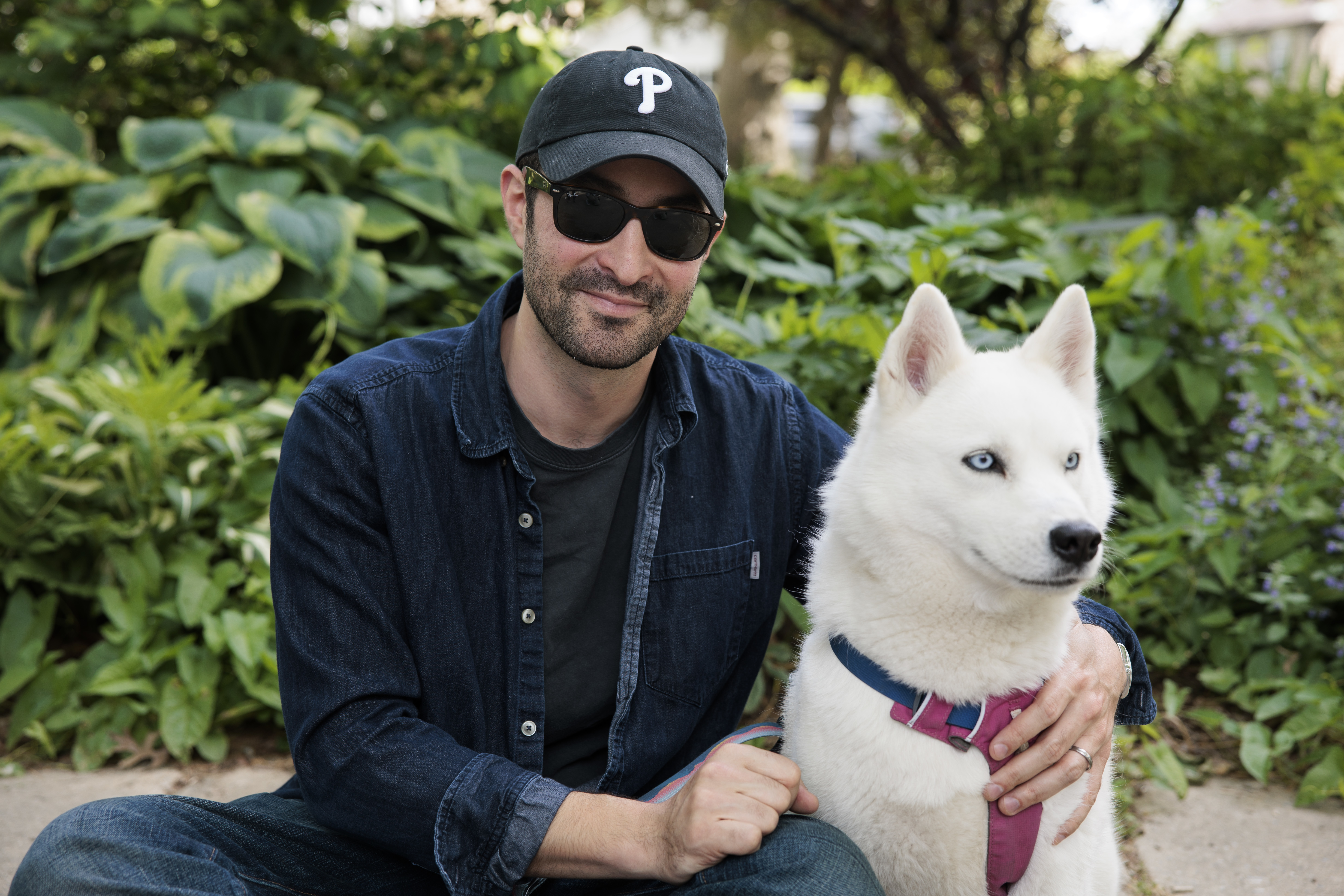
Friedman will be there with his dog, Elsa, the Instagram-famous white husky mix who was dog of honor at his 2025 wedding to Samantha Cutler, his fellow alum of Wynnewood’s Friends Central High School. The wedding was featured in the New York Times’ Vows column.
“It’s a little crazy for me,” said Friedman, “because I feel like I’m a prophet, or” — he laughs — “some sort of dog evangelist, where everybody’s gonna follow me. It’s like I’m leading a march.”
“It’s a very joyful thing to have people meet up around a shared love of dog. They get to know each other, and make a lot of connections. It’s an amazing show of the power of not just the dog community, but the Dogist community.”
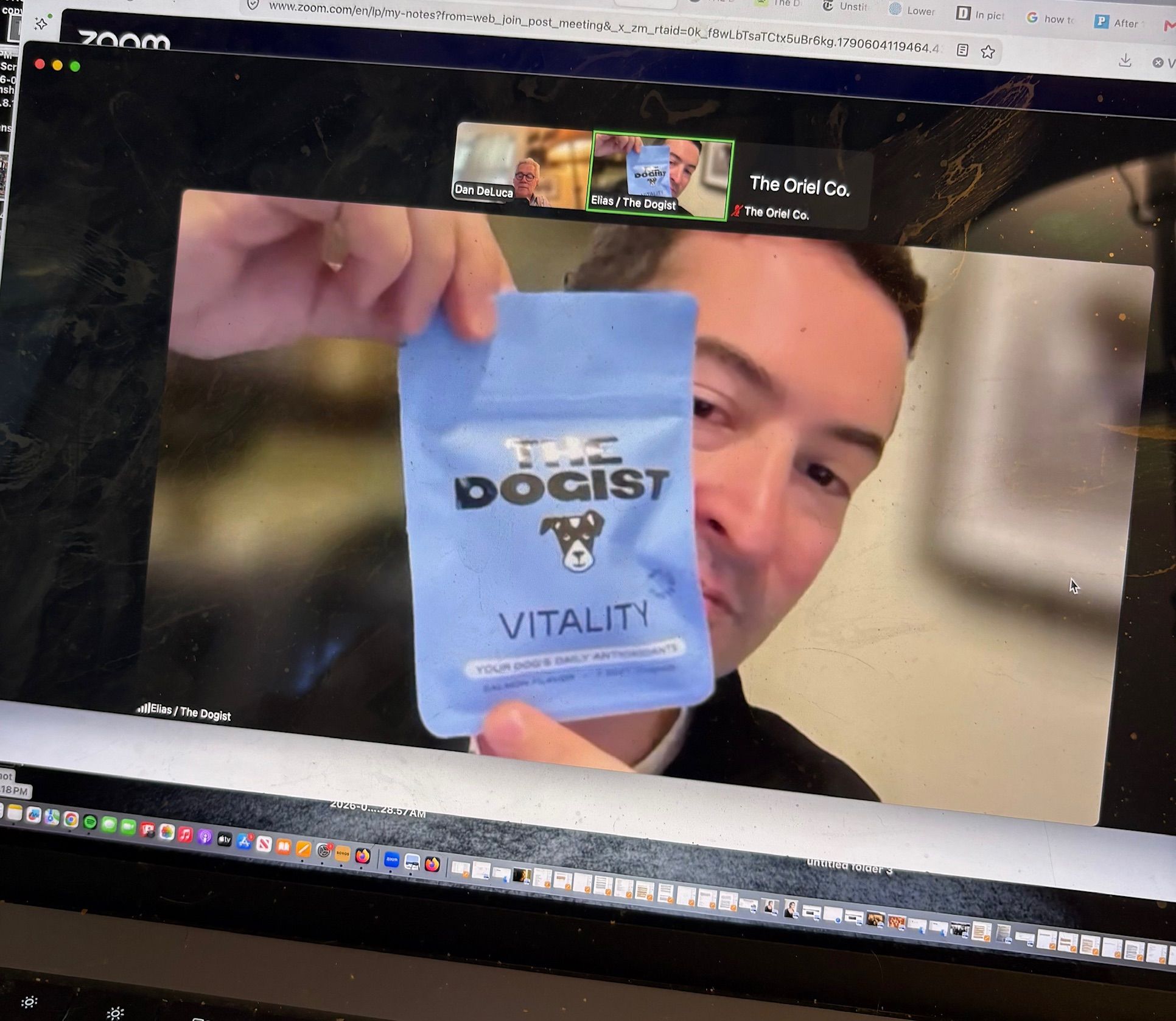
Sunday’s walk with Friedman is part of a Dogist tour tied to the launch of the Dogist Company, a canine wellness brand whose first product is Vitality, which is advertised as a “Board-Certified Vet-formulated antioxidant chew that supports brain, joint and immune health.”
“It’s salmon flavored so a dog might consider it a treat,” Friedman says of the product he developed with veterinary nutritionist Angela Rollins, which is available at thedogistcompany.com. “But it’s not a treat, it’s a supplement.”
Elias Weiss Friedman, a.k.a. the Dogist, holds a package of his newly launched canine wellness brand, The Dogist Company’s Vitality supplement, during a Zoom interview.Dan DeLuca
“Everybody wants more years with their dog. But it’s also about having good years with your dog,” says Friedman, who credits Elsa, 6, as “chief wellness officer” on the Dogist Company website.
“I’ve spent the last 13 years of my life showing the world how amazing dogs are. So the next evolution of the Dogist ecosystem is creating products that make dogs’ lives better — because it’s the least we can do for them for all they do for us.”
“They’re based in Narberth where I grew up,” Friedman said. “They raise service dogs to work with teenagers and children who are clinically diagnosed with depression, or PTSD, or are on the autism spectrum.”
Friedman also has a show on YouTube — simply called Dogs — where he strolls around meeting pups with celebrities, such as actors Zooey Deschanel and Sarah Paulson, and comedians Roy Wood Jr. and Lewis Black.
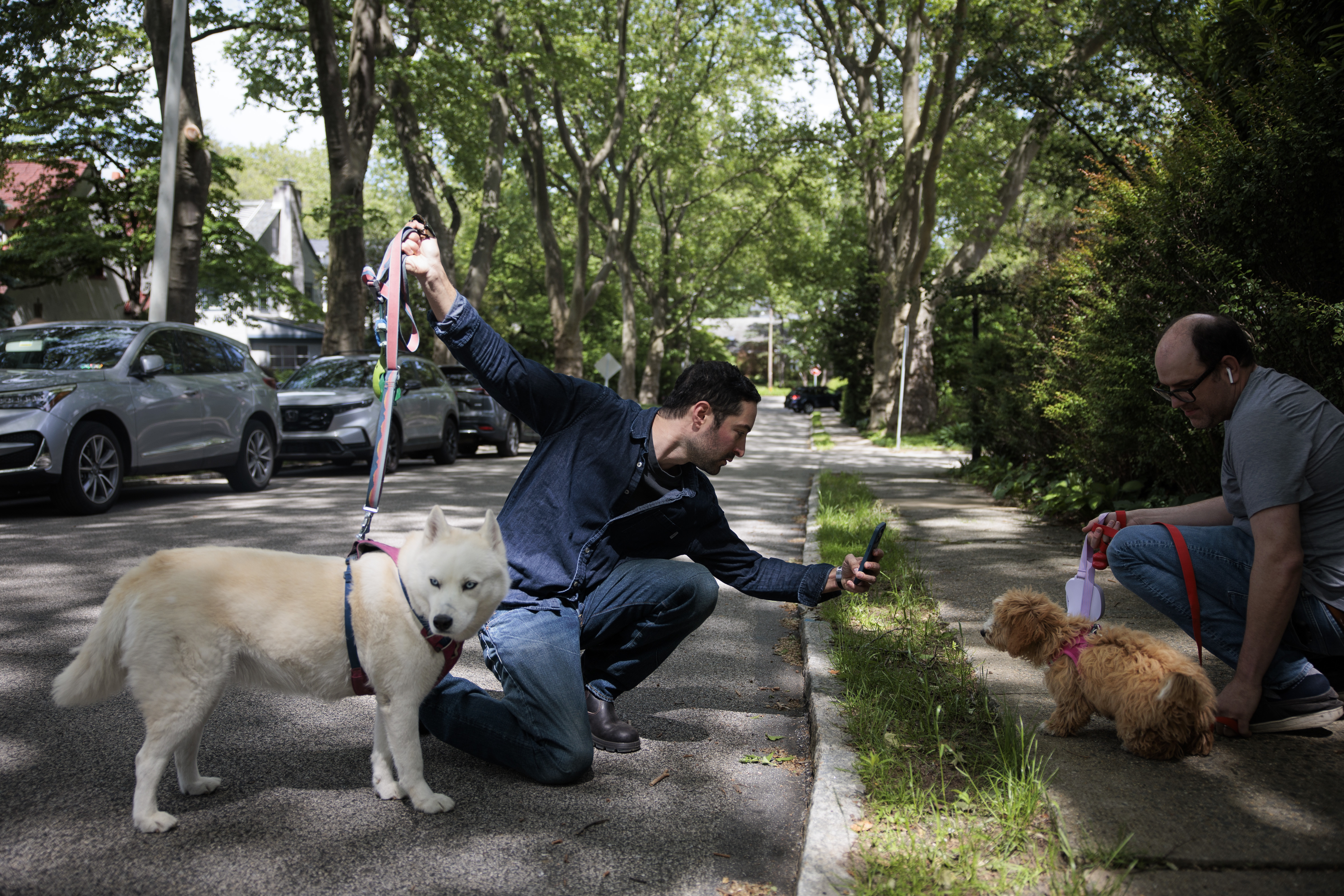
Elias Weiss Friedman, photographer and founder of the Dogist, holds onto his dog named Elsa, while photographing Michael Rey and Rosie, in his childhood neighborhood on May 20, 2025, in Narberth.Monica Herndon / Staff Photographer
Last year, Jane Goodall was a guest in an episode recorded a week before her death. Meeting the English primatologist and anthropologist “was the biggest honor, probably, of my life,” said Friedman.
The Dogist origin story dates back to when he was a 2 year old and wandered away from his grandmother’s house in Narberth toward traffic on Montgomery Avenue. Oreo, his grandmother’s dutiful black Lab, kept him from walking into speeding traffic.
Most of the Dogist’s photos are taken in New York, but Friedman’s content-gathering travels have frequently brought him to Philadelphia, where he’s found four-legged subjects in Manayunk, Rittenhouse Square, and the Main Line.
“Negativity is easily found on the internet,” he said. “Dogs are an antidote or a respite to all that.”
At group meetups like Sunday’s — where walkers without dogs are also welcome — he can connect IRL with members of the digital Dogist community.
“I always enjoy going out and meeting people and talking to them about their dogs,” said Friedman, who has published three books including last year’sThis Dog Will Change Your Life.
“Dogs don’t have an ego, right?” he said. “They’re not burdened by one like we are. So part of the joy of seeing that they’re so free is that it allows us to transcend our ego for a few minutes. And that’s a very liberating experience.”
The Dogist Company Vitality Walk at Schuylkill River Park, 30 S. 25th St. at 10 a.m. on Sunday, Oct. 4, Instagram.com/thedogist
Former Lt. Gov. Dale Caldwell is being investigated by his own church.
A bishop of the Eastern Pennsylvania and Greater New Jersey Episcopal Area sent an email about the probe to colleagues on the same day of Caldwell’s resignation last week, which followed the release of the initial report finding evidence of sexual harassment.
Caldwell, who is a senior pastor at Covenant United Methodist Church in Plainfield, told the Inquirer that the Eastern Pennsylvania and Greater New Jersey Episcopal Area was “investigating the investigation, based on the same information” and referred to the examination as a “piling on.”
He is suspended from his church duties until the investigation is complete.
The U.S. Environmental Protection Agency awarded a $2.5 million grant to dig up layers of a 1.6-acre site to get rid of contamination.
It’s from a 45-foot-high pile of illegally dumped construction waste that was removed years ago in Camden’s Bergen Square neighborhood that left behind lead, arsenic, and PFAS, aka “forever chemicals.”
The EPA, Camden Mayor Victor Carstarphen, and other officials announced the grant on Thursday. The money will come after the city finds a developer and submits plans for new use at the site, the EPA said.
An investigation from Floodlight and The Guardian revealed that the DataOne data center in Vineland emitted large amounts of air pollution for almost a year before regulators stepped in. The center was recently hit with a $1 million fine for violating clean-air laws by operating dozens of natural-gas power generators without the required state permits.
Bancroft NeuroHealth seeks to build a two-level school for 160 students on its Mount Laurel campus. The proposal will go before the township’s planning board next week, according to 70and73.
A new Rutgers University poll shows South Jersey residents are less supportive of Gov. Mikie Sherrill than the rest of the state.
A recently introduced bill would allocate $60 million in state grants for farmers who lost crops from the surprise April freeze. Under the proposed legislation, farmers would need to apply and the most impacted would have priority, according to New Jersey Monitor.
Fresh off its recent rebrand, Cooper Norcross Health released the first renderings of its planned $650 million Camden patient tower, which is set to open in 2028, the Philadelphia Business Journal reports.
Philadelphia 76ers LeBron James poses for a portrait during NBA Media Day at the team’s training facility in Camden on Monday. Jose F. Moreno / Staff Photographer
Enjoy your weekend! See you on Monday. 😎
By submitting your written, visual, and/or audio contributions, you agree to The Inquirer’s Terms of Use, including the grant of rights in Section 10.
Faces from the past were dragged into the present.
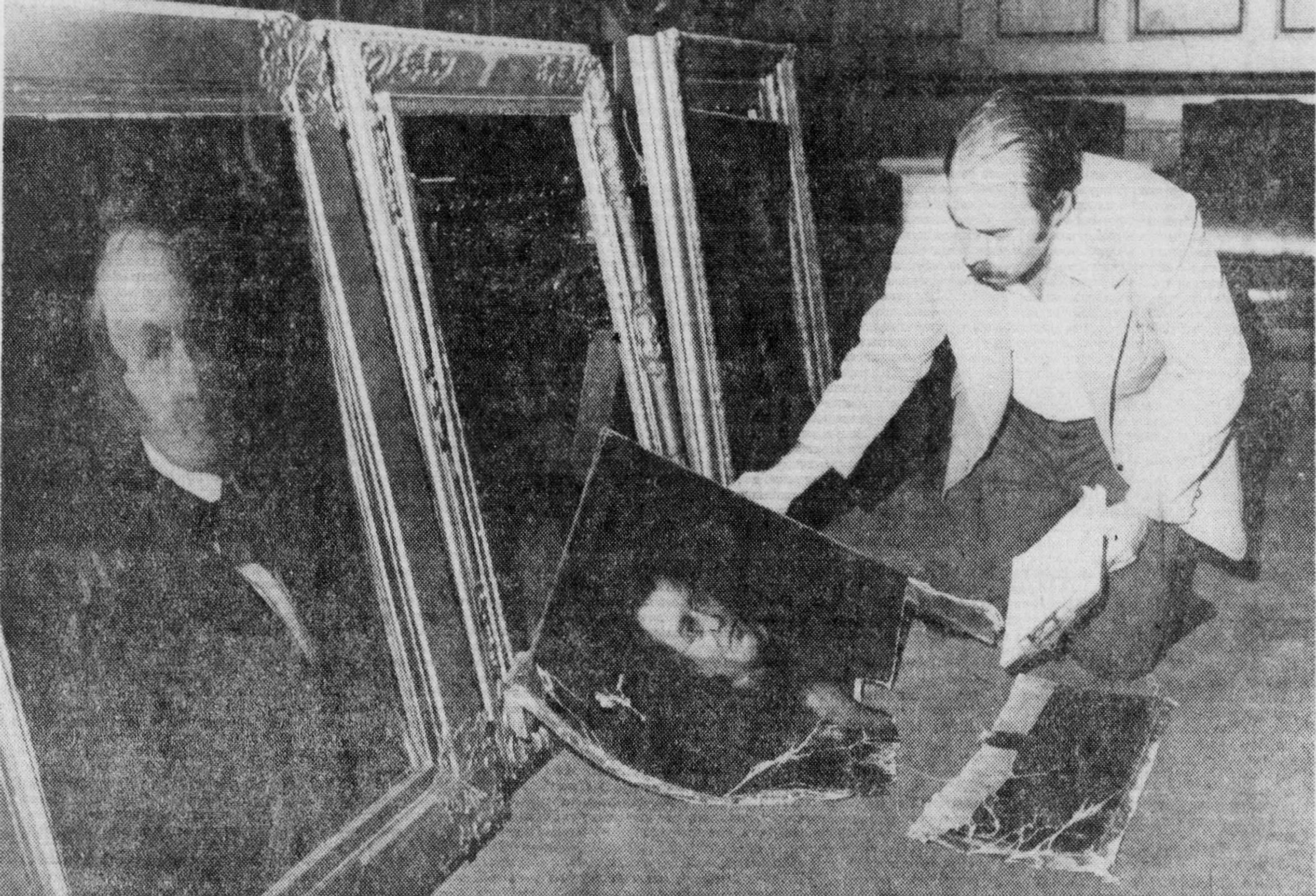
Oil portraits in City Hall of three former Philadelphia mayors were defaced on Sept. 27, 1978.
Around 4:30 p.m., a former city employee smashed the portraits that were hanging in a gallery on a lobby wall outside the second-floor Mayor’s Reception Room. The gallery features stately portraits of the city’sdozens of former mayors.
A 21-year-old recently fired city carpenter, Russell Byrd from Ogontz, pulled four framed, two-foot-by-three-foot portraits off the wall and smashed three against nearby railings and stairs. He left a fourth portrait — of John Barker, mayor from 1808 to 1812 — unharmed.
A cop on duty watched Byrd suspiciously pacing the stairway and went to investigate. He found the portraits in the second-floor stairwell, and followed Byrd into a men’s room and placed him under arrest.
Byrd was charged with theft, burglary, receiving stolen goods, and criminal mischief. He pleaded guilty to the mischief count in June 1979 and was sentenced to two years of probation, court records show.
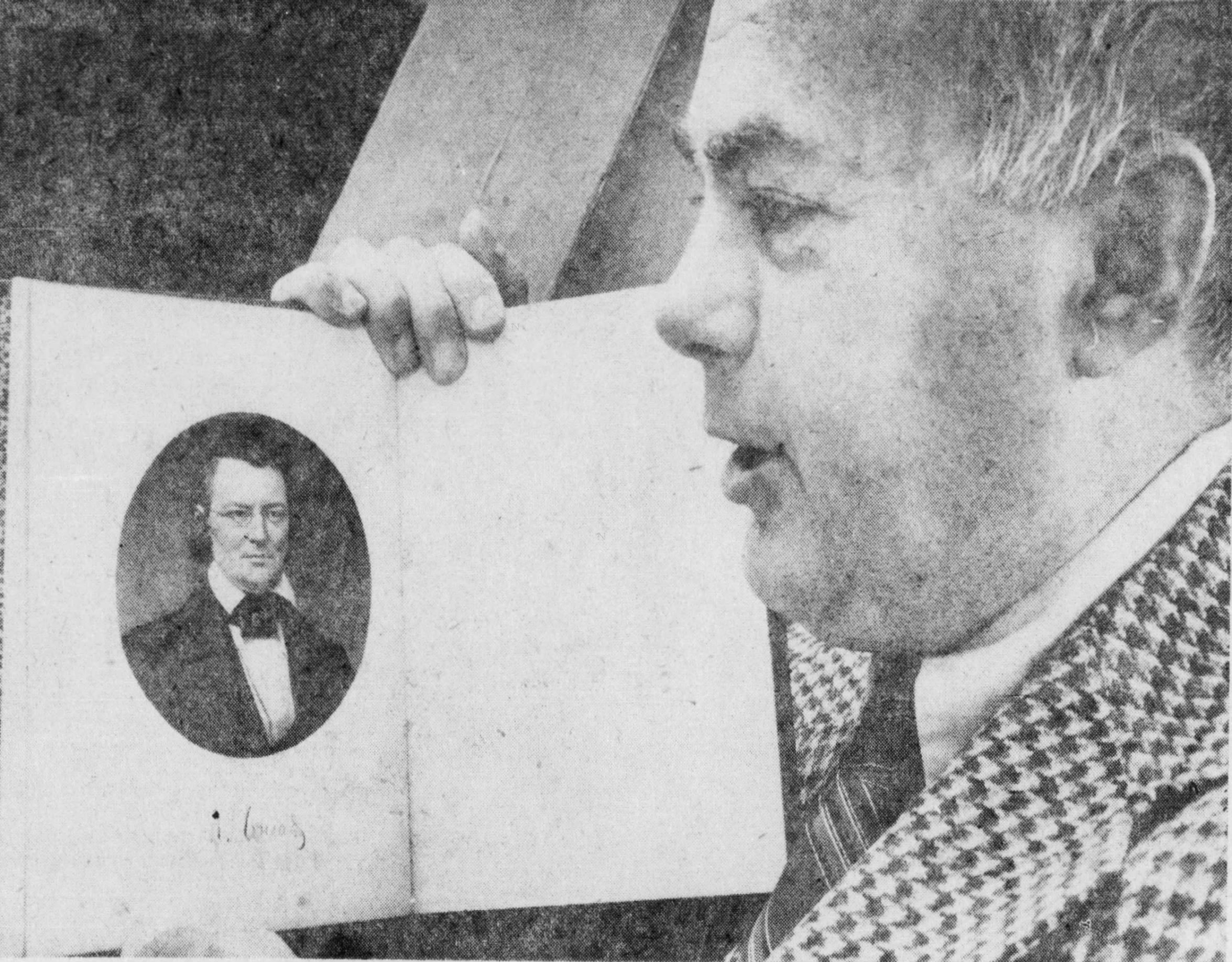
The damaged paintings were of Isaac Roach, who served in the 1830s; Robert Conrad, who led the city in the 1850s; and William Smith, who helmed the big desk in the 1880s.
A descendant of Conrad, his great-great-grandson Wendell W. Oberholtzer, read about the destruction the next morning in the newspaper.
After the City Hall portrait-defacing in 1978, Wendell W. Oberholtzer holds a book with an engraving of his ancestor, Mayor Robert T. Conrad.Robert L. Mooney / Staff Photographer
Oberholtzer called City Hall and offered to help.
He said he would lend the city a personally owned portrait of his famous relative, or he could supply photos, for an artist or engraver to useto create a replacement portrait.
But the donations were not necessary. Robert Silver, commissioner of public property, said conservators from the Philadelphia Museum of Art sized up the situation and decided the portraits were not beyond repair.
Silver told The Inquirer that he could have the portraits restored to “practically their pre-smash condition” within a few months.
And the honored could once again return to their rightful places in history.
A landlord whose tenants can no longer pay rent. A man in Allentown who now stops short of filling his gas tank. A professional chef who’s stressed about the price of groceries.
These three Pennsylvanians all share concerns about rising prices. And they all live in Pennsylvania swing districts that could shape who controls the next Congress.
Among likely voters in Pennsylvania, 75% disapprove of how President Donald Trump is handling the cost of living, compared with just 25% who approve, according to a recent poll from The Inquirer, the New York Times, and Siena University.
But Trump is not on the ballot, and these approval ratings don’t necessarily indicate whether people will back the local Republican or Democrat running to represent them.
Delaware County nurse Monica Ryadi and her husband couldn’t wait to take their 3-year-old son to Disneyland, so he could meet his favorite characters from the Cars movies.
But shortly after their plane touched down in Los Angeles on Sept. 15, they faced a sudden crisis. U.S. Immigration and Customs Enforcement appeared and surrounded Ryadi.
Despite her legal standing in this country, which she has maintained for more than 20 years since her parents brought her to this country at age 9, ICE arrested Ryadi and sent her to detention.
Legally, Ryadi cannot be sent back to Indonesia, where her family fled religious persecution all those years ago. But per a recent U.S. Supreme Court ruling, the U.S. can continue to speedily deport people to countries other than where they came from, something Ryadi said ICE agents told her was coming.
A disciplinary court is weighing whether Philly Judge Scott DiClaudio can remain on the bench. DiClaudio was accused by another judge of trying to sway the outcome of a case involving a friend of rapper Meek Mill.
During a two-day hearing this week, representatives from the Philadelphia Sheriff’s Office told a judge that they had found $20 million in unspent sheriff sale proceeds, among other revelations.
Eleven Philadelphia-area small-business owners stole nearly $1 million in public funds by defrauding WIC, a program designed to support low-income mothers and their children, authorities said Thursday.
A former Philadelphia woman who voted twice — once here and once in North Jersey — in the 2024 presidential election was sentenced Thursday to three years of probation.
Philadelphia City Council voted unanimously on Thursday to make the city one of the first in the country to explicitly endorse a nationwide boycott of Starbucks amid a unionization drive.
🤖 Gawking at. What’s pink, has four wheels, and may shock or delight you, depending on your mood? The Inquirer’s Stephanie Farr takes a spin with Philly’s answer to those Uber Eats robots, Orifice the Awebot.
🥖 Following. After a man filmed himself throwing a cheesesteak through the open service window at Pat’s King of Steaks in South Philly, the owner is offering a $5,000 reward to help bring him to justice, food writer Michael Klein reports.
🏠 Learning. With mortgage rates hitting 7.28% this week, Inquirer real estate reporter Michaelle Bond talked to experts about how to still get the best rate you can.
🧩 Unscramble the anagram
Hint: Earlier this year, a peregrine falcon with lead poisoning was recovered from this Philly landmark and rehabilitated by the Schuylkill Center.
Cheers to Loretta DiPietro, who correctly guessed Thursday’s answer: Clementon Park. The 119-year-old amusement park is heading back to auction just weeks after announcing its closure, and five years after it was last sold at a bankruptcy auction.
Photo of the day
Windows on the Excelsior Scottish Rite Temple in Collingswood. The Scottish Rite Auditorium inside is a 1,050-seat venue built in 1931, making it one of the largest privately owned theaters in South Jersey. Among its previous owners was Edward Collings Knight Sr., inventor of the Pullman sleeping car for railroads. He was also a descendant of the Collings family for whom the borough and Knight Park are named.Tom Gralish / Staff Photographer
Some gorgeously detailed architecture and a little bit of history to wrap up the week.
👋 Thanks for spending some time with The Inquirer this week. Catch you Monday!
By submitting your written, visual, and/or audio contributions, you agree to The Inquirer’s Terms of Use, including the grant of rights in Section 10.
Delaware County nurse Monica Ryadi and her husband couldn’t wait to take their 3-year-old son to Disneyland, so he could meet his adored Cars movie characters — Lightning McQueen, Tow Mater, and the rest.
They didn’t get there.
The family had barely stepped off the plane at Los Angeles International Airport on Sept. 15 when they were surrounded by four or five men in street clothes who said they were ICE agents, flashed a badge, and snapped Ryadi into handcuffs.
When her husband protested, the officers threatened to arrest him and send their toddler, Luca, to child-protective services, the couple said in court filings. One officer told Ryadi she was here illegally and, “I don’t care if you are the president of the United States or a congresswoman like Ilhan Omar,” court records say.
Ryadi, 30, said she kept insisting that she was a legal immigrant.
And that’s true.
She has lived in the U.S. since she was 9, brought to this country by her parents when they fled religious persecution in Indonesia.
They entered on legal visas in 2005, and five years later were officially granted what’s called “Withholding of Removal.” That’s where an Immigration Court judge agrees that deporting someone to their homeland could get them hurt or killed.
It’s similar to asylum, the key difference being the federal government retains the right to deport someone if it can find a third country willing to take them. Withholding does not include a path to citizenship.
Traditionally, people who gained that relief were left alone.
Now that’s changed, as the Trump administration takes a new, hard view — seeing those who have Withholding, even those who have lived here for decades, as candidates for deportation. Some immigrants are held in ICE detention for months while the administration tries to find a foreign government to accept them.
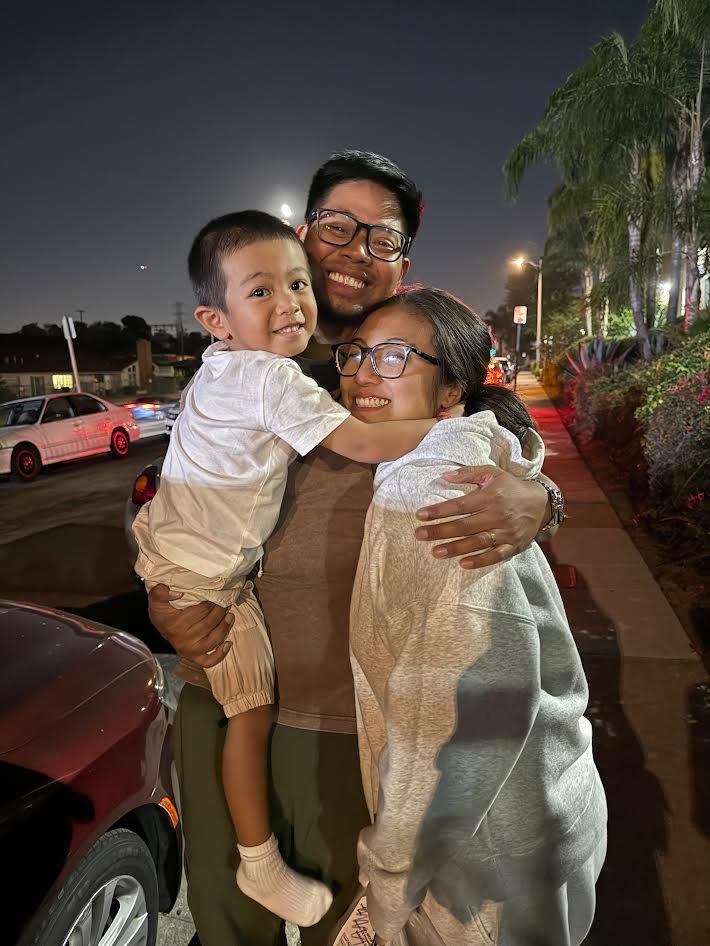
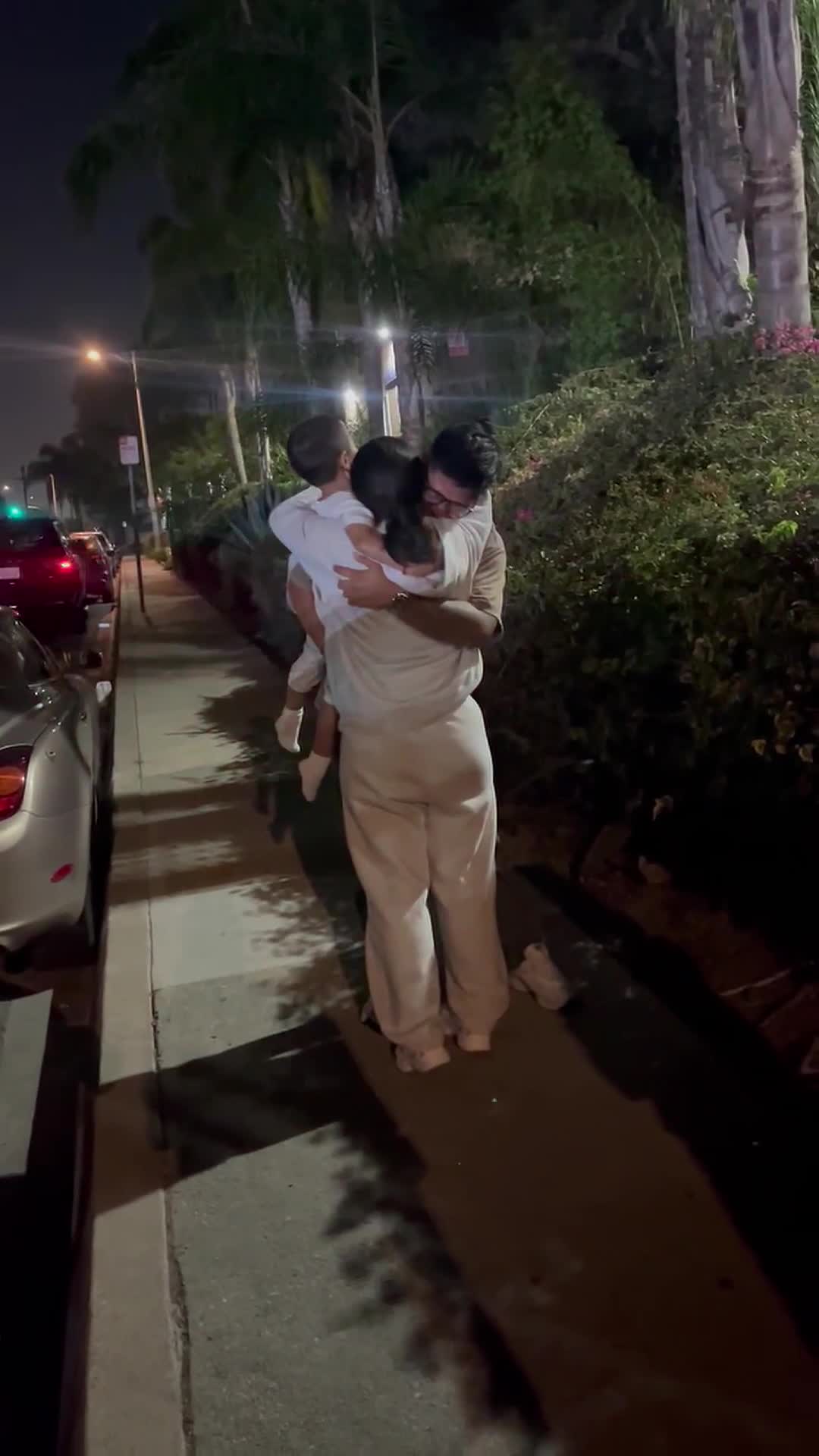
On Tuesday, after 15 days in custody at the Adelanto ICE Processing Center in California, Ryadi was ordered freed by a U.S. magistrate judge. Her husband and son flew to her immediately, and the family reunited that night, at the same Los Angeles hotel they booked when they planned to visit Disneyland.
“It’s a lot of emotions,” Ryadi said in an interview after her release. “I am still terrified, I’m still living under fear.”
At the same time, she said, “I can’t stop thinking about the other women that are in there.”
Video: A Delco nurse arrested by ICE reunites with her family
The Department of Homeland Security said in a statement that Ryadi was “an illegal alien” taken into custody “during a targeted enforcement operation at Los Angeles International Airport.”
DHS said she entered the U.S. legally in 2005 but “overstayed her welcome” in violation of immigration laws. An immigration judge issued a deportation order in 2010, DHS said, but did not note that such an order is a standard part of receiving permission to stay, work, and live in the U.S. under a grant of Withholding of Removal.
Ryadi’s husband, Steven Sary, 35, said he was overjoyed to be reunited with his wife. “But there’s still work to do,” he said. ”What’s the next step for us? We’re still living in fear.”
He tried to stay positive and supportive while Ryadi was detained, even at moments when they were both crying on the phone. He told her, “You don’t have to worry about Luca, I’m doing the best I can.”
The couple has arranged their lives around their son, setting schedules so one parent is always home with him. Ryadi works weekends at Riddle Hospital in Media, while her husband works Monday to Friday as a UPS truck driver.
The two met when they were children growing up in Philadelphia, and married in 2021.
Ryadi graduated high school from the Academy at Palumbo in the Bella Vista neighborhood, then earned an associate degree at Philadelphia Community College before obtaining her bachelor’s degree at Ohio University.
She became a nurse, she said, because she wanted to help people.
The court order that freed Ryadi came the same day that the Supreme Court ruled the Trump administration could resume the fast deportation of immigrants to countries other than their own.
The court granted the government’s emergency request to block an appeals court ruling that said the process was unlawful, because immigrants were not given sufficient opportunity to raise safety concerns.
The Supreme Court said it would hear oral arguments in the case in December, with a final ruling likely next year.
Steven Sary hugs his 3-year-old son, Luca, at their Delco home, waiting for word on his wife, who at the time was detained in California by ICE. She was detained by ICE agents after getting off a plane in Los Angeles as the family traveled to Disneyland. Steven M. Falk / For The Inquirer
“What happened to Monica should be treated as an extrajudicial kidnapping,” said Ryadi’s Philadelphia immigration attorney, Eric Rosenfeld, who is handling the case pro bono.
He noted that Ryadi is a registered nurse, the wife of an American citizen, and the parent of a son who is an American citizen — yet ICE casually told her she would be sent to an undisclosed third country.
She was never given any type of document or warrant to explain her arrest, he said. Upon release she was fitted with a GPS ankle monitor, and she knows ICE will likely try again to deport her, the attorney said.
“This is a respite. Not security,” Rosenfeld said.
As the Trump administration pursues its mass-deportation agenda, the protection offered by Withholding and similar relief “is proving to be very little protection at all,” the American Immigration Council wrote. “The Trump administration is trying to ship them out wherever it can — and keep them locked up in the meantime.”
A Philadelphia man who was arrested in July remains in detention, despite having lived legally for almost 20 years.
Mamadou Fadel Cherif of West Oak Lane was granted protection from potential political violence in his native Guinea. Now the administration wants to deport him to Ghana.
To receive Withholding of Removal, applicants must prove they were persecuted in the past or that their lives would be threatened in the future, that their home government harmed or will harm them — or failed to control others who might do so.
When that relief is granted, the immigration judge also enters a deportation order, then tells the government it cannot deport the person to their homeland. In that way the removal is “withheld.”
“We were planning to have an amazing trip with the family,” Sary said, “to see Cars Land with our son. But that changed.”
This image shows Delaware County nurse Monica Ryadi, left, in white, being arrested by ICE agents at Los Angeles International Airport on Sept. 15. She and her husband were taking their 3-year-old son to visit Disneyland.Courtesy of the family
“It felt like I was kidnapped,” Ryadi said. “I kept saying, ‘I’m legal, I’m a legal immigrant.’”
She grew up in the United States with government permission, has work authorization, a Real ID, and a Social Security number. She pays taxes. Yet she was chained wrist, ankle and waist like a criminal, she said.
Ryadi wonders if the ICE operation against her began in Philadelphia. As her family waited to board the plane, she said, a woman in a black jacket approached and made small talk.
The woman didn’t have luggage, Ryadi said, and she didn’t get on the flight. Instead, she walked away to talk to a man who also did not appear to be a passenger.
When Ryadi was released from the Adelanto detention center, 90 miles northeast of Los Angeles, immigrant-aid volunteers gave her a ride all the way to the city.
There she flew into the arms of her husband and son.
“I’m so happy to see you!” she cried.
At the hotel, the family saw people decked out in Disney attire, coming back from the theme park. Young Luca asked if they could go.
Think you know your news? There’s only one way to find out. Welcome back to our weekly News Quiz — a quick way to see if your reading habits are sinking in and to put your local news knowledge to the test.
Question 1 of 10
This musical performance in Philadelphia this week observed a strict “no phones” policy, with audience members’ devices locked inside Yondr pouches:
CorrectIncorrect. XX% of other readers got this question right.
What was different about Phoebe Bridgers'The Lost Tour at the Xfinity Mobile Arena was that none of the 20,000 or so people in the room had their cell phones with them. Bridgers was accompanied by her nine-piece band and her opening act, Havertown’s own Alex G.
Question 2 of 10
Who is the new Sixers jersey sponsor this season?
CorrectIncorrect. XX% of other readers got this question right.
A Silicon Valley company that makes off-grid mini-power plants in Delaware, Bloom Energy, just joined the S&P 500 and became a Sixers sponsor.
story continues after advertisement
Question 3 of 10
A local grocery store has a large hay and pumpkin display people have dubbed the “Fauxnatic” for its off-brand resemblance to the Phanatic. Which grocery store has the Phanatic-like fall display outside?
CorrectIncorrect. XX% of other readers got this question right.
Rotund, snouted, and wearing a pinstripe baseball tee, the creature has all the trappings of our dear Phillie Phanatic. But somewhere along the way, the details in Sprouts’ new fall display got lost in translation.
Question 4 of 10
Saturday’s Parallel Parking Championship will feature social media influencer Betsy Kenney and Fergie of Fergie’s Pub as guest judges. A Philly figure who went viral will also judge. Who is it?
CorrectIncorrect. XX% of other readers got this question right.
In May, Jamele Ransom gave an animated interview to NBC10 about having witnessed a carjacked truck crash into a playground. He gave that interview while actively eating a soft-serve vanilla ice cream cone the entire time. The clip quickly went viral, with people hailing Ransom as a Philly “legend” and “hero.” Now, he’ll help judge parallel parking skills.
story continues after advertisement
Question 5 of 10
Which Philly cocktail bar is opening a bigger second act near Rittenhouse Square?
CorrectIncorrect. XX% of other readers got this question right.
Almanac co-owners Vy To and Victor Ng and bar manager Rob Scott are building a two-level bar in the former Franklin Mortgage & Investment Co. space at 112 S. 18th St. A name and opening date have not been announced.
Question 6 of 10
This Phillies player delivered a "career-altering performance" in his playoff debut during the wild-card series against the Atlanta Braves:
CorrectIncorrect. XX% of other readers got this question right.
Game 2 of the wild-card series Wednesday was deadlocked at 3 in the eighth inning, and one pitch could mean the difference between their season extending another day or the Phillies packing their bags. The 23-year-old pitched a scoreless eighth and ninth to force extra innings, and returned to close it out
Question 7 of 10
What beloved Chinatown restaurant reopened its renovated dining room this week?
CorrectIncorrect. XX% of other readers got this question right.
Since 2020, David’s Mai Lai Wah has only operated as a takeout restaurant (with no delivery). But on Monday, David’s Mai Lah Wah quietly opened up its dining room again, and the renovations were significant.
Question 8 of 10
Many of sculptor Zenos Frudakis' works of public art in Philadelphia are widely lauded. But the one depicting this figure has seen significant controversy since its debut in 1999:
CorrectIncorrect. XX% of other readers got this question right.
Frudakis recently told The Inquirer that he had second thoughts about the Rizzo statue — he didn’t vote for Rizzo, and has been concerned with civil rights and social issues. But working on it, he said, allowed him to survive "another day as an artist," and brought him additional work.
Question 9 of 10
A sickly peregrine falcon found at the Philadelphia Museum of Art in June was recently released into the wild after being rehabilitated at the Schuylkill Center for Environmental Education. What was the bird's name?
CorrectIncorrect. XX% of other readers got this question right.
Patient 718 — animals are rarely named at the Schuylkill Center — arrived thin and sickly on June 4, suffering from high levels of lead poisoning. It was released Tuesday afternoon, bolting from the tote that contained it into Roxborough.
Question 10 of 10
After nearly three decades in business, this music club — touted as the only woman-owned music venue in the city — closed for good this week:
CorrectIncorrect. XX% of other readers got this question right.
Karen Lauria Saillant, the owner of the club at 412 W. Girard Ave. that is housed within the Philadelphia Bar & Grille, announced the venue's closure Wednesday. Many rising stars played there, particularly between 2003 and 2017, including John Legend, Rilo Kiley, and My Chemical Romance.
Your Results
You have skipped .
You scored XX out of 10.
The average reader scored XX out of 10
Seems like you’ve been skimming more than reading there, buddy. There’s always next week.
You’ve read some articles (or made some educated guesses) but we wouldn’t come to you first for our local news recaps. Better luck next week!
Do you work here? You’re a local news stan with the latest updates on Philly happenings. Your friends definitely ask you for summaries on what’s going on and it shows.
As a psychiatrist, I increasingly see people seeking help for a familiar constellation of troubles. They have a hard time staying focused. They often forget things. They suffer from disorganization, restlessness, and impulsivity. They struggle with spreadsheets and memos, with laundry and food preparation, with showing up at appointments and meeting deadlines — with tackling, in other words, the necessities of daily life.
Increasingly, these patients view their problems as ones of “attention,” as more people identify with the diagnosis of attention-deficit/hyperactivity disorder, or ADHD.
The rise in ADHD diagnoses — along with the use of prescribed stimulants like Ritalin or Adderall — has led to great debate among the public and within my field of psychiatry. Has the medical establishment finally recognized a long-overlooked disorder? Or has the diagnosis become too capacious, overmedicalizing ordinary difficulties?
But this debate runs up against a fundamental scientific uncertainty. The condition’s name notwithstanding, “attention deficit” may be the wrong conceptual framing for ADHD. Scientists have been exploring a more basic quandary: What is the condition in the first place?
A major study published last year in the journal Cell spoke directly to this question. It looked at how stimulant medications influence the functioning of brain circuits in children. The researchers found that the drugs seemed to affect brain networks involved in salience, reward, and arousal. But they found no detectable changes in the brain’s attention networks, whether or not the child had been diagnosed with ADHD.
It’s a clear signal that the most popular mental model for ADHD — as a deficit of attention that stimulants remedy — might not be entirely accurate.
What would a better mental model look like? Part of the answer is understanding that “attention” means different things in the clinic and in the neuroscience lab. For scientists studying brain functions, attention means something narrow: the selective amplification of relevant information. It can be measured by laboratory tasks that assess, for example, how well someone ignores irrelevant or conflicting information or finds a target hidden among distractions.
But that’s generally not what people mean when they are talking about attention problems in ADHD.
The classic features of ADHD include things like not staying on task, losing the thread of a conversation, and forgetting instructions. They are failures of “sustained engagement.” If attention is about the mind homing in on what’s relevant in a given moment, engagement is about keeping that spotlight pointed at the same target over time. Doing so may be less a matter of filtering out distractions and more a matter of whether the task registers in the brain as worth doing in the first place.
Once this distinction is appreciated, the results of the Cell study stop being contradictory. Stimulants create what looks like improved attention and focus, but they really do so by enhancing the salience of mundane activities — tricking the brain into assigning greater worth and significance to things like math homework and laundry.
This also helps explain why stimulants like amphetamines calm down hyperactive children. People without ADHD who use amphetamines often find themselves jittery and revved up, so the calming effect may seem counterintuitive. However, if a child is restless and fidgeting because the task at hand isn’t rewarding enough, then it makes sense that stimulants would help that child sit still and stay engaged rather than seek stimulation elsewhere.
The Cell study’s results focused mostly on what stimulants do, but scientists have been challenging the idea that ADHD is a deficit of attention since the 1990s.
In a 1992 experiment, developmental psychologist Edmund Sonuga-Barke and his colleagues gave hyperactive children repeated choices between a small but immediate reward and a larger, delayed one. The children preferred the immediate reward only when that choice allowed them to end the experiment sooner. The problem was not necessarily an inability to wait, but an aversion to waiting itself.
Sonuga-Barke later argued that ADHD could arise from several underlying causes, including difficulty stopping an action once it’s underway, intense dislike of waiting, and disruptions in the brain’s ability to track events over time. Psychologists can measure capacities such as working memory, impulse control, and the ability to wait for a reward with standardized tasks. This is called neuropsychological testing. But no single abnormality turns up in all people with ADHD on these tests, and no deficit is unique to them. This is why neuropsychological testing is not considered a gold standard for diagnosis.
Clinical neuropsychologist Russell Barkley proposed that the basic problem in ADHD is with a person’s ability to inhibit behaviors and regulate emotions, and with motivation and working memory. People with ADHD can live in a shrunken present moment, in which future consequences carry little significance and weight. Barkley’s shorthand for this, time blindness, has become a popular characterization. His later work showed emotional self-regulation as a core feature of ADHD, manifesting as emotional impulsiveness and low frustration tolerance.
While names for medical conditions denoting outdated hypotheses can be harmless etymological curiosities — malaria means “bad air,” for example — incorrect names like “attention deficit” can invite confusion. The focus on attention as the central problem for ADHD means those who struggle with lateness, boredom, emotional volatility, and the inability to start anything without the pressure of a deadline might remain undiagnosed because these issues don’t sound like a problem of “attention.”
On the other hand, recognition of these aspects of ADHD has not only made the boundaries of the disorder harder to specify, but it has also raised uncomfortable questions about whether some of these problems make sense as a diagnosable medical disorder. The prospect of using medications to help children sit still in class and focus on tedious coursework, or using medications to allow adults to tolerate periods of intense boredom and dreary housework, makes many people uncomfortable.
It’s also the case that some people reach for medications in an effort to maintain lifestyles that are unsustainable for them. Modern work environments heavily emphasize the ability to handle multiple tasks and tedious work, and that has been compounded by other aspects of 21st-century living, such as cellphones and social media, that have arguably made us distractible and impatient. The result of all this is that modern life becomes more disabling for those with ADHD.
ADHD may be poorly named, but the consensus in psychiatry is that it’s a genuine problem for which there are effective treatments. In observational studies, treating ADHD with medication is associated with reductions in death, self-harm, transport accidents, criminal convictions, and substance misuse.
As a society, we are struggling to answer these complicated questions that the science and treatment of ADHD throw at us. A recent Channel 4 documentary in Britain, “The Great ADHD Myth?” characterized ADHD as a “social construct” rather than a disorder of the brain. This binary tendency to locate the problem either in the brain or in the environment can overlook how impairment arises from an interaction of mental capacities and situational demands. When disadvantages in mental abilities become disabling under the demands of modern life, those who struggle will desire and even need treatment. But it’s also worth understanding that the problem is not entirely with the individual.
There are many pathways in the brain that probably influence the difficulties in focus that characterize ADHD, but scientific investigations into causes and treatments point toward problems with impulse control and motivation more than a defective capacity for attention. This accumulating data underscores how even psychiatrists and scientists can change their thinking about what a diagnosis means based on more research into how the brain works. What’s perhaps most important for understanding ADHD is to not allow its name to confuse us; it’s a poor guide to how the human mind works.
This week’s column covers the ongoing Washington West Historical District saga, a 1,000 mayoral days, a City Council member who should retire, and an NFL coach who is a secret urban planning enthusiast.
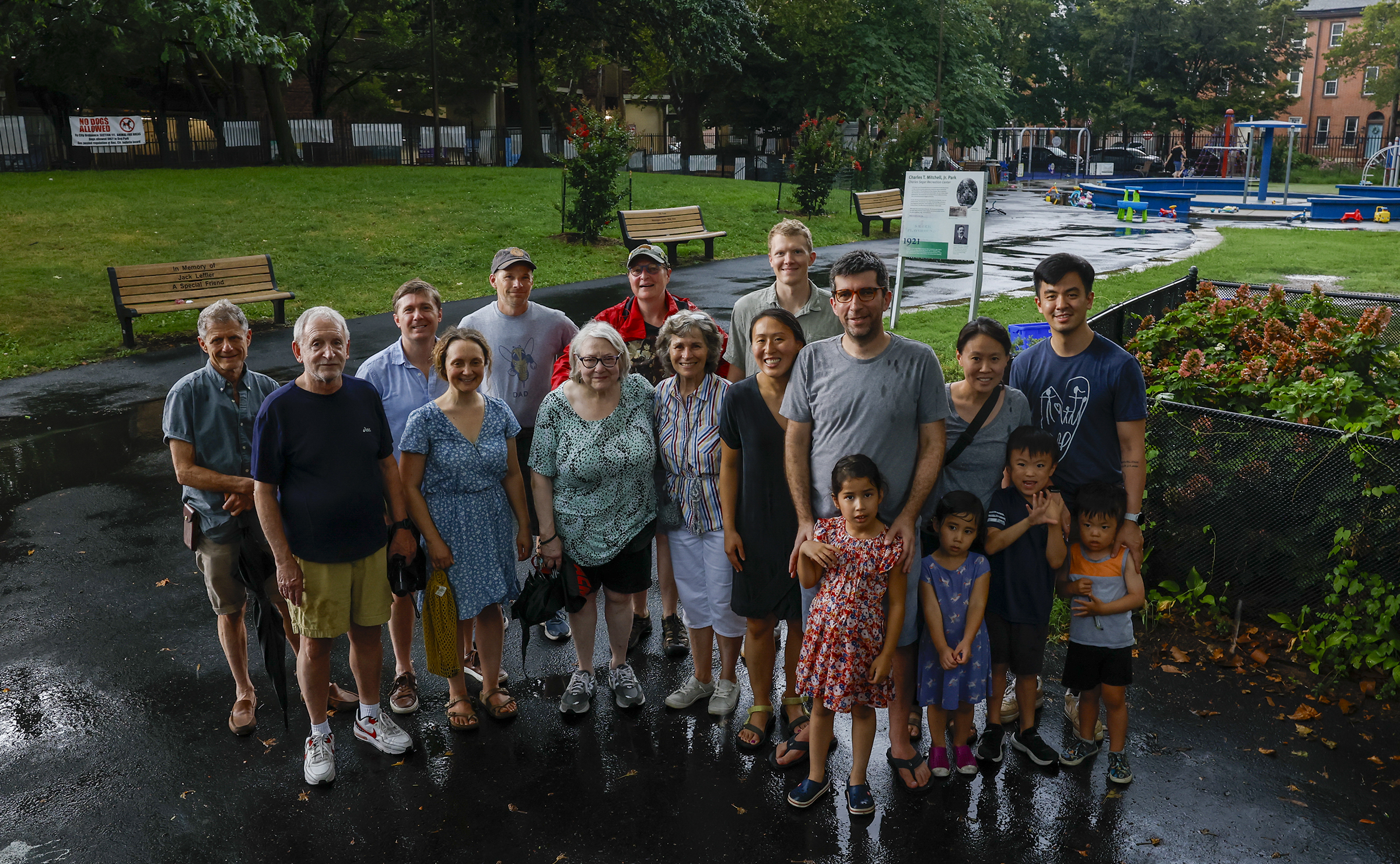
Members of the Philadelphians for Rational Preservation gather at Seger Park in the Washington Square West neighborhood in July 2025. The group opposes the Washington Square West Historic District designation.Yong Kim / Staff Photographer
People vs. preservation
In a City Hall courtroom, lawyers for the city and the preservation alliance sought to defend the designation of the Washington West Historic District against a coalition of homeowners who have claimed the decision has cost them time and money. The outcome could have significant ramifications for such districts across Philadelphia.
Dan Auerbach, a lawyer for the homeowners, says the district was created without sufficient evidence, and that a historic commissioner’s participation in drafting the document represents a conflict of interest. Attorneys Leonard Reuter and Paul Toner, who represented the defendants, took a different approach.
When Common Pleas Court Judge Christopher Hall repeatedly asked for evidence, beyond the nomination itself, for the district’s historic significance, Toner replied, “I don’t need to.” The commission’s decision to approve is apparently all that’s required. They also argued that historic designation does not impose significant costs on homeowners.
Hall seemed to take a skeptical view of these claims. As Auerbach pointed out, most pages of that document simply inventory the existing properties. Often, newly designated homes have no specific justification at all, or just a few words.
Personally, I also find the dismissal of the real costs imposed on homeowners to be unconvincing. According to evidence supplied by Philadelphians for Rational Preservation, the group that formed in opposition to the district, homeowners who have been added to the district are already seeing adverse impacts. Door and window replacements now require permits, for example, and homeowners must spend considerably more to acquire historically accurate versions. This costs real time and real money.
It may be that this district is simply too large and too broad. The period of significance covers nearly the entire history of Philadelphia, and many of the newly designated buildings are frankly unremarkable. While the city and the preservation alliance may feel the urge to appeal the matter to the Commonwealth Court, my suggestion is that they don’t.
While I am skeptical of this particular nomination, I do think historic districts have a role to play in our city. Many of them are popular with residents, or have existed for so long that most homeowners were aware of the restrictions before purchasing.
In the case of Washington West, however, the commission may simply have been too ambitious. The geographic range is just too large, the period of significance too extensive, and the residents themselves too strongly opposed.
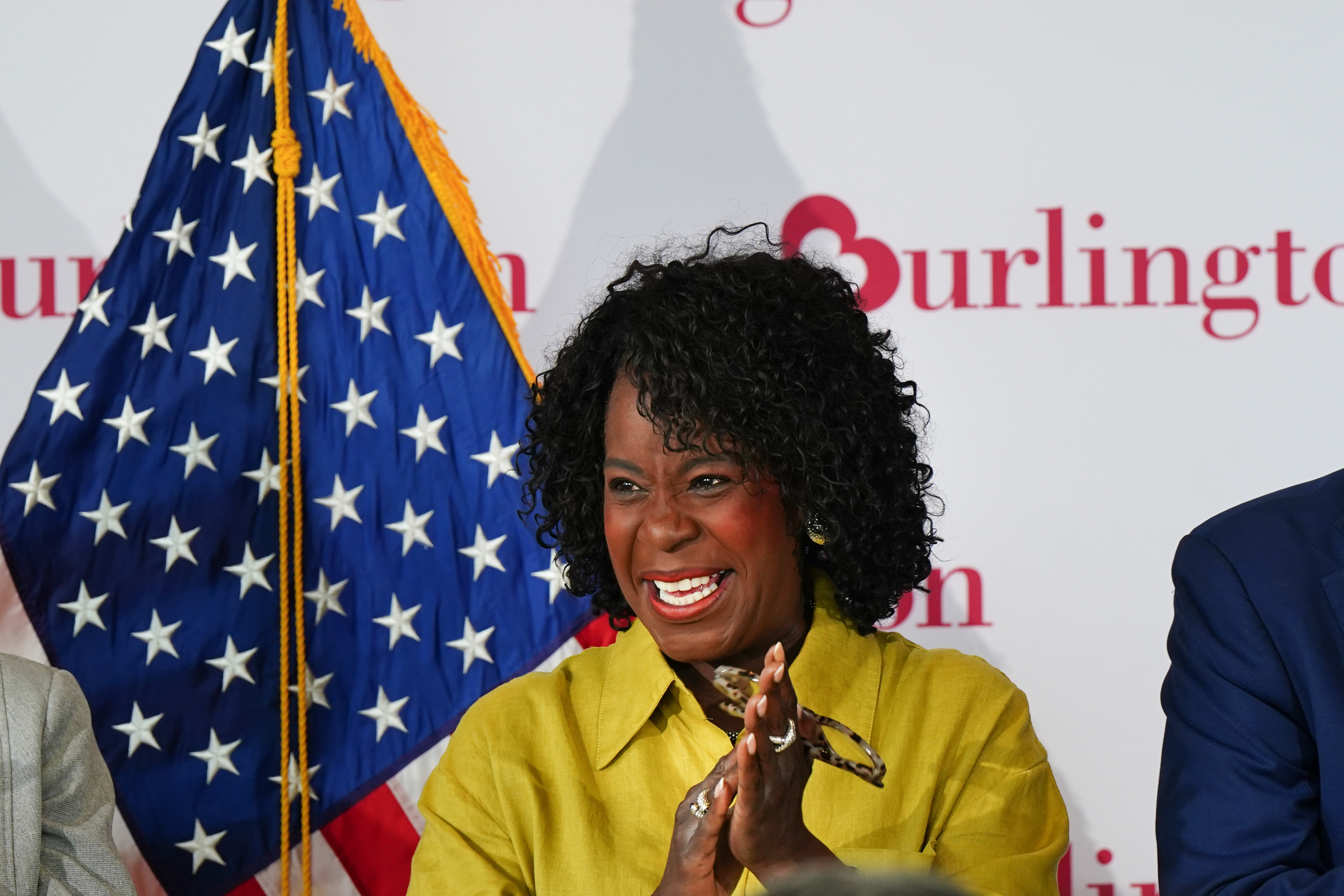
Mayor Cherelle L. Parker at a news conference in September.Jessica Griffin / Staff Photographer
Mayoral milestone
Mayor Cherelle L. Parker celebrated her 1,000th day in office earlier this week at McPherson Square Library in Kensington, which is set to receive a $21.7 million renovation. Parker has made investing in Kensington a priority in her administration, although some of her priorities have been contested.
She’s added police patrols to the neighborhood, sought to dismantle the drug market, and increased cleaning and greening efforts. She’s also come under fire from harm reduction advocates for eliminating funding for the nonprofit Prevention Point and city efforts to rein in a network of services built to alleviate the struggles of addiction, which some residents have blamed for the drug market’s continuing presence in their community.
In many ways, Kensington is a microcosm of Parker’s tenure.
Her administration has made genuine progress. Violent crime is at historic lows, with decreases in the city’s most dangerous neighborhoods driving the decline. Surveys suggest residents believe the city has gotten cleaner under her leadership. Yet discontent, some legitimate and some not, continues. Parker’s approval rating sits at 44%, a number that is likely high enough for reelection next year, but isn’t strong enough to give her the political capital she needs to take on and win fights with City Council.
The biggest factors in whether residents approve or disapprove of the mayor seem to be their age and race. Among Philadelphians of color and those older than 45, Parker is popular. For those under 45 and white voters, she’s not.
It is easy to say this divide is based on style. As Parker herself has said, she’s unapologetic about who she is and where she came from. To residents who may be fans of New York’s Zohran Mamdani, Parker may seem old-fashioned and unexciting. Of course, Mamdani also has a municipal budget of $126 billion at his disposal, while Parker makes do with just $7 billion.
But a lot of it has to do with substance. Small-business owners have lost a crucial tax exemption; her vaunted ability to work across the aisle has not resulted in sustainable transit funding or enabled the school district to avoid closing 17 schools; and Parker has shied away from the ambitious civic reformer causes embraced by predecessors like Michael Nutter.
If the mayor intends to reach 2,000 days in office without becoming yet another tired and unpopular chief executive, she’ll have to step up her game.
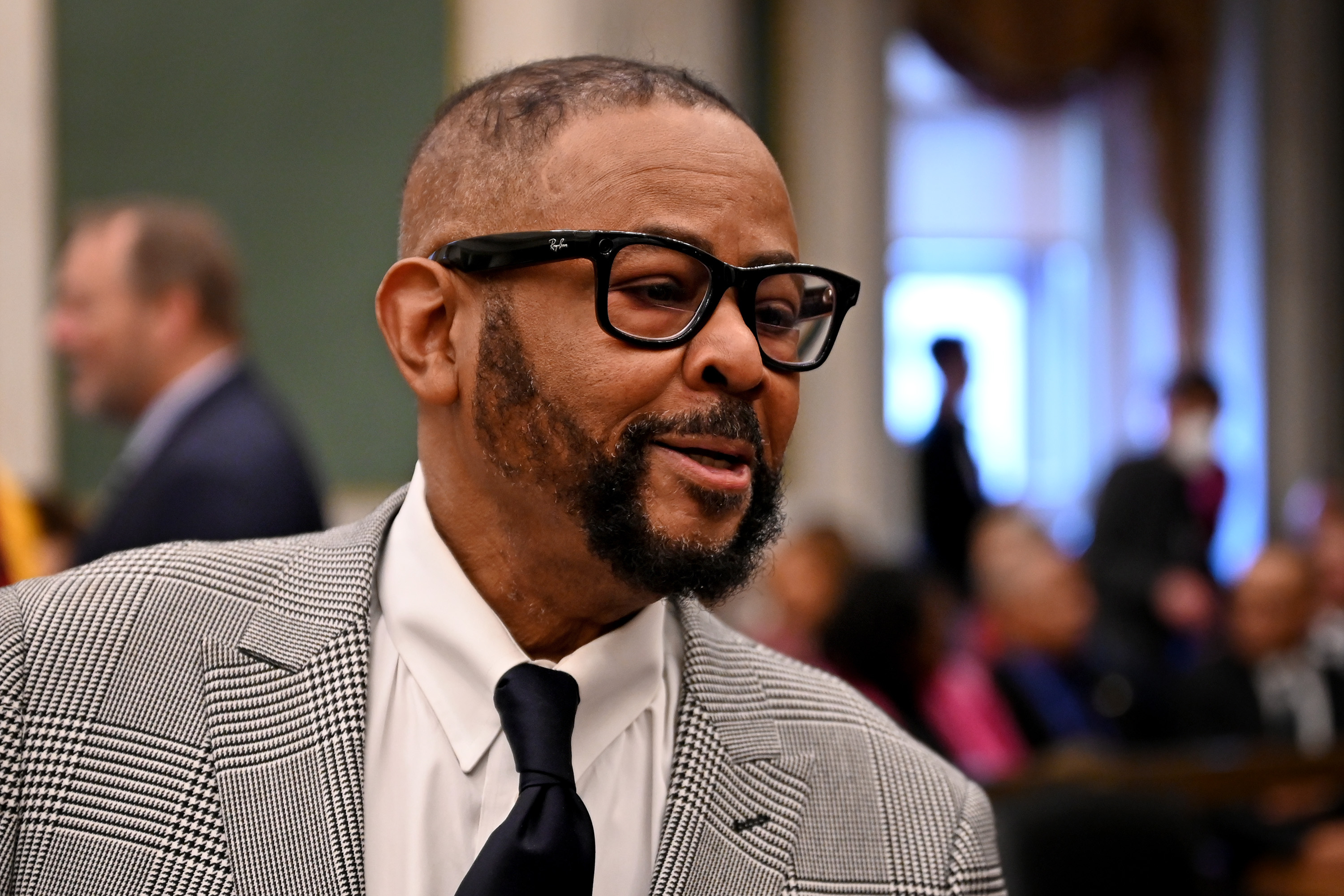
Councilmember Curtis Jones Jr. in chambers as City Council meets in December.Tom Gralish / Staff Photographer
Jonesing to stay
Fourth District Councilmember Curtis Jones Jr. has had a long and often laudatory career in public service. But it is now time for it to end.
Jones cited his ongoing health issues as justification to The Inquirer, saying he needed the money to pay for treatment. I certainly sympathize with anyone struggling to maintain their health. However, Jones represents a city where the median household income is just over $60,000. At 69 years old, he is also eligible for Medicare.
Retirement would also give Jones a chance to relax and focus on staying healthy. For his sake and ours, he should listen to his friends.
Pittsburgh Steelers head coach Mike Tomlin stands on the sidelines during the second half of an NFL football game against the Baltimore Ravens in Pittsburgh in January.Gene J. Puskar
Tomlintown
When you write frequently about transit and housing, you tend to hear from the small cadre of people who are extraordinarily enthusiastic about these issues. This week, I found out about a surprising member of their ranks: former Pittsburgh Steelers head coach Mike Tomlin.
Famous for his uncanny resemblance to actor Omar Epps and being the second Black NFL coach to win a Super Bowl, Tomlin used the game Minecraft to build his own fantasy city — a project that took place over a dozen years. He’s now giving the public a tour of his work.
Tomlin said he wanted densely populated buildings because of his interest in architecture, and went as far as creating interiors for each of his creations. His work is remarkably cognizant of genuine urban questions like lighting and viewsheds.
Like many gamers, he said his habit helped him “detach from the realities and the pressures of life.” We all need a way to unplug sometimes, but Tomlin’s impressive urban planning side project may have turned him into an unlikely urbanist hero.
Fifteen acres of undeveloped land in Upper Darby Township face an uncertain fate as environmental groups rush to secure funding to purchase and protect the site.
Upper Darby residents and environmentalists are working to pull together $8 million to secure the purchase of the Mozino Tract, a parcel of land in Drexel Hill that, until recently, was slated to become a mixed-use housing and retail development.
Upper Darby’s council in August voted to table a proposal to rezone the land, currently zoned for residential use, to allow for a blend of single-family homes, townhouses, apartments, commercial spaces, and community gathering spots. Township staff at the meeting said they worked with the developer to create the mixed-use zoning proposal, a plan they said would help meet core township goals of increasing tax revenue and adding diverse housing options far more than an initial proposal to put 56 single-family homes on the site.
Now, developer Greg Lingo of Rockwell Development Group says he has abandoned the plans to build the mixed-use development and is giving organizers a chance to purchase the land for open space preservation.
If they can’t pull the money together, Lingo will go back to his original plan to put 56 single-family homes on the Mozino Tract, a proposal that is already permitted under the current zoning and won’t require special approvals.
As the high price tag looms, organizers say they’re confident they can find the money to keep the Mozino Tract wild.
What is the Mozino Tract?
The Mozino Tract is a 15-acre wooded parcel located between State and Township Line Roads in Drexel Hill. The land is currently owned by the Peter S. and Catherine G. Mozino Deed of Trust and is under contract to be sold to Lingo’s Rockwell Drexel LLC.
At an August meeting, Upper Darby residents packed the council chambers, urging the township to reject the plan for a mixed-use development and asking council topurchase the land to preserve it as open space. Many described spending time in the wooded area that, while not officially a public park, has been a place to commune with nature.
Amid pushback from residents, Lingo at the meeting said he would be willing to sell the property to the township, despite thinking that it would not be “a great use,” and approximated the cost of the sale at $8 million. Council unanimously tabled the zoning ordinance and voiced an openness to purchasing the property if funds could be raised.
The property’s assessed value is $446,920, according to Delaware County property records.
Lingo in an email on Sept. 15 wrote that it was immediately clear when he first met with neighbors that “they did not want any development” of the Mozino Tract, so he thought it best to work with thetownship on the mixed-use plan to “maximize open space, introduce different housing types across different price points, improve pedestrian mobility, maximize taxable income to the township and to dedicate a public park.”
Lingo’s email affirmed his commitment to Upper Darby, where he grew up, and said it was his “fault for assuming that I knew what was best” in proposing the mixed-use project.
If the environmental groups can’t find the funding to purchase the property, Lingo plans to enter into an agreement with a public or national homebuilder to build the 56 single-family homes.
Rockwell Development Group is “communicating regularly” with the environmental groups, Lingo wrote.
Organizers ‘have all confidence’ in raising funds
Bonnie Hallam, an organizer spearheading the effort to preserve the Mozino Tract, said local environmentalists “have all confidence” that they will be able to raise the $8 million.
“We really believe that this is going to be conserved, and we want the township to get on board with that,” Hallam said.
Hallam said she and other organizers submitted their first grant application on Sept. 25 to the Open Space Institute and have been in conversation with local and national funding groups, including the William Penn Foundation and the Pennsylvania Department of Conservation and Natural Resources. The group is going to start a community fundraising effort through the Foundation for Delaware County, she said.
The environmental leaders are also hoping to secure money through an open space referendum on the ballot in Delco this November. If the referendum is approved by voters, the county could spend $120 million financing land conservation projects, including “protecting natural areas from development.”
“We’re really going to work hard to secure that because we feel that the county is very much interested in this piece of property as well,” Hallam said.
Delaware County “has not had any conversations with Mr. Lingo regarding the purchase of the tract,” according to county spokesperson George Basile.
Hallam hopes Upper Darby Township will agree to be the title holder for the land, an agreement they have not made yet.
Upper Darby Township is “exploring its options right now” and “hoping for a resolution soon” regarding the Mozino Tract, public information officer Rob Ellis said in an email.
For Hallam and her co-organizers, preserving the open space — its wildlife, tall trees, and bubbling creek — is priceless. The Save The Mozino Forest group organized a rally on Saturday at Collenbrook Church.
“We have a really unique piece of property here that’s doing hard-working environmental services for the township,” Hallam said.
This suburban content is produced with support from the Leslie Miller and Richard Worley Foundation and The Lenfest Institute for Journalism. Editorial content is created independently of the project donors. Gifts to support The Inquirer’s high-impact journalism can be made at inquirer.com/donate. A list of Lenfest Institute donors can be found at lenfestinstitute.org/supporters.