Blog

  • The hazing at Cheltenham follows a pattern seen at other schools. The district missed its chance to stop it.

    The hazing at Cheltenham follows a pattern seen at other schools. The district missed its chance to stop it.

    The connection was obvious for anyone who cared to see it.

    One parent after another stepped to a lectern at a Cheltenham school board meeting Tuesday night, each of them bemoaning the district’s handling of either the recent hazing scandal within the high school’s football program or a string of student-on-student assaults at Cheltenham Elementary. The alleged hazing led to criminal charges against four coaches and six players and was brutal: teammates holding down a 15-year-old sophomore so they could step on him with football spikes and poke at his buttocks with a broomstick. The alleged assaults at the elementary school, involving children in kindergarten and second grade, involved conduct and comments that were sexual in nature.

    Leah Mulhearn, the board’s president, announced that the district would review its safety policies and that “football will not return until we address this,” only to duck behind the protective shield of the passive voice — “Mistakes were made” — when it came time to assign responsibility for the dual disasters. The anger among the meeting’s attendees was palpable and universal, and it was justified. These are not two crises on distinct, parallel tracks. They are linked, and there is no separating them.

    It was impossible, after listening to some of those parents describe the abuse accusations at Cheltenham Elementary, not to think, What kind of school leaders ignore these incidents? The kind likely to ignore a parent who reports a violent attack in the football locker room. The Cheltenham school district has a culture problem, and that problem isn’t new. Does that assertion seem outlandish? It isn’t. In youth and high school athletics, certain patterns, even the worst kind, tend to repeat and perpetuate themselves.

    “It seems some sort of disconnect,” the author Hank Nuwer, who for decades has been tracking hazing-related incidents and deaths, once told me. “You have to look at it from the outsider position and the insider position. The outsider sees it as sadistic. The people on the inside have the disconnect, particularly if they’ve gone through it themselves. ‘This needs to be done because it has been done to me. So we’re doing it to someone else.’”

    Go to 2002, to Central Catholic High School in Pittsburgh, where two football players were charged with sexual assault after allegedly holding down a 15-year-old teammate and slapping him in the face with their genitals.

    Go to West Chester’s Arrowhead Day Camp in 1966. The Roman Catholic High School football team was there for training camp. In a hazing prank, three players carried sophomore Lamonte Jenkins to a swimming pool sometime after the pool’s 8:30 p.m. closure, threw him in, then scurried back to their bunks. Jenkins drowned.

    Go back to Pittsburgh, in 1962, when Richard Metz, 16, tried out for the Allegheny High School football team and, after the first day of practice, stayed out of the locker room showers to avoid being hazed. The next day, when two players wielded a pair of scissors and threatened to cut his hair, Metz pulled out a .22-caliber pistol that he had ordered in the mail and fired three shots at the players, hitting one of them in the right thigh. Six weeks later, Metz shot himself.
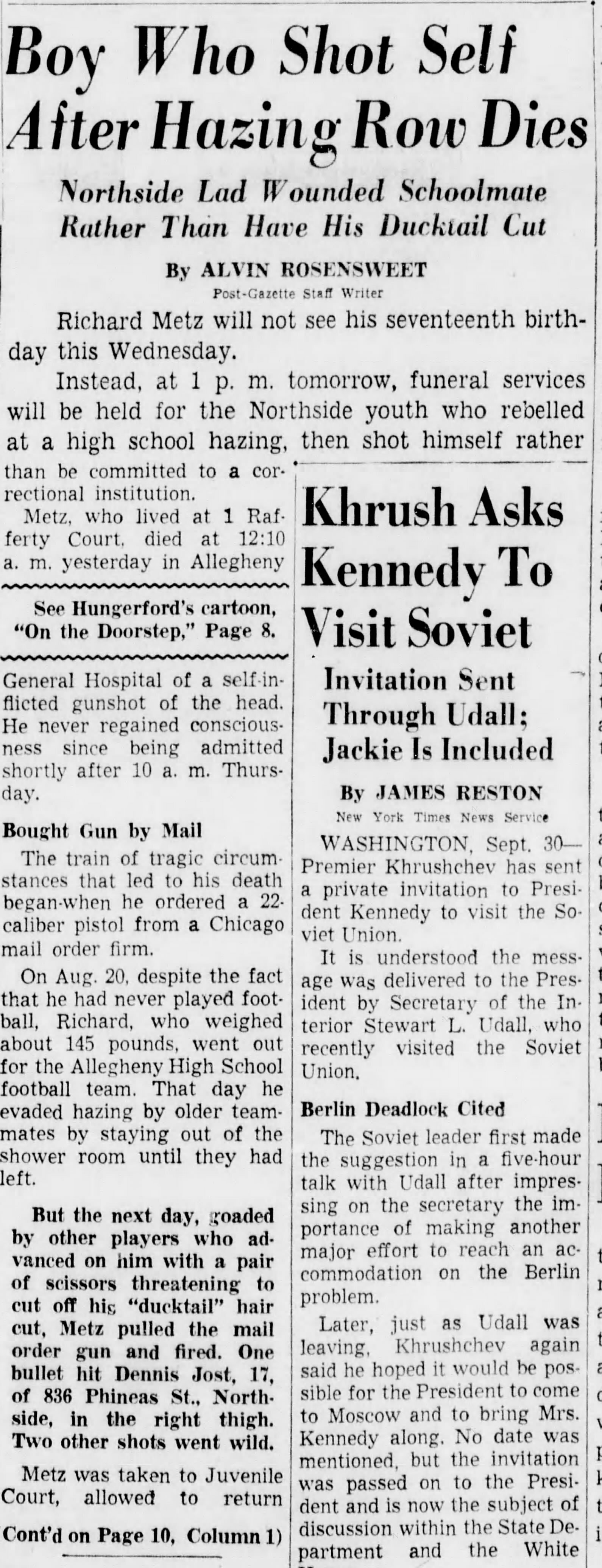
    In 1962, Richard Metz shot a gun at two football players who attempted to haze him at Allegheny High School.Newspapers.com

    A “psychiatrist’s report showed that Richard had an inability to meet a crisis,” the Pittsburgh Post-Gazette’s Alvin Rosensweet wrote on Oct. 1, 1962, the day after Metz’s death. “He felt he was only defending himself when his teammates goaded him into shooting.”

    A young, troubled man who brings a gun to school … and turns it on other students … then dies by suicide. It doesn’t sound like something from the distant past. It sounds like the sort of atrocity too common in our time.

    Yes, these episodes are anecdotal. They’re also predictable without proper oversight from the adults who are supposed to be in charge, without awareness and understanding of the conditions that can create them. One would think the omnipresence of smartphones and social media and the possibility that such abhorrent acts would be captured on camera and blasted out to the world would serve as deterrents to hazing. They don’t, and the additional, necessary guardrails didn’t exist at Cheltenham and don’t in too many other locker rooms. Incidents like these seem rare, but there’s no telling how often they actually occur.

    “How likely,” Nuwer said, “are students to report this?”

    They’re not likely at all. The victims are often too humiliated to reveal the abuse, and you can be sure that the perpetrators won’t be quick to confess. Somehow those lasting lessons weren’t delivered to enough Cheltenham football coaches and players, and based on the abuse parents described Tuesday night, those responsible for the district’s youngest students need to learn them, too.

    There will be a review of the district from an outside attorney, and the high school football season has already been canceled, just as last season’s was. These are half-measures, and too late at that. Curtailing such cruelty comes down to stopping it before it starts, to cultivating an environment where everyone understands that there will be consequences for those who don’t meet the baseline for basic human decency.

    It takes elected leaders who actually lead. It takes educators and administrators who wield wisdom and compassion and discipline in the proper proportions. It takes parents and students with the willingness to speak up, and it takes parents who have the strength, the humility, and the self-awareness to recognize that their children might be causing the chaos — and who take the steps to stop it. It takes a lot of elements that right now seem in short supply in the Cheltenham school district.

    This column has been updated to reflect the outcome of one accusation of hazing.

  • Some U.S. adults are using AI for financial guidance, but few trust it, Gallup poll finds

    Some U.S. adults are using AI for financial guidance, but few trust it, Gallup poll finds

    NEW YORK — Some U.S. adults are using artificial intelligence for financial guidance, but it’s far from the most trusted source of advice, according to a new Gallup survey conducted in partnership with Edward Jones, a financial services firm.

    About 1 in 5 Americans who have sought financial advice in the past year turned to AI, the survey found. But among U.S. adults overall, only about 3 in 10 have “a great deal” or “some” confidence in its expertise for managing money, according to the survey, including just 3% who trust AI “a great deal.”

    The poll, which was conducted in the spring and looked at the views of adults who are at least 21, found a disconnect between the resources Americans trust for financial advice and the ones they actually rely on. About 8 in 10 U.S. adults have at least “some” confidence in financial advisers. But only about one-third of U.S. adults who sought financial advice turned to a professional financial adviser, with far more, 73%, saying they relied on their own internet research.

    As the use of AI increases, financial experts say consumers should be cautious about fully trusting these tools. Using AI as a tool at the start of a learning journey and then combining this knowledge with other trusted sources can be the best way to engage with new and traditional financial guidance tools, said Taha Choukhmane, associate professor at MIT’s Sloan School of Management.

    “I would encourage people to use AI to explain and define,” Choukhmane said. “If you’re interested in knowing what the stock market is, what the difference between a mutual fund and an index fund is. Using AI to explain these concepts can be very useful because it can empower people to get the most out of these methods.”

    Most Americans have sought financial guidance from at least one source in the past year, the survey found. In addition to those who said they used internet research, financial advisers, or AI, 35% went to a parent, sibling, or relative, while 26% got information from news, media, or social media. About 2 in 10 said they turned to a friend or an author, speaker, or influencer, and fewer relied on an employer or retirement plan provider, a robo-adviser or a teacher or professor.

    Younger generations are more likely to say they’ve used AI for financial advice, while older adults are more likely to have turned to a professional financial adviser.

    Affordability can often deter younger adults from hiring a financial adviser. While doing research online, asking family and friends and using AI can have minimal costs, hiring a professional can require a bigger financial commitment. About a quarter of Gen Z and millennial adults who looked for financial advice in the past year went to AI, compared to 16% of Gen Xers and just 7% of baby boomers. But while only 14% of Gen Z adults and 21% of millennials who sought guidance turned to a professional financial adviser, that rose to 34% of Gen X adults and about half, 55%, of baby boomers.

    Since AI interacts with specific user prompts, the advice can vary depending on how questions are asked. But asking general questions about personal finance can help people understand complex financial terms. Choukhmane also recommends asking AI to provide references to trusted sources to verify the information provided.

    While AI can be utilized for research, some financial experts are skeptical about the legal responsibilities of the technology. Certified financial planners have a legal responsibility to give the most fitting advice while AI tools don’t. Ultimately, the decisions a person makes based on AI advice are their responsibility.

    “Fiduciary responsibility is very real,” said Bobbi Rebell, certified financial planner and founder of Financial Wellness Strategies. “There’s no AI that is a fiduciary. It doesn’t really know your life; it’s not asking you all the questions.”

    The poll of 5,075 U.S. adults ages 21 and older was conducted March 20-April 6, 2026, using a sample drawn from Gallup’s probability-based panel, which is designed to be representative of the U.S. population. The margin of sampling error for U.S. adults overall is plus or minus 1.8 percentage points.

    Amelia Thomson-Deveau contributed to this article.

  • What does a black hole sound like? A Villanova scientist’s answer was turned into music.

    What does a black hole sound like? A Villanova scientist’s answer was turned into music.

    Villanova astrophysicist Becka Phillipson wondered what a black hole might sound like.

    She found an answer by translating X-ray data from a black hole system into musical notes.

    The first time she listened to the audio, the cacophony reminded her of someone pressing every key on an organ at once.

    After roughly 30 seconds of this “chaos,” she heard a “coherent, beautiful major chord” ring out.

    Her research formed the backdrop for a 13-minute musical composition performed on Saturday at the Chestnut Hill Skyspace, a venue and art installation. The black hole-inspired piece was one of three in an immersive concert, called “This Silent Music,” centered on collective listening.

    The concert intended to create a space where people could sit with and work through discomfort, especially at a time when many feel overwhelmed and disconnected, said cocreator Liz Lang.

    “I personally feel like I want to scream every time I open the news,” she said.

    Liz Lang minutes before performing during a rehearsal of “At the End of It All,” a 13-minute musical composition that incorporates sounds created by sonifying black holes.Jose F. Moreno / Staff Photographer

    Massachusetts-based composer LJ White used black holes as a metaphor for this theme. He paired Phillipson’s sounds with singing, a marimba, and suspended cymbals.

    To him, the chaos of the cosmic phenomenon reflected how marginalized groups can feel powerless and frustrated in society.

    The title of his piece, “At the End of it All,” comes from the poem of the same name by Nicole M. Young-Martin, which is “about not being able to predict or control anything, but trying to be your best person regardless,” White said.

    Sonifying a black hole

    Coming from a family of professional musicians and singers, Phillipson felt like the odd one out in choosing a career in science.

    She gravitated to researching black holes — areas of space where gravity is so strong, even light cannot escape.

    She thought sonifying black holes could make for an interesting outreach activity for students, while also helping scientists uncover novel information about black holes.

    When scientists sonify a black hole, they are not literally recording sound. Most of space is empty and “deathly silent,” Phillipson said.

    Instead, they are interpreting the interactions around the black hole.

    Using telescopes pointed at the night sky, scientists can collect information in the form of images. Those visual cues, such as brightness, can then be translated into sound. For example, Phillipson decided that, if something brightened, that would translate to a higher-pitched sound.

    The environment around a black hole gets brighter and dimmer over time as material interacts with it — akin to a campfire brightening after being fed a log.

    “I’m a translator between the light and the sound,” she said.

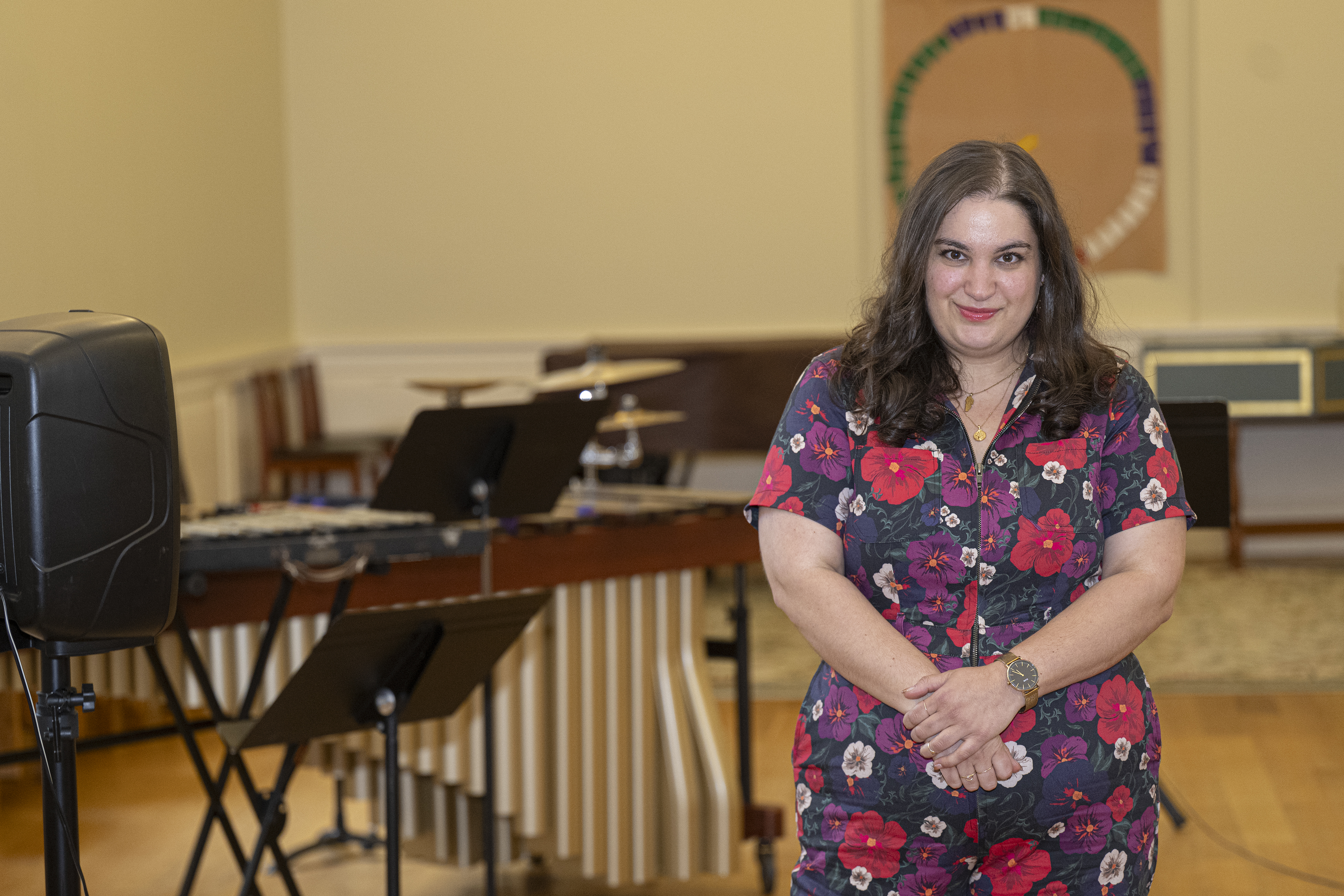
    Scientist Becka Phillipson lis photographed before a music rehearsal named “At the End of It All,” a 13-minute musical composition that incorporates sounds created by sonifying black holes, at the Presbyterian Church of Chestnut Hill in Philadelphia on Friday, Aug. 7, 2026. The piece also includes narration about black holes by Phillipson.Jose F. Moreno / Staff Photographer

    A metaphor

    White produced and mixed Phillipson’s black hole sounds — piecing them together into a collage that served as the background of his 13-minute composition.

    The audio had a “sort of circular sound” and “a lot of swooping,” he said, emulating the spin of a black hole. There was a sense of “things moving around you in a somewhat chaotic way,” he added.

    In this, he saw a metaphor for the experiences of marginalized groups who may feel frustrated and helpless.

    The piece featured parts where the singers scream with wild, unbridled vocals, as if reacting to catastrophe. Other sounds are associated with mourning.

    “Things are happening that they can’t predict or control,” he said. “I want [the piece] to be cathartic in some way.”

    It’s also meant to inspire.

    Beneath the chaos of a black hole lies untapped energy that can suck objects inside if one gets close enough, White said.

    A black hole behaves like an “infinitely deep funnel,” Phillipson said in narration included in the performance. Throw an object in, and it won’t come back out.

    Black holes are also invisible — only detected by their interactions with other things.

    “It’s not an energy source that is well understood or can be taken control of,” White said.

    The same concept of invisibility could extend to groups of people who aren’t in power right now, White said. For example, he identifies with the transgender community, which he says frequently gets talked about in relation to mainstream society, but often remains misunderstood.

    He hopes the piece helps people appreciate the power they have.

    “There’s all this latent energy that we have that we could harness,” White said. “We’re not helpless.”

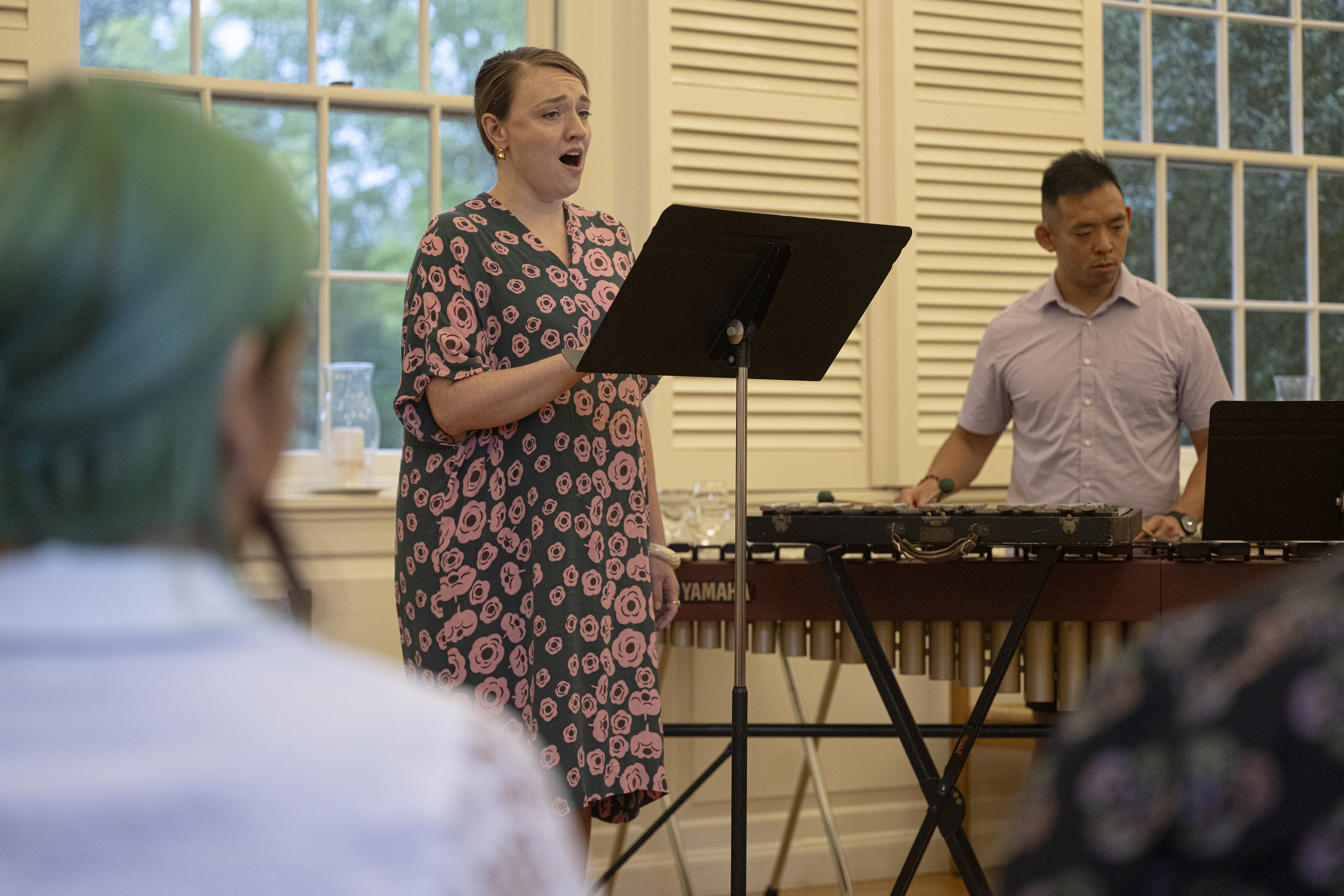
    Producer and Soprano Katy Avery rehearses “At the End of It All” at the Presbyterian Church of Chestnut Hill in Philadelphia. The actual concert took place in the Chestnut Hill Skyspace.Jose F. Moreno / Staff Photographer

    Lang hopes to expand beyond last weekend’s sold-out concert to perform in other Skyspace locations around the world. Light artist James Turrell has designed 100 Skyspaces globally, all featuring a room with an aperture in the roof, facing the sky.

    Cocreator Katy Avery was moved by the audience’s reactions at the Philadelphia concert. People found themselves growling along and wanting to vocalize with the performers, embodying the kind of communal atmosphere she had hoped for.

    The person sitting next to Phillipson told her he felt like he had to hold his breath the whole time. It was a “feeling like you have a strong emotion and you don’t know what to do with it,” Phillipson said.

    She compared her own emotional experience to riding Space Mountain at Disneyland. At first it’s dark around the roller coaster, with eerie, ethereal, sci-fi sounds — much like the soundscape created with her black hole sounds. Unable to see the tracks, the rider feels as if they are going into darkness.

    At some point in the piece, the singers came in with somber voices suggesting grief and mourning, with screams reminiscent of metal music.

    Those tumultuous sounds gave way to an ending note of hope and power.

    The two pieces that followed in the concert were more calming and contemplative.

    The black hole composition “was like the precursor to meditation,” she said. “First you have to cry before you can calm down.”

  • 📍Weekend sports guide | Sports Daily Newsletter

    📍Weekend sports guide | Sports Daily Newsletter

    Three of Philadelphia’s five professional sport teams are not in season yet, but there’s still plenty of sports action happening around the area this weekend.

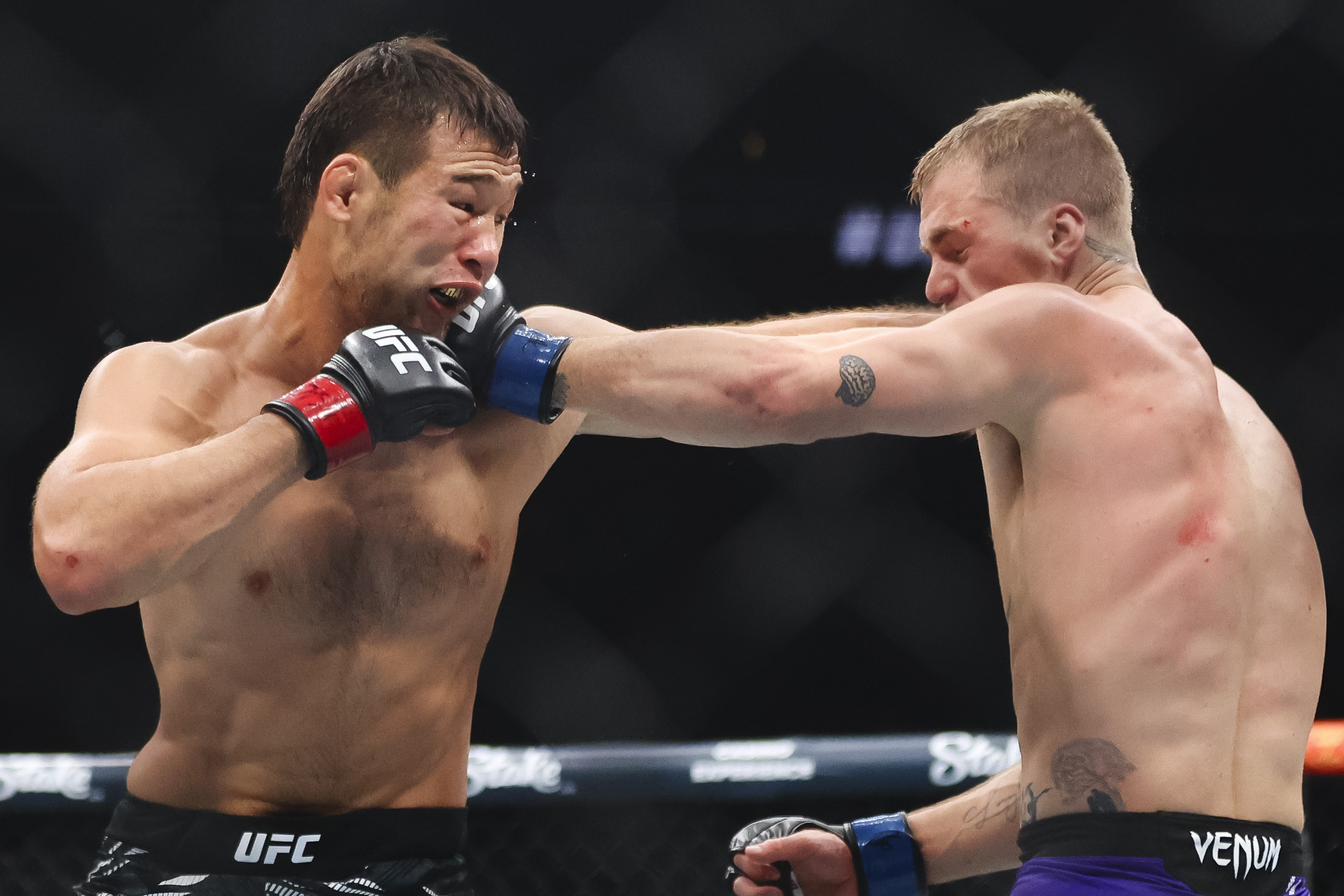
    First, let’s talk about UFC 330. On Saturday night, Xfinity Mobile Arena will host the city’s first numbered event since 2011. The 12-fight slate includes two title bouts, with the main event featuring Russia’s Islam Makhachev and Irish challenger Ian Machado Garry in the men’s welterweight championship.

    Ariel Simpson tells us more about those fighters, plus other names to know. The main card begins at 8 p.m., you’ll need a Paramount+ account to watch from home.

    Earlier that day, the inaugural Women’s Lacrosse League championship is in town at Subaru Park (2 p.m., ESPN). Becca O’Reilly chatted with Rachael DeCecco, a Delco native who is the senior vice president of the Premier Lacrosse League and WLL, about paving the way for more opportunities in the sport.

    And it’s that time of the year again. The Little League World Series starts next Wednesday. If this team from West Chester wins on Friday, they’ll advance to Williamsport.

    Oh! The Eagles preseason opener is also Saturday night in Baltimore — after Thursday’s heated fight in training camp, the Birds could use some time playing a different team.

    — Isabella DiAmore, @phillysport, sports.daily@inquirer.com.

    If someone forwarded you this email, sign up for free here.

    Competing for a spot

    Rookie tackle Markel Bell has had an impressive training camp so far. How will he look in his first game action on Saturday night?Jose F. Moreno / Staff Photographer

    Preseason games are generally meaningless from the standpoint that they don’t count toward a team’s regular-season record, but when the Eagles face the Ravens on Saturday, some players will be fighting to make the initial 53-man roster or the practice squad. Here’s 12 who will have the most on the line.

    And Andrew Mukuba is ready to move on after a fractured fibula ruined his rookie season. His resurgence would be crucial to the Eagles finding success in the safety room.

    What we’re …

    🏀 Learning: Archbishop Wood’s Caleb Lundy is staying home to play basketball at Drexel. He’s the Dragons’ first verbal pledge in the 2027 class.

    👕 Donning: The Union unveiled a third new kit, which pays tribute to the rest of Philly’s sports scene. They’ll debut it next Wednesday.

    🏈 Watching: Eagles fans are freaking out after the team posted a video with a helmet they haven’t worn since 1973.

    📖 Reading: While ‘Shoeless’ Joe Jackson is known for ‘Field of Dreams’ and the Black Sox, his career started in Philly.

    Breaking out of their rut

    Phillies and Twins players walk on to the field from the cornfield before the start of the Field of Dreams game on Thursday in Dyersville, Iowa.Yong Kim / Staff Photographer

    Long before he was a major league manager, Don Mattingly was a kid playing baseball in Indiana.

    One of the ballparks he played in with his brothers, growing up in Evansville, was down a dirt road surrounded by cornfields. And he couldn’t help but be reminded of it as the Phillies filed off their bus Thursday afternoon in Dyersville, Iowa, at the site of their Field of Dreams game.

    The team explored Field of Dreams site like fans pregame, and even played a game of catch with their families.

    “Just kind of seeing the house and making sure when I crossed over the chalk line, I didn’t turn into a normal human being,” Bryce Harper said pregame. “Seeing just all of it. Just really cool to be able to be part of it, and be here, and enjoy it.”

    An excursion to Iowa seemed to be the cure for the Phillies’ recent woes as they delivered a much-needed 7-1 win against the Twins, led by two homers from Kyle Schwarber.

    Schedule observations

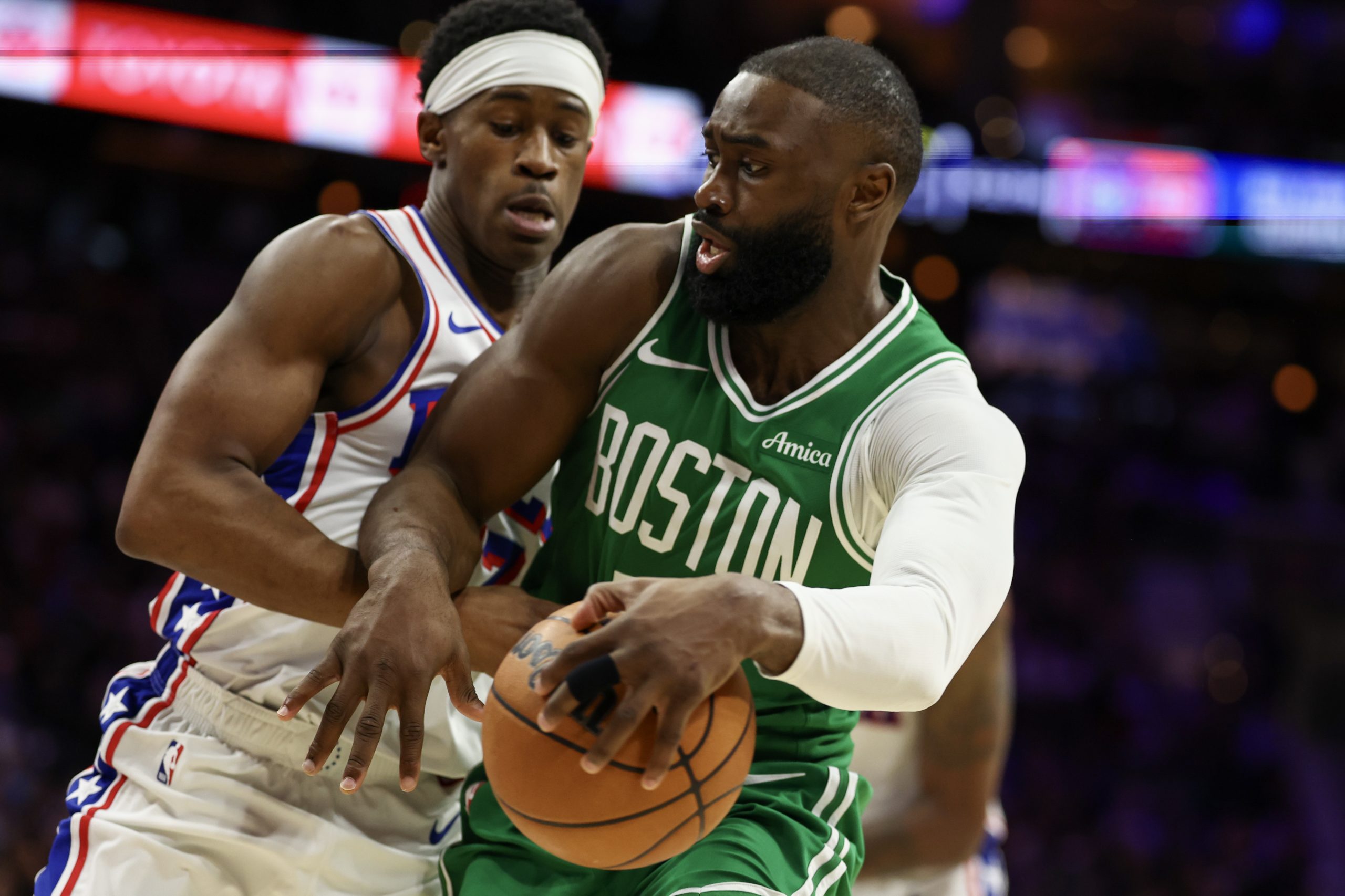
    VJ Edgecombe (left), Jaylen Brown and the Sixers will visit Boston on Jan. 21.Monica Herndon / Staff Photographer

    The NBA schedule dropped Thursday, and there are several marquee games to look out for this season. The Sixers are viewed as preseason championship contenders, thanks to the addition of LeBron James and Jaylen Brown.

    The pair will come across their former teams during the season. The Sixers will go to Boston on Jan. 21, and they’ll travel to Cleveland on Nov. 6 and March 1, and Miami on Jan. 30 and April 8.

    Gina Mizell further details the highlights from the remaining slate of games.

    Mike Sielski’s take

    The hazing incident at Cheltenham High School and alleged assaults at Cheltenham Elementary School are not two crises on distinct, parallel tracks. They are linked.Tom Gralish / Staff Photographer

    One parent after another stepped to a lectern at a Cheltenham school board meeting Tuesday night, each of them bemoaning the district’s handling of either the recent hazing incident within the high school’s football program or a string of student-on-student assaults at Cheltenham Elementary.

    In youth and high school athletics, certain patterns, even the worst kind, tend to repeat themselves, especially without proper oversight from the adults who are supposed to be in charge, writes columnist Mike Sielski.

    What you’re saying about favorite sports movie

    We asked: What is your favorite sports movie? Among your responses:

    Without a doubt “The Natural.” Followed by: “Hoosiers,” “Bad News Bears,” “Fear Strikes Out,” and “Rocky.” — Bob A.

    Field of Dreams with James Earl Jones and Kevin Costner is hard to beat, but when you asked this question previously my daughter Lisa reminded me to not forget the classic Brian’s Song, the story of the cancer stricken Chicago Bear’s player Brian Piccolo and his devoted super star friend Gale Sayers. This is the movie that Howard Cosell said allowed men to know it was ok to cry. — Everett S.

    My favorite sports movie was about Shoeless Joe and the Black Sox, “Eight Men Out”. It didn’t excuse their actions but showed how the mostly uneducated players were treated and underpaid was one of the reasons they gave in to gamblers. A close second would be “The Natural”. The ending was a little silly but uplifting just the same – a very entertaining movie. — Tom E.

    It has to be “The Natural”. I get chills when I remember Roy Hobbs saying something like “When I walk down the street I want people to say There goes Roy Hobbs – The best there ever was in the game.” Somebody did a youtube post using Randy Newman’s musical theme with Matt Stairs 2008 bomb at Dodger Stadium. If you don’t get chills watching that you’re dead! — Jerry Miller

    We compiled today’s newsletter using reporting from Mike Sielski, Matt Breen, Scott Lauber, Olivia Reiner, Jeff Neiburg, Jeff McLane, Lochlahn March, Gina Mizell, Ariel Simpson, Conor Smith, Becca O’Reilly, Owen Hewitt, and Jonathan Tannenwald.

    By submitting your written, visual, and/or audio contributions, you agree to The Inquirer’s Terms of Use, including the grant of rights in Section 10.

    Thanks for closing out the week with me. Have a wonderful weekend, and I’ll be back in your inbox on Monday. — Bella

  • Five fighters to know before UFC 330 at Xfinity Mobile Arena, from an Irish Eagles fan to a ‘jiujitsu girl’

    Five fighters to know before UFC 330 at Xfinity Mobile Arena, from an Irish Eagles fan to a ‘jiujitsu girl’

    It’s fight week in Philadelphia, with UFC 330 taking place on Saturday at Xfinity Mobile Arena. This will be the first numbered event and first title fight held in Philadelphia in a decade and a half.

    The card features 12 fights, including two championship bouts in the men’s welterweight division and the women’s strawweight division. With 24 fighters competing this weekend, here are five you should know before UFC 330 takes over South Philly …

    Ian Machado Garry, welterweight

    Twenty-eight year old Ian Machado Garry will fight No. 1 ranked pound-for-pound fighter Islam Makhachev for the welterweight title in the main event of UFC 330.

    Machado Garry is entering Saturday’s fight as a +270 underdog on DraftKings. Despite the odds, he showed complete confidence in himself before the fight by hanging up an empty frame for the championship belt in his home.

    “The empty frame, it’s a manifestation and a visualization that I’ve put in the back of my mind for a long time,” Machado Garry said. “When I signed to UFC, I told everybody now that I’m here, I’m going to be a world champion. It’s a matter of time. It’s inevitable.

    “When we bought our home and I framed my Cage Warriors World Title, I knew that there was going to be space. I knew that there was going to be a frame for my UFC world title. And I wanted to see it empty because every time I see it, it’s going to push me to fill it. This weekend, I’m going to win that belt, I’m going to go straight home and I’m going to put that UFC title in that frame.”

    Machado Garry (17-1) is coming off a big decision win over Belal Muhammad. His only loss in his UFC career was to Shavkat Rahkmandov by decision in Dec. 2024. He is on a two-fight winning streak as he prepares to face his toughest challenge yet.

    “Right now he has absolutely earned and deserved the title as the No. 1 pound-for-pound fighter in the planet. It’s inarguable,” Garry said. “His record stands for itself. His achievements, his accolades. He’s done everything he’s needed to do to earn that. That is the exact person that I want to beat to prove that I’m the champion in the world. Because then there’s no doubt. There’s no excuses. It is undeniable that when I beat Islam [Mackhachev] on Saturday night, Ian Machado Garry is great.”

    Machado Garry is hoping his love for the Birds can get the crowd on his side.

    “I love the Eagles,” Garry said. “I’ve always liked the Eagles. I thought they were a phenomenal team. Saquon [Barkley] is absolutely one of my favorite players. I loved watching him when he signed — when he came out of the draft with the Giants, he was unbelievable. And then I thought he needed to go to a better team. And obviously, the second he did, he gets the 2,000 yards, he goes out and he wins the Super Bowl. It’s perfect.”

    Islam Makhachev, welterweight champion

    Saturday’s main event will be Makhachev’s second fight in the welterweight division.

    In his division debut, he defeated Jack Della Maddelana by decision to become the new welterweight champion last November. After completing his second fight camp at welterweight, Makhachev said he feels more comfortable this time around.

    ”[My] opponent is good,” Mackhachev said. “Good skills, good fighter. Has all the skills. And that’s why I think it’s going to be a good fight for all MMA fans. But I will be looking for a finish. Any chance I have, I will finish my opponent. And this Saturday I will show best performance.”

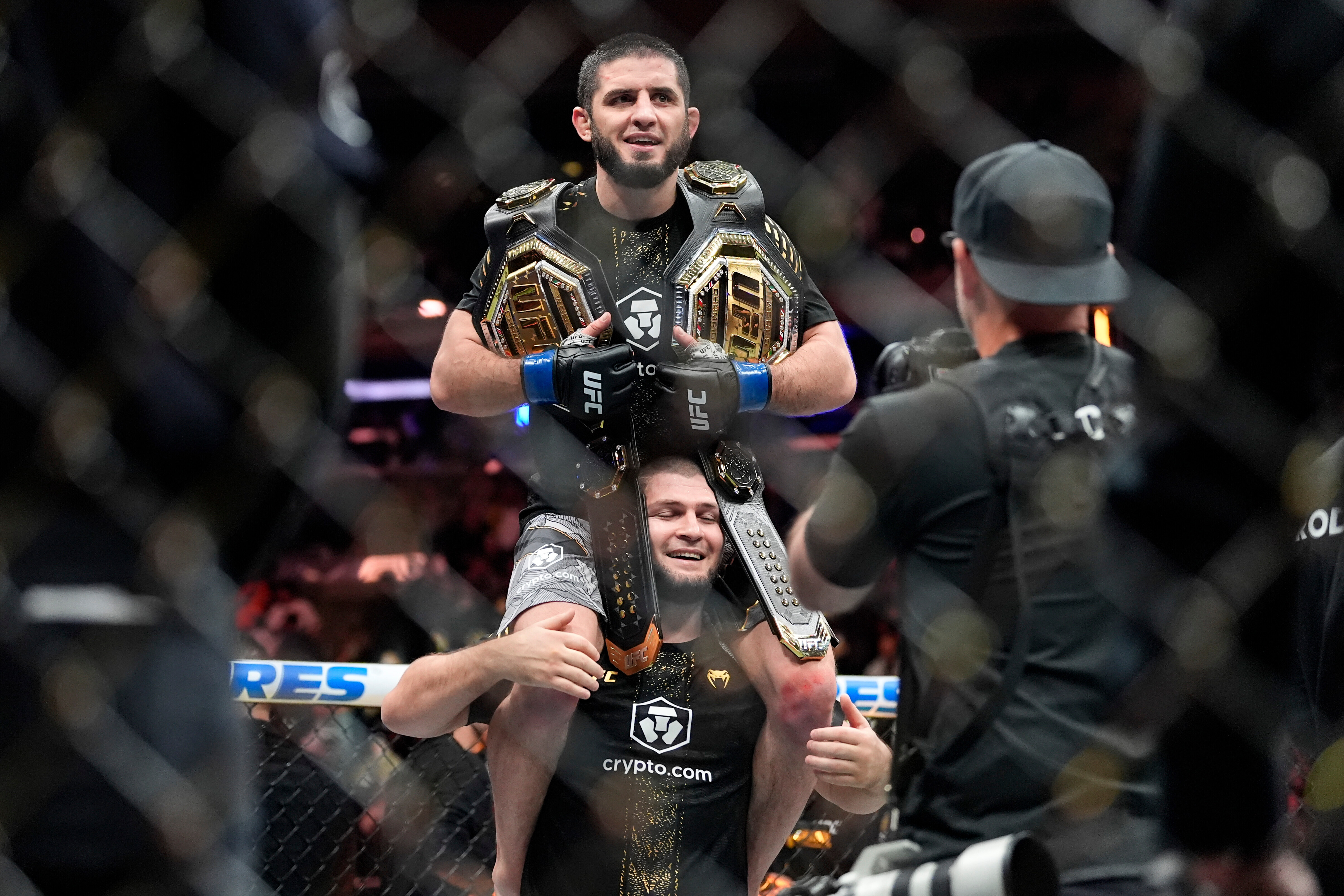
    Islam Makhachev is on a 16 match winning streak and will defend his welterweight title Saturday night in Xfinity Mobile Arena.Yuki Iwamura

    Makhachev (28-1) is cementing his legacy as an all-time great. The former lightweight champion successfully defended his title four times before moving to welterweight. And now, there’s more than just the title on the line. There’s a spot in the history books waiting for him to sign his name.

    Makhachev is currently tied with Anderson Silva for the longest winning streak in UFC history with 16 consecutive wins. With a win on Saturday, Makhachev will surpass that number.

    “I want to be in the history of this sport,” Islam said. “I want to be the best fighter in the world. I want to be in the Hall of Fame. My legacy is still growing and I will fight many years more.”

    Mackenzie Dern, strawweight champion

    After winning the vacant women’s strawweight title in October 2025 with a five-round decision win over Virna Jandiroba, Mackenzie Dern, 33, will defend her title for the first time against Gillian Robertson (17-8).

    “I was telling my coaches right in the beginning of camp, man this feels so different than when I was trying to accomplish the belt,” Dern said. “But my level in striking, in grappling. I think taking that pressure out of my head and wondering the whole time if I would be able to become champion, gave a lot of space for me to get better on little things that we have been trying to get better at. So, my level has gone up so much just from this last camp.”

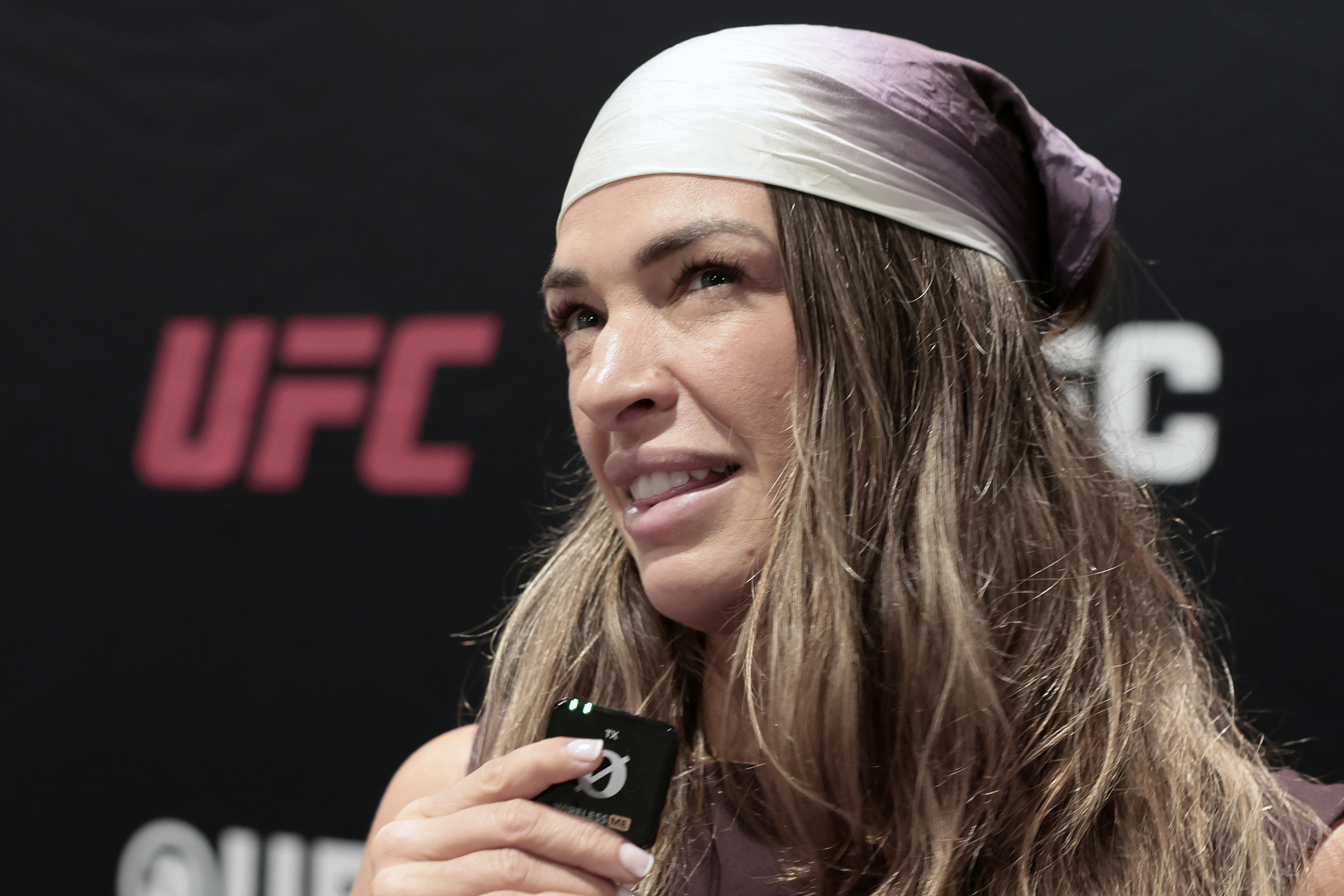
    UFC fighter Mackenzie Dern will defend her strawweight title for the first time on Saturday.Elizabeth Robertson / Staff Photographer

    Both Dern (16-5) and Robertson are submission artists. Dern has eight submission victories while Robertson currently has nine — holding the women’s UFC record. Heading into Saturday, Dern is excited to face an opponent with a similar fighting style.

    “I’m super excited to fight another submission artist,” Dern said. “So, for me, being a jiujitsu girl, I’m usually trying to chase the person or they don’t really want to engage in the fight with me. I know that this is going to be very different and then also this being my first title defense, now the belt is mine. Before this, I was just trying to accomplish something.

    “Now, I’m like ‘OK, I got to defend it I don’t want anyone to come in and take what’s mine.’ So, there’s definitely this big motivation behind it but the pressure is off my shoulders and I’m super excited to be able to go and have fun and see who can submit who because I think we’re going to have a big exchange with jiujitsu.”

    Jeremiah Wells, welterweight

    Thirty-nine year old Jeremiah Wells is the only Philly native featured on the card. He is set to to fight 28-year-old Myktybek Orolbai (16-2) in the early prelims.

    “It means a lot, man,” Wells said. “It’s been a long time coming, just to fight in front of my family and my fans. I do [wish more Philly fighters were on the card], we just got that dog in us. That grit. This town — sometimes we get a little dirty. We get our hands dirty.”

    Wells (13-4-1) trains out of Marquez MMA, located on Worth Street, alongside other Philly UFC fighters, including Pat Sabatini, Sean Brady, Joe Pyfer, and Andre Petroski. He’s currently coming off a decision win to Themba Gorimbo (November 2025) after a 21-month break from competing due to a broken hand and torn Achilles.

    Edson Barboza will fight in his 33rd UFC fight on Saturday night.Jacqueline Larma

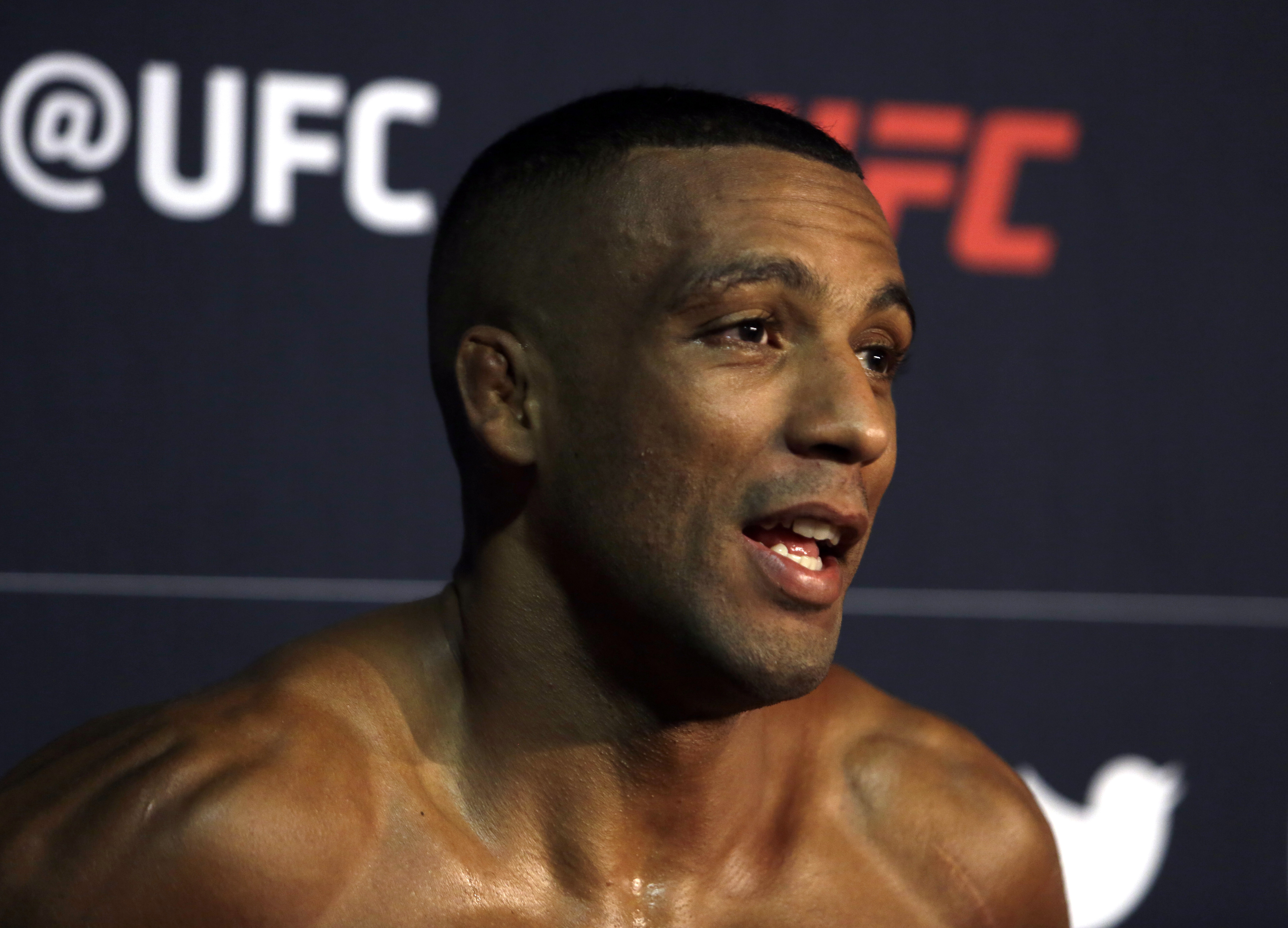
    Edson Barboza, lightweight

    Edson Barboza made his UFC debut in 2010, defeating Mike Lullo by TKO. Sixteen years later and the 40-year-old still gets the same “scary” feeling walking out to the octagon.

    “One-hundred percent,” Barboza said. “Always the same feeling. I think if I stopped feeling like that, I would stop fighting. It wouldn’t make sense any more. The same feeling, the same scary [feeling]. The part I really love is all the crazy feelings.”

    Barboza (24-14) is now entering his 33rd fight with the UFC as he prepares to compete against 30-year-old Esteban Ribovics at UFC 330.

    Barboza has given fans plenty of memorable moments throughout his 16-year UFC career. But perhaps his most memorable moment was when he delivered a historic UFC knockout, landing a spinning wheel kick knockout over Terry Etim at UFC 142 in 2012.

    Despite earning 10 Fight of the Night bonuses, there’s only one way he wants to be remembered.

    “I want to be remembered as the guy that really loved my job,” Barboza said. “I really love fighting, guys. I really love it. Every time I step into the octagon, it’s not about the money, it’s about the love. I really love this.”

  • Some Americans say they’re starting to cut corners as inflation persists

    Some Americans say they’re starting to cut corners as inflation persists

    As the war in Iran barrels toward the six-month mark, many Americans are growing weary of persistent inflation and high prices at the pump. While many still hope for relief, they are starting to think about tightening their belts.

    Consumers still haven’t slashed spending dramatically. Overall, spending remains resilient in the face of elevated inflation, which cooled slightly to 3.4% in the year ending in July, according to data released Wednesday.

    Still, in interviews, families across the country say they are looking for ways to keep their budgets in check, including by curbing gas usage, eating cheaper meals, and taking on DIY projects they once would have outsourced.

    “It absolutely still makes sense to pay for some things, but you just have to be a lot more deliberate,” said Lydia Royce, a 38-year-old mother of two in Norman, Okla., who works in financial tech.

    Royce said she’s privileged — her family isn’t worried about paying their mortgage or filling up their cars. But she also wants to be able to retire one day, so she’s cutting back where she can. For now, that means choosing less expensive extracurriculars for the kids, stretching out her salon appointments and learning to install a French drain herself instead of hiring an expensive landscaping team.

    In Chattanooga, Tenn., 43-year-old Sarah Bailey said her family has switched from seafood to cheaper proteins for dinner — lately, often pork. She’s drinking filtered water instead of spring water, and she’s being mindful about driving — planning purposeful, fuel-conscious routes on days full of work, errands, and kid-related activities.

    “I’m just moving through life a bit differently,” said Bailey, a drug and alcohol counselor and author.

    The same is true for Donny Plumley, 55, a nurse in Huntington, West Va. He and his wife rarely eat at restaurants anymore, he said. They grow vegetables in raised beds and occasionally buy whole steer in bulk to save on groceries. Plumley also equipped his house with solar panels and conducts a penny-saving meal prep each week.

    “We’re making a lot of little changes,” he said. “We have to seriously consider each thing because there’s just less money.”

    This quiet economizing has yet to show up in national data. Consumer spending ticked up slightly in June, as people’s purchases continue to defy high prices. Some of the increase is simply because gas, groceries, and other necessities cost more. But spending data from at least two major banks also show discretionary spending is solid, with consumers finding ways to afford extras despite rising prices.

    Mark Zandi, chief economist at Moody’s Analytics, said wealthy Americans benefiting from a strong stock market are contributing heavily to the overall economic picture even as the less well-off are feeling the strain.

    “The well-to-do are still driving the train,” Zandi said.

    And even middle-class Americans are still reluctant to make big adjustments, said Diane Swonk, chief economist at KPMG.

    “It’s not just that consumers will resist with everything in their power reductions in their standard of living, but they resist a reduction at the pace at which they accumulate stuff,” Swonk said. She added: “Even if they’re able to keep spending going, it’s not as easy and you’re not getting as many things as you once did.”

    Those cracks are starting to show. In the Federal Reserve’s most recent “beige book,” a report released in July that includes anecdotal evidence of economic conditions around the country, several Fed districts reported people seeking out more affordable alternatives and cutting discretionary spending.

    Meanwhile, the larger-than-usual tax refunds that helped prop up spending this spring are now gone for most families. In June, the personal savings rate — which measures how much of their disposable income people dedicate to savings — dipped to 2.7%, the lowest level in four years.

    That’s where Chase Johnson, a 38-year-old insurance sales operations manager in Maxwell, Iowa, is feeling the pinch. He said he and his wife haven’t cut back on everyday purchases or vacations, but they expect to save about 10% less this year.

    “We’re not going to quit living because prices are going up,” Johnson said. “The economy is the economy. We’re going to make it work either way.”

    By many metrics, the U.S. economy is stable, if not inspiring. Overall growth was somewhat sluggish in the second quarter, slowing to a 1.5% pace, but the unemployment rate remains low. And wages are still growing, though a Washington Post analysis found paychecks are stagnant compared to a year ago when inflation is taken into account.

    New data from the Bank of America Institute shows consumers remain solid financially and the gap between higher income and middle- and lower-income groups’ spending and wage growth is narrowing.

    Still, many Americans feel the economy isn’t working for them. Multiple polls showing a decline in consumer confidence. And the cost of living has dominated campaign rhetoric in the run-up to this fall’s midterm elections, with even some Republicans joining the chorus of online complaints about a viral $20 burrito.

    As the war drags on, Zandi said, people might finally have to spend down savings or rack up more debt, which could eventually lead to sagging consumer spending. But as long as the labor market remains steady, he said, it’s unlikely people will pull back too far.

    And for now, consumers at all income levels are navigating higher prices well — still spending on extras, said Michelle Meyer, chief economist at Mastercard. Higher-income families have been able to spend faster, but across the board, the stable labor market has propped people up.

    “There’s a lot of uncertainty,” she said. “But uncertainty is also our new normal.”

  • Hundreds of Philly buildings rely on Vicinity’s steam plants. Their workers want better pay and safer facilities.

    Hundreds of Philly buildings rely on Vicinity’s steam plants. Their workers want better pay and safer facilities.

    Thomas White is a control room operator at a Philadelphia plant working with chillers and steam boilers to provide heat and air-conditioning for Jefferson Health and Thomas Jefferson University. When he started his job some 18 years ago, he and many of his coworkers had served in the U.S. Navy.

    That shared experience was an advantage, he says, because they all came with the same training. The Navy used steam-driven ships.

    “You just had to learn where things were because you already knew what they did, you knew how to do it, spoke the language,” he said.

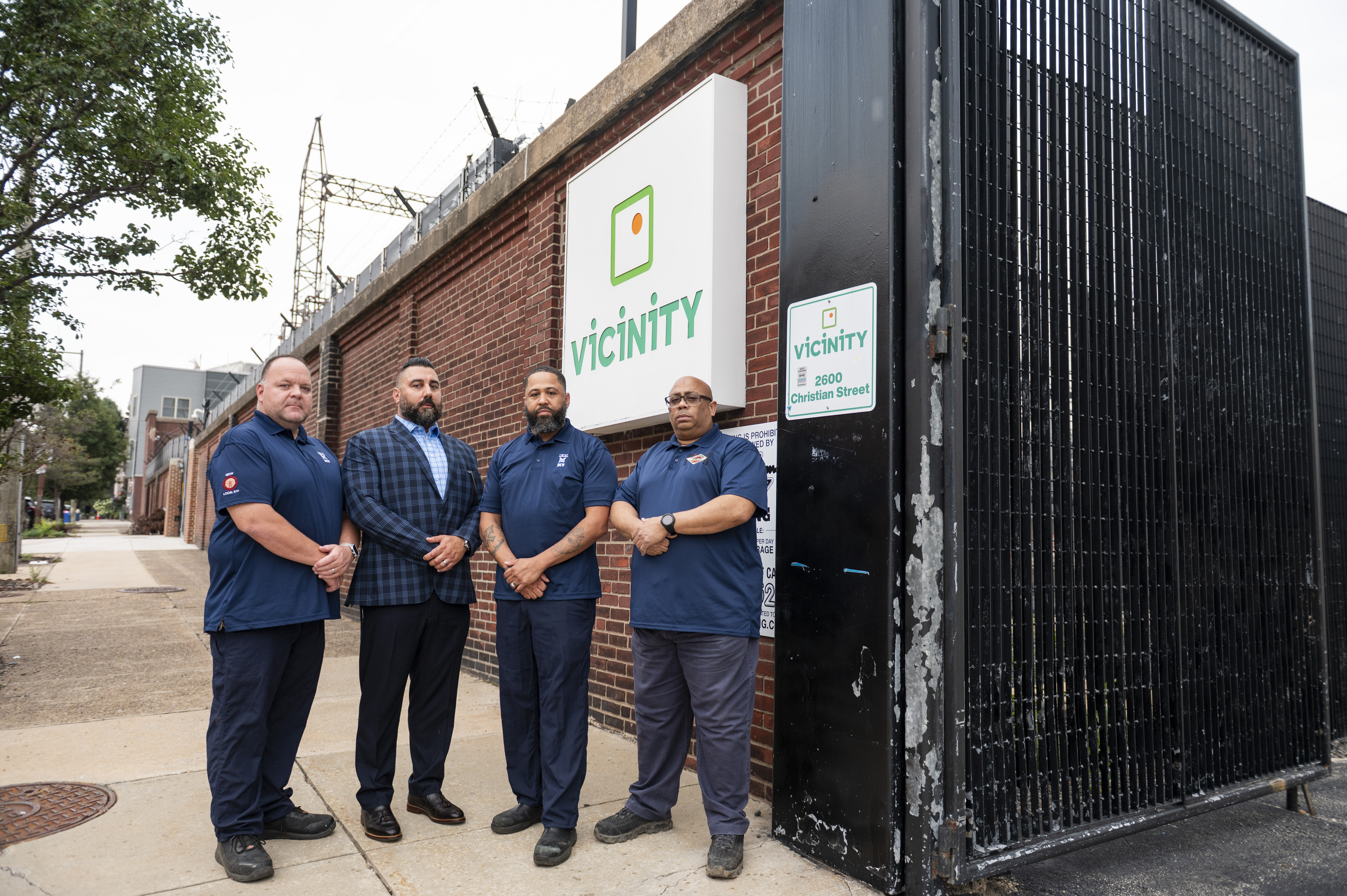
    White and his colleagues work around-the-clock shifts for Vicinity Energy, operating a system that generates steam and electricity to provide customers with heat, air-conditioning, and chilled water. In Philadelphia, Vicinity serves hundreds of buildings, including Two Liberty Place, Thomas Jefferson University Hospital, and the Philadelphia Museum of Art, as well as the University of Pennsylvania, which buys over half the steam Vicinity sells in Philadelphia.

    Since he’s been on the job, White says the Navy-veteran hiring pool has shrunk, as the Navy moved away from steam and toward diesel and gas turbines. Now hires come from refineries shutting down or trash plants, and they need training.

    “There’s just a few of us older guys that are left over to try to pass this institutional knowledge down,” said White, who is a member of IBEW Local 614, along with 56 other Philadelphia employees of Vicinity. They do this training on their own time, White said, so they don’t get paid for it.

    Their union is negotiating a new contract and could go on strike if they can’t reach a deal. They want raises, better short-term disability pay, a safer workplace, and compensation for the time they spend training new hires. Their current agreement expired in March.

    “Vicinity Energy is committed to bargaining in good faith and believe those discussions belong at the bargaining table, not in the media,” a spokesperson for the company said in a statement. “Throughout this process, the safety of our employees, customers, and the communities we serve remains our top priority, and we remain committed to safe, reliable operations.”

    The steam plant workers voted to authorize a strike on Saturday if their union calls for it, with 77% participating in the vote, and 97% voting yes.

    If they do walk off the job, they’d be closely following in the footsteps of IBEW Local 614’s Peco employees, who recently went on strike before reaching a contract deal last month. A strike authorization vote doesn’t guarantee a strike will happen but can be used as leverage in bargaining.

    The union has alleged that a Vicinity supervisor threatened to “discharge” workers who strike, according to an unfair labor practice charge filed with the National Labor Relations Board earlier this month. Vicinity did not comment on the charge.

    The union is still bargaining in good faith, president Larry Anastasi said.

    Steam plants require human operators, so a strike could be very disruptive for steam-powered buildings across the city. Given that, Anastasi said, it’s important “that we do everything in our power” to keep a strike from happening.

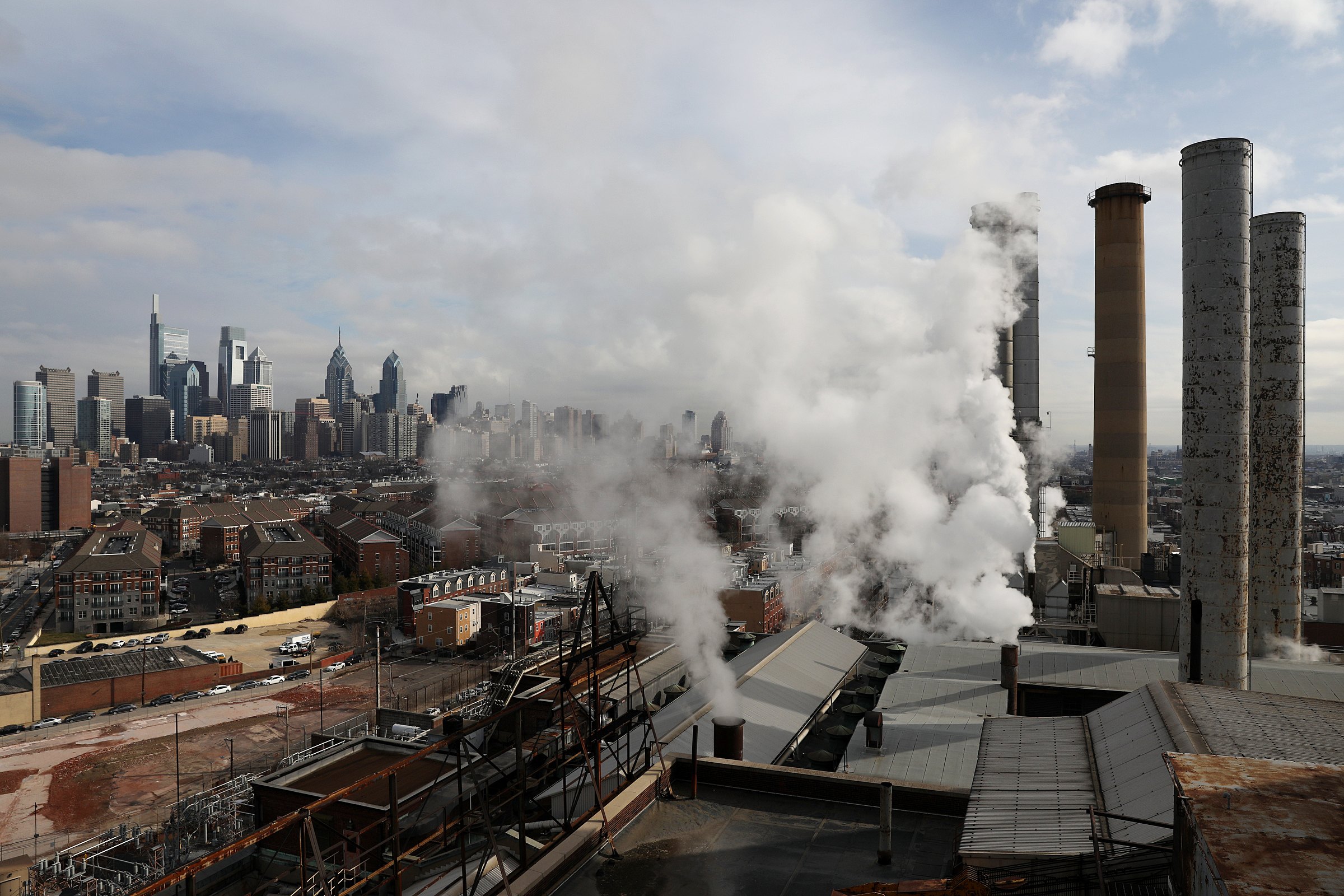
    The Vicinity Energy cogeneration plant is pictured in Philadelphia’s Grays Ferry section in 2020. The plant, originally opened by Philadelphia Electric, produces electricity and steam for heating Center City buildings.Tim Tai / Staff Photographer

    An old system changing hands

    Philadelphia’s steam system was originally built by Peco at the start of the 20th century.

    “Because it’s so old, I think people forgot its value,” Anastasi said.

    Veolia Energy bought the system in 2007. Vicinity’s parent company, private-equity firm Antin Infrastructure Partners, bought it from Veolia in 2019 as part of a larger deal valued at $1.25 billion. At the time, the company committed to $50 million in capital spending over five years in Philadelphia.

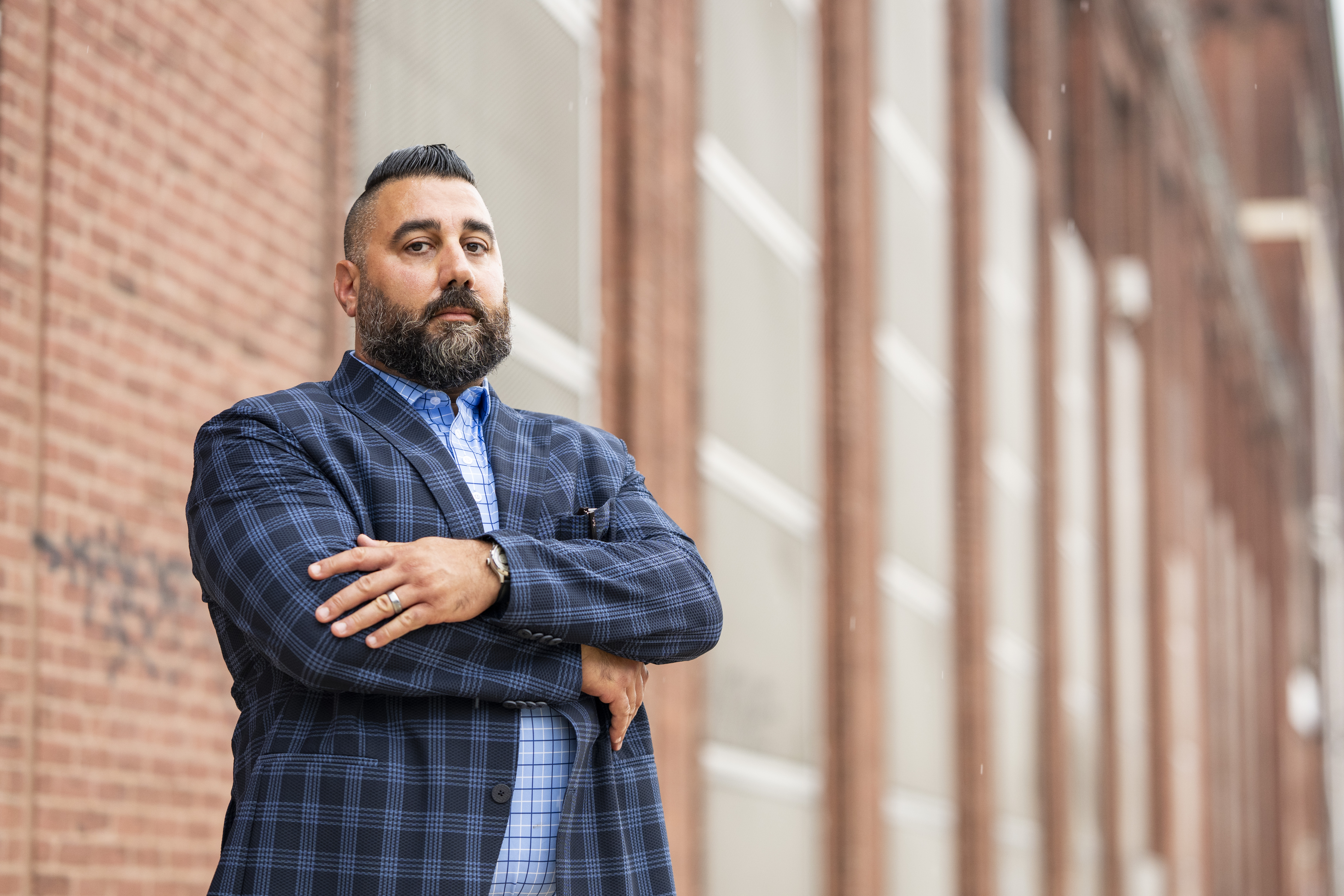
    Larry Anastasi, president of IBEW Local 614. The union leader also represents Peco employees who reached a new contract with the company in July. Allie Ippolito / For The Inquirer

    Boston-based Vicinity manages some 41 miles of underground pipe infrastructure in Philadelphia, according to the company’s website. The business services 400 buildings in Philadelphia, and its main plant is in Grays Ferry, at 2600 Christian St.

    Vicinity’s Philadelphia business brought in over $99 million in revenue last year but reported a net loss of $11 million in 2025 after paying for fuel, operating expenses, and other costs.

    The turbine hall is pictured inside the Vicinity Energy plant in Philadelphia’s Grays Ferry section in 2020. Tim Tai / Staff Photographer

    What do workers want?

    After months of negotiations, it’s hard to keep morale up among workers, said Kenneth Gordy, a union shop steward and control room operator. Gordy said he feels workers are underpaid for the highly skilled and dangerous work they do.

    Operators typically clock in for 12-hour shifts beginning at 6 a.m. or 6 p.m. They get two weekends off per month.

    Operators earn roughly around $50 an hour, said Anastasi. He said “substandard” wages and benefits have led to turnover.

    “We want our wages to reflect the knowledge, the level, the skills, the things that we do. We’re not asking for extraordinary things,” White said.

    Union members also want fully funded short-term disability. They used to be able to get 100% pay during short-term disability years ago, but they now get around 60% during such leave, Anastasi said.

    “Guys are using their bodies in this plant. We’re beating ourselves up,” said Sean Finnegan, an auxiliary operator who maintains equipment.

    The workers also want their employer to make repairs to the plants where they work, citing unsafe conditions such as asbestos, as well as standing water in work areas, Anastasi said. Part of the ceiling was falling down in one area recently, White recalled.

    “A new private equity firm takes over, and none of the repairs get made,” Anastasi said.

    Control room operators work at the Vicinity Energy cogeneration plant in Philadelphia’s Grays Ferry section in 2020. Tim Tai / Staff Photographer

    Anastasi also wants to improve retirement benefits for the Vicinity workers. He wants their employer to contribute to the union’s annuity program, so workers can get monthly payments upon retirement.

    Anastasi is coming off a retirement win for his union’s Peco members, who clawed back pensions in their recent contract with the energy company. The union heralded the deal as a “historic contract victory.”

    The steam plant workers’ most recent bargaining session was Aug. 3. The next session has yet to be scheduled, the union said Thursday.

  • Letters to the Editor | Aug. 14, 2026

    Letters to the Editor | Aug. 14, 2026

    Plutocracy

    Two hundred and fifty years ago, our city’s favorite son, Ben Franklin, warned us that our country is a “republic, if you can keep it.” Sadly, it appears we are failing to heed his wise counsel. We are evolving into a plutocracy, defined as “a state or society governed by the wealthy.” Dark money has flooded and controlled the electoral process. A substantial majority of Americans want universal background checks for gun buyers after numerous mass shootings, yet all such reform efforts fail. A majority of Americans want a woman to have the right to have a choice in health matters, yet the U.S. Supreme Court says otherwise, and several states are criminalizing such conduct. A majority of us believe global warming is real as enhanced natural disasters continue unabated, yet governments ignore it and continue to denigrate the environment. A majority of Americans support scientific research and adequate funding for the National Institutes of Health and the Centers for Disease Control and Prevention, yet funds are being cut, scientists laid off, and Anthony Fauci was threatened with jail time. With unlimited campaign funds and sophisticated marketing injected into our political process, a simple majority no longer rules. We are slipping into a plutocracy in which tech billionaires, Elon Musk, Big Pharma, Big Oil, and other financial powerhouses are in control. Fortunately, the forthcoming midterm elections give us perhaps a last opportunity to live up to Franklin’s ideals. Let’s restore checks and balances come Nov. 3.

    Angus Love, Narberth, anguslove76@gmail.com

    Willful ignorance

    I’m fascinated by the fact, as reported recently, that Donald Trump is angry at Pete Hegseth for keeping him “in the dark” about the dearth of munitions available to our military, which might hamper Trump’s ability to continue bombing Iran. I’m a retired teacher, and I knew about this “munitions problem” a long time ago. How can this be explained? Am I really intelligent? A genius? Or is the president of this country willfully ignorant? Or is he kept in a bubble? It reminds me of the time — a few days before Hurricane Katrina slammed into New Orleans — when I turned to my wife and said something to the effect of: “My God, this storm could literally obliterate New Orleans from the earth. The city is literally under sea level and this is a Category 5 storm!” and then hearing President George W. Bush, after the destruction, telling us that no one could have predicted the damage. Really? Do Republican presidents always have to be so dangerously obtuse? Do Republicans only vote for their own little “bubble boys?”

    John McLaughlin, Philadelphia

    Not to be outdone

    Remember how we felt pre-COVID-19 when Phillies rightfielder Bryce Harper signed a 13-year, $330 million no-trade, no-opt-out-option contract in winter 2019? It seemed like a Phillies World Series championship guarantee.

    Then, we were not disheartened by a narrow Super Bowl loss to the Kansas City Chiefs in February 2023 — enough so to sign Jalen Hurts to a five-year, $255 million contract extension. Two years later, the Eagles returned to the Super Bowl and won it.

    So when the Sixers took it to the next level by taking our breaths away this summer by assembling the finest starting lineup in NBA history with the addition of LeBron James, you just knew something else was coming.

    It turns out that you didn’t have long to wait. The finest defensive tackle in the NFL is now the highest-paid one in NFL history. One year after sending projectile sputum into the South Philadelphia night sky that landed on Dallas Cowboys quarterback Dak Prescott, Eagles defensive tackle Jalen Carter signed a $152 million contract extension.

    It places him in Philly until 2031, just like Harper. Imagine what other big news we’ll have by then.

    Michael Thomas Leibrandt, Abington

    Protect Head Start

    As the former regional program manager for Head Start in the U.S. Department of Health and Human Services’ Philadelphia regional office, I am appalled that the Trump administration is proposing new rules that would impede this popular, successful program. The program, promulgated in 1965 during the Lyndon B. Johnson administration, has provided low-income families with enhanced childcare to more than 700,000 preschoolers nationwide, 65,000 in our six-state region.

    Historically, Head Start has contributed to lowering rates of delinquency and teen pregnancy. Head Start kids have a higher propensity to graduate from high school.

    A notable hindrance prohibits the enrollment of children who don’t have at least one parent who was born in the U.S. This would deny Head Start benefits to some children who are U.S.-born. The rule also eliminates access for children with disabilities. Currently, 10% of enrollment includes children with disabilities.

    Previously, the administration called for zero funding for Head Start, but withdrew that proposal because of political pressure. However, the White House did close half the nation’s 10 Head Start federal regional offices, leaving local Head Start programs without crucial guidance and technical assistance.

    If you agree that these proposed rules should not be enacted, let your voice be heard. Contact your local congressional representative.

    Ed Vreeswyk, Head Start regional program manager (retired), HHS Region 3, Philadelphia

    Exercise rights

    A recent article from The Inquirer summarizes new findings from a report on high school sports participation across Pennsylvania. As a pediatric resident who counsels patients and families weekly about the importance of exercise, I was disappointed by the results. While some districts have participation rates above 40%, many had rates of less than 10%. Unfortunately, low participation was also found to be correlated with fewer sports being offered and less funding for sports programs.

    No matter where a student lives, all children 6 years and older need at least 60 minutes of moderate to vigorous physical activity on most days of the week, according to recommendations from the American Academy of Pediatrics. Not only does exercise help prevent long-term chronic illnesses such as diabetes and heart disease, but it also benefits kids now. Kids who exercise have improved focus in school, better sleep, and for teens, exercise can help avoid risk-taking behaviors like smoking, drinking, and using drugs.

    This report highlights the need for both more funding and programs for students to participate in school sports. My recommendations as a pediatrician can only go so far if my patients do not have adequate access or equal opportunities to exercise.

    Julianna Lee, Philadelphia

    End removal delays

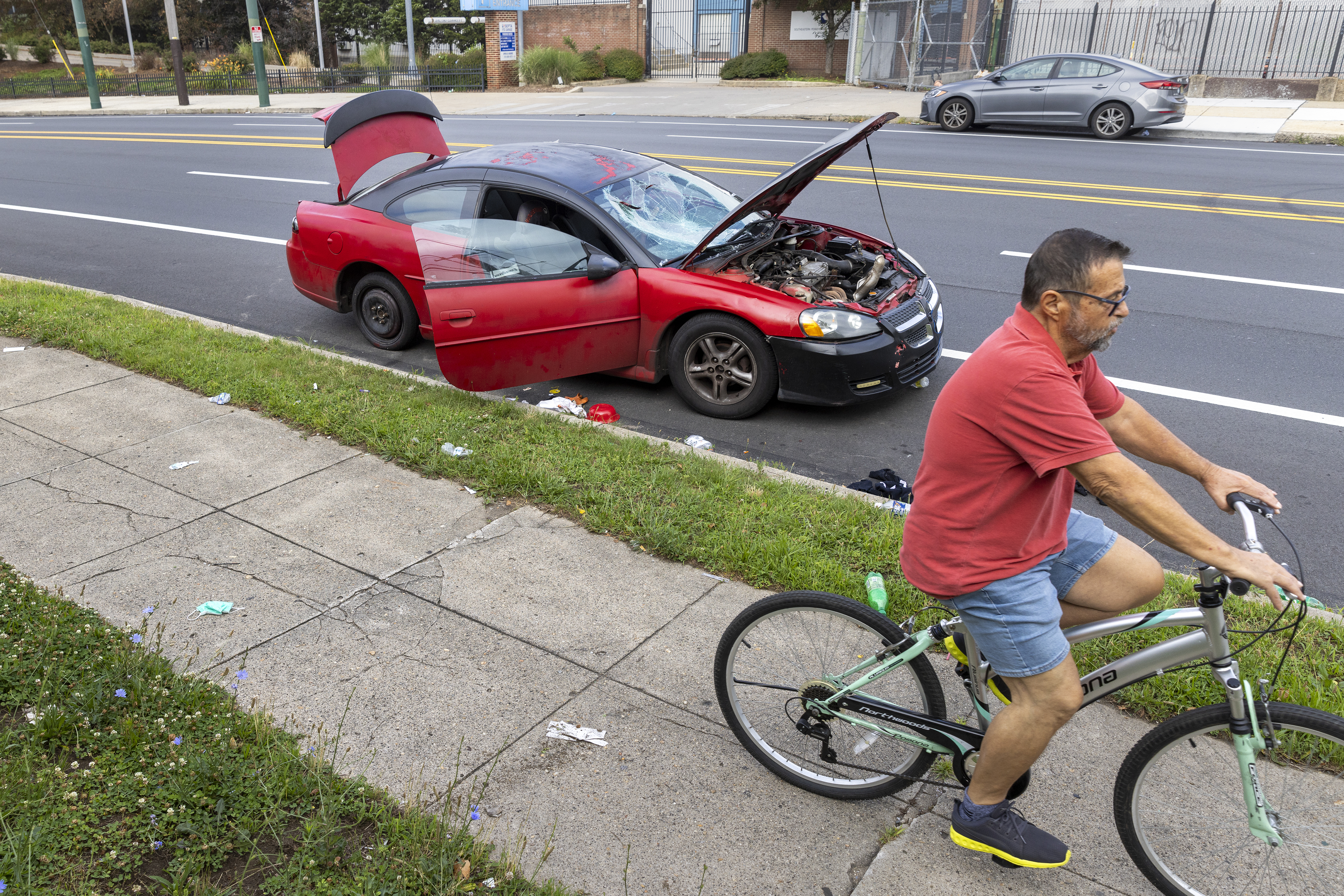
    There seems to be a wide consensus among residents, civic groups, and even an article in this newspaper that abandoned automobile removal has ceased to be a relatively efficient city service.

    The mayor has made clear she gives cleaning up the city a high priority. Whatever debate this may generate about its efficacy thus far, it was Mayor John F. Street who, over two decades ago, declared war on abandoned cars. He successfully made headway at improving this service. What has changed, then, if residents have to wait up to 120 days for completion of the removals?

    A clear explanation from the mayor — this should come from the top — needs to be given about this. Philadelphia cannot afford to step backward on any code/sanitation/safety-related service provision, especially where significant progress had been made.

    Fortunately, we still have the graffiti abatement team to show us all what efficient and effective service provision looks like each day.

    Ryan Caviglia, Philadelphia

    Join the conversation: Send letters to letters@inquirer.com. Limit length to 150 words and include home address and day and evening phone number. Letters run in The Inquirer six days a week on the editorial pages and online.

  • Dear Abby | Support for some charities can result in a busy mailbox

    DEAR ABBY: Do charities and nonprofits share or sell donor information? For years, maybe decades, I’ve made quarterly contributions to two well-known charities for children’s cancer research hospitals, and I truly believe in what they do. However, over the last few years, I have started receiving an increasing number of requests for money.

    One continues to send me quarterly requests, and I promptly write a check. But the other one started sending mailings every month, then every week and now multiple times a week, not to mention the newer “legacy program” (naming them in my will). I have also received messages on my landline phone, text messages and emails, and none of this contact information has previously been given to them, only my mailing address.

    Today, I received seven pieces of mail. Six were requests for donations, five of which I’m not familiar with, and I have gotten the feeling my name and address have been sold or shared with other nonprofits. It feels to me as if they’re spending the money I’ve donated to print and mail even more requests, and I’ll no longer donate to them. I will increase the amount of donations to local school programs.

    Is there a way to get them to stop mailing me? Maybe they’ll read this and think twice about bombarding people to the point they no longer will support them.

    — FULL MAILBOX IN CALIFORNIA

    DEAR FULL MAILBOX: According to Give.org, businesses and charitable organizations do sell their clients’ or donors’ contact information to other organizations. If your name is on a list of subscribers to a special interest magazine or buyers of a certain product or service, it may wind up on a list used by various charities. You may be able to lessen the onslaught of appeals you receive by writing directly to the charities whose mail you don’t want and asking them to delete your name from the mailing lists they rent or exchange. (A Better Business Bureau standard requires that a charity offer contributors an opt-out opportunity in its appeals at least once a year.)

    Enclose the mailing label or return card that came with your appeal when you contact the charity. Be sure to add the correct postage to their envelope on which you have written “delete my name” or “return to sender” because charities’ nonprofit mailing rates do not pay for returns.

    For more information on this subject, visit Give.org.

    ** ** **

    DEAR ABBY: My mom passed last year. I’m 50, and my brother is 52. He has never been good with money. He’s gullible and lets people take advantage of him. He will not let me help him.

    Should I get a guardianship for him or let him fend for himself? We already have a rocky relationship. I worry that taking control of his finances will make it worse. However, I would feel guilty if he mismanaged his money, and I think Mom would want me to help him. What should I do?

    — MY BROTHER’S KEEPER

    DEAR BROTHER’S KEEPER: Please accept my sympathy for the loss of your mother. It’s unfortunate these questions weren’t settled before her passing. Because your brother needs someone to look out for him, and you are the only one who can fill this role with his best interests in mind, discuss this with an attorney. Of course, it will need to be explained to your brother. Don’t put off talking with him, even if the subject is uncomfortable for one or both of you.

  • Horoscopes: Friday, Aug. 14, 2026

    ARIES (March 21-April 19). Additions and subtractions from the collective unconscious happens one song, one joke, one invention, one conversation at a time. Your contribution doesn’t have to dominate the scene to make an impact. It just has to lodge itself in somebody’s imagination.

    TAURUS (April 20-May 20). Entertainment is never just background. Media becomes habit, sets your standards, shapes your aspirations and influences your definition of things like “normalcy” and “acceptable behavior.” Pay attention to what you invite into your mind and your daily routine.

    GEMINI (May 21-June 21). When it’s not going as planned, it still could be going exactly right. Either way, a simple nod to the universe sets your emotional weather back to breezy. Nothing fancy. “Thanks for everything” will do.

    CANCER (June 22-July 22). Disappointment can feel tragic for a moment, as though you’re a child who dropped the ice cream cone or let go of the helium balloon. But then you remember you’re not a child. You have money. You can buy a new treat.

    LEO (July 23-Aug. 22). Even though you have plenty to do to further your own interests, you feel drawn to pause and help someone. Trust that instinct. You will find a route to your own goals as you detour through someone else’s.

    VIRGO (Aug. 23-Sept. 22). It’s easy to stand by your principles when nothing is at stake. The real test comes when doing the right thing costs you money, status, convenience or approval. Which values are you willing to pay for?

    LIBRA (Sept. 23-Oct. 23). As for that message that makes perfect sense in your own head but nowhere else, it’s time to put it on paper. There it will be easier to break it down and examine it piece by piece to determine where the logic cracks.

    SCORPIO (Oct. 24-Nov. 21). A full schedule can create the illusion of progress without actually progressing. Before you add another task, appointment or obligation, pause to consider what the addition will do for you. It’s not a selfish question.

    SAGITTARIUS (Nov. 22-Dec. 21). Having a peaceful home doesn’t guarantee happiness or solve every problem, but it sure does put you in a better mood and mindset to work on solutions and cultivate joy. Kindnesses at the kitchen table will lead to victories elsewhere.

    CAPRICORN (Dec. 22-Jan. 19). Your venture is in an exciting stage of uncertainty. It’s too early to turn back. Focus instead on your first small win. It will change your definition of what’s possible. After that, your ambitions begin negotiating with a larger imagination.

    AQUARIUS (Jan. 20-Feb. 18). It may seem the work is easier, the industry is more welcoming or the prospects more promising “over there.” But competition and drama exist in every line of work. They just wear job-specific uniforms.

    PISCES (Feb. 19-March 20). It’s fun to make the audience listen, laugh or learn, but it only happens when the group is a good match for what you give. Research will be worth it. The ideal room is out there, waiting to be found.

    TODAY’S BIRTHDAY (Aug. 14). It’s your Year of the Crown Jewel. Every collection has one piece people cross distances to admire. You attract like that piece. Cameras find you, people admire your shine and feel more special just for spending time with you. More highlights: Your reputation precedes you, and you can afford to be “expensive” in the ways that matter to you. A victory for the team. You’ll know you’re loved. Sagittarius and Cancer adore you. Your lucky numbers are: 5, 16, 28, 11 and 37.