Blog

  • FCC considers allowing more political robocalls before midterms, including those created with AI

    FCC considers allowing more political robocalls before midterms, including those created with AI

    WASHINGTON — The Federal Communications Commission is considering a request by a conservative group to loosen rules on political robocalls, including those with artificial intelligence-generated voices, before November’s midterm elections.

    Federal law currently bans most robocalls to cellphones unless the caller gets consent beforehand. The petition calls for a waiver that would allow political groups to use artificial or prerecorded voices in unsolicited wireless calls.

    The Republican-led FCC advanced the request for public comment and could rule on it as soon as late October.

    Consumer advocacy groups warn the proposed change could trigger a surge of unwanted, partisan, and potentially misleading automated calls in the critical final days of the election, which will determine which party controls Congress for the final two years of President Donald Trump’s term.

    The potential perils became evident two years ago during the presidential primary season when thousands of voters in New Hampshire received a robocall with an AI-generated voice of then-President Joe Biden. The call suggested voters should forgo casting a ballot in the primary and “save” their votes for the general election.

    Under the waiver request before the FCC, some state and federal laws protecting against deception and voter intimidation would continue to prohibit certain misleading election-related messages. But granting it could weaken a major deterrent for bad actors, said Tim Harper, who leads the elections team at the Washington-based Center for Democracy and Technology.

    Such a ruling close to Election Day would open “a huge opportunity for abuse during a period where harm has outsized impact,” he said. “Campaigns will use this technology to target voters in deceptive ways.”

    A tool for better communication or misleading messages?

    The Club for Growth, a right-leaning economic policy group seeking the change, said it could help political organizations better communicate with potential voters, including in more languages, and improve polling accuracy by helping groups reach more voters. It calls current federal rules outdated and argues they dampen freedom of speech.

    The nation’s communications regulatory body would have to act within a compressed schedule to grant the waiver in time to affect the midterm elections. Critics said it wouldn’t be the first time the FCC, which has become closely aligned with the president during his second term, has bypassed procedural norms to serve its political agenda.

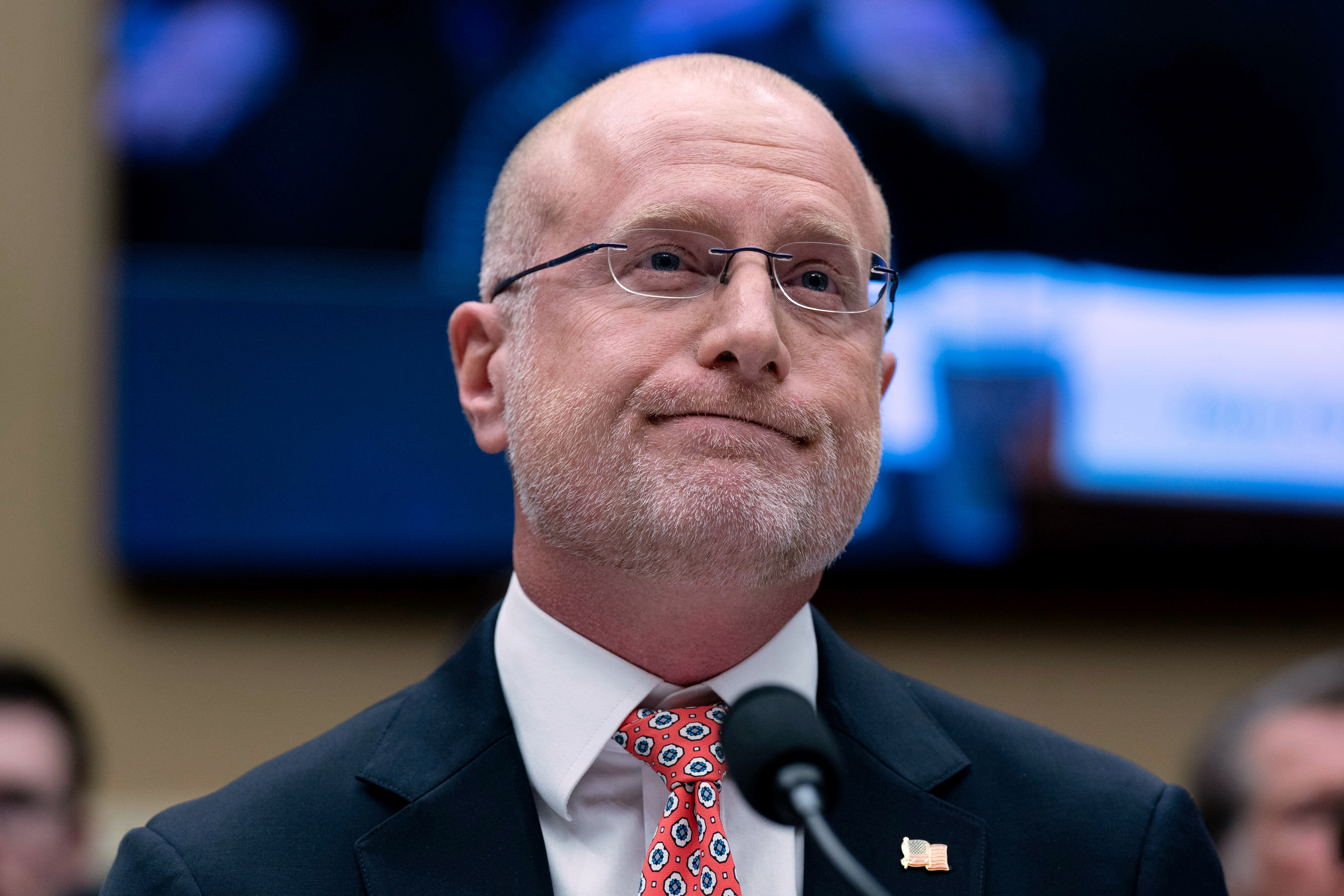
    Its Republican chairman, Brendan Carr, launched an unusual early review of broadcast licenses for several ABC-owned local broadcast stations, prompting the company to sue. It said the review years ahead of schedule was unconstitutional, a violation of free speech, and a retaliation for content Trump dislikes.

    The FCC didn’t respond to a request for comment on the petition.

    Anna Gomez, the sole Democrat among the FCC’s three active commissioners, told The Associated Press she opposes the move and thinks it would create “a tsunami of robocalls and misinformation.”

    “We’ve already seen dark money groups use AI to put candidates’ likeness behind inflammatory comments ahead of this election,” Gomez said. “Exempting political calls from the need for consumer consent would supercharge that strategy, and misleading messages could land directly on the handheld phone of nearly every voter in our country.”

    Political robocalls have caused controversies before

    In past elections, deceptive political robocalls have resulted in significant fines associated with the Telephone Consumer Protection Act, the federal law at the center of the petition.

    In 2020, tens of thousands of prospective voters in majority-Black areas of the U.S. received robocalls falsely warning that if they voted by mail, they could face arrest and debt collection.

    The two conservative hoaxers behind the calls, Jacob Wohl and Jack Burkman, were criminally charged for the calls and fined some $5.1 million for violating the act.

    The political consultant behind the 2024 New Hampshire robocalls mimicking Biden’s voice said he did it to send a wake-up call about the potential dangers of AI. He was acquitted of criminal voter suppression charges but faced fines and civil damages associated with federal law.

    Shortly after the New Hampshire robocall caught authorities’ attention, the FCC ruled that robocalls made with AI voice-cloning tools were outlawed under the consumer protection act.

    The change could boost various types of AI calling

    If the commission pivots to grant the Club for Growth’s petition, political groups of all stripes could amp up their use of AI to prerecord messages that play when voters pick up the phone. They also could use the technology to engage in live conversations with voters driven by AI large language models.

    Mekela Panditharatne, senior counsel in the democracy program at the Brennan Center for Justice, warned that such conversations hold risks. An AI system could make false promises about a candidate or manipulate voters in conversation by providing inaccurate or incomplete information.

    Harper, from the Center for Democracy and Technology, said there also could be a privacy risk for voters who might not know how an AI agent on the line with them is capturing or repurposing their data.

    The Club for Growth has argued the waiver would help create a more uniform regulatory landscape, given that unsolicited automated calls to landlines are already allowed. If the waiver is granted, callers would still be limited by certain conditions, including allowing consumers to opt out and making no more than three calls within 30 days to each individual recipient.

    A public comment reply period on the petition ends Oct. 19, at which point the FCC could move forward on a decision.


  • Ukraine claws back land in the Donbas, thwarting a Russian push

    Ukraine claws back land in the Donbas, thwarting a Russian push

    Russian President Vladimir Putin has repeatedly said that the fall of the Donbas region in eastern Ukraine is inevitable and will happen faster than Ukraine thinks.

    Recent trends on the battlefield paint a different picture.

    A monthslong Ukrainian counteroffensive in the northern part of the Donbas has thwarted Russian efforts to encircle the remaining Ukrainian-controlled cities in the region. Russia, Western analysts say, has lost dozens of square miles of territory during the Ukrainian campaign, which Ukraine is calling Operation Vivaldi.

    In the southern Donbas, Russia continues to mount furious assaults to break through Ukrainian lines. But Ukraine has reorganized its defense there and has so far kept the Russian military from pressing farther in its efforts to surround the major Donbas cities.

    More broadly, Russian gains across Ukraine have slowed markedly in 2026 from their already glacial pace of last year. September was the worst month in net territorial gains for Russia inside Ukraine since June 2023, according to Finland-based research firm Black Bird Group.

    While Western researchers who track the battlefield report varying numbers, they generally agree that Russia has gained only slightly more land than it has lost this year.

    That contrasts sharply with the narrative put forward by the Russian Ministry of Defense, which said on Sept. 19 that Russia had captured more than 2,000 square miles. Even ultranationalist Russian military bloggers have pushed back, voicing concern that Russia’s push to envelop the so-called fortress cities of the Donbas is failing.

    The Ukrainian gains have come as both sides have tried to find a way to restore movement on a battlefield that had become largely deadlocked because of ubiquitous drones.

    The Vivaldi operation, said George Barros, a senior analyst at the Washington-based Institute for the Study of War, shows that when a military lays the necessary groundwork, mechanized movement remains possible even under dense drone surveillance. Still, it took Ukraine months of preparations to reclaim a tiny fraction of its lost land.

    Putin has said full Russian control of the Donbas, gained either through force or through Ukrainian concessions, is a nonnegotiable condition for ending the war. Ukraine has rejected Trump administration proposals that it hand over land that Russia has failed to seize on the battlefield.

    With its goals still unmet in the Donbas, Moscow has escalated its air war against Ukrainian cities, using its advantage in missiles and drones to bombard Kyiv, the capital. Strikes in several cities overnight Wednesday left at least 20 people dead, Ukrainian officials said. They have called the Russian bombardment a campaign of terrorism aimed at breaking the country’s will to fight.

    The Northern Donbas

    Operation Vivaldi is named for what Ukraine calls the campaign’s four “seasons,” or phases, and refers to the composer’s most famous work.

    As Russian forces moved forward this year in areas east of the “fortress belt” cities of Sloviansk and Kramatorsk, and pushed into Kostiantynivka from the south, Ukraine was preparing a counteroffensive to the north.

    Before launching offensive actions, Ukrainian forces first had to stabilize their defensive lines, stopping Russia’s slow advances in the northern Donbas, according to interviews with Ukrainian commanders.

    Then, the commanders said, Ukraine moved to create conditions on the battlefield that would allow its troops to advance.

    Ukraine’s forces targeted Russian logistics, expanding a middle-range strike campaign aimed at the roads and railways that feed Russia’s troops and matériel into battle. As part of that effort, Ukraine destroyed an oil pipeline, cutting access to fuel that Russia needed to conduct battlefield surveillance, said Lt. Col. Petro Horbatenko of the 3rd Army Corps, which led the counteroffensive.

    Ukrainian troops also focused on eliminating elite Russian drone pilots, employing signals intelligence to find and attack their positions and shelters. In places where Russia used drones guided by fiber-optic cables, scouts traced physical line spools back to launch sites.

    A third element of the Ukrainian preparations involved mines, Horbatenko said. Ukraine used advanced robotic mine removal systems to clear paths for its troops, he said. It also saturated Russian supply routes with mines laid by drones.

    Once the stage was finally set, Ukraine began its offensive.

    Behind the front lines, ground-based drones that Ukraine had dropped from the air went on the attack with explosives and machine guns, trying to sow chaos in the Russian rear. At the same time, Ukraine pushed forward along the front in armored vehicles in an effort to clear Russian positions bunker by bunker, commanders said.

    The armored vehicles, whose battlefield deployment has waned because of their vulnerability to drones, were protected by enhanced reactive armor. Such armor uses controlled explosions to repel advancing drones, commanders said.

    Ukrainian soldiers said the Russians, caught by surprise, often deployed reinforcements to areas where Ukrainian forces had already advanced, leading to ambushes.

    President Volodymyr Zelensky of Ukraine said that more than 5,000 Russian troops had been killed in the operation so far, and that an additional 250 had been captured. The New York Times could not independently verify those figures. Ukraine does not release data on its own casualties.

    The Southern Donbas

    The biggest movement on the front before Operation Vivaldi was a Russian breakthrough last year. In the spring and summer of 2025, Russia broke Ukrainian defensive lines around Pokrovsk and surged forward several miles west into open terrain toward Dobropillia.

    The advance threatened to let Russia cut Ukraine’s access to a crucial highway and to envelop the fortress belt cities — so called because Ukraine has erected heavy defenses around them — from the southwest. Seeking to contain the breach, Ukraine raced some of its best brigades to the area.

    Early this year, Moscow’s forces captured Pokrovsk. They continued to advance slowly to the north in the months that followed. But Ukraine’s forces eventually stabilized their defenses, halting Russia short of its strategic objectives, according to Ukrainian soldiers and military analysts.

    Russia is determined to regain momentum, Ukrainian commanders say, and continues to pour hundreds of troops into assaults every day. As the attacks and counterattacks continue, the area remains one of the most hotly contested sectors of the front.

    Lt. Col. Kyrylo Dubrovskyi, a commander in the 1st Corps Azov of the National Guard of Ukraine, which has led the defense of the area, said that the integration of a digital battlefield management system known as Delta was crucial in blunting Russia’s advance.

    The software, he said, made it possible to “organize real-time information exchange and to detect and neutralize enemy assault groups.”

    Mykola Bielieskov, an analyst at the Come Back Alive Foundation, one of Ukraine’s biggest donors to the military, said new technology, mass drone production, and better coordination all contributed to a more effective defense. Among the advances are the robotic ground vehicles that Ukraine has used in tens of thousands of missions across the front.

    Russian advances largely depend on infiltration tactics. Individual soldiers or small teams move on foot across what is known as the kill zone — a miles-wide stretch saturated with reconnaissance and attack drones. Once behind Ukrainian fortifications, troops gather, wait and then strike.

    Barros, the military analyst, said Russia had pushed these tactics near their limit as the kill zone has expanded, stretching the bounds of human endurance.

    The infiltration strategy has resulted in an ever-growing gray zone where troops from both sides are present and control is not clear-cut. The two sides fight over individual tree lines, buildings, roads and logistical routes, said Col. Oleksandr Rashevsky, commander of the “Liut” Joint Assault Brigade of the National Police of Ukraine.

    “There is no simple front in the Donbas today where it is enough to draw a single line on a map and say, ‘Up to this point, one side controls the territory, and beyond it, the other,’” Rashevsky said.

  • Cheltenham commissioners voted to cancel its controversial pool contract, but still want to build at Melrose

    Cheltenham commissioners voted to cancel its controversial pool contract, but still want to build at Melrose

    Cheltenham Township commissioners voted Tuesday to cancel a contract with a private developer to build a pool at the former Melrose Country Club, while vowing to proceed with a pool project there.

    The special meeting came less than two days before a court was set to hear oral arguments in a lawsuit a resident filed against the township.

    Sam Thacker alleged that Cheltenham illegally skirted bidding laws by making a deal with a private developer to build a pool alongside a new housing complex for up to $4.5 million. The pool is to be built on 2.7 acres that the developer gifted to the township late last year.

    The agreement came in the form of a ground lease, in which Cheltenham would charge the developer $10 per year to rent the land back from the township. Thacker’s case argues the township instead should have put the project out for competitive bids to ensure a fair price.

    Thursday’s hearing has been postponed in light of the vote, Thacker’s lawyer, Christopher McCabe, said Wednesday, and the suit will likely be dropped if Cheltenham agrees not to pursue another ground lease.

    The township has not indicated that bids were sought for the project, and has repeatedly declined to explain the legal reasoning for the lease approach to the public. Cheltenham has argued in court filings that the township did its due diligence by getting estimates to redo the aging Conklin Pool.

    “We remain confident in the township’s position,” Commissioner Emily Cheramie Walz said at Tuesday’s meeting.

    The commissioners emphasized that they intend to move forward with a pool on the 2.7-acre Melrose plot, which the developer gave to Cheltenham last year for the purpose of building a township amenity and for an undisclosed benefit to the developer. The Melrose pool would replace Conklin Pool across town.

    Conklin Pool in Cheltenham.Sam Thacker

    “Our goal has not changed. Our residents want a new pool. We want a new pool. We continue to believe that Melrose is the right location for that pool,” said Matthew Areman, board president.

    The officials offered no details on how the Melrose project would proceed or how Cheltenham could legally exit the lease.

    “Our staff is already working to identify alternative options for moving forward. Those options will be evaluated and presented to the board in the coming weeks,” Areman said.

    Although the board has repeatedly declined to answer questions about the pending litigation, multiple commissioners said at the meeting that the lawsuit is delaying the pool project, without explaining how.

    The main reason the case is delaying the pool project, Commissioner Dwight Pedro Lewis said after the meeting, is that the bank will not finance construction when there is an active lawsuit against the project.

    The township has previously declined to explain how its litigation insurance policy works or how much it has to pay out of pocket in the suit.

    Thacker, the resident who sued, said at the meeting he is glad the township is canceling the lease and hopes the commissioners opt for a public bidding process this time.

    If Cheltenham does a new ground lease instead, Thacker said, “they’ll get sued again.”

    This suburban content is produced with support from the Leslie Miller and Richard Worley Foundation and The Lenfest Institute for Journalism. Editorial content is created independently of the project donors. Gifts to support The Inquirer’s high-impact journalism can be made at inquirer.com/donate. A list of Lenfest Institute donors can be found at lenfestinstitute.org/supporters.

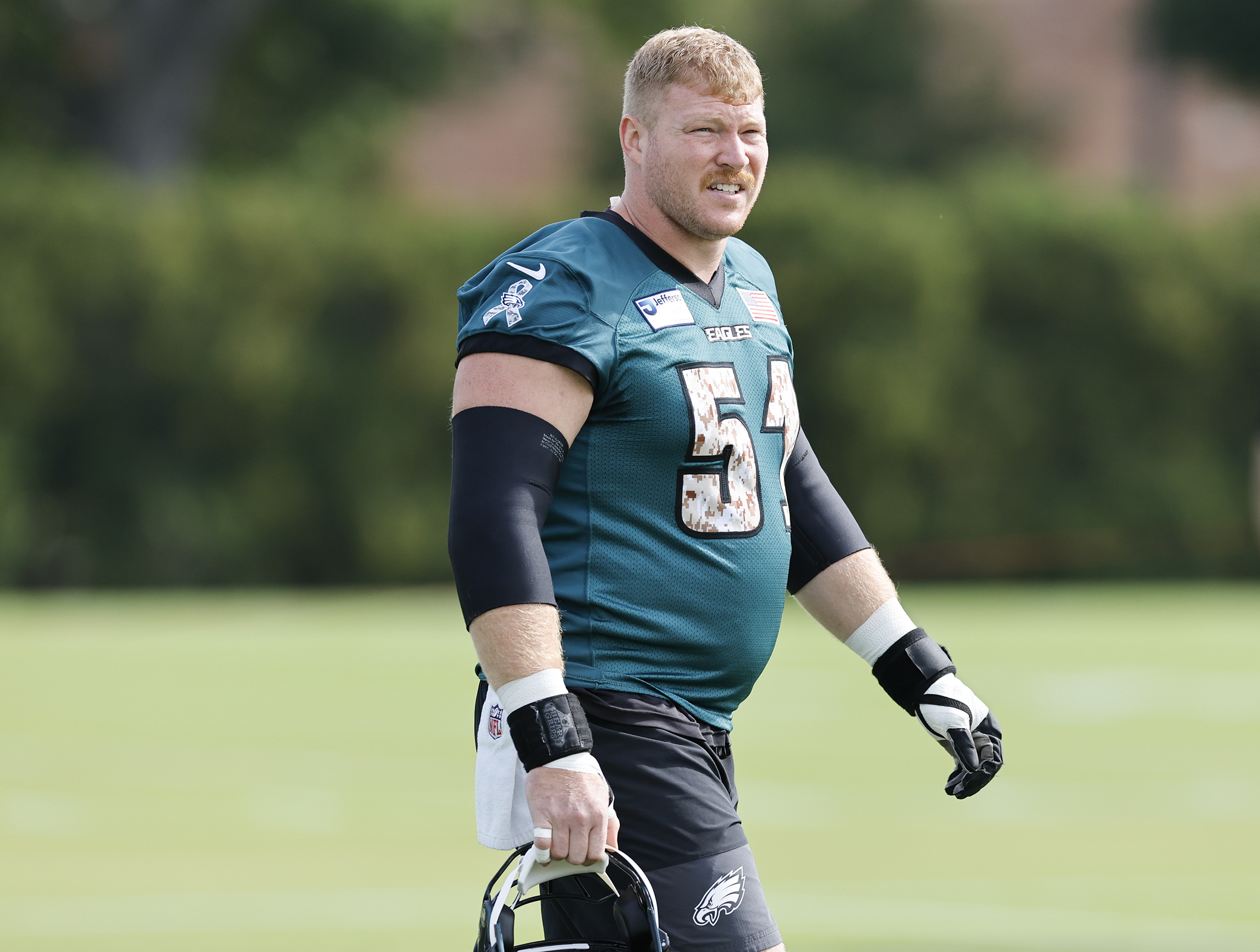
  • Eagles trade two-time Pro Bowl center Cam Jurgens to the Ravens

    Eagles trade two-time Pro Bowl center Cam Jurgens to the Ravens

    The Eagles have agreed to trade Cam Jurgens and a 2027 seventh-round pick to the Baltimore Ravens in exchange for a 2027 fifth-round pick and a 2028 second-rounder, the team announced on Wednesday.

    Prior to 2026, Jurgens, 27, spent two seasons as the Eagles’ starter at center (2024-25) and one season as the starter at right guard (2023). Jurgens started the first game of the 2026 season at center, but moved to left guard in Week 2 against the Tennessee Titans in the absence of the injured Landon Dickerson.

    With Jurgens at left guard, the Eagles turned to Drew Kendall, the 2025 fifth-round pick out of Boston College, to take over at center. Kendall acquitted himself well in three games at center, while Jurgens struggled at left guard, casting uncertainty about his future role when Dickerson returns to the lineup.

    Jurgens entered the concussion protocol on Monday in the aftermath of the Eagles’ Week 4 loss to the Los Angeles Rams.

    Howie Roseman said on Wednesday following the trade that he wasn’t looking to move Jurgens initially. However, over the last 24 hours, the Ravens upped the value of the return. The way Roseman views the trade, the Eagles are getting four players in exchange for Jurgens.

    “I think for us, when you talk about the two and the five, moving from the seven[th] to the fifth, we’ve had success in the fifth round, plus the money [to pay a player in the future], plus Drew playing [center], we felt like we were getting four players for one,” Roseman said. “And just felt like for us, with all these guys that we got coming up, a lot on the defensive side of the ball that we want to re-sign and want to extend.”

    Jurgens’ departure is the second major shake-up to the Eagles offensive line in under 24 hours. Lane Johnson, the team’s two-time All-Pro, six-time Pro Bowl right tackle of 14 seasons, announced his retirement on Tuesday.

    Despite those changes, Roseman said he still has “high expectations for the team this year.” He refuted the notion that the Eagles, who have a 2-2 record, are prioritizing the future over the present.

    “I think nothing has changed in terms of our goals,” Roseman said. “We’re trying to win this year. I think, from my perspective, just looking at what is the ultimate goal, which is to win the last game of the year. And then to have a run like we’ve had. Obviously, since Coach has been here, we’ve made the playoffs five times, been in two Super Bowls.

    “You want to have an extended run, and so my job is to look at how we can have sustained success for a long period of time. And you don’t get many opportunities to get second-round picks in trades and get flexibility. And I think just looking at our team, obviously a lot of guys on long-term deals and being able to create some flexibility is a good situation for us, whether it’s financially and also with picks.”

    The Eagles selected Jurgens in the second round of the 2022 draft out of Nebraska as the heir apparent to Jason Kelce. The longtime Eagles center played a role for the Eagles in scouting and assessing Jurgens during the predraft process.

    Jurgens was a starter for four of his five years with the Eagles, starting in 45 games (62 games played). Jurgens earned Pro Bowl nods in 2024 and 2025. He won the Super Bowl with the Eagles in 2024, when he played through a back injury. Jurgens later revealed that a disc in his back broke off and wrapped around his sciatic nerve.

    He continued to deal with back pain in 2025, prompting him to travel to Colombia this offseason to undergo stem cell therapy. He also dealt with a knee injury and suffered a concussion last season, causing him to miss three games.

    With Jurgens en route to Baltimore, the Eagles will likely turn to Kendall the rest of the way to start at center. Roseman said he is “hopeful” that Dickerson returns to action in the next couple of weeks.

    Until Dickerson returns, the team could fill the void at left guard with Willie Lampkin, the 2025 undrafted free agent out of North Carolina who spent his rookie season on the Eagles practice squad and made the initial 53-man roster out of training camp.

  • LeBron James’ helicopter flights between NYC and Philly, mapped

    LeBron James’ helicopter flights between NYC and Philly, mapped

    LeBron James’ decision to sign with the 76ers is unusual on many levels, but one unusual arrangement is the NBA superstar’s decision to split his time between Philadelphia and New York City.

    James has been taking a helicopter — reportedly provided by Fanatics as part of a 2024 trading card deal — to commute from Manhattan to a Sixers preseason game in Philadelphia and practice at the team’s training facility in Camden.

    Here are the helicopter flights LeBron took between Saturday and Wednesday, according to an Inquirer analysts of flight data:

    (function() {
    var l2 = function() {
    new pym.Parent(‘lebron_flights’,
    ‘https://media.inquirer.com/storage/inquirer/projects/innovation/arcgis_iframe/lebron_flights.html’);
    };
    if (typeof(pym) === ‘undefined’) {
    var h = document.getElementsByTagName(‘head’)[0],
    s = document.createElement(‘script’);
    s.type = ‘text/javascript’;
    s.src = ‘https://pym.nprapps.org/pym.v1.min.js’;
    s.onload = l2;
    h.appendChild(s);
    } else {
    l2();
    }
    })();

  • In its 35th year, Philadelphia Film Festival is set to be its biggest edition ever

    In its 35th year, Philadelphia Film Festival is set to be its biggest edition ever

    After teasing the first wave of selections, the Philadelphia Film Society has unveiled the full lineup for the 35th annual Philadelphia Film Festival.

    This year’s lineup will feature more than 140 screenings, including world premieres from filmmakers Jesse Eisenberg, Ava DuVernay, and James Gray. The 11-day celebration opens Oct. 15 with Noah Segan’s The Only Living Pickpocket in New York and closes Oct. 25 with Jesse Eisenberg’s The Debut, fresh off its screening at the New York Film Festival.

    The festival this year is a dual celebration: It marks the 35th edition of the annual event and the 25th anniversary of PFS, which began organizing the festival in 2001. The inaugural festival was launched as the Philadelphia Festival of World Cinema in 1992.

    “We were super excited when we made the first announcement of 50 [films], but now that we’ve got the supersized lineup out, it’s exciting,” said PFS CEO and executive director J. Andrew Greenblatt.

    Newly announced selections include DuVernay’s new historical documentary 14th, a follow-up to her 2016 Oscar-nominated doc, 13th. Other additions include James Gray’s crime-thriller Paper Tiger, Jordan Firstman’s feature-length directorial debut Club Kid, and Brad Bird’s animated neo-noir Ray Gunn.

    Pedro Pascal in “Behemoth!” The film will play as part of the 2026 Philadelphia Film Festival.Searchlight Pictures

    These films join a slate of international cinema, independent films, documentaries, and animation.

    Based on early badge sales, Greenblatt and PFS artistic director Michael Lerman anticipate this year’s festival will attract the largest audience in the organization’s history.

    This achievement, Greenblatt said, is “sweeter” knowing the obstacles the organization has endured throughout the years — from unexpected programming challenges to the COVID-19 pandemic.

    “It’s really reassuring to see that you can go through the struggle, build something, and then still succeed,” he said.

    “We put in a lot of work to get here, and we didn’t do it alone,” Lerman added. “There are a lot of people who have contributed and have put in a ton of work to get the organization and festival where it is right now.”

    John Turturro in “The Only Living Pickpocket in New York,” which will play as part of the 2026 Philadelphia Film Festival.JON PACK

    A star-studded lineup of premieres

    This year’s festival sections include World View, Animated Life, Non/Fiction, State of the Union, Spotlights, Cinema de France, Made in USA, Sight & Soundtrack, After Hours, Community Screenings, Special Events, From the Vaults, and others.

    Paper Tiger and Club Kid join the expanded Centerpieces slate, which includes previously announced selections such as Ryûsuke Hamaguchi’s All of a Sudden, Tony Gilroy’s Behemoth!, and Cristian Mungiu’s Fjord.

    Newly announced films include the North American premieres of Julien Gaspar-Oliveri’s Cannes-premiering The Blow and Warwick Thornton’s Wolfram, which premiered at the Adelaide Film Festival last year.

    Other debuts at PFF include the U.S. premiere of Michaël R. Roskam’s Le Faux Soir, and the East Coast premieres of Félix de Givry’s Goodbye Cruel World, Jay Silverman’s Yale, Neto Villalobos Brenes’ Love Is the Monster, and Ken Kwapis’ We Are the Shaggs.

    A still from “Fjord,” which will play as part of the 2026 Philadelphia Film Festival.Courtesy of the New York Film Festival

    The Filmadelphia section includes the world premieres of Hoag Kepner’s Big Phan, Doree Simon Hatfield’s Gentle by Birth, Andrew Sullivan’s I Don’t Want to Drink Your Blood Anymore, and Max Korman’s Joy Will Prevail.

    The Filmadelphia Shorts Program also includes the world premiere of Justin Crowell’s Philly Pretzels and the North American premiere of Vadim Egoul’s Casualty.

    The Masters of Cinema program will feature projects from veteran filmmakers such as Pedro Almodóvar, Radu Jude, Paweł Pawlikowski, Danny Boyle, Andrew Haigh, Hirokazu Kore-eda, Andrey Zvyagintsev, and others.

    ‘Audience first’

    The first Philadelphia Festival of World Cinema took place at the International House Philadelphia, which then operated as a theater house dedicated to independent and international cinema.

    The festival was led by cineaste Linda Blackaby, with support from former International House president Ellen Davis and others, who recognized the city’s need for a regional celebration of new, independent, and international film.

    “They saw film festivals from around the world and said, ‘We should bring one to Philly,’” Greenblatt said. “And they did, and they were incredibly successful. They had films that we still talk about today with directors who have gone on to have tremendous careers.”

    Among the films screened at the inaugural festival was Guillermo del Toro’s 1992 fantasy horror, Cronos.

    A still from “The Debut,” which will play as part of the 2026 Philadelphia Film Festival.Courtesy of the New York Film Festival

    The International House then brought in members of the TLA Entertainment Group to help program the festival. And when the festival “got too big,” Greenblatt said, the theater house allowed TLA to manage the event independently.

    In 2001, TLA assumed management of the festival, later renamed the Philadelphia Film Festival. That same year, TLA established the Philadelphia Film Society to steward the festival.

    Under the leadership of Greenblatt, who was appointed CEO and executive director in 2008, PFS began independently operating the celebration.

    From left: Michael Lerman, Philadelphia Film Festival artistic director; Sharon Pinkenson, Greater Philadelphia Film Office executive director; and J. Andrew Greenblatt, Philadelphia Film Society executive director, at the opening night gala of the 2010 Philadelphia Film Festival screening of “Black Swan.”Photo / Lorraine Daley Photography

    Lerman said in the years he and Greenblatt have organized the festival, it’s been a joy to see the filmmaking audience evolve as the festival has grown.

    “In the 20-plus years [Greenblatt] and I have been doing this, we’re finding a meeting point between our taste and the audiences’ taste,” he said. “We’ve always thought audience first.”

    As people attend this year’s festival, Greenblatt said, he wants people to walk away with the same feeling he had after his first year: with a new appreciation for cinema and a new favorite film.

    The 35th Philadelphia Film Festival takes place from Oct. 15-25. Festival badges and passes are available for purchase. filmadelphia.org.

  • Scars from Oct. 7 fuel deep divisions over Netanyahu ahead of Israeli election

    Scars from Oct. 7 fuel deep divisions over Netanyahu ahead of Israeli election

    JERUSALEM — As Israel gears up for its first elections since Hamas’ Oct. 7, 2023 attack, Prime Minister Benjamin Netanyahu and his opponents are putting it at the heart of their campaigns.

    Nearly every poster, stump speech, or televised debate seems to reference the attack, which has scarred the country and remains fresh in the minds of voters. Three years on, the worst security failure in Israel’s history now threatens to end the career of its longest-serving prime minister.

    “October 7 is kind of a framework for the entire political discussion that is going on,” said Tamar Hermann, an expert on Israeli public opinion at the Israel Democracy Institute, a Jerusalem think tank. “All of us are post-traumatic in a way.”

    Netanyahu’s opponents want him to pay for the failures that led to the deadliest day in Israel’s 78-year history and plunged the country into a series of inconclusive wars. His defenders say Netanyahu was betrayed by the military establishment and that he has led Israel through a dramatic rebound from its darkest hour.

    A loss in the Oct. 27 election would likely end the career of the soon-to-be 77-year-old Netanyahu. A victory would mark the greatest turnaround yet for a man who has defied naysayers for three decades.

    A deadly day that has shaken an entire region

    On the morning of Oct. 7, Hamas militants fired several thousand rockets into Israel and thousands of militants attacked through holes blown in the border fence or with boats or motorized paragliders. Some 1,200 people were killed and 251 others taken hostage.

    Israel responded with a military offensive that has killed over 74,000 Palestinians in the Gaza Strip, according to local health authorities, left the territory in ruins, and sparked an ongoing humanitarian catastrophe. Israel later went to war against Hezbollah militants in Lebanon, seized a chunk of Syria, attacked targets in Yemen, and joined the U.S. in two wars against Iran.

    Hundreds of Israelis, mostly young soldiers, have died, and nearly every household has been touched by the violence. Netanyahu promised “total victory,” but Hamas, Hezbollah and Iran’s theocratic government all remain intact.

    Israel’s international standing has plummeted, a number of foreign governments have accused it of genocide — a charge it vehemently rejects — and Netanyahu is now wanted by the International Criminal Court.

    After a string of resignations by top security officials, Netanyahu is the only senior figure from Oct. 7 still in office, making this month’s election in many ways a referendum on his leadership.

    It’s the focus of the campaign for both sides

    Netanyahu and his opponents have put Oct. 7 at the forefront of their campaigns — for different reasons.

    His opponents — from across the political spectrum — call his outgoing coalition “the massacre government,” a reference to the Oct. 7 attack occurring on their watch. Netanyahu says he has led a “war of redemption.”

    His chief rival is Gadi Eisenkot, a former military chief whose son and nephew were killed in battle in Gaza. The opponents have pledged to form a government of “repair and reconstruction” — beginning with the formation of an official commission of inquiry into Oct. 7. They also have vowed to end draft exemptions for ultra-Orthodox religious men, a longstanding policy that has outraged the secular majority at a time of war, and accuse Netanyahu of threatening Israel’s democratic institutions.

    “The most fateful elections in the history of the State of Israel are between evasion and enlistment,” Eisenkot wrote on X. “Between taking responsibility and fleeing from responsibility.”

    Netanyahu has repeatedly rejected calls for a commission of inquiry while trying to shift the blame to security officials. He recently accused the then-head of the Shin Bet security service, Ronen Bar, of withholding information ahead of the attack. Bar has vowed to file a defamation lawsuit.

    Netanyahu has meanwhile denied reports in American media outlets that the United Arab Emirates and Egypt warned him ahead of Oct. 7.

    He insists the country is stronger than ever.

    “Our enemies expected us to collapse,” Netanyahu said in a recent address to the United Nations. “Well, we didn’t collapse. Instead, we rose and fought like lions.”

    Oct. 7 victims are seeking seats in parliament

    Eisenkot’s new Yashar party list includes two parents who lost children on Oct. 7. Netanyahu’s Likud party also includes two grieving parents, among them the mother of a policeman killed in battle on Oct. 7 whose remains were the last to be returned to Israel as part of a ceasefire. Another Likud candidate lost both legs while serving in Gaza.

    The leader of the dovish Democrats party, Yair Golan, is a retired general who put on his uniform and rushed to the southern border to fight on Oct. 7. The centrist Together party’s list has another former general, Noam Tibon, who also battled militants as he rescued his son’s family, and the mother of a soldier killed that day.

    Other parties have also added people directly impacted by the attack.

    Organizers, including victims’ relatives, say they are keeping politics out of a mass memorial service in Tel Aviv on Wednesday. But they have hardly concealed their anger at the country’s leadership.

    “We will not let anyone evade responsibility,” Yonatan Shamriz, whose brother was taken hostage and mistakenly killed by Israeli soldiers after escaping captivity, said in a radio interview.

    There is little discussion of the Palestinians

    Largely missing from the Israeli public discourse is any discussion of the dire situation in Gaza or the fate of the Palestinians.

    Israeli leaders have said little about the unprecedented death toll in Gaza, the humanitarian catastrophe, and the lack of reconstruction. Instead, they have focused largely on the country’s pain over Oct. 7.

    There is almost no mention of peace talks, and even Netanyahu’s challengers largely oppose the establishment of a Palestinian state alongside Israel, the international community’s preferred solution for the decades-old conflict.

    When a pair of Israeli filmmakers released a documentary last month about civilian deaths in Gaza, party leaders across the spectrum, including Eisenkot, accused them of treason.

    Oct. 7 has hardened the bitter split over Netanyahu

    Polling suggests a close race between Netanyahu and his chief rival, Eisenkot, with an uncertain outcome.

    According to the Israel Democracy Institute, over 60% of Israelis say their attitudes toward Oct. 7 are a central factor in whom to vote for. That number jumps to 68% among the Jewish majority; Arab voters are most concerned with a crime wave in their communities.

    But Hermann, the IDI polling expert, said this doesn’t necessarily mean bad news for Netanyahu. She says the past three years have hardened attitudes on both sides.

    Just because everyone says Oct. 7 is important, she said, “doesn’t mean that they will come out with the same conclusion.”

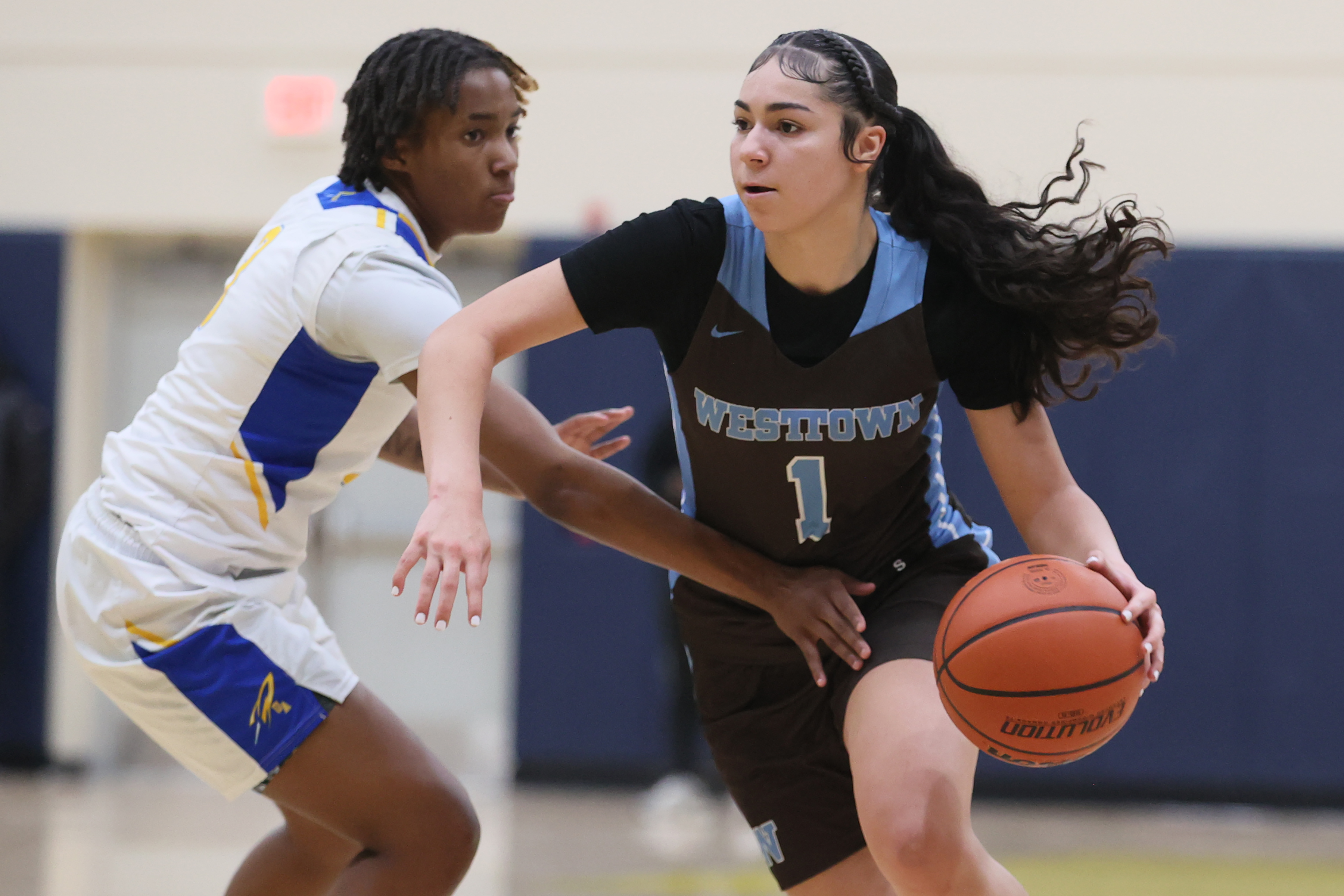
  • Five-star prospect, Philly-area native Jessie Moses commits to Washington

    Five-star prospect, Philly-area native Jessie Moses commits to Washington

    One of the Philadelphia area’s top basketball prospects is taking her game to the Pacific Northwest.

    Jessie Moses, the former Westtown School standout from Penn Valley and one of the nation’s top guards in the class of 2027, announced Tuesday night that she has committed to Washington. The 5-foot-9 guard currently plays for IMG Academy in Bradenton, Fla.

    “Let’s do it husky nation,” Moses wrote on social media alongside her commitment announcement.

    Moses chose the Huskies from a recruitment that included 34 Division I offers from the likes of Rutgers, Villanova, TCU, and Michigan State. She’s ranked by 247Sports.com’s composite as the No. 30 overall player and No. 2 combo guard in the 2027 class and is a five-star prospect.

    Moses told Rivals that Washington felt like home when she visited campus and cited her relationship with the coaching staff and the program’s culture, academics, and offensive system as factors in her decision. She said Washington’s use of ball screens and read-based offense suited the way she plays.

    Before transferring to IMG Academy after the 2024-25 season, Moses became one of the area’s premier high school players at Westtown, located in West Chester.

    She joined the Moose’s varsity team as an eighth grader and helped Westtown win three consecutive Pennsylvania Independent Schools Athletic Association championships. As a sophomore in 2024-25, Moses averaged 19 points, 3.4 rebounds, three assists, and three steals while shooting 50.3% from the field and 40.7% from three-point range. She also surpassed 1,000 career points and helped Westtown reach the semifinals of Chipotle Nationals.

    Moses transferred to IMG after that season but missed her junior year with a torn ACL. She returned to competition this summer with Southeast All Stars and later played in Overtime Select.

    ESPN lists Moses as the No. 45 prospect nationally in the 2027 class.

  • Two prosecutors resigned after they said Philly DA Larry Krasner ‘sought to discredit’ them in court

    Two prosecutors resigned after they said Philly DA Larry Krasner ‘sought to discredit’ them in court

    Two prosecutors who clashed with District Attorney Larry Krasner over how to handle a controversial post-conviction case have resigned after saying Krasner made “misstatements” about them in court documents.

    Katherine Ernst and Steven Wildberger, both of whom had once served as supervisors in the law division, sent Krasner a letter Monday asking him to correct aspects of filings he submitted to a federal judge last week. Krasner’s documents, they said, contained inaccurate or misleading information about their actions in a federal case and had harmed their professional reputations.

    But Krasner declined to modify his filings, saying in an email response to their memo that his recollections were accurate and that his conclusions were drawn “in good faith.” He also accused them of “insubordination” and said they had damaged the office and their coworkers with their actions.

    Ernst and Wildberger said that because Krasner had declined to address their concerns, they could no longer work for him, saying he had “sought to discredit us in the eyes of the public we represent.” Their resignations took effect late Tuesday.

    Each declined to comment further Wednesday.

    The personnel shake-up is another example of how Krasner’s office has been affected by the ongoing federal case — a complex matter in which a man has been seeking to have his murder conviction overturned.

    Last month, the judge overseeing the proceedings, U.S. District Judge Paul S. Diamond, made the extraordinary statement that Krasner and one of his top supervisors, Matthew Stiegler, may have committed crimes including conspiracy, obstruction of justice, or perjury while participating in the case. And Diamond said he was referring the matter to the U.S. Attorney’s Office for a potential criminal investigation.

    Federal prosecutors have declined to comment on whether or when they might open an inquiry. But in the wake of Diamond’s decision, Stiegler stepped down from his supervisory position in the office. (He remains employed in its conviction integrity unit.)

    Another former prosecutor connected to the case — Jaclyn Mason — also resigned earlier this year, saying she did so because she believed she was being set up to take the blame for some of the office’s mistakes, even though she viewed Stiegler as more culpable.

    The underlying case is centered on Dennis Johnson’s attempt to have his 2009 murder conviction overturned. Krasner’s office had, for a time, supported that effort, but reversed course earlier this year after Ernst and Wildberger discovered that a brief filed by Mason endorsing Johnson’s claims contained significant errors.

    Diamond went on to conduct hearings this summer to determine how those errors occurred. And Mason largely blamed Stiegler, saying he had pressured her to file a brief supporting Johnson.

    When Mason’s colleagues — including Ernst and Wildberger — told her they needed to try to withdraw her error-plagued brief, Mason said, she thought she was going to be scapegoated on behalf of Stiegler, and she quit.

    After her departure, Ernst and Wildberger testified, the two of them, along with two of their colleagues, had frequent disputes with Krasner about various aspects of the case — including whether it should be referred to the state attorney general’s office, and whether staffers should look into other cases Mason handled to see if she had made similar errors.

    Diamond said some of the testimony suggested Krasner might have been attempting to obstruct justice or conspire with Stiegler to present a “false narrative” to the court — accusations Krasner has vehemently denied.

    Ernst and Wildberger also said Krasner, in filings he submitted last week, had misrepresented some of their actions or intentions, calling some of his written statements about them “untrue.”

    One of the disputes concerned their belief that Krasner had inaccurately characterized Ernst as “a panicked, irrational woman terrified of Judge Diamond.” Another concerned Krasner’s contention that they had been motivated to speak out about the case due to “fear” of potential consequences; they said they were driven solely by their ethical responsibilities to be truthful.

    “Your actions make it impossible for us to continue to represent the Commonwealth,” they wrote to him.

    It was not immediately clear what Ernst and Wildberger might do next.

    The fate of Johnson’s case also remains unresolved.

    Krasner has asked for Diamond to be removed from overseeing the matter moving forward. The judge has not weighed in on that request.

    On Wednesday, the state attorney general’s office — which has been participating in the matter at Diamond’s request — said Diamond has demonstrated fairness throughout the proceedings and should be allowed to continue overseeing it.

  • Lawyers seek to block Texas man’s execution, citing failed execution of Christa Pike

    Lawyers seek to block Texas man’s execution, citing failed execution of Christa Pike

    DALLAS — Lawyers for a Texas man who fatally shot a convenience store clerk are asking a judge to stay his execution by lethal injection set for Wednesday, citing the failed execution of Christa Pike in Tennessee last week.

    This would be the first execution scheduled in the U.S. since Pike.

    Because the same drug used in her attempted execution — pentobarbital — would be used in Texas for Jamaal Howard, his attorneys argued that the drug poses the same risks, and said they believe the state’s supply had become degraded.

    Pike’s lawyers are seeking more information about what went wrong after the 50-year-old survived two doses of pentobarbital. She was hospitalized and, as of Tuesday, was awake and speaking.

    Her attorneys have alleged her execution was marred by blown veins, where a needle goes all the way through a vein and causes a leak of blood and fluid, as well as Tennessee’s deteriorated pentobarbital and a lack of emergency medical care.

    “There is a similar risk,” Howard’s attorneys wrote, “that Texas’s execution drugs are likewise degraded, as they are far past the original beyond-use dates that the pharmacopeia allows for drugs of this kind.”

    Texas has executed six people so far this year, with two more scheduled after Howard, which would be the 30th execution nationwide in 2026.

    A killing caught on surveillance video

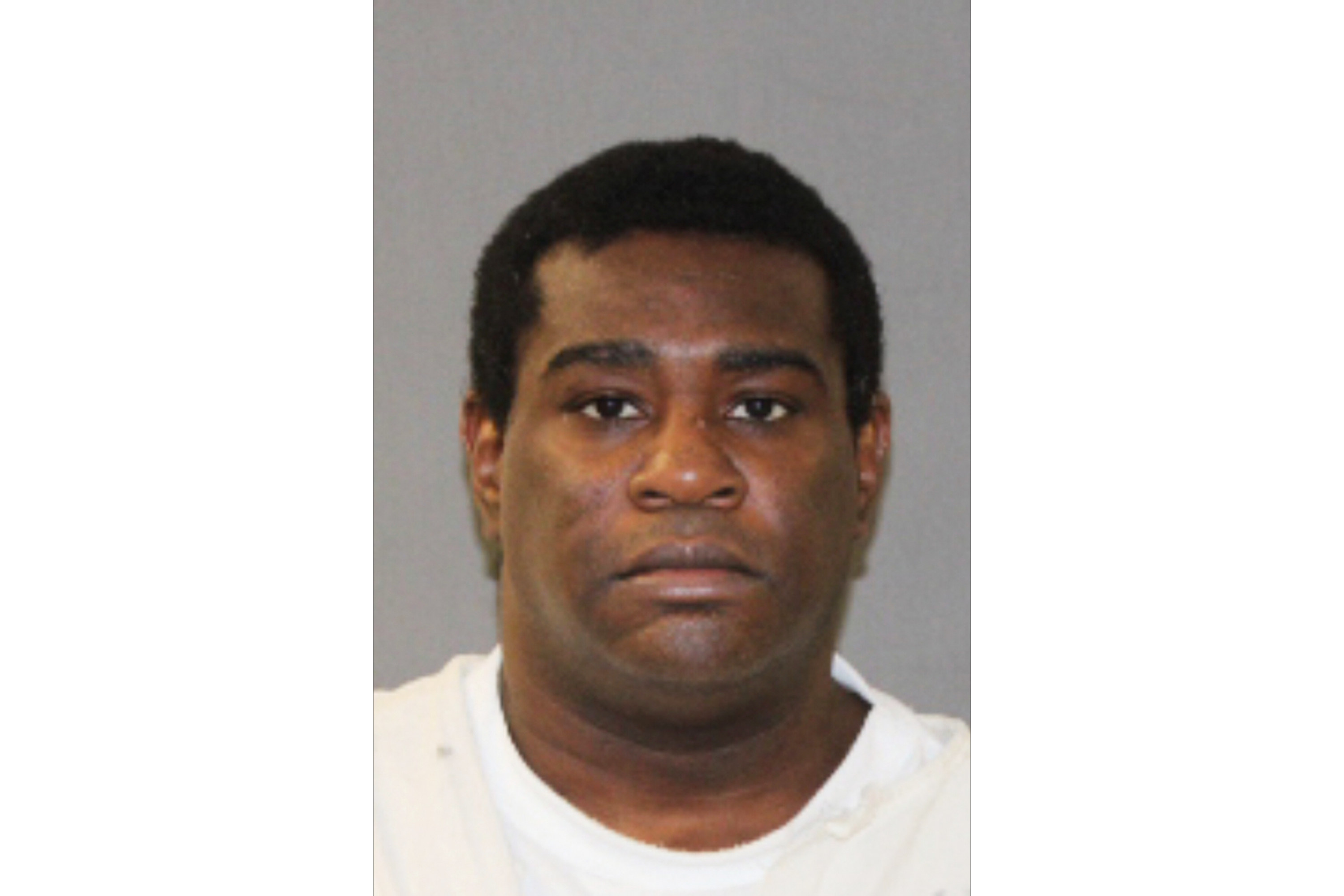
    Howard, 46, was found guilty of capital murder in the 2000 killing of Vickie Swartout, 42, who was shot once in the chest during a robbery. Evidence presented at the trial included the store’s surveillance video, which showed Howard shooting Swartout.

    Howard, who was 20 at the time, took $114 and a carton of cigarettes from the store in the small, rural town of Silsbee, located about 100 miles northeast of Houston, according to court records.

    His attorneys have argued that Howard is intellectually disabled and his execution should be halted. The state said that he has not presented evidence that would show he meets the requirements for a claim of intlectual disability.

    He has an appeal to the U.S. Supreme Court pending to stop the execution.

    The Supreme Court in 2002 had barred the execution of intellectually disabled people. But it has given states some discretion in how they determine such disabilities.

    Motion to stay because of drugs

    The motion filed in the Court of Criminal Appeals in Texas early Wednesday said Howard’s attorneys had filed requests for information about the lethal dose of pentobarbital the Texas Department of Criminal Justice planned to use. They say the department asked for a state attorney general opinion about whether they would have to disclose that information, despite a “yearslong practice of disclosing information.”

    The Texas attorney general opinion is not expected to be returned until after Wednesday, meaning Howard can’t litigate whatever decision the state might make on releasing that information, they say.

    Texas officials did not immediately return a request for comment Wednesday morning.

    Executions in the U.S. this year

    Florida has carried out 16 executions so far this year, the most of any state. Most states that allow executions use lethal injection as their primary method.

    Tennessee’s Republican Gov. Bill Lee has halted the one remaining execution for the rest of the year.