Blog

  • Could a Bucks County Amazon data center be affected by Gov. Shapiro’s order?

    Could a Bucks County Amazon data center be affected by Gov. Shapiro’s order?

    Amazon has proposed installing hundreds of backup natural gas generators for the hyperscale data center it is building in Falls Township, Bucks County, just off the Delaware River.

    The generators require permission from the Pennsylvania Department of Environmental Protection, which has green-lighted five other environmental permits for the project.

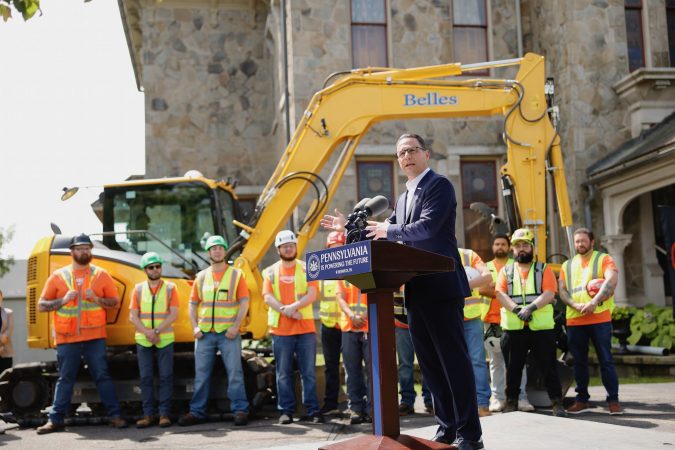
    But on Tuesday, Shapiro issued sweeping new guardrails on data centers, including removing Amazon from the state’s fast-track permitting process.

    The move was a stark shift from Shapiro’s position on data centers in June 2025, when he championed the Amazon deal as part of a $20 billion Pennsylvania data center investment. Since then, public pushback to data centers has reached a fever pitch.

    Tuesday’s announcement raises questions about the DEP’s decision on the Falls Township project, one of the few hyperscale data center developments nearing completion in the region to meet the power-hungry computing needs of artificial intelligence.

    Robyn Briggs, a DEP spokesperson, said that as of Thursday, the agency’s air quality team was still reviewing the latest permit application for the generators. The process includes a 30-day public comment period that ended Monday. The DEP has not said when it expects to make a decision.

    Briggs said that the DEP received 1,236 comments about the permit and that each would be given “equal weight and consideration.”

    It was widely expected that many residents had written to oppose the approval, given the large amount of social media posts on the topic. Nearly 5,000 people have signed a petition calling for a moratorium on data centers in the township.

    What the DEP is deciding

    Amazon Data Services Inc. is developing a 250-acre campus within the Keystone Trade Center in Falls Township on a site formerly occupied by U.S. Steel.

    Amazon plans 2 million square feet of data center space across 10 buildings for cloud computing and AI.

    It already has both local and state approvals for the first of two expected phases of the project’s build-out. The DEP requires permits to ensure companies meet state and federal standards when sending pollution into the air or water.

    To date, Amazon has been approved for five environmental air and water discharge permits. That includes approval last year for 72 diesel-fired emergency engines.

    Amazon has also applied to install 280 natural gas-fired “critical backup generator engines” at 4,287 horsepower each.

    It also wants to install three more diesel backup generators.

    The generators and pollution

    The company says the generators would provide backup power in the event of a main utility power supply interruption and would not be used to meet peak demand.

    The generators would have pollution controls to lower nitrogen oxide, carbon monoxide, and volatile organic compound (VOC) emissions, including formaldehyde and ammonia, according to the company. Emissions would be restricted to below allowable maximum levels.

    The DEP is reviewing public comments before making a decision on Amazon’s permit.

    If the permit for the backup generators is approved, Amazon would still need additional permitting for a planned second phase of the project.

    Shapiro’s new guardrails

    Shapiro signed an executive order on Tuesday dramatically restricting data center development in Pennsylvania. He had been an early champion of data center development, including a $20 billion commitment from Amazon to build the Falls Township data center, as well as one in Luzerne County.

    Now he is taking a hard-line stance against the industry as proposed projects draw bipartisan backlash. Although his order does not include a moratorium on data center development, it requires local approval for projects to receive state permits, which may block development.

    The order removes all data center developments, including those by Amazon, from the fast-track permitting program, and no data centers will be considered for the program moving forward.

    The DEP said the governor’s new permit review process would compel all data center projects going forward to enter into consent orders, which are legally binding agreements for environmental requirements, such as wastewater conservation standards.

    A big welcome for the data center — at first

    When Amazon announced plans to build the data center in 2025, Falls Township officials welcomed the project as a boost to the 1,800-acre Keystone Trade Center being redeveloped by NorthPoint Development on the old steel mill grounds. NorthPoint is working with Amazon.

    Shapiro also hailed the data center as a job creator and tax revenue generator. He said his team had worked with Amazon on the deal and would help to garner local support, develop infrastructure, and ensure “our permitting processes move quickly and efficiently.”

    Data center opposition

    Opposition to data centers has gained critical mass over the last year, with local groups fighting against each proposal. Critics fear air and noise pollution and the amount of electricity and water the centers would need. The data centers are also the target of a chorus against rising electricity prices, much of which can be attributed to utility companies’ and regional grid operator PJM’s struggle to keep up with the demand for power.

    Falls Township has been no different, but its data center is the closest to completion.

    After a particularly contentious community meeting in July, the Falls Township Board of Supervisors approved a resolution declaring a portion of a zoning ordinance used for data centers “substantively invalid.” The board said staff would review sections of the ordinance for possible amendment.

    “We heard the people,” Falls Supervisor John Palmer said in a statement.

    However, the amendment would have no impact on Amazon’s data center, which the township approved in March 2025 before the public announcement with the governor.

    Staff writers Jake Blumgart and Gillian McGoldrick contributed to this article.

  • Philly is under flood, storm, and tornado watches Thursday, and more rain is likely this weekend

    Philly is under flood, storm, and tornado watches Thursday, and more rain is likely this weekend

    Both astronomy and meteorology suggest that it won’t be long before these things decline in frequency, but in the meantime another flash-flood watch is in effect for the Philly region.

    A tornado watch also was posted for Philadelphia and the neighboring Pennsylvania counties.

    The National Weather Service watch spans from noon Thursday until 2 a.m. Friday, for the potential for rain rates of 2-to-4 inches an hour in areas along I-95 and South Jersey.

    And the federal Storm Prediction Center has posted a severe-thunderstorm watch, in effect until 10 p.m., for storms that could kick up gusts approaching 60 mph.

    “There could be multiple rounds of heavy rain over urbanized areas,” said Joe Wegman, a meteorologist with the government’s Weather Prediction Center. In advance of the anticipated main events, a blob of light rain moved through the region late Thursday morning.

    Also, the federal Storm Prediction Center sees an outside chance of severe-level storms, those with gusts near 60 mph, and a 5% chance of tornadoes in and around Philly.

    And those who have not had the good fortune of spending the last two months in heat-free and smokeless environments probably can skip the next paragraph.

    The timing, ferocity, rain totals, and targets all remain uncertain.

    What is the best estimate on the storm timing in Philly?

    The higher-resolution models were suggesting that the likeliest time for storms to arrive in the Philly region would be between 2 and 3 p.m. Thursday, Wegman said.

    The worst of it may hold off until 4 or 5 p.m., said Matt Benz, senior meteorologist with AccuWeather Inc.

    The storms likely would back off between 6 and 7 p.m., but that timing could disrupt a peak commuting period.

    “Why would we conveniently time these things?” Wegman quipped.

    “There’s plenty of moisture coming up, and a front approaching from the west,” he said. “If the front stalls, the storms might linger longer than people want them to.”

    Plus, renegade storms could race out ahead of the front, setting off precipitation earlier, he added, and that appeared to be case Thursday.

    The weather service in Mount Holly said the “greatest risk” for severe storms would be between noon and 10 p.m.

    But timing remains one of the most vexing challenges for severe-weather forecasting, says Bill Bunting, deputy director of the storm center, in Norman, Okla.

    “I have seen remarkable progress,” said Bunting, who has been at it for 40 years, “but we’re nowhere near perfection. In the end, the science has its limitations.”

    The forecast for the weekend and the rest of August

    The storm experts have had plenty of practice around here this summer. So far, Philadelphia officially has recorded 21 thunderstorms since June 1, several more than normal.

    It has also been a banner summer for smartphone alerts and assorted scare grams.

    About 11 inches of rain has been measured at Philadelphia International Airport, roughly four inches above normal, since July 1.

    That said, yes, both Chester County and the entire state of New Jersey remain under state-declared drought warnings, with residents asked to conserve water.

    And drier times may be coming, or at least a reduced incidence of those late-day thunderstorms, said Brian Hurley, senior branch forecaster with the Weather Prediction Center.

    The days are getting shorter, and the sun is losing some of the gas it uses to fuel convective storms, he said.

    But all pumpkin spice aside, summer is not quite over, and shower chances are in the forecast into Sunday night.

  • PhilaPort seeks to buy Navy Yard buildings for $22.6 million and relocate its headquarters

    PhilaPort seeks to buy Navy Yard buildings for $22.6 million and relocate its headquarters

    The Pennsylvania agency that owns Philadelphia’s seaport facilities plans to buy three Navy Yard buildings at the foot of South Broad Street for $22.6 million, as it seeks to relocate its headquarters from Port Richmond.

    The board of the Philadelphia Regional Port Authority (PhilaPort) voted Wednesday to authorize staff to purchase the properties at 5101 and 5115R S. Broad St., which are owned by Delaware-based 5101 South Broad Street Associates L.P., a partnership controlled by the family of the late logistics executive Dennis J. Colgan Jr.

    PhilaPort CEO Rich Lazer said in a statement that the goal of moving the authority’s operations to the Navy Yard is “to create a comprehensive maritime campus with the space we need to grow, expand our reach, attract new business, and create more good-paying jobs.”

    “This move is an investment in PhilaPort’s long-term growth and in the future of Philadelphia’s maritime industry,” said Lazer, who took the port authority’s top job in June.

    Agency documents say the properties — including a 1909 building that was once home to a submarine periscope factory — are currently occupied by tenants under leases that extend through 2028 and 2029. The leases generate $1.8 million in annual rental revenue, according to PhilaPort.

    Property records show that as of last year, the tenants included logistics firm Geodis USA Inc. and engineering firm Q.E.D. Systems Inc.

    PhilaPort owns marine terminals, warehouses, and other facilities along the Delaware River from Port Richmond to South Philly. Its new headquarters would bring the agency closer to key assets including the Packer Avenue Marine Terminal and Mustin Yard, the rail yard it bought last year with $90 million in state funds.

    It wasn’t immediately clear what might happen to PhilaPort’s current headquarters in Port Richmond.

    The authority’s board on Wednesday authorized staff to borrow $18 million from First Trust Bank to finance the acquisition. The agency — which is funded by rental revenue it generates from leases with tenants — plans to make a $5 million down payment.

    PhilaPort said the $22.6 million purchase price was subject to certain conditions.

    The current owner is a limited partnership controlled by Dennis J. Colgan III, a Riverton property manager, and his sister Lisa Colgan Antonucci, according to property records. They couldn’t be reached for comment.

    Their father, Colgan Jr., of Moorestown, died in 2024 at 84. He started a customs brokerage in Philadelphia in 1970 with partner Wolf Barth and later bought back Barth’s stock. Barthco International grew into a global logistics company with 700 employees.

    Colgan moved his company’s headquarters from Center City to the Navy Yard in 2004, converting the former submarine periscope factory into a 45,000-square-foot office building overlooking the Delaware River.

    Colgan’s partnership acquired the 150,000-square-foot property at 5101 S. Broad St. in 2003 for $300,000 from an affiliate of Philadelphia Industrial Development Corp. (PIDC), a public-private economic development corporation.

    He said at the time that his company spent $10 million purchasing, restoring, and equipping the building.

    Colgan sold Barthco to Ozburn-Hessey Logistics in 2006 for $75 million, The Inquirer reported, but retained ownership of the building. OHL was later acquired by Geodis, which now occupies the property.

    In 2007, Colgan bought the 80,500-square-foot property at 5115R S. Broad St. for $185,000 from a PIDC affiliate.

    Staff writer Jake Blumgart and news researcher Ryan W. Briggs contributed to this article.

  • 🔍 A weekend of mysteries awaits | Things to do

    🔍 A weekend of mysteries awaits | Things to do

    You’re in for a mystery this weekend.

    I’m talking three days of movies, history, and adventure in honor of National Treasure, the 2004 blockbuster that has Nicholas Cage stealing one of the nations’ most prized founding documents.

    I won’t tell you what, when, or where just yet. You will have to scroll down and find out about the details.

    Your search may open up other interesting attractions — like Pirate Day at Fort Mifflin, for example.

    That’s enough hints. Read below to find a treasure trove of events and attractions happening this week:

    — Earl Hopkins (@earlhopkins_, Email me at thingstodo@inquirer.com)

    If someone forwarded you this email, sign up for free here.

    ‘National Treasure’ Weekend at Independence Mall

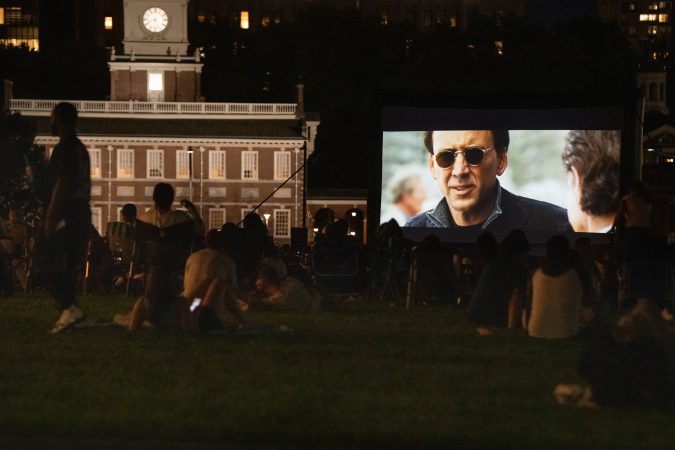
    “Movies on the Mall” event where National Treasure was screened outdoors in front of Independence Hall, September 22, 2025, in Philadelphia,Jessica Griffin / Staff Photographer

    No, it doesn’t involve stealing the Declaration of Independence. But this weekend, the Independence Visitor Center is dedicating an entire weekend to National Treasure, the 2004 blockbuster starring Nicholas Cage.

    The three-day celebration kicks off with Heist Night on Thursday. Guests will team up at Carpenters’ Hall to solve clues, crack ciphers, and locate missing pieces of history.

    On Friday, fans can sit in on a live taping of the National Treasure Hunt podcast. Producer and director Jon Turteltaub will tell behind-the-scenes stories from the making of the high-action adventure.

    There will also be walking tours of the filming site, self-guided photo hunts, historic district activations, and outdoor screenings of the original movie on Friday and Saturday night.

    Click here to uncover everything happening at National Treasure Weekend.

    Members of the Voloshky Ukrainian Dance Ensemble perform during the Ukrainian Folk Festival 2023 at the Tryzub Ukrainian American Sport Center in Horsham, Pa., on Sunday, August 27, 2023.Yong Kim / Staff Photographer

    The best things to do this week

    📚 Grab a tote: Hey fellow book nerds — the annual Philly Bookstore Crawl is back. The celebration of the city’s vibrant bookstore scene will offer discounted titles, author signings, and giveaways.

    🕺🏽 Rave at Love City Gardens: On Saturday, break out into genre-fluid dance, techno, house, and global club fun at Love City Gardens. This nomadic party series, presented by Hospitality Haus, will feature artists such as Ariel Zatina, HVNLEE, and Sweater.

    🇺🇦 A taste of Ukrainian culture: The Ukrainian Independence Folk Festival returns for a celebration of traditional Ukrainian music, food, and crafts from noon to 8 p.m. Children 15 and under enter for free, and every $2 from admission supports humanitarian relief in Ukraine.

    🦐 Grab a bib: Who says crayfish (aka crawfish) parties only happened in the Louisiana bayou? Far from it. The Nordic tradition started back in the 1500s, and the American Swedish Historical Museum is putting on a full-on crawfish party this Friday.

    📅 My calendar picks this week: Wine and Gems, Lucky Girl Market, Hike at Lloyd Hall. Here’s our full list for the week.

    Rush takes over Xfinity Mobile Arena this weekend

    Rush performing at the LA Forum in California in June. The band plays Xfinity Mobile Arena on their Fifty Something Tour on Friday and Sunday.Richard Sibbald

    Canadian rock band Rush is on tour for the first time in 11 years, and the first without legendary drummer Neil Peart, who died in 2020.

    While there was cynicism about the prog-rock band’s return without Peart’s technical proficiency on the sticks, it has since evaporated, writes pop music critic Dan Deluca.

    That’s because the band found Anika Nilles, the woman who now sits atop the Rush drum throne.

    Nilles has received praise from Rush’s male-dominated audience on the band’s “Fifty Something Tour,” which kicked off at Inglewood’s Kia Forum on June 7.

    She and her band mates Geddy Lee and Alex Lifeson will play two shows at Xfinity Mobile Arena. One on Friday and another on Sunday before jetting to Detroit on Aug. 26.

    Grab your tickets to see the Rock & Roll Hall of Fame band in action.

    Summer fun this week and beyond

    Avast, there be a “Pirate Day” at Fort Mifflin on Aug. 19.courtesy of the artists

    🏴‍☠️ Ayo, matey!: Apparently, English pirate Edward Teach, better known as Blackbeard, wrecked port cities along the Delaware River some 300 years ago. Fort Mifflin was built to safeguard 18th-century Philly, and now it’s the site of Pirate Day. Fans of centuries-old piracy can enjoy weapon demos, a treasure hunt, and historical re-enactments.

    🎭 A celebration and call to reflection: Stop by Malcolm X Park for a free staging of the play For Colored Girls Who Have Considered Suicide / When the Rainbow Is Enuf. Guests are encouraged to bring their own chairs (BYOC) and soak up the pre-show block-party energy for the Theatre in the X show, running through Sunday.

    🥁 Thursdays aren’t so bad after all: It’s Third Thursday at the Navy Yard. The monthly series will once again take place at Chapel Plaza, a 35,000-square-foot outdoor space. This week’s lineup will feature floating food trucks, live music, drink vendors, and more. If you can’t make it on Thursday, don’t fret. The series runs through October.

    🎾 Rack up the competition: It may have taken on a new name, but the same top-end competition remains. Professional women’s tennis returns to Philadelphia for the inaugural Ennoble Care Philly Open. The weeklong tournament, formerly known as the Philadelphia Tennis Classic, will see competitors Liudmila Samsonova, Ashlyn Krueger, Jessica Bouzas Maneiro, and others duke it out on the court.

    Staffer picks

    Here’s pop music critic Dan DeLuca’s list of the best concerts this weekend.

    🎤 Thursday: Isaiah Rashad is fresh off his fourth album, It’s Been Awful, and is back on the touring circuit. The Chattanooga-raised emcee will hit the Fillmore Philly stage on Thursday.

    🎷 Friday: Masego, a global maestro of trap house jazz best known for 2017’s “Tadow,” will perform at the Met Philadelphia in support of his newest album, Fix Your Face.

    🎶 Friday and Saturday: Motown queen Diana Ross, whose hits have endeared generations of music fans, is on her “Diana In Motion” tour. She will perform at Atlantic City’s Ocean Casino Resort on Friday, then hit the stage at the Wind Creek Event Center in Bethlehem on Saturday.

    🎸 Saturday: There will be a triple bill of melodic power pop bands, headlined by San Francisco’s Chime School. The group will be joined by Philly’s Hurry and South Jersey’s Te Vista. The show takes place at a South Philly typewriter shop. Yes, that’s right (or write?).

    🎼 Tuesday: Esperanza Spalding, the Grammy-winning jazz bassist and composer who bested Justin Bieber for best new artist at the 53rd Annual Grammy Awards, will perform back-to-back shows at City Winery starting Tuesday.

    Check out Dan’s full concert list here.

    ❓Pop quiz

    The 2004 blockbuster ‘Natural Treasure’ was filmed inside Independence Hall. But the film also filmed inside a replica of the landmark building — where?

    A) New York City

    B) Atlanta

    C) Los Angeles

    D) Washington DC

    Here’s the answer to last week’s question: The Philadelphia Folk Festival is one of the nation’s longest-running folk music festivals. What year did it start? Answer: 1962

    Ask Earl anything

    Many of you have questions about each week’s listings, and others about Philly’s arts, culture, and entertainment scene.

    I have you covered. Have a question? Email me for a chance to have it answered in an upcoming newsletter.

    As most fans of mystery and piracy know, “X marks the spot.” Now that you’re here, I hope you found all you need for another incredible summer weekend in Philly. I know I have.

    — Earl Hopkins

    By submitting your written, visual, and/or audio contributions, you agree to The Inquirer’s Terms of Use, including the grant of rights in Section 10.

    Courtesy of Giphy.comCourtesy of Giphy.com
  • From COVID to cancer: How Moderna’s stock jumped 177% in a day

    From COVID to cancer: How Moderna’s stock jumped 177% in a day

    COVID-19 vaccines made Moderna a household name, but the company’s fortunes cratered as demand for the shots plummeted. Hostility from the Trump administration also spooked investors. As of Tuesday, the company’s stock had fallen nearly 90% from its peak, a loss of $170 billion in market value.

    All the while, the company was quietly mounting a comeback in cancer.

    On Wednesday, those efforts began to pay off in a big way. Moderna and Merck, a big drugmaker, reported that their experimental cancer vaccine extended the time before melanoma recurred in a clinical trial — the first late-stage study of its kind to succeed. The two drugmakers announced their success in news releases, without providing numbers that would indicate how much patients had benefited. Moderna’s stock closed up 177% Wednesday.

    Moderna’s stock then gave up some of those gains, dropping 24% to close at $133.32 Thursday on the Nasdaq Stock Market.

    The investors were betting that Moderna could help jump-start a new approach to treating certain cancers. The experimental vaccine uses the same messenger RNA, or mRNA, technology that powered Moderna’s COVID-19 shot, but it works differently to treat cancer. Tailored to each patient’s tumor genetics, the vaccine delivers instructions to produce a fragment of a tumor to teach the body’s immune system to attack the cancer.

    Cancer vaccines using mRNA could become a hugely lucrative business, if the approach works across cancer types. Cutting-edge cancer drugs typically cost several hundred thousand dollars a year.

    For Moderna, cancer “is by far the most significant pipeline opportunity,” said Tyler Van Buren, an analyst at the Wall Street bank TD Cowen.

    Moderna’s CEO, Stéphane Bancel, said Wednesday on CNBC that the company’s work on the cancer vaccine was its latest effort to “take very big, scientific clinical bets.”

    The prospect of using mRNA vaccines to treat cancer has tantalized researchers for decades. But momentum in the field has accelerated only recently, as manufacturing and other technology has improved, thanks in part to investments during the pandemic.

    As of last year, more than 60 cancer vaccines using mRNA or similar technology were in development, being tested in more than 120 clinical trials, according to one count. Many of those studies are funded by philanthropies, the government, and smaller biotechnology companies.

    Four major drugmakers are leading the development efforts. Two are Moderna and Merck, whose collaboration on the approach dates back a decade; they are also testing the same vaccine as a therapy for cancers of the lung, kidney, and bladder. (In the study whose results were announced Wednesday, the cancer vaccine was given in combination with Keytruda, Merck’s blockbuster cancer immunotherapy.)

    BioNTech, another developer of an mRNA vaccine for COVID, is working with Roche’s Genentech unit to develop a vaccine to treat cancers of the pancreas and colon. Results from a small safety study of that therapy in pancreatic cancer generated excitement this spring.

    The approach has historically been seen as risky. The manufacturing is complex, the politics are fraught, and there had been little evidence it would work. Other large major cancer drugmakers, such as Pfizer and Bristol Myers Squibb, are not working on mRNA vaccines for cancer.

    Under Health Secretary Robert F. Kennedy Jr., the Trump administration has made a series of funding and policy changes hostile to mRNA technology. A year ago, the federal government canceled nearly half a billion dollars’ worth of contracts and other funding for mRNA technology.

    “Those political headwinds were serious, and it caused a lot of companies to take great pause,” said Jeff Coller, a scientist who works on mRNA at Johns Hopkins University. Coller advises several small mRNA companies and is on the executive committee of the Alliance for mRNA Medicines, a trade group.

    But the administration has signaled it may be more open when it comes to mRNA for treating cancer. This year, it quietly started a public-private partnership expected to fund clinical trials of different cancer vaccines, including those using mRNA. The Department of Health and Human Services did not return a request for comment Wednesday about the status of that initiative and how much funding the department has granted.

    Moderna was founded in 2010 in Cambridge, Mass., to develop medicines using mRNA. Its COVID vaccine, its first product, brought in tens of billions of dollars of revenue during the pandemic.

    But as the public and the government soured on its COVID shot, Moderna had hardly anything to replace it with. Over the past few years, Moderna looked for different ways to reinvent itself. It won approvals for mRNA vaccines for respiratory syncytial virus and, most recently, flu. It also explored experimental therapies for rare diseases.

    Last year, the company laid off more than 800 workers, a tenth of its workforce. It also lost more than $700 million in contracts to develop a shot to protect humans against bird flu after the Trump administration canceled the agreements. The company shelved vaccines to protect against herpes, chickenpox, and shingles.

    Even though it had started years before the pandemic, Moderna’s work on mRNA cancer vaccines flew relatively under the radar. In addition to the experimental cancer vaccine it is developing with Merck, Moderna solely owns several others that it is testing in different cancers.

    “People started to pay attention” as Moderna and Merck began presenting promising results from midstage clinical research, said Andrew Tsai, an analyst at the Wall Street bank Jefferies.

    Now, Moderna is back in the spotlight. Crucial questions remain: Will the promising results in melanoma, which has repeatedly proved to be more responsive to treatment, hold up in cancers that are tougher to treat? And will the detailed results look as good as the companies made them sound Wednesday? (The drugmakers said they would present the full data soon at a medical meeting.)

    But now that an mRNA cancer vaccine appears to have succeeded, Van Buren of TD Cowen said he anticipated that drugmakers would flock to the technology.

    “Now that this trial was successful,” he said, “I definitely think we can expect more investment by other pharma companies.”

    This article originally appeared in the New York Times.

  • Trans migrants in ICE detention are losing their rights and medical care

    Trans migrants in ICE detention are losing their rights and medical care

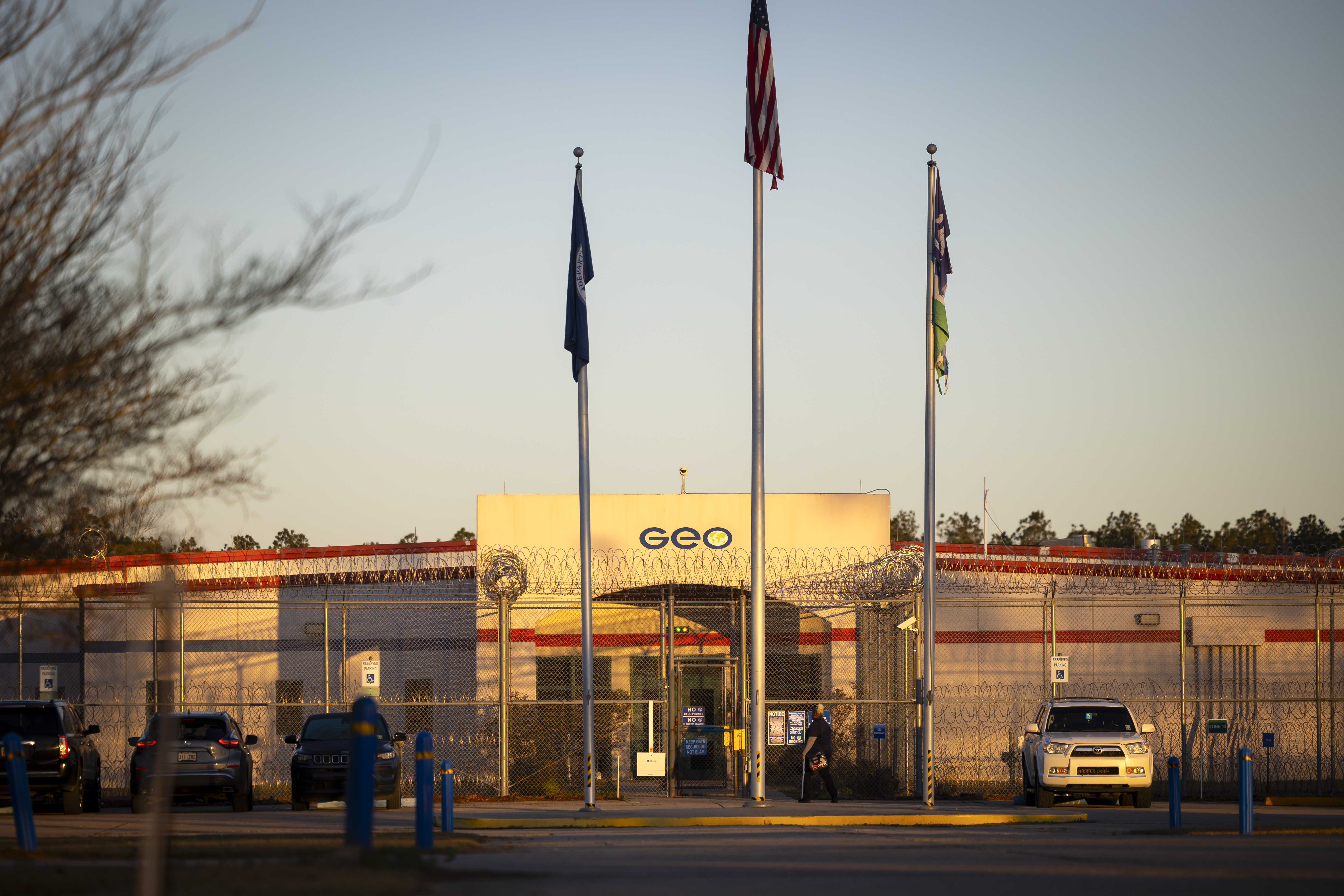
    Camila Toro de Paula, a 25-year-old transgender woman from Venezuela, has spent the past 11 months in a federal immigration detention center for men, where she said she has been assaulted, threatened, and deprived of medical care.

    Toro de Paula, who entered the United States seeking asylum, has lingered in solitary confinement without ready access to water for up to 24 hours a day, her lawyer said. Medical files from the center in Jena, Louisiana, where she is being detained show that she has complained to social workers about being punished because of her gender expression.

    “I’m afraid of dying here,” Toro de Paula said in Spanish during a video interview from the federal facility. Immigration officials said Toro de Paula had entered the country illegally and cited her criminal history in the United States. Records show that the most serious charges against her, of felony assault and possession of a weapon, had been dismissed.

    The case of Toro de Paula comes as the federal government has halted specialized care for transgender detainees inside at least 10 detention centers from Calexico, Calif., to Batavia, N.Y., according to public records. Officials no longer consistently provide transgender inmates with hormones and other gender-related care.

    An Obama-era policy that provided basic rights for transgender people in immigration detention was deleted from the Department of Homeland Security website in February 2025. And officials have dissolved longstanding protections meant to shield transgender detainees from being harassed or physically harmed.

    “We are NOT wasting U.S. taxpayer dollars to provide hormone therapy to illegal aliens seeking to change their sex,” the Department of Homeland Security said in an email to The New York Times, which did not address the other changes in policy.

    Homeland Security has in recent months declined to say how many transgender migrants are in custody, but experts on incarceration estimate that there are at least several dozen out of more than 65,000 people in detention as of July 11. On Jan. 12, 2025, the latest date for which the government reported a count, the Immigration and Customs Enforcement agency had 47 transgender people in custody, according to data archived by the Vera Institute of Justice, a think tank focused on criminal justice reform.

    Many migrants have complained about mistreatment and shoddy medical care in federal facilities. While transgender detainees represent a small fraction of those being held, they are an especially vulnerable population. Many are fleeing harassment in other countries and had just begun to be given some protections within the U.S. detention system in recent years.

    Medical experts say that withholding hormones and other treatment for gender dysphoria can cause unique physical and mental health complications.

    A hotline run by Immigration Equality, a nonprofit organization that helps LGBTQ+ and HIV-positive people who are in the immigration system, recorded a 68% increase in calls from LGBTQ+ detainees in 2025 compared with the year before. (The group does not have data specifically for transgender detainees.)

    Immigration Equality’s clients include transgender women who said they had been removed from detention center units that had been reserved for them during the Biden administration and placed with men or in solitary confinement. The group said that the federal government had denied requests from transgender women to be transferred to facilities for women or transgender people.

    “The administration is creating a humanitarian disaster” by changing policies that were meant to protect transgender people, said Bridget Crawford, the legal director at Immigration Equality.

    The Department of Homeland Security rejected claims that conditions inside detention centers were inhumane. The agency did not directly respond to Toro de Paula’s assertions of assault and mistreatment, and identified her with male pronouns. Toro de Paula has received hormones for years, and her lawyer said that she has been denied hormone treatment in ICE detention.

    “No detainees are being beaten or abused,” the federal agency said. “No lawbreakers in the history of human civilization have been treated better than illegal aliens in the United States.”

    The actions of the Trump administration have been welcomed by opponents of transgender rights, including the Women’s Liberation Front, a women’s rights advocacy group that defines gender based on sex at birth and does not acknowledge transgender women. The group has argued that placing transgender women in prisons for women violates the constitutional rights of female inmates who are not transgender, including the Eighth Amendment right to protection from cruel and unusual punishment.

    The Center for American Progress, a left-leaning think tank, issued a report citing ICE data that Democrats in Congress had collected. It found that LGBTQ+ migrants have a disproportionately higher chance of being abused in migrant detention centers. The statistics were collected during the 2017 fiscal year, which spanned Democratic and Republican administrations.

    The report said that transgender detainees, on average, spent 99 days in solitary confinement, more than double the average for all immigrants in ICE custody. In the 2017 fiscal year, 1 in 8 transgender detainees was placed in solitary confinement, which officials said is done when detainees are viewed as a threat to other immigrants or personnel, or for protective purposes.

    Data from the federal government show that in the 2024 fiscal year, during the Biden administration, 244 detainees who identified as transgender were booked into ICE custody.

    In 2023, Immigration Equality interviewed 41 LGBTQ+ and HIV-positive immigrants who had been in detention. About one-third said that they had experienced sexual abuse, physical assaults, or sexual harassment because of their identity while in detention.

    Almost all the participants said that they were the targets of homophobic, transphobic, xenophobic, racist, or other verbal and nonverbal abuse. Most said that they had received inadequate medical care for a range of conditions, and about half said that they had been placed in solitary confinement. Of the 41 participants interviewed for the report, 14 were transgender.

    Safeguards under President Joe Biden have vanished during President Donald Trump’s second term.

    In May, the federal government closed the Office of the Immigration Detention Ombudsman, which was responsible for investigating misconduct and abuse of all kinds in the immigration detention system.

    “The violations that we’re seeing now are, to some extent, what we had seen in Trump’s first term — it’s almost like they’re on steroids, though,” said Lynly Egyes, the legal director of the Transgender Law Center, a civil-rights group. “It was often difficult for trans people to access medical care. Now, it is almost impossible.”

    Many transgender migrants in detention, like Toro de Paula, came to the United States seeking asylum.

    She told the story of a violent childhood in Venezuela. From the age of 8, she said that she was raped repeatedly by relatives. When she was about 10, she said that she tried to hug her mother, who recoiled and splashed her with hot cooking oil. She said that police stabbed her when she was 14 in what she described as a homophobic attack.

    In October, a doctor who was retained by her legal team evaluated Toro de Paula and found an irregular hyperpigmented patch inside her left elbow where she said her mother had burned her. She had long scars on her left wrist and hand and on her right leg where she said Venezuelan police had sliced her skin with a knife when they had detained her.

    Texas Gov. Greg Abbott (right) and Montana Gov. Greg Gianforte greet members of the National Guard as they arrive with fellow governors for a 2024 news conference along the Rio Grande to discuss Operation Lone Star in Eagle Pass, Texas. Eric Gay

    Two years ago, she made the dangerous journey on foot to the United States. In September 2024, she reached Eagle Pass, Texas, where officials gave her food and clothes and put her on a flight to New York City. At the time, Gov. Greg Abbott of Texas had been sending thousands of migrants to Democratic-led cities as part of his multibillion-dollar border security effort, known as Operation Lone Star.

    In New York, she joined a community of transgender women and attended parades and parties for LGBTQ+ people.

    Her new life unraveled in August 2025 when she was arrested during a routine appointment at the New York City offices of ICE. She was flown to Louisiana and placed in a detention center for men, despite objections from her lawyer, Laura Berger, who works with the Legal Aid Society. The placement, Berger said, would put her client in danger.

    The Department of Homeland Security said Toro de Paula had a criminal history that included charges for felony assault and criminal possession of a weapon, both of which were dismissed and sealed. According to her lawyer, those charges related to her arrest in the Bronx on June 30, 2025, after she was accused of hitting a man on the head with a skillet. Her lawyer said Toro de Paula was fending off a robber. The charges related to that incident were dismissed in October, court records show.

    In a separate case in Queens, Toro de Paula was charged with prostitution; that was dismissed. She was also charged with pickpocketing in Queens and pleaded guilty to jostling.

    “A lot of people don’t understand us,” said Jessica Guaman, a transgender woman who organized gatherings that Toro de Paula had attended in New York. “Camila is a good girl.”

    Many transgender people in detention have fled persecution in their home countries, said Crawford of Immigration Equality.

    Wilmar Quintero, a 50-year-old transgender woman from Venezuela, came to the United States seeking asylum and was detained in Michigan for about three months. Quintero said that she had fled her native country because police officers tortured her and left her for dead after she spoke out against civil rights abuses. Photographs of her bare chest revealed an expansive stretch of pinched, red scars that mark where officers carved out her breast implants, she said.

    Quintero said that she was sexually assaulted by another migrant while being detained in Michigan.

    “I lived through the worst horrors and humiliations imaginable,” Quintero said in Spanish. “They treated me like an animal.”

    Immigration officials deported Quintero to Venezuela in April, and she went into hiding there. She said she is afraid of the police in Venezuela.

    Crawford shared the stories of eight transgender clients who had similarly complained of discrimination, harassment, or abuse inside immigration detention facilities.

    Toro de Paula said that detention center officials had pressured her to voluntarily agree to return to Venezuela, but she had refused. She said that they had humiliated her by forcing her to wear a mask and gloves while she is outside her cell because she is HIV-positive, even though the virus does not spread through the air. She has not been allowed to replace her wig, and officials have refused to give her undergarments for women. The Department of Homeland Security said Toro de Paula had worn the mask by choice — a claim that her lawyer disputed.

    “I want to be heard,” Toro de Paula said. “Women like me have been disrespected enough. No more.”

  • Lamborghini and Porsche cars stolen at gunpoint from Old City garage, authorities say

    Lamborghini and Porsche cars stolen at gunpoint from Old City garage, authorities say

    Police are looking for a group of men who used firearms to steal a Lamborghini and a Porsche from an Old City parking garage early Thursday morning, authorities said.

    The incident happened around 4:20 a.m. at a garage on the 300 block of Race Street.

    Police said the robbery began when two men approached a parking booth with guns and threatened the attendant inside.

    They then used a hand tool to crack the window and kick it in, police said. When the attendant fled through the door, one of the men held him up using a semiautomatic handgun.

    The other suspect removed two sets of keys from the booth.

    Police said the men were last seen leaving the garage in an orange or yellow Lamborghini and a dark gray Porsche.

    A third suspect was waiting nearby in a dark-colored vehicle, police said.

    The attendant was injured by glass on his left leg and was treated at Pennsylvania Hospital.

    Police are investigating and urge anyone with information to submit an anonymous tip by calling 215-686-TIPS (8477).

  • The Phillies’ defense has improved with their shuffled infield. And it starts with Bryson Stott.

    The Phillies’ defense has improved with their shuffled infield. And it starts with Bryson Stott.

    No matter where he is on the infield, Bryson Stott is only thinking about one thing.

    It could be second base, where he started the season, or third, where he’s been playing since the trade deadline. But even back in college and the minor leagues, when Stott was primarily a shortstop, he was only focused on catching and throwing.

    “Still an infielder, still on the dirt,” Stott said. “So, just catching and throwing it.”

    Maybe that’s what made his transition to the other side of the diamond so seamless after the arrival of Luis Arraez. There was no mindset shift. He didn’t even change gloves. And in 41 attempts at third base, Stott has a 85% success rate, which is 7% higher than the expected success rate on those plays.

    “He’s the best,” Arraez said. “He can do everything. He’s one of the best gloves we have.”

    He has recorded plus-3 defensive runs saved and plus-3 outs above average at the position.

    If fielders could earn a save, Stott would have shared some of the credit alongside Brooks Raley on Tuesday against the Marlins. With the lefty on the mound in the ninth with closer Jhoan Duran unavailable, Stott made two diving plays to bookend the inning.

    Stops like those weren’t exactly unusual to see from Stott when he played second, but the longer throw across the diamond after getting back to his feet made them all the more impressive.

    Bryson Stott “can do everything. He’s one of the best gloves we have,” said Luis Arraez.Yong Kim / Staff Photographer

    “If it worked like that, yeah,” said Alec Bohm said of Stott getting a save. “But he’s doing great over there. It’s been fun to watch.”

    There were a lot of initial questions surrounding the Phillies’ post-deadline defensive shuffle. It was certainly a risk to ask three-quarters of the infield to change positions on the fly, especially when they collectively ranked near the bottom of the league in many defensive categories already.

    But interim manager Don Mattingly thinks the current defensive alignment with Bohm at first, Arraez at second, Trea Turner at short, Stott at third, and Bryce Harper moving to right, is the strongest one they’ve had all season.

    “I felt like that right away, and I know there was a lot of talk about it, but I felt right away that we were going to be probably better defensively,” Mattingly said. “And we’re a lot more versatile from what we can do during the course of the game.

    “Again, I know it’s a lot of moving pieces, and people question what guys can do, but like I think we knew that Bryson had played third. Bohmer, I’ve seen him enough at first. Bryce has played the outfield. I feel like we’re better like this.”

    To be clear, it was a low bar. For the first four months of the season before the Aug. 3 trade deadline, Phillies defenders had a minus-13 fielding run value, a StatCast metric that attempts to measure how many runs a team has been cost or saved due to its defense.

    Shortstop Trea Turner (left) says communication has been key to adjusting to a new double play partner in second baseman Luis Arraez (right).Jose F. Moreno / Staff Photographer

    But since Aug. 3, they have a plus-four FRV.

    There are a lot of contributing factors to their success. Bohm made a handful of early errors at first base soon after the switch. But in general, Mattingly — who knows a thing or two about playing first — thinks that the larger target Bohm provides with his 6-foot-4 frame helps the rest of the infield when they’re throwing to him.

    Arraez has continued the defensive resurgence that he began in San Francisco earlier this season. In previous stops, defense had never really been his calling card. With the Padres from 2024-25, he was moved to first base and designated hitter.

    Part of the reason Arraez signed with the Giants in the first place last winter was because they gave him an opportunity to return to second base. And after working with the Giants’ highly-regarded infield coach Ron Washington, Arraez has posted a plus-9 FRV at second this year.

    He has taken to working with Phillies infield coach Bobby Dickerson just as well. Arraez heard glowing reports of Dickerson’s work from both Washington and his former San Diego teammate Manny Machado, who has known Dickerson since he was 16.

    “Really good energy, beautiful energy that he brings,” Arraez said through team interpreter Diego D’Aniello. “And we’re lucky to have him.”

    The 6-foot-4 Alec Bohm (right) provides a bigger target to throw to at first base than Bryce Harper, who has moved to right field. Yong Kim / Staff Photographer

    Turner, who has been the Phillies’ worst fielder this season with 18 errors at shortstop, has also shown improvement. None of those errors have come since the rest of the infield was rearranged around him, and in that span he has also posted a plus-2 FRV.

    He’s been making his own adjustments, from working on not setting up too early on grounders to recently trying out a longer glove that he actually borrowed from Stott. But underpinning it all is Stott himself. His range at the position helps cover some balls in the six-hole that Bohm might have ceded to Turner.

    “Stott plays a little bit different third base than Bohmer,” Turner said. “And I feel like in the last like week, Stott’s gotten a couple balls where I thought I was getting them, and you know maybe Bohmer would have let me get them, and then Stott’s made the play.”

    Communication has been key with it all, Turner said, both with those plays and with Arraez, now that he has a new double play partner. He learned quickly that Arraez’s feeds to second are a little harder than Stott’s, and has adjusted to that.

    “We do enough ground balls that I feel like we got them pretty fast,” Turner said.

    This rearrangement is intended to be temporary. Arraez was brought in as a rental on an expiring deal, and Bohm is also a pending free agent. Harper expects to return to first base next season, and when he does, the rest of the infield could look completely different once again.

    Shortstop Trea Turner (right) says the range at third base of Bryson Stott (left) has been a change from Alec Bohm.Yong Kim / Staff Photographer

    Stott, who will be 29 in October, is under club control through 2027, and the versatility he’s showing now could give the Phillies flexibility when they shape next year’s infield. When Arraez arrived, Stott said it didn’t matter to him where he’s playing, he just goes where he’s told.

    “I wasn’t really worried about him at all,” Mattingly said, “but he’s been really, really good. I’d say he’s probably better than anyone should expect, for a guy that hadn’t been over there that much.”

    Because no matter what position he’s playing, this year or in the future, Stott is just going to be worried about one thing: catching the ball and throwing it.

    Extra bases

    The Phillies claimed right-handed pitcher Andrew Hoffmann off waivers from the Arizona Diamondbacks and optioned him to triple-A Lehigh Valley. To clear a spot on the 40-man roster, Felix Reyes was recalled and placed on the 60-day injured list with a right wrist fracture. In eight major league games this season as a reliever, Hoffmann, 26, had a 7.71 ERA.

  • Meta defends its child safety efforts, but critics say the social media giant falls short

    Meta defends its child safety efforts, but critics say the social media giant falls short

    CHICAGO — Meta insists it has a long history of protecting its youngest customers as it defends itself against a swath of lawsuits alleging its social media empire harms children.

    In the latest such instance, the social media giant is fighting allegations in a California federal court that it contributes to the youth mental health crisis by deliberately and stealthily designing features to get children hooked on its platforms Instagram and Facebook. Four states are seeking billions of dollars in damages as well as fundamental changes to how Meta runs those apps.

    Children’s mental health, and what they do and see on social media, are all issues “Meta takes seriously and tries to act on,” Paul Schmidt, a lawyer for the tech giant, said in opening statements this week.

    Critics say the company’s safety record falls short and that many of its protections simply don’t work.

    They include Marc Berkman, executive director at the Organization for Social Media Safety, who said Meta introduced safeguards promising to protect children in response to public pressure rather than out of concern.

    There’s been a “lack of real institutional willingness to act here,” Berkman said.

    Here’s a look at some of the changes Meta has introduced, along with the work advocates say could still be done.

    Access to users and content-focused protections

    Most of the changes Meta has introduced focus on addressing harassment and offensive content.

    Instagram users have always been able to block others — and, along with Meta’s oldest crown jewel, Facebook — the app has gradually added features for reporting problematic accounts and inappropriate content.

    In 2016, Instagram users were given the option to delete or filter comments they found offensive, and later added warnings that prompted users to reconsider posting potentially harmful content, as well as options to limit comments and tags on their posts.

    Meta also says it prevents adults from starting private chats with teens if they are not already connected, and has increased checks to make sure users under 13 — the minimum age for holding a Facebook or Instagram account — aren’t online. Schmidt said in his opening remarks that Meta recognizes some users still sign up using incorrect birthdays but that the company takes enforcement of age limits seriously.

    The company says it also posts warnings and resources at the top of Instagram search results related to suicide, self-harm and eating disorders, and touts its “Teen Accounts,” launched in 2024, as a safe space for teenagers online. It aligns photo and video restrictions for teen accounts with those for a PG-13 movie, unless there’s parental permission otherwise.

    Critics complain these changes amount to little more than corporate posturing.

    A September 2025 report from former employee and whistleblower Arturo Béjar and four online safety advocacy nonprofits accused Meta of not taking “real steps” to address youth safety, instead opting for “splashy headlines about new tools for parents and Instagram Teen Accounts for underage users.”

    “We really found that overall what Meta was marketing under Teen Accounts was very lacking in actual protections,” said Haley Hinkle, policy counsel at Fairplay, which co-authored the report. They evaluated 47 of Meta’s 53 safety features for teens on Instagram and found 60% of them were either not available or didn’t work as advertised, Hinkle said.

    Meta called the report’s findings “misleading” and “dangerously speculative.”

    Scrolling and core design

    Researchers say Meta’s efforts to reduce the risk of children becoming addicted to the scrolling features of social media platforms have been largely unsuccessful.

    Ashley Shea, a Ph.D. candidate specializing in social media and online spaces at Cornell University, points to what academics call “attention-capture deceptive designs” that are not exclusive to Meta’s platforms. They include infinite scrolling, “casino style” pulls to refresh content, push notifications and algorithmic recommendations. Those features “prey on the cognitive vulnerabilities” of young people with developing brains, in particular the need to feel rewarded.

    Meta has taken important steps to address problematic content, cyberbullies, and sexual predators, Shea said, but she has not seen the same level of effort to offset the addictive impact of attention-capture deceptive designs.

    Nudges and time management controls

    “There’s no question that some teens struggle to manage their time with social media,” Schmidt said Tuesday, adding that Meta’s time management tools prove its evolution on the issue. Those tools include parental supervision controls and in-app “nudges” for teen users who repeatedly look at the same type of content or spend too long on Instagram or Facebook late at night.

    Hinkle notes the “entirely voluntary” time management tools are not easy to set up, and amount to “far too little, too late.”

    Béjar, the former Meta employee and whistleblower, agrees. In testimony Wednesday, he said a tool called “Take a Break” is “designed to fail.” Users have to turn the feature on themselves and, he said, very few do.

    Across the board, tech companies exist to maximize revenue, said Berkman, and for almost every social media platform today, that means “maximizing children using their features for as long as they can.”

    Legal challenges focused on “the fact that these are defective products by design because of their features, not the content per se” is something new, Shea added. And beyond the courtroom, mounting pressure on lawmakers could bring more industrywide changes.

    “The momentum only continues to grow,” she said. “Ultimately, these are for-profit companies that respond to economic pressures. And so I think that the more economic pressure they’re confronted with through these litigations, the quicker they will have to adapt.”

  • Women in pink rally in support of Lindsay Clancy, who is on trial for killing 3 children

    Women in pink rally in support of Lindsay Clancy, who is on trial for killing 3 children

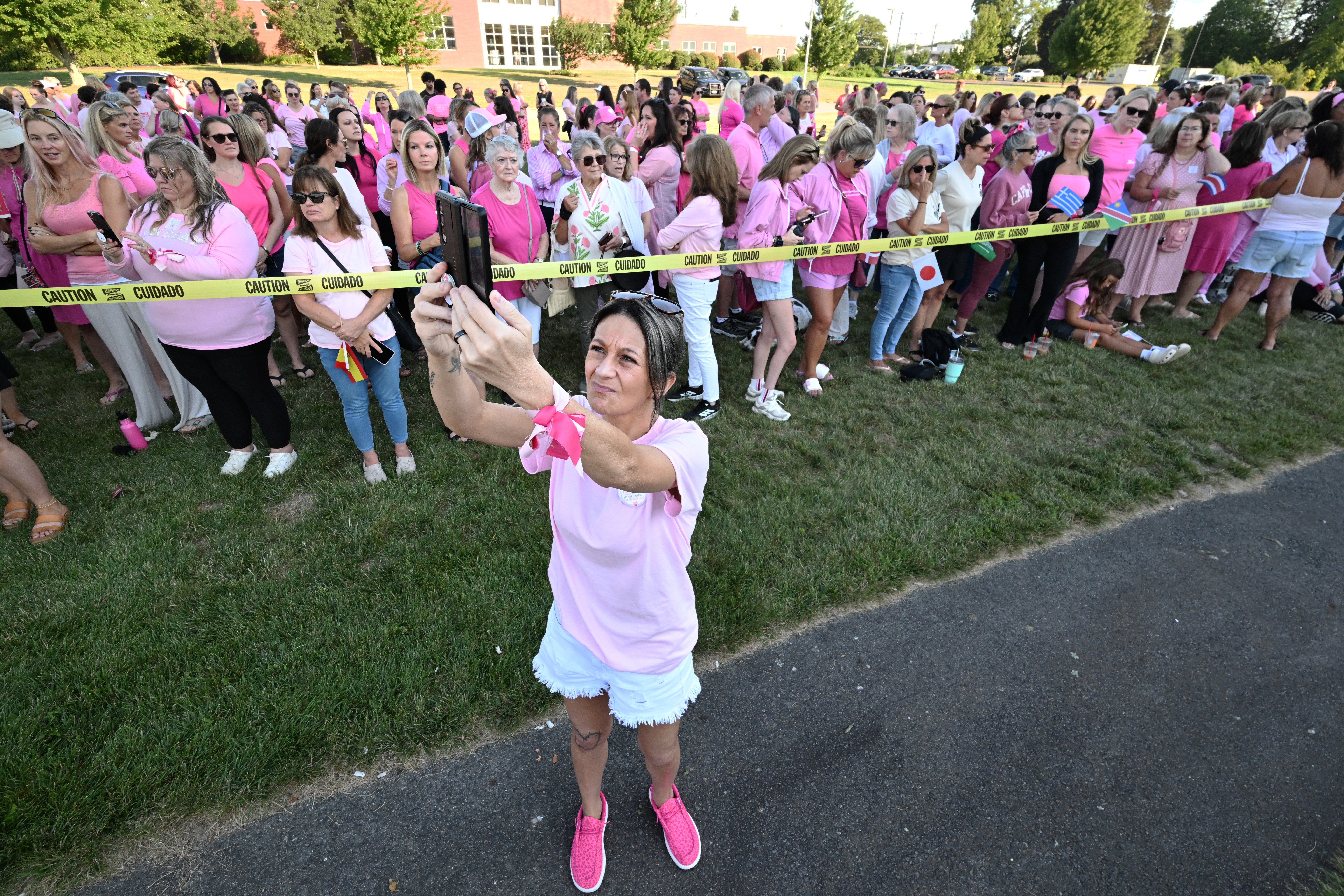
    PLYMOUTH, Mass. — Hundreds of Lindsay Clancy supporters, many wearing pink with the words “Believe,” “She Needed Help” and “Peace For Lindsay,” gathered Thursday outside the courthouse where she is on trial in the killings of her three children.

    Several of the 300 women, and a few men, said Clancy’s story resonated with them and that they wanted to raise awareness about how the mental health system treats women. Clancy’s lawyer does not dispute that she killed the children, but says she should not be held criminally responsible because she was mentally ill.

    The livestreamed trial has sparked massive discussions online and has brought attention to postpartum psychosis, a rare mental illness Clancy’s attorney Kevin Reddington says she had that is linked to the stress, sleep deprivation and hormonal changes that follow childbirth. Reddington said she also has bipolar disorder. After strangling her children, Clancy jumped from a second-story window and remains paralyzed from the waist down.

    Reddington says Clancy repeatedly sought help: She turned to multiple outpatient providers, tried various drugs they prescribed, called a suicide hotline, went to an emergency room, and even checked herself into a psychiatric hospital.

    Prosecutors say the former labor and delivery nurse planned the Jan. 24, 2023, killings and contrived to get her husband out of the house by sending him to pick up medicine for one of their children and dinner for the family. They have also questioned the seriousness of her suicide attempt, and witnesses have testified that Clancy wouldn’t always take prescribed medications.

    Thursday’s rally was the first time during the nearly monthlong trial that supporters have come out in such large numbers.

    “Women are being dismissed, neglected and ignored when we speak up,” said April Vincent, a 52-year-old paralegal from Providence, Rhode Island. “We’re scared because nobody takes us seriously.”

    The women stood silently for more than an hour ahead of Thursday’s proceedings, where a chaplain called by the defense testified about visiting Clancy in the hospital after the killings.

    At the sight of Reddington outside the courthouse, the crowd broke into applause.

    Rally organizer Renee Kimball implored the crowd to trust that Reddington “has Lindsay’s fight.”

    Toward the end of their rally, supporters formed a circle, said the Lord’s Prayer, held up their arms and formed hearts with their hands. Some held flags from different countries to show that the support for Clancy was global.

    Clancy, 36, has pleaded not guilty to murder charges in the deaths of Callan, Dawson and Cora Clancy, who ranged from 8 months to 5 years old. Researchers estimate that postpartum psychosis — which is more serious and less common than postpartum depression — afflicts 1 to 2 per 1,000 women after delivery.

    Jeanne Zaborski, a 72-year-old retired nurse from Rockland, Massachusetts, said she hopes the case raises awareness about postpartum health. She and many others at the rally said they had been following the trial almost daily.

    “It’s very sad,” Zaborski said. “I am a mother. I am a grandmother. I have a sister who had problems after birth and it’s just very sad. I hope Lindsay gets the care she needs and deserves and other women will come together like we did today.”

    In court, Sheila Cavanaugh, a chaplain at Brigham and Women’s Hospital in Boston, testified that when she first visited and prayed for Clancy, she was unconscious. By Jan. 31, 2023, Clancy was conscious and no longer connected to a ventilator, Cavanaugh said, but “her emotional state was very neutral – a flat affect.”

    Cavanaugh said she “vividly remembers” one of the first things Clancy said to her.

    “She said to me, as I held her hand to comfort her, ‘I’m so glad my children are safe,’” Cavanaugh said. “I replied theologically to Lindsay. I said, ‘Lindsay, your children are safe. They’re safe in heaven with God.’”

    “We prayed for them,” said Cavanaugh, who saw Clancy more than 200 times and still visits her at the state mental hospital where she resides.

    Cavanaugh said Clancy “alluded to hearing a voice, and the voice, according to Lindsay, told her that if she did not follow the command, neither she nor her children would be safe.”