Blog

  • Soupy Island is a quirky, hidden ‘oasis’ for children in South Jersey. Meet its longtime caretaker.

    Soupy Island is a quirky, hidden ‘oasis’ for children in South Jersey. Meet its longtime caretaker.

    Armando Roberto Perez goes by many names. Armand. Bob. Opa. Mr. Soupy.

    Perez, 70, is the longtime caretaker for Soupy Island, a public pool and park in West Deptford, best known for its century-old carousel, free soup, and the tall, enclosed slide guests glide down, crashing into sand.

    Before Perez took the job 28 years ago, his father-in-law was caretaker, and before that, his grandfather-in-law. Managing the former 25-acre haven for sick and hungry kids has long been a family affair.

    Soupy Island is open and free to the public three days a week from July to mid-August. For the rest of the year, it’s Perez’s job to keep the tuberculosis treatment center-turned-playground standing come summertime.

    Lifeguard Alexandria Bright, 22, watches over swimmers in the main pool at Soupy Island. She is a niece of caretaker Bob Perez.Tom Gralish / Staff Photographer

    He puts the picnic tables away, disconnects the piping and toilets, drains the pool, boards up the carousel, collects leaves, cuts the grass, weed-whacks, handles repairs, and takes on whatever else happens.

    “If you’re not self-motivating, nothing’s going to get done,” Perez said.

    On Wednesday, the second-to-last day of Soupy Island’s summer and what could be one of Perez’s last seasons as caretaker, 329 people had arrived by lunchtime.

    At 11:45 a.m., the park’s amenities close like clockwork for lunch, until 1 p.m. Its 18 staff members ushered children and their families toward the middle of the park for Soupy Island’s controversial intermission: free hot soup, crackers, and milk, enjoyed (or not) in the August heat.

    Syreeta Minor, 47, brought her daughter and her group of friends to Soupy Island for the first time after hearing about the destination on YouTube. Minor had no idea the park existed despite living in West Deptford, but she said she’ll likely be back.

    A soupy history

    Driving his golf cart across Soupy’s campus, Perez explained the park’s complicated history, in brief.

    He pointed out the old European carousel, an early 20th-century relic that the National Carousel Association has been working to restore, and all the structures he’s fixed over the years. A chalk drawing made by his granddaughter, Izzy, on the wall of the soup house depicts Perez, “Opa,” at the top of a family tree with his wife, Denise.

    Perez with a family tree drawn in chalk by his granddaughter Izzy when she was young.Tom Gralish / Staff Photographer

    The park’s roots trace back to 1877, when the Sanitarium Association of Philadelphia purchased land to create a playground and treatment center for kids with tuberculosis.

    The hospital no longer exists, but remnants of its history remain. A public pool has replaced the hospital’s former basement. A brick building from the late 19th century still serves hot soup and snacks from its three windows. The medical staff quarters is where Perez now lives with his wife, free-of-charge, different from the life Perez imagined growing up in North Philly. He graduated from Frankford High School, didn’t go to college, and moved to Jersey when he got married in 1976.

    “I came from nothing,” Perez said. “We had government food. We had government housing.”

    Perez’s home is an old five-bedroom white house at the front of the park, paid for through an endowment set up by Soupy Island doctors more than a century ago. It’s spacious enough for Perez’s grand and great-grandkids when they visit.

    The endowment is what keeps the park alive and has kept it going through decades of turmoil.

    During the Great Depression, the Sanitarium Playground fed thousands per day. It was often the only place city children could get a hot meal, by taking a river boat from Penn Treaty pier down the Delaware River. For fun, Perez said, children swam on the river in wool bathing suits and overalls.

    In the 1940s, during World War II, the U.S. military took over Soupy Island to protect the nearby shipyard, before the playground returned to its park and soup kitchen roots.

    ‘Working with my hands’

    Despite its history, Perez said the island (which isn’t an island at all) has kept under the radar. When staff have to call the police to report vandalism or an incident, they don’t always know where to go.

    “A lot of people don’t know about it. They say, ‘I never knew you were here,’” Perez said. “I got people around the corner who don’t even know we’re here.”

    In many ways, that has been to Soupy’s benefit. The summer playground doesn’t have the staffing or space to accommodate huge crowds, and Perez does much of his work solo. Over the years, he’s had to keep up certifications as an amusement ride operator, a pool manager, a lifeguard, and a diver, on top of the mechanical skills he developed over his 24 years at Cherry Hill Volvo.

    It was his father-in-law who pestered him to apply for Soupy Island, a career he didn’t want.

    “I like working with my hands,” Perez said.

    His grandson, Lucas Ngo, plans to take over when Perez retires. A mural of Ngo, now 22, is on the wall over by the big kid pool, painted by Perez when Ngo was still a child.

    Lucas Ngo, now 22, and an employee at the at Soupy Island in West Deptford, N.J. is depicted on a mural at the swimming pool Wednesday, Aug. 12, 2026. Tom Gralish / Staff Photographer

    On Wednesday, Ngo, who originally planned to pursue car mechanic work, prepared the daily soup, chicken noodle, in a giant vat as visitors trickled toward the house. An unfamiliar clanging came from the soup area.

    “Now that noise? Open the valve,” Perez instructed, then laughed. “There you go. You get to know the sounds of the things.”

    ‘A rite of passage’

    Lifeguard Ali Bright, 22, placed spoons as Perez scooped soup during Soupy Island’s daily lunchtime ritual. Fellow lifeguard Madi Hogan, 17, carried the trays to a cooling rack, then to the windows to serve a line of people outside.

    “It’s like a rite of passage in this family,” said Bright, Perez’ niece. She’s worked at Soupy every summer since she was 14. “This is my little oasis away from my real life.”

    Perez in the kitchen of the original building where the camp still serves free soup lunches every day. The kettles are at right and the same shelves for cooling the soup are at left. Kids still line up for lunch at the windows in rear. Tom Gralish / Staff Photographer

    The lifelong connection to the playground is typical for staff. Hogan’s great-grandmother used to come to Soupy Island as a child. Marielle Lewis, 17, used to come to the park for soup when she was little, since her aunt lives nearby. Now, she’s worked as a lifeguard for two years.

    “It’s kind of weird now that I get to see everything that I wanted to see when I was a kid,” Lewis said.

    For now, the group is using their remaining soup supply donated by The Campbell’s Company last year. In the 2000s, the company paid for a new jungle gym, volleyball court, basketball court, and more at Soupy Island and continued its contributions through food since, even though Campbell’s has no true affiliation with the playground despite its name.

    But this season, Campbell Soup didn’t donate goods, Perez said, who added that one season’s worth of soup costs the park more than $8,000.

    The Food Pantry of South Jersey in Pennsauken has stepped up, though, by providing Soupy Island with thousands of shelf-stable meals to distribute to visitors.

    “Sometimes a lot of these people go through trials, and come in here just to chill a little bit,” Perez said. “You don’t know what the other person’s going through.”

    Once Ngo takes over, Perez still plans to help out where he can, just with less physical labor. Plus, he’ll hopefully get to do more home remodeling on the side, and take more consistent naps, his favorite part of the day.

    “I try to do it around three,” Perez said, a dream. “But it doesn’t happen.”

  • As East Side prepares for its Little League World Series debut, it’s been ‘an awesome experience’ for the coaches, too

    As East Side prepares for its Little League World Series debut, it’s been ‘an awesome experience’ for the coaches, too

    The actual games played at the Little League World Series make up just a fraction of the players’ time spent in Williamsport, Pa.

    For the most part, the players are ushered between various media appearances and practice, which sometimes can be overwhelming for a group of middle schoolers. However, when they have downtime, the players can interact with — and even befriend — peers from all over the world.

    East Side, a 12-and-under baseball team from West Chester, is making the most of the opportunity.

    “It’s kind of cool watching them engage with the international players,” East Side coach Bob Hennessey said. “Our bunkmates are [from] Japan. It’s kind of cool to watch those boys interact, not through language, but through signs and just handshakes and stuff like that.”

    On Friday, East Side, representing Pennsylvania and the Mid-Atlantic region, will face a team from New Jersey — Bayonne Central Little League, representing the Metro region — in the West Chester squad’s first matchup of the Little League World Series (7 p.m., ESPN). Left fielder Paul Cowperthwait previously told the Inquirer the team is living “every 12-year-old’s dream.”

    “These are kids that we always thought were special from Day 1,” Hennessey said. “We continue to have that belief in them, and here we are now at the Little League World Series, which is something that we thought was possible, but you don’t really know until you get to this point.”

    Players from East Side Little League in West Chester take their spot amidst 19 other Little League teams participating in the 2026 Little League World Series during opening ceremonies.Ralph Wilson / For The Inquirer

    After clawing out of the loser’s bracket in the Pennsylvania state tournament, East Side cruised through the Mid-Atlantic regionals, winning all three of its matchups.

    East Side’s victory in the Mid-Atlantic championship was the most dramatic of the three wins, as it defeated Wilmington’s Naamans Little League, which is roughly a 30-minute drive from West Chester, 3-1.

    With two out in the game’s final inning, East Side pitcher Ryan Donnelly slid to grab a short roller before making the throw at first to get the Naamans runner out. A prolonged review that lasted about four minutes allowed the team to celebrate twice — after the play initially was made and once the replay confirmed the outcome.

    “I think it was sweet to have that second celebration,” Hennessey said.

    East Side is looking to keep the good times rolling against Bayonne Central. The North Jersey team is preparing for its second game of the Little League World Series, after defeating Bridgewater Joe Lazaro Little League of Massachusetts, 2-1, on Wednesday.

    The tournament is double-elimination, so East Side’s championship chances are not over if it loses Friday. They’d play again on Sunday with a win, or on Monday in an elimination game with a loss.

    An ‘awesome experience’ for Hennessey

    Hennessey, whose son, Ryan, plays for East Side, has coached the same set of players in West Chester for the past five years.

    “I started coaching them when they were 8, so to watch them grow from little guys to almost young men has been a very cool experience,” the elder Hennessey said. “Obviously, I’m coaching my son as well, so to see him grow along with the other kids, it’s just been an awesome experience for me and the other coaches.”

    East Side Little League is representing the Mid-Atlantic Region and will play their first game of the series on Friday.Ralph Wilson / For The Inquirer

    Hennessey is especially proud of how the team has handled their newfound attention since arriving in Williamsport last Saturday. According to the coach, the team has become increasingly comfortable on camera since first being exposed to the media circuit during the Mid-Atlantic regionals.

    And coaching his son has made the whole experience even more special for Hennessey — even if it poses its own challenges at times.

    “Coaching your son, obviously, is tough,” Hennessey said. “I feel like at a younger age, they listen to you more, they appreciate your feedback. But the older they get, the less likely they are to listen to you.”

    To combat this, Hennessey and his assistant coaches — who have children on the team — put a simple rule into place: No coaching your own son. Since implementing the rule a couple of years ago, the coaches have been able to break through to their own children.

    “My dad coached me growing up,” Hennessey said. “I always appreciated him coaching me and just being there to help me out to kind of show me or tell me the things I was doing right or wrong. And I think, maybe, [Ryan] doesn’t understand it now, but I think you know down the road he’ll understand things I said to him and the reasons why I said it. And hopefully he’ll appreciate that down the road.”

  • Saquon Barkley and Jordan Mailata want more rushing, less fighting. Both think the Eagles run game can be great.

    Saquon Barkley and Jordan Mailata want more rushing, less fighting. Both think the Eagles run game can be great.

    FOXBOROUGH, Mass. — Jordan Mailata succinctly summed up the reasoning behind the offense’s inefficiencies in its second joint practice against the New England Patriots on Thursday.

    “Less boxing and more football,” Mailata said.

    No, neither team channeled its inner Muhammad Ali and let the punches fly. Pushing, shoving, and grabbing characterized the handful of skirmishes between the Eagles offense and Patriots defense on the final day of joint practices.

    Nonetheless, those quarrels quashed the Eagles’ momentum, especially on the ground, according to Mailata. Their inability to run the ball effectively on Thursday paled in comparison to Wednesday’s performance, when Saquon Barkley & Co. seemingly exploited every seam.

    “The run game had a better flow yesterday,” Mailata said. “There were less fights. The fighting, we’ve got to cut that out, ’cause it kills momentum. And then both sides are now amped up, and now we’re not thinking about our assignment. We’re thinking about roughing the next guy. Which is great, but again, not effective in our scheme and concept of things.”

    Barkley didn’t mince words, either, about how fighting can derail the intent of the practice with another team.

    “I hate joint practices, to be honest,” Barkley said. “I think one day’s good. But we play in an ego-filled sport with a lot of men.”

    He continued: “It’s just more times than not, nothing good comes out of it. When you have the work, it’s good, but then you get the pushing, the shoving, and someone says this about you, and I’m like, ‘I don’t know, but I’m not that. You’re this.’ It’s immature when we get to that level. I’ve got to do a better job, too, ‘cause I’m a little troublemaker sometimes. But I was good this week.”

    “The run game had a better flow yesterday,” Eagles tackle Jordan Mailata said after Thursday’s joint practice with the Patriots. Yong Kim / Staff Photographer

    Barkley got involved in a scrum at one point during 11-on-11s when the backups were on the field. Earlier, tensions also flared between Lane Johnson and Patriots linebacker K.J. Britt. They exchanged shoves after Barkley ran up the middle, picked up just a few yards and tight end Johnny Mundt was blocked to the ground.

    The Eagles running backs failed to rip off long gains all morning. Tank Bigsby nearly had one with the starting offense as he bounced outside to the left, but the play was brought back due to a holding penalty.

    The one step forward, one step back nature of the run game’s progress throughout joint practices wasn’t concerning to Mailata as the Eagles nail down the new scheme under Sean Mannion. Even though the run game wasn’t at its best on Thursday, Mailata said he still sees the potential in the group as Week 1 looms just 24 days away.

    “The running backs are doing a great job, Saquon’s doing a great job of getting to his reads on the run,” Mailata said. “The beautiful thing about our scheme is you can hit anywhere and, again, it’s not just all on Saquon. It’s got to be on us up front. We’ve got to get to our landmarks and win our block up front. Some of that today wasn’t there.”

    But that execution was there on Wednesday from the entire rushing unit. Mannion’s vision for the run game, rooted in the wide-zone blocking scheme typically incorporated among offshoots of the Kyle Shanahan/Sean McVay scheme, is beginning to take shape, Mailata said.

    “We were able to see with the misdirections and the way the concept is designed where the ball can hit anywhere,” Mailata said.

    Barkley said he is excited about the potential of the run game, too. That excitement is unrelated to the performance of the offense in training camp, though, and more rooted in the process.

    “I’m super excited, because I know how great this team will be and how great we can be,” Barkley said. “I know what it looks like when we’re all on the same page and we’re playing at a high level. But right now, this whole portion of camp and this part of the season, it’s really about just grinding, putting the little things together.

    “The kind of mindset I’m going to have for the rest of the season, just be process-driven. Don’t really get too caught up in the results of what it can be or what it can look like. And just let the process take care of the rest.”

  • What happens next for Philly schools that are closing or receiving closing schools? Here’s how to weigh in.

    What happens next for Philly schools that are closing or receiving closing schools? Here’s how to weigh in.

    The Philadelphia School District will soon offer a new way to have a say in how Philadelphia school closings, mergers, and other transitions happen.

    The district announced Thursday that it will soon open applications for 50 transition teams to help manage what comes next for a host of schools — those closing or beginning phaseouts at the end of the 2026-27 school year, and those receiving students from those schools in 2027-28.

    The school board voted in April to close 17 Philadelphia schools, some as soon as the end of the 2026-27 school year. It’s also ordering mergers and other changes. The $3 billion plan, the funding for which is not assured, also plans for 169 renovation projects at schools around the city.

    The plan remains unpopular, with several City Council members still pressuring the district to change course on some closures.

    The aim for the transition committees, officials said, it to “bring together students, families, educators, staff, and community partners to provide input, help identify priorities, and support the development of transition plans that reflect the needs of each school community.”

    A new school transition office, led by Shakeera Warthen-Canty, will coordinate the work.

    “We know that successful school transitions require more than a plan — they require meaningful partnership with the students, families, staff, and communities who will experience these changes,” Superintendent Tony B. Watlington Sr. said in a statement. “This next phase gives communities a clear opportunity to help shape the transition process and ensure that we are planning thoughtfully, collaboratively, and with students at the center.”

    The applications will open Aug. 31 and can be filled out through Sept. 18.

    Transition committees, made up of up to roughly 20 members, may include teachers and staff, parents and families, community members, and students.

    Officials said the committees won’t be the only way for people to have their say. School-specific feedback opportunities will be announced later, they said.

    Which 50 schools are forming transition teams?

    The schools closing in 2027-28 are:

    Blankenburg

    Fitler

    Lankenau High School

    Robert Morris

    Overbrook Elementary

    Parkway Northwest

    Parkway West

    Pennypacker Elementary

    Paul Robeson High School

    John Welsh Elementary

    The schools beginning phase-outs in 2027-28 are:

    AMY Northwest

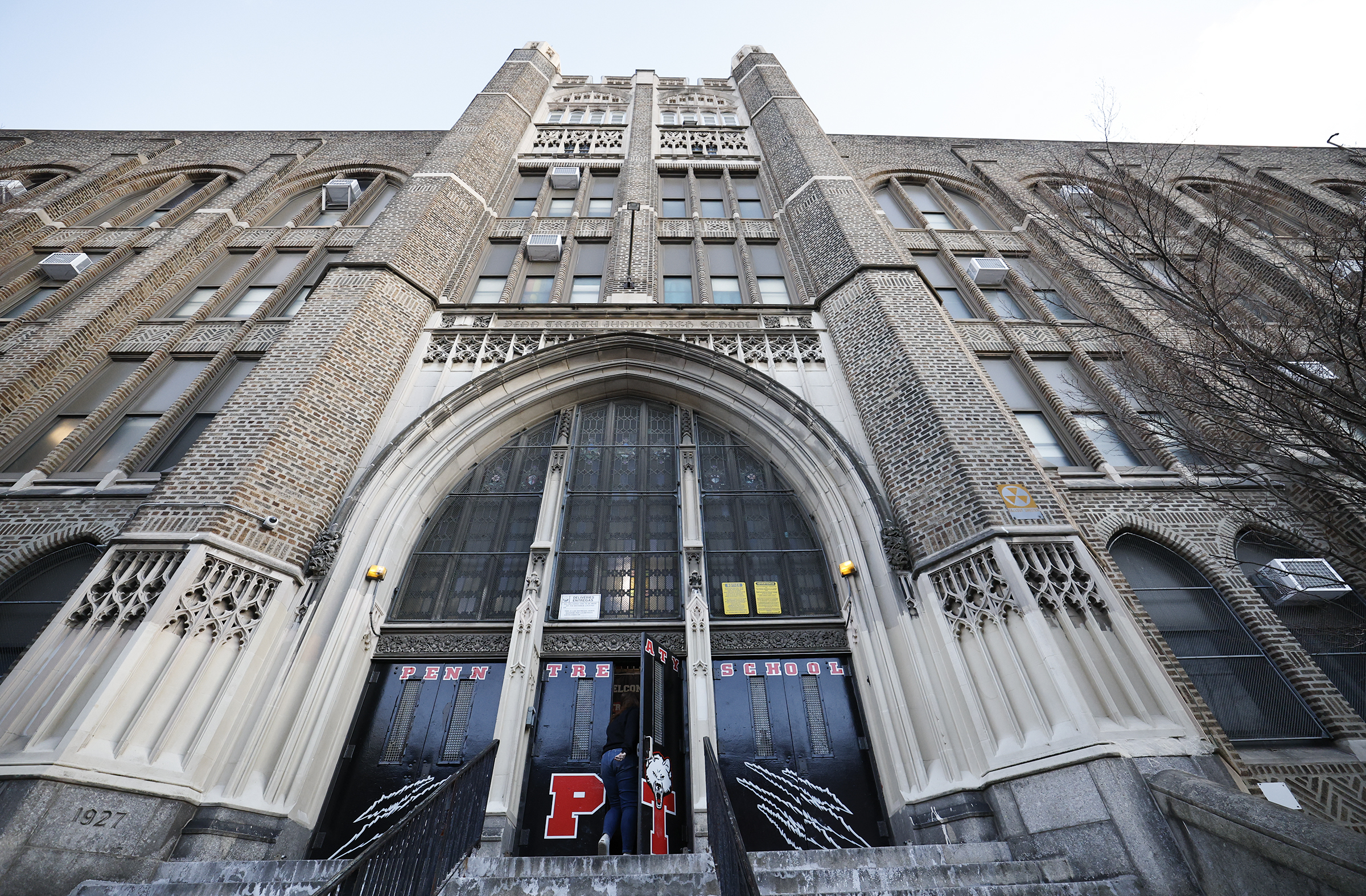
    Penn Treaty

    Harding Middle School

    Stetson Middle School

    Tilden Middle School

    Wagner Middle School

    The schools receiving students starting in 2027-28 are:

    Bache-Martin Elementary

    Barry Elementary

    Bluford Elementary

    Carnell Elementary

    Cassidy Elementary

    Catherine Elementary

    Cramp Elementary

    A.B. Day Elementary

    F.S. Edmonds Elementary

    Ellwood Elementary

    Hackett Elementary

    Hartranft Elementary

    Heston Elementary

    Howe Elementary

    W.D. Kelley Elementary

    Kensington Health Sciences Academy

    Kensington High School

    King High School

    Lawton Elementary School

    Ludlow Elementary School

    John Marshall Elementary

    Morton Elementary

    Motivation High School

    Patterson Elementary

    Pennell Elementary

    Prince Hall Elementary

    James Rhoads Elementary

    Rowen Elementary

    Science Leadership Academy at Beeber

    Sullivan Elementary

    Martha Washington Elementary

  • Somalia faces another hunger crisis and the U.N. food agency head says it has far less funds to help

    Somalia faces another hunger crisis and the U.N. food agency head says it has far less funds to help

    MOGADISHU, Somalia — Six million people in Somalia are facing acute food insecurity while the World Food Program has only a tenth of the resources it had in 2022 when it helped avert famine in the drought- and conflict-stricken East African nation, the head of the U.N. agency told The Associated Press.

    “We can only do the bare minimum,” WFP executive director Carl Skau said Wednesday during a visit to a nutrition center on the outskirts of the capital, Mogadishu. “We’re only providing these nutrition supplies to the children that are really the worst hit.”

    The reduced funds, because of cuts in international aid by donors and the redirection of resources to other humanitarian crises, meant that the WFP is unable to expand its assistance in Somalia, Skau said.

    Millions of people at risk but far less aid

    The WFP projects that 1.9 million children under age 5 in the country will suffer acute malnutrition this year, including nearly 500,000 who will require urgent treatment for severe acute malnutrition. Overall, around 30% of the population faces critical levels of food insecurity, the U.N. has said.

    “We had 10 times more resources than now,” Skau said of the 2022 hunger emergency that was caused by a prolonged drought. “We were able to step in, and we prevented a famine here in Somalia.”

    “We know what’s going on, we have the capacity, we have the experience of dealing with this. We just need the resources now to do it.”

    The consequences of the current food shortage, which is also a result of drought, conflict and the displacement of people, are seen at the Feynuus Health Center in Mogadishu’s Kahda district. Dozens of women carrying babies waited beneath a large tree or crowded along the veranda of the corrugated-metal facility seeking help.

    Inside, health workers placed children in a blue weighing sling, screened them for malnutrition, and distributed therapeutic food.

    One desperate mother tells her story

    Halima Mohamed Hassan, a mother of six, had walked nearly 2 miles carrying her malnourished 4-year-old child. She is pregnant, but said she hadn’t eaten for two days. Her last meal was plain rice.

    Health workers treated the child she brought with a special nutrient-dense food, while Hassan said that her other children were also malnourished, but she wasn’t able to bring them to the center.

    “I could not carry all of them,” she said.

    Hassan fled the Lower Shabelle region four months ago after her husband died of malnutrition, she said. Food and water became scarce, and conflict made it increasingly dangerous for the family to stay.

    She and her children walked for four nights before reaching a camp for internally displaced people on Mogadishu’s outskirts.

    Hassan now shares a makeshift shelter with her widowed mother and her mother’s four other children. The two women look for occasional work washing clothes in nearby neighborhoods to feed their household of 12.

    A health center tries its best to help

    The Feynuus center receives between 250 and 350 patients daily, mainly displaced women and children from regions outside Mogadishu, said Abdirahman Barkhad, program director of Youth Link Somalia, which operates the center.

    Barkhad said that about 10 nearby health and nutrition centers had closed because of a reduction in humanitarian funding, increasing pressure on those that remain.

    “We have witnessed children collapsing, because their families do not have enough food,” he said.

    Mohamud Moallim Abdulle, commissioner of the Somali Disaster Management Agency, described the country’s food situation as “extremely alarming.”

    He said that an estimated 1.85 million children are malnourished, while around 6 million people are affected by drought, and 2 million urgently need assistance.

    They don’t know where their next meal is

    Skau said that mothers he met this week in the town of Burhakaba described drought, insecurity, and also rising food prices as the main drivers of the crisis. Some had lost their crops and fled their homes. Others walked for three or four hours to reach health facilities, because aid workers couldn’t reach them.

    “I spoke to women with eight to 10 children,” Skau said. “They don’t know where the next meal is going to come from.”

    Insecurity, with Somalia battling a 20-year-long insurgency by the al-Shabab militant group, also makes humanitarian operations more expensive. WFP must use aircraft in areas where staff and supplies can’t travel safely by road, and some communities are inaccessible, Skau said.

    He said that conflict in the Middle East was adding to the pressure by driving up fuel and food prices, limiting agricultural supplies, and drawing funding toward other emergencies.

    After her child received some food at the center, Hassan began the walk back to the camp they live in. Her five other children were still waiting and hungry, she said, and she would have to return with them one at a time.

  • Willow Grove Park Mall is in the process of being sold

    Willow Grove Park Mall is in the process of being sold

    Willow Grove Park Mall is on track to be sold soon.

    A representative for Pennsylvania Real Estate Investment Trust (PREIT), which owns the Montgomery County mall, said in a statement Thursday that “a lender-directed sale process is underway and expected to be completed in the near term.”

    The Philadelphia Business Journal first reported the news, saying that a partnership of New York firms — Namdar Realty Group, Mason Asset Management, and CH Capital Group — were set to buy PREIT’s 725,000-square-foot section of the 1.2 million-square-foot mall, as well as its debt on the property, for an undisclosed price.

    The sale would include most of the mall, including Macy’s, Cheesecake Factory, and Nordstrom Rack, but not parcels that house Primark and Bloomingdale’s, according to the Journal, citing marketing materials that have since been removed from real estate firm JLL’s website. JLL did not return a request for comment.

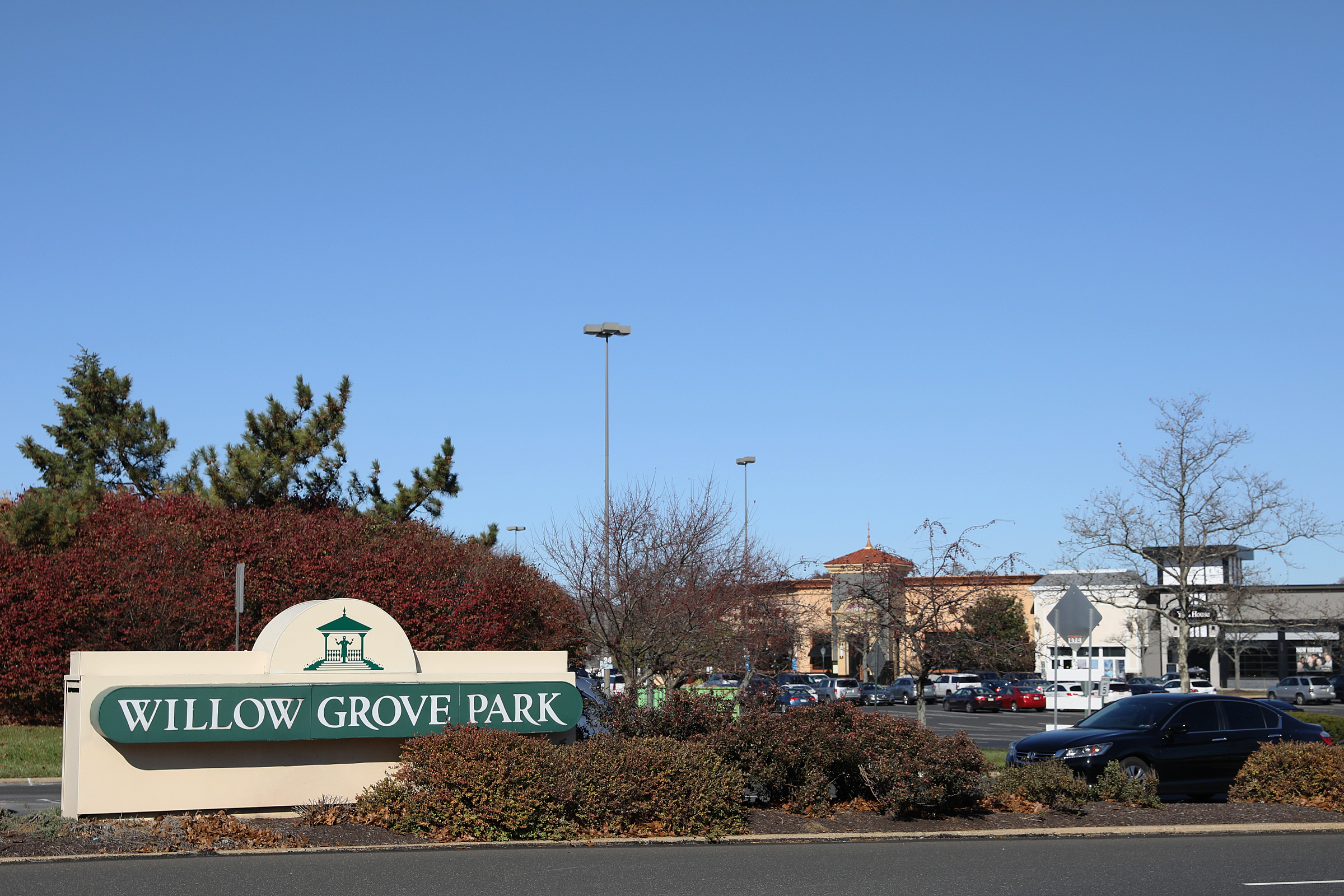
    The Willow Grove Park Mall is shown in 2019.TIM TAI / Staff Photographer

    The potential new buyers, all based in New York, did not return calls or emails from The Inquirer.

    Willow Grove Park Mall would not be their first acquisition in the region.

    In 2015, Namdar, a company known to scoop up distressed malls, and Mason Asset Management bought the struggling Voorhees Town Center from PREIT for $13.4 million. Since then, retailers have continued to flee the Camden County mall, which has been closed since a 2024 fire. A North Jersey developer has plans to buy and revive the property, pending a state tax credit.

    Namdar also owns the Hamilton Mall in Mays Landing, which New Jerseyans have called one of the state’s deadest malls.

    The situation in Montgomery County, however, is different.

    Willow Grove Park Mall has appeared healthy in recent years, despite the financial struggles of its owner, PREIT. As of 2023, the center was about 96% occupied, and PREIT executives were calling the complex “one of our leading suburban Philadelphia assets.”

    The Willow Grove Park Mall opened in 1982 at a time when the Philadelphia suburbs were flush with shopping malls. The complex got off to a bumpy start, failing to meet its first-year sales expectations and leading some mall developers to say, as an Inquirer headline read at the time: “No more malls.”

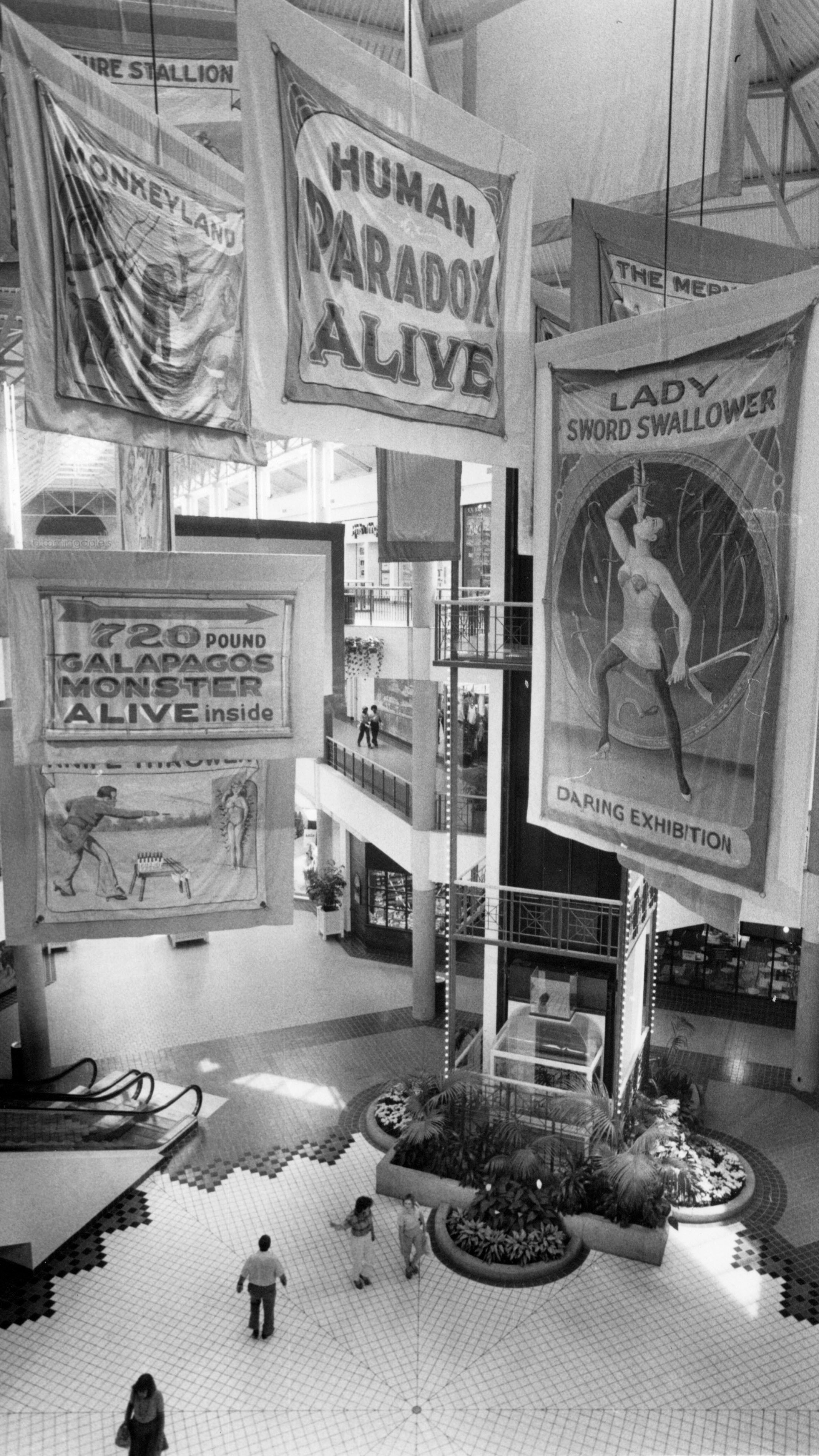
    Banners hung over the elevator court in the Willow Grove Park Mall in this 1984 photo.Michael Plunkett / Staff Photographer

    PREIT has had a stake in Willow Grove Park Mall since 2000, when it and the Pennsylvania State Employees’ Retirement System signed on to buy the center for $140 million.

    PREIT has filed for bankruptcy twice since the pandemic, emerging most recently in April 2024 with $800 million less in debt and a goal to redevelop some of its underperforming properties.

    PREIT’s local mall holdings run from the gamut from the bustling Cherry Hill Mall to Willow Grove Park to Moorestown Mall, which has been undergoing a mixed-use makeover.

    The company also owns the Plymouth Meeting Mall, one of many properties that longtime real estate investor Dean Adler has plans to redevelop.

    PREIT sold the troubled Exton Square Mall to Abrams Realty & Development for $34 million in 2025. The new owners have been mired in a legal dispute with local officials over the redevelopment of the mall, which closed its doors in June.

  • Kylie Kelce stars in debut of Ilona Maher’s YouTube show and offers a peek into her marriage to Jason, motherhood, and more

    Kylie Kelce stars in debut of Ilona Maher’s YouTube show and offers a peek into her marriage to Jason, motherhood, and more

    A new fitness show has hit YouTube, and the first episode stars the Philly area’s own Kylie Kelce.

    On Thursday, the debut episode of Power Hour with Ilona Maher dropped, and Maher, one of the stars of the 2024 U.S. Olympic rugby team, brought Kelce, her friend and fellow athlete, into the gym to lift weights, complete challenges, and talk sports.

    “Here we champion three things: strength, pushing boundaries, and looking good while doing it,” Maher said in the episode’s intro.

    Between jokes about what position they could play on the Eagles, the team for which Kelce’s husband, Jason Kelce, played for 13 seasons, and comparing Instagram hate comments, Maher instructed Kelce on how to do an incline bench press and throw medicine balls.

    The duo kept it real, though, as the sometimes adult-themed conversation strayed from gym-related content and they laughed about dating failures and facing sexism as women in sports.

    “Do you objectify [Jason]?” Maher asked.

    “Of course I do,” Kelce responded, jokingly. “It’s all about equality.”

    Maher, who has previously appeared on Kelce’s Not Gonna Lie podcast, is retired from professional rugby, and Kelce played field hockey at Cabrini after graduating from Lower Merion. More recently, they have advocated for women in sports and philanthropic causes.

    The two appeared together earlier this summer at the sixth annual Team 62 fundraiser in Sea Isle City, where Maher was among the celebrity bartenders for the Kelces’ annual event for the Eagles Autism Foundation.

    Kylie Kelce adds some money to the cash register during the Shore Birds celebrity bartending event in Sea Isle.Courtesy of the Philadelphia Eagles

    Kelce has been outspoken about her life as a mother of four and brought that experience into the weight room on Power Hour. The final challenge, dubbed “The Motherhood,” reversed the roles and put Maher to the test, challenging her to grab the kids, pick up the toys, and, at the end of it all, push a classic weighted sled, which represented the expectations society puts on mothers.

    “To put this pressure on moms, have your kid and get right back in shape,” Maher said, stunned.

    “That’s the dumbest part,” Kelce responded. “You just built a human being, and people are like, ‘You gonna bounce back?’”

    New episodes of Power Hour with Ilona Maher drop on Thursdays.

  • A Lincoln High parent and Mayfair resident want a judge to halt the move of Kensington HS students to a Northeast Philly school

    A Lincoln High parent and Mayfair resident want a judge to halt the move of Kensington HS students to a Northeast Philly school

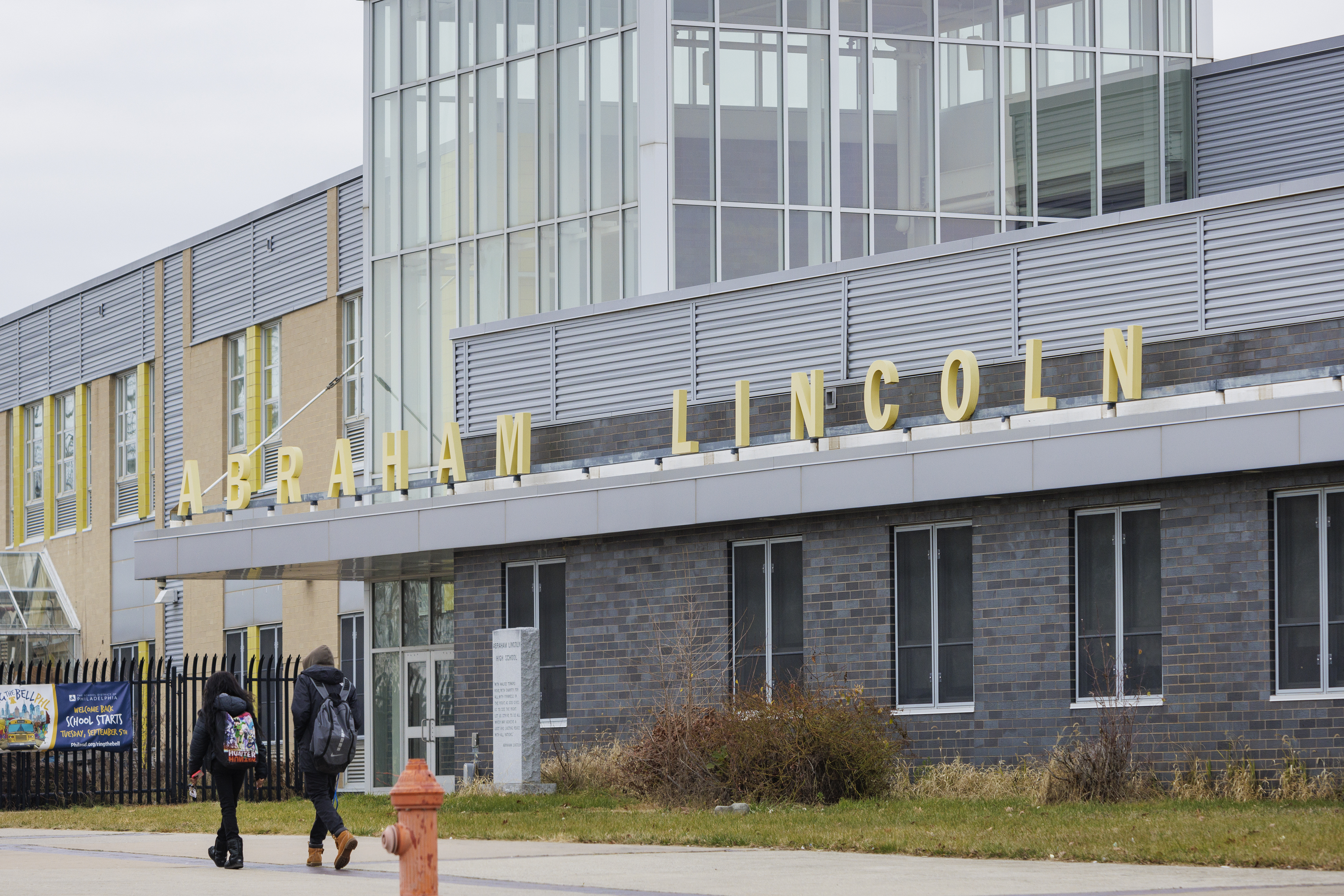
    A Lincoln High parent and a Mayfair resident are attempting to block the planned relocation of Kensington High School students to the former Austin Meehan Middle School in the Northeast.

    Harold Brown, a Lincoln parent, and Peter McDermott, who is active in Mayfair civic life and Democratic politics, filed suit Thursday against the Philadelphia School District, Superintendent Tony B. Watlington Sr., and the city itself in Common Pleas Court.

    While the former middle school has been used as a swing space since it closed in 2022, Brown and McDermott say that moving 400 Kensington High students and 90 staff there will create student safety concerns because the campus is already overpopulated. Meehan is adjacent to Lincoln High and Northeast Community Propel Academy, both of which are overcrowded, with student bodies that exceed the capacity of their respective buildings.

    The relocation, they argue, also violates the terms of a 2018 community benefits agreement that allowed the school district to build Propel.

    Brown and McDermott want a judge to halt the move before school begins for students on Monday.

    The district ordered Kensington relocated to the former Meehan site, more than seven miles away on Ryan Avenue, over asbestos concerns. A contractor working on a new HVAC system for Kensington this summer disturbed asbestos, then tracked it throughout the school, officials said.

    District administrators initially believed they could fix the asbestos issues in time for school to start; after urging from the Philadelphia Federation of Teachers, they decided to relocate staff and students through the end of the calendar year.

    The district last year spent $11 million to place trailers at Lincoln, which houses over 2,000 students in a school built for 1,200.

    City Councilmember Mike Driscoll last week raised worries about adding students from another high school to the Lincoln-Propel campus, and the district said it would prepare and share a school safety plan before classes began.

    “The absence of a disclosed and tested plan prevents families from evaluating whether defendants can safely supervise two separate high-school populations and a K-8 population in the same immediate campus area,” the suit says.

    The suit suggests students be moved instead to Penn Treaty High or Roberto Clemente Middle School. (The district had initially planned to move Kensington students and staff into Clemente, then judged that building did not have enough room.)

    Moving Kensington to Meehan will overtax the campus on multiple levels, the suit said, from congestion and personnel to security and transportation.

    “For Plaintiff Brown’s son and the existing Lincoln student body, adding another complete high-school population to an already over-capacity campus will predictably diminish teacher access, disrupt orderly transitions and arrival and dismissal, reduce access to shared services and activities, and materially impair the quality and continuity of the students’ daily learning and overall school experience,” the suit said.

    Brown and McDermott also say the district has failed to live up to several promises made in the community benefits agreement — including demolishing Meehan, sprucing up fields, and replacing fencing. Those things have not been done, the suit says.

    Philadelphia School District officials could not immediately be reached for comment.

  • Voters will have the final say about lifting Collingswood’s liquor license ban

    Voters will have the final say about lifting Collingswood’s liquor license ban

    After years of scattered discussion and debate, the future of Collingswood’s long-standing status as a dry town is officially in the hands of voters.

    The Collingswood Board of Commissioners passed a resolution Wednesday to add the question to the borough’s general election ballot in November, just days ahead of the Aug. 21 deadline giving the Camden County Clerk’s Office enough time to put it on the ballot.

    The three-person board was required to adopt the resolution after residents submitted a petition in favor of adding the ballot question that was signed by at least 15% of borough voters who participated in the last general election.

    Of the more than 1,100 signatures submitted, the borough verified that 1,019 came from recent Collingswood voters, officials said Wednesday, just eight more than the number of valid signatures required to place the referendum in front of voters.

    The signatures were collected in a hurry over the last three weeks by Booze on the Ballot, a group of residents who, after years of what they viewed as unproductive back-and-forth on the issue among borough officials, got together to finally give voters the chance to settle the debate, organizer Joe Sperlunto said.

    The bipartisan group did not explicitly take a position on the issue but rather emphasized this as an opportunity for residents to decide for themselves what they want for the future of their community.

    “We’ve just seen it kicked around a lot for a long time, and we just felt like it was time for the community to make a decision about it,” Sperlunto said.

    Petitioners equipped with clipboards and pens fanned out across town, collecting signatures wherever they could — among the crowds at the popular Saturday farmers market, in front of businesses along Haddon Avenue, and even knocking door to door, Sperlunto said.

    After the resolution was approved, Collingswood Mayor Daniela Solano-Ward noted that as Election Day approaches, there will be informational sessions for voters to learn more about the referendum as well as any others that may be on the ballot.

    “Just to give everyone the facts and the information,” Solano-Ward said.

    “You make your decisions as you wish, but we want to make sure that you have information from us as to what is real, what is not real,” she said. She added, for example, that BYOBs will still be permitted in the borough if liquor licenses are issued, contrary to a popular misconception.

    What could allowing liquor licenses mean for Collingswood?

    Repealing Collingswood’s liquor license ban would represent a historic shift for a borough that has prohibited alcohol sales by ordinance since the 19th century, linking back to its Quaker heritage.

    If the ban were lifted, the borough would have two options for how to award licenses, borough solicitor Caitlin Harney Norcia said during a commissioners meeting earlier this year.

    Collingswood could award licenses in a competitive bidding process, which could generate one-time revenue for Collingswood’s budget, she said, or the borough could enact an application and review process that includes annual fees and public presentations by prospective licensees.

    The number of liquor licenses permitted within the borough is limited by a state-mandated population-based cap. If voters decide to lift the ban, Collingswood could issue either a single distribution license for a liquor store or up to four retail consumption licenses that permit restaurants or bars to serve alcohol.

    Annual licensing and renewal fees could generate between $1,000 and $10,000 for the borough each year, Harney Norcia said.

    Proponents of lifting the longtime ban see liquor licenses as an opportunity to bolster Collingswood’s local restaurants while generating revenue for the borough.

    At the same time, borough administrator Cassandra Duffey previously told The Inquirer, some business owners are worried that existing Collingswood restaurants would be overlooked for licenses awarded through the public bidding process.

    If alcohol sales are ultimately permitted, Duffey said, the borough will work to not “disrupt the balance” of its established businesses.

    Just a few miles down the White Horse Pike, Haddon Heights is preparing to sell its first retail liquor license at a public auction next month after getting rid of its de facto ban on alcohol sales in 2024.

    The efforts in both towns appear to be in line with goals set forth in legislation signed in 2024 by then-Gov. Phil Murphy to increase the availability and affordability of liquor licenses statewide. The measure was touted as an unprecedented reform of New Jersey’s liquor laws, which have been criticized as being arcane and antiquated.

  • Jalen Hurts, A.J. Brown connect at Eagles-Patriots joint practices, quieting talk of rift

    Jalen Hurts, A.J. Brown connect at Eagles-Patriots joint practices, quieting talk of rift

    FOXBOROUGH, Mass. — Turning his head left and right to scan for onlookers on the sidelines, A.J. Brown ran across the Patriots practice field and only slowed down his trot as he finally approached Jalen Hurts.

    The two men shared a high five, a hug and a brief conversation. Once considered close friends, the players looked like they couldn’t contain their smiles as they caught up.

    The nature of the conversation remained a mystery, but it was a meeting fans and NFL observers had been anticipating for months.

    For the first time since Brown was traded from the Eagles to the Patriots on June 1, the once-inseparable duo met on the lower practice field at New Balance Athletics Center, which is adjacent to Gillette Stadium, after their teams met for the second day of joint practices.

    Brown and Hurts’ relationship goes back nearly a decade, when Hurts hosted Brown on a recruiting trip at the University of Alabama. The relationship blossomed to the point that Hurts was named godfather to Brown’s daughter, Jersee.

    Their bond loosened near the end of their four-year run together in Philadelphia, with Brown reportedly wanting out due to frustration over his lack of targets last season.

    A.J. Brown (right) approached Jalen Hurts on the practice field Thursday. Yong Kim / Staff Photographer

    Whatever tension exists, both players have acknowledged the success they had during their tenure together. Hurts helped Brown post the two highest single-season receiving yard totals in Eagles history — 1,496 yards in 2022 and 1,456 in 2023. With Brown as his No. 1 target, Hurts grew into a three-time Pro Bowler and MVP candidate in 2022.

    The pair helped lift the Eagles to a Super Bowl win in the 2024 season.

    Brown spoke with a group of reporters on Wednesday and was asked about his relationship with Hurts.

    “Philly, man, y’all are tough,” Brown said with a laugh. “Man, it’s love. Listen, honestly guys, none of that stuff even matters. You all should want to report something positive. You know asking the question is going to turn negative. Let’s not get into that. Let’s keep everything positive.

    “It’s love my way. And move forward, that’s all.”

    Hurts was asked a similar question Wednesday, as Brown spoke on another field.

    “I think it was a great day out here,” Hurts said. “I mean, I know he’s going out there and competing. Got a lot of love for him. I always have. Seems like it was a competitive practice.”

    Both men will be in attendance when the Patriots host the Eagles in both teams’ second preseason game on Saturday, but neither is expected to play.