Blog

  • Merion joins Pebble Beach and others as the USGA’s fourth U.S. Open anchor site

    Merion joins Pebble Beach and others as the USGA’s fourth U.S. Open anchor site

    Merion Golf Club will continue to host historic USGA championships for decades to come after the United States Golf Association announced Thursday that the club has been designated as the fourth U.S. Open anchor site.

    The announcement comes just months after Merion hosted the 126th U.S. Amateur, which drew an estimated 20,000-plus fans and marked the most-attended U.S. Amateur on record.

    The new designation is meant to strengthen the long-term partnership between golf’s governing body and one of the sport’s most iconic venues, the USGA said in a news release.

    “Merion has long been one of the defining venues in championship golf,” said John Bodenhamer, chief championships officer of the USGA. “Its history, architecture, and ability to consistently identify the game’s greatest champions make it a place where every player dreams of winning. The anchor site designation is about more than just semantics. It represents a shared commitment between the USGA and Merion to plan further in advance, make strategic investments, and continually elevate the championship experience.”

    The other three U.S. Open anchor sites are: Pebble Beach Golf Links in California, Pinehurst Resort & Country Club in North Carolina, and Western Pa.’s Oakmont Country Club, which is located on the Allegheny River in the Pittsburgh suburbs.

    Fans packed into Merion during the 2013 U.S. Open.

    The purpose of the anchor sites is to create long-term partnerships with historic venues. Knowing that major championships will be regular occurrences at Merion — nearly every five years through 2050 — will allow the USGA and the club to “better invest in infrastructure, improve the player and fan experience, and enhance relationships with local communities and volunteers,” according to the USGA.

    Merion will host the U.S. Open in 2030, 2040, and 2050 and the U.S. Women’s Open in 2034 and 2046. It will be the first time Merion has hosted the U.S. Women’s Open.

    The USGA believes that the game’s most iconic championships should be played at the most respected venues.

    “For more than a century, Merion has been the home for some of the most memorable moments in championship golf,” Merion Golf Club president Topper Ray said.

    Merion — with its famous wicker basket flagsticks — last hosted the U.S. Open in 2013.Staff Photographer

    Some of those memorable moments include Bobby Jones completing the Grand Slam in 1930, Ben Hogan sticking his famous 1-iron shot on the final hole of the 1950 U.S. Open, and Lee Trevino beating Jack Nicklaus in a playoff to capture the 1971 U.S. Open. Most recently, the club hosted the 2013 U.S. Open, which didn’t see a single player finish at par or better and was won by Justin Rose.

    “The Anchor Site designation reflects not only that remarkable history, but a shared commitment between Merion and the USGA to the future of the game,” Ray said. “It also recognizes generations of Merion members whose stewardship, volunteerism, and love of the game have made this club one of golf’s great championship venues.

    “As we look ahead, this partnership allows us to continue stewarding Merion for our members, while giving the next generation of champions the opportunity to add to our remarkable championship story.”

  • Gay Talese’s former Jersey Shore house is listed for $8 million

    Gay Talese’s former Jersey Shore house is listed for $8 million

    A century-old Ocean City home once owned by legendary journalist Gay Talese is on the market for $7.995 million.

    The red-shingled, Victorian-style house at 154 E. Atlantic Blvd. has six bedrooms, 6½ bathrooms, and approximately 4,500 square feet of living space. It sits on a 90-by-130-foot lot in the Gardens, a neighborhood at the north end of Ocean City known for its quieter streets and mostly single-family homes.

    The property is unusually large for the neighborhood, where, according to listing agent Dorothy Phillips, lots are closer to 40, 50, or 60 feet wide. The lot’s size, the space and privacy it provides, Phillips says, are a major part of the house’s appeal.

    “You can build new, but you can’t build this size and still have so much room on the right and left,” Phillips said.

    Gay Talese and his wife, Nan Talese, a book editor and publisher, bought the house in 1968 for $32,000. Gay Talese, who grew up in Ocean City, eventually became a celebrated writer for the New York Times and Esquire. His piece “Frank Sinatra Has a Cold” is widely considered one of the greatest celebrity profiles ever written. It turned Talese into a celebrity, and the couple often hosted friends and fellow literary and cultural figures, like the writer Nora Ephron and the singer Judy Collins, at their Ocean City home.

    The owners preserved the home’s original, covered wraparound porch.dylan jones

    In 2011, the Taleses sold the house for $1.6 million to a couple who carefully renovated it to preserve many of its original features, like the giant wraparound porch and the hidden staircase in the butler’s pantry. They then retrofitted it with modern amenities like an elevator and geothermal heating.

    “You have the old and the new combined,” Phillips said.

    A large, floor-to-ceiling window bathes the family room and upstairs library in natural light.dylan jones

    Another standout feature is the large family room, which has soaring cathedral ceilings and a floor-to-ceiling window that bathes the space in natural light.

    Traces of Talese remain throughout the house, including the striking red hardwood floors, an homage to the famously dapper writer’s favorite color. There’s also a red desk and typewriter that Phillips said belonged to Talese in a bedroom upstairs.

    The original, red, hardwood floors are an homage to Gay Talese’s favorite color.dylan jones

    As to how much the house’s relationship to the esteemed literary figure might matter to buyers, Phillips isn’t sure.

    “You never know,” she said. “I just think it’s a very cool story.”

  • A 2,500-year-old ski? The melting Alps release ancient secrets.

    A 2,500-year-old ski? The melting Alps release ancient secrets.

    COL DE BARBERINE, Switzerland — The Alps are losing ice faster than almost anywhere on the planet. And, as the glaciers and ice patches disappear, they are releasing secrets that had been locked away for millennia.

    Secrets like an enigmatic, 2,500-year-old ski that melted not long ago out of a strip of dying Swiss ice.

    On a bright recent morning, Romain Andenmatten, a 42-year-old archaeologist, peered down at his discovery. Exploring the paltry remains of the ice at a mountain pass called Col de Barberine, he spotted a 3-foot-long slat of grayish wood, nestled between rocks at the ice’s edge.

    Three years ago at this same pass, elevation 7,500 feet, Andenmatten found a similar plank, also with a tapered end suggesting a ski or snowshoe. Carbon dating revealed it to be from roughly the fifth century B.C., when, on a certain day in the Iron Age, its owner might have been crossing the Alps and lost his footing.

    Now Andenmatten wondered whether he’d found the second in the pair. It would be the latest in a growing trove of tools, garments, and human remains that archaeologists have recovered from the Alps’ shriveling ice.

    Between a winter of little snow and a summer of broiling heat waves, this year has been another devastating one for Switzerland’s glaciers. They have shed nearly 20% of their volume over the past five years, scientists said this month. At the current pace of global warming, 97% of today’s glaciers across the Alps could be gone by century’s end, posing big challenges for the tens of millions of Europeans for whom the ice is a vital reserve of water in dry years.

    In much of the world, it’s mostly stone, metal, and pottery that survive from ancient times. Not in the Alps, where the ice has preserved organic materials — leather, wood, textiles, body parts — that can tell a richer, more human story about the past.

    “The Stone Age was not really a stone age,” said Regula Gubler, an archaeologist for the Swiss canton of Bern. “Most of what people used and wore was made out of organic materials,” she said. To find the leather shoes that protected their feet, the baskets of woven lime bark they carried into the mountains, “that’s just really special,” Gubler said.

    The objects that have welled up out of Switzerland’s ice span the ordinary to the beguiling.

    A fragment of an elm wood bowl from the fifth millennium B.C., long before the pyramids of Egypt and Stonehenge. A birch bark quiver with two flint arrowheads tucked inside, from around 2800 B.C. A 2-foot-long statuette sculpted from larch, with a human figure at one end and a sharpened point at the other, from the last two centuries B.C., its purpose unknown.

    Such discoveries are challenging old ideas about how early societies interacted with the alpine environment. Far from being forbidding, off-limits zones, the icy mountain passes apparently bustled with traffic: hunters, herdsmen, traders bearing barrels of wine on mules.

    “The Alps were always used; it wasn’t an empty space,” Gubler said.

    Nor, evidently, did early populations limit themselves to the gentlest routes. Their preferred paths between valleys seem to have been the shortest ones, never mind the steepness or the elevation.

    There’s an urgency to the archaeologists’ work. Once organic materials are defrosted and exposed, they decompose quickly, or are snatched up by private treasure hunters. In 2024, police and archaeological authorities in the canton of Valais seized a collection of 11,000 artifacts, including coins, tools, and decorative objects from as far back as the Bronze Age, and questioned a man for using a metal detector to scavenge them without permission.

    With so many small glaciers and ice patches disappearing each year, some relics are probably doomed never to be found, to be consigned to oblivion simply because no one was in the right place, at the right moment, to spot them.

    “An archive of human existence in the Alps is being lost,” said Marcel Cornelissen, an independent archaeologist based near Bern.

    Archaeologists in Valais are maximizing their eyes on the ground with an app they developed, IceWatcher. Anyone — hikers, shepherds, crystal collectors — can use it to report potential finds in the mountains.

    It was through IceWatcher that Andenmatten, an archaeologist for Valais’ cantonal government, heard in 2024 about some fragments of wood in an ice patch. He hiked up to a crossing called Restipass and collected some pieces that he later dated to the Bronze Age, making them perhaps 3,000 years old. Some might have been stakes in the ice that marked paths for travelers and warned of crevasses. Others might have been pieces of a sled or scraps of firewood.

    Now, he and a colleague, David Gucker, were going back to see what this year’s sweltering temperatures had uncovered.

    They drove up switchbacked roads and hiked for two hours through steepening alpine meadows. Finally, they clambered up to the pass and got a shock: The ice was all but gone. When Andenmatten was here two years ago, it had carpeted the slope where they stood. Now it was barely an icy area rug, leaking streams of water.

    Sometimes, the ice in these passes can shrink noticeably over the course of a single day of fieldwork, Andenmatten said. “In the past, climate change might have unfolded over several generations, or over a lifetime,” he said. “Today, we experience it almost day to day.”

    He and Gucker scoured the gravel and stones. They were well above the tree line, so any wood here had to have been brought by humans. The question was when: five years ago, or 5,000?

    Andenmatten was in his element. He leaped from rock to rock like a mountain goat, flashing an impish, gaptoothed grin.

    Something caught his eye: two slender pieces of wood, with smooth, squared-off edges. Delicate tree rings ran through them like flaky layers of mille-feuille pastry.

    Andenmatten rotated the pieces this way and that. It wasn’t obvious they’d fit together. But miraculously, they did, and with that they transformed from lifeless fragments into an implement, something crafted by human hands.

    “Really nice, this piece,” Andenmatten declared, before tucking it into a plastic bag.

    Using satellite images and topographic maps, Swiss archaeologists are working with environmental scientists to predict where the next discoveries might emerge.

    It would be “amazing” to find something atop a mountain peak, not just in the passes below, said Albert Hafner, an emeritus professor of archaeology at the University of Bern. Prehistoric people crossed the Alps, but we don’t know whether they scaled them, or, if they did, why. “We know that mountains were sacred in many cultures,” Hafner said. A religious object on a peak might reveal something about early people’s curiosities, their beliefs, their inner lives.

    The next morning, Andenmatten hiked into the mountains again, to Col de Barberine. There, he found the possible second ski.

    A ski might not tell us much about inner lives. But “the thing that is for me more spectacular is that it’s conserved,” Andenmatten said — that an accident of nature has allowed this modest object to speak across the ages.

    This article originally appeared in the New York Times.

  • There’s almost a foot between Markel Bell and Willie Lampkin. But they’ve become ‘brothers’ as O-Line careers take off.

    There’s almost a foot between Markel Bell and Willie Lampkin. But they’ve become ‘brothers’ as O-Line careers take off.

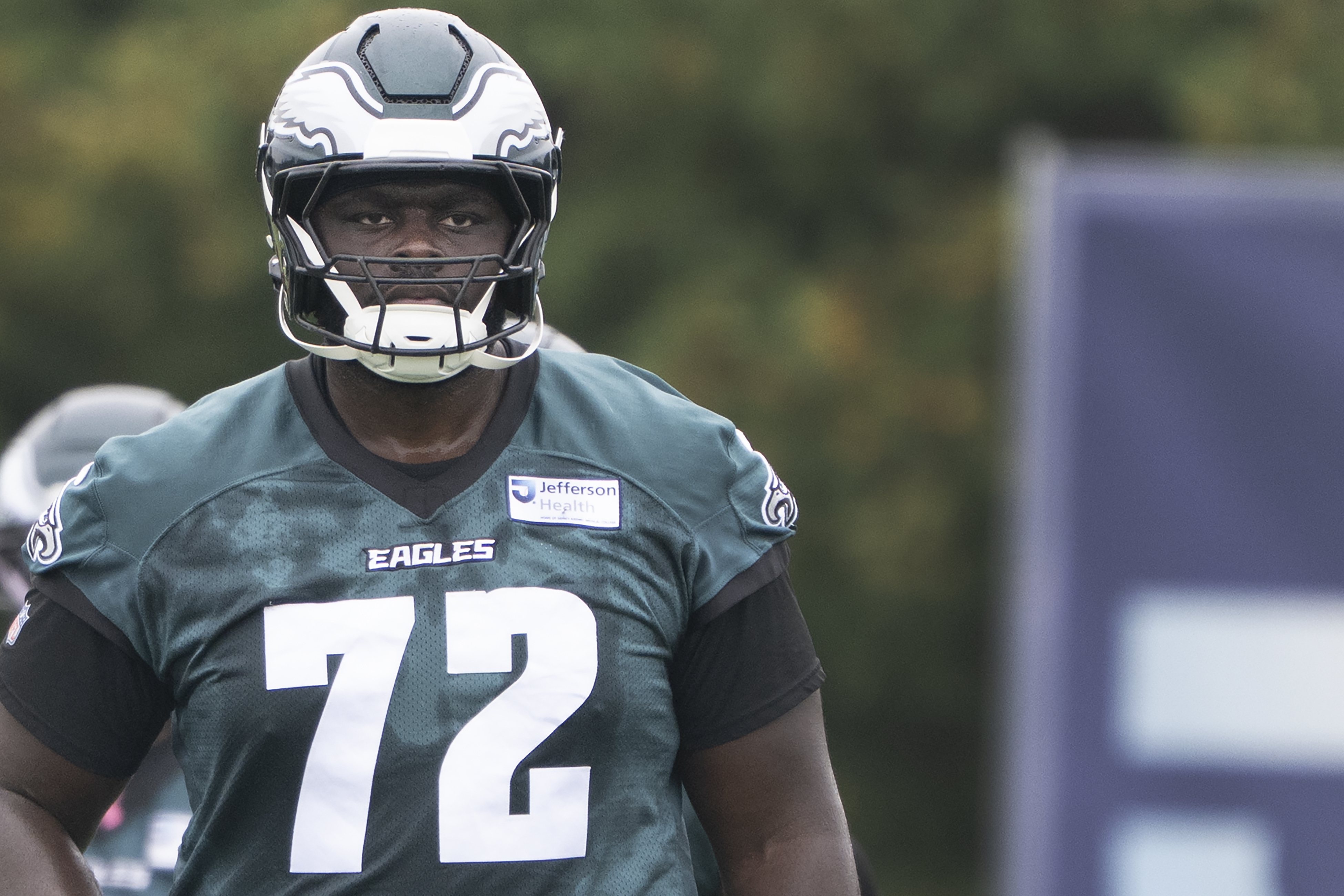
    When Willie Lampkin stands next to Markel Bell, it’s hard to notice anything but the gap between them. Bell, the tallest player in franchise history, is listed at 6-foot-9, 346 pounds.

    Lampkin, the league’s shortest offensive lineman, is pint-sized in comparison, at 5-11, 290. The near-foot of separation has led to some quips from both fans and media.

    On Aug. 10, for example, during training camp, a reporter posted a video of Lampkin and Bell during a team drill. Someone took a screenshot of them walking off the field. The image went viral on X, evoking more than a few Manute Bol-Muggsy Bogues comparisons.

    The right tackle and the left guard found it funny. But in a way, their greatest difference — their height — is rooted in a fundamental similarity.

    Lampkin will never know what it’s like to tower above his teammates, just as Bell will never know what it’s like to peer up at them. But both linemen know what it’s like to be underestimated.

    And they both use that to motivate themselves — and each other.

    “We’re kind of cut from the same cloth,” Bell said. “We’ve both been doubted our whole lives. And now it’s just time to make people pay for it.

    “I went to JUCO. He went undrafted. Of course, with his stature, people look at him and say, ‘Hey, he’s too small.’ And people look at me and say, ‘Hey, he’s too big.’”

    For Bell, who was selected in the third round of the 2026 draft, the knock was his ability to get low, or play alongside shorter players. He said that being from small-town Mississippi didn’t help, either.

    Markel Bell was drafted as a possible heir apparent to Lane Johnson at right tackle, and his time has come sooner than expected. Jose F. Moreno / Staff Photographer

    The future Eagle was a zero-star recruit who received only low-level Division I interest coming out of high school. He enrolled at Holmes Community College, in the hopes of attracting more attention, before transferring to Miami in January of 2024.

    For Lampkin, it was that he couldn’t compete with those larger than him. Like Bell, he started his college football career in relative obscurity, leveraging three strong seasons at Coastal Carolina to earn a spot at the University of North Carolina.

    In the lead-up to Lampkin’s pro day in 2025, some NFL scouts and coaches said he’d be better suited to a backfield role, even though he’d spent his college career at guard and center. His size, relative to his position, was a factor in him going undrafted before the Los Angeles Rams signed him in April of 2025.

    The Eagles claimed Lampkin in August of last year, and put him on injured reserve two days later.

    When the two players first met, over the summer, they realized they shared a resilient spirit. Before long, they were inseparable; “always together” at the practice facility and at the stadium, in Lampkin’s telling.

    “He’s like my brother, man,” the guard said of Bell. “He’s like a humble beast.”

    Willie Lampkin parlayed a strong training camp into a 53-man roster spot in 2026. Jose F. Moreno / Staff Photographer

    Like any brothers would, they began to engage in some good-natured ribbing, mostly about the ACC rivalry between UNC and Miami. They never faced each other, but Lampkin will never let Bell forget about the Tar Heels’ 41-31 win over the Hurricanes in October of 2023.

    “I always tell him that we beat them,” Lampkin said. “I got my dub over Miami.”

    He also gave Bell a nickname (which appears to have been borrowed from reality TV personality Alexis Radcliff).

    “I call him ‘Big ‘Kel not the Little One,’” Lampkin said. “He hates when I say that. I’ve heard it online and I always just say it to him. I don’t even know, I just heard it. I always be like, ‘Big ‘Kel not the Little One.’”

    Added Bell: “He just be trollin’, he just be trollin’. I laugh and I tell him to get out of my face.”

    Bell said that as backups, they’d talk about what it would be like when their opportunities finally came. In that moment, it felt distant.

    Lane Johnson was entrenched at right tackle. Jurgens was at center, and Landon Dickerson at left guard. But the linemen tried to keep each other motivated.

    “We were like, ‘Bro, our time will come,’” Bell said. “‘And when it does come, we’re going to get on the field, and we’re going to stay on the field.’”

    Gameday Central: Is it time for the Eagles to start Willie Lampkin?
    Video: Gameday Central: Is it time for the Eagles to start Willie Lampkin?

    It came more quickly than anyone anticipated. Dickerson was placed on injured reserve on Sept. 14. Johnson retired earlier this week. Jurgens was traded on Wednesday, and his replacement, Drew Kendall, didn’t practice all week and was ruled out Friday with a knee injury.

    To say this is a big opportunity for the two linemen would be an understatement. Bell has started one NFL game (abruptly, after Johnson bowed out last week less than two hours before kickoff due to a personal matter). Lampkin has never started in his pro career.

    On Sunday against the Jacksonville Jaguars in London, they’ll likely join the huddle together, to prepare for the Eagles’ first offensive play of the game. Their vantage points will be vastly different.

    But inside, their perspective will be the same.

    “We’ve been doubted our whole lives,” Bell said. “The time is now. So just go out there and seize it.”

  • The Eagles are doing something scarier than tanking, rebuilding, or going all in. They’ll be better for it.

    The Eagles are doing something scarier than tanking, rebuilding, or going all in. They’ll be better for it.

    You’d rather a general manager do what Howie Roseman did than refuse to do it on principle.

    I’ve been searching for something more definitive to say about one of the more discomfiting weeks in recent Eagles history. But all I have are first principles.

    • It is better to be a year early than to be a year late.
    • It is harder to get unstuck than it is to avoid getting stuck in the first place.
    • Never let a crisis go to waste.

    All three of these principles apply to the Eagles’ decision to trade starting offensive lineman and one-time long-term fixture Cam Jurgens to the Ravens. What really matters, though, is how these principles apply to all of Roseman’s decisions and in the preceding six months. That framework will tell you a lot about where the Eagles think they are, and their mindset for the rest of the 2026 season.

    It would be easy to look at the events of the last six months and wonder if anybody in the Eagles’ building knows what they are doing. Turbulent does not begin to describe the current state of play at One NovaCare Jefferson Way. Even for a team that has spent close to a decade riding a zero-sum yo-yo between Super Bowl and complete dysfunction, the 2026 season is off to a hell of a start.

    Just this week, the Eagles had seen:

    • Their second-most important offensive player ruled a surprise inactive an hour before kickoff.
    • Their starting running back suffer a potential multiweek hamstring injury and his backup suffer a multiweek core muscle injury.
    • Their starting quarterback complete 12 passes for 93 yards in a game.
    • Their second-most important offensive player retire.

    And that was all before Tuesday.

    The Eagles dealt former stating center Cam Jurgens to the Ravens in a trade this week.Yong Kim / Staff Photographer

    So it says something that the real stunner came on Wednesday. Just four weeks into the season, the Eagles traded one of the two remaining starters from one of the best offensive lines in NFL history. Not only that, but they traded him to a fellow Super Bowl hopeful that was more than willing to part with a second-round pick for a two-time reigning Pro Bowl center who just turned 27 years old.

    In less than five years, Cam Jurgens went from a rookie Super Bowl starter and heir apparent to franchise legend Jason Kelce, to a Super Bowl winner with a fat contract extension, to a Baltimore Raven. You could call it a fall from grace, except the Ravens are currently the third betting favorite to win the Super Bowl. The Eagles are 16th.

    The move is almost entirely without precedent. The Eagles’ return for Jurgens — a 2028 second-round pick and a move up from the seventh to fifth round in 2027 — has been unanimously heralded as significant. One factoid making the round is that Jurgens is the first interior lineman traded for a first- or second-round pick since 2011, per Spotrac.

    The framing is doing a lot of work. After all, it’s been nearly three years since a quarterback was traded for a first- or second-round pick. One can just as easily say the Eagles are the first team since 2011 to trade an interior lineman who was worth a first- or second-round pick. Reality is, good interior linemen tend to play for good teams, and good teams tend not to be interested in trading away established offensive line talent for draft picks.

    All of which leads to a rather obvious question: Do the Eagles no longer view themselves as a good team? At least, one that’s good enough to prioritize present value over future value?

    Are they tanking? Rebuilding? Packing it in?

    Not according to the bossman.

    “We’re trying to win this year,” Roseman told reporters. “I think, from my perspective, just looking at what is the ultimate goal, which is to win the last game of the year, and then to have a run like we’ve had.”

    unCovering the Birds: What is ailing the Eagles' offense
    Video: unCovering the Birds: What is ailing the Eagles’ offense

    Except, there are different levels of “trying.” And “trying” is not something that a good organization can limit to one season. Ask any personnel executive in any sport about time horizons and you’ll get a different answer. The bad executives are the ones who look at you cross-eyed and say nothing. The good ones all phrase things differently, but the basic common goal is to maximize championships per year between here and infinity. The longer your time horizon, the tougher the task. Achieving it in the NFL requires transcending the natural four- to five-year talent cycle created by its draft and contract structures. The hardest thing isn’t to go from bad to good or from good to great. It’s to remain in that space between good and great.

    Doing so requires first and foremost a keen understanding of oneself. You need to evaluate who you are, and also what you are going to need in order to be who you want to be. Those two things often come into conflict. The best decision-makers are those who know which to prioritize in any given moment.

    The Chiefs have done it better than anybody. They traded Tyreek Hill in a deal that helped them draft Trent McDuffie and now they’ve traded McDuffie. In between they traded Joe Thuney and L’Jarius Sneed. They are now 4-0 with a team that includes three defensive contributors (Nohl Williams, Ashton Gillotte, Peter Woods) and one offensive contributor (Rashee Rice) they acquired using the draft capital they acquired. They gave running back Kenneth Walker III the contract and the role he desired.

    For more than a year, the Eagles have been telling us both where they think they are and where they think they need to go. Their decision to trade A.J. Brown. Their decision to let Milton Williams and then Jaelan Phillips walk. Their decision to keep four quarterbacks on the roster. Their decision to fill out their offensive skill positions with short-term, low-risk deals. The goal is to transcend the notion of rebuilding. There are windows. And there are transitions. If you do it right.

    The important thing for Eagles fans is that Roseman’s head is in the right place. The unprecedented nature of the Jurgens move is a sign that the process is sound.

    There is a time element involved in good decision-making. It’s why good quarterbacks are so few and far between. Life moves slower on film. There is a pause button. Accuracy and arm strength would be the only differentiators if each play were a take-home test. The game isn’t knowing the right read. It’s knowing the right read before the opportunity window closes. The Eagles saw Drew Kendall as their center. They saw Jurgens as replaceable at guard. They had a chance to sell high. They took it. Which is exactly what you need to do in a time of diminishing resources.

  • Chester County high school closed Friday due to confirmed measles case

    Chester County high school closed Friday due to confirmed measles case

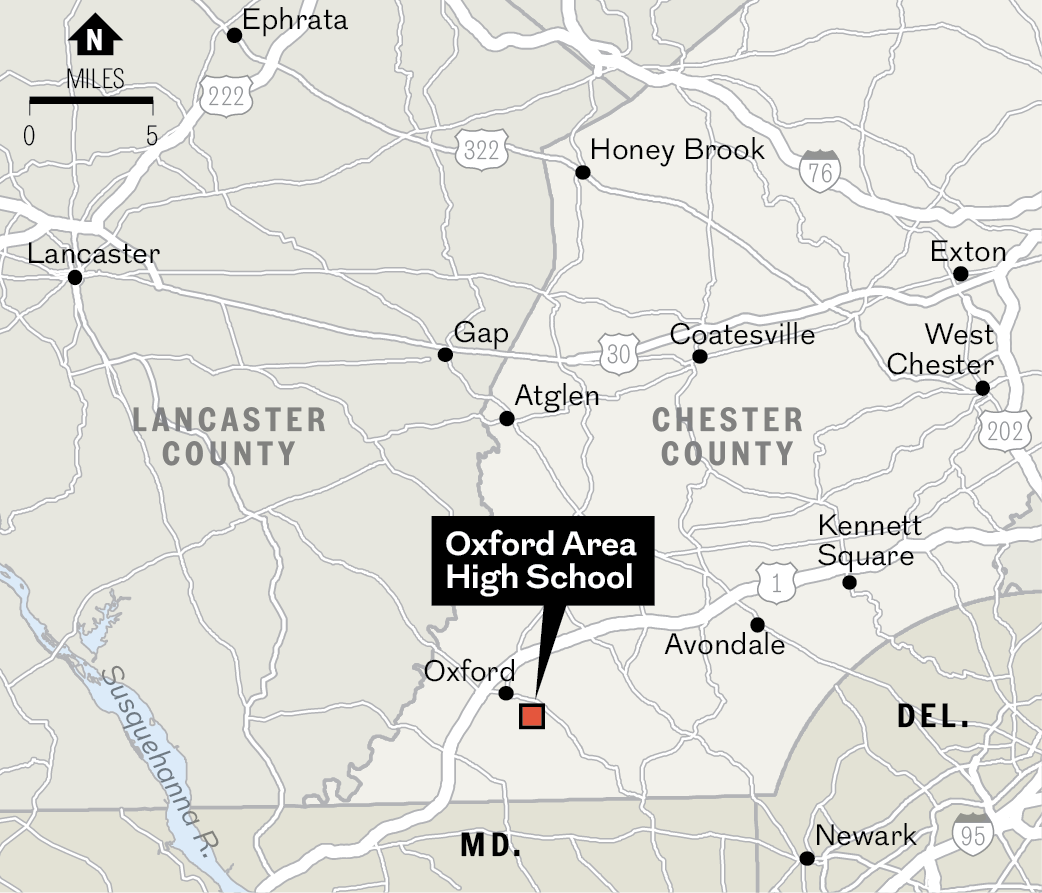
    In the latest sign of the concern over a Pennsylvania measles outbreak that is now the nation’s largest, Oxford Area High School was closed on Friday due to a confirmed measles case.

    Districts in other outbreak areas have not been closing schools as the state grapples with its worst measles outbreak in three decades, but school officials in the Chester County community west of Philadelphia made the decision after consulting with county health officials to limit the risk from the highly contagious disease.

    In a letter to the school community, Oxford Area School District Superintendent David Woods said that all students and staff who are unvaccinated, or do not have proof of their vaccination status, will be required to quarantine at home for 21 days. The school’s quarantine decision follows Pennsylvania Department of Health guidelines.

    Schools are required by state law to track and report data for all required vaccines — including the measles, mumps and rubella (MMR) vaccine — for students but not for staff.

    Chester County’s health department directed the school to verify the vaccination status of its employees, Woods said in the letter. The district made the decision to close the school Oct. 9 to complete the verification process, a county spokesperson said.

    School and county officials have not said whether the positive case involved a student, staff member, or someone else in the school community. “We recognize that situations such as this can be unsettling, especially when they involve the health of children,” Woods said in his letter.

    High school and district officials did not respond to a request for comment.

    The superintendent’s note did not say whether the school will reopen Monday or whether homecoming festivities planned for this weekend would be canceled.

    But the school district did decide that a football game, with Oxford playing at Kennett High School in Kennett Square, could go on “after taking the appropriate health and safety precautions,” officials said in a social media post.

    Pennsylvania Department of Health “generally does not recommend school closure for outbreaks of infectious diseases” as an initial response, according to published school guidance. Exposed students and staff who are unvaccinated or cannot verify their vaccination status will be instructed to stay home for 21 days, according to a health department spokesperson.

    The decision to close is ultimately made by school administrators, according to the Department of Health, which urges schools to consult with in-house medical staff and county or state health authorities.

    Chester County Health Director Jeanne Franklin applauded the district’s quick response, noting the move could prevent longer closures from widespread sickness.

    “We don’t want it to get to the point of they have to shut down because they don’t have the staff to run the school, or too many students are infected and can’t come to school,” she said.

    The county learned of the case from a health provider who treated the individual, and then contacted the school district.

    Vaccine records for students were readily available, but the school was still in the process of gathering vaccine information about staff — a step the county had urged schools to take in anticipation of the region’s outbreak reaching Chester County schools.

    The district ultimately decided it did not know the vaccination status of enough of the school’s employees to safely open the school on Friday.

    “The moment we called, they were on it,” Franklin said, adding that she “fully respected” the decision to close. As the first school in Chester County with a confirmed measles case, ”they’re going to have an abundance of caution and make sure they get it right,” she said.

    Chester County has the third-most measles cases in Pennsylvania, despite an overall measles vaccination rate just below the 95% protection scientists say is necessary to prevent the virus from spreading.

    Pennsylvania’s measles outbreak, largest in the nation this year, has sickened more than 1,100 people across more than half of the state’s counties. The state has confirmed five measles-associated deaths, the most seen in the nation in more than three decades.

    The state’s outbreak, which began in April, is centered in Lancaster County, right outside the Philadelphia region.

    Chester County is the only county in the Philadelphia region in which the virus is known to be actively circulating. The county has reported 87 cases this year, as of Friday, mostly along Chester County’s western border with Lancaster County.

    Oxford is located in the southwestern corner of Chester County.

    Another school in nearby West Grove, Technical College High School (TCHS) Pennock’s Bridge Campus, operated virtually on Friday, after the Chester County health officials notified its administrators of possible measles exposures between Sept. 30 and Oct. 2.

    A spokesperson for the campus overseen by the Chester County Intermediate Unit said the decision was made “because the staff verification process could not be completed within the time frame required by the Health Department.”

    Programs housed within its building, including the Practical Nursing Program and Early Discovery Center, were closed for the day.

    Additionally, the county on Friday warned of possible measles exposures at multiple pharmacies Oct. 4:

    • CVS located at 870 Baltimore Pike in Kennett between 10:45 a.m. and 3 p.m.
    • CVS located at 857 West Baltimore Pike in West Grove between 12:30 and 3:30 p.m.
    • Giant located at 849 Baltimore Pike in West Grove between 1 and 3:45 p.m.

    (function(){function e(){window.addEventListener(`message`,function(e){if(e.data[`datawrapper-height`]!==void 0){var t=document.querySelectorAll(`iframe`);for(var n in e.data[`datawrapper-height`])for(var r=0,i;i=t[r];r++)if(i.contentWindow===e.source){var a=e.data[`datawrapper-height`][n]+`px`;i.style.height=a}}})}e()})();

    Joe Maida, who is raising his 5-year-old granddaughter with his wife in East Nottingham, was surprised to hear the high school was shutting down for the day.

    Maida, 65, felt there was a lack of information from the district to explain its decision — such as who in the school population was infected, if officials were disinfecting, if there was an adequate “plan of attack” to reopen Monday.

    He was also surprised the high school’s varsity football team would be able to play a game Friday night.

    “I’m a bit taken aback” by the response, he said.

    But his granddaughter is vaccinated, and her elementary school was unaffected. “I’m not giving it a lot of energy,” he said. “It’s the measles. It’s not the plague,” he said.

    (function(){function e(){window.addEventListener(`message`,function(e){if(e.data[`datawrapper-height`]!==void 0){var t=document.querySelectorAll(`iframe`);for(var n in e.data[`datawrapper-height`])for(var r=0,i;i=t[r];r++)if(i.contentWindow===e.source){var a=e.data[`datawrapper-height`][n]+`px`;i.style.height=a}}})}e()})();

    School vaccination

    Chester County reported its first measles case of the outbreak at the end of June. As part of its early preparations, the county health department alerted schools before the beginning of the new school year that they would need to know the vaccine status of all staff and volunteers in the event of a positive case.

    While Chester County has an overall kindergarten measles vaccination rate just below the 95% herd immunity rate, Oxford Area High School students appear well protected.

    The school reported that all of its 303 12th graders had received the MMR vaccine in the 2025-2026 school year, the most recent year for which data is available.

    The district’s middle school, Penn’s Grove School, reported a 96.3% MMR vaccine rate among 7th graders last year.

    To better understand how school districts have been preparing for possible measles cases, The Inquirer contacted 12 Chester County districts last month, asking how they were planning and communicating with students and staff about the prospect of quarantines.

    The Oxford district, which has more than 3,000 students, did not respond, along with a number of other Chester County districts.

    Pennsylvania State Education Association, the statewide teachers’ union, declined to comment on the school closure.

    Oxford Area Education Association, which represents teachers at the high school, couldn’t immediately be reached for comment.

    School response to measles

    Measles, long considered eradicated in the United States, is resurging amid declining vaccination rates.

    In the Philadelphia region, at least 40% of kindergartens were vulnerable to an outbreak as of last school year, up from 33% the prior year, according to an Inquirer analysis of school immunization data widely used to assess community protection levels.

    Schools are required to report vaccine information for students in kindergarten, 7th grade, and 12th grade. Earlier this year, Pennsylvania’s Department of Health began making this information publicly available through a searchable database, in an effort to raise awareness of declining vaccine rates in schools.

    Health officials in neighboring Delaware and Montgomery Counties said they have similarly been advising school districts about rules for unvaccinated students and staff in the event of a positive measles case.

    Montgomery County has urged schools to review immunization records and confirm proof of immunity, and develop plans to “rapidly identify students and staff who may be at risk,” said Christina Miller, administrator of the county’s Office of Public Health.

    Delaware County’s health department said that it would offer guidance to a school with a positive measles case on how to verify immune status for students, employees, and volunteers, as well as how to identify high- or low-risk exposures at the school.

    If a case is identified in a Philadelphia school, the city’s health department said it would work with the school’s administration to determine when the person was infectious and how to protect exposed students and staff.

    Counties without a local health department rely on Pennsylvania’s Department of Health.

    Neil Ruhland, a spokesperson for the state health department, said school nurses or school leaders should contact the health department immediately if a measles exposure occurs at a school.

    Schools should review attendance records, assess where the exposure occurred, and determine the vaccination status of exposed people.

    If the department confirms a measles case and exposure at a school, it will notify families and provide guidance on what to do if they’re not vaccinated, Ruhland said. Exposed students who are vaccinated are considered immune and don’t need to do anything else.

    An exposed person who isn’t fully vaccinated will be told to quarantine at home for 21 days, whether or not they show symptoms, Ruhland said. But, if that person gets an MMR dose within 72 hours of the exposure, quarantine will be lifted, he added.

    Verifying vaccine status

    Tracking down childhood vaccine records as an adult can be challenging — many adults may have been vaccinated before medical records were widely stored online, and their long-ago pediatricians may no longer be practicing.

    People who were vaccinated in Pennsylvania after the year 2000 can search for their records in the online Pennsylvania Immunization Electronic Registry System (PIERS).

    People born before 1957 are considered immune because most children contracted the virus before the vaccine was introduced.

    Titer blood tests can check for antibodies that indicate immunity against measles, either from the vaccine or a past infection. People with low antibodies — and therefore low protection — can get a booster.

    Perhaps the fastest way to ensure you’re protected as an adult, Franklin said, is to get the MMR vaccine. The vaccine is safe to get even if you have already received it, she said.

    Inquirer staff writers Aubrey Whelan, Brooke Schultz, and Maddie Hanna contributed reporting.

  • Cardinal O’Hara is using a ‘next class up’ mentality to ‘close the gap’ on other top Catholic League football programs

    Cardinal O’Hara is using a ‘next class up’ mentality to ‘close the gap’ on other top Catholic League football programs

    Mike Ewing knew winning football games couldn’t be the first thing he fixed at Cardinal O’Hara when he took over the high school football program in 2022.

    “The first thing you have to start with is culture,” Ewing said. “You have to bring your culture, and it has to be tangible.”

    That meant the weight room. It meant changing how O’Hara practiced. It meant establishing standards and refusing to move them when players tested how much the new coaching staff would tolerate.

    “You have to demand certain things,” Ewing said. “You just have to be consistent with the message and consistent with your expectations of them.”

    Four years later, Ewing is confronting a different challenge.

    After last season produced 10 wins, a District 12 championship and the program’s first state-playoff victory, Ewing is trying to make sure the Lions’ breakthrough becomes an expectation rather than an exception.

    “We don’t expect a down year,” Ewing said. “We don’t want a down year. We’re not planning for a down year. It’s just the next class up. It’s their turn next.”

    This season is providing an early test.

    O’Hara, who replaced several veteran starters, opened the season with a 4-0 record. Consecutive losses to Smyrna and St. Joseph’s Prep followed as the Lions entered the heart of their Catholic League schedule.

    Ewing has never confused improvement with arrival.

    O’Hara’s breakthrough last season came when the Lions beat Bonner-Prendergast, their biggest rival, in the playoffs. The Friars won a state championship the previous season, and O’Hara had not beaten them in nine years.

    For Ewing, the 24-3 victory provided the clearest indication that what his staff had been building might finally be taking hold.

    “That was kind of like, ‘OK, we might have something special here,’” Ewing said.

    The result was years in the making.

    When Ewing arrived, he said changing the program meant creating standards players could feel daily. If players weren’t participating in a winter or spring sport, they were expected in O’Hara’s weight room. Speed and change-of-direction training became part of the routine.

    Senior linebacker Max Brown remembers returning to practice after suffering an injury during a seven-on-seven competition as a sophomore. Brown assumed the coaching staff might ease him back in.

    When he made a mistake, coaches immediately corrected him.

    Brown became frustrated until Ewing found him afterward and explained why he had been so demanding. Ewing believed Brown could become a good player, so he was going to coach him accordingly.

    “They don’t pick favorites,” Brown said. “They play whoever the best players are.”

    Brown said that approach still defines practices. Whether it is a full-pads session or a lighter Thursday, Ewing and his staff emphasize arriving on time, working in the weight room and treating the details seriously.

    “They try to emphasize the small things that will lead to big accomplishments,” Brown said.

    Ewing hopes those standards eventually become enforced by players as much as coaches.

    “If the coaches lead, we’re going to be good,” Ewing said. “If the players lead, we’re going to be great.”

    Beyond Friday nights. Ewing wants teammates correcting each other in the classroom and hallways and stepping in when someone is about to make a poor decision.

    For Ewing, player ownership is evidence the culture is becoming self-sustaining. So is the way players now describe O’Hara’s reputation.

    When senior running back Isaac Day, a team captain, first joined the program, he remembers opponents reacting casually when they saw the Lions on their schedule.

    “Oh, we’re playing O’Hara.”

    Now, Day said, the reaction is different.

    “Now it’s, ‘Oh, we’re playing O’Hara. We’ve got to lock in because they’re coming to play,’” Day said.

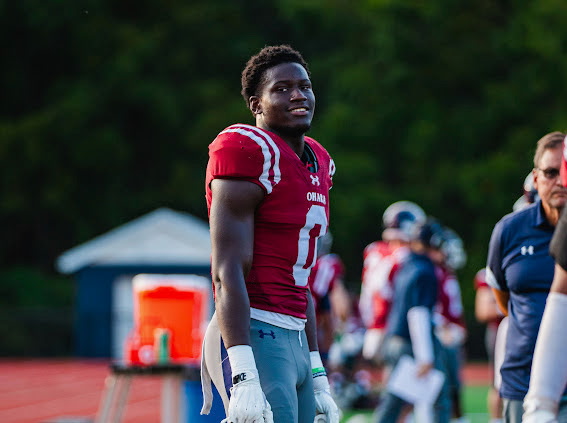
    Sammy Dantonka had 83 tackles as a defensive end with Cardinal O’Hara last season.Cardinal O'Hara Athletics

    Senior edge rusher Sammy Dantonka remembers a similar starting point. O’Hara was coming off a 1-9 season when his group arrived.

    “Then we shocked everybody,” Dantonka said.

    Winning seasons followed, and expectations rose. Dantonka said this year’s goal is no longer having another successful season. The Lions want to “win it all.”

    That ambition has not changed Ewing’s assessment of where the program stands.

    O’Hara cleared one major hurdle by beating Bonner last year. It has not yet won against St. Joe’s Prep, La Salle or Roman Catholic since Ewing took over. They will get a chance to knock off Roman Catholic when they play Saturday.

    “We’re trying to close the gap,” Ewing said. “Those are the teams we’re striving to get to.”

    The largest obstacle, he believes, is depth.

    Some of O’Hara’s PCL opponents have hundreds more boys in their schools. Ewing believes his top players can compete with anyone, but injuries, academic absences or other losses expose the gap between O’Hara and other top local programs.

    “Our ones can play with anybody,” Ewing said. “But if we have an injury, or somebody is out because of academics, that’s where you start to see the falloff.”

    That makes sustaining success more complicated.

    Ewing has already watched the first major class of his tenure move on. Many were three- and four-year starters who were there while the program’s new identity was being formed.

    The question now is whether the next group inherited more than their positions.

    Ewing wants every class entering O’Hara to understand what comes with playing for the program — training throughout the year, taking academics seriously, practicing with a purpose and maintaining the standards established by the players who came before them.

    Brown has watched that evolution up close.

    “When I first got here, you had some kids taking it seriously and some who weren’t,” Brown said. “Everybody needs to be part of it for the whole thing to work.”

    That is ultimately what Ewing is trying to build: A program where the standard remains after the players who established it are gone.

    “Now there are expectations,” Ewing said.

    And he has no plans to lower them.

  • The Case for Impeachment: ICE’s routine denial of due process would justify impeachment on its own

    The Case for Impeachment: ICE’s routine denial of due process would justify impeachment on its own

    This essay is part of a series called “The Case for Impeachment,” which illuminates how Donald Trump has trampled the rule of law and is a clear and present danger to the republic.

    The debate over President Donald Trump’s immigration policies isn’t about whether they are effective or popular, but whether they break the law and violate the Constitution, which would justify impeachment.

    Impeachment is one of the most serious powers granted to Congress. It should not be used merely because political opponents dislike a president’s agenda.

    Elections, not impeachments, are generally the proper mechanism for resolving policy disputes. However, when a president repeatedly engages in conduct that completely and flagrantly disregards constitutional protections, congressional oversight becomes essential.

    Congress should and must move to impeach Trump.

    The Constitution guarantees certain due process under the law to everyone within the country’s jurisdiction, regardless of immigration status. Trump’s immigration tactics have, at times, prioritized speed and spectacle over what is fair and legal.

    Concerning tactics

    Reports of mandatory detention, limited access to legal counsel, family separation, detention of babies and toddlers, and rapid deportations have fueled concerns among civil rights advocates, legal scholars, and former government officials. While supporters may view these tactics as necessary deterrents, constitutional rights cannot be suspended in the name of administrative efficiency.

    A central principle of our government is that no president is above the law. The executive branch has significant discretion in enforcing immigration statutes, but it cannot ignore court orders, disregard the legal safeguards passed into law by Congress, or use governmental power in ways that violate fundamental rights.

    If evidence demonstrates a pattern of knowingly circumventing legal requirements or defying constitutional limitations, Congress has both the authority and the responsibility to respond.

    Speakers and supporters rally to stop ICE arrests at the courthouse outside the Juanita Kidd Stout Center for Criminal Justice in Philadelphia in April.Tyger Williams / Staff Photographer

    Defenders of Trump argue that strong enforcement measures are necessary to address illegal immigration and protect national security. They note that presidents from both parties have exercised broad immigration powers and that disagreements over enforcement priorities should not become grounds for removal from office.

    But unlike prior administrations, the Trump administration has consistently disregarded a decades-old law granting bond hearings to immigrants arrested by U.S. Immigration and Customs Enforcement. This has forced hundreds of thousands of people into mandatory detention for the duration of their court cases, despite federal courts repeatedly deeming this practice illegal.

    Trump’s immigration agencies have also refused to adjudicate the applications of immigrants from dozens of countries, in effect punishing those who are trying to follow the rules. And every day ICE agents carry out show-me-your-papers seizures that violate the Fourth Amendment.

    Impeachment is meant to be used specifically when a president’s behavior puts our constitutional government at risk. The standard is not whether a policy is controversial, but whether the president’s actions constitute an abuse of power or a failure to faithfully uphold the law.

    If immigration policies are implemented through methods that systematically violate constitutional protections, Congress cannot simply look the other way. The United States is a nation defined both by its borders and by its commitment to individual rights. These values are not in conflict; they are complementary.

    Effective immigration enforcement and respect for constitutional liberties can and must coexist. When government officials sacrifice one for the other, they weaken the very principles they claim to defend.

    Trump’s immigration tactics systematically violate constitutional rights.

    He must be impeached.

    Keisha Hudson is the chief defender at the Defender Association of Philadelphia.

  • Why the nation’s stormwater systems are woefully unprepared for this El Niño

    Why the nation’s stormwater systems are woefully unprepared for this El Niño

    When it rains, canals, bridges, pipes, ditches and culverts are supposed to funnel water beneath streets. But the majority of the country’s stormwater infrastructure was not built for heavier bouts of rain brought by a warming climate — and now experts are warning the ongoing super El Niño will further expose those risks across the nation.

    “The El Niño seems to be simply exacerbating the trend that we are already seeing,” said Chad Berginnis, executive director of the Association of State Floodplain Managers. “We need to make sure that we are designing [infrastructure] for these more extreme, heavy rainfall events.”

    Current stormwater systems aren’t ready, and recent storms have exposed those shortcomings.

    One analysis by Headwaters Economics, a nonprofit research group, found that of the nation’s more than 6 million culverts, about two thirds are in states with outdated design standards. (Culverts allow streams to pass beneath roads.) Another analysis by the American Society of Civil Engineers gave stormwater infrastructure in the United States a “D,” in 2025, noting that the need to replace aging infrastructure often outstrips local capacity to do so.

    In the American Southwest, El Niño has already resulted in a wetter monsoon season that’s tested drainage infrastructure.

    In the Navajo Nation, flash floods in mid-September killed three people and prompted evacuations. The remnants of Hurricane Polo brought even more rain last week. More than 500 areas of dirt roads were damaged in the last month, said Sheila Clyde, operations lead for Navajo Nation’s emergency operations center and a program supervisor for the Division of Transportation.

    Floodwaters blew out culverts, some of which have been there for decades, Clyde said. There were nine pipe washouts on just one 15-mile stretch of road in Mexican Springs, New Mexico, she said.

    “When it came, it came hard,” Clyde said of the rainfall, adding that it may take two months to fully repair the roads.

    Stormwater infrastructure design standards are, in some cases, decades out of date, engineering experts said. The standards typically rely on historic rainfall totals without accounting for recent observations nor future projections in a warming climate.

    “The majority of the culverts we have in place today are not built for the floods that we’re going to see,” said Bridget Mitchell, a civil engineer at Headwater Economics who leads the group’s community flood resiliency program.

    Replacing culverts to better accommodate heavier rain totals can cost thousands to millions of dollars each, depending on the size and complexity of the project, said Mitchell. She argues the costs are worth it: Those culverts will require less maintenance, last decades longer and are cheaper than disaster response.

    Still, many municipalities across the nation don’t have the money to replace aging and inadequate stormwater infrastructure, even in large cities.

    In San Diego, funding needs for stormwater infrastructure exceed $5 billion, said Todd Snyder, the city’s stormwater department director. Most of the city’s drainage canals, underground pipes and pump stations were placed more than half a century ago when there were fewer buildings and a lot less concrete than today.

    “San Diego has grown a lot since then,” said Snyder, adding that the city has been racing to clear debris out of waterways to better prepare the city for runoff. California is bracing for potentially brutal impacts, with El Niño expected to bring an exceptionally wet winter.

    “You combine that with the intense storms we’re seeing from climate change … [and] we’ve got a lot of infrastructure that we would consider undersized,” Snyder added.

    Only about 17 percent of aboveground stormwater channels there are capable of withstanding flooding that has a 1 percent chance of occurring each year – also known as a 100-year flood, he said.

    In southern New Mexico, flash flooding last week breached levees, and put a dam in jeopardy of failing, prompting evacuations. In the drought-stricken West, water that hurts rather than helps feels particularly devastating.

    “We really need that moisture,” said Gerhard Schoener, an assistant professor at the University of Mexico and a hydrologist who studies runoff. “The problem is when it arrives all at once.”

  • 🎃 Go pumpkin picking | Outdoorsy Newsletter

    🎃 Go pumpkin picking | Outdoorsy Newsletter

    Welcome back, outdoorsy friends.

    It’s that time of year where I take crisp evening walks with a warm tea in hand and go out of my way to crunch leaves with every step.

    Most of my fall decor is already up and out, but I’m missing pumpkins. Let’s go pick some together.

    Also in today’s edition:

    🌧️ Your weekend weather outlook: Friday and Saturday should be splendid for outdoor activities, but Sunday is expected to be disrupted by Hurricane Isaias. Be sure to visit Inquirer.com for updates.

    — Paola Pérez (outdoorsy@inquirer.com)

    If someone forwarded you this email, sign up for free here.

    Follow the pumpkin patch road

    Pumpkin spice isn’t for everyone, but some might say it’s a big part of what makes fall feel gourd. Whether you paint them, carve them, or put them on your doorsteps, claiming your pumpkin is a perfect way to partake in autumn’s offerings.

    In the Philly region, we have plenty of farms to choose from, many of which offer fun for the whole family. Here’s a preview of our favorites:

    🎃 At Springdale Farm Market in Camden County, pumpkins are 89 cents per pound. The farm is famous for home-baked pies, hot apple cider doughnuts, and pumpkin-spiced treats.

    🎃 Visit Merrymead Farm in Montco for hayrides, farm animals, a five-acre cornfield maze, and hand-dipped ice cream.

    🎃 And Linvilla Orchards in Delco hosts Pumpkinland with larger-than-life scarecrows, apple picking, hayrides to the Witch’s House, and encounters with animals in the barnyard.

    Get the full list of 19 farms to check out.

    News worth knowing

    🌳 Your outdoorsy experience

    My colleague Esra Erol, The Inquirer’s senior editor for social storytelling, took on a fun adventure away from the city that turned into an impromptu camping trip:

    October is my favorite month of the year because it’s the best time to go to the Mahoning Drive-In. While they offer excellent programming during the spring and summer, there’s something magical about seeing a scary movie at the drive-in the second there’s a chill in the air. I recently went to their Kai-Jubilee and it satisfied my monster appetite for monster movies. Highlight of the night: Seeing “All Monsters Attack” on 35mm. Because it was a double feature and we had a 90-minute drive back to Philly, we decided to camp on the grounds. I didn’t know you could do that, so that was a nice surprise. The next morning, we woke up, packed up our tent, and went to a diner in the Poconos. All in all, one of the best Saturdays of the season.

    Thanks, Esra!

    I want to hear from you. Write to me about your memories in the wild. Pictures, if you have them, are awesome. You might see your adventures featured in a future newsletter.

    The potential for a public forest

    🎤 Let me pass the mic to The Inquirer’s suburban reporter Denali Sagner.

    Fifteen acres of undeveloped land in Upper Darby Township face an uncertain fate as environmental groups rush to secure funding to purchase and protect the site.

    Upper Darby residents and environmentalists are working to pull together $8 million to secure the purchase of the Mozino Tract, a parcel of land in Drexel Hill that, until recently, was slated to become a mixed-use housing and retail development.

    Upper Darby’s council in August voted to table a proposal to rezone the land, currently zoned for residential use, to allow for a blend of single-family homes, townhouses, apartments, commercial spaces, and community gathering spots.

    Now, developer Greg Lingo of Rockwell Development Group says he has abandoned the plans to build the mixed-use development and is giving organizers a chance to purchase the land for open space preservation. — Denali Sagner

    Read Sagner’s story for more on organizers’ quest to secure the funds to keep the Mozino Tract wild.

    Paola’s picks

    🐢 A happy recovery: A large sulcata tortoise called Mikey (aka Michael Angelo) was reunited with its owner.

    🌕 A song: “Harvest Moon” by Neil Young.

    🪴 A beautiful garden: A newer resident brought her planting prowess to a tree-lined Fairmount row. The result is a precious plot.

    ❤️ An activity: Join the 23rd annual Philadelphia Out of the Darkness Community Walk, in observance of World Mental Health Day on Saturday.

    🌳 A whimsical win: A “bendy” wych elm was crowned Tree of the Year in the U.K. “It’s a great testament to the resilience of nature.”

    An inspiring view

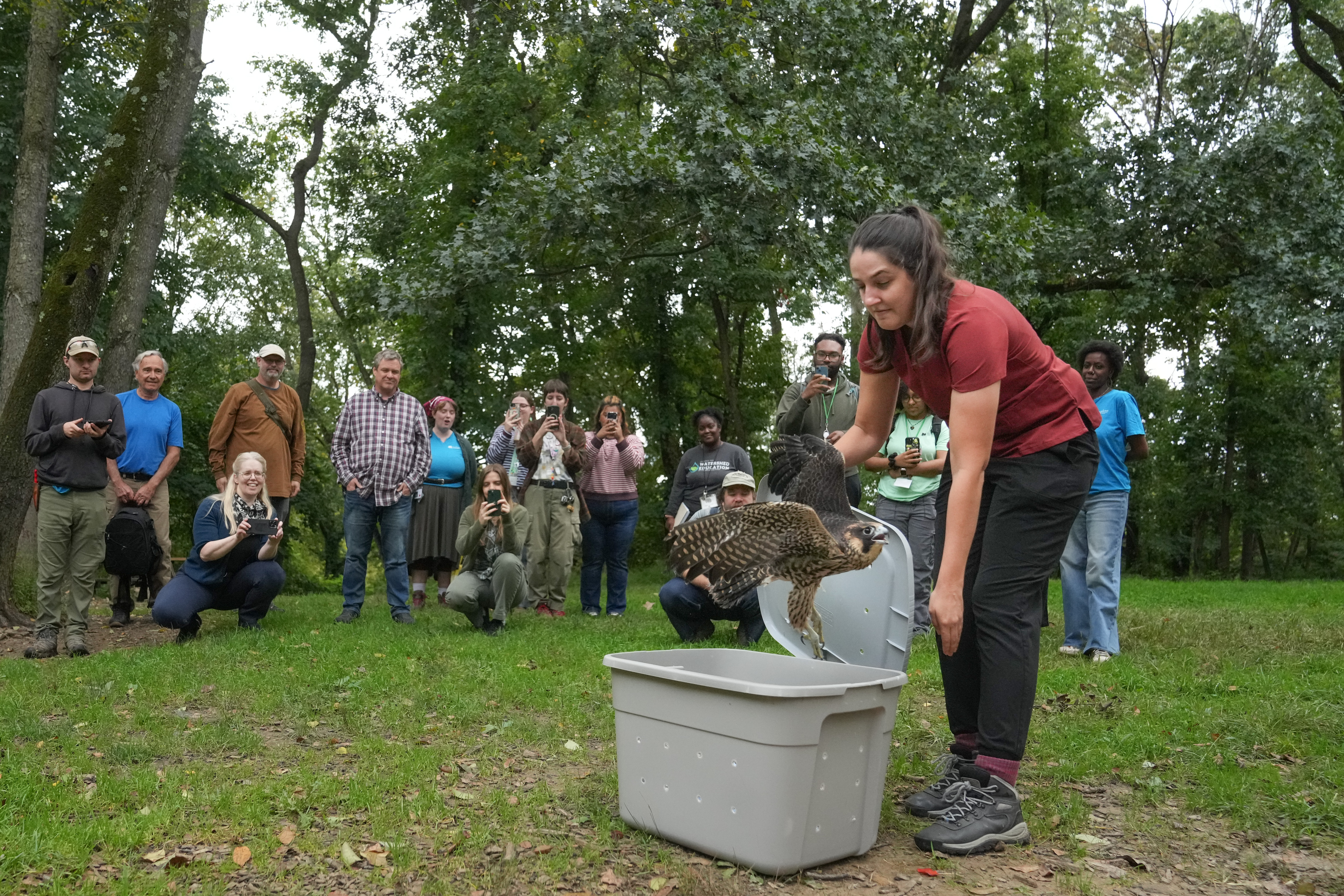
    The Schuylkill Center recently released a peregrine falcon into the wild after nursing it back to life from lead poisoning. Watch Patient 718 take flight here. (And if you’re curious about its name, it turns out animals are rarely named at the center.)

    👋🏽 Take care out there.

    By submitting your written, visual, and/or audio contributions, you agree to The Inquirer’s Terms of Use, including the grant of rights in Section 10.