He’d allowed two runs off two hits and four walks over five innings in a 6-4 Phillies win Tuesday night over the Marlins. It was the fifth consecutive start in which he’d failed to pitch at least six innings (one was affected by rain). His fastball velocity this season had been the lowest it’s been in eight years, at 95.1 mph.
He’s 36. He’s coming off surgery to address thoracic outlet syndrome that cost him the last seven weeks of 2025 and the first month of 2026. Was it his age? Was it the surgery?
Did it really matter? After all, the Phillies did win.
“I was thinking about that on the way home,” Wheeler admitted. “I was, like, ‘I guess that’s not the worst start.’”
He calmed down and drove on.
The Phillies won two of Wheeler’s last five starts. They’re 16-8 this season when he starts, and he’s 10-5 with a 2.92 ERA. Since arriving in Philadelphia in 2020, Wheeler has been the best pitcher in baseball. He remains just that.
When he pitches, the Phillies have a great chance to win, style points be damned. That’s all that matters. But even Wheeler has a hard time seeing the forest for the trees, since the game has changed since he hit the bigs 14 years ago.
“I think the win column doesn’t matter as much as it used to,” Wheeler said. “Just, because, there’s more numbers and all the other crazy stats that there are.”
Nevertheless …
“But, you know, I think when they put your name on a lineup card and we go out as starters, we’re expected to give the team a chance to win.”
And that’s all.
The Phillies are 16-8 when Zack Wheeler pitches, including Tuesday’s game despite some struggles. Yong Kim / Staff Photographer
Wheeler’s interim manager, Don Mattingly, believes that, regardless of max velo or walk rate, Wheeler always provides the Phillies an excellent chance to win, even if his fastball sits at no more than 95 mph.
“What I worry more about is, ‘Is this guy giving us good starts and keeping us in the game,’ more than anything else,” Mattingly said Tuesday. “Zack’s not one of the guys I worry about, if that’s what you’re asking.”
Mattingly seemed a bit bemused at the line of questioning, and just a smidge perturbed.
After all, they’d won the game.
Act II: Strategy
Mattingly had the same tone the next afternoon, when he was asked about a strategy on the radio pregame show regarding holding runners.
In the ninth inning Monday, with a 6-4 lead, Duran allowed a leadoff single to Xavier Edwards. Edwards is an effective base-stealer. Duran is generally ineffective at holding runners. The Phillies did not hold Edwards. Edwards took second base on the first pitch, moved to third on a groundout that might have been a double-play ball had he been successfully held at first base. He then scored on a single. Duran retired the next two hitters and the Phillies won, 6-5.
In the daily pregame radio show the next afternoon, Mattingly was asked about the strategy of not holding the runner. Mattingly explained that, with a two-run lead, he usually considers that run inconsequential compared with the defensive compromise of having the first baseman hold the runner, which opens a much wider hole between first and second base.
This is not a hard-and-fast rule, just a sound general strategy. Outs with leads equal wins.
In the ninth inning Sunday, with a 7-5 lead and one out, Victor Caratini walked. Caratini is an ineffective base-stealer. The Phillies did not hold him. Caratini advanced to second on a single. Duran stranded both runners with consecutive strikeouts.
In the ninth inning Wednesday, with a 4-1 lead, Duran allowed a leadoff single to Heriberto Hernandez, who is a moderate threat to steal. The Phillies did hold Hernandez, who was forced out at second on a ground ball by Owen Cassie to shortstop.
Jhoan Duran got the final out Wednesday, allowing a leadoff hit before earning the save.Matt Slocum
Mattingly acknowledged that this strategy works best if the pitcher is selfless enough to not worry about giving up an earned run. A single earned run for a reliever, especially a closer, has a much greater effect on his ERA than it would for a starter or a long reliever since closers seldom pitch more than a single inning in a game.
Duran’s ERA rose from 1.66 to 1.86 on Monday. He was asked before Wednesday’s game if he’d cared about risking that earned run.
“It all depends,” Duran said. “In that situation, I understand. They explained it to me. We’re on the same page right now.”
Several factors influence the decision to hold a runner or not. Does the runner run well? Does the batter make consistent contact, especially on the ground to the right side? Does the batter make better contact with a runner on base? It might not get that granular in every situation, but if we know anything about today’s baseball, it’s that things can get as granular as you like.
Monday, the evidence was more empirical than analytical. Duran has blown just two saves this season, but his last was against the Marlins on July 27. In that game, they held the runner, and a soft grounder to the right side got through, a big part of a killer, three-run inning.
“Sometimes, we cover the runner, and they get soft contact that way, and it’s a base hit,” Duran said.
Act III: Aphorisms
No one gets more annoyed than I do when Jalen Hurts, the Eagles’ 28-year-old sage, drops his saccharine maxims. But one of them resonates every time:
This is Hurts’ general fallback line when asked about the efficiency of the team’s offense, particularly the aesthetic quality of his own often choppy, inelegant passing performances.
No winner in Philadelphia history has been picked apart more than Hurts. I know, because I’ve done it myself. There somehow is an active debate regarding whether Hurts deserves a contract extension because Hurts can’t sling it like Josh Allen or Joe Burrow. Mike Vrabel, who took the Patriots to the Super Bowl last year and won it three times as a Patriot, considers Hurts a “franchise quarterback.”
Patriots HC Mike Vrabel calls Jalen Hurts an excellent “franchise” QB ahead of Eagles joint practices
Vrabel applauded the #Eagles sustained success drafting, developing and retaining players + finding a leader at QB pic.twitter.com/IJhmaVxfQu
“My mindset is: Six to eight innings every start. That’s what great pitchers do,” Wheeler said. He walked five batters two starts prior, and what bothered him most about Tuesday were the four walks. “It’s hard for me to be, like, ‘Yeah, that’s good.’”
Understood. After all, Wheeler hadn’t walked 10 batters in a three-game span since early in 2019.
“I’m used to doing what I have been doing for a long time now — being great — and that’s just not great,” Wheeler said.
Maybe not.
But, as usually is the case with Duran and Hurts, even when Wheeler’s not great, he’s more than good enough.
Soccer fans in this country have spent decades paying to watch games online. And for just as long, broadcasters have used that money to bankroll the rights fees for those games: from England’s Premier League on NBC’s Peacock to Spain’s La Liga on ESPN+, the Champions League on CBS’s Paramount+, and MLS on Apple TV.
But what happens when a European league and an American outlet decide to make almost all the games in a season available for free?
That is the plan hatched by Germany’s Bundesliga and Versant’s USA Sports, the platform created when Philadelphia-based Comcast spun off most of its cable TV channels at the start of this year.
From now until the summer of 2031, Versant will put around 30 games each season on the USA Network cable channel, and stream the other roughly 270 free of charge. The deal starts this weekend with Saturday’s German Supercup game between Bayern Munich and Borussia Dortmund (2:30 p.m., USA Network), the top two teams last season. (It’s usually the league winner against the German Cup winner, but Bayern holds both titles.)
Borussia Dortmund’s 81,000-seat stadium is world-famous for its atmosphere.Martin Meissner
“We are combining reach and also revenues with this deal,” Bundesliga executive vice president for the Americas, Robin Austermann, said of a contract worth $100 million over the five seasons. “When talking to Versant over the last couple of months, we definitely saw the excitement for the league. … It fits very well to our overall strategy to be a super accessible league.”
If you think there must be a catch to this somewhere, well, you’re as cynical as anyone else in soccer. So here’s the explanation of how things will work:
Versant’s streaming platform is Fandango, which a lot of people know for being a place to buy movie tickets. In fact, there are two Fandango apps: one for going to theaters, and Fandango Stream for watching at home or on your phone.
The latter, available on a range of mobile and connected-TV devices is where the soccer games will be. The Bundesliga section of the app is front and center, and USA Sports president Matt Hong promised it will remain easy to find.
Malik Tillman, who played a big role for the U.S. at this summer’s World Cup, plays for Bayer Leverkusen in the Bundesliga.Martin Meissner
“We’re newly relaunching the [streaming] service as Fandango Stream, and the Bundesliga rights came available coincidentally at the same time,” Hong said. “And so as a way to establish a cornerstone live sports property for Fandango Stream, we decided that the Bundesliga would be perfect for that.”
He touted that fans don’t even need to register for the Fandango platform to watch games there.
“The thesis behind Fandango Stream is to make it as easy as possible — not only free, but as easy as possible for consumers,” he said. “The Bundesliga is a great property, because it both services our pay-TV strategy and business with the minimum of 30 matches on USA Network; but we liked having the entire package. And that leaves us with the [remaining] matches that we can use as a way to existing Bundesliga fans, new Bundesliga fans, and new users to Fandango.”
Inside the tech side, and the money
Fans might think there’s another catch, and they’d know from experience. Other platforms that have streamed games for free have inserted ads during broadcasts. For example, beIN Sports has a traditional subscription, TV-authenticated streaming platform, and free streaming channels with ads. Some of those ads interrupt live action, so viewers might miss a goal or other major event.
Harry Kane (right) and Joshua Kimmich celebrated Bayern’s record 35th Bundesliga title last season in the traditional fashion: by dumping beer on each other.Matthias Schrader
Hong, a longtime soccer fan himself, said that won’t happen on Fandango.
“We will 100% preserve the user experience that our viewers on USA Network are accustomed to, that soccer fans are accustomed to, which is not to distract from or have there be any missing of the live action,” he said. “That’s our commitment.”
Austermann also said there is “not just a commitment from Fandango, but that’s part of our policy in general that the matches itself are not interrupted by advertisements.”
This doesn’t mean there won’t be any tech hiccups, especially out of the gate, since the Bundesliga will be the first live sports property on the platform. But the principle is there.
U.S. men’s national team fans hope that Augsburg’s Noahkai Banks (rear) chooses to play for the U.S. instead of Germany.Marc Schüler
Hong intends to leverage USA Sports also being a home of the Premier League, with 170 games a season. The intent is for most of the TV channel’s Bundesliga games to be at 12:30 p.m. on Saturdays, a time slot that often gets the weekend’s biggest game there — the topspiel, as Germans call it. That means a tripleheader on an average Saturday with Premier League games at 7:30 and 10 a.m., then the Bundesliga game afterward.
USA also will continue to carry NBC’s Premier League studio show, though the network isn’t going to do its own Bundesliga studio show for now, partially because of how fast this deal came together. For this season, the league’s world-feed show will do the job in halftimes instead. (The Bundesliga has a studio in Guadalajara, Mexico, where it distributes content for North American viewers.)
And Hong assured that in-game highlights will be posted to USA Sports’ social platforms. The Bundesliga’s previous U.S. broadcaster, ESPN, was criticized for not doing that, especially when an American player scored a goal.
Soccer fans in Philadelphia got to see Bayern Munich’s Michael Olise (left) up close twice during the World Cup when he played for France at Lincoln Financial Field.Derik Hamilton
Where is the revenue coming from to make this deal work? Versant’s $20 million per season is lower than the $30 million per season ESPN paid from 2020 to 2026.
There’s also a separate Spanish deal with Telemundo for a reported $10 million per season for three years. That makes up the difference, but still leaves the Bundesliga flat at a time when the Premier League earns $450 million per season from Comcast and Versant.
That is even more notable in a year in which the World Cup brought unprecedented attention to soccer. Some big names from the tournament play in the Bundesliga, including England’s Harry Kane (Bayern Munich), France’s Michael Olise (Bayern), and the United States’ Malik Tillman (Bayer Leverkusen).
“We will see the results — all of us, the entire industry, will see the results now in the coming months,” Austermann said. “That’s what we’re actively working on with our marketing team, with the marketing team from Telemundo, with the marketing team from Versant: How can we transfer the casual soccer fan from the World Cup into a season-long Bundesliga fan.”
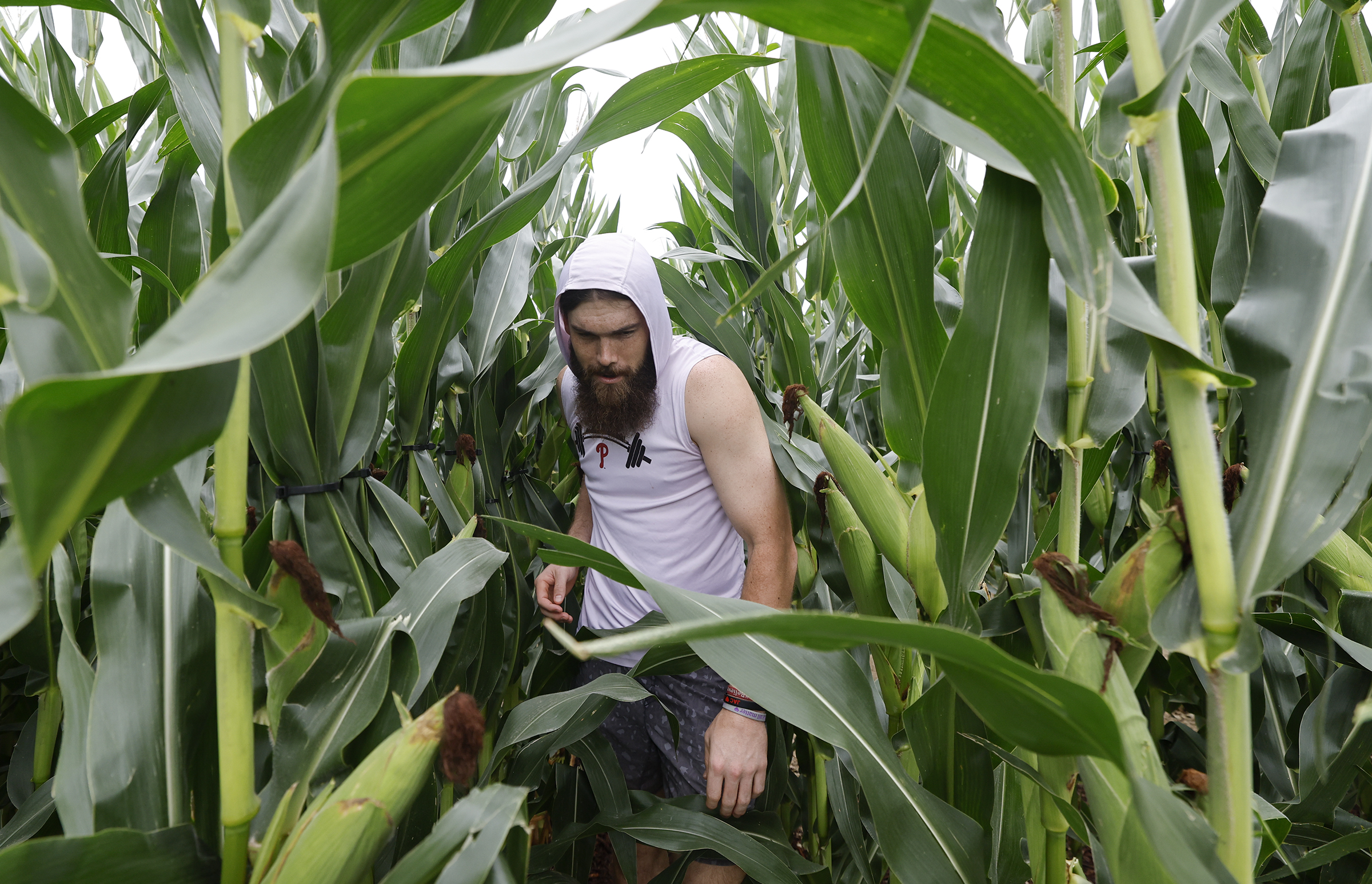
The Phillies crawled into Iowa for MLB’s mystical Field of Dreams game and haven’t lost since. The Fightins peeled off seven in a row since emerging from the cornfield in what’s become baseball’s most spine-tingling summer happening (Sorry, All-Star Game, but Mike Schmidt coming out of the corn was one for the ages.)
Powered by a suddenly divine offense — in the name of the Harper, Bohm, and Bryson Stott, amen — and a resurgent Aaron Nola, the Phillies’ season-best streak put the team 12 games over .500 for the first time all season. By Aug. 20, they enjoyed a two-game cushion for the second NL Wild Card spot. Whether the Phillies celestial good fortune has a Hollywood ending remains to be seen — and will depend largely on the trinity of Zach Wheeler, Cristopher Sánchez, and Jesús Luzardo, and saintly wisdom of Donny Baseball. Is it Heaven? Maybe not. But it’s August in Philadelphia, and the Baseball Gods are smiling.
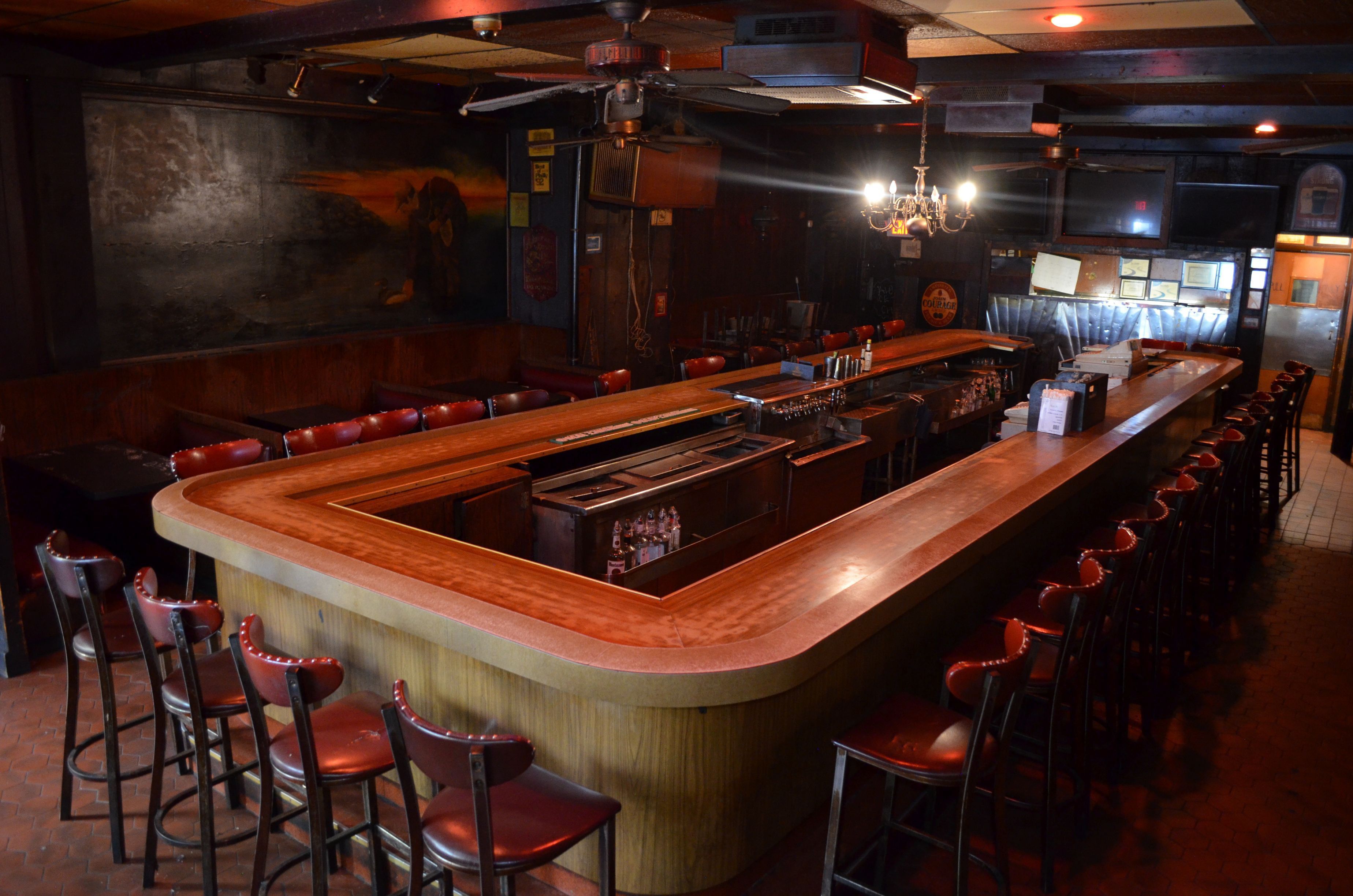
A bar at McGlinchey’s, 259 S. 15th St.MPN Realty
‘The Gray Wave’ hits Philly restaurants: B-
I’m a sucker for the city’s past. Especially its boozy, foodie past. My sepia-toned Philly time-machine daydreams include strolling bygone Jazz Age South Street speakeasies, clinking a Diet Coke to the swoosh of the gilded curtain at Palumbo’s nightclub, and touring the handsome booths of the 19th-century Reading Terminal Market. All to say, it’s a bummer to mark the passing of iconic Philly-area eateries like Kelly’s Seafood and Steve Stein’s Famous Deli, both in Northeast Philadelphia, and both closing by the end of the month.
Other landmarks — including the Medieval-inspired Pennsauken steakhouse, The Pub, and legendary Center City spots like Cherry Street Tavern and McGlinchey’s — are on the market. Some in the Philly restaurant scene have coined a phrase for what they say is a broader generational transition among small businesses as longtime owners reach retirement without children interested in taking over: “The Gray Wave.” Raise a Diet Coke — or something stronger, if you wish — to all the old great ones saying goodbye. But, alas, since a grand metropolis such as our own is nothing if not an ever-regenerating engine, offer too a hearty huzzah to the future greats that will surely follow in their boozy wake. Sláinte.
Jamika W. for President: A
Philadelphians pride themselves on providing local news reporters with profoundly entertaining and refined recountings of crimes and catastrophes. It’s in our blood — and unique vowel shifts. But for sheer charm and grace, few surpass everyone’s new favorite Philadelphian, Jamika W., who this week exuberantly reenacted kicking a masked menace near City Hall during a now-viral ABC7 Eyewitness News report.
On Aug. 17, Jamika W. saw something (a masked marauder chasing a woman into a coffee shop) and did something about it (calmly delivered a debilitating and flawless front kick to said marauder’s chest). Even more winsome than the kick itself — which Jamika W. displayed with wide-eyed enthusiasm and cool confidence — is the ironclad and incontrovertible reasoning behind her Roundhouse of Reckoning. “He just seemed disorientated about what his goals actually were,” she said, with a smile. “I had bags, he wasn’t reaching for those. He didn’t seem like he had a clear goal to actually get into La Colombe to do anything, so I was like, ‘OK, well, let’s see if you can fight, and he couldn’t.’”
Willie Nelson performs during the Outlaw Music Festival at Freedom Mortgage Pavilion in Camden on Friday, September 12, 2025. On Sept. 24, Willie Nelson & Family and Neil Young and the Chrome Hearts will play a coheadlining date at the Highmark Mann.Elizabeth Robertson / Staff Photographer
Willie and Neil Philly bound: B+
For the first summer in years, Willie Nelson will not be bringing his Outlaw Music Festival to Philadelphia. At 93, and fueled by love, music, and his own THC-infused drink, Willie’s Remedy, the Outlaw Oracle needs a break. But all is not lost in Willieville. Turns out Nelson isn’t skipping Philly after all. On Sept. 24, Willie Nelson & Family and Neil Young and the Chrome Hearts will play a coheadlining date at the Highmark Mann. (Teenage songwriter phenom Ty Myers is also on the bill.)
Personally, I bawl like a baby every time I hear Willie Nelson sing “Blue Eyes Crying in The Rain.” See you soon, Willie.
The new limited-edition Phanatic Caramel Curveball Cream Smoothie was announced Aug. 17 at Wawa’s Penrose Avenue store. Jessica Griffin / Staff Photographer
The new Phanatic smoothie: C-
Few can fault the limited-edition Phanatic Caramel Curveball Cream recipe, though vanilla ice cream, caramel sauce, whipped cream, salted caramel syrup, and sea salt pretzel pieces doesn’t exactly scream Galápagos Islands. Also, can you really call it a smoothie if it’s … 950 calories?
But what disappoints most is a Philly fan taste-tester who cheerfully testified that the drink contained a salty-sweet savor similar to a “sprinkling of Mets tears.” Mets?! They stink. An embarrassment, last in the division. Why is anybody concerned with them? Haven’t you read the news baby, we’re two games behind the Diamondbacks for the second Wild Card! Do rattlesnakes cry?
My child is about to start kindergarten and is excited about the school-provided lunch (he knows there is regular pizza). The menu looks mostly fine and I won’t stop him from enjoying it if everyone else is, but I noticed that he can choose to have chocolate milk every single day, which seems like a lot to me. Am I overthinking it or should I tell him he can only choose it once a week? I won’t even be there to see if he’s telling the truth. Do I ask the school to restrict it?
Jason Nark, Life & Culture reporter
I also have a child starting kindergarten, but we have to supply all the lunches.
Zoe Greenberg, Life & Culture reporter
Will you be packing chocolate milk every day?
Jason Nark
No way, but I’m not horrified by the idea. I was recently scolded for packing her marshmallows for summer camp lunch.
Leaving it up to the kid seems like a bad idea. I have to explain this to my parents, often, when they watch my daughter. They will argue “well, she likes (insert ice cream, gummy bears, YouTube, etc.) so we give it to her.”
Zoe Greenberg
So I was just rereading an article about “fat activist” (her words) Virginia Sole-Smith, the author of Fat Talk: Parenting in the Age of Diet Culture. She talked about her own method for “unhealthy” foods — she lets her kids decide, and thinks it’s a way for them to figure out what they actually want/need.
For example, she serves brownies and Cheez-Its and chicken and broccoli at the same time on the dinner table, and the kids decide what to eat, how much to eat, and in what order. I was intrigued!
Jason Nark
I wonder if she’s teaching this kindergarten class.
Zoe Greenberg
Jason, would you talk to the school, or would you tell your daughter chocolate milk is a once-a-week delicacy?
Jason Nark
I would talk to the school, first, and if this was their policy, I would talk to my daughter and set some limits.
Zoe Greenberg
I feel like drawing attention to the chocolate milk as an everyday option, and saying it’s not allowed, makes it seem so much more interesting and desirable.
Jason Nark
We don’t treat kids like adults (or shouldn’t) for a reason.
Zoe Greenberg
I might just say nothing and assume the kid won’t drink it every day? But I also have a five-month-old and he hasn’t ever gotten to drink chocolate milk.
In your school could you have chocolate milk at lunch? I feel like maybe I could, but I didn’t much. I’m picturing the little brown carton.
Jason Nark
I think we could. I drank Pepsi at lunch every day, so that’s even worse. I grew up before people drank water.
Zoe Greenberg
You wish you’d been restricted?
Jason Nark
Maybe not restricted, just more informed. I wish my wrestling team had a nutritionist.
My daughter brings a water bottle to school every day and that’s her drink. If we go out somewhere, she can get chocolate milk or juice.
Funnily enough, a few weeks ago, we were eating pizza and I asked her if she wanted a sip of soda and she seemed horrified.
Zoe Greenberg
Wow. She wants WATER.
How would you deal with the fact that you won’t know if she does or doesn’t drink the chocolate milk, even if you set limits? To me it’s better to not introduce the “you can’t have this” and then the kid has to lie or find a workaround. (Or I guess follow the rule.)
Jason Nark
My daughter is a pretty straight shooter, so I think she’d follow the plan. I wouldn’t ban the chocolate milk, though.
My bigger fight is with the grandparents.
Zoe Greenberg
It’s true, the grandparents will say, “He didn’t want to nap so he didn’t” and I’m like of course he didn’t want to nap, but he really does.
Jason Nark
As an aside, I’ve interviewed a lot of dairy farmers who tell me real milk in schools is key to their survival.
Zoe Greenberg
Oh wow. And I think it’s a USDA requirement. The daycare center required us to sign a waiver if our child was allergic to cow’s milk, otherwise he has to get it.
Do you place restrictions on the grandparents?
Jason Nark
I try, but…
Zoe Greenberg
Sometimes we have to learn to let go.
Jason Nark
Particularly if they’re babysitting.
Zoe Greenberg
Yes. Unlimited chocolate milk is a small price to pay.
This week Philly teachers were prepping for the start of a new school year and I went to Fanny Jackson Coppin School in South Philadelphia to photograph them hanging posters, arranging desks, taking new books out of boxes, and opening packages of supplies,
I walked from classroom to classroom, saying hi and introducing myself. Most were happy to have me come in and show the newspaper’s readers how they spend hours making their room feel welcoming and comfortable.
I was definitely feeling at ease by the time I got to the first grade classroom of teacher Lauren Cucinotta.
Because I wrote just last week about the senses triggering memories I was expecting all morning that what’s known as the “Proust phenomenon” would kick in. But it wasn’t the waxy smell of the crayons.
No, as a visual person it was the sight of a cup full of freshly sharpened pencils.
There is nothing more basic, more ordinary than a pencil — well except maybe for paper. But then we get into a chicken or the egg thing, and I don’t want to go there, so I’m sticking with pencil.
All those little points of graphite evoke a feeling of possibility. More than being ready to make the first marks of a new school year, I see them representing a clean slate (page) or even a new way to look at an annual recurring photo assignment.
You can’t see them in the photos, but for a moment even the erasers at the other end of the pencils evoke memories of my own first days of school and remind me that yesterday’s mistakes do not have to follow me into today, that there is always something new to see and photograph.
That’s enough navel gazing for one column, so let’s talk about this week’s installment of my colleague Elizabeth Wellington’s series highlighting a Philly “first” for the ongoing celebration of America’s 250th birthday. This week celebrated the first selfie still in existence, which was taken in Philadelphia in 1839.
They were first called self-portraits, and before smartphones, they involved putting cameras on tripods or tabletops and using timers or long cable shutter releases. Photographers — especially after small 35mm cameras came along — did use a wide-angle lens with the “extend your arm” technique, and the first I can remember seeing was when our wedding photographer took one of himself with me and my bride.
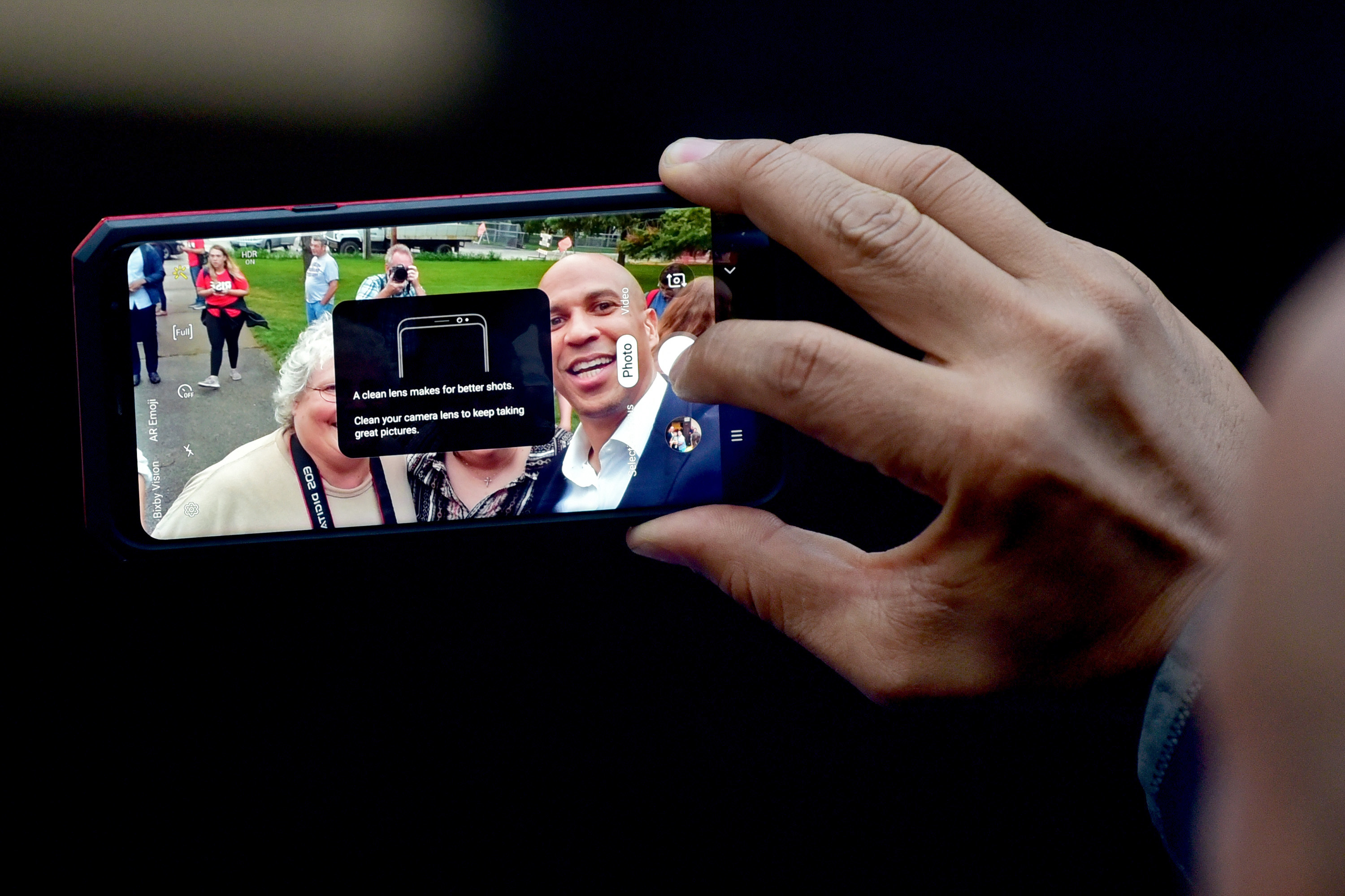
That’s a cherished selfie, but my all-time favorite selfie is one with U.S. Sen. Cory Booker when I spent time with him in Iowa during his short-lived 2020 presidential campaign. And since then, often on his home turf, in New Jersey. You can see me in the background — right behind the helpful photography tip a supporter’s cell phone offered (he cleared the message before taking the photo).
Which brings me to a few other photos to share from this week:
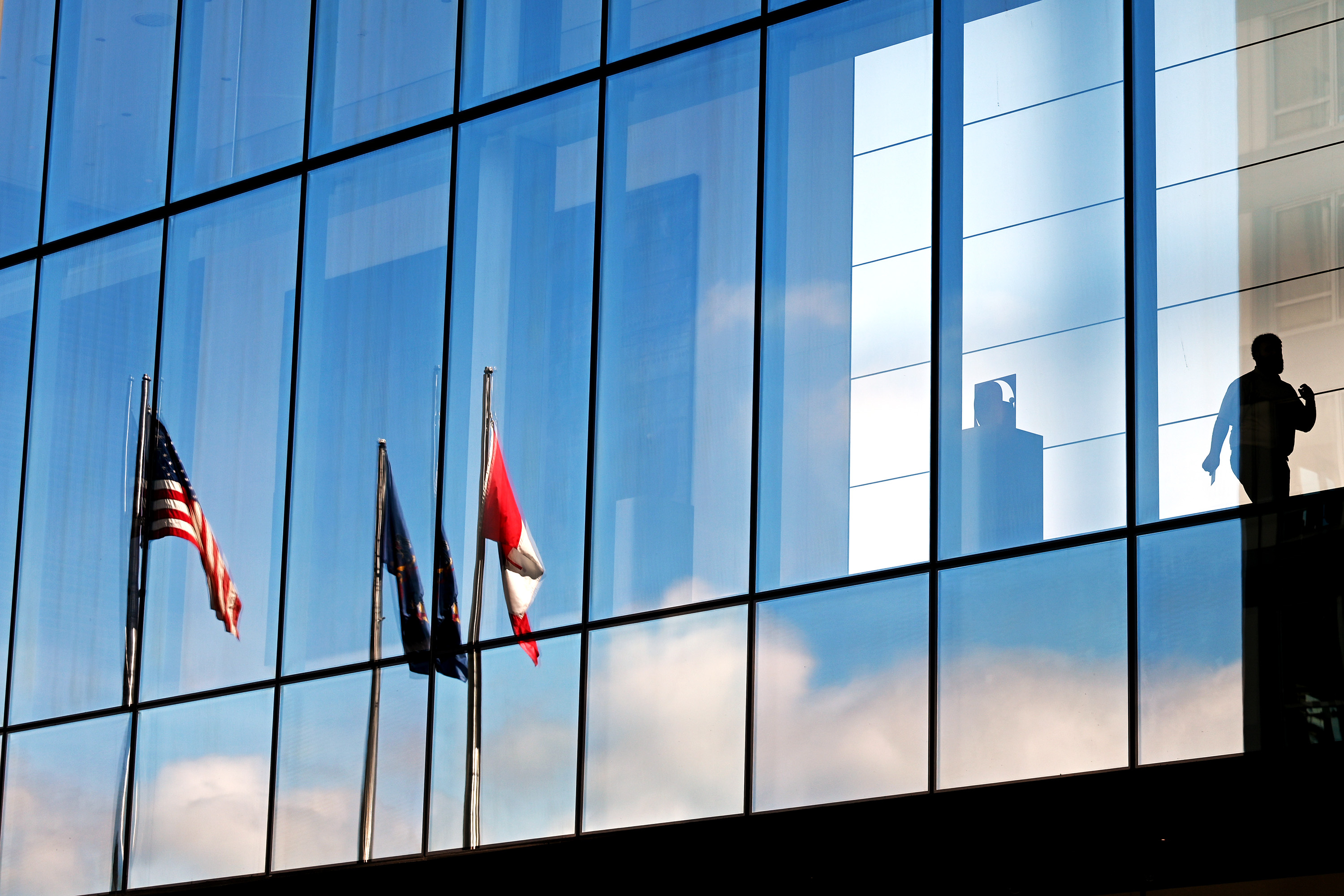
Flags and a bright blue sky are reflected in the windows of a Center City Philadelphia hotel on Monday.Tom Gralish / Staff PhotographerOne of two shell sculptures placed on either side of the entrance on the 19th Street entrance to the Academy of Natural Sciences of Drexel University on Monday. Created by unidentified artists and installed in 2010, a Philly public art website describes the small shell sculptural details as a “complement [to] the museum’s historic focus on malacology (the study of mollusks and their shells).”Tom Gralish / Staff Photographer
And a story I wrote this week on viral French singer-songwriter and animal advocate Loris Assadian, known as Plumes, who sang for tortoises at the Philly Zoo.
Assadian serenades Abrazzo, a Western Santa Cruz Galapagos tortoise estimated to be around 97 to 100 years old.Tom Gralish / Staff Photographer
Since 1998 a black-and-white photo has appeared every Monday in staff photographer Tom Gralish’s “Scene Through the Lens” photo column in the print editions of The Inquirer’s local news section. Here are the most recent, in color:
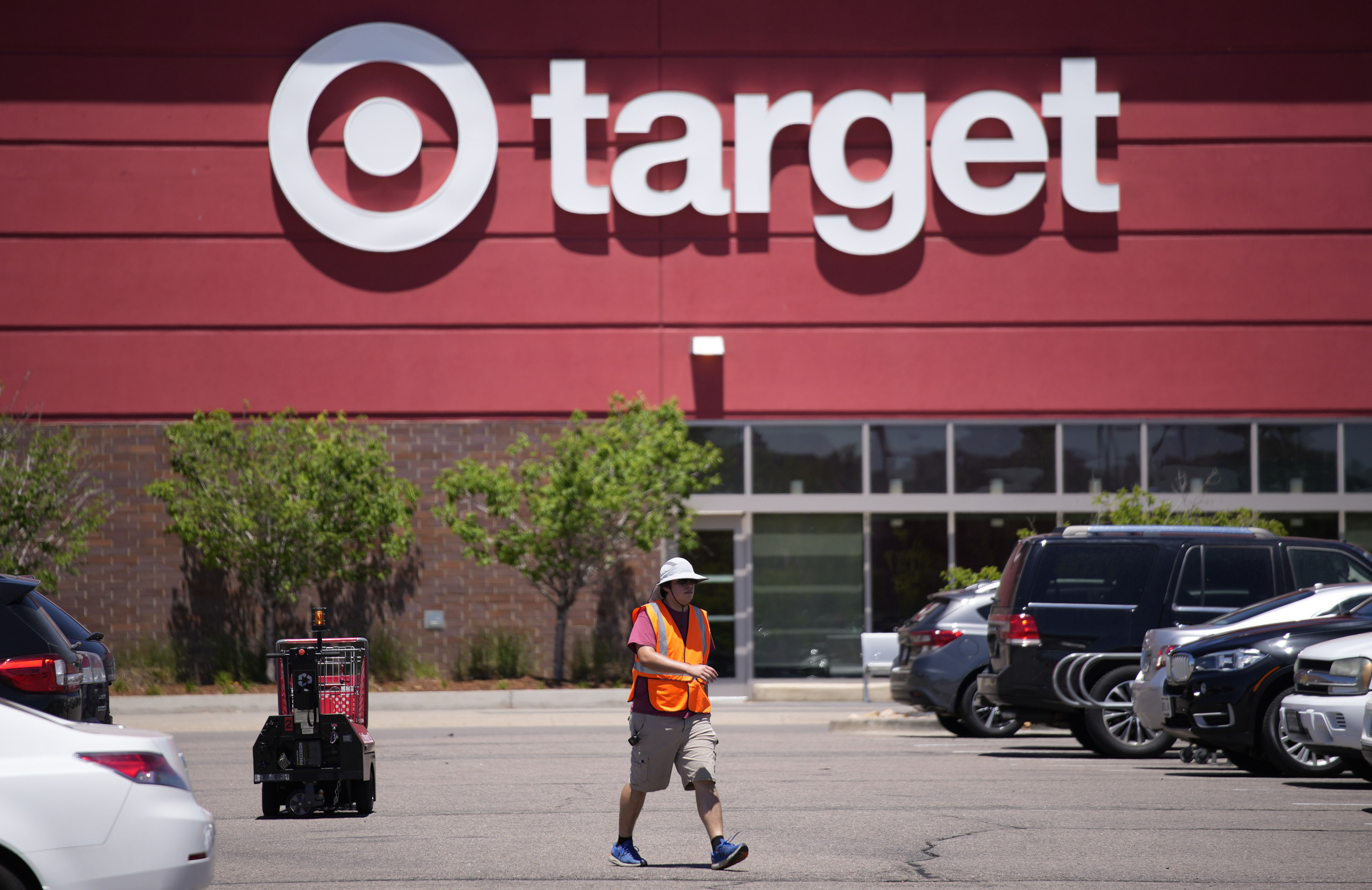
Target Corp. has long struggled with its grocery identity: whether it wants to be a discounts-driven everyday chain or a cool, zeitgeisty retailer. Its latest big bet indicates it’s chosen the latter.
The company has been overhauling its grocery aisles since the spring, hoping the upscale Tarzhay success it once had with stylish apparel and home goods in the early 2000s can be revived in food. It’s expanding the size of the section by more than 20% in nearly 150 remodeled stores and more than 50% in 300 new locations, carving out additional space for fresh produce and trendy items while cutting back on some pantry staples that shoppers aren’t buying or can get elsewhere.
The strategy, intended to help reverse three years of weak sales, contrasts with what rivals in the $1 trillion U.S. grocery industry are doing. As competition intensifies, Walmart and Kroger are lowering prices across the board to appeal to inflation-weary, cost-conscious consumers. Target’s share is tiny in comparison, and the pressure is on to sell the right products at the right price or risk falling further behind.
At a Target store in West Hollywood, Calif., the coffee aisle is stocked with pink and green packages of collagen-infused strawberry matcha latte powder and mushroom-coffee brands Ryze and Everyday Dose. Nearby, healthier packaged food additions include gluten-free pumpkin spice cereal, sour melon candy made with less sugar, and Khloé Kardashian’s protein-dusted popcorn. Target is also broadening its Asian food selection, giving prime shelf space to sesame miso noodles, jars of chili crisp, and peach-flavored soju.
Several shoppers said they’d noticed new brands and layout improvements, but the changes hadn’t yet made a difference in how they shop at the chain.
“I’m just buying groceries out of the convenience of already being here,” said Emma Woods, 29, as she grabbed a few items, including Frosted Flakes and Yoplait, for an upcoming girls weekend. She said she still prefers to do the bulk of her food shopping at Whole Foods Market, Ralphs, and Trader Joe’s.
“The selection just isn’t as large as a larger grocery store that I could go to, and I think the prices aren’t as competitive,” the dancer from Los Angeles said. “For me, it might be a lost cause.”
Dwarfed by grocery rivals
The grocery makeover is a crucial piece of Target’s attempt to rejuvenate its operations and boost traffic. The retailer estimates the move will generate more than $2 billion in growth over the next few years.
Since 2023, revenue has been shrinking as shoppers spend at a slow pace because some of the merchandise hasn’t been resonating the way it did in the past. New chief executive officer Michael Fiddelke has pledged to improve Target’s product assortment, store experience, and technology, identifying food among the primary areas of focus along with baby, home, apparel, toys, gadgets, and sports.
Target for years has debated how much food to sell and how to pitch itself against competitors. It’s sold many packaged goods, which have a simpler supply chain, rather than a full-fledged offering. As a result, food has been an afterthought for many shoppers, tacked on to the end of their Target runs or a holdover in between their main grocery trips.
“I don’t think people wake up and say, ‘I need groceries, I’m going to go to Target,’” said Joe Feldman, an analyst at Telsey Advisory Group.
Target wants that to change and sees significant opportunity: More than half of its customers buy groceries when they shop at the chain. And food, which makes up less than 25% of its revenue, has been growing faster than most divisions.
So far this year, Target has added roughly 4,600 new food items — including probiotic coconut yogurt, mini rice cakes drizzled with chocolate, and frozen sour candy mixes — and more than 60 new brands during the second quarter. The retailer expanded the space allotted for Asian food products by about 75% and beefed up offerings of noodles and snacks in the category after sales rose more than 25% in the last year.
“Food and beverage is a powerful opportunity to make life easier for busy families and drive our business forward,” John Conlin, senior vice president of food and beverage merchandising at Target, said in a statement. Its grocery offerings, which have had strong sales momentum, are deepening customer loyalty and driving more frequent trips, he said.
But Target has substantial ground to make up. The retailer is dwarfed by Walmart, Costco, and Kroger, whose food businesses are roughly 12 times, six times, and five times bigger, respectively. Like Target, the three giants are increasingly selling trendier items — but they’re also using their scale to lower prices and emphasize value at a time when budget-conscious consumers are searching for bargains. U.S. food prices are expected to rise further in the back half of the year.
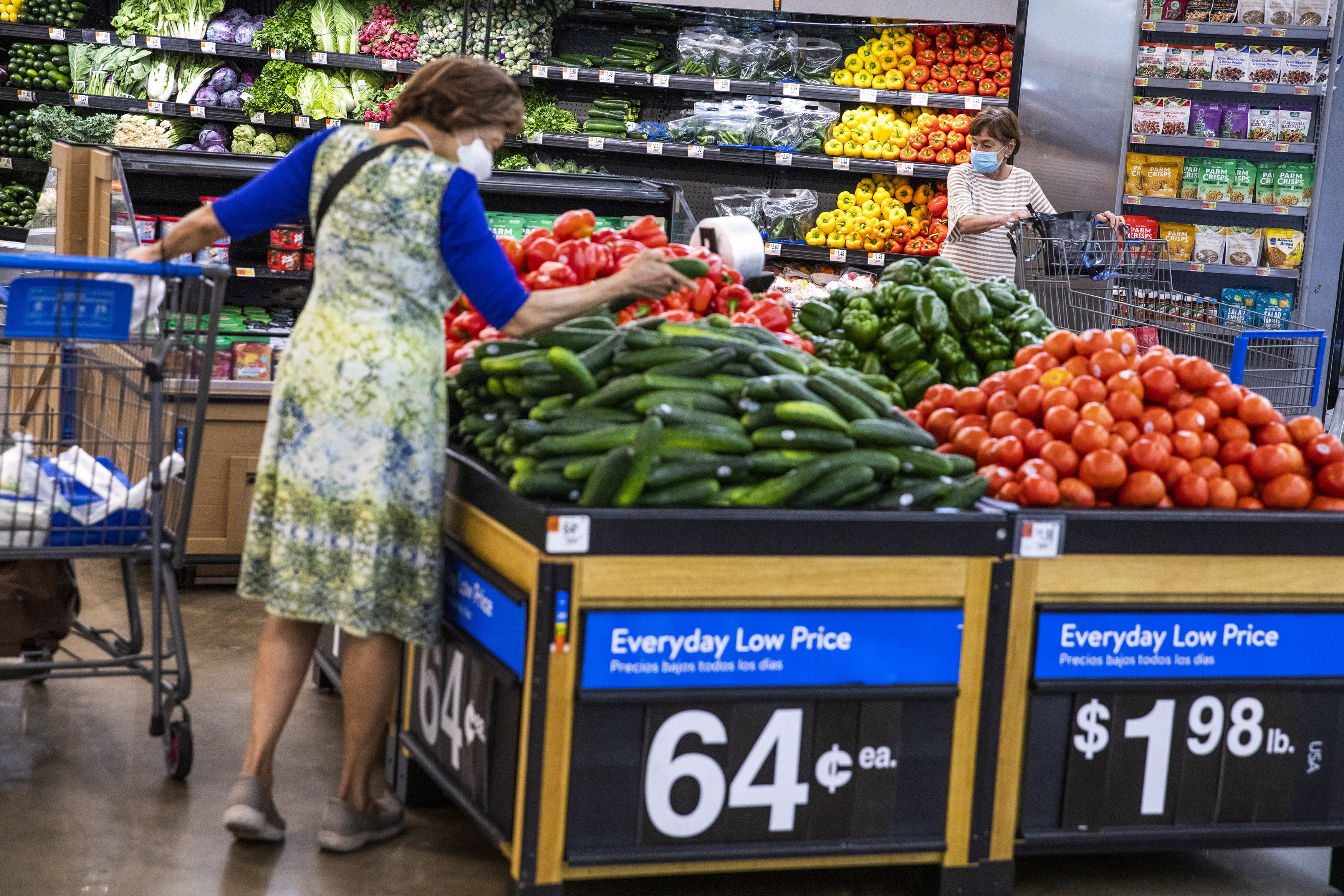
Shoppers buy groceries at a Walmart Superstore in Secaucus, N.J., in 2024. Walmart’s food business is roughly 12 times that of Target.Eduardo Munoz Alvarez
Walmart, known for offering affordable everyday goods, has said it will continue to lower prices. After announcing summertime deals in July, Walmart U.S. chief merchandising officer Julie Barber told staff that when the company leans on value, customers respond. “From beef and fresh produce to beverages, grilling essentials, toys and more, these investments reinforce what customers expect from Walmart: incredible value when it matters most,” she wrote in a memo viewed by Bloomberg News.
Kroger has pledged to make the biggest price cuts in years to compete more effectively. New CEO Greg Foran, a former Walmart executive, told Bloomberg that prices have to come down across thousands of items and that the company would save costs by importing merchandise and using technology more effectively. Costco, meanwhile, is lowering prices of eggs, beef, and other items.
Target lags many rivals when it comes to price. Identical national-brand food items cost about 5% more at the chain than they do at Walmart, according to data firm Attain, and one of the widest price gaps between the two is found in the snack section. It found that meat prices are relatively similar. Target said it’s priced competitively in food staples.
Curating a treasure hunt
Target is carving its own path. Instead of doing it all, the company is focusing on curation, a spokesperson said. It’s doubling down in areas where consumers are showing stronger interest, carrying an assortment of national, emerging, and store brands that reflects “evolving tastes, interests, and wellness needs.”
The hope is that refreshed food aisles filled with coveted, unique products will become the reason people visit. With some new items, Target said, shoppers are willing to spend more to try them.
Shoppers check out the food selection at a Target store at the Springfield Mall in Delaware County in 2009.CHARLES FOX / Staff Photographer
“It has never been able to crack it in food,” said Jackie Lewis, a market intelligence lead at consultancy Harvest Group. “They are finally embracing the mantra that works for them in the rest of the store: exclusivity, buzziness.”
The changes are helping attract more shoppers and creating a treasure hunt experience, with Target’s food sales growing in dollars and outpacing total company growth, according to Harvest Group’s analysis.
“I buy more here now than I did previously,” said Sean Wesslund, a 40-year-old human resources consultant, while shopping at a Target in Highland Park, Ill. The store recently began offering more sustainable, healthier options such as regenerative organic certified coffee, which he likes to purchase along with basics like cereal, granola bars, and cheese. He said he sees Target becoming a cross between Whole Foods and Albertsons.
At a Target in Falls Church, Va., Sam Fowler and his fiancée, Lindsay Nesmith, were perusing the display of noodles, including Buldak spicy ramen.
“Things we would go to H Mart for, they now have here,” said Fowler, a 26-year-old TV producer. The couple does most of their shopping for bulk goods at Costco, but will supplement at Target for meals they are cooking that evening.
Grocery is among a number of areas that Target is reworking. The company is adding new, exclusive items across its baby department and expanding concierge services where shoppers can get one-on-one guidance from experts. It’s launching beauty studios in hundreds of stores, and offering more trading cards and cell phone accessories across its entertainment, toys, and tech section.
In March, Fiddelke unveiled a $6 billion plan to reverse Target’s sales slump and to reclaim the retailer’s reputation as a place to go for affordable yet stylish apparel and home goods.
Target recruited fashion designer and TV personality Isaac Mizrahi this summer to fill the newly created role of creative director at large. Mizrahi has been brought in to mentor Target designers, advise on product design and innovation, and forge new partnerships.
Fiddelke is also remodeling Target stores and improving staffing. The company has more than 100 full-scale remodels underway, with a goal of reaching 130 this year, Fiddelke said Tuesday.
Second-quarter sales results released Wednesday suggest the changes are having an impact. The CEO said the latest quarter was “an important step forward in the plan we laid out earlier this year to open a new chapter of growth for Target.”
Target also reported an increase in the number of customers going to its stores and shopping on its website from May through July.
“We’re encouraged by the progress made so far, and we’re also clear-eyed about the important work still ahead,” Fiddelke said.
Executives at several upstart food brands said they’re encouraged by the revamp. Many have inked exclusive deals with Target, ensuring their products are sold only at the chain.
Snackish, a new clean-label potato chip brand, launched nationwide in June only at Target. The Snackish customer “wants to be the first one of her friend group to find the new thing that’s trendy” and is Instagramming her finds, founder Tara Bosch said. “We wanted to show up where she is and Target is where she shops.”
Scoot, a brand of frozen lemonade pouches, highlights on its packaging that it’s only available at Target, complete with the retailer’s bullseye logo. This summer, refrigerated dough brand Sweet Loren’s rolled out its first exclusive-to-Target item: a snickerdoodle cookie dough. The company was confident it would draw new customers into Target, founder and CEO Loren Castle said.
“These emerging brands, these better-for-you brands are actually what the Target guest is looking for,” she said. “It’s the reason they’re able to compete in grocery. It’s what they’re relying on to build the future.”
Shopper Joy Shaw isn’t so sure. She went to the West Hollywood Target for school supplies this month and figured she’d also grab “lunch box stuff” including string cheese, cheddar squares, Sun Chips, and Activia yogurt drinks. The 51-year-old nurse said she’d like to see a wider selection of produce and meat, noting she wasn’t able to find ground chicken.
“If they’re trying to be the go-to place for groceries, then they need to have the foundation of what we really need first,” she said. “Cool snacks, you can pretty much get anywhere else.”
I am a breakfast sandwich snob. I also love rules, which is why there’s rigorous criteria a sandwich needs to meet for me to even consider ordering it.
Is it served on brioche, a bread that is entirely too soft for a greasy sandwich? Hard pass.
Is there one of those dreaded rectangular egg patties, which are somehow always dry and a little cold in the center? Don’t even send it my way.
Does it lack whimsy? Unless there’s some sort of intrigue— a fun condiment, fresh-baked bread, a flavor combo that gives a sense of perspective — I’ll just have eggs with a side of bacon and home fries, please.
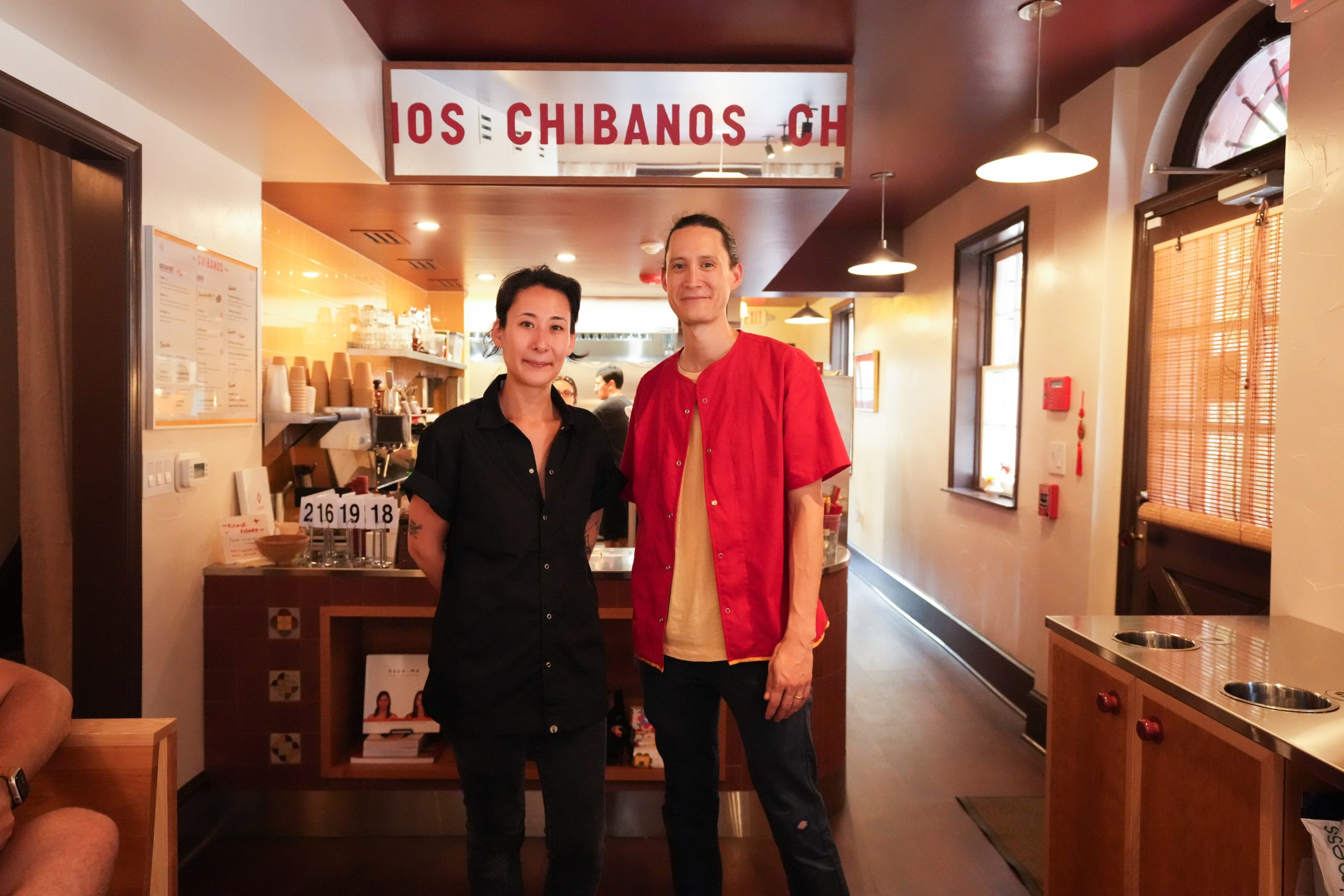
Executive chef Aya Iwatani (left) and owner Evan Jaroff (right) inside Chibanos, their Cuban-Chinese sandwich shop that opened on July 1 at 1127 Pine St.Jessica Griffin / Staff Photographer
The tight menu — eight sandwiches plus a handful of snacks — is an ode to owner Evan Fong Jaroff’s mother, Ana, a Chinese Cuban who immigrated to the U.S. from the island in the 1960s. Jaroff grew up watching her command their home kitchen in Lansdowne, where she’d serve traditional Southeast Chinese fish dishes alongside staple Cuban dishes like fried yucca, beef picadillo, and lechón (aka shredded and slow-roasted pork).
“I don’t think of us as a Cuban restaurant. I don’t think of us as a Chinese restaurant,” Jaroff told me in July. “We’re our own thing.”
Chibanos’ menu pulses with nostalgia. That’s especially true of the Chino, which packs fluffy eggs, melted Swiss cheese, and a sticky-sweet char siu-style sausage patty between a crackle-crusted bolo bao bun smeared with garlicky scallion mayo.
The sandwich is an adult version of Jaroff’s favorite childhood breakfast: a steamed, custard-filled bao from pretty much any bakery in Chinatown.
The Chino breakfast sandwich on a Dodo Bakery bolo bao at Chibanos, a Chinese-Cuban sandwich shop at 1127 Pine St.Jessica Griffin / Staff Photographer
Developed in partnership with executive chefAya Iwatani (formerly of Honeysuckle Provisions), the Chino is the perfect combo of sweet and savory. It conjured up my ownmemories of using sausages to sop up the leftover syrup from diner pancakes. The lightlysweet bao from Dodo Bakery — a Cantonese bread and sweets specialist in South Philly — is equally transportive. It reminds me of the oversized conchas that lined the pastry cases of the panaderias in the tiny Hudson River town I lived in as a teen.
It’s funny how a single sandwich can take me to so many places. Perhaps I should add another question to my breakfast sandwich checklist: Does it make me feel warm and fuzzy?
Ask a teen what they want to be when they grow up, and there’s a fair chance being an influencer is on their list.
Digital media and the people who star in it have been cultural mainstays for teens’ entire lives, so creating social media, video, or podcast content seems a natural, albeit nontraditional, career path. And now they can earn a college degree in that very field.
Arizona State University recently launched a new bachelor’s degree in content creation, offered through its Walter Cronkite School of Journalism and Mass Communication. The curriculum overlaps with that of ASU’s mass communication and media studies degree, with the major departure being a slate of specialized electives on podcasting, studio production, and on-camera presence.
ASU’s announcement was met with swift criticism from many sides — from people who feel content creation is not a legitimate profession to those who question the value of a college degree in launching a social media career.
But the ASU program is not the first of its kind.
And the university, which declined an interview request about the new program, is not the first to offer content-creation courses.
Universities, eager to compete for a shrinking student population, are rolling out new majors intended to prepare students for today’s careers. Whether they lead to jobs can be up for debate.
College courses in content creation have riled critics
Many higher education institutions have started offering classes focused on the burgeoning content-creation industry over the past couple years, and several have certificate or minor programs. Syracuse University, Quinnipiac University, and Colorado State University offer minors, and St. Bonaventure University announced a content-creation major last winter.
To Brooke Erin Duffy, a communication professor at Cornell University, these college programs represent an inflection point. During the past year, Duffy said, institutions in education and beyond have been acknowledging content creation as a viable career path — even if the term influencer itself hits a nerve.
On social media, influencers are everywhere, sharing shopping recommendations and lifestyle content or promoting beliefs about health or politics. Because even influencers with relatively small followings have loyal audiences, brands also often pay them to talk about products.
The image of a prototypical influencer, Duffy said, is usually a “young girl who is snapping selfies and just reaping in tremendous rewards for seemingly not doing anything.”
But that’s not the reality for many content creators, who are working on media production, audience retention strategies, brand partnerships, and business relationships associated with their online presence.
“It is a time-consuming, labor-intensive job that often doesn’t pay well — at least in the beginning,” Duffy said. “But a lot of that gets concealed behind … this assumption that it’s a dream job.”
The creator economy is booming, but not everyone reaps the riches
Even if someone has the skills to make it in content creation, it isn’t easy to break in.
Social media is already a crowded field, and it’s going to get even more competitive in the coming years, said Max Willens, a principal analyst at Emarketer who covers the creator economy.
Emarketer forecasts that social media creator revenue in the U.S. will climb above $20 billion this year, but Willens said it’s important to contextualize what that means for individual creators.
“The overwhelming majority of that money is not going into creators’ pockets,” he said, even though their content and their followers form the foundation of the lucrative field.
Influencers can earn money from social media platforms, which reward high engagement, and some earn commission if people buy a product they’re promoting. But the largest share of influencers’ earnings comes from sponsored content — getting paid to talk about a brand or product. Willens said he expects the amount brands spend distributing and amplifying creator content will eventually surpass the amount creators earn making it.
The idea that a specialized college degree will “suddenly turn people into viral content machines deserves a bit of a reality check,” Willens said.
Duffy noted that becoming an influencer often is perceived, incorrectly, as a path to get rich quick. Colleges that introduce content-creation degrees may be hoping to attract new students — and their parents — who are looking for “a job that will pay off,” Duffy said. “Whether or not it does is another story.”
A degree’s price is also a factor: At ASU, base tuition for Arizona residents is about $12,000 per academic year, excluding scholarships, but the total cost of attendance can exceed $37,000 after factoring in room, board, and other fees. For students from outside of Arizona, tuition is more than $35,000 and the total cost of attendance is around $60,000 before scholarships.
Creators see value and transferable skills in these programs
While many content-creation students may be hoping to become viral sensations, Phoenix-based creator Aiesha Beasley said she could see programs like ASU’s being valuable even to those without that dream.
“Having a digital presence and a personal brand is very important nowadays,” Beasley said. Building a platform and sharing that personal brand online can help a person network and gain entry to settings they may not have had access to otherwise, she said.
Beasley, who has been a full-time content creator for three years after more than a decade posting online, works with small businesses to help optimize their social media presence. She noted that ASU’s courses would teach several transferable skills in fields such as communications and marketing.
Content creator and actor Sammy Cristerna graduated from Arizona State University this spring with a degree in sociology and political science, but said he “absolutely” would have taken classes in the content-creation program and considered the major if it had been available.
The courses, Cristerna said, would have been useful in learning how to negotiate brand deals, maximize monetization opportunities, and cultivate and keep an audience. Some of those skills can be self-taught through experience, he added. Still, “it’s nice to have that formal education.”
The one thing Cristerna said he isn’t sure will translate in the classroom is personality.
To connect on camera, a person needs to have “good energy,” he said. “That’s hard to teach.”
Last week, the Philly band played its biggest ever hometown show as the first act at the Foo Fighters’ “Take Cover” tour at Lincoln Financial Field. Dressed in Eagles green, the band commanded attention, with singer Marisa Dabice stripping down to a T-shirt with a meme of Family Guy’s Peter Griffin proclaiming: “I will die for my country Philadelphia.”
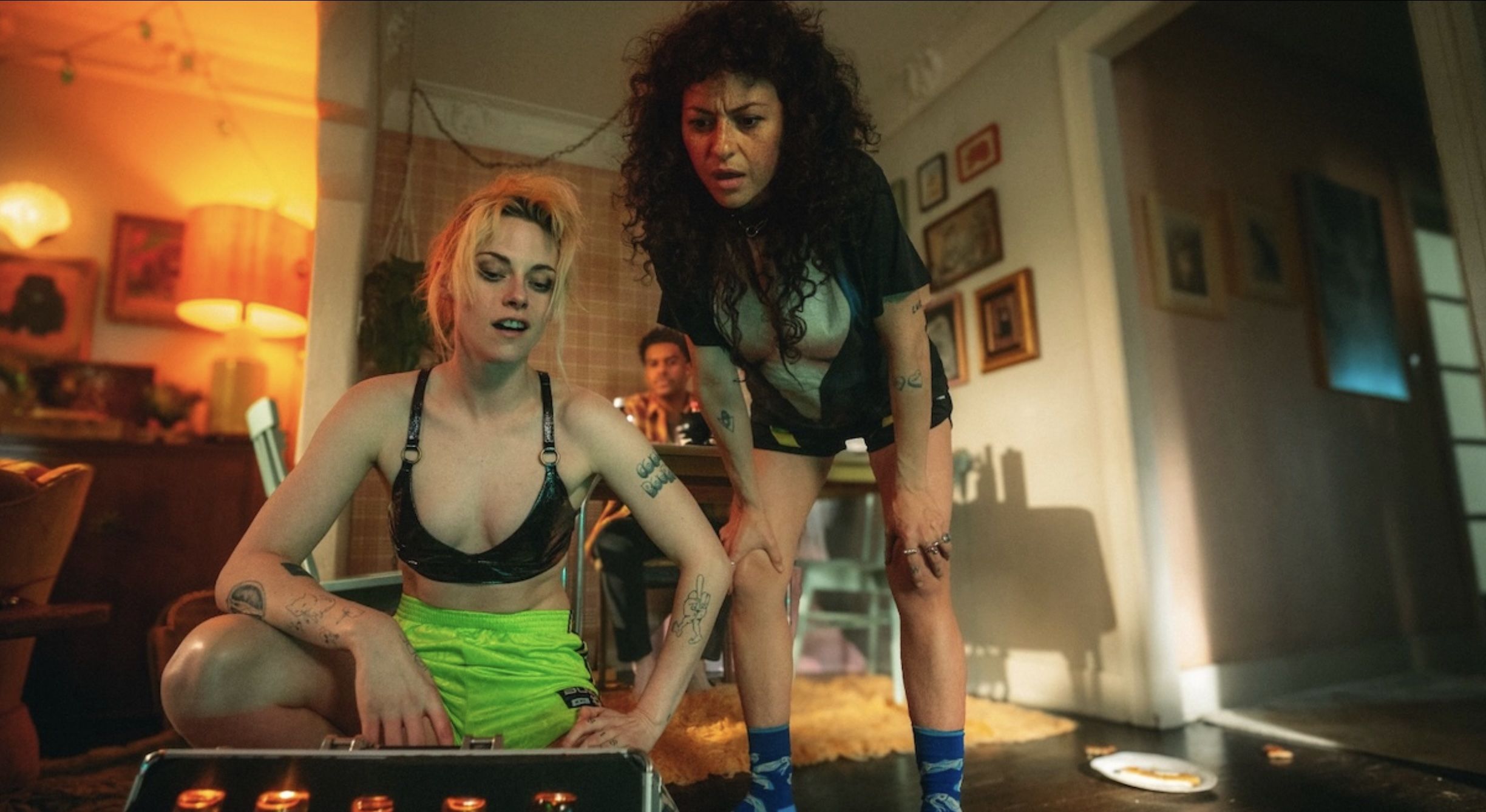
Kristen Stewart and Alia Shakwat in Dylan Meyer’s stoner comedy ‘The Wrong Girls,’ which features performances by Philly punk band Mannequin Pussy and music by Sheer Mag.NEON
Now, the band is also featured prominently in The Wrong Girls, the frequently hilarious new stoner comedy starring Kristen Stewart and Alia Shawkat. It’s written and directed by Stewart’s wife, Dylan Meyer, and the loaded cast includes LaKeith Stanfield, Kate McKinnon, Zack Fox, with Seth Rogen and Kumail Nanjiani voicing a pair of cats.
In The Wrong Girls, the plot turns on a mistaken identity encounter that Stewart’s delivery driver/secret genius character Frankie has at a Mannequin Pussy show.
Just as they did onstage at the Linc, the band makes the most of its screen time, turning in ripping versions of “Patience” and “I Got Heaven,” the title track from the 2024 album that the band, who opened for Florence + the Machine this year and was featured in a NPR Music Tiny Desk Concert, continues to support on the road.
They play European dates this month and will rejoin the Foos in North Dakota and Canada in September.
Besides Mannequin Pussy, The Wrong Girls, which is playing at area theaters, also features a Philly-connected garage-punk soundtrack that reflect Meyer’s excellent taste. The opening credits song is “What You Want” by Philly’s Sheer Mag, the score is by Ty Segall, and songs are heard by Tacocat and Slutever, the 2010s L.A. punk led by Philly natives Nicole Snyder and Rachel Gagliardi.
Mannequin Pussy is playing the First Unitarian Church, 2125 Chestnut St., Oct. 28, r5productions.com.
— Dan DeLuca
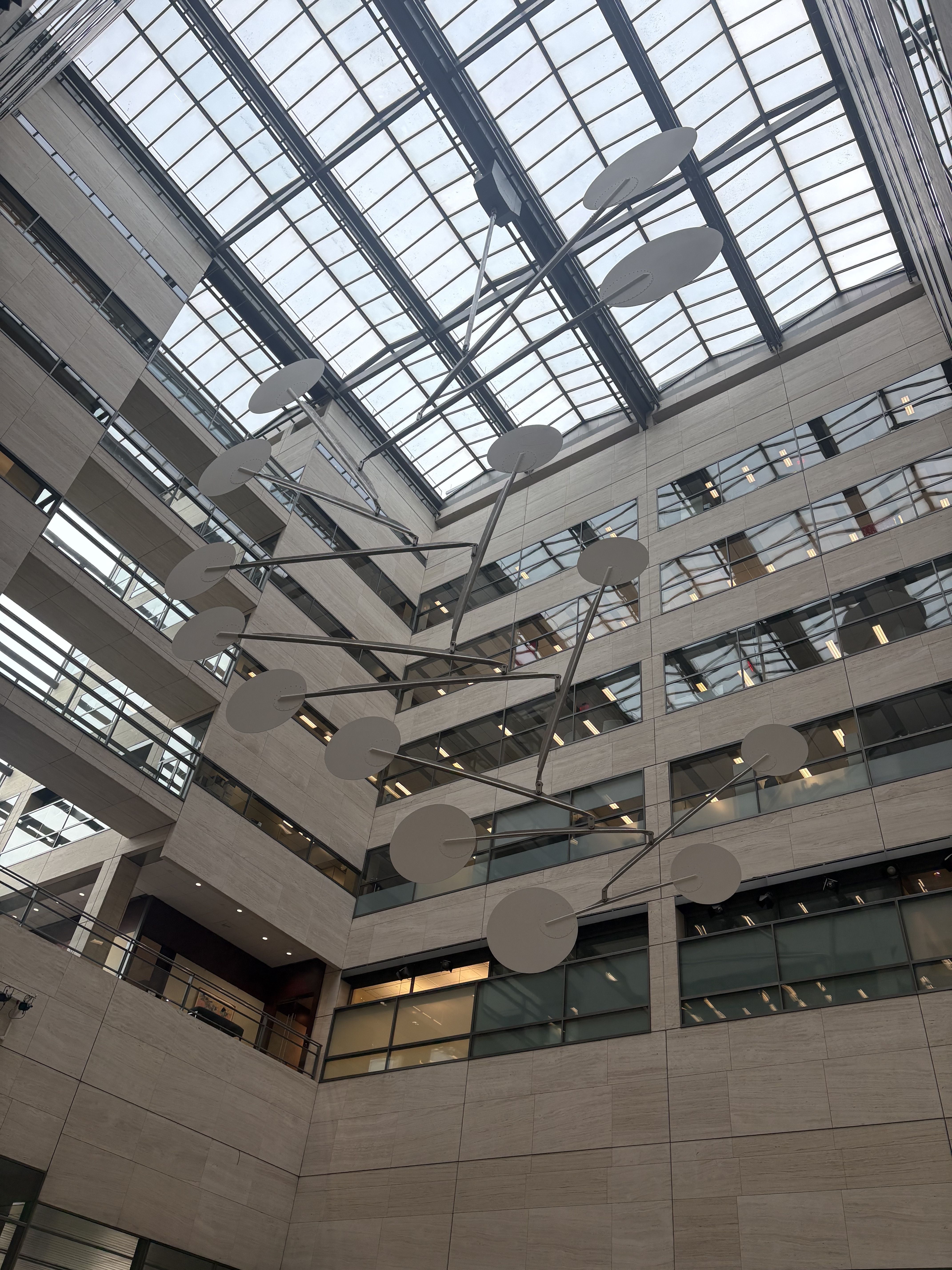
“White Cascade” by Alexander “Sandy” Calder at the Federal Reserve Bank of Philadelphia.Peter Dobrin
The largest mobile in the world
When Calder Gardens opened nearly a year ago and the spotlight was on the pioneer of the mobile, Calder fans were unable to see the artist’s largest contribution to the genre. That’s because public access to White Cascade in the Federal Reserve Bank of Philadelphia was closed off for a year during an exhibit renovation in the atrium.
In June, though, the Philadelphia Fed reopened access to the piece, one of Alexander “Sandy” Calder’s last before his death in 1976.
You do wish it were a little more accessible. The piece is hung quite high, so you have to try a few spots to fully appreciate it. Employees looking into the atrium from areas not open to the public probably have the better view.
Still, one overcast morning this week, its lithe, hypnotic presence belied the superlative statistics. White Cascade is not only Calder’s largest piece — it is 100 feet tall, and weighs almost 10 tons — it is often cited as the largest mobile in the world.
And yet, it has a way of disappearing.
“We get folks who stop and look up at it,” said Todd Zartman, the Philadelphia Fed’s economic education manager, “and then other folks, they might work here two or three weeks and they’ll walk right under it and not realize what it is until someone points it out to them.”
What might not be obvious to either kind of viewer is that the mobile isn’t static. It’s hung from a motor that rotates the entire work at a very slow — though adjustable — speed.
“It’s been at this speed for quite a while, as long as I can remember, but I know it has been quicker at times,” said Zartman.
The gradual journey, which takes about 45 minutes per cycle, adds to the arresting effect. White Cascade moves so slowly, you can find yourself standing there for a while trying to prove to yourself that it does move.
If there’s any larger meaning to the piece, it’s up to the individual viewer to find it.
“The economy is constantly moving, it’s also not static, so I often tell people it kind of fits well here,” said Zartman.
“To most people who look at a mobile,” Calder once said, “it’s no more than a series of flat objects that move. To a few, though, it may be poetry.”
The artist might have appreciated the response of one visitor.
“I had a young girl who said it reminds her of the wintertime, of snowflakes coming down,” said Zartman, “and I thought about that, and I was like, ‘That’s kind of relaxing.’”
“White Cascade” can be seen at the Federal Reserve Bank of Philadelphia, 10 Independence Mall (Sixth St. between Arch and Race), Monday through Friday, 9:30 a.m. to 4:30 p.m. Admission is free.
— Peter Dobrin
A display at the Philadelphia Chinese Lantern Festival, running through Aug. 30.Rosa Cartagena
Lit snakes, foxes, flowers, and butterflies
I played tourist last weekend as my parents were visiting and finally made my way to Franklin Square for the annual Philadelphia Chinese Lantern Festival. Unlike the weather in recent nights, it was a perfect evening to stroll through the wow-worthy sculptures of steel and silk.
At points, I felt like I was walking around an animatronic zoo as a giant bear scooped up salmon and raccoons played around. (I could skip the ones that talked.) Artisans from Zigong, China, created rows of flowers and families of animals like tigers, horses, and otters that completely take over the park. The central fountain is dotted with lit-up lily pads and dazzling swans while nearby there’s an entire jungle habitat with monkeys, birds, butterflies, an elephant, and a sassy snake whose automated mouth opens like a greeting.
The welcome arch features an array of traditional lanterns with multicolored silk and cool graphics that make for an excellent photo op as does the massive dragon that takes up nearly an entire block.
The shining star of the night for me was the stunning fox from the persimmon tree display meant to express “blessings of happiness, harmony, and success in the year ahead.” It lounged in front of the bright red fruit tree with a Mona Lisa smile, its mostly white fur illuminated by rainbow lights along its body and bushy, multilayered tail.
This diva deserves its own animated movie because its presence was pure magic.
The Philadelphia Chinese Lantern Festival runs through Aug. 30.
— Rosa Cartagena
RDZ Parfum’s latest fragrance, Wooder Ice, smells exactly like lemon water ice, a favorite Philly sugary-sweet summertime treat. It costs $160 for a 100 ML bottle and is available at Perfumology and online at RDZParfums.comAlex Rodriguez
A wooder ice perfume for your pulse points
With top notes of Italian lemon, sweet orange, and bergamot, perfumer Alex Rodriguez’s latest fragrance, Wooder Ice, smells exactly like lemon water ice, a favorite Philly sugary-sweet summertime treat.
But the perfume’s black currant middle notes and cedar wood and vanilla base gives it a musky vibe turning the warm weather-inspired scent into one that boasts sultry fall redolence.
And I love it, surprising even myself. I’m not a fan of florals or citrus scents but warm amber and musk notes ground me in reality. A few sprays of RDZ Parfum’s Wooder Ice on my pulse points lit up my summertime glow. Yet, I could see myself cozying up by the fireplace in the wintertime with Wooder Ice wafting in the background.
That’s the point, said Rodriguez, who released RDZ’s 15th perfume Friday.
“This is a lemon vanilla gelato,” Rodriguez said. “I want people to take their summer memories into the cold, winter months.”
Rodriguez, the 40-year-old founder and creative director of RDZ Parfum, was born in Camden and spent his preschool years in Puerto Rico before moving back to live in South Jersey and North Philadelphia. He now lives in Pottstown.
He launched his prestige perfume collection in 2023 to make scents that celebrate his Puerto Rican heritage and Philly-area upbringing. Leyenda 21, his first scent is a salute to Pittsburgh Pirates’ rightfielder Roberto Clemente — one of the first Puerto Ricans to play in the MLB. RDZ’s Art Museum scent, infused with palo santo, is an olfactory nod to the Philadelphia Museum of Art.
But wait a minute. If Wooder Ice is an ode to Philadelphia, shouldn’t the first scent be cherry?
He kind of already did that.
Two years ago, Rodriguez released Philadelphia.
In addition to geranium, rose, and grass notes in honor of Longwood Gardens and Fairmount Park and salty hints for the soft pretzel, Philadelphia had a very cherry vibe.
Rodriguez decided to center lemon as the first in his Wooder Ice grouping because it’s his favorite flavor, reminding him of the days when he would frequent Rita’s Ice on South Jackson Street in Camden. “It was just so refreshing,” he said, adding that he’d like to expand Wooder Ice to center other flavors like cherry, grape, and mango.
“RDZ is about my landscapes, my memories, my culture, and my background,” he said. “Wooder Ice is an extension of that.”
Wooder Ice is $160 for a 100 ml bottle. It is available at Perfumology, 25 N. Third St. and on RDZParfums.com
— Elizabeth Wellington
The return of Isaiah Rashad
The past five years for Tennessee-born rapper Isaiah Rashad haven’t been quite as blissful. In fact, by the emcee’s own account, it’s been pretty awful.
In February 2022, an alleged sex tape involving Rashad was leaked on social media, prompting the introverted artist to address his sexual fluidity in media interviews. His bouts of alcoholism, substance abuse, and family drama only added to the descent, which led to a five-year stretch of inactivity.
That was until Rashad released It’s Been Awful in May. It’s an album unveiling his thoughts at the height of the descension, and the journey he’s undertaken to climb out of it.
His performance on Thursday started on shaky ground. He opened the show to “The New Sublime” and dropped the mic while leaping from one platform to the other. The crowd recited his lyrics as Rashad, smiling from the embarrassment, walked around to find a quick fix.
Right before the final verse, someone from backstage handed him a fresh mic, and he reverted into rap mode without missing a step.
Despite the technical missteps and Rashad’s irritated vocal chords, it was incredible seeing him fight through it all to perform records like “Free Lunch,” “4r Da Squaw,” “Heavenly Father,” and other records that span his decade-long career.
But no track was more symbolic than “The New Sublime,” an especially breezy song that signals his personal ills, and the ones shared among those closest to him. Even with everything he has been through, Rashad calls for prayer and self-reflection to keep his mind at ease. Like the contrast of the song’s lyrics and instrumental, it’s chaos contained.
That level of resilience, even in conditions as awful as this one, is why Rashad is considered a high-caliber artist. And why I walked away from his performance feeling like I not only “found” the real Isaiah Rashad, I understood him deeper as a man and artist.
It’s Been Awful is available on all music platforms.
Whitney Biennial curators travel the length and breadth of the country, paying visits to artists in their studios, surveying their work, and picking creators whose work they think represents the present climate of art making in the country. Together, they bring a once-every-two-years expansive exhibition to New York’s Whitney Museum of American Art, often regarded as the most prestigious and faithful register of American art.
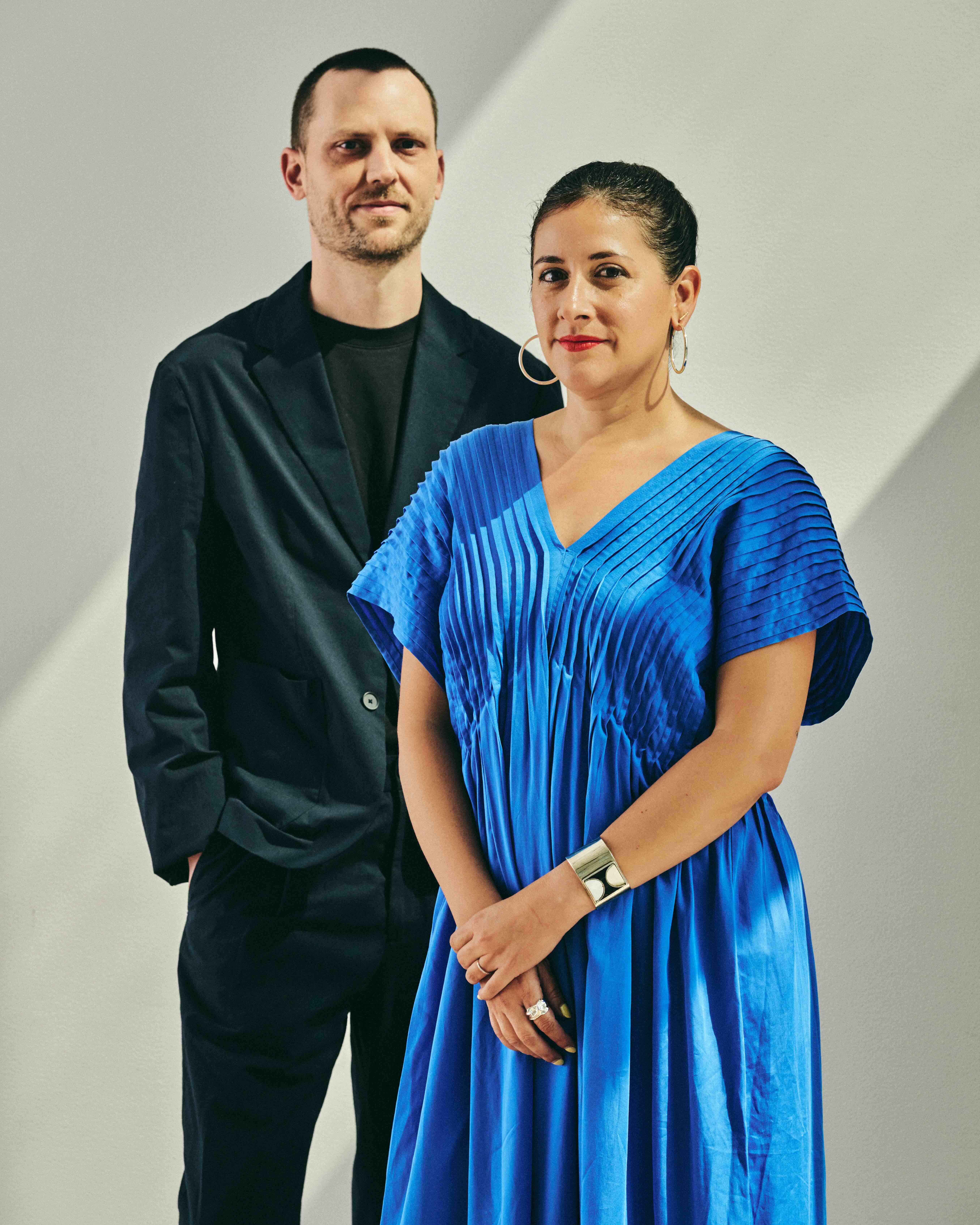
Past biennial curators — the 2024 edition was curated by the Institute of Contemporary Art’s former associate curator, Meg Onli — have embarked on these travels separately, but for the country’s 250th year and the biennial’s 82nd, Whitney curators Marcela Guerrero and Drew Sawyer traveled together.
Whitney Museum of American Art’s Biennial 2026 curators Drew Sawyer, Marcela GuerreroBryan Derballa
“We wanted to just listen to artists and see where they were at, see what they were thinking about, how they were processing recent events,” said Guerrero. They traveled for a bit over a year, nationally and internationally, and visited more than 300 artists.
“The idea of relationality and how do we relate in different ways” at political and interpersonal levels, is a theme that eventually emerged from their survey, Guerrero said.
While in the past some curators have traveled as far as Hawaii, Guerrero and Sawyer’s short travel to Philadelphia in the winter of 2024 proved equally fruitful.
“Philly was such a productive trip and very coherent in terms of what we were hearing from artists on gentrification, displacement, and the cost of living,” Guerrero said.
Artists in Philadelphia, Sawyer noticed, “seem to be particularly preoccupied with ideas of infrastructure” and there exists a strong sense of connection among them. Several of the city’s artist are graduates of the MFA programs at the University of Pennsylvania and University of the Arts, taught by the same professors like Michelle Lopez (whose work is included in this year’s biennial) and Sharon Hayes (whose work was a part of the 2024 biennial).
Maia Chao, “Being Moved,” 2026. Performance, Whitney Museum of American Art, New York, May 14–17, 2026. Commissioned by the Whitney Museum of American Art.Julieta Cervantes
Performance artists Maia Chao and Jonathan González, both of whose works are part of the biennial, live in West Philadelphia and are friends and collaborators. Emilio Martínez Poppe attended Penn and studied with Lopez, and was particularly interested in the idea of infrastructure from the perspective of the labor of public sector employees to help build and maintain our social and civic architectures.
“A kind of certain institutional critique, I would say, was common” among Philadelphia artists, said Sawyer.
“One of my biggest takeaways is the real vibrancy of the artistic scene in Philadelphia,” he said.
Here are the Philadelphia artists whose works appear in the Whitney Biennial.
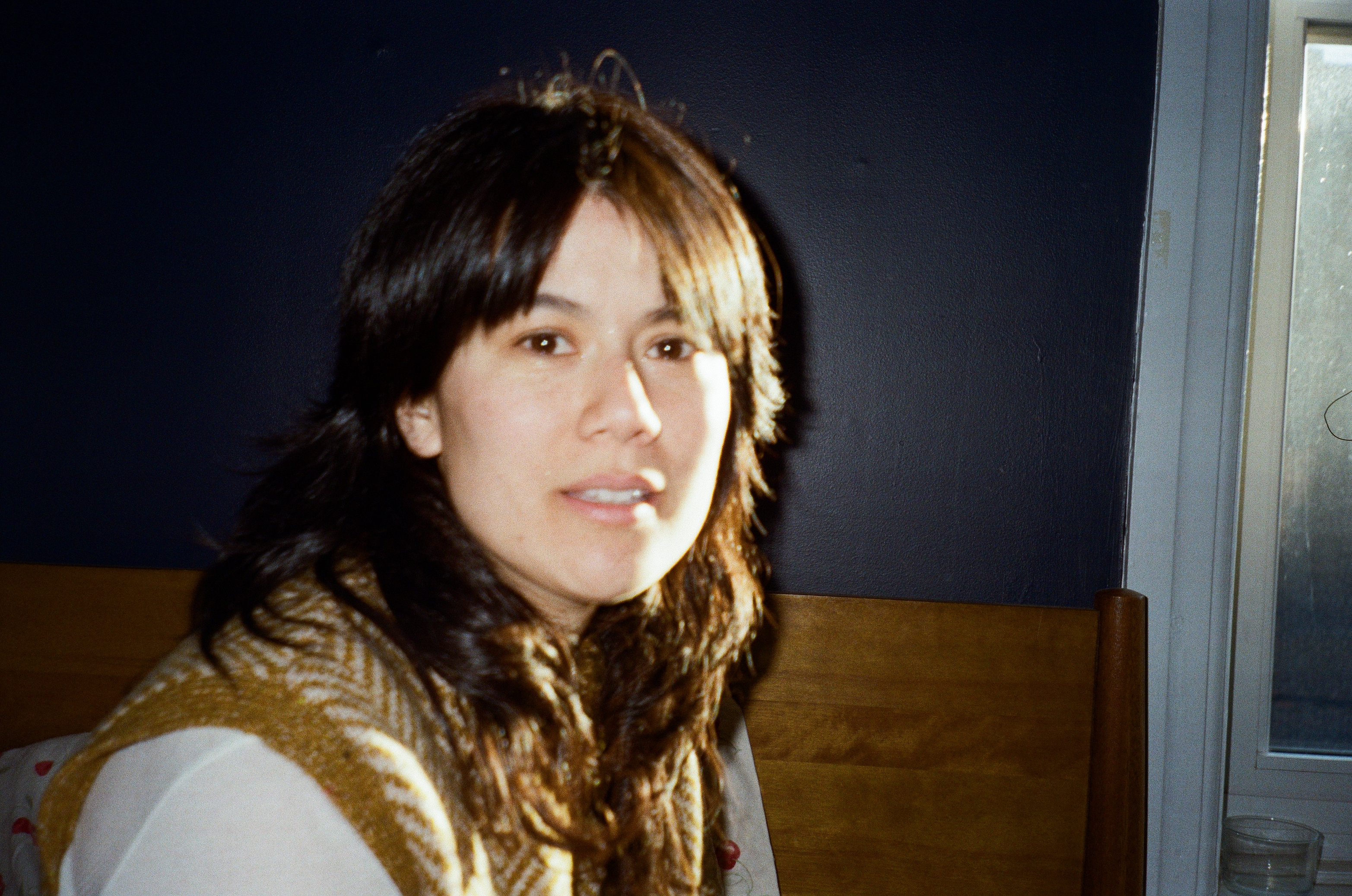
West Philadelphia-based artist Maia Chao’s performance pieces “Being Moved’ and “Scores for the Museum Visitor” are part of the 2026 Whitney Biennial.Amelia Golden
Maia Chao
“Scores for the Museum Visitor,” “Being Moved”
Maia Chao’s performance art emerges from studying social behavior. Where some might see the mundane walk from home to work, she sees choreography, a rhythm, and an interaction of the body with its surroundings.
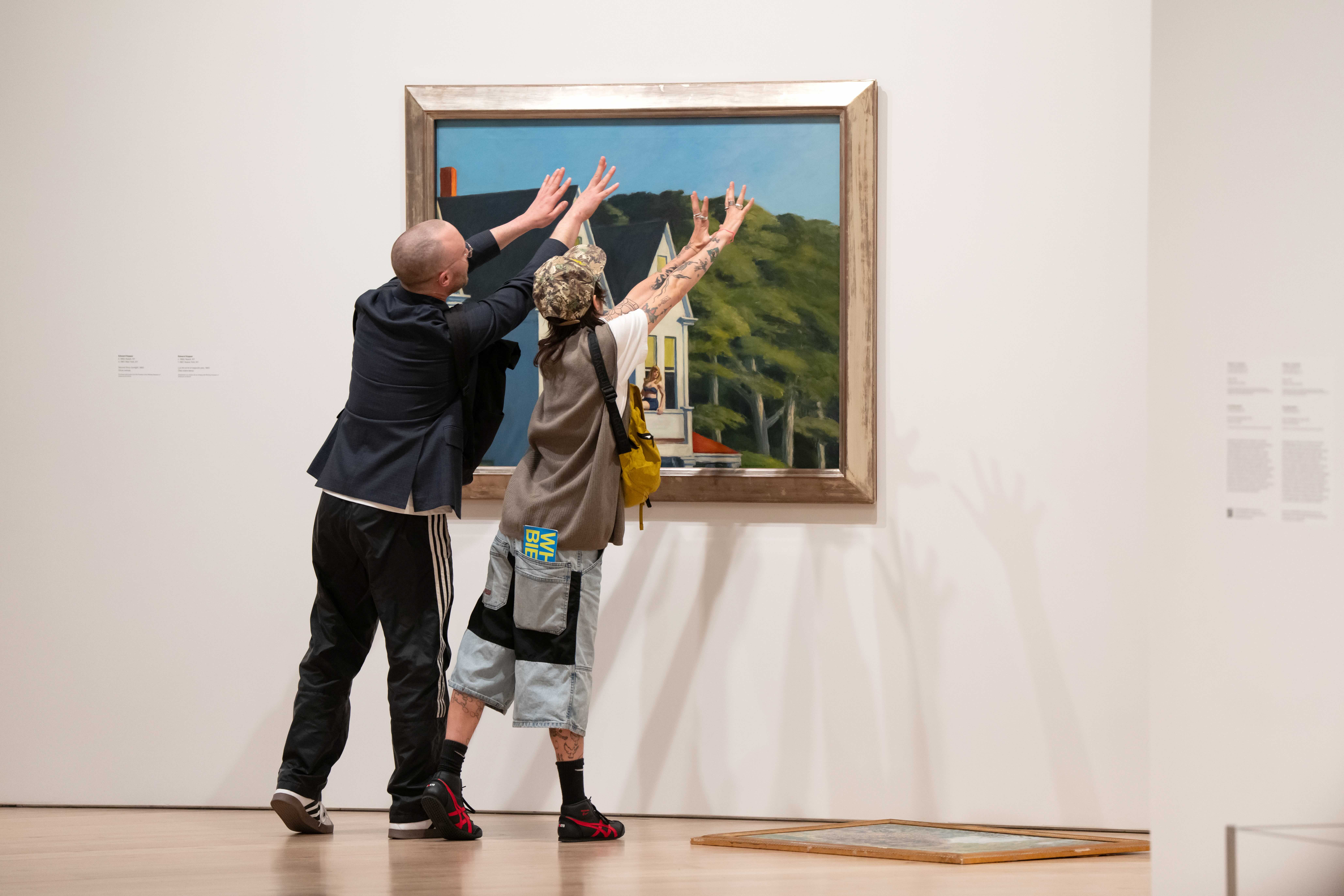
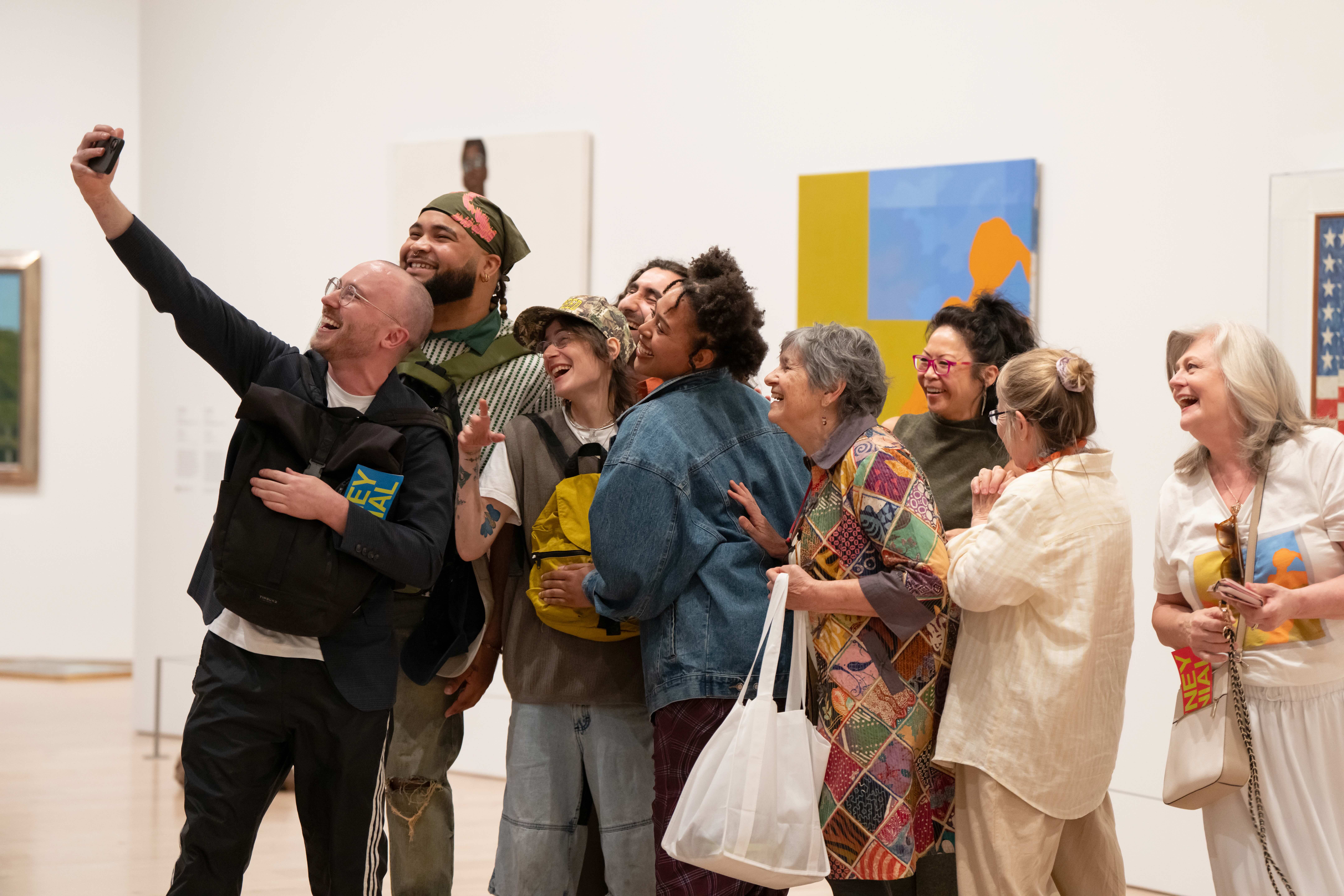
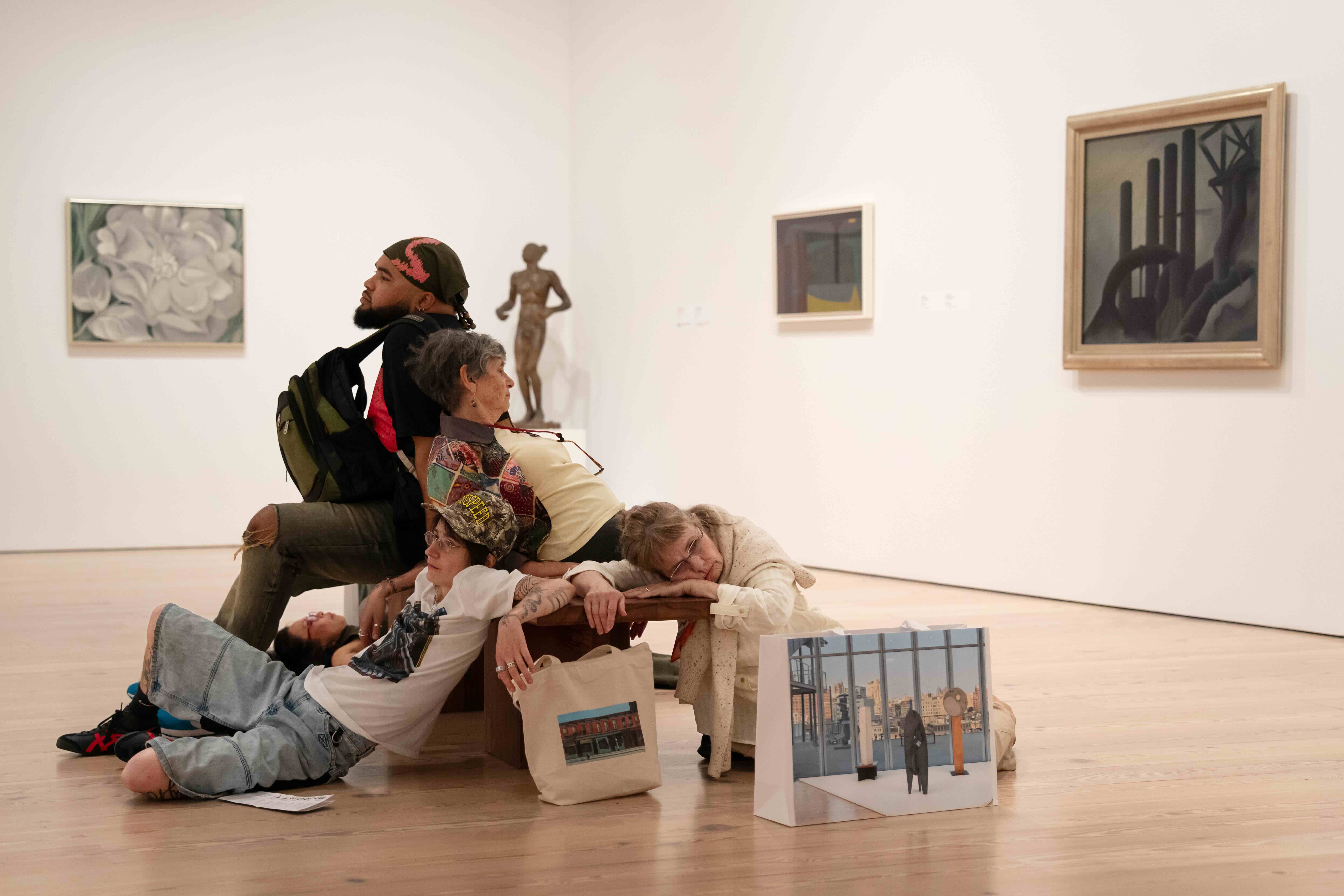
Her biennial performance piece Being Moved, choreographed by Lena Engelstein, takes inspiration from how museum visitors interact with the art. “It reframes the focus from the art itself to the visitors’ experience,” she said. The title refers to both “this potential to be moved by an artwork,” but also “of the ways that the institution makes us move, makes us move our bodies, and makes us behave in the presence of extremely valuable assets.”
That tension of the push and pull of a museum — where its mission might seem inviting and welcoming but once inside, rules around how to behave, what to touch abound — is at the center of Chao’s piece.
Maia Chao, “Being Moved,” 2026. Performance, Whitney Museum of American Art, New York, May 14–17, 2026. Commissioned by the Whitney Museum of American Art.Julieta Cervantes
When visiting the biennial beyond Chao’s performance schedule, visitors view Scores for the Museum Visitor as a set of prompts, an invitation to create “micro performances” of their own.
Among the scores are: “Identify another museum visitor. From afar, copy their movements as closely as possible.” “While holding a museum brochure, clasp your hands behind your back. Drop the brochure.” “Find a bench. Take a seat. Imagine the artworks slowly falling to the floor.”
“These are invitations to kind of transgress the rules, [for] engaging with the artwork, or interpreting and encountering an artwork,” the artist said.
Maia Chao, “Being Moved,” 2026. Performance, Whitney Museum of American Art, New York, May 14–17, 2026. Commissioned by the Whitney Museum of American Art.Julieta Cervantes
Chao first caught the curators’ attention with Agents of Deterioration (2024), made in collaboration with Ethan Philbrick, a performance piece commissioned by the Hirshhorn Museum and Sculpture Garden. Sawyer was drawn in by Chao’s “legacy of institutional critique through affective registers.”
“There’s a real kind of commitment to the institution, even as Maia is critiquing it, which we felt was important in this moment where there’s, from many different directions, an eroding of faith in institutions. We were really interested in the way she both critiques and pushes institutions to do better,” he said.
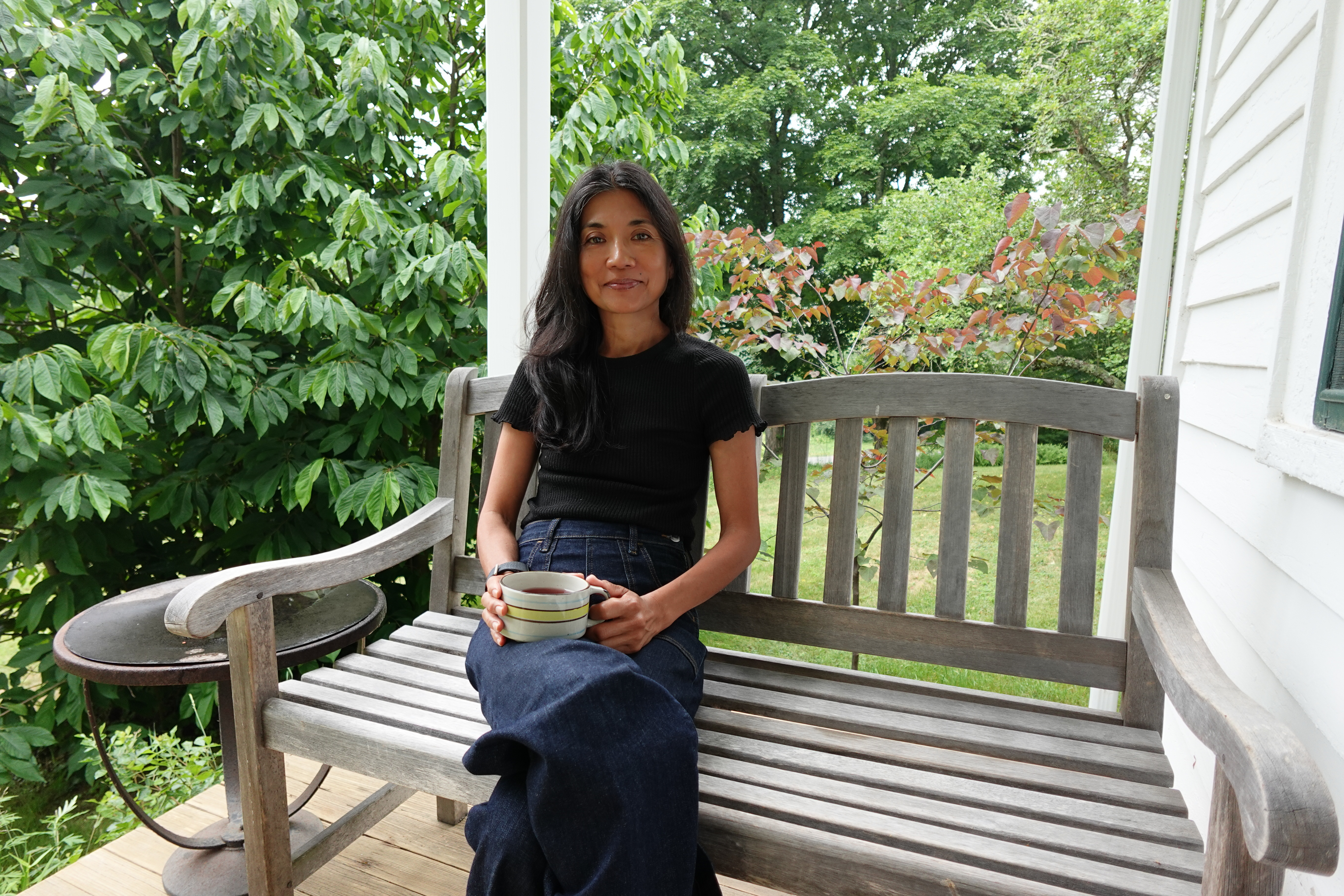
Artist and Penn professor Michelle Lopez whose “Pandemonium” is part of the 2026 Whitney BiennialKelsey Valencia, Denniston Hill Residency
Michelle Lopez
“Pandemonium”
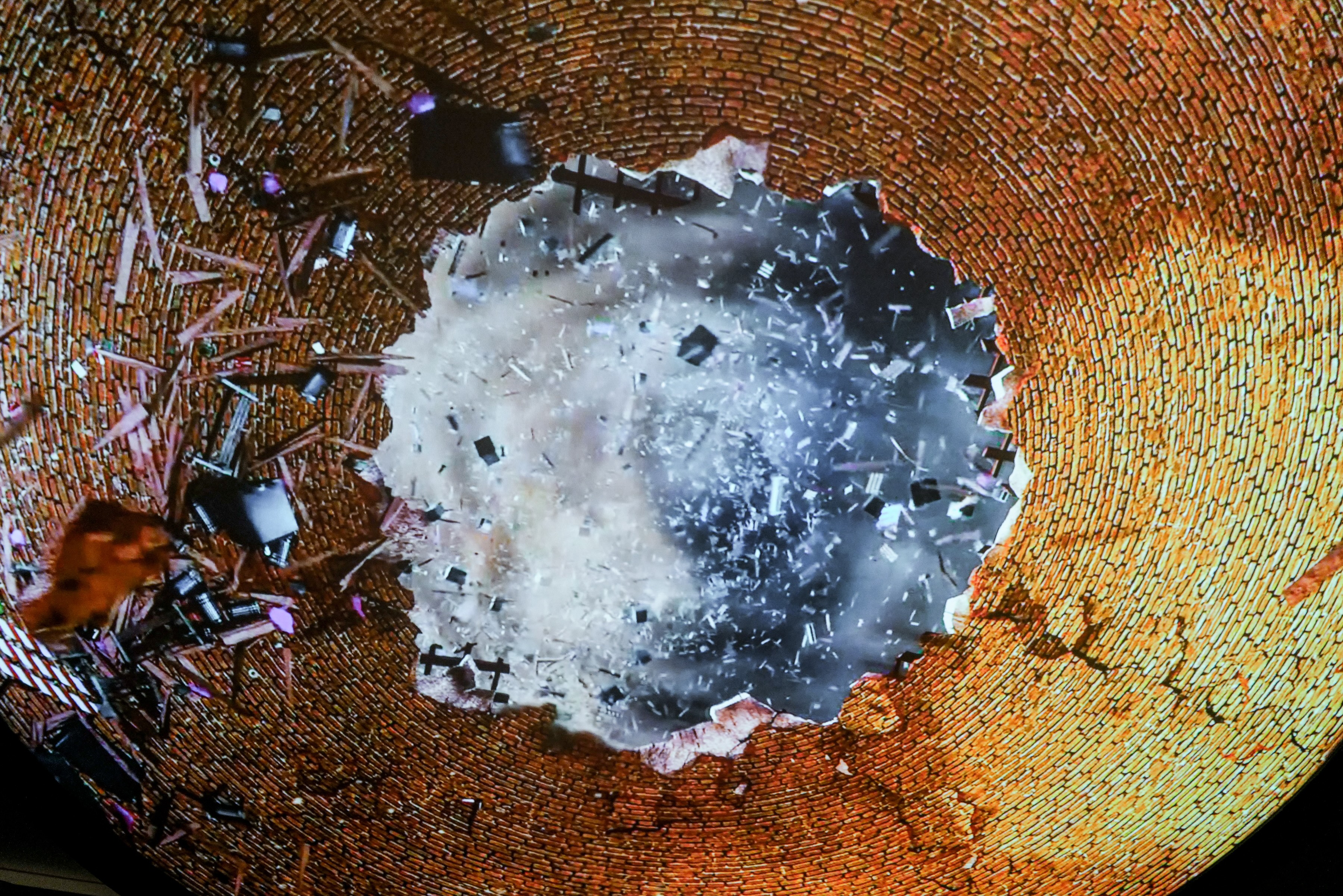
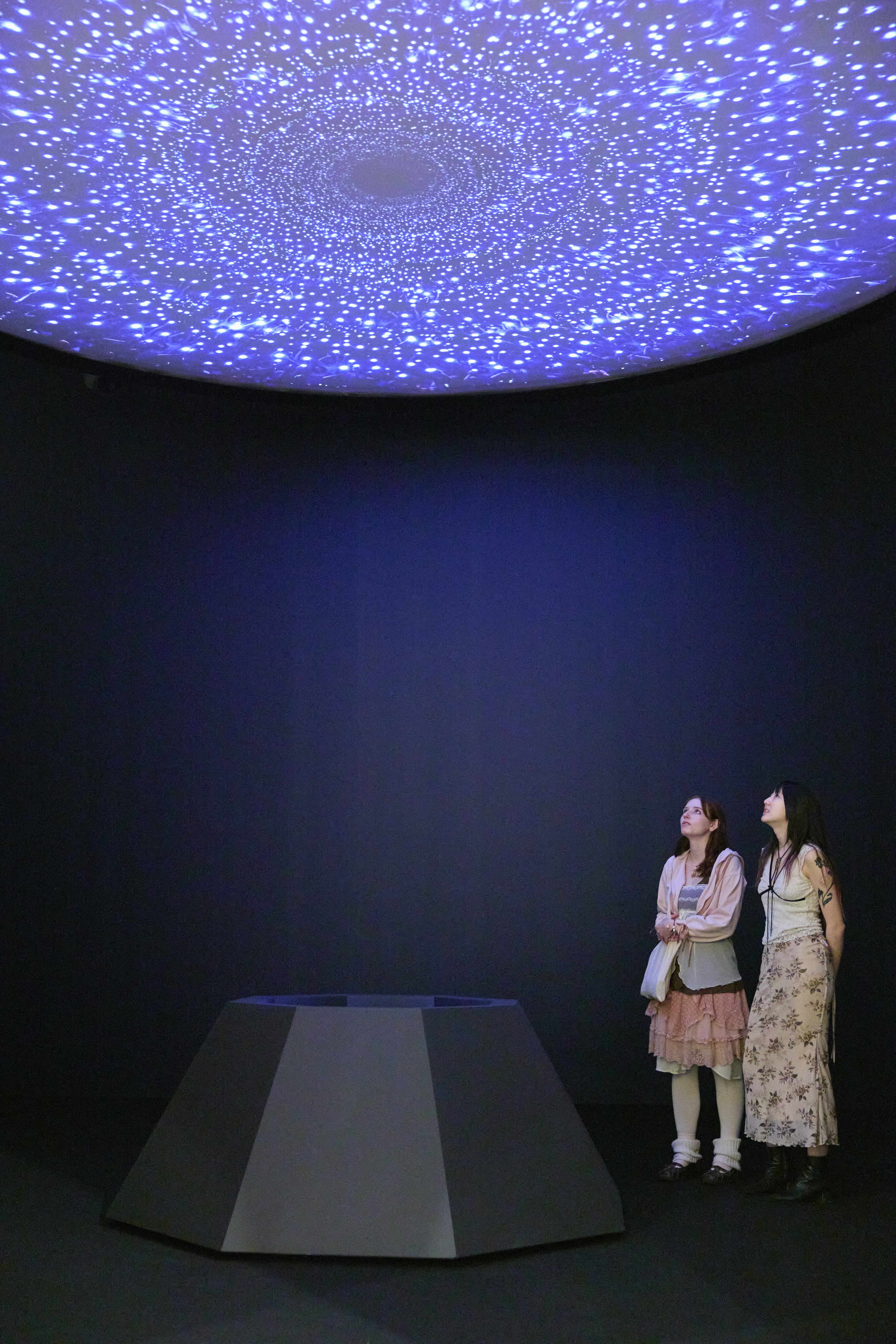
Pandemonium is a fully Philadelphia piece of art. It was made in collaboration with the Moore College of Art and Design and the Franklin Institute, supported by the Pew Center for Arts & Heritage and the University of Pennsylvania, filmed at Northeast Philadelphia’s RAIR (Recycled Artist in Residency), premiered at the Fels Planetarium and the Galleries at Moore, and inspired by artist Michelle Lopez’s earlier work exhibited at the ICA.
“Philadelphia is just a really supportive environment for artists,” said Lopez, who is an associate professor of fine arts at Penn’s Stuart Weitzman School of Design, where she leads the sculpture program. “I could not have made that work in New York.”
The video project, as Lopez says, came from a desire to “situate the viewer in the eye of a storm so that they could feel, on a somatic level, what it was like to have their environment really collapse around them.”
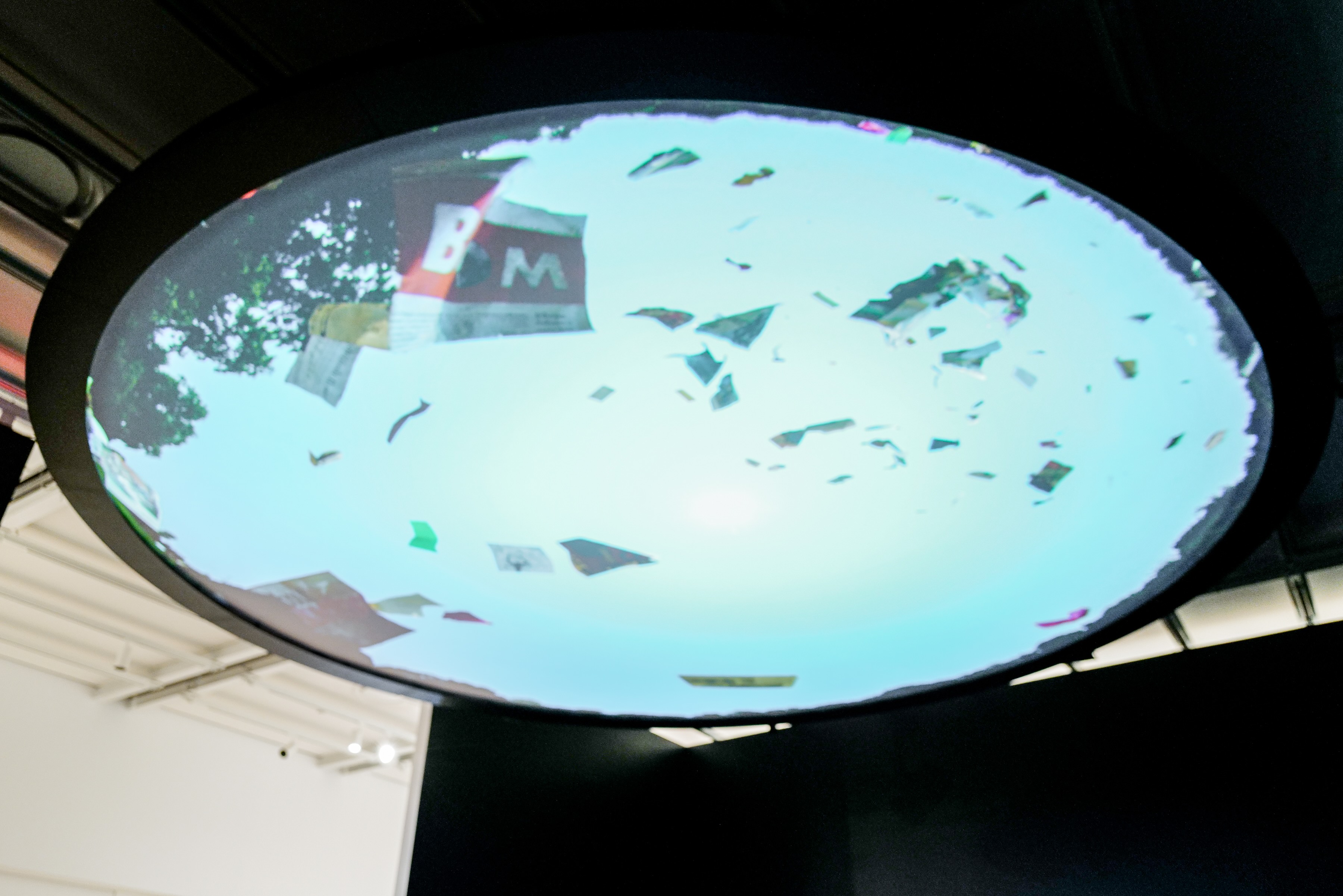
At the Whitney Museum, Pandemonium plays on a domed screen on the ceiling of the gallery and demands that the viewer sit below it and look up. What they witness is things moving around with a violent force against the sky — debris, newspapers, packaging, clothing (including Lopez’s own and her son’s old underwear), and other markers of extreme human consumption.
In order to make this mayhem happen, Lopez, who is trained in sculpture, built a tornado machine using a robotic contraption, industrial fans, and leaf blowers. Together they created a simulation of a tornado at RAIR which was then filmed and eventually screened in the Fels Planetarium.
“A lot of the work imagistically, came from seeing images of tornadoes and hurricanes wiping out towns. I was really interested in the way nature could collapse culture,” said Lopez, who lives in South Philadelphia.
Installation view of Whitney Biennial 2026 (Whitney Museum of American Art, March 8–August 2026). Michelle Lopez, “Pandemonium,” 2025.Jason Lowrie/BFA.com
While a Whitney gallery is nowhere close to the grandeur and wonder of the Fels Planetarium, the 360-format video manages to suck in a viewer who feels almost weightless as the feeling of being thrown around by the forces of nature is simulated.
When the curators visited Philadelphia for studio visits, “top on our list was Michelle Lopez,” said Sawyer. “We were aware that she had been working on this major moving image project that departed from what she’s most well known for, which is sculpture. So we were really excited to meet with her, especially because her work had not been a part of the biennial before.”
Artist Emilio Martínez Poppe, whose work “Civic Views” was on display in the City Hall courtyard last year. This year, it’s a part of the Whitney Biennial.Neal Santos
Emilio Martínez Poppe
“Civic Views”
Like Lopez’s Pandemonium, artist Emilio Martínez Poppe’s Civic Views is an artwork that is only possible because the city of Philadelphia exists. Several Philadelphians have already seen Martínez Poppe’s workwhen it was on view last year in the City Hall courtyard.
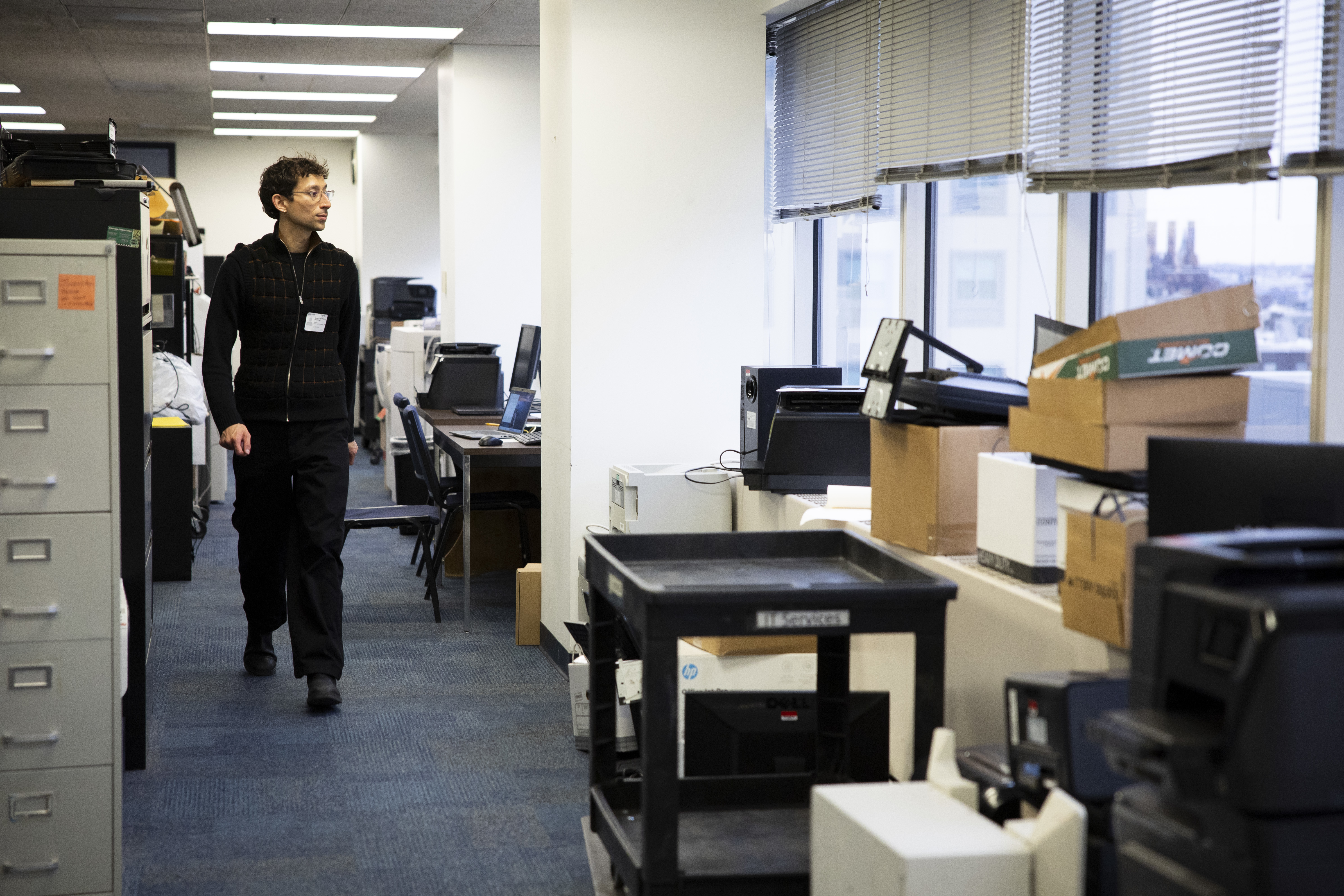
Martínez Poppe was then studying city planning and working toward an MFA in visual art from Penn when he was mulling over the future of city planning graduate students who’d go on to join the public service workforce.
It was in conversation with professors that he found out that the oldest surviving daguerreotype in the country, which is stored at the Historical Society of Pennsylvania, was taken by Joseph Saxon, who was a public sector employee working for the U.S. Mint.
“That was shot out of the U.S. Mint, where the Widener Building is today. He’s following Daguerre’s technological recipe, he uses it to photograph what he sees through the window. Unlike Daguerre, who was a theater entrepreneur, Saxton was a public sector employee who was doing something he was not hired to do,” said Martínez Poppe. “He was hired to work on the newly nationalized currency and he was tinkering with this invention in his office, and that view is one of the only real entry points that we have into his position at his job there, which is interesting.”
Emilio Martínez Poppe looks out the windows at the Department of Behavioral Health and Intellectual disAbility Services office on Tuesday, Feb. 11, 2025 in Philadelphia. Emilio Martínez Poppe is working on a project curated by Jameson Paige that documents the views from municipal service buildings. The project also includes interviews with city workers.Monica Herndon / Staff Photographer
Inspired, Martínez Poppe visited municipal buildings all across Philadelphia and photographed views from the inside out so he could document what city workers see from their windows. Alongside, he conducted “dozens of long form, anonymized interviews” with city workers from more than 20 agencies.
“I would ask them, what was your perspective of city government before working here, who taught you about the value of public sector work? Often, so many people would tell me it was their mothers.”
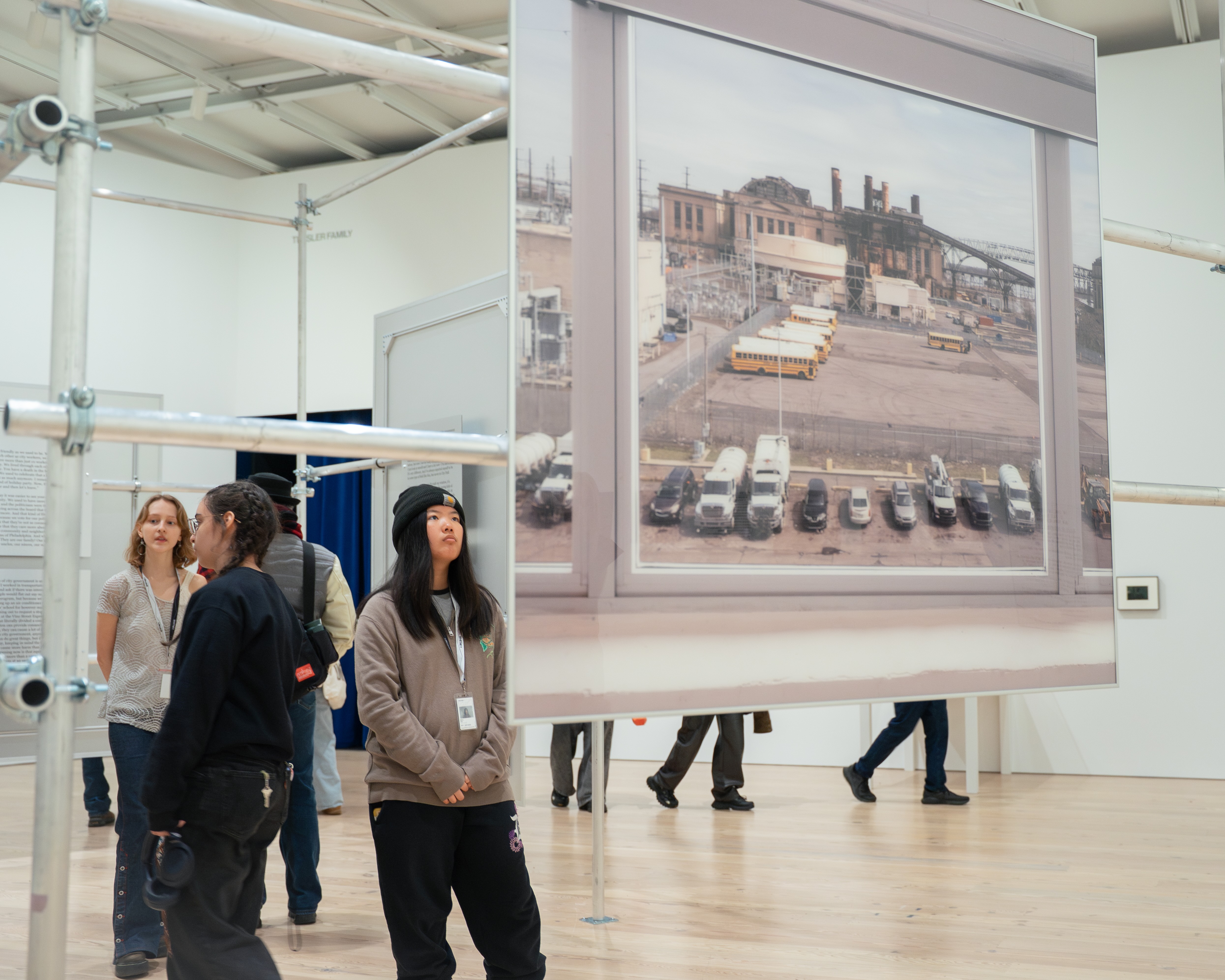
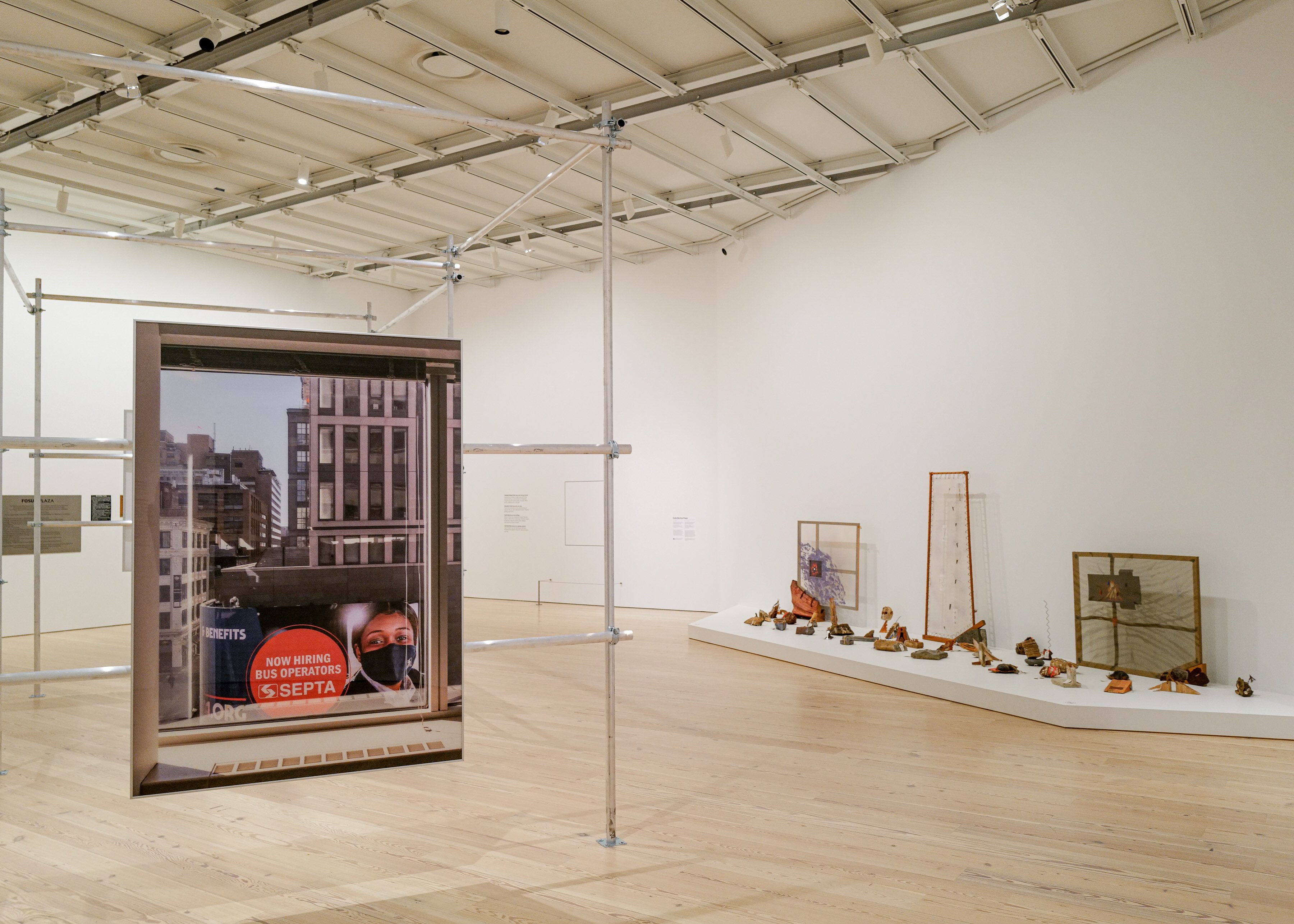
Civic Views is a result of those conversations — a coming together of anonymized interview snippets and photographs displayed in a scaffolding-like structure in the middle of a Whitney gallery. “It’s the scaffolding that dissolves the authoritative center, even in the Whitney Biennial,” said Martínez Poppe.
An installation view of Emilio Martínez Poppe’s “Civic Views.”Summer Surgent-Gough
“The public sector is vulnerable to radical change, for better or worse. With my work, I want to say that it’s time to seize the means, seize our technology to create the world that belongs to us,” the artist, who now works for the New York City Mayor’s Office as a civic arts programs coordinator, said.
“We need to assume that responsibility. That’s why the project centers the voices of workers and how their positions shape their views. But also how their views shape the structures that we are living in and living through.”
On the curators’ Philadelphia visit, Guerrero recalled seeing Civic Views and people of the city interacting with it. “It was very touching,” she said. Her favorite part about the work is that it uses “the tropes of the camera, of the interview, of bureaucracy, but then upends it completely.”
Installation view of Whitney Biennial 2026 (Whitney Museum of American Art, March 8–August 2026). “Civic Views” (2024) by Emilio Martínez Poppe, “Philadelphia Housing Authority, South,” 2024; Emilio Martínez Poppe, “Philadelphia Department of Sanitation, North,” 2024; Emilio Martínez Poppe along with works of Kainoa GruspeJason Lowrie/BFA.com
“You see how important the job of a public servant is,” she said, “and how you know they’re in kind of a double bind because they’re the face of the government and also they receive the same services they provide … their kids are in the public school system, they depend on the Department of Sanitation.”
She finds this complexity “beautifully translated” in Civic Views. “You can really put yourself in the shoes of the person who’s speaking and feel the care that really goes into this type of work that should not be overlooked.”
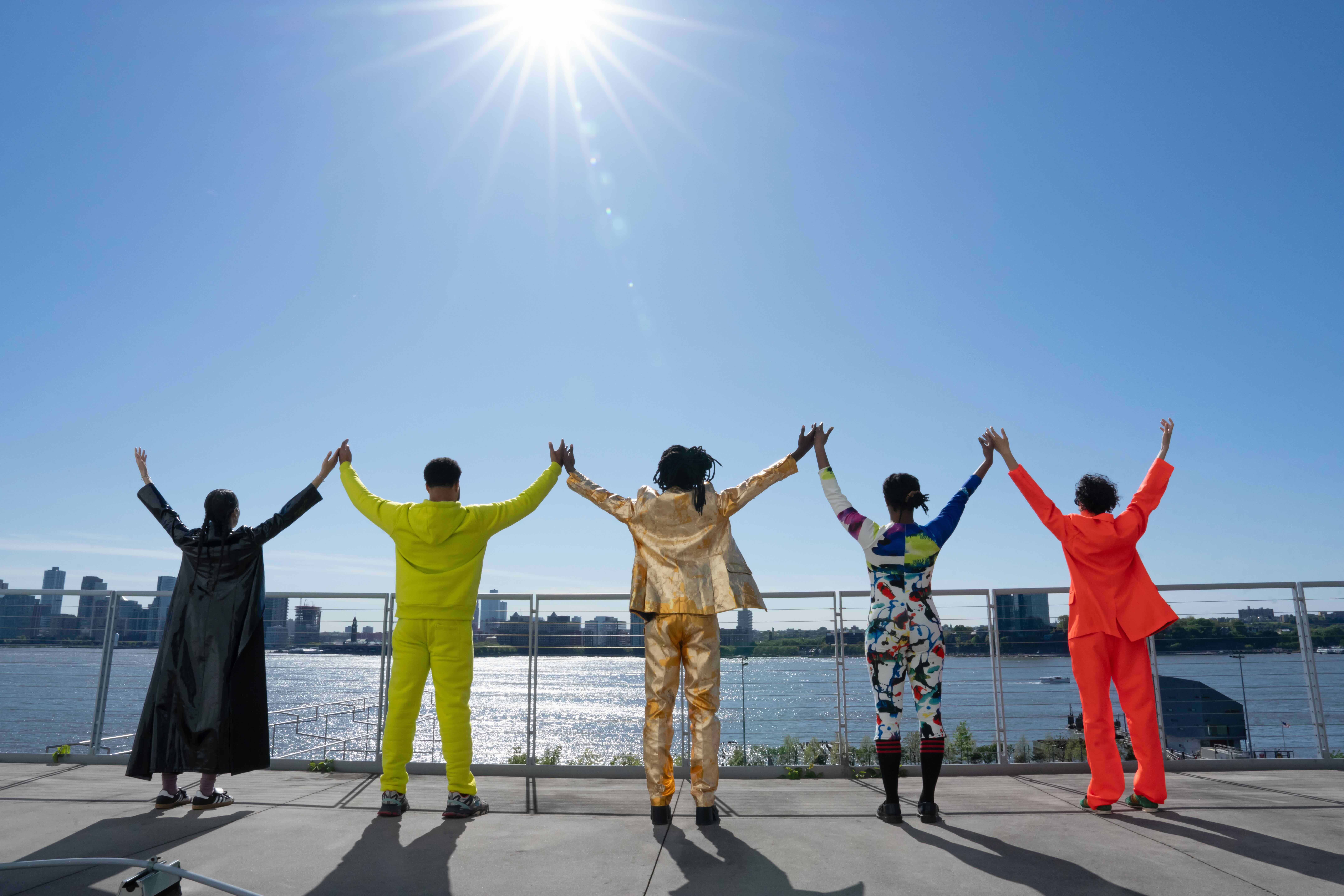
Artist Jonathan González whose performance piece ‘magic hour — golden time’ is part of the 2026 Whitney BienialRudy Gerson
Jonathan González
“magic hour — golden time”
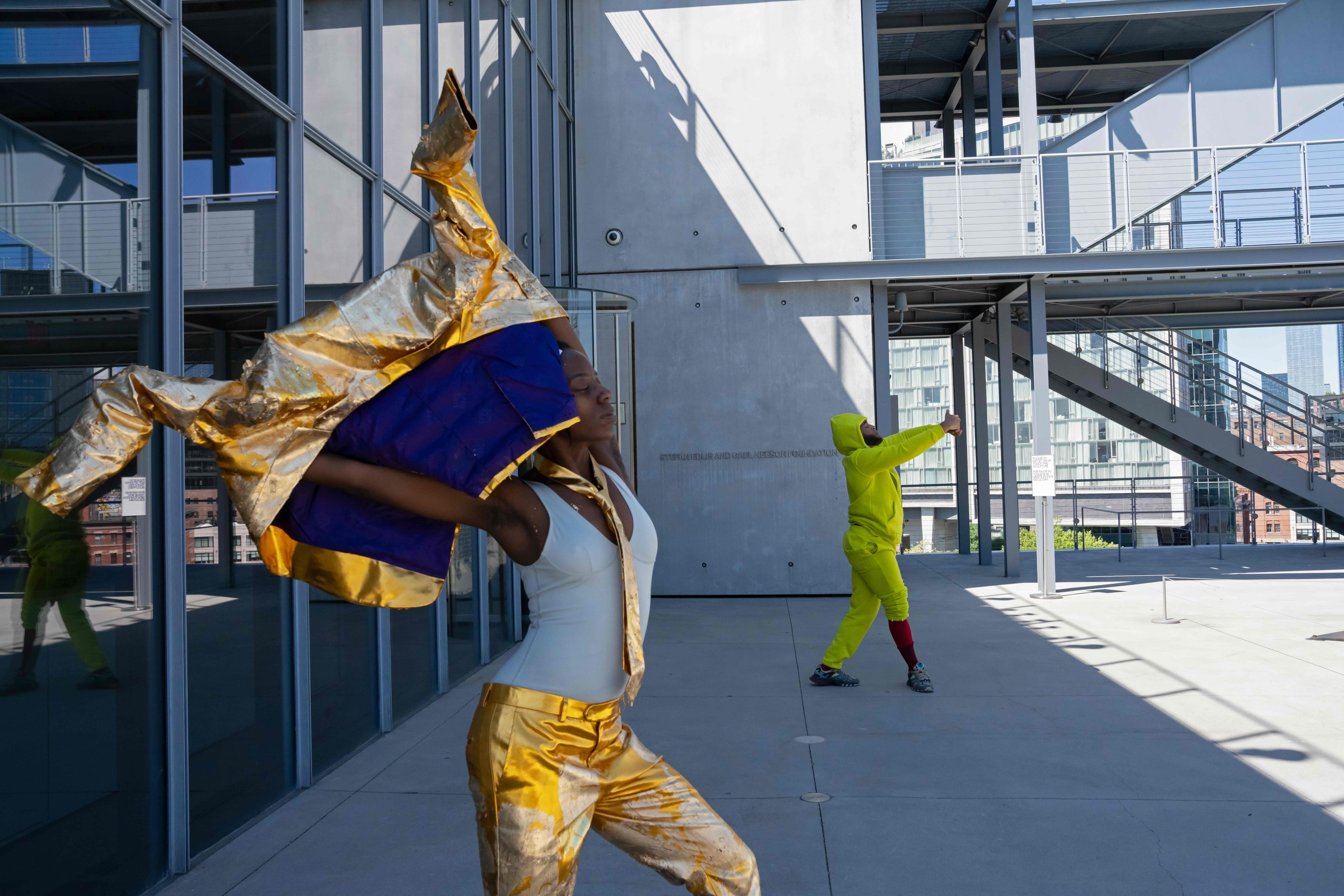
Like Chao, Jonathan González’s work also sees a two-pronged approach with performance and photography. Three Super 8 photographs, A, B, and C, mark the locations, across the museum, of the three-hour long performance piece presented by González and their co-artists.
“Each photograph shares with the performers how to perform the work,” said González, who also lives in West Philadelphia. Magic hour-golden time, they said, “is a double leaning. Magic hour comes from the usage in broadcast television when you have the highest viewership. And golden hour is that moment of the sunset. And so the piece is merging this experience of looking out and also being seen over three hours.”
Jonathan González, “magic hour–golden time,” 2026. Rehearsal performance, Whitney Museum of American Art, New York, May 12, 2026. Commissioned by the Whitney Museum of American Art.Julieta Cervantes
From three terraces around the museum, the performers follow the sun’s movement for three hours. In the first hour, the performers “embody the architecture that surrounds the museum” and makes up the city’s skyline. The second hour, they said, “is a procedure of call and response … the dancers dance with every dance you’ve ever danced, and take information from one another as dancers, as well as from the pedestrians.”
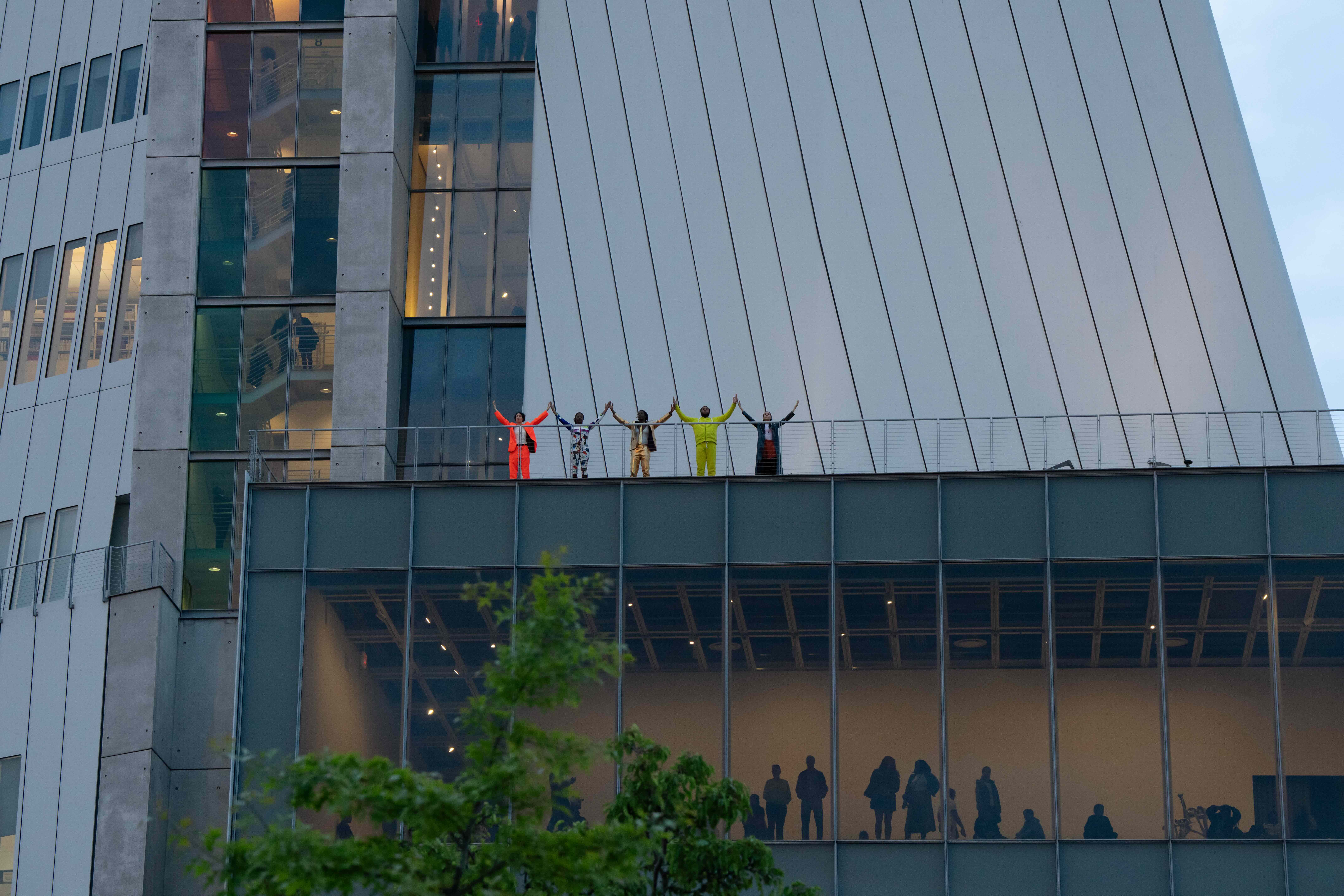
The final hour, González said, is performed on an inaccessible terrace. “It can only be viewed from across the street, you cannot see it from the museum. It’s called the ‘Endless Bow,’ and it’s 60 minutes of bowing to the sun and bowing to the world and bowing to the performance.”
Philadelphia, the former University of the Arts professor said, gives them “the capacity to slow down to hear these voices, and have dreams, visions come to you.” The city allows them the time to spend time in the studio with friends like Chao and inspires them to “collaborating not toward a particular product or aim, but much of the time experimentation.”
Jonathan González, “magic hour–golden time,” 2026. Performance, Whitney Museum of American Art, New York, May 12, 2026. Commissioned by the Whitney Museum of American Art.Julieta Cervantes
“Just the fertile nature of Philly as a historical Black geography has been really important for me to really situate the questions of time and what happens to a city at the late stage of industrialization, and to really think critically about what a group can do, what mutuality is,” they said.
“Certain artists just stay in your mind, and you want to come back and see what they are working on,” said Guerrero recalling her first tryst with González’s work. “The work felt so mature. There’s this notion of how, through improvisation, you can be attuned to your surroundings. In the case of their performance, they make these other effective strategies [for attunement] that don’t always rely on the senses, and that is something that is very present in the show.”
The Whitney Biennial 2026 is on view through Aug. 23 and on partial view, which will include all of the Philadelphia artists’ static works, through Oct. 12. The Whitney Museum of American Art, 99 Gansevoort St., New York. whitney.org