The Pennsylvania Attorney General’s Office has entered the legal fight over whether Lavar Brown — the man whose case prompted the state Supreme Court to give the office new power to challenge efforts to overturn convictions in Philadelphia — should receive a new trial.
Senior Deputy Attorney General Tracy Piatkowski announced the office was stepping in during a Common Pleas Court hearing Friday, at which Brown’s attorney, Tracy Ulstad, also said she planned to ask the U.S. Supreme Court to review the state court’s decision.
Brown, 49, was sentenced to life in prison without the possibility of parole after a jury convicted him of second-degree murder in the 2003 robbery and fatal shooting of Michael Richardson, a worker at a Rite Aid drugstore in North Philadelphia. Brown was also convicted of killing Robert Crawford in 2005 and sentenced to death.
In the Richardson case, a judge later vacated Brown’s sentence and ordered a new trial, after District Attorney LarryKrasner’s office supported his request. Brown’s attorneys argued that he had been denied a fair trial because the prosecution’s case relied heavily on two witnesses, one of whom had implicated another person in the killing in earlier statements that were never provided to his trial attorneys.
The families of Richardson and Crawford asked the state Supreme Court to intervene, arguing that Brown’s case was among more than 100 in which Krasner’s office had supported efforts to overturn convictions and vacate sentences, and that those efforts revealed a pattern of misleading the courts.
They also argued that Krasner had a conflict of interest in Brown’s case because two of his former law partners had been previously involved, and that his office’s position could undermine the death sentence, for which the Richardson killing had served as an aggravating factor.
The state Supreme Court agreed, and ruled that judges must notify the attorney general’s office and give it an opportunity to review and intervene in cases in which Krasner’s office seeks to overturn convictions and vacate sentences in the future.
Since the ruling, the attorney general’s office has sought to intervene in five cases, including those of three men whose murder convictions were overturned in May, weeks before the high court’s decision, spokesperson Brett Hambright said.
Brown’s case involves three codefendants — Christopher Kennedy, Jamaar Richardson, and James A. Richardson — who were also convicted of murder and are seeking to overturn their convictions. Piatkowski said the attorney general’s office has not sought to intervene in their cases because Krasner’s office has not conceded that they should receive relief.
On Friday, Piatkowski said she had not taken a position in Brown’s case and would request discovery materials from the district attorney’s office.
Ulstad, Brown’s attorney, declined to comment after Friday’s hearing. A spokesperson for the district attorney’s office did not respond to a request for comment.
These are developments that might not point to optimism.
Here’s something else Roseman said:
“You want to have an extended run. My job is to look at how we can have sustained success for a long period of time.”
I actually don’t disagree with Roseman — there are ways for the Eagles to salvage this rocky start to the season, even if it feels a little grim.
But how did the Eagles get here?
We have to really take a close look at the decisions that brought them to this point … and how it seemingly represents a departure from the organizational philosophy that’s guided them for nearly two decades.
The Eagles’ success for the last decade, and really since the start of the millennium, has been based on the core philosophy that former Eagles coach Andy Reid and team president Joe Banner fostered more than 25 years ago, and that was to build your roster through the trenches. Yes, getting a quarterback is of the utmost importance, but protecting him and pressuring opposing quarterbacks was foundational.
Reid and Banner fell short of realizing their goal, but three of the four core linemen who brought championships to Philly were drafted during their tenure. Roseman continued that tradition by drafting Lane Johnson and others who would be instrumental in the 2017 and 2024 Super Bowl runs.
But Roseman might have lost sight of what helped the Eagles reach those pinnacles, especially when it came to replacing Johnson and the battered Landon Dickerson and Cam Jurgens. Johnson had been on the brink of retiring for years. Dickerson and Jurgens played through various injuries that needed offseason surgery in 2025. They were obvious lesser versions of themselves that season, and last offseason they each went to Colombia for stem-cell treatment.
And yet, Roseman didn’t expend a pick on an O-lineman in the first two rounds of four straight drafts from 2023-26. Many expected Roseman to draft Johnson’s replacement in this year’s draft.
Roseman eventually took Markel Bell in the third round. Bell will continue to start in place of Johnson. Roseman also drafted guard Micah Morris in the sixth round, so he did address the O-line needs, but was it too late? The jury is out on Bell and Morris, just as it is on all the first-round tackles who were taken, but it was somewhat surprising that Roseman didn’t do anything more in free agency or the trade market to cover himself in case the youngsters weren’t ready. He brought back tackle Fred Johnson and he signed unknowns to futures contracts in January and undrafted rookies in May, but none made the 53-man roster.
Center Drew Kendall and interior lineman Willie Lampkin had promising offseasons, which gave Roseman depth he admitted he wasn’t quite sure he had entering training camp. But it seemed only a matter of time until Dickerson would break, and it came in the first game when he had one of the worst performances of his career. He later said he suffered a bone bruise in his knee before the season, but the Eagles seemed ill-prepared to replace him.
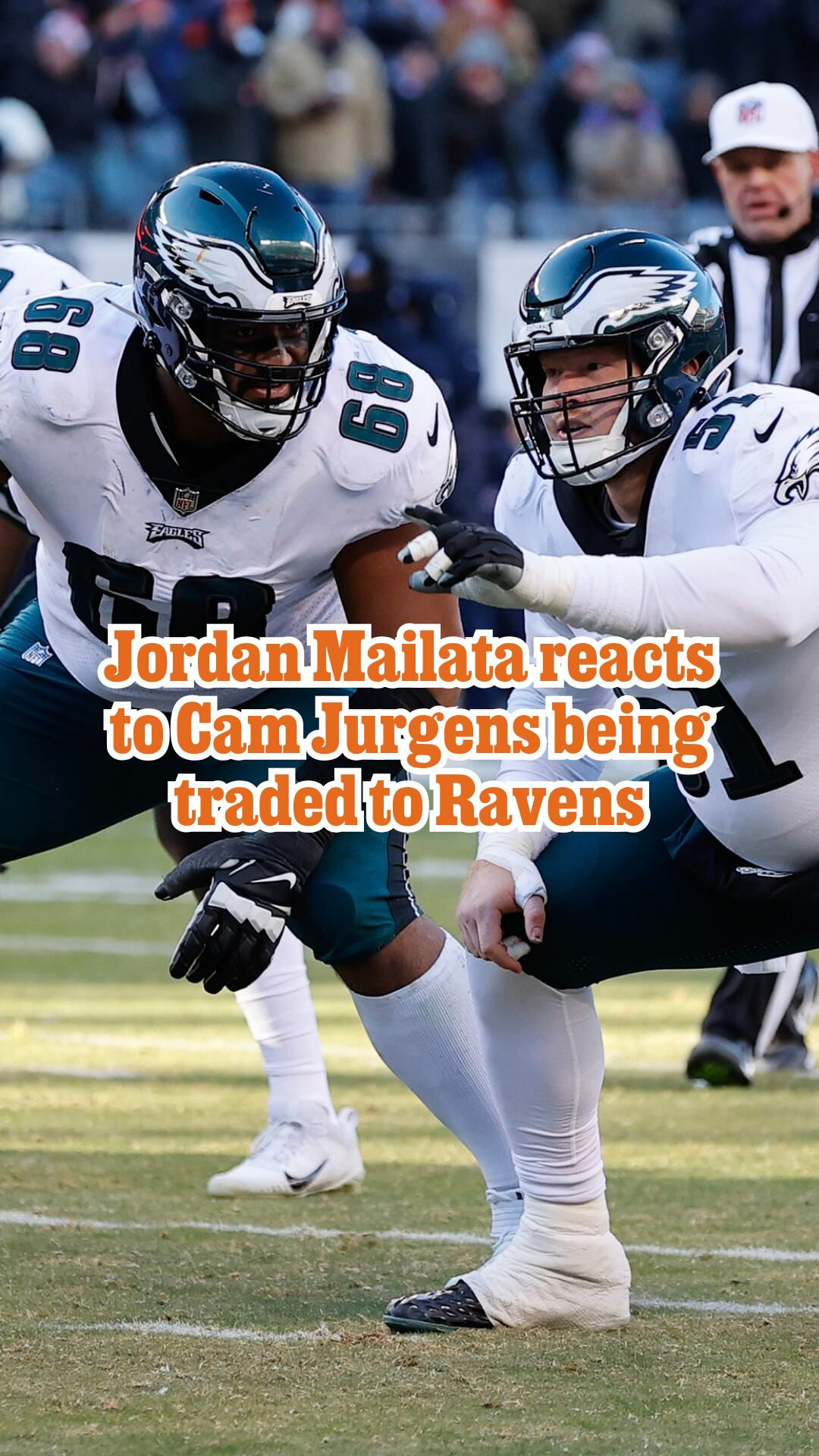
Video: Jordan Mailata reacts to Cam Jurgens being traded to Ravens
Rather than promote Kendall or Lampkin into his spot, they moved Jurgens from center to left guard and promoted Kendall to center, Their rationale was that Jurgens had played a season at right guard in 2023 and that Kendall was more naturally suited to center, a position he exclusively played in college.
Kendall showed his potential in each game since starting, but Jurgens struggled mightily. His confidence had already been tested the year before, following back surgery, and now he lost his spot and was playing a position where he had never even practiced. If this was the Eagles’ plan all along, why didn’t they ever train in that configuration?
Dickerson said he felt bad for putting Jurgens in that spot and that he didn’t think the switch was fair to the fifth-year O-lineman.
“Cam is a center. I do hate that we made that decision to move him to left guard,” Dickerson said on 94 WIP. “Because you never want to mess up — if one person goes down, you don’t want to mess up two people just to fix it. Obviously I don’t have a say when it comes to personnel stuff, but I think it was just a moment where we don’t have the depth that you would ideally like to have across the board. That was the way to get the best five guys onto the field.”
Jeff Stoutland’s philosophies on personnel changes differ from the current regime’s. Yong Kim / Staff Photographer
Jeff Stoutland always avoided moving two players if he only had to move one. There were myriad reasons why the Eagles lost their last two games, and why quarterback Jalen Hurts’ protection hasn’t been sound, but Jurgens had clearly become the weakest link on the line.
Coach Nick Sirianni said he was pleased with his play the day after the Rams loss, but two days later, Jurgens was traded to the Ravens. At the moment it might have suggested that Roseman was punting on the season the day after Johnson retired, but the return said otherwise. The Eagles got back a 2028 second-round draft pick and a 2027 fifth-rounder for Jurgens and a 2027 seventh-rounder. There’s almost no way Roseman could have turned that down, especially with Kendall showing signs that he can at least be a stopgap.
Quite frankly, I was shocked the Ravens agreed to the deal. They were desperate for a center after injuries, and maybe Jurgens just needed a change of environment, but the film of him even at his natural position dating back to last season isn’t great. And back injuries can be chronic, especially for offensive linemen.
I also think Roseman could reload at the position. A couple NFL sources told me he was shopping for a starting-caliber offensive lineman as of Wednesday. The Eagles’ outlook may look dire right now, but they were just a play or two from being 3-1 despite all their injuries. It’s far too early to pack the bags.
That said, Roseman is keeping an eye toward the future. He’s always juggling the short-term with the long-term, and while he may have fallen short in preparing for the carnage on the O-line this season, one of his greatest strengths is moving on from a mistake and working to correct it.
This is nuanced stuff. There are a lot of factors that can get in the way of building the roster as you envision, but if you slip on the thinnest of margins it can all go sideways. And that may be how the season unfolds. In my years on the beat, the Eagles’ worst seasons often included multiple injuries on the offensive line — 2012, 2015, and 2020.
If the quarterback doesn’t have time to operate in the pocket, it usually spells disaster. I asked Hurts how he felt about his offensive line after the changes:
“I feel good about it. Feel good about the guys that we have,” Hurts said. “I feel good about the work we’re putting forward. And the week will tell how much that’ll improve.”
This essay is part of a series called “The Case for Impeachment,” which illuminates how Donald Trump has trampled the rule of law and is a clear and present danger to the republic.
That Donald Trump corrupts everything he touches has become a cliché. But clichés earn their status by containing truth.
To guard against foreign corruption of American officials, the delegates to the Constitutional Convention of 1787 unanimously adopted a provision prohibiting federal officeholders, including the president, from accepting anything of value from a foreign state without the consent of Congress. “Foreign influence,” Alexander Hamilton warned, “is truly the Grecian horse to a republic.”
As Fordham law professor Zephyr Teachout, author of Corruption in America, has written, the foreign emoluments clause was no afterthought. It expressed “the animating spirit of the Constitutional Convention” that “goes to the heart of the fears at the Convention” — fears that have no less relevance today, several centuries later.
The clause contains no enforcement mechanism because the framers had already provided one. Gov. Edmund Randolph of Virginia, a delegate to the Constitutional Convention, explained to his state’s ratifying convention that the Constitution guards against “the president receiving emoluments from foreign powers. If discovered, he may be impeached … I consider, therefore, that he is restrained from receiving any present or emoluments whatever. It is impossible to guard better against corruption.”
The foreign emoluments clause itself was born of a gift. After King Louis XVI of France presented the American Minister Benjamin Franklin with a diamond-encrusted snuff box, Americans worried that foreign monarchs might exert influence through gifts to American officials. That history brings us to Qatar.
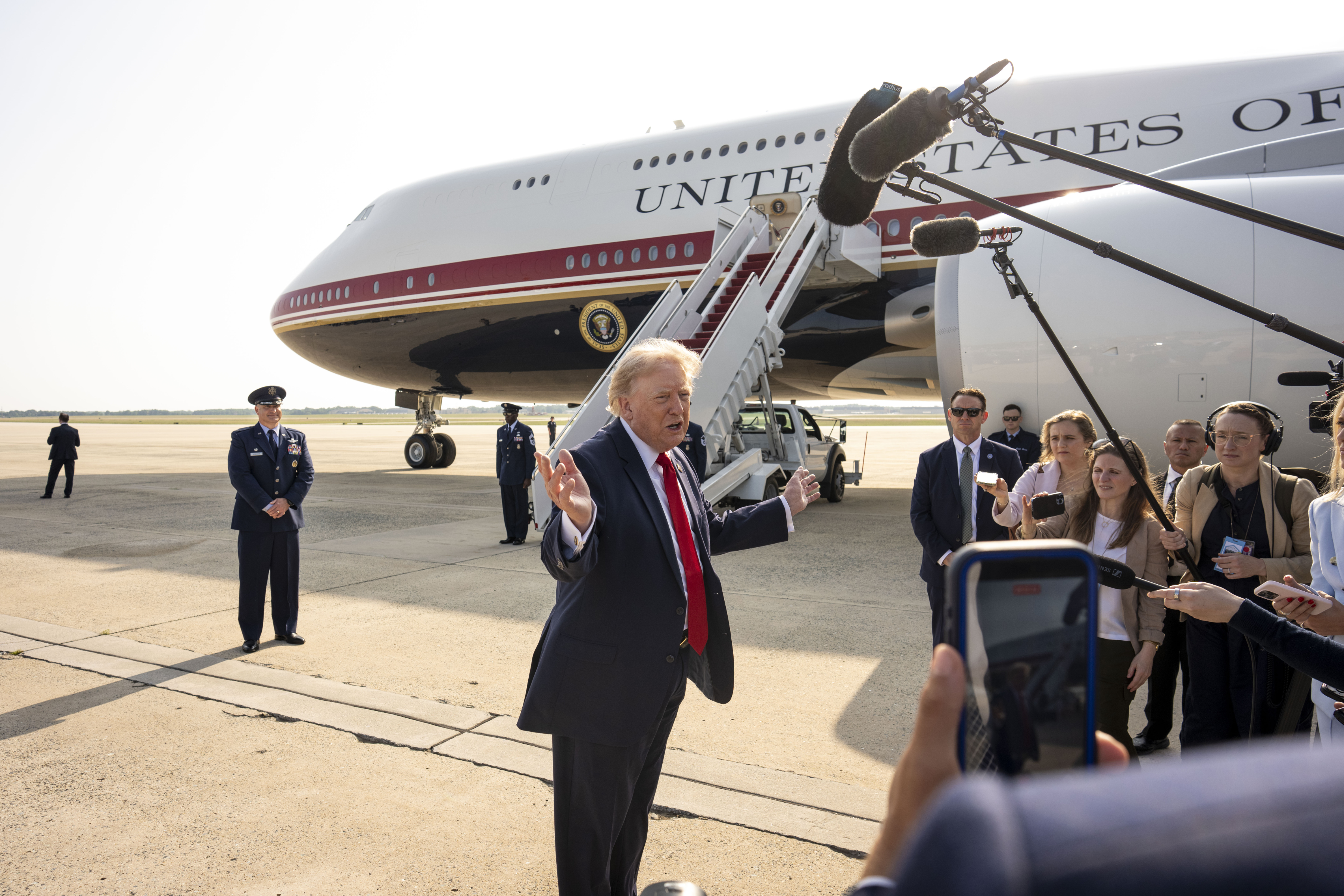
Trump has accepted a luxury aircraft from Qatar’s royal family, reportedly valued at about $400 million. The plane is intended to serve as Air Force One while American taxpayers are expected to spend hundreds of millions, by some estimates as much as $1 billion, to retrofit it to presidential specifications.
Although nothing is certain with this administration, under the original agreement, the government would not keep the plane. It would go to Trump’s presidential library foundation, and Trump has said it would sit in the lobby of what will “most likely” be a hotel. A jet widely valued at $400 million and refurbished at public expense would become the showpiece of a Trump-branded property.
A gift routed through the Pentagon on its way to the recipient is still a gift.
The conflicts do not end there. The Trump Organization has announced business dealings in Qatar involving a company owned by the Qatari government. At the same time, Qatar has substantial interests at stake in American policy. It hosts the largest U.S. military base in the Middle East, plays a central diplomatic role in negotiations involving Gaza, and seeks favorable outcomes on matters ranging from security cooperation to trade and arms sales.
Even a leader more selfless and introspective than Trump would be hard-pressed to separate public policy from private gain. Yet, Congress and the American people need not untangle every conflict of interest or prove that any particular decision was bought. That is precisely why the framers made the prohibition absolute.
The foreign emoluments clause sets no minimum value threshold. It requires no showing of quid pro quo. It demands no proof of corruption. Any unauthorized benefit from a foreign government is itself the constitutional violation, with impeachment as the remedy the founding generation prescribed.
A 1994 memo from the U.S. Department of Justice’s Office of Legal Counsel affirmed that the “drafters [of the clause] intended the prohibition to have the broadest possible scope and applicability.” It ruled that “The decision whether to permit exceptions that qualify for the Clause’s absolute prohibition or that temper any harshness it may cause is textually committed to Congress,” not the executive branch.
Congress should act
The House of Representatives should therefore open an inquiry into the administration’s claim that this arrangement complies with the Constitution’s plain command. The current Congress is unlikely to act. Yet, constitutional violations do not disappear because they are politically inconvenient, and the Constitution’s requirements do not expire with the news cycle.
The framers feared that foreign rulers would seek influence through gifts and favors. Their response was simple: prohibit such gifts and empower Congress to impeach those who accept them. If a diamond-encrusted snuff box raised alarms in the 18th century, a $400 million flying palace should do so today.
Allan J. Lichtman is a distinguished professor of history at American University in Washington, D.C., and the author of “Great American Presidents: The Twelve Who Transformed the Nation.”
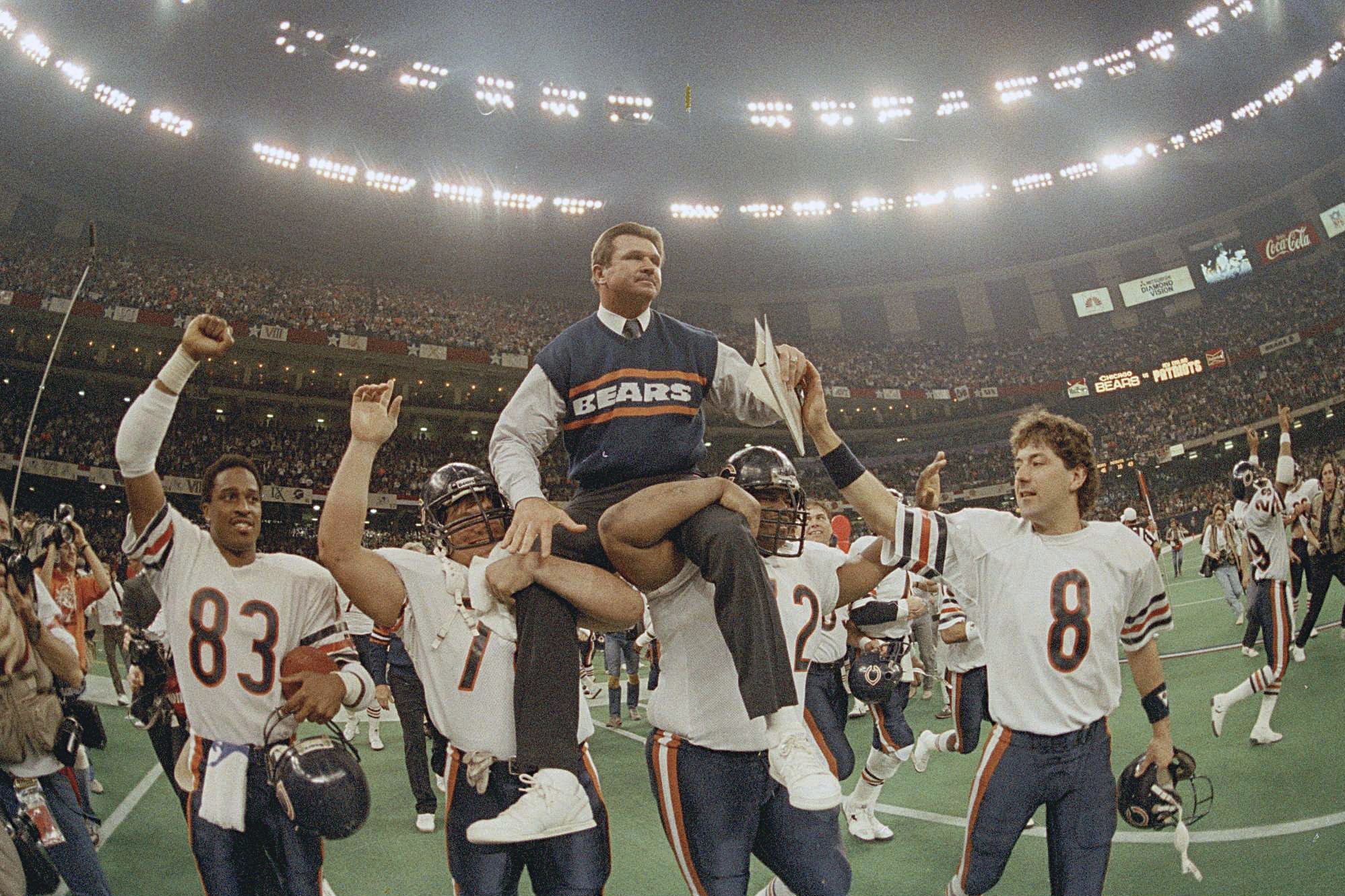
CHICAGO (AP) — Mike Ditka, who won NFL titles as a player and coach with the Chicago Bears, has died. He was 86.
Ditka’s family announced the death on Friday in a statement.
“It is with profound sadness that we announce the passing of our beloved husband, father, grandfather, and friend, Mike Ditka,” The family said. “While the world knew Mike as a Hall of Fame football player, legendary coach, and leader of the Chicago Bears’ Super Bowl XX championship team, we knew him as the heart of our family. Mike will be missed beyond measure and remembered forever.”
Nicknamed “Iron Mike” as a player, Ditka helped revolutionize the tight end position, then moved to the sidelines and took over as Chicago’s coach. His 1985 team featured one of the game’s most dominant defenses ever. It also had enough outsized personalities to record a rap video, “The Super Bowl Shuffle,” and back up their boasting in the championship game three months later.
After retiring as a coach, Ditka became a restaurateur, pitchman and TV personality, as well as a forceful advocate for improved medical and retirement benefits for former players.
Ditka was tough and gruff, the quintessential Chicago Bear. He did everything from order off the menu to knock defensive backs on their butts with a growl. His adopted hometown reveled in every minute.
Still revered as “Da Coach” and ringmaster of the 1985 Bears, one of the most dominant and perhaps the zaniest Super Bowl-winning team in league history. Ditka was enshrined in the College and Pro Football Halls of Fame and the Bears said during a ceremony in 2013 that his “No. 89” jersey will be the last one retired by the team.
He was born in Carnegie, Pennsylvania, the son of a welder who changed the family name from Dyczko. He grew up in nearby Aliquippa, close to the coal-mining and steel-manufacturing plants that dotted the western part of the state, a big, talented, three-sport athlete and All-American at Pitt whose bruising style made his first nickname, “Iron Mike,” a good fit.
Selected fifth overall by flinty Chicago owner George Halas in the 1961 draft, Ditka went on to Rookie of the Year honors, multiple Pro Bowl trips and the 1963 NFL Championship. In the bargain, he and Baltimore’s John Mackey changed the tight end position and offensive schemes forever. He was a battering ram of a blocker, but Ditka was just as likely to catch a short pass and pinball through an entire secondary or outrace a lone safety on a deep touchdown throw.
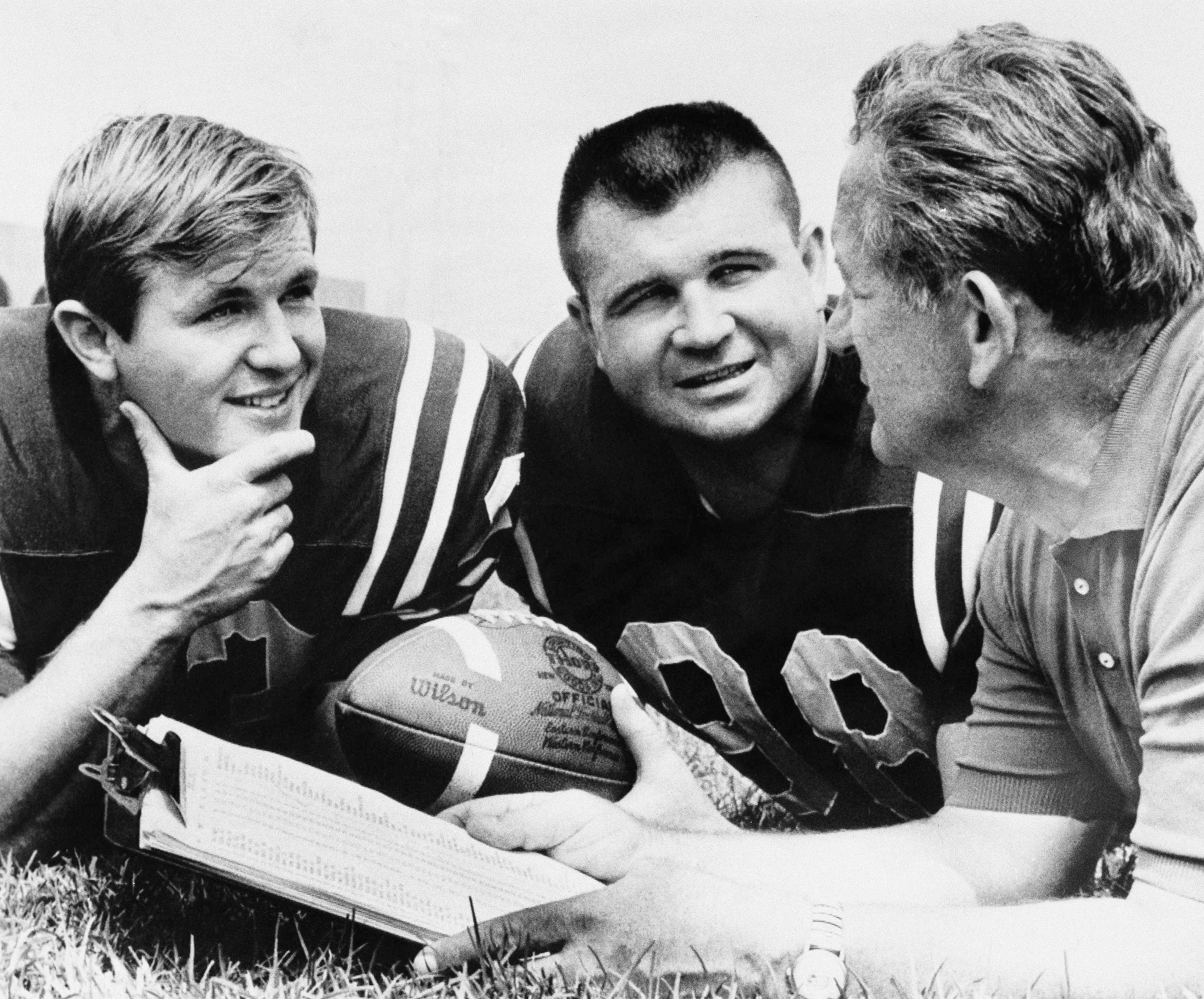
Mike Ditka’s stop in Philly, where he played for unpopular coach and general manager Joe Kuharich (right), was not a happy one. Paul Vathis
He left Chicago in 1966, playing briefly for the Eagles and Dallas. His two seasons in Philly (1967-68) were unhappy ones for Ditka, who was traded to the Cowboys for split end David McDaniels after vowing publicly not to play for coach and general manager Joe Kuharich. Ditka caught just 39 passes in two seasons in Philly.
After concluding his playing career, he moved to the sideline in 1973 as an assistant to the revered Tom Landry and stayed with the Cowboys for eight seasons, before returning to a hero’s welcome in Chicago as head coach in 1982.
Ditka’s return to the Bears lasted 10 tumultuous years, including five straight NFC Central titles, the Super Bowl win, a DUI conviction, a heart attack, a long-running feud with defensive coordinator Buddy Ryan and, finally, a new nickname — “Da Coach.”
To Hall of Fame linebacker Mike Singletary, the seeds of what was to come were planted in Ditka’s first meeting with the team. He laid out his vision, saying Chicago would be in the Super Bowl in three years — and many of the players in the room would not be around for it.
“When I first heard him when he walked in the room, to me Coach Ditka had the opportunity to be the greatest coach of all time because he had the fire,” Singletary said at the Bears’ 100th anniversary celebration in June 2019. “I don’t know George Halas coached. But I can imagine that the fire and intensity and passion that Coach Ditka exuded that first day set the tone for exactly what he said: ‘Three years from now, we’re going to be in the Super Bowl.’ And that was 1982. In ’85, we were there and it was because of that vision.”
The public beefs with Ryan mirrored the behind-the-scenes battles that Ditka waged trying to contain a team bristling with outsized personalities.
“It was more than a team,” Ditka once said. “It was a team of characters that had character that played for a crazy man, who let him be crazy and had fun doing it and don’t apologize for it ever. I wouldn’t want to be one of these suits walking around on the sideline today.
“I have no desire to be that. I was what I was and they were what they were and, damn, it was fun.”
It wasn’t until two dozen players recorded “The Super Bowl Shuffle” — an audacious rap-styled video released three months ahead of the 1986 title game — that the rest of the football world wondered whether Ditka was losing his grip.
His players never did.
“We call him ‘Sybil’ after that girl in the movie,” quarterback Jim McMahon once explained. “You know, the one that had all those personalities. Mike will be calm one minute, then throw a clipboard the next. People don’t understand that, but we do.”
The Bears demolished the New England Patriots 46-10 in the Super Bowl, but Ditka often said he regretted having McMahon and defensive tackle William “The Refrigerator” Perry run for touchdowns instead of Walter Payton, Chicago’s loyal and long-suffering running back.
Ryan departed for a head coaching job in Philadelphia soon after. While the Bears continued to be a contender for most of the next five years, a 5-11 season prompted Ditka’s departure in 1992.
After a five-year absence, he returned to coaching with the New Orleans Saints, but failed to revive the franchise. After a miserable 1999 season ended with a 3-13 record — Ditka’s worst as either a player or coach — he left the sidelines for good.
His face and demeanor were so familiar by then that a second act became an easy segue. Ditka began building a stable of restaurants and appeared as himself in TV sitcoms from “Cheers” to “Third Rock from the Sun,” as well as shows such as “L.A. Law” and “Saturday Night Live.”
He also stayed close to the game as an NFL analyst and game-day show personality at ESPN. Ditka’s high-profile status also made him an effective advocate to secure improved health and retirement benefits for former players.
His name also circulated for years in Illinois political circles. Though he never ran for office, Ditka described himself as a staunch conservative and was mentioned several times as a possible Republican candidate, including a congressional race against then state Rep. Barack Obama for the U.S. Senate.
A nonpartisan election tracker shifted its ratings forthree competitive U.S. House races in Pennsylvania toward Democrats Friday morning, a sign of growing momentum for the party ahead of next month’s make-or-break midterm elections.
The Cook Political Report changed its ratinginBucks County’s 1st Congressional District race —where Democratic County Commissioner Bob Harvie is challenging longtime GOP incumbent U.S. Rep. Brian Fitzpatrick — to “lean” Republican after it had been sitting at “likely” Republican for most of the cycle.
That means Fitzpatrick still remains favored to win reelection, but his chances are less sure than previously thought. Meanwhile, Democrats look poised to flip other seats in the state.
In itsanalysis, the Cook Political Report said while Fitzpatrick still has the “chops” to win — and outperform his party like he has consistently done before — the 1st District race “could be quite close.”
“Democrats, who have more offensive targets on the map than they can afford to spend in, have another reason to believe this race is worth their investment,” according to the report. “If Harvie can pull off an upset this cycle, Democrats have a better shot at holding on to this seat in the long term than they do in other reach seats.”
Fitzpatrick’s campaign didn’t immediately comment on the analysis.
The last time a Democrat represented the Bucks County area was 2011.
The new ratings in the Pennsylvania contests were announced along with 15 other U.S. House races nationwide that Cook has shiftedin Democrats’ favor.
The Lehigh Valley’s 7th District and the Harrisburg-area’s 10th District have alsomoved from toss-up to “lean” Democrat in Cook’s rating. The 8th District in the Scranton area remains rated as a toss-up.
Harvie is also seeing increased financialsupport from the Democratic Congressional Campaign Committee.
In a statement, Harvie said that “the momentum behind our campaign is real and growing by the day,” noting his intent to vote to end the Iran war and “fight the corruption that is costing Pennsylvanians” if he were to be elected.
National attention from both parties still remains on the 7th District race between Democrat Bob Brooks and GOP U.S. Rep. Ryan Mackenzie, who is considered one of the most vulnerable Republicans in the countrythis cycle.
Asked about the rating, Benny Stanislawski, a spokesperson for Brooks, said “Bob Brooks spent 20 years putting out fires in Bethlehem, so he knows the job isn’t finished until the flames are fully put out.”
Andres Weller, Mackenzie’s campaign manager, said in a statement that “This race will be determined by voters, not political prognosticators” and that voters in the Lehigh Valley and Poconos will not elect Brooks.
Johnson, the Louisiana Republican who has held the speakership since 2023, campaigned for Mackenzie in the 7th District this week and for U.S. Rep. Rob Bresnahan in the 8th as he fends off a challenge from Scranton Mayor Paige Cognetti. Johnson also campaigned in support of U.S. Rep. Scott Perry in the 10th District in his rematch with Democratic challenger Janelle Stelson.
“This race is far from over – we will fight through November 3rd to send Scott Perry packing,” said Alma Baker, Stelson’s campaign manager, in a statement.
A spokesperson for Perry did not respond to a request for comment.
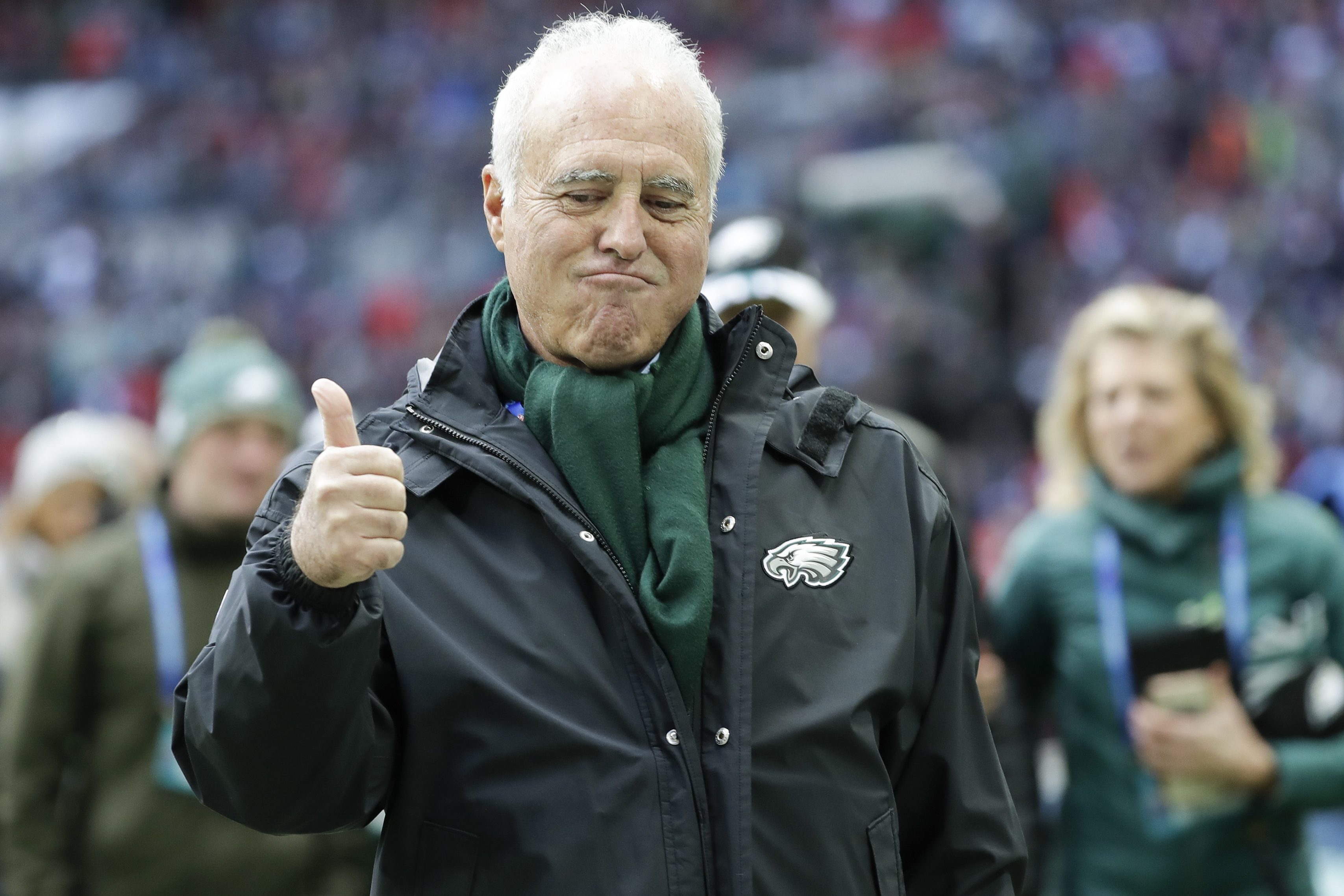
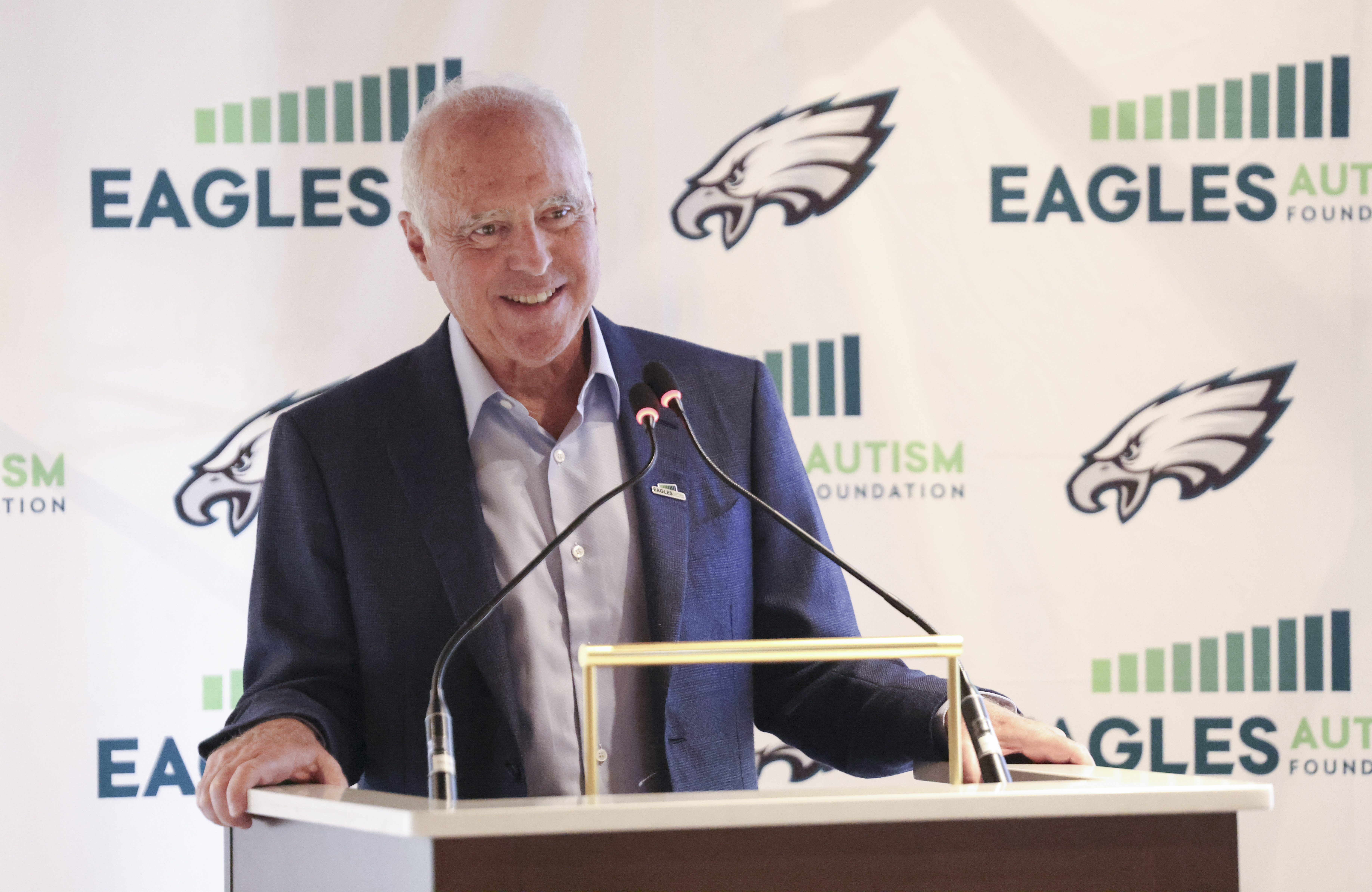
As the Eagles travel to London to take on the Jacksonville Jaguars at Tottenham Hotspur Stadium, they’re bringing more than American football and Philly culture to the United Kingdom. Eagles owner Jeffrey Lurie and the Eagles Autism Foundation also brought their work with them internationally.
During a symposium on Friday in London, Lurie announced a donation totaling $670,000 to support London-based autism research. The donation includes a $500,000 pilot grant as well as a $170,000 two-year postdoctoral fellowship that will fund research at the Lurie Autism Institute in Philadelphia.
The symposium featured panel discussions, which included two researchers on the autism spectrum. The second half of the day was led by the Lurie Autism Institute.
Bringing EAF’s All Abilities Clinic and mission of inclusion across the pond!🇬🇧
Ryan Hammond, the Eagles Autism Foundation’s executive director, said the foundation’s international work is about meeting the communities where they are and addressing their needs as necessary. The NFL’s initiative to expand globally gives the Eagles Autism Foundation an opportunity to mobilize its mission, whilealso exemplifying Lurie’s goals of excellence on and off the field, Hammond said.
“I think the important thing is it’s about legacy,” Hammond said. “It’s about, when we have these moments of time where we’re playing abroad, and a big stage and in a new country, and we have the chance to amplify what’s important to the team, that we really are intentional in a way that we make sure that not just are we bringing our team and our fans, but we’re bringing our mission and we’re able to elevate and have this conversation.”
When the Eagles opened their season in São Paulo, Brazil, in September 2024, the groundwork for this international expansion was laid. The foundation hosted a similar program, and Lurie donated a $400,000 two-year pilot grant for Brazil-based autism research and care.
Eagles owner Jeffrey Lurie hosts an NFL and Science in Brazil event in São Paulo, Brazili in 2024.Greg Payan
Hammond and her team had to adapt to working with researchers who have cultural differences in their methodology in Brazil and again in the U.K. Hammond said they’ve been working since June to identify cultural differences in approach and have built the symposium accordingly.
Differences include the ethics of data sharing and technology in the U.K. as well as how families and self-advocates can determine what scientists are researching in the U.K., compared to the United States, where the scientists themselves are frequently setting themes and researching accordingly. Hammond said learning about and acknowledging these differences allows her to look at the applications from a new perspective. The application process will begin in spring 2027. Approved projects will be announced in February 2028.
“The fact that we can invest in an up-and-coming researcher from the U.K. and bring them to Philadelphia, I don’t know any other way that you want to leave a lasting mark,” Hammond said. “So we’ll have on-the-ground support to advance someone who’s further along in their career, and then we’ll have a new investigator who’s energized by this day, energized by this conversation and an opportunity to come to Philadelphia and study with what we consider some of the best scientists in autism.”
The Eagles Autism Foundation’s work in the U.K. included more than Friday’s symposium. An all-abilities clinic welcomed around 80 participants ranging from young children to young adults on Wednesday and offered the opportunity to learn about and play American football.
Hammond said the volunteers and leaders in the clinic were trained over Zoom ahead of the event as part of regular meetings between the London-based and United States-based groups. For some of the researchers, it also was their first time working hands-on in the community they’ve been working to serve.
Hammond said the Eagles Autism Foundation’s work offers anopportunity to bring more people into the Eagles fandom.
“Everyone left saying ‘Go Birds,’” Hammond said. “So my hope is not just the fact that everyone loves and bleeds green, but I think seeing what we do off the field is definitely a driver for engagement and more importantly connection and fandom.”
A pedestrian was struck and killed by a vehicle traveling east on Route 38 on Thursday night, according to the Cherry Hill Police Department.
Michael V. Mancuso, a 36-year-old Cherry Hill resident, died after a vehicle struck him while he was crossing Route 38 near Longwood Avenue around 7:56 p.m.
The driver of the vehicle was uninjured and cooperated with investigators, police wrote in a statement.
The crash is currently under investigation by Cherry Hill police, with help from the Camden County Prosecutor’s Office and the Office of the Medical Examiner, according to police.
The Philadelphia School District was right to put back on its books 720 students who have not attended a day of school this year, Superintendent Tony B. Watlington Sr. said.
“Let me be very clear — this isn’t about cooking the books, this isn’t about padding enrollment,” Watlington said in an Inquirer interview. “This is about, we’re going to do our due diligence because it’s the rules.”
This year marked the first time the district has added back students it deemed were improperly dropped in order to verify the students’ whereabouts, said Watlington and Ericka Washington, the district’s deputy chief of student enrollment and placement.
Philadelphia’s enrollment is down. As of Sept. 17,about 4,000 fewer students than the prior year had attended at least one day of school, according to internal records. And Watlington last month ordered central office employees, including assistant superintendents, and school staff to knock on doors to get students back in district seats.
Instead, the reenrollment was tied to a belief that the school system must find every child, and a desire “to push the organization to get that next level of performance,” the superintendent said.
“We’re going to follow the rules for children and young people that people don’t stand up and come to advocate for, whether some of these children are hard to love or have attendance problems,” Watlington said. “We’re not going to throw them away.”
What happened?
The district added back students on Sept. 30, the day before school systems must report their enrollment to the Pennsylvania Department of Education.
About 2,000 students were improperly dropped from the district’s rolls, Watlington said; 720 were added back on the last day of September because they could not be verified as being enrolled in another school or district.
Multiple principals told The Inquirer that many of the 720 had not shown up to school at all in the 2026-27 school year, and many families reported moving out of the state or country.
Both Pennsylvania state code and Philadelphia school board policy require parental consent and documentation for a student to be withdrawn from school rolls. But it’s not spelled out what documentation is required.
The gold standard is verification from a new school, or a copy of a plane ticket if families leave the country, officials said. In the cases of families who stop responding to requests for information, principals say, in the past, they were able to use their best judgment to unenroll students.
Watlington, who became Philadelphia’s superintendent in 2022, said he was trying “to get better and better and better at our record keeping.” Last year, he ordered a more careful review of students who had been dropped from school rolls.
“For kids who are dropped inappropriately, we want those numbers there too and to be very transparent with the Pennsylvania Department of Education: These are kids who we are still looking for or trying to certify,” Watlington said. “I did the same thing last year. We just didn’t make as many headlines about it.”
Watlington said if he had known students were dropped from the rolls without proper documentation, he would have ordered them added back “last year and every year I’ve been here,” he said. “And would be unapologetic about it.”
An additional district-level review of the 720 students’ records is underway as the school system tries to locate the students, track down documentation, or begin the truancy process.
But that’s also happening at the same time as the state’s enrollment verification process, said Watlington and Tonya Wolford, the district’s chief of evaluation, research and accountability. Student records are cross-referenced with other schools and districts, and Philadelphia will not get funding for students who have not actually attended, said Watlington.
“We couldn’t just willy-nilly throw 800 kids who are all in Ghana on our rolls,” the superintendent said. “None of that.”
‘I want everybody in Philadelphia to know’
Several principals said they were alarmed by the order to add back students they have reason to believe are enrolled elsewhere.
Watlington said he understood that frustration.
“Our principals are busy,” he said. “They are hardworking, trying to get the reading and math performance up, the graduation rate up, the dropout rate down to keep this momentum that we want to continue. And it’s an additional tax and strain to be focused externally sometimes.”
The central office will help with the work of tracking studentsdown, Watlington said, and the work is no secret.
“In fact, I want everybody in Philadelphia to know. I want the whole city to know that we are canvassing this city. We want every child who was in school last year back in school this year.”
Watlington is responsible for the whereabouts of all 200,000 students in public schools — district and charter — in the city, he said.
“If you’re not in the district-operated school, you need to be in a charter school or a home school or a private school,” he said. “I’m not going to turn a blind eye and say I don’t want to grow the district enrollment, but let me be clear, when we submit data to the Pennsylvania Department of Education on Oct. 1, there’s a process that the Commonwealth does to work with the 500 school districts to certify all of those children.”
‘Fair game for competition’
Watlington has given marching orders to the entire organization: The district isresponsible for helping find students, too, tapping outside partners like faith leaders and others to spread the word.
The district needs to tell its story better, Watlington said.
Academics have generally improved in the school system — Philadelphia was tops in the nation in its learning rate post-pandemic, according to research out of Harvard and Stanford — but children still struggle, with only 33% reading at grade level and 25% meeting that benchmark in math.
City charter schools’ performance is slightly worse, with only 31% reading at grade level and 20% meeting the benchmark in math.
“I’ve shared with the assistant superintendents my expectation that they get shoulder to shoulder, elbow-to-elbow with ward leaders and block captains just like the politicians do, because they know this city and the community,” he said.
“I take the position if any of these 720 children could potentially be here, but be one of these kids that I see walking up and down Lehigh Avenue in the middle of the day, I want to make sure that we’ve done our duty to get these kids in school.”
The district can and should make a push to compete in ways it hasn’t in the past, Watlington said — not to demonize any other sector, because “I think whatever kind of school kids go to, and their parents want, that’s right for that child.”
But, the superintendent said, “we’re going to be focused on being visionary enough to aspire to grow our enrollment in the school district, because the numbers suggest to me that we need to be competitive, we need to be accurate, and we need to be honest with the data.”
“Once we do that, it’s fair game for competition,” he added. “Competition is good for the consumer in this capitalistic system we live in, and I think it’s the same way when it comes to public education.”
Harper volunteered (again) to move back to right field, paving the way for Dombrowski to pivot from his annual trade talks involving platoon outfielders and pull off a deadline swap for a three-time batting champion.
It represented uncommon outside-the-box thinking from the front office. Instead of chucking money at a problem, or plugging a round hole with an ordinary round peg, Dombrowski uprooted three-quarters of the infield to add Luis Arraez to a lineup that’s been together so long it could’ve been carved on the Rosetta Stone.
OK, so it didn’t go quite as well as the Phillies planned. After an initial sprinkle of contact-hitting spice, Arraez hit too many popups and not enough line drives, then sprained his ankle in the final week of the season and missed the wild-card series against the Braves.
But the trade should inspire Dombrowski to be only more inventive in the offseason given the intractability of an aging core that has backslid for four consecutive postseasons, $236.5 million in luxury tax commitments for 2027, and uncertainty over baseball’s financial rules after the looming work stoppage.
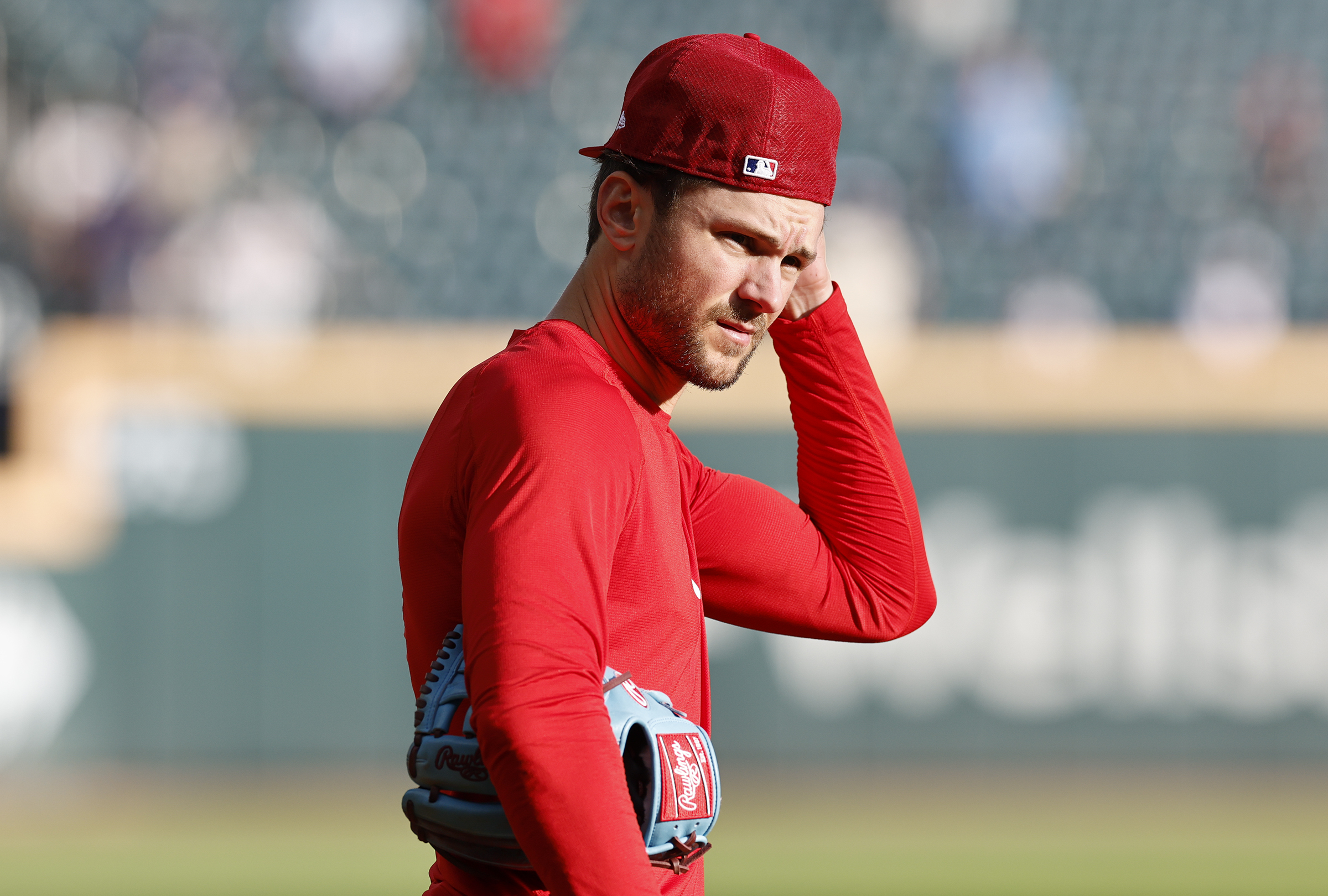
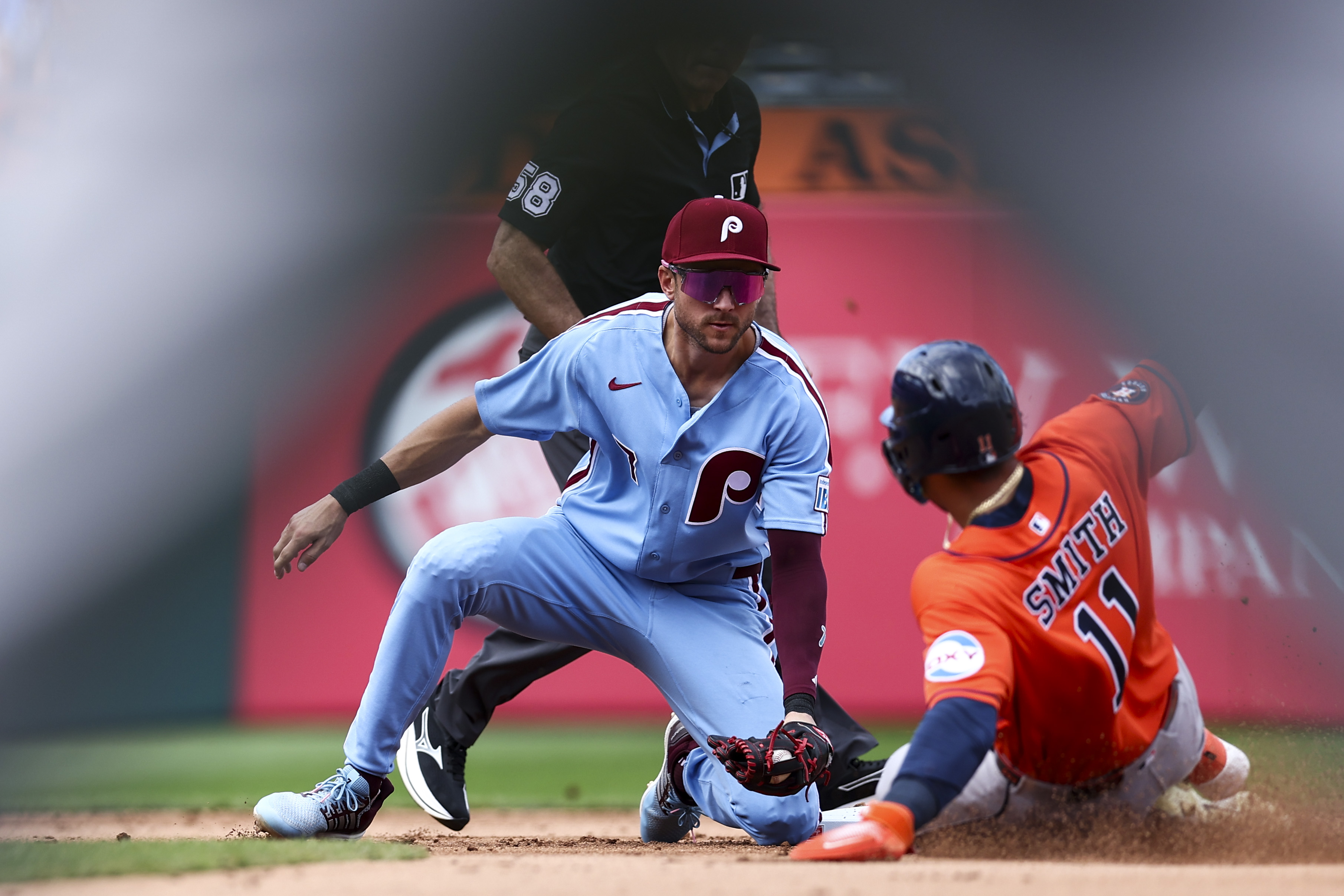
And the most imaginative changes that Dombrowski can make all begin with one thing: moving Trea Turner off shortstop.
It’s not like the Phillies can move Turner anywhere else. Not with seven years and $190.9 million left on his contract. And not after the worst season of his career.
Trea Turner made 21 errors this season, tied with Marlins shortstop Otto Lopez for most in the majors by any player at any position.Monica Herndon / Staff Photographer
Besides, it would be unwise to sell low on a three-time All-Star who, at age 33, is one year removed from a fifth-place MVP finish.
Dombrowski has not yet held his season-ending news conference, in which he typically sketches an offseason plan. The Phillies also don’t have a manager after Don Mattingly finished the season on an interim basis. Alex Cora, Dombrowski’s choice for the job, informed teams that he won’t manage in 2027.
Until that situation is resolved, Turner’s status won’t be.
But Arraez and Alec Bohm are headed to free agency; Harper is expected to return to first base. The Phillies were last in the majors with an 89 OPS+ (100 is league average). The offense is overly dependent on Harper and Kyle Schwarber.
Dombrowski’s solution can’t be to simply sign a righty-hitting free-agent right fielder (Randy Arozarena or Seiya Suzuki) and call it a day. Aside from being unimaginative, it may not be practical if the owners get their desired salary cap.
If the Phillies move Turner to another position, it could put them in the market for four shortstops who were available at the trade deadline and may be again: Jeremy Peña (Astros), Zach Neto (Angels), CJ Abrams (Nationals), and Otto Lopez (Marlins).
Dombrowski said the Phillies “didn’t even discuss” a position change with Turner at the deadline. They didn’t have to. Harper set everything in motion for the Arraez trade by raising his hand to go back to the outfield.
But the owners expect to lock out the players upon the expiration of the collective bargaining agreement on Dec. 1, at which point team officials won’t be allowed to communicate with players.
It’s time, then, to have the conversation.
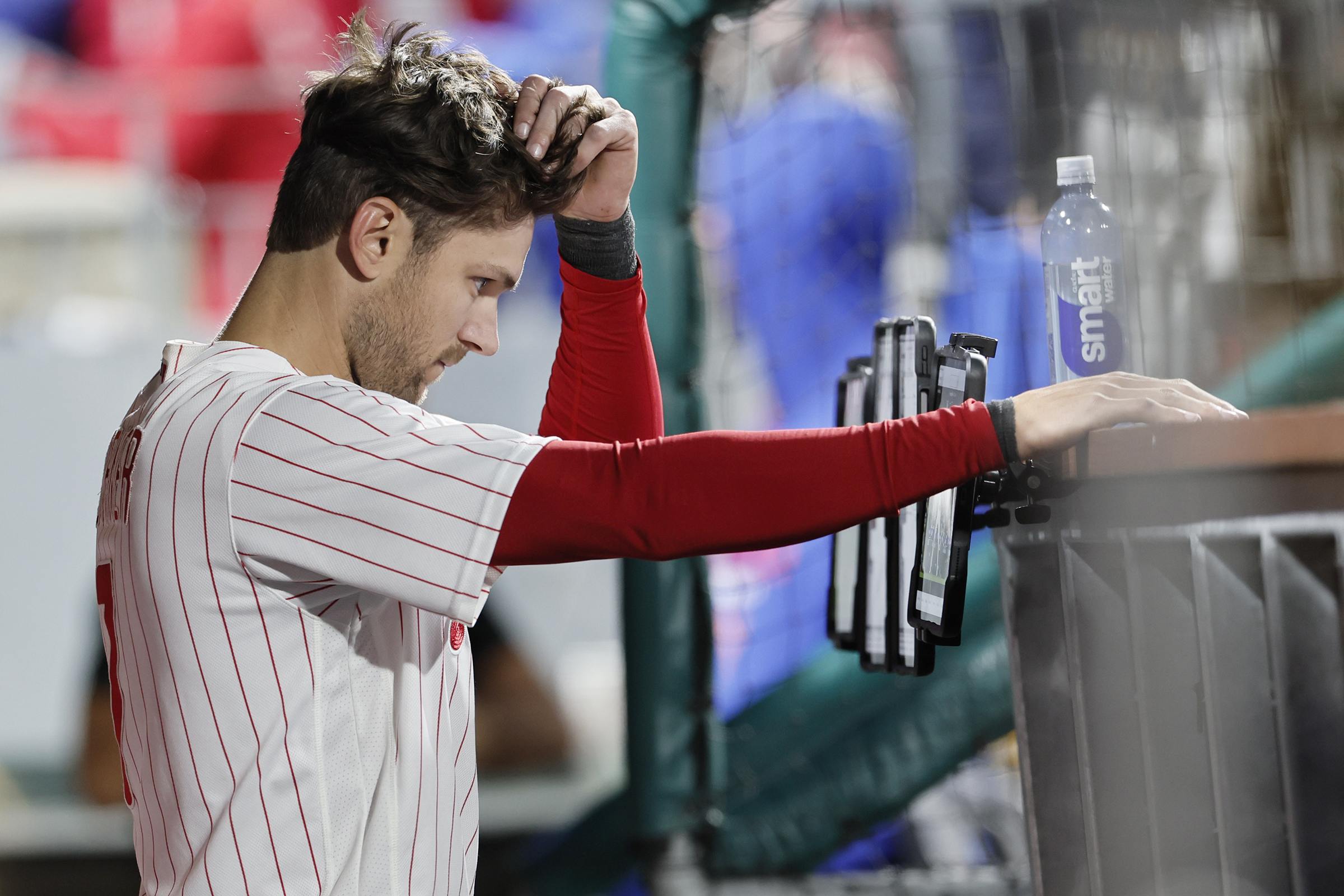
In the midst of the worst season of his career, Trea Turner often replayed at-bats on a tablet in the dugout.Elizabeth Robertson / Staff Photographer
A short stop at second
Say this for Turner: He’s a thinker.
Intelligent and self-aware, he often buries his head in a tablet in the dugout to rewatch at-bats. He asks to see breakdowns of proliferating swing metrics and wants information about his defense.
Believe Turner, then, when he says he plans to get to the bottom of how a .291 career hitter with an .810 OPS and two batting titles can bottom out at .242 with a .675 OPS over 700 regular-season plate appearances — and go 1-for-11 in the wild-card series.
“I’ve got to just go over everything and just figure out as much as I can, find answers, see what I did bad,” he said. “This year was the biggest question mark for me offensively in a long time. I’ve got to figure that out.”
“The more scientific he is, the more he locks himself up,” infield coach Bobby Dickerson said in July on The Inquirer’s Phillies Extra podcast. “He does think a lot, and he puts a lot of pressure on himself. He wants answers scientifically a lot of times, and he starts to search for that more than actually play the game, which is what he does well.”
But there’s reason to believe, based on Turner’s age and track record, that this year was an outlier for him at the plate.
Defense is another story.
Upon signing Trea Turner before the 2023 season, the Phillies said they believed he could stay at shortstop for several years.Yong Kim / Staff Photographer
Turner made 21 errors, tied for most in the majors, and was nine runs below average among shortstops in fielding run value, Statcast’s all-encompassing defense metric. It was a stark regression from last season, when he made eight errors and ranked 10 runs above average.
If anything, it seems like last year was the outlier. Since 2016, he’s 11 runs below average in fielding run value.
Turner has always been a “hit-first shortstop,” noted one team official, who suggested Turner’s problems at the plate affected him in the field.
Upon signing him to an 11-year, $300 million contract in December 2022, the Phillies expressed more confidence than other teams in his long-term ability to stay at shortstop.
“We’re betting on just elite athleticism and a desire to be really, really good for the entirety of his contract, the entirety of his career,” then-general manager Sam Fuld said at the time. “We see him as a shortstop for a long, long time.”
The Phillies were correct about Turner’s athleticism. It hasn’t diminished. His average sprint speed this season was 29.9 feet per second, 11th in the majors and only a tick slower than his rookie-year average from 10 years ago (30.0), according to Statcast.
If anything, Turner’s elite athleticism should serve him well in moving to a new position. He has experience at second base and in center field, though he hasn’t played the outfield since 2016 with the Nationals. At his age, left field might make more sense than center.
Regardless, after Dec. 1, the Phillies won’t be able to send coaches to work with Turner in the outfield. And depending on how long the lockout lasts, spring training could be shortened.
Turner also makes sense in left field only if he rebounds at the plate. Across the sport, left fielders slugged .401 with a .724 OPS this season. There was less production among shortstops (.390, .703), even less from second basemen (.381, .698).
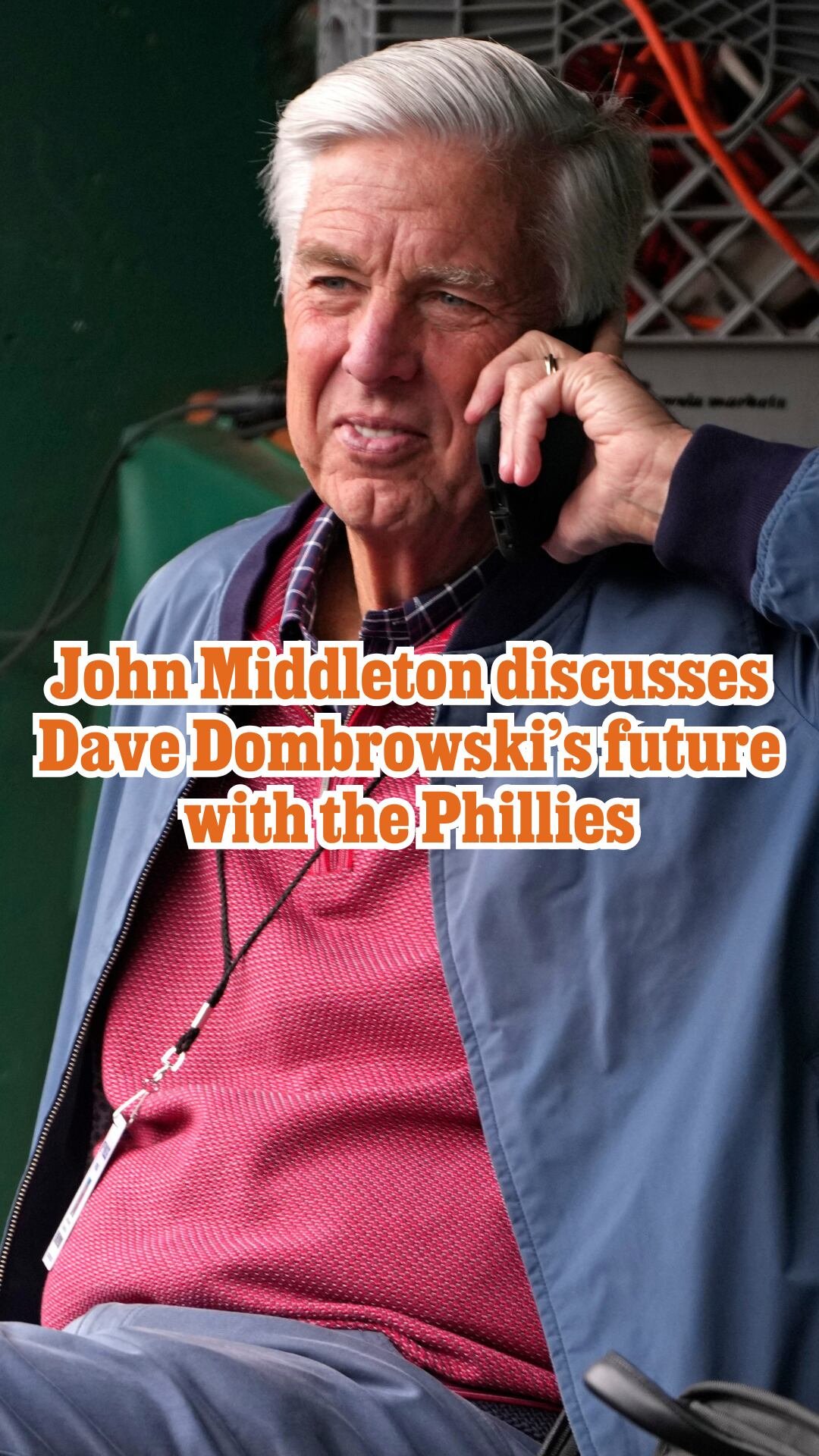
Video: John Middleton discusses Dave Dombrowski’s future with the Phillies
The simplest move would be to second base, where Turner played well after getting traded to the Dodgers in 2021. In that scenario, Bryson Stott could play third base.
It would allow Turner more time to train in the outfield, similar to when Harper learned to play first base while coming back from elbow surgery as a designated hitter in 2023. It would also give top prospect Aidan Miller additional time in triple A after a low back condition sidelined him for most of this season.
And it would enable Dombrowski to shop for a shortstop.
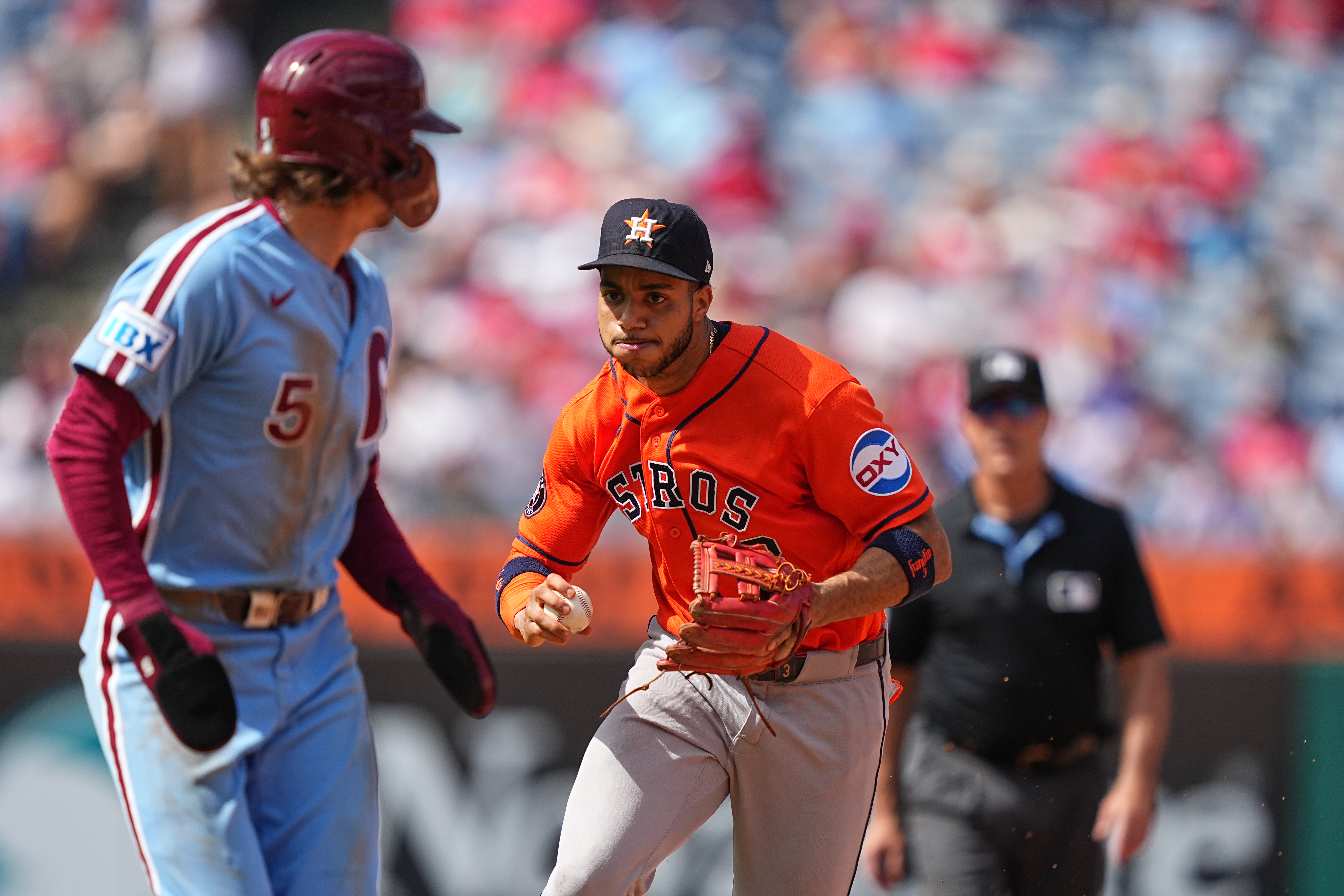
Astros shortstop Jeremy Peña could be available in a trade this offseason.Matt Rourke
Deal, or no deal?
Two winters ago, with Kyle Tucker entering his walk year and little chance of re-signing him, the Astros traded the veteran outfielder.
They’re in a similar situation now with Peña.
Under owner Jim Crane, the Astros have been to the playoffs in 10 of 12 years, including this season despite going 81-81, their worst mark since 2014. Crane fired general manager Dana Brown in August, leaving the organization in flux.
Peña’s future in Houston hangs in the balance. The 29-year-old batted .277 with 22 homers and an .802 OPS, solid numbers despite a strikeout rate that rose to 24%. Defensively, the 2022 World Series MVP was better than Turner but still below average (minus-5 fielding run value).
Crane resisted rebuilding over the last few years, so the new GM figures to have a mandate to contend in the AL West. Houston also could replace Peña or third baseman Isaac Paredes with Carlos Correa.
The Astros flipped Tucker to the Cubs for two major leaguers (Paredes and pitcher Hayden Wesneski) and a top-100 prospect (Cam Smith). It’s likely they would seek a comparable return for Peña, who is projected to make $13.1 million next year, according to MLB Trade Rumors.
Neto, 25, has big right-handed power (23, 26, and 27 homers in the last three seasons) but high strikeout rates (30.5% this year after 26.9% last year). He also has three years of club control, with a projected 2027 salary of $9.8 million.
The Angels sold more actively at the deadline before owner Arte Moreno sold the team. But Neto stayed put, at least until this winter when they could conceivably cash in.
A package from the Phillies would probably have to start with Miller or top pitching prospect Gage Wood, maybe both. But Neto would represent the the middle-of-the-order righty thump that the Phillies lack.
The Angels’ Zach Neto was fourth among all shortstops this season with 27 homers.Eric Christian Smith
Abrams, 26, was one of three players with at least 30 homes and 30 steals. He bats left-handed, which makes him less of a fit for the Phillies. There are also questions about his defense. He made 11 starts at second base in September after committing 20 errors at shortstop.
Lopez, 28, led the majors with 191 hits in addition to his elite defense (plus-12 fielding run value), just in time to be eligible for salary arbitration.
It’s unclear if the Nationals would move Abrams (two years of club control; $10.2 million projected salary next year) or the Marlins would trade Lopez (three years of control, $5.4 million) within the division. In both cases, it’s worth finding out.
But just as they couldn’t have traded for Arraez without Harper’s willingness to switch positions, the Phillies can’t consider an outside-the-box move without moving Turner, who may be best suited to play somewhere else anyway.
You don’t need a crystal ball to predict that unintended consequences will occur if steps are not taken now to better regulate the increasing integration of artificial intelligence into almost every aspect of human life, not just here in the United States, but worldwide.
Need proof? Just look at how inadequate regulation of the internet has affected politics in America. So much of the campaign rhetoric online is filled with half-truths and outright lies because too much digital content is exempt from the more stringent legal standards long applied to print and broadcast media.
That happened because 30 years ago Congress never envisioned that people one day would use phones carried in their pants pockets or purses to not only read or hear the news, but find internet content that makes it easier to subscribe to your own “truth.” That lack of vision then is similar to some responses to warnings about AI now.
Too many lies are spouted online because the Communications Decency Act of 1996 too broadly exempts internet platforms from liability for content posted by their users. The law wrongly treats websites like libraries or bookstores, which aren’t held liable for loaning or selling books they claim they did not know included false content.
Some challenges to Section 230 of the Decency Act have argued that platforms such as YouTube and X, formerly Twitter, should at least be held liable for content that may foment violence by terrorists. But not even that argument moved the U.S. Supreme Court, which thus far has left the 1996 law intact.
That means it’s up to Congress to do the right thing and refresh the law, which was the same conclusion reached six years ago by, unbelievably, President Donald Trump’s then-attorney general, Bill Barr. In a letter to Congress recommending revisions, Barr pointed out that much of the legal latitude provided to digital content is no longer necessary.
“Many of today’s online platforms are no longer nascent companies but have become titans of industry,” Barr said. “They no longer function as simple forums for posting third-party content but use sophisticated algorithms to suggest and promote content and connect users.”
Barr, however, quit his job a few months after sending Congress his recommendations. The attorney general abruptly resigned rather than wait for his tenure to end after Trump publicly chastised him for refusing to go along with the lie that Joe Biden stole the 2020 election.
Don’t hold your breath waiting for current Attorney General Todd Blanche or anyone else in the Trump administration to recommend making internet content more trustworthy. After all, the president seems to have little regard for truth, especially when sticking to facts might interfere with his frequently expressed notion that he is never wrong about anything.
CNN political analyst Daniel Dale documented more than 8,500 lies made by Trump during his first presidency. “If he delivers a story featuring an unnamed person calling him ‘sir,’ it’s often fiction,” Dale said. “Even when an accurate statistic would make him look good, the businessman who used to inflate his reality show ratings tends to choose an inaccurate statistic that would make him look a little better.”
Lying politicians are nothing new, but the internet has made it easier for them to lie to audiences who prefer to believe whatever supports their versions of reality. Further abetting that crime is the dwindling number of old-fashioned sources of information that Americans traditionally relied upon to find and reveal the truth.
Yes, I’m talking about newspapers.
Having worked for newspapers in five states for more than 45 years, it is disheartening to see so many fail to attract the necessary volume of digital readers to produce enough advertising revenue to pay their bills. Newspaper circulation was 55 million readers in 2000, but has dropped to 15 million today, and 3,000 newspapers have gone out of business during that time.
That’s all the more reason to pass legislation that will make it easier to find the truth online. But a more challenging task will be trying to restore the sense of community that was lost each time a local newspaper folded. Newspapers printed on paper provide a public forum where people can’t help but share the same information. Online readers are more likely to get stories curated to appeal to a specific audience.
That’s fine if your primary goal is to cultivate a loyal website audience that becomes a market for products sold on your platform that an algorithm says they are more likely to buy. But if your goal is to build community by providing equal access to factual information so people with different opinions can at least try to better understand each other, you won’t be bound by algorithms.
It will take more time in this brave new world to get it right. Reasonable restrictions must be placed on internet purveyors of information who will otherwise keep milking money from supporters and advertisers by providing receptive audiences only what they want to see and hear. Meanwhile, it’s up to each of us to resist online manipulation and seek the truth — even when we know it’s not going to make us happy.
Harold Jackson, who served as editorial page editor for The Inquirer from 2007 to 2017, was awarded the Pulitzer Prize for editorial writing in 1991 and retired from the Houston Chronicle in 2020. His memoir, “Under the Sun: A Black Journalist’s Journey,” was published by the University of Alabama Press.