Rush didn’t waste any time before making things emotional.
Just one song into their nearly 2½-hour set on Friday night, bassist and frontman Geddy Lee stepped to the mic to take care of some business. “Before we move along, there’s something about this city that I need to pay tribute to,” he told the sold-out Xfinity Mobile Arena, proceeding to dedicate “The Spirit of Radio” to the late Pierre Robert, the beloved WMMR host who died last year.
The heartfelt encomium was in keeping with the tone of the evening, far more bittersweet than your usual triumphant comeback. The band last appeared on the same stage in 2015, when the venue was still known as the Wells Fargo Center, its lengthy absence owing to the loss of drummer Neil Peart from brain cancer in 2020.
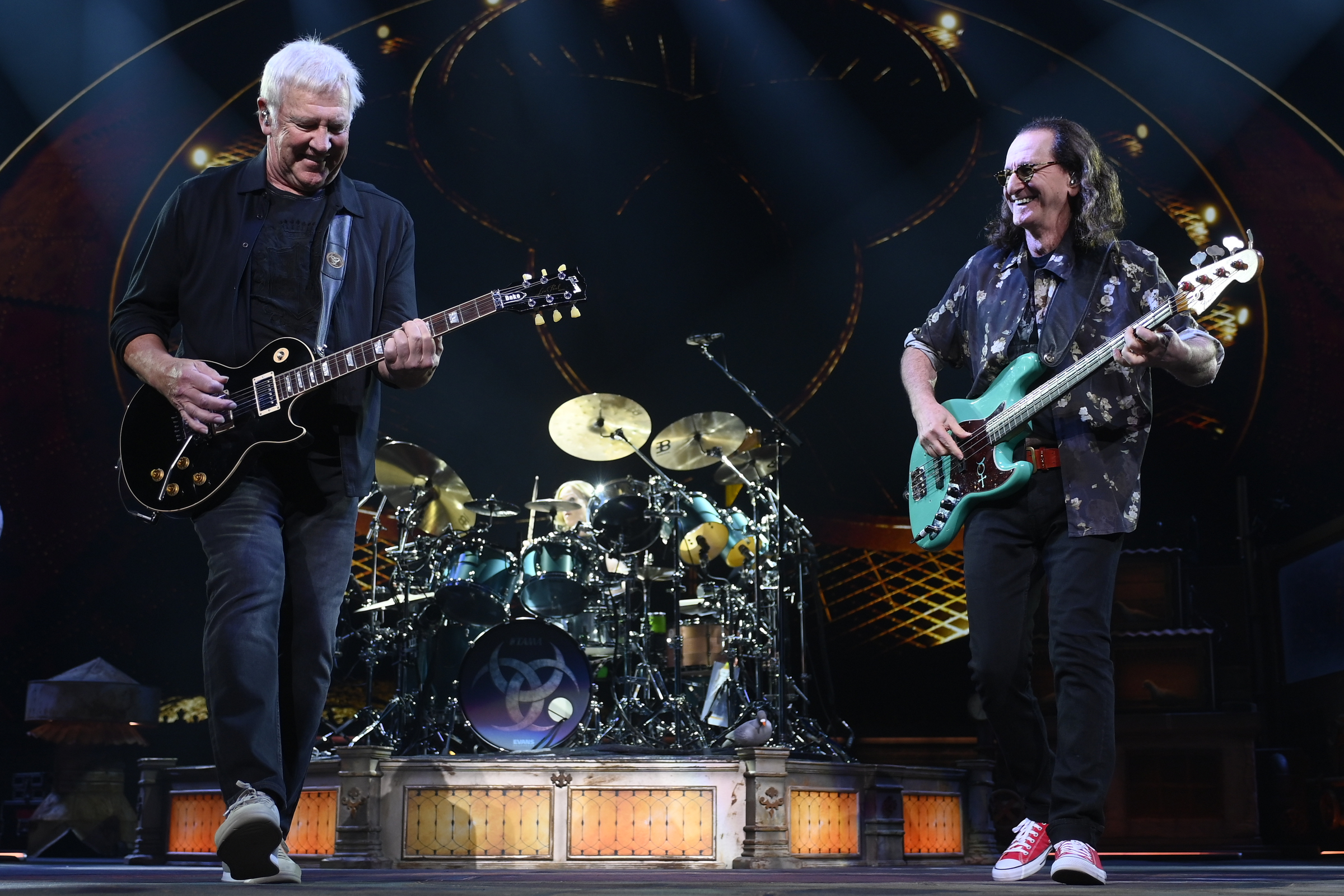
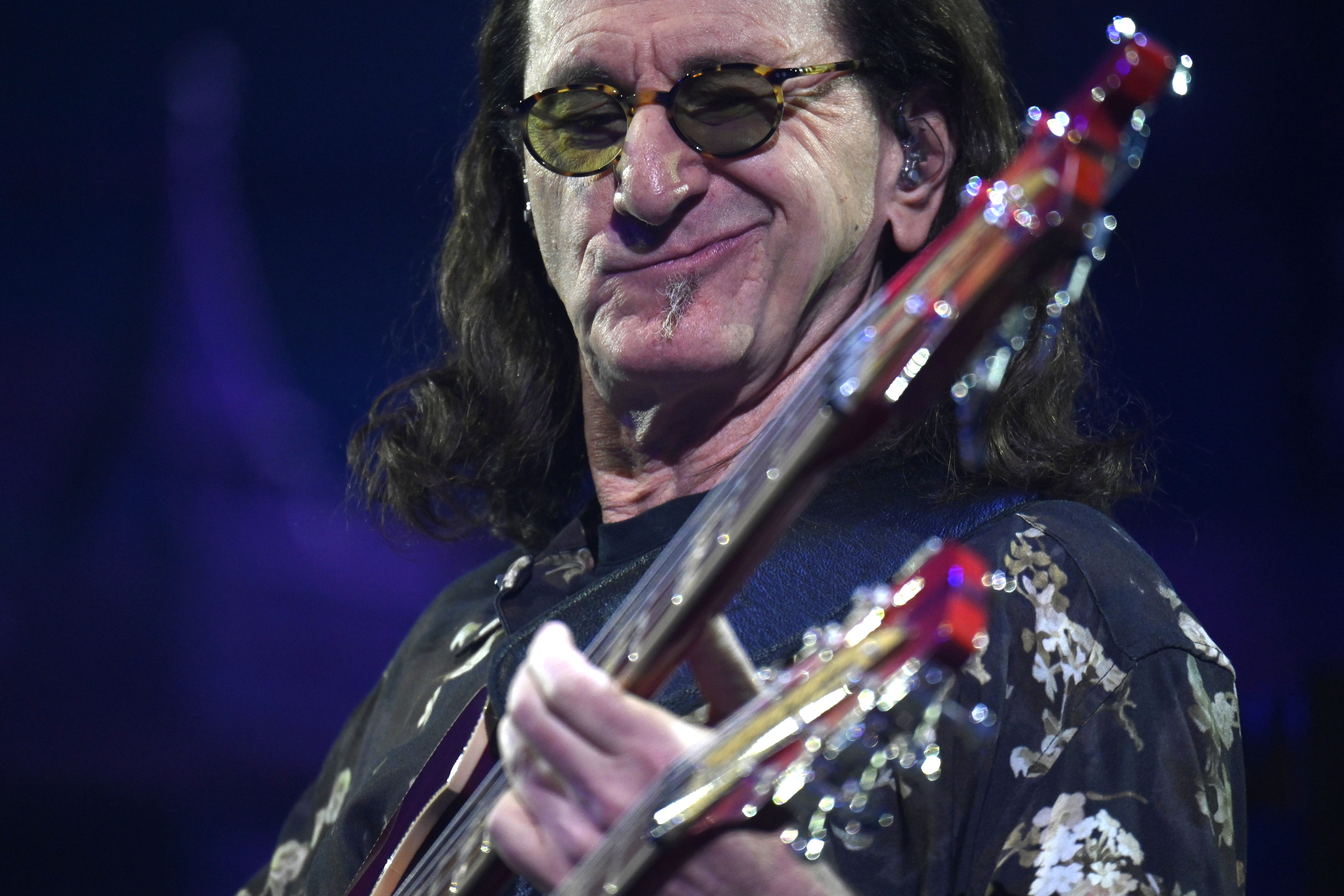
Bassist Geddy Lee of Canadian rock band Rush performs onstage during their ‘Fifty Something’ reunion tour at Xfinity Mobile Arena in Philadelphia on Aug. 21, 2026.Bastiaan Slabbers / For The Inquirer
The “Fifty Something” Tour, which makes its second stop at the arena on Sunday, was framed as a tribute to the revered drummer and lyricist as much as a celebration of the band’s history. Introducing “Freewill,” from 1980’s Permanent Waves, Lee spoke about the philosophical nature of many of Peart’s lyrics, choking up as he mentioned the topics of “loss, recovery from loss, and love.”
This Canadian wake was decidedly of the raucous Irish variety, though, as the poignant videos and heartfelt dedications proved to be brief interludes amid an overwhelming sense of joy.
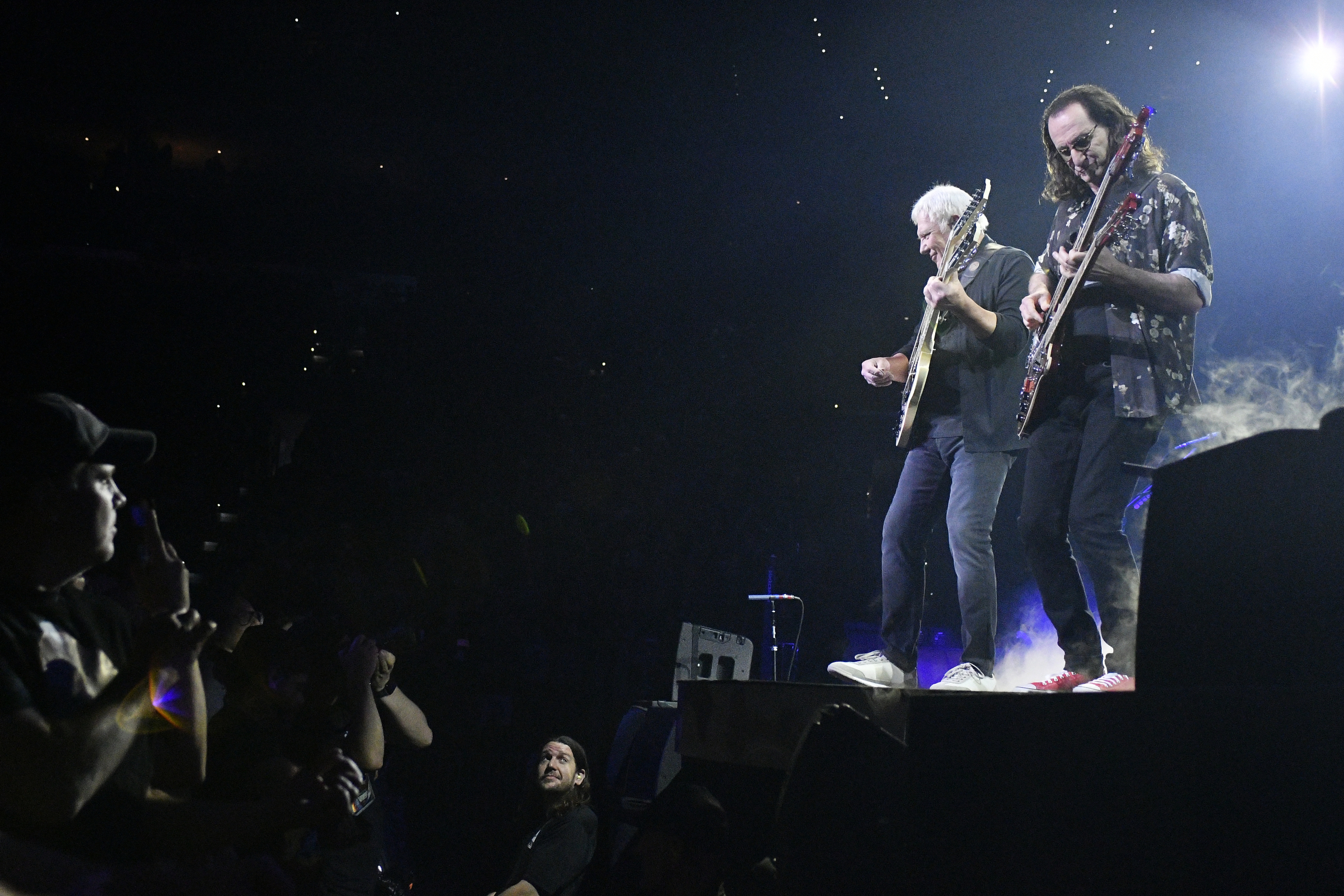
The 70-somethings Lee and guitarist Alex Lifeson are lifelong friends, and their playful interactions often feel like they are reverting to childhood, albeit at the same time pulling off the musical equivalent of higher mathematics. Lee skipped and leaped across the stage with giddy youthfulness, laughing and sneaking behind Lifeson for mid-song bouts of hide-and-seek.
The bassist was downright giddy following the band’s daunting 1978 instrumental “La Villa Strangiato.”
“Man, that’s a boatload of fun,” he gushed.
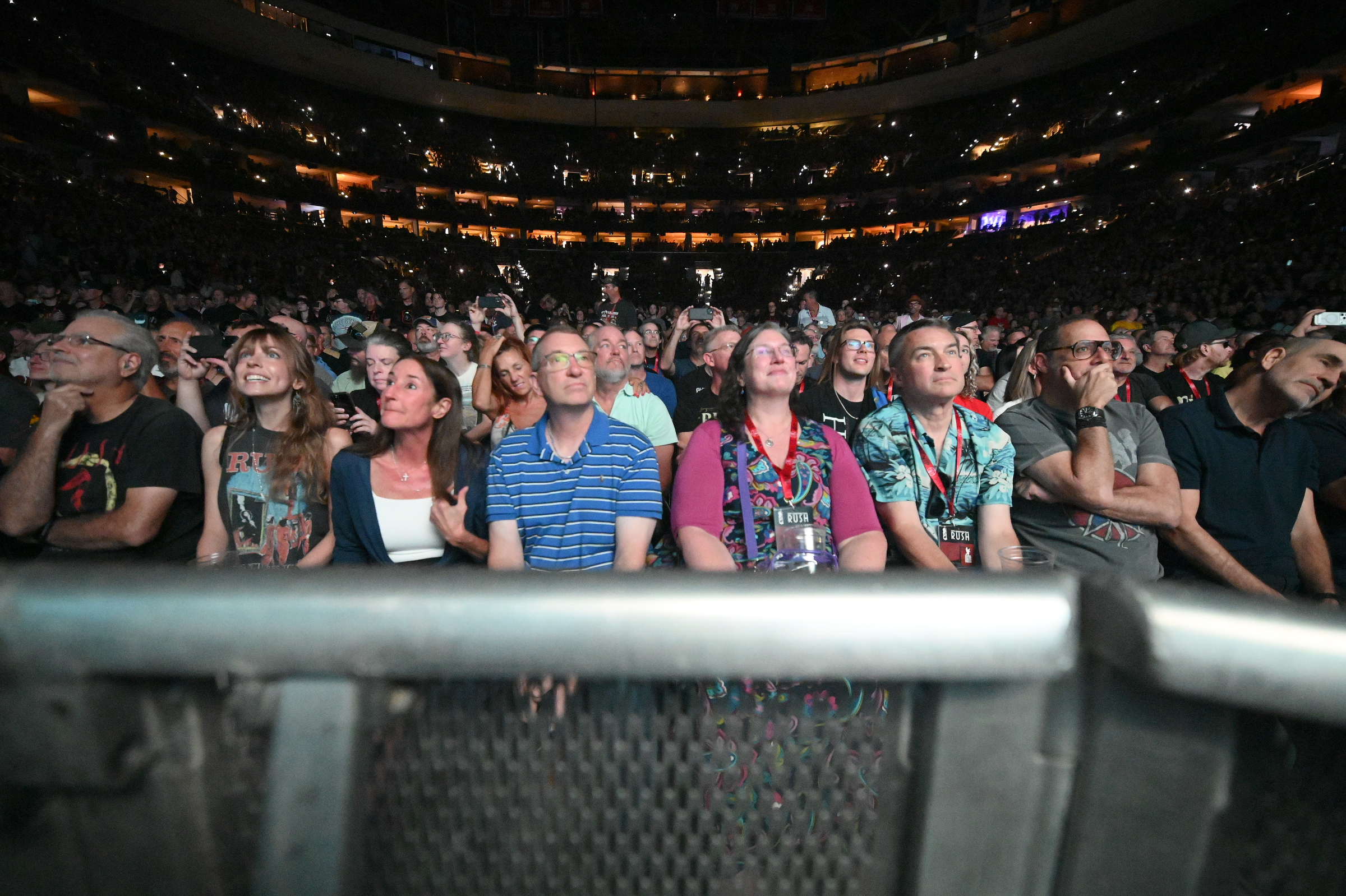
Fans of Canadian rock band Rush watch the opening film during the ‘Fifty Something’ reunion tour at Xfinity Mobile Arena in Philadelphia on Aug. 21, 2026.Bastiaan Slabbers / For The Inquirer
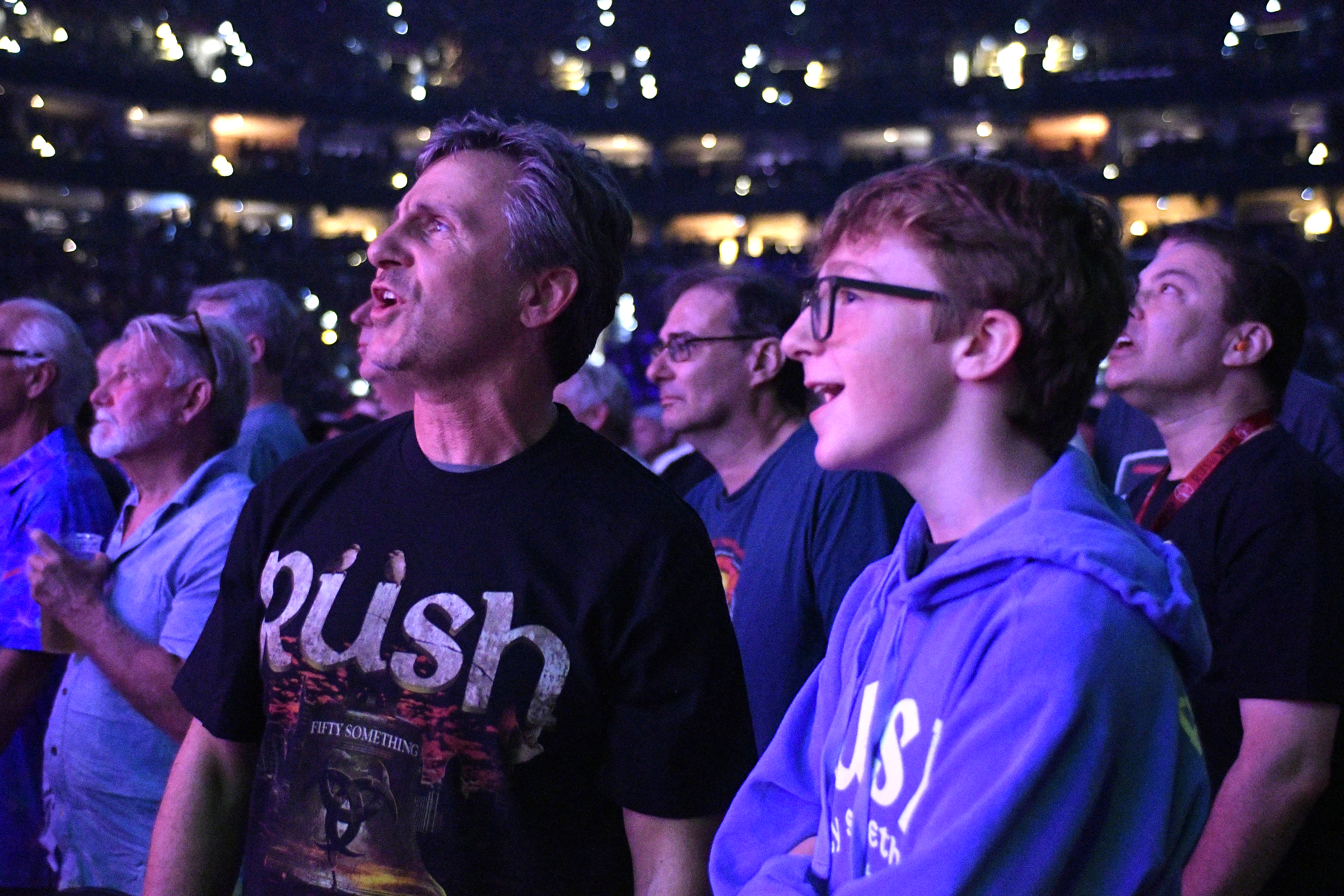
Rush’s return to performing after more than a decade was clearly a source of rabid anticipation for the Philly faithful, the vast majority of whom had shrugged off the usual taboo about wearing the T-shirt of the band they had come to see.
But the band, almost as well-known for its offbeat sense of humor as for its complex time signatures, decided that if one of the most dedicated fan bases in rock could wait 11 years, they could wait just a bit longer.
When the lights went down, the crowd’s ovation was answered by a six-minute video in which the septuagenarian rockers mocked their own longevity.
Fans of Canadian rock band Rush react during the ‘Fifty Something’ reunion tour at Xfinity Mobile Arena in Philadelphia on Aug. 21, 2026.Bastiaan Slabbers / For The Inquirer
Following a Citizen Kane-inspired crane into a foreboding retirement community (“The Villas of Strangiato,” naturally), the camera follows a Wonka-like trio of curiosity seekers on a quest to find Rush. Along the way they find Lee and Lifeson in outlandish costumes and silly accents as, respectively, a “slightly used sausage” vendor and a doughnut-hoarding ex-general, and transformed into a pair of animated blackbirds a la Dumbo; the South Park kids as “Lil’ Rush”; and Jason Segal and Paul Rudd reprising their roles from I Love You, Man.
Finally the seekers discover a pair of magical robes (don’t ask), opening a portal that travels through half a century of Rush history to unveil a steampunk rooftop set and the band itself, Lee and Lifeson both spryly wielding double-necked axes and kicking off not with one of their classic rock staples but with 1977’s 11-minute epic “Xanadu.”
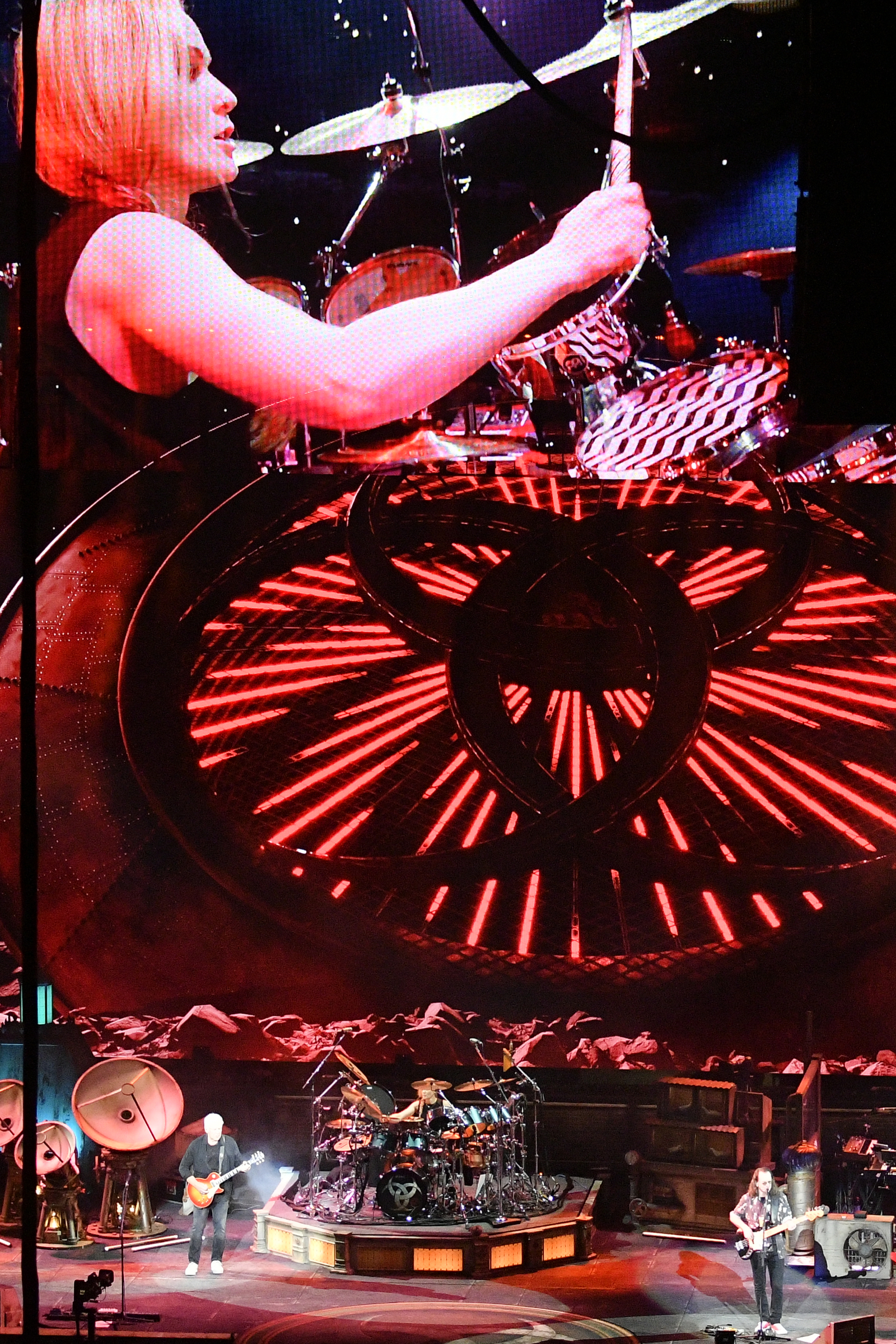
Guitarist Alex Lifeson, lead vocalist and bassist Geddy Lee, and drummer Anika Nilles of Canadian rock band Rush perform onstage during their ‘Fifty Something’ reunion tour at Xfinity Mobile Arena in Philadelphia on Aug. 21, 2026.Bastiaan Slabbers / For The Inquirer
Did I call the fan base “dedicated”?
True enough, but it would be at least as accurate to use words like demanding and persnickety about an audience that likes its arena rock intricate and exacting.
Lee and Lifeson arrived with decades’ worth of nostalgia-tinged goodwill behind them, meaning that the skeptics’ eyes were trained almost exclusively on the drum chair, populated for the first time by the 43-year old German YouTube phenomenon Anika Nilles.
Stepping behind the drum kit of the late Neil Peart has to be one of the most thankless gigs in all of rock, but Nilles executed it thrillingly. Peart’s unique alchemy was his ability to pair his mind-boggling precision and intricacy with ebullient, almost vocal cadence.
Drummer Anika Nilles of Canadian rock band Rush performs onstage during their ‘Fifty Something’ reunion tour at Xfinity Mobile Arena in Philadelphia on Aug. 21, 2026.Bastiaan Slabbers / For The Inquirer
Nilles brought her own personality to that blend while knowing — and nailing — those iconic barrages that every fan in the place expected to hear. It was well appreciated, with the crowd roaring louder at certain drum fills in “Tom Sawyer” or “YYZ” than they did for some of their favorite singalong choruses.
For their part, the veteran members didn’t need the goodwill.
Lee was in strong voice all evening, soaring to vibrant highs on “Freewill” or “Closer to the Heart.” Instrumentally, he and Lifeson retain their exuberant virtuosity. They navigated the labyrinths of “YYZ” or the multipart, 20-minute epic “2112,” which opened the second set in its entirety, with the fervor of a teenage garage band paired with the exactitude of lab technicians.
Guitarist Alex Lifeson and lead vocalist and bassist Geddy Lee of Canadian rock band Rush perform onstage during their ‘Fifty Something’ reunion tour at Xfinity Mobile Arena in Philadelphia on Aug. 21, 2026.Bastiaan Slabbers / For The Inquirer
The musical acrobatics were obvious high points, but the concert was equally memorable for its emotional standouts — the band pouring its hearts into “The Garden,” a relatively obscure choice from its final album, 2012’s Clockwork Angels; or the highway-speed abandon and wistfulness emanating from an exhilarating “Red Barchetta.”
Rush went back to the beginning for its two-song encore, both dating back to its self-titled 1974 debut. “Finding My Way” was the show’s purest rock and roll song, while “Working Man” acknowledged original drummer John Rutsey, who died in 2008.
One last bit of mourning, one last moment of life-affirming euphoria.
Rush performs on its “Fifty Something” tour again Sunday, Aug. 23, 7:30 p.m., at Xfinity Mobile Arena.
The Eagles take the field for their second preseason game Saturday night, facing off against the New England Patriots at Gillette Stadium in Foxborough (7 p.m, NBC10).
After two days of joint practices against the Patriots, don’t expect either team to run out many starters. That means the next chance Birds’ fans will have to see Quinyon Mitchell covering A.J. Brown would be Super Bowl LXI at SoFi Stadium in California.
If you’re thing is in-the-weeds drama involving roster spots for fringe players, there’s a lot of keep your eyes on. That starts at quarterback, with an ongoing competition between Andy Dalton and Tanner McKee to backup Jalen Hurts.
“The Eagles don’t want to put too much of their offense on film, but they do want to make one of their backup candidates attractive for a potential trade,” my colleague Jeff Neiburg wrote after watching Dalton and McKee practice against the Patriots.
Outside of that, you’re looking at depth chart battles on the offensive line and cornerback, plus a crowded fight among wide receivers for a roster spot. Top pick Makai Lemon returned to practice this week after being sidelined with a hamstring injury, but don’t expect to see him running many routes tonight.
The Birds also re-signed wide receiver Brandon Hayes, who has been on an off the team during training camp, and placed cornerback Tariq Castro-Fields on injured reserve.
Eagles-Patriots will be final preseason game on NBC10
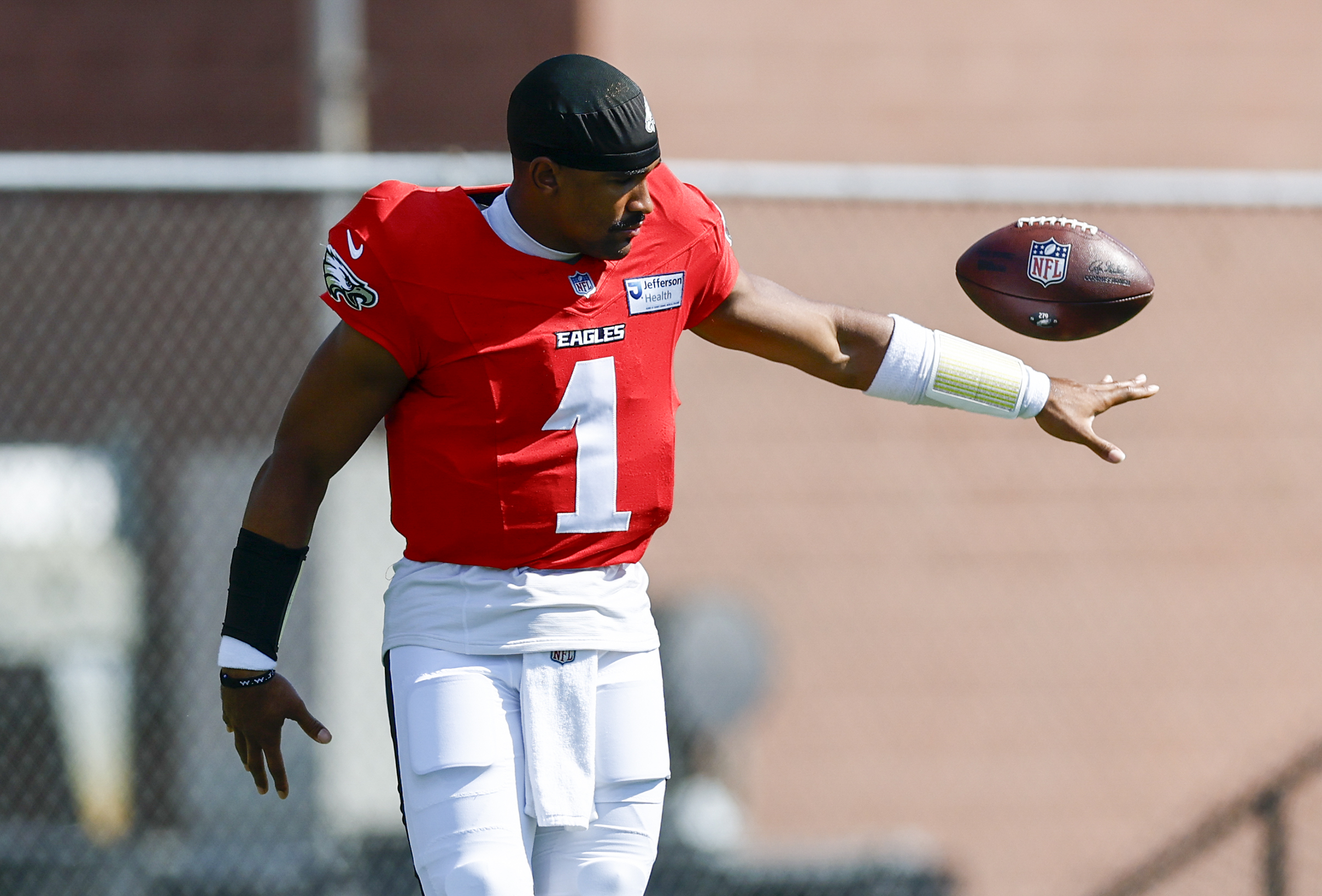
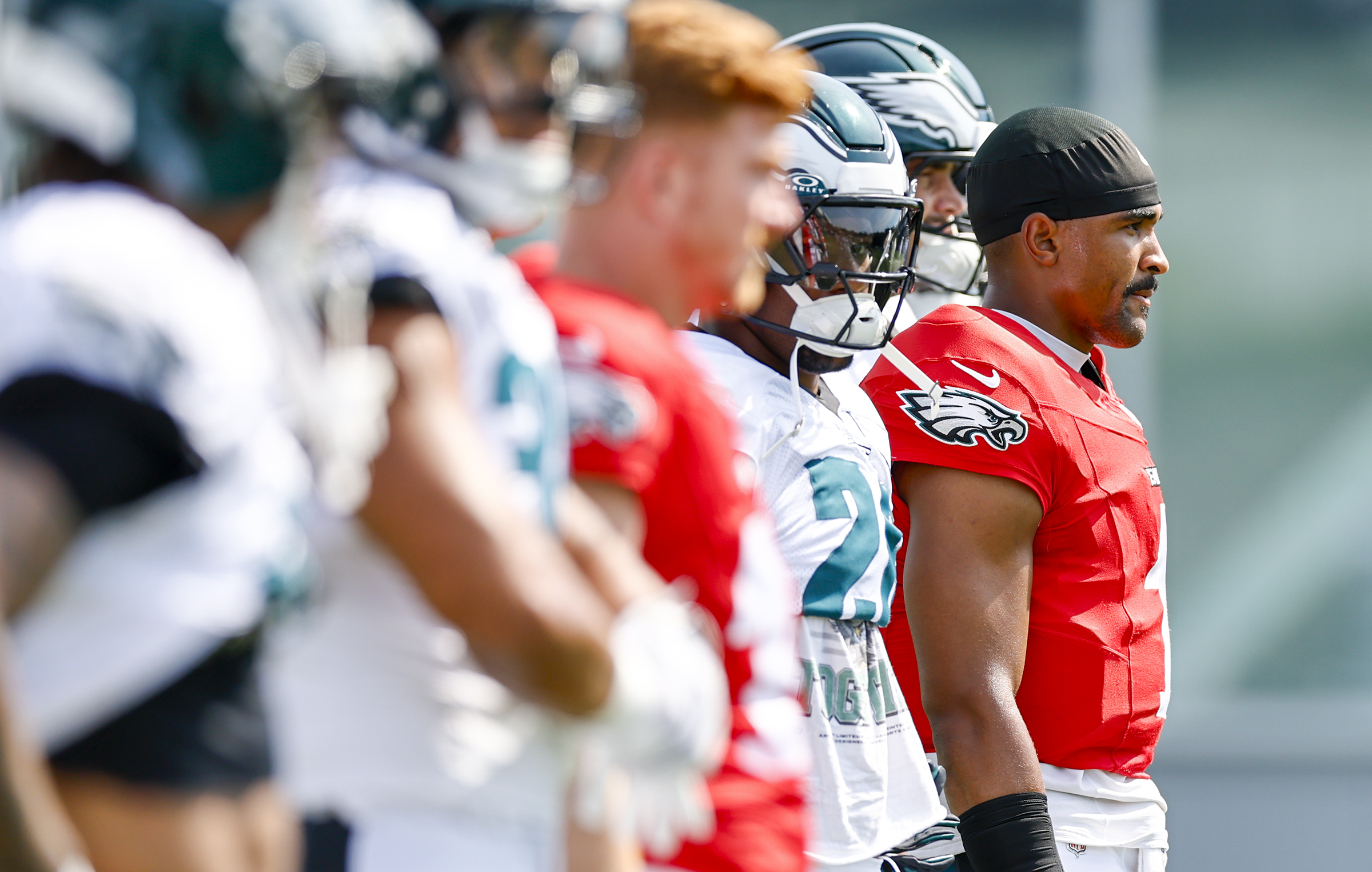
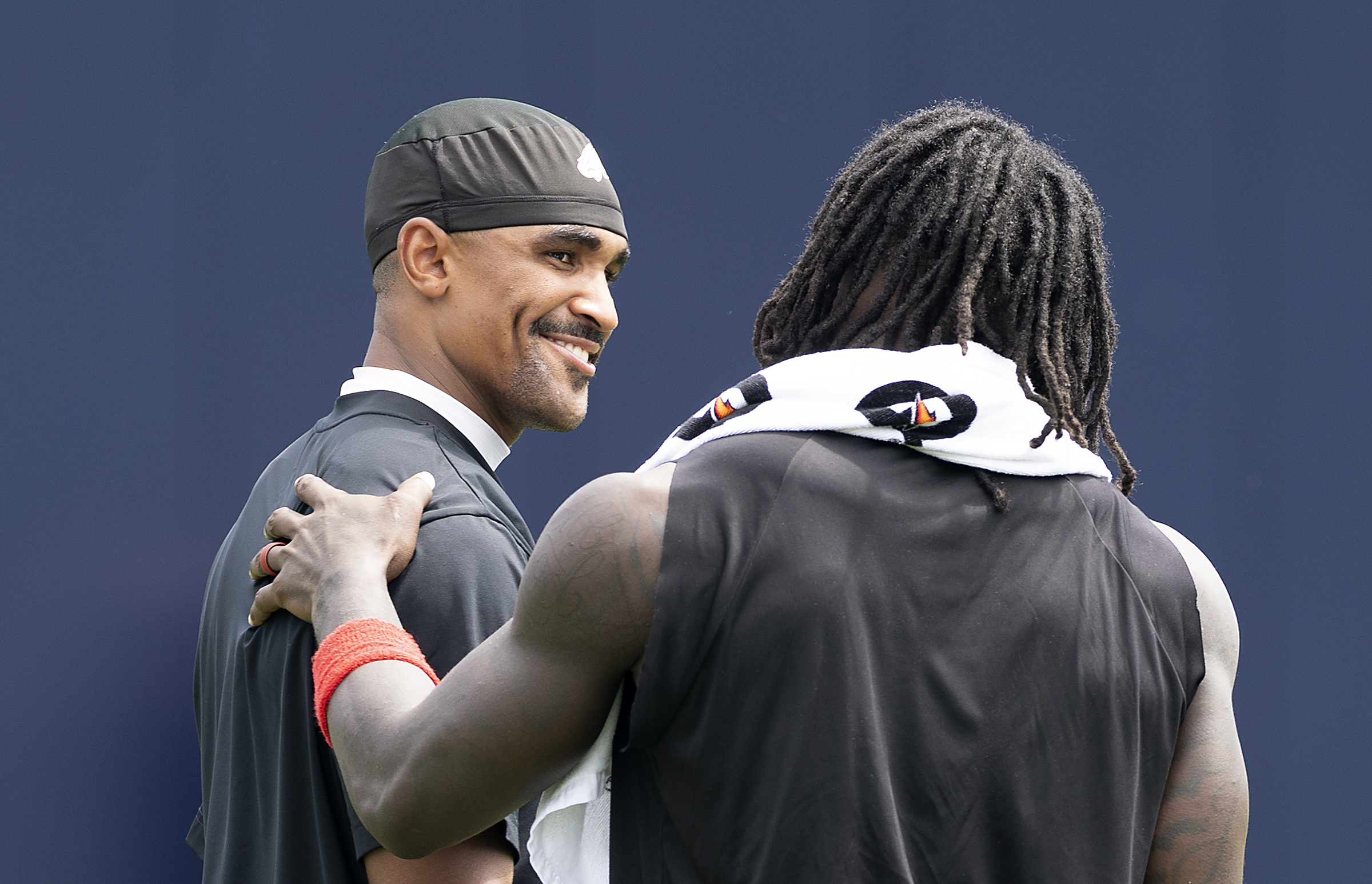
Jalen Hurts watches team drills during a joint practice with the Patriots. Yong Kim / Staff Photographer
Tonight’s Eagles-Patriot’s preseason game is scheduled to begin at 7 p.m. on NBC10, with Scott Graham and Ross Tucker on the call. Dave Spadaro will report from the sideline at Gillette Stadium just outside of Boston.
It’s the second and final Eagles game NBC10 will air this offseason. The Birds preseason finale next week against the Cincinnati Bengals will air on CBS, with Tucker calling the game alongside Andrew Catalon.
Regionally, Saturday’s Eagles-Patriots preseason game will air on a number of local stations, including:
The game will also air live on the NFL Network and a host of local stations across New England, including WBZ in Boston and WWLP in Springfield, Mass.
If you’re a Birds fan in Hawaii, you’re also in luck — the game will air on KHII in Honolulu as part of a 13-game preseason package.
Fans can also listen to the game on 94.1 WIP, where beloved Eagles announcer Merrill Reese is entering his 50th season calling Birds games. He’ll once again be joined by longtime partner and former Eagles wide receiver Mike Quick.
The game can also be heard nationally on SiriusXM NFL Radio.
Where can I stream the Eagles-Patriots preseason game?
Jalen Hurts and former Eagles receiver A.J. Brown spoke during joint practice Thursday. Yong Kim / Staff Photographer
Tonight’s game will be free to stream on the Eagles app and PhiladelphiaEagles.com if you live in the Philadelphia or Boston TV market.
The game will also stream in the Philadelphia market on any so-called skinny bundle that carries NBC10, including YouTube TV and Hulu + Live TV. Most offer a free trial. You can also stream it on the NBC app, but a cable login is required.
You can also watch NBC10 for free using a digital antenna if you live in and around Philadelphia. Local fans can also stream the game for free on Peacock, the NBC10 app, and on the station’s website.
Fans living outside the Philadelphia market can stream the game on NFL+, the league streaming service. It’ll set you back $6.99 a month, though there is a free seven-day trial.
WASHINGTON — The United States imposed 50% tariffs on $20 billion worth of Canadian products early Saturday, and Canada said it would retaliate beginning Sept. 8 after last-ditch negotiations failed to resolve the latest strain in relations between the historic allies.
President Donald Trump’s import taxes will hit about 5% of what Canada ships to the United States every year, including products ranging from hockey sticks to tongue depressors.
Carney said, “in the coming days, we will release the details of these new tariff measures, which will come into force the Tuesday after Labor Day.” The dollar-for-dollar retaliation would target steel, dairy, appliances, agricultural equipment, pulp and paper, and electronics, he said from Ottawa.
He disclosed that Canada had been willing to drop remaining retaliatory tariffs on steel, aluminum, and autos if the United States substantially lowered its own, and to encourage provinces to restore U.S. alcohol sales. But he said Washington’s final demands went too far, saying, “They asked too much and offered too little,” Carney said.
Trump’s top trade negotiator, Jamieson Greer, said the Republican administration was offering to cut tariffs on steel, autos, and lumber, “things that are sensitive for them. And they’ve always had the best deal, and they still would have an even better deal, but they didn’t want that,” he told Fox & Friends Weekend.
He added: “We’re moving forward with measures that respond to Canadian retaliation.”
The moves also call into question the future of a North American trade agreement covering the United States, Canada, and Mexico that is crucial to industry in all three countries.
Carney said the U.S. added last-minute terms that would have reduced tariff relief for Canadian-made vehicles, restricted Canada’s ability to strike trade deals with other countries, and weakened protections for language, culture, and sovereignty. He said such demands were “unacceptable.”
But Greer, the U.S. trade representative, said that after a year of retaliation by its longtime ally, “We’ve said enough, and so we’ve taken countermeasures. Our interest is in protecting American workers and protecting American supply chains.”
No further talks are planned.
The breakdown in negotiations marked a sharp reversal from two days earlier, when officials from the two countries sounded as if they were headed toward a compromise.
Carney said Ottawa would “hit back” with targeted tariff protection for industries exposed to the new U.S. duties, including some steel products.
Ontario Premier Doug Ford, who leads Canada’s most populous province, backed Carney’s response, saying the prime minister had his “full support” for retaliation “tariff for tariff, dollar for dollar” and that “everything needs to be on the table.”
A typically cooperative alliance goes sour
The political impact will likely be even bigger than the economic fallout. The countries sold each other $880 billion worth of goods and services last year.
The tariffs were initially supposed to kick in at 12:01 a.m. Wednesday. Trump extended the deadline for three days to allow talks to continue, but the countries could not reach an agreement in time.
The U.S. and Canada have wrangled for decades over trade, poking each other over sore spots such as Canadian softwood lumber imports and U.S. access to Canada’s protected dairy market.
Somehow, they still managed to remain friends, allies, and trading partners. Canadian soldiers fought alongside Americans in Afghanistan after 9/11. The 5,525-mile U.S.-Canada border is undefended, and nearly 330,000 people and $2 billion worth of goods cross it every day; 800,000 Canadians live in the United States.
Trump’s approach to dealing with Canada marks an extraordinary departure from the traditionally cooperative relationship between the two countries. Trump has imposed tariffs on Canadian goods in a push to bring manufacturing back to the United States and made inflammatory comments about turning Canada into America’s 51st state.
Carney said Canada had recognized that “America has changed” and that the two countries would “not return to our old relationship.”
Canadians and Americans are frustrated
The Canadian public is fed up. A petition to expel U.S. Ambassador Pete Hoekstra, a Trump ally, has collected nearly 248,000 signatures since July 21. It accuses the former Republican congressman from Michigan of having “normalized’’ Trump’s talk of annexing Canada, among other things.
The two countries had good reasons to find a compromise.
Nearly 72% of Canada’s goods exports last year went to the United States. The Trump administration might be wary of imposing new tariffs — paid by U.S. importers who try to pass along the cost to consumers via higher prices — before the November midterm elections. American voters are already frustrated with the high cost of living.
“Canada likely wanted further sector-specific relief than the U.S. was willing to offer, or Canada’s concessions did not go far enough,’’ said Ryan Majerus, a partner at King & Spalding and a former U.S. trade official. ”Either way, I think both sides will be under immense pressure in the coming days to still find an off-ramp. But if Canada has agreed to also impose tariffs, the off-ramp may be even harder to find.”
Candace Laing, president and CEO of the Canadian Chamber of Commerce, called the tariffs “a body blow to North American competitiveness” and warned they would raise costs for Americans while threatening Canadian customers, investment, and small businesses.
Trump has turned to Depression-era trade penalties
Trump has made tariffs the centerpiece of his second-term economic agenda. Last year, he imposed double-digit import taxes on almost every country, justifying them by declaring the long-standing U.S. trade deficit a national emergency. The Supreme Court in February ruled that he had overstepped his authority. The justices struck down the trade penalties and set the stage for the federal government to pay refunds to importers.
So Trump has looked for other legal authority to justify tariffs.
To punish Canada, he reached back to the Great Depression, invoking Section 338 of the Tariff Act of 1930 to threaten 50% tariffs on products that account for about 5% of Canadian exports to the United States.
Nearly a century ago, with the U.S. and world economies in collapse, Congress passed the 1930 tariff law, imposing taxes on imports from around the world. Known as the Smoot-Hawley tariffs after their congressional sponsors, they are notorious among economists and historians for limiting world commerce and making the Great Depression worse.
Section 338, which has never been used before to impose tariffs, authorizes the president to slap import taxes of up to 50% on imports from countries that have discriminated against U.S. businesses. No investigation is required to justify the levies. Nor is there any limit on how long they can stay in place.
The rift comes as the United States, Mexico, and Canada are trying to renew a trade agreement that Trump negotiated in his first term and once praised as a triumph. The United States has begun formal talks with Mexico over revamping the US-Mexico-Canada Agreement, known as USMCA. But talks with Canada have not begun and escalating trade conflict casts doubt on whether they will.
“Canada told the Americans in advance that if these tariffs landed, it would stop negotiating and retaliate,’’ said Barry Appleton, senior fellow at the Center for International Law at New York Law School. ”The American trade representative said publicly he would not tolerate retaliation. Both sides have now committed themselves in public, which is how escalation stops being a choice.’’
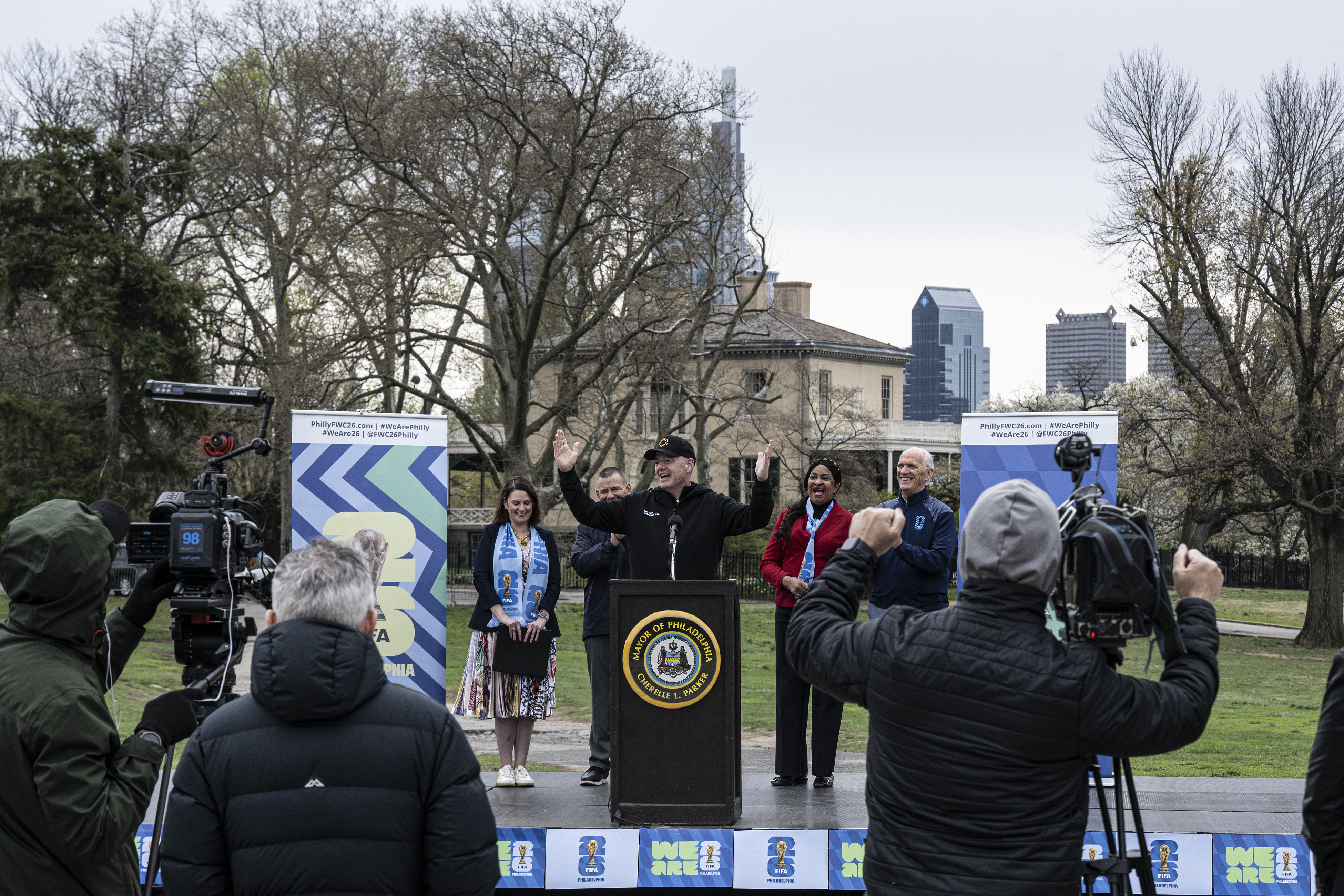
As the afterglow of the world’s largest sports tournament and the country’s formal 250th birthday party in Philadelphia fades, the city is returning to its regularly scheduled programming.
But those months of celebrations came with significant investments into the city: building up the Benjamin Franklin Parkway, hosting Grammy Award-winning stars, renovating Lemon Hill to welcome half a million people, and, of course, the cleaning and maintenance work that made Philadelphia look fresher than it has in years.
SEPTA and the city partnered to landscape and beautify major traffic intersections, sometimes with a new mural provided by Mural Arts Philadelphia. SEPTA stations alsoreceived a much-needed deep clean and graffiti removal, all before and during the summer celebrations.
PHLASH buses got an extra stop to get to Lemon Hill; fans got free rides on the Broad Street Line after World Cup games. And, just as the international fans packed up their bags to head home, it’s time for many of those features to go, too.
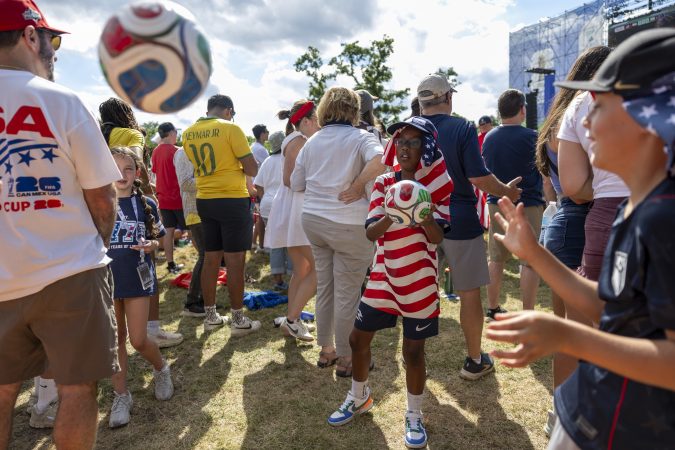
But what about all the things staying in Philly? The city is not getting just generational memories and a summer party out of the deal. Here are some of the major legacy projects remaining in Philadelphia for years to come, perhaps even until the tercentennial celebration in 2076.
(function(){function e(){window.addEventListener(`message`,function(e){if(e.data[`datawrapper-height`]!==void 0){var t=document.querySelectorAll(`iframe`);for(var n in e.data[`datawrapper-height`])for(var r=0,i;i=t[r];r++)if(i.contentWindow===e.source){var a=e.data[`datawrapper-height`][n]+`px`;i.style.height=a}}})}e()})();
New mini soccer pitches across Pennsylvania
Location: Throughout Pennsylvania.
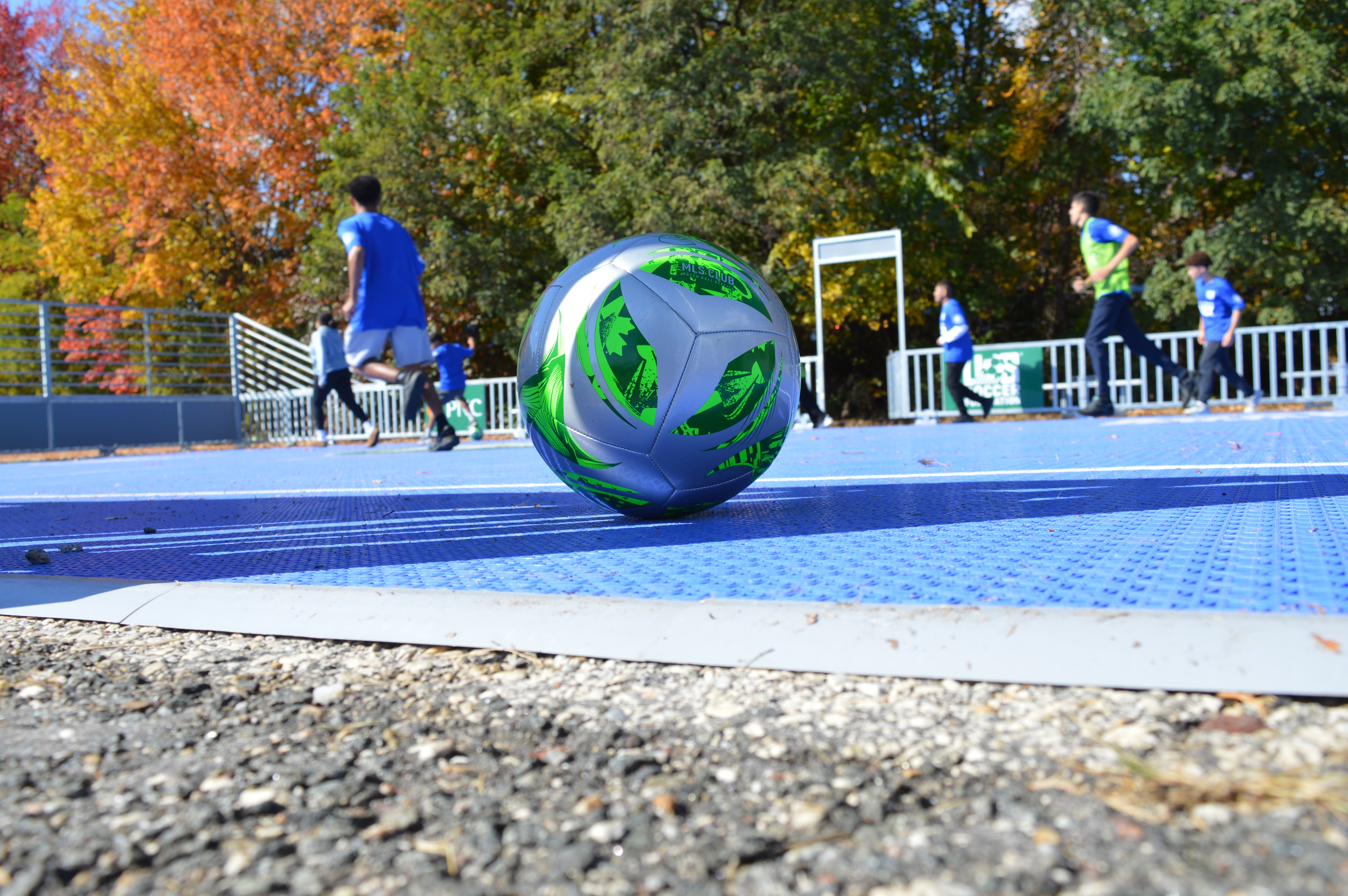
The project: How does the United States grow the next crop of elite soccer players? By making it easier to play soccer starting at a young age. At least 13 mini soccer pitches are being installed at schools, recreation centers, and parks across Pennsylvania.
The first two of Philly’s mini pitches were installed at West Oak Lane’s Building 21 and the Swenson Arts and Technology High School in Northeast Philadelphia. According to the U.S. Soccer Foundation, which is overseeing the project, each mini pitch costs $150,000 to install.
The U.S. Soccer Foundation has committed $2 million to install mini-soccer fields like this one in Northeast Philadelphia ahead of the 2026 FIFA World Cup.Kerith Gabriel
Who is behind it: The city and several nonprofits and private companies are backing this initiative, mostly through a $2 million investment from Philadelphia Soccer 2026, the city’s host committee for the 2026 men’s World Cup. Additional backers include the Philadelphia School District, Independence Blue Cross, and Comcast, among others. The U.S. Soccer Foundation is administering the funds and overseeing the installation of the pitches.
The project: The transformation of Fishtown’s TipTop Playground into two mini, enclosed turf soccer pitches, with additional event space and field lighting for night play. The pitches are now open for kids and adults.
Fishtown’s street soccer park will host leagues, free training clinics, and youth soccer programs. Casual pickup soccer is available outside of scheduled programming, led by Street Soccer USA, the organization that helps run such soccer parks across the country.
Who is behind it: You guessed it: Bank of America and Visa. Street Soccer USA will run programming at the park in collaboration with local groups.
Lemon Hill Park
FIFA President Gianni Infantino, center, will visit Lemon Hill Park on Thursday, April 10 for an operational planning tour of Philadelphia Soccer 2026’s FIFA Fan Festival siteJose F. Moreno / Staff Photographer
Location: Sedgley Drive and North Lemon Hill Drive.
The project: Lemon Hill Park received some updates ahead of hosting the official FIFA Fan Festival, and is now getting a much-needed makeover after 39 days of World Cup festivities. The restoration of the grass is underway, with more permanent amenities soon to be constructed.
Some upgrades are complete:
Other upgrades are coming soon:
Who is behind it: Philadelphia Soccer 2026 is committing $4 million to park upgrades, with help from the city, to repair the grass fields, bring new modern amenities to parts of the park, and outfit the space with new electrical service, provided by Peco, to prepare for future large events.
FDR Park’s Ashburn Field
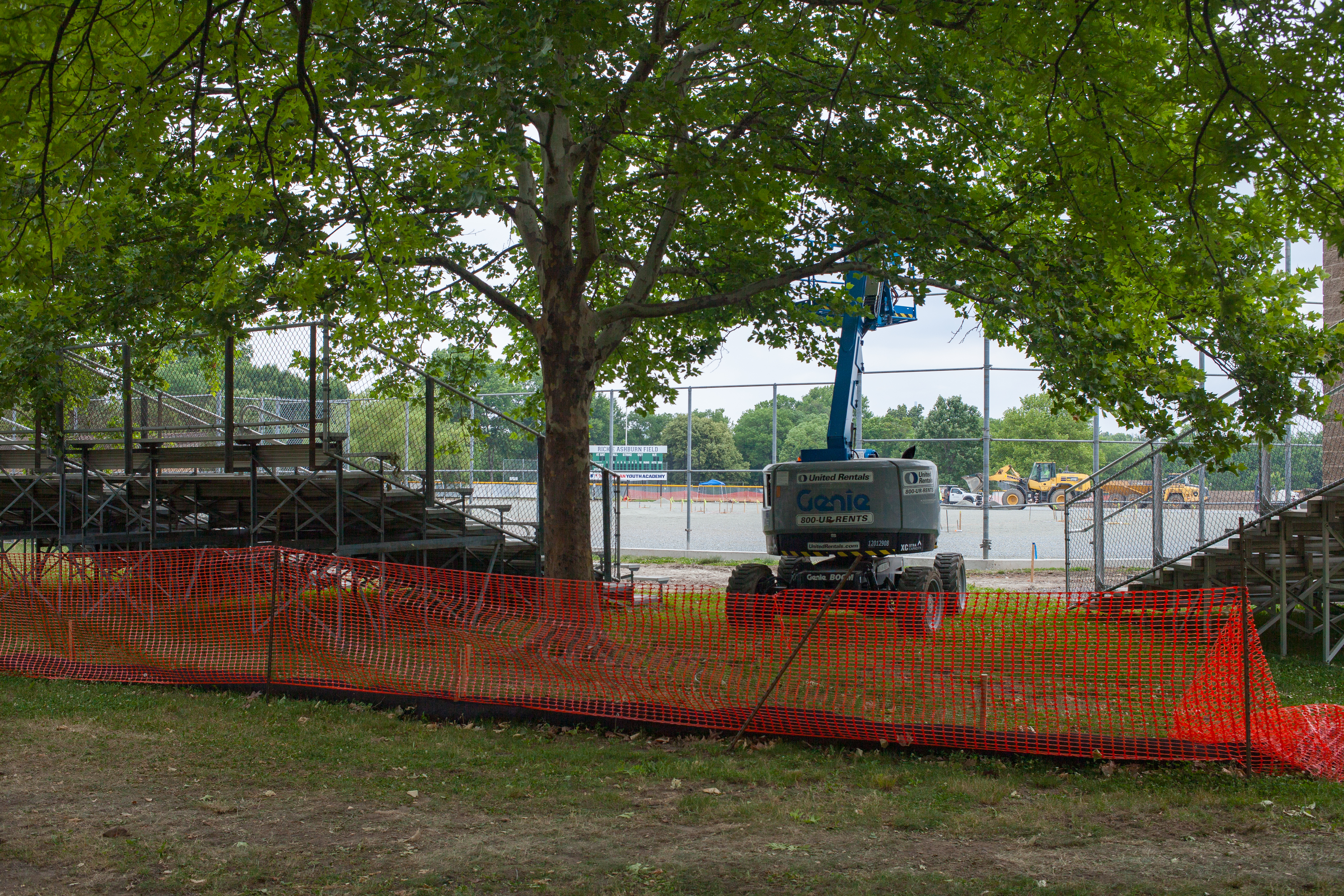
The MLB is renovating Ashburn Field in FDR Park, a city field managed and maintained by the Phillies that hosts a variety of youth baseball programs.Colin Evans / For The Inquirer
Location: 1500 Pattison Ave.
The project: Ashburn Field at FDR Park has been resurfaced with a new turf field, meant to better handle wet weather conditions. The 135,000-square-foot field was built in 1998, using funds generated from the 1996 MLB All-Star Game in Philadelphia.
Who is behind it: Major League Baseball and the Phillies, as part of a combined investment of more than $5 million in various projects tied to the 2026 MLB All-Star Game, including revitalizing the Negro Leagues Memorial Park and mural at 44th Street and Parkside Avenue in West Philly.
Independence National Historical Park
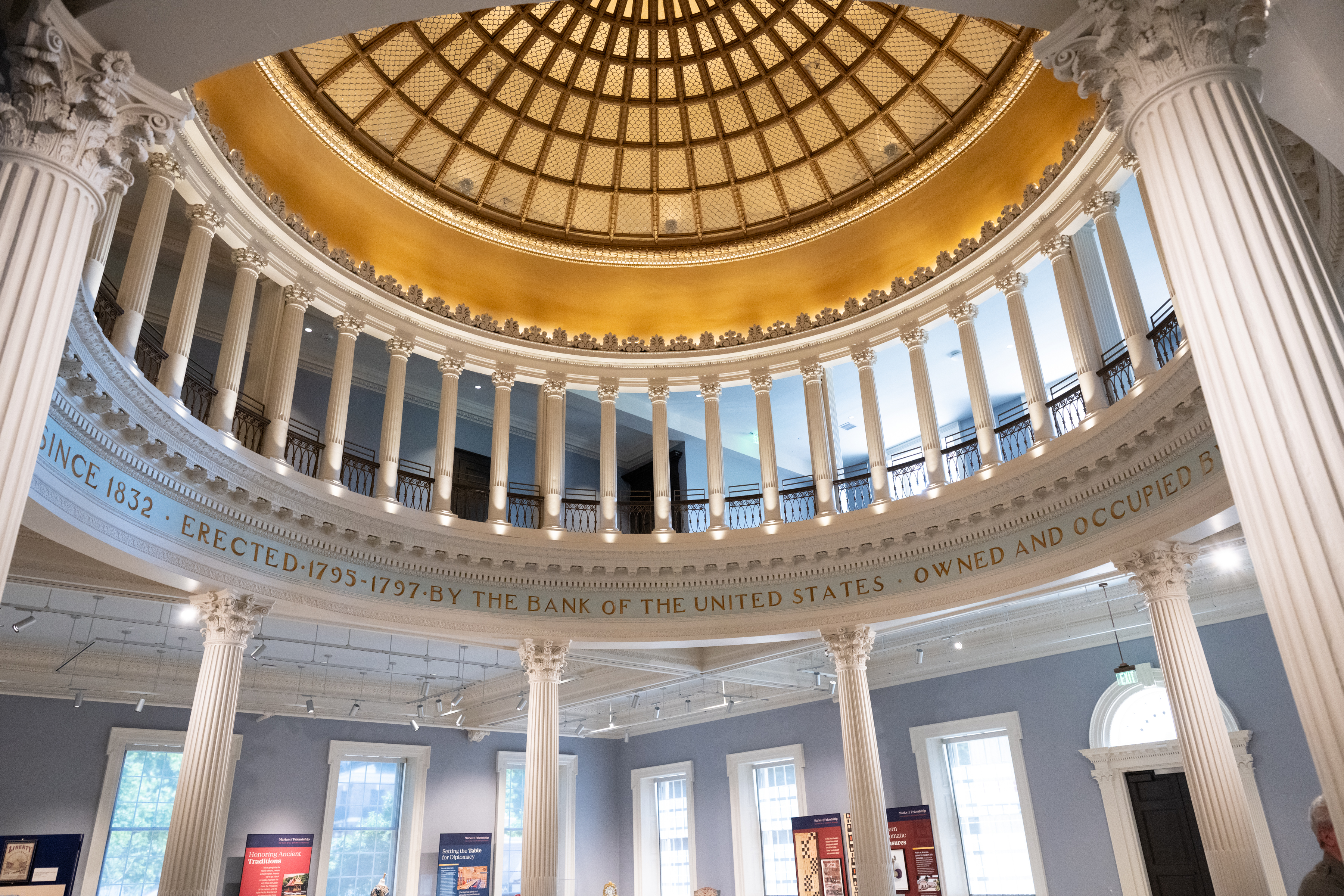
The rotunda inside the First Bank of the United States is pictured on Monday, June 29, 2026 in Philadelphia.Erin Blewett / For The Inquirer
Location: 599 Market St.
The project: Several improvements have already come to Independence National Historical Park and Independence Mall to commemorate the nation’s Semiquincentennial, and more are on the way. They include:
A $3.9 million “Join or Die” sculpture on Independence Mall, inspired by the truncated snake in Benjamin Franklin’s cartoon of the same name. The 46-foot-long granite work is expected to be unveiled this fall.
Beautification and horticultural work. This includes work at the Benjamin Rush Garden at Third and Walnut Streets, which showcases the 1976 Bicentennial Bell, a 10-ton Liberty Bell replica gifted by Queen Elizabeth II.
The reopening of the First Bank of the United States, on Third Street between Walnut and Chestnut Streets. The bank had been closed for 50 years but is now open for visitors thanks to a $43 million renovation.
Who is behind it: Independence Historical Trust, the city, the state, private foundations, philanthropists, and legacy groups.
Germantown Historical Society Visitor Center
Location: 5501 Germantown Ave.
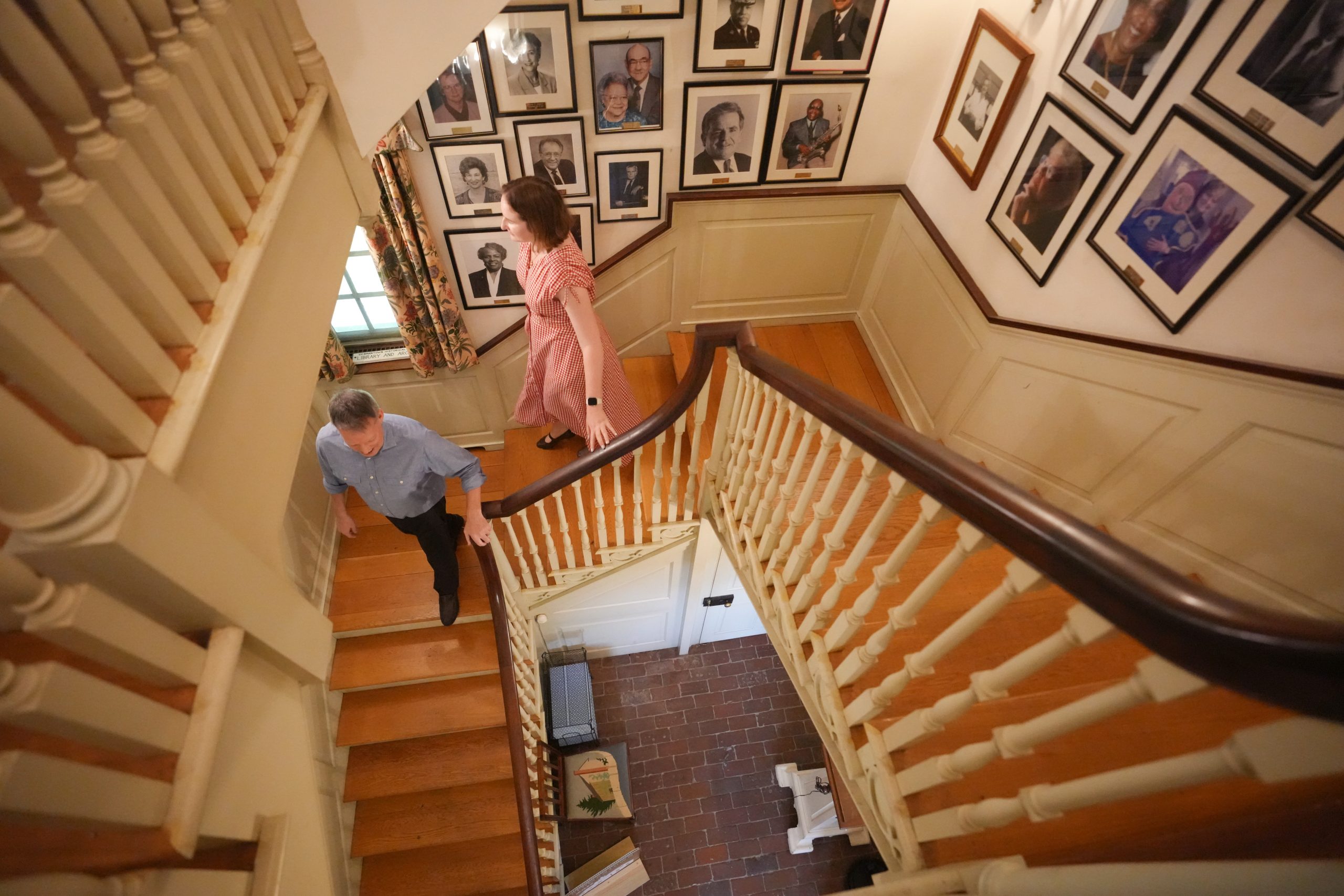
Tuomi Forrest, executive director at the Germantown Historical Society, and Kaila Temple, curator of collections at GHS, at the Germantown Historical Society building located at 5501 Germantown Ave. in Philadelphia, July 21, 2026.Jessica Griffin / Staff Photographer
The project: The Germantown Historical Society has its first visitors center, thanks to a $100,000 renovation of a section of its headquarters. It is modest but will host rotating exhibits, maps and pamphlets, and a gift shop.
Historic Germantown consists of various landmarks and attractions in Northwest Philly, including the Aces Veterans Museum, Awbury Arboretum, and the Germantown White House, where George Washington once lived.
Who is behind it: The Funder Collaborative for the Semiquincentennial, a philanthropic group organized by the Connelly Foundation that donated to many initiatives and projects related to the 250th anniversary celebration.
A Philadelphia judge declined to issue an emergency injunction that would have prevented moving Kensington High students to an empty middle school in the Northeast.
Newly surfaced surveillance video captures a previously unseen part of the encounter before an off-duty Philly officer was killed on Sunday.
Pennsylvania health officials confirmed 89 new measles cases in the state in the last seven days, an escalation of a rapidly growing outbreak now impacting more than two dozen counties.
A reader asked: My child is about to start kindergarten and is excited about the school-provided lunch (he knows there is regular pizza). The menu looks mostly fine and I won’t stop him from enjoying it if everyone else is, but I noticed that he can choose to have chocolate milk every single day, which seems like a lot to me. Am I overthinking it or should I tell him he can only choose it once a week? I won’t even be there to see if he’s telling the truth. Do I ask the school to restrict it?
To tackle this case, we brought in Inquirer reporters Jason Nark and Zoe Greenberg. They discussed how they’d approach the situation, and the potential for hard-line enforcement to backfire.
“I would talk to the school, first, and if this was their policy, I would talk to my daughter and set some limits,” Nark said. His child is also starting kindergarten this year.
In this week’s Shackamaxon, Inquirer columnist Daniel Pearson unpacks SEPTA’s new bus route changes, which feel like cuts to many riders.
“Although I sympathize with anyone who is losing their preferred bus route, these choices were not made without justification,” Pearson writes.
Get his take on what he dubbed a “quiet revolution,” as well as an upset victory in Western Pennsylvania, and the civic hero who squared up to Center City’s masked clown creeper.
❓Pop quiz
Small businesses selling ice cream, little cakes, and loaded baked potatoes are transforming this neighborhood:
Cheers to Anita Osmian, who correctly guessed Friday’s answer: Nicole Cashman. Cashman takes the helm of Welcome America Inc., the nonprofit behind Philly’s Wawa Welcome America festival, after the former CEO departed earlier this year.
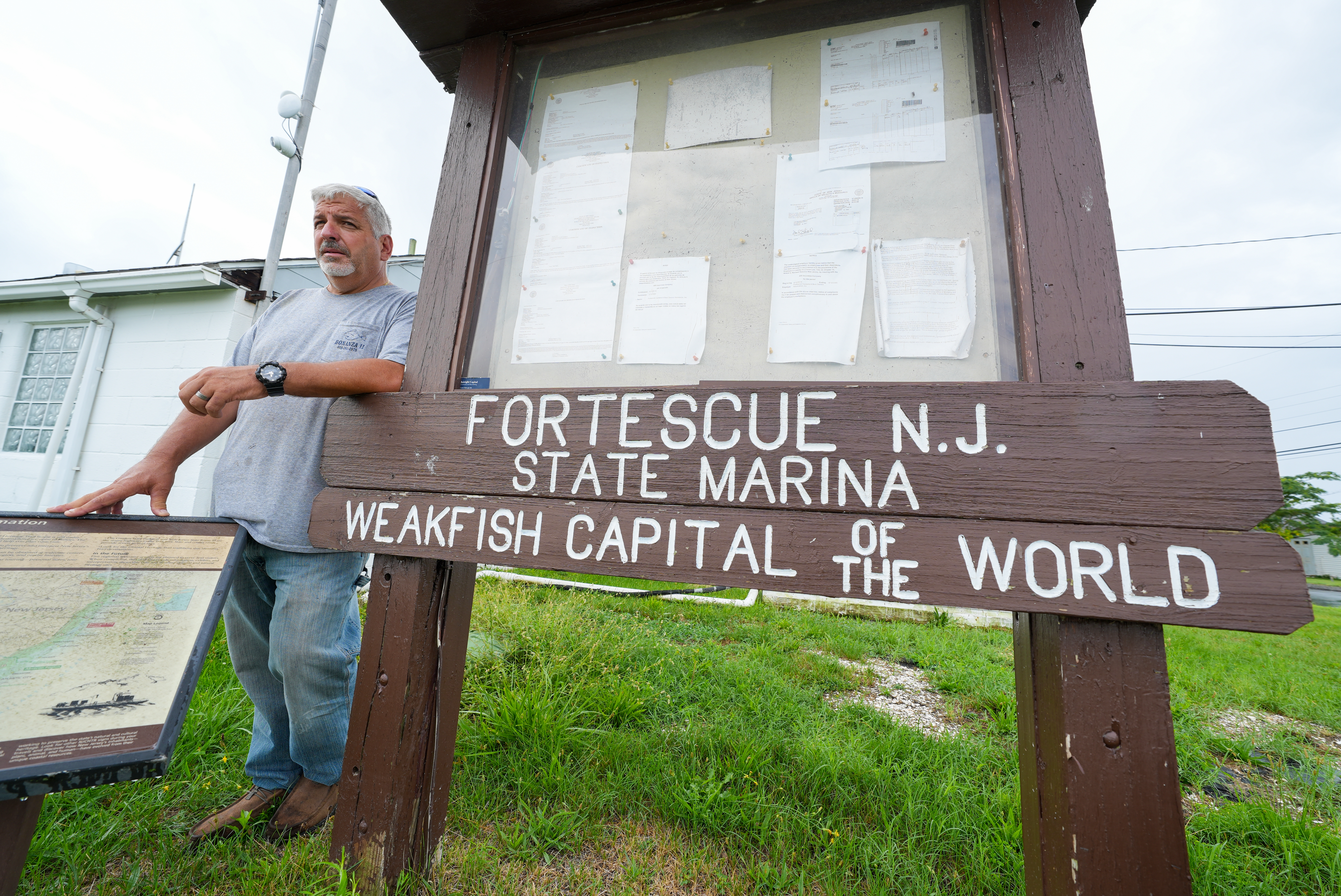
Fortescue in Cumberland County was once known as the “weakfish capital of the world.” That’s no longer the case, and it’s unclear why they disappeared.
Jason Nark, who reports on rural communities far from city life, took a trip to the sleepy Delaware Bay town to find out what locals and experts alike believe may have happened to the “tide runner” fish.
⚽ The Union’s brawl with Inter Miami is a big talker this week. (I’m jealous of everyone who got to witness the chaos in person.) An update from The Inquirer’s Jonathan Tannenwald: Inter Miami’s Lionel Messi was fined for his part, and the Union’s Cavan Sullivan is eligible to play vs. Austin FC tonight.
👋🏽 Thanks for stopping by. Have a good one!
By submitting your written, visual, and/or audio contributions, you agree to The Inquirer’s Terms of Use, including the grant of rights in Section 10.
When people think about getting older, many picture an inevitable decline in health.
But that isn’t always the case. You can improve with age, both mentally and physically. This mindset may even be beneficial; having negative ideas about aging is linked to worse health outcomes, almost like a self-fulfilling prophecy.
While the aging process, like life as a whole, varies from person to person, research shows that there are aspects of brain health that can actually continue improving well past your midlife. Here are three examples of the silver linings to going gray.
Fewer regrets
Living without regrets is a common maxim but an uncommon reality. About 90% of people say they have at least one major life regret, research shows.
“Many of us might worry that we will reach the end of life and have these really big regrets that we can never resolve, and they may take some solace in knowing that that is a very, very common experience,” said Julia Nolte, an assistant professor of economic psychology at Tilburg University in the Netherlands.
But getting older seems to lessen both the sting and the frequency of regrets.
In a recent study published in the journal Emotion, Nolte and her colleagues analyzed how age affected feelings of major regret in 90 adults ranging in age from 21 to 89. Older adults reported they had fewer major regrets within the past year than younger adults. In fact, older adults were more likely to say they didn’t have any recent regrets. And when older adults did have a major recent regret, they were less likely to be about relationships or their dealings with other people.
In older adults, major regrets both recent and lifelong were more likely to be about missed opportunities or the road not taken. Also, older adults had fewer “hot” emotions such as anger or frustration in response to thoughts of what might have been.
“Older adults tend to be more likely to say, ‘I don’t have recent big regrets,’” and when they do, the negative emotions are less impactful, said Nolte, who conducted the study when she was a psychology graduate student at Cornell University. “I think that that’s something to look forward to and to help decrease these age-related negative stereotypes a lot of us carry.”
More knowledge
As you age, you might be more forgetful and slower at mental processing. But on average, older adults actually perform better on tests requiring knowledge or language.
For example, adults in their 70s and 80s scored higher on vocabulary knowledge than those in the 20s, 30s, and 40s, according to a large 2019 study.
Your ability to quickly reason through and adapt to new situations — called fluid intelligence — tends to peak in early to middle adulthood, around your 20s by some measures. But your ability to apply all your accumulated experiences, facts, and skills — known as crystallized intelligence — remains stable or continues to improve through the seventh decade of life, research finds.
A 2022 study, which followed almost 9,000 adults for up to 18 years, found normal age-related decline of fluid abilities was still largely linked with increased crystallized abilities.
As you get older, your hard-won knowledge and experience may still be growing.
More wisdom
Older people may not only continue to grow in knowledge, but also in wisdom.
Wisdom is a complex personality trait that includes having empathy and compassion, as well as the ability to self-reflect, self-regulate, and accept different perspectives, said Dilip Jeste, a geriatric neuropsychiatrist and president of the World Federation for Psychotherapy, who has researched wisdom since 2008.
Having higher wisdom is linked to better overall health and emotional well-being throughout the lifespan, research shows.
There’s evidence that older adults on average measure higher than younger adults on different components of wisdom, including empathy, emotional regulation, and self-reflection, Jeste said.
Not everyone who gets old is necessarily wise — there are many ready examples to the contrary. But by and large, “people who have these components of wisdom, as they get older, they tend to become wiser,” said Jeste, who wrote a 2025 review on wisdom and aging.
For example, during the isolation and uncertainty of the COVID-19 pandemic, everyone felt lonelier. But unexpectedly, older people generally fared better with their mental health than younger people.
When researchers asked why the older people had better resilience despite being at higher risk, “they said, we have been through problems like this before when we were growing up,” said Jeste, who wrote about this finding.
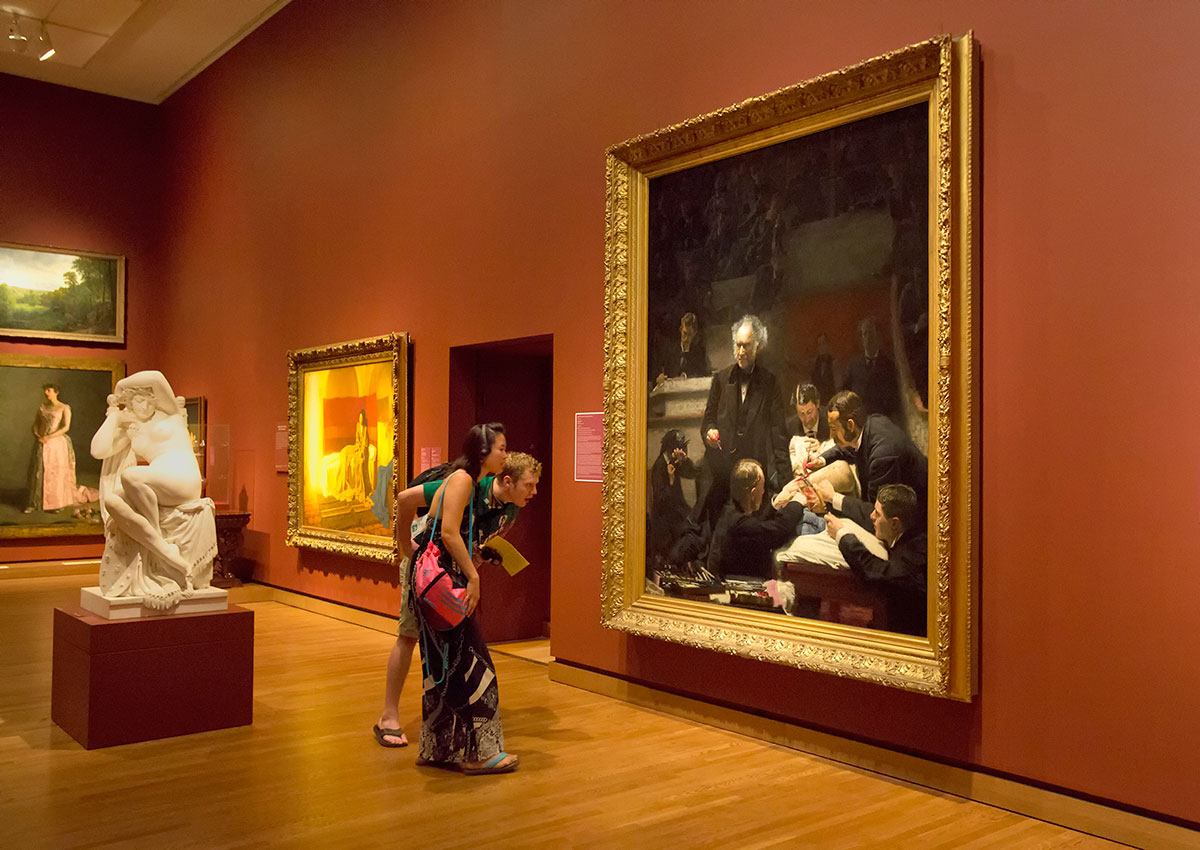
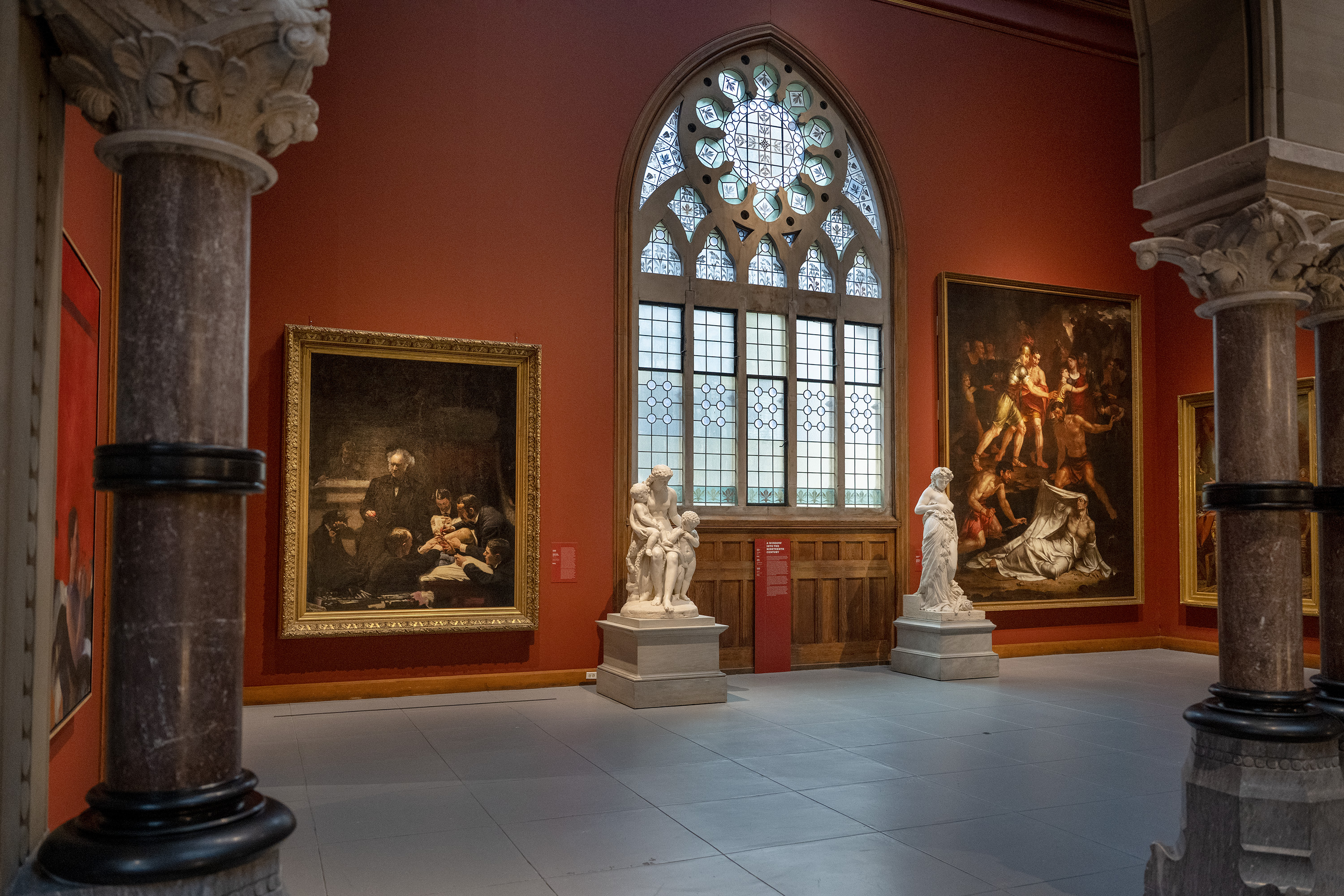
One painting stands out among the stately portraits, vast landscapes, and elaborate tableaux of figures in the Philadelphia Museum of Art’s early American art galleries.
And not just for its size.
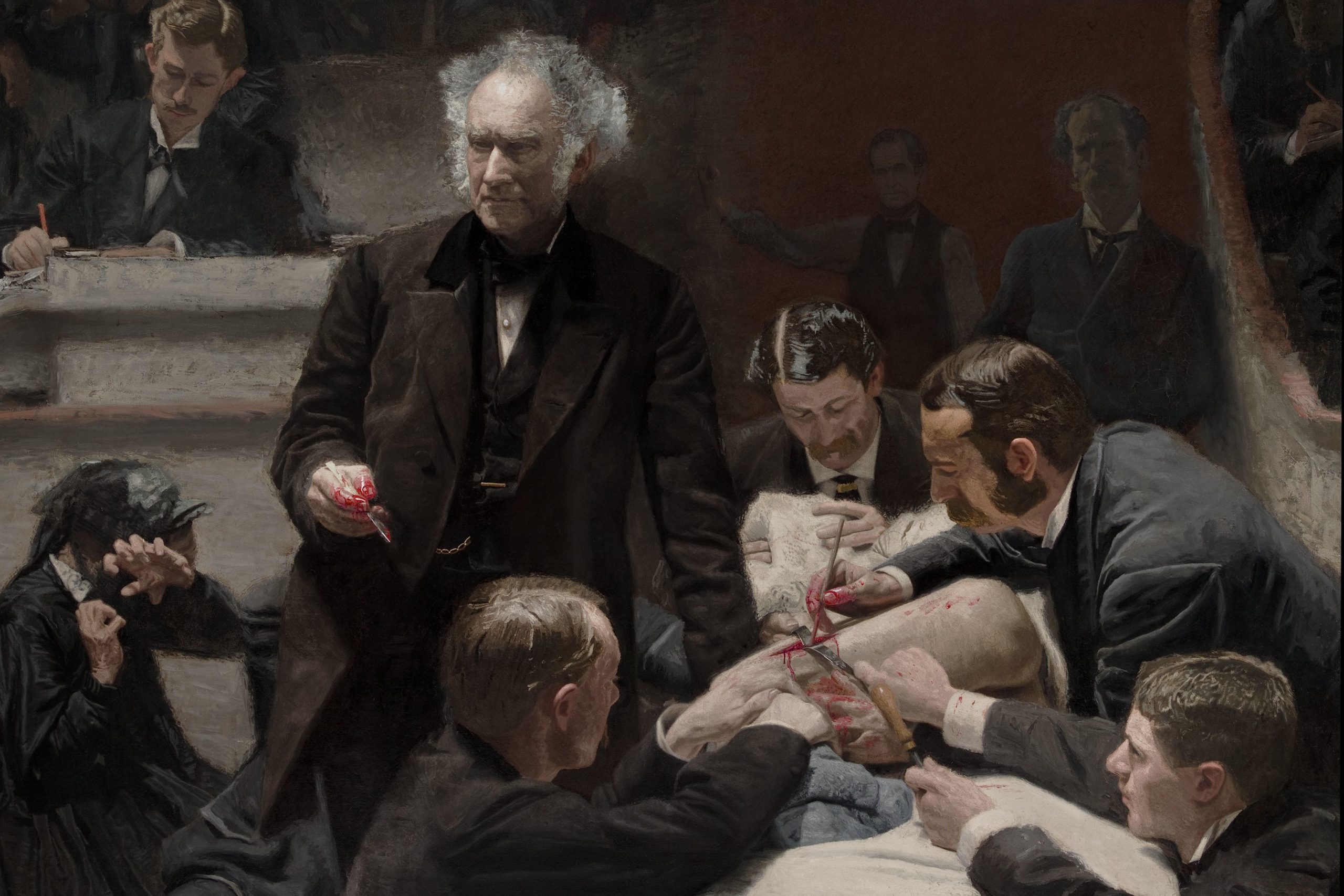
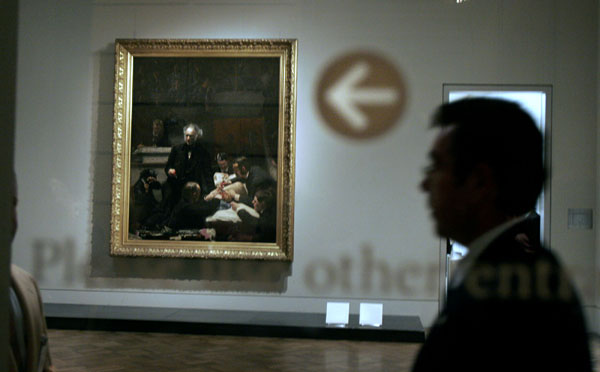
In the 8-by-6.5-foot oil painting, a stern-looking man with fluffy gray hair stands next to an operating table. A crowded amphitheater watches him and a group of doctors operate on a boy’s leg. The wound, their hands, and their scalpels are covered in bright red blood.
A detail from “The Gross Clinic.” Courtesy the Philadelphia Museum of Art and the Pennsylvania Academy of the Fine Arts
The painting is currently owned jointly by the PMA and the Pennsylvania Academy of the Fine Arts (PAFA), where Eakins studied.
But the story of the journey to that ownership is not a simple one.
In 2006, after 128 years of displaying the painting at Jefferson, the university sold it in a surprise deal. Local institutions had 45 days to match the price: $68 million.
PMA and PAFA started a public fundraiser, and Philadelphians took swift action — no one was going to take their painting away from them.
Twenty years ago, Philadelphia almost lost The Gross Clinic forever. Almost.
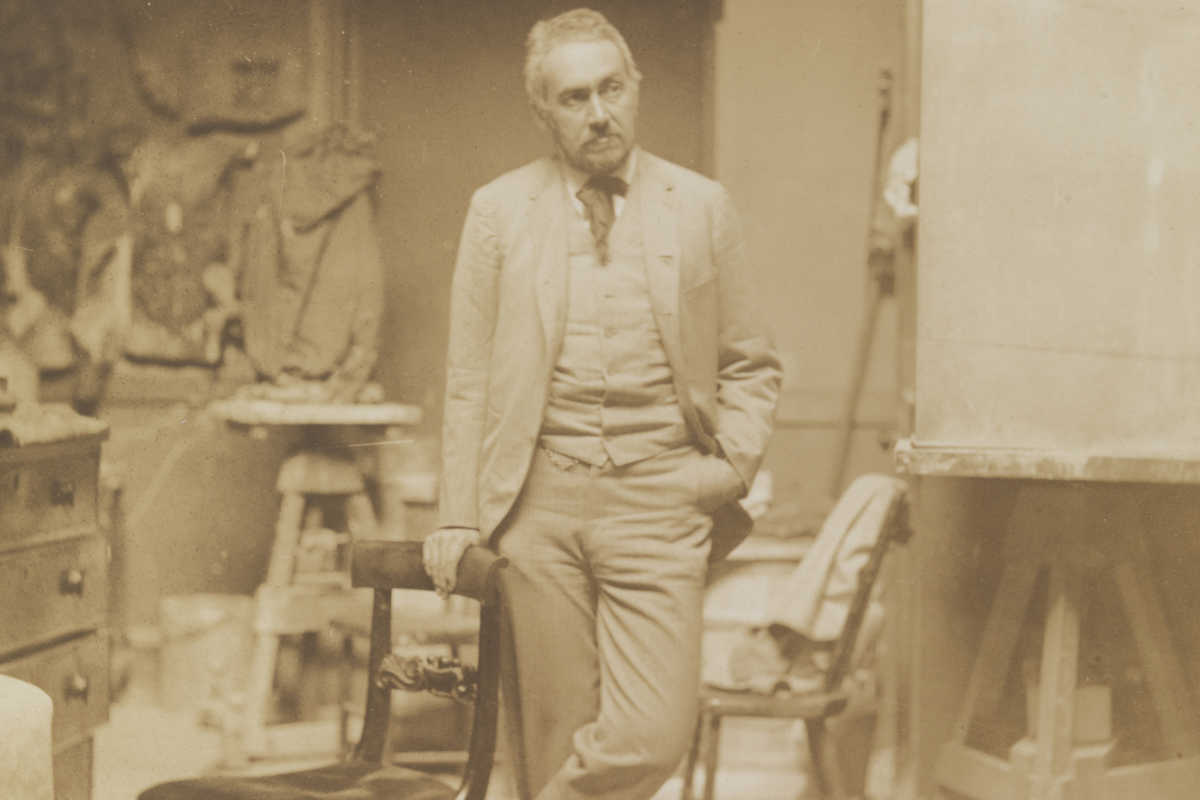
Thomas Eakins in his Chestnut Street studio.Photo taken by Samuel Murray.
The slow burn of ‘The Gross Clinic’
Eakins was incredibly passionate about the medical profession. So much so that while studying at PAFA, he also enrolled in anatomy and dissection courses at Jefferson, where Gross was teaching.
“He was very obsessed with the accuracy of the body because as a painter, knowing the human body and depicting it is the highest skill level to attain,” said Reisa Mukamal, a PMA museum guide.
In The Gross Clinic, Gross is operating on an adolescent boy with osteomyelitis, a bone infection that had previously been treated with amputation. The painting depicts the doctors performing a newer procedure for the disease involving removing the damaged bone tissue rather than cutting off the limb — a stunning medical advancement.
Works in the newly renovated Furness and Hewitt building at the Pennsylvania Academy of the Fine Arts, including “Portrait of Dr. Samuel D. Gross (The Gross Clinic)” by Thomas Eakins.Tom Gralish / Staff Photographer
“The light is shining off Dr. Gross’ head and it’s almost like your eye goes there. It’s a dark painting, and then your eye goes to his forehead, sort of symbolizing his intellect. … This is a live surgery, which was a brand new thing to paint,” said Mukamal.
Eakins was excited to show off The Gross Clinic at the 1876 World’s Fair in Fairmount Park, which doubled as a Centennial celebration and exhibition.
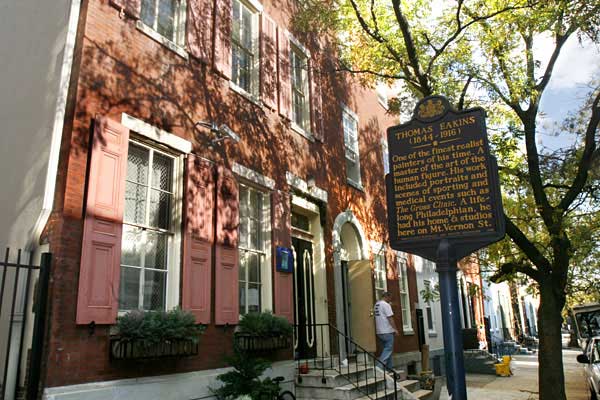
Thomas Eakins lived virtually his entire life in Philadelphia, including at 1729 Mount Vernon St. He was a student and later a teacher at the Pennsylvania Academy of the Fine Arts.Gerald S. Williams / Staff Photographer
Unfortunately for the young artist, it was perceived as too disturbing for the art jury. The painting was moved to the fair’s U.S. Army field hospital exhibition due to its medical nature. Jefferson alumni gifted it to the university two years later.
‘It belonged here’
But 128 years after receiving that gift, Jefferson made a shocking announcement. On Nov. 11, 2006, university officials said The Gross Clinic was to be sold to a museum partnership between the National Gallery in Washington and the Crystal Bridges Museum of American Art in Arkansas, for $68 million.
The money from the sale would help finance an ambitious expansion plan for the medical school.
“This is a big undertaking, a transformational undertaking, and it requires a redirection of our assets,” said Robert L. Barchi, Jefferson’s president, in a November 2006 interview with The Inquirer’s Stephan Salisbury.
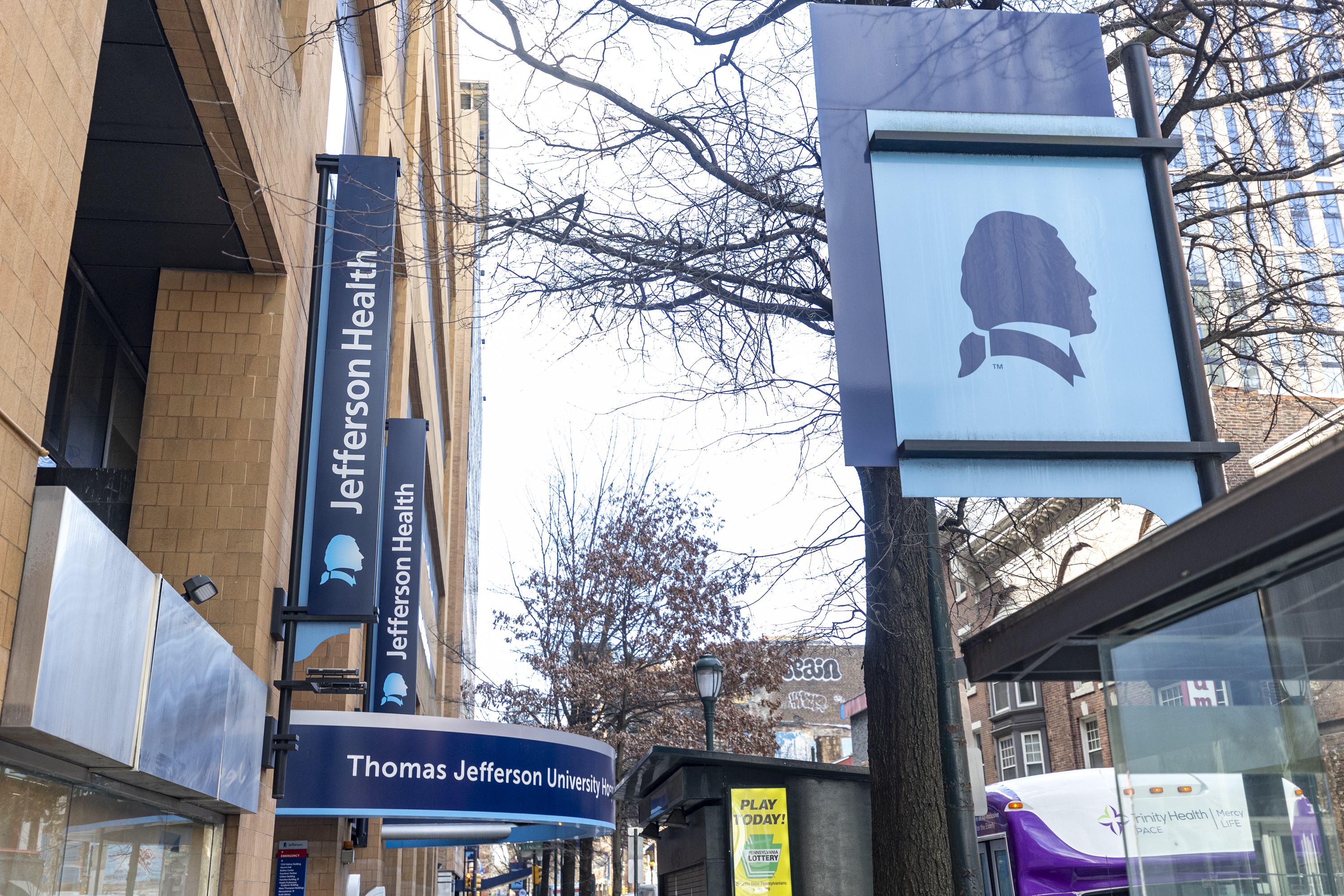
Thomas Jefferson University Hospital entrance at 11th Street in Philadelphia.Tyger Williams / Staff Photographer
“We’re not a museum. We’re not in the business of art education,” he added.
Jefferson’s chairman of the board, Brian Harrison, said, “Our first obligation as trustees of the university, if we are going to release an asset like this, is to maximize value.” He acknowledged the “importance of the painting” to Philadelphia and noted that “the [Jefferson] alumni revered” it.
Once the deal brokered by the auction house Christie’s was struck, an additional clause was added to the agreement. It allowed Philadelphia to keep the painting if it could match the sale price. Jefferson gave the city 45 days to do so — a month and a half to raise the largest amount ever paid for a pre-World War II American painting up until that point.
“There’s no museum, in fact I can think of no nonprofit in the U.S., that can raise $68 million in 45 days,” said Kathleen Foster, senior curator and director of the Center for American Art at the Philadelphia Museum of Art. “There wasn’t really time to twiddle our thumbs, we had to just dive in.”
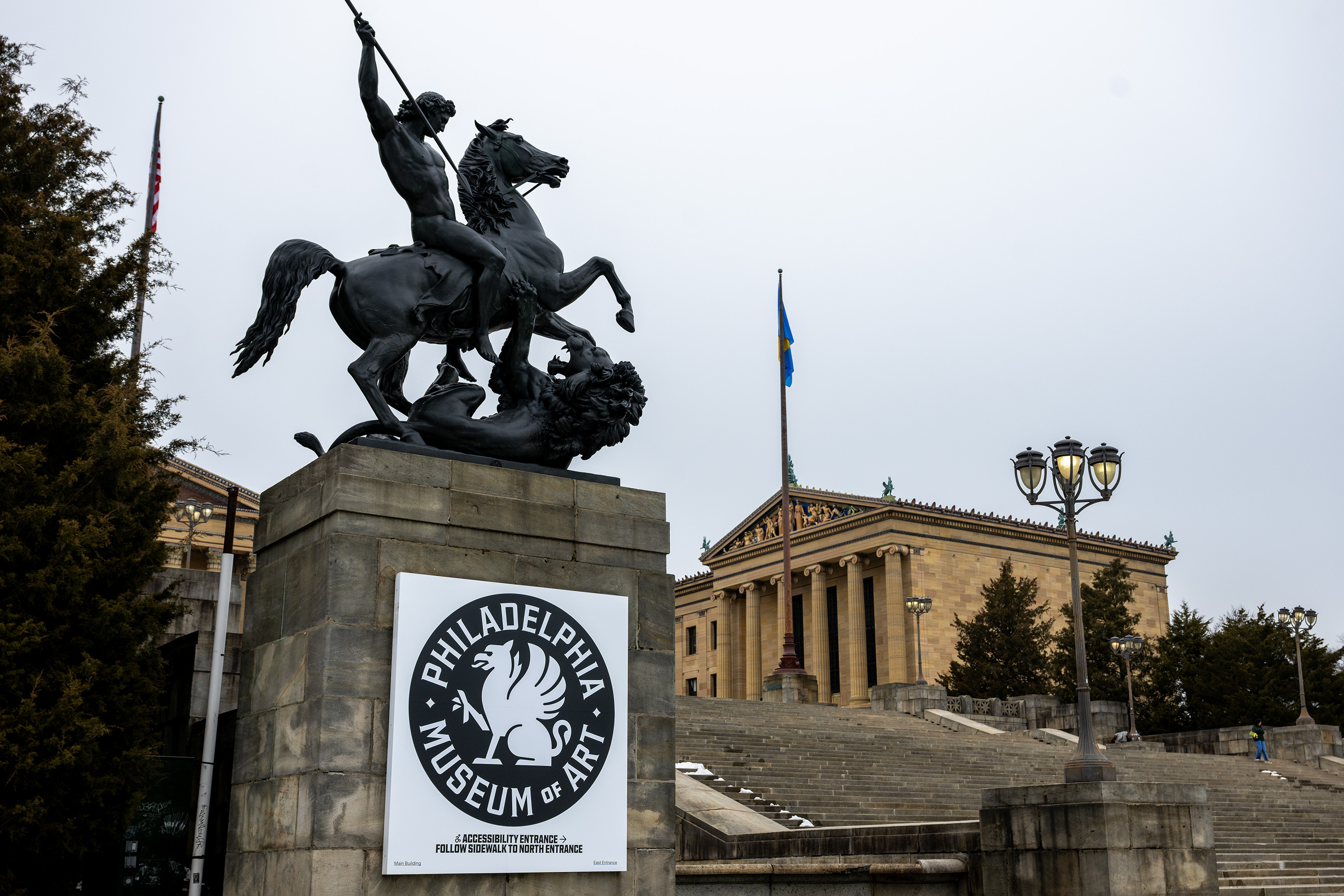
One of the newly installed signs at the Philadelphia Museum of Art.Tom Gralish / Staff Photographer
Anne d’Harnoncourt, the director and CEO of PMA at the time, “was never ever dissuaded,” Foster said. She started a fundraising campaign and immediately put the museum staff on phones calling government officials. She had them giving talks to the public, updating them on the campaign, and she suggested partnering with PAFA.
The museums met with bankers and coordinated to receive donations from Philadelphia-based philanthropists. The Annenberg Foundation, Gerry Lenfest, Pew Charitable Trusts, Nicholas and Athena Karabots, and Joe Neubauer all pledged donations in the millions, making up about a third of the funds raised.
Joe Neubauer, chair of the Neubauer Family Foundation.Jose F. Moreno / Staff Photographer
Neubauer, formerly CEO of Aramark, has supported several institutions through his family foundation, including the Pew Research Center, Brandeis University, the Jewish Theological Seminary, and Calder Gardens.
“I like challenges. This seemed to me to be in the essence of Philadelphia,” said Neubauer, who donated $3 million to the cause. “An artist, who was the greatest artist in Philadelphia in his period, this was his greatest piece that he had ever done. It’s been in Philadelphia from the beginning. He lived in Philadelphia, worked in Philadelphia, went to art school in Philadelphia, went to Central High School. It belonged here and to take it out seemed to be just not fair.”
A few Eakinses for an Eakins
Both the PMA and PAFA parted ways with several of Eakins’ other paintings they owned via a process called deaccessioning — selling work from the collection and using those funds to keep The Gross Clinic.
Among Eakins’ paintings that the PMA sold was one of a cowboy playing the banjo. Several Dakota landscape paintings went to a Western art collection in Denver. PAFA had to sell a more beloved Eakins piece, called The Cello Player, to a private collector.
The Pennsylvania Academy of the Fine Arts’ Frank Furness-designed building on North Broad Street.Tom Gralish / Staff Photographer
“That was sort of a necessary tragedy. Because it’s a private collector, they could come up with money fast, and the academy could get the money quickly,” said Foster. “For the museum it was a happier ending because the paintings [it deaccessioned] went on view to the public. For the academy it was sadder because the painting has basically disappeared, gone underground.”
As PMA and PAFA acquired big-name donors and sold beloved artwork, the story of the campaign reached the public. Civic outrage ensued.
‘Hopping mad’ Philadelphians
Steven Conn, a history professor at Miami University of Ohio, was invited to discuss the matter on a local AM talk radio show, then known as The Big Talker, after he criticized the sale of the painting on NPR.
“I had expected to defend the idea that we should care at all about the sale of this painting and was caught off-guard when I realized that not only the host but several of the callers were hopping mad about it too,” Conn wrote in the 2012 essay “Local Hero: The Gross Clinic and Our Sense of Civic Identity.”
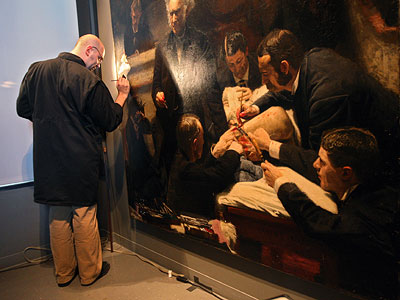
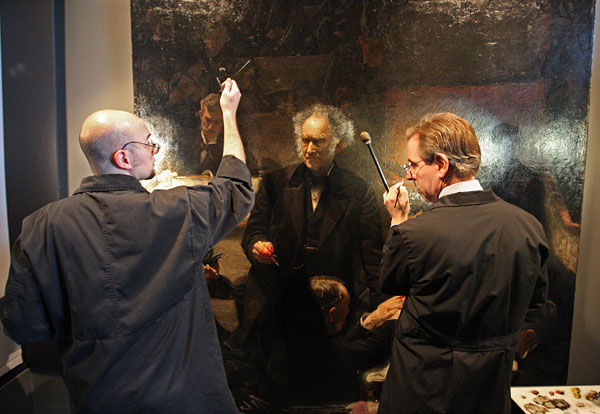
Allen Kosanovich, a Mellon Fellow in Conservation, works on restoring the part of the “Gross Clinic” painting where the gallery is watching the surgery.Michael Bryant / Staff Photographer
Kathleen Foster recalls that even Conn’s taxi driver, who picked him up at the airport, became “incensed” when Conn brought up the possible sale of The Gross Clinic. The public was angry, and so were public officials.
“I had to give this talk and in the front row, there was Ed Rendell leaning forward in his chair, drinking up every word I was saying. Who knows whether he had any idea who Thomas Eakins was before he got this pep talk,” said Foster.
Rendell was governor of Pennsylvania at the time, and had previously served as the mayor of Philadelphia.
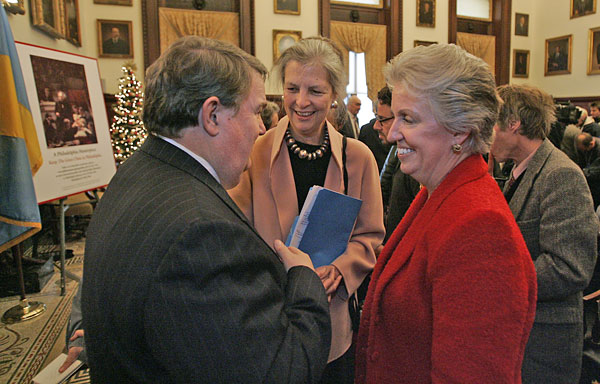
Hugh C. Long of Wachovia’s MidAtlantic Banking Group, with Art Museum director Anne d’Harnoncourt (center) and Rebecca Rimel, president and CEO of the Pew Charitable Trusts. (MICHAEL BRYANT / Inquirer Staff Photographer)
“He called up the director of the National Gallery and screamed at him,”said Foster. “Hejust said, ‘How dare you take this away from Pennsylvania? For shame!’ I heard the director had to hold the phone away because he was being yelled at by the governor of Pennsylvania. That kind of energy I think is pride that this is a gem for our city and for the state.”
But more important than how angry they were was how willing people were to donate. Before Reisa Mukamal was a PMA guide, she was living in Swarthmore, raising four children and working as a synagogue teacher and writing tutor. When she heard about the campaign, she knew she had to donate.
“I must’ve read about it in the news,” she said. “I didn’t contribute a lot, it was a modest amount of money. But there was no way I was going pass that up and it seemed like a once-in-a-lifetime story.”
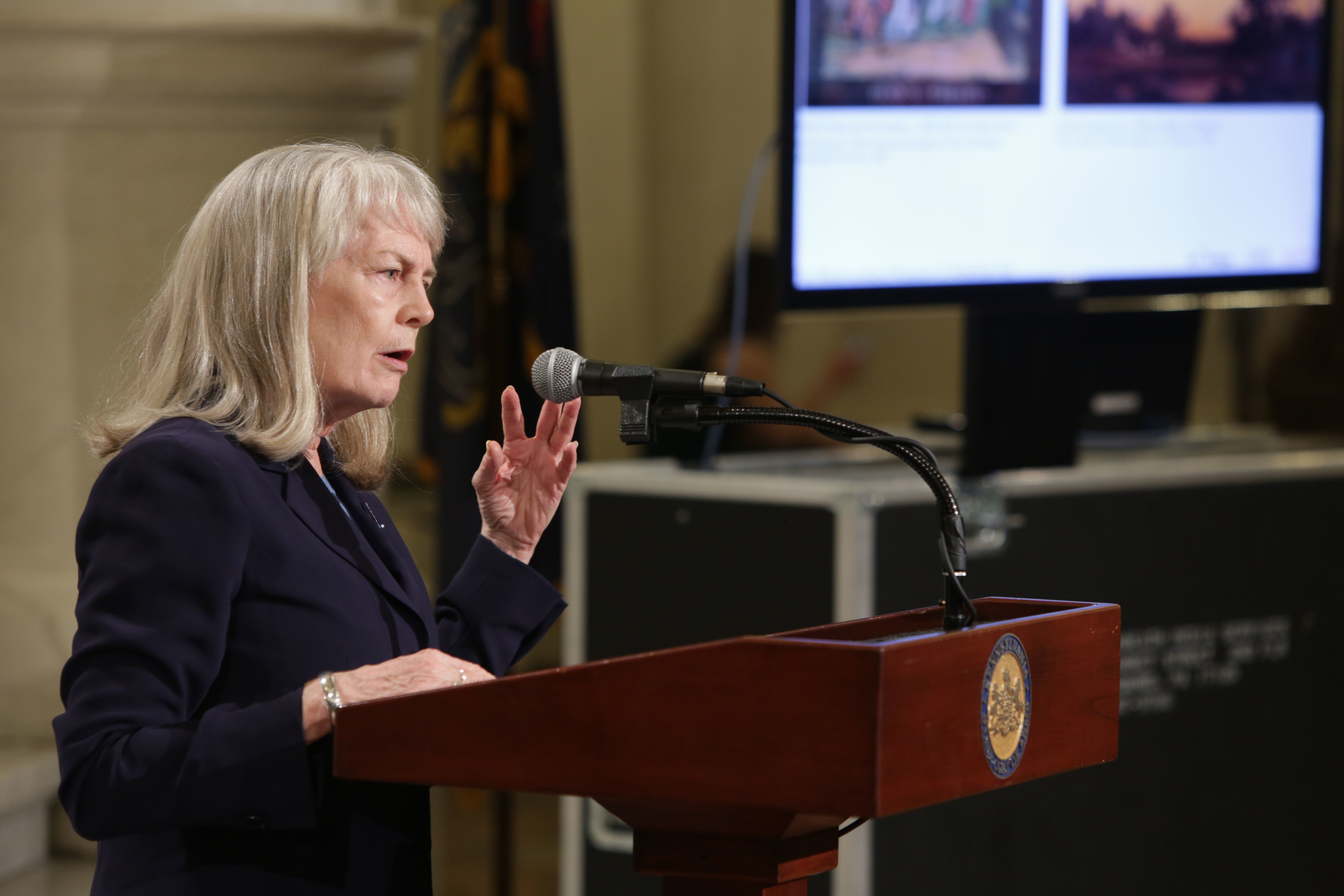
Kathleen Foster, senior curator and director of the Center for American Art at the Philadelphia Museum of Art, discusses the art-sharing initiative during a press conference at the Pennsylvania Capitol, on April 29, 2019.GK Visual
‘Why would we want to let a cherished piece of art leave the community?’
Foster’s favorite story is of a little boy who donated $2.46 (his piggy bank savings) to the cause after watching his grandfather become infuriated after hearing about the story on television.
“It’s that kind of anecdote that just was so heartwarming that we just had Philadelphians at home in their living rooms listening to the television, maybe reading stuff from Stephan Salisbury in The Inquirer, and being outraged. We had this torrent of small gifts that were so adorable. Students, people with no money, and then there were the Annenbergs of the world giving a million dollars. We had this amazing spectrum of people.”
In Salisbury’s original coverage in The Inquirer, he reported that “a woman in Wyoming sent in $25 because her daughter, who lives in Philadelphia, said she wanted a ‘donation to this fund’ as a Christmas present” and “a woman from Philadelphia sent in $100 and noted that she had taken her whole family to see The Gross Clinic over the Thanksgiving holiday.”
Faculty members at PAFA started selling buttons at the foot of the Rocky steps for a dollar; they said “Keep ‘Gross’ in Philadelphia.” From time to time, they’d bring their jar of dollars into the PMA to donate toward the fundraiser.
Former Mayor Ed Rendell during opening night of 1776: The Musical at the Philadelphia High School for Creative and Performing Arts on Wednesday, June 24, 2026.Elizabeth Robertson / Staff Photographer
“It’s amazing to me that people hear about things in the news, whether they read it or watch it somewhere, and all of a sudden, $10, $15 dollars, $5, $1,” said Neubauer. “Contributions now are much more easily made than writing a check and putting it in an envelope and putting a stamp on it. It caught the spirit of the people. Philadelphians are proud of their city, and this was a pride in the city. Why would we want to let a cherished piece of art leave the community?”
The PMA and PAFA say the campaign received money from between 3,400 and 3,600 donors from across the nation.
A last-minute fundraising drive kept “The Gross Clinic” in Philadelphia and staved off its sale to two out-of-town museums.Eric Mencher / Staff Photographer
“I hope people appreciate that it’s not contemporary art, it’s 19th-century art. When I was younger I always marveled at cave drawings. Why did people draw in the caves? Because it was important to them to show what nature was,” said Neubauer.
The PMA and PAFA raised enough money by the Dec. 26 deadline to keep The Gross Clinic at their institutions indefinitely.
“I think it’s very important for people in Philadelphia to go see it and understand that it was done in Philadelphia by Philadelphians for Philadelphia,” said Neubauer.
Supporters packed into the PMA’s Great Stair Hall to cheer on this victory for the Philadelphia art world.
Conservators Allen Kosanovich (left) and Mark S. Tucker work on Thomas Eakins’ “The Gross Clinic.”Michael Bryant / Staff Photographer
“Ed Rendell came to the microphone, put his arms up like Rocky, and just bellowed in triumph over the acquisition of this painting,” said Foster. “This cheer goes up from the room, I thought the roof was going to lift. It was like we had won the Super Bowl.”
“The Gross Clinic” is currently on display in the Historic Landmark Building at the Pennsylvania Academy of the Fine Arts, 118-128 N. Broad St., Philadelphia, Pa. 19102.
[Editor’s note: Morgan Ritter is The Inquirer’s first recipient of the Stephan Salisbury Internship for Arts Journalism. Salisbury died in 2024, after a long career as an arts and culture reporter for The Inquirer — including his reporting on the proposed sale of “The Gross Clinic.” ]
School begins Monday for about 113,000 Philadelphia School District students.
Janis Butler, the interim principal of Fanny Jackson Coppin Elementary in South Philadelphia, has decades of experience in teaching and administration.
But she is still thrilled at the prospect of personally welcoming back Coppin’s 500-plus students.
“It’s a rah-rah, we’re back in business now,” Butler said.
Here is what to know about the 2026-27 school year.
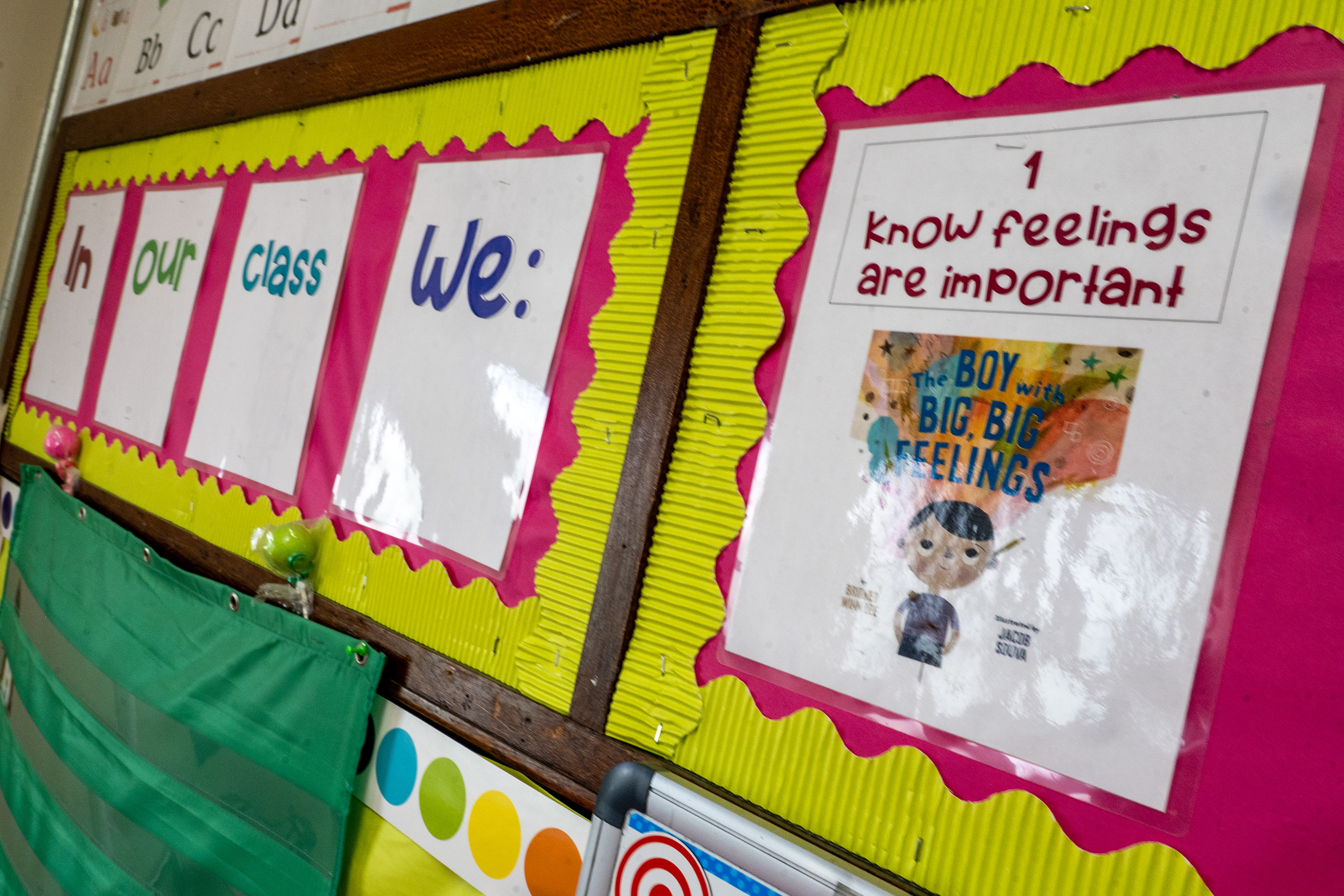
Book cover posters highlight positive emotions in the second grade classroom of teacher Gabrielle DiCrosta at Fanny Jackson Coppin Elementary Tuesday, Aug. 18, 2026 ahead of the start of the school year on Aug. 24 for the School District of Philadelphia.Tom Gralish / Staff Photographer
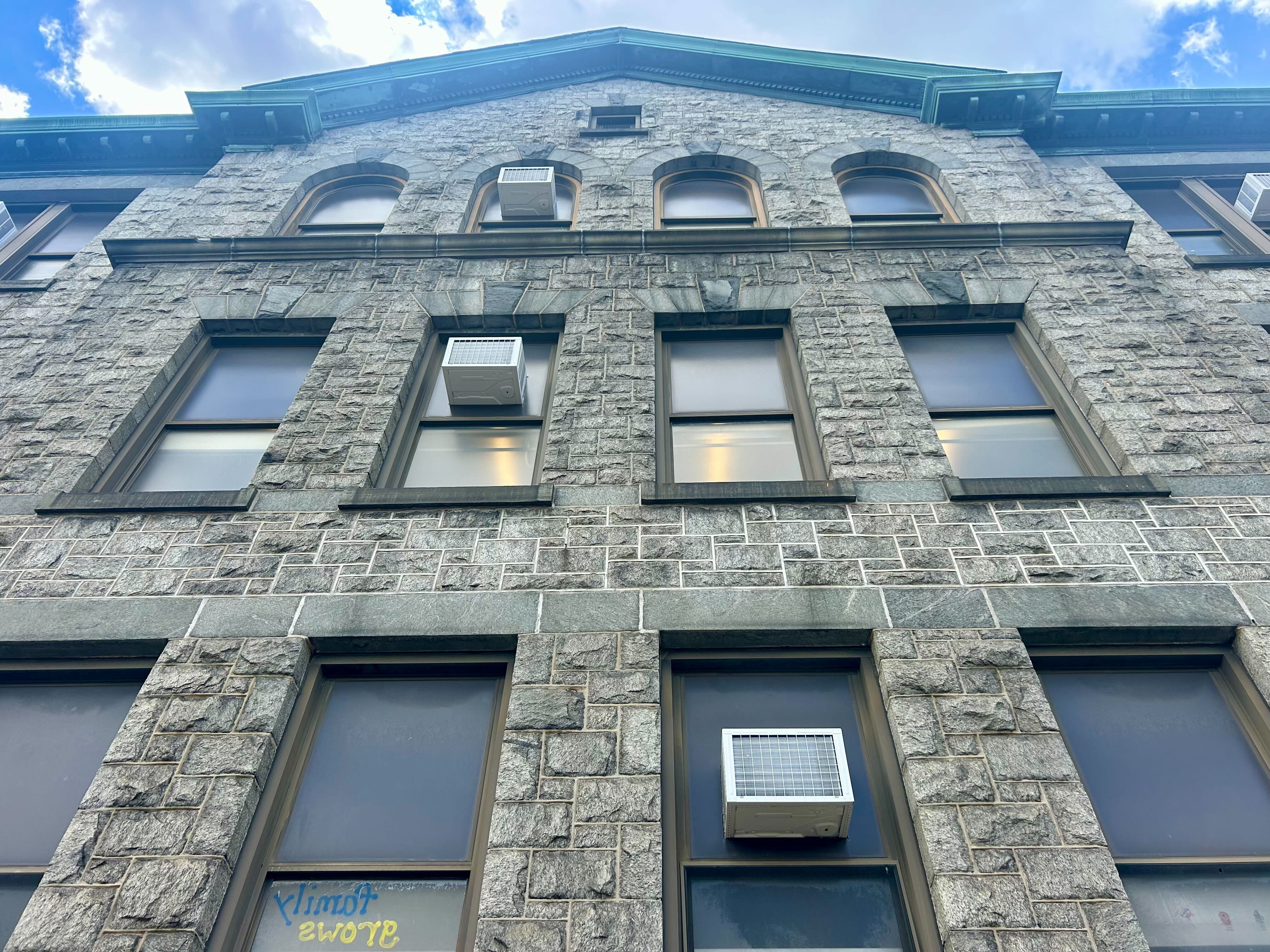
But on the cusp of that cutoff, 52 schools remain inadequately cooled. That is likely to come into play as school starts in August, with weeks to go before temperatures cool down.
The district’s extreme-weather protocol calls for schools that lack sufficient air-conditioning in classrooms and other learning spaces to dismiss early if temperatures are forecast to reach or go past 85 degrees by noon. The protocol mandates remote learning if temperatures are expected to hit 85 degrees by 9 a.m.
That means an unequal experience for students across the system, with students in some schools not missing any instructional time when it’s hot, and those in a quarter of schools subject to interrupted schedules.
Gloria Casarez Elementary School, in Kensington, got window units in all of its classrooms in 2024. As of the start of the 2026-27 school year, 52 schools still have no air conditioning.Kristen A. Graham / Staff
The holdup in air-conditioning all district schools is not related to the cost of air-conditioning units, but rather upgrading old electrical systems in the 52 schools.
Such upgrades are tricky. An HVAC project at Kensington High went awry this summer, triggering asbestos issues that forced students and staff to relocate for the rest of the calendar year.
Watlington cited dips in student attendance around half days, and said they are inconvenient for parents who must scramble to plan for childcare around the irregular schedule.
Eight half days had been previously scheduled for this year.
This is the final year before some schools close, and others merge
The school board voted in April to move forward with a $3 billion facilities plan that will close 17 schools and renovate 169.
The first closures are expected at the end of the school year. That means that this is a planning year for 50 schools — those that are closing, beginning phaseouts, or receiving students in the 2027-28 school year.
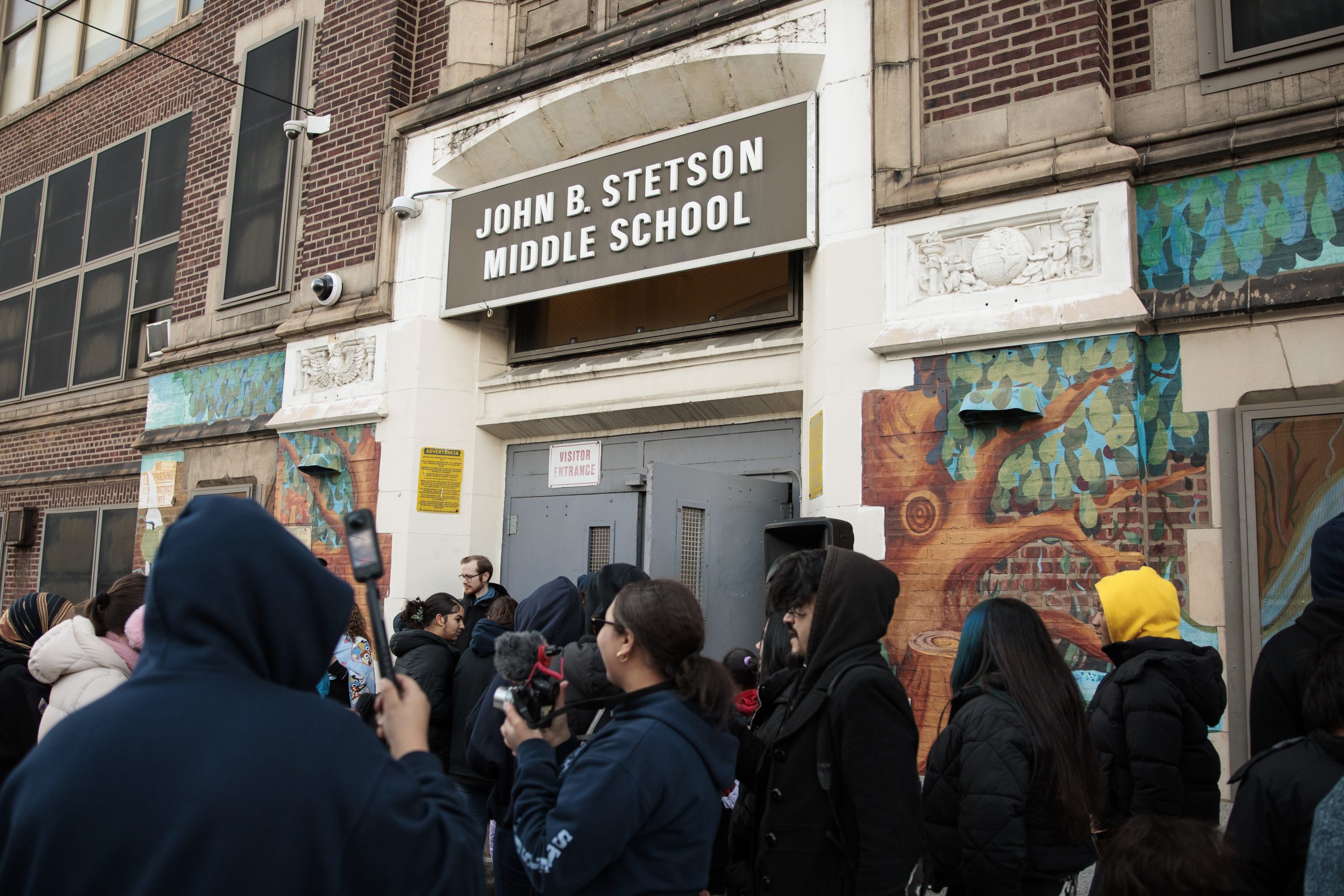
Students, teachers and supporters rally before a community meeting at John B. Stetson Middle School in this February file photo. Stetson is one of 17 schools ordered closed by the Philadelphia school board.Monica Herndon / Staff Photographer
The district is forming transition committees at those 50 schools, and will begin accepting applications Aug. 31 for roughly 20 spots on each transition committee.
Plenty of administrative shifts have happened
Watlington has made a number of changes at the top of his administration, some as a result of departures. Other leaders were given new roles or responsibilities.
Among the changes are: a new chief of talent, Kristi Murphy Baldwin; a new deputy superintendent of academic services, Brenda Elliott; a new chief academic officer, Michael Farrell; and additional responsibilities for Nathalie Nérée, who becomes chief of special education, diverse learners, and wellness.
Nyshawana Francis-Thompson has a new title:senior adviser for strategic initiatives and innovation.
Jamina Clay-Dingle is now assistant superintendent of school management and organization.
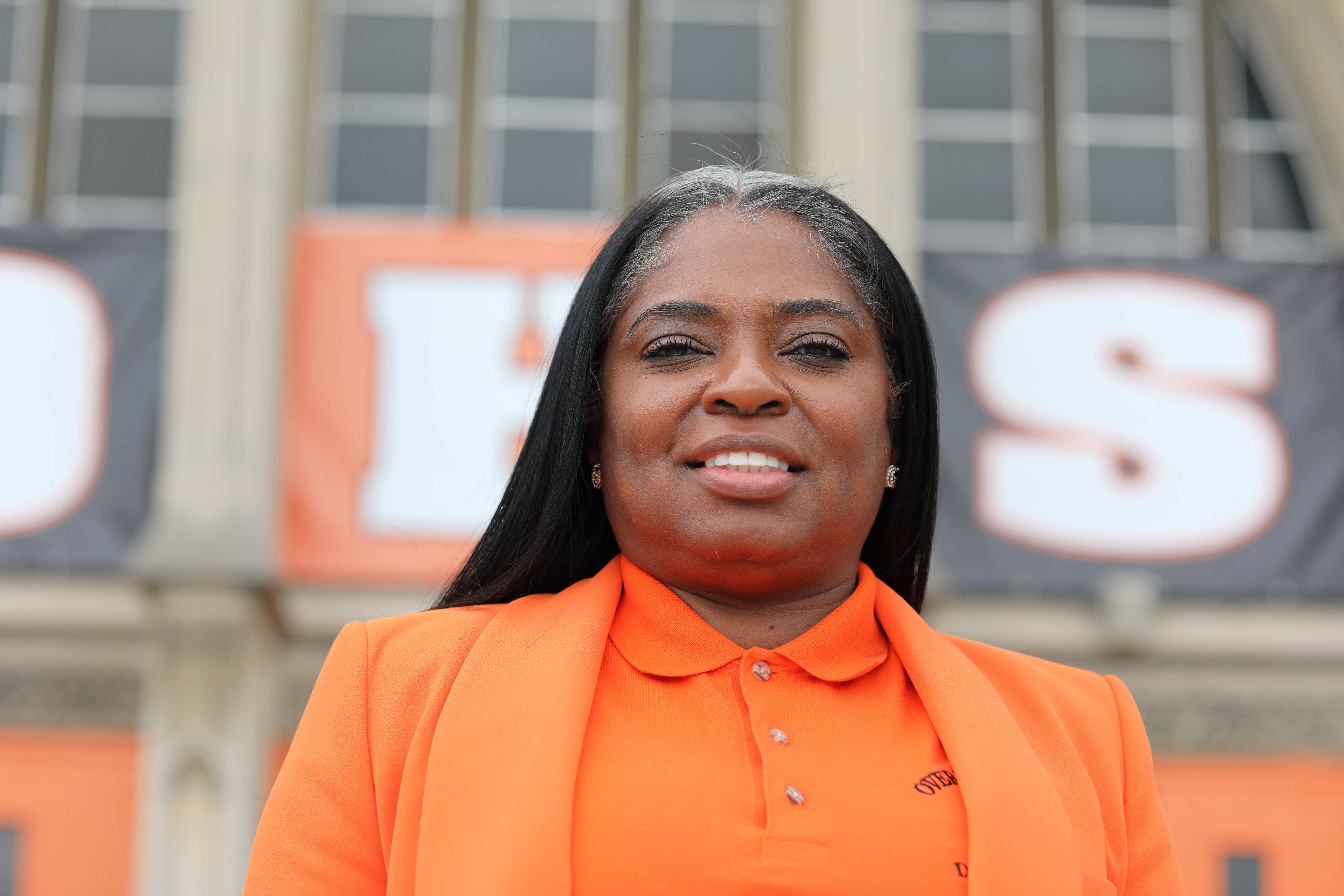
Kahlila Johnson, a former principal of Overbrook High, is now an assistant superintendent responsible for a district learning network.Courtesy of the Philadelphia School District
There are some new assistant superintendents for various learning networks around the city: Kelly Espinosa and Kahlila Johnson will serve full-time, and Wilfredo Ortiz and Lucy Feria on an interim basis.
Noah Tennant is now associate superintendent for secondary schools, and Tomás Hanna is now associate superintendent for student life and school operations.
A number of schools have new principals, too: Adaire Elementary, Amanda Strain; Bridesburg Elementary, Louis Depa; Clemente Middle School, Regina Barr; Edison High, Albert Sniezevage; Benjamin Franklin Elementary, Ryan Sullivan; Heston Elementary, Kamia Smith; Lawton Elementary, Michelle Todd-Coleman; Memphis Street Academy, Wayne Diggs; Northeast High, Andrew Lukov; Southwark Elementary, Mason Luksch Wilson; Bayard Taylor Elementary, Claire Charles; Tilden Middle School, Jessica Culp; Waring Elementary, Cathryn Anderson.
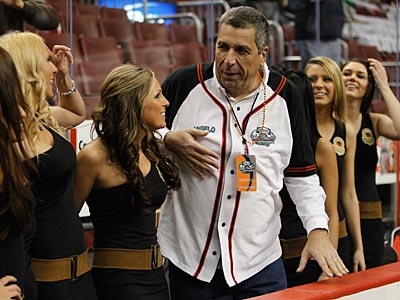
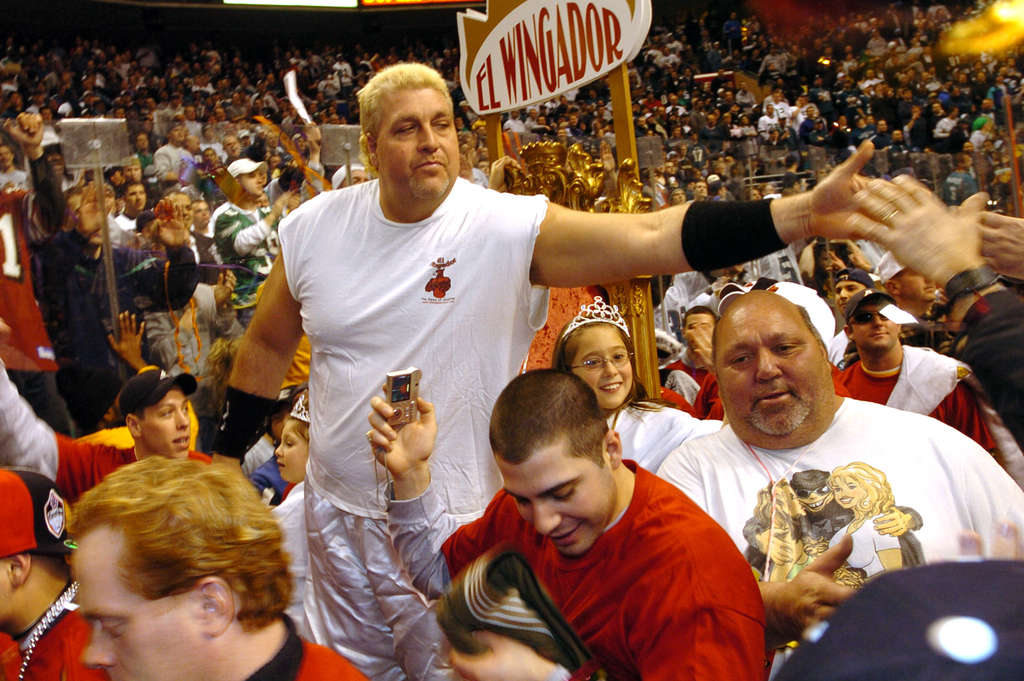
Angelo Cataldi made a passing comment after Pat Taggart and his crew visited WIP’s morning show years ago, telling them they were the guys he would pick if there was ever a documentary to be made about Wing Bowl. Time went by, Cataldi retired, and Taggart saw no one ever made that film. It was time, he thought. So they reached out to Cataldi in 2023. The former radio host told them to meet him in Sea Isle City. He’ll be on the beach, reading a book under a blue tent.
“Sure as anything, we showed up to Sea Isle and there he was,” Taggart said.
Taggart, who grew up in Southwest Philly, caught Cataldi’s attention in 2016 when he directed a documentary called Billboard Boys about a promotional stunt by an Allentown radio station. Cataldi loved it. Taggart promised Cataldi on the beach — “I was wearing a bathing suit and flip-flops,” he said — that he would treat Wing Bowl the same.
“Angelo is an interesting guy,” Taggart said. “Him in real life is not like him on the radio. He’s very much an introvert and not overly talkative. He’s a family guy. We got there and we weren’t there very long. He had his book and he said, ‘Everybody says they’re going to do this and nobody follows through.’ I don’t even know how much eye contact we made. But we left there and he said, ‘You guys are the guys. I believe you’re going to do this right.’”
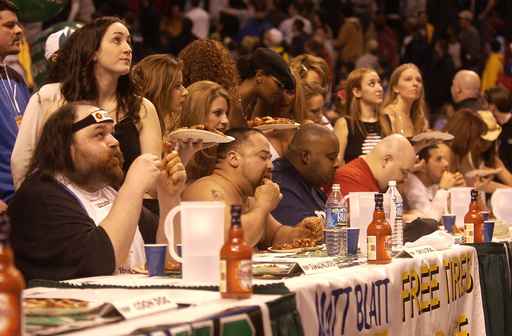
Wing Bowl — which ran for 26 years before the station 86’d it in 2018 — seemed ripe for a documentary.
A popular champion went to state prison, there were fights in the arena, the mayor attended, a major league umpire was the judge, and gentleman’s clubs were as much a part of the eating event as the restaurant that provided the chicken wings. The scene was often as ugly as the guy who vomited one year after eating a wing that still had a feather attached.
Co-founder Angelo Cataldi at Wing Bowl 20.Alejandro A. Alvarez / Staff Photographer
But Taggart steered his film — which is titled No One Died — away from the mess. The documentary touches on the ugly and describes the chaos in the arena but most of the 95 minutes are spent celebrating Wing Bowl as an event unique to Philadelphia that brought people together.
“You have to show the El Wingador stuff. You have to show the ugly of the fights and some of the misogyny,” Taggart said. “But I feel like you have to show enough to tell the story and not linger on it. At the end of the day, this was always a comedy. My fear was that if someone from out of town told this story, 75% of it would’ve been that.”
“He really wanted the story told, and he wanted the story told by people who understood Philadelphia and understood Wing Bowl and people he trusted. I’m so grateful that was us.”
‘Uniquely ours’
The crew asked Cataldi if he wanted to be a producer but he declined. The man who redefined sports talk radio in Philadelphia said he didn’t want to control the narrative. But he had one request: interview Arson Arnie, a longtime caller to Cataldi’s morning show.
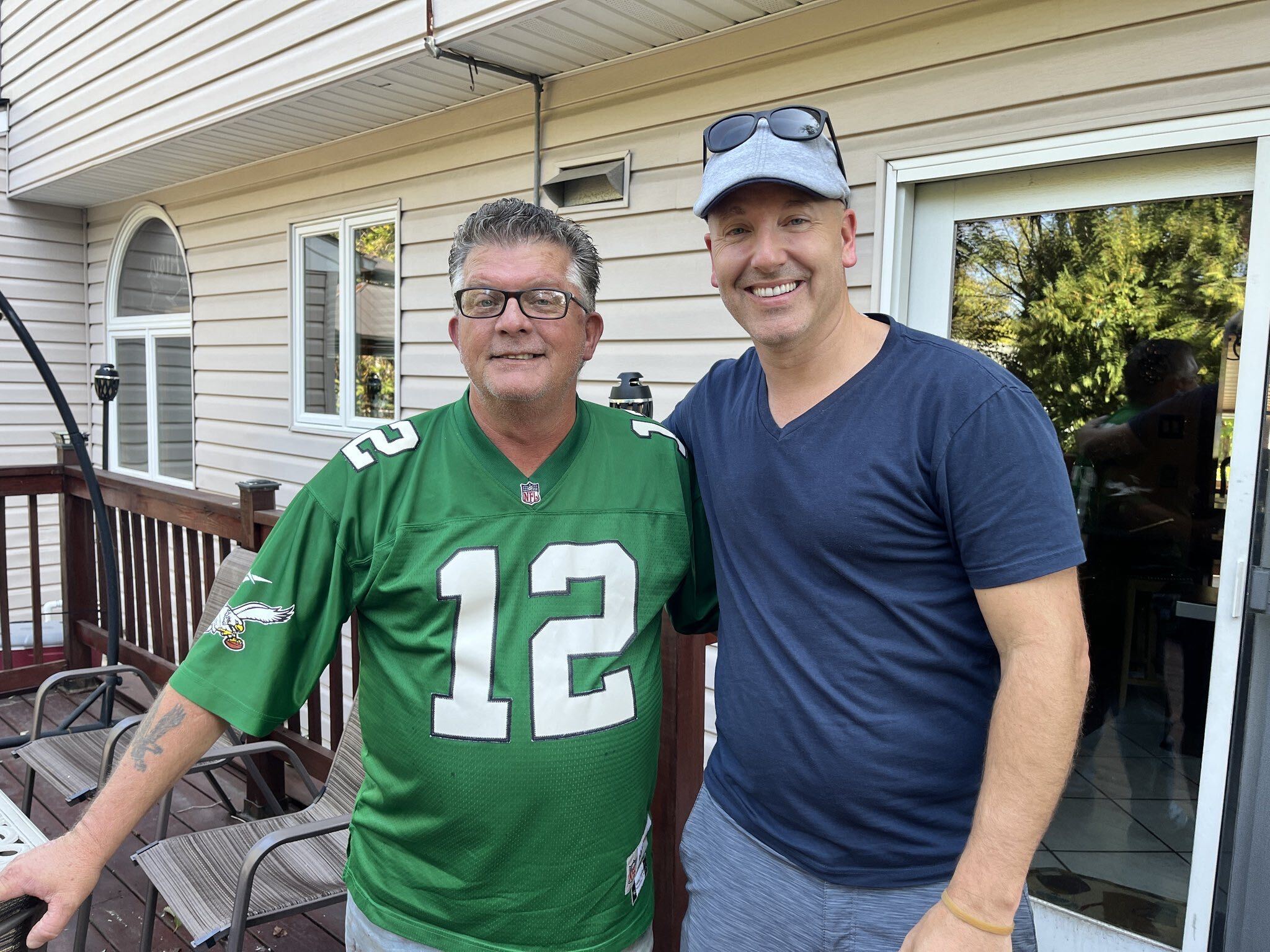
“We showed up to his house and he’s sitting on his front stoop in a Randall Cunningham jersey chain smoking out of a Veterans Stadium ashtray,” Taggart said. “In his backyard under a tree are two Veterans Stadium seats rotting away and in the middle of the yard is a Deion Sanders Starting Lineup [figure] with its head ripped off. He didn’t place it for us. That’s just where it lived.”
Arnie Adkins, aka “Arson Arnie,” with Pat Taggart, the director of “No One Died.”Pat Taggart
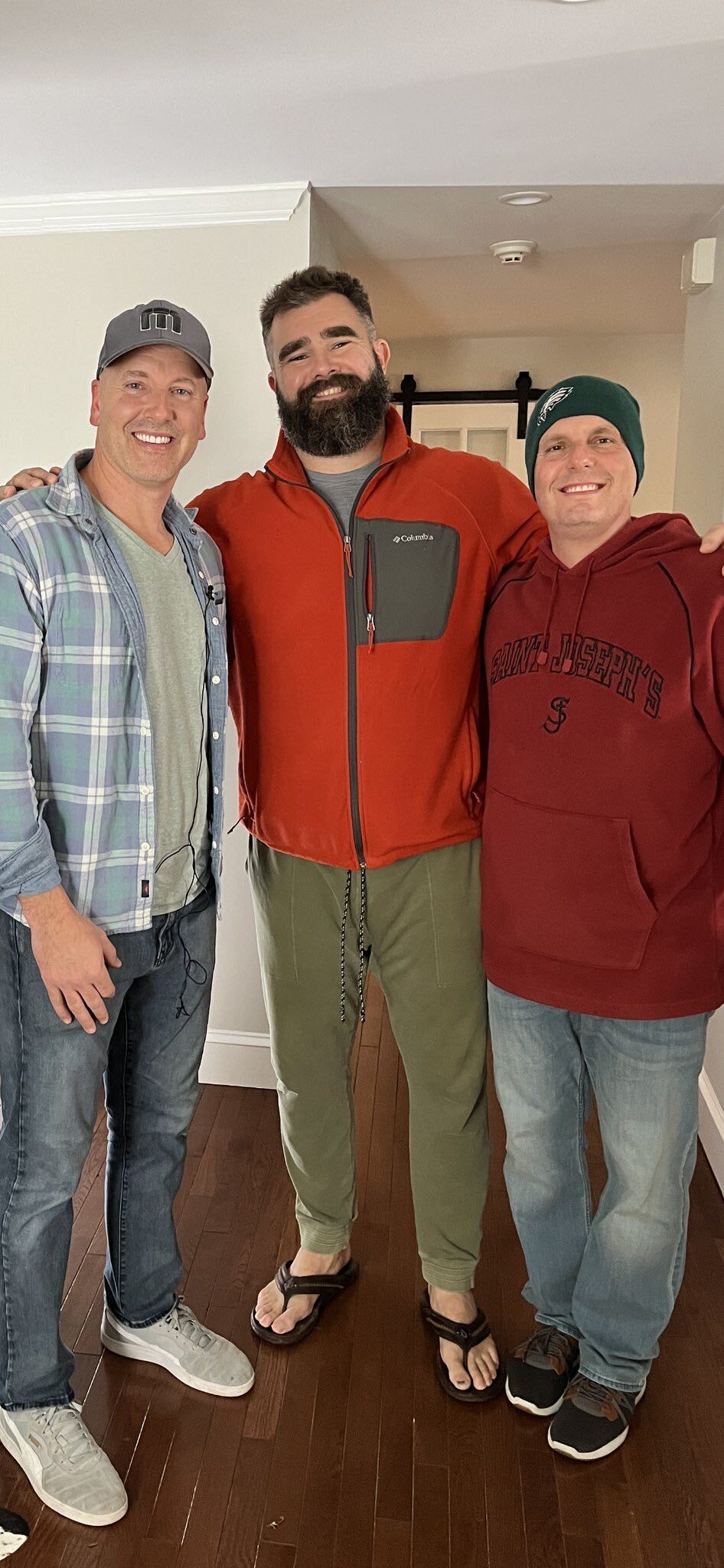
Arson Arnie, who is a cab driver named Arnie Adkins, fills the documentary with old Wing Bowl stories and what it means to be an Eagles fan. The filmmakers conducted more than 40 interviews and even sat with Jason Kelce — who competed in Wing Bowl 22 — at his house the day before he played a game during one of his final NFL seasons.
But Taggart said Arson Arnie is the character who seemed to resonate the most.
Arson Arnie seemed to encapsulate what fandom looked like in the 1990s when Wing Bowl was launched as a radio stunt to celebrate another Super Bowl without the Eagles. WIP — especially Cataldi’s show — didn’t just tell fans what to think about but often succeeded at telling Philadelphia how to feel. The AM station was the guiding light for people like Arson Arnie.
“It’s different now,” Taggart said. “Whether you think it’s better or worse, it’s absolutely different. If you were a fan of WIP, it was hard to not be a fan of Wing Bowl. They were so smart that they stretched a one-day event into two or three months of programming.”
Taggart interviewed El Wingador, whose real name is Bill Simmons, and asked him how he went from wing king to state prison on drug charges. They showed footage of the rowdy crowd that nearly rioted in 2005 after being turned away days before the Eagles played in the Super Bowl.
The film didn’t hide the fights in the crowd, the all-night partying that bled into the event, or the other things that led to a former WIP promotion director saying in the documentary that Wing Bowl had become “out of place” by the time it ended. But Taggart’s film looks fondly on a bygone era and the people like Arson Ernie who made it happen.
Pat Taggart with Jason Kelce and producer Frank Petka after interviewing Kelce for the “No One Died” documentary.Pat Taggart
“It was uniquely ours,” Taggart said. “Find someone in Philadelphia who likes a cheesesteak outside of Philadelphia and raves about it. You can’t find it. Why? Because the cheesesteak is ours. Wing Bowl was Philadelphia’s. It was a true original. Other people tried to copy it with absolutely no success. It only worked here. It needed the perfect fan base that understood what it was and got behind it. This was never an eating contest. This was a party.
“Someone said to me, ‘If you wanted to miss Wing Bowl, it was very easy. It happened once a year. It happened in an enclosed building for four hours. If you didn’t want to see it, don’t listen and don’t go.’ So it was absolutely a voluntary event for people.”
El Wingador gets a hero’s welcome at Wing Bowl 13.AP
A moment in time
Taggart said he was negotiating a deal with two production companies before he realized he would be trading away the ability to edit his film and the documentary’s final cut would be out of his hands. So Taggart said he backed out and decided to release the film himself earlier this month. The documentary can be purchased on Prime, Apple TV, and YouTube.
“We weren’t willing to take that risk,” Taggart said. “We wanted to make sure the film got out there the way it was intended. If this got out there and it was a smear piece on Philly and the lazy narrative of snowballs at Santa and look at the stuff they did on a snowy morning every year, I would’ve been distraught.”
He showed the film to El Wingador and then asked the five-time champ if the documentary treated him fairly. It was perfect, he said. They showed it to Ed Rendell, who as mayor helped WIP move the event in 1998 to the Spectrum. The documentary shows a clip of Rendell saying how Wing Bowl was to Philadelphia what Mardi Gras was to New Orleans. Taggart asked Rendell after he watched the film about his time at Wing Bowl.
“He said No. 1 I looked around and said this is the craziest thing I’ve ever seen,” Taggart said. “Then my second thought was I probably shouldn’t be here.”
Cataldi says in the documentary that he wasn’t ready to end Wing Bowl but the station decided it was time. It was the end of an event that was often used as a punchline by outsiders. But Taggart says for Philadelphians, Wing Bowl wasn’t a joke. It was something to treasure.
“It was a moment in time,” Taggart said. “It was the wackiest event in the history of the media and it can never happen again. But to ignore that it ever happened would be silly. I just watched a baseball game the other day in St. Louis, which is supposed to be a baseball city. There was nobody there. We had 50,000 people that day on a snowy February morning trying to get in to watch a chicken eating contest. This city is just different.”
Now, his cleats have a new colorway that has already hit retailers — for $140.
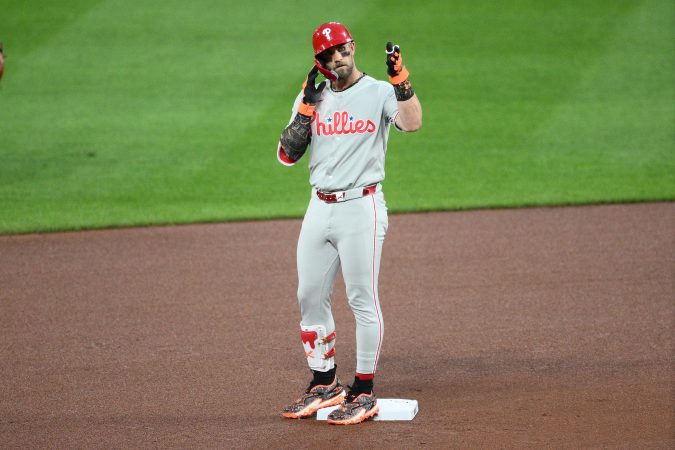
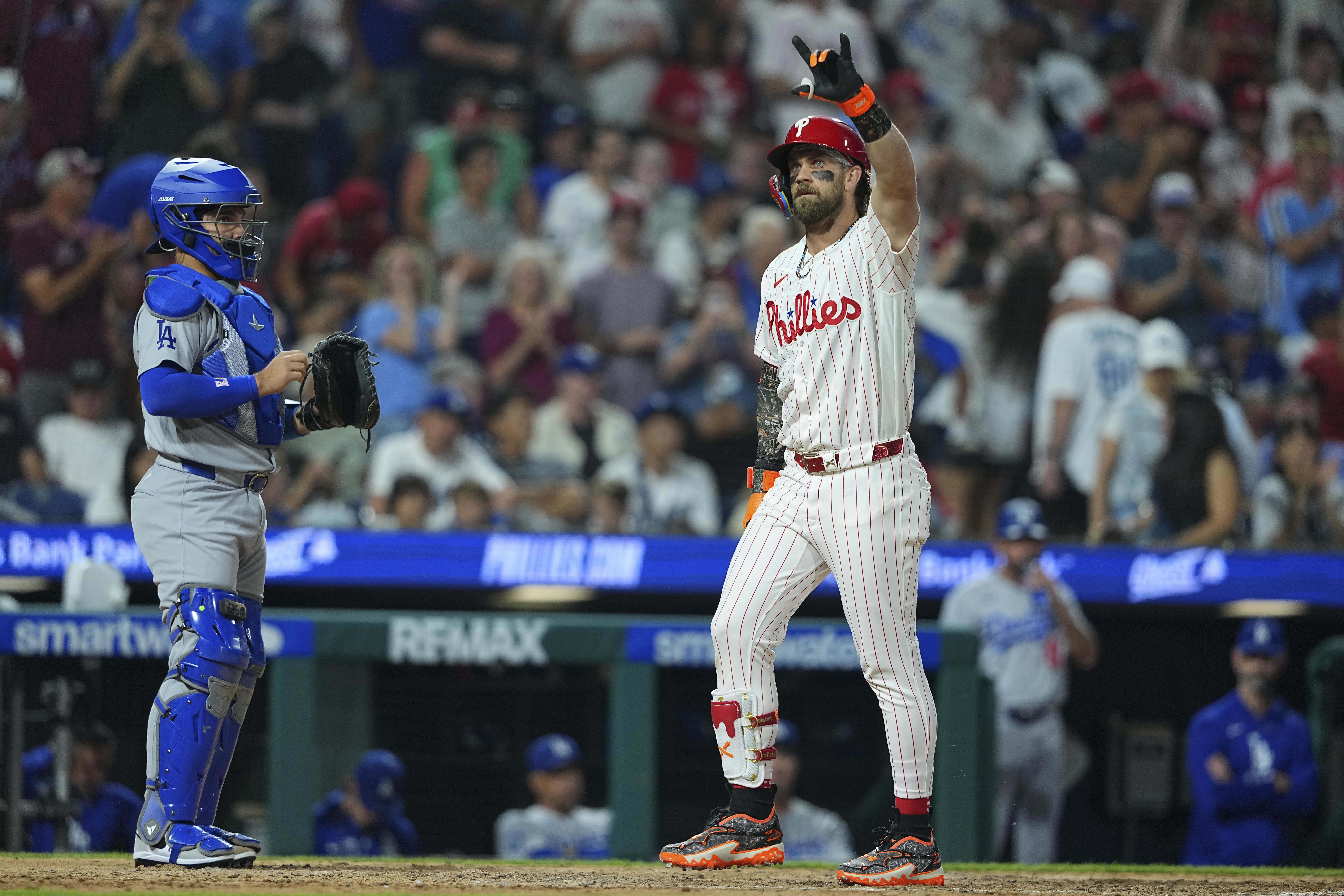
The low-top cleats have a camouflage base with highlighter-orange lining on the sock collar, along the top and bottom outlines of the cleat, and outlining his “BH” initials, black shoelaces, and with a cream-colored midsole to separate the camouflage base from the bright orange soleplate.
To pair with his new cleats, which Harper wore on July 20 against the Los Angeles Dodgers and Aug. 1 against the Baltimore Orioles, he wore black-and-orange Under Armour gloves and a camouflage sleeve on his right arm.
Bryce Harper’s new cleats have touches of orange and a camo design.Mitchell Leff
In a release, Under Armour says Harper’s new cleats are “inspired by Bryce’s tunnel-fit fashion as he’s often been seen rocking camo on the way to the ballpark, combined with his support for the University of Tennessee.”
Harper’s “All Lines Lead Home” cleats he released last month was part of a Yard Icon collection at Under Armour and released in five colorways representing Philly’s transit lines.
But he’s not the only Phillie with new cleats as Players’ Weekend gets underway.
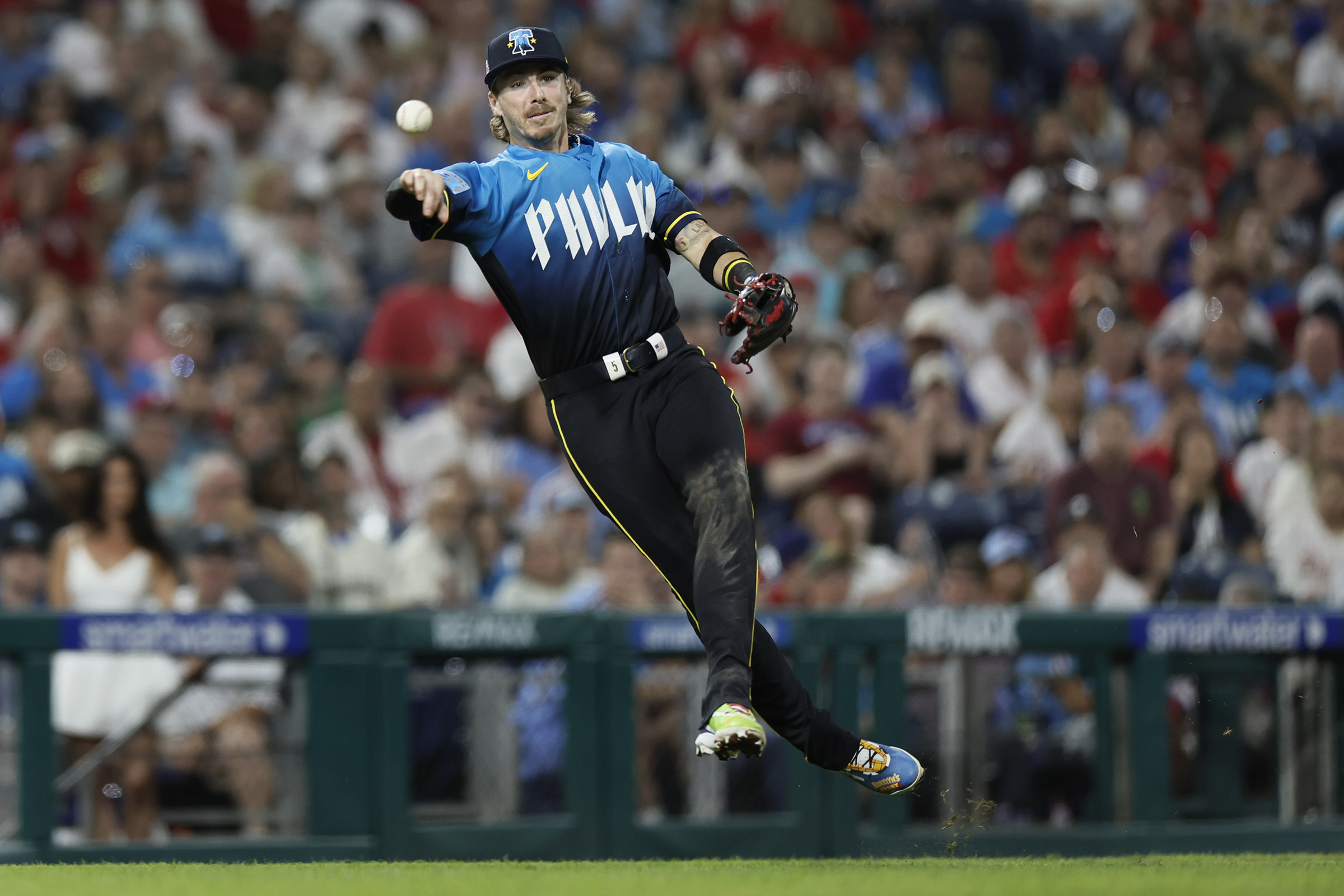
Bryson Stott wore custom made “Toy Story” cleats on Friday night.Elizabeth Robertson / Staff Photographer
Animated kids movies come to life
Ahead of the Phillies’ Field of Dreams game against the Minnesota Twins in Dyersville, Iowa, Downingtown-based NXT LVL Customs produced an iconic design for Bryson Stott that featured late Phillies legends Harry Kalas, Tug McGraw, Roy Halladay, Darren Daulton, Robin Roberts, and Richie Ashburn emerging from a cornfield. After the game, Stott donated the cleats to the Baseball Hall of Fame.
Now, NXT LVL Customs, which is run by father and son Ron and Ryan Stevens, has created custom cleats for more Phillies, including Stott, for Players’ Weekend, which allows players to wear custom gear, share personal stories, or otherwise express themselves.
Stott, for the second straight year, honored his daughter, Braxtyn, after last year’s Elmo-inspired Sesame Street footwear. This time, Stott will sport Nike Toy Story-themed cleats, with the left one rocking a Buzz Lightyear theme, and the right a Woody theme with “Braxtyn’s Story” written on it. He wore the cleats during Friday night’s game.
Stott also will have Toy Story-themed bats from King of Prussia-based Victus Sports. One of them features Jessie the cowgirl, and the other has a green alien from the movie.
The third baseman also had cleats made to honor his son, Jaxson. They’re royal blue, light blue, and white with star designs on the upper part; tiny illustrations of bears, trucks, and dinosaurs; and his son’s name on the back of the left cleat along with his birth date on back of the right cleat.
Cristopher Sánchez, Orion Kerkering, and Edmundo Sosa also received custom cleats from NXT LVL Customs.
Sánchez, who will pitch Sunday afternoon’s series finale against the St. Louis Cardinals, will be wearing Adidas cleats in the Phillies’ colors with the team’s pinstripe design on the heel counter, the numbers of his teammates across both cleats, a white Phillies bell logo near the midsole, and blue shoelaces.
Kerkering will be sporting Lilo and Stitch-inspired Adidas cleats, with the left cleat representing Lilo’s red dress with cream-colored flowers white laces, and a pink heel counter. The right cleat mimics Stitch with two-toned blue, Stitch’s face on the toe, and fuzzy light blue shoelaces.
And Sosa, like Stott, payed homage to his daughter, who loves tennis. The base of his New Balance cleat is colored fluorescent yellow with images of tennis balls, a white strap and heel counter, and his daughter’s name, “Naya,” written on the back of the left cleat.
Plenty of other custom bats are being unveiled this weekend. These include Brandon Marsh’s Victus bat that honors his sister, Erin, who won a gold medal in the heptathlon at this year’s USATF national championship, and Harper’s camouflage custom bat that’s also by Victus.