Blog

  • U.S.-Canada breakdown shows limits of Trump’s aggressive trade strategy

    U.S.-Canada breakdown shows limits of Trump’s aggressive trade strategy

    The shocking collapse of U.S.-Canada trade talks is the latest sign that President Donald Trump’s bulldozer approach to remaking the nation’s trade relationships may be reaching its limits.

    The president tried in recent days to use an untested legal power to force Canada to swallow trade concessions. Instead, Canadian Prime Minister Mark Carney quit the negotiations rather than accept a lengthening list of U.S. demands.

    As a result, 50% U.S. tariffs took effect early Saturday on an array of Canadian products, including hockey sticks and Crown Royal whisky.

    As Carney prepared to walk away — a rare example of a foreign leader telling the president “enough” — Trump was retreating on another trade front. On Friday, after insisting for more than a year that tariffs do not affect consumer prices, he lifted tariffs on beef imports, saying the move would lead to lower grocery prices.

    The two developments, coupled with legal challenges to Trump’s tariffs, leave the president’s signature economic policy in a state of flux.

    “It’s a big setback for Trump’s trade policy. We’re at a juncture where other countries may be very closely watching how this plays out as they also are becoming increasingly frustrated with the demands the U.S. is placing on them in these largely one-sided trade agreements,” said Wendy Cutler, a former U.S. trade negotiator who is now senior vice president at the Asia Society Policy Institute.

    Indeed, the United States has negotiated 10 reciprocal trade agreements over the past year with nations such as Malaysia, Cambodia, and Argentina, along with other trade frameworks with the European Union, the United Kingdom, and Japan.

    Hearing of the concessions that the U.S. offered Canada, including reductions in tariffs on industrial metals, some trading partners may demand revisions to their deals, Cutler said.

    Administration officials have approached each bargaining round convinced of two things: Decades of U.S. trade policy hollowed out the nation’s manufacturing communities. And a muscular new approach, leveraging the appeal of the $32 trillion U.S. economy, can force other nations to give way and encourage the reindustrialization of the U.S.

    For the administration, trade negotiations are not a contest of equals. The talks start from the premise that U.S. negotiating partners must make concessions, opening their markets and in some cases promising to invest in the United States, simply to win a reprieve from unilateral U.S. trade barriers.

    Both Jamieson Greer, the president’s chief trade negotiator, and Treasury Secretary Scott Bessent have publicly complained that Canada and China are the only nations that retaliated for the tariffs that Trump imposed last year.

    The administration sees its actions as restoring fairness to an imbalanced global trade system, making such retaliation unjustified. But China’s tough stance last year, which included a temporary interruption of essential rare earth minerals, paid off. The president lowered his triple-digit tax on imports from China and reached a trade truce in an October meeting with Chinese leader Xi Jinping, who is due in Washington on Sept. 24 for more talks.

    The Canada negotiations were aimed at averting the new 50% tariffs, which Trump had threatened in July unless Carney dropped retaliatory measures imposed in response to earlier U.S. tariffs.

    On Tuesday, Trump delayed his initial deadline, posting on Truth Social that the two sides had reached “a DEAL” and needed three days to finalize the documents.

    The subsequent breakdown spotlighted tensions in the president’s strategy, including questions over the durability of any deal reached with the U.S. administration.

    After all, the U.S. and Canada, along with Mexico, already have a trade deal: the United States-Mexico-Canada Agreement (USMCA) of 2020, which Trump hailed at the time as “the largest, fairest, most balanced, and modern trade agreement ever achieved.”

    But this year, the president threatened to quit the deal and demanded sweeping changes to it, aimed at promoting more U.S. manufacturing. He also imposed tariffs on Canadian goods starting last year, a breach of the accord.

    On Saturday, speaking in Ottawa, Carney alluded to the difficulty of negotiating with a mercurial president.

    “We’ve recognized from the start that America has changed,” Carney said. “We recognize that sometimes, its signature is written in pencil.”

    Negotiating with the U.S. is also complicated by divisions within the administration. All top officials share Trump’s goal of spurring domestic manufacturing. But as Greer haggled with the Canadians this week, a split emerged over the U.S. trade representative’s willingness to reduce an existing 50% tariff on aluminum derivatives to 25% in return for Canadian concessions.

    At a White House meeting, White House trade adviser Peter Navarro and Commerce Secretary Howard Lutnick, whose department administers the national security tariffs, clashed with Greer, representing industry views that the higher aluminum tariffs were needed to encourage domestic manufacturing.

    “Navarro and Lutnick were both yelling at Greer saying: ‘What are you doing? This is stupid. You know, we’re not giving these things away,’” said one industry representative, who spoke on the condition of anonymity to describe the confidential talks.

    Late in the talks, the U.S. sought to exclude from tariff reductions heavy trucks produced in Ontario, such as the Ford F-350 and F-450, and the GM Silverado. Over time, that would have made it “more uneconomic” for the automakers to keep making the vehicles in Canada, Carney said. The administration also sought to restrict Canada’s right to sign trade deals with other countries, a key part of Carney’s strategy to reduce dependence on its increasingly unreliable southern neighbor.

    Trump’s undiplomatic style — including saying that Canada should surrender its sovereignty to become the 51st U.S. state — made it harder politically for the Canadian leader to accept a deal. Public opinion in Canada has turned fiercely anti-American.

    “A 160-year trading relationship has found its red line,” said Flavio Volpe, president of the Automotive Parts Manufacturers’ Association in Toronto. “Demanding that your closest trading partner mirror your trade policy with third countries is akin to asking them to surrender agency over foreign policy. This episode shows that doesn’t work, no matter the disproportionate market leverage of the USA.”

    Trump also has a general disregard for the $3.4 trillion worth of merchandise that the U.S. imports annually. Speaking in June about his North American neighbors, the president told reporters in the Oval Office: “We don’t need anything that Canada has, we don’t need anything that Mexico has, but they need everything that we have. … We don’t need their cars, we don’t need their lumber, we don’t need their energy, we don’t need anything that they have.”

    In fact, U.S. farmers rely on Canadian sources for nearly 80% of the potash fertilizer they use each year, according to the U.S. Geological Survey. Northern border states, including New York, Michigan, Vermont, Minnesota, and Maine, run on electricity produced by Canadian hydropower. And Midwestern refineries are optimized to process heavy sour crude oil from Canada, helping keep gas prices lower than they otherwise would be, according to the Federal Reserve Bank of Kansas City.

    Total U.S.-Canada trade each year exceeds $700 billion.

    The talks’ failure leaves businesses on both sides of the border burdened by a sudden jump in costs. Small businesses in the U.S. will face an especially sharp cash crunch, as they must pay tariffs before their customers pay them 30 or 60 days later, said Jason Miller, a professor of supply chain management at Michigan State University.

    “I expect a significant drop in a lot of these different import categories because importers simply can’t afford to bring them in. That may mean certain products not on the store shelves,” said Miller.

    In other cases, companies will struggle to find a domestic alternative to Canadian goods, especially for intermediate products such as packaging materials. So they will continue importing and pass along some of the 50% cost shock to their customers.

    On Saturday, Carney said Canada will retaliate on Sept. 8 for the new tariffs with its own trade measures. By delaying his response, he is leaving time for cooler heads to prevail, analysts said.

    “Then the parties come back to the table. North America is too integrated for it to unravel on the basis of a deal that was put together over 14 days,” said Dan Ujczo, a trade lawyer in Columbus, Ohio.

    If a deal had been reached this weekend, it would have paved the way for the official start of negotiations between the two nations over the proposed USMCA changes.

    Instead, the administration now must manage a cycle of retaliation and counterretaliation while perhaps facing a new courtroom fight over the legality of Trump’s 50% tariffs, which were imposed under a never-before-used 1930 trade law.

    Meanwhile, Trump’s 50% tariffs on goods ranging from hockey sticks to alcohol are expected to raise prices for American consumers less than three months before the Nov. 3 midterm elections, which have the potential to give Democrats control of Congress.

    Those elections, polls show, are expected to turn on voters’ frustration with the rising cost of living.

  • Jeffries and Kushner meet privately as midterm attacks fly

    Jeffries and Kushner meet privately as midterm attacks fly

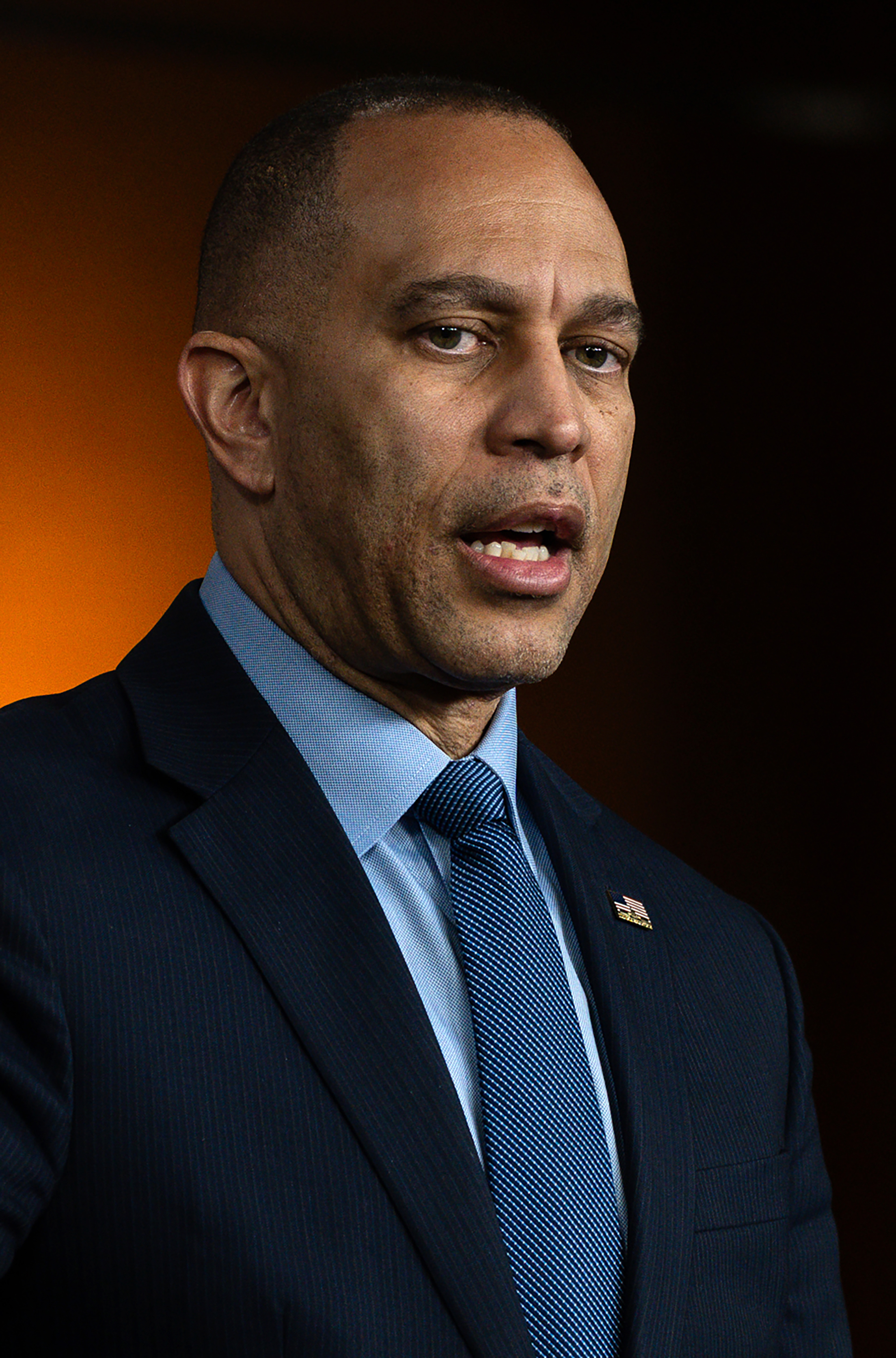
    Rep. Hakeem Jeffries (D., N.Y.), the House minority leader, met privately in recent weeks with Jared Kushner, President Donald Trump’s son-in-law and top outside adviser, and discussed potential areas of common ground, according to five people with knowledge of the meeting.

    The rare engagement was held in a private space in New York City, offered up by a mutual friend of the two men, according to two people with knowledge of the meeting and a third who was briefed on it. They and others were granted anonymity to discuss a meeting about which they were not authorized to speak publicly.

    Through aides, neither man would comment on the session, which was described by one person with knowledge of it as a broad conversation on a range of topics. Still, its timing underscored that those around Trump were well aware of the likelihood of a Democratic-led House, and trying to foster as much of a working relationship as possible before any change. Jeffries is in line to be the speaker, were Democrats to win the majority.

    Democrats and the president have been savaging each other on the campaign trail with increasing fury as the midterm elections approach, and as Republicans are fighting to retain their thin House and Senate majorities.

    Trump has called Jeffries a “thug,” and at a May campaign event referred to him as a “low IQ” person who had inspired him to deride Democrats as the “Dumocrats.” Jeffries routinely suggests that Trump is not only extreme but corrupt, vowing that Democrats would “hold the crooks accountable” if they won control.

    The private get-together was described by one of the people as a catch-up for Kushner and Jeffries. The two men have stayed in touch since they worked together on a criminal justice bill midway through Trump’s first term.

    During the recent meeting, the pair discussed housing, immigration, and the high cost of living as potential areas of common ground. Kushner suggested that Jeffries should meet with the White House chief of staff, Susie Wiles, two people with knowledge of the meeting said.

    The likelihood of any compromises between the White House and Democrats on those issues seems remote.

    Trump this year refused to sign a bipartisan housing bill in part because he said it was “Warren centric,” referring to Sen. Elizabeth Warren of Massachusetts, its top Democratic champion. And he has repeatedly expressed openness to a deal with Democrats on immigration, only to back away from any such agreement. He successfully lobbied Republicans to abandon a bipartisan border-security bill in 2024.

    White House officials and an aide to Kushner did not respond to messages seeking comment.

    In a statement, Jeffries did not acknowledge the meeting, but suggested that the only way Democrats would cut deals with the administration would be if Republicans were willing to come their way on cost-of-living issues, his party’s top priority.

    “Throughout this Congress, Republicans have adopted a my-way-or-the-highway approach to governing that has failed the American people,” he said.

    He added: “In every conversation that we have with the Trump administration, we will continue to make it explicitly clear that the affordability crisis is not a hoax, and nothing short of transformational policy change is acceptable. We are fighting for an affordable America. The question is whether Republicans will join us.”

    Kushner, who worked as a senior West Wing adviser in the president’s first term, is no longer formally part of Trump’s government. He has been deeply involved in the president’s efforts to resolve the war with Iran that Trump began, to enforce a ceasefire in the Gaza Strip, and to bring an end to the Russian invasion of Ukraine. He and Jeffries also met last year, according to two people with knowledge of that conversation.

    The meeting came as nearly all polls revealed Republicans to be at a disadvantage in the midterms, and showed how members of Trump’s inner circle were digesting what a Democratic majority next year could look like.

    Should that happen, Jeffries would be under intense pressure from progressives to use his power as a check on Trump, including through aggressive oversight.

    Kushner is frequently consulted by a number of Trump’s advisers, and he has told people that if anything bipartisan is to get done with Congress, Jeffries is the most serious person among Democratic leaders. Wiles, he has said, is the most serious inside the West Wing.

    But with Republicans in control of both chambers, Trump has mostly steered around Congress in his second term, trampling its powers and prerogatives. He has faced little pushback from Republican leaders.

    Should Democrats win the House, Jeffries would have to balance the need to keep the government funded with Democratic calls to defy Trump at every turn, and possible pleas to impeach him for a third time.

    Jeffries and Trump have danced around questions about what their relationship could look like next year should Democrats take control.

    “I think he’s a nice guy,” Trump told Punchbowl News in a recent interview, when asked about Jeffries. “I’d probably get along with him very well.”

    Trump pointed to a meeting with Jeffries in the Oval Office last fall — the only one they have had in his second term — and described it as a positive one.

    In fact, during that meeting, which was billed as a bid to avert a government shutdown, the president positioned hats with a “Trump 2028” logo directly in front of Jeffries and Senate Minority Leader Chuck Schumer of New York, trolling the Democrats with the suggestion that he would run for a third term in violation of the Constitution.

    Afterward, Trump posted an AI-generated meme of a mustachioed Jeffries wearing a sombrero, drawing an angry response from the House minority leader, who called the image racist and dared Trump to insult him next time “to my face.”

    Soon after the meeting, the government shutdown began.

    This year, Jeffries has remained noncommittal about any plans to pursue a third impeachment of the president, and has not discussed publicly what oversight could look like if his party were to win the majority.

    “We’ve not ruled anything in and not ruled anything out in terms of accountability,” he told the New York Times in an interview last month, noting that his focus would be on forcing out major Trump officials.

    “We’ve got to make sure we continue to get rid of toxic Trump Cabinet secretaries,” he said. “Pete Hegseth, in my view, should be next on the list.”

    This article originally appeared in the New York Times.

  • How ‘The Rest Is History’ podcast conquered the world

    How ‘The Rest Is History’ podcast conquered the world

    HAMPTON COURT PALACE, England — In a field on the outskirts of London, thousands of people settled onto picnic rugs and camping chairs, slathering on sunscreen for the unusually hot English summer. A few people had uncorked bottles of sparkling wine, though it was not quite 10 a.m. One woman knitted while a couple in Panama hats tiptoed to a spot with a prime view of the stage.

    Then a familiar song began playing, and a ripple of excitement ran through the crowd. The rock stars of the event had arrived: two middle-aged British historians.

    The Rest Is History is the most popular history podcast in the United States, Britain, and Australia, with some 30 million downloads and streams a month. This was its first live festival — a sort of mini-Lollapalooza, if Lollapalooza were a sedate, two-day event on the grounds of an English palace.

    The show’s almost 800 episodes span millenniums and continents, covering the fall of the Aztecs, the French Revolution, the assassination of Abraham Lincoln, and history’s greatest monkeys, among other things. Its fans include a current prime minister, Mark Carney of Canada, and a former one, Julia Gillard of Australia; actors Matthew McConaughey and Tom Hanks; and musician Nick Cave.

    In February, a hearing at England’s Supreme Court was interrupted when a judge’s phone played the introduction to an episode on Jimmy Carter. “The Rest Is History,” he acknowledged sheepishly. “It was switched to silent. Do carry on.”

    How did it become such a juggernaut? And what does it say about our tumultuous, accelerated present, a time of news fatigue and thrumming anxiety over the future, that so many of us are drawn to a show about the past? There is reassurance, of course, in reminding ourselves that humans have survived difficult times before. There is the pure escapism of immersing yourself in, say, six riveting episodes about Mary, Queen of Scots, as I did when I first latched on to the podcast. And then there are the podcast’s hosts, Tom Holland, 58, and Dominic Sandbrook, 51, who give the show a charm all of its own.

    Almost 5,000 people bought tickets to the festival, which was held at Hampton Court Palace, Henry VIII’s favorite retreat. Fans from Argentina, New Zealand, Europe, and the United States filed through courtyards, whose stone floors had been polished smooth by centuries of use, into acres of picturesque gardens for two days of an epic history chat.

    ‘An enormous cuckoo’

    Like several other disruptive cultural forces, The Rest Is History was born in the pandemic. Holland was, at the time, “kind of contemptuous and oblivious as to what podcasts were,” he said recently at his home in the south London neighborhood of Brixton. During a family holiday after England’s first lockdown, his brother James, who is also a historian, told him about a World War II podcast he was recording for a British company called Goalhanger.

    Holland, who had written several popular classical history books and made history documentaries with the BBC, was intrigued. He met with Tony Pastor and Jack Davenport, two former sports producers who created Goalhanger with former England soccer player Gary Lineker. The idea for a more general history podcast was born.

    “Who would you enjoy talking to, week in, week out?” he recalls being asked. It was an easy question. “Dominic was the most entertaining historian that I knew,” Holland said. They had met more than a decade before at a writers’ charity quiz.

    Sandbrook agreed to co-host, in part because of Holland’s exuberant, if hyperbolic, salesmanship. “I can hear him saying it now, he said: ‘It will be literally no work. It will be no work whatsoever,’” Sandbrook said over coffee at a tiny Gloucestershire cafe near his home. The idea was that “we’d choose random things that we knew a lot about, and just witter about them for half an hour.”

    That idea has, let’s say, evolved. They now produce three episodes a week, two of which are about an hour long, and a 30-minute bonus episode for paying subscribers. A ton of research goes into each. Their biggest audience is in the United States, which accounts for 34% of plays, according to Goalhanger, while 33% comes from Britain and Ireland, followed by Australia, Canada, and New Zealand. Listenership is surprisingly young, with 61% under 44, and it is 78% male.

    Holland described the podcast as an “enormous cuckoo that slowly elbowed out everything else.” He is currently very behind, he told me ruefully, on a book he is writing about the Beatles and “the new Reformation of the 1960s” that was due at Christmas.

    Sandbrook said his working life was “unrecognizable, compared to what it was before.”

    “I do spend a ridiculous amount of time now reading history books,” he added. “But there are worse things to do.”

    The spirit of a Viking and a cringing monk

    Holland arrived onstage at Hampton Court in a Henry VIII-style velveteen hat. Tall and energetic with a crop of white hair, he is a natural impresario who later took great pleasure in overseeing a bout of medieval combat, one of the diversions that punctuated the live talks with historians. Sandbrook is a more grounded figure, with twinkling eyes and a warm handshake. He is, by his own account, less inclined to cosplay as a historical character.

    The rapport between the two men is central to the podcast’s appeal. They have much in common. Both were privately educated, attended top universities (Holland at Cambridge and Sandbrook at Oxford), and radiate warmth and humor. Their expertise, however, is in different historic periods — “He’s ancient and I’m modern, basically,” Sandbrook said — and they play on their differences.

    There is a lot of banter. In an episode on the Battle of Stamford Bridge in 1066, Holland says that he did not quote from his book Millenium because there were so many epic contemporary accounts. “This speaks to your fundamental lack of self-confidence, I think, Tom,” says Sandbrook, who readily quoted from his own book.

    Holland mournfully agrees: “You have the spirit of a Viking. I have the spirit of a cringing monk.”

    “By the way, please clip that and use that for social media,” Sandbrook jokes, and the two dissolve into laughter.

    Holland tends to be more vocally empathetic toward historical figures, while Sandbrook is more merciless. In an episode on the First World War, Sandbrook quotes from Robert Graves’s memoir, Goodbye to All That, describing an unfortunate British sergeant who fired a bomb that bounced back into his face.

    “Noooo, that’s the kind of thing I’d do!” interjects Holland.

    Part of the delight of the podcast is in their mischievous, but fundamentally good-natured observations about life — its absurdities, contradictions, and continuities. For Holland, the show is popular because it reveals the strange ways of our predecessors while illuminating the common threads that bind us.

    “Without having consciously set out to do this,” he said, “I think it is a celebration of the inherent fascination of the past, as the best way to understand how infinite the ways are of being human.”

    Sandbrook framed it in slightly different terms. “I think there is an inexhaustible human appetite for stories,” he said.

    Both men also pointed to something else — a deliberate lack of moralizing, and, in a post-woke world, a curiosity about the past rather than a rush to judgment. “History is not a civics lesson,” Sandbrook said somewhat sternly, after I asked about what we could learn from the past. “History is the record of human behavior, often which is very bad. And the one thing that doesn’t change, I would say, is human nature.”

    ‘Outside of the swirl of chaos’

    In April, as Britain was edging toward its seventh prime minister in 10 years, The Rest Is History did a series on Britain in the 1970s. Almost 500 people were killed in Northern Ireland in 1972. In 1974, the government briefly introduced a three-day working week to cope with an energy crisis. The following year, inflation spiked to 25%.

    Sandbrook noticed listeners’ fascination, and, in some cases, relief, in their comments. “They were saying, ‘I thought things were awful now, but then I look back and I think, well, it’s not that bad,’” he said.

    Asked if we were living through a particularly turbulent era, both men referred to the pace of technological change as unprecedented, comparing it to the advent of the printing press in the 15th century. “Clearly what is happening now,” Holland said, “first with the internet, social media, and now with AI, is going to be convulsively transformative in a way that we cannot yet get a handle on.”

    “I think that’s why history is so valuable,” he added, “because it does kind of provide a rain check. It does enable you to get outside of the swirl of chaos.”

    Wandering the gardens of Hampton Court — where actors in period dress paraded under parasols — could feel a little like stepping back in time, albeit with stalls serving overpriced iced coffees and plant burgers. I wondered to what extent the show offered some listeners a similar retreat from the uncertain 21st century into stories where the endings, however good or bad, are no longer in doubt.

    Yet the past is also compelling as a means of understanding a confounding present. Onstage the first morning of the festival, Holland interviewed professor Ali Ansari, a historian specializing in Iran, in a conversation that jumped between ancient Persia and this year’s U.S.-Israeli war against Iran.

    In the afternoon, Sandbrook spoke to Paul Rouse, an Irish historian, who talked about the common market between Ireland and Britain in the 1800s, including up to 12 sailings a day from Dublin carrying cattle to England, and later spoke of the damage wrought by Brexit. On Sunday, historian Katja Hoyer discussed her new book on Weimar and the rise of Hitler.

    “History frames so much that is significant about our present politics,” said Christoph Pike, 31, a fan of the podcast who had flown in from Toronto with his wife, Claire Davis. At the same time, he noted, Holland and Sandbrook “don’t take themselves too seriously.”

    “They’re playful, they’re engaged, they both have a great sense of humor,” Pike said.

    As the sun set on Saturday, Holland and Sandbrook applied their considerable intellects to questions from audience members.

    “Top three mustaches of all time?” asked one.

    “Great question!” Holland said. “We do love facial hair.”

    Another historical debate had begun.

    This article originally appeared in the New York Times.

  • LeIbrahim Muhammad, LeBoul James, and the art of giving very Philly nicknames to LeBron James

    LeIbrahim Muhammad, LeBoul James, and the art of giving very Philly nicknames to LeBron James

    We know who King LeBron James is. But LeBoul James? He’s one of us.

    Mere hours after James announced he was signing with the Sixers, Philadelphia fans started honoring him with public artwork, billboards, merch, sunburned backs, and his own state-designated day.

    But among fans’ biggest gestures of goodwill is trying to find James a Philly-coded nickname.

    “I like LeJawn. It’s so Philly,” said Saleem Lewis, owner of clothing label What Happened to Love and a Frankford native.

    Lewis said the rush to give James a local nickname reflects the NBA superstar’s natural kinship with Philadelphians.

    “If you’re not from here, you might not get it. But the jokes are all out of love,” he said.

    “I like the one I came up with, ‘Abdul Maalik James,’” said social media creator Jamaal Thomas, who created an AI image of James wearing a thobe and kufi.

    A billboard welcoming LeBron James along Packer Avenue, in South Philadelphia on July 24, 2026.Yong Kim / Staff Photographer

    Another moniker doing the rounds on social media is “LeIbrahim Muhammad.”

    The root of the nicknames and ensuing AI-generated memes is a fusion of hip-hop and Muslim cultures. These two elements are deeply embedded in the fabric of the city’s Black community, as evidenced by the influence of rappers like Freeway, Beanie Sigel, and PnB Rock, who “weaved the imagery, religious symbology, and practice of Islam into their lyrics,” said James Peterson, professor of literature at Delaware State University and host of Evening WURDs.

    Within this meme and nickname multiverse, Philly slang like jawn and boul — both with roots in the city’s African American Vernacular English — coexists with Black Muslim content creators throwing in names like Ibrahim and Abdul. The result is a high form of welcome extended to the King of the Hardwood from the City of Brotherly Love.

    A welcome sign for new Sixers LeBron James on a SEPTA bus shelter along Market Street in Center City on Saturday, July 25, 2026.Yong Kim / Staff Photographer

    “This is part of the reason the memes resonate with Philadelphians because whether you’re Muslim or not, the culture of Philadelphia is Islamic,” Peterson added. “You can’t go through places like Malcolm X Park or other areas of Philly without seeing the accouterments of the Islamic faith all around us. It’s not just the mosques; it’s the brothers and the sisters in the streets. It’s in the air in Philadelphia.”

    Also, as Lewis points out, “Philly embraces people who work, compete, and don’t back down. LeBron has been doing that for over 20 years.”

    A passerby is seen with a mosaic of LeBron James on Eighth and Market Streets in Philadelphia on July 28, 2026.Tyger Williams / Staff Photographer

    The ‘Philly beard,’ a thobe, and LeIbrahim Muhammad

    For West Philly native Max Johnson Dugan, a visiting professor of Islam at Trinity University, the memes highlighting Philly’s Black Muslim culture through James, who is a Christian, are a “brilliant” balance of humor and “self-seriousness.”

    “I’ve prayed next to people, packed food boxes, and volunteered at parks, or been in dialogue with folks who are dressed like those memes,” he said. “To me, it’s a beautiful thing that people can chuckle about this and live in a way that’s serious and significant to them.”

    Dugan said James’ beard may be familiar to Philly’s Black Muslims because it resembles a style many followers believe was donned and ordained by the Prophet Muhammad. It’s commonly known as a “Sunni” or “Sunnah beard” in Philly, and those outside of the city call it a “Philly beard.” Dugan said it’s possible content creators saw the similarity between James’ beard and others by practicing Muslims, and “put two and two together.”

    The Miller Theater in Philadelphia welcomes LeBron James on July 29, 2026.Elizabeth Robertson / Staff Photographer

    The memes may be fabricated, Peterson said, but have a “kernel of truth,” that James is coming into a “Black Islamic world.” The doctored images of James in a kufi and thobe, shared by the likes of educator, author, and media personality Marc Lamont Hill and hip-hop artist D Sturdy, acknowledge James as a Philly guy, one of us, even before he steps foot in the city.

    “LeBron coming to Philadelphia means that all of Philadelphia embraces him. And that also means one of the largest Black Muslim populations [in the U.S.] and one of the most distinct Black Muslim cultures is embracing him, too,” said Peterson.

    The Los Angeles Lakers’ LeBron James shares a laugh with Philadelphia 76ers’ Tyrese Maxey during a game on Dec. 7, 2025, in Philadelphia.Chris Szagola / AP

    For Dugan, the memes are interesting in the way newly-traded star Jaylen Brown, who is Muslim and has traveled to Mecca to perform Umrah, hasn’t been welcomed with similar nicknames or memes in the same breath as James.

    “I don’t want to speculate,” Dugan said, “I would say it points to [James’] visibility and significance. It’s funnier to share a meme of [James in Muslim traditional wear] than it is to share a meme of [Brown].”

    “It has irony and tongue and cheek-ness,” he said.

    Photo collage of LeBron James throughout his NBA career.John Duchneskie

    LeBoul James, the NBA champion

    North Philly-native Salim Weldon, co-owner of Whimsicle fruit pops, is confident James will live up to the name of “LeBoul,” another nickname that has appeared under scores of AI-generated social media posts.

    Some show James ordering at a Wawa, some have him astride dirt bikes and four-wheelers, and some show him standing outside of “papi stores” — a friendly term used by Black Philadelphians for corner stores often operated by Latin American men.

    The Philly word boul meaning boy, is a word James is already familiar with, thanks to his friend and North Philly-native Kevin Hart. The Sixer even said it in a recent Instagram post with the actor, who was giving his friend a crash course in Philly-isms while the two were golfing.

    “We’re going to help [James] with a Philly barber to make sure that he keeps his beard a certain way,” Weldon joked. “And as you can see, he and Kevin Hart are close, so he will help him get that Philly swag.”

    Quincy Harris, a Germantown-raised media personality and former host of The Q on Fox 29, said the early reactions are because of the championship dreams James helps Philadelphians imagine.

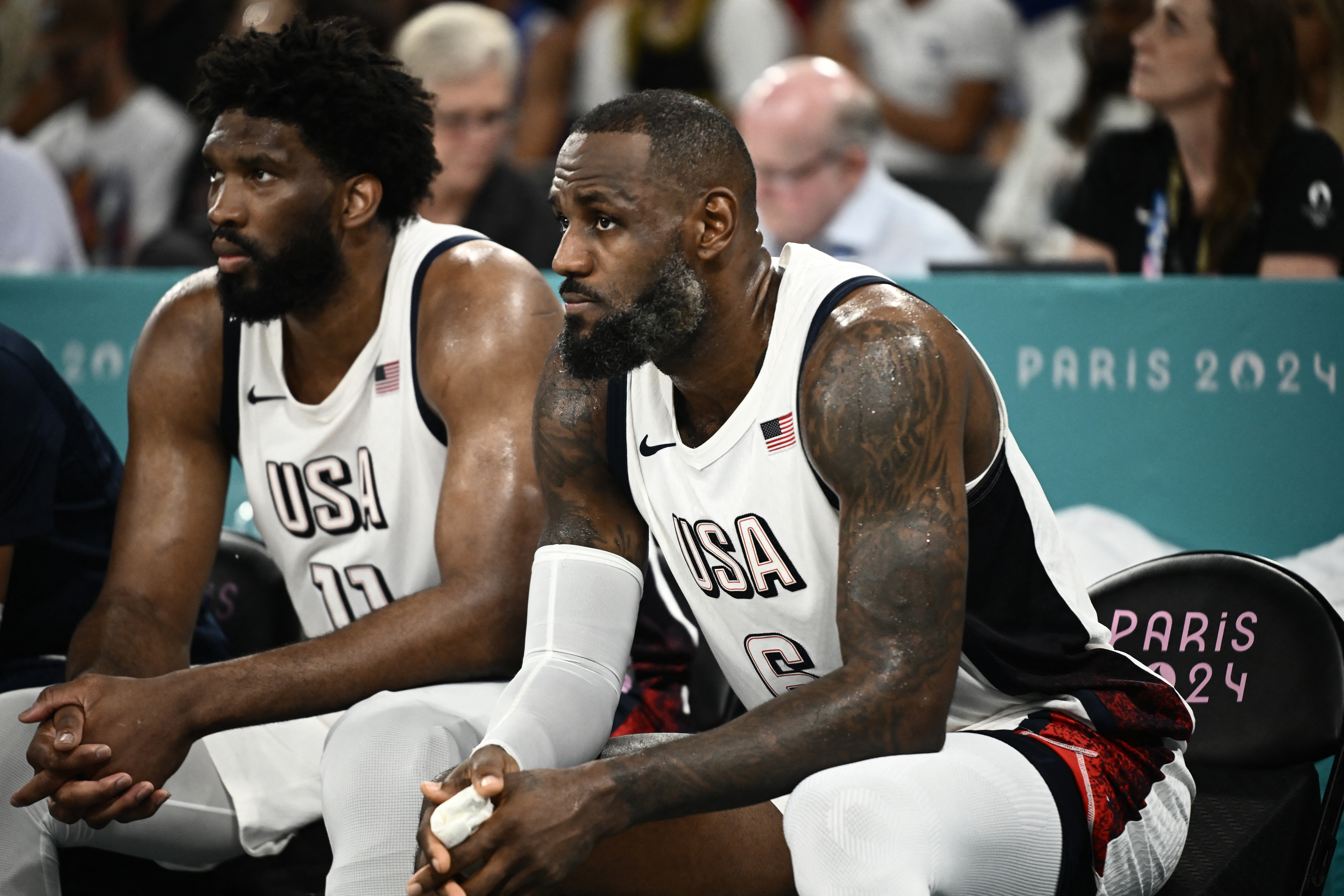
    USA’s #11 Joel Embiid (left) and #06 LeBron James react from the bench in the men’s semifinal basketball match between the USA and Serbia during the Paris 2024 Olympic Games on Aug. 8, 2024. (Photo by Aris Messinis / AFP via Getty Images)AFP via Getty Images

    “He’s a top five player to ever play the game of basketball,” he said. For him, the energy James sparked is reminiscent of the Allen Iverson era in the late 1990s and early 2000s.

    Peterson doesn’t quite agree. For him, Iverson remains the “archetype of a Philadelphia athlete.” Plus, can LeBron James truly ever be LeBoul, if he doesn’t live in the Philadelphia region?

    “Philadelphia fans want to hold you close. They want to see you walking around and moving around in the community,” he said, while acknowledging that James’ signing has brought a new level of excitement to Philadelphia.

    “I think that energy is just going to be injected back into the city. It’s going to be a great time,” Harris said, adding that he won’t “cosign” the trending nicknames.

    But there’s one he thinks will resonate with Philadelphians the most.

    “Five-time NBA champion.”

  • A mother has spent years caring for her special-needs child. The toll quietly grew.

    A mother has spent years caring for her special-needs child. The toll quietly grew.

    RANCHO CORDOVA, Calif. — Annie Morgan wrapped her arms around her eldest daughter’s waist and guided her toward the minivan, the two of them moving in a slow, sideways shuffle.

    At 13, Ava was nearly as big as Annie, who stands just 5 feet flat, 110 pounds.

    The morning in May had started well. Ava was cooperative and calm, and Annie, 34, smiled as her two other children bolted past them and into the car. Then something shifted. As Annie helped Ava into the vehicle, Ava wailed and slammed her body against the seat. The car rocked.

    “Gentle hands,” Annie said evenly. “We’re OK. We are still going to school.”

    The struggle lasted six minutes: long enough for Annie to tighten one belt, then another. Long enough to block a blow to the head, catch Ava’s hands and dodge them when she couldn’t. Long enough for sweat to gather across Annie’s forehead and beneath her shirt.

    When she finally settled into the driver’s seat, the clock read 7:49 a.m. Still on time for school (basically).

    In one form or another, scenes like this unfold every morning in millions of American homes. Sons and daughters lifting aging parents out of bed. Spouses managing medications. Parents helping adult children get dressed.

    Family caregivers — who provide ongoing support for children or adults with chronic, disabling, or serious health conditions — now number roughly 63 million Americans, up from 43.5 million a decade earlier. That’s based on a nationally representative survey conducted in 2025 by AARP and the National Alliance for Caregiving, and represents about 1 in 4 adults. Just over 60% are women. The Centers for Disease Control and Prevention has documented a similar burden through its own surveillance programs. Together they provide countless hours of unpaid or modestly reimbursed care each year, work that would cost hundreds of billions of dollars if replaced by paid labor.

    Health Secretary Robert F. Kennedy Jr. has called caregivers “the foundation of America’s healthcare system,” warning that without them hospitals and nursing homes would buckle under the demand.

    But decades of shifting norms around caregiving have given rise to millions of new caregivers who are suffering elevated rates of depression, anxiety, burnout, and suicidal ideation, as well as a range of physical conditions.

    Only recently has the toll of caregiving begun to register as a public health problem in its own right. The National Institute on Aging has backed new technologies aimed at easing caregiver burden, including AI tools, and in February a Department of Health and Human Services’s Administration for Community Living document framed the strain as a national infrastructure issue.

    That enormous, largely invisible workforce is in part due to an aging population, rising rates of chronic disease, and one of the most consequential shifts in U.S. social policy of the past half-century.

    The United States has steadily moved away from housing people with disabilities in large institutions and toward a model centered on families and community life. The shift, which accelerated in the 1980s and 1990s, represented a profound change that allowed people who once would have spent much of their lives segregated from society to be part of their communities.

    There was the promise of government support: respite care, behavioral services, trained aides, accessible schools, and robust community programs that would make family-based care sustainable. But today many of those systems remain fragmented, understaffed, or difficult to access. Families became the foundation of the new model, and things haven’t turned out well for many of them.

    Teenagers

    Ava is 14 now. With her long, light-brown hair braided in the latest styles and a wardrobe of T-shirts and lightly ripped jeans, Ava, who is starting ninth grade this fall, blends easily into a crowd of teens. She loves Costco muffins, squeeze yogurt, slime, and any music with a strong beat, from Aretha Franklin to Bollywood soundtracks and beyond. She loves Disney’s Zombies, the Gen Z/Alpha version of High School Musical.

    It’s only when she speaks — or rather, doesn’t — that the difference becomes clear.

    Ava communicates through points and sounds, due to a rare, genetic nervous system disorder that affects roughly 1 in 15,000 people.

    Angelman syndrome is caused by the loss of function of a gene known as UBE3A on Chromosome 15. Most cases occur randomly and are not inherited.

    The condition is often mistaken for autism, and from the outside the two can look similar. They are not. Autism encompasses a broad spectrum: Some people require lifelong support, while others build careers, marry, and live independently. Angelman syndrome follows a more predictable pattern, marked by severe developmental delays, intellectual disability, and lifelong difficulties with balance and movement.

    In the early years, Annie held on to the possibility that science might somehow alter Ava’s course. She followed promising research, sought out specialists across the country, and enrolled her daughter in a clinical trial involving gene therapy. Nothing changed.

    As Ava grew older, the distance between the life Annie once had imagined for her and the life they were living became harder to ignore.

    When puberty hit in Ava’s preteens, her sweetness was increasingly punctuated by moodiness, and she became more physical. Other girls her age were experimenting with makeup, talking about crushes, navigating the awkward rituals of adolescence. Ava had chew toys, cloth books, and diapers.

    Annie found herself looking back at those same years in her own life — a time defined, above all, by movement.

    Dance had been the organizing force of Annie’s childhood. Raised by her grandmother because illness had left her mother unable to care for her, she spent her afternoons moving from ballet to jazz to tap. By high school, she had made the dance team. Then, during her senior year, she showed up at an open audition for the Oakland Raiders cheerleading squad.

    She remembers stopping at a Safeway for false eyelashes and finding a dress at Forever 21, then walking into an audition room filled with women who seemed impossibly polished. Somehow, she made the team.

    Annie cheered for two seasons. Then she became pregnant with Ava, bringing her time with the Raiders to an abrupt end. Not long after, she and Ava’s father separated.

    One day, on the drive home from visiting a friend in the Bay Area, Annie glanced in the rearview mirror. Ava, who was about 18 months old at the time, was slumped in her car seat, frighteningly still. Annie pulled off the freeway and rushed her to an emergency room.

    Ava had had a seizure, the doctors told her. The harder news was why.

    Love

    Not long before Ava was diagnosed, Annie had ventured back into dating. At the urging of her co-workers at the restaurant where she was working as a waitress, she was scrolling through Tinder one day when a message popped up from a guy she thought was cute.

    His name was Daniel, he was working as a personal trainer, and like her he came from a mixed ethnic background. She was a mix of Italian, Puerto Rican, Mexican, and Native American; he, Spanish, Irish, Scottish, German, and Native American. Like Annie, he considered himself nondenominational but took his Christian faith seriously: Their second date was at church. What stood out most, though, was his kindness. He was patient with Ava. Thoughtful toward strangers.

    Four months later, Daniel proposed. Annie wanted to say yes but hesitated.

    She worried about future children. Angelman syndrome is almost always not inherited, but Annie wondered if something in her had led to Ava’s condition. Daniel told her it didn’t matter.

    Annie Trujillo and Daniel Morgan, then 24 and 25, were married on a sunny day in October 2016 at a winery to Celine Dion’s “The Power of Love.” Ava was 4 at the time, and the couple went on to have two more children, a son, Brody, now 7, and a daughter, Naomi, now 4.

    What no one saw

    When Ava was young, Annie and Daniel tried to keep a semblance of an ordinary life. There were playdates and birthday parties, afternoons at the pool, Sundays at church. They packed the walker and whatever else Ava needed and went.

    Daniel shared the work when he was home. But as his career working for the state of California’s housing department took off, he was increasingly on the road, sometimes for a week at a time. And taking Ava out was becoming more complicated. Leaving the house became a logistical operation, necessitating contingency upon contingency in case Ava swept food and plates off a restaurant table, bolted, or began screaming. Annie learned to keep one eye on her daughter and another on the room, gauging the expressions of strangers and deciding when an explanation — or an apology — was necessary.

    Gradually, it became easier to stay home.

    There, Annie’s days acquired their own relentless rhythm.

    She was often up before 5 a.m., preparing food and medications, dealing with paperwork, getting Ava ready for school. After drop-off came the calls: a prescription that needed filling, a therapy that needed scheduling, a specialist to chase down. When Ava got a new version of her communication device, Annie had to learn that, too. A broken wheelchair could mean an afternoon fighting with the insurance company. A problem at school could erase whatever Annie had planned to do that day.

    By 9 p.m., sometimes later, she would fall into bed.

    At night, practical worries would give way to larger ones.

    Annie worried about whether Ava was safe at school and whether she could keep her safe at home. She worried about the future. Ava was becoming a striking young woman without acquiring the ability to recognize all the dangers that came with being one. Annie had read stories about the sexual abuse of disabled women in institutions. Sometimes they kept her awake. What would happen to Ava when she and Daniel were gone?

    She would wake up a few hours later and start again.

    The family receives some caregiving support through Medi-Cal, California’s Medicaid program, and other state programs, including a few hours of weekend care and financial support for caregiving. But it hasn’t been enough, and recently Trump administration officials, including Mehmet Oz, who oversees the Centers for Medicare and Medicaid Services, have questioned Medicaid programs that pay relatives to provide care and have subjected in-home services to increased scrutiny over alleged fraud.

    Annie spent less time wondering what might become of her own life. Every so often, though, she tried.

    She trained to sell tiny homes as the market expanded across California, considered starting a consulting business, launched a podcast called “Blessed for This Mess,” enrolled in nursing classes, and brainstormed furniture designed for children with disabilities. Each new venture offered, briefly, a glimpse of a life that belonged to her as well as to everyone who depended on her. Then something would happen: a medical emergency like a seizure, a crisis at school, a bureaucratic fight that could not wait. Annie would turn her attention back to Ava.

    ‘Who takes care of the caretakers?’

    In the summer and fall of 2023, Annie’s already crowded world of caregiving had expanded again. Her mother was in the hospital with an infection; her uncle had suffered a heart attack. Alongside caring for her three children, Annie began running errands and tending to the small necessities that accumulate when someone else can no longer manage them alone.

    Daniel was accustomed to finding ways to make things work. But this was a time when even he ran out of answers. At Ava’s medical appointments, Daniel began asking what he could do to help Annie. The advice rarely went beyond the familiar: Make sure she rests, takes care of herself. He asked about classes, training, anything more concrete. “Who takes care of the caregivers?” he remembers asking. “There’s no one. How does that make sense?”

    When people ask how they are doing, Daniel, now 35, said, “We always say we are doing awesome, but it’s such a lie.”

    On the hardest nights, after their children were asleep, he and Annie would retreat to the bathroom at the far end of the house. They would slide onto the floor, hold each other and cry.

    Driving alone sometimes, Annie found herself having thoughts that frightened her.

    “I thought, what if I just hit the accelerator and turned the wheel a little …” she recalled.

    The thoughts were less about death than escape. She wanted to live but could no longer imagine how to keep living this way.

    One night in November of that year, she walked into the bathroom, grabbed Daniel’s clippers and shaved off her long brown locks. Looking back, she said she can see the panic on his face at that moment. But at the time he just offered to help, and she politely declined, saying it was something she needed to do on her own because it was “on my bucket list.” The gesture solved nothing. But for a few moments it gave her something she had not felt in a long time: control.

    That Christmas, she downed too much wine, which was very unlike her, and broke down in front of her extended family: “I can’t do this anymore.”

    Not long afterward, a cousin, who is a nurse, called to check on her. “Do you have hope for the future?” she asked, a question medical professionals often use to screen for thoughts of depression or worse.

    Annie didn’t answer.

    Instead, she began to sob.

    Dance parties

    Annie’s cousin helped her find a therapist. She went for about a month. She wasn’t opposed to therapy but left each session frustrated by explaining a world the therapist couldn’t quite see.

    She couldn’t change anything related to Ava’s care, but she could change other things.

    The way back was less a breakthrough than an accumulation of small decisions.

    Annie began dancing again. She signed up for poms, jazz, and funk classes in Sacramento and danced at home with the children, telling Alexa to play Meghan Trainor or Taylor Swift and spinning down the hallway.

    “It felt poetic,” she said. “When I dance even a little bit, I’m showing up for the younger version of me.”

    Other changes were almost comically small: She warmed her pillow with a heating pad before bed, made time for a skin care routine. She learned to let things go, pulling her younger children out of afternoon jujitsu classes and finding that they delighted in their unprogrammed ’90s-style afternoons even better.

    Because Ava’s condition made travel impossible, Daniel helped Annie build a life that asked less of the outside world. Their weekends filled with tending blueberry bushes and olive trees and decorating projects.

    Annie had also begun posting pieces of her life on Instagram and TikTok. Most attracted little notice.

    In April, one of them, about their school-morning routines, took off.

    The video begins with Annie braiding Ava’s hair. Without warning, Ava throws her head backward and strikes her mother in the face. Annie recoils, then keeps going.

    “You’re giving your best,” she tells the camera. “But some days it just gets you. And today was one of those days.”

    The video eventually drew 7.7 million views and more than 228,000 likes.

    Soon, Annie was hearing from parents, caregivers, and people with disabilities she had never met. “Feeling seen,” one person wrote. Another commented, “I’ve never seen another family actually show this side of it.”

    Some others criticized and judged. She tried not to be upset about those, she said, “For the communities that don’t live this life or have access to it … those communities were seeing a reality that they’ve never seen.”

    The platform did not solve Annie’s problems, but it eased her isolation.

    Annie kept posting.

    ‘Going to war’

    On a recent weekday morning, Annie set up her phone in the living room and hoisted a 25-pound bag of Costco’s Kirkland jasmine rice onto her back.

    She began squatting. The bag lurched slightly with each movement.

    “It’s better than weights,” she said, turning toward her phone, which was on a tripod. She explained that unlike a dumbbell, the rice shifted unpredictably, more like a squirmy teen.

    The clip would later end up on TikTok, where Annie now posts several times a week.

    “I look at it as I’m going to war with the syndrome that is trying to burn me out,” she said.

    Annie knows there are decades of caregiving ahead. Increasingly, she finds herself wondering where Ava’s siblings will fit into that future — whether Brody and Naomi will one day help care for their sister. For now, they are only beginning to understand that Ava’s life is different from theirs.

    Brody, a lighter-haired version of his father, is the chill, protective one.

    Naomi takes after Annie. Headstrong and constantly in motion, she is always asking questions. One recent weekend, Brody and Naomi were going to spend a few hours with Daniel’s parents. Ava wouldn’t be joining them. As Annie and Daniel explained the plans, Naomi asked, “Why does Ava have to go to daycare?”

    The evening routine is difficult with Ava even on good days.

    First comes the bath. Then clean clothes. Eventually, Ava is zipped into a specialized safety bed, an essential hand-me-down from another family because Ava tends to wander at night and is unsteady. In October, she sprained both ankles after sliding out of the bed.

    On a recent evening, the trouble started after the bath.

    As Annie tried to help Ava into her back brace — she has scoliosis — and pajamas, Ava became agitated. She screamed, pulled Annie’s hair, tried to bite. Daniel came running over. The two of them wrestled with Ava to keep her from injuring herself while they finished getting her dressed.

    When it was over, Ava began to cry. Annie did, too.

    She pulled her daughter close and closed her eyes. When she opened them again, Ava’s face was still wet with tears, but she was also smiling.

  • Philly has 100-year-old stormwater infrastructure and 72,000 easily clogged inlets

    Philly has 100-year-old stormwater infrastructure and 72,000 easily clogged inlets

    Helplessly watching stormwater fill the basement is among the most frustrating experiences for Philadelphia homeowners. It is especially bad if you are waiting for the city’s help to do something about it.

    In West Mount Airy, Arielle Wolfson, 37, said roads by her home “become a river” when it storms. She and her wife live at the bottom of a hill near the intersection of Mount Pleasant Avenue and Cresheim Road, where five stormwater inlet drains are responsible for keeping rainfall from growing into rapids as it sloshes downward. But for years, only one of the drains has been fully functioning, Wolfson said. The others have been mostly sealed shut by city repaving projects that raised the level of the street, but not the inlets built into the curb.

    When ankle-deep water slopes down into an alleyway that connects Wolfson’s home and nearly 30 others, it often floods her basement. Every rainstorm is nerve-racking, she said, and her efforts to alert the city, the water department, and City Council members had not resulted in change beyond an occasional inlet cleaning.

    Kelsey Hensley, Wolfson’s wife, said their frequent flood calculus is: “Do we go out with some friends, or do we stay home to monitor the basement?”

    Flooding near the intersection of Mt. Pleasant Ave and Cresheim Road in Mount Airy after an early August storm. The water often flows down the hill and into the basements of dozens of residents because the street’s stormwater inlets are not functioning properly.Kelsey Hensley

    Their anxiety is common in Philadelphia, where the city’s century-old sewer and stormwater infrastructure struggles to handle modern surfaces and roofs, increased rainfall, and a Delaware River that has risen by roughly a foot since the sewer system was built. And after 16 consecutive months of lower-than-normal precipitation, regular rainfall returned to Philadelphia in July and August, and brought flooding along with it.

    Philly has about 72,000 stormwater inlets, and it does not take much to clog them up — ordinary objects like tree leaves, dirt, trash, and other street debris can all be culprits, according to the Philadelphia Water Department. Last year, residents submitted almost 3,000 requests to the city’s 311 line for inlet cleanings, an Inquirer data review found, and the city is asking for help.

    “Across the city, The Water Department regularly checks all sewer drains and clears those that are clogged. … If they are able, we encourage residents to take part in the cleanup process before a storm comes,” city spokesperson Sharon Gallagher said in an email.

    As the planet continues to warm, the stress on Philadelphia’s flood-prone system only figures to increase, leaving more residents like Wolfson with dread when clouds gather overhead. As she spoke to The Inquirer, an afternoon rainstorm had just passed through.

    “I’m going down to the basement every hour just making sure it’s OK. So just the anxiety that’s pervasive among me, my wife, and other community members, it’s pretty unbearable,” she said.

    A frustrating wait

    Despite having roughly one stormwater inlet for every 20 Philadelphia residents, the city has generally responded to 311 requests for clogged stormwater inlets quickly. Since Mayor Cherelle L. Parker came into office in 2024, the city has closed inlet cleaning requests in under four days on average.

    But 311 data may not capture the complete scope of the issue. Some residents may report their issues directly to the water department.

    Alessia Cognata (left, of Downingtown), 5, and Sofia Lubrano, 7, of Thornton play in the rain outside of Citizens Bank Park on Tuesday, July 1, 2025. The cousins were with their families, who decided to continue their tailgate party even after the Phillies game had been postponed because of heavy rain.Elizabeth Robertson / Staff Photographer

    And clogged inlets are just one part of the Philadelphia flooding experience. Mary Catherine Doyle, 56, has been in the middle of a Sisyphean ordeal at the hands of the water department’s slow, antiquated system of hard-copy paperwork.

    She and many of her neighbors along the 2900 block of Pennsylvania Avenue in Fairmount experienced significant basement flooding following storms on July 5. Doyle’s basement was ruined, she said; rainfall, debris, and sewage had destroyed her home office, bathroom, and furniture.

    Her insurance covered the cleanup, but her policy requires she install a backwater valve to prevent future flooding. The valves let wastewater out of homes, but seal to prevent other water from coming back up through pipes.

    The water department has a basement backup protection program where residents can apply for free backwater valve installation. Doyle and over 10 of her neighbors applied after the storm, but a contractor did not show up until Aug. 12.

    Doyle said the water department explained the delays at different points by telling her it lost her physical paperwork, was understaffed, or could not sign off on one approval until a commissioner returned from vacation.

    “I don’t understand where I’m living. I can buy a house in Arizona electronically, but I have to wait … days for someone to come here,” Doyle said.

    A mother carries an umbrella while walking around a flooded sidewalk with her daughter by 15th and Erie in North Philadelphia during a flood watch on Monday, July 6, 2026.Aidan T. Gallo / Staff Photographer

    While the city’s water department is ready and willing to perform routine maintenance to prevent flooding, residents with more complex, systemic concerns often end up waiting for fixes while at the mercy of the atmosphere. Gallagher said the city is doing what it can to modernize the city’s flood infrastructure and ready itself for the demands of the future.

    “Teams are constantly working to design and construct additional projects that will increase capacity and help manage water from the increased intensity of seasonal storms,” she said.

    Luckily for Wolfson, she discovered earlier this month that the asphalt had finally been removed from the front of three of the closed inlets, plus some others further up on Cresheim Road.

    Wolfson and Hensley are happy there is finally some progress. But they wish the city would be more communicative and at least give them a timeline for the fix, they said, instead of relative silence or ambiguity.

    “You obviously want a city government to work for its citizens. … It’s extremely, extremely stressful,” Wolfson said. “It’s expensive, and it’s just frustrating because, in my mind, this is a pretty easily solvable issue.”

    Staff writer Joe Yerardi contributed to this article.

  • Stormwater struggles | Morning Newsletter

    Good morning. Sunday should be mostly sunny with a high near 83.

    It doesn’t take much to clog up Philadelphia’s 72,000 stormwater drains. Our main read highlights the pronounced stress on the city’s century-old infrastructure.

    And more people now pay for services that keep them off social media when self-control may fail.

    — Paola Pérez (morningnewsletter@inquirer.com)

    If someone forwarded you this email, sign up for free here.

    Why Philly flood drains fail

    The city hadn’t seen normal levels of precipitation for 16 consecutive months. But when the rainfall made a return in July and August, the flooding followed suit.

    The dread and anxiety are real among residents who say they feel helpless watching stormwater fill their basements, or when their local roads “become rivers.”

    The city’s drains get blocked easily. There is roughly one stormwater inlet for every 20 residents, and ordinary objects like tree leaves, dirt, trash, and other street debris can get in the way.

    Almost 3,000 requests for inlet cleanings were filed to the city’s 311 line last year, an Inquirer data review found. The city has closed such requests in under four days on average under Mayor Cherelle L. Parker’s administration, but some residents report issues directly to the Philadelphia Water Department.

    From Fairmount to Mount Airy, hear from Philadelphians on their frustrating experiences dealing with the water department and the uncertain atmosphere.

    Paying to unplug

    Our devices can make some parts of our daily lives convenient, but they can also put a strain on our mental health. The human-smartphone relationship has become a “paradox,” as one expert told The Inquirer’s Erin McCarthy.

    People have become more aware of the cumulative hours they spend tapping away, but many find it hard to curb temptation by themselves, especially given the addictive designs of social platforms.

    In response, McCarthy reports that a growing number of social-media-detox businesses have emerged. More consumers are using these services designed to block distracting apps. Ironically, some of the tools are apps themselves.

    As a self-case study, McCarthy tried going without Instagram for two weeks. “After my experiment, I see why people are willing to pay to unplug from social media,” she writes.

    Read on to learn about these services, and for tips to reduce screen time.

    What you should know today

    • About 113,000 Philly kids will return to classrooms on Monday. From half days to schools without air-conditioning, here are key things to know about the new academic year.
    • New Jersey Gov. Mikie Sherrill signed a bill that protects reproductive and gender-affirming healthcare by making it a crime to interfere with such care.
    • Philadelphia police are investigating after a pedestrian was struck and killed by an SUV near La Salle University on Saturday.
    • Six Coatesville men were sentenced to state prison for their roles in an ill-fated revenge plot that left a friend dead. Two of them will be behind bars for life.
    • One in three Philadelphia-area patients are often left in the dark about side effects of new medications given during hospitalization, according to a survey.
    • West Chester will limit where future smoke shops can open within the borough. This comes after residents pushed back against a corner store in a residential neighborhood that became a brightly lit vape shop.
    • Months of celebration for the World Cup and America’s 250th came with significant investments in Philly, from soccer pitches to park upgrades.
    • A row of East Market Street pop-up storefronts will continue hosting small local businesses through the end of 2026.

    This week in history

    🎤 Here’s Tommy Rowan with a look back at the massive refinery blaze that killed eight firefighters and injured dozens more.

    Investigators would later determine that inattentive workers let oil storage tanks overfill and unleash highly flammable vapors.

    In the early hours of Aug. 17, 1975, those vapors snaked through the hulking Gulf Oil Refinery smeared along the Schuylkill in Southwest Philly.

    What happened next is still considered one of the worst refinery disasters in recent memory, and one of the deadliest days in the history of the Philadelphia Fire Department.

    Read on for the full story.

    ❓Pop quiz

    Which soccer league will stream games for free in the United States through the summer of 2031?

    A) Spain’s La Liga

    B) Champions League

    C) Germany’s Bundesliga

    D) England’s Premier League

    Think you know? Check your answer.

    What (and whom) we’re …

    🖼️ Chatting with: Four Philadelphia artists who are a part of this year’s Whitney Biennial.

    🎤 Reliving: Isaiah Rashad’s set at the Fillmore.

    🤤 Hungry for: The Chino breakfast sandwich from Chibanos.

    🧠 Playing: This week’s Pillars, our new word game, built specifically for Philly.

    🦁 Mourning: Makini, the last African lion at the Philadelphia Zoo.

    🧩 Unscramble the anagram

    Hint: Director of the National Treasure films

    JETTON TUBULAR

    Email us if you know the answer. We’ll select a reader at random to shout out here.

    Cheers to Kathleen Babcock, who correctly guessed Saturday’s answer: Willow Grove Park. A sale of the Montgomery County shopping mall is expected “in the near term,” according to property owner PREIT.

    Photo of the day

    Grant Hayes and Yvette Gonzalez-Quevedo examine Thomas Eakins’ “The Gross Clinic” at the Philadelphia Museum of Art.Ed HIlle / Staff Photographer

    Twenty years ago, Philadelphia almost lost Thomas Eakins’ 1875 painting The Gross Clinic forever. Almost. Then, Philadelphians raised $68 million in 45 days to keep it from being sold. Morgan Ritter recounts the iconic painting’s journey.

    🎶 Today, I’m listening to Philly singer-songwriter Anna Shoemaker. The title track of her forthcoming record, Back to Pennsylvania, goes like this: “I didn’t plan on losing everything / You’re never planning for the ship to sink.”

    One more musical thing: The bittersweet emotions were palpable at Rush’s first Philly show for the band’s “Fifty Something” reunion tour. The septuagenarian rockers will play the Xfinity Mobile Arena again on Sunday.

    👋🏽 That’s it for now. Enjoy the rest of your Sunday, and take care.

    By submitting your written, visual, and/or audio contributions, you agree to The Inquirer’s Terms of Use, including the grant of rights in Section 10.

  • These Philadelphians used job benefits to go back to school while working full time

    These Philadelphians used job benefits to go back to school while working full time

    Ashley Boudreaux, an operations manager at Jefferson Health, would like to run a hospital someday.

    “I would really like to make it to the C-suite — be a CEO,” said Boudreaux, 37, who works at the medical group’s Philadelphia and Montgomery County sites.

    So, without quitting her job, Boudreaux pursued her undergraduate degree in health administration with the University of Phoenix. She graduated in 2023, and now she’s on track to get her master’s in business in November. She’s done all her coursework while working full-time.

    It wasn’t easy, Boudreaux said.

    “You’re just moving constantly,” she said. “When I look back, I’m like, I don’t know how I did it.”

    It helped that Jefferson provided some financial support for Boudreaux’s education.

    More than 40% of employers offer this benefit, according to Alex Alonso, chief knowledge officer at SHRM, a human resources association. That number has waned a bit in recent years, but some large local employers still do so.

    They include Comcast, which offers tuition reimbursement as an employee benefit and works with Drexel University to shape several master’s programs for tech workers. Another is Aramark, which covers up to the full cost of tuition for eligible hourly employees, and tuition assistance for salaried employees. And Philadelphia’s city workers get tuition discounts at more than a dozen local colleges.

    The majority of Philadelphia’s workforce haven’t graduated from college, though tens of thousands of residents have taken college classes without earning a degree.

    For many, completing a four-year degree would still prove beneficial, said Sean Vereen, president and CEO of nonprofit Heights Philadelphia, which connects young people with education and career opportunities.

    “The college degree is not the only way to get to economic success, … [but] there is a connection between your ability to have stronger credentials and your ability to move economically,” Vereen said.

    Sean Vereen of Heights Philadelphia. Paola Nogueras

    Why workplaces offer tuition assistance

    Federal tax incentives have encouraged employers to assist with education costs, said Alonso of SHRM. The benefit also helps companies compete for good hires, he noted.

    Most commonly, Alonso said, employers offer up to $5,250 per employee per year. That’s the maximum they can give toward education costs without the employee paying taxes on it. Workers are often required to show that the education is related to their job or career, so they “can actually bring back what they learn to their workplace,” he said.

    Sometimes getting additional education, including short-term microcredentials, are prerequisite to a promotion, said Phil Brooks, a vice president at nonprofit Graduate Philadelphia, which supports adult students.

    Thomas Jefferson University Hospital in Center City Philadelphia is shown in this 2020 file photo. Heather Khalifa / Staff Photographer

    Hurdles for worker-students

    Getting a degree while working full-time can mean early mornings, later nights, giving up weekend time, or even using lunch breaks to squeeze in school work.

    Other challenges can include transportation for in-person programs or access to a computer and reliable internet connection, says Brooks. Students who owe money to a school where they were previously enrolled might also be held back from transferring or finishing their degree.

    Graduate Philadelphia sometimes helps students negotiate with schools to decrease that amount owed, “literally removing this barrier as much as we can,” Brooks said.

    Aspiring hospital executive Boudreaux’s advice? Don’t quit.

    “Slow progress is still progress,” she said. “A lot of times, when we start off on a journey, we see the entire staircase, but not realizing that it takes one step at a time to get to the top.”

    Getting the promotion

    When Nicole Henderson, 38, graduated high school, going to college right away wasn’t an option.

    “It just didn’t make sense for our family,” she said. “We just couldn’t afford it.”

    Years later, while working at a trading firm, she started pursuing a bachelor’s in accounting. But she put it on hold after a semester when she learned her employer, who encouraged her to go back to school, wouldn’t cover her tuition.

    Five years ago, while searching for work as an executive assistant, she saw a role open up at the Children’s Hospital of Philadelphia that didn’t require a bachelor’s degree. She got the job and soon felt the urge to continue advancing her career.

    “I’m now at this huge organization with all these opportunities,” Henderson said. “I was like, oh, man, eventually I’m going to have to have this bachelor’s degree.”

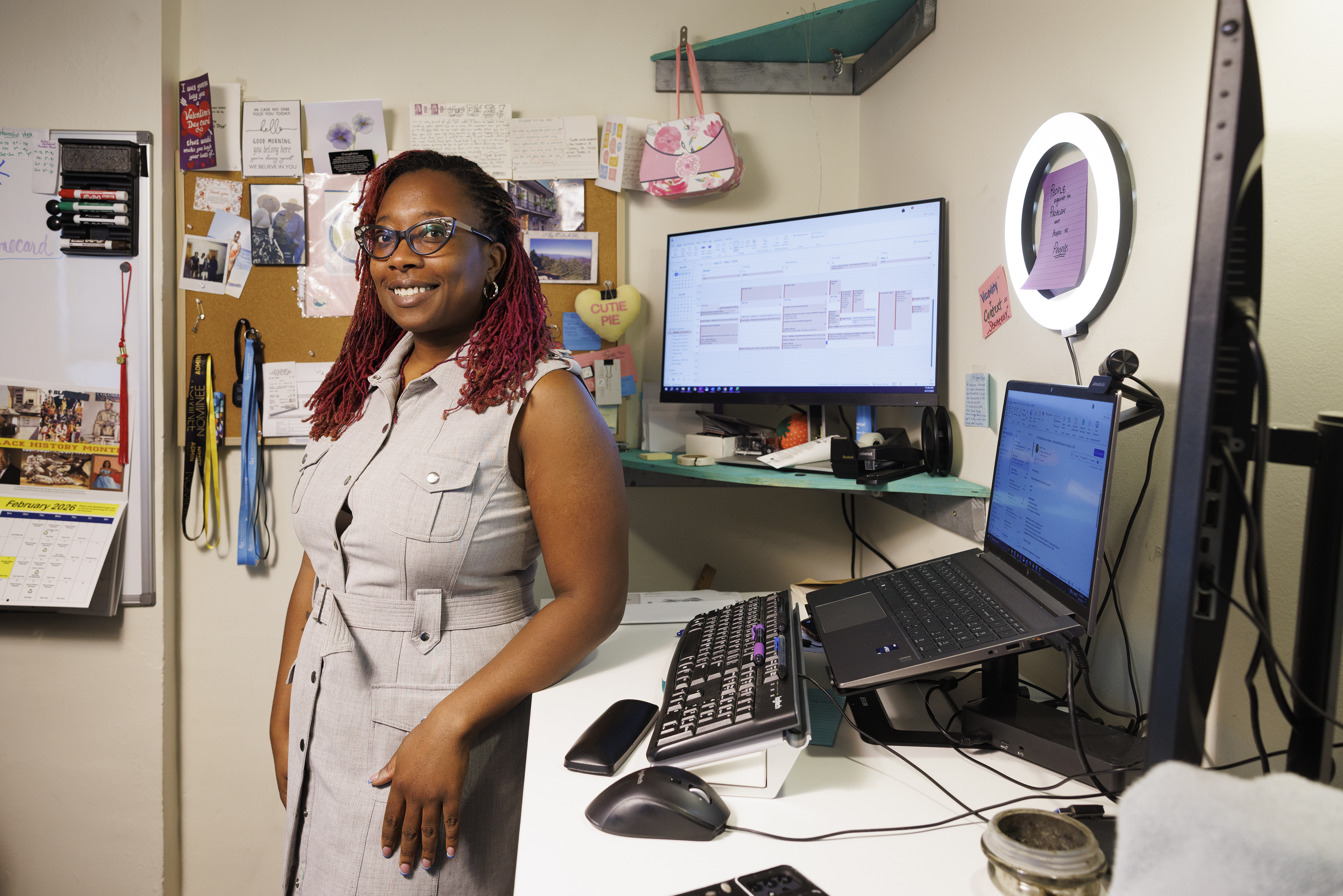
    Nicole Henderson in her home office in Darby. She went back to school while working full-time and recently earned her bachelor’s from Temple.Alejandro A. Alvarez / Staff Photographer

    In 2023, she started working toward that undergraduate degree again. Her colleagues at CHOP were supportive, and she was given flexibility to tune into classes from work sometimes, or work remotely on the days she had a lot of studying to do. CHOP also reimburses a portion of her tuition and has a student loan repayment program. Without that financial support, Henderson says she wouldn’t have pursued the degree.

    She also got a scholarship from the Chamber of Commerce for Greater Philadelphia, which annually gives $5,000 to undergraduate women working at member organizations. Boudreaux, of Jefferson, was also a recipient.

    Juggling work and school can be exhausting, Henderson said. She slept through the day some Saturdays because her “brain was just so overloaded with information.”

    But she got her bachelor’s in business from Temple University in December and walked across the stage at graduation in May.

    Her classes gave her a new awareness of what’s important to bosses and leaders at her organization, she said, and “how to speak their language.”

    She also negotiated a promotion from executive associate to project manager, with a raise.

    Now she doesn’t have to wonder “how am I going to convince people that I’m qualified to do this?” she said. “I kind of already have this degree that says that for me.”

  • This Philly chef goes crabbing in Sea Isle City every year

    This Philly chef goes crabbing in Sea Isle City every year

    Sitting on a skiff on the bay in Sea Isle City, chef Liz Grothe slowly pulled up a submerged string from the lapping waters while holding onto a half-eaten Wawa hoagie.

    On the string, a blue crab emerged, clinging to the severed fish head at the end of the bait holder, called a handline. The crustacean was too small for New Jersey’s recreational size minimum (3 inches long), Grothe and her companions determined. With a sigh, she dropped the crab back into the water.

    It was an hour into Grothe’s Sunday crabbing expedition, and her crew had already caught a handful of crabs.

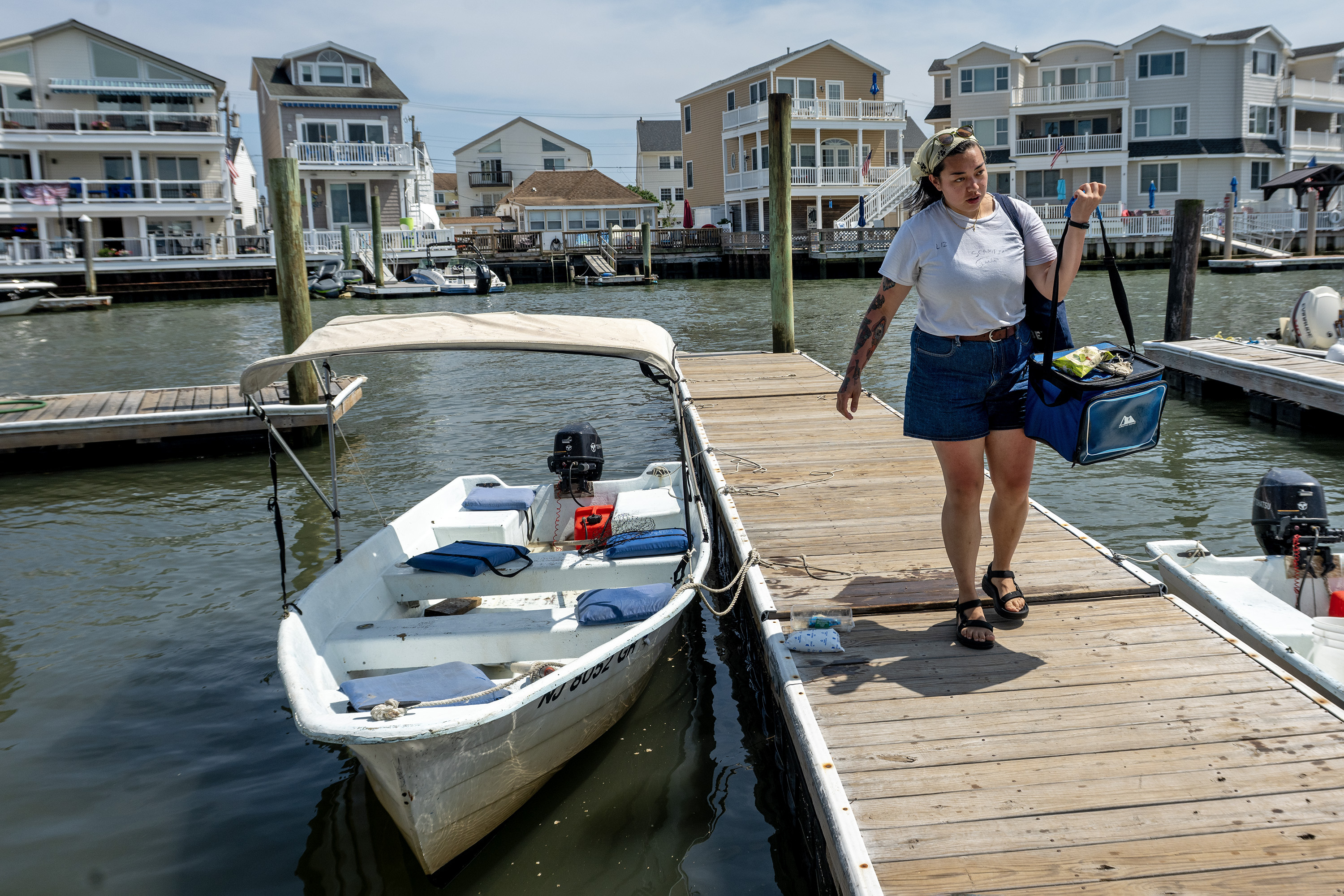
    Chef Liz Grothe washing the day’s catch of grabs in the laundry-room sink of her partner’s family home in West Cape May, Sunday, Aug. 2, 2026. Grothe spent the afternoon crabbing out of Sea Isle City and was making dinner for the family
    Tom Gralish / Staff Photographer

    With bright skies and calm waters that day, she rented two skiffs from Bay Breeze Marina with her partner, Jacob Lance, and Lance’s family to embark on her favorite Shore hobby: crabbing on the bay — and later, cooking up her catch in Cape May.

    “We get all our ‘beach’ time down the Shore at the bay,” Grothe, who owns the Italian-ish Queen Village restaurant Scampi, said. “[The bay] is more like Oklahoma-style waters, where it’s just a shallow lake rather than like the rough seas of the ocean. So this is more my speed.”

    Grothe grew up catching catfish in the creeks of Oklahoma. But it wasn’t until six or seven years ago that an ex-boyfriend introduced her to Sea Isle City’s bay and its crustaceous inhabitants. “He took me on his boys’ excursion, which was crabbing,” she said. “We broke up later — being the kind of girl I am, I stole it. I go to the same place they rented their boats; we do it in the same way I learned.”

    Grothe named her restaurant after a seafood dish, so it’s no surprise she has strong feelings about crabs, the scavengers of the sea. Don’t expect these to show up on her menu, though — they are for personal eating only. The once-a-summer hobby lets her “touch grass, so to speak, and have something to do that’s not the harrowing day-to-day that we deal with in the kitchen,” she said.

    Being close to water was always a priority for her family — Grothe’s mom is originally from the Philippines. Her interest in seafood, however, comes from the love of catching and cooking it. “Eating is just the secondary part of the fun,” she said.

    “I’m in it for the love of the game, not the catch,” she said, while tossing the handline back into the water.

    Bay Breeze Marina rents a boat for $109 for four hours, including gas, cushions, anchor, paddle, cutting board, and a net. The rental also offers a map of the best areas to catch the crabs. It was a no-brainer for Grothe and crew.

    Around 10:30 a.m., she and Lance took one boat, and Lance’s brother and sister-in-law hopped into their own. (Grothe and Lance’s boat didn’t have a bucket, so they improvised, throwing their crabs into a cooler.)

    For four hours, the crew tossed their baited handlines in various areas of the bay — deep waters, shallow areas, just off the coast — to catch as many crabs as they could. They found that chunky pieces of bait — like the trout head — were the best lures.

    Chef Liz Grothe (left) as her partner Jacob Lance preps the corn at his mother’s home in West Cape May, Sunday, Aug. 2, 2026. They spent the afternoon crabbing out of Sea Isle City and were making dinner for the family
    Tom Gralish / Staff Photographer

    “What kind of music do crabs like?” Lance asked the group. “They don’t seem to be digging country.”

    “Crabs are chaos; try house music,” Grothe said. “I could see them vibing to it.”

    But Daft Punk and Prince were the “certified crab bangers,” as Grothe put it.

    By the end of the excursion, the crew caught more than a dozen crabs of varying sizes. After docking their skiffs, Grothe assessed which crabs were too small to keep and dropped those back in the water.

    Left with 14 crabs, the crew decided to supplement their haul with other catch for a big boil. They stopped by the fish market at the Lobster House in Cape May to pick up mussels, shrimp, and clams before heading to Lance’s mom’s house in West Cape May, where the live crabs were washed and tossed into the boiling water.

    The key to cooking a crab boil, according to Grothe: a lot of Tony Chachere’s Creole Seasoning. “Maryland and up, people use Old Bay. But if you go south, those who know reach for Tony Chachere’s,” said Grothe, shaking a big container of it into a pot inside the Lances’ kitchen. “Tony is a saltier, spicier, better Old Bay,” Lance added.

    Family members fill their plates at dinner by Liz Grothe, of Scampi, at her partner’s family home in West Cape May, Sunday, Aug. 2, 2026, after an afternoon crabbing out of Sea Isle City.Tom Gralish / Staff Photographer

    By 5:30 p.m., the table was set with plates of steamed mussels, poached and steamed shrimp with a sungold tomato broth, calamarata pasta, boiled crabs and clams, gluten-free and regular cornbread, and tomato salad. The menu was prepared with leftover ingredients, including sungold tomatoes, basil, and butter from Scampi — “things that were going to go bad and that we had excess of, just a little something to share with the crew.”

    After an almost seven-hour expedition, Grothe and the Lances settled down on the backyard patio, cracking crabs and enjoying the fruits of their labor.

    “If you’re gonna go crabbing, that’s gonna be your activity for the day — you catch them, and then you gotta deal with them,” Grothe said.

    “Doing something that is very labor-intensive, sharing a part of me with other people that’s fun and interesting — even if it’s not the most industrious or profitable thing — is what I love about cooking,” Grothe added. “Just bringing the family together and showing them that I care via doing this stuff makes me feel good.”

    Chef Liz Grothe of Scampi (rear, center) and her partner Jacob Lance eat dinner at his mother’s house in West Cape May, Sunday, Aug. 2, 2026. At left are Lance’s brother and sister-in-law Shmem Rose and Zachary Rachelle, and on the right is his mother, Christina Johnson.Tom Gralish / Staff Photographer
  • How much should retirees worry about inflation?

    How much should retirees worry about inflation?

    Inflation can be scary for retirees. True, Social Security provides inflation increases in line with the Consumer Price Index, or CPI. But any portfolio income, save allocations to inflation-protected bonds, isn’t inherently inflation-protected. And if inflation occurs early in your retirement, those higher prices will do more damage throughout retirement, potentially jeopardizing your portfolio’s ability to last.

    To gauge your inflation risk and how strenuously you need to defend against it, ask yourself three questions.

    Where are you spending?

    You may not have stopped to consider it before, but CPI is meant to capture the spending experiences of all consumers. Categories like housing receive the biggest weighting in the CPI calculation, while recreation and apparel get smaller weightings.

    But a retired older adult who no longer has a mortgage will likely have smaller housing-related outlays, as a percentage of household spending, than the general population, but healthcare expenditures may well be a bigger share of the budget.

    Given those variations, it can be helpful to use the CPI’s weightings as a starting point for understanding inflation’s impact on your household. But you can get closer to a personal inflation rate by looking at your actual spending in each of the major categories alongside the inflation we’re seeing in those areas.

    How much of your income is inflation-adjusted?

    Next look at how much of your cash flow needs are coming from income sources that have some inflation insulation.

    Social Security is an ideal income source because individuals receive income adjustments that track CPI. Some public-sector pensions also track CPI or offer inflation adjustments that are even more generous. If you have a fixed annuity with an inflation rider, you’ll also see your income adjusted by a fixed percentage per year, though it won’t perfectly track CPI. (You can’t buy an annuity whose payouts are linked to CPI today, unfortunately.)

    On the portfolio side, I bonds and Treasury Inflation-Protected Securities are the only investments that are specifically structured to protect against inflation. That’s why building a laddered portfolio of TIPS bonds, with one to mature in each year of retirement, can be a straightforward way to address inflation risk with your portfolio withdrawals. You could invest enough in the TIPS ladder to deliver inflation-adjusted income to cover any fixed living expenses, above and beyond what you can address with Social Security and/or a pension.

    Other portfolio constituents don’t offer as precise a structural defense against inflation, but some asset types do have a good track record of gaining during inflationary periods. Commodities-tracking investments, quite intuitively, top the list: As noted by Amy Arnott, portfolio strategist for Morningstar, they gained ground in all six of the inflationary periods she examined. Stock returns, meanwhile, have been inconsistent or poor in inflationary periods. However, they’ve done a phenomenal job of beating inflation over time. Inflation has run at about a 3% rate since the late 1920s, while equities have gained about 10% on a nominal basis. Thus, a way to think about stocks is that they’re a long-run defense against inflation but won’t necessarily protect your purchasing power year in and year out.

    At the other extreme, fixed-income sources that deliver income in nominal/noninflation-adjusted terms, whether cash or bonds, will tend to be vulnerable in inflationary periods; rising prices have the potential to gobble up all of your income. There are still good reasons to hold cash and bonds in your portfolio — ballast in recessionary environments, for one thing — but their vulnerability in inflationary environments is a major reason not to overdo them.

    Where are you in your retirement?

    Finally, consider where you are in your retirement. As Jamie Hopkins, CEO of Bryn Mawr Trust Advisors and chief wealth officer of Bryn Mawr Trust, and others have pointed out, high inflation early in retirement is just another form of sequence risk, like bad market returns early in retirement. The reason is that if inflation flares up early in someone’s retirement period, those higher costs will elevate costs through the whole retirement period; deflation is very rare.

    In our retirement spending research, we found that those who started retirement at the beginning of a period with unusually high inflation would have a more difficult time sustaining spending for a full 30-year period. To be clear, not every person who retires into a high-inflation environment will run out of money: There have been historical periods where market returns have been strong enough to offset the drag of higher costs. However, because you can’t know how the market will behave as retirement unfolds, it’s wise to curtail spending (to the extent that you can) if inflation happens to flare up early in your retirement.

    This article was provided to the Associated Press by Morningstar. For more retirement content, go to morningstar.com/retirement.

    Christine Benz is director of personal finance and retirement planning for Morningstar and co-host of “The Long View” podcast. Subscribe to her free newsletter, Improving Your Finances.