Blog

  • SEPTA drivers fear screaming riders and chaotic commutes as bus overhaul takes effect

    SEPTA drivers fear screaming riders and chaotic commutes as bus overhaul takes effect

    The lines are drawn, the maps are set, and on Sunday SEPTA began reconfiguring bus routes across the Philadelphia region.

    Bus operators say they worry passengers frustrated over changed routes that take them by surprise and unexpected delays will yell at, curse, or assault them. It has been a persistent problem in recent years.

    In some cases, riders accustomed to staying on one bus route will need to transfer to other buses or the subway and elevated trains. That increases the chances of missed connections and delays. And angry people.

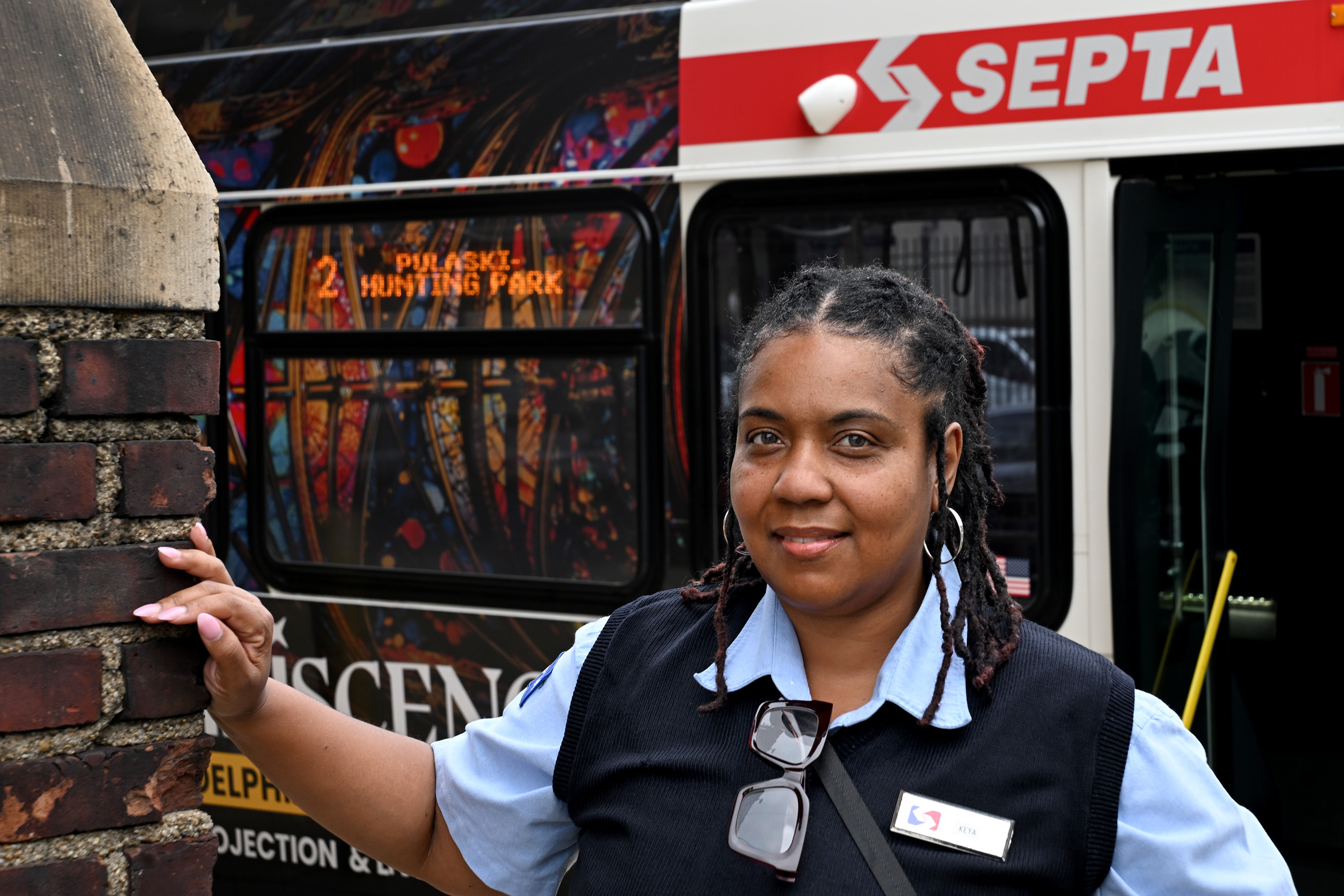
    “You’re upset because you had counted on the bus,” said Keya Sampson, 52, a bus driver for 12 years. “You have to be at this appointment or you’ve got to punch in on time.”

    She is sympathetic, even though delays are outside her control.

    “We’re going to end up in a tricky situation because we’re the face of SEPTA,” Sampson said. “They don’t have anybody else to scream at, unfortunately.”

    Vulnerable riders

    Carlos Guillen, who has worked for SEPTA for 19 years as an operator on buses and the Broad Street Line, noted that SEPTA advises Route 4 riders to take the B, SEPTA’s new name for the subway line, to avoid longer wait times.

    “I can see how it can impact elderly and those with disabilities, especially moving down the sidewalk — they’re not the smoothest thoroughfares,” said Guillen, a safety officer for Transport Workers Union Local 234.

    He noted a lack of ADA-accessible stations on the B north of City Hall.

    Longer term, some bus operators are concerned about the possibility they could be replaced in the future by autonomous driving technology.

    “Autonomously driven vehicles have no place in mass transit,” said Joe Coccio, secretary-treasurer of Local 234, which represents more than 5,000 SEPTA employees, including operators on buses, subways, and trolleys. “They’re flawed. They’re unpredictable.” He said they also can be hacked.

    SEPTA says it has no plans to use robot bus operators and is hiring human ones as fast as it can. But a spokesperson also said the authority wants to keep its options open.

    Most operators are anticipating some confused passengers at first, even though SEPTA has sent out teams to educate people about Phase 1 of the New Bus Network. Maps and cards illustrate the changes, translated into multiple languages.

    New color-coded signage is part of SEPTA’s plan to communicate changes to bus routes that begin on Sunday. Tom Gralish / Staff Photographer

    Some people won’t get the message.

    “People right now don’t even read our destination signs to see if it’s the right bus,” said Ryan Stewart, who operates a Route 35 bus from the Midvale depot in Nicetown.

    What’s changing

    SEPTA has pushed for much of the last decade to streamline its bus network amid declining ridership that predated the pandemic. Planners found that slower travel times due in part to traffic delays and long, twisty routes made service less reliable and discouraged people from relying on buses.

    In the first wave of changes, 30 bus routes will be affected.

    Some routes with low ridership or that duplicate nearby service have been eliminated. Others have been extended. Some will run more frequently, others less frequently, based on analysis of demand. Two new routes have been added.

    The people who pilot the buses on Philadelphia’s narrow streets know that some small and overlooked issues could undercut the New Bus Network program’s goal of quicker, more efficient service.

    Sampson, for instance, has been driving the 63 for the summer. She will be back behind the wheel on Route 4, her regular run for the last four years, this week — as the changes begin.

    Route 4 will have fewer buses running. So SEPTA is deploying 60-foot articulated buses, which carry more passengers.

    SEPTA had been using 40-foot buses on the route, which has narrow streets and hairpin turns, especially in its northern reaches, where there is a longstanding detour that will not end until summer 2027. Operators think the longer buses will have trouble navigating the route.

    Operators have asked SEPTA to look at the issue. “If there’s nothing they can do, it’s going to be a nightmare,” Sampson said. “We’re going to get stuck.”

    She knows well the hard turn from Erie onto Rising Sun, an angled intersection with a pub that often has a beer truck parked on the curb. Only one articulated bus at a time can fit down that little stretch of Old York Road. And the church at 10th and Rockland Streets that has packed funerals, with cars parked to the corners.

    “How do you ask someone who’s grieving, ‘Hey, move your car’? … At the same time, we do need to make the turn, and it does need to be safe.”

    Time will tell

    Paul Pollard, a veteran bus operator on Route 61, said he spends precious minutes stuck in traffic on Main Street in Manayunk on his way north to Roxborough during morning peak hours, as parents drop students off at school.

    But the schedule assumes his bus can sail through.

    “I’ve had people get off my bus, walk two or three blocks down, and go into their job,” Pollard, 49, said. “I’m still sitting in traffic.”

    It is “virtually impossible” to meet the schedule safely, he said. The result: late buses and steamed customers.

    Time will tell if worries become reality, but operators know that they will bear the brunt of any outrage.

    “There’s nobody at SEPTA headquarters getting somebody throwing coffee on them, or spitting on them,” Pollard said.


  • Manayunk landmark restaurant Jake’s will close this fall after nearly 40 years

    Manayunk landmark restaurant Jake’s will close this fall after nearly 40 years

    Restaurateur Bruce Cooper is big on dates. He opened Jake’s in Manayunk on Oct. 19, 1987 — Black Monday, the day the stock market crashed.

    He’ll close it on Oct. 19, 2026, the start of its 40th year on Main Street.

    In between was another financial crisis, an expansion that reflected changing tastes, a devastating flood, a pandemic — and nearly four decades in which Jake’s evolved along with Manayunk itself.

    Cooper, 72, is selling the side-by-side Main Street properties that house what is now Jake’s & Cooper’s Wine Bar. Before the final night, he plans to turn the wind-down into a reunion. Past employees will get a 50% discount on Sundays and Mondays, and the restaurant will extend its September restaurant week (Sept. 14-20) pricing through the final day. On Oct. 19, a party will empty the bar and kitchen, with proceeds going to a local charity.

    “I just wanted to get to [the start of] 40 years,” said Cooper. “I wanted to get out two years ago.”

    Bruce Cooper with his son, Bruce Joseph Cooper II, inside the wine bar at Jake’s & Cooper’s Wine Bar.Allie Ippolito / For The Inquirer

    When Cooper arrived in Manayunk, Main Street hardly looked like the retail and restaurant district it would become.

    Cooper, a Culinary Institute of America graduate from Upstate New York, had spent a decade as executive chef at Lankenau Hospital before deciding that he wanted a restaurant of his own. He took business courses at Community College of Philadelphia and St. Joseph’s University and spent years looking at properties before a real estate agent showed him a former print shop in Manayunk in early 1987.

    Cooper didn’t commission traffic studies. While walking along Main Street, he noticed Jaguars and other expensive cars rolling up to a posh restaurant called Jamey’s, which had opened a year and a half before. Otherwise, as he remembers it, “there were practically tumbleweeds floating down the street. You could find parking on a Saturday.”

    That spring, Cooper bought 4365 Main St. and assembled a group of investors to open Jake’s, his then-wife Helena’s nickname.

    Jake’s was conspicuously ambitious: white tablecloths, contemporary artwork, an extensive wine list, and Cooper’s refined cooking, including pastas from scratch. Dishes included crab cakes with raspberry butter, scallops with red pepper and papaya sauces, and duck breast with tangerine sauce.

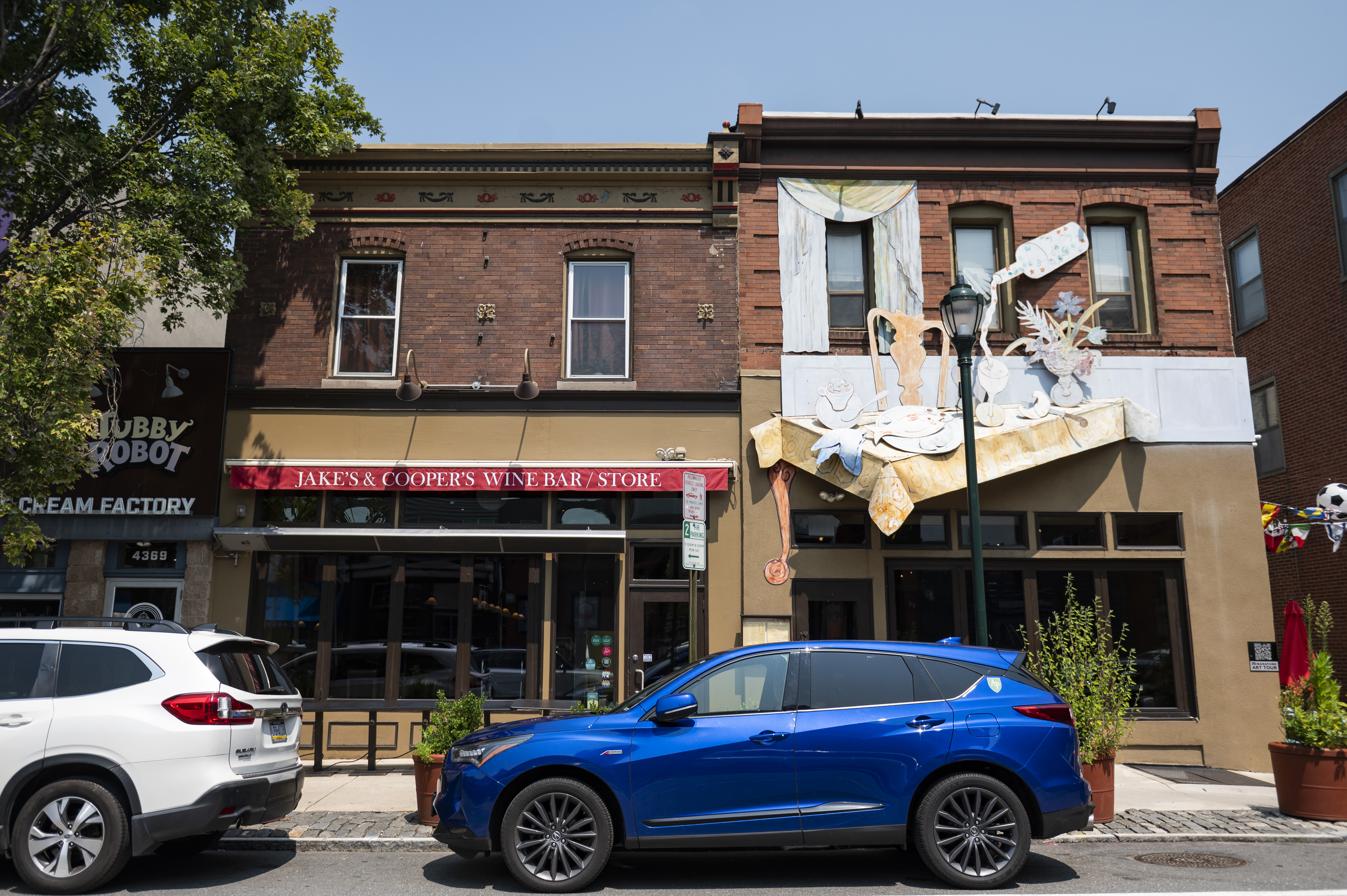
    The restaurant’s whimsical facade depicted an oversize table setting, with food spilling from a plate and wine pouring into a glass, surrounded by flowers, flatware, linen, and crystal — designed to suggest both fine dining and a sense of fun.

    The exterior of Jake’s & Cooper’s Wine Bar in Manayunk on Monday, Aug. 10, 2026. The bar is closing after 39 years.Allie Ippolito / For The Inquirer

    Many early customers came from the Main Line, crossing the Schuylkill over the Green Lane Bridge into the former mill town.

    Business grew quickly. When Cooper had put together his business plan, his accountant told him his projected sales were impossible for a 65-seat restaurant. Jake’s reached the projection in its second year, Cooper said.

    By the 1990s, Main Street was crowded with boutiques and similarly high-aiming restaurants like Sonoma and Kansas City Prime.

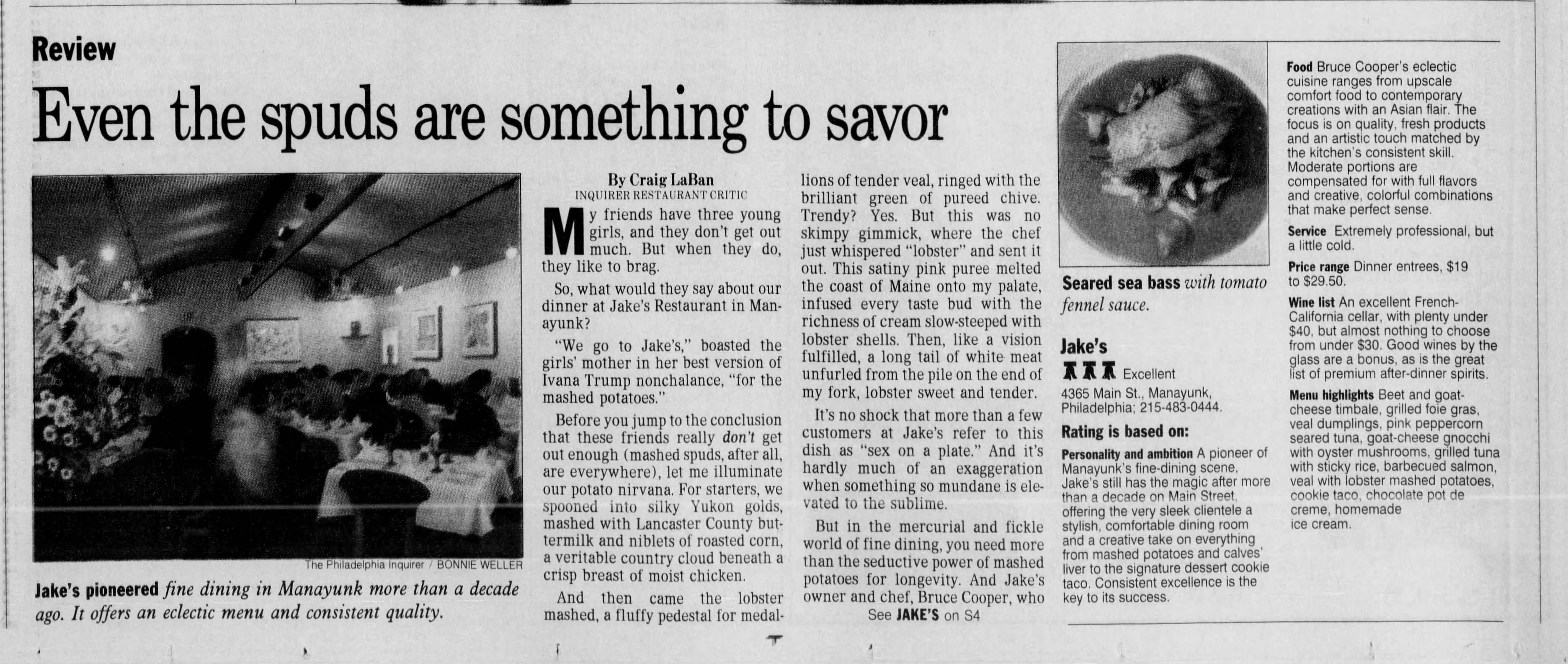
    In a 1998 review, Inquirer restaurant critic Craig LaBan described a room of cushioned banquettes, contemporary design, and a stylish but unstuffy clientele. He called out the veal dumplings with caramelized ginger, seared tuna with sticky rice, foie gras with grilled mango, and the barbecued salmon — a signature.

    Craig LaBan’s first review of Jake’s, from July 1998.Newspapers.com

    And then there were the mashed potatoes. One version paired Yukon gold potatoes with buttermilk and roasted corn. Another, served beneath medallions of veal, was infused with lobster and cream. Patrons, LaBan reported, had taken to calling the latter “sex on a plate.”

    LaBan awarded Jake’s three out of four Liberty Bells, the rating system he used at the time. “That’s when it really started to take off,” Cooper said.

    Manayunk’s overall success brought its own problems. Friction between residents and the expanding restaurant and bar scene in the late 1990s led then-City Councilmember Michael Nutter to push for a five-year moratorium on new restaurants in the district.

    Julia Child with Bruce Cooper at an event in 1996.Courtesy of Bruce Cooper

    Cooper, who later served as president of the Manayunk Development Corp., believes that the moratorium lasted too long and helped push Main Street toward nightlife. He later helped develop agreements among restaurateurs, landlords, the business association, and neighborhood groups that placed operating restrictions on new restaurants.

    Meanwhile, the style of dining that had made Jake’s successful was changing. White tablecloths were giving way to small-plate menus.

    Which leads to another consequential date: March 14, 2008, on the eve of another financial crisis, when Cooper bought the former clothing store next door at 4367 Main St. and opened Cooper’s Brick Oven Wine Bar. Cooper’s is a markedly different restaurant, drawing a younger crowd and serving pizza, small plates, craft beer, and less expensive wines.

    The dividing line quickly blurred, Cooper said. Customers at Cooper’s wanted food from Jake’s, and Jake’s customers wanted dishes from Cooper’s. The restaurants shared a kitchen, and Cooper eventually merged their menus and identities as Jake’s & Cooper’s Wine Bar.

    Head bartender Carrie Hice chatting with patrons at Cooper’s Wine Bar in 2023.Elizabeth Robertson / Staff Photographer

    Then came July 17, 2016.

    Cooper got a middle-of-the-night phone call that a city water main had ruptured outside the restaurant, sending water through the building and destroying the kitchen and the apartments above. He gutted and rebuilt, with business-interruption insurance helping carry the restaurant through a six-month closure.

    The experience changed the way Cooper thought about the business.

    “When you stop a business and then restart it, there are people who had been coming every week, and then they stopped,” he said. “They got into another routine. They went elsewhere.”

    Even months after Jake’s reopened, Cooper said, customers would walk in surprised to discover it had reopened. “That’s when I started looking at things differently,” he said.

    Cooper considered selling, but a real estate adviser urged him to wait as residential development accelerated in Manayunk and Roxborough. Three years later came the pandemic. His extended time at home spoiled him, he said.

    Chris Campana (left), with help from Bruce Joseph Cooper II, choosing a wine from the wall in 2023.Elizabeth Robertson / Staff Photographer

    Three years ago, Cooper moved to Delaware. His son, Bruce Joseph Cooper II, 37, now manages the restaurant day to day, while the senior Cooper comes north once or twice a week to handle scheduling, wine orders, and other duties.

    In June, Cooper put the properties, including four upper-level apartments, on the market for an undisclosed asking price. Cooper said he wants a clean break rather than passing the restaurant to his son, though neither rules out working together on another project someday.

    The closing will end one of the longest remaining restaurant runs from the era that transformed Manayunk. Pitchers Pub (1987) and Zesty’s (1993) are still at it; U.S. Hotel Bar & Grill has been open irregularly since Bill Green, the former mayor and congressman, reopened it in 1986.

    For Cooper, that history encompasses more than the people who ate there. “When you look back, you think about the generations of customers — in a lot of cases, we’re talking about three generations,” he said. “But it’s not just the customers. It’s all the people behind the scenes: the banker, the produce person, all those people who helped you get through things.”

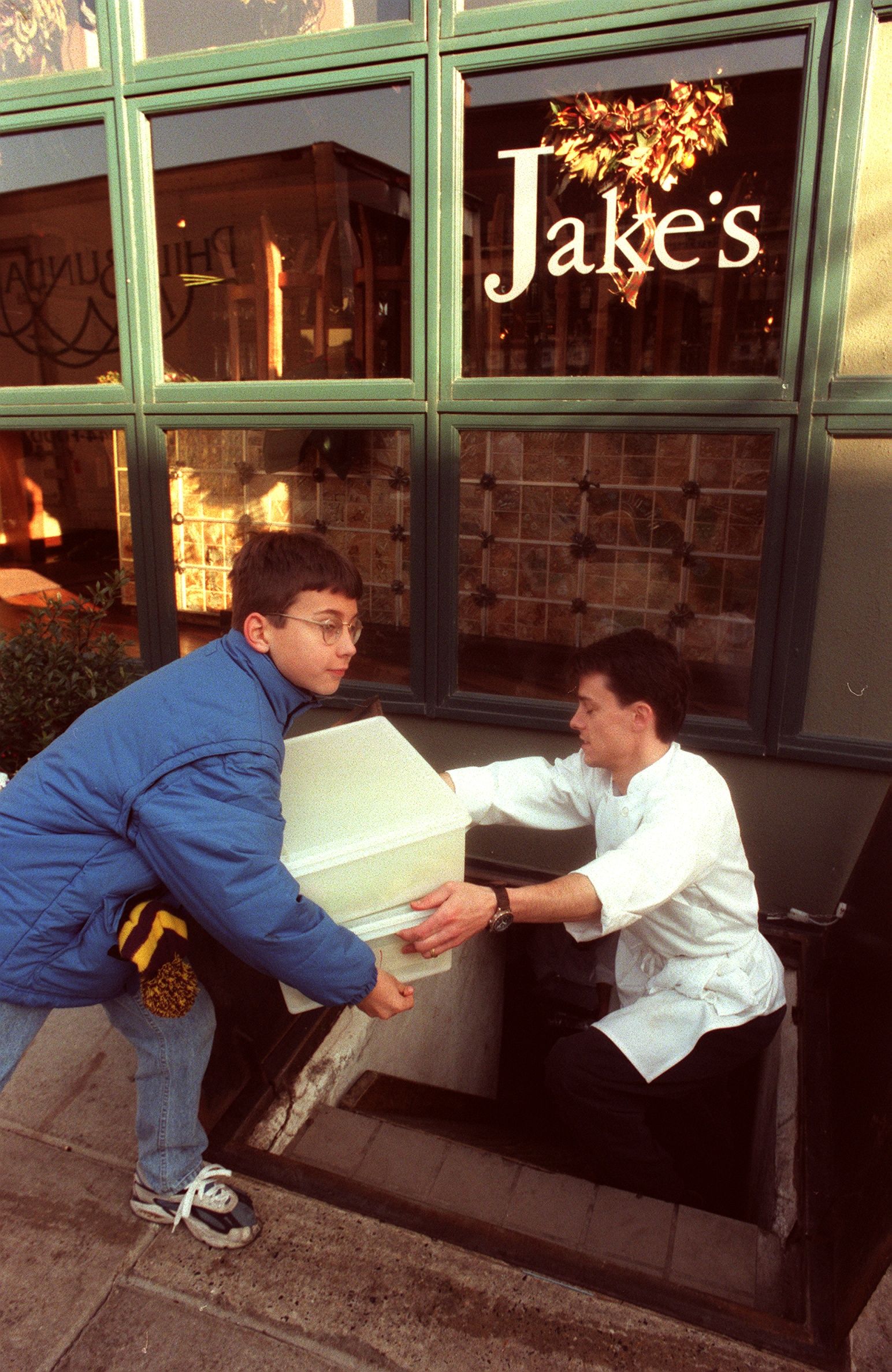
    Bruce Joseph Cooper II, then 11, helps chef Bill Murphy carry food from Jake’s basement to be loaded into a truck for a 1999 holiday dinner by Philabundance. Vicki Valerio / Staff Photographer

    Cooper’s son grew up at Jake’s, handing out cookies at holiday meals his father helped organize through North Light Community Center. He joined the restaurant full-time during the pandemic, starting as a food runner and eventually taking over management.

    Purveyors and other restaurateurs have approached Cooper Jr. with potential job offers, he said, and he would consider working with whoever buys the properties. He once imagined taking over Jake’s himself but is no longer certain that is what he wants.

    His father understands.

    The restaurant business, the senior Cooper said, demands long hours and constant attention. One lesson he would give a new restaurateur is the one that helped him survive both the flood and the pandemic: Own the real estate if you can.

    “If I didn’t own this real estate during COVID, I would have owed the landlord,” he said.

    Cooper has begun informally advising other restaurateurs about the economics of getting into, staying in, and getting out of the business. After nearly four decades, he said, he is ready to find out what comes next.

    His son thinks about Jake’s in more personal terms.

    “Even in my almost five years working as a manager here, I’ve seen kids go from being in the womb to toddlers, and they know me as Uncle Bruce,” the younger Cooper said. “That’s one of the greatest feelings in the world — being able to say, ‘I knew you before you were born, little one.’”

    Bruce Joseph Cooper II (left), general manager, and Bruce Cooper (right), owner, inside Jake’s & Cooper’s Wine Bar in Manayunk.Allie Ippolito / For The Inquirer
  • Letters to the Editor | Aug. 24, 2026

    Letters to the Editor | Aug. 24, 2026

    Real fear

    Wondering if a situation I not long ago experienced in a Walmart would change Luis F. Carrasco’s mind about both sides having extreme ways we disagree. I saw a gentleman wearing the famous red MAGA hat. I said he looked like he supported Donald Trump. He looked at me and said, “You want to make something of it,” while pulling up his shirt — to show off the gun he was carrying. The fear Mr. Carrasco is talking about isn’t just a concern about being yelled at. It’s the same fear felt by liberals like me, judges, people in Congress, and others when we hear our president tell his supporters that violence is not just OK, but recommended.

    Joe Obelcz, Hatfield

    Preventive healthcare

    Earlier this summer, a Spotlight PA article detailed how advocates and lawmakers were trying to figure out how to keep the state’s children insured as the Trump administration’s Medicaid cuts loom. As children prepare to head back to school, I remain struck by how that article highlights an important reality: The most valuable healthcare is often the illness that never occurs because it was prevented.

    A pediatric well-child visit is far more than a physical exam. It is where developmental delays, postpartum depression, food insecurity, mental health concerns, and life-threatening illnesses may first be recognized. It is also where trusting relationships are built, relationships that help families feel comfortable discussing concerns, accepting recommended vaccinations, and seeking care before small problems become crises.

    Difficult budget decisions are inevitable, but how we make them matters. Protecting children’s access to pediatric primary care through Medicaid and Children’s Health Insurance Program is an investment in healthier families, lower healthcare costs, and stronger communities. Every child deserves the opportunity to grow up healthy, and that starts with ensuring they can see their pediatrician.

    Eliza Sitter, Philadelphia

    Unsung hero

    It’s recently been reported that the U.S. Navy is thinking about removing Doris Miller’s name from its newest aircraft carrier. Miller was a cook aboard the USS West Virginia during Japan’s attack on Pearl Harbor on Dec. 7, 1941. He also happened to be Black. On that day, Miller, in the face of enemy bombing, displayed extreme heroism by saving the life of the ship’s injured captain and manning an anti-aircraft gun that brought down at least one Japanese plane, if not more. He was later awarded the Navy Cross, the first Black American to receive it. Two years later, he made the ultimate sacrifice for his country when his carrier was torpedoed by a Japanese submarine and he went down with it.

    The “shocking” part of this story is that the U.S. Navy is seriously considering replacing Miller’s name with that of … wait for it … Donald J. Trump. And what heroism did Trump exhibit to warrant such an honor? Sure, he avoided military service during the Vietnam War because of “bone spurs.” But who knows, if not for such “bone spurs,” Trump may very well have saved more than one captain and brought down thousands of enemy planes, ending that war like he claims to have ended so many other wars during his second term in office. That counts for a lot among his cabinet members. And he certainly has been courageous, playing golf despite his “bone spurs” (by one tally, he’s spent about 22% of his second term golfing).

    Of course, none of this is shocking. Trump cares only about three things, and not one of them involves bettering the lives of the average American: enriching himself and his family at every opportunity, seeking retribution against his perceived enemies, and slapping his name on anything and everything he can. None of that would be possible if not for the compliance of this Congress and this Supreme Court. It’s time to put a stop to this nonsense and elect officials who are serious about the real issues facing our country — and who have solutions that put the American people first.

    Jeffrey Meyer, Chicago, Ill.

    …

    The possible renaming of the USS Doris Miller as the USS Donald J. Trump reflects the reality of the president’s second term. During his first term, Trump made an attempt to connect with African American voters despite his own pre-presidential comments and actions. In his second term, Confederate names on Army forts are in, woke is out — as are assistance to college students of color, Project Head Start, and other government programs aimed at giving marginalized people an opportunity to advance in our society. The disrespect shown to America’s first Black hero of World War II follows in the wake of Pete Hegseth’s purging our military of qualified Black and female generals and admirals. Trump 45 was challenging to endure, Trump 47 is moving our country closer to self-centered one-person rule.

    Paul L. Newman, Merion Station

    Blame game 2.0

    In the coming years, we may witness the return of one of America’s oldest and most reliable excuses — only updated for the digital age. For generations, students fell back on the classic line, “My dog ate my homework,” a phrase that became shorthand for avoiding responsibility with a smile. Today, we’re on the verge of adopting its modern successor: “The AI messed it up.”

    Already, artificial intelligence is being quietly positioned as a cultural scapegoat. A poorly worded email? Blame the AI assistant. An awkward social media post? Must have been the algorithm. A missed deadline? The chatbot must have misunderstood. The technology is new, but the impulse is ancient: when something goes wrong, point to anything except ourselves.

    The irony is that AI doesn’t remove human responsibility — it increases it. These tools are powerful, but they are not autonomous moral agents. They don’t decide our tone, our judgment, or our priorities. Yet we seem eager to hand them not only our tasks, but our accountability.

    If we’re not careful, “The AI did it” will become the next cultural reflex, allowing us to sidestep ownership of our words and actions. It may not be long before society looks back and realizes that the dog never ate the homework — and the AI didn’t write the email. We did.

    Steve Abramovitz, Cherry Hill

    Toeing the line

    Your recent editorial on how American troops are being strained for nothing during the Iran war, referred to Trump ducking service during the Vietnam War “with the reported assistance of a sympathetic Queens podiatrist.” The doctor in question had good reason to be sympathetic: his landlord was Fred Trump, Donald’s father.

    As The New York Times reported in 2018, the podiatrist, Dr. Larry Braunstein, died in 2007. But his daughters say their father often told the story of coming to the aid of a young Mr. Trump during the Vietnam War as a favor to his father. They said his role in Mr. Trump’s military exemption had long been the subject of discussions among relatives and friends. “It was family lore,” Elysa Braunstein told The Times. “It was something we would always discuss.”

    In keeping with his lifelong passion for telling the truth, Trump later claimed that it was a high draft lottery number that kept him from being called up — but he got the bone spurs deferment in 1968: the lottery wasn’t instituted until a year later.

    Isaac Segal, Cherry Hill

    Muscular politics

    Secretary of Defense Pete Hegseth says that his mandatory screening program for testosterone deficiency for the troops is “necessary to allow them to operate at their absolute best.” This is an inaccurate, inappropriate and irresponsible action from incompetent Trump cabinet officials, including the Health and Human Services Secretary Robert F. Kennedy Jr. As a practicing physician, I was alarmed by Hegseth’s plan, which goes against current guidelines issued by the Endocrine Society, American Urological Association, American College of Physicians and the Food and Drug Administration, all uniformly recommending against population-level screening, and advocating only for symptom-driven case detection at any age, in association with other medical illnesses including type 2 diabetes, chronic kidney disease, obesity, and chronic opioid and corticosteroid use. Testosterone replacement therapy, even if clinically warranted, has well documented serious side effects including fractures, pulmonary embolism (lung blood clots), and a potential increase for atrial fibrillation, a heart rhythm abnormality that is associated with blood clots including stroke. Unfortunately, our military continues to be led astray by an unqualified, self-serving weekend television host whose ego and ill-advised decision-making place our troops at increased risk of long-term health problems.

    Jay Klazmer, Cherry Hill

    Join the conversation: Send letters to letters@inquirer.com. Limit length to 150 words and include home address and day and evening phone number. Letters run in The Inquirer six days a week on the editorial pages and online.

  • Dear Abby | Dad asks a lot of low-income live-at-home son

    DEAR ABBY: My middle-aged son is on the autism spectrum and has recently come back home to live with us. He left home at 19 and has always had roommates. We didn’t realize that he had autism until about a year ago.

    We like having him here but are having a difficult time adjusting. My son has agreed to help with bills and contribute toward groceries, but my husband thinks we should split all expenses three ways equally. My son works in the food service industry and earns a low wage, even though he puts in 32 to 34 hours a week. He eats at work most of the time and at home only twice a week. I’m retired and live on a small Social Security check. My husband makes more than twice what my son and I make. I think we should contribute based on our income, and I feel that my son and I should contribute 20% each toward food and other bills. Every time I try to discuss this with my husband, he gets angry and accuses me of taking advantage of him. I’m hoping we can get this resolved and move on.

    — DESPERATE MOM

    DEAR MOM: I assume you want your son to stay with you for the long term; does your husband feel the same? Is it possible he’s being difficult about money so your son will move out again? The phrase “on the autism spectrum” covers a wide range of needs, so I’m not in a position to weigh in on what you should expect of your son. A licensed family counselor who specializes in autism may be able to help you and your husband understand how much your son is capable of contributing.

    ** ** **

    DEAR ABBY: My fiancé, “Dustin,” and I have been a couple for five years. We live together and are fairly happy. The problem is his gaming habits. At first, it wasn’t an issue because I also play the occasional video game. Since moving into our own place, I’ve noticed Dustin has started spending a tremendous amount of time on these video games. From the time he wakes up around 1 p.m. until right after he gets off work around 10 p.m., he’ll log on and play for hours. Most nights he doesn’t come to bed until 5 a.m.!

    With all his free time, he doesn’t help clean or cook, and I get none of his attention. I’m not sure where I go from here. I have spoken to him about this habit, but he doesn’t see any issue because he grew up constantly playing games. I need some guidance on this issue because it’s driving a wedge in our relationship.

    — GAME OVER IN NORTH CAROLINA

    DEAR GAME OVER: Dustin doesn’t see any issue with the status quo because it isn’t a problem — for him. He’s got a pretty good deal. You do the cooking and the cleaning and contribute to half the expenses, but you’re not even getting companionship.

    Tell your fiancé you need more from him because this isn’t what you signed up for when you moved in together. Offer him the option of couples counseling so your issues can be mediated. If he isn’t willing and this doesn’t resolve the problem, then cut your losses and move out unless you want to spend the rest of your life as a “gaming widow.”

  • Horoscopes: Monday, Aug. 24, 2026

    ARIES (March 21-April 19). Today features the intelligence of the body that shows itself through movement. Movement is the language of the wild. It’s what the creatures understand and respond to. Through movement, we learn what kind of creature we are.

    TAURUS (April 20-May 20). You don’t like to be told what to do, and that comes up in interesting ways. For instance, the hardest part of a meditative practice can be letting someone else dictate your breathing, even if that person is you.

    GEMINI (May 21-June 21). On an average day, your eyes land on thousands of things without really seeing them. But today, an ordinary object seems to call you to study it as though it washed ashore from another planet. Your takeaway says more about you than the object.

    CANCER (June 22-July 22). You can learn from watching what makes a person lose track of time. Turn the study on yourself. Your attention already knows where it wants to live, and you’ll feel most content and congruent when you let it go there.

    LEO (July 23-Aug. 22). Laughter will interrupt your thinking. Maybe this is why you cherish your funniest friend. For a few seconds, there is simply the laugh itself. It gives the mind a brief, unexpected holiday, all-inclusive and totally free.

    VIRGO (Aug. 23-Sept. 22). Conversations are a real education today. People become far more interesting because you don’t see them as your audience. Instead of waiting for your turn to talk, you see your connection as a chance to collect clues.

    LIBRA (Sept. 23-Oct. 23). If it feels like you need to prepare for a conversation, challenge yourself to go in cold. Today, this will force you to be in the moment, seeing and understanding more about this scene than you would if you already knew what you were going to say.

    SCORPIO (Oct. 24-Nov. 21). Today, your attention behaves like a flashlight instead of a floodlight. Rather than chasing every corner of the room, you point it at one thing and let your mind wander only within the limits of this focused illumination. There is a whole universe right here.

    SAGITTARIUS (Nov. 22-Dec. 21). Music asks something unusual of the body. Even people who refuse to dance may not be able to resist tapping a finger or nodding their head. Rhythm reaches parts of us that language only visits from time to time.

    CAPRICORN (Dec. 22-Jan. 19). You have spent your whole life inside your own voice. Imagine hearing it for the first time today. Would it sound encouraging? Funny? Curious? Familiarity has hidden things that you will now experience more fully.

    AQUARIUS (Jan. 20-Feb. 18). Not only does self-consciousness feel uncool, it can actually feel painful to you. But you can avoid the whole dynamic by bringing your attention to the other person as though you’ll be tested on this later. You just might be!

    PISCES (Feb. 19-March 20). Somewhere along the way, many adults begin asking what a thing is worth before deciding whether it’s worth noticing. Not you. Today, you’re like a child picking up an interesting rock. You’ll turn it over, hold it to the light and put it in a pocket for later.

    TODAY’S BIRTHDAY (Aug. 24). Welcome to your Year of Profound Comforts in which a cozy vibe touches down on every part of your life, without you even having to ask for or earn it. It’s as though the universe just wants to pamper you. More highlights: You’ll have the help and means to choose the work you want instead of settling for what you’re given. The version of love you want comes easily. Your talent is featured. Aquarius and Taurus adore you. Your lucky numbers are: 6, 27, 24, 1 and 15.

  • Enes Kanter Freedom ejected from Fever-Sky game after he was confronted by Sky’s Cloud

    Enes Kanter Freedom ejected from Fever-Sky game after he was confronted by Sky’s Cloud

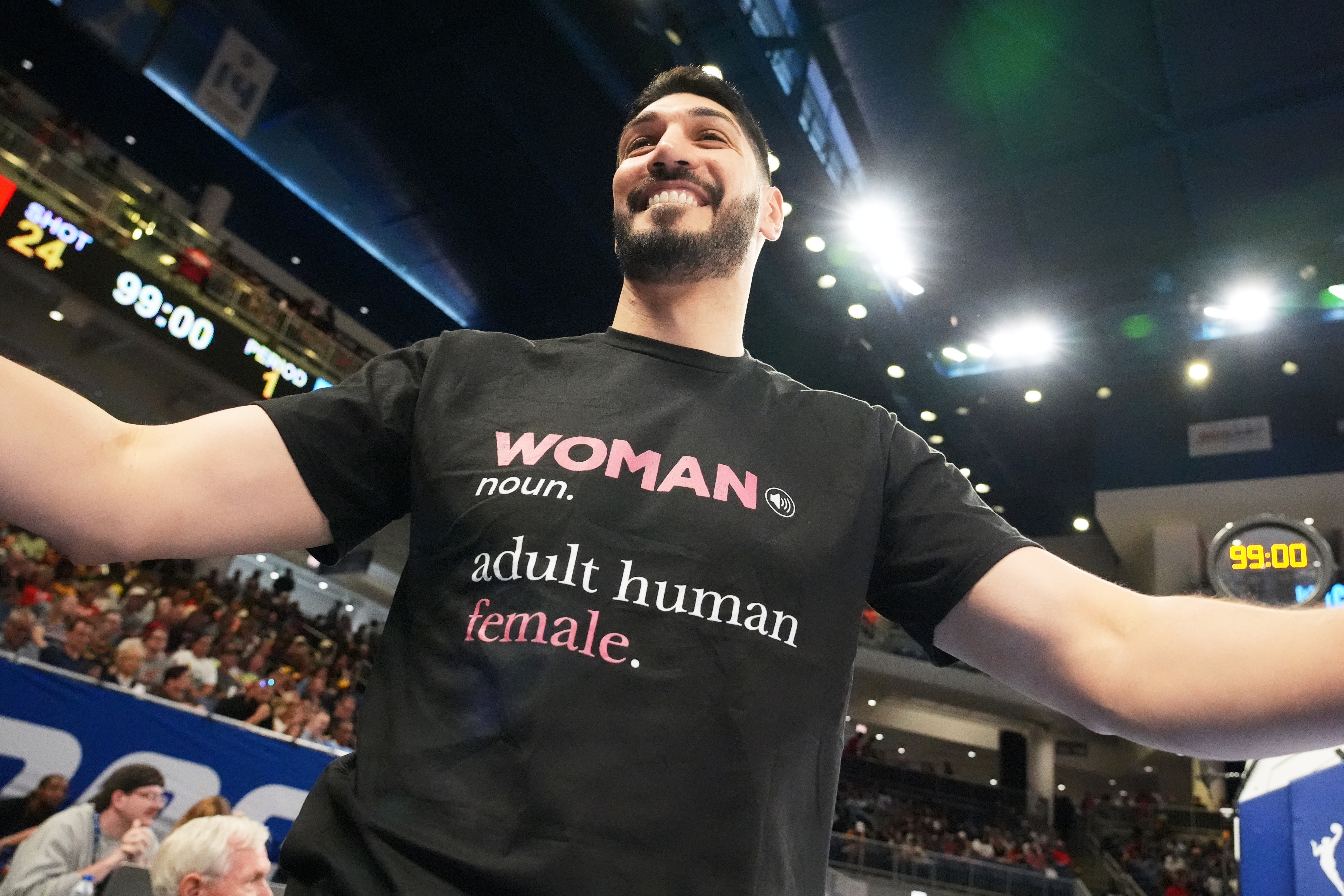
    CHICAGO — Former NBA center Enes Kanter Freedom was ejected from Sunday night’s Indiana-Chicago WNBA game after Sky guard Natasha Cloud yelled and pointed in his direction late in the third quarter.

    Freedom was sitting along the baseline. He had on a black shirt that read “WOMAN noun. adult human female.”

    The Fever called for a timeout after Cloud scored inside with 1:22 left in the third. Cloud then went to confront Kanter, who held his arms and took one step on the court. Security and a handful of Sky players stepped in between the two before the dispute escalated.

    Freedom was then escorted from the court area. He displayed his shirt as he walked toward the lobby. He had a conversation with a group of police officers before departing Wintrust Arena.

    Freedom and Royce White, another former NBA player, declared themselves eligible for the WNBA draft this month, saying they identify as women.

  • Amazon plans to start drone delivery in South Jersey

    Amazon plans to start drone delivery in South Jersey

    Autonomous drones may soon be delivering Amazon packages across South Jersey.

    Amazon representatives have told local officials and emergency responders that the e-commerce giant plans to start drone-delivery service out of its West Deptford facility this fall, according to West Deptford Mayor James Mehaffey and Mantua Township Police Chief William Murphy.

    The news comes days after Amazon announced a massive expansion of its Prime Air program, which already delivers packages via drone from launch sites in 11 U.S. cities, none of which are in the Northeast.

    By the end of the year, Amazon wants to expand its drone coverage area to nearly 500 cities and towns nationwide, the company said, allowing tens of millions of customers to get products flown to their doorsteps in 30 minutes to an hour.

    The announcement is the latest effort by Amazon to decrease delivery times and hold its edge as the world’s most popular online retailer — and the most lucrative company in terms of sales. In May, Amazon rolled out 30-minute ground delivery across Philadelphia.

    Amazon’s top rival, Walmart, recently announced its plans to offer drone delivery in Philadelphia.

    “We are always exploring new ways to get customers a wider selection at faster speeds,” Amazon spokesperson Smitha Rao said in a statement, in response to The Inquirer’s questions about the South Jersey meeting, which occurred last week.

    “We are currently working with local officials and exploring opportunities to expand our fast, reliable drone delivery service to reach customers in areas across the country.”

    Amazon is hiring for several West Deptford-based Prime Air positions, including flight monitor, ground manager, and a safety and compliance officer. The job listings were posted on the company’s online portal last month.

    The West Deptford warehouse opened in 2018 as the company’s fourth robotic fulfillment center, where robots and humans work together. It has also been the site of a walkout by employees who say they deserve better pay and working conditions.

    According to local officials briefed on the Amazon plans, the company’s drones would fly out of the warehouse at 240 Mantua Grove Rd., a 650,000-square-foot facility that sits next to I-295 and is among the company’s largest in the region.

    The Amazon Fulfillment Center in West Deptford, seen in 2019, is among the region’s largest.TIM TAI / Staff Photographer

    The company’s drones can typically deliver to addresses within 175 square miles of each launch site.

    In a Facebook post from the Mantua Township Police Department account, Murphy shared a screenshot of the local drone-delivery radius that he said Amazon shared during the Zoom meeting. The photo indicated that drones from the West Deptford site would be able to reach places within about a 15-mile radius — from Bellmawr to Mullica Hill in New Jersey, as well as parts of Ridley Park, Darby, Glenolden, and South Philadelphia across the Delaware River.

    Amazon told local officials that the drones would operate from 15 minutes before sunrise to 15 minutes after sunset, according to Murphy, and be authorized to fly at altitudes below 400 feet, in accordance with Federal Aviation Administration regulations.

    The company plans to start drone delivery from West Deptford as early as October, according to Murphy and Mehaffey.

    Amazon’s drones can deliver groceries, cosmetics, medications, even iPhones — anything that weighs 5 pounds or less and fits in a large shoebox. Amazon says those characteristics apply to more than 60% of its most popular products.

    Boxed orders are sorted at the Amazon Fulfillment Center in West Deptford in 2019.TIM TAI / Staff Photographer

    Customers can browse drone-deliverable items the same way they search for any other Amazon products, according to the company, and select the best spot for a drone to leave the package.

    Amazon Prime members can get complimentary drone delivery on orders of $50 or more, or pay an extra $2.99 on orders under $50. Nonmembers can pay $4.99 for drone delivery.

    The drones are not monitored by humans in real time, according to Amazon. Instead, the devices use an autonomous system of cameras and sensors to navigate, avoid obstacles, and deliver the package safely.

    Some South Jersey residents said they have questions about those cameras, as well as the impact Amazon drones may have on their quality of life, safety, and environment. As of Sunday, more than 100 people had signed a petition asking for public hearings and written disclosures about Prime Air and its data practices before the drones start flying in the area.

    Amazon said in its expansion announcement that the drones’ cameras do not “track individuals or record movement.” The drones are electric, emit no exhaust, and make little noise, according to the company. The drones are quieter during drop-off than “an idling delivery truck,” Amazon said, and sound similar to a “window fan on low” while in flight. The company said people indoors cannot typically hear the drones outside.

    In areas where the drones are already flying, company spokesperson Rao said, “the response from customers using Prime Air has been overwhelmingly positive.”

    Mantua Township Mayor Bob Zimmerman told residents in a Facebook post that the Amazon drones were “forthcoming.”

    “Please understand that whether you are for, or against deliveries of this kind by drones, we have no say over the matter,” wrote Zimmerman, who did not return a request for additional comment.

    Amazon has not said whether it plans to fly drones from other warehouses in the Philadelphia area, and has not posted Prime Air job openings at other local sites.

    The company has dozens of facilities across the region, with larger warehouses in Carneys Point and Logan Townships in South Jersey, and near Wilmington. Officials in those areas did not return requests for comment.

    Amazon’s Logan Township warehouse is pictured in 2021.STEVEN M. FALK / Staff Photographer

    Jason Bobst, township manager of West Norriton Township in Montgomery County, said the company has not been in touch about flying drones from its facility there.

    “We have not been approached by Amazon regarding drone delivery operations from its West Norriton facility, nor have we received any indication that Amazon is currently considering that location for drone delivery service,” Bobst said in an email.

    Bobst said township officials did have a preliminary conversation about Walmart looking to expand its drone delivery service in the area, but nothing formal has been presented.

    In recent weeks, food-delivery apps Uber Eats, Grubhub, and DoorDash also have unveiled similar plans, but have not started flying to Philly-area customers.

  • Pete Buttigieg returns to South Carolina as he weighs another White House run

    Pete Buttigieg returns to South Carolina as he weighs another White House run

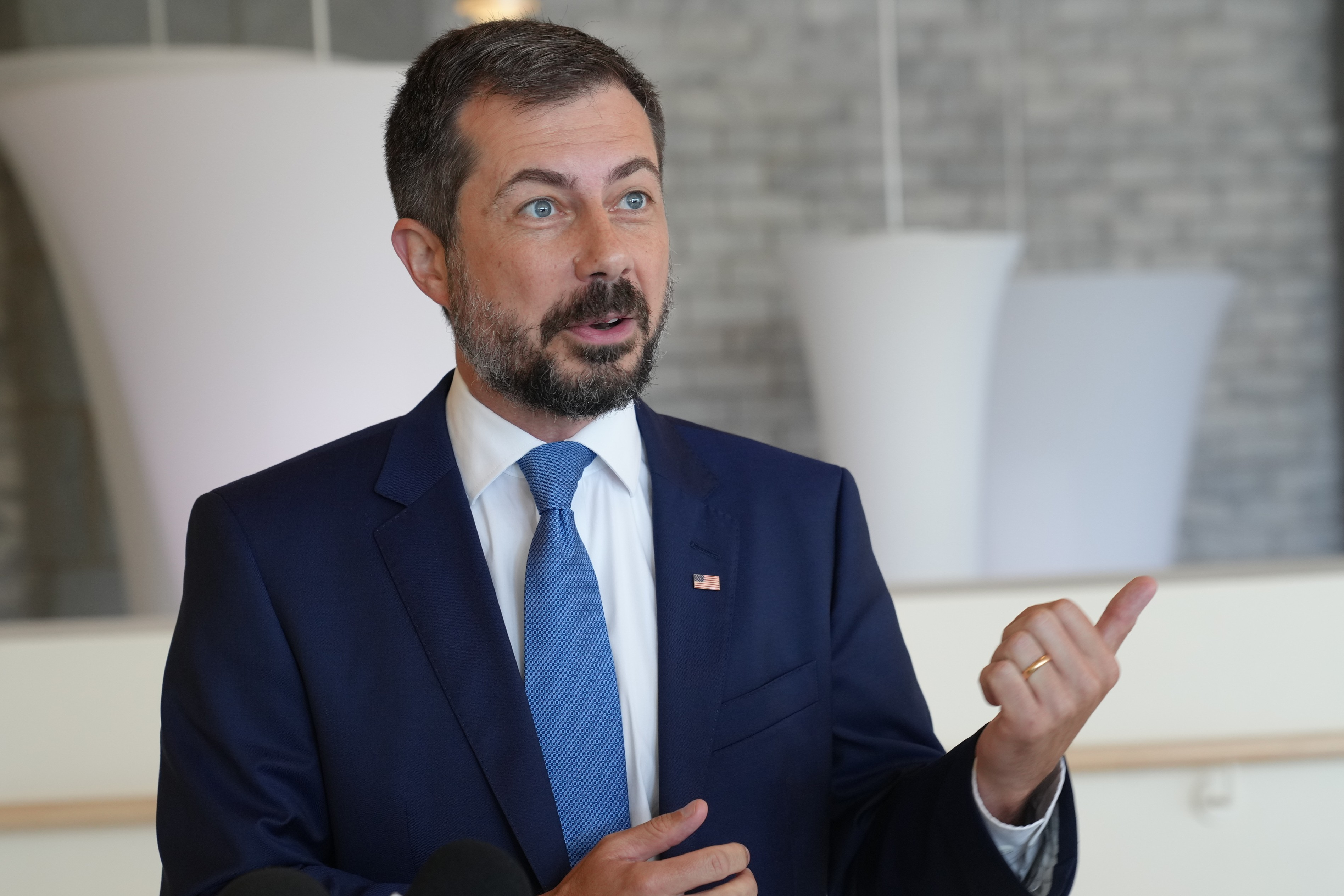
    ORANGEBURG, S.C. — The last time Pete Buttigieg was giving a political speech in South Carolina, it was to mark a distant finish in the state’s primary that effectively ended his campaign for president.

    Returning this weekend as he mulls a second run for the White House, Buttigieg set out to reintroduce himself to the state and the Black voters he struggled to win in 2020. The results were encouraging.

    There was a standing ovation in a Black church in South Carolina when Buttigieg was credited for helping bring millions of federal dollars to the area for a project as President Joe Biden’s transportation secretary. A second ovation came as Buttigieg gave a speech warning of a country in “big trouble” while laying out his own vision for what should come next.

    “There is no such thing as again in real life. The only way out is through,” Buttigieg told the crowd of more than 200 people at an NAACP Freedom Fund Dinner. “If we recognize and embrace a future that is different from the past, we will do better.”

    The warm applause was a markedly different reception than six years ago, when a fourth-place showing in South Carolina helped derail Buttigieg’s presidential campaign while exposing his failure to connect with Black voters. The state is likely to have an even greater say in his political future as the first contest in the Democratic presidential primary in 2028.

    Starting the election calendar in South Carolina is intended in part to give Black voters a greater voice at the outset of the nominating process. For Buttigieg and other potential contenders, winning the support of this group that makes up a majority of South Carolina’s Democratic electorate is essential.

    “You need to demonstrate that you can win Black voters,” said Jaime Harrison, a former Democratic National Committee chairperson and South Carolina Democratic Party chairperson. “If you can’t win Black voters, you can’t be the nominee of our party.”

    2028 campaign is already coming to South Carolina

    Buttigieg insists he has made no final decision about whether to run for president again.

    “Right now, I’m totally focused on 2026,” he told reporters Saturday.

    But his South Carolina trip — a week after visiting another early-voting state, Nevada — had all the trappings of a potential presidential bid.

    He raised money Friday in Charleston with Nancy Lacore, a U.S. House candidate trying to flip a Republican-held seat. On Saturday morning, he spoke at a policy conference before traveling to Claflin University, a historically Black university in Orangeburg.

    Davina Perry, a third-year student at Claflin, said she came away from Buttigieg’s visit thinking he would be a “good candidate” if he ran.

    “Secretary Pete has definitely put himself on my radar for 2028 now, for sure,” Perry said. But, she added, “I do want to see more representation from people who look like me.”

    That evening, Buttigieg attended a dinner at a church in Orangeburg, a nearly three-quarters Black city with a deep history in the Civil Rights Movement. The crowd included local NAACP leaders, ministers, and elected officials. Buttigieg worked the room, giving hugs and taking photos.

    “He is responsible for the Railroad Corner,” said Orangeburg Mayor Michael Butler, referencing a project aimed at revitalizing the city’s downtown that received a $22.7 million federal grant. “Do I need to say any more? We need to stand and welcome the former secretary.”

    Buttigieg used the speech that followed to make a broader case about the direction of the country, arguing that Democrats cannot separate Americans’ economic frustrations from a political system he described as increasingly broken.

    “I have come to believe that the kitchen table cannot be improved unless we are also reforming the institutional and political floor on which that kitchen table sits.”

    Black voters will have the first say for Democrats in 2028

    For Buttigieg, the weekend offered signs of how much has changed since he came to South Carolina in 2020 as a 38-year-old Indiana mayor asking voters to take a chance on him. He points to what he delivered during four years in Biden’s cabinet, including specific projects in the state.

    But Buttigieg said he also came to South Carolina “to propose something” about the country’s future. Butler, Orangeburg’s mayor, liked what he heard.

    “His speech was what you talk about at the kitchen table. How America is going to survive all of this?” Butler said. “He brought hope to us.”

    South Carolina Democratic leaders say the close, personal engagement with candidates is exactly what they hoped for. Those involved in the push to make South Carolina first envisioned the living-room conversations and retail politics long associated with Iowa and New Hampshire.

    “You got to go listen. You got to go all over the place,” Harrison said. “You have to make meaningful investments. That’s how you win South Carolina.”

    Buttigieg is hardly alone in his early trip to the state.

    Other potential 2028 contenders, including California Gov. Gavin Newsom, Kentucky Gov. Andy Beshear, U.S. Rep. Ro Khanna of California, and U.S. Sen. Cory Booker of New Jersey have made trips to the state as what is expected to be a large Democratic field begins to take shape. Former Vice President Kamala Harris already has deep ties in the state.

    The electorate they will encounter has changed from 2020, when Biden’s victory in the state resurrected his presidential campaign and put him on a path to ousting Republican President Donald Trump.

    Four years later, Trump defeated Harris and returned to the White House, which Black leaders say has significantly hurt their community. Earlier this year, a Supreme Court decision weakened a core provision of the Voting Rights Act, threatening Black political representation across the South.

    “We must start our process where democracy must still be fought for, in the full view of the nation,” former interim DNC chairperson Donna Brazile said in a speech this year advocating for South Carolina to go first.

    Buttigieg addressed that anxiety directly Saturday night, describing efforts to weaken the Voting Rights Act as the culmination of a “multidecade effort.” He warned of a broader push “to demolish African American political power.”

    Harrison said Buttigieg’s trip this weekend was a “good start,” but that Buttigieg and all the other potential 2028 candidates have a long road ahead to prove themselves to the state’s voters.

    “It has to be a good start and then you got to continue,” Harrison said. “It can’t just be, ‘Oh, pop in and then I’m going to pop back out.’”

  • Kyle Schwarber caps dramatic comeback with walk-off home run as Phillies sweep Cardinals

    Kyle Schwarber caps dramatic comeback with walk-off home run as Phillies sweep Cardinals

    Edmundo Sosa walked up to the plate in the bottom of the ninth inning on Sunday afternoon. The bases were loaded with two outs. The Phillies faced a four-run deficit against the Cardinals.

    These aren’t circumstances that normally lead to success (let alone a six-run rally, en route to a 6-4 walk-off win). But Sosa wasn’t afraid. He looked to his teammate, Bryce Harper, standing on third base, 90 feet away.

    Harper gave him a knowing glance. “Like, ‘Yes, you got this,’” Sosa recalled. Then the utility infielder turned toward the dugout. His teammates wore the same expression.

    Momentum in the ballpark was starting to build. Kyle Schwarber could feel it from the moment Harper hit his line-drive double to lead off the inning.

    Luis Arraez and Brandon Marsh recorded back-to-back flyouts, but J.T. Realmuto singled, and Justin Crawford walked to give the Phillies a chance for a victory.

    Schwarber leaned over to Trea Turner, who was beside him, and joked that Sosa would “hit a grand slam somehow.” He didn’t do that. But the infielder did something nearly as good; roping a double to left field double that just stayed fair, to drive in all three runners.

    Momentum continued to build; the infield dirt vibrated, the crowd began to rumble. Schwarber stood in the on-deck circle as Bryan De La Cruz worked a six-pitch at-bat against Cardinals closer Riley O’Brien, fouling off a two-strike pitch before taking two balls, then finding a hole up the middle for a game-tying single.

    Then, it was Schwarber’s turn. He said he went up to the plate looking to pass it on Turner; instead, on a 2-2 count, the slugger launched a 459-foot home run to center field to give the Phillies their ninth straight win.

    When Schwarber saw St. Louis’ center fielder turn around in resignation, he knew it was over. He flipped his bat, flipped his helmet, and started jogging around the bases.

    “I think it was just more just shock, disbelief,” he said. “I didn’t know what to do there. I’m not trying to be disrespectful to them. But it was just a little bit of disbelief.”

    Anyone watching in the moment wouldn’t begrudge his reaction. For eight innings, the Phillies offense looked lifeless, recording only four hits, with no runs off the Cardinals’ pitching staff. And St. Louis had brought in O’Brien, who led the National League with 33 saves, to start the ninth.

    It seemed like the eight-game winning streak would come to an unceremonious, muted end, and a strong, scoreless showing from the bullpen would be squandered.

    Instead, that streak is alive and well, as the Phillies head to the West Coast for a nine-game road trip. Since the Field of Dreams Game in Iowa, they’ve made up five games against the Cubs in the National League wild-card race, sitting in second place at 73-58, only a game-and-a-half behind Chicago.

    Over that span, they’ve also made up seven games against the NL East-leading Braves, who led the Phillies by 2½ games going into their night game at Milwaukee.

    “I feel like it’s a lot of really good baseball,” Schwarber said. “It’s a lot of complete baseball. It’s not like we’re out there just hitting homers and relying on that, I feel like there’s a lot of different things we’re doing well.

    “I feel like the defense is playing really well. Our pitching obviously is our pitching, our starters set the tone for us, they’re attacking the zone, they’re trusting the defense, getting their punch outs.

    “And our offense just from top to bottom feels like they’re doing what they need to do with their plans, and staying aggressive to their plans, and whatever individual approach they need to have.”

    One person who was not surprised was Cristopher Sánchez, who took in the six-run rally from the TV in the clubhouse. The left-handed starter said he felt good about his outing, but conceded that there were a few routine plays he could’ve made, which proved costly.

    He allowed stolen bases to Jordan Walker and JJ Wetherholt, both of whom ended up scoring for runs.

    “Usually I control the runners pretty well,” he said. “I was bothered a little bit because they took those two bases quite easily.”

    Sánchez fanned seven Cardinals across 6 2/3 innings, allowing four runs on nine hits with no walks. It wasn’t as dominant as his other showings, but on Sunday afternoon, that didn’t seem to faze him.

    “Incredible, incredible,” Sánchez said of his teammates’ come-from-behind effort. “But this is who we are. This is who we are.”

    window.addEventListener(“message”,function(a){if(void 0!==a.data[“datawrapper-height”]){var e=document.querySelectorAll(“iframe”);for(var t in a.data[“datawrapper-height”])for(var r,i=0;r=e[i];i++)if(r.contentWindow===a.source){var d=a.data[“datawrapper-height”][t]+”px”;r.style.height=d}}});

    Bryson Stott injury scare

    In the bottom of the sixth, Bryson Stott took a foul ball off his right foot in the midst of his at-bat; the trainers visited him at home plate briefly. He remained in the game but was later removed in the eighth inning, with a right foot contusion. Arraez replaced him at second base.

    Interim manager Don Mattingly said after the game that X-rays on Stott’s foot were negative and they’ll see how he feels tomorrow.

    “I kind of expect him to be in there,” Mattingly said. “Honestly, a lot of the foot things, if it’s not a fracture, they bounce back decent. Not a lot of area to get swollen up in there. So I expect him to be able to play.”

  • Zelensky details rift with Ukraine’s dismissed defense minister Fedorov

    Zelensky details rift with Ukraine’s dismissed defense minister Fedorov

    KYIV, Ukraine — Ukrainian President Volodymyr Zelensky said that he believes actions taken by dismissed Defense Minister Mykhailo Fedorov, including his involvement in mass protests and calls for an election, were misguided, as he publicly detailed their dispute for the first time.

    Zelensky also alluded to problematic decisions over defense spending and said that inaccurate information provided by the Defense Ministry contributed to an awkward encounter with U.S. President Donald Trump over the use of Starlink in Russia.

    Zelensky disclosed figures showing Ukraine’s growing shortage of Patriot air-defense missiles needed to counter Russian ballistic attacks, with deliveries from Western allies declining in the past three years even as Russian missile strikes intensified.

    He highlighted battlefield gains, however, saying Ukrainian forces have almost completely recaptured the Dnipropetrovsk region, with only about 4 square miles remaining under Russian control.

    The Ukrainian president made the remarks during a two-hour off-the-record meeting with reporters on Saturday, with a transcript released publicly on Sunday.

    Zelensky’s first public comments on Fedorov dismissal

    His comments ranged widely, covering the latest battlefield developments, efforts to counter Russian ballistic attacks, the state of peace negotiations, Ukraine’s budgetary challenges, and the political turmoil surrounding Fedorov’s dismissal.

    “I really had and still have a very positive attitude toward Mykhailo. We have been through a lot together. But I believe that he himself goes, or is pushed, into the wrong things,” he said.

    Fedorov, a popular minister credited with modernizing Ukraine’s armed forces and accelerating the military’s embrace of technology and drone warfare, was dismissed last month after reportedly falling out with the country’s top military commander. His removal triggered mass protests that lasted for weeks, but ultimately failed to force a reversal of the decision. Fedorov later called for an election.

    Zelensky said that he had offered Fedorov four different options to continue working in the government. Fedorov, he said, rejected all of them.

    The Ukrainian leader told journalists that he believes holding an election during the war would be a huge risk with the potential to “split Ukraine apart.”

    “I believe elections during a war like this would generally pose enormous risks. Holding elections right now would be a tsunami for the state that would split Ukraine apart,” he said.

    Zelensky said he had previously faced pressure to hold an election during the war, but no partners had come up with a plan for how a poll could be held safely, legitimately, and democratically.

    Inaccurate information led to uncomfortable White House encounter

    Zelensky appeared to link Fedorov to an awkward episode involving Starlink and Elon Musk. Zelensky said that earlier this year, the Defense Ministry had told him that SpaceX had agreed to allow Ukraine to use Starlink over Russian territory to carry out deep strike operations, subject to political approval.

    Acting on that, Zelensky said, he raised the issue directly with U.S. President Donald Trump. He told Trump that Musk had confirmed the proposed use. Zelensky said the two sides subsequently sought Musk’s confirmation and discussed financing for the project.

    But at a later meeting, Zelensky said, Trump told him that Musk had rejected the proposal and accused him of having misled the U.S. president. Musk considered the move a dangerous escalation, according to Zelensky.

    “He said that I had supposedly deceived him, because Musk had denied Ukraine the use of Starlink on Russian territory. I went back to our Ministry of Defense and they said that maybe it was so,” he said.

    Zelensky didn’t explicitly accuse Fedorov of lying. He said that the situation was among the reasons behind “some of the steps.”

    Zelensky also pushed back against protesters’ vilification of former army chief Gen. Oleksandr Syrskyi, who he dismissed, and current Defense Minister Maj. Gen. Yevhen Khmara, saying they had gone too far.

    “Maybe someone doesn’t like Syrskyi for one reason or another. But the slogans ‘Syrskyi is the devil, Khmara is the devil,’” he said. “Listen, this is too much. Do you understand? In principle, you can’t treat the military like this and tolerate it, especially when it was the military that made it possible for any peaceful protests to take place in the Ukrainian capital at all.”

    Pressure on defense budget but military successes

    Zelensky also described severe financial pressure on Ukraine’s defense effort. He said that the Defense Ministry faced a $27 billion budget shortfall after spending decisions earlier in the year brought forward funds originally intended for the second half of this year.

    Touching on a corruption inquiry that led Zelensky to fire one of his most senior officials this week, he said that anti-corruption investigators don’t believe that the president was involved. The investigators had named a deputy head of the presidential office among the suspects in a money-laundering case.

    “The heads of anti-corruption agencies have zero questions for me. They understand perfectly well that I am not involved in anything like that. And this is important to me,” he said.

    On the battlefield, Zelensky was optimistic. In addition to Ukraine almost completely regaining control of the Dnipropetrovsk region, he said that another operation was underway elsewhere and that its results were expected by the end of August.

    He also predicted that by the end of the year, Ukraine could reach parity between the territory occupied by Russia since the beginning of the year and the territory retaken by Ukrainian forces. Zelensky said that Russia had occupied about 380 square miles since the start of the year, while Ukraine had restored control over roughly 315 square miles.

    The president said that Russia’s principal objective remained the Konstantynivka-Sloviansk-Kramatorsk axis, and that Moscow was still demanding that Ukraine withdraw from the Donbas region as a condition for a settlement.

    Still struggling for access to Patriot missiles

    Zelensky said that Ukraine was receiving substantially fewer Patriot interceptor missiles even as Russian ballistic attacks are increasing.

    He said that Ukraine received 675 Patriot missiles in 2023, compared with 364 in 2025 and an expected 264 this year. Zelensky said that he wanted to secure 300 additional Patriot missiles for the coming winter, while Ukraine’s air force had requested 360.

    The shortfall is particularly serious, because the United States and European partners are struggling to expand production. Zelensky said that he hoped Ukraine could obtain even 5% or 10% of U.S. reserves and was able to pay for them.

    Zelensky said that Russia could eventually produce up to 1,300 ballistic missiles a year, compared with an estimated current capacity of 600.

    He said that Ukraine was also preparing alternatives to Starlink, including a European communications project, as Russia and China work on their own competing system.

    Other developments

    Debris from a Ukrainian drone hit two industrial facilities including a warehouse belonging to online retailer Ozon, local officials in Russia’s Orenburg region said Sunday.

    As well as shifting the war onto Russian soil through long-range drone strikes on oil facilities that have caused fuel shortages across Russia, Ukraine has unsettled the Russian public by striking warehouses of online retailers, including Russia’s biggest one, Wildberries, and competitors such as Ozon.

    One person was killed and six wounded in Ukrainian drone attacks on Russia’s Belgorod border region, local authorities said Sunday. A woman also died in a drone attack in the Tula region.

    Two women were killed and five other people were wounded when a Russian drone hit an electric train in Ukraine’s Kharkiv region, the Ukrainian national police said Sunday.

    Leaders from Nordic and Baltic nations arrived in Kyiv on Sunday, the eve of Ukraine’s Independence Day, in a show of solidarity from some of Ukraine’s closest partners before a larger “coalition of the willing” meeting.

    Leaders from Denmark, Estonia, Finland, Latvia, Lithuania, and Norway attended a flag-raising ceremony, as Ukraine marked Ukraine’s National Flag Day.

    “We feel we are not alone. Our allies are with us,” Ukrainian Foreign Minister Andrii Sybiha wrote on X on Sunday, noting that the leaders would hold bilateral and multilateral talks with Zelensky.