Blog

  • Willie Lampkin made his name as a wrestling champion. Now, the 5-foot-11 guard might start for the Eagles.

    Willie Lampkin made his name as a wrestling champion. Now, the 5-foot-11 guard might start for the Eagles.

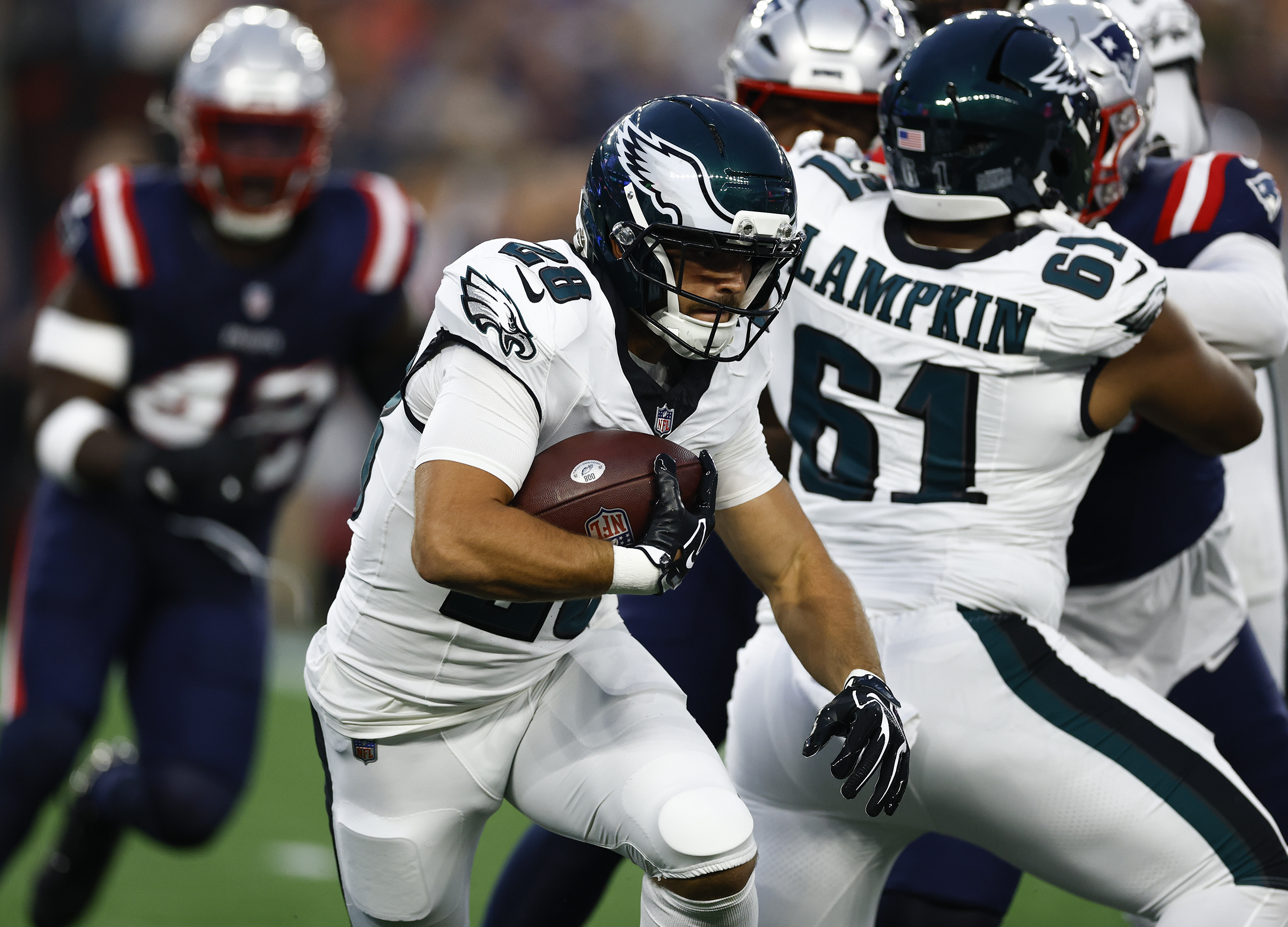
    Five plays into the Eagles’ preseason opener against the Baltimore Ravens, Willie Lampkin introduced Ravens defensive tackle Broderick Washington’s backside to the grass — and, in turn, re-introduced himself to the NFL.

    Lampkin, 24, had been hidden in plain sight for the past year. The Eagles claimed him off waivers at the end of camp from the Los Angeles Rams, who cut the 2025 undrafted free agent out of North Carolina with an injury designation due to knee and ankle injuries he suffered in their second preseason game. Two days later, the Eagles placed Lampkin on injured reserve for the remainder of the season.

    The 5-foot-11, 290-pound interior offensive lineman returned to game action for the first time in 364 days like a wrecking ball, and Broderick was his first victim.

    After snapping the ball at center, Lampkin quickly latched on to the 6-2, 315-pound defensive tackle and blocked him 10 yards downfield in pass protection before disposing of him into a pile of bodies.

    Later at right guard, he sealed off 6-foot, 300-pound Aeneas Peebles on a Tank Bigsby run, taking him for a ride five yards downfield until the whistle before patting him on the helmet. That love between whistles never lasts longs, as his Eagles teammates know. Lampkin’s preseason excellence, which continued Saturday night against the New England Patriots, has been an extension of the effort they’ve witnessed in training camp this summer.

    “I call him a bowling ball of knives, ’cause he’s so short, he’s so small, he’s so stubby, but he is so quick and powerful and precise with his hands that for a taller guy like me, it gives me a lot of trouble,” Jordan Davis said. “It gives me a lot of fits. That’s one of the things that keeps me up at night with Willie.

    “He has a certain tenacity about him when he goes and plays a game.”

    That tenacity, according to Lampkin, is rooted in his wrestling background.
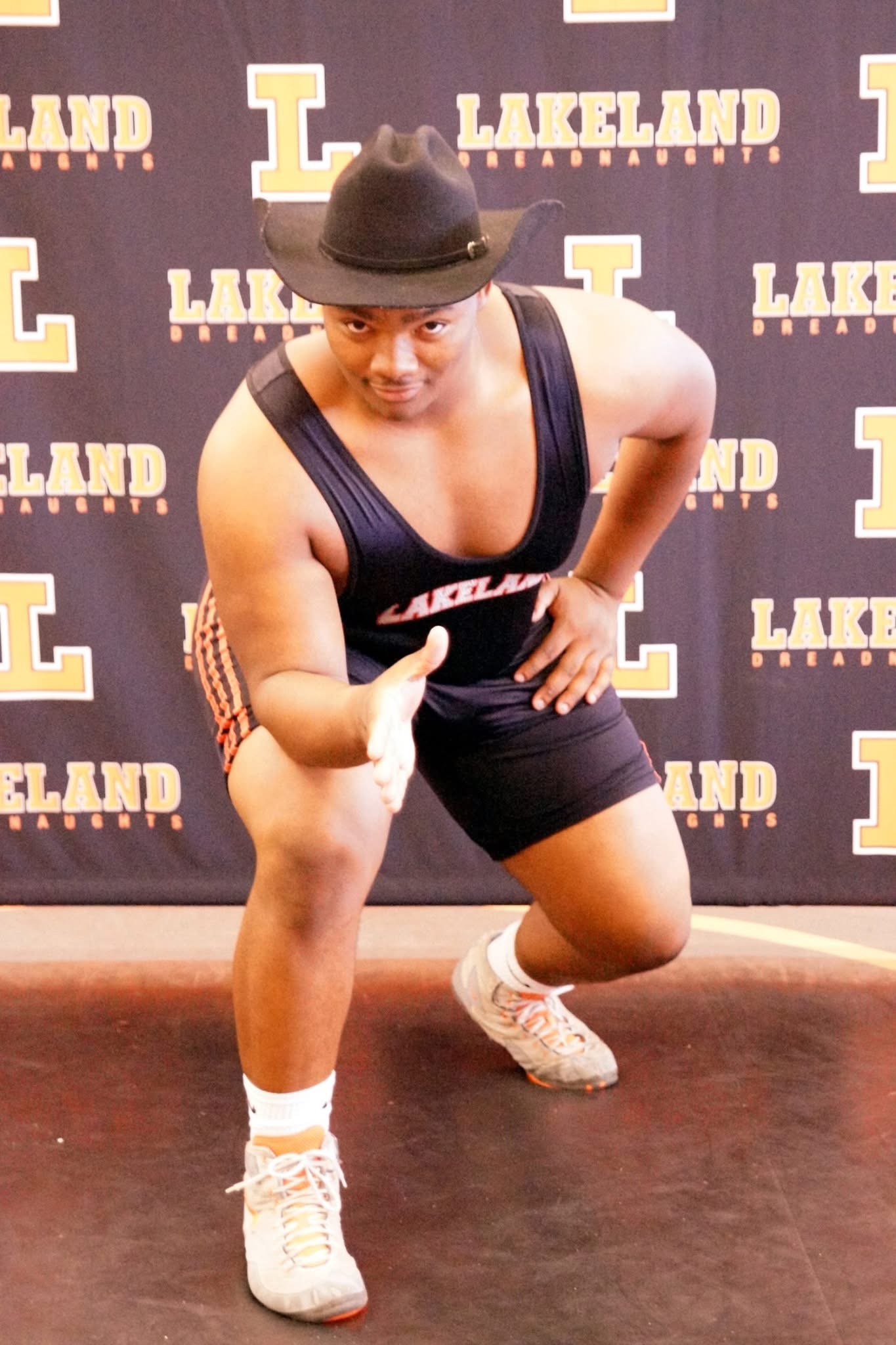
    Willie Lampkin was a star wrestler at Lakeland High School in Florida.Courtesy of Winston Phan

    Lampkin began wrestling as a freshman at Mulberry High School in Mulberry, Fla., a city in central Florida with a population of roughly 4,000. Within three years, he was the state tournament runner-up at heavyweight, and within four, he was a champion.

    He ultimately chose to pursue football over wrestling in college, playing three seasons at Coastal Carolina and two at UNC before moving on to the NFL as an undrafted free agent. But as he vies for a depth spot on the Eagles’ initial 53-man roster as an undersized, undrafted interior offensive lineman, Lampkin continues to channel the mentality and the skill set he cultivated through wrestling.

    “I feel like wrestling just helped me to be more gritty and just try to get after everybody,” Lampkin said.

    Wrestlers the ‘ultimate combatants to deal with misery’

    Former Mulberry wrestling coach Anthony Cerullo learned about Lampkin from Kyle Jones, one of the assistant football coaches at the school. Jones, who once wrestled for Cerullo in addition to playing football, wanted Lampkin to start wrestling, too.

    Cerullo also played both sports. He understood that wrestling taught its athletes about balance, hand usage, and body positioning — all of the fundamentals that apply to sound play in the trenches.

    He figured that Lampkin, a varsity starter on the offensive line as a freshman, was a 6-5 “behemoth” who grew faster than his peers. When he met him in line at the concession stand at a junior varsity football game, he quickly learned he was mistaken.
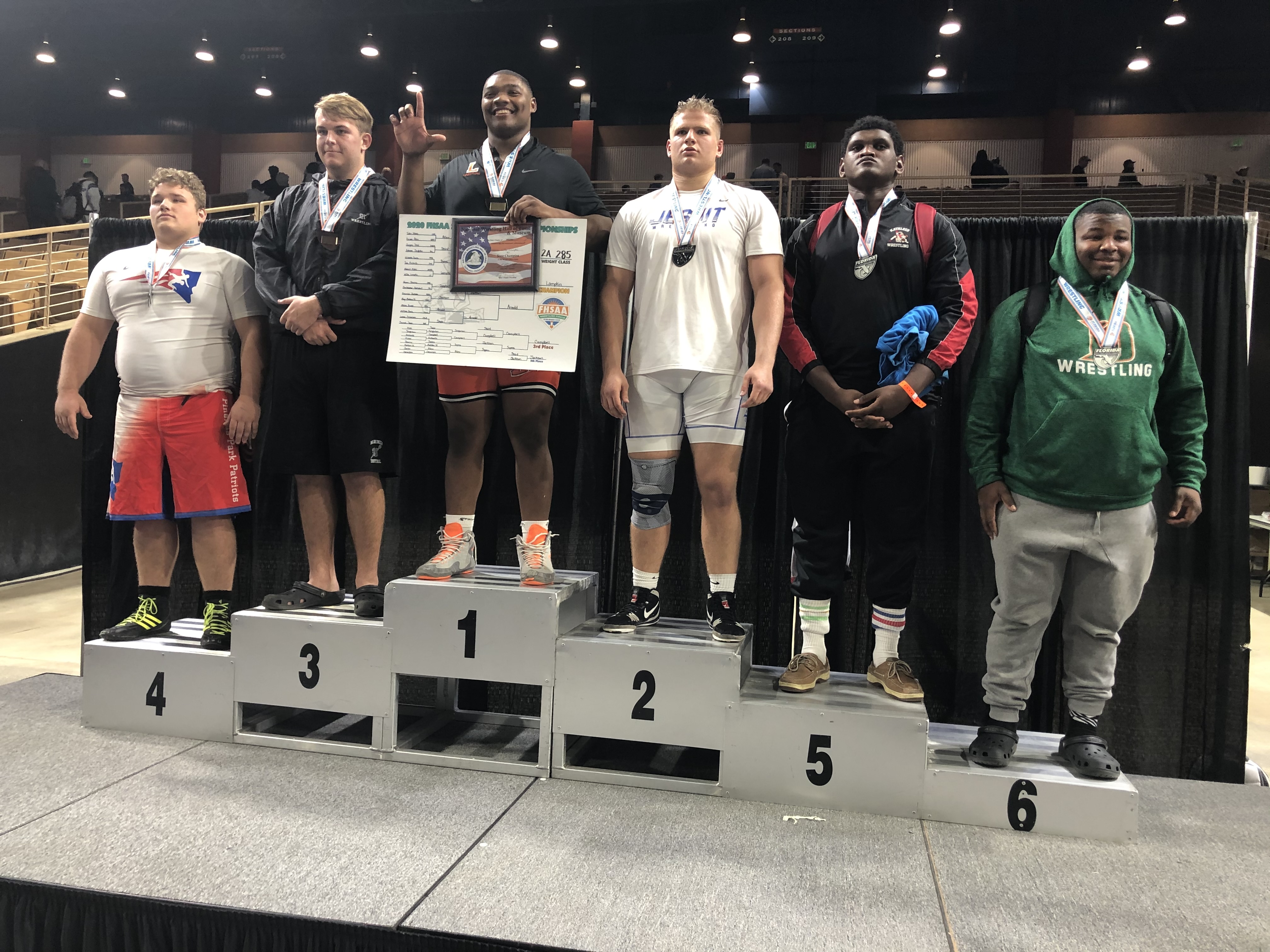
    Willie Lampkin stands atop the podium after winning the 2020 2A state wrestling championship as a heavyweight.Courtesy of Winston Phan

    He still made his recruiting pitch.

    “Coach Jones says you’re going to be on the wrestling team, and I’m the wrestling coach,” Cerullo said.

    “Ah, I don’t know about that,” Lampkin said. “He hasn’t said anything to me about it.”

    At the end of the football season, Lampkin had his exit interview with his coaches. Afterward, Cerullo grabbed Lampkin as he was leaving for the school bus. Wrestling season was already underway.

    “Hey, the wrestling room is not on the bus,” Cerullo said.

    Lampkin obliged and followed Cerullo, even though he wasn’t entirely sure why he was there. Early on, Lampkin said he stuck with wrestling because a few of his football teammates had also decided to try it out. Plus, he didn’t want to just go home at the end of the school day in the football offseason.

    Cerullo had a plan for Lampkin. In addition to the fundamentals of wrestling that would translate to football, he said he knew the O-lineman would benefit from draining practice sessions on the mat in the long term.

    “Wrestlers are the ultimate combatants to deal with misery, right?” Cerullo said. “So we have a saying as wrestlers called ‘embrace the grind.’ So that means that it’s going to suck, it’s going to be hot, it’s going to be sweaty, it’s going to be nasty. You have another person acrossfrom you for two-and-a-half hours a day that’s trying to kill you, and you have to embrace that lifestyle to be great.”
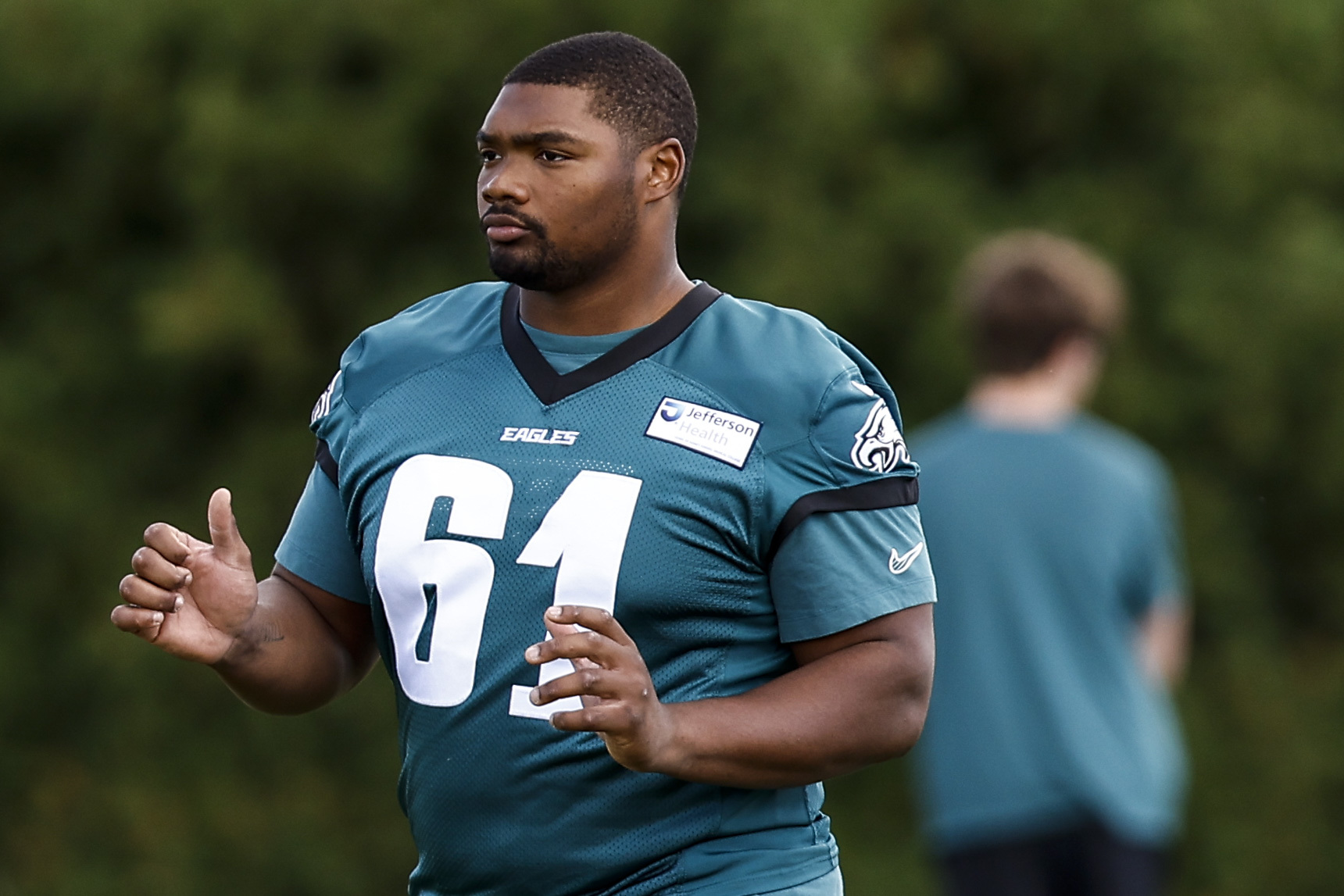
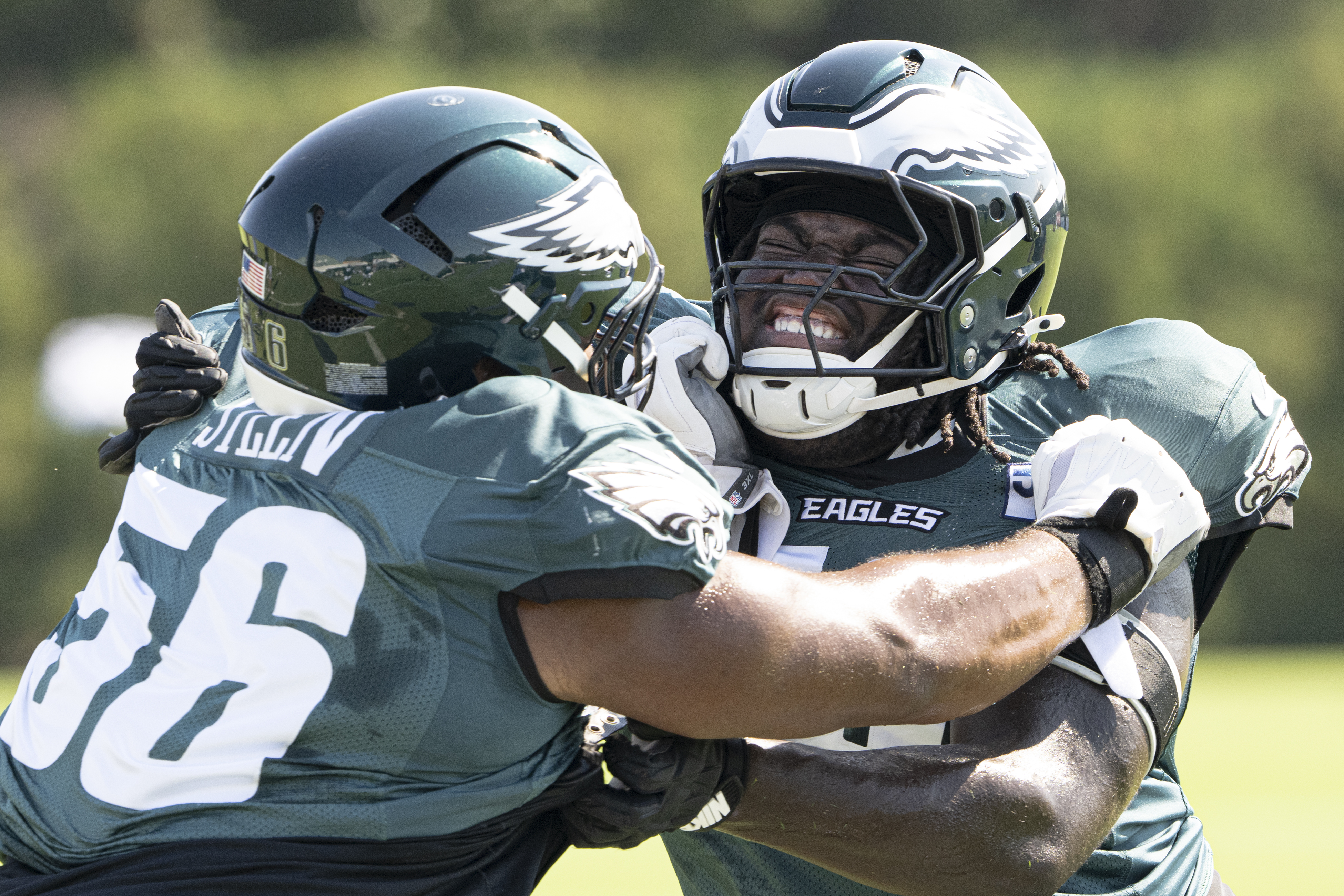
    Willie Lampkin has brought wrestling principles to the Eagles practice field. Monica Herndon / Staff Photographer

    Cerullo ensured that Lampkin got that work in by serving as his practice partner. He learned firsthand of Lampkin’s athleticism. Lampkin, a heavyweight at roughly 230 pounds as a freshman, wasn’t going to run a 4.4 40-yard dash or jump over a building. But Lampkin was ultra-competitive, which drove his desire for improvement as he figured out how to use his hands and his body to his advantage.

    He hated giving up a takedown. He hated not getting an escape. He hated losing. After all, Cerullo said, one person holding another down against their will is something to be taken personally, and Lampkin took every win for his opponent as a slight.

    At the beginning, wins in practice were hard for Lampkin to come by against Cerullo, who was 20 years his senior and approximately the same size. Lampkin would ask Cerullo to stay after practice every day to work on different sequences, takedowns, and escapes. Those requests were particularly prevalent if Lampkin didn’t get an escape during practice.

    Cerullo never went easy on Lampkin.

    “So we sat there for an hour-and-a-half one practice, and me just breaking him down to his stomach and to his face until he finally exploded up and was able to get an escape,” Cerullo said. “And then to his credit, he’s like, ‘OK, I want to do it twice before I leave.’

    “‘Like, Willie, I’ve got to go to work in the morning, buddy. I love you. I’ll see you tomorrow.’”

    It took about three weeks for Lampkin to embrace wrestling and the pain that came with it, Cerullo said. Pain turned to pride when he began to win his matches. According to Cerullo, there is something euphoric about the referee grabbing the winning wrestler’s hand at the end of the match and raising it for everyone to see.
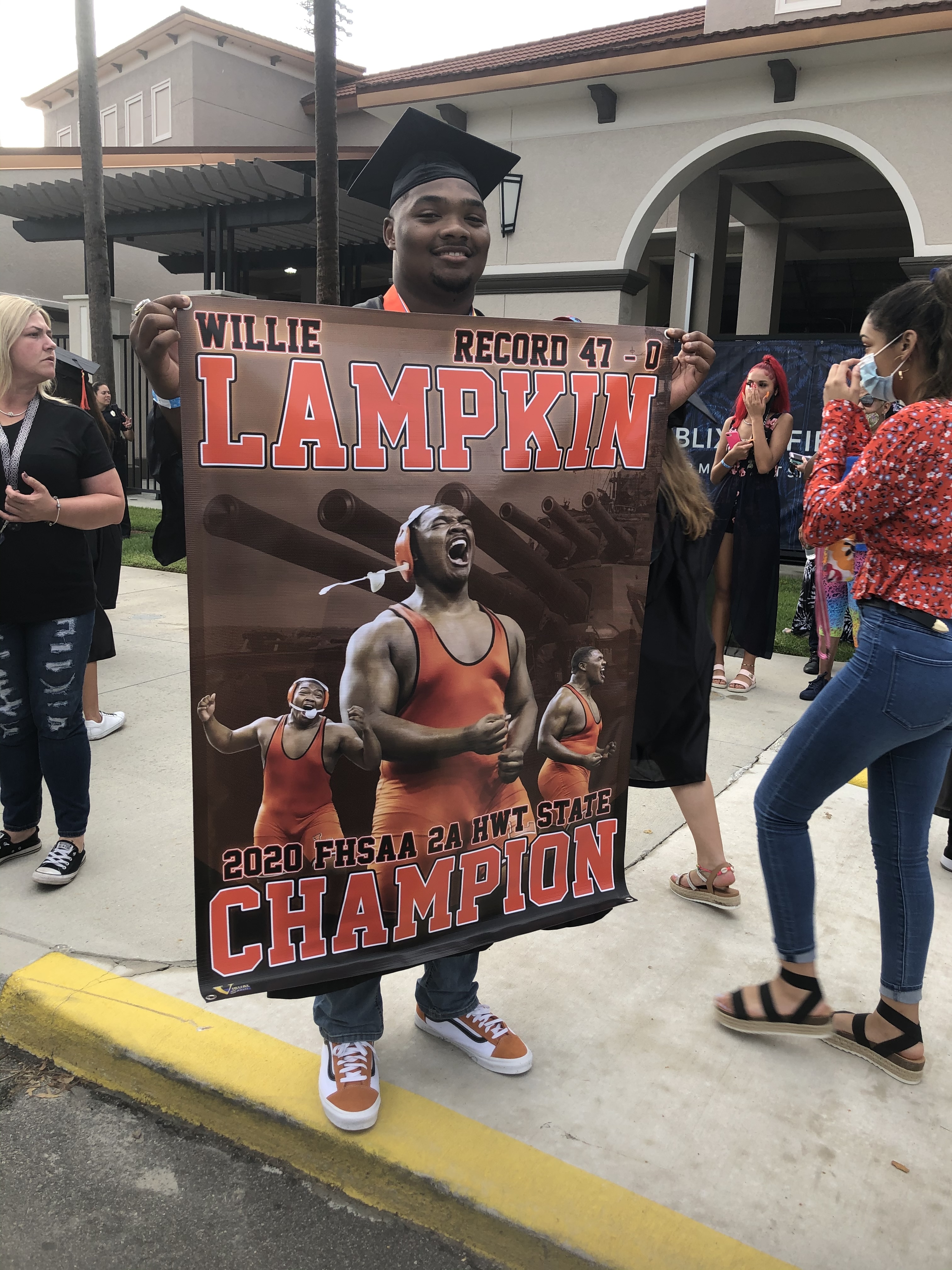
    Willie Lampkin was unfamiliar with wrestling but embraced the grind it took to become a champion. Courtesy of Winston Phan

    Lampkin chased that feeling. He won 50 matches as a freshman, but he was one win shy of qualifying for the state tournament. That shortcoming fueled his offseason development. For the first time, he was lifting with intention to improve at both wrestling and football. He worked in the wrestling room to sharpen his skills, especially his hands.

    “Willie has very large hands, and he learned how to make an impact when he put them on you going into that sophomore year,” Cerullo said. “When he would grab you, he had intention behind it. Where before, he was kind of just placing them and being … I’d say a big baby about it to some degree. Not understanding how strong he was. Sophomore year, he definitely knew what to do with his hands and when he put them on you, he meant to put them on you.”

    Cerullo estimates that Lampkin took him down his freshman year twice in practice. In the summer leading up to his sophomore year, Lampkin took Cerullo down four times in one practice.

    “He started moving his feet much better,” Cerullo said. “I think that he understood some more of the nuances of wrestling and not to put himself in those negative positions.”

    From novice to state champion

    That year, Lampkin would qualify for the state tournament, but he was eliminated early after being pinned. He transferred from Mulberry to nearby Lakeland High School the following year, helping the football team win a state championship as a junior. But leaving Mulberry didn’t mean he was leaving wrestling behind.

    After the football season, Lampkin would lose weight quickly as he got in wrestling shape. He may have been the biggest wrestler on his team, but according to Lakeland assistant wrestling coach Winston Phan, he was a relatively light heavyweight compared to his peers. That weight class can be very one-dimensional, Phan said.

    “A lot of times, they fall on top of each other, and whoever lands on top wins, right?” said Phan, who is now the head coach of the program. “But what Willie had going for him was his technique and his ability to learn all [this] new stuff that we were able to give him and allow him to use in his matches.

    “Because people will tell you he didn’t wrestle like a heavyweight. They said he wrestled like somebody that was 106 pounds the way he knew how to do moves and the way he knew how to control somebody on top.”
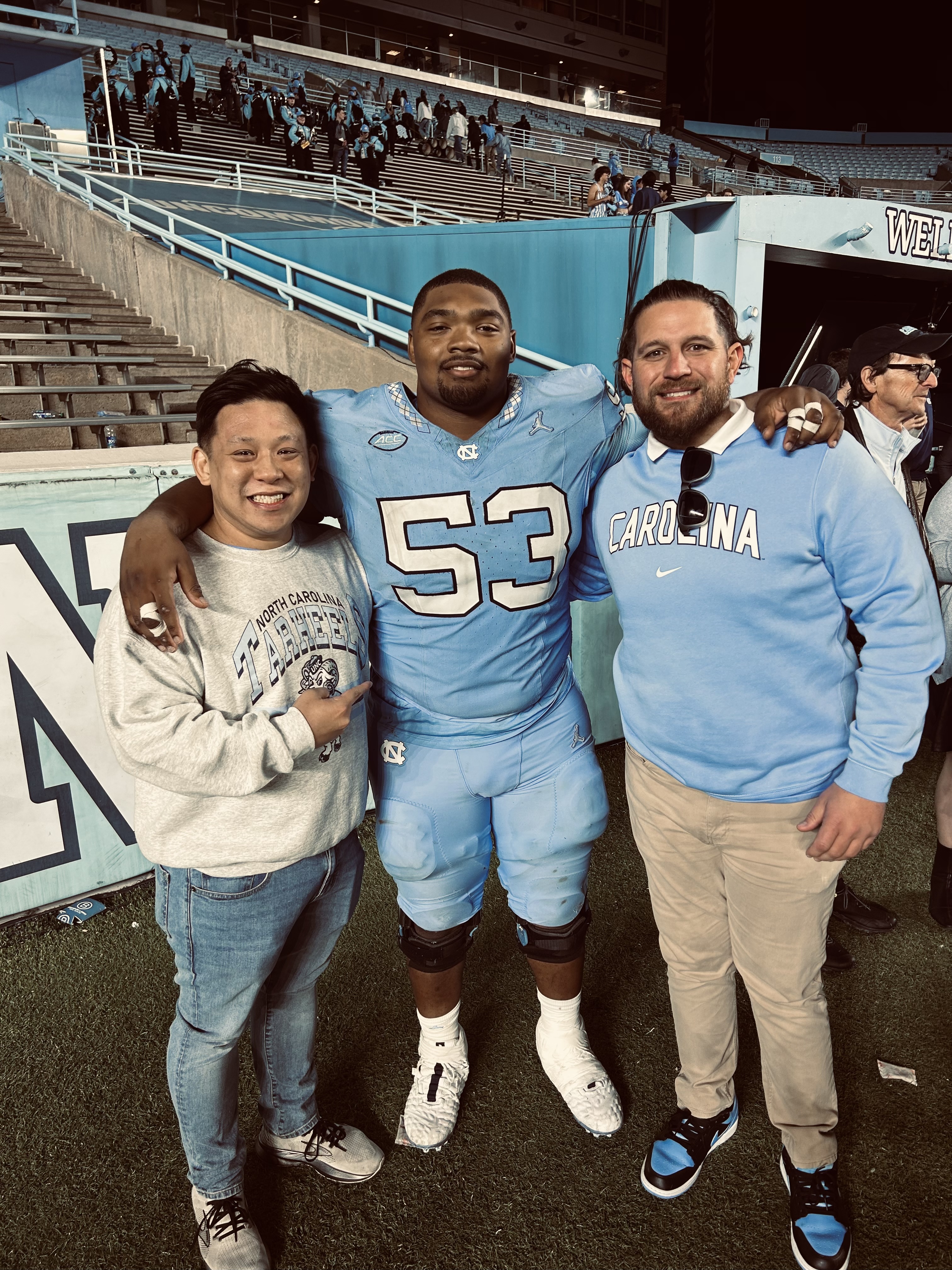
    Lakeland wrestling coaches Winston Phan (left) and Michael Farley visited Willie Lampkin while he was playing college football at North Carolina in 2023.Courtesy of Winston Phan

    Phan and the other coaches would teach Lampkin a little bit of everything, even moves that weren’t typically performed by heavyweights. Among them were leg attacks, Phan said. One of Lampkin’s favorite moves that he honed in practice was a single-leg sweep. He kept it in his back pocket until he reached the first-place match at the 2A state championship his senior year.

    The prior year, Lampkin lost the state final in sudden-death overtime. He wouldn’t lose it twice. After he went 47-0 during the regular season, Lampkin faced Mason Arnold of Tampa Jesuit in the heavyweight state championship match. They were tied, 1-1, toward the end of the third period.

    With 34 seconds remaining, Lampkin pulled out the single-leg sweep. Lampkin swung his body around his opponent’s leg, then flung him onto his back, switching off to a double leg to take him down and go up, 3-1. Lampkin rode Arnold out until time expired. He popped up, his headgear askew, and let out a roar before pouncing on top of Phan and assistant coach Chad Kirkman near the corner of the mat.

    “It was like a potato jumping on a toothpick,” said Michael Farley, former Lakeland head wrestling coach.

    That match marked the end of Lampkin’s wrestling career. His wrestling coaches still kept in touch with Lampkin as he continued on to college and attended his games when they could.

    In some ways, the two sports couldn’t have been any different. Lampkin is one of 11 on the football field. In wrestling, he was alone against his opponent on the mat. A play in football lasts a matter of seconds within an hourslong game, while a wrestling match lasts at least six minutes over three periods. But whether Lampkin was wrestling or playing football, Phan saw the same athlete.

    “He’s not doing anything differently,” Phan said. “They call the moves different things, but in the sense of it, the name of the game is manhandling your opponent, right? And he knows that that’s what his job is, and that’s what he’s looking to do every time he steps on the line, whether it’s on a wrestling mat or on the football field.”
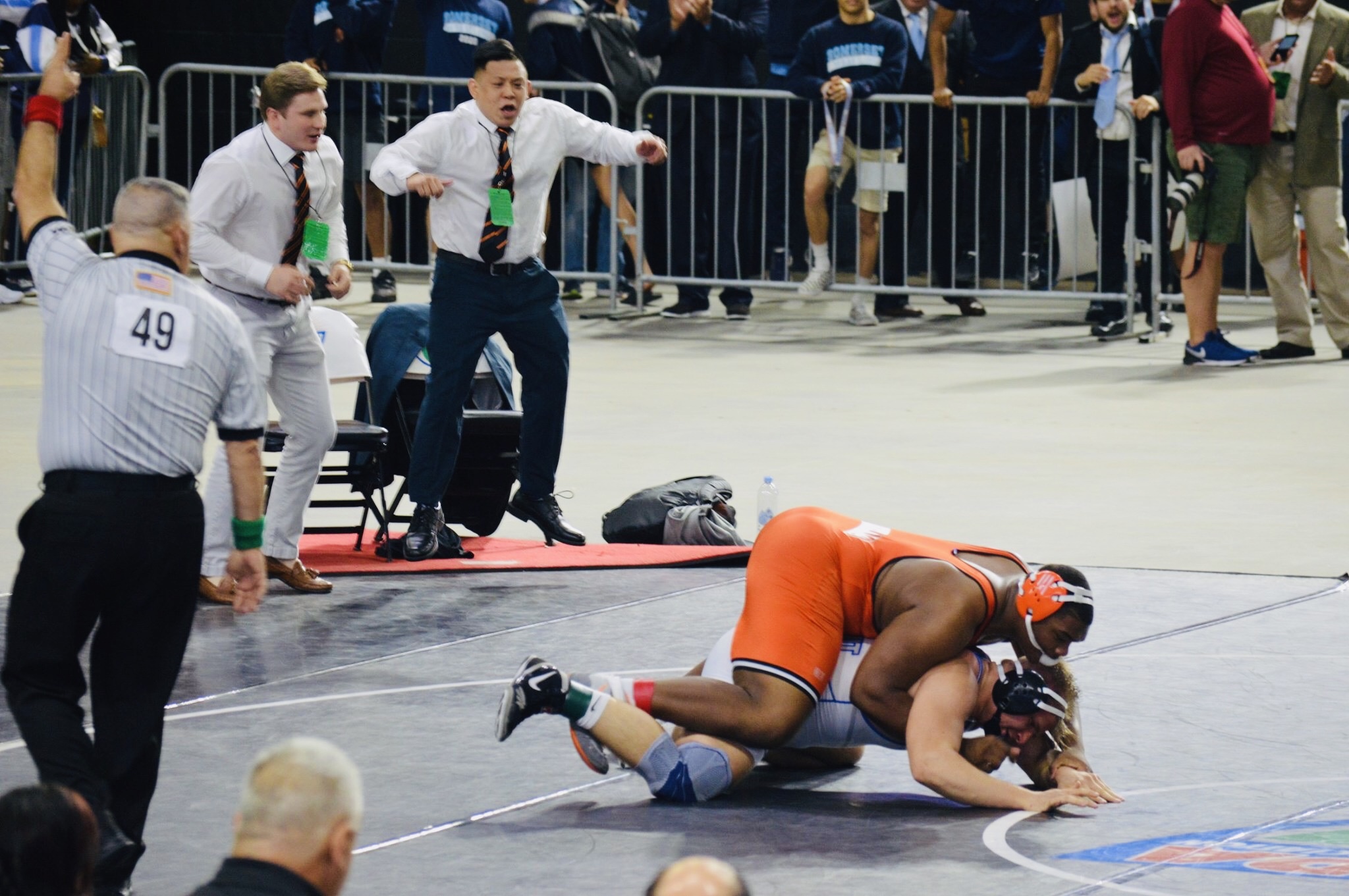
    Willie Lampkin took down Mason Arnold in the 2020 2A heavyweight state championship within the final seconds of the match to win.Courtesy of Winston Phan

    In both sports, he used his relatively small size to his advantage. Both Cerullo and Phan said Lampkin’s best asset was his brain, as he was capable of understanding leverage and positioning. Combine that with fast feet in a small area of space on the gridiron, and Lampkin can get his leverage and change direction quickly to seal off bigger, taller defensive tackles.

    He never lets up, either, whether he’s mustering a takedown in the waning seconds of the state title match or he’s blocking a defensive tackle into the next zip code through the whistle.

    “It doesn’t matter who’s in front of him,” Phan said. “He’s ready to take their heads off and protect the quarterback and do what he has to do to be successful on the line.”

    Farley had seen the headlines coming out of Eagles camp about Lampkin. Those labels about his size are nothing new.

    “‘Five-11′ or ‘little secret weapon,’” Farley said. “But we know that for Willie, it’s real when the pads come on, and that’s when he can show his true value.”

    After two standout preseason performances, the Eagles’ so-called little secret weapon might not be so secret any more.
  • Eagles 53-man roster projection 4.0: A few changes — and a trade — after another preseason game

    Eagles 53-man roster projection 4.0: A few changes — and a trade — after another preseason game

    It’s just about last call for roster hopefuls as Eagles training camp enters its final week.

    The team plays its last preseason game Friday night at home vs. Cincinnati, and the initial 53-man roster is due Sunday by 6 p.m.

    Only a few practices and one last audition separate those vying for a spot from knowing their fates.

    A second preseason game — this one a 24-21 Eagles loss in New England — brought a few changes to our latest 53-man roster projection. Who’s in, and who’s out?

    (Note: This is our fourth 53-man roster projection of the summer. Our first way-too-early look at the roster came in June, and we published another after one week of training camp before Volume 3 went live after the first preseason game.)

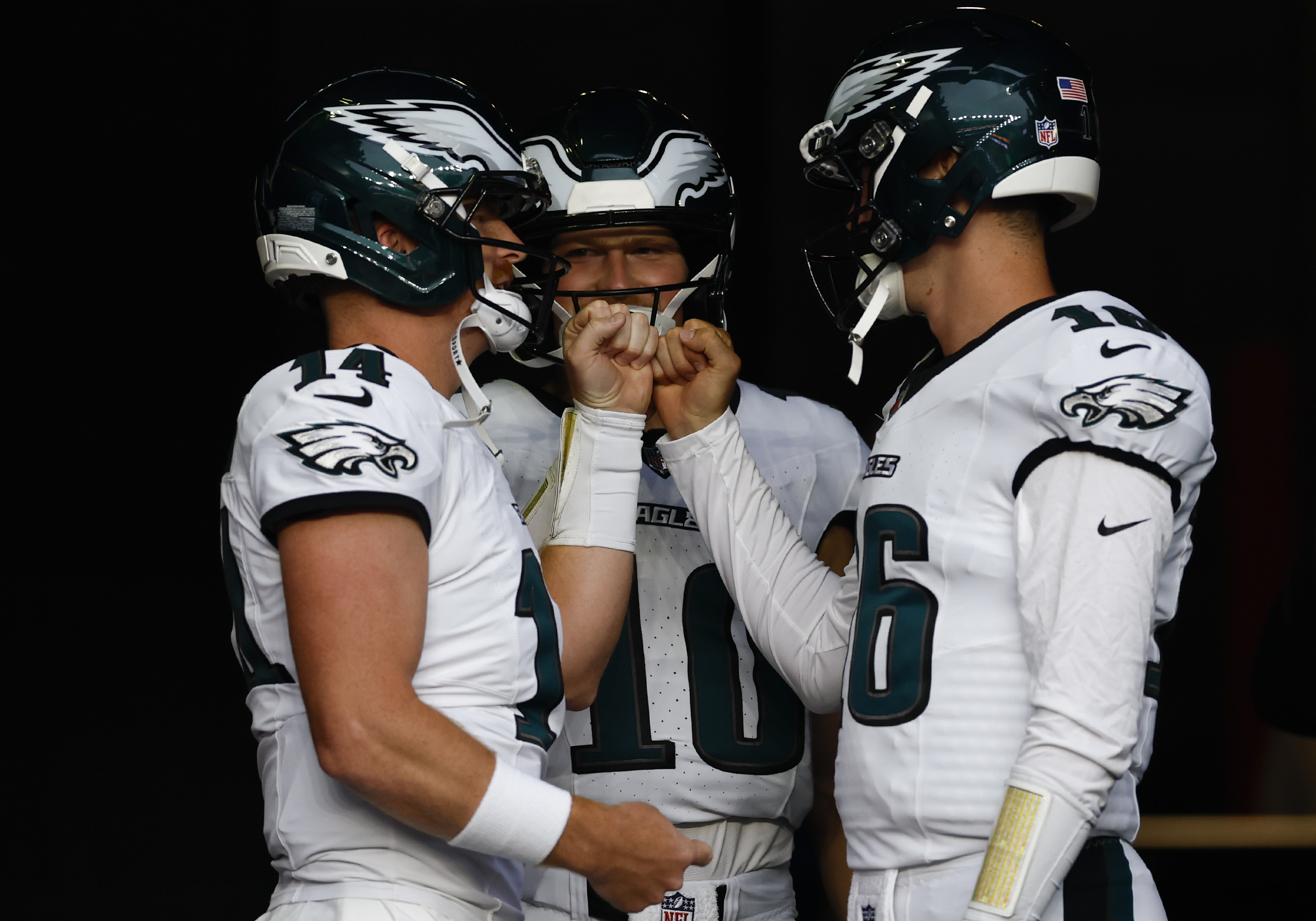
    Eagles quarterbacks (from left to right): Andy Dalton, Cole Payton and Tanner McKee prepare for Saturday’s preseason game against the New England Patriots. We don’t expect all three to be on the Eagles roster by next week.Yong Kim / Staff Photographer

    Quarterbacks (3): Jalen Hurts, Tanner McKee, Cole Payton

    Traded: Andy Dalton

    We’re sticking with the idea that one of the two quarterbacks hunting for the No. 2 job eventually will be traded, but for the first time this summer, Tanner McKee is in and Andy Dalton is out.

    McKee outperformed Dalton Saturday night in New England, and while the Eagles certainly value Dalton’s experience and his practice film much more than two shaky, shortened preseason starts, it’s hard to argue that the 38-year-old looks more viable to back up Hurts than McKee does right now.

    That being said, it actually might be Dalton who has more trade value than McKee. Will the Eagles end up flipping Dalton for the same price they paid for him (a seventh-round pick)? Maybe. This time of year, a team looking for a backup may be more likely to want Dalton as an experienced starter who may even mentor a young quarterback than they are to need McKee.

    Cole Payton hasn’t wowed, and it remains possible the Eagles keep both Dalton and McKee and cut Payton, their fifth-round pick. But for now, Payton gets the roster spot and doesn’t get exposed to waivers.

    Eagles running back Will Shipley carried the ball 11 times for 56 yards against the Patriots. We expect him to make the team’s initial roster.Yong Kim / Staff Photographer

    Running backs (3): Saquon Barkley, Tank Bigsby, Will Shipley

    Cut: Dameon Pierce, Carson Steele, Ja’Quinden Jackson

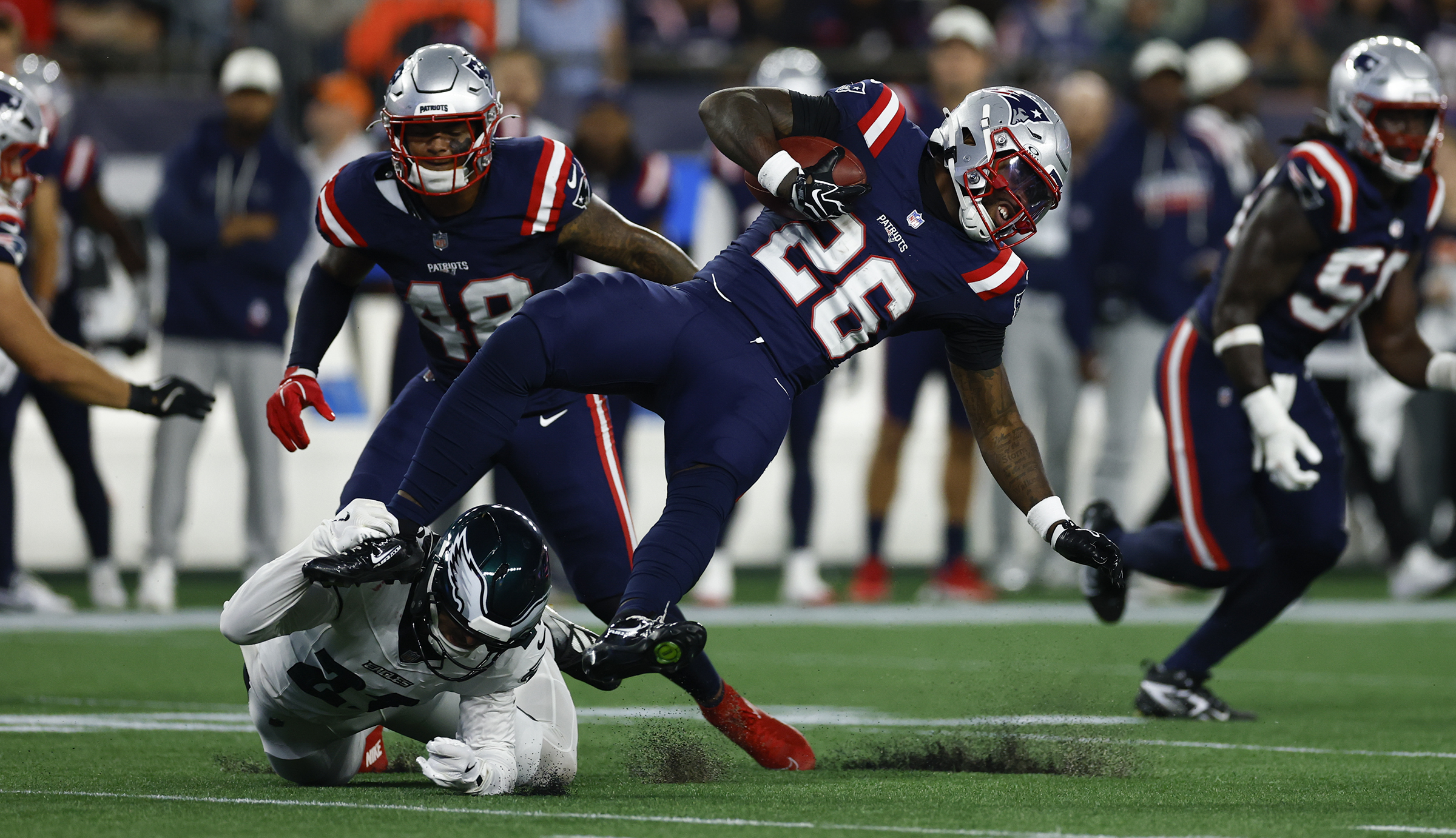
    No changes here, despite Carson Steele going full Saquon Barkley and hurdling defenders on more than one occasion Saturday night. Steele played like a guy pushing for a roster spot, but the Eagles don’t have the luxury of keeping four running backs with the way their roster is shaped.

    Eagles wide receiver Elijah Moore is on the roster bubble.Jose F. Moreno / Staff Photographer

    Wide receivers (6): DeVonta Smith, Dontayvion Wicks, Makai Lemon, Darius Cooper, Hollywood Brown, Elijah Moore

    Cut: Danny Gray, Britain Covey, Quez Watkins, Erik Ezukanma, Samori Toure, Brandon Hayes

    Could Elijah Moore get cut and come back on the practice squad with the promise to be elevated on game day? It’s possible. He’s a vested veteran and doesn’t need to pass through waivers (though he’d be free to sign with any team). But Moore has done enough to make the roster and should be rewarded for having a better camp than Hollywood Brown, the guy the Eagles gave $5 million guaranteed.

    Perhaps the Eagles use one of the two as a trade chip in the final week of camp, but they may want some extra insurance at the position considering Makai Lemon’s first NFL training camp has been marred by a hamstring injury.

    The Eagles selected tight end Eli Stowers in the second round of April’s NFL draft.Yong Kim / Staff Photographer

    Tight ends (3): Dallas Goedert, Johnny Mundt, Eli Stowers

    Cut: Cameron Latu, Grant Calcaterra, Stone Smartt, E.J. Jenkins

    Cameron Latu is the roster casualty of the Eagles keeping Moore. Latu would need to pass through waivers, but he’s done so before, and the Eagles shouldn’t have trouble getting him through to the practice squad and elevating him for Week 1.

    Eli Stowers has had a rocky camp, but the second-round pick isn’t going anywhere. His need for more seasoning, though, makes it pretty important to have a strong fourth option in the building. That could work in Latu’s favor come Sunday evening.

    Offensive lineman Tyler Steen, left, is pretty much a lock to return, but Micah Morris’ fate could be determined in the coming week.Jose F. Moreno / Staff Photographer

    Offensive line (10): Jordan Mailata, Landon Dickerson, Cam Jurgens, Tyler Steen, Lane Johnson, Fred Johnson, Markel Bell, Drew Kendall, Willie Lampkin, Micah Morris

    Cut: Jake Majors, Michael Jordan, John Ojukwu, Myles Hinton, Cameron Williams, Zeke Correll

    Willie Lampkin’s spot on the 53-man roster might be a lock at this point. The center/guard had another strong performance Saturday. Micah Morris, meanwhile, has shown some athletic traits that should keep the sixth-round pick on the initial roster.

    Jake Majors played the entire game Saturday (63 snaps) and had some good moments. Like Lampkin and Drew Kendall, he has the ability to play center and guard. But Morris beats out the 2025 undrafted free agent who landed on the Eagles’ practice squad after training camp last year.

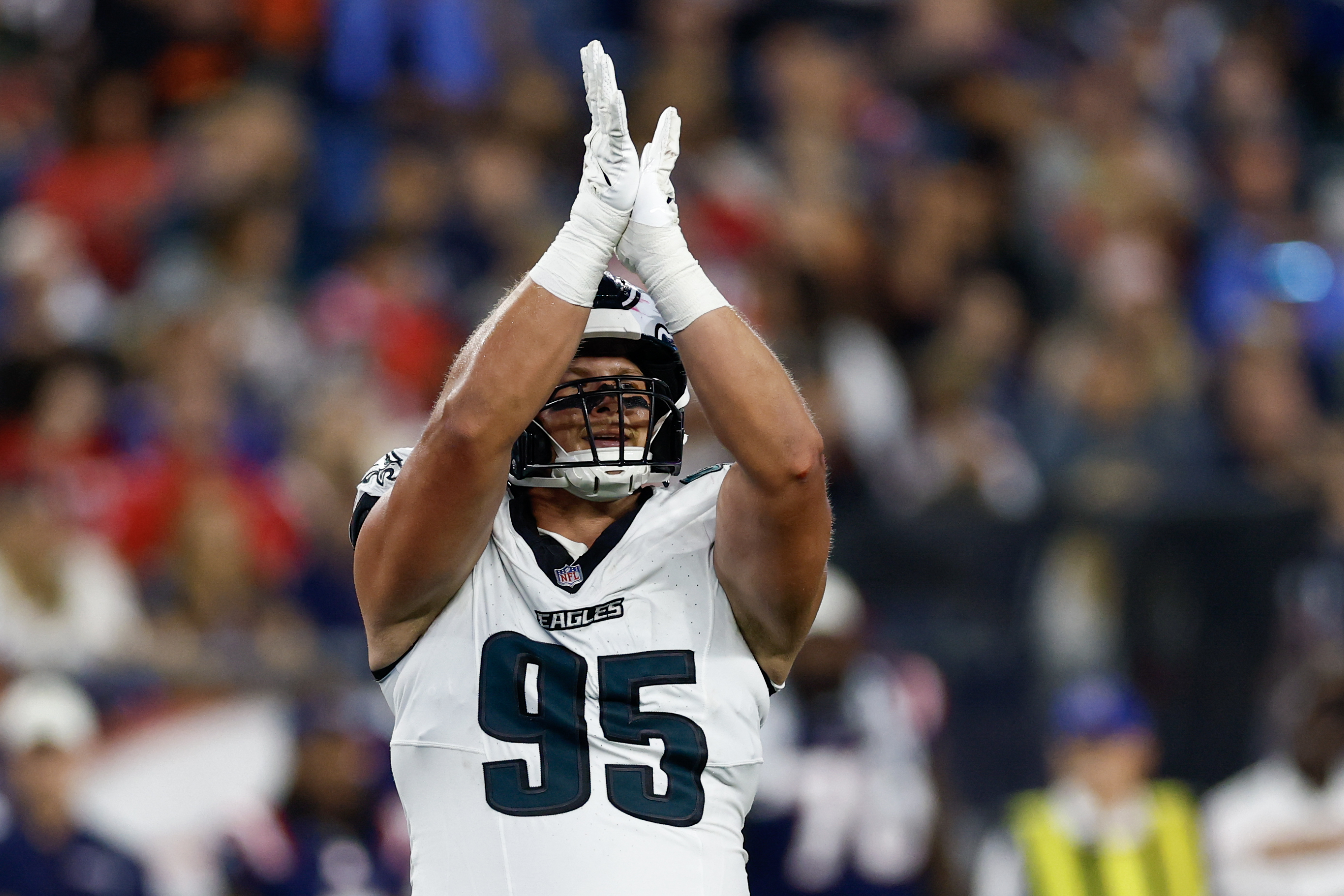
    Eagles defensive tackle Ty Robinson had a pair of sacks in Saturday’s preseason game against the Patriots.Yong Kim / Staff Photographer

    Defensive tackles (6): Jalen Carter, Jordan Davis, Moro Ojomo, Byron Young, Ty Robinson, Uar Bernard

    Cut: Gabe Hall, Zion Wilson, David Blay

    No changes here other than Ty Robinson pulling himself off life support (Vic Fangio’s words) and pretty much locking up his roster spot.

    The 2025 fourth-round pick had two sacks Saturday and has had a strong last two weeks after working with the developmental group at the beginning of camp.

    Uar Bernard played in his second football game Saturday and notched his first tackle. He’s improved throughout his first football camp, and it remains a risk for the Eagles to expose him to waivers even though he won’t play meaningful snaps this season.

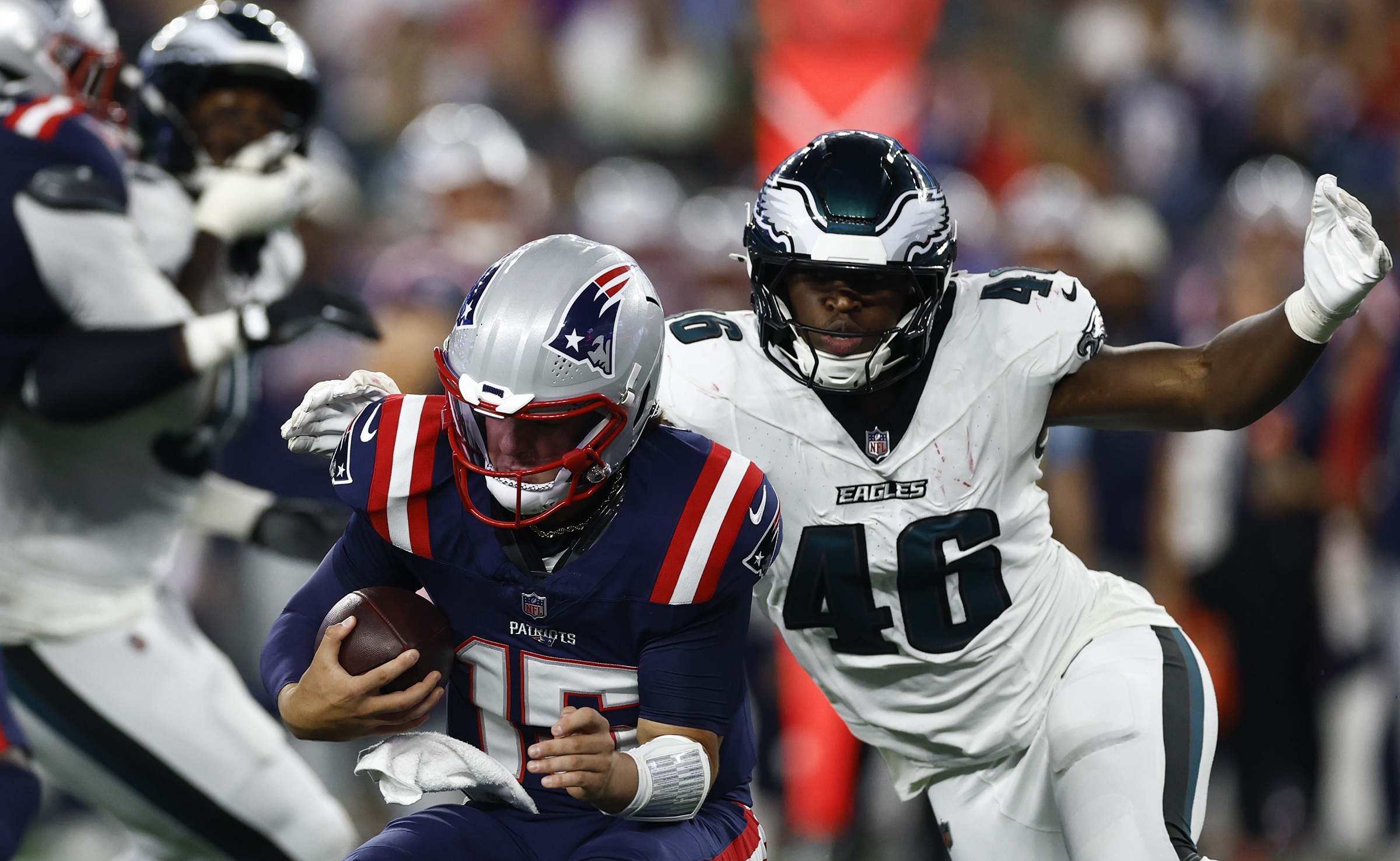
    Eagles linebacker Joshua Weru got his first sack against New England Patriots quarterback Behren Morton Saturday night.Yong Kim / Staff Photographer

    Edge rushers (6): Jonathan Greenard, Jalyx Hunt, Nolan Smith, Arnold Ebiketie, A.J. Epenesa, Joshua Weru

    Cut: Tarron Jackson, Keyshawn James-Newby, Jose Ramirez

    The decision on Joshua Weru will be a fascinating one for Howie Roseman next weekend. The former rugby player one-upped his padded football debut last weekend, when he had a quarterback hit, with his first sack during Saturday’s game. He’s a flashy athlete, and there may be enough on tape out there for one of the 31 other NFL teams to make him their own project and sign him to their 53-man roster if the Eagles decide to cut him.

    Fangio expressed some concern Jonathan Greenard might not be ready to return from his pectoral injury for Week 1, though that’s still three weeks away.

    Eagles linebacker Jeremiah Trotter Jr. could be a starter on several NFL teams. Will that make him attractive in a potential trade?Yong Kim / Staff Photographer

    Linebackers (4): Zack Baun, Jihaad Campbell, Jeremiah Trotter Jr., Smael Mondon Jr.

    Cut: Chance Campbell, Deontae Lawson, Brandon George

    The Eagles have an abundance of talent here. It’s probably a toss-up between off-ball linebacker and interior defensive line in terms of which position group is their best.

    The top four are locks, though Fangio likes Chance Campbell a lot. Still, as we’ve written before during this exercise, the need for a fifth linebacker given this roster construction makes it hard to keep the former Titan.

    Could Roseman pull off a trade to make room for him? Smael Mondon Jr. has looked capable, and Jeremiah Trotter Jr. could start on some teams.

    Mac McWilliams (left) is battling Kelee Ringo for the final cornerback spot.Yong Kim / Staff Photographer

    Cornerbacks (5): Quinyon Mitchell, Cooper DeJean, Riq Woolen, Jonathan Jones, Mac McWilliams

    Cut: Kelee Ringo, Jakorian Bennett, Ambry Thomas, Shaun Wade, Tariq Castro-Fields, Isaiah Bolden

    Another spot with no changes, though there was more pause before typing Mac McWilliams over Kelee Ringo than last week. Ringo had a decent showing on the road trip to New England, while McWilliams hasn’t had the best couple of weeks.

    Ringo’s value on special teams has been well-documented, but is it worth a roster spot? We’ll see.

    We have Eagles safety Cole Wisniewski (bottom) making the roster, but that could change this week.Yong Kim / Staff Photographer

    Safeties (4): Drew Mukuba, Marcus Epps, Michael Carter II, Cole Wisniewski

    Cut: Kapena Gushiken, Andre Sam, J.T. Gray, Max Pulley

    The fourth spot here still feels like a bit of a dart throw. Cole Wisniewski returned to the practice field and saw his first game action. He had a nice tackle on special teams, which he’ll need to make a big part of his game if he’s on the roster.

    Kapena Gushiken and Max Pulley have had nice camps, Andre’ Sam has been around the team for the last few seasons, and J.T. Gray is an elite special teamer. You can make a worthy argument for any of them to get the fourth spot.

    But it’s possible the Eagles go light here and go with three safeties, especially with Cooper DeJean playing on the back end in the base package. That route probably would be good news for Ringo.

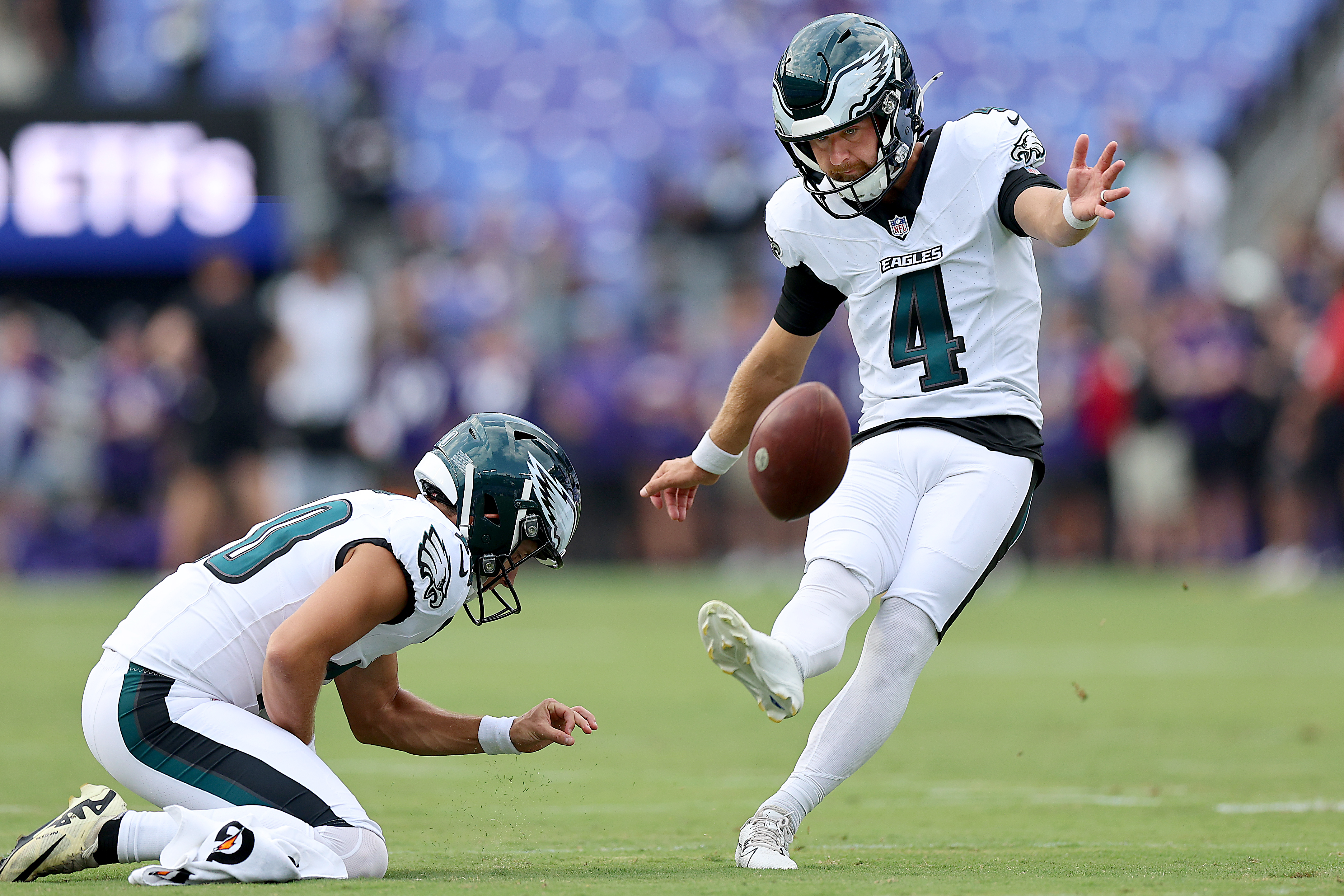
    Philadelphia Eagles place kicker Jake Elliott (right) and punter Braden Mann (left) are locks.David Maialetti / Staff Photographer

    Special teams (3): Jake Elliott (kicker), Braden Mann (punter), Rocco Underwood (long snapper)

    These are the only three specialists on the roster. It’s possible the Eagles punt — excuse the pun — on a bubble decision and cut Rocco Underwood. The team only kept Jake Elliott and Braden Mann on the initial 53-man roster last season before bringing Charley Hughlett back to the active roster a day later during a series of roster moves after initial cuts were made around the league.

  • ‘A bowling ball of knives’ | Sports Daily Newsletter

    ‘A bowling ball of knives’ | Sports Daily Newsletter

    It’s not just the pumpkin spice everything beginning to pop up on store shelves and coffee menus that’s signaling autumn’s impending arrival. It’s also the football. The Eagles are now two-thirds of the way through their preseason schedule, and by this time next week, the team’s initial 53-man roster will be set.

    One of the players vying for a spot on that roster — and doing his best so far to earn one — is interior offensive lineman Willie Lampkin. Originally signed by the Rams as an undrafted free agent, the Eagles picked up Lampkin, who missed all of last season with injuries, after he was waived by Los Angeles.

    But so far this summer, their low-risk bet on Lampkin appears like it could pay dividends, as he’s stood out in each of the Birds’ first two preseason games, including Saturday’s 24-21 loss to the New England Patriots. Even in practice, Lampkin has been causing problems for the starters he’s going up against.

    “I call him a bowling ball of knives, ’cause he’s so short, he’s so small, he’s so stubby, but he is so quick and powerful and precise with his hands that for a taller guy like me, it gives me a lot of trouble,” defensive tackle Jordan Davis said. “It gives me a lot of fits. That’s one of the things that keeps me up at night with Willie. He has a certain tenacity about him when he goes and plays a game.”

    According to Lampkin, that tenacity comes from his background as a high school wrestler. Olivia Reiner caught up with some of his former coaches, who reveal why the former state champ in football and wrestling is more than meets the eye.

    — Matt Mullin, @phillysport, sports.daily@inquirer.com.

    If someone forwarded you this email, sign up for free here.

    ❓Which sport’s skill set is the most universal? Email us back for a chance to be featured in the newsletter.

    Don’t call it a comeback

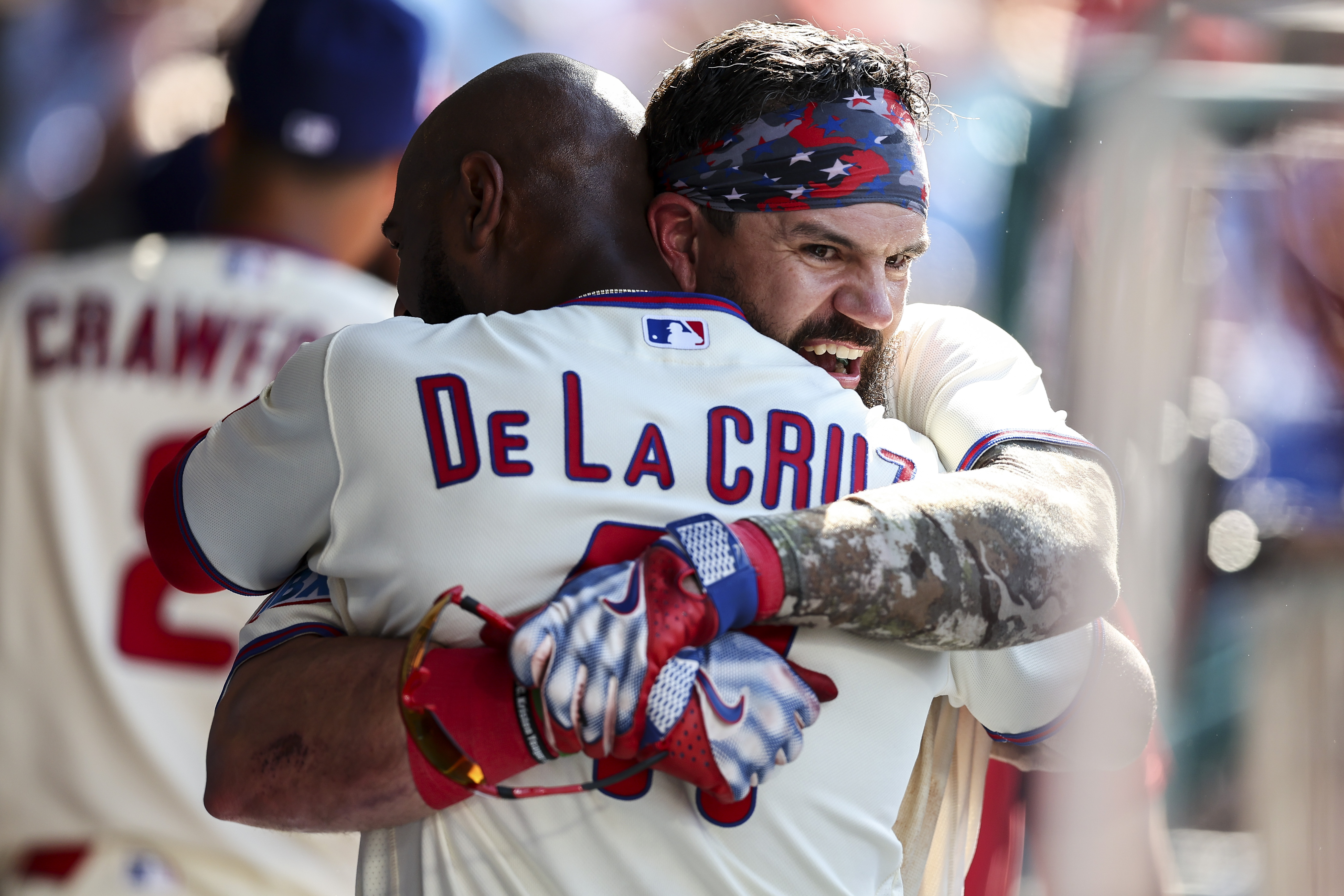
    Kyle Schwarber hugs Bryan de la Cruz beating the Cardinals on Sunday.Monica Herndon / Staff Photographer

    Referring to the Phillies’ win Sunday as merely “a comeback” would be selling it way short. The Phillies trailed by four runs and were down to their final out — but they weren’t done yet. The team strung together a walk and a trio of hits to tie the game and put the winning run on base. Enter Kyle Schwarber.

    The major-league leader in home runs fell behind 0-2, putting the Phillies down to their final strike. And even that wasn’t enough for Cardinals closer Riley O’Brien to get the job done.

    Schwarber launched a two-run walk-off home run over the batters’ eye in center field, flipped his bat — and his helmet — and gave the Phillies their ninth straight win. Schwarber’s home run was his 39th of the season, and the team’s first walk-off homer since June 2023 (also Schwarber).

    Don’t look now, but the Phillies haven’t lost since before their trip to Iowa for the Field of Dreams Game and are closing in on the Braves for the NL East lead.

    Next: Zack Wheeler and the Phillies face Logan Gilbert and the Mariners (9:40 p.m., NBCSP) as they kick off a nine-game West Coast trip.

    What we’re …

    The final countdown

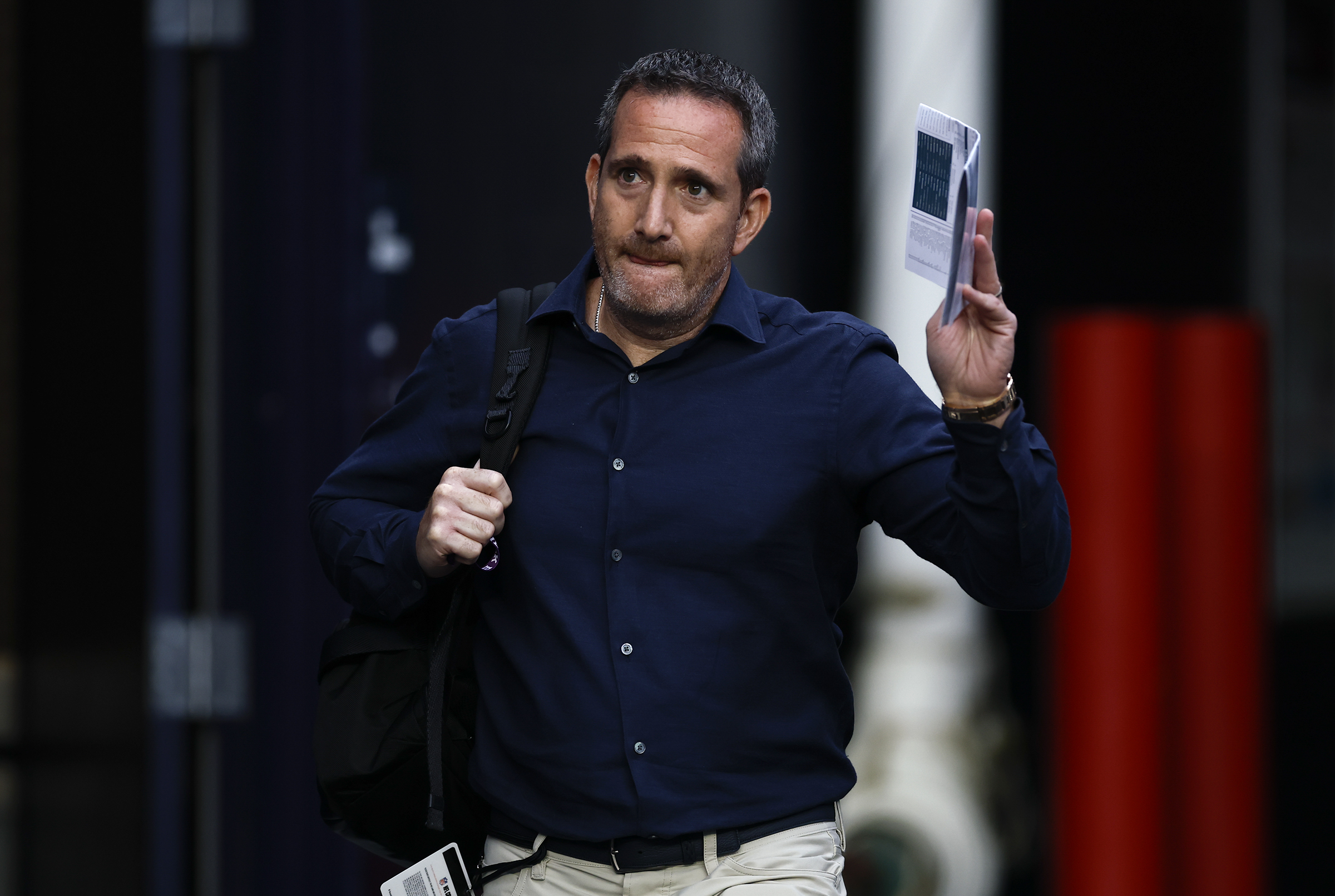
    Eagles general manager Howie Roseman will be busy over the next week as he and head coach Nick Sirianni work on trimming the roster to 53 players.Yong Kim / Staff Photographer

    If any player is hoping to make a lasting impression on the Eagles’ decision-makers, he better hurry. The Birds are entering their final week of training camp and have just one preseason game remaining before the team’s initial 53-man roster is due Sunday by 6 p.m.

    The latest audition for roster-bubble hopefuls came Saturday night in the Eagles’ 24-21 preseason loss to the New England Patriots, which saw Tanner McKee outplay veteran Andy Dalton in the battle for the Birds’ backup quarterback job. Was it enough for McKee to jump ahead of the 38-year-old QB on our latest roster projection?

    With less than a week remaining before final cuts are due, here’s a look at who Jeff Neiburg thinks is in, and who he thinks is out.

    Next: The Eagles host the Bengals in their final preseason game Friday night at Lincoln Financial Field (8 p.m., CBS).

    A different perspective

    What will Ariel Hukporti bring to the Sixers this season? We asked someone whose been covering the former Knicks center for the last two seasons.Sue Ogrocki

    A wild Sixers offseason has finally settled, after they stunningly signed LeBron James and traded for Jaylen Brown to vault into championship contender status.

    To help Sixers fans get acquainted with the newcomers on this revamped roster, we reached out to reporters who covered those players on their previous teams.

    First up, Gina Mizell spoke with The Athletic’s James Edwards III about Ariel Hukporti and what the former Knicks reserve center brings to Philly.

    Soaking up the experience

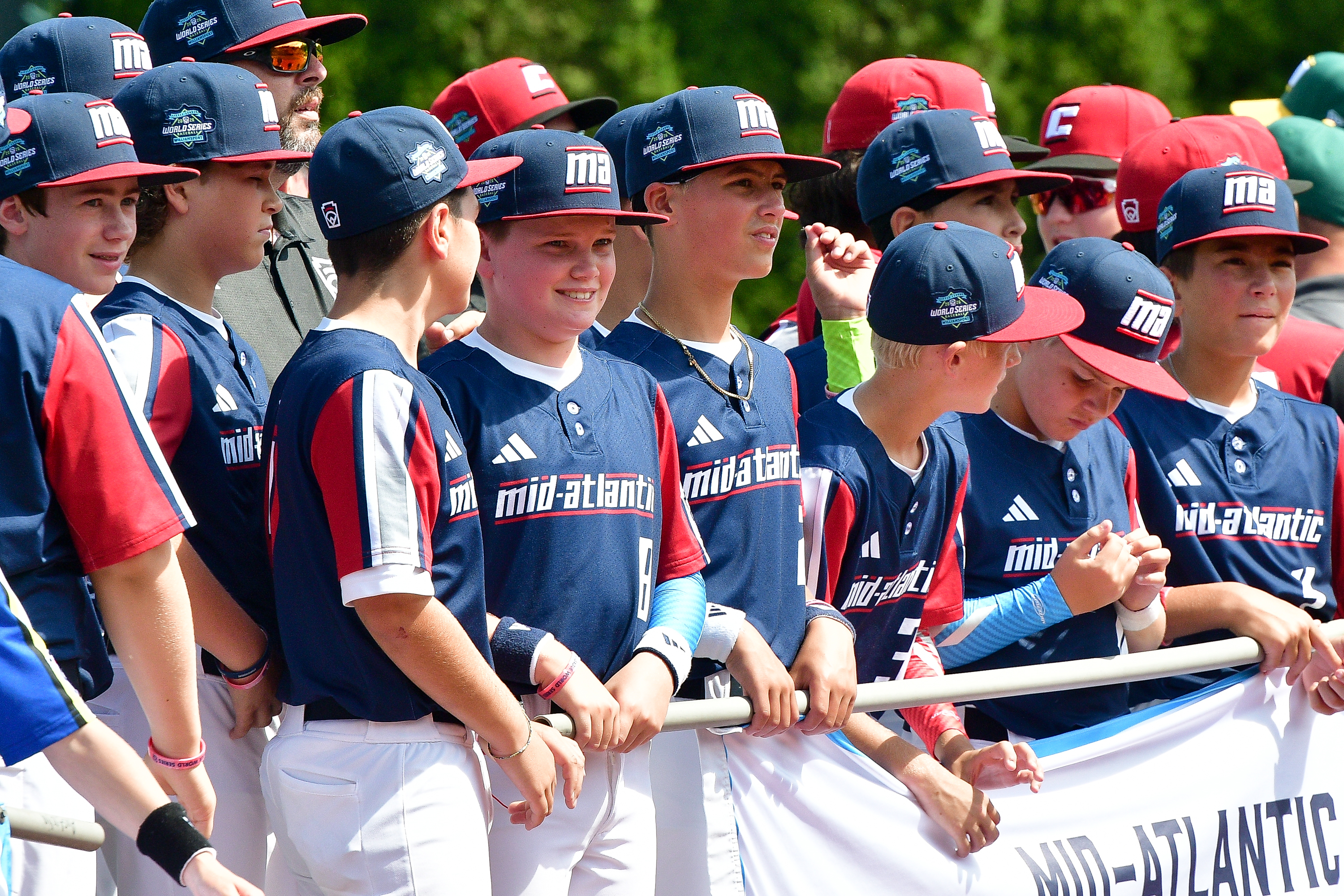
    East Side Little League from West Chester faces elimination Monday night in Williamsport.Ralph Wilson / For The Inquirer

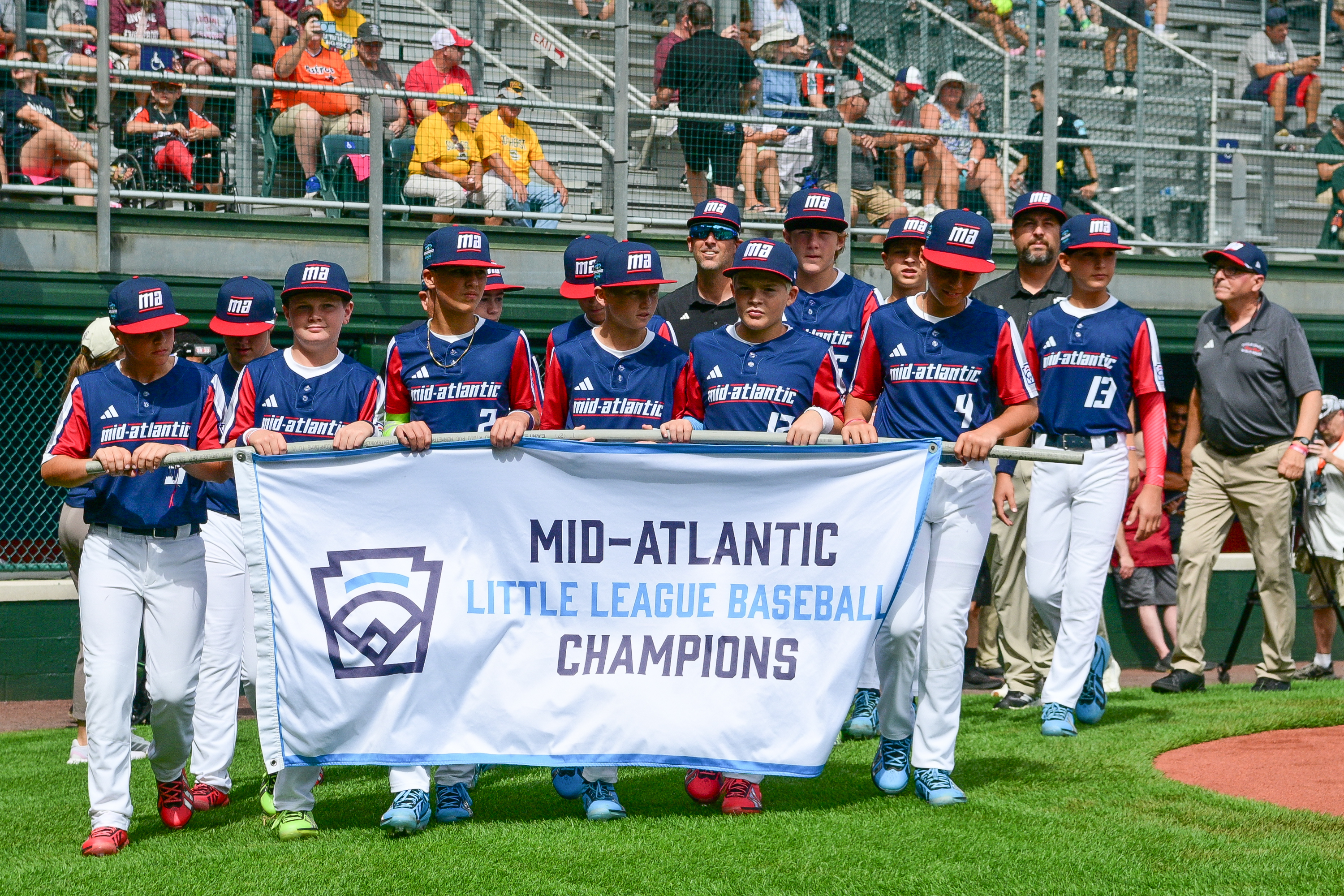
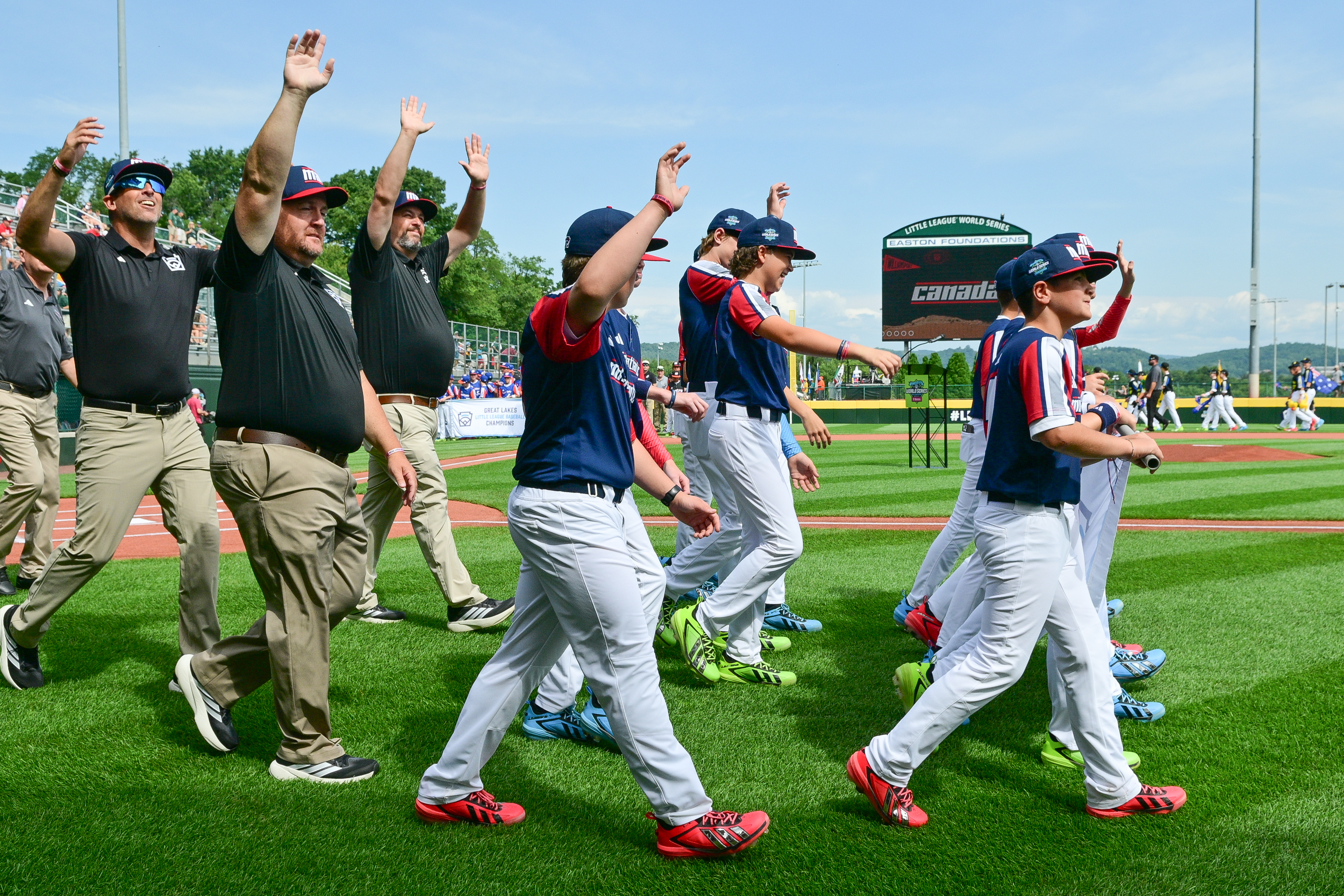
    Though off to a disappointing start after losing their opening game Friday, nothing could dampen the fun for West Chester’s East Side Little League team Sunday as they hung out with the pros alongside their teammates during the Little League World Series MLB Classic.

    Players from the Milwaukee Brewers and the Atlanta Braves came to Williamsport before their specialty game Sunday evening to sign balls, give high-fives and even play ping pong with the 12-and-under players from around the world.

    Get more details on the team’s experience.

    Next: East Side faces elimination against the team from the Southeast — Alabama’s Phenix City Little League — tonight (7 p.m., ESPN).

    David Murphy’s take

    Andrew Painter had his best start of the season Saturday night against the Cardinals.Elizabeth Robertson / Staff Photographer

    A little past 6 o’clock on Saturday evening, Andrew Painter delivered a couple of pitches that could have some serious implications for the Phillies. Both of them were four-seam fastballs that registered 97 mph on the gun and crossed home plate at the sternum of Cardinals leadoff hitter J.J. Weatherholt. The important thing is where those pitches ended up: inside the mitt of Phillies catcher J.T. Realmuto, rather than in play, or in the seats. Weatherholt swung at both. He did not make contact with either.

    That two-pitch sequence may sound like a small thing. It mostly was, at least within the context of the game. But it was a very big thing with regard to the futures of both the Phillies and their prized pitching prospect. It was a reason to believe.

    On this date

    Over 100 years ago, a pitcher was struck by lightning and finished a game against the Phillies.YONG KIM / Staff Photographer

    On Aug. 24, 1919, the Phillies were in Cleveland for what was shaping up to be a mostly ordinary game. They were facing pitcher Ray Caldwell, making his first start for the club after being waived by Boston and signing a contract in Cleveland that included one of the strangest clauses in sports history — it required him to get drunk after his starts.

    Making that clause even stranger was that Caldwell’s career had been derailed largely by drinking problems. However, on that day, Caldwell appeared to be turning back the clock, and had the Phillies on their heels through the first eight innings, allowing just eight hits.

    Like a certain character from Caddyshack, Caldwell’s impressive outing was abruptly cut short by Mother Nature — when he was directly struck by a bolt of lightning so powerful it caused his Cleveland teammates to dive to the ground and left Caldwell unconscious and electrified to the touch. Everyone thought he was dead.

    But then Caldwell rose to his feet and demanded the ball back — “I have one more out to get,” he reportedly said.

    He did just that, and picked up the win despite nearly losing his life. If there’s ever a game worth having a drink after, that’s it.

    We compiled today’s newsletter using reporting from Olivia Reiner, Jeff Neiburg, Alex Coffey, Jonathan Tannenwald, Gabriela Carroll, Matt Breen, Gina Mizell, Becca O’Reilly, and David Murphy.

    By submitting your written, visual, and/or audio contributions, you agree to The Inquirer’s Terms of Use, including the grant of rights in Section 10.

  • West Chester’s East Side Little League soaking up the Little League World Series experience despite opening loss

    West Chester’s East Side Little League soaking up the Little League World Series experience despite opening loss

    Though off to a disappointing start after losing their opening game Friday, nothing could dampen the fun for West Chester’s East Side Little League team Sunday as they hung out with the pros alongside their teammates during the Little League World Series MLB Classic.

    Players from the Milwaukee Brewers and the Atlanta Braves came to Williamsport before their specialty game Sunday evening to sign balls, give high-fives and even play ping pong with the 12-and-under players from around the world.

    “I got to play ping pong against Jacob Misiorowski and I beat him,” said Dillon DiGiulio, a first baseman and pitcher for East Side. “I was a little nervous. I was shaking.”

    A highlight for many young players during the 12-day Little League World Series is the MLB Little League Classic. Started in 2017, the event brings two MLB teams to Williamsport to play a friendly game and celebrate the youth that fuel excitement in baseball.

    East Side players were divided on who would win that night’s game, some cheering for the Brewers and some for the Braves, but they were all thrilled for the chance to talk with players they look up to.

    East Side will play a team from Alabama in their next World Series matchup.Ralph Wilson / For The Inquirer

    “My favorite part today has been getting all the signatures from the pros,” said Adam Zenis, a left fielder on the team. “We’re all really excited for the rest of the week, too.”

    East Side will get its shot at redemption Monday, playing in the elimination bracket against the Southeast Region team from Phenix City, Ala. Ahead of the game, the 12-year-olds are feeling excited and confident.

    For many of the players, though, the experience of playing in the World Series is the best part of it all, win or lose.

    “My favorite part is just getting to hang out with all the different teams,” said Colton DeGrazio, a catcher on the team. “We’ve created so many bonds with teams and people around the world that we never even knew like Japan, Korea, and I just feel like that’s probably the coolest part.”

    A loss on Monday would eliminate East Side from the tournament.Ralph Wilson / For The Inquirer

    Though many of the boys root for different teams back home, from the Mets to the Phillies, it’s clear that every kid playing at the Little League World Series loves baseball to the bone.

    “It’s just a dream come true, to be honest,” said East Side coach Bob Hennessey. “That’s every Little Leaguer’s dream. It was my dream growing up to see these boys get here and get to experience it. Nothing but amazing. I heard Colton say it’s an amazing experience to meet all these players and teams from around the world. So we’re lucky. We’re very lucky.”

  • Betnijah Laney-Hamilton has fit in quickly with the Washington Mystics, the WNBA’s biggest surprise this year

    Betnijah Laney-Hamilton has fit in quickly with the Washington Mystics, the WNBA’s biggest surprise this year

    WASHINGTON — When the New York Liberty waived Betnijah Laney-Hamilton earlier this month, it caused quite a commotion around the WNBA.

    The transaction wasn’t too much of a surprise, since her playing time had fallen sharply from years past. But the 32-year-old with roots in the Philly area was a Liberty fan favorite, and a key piece of the team’s long-awaited first title in 2024.

    Now the rest of the league had a shot to sign a former WNBA and FIBA world champion, All-Star, and first-team all-defense player with a reputation as a great teammate.

    It turned out that the moving van didn’t have to go too far. The Washington Mystics won the race to claim her, jumping at the chance to add a veteran to a team full of young promise.

    “The transition’s been pretty easy, just in terms of how everyone’s embraced me and just made it easy,” Laney-Hamilton said. “It’s nice always being able to be close to home, where my family can get here and everything.”

    That family includes her mother, Philly women’s hoops legend Yolanda Laney, who is often in the crowd at Laney-Hamilton’s home games. Washington is even closer to Yolanda’s home in Delaware than Brooklyn.

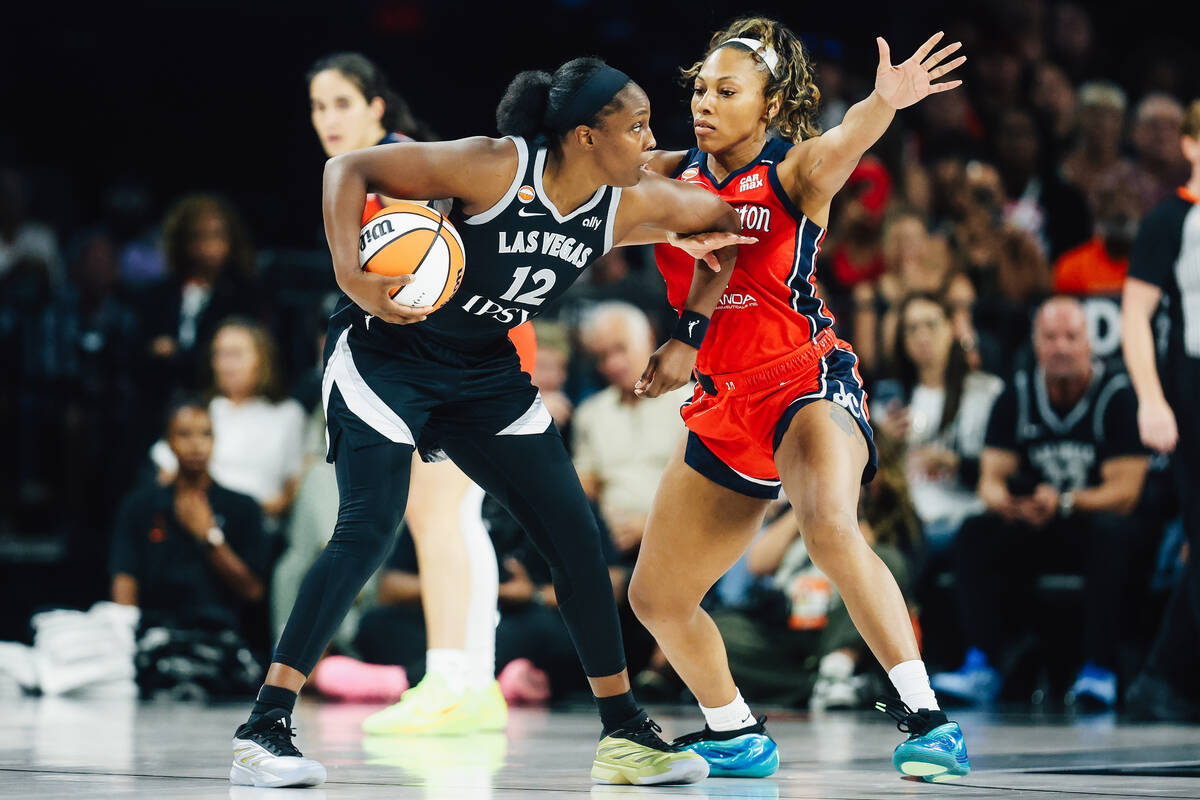
    Washington has been the biggest surprise in the league this year. On a circuit full of sizzling stars, the Mystics have a lot of good players, but not a household name yet. Still, they started the week in seventh place, and clinched a playoff spot Sunday night with a win in Portland.

    From there, they could look down at Paige Bueckers and Arike Ogunbowale’s Dallas Wings in eighth, and two marquee squads already eliminated from playoff contention: Nneka Ogwumike and Cameron Brink’s Los Angeles Sparks, and Kahleah Copper and Alyssa Thomas’ Phoenix Mercury.

    The Mystics still have a ways to go until they’re real contenders, and they showed it in last Friday’s loss to the first-place Minnesota Lynx. Though Washington battled gamely throughout, the decisive moments were the little things down the stretch: a missed shot here, a turnover there, a basket conceded on a break the other way.

    Perhaps those things will come in time for former college greats like Sonia Citron, Kiki Iriafen, and Lauren Betts as they develop in the pros. Coach Sydney Johnson can hope Laney-Hamilton’s presence alongside the team’s other veterans, Shakira Austin and Michaela Onyenwere, will help the process go even faster.

    “She’s hit the ground running here,” Johnson said. “They really respect her, they look up to her, they understand her playoff experience. She speaks with a high level of command with the players and coaches.

    For now, Johnson is simply thrilled to have her, and he does not take her easy integration for granted. Sometimes, a veteran’s arrival to a new team can upset existing chemistry. That hasn’t happened here.

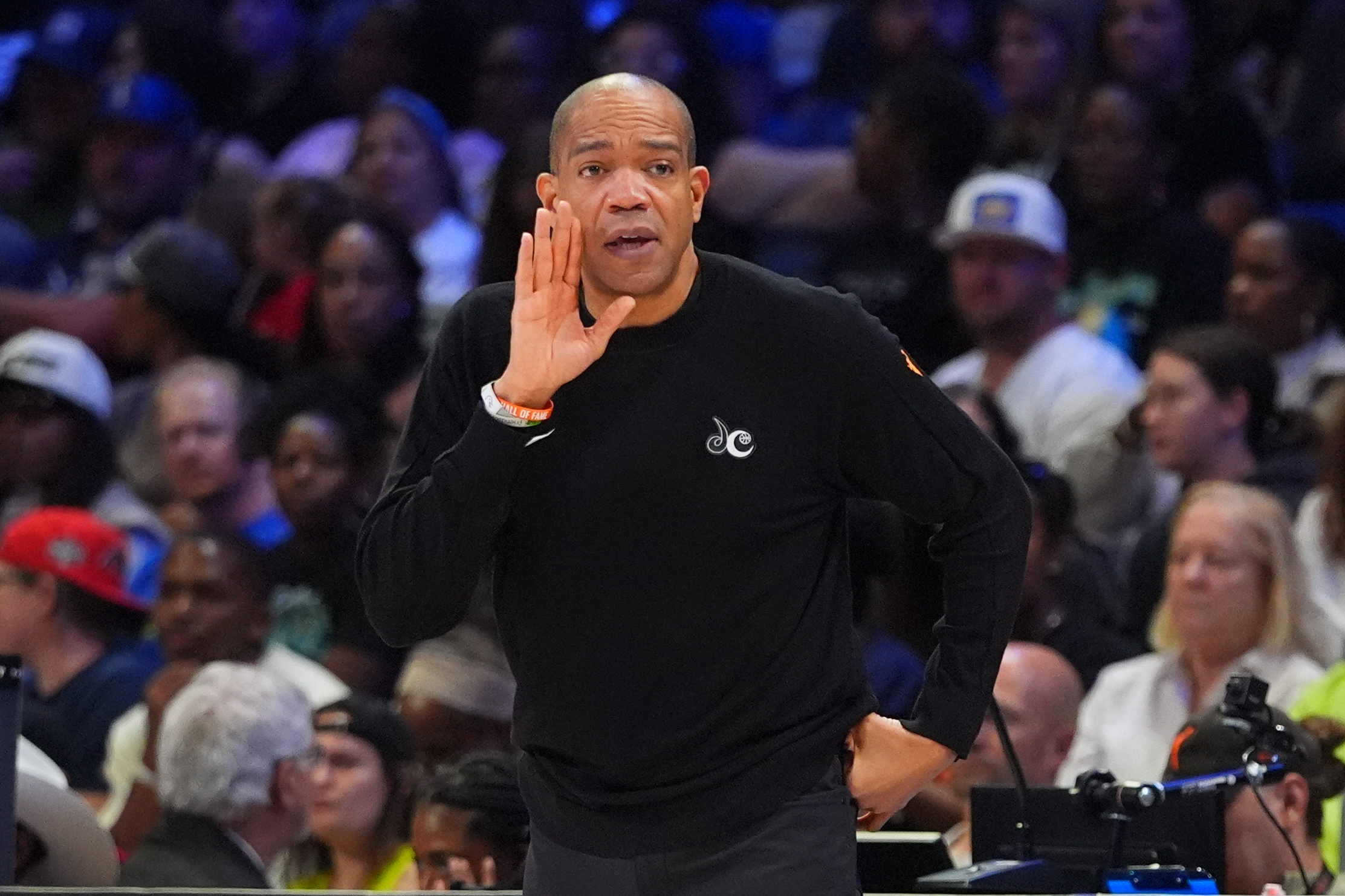
    Sydney Johnson is a leading WNBA Coach of the Year candidate thanks to the Mystics’ rise this season.LM Otero

    “I’m not a betting man, but it was a good bet,” said the second-year head coach, familiar to Philly hoops veterans from many years at Princeton. (He was the point guard in the famous 1996 NCAA Tournament upset of UCLA, and coached his alma mater to the 2011 Ivy League title.)

    “We are about toughness and togetherness,” Johnson said. “When you watch her, you watch her career, it’s pretty clear that she’s as tough as nails out there. You see her interacting with her teammates on the court, and then all the intel behind the scenes, she’s an outstanding person and a giver — she’s really giving to her team. So we felt like we got a steal, we really do.”

    Laney-Hamilton in turn praised her new teammates for “the energy, the intention behind everyone.” And she called Johnson “great,” helping with the transition then being clear about his expectations.

    The Mystics are spending this week on the west coast, with two games to come at Phoenix and one at Los Angeles before the WNBA pauses at the end of the month for the FIBA World Cup. When the season resumes, there will be just four games left to jostle for playoff positioning.

    Whatever happens along the way, it’s clear those expectations Laney-Hamilton mentioned have changed, thanks to her arrival.

  • Is Ariel Hukporti ready to become the Sixers’ backup center? A Knicks reporter weighs in.

    Is Ariel Hukporti ready to become the Sixers’ backup center? A Knicks reporter weighs in.

    A wild 76ers offseason has finally settled, after they stunningly signed LeBron James and traded for Jaylen Brown to vault into championship contender status.

    To help Sixers followers get acquainted with the newcomers on this revamped roster, The Inquirer reached out to reporters who covered those players on their previous teams.

    First up is The Athletic’s James Edwards III, who covered reserve center Ariel Hukporti during his first two NBA seasons with the New York Knicks.

    Gina Mizell: Hukporti obviously did not get much playing time during his first two NBA seasons behind Karl-Anthony Towns and Mitchell Robinson. So how would you describe his game, and where did he most develop (or not develop) behind the scenes?

    James Edwards III: Hukporti is your typical “traditional” center. He runs the floor hard. He goes after loose balls. He attempts to be active defensively. I think he’s improved as a screener from Year 1 to Year 2. It’s really nerdy stuff, but a good screener does positively impact offenses.

    He isn’t unskilled, but his skills haven’t revealed themselves on the court. He doesn’t really do anything off the dribble. He isn’t a great finesse finisher right now. And while he doesn’t shoot threes, I’ve watched him shoot threes behind the scenes and the shot doesn’t look bad. I could see him trying to add the three-ball to his game with more opportunities and reps.

    GM: Were you surprised Hukporti left the Knicks in free agency? Or did you think there was a chance he would stay given Robinson’s departure?

    JE: I was surprised because I didn’t think other teams would have interest, let alone give him more than the minimum. He didn’t play many significant minutes for New York. He’s going into his third NBA season, but he’s 24. He’s had a couple knee injuries over the last few seasons. I wouldn’t have been surprised if the Knicks wanted to keep him around as the third center, but, yeah, I was surprised he got the deal he did from another team.

    GM: Simply put, is Hukporti ready to be a backup center — and a spot starter when Joel Embiid is injured or resting? He will be competing with Adem Bona for that job.

    JE: To be honest, I don’t think so, not for where the Sixers want to go. If a rebuilding team or a team without championship aspirations this season wanted to see him in that role, that would make more sense.

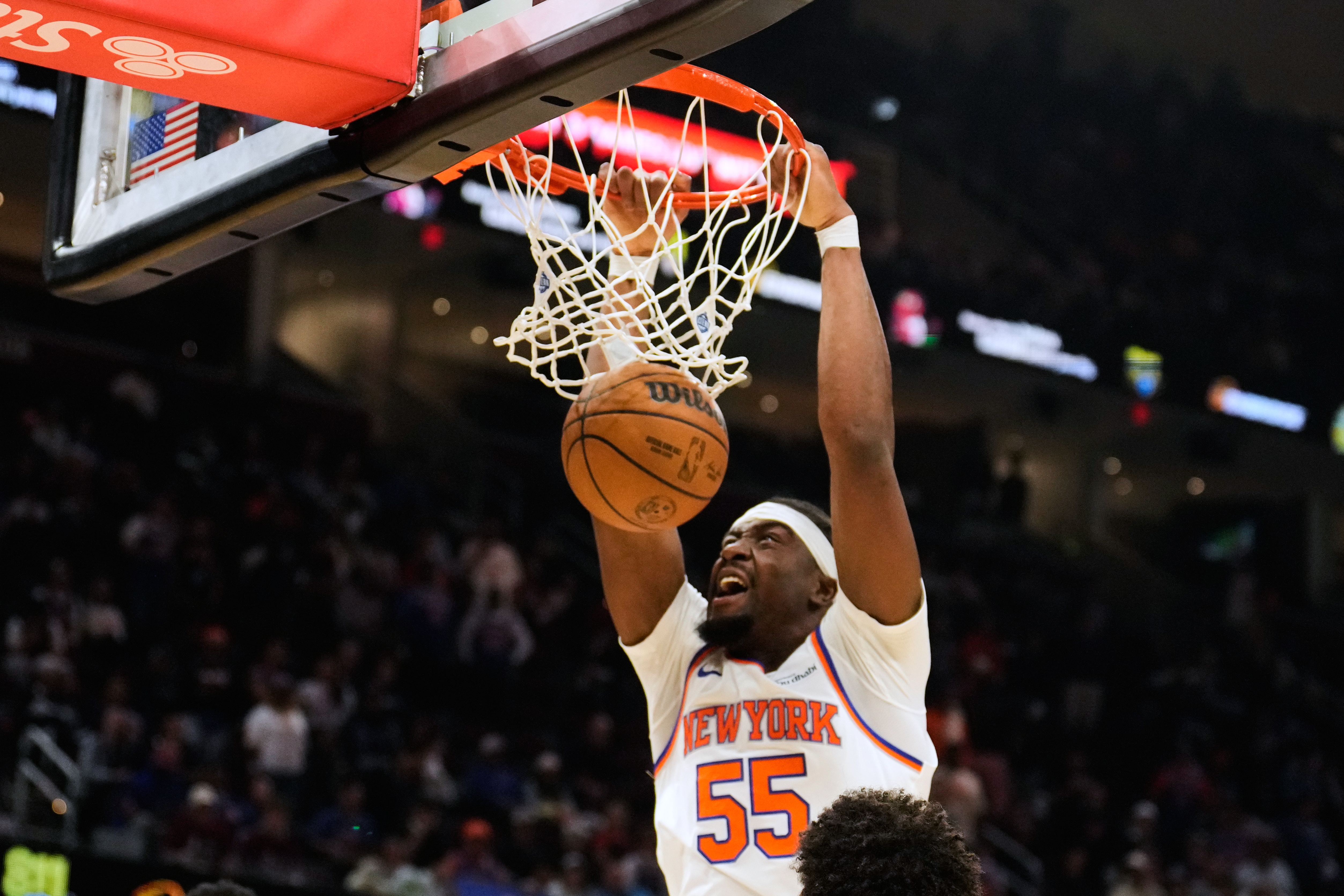
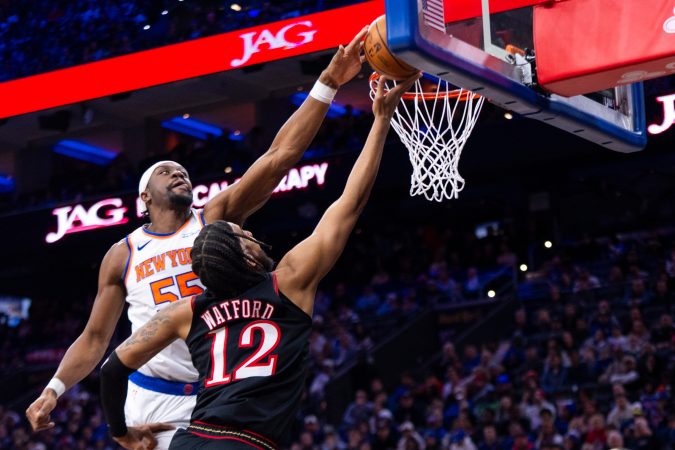
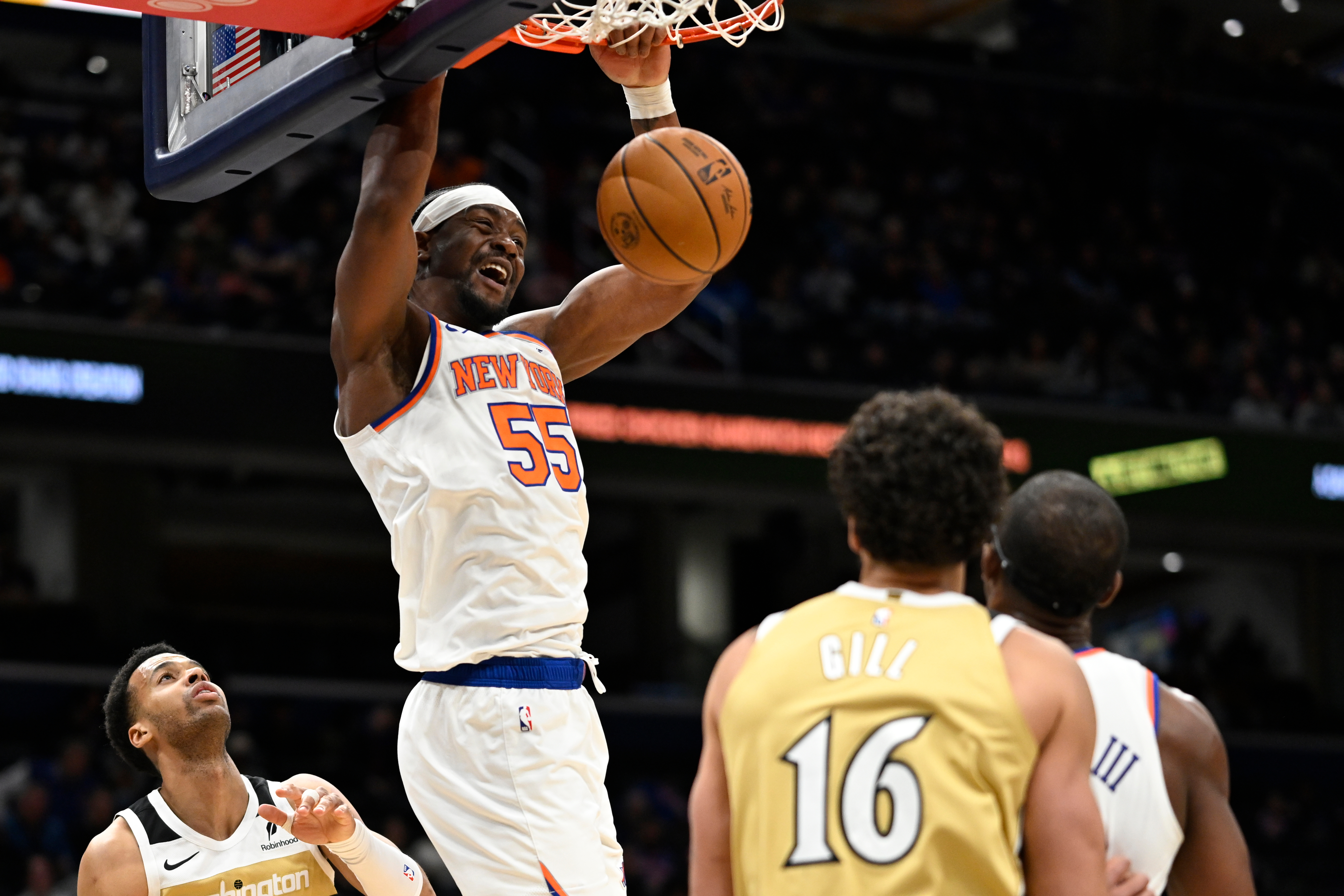
    Ariel Hukporti (55) will compete for the backup center spot behind Joel Embiid. John McDonnell / AP

    Philadelphia giving him 10-plus minutes a night … I just haven’t seen enough from him to believe that he can immediately be a reliable backup option every single night. I’m not saying that he can’t do it, but I haven’t really seen anything to suggest that he can right now. I’m rooting for him because he’s a good guy and works hard. I hope I’m wrong.

    GM: Despite the sparse playing time, what do you think Hukporti most gained/learned (on or off the floor) from being immersed in the Knicks’ championship run?

    JE: He got to be around great players and [learned] what makes them tick, how they work. He learned about standards. Hukporti played for two disciplined coaches in Tom Thibodeau and Mike Brown, both of whom had high standards.

    I also think it helps that all Hukporti knows at the NBA level is winning, which can’t be said for many Knicks draft picks between the late 1970s and today. At the very least, he’s been around a positive program and understands the inner workings of winning.

    GM: How would you describe Hukporti as a teammate and locker-room presence?

    JE: Great guy. His teammates — both veterans and youngsters — loved him, and so did his coaches. He’s not afraid to show his personality, and that was in New York where the franchise pushes players not to show their personalities. Funny guy, too. I never had a bad interaction with Hukporti and I don’t know anyone who did.

  • ICE inked a $9 million contract with a Montco firearms manufacturer — and is spending $17 million at Philly area businesses

    ICE inked a $9 million contract with a Montco firearms manufacturer — and is spending $17 million at Philly area businesses

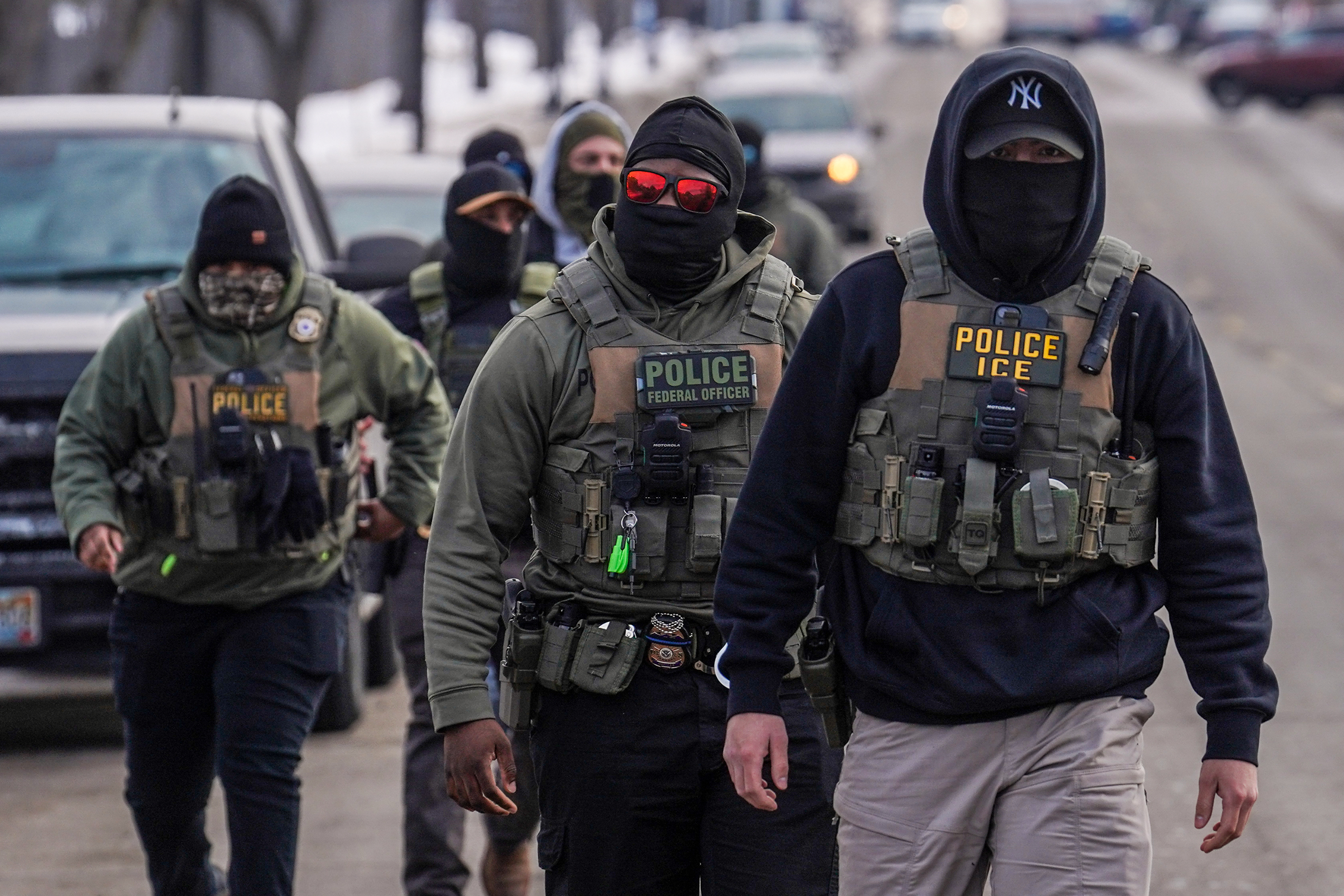
    U.S. Immigration and Customs Enforcement has awarded more than $17 million in contracts, mostly to businesses, in the Philadelphia area since the start of President Donald Trump’s second term, with more than half of that money going to a firearms manufacturer in Montgomery County.

    The local data, compiled by The Appeal, highlights the Trump administration’s spending related to raids and enforcement operations as the agency carries out the president’s mass deportation agenda, including its purchases of weaponry.

    Geissele Automatics, a firearms manufacturer based in North Wales, has the largest and perhaps most consequential contract with ICE in the Philadelphia area.

    The company — which specializes in selling high-grade, AR-15-style semiautomatic weapons and parts to consumers, law enforcement agencies, and the military — entered a contract with ICE for nearly $9.1 million in September 2025, according to federal data.

    The payment was for the delivery of “precision long guns and accessories” to support ICE agents as well as the agency’s tactical programs, the data show. It’s unclear where the equipment is being used.

    Neither the company’s founder, Bill Geissele, nor a representative from the company’s sales team returned a request for comment.

    Nationwide, ICE and U.S. Customs and Border Protection has dramatically increased spending on firearms in Trump’s second term, according to a report earlier this year from U.S. Sen. Adam Schiff (D., Calif.), leading to outcry from Democratic officials and voters who say the agency has become a militarized force with little oversight or accountability.

    That outrage continued this month when Democrats voiced their opposition to ICE’s plan to provide ICE officers with electric shock gloves. Schiff’s oversight report, released earlier this year, called ICE and CBP’s contracts for weaponry a “misuse of taxpayer dollars to maximally arm federal immigration agents.”

    A spokesperson for Department of Homeland Security said in a statement that $17 million in contracts in the Philadelphia region is “simply not accurate” and “conflates nationwide ICE contracts” with spending in the area.

    “ICE contracts with vendors across the country to support its law enforcement mission. The existence of a federal contract, a vendor located in a particular region, or a nationwide contract vehicle does not mean that the full value of that contract was spent in Philadelphia,” the spokesperson said

    “Reporting should accurately distinguish between nationwide contract values, vendor locations, places of performance, and actual federal expenditures before presenting a misleading figure as fact,” they added.

    The details on the contracts come as residents and advocates in the Philadelphia region and nationwide are continuing to remain vigilant of ICE’s presence in their communities. Earlier this year, ICE struck deals to retrofit warehouses in Pennsylvania and New Jersey into mass detention centers before later backtracking after residents and leaders in both states voiced opposition.

    Bill Geissele — who hosts the manufacturer’s podcast Shots Fired in Anger —has donated to Republican elected officials in Pennsylvania, including U.S. Sen. Dave McCormick and U.S. Rep. Dan Meuser. Geissele’s contract, while not the company’s first with the federal government, is by far the most significant contract between the gun manufacturer and the federal agency on record.

    (function() {
    var l2 = function() {
    new pym.Parent(‘ice_contracts2’,
    ‘https://media.inquirer.com/storage/inquirer/projects/innovation/arcgis_iframe/ice_contracts2.html’);
    };
    if (typeof(pym) === ‘undefined’) {
    var h = document.getElementsByTagName(‘head’)[0],
    s = document.createElement(‘script’);
    s.type = ‘text/javascript’;
    s.src = ‘https://pym.nprapps.org/pym.v1.min.js’;
    s.onload = l2;
    h.appendChild(s);
    } else {
    l2();
    }
    })();

    In August 2024 for example, under former President Joe Biden’s administration, Geissele Automatics entered a $12,224 contract with ICE for equipment to support a “sniper sustainment” course, according to data compiled by The Appeal.

    By 2025, when Trump returned to the White House and significantly ramped up ICE operations nationwide, those contracts ballooned.

    On top of the $9.1 million contract that year, Geissele was paid $27,936 to provide training rifles and magazines for the agency’s Office of Firearms and Tactical Programs, as well as $16,544 for rifles and accessories required for testing and evaluation.

    ICE also took its spending across the river to Burlington County in New Jersey, where it awarded George J. Petronis Enterprises Inc., a gun shop, slightly more than $505,000 since the start of Trump’s second term for training ammunition and ink cartridges for 9mm training ammo to support ICE’s Office of Firearms and Tactical Programs in Fort Benning, Ga.

    George J. Petronis Enterprises Inc. did not return an email requesting comment.

    The Appeal’s dashboard also shows a contract for rental of a firing range between ICE and the county’s fire academy, located in Conshohocken, that has existed since at least 2021. But Montgomery County officials said Friday that the contract is with the broader Department of Homeland Security — which ICE is a part of — and not with the federal immigration enforcement agency directly.

    County Commissioner Jamila Winder, a Democrat, said that the academy is used by local, state, and federal agencies for law enforcement training but “this facility is not available for training for those engaged in immigration enforcement activities.”

    Other contracts highlighted by The Appeal dashboard may also be directly tied to DHS, instead of ICE.

    Earlier this year, Montgomery County’s Board of Commissioners passed a resolution restricting federal immigration enforcement from using county property or resources for noncriminal investigations.

    Other local contracts with ICE include a roughly $50,000 contract with the Philadelphia Parking Authority for rental spaces for 16 vehicles and more than $78,000 to Ricoh USA Inc., an office technology company headquartered in Chester County that was also used under the Biden administration. Coast2Coast Shredding LLC, which is headquartered in Montgomery County but shreds documents in California, received more than $94,000 from ICE.

  • ‘We weren’t building power’: Inside the takeover of an influential Philadelphia labor council

    ‘We weren’t building power’: Inside the takeover of an influential Philadelphia labor council

    James A. Williams Jr. walked his first picket line when he was 8, growing up in the 1980s in Northeast Philadelphia as the son of a labor leader.

    He followed in his father’s footsteps, joining Glaziers Local 252 — the same union of which his great-grandfather was a charter member when it was founded 100 years ago. Also like his father, Williams rose to the top of the 140,000-member International Union of Painters and Allied Trades, becoming general president in 2021.

    Yet, even as Williams, 48, known as Jimmy, has broadened his focus to national issues — including Trump administration policies he sees as anti-labor — his attention diverted back to the city this summer when he ordered a review of his union’s regional governing body in Philadelphia, District Council 21.

    Seeking to evaluate DC 21’s recent merger with its counterpart in North Jersey, Williams says he found declining membership, excessive compensation for certain staff, and a lack of transparency.

    “It was obvious that we weren’t building power,” he said in an interview. “If anything, we were operating outside of our own laws and our own rules.”

    So Williams appointed a trustee to take control of the district council, removing the union’s elected business manager, Bernie Snyder, from his position and suspending other officers. Williams’ trustee on July 24 hand-delivered a letter — a copy of which was obtained by The Inquirer — with this news to DC 21’s union hall on Southampton Road in the Far Northeast, citing “widespread financial malpractice” and other governance issues.

    Williams said his review did not find evidence of theft or fraud: “The case you have here is mismanagement.” Snyder could not be reached for comment.

    Such trusteeships are not unheard of. They have been imposed on more than 20 Philadelphia-based unions since 2000, according to U.S. Labor Department records.

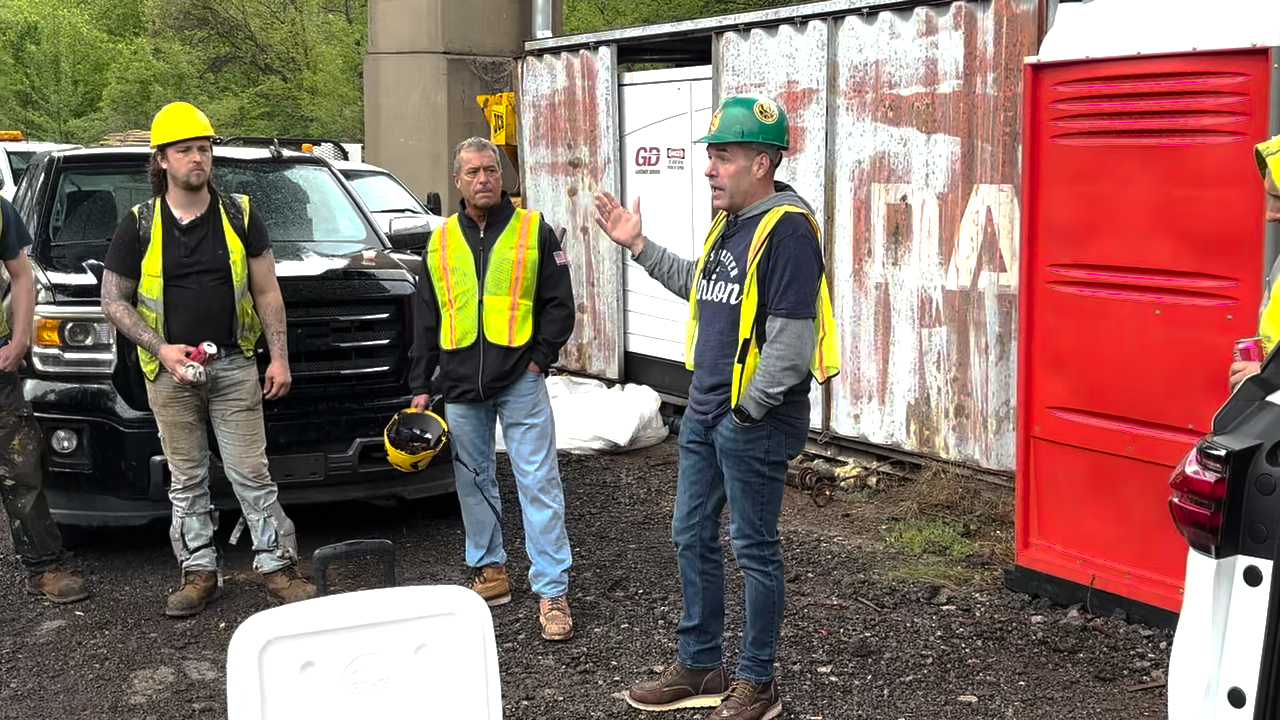
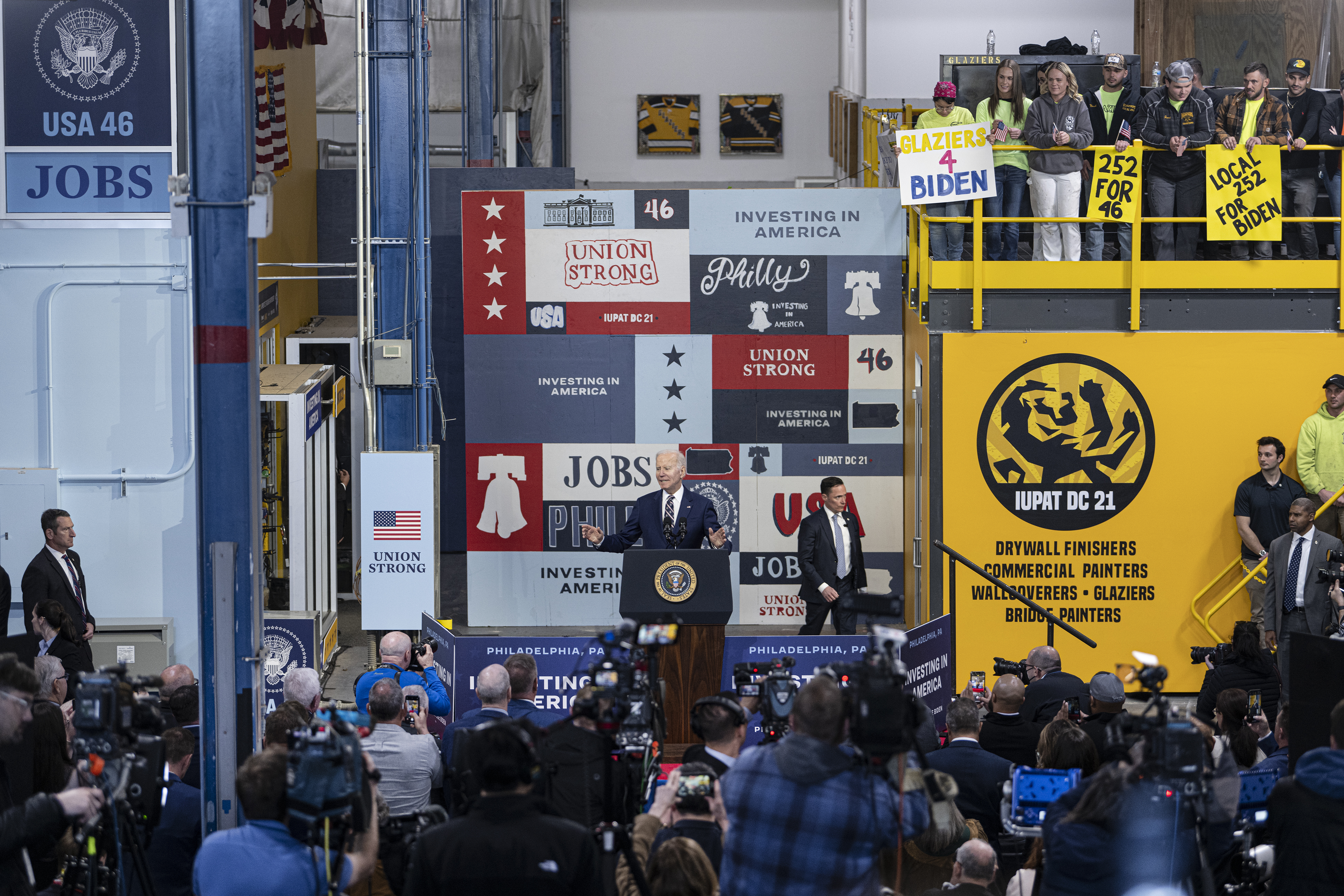
    But DC 21 — which is affiliated with 11 unions in Pennsylvania, New Jersey, and Delaware representing 5,600 painters, glaziers, drywall finishers, wall coverers, and glass workers — is not just any union. It is one of the largest members of the politically influential Philadelphia Building and Construction Trades Council, which is a close ally of elected officials ranging from Mayor Cherelle L. Parker to Gov. Josh Shapiro. In 2023, President Joe Biden and Vice President Kamala Harris each visited a training site affiliated with DC 21.

    President Joe Biden spoke at the Finishing Trades Institute in Northeast Philadelphia in March 2023.Jose F. Moreno / Staff Photographer

    Adding to the intrigue is the international president’s close ties to the district council and the broader Philly labor movement. His father, James Williams, once led Glaziers Local 252, and his uncle Ralph Williams was business manager of the Philadelphia building trades council in the 1980s. Beyond his family ties, Williams has described former DC 21 business manager Joseph Ashdale, a fellow glazier, as his mentor.

    “It had to be serious for him to have done it [taken control of DC 21],” said a local building trades source who spoke on condition of anonymity to speak candidly about a sensitive labor issue. “It’s drawing attention to his home local. It’s personal when it’s your own local.”

    Some in the world of organized labor did not see it coming. “That’s shocking to me,” State Sen. John Kane (D., Delaware), a former business manager of Plumbers Union Local 690, said of Snyder’s ouster.

    Susan Schurman, a professor at Rutgers University’s School of Management and Labor Relations, said oftentimes one faction of a union will level accusations of wrongdoing against a rival group in an effort to gain power.

    But Schurman, who reviewed Williams’ letter at The Inquirer’s request, said she was “inclined to think” that is not the case here. “Assuming what is said in the letter is accurate, when you have a declining membership and you’re raising the compensation and other things for officers and staff, you got a problem,” Schurman said.

    Williams said he was not motivated by politics. “It was difficult because of relationships and, you know, long-standing roots,” he said, adding that he had worked with Snyder, a painter by trade, for 25 years. “But it was also more necessary in order to change the culture for our membership here.”

    ‘I’d be angry’

    That change — to center the organization around members, not staff — is needed not just in Philadelphia but across the union, Williams says. He wants members to become “active participants” in the organization.

    “As a whole, people need to be held accountable and kicked in the a— to push forward, represent the labor movement, and display their potential power,” Gregg Smith, the Hanover, Md.-based union’s general secretary-treasurer, wrote in an internal newsletter this summer.

    Williams has described Joseph Ashdale, former DC 21 business manager, as his mentor.Clem Murray / Staff Photographer

    But as Williams seeks to empower members, some in DC 21 say they are not getting enough information from leadership. “Everybody’s pissed off,” one member told The Inquirer, speaking on condition of anonymity out of fear of retribution.

    Williams has held several meetings with members in recent weeks, including one at the Northeast Philly union hall on Aug. 5. “They basically avoided any questions,” the member said. “Where did all the money go? Nobody will tell ya nothing.”

    When DC 21 posted about the trusteeship on Facebook, one member responded, “How many times does our membership have to be victimized[?]”

    That frustration is understandable, Williams said. “There’s some angry members,” he said. “And think about it, I’d be angry. I’m working my a— off every day, and I expect that those that I elect are capable and are following the rules, right? And it’s just not what happened here.”

    19% decline in membership

    The takeover comes after DC 21 lost 19% of its membership in just two years, falling from 6,977 in 2023 to 5,621 last year, according to U.S. Labor Department data.

    “That’s huge,” the building trades source said. “You don’t see drops like that, that quickly.”

    Painters unions in other big cities did not see a similar drop-off over that two-year period. In New York, membership in District Council 9 held steady around 7,600 people. In Chicago, DC 14’s membership fell by 4% to about 3,900. DC 51 — which represents workers in Washington, D.C., Virginia, and Maryland — saw a 37% increase to 1,600 members.

    (function(){function e(){window.addEventListener(`message`,function(e){if(e.data[`datawrapper-height`]!==void 0){var t=document.querySelectorAll(`iframe`);for(var n in e.data[`datawrapper-height`])for(var r=0,i;i=t[r];r++)if(i.contentWindow===e.source){var a=e.data[`datawrapper-height`][n]+`px`;i.style.height=a}}})}e()})();

    In his July letter to members announcing the takeover, Williams said DC 21’s organizing department “has no discernible targets, strategic plans, or campaigns while membership declines and trade jurisdictions are undefended.”

    In the interview, he also pointed to a slowdown in regional construction. But the problem runs deeper, he said. Going back to 2010, Williams said, the union’s membership in Pennsylvania and New Jersey has declined by 2,000 people.

    Even in a region known as friendly to organized labor, more work is being performed by “open-shop” contractors that hire both union and nonunion labor, he said, adding that workers are increasingly being “misclassified” as independent contractors.

    “Philadelphia, New Jersey are right in the crosshairs for where organized labor needs to organize power and grow,” Williams said.

    Allegations of excessive pay

    Even as DC 21 lost members, it provided compensation packages to officers and certain staff that were inconsistent with the union’s bylaws, the letter said. That included $300,000 for elected staff over a two-year period in excess of what was allowed under the bylaws, according to Williams.

    Labor Department records reviewed by The Inquirer shed additional light on the union’s spending.

    The DC 21 staff’s average gross salary was $116,000 last year, a 14% increase from 2023. DC 21 employees’ average salary for 2025 was the highest of any of the 10 district councils in IUPAT’s Eastern Region, including New York, which paid an average of $109,356.

    DC 21 had been facing challenges even before the recent shake-up.

    Membership had been sliding for years when the union merged in 2022 with District Council 711 in North Jersey. (DC 21 already had a presence in South Jersey.) At the time, DC 21 was led by Ashdale, a former longtime chair of the Philadelphia Parking Authority.

    Ashdale retired in 2023 and was succeeded by Fran McLaughlin. Snyder was elected business manager the following year and served in that role until his ouster by the international union in July.

    The newly appointed trustee is Brian Courtien, a former business manager of District Council 51 in Maryland.

    He has to do two things, said Rutgers’ Schurman: dig into the union’s books and fix anything that was done “inappropriately,” and then try to ease rank-and-file members’ concerns about how their dues are being spent.

    “The trustee has to kind of manage a process of bringing calm and order back to the organization,” she said.

    Once that work is complete, the union will elect new leaders.

    For Williams, effecting change starts with ensuring members understand they have agency in the organization. “Their bylaws are theirs; they’re not their leaders’. Their contracts are theirs. They’re not their employers’ or their leaders’.” he said.

    “Having our rank-and-file at the center of everything we do,” he said, “from political endorsements to contract negotiations to union governance, that’s the culture we’re trying to build within our organization.”

  • The Philly Music Fest has announced this year’s surprise headliner

    The Philly Music Fest has announced this year’s surprise headliner

    It’s a Philly Music Fest tradition.

    The nonprofit, “Our Genre Is Philly” festival that celebrates its 10th anniversary in October, has made a habit of holding back the name of a mystery headliner whose identity can’t be announced until the artist is done playing another previously booked show in the Philadelphia market.

    Surprise headliners in recent years that PMF founder Greg Seltzer has brought into the cozy confines of Ardmore Music Hall have included Mt. Joy, Waxahatchee, and, last year, Dr. Dog.

    This year, it’s Gregory Alan Isakov, the singer-songwriter who was born in South Africa and raised in Philadelphia.

    Isakov now lives on a farm he owns outside Boulder, Colo., where he grows organic salad greens and root vegetables — and records roots music songs, like those on his 2023 album Apaloosa Bones, in his home studio.

    The announcement of Isakov’s PMF shows — which will feature openers Cailoa on Oct. 12 and Madi Diaz on Oct. 13 — couldn’t be made until he was done playing with the Philly Pops at the Highmark Mann on Friday night. He also was scheduled to perform with the Philadelphia Orchestra at the Saratoga Performing Arts Center in New York state on Saturday.

    This year’s PMF performers — who will raise money for Philly music education organizations including Rock to the Future, Settlement Music School, Beyond the Bars, and Key of She — include Mo Lowda and the Humble, RJD2, Wax Jaw, Sweet Pill, Owen Stewart, Roberta Faceplant, Sug Daniels, Marietta, the Dillinger Escape Plan, and Immanuel Wilkins.

    Philly band Sweet Pill plays Philly Music Fest in October. Their new album is “Still There’s a Glow.”Juliette Boulay

    The fest includes nine showcases in six clubs over seven nights. Tickets to each event are sold separately, and available now for Isakov and all other shows at phillymusicfest.com.

  • Thousands of Philly homeowners are facing property tax increases of 50% or more after this year’s reassessment

    Thousands of Philly homeowners are facing property tax increases of 50% or more after this year’s reassessment

    Most Philadelphia homeowners will see slightly higher property tax bills next year after the city conducted a mass reassessment process that resulted in a modest uptick in home values.

    But for thousands of residents, many of whom live in North Philadelphia, next year’s tax bills are expected to soar.

    Nearly 6,000 homeowners in Philadelphia saw their property assessments this year climb by more than 50% compared with two years ago, the last time the city conducted a mass revaluation, according to an Inquirer analysis of city property assessment data released in June.

    Of those homeowners, more than 2,200 saw their assessments more than double.

    That is likely to result in sticker shock come tax time next year, because property tax bills in the city are calculated based on home values. The revenue is split between the city and the Philadelphia School District.

    Homeowners across the city saw a median 3% increase in their property assessments this year compared with the 2025 tax year. Jumps were higher in neighborhoods that border gentrifying areas, such as in parts of Kensington and West Philadelphia.

    But this year, two other areas of the city had the densest concentrations of homes where property assessments increased by 50% or more, according to The Inquirer’s analysis.

    The steep rises are clustered in the southern end of Strawberry Mansion, the historically Black neighborhood along the Schuylkill, and in the tiny Hartranft neighborhood north of Temple University and east of Broad Street, where residents are predominately Latino.

    (function() {
    var l2 = function() {
    new pym.Parent(‘html_sandwich_2026_property4’,
    ‘https://media.inquirer.com/storage/inquirer/projects/innovation/arcgis_iframe/html_sandwich_2026_property4.html’);
    };
    if (typeof(pym) === ‘undefined’) {
    var h = document.getElementsByTagName(‘head’)[0],
    s = document.createElement(‘script’);
    s.type = ‘text/javascript’;
    s.src = ‘https://pym.nprapps.org/pym.v1.min.js’;
    s.onload = l2;
    h.appendChild(s);
    } else {
    l2();
    }
    })();

    Housing experts and advocates for low-income homeowners have long criticized the city’s assessment system as systemically biased, leaving Black and brown homeowners to pay disproportionately high property taxes. Mayor Cherelle L. Parker convened a task force in 2024 to study the city’s revaluation system, and that group’s recommendations are expected to be released later this year.

    Monty Wilson, a senior attorney at Community Legal Services who sits on the task force, said the Philadelphia Office of Property Assessment is the best in the state and has “worked really hard to become more and more accurate.”

    But he said bias persists in part because of the unique challenges that assessors face in low-income neighborhoods that can cause volatility in home values, such as higher rates of vacant lots, foreclosures, and other factors.

    A 2024 CLS report found that errors were clustered in lower-value neighborhoods where a majority of residents are people of color.

    “That means when a property is overassessed,” Wilson said, ”it tends to occur in a Black and brown neighborhood.”

    (function(){function e(){window.addEventListener(`message`,function(e){if(e.data[`datawrapper-height`]!==void 0){var t=document.querySelectorAll(`iframe`);for(var n in e.data[`datawrapper-height`])for(var r=0,i;i=t[r];r++)if(i.contentWindow===e.source){var a=e.data[`datawrapper-height`][n]+`px`;i.style.height=a}}})}e()})();

    The Parker administration did not respond to requests for comment.

    In response to a previous article about this year’s property reassessments, city officials emphasized that some lower-income homeowners pay relatively low tax bills because of the popular homestead exemption tax break. The program, which any homeowners can apply for and obtain if they live in their house as their primary residence, exempts the first $100,000 from a home’s taxable value.

    That means that some homeowners in working-class neighborhoods previously paid little to no property taxes. A sudden increase in valuation, like the ones seen this year in pockets of North Philadelphia, could require they pay bills next year that are several hundred dollars more than in the past.

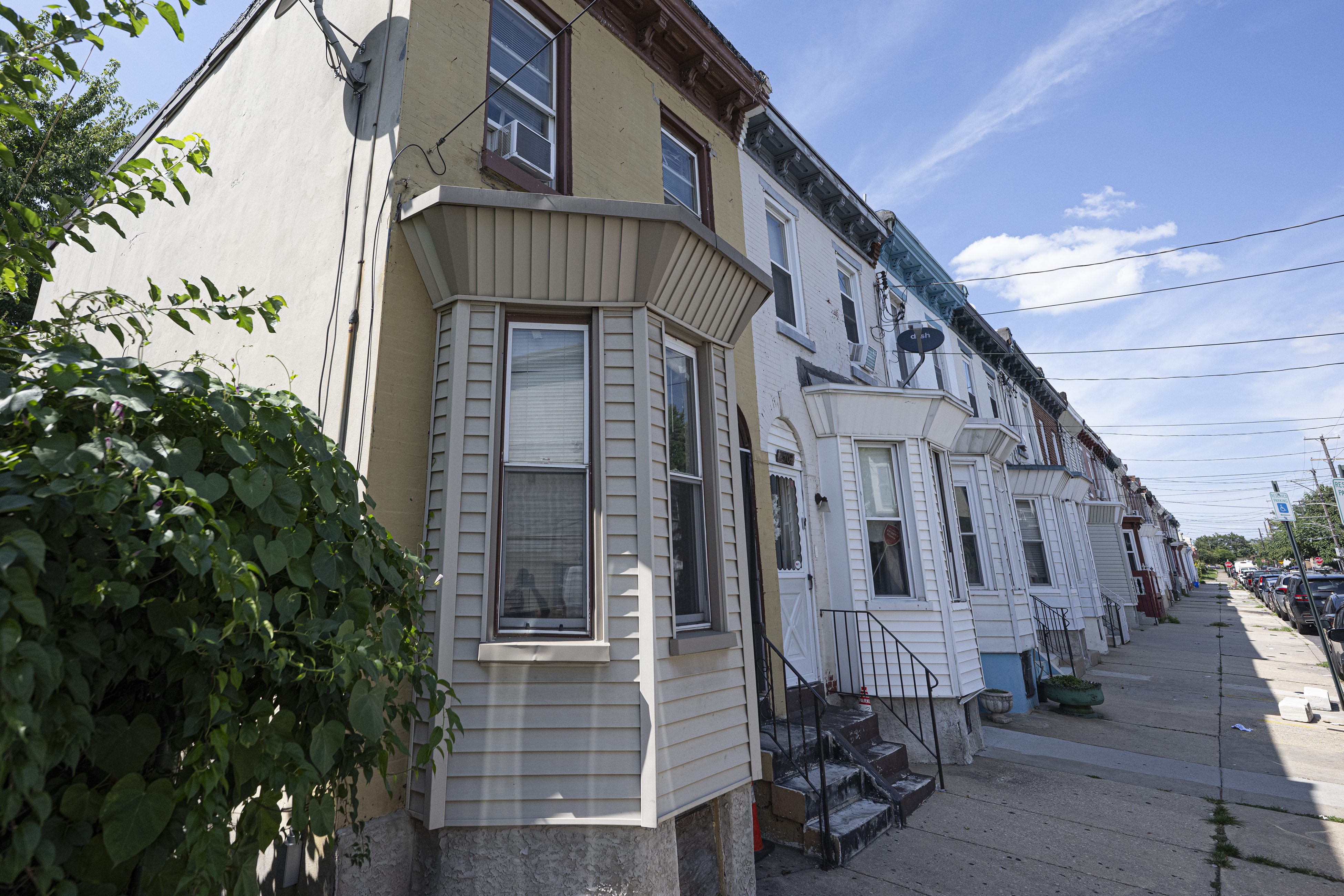
    Take the 2500 block of North Marshall Street. The residential North Philly street sits between West Kensington and Broad Street, and nearly every home saw its assessment increase by 60% or more, according to The Inquirer’s analysis.

    Most of the homes there had previously been valued at less than $100,000, meaning owners with the homestead exemption owed no property taxes. Now, many of the homes on the block are valued at about $140,000, an amount that would next year yield more than $500 in yearly tax bills for owners with the homestead exemption.

    More than 40% of the Hartranft neighborhood’s residents are below the federal poverty level, which is $33,000 a year for a family of four, according to U.S. Census data.

    At Left a property on 2500 N. Marshall St., Philadelphia, PA 19133 is shown Wednesday, Aug. 19, 2026, in Philadelphia.Jose F. Moreno / Staff Photographer

    City Councilmember Quetcy Lozada, whose district includes parts of Kensington and North Philadelphia, said the Hartranft area is not like sections of Kensington that have seen an influx of development in recent years and where increases in property assessments may be expected.

    It is possible, she said, that lower-income residents who have been displaced from parts of Kensington looked to move west of the neighborhood, increasing demand in the Fairhill and Hartranft areas.

    Lozada — who has held workshops in the neighborhood to connect residents with property tax relief programs — said she fears her constituents are being asked to pay disproportionately high taxes and not seeing better city services and stronger public schools.

    “How is it possible that someone in Fairhill is paying a higher tax for a property that has not had any investment, in a neighborhood that is not as safe, whose school system is not as great, as somebody that lives in Chestnut Hill, for instance?” she said, referring to the upscale Northwest Philadelphia neighborhood with a $109,000 median household income. “There has to be a better way of doing a more accurate evaluation in every neighborhood.”

    City Council is expected to hold a hearing this fall to probe the assessment process.

    In Strawberry Mansion, community leaders said that increased assessments are likely a result of market pressure from Brewerytown to its south, a comparatively whiter and higher-income neighborhood.

    “The city has to be super transparent about this assessment system so people can better understand it and not feel that sticker stock,” said Tonnetta Graham, president of the Strawberry Mansion Community Development Corp. “If we know how they came to their number, it’s easier to chew.”

    The 1700 block of North Newkirk Street on Thursday, Aug. 20, 2026 in Philadelphia.Monica Herndon / Staff Photographer

    Councilmember Jeffery Young Jr., whose district includes both Strawberry Mansion and parts of Hartranft, did not respond to requests for comment.

    Jalon Alexander, a Strawberry Mansion native who this month launched a campaign to challenge Young for his Council seat next year, said he was recently at a block party in the neighborhood where he heard repeatedly from older homeowners who were concerned about their increased assessments.

    “They feel taken advantage of, and they feel like it’s coming out of nowhere,” Alexander said. “This is an area where there’s high levels of poverty, and there is not a lot of political or government attention in this area. I’ve spoken with many people whose rates have almost doubled. It’s the biggest issue in the neighborhood.”

    Staff writer Michaelle Bond contributed to this article.