Blog

  • A Rutgers University dean of research was charged with invasion of privacy

    A Rutgers University dean of research was charged with invasion of privacy

    A Rutgers University dean of research has been charged with invasion of privacy, the New Jersey attorney general announced Wednesday.

    Joshua Kohut, 51, who serves as the dean of research at the School of Environmental and Biological Sciences, is accused of using his mobile phone to record “upskirt” videos of people without their knowledge while working at the university, Attorney General Jennifer Davenport said. Davenport did not say how many victims there were, or whether they were students or coworkers.

    “An invasion of privacy like this is not just disturbing, it is also a criminal act. We will prosecute accordingly,” Davenport said.

    The attorney general’s office received a complaint regarding Kohut on June 14. He was observed on multiple occasions using his cell phone to record a person’s intimate parts underneath “her skirt,” according to the Office of Attorney General.

    A search warrant was executed Monday, and authorities seized five of Kohut’s devices. During a forensic review, one of the seized devices was found to contain “upskirt” videos of another person’s undergarments and “intimate parts,” according to the attorney general. Prosecutors did not disclose where the warrant was executed, how many videos were discovered, or over what time period they filmed.

    A Rutgers spokesperson said Kohut was banned from campus pending the outcome of the investigation, and the university placed him on administrative leave “after being informed of the extremely disturbing charges.”

    Kohut is facing a charge of fourth-degree invasion of privacy, which carries a prison sentence of up to 18 months and a fine of up to $10,000.

  • Meet Kinley Rasmus, the 12-year-old who just surpassed Mo’ne Davis’ LLWS record for the most hits by a girl

    Meet Kinley Rasmus, the 12-year-old who just surpassed Mo’ne Davis’ LLWS record for the most hits by a girl

    With a recognizable white bow at the back of her baseball cap, Kinley Rasmus continues to make history at the Little League World Series.

    Kinley, 12, broke Philly native Mo’Ne Davis’ record for most hits by a girl after hitting five on Tuesday that lifted her team, hailing from Phenix City, Ala., to their second consecutive victory in an elimination game against the Northwest team from Tacoma, Wash.

    Kinley hit numbers four and five during their game and was met with cheers and high-fives from the crowd in Williamsport, Pa., and prompted Little League’s social media team to post: “Bow Secured. Take a Bow”

    Phenix rallied from a five-run deficit with help from Kinley, who also threw four scoreless innings as pitcher.

    The young pitcher and shortstop has baseball in her blood. Her father is former MLB pitcher Cory Rasmus, and she’s the niece of former MLB outfielder Colby Rasmus. Her father is helping coach Phenix City this summer, a legacy team that the Rasmus brothers both played for in the Little League World Series in 1999.

    Kinley is one of only two girls playing in the LLWS this year and has been nothing short of unstoppable. She joins the small number of 25 total girls who have ever played in the LLWS, including Philadelphia’s own Davis, who is currently a star player for the Los Angeles Queens of the Women’s Pro Baseball League, which is in its inaugural season.

    Davis established her name when she played in the LLWS in 2014 and broke the record for most strikeouts recorded by a girl — 14 — a number that Kinley tied on Monday night after a defeat of the Mid-Atlantic team, represented by West Chester’s East Side team.

    Kinley will have the chance to not only break Davis’ strikeout record but her own hitting record in another elimination game, against the Great Lakes on Wednesday night (7 p.m. ESPN).

  • Democratic states file new lawsuit seeking to block Trump’s order limiting mail voting in midterms

    Democratic states file new lawsuit seeking to block Trump’s order limiting mail voting in midterms

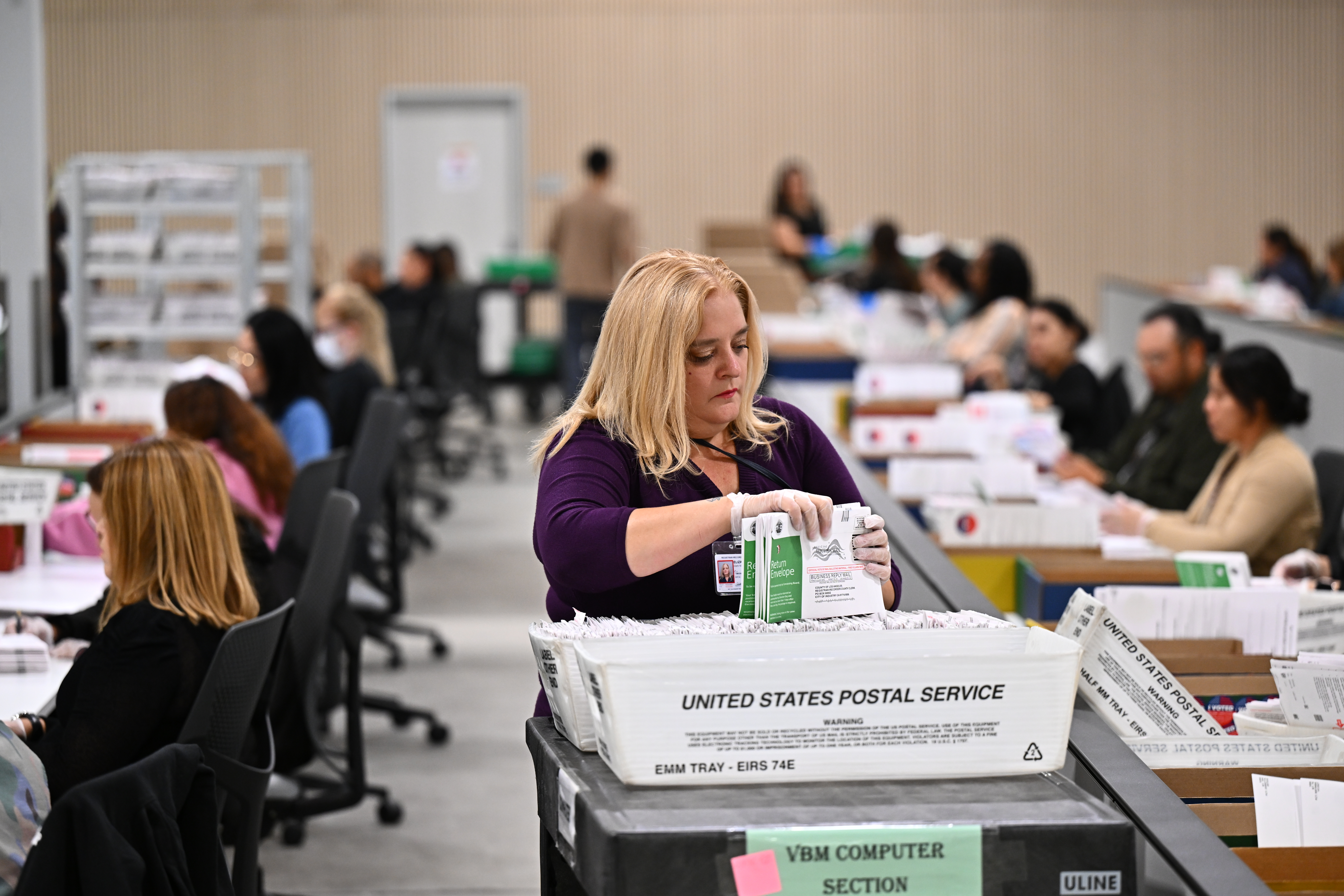
    Democratic-controlled states on Wednesday filed another lawsuit challenging President Donald Trump’s executive order seeking to limit mail voting in this year’s midterm elections.

    The action, filed by about two dozen states against the U.S. Postal Service, marked a new phase in the high-stakes litigation just two days after the Supreme Court ruled against them in a separate case, but did not say Trump’s order was legal.

    The high court majority found the Democratic lawsuit was premature, but that was before the Republican administration issued a rule governing Postal Service delivery of mail ballots. Election officials warn it will be impossible to implement in the days before the first wave of mail ballots are sent out next week.

    “Across the country, states are already deep into preparations for the 2026 elections. Now, at the last moment, the federal government is attempting to meddle in those preparations and potentially threaten countless Americans’ right to vote,” New York Attorney General Letitia James, one of 25 Democratic attorneys general filing the lawsuit, said in a statement. “USPS has no authority to decide who can and cannot vote by mail.”

    Trump’s executive order remains barred from taking effect under a separate injunction that the administration argues needs to be immediately rescinded in light of the high court’s ruling in the previous Democratic state lawsuit. It also had succeeded in a third case filed in May in the District of Columbia, convincing a judge that it was too early to prevent its implementation of the executive order.

    All previous challenges were filed before the administration published its mail ballot rule Friday night. The rule says that if states want their mail ballots delivered, they will need federal approval of the design of their envelopes and must give the Postal Service a list of voters eligible to receive them.

    White House spokesperson Lauren Bis on Wednesday said the Postal Service’s proposals were “commonsense measures that protect the security of mail-in ballots” and that the administration would continue to work to implement them to boost “the safety and security of our elections.”

    The Postal Service said it would not comment because of the pending lawsuit.

    National Democrats on Tuesday cited the rule in asking the federal judge in the Washington case to block Trump’s order after he declined to do so last spring, saying the administration at the time had not taken concrete action. In Boston, U.S. District Judge Indira Talwani also found that the administration moving forward with the mail ballot rule had violated a separate injunction she had placed on the Postal Service prohibiting it from enacting Trump’s order, although she did not take any action against the government.

    Talwani, who was nominated by Democratic President Barack Obama, had issued the injunction against Trump’s executive order in the prior Democratic state case, which is the one the Supreme Court overturned on Monday. She has yet to act on the administration’s urging her to revoke her second injunction. It was issued Aug. 11 in a case against the executive order and was filed by the League of Women Voters and other voting rights groups while the Supreme Court was considering the administration’s appeal of the judge’s first order.

    Trump has long targeted mail voting, which he falsely blames for his 2020 election loss and is disproportionately used by Democrats as a result of Trump’s condemnations. Since returning to power, Trump has tried to claim authority over election rules, saying he thinks Republicans should “take over” vote counting in Democratic areas.

    He issued his first election executive order just months after retaking office, attempting to require documentary proof of citizenship to vote, among other changes. He has also been pushing a sweeping election bill that has stalled in the Senate amid opposition from Democrats and even some within his own party.

  • Horoscopes: Wednesday, Aug. 26, 2026

    ARIES (March 21-April 19). When you don’t get the response you wanted or expected, try the same thing a few times more. Sometimes you have to jiggle the key, swipe the card reader a little faster or ask the question a little louder.

    TAURUS (April 20-May 20). Human behavior can look irrational until you know what’s driving a person to do mysterious things. But unless it pertains directly to you, it may not be worth the effort to find out. It’s enough to believe they have their reasons.

    GEMINI (May 21-June 21). You don’t need everyone to communicate the way you do. But it would be nice if a certain person’s level of engagement would match yours, even if they showed it differently. Reciprocity feels so cozy.

    CANCER (June 22-July 22). Sometimes people look like they are having so much fun that you feel pangs of envy just observing their joy. You may even forget that what they are doing might not be your idea of fun at all. Nonetheless, it will inspire you to get to planning what fits you perfectly.

    LEO (July 23-Aug. 22). Take a chance and reach out to someone who makes you nervous. Even your awkward moves will charm. Better to connect imperfectly with someone you’re interested in than to perfectly connect with someone you’re not.

    VIRGO (Aug. 23-Sept. 22). With an imagination so creative, optimistic and willfully oblivious to limits, you have no problem building things up in your head to improbable proportions. But improbable things happen every day. You’ve been lucky before, and it’s coming back around.

    LIBRA (Sept. 23-Oct. 23). Make space. Get rid of things before you have a replacement. Maybe you’ll never need one. Emptiness is not nothingness — it’s space. Space is something, even if you don’t know what it is. Maybe it’s just beautiful potential.

    SCORPIO (Oct. 24-Nov. 21). Maybe you’re being underestimated, but as long as you don’t let that hurt your feelings, this can be a very good thing. Surprising someone who thought they had already measured your limits is so fun. It’s also quite the power move.

    SAGITTARIUS (Nov. 22-Dec. 21). The answers don’t always have to come from you. In fact, if they did, it would mean you weren’t growing. You have a knack for duplicating success formulas. Try a proven strategy from a friend, mentor, book or program.

    CAPRICORN (Dec. 22-Jan. 19). Your feelings will clue you into things you can’t rationally explain. But since feelings can also lie with abandon, it’s important to question and test them before you act on them.

    AQUARIUS (Jan. 20-Feb. 18). You aim to delight someone you love, and this is one of the best prompts to invigorate your creative spirit. Start the idea machine up and you’ll soon be brimming with good options.

    PISCES (Feb. 19-March 20). You can get out from under an obligation in one honest conversation. Good friends and respectful employers don’t really want you to feel trapped by what you agreed to before you knew better.

    TODAY’S BIRTHDAY (Aug. 26). Welcome to your Year of the Hot Breeze, when you somehow manage to be seen as cool and warm at the same time. You’re incredibly attractive, magnetizing who you want to bring into your world. More highlights: A reimaging of your style with fun changes to dress, transportation and domestic life. Friends connect you to lucrative business. A new skill favorably affects every aspect of life. Cancer and Libra adore you. Your lucky numbers are: 15, 3, 37, 22 and 12.

  • Democratic states file new lawsuit seeking to block Trump’s order limiting mail voting in midterms

    Democratic states file new lawsuit seeking to block Trump’s order limiting mail voting in midterms

    Democratic-controlled states on Wednesday filed another lawsuit challenging President Donald Trump’s executive order seeking to limit mail voting in this year’s midterm elections.

    The action, filed by about two dozen states against the U.S. Postal Service, marked a new phase in the high-stakes litigation just two days after the Supreme Court ruled against them in a separate case, but did not say Trump’s order was legal.

    The high court majority found the Democratic lawsuit was premature, but that was before the Republican administration issued a rule governing Postal Service delivery of mail ballots. Election officials warn it will be impossible to implement in the days before the first wave of mail ballots are sent out next week.

    “Across the country, states are already deep into preparations for the 2026 elections. Now, at the last moment, the federal government is attempting to meddle in those preparations and potentially threaten countless Americans’ right to vote,” New York Attorney General Letitia James, one of 25 Democratic attorneys general filing the lawsuit, said in a statement. “USPS has no authority to decide who can and cannot vote by mail.”

    Trump’s executive order remains barred from taking effect under a separate injunction that the administration argues needs to be immediately rescinded in light of the high court’s ruling in the previous Democratic state lawsuit. It also had succeeded in a third case filed in May in the District of Columbia, convincing a judge that it was too early to prevent its implementation of the executive order.

    All previous challenges were filed before the administration published its mail ballot rule Friday night. The rule says that if states want their mail ballots delivered, they will need federal approval of the design of their envelopes and must give the Postal Service a list of voters eligible to receive them.

    White House spokesperson Lauren Bis on Wednesday said the Postal Service’s proposals were “commonsense measures that protect the security of mail-in ballots” and that the administration would continue to work to implement them to boost “the safety and security of our elections.”

    The Postal Service said it would not comment because of the pending lawsuit.

    Pennsylvania is one of the states suing the Trump administration.

    “Absolutely nothing has changed here in Pennsylvania. You can vote in person on Election Day or you can vote by mail before Nov. 3,” Democratic Gov. Josh Shapiro said Tuesday evening before the suit was filed.

    “Your vote will be counted. Your vote is safe and secure,” Shapiro said. “No matter how many times the president wants to try and undermine people’s right to vote in this commonwealth, he needs to know that he will be met with a swift rebuke from me.”

    National Democrats on Tuesday cited the rule in asking the federal judge in the Washington case to block Trump’s order after he declined to do so last spring, saying the administration at the time had not taken concrete action. In Boston, U.S. District Judge Indira Talwani also found that the administration moving forward with the mail ballot rule had violated a separate injunction she had placed on the Postal Service prohibiting it from enacting Trump’s order, although she did not take any action against the government.

    Talwani, who was nominated by Democratic President Barack Obama, had issued the injunction against Trump’s executive order in the prior Democratic state case, which is the one the Supreme Court overturned on Monday. She has yet to act on the administration’s urging her to revoke her second injunction. It was issued Aug. 11 in a case against the executive order and was filed by the League of Women Voters and other voting rights groups while the Supreme Court was considering the administration’s appeal of the judge’s first order.

    Trump has long targeted mail voting, which he falsely blames for his 2020 election loss and is disproportionately used by Democrats as a result of Trump’s condemnations. Since returning to power, Trump has tried to claim authority over election rules, saying he thinks Republicans should “take over” vote counting in Democratic areas.

    He issued his first election executive order just months after retaking office, attempting to require documentary proof of citizenship to vote, among other changes. He has also been pushing a sweeping election bill that has stalled in the Senate amid opposition from Democrats and even some within his own party.

    Staff writer Jeff Neiburg contributed reporting.

  • South Jersey gets its cream doughnut fix again as Del Buono’s Pastry Shop opens in former McMillan’s Bakery

    South Jersey gets its cream doughnut fix again as Del Buono’s Pastry Shop opens in former McMillan’s Bakery

    Del Buono’s Pastry Shop on Haddon Avenue is open for business.

    The Haddon Township pastry shop at the former family-run McMillan’s Bakery opened its doors for a soft launch Tuesday, giving customers the first peek in since McMillan’s shut down in May 2025 after building a loyal following over eight decades in business.

    The opening comes as renovations, which took the bakery down to the studs and expanded the space after its 86-year legacy, wrap up.

    Other than a few final finishing touches to the space, “what’s really left to do is to bake,” said Robin Lange, the shop’s social media director.

    Trays of donuts at Del Buono’s Pastry Shop on Tuesday, Aug. 25, 2026, in Haddon Township.Monica Herndon / Staff Photographer

    The shop’s most popular items, which include cream doughnuts reminiscent of the ones McMillan’s once sold, pizzelles, biscottis, and more, are already for sale, according to Lange.

    But no one seems to know the place is open yet, owner Tom Whitman said. His daughter was the first customer.

    The grand opening is scheduled from 7 a.m. to 10 p.m. on Saturday, Aug. 29, coinciding with the township’s music festival on the same street.

    Owner Tom Whitman poses for a portrait in the kitchen at Del Buono’s Pastry Shop on Tuesday, Aug. 25, 2026, in Haddon Township.Monica Herndon / Staff Photographer

    Whitman and his 30 employees will give out 1,000 free cream doughnuts, swag, and a chance to win a cake by Al DiBartolo, the South Jersey baker and Food Network alum working at the pastry shop.

    DiBartolo’s Kakery, which sells custom and ready-made cakes and baked goods, takes up half the 2,000-square-foot bakery in what was once McMillan’s storage closet. By 10 a.m. on Tuesday, DiBartolo had fully stocked his two display cases after baking late into the night and early in the morning. He eventually plans to host monthly themed cake decorating classes there.

    Al DiBartolo speaks with a reporter at Del Buono’s Pastry Shop on Tuesday, Aug. 25, 2026, in Haddon Township.Monica Herndon / Staff Photographer

    DiBartolo flipped through an old notepad featuring decades of his family’s recipes, as employees worked on a cannoli filling created by his uncle. He showed off the original McMillan’s ovens, which Whitman had refurbished rather than replaced.

    “You’re really getting authentic, old-school baking in here,” DiBartolo said. “But with a modern twist.”

    The DiBartolo family recipe book at Del Buono’s Pastry Shop on Tuesday, Aug. 25, 2026, in Haddon Township.Monica Herndon / Staff Photographer

    Del Buono’s Pastry Shop is the latest in a series of food destinations Whitman, 63, has developed over the years. Whitman, once a Domino’s Pizza franchisee, owns 100-year-old Del Buono’s Bakery in Haddon Heights and all three Carmen’s Deli locations in South Jersey. He purchased the shop for $500,000 last September and said he has since spent millions in renovations. Two apartments Whitman is building over the shop, which he said could rent for more than $3,000 a month, are still in progress and don’t have confirmed tenants.

    The new pastry shop will have specialty coffee in addition to doughnuts, pastries and other desserts, all made in house, and Whitman said he hopes to sell products made there at his other stores.

    While bread and rolls and a few other items will be sourced from Del Buono’s Bakery, Whitman is carrying on McMillan’s legacy in other ways.

    Doug Biemiller, a grandson of McMillan’s founders George and Evelyn McMillan, has returned to the new building as a Del Buono’s employee.

    Two more McMillan’s alumni sped around the kitchen Tuesday afternoon, maneuvering around sheet pan racks and icing doughnuts. Both said their current work isn’t much different from their time at the now-closed bakery.

    Juan Cutz works on a batch of donuts at Del Buono’s Pastry Shop on Tuesday, Aug. 25, 2026, in Haddon Township.Monica Herndon / Staff Photographer

    Juan Cutz, a mixer and baker, worked at McMillan’s for two years after 12 years at Classic Cake Bakery in Cherry Hill. He said he does pretty much everything but decorate, and he hasn’t changed his technique since working for McMillan’s.

    “It’s the same,” Cutz said.

    Longtime McMillan’s Bakery employee Ed Skotnicki stands in the kitchen at Del Buono’s Pastry Shop on Tuesday, Aug. 25, 2026, in Haddon Township.Monica Herndon / Staff Photographer

    Ed Skotnicki, 73, worked at McMillan’s for 53 years. He now plans to help out at Del Buono’s for at least a few months as the pastry shop gets settled.

    ”The only reason I’m here is to see this place come back to life,” Skotnicki said.

  • How these people used exercise to cope with unbearable grief

    How these people used exercise to cope with unbearable grief

    Myra Sack has always been an athlete. She was picked first for neighborhood basketball games when she was growing up outside of Philadelphia.

    Sack, 38, went on regular jogs throughout most of her pregnancy. After Sack’s daughter Havi was born, the little girl loved the movement of the running stroller.

    Havi was 15 months old when she was diagnosed with Tay-Sachs, a rare and fatal genetic disease. Sack and her husband had done screening before conceiving, but they said they were given results that turned out to be incorrect.

    Havi died in 2021 when she was 2 years, 4 months old.

    “I remember someone saying to me, ‘You’re going to meet these incredible people who have also lost children,’” Sack said. “And at the time, I was like, ‘I don’t want to be a part of this community at all. I hate this.’”

    Over time, Sack said her grief made her feel like “an alien.” She wanted to talk about Havi but not in the windowless room she imagined when she pictured a grief circle.

    A little more than a year after Havi died, Sack reached out to friends, hospitals, and the local running community, and she found 18 people who, like her, had suffered a life-altering loss. The group gathered at mile 21 of the Boston Marathon route with a plan to meet weekly for a couple months to talk and train for a half-marathon.

    One of the acquaintances Sack reached out to was Maria Rodrigues, whose 17-year-old son, Jairom, had died in a rock climbing accident while the family was on vacation in her home country of Brazil.

    “Of course I said yes,” said Rodrigues, even though she hadn’t been running in years. “And immediately I opened the computer, and I Googled, ‘How does a 60-year-old woman train for a half-marathon?’”

    Before their first run, the group members gathered in a circle and introduced themselves with their name and the name of the person they had lost. The group repeated their loved one’s name back to them.

    Each week, two or three people would share a brief story about their loved one with the group. Then they went for a run.

    The training was difficult, but Rodrigues stuck with it and completed the half-marathon in Newport, R.I.

    Rodrigues was surprised she made it across the finish line and said it helped her see she was stronger than she realized.

    “There’s a little bit of a parallel,” Rodrigues said. “As hard as this is, grief and the half-marathon, I can do it.”

    The loose curriculum of this first running grief group was based on Sack’s research and conversations with grief and trauma experts Joanne Cacciatore and Bruce Perry. It became the blueprint for her nonprofit E-Motion, which trains facilitators to run groups across the country and outside of the United States.

    ‘This is grief’

    When people are grieving, there are physiological changes as well as emotional ones: Heart rate, blood pressure, and the stress hormone cortisol all rise. There’s more inflammation, the immune system is suppressed, and many people experience exhaustion and brain fog.

    “You think about grief and you think about sadness, maybe you think about anger, but you don’t ever hear about the physical aspects of grief,” said Sarah McCarthy, a psychologist at Boston Children’s Hospital who helps support families after the sudden loss of a child.

    McCarthy was already working in this field when her daughter was diagnosed with leukemia. Even with everything she knew about grief, McCarthy was stunned by the way her body seemed to fall apart after her daughter’s death.

    “I was exhausted all the time,” McCarthy said. “I went to my PCP, and I was like, ‘What is wrong with my body?’ Nobody really sat down and said, ‘This is grief.’”

    Why exercise helps

    McCarthy moved to Boston after her daughter died, and she ended up meeting Sack through her work. Sack encouraged McCarthy to join a running group.

    “I actually hate running,” McCarthy said. Sack told her it didn’t matter and that the groups were for people at all levels. McCarthy bought a pair of running shoes and started training for a 10-kilometer race with an E-Motion group. It was as hard as she feared.

    “There was one day that I was like, ‘I’m going to quit,’” McCarthy said. “Another mom must have sensed that, and she just ran with me.”

    The pair took regular walk breaks. McCarthy stuck with the training and finished the 10K.

    “Afterward I told Myra, ‘This is amazing, and we need to study it,’” McCarthy said.

    While studies of E-Motion are still in early phases, research for years has shown that exercise is effective at improving mental health. Grief is different from anxiety and depression, but many of the symptoms can look similar, and scientists are beginning to turn their attention to whether exercise could help bereaved people, too.

    In research done in the United Kingdom in 2021, psychologists found that physical activity “allowed a sense of freedom” and gave people the opportunity to express emotions while finding more social support.

    In 2023, a longitudinal study showed that physical activity can promote resilience and help protect people against some of the most devastating consequences of traumatic loss. The bereaved people in the study who exercised more were less likely to develop chronic depression than those who exercised less.

    “I think that a lot of what is happening in grieving is actually not about verbal processing,” said Mary-Frances O’Connor, a grief expert and author of The Grieving Body: How the Stress of Loss Can Be an Opportunity for Healing.

    Though O’Connor wasn’t involved in these studies, she has spent much of her career looking at how our bodies and minds respond to grief. In her research, she found that muscle relaxation exercises, in which people tense and release muscles one at a time, are surprisingly effective at helping bereaved people feel better.

    She said that in addition to the physiological and mental health benefits of exercise, physical activity gives people a sense of agency at a time when the world feels out of control. Being part of a running or walking group means people are supporting each other and holding each other accountable.

    “Those are the things that I think help return us to community life, which is a vital and really difficult and under-discussed aspect of grieving,” O’Connor said.

    Connection

    Grief can be isolating, often because people don’t know what to say to someone who has been through a terrible loss.

    “They’re scared of saying the wrong thing or they’re just too scared of this topic in general, and they just pull away,” McCarthy said.

    Sack and McCarthy said groups like E-Motion help people connect with others who have been there.

    Rodrigues described how, walking or running side by side, participants fall in and out of conversation. Sometimes they talk about their loved ones but often they don’t.

    “You just simply, very fluidly pick up, slow down,” she said.

    Most of the E-Motion groups meet weekly for two months or so, but people form deep bonds in that short time. Many see each other between meetings and stay in touch for years, often finding close friends.

    “I think the beauty of death is that it cracks you open,” Rodrigues said. “We make connections because we’re vulnerable.”


  • Trump’s Ukraine negotiators are too chicken to visit Kyiv and support its independence

    Trump’s Ukraine negotiators are too chicken to visit Kyiv and support its independence

    There were two noticeable no-shows as Western leaders gathered Monday to mark the 35th anniversary of Ukraine’s independence — and its five years of resistance to Vladimir Putin’s effort to re-subjugate the country to Russian rule.

    There were multiple news reports that President Donald Trump’s clueless peace envoys — son-in-law Jared Kushner and real estate magnate Steve Witkoff — might finally join European allies at anniversary ceremonies.

    I say “finally” because neither of these supposed peacemakers has ever deigned to visit Ukraine. Not once. Meantime, Witkoff has visited Moscow eight times, and gushed over Putin as he and Kushner (also a repeat visitor) discussed business deals with Russia.

    It is no surprise, then, that Trump’s blinkered envoys postponed their trip, reportedly blaming their absence on intensified Russian missile and drone strikes. Never mind that former Vice President Mike Pence, British Prime Minister Andy Burnham, and other European leaders showed up.

    They recognized — as Trump and his envoys still do not — that Ukraine is fighting not just for its own freedom, but for the security of Europe and the United States.

    Burnham, who came to Kyiv on his first foreign trip as prime minister, understands the significance of Ukraine’s brave stand against the world’s second-largest army. A Russian military that is heavily aided by the dictators of China, North Korea, and Iran, all eager to undermine America and the democracies of the West.

    The U.K. leader rightly compared Ukraine’s resistance against Russian imperialism to Britain’s fight against Nazi Germany in the 1940s, telling Ukrainians, “My nation kept the flame of European freedom alive in the 20th century; you hold that flame in the 21st.”

    Burnham is right on the mark.

    Ukraine’s President Volodymyr Zelensky hands over the flag of a military unit during the ceremony to mark Ukraine Independence Day in Kyiv, Ukraine, Monday.Efrem Lukatsky

    The image of London firefighters bravely battling the blazes caused by the German Blitz, which rained rockets down on civilians in order to break their morale, comes right to mind when watching video of Ukrainian rescue workers pulling women and children out of the rubble of collapsed apartment towers that have been hit with Russian missiles or drones.

    Then-Prime Minister Winston Churchill understood that if Britain fell, the Nazis would take over Europe. The Battle of Britain in the summer and fall of 1940, in which incredibly courageous Royal Air Force pilots pushed back the Luftwaffe, forced Adolf Hitler to abandon his planned invasion of England. The courage and spirit of Britons under bombing gave the RAF the time to regroup and attack the Nazis in Europe. It gave President Franklin D. Roosevelt time to act on sending Lend-Lease war supplies to Britain.

    Burnham grasps that Putin is a stalking horse for an axis of adversaries – namely China, North Korea and Iran – that backs and finances Russia’s crimes.

    Ukraine’s battle of the skies is effectively the first round of World War III. And only one weapon can take down the ballistic missiles Russia is pouring down on Ukraine’s civilian infrastructure: U.S.-made Patriot interceptors.

    Yet, Trump has wasted much of America’s Patriot missile stock chasing cheap Iranian drones, and refuses to sell Kyiv a small percentage of what the U.S. retains. And after proposing joint production of Patriots with Ukrainian President Volodymyr Zelensky, the U.S. president immediately backed off.

    That is why Burnham announced Monday that the U.K. (along with France) will help Ukraine make its own version of a Anglo/French long-range cruise missile by sharing classified technical information. That will help Ukraine preempt Russian missiles by eliminating the firing sites.

    But setting up that production line will take months or years, and Ukraine desperately needs Patriots now.

    Ukraine’s President Volodymyr Zelensky (left) hands over the Ukraine state award to European Council President António Costa during a commemorative ceremony in Kyiv, Ukraine, Monday, marking Ukraine’s 35th Independence Day.Efrem Lukatsky

    It is hard for many Americans to grasp how important Ukraine’s survival is to our future security. Few U.S. politicians consider Ukraine to be a critical campaign issue. Trump has communicated his disdain for Kyiv to his MAGA followers, and Vice President JD Vance boasts that his proudest moment was helping cut off aid to Ukraine. As for Democrats, they’d rather focus on cost of living and the endless Iran war.

    But Gen. Ben Hodges, former commander of U.S. Army Europe, nailed it when he told me recently that what’s been missing from the lack of U.S. attention “is the recognition that it’s in the U.S. interest for Ukraine to be successful.” President Joe Biden was too timid, he noted, and Trump is worse.

    America’s enemies are taking full notice.

    China is watching and learning from the drone, robot, and electronic warfare being fought in Ukraine, while sharing dual-use weapon parts and technology with Moscow. Every lesson is being fed into the hopper of Xi Jinping’s massive agglomeration of data used for prep to take back Taiwan and dominate South and East Asian neighbors and territorial waters.

    North Korea is earning hard currency by sending troops and missiles to aid Russia’s war on Ukraine. In return, it is accessing Russian technology to build up its nuclear arsenal. Iran sends Shahed drones to Russia and learns from Russian upgrades of those drones, which helps Tehran attack U.S. bases and threaten Gulf Arab states in the Middle East.

    Meantime, Trump is focused on his White House ballroom, car races, and starting a trade war with Canada, while Kushner and Witkoff chicken out of visiting Kyiv. They have no clue that the fate of the Ukraine war will overshadow everything they now think is important.

    Their trips to Moscow are feckless unless they recognize that Putin has no interest in peace. Any “peace process” is dead (irrespective of CIA Director John Radcliffe’s secret visit to Moscow last weekend) until the United States recognizes reality and joins Europeans in squeezing Putin until he fears the war is endangering his survival.

    I believe Ukraine will hold out via its tech brilliance and innovation, and its people’s determination not to surrender to the brutal domination of Russia. But the United States will pay a dear price for failing to step up when it could have blocked Putin and his allies — before their war on the West got much, much worse.

  • From the Philly suburbs to Bulgaria and now on to Berkeley, Ava Smith’s rowing journey races on

    From the Philly suburbs to Bulgaria and now on to Berkeley, Ava Smith’s rowing journey races on

    On the other side of the Atlantic Ocean, Ava Smith crossed the finish line in Bulgaria as a proud member of an elite eight-person boat representing the U.S. Under-19 national women’s rowing team.

    “Crossing the finish line, it was a feeling of accomplishment,” said Smith, who took up the sport only four years earlier at Mount St. Joseph Academy in Flourtown, Montgomery County. “A sort of relief, in a way, just knowing it’s done. We put it all out there.”

    Smith picked up an oar for the first time as a freshman at Mount St. Joseph, but rowing runs in her blood. Her father, Don Smith, competed for the U.S. at the 1996 and 2000 Olympics; her older brother, Luke Smith, rows at Stanford and made the Under-19 national men’s team; and her sister, Addy Smith, now rows at Texas. Even the youngest Smith, Arden, plans to row as she starts her freshman year at Mount St. Joseph.

    This summer, that legacy came full circle. After years of sibling-fueled rivalry, Ava earned a spot in the women’s eight as the seven seat and traveled to Plovdiv, Bulgaria, to compete at the World Rowing Under-19 Championships, a spot secured after a whirlwind six weeks that took her from a selection camp in California to the start line across the world. And all of it just days before she leaves for her own next chapter: Rowing at the University of California, Berkeley.

    “It was surreal, and I was like, ‘Oh my God, is this even happening?’” Smith said of being selected. “Honestly, before this year, I didn’t think I was ever going to get invited to even try out.”

    Humility aside, Smith had an impressive high school career, which included helping Mount St. Joseph women’s varsity eight reach the “A” final twice at the U.S. Rowing Youth National Championships in Sarasota, Fla. She said that solidified her confidence heading into tryouts and college. But for Smith, the journey has always been about the team that helped her, especially in the beginning.

    “All the other girls that join the team, they don’t know anything about it either, and you’re all learning together,” she said. “I really enjoyed that, and I feel like me being good at rowing also gave me motivation to see how far I can go, and how much I can improve.”

    Though Don Smith never pushed any of his children into rowing, the sport has become a shared family love.

    Don Smith with his daughter Ava.Courtesy of Don Smith

    “It’s really nice to all do the same thing, get to talk about it,” Ava Smith said. “And with my dad, too, he can give me a lot of advice, especially because he really got to such a high level.”

    Don Smith cheered on his daughter in Bulgaria with a few other parents, joking that he still remembers the nerves of a big race. He said he feels them again watching his kids compete.

    “At the big ones, I’ll tend to go and I’ll start feeling like I’m out there, and I have to go watch by myself,” Don Smith said with a laugh, before sharing the advice he gives his kids in those moments. “Everybody else is feeling the same thing. … You’ve done all the work. Take this as an opportunity, not something that’s scary, or that you’re afraid of.”

    Ava said she’s proud of the work she and her team, a collection of women from around the country, put in.

    “Everyone was very nervous, including myself, but we were excited to see what we could do.” she said. “We really trusted one another in the boat, and I think we left with no regrets.”

    Now, Smith is headed to Berkeley, shopping for dorm essentials and preparing to meet her roommate in person for the first time as she gets ready to move across the country just days after returning from Bulgaria.

    “It’s going to be a little different for me to be toward the bottom,” Ava said. “But getting to compete and try on my way toward the top will be really fun, and I think definitely challenging. But I’m excited for that.”

  • Villanova’s schedule includes trips to Rome, Kansas, and games in Philly vs. Michigan, Wisconsin

    Villanova’s schedule includes trips to Rome, Kansas, and games in Philly vs. Michigan, Wisconsin

    Nearly all of the opponents for Villanova’s 12 nonconference men’s basketball games were already known prior to the school officially releasing its out-of-conference schedule Wednesday morning, but a few new foes were revealed, as were all of the dates.

    The 2026-27 season starts with a trip to Rome, where the men’s and women’s teams will face Notre Dame. Other marquee contests include games vs. defending national champion Michigan and Wisconsin at the Xfinity Mobile Arena, and road games at Kansas and Pittsburgh.

    The Wildcats, who went 24-9 last season and have a roster that could get some preseason top 25 votes, play their two Big 5 pool games Nov. 10 at home vs. La Salle and Dec. 1 at Temple before the Dec. 5 Big 5 Classic at Xfinity Mobile Arena.

    Villanova’s game vs. Notre Dame in Rome on Nov. 1 kicks off the college basketball season and will be nationally televised on FOX.

    The Wildcats play five power-conference opponents in the nonconference schedule. Coach Kevin Willard explained last month why he wanted to schedule a little tougher this season.

    “I went back and looked at the last 10 national champions and looked at how they schedule and where their rank of schedule was,” Willard said. “I think it’s really important to test yourself on the road, most importantly. … Especially with the tournament going to 76 teams, I think teams should get rewarded by scheduling hard.”

    The entire 2026-27 schedule will be revealed in September when the Big East announces its schedule.

    The NCAA Division I Council last year approved an increase from 31 regular-season games to 32 games. Villanova plays 20 Big East games and has typically had 11 nonconference games. The increase to 32 means one extra non-Big East game on the calendar.

    Villanova’s full nonconference schedule is below (times will be announced at a later date, the school said):

    • Nov. 1 vs. Notre Dame (Rome)
    • Nov. 6 vs. Holy Cross
    • Nov. 10 vs. La Salle
    • Nov. 14 vs. Rider
    • Nov. 17 at Pittsburgh
    • Nov. 21 vs. Michigan (Xfinity Mobile Arena)
    • Nov. 24 vs. Coppin State
    • Nov. 27 at Kansas
    • Dec. 1 at Temple
    • Dec. 5 Big 5 Classic
    • Dec. 9 vs. Fairleigh Dickinson
    • Dec. 12 vs. Wisconsin (Xfinity Mobile Arena)

    The Wildcats also will play three exhibition games: Oct. 11 at Rutgers; Oct. 17 vs. George Mason; and Oct. 22 vs. Virginia.