Blog

  • A coyote killed in Cheltenham had rabies, police say

    A coyote killed in Cheltenham had rabies, police say

    A coyote killed by Cheltenham police last week was rabid, the police department announced Wednesday.

    Cheltenham police responded to reports of an aggressive coyote in the Wyncote area but were initially unable to find the animal, until someone reported a coyote attacking a resident and their dog at Curtis Dog Park on Friday.

    Cheltenham Township Police Chief Richard Schaffer said the animal was “humanely dispatched” but declined to say how.

    Police are advising township residents who have had contact with a coyote to seek medical or veterinary care.

    The incident marks the fifth rabies case in Montgomery County this year, according to the state’s rabies tracking dashboard, and the first in a coyote.

    The other four cases were identified in two raccoons, a skunk, and a cat.

    Cheltenham officers will continue to work with the Pennsylvania Game Commission to monitor the area, and advised residents who see wildlife acting erratically to call 911.

    This suburban content is produced with support from the Leslie Miller and Richard Worley Foundation and The Lenfest Institute for Journalism. Editorial content is created independently of the project donors. Gifts to support The Inquirer’s high-impact journalism can be made at inquirer.com/donate. A list of Lenfest Institute donors can be found at lenfestinstitute.org/supporters.

  • At least 160 killed and hundreds missing after flash floods in Nepal and China

    At least 160 killed and hundreds missing after flash floods in Nepal and China

    UDIN DHUNGA, Nepal — Massive flash floods in a border area of Nepal and China on Wednesday killed at least 160 people and left hundreds of tourists, workers and others missing after sweeping through communities and bringing travel in some areas to a halt. Experts said an avalanche from a glacier was the likely cause.

    Police in Nepal reported at least 157 dead. China’s state broadcaster CCTV said a mudslide in the Tibet region’s Gyirong County near the border killed at least three and left 265 missing. Drone footage showed roads destroyed and buildings buried. State news agency Xinhua reported significant casualties.

    Nepal’s steep valleys are economic lifelines and travel corridors but precarious ones when disaster strikes. Images showed what appeared to be the second floors of buildings in hard-hit Nuwakot district slathered in mud after the torrent rushed by. Debris hung from tree branches and wires, vehicles were buried and stunned survivors were caked in mud.

    Many missing were on pilgrimage to a sacred site

    Officials in Nepal said 403 people, including 341 foreign nationals, were reported missing. Sunil Sharma, a tourism board spokesperson, said 133 were from India on pilgrimage to Mount Kailash in Tibet, a sacred site for Hindus. Also missing were 47 from the United States, 34 from Australia, 33 from Britain and 24 from Canada, he said. The State Department said it was aware of Americans affected.

    At least 62 missing Nepali citizens were among hundreds of locals trekking in the Gosaikunda Lake area in Rasuwa, coinciding with the local festival of Janai Purnima on Friday, Sharma added. Nepal police spokesperson Abi Narayan Kafle told The Associated Press at least 28 police officials were missing.

    Officials warned residents in several districts to stay away from the banks of the Bhotekoshi, Trishuli and Narayani rivers. The Bhotekoshi flooded around 9 a.m. Wednesday, destroying several villages and hydropower projects, officials said. At least 19 bridges were swept away.

    “We have asked both India and China to help us with the rescue efforts,” said government spokesperson Sasmit Pokharel.

    The U.S. Geological Survey had reported a magnitude 4.4 earthquake early Wednesday, about 60 miles north of Kathmandu, near the border with China’s autonomous region of Tibet.

    Though the current monsoon season is less favorable for trekking in Nepal, it’s a major season for Kailash trekking in Tibet, which follows the route in Nepal’s Rasuwa district bordering Tibet’s Gyirong.

    Countries express alarm over missing citizens

    South Korean government officials said nine citizens working on building a hydropower plant in Nepal were among those reported missing. Malaysia’s foreign ministry said its embassy received reports from travel agencies that they had lost contact with 11 Malaysians believed to be in Rasuwa district. Russia’s embassy in Nepal said four citizens reportedly in the affected area were missing.

    Indian Prime Minister Narendra Modi spoke with Nepal’s Prime Minister Balendra Shah and offered help. “India is prepared to provide Nepal with all possible types of humanitarian assistance. Our teams are closely coordinating on rescue and relief efforts,” Modi said on social media.

    Some United Nations bodies were deploying “in an effort to meet what will clearly be massive humanitarian need,” U.N. spokesperson Stephane Dujarric said.

    In a joint statement, Australia, Britain, the European Union, Finland, France, Norway and Switzerland expressed solidarity with people in Nepal, adding: “We encourage all those in affected areas to follow the guidance of local authorities and official safety advisories as the situation continues to evolve.”

    The same region saw flash floods last year

    Climate experts at the Kathmandu-based International Centre for Integrated Mountain Development said an avalanche from a glacier likely caused Wednesday’s flash flood.

    “Hydrological observations indicate the exceptional speed and magnitude of the flood wave,” they said in an emailed statement, noting that water levels at one point on the Trishuli river rose by as much as 27 feet over half an hour.

    The Lhende Khola River, a tributary of the Bhotekoshi, had maximum flooding, they said.

    “The Lhende Khola has flooded twice in 14 months, this time triggered by an ice rock avalanche from a glacier on the Nepal side that blocked the river and released a sudden surge downstream,” said Saswata Sanyal, a disaster risk reduction specialist at the climate research group.

    He noted the importance of early warnings in “a warming Himalaya.”

    The region saw similar flash floods in August last year, when a glacial lake in Tibet overflowed because of high temperatures. Nine people were killed, and critical infrastructure, including a bridge connecting Nepal and China, was damaged.

    The Himalayan region, which spans several countries including India, is especially vulnerable to heavy rains, floods and landslides because of warming due to human-caused climate change. Research shows that extreme weather events, including heat waves, rains and melting glaciers, have become more frequent.

    Researchers in Kathmandu found earlier this year that glaciers across the Hindu Kush Himalaya region are melting at an accelerating rate, with ice loss rates doubling since 2000, primarily due to rising global temperatures and climate change.

  • ‘Task’ reportedly spotted filming second season in Center City

    ‘Task’ reportedly spotted filming second season in Center City

    The HBO crime drama Task was reportedly spotted filming in Center City on Tuesday, according to users on Reddit. Onlookers captured a photo of a film crew on Market Street between 17th and 18th Streets and identified the production.

    Task has been shooting its second season throughout the Philadelphia region this summer, from Manayunk to Wissahickon Valley Park. The show from Mare of Easttown creator Brad Ingelsby, who grew up and lives in Berwyn, stars Mark Ruffalo as a tenderhearted FBI agent leading a task force.

    The first season saw him investigate a string of robberies led by trash collector Robbie Prendergrast (Ozark actor Tom Pelphrey) while this season pits him against Eddie Barnes, a potentially shady DEA agent played by Mahershala Ali, the Oscar winner behind Moonlight, Green Book, and season 3 of True Detective.

    Next, it appears the production will film in Upper Darby on Aug. 31 and Sept. 1, according to the Upper Darby Township’s Facebook page. The post details temporary parking restrictions in the area as the crew will reportedly shoot in and around the Llanerch Diner.

    Ruffalo and Ali have been seen around Philly this summer with one attentive fan capturing Ali jumping rope in Manayunk. The Delco-set series prides itself on filming locally, with season 1 locations spanning Pennsylvania, from Ralph’s Italian Restaurant in South Philly to Bangor Quarry in Northampton County.

    Though few details have emerged about the plot, Task will crossover with Mare of Easttown, with actor Julianne Nicholson reprising her role as Lori Ross, who played the best friend to Kate Winslet’s Mare. Other new faces cast in season 2 include Edgar Ramirez (The Assassination of Gianni Versace), Jharrel Jerome (When They See Us), Henry Melling (Pillion), Tim Blake Nelson (Watchmen), Aminah Nieves (1923), and Kevin Dunn (Veep).

    This fall, Task is up for six Emmys at the awards ceremony in September across various categories, including cinematography, picture editing, directing (for Salli Richardson Whitfield), and writing (recognizing Ingelsby). Ruffalo — a two-time Emmy winner — received a nod for his lead performance and Pelphrey was nominated as a supporting actor.

  • In headache for Republicans, second Dan Sullivan advances in Alaska Senate race

    In headache for Republicans, second Dan Sullivan advances in Alaska Senate race

    Dan J. Sullivan, a retired teacher who is challenging Republican Sen. Dan S. Sullivan of Alaska, won a spot on the general election ballot Tuesday, according to The Associated Press.

    His emergence from the state’s nonpartisan primary poses a headache for the incumbent.

    Dan J. Sullivan is not expected to wage a competitive general-election campaign. But Republicans have worried for months that some voters may confuse the two Sullivans in November, potentially depriving Sen. Sullivan of votes and lifting his well-funded Democratic challenger, former Rep. Mary Peltola, to victory.

    Sen. Sullivan and Peltola easily earned spots on the general election ballot; soon after polls closed a week ago, The Associated Press said they both had advanced. But Dan J. Sullivan won just a few thousand votes, and it took a little more than a week for it to become clear that he had secured one of the four spots on the November ballot.

    Democrats and Republicans alike see Dan J. Sullivan as no mere campaign curiosity. If he wins even a sliver of general-election votes, it could be decisive in a narrow race. Alaska uses a ranked-choice general-election system, which means that voters confused about the Sullivans could simply rank them both before Peltola — but it is unclear how the dynamic may play out in voting booths.

    Sen. Sullivan trailed Peltola by more than 5 percentage points in the nonpartisan primary.

    The contest in Alaska is one of a handful of competitive races seen as the most likely to determine which party wins control of the Senate. With Republicans now holding 53 seats, Democrats would have to keep all their seats and flip four to win the chamber in the midterms. Democratic leaders consider Alaska to be one of their most promising targets.

    It was not always clear that Dan J. Sullivan, running as a Republican, would even be eligible.

    The Alaska Division of Elections, which is overseen by the state’s Republican lieutenant governor, removed Dan J. Sullivan in June from the primary ballot, finding that his candidacy was intended to confuse voters and was not a “good-faith” effort. An Alaska judge, in turn, restored his spot on the ballot, saying that the elections agency had exceeded its authority.

    Republicans have claimed that Peltola’s campaign planted Dan J. Sullivan in the race to trick voters. But the Peltola campaign has denied coordinating with him. He said in a recent interview that he had voted for Peltola in her bids for the House of Representatives in 2022 and 2024, but that he was running in good faith and was not a secret Democrat.

    Broadly, Democrats in Alaska have dismissed allegations of foul play, casting Dan J. Sullivan’s candidacy as an amusing but far from unheard-of quirk of the insular world of Alaska politics.

    When Sen. Sullivan was first elected to the Senate in 2014, another Republican named Dan Sullivan, then the mayor of Anchorage, was also on the primary ballot as a candidate for lieutenant governor.

    On the day of this year’s primary, the former mayor weighed in on the Senate race. “As the OG Dan Sullivan, I urge Alaskans to vote for Sen. Daniel S. Sullivan,” he said in a statement on social media. “He’s been great for Alaska.”

    When Dan J. Sullivan announced in May that he was entering the race, he said in a statement, “It’s time for Alaska to elect a Sullivan that’s on their side.”

  • Landmark Ritz Five is closed after failing city inspections

    Landmark Ritz Five is closed after failing city inspections

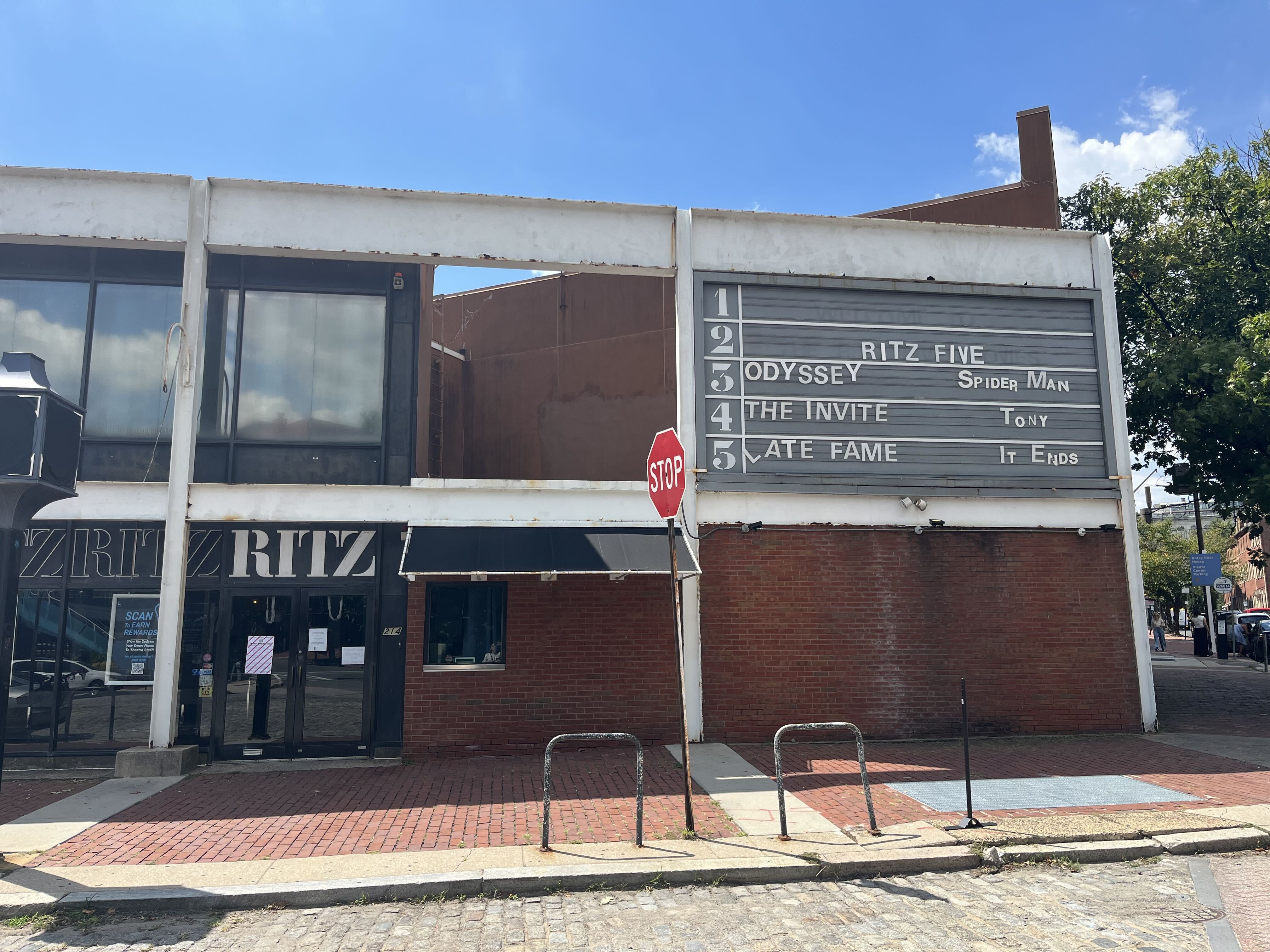
    Landmark Ritz Five movie theater is closed after failing inspections by the city’s Department of Licenses and Inspections.

    On Wednesday morning, the theater’s website posted that the location was temporarily closed “due to administrative issues.”

    The theater at 214 Walnut St. was found in violation of several city codes in March, and the theater failed a follow-up inspection on Aug. 11, according to a city online portal.

    March’s violations include failure to: obtain a permit to install a fire alarm system, share documentation that fabrics are flame retardant, ensure that exit doors fully “self-close and latch,” and certify emergency lighting. The theater was also found to be missing a valid food license. In total, the theater was issued seven violations in March.

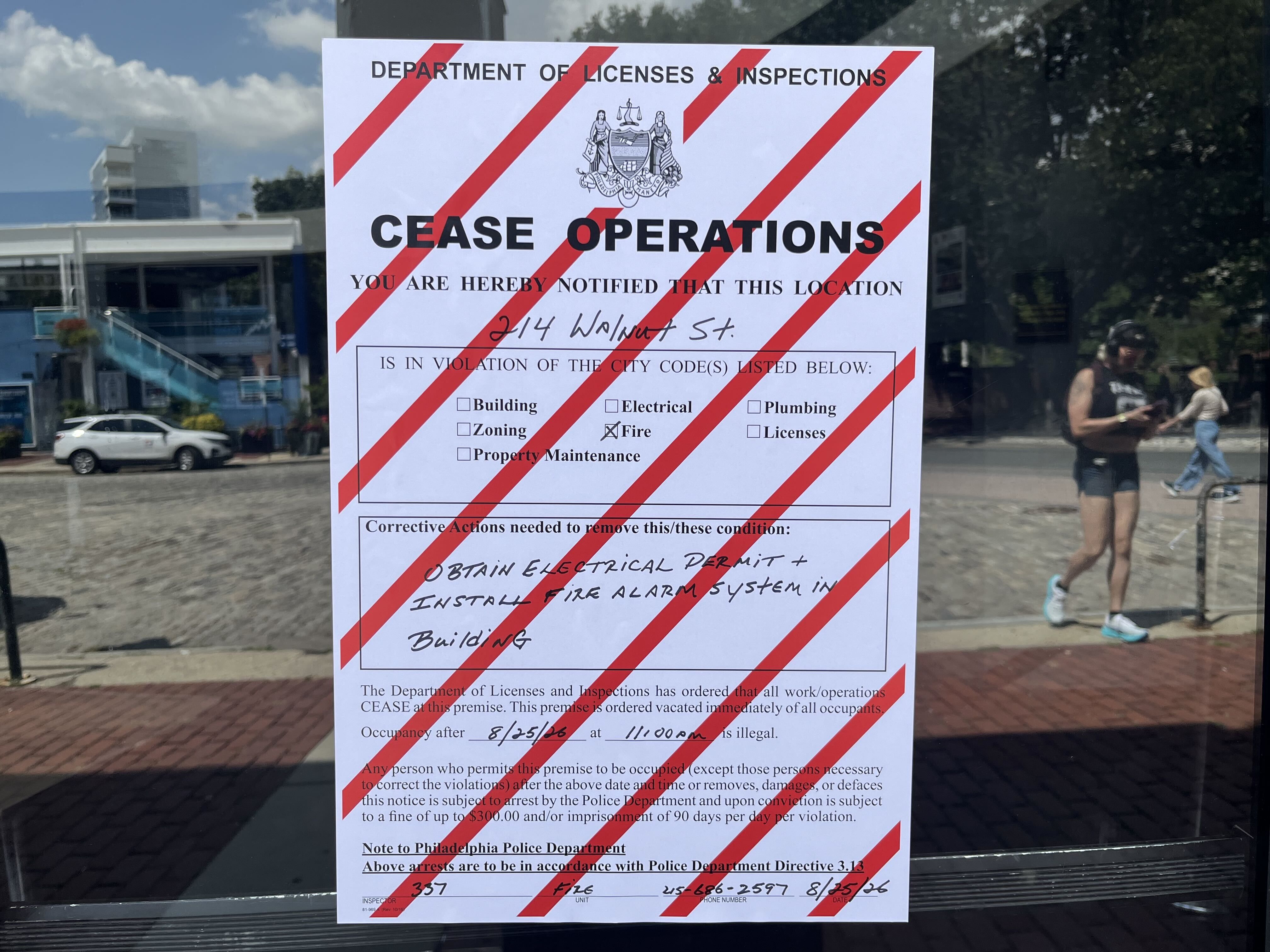
    A city notice posted to the theater doors on Wednesday said the theater needed to obtain an electrical permit and install a fire alarm system.

    The inspections were prompted by the department receiving “several complaints regarding the Ritz Five Theater,” an L&I spokesperson said.

    The Landmark Ritz Five movie theater was closed on Wed. Aug. 26, 2026, after failing two city inspections. A cease-operations notice was posted to the theater doors on Wednesday.Ariana Perez-Castells

    A representative for Landmark Theatres did not immediately share a comment on the closure and inspections on Wednesday.

    When the Philadelphia theater was inspected in March, it was ordered to remedy the violations by April 22 or face fines. The violations each carry their own fines, totaling $2,800. The department charges the code violation fines on a daily basis. The theater can also be ordered to pay additional fines related to the violations.

    However, on Wednesday, an L&I spokesperson said “there are no fines associated with the violations. Should this matter be progressed to court, then fines may begin to accumulate.”

    The roughly 13,0000-square-foot theater was founded in 1976 with three screens, according to the theater’s website. Today, it has five projection screens.

    Philadelphia was once home to three Landmark Ritz theaters, known for showing independent and documentary films alongside mainstream releases. But the theaters at the Bourse and East are now operated by the Philadelphia Film Society while only Ritz Five remains under Landmark’s umbrella.

    No showtimes were listed for Wednesday on the theater’s website. As of Wednesday morning, tickets could still be purchased online for Thursday viewings of The Odyssey, Spider-Man: Brand New Day, and Tony, among other movies.

    Landmark Theatres was purchased by Cohen Media Group in 2018. The Landmark Theatres brand has several locations across the country, including theaters in Arizona, California, and Florida.

  • You want to join a clinical trial. Here’s what to know about the hurdles.

    You want to join a clinical trial. Here’s what to know about the hurdles.

    Connecting people with clinical trials is complicated — even if people identify a promising match, there’s a slew of potentially thorny factors, including geographic incompatibility, and financial and time considerations.

    Simply finding an appropriate trial can present an enormous hurdle. In a recent online survey of more than 2,000 adults, 71% of patients with chronic conditions said they would be likely to participate in a clinical trial if given the chance. But two-thirds said that their healthcare provider had never discussed clinical trials with them. According to one study using data from 2020, just 9% of adults reported ever being invited to participate in a clinical trial.

    Clinical trials are essential to the development of new and effective medical treatments. But gathering the real-world human data necessary to win Food and Drug Administration approval for drugs, devices, and other interventions can be an arduous task. By one estimate, up to 86% of clinical trials don’t meet their recruitment targets during the trial time frame.

    Getting people signed up isn’t the only challenge.

    “Recruitment is one thing — retention is another,” said Alan Balch, executive board chair at the Patient Advocate Foundation, which has a clinical trial search tool and maintains extensive educational materials online. “Every touchpoint is an opportunity for access and affordability to be a problem.”

    The need to improve patient participation in clinical trials is not a new concern, but it’s attracting new interest.

    In June, the Department of Health and Human Services announced an effort to streamline and enhance clinical research in the United States. It included a public request for information about whether to modify federal rules that currently deter some trial sponsors from paying clinical trial participants for expenses such as travel and lodging.

    In July, a group of nearly 200 patient advocacy and public health groups sent a letter to the Senate sponsors of the Clinical Trial Modernization Act, urging its passage. The bill would allow trial sponsors to cover trial participants’ medical costs, such as insurance deductibles and copays, and nonmedical expenses like travel and childcare. It would also exclude up to $2,000 in financial support for clinical trial participation from federal taxes, so people wouldn’t risk losing their eligibility for Medicaid or other income-based programs if they signed on.

    While these efforts to improve clinical trials and patient participation are ongoing, here are answers to some questions about how the system works now and what patients can do if they want to take part.

    Why be a guinea pig? Understand the facts

    In some trials, some participants are given a new drug or therapy that’s being investigated while others receive a placebo with no physical effect.

    But there are many types of clinical trials. Some test different drug combinations, for example. They can test medical devices, preventive measures such as vaccines, or lifestyle changes. Others test ways to screen for or diagnose medical conditions.

    For people with very serious illnesses, a clinical trial may offer the best hope for extending their life or improving their quality of life.

    “Cancer is often a fatal disease, and clinical trials offer an opportunity to try something that may or may not be better,” said Mark Fleury, the policy principal for emerging science at the American Cancer Society Cancer Action Network. “If you know the existing standard of care has an average survival of eight months, you want something with a better opportunity.”

    In addition, even if patients don’t receive the therapy being tested in the clinical trial, they are monitored closely throughout and receive the gold standard of care, which they might not receive elsewhere, patient advocates said.

    Some people decide to participate in trials to aid in advancing science.

    Jim Taylor’s wife, Geri, died of Alzheimer’s disease two years ago, more than a decade after her diagnosis in 2012. The couple became advocates for people with the disease, and Taylor is continuing that effort. He’s currently participating in three observational Alzheimer’s trials that are employing cognitive tests and scans to track how his brain is changing compared with the brains of people who’ve been diagnosed with the disease.

    “The reason I’ve done it is so I can explain to people, with some authenticness and experience, what a trial is like,” he said.

    Finding a clinical trial

    Despite widespread interest in clinical trial participation, most patients don’t know how to find one.

    They can’t necessarily count on their doctors for help. According to an online survey of just over 500 primary care physicians in March, sponsored by the Patient Advocate Foundation, even though 86% of respondents said they were somewhat or very likely to refer their patients to a trial, only 37% had ever done so. When doctors did discuss clinical trials with their patients, it was usually because they had asked about them (67%), they weren’t responding to standard treatment (65%), or their disease was progressing (55%).

    But for time-strapped doctors, identifying clinical trials for which patients might be eligible isn’t a simple task. A community oncologist, for example, would typically have to conduct a search using one of the available clinical trial search engines (clinicaltrials.gov is the most comprehensive), type in all the patient’s characteristics, look at the trials that might be appropriate, and call the site to ask whether the trial is still open, Fleury said.

    “And if they’re successful, what happens? They lose their patient,” he said.

    Patients may have an even tougher time searching for trials on their own. Some patient advocacy groups have in-person or online navigators that can help people identify trials they might be eligible for.

    The American Cancer Society has a clinical trial matching service, for example. Organizations such as the Arthritis Foundation and the National Multiple Sclerosis Society have information about disease-specific trials on their websites.

    If a hospital or health facility is part of a clinical trial, patients there are often best positioned to enroll. Patients can ask their doctor or the facility for more information.

    “Most recruitment for a trial happens at the site where the trial is happening,” Balch said.

    There’s a trial, but you can’t enroll

    Much of the clinical research in the U.S. is conducted at large, often urban, academic medical centers. It can be tough for patients to enroll in a trial at a site unless they live nearby or are already being treated there, according to clinical trial experts.

    To participate in a trial, people generally have to meet periodically with the researchers conducting it. They may also need to get regular blood draws or imaging, or to answer questionnaires to monitor their progress.

    “The number one barrier keeping patients out of trials is a lack of onsite clinical trials,” Fleury said.

    A 2019 study that examined 8,893 cancer patients’ participation in clinical trials found that more than half (55.6%) didn’t have an available trial for their type and stage of cancer at the medical facility where they were being treated. An additional 21.5% didn’t meet the eligibility criteria for an available trial.

    If a patient identifies a clinical trial at a viable location and wants to be considered, the patient should contact the trial recruiters directly and ask them, Balch said.

    “That’s just the beginning,” he said. Patients also need to find out whether they meet a trial’s eligibility requirements and whether it’s covered by insurance, and to consider how they’re going to pay for any medical or nonmedical costs.

    Recently there’s been a lot of interest in decentralized access to clinical trials, so patients could do at least some of the trial tasks at home or at their local cancer center, for example.

    “It’s not common yet,” Balch said. But if decentralization grows, he said, it will open up the opportunity to more patients — and more representative groups of patients.

    There’s a trial, but you can’t afford it

    If someone participates in a clinical trial, the trial sponsor picks up the tab for costs stemming directly from the trial, including the drug or device being investigated.

    In addition, under the Affordable Care Act, most commercial health plans are required to cover routine patient costs associated with participating in a clinical trial.

    But that doesn’t mean members won’t owe anything. They are generally still responsible for any deductibles, copays, or coinsurance amounts for the routine care that they receive during a clinical trial. And the ACA doesn’t require plans to have out-of-network benefits. That means if a clinical trial is sponsored by a provider that is out of someone’s provider network, the plan might not cover those costs.

    Medicare and Medicaid have similar requirements for coverage of routine clinical trial costs.

    For some patients, incidental expenses can put participation in a clinical trial out of financial reach. Participants may face costs for travel to the trial site, parking, lodging, childcare, or taking time off work.

    “There shouldn’t be an added set of concerns and disincentives around costs and financial toxicity,” said Wendy Selig, the founder and CEO of WSCollaborative, a healthcare consultancy. Selig is also the project lead for Equitable Access to Clinical Trials, which aims to eliminate incidental costs for patients in trials.

    Some trial sponsors pay for incidental expenses but might not make that clear up front to patients who are considering participating.

    Patients should take the initiative and ask, Selig said. “There may in fact be help, and you should take advantage of it if it’s available.”

    KFF Health News is a national newsroom that produces in-depth journalism about health issues and is one of the core operating programs at KFF — the independent source for health policy research, polling, and journalism.


  • Bill Gates warns AI is more dangerous than Big Tech will admit

    Bill Gates warns AI is more dangerous than Big Tech will admit

    SEATTLE — Bill Gates, the billionaire co-founder of Microsoft, is loudly warning that artificial intelligence poses a grave threat to jobs and human life, and that urgently addressing the risks should be “the world’s top priority.”

    In an hourlong interview with The New York Times last week, Gates said the tech industry was knowingly downplaying those threats because there was too much money on the line.

    “In private, people who understand how good this stuff is, and how much better it’s getting, they’re very worried,” he said. But few tech executives, Gates said, are willing to publicly admit that. “They’re now saying to each other: ‘Hey, man, don’t say that. It’s bad for us — the next trillion dollars we’re trying to raise.”

    On Wednesday, Gates published a nearly 6,000-word essay on his personal website laying out his concerns about AI and offering solutions, such as new taxes and bans. He said he was motivated to speak now because recent improvements in AI had far surpassed his expectations and because the industry had ignored technology milestones — like AI’s escaping the control of its creators or making recipes for bioweapons — that it once said would warrant more caution.

    “They’re just full speed ahead and hoping that the good outweighs the bad,” he said.

    Gates, 70, is the latest in a string of tech luminaries to call out the risks of AI as the industry spends trillions of dollars on new data centers, and as young AI companies edge toward some of the largest initial public offerings in history.

    He is taking his stand as he emerges from an extended period of scandal. Early this year, the release of sexual predator Jeffrey Epstein’s emails brought renewed attention to Gates’ interactions with him.

    Gates had to pull out of an AI conference in February, and he testified for six hours in June before a House committee. Disclosures of his infidelity, combined with his 2021 divorce, have also badly damaged his reputation. He acknowledged that they were all “mistakes” of his own doing.

    He appears more willing to step back into the spotlight after answering every question from the House Oversight Committee. “I think people understand what I did do, what I didn’t do, and that I learn when I make mistakes,” he said in the interview.

    Gates conceded that he also might be a flawed messenger simply because of his vast wealth and history as Microsoft’s aggressive CEO. In a landmark federal case, Microsoft was found in 2000 to have repeatedly abused its monopoly during his watch. (Gates left the company’s board of directors in 2020.)

    While Gates avoided criticizing Microsoft or other companies by name, he argued that he was uniquely positioned to work on the AI issue. He is a technologist and industry insider who is no longer driven by the profit incentives of running a company, and he has spent decades addressing inequality through his philanthropic foundation.

    “The irony of ‘innovation lover is scared and says we’re not ready and we’re crossing thresholds,’ maybe it’s even more poignant,” he said.

    Gates said technological advances had truly stunned him three times: In 1980 when he first saw a graphical user interface, which led to the modern personal computer. In 2022 when the leaders of OpenAI came to his house to demonstrate what would soon become ChatGPT. And this year when he looked closely at the advances being made by Claude Code, Anthropic’s AI tool.

    Coding, Gates said, is the subject he knows best, and Claude’s abilities shocked him. “The idea that now these things are in a meaningful sense better than I am is like: What the hell?” he said.

    Technological breakthroughs in the past created more jobs than they eliminated, Gates said. But he is in disbelief that industry boosters say that will happen again this time.

    The AI era is “utterly, absolutely, completely, totally different,” he said. He acknowledged that this unpopular opinion (in tech circles) was “a hell of a claim, and I’m staking everything I know — everything — saying, ‘Are you kidding?’”

    He said mass job losses, if not addressed, were inevitable because AI would spread across the economy and leave little room for one industry to absorb the refugees from another. The biggest tech companies in the world, including Microsoft, are racing to help corporate customers adopt AI, which could replace many workers.

    Gates said that companies were just responding to market incentives, but that those incentives might conflict with what was best for society.

    He proposed a new tax on AI use, known as a “token tax,” to make it more expensive to replace people and provide money to help those who do lose work. A token is a basic unit of AI computing. The idea of taxing it has gained some traction, including on Wall Street, as a way to increase the cost of using machines instead of human labor.

    Some jobs, Gates said, should be prohibited from being replaced by AI — an idea he called “Human Reserved” — because the role is deeply personal, like a caregiver, or the people in those jobs are unlikely to find new employment.

    Gates argued for new international agreements to set clear criteria to monitor and restrict extreme risks like bioterrorism. He said it could take only a few people with access to advanced AI to develop new pathogens.

    He said he would happily debate anyone who argued against mandatory reviews of any AI system that could be weaponized to make new molecules and unleash a pandemic. Gates added that he was dumbfounded by the kind of voluntary measures that the White House and industry leaders were developing.

    “Self-regulation on the most dangerous tool ever invented?” he said incredulously. “No, thanks!”

    Gates said he was in a “state of shock” as to why there was not more urgency on these issues. Many of his concerns echo those raised by Anthropic co-founder Dario Amodei, but Amodei’s warnings have put him at odds with the Pentagon, the White House and much of the tech industry.

    “You have people attacking the person who’s the most open about the downsides,” Gates said.

    (The Times has sued OpenAI and Microsoft, claiming copyright infringement of news content related to AI systems. The two companies have denied those claims.)

    Along with global health issues, Gates vowed to make his AI concern part of every conversation he had with world leaders. “I only have two issues where I’m going to say, ‘Please think more about this, please care more about this,’” he said.

    Gates acknowledged that he was in an odd spot: He has arguably done as much as anyone in the world to evangelize for and shape the modern computer industry. But now he is warning that the technology it is creating presents global risks.

    “I don’t like bringing bad news to people, and I don’t like saying that innovation may be a net negative,” he said. “But that’s where we are.”

    FILE — Bill Gates arrives for a House committee hearing in the Jeffrey Epstein investigation in Washington on June 10, 2026. Gates, the billionaire co-founder of Microsoft, is loudly warning that artificial intelligence poses a grave threat to jobs and human life, and that urgently addressing the risks should be “the world’s top priority.” (Chona Kasinger/The New York Times)CHONA KASINGER
    Bill Gates at his office in Kirkland, Wash., on Aug. 21, 2026. Gates, the billionaire co-founder of Microsoft, is loudly warning that artificial intelligence poses a grave threat to jobs and human life, and that urgently addressing the risks should be “the world’s top priority.” (Chona Kasinger/The New York Times)CHONA KASINGER
    FILE — Anthropic’s Code With Claude event in San Francisco, May 7, 2026. Bill Gates, the billionaire co-founder of Microsoft, is loudly warning that artificial intelligence poses a grave threat to jobs and human life, and that urgently addressing the risks should be “the world’s top priority.” (Jason Henry/The New York Times)JASON HENRY
  • Before Hegseth fired him, top general was advised to drop Kid Rock probe

    Before Hegseth fired him, top general was advised to drop Kid Rock probe

    Days before the Army’s top officer was abruptly fired earlier this year, he was advised by a fellow general now vying to replace him to stop the military’s investigation into an unauthorized helicopter flyby of musician Kid Rock’s Tennessee estate, three people familiar with the matter said.

    Gen. Randy George, whom Defense Secretary Pete Hegseth removed as the Army chief of staff without explanation, felt it was important to follow typical protocol and determine whether any safety regulations had been violated during the March 28 flyby, these people said. Like some others, they spoke on the condition of anonymity to discuss the episode.

    Gen. Chris LaNeve, the Army’s No. 2 officer, told George that Hegseth did not want the investigation to proceed, one person said. The two others said that George later confided in colleagues about the encounter with LaNeve and seemed troubled by it. George told them that LaNeve suggested it would be best if the review was scuttled, those people said.

    The revelation, which has not previously been reported, adds a new layer of understanding to Hegseth’s potential motivations for firing George on April 2. Kid Rock, whose legal name is Robert Ritchie, is a vocal supporter of President Donald Trump and avowed critic of many Democratic politicians and causes.

    Through a spokesman, George, who is now retired, declined to comment. Army officials did not respond to questions about LaNeve, whose candidacy for the chief of staff job faces resistance in Congress.

    Hegseth, in a statement provided to The Washington Post, did not directly address the discussion between the two generals and described LaNeve as “precisely the kind of leader the U.S. Army needs right now,” interested in strengthening the Army, and “not interested in playing politics in Washington.”

    “He is a back-to-basics, no politics, no-nonsense General — exactly what President Trump expects,” Hegseth’s statement said. “The critics coming after him are the same out-of-touch so-called insiders who’ve spent years undermining our military with woke policies and endless wars. They hold deep grudges against any commander willing to put America and our troops first, but their days of influence are over.”

    Sean Parnell, a spokesman for Hegseth, said that the new reporting about George’s departure amounted to a “regurgitating” of a “tired, old story simply to manufacture drama.”

    Hegseth and his advisers have for months declined to say what precipitated George’s ouster, even when asked directly by Republican and Democratic lawmakers who objected to the firing. He has long been at odds with the service’s senior leadership — including Army Secretary Dan Driscoll, a fellow Trump appointee who at one time was viewed as a potential replacement for Hegseth. Driscoll is now expected to leave the administration soon, perhaps within weeks, officials said.

    Others familiar with George’s firing have said that multiple factors were probably at play, including his close working relationship with Driscoll.

    Since taking charge of the Pentagon in January 2025, Hegseth, a former Fox News personality who spent years in the Army National Guard, has overseen the dismissal of more than two dozen top officers. The firings typically occur without cause, though he has complained broadly that the military’s upper ranks are insufficiently loyal to the president or caught in old ways of thinking. Many of those removed have been women and minorities.

    LaNeve’s actions in the Kid Rock investigation could further complicate his ascension to the Army’s top post. While he has filled the role on an acting basis since George’s ouster nearly five months ago, Trump administration officials have not yet formally nominated him to become the chief of staff amid concerns that he lacks support within the Republican-led Senate Armed Services Committee, said three separate people familiar with the views on Capitol Hill.

    Sen. Joni Ernst, an Iowa Republican and retired Army National Guard officer initially skeptical of Hegseth’s nomination to lead the Pentagon, opposes LaNeve, these people said. Both George and Gen. James Mingus, another top Army officer forced out by Hegseth, are from Iowa.

    Without votes from Democrats, nominees require unanimous Republican support on the committee to advance.

    Ernst’s office did not respond to a request for comment.

    The Wall Street Journal first reported her opposition to LaNeve.

    Parnell, Hegseth’s spokesman, downplayed the situation, saying in his statement that Pentagon officials are “actively coordinating with our Senate partners to lock in the optimal moment to formally submit his nomination, and we intend to do so.”

    On March 31, three days after two AH-64 Apache helicopters flying outside Nashville buzzed the home of Kid Rock, Army officials with the 101st Airborne Division at nearby Fort Campbell announced they were grounding the pilots and launching an administrative investigation.

    Video shared on social media by the musician showed the aircraft at low altitudes. In his post, he also criticized California Gov. Gavin Newsom, a Democrat who is a frequent critic of the Trump administration. “This is a level of respect,” Kid Rock wrote, that Newsom “will never know.”

    At the time, the Army said it also was reviewing the flight path of a helicopter that flew the same day over a “No Kings” protest against Trump in nearby Clarksville, Tennessee. Flight tracker data showed that the aircraft dipped to as low as 625 feet, at one point circling over where protesters were gathered.

    When the incidents attracted unflattering news coverage, Hegseth promptly intervened. He terminated the Army’s investigation and exonerated the aircrews involved — encouraging them to “Carry on, Patriots.”

    A few weeks later, Hegseth and Kid Rock flew in Apache helicopters from Fort Belvoir in Virginia, located in suburban D.C. Parnell said then that it was part of a broader community relations event.

    LaNeve, 59, was not viewed by his Army peers as a likely future chief of staff before the Trump administration came into office, but he caught the president’s attention with a congratulatory call during the Commander-in-Chief Inaugural Ball, people familiar with the matter said. At the time, LaNeve was commanding U.S. soldiers in South Korea and called the president from there.

    LaNeve was moved into a more influential position as Hegseth’s senior military aide after the defense secretary’s team ousted Lt. Gen. Jennifer Short from the role the following month.

    This past fall, Hegseth elevated LaNeve again, nominating him to become the Army’s vice chief of staff while forcing Mingus into retirement early.

    In a May hearing before the House Armed Services Committee, LaNeve faced sharp questions from Republicans over the Pentagon’s decision to cancel the deployment of an Army brigade to Poland, a NATO ally that borders Ukraine.

    When Rep. Don Bacon (R-Nebraska) asked him about the Poland decision, LaNeve declined to say why the deployment was canceled, arguing he was not part of the military’s “policy side.”

    “But you’re the chief of staff of the Army,” Bacon responded, noting his acting role.

    George had been expected to serve as the Army’s chief of staff until fall 2027, completing a typical four-year assignment in the role. Hegseth asked him to retire early during a phone call, news of which was leaked minutes later to CBS News, officials have said previously. The move thwarted any effort by Driscoll, the Army secretary, to save the general’s career before the decision was publicized.

    Hegseth’s campaign of firings and forced retirements has removed a number of other candidates who may otherwise have been considered for elevation to Army chief of staff, officials said. They include Mingus, who retired early this year; Gen. David Hodne, who was fired without explanation in April; and Gen. Christopher Donahue, who is expected to retire soon after Hegseth stonewalled efforts within the Army and on Capitol Hill to extend his career.

    Amid the purge, Driscoll has begun to consider his own departure, officials familiar with the matter said. The Wall Street Journal reported Friday that he could leave the Trump administration by the end of the year. That appears likely, officials said, but no firm plan has emerged yet.

    As The Post and others reported in the immediate aftermath of George’s firing, aides to Hegseth have touted Parnell, the Pentagon spokesman, becoming Army secretary. Parnell has told colleagues privately that he is interested in the job should it become open.

  • West Philly parking wars heat up amid plans for a 420-unit apartment complex on Lancaster Ave.

    West Philly parking wars heat up amid plans for a 420-unit apartment complex on Lancaster Ave.

    Haverford Square Properties wants to transform an industrial stretch of Lancaster Avenue into a residential and small-business hub, with 420 apartments and more than 30,000 square feet of commercial space across three projects.

    The ambitious plan would unfold between 50th and 52nd Street, with the 215-unit Cathedral Yards at 5140 Lancaster Ave. to the northwest and the 160-unit Lancaster Yards to the southeast at 5022-32 Lancaster Ave. Cathedral Yards would take the place of the Greater Bible Way Temple, a church that burned down in 2019.

    The two complexes would comprise four connected six-story buildings, with roof decks and commercial space on the ground floors. A smaller building at 5100 Lancaster Ave. would include 45 mostly two-bedroom apartments, and Haverford Square’s headquarters.

    On Tuesday, the Cathedral Park Community Development Association held a meeting about the project. Attendees shared a variety of concerns, but the chief issue was parking. The project has 65 parking spaces for more than 400 units.

    “That building is gorgeous, but it has an issue and that issue is parking,” said Kim Fuller, a neighborhood leader. Haverford Square noted that because the project sits directly on a trolley line, and enjoys frequent bus service, parking is less necessary.

    Rents will be kept relatively low for new construction, with a one-bedroom unit priced under $1,650 and two-bedroom units under $1,900. Sixty percent of the 420 units will be one-bedrooms, and the rest two-bedrooms.

    Haverford Square will offer “workforce rents for, like, a SEPTA driver or city worker,” said German Yakubov, president of the development group.

    “[Households] making between 12 and 16 bucks an hour that have two incomes can easily afford a brand new apartment with amenities that they wouldn’t otherwise be able to afford in Center City or Northern Liberties,” he said.

    A map of Haverford Square Properties’ three proposed projects along Lancaster Avenue.Wisdomtree Group

    Permanent homes for food trucks?

    Haverford Square began in 2008, first building in Mantua, and concentrating on West Philadelphia neighborhoods like Belmont and Parkside.

    “We’re able to control a lot of the costs,” said Yakubov, because Haverford Square has its own construction company and in-house architecture. “And because we’re able to build in other places, we’re able to negotiate better pricing for a lot of our material.”

    For this project, low rents are also manageable because the company purchased the land for the three properties for $4.5 million, relatively cheap.

    Ten percent of the apartments in Lancaster Yards and Cathedral Yards will have affordable rents as part of Philadelphia’s Mixed Income Housing Bonus program, which allows developers to build denser projects than zoning would typically allow — as long as they include affordable units.

    Those 42 units will be available to people making less than 50% of area median income, or under $42,000 a year for a one-person household.

    Yakubov says the commercial space is key to the project, and Haverford Square plans to seek small businesses in the neighborhood, such as food truck operators who want to move into a brick-and-mortar space.

    “We’re really targeting businesses that have a following already, but don’t have the financial means to open up a brick-and-mortar location,” said Yakubov.

    “We don’t anticipate opening any bars. We’re not going to have any places to serve alcohol or smoke shops or sell cigarettes or anything that would be a negative impact to the neighborhood,” he said.

    An overhead rendering of Haverford Square’s 160-unit Lancaster Yards proposal, at 5022-32 Lancaster Avenue.Wisdomtree Group

    Parking wars

    At a Tuesday evening meeting, residents pushed back on the project, some saying the proposed buildings were too tall and others sharing fears of displacement.

    But the most significant and frequent feedback was about parking.

    Haverford Square proposed 65 parking spaces at Cathedral Yards, and none at Lancaster Yards, highlighting nearby bus and trolley routes.

    “Please take it into consideration to eliminate that bottom row [of the building] and put parking in. Parking is so important,” said Fuller, an employee of Councilmember Curtis Jones Jr., who represents the area.

    Audible groans rang out when Yakubov noted that many of his company’s tenants do not own cars — partly because they often have rental vouchers that are reserved for lower-income residents.

    “No one bought it,” said Mark Harris, of the Cathedral Park Community Development Association, in an email following the meeting.

    A rendering of Cathedral Yards, with the remnant tower of Greater Bible Way Temple at the left.Wisdomtree Group

    At the end of the meeting, 21 attendees voted to oppose the project before the zoning board, while four were in support. Comments on Zoom were more supportive of Haverford Square’s plans, compared with the in-person attendees.

    Yakubov said on Tuesday that he would consider adding more parking in place of some commercial space.

    Zoning approvals

    Neighborhood support could be important for Haverford Square’s plans. Although the Philadelphia-based developer already owns the three properties on Lancaster Avenue, they need permission from the Zoning Board of Adjustment to move forward on this project. The board takes community feedback into consideration.

    As currently proposed, the project exceeds the allowed number of units and is taller than existing land-use regulations allow.

    Yakubov says additional height is needed to accommodate commercial space with high ceilings.

    He argues that the zoning board has recently given other projects permission to build above height limits along Lancaster Avenue, so he is optimistic.

    Although the Haverford Square project does not have many immediate residential neighbors, the nearby One Art Community Center is critical of the developer’s plans. The nonprofit organization sought to buy the Greater Bible Way Temple property to expand their services.

    Greater Bible Way Temple sold to Haverford Square properties instead. In advance of Tuesday’s meeting, One Art sent an email to its supporters criticizing Yakubov.

    A rendering of one of the many six-story apartment buildings Haverford Square Properties has proposed for Lancaster Avenue between 50th and 52nd Streets.Wisdomtree Group

    “We’re concerned about the increased traffic. … We have questions around the increased pollution and parking issues, sanitation issues, and the rise of the cost of living for the current residents,” said Malaika Gilpin, co-director of One Art, at the Tuesday night meeting.

    In response to the group’s concerns, Yakubov suggested bringing One Art programming into the commercial space in the proposed project.

    Yakubov said zoning board support is not essential to the project. If the project does not get approval, Haverford Square will move forward with a smaller version of the project without commercial space.

    “If for whatever reason the wheels fall off and we’re not able to get zoning relief, we’re ready to proceed,” said Yakubov. But, he added, “I think that the commercial component it would be a huge boost to the community and to the city.”

    Editor’s note: This story has been edited to update the number of units in the proposed development.

  • State Dept. pauses immigrant visa appointments worldwide, says staff need training

    State Dept. pauses immigrant visa appointments worldwide, says staff need training

    The Trump administration has temporarily paused immigrant visa appointments worldwide, saying it needs time to train all consular staff on screening applicants who might become dependent on public benefits.

    Appointments for visa services at U.S. embassies were being “adjusted” because of the “global training initiative” launched this month, the State Department said in a statement. It did not say when the appointments would resume.

    “A more prosperous America means ensuring that visa applicants are not likely to become a public charge, as defined under U.S. law and regulation, and not likely to become dependent on U.S. public benefits reserved for qualified Americans in need,” the statement said, adding the training would ensure consular officers “are fully equipped to evaluate every visa applicant comprehensively and consistently.”

    A former State Department official said immigrant visa appointments worldwide had been paused Monday through the end of the month. The training materials were being rolled out after a federal judge struck down the administration’s 75-country visa ban, which was framed as a way to prevent immigrants from entering who might use public benefits, on Friday.

    As of Tuesday, the training materials still had not been disseminated, said the former official, who spoke on the condition of anonymity to share information on internal operations.

    President Donald Trump has made several moves to tighten legal immigration pathways to the United States since his return to office last year. Many of those efforts have faced legal challenges.

    In Friday’s ruling, the judge said that the visa ban violated antidiscrimination protections in federal immigration law, and was “a direct abrogation” of consular officers’ exclusive, congressionally granted authority to determine if someone is eligible for a visa.

    The Trump administration has also taken other steps to curb migration. On Tuesday, the State Department said it planned to revoke the business and tourism visas of people who have claimed asylum after arriving in the country.

    It is expected to affect those granted B1 and B2 visas — typically issued for tourism and business travel — between 2016 and 2026, who have sought asylum or are now seeking asylum. The department did not confirm the number of visas that could be revoked, but said it would be done on a “rolling basis.”

    The department has also proposed charging employers seeking skilled foreign workers through the H-1B visa program a $103,265 fee, according to a regulation posted Monday.

    The administration argues that the H-1B program, created by Congress in 1990, has been used to take jobs away from Americans.

    Trump attempted to introduce a $100,000 fee last year through a presidential proclamation, but it was invalidated by a federal judge in June.