Blog

  • South Jersey gets its cream doughnut fix again as Del Buono’s Pastry Shop opens in former McMillan’s Bakery

    South Jersey gets its cream doughnut fix again as Del Buono’s Pastry Shop opens in former McMillan’s Bakery

    Del Buono’s Pastry Shop on Haddon Avenue is open for business.

    The Haddon Township pastry shop at the former family-run McMillan’s Bakery opened its doors for a soft launch Tuesday, giving customers the first peek in since McMillan’s shut down in May 2025 after building a loyal following over eight decades in business.

    The opening comes as renovations, which took the bakery down to the studs and expanded the space after its 86-year legacy, wrap up.

    Other than a few final finishing touches to the space, “what’s really left to do is to bake,” said Robin Lange, the shop’s social media director.

    Trays of donuts at Del Buono’s Pastry Shop on Tuesday, Aug. 25, 2026, in Haddon Township.Monica Herndon / Staff Photographer

    The shop’s most popular items, which include cream doughnuts reminiscent of the ones McMillan’s once sold, pizzelles, biscottis, and more, are already for sale, according to Lange.

    But no one seems to know the place is open yet, owner Tom Whitman said. His daughter was the first customer.

    The grand opening is scheduled from 7 a.m. to 10 p.m. on Saturday, Aug. 29, coinciding with the township’s music festival on the same street.
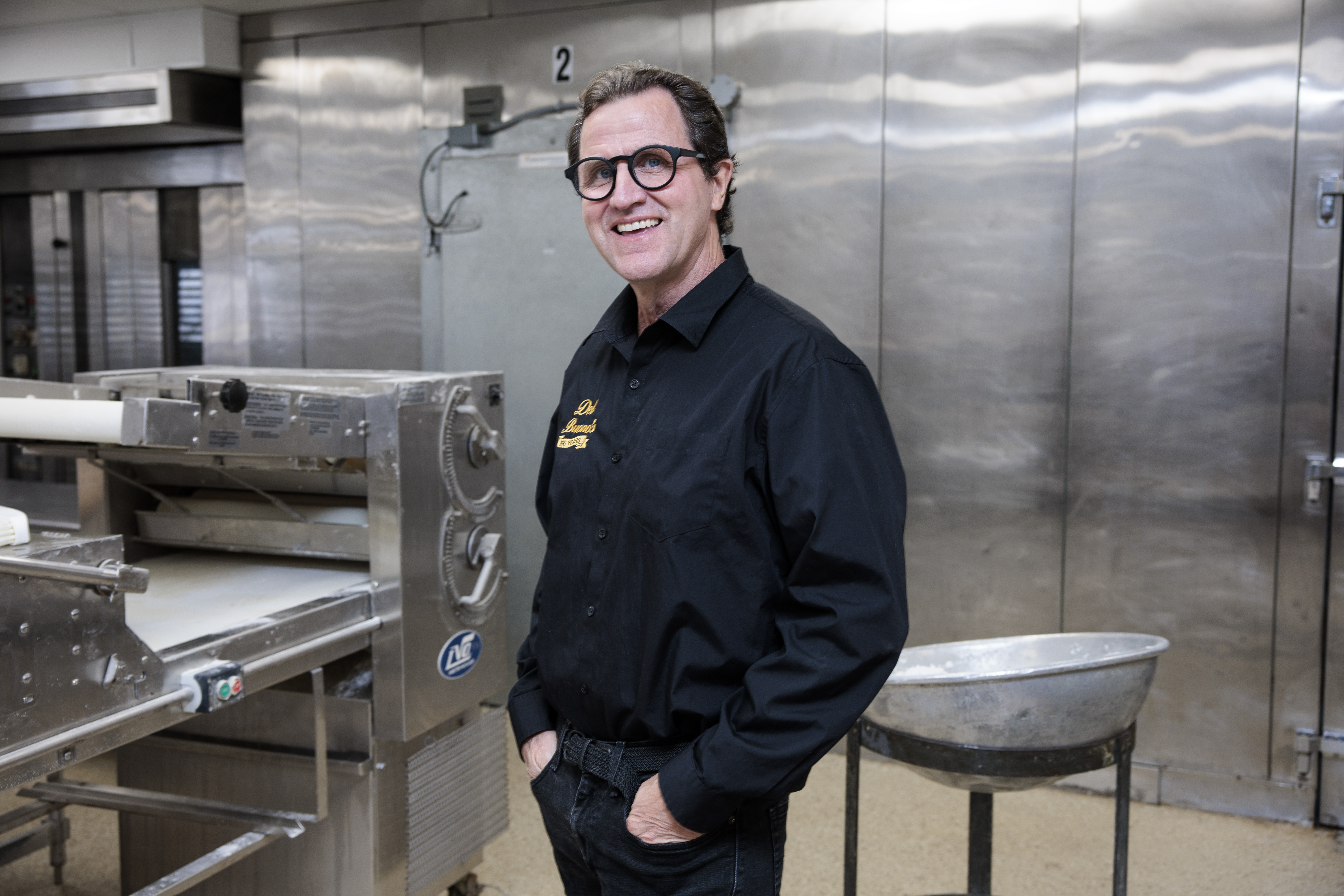
    Owner Tom Whitman poses for a portrait in the kitchen at Del Buono’s Pastry Shop on Tuesday, Aug. 25, 2026, in Haddon Township.Monica Herndon / Staff Photographer

    Whitman and his 30 employees will give out 1,000 free cream doughnuts, swag, and a chance to win a cake by Al DiBartolo, the South Jersey baker and Food Network alum working at the pastry shop.

    DiBartolo’s Kakery, which sells custom and ready-made cakes and baked goods, takes up half the 2,000-square-foot bakery in what was once McMillan’s storage closet. By 10 a.m. on Tuesday, DiBartolo had fully stocked his two display cases after baking late into the night and early in the morning. He eventually plans to host monthly themed cake decorating classes there.

    Al DiBartolo speaks with a reporter at Del Buono’s Pastry Shop on Tuesday, Aug. 25, 2026, in Haddon Township.Monica Herndon / Staff Photographer

    DiBartolo flipped through an old notepad featuring decades of his family’s recipes, as employees worked on a cannoli filling created by his uncle. He showed off the original McMillan’s ovens, which Whitman had refurbished rather than replaced.

    “You’re really getting authentic, old-school baking in here,” DiBartolo said. “But with a modern twist.”

    The DiBartolo family recipe book at Del Buono’s Pastry Shop on Tuesday, Aug. 25, 2026, in Haddon Township.Monica Herndon / Staff Photographer

    Del Buono’s Pastry Shop is the latest in a series of food destinations Whitman, 63, has developed over the years. Whitman, once a Domino’s Pizza franchisee, owns 100-year-old Del Buono’s Bakery in Haddon Heights and all three Carmen’s Deli locations in South Jersey. He purchased the shop for $500,000 last September and said he has since spent millions in renovations. Two apartments Whitman is building over the shop, which he said could rent for more than $3,000 a month, are still in progress and don’t have confirmed tenants.

    The new pastry shop will have specialty coffee in addition to doughnuts, pastries and other desserts, all made in house, and Whitman said he hopes to sell products made there at his other stores.

    While bread and rolls and a few other items will be sourced from Del Buono’s Bakery, Whitman is carrying on McMillan’s legacy in other ways.

    Doug Biemiller, a grandson of McMillan’s founders George and Evelyn McMillan, has returned to the new building as a Del Buono’s employee.

    Two more McMillan’s alumni sped around the kitchen Tuesday afternoon, maneuvering around sheet pan racks and icing doughnuts. Both said their current work isn’t much different from their time at the now-closed bakery.

    Juan Cutz works on a batch of donuts at Del Buono’s Pastry Shop on Tuesday, Aug. 25, 2026, in Haddon Township.Monica Herndon / Staff Photographer

    Juan Cutz, a mixer and baker, worked at McMillan’s for two years after 12 years at Classic Cake Bakery in Cherry Hill. He said he does pretty much everything but decorate, and he hasn’t changed his technique since working for McMillan’s.

    “It’s the same,” Cutz said.

    Longtime McMillan’s Bakery employee Ed Skotnicki stands in the kitchen at Del Buono’s Pastry Shop on Tuesday, Aug. 25, 2026, in Haddon Township.Monica Herndon / Staff Photographer

    Ed Skotnicki, 73, worked at McMillan’s for 53 years. He now plans to help out at Del Buono’s for at least a few months as the pastry shop gets settled.

    ”The only reason I’m here is to see this place come back to life,” Skotnicki said.

  • How these people used exercise to cope with unbearable grief

    How these people used exercise to cope with unbearable grief

    Myra Sack has always been an athlete. She was picked first for neighborhood basketball games when she was growing up outside of Philadelphia.

    Sack, 38, went on regular jogs throughout most of her pregnancy. After Sack’s daughter Havi was born, the little girl loved the movement of the running stroller.

    Havi was 15 months old when she was diagnosed with Tay-Sachs, a rare and fatal genetic disease. Sack and her husband had done screening before conceiving, but they said they were given results that turned out to be incorrect.

    Havi died in 2021 when she was 2 years, 4 months old.

    “I remember someone saying to me, ‘You’re going to meet these incredible people who have also lost children,’” Sack said. “And at the time, I was like, ‘I don’t want to be a part of this community at all. I hate this.’”

    Over time, Sack said her grief made her feel like “an alien.” She wanted to talk about Havi but not in the windowless room she imagined when she pictured a grief circle.

    A little more than a year after Havi died, Sack reached out to friends, hospitals, and the local running community, and she found 18 people who, like her, had suffered a life-altering loss. The group gathered at mile 21 of the Boston Marathon route with a plan to meet weekly for a couple months to talk and train for a half-marathon.

    One of the acquaintances Sack reached out to was Maria Rodrigues, whose 17-year-old son, Jairom, had died in a rock climbing accident while the family was on vacation in her home country of Brazil.

    “Of course I said yes,” said Rodrigues, even though she hadn’t been running in years. “And immediately I opened the computer, and I Googled, ‘How does a 60-year-old woman train for a half-marathon?’”

    Before their first run, the group members gathered in a circle and introduced themselves with their name and the name of the person they had lost. The group repeated their loved one’s name back to them.

    Each week, two or three people would share a brief story about their loved one with the group. Then they went for a run.

    The training was difficult, but Rodrigues stuck with it and completed the half-marathon in Newport, R.I.

    Rodrigues was surprised she made it across the finish line and said it helped her see she was stronger than she realized.

    “There’s a little bit of a parallel,” Rodrigues said. “As hard as this is, grief and the half-marathon, I can do it.”

    The loose curriculum of this first running grief group was based on Sack’s research and conversations with grief and trauma experts Joanne Cacciatore and Bruce Perry. It became the blueprint for her nonprofit E-Motion, which trains facilitators to run groups across the country and outside of the United States.

    ‘This is grief’

    When people are grieving, there are physiological changes as well as emotional ones: Heart rate, blood pressure, and the stress hormone cortisol all rise. There’s more inflammation, the immune system is suppressed, and many people experience exhaustion and brain fog.

    “You think about grief and you think about sadness, maybe you think about anger, but you don’t ever hear about the physical aspects of grief,” said Sarah McCarthy, a psychologist at Boston Children’s Hospital who helps support families after the sudden loss of a child.

    McCarthy was already working in this field when her daughter was diagnosed with leukemia. Even with everything she knew about grief, McCarthy was stunned by the way her body seemed to fall apart after her daughter’s death.

    “I was exhausted all the time,” McCarthy said. “I went to my PCP, and I was like, ‘What is wrong with my body?’ Nobody really sat down and said, ‘This is grief.’”

    Why exercise helps

    McCarthy moved to Boston after her daughter died, and she ended up meeting Sack through her work. Sack encouraged McCarthy to join a running group.

    “I actually hate running,” McCarthy said. Sack told her it didn’t matter and that the groups were for people at all levels. McCarthy bought a pair of running shoes and started training for a 10-kilometer race with an E-Motion group. It was as hard as she feared.

    “There was one day that I was like, ‘I’m going to quit,’” McCarthy said. “Another mom must have sensed that, and she just ran with me.”

    The pair took regular walk breaks. McCarthy stuck with the training and finished the 10K.

    “Afterward I told Myra, ‘This is amazing, and we need to study it,’” McCarthy said.

    While studies of E-Motion are still in early phases, research for years has shown that exercise is effective at improving mental health. Grief is different from anxiety and depression, but many of the symptoms can look similar, and scientists are beginning to turn their attention to whether exercise could help bereaved people, too.

    In research done in the United Kingdom in 2021, psychologists found that physical activity “allowed a sense of freedom” and gave people the opportunity to express emotions while finding more social support.

    In 2023, a longitudinal study showed that physical activity can promote resilience and help protect people against some of the most devastating consequences of traumatic loss. The bereaved people in the study who exercised more were less likely to develop chronic depression than those who exercised less.

    “I think that a lot of what is happening in grieving is actually not about verbal processing,” said Mary-Frances O’Connor, a grief expert and author of The Grieving Body: How the Stress of Loss Can Be an Opportunity for Healing.

    Though O’Connor wasn’t involved in these studies, she has spent much of her career looking at how our bodies and minds respond to grief. In her research, she found that muscle relaxation exercises, in which people tense and release muscles one at a time, are surprisingly effective at helping bereaved people feel better.

    She said that in addition to the physiological and mental health benefits of exercise, physical activity gives people a sense of agency at a time when the world feels out of control. Being part of a running or walking group means people are supporting each other and holding each other accountable.

    “Those are the things that I think help return us to community life, which is a vital and really difficult and under-discussed aspect of grieving,” O’Connor said.

    Connection

    Grief can be isolating, often because people don’t know what to say to someone who has been through a terrible loss.

    “They’re scared of saying the wrong thing or they’re just too scared of this topic in general, and they just pull away,” McCarthy said.

    Sack and McCarthy said groups like E-Motion help people connect with others who have been there.

    Rodrigues described how, walking or running side by side, participants fall in and out of conversation. Sometimes they talk about their loved ones but often they don’t.

    “You just simply, very fluidly pick up, slow down,” she said.

    Most of the E-Motion groups meet weekly for two months or so, but people form deep bonds in that short time. Many see each other between meetings and stay in touch for years, often finding close friends.

    “I think the beauty of death is that it cracks you open,” Rodrigues said. “We make connections because we’re vulnerable.”

  • Trump’s Ukraine negotiators are too chicken to visit Kyiv and support its independence

    Trump’s Ukraine negotiators are too chicken to visit Kyiv and support its independence

    There were two noticeable no-shows as Western leaders gathered Monday to mark the 35th anniversary of Ukraine’s independence — and its five years of resistance to Vladimir Putin’s effort to re-subjugate the country to Russian rule.

    There were multiple news reports that President Donald Trump’s clueless peace envoys — son-in-law Jared Kushner and real estate magnate Steve Witkoff — might finally join European allies at anniversary ceremonies.

    I say “finally” because neither of these supposed peacemakers has ever deigned to visit Ukraine. Not once. Meantime, Witkoff has visited Moscow eight times, and gushed over Putin as he and Kushner (also a repeat visitor) discussed business deals with Russia.

    It is no surprise, then, that Trump’s blinkered envoys postponed their trip, reportedly blaming their absence on intensified Russian missile and drone strikes. Never mind that former Vice President Mike Pence, British Prime Minister Andy Burnham, and other European leaders showed up.

    They recognized — as Trump and his envoys still do not — that Ukraine is fighting not just for its own freedom, but for the security of Europe and the United States.

    Burnham, who came to Kyiv on his first foreign trip as prime minister, understands the significance of Ukraine’s brave stand against the world’s second-largest army. A Russian military that is heavily aided by the dictators of China, North Korea, and Iran, all eager to undermine America and the democracies of the West.

    The U.K. leader rightly compared Ukraine’s resistance against Russian imperialism to Britain’s fight against Nazi Germany in the 1940s, telling Ukrainians, “My nation kept the flame of European freedom alive in the 20th century; you hold that flame in the 21st.”

    Burnham is right on the mark.

    Ukraine’s President Volodymyr Zelensky hands over the flag of a military unit during the ceremony to mark Ukraine Independence Day in Kyiv, Ukraine, Monday.Efrem Lukatsky

    The image of London firefighters bravely battling the blazes caused by the German Blitz, which rained rockets down on civilians in order to break their morale, comes right to mind when watching video of Ukrainian rescue workers pulling women and children out of the rubble of collapsed apartment towers that have been hit with Russian missiles or drones.

    Then-Prime Minister Winston Churchill understood that if Britain fell, the Nazis would take over Europe. The Battle of Britain in the summer and fall of 1940, in which incredibly courageous Royal Air Force pilots pushed back the Luftwaffe, forced Adolf Hitler to abandon his planned invasion of England. The courage and spirit of Britons under bombing gave the RAF the time to regroup and attack the Nazis in Europe. It gave President Franklin D. Roosevelt time to act on sending Lend-Lease war supplies to Britain.

    Burnham grasps that Putin is a stalking horse for an axis of adversaries – namely China, North Korea and Iran – that backs and finances Russia’s crimes.

    Ukraine’s battle of the skies is effectively the first round of World War III. And only one weapon can take down the ballistic missiles Russia is pouring down on Ukraine’s civilian infrastructure: U.S.-made Patriot interceptors.

    Yet, Trump has wasted much of America’s Patriot missile stock chasing cheap Iranian drones, and refuses to sell Kyiv a small percentage of what the U.S. retains. And after proposing joint production of Patriots with Ukrainian President Volodymyr Zelensky, the U.S. president immediately backed off.

    That is why Burnham announced Monday that the U.K. (along with France) will help Ukraine make its own version of a Anglo/French long-range cruise missile by sharing classified technical information. That will help Ukraine preempt Russian missiles by eliminating the firing sites.

    But setting up that production line will take months or years, and Ukraine desperately needs Patriots now.

    Ukraine’s President Volodymyr Zelensky (left) hands over the Ukraine state award to European Council President António Costa during a commemorative ceremony in Kyiv, Ukraine, Monday, marking Ukraine’s 35th Independence Day.Efrem Lukatsky

    It is hard for many Americans to grasp how important Ukraine’s survival is to our future security. Few U.S. politicians consider Ukraine to be a critical campaign issue. Trump has communicated his disdain for Kyiv to his MAGA followers, and Vice President JD Vance boasts that his proudest moment was helping cut off aid to Ukraine. As for Democrats, they’d rather focus on cost of living and the endless Iran war.

    But Gen. Ben Hodges, former commander of U.S. Army Europe, nailed it when he told me recently that what’s been missing from the lack of U.S. attention “is the recognition that it’s in the U.S. interest for Ukraine to be successful.” President Joe Biden was too timid, he noted, and Trump is worse.

    America’s enemies are taking full notice.

    China is watching and learning from the drone, robot, and electronic warfare being fought in Ukraine, while sharing dual-use weapon parts and technology with Moscow. Every lesson is being fed into the hopper of Xi Jinping’s massive agglomeration of data used for prep to take back Taiwan and dominate South and East Asian neighbors and territorial waters.

    North Korea is earning hard currency by sending troops and missiles to aid Russia’s war on Ukraine. In return, it is accessing Russian technology to build up its nuclear arsenal. Iran sends Shahed drones to Russia and learns from Russian upgrades of those drones, which helps Tehran attack U.S. bases and threaten Gulf Arab states in the Middle East.

    Meantime, Trump is focused on his White House ballroom, car races, and starting a trade war with Canada, while Kushner and Witkoff chicken out of visiting Kyiv. They have no clue that the fate of the Ukraine war will overshadow everything they now think is important.

    Their trips to Moscow are feckless unless they recognize that Putin has no interest in peace. Any “peace process” is dead (irrespective of CIA Director John Radcliffe’s secret visit to Moscow last weekend) until the United States recognizes reality and joins Europeans in squeezing Putin until he fears the war is endangering his survival.

    I believe Ukraine will hold out via its tech brilliance and innovation, and its people’s determination not to surrender to the brutal domination of Russia. But the United States will pay a dear price for failing to step up when it could have blocked Putin and his allies — before their war on the West got much, much worse.

  • From the Philly suburbs to Bulgaria and now on to Berkeley, Ava Smith’s rowing journey races on

    From the Philly suburbs to Bulgaria and now on to Berkeley, Ava Smith’s rowing journey races on

    On the other side of the Atlantic Ocean, Ava Smith crossed the finish line in Bulgaria as a proud member of an elite eight-person boat representing the U.S. Under-19 national women’s rowing team.

    “Crossing the finish line, it was a feeling of accomplishment,” said Smith, who took up the sport only four years earlier at Mount St. Joseph Academy in Flourtown, Montgomery County. “A sort of relief, in a way, just knowing it’s done. We put it all out there.”

    Smith picked up an oar for the first time as a freshman at Mount St. Joseph, but rowing runs in her blood. Her father, Don Smith, competed for the U.S. at the 1996 and 2000 Olympics; her older brother, Luke Smith, rows at Stanford and made the Under-19 national men’s team; and her sister, Addy Smith, now rows at Texas. Even the youngest Smith, Arden, plans to row as she starts her freshman year at Mount St. Joseph.

    This summer, that legacy came full circle. After years of sibling-fueled rivalry, Ava earned a spot in the women’s eight as the seven seat and traveled to Plovdiv, Bulgaria, to compete at the World Rowing Under-19 Championships, a spot secured after a whirlwind six weeks that took her from a selection camp in California to the start line across the world. And all of it just days before she leaves for her own next chapter: Rowing at the University of California, Berkeley.

    “It was surreal, and I was like, ‘Oh my God, is this even happening?’” Smith said of being selected. “Honestly, before this year, I didn’t think I was ever going to get invited to even try out.”

    Humility aside, Smith had an impressive high school career, which included helping Mount St. Joseph women’s varsity eight reach the “A” final twice at the U.S. Rowing Youth National Championships in Sarasota, Fla. She said that solidified her confidence heading into tryouts and college. But for Smith, the journey has always been about the team that helped her, especially in the beginning.

    “All the other girls that join the team, they don’t know anything about it either, and you’re all learning together,” she said. “I really enjoyed that, and I feel like me being good at rowing also gave me motivation to see how far I can go, and how much I can improve.”

    Though Don Smith never pushed any of his children into rowing, the sport has become a shared family love.

    Don Smith with his daughter Ava.Courtesy of Don Smith

    “It’s really nice to all do the same thing, get to talk about it,” Ava Smith said. “And with my dad, too, he can give me a lot of advice, especially because he really got to such a high level.”

    Don Smith cheered on his daughter in Bulgaria with a few other parents, joking that he still remembers the nerves of a big race. He said he feels them again watching his kids compete.

    “At the big ones, I’ll tend to go and I’ll start feeling like I’m out there, and I have to go watch by myself,” Don Smith said with a laugh, before sharing the advice he gives his kids in those moments. “Everybody else is feeling the same thing. … You’ve done all the work. Take this as an opportunity, not something that’s scary, or that you’re afraid of.”

    Ava said she’s proud of the work she and her team, a collection of women from around the country, put in.

    “Everyone was very nervous, including myself, but we were excited to see what we could do.” she said. “We really trusted one another in the boat, and I think we left with no regrets.”

    Now, Smith is headed to Berkeley, shopping for dorm essentials and preparing to meet her roommate in person for the first time as she gets ready to move across the country just days after returning from Bulgaria.

    “It’s going to be a little different for me to be toward the bottom,” Ava said. “But getting to compete and try on my way toward the top will be really fun, and I think definitely challenging. But I’m excited for that.”

  • Villanova’s schedule includes trips to Rome, Kansas, and games in Philly vs. Michigan, Wisconsin

    Villanova’s schedule includes trips to Rome, Kansas, and games in Philly vs. Michigan, Wisconsin

    Nearly all of the opponents for Villanova’s 12 nonconference men’s basketball games were already known prior to the school officially releasing its out-of-conference schedule Wednesday morning, but a few new foes were revealed, as were all of the dates.

    The 2026-27 season starts with a trip to Rome, where the men’s and women’s teams will face Notre Dame. Other marquee contests include games vs. defending national champion Michigan and Wisconsin at the Xfinity Mobile Arena, and road games at Kansas and Pittsburgh.

    The Wildcats, who went 24-9 last season and have a roster that could get some preseason top 25 votes, play their two Big 5 pool games Nov. 10 at home vs. La Salle and Dec. 1 at Temple before the Dec. 5 Big 5 Classic at Xfinity Mobile Arena.

    Villanova’s game vs. Notre Dame in Rome on Nov. 1 kicks off the college basketball season and will be nationally televised on FOX.

    The Wildcats play five power-conference opponents in the nonconference schedule. Coach Kevin Willard explained last month why he wanted to schedule a little tougher this season.

    “I went back and looked at the last 10 national champions and looked at how they schedule and where their rank of schedule was,” Willard said. “I think it’s really important to test yourself on the road, most importantly. … Especially with the tournament going to 76 teams, I think teams should get rewarded by scheduling hard.”

    The entire 2026-27 schedule will be revealed in September when the Big East announces its schedule.

    The NCAA Division I Council last year approved an increase from 31 regular-season games to 32 games. Villanova plays 20 Big East games and has typically had 11 nonconference games. The increase to 32 means one extra non-Big East game on the calendar.

    Villanova’s full nonconference schedule is below (times will be announced at a later date, the school said):

    • Nov. 1 vs. Notre Dame (Rome)
    • Nov. 6 vs. Holy Cross
    • Nov. 10 vs. La Salle
    • Nov. 14 vs. Rider
    • Nov. 17 at Pittsburgh
    • Nov. 21 vs. Michigan (Xfinity Mobile Arena)
    • Nov. 24 vs. Coppin State
    • Nov. 27 at Kansas
    • Dec. 1 at Temple
    • Dec. 5 Big 5 Classic
    • Dec. 9 vs. Fairleigh Dickinson
    • Dec. 12 vs. Wisconsin (Xfinity Mobile Arena)

    The Wildcats also will play three exhibition games: Oct. 11 at Rutgers; Oct. 17 vs. George Mason; and Oct. 22 vs. Virginia.

  • The not-so-secret weapon that helped the Philly Open draw an unusually strong field of players

    The not-so-secret weapon that helped the Philly Open draw an unusually strong field of players

    Last year, Loïs Boisson captured the hearts of her native France and tennis world with a stunning run to the French Open semifinals at Roland Garros.

    Though she hasn’t reached those heights since, she’s still well-known around the sport. So when her name showed up as a late entry into the Ennoble Care Philly Open tennis tournament this week at Penn, it created some buzz.

    It isn’t just another week for tennis players. The U.S. Open starts Monday, so it’s an important time to get ready for the big stage. There are a few events out there to play in, from a women’s tournament in Monterrey, Mexico to the U.S. Open’s flashy mixed doubles showcase. The latter has some of the sport’s biggest stars: Serena Williams and Carlos Alcaraz are playing together, as are Aryna Sabalenka and Novak Djokovic.

    The Philly Open is a lower-level event than any of those, at the WTA’s 125 tier compared to the Monterrey event’s 500. Traditionally the players in a 125 tournament aren’t so well-known.

    But this one has had an unusually strong field. Spain’s Jessica Bouzas Maneiro made the round of 16 at Wimbledon last year, and has reached the third rounds of the French and U.S. opens in the last two years. Ashlyn Krueger made the Wimbledon round of 16 this year, the 22-year-old’s best finish yet at a major.

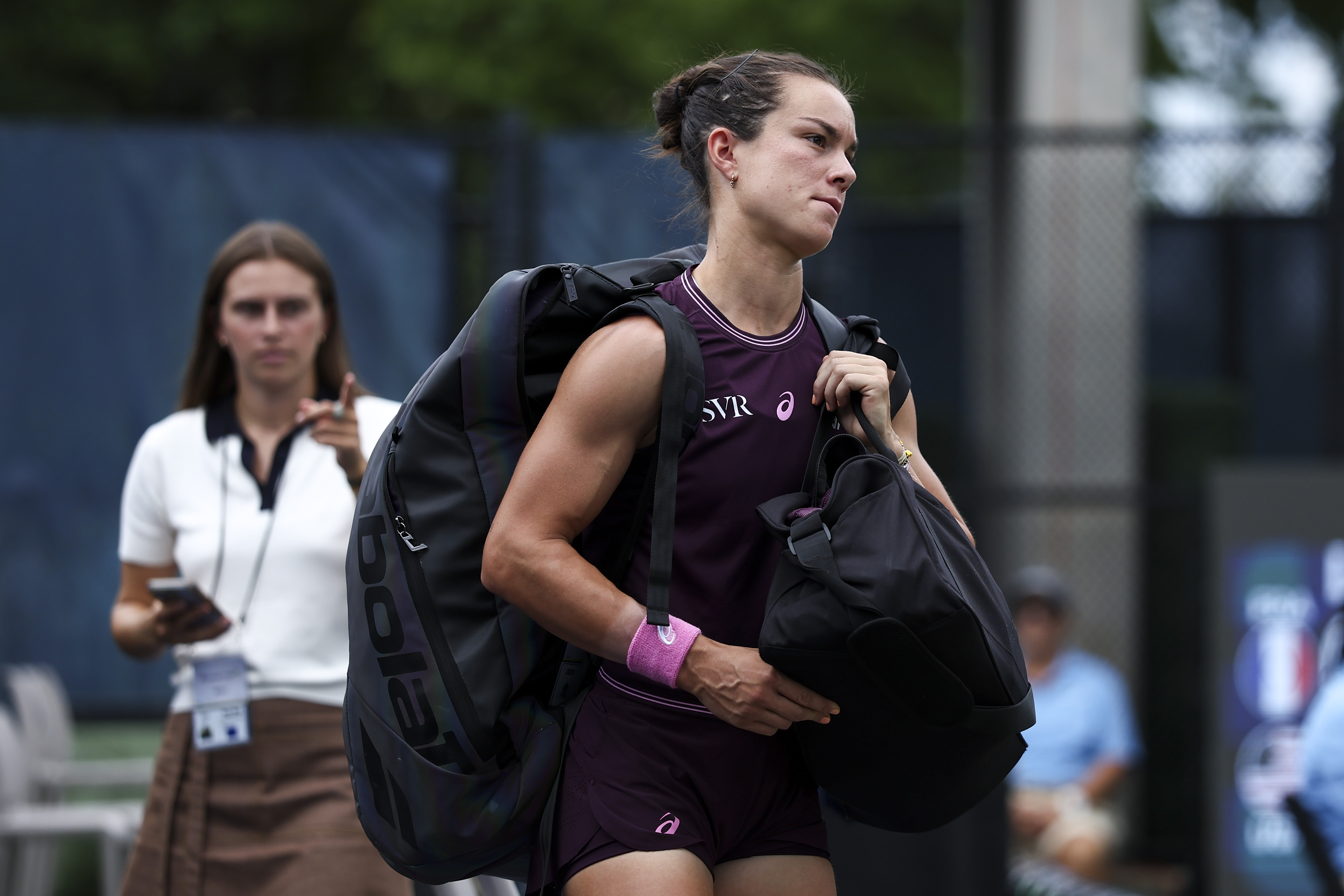
    Loïs Boisson was one of the recognizable names in the Philly Open field.Monica Herndon / Staff Photographer

    Then there was the headline attraction, 2017 U.S. Open champion Sloane Stephens. She has fallen to No. 240 in the world rankings since suffering a long-term foot injury last year, and arrived in town after making the third round at the high-profile Cincinnati Open.

    Unfortunately for local fans, Stephens lost her first-round match, Boisson took a medical retirement after losing the first set of her opener, and Bouzas Maneiro and Krueger lost in the second round.

    They still chose to come to town, though, which means they chose to drop down — because that’s what it is for players like these — to a 125. Why do it?

    Making the rounds of the tournament over the first few days, one thing came up repeatedly: Philadelphia’s proximity to New York. Spare the “sixth borough” jokes this time, because it’s an asset. Players can spend the week here, then get in a car or train and make a short trip to Manhattan.

    Ashlyn Krueger won her first-round match on the Philly Open’s first day, but lost in the second round.David Maialetti / Staff Photographer

    Those in Monterrey, meanwhile, are looking at a four-hour, nonstop flight if they can get it, or a connection through Mexico City or somewhere else.

    “Honestly, leading up to the U.S. Open, it was important for me to play in a tournament closer to New York than some others,” Bouzas Maneiro said, “so I decided to play here in Philadelphia to get into a bit of a rhythm.”

    The geography angle was an intentional play by the tournament’s organizers, including the Philly Sisters group that helped bring the Unrivaled basketball showcase to town in January.

    When the WTA 250 event in Cleveland that had this week for the last five years stopped, the Philly Sisters jumped at the chance to bring something here at the same time. But they already had the attention of Cleveland’s tournament director, Alex Guthrie, who is now the director of the Philly Open.

    Some of the crowd that came out to watch Sloane Stephens in the Philly Open’s featured match Monday night.Monica Herndon / Staff Photographer

    “We had a lot of discussions going on behind the scenes last year, and we were looking to get into a new market,” he said. “And Philadelphia, obviously being such a big market, but also so close in proximity to New York for the U.S. Open, and then pair that with the amazing facilities here at Penn, it made a lot of sense to explore this even further.”

    The sense that Philadelphia could work was also helped by some history on the circuit. There was a WTA stop in New Haven, Conn., from 1998-2018, and a men’s ATP event with it from 2005-10. When the Connecticut operation folded, there was a one-year stop in the Bronx in 2019, then Cleveland took over in 2021 after the world came out of the pandemic.

    The Philly Open now has a three-year contract. That gives some runway to potentially scale it up to a 250-level event, which the local organizers would like. But there is a lot of work to do.

    “We definitely have to raise a lot more money: The cash prize, the infrastructure requirements,” Guthrie said. “We would have to build an even bigger stadium court, and then add a lot more things like a bigger television production, more stands on the secondary court, etc. So there’s even more requirements at an elevated standard.”

    The temporary stands built at Penn’s outdoor facility for the Philly Open’s main court.Monica Herndon / Staff Photographer

    The stadium court this week seats around 1,200 spectators, with one big side of temporary stands across from fixed seats at Penn’s Hamlin Outdoor Tennis Center. The second “show court” has another 100 or so fixed seats on one side, but just a few portable bleachers and chairs on the other.

    There’s definitely room to expand, since the Hamlin Center has 12 outdoor courts. Just three have been used for competition this week, with seating over three others and the rest serving as practice courts. The nearby indoor facility could be used for practice if more stands are built.

    How to raise the prize pot? A boost in corporate sponsorship would help, of course, and the big-city backdrop means officials shouldn’t have to look far.

    “It’ll cost more, but I think that’s the goal,” Philly Sisters vice president Ashley Lunkenheimer said. “Then we’ll have more people coming, and we’ll have a more mature opportunity, so people will know about it and say, ‘That’s the tournament I don’t want to miss — this is my chance to see these women up close,’ and in a way [that is] more affordable, and yet still some of them will be at the U.S. Open the following week.”

    A view across the outer courts of the Philly Open, with the small amount of seating in the middle and along one side.Jonathan Tannenwald

    Guthrie added “The infrastructure here would allow us to one day run a 250 here, if the opportunity became available.”

    The decision will be up to the WTA, and it only grants so many sanctions for 250 tournaments each year. Topnotch already owns one for a 250 event in Memphis in late July, so at least it’s familiar to the tour. WTA officials have been in town this week to see the setup in person.

    The tour’s top official isn’t one of them, but she needs no introduction to Philadelphia. Valerie Camillo spent five years as one of the highest-ranking figures at Comcast Spectacor, including as president and CEO of Spectacor Sports and Entertainment, and head of business operations for the Flyers and Xfinity Mobile Arena. She became chair of the WTA last November.

    The players’ experience matters a lot too, and that seems to have been going well. Bouzas Maneiro said “the facilities here are very good,” praising the gym and practice court facilities in particular. She also has taken some time to enjoy the vibrancy of summer in Center City.

    Jessica Bouzas Maneiro in action during her first-round match on Monday.Monica Herndon / Staff Photographer

    “I like having lots of coffee shops nearby and places where I can spend some time,” she said. “The hotel’s location is excellent, and it’s close to the venue, too … I think the tournament is very well organized, and I’m getting a really good vibe so far.”

    Guthrie called this first edition “an exploratory year for us and for the WTA in many ways,” and said he believes it might be a few years before a 250-level sanction opens up. But he didn’t rule it out either.

    “I would venture to bet this will be a 125 next year, but you just never know in tennis,” he said.

  • Joan M. Satterthwaite, talented tailor and seamstress, and longtime office administrator, has died at 92

    Joan M. Satterthwaite, talented tailor and seamstress, and longtime office administrator, has died at 92

    Joan M. Satterthwaite, 92, of Philadelphia, talented tailor and seamstress, longtime office administrator for the Mayor’s Commission on Aging, volunteer, and community caretaker, died Tuesday, Aug. 4, of sepsis at Jefferson Washington Township Hospital in Gloucester County.

    Adept at designing, constructing, fitting, and altering garments of all kinds, Ms. Satterthwaite worked at the Botany 500 factory at Broad Street and Lehigh Avenue, and for other clothing manufacturers in Philadelphia, for more than 20 years. She could do every job on the intricate clothing assembly line, her son Kevin said, and she did them fast and well.

    She joined the International Ladies’ Garment Workers’ Union in the 1950s and supplemented her weekday work by producing gowns, dresses, suits, and other clothing for family, friends, church choirs, wedding parties, and local businesses.

    She made Halloween costumes for her two sons when they were young and tailored suits when they were older. She designed a wedding dress for her daughter-in-law.

    She could duplicate many patterns by looking at them just once. Over the years, she collected eight sewing machines. “Her craftsmanship and attention to detail earned her the admiration and loyalty of countless clients,” her family said in a tribute.

    Her son Kevin said: “We would call her an entrepreneur today.”

    In the mid-1980s, Ms. Satterthwaite left garments and became certified in office administration and computer technology at the old Philadelphia School of Office Technologies. For a decade, she worked for the Joseph Shein Law Firm.

    She tried to retire in the mid-1990s. But she impressed officials at the Mayor’s Commission on Aging so much as a client that they recruited her as a receptionist and administrative assistant. She left that job in 2018, at 85.

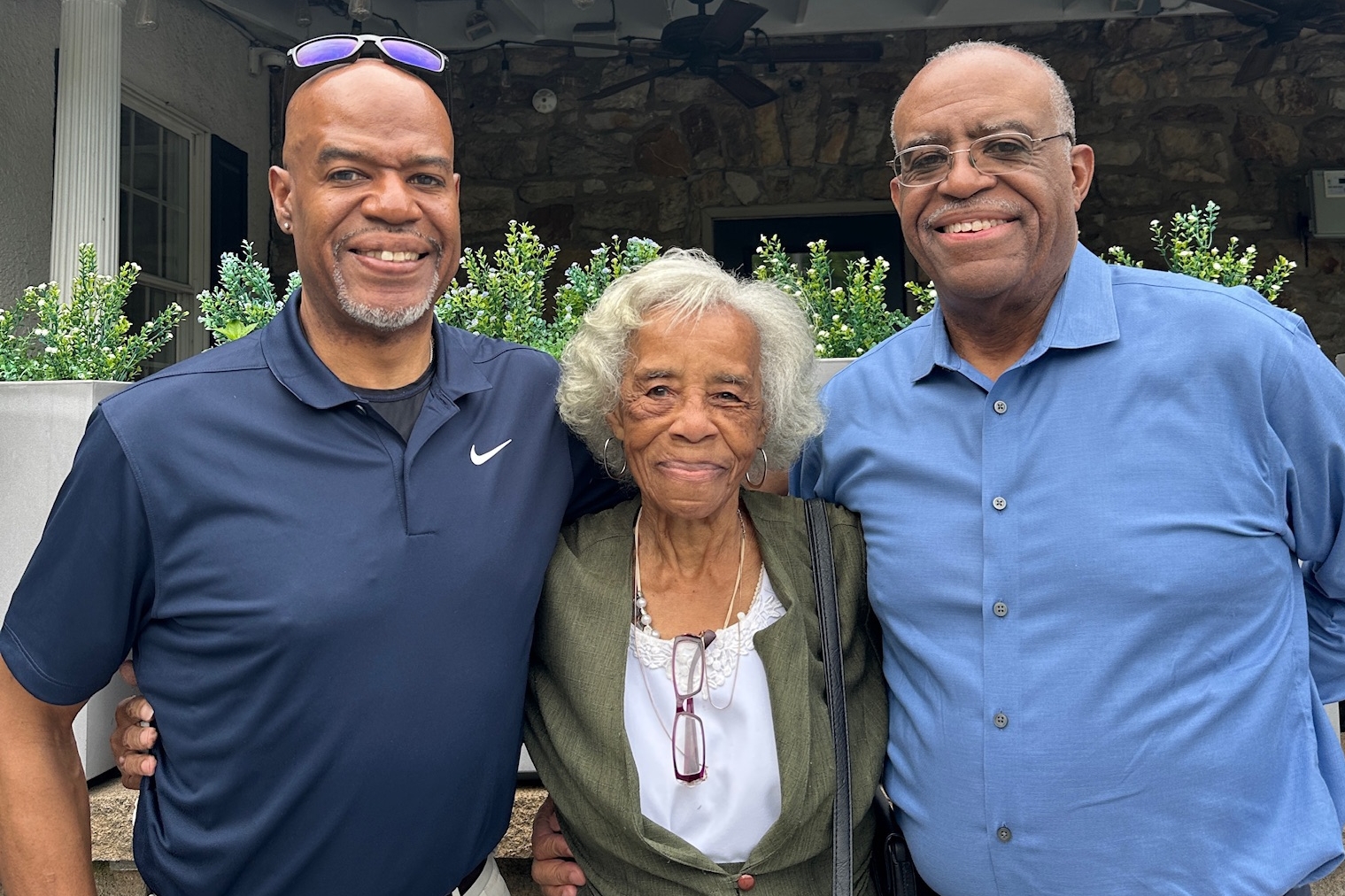
    Ms. Satterthwaite reared her sons in Philadelphia. Courtesy of the family

    After that, she volunteered with veterans groups, was active in the community, and opened her home to anyone in need. “If someone asked for help,” her son Kevin said, “she was there.”

    Her family said: “Joan’s life was a testament to perseverance, faith, compassion, and determination. Her kindness, generosity, and genuine concern for others became hallmarks of a life well lived.”

    A friend said online: “Ms. Joan was the nicest person ever. … Her kind spirit reminded me of my grandmother.”

    Joan Marie Watts was born Dec. 28, 1933, in North Philadelphia. Her mother died when she was 2, and she was reared by her grandfather and his wife.

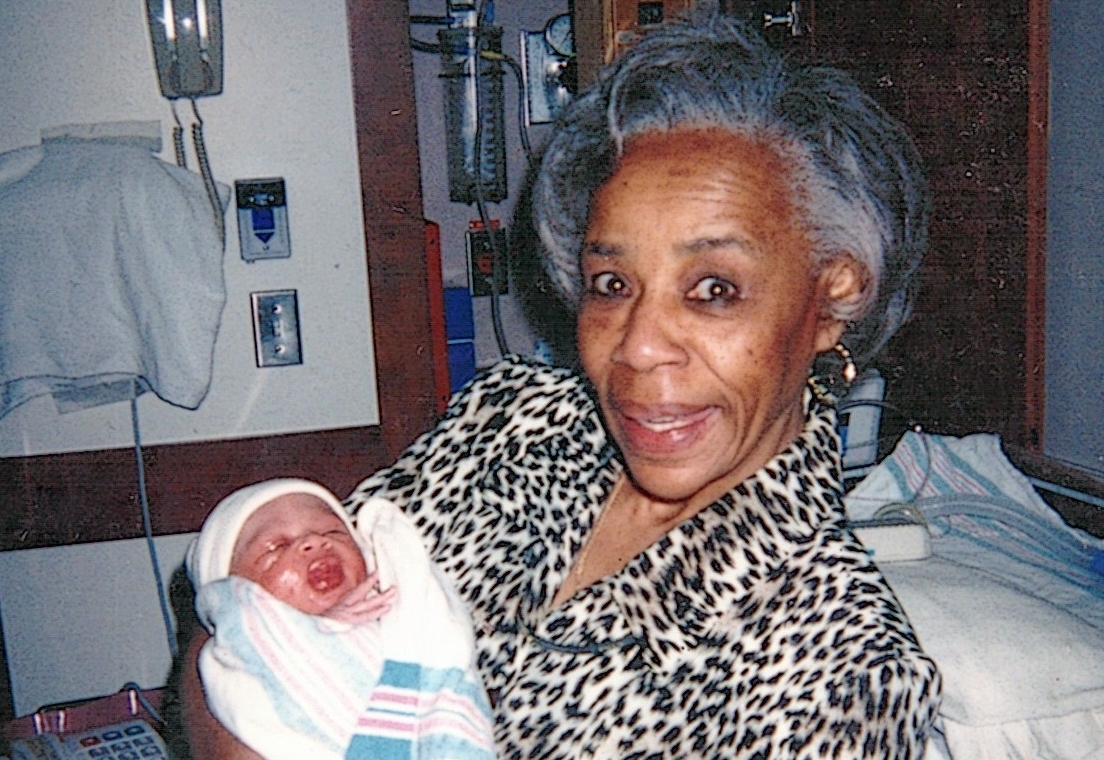
    Ms. Satterthwaite doted on her grandchildren.Courtesy of the family

    She studied tailoring and sewing at William Penn High School and graduated in 1952. She married Charles Satterthwaite in 1953, and they had sons Kevin and Eric. Her husband died earlier.

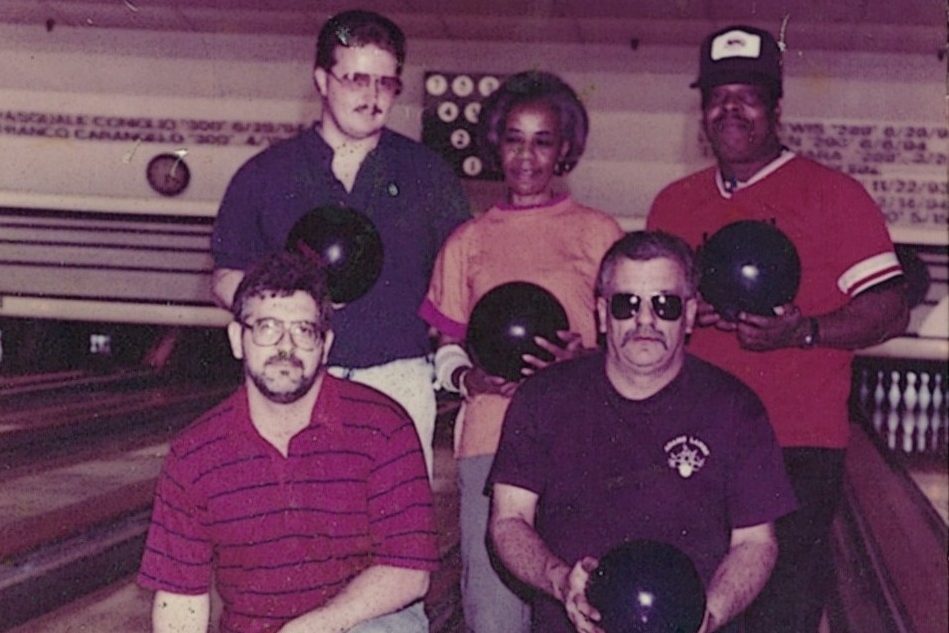
    Ms. Satterthwaite was a member of Triumph Baptist Church for more than 35 years, and she went to breakfast with others often after Sunday service. She had breakfast with her sons on Saturdays, bowled every week for 30 years, hosted memorable family gatherings on holidays, and pored over puzzle books when she was older to stay sharp.

    Her family noted her “warm heart, generous spirit, and love of people” in a tribute and said: “Her kindness, patience, and genuine concern for others left a lasting impression on all who knew her.”

    She doted on her family and told them often that education was a key to success. She lived in Nicetown and Logan, and most recently in Washington Township.

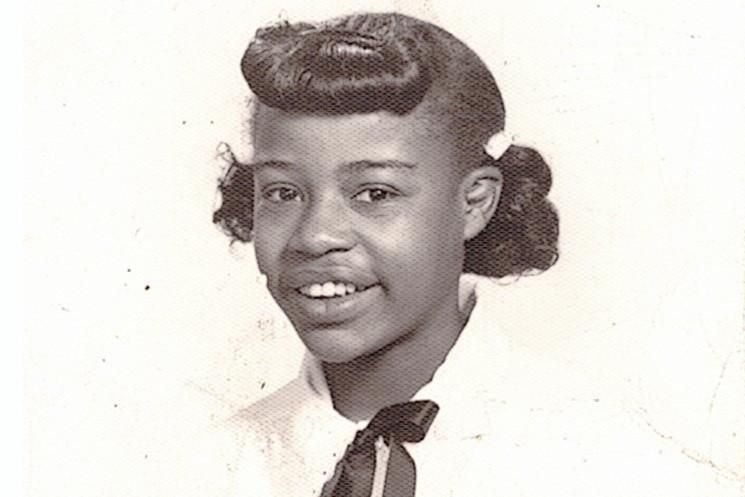
    Ms. Satterthwaite graduated from William Penn High School. Courtesy of the family

    Her son Eric praised her “unwavering belief that nothing in life was more important than family.” Her son Kevin said: “She was welcoming and warm. She liked being around people. Her life force kept her going.”

    In addition to her sons, Ms. Satterthwaite is survived by four grandchildren, two sisters, a brother, and other relatives. Two brothers died earlier.

    Services were held earlier.

    Donations in her name may be made to Triumph Baptist Church, 1648 W. Hunting Park Ave., Philadelphia, Pa. 19140.

    Ms. Satterthwaite bowled every week for decades. Courtesy of the family
  • 6 in 10 Pennsylvania voters oppose data center development, new poll finds

    6 in 10 Pennsylvania voters oppose data center development, new poll finds

    A majority of Pennsylvania voters oppose data center development in the United States, according to a new poll, as the issue has quickly become a flash point in the state’s gubernatorial race and other midterm elections.

    Six in 10 likely Pennsylvania voters do not want the U.S. to construct data centers to house artificial intelligence, according to a poll conducted from Aug. 17 to 21 by The Inquirer, the New York Times, and Siena University. The poll, which surveyed 760 likely voters in Pennsylvania, found that Democratic and independent voters oppose data centers at higher rates, while just over half of Republicans support their construction.

    (function(){function e(){window.addEventListener(`message`,function(e){if(e.data[`datawrapper-height`]!==void 0){var t=document.querySelectorAll(`iframe`);for(var n in e.data[`datawrapper-height`])for(var r=0,i;i=t[r];r++)if(i.contentWindow===e.source){var a=e.data[`datawrapper-height`][n]+`px`;i.style.height=a}}})}e()})();

    The United States is in an international race to lead advancements in AI, with $2.3 trillion in data center projects underway or in the planning stages across the country. Pennsylvania, with more than 100 proposed projects, is among the hot spots targeted by developers for its key location near top U.S. metropolitan areas, vast rural space for building, and significant energy resources.

    Gov. Josh Shapiro originally welcomed data center developments to the state, and last year championed a $20 billion investment from Amazon to build at least two data center campuses in Bucks and Luzerne Counties. He also offered developers fast-track permitting in an attempt to establish Pennsylvania as a leader in AI development.

    But in a year’s time, public animosity toward data centers has grown in Pennsylvania and beyond, as residents say they fear the facilities will drive up electricity costs, overuse water supplies, depreciate home values, and disrupt their daily lives. Last week, Shapiro, a Democrat running for reelection in November and a 2028 presidential prospect, announced plans to restrict data center development in the state.

    Shapiro said his position on data centers evolved as he listened to more constituents who live in areas like Archbald, a small northeastern Pennsylvania town with six data center campuses under construction, and pointed to a developer in Montgomery County who he said is “bullying” residents to push projects through amid public opposition.

    (function(){function e(){window.addEventListener(`message`,function(e){if(e.data[`datawrapper-height`]!==void 0){var t=document.querySelectorAll(`iframe`);for(var n in e.data[`datawrapper-height`])for(var r=0,i;i=t[r];r++)if(i.contentWindow===e.source){var a=e.data[`datawrapper-height`][n]+`px`;i.style.height=a}}})}e()})();

    Pennsylvania’s youngest voters were most likely to reject data centers, according to the poll: 83% of likely voters ages 18 to 29 opposed their development, as did 71% of voters ages 30 to 44. Opposition, while above 50% for all age groups, decreased among older voters.

    Kelly Harrington, 29, of Conshohocken, who participated in the poll, said she has been attending Plymouth Township Council meetings to oppose a controversial proposal for a 2 million-square-foot data center project there.

    “Some of my concerns about that specific data center are selfish in the sense that I think my home value is going to go down, I think it’s going to be loud and obstructive, I think it’s going to pollute the air that I want to breathe every day,” Harrington said. “But in a wider sense, I’m also concerned about the environmental impacts of data centers.”

    Front and center in the Pa. governor’s race and beyond

    Data centers have become a key issue in the Pennsylvania gubernatorial election, where Shapiro hopes to ride his high popularity to reelection and usher in Democratic gains in down-ballot races for the statehouse and Congress.

    Both Shapiro and his Republican opponent, State Treasurer Stacy Garrity, have released ads criticizing the other’s past support for data center development.

    The issue also is animating down-ballot races across the state, where candidates from both parties are campaigning on their opposition to data center development.

    Democratic and Republican politicians across the country have reversed course on data centers in recent months as the projects have grown increasingly unpopular.

    Gov. Josh Shapiro answers questions after signing an executive order restricting data centers in Pennsylvania during a ceremony in the Capitol in Harrisburg, Pa., Tuesday August 18, 2026.Kalim A. Bhatti / For The Inquirer

    Prior to Shapiro’s announcement last week touting the “strictest guardrails in the nation” for data center development, his support for the projects appeared to be one of the major tests of his popularity. A Quinnipiac University poll published in July found that while 56% of voters approved of Shapiro overall, only 24% approved of how he was handling data center development in Pennsylvania.

    And some Pennsylvanians who had voted for Shapiro in 2022 said his support for the developments had caused them to contemplate sitting out the November election or writing in a different candidate for governor.

    For some voters, like Montiese McKenzie, Shapiro’s change in position has been enough.

    “I’m very proud of Gov. Shapiro for being anti-data center,” said McKenzie, 48, of West Philadelphia. The Democratic voter said she fears that poor communities will face disproportionate consequences of the construction of AI data centers.

    “What happens will be very important for how I see him as a future leader,” McKenzie said.

    Montiese McKenzie, 48, poses for a portrait near her home in West Philadelphia on Monday, Aug. 24, 2026.Allie Ippolito / For The Inquirer

    Still, Shapiro’s recent change in position has not wooed all Pennsylvania voters.

    Maryann Klaus, 82, a Democrat in Upper Bucks County, supported Shapiro in 2022. But, she said, his initial embrace of data centers in the region without consulting the community was “just not good governance.” Despite Shapiro’s recent moves to restrict data center development, Klaus said, she is still reconsidering her vote for his reelection this fall.

    The executive order Shapiro signed last week is a “a start,” Klaus said. “But, unfortunately, when you open the door, too many things occur and then you can’t walk them back.”

    Others, like Steven Keenan of Ridley Township, say they want more data center development in the state.

    Keenan, 60, a Republican who is supporting Garrity in November, said he wants Pennsylvania to lead on data centers.

    “I’m not afraid of advancement in technology,” Keenan said. “I think we need all that [development]. We’re in a race with other countries that we want to dominate.”

    Keenan said Shapiro’s change in position reaffirmed his support for Garrity. The shift in stance, he said, showed Shapiro was reacting to public opinion instead of doing what is right for the state. (Garrity, too, has moved away from her public support for data centers. She has called for the state to temporarily pause all data center development.)

    “He goes where the wind blows,” Keenan added.

    Staff writer Fallon Roth contributed to this article.

  • Geno Auriemma’s Philly-area roots shine through in new UConn women’s basketball documentary

    Geno Auriemma’s Philly-area roots shine through in new UConn women’s basketball documentary

    Connecticut women’s basketball in the 21st century has been synonymous with dominance, and the central figure to it all has been Norristown native Geno Auriemma.

    The 72-year-old coach, who took his current job ahead of the 1985 season, has spent more than four decades on the sideline and built the Huskies into one of the most dominant and storied programs in college basketball history.

    On Aug. 21, a three-episode documentary called The Dynasty: UConn Huskies aired on Apple TV, giving insight into Auriemma’s brash coaching style that has often received criticism but was a driving force to his 12 national titles.

    And while it featured many players past and present, from Swin Cash and Sue Bird to Diana Taurasi, Breanna Stewart, and even Paige Bueckers, Auriemma’s Philly roots were another theme of the coach’s historic run in women’s college basketball.

    Here were some ways Philly was involved in Auriemma’s journey:

    Auriemma’s motivation to coach girls’ basketball

    The documentary tells the story of Auriemma and UConn chronologically, but stopped in both the first and second episodes to detail some of his backstory. Auriemma described how he first got involved with women’s basketball.

    “When I was in school and playing basketball, coaching women would have been last on my list,” Auriemma says. “But my buddy, he comes up to me one day and he says, ‘Hey, I started coaching girls’ high school basketball. I need an assistant coach.’ I said, ‘Who the hell would coach girls?’”

    Geno Auriemma is carried off the floor by his players after UConn won the 2010 NCAA championship, defeating Stanford.ERIC GAY, Filoe / Associated Press

    Auriemma later obliged, and while he didn’t say it on camera, that start came at Bishop McDevitt High School as the girls’ basketball junior varsity coach and assistant varsity coach. When he went to practice, he noted his own reluctance to provide hard coaching.

    “It kind of dawned on me. They’re not going to crack. They’re not fragile,” said Auriemma. “That you can demand a lot from them. … But everything [in my career] just took off from there.”

    He later took assistant coaching jobs at St. Joseph’s and Virginia, with Norristown’s Kennedy Kenrick Catholic High School (which closed in 1993) sandwiched in between. Auriemma took the UConn job in 1985 and has been there since.

    Auriemma discussed his family moving from Montella, a small village in southern Italy, to Norristown when he was 7 years old. He recalled that his “mother can’t read or write, my father barely went to school,” and cited the challenges of not being able to “speak any English.”

    The differences in the clothes he wore and food he ate, compared to other kids, Auriemma said, made him “desperately wanting to be like an American kid.” It ultimately informed his approach as a coach.

    “As I got older, I always felt like, ‘I’m not that guy.’ … You get reminded, but there was this part of me where if I can be really, really, really good and be better than you, then I can, I can prove that I belong in your group,” said Auriemma. “It’s just a little kid’s mentality, and unfortunately, it stayed with me 40 years into coaching that I have to prove that I’m better than anybody else at doing what I do, but I need to be better than you.”

    UConn-Tennessee rivalry

    Auriemma’s breakthrough as a coach was beating Pat Summitt and her Tennessee squad in the national championship game in 1995. But afterward, Summitt won three national titles in a row and reclaimed the Lady Vols’ status as women’s basketball’s elite program.

    That all changed in the 2000 NCAA Tournament championship game, though. After a disappointing Sweet 16 loss with their hyped freshman recruiting class that included Bird, Cash, Asjha Jones, and Tamika Williams, UConn came roaring back and was set to face Tennessee in Philadelphia at the First Union Center (now called Xfinity Mobile Arena).

    Tennessee coach Pat Summitt (left) shakes hands with Connecticut coach Geno Auriemma before a 2006 game.Wade Payne

    Auriemma also further ignited his rivalry with Summitt with some of his pregame comments about cheesesteaks.

    “Geno was doing an interview about cheesesteak, obviously Geno’s, and one is Pat’s across the street in Philly, and he made a comparison. Geno’s was new and forthcoming. Pat’s was old and dilapidated,” recalled Mickie DeMoss, a longtime assistant under Summit at Tennessee. “I mean, at that point we had won six, and he’d won one. So I’m not sure where he got Pat was old and dilapidated.”

    The interaction underscored the heated and competitive relationship between Summit and Auriemma, and the rivalry that had been brewing for five years. Auriemma wanted to ensure his team came out on top in his hometown that season.

    “Lots of people are great. But that night in Philly, I wanted to make sure that everybody knew we’re the best in the country. I mean, everyone,” said Auriemma. “They’re all people I grew up with. They’re all kids I grew up with. So being surrounded by all that and family, yeah, the desire to win, I want that so bad. I’ll do anything to get it.”

    And he did, emphatically. UConn rolled Tennessee, 71-52, for Auriemma’s second title and what set off a dominant 17-year stretch in which the Huskies won 10 national titles before Philly’s Dawn Staley and South Carolina took center stage in the current era of women’s college basketball.

    Auriemma’s latest title in 2025 was featured to close the documentary, with Bueckers’ difficult journey and rocky relationship with the longtime coach culminating in a win over Staley’s South Carolina.

    This season, which will be the 41st for Auriemma, UConn will face Staley’s Gamecocks on Nov. 24 at Mohegan Sun Arena, home of the Connecticut Sun, for the first time since Auriemma’s outburst in the final seconds of their Final Four matchup last season. The game is part of a doubleheader for the Hall of Fame Women’s Showcase. St. John’s will face UCLA in the other game.

  • Vanguard sells one of its Chester County offices for $17 million, but will stay put for now

    Vanguard sells one of its Chester County offices for $17 million, but will stay put for now

    Vanguard has sold a Tredyffrin Township office complex for $17 million — with no plans of moving out.

    Last month, the Malvern-based investment firm sold its 22-acre property at 1041 W. Valley Rd. to another Malvern-based company, E Kahn Development, according to Chester County property records.

    But Vanguard plans to continue leasing the 323,000-square-foot space, which sits just off U.S. Route 202, about eight miles from its main campus in Malvern. Hundreds of Vanguard IT employees work at the complex, called the Robert A. DiStefano (RAD) Technology Center.

    Vanguard’s RAD complex in Tredyffrin Township has been sold for $17 million, but Vanguard will continue to lease the space for its IT operations.Courtesy Vanguard

    The sale and lease-back “reflects Vanguard’s focus on providing work environments that support and inspire our crew as they remain focused on our end investors,” a company spokesperson said in a statement. “Vanguard crew will continue to work at the RAD Technology Center through at least 2028, and there are no immediate plans to move crew who work there today.”

    Eli Kahn, president and founder of E Kahn Development, said in an email that his company has “no immediate plans for the buildings.”

    Earlier this summer, Vanguard closed a leased office at 45 Liberty Blvd. in Malvern, moving employees there to the company’s 87-acre main campus.

    Vanguard employs about 20,000 employees, 12,000 of whom are based in Malvern. About 600 IT staffers work at RAD, Vanguard’s only complex with a Wayne address.

    The company is expanding its IT staff worldwide, including at a new office in India, but has said its U.S. workforce will not be impacted.