Blog

  • In blistering ruling, judge says Trump’s golf plans spurred ‘breakneck’ tree removal

    In blistering ruling, judge says Trump’s golf plans spurred ‘breakneck’ tree removal

    The federal judge who halted work at the Washington golf course President Donald Trump plans to redevelop issued a sharply worded opinion Tuesday night arguing that officials raced to remove hundreds of trees because Trump wanted quick action on his project, not because the National Park Service suddenly decided to implement a years-old preservation plan.

    “The Court concludes, on this limited record, that government officials raced to undertake the [tree-management plan] because President Trump demands haste on his redesign, and not because of some newfound zeal to implement a small part of a seven-year-old” report, U.S. District Judge Ana C. Reyes wrote.

    The 21-page opinion formalized the temporary restraining order Reyes issued earlier Tuesday, barring the government from removing additional trees at East Potomac Golf Links through Oct. 26. The administration must also provide the court and plaintiffs, who are suing to block Trump’s project, three business days’ notice before making any irreversible change to a permanent feature of the historic public course.

    Reyes summarized her concerns about the project’s speed and lack of scrutiny in a blistering passage early in her ruling.

    “Breakneck speed to clear trees that posed no harm,” she wrote. “The reason? Disputed. The budget? Unclear. The environmental impact? Unstudied. The urgency? None. Next steps: bulldoze hundreds more.”

    The government has maintained that the recent work stems not from Trump’s proposed redesign but from a 2019 cultural-landscape report that recommended thinning vegetation and restoring the course’s historic links-style character.

    But Reyes rejected the notion that the cutting was unrelated to Trump’s plan to remake East Potomac into a championship-level course.

    “It is a coincidence, the Government seems to suggest, that [Department of the Interior] cut down hundreds of trees at the Course weeks after the President asked DOI to cut down trees at the Course,” Reyes wrote, “and not, say, any other time in the last seven years.”

    “That asks rather a lot of coincidence,” she added.

    The opinion followed an extraordinary hearing Monday in which Reyes repeatedly rebuked Justice Department lawyers for allowing the removals despite her warnings, saying the government had squandered the court’s trust and could no longer be relied upon to provide meaningful notice without a formal order.

    Reyes found that the DC Preservation League and two golfers challenging the project are likely to succeed on their claim that the Park Service violated the National Environmental Policy Act by failing to adequately study the work’s environmental consequences.

    The opinion traces how the tree-removal plan moved through the administration in five days last week. Interior Deputy Chief of Staff Gregory Wischer instructed a senior Park Service official Oct. 5 to implement recommendations from a 2019 cultural-landscape report “as soon as practical.” Acting NPS director Jessica Bowron approved the plan the following day.

    Three days later, on Friday, the government notified the court at 4:55 p.m. that work would begin the next morning. Though two Park Service officials testified Monday that there was no urgency to complete the cutting, by the end of Saturday crews had removed approximately 430 healthy, noninvasive trees. And government attorneys told the court nearly 300 more remain targeted.

    Reyes also focused on the Park Service’s compressed environmental review. The agency issued one document exempting the work from fuller analysis Friday, the day before cutting began. A second document was completed Sunday, after crews had removed roughly 200 more trees than the first review anticipated.

    Reyes contrasted the East Potomac process with a previous tree-removal project at Rock Creek Golf Course, where the Park Service spent six months preparing an environmental assessment exceeding 250 pages and a finding of no significant impact exceeding 300 pages.

    “Presumably that assessment of the forest did not miss half its trees,” Reyes wrote.

    The judge also ruled that the tree-management plan itself qualifies as final agency action subject to judicial review, even if Trump’s broader redesign remains conceptual. That finding allows the plaintiffs’ challenge to the tree plan to proceed without requiring Reyes to decide whether the larger golf course proposal is final.

    The Interior Department did not respond to a message seeking comment about the judge’s ruling. Attorneys for the plaintiffs hailed the temporary order while emphasizing that they will seek longer-lasting relief.

    “The administration has time and again tried to avoid the law in their mad rush toward converting a public recreation space to a high-end golf course, and today’s order will stop them from doing further irreparable harm to a precious public resource,” they said in a joint statement. “We are pleased that the court intervened and will prevent additional work while we seek more lasting relief.”

    On Wednesday, the plaintiffs asked Reyes to issue a preliminary injunction that would extend the prohibition on tree removal beyond Oct. 26 while the case proceeds. They argued that the tree cutting cannot be separated from Trump’s redesign because the 2019 report cited by the government calls for preserving Walter Travis’ historic layout, while Trump has tapped prominent golf architect Tom Fazio to design a course that would replace it. That tension, they said, undercuts the administration’s contention that the removals serve an independent purpose unrelated to the broader overhaul.

    Reyes is scheduled to hear testimony next Monday from Bowron and Wischer about how the plan developed and why officials moved so quickly. The temporary order will remain in effect while the court considers whether to issue a preliminary injunction.


  • Burlington’s Doane Academy is expanding with new facilities

    Burlington’s Doane Academy is expanding with new facilities

    Standing in the shadow of the Burlington-Bristol Bridge, the 189-year-old Doane Academy is expanding its footprint in Burlington City with a new athletic facility and auditorium.

    On the corner of Pearl and Ellis Streets, just a short walk from the Delaware River across from the private school’s main campus, a new $10.5 million building will include a field house, fitness center, and gymnasium. The existing gym, built in 1965 as part of the school’s primary cluster of buildings along the riverfront, will be converted into an auditorium.

    The independent Episcopal day school serves roughly 200 students from pre-K through 12th grade. Tuition varies based on grade level and program, ranging from $16,600 for pre-K to second grade to $25,700 for grades nine through 12 for the 2026-27 school year.

    Pre-construction work on site has already been completed, Doane Academy’s head of school, Erin Mayo, said in an email. Construction will begin when the school gets the final building permit from the city, Mayo said, with the goal of completing the athletic center in August 2027.

    Doane will then convert the former gym into an auditorium, a $1.6 million project it hopes to finish by early 2028, she said. A small portion of the auditorium conversion has already been completed: The gym’s locker-room area was reconfigured into a new instrumental music space in 2023, Mayo said.

    Doane Academy raised $6.4 million for the projects before the effort was bolstered by an $8 million gift from the Lee Rowan Foundation, the school announced Wednesday.

    “This gift is simply monumental,” Mayo said in a statement announcing the donation. “It enables us to make radical, long-desired strides for our students in their athletic and performing arts experiences. We are enduringly grateful to the Lee Rowan Foundation for its generosity and faith.”

    While the new facilities will primarily serve the school’s student body, Mayo said, Doane also plans to offer fitness center memberships and court rentals to the community.

  • Yvonne B. Haskins, longtime attorney, groundbreaking law enforcement official, and lifelong social welfare activist, has died at 88

    Yvonne B. Haskins, longtime attorney, groundbreaking law enforcement official, and lifelong social welfare activist, has died at 88

    Yvonne B. Haskins, 88, of Philadelphia, longtime real estate attorney, the first female regional director for what is now the Pennsylvania Commission on Crime and Delinquency, the first female district director of the Pennsylvania Board of Probation and Parole, the first female head of security at the University of Pennsylvania, and one of the first female Philadelphia police officers, died Tuesday, Sept. 29, of metastatic breast cancer at her home in Germantown.

    Mrs. Haskins was also the interim city attorney for Camden, a former manager of the old police community relations department of the Philadelphia Commission on Human Relations, and a tireless local community development and historic preservation activist.

    Born in Atlanta and reared in several small Georgia towns, Mrs. Haskins came to Philadelphia with her two sons in 1962. She worked briefly as a secretary and, on impulse, tested to be a Philadelphia police officer. To her surprise, she said later, she passed the exam and joined the police department in 1965.

    That job, she told department colleagues years later, kicked off her climb to nearly a dozen local leadership roles in law enforcement, government, education, and community development. She was especially focused on serving young people at every stop.

    “Young people need what we all need,” she told The Inquirer in 1992. “We all have to have hope, and we all have to have self-esteem.”

    Mrs. Haskins enjoyed tending neighborhood parks and working outside with others. Courtesy of the family

    Mrs. Haskins earned a law degree at Temple University night school in 1986, specialized in real estate law and community revitalization, and opened Haskins Law Firm with offices in Philadelphia and Camden. She became an outspoken expert on zoning, financial, and political issues, and was appointed by then-Camden Mayor Arnold Webster to serve as interim city attorney for 90 days in 1996.

    She had already spent much of 1994 writing most of Camden’s proposal for a multimillion-dollar community zoning federal grant. A fellow Camden community activist told The Inquirer in 1994: “She knows how to lay out a plan, get back to you, follow the rules, and play the game the way it’s supposed to be played.”

    While working for the police from 1965 to ’69, Mrs. Haskins earned a bachelor’s degree with honors and awards in social welfare at Temple in 1968. She was assigned to juvenile aid, human relations, and criminal justice planning for the police, and, as a liaison to the Philadelphia Commission on Human Relations, helped organize the city’s first police-community workshops.

    “I’m assigned to a police and community program,” she told The Inquirer in 1968. “The community to understand the police, the police to understand the community. Understanding. That’s really the whole thing, isn’t it?”

    Mrs. Haskins (second from left) appeared in a Philadelphia Police Department recruiting promotion in 1968.Philadelphia Police Department

    She joined the human relations commission full-time in 1969 and left for the Pennsylvania Commission on Crime and Delinquency in 1973. There, she oversaw a project budget of $100 million, funded the nascent local chapter of Women Organized Against Rape, and established a juvenile law project.

    As Philadelphia’s district director for the Pennsylvania Board of Probation and Parole from 1977 to ’87, she directed a $4 million budget and a staff of 175. She was also a community program planner for the Philadelphia School District, the first female head of security at Penn in 1973, and a senior business development officer for the Fannie Mae mortgage organization.

    In her beloved West Mount Airy and Germantown neighborhoods, Mrs. Haskins helped found the Germantown United Community Development Corp. She was executive director of the West Mount Airy Neighbors group, a board member of the Mount Airy Business Improvement District, and an active member of several other groups.

    “Our house was a hub of community activity,” said her daughter, Kristin Haskins Simms. Neighborhood colleagues recently renamed Trolley Car Park on Germantown Avenue after her and placed a plaque with her nickname, “Good Trouble,” on a nearby bench.

    Mrs. Haskins met her husband, Harold, through a mutual friend, and they married in 1969. Courtesy of the family

    Friends and colleagues called her a “giant,” a “tenacious fighter,” and the “perfect combination of passionate and effective” in online tributes. One said: “She made organizing fun.”

    She told The Inquirer in 2011: “Sooner or later, human beings figure things out.”

    Yvonne Rozlyn Blakeney was born Feb. 23, 1938. Her extended family was full of scholars, and she was enrolled in school when she was 3.

    She graduated as valedictorian of her high school at 15 and took premed classes and made the dean’s list for two years at Spelman College in Atlanta. She left Spelman after her sophomore year and married Walter Booker, and they had sons Russell and Randall.

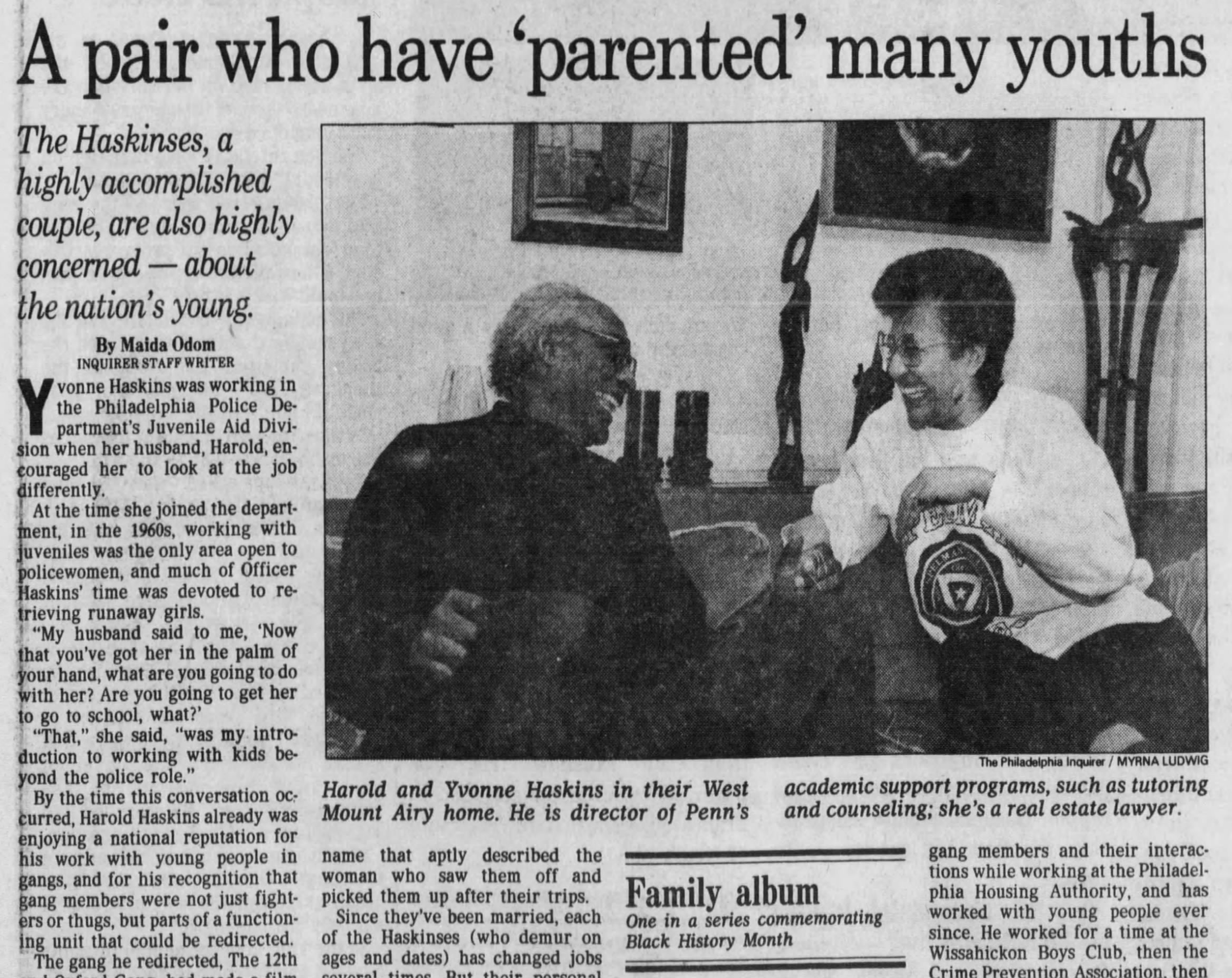
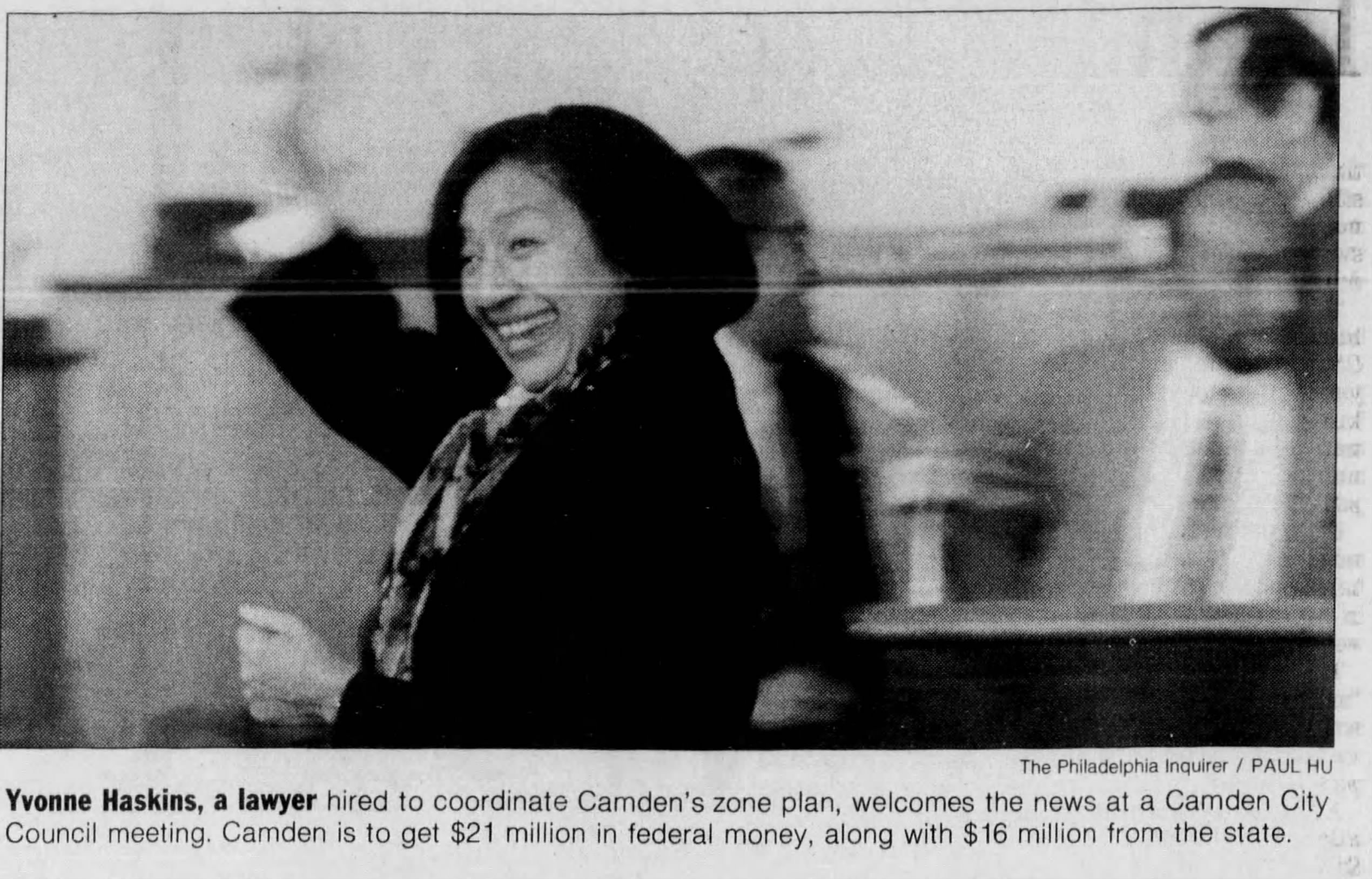
    Mrs. Haskins was featured in The Inquirer in 1992 (above) and 1994 (below).Newspapers.com

    They moved to Washington and, after a divorce, she moved to Philadelphia, where her parents lived.

    She met Harold Haskins, also a social activist, through a mutual friend, and they married in 1969. They had a daughter, Kristin, and lived in West Mount Airy. Her husband died in 2020, and she moved to Germantown.

    Family and friends called Mrs. Haskins “Peachy” because of her Georgia roots. She played piano and enjoyed gardening and impressionist art.

    She lived for years with myeloma cancer and walked in many cancer research fundraisers. She never really retired and wrote about her 2024 breast cancer diagnosis on Facebook. “As much as I want to stay engaged and busy, I may not be able to do much,” she said. “Your understanding and keeping me in the loop of things will be much appreciated.”

    Mrs. Haskins graduated as valedictorian of her high school at 15.Courtesy of the family

    Her daughter said: “She didn’t believe in retirement. She wanted to do the work, stay engaged, fight for justice.”

    In addition to her daughter, Mrs. Haskins is survived by a grandson, a great-grandson, a brother, and other relatives. Her former husband and sons died earlier.

    Services are to be at 11 a.m. Saturday, Nov. 7, at First United Methodist Church of Germantown, 6001 Germantown Ave., Philadelphia, Pa. 19144.

    Donations in her name may be made to the American Cancer Society, Box 6704, Hagerstown, Md. 21741; First Union Methodist Church of Germantown, 6001 Germantown Ave., Philadelphia, Pa. 19144; and Salem Baptist Church of Abington, 2741 Woodland Rd., Abington, Pa. 19001.

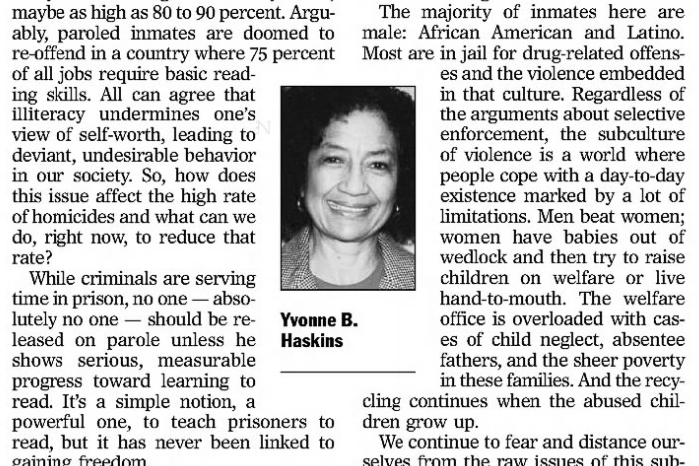
    Mrs. Haskins wrote op-eds for The Inquirer and letters to the editor.Nespapers.com
  • ‘Forever chemicals’ found in nearly all waterways of Philly, its suburbs, and South Jersey

    ‘Forever chemicals’ found in nearly all waterways of Philly, its suburbs, and South Jersey

    PFAS, or “forever chemicals,” were detected in almost all waterways tested in New Jersey and Pennsylvania, a new report says.

    Various types of the synthetic compounds were found in urban, suburban, and rural areas, including New Jersey’s Pinelands.

    PFAS were detected in 96% of waterways tested in Pennsylvania and 91% of waterways tested in New Jersey from samples taken between 2022 and 2024.

    That’s according to national data from the U.S. Environmental Protection Agency reported and compiled locally by PennEnvironment Research and Policy Center, Environment New Jersey Research and Policy Center, NJPIRG Student Chapters, and the Frontier Group. The results were released Wednesday.

    The data come about a week after Pennsylvania officials issued a “do not eat” advisory for fish caught in Wissahickon Creek after PFAS were recently found in a sample. A trout stocking on a section of the creek in Philadelphia was canceled as result.

    “Every place that we’re testing, nearly every place we’re testing, we’re finding PFAS,” said Doug O’Malley, director of Environment New Jersey. “This is not just a problem in some places. This is an everywhere problem.”

    Per- and polyfluoroalkyl substances are a large group of human-made chemicals that have been used in industry and consumer products for decades. There are thousands of the compounds. And many waterways tested positive for multiple types of PFAS.

    Although the effects of the chemicals are still being studied, scientific studies have linked exposure to possible reproductive problems, development effects in children, increased risk of some cancers, high cholesterol, and reduced immunity.

    Where were PFAS found?

    In Pennsylvania, 88 waterways were tested. In New Jersey, 86 were tested.

    The groups released an online map (https://public.flourish.studio/visualisation/30148552) showing the locations and amounts detected.

    The compounds were detected in the Delaware River, the Schuylkill, and Frankford and Wissahickon Creeks in Philadelphia. They were found in Valley Creek near Valley Forge, Perkiomen Creek in Collegeville, and the East Branch of Brandywine Creek in Downingtown.

    They were found in the Cooper River in Cherry Hill, Big Timber Creek in Glendora, Rancocas Creek in Mount Holly, and the Mullica River near Atsion Lake in the Pinelands.

    “The findings from today’s report represent the tip of a toxic iceberg, because many of New Jersey and Pennsylvania’s waterways have yet to be tested at all,” said Stephanie Wein, a clean water advocate for PennEnvironment.

    Wein said that though there are thousands of PFAS compounds, most studies test for only a few. The two most well known are perfluorooctanoic acid (PFOA) and perfluorooctane sulfonic acid (PFOS).

    Both have been phased out in the U.S. However, the compounds gained notoriety as “forever chemicals” because they resist breaking down in the environment, the human body, and wildlife.

    “This poisoning of our water is what happens when we use toxic chemicals throughout our economy for unnecessary uses such as nonstick cookware, cosmetic products, and clothing,” said Tee’Yanah Davenport, coalition coordinator with Rutgers-Camden NJPIRG Students. “It’s time to turn off the toxic tap.”

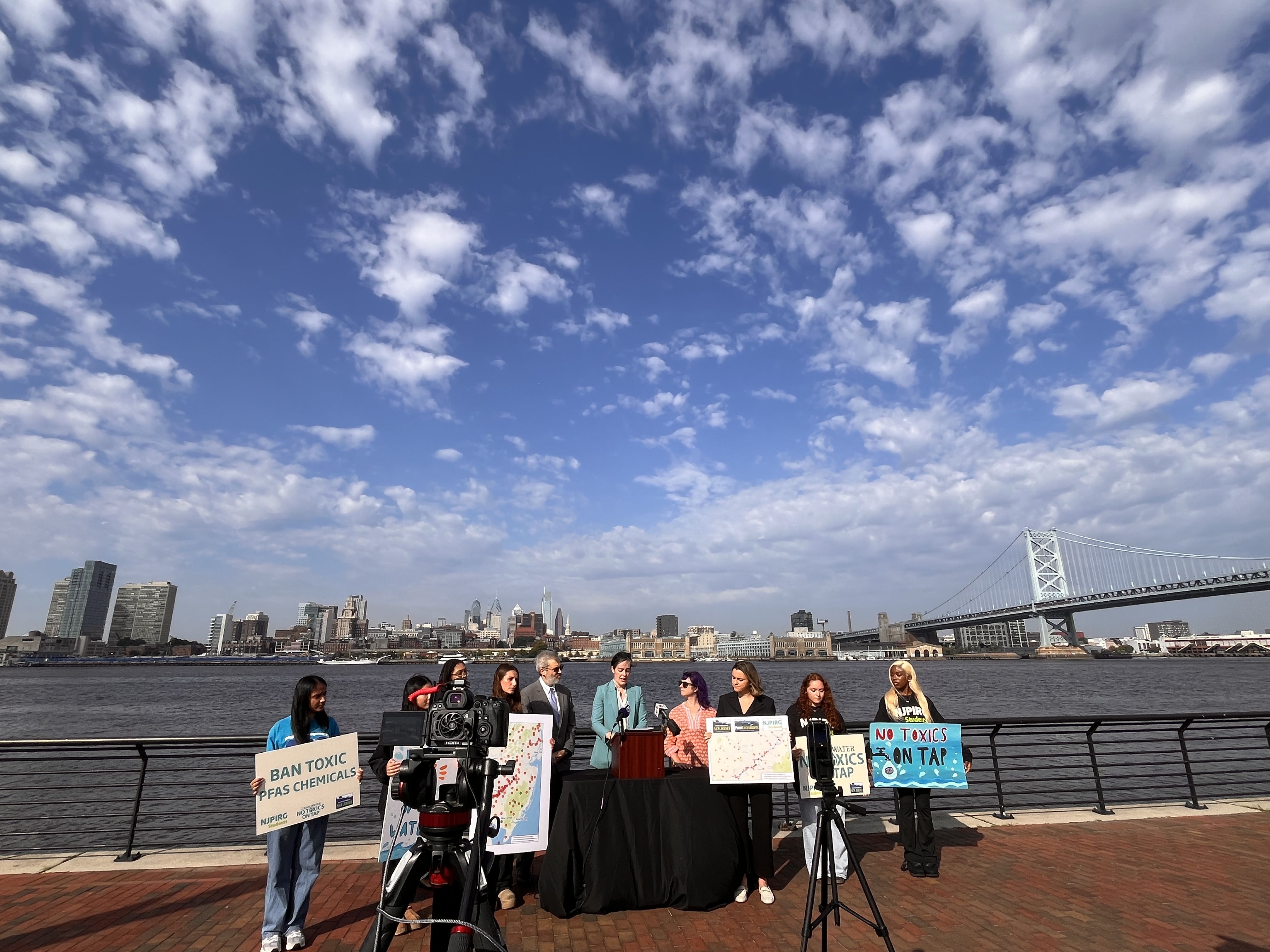
    Stephanie Wein, an advocate for the PennEnvironment Rsearch and Policy Center speaks about a study showing that most waterways in the area tested positive for PFAS. To her left is Doug O’Malley, director of the Environment New Jersey Research & Policy Center. To her right is Stefanie Kroll, director of the Riverways Collaboration. Also seen are student members of NJPIRG.Frank Kummer

    Impact on drinking water

    The Delaware River is one of the most PFAS-laden waterways, O’Malley said. The chemical was found in 98% of samples tested in the lower Delaware River south of Trenton.

    The Delaware River watershed supplies drinking water to millions of people, as well as providing a home to fish and wildlife.

    Philadelphia gets its drinking water from its two major rivers.

    Currently, an EPA rule set during President Joe Biden’s administration — which calls for a maximum of 4 parts per trillion for PFOA and PFOS in drinking water — is being phased in. It set higher limits of 10 parts per trillion for a few PFAS compounds.

    Under the Trump administration, the EPA has proposed giving water companies more time to comply with PFOA and PFOS limits, and rescinding limits for other PFAS compounds.

    Some of the water sampled for the new study exceeded the current EPA safety levels.

    Many water departments have installed, or plan to install, filters that remove most PFAS.

    A view of the Delaware River and Philadelphia skyline from RCA Pier Park in Camden, N.J. on Oct. 14, 2026.Frank Kummer

    Higher blood pressure, cholesterol

    PFAS have also been linked to firefighting foam. The foam was widely used on military bases in Bucks and Montgomery Counties for decades.

    Recently, a major study of PFAS-contaminated drinking water among people living near those bases showed associations with elevated cholesterol, increased blood pressure, and lower childhood development, according to preliminary findings.

    A separate analysis showed areas of some cancers in or near those communities, but more research is needed to determine whether there is a correlation between cancer rates and the water, the study’s investigators said.

    Pennsylvania state legislators are currently debating a bill that would ban PFAS in the foam.

    The 40-mile-long Neshaminy Creek, which runs through Bucks County and near the bases, has been associated with high levels of PFAS, including areas that provide public drinking water.

    The study released Wednesday showed a level of 102 parts per trillion in the creek near Hulmeville.

  • Lower Merion and Narberth unveil dozens of recommendations for improving safety along Montgomery Avenue

    Lower Merion and Narberth unveil dozens of recommendations for improving safety along Montgomery Avenue

    Lower Merion Township and Narberth Borough have released a set of preliminary recommendations to make Montgomery Avenue safer.

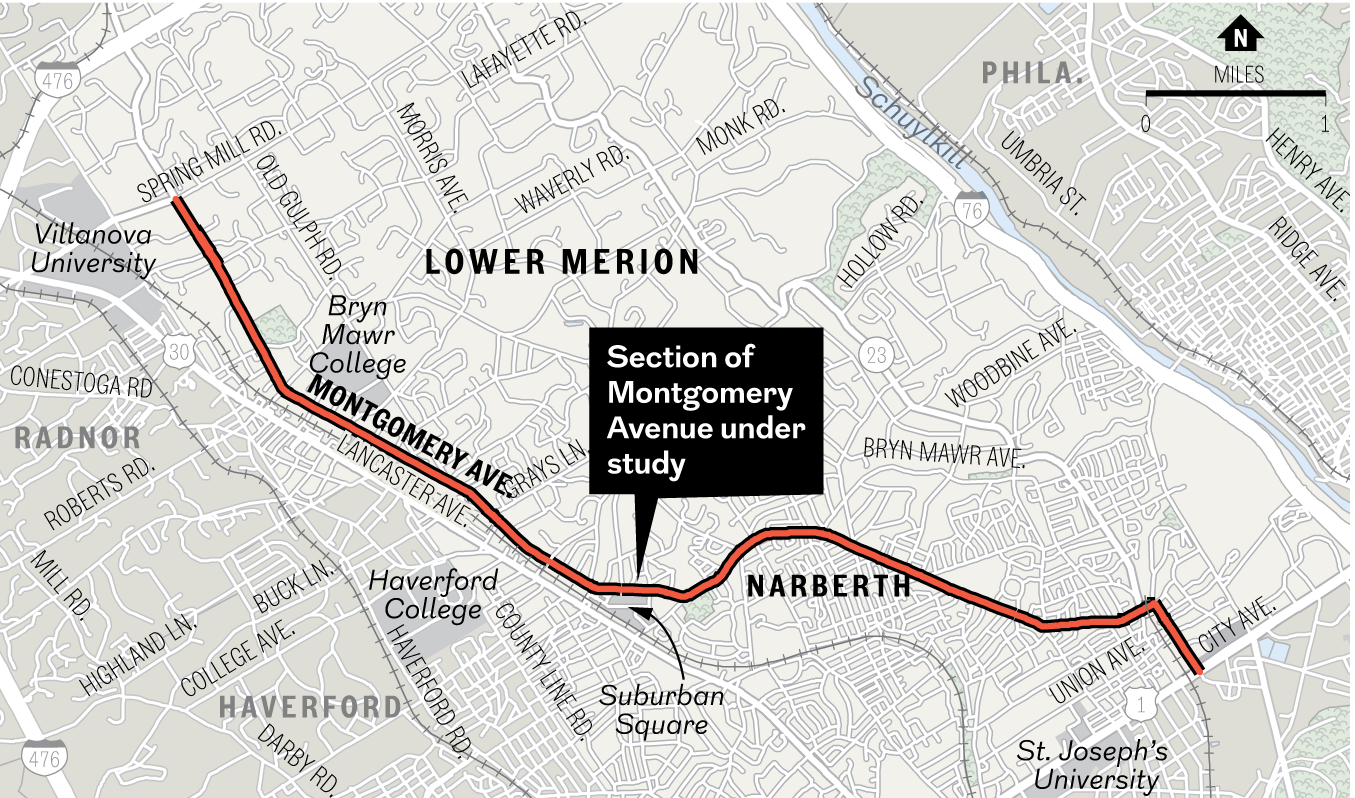
    The recommendations are the culmination of the monthslong Montgomery Avenue Corridor Safety Study, an effort by Lower Merion and Narberth to identify and prioritize potential improvements along a seven-mile stretch of Montgomery Avenue, from City Avenue to Spring Mill Road.

    Residents say the roadway has become unsafe for drivers, cyclists, and pedestrians. At a February meeting in Lower Merion, some recounted their own accidents and near misses while walking or driving along the key suburban artery.

    The study’s recommendations, sent to Lower Merion residents via email Tuesday, include adding and updating a series of speed limit markings, street lights, crosswalks, stoplights, and lane configurations at dozens of intersections along Montgomery Avenue.

    A map showing the section of Montgomery
    Avenue in Lower Merion and Narberth that is the subject of a major traffic safety study. John Duchneskie

    The township and borough received $340,540 through the federal Safe Streets and Roads for All program to fund the study. The initiative evaluated traffic and crash patterns, pedestrian and cyclist safety, intersection and roadway design, and access to transit, shopping districts, and neighborhoods, among other factors.

    The recommendations are for planning purposes only, and any future improvements would need to be approved and funded.

    Lower Merion recorded 3,767 crashes between 2019 and 2023, 13 of which were fatal and 68 of which involved “suspected serious injuries,” according to the township’s 2025 Comprehensive Safety Action Plan. The majority of crash-related serious injuries occurred on five major roadways: Conshohocken State Road, the Schuylkill Expressway, City Avenue, Montgomery Avenue, and Lancaster Avenue.

    The number of reportable crashes (incidents that result in injury or vehicle damage requiring towing) along the section of Montgomery Avenue studied increased from 97 in 2022 to 142 in 2023, then dropped to 116 in 2024, according to data presented to Lower Merion and Narberth residents at the February meeting.

    Lower Merion and Narberth residents are invited to learn about and provide comments on the Montgomery Avenue recommendations at an Oct. 26 meeting at 6 p.m. in the boardroom of the Lower Merion Township building. Comments can also be emailed to montavestudy@lowermerion.org.

    The project team will review feedback on its preliminary recommendations before presenting final recommendations at a meeting later this year or in early 2027.

    This suburban content is produced with support from the Leslie Miller and Richard Worley Foundation and The Lenfest Institute for Journalism. Editorial content is created independently of the project donors. Gifts to support The Inquirer’s high-impact journalism can be made at inquirer.com/donate. A list of Lenfest Institute donors can be found at lenfestinstitute.org/supporters.

  • Reflecting Pool liner failed in 85 places after flawed renovation, inspection found

    Reflecting Pool liner failed in 85 places after flawed renovation, inspection found

    The blue coating applied to the bottom of the Lincoln Memorial Reflecting Pool this summer failed in at least 85 places because of errors in the renovation, including the premature refilling of the basin before the liner had fully dried, according to an inspection report obtained by the Washington Post.

    The Aug. 6 report, commissioned by the contractor that did the work, documents far more damage than has been previously reported. President Donald Trump has generally attributed the damage to vandals, but the report makes no mention of vandalism to the liner and blames the problems on the use of improper materials and a rush to complete the job. The administration wanted the project finished in time for the celebration of the nation’s 250th anniversary.

    The 75-page “failure analysis” by Atlantic Coating Inspection includes scores of photos documenting the liner’s deficiencies — ranging in severity and including blisters, peeling, and cracks — and identifies their likely causes.

    The blue coating buckled along eight of the 10 expansion joints that divide the concrete slabs of the pool’s basin, according to the report.

    Blisters appeared in nearly 40 places due to moisture or chemical fumes trapped beneath the liner.

    Peeling occurred in nearly two dozen spots, where layers of coating separated from each other or detached from the basin.

    Some of the peeling probably occurred because workers were still applying the coating the day before the pool was refilled with water on June 4, even though the material needed 72 hours to “cure,” or dry completely, according to the report.

    The extensive failures at the pool occurred after Virginia-based Atlantic Industrial Coatings (AIC) completed the $14.7 million renovation under a no-bid contract awarded by the Trump administration this spring. The administration justified skipping competitive bidding by asserting in an Interior Department memo that “only a limited pool of contractors possess the qualification and equipment” necessary for the job.

    The contractor offered a repair plan in its own report to the federal government later in August, summarizing the failures found by the inspection. In its Aug. 14 report, AIC described the majority of the failures as “cosmetic” but noted that others were “systemic.” The cost of the needed repairs, which the company has said it would cover under its warranty, was not included in its report.

    The contractor blamed “human oversight,” adding that workers probably misapplied or did not spray enough primer. That Aug. 14 report, obtained by the Post and previously reported by the New York Times, does not list the number of damaged spots or include some of the causes found by the inspection.

    Neither AIC nor the unaffiliated company it hired to perform the inspection and produce the Aug. 6 report responded to questions or requests for comment.

    In a statement Tuesday, an Interior Department spokesperson said “AIC is contractually obligated to fix the Reflecting Pool” and is “well on its way to doing so.” The spokesperson said the contractor will ensure the “the work is perfect” and will replace “sections of damage by vandals” who repeatedly “ripped at the coating.”

    White House spokesperson Taylor Rodgers did not address the inspection report’s findings but said in a statement that the pool had been “neglected” and the repairs are “another example of President Trump restoring our nation’s capital for the American people.”

    The Reflecting Pool has had problems with algae and leaks almost from the time construction was completed in the early 1920s. In 2012, a two-year, $34 million renovation shored up its floor support system to prevent the pool from sinking and added a new filtration system.

    In April, Trump vowed to clean up what he called the “filthy” water in the pool by resurfacing the more than 300,000-square-foot basin with a color Trump called “American Flag Blue.”

    The contractor began work late that month, leaving a small window to complete the job in time for the America 250 anniversary events. The pool was first resurfaced with a light blue primer called Rhino 406. That was followed by a dark blue coating called Rhino Pipeliner 5000. Contracting documents show the federal government specified the use of those materials.

    By early June, the pool was refilled. Within days, a massive algal bloom turned the water green. Then flakes of peeled blue paint began to poke through the water’s surface. Publicly, Trump and other senior administration officials blamed vandals for the pool’s failures.

    An internal report compiled by the National Park Service late that month, when the pool was still filled with water, listed 13 damaged areas along the outer edge of the pool, as well as a slash through the foam joint around the pool’s perimeter. The document, which was reviewed by the Post and has not been previously reported, said that damage at four of those locations could “possibly” have been caused by vandalism. It estimated repairs at those locations and the perimeter joint, which the report said had been “cut” as the pool was refilled, would cost more than $49,000.

    In July, federal prosecutors brought charges against four people they accused of damaging the liner, including a felony indictment against former Olympic canoeist David Hearn.

    Those charges were later dismissed, and U.S. Attorney Jeanine Pirro faulted officials at the Interior Department, which oversees the Park Service, for initially providing “less than fulsome information” about the causes of the pool’s failures. Prosecutors would not have indicted Hearn if they had known contractor error was to blame, she said.

    The U.S. attorney’s office did not respond to a request for comment.

    The pool was drained following the July Fourth festivities, and AIC tasked Atlantic Coating Inspection with doing what the Aug. 6 report calls a “100% inspection” of the pool’s liner to identify even the smallest defect.

    The inspection identified the 85 points of failure. It also documented 88 additional instances of damage that it said the Army Corps of Engineers caused while testing the strength of the liner after the pool was drained. Most were surface-level damage, but 12 cut to the concrete, according to the report.

    The Army Corps of Engineers did not respond to the Post’s request for comment.

    The most significant damage attributed to the flawed renovation was peeling along the pool’s interior expansion joints. Each of those joints extends about 80 feet from the edge of the pool to its center and is designed to widen or narrow with temperature changes to prevent the concrete basin from cracking.

    Before the renovation began, the inspection report said, AIC was instructed by the coating’s manufacturer on how to layer the dark blue coating over the expansion joints to create a seamless finish. The San Diego-based manufacturer, Rhino Linings, did not respond to requests for comment.

    Interior Secretary Doug Burgum posted on X at the time that the final expansion joint materials passed a test with “flying colors.”

    But the material was not flexible enough for the “dynamic movement” of the expansion joints, the inspection report said.

    For other areas of the liner that peeled or split, the report cited three possible contributing factors: the improper mixing of materials in the application gun, mist from sprayed material drifting onto dried coating, and insufficient drying time.

    Photos in the report from June 3, the day before the pool was refilled, show crews still applying the liner. The work continued as the pool started to refill, including along the edge of the pool near the area that Hearn was accused of vandalizing, an Interior Department video shows. That area was later found to have 22 defects, according to the report.

    An additional photograph in the report shows crews continuing to apply coating from spray guns the day after water began flowing into the pool.

    Caulk applied between the expansion joint that runs along the perimeter of the pool also came loose from the concrete after it was prematurely submerged in water, according to the inspection report. That caulking requires five to seven days to cure, the report said.

    The report does not address who made the decision to refill the pool or whether there was any discussion about whether it posed a risk to the new lining and caulking.

    Blisters on the liner, mostly located on the southwest side of the pool, appeared to have been caused by moisture or chemical gases trapped between layers of coating, the report said, potentially as a result of unspecified issues with “mixing” the two parts of the material.

    The inspection report distilled the “lessons learned” to two points: Curing time guidelines should be met, and products used for coating should be tested before they are applied.

    Days after the Aug. 6 report was completed and the vandalism charges against Hearn were dropped, Trump continued to insist that the Olympian had damaged the pool.

    “As with many jobs, there was also some contractor error done by rushing the job for a July Fourth opening,” Trump posted on Truth Social on Aug. 9. “But it was a very small area of this massive Pool, and was relatively inconsequential.”

    In its Aug. 14 report, AIC detailed how it would adjust its approach as it repaired the pool.

    AIC wrote that the dark blue Pipeliner 5000 would not be reapplied over the expansion joints, allowing a more flexible material to “move with the joint.” It wrote that it would also use a different primer for most of the repairs, after Rhino Linings, the manufacturer, revised its prior recommendation.

    The contractor added that it would also use a smaller crew to work in concentrated areas of the pool. This would ensure more supervision, the contractor wrote, leaving the pool “as close to perfect as is possible.”

    AIC warned that the warranty would be voided if water touches the repaired surface within 24 hours of installation, or the perimeter caulking joint within seven days.

    Last Tuesday, as the repairs were nearing completion, Trump told reporters that the latest fixes would make the pool “as vandal-proof as you can get.”

  • Jefferson Health notified insurance brokers that it could go out of network with Highmark on Jan. 1

    Jefferson Health notified insurance brokers that it could go out of network with Highmark on Jan. 1

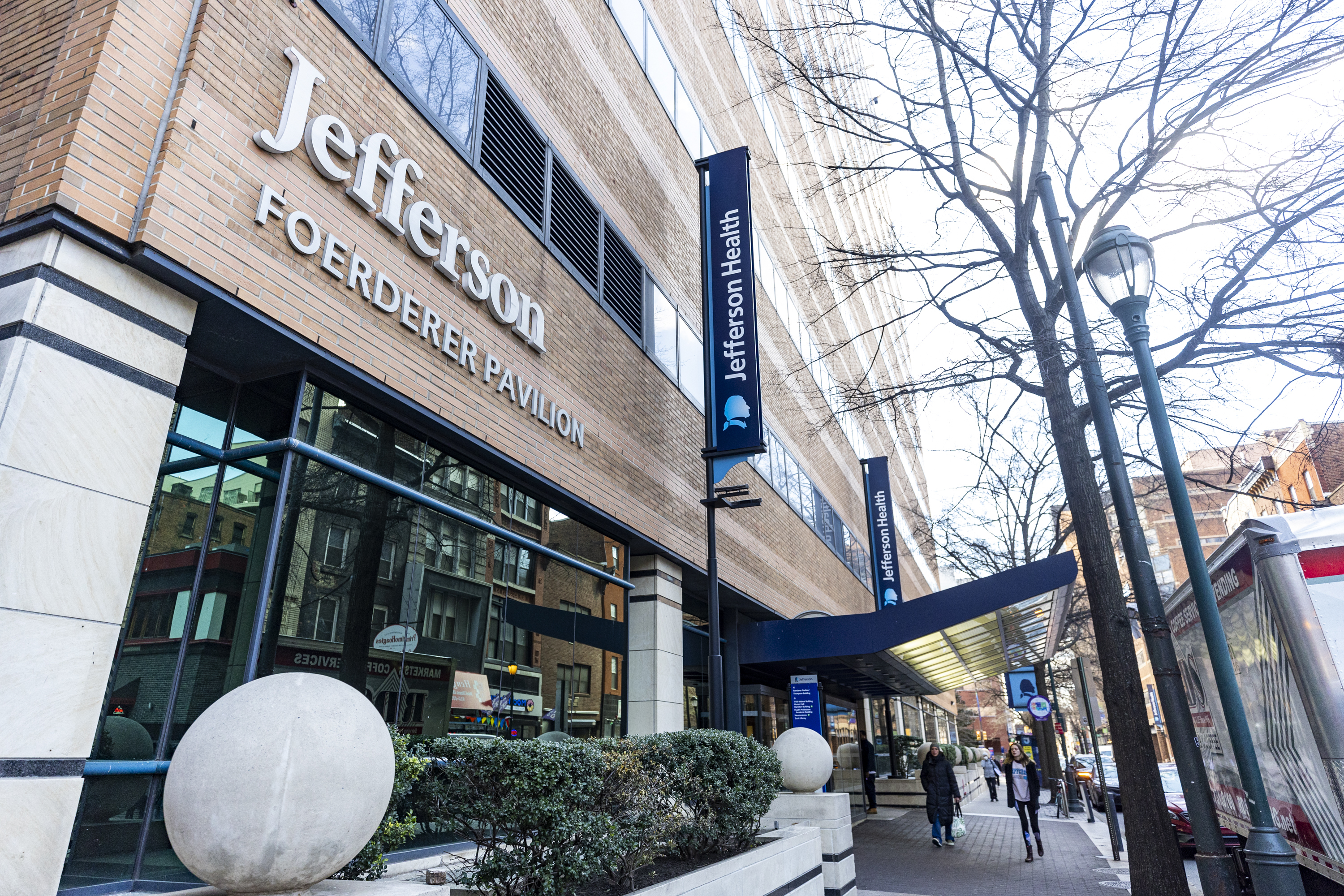
    Jefferson Health notified insurance brokers Tuesday that its Philadelphia and Lehigh Valley facilities could stop accepting Highmark insurance on Jan. 1 if the Pittsburgh-based insurer doesn’t agreed to higher payments.

    That means Jefferson, the largest health system in the Philadelphia area and owner of Lehigh Valley Health Network in Northeastern Pennsylvania, is in high-stakes negotiations with Pennsylvania’s two biggest Blue Cross Blue Shield companies.

    Last month, Jefferson notified patients with Independence Blue Cross insurance that it will go out of network with the Philadelphia region’s largest insurer if it doesn’t get substantially higher rates. Jefferson said IBX pays it 40% less than the national average.

    Jefferson’s notice Tuesday did not address specifics on rates, but said that “Highmark has not agreed to rates that fairly support the care provided by Jefferson Health physicians and care teams.”

    “We are negotiating in good faith with Highmark on behalf of our clinicians and patients to ensure that more of the premium dollars Highmark collects are going toward patient care. Equally troubling are Highmark’s arbitrary policy changes that violate their own contracts and compromise patient care,” Jefferson said in an email Wednesday.

    Dan Tropeano, Highmark’s segment for Southeastern Pennsylvania, described the contract talks with Jefferson as normal and expressed confidence that they will reach a positive resolution for both sides.

    “Negotiations in general have been more challenging in this cycle than they have in a long while because of the cost pressure that we’re all experiencing,” Tropeano said in an interview Wednesday.

    Tropeano noted that Highmark is talking with Jefferson and other providers about ways to change how care is delivered and paid for that would help offset increases.

    Estimates of how many patients would be impacted if Jefferson stops taking Highmark insurance next year were not immediately available. Highmark has significant market share in the area Lehigh Valley Health Network serves. It started competing in Southeastern Pennsylvania at the beginning of 2024.

  • Judge extends order blocking Trump from banning CNN, MS NOW, and Politico reporters from White House

    Judge extends order blocking Trump from banning CNN, MS NOW, and Politico reporters from White House

    A federal judge has extended an order blocking President Donald Trump’s administration from banning reporters for three news outlets from the White House, broadening his support for the journalists by arguing that the restriction violates their constitutional rights to free speech as well as due process.

    U.S. District Judge Timothy Kelly ruled that CNN, MS NOW, and Politico are likely to succeed in the extraordinary case pitting the president against the news outlets that cover him. In a victory for the journalists, Kelly expanded a previous, temporary ruling that the administration had violated the news outlets’ Fifth Amendment right to due process.

    In a late-night ruling Tuesday, he also sided with a second argument by the outlets: that Trump’s ban breached their First Amendment right to free speech.

    Kelly rejected Trump’s reasoning that the ban was driven by policy goals, such as protecting national security. He argued the ban was the result of Trump’s stated belief that the outlets’ reporting was inaccurate and biased.

    “Simply put,” Kelly wrote, “That is unlawful viewpoint discrimination” — the government taking action against types of speech or coverage it does not like.

    “Still,” he added in his late-night order, “no one should interpret the Court’s decision to suggest that President Trump’s concerns about accuracy and fairness in the media’s reporting are unfounded, or that the government is powerless when its true aim is to protect national security when classified information is unlawfully disclosed.”

    But Trump’s standoff with the press is far from over. Kelly’s order did not address whether Trump can ban the three outlets from the rotating pool of broadcast networks that cover the president in tight spaces and share the reporting.

    Stepped-up disputes between the president and the press

    The fight reflects Trump’s increasing combativeness against news outlets and reporters whose content he does not like — including sharply curtailing Pentagon access for the press corps that covers the Defense Department. Trump or other parts of the executive branch have also, in policy and in the courts, grappled with the Wall Street Journal, the Associated Press and the New York Times — in addition to using the FCC to target broadcast networks.

    The case of the three news outlets is increasingly messy and expensive. After the five-outlet rotating pool stood by CNN and canceled its coverage of Trump, the Justice Department over the weekend announced it was investigating whether those five companies violated antitrust laws in doing so.

    Kelly’s ruling stood largely by the news outlets. He wrote that without a preliminary injunction blocking Trump’s ban, the outlets “are likely to suffer irreparable harm, and that the balance of the equities and the public interest tip in their favor.”

    An email to the Justice Department, which is arguing the case on behalf of the administration, was not immediately returned. The White House also did not immediately respond to an email requesting comment.

    Theodore Boutrous Jr., attorney for the three media organizations, hailed the judge’s ruling.

    “When the President issued his ‘ban on the free press,’ he blatantly and explicitly violated due process and the First Amendment,” Boutrous said in a statement. “The harm this ban did to our clients, the First Amendment, and the public as a whole is profound. The Court was right to enjoin the White House from enforcing this ‘unconstitutional ban on the free press’ for the foreseeable future.”

    Judge says no warning given before banishment

    Kelly, who was nominated to the bench by Trump, previously ordered the White House to restore the reporters’ “hard pass” press credentials while he weighed their claims. With that temporary order expiring Tuesday, the judge issued a preliminary injunction that preserves the status quo indefinitely while the case is pending.

    Kelly said that, “to put it mildly,” the White House didn’t give the plaintiffs any warning that they were in danger of losing their hard passes before Trump’s Sept. 18 social media post about their bans.

    The judge also said the impact of the White House ban goes far beyond a single reporter’s ability to do their job.

    “The ban threatens to cut off all Plaintiffs’ access to the White House press area—a space open to many of their competitors—thereby restricting their ability to observe happenings there firsthand, immediately report on those activities, and try to engage with government officials,” the judge wrote.

    Hard passes give journalists who regularly cover the White House longer term access to its campus without having to get permission ahead of time.

    The government asked Kelly to suspend his own decision pending an appeal, but the judge said it didn’t justify that request. Kelly said the bans impacted a total of 78 reporters at the three news organizations.

    Earlier judicial action against White House was temporary

    Trump provided no notice before announcing the bans in a Sept. 18 social media post, which criticized their reporting as “fake news.” Kelly temporarily blocked the bans on Sept. 24 at the request of the news outlets, which jointly filed a lawsuit in Washington, D.C.

    Attorneys for the outlets have described Trump’s move as “unprecedented and blatantly unconstitutional” under the First and Fifth amendments. They argued that it’s illegal for Trump to punish the journalists because he doesn’t like the content of their reporting.

    “The ban also inflicts an injury on all news media organizations — which now risk a similar fate if they engage in fact-based, independent reporting the President deems insufficiently favorable,” plaintiffs’ lawyers wrote.

    Government lawyers argued that access to the White House is a privilege — not a right — and said the president can impose the bans to protect national security and to stem the spread of misinformation.

    “The White House is the official residence and workplace of the President,” Justice Department attorneys wrote. “Presidents have had a relationship with the press since the beginning. They have long decided which journalists should receive privileged access, which has varied substantially from administration to administration.”

  • The Giant grocery app and website have been down for days after a possible cyberattack

    The Giant grocery app and website have been down for days after a possible cyberattack

    For days, Giant customers haven’t been able to access the grocery store’s website or app after a potential cyberattack.

    Giant’s parent company, Ahold Delhaize, said it is “experiencing a cybersecurity issue within its network.”

    “Our teams are taking steps to assess and mitigate the issue,” executives said Tuesday in a statement. “This resulted in us taking precautionary measures, including taking some systems offline to help protect them.”

    “We recognize that these actions have caused disruption for customers, associates and partners, but protecting our infrastructure in the best interest of our customers, associates and partners is a top priority.”

    The Amsterdam-based parent company first reported the incident Monday in a brief statement. On Tuesday, the company posted a lengthier update, in which it said it was “in the process of starting a controlled relaunch of certain systems.”

    Giant’s website remained down midday Wednesday.

    Ahold Delhaize also owns Food Lion, which has stores in central Pennsylvania and Delaware; Stop & Shop, which has outposts in North Jersey; Giant Food, a separate company with locations in Maryland and Delaware; and Hannaford, which operates in New York and New England. Those grocers’ websites and apps were also offline as of midday Wednesday.

    This incident comes after several high-profile cyberattacks on grocery stores and food distributors in recent years.

    Last year, a cyberattack on United Natural Foods, a major distributor to Whole Foods and other retailers, left some grocery-store shelves empty. In 2024, Ahold Delhaize’s U.S. arm was hit with an attack that caused low inventory at Stop & Shop stores for weeks before Thanksgiving. In 2021, the meatpacker JBS paid $11 million to cybercriminals after a major ransomware attack paused its U.S. operations and threatened the meat supply to restaurants and grocers.

    The Giant company began as a butcher shop in Carlisle, Cumberland County, more than 100 years ago. The business has grown to include grocery stores, pharmacies, and gas stations, with 168 locations across Pennsylvania, more than 70 of which are in the Philadelphia region.

    Giant for years focused on locations in the Philly suburbs, such as this St. David’s store that was preparing to open in a former Genuardi’s in 2012. It has since opened 10 stores in the city.

    After years of focusing on the suburbs and exurbs, the company recently expanded its footprint in Philadelphia, where it now has 10 stores. In late 2024, Giant closed one of its smaller-format Heirloom Markets and opened a new 40,000-square-foot store at South Broad and Carpenter Streets.

    Here are answers to some other questions you may have:

    Was my personal information compromised in Giant’s cyberattack?

    As of Tuesday, Ahold Delhaize said it does not believe so.

    “Although our investigation is still ongoing, we have no evidence at this moment that customer, associate and partner data was taken in this cybersecurity incident,” the parent company said.

    What happened exactly?

    Ahold Delhaize declined to share details of the incident so as not to “compromise security measures or interfere with our response efforts.” Executives said they were working with internal teams and external cybersecurity experts, as well as authorities and other stakeholders “as necessary.”

    Can I still shop in-person at Giant?

    Yes. Giant stores, pharmacies, and gas stations remain open and are operating under normal business hours.

    When will the Giant website and app be back online?

    It is unclear. “Our teams are working with urgency to investigate the incident and restore affected systems safely,” Ahold Delhaize said.

    What will happen to the Giant grocery order I placed before the site shutdown?

    You may not get your food, but you should get your money back. Giant executives say any unfulfilled orders placed through Giantfoodstores.com or the GIANT app will be refunded.

    Is there any way I can still get Giant groceries delivered?

    Yes. The company says delivery orders can still be placed through Instacart, DoorDash, and Uber Eats.

    What about my Giant digital coupons?

    Shoppers can ask Giant employees about digital coupons at checkout or the customer-service counter, spokesperson Ashley Flower said.

    If the app is still down on Friday, she said Giant plans to automatically activate every digital coupon on customers’ loyalty cards.

  • The judge who accused DA Larry Krasner of potential crimes will not step back from the case

    The judge who accused DA Larry Krasner of potential crimes will not step back from the case

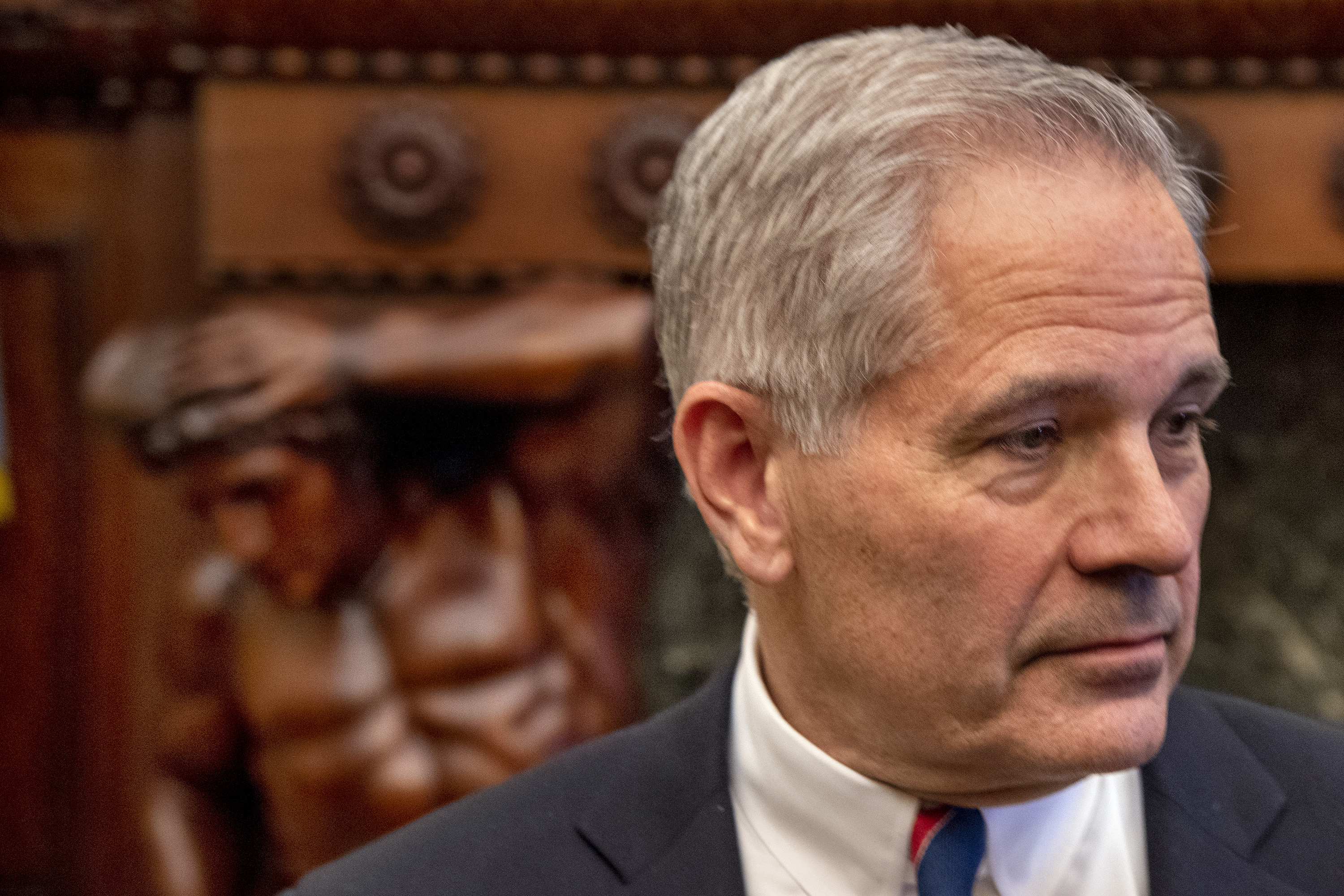
    The federal judge who accused District Attorney Larry Krasner of potentially breaking the law said he will not step back from the case in which he believes Krasner’s wrongdoing occurred, according to an order he filed Wednesday.

    The decision by U.S. District Judge Paul S. Diamond was a rejection of a request by Krasner, who said in court documents last month that Diamond should be removed from the case due to his “apparent bias” against the city’s top prosecutor.

    But Diamond, in his order, said he found Krasner’s arguments not only unconvincing but “frivolous.” He also rejected a request by Krasner to reconsider his order barring Krasner from participating in the underlying case moving forward, saying the decision to do so was “reasonable and warranted.”

    Krasner’s “intemperate filings provide no basis for recusal or reconsideration of my rulings,” Diamond wrote, adding separately that Krasner’s filings “generate more heat than light.”

    The decision was the latest development in a high-profile saga that has led to a series of controversial developments concerning Krasner’s office.

    Chief among them was Diamond’s issuance of a memorandum last month in which he said Krasner and one of his top supervisors, Matthew Stiegler, may have committed crimes including conspiracy, obstruction of justice, or perjury while participating in a post-conviction case Diamond has been overseeing.

    The judge also said he had referred the matter to the U.S. Attorney’s Office for a potential criminal inquiry. Federal prosecutors have declined to comment on how or if they might proceed.

    Krasner, a Democrat, has denied wrongdoing. And in a series of documents he filed last month, he said Diamond — who was appointed by President George W. Bush, a Republican — had exhibited consistent bias against him in the case, including by misinterpreting witness testimony, making inconsistent credibility determinations, and reaching “baseless” conclusions about what happened.

    The underlying matter centers on Dennis Johnson’s attempt to have his 2009 murder conviction overturned. Krasner’s office had once supported that effort, but tried to change course earlier this year after prosecutors discovered that the staffer who filed the brief backing Johnson’s position had made a series of mistakes.

    After that discovery, those prosecutors and Krasner held a variety of discussions about what went wrong and how the office should move forward. And this summer, when Diamond called hearings to address similar questions, the prosecutors involved in the discussions with Krasner told the judge that the DA had acted in ways they viewed as inappropriate — including, they said, by considering a plan to fault a single staffer, and threatening “consequences” for those who didn’t follow his orders.

    Diamond said some of the actions could amount to obstruction of justice or criminal conspiracy.

    Krasner has said those characterizations were wrong, and that some of the prosecutors who spoke out against him were “legally incorrect” about what took place and had behaved in ways that were insubordinate.

    Beyond the issues Diamond ruled on Wednesday, the case — and the merits of Johnson’s petition — remain pending.