WASHINGTON — President Donald Trump said Thursday he is renaming Lake Ontario to be known as “Lake America” in the United States as he exacerbates his trade war with Canada.
The Republican president signed an executive order that updated the lake’s name for the U.S. geographic naming service. Trump cannot force Canada to follow his preferred naming convention, however.
The move, which Trump said was “effective immediately,” is reminiscent of his move last year to rename the Gulf of Mexico as the “Gulf of America.’”
Trump has been floating the idea of the name change in recent days as the U.S. announced it was imposing 50% tariffs on $20 billion worth of Canadian goods over the weekend after talks between the countries broke down. Trump has been needling America’s northern neighbor since he returned to the White House last year, suggesting the ally with whom the U.S. once had warm relations should instead be absorbed as the 51st state.
Canada responded to Trump’s import taxes this week by imposing retaliatory tariffs on $20 billion worth of American goods, including steel, dairy products, appliances and farm equipment
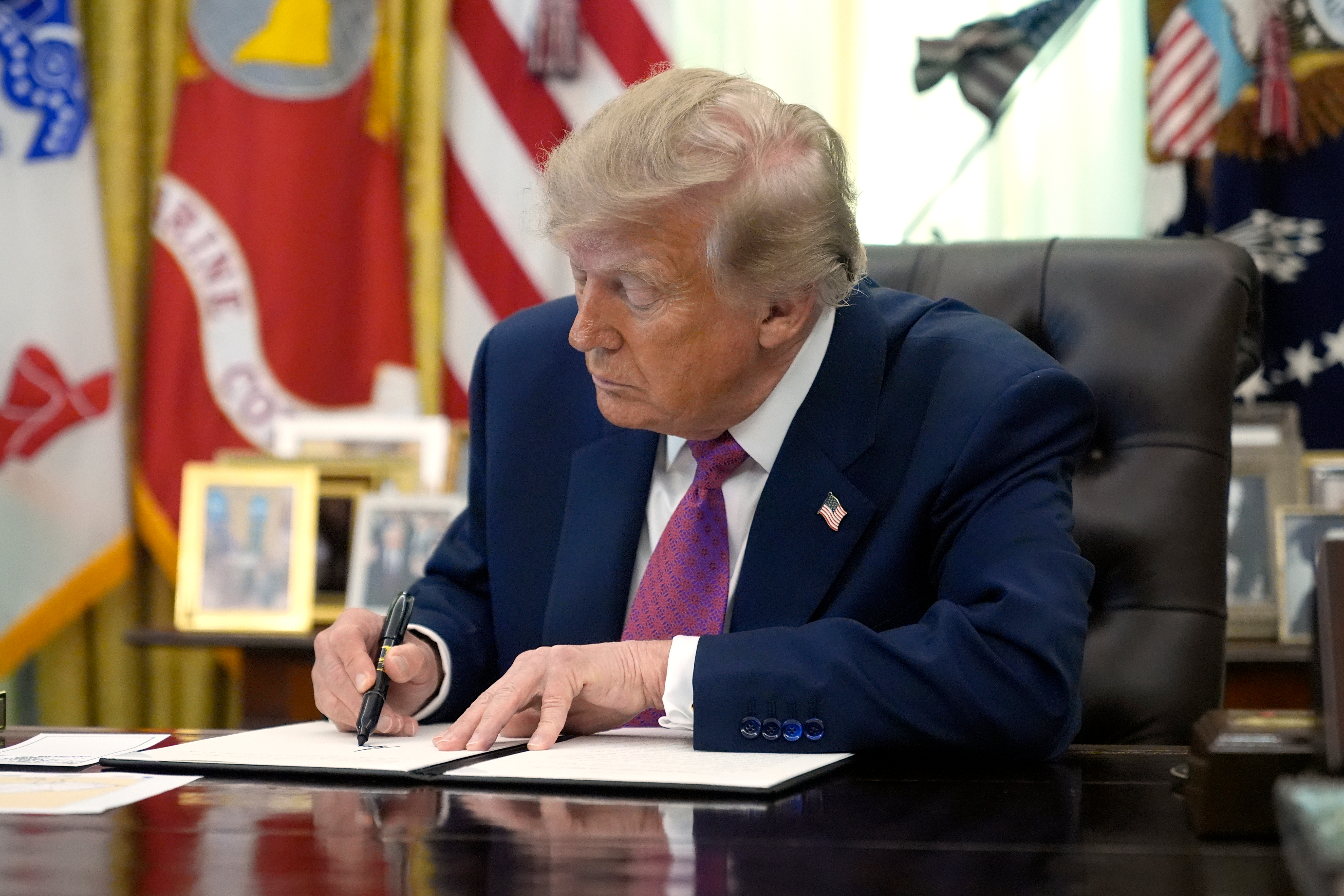
Trump, who signed the order as he was sitting at the Resolute Desk in the Oval Office, had a large sign behind him propped on a stand with a map of the Great Lakes. Over Lake Ontario, in big red letters, the map read “Lake America.”
On the other wide of the president was another map with the words, “MAKING THE GREAT LAKES EVEN GREATER.”
He told reporters that Canada is “the worst” to deal with on trade. “They feel entitled and we can’t have that,” he said.
The lake is one of multiple Great Lakes that the U.S. and Canada share borders along.
Trump on Thursday suggested his push to rename bodies of water may not be finished.
“So, if you think about it, we have a gulf and we have a lake. Now, all we need is an ocean,” Trump said. “So maybe we’ll have to change the name of the Atlantic and or the Pacific. Maybe we’ll change them.”
The official U.S.-Canada border stretches across the water between Lake Ontario’s northern and southern shores. The body of water forms much of New York state’s coastline and separates Buffalo from Toronto, the capital of the province of Ontario. Toronto is Canada’s most populous city and Ontario its most populous province.
Ontario is also the single largest export destination for more than a dozen U.S. states.
The lake’s name comes from the Huron Indigenous people’s word “oniatarí:io,” which means “lake of shining waters,” and it predates European settlement in the region. The province, founded in 1867, took its name from the lake.
The International Hydrographic Organization — of which both the United States and Canada are members — works to ensure that the world’s seas, oceans and navigable waters are surveyed and charted uniformly, and also names some of them. But there is no single international body that determines names of international bodies of water.
TORONTO — As Canada moves to reduce its dependence on American military suppliers, the push is on display inside a Toronto garment factory.
Hunched over sewing machines, two workers rapidly stitch together pieces of camouflage-patterned fabric and Velcro strips. In the next room, workers snip stray threads as they inspect the finished product: helmet covers for the Canadian military.
The factory is assembling uniforms for Wuxly, a luxury parka maker that is among a flurry of Canadian companies branching into defense contracting. As Canadian military spending surges, others are developing remote sensors for the country’s vast Arctic region, making drones to resupply soldiers, and building autonomous robots.
The boom in the defense sector reflects Canadian Prime Minister Mark Carney’s vow to strengthen the country’s economic self-sufficiency amid fraying relations with Washington, including a fresh escalation this week with new rounds of tariffs.
Canadian startups and established companies, alongside firms in Europe, are set to benefit from tens of billions of dollars in extra defense funding, driven partly by pressure from U.S. President Donald Trump to contribute more to NATO. Canada’s investment remains small compared with the Pentagon’s budget, but its strategy aims to boost domestic defense capabilities, and not just U.S. contractors.
A country known for peacekeeping ramps up military spending
A defense industrial strategy released earlier this year by Carney represents a generational shift for Canada, which invented modern peacekeeping and had long been content to remain in the shadow of its southern neighbor on defense matters.
The defense plan earmarks an additional $60 billion in funding over the next five years, and the government has promised support for domestic businesses to sell into defense and security supply chains. Currently, Canada spends about $36 billion to $43 billion on national defense.
“The scale of investment that is involved is quite significant by Canadian standards, certainly in peacetime,” said Philippe Lagassé, a professor at Carleton University specializing in defense policy.
The defense boom is “quite evident at all the events we’re at. Every defense show (is) sold out. Lots of new companies and (other) industries coming into the (defense) industry, getting involved,” said Wuxly founder and CEO James Yurichuk.
Wuxly’s helmet covers, destined for the Canadian Armed Forces, allow soldiers to attach call sign patches or gear like lights, cameras, and beacons. The company also makes military parkas and tank covers and has been supplying Ukraine’s military with gear, including 40,000 female uniforms — one of the company’s specialties.
Carney has called for upgrading the Canadian military’s Arctic capabilities, increasing spending by tens of billions of dollars to assert sovereignty over the vast but sparsely populated and increasingly contested region.
“There’s a lot of innovation that can create advantage in the North, and with the Arctic region being so important, we’ve got to clothe our soldiers properly,” Yurichuk said.
Canadian companies and European allies find new opportunities
A major part of the strategy is diversifying away from U.S. defense contractors. It focuses on tapping a wider global pool of suppliers of military hardware — and fostering domestic defense supply chains.
The strategy envisions investments amounting to more than half a trillion dollars, creating 125,000 jobs and tripling the size of the country’s defense industry over the next decade by steering contracts to Canadian companies. It calls for accelerating research and development and prioritizes developing key “sovereign capabilities” including aerospace, robotics and unmanned systems.
As Canada pursues partnerships with other allies, in addition to the United States, Ottawa has announced deals this year to buy radar planes from Sweden’s Saab over American competitors and submarines from Germany’s ThyssenKrupp.
Canadian startups like New Frontier Robotics also are lining up to play a part.
“There definitely is money in play,” said Nikhil Malhotra, co-founder of the two-person company. “We see it. Obviously, we are going for it.”
The company is working on a mobile manipulator robot — essentially a robot arm on a mobile platform — powered by artificial intelligence that could have both military and civilian applications, in what’s known as dual-use technology.
The initial plan was to target manufacturing, with robots working autonomously between assembly lines, but potential customers suggested there was also a growing need from the defense industry. Robots could also be used for support roles at military bases, Malhotra said.
“If you have infrastructure up in the Arctic that needs maintenance, obviously the climate is very dangerous. Are you really willing to risk an operator’s life? The answer is no. It’s better to put this thing on,” said Malhotra, whose company is based temporarily at a robotics lab at the University of Waterloo, about 60 miles (100 kilometers) west of Toronto.
Startups focus on products with versatility
Canada’s efforts to modernize its war machine still face big potential challenges, including the risk that opposition parties target Carney’s spending plans in future elections.
Companies that develop novel technologies could be lured to the U.S. by its much larger defense market. It also will be tough for Canadian companies competing against American counterparts with much bigger research and development budgets that mean they are “always going to be a bit more at the edge of the technological capability,” Lagassé said.
Still, the strategy opens new possibilities for companies like drone maker Volatus Aerospace, based near Montreal.
“Defense was not a popular topic for a small-cap Canadian public company in the past,” CEO Glen Lynch said.
Lynch said Canada has had limited manufacturing capability not just for drones “but manufacturing capability in general.”
Like New Frontier, Volatus’ technology is considered dual use. Because Canada is technically not at war, companies can’t rely on selling exclusively to the military.
Volatus makes drones and related services for civilian and commercial uses, such as air dropping medicine to isolated communities. But it also has a defense unit and makes first-person-view drones that take out targets by crashing into them.
The company does some testing at a 100-acre site north of Toronto accessed by an unmarked gravel road and surrounded by fields of corn. Volatus employees demonstrated several aircraft on a recent visit by The Associated Press.
The company showed off a drone with a 60-kilogram (132-pound) payload slung underneath by cable, and a scaled-down drone with tilt-wing rotors that can carry cargo over long distances. In a demonstration, the drones operated autonomously and flew in a circular pattern before landing.
One drone, dubbed the Canary, has payload bay doors and is used to airdrop medical supplies to remote indigenous First Nations communities in Alberta.
It could also be used to send “resupply packages for soldiers” as well as dropping munitions, said Chief Operations Officer Greg Colacitti.
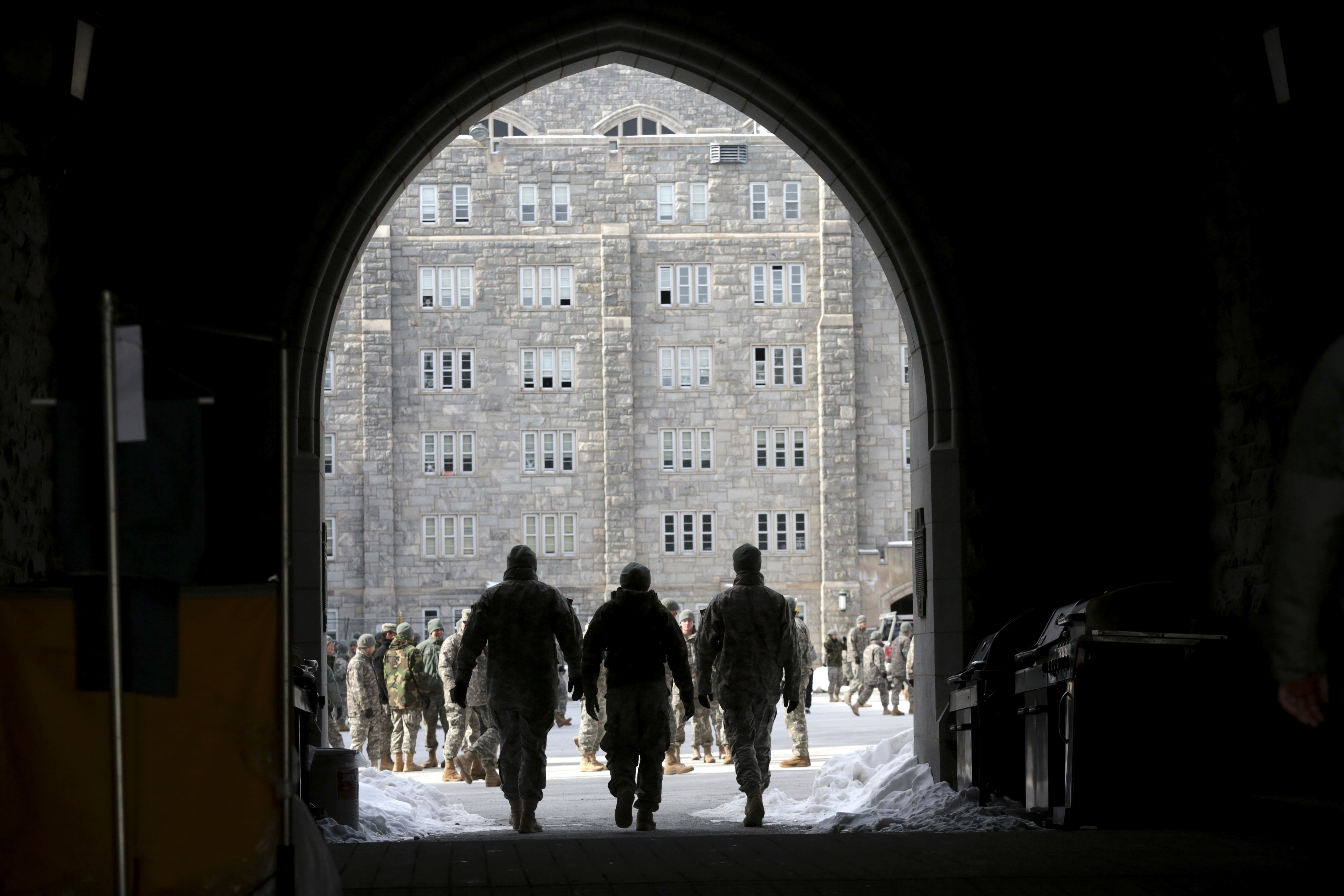
After 17 years of teaching science at West Point, Adam Kalkstein says he was suddenly ordered last year to cut from his curriculum information about the human causes of climate change, according to a new lawsuit filed against the U.S. Military Academy.
The change was immoral and potentially illegal, Kalkstein says he told Brig. Gen. Shane R. Reeves, who at the time was dean of West Point. Instead of upholding Army values, Kalkstein said he felt like a liar and a fraud.
Reeves stormed out of the room when Kalkstein declined a suggestion that he resign, according to the lawsuit. Six months later, the tenured professor was told his contract would not be renewed.
Filed in the Southern District of New York, the lawsuit accuses West Point of breaking the law by violating Kalkstein’s First Amendment rights by forbidding him from teaching about human-driven climate change, an order that required him “to omit a massive, fundamental, essential component of the course and to defy science,” according to the suit. Spokespeople for the Pentagon, West Point, and White House did not return requests for comment.
Michael Sussman, the lawyer for Kalkstein, said his client is a conservative Republican who believes the military needs to be taught the true causes of climate change when it comes to national security. In a letter to Defense Secretary Pete Hegseth, Kalkstein said understanding the causes of global warming was important not for social justice reasons but for things like competing with the Russians in the Arctic and knowing why sea ice was melting.
“He is loyal to the cadets and the academy,” Sussman said about the professor. “And to his perspective, edicts that he can’t say what’s true in a classroom is beyond his tolerance and totally counterproductive.”
Kalkstein’s lawsuit is the latest example of the Trump administration’s attempt to force conservative cultural changes on the education system. President Donald Trump has made frequent public statements dismissing scientific consensus on global warming, and his administration has categorized federal and international climate change programs as “woke, weaponized and wasteful spending” along with diversity, equity and inclusion initiatives and transgender policies.
The administration has repeatedly targeted the military for cultural change. Last year the administration banned hundreds of library books at the U.S. Naval Academy that did not align with Trump’s political agenda. Many of the books have since been returned, according to a Defense Department spokesperson.
In May, Judge Cathy Seibel of U.S. District Court in White Plains, New York, ruled in favor of another West Point professor, Tim Bakken, the longest-serving law professor in the military academy’s history, who had sued over the school’s new restriction on expressing his opinions to students in the classroom on subjects he teaches.
The latest lawsuit comes against the backdrop of a push by Hegseth to remake the service academies by dramatically scaling back the number of civilian professors and revising their curricula. A draft memo circulating inside the Pentagon this summer argued that the academies had been infected by “civilian academic norms” that were diluting the “focus on lethality.” The memo’s existence was first reported by CBS News.
The memo argued that tenure had led the academies to elevate the “research priorities of the tenured academics” over the needs of the military. The memo also called for “a comprehensive review” that would examine the “operational relevance” of all course offerings at the academies.
Hegseth in his 2024 book, The War on Warriors, bashed the academies as “Marxist-adjacent” institutions and blamed civilian professors for the shift.
“Civilian professors were welcomed on campus for reasons of ‘diversity’ as well as expediency. And with them came the predictable, radical left-wing educational philosophies,” Hegseth wrote.
Critics of Hegseth’s view have maintained that the civilian professors have improved and broadened the quality of instruction at the academies at a time when winning wars requires agile thinkers.
Kyle Lowry’s upcoming jersey retirement with the Toronto Raptors will have a hometown twist.
Lowry’s No. 7 will head into the rafters of Scotiabank Arena in Toronto before a game Jan. 10 against the 76ers, the Raptors announced Thursday.
The Philadelphia native and Villanova product spent nine of his 20 years in the league playing for the Raptors, and they were the most productive years of his career. He earned six All-Star selections and won a title with Toronto in 2019.
Before the Raptors, Lowry, 40, played for the Memphis Grizzlies and Houston Rockets. He then closed out his career playing the last two-plus years with the Sixers after playing parts of three years with the Miami Heat.
Lowry will join Vince Carter as the only players whose numbers the Raptors have retired. Over his nine years in Toronto, he averaged 17.5 points and 7.1 assists.
“I’ve been looking forward to this moment for years,” Lowry said in a statement released by the team. “I always said that Toronto is home, and that I’d retire a Raptor, and to see my No. 7 go up in that building is going to mean everything to me.
“We built something special here — my teammates, the organization, the city and the fans, and all of Canada. We became champions together, and to be able to share this night with all of them, and with my family, is going to mean a lot to me.”
The scheduling will allow a good number of Lowry’s teammates and coaches from his Sixers tenure to be in attendance, including head coach Nick Nurse, with whom he won that 2019 title.
BROWNSVILLE, Texas — An Immigration and Customs Enforcement officer charged with shooting a man and lying about it during the immigration crackdown in Minneapolis was released from a Texas jail Thursday, after a judge refused to order his return to Minnesota.
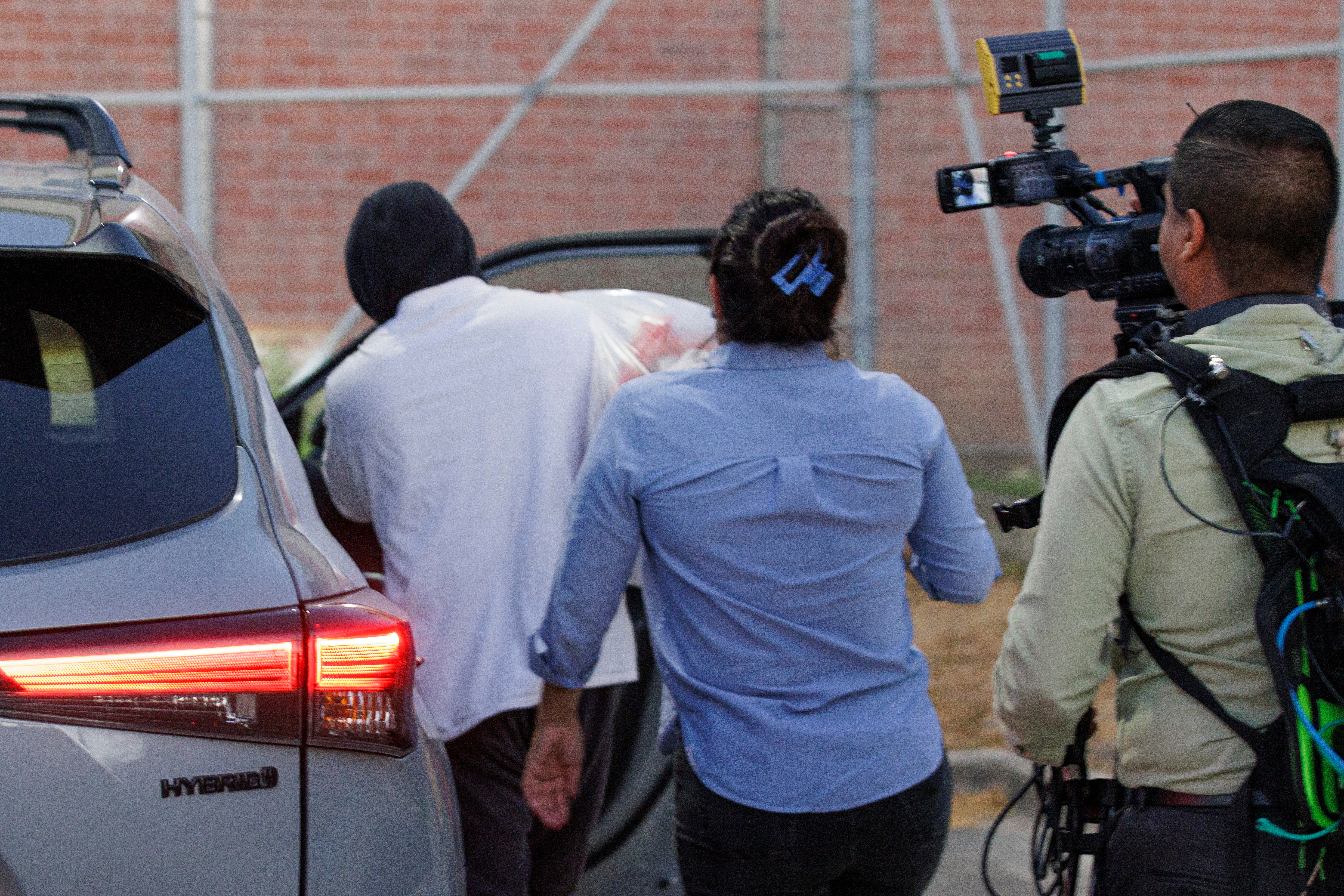
Christian Castro was released at the break of dawn from a detention center in Brownsville. He motioned his hand toward a few camera operators and a reporter crowding around him and quickly got into an SUV that drove off.
A day earlier, U.S. District Judge Fernando Rodriguez Jr. wrote in an order that said he couldn’t prevent a county sheriff from releasing Castro or order Texas Gov. Greg Abbott to sign his extradition warrant.
Castro is charged in Minnesota with assault and falsely reporting a crime in the Jan. 14 shooting of 24-year-old Julio Cesar Sosa-Celis.
Castro is accused of firing gun through door of home
Castro is accused of firing a gun through the front door of a Minneapolis home, shooting Sosa-Celis in the leg. Prosecutors say Castro also falsely accused Sosa-Celis and another man of attacking an ICE officer with a broom handle and a snow shovel.
After a Minnesota judge issued a nationwide warrant for Castro’s arrest in May, authorities, including Minnesota’s Bureau of Criminal Apprehension, arrested Castro in Cameron County on May 29. Minnesota authorities have sought his extradition since his arrest, but he remained in custody in Brownsville, a city bordering Mexico.
Under Texas law and barring extradition, Castro had to be released after 90 days of detention, which was Thursday.
Minnesota officials believe Castro could flee to Mexico.
Minnesota Attorney General Keith Ellison filed a request for a temporary restraining order last week seeking to block Castro’s release or to order his return to Minnesota.
Abbott waiting for internal state investigation about Castro
Texas attorneys on Tuesday argued the judge could not rule on a decision that’s still pending. Abbott has not denied the extradition. Instead he is waiting for the outcome of an internal state investigation considering whether Castro was legally a “fugitive” under the Extradition Clause, the lawyers said.
The judge wrote in Wednesday’s order that the court couldn’t yet step in.
“The Court concludes that it lacks subject matter jurisdiction because the case is not ripe for adjudication,” the order read. “Minnesota cannot premise its causes of action on the allegation that Governor Abbott may violate those authorities in the future; it must prove that a violation has already occurred.”
The judge said in his order that the extradition laws do not outline how long the Texas governor can take to make that decision.
Abbott said last week he would not respond to the extradition request, citing the ongoing investigation into fraud in government social service programs in Minnesota, which President Donald Trump used to justify his immigration crackdown there.
Abbott directs ‘bad lawyers’ comment at Minnesota attorney general
After the judge’s decision, Ellison posted online that the Texas governor had an obligation to extradite Castro. And by refusing to extradite him, “Greg Abbott is turning Texas into a sanctuary state for violent criminals.”
Abbott responded to Ellison.
“You guys are such bad lawyers. You showed up unprepared, uninformed & unpersuasive,” Abbott wrote online. “You don’t know the law & it showed.”
The Texas governor accused Minnesota of refusing to enforce immigration laws and threatened to send immigrants in the future to their state as he did with New York City, when thousands were released into Texas under President Joe Biden’s administration.
A message seeking reaction from Ellison was sent to his office Thursday.
Minnesota officials say Castro could flee the country, citing calls he made from jail to a woman in Mexico, talking “about marrying her and buying a house in Mexico when he is released,” according to the lawsuit.
The judge conceded that Castro could flee the country but added that “the threat of injury by itself does not create an issue ripe for adjudication.”
Friendship bracelets have become a concert tradition for Taylor Swift fans. During concerts, Swifties arrive with stacks of beaded bracelets decorating their wrists to trade with other fans in attendance. The bracelets themselves feature colorful beads, different song titles, and other personal touches.
It’s a movement that has been going on since March 2023 when the Eras Tour began. And now, Caitlin Clark is bringing that tradition to the basketball court with her new Swift-inspired “Friendship Bracelet” colorway.
Clark debuted the sneakers during Indiana Fever practice, giving fans a closer look at the newest colorway for her Nike Caitlin 1 signature shoe.
The sneaker features colorful beads worked into the fuzzy rope laces that spell out “CC 22,” a beads graphic is printed in the insole, and there’s an off-white upper with pastel color undertones completing the look.
Earlier this month, the three-time WNBA All-Star already teased that she had a “couple of versions” that Swift may like. It should come as no surprise that Clark would pay homage to the music star, being the ultimate Swiftie herself and becoming close friends with the pop star. She’s even been spotted hanging out with the Berks Co. native, who married Kansas City Chiefs tight end Travis Kelce earlier this summer, at Kelce’s games.
Clark debuted her signature sneaker this season and has already revealed over 10 different colorways, including the “Racer Blue,” “Yellow Zest,” and “University of Iowa.”
Ratko Mladic, the former Bosnian Serb general whose actions during the Balkan wars of the 1990s led to him being called the “Butcher of Bosnia” and who was held responsible for Europe’s deadliest massacre since World War II, the killing of some 8,000 Muslim men and boys at Srebrenica in 1995, has died. He was 83.
His death was announced Thursday by Serbian state media.
Mladic was captured May 26, 2011, in a farming village north of Belgrade, Serbia’s capital, after almost 16 years as a fugitive, ending one of the longest searches in modern history. His 2017 conviction by an international tribunal on charges of genocide, crimes against humanity, and war crimes marked the end of a dark and bloody chapter.
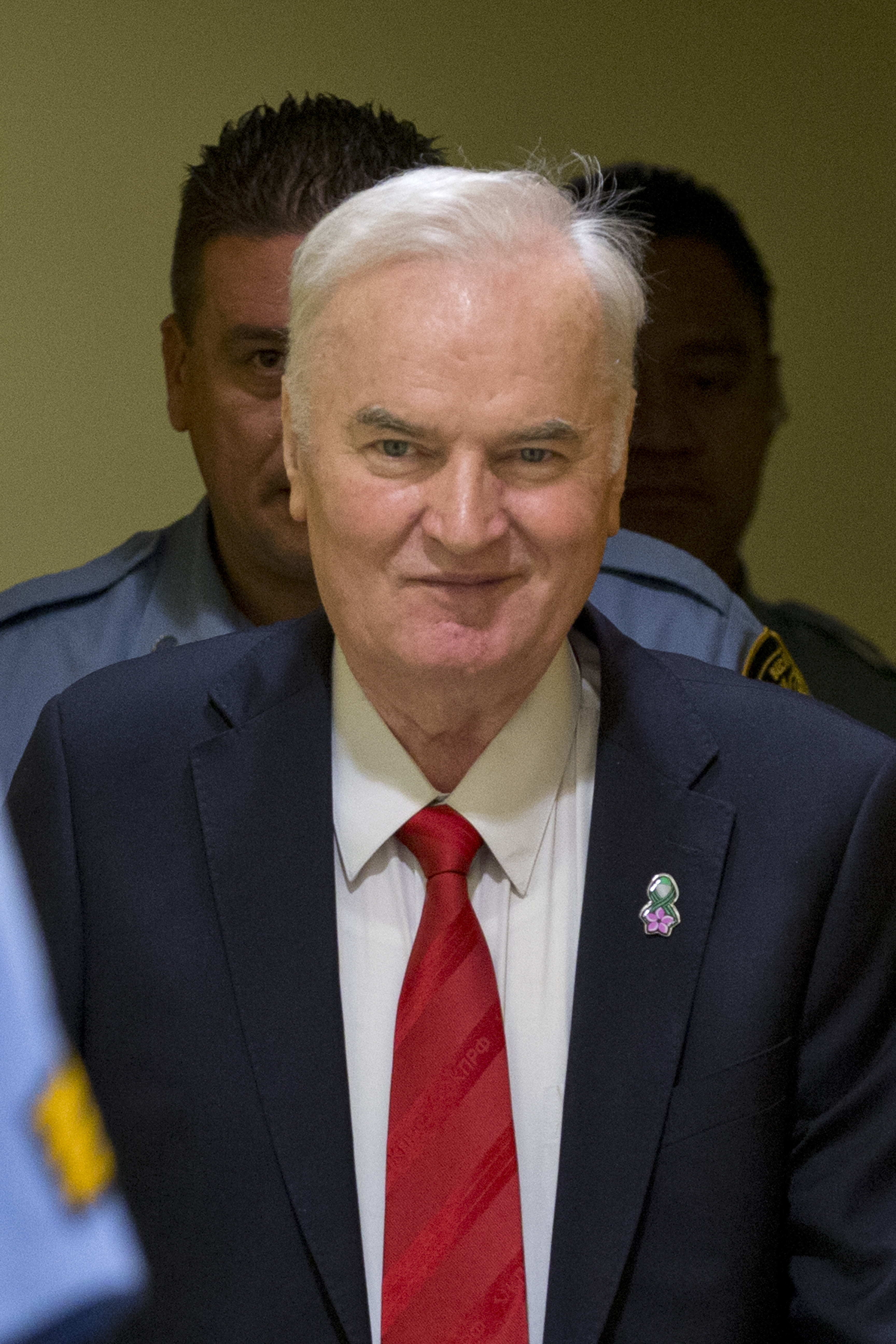
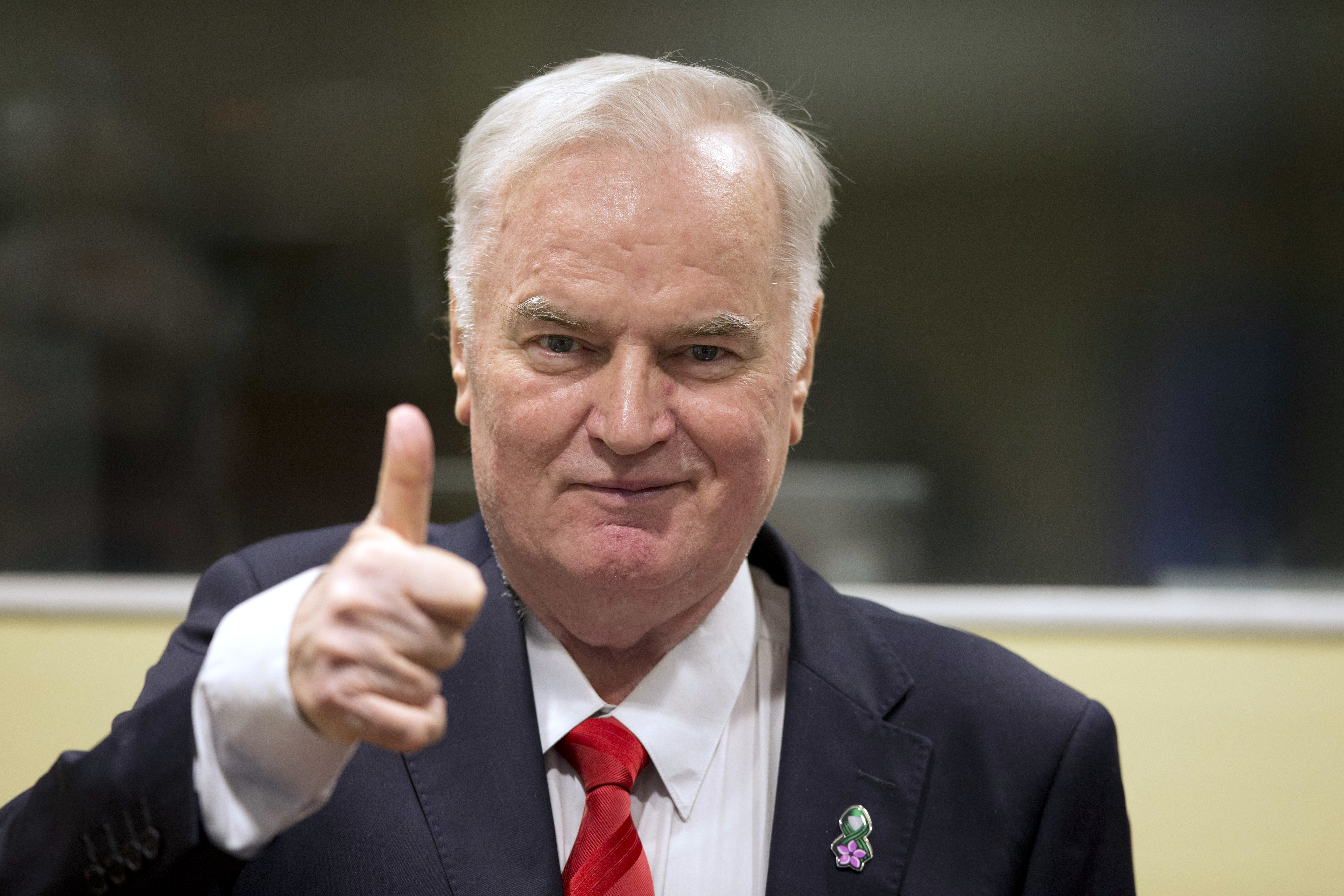
In pronouncing a life sentence, the presiding judge, Alphons Orie, said Mladic’s crimes ranked “among the most heinous known to humankind.” Mladic appealed the verdict, which was upheld in 2021.
The Balkan wars erupted as Yugoslavia was breaking up into independent states. Slobodan Milosevic, the nationalist president of Serbia, one of those states, was intent on creating a Greater Serbia. He reawakened old ethnic and religious enmities and started wars pitting Serbs against Slovenes, Croats, Bosniaks, and the Albanians of Kosovo.
Roughly 100,000 people died during the conflict, and more than 2.5 million were displaced.
A ruddy-faced and intimidating man with a bellowing voice, piercing blue eyes and a grandiose sense of himself, Mladic, an officer in the Yugoslav People’s Army, led the army of the Bosnian Serbs in the early 1990s.
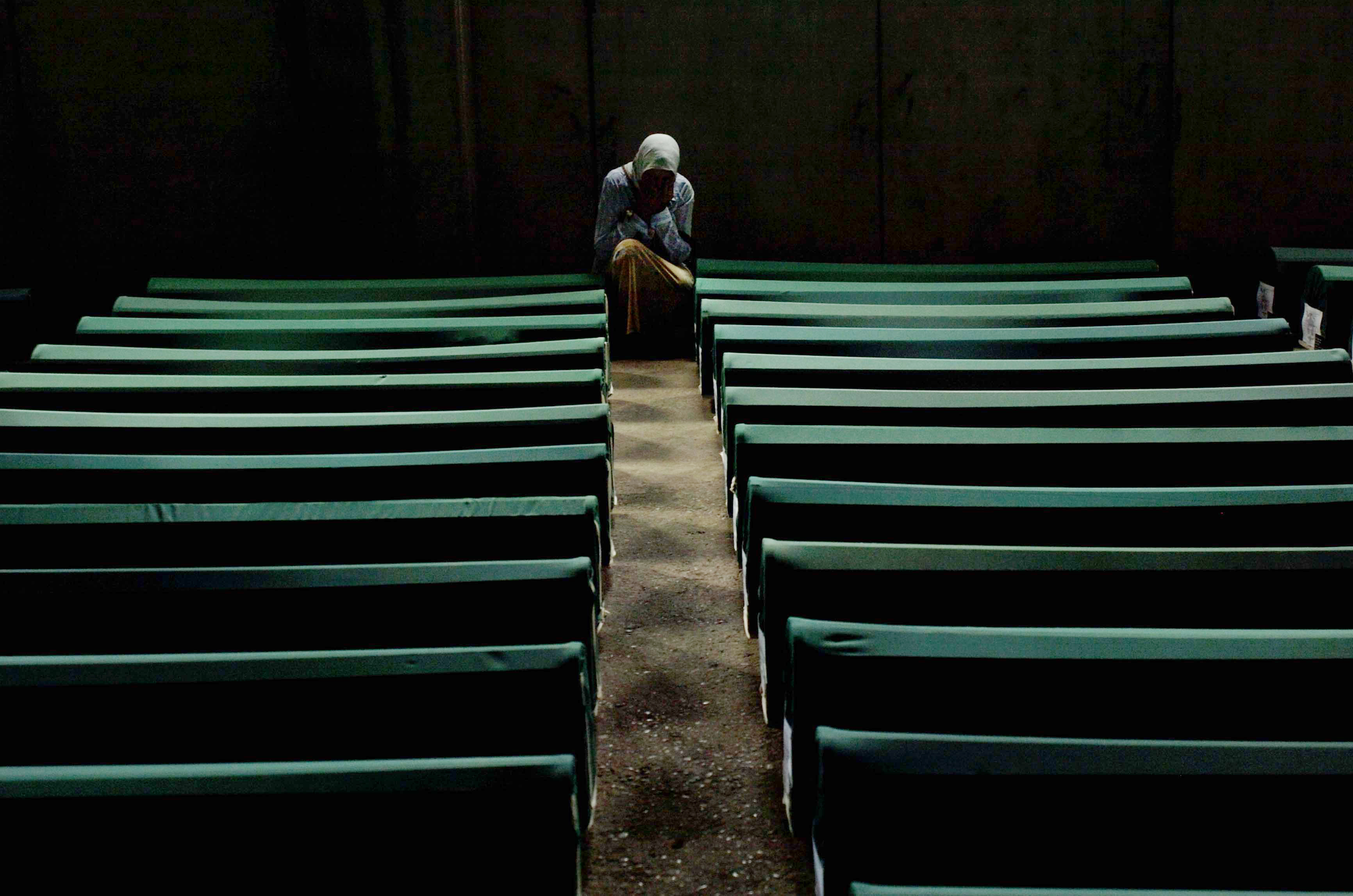
On the eve of the Srebrenica massacre, he promised to avenge the conquest of Serbia centuries before by the Ottoman Muslim Turks. Over 10 days, his soldiers hunted down, captured, and summarily executed thousands of Bosniaks, lining them up with hands tied behind their backs and shooting them. Women were raped. International pleas for restraint were ignored.
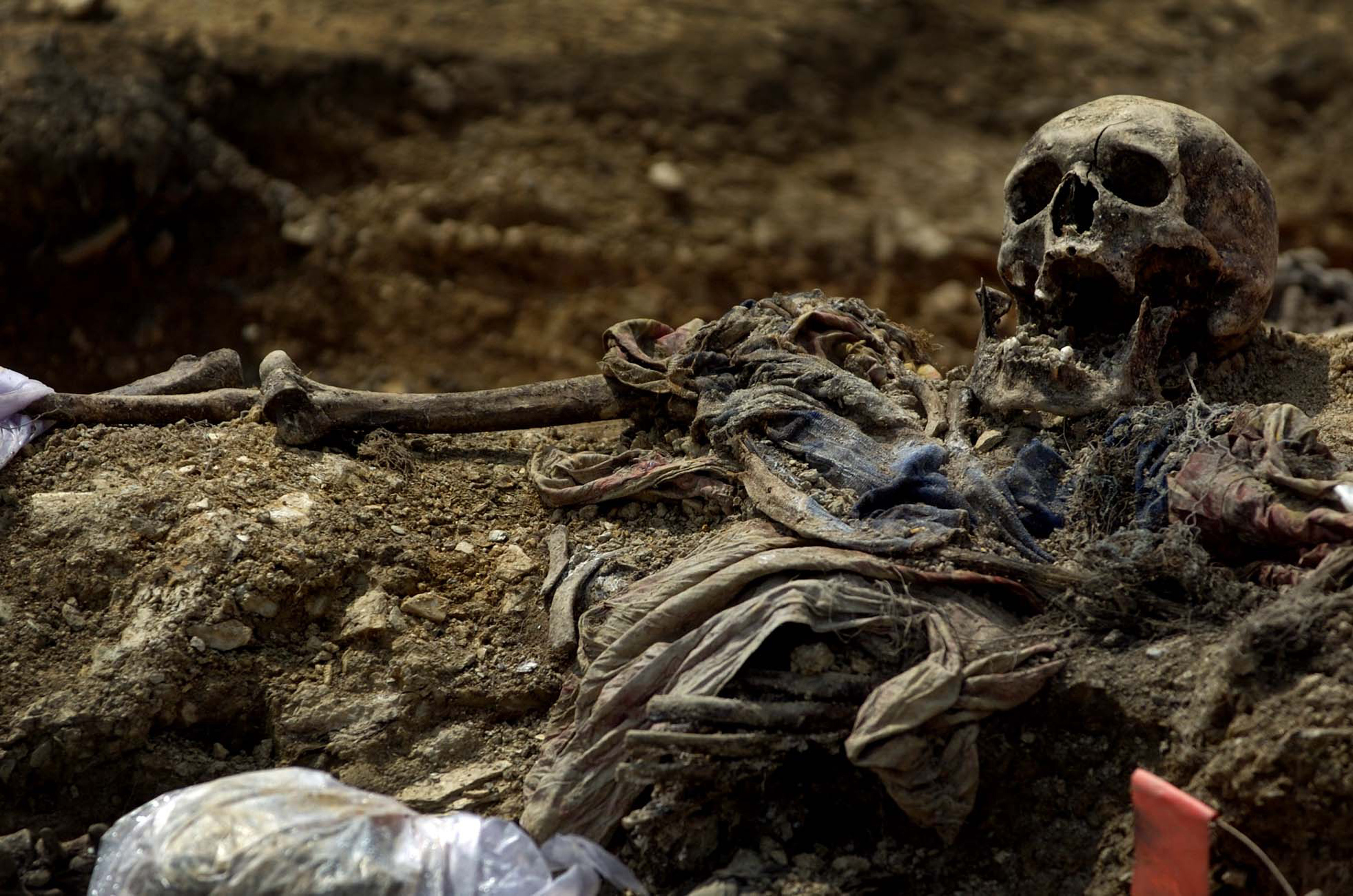
Serb forces buried the remains, dug them up again, and scattered them in distant mass graves in an organized effort to hide damning evidence of war crimes.
Mladic’s trial was among the last high-profile ones at the International Criminal Tribunal for the former Yugoslavia in The Hague. The tribunal wound down after trying nearly 100 of those responsible for the atrocities of the Balkan wars, including Mladic’s boss, Radovan Karadzic, the political leader of the Bosnian Serbs.
Arrested in 2008, Karadzic was convicted in 2016 on charges almost identical to Mladic’s, and his sentence was extended to life in prison three years later.
Mladic’s arrest was a signal moment in Serbia’s long effort to shed its status as a pariah nation. It removed a major obstacle to the country’s still-pending accession to the European Union, which had grown weary of the refusal of successive Serbian governments to capture him.
When he was finally tracked down, he was hiding in the house of a cousin and was so desperate for money that one of his repeated demands was the restoration of his frozen military pension.
During his trial, Mladic, once a seemingly invincible warrior, at times appeared reduced to a meek old man as witness after witness offered harrowing testimony about the violence he had unleashed. His right arm was impaired by the effects of at least two strokes he suffered while a fugitive, and he was unable to take notes.
Flashes of the mercurial, domineering general remained, though. In his first court appearance in June 2011, he dismissed the charges against him as “obnoxious” and “monstrous.” At other times, he yelled at the judges.
At one point, he was absent from a session, apparently to receive treatment for high blood pressure. When he returned, he raged at the bench, shouting, “Everything you are saying is a pure lie!” He was removed from the court.
In addition to masterminding the massacre at Srebrenica, Mladic was eventually also convicted of multiple crimes tied to the nearly four-year siege of Sarajevo, Bosnia’s capital, in which 10,000 people died, including 1,500 children.
During the siege, the longest in the history of modern warfare, Mladic’s men shelled the city from surrounding mountains and terrorized civilians with sniper bullets. Judges also found him guilty of the persecution and extermination of non-Serbs living in large swaths of Bosnia.
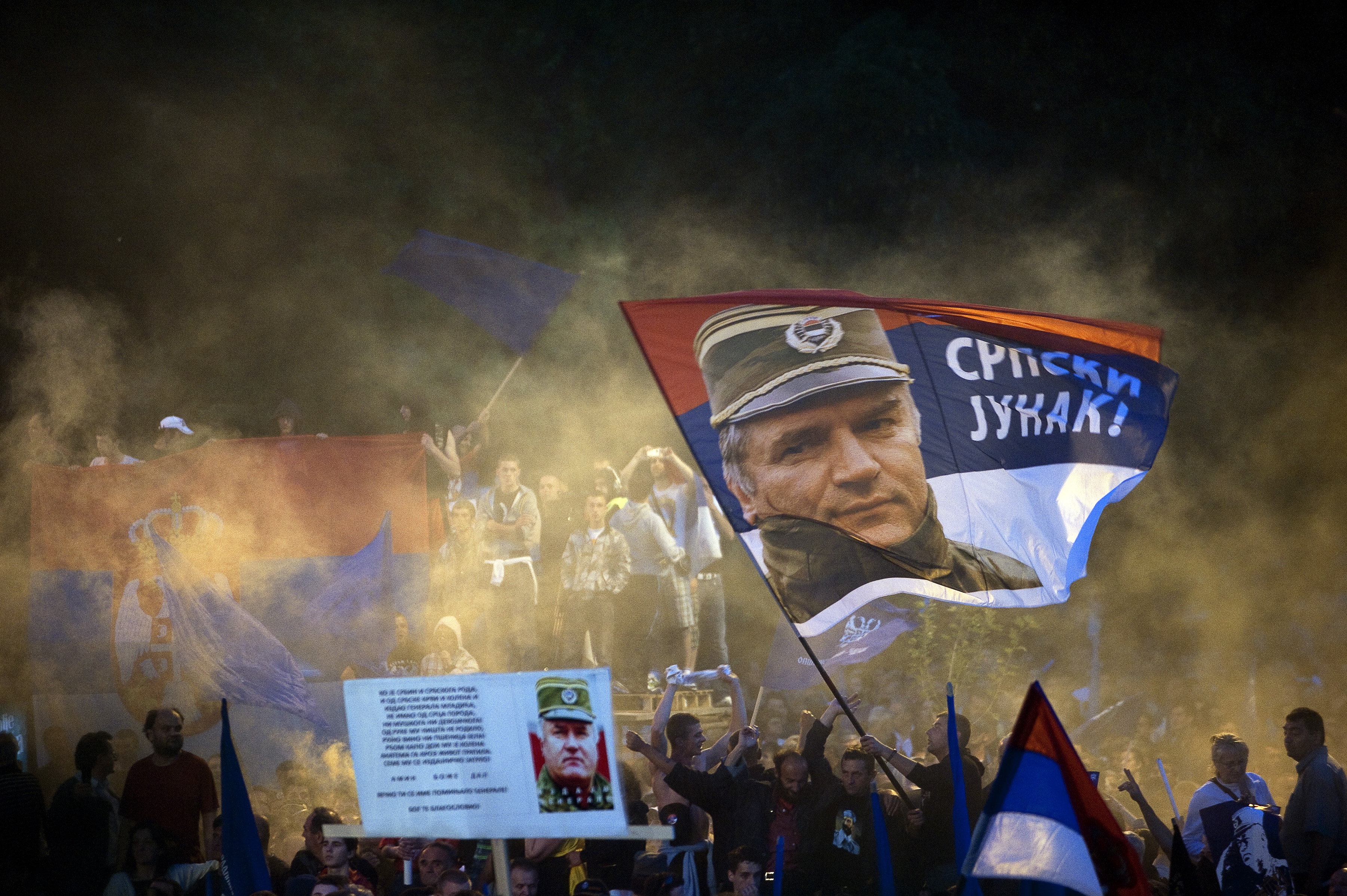
Within Serbia, Mladic’s military prowess was legendary. Ljiljana Bulatovic, who wrote a biography of him, said he remained a hero to many Serbs, who would always regard him as “the mythical protector of the Serbian people.”
But the magnitude of the crimes he was accused of — and the immense suffering he inflicted on Bosnians and Croats driven from lands slated for Serbs — provoked international revulsion and the offer of a $14 million reward for his capture, though it was never claimed after Serbian war crimes investigators seized him.
His early life of desolation and struggle may have helped sustain him during his long, spartan years as a fugitive.
“He had a strong psychological makeup,” Ratko Skrbic, a former general who served under him, later said. “It has to do with military honor. He was brought up never to surrender.”
Ratko Mladic was born into poverty in the remote village of Bozanovici on March 12, 1943, when the area was part of the Independent State of Croatia, a Nazi puppet state dominated by fanatical Croat nationalists.
His father, Neda Mladic, an ethnic Serb member of the communist-led partisan resistance, was killed when Ratko was a toddler, and his mother, Stana (Lalovic) Mladic, raised him and his two siblings. His family’s experience planted in Mladic a deep fear that ethnic Serbs, unless they held the upper hand, would always face persecution by Croats and other ethnic groups.
He was a metalworker as a young man but soon turned toward the military for his schooling. With his sharp mind, physical strength, and a charisma that inspired deep loyalty, Mladic rose swiftly in the Yugoslav People’s Army.
He was said to have adhered early in his military career to Josip Broz Tito’s brand of communism, which rejected nationalism and called instead for Yugoslav brotherhood as a way of holding together Yugoslavia’s fragile assemblage of multiethnic, multireligious republics.
Tito died in 1980, and after Milosevic stirred up nationalist grudges and Yugoslavia had begun to disintegrate in the early 1990s, Mladic took up Milosevic’s cause: halting separatism and assuring the dominance of the Serbs, the largest ethnic group. In 1992, a month after the Bosnian Republic’s declaration of independence, Mladic’s forces began the siege of Sarajevo.
In 1994, his daughter, Ana, a medical student in her early 20s, killed herself with his prized military pistol, apparently distraught by her father’s actions in the war.
Zoran Stankovic, a former Serbian minister of defense and friend of Mladic’s who performed her autopsy, later said Mladic had asked him to cut off a lock of her hair and extract the bullet from her head, and to give them both to him as mementos.
Friends said he became unhinged after her death, and he insisted on visiting her grave under guard before his extradition from Serbia to The Hague.
“After the suicide,” Stankovic said, “I never saw brightness in his eyes, only sadness.”
Before the massacre at Srebrenica, Mladic summoned the Dutch commander of a United Nations peacekeeping force that was protecting the Muslim community there and ushered him to a room where a live pig was tied up.
Mladic ordered his men to slit the pig’s throat, sending blood gushing over the floor. “That’s how we deal with our enemies,” Mladic said, according to witnesses.
In July 1995, with video cameras rolling, Mladic’s bodyguards handed out candies to Bosniak children. “No one will be harmed,” Mladic told terrified women and children July 12, patting a young boy on the head. At the time, his soldiers were preparing to conduct the mass killings.
After the massacre, the outrage in Washington and Europe prompted a NATO bombing campaign that overcame Bosnian Serb forces and led to the Dayton Accords that ended the Balkan wars in December 1995, though conflict in the former Yugoslavia erupted again in 1998 over Kosovo.
In 1995, the international tribunal in The Hague, which had been created two years earlier, indicted Mladic on war crimes and genocide charges related to the Sarajevo siege and the Srebrenica massacre.
Mladic, who had the protection of Milosevic, did not immediately lie low. He moved among military barracks, according to friends who said they would visit him to play table tennis or chess. For several years, he visited his daughter’s grave. Surrounded by bodyguards, he attended a Chinese-Yugoslav soccer match in Belgrade in 2000.
Milosevic fell from power in 2000 and the next year was arrested and sent to The Hague to stand trial. (He died in 2006, as his trial was nearing its end.)
Mladic was forced underground, and is believed to have been protected by allies in the Serbian military and intelligence services. His wife, Bosiljka, and his son, Darko, sought unsuccessfully to have him declared dead. They survive him.
In the end, he was captured alone, with two loaded pistols at his side, and surrendered willingly.
“Congratulations,” he said when officers stormed in. “I’m the one you’ve been looking for.”
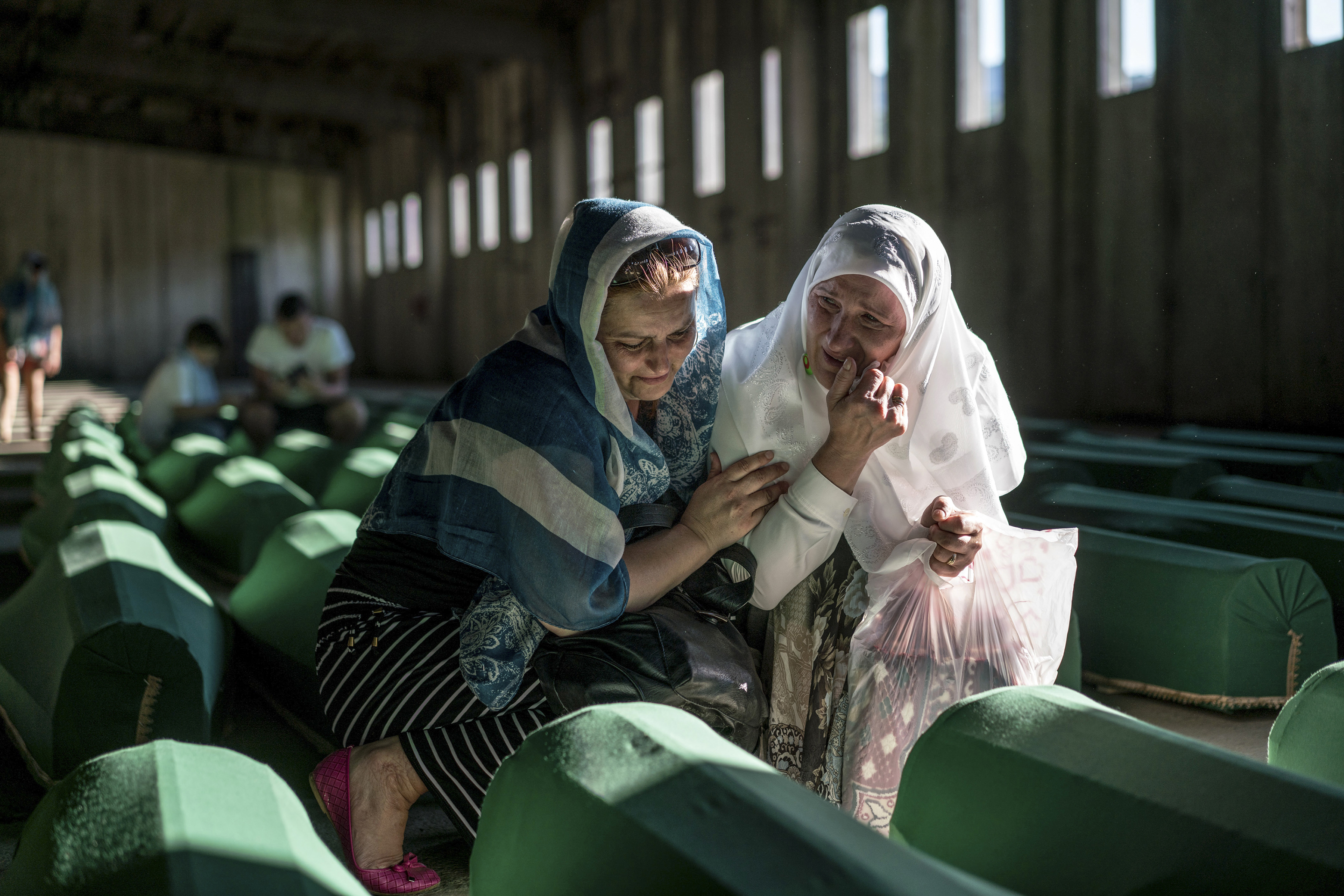
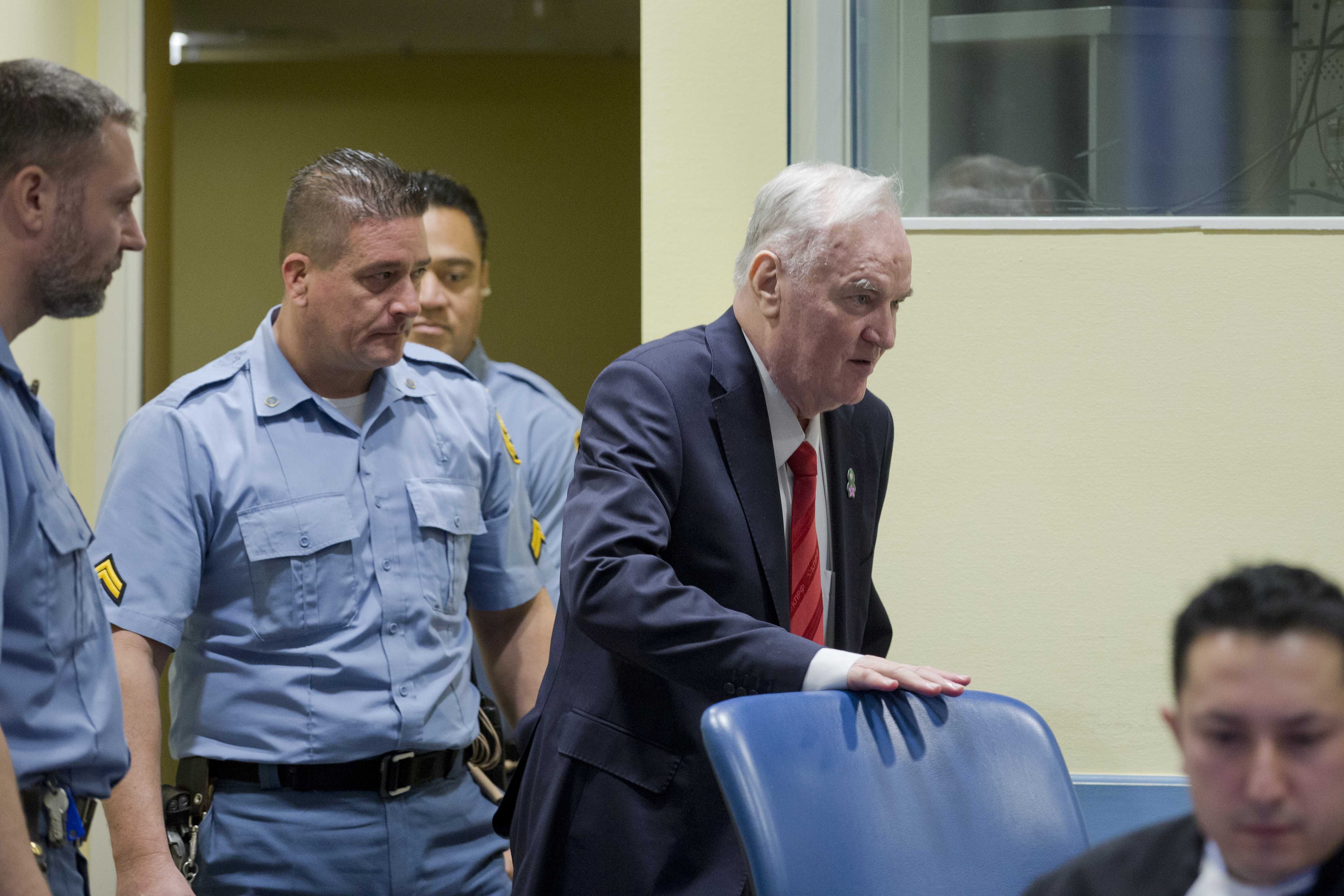
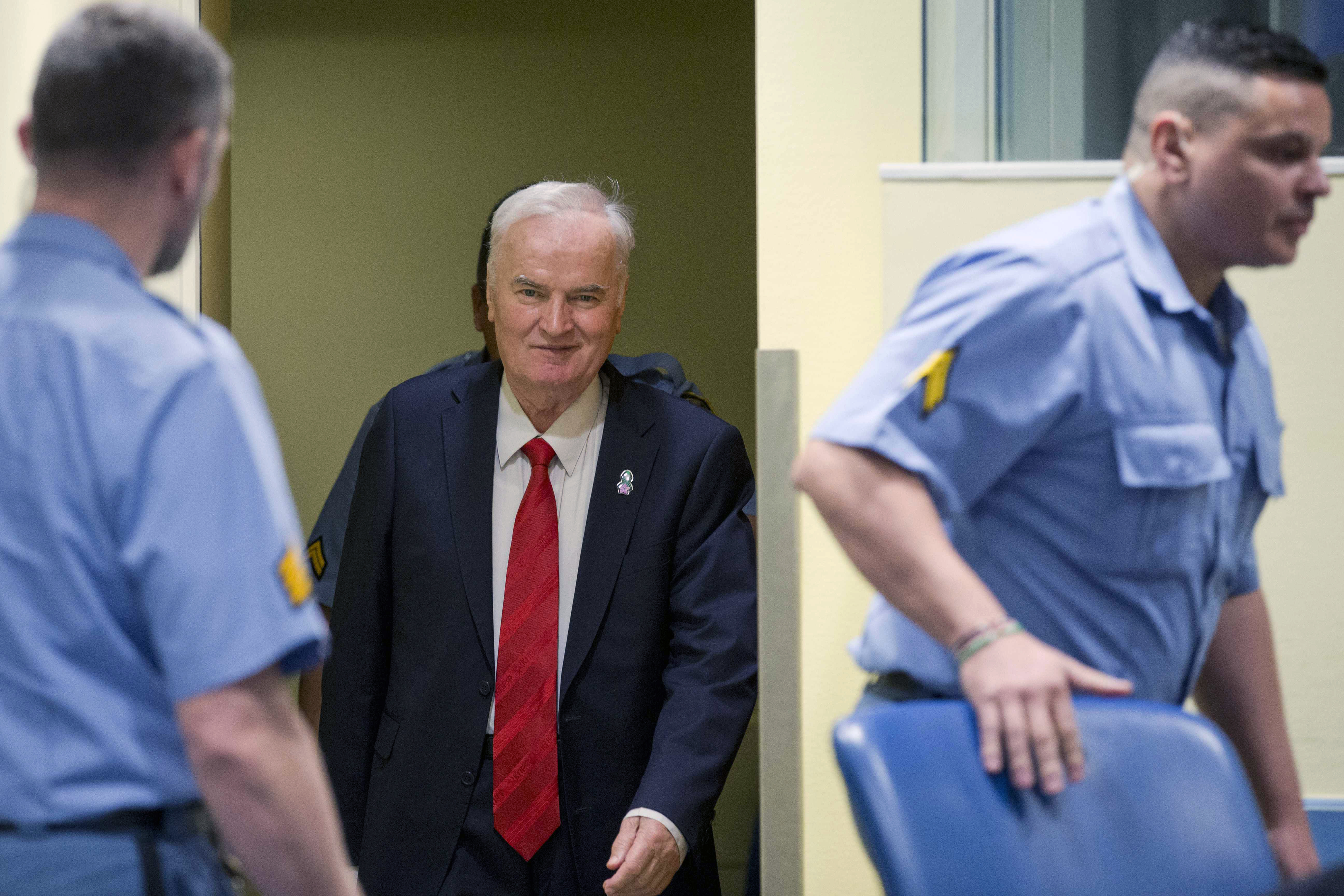
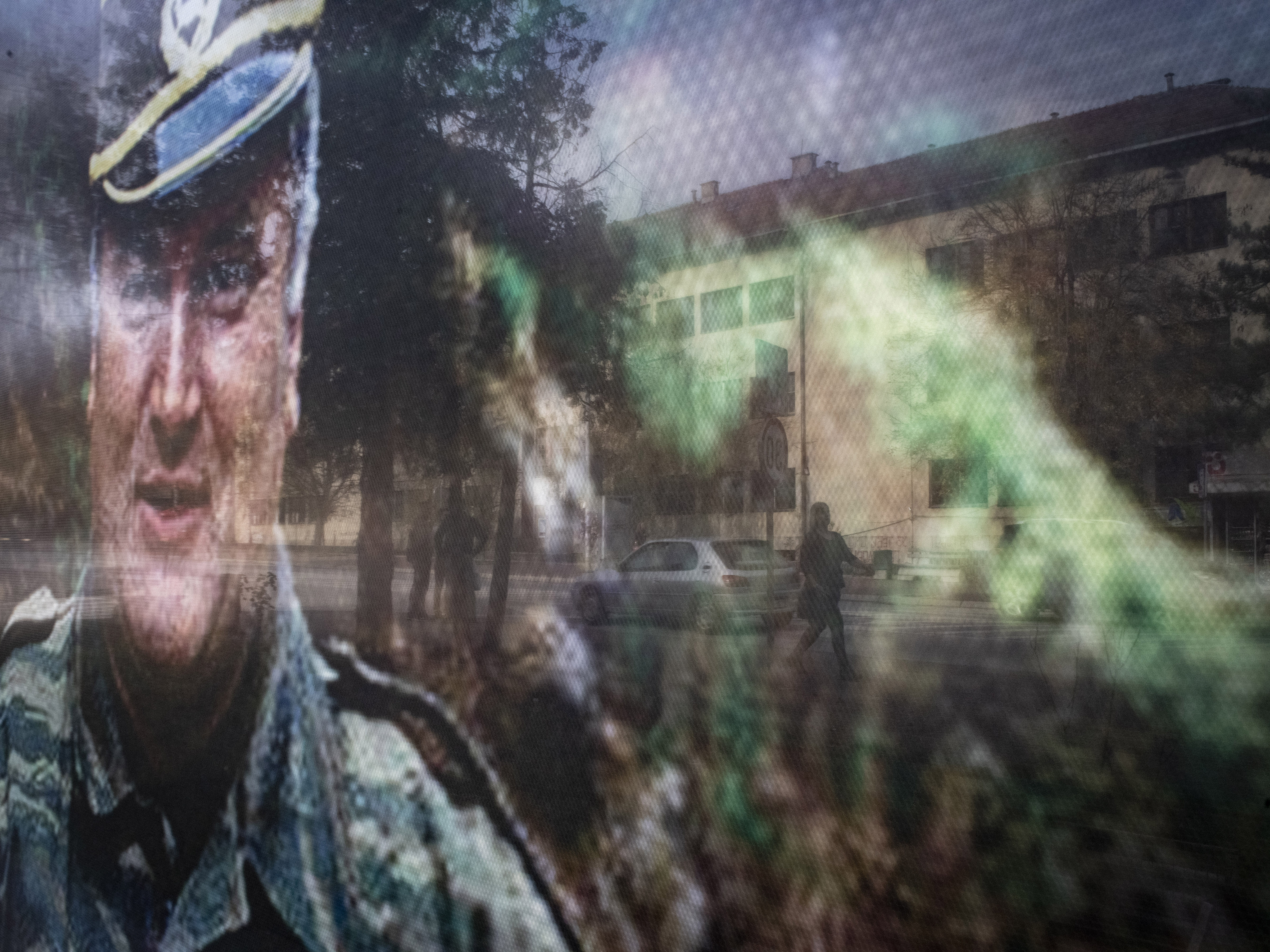
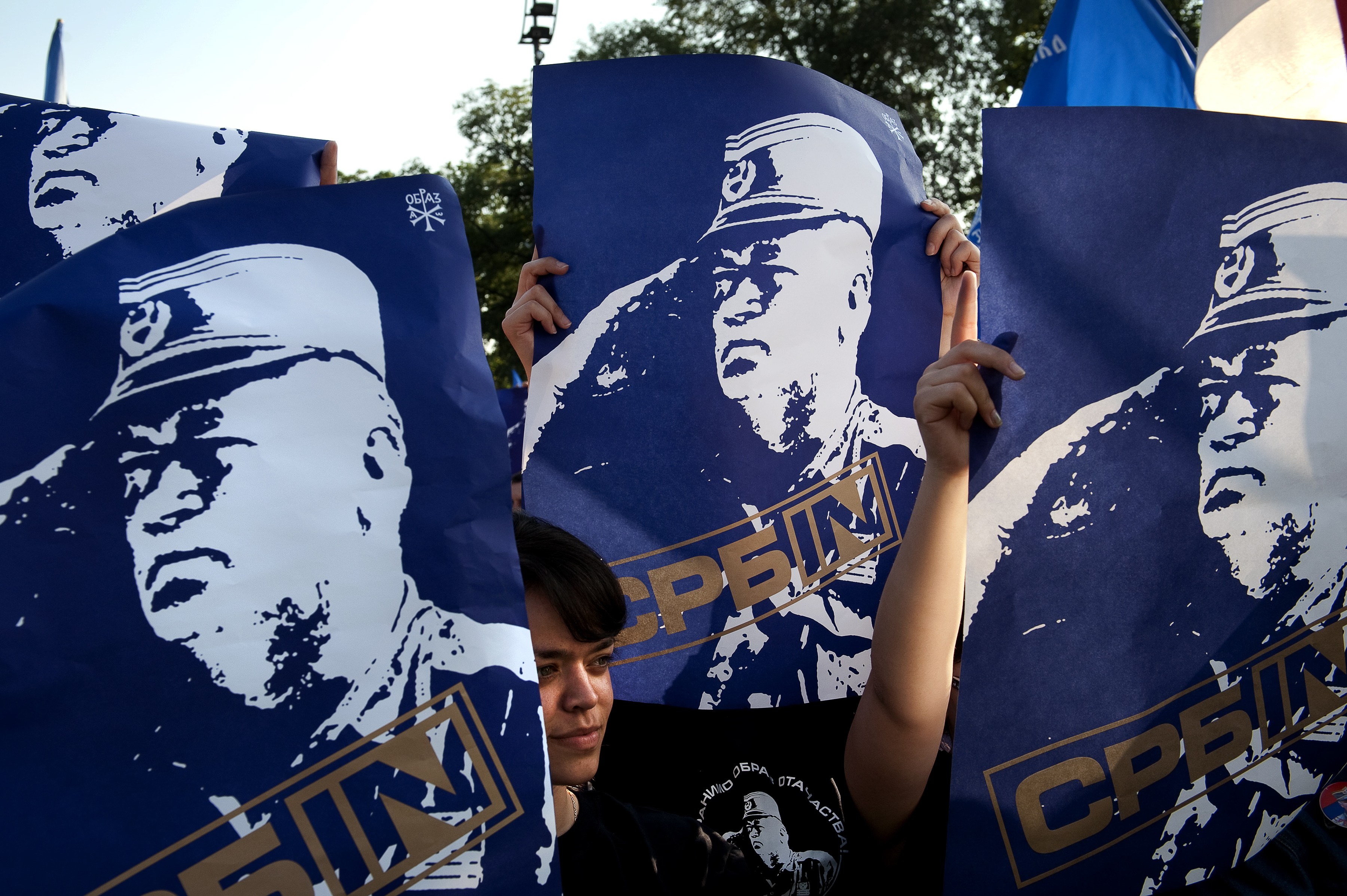
FILE — The body of a victim of the Srebrenica massacre, the worst ethnically motivated mass murder on the continent since World War II, lies in a mass grave in Budak, Bosnia on July 9, 2005. Ratko Mladic, the former Bosnian Serb general who was captured in 2011 and convicted in international court of responsibility for the killing of some 8,000 Muslim men and boys at Srebrenica, has died, Serbian state media announced on Aug. 27, 2026. He was 83. (Andrew Testa/The New York Times)ANDREW TESTAFILE — A woman mourns among the coffins of the nearly 600 victims of the Srebrenica massacre, the worst ethnically motivated mass murder on the continent since World War II, in Potocari, Bosnia on July 9, 2005. Ratko Mladic, the former Bosnian Serb general who was captured in 2011 and convicted in international court of responsibility for the killing of some 8,000 Muslim men and boys at Srebrenica, has died, Serbian state media announced on Aug. 27, 2026. He was 83. (Andrew Testa/The New York Times)ANDREW TESTAFILE — Ratko Mladic, the former Bosnian Serb general dubbed the “Butcher of Bosnia” for his actions during the Balkan wars of the 1990s, enters a courtroom in The Hague on Nov. 22, 2017, to hear the verdict from a United Nations war crimes tribunal. Mladic, who was captured in 2011 and convicted here of responsibility for the killing of some 8,000 Muslim men and boys at Srebrenica, has died, Serbian state media announced on Aug. 27, 2026. He was 83. (Peter Dejong/Pool via The New York Times) — NO SALES. FOR EDITORIAL USE ONLY —PETER DEJONGFILE — Ratko Mladic, the former Bosnian Serb general dubbed the “Butcher of Bosnia” for his actions during the Balkan wars of the 1990s, enters a courtroom in The Hague on Nov. 22, 2017, to hear the verdict from a United Nations war crimes tribunal. Mladic, who was captured in 2011 and convicted here of responsibility for the killing of some 8,000 Muslim men and boys at Srebrenica, has died, Serbian state media announced on Aug. 27, 2026. He was 83. (Peter Dejong/Pool via The New York Times) — NO SALES. FOR EDITORIAL USE ONLY —PETER DEJONGFILE — Ratko Mladic, the former Bosnian Serb general dubbed the “Butcher of Bosnia” for his actions during the Balkan wars of the 1990s, enters a courtroom in The Hague on Nov. 22, 2017, to hear the verdict from a United Nations war crimes tribunal. Mladic, who was captured in 2011 and convicted here of responsibility for the killing of some 8,000 Muslim men and boys at Srebrenica, has died, Serbian state media announced on Aug. 27, 2026. He was 83. (Peter Dejong/Pool via The New York Times) — NO SALES. FOR EDITORIAL USE ONLY —PETER DEJONGFILE — Ratko Mladic, the former Bosnian Serb general dubbed the “Butcher of Bosnia” for his actions during the Balkan wars of the 1990s, enters a courtroom in The Hague on Nov. 22, 2017, to hear the verdict from a United Nations war crimes tribunal. Mladic, who was captured in 2011 and convicted here of responsibility for the killing of some 8,000 Muslim men and boys at Srebrenica, has died, Serbian state media announced on Aug. 27, 2026. He was 83. (Peter Dejong/Pool via The New York Times) — NO SALES. FOR EDITORIAL USE ONLY —PETER DEJONGFILE — An image of Ratko Mladic, the former Bosnian Serb general dubbed the “Butcher of Bosnia” for his actions during the Balkan wars of the 1990s, is projected on a building in the Serbian part of Sarajevo, Bosnia and Herzegovina, on Nov. 3, 2018. Mladic, who was captured in 2011 and convicted in international court of responsibility for the killing of some 8,000 Muslim men and boys at Srebrenica, has died, Serbian state media announced on Aug. 27, 2026. He was 83. (Laura Boushnak/The New York Times)LAURA BOUSHNAKFILE — Supporters of Ratko Mladic, the former Bosnian Serb general dubbed the “Butcher of Bosnia” for his actions during the Balkan wars of the 1990s, demonstrate in Belgrade, Serbia, on May 29, 2011. Mladic, who was captured in 2011 and convicted in international court of responsibility for the killing of some 8,000 Muslim men and boys at Srebrenica, has died, Serbian state media announced on Aug. 27, 2026. He was 83. (Andrew Testa/The New York Times)ANDREW TESTAFILE — Supporters of Ratko Mladic, the former Bosnian Serb general dubbed the “Butcher of Bosnia” for his actions during the Balkan wars of the 1990s, demonstrate with flags and posters bearing his image in Belgrade, Serbia, on May 29, 2011. Mladic, who was captured in 2011 and convicted in international court of responsibility for the killing of some 8,000 Muslim men and boys at Srebrenica, has died, Serbian state media announced on Aug. 27, 2026. He was 83. (Andrew Testa/The New York Times)ANDREW TESTA
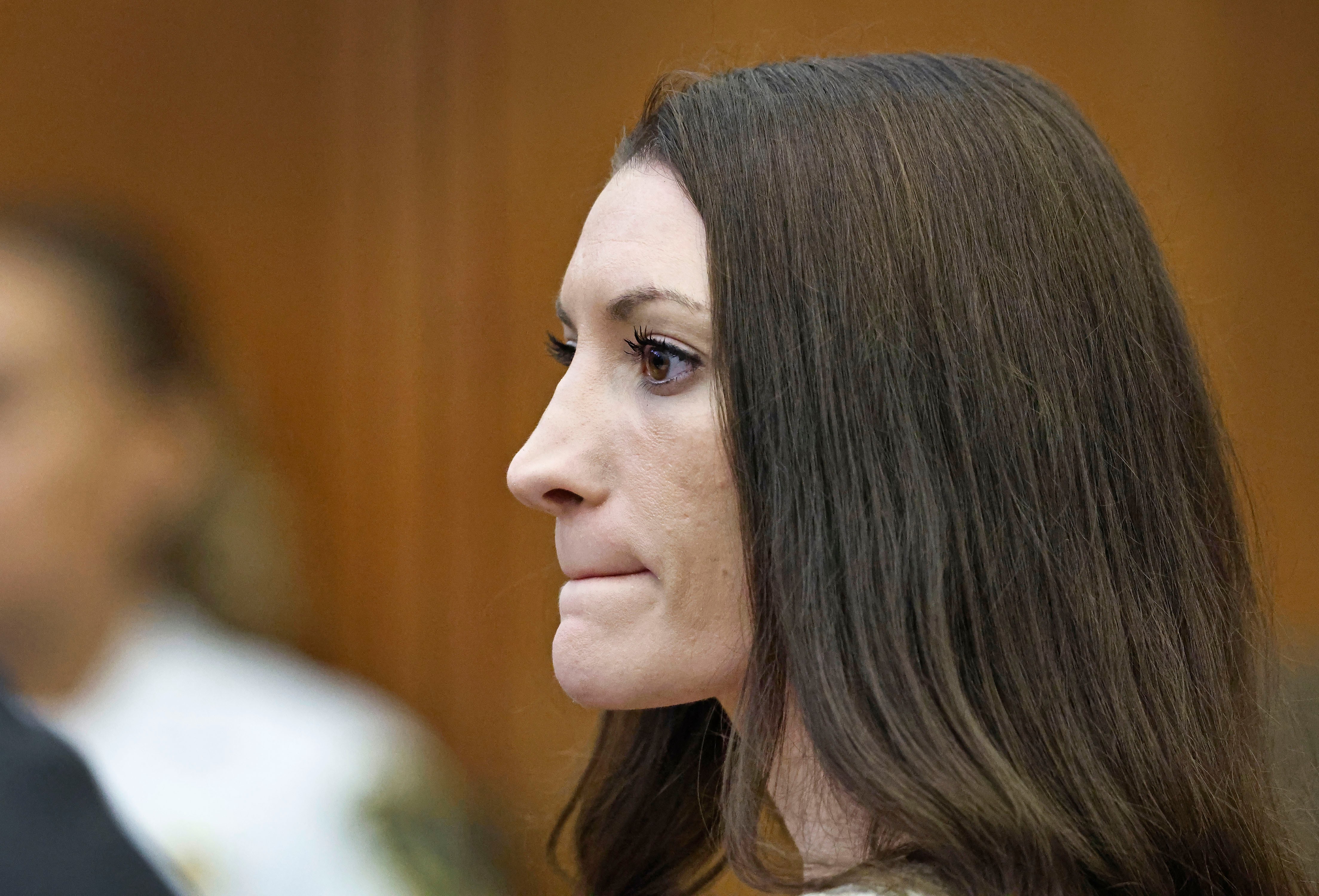
PLYMOUTH, Mass. — Lindsay Clancy strangled her three children because she was depressed and tired of living, not because of failings with mental healthcare, a prosecutor told jurors Thursday before they began deliberating in her murder trial.
“It was a choice to take them with her,” prosecutor Jennifer Sprague said. “It is a choice that we don’t want to think about that a mother could make.”
“But it’s a choice she made,” Sprague said.
Clancy’s mental state is at the center of the closely watched trial that has drawn attention to maternal mental health after childbirth. The debate has stirred deep divisions among the public over whether she should be held criminally responsible for the January 2023 killings.
Her attorney contends she was experiencing postpartum psychosis when she killed her children, telling jurors she was a loving mother before her mental health spiraled and that she repeatedly sought help that failed her. The rare mental illness is linked to stress, sleep deprivation and hormonal changes following childbirth.
Clancy, who did not testify during the monthlong trial, has pleaded not guilty by reason of lack of criminal responsibility. Clancy, now 36, had sought treatment from multiple providers in the months before the killings and was prescribed various drugs.
Less than three weeks after being discharged from a psychiatric hospital, she killed Cora, Dawson and Callan Clancy, ages 5, 3 and 8 months, at the family’s Massachusetts home. She then jumped from a second-floor window and remains paralyzed from the waist down.
Lindsay Clancy was depressed, prosecutor says
During more than four weeks of testimony, jurors heard differing views from medical experts about Clancy’s mental state after Callan’s birth.
Defense attorney Kevin Reddington said her condition worsened “because of the damned medicine and the lousy medical care that she got.”
Clancy dabbed her eyes with a tissue and put a hand to her forehead as the prosecution described how she killed her children and confronted a central question in the case:
Why would a mother who loved her children kill them?
“She was depressed. She was exhausted. She was done. She didn’t want to try anymore. She felt damaged,” Sprague said. “But those kids, those kids were her protective factor. Those kids were keeping her from ending her misery.”
Sprague said the case shouldn’t be a referendum on the nation’s mental healthcare system or how it treats women. She argued that Clancy had access to many providers and a wealth of family support.
If convicted of murder, Clancy faces life in prison without parole. If found not guilty due to a lack of criminal responsibility, she still could be committed to a state mental health facility.
Mental health is at the heart of Clancy trial
Clancy’s decision not to tell her mental health providers about thoughts she had in December 2022 of harming her children showed that she understood those thoughts were wrong, Sprague said.
She also made sure she had just enough time to kill her children on Jan. 24, 2023, Sprague said, by sending her husband to pick up dinner and medicine for one of the kids.
The prosecutor acknowledged that Clancy sought help for her mental health struggles, but said she did not always take medications as prescribed or give her providers complete and accurate information.
Both Clancy’s mother and sister testified in the trial that she became anxious, paranoid and suicidal.
Lindsay Clancy lived for her kids, attorney says
Clancy’s attorney criticized the prosecution’s case and raised doubts about the police investigation while painting Clancy as a good mother.
He said prosecutors tried to suggest her suicide attempt wasn’t serious. “You know that is not what happened,” he said.
He said investigators didn’t take pictures or test blood found at the home. He held up a copy of the book “Good Moms have Scary Thoughts” that investigators found at the Clancy house. He said a mental healthcare provider gave it to her.
He showed jurors a small “wish box” that Clancy and then-husband Patrick bought on their honeymoon. Over the years, the couple filled the box with slips of paper wishing to have healthy, successful kids, Reddington said as Lindsay Clancy wiped away tears.
Reddington told the jury that Clancy “lived for her kids” but after she starting seeing a doctor that “it was not a wonderful life anymore.”
“You have the medical records. You heard the testimony. You know her concerns. You know her fears,” he said.
It fell to Canada, a country famous for friendliness, to demonstrate the limits of an age-old friendship with the United States. After a decade of dealing politely with President Donald Trump’s manic ricocheting between trade agreements and trade warfare, supplies of northern niceness are sorely depleted, and rightly so.
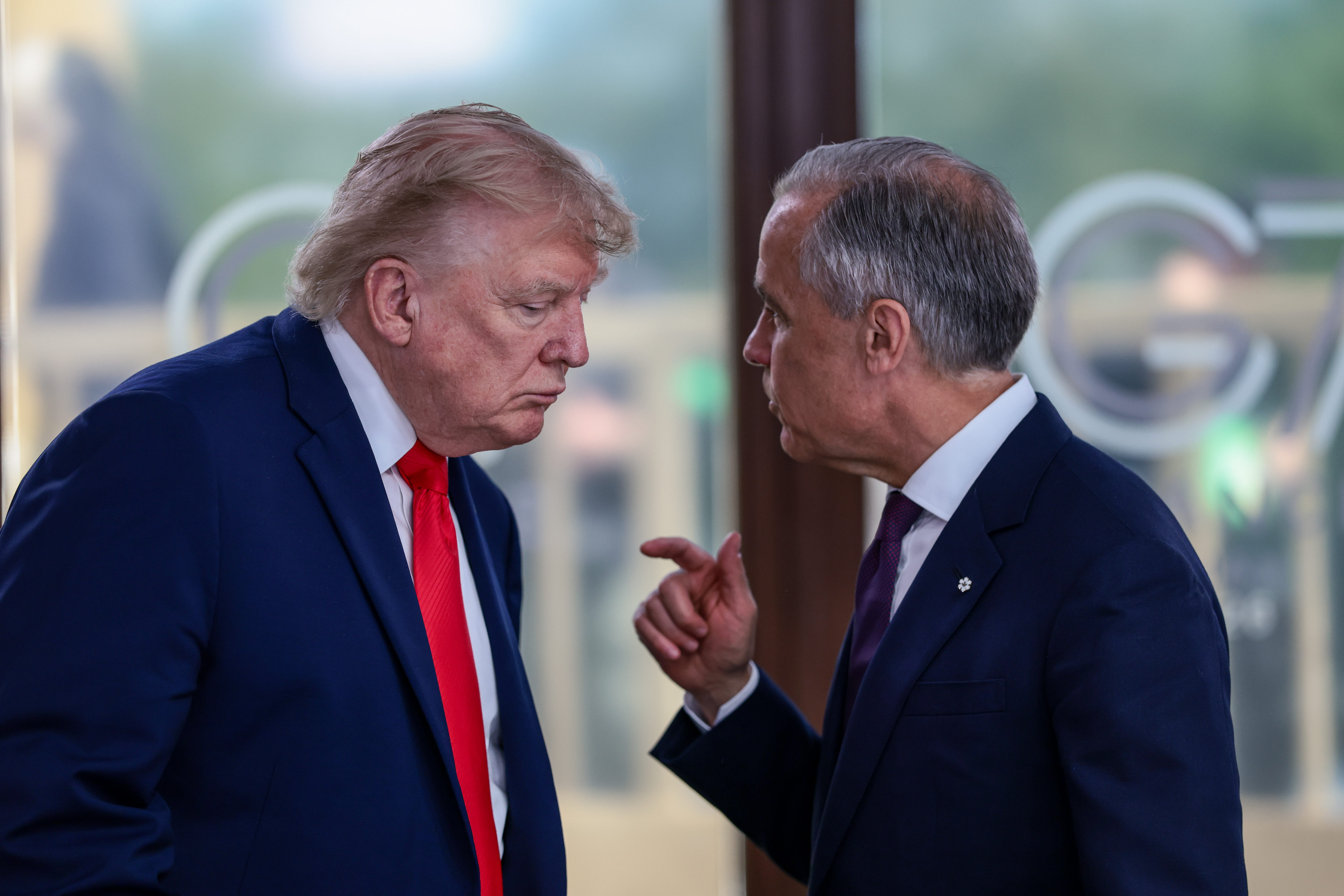
Prime Minister Mark Carney’s defiance in the face of his neighbor’s unprovoked bullying should inspire other traditional American allies to abandon appeasement and stand up for their values, the only response to Trump that has ever been effective.
Negotiations to avert the president’s latest threat to impose punishing tariffs against one of our largest trading partners broke down last week after Canadian officials withdrew from the talks. Already contending with an untrustworthy U.S. government whose “signature is written in pencil,” as Carney put it, Canada appears to have been pushed too far by inconsistency within the Trump administration and demands that infringed on its sovereignty and identity.
American officials reportedly tried to dictate restrictions on Ottawa’s trade relations with other countries and limit requirements to comply with Canada’s official recognition of French as well as English, one of its most sensitive domestic political issues. Carney instead opted to “hit back” against Trump’s 50% taxes on Canadian whiskey, plywood, and other goods with levies on American dairy, steel, and appliances, among other exports.
So has Trump managed to end more than a century and a half of peaceful trade relations in favor of costly and counterproductive trade hostilities? “You’re at war when you’re attacked,” Carney said last weekend, “and we got attacked.”
It’s a preposterous turn of events by any rational analysis.
Having endlessly demagogued the North American Free Trade Agreement (NAFTA), Trump renegotiated and rebranded it in his first administration as the United States-Mexico-Canada Agreement, which he declared “the largest, fairest trade agreement ever achieved.” Having never been particularly hung up on consistency or coherence, he proceeded to violate his own NAFTA 2.0 soon after returning to the White House, threatening Canada with tariffs over fentanyl smuggling, wildfire smoke, and other nonsensical grievances. He imposed the latest import taxes after Canada had the temerity to retaliate against U.S. tariffs levied last year.
Trump’s repeat economic assaults on the Great White North are at least partly a manifestation of his antiquated authoritarian obsession with territorial expansion. He has menaced Canada with annexation, griping during the latest standoff that it can’t enjoy the free trade benefits a U.S. state does while refusing American dominion. As is typical of his blinkered ideology, this completely misses the reality that the two countries’ more than $700 billion trade relationship is by definition mutually beneficial, a basic economic principle he seems incapable of grasping.
Carney, by contrast, has been more perceptive than most world leaders. While other longtime allies have tried to preserve good relations through submission, the Canadian prime minister understood that those alliances have effectively ended.
In January, he noted that the world is “in the midst of a rupture, not a transition,” one that his and other less powerful countries must recognize and adapt to. His insight was probably informed by the circumstances of his own election, which Trump inadvertently assured by angering Canadian voters, causing a surge of support for a liberal expected to be less friendly to the president. Carney continues to give his outraged public what it wants.
The ensuing standoff could make Canadians’ lives more difficult, but it will also hurt Americans already weary of tariff-fueled inflation, which is the opposite of what Trump’s campaign promised. Given the potential repercussions for the midterm elections, the president could soon face more opposition not just from Canada’s government, but also from ours.
Dolly Parton’s literacy program, Imagination Library, has provided nearly 800 children with free monthly books mailed to their homes in West Philadelphia.
In Montgomery County, around 3,500 children have been served in the Norristown and Pottstown areas since 2023, thanks to Parton’s program.
“We don’t anticipate any changes to the program,” said Jennifer Leith, executive director of the West Philadelphia Alliance for Children (WePAC).
Imagination Library, which Parton started in 1995 in Tennessee, provides deeply discounted books that are mailed each month to any child in a given zip code whose parent or guardian applies to participate. Governments and nonprofits provide funding to cover the remaining costs of the program, which is available for children from birth to age 5.
The Dollywood Foundation said in a recent fact sheet that it has delivered more than 300 million books to children in the United States, Canada, the United Kingdom, Australia, and Ireland.
WePAC started with one zip code, 19104, in July 2024, then expanded to include four more zip codes in July 2025, Leith said.
“In that time, literally thousands of books have been delivered to West Philadelphia children,” Leith said.
“Anyone from any income level, from any background, can participate,” said Eliza Brumbaugh, executive director of the Literacy Council of Norristown, which helps to run the program, with assistance from the Justamere Foundation, in Montgomery County.
Leith said “it would be great” if Mayor Cherelle L. Parker or Gov. Josh Shapiro “decided to do this in honor of Dolly Parton’s legacy.”
In Delaware County, The Community’s Foundation has provided books from the Imagination Library program to more than 140 children in Eddystone since 2024, said Dierdre Woody Konar, president of the nonprofit.
“The Dolly Parton Imagination Library has shared with TCF and their other partners that they have prepared carefully for this day and for the future of the Imagination Library,” Konar said in an email Wednesday morning.
“TCF is incredibly sad to hear of Dolly’s passing, and we look forward to continuing this important work,” Konar said.
Foundations Inc., a national education nonprofit based in Mount Laurel, ran the first Imagination Library program in Philadelphia for five years, helping to provide books to children in North Philly’s 19133 zip code.
“It was pretty much a book desert,” Casey Jones, executive director of marketing and communications for Foundations, said of the zip code before the program started.
Through Parton’s program, Foundations was able to deliver around 27,000 books to children in that one zip code until the five-year commitment was completed at the end of 2025, said Rhonda H. Lauer, CEO and president of Foundations.
“We went to Dollywood to present it to her in person,” Lauer recalled, saying she had several in-depth conversations with Parton about life and family and the program.
In the end, Lauer said, “all she cared about was getting books in the hands of children.”
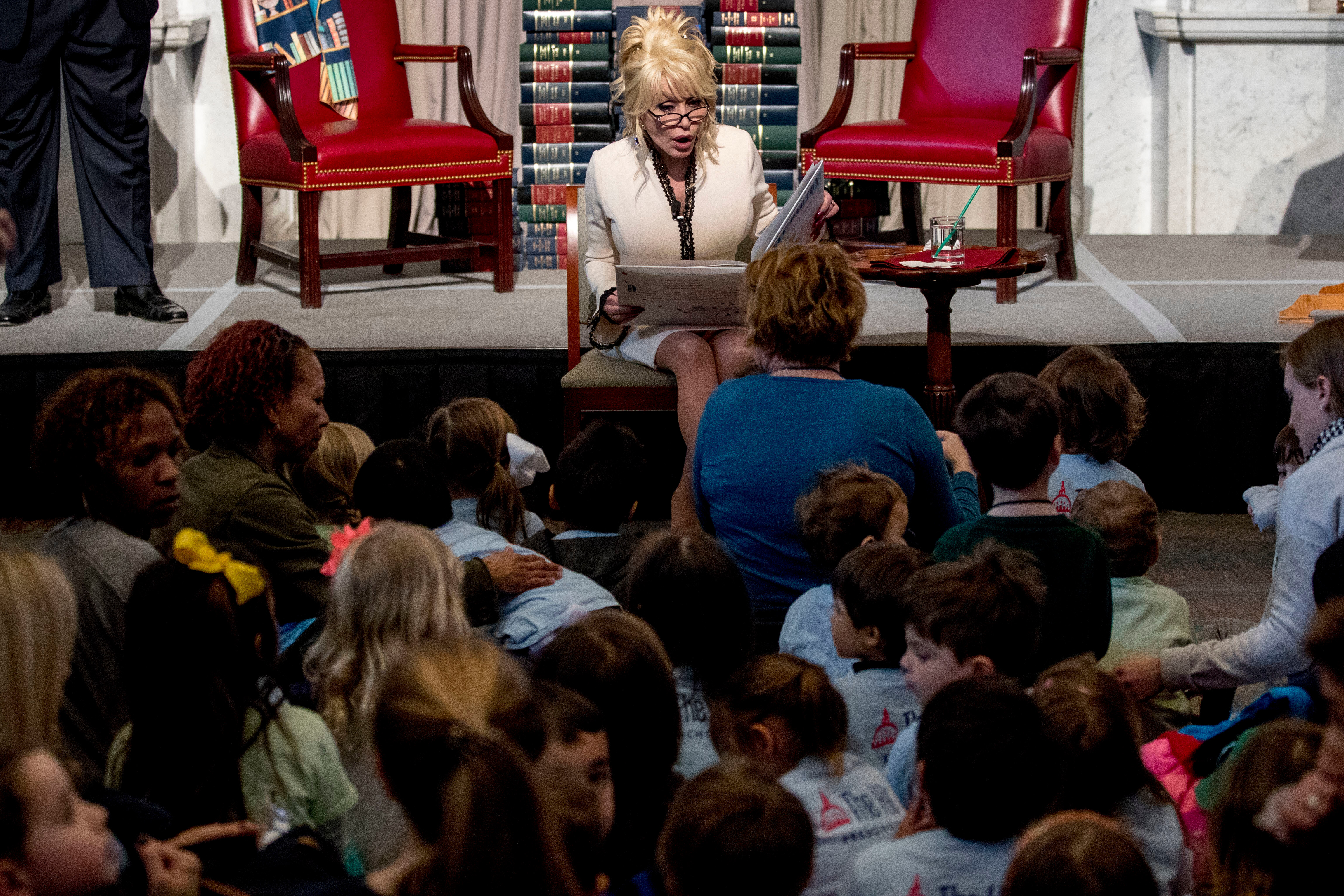
People take phone photos as Dolly Parton performed at the Wilmington Public Library, in 2022. She promoted her Imagination Library, a free book gifting program for children.JOSÉ F. MORENO / Staff Photographer