When three magnet fishers cast lines into Grenloch Lake on Monday, they reeled in something unexpected: a gun.
The grandfather and his two grandchildren had tried magnet fishing — when strong magnets are tied to the ends of rope in the hopes of pulling up long-submerged items — only once before, said Patrick Gurcsik, Washington Township’s police chief.
The weapon, identified as a Walther PPS semiautomatic handgun first introduced in 2007, showed signs of “prolonged exposure to the water and was recovered as evidence,” according to a social media post by Washington Township police. Gurcsik said it is difficult to estimate how long the gun was underwater.
The Washington Township Police Department said detectives are now investigating whether the gun was used to commit a crime “and then tossed into the lake to hide the evidence.”
“The handgun was recovered without a magazine, and the slide is rusted shut,” Gurcsik wrote in an email. “As a result, we have been unable to determine whether a round remains in the chamber.”
Gurcsik said the police department has not yet determined who owned the handgun or whether it was connected to a crime. With the firearm significantly deteriorated, police may need to consult with the Bureau of Alcohol, Tobacco, Firearms and Explosives for help restoring the gun’s serial number, Gurcsik said.
Bánh mì is usually a pork-based Vietnamese sandwich. But this is not your usual bánh mì.
For The Inquirer Food Fest, Chef Luigi Datu from Càphê Roasters and Chef Muhammad Abdul-Hadi from Out West created the juiciest and most tender lamb bánh mì.
Have you ever tried a lamb bánh mì?
Check out the next poll!
These chefs from opposite sides of the city came together to make a dish that is so juicy and tender. The lamb was braised for about five hours in the oven, then seared on the stove, and then sent back into the oven to seal in that extra bit of juiciest.
Bringing the dish together is the slaw. Red cabbage, carrots, scallion and mayo are fairly basic elements to a bánh mì, but this slaw is amped up with calamansi juice and Càphê Roasters’ signature tamarind seasoning. Yes, the one from their famous tamarind fries. Yes, we are freaking out, too.
Love at First Bite host Ariane Datil put in a request for this team to serve those tamarind fries at Food Fest alongside the bánh mì, but we’ll have to wait and see if that request is granted.
While you’re in the voting mood, let us know which collab team you’re supporting.
Which collab team are you rooting for?
Thanks for voting
We’ll be back with episode seven on October 19.
Want to taste what these chefs are cooking up?
Limited tickets are available for The Inquirer’s second ever Food Fest. Join us on Nov. 14, 2026, 11 a.m. for one day to taste it all.
The Editorial Board of The Philadelphia Inquirer is committed to advancing civil and constructive public dialogue through informed, principled, and independent commentary. Through reporting, research, and the journalistic expertise of its members, the Editorial Board debates the important issues of the day, forges a consensus, and uses the persuasiveness of its arguments to bring issues to light, offer solutions, and guide and affect public debate.
Although the Editorial Board is a vital pillar of The Inquirer, it operates under a strict structural firewall that guarantees its independence from both the newsroom and the organization’s business operations. News reporters and editors do not participate in the Editorial Board’s deliberations; nor do members of The Inquirer’s administrative, business, or operational staff.
When the Editorial Board speaks through its unsigned editorials on behalf of the institution, its perspective solely reflects the consensus of its members and does not represent the views of the publisher, the editor, the newsroom, or The Inquirer’s Board of Directors.
That separation of an editorial’s point of view from the rest of the organization reinforces the impartiality of the newsroom, ensures that the Editorial Board’s stances are not a consideration in news coverage or influenced by The Inquirer’s business interests, and upholds the ability of Inquirer reporters to pursue facts without the perception of bias.
While reporters and editors in The Inquirer’s newsroom focus on uncovering the unvarnished facts, the Editorial Board’s mandate is to examine those facts, contextualize them, and arrive at a shared viewpoint. The Editorial Board’s positions are not based on reflexive partisanship or adhering to a specific ideological dogma. Rather, the Editorial Board is fiercely dedicated to robust discussion and rigorous analysis.
The Editorial Board’s goal is not to dictate what readers should think, but to cut through the noise of polarized debate and provide a catalyst for elevated discourse. Through its editorials, the Editorial Board champions solutions to society’s most complex challenges. By modeling open-minded inquiry and finding common ground, the Editorial Board aims to hold power to account, promote collective understanding, and inspire positive action on the pressing issues shaping our future.
The Inquirer Editorial Board is led by Richard G. Jones, managing editor of Opinion. The deputy opinion editor is Luis F. Carrasco.
The members of The Inquirer Editorial Board. Top row: Richard G. Jones, managing editor, Opinion; Jenice Armstrong, columnist; Will Bunch, national columnist; Luis F. Carrasco, deputy opinion editor.
Second row: Paul Davies, opinion editor-at-large and senior editorial writer; Daniel Pearson, editorial writer; Trudy Rubin, Worldview columnist; Sabrina Vourvoulias, senior editor for commentary, ideas, and community engagement and director, Sunday Opinion.Inquirer Staff Photographers
Red wines from Spain — the world’s third-largest wine-producing nation — may dominate exports to the U.S., but its white wines are getting a lot of attention in wine circles, too. That’s particularly true of those made with native Spanish grape varieties, like this white Rioja made with 100% viura.
Spanish white wines made in today’s clean fresh style are a relatively recent innovation, due to both geography and a quirk of European history. The balmy climate of most regions of Spain naturally favors red wines over whites, which spoil more easily in warmer places. Historically, fewer whites were made than reds and those whites were often either fortified with distilled spirits or deliberately oxidized through barrel maturation to extend their shelf life, giving them an amber color and flavors more like roasted nuts than fresh fruit.
All that changed in the 1970s, when technological advances in winemaking — like temperature control and stainless steel — led to a transformation in the country’s white winemaking culture. Spain is now known for vibrant whites like this example, from one of the most respected wineries of the Rioja region. It is made with 100% viura in steel tanks and tastes as fresh as a sliced Anjou pear with a squeeze of lemon. Give it a try as a change of pace from the same old dry, unoaked whites, like pinot grigio or sauvignon blanc. It pairs brilliantly with everything from salads and sushi to tacos or roasted chicken.
Cune Rioja BlancoCune
Cune Rioja Blanco
La Rioja, Spain
13% ABV
PLCB Item #100049323
On sale through Nov. 1 for $11.49 (regularly $14.99)
Also available at Swigg Real Wine, Craft Beer & Spirits ($16; swiggwine.com) in Wilmington, Del.
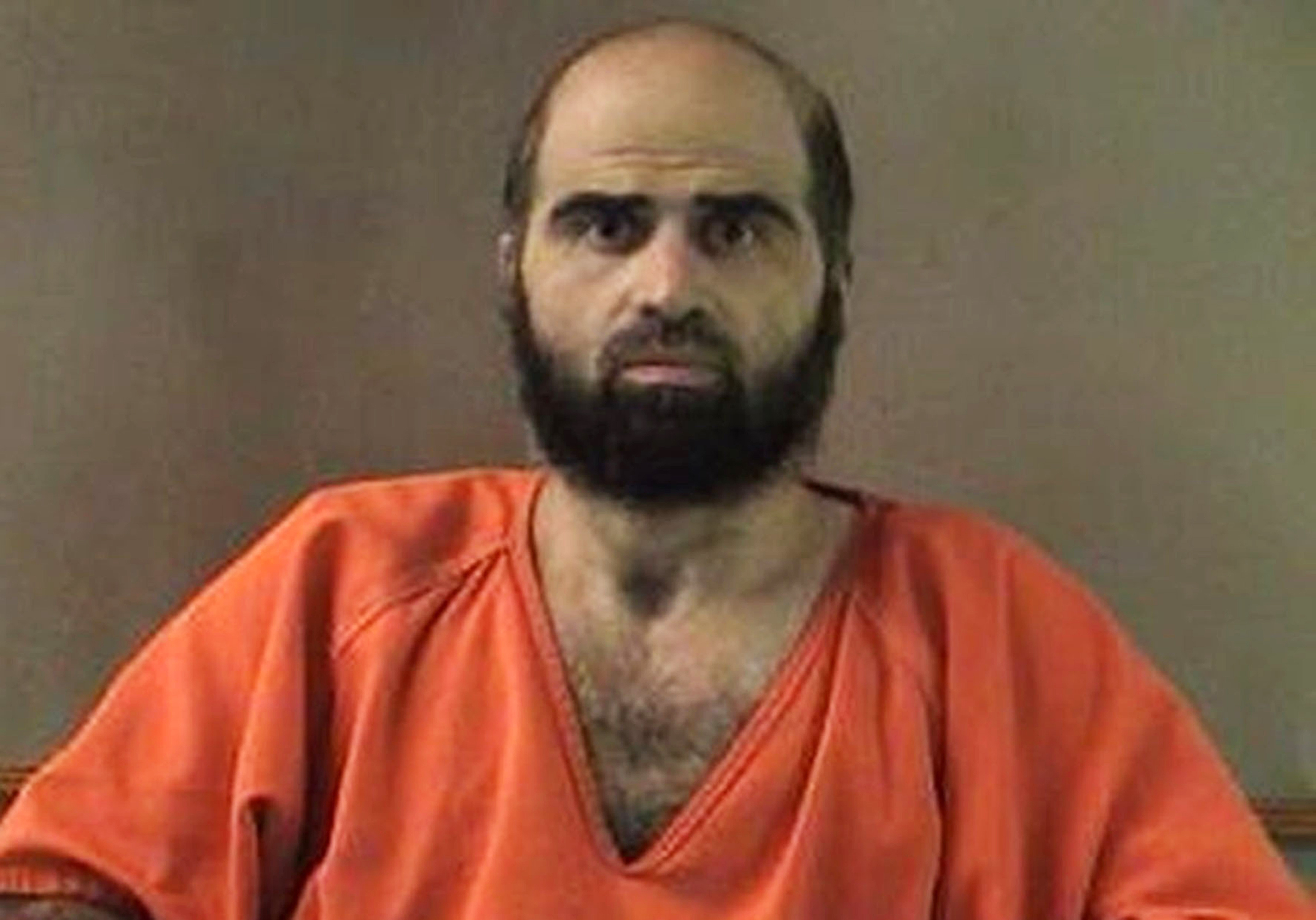
KALISPELL, Mont. — President Donald Trump on Thursday canceled the Pentagon’s planned livestream of the execution of the Army officer who was convicted in the 2009 Fort Hood mass shooting.
Pentagon officials said last week that the execution of Maj. Nidal Malik Hasan, who killed 13 people and wounded 32 others on the grounds of Fort Hood, Texas, would be broadcast via livestream. But Trump said Thursday that only immediate families of Hasan’s victims will be able to watch the execution in person.
“Many very good and well meaning people would rather not watch him die, through streaming, or through any other visual device,” he wrote on social media. “He will die, as scheduled, by firing squad, but this event will not be streamed.”
Democrats and Republicans in Congress panned Defense Secretary Pete Hegseth’s plan to livestream the shooting, and even Vice President JD Vance expressed doubt about the plan.
“I’m not going to be watching it,” he said. He added: “I don’t know that that’s actually going to happen.”
In an interview with Real America’s Voice, Hegseth said he supported the public execution of Hasan “because people need to understand that there’s serious consequences for these types of things.”
Trump, in his post on social media, acknowledged that streaming the execution “might have been a strong deterrent” to show how “America deals with Terrorists and SCUM like Hasan,” but he said it would not go forward.
Prior to each election, The Inquirer Editorial Board, which operates independently from the newsroom, offers endorsements to help readers evaluate candidates for public office.
The Editorial Board believes all elections matter and is committed to weighing in on as many races as possible. However, given time constraints and operational capacity, it focuses its endorsements on races where its analysis can best clarify the choices facing voters. The lack of an endorsement is not a judgment on an office or those seeking it.
After researching the positions and professional records of each candidate, the Editorial Board hosts meetings — either in person or virtually — where members ask candidates about their stance on issues that concern the broadest public interest. The meetings are on the record, and The Inquirer’s political reporters and editors may be invited to observe the interviews, but they do not participate in the Editorial Board’s endorsement discussions.
Once the meetings conclude, the Editorial Board debates and decides by a majority vote who is best suited to serve their constituents.
The Editorial Board’s assessments reflect the collective judgment and diverse perspectives of its members — not the opinion of any single journalist.
A frequent critique of endorsements is that they are tantamount to telling readers how to vote. That is not the goal. The measure of the Editorial Board’s recommendations lies not in whether an endorsed candidate wins, but rather the extent to which the Editorial Board’s arguments help elevate public discourse surrounding election campaigns.
Sometimes an endorsement reflects a difficult choice between imperfect options — but this deliberative work underscores the importance of the democratic process and exercising the right to vote.
In a time of deep ideological division and a fragmented media landscape, an experienced, independent editorial board provides readers something increasingly rare: a centralized source of insight, context, and civic perspective.
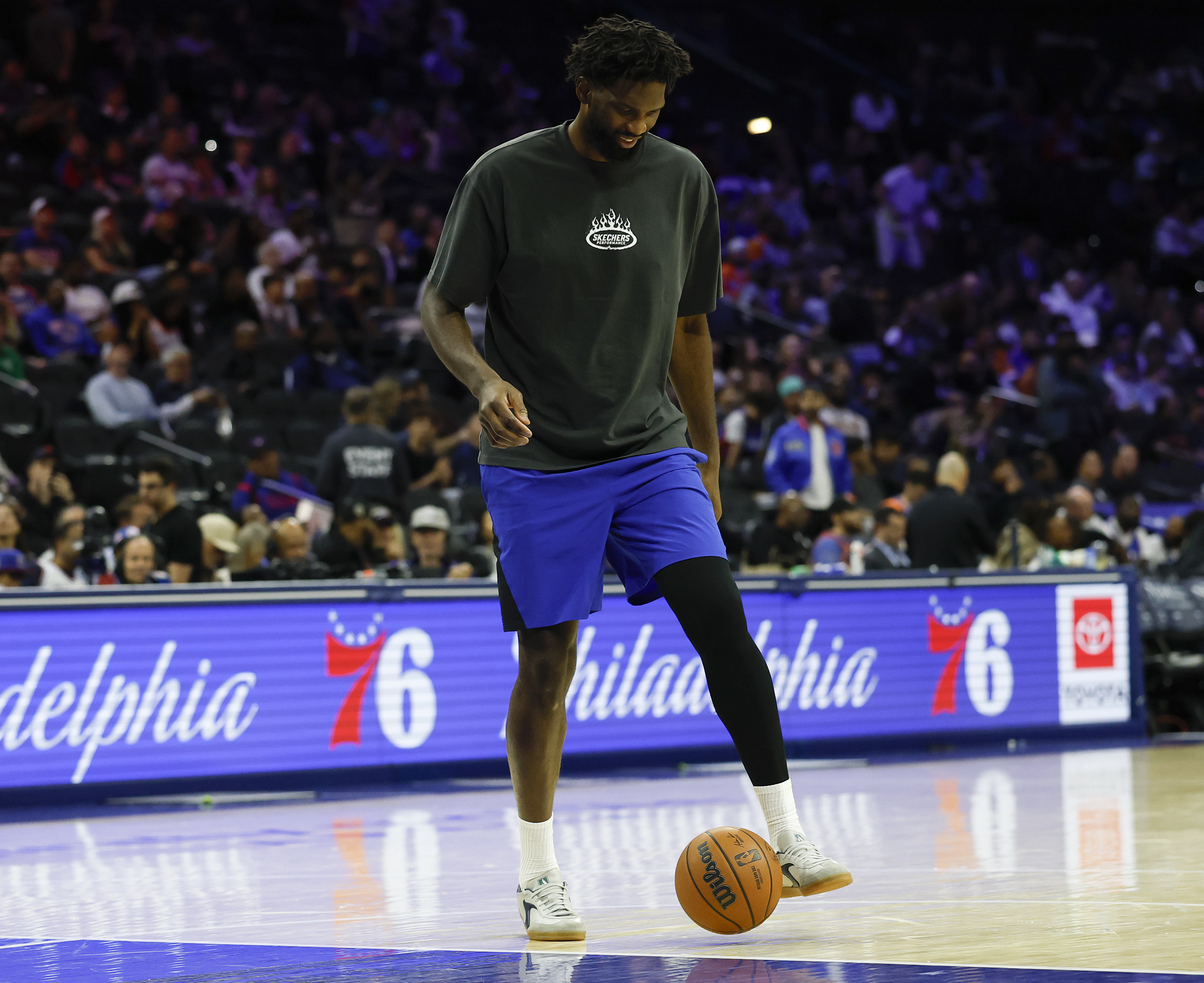
On an average night in Brooklyn, I don’t imagine it’s difficult to find a 32-year-old man who is ambling along on his way and who, though taller than most men, cannot dunk a basketball. Still, it was a bit surprising to find such a person last Thursday night, on the basketball court inside the Barclays Center of all places, and to have that person be a one-time most valuable player of the National Basketball Association.
As games go, even meaningless ones, the 76ers’ 114-108 preseason loss to the Nets was not Joel Embiid’s best or most reassuring. He crammed a lot into 24 minutes of action, and little of it was good: one made field goal, four missed shots, just three rebounds, and eight turnovers.
As moments go, the most concerning, and darkly humorous, came in the first half, when rookie guard Labaron Philon Jr. tried to cap a 2-on-1 fast break by lobbing a pass near the rim to Embiid, who instead of leaping to slam the ball home caught it flat-footed and missed a layup.
Now, does that sequence mean that Embiid’s health and conditioning are already a problem as the Sixers stand poised to begin their most fascinating and highly anticipated season in years? Not necessarily, no. But Embiid’s ugly stat line and, more importantly, the sight of him moving with all the speed and steadiness of a 91-year-old high-wire walker served as a reminder of the challenges inherent in the Sixers’ attempt to win their first championship since 1983.
LeBron James’ presence won’t make Embiid’s knees more stable or his footwork smoother, and it won’t prevent Embiid from crashing to the court (as he has long been apt to do) and maybe taking a teammate with him. Jaylen Brown’s enthusiasm for and embrace of Philadelphia won’t stop or even slow James’ inexorable march to his 42nd birthday on Dec. 30. Tyrese Maxey’s and VJ Edgecombe’s skills in the open court and on the perimeter won’t make up for the (temporary?) absence of a backup center, and they won’t mitigate the worry that, once again, the Sixers won’t be able to protect the rim when Embiid isn’t on the floor.
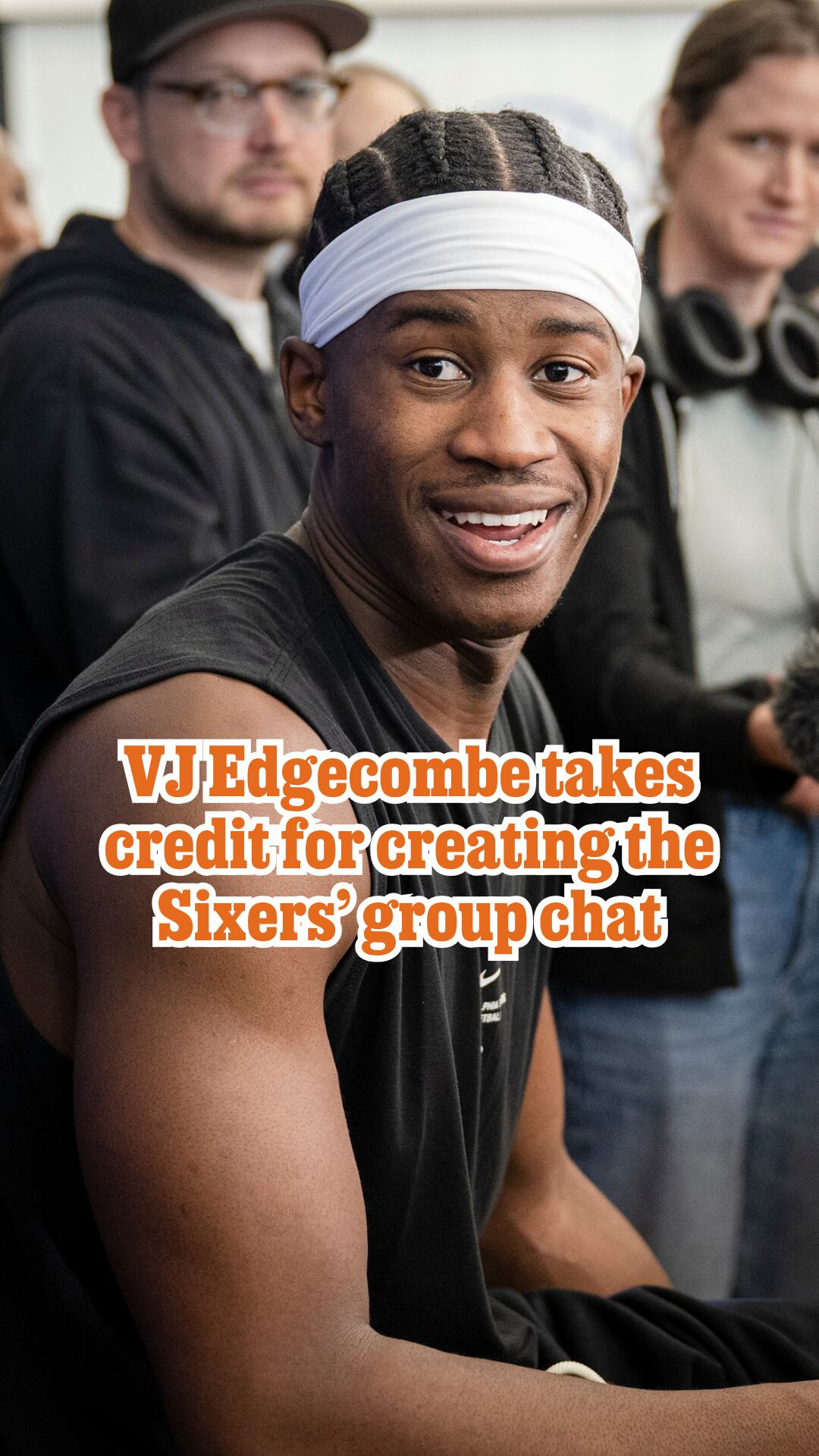
Video: VJ Edgecombe takes credit for creating the Sixers’ group chat
The easy way of prognosticating about the 2026-27 Sixers is to peruse the roster and presume the best. That James has been so productive and (relatively) durable so late in his career is a marvel. Brown appears bent on proving to everyone — his previous team, the Boston Celtics, most of all — that he has been and is a genuine superstar, one who doesn’t need to score 29 points a night to be indispensable to a title-contending team. Embiid, and Maxey and Edgecombe, for that matter, ought to be invigorated for having two such accomplished teammates. With Philon, Anfernee Simons, and Dean Wade, the Sixers promise to have a deeper bench than usual.
Again, pretty easy to see all those assets. It’s harder to acknowledge the combustible elements in this experiment that could leave the lab in smoking shambles. No one should expect James to suit up for more than 71 games this season; that’s the most he’s played in any season in the last eight years, and he’s done it just once. Embiid hasn’t appeared in more than 39 games in a season since 2022-23, and he appeared in just 66 games then. Perhaps Nick Nurse can stagger their nights off to keep them fresh for the postseason, but such an approach could cost the regular lineup the chemistry, cohesion, and seasoning necessary for a long playoff run.
Remember: James has been the alpha dog on all his teams, maybe in the whole league, for 24 years now. Brown is coming off a season in which he set career highs in points per game and shots per game, leading the Celtics to 56 victories without Jayson Tatum for most of the season. Embiid has been the alpha and omega of the franchise for a decade, and Maxey was poised to succeed him as that centerpiece player, if he hadn’t already.
That’s a ton of ego for Nurse and the players themselves to manage, and we haven’t even added to the scale James’ passive-aggression, Embiid’s fondness for trolling, and Brown’s intelligence and honesty and willingness to wield them.
What’s more, unlike the last season that the Sixers won a championship, unlike that ’82-83 club that took on an air of inevitability once it added Moses Malone, this team doesn’t have Maurice Cheeks and Bobby Jones in its starting lineup — two stars so humble and unselfish that they couldn’t conceive of growing grumpy because they weren’t getting enough shots. The assurances that this season’s Sixers won’t create such obstacles for themselves are nice, but these guys haven’t even taken their first road trip together yet.
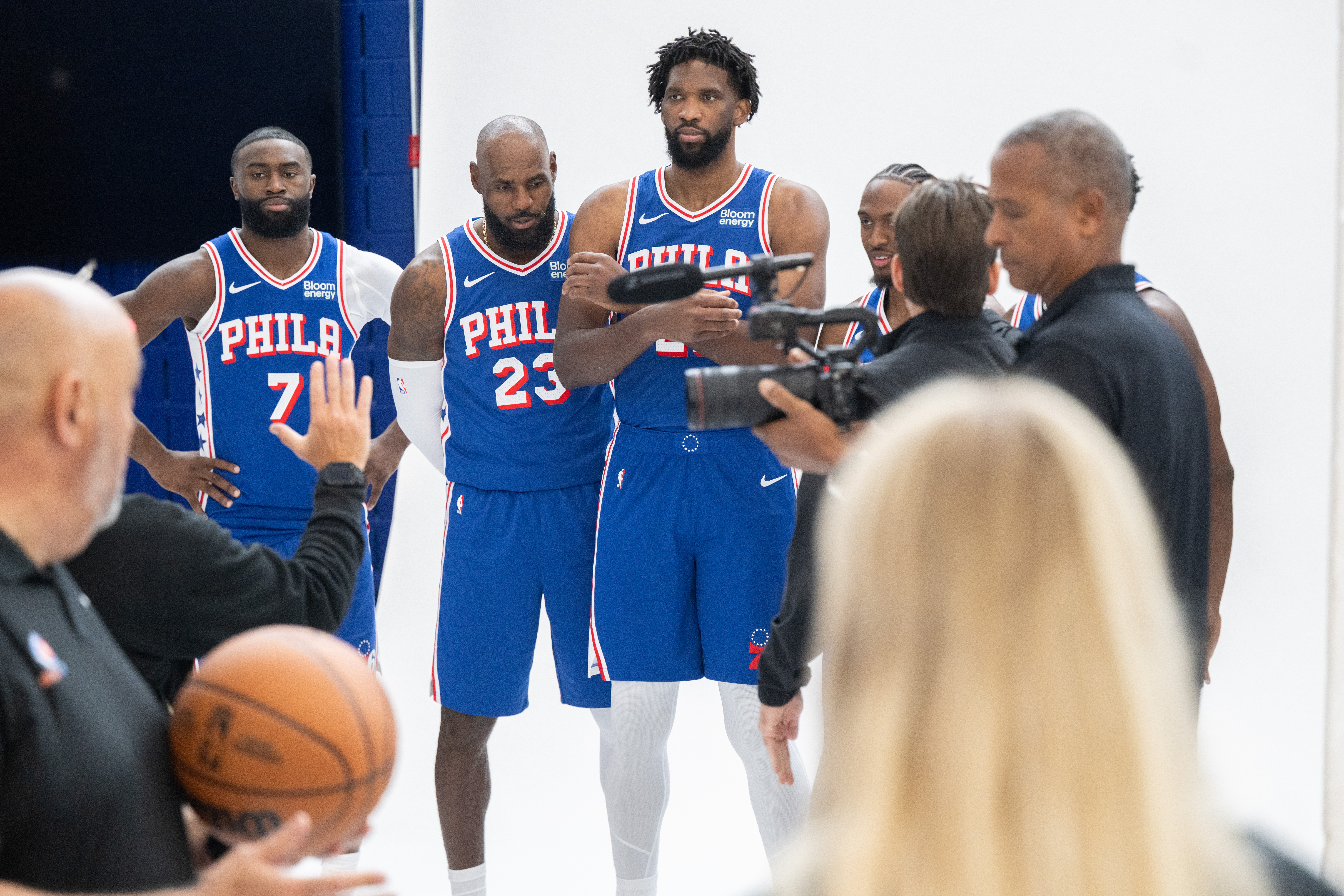
LeBron James’ presence won’t make Joel Embiid’s knees more stable or his footwork smoother.Yong Kim / Staff Photographer
“You would think it would be hard from looking at it, but if you just knew the things I knew about these guys, then it would change your perspective on how much they’re willing to sacrifice,” forward Jabari Walker said. “They understand what it takes to win, and everyone is just looking for this opportunity. I think you’ll see different sides of different people now that this situation looks different. The idea of ego and things like that is kind of going out the window now. It’s like, ‘How do we figure it out?’”
What does Walker know about James, Brown, Embiid, and Maxey that we outsiders don’t?
“It’s a great group …” he said. “This is the most included I’ve felt in any training camp. It just shows that the stereotype of high-end guys and high-end athletes — sometimes it’s not what the media makes it.”
Slow down. The Sixers haven’t shown us anything. This whole exercise could go very, very right, and it could go very, very wrong. They have a genuine shot at greatness, yes, but they’re going to need Joel Embiid looking healthy and LeBron James looking young. They’re going to need their starting five to do what Walker insists they will: sacrifice.
If the Sixers get all these stars at their best often enough, this will be something to see. If they don’t, same thing.
2026 Nissan Frontier Crew Cab Pro-X V-6 vs. 2026 Hyundai Santa Cruz XRT AWD vs. 2026 Chevrolet Colorado Trail Boss Stars and Steel: Smallish truck smackdown.
This week: 2026 Hyundai Santa Cruz
Price: $43,335 as tested, saving you $5,000 off last week’s Frontier.
What others are saying: “Highs: Carlike ride and handling, user-friendly infotainment, upscale interior design. Lows: Four-foot cargo bed has its limits, big upcharge for the turbo engine, limited off-road capability,” says Car and Driver.
What Hyundai is saying: “Our one-of-a-kind Sport Adventure Vehicle.”
Reality: The smallest of the three trucks tested, the Santa Cruz performs like it.
It’s been unclear since early 2026 whether the Santa Cruz is still being sold in the U.S., but Hyundai confirms the model is on for 2027.
With such a cloudy future, it’s no surprise the Santa Cruz is a carryover from 2025, though it gets a new transmission on the 2026 XRT and Limited models.
Competition: Real comparisons with last week’s Frontier and next week’s Colorado are limited to the box in the back; the other two are bigger and truckier than the Santa Cruz. Still, you may find it useful to compare these, as well as the Ford Maverick and Honda Ridgeline, which are set up more like the Santa Cruz. Also, consider Ford Ranger, GMC Canyon, Jeep Gladiator, and Toyota Tacoma.
Up to speed: When I first got the Santa Cruz rolling, I was struck by how much it seemed like an Elantra. And not a fun, new Elantra; a boring old one from 2013 or so. Its acceleration was dull, its handling was dull, even its sound made me feel a man in his mid-50s. I mean, I am a man in his mid-50s (well, late-50s now, I guess), but you don’t have to make me feel like one. My self-destructing body has that handled.
So let’s try this in Sport mode, hahaha, I thought to myself.
Lo and behold, the acceleration from the 2.5-liter turbocharged four-cylinder engine pepped right up. That’s where Motor Trend must have been when it got a 6.5 second 0-60 time. It’s not super fast, but the 281 horses aren’t exactly asleep either. In any case, it beats last week’s Frontier by almost a second.
Shifty: A new 8-speed automatic transmission replaces the dual-clutch unit for 2026. This new unit handled smoothly and without much interference, something dual-clutch models here in the cheap seats don’t usually offer. Only in Sport mode did the gears stay low a little longer than I’d like.
Shiftability comes from the paddles or the shifter. Feel in the console shifter is pretty slushy, a sad Hyundai tradition.
On the road: The Sport mode also takes the handling from the 2013 Elantra level to a sporty feel. Like most small pickups, the Santa Cruz is a nice ride, smooth where it needs to be with a bit of fun added on the curves. Advantage, Santa Cruz.
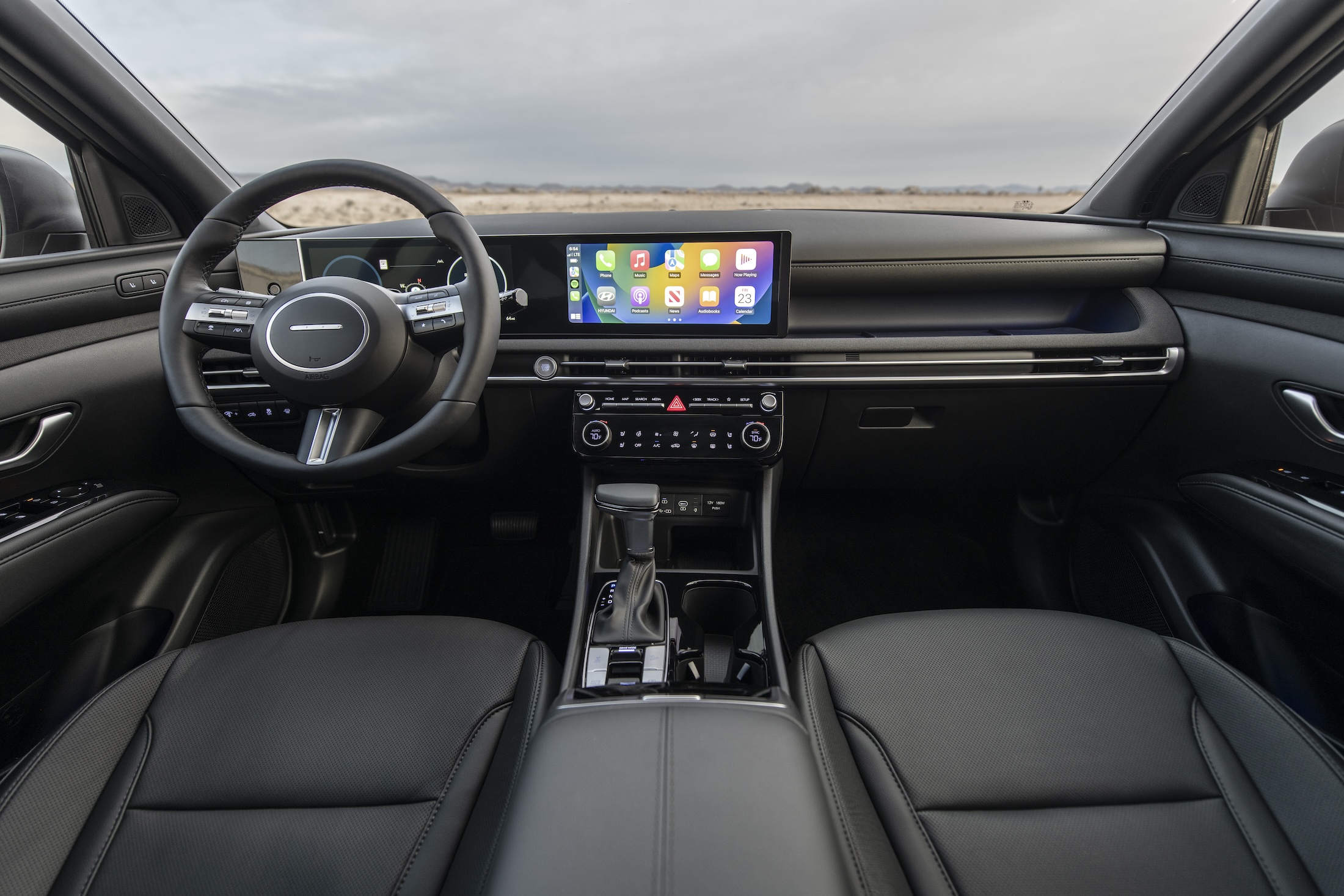
The interior of the 2026 Hyundai Santa Cruz is mostly intuitive for drivers to figure out.DREW PHILLIPS
Driver’s Seat: A comfortable and roomy perch awaits those getting to the Santa Cruz. It’s not the best at grip but it felt pretty nice overall.
The gauges are standard Hyundai, clear and easy to set up with the information you’re looking for. I’d give the Frontier the higher marks in this segment, though.
Friends and stuff: The rear seat is a snug fit, with my legs cramped like in a coach airplane seat. Foot room is good and so is head room. The seat back sits up fairly straight, though. Still, surprisingly, it’s better than the Frontier.
Cargo space is nice as a trunk — ours came with a locking cover — but pitiful as a pickup. I loaded some branches from an overgrown butterfly bush and the four-foot bed was overflowing in no time at all. The prize to the Frontier.
Towing: The Santa Cruz XRT can tow up to 5,000 pounds, and pales in comparison to last week’s Frontier, which pulls nearly 7,000. Other Frontiers pull even more.
In and out: The Santa Cruz sits at a nice height for an all-wheel-drive pickup, easy to get in and out, making it the winner in the hearts and hips of grandparents (yes, there are a Granddaughter 1.0 and Grandson 1.0).
Play some tunes: The stereo in the test model offered some fairly nice playback, certainly an A- and maybe an A.
Operation is simple, with knobs for volume and tuning, buttons for some selections, and the touchscreen handles the rest.
Keeping warm and cool: An ebony touchpad controls every move except temperature, which involves two big knobs. Of course the knobs are simple and the touchpad is not quite so. There’s not a lot of feedback as you make your selection. Go, Nissan!
Fuel economy: I averaged around 20 mpg, which is far better than most full- or even midsize pickups, including the Frontier.
Where it’s built: Montgomery, Ala., with 54% of parts from the U.S. and Canada and 31% from Korea.
How it’s built:Consumer Reports predicts the Santa Cruz reliability matches the Frontier’s, at 4 out of 5.
Next week: We take a ride in the Chevrolet Colorado Trail Boss.
But for City Council, which has the power to initiate such a change, eliminating the antiquated sheriff’s office is not on the agenda.
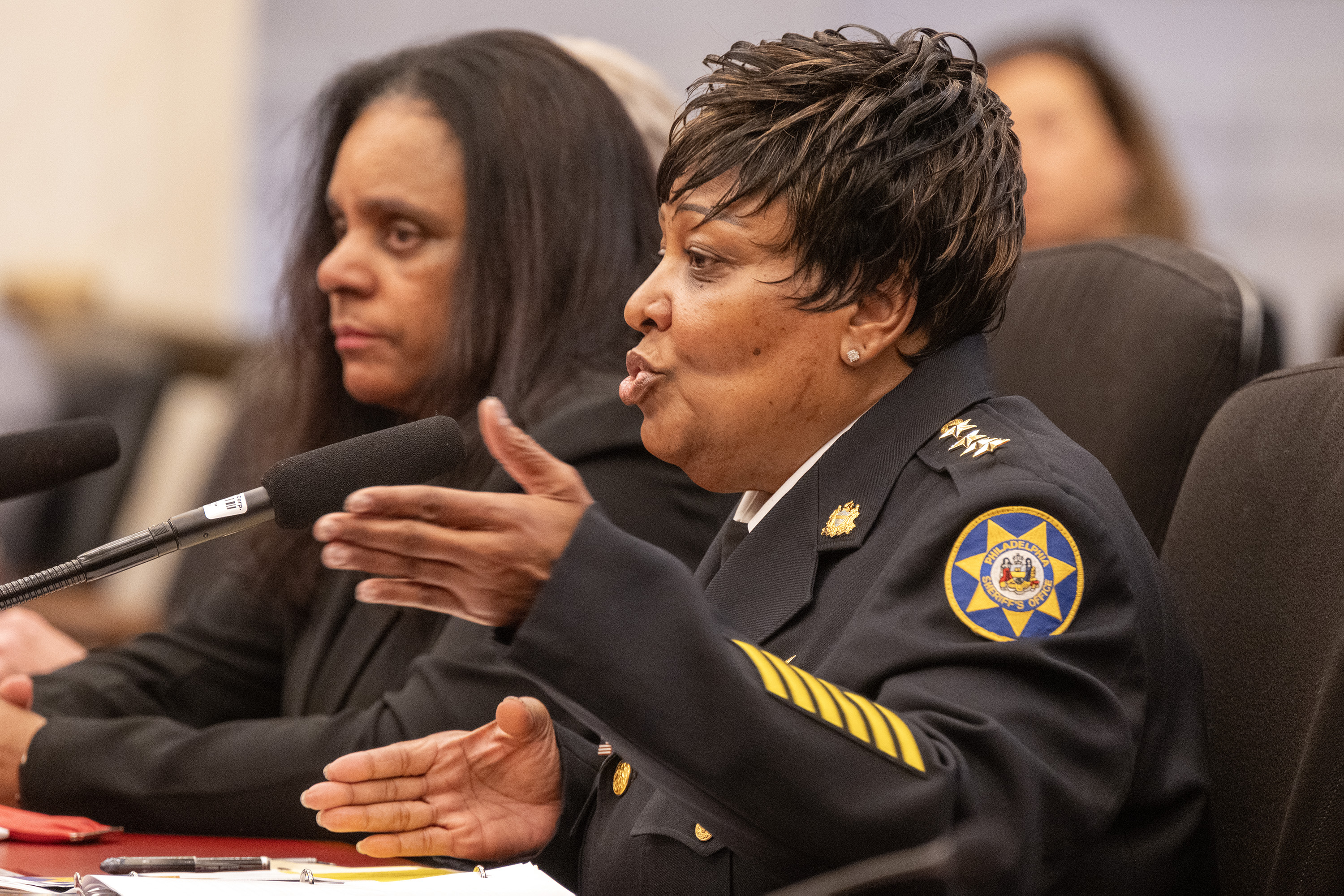
The Inquirer attempted to contact all 17 Council members last week, and five said they opposed or were skeptical of proposals to eliminate the sheriff’s office — a long-troubled holdover from before Philadelphia’s city and county governments merged in 1854. Themodern iteration of theoffice has limited law enforcement powers but controls the flow of vast sums of city money.
Six Council members acknowledged they may be open to a conversation about abolishing the office at some point — and some said that the missing money was a sign the office’s internal changes are not working. Six declined to comment or did not respond to inquiries.
And though all the Council members who responded to The Inquirer expressed dismay over the recently located $20 million, as the city’s schools and other agencies are in desperate need of funds, none clearly stated they were in favor of eliminating the sheriff’s office.
Most important, Council President Kenyatta Johnson — a staunch supporter of Bilal and who controls the flow of city legislation — objected to the notion that the sheriff’s office should be abolished with its tasks folded into other branches of government, as has been proposed by the good-government group Committee of Seventy and a state oversight board, the Pennsylvania Intergovernmental Cooperation Authority.
“It’s an independent body, and so right off the top, I know I don’t support abolishing it,” Johnson told reporters last week. “But it probably is due for some reforms to make sure that particular office operates in a more efficient and transparent manner.”
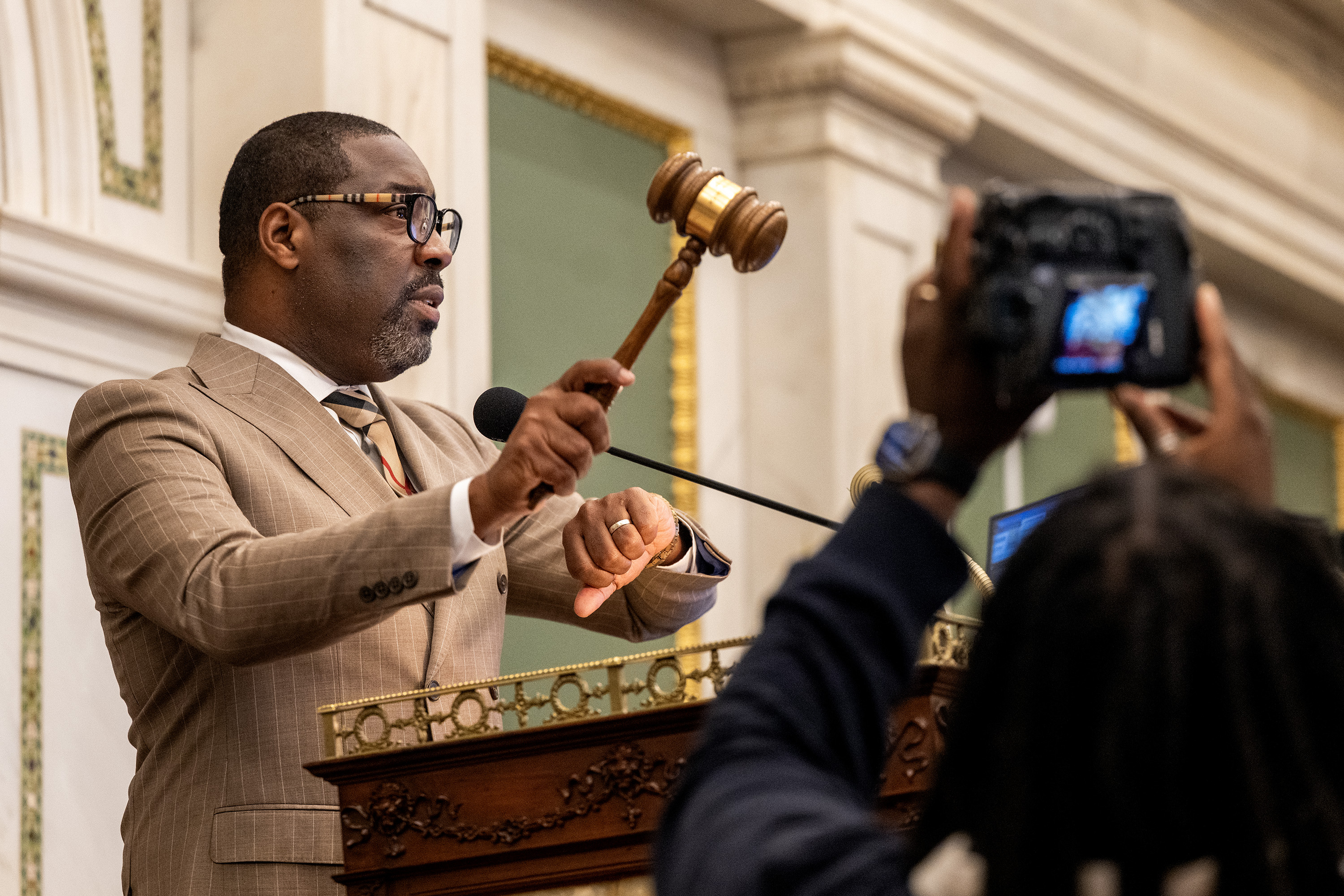
President Kenyatta Johnson checks his watch and gavels City Council into session Thursday, Sept. 17, 2026.Tom Gralish / Staff Photographer
Anti-corruption advocates have for generations called for the elimination of independently elected “row offices” like the sheriff and register of wills. Led by officials elected in races often determined by party politics, the offices tend to operate with less oversight over hiring and awarding contracts than regular city agencies. The city’s previous five sheriffs have seen corruption or sexual harassment scandals unfold during their tenures.
“We should get rid of it, and turn [the office’s tasks] over to a highly competent technocrat working with the mayor and Council,” State Rep. Jared Solomon (D., Philadelphia) said in an interview. “The office has been plagued with corruption and incompetence and mismanagement for all of modern history.”
The discovery that the sheriff’s office had failed to transfer $20 million — mostly proceeds from delinquent property auctions owed to the city to cover unpaid taxes and other costs — should be a wake-up call, he said.
“At a moment in time when my constituents can’t afford their prescription drugs or figure out how to put food on the table or pay their gas bill, she lost $20 million,” said Solomon, who represents parts of Northeast Philadelphia.
Johnson said Council would examine what happened with the missing money, which came to light as the result of judicial hearings into the office’s operations.
“We will be taking a close look at that $20 million and why it wasn’t distributed to Philadelphia,” Johnson said, “and so our team would take a deeper dive to get answers regarding that particular issue, and then go from there.”
But he declined to commit to holding a public hearing on it, a common mechanism for Council members to demand accountability.
Council has squabbled with the mayor’s administration over much smaller sums. Lawmakers have recently bemoaned a $1.4 million cut to the Mural Arts Philadelphia program, and they are currently locked in a tense behind-the-scenes battle with Parker over $2 million in funding for the Philadelphia Activities Fund, which Council members dole out to community groups.
For Lauren Cristella, president of watchdog group Committee of Seventy, Council’s response to the multimillion-dollar discovery in the sheriff’s office falls short.
“Council is the only group that can provide a long-term solution for these issues, and we welcome their efforts to solve this problem for the people of Philadelphia,” she said. “This office has been in dire need of reform for over 40 years. From failing to perform the most basic duties to misplacing millions of dollars, self-dealing, and secret slush funds, the same problems repeat regardless of who is elected.”
Bilal and her spokesperson, Teresa Lundy, did not respond to questions about the missing money and Council’s response.
Shortly after she won the Democratic primary in 2019, Bilal told The Inquirer she was open to the possibility of eventually abolishing her own office. But Lundy, Bilal’s campaign manager at the time, interrupted the interview to say that was not on the table.
“No, right now,” Bilal said then, “but if there’s a situation where we need to evaluate that in order to save the city money … then we will have that conversation.”
‘Every decision is political’
The sheriff’s office is responsible for serving warrants, transporting prisoners, providing courthouse security, and auctioning off tax-delinquent or foreclosed real estate. Critics assert most of these functions could be handled by the city’s police force or court administrators, without an elected leader.
To eliminate the sheriff’s office, Council would have to approve an amendment to the Philadelphia Home Rule Charter that would go before voters in a ballot question.
The Inquirer’s survey of Council members revealed that is not likely to happen any time soon.
Vehicle of the Office of the Sheriff for the City and County of Philadelphia April 28, 2026.Tom Gralish / Staff Photographer
Four members — Johnson, Mark Squilla, Cindy Bass, and Jim Harrity — clearly stated they opposed doing away with the office.
A fifth, progressive Councilmember Kendra Brooks, said that without “clear answers” on how the city could carry out the office’s functions, she is “not sure the calls for abolition are the right move.”
“Philadelphians should make decisions about the office and will get to weigh in next year,” when Bilal is up for reelection, she said. (Bilal will face a challenge from corporate security consultant Jennifer Vrana in the Democratic primary in May. Other candidates may join the race.)
Four Council members — Nicolas O’Rourke, Jamie Gauthier, Nina Ahmad, and Isaiah Thomas — said they were open to discussing the possibility of eliminating the office. Thomas said the discussion would have to be about eliminating all the city’s row offices, not just the sheriff. Ahmad said: “Everything’s on the table.”
Two other members — Rue Landau and Mike Driscoll — did not rule out the possibility, but said they need more information. Landau wants Council to examine the office’s structure and functions in the next city budget cycle, if not sooner, a staffer said. And Driscoll said he first wants to see what happens in the court case, which stems from a lawsuit over the office’s alleged failure to transfer deeds following sheriff’s sales.
“Depending on how that plays out, perhaps City Council needs to get involved,” he said.
The other six members gave noncommittal answers or did not comment.
Councilmember Quetcy Lozada said she was not prepared to discuss the possibility of abolishing the office. Majority Leader Katherine Gilmore Richardson said she hopes intervention by the courts would result in a “better management process.” (Bilal this summer agreed to independent oversight of her real estate division, but is now seeking to block any outside supervision.)
Councilmember Anthony Phillips declined to comment. Councilmembers Brian O’Neill and Curtis Jones Jr. did not respond to requests for comment. An attempt to reach Councilmember Jeffery Young Jr. was unsuccessful.
The Philadelphia Council members inside the caucus inside City Hall in Philadelphia, Pa. on Thursday, June 11, 2026.Aidan T. Gallo / Staff Photographer
Former Councilmember William J. Green IV said he is not surprised the current Council remains uninterested in eliminating the office.
When he introduced a bill in 2010 to eliminate the sheriff’s office, Green said, he was inundated with calls from Democratic ward leaders who told him the issue was a nonstarter due to an unwritten agreement in local politics.
Green said he learned a similar logic applied to row offices, explaining why some politicians are protective of the current arrangement. Black officials, he says he was told, controlled the sheriff’s office, while white officials ruled the register of wills office, another relic of the city’s now-defunct county government that lives on as a pool of patronage jobs.
“There was definite racial politics involved in each office and who was expected to be the nominee,” Green, who is white, said in an interview. “The bill went absolutely nowhere.”
Green said he is not surprised little has changed since.
“I think you can find among most elected leaders in Philadelphia a lack of core convictions or guiding principles, and so every decision is political,” Green said.
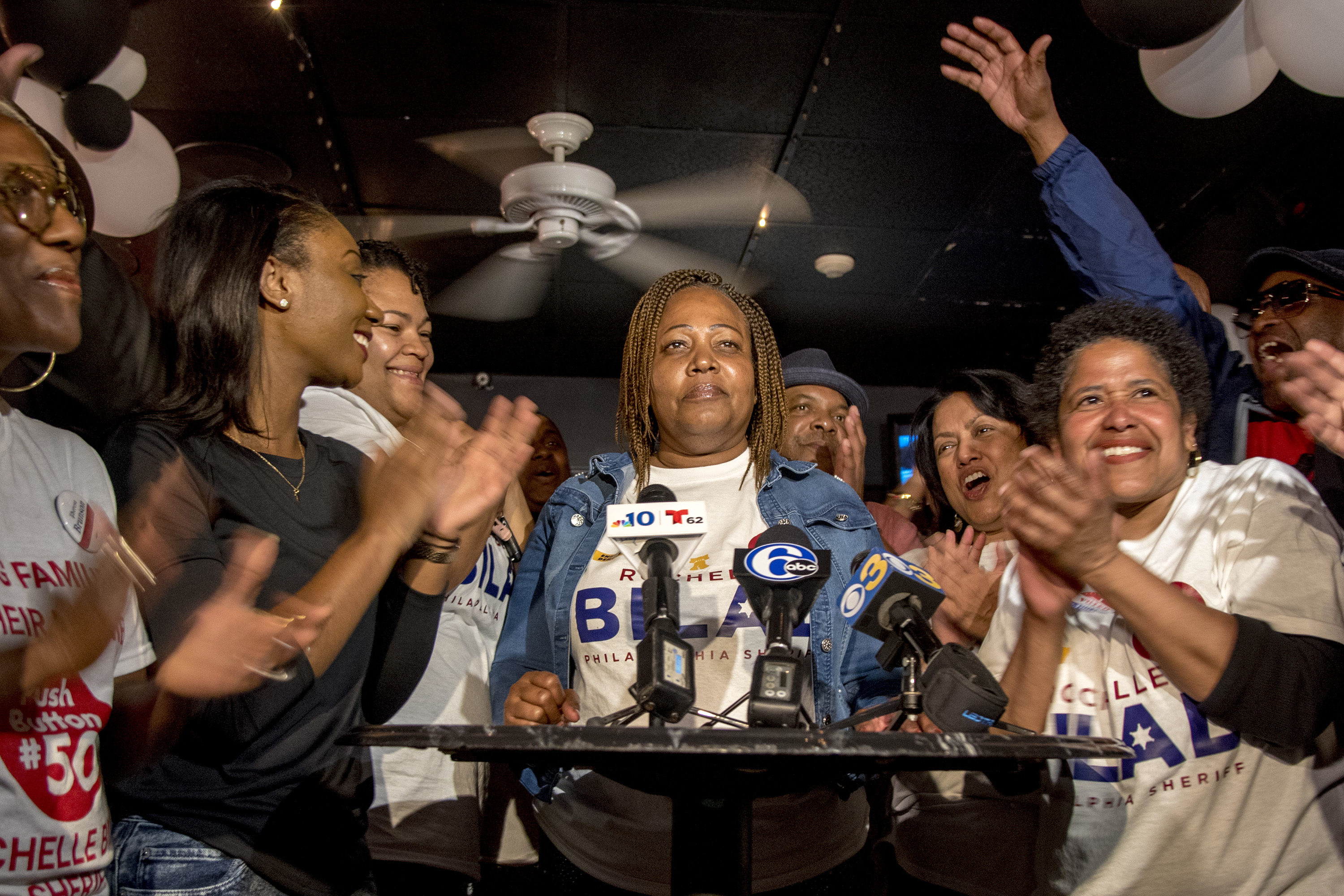
Rochelle Bilal is surrounded by supporters as she wins the Democratic primary for sheriff May 21, 2019.TOM GRALISH / Staff Photographer
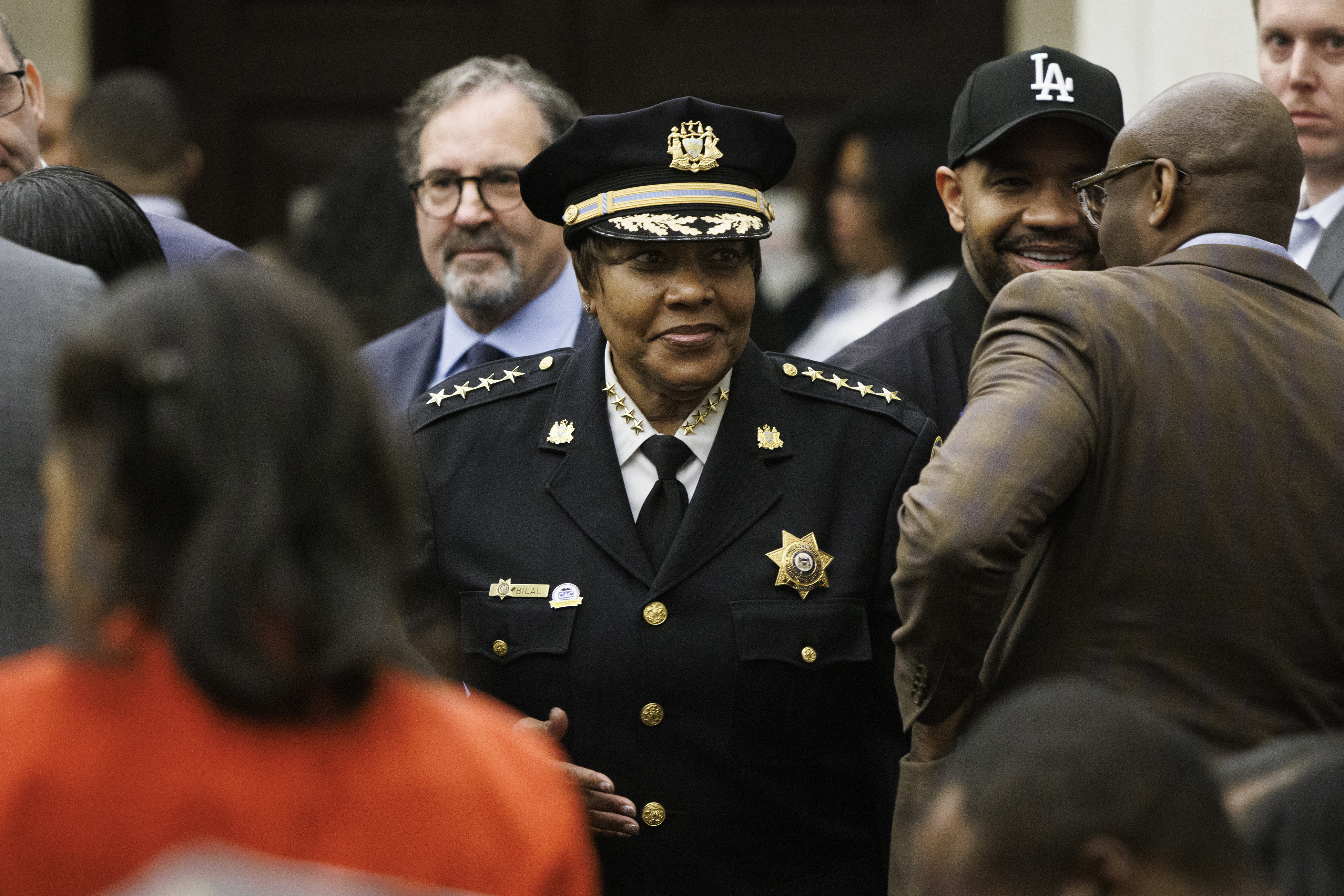
Bilal, the city’s first Black female sheriff, burst onto the political scene in 2019, when she shockingly dethroned Sheriff Jewell Williams, whom multiple women had accused of sexual harassment, and two other candidates in a crowded Democratic primary.
She ran that year without the Democratic City Committee’s blessing and with endorsements from anti-establishment progressives, including the activist group Reclaim Philadelphia and District Attorney Larry Krasner.
Most ward leaders stood by Williams in the 2019 election, party chair Bob Brady said at the time. But in 2023, when Bilal was already facing accusations of mismanagement, the party endorsed Bilal for reelection.
Before running for office, Bilal was a 27-year veteran of the Philadelphia Police Department and a former leader of the Guardian Civic League, an organization for Black officers.
Nearly two centuries of reform
The dispute over the sheriff and Philadelphia’s other elected row offices stems from a 172-year-old effort to fully combine the city and county of Philadelphia.
Prior to 1854, the City of Philadelphia, which then was composed only of modern-day Center City, was one of dozens of local governments with separate jurisdictions across the county. The fragmented townships and boroughs lacked a unified police force, driving public safety concerns after a series of riots erupted targeting Black people and Catholic immigrants.
That year, Harrisburg approved the Act of Consolidation for Philadelphia, merging the city, county, and other local governments into a single entity. But the sheriff and a string of other county row officers were carved out of the merger.
The debate over Philly’s parallel governments raged for decades, with the focus shifting to corruption. Party-backed candidates for these obscure offices typically cruised to victory, often doling out jobs in return for political endorsements.
The enactment of Philadelphia’s 1952 Home Rule Charter and state legislation in the 1950s and ’60s brought a new wave of reform, legally placing most elected row offices under city control, and transforming several more — including the coroner and prothonotary — into appointed positions.The city now had the power to abolish most of the remaining row offices via referendum and fold their duties and staff into other departments.
But Council has never voted to initiate such a referendum for the sheriff and register of wills.
In 2008, Mayor Michael A. Nutter proposed eliminating the sheriff’s office, the register of wills, and the clerk of quarter sessions, another row office relic that auditors found had lost track of millions in mishandled bail, fines, and court fees.
(Mayors can propose legislation and use their bully pulpit to encourage Council to adopt it. Ultimately, Council has the power to approve a Home Rule Charter amendment eliminating the sheriff’s office and send it to the voters. Mayor Cherelle L. Parker has not proposed eliminating any row offices.)
Nutter succeeded in doing away with only the clerk of quarter sessions.
There are procedural differences between the two. Under state law, Philadelphia cannot unilaterally dissolve the register of wills office without state authorizing legislation, while the city has final say over the sheriff’s office.
‘We’re looking into it’
The revelations about missing money and records have spilled out of Common Pleas Court hearings over the last six weeks.
Real estate investors who bought foreclosed or tax-delinquent properties at sheriff sale — but never received a deed — filed suit, leading Judge Paula Patrick to issue a May order demanding Bilal explain the chronic delays.
After a tense first hearing in August, Bilal agreed to allow independent oversight of her real estate division, but reneged on the deal weeks later.
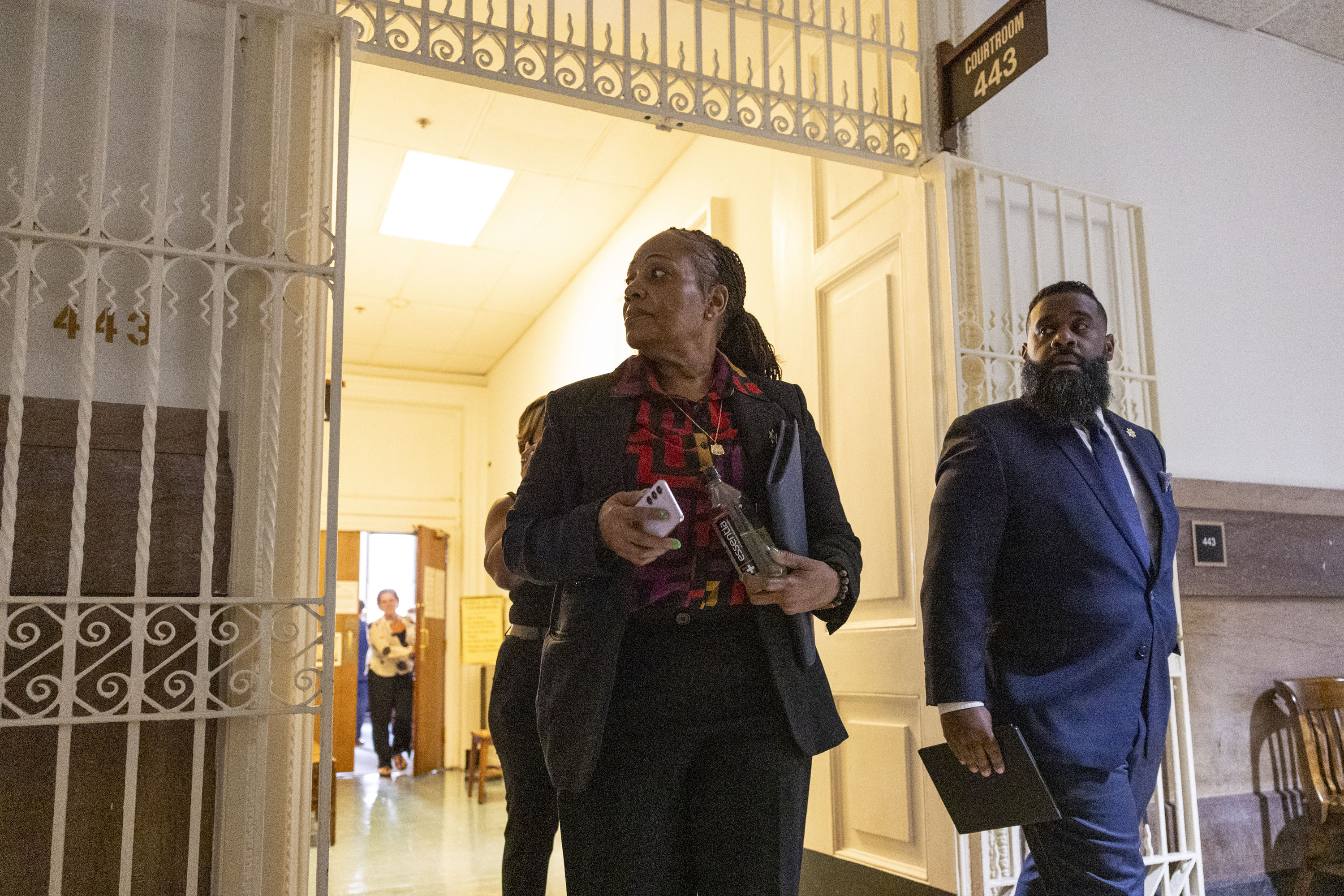
Sheriff Rochelle Bilal is seen exiting the courtroom at City Hall during a break on Wednesday, Aug. 26, 2026, in Philadelphia.Tyger Williams / Staff Photographer
In September, a deputy undersheriff testified that the backlog had been cleared and that Bilal’s office was auditing revenues linked to the stalled sales for any lingering discrepancies. Under questioning from the judge, the deputy revealed that the audit had already uncovered $20 million from sales in just the last year that should have gone to the city.
Instead, the money had been stuck in limbo in several sheriff’s office bank accounts. The deputy said that it was disbursed to the city after this discovery, and that the office was reviewing earlier years for other unclaimed funds.
Parker told NBC10 that week that she had not been briefed on the millions owed to the city. Asked last week about the money, the mayor’s spokesperson, Joe Grace, said: “We’re looking into it.” He declined to answer questions or make anyone available in the treasurer’s office for an interview.
Some Council members have questioned Bilal’s management in the past, including her office’s handling of millions more in fee revenue that the city controller in 2022 said was meant to flow into city coffers. The Inquirer reported Bilal had instead diverted the money into an off-budget bank account ex-staffers called a “slush fund” that paid for mascot costumes, DJs, and a $600,000 ad campaign, among other discretionary expenses. Bilal has also drawn two prior court orders linked to chronic understaffing and security lapses in the court facilities her office patrols.
Additionally, Bilal’s office delayed the collection of an estimated $35 million in tax revenue because it failed to auction off tax-delinquent properties between 2021 and 2024 as a result of a contract dispute involving an online auction company.
Parker, during her first budget address in March 2024, described that money as “dollars that could have been invested in classrooms and in rec centers or on building affordable homes.”
This year, Bilal returned to Council, seeking to increase her office’s budget by more than 50%. (Ultimately, Council approved only a fraction of that, a $146,000 funding increase, bringing her office’s budget to $35.8 million.) She was greeted with enthusiasm by several lawmakers, who thanked her for her work.
Sheriff Rochelle Bilal during the mayor’s budget address, Philadelphia City Hall, March 12, 2026.Alejandro A. Alvarez / Staff Photographer
‘We’ve seen all the criticism’
The sheriff enjoys close political relationships with many of the Democrats on Council, and some have fiercely defended her.
In March, during Women’s History Month, Council members heralded Bilal for her leadership, and she accepted an honorary resolution on behalf of the women in her office.
“We’ve seen all the criticism,” Bass, a longtime ally of Bilal’s, said as she presented the citation. “And let’s be clear, accountability is essential, but the challenges facing the sheriff’s office did not begin with Sheriff Bilal.”
But the $20 million revelation seems to have altered the conversation. Over the last two weeks, a handful of members pointed to the news as a sign that the sheriff’s internal reforms had not taken hold.
“That’s money that was supposed to go to the city, and we’re in a financial bind right now,” Harrity said. “They need to get their act together.”
Brooks said it is clear that the office’s revenue collection and distribution issues are “systemic,” and she encouraged Bilal to work with the courts to establish independent oversight — a move that Bilal now publicly opposes.
And Gauthier said that she was particularly “surprised” by the finding given that Bilal has repeatedly asked Council to increase her office’s yearly budget.
“We need to understand why that happened, how that happened, and we need to understand that before we’re in another conversation about millions of dollars being needed,” Gauthier said.
But it is largely up to Johnson whether that understanding happens in public or behind closed doors.
Gilmore Richardson — the Democratic majority leader who has in the past sharply criticized city departments that have misspent or lost track of taxpayer dollars — said that she called Johnson shortly after learning of the undisbursed money. She said she trusts that “he’ll be working to ensure that we can adequately address this.”
Solomon, who has been a rare vocal supporter of abolishing the office, said that despite the reform’s lack of popularity on Council, he is heartened that some members said they are open to the conversation.
“You seem to be seeing a growing number of folks — and maybe it’s after the $20 million marker — who seem to be saying, ‘Let’s figure out a path forward,’” Solomon said. “Other municipalities do this. They function with efficiency, and the sheriff is effective, and they’re not losing $20 million.”
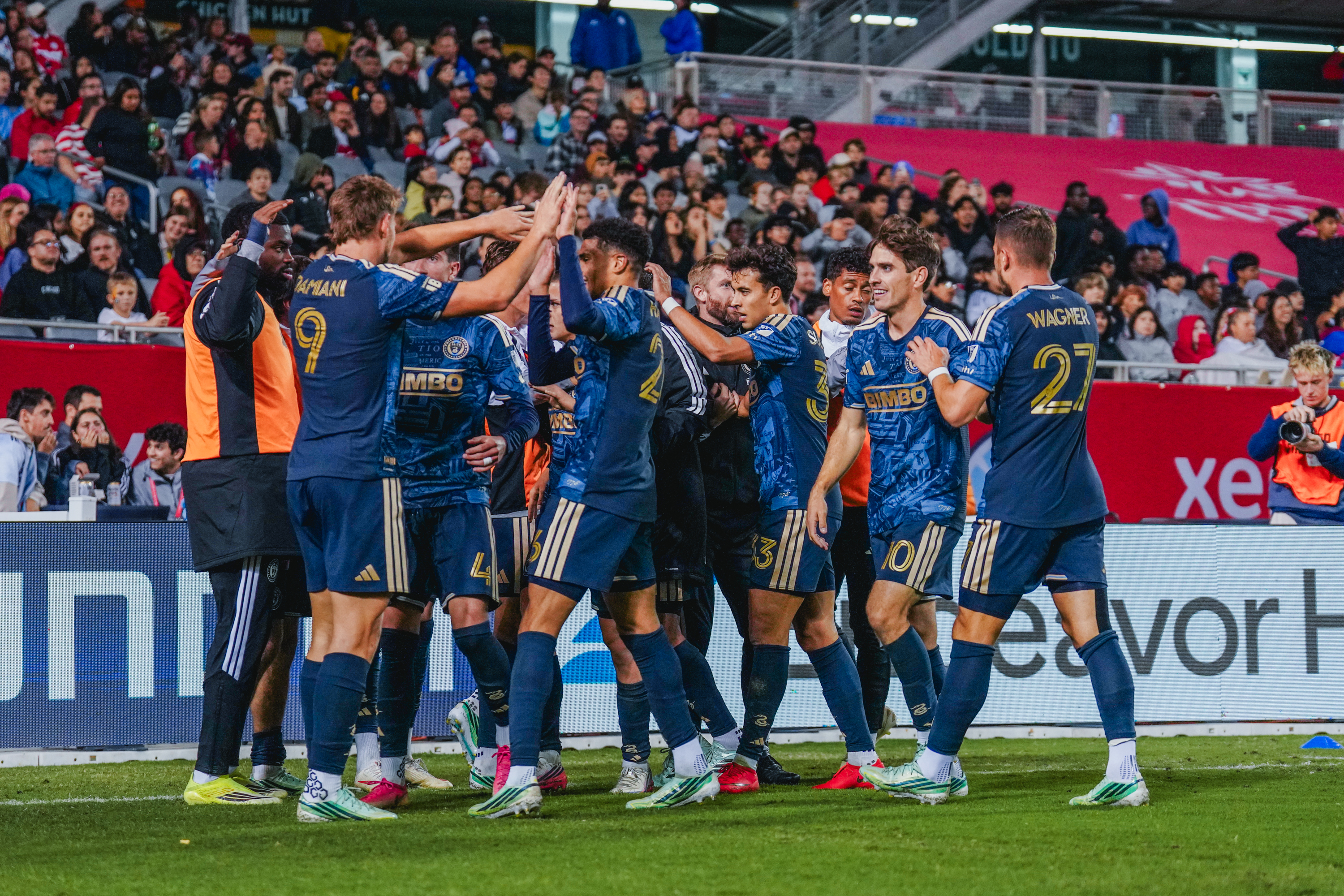
It’s tempting to say the Union won a game on Wednesday that they weren’t supposed to. And it may sound harsh in light of the 3-1 result, with Bruno Damiani scoring two great goals and Milan Iloski tallying the other.
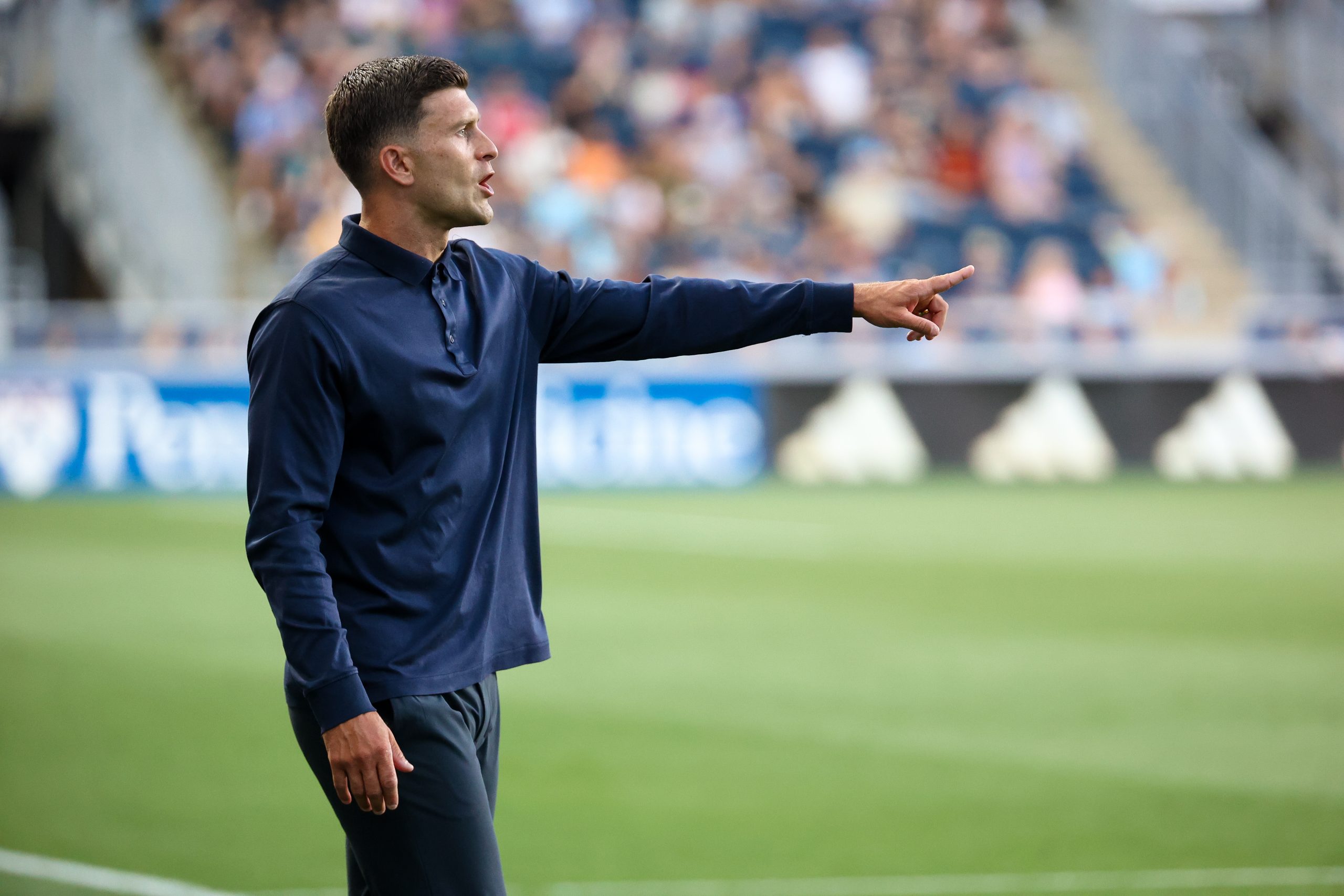
Not for nothing, though, did interim manager Ryan Richter say Monday that it would be “the biggest test for this group since we’ve been coaching.” Chicago has been that good, especially since superstar striker Robert Lewandowski arrived in the summer.
Both men could have seen a lot of things coming in this game. They might not have predicted the moment that turned it on its head.
Former Union centerback Jack Elliott did his old team a big favor when he grabbed a piece of Iloski’s jersey from behind and sent Iloski to the turf. It would have been pass interference in a Chicago Bears game, but this was his second yellow card in five minutes, so he was ejected.
Philadelphia Union defeat Chicago Fire 3-1, thanks to a brace from Bruno Damiani, with Milan Iloski also adding a goal.
Let’s not forget the decisive second yellow card shown to former Philadelphia Union centerback Jack Elliott for pulling down Milan Iloski right before the… pic.twitter.com/iPcbMtH9pU
It also was barely two minutes after the Fire scored the night’s first goal, on a well-worked team play finished by Maren Haile-Selassie.
But it was not the silliest moment for a club that started the night in third place in the Eastern Conference and is dreaming of its first deep playoff run in 18 years.
(Yes, it’s been that long. Since reaching the conference finals in 2009 — the year before the Union began playing — the Fire have made the playoffs just three times and won just one of the five postseason games they’ve played.)
Instead, the top dishonor goes to the play that produced Damiani’s second goal of the night.
Jovan Lukić hasn’t made many easier tackles in his Union tenure than the one that took the ball off Mauricio Pineda at midfield. He promptly sent Damiani forward, and off the striker went.
This produced a four-on-three break featuring the Union’s top attackers: Damiani, Milan Iloski, and Quinn and Cavan Sullivan. None of the Fire’s players had an easy choice to make on who to mark. Still, Damiani was allowed to run nearly 25 yards without any Fire player within touching distance.
Even Union fans could grant that Chicago manager Gregg Berhalter must have been furious on his bench. They certainly would have been had this happened to their team.
They’d also have been annoyed if their team had failed to convert the chance. This time, they could celebrate. Damiani slammed in a shot from just outside the 18-yard box, and the Union were on their way to an eighth straight win and a 14-game unbeaten run in league play.
“Of course it’s a great run, something that we’re proud of, but it’s something right now that I can say that the guys have earned,” Richter said. “Because of the way that they work every single day, the way that they’re focused, the way that they approach games, the dirty work that they’re willing to commit to during the games, you know they’ve earned that, and they’ve earned the record for the team.”
From there, Richter turned to his biggest focus throughout his tenure: going one game at a time.
“We have to continue to work in that way, and not think that anything’s accomplished,” he said, “or not think that it’s down to anything other than the discipline, the focus that we’ve had, and the mentality that we’ve approached every single day.”
He kept that view through a question about his role in the success, and thus his future. Though Richter will tell anyone who asks that he doesn’t apply the interim label to himself, it’s still officially there.
Ryan Richter on the sideline during a Union game earlier this year.
The question of when the Union will drop it is for sporting director Jon Scheer to answer one of these days, and you might have noticed that there’s been a lot going on lately.
The view from here is that waiting until the season ends isn’t a bad thing, even though this win could go a long way toward putting the Union in the playoffs. They’re 12 points above the line, thanks to their unbeaten run and a pile of mediocrity behind them.
For a while, it looked like the gap between the good and bad teams in the Eastern Conference would land at the top five. Now the Union have made it six, blowing open a seven-point gap to seventh-place Orlando City. From there, eight points separate the Lions from 14th-place Atlanta United with five games to go.
“When we go into games like this, it’s not about me,” Richter said. “It’s about the staff working together; it’s about the hard work that goes in from the assistant coaches and preparing for the opponent and finding the ways that we can try to put the guys into position to be successful. And then, of course, the majority of the credit goes to the players for buying in and then executing what we see in the game, but also what they see in the game that we didn’t come up with.”
Bruno Damiani (left) and Milan Iloski had the goals in the Union’s 3-1 win.Philadelphia Union
That last clause — what they see in the game that we didn’t come up with — might have been the most powerful. It was another reminder that what got Bradley Carnell fired wasn’t just his record, but his inflexibility. Richter has let his players breathe and improvise.
“You know me,” he said, “I’m not looking to take credit for that. The credit goes to the staff, and it goes to the players.”
It goes to Richter too, even if the biggest reward doesn’t come until later.
window.addEventListener(“message”,function(a){if(void 0!==a.data[“datawrapper-height”]){var e=document.querySelectorAll(“iframe”);for(var t in a.data[“datawrapper-height”])for(var r,i=0;r=e[i];i++)if(r.contentWindow===a.source){var d=a.data[“datawrapper-height”][t]+”px”;r.style.height=d}}});