Blog

  • Dolly Parton’s program provides free books for children in Philly region

    Dolly Parton’s program provides free books for children in Philly region

    Dolly Parton’s literacy program, Imagination Library, has provided nearly 800 children with free monthly books mailed to their homes in West Philadelphia.

    In Montgomery County, around 3,500 children have been served in the Norristown and Pottstown areas since 2023, thanks to Parton’s program.

    With the news of Parton’s death on Tuesday, there was sadness among the affiliates of her global effort to promote a love of reading among children, but they expected to continue the program and hopefully expand it in Pennsylvania.

    “We don’t anticipate any changes to the program,” said Jennifer Leith, executive director of the West Philadelphia Alliance for Children (WePAC).

    Imagination Library, which Parton started in 1995 in Tennessee, provides deeply discounted books that are mailed each month to any child in a given zip code whose parent or guardian applies to participate. Governments and nonprofits provide funding to cover the remaining costs of the program, which is available for children from birth to age 5.

    The Dollywood Foundation said in a recent fact sheet that it has delivered more than 300 million books to children in the United States, Canada, the United Kingdom, Australia, and Ireland.

    WePAC started with one zip code, 19104, in July 2024, then expanded to include four more zip codes in July 2025, Leith said.

    “In that time, literally thousands of books have been delivered to West Philadelphia children,” Leith said.

    “Anyone from any income level, from any background, can participate,” said Eliza Brumbaugh, executive director of the Literacy Council of Norristown, which helps to run the program, with assistance from the Justamere Foundation, in Montgomery County.

    Brumbaugh and others would like to see the program expanded statewide in Pennsylvania, similar to what has been done in Delaware.
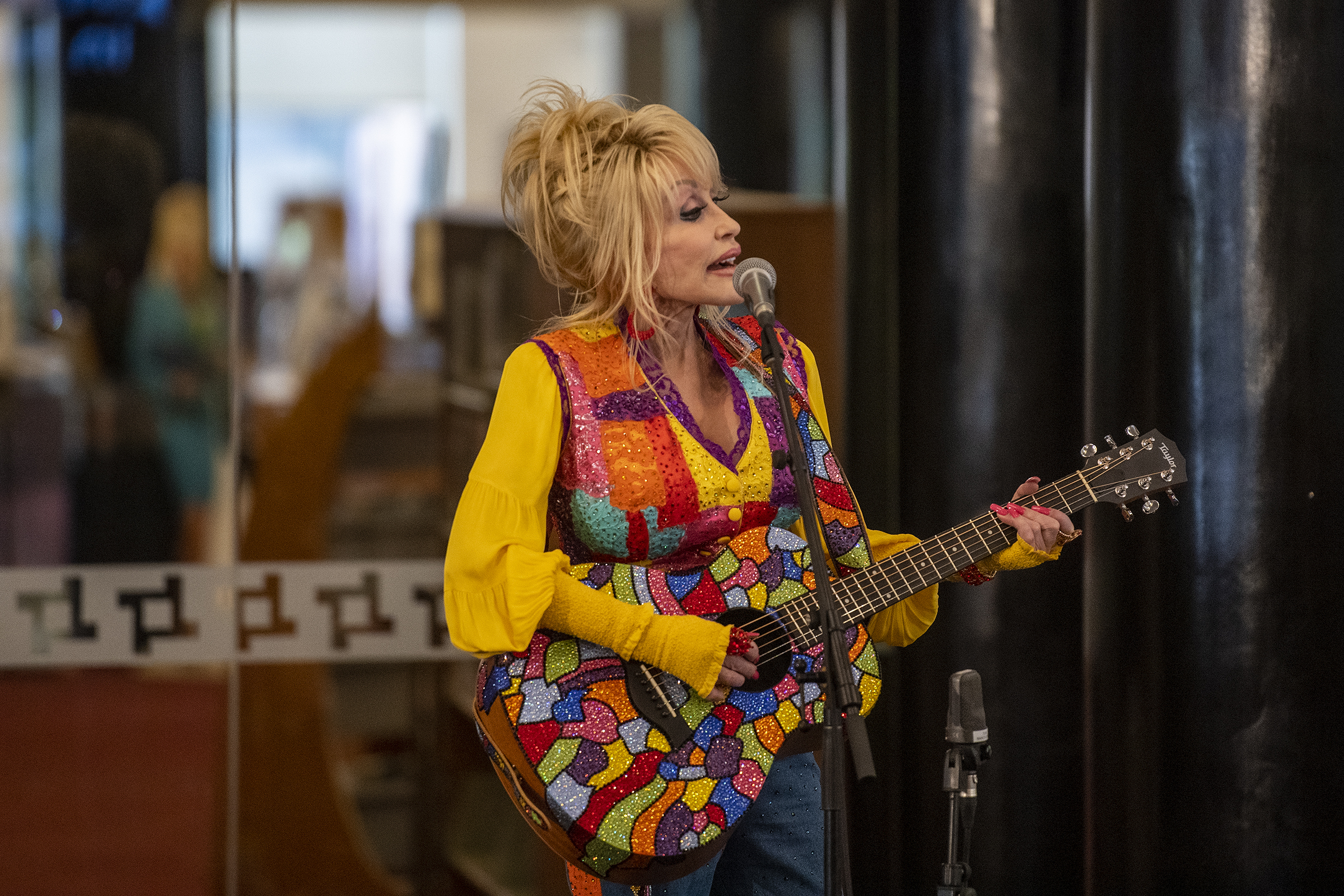
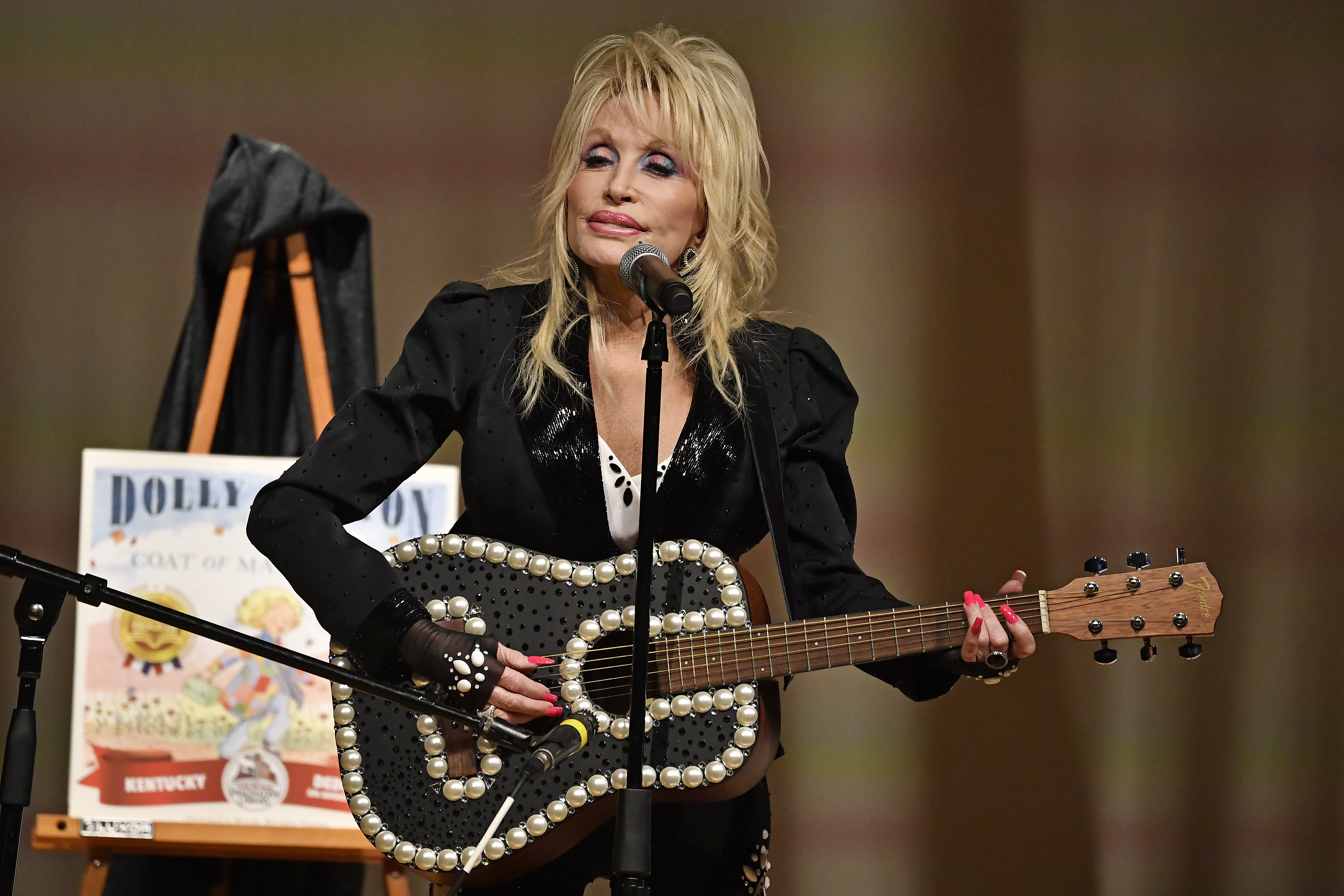
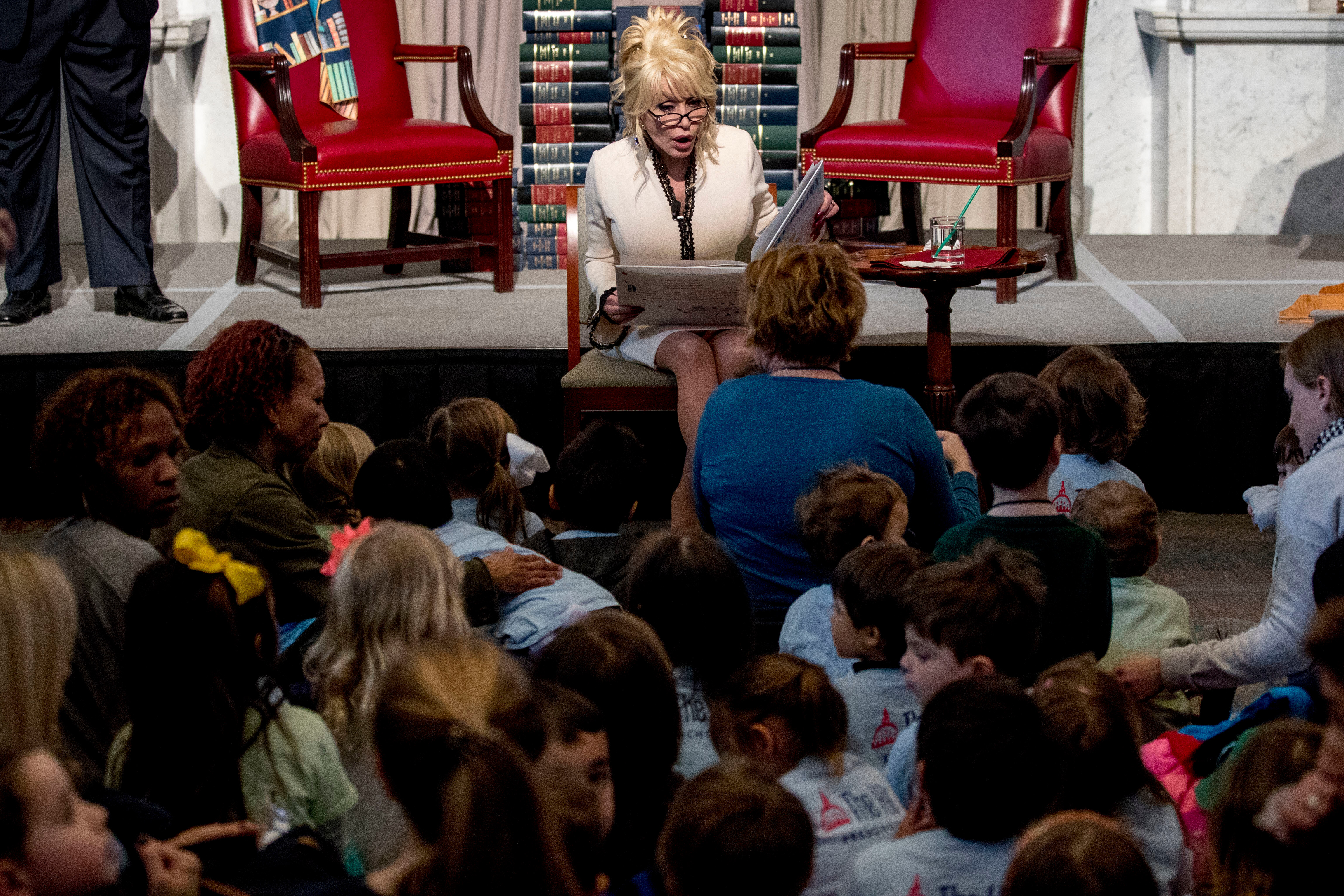
    Dolly Parton performed at the Wilmington Public Library in Wilmington in 2022.JOSÉ F. MORENO / Staff Photographer

    Lawmakers have proposed legislation in Pennsylvania’s Senate and House to establish a statewide program similar to the Imagination Library.

    Leith said “it would be great” if Mayor Cherelle L. Parker or Gov. Josh Shapiro “decided to do this in honor of Dolly Parton’s legacy.”

    In Delaware County, The Community’s Foundation has provided books from the Imagination Library program to more than 140 children in Eddystone since 2024, said Dierdre Woody Konar, president of the nonprofit.

    “The Dolly Parton Imagination Library has shared with TCF and their other partners that they have prepared carefully for this day and for the future of the Imagination Library,” Konar said in an email Wednesday morning.

    “TCF is incredibly sad to hear of Dolly’s passing, and we look forward to continuing this important work,” Konar said.

    Foundations Inc., a national education nonprofit based in Mount Laurel, ran the first Imagination Library program in Philadelphia for five years, helping to provide books to children in North Philly’s 19133 zip code.

    “It was pretty much a book desert,” Casey Jones, executive director of marketing and communications for Foundations, said of the zip code before the program started.

    Through Parton’s program, Foundations was able to deliver around 27,000 books to children in that one zip code until the five-year commitment was completed at the end of 2025, said Rhonda H. Lauer, CEO and president of Foundations.

    Lauer met Parton when Foundations gave the legendary performer and philanthropist its 2020 “Champion of Children” award.

    “We went to Dollywood to present it to her in person,” Lauer recalled, saying she had several in-depth conversations with Parton about life and family and the program.

    In the end, Lauer said, “all she cared about was getting books in the hands of children.”

    People take phone photos as Dolly Parton performed at the Wilmington Public Library, in 2022. She promoted her Imagination Library, a free book gifting program for children.JOSÉ F. MORENO / Staff Photographer
  • South Jersey Freedom Fuel stations racked up big fines before being promoted by White House

    South Jersey Freedom Fuel stations racked up big fines before being promoted by White House

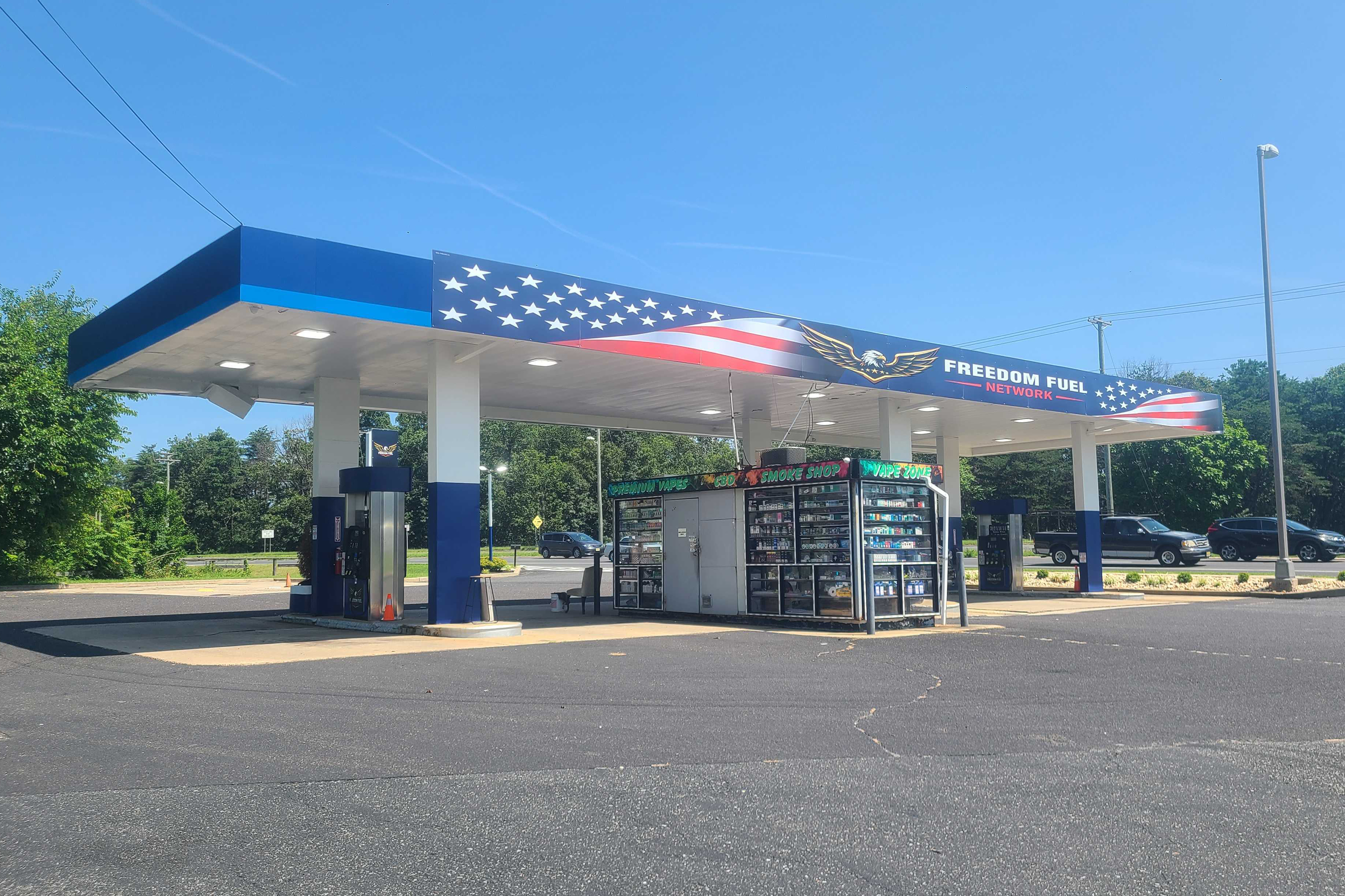
    Six South Jersey gas stations that the White House promoted in July, touting below-market fuel prices, have racked up environmental violations with the state dating back to 2023.

    The New Jersey Department of Environmental Protection issued close to $430,000 in fines in May to operators who run 17 gas stations, including the six Freedom Fuel locations, for the violations accrued over the years, according to an administrative order first reported by Politico and obtained by The Inquirer. The fines were issued before these stations rebranded to Freedom Fuel.

    The Freedom Fuel stations, which made their debut this summer, accrued more than $202,000 in fines, according to department records. All 17 stations are owned by asset manager Blue Owl Capital and operated by Cherry Hill developer Shamikh Kazmi and his brother Syed Kazmi.

    Blue Owl and the Kazmi brothers could not be reached for comment.

    The owner-operators have requested a hearing, according to DEP spokesperson Larry Hajna, but no date had been set as of Wednesday.

    The violations include failing to properly register underground storage tanks, failing to provide overfill prevention for some tanks, failing to cut and cap lines that lead to out-of-service tank systems, and violating delivery bans.

    A Freedom Fuel location at 6801 Tilton Rd. in Egg Harbor was issued a fine of $50,000, the maximum penalty for the violation. The location received four deliveries in November 2023, despite having been banned from doing so because it did not properly register its storage tank.

    In its justification for the fine, the department described the operator’s actions as a “deliberate and knowing act,” noting it was a major violation.

    The Kazmi brothers have been embroiled in at least two lawsuits related to previous gas station ventures, including a 2021 trademark dispute with BP American Inc. and BP Products North America Inc. Additionally, Petroleum Marketing Group Inc., a fuel distribution company, accused the brothers of stealing thousands of gallons of gas from the company.

    City won’t shut down Philly Freedom Fuel station

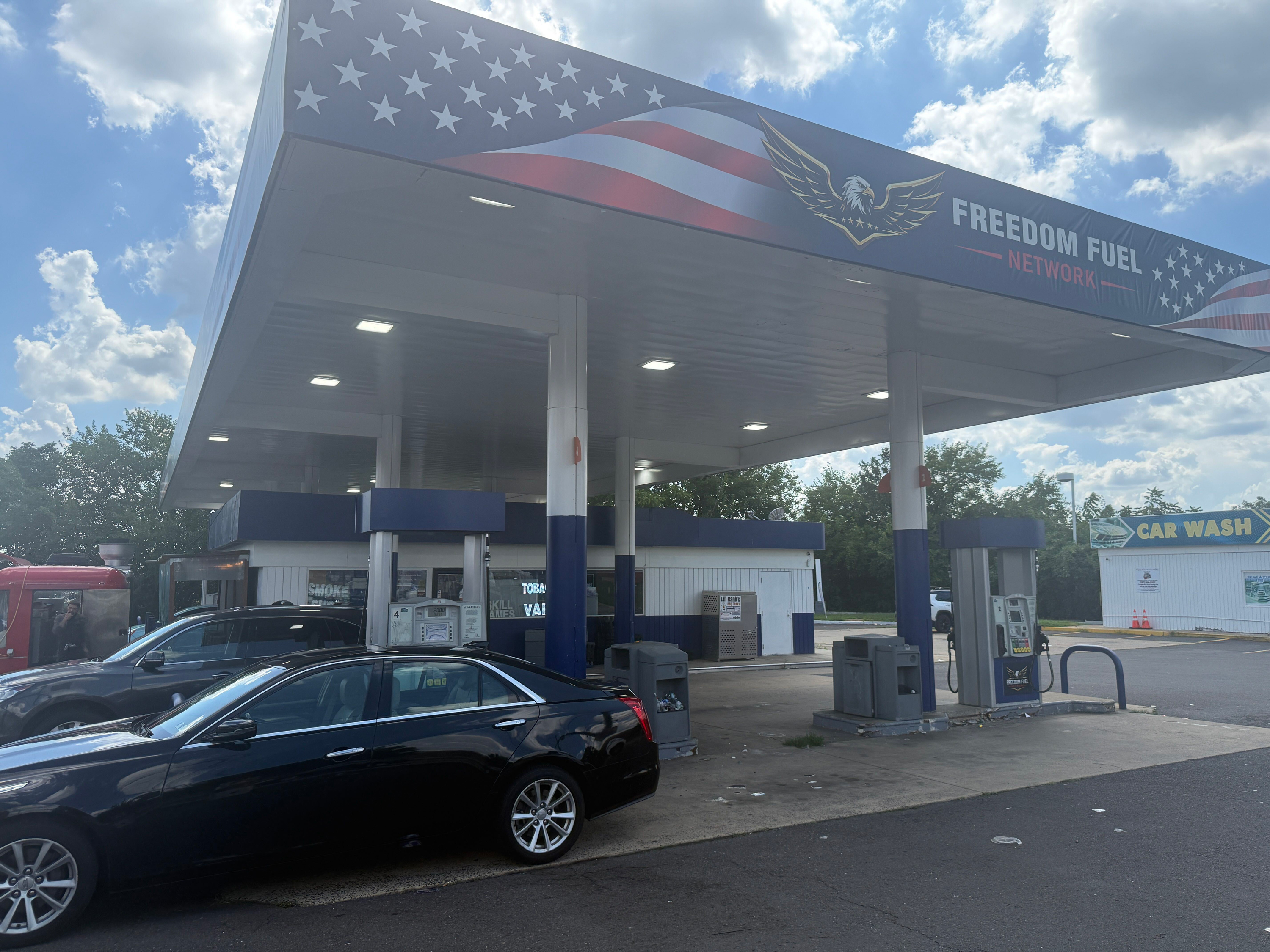
    The Freedom Fuel station on Bustleton Ave. in Philadelphia.Dana Munro / staff

    The Freedom Fuel Network expanded to 29 locations earlier this month, but one Philly station was nearly shut down by the city.

    The network’s Bustleton Avenue station — also linked to the Kazmi brothers — failed a license renewal inspection at the end of July that could have forced its closure. But the owners remedied the issue and can continue to operate the station, according to a city spokesperson.

    More than two months after having been loudly promoted by the White House and President Donald Trump, Freedom Fuel’s owners have remained silent about their discount gas operation.

    Baltimore Ravens assistant coach Randy Brown and former commodities trader Yoni Gontownik signed the company’s certificate of formation in Delaware and have not spoken publicly about the highly touted enterprise.

    Freedom Fuel launched with prices 40 to 50 cents a gallon cheaper than nearby stations, frustrating competitors and confusing experts who follow the notoriously low-margin business.

    “With every new site, we’re driving down gas prices at the pump for more communities,” reads a message on the network’s website.

    In recent weeks, prices across Freedom Fuel locations have risen closer to other discount locations.

    Take the location on Dreshertown Road in Upper Dublin Township, which was promoted in a video shared by the White House. When it launched at the beginning of July, the station sold gas for $3.47 a gallon — a nod to Trump being the 47th president. But as of Tuesday, the station was selling gas for $3.89 a gallon, about a dime cheaper than a nearby Citgo station and slightly more than Sam’s Club, according to gas-tracking website GasBuddy.

    The average cost of a gallon of gas in Philadelphia on Tuesday was $4.15, according to AAA. That was up more than 28% from this time last year, when the cost averaged $3.23.

  • Dolly Parton’s other legacy: A fortune given away, dollar by dollar

    Dolly Parton’s other legacy: A fortune given away, dollar by dollar

    When fires swept through the Great Smoky Mountains in 2016, killing 14 and displacing thousands, a local legend answered the call to help.

    Dolly Parton, the country music luminary, who died this week at 80, offered $1,000 per month to families who had lost their homes in Sevier County. The money kept flowing for months, and the songwriter and star behind hits including “My Tennessee Mountain Home” ultimately sent $12.5 million back to the county where she was born.

    Parton’s support for the fire victims was just one node in a constellation of charitable activities that distinguished her as one of pop culture’s most prolific philanthropists. With cash gifts, benefit concerts, and telethons, Parton supported causes that included early childhood literacy, wildlife conservation, and the development of the COVID-19 vaccine.

    She became so effective at distributing her own money that the ultrawealthy asked her to distribute theirs. In 2022, Amazon founder Jeff Bezos and his future wife, Lauren Sanchez, gave Parton $100 million to distribute to causes of her choosing. And this summer, Taylor Swift and Travis Kelce gave Parton’s Imagination Library $2 million to fund the distribution of children’s books.

    “Her philanthropy was so much more significant and serious than what you see from other celebrities,” said Stacy Palmer, CEO of the Chronicle of Philanthropy. “As a woman, she was a standout giver, and she gave to the kinds of causes that a lot of rich people don’t give to, ones that were based on her life experience.”

    Parton started her own charitable organization, the Dollywood Foundation, in 1988, the same year that Trio, her album with Emmylou Harris and Linda Ronstadt, won album of the year at the Academy of Country Music Awards.

    The foundation was initially focused on reducing school dropout rates in Sevier County, in part by offering $500 gifts to graduates. Cold, hard cash proved a powerful incentive; high school dropout rates plummeted to just 6% in the county, from 35%. The Dollywood Foundation, which reported $141 million in assets last year, also offers local high school graduates $15,000 scholarships.

    “She gave cash gifts to people in need long before it was popular,” Palmer said. ”She trusted the people that she wanted to help.”

    At her theme park, Dollywood, Parton opened a special attraction: a 30,000-square-foot aviary to house rehabilitated bald eagles that could not be released into the wild.

    In 1995, Parton started the Imagination Library, a program that sent one book per month to children in Sevier County from birth until their first year of school. The inspiration for the effort came from Parton’s father, who didn’t know how to read.

    “As we see all these superwealthy people thinking about strategic plans, her brilliance was just making it so easy for people to read,” Palmer said. “Send them the book.”

    The program expanded across the world, and last year, the Imagination Library said it had distributed some 305 million books.

    “I just give from my heart,” Parton said in 2022, when accepting the Carnegie Medal of Philanthropy in New York. “I never know what I’m going to do or why I’m going to do it. I just see a need and if I can fill it, then I will.”

    Parton often saw need in the aftermath of disasters. After Hurricane Helene cut a swath of devastation across the Southeast, she personally donated $1 million to the Mountain Ways Foundation to support flood victims, while her businesses and the Dollywood Foundation pledged $1 million more.

    She announced her gift in a Walmart parking lot in Newport, Tenn., not far from where she was born, and sang a Hurricane Helene-themed version of her classic song “Jolene” to the crowd.

    “There’s any number of celebrities who could give money after disasters, and don’t,” said David Callahan, the founder of Inside Philanthropy, a news site that writes about charitable giving. “But she had a powerful sense of empathy.”

    In the months after the COVID-19 virus emerged, Parton learned that Vanderbilt University in Nashville was helping with the early trials of the vaccine made by Moderna, and she gave $1 million to support the effort.

    “It was a shot in the arm,” said Mark Denison, emeritus professor of pediatrics at the Vanderbilt School of Medicine. “We were starting this work but we didn’t have specific funding for it, and she recognized that this was a critical human problem that was going to impact the country and the world. It allowed us to quickly scale up and get into the lab.”

    For the staff at Vanderbilt, her gift was also an enormous morale booster.

    “We’re all in Nashville, and there were some people who were serious fans,” Denison said. “The fact that she was supporting our work was something that you could not put a price on.”

    The next year, she made a $1 million gift to Vanderbilt to support work on infectious diseases in children, and the year after that, she created an endowment to support additional research.

    “This is an area that is undersupported and not really popular for charity,” Denison said. “But she was really good at recognizing short-term needs but maintaining a long-term vision.”

    In 2021, Denison and his wife had dinner with Parton. Over the three-hour meal, she mostly asked questions about their work and why they had chosen their careers, he said. Denison has traded on the story ever since.

    “I got more credibility with my family and friends from that one interaction than I did from 40 years of research,” he said.

    Parton’s support for medical issues went well beyond the COVID-19 vaccine.

    In 2007, she performed at a benefit concert for a new hospital in Sevier County, and the Dollywood Foundation donated funds for the new building as well. When the hospital opened in 2010, it featured a 30,000-square-foot Dolly Parton Center for Women’s Services.

    In 2017, following the release of a children’s album, I Believe in You, Parton donated $1 million to the Monroe Carell Jr. Children’s Hospital at Vanderbilt University Medical Center. The gift was made honor of her niece, who was treated for leukemia at that hospital.

    In February, officials at the East Tennessee Children’s Hospital in Knoxville renamed it the Dolly Parton Children’s Hospital after receiving what they called a “generational commitment” from Parton. The amount has not been disclosed.

    “Sometimes philanthropists have tons of fundraisers who come to them and say, ‘Put your name on this building, do this important thing, and it’ll get you access to a museum or the other people you want to hang out with,’” Palmer said. “She just never really forgot about the roots that she grew up in, and this obligation she felt to the people who helped her thrive in life.”

    Palmer said the question now was what will become of Parton’s remaining fortune, which is estimated to be about $500 million, according to Forbes.

    “She did so much while she’s alive, but I’m super curious what her will says,” Palmer said. “Because she had so much wealth, and she did not have children. So we may yet see more of her.”

    This article originally appeared in the New York Times.

  • Why colleges are cutting Black studies departments, majors, and classes

    Why colleges are cutting Black studies departments, majors, and classes

    U.S. colleges are increasingly slashing their African American studies and related programs, citing low enrollment and limited funding, at a time when the federal government is exerting intense pressure to end racial diversity efforts.

    Some academics blame politics, pointing out that Republicans and the Trump administration have taken aim at scholarships, admissions policies, and other efforts to boost diversity. At least a dozen schools, including private colleges and public flagship universities, have scaled back Black, African, or African American studies programs since Trump signed an executive order targeting diversity, equity, and inclusion programs, a Washington Post review found.

    “Politics is the engine, not a factor,” said Jafari Sinclaire Allen, director of the Institute for Research in African American Studies at Columbia University.

    Allen, whose institute has surveyed colleagues around the country, says the cuts are so deep that they could damage the pipeline for important research and training for new scholars for years to come.

    “They are not cutting at the fringe,” said Allen, who is also a professor of African American and African diaspora studies at Columbia. “They are striking the foundations.”

    Universities that have closed or merged African American studies units over the past two years include the University of Iowa, the University of Texas at Austin, and the University of Kansas.

    Others have eliminated or begun phasing out majors and degrees, including Kennesaw State University, the University of Toledo, and Indiana University at Bloomington. Several colleges have also trimmed classes, removed them from the core curriculum, or cut staff.

    Enrollment in the programs has been falling in recent years, data shows.

    For three straight years, students received fewer than 700 degrees in African American studies nationally, the lowest level in the last two decades, according to an analysis of federal data through 2025 by a researcher at the American Academy of Arts & Sciences. That’s despite the fact that the number of schools offering degree programs has gradually risen during the same span.

    “It is quite puzzling,” said Robert Townsend, director of humanities, arts, and culture programs at the academy, an honorary society and policy research center.

    Low enrollment has made the programs a target for cuts at some schools.

    Take the University of North Texas (UNT), which projected a $45 million shortfall for the fiscal year ending this month. The university blamed falling enrollment, especially among international graduate students, and cuts in state funding for instruction and operations.

    “UNT is facing a significant budget challenge,” the school said on its website.

    To help balance the budget, the school said it would close or consolidate a long list of programs, including undergraduate minors in Africana studies, Asian studies, Mexican American studies, LGBTQ studies, women’s and gender studies, and degrees related to linguistics.

    Some states have passed laws requiring schools to review and cull programs that yield few degrees. For instance, the University of Toledo cited such a law in Ohio when it suspended admissions to its bachelor’s program in Africana studies last year.

    And the University of Iowa noted that there were only nine students in the bachelor’s program for African American studies when it decided to eliminate the major. It also closed its African American studies program.

    But department chairs point out that the cuts are coming at a time when some states have also passed laws restricting courses focused on race or ethnicity.

    For instance, a Florida law enacted in 2023 bars core general education classes — select courses required for graduation — from teaching “identity politics.” A North Carolina law passed this year generally bars public universities from requiring courses “related to divisive concepts” involving race or gender. And Texas A&M canceled eight courses, citing new policies governing race and gender instruction. The canceled courses included “Introduction to Race and Ethnicity” and several courses focused on diversity.

    On the federal level, the Trump administration has attacked diversity, equity, and inclusion programs, arguing that they amount to race discrimination that violates civil rights laws. As part of the anti-DEI effort, the administration blocked many research grants related to race.

    The Education Department did not respond to a request for comment on the cuts to African American studies programs.

    Erica R. Edwards, chairperson of Black studies at Yale University, said such programs have become a target because “the field is unapologetic in its critiques of fascism, antiblackness, sexism and antitransness, and anti-immigration.”

    “Given the concerted attempts of our current administration and its allies to suppress history and silence truth, it comes as no surprise that Black Studies programs are facing challenges from the inside — cuts, intense scrutiny, censorship, and consolidation — as well as attacks from the outside,” Edwards wrote in an email to the Post.

    Some say the cuts are part of a broader ideological attack on the humanities.

    “Although conservative attacks on the humanities have recurred periodically over the past several decades, the present moment is markedly different in scale and coordination,” said the executive committee for the American Studies Association, a scholarly organization, in a recent public statement.

    Neetu Arnold, a policy analyst for the conservative Manhattan Institute, said the cuts are probably driven by low enrollment rather than politics. Still, Arnold said she believes that Black and African American studies departments have blurred the line between scholarship and advocacy.

    “It’s hypocritical for department chairs to deride the cuts as political when they’re the ones who have allowed their departments to become highly politicized hotbeds of scholar-activism,” Arnold said.

    To be sure, some cuts may be temporary. The University of Louisville in Kentucky paused admissions to three graduate programs, including its Pan-African studies Ph.D., because of tight funding. But a spokesperson said it is likely that admissions will reopen when more funding is available.

    And some universities said they are continuing to offer classes and fund research in the field, despite consolidation and other administrative cuts.

    Consider Northwestern University in Illinois. The school recently decided to move its African studies program from its research office to its provost’s office and eliminate two positions that supported the program. The move received national attention in part because the university says the program, founded in 1948, is the oldest of its kind in the United States.

    Despite the changes, a Northwestern spokesperson said the program will continue to conduct research, offer a certificate for graduate students, and sponsor both a major and minor for undergraduates.

    “None of that is changing — it will all continue,” said spokesperson Jon Yates. “To be clear: The program is not being downgraded.”

    Still, more cuts could be coming to African or African American studies programs across the country.

    For instance, the University of Georgia said it is evaluating whether to drop low-enrollment programs as part of a regular review.

    That includes its African American studies major.

  • Gameday Central: Recapping the Eagles’ preseason loss to the Bengals — and a glimpse at the possible 53-man roster

    Gameday Central: Recapping the Eagles’ preseason loss to the Bengals — and a glimpse at the possible 53-man roster

    The Eagles wrap up the preseason against the Cincinnati Bengals. Ryan Novozinsky breaks down the final preseason game, including the biggest plays, standout performances, key takeaways and what we learned heading into the regular season. Watch here.

  • A new voice and different channel for Eagles final preseason game

    A new voice and different channel for Eagles final preseason game

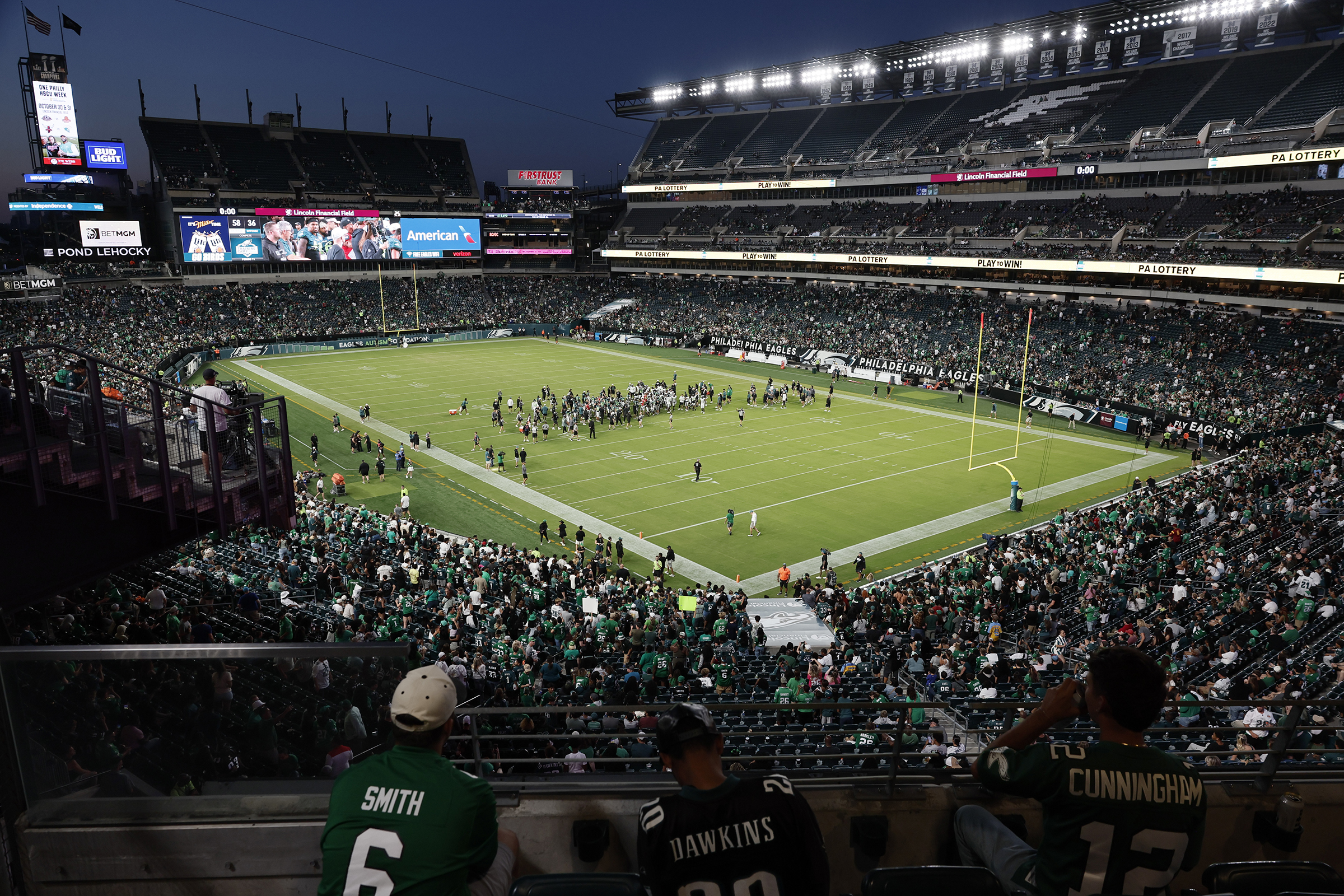
    The Eagles will take the field for their final preseason game Friday night, but the broadcast will look and feel different for Birds fans.

    For starters, the game isn’t airing on NBC10, which has broadcast Eagles preseason games since 2015. Instead, the game will air nationally on CBS, with veteran play-by-player Andrew Catalon calling the action.

    In theory, that means Birds fans won’t get a hometown TV broadcast and will also hear about backup Cincinnati Bengals players all night. But Catalon, who also calls Buffalo Bills preseason games, will be joined in the booth by regular Eagles preseason announcer Ross Tucker, so expect a fair amount of focus on the Birds’ backups.

    “Doing Bills preseason games for as long as I have, I don’t really focus on the other teams,” Catalon said. “But that’s why I think having Ross is a huge plus for us … You’ll have someone who’s been at Eagles practice every day.”

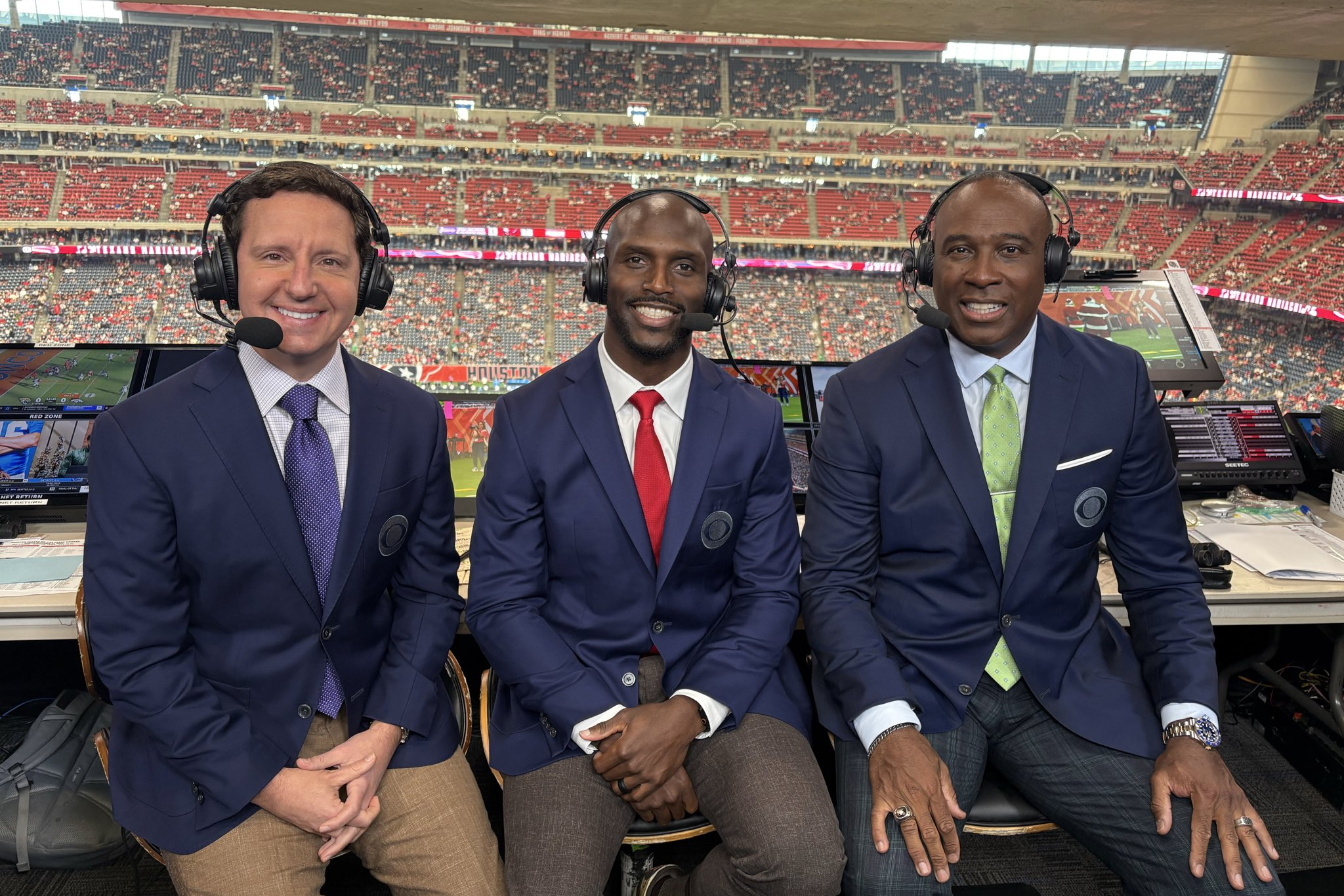
    Andrew Catalon (left) called NFL games last season on CBS alongside Jason McCourty and Charles Davis.CBS

    That’s not to say Catalon hasn’t done his research. The New Jersey native can normally fit the names and information on all the players on a manilla folder, front and back. For Friday’s game, which could see more than 160 players take the field, Catalon will be walking into the booth with a giant poster board with information.

    Like everyone else, Catalon is most interested to see rookie defenders Uar Bernard and Joshua Weru, dubbed by defensive coordinator Vic Fangio as the Birds’ “foreign exchange students,” because of how new they are to football.

    Their first game was just a few weeks ago against the Baltimore Ravens. Now both hope to land a coveted spot on the Birds’ 53-man roster.

    “They’re both tremendous stories,” Catalon said. “I’m fascinated after the game how Howie Roseman’s going to deal with them. Do you expose them to waivers or not?”

    Catalon isn’t stressed about the game or working with Tucker for the first time — Catalon has had five different broadcast partners the last six seasons, so he’s used to a shuffling crew. What he’s most worried about is getting from Buffalo to Philadelphia on Friday without major delays.

    “I don’t typically travel the day of the game,” Catalon said, “but [sideline reporter] AJ Ross and I will be doing that because we got the Bills-Steelers game Thursday night.”

    While Catalon has only ever called a handful of Eagles games, he’s been around Philly a lot the past few months to call the PGA Championship at Aronimink Golf Club and some men’s NCAA championship games at Xfinity Mobile Arena alongside Steve Lappas. He’s also not trekking too far away following the game.

    “My parents live down in Point Pleasant,” Catalon said. “So I’ll be at the Shore not too long after that final horn sounds.”

    Eagles-Bengals preseason TV and radio details

    • When: Friday, Aug. 28
    • Where: Lincoln Financial Field
    • Time: 8 p.m.
    • TV: CBS (Andrew Catalon, Ross Tucker, AJ Ross)
    • Radio: 94.1 WIP (Merrill Reese, Mike Quick)

    Where can I stream the Eagles-Bengals preseason game?

    Friday’s game will be free to stream on the Eagles app and PhiladelphiaEagles.com if you live in the Philadelphia or Cincinnati TV market.

    The game will also stream on any so-called skinny bundle that carries CBS, including YouTube TV and Hulu + Live TV. Most offer a free trial. You can also stream it on Paramount+, the network’s subscription streaming service.

    CBS3 is also available for free in and around Philadelphia using a digital antenna.

    Fans can also stream the game on NFL+, the league streaming service. It’ll set you back $6.99 a month, though there is a free seven-day trial.

    Live Eagles coverage from The Inquirer

    Staff writers Jeff McLane, Olivia Reiner, Ryan Novozinsky, and Jeff Neiburg will be covering the action live on GameDay Central. Notes and observations about the game will be at Inquirer.com/Eagles. Don’t forget to subscribe to our free Sports Daily newsletter.

    Next up for the Eagles? Roster cuts.

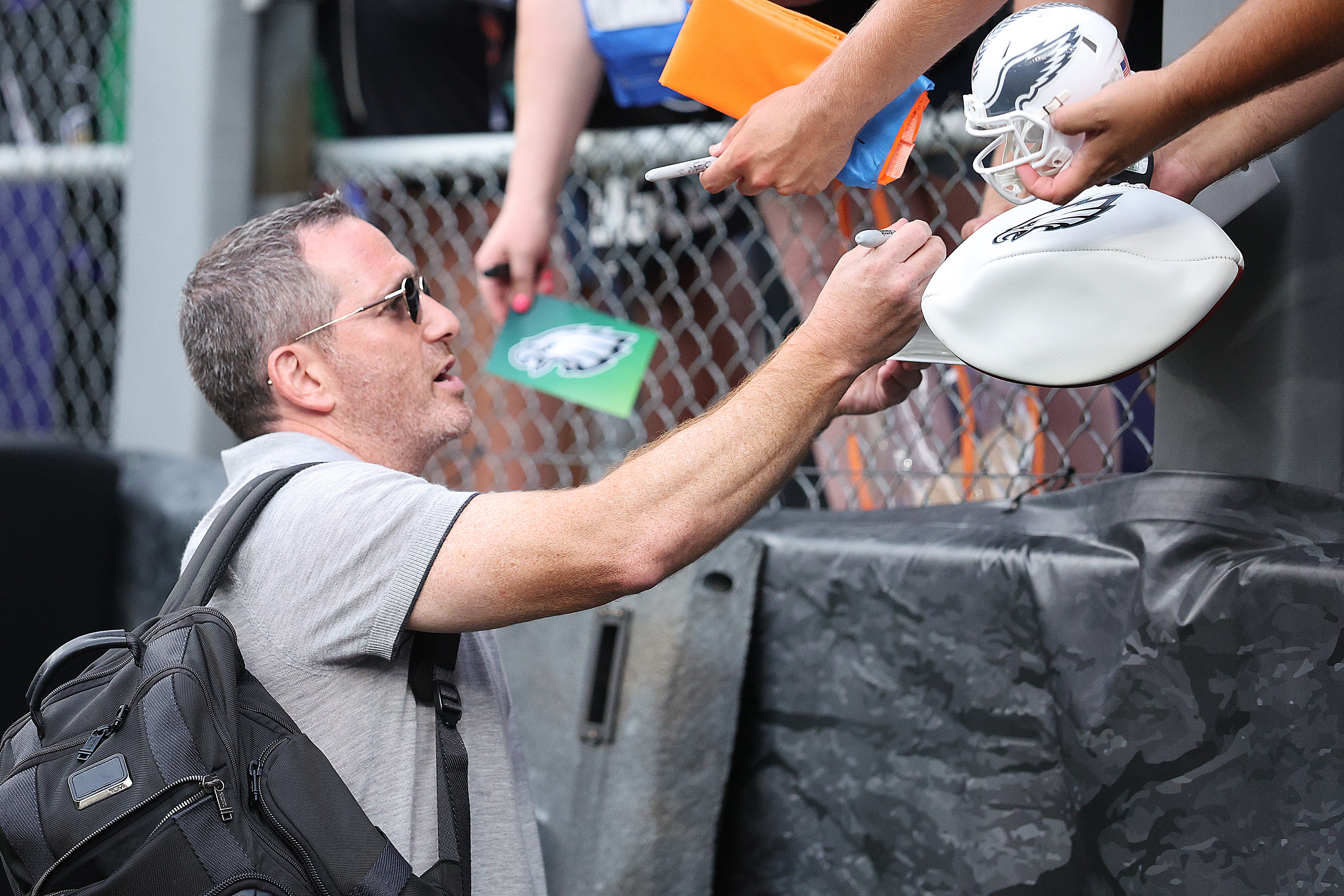
    Eagles GM Howie Roseman signs autographs before the team’s first preseason game.David Maialetti / Staff Photographer

    NFL teams have been able to keep their rosters at 90 players throughout the preseason. But that will end Sunday, with the Eagles and every other team must cut their rosters down to 53-players.

    In addition to the 53-man active roster, the Eagles will be able to carry up to 16 players on their practice squad.

    Eagles news

    The Eagles took tight end Eli Stowers in the second-round of this year’s draft. Jose F. Moreno / Staff Photographer

    Eagles preseason schedule

    • Aug. 28: Final preseason game, Bengals at Eagles, 8 p.m. (CBS)
    • Aug. 30: Rosters must be cut down to 53 players by 4 p.m.

    Eagles 2026 TV schedule

    • Week 1: Commanders at Eagles — Sunday, Sept. 13, 4:25 p.m. (Fox)
    • Week 2: Eagles at Titans — Sunday, Sept. 20, 1 p.m. (Fox)
    • Week 3: Eagles at Bears — Monday, Sept. 28, 8:15 p.m. (ABC, ESPN)
    • Week 4: Rams at Eagles — Sunday, Oct. 4, 1 p.m. (Fox)
    • Week 5: Eagles at Jaguars (London) — Sunday, Oct. 11, 9:30 a.m. (NFL Network)
    • Week 6: Panthers at Eagles — Sunday, Oct. 18, 1 p.m. (CBS)
    • Week 7: Cowboys at Eagles — Monday, Oct. 26, 8:15 p.m. (ABC, ESPN)
    • Week 8: Eagles at Commanders — Sunday, Nov. 1, 8:20 p.m. (NBC)
    • Week 9: Giants at Eagles — Sunday, Nov. 8, 1 p.m. (Fox)
    • Week 10: Bye week
    • Week 11: Steelers at Eagles — Sunday, Nov. 22, 4:25 p.m. (CBS)
    • Week 12: Eagles at Cowboys — Thursday, Nov. 26, 4:30 p.m. (Fox)
    • Week 13: Eagles at Cardinals — Sunday, Dec. 6, 4:05 p.m. (Fox)
    • Week 14: Colts at Eagles — Sunday, Dec. 13, 1 p.m. (Fox)
    • Week 15: Seahawks at Eagles — Saturday, Dec. 19, 5 p.m. (Fox)
    • Week 16: Texans at Eagles — Thursday, Dec. 24, 8:15 p.m. (Prime Video)
    • Week 17: Eagles at 49ers — Sunday, Jan. 3, 8:20 p.m. (NBC)
    • Week 18: Eagles at Giants — TBD (TBD)
  • This Phillies fan brought corn to every game of the last homestand. Now it lives in the batter’s eye at the Bank.

    This Phillies fan brought corn to every game of the last homestand. Now it lives in the batter’s eye at the Bank.

    Luke Butler’s introduction to the idiosyncrasies of Phillies fans came on Aug. 10, 1999. He was 11 years old, sitting in the upper bowl of Veterans Stadium with his mother, Martha, and one of her friends.

    The two women were there to see Mark McGwire, but Butler was locked in on another St. Louis Cardinal. Or rather, what spectators were throwing at him.

    It was J.D. Drew’s first game in Philadelphia since he’d rejected the Phillies’ attempts to sign him in 1997, choosing instead to reenter the MLB draft the following year.

    While roaming center field in the eighth inning, an irate Philadelphian flung a roll of toilet paper in Drew’s direction. Then, another irate Philadelphian hurled two D-cell batteries.

    The middle schooler was understandably unsettled. Nevertheless, the moment stuck.

    “The spunky surreality of being a Phillies fan … I feel like the seeds were really planted on that night,” he said.

    Butler’s awareness of his comrades’ quirks only increased from there. As he grew up around the Vet, and eventually, Citizens Bank Park, he continued to witness fan groups like the Wolf Pack and Padilla Flotilla.

    Once, in 2004, Butler and his friends wore matching yellow T-shirts that said “Keith Jones, Corn Boy” on the front, as a nod to the WIP Morning Show host who had a farm in South Jersey.

    This group was a little too obscure to become popular. But 22 years later, during the team’s most recent homestand, Butler’s maize-fueled fandom finally caught on.

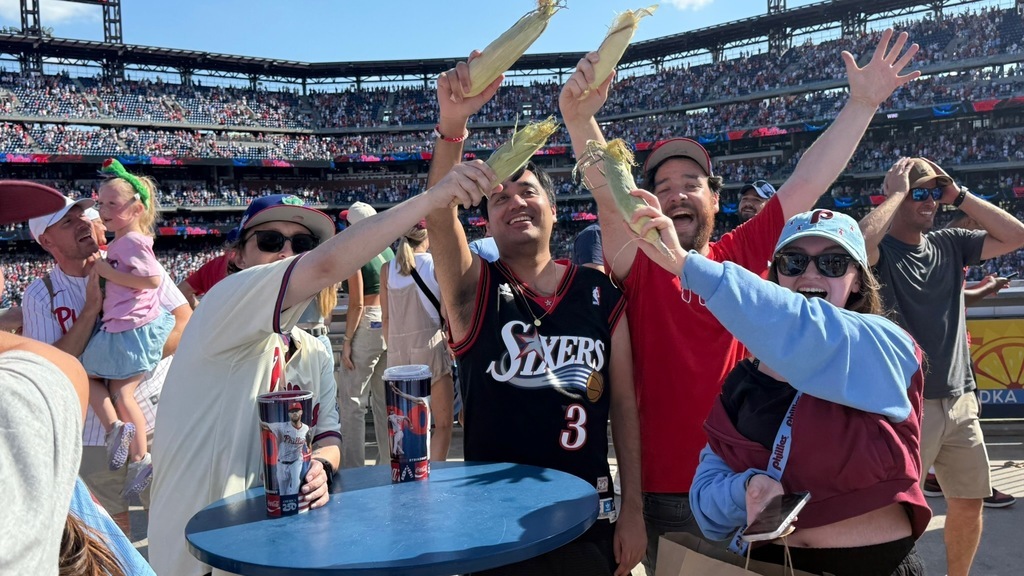
    More ears of the corn, in the stands, at a Phillies game last week.Photo courtesy of Luke Butler

    It all started with the Field of Dreams Game in Dyersville, Iowa. Butler, watching at home in Mt. Airy, was captivated by its cinematic elements.

    The stalks seemed to have a sagelike effect; after back-to-back losing series, the Phillies were suddenly playing as well as ever.

    Once the team won their next two games in Minnesota, superstitious fans joked about bringing corn to the ballpark. Butler was one of the few who actually did.

    “You could say my relationship with corn and the Phillies is actually like 20 years old,” he said. “We didn’t bring corn [in 2004]. But this was an extension of that, you could say.”

    Butler, who works for the city’s health department, stopped at Reading Terminal Market before last Monday’s game against the Marlins. He bought an 80-cent ear from Iovine Brothers, tucked it into his bag, next to his score book, and drove to South Philly.

    The security guards at the gate on Darien Street played along.

    “The guy searching my bag was like, ‘Oh man, I got to take your ear of corn,’” Butler recalled. “And I was just like, ‘All right, well, the bit is up.’ And then he just looks at me, and he’s like, ‘I’m just messing with you. You’re good.’”

    Less-online fans were predictably confused by Butler’s husked talisman. But the Phillies edged the Marlins, 6-5, despite a late rally from Miami, so the fan decided to bring it back on Tuesday.

    This tradition continued for the entire six-game homestand. Butler was at the ballpark every day, corn in hand, often bringing extra ears for friends and family. He said he would wave the corn during pivotal moments, “like a smudge stick or a sage,” and just “rattle it around.”

    The 38-year-old views the Phillies’ recent nine-game winning streak as proof of concept. His most compelling example came in the ninth inning of Sunday afternoon’s game.

    Butler, his friends, and his mother were standing in front of Ashburn Alley, pointing the maize toward home plate. They watched as Bryce Harper doubled, J.T. Realmuto singled, Justin Crawford walked, and Edmundo Sosa drove them all home with a two-out double.

    Then, Schwarber provided a finale too good to be scripted. As he stepped up to the plate, Butler lifted his ear to the sky, and yelled, “Kyle, hit it to the corn!”

    The Phillies slugger obliged, crushing a 459-foot walk-off home run that cleared the batter’s eye, to cap a 6-4 win against St. Louis.

    “It looked like a howitzer,” Butler said. “We were all fist-pumping the corn and jumping. It was a little — obviously can’t say it full-on — but it was a little like ‘Bedlam at the Bank.’ Pandemonium.”

    As the crowd dispersed, Butler walked to the railing overlooking the bushes and trees. He bent over, peered between the bars, and tossed the ear into the batter’s eye.

    “It was weary,” Butler said. “It was asking to go. But it also felt like, this wild, amazing energy of this streak connected to the Field of Dreams; now that ear of corn is always in the trees.

    “We’ll have more [corn]. We’ll have fun with it. We’ll let it grow and evolve as it wants. But the original one is [there].”

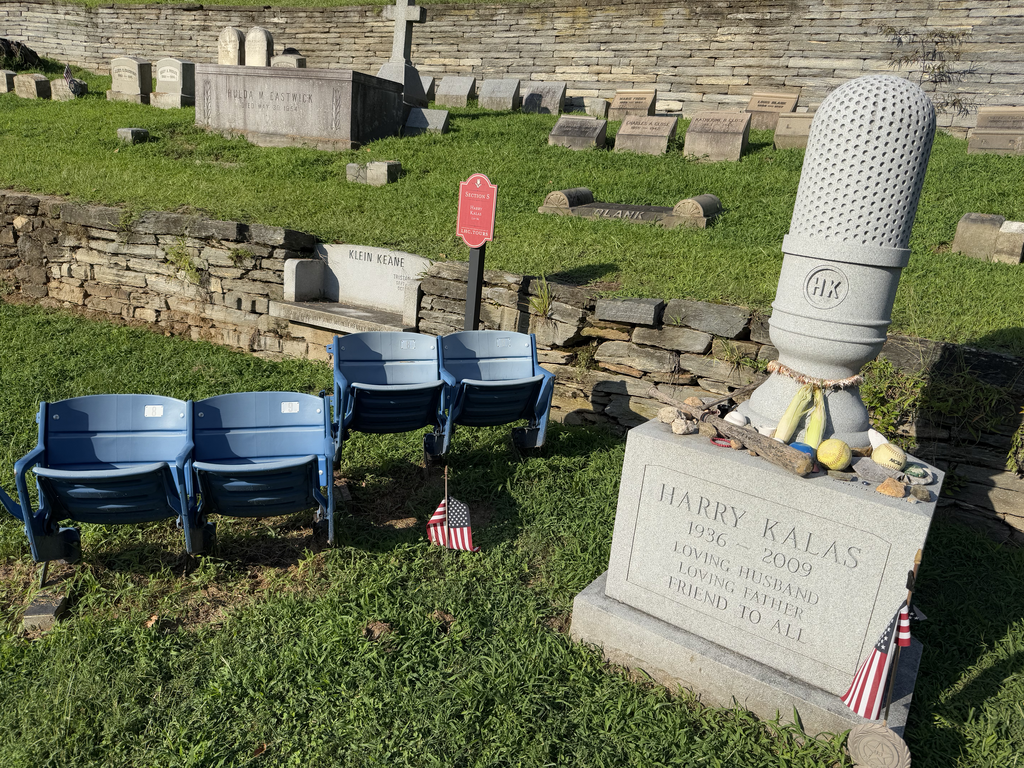
    After Kyle Schwarber hit his walk-off home run on Sunday, Luke Butler and his mother, Martha, paid a visit to Harry Kalas, ears in hand.Photo courtesy of Luke Butler)

    He left his two other ears at the grave site of longtime broadcaster Harry Kalas in Laurel Hill Cemetery, to commemorate a “magical homestand that he would have loved.”

    The lifelong Phillies fan was hoping his team would continue its winning streak out west, and offered to bring a “U-Haul full to the brim with corn” if they did.

    Unfortunately for Butler, they dropped two games in Seattle, before winning the series finale on Wednesday afternoon.

    But regardless of what happens throughout the rest of this Phillies road trip, Butler will be back at Citizens Bank Park next homestand, armed with his favorite vegetable.

    And who knows? Perhaps that original ear will live on; a symbolic slice of heaven, far from Iowa.

    “The dream would be that the seeds are fertilized,” Butler said. “And that next summer, people are like, ‘How in the hell is there corn growing in center field?’”

  • The controversial East Whiteland data center project has been issued its second stop-work order

    The controversial East Whiteland data center project has been issued its second stop-work order

    The developers of a controversial 1.5 million-square-foot data center have again been ordered by East Whiteland Township officials to stop work, this time over a lack of “clear documentation” showing the project will have sufficient water to operate the facility.

    The stop work order, issued Wednesday, tells the developers to “immediately cease work” on preliminary construction, such as concrete pads, footings, and a control house that has been partially completed.

    It is the second time in recent months that the township has told the developers to halt work at the Foote Mineral Co. Superfund site. In July, township officials had directed the developers to stop any work that moved earth while the township sought “greater clarity” on the soil and health and safety plans. The order came amid concerns from residents that the Superfund site had not been sufficiently remediated. Work resumed by the end of the month.

    Under the latest stoppage order, work at the proposed data center site will not restart until developers Green Fig LLC and Sentinel Data Centers provide the township with confirmation from Aqua, the water utility company, that “sufficient water is available and committed to this project and the Developer’s commitment to move forward with ensuring sufficient water is brought to site.”

    A representative for the developers did not immediately respond to a request seeking comment on whether they have the documentation needed.

    Earlier this month, through a Right-to-Know request, residents surfaced a 2024 letter from Aqua telling the developers: “Unfortunately, Aqua does not have the capacity to meet the peak demand … as requested.” The letter recommends the developers “evaluate the construction of a storage tank on your site to provide peak flow requirements if needed.”

    <iframe src="https://drive.google.com/file/d/1-8epaPC67vXIsipqNq9PTNMSWTu8OKME/preview" width="640" height="480"></iframe>

    The letter arose at an Aug. 19 board of supervisors meeting, with community members pressing the township to stop construction and revoke permits.

    The developers have tried, through several avenues, to alter the final design of the project that was originally approved in 2024 by moving away from using millions of gallons of water a day to cool the data center and instead installing air chillers.

    An attempt to update the plan earlier this year drew staunch opposition from residents, who turned up to protest the project, in one case shutting down the meeting. The developers tried to appease the community with an offer to downsize the project, but abandoned the updated proposal, saying they would instead build the 2024 approved plan after the township did not act fast enough.

    They returned to the township in July, however, again seeking to alter how the building is cooled, emphasizing that it would save water.

    Along with the proposed changes, the developers again offered to radically downsize the footprint of the complex, from 1.5 million square feet with two data center buildings roughly 772,000 square feet each to a total of 536,000 square feet. That offer came in response to a request made by a township official the day prior to the public meeting, according to emails obtained by The Inquirer.

    The township’s three elected officials tabled making a decision then and still have not voted on the proposed changes. They next meet on Sept. 9.

    Meanwhile, in an Aug. 3 email obtained by The Inquirer, a representative for the developers recanted the offer to resize the data center, telling the township that due to the “delay occasioned” by the tabling, “the Applicant is no longer able to facilitate further modifications … regarding building size.”

    This suburban content is produced with support from the Leslie Miller and Richard Worley Foundation and The Lenfest Institute for Journalism. Editorial content is created independently of the project donors. Gifts to support The Inquirer’s high-impact journalism can be made at inquirer.com/donate. A list of Lenfest Institute donors can be found at lenfestinstitute.org/supporters.

  • Pinot grigio is wildly popular for a good reason. Here’s where the best ones come from.

    Pinot grigio is wildly popular for a good reason. Here’s where the best ones come from.

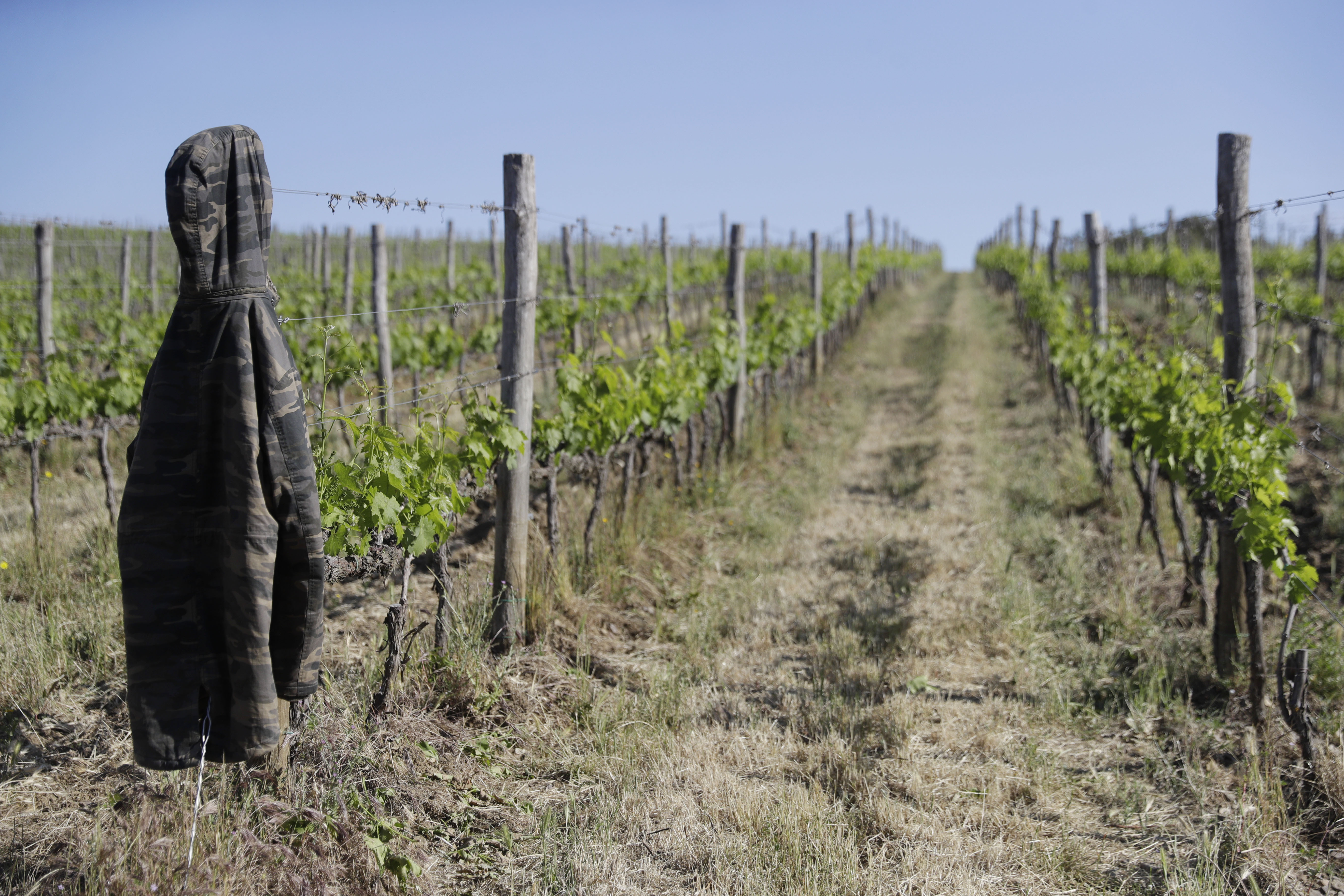
    Italian pinot grigio is one of the most popular imported wines in the U.S., but one result of that success has been a tarnished reputation that leads delicious examples like this one to be overlooked simply because they cost a few dollars more.

    As white wine grapes go, pinot grigio is an odd duck on many levels. It is a grape of French origin that is better known by an Italian name. Its fruit is used for white-winemaking but consists of grapes that look dusky purple on the vine. Indeed, it is technically not a true “grape variety” in its own right in botanical terms, but rather a paler-skinned mutation of a prized red grape variety: pinot noir.

    Pinot grigio was originally known as pinot gris and found its way from France to northern Italy by way of German-speaking regions in between. Known as grauer burgunder in Germany and Austria, it proved adept there at producing pleasant wines even when harvested before reaching full ripeness. Early harvests mitigate many of a grower’s risk factors, from bad weather to rot and disease, making brisk, lightweight pinot grigio a sensible crop in regions with short growing seasons and high humidity. These traits led to this grape’s widespread adoption in northeastern Italy, from the muggy plains surrounding Venice up into the alpine foothills of the Dolomites.

    The best quality is found in subregions like Trentino, Alto Adige, and Friuli, as with this lovely wine grown near the Austrian border. Where cheaper pinot grigios can taste watery and bland, this crisp, clean dry wine features flavors of fresh yellow pears and ripe kiwi that bring us back for a second glass. It’s hard to beat as a food partner, shining with everything from shrimp cocktail to roasted chicken to sweet corn on the cob.

    Bottega Vinaia Pinot GrigioCourtesy of Bottega Vinaia

    Bottega Vinaia pinot grigio

    Trentino, Italy; 12.5% ABV

    PLCB Item #4097

    On sale for $17.99 (regularly $19.99) through Aug. 31

    Also available at the Original Canal’s Discount Liquor Outlet in Glassboro, N.J. ($15.99, canalsofglassboro.com)

  • Catastrophic floods kill over 350 in Nepal and Tibet, with more than 1,300 missing

    Catastrophic floods kill over 350 in Nepal and Tibet, with more than 1,300 missing

    DEVIGHAT, Nepal — Rescue teams and military helicopters searched Thursday for hundreds of missing people along the mountainous Nepal-China border, where a deadly torrent of water and mud several stories high swept through communities a day earlier following a glacier collapse.

    Videos of the disaster showed people running before the floodwaters swallowed them up and washed out buildings and bridges. More than 390 people were killed, according to authorities in Nepal and China, and more than 1,400 were missing, including hundreds of foreigners and pilgrims. Hundreds of others have been displaced across the Himalayan region.

    The steep slopes and lush valleys below the Himalayan mountain range — home to many of the world’s highest peaks and remaining glaciers — are especially vulnerable to flooding and landslides. Melting glaciers have become more common because of human-caused climate change.

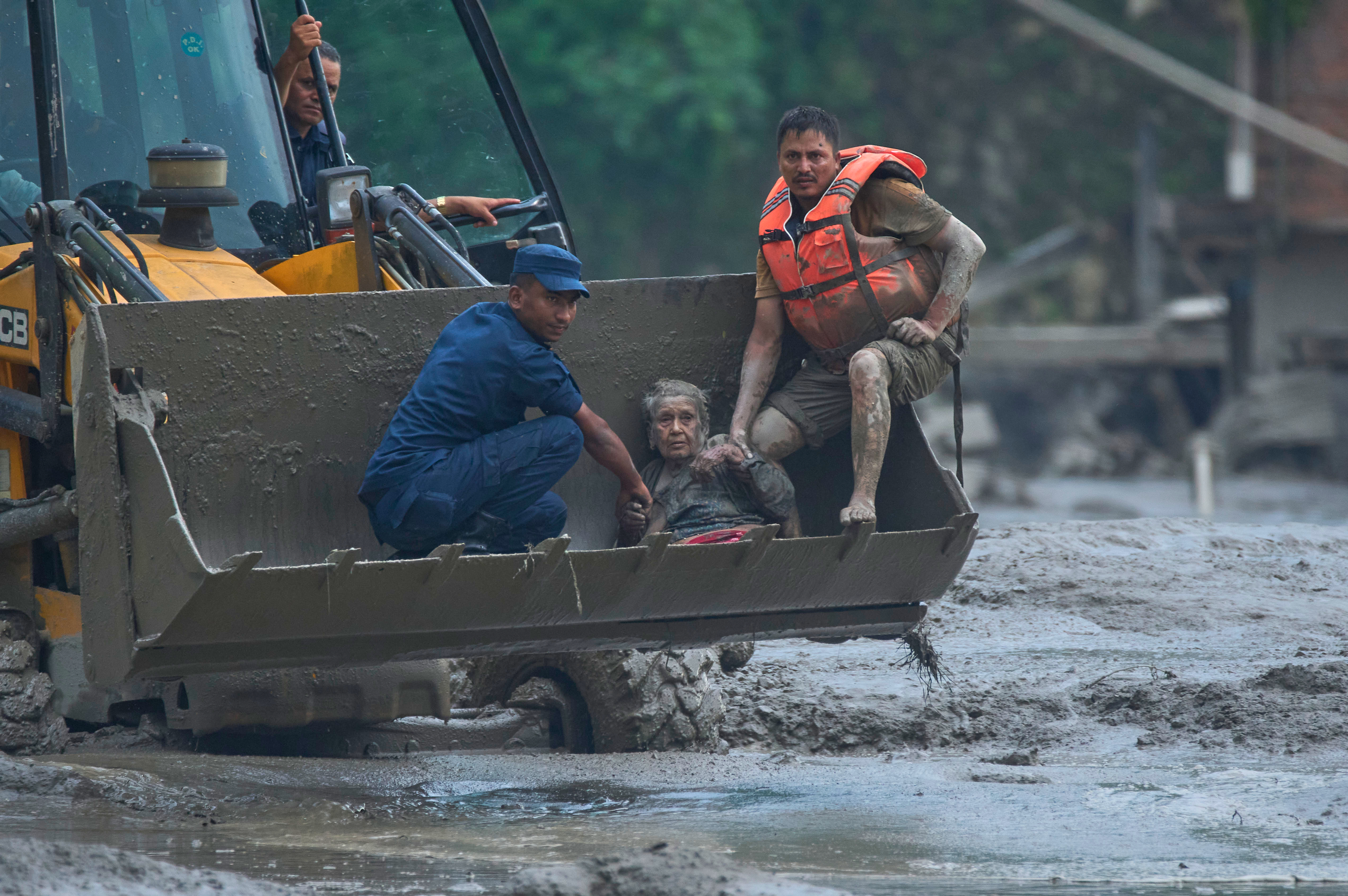
    Images showed what appeared to be the second floors of buildings in Nepal’s hard-hit Nuwakot district slathered in mud after the torrent rushed by. Riverbanks and village streets were covered in mud. Debris hung from tree branches and wires. Vehicles were buried, and some stunned survivors were caked in mud.

    Before-and-after images aired by state broadcaster China Central Television showed a multistory building and more than a dozen vehicles covered in mud. A two-lane road running along a river in a valley in Tibet’s Shigatse prefecture was completely buried. Aerial footage also showed that a lake had formed and expanded on the China-Nepal border, with authorities warning of a possible dam break.

    Nirajan Paudyal, a journalist based in Nepal’s capital of Kathmandu, worried for his parents and other relatives in the district’s village of Soley.

    “I fear there won’t be any update,” Paudyal said.

    U.S. President Donald Trump said the flooding was terrible to see, describing how “strong, well-built buildings were wiped out like they were toothpicks.”

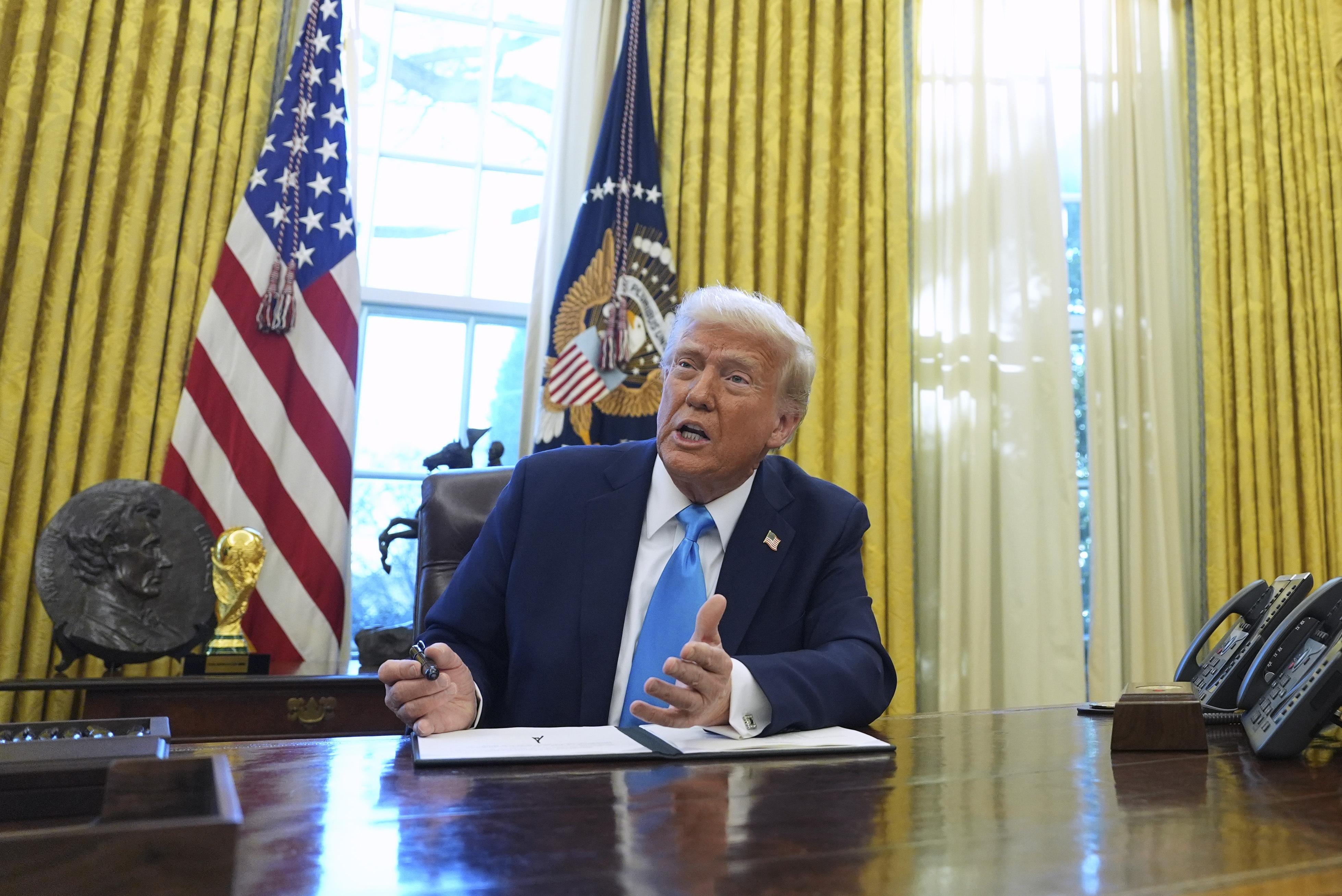
    Speaking to reporters in the Oval Office, Trump said the U.S. spoke with Nepalese leaders and offered to provide “anything they want.”

    Helicopters deployed for rescue because of damaged roads

    The torrential floods that ran miles through mountains left at least 389 people dead and more than 460 injured in Nepal, according to police. Another 910 people are reported to be missing in Nepal. Authorities in Tibet, an autonomous region of China, reported at least three dead and 558 missing.

    Nepalese officials said dozens of bridges were destroyed and nearly 25 miles of roads were damaged, complicating search efforts.

    The Nepalese army has rescued more than 100 people by helicopter, army spokesperson Brig. Gen. Raja Ram Basnet said. Army teams also evacuated people trapped inside facilities linked to the Trishuli hydropower project, he added.

    Dozens of injured people were transported to Kathmandu for medical care.

    Rescuers found bodies in Chitwan district hundreds of miles downstream from the hardest-hit areas.

    Bishal Kumar Bhandari, chairman of the Nepal Red Cross Society, said the agency has shifted its focus from rescue to large-scale relief operations in the flood-hit districts. He said that around 1,200 people were displaced from at least three villages.

    In Tibet, the roaring mudslide that struck Wednesday engulfed a multistory port building and swallowed a bus parking lot at the land border crossing of Gyirong Port. Mud left in the surrounding areas was more than 5 feet deep on average, Chinese state broadcaster CCTV reported. Roads leading to the crossing were all damaged, while secondary collapses or landslides might occur as rain continued in the area, it added.

    China’s premier, Li Qiang, arrived Thursday in Gyirong to direct rescue efforts, alongside 500 military and paramilitary personnel. Military helicopters circled overhead, searching for survivors, assessing the disaster and mapping out possible rescue and evacuation routes.

    Chinese authorities also warned that the newly formed lake at the confluence of the Tsogyal and the Purupqiangzangbu rivers is overflowing and may burst. The lake contained 70 million cubic feet of water as of Thursday morning and was expected to receive another 106 million cubic feet in the next three days, China’s Ministry of Water Resources said.

    The ministry warned there was a high risk the dam could fail, causing further flooding.

    The United Nations’ humanitarian chief, Tom Fletcher, announced Thursday on X that he ordered the release of $2 million from the U.N.’s Central Emergency Response Fund to help with medical care, shelter, and water. He called the floods “horrifying.”

    “We pledge to support national efforts to deliver emergency aid and support,” U.N. Secretary-General Antonio Guterres told reporters.

    More than 1,400 are missing, including hundreds of foreigners

    Many people in the disaster zone waited to hear whether their loved ones were alive.

    Shova Shrestha, 33, has spent more than a day seeking word of her husband, Rajan Shrestha. She said his phone rang when she first called after the floods, but it later became unreachable. Since then, she has watched every helicopter that landed in Bidur, the capital of Nuwakot district, hoping he might be among the survivors.

    “I keep looking at each helicopter, hoping he will step out of it,” Shova said.

    Among the missing are 517 foreigners, according to Nepal’s tourism board.

    They include 178 people from India, more than 60 from the U.S., and people from 30 other countries, including Ukraine, the U.K., South Africa, and Japan, the board said.

    Many of the missing may have been on a pilgrimage to Mount Kailash in Tibet, a sacred site for Hindus, Buddhists, and others.

    Seventy-seven people from one pilgrimage group were caught in the floods at the immigration office at the border, according to a post on X from Indian spiritual guru Sadhguru Jaggi Vasudev.

    A visibly emotional Sadhguru said in a video that the group included 22 Americans and others from various countries. He said that there was no official information on their whereabouts.

    The U.S. State Department said 90 Americans were unaccounted for in China and Nepal after the flood. The department said it was unaware of any U.S. deaths and that three Americans had been rescued.

    The Indian Ministry of External Affairs said Thursday that 288 of the country’s people, including some workers on a power project, were missing.

    Chinese Ministry of Foreign Affairs spokesperson Lin Jian said that nearly 100 Chinese citizens were missing in Nepal. According to preliminary information, 260 of those missing in Tibet were foreigners, he said.

    A glacier collapse may have caused floods

    The U.S. Geological Survey first reported a magnitude 4.4 earthquake early Wednesday, about 40 miles north of Kathmandu, near the border.

    The agency later updated its analysis to say the seismic event was instead a magnitude 5.2 glacier collapse that sent debris flowing downstream.

    Climate experts at the Kathmandu-based International Center for Integrated Mountain Development said an avalanche from a glacier likely caused Wednesday’s flash flood.

    In an emailed statement, they said water levels at one point on the Trishuli River rose by as much as 27 feet in half an hour.

    The increasingly unstable Himalayan ice system threatens communities, infrastructure and water supplies across one of the world’s most densely populated regions.

    The region saw similar flash floods in August 2025, when a glacial lake in Tibet overflowed because of high temperatures. Nine people were killed, and critical infrastructure, including a bridge connecting Nepal and China, was damaged.