Blog

  • Measles outbreaks present ‘very real threats’ in Philly schools. Here’s how officials are working to prevent them.

    Measles outbreaks present ‘very real threats’ in Philly schools. Here’s how officials are working to prevent them.

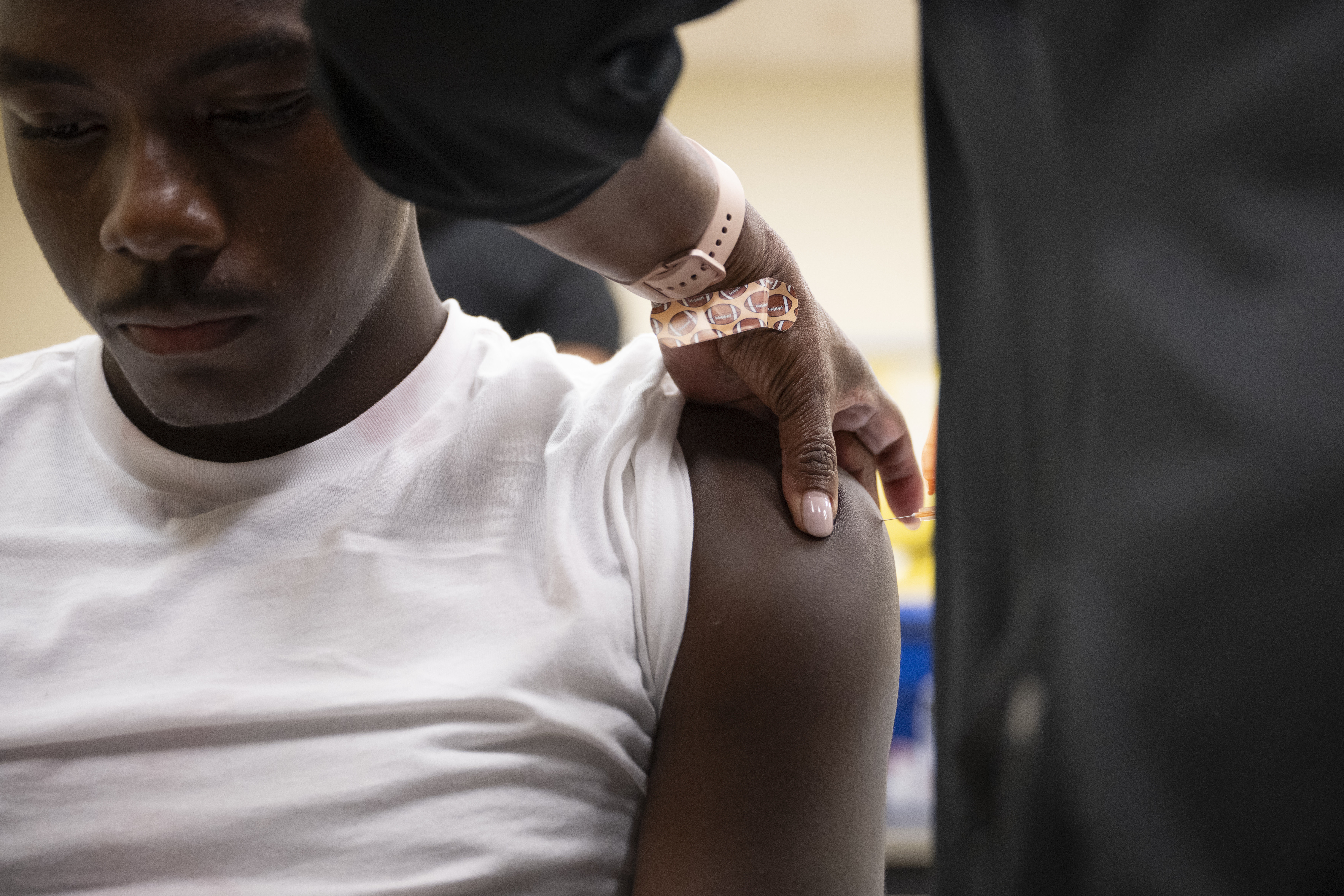
    Families with kids in tow lined up Thursday at Benjamin Franklin High School for a one-stop shop: physicals, mental health services, vision screenings, and, perhaps most important, vaccines.

    The Philadelphia School District is making a full-court press to get its vaccination rates up, amid a statewide measles outbreak and news that some city schools saw double-digit declines in kindergarten immunization rates in the 2025-26 school year — leaving communities vulnerable to further measles spread.

    Kids must be healthy to learn, said Kendra McDow, a pediatrician and the district’s medical director, and vaccines against diseases like measles, whooping cough, and chickenpox are crucial protection.

    “In 2026, these diseases are very real threats to the health of children and communities,” McDow said. “We are seeing in real time the tragic consequences of children and adolescents not getting vaccinated.”

    Medical Officer Kendra McDow speaks during press conference encouraging vaccinations for Philadelphia kids on Thursday at Benjamin Franklin High School in Philadelphia.Joe Lamberti / For The Inquirer

    Two people in Lancaster County who tested positive for measles have recently died, state officials said Tuesday. They were Pennsylvania’s first measles-related deaths in 30 years. Both of the people were unvaccinated.

    To achieve community protection, which scientists call herd immunity, 95% of a school population must be vaccinated. And though Philadelphia’s vaccination rates remain relatively strong compared with other pockets of the state, about 40% of kindergarten classrooms across Philadelphia and its surrounding suburbs became vulnerable to a measles outbreak last school year, up from a third of classrooms the year prior, according to an Inquirer analysis of state data.

    To boost city immunization rates, the district is focusing on access — from a back-to-school bus tour this summer that came with a side of childhood vaccines to the Benjamin Franklin event over two weeks, which runs through Friday.

    Parents can register their children at the district’s Constance E. Clayton Education Center, at 440 N. Broad St., then walk up the block to Ben Franklin, at 550 N. Broad, to get their children vaccines and other preventive healthcare, including connection to mental health services and appointments to get eyeglasses.

    Measles is now in 28 Pennsylvania counties, with more than 400 cases reported this year — nearly half in the last month. No cases have been reported in Philadelphia, but the highly contagious disease is circulating in suburban Chester County.

    Pennsylvania had the most newly reported measles cases in the nation last week, said Ala Stanford, founder of the Black Doctors Consortium, and 73 state residents have been hospitalized.

    Pennsylvania now has the highest number of cases reported in the state since 1991.

    “This is not a mystery. It’s arithmetic,” Stanford said. “It takes 95% of us vaccinated to stop measles from moving through a community. Pennsylvania is at about 93%, and not one county in this region is at 95%.”

    What parents need to remember, Stanford said, is that since children traditionally have not received their first measles vaccine until age 1, “every infant in the city, in the stroller, in the car seat, at the family reunion has no protection of their own. We are their protection. That is the entire system.”

    In response to the current outbreak, state officials have started recommending that parents in affected areas vaccinate children as early as 6 months with a “zero dose” to provide extra protection against a disease so contagious that it will infect nine in 10 unvaccinated people who are exposed.

    The benefits of community protection go beyond babies and children, Stanford said: “It’s the teacher. The lunchroom lady, the man who sweeps the floor, the security officer at the door — you do not know who they go home to at night. You do not know who is on chemotherapy, who has had a transplant, who is caring for a newborn.”

    Philly schools recommend vaccinations for students
    Video: Philly schools recommend vaccinations for students

    ‘Why so many?’

    School officials plan to set up individual vaccine clinics at schools that have problematic compliance rates.

    Emlen Elementary in Mount Airy, for instance, had a 100% vaccination compliance rate among incoming kindergarteners two years ago. Last year, it dropped to 80%. (Many Emlen families cited philosophical or religious exemptions to vaccination.)

    Ericka Hayes, senior medical director of infection prevention at Children’s Hospital of Philadelphia, said rampant misinformation about vaccine safety certainly contributed to lower vaccination rates.

    “Parents should not let that sway them from giving their children one of the most tested and effective childhood interventions in history,” Hayes said.

    Disruptions from the pandemic are another factor in lagging vaccine rates, Stanford said.

    Dr. Ala Stanford of the Black Doctors consortium speaks during press conference encouraging vaccinations for Philadelphia kids on Thursday at Benjamin Franklin High School in Philadelphia.Joe Lamberti / For The Inquirer

    At a recent clinic at Strawberry Mansion High, Stanford said, children from 30 schools across the city showed up for shots.

    “We had 14- year-olds getting four shots, and we said, ‘Why so many?’” Stanford said. Families told care providers that they had fallen off on vaccine schedules, but were relieved to have a chance to catch up their children.

    As word spreads about vaccine access, about ease and availability across the city, “more people show up,” Stanford said.

    Kids can be excluded for vaccine noncompliance

    Children can be excluded from school under Pennsylvania law if they are unvaccinated and their families have not formally filed for an exemption on religious or philosophical grounds.

    According to state data, the Philadelphia School District excluded 34 12th graders, five seventh graders, and three kindergartners last school year for vaccine noncompliance.

    Far more students were labeled “noncompliant and attending” — 1,392 12th graders, 1,853 seventh graders, and 669 kindergartners. That means those students’ families have made a plan for them to get vaccinated, but have not yet followed up on it.

    Students without vaccine exemptions can be admitted to kindergarten on a provisional basis as long as they have a plan to catch up on their vaccines. (State law allows exceptions for students living in foster care or without permanent housing.) They are listed as “non-complaint but attending” when families fail to adhere to that plan.

    School officials have said they work with families in that category to help them catch up on shots, but unvaccinated kids may be asked to stay home if a communicable disease is identified at their school.

    School nurses are key to the effort, officials said, on the front lines of ensuring students are vaccine-compliant. Every school in the district currently has a full-time school nurse, McDow said.

    One of the district’s 277 school nurse positions is unfilled, but an agency nurse is covering that vacancy, and “we are working to have the position filled as soon as possible,” McDow said.

    The act of getting vaccinated or vaccinating your children, said James Garrow, deputy commissioner of the city health department, is powerful.

    “Your vaccination can help save lives,” Garrow said.

    (function(){function e(){window.addEventListener(`message`,function(e){if(e.data[`datawrapper-height`]!==void 0){var t=document.querySelectorAll(`iframe`);for(var n in e.data[`datawrapper-height`])for(var r=0,i;i=t[r];r++)if(i.contentWindow===e.source){var a=e.data[`datawrapper-height`][n]+`px`;i.style.height=a}}})}e()})();

  • U.S. Patriot missile stocks in Europe are ‘beyond critical’ due to Iran war, officials say

    U.S. Patriot missile stocks in Europe are ‘beyond critical’ due to Iran war, officials say

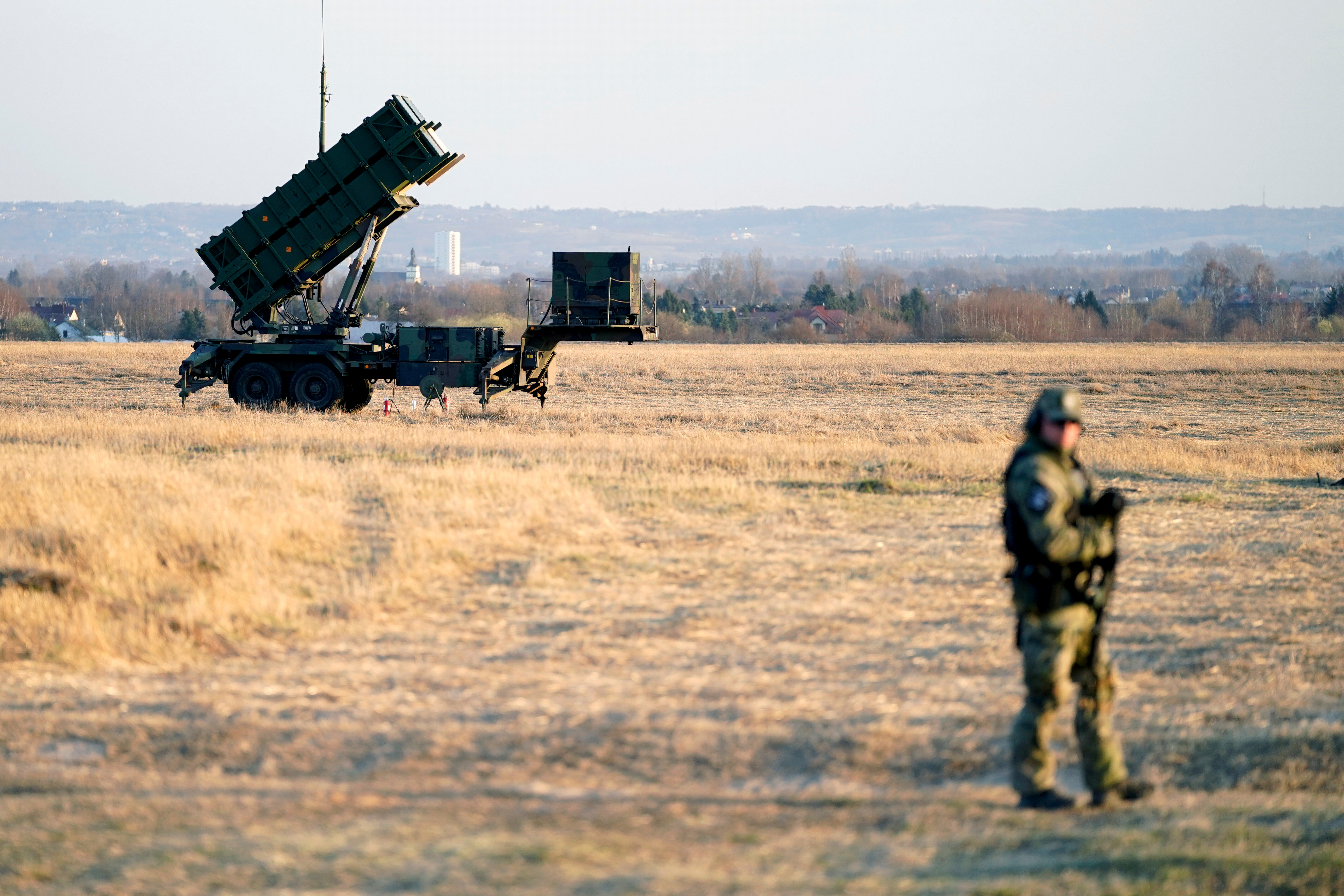
    WASHINGTON — The U.S. military is experiencing a “beyond critical” shortage of advanced missile interceptors in Europe largely driven by President Donald Trump’s war with Iran, a U.S. defense official in Europe and a NATO official told The Associated Press, raising concerns about vulnerabilities in NATO countries to a potential Russian attack.

    The U.S. defense official said the most concerning shortfall involves Patriot missile interceptors, which can shoot down Russia’s high-speed ballistic missiles. The NATO official confirmed the low inventories of Patriots among American and NATO forces in Europe. Both spoke on condition of anonymity to discuss sensitive military matters.

    In the event of a Russian ballistic missile assault on, for example, a military headquarters or power plant, NATO could be in a similar position to Patriot-starved Ukraine and be forced “to take punch after punch in the mouth,” the U.S. defense official said.

    In Europe, the American military “definitely” does not have enough Patriots to stop any possible sustained ballistic missile attack and would have “very limited” capability to defend against a single ballistic missile strike or a stray Russian missile that goes off course, the U.S. official said.

    It illustrates the cascading fallout from Trump’s decision to launch a war against Iran, a conflict that reaches the six-month mark on Friday. U.S. missile stocks in Europe have been moved to the Middle East, where U.S. and Gulf allies have fired off significant numbers of interceptors, including Patriots, to thwart Iran’s drones and missiles. Some of those attacks have killed and wounded American troops.

    Though a Russian ballistic missile attack against NATO countries is not imminently expected, CIA Director John Ratcliffe went to Moscow this week to warn Russia not to attack, The Wall Street Journal reported.

    Asked by reporters Thursday whether Ratcliffe delivered that message to Russian President Vladimir Putin, Trump offered a roundabout response.

    “I don’t want to comment on that, but they’re not going to attack,” Trump said.

    European and NATO officials say Russia could be in a position to attack countries in the alliance by 2030. Patriot stockpiles are projected to rebound by then. In the meantime, Russia’s war in Ukraine could hinder its ability to carry out any missile attack on Europe as it would be a challenge for Moscow to fight an air war on two fronts.

    U.S. Patriot transfers to Ukraine played a role in the drawdown, but the Iran war wasn’t expected

    U.S. Army Col. Martin O’Donnell, a senior NATO military spokesperson, said it is “simply not the case” that the number of Patriot missiles in Europe is beyond critical.

    NATO, he said, is able to “block punches” and has enough air defense munitions available to defend itself as well as to donate to Ukraine.

    Chief Pentagon spokesman Sean Parnell said in a statement Thursday that claims of U.S. munition shortages “are false.”

    “We have everything required to strike at the time and place of the President’s choosing,” Parnell said. “Across multiple combatant commands, we have already executed successful operations while maintaining a deep, ready arsenal to defend our people and our interests.”

    Officials in Ukraine, however, are begging for more Patriots to defend against Russian missile attacks, while previous U.S. transfers to Ukraine have drawn down some of the American supply of the interceptors.

    Kyiv says only U.S.-made Patriots can stop Russia’s advanced ballistic missiles, which increasingly are getting through Ukrainian defenses, including as part of a barrage overnight into Thursday.

    The U.S. supplied hundreds of Patriot missiles to Ukraine over the course of the 4 ½-year-long conflict, but the Iran war was the tipping point for shrinking inventories, said Ed Arnold, senior associate fellow at the Royal United Services Institute, a military think tank in London.

    The supply to Ukraine was planned for and reasonably measured, he said, whereas stocks in the Middle East have been unexpectedly and quickly drained, exposing supply chain constraints.

    The U.S. military in Europe also is grappling with critical shortages of the Army Tactical Missile System, or ATACMS, a medium-range ballistic missile designed to strike behind enemy lines, the two officials said. But the overall munitions picture in Europe is less dire than on air defenses alone because some European militaries have their own offensive missiles, such as the Taurus and Storm Shadow, which are both long-range air-launched bunker-busting missiles.

    Europe has few alternatives while stocks are low

    The dearth of Patriot interceptors in Europe would leave few alternatives for shooting down Russia’s more advanced ballistic missiles, which can be combined with swarms of inexpensive drones to overwhelm defenses, experts say.

    Ukraine and some allies already use systems that can destroy slower-moving drones without expensive missiles. But ballistic missiles are a challenge because they dive steeply toward targets at more than five times the speed of sound, leaving little time to stop them.

    The Patriot system tracks the missile, predicts its path and launches within minutes, all while carrying out complex calculations to ensure the interceptor finds its target. One Patriot battery can only cover a limited area: for example, a small military base but not a whole city.

    One alternative could be France and Italy’s SAMP/T NG air defense system. France has promised to speed up the delivery of the system — the upgraded version of the current SAMP/T — to Ukraine, which the manufacturer says is better able to counter ballistics.

    The new iteration, however, has not yet been battle tested and the current version of the SAMP/T has a smaller range than the Patriot.

    While U.S. and European militaries have warships that can serve as mobile air defense, they may be too far from a target to protect it and could risk getting sunk.

    Patriot stocks have plunged during the Iran war

    Ukraine has received Patriots from American and European stockpiles since Russia’s 2022 invasion, with the U.S. providing about 600 of the interceptors during the Biden administration, said Mark Cancian, a retired Marine colonel who is now senior adviser at the Center for Strategic and International Studies, a Washington think tank.

    But the greatest expenditure has been during the Iran conflict, which has used up 65% of U.S. Patriots, amounting to roughly 1,500 of the nation’s 2,330 interceptors, CSIS says. About 600 missiles, including those destined for Europe, should be made this year, with a production goal of 2,000 Patriot missiles a year set for 2030, Cancian said.

    NATO says Europe’s first Patriot missile production facility is expected to open in Germany in September, with deliveries possibly beginning early next year. The first deliveries should go to countries that have already placed orders, including Germany, the Netherlands, Romania and Spain, the U.S. defense official said.

    But for now, that means some countries, such as Germany, have bought expensive Patriot systems but are in the “ridiculous” position of not having any ammunition to fire from them, said Arnold of the London think tank.

    Germany’s defense ministry said it does not comment on stockpiles.

    Russia also has limitations

    Moscow likely cannot carry out a sustained air assault on a NATO target while it launches almost nightly attacks on Ukraine, Arnold said.

    Ukraine’s recent strikes into Russia also have exposed weaknesses in Russia’s air defenses, which could prompt Putin to think twice about provoking a retaliatory attack.

    “The uncomfortable truth is possibly the best air defense that we have is Russian constraints,” Arnold said.

  • Za’Darius Smith explains why he retired from the Eagles last season: ‘I was in a dark place’

    Za’Darius Smith explains why he retired from the Eagles last season: ‘I was in a dark place’

    Za’Darius Smith played his last game with the Eagles on Oct. 9, 2025, before announcing his retirement four days later after 11 seasons in the NFL. The former edge rusher posted a message on Instagram just six games into the regular season.

    Now, Smith has found his way back into the league, signing a one-year contract with the Atlanta Falcons last week. In his latest news conference, the three-time Pro Bowler revealed a deeply personal reason for his decision to retire from the Eagles.

    “Got a phone call from my mom’s doctor telling me that she doesn’t have much longer to be on this Earth,” Smith said. “So, I let the team know. Obviously, they weren’t trying to let me leave but that was the only thing I had left, to retire. So, I retired. Dealt with that. After losing my mom, I lost my grandma. Then after my grandma, I just lost my dad. So, y’all obviously know what I’ve been through.”

    The three-time Pro Bowler signed with the Eagles on Sept. 5, one day after their season-opening victory over the Dallas Cowboys. Smith was brought in to help an Eagles pass rush that was missing Josh Sweat and Brandon Graham, who previously announced his own retirement. The veteran was fitting in well “bringing that BG energy,” before announcing his departure.

    Smith spent the 2024 season with the Cleveland Browns and the Detroit Lions. Following his retirement, and entering the 2026 season, Smith got a call from Browns general manager Andrew Berry.

    “Shoutout to AB for just calling me and seeing where I was at mentally,” Smith said. “He was just asking me, ‘Do I want to play football again? Did I still love the game?’ And I was like, ‘Yeah, I love it, man. I need to come back because I’m at my lowest right now.’

    “So, he told me to come in and do a workout and we’ll go from there. Got to Cleveland, went through the workout. Everything went well, but we couldn’t get the numbers right. So, I told them, ‘Just call me back when you figure it out.’ And I guess after working out, Coach [Kevin] Stefanski saw me in the end and they were like, ‘All right, yeah, we need another end.’ Because I guess our guys went down. So, they needed a veteran in the room. So, when he called me, I was like, man, this is perfect because it’s close to home for me. … So, I’m just happy to be back and happy to get back started.”

    The Alabama native is reunited with his former Cleveland coach Stefanski, bringing a veteran presence to the locker room after the Falcons lost edge rushers Jalon Walker for the season with an ACL injury and James Pearce Jr., who is suspended for eight games for violating the NFL’s personal conduct policy.

    After getting emotional and taking a few moments to compose himself, Smith expressed how happy he is to be back playing.

    “This is my happy place, man,” Smith said. “Come back, play football. I was in a dark place. But you know, coming out, running out on the field, the fans, not only just the fans, but the joy that I get from winning and just getting sacks, you know.

    “I started late in high school, my senior year in high school. I didn’t know how to play football. My coach always told me just to go get the quarterback. Ever since he told me that, I’ve been good at it. When I retired, I think I had 70 sacks. So, now I’m trying to reach 100. Anyway I can get to it would be good.”

  • Cooper DeJean signs with Red Bull — and gets a Mini Cooper with a giant can to drive around practice

    Cooper DeJean signs with Red Bull — and gets a Mini Cooper with a giant can to drive around practice

    A bird is nothing without its wings, and Eagles defensive back Cooper DeJean now has a historic partnership to give him his.

    DeJean was announced as the newest athlete for Red Bull on Thursday, ahead of the Red Bull Championship Run on Saturday at Spruce Street Harbor Park, where DeJean will make his first appearance as a Red Bull athlete.

    In honor of the announcement, Cooper was gifted a Mini Cooper, complete with the Red Bull branding and a giant can of the energy drink on top, which he then took for a test drive on a football field.

    The 23-year-old is the first Eagles player and the first defensive back to team up with Red Bull.

    While DeJean is the sixth NFL player to join the brand, he’s one of just two active players, joining Detroit Lions wide receiver Amon-Ra St. Brown. Lions quarterback Jared Goff was also once in partnership with the brand in 2018.

    Previous NFL players included Reggie Bush, Devin Hester, and DeMarcus Ware, while most of Red Bull’s football profile extends into the college market with Texas’ Arch Manning, Ohio State’s Jeremiah Smith, Oregon’s Dakorien Moore, and Team USA women’s flag football player Izzy Geraci.

    Saturday’s Championship Run features participants racing up a greased telephone poll with the goal of capturing a flag, or what DeJean and Eagles fans would consider an average celebration on Broad Street.

  • Russia bombards 9 Ukrainian cities overnight, calling the strikes ‘massive’

    Russia bombards 9 Ukrainian cities overnight, calling the strikes ‘massive’

    KYIV, Ukraine — Russia bombarded cities across Ukraine with missiles and drones in an overnight onslaught that ran into the daylight hours of Thursday, when explosions echoed around Kyiv through the morning.

    Ukraine is desperately short of U.S.-made Patriot air defense missiles that can counter Russia’s ballistic missiles, and Moscow’s fast-flying jet-powered drones have brought another challenge since the Russian military’s full-scale invasion began 4½ years ago.

    Ukrainian officials say Russia builds up missile stocks and launches major attacks every few days, hoping to exhaust Ukrainian defenses through the sheer weight of numbers. In response, Ukraine has hit high-profile targets on Russian soil as the countries inflict mutual destruction.

    Russia says attack targeted war-related facilities

    The Russian Defense Ministry said its forces carried out a “massive” strike on targets in nine Ukrainian cities that began after nightfall on Wednesday. It described the targets as military-related, including industrial facilities, oil refineries, logistics hubs and port infrastructure.

    Civilian areas, including apartment buildings, suffered damage. The barrage killed a 78-year-old woman in the southern Zaporizhzhia region and another person in the northern Kharkiv region, with at least 14 people reported wounded elsewhere, Ukrainian officials said.

    “Russia continues to invest in missiles and in expanding its war, and that means more countermeasures are needed,” Ukrainian President Volodymyr Zelenskyy said on social media, noting promises earlier this week by European countries to provide more air defense assistance.

    “It is important that these (measures) are also supplemented by additional ballistic missile defense packages” through European purchases of weapons from the United States, he said.

    Though the Russian Defense Ministry insisted only war-related targets were attacked, Russia appears determined to hurt Ukrainian businesses and dent the country’s economy through attacks on private enterprise after Ukraine’s long-range drone strikes caused financial difficulties for Moscow.

    Russian drones hit three major distribution centers, destroying depots belonging to a toy store chain and a confectionery company, and damaging another run by an electronics retailer, the companies said.

    In addition, Moscow continued its efforts to wreck the Ukrainian power grid before the freezing winter months.

    Four powerful glide bombs destroyed generating equipment at the southern Kherson region’s combined heat and power plant, forcing it to shut down, its operator Naftogaz said.

    Zelenskyy expected on official visit to neighboring Moldova

    Zelenskyy was due to visit neighboring Moldova on Thursday to mark its national day commemorating its 1991 declaration of independence from the Soviet Union. Ukraine announced its independence the same year.

    Russia’s neighbors in Eastern Europe are concerned its invasion of Ukraine could trigger a wider conflict, and drones flying into its airspace have fueled jitters.

    Moldova’s Ministry of Defense said Thursday that five drones breached its airspace overnight, but it didn’t specify who fired them.

    Ukraine’s air force said defenses shot down or suppressed seven Russian ballistic missiles, though it didn’t say how they achieved that.

    Four districts of Kyiv were hit during the night, damaging residential buildings, a school and a medical facility, though no casualties were reported, city police said.

    Russian forces struck industrial facilities as well as energy infrastructure in Ukraine’s central Poltava region, said Vitalii Diakivnych, head of the Poltava regional military administration.

    The southern Odesa region also came under a major Russian attack lasting more than seven hours, according to Oleh Kiper, head of the Odesa regional military administration.

    The barrage damaged a 16-story residential building and two educational facilities as well as a grain elevator, he said. Odesa is a key port for Ukraine’s vital exports of grain and other agricultural products.

    Some trains were delayed by more than 17 hours following the attack, according to Ukrainian state rail company Ukrzaliznysia.

    Ukraine takes aim at another Russian online retailer

    Ukraine has also fired hundreds of long-range drones almost nightly at targets in Russia.

    Ukraine’s General Staff said that plane-launched missiles hit Russia’s main and backup command posts near the eastern city of Donetsk, where Ukrainian defenders are under pressure from a Russian push.

    The Russian Defense Ministry said Thursday that its air defenses shot down 267 Ukrainian drones over 14 Russian regions, the illegally annexed Crimean Peninsula, the Sea of Azov and the Black Sea.

    After razing huge warehouses in recent months belonging to Wildberries, Russia’s biggest online retailer, Ukrainian drones are now taking aim at Ozon, the country’s second-largest e-commerce company.

    Ozon initially said that its logistics facilities in the cities of Orenburg and Ufa were attacked, but neither of the premises caught fire. A later alteration to the company statement said that only the Ufa site was attacked, while the Orenburg facility was evacuated because of an alert, but resumed normal operations.

  • South Jersey destination for Czech delicacies is moving to Haddonfield

    South Jersey destination for Czech delicacies is moving to Haddonfield

    Four Green Cats Cafe, which has brought authentic European flavors to Mount Laurel for the last seven years, is about to get a bigger home.

    Started as a farmers market stand in 2019, the Rancocas Woods café, whose owners have Czech Republic roots, has become a destination both for South Jersey locals and within the broader Czech diaspora.

    Now, with the building’s lease expiring at the end of the year and business that owner Nadia Vasa says has been more popular than ever, she’s soon planning to move her offerings of handmade Czech delicacies to a new, larger location in Haddonfield.

    Mila and Nadia Vasa posed for a portrait outside of Four Green Cats Cafe on Tuesday, Aug. 25, 2026, in Mount Laurel. Nadia is moving the cafe to a larger location in Camden County.Monica Herndon / Staff Photographer

    “To continue to provide the customers authentic food and entertainment, we need a bigger space,” Nadia Vasa said in Czech, translated by her husband and business partner, Mila Vasa.

    The new spot at 18 Tanner St., the former home of Sang Tong Thai, has both a larger kitchen and dining area to provide enough space to expand their menu and to continue to host musical performances, comedians, and other live events.

    The expanded menu will undoubtedly include the staples that Four Green Cats has become known for: Bohemian doughnuts, traditional kolaches, apple strudel, babka — all handmade with flour imported from Europe.

    Chimney cakes on display at Four Green Cats Cafe. Monica Herndon / Staff Photographer

    Soon to be equipped with a full-service kitchen, the Vasas hope to add new breakfast and lunch offerings in addition to Nadia’s traditional Sunday night dinners.

    Once complete, Nadia envisions the new location as embodying the character of classic European cafés of the past that could have been found on street corners from Vienna to Paris.

    The Vasas are aiming to open the new location sometime in September and will run both locations concurrently until their Rancocas Woods lease expires, they said.

    And while they never wanted to leave Mount Laurel, they hope that the community they’ve built over the years will make the move with them.

    The exterior of Four Green Cats Cafe on Tuesday, Aug. 25, 2026, in Rancocas Woods in Mount Laurel. Monica Herndon / Staff Photographer

    “We’re hoping some of our customers follow us,” Mila said, but he knows that they’ll inevitably lose some of their regulars, especially those who currently live close enough to walk to the café.

    More than just a coffee shop and bakery, Nadia sees Four Green Cats as a window into the world that raised her.

    Owner Nadia Vasa holds a plate of Czech sandwiches at Four Green Cats Cafe. Monica Herndon / Staff Photographer

    She makes every decision thoughtfully and with cultural authenticity at the forefront, from using her great-grandmother’s recipes to decorating the walls with her grandfather’s art, she said.

    “It’s culture that no one gets here unless you fly home,” Mila said.

    The interior of Four Green Cats Cafe. Monica Herndon / Staff Photographer

    Customers have traveled from across the country to get a taste of their European roots without having to cross the Atlantic, Mila said.

    Over the years, the business has also developed a relationship with the Czech embassy in Washington, he said, which will routinely send traveling musicians and artists to Four Green Cats to experience a taste of the Czech Republic.

    The interior of Four Green Cats Cafe on Tuesday, Aug. 25, 2026 in Mount Laurel. Monica Herndon / Staff Photographer

    More than once, he said proudly, traveling Czechs have raved that Nadia’s food is better than what they have at home.

    “Now, she has the room to do what she wants to do,” Mila said.

  • Prosecutors have gun tied to off-duty police officer killing, but investigation could take months, DA says

    Prosecutors have gun tied to off-duty police officer killing, but investigation could take months, DA says

    Investigators are in possession of a gun they believe was used in the killing of an off-duty Philadelphia police officer in Southwest Philadelphia and are interviewing the man accused of firing the fatal shots, authorities said.

    District Attorney Larry Krasner offered those details Thursday as he gave updates on the investigation into the death of the officer, 29-year-old Alhassane Barry, outside an unlicensed speakeasy in the early morning hours of Aug. 16.

    Surveillance video shows Barry, a two-year veteran of the force, and the shooting suspect exchanging words outside the after-hours hookah bar just before 4 a.m. before a third man punches the suspect.

    The altercation then spills off-camera, resuming when Barry staggers back into the frame bleeding from gunshot wounds to his abdomen. Another person, a 35-year-old man, was also injured in the gunfire and is recovering in the hospital.

    Krasner said during a news conference that investigators have identified the shooting suspect and that prosecutors are speaking with the man and his attorney to learn more about the nature of his role in the deadly encounter.

    But police have yet to recommend charges to prosecutors, and Krasner said it could take up to two months for investigators to complete their review and determine what charges would be necessary.

    Part of that process includes medical testing and further interviews with witnesses, Krasner said. Investigators also recovered footage of the shooting from multiple camera angles, though a sign blocks a camera angle depicting the moments immediately before shots were fired, complicating the review, according to the district attorney.

    The updates came after two law enforcement sources told The Inquirer that self-defense had become part of the discussion about whether charges would be appropriate.

    Asked whether the gunman told investigators he had acted in self-defense, Krasner declined to comment. But he said self-defense is “one of the issues under consideration” by investigators.

    The shooter “does not dispute that he had a gun” or “that he fired,” Krasner said.

    Rather, the man’s version of events “requires additional investigation,” he said.

    Prosecutors are also working with police to authenticate whether a firearm handed over by the shooting suspect during discussions was the gun used to kill Barry, according to Krasner.

    Meanwhile, the district attorney vowed to fight to shut down the unlicensed club where the incident began, saying that Nipsey’s Hookah Lounge was a nuisance to neighbors and that it may be connected to at least one other death.

    In July, a 29-year-old woman getting out of a rideshare was struck and killed in a hit-and-run crash on the same block of Elmwood Avenue as Nipsey’s around 3:30 a.m.

    The property has a history of violations with the city’s licenses and inspections office and was not permitted to operate as an after-hours club, The Inquirer learned.

    In the wake of Barry’s killing, the district attorney’s office has filed a motion to shut down the business, Krasner said. A court hearing on the matter is expected early next month.

  • Iran scrambles to sustain trade as U.S. threatens to sanction countries that refuse to break ties

    Iran scrambles to sustain trade as U.S. threatens to sanction countries that refuse to break ties

    BEIRUT — Iran’s economy, already strained by high inflation, years of Western sanctions, and a war that has sharply reduced oil revenue, is poised for more instability as the Trump administration tries to coerce other countries into ending all financial dealings with the Islamic Republic.

    A decision by the United Arab Emirates to suspend trade relations with Iran last week kick-started the White House’s latest attempt to isolate Tehran into submission. Iran entered the war with its foreign commerce concentrated among a relatively small group of countries, leaving it with fewer places to turn now.

    The success of the U.S. strategy will largely hinge on China, the main buyer of Iranian oil and its top trading partner. Russia, a fellow target of sweeping U.S.-led sanctions, has a military conflict and economic crisis of its own and probably can’t offer longtime ally Iran much hard financial support.

    Regional partners like Turkey, Pakistan, and Iraq maintain important relationships with both Iran and the U.S., giving them reason to avoid exposure to the secondary sanctions that Treasury Secretary Scott Bessent said awaited nations that did not cut economic ties with Iran.

    “Those who stand with the United States will reap the rewards of our partnership,” Bessent said Monday while outlining the plan he called “Operation Economic Outcast.” “Those who tether themselves to the Iranian regime should expect to share in the isolation.”

    The Emirates will be hard for Iran to replace as a conduit for foreign goods and payments

    Despite Western sanctions, Iran in 2024 exchanged $125 billion worth of goods globally, according to Trade Data Monitor, a private firm. Iran is not a member of the World Trade Organization.

    The bulk of its declared international trade, though, was with a handful of partners. The UAE, China, and Turkey supplied nearly three-quarters of Iran’s merchandise imports. Four countries — China, Iraq, the UAE, and Turkey — accounted for more than two-thirds of its non-oil exports.

    On the supply side, the UAE held outsized importance. It was Iran’s biggest source of imported items and a gateway to financial channels that helped Iranian businesses make and receive international payments. Both roles kept Iran connected to the global economy.

    As a re-export hub, the UAE processed shipments from foreign suppliers reluctant to deal directly with Iranian customers.

    “From Iran’s perspective, the UAE can be replaced, but the Iranians are openly saying it’s not going to happen overnight,” said Alex Vatanka, a senior fellow at the Middle East Institute in Washington.

    China has deep economic ties to Iran but depends less on the relationship

    Beijing has economic interests in the Persian Gulf beyond Iran, and so far has avoided getting drawn into the conflict the U.S. and Israel initiated. China buys the overwhelming majority of Iran’s crude through opaque trading networks that bypass sanctions.

    Its manufacturing clout and stranglehold on critical mineral supplies nonetheless give Beijing more room than Iran’s other partners to resist U.S. pressure, said David Lubin, a senior research fellow at Chatham House. Aggressive action against major Chinese banks and businesses could revive trade tensions as Chinese leader Xi Jinping prepares to meet with President Donald Trump in Washington next month.

    “I don’t see China playing ball by any means,” Lubin said.

    China is both Iran’s largest reported export market and a supplier of essential parts and products, according to WTO and U.N. data.

    During the Obama administration, Beijing did agree to reduce energy imports from Iran, said Atlantic Council fellow Daniel Fried, a former U.S. ambassador to Poland.

    “We will want the Chinese to go a lot farther than they have gone in the past,” Fried said. “But it’s a lot harder now.”

    China has experience helping an ally survive sanctions: it has long been North Korea’s economic lifeline and main diplomatic backer. Experts say China has avoided fully enforcing U.N. sanctions on North Korea and sent clandestine aid to help its impoverished neighbor stay afloat.

    Expanding bilateral trade would create problems for Iran’s neighbors

    Iranian Parliament Speaker Mohammad Bagher Qalibaf, who has been his country’s lead negotiator over the past six months, was in Iraq the day of the UAE’s trade suspension. A purpose of his visit, he said, was “speeding up efforts to expand joint cooperation among all countries in the region, without foreign interference.”

    The U.S. dollar’s preeminence in international trade and finance, however, means none of Iran’s trading partners would antagonize Washington lightly, Vatanka said. “We’re still at a point where if the U.S. wants to hurt you, it will matter,” he said.

    Underscoring potential consequences, Turkey settled a yearslong U.S. dispute in July over the role of a state-owned bank in helping Iran evade sanctions through an oil-for-gold scheme. Trump also moved to lift sanctions on its fellow NATO member stemming from Turkey’s purchase of a sophisticated Russian missile system.

    “I really don’t think Turkey would like to become the next country helping Iran to evade sanctions right now,” said Riccardo Gasco, an analyst at the IstanPol think tank in Istanbul.

    Iran is a vital import source for Iraq and retains influence there through allied political factions and armed groups. Baghdad has sought closer economic and security ties with Washington. Since it invaded Iraq in 2003, the U.S. has significant control over the nation’s foreign currency reserves because they are housed in the Federal Reserve Bank in New York.

    Oman, a frequent intermediary between Washington and Tehran, has found its balancing act suddenly precarious. Trump threatened Oman last week over its ongoing negotiations with Iran on the future management of the Strait of Hormuz.

    One easy route for goods slipping past sanctions on Iran would be ports like Gwadar near the Persian Gulf in Pakistan, said Peter Harrell, a visiting scholar at Georgetown University.

    “Ship an intermodal container of drone parts to one of the ports in western Pakistan and unload it onto a truck and have it driven across the border into Iran,” he said.

    While Pakistan, a key ally and economic partner of China in the region, wants to increase trade with Iran, it faces competing pressures. It is serving as a key mediator between Tehran and Washington and has deep security ties with Saudi Arabia, Iran’s longtime regional rival.

    Caspian Sea trade route alternatives unlikely to grow quickly

    With the Strait of Hormuz mostly blocked and Russia’s war with Ukraine endangering ships on the Black Sea, Iran has sought to develop a “road of life” on the Caspian Sea, said Nikita Smagin, an independent analyst and a former Russian state news agency correspondent in Tehran.

    Russia reportedly sent drones to Iran this year, repaying Tehran’s favor after Moscow’s full-scale invasion of Ukraine. It also rerouted exports to Iran via Caspian Sea ports like Astrakhan. Agricultural products make up 80% of Russia and Iran’s reported trade.

    “Both economies are exporting natural resources and have little to offer each other,” Smagin said.

    The other countries that border the Caspian — Azerbaijan, Turkmenistan and Kazakhstan — probably won’t rush to join in, said Umud Shokri, a fellow at George Mason University.

    Yet Russia and Iran are already in an “axis of the sanctioned,” said Mark Galeotti, executive director of the Mayak Intelligence firm. For decades the pair have collaborated to thwart trade restrictions, and increasing bilateral trade in both “strategic goods” and contraband like military technology, microchips and Gucci handbags could be a next step.

    “Pomegranates and tomatoes only go so far,” he said.

  • State Department advances Trump crackdown on ‘far-left terrorism’

    State Department advances Trump crackdown on ‘far-left terrorism’

    WASHINGTON — The State Department on Wednesday designated three groups based in Europe, including two that advocate Palestinian rights, as transnational terrorist organizations.

    The move is part of the Trump administration’s fight against what it calls a “resurgence of far-left political terrorism” worldwide, a focus that many security experts say is disproportionate.

    In a statement, the department said that it would impose sanctions on Palestine Action, which is based in Britain and organizes acts of support for Palestinians and opposition to Israeli policies; Masar Badil, another pro-Palestinian group with branches in Western Europe and Canada; and Autistici/Inventati, known as A/I Collective, which is based in Italy and offers free digital tools to leftist activists around the world.

    Even as many Western leaders and analysts raise alarms about the growing strength of far right-wing movements with violent tendencies, the Trump administration has mainly targeted what it calls an even more dangerous alternative on the left. In July, Secretary of State Marco Rubio hosted an international summit on the subject, which the State Department billed as a response to “a deliberate, ideologically motivated strategy to destabilize free societies by violently targeting our political and economic systems” on the part of far-left groups.

    That threat has long been “a blind spot in the international community’s counterterrorism focus,” the department said in a statement at the time.

    Many conservatives have been galvanized by the issue by recent events such as pro-Palestinian demonstrations seen by critics as sympathetic to Hamas and hostile to Israel, anti-Trump protests in U.S. cities that have sometimes turned violent and the assassination of the pro-Trump activist Charlie Kirk in September 2025.

    But experts say that talk of a broad, coordinated left-wing menace exaggerates the threat to America.

    Liberal groups such as the American Civil Liberties Union also warn that it could have a chilling effect on legitimate speech and give a pretext for intimidating or even prosecuting critics of the Trump administration.

    The State Department accused the newly designated groups of having terrorist ties, though its announcement focused on A/I Collective, which it said tailors digital services to help left-wing radical groups organize, communicate and plan violent attacks. That help includes sharing “target information” and tactical guidance to “many of the most active and violent antifa groups in the United States,” according to the department.

    The A/I Collective’s website says that it offers a secure platform for activists to communicate anonymously, free from government surveillance. It defines its core principles as “anti-fascism, anti-racism, anti-sexism, anti-militarism.”

    Founded in 2020, Palestine Action opposes Britain’s support for what it calls Israel’s “genocidal policies” toward the Palestinians. The group organized several pro-Palestinian protests in London before the British government banned it last year when five of its members were charged with breaking into a Royal Air Force base and spraying red paint on two aircraft.

    The United Nations High Commissioner for Human Rights said the ban raised “serious concerns that counterterrorism laws are being applied to conduct that is not terrorist in nature and risks hindering the legitimate exercise of fundamental freedoms across the U.K.”

    Masar Badil is a pro-Palestinian group that has published statements that “glorify violence” against Israel and has hosted webinars featuring members of Hamas and the Houthis, according to the Anti-Defamation League. The State Department said its action was based on the group’s close ties to Samidoun, a pro-Palestinian group that has been banned in Germany and declared a terrorist group by Israel and Canada.

    The U.S. terrorist designations mean that any U.S. controlled assets of the groups, and two specifically named Masar Badil leaders, will be frozen and anyone transacting with them — including by providing money or services — can be subject to civil or criminal action.

    The State Department said in a fact sheet on political terrorism last month that “far-left terrorist plots and attacks have sharply increased in the United States and Europe” since 2016, and that such terrorism “now accounts for more attacks and plots in the United States than any other ideological category.”

    Last year, the Trump administration declared the amorphous left-wing group antifa as a terrorist organization, offering little evidence of its threat.

    A September 2025 analysis by the Center for Strategic and International Studies, a nonpartisan research center, found that left-wing terrorist attacks and plots have risen in recent years and that left-wing attacks were on track to outnumber ones from the far right for the first time in 30 years.

    But left-wing violence has “risen from very low levels and remains much lower than historical levels of violence carried out by right-wing and jihadist attackers,” the report found.

    It added that the global leftist movement is disorganized and that its attacks “are remarkably less lethal overall than jihadist or right-wing attacks.”

    This article originally appeared in The New York Times.

  • Democrats to force Senate vote on Israel’s human rights practices

    WASHINGTON — Sen. Chris Van Hollen, D-Md., on Thursday plans to introduce a resolution that would order the Trump administration to provide Congress with a detailed accounting of Israel’s human rights practices in the West Bank, laying the groundwork to force a vote on the matter in coming weeks.

    The measure, the latest bid by Democrats in Congress to challenge the policies and actions of Israel’s government, invokes a provision of the Foreign Assistance Act that allows lawmakers to request information from the State Department about the human rights record of any country receiving U.S. security assistance.

    Cosigned by 10 Senate Democrats, the resolution is privileged, meaning that Van Hollen could force a vote on it even if Republican leaders refuse, as expected, to bring it to the floor. That could lead to yet another vote in Congress showcasing Democrats’ divide over Israel as a growing contingent in the party turns against the Jewish state.

    “We’ve seen ongoing human rights violations on the West Bank, but we’re going from bad to abysmal,” Van Hollen said in an interview.

    The resolution focuses on at least nine U.S. citizens who have been killed in the West Bank since January 2022, including Shireen Abu Akleh, a Palestinian American journalist killed in 2022, and Aysenur Ezgi Eygi, who was fatally shot by an Israeli soldier in 2024. It argues that Israeli authorities have failed to punish those responsible and that U.S. agencies have failed to conduct their own independent investigations or provide substantive information about existing ones.

    “If the United States Senate shines a spotlight on this, we will save lives,” Van Hollen said. “We will save the lives of American citizens. We will also save the lives of Palestinian civilians.”

    Concern about violence in the West Bank has steadily grown among Democrats in Congress. Last year, Sen. Cory Booker, D-N.J., introduced the West Bank Violence Prevention Act, which Van Hollen cosponsored, to impose visa and financial sanctions on people who commit or facilitate violence against civilians there. The bill attracted broad Democratic support but did not advance out of the Republican-led Foreign Relations Committee and was never brought up for a vote.

    J Street, the liberal pro-Israel advocacy group that backed that legislation, has argued that sanctions are needed to disrupt networks supporting extremist settlers and Palestinian militant groups and preserve the possibility of a two-state solution. The group has cited estimates that settler violence rose 30% during the first months of 2025 compared with the same period a year earlier.

    The issue has also prompted unusually sharp criticism from Israeli officials. Yechiel Leiter, Israel’s ambassador to the United States and a longtime settler, said earlier this year that extremist settler violence was a “stain” on Israel and was costing the country support in Washington. He said the Israeli government was taking this seriously.

    The issue has gained renewed focus this month following a new spate of violence in the West Bank with extremist settlers trapping two Palestinian families in their homes in the Israeli-occupied territories. One of the homes is owned by Louai Abu Ridi, an American citizen, prompting condemnation from U.S. officials including Mike Huckabee, the U.S. ambassador to Israel, who called the actions of the settlers “thuggish” and said the Israeli military and local police had acted at his urging to “remove the Israeli terrorists doing this.”

    “Actions by those who carried out this horrific act of terror meant to intimidate and harass this family are disgusting,” Huckabee said in a social media post this month.

    Shortly after, Leiter echoed the remarks, saying in his own post that “you cannot settle the land through destabilizing and disruptive behavior, as my esteemed colleague Mike Huckabee brilliantly put it when he spoke of ‘unsettling behavior.’”

    Extremist settlers have carried out at least 1,380 attacks in 250 communities in 2026, according to U.N. data from late July. Those settlers have faced a near-total lack of consequences.

    Van Hollen’s resolution would draw in the legislative branch to confront the issue directly.

    It would give the secretary of state 30 days to provide congressional committees with an unclassified report detailing what U.S. officials know about the killings, the status of investigations and the identities of potential suspects and Israeli security units involved.

    The administration would also have to determine whether credible information implicates any Israeli security units in such violence.

    The resolution also demands information about Palestinian children held under Israeli military law, including allegations of torture and other mistreatment.

    Van Hollen said the American deaths raised a broader question about Washington’s willingness to enforce its human rights laws against a close ally.

    “If we can’t get accountability for them,” he said, “how are we actually implementing our human rights laws with respect to the government of Israel as it relates to the West Bank?”

    “This has been building for a long time,” he added. “Enough is enough.”