Blog

  • How a Cornell student went from shame to seeking justice

    How a Cornell student went from shame to seeking justice

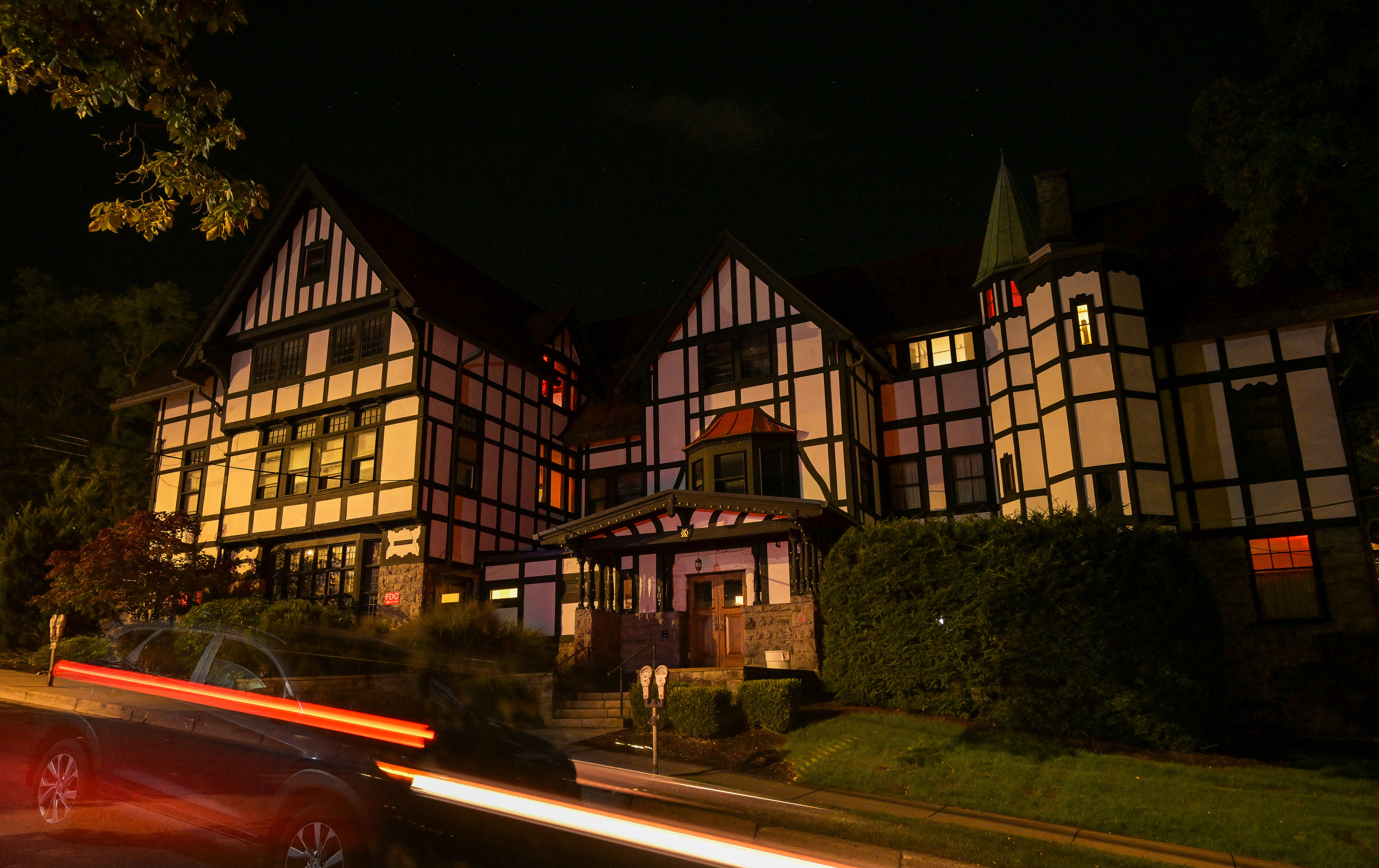
    In October 2024, about a week after a Chi Phi fraternity party at Cornell University, the sophomore who would come to be known as Jane Doe was milling around an online forum about Greek life when she encountered a post that stopped her cold.

    “Are Chi Phi brothers Crips or Bloods because I hear they have been doing hell Gang Banging?” someone had written.

    “They do drugs and gang r*ped a sophomore,” another user said. “Report them.”

    Since the evening that began Oct. 19, 2024, Jane Doe had recounted the night’s events to her roommates without identifying herself as a rape victim. She had exchanged friendly text messages with men she would later accuse of assault. She had heard uncharitable appraisals of herself from undergraduate gossips.

    Then she read the words.

    “That’s the first time I had ever heard the narrative change that I wasn’t a whore and that I was assaulted,” Jane Doe told investigators, according to documents from a university review of the accusations obtained by The New York Times.

    Those records, which have not been previously reported, help illuminate a case that has horrified the nation and plunged one of its elite institutions into crisis. They shed light on the crucial three-week period between the fraternity party and Jane Doe’s decision to take her story to the campus police, accusing multiple fraternity brothers of sexual assault and alleging that she was coerced into taking ketamine.

    The bare facts of what happened after she made her accusations are by now well known: The Tompkins County, New York, district attorney, Matthew Van Houten, reviewed her complaint and declined to bring criminal charges, saying there was not sufficient evidence to do so. Jane Doe filed a complaint that prompted at least a dozen hearings by the school’s Title IX committee, which is supposed to ensure compliance with federal civil rights laws.

    On Sept. 16, Jane Doe also filed a lawsuit against seven men, accusing them of sexual assault. Lawyers for at least three of the accused men have broadly denied criminal wrongdoing; others have not yet made public statements.

    What had not been known publicly, until now, were the detailed filings collected during the private Title IX proceedings — hundreds of pages of emails, text messages, photographs and interviews with Jane Doe, her friends and those she accused.

    Taken together, the raw materials sketch Jane Doe’s journey from an unknown sophomore to the embodiment of another searing national dialogue about sexual assault and consent. (Although Jane Doe is identified in the documents, the Times is withholding her name.)

    Some women around her, the documents show, were quick to say they viewed the events of the evening of Oct. 19 as sexual assault. But Jane Doe, the interviews and text messages reveal, first appeared to grapple with shame, humiliation and concerns about her reputation before she began to consider herself an assault victim.

    “I don’t really remember her ever kind of citing that she had said yes to anything that occurred,” one of her roommates had said of the first hours after Jane Doe returned home the morning of Oct. 20, according to the Title IX files, which were compiled as part of the school’s formal process for investigating allegations of sexual harassment and assault.

    On page upon page, the documents make for difficult reading, vacillating between the merry shorthand of college students — asides about the gym, Snapchat, Greek life — and the blunt-force details of an alleged gang assault that the victim appeared to be processing in real time.

    From the beginning, the case has seemed to double as a referendum on so many vexing questions about what it means to be a young woman on a college campus, even a campus as nominally esteemed as Cornell’s: Who is believed, and who is coddled? How much good can Title IX do? Has anything changed, really?

    For Jane Doe, the records suggest, the first task was to make sense of what had happened to her.

    ‘A traumatic way’

    At 3:05 a.m. on Oct. 20, 2024, one of Jane Doe’s roommates sent her a text.

    “Are you coming home tonight?” she asked.

    Four minutes later, Jane Doe texted back that she didn’t know.

    The roommate went to sleep, she would tell investigators. When she woke up at 11 a.m., she uploaded a photo of her empty room to Snapchat. “Only I made it back home,” she wrote on the post.

    Around 11:15 a.m., she said, Jane Doe arrived home, still in her “big boots and small dress” from the night before, according to the roommate. She had consumed ketamine and had sex with multiple men, she told her two roommates. One roommate told investigators that Jane Doe did not use the word “rape” or “assault” yet.

    It seemed like she was “in shock,” her other roommate later told investigators, “not really understanding the gravity of what she was saying.”

    The next day, on Oct. 21, Jane Doe went to her “big sister” — a woman designated as a mentor — at Cornell’s Tri Delta sorority and told her there were rumors circulating that she was a “slut.” The big sister, a junior at Cornell, told investigators that Jane Doe added with a laugh that “unfortunately they are true.”

    “I could tell that — just from personal experiences — that what she was going through is that she had not yet processed what had happened,” the big sister told investigators.

    That same day, Jane Doe received a text message from Jonathan Newell, one of the men she would go on to accuse of sexual assault.

    “I just wanted to apologize for how things went down the other night,” Newell wrote. He then said that he and Matthew Ingalls, another of the men she would later accuse of assault, both felt terrible for being too under the influence of drugs and alcohol to “shut it down and kick people out before it got way out of hand.”

    Jane Doe replied and reassured him.

    “At the end of the day non of the sexual stuff was illegal and honestly i really liked being w u and matt,” she wrote.

    A lawyer for Newell did not respond to requests for comment. A lawyer for Ingalls declined to comment.

    The next day, on Oct. 22, Jane Doe made an appointment at Cornell Health to see a doctor because she had contracted a urinary tract infection and wanted to be tested for sexually transmitted diseases. She told the doctor she contracted the UTI “in a traumatic way,” according to a transcript of her conversation with investigators.

    “She didn’t really follow up on that,” Jane Doe said of the doctor. “She just suggested I go to therapy.”

    ‘Say it didn’t happen’

    On Oct. 23, Jane Doe texted Ingalls.

    “Bro,” she wrote, “everyone knows.”

    She said the episode was “RUINING my life temporarily” and that her reputation had been destroyed. She said all she could do was “sleep and cry all day.”

    According to the documents, Ingalls assured her that it would all blow over soon, noting “how fast nonsense spreads at this school,” and said she did not have “anything to be ashamed of.”

    “You’re right,” Jane Doe wrote. “It’ll get better.”

    Jane Doe’s sorority big sister received a text that week: “Have you heard the rumor about your little?”

    In the meantime, Jane Doe had delivered strict instructions to one of her roommates: “If anyone asks about this,” she said, according to the roommate’s testimony, “say it didn’t happen.”

    The roommate was plainly concerned. Initially, she said, Jane Doe was “kind of recounting it as this sort of crazy thing that she had done.”

    “As the days went on,” the roommate continued, “I think she kind of came to realize that it was something bad. And that she didn’t really enjoy her time there.”

    On Oct. 25, Ingalls texted Jane Doe: “U good?”

    Jane Doe replied that Newell had “def told people.”

    Days later, she sent Ingalls an image of the forum post accusing Chi Phi of gang rape.

    “???” she wrote.

    “Ridiculous,” Ingalls wrote. “I’m gonna report that.”

    Uninvited from the party

    As Halloween approached, Jane Doe’s roommates told investigators, her understanding of what had happened to her appeared to have shifted.

    Around Oct. 28, Ingalls was on the phone with Jane Doe and, according to one of her roommates who said she overheard the conversation, he apologized to her. But rather than assure him everything was OK, Jane Doe took a different tone.

    “How could you let this happen?” the roommate recalled her saying.

    “I think she wanted it to be consensual,” the roommate told investigators, looking back on how Jane Doe had processed the alleged assault. The roommate told investigators that Jane Doe had been sexually assaulted before, which made it particularly hard for her to talk openly about what had happened.

    “I’d have conversations and she would describe a part of what happened and I would tell her that that is what could be classified as rape,” the roommate said.

    At Chi Phi, the fraternity was preparing for a Halloween party, and Jane Doe was eager to attend. Text messages included in the investigation show Ingalls assuring Jane Doe that he and other fraternity members wanted her to be there.

    “chi phi is your house and you are welcome here,” he wrote, relaying the views of the fraternity’s president, who was not among those accused of sexual assault.

    “thank u i really appreciate that,” Jane Doe responded. “<3 i’ll bring my cigs tomorrow”

    But then Jane Doe received a phone call from the fraternity’s president, according to the text messages.

    She was disinvited from the party. It was for her own good, he said.

    Jane Doe sent a biting text to Ingalls.

    “I knew this was going to happen,” she wrote. “The woman will always get the short end of the stick. Yall aren’t my friends. Yall are covering your asses.”

    By Nov. 3, Jane Doe appears to have concluded that she was assaulted at the October party. She sent a text to Newell.

    “let’s be clear that 90% of what happened that night was not consensual. i was given more key than i can remember,” she said, using a shorthand for ketamine, “and i know that i told u i felt uncomfortable and i didn’t know anyone in the room.”

    The text continued with her telling him that one of her only memories was doing ketamine off of his penis “in front of everyone like a sex doll/worker.”

    Four days later, on Nov. 7, according to the documents, Jane Doe went to an emergency room in Ithaca and requested a rape kit.

    This article originally appeared in The New York Times.
  • After six years, David’s Mai Lai Wah reopens its renovated dining room, complete with a new cocktail bar

    After six years, David’s Mai Lai Wah reopens its renovated dining room, complete with a new cocktail bar

    While the pandemic didn’t fully close Chinatown mainstay David’s Mai Lai Wah, it did shutter its dining room. First opened in 1982 by Hong Kong native David Chan, it became legendary over the years both for its food — in particular, its salt and pepper chicken wings, their spicy, crowd-pleasing adaptation of the classic Cantonese dish made with squid — and for catering to a sometimes rowdy late-night crowd, which started in 1992.

    Since 2020, David’s Mai Lai Wah has only operated as a takeout restaurant (with no delivery), despite its now-vintage neon sign proclaiming “Eat In Take Out” remaining lit up through the partial closure.

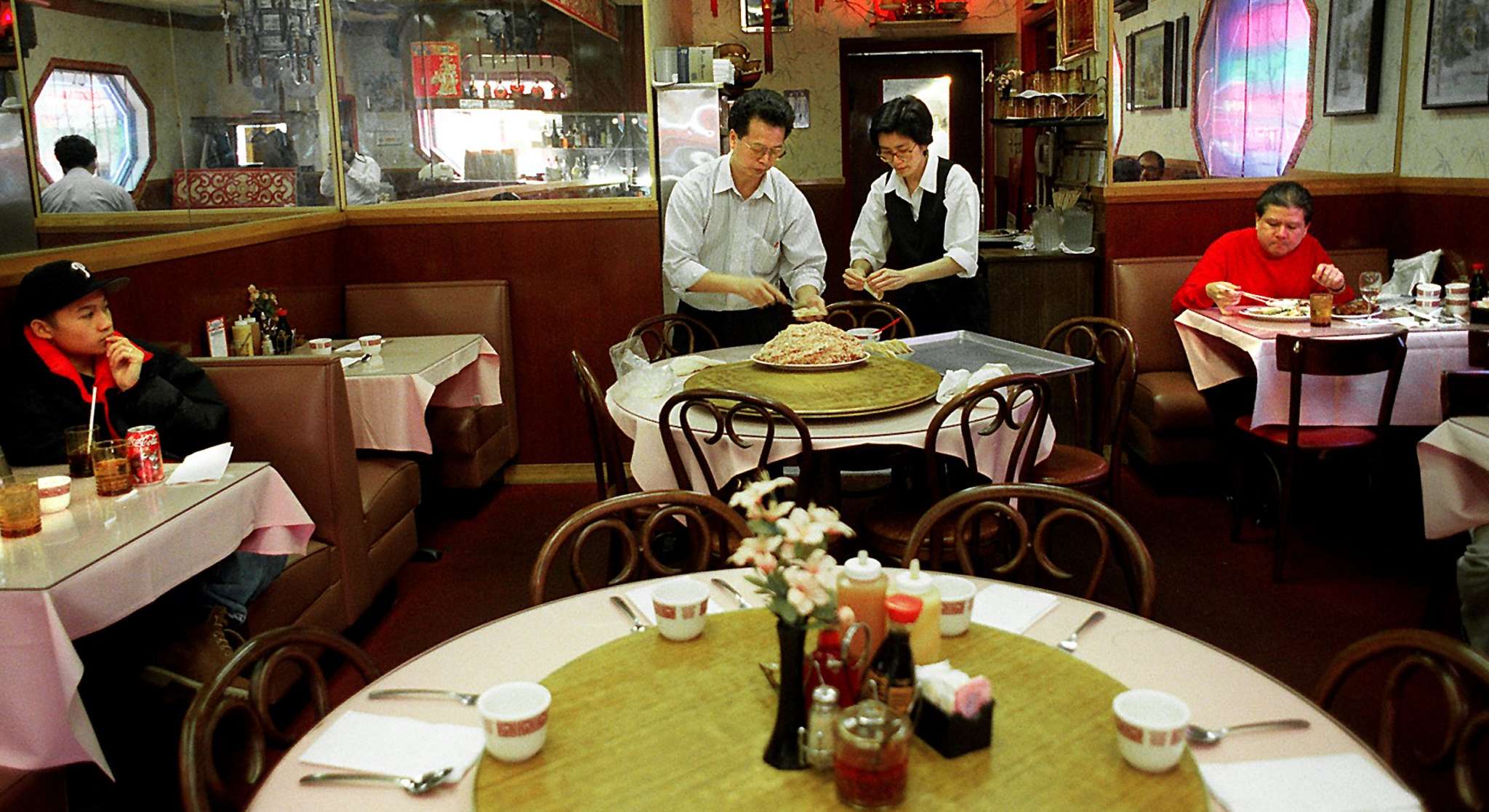
    In 1992, David’s Mai Lai Wah was among a small number of dining spots to stay open and serve late-night food. Here, David Chan, restaurant owner, and Ling Luong make dumplings in the dining room.ERIC MENCHER / File Photograph

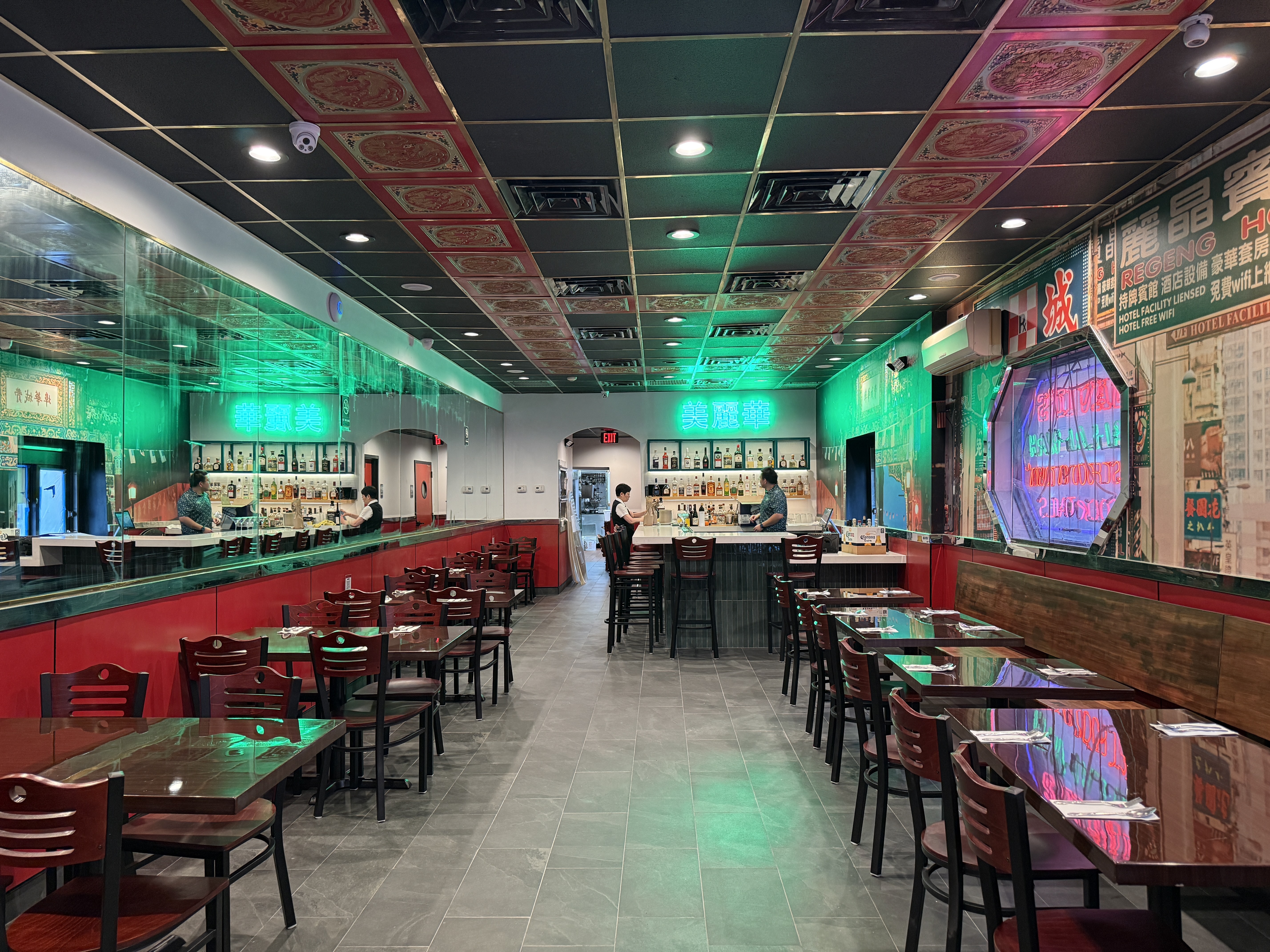
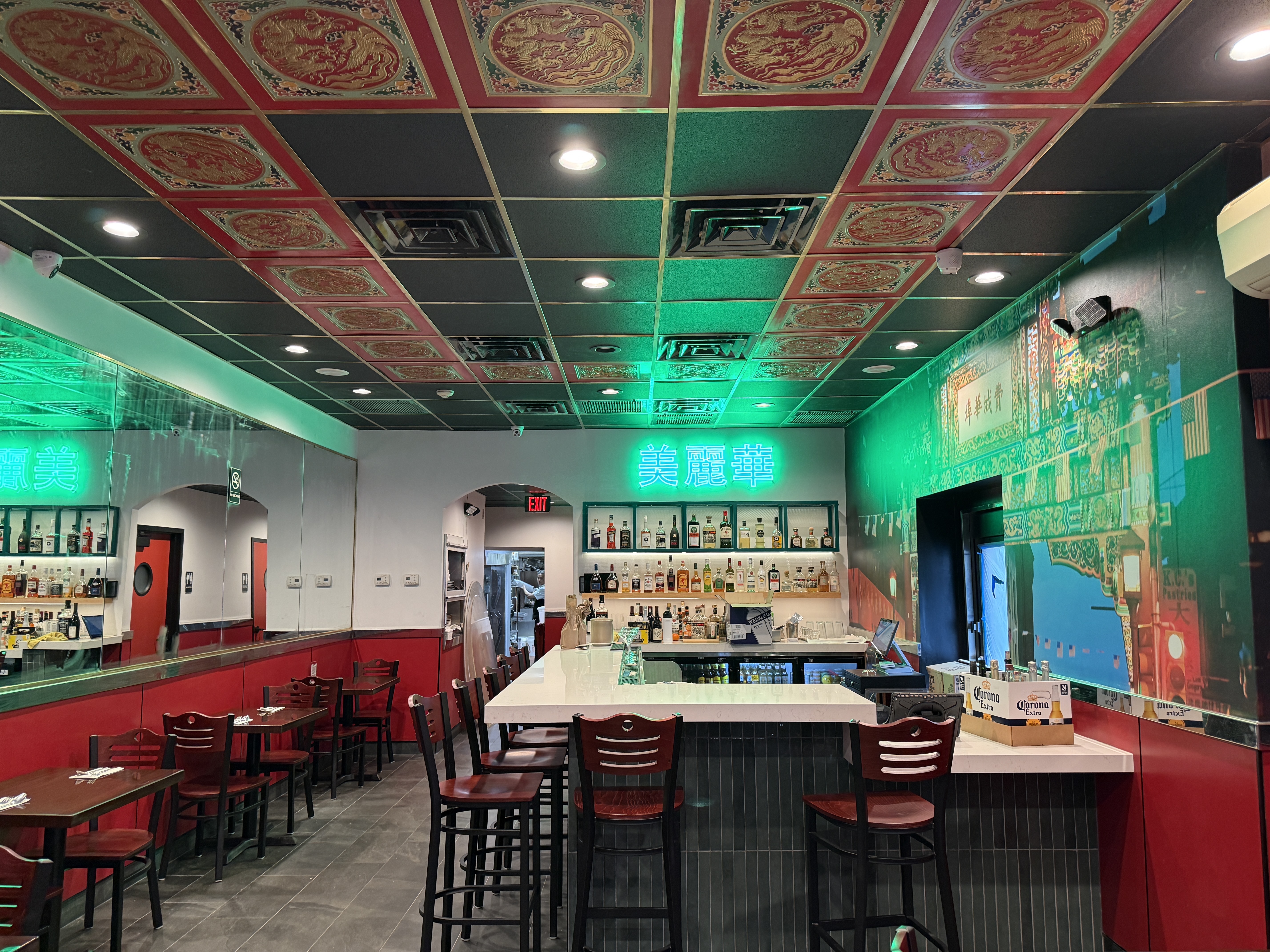
    But on Monday, David’s Mai Lah Wah quietly opened up its dining room again, and the renovations were significant. The uneven floor was leveled and completely replaced. Gone are the rickety dining tables covered in pink tablecloths and tamped down with glass table tops. They’ve been exchanged for rectangular tables (with no linens) that flank either side of the room. A new bar glows under a new green neon sign of the Chinese characters “Mai Lai Wah” — a phrase that means “beautiful magnificence.”

    Now, the interior lives up to the name.

    The renovated dining room at David’s Mai Lai Wah, which reopened Sept. 28.Kiki Aranita / staff /

    The mirrored wall on one side of the dining room remains, but the other walls are papered over with vibrant photographs depicting many of Hong Kong’s famous neon signs. Walking in the door now feels like walking into a diorama of Hong Kong’s Wan Chai district, famous for its concentrations of classic neon.

    Another image shows Philadelphia’s Chinatown Friendship Arch. The real one is just a few steps outside of the restaurant’s door.

    “We had the photos made into wallpaper to create a mix of where [my father] was and where he is now,” said Priscilla Chan, 33. “When he came to Philly he was only 13 years old. His mom sent him here to stay with his uncle, who worked in restaurants and he’s been working in restaurants ever since.”

    And restaurant work took a toll. “During COVID, we closed for two weeks and then remained closed because we were still able to do business and at that point my dad was tired,” said Chan. The boisterous late-night crowds also took their toll. He was “sick of all the fighting that would happen at nighttime,” said Chan.

    Renovations on the restaurant didn’t start until this past February. Everything was done slowly as David’s Mai Lai Wah remained open for takeout.

    The renovated dining room marks a changing of the guard. “My dad is still the owner but he wanted me to start taking things on for him,” said Chan, who was working as a nurse until she and her engineer husband (who had also worked in restaurants), Barry Li, both left their jobs to run David’s.

    “We bought a house in July, got married in August, and now it’s September and we’ve reopened dine-in,” she said.

    Chan is now the restaurant’s general manager. She and Li overhauled their point-of-sale system as she familiarized herself with the operation. When she started, “They wrote everything down by hand and brought it to the kitchen. We slowly introduced new things.” She cast a critical eye on what items were selling and what items were not, and what cost too much in labor.

    “I know a lot of people really love the roast duck but it’s incredibly difficult and really expensive,” she said. “One day we might try to bring it back, but right now, we’re concentrating on opening, finding our flow, and focusing on the big staples, like the salt and pepper series.” (In addition to the famous chicken wings, David’s Mai Lai Wah serves salt and pepper shrimp and scallops.)

    Li designed a trendy cocktail menu with a yuzu margarita, a gingery take on an Old Fashioned, and an espresso martini made with Vietnamese coffee.

    “We’re excited to welcome in old regulars,” said Chan. “But please don’t fight in here.”

    David’s Mai Lai Wah is open for dine-in and takeout (no delivery) from 4 p.m. to 2:15 a.m. Last call for drinks is at 2 a.m.

    David’s Mai Lah Wah, 1001 Race St., 215-627-2610, mailaiwah.com

  • Drugs and devices already on the market await FDA-ordered studies

    Drugs and devices already on the market await FDA-ordered studies

    When the FDA was deciding whether to approve the drug Tavneos several years ago to treat a set of rare autoimmune diseases, agency experts argued that would be a mistake, according to FDA records.

    One problem cited: The manufacturer had provided only “limited safety data.”

    As it often does, the FDA in 2021 approved the drug with a proviso: It required the manufacturer to conduct an additional yearslong safety study once the drug was on the market.

    Today, like many similar “postmarket” studies mandated by the FDA, that additional study is delayed, according to a federal database. As of last fall, only 21 of the planned 300 patients had been enrolled, the FDA said in an April letter and regulatory posting.

    Meanwhile, the FDA has identified dozens of cases of liver damage “possibly” or “probably causally associated” with the drug. That was one of the potential side effects the postmarket study was meant to evaluate.

    Tavneos illustrates the perils of the FDA’s approach to many drugs and medical devices — and the frequent lapses in follow-through.

    A KFF Health News analysis of Food and Drug Administration data found hundreds of postmarket studies listed as delayed. In some cases, the work was delayed by more than a decade or the manufacturer was still developing a plan for the study.

    As a result of delays, patients, doctors, and others could be left in a fog about the risks and benefits of the drugs or devices, even as they stake their money, their health, or their lives on the products.

    Postmarket study requirements “have often proven toothless,” said cardiologist Sanket Dhruva, an associate professor of medicine at the University of California-San Francisco who has published related research.

    The FDA’s reliance on postmarket studies reflects a balancing act.

    Making new treatments available faster can save or improve lives, especially when patients with grim prognoses and no good options have little to lose. The full risks and benefits may be revealed only over the long term, and when therapies are used by far more people than even large clinical trials enroll.

    But relying on post-approval studies to resolve questions risks exposing patients to products that do more harm than good. Whoever is paying the bills — patients, insurance companies, employers, or government health programs such as Medicare and Medicaid — can end up wasting money and rewarding manufacturers for useless or risky products.

    “Doctors rely on this evidence, patients rely on this evidence, and if that evidence is not there, it’s going to lead to a lot of uncertainty,” Dhruva said.

    Trump administration policy changes designed to hasten drugs through FDA review could leave more riding on postmarket studies, medical researchers say.

    For example, in February, FDA leaders announced that “the default requirement” for agency approvals will be one clinical trial instead of two.

    Reducing pre-approval testing “will inevitably put a lot of pressure on the post-approval system,” said Aaron Kesselheim, a professor at Harvard Medical School who has analyzed postmarket studies.

    FDA officials said the new policy would “substantially reduce costs” for manufacturers and “speed drugs to market.” Writing in The New England Journal of Medicine, they denied the change would compromise safety or efficacy, saying that “erroneous conclusions may be reached even with two, three, or four studies.”

    In response to questions for this article, a spokesperson for the Department of Health and Human Services, which includes the FDA, said postmarket studies can experience delays for legitimate reasons. “Assessing the significance of any delay requires a case-specific review,” said the spokesperson, Emily Hilliard.

    The fact that a study is delayed “should not be treated as evidence that a product has an unresolved safety or effectiveness issue,” Hilliard said.

    Amgen, the company that makes Tavneos, is still working on the postmarket research the FDA mandated, company spokesperson Alison Chartan said, adding, “We remain committed to completing this important study.”

    Amgen headquarters in Thousand Oaks, Calif. The company’s subsidiary’s drug Tavneos can cost more than $220,000 per year. Its approval has been pulled by the EU. MUST CREDIT: Eric Thayer/BloombergEric Thayer

    Behind schedule

    An FDA database downloaded by KFF Health News in August tracks the progress of postmarket studies that makers of drugs or biologics — such as vaccines and gene therapies — were required to perform or promised to perform.

    The database showed almost 600 were running behind schedule.

    Of those, more than 250 originally had final reports due before July 31, 2026 — the date that, according to an FDA webpage, the database last had been updated.

    About a third of ongoing studies were listed as delayed.

    In some cases, the FDA has granted extensions. In others, it has denied them. And in rare instances, the products were discontinued before the studies ran their course.

    Postmarket studies can involve clinical trials or other analyses of patient data. They can look at safety or efficacy. A product can be the subject of more than one postmarket study.

    The nearly 600 delayed studies involved almost 350 products, KFF Health News found.

    The FDA has defined delayed as behind the original schedule. That can mean off track or overdue.

    As of August, other FDA databases tracking medical devices listed dozens of postmarket studies as behind schedule.

    Products included:

    The CustomFlex Artificial Iris, a prosthesis implanted in the eye in place of damaged, defective, or congenitally missing irises. The protocol for a study in children was accepted in 2019, the database said. The study was meant to follow patients for five years. According to an FDA page downloaded in August, zero patients were enrolled.

    Barbara Fant of Clinical Research Consultants, to whom the FDA’s 2018 letter approving the product was addressed, said the rarity of an eye disease called aniridia poses challenges for post-approval studies. The German manufacturer, the U.S. distributor, and Clinical Research Consultants are working with the FDA to identify alternative ways to fulfill the postmarket requirements, Fant said.

    “Confirming the long-term safety of the device remains a top priority for both the study team and FDA,” Fant said.

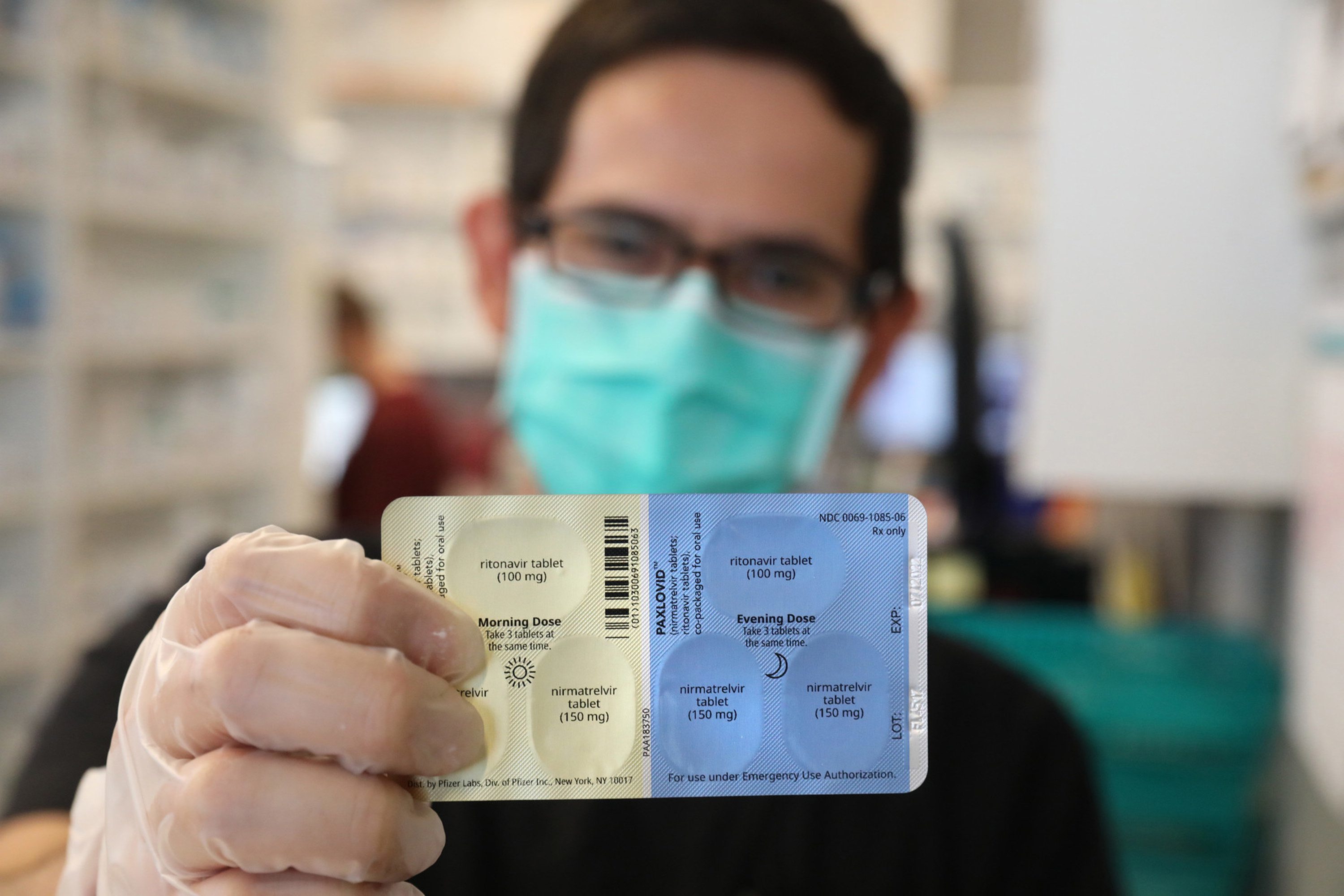
    Paxlovid, a treatment for COVID. A study to assess its safety in pregnant women was originally to be completed by the end of 2024, the FDA database said. “The trial completion and final report milestones were missed,” the database said.

    Pfizer, the manufacturer, is working with the FDA and remains committed to “submitting results as soon as practicable,” Pfizer spokesperson Jerica Pitts said.

    The Scandinavian Total Ankle Replacement system. The device and the original protocol for the clinical trial were approved in 2009. The study was meant to include a minimum of 500 subjects, the database said, but the actual number enrolled was 142. Almost half those patients had one or more adverse events, with dozens of “reoperations,” “revisions,” or “removals,” the database said.

    Rachel Colloff and Cristina Pasquino — spokespeople for Enovis, which markets STAR Ankle — did not respond to multiple inquiries. Jenny Braga, a spokesperson for Stryker, which previously sold the product, did not answer questions about the postmarket study.

    Oxaydo (originally named Oxecta), a form of the potentially addictive opioid painkiller oxycodone touted as designed to deter abuse. When the FDA approved it in 2011, it required the manufacturer, part of Pfizer, to conduct a postmarket study to assess whether it reduces “misuse and abuse, and their consequences: overdose, death, and addiction.” The final report was originally scheduled to be submitted in 2016.

    The FDA database listing the study as delayed said the agency “issued a failure to respond letter” in 2022.

    Today the issue may be all but moot.

    Control of the product passed from company to company over the years until 2023, when Acura Pharmaceuticals said in a Securities and Exchange Commission filing that patents on Oxaydo would begin expiring that year and it didn’t intend to continue marketing the drug.

    According to another FDA database, Oxaydo has been discontinued.

    The FDA has enforcement powers and uses them “where appropriate,” HHS’ Hilliard said. She did not provide requested details, and she did not answer questions about the studies listed above.

    Delay can pay

    For manufacturers, delay can pay, Harvard’s Kesselheim said. While postmarket studies are ongoing, companies can continue to sell the products.

    “Medicare and Medicaid spent more than $18 billion from 2018 to 2021 for accelerated approval drugs with incomplete confirmatory trials past their original planned completion dates,” the HHS Office of Inspector General estimated in 2022.

    The FDA can demand postmarket studies for a variety of reasons, including to address concerns that arise after a product has been approved. Some look at uses not covered by the original approval, and some are meant to shed light on serious risks that are already known.

    In April, when it approved Foundayo, a weight loss drug made by Eli Lilly, the FDA required the company to conduct additional research to assess a variety of concerns, including “retained gastric contents,” “major adverse cardiovascular events,” and “drug-induced liver injury,” as well as effects of exposure during pregnancy, such as “major congenital malformations,” “spontaneous abortions,” and “stillbirths.”

    The FDA said it approved the drug under the new Commissioner’s National Priority Voucher program, intended for products that “address critical national health priorities.” The program strives for an “ultrafast” review, the FDA has said — one to two months, instead of six months or more with other expedited pathways.

    “Postmarketing requirements and enhanced safety monitoring are a routine part of the FDA’s approach to evaluating newly approved medicines,” Eli Lilly spokesperson Kristiane Silva Bello said, “including ongoing monitoring in areas identified during clinical development.”

    ‘False Hope’

    The FDA waded into a world of uncertainty in 2016 when it granted accelerated approval to a drug for Duchenne muscular dystrophy, a degenerative disease that primarily affects boys, disabling them at a young age and ultimately killing them.

    Agency scientists had found that the drug, Exondys 51, was unproven and argued against greenlighting it.

    Ellis Unger, then a senior drug evaluation official at the FDA, wrote in an internal memo that “thousands of patients and their families would be given false hope in exchange for hardship and risk.”

    The manufacturer, Sarepta Therapeutics, conceded the uncertainty. “A clinical benefit of EXONDYS 51 has not been established,” it said when the drug, also known by the generic name eteplirsen, was approved.

    The drug, the first FDA-approved treatment for Duchenne muscular dystrophy, targeted a subset of patients with the disease.

    The FDA required Sarepta to conduct further studies and warned that it could withdraw approval if postmarket trials failed to verify a clinical benefit or were “not conducted with due diligence.”

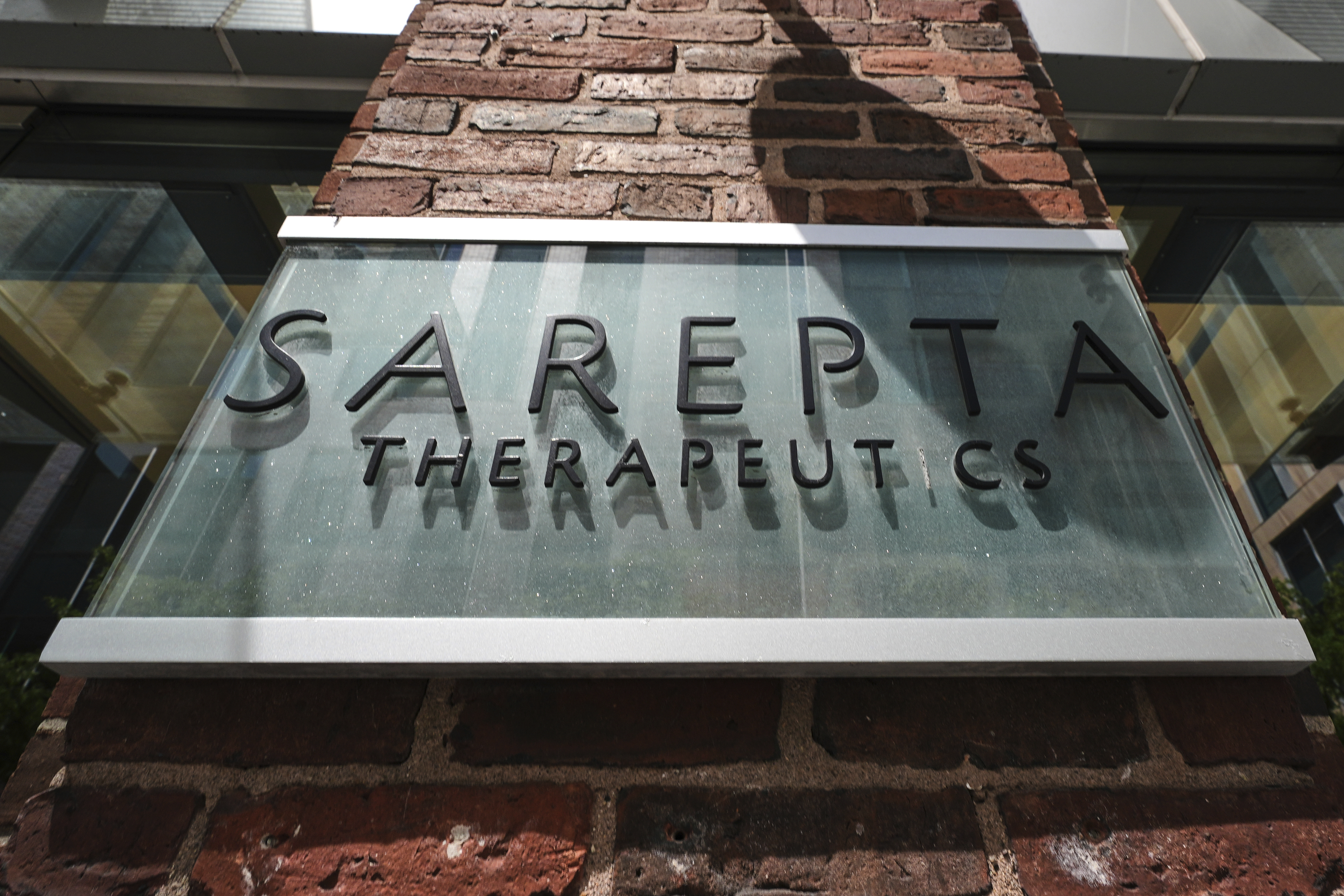
    Sarepta Therapeutics, headquartered in Cambridge, Mass., reported to investors that its drug Exondys 51 brought in $538 million in revenue in 2025. An FDA-ordered study on the drug, ranked as the second most expensive on the market, missed a 2021 deadline. (AP Photo/Charles Krupa)Charles Krupa

    Unger issued a warning of his own: “FDA has not succeeded in withdrawing the marketing of a single drug for lack of verification of clinical benefit following accelerated approval. The reality is that if eteplirsen is given accelerated approval, it is highly likely to remain on the market indefinitely, irrespective of whether or not efficacy is verified.”

    Sarepta was originally required to submit a final report on a postmarket study by a May 2021 deadline, according to an FDA database and a 2016 FDA letter to the company.

    Almost a decade after the drug was approved, and more than five years after that deadline, the study was listed in an FDA database as delayed.

    “The final report milestone was missed, because the sponsor requested milestone extensions due to study delays,” the database said.

    Meanwhile, in 2022 the website Pharmaceutical Technology ranked Exondys 51 as the second-most expensive drug in the U.S., at an annual cost of $750,000 to $1.5 million.

    Last year, the drug generated $538 million in sales for Sarepta, according to a company presentation to investors.

    Sarepta found it difficult to recruit patients for the postmarket clinical trial, company spokesperson Tracy Sorrentino said. The target population is small, patients were hesitant to enroll, and Sarepta was competing with other clinical trials for participants, Sorrentino said.

    The study has been fully enrolled since 2023, Sorrentino said, and the company plans to provide an initial look at the data late this year.

    ‘Manipulated’

    Amgen has cited similar challenges, even as Tavneos generated $459 million in global sales last year.

    When an approved treatment is available, patients may be reluctant to enroll in a study in which they could be given a placebo, Amgen’s Chartan said.

    The clinical trial was originally supposed to be done by the end of 2030. As of July 24, just 49 patients had been enrolled, Chartan said.

    The FDA has said the study was to include 300 patients, and each patient enrolled must be followed for five years, said Hilliard, the HHS spokesperson.

    Tavneos was approved to treat severe cases of a group of diseases — known by the shorthand ANCA-associated vasculitis — in which, as the Cleveland Clinic explains, the immune system inflicts potentially fatal damage on blood vessels and organs.

    “As of January 2026, estimated real-world exposure” to Tavneos “exceeds 25,000 patient-years globally, consisting of over 6,500 in the United States and 19,000 abroad,” Amgen has said. (For context, one patient taking a drug for five years would amount to five “patient-years.”)

    A clinical trial sponsored by ChemoCentryx to secure approval of Tavneos failed to prove it was effective, the FDA now alleges. Instead of disclosing that outcome to the FDA, company personnel “manipulated” the results, the FDA alleged in an April letter to Amgen.

    Amgen, the parent company of ChemoCentryx, has denied the results were manipulated and has said the data “remain valid.”

    Nonetheless, the European Union recently revoked its approval of Tavneos.

    The FDA is trying to pull Tavneos from the market, and Amgen is fighting that effort.

    The company has a lot riding on the outcome. Tavneos can cost more than $220,000 per year, according to the drug discount website GoodRx, and when Amgen acquired ChemoCentryx in 2022 for $3.7 billion, Tavneos was the only drug ChemoCentryx had brought to market.

    In a June letter to the FDA, Amgen said the benefits of Tavneos outweigh the risks.

    The FDA disagrees.

    The FDA “can no longer conclude that there is, or has ever been, a valid demonstration of substantial evidence of effectiveness for TAVNEOS,” the agency wrote.

    Citing 76 cases of DILI — drug-induced liver injury — the agency said it was “increasingly concerned about the safety profile of TAVNEOS.” Without proof of effectiveness, at least for its approved use, “the drug’s benefits cannot outweigh its known risks,” the FDA wrote.

    Data reporter Maia Rosenfeld contributed to this report.

    KFF Health News is a national newsroom that produces in-depth journalism about health issues and is one of the core operating programs at KFF — the independent source for health policy research, polling, and journalism.

  • What it’s like to live by a data center | Inquirer South Jersey

    What it’s like to live by a data center | Inquirer South Jersey

    Good morning, South Jersey. Welcome to October. Hopefully, the sun will return and it won’t be as gloomy as September.

    Vineland residents who are some of the first in the Philly area to know what it’s like to live next to a massive AI data center share their experiences.

    And the Delaware Valley Regional Planning Commission wants to know where you’re headed every day — and how you get there.

    Plus, Clementon Park & Splash World is back up for auction, and more news of the day.

    — Taylor Allen (southjersey@inquirer.com)

    P.S. Submit a story idea via Curious South Jersey. Ask a question about the region, and the answer might just show up in a future article.

    If someone forwarded you this email, sign up for free here.

    When a data center is your neighbor

    Several South Jersey municipalities are considering or have already passed data center bans before any ground broke. Those include Cherry Hill, Collingswood, Medford, Millville, and Monroe Township.

    But a handful of local homeowners have the unique experience of seeing one from their houses — the DataOne facility in Vineland.

    They used to have more neighbors before the data center developers and associates bought several homes that now appear to be abandoned.

    Multiple residents commented on the excessive sound.

    “I think of a prison, and I’m the prisoner with the noise,” said a homeowner of more than 47 years. “You get up in the morning and you’re in a foul mood.”

    Follow along as The Inquirer’s Erin McCarthy visits some of the few in the region with firsthand knowledge of living near a data center.

    🚗 Tracking daily travels

    The DVRPC wants to know just about everything about people’s daily travel habits.

    No, this is not about surveillance. After 13 years, the commission needs an updated survey to help guide funding decisions for infrastructure projects and transportation plans for the nine counties it serves, which include Burlington, Camden, and Gloucester.

    Since January, it has been recruiting participants by mail to randomly selected households. Sorry, you can’t nominate yourself.

    Those who opt in will have to track their household trips for 24 hours using a phone app. It’ll also ask the household basics: size, age, income, etc.

    But how exactly will the experts use this information?

    Transportation reporter Thomas Fitzgerald has that answer and more.

    What to know today

    • Five years after Clementon Park & Splash World was purchased at a bankruptcy auction, the recently shuttered 119-year-old amusement and water park is going back to auction this month.
    • Researchers have found microplastic pollution in every one of the 22 stream and river segments along the Delaware River tested in New Jersey, Pennsylvania, Delaware, and New York. This includes Cooper River in Camden County.
    • Willingboro will unveil its new 570-seat Performing Arts Center on Saturday with its first concert.
    • New Jersey’s minimum wage will increase to $16.48 for most employees beginning in the new year.
    • Residents in Camden and Cherry Hill should be aware of possible detours and prepare to take alternative routes because of roadway projects scheduled for this week.
    • The Inquirer’s editorial board, which is separate from the newsroom, wrote that Gov. Mikie Sherrill’s call for now-former Lt. Gov. Dale Caldwell to resign set “an ethical example for a corrupt era.”

    🗓️ The best things to do this week

    🔮 Boos & Brews Witches Market: Check out this witch-themed market full of themed vendors and activities. Stick around for food trucks, a costume contest, performances, and a beer garden. ⏰ Friday, Oct. 2, 5-9 p.m. 💵 Pay as you go 📍 Rancocas Woods Events and Shops, Mount Laurel

    📚 Collingswood Book Festival: The 24th annual festival is back spanning six blocks of Haddon Avenue. Come to meet booksellers and stay for author and poetry readings, performances, and workshops. ⏰ Saturday, Oct. 3, 10 a.m.-4 p.m. 💵 Free 📍 Haddon Avenue, Collingswood

    🎨 Cranberry Fest: The 36th annual cranberry fest returns with live music, a food court, a beer garden, and more than 100 artisans. 💵 Pay as you go 📍 Farnsworth Avenue, Bordentown

    See more event listings here.

    🧠 Trivia time

    How many dispensaries were open on the day New Jersey first began recreational cannabis sales in 2022?

    A) 25

    B) 20

    C) 12

    D) 3

    Think you know? Check your answer.

    What we’re …

    🍿 Watching: Netflix’s reboot of A Different World.

    🐕 Finding: A quality groomer.

    📚 Choosing: My next read at Words Matter Bookstore in Pitman.

    And that’s all I have for you today. Expect more news tomorrow morning. ☀️

    By submitting your written, visual, and/or audio contributions, you agree to The Inquirer’s Terms of Use, including the grant of rights in Section 10.

  • Home-buying mistakes | Real Estate Newsletter

    Home-buying mistakes | Real Estate Newsletter

    You probably know Abigail Covington, my colleague who regularly helms the How I Bought This House column. In the year since she joined the team, she’s become one of The Inquirer’s home-buying experts.

    So I couldn’t believe it when she told me that she’d opted for an information-only inspection when she bought her first home a few weeks ago.

    I wanted to shake her by the shoulders and say: Haven’t you learned anything from all the real estate stories you’ve written?!

    But in a new essay, Abigail explains why. Keep scrolling for that story and more in this week’s edition:

    — Erica Palan

    If someone forwarded you this email, sign up for free here.

    Real estate reporter bought a house. Here’s what she got wrong.

    Buying a home is a huge financial decision — and an emotional one. Balancing the two can be tricky when your head knows what to do but your heart is pulling you in the opposite direction.

    After a year writing about real estate, my colleague Abigail Covington felt prepared to stand up to sellers and get a great deal. But when her dream house came along, she ditched her careful plans to make sure she got it.

    See what she got wrong (and right!) as a first-time homebuyer.

    Airbnb tension in Jenkintown

    In Jenkintown, neighbors are disagreeing over Airbnbs. The town’s zoning board denied its first short-term rental request last week after residents complained about noise and unexpected visitors.

    It made me wonder how I’d feel if my next-door neighbor was a rotating cast of visitors. On the one hand, I’ve stayed in dozens of Airbnbs and had memorable, comfortable travel experiences. On the other, I understand being worried about safety.

    Read more about how Jenkintown is dealing with these issues.

    📮 Would you be comfortable living next to an Airbnb? For a chance to be featured in next week’s newsletter, email me.

    The latest news to pay attention to

    Home tour: A haven in Havertown

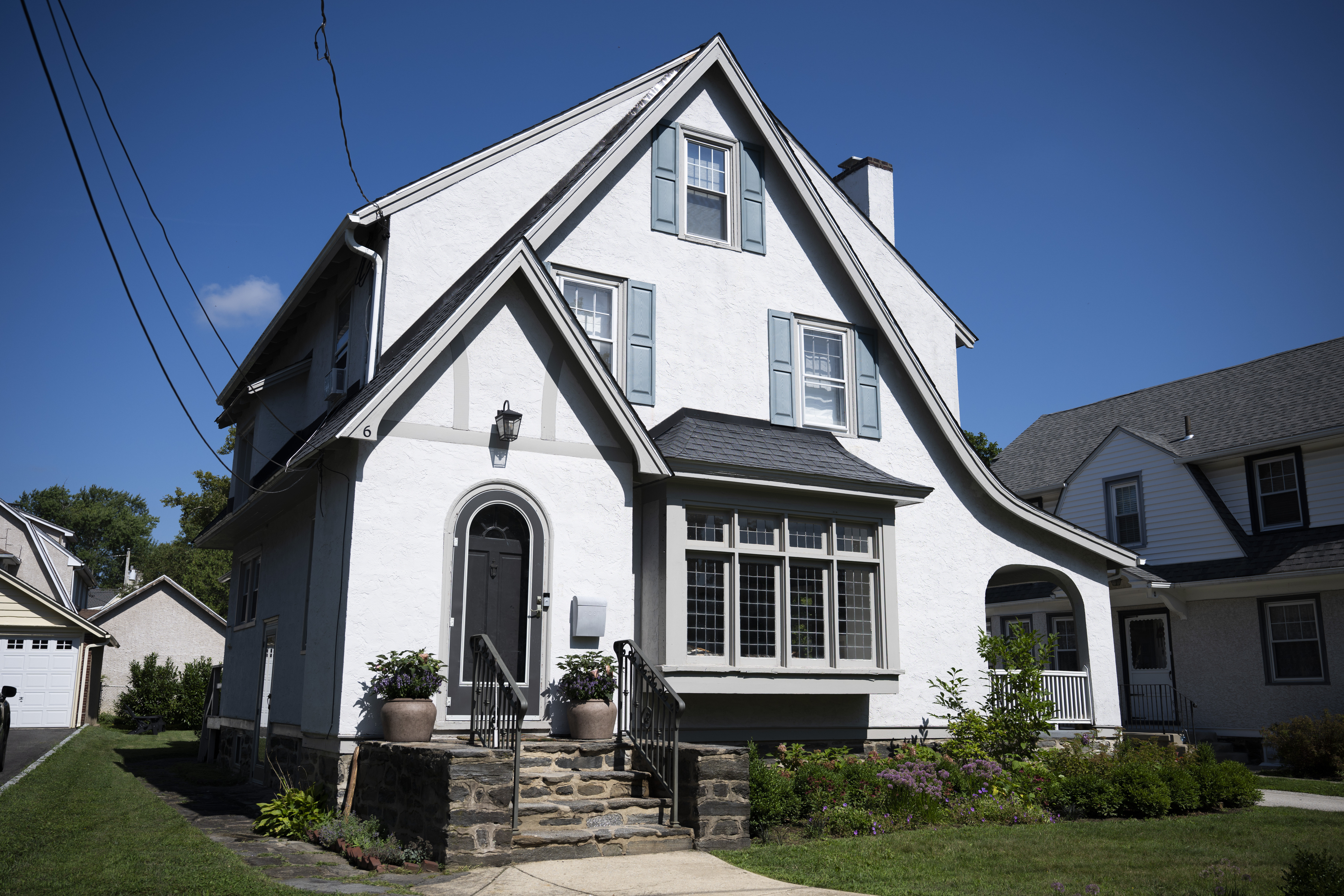
    There is just something about a Tudor-style home that feels so cozy — the steeply pitched roofs, the storybook arches, the tall windows. Talk about curb appeal.

    The interior of this Havertown home is just as warm and comfy with unexpected color combinations, a grandfather clock, and a lot of floral wall paper.

    The Finnegan family moved in five years ago and have spent that time redesigning their home to be a haven. Take a peek inside.

    📷 Photo quiz

    Do you know the location this photo shows?

    📮 If you do, email me back. You and your memories of visiting this spot might be featured next week.

    Shout out to Don L. who correctly guessed that last week’s image depicted workers cleaning the glass pavilions over the subway stairs at Dilworth Park.

    ++

    Have a great week. Michaelle will be back next Thursday.

    By submitting your written, visual, and/or audio contributions, you agree to The Inquirer’s Terms of Use, including the grant of rights in Section 10.

  • Inside an educator’s ethnic deception | Morning Newsletter

    Inside an educator’s ethnic deception | Morning Newsletter

    Good morning, Philly. We squeaked into Red October, and we’re in for some beautiful weather with highs near 80 as our reward.

    Today, we start with how a Philly educator’s hoax about her ethnicity has shattered two advocacy groups she worked with, and we hear from a fellow organizer whom she conned.

    Then, we have new exclusive reporting on FanDuel’s practice of sending personalized celebrity videos to users.

    Plus, Pennsylvania marks a fifth measles death, and more news of the day.

    — Laura Benshoff (morningnewsletter@inquirer.com)

    If someone forwarded you this email, sign up for free here.

    Two groups shattered

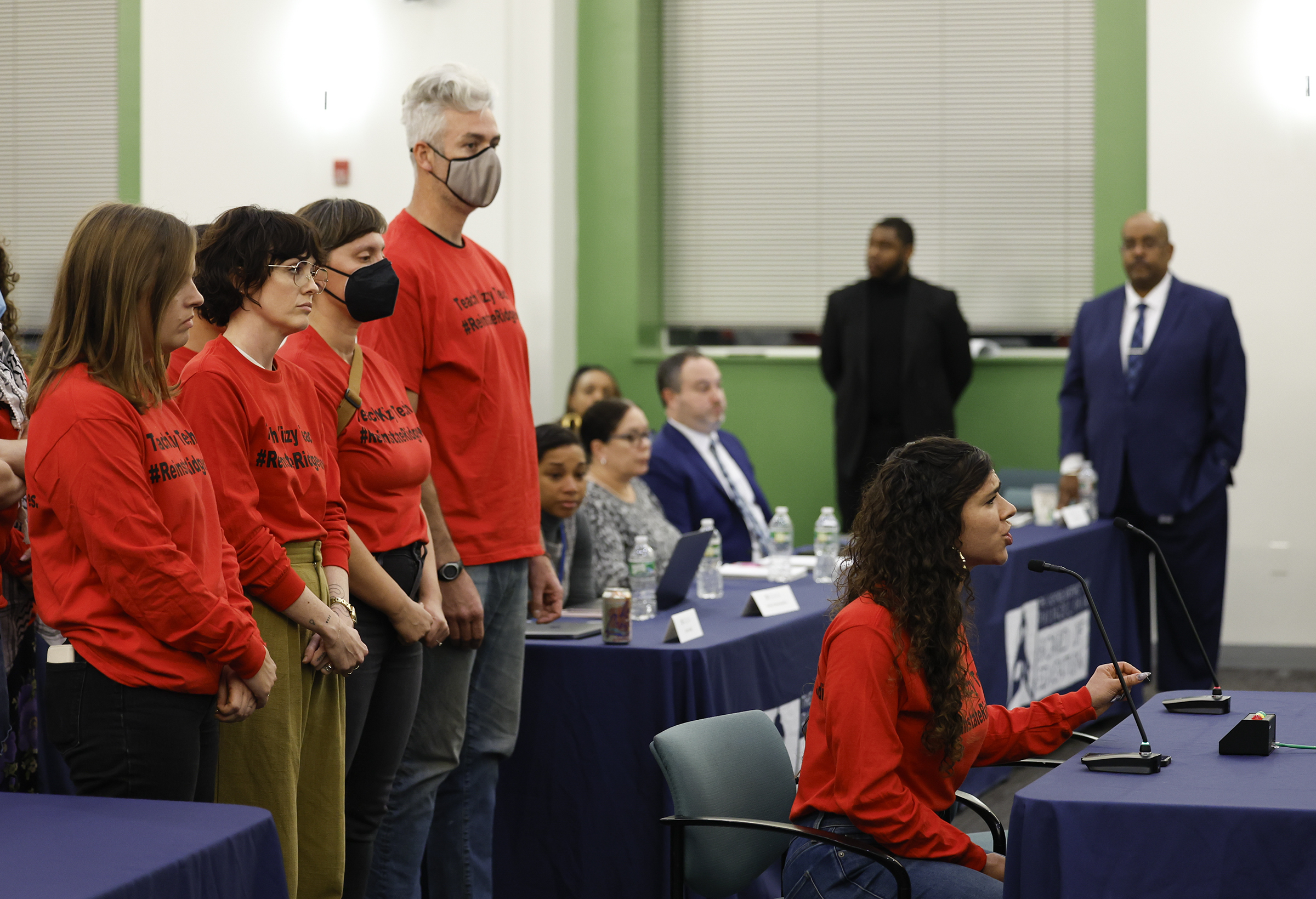
    For years, Philadelphia School District teacher Hannah Gann advocated for social justice in classrooms, claiming her work with the Racial Justice Organizing Committee and Philly Educators for Palestine was rooted in her identity as a Black and Palestinian woman.

    Last week, she admitted to lying about her ethnicity. Her deception is now roiling the groups and communities she fought for.

    “After much reflection, Philly Educators for Palestine has made the decision to dissolve,” a statement from the group read. Meanwhile, the Racial Justice Organizing Committee announced it would take a two-month hiatus “to rest, process, and decompress.”

    One fellow organizer, furious at the damage done by Gann, shared details around Gann’s con with The Inquirer. The organizer said Gann would wear African print clothing and selectively speak in African American Vernacular English, but was also “a little ambiguous” about her background.

    Inquirer education reporter Kristen Graham has all the details.

    FanDuel cops to more videos

    Earlier this year, The Inquirer broke the story that FanDuel sent a personalized video of Phillies slugger Bryce Harper to a Philly-area user who was suffering from a gambling addiction.

    Now, The Inquirer has exclusively learned that the company sent around 30 such videos from athletes and celebrities over the last two years, according to a letter from a FanDuel executive to members of Congress.

    Following our initial reporting, several U.S. lawmakers demanded that FanDuel end its VIP services, the unit sending the videos.

    In response to that pressure, Cory Fox, FanDuel’s senior vice president for public policy and sustainability, said that the videos are not used to “induce customers to continue gambling.”

    Read investigative reporter David Gambacorta’s full exclusive here.

    What you should know today

    • Pennsylvania’s Department of Health has confirmed a fifth death, of an unvaccinated person in Lancaster County, amid the ongoing measles outbreak.
    • Philly DA Larry Krasner said the federal judge who accused him of crimes, Judge Paul S. Diamond, should be removed from the case and called Diamond’s allegations “fever-dream conspiracy theories.”
    • Members of a Black Panther-style group were arrested in Chester after doing an armed patrol in that city earlier this year.
    • Pennsylvania Democrats’ hope to take control of the state Senate runs through three swing districts in Bucks and Montgomery Counties.
    • Camden is weighing whether to raise taxes to keep sewage outflows from disrupting recreation on the Cooper River.
    • As of 12:01 a.m. today, WHYY’s acquisition of Pennsylvania State University’s public radio and television station, WPSU, is complete.

    Quote of the day

    Water, water, everywhere, and all of it has little bits of plastic in it.

    Microplastics were detected in 22 stream and river segments across the Delaware River watershed, reports Inquirer environment reporter Frank Kummer.

    🧠 Trivia time

    Which one of the following celebrities was not among those allegedly defrauded by a Main Line businessman running a marijuana payment processing business?

    A) Chrissy Teigen

    B) John Legend

    C) Andy Roddick

    D) Brooklyn Decker

    Think you know? Check your answer.

    What we’re …

    📺 Watching. The Netflix reboot of the 1980s comedy A Different World has tons of Philly connections and is a good show to boot, writes Inquirer columnist Elizabeth Wellington.

    🍽️ Reviewing. The historic Morris House Hotel in Society Hill has a promising new Moroccan-French restaurant. Too bad, writes restaurant critic Craig LaBan writes, that it suffers from uneven execution.

    🦅 Cheering to. Wielding an accordion, a foot drum, and a kazoo, one Doylestown woman plays the Eagles fight song all by herself. Oh, there’s also a foot tambourine. And yes, there is video.

    ⚡️Reading. Vineland residents living in the shadow of a data center shared their experiences with Inquirer consumer reporter Erin McCarthy.

    🧩 Unscramble the anagram

    Hint: A defunct waterpark in South Jersey.

    CLONK PETERMAN

    Email us if you know the answer. We’ll select a reader at random to shout out here.

    Congratulations to Lataya Rothmiller, who correctly guessed Wednesday’s answer: Alex McFarlane. This Phillies rookie was a teenager when Hurricane Irma struck his home island of St. Thomas. What followed would put him on the path to the big leagues.

    Video of the day

    For today’s visual, something a little different. Inquirer video host Ariane Datil has cooked up something really fun — part-matchmaking show, part-food challenge — called Love at First Bite. Watch along as some of Philly’s top chefs pair off and make a new dish for The Inquirer’s Food Fest.

    👋 Thank you for reading.

    By submitting your written, visual, and/or audio contributions, you agree to The Inquirer’s Terms of Use, including the grant of rights in Section 10.

  • How do you travel? Your regional planning commission wants to know

    How do you travel? Your regional planning commission wants to know

    The Delaware Valley Regional Planning Commission is collecting granular information about daily travel: Where did people go? Why? Did they drive, take transit, walk, bike, or use an electric mobility device?

    Planners working on the project aren’t nosy or trying to surveil anybody.

    They need real-time data to update DVRPC’s travel demand model for the nine-county Philadelphia area that will guide funding decisions about infrastructure projects and transportation plans for the next decade.

    “Compared to any other 10-year period that I can recall, there has just been so much transformation in how people travel,” said Mike Boyer, the agency’s director of regional planning.

    Information from a new household travel survey will show a clear picture of exactly how it changed and provide clues about where regional transportation might be headed. The last household survey was conducted in 2012 and 2013 and a final version was published in 2015.

    Typically, DVRPC conducts a travel survey every decade, but officials waited 13 years this time to allow transportation patterns to settle into a “new normal” after the massive disruptions of the pandemic.

    How do they find households to take the travel survey?

    Beginning in January, DVRPC has been recruiting participants by mailing postcard invitations to randomly selected households in South Jersey and Southeastern Pennsylvania. It has also used some social media posts.

    People cannot reach out to nominate themselves.

    Random invitations help ensure that respondents reflect the population of the region. Participants need to represent each of DVRPC’s nine counties, as well as a mix of households by income, size, number of workers, and other demographics.

    It is expected to take the rest of the year to get the 9,000 to 10,000 completed household surveys required for a good picture of the region’s habits, said Matt Gates, associate director of travel trends and forecasts for DVRPC.

    Based on typical response rates, it may take as many as 300,000 postcards to recruit enough participants, he said.

    Recruitment paused for the summer and started up again after Labor Day.

    DVRPC serves Burlington, Camden, Gloucester, and Mercer Counties in New Jersey as well as Bucks, Chester, Delaware, Montgomery, and Philadelphia Counties in Pennsylvania.

    Survey data will be held confidential and anonymized, used in the research but not attached to any specific household or phone number, Boyer said.

    “Data won’t be sold or used by any third party,” he said. “We want to be forthright about that.”

    What do participants do?

    Most will report household trips for one 24-hour period, starting around 2 a.m. or 3 a.m., using a smartphone app that runs in the background, tracking each trip via GPS.

    When it detects what might be a trip, it prompts the participant to confirm it and provide details such as the trip’s purpose and what type of transportation is used.

    “If you leave your house in the morning and go to work, and then you leave work and go somewhere for lunch, and then you go back to the office, and then, on the way home, you stop at the dry cleaner — all of those pieces of your daily travel are joined together,” said Gates, the chief travel modeler.

    That would be counted as a “tour,” broken into separate trips, each attached to a specific activity.

    The survey also asks for basic household information — size, ages, jobs, school attendance, income, and vehicles. E-bikes, e-scooters, personal mobility devices for people with disabilities, traditional pedal-powered bicycles, and walking will be counted as separate modes of travel.

    In the 2012-13 survey, walking and biking were separate options, but the travel model combined them in one category called “nonmotorized.” A catchall “other” category covered everything else.

    Participants who do not want to use the app can keep a paper travel diary and then either enter their trip information on a website or reach a call center, where a person will walk them through the questions and record the data.

    How will the information be used?

    After it is fed into the travel model, DVRPC will use it to help draft a Transportation Improvement Program (TIP). That is the federally mandated priority list for allocating federal and state funding of transportation, transit, and highway projects across the region.

    But that’s not all.

    Planners use it to decide on traffic safety projects, to chart where new recreational trails should go, and to test scenarios in response to events.

    Combining the data with information about the transportation network can provide insight into how people make decisions about, say, using a SEPTA train vs. driving between two points, Gates said. “Is it time? Is it cost? The number of vehicles available in a household?”

    A good travel demand model with those insights can help answer “what if” questions such as what effect a new train line or highway would have, or rising gas prices, transit fare increases, and service cuts, Gates said.

    It can help planners think about how the transportation network could accommodate a spurt of growth in Quakertown, Bucks County, for example, or Woolwich Township, Gloucester County.

    Last year DVRPC used existing data to project added motor vehicle traffic amid SEPTA service cuts, which began but were quickly rolled back.

    What trends are the experts looking for?

    • The extent to which hybrid work and e-commerce may be reducing trips per person or household. For example: How many shopping trips have been replaced by deliveries?
    • Transit changes: They want to understand SEPTA’s ridership recovery from COVID-19 and how often people are using transit for a mix of nonwork trips at different times, rather than just traditional commutes.
    • How are people using ride-hailing services like Uber and Lyft, which have mushroomed over the last decade?
    • How are micromobility options like e-scooters and e-bikes affecting traffic flow?
  • What’s it like living in the shadow of an AI data center? These Vineland residents know.

    What’s it like living in the shadow of an AI data center? These Vineland residents know.

    When Amber Ayrer bought her Vineland home 25 years ago, she envisioned growing old there, enjoying lazy afternoons with the windows open and a view of farmland from her front door.

    After her adult daughter, Ally, suffered a traumatic brain injury, Amber made the rancher accessible, installing a ramp that aides use to push Ally’s wheelchair outside for her daily walks.

    The place had all the makings of a forever home, Amber Ayrer said — until a massive AI data center moved in across the street.

    Now, the 71-year-old looks out her front windows at the hulking DataOne facility, a windowless compound surrounded by walls and metal fences.

    In recent months, Ayrer said, the 2.4-million-square-foot complex has emitted a near-constant hum. She struggles to sleep, she said, and has suffered from headaches. She turns the TV on to mask the sound.

    Residents who live farther away have also complained about the noise, including in a recent lawsuit that was thrown out due to procedural issues. In the suit, residents said the Cumberland County Department of Health measured the hum as higher than 50 decibels a mile away in the middle of the night. A sound higher than 50 decibels is equal to a running refrigerator and is 10 times louder than a typical suburban area at night.

    Ayrer, who was not involved in the lawsuit, said she doesn’t want to move, even as she sees neighbors sell their homes to the data center developers.

    “In order to get another home, I’d have to get one built” to be accessible, Ayrer said, standing in her entryway. She shrugged, adding, “I need to be here for my daughter.”

    The noise had quieted, she noted, since around Sept. 22. That’s when the New Jersey DEP ordered the data center to pay a $1 million fine for running 62 gas generators without the required permits. She isn’t sure why the hum stopped, or whether it was related to the fine.

    By late Wednesday, the sound had returned, she said, and she worried it would be even louder when the center is fully operational.

    The Ayrers are some of the first Philly-area residents to live in the shadow of a massive AI data center. Only a handful of homeowners live within eyesight of DataOne’s South Lincoln Avenue complex in Vineland.

    They used to have more neighbors. But since 2025, DataOne Vineland and LJR Real Estate — which is registered to the address of Northeast Precast, a local company that has partnered with DataOne — have purchased at least five surrounding homes for a combined $3 million, according to online property records.

    DataOne and Northeast Precast did not respond to requests for comment about the acquisitions. Several former Vineland residents who sold their homes to these companies could not be reached or declined to comment.

    Asked about residents’ concerns, DataOne spokesperson Naomi Rice shared a previous statement, which said in part that the facility was “transitioning to low-emission, quiet fuel cells.” These generate energy through an electrochemical reaction rather than combustion, pistons, or rotating machinery.

    Nebius Group, which is operating the center’s internal AI infrastructure, says the fuel cells from Bloom Energy — a company expanding locally — and enhanced sound mitigation will make for a quieter environment than what residents experienced during construction, according to spokesperson Ava Iuliucci.

    Charles-Antoine Beyney, DataOne’s founder and chief executive officer, previously said the Vineland center would use “breakthrough” technology to reduce its environmental impact. He said the complex would be a good neighbor, promising a vertical farm — which uses technology to grow crops indoors — to help feed Vineland residents in need.

    “Most of the data centers that are being built today suck, big time,” Beyney said in January.

    “No freaking way am I going to do what the entire industry is doing … just killing our communities and killing our lungs to make money.”

    What it looks like near a South Jersey data center

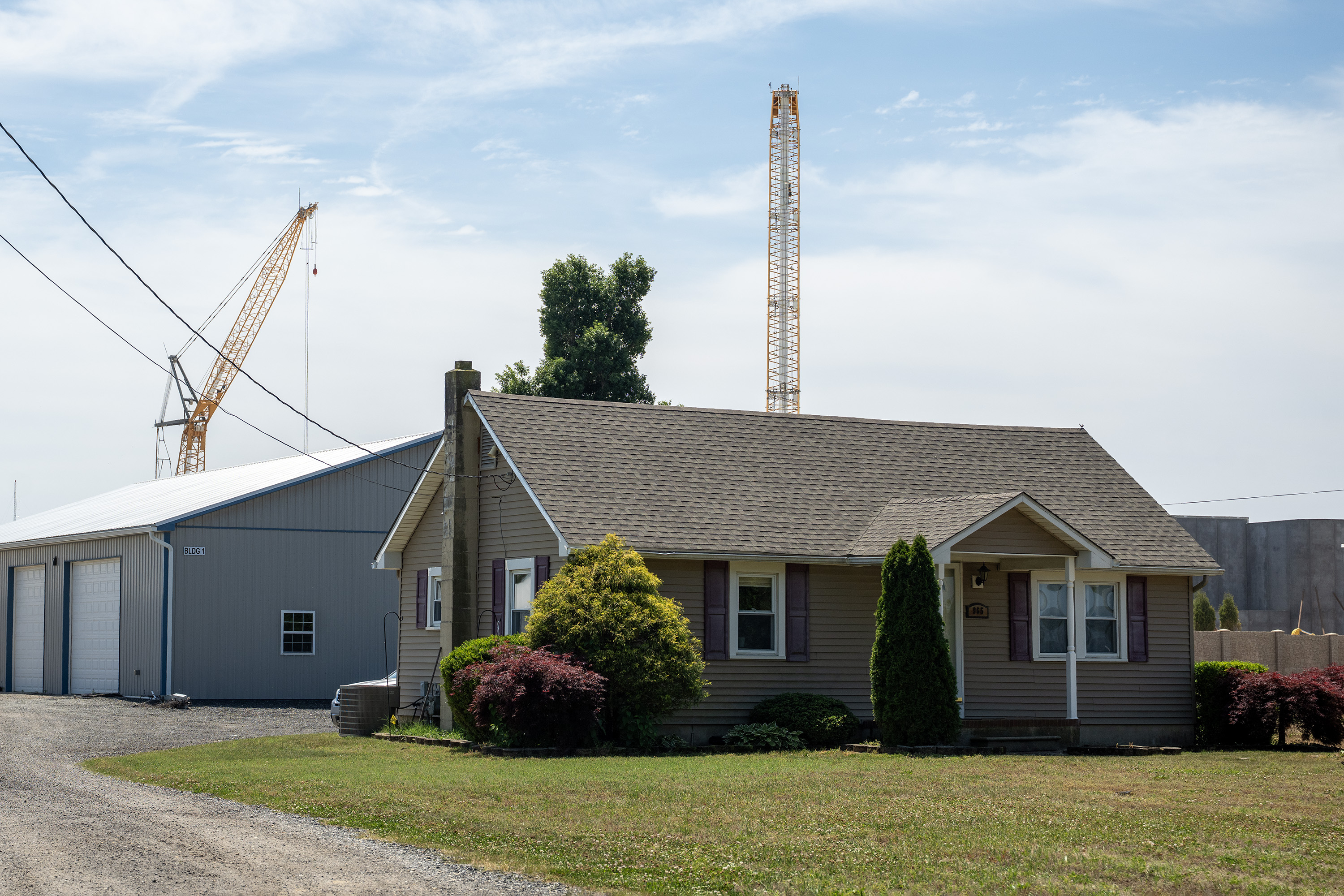
    The Vineland DataOne center, as seen in June, could be finished by the end of the year, developers have said. Tom Gralish / Staff Photographer

    The dark exterior of DataOne abuts busy South Lincoln Avenue, towering above homes and farms on the outskirts of Vineland City. In spots, rows of crops extend to the data center’s walls.

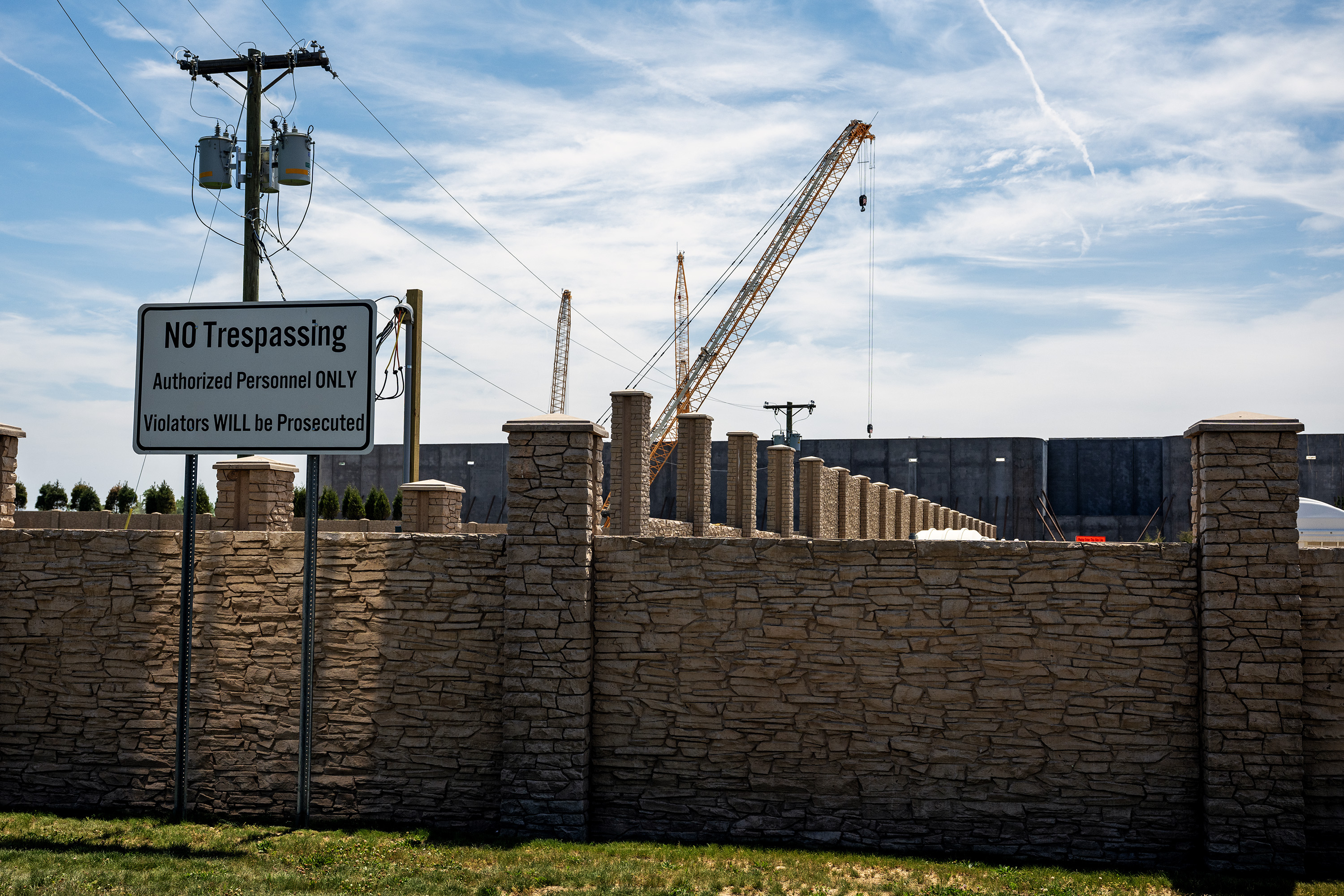
    On a recent day, the data center appeared abuzz with activity, although residents said it was relatively quiet, as cars and yellow school buses drove in and out of its gated-off parking lot. Giant “no trespassing” signs are prominently displayed.

    While the front portion of the data center appeared complete, cranes farther back reached into the sky.

    Meanwhile, several large homes across from the entrance — purchased by the data center developers and associates — appeared abandoned, with recycling cans askew in the driveways, indoor and outdoor lights on in the middle of the day, and swing sets sitting empty in the backyards. No one answered the doors.

    At another home, a woman shook her head, saying she’d lived there forever and would never speak publicly about the development across the street.

    Who is behind the Vineland data center?

    Data centers like this one handle the cloud-storage and computing needs of increasingly sophisticated AI tools.

    DataOne, a French company that manages advanced data centers, is the owner, operator, and builder of the Vineland data center. Its client, Nebius Group, an Amsterdam-based AI-infrastructure company, operates the center’s internal technology, which fuels Microsoft’s AI tools.

    As demand for these facilities has surged, so has the controversy surrounding them. Across the country, proposed complexes have received fierce pushback from nearby residents concerned about environmental, noise, quality-of-life, and property-value impacts.

    The debate has intensified in recent weeks as some top AI executives urge a slowdown of the technology amid fears that it may eventually wipe out humanity.

    Several of these facilities have been proposed in the Philadelphia region, from King of Prussia to Limerick. But few plans have been approved.

    DataOne Vineland could become the region’s first hyperscale AI data center. The developers have said the complex is partially operational, and they expect it to be complete by the end of the year.

    Construction continued on the DataOne center as seen from a nearby home in June.Tom Gralish / Staff Photographer

    Theresa Lewis, who has owned her home for 47 years, said living by the data center has gotten worse in recent months.

    Stepping outside and seeing the building, “I think of a prison, and I’m the prisoner with the noise,” said Lewis, 74, who compares the sound to a tractor trailer idling outside her home all day and night.

    “You get up in the morning and you’re in a foul mood,” Lewis said.

    Both she and Ayrer said they have called the Cumberland County Department of Health to report excessive noise in the middle of the night, but doing so comes at a cost. They said they then have to get up, get dressed, turn the lights on, and wait for an official to come take a decibel reading, making for another sleepless night.

    Data centers are being built in different communities

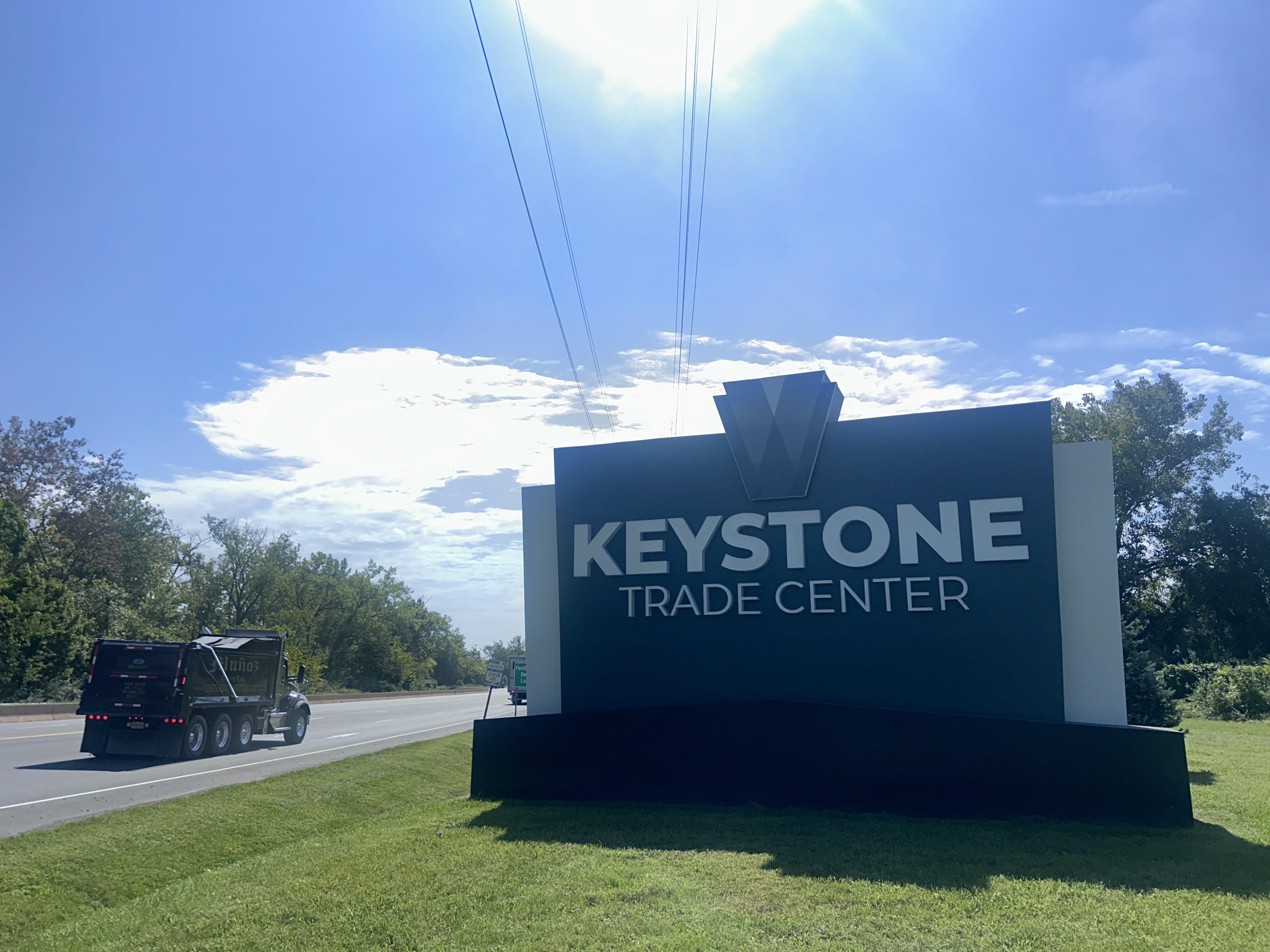
    The view outside the Keystone Trade Center in Falls Township. Amazon is building a data center inside the private complex.Erin McCarthy/Staff

    The scene in Vineland is vastly different from the one outside Amazon’s 2-million-square-foot data center campus in Falls Township, Bucks County, the Philadelphia region’s other facility nearing completion.

    That data center sits deep inside the Keystone Trade Center, an industrial hub surrounded by water, with no homes in sight. On a recent day, tractor trailers whizzed by Keystone’s main entrance. Only the transmission wires overhead hinted at what may be inside the private property.

    Still, neighbors have pushed back against the complex, with more than 5,000 people signing a petition in favor of a data center moratorium in Falls Township.

    Elsewhere, data center plans proposed by developer Brian O’Neill have faced fierce opposition in King of Prussia and on the outskirts of Conshohocken. So have projects in East Whiteland, where data center construction recently began, and in East Vincent, where a center was proposed for the site of the former Pennhurst State School and Hospital.

    In Vineland, Lewis said she wishes she and her neighbors had a chance to push back against the data center before it was built. Residents were first asked to provide input about the project at a contentious town hall in January, more than a year after the project was approved by city council and months after construction started.

    “I don’t want to move — and who is going to pay what the house is worth with that right there?” Lewis said, motioning to the data center across the street. “But I wake up angry.”

    She added: “I can’t imagine living next to this for the rest of my life.”

    Editor’s Note: This story has been updated to reflect that the noise from the data center returned Wednesday, according to Ayrer.

  • 8 new restaurants to know about | Inquirer Lower Merion

    8 new restaurants to know about | Inquirer Lower Merion

    Hi, Lower Merion!

    The local restaurant scene is buzzing with new and forthcoming openings. Here are the ones to know about. Also this week, a Penn Wynne man has been accused of defrauding investors in his cannabis start-up, Pep Boys is planning dozens of local layoffs, plus the community is mourning the death of the former Phillies owner who helped bring the Phanatic to life.

    In other news: A man testified about fearing for his life during a recent township road-rage incident, and Villanova’s mascot has scored an NIL deal.

    — Lisa Dukart (lowermerion@inquirer.com)

    P.S. Tell us what you think of the newsletter by taking our survey or emailing us back here.

    If someone forwarded you this email, sign up for free here.

    New restaurants to put on your radar

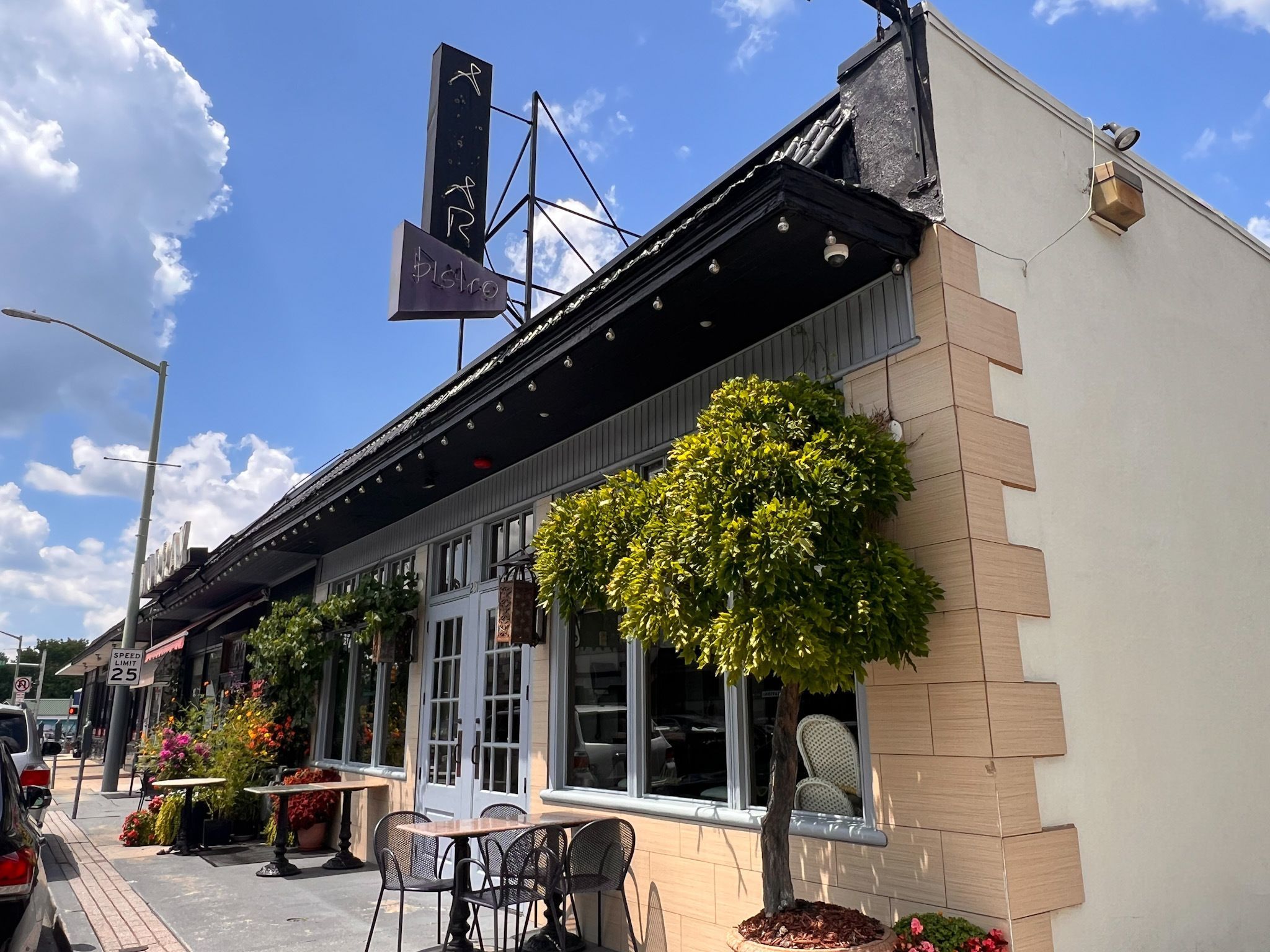
    The former Aldar Bistro will become Bruzi.Michael Klein / Staff

    Dozens of new restaurants are opening throughout the region this fall and winter, including a few in and around Lower Merion.

    Alessandro’s Enoteca is targeting an October opening at 915 W. Lancaster Ave. in Bryn Mawr. The brainchild of Alex Fiorello will dish up pastas, pizzas, and dry-aged meats in the former Enoteca Tredici space.

    Bala Cynwyd will get a new Southern Italian eatery, Bruzi, in the former Aldar Bistro space, which will serve Calabrian dishes and have an opening list of about 100 Italian wines.

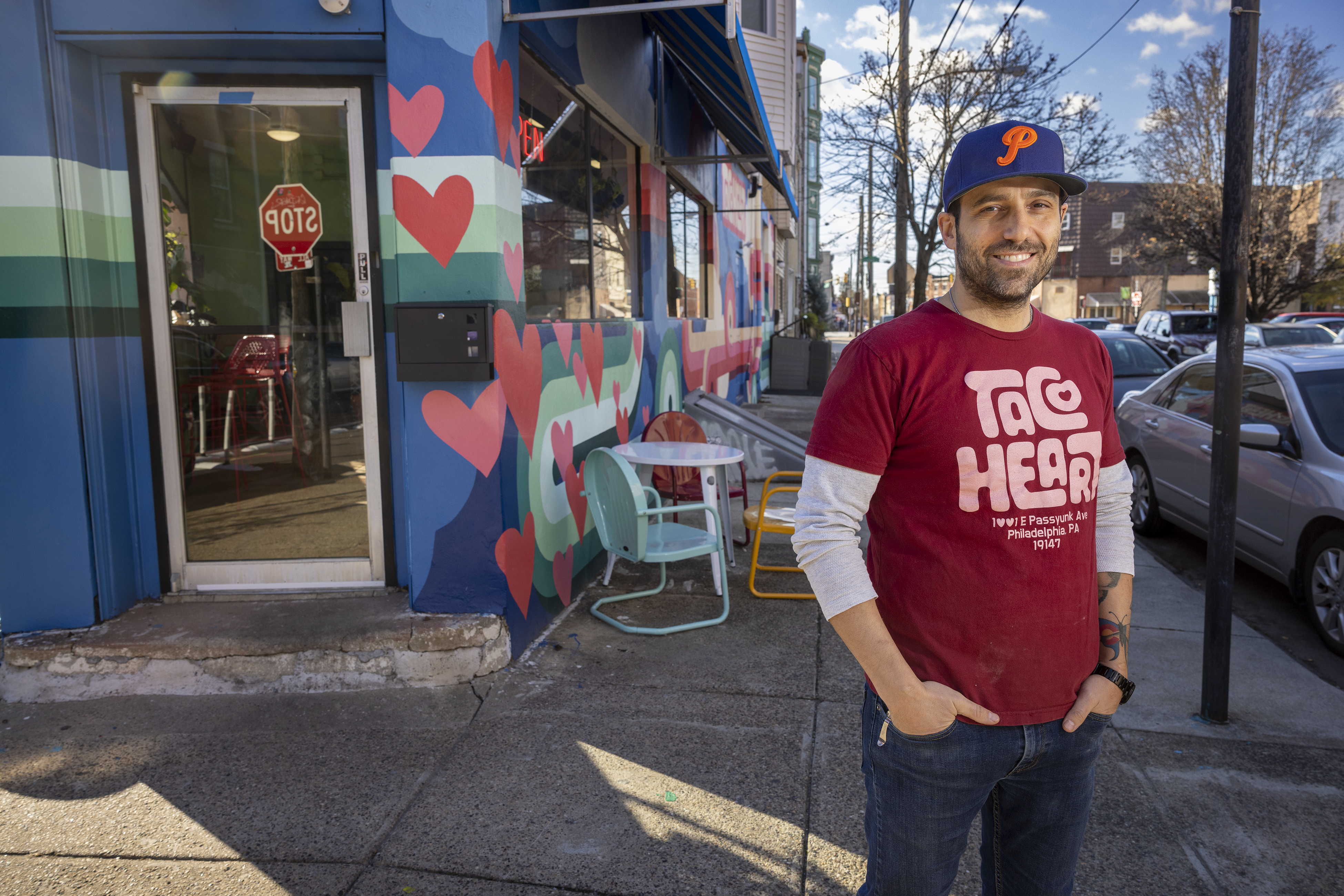
    And in Ardmore, South Philadelphia’s Taco Heart is expanding to the Ardmore Farmers Market. It’s joined in Ardmore by the just-opened Vintner’s Table, which has a wine bar, salumeria, and lifestyle boutique.

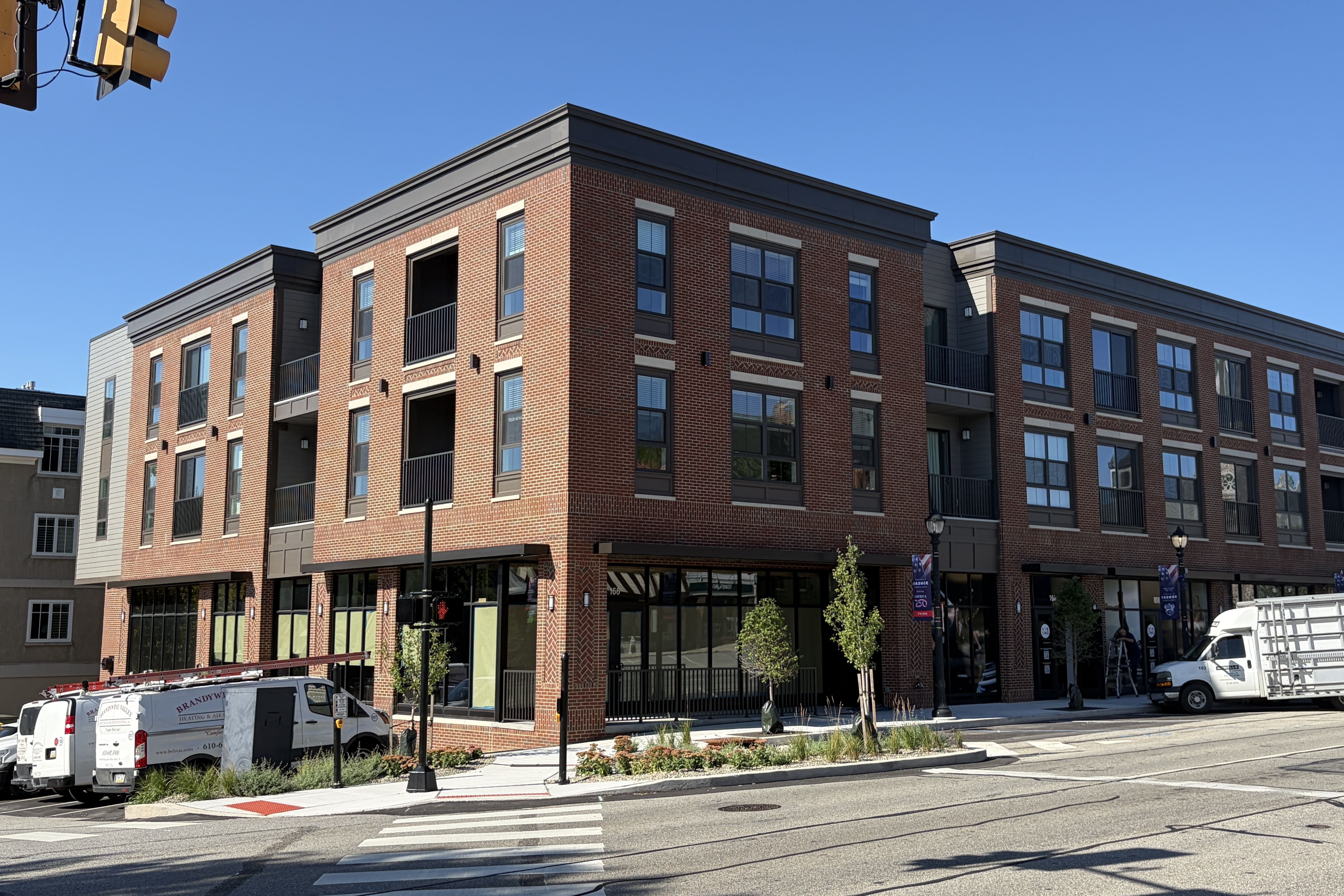
    Elsewhere nearby, Fearless Restaurants will grow its footprint in Wayne, adding Southern Italian eatery Martini & Roz. First-time restaurateurs (and Harriton High alums) Larry Kagan and Chas McFeely will open Old Friend, a contemporary American grill, in the Apartments at Wayne Station.

    And the former La Jonquille and Shiraz spaces in Devon are expected to get new life, with Korean barbecue spot Salt opening in December, followed by sushi joint Yugo next year.

    See all 60 new restaurants on tap in the region.

    🍽️ In other food news …

    • Village Cafe opened at 1422 Manoa Rd. last week. The new Wynnewood spot serves a selection of coffees and pastries.
    • Bryn Mawr’s The Bakery House opened its second location over the weekend at 35 W. Lancaster Ave. in Paoli. It sells a selection of goods such as custom cakes, pastries, and pies, as well as the viral dot cakes.
    • Wednesday is the last day for the Bala Cynwyd Farmers Market this season. It will return in the spring.

    💡 Community news

    🗺️ Other nearby news

    🏫 Schools briefing

    🎳 Things to do

    🧚 Gnome and Fairy Festival: Narberth Park will be transported into a wonderland replete with gnome and fairy houses. Attendees are encouraged to dress up. ⏰ Saturday, Oct. 3, 11 a.m.-3 p.m. (rain date: Oct. 17) 💵 Free 📍 Narberth Park

    🍂 Shiverfest: Kick off spooky season at this family-friendly event that includes food trucks, live entertainment, crafts, and animals. ⏰ Saturday, Oct. 3, 3-8 p.m. 💵 $37.05-$42.39 📍 Riverbend Environmental Education Center

    🛍️ Clover Market: Browse a curated selection of over 90 vendors, hear live music, and grab a bite to eat from a food truck. ⏰ Sunday, Oct. 4, 10 a.m.-4 p.m. 💵 Pay as you go 📍 7 N. Bryn Mawr Ave., Bryn Mawr

    🍷 Wine and Wander: Explore Stoneleigh after hours while sampling four types of wines. ⏰ Thursday, Oct. 8, 5:30-7:30 p.m. 💵 $65-$75 📍 Stoneleigh

    🏡 On the market

    A French manor home with a pool and gardens

    This four-bedroom, French manor-style home sits on over 3.5 acres in Penn Valley, giving it plenty of privacy. The front entry features twin staircases leading to the doorway. Inside, there are formal living and dining rooms, a kitchen with a breakfast room, and a family room with a fireplace and brick accent wall. The large primary suite has a fireplace, two bathrooms — including one with a soaking tub — and a dressing area. There’s also a sauna on the lower level. Outside, the home has an in-ground pool and gardens.

    See more photos of the property here.

    Price: $3.5M | Size: 5,938 SF | Acreage: 3.54

    🗞️ What other Lower Merion residents are reading this week:

    By submitting your written, visual, and/or audio contributions, you agree to The Inquirer’s Terms of Use, including the grant of rights in Section 10.

    This suburban content is produced with support from the Leslie Miller and Richard Worley Foundation and The Lenfest Institute for Journalism. Editorial content is created independently of the project donors. Gifts to support The Inquirer’s high-impact journalism can be made at inquirer.com/donate. A list of Lenfest Institute donors can be found at lenfestinstitute.org/supporters.

  • 8 new restaurants to know about | Inquirer Radnor

    8 new restaurants to know about | Inquirer Radnor

    Hello, Radnor!

    Over half a dozen new eateries are opening nearby in the coming months, part of a larger restaurant boom in the region. Here are the spots to know. Also this week, Villanova University’s mascot has scored an NIL deal, the county’s former emergency services director stands trial, plus we peek inside a nearby estate with a four-bedroom house, a waterfall, and a meditation garden.

    In other news: The township is sharing its vision for the next decade and A Taste of Britain is celebrating its 35th anniversary.

    — Lisa Dukart (radnor@inquirer.com)

    P.S. We want your feedback! Tell us what you think of the newsletter by taking our survey or emailing us at radnor@inquirer.com.

    If someone forwarded you this email, sign up for free here.

    8 new restaurants to put on your radar

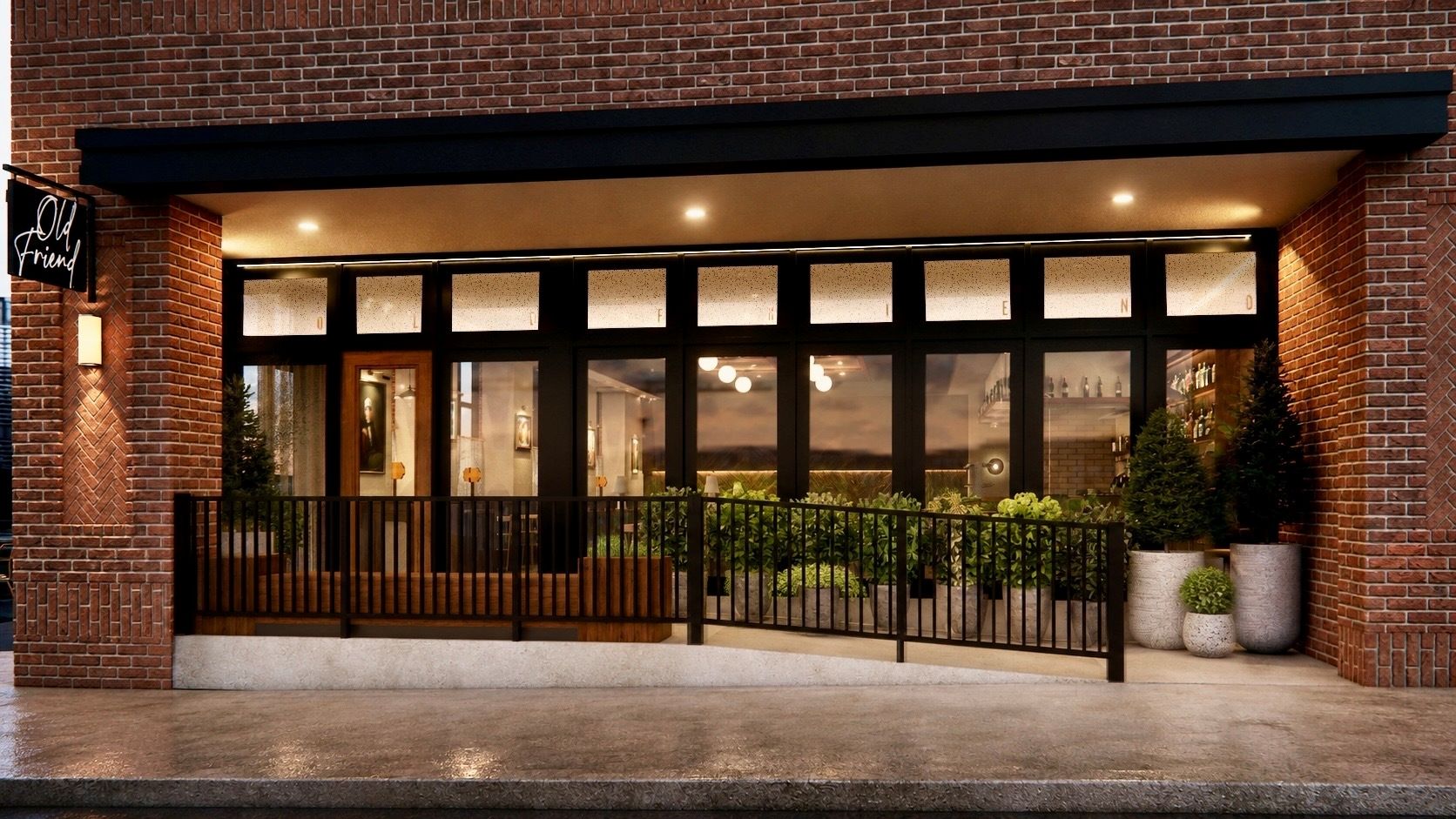
    A rendering of Old Friend, opening in the Apartments at Wayne Station.Stokes Architecture & Design

    Dozens of new restaurants are opening throughout the region this fall and winter, including a handful in and around Radnor.

    Fearless Restaurants will grow its footprint in Wayne, adding 300-seat Southern Italian eatery Martini & Roz, which is taking over the former Bertucci’s space on Lancaster Avenue. And first-time restaurateurs Larry Kagan and Chas McFeely will open Old Friend, a contemporary American grill, in the Apartments at Wayne Station.

    Elsewhere nearby, the former La Jonquille and Shiraz spaces in Devon are expected to get new life, with Korean barbecue spot Salt opening on the ground floor in December, followed by sushi joint Yugo upstairs next year.

    Bryn Mawr will add Italian eatery Alessandro’s Enoteca, while Bala Cynwyd will get a new Southern Italian eatery in the former Aldar Bistro space. And in Ardmore, Taco Heart is expected to open this October, and Vintner’s Table just made its debut (more on that below).

    See all 60 new restaurants on tap in the region.

    💡 Community news

    • Villanova University’s mascot Will D. Cat has inked a name, image, and likeness deal with Friskies that will see the cat food brand donate meals to area pet shelters every time the Wildcats score during this football season.
    • Tim Boyce, the county’s former director of emergency services, stood trial this week for assaulting his executive assistant in 2024. Boyce was fired following the incident.
    • The township released its downtown master plan this week ahead of an Oct. 12 public hearing. “A Vision for Wayne,” which looks ahead to 2036, includes projects like a parklet on North Wayne Avenue, improved sidewalks and streetscapes, traffic calming measures on Lancaster Avenue, and connecting Wayne to the Radnor Trail. The township is also looking to support transit-accessible housing and the reopening of the Wayne Theater.
    • A Wayne man has been accused of working with a Mexican drug cartel to transport large amounts of cocaine from Mexico to the region. Edward Basley, 47, along with Gregory Jones of Philadelphia, has been charged with conspiracy to distribute five kilograms or more of cocaine and possession with intent to distribute five kilograms or more of cocaine.
    • Township police are warning residents about a scam where callers are impersonating Radnor officers.
    • Today, the township launched its “Pumpkin Patch Adventure” along the Radnor Trail, where participants can find 10 hidden pumpkins. The adventure runs through the end of the month, and two participants who send in photos to the Parks and Recreation department will win prizes.

    🗺️ Other nearby news

    • A “magical” 15-acre Malvern property with walking paths, a waterfall, a meditation garden, and a 6,050-square-foot fieldstone house is on the market for just under $7 million. Take a peek inside.
    • Delaware County resident and county employee Anthony “Tony” Oriente made it to the bonus round on an episode of Wheel of Fortune last week, ultimately winning over $25,000, as well as a trip to Vancouver Island. Oriente, who lives in Media, has previously appeared on The Price is Right and Deal or No Deal. Catch the episode here.

    🏫 Schools briefing

    • Nine local students have been named 2027 National Merit semifinalists. They are Radnor High School students Diana Dong, Nadia Doughery, Noah D. Engstrom, John Henofer, Natalie Merriam, Anthony Ramesh, Natalie Tyburski, and Alice Zeng, and Grayson School student Jacob Lee.

    🍽️ On our plate

    • Beloved Wayne tea room A Taste of Britain is marking its 35th anniversary this month with a $35, three-course prix fixe menu benefiting the Wayne Senior Center.
    • Village Cafe has soft opened at 1422 Manoa Rd. The new Wynnewood spot serves a selection of coffees and pastries.
    • Vintner’s Table opened its Ardmore outpost on Monday. Located at 24 Cricket Ave., the Italian-inspired wine bar has a salumeria and lifestyle boutique.
    • Bryn Mawr’s The Bakery House opened its second location over the weekend at 35 W. Lancaster Ave. in Paoli. It sells treats such as custom cakes, pastries, and pies, as well as the viral dot cakes.

    🎳 Things to do

    🎶 Weird Phishes: Catch a tribute to bands Radiohead and Phish. ⏰ Thursday, Oct. 1, 9:30 p.m. 💵 $20.75 📍 118 North

    🎨 Delco Arts Week: The annual countywide event pays homage to the region’s varied art scene. ⏰ Saturday, Oct. 3-Sunday, Oct. 11, times vary 💵 Prices vary 📍 Throughout Delaware County

    🎃 Fall Harvest and Great Pumpkin Patch: Pick a pumpkin, take a tractor ride, and enjoy live entertainment at the annual event. ⏰ Sunday, Oct. 4, noon-3 p.m. (rain date: Oct. 11) 💵 Pay as you go 📍 The Willows Park

    🍷 Wine and Wander: Explore Stoneleigh after hours while sampling four types of wines. ⏰ Thursday, Oct. 8, 5:30-7:30 p.m. 💵 $65-$75 📍 Stoneleigh

    🏡 On the market

    A six-bedroom Villanova home with a pool and spa

    Built in 2008, this stone Villanova home was designed for entertaining. It features a chef’s kitchen, complete with a butler’s pantry, that opens onto family and living rooms, each with their own fireplaces. The finished lower level has an additional family room with a bar, while outside, there’s a flagstone terrace with a built-in grill and seating that leads to a pool and spa. The home has six bedrooms, including a primary suite with its own fireplace, as well as two office spaces.

    See more photos of the property here.

    Price: $4.65M | Size: 8,075 SF | Acreage: 1.36

    Each week we feature an interesting local listing in or around the township. Have one we should consider? Email us at radnor@inquirer.com.

    🗞️ What other Radnor residents are reading this week:

    By submitting your written, visual, and/or audio contributions, you agree to The Inquirer’s Terms of Use, including the grant of rights in Section 10.

    This suburban content is produced with support from the Leslie Miller and Richard Worley Foundation and The Lenfest Institute for Journalism. Editorial content is created independently of the project donors. Gifts to support The Inquirer’s high-impact journalism can be made at inquirer.com/donate. A list of Lenfest Institute donors can be found at lenfestinstitute.org/supporters.