Blog

  • St. Christopher’s Hospital for Children named Claire Alminde permanent president

    St. Christopher’s Hospital for Children named Claire Alminde permanent president

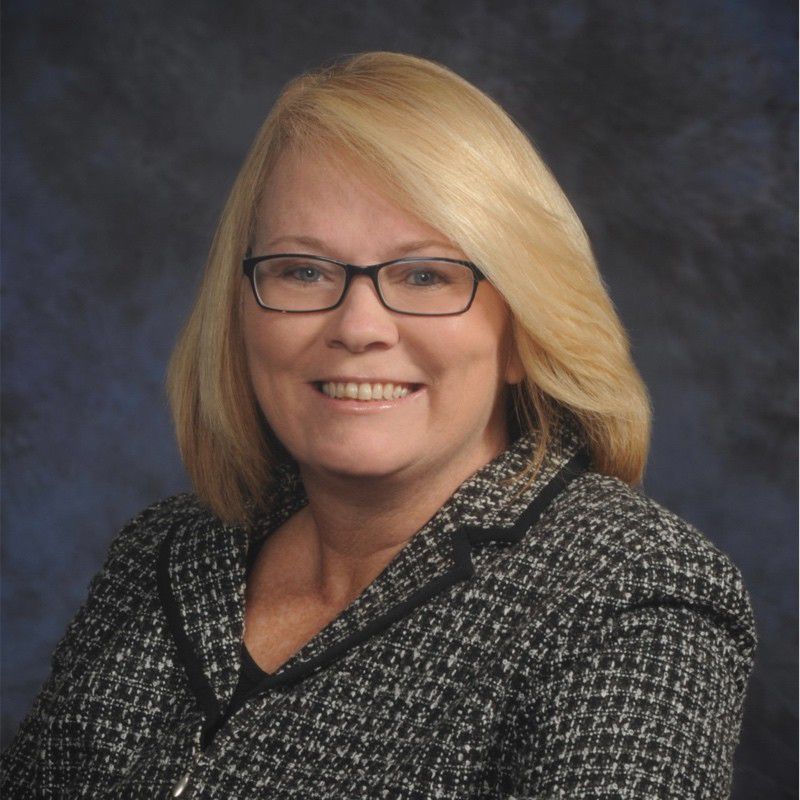
    St. Christopher’s Hospital for Children named Claire Alminde permanent president on Thursday, following a period of leadership turmoil at the North Philadelphia safety-net institution.

    Alminde, who will continue to serve as chief nursing officer, had taken over in January from another acting president.

    “Claire brings a unique combination of frontline clinical experience and hospital leadership, along with firsthand knowledge of what it takes to operate a hospital like St. Chris that plays such a vital role in Philadelphia and beyond,” St. Chris said in an email.

    One of Alminde’s tasks will be to work with leaders at Nemours Children’s Health, Jefferson Health, and Temple Health to build an alliance announced in July to secure the future of St. Chris, which struggles financially because most of its patients have low-paying Medicaid insurance.

    St. Chris’ chief nursing officer, Claire Alminde, has been named president of the North Philadelphia safety-net provider.St. Christopher's Hospital for Children

    Alminde was the third interim or acting executive appointed to the top management position at the nonprofit hospital since February 2024 and its fourth leader since 2020.

    Drexel University and Tower Health have owned St. Chris in a 50-50 joint venture since 2019. Tower oversees day-to-day operations.

    “After several years of leadership changes, this appointment gives St. Christopher’s strong, permanent leadership from someone who knows our hospital, our people and the community we serve incredibly well,” Tower CEO Michael Stern said in a message to employees. “Claire understands what makes St. Chris such a special place and what it will take to move us forward.”

    St. Chris’ most recent financial results showed that it had an operating profit of $1.1 million in fiscal 2025, compared with a $31.6 million loss the year before.

    The safety-net provider received a $76 million revenue boost from its inclusion for the first time in a program that taxes Philadelphia hospitals and uses the money to increase the government’s Medicaid funding for facilities that disproportionately care for low-income patients.

  • Stop airing Brian Fitzpatrick’s TV ads, Bob Harvie’s campaign asks Philly area stations

    Stop airing Brian Fitzpatrick’s TV ads, Bob Harvie’s campaign asks Philly area stations

    Bucks County Democrat Bob Harvie is asking TV stations in the Philadelphia area to stop airing advertisements from U.S. Rep. Brian Fitzpatrick, calling them misleading to viewers.

    In letters sent Thursday, an attorney for the Democrat’s campaign highlighted two attack ads from Fitzpatrick’s campaign related to Harvie’s time as a county commissioner.

    He said the ads relied on dubious reporting from a source who has personal connections to Fitzpatrick, the incumbent Republican who has represented the 1st Congressional District for five terms. Harvie is challenging Fitzpatrick for the Bucks County-based seat, one of four in the state that both parties are targeting ahead of November.

    In one of the ads, for example, Fitzpatrick’s campaign cited a headline from Patch.com, the hyperlocal news organization, that said “Bob Harvie was the lone vote to abolish local police funding on the Board of Commissioners.”

    Harvie opposed a roughly $43,000 purchase of “civil unrest protective equipment” for the Bucks County Sheriff’s Office in a 2024 vote, attorney Timothy Ford said in the letter, but voted to approve every other law enforcement spending request, including about $31,000 for a sheriff’s deputy vehicle and about $44,000 for a police interceptor utility vehicle.

    The legal action comes after revelations from Politico that the author of multiple Patch articles Fitzpatrick is using in his campaign ads is Dave Sommers, who received occasional payments from Fitzpatrick’s campaign over the years, though not in the most recent financial reporting cycle.

    “Sommers’ claim that Mr. Harvie voted to ‘abolish local police funding’ is a deliberately false characterization of the official and public record of the Bucks County Commissioners’ Meeting,” Ford wrote.

    Harvie’s campaign asked the TV stations to scrutinize any future advertisements that refer to Sommers’ work.

    “These advertisements rely on reporting from a highly uncredible and biased source with a penchant for publishing out-of-context, false statements that mislead voters and damage Mr. Harvie’s reputation in the community,” Ford wrote.

    Sommers had previously been charged with stealing an election sign for a previous Fitzpatrick primary challenger and attended the lawmaker’s June wedding, Politico reported.

    Representatives for the Fitzpatrick campaign did not respond to The Inquirer.

    Thursday’s letter is the latest effort by the Harvie campaign to use legal means to thwart an ad blitz from Fitzpatrick, who led Harvie in fundraising, according to campaign finance reports this summer. The next round of financial disclosures will be available Oct. 15.

    Several public polls put Harvie and Fitzpatrick in a tight race, but the Cook Political Report, a nonpartisan group that provides election analysis, indicates the seat will likely remain in Republican control.

    This summer, Harvie’s campaign sent a cease-and-desist letter to Fitzpatrick and his campaign for what it said were defamatory allegations that falsely suggest Harvie was the subject of an FBI investigation. A PAC supporting Fitzpatrick that used similar language in its social media posts, news releases, and video content also received a cease-and-desist order and was slapped with a lawsuit.

    The practice of sending these kinds of letters is common for campaigns, and some go ignored.

    In another ad Harvie’s campaign complained about in the letter, Fitzpatrick referenced a Patch headline that said “Bob Harvie Voted to Give Himself a Significant Taxpayer-Funded Pay Raise.”

    As chair of the Bucks County Board of Commissioners, Harvie approved an annual 1% increase in salaries beginning in 2024 for commissioners and several other local offices. State law requires commissioners to set salaries prior to a forthcoming election year for most county-level roles, including their own.

    “There was nothing ‘significant’ or unusual about the pay raise that Mr. Harvie and his fellow Commissioners approved,” Ford wrote. He added that the raises were approved across party lines, including support from the Republican commissioner.

  • 11 Philly business owners stole funds from program for low-income women and children, prosecutors say

    11 Philly business owners stole funds from program for low-income women and children, prosecutors say

    Nearly a dozen Philadelphia-area small-business owners stole almost $1 million in public funds by defrauding a program designed to support low-income mothers and their children, authorities said Thursday.

    The businesses accused of fraud are small groceries or corner stores located throughout the city, according to the state attorney general’s office, which announced Thursday that it had charged 11 people with theft by deception, forgery, and related crimes.

    Prosecutors said the business owners submitted false claims for funds through the federal food assistance program WIC, the Special Supplemental Nutrition Program for Women, Infants, and Children. The program and funds are administered by Pennsylvania’s health department.

    Participating businesses are reimbursed through the state for purchasing food and infant formula, which is provided to recipients in stores using a benefits card. Prosecutors said the businesses abused their role as providers, submitting fraudulent claims for purchases — nearly 10,000 in all, they said.

    Investigators reviewed thousands of receipts and audited paperwork submitted by the businesses between 2021 and 2025, finding they were “forged and fabricated,” they said.

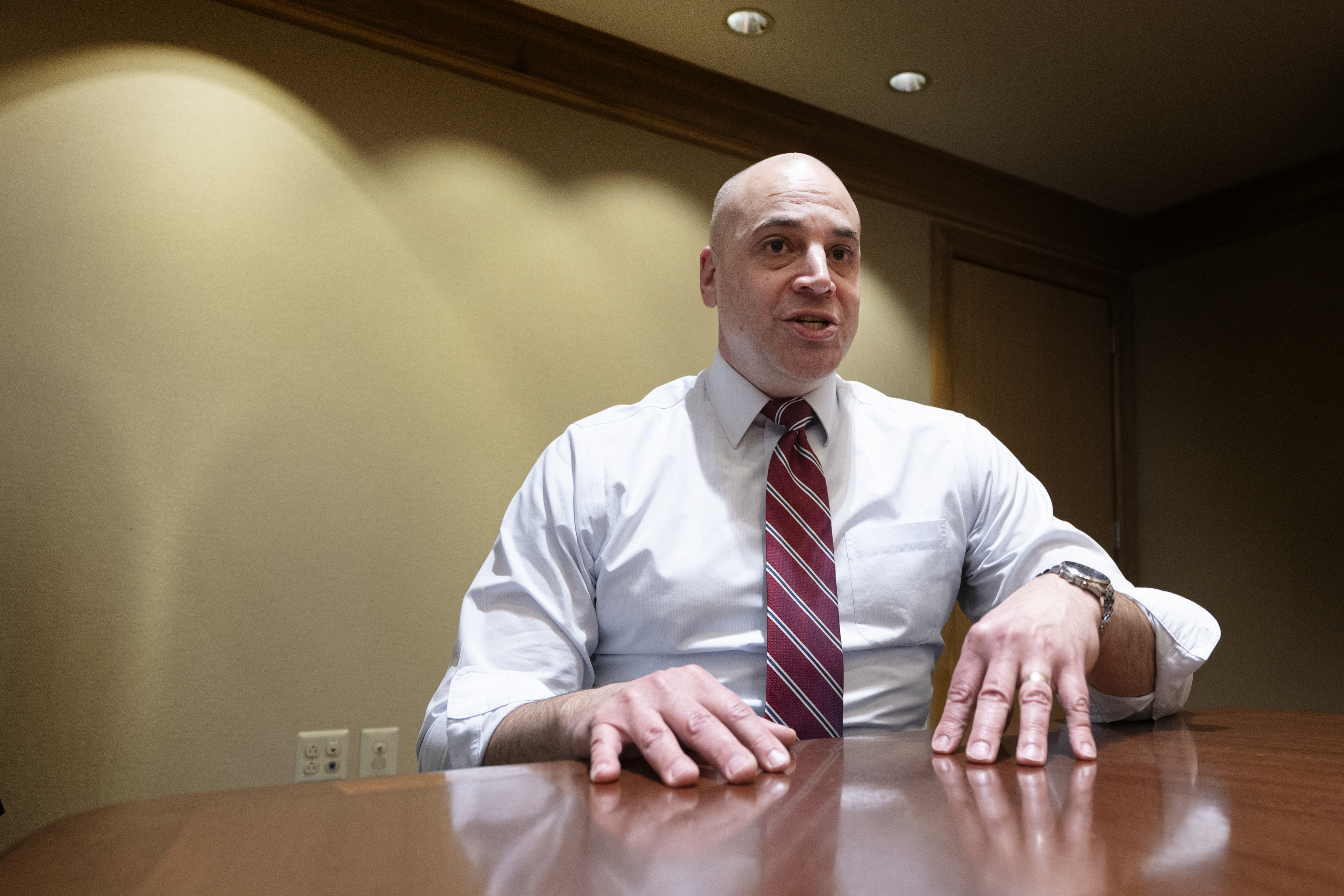
    Attorney General, Dave Sunday on March 13, 2025 in Philadelphia.Jose F. Moreno / Staff Photographer

    The fraudulent claims in several cases exceeded $100,000, and almost all amounted to tens of thousands of dollars. Most of the claims were fulfilled, prosecutors said, resulting in the loss of $985,000 in public money.

    The largest sum was paid to Felix Sosa, 35, of El Paisano Express Food in South Philadelphia, according to prosecutors. Sosa was reimbursed a total of $342,183 for such claims, they said, and was charged with theft and related crimes.

    He was arrested Wednesday and was being held on $25,000 bail. No attorney for him was listed in court records.

    Musa Barry, of Uncle Musa Grocery in Southwest Philadelphia, was charged with submitting fraudulent claims totaling $226,557. He was arrested Wednesday and has not hired an attorney.

    Nearly all of the remaining business owners are accused of stealing sums in the tens of thousands.

    Attorney General Dave Sunday decried the crimes in a statement Thursday, saying the business owners had “intentionally defrauded” state government for years.

    Nine of the merchants have been taken into custody, Sunday said.

    “This type of criminal activity doesn’t just victimize taxpayers by defrauding the government, it hurts the women and children who rely on the services programs like WIC provide,” he said.

    Officials estimate about 175,000 Pennsylvanians are enrolled in the WIC program, about 36,000 of them in Philadelphia. It is available for low-income women who are pregnant or have given birth within six months (if breastfeeding, up to 12 months), as well as children under 5.

    The announcement of the criminal charges comes at a challenging time for the Pennsylvania Bureau of Women, Infants, and Children.

    The bureau’s director, Sally Zubairu-Cofield, resigned last week, citing “significant and ongoing workplace challenges” and barriers to leadership. She had led the office since 2022 and was appointed during the administration of former Gov. Tom Wolf.

    She declined to comment Thursday.

    Zubairu-Cofield wrote in her resignation letter that she had faced “multiple allegations and investigations that I understood were subsequently determined to be unfounded” during her tenure, according to Spotlight PA.

    She did not elaborate on the nature of those allegations, according to the outlet.

  • Trump says Secret Service wants him to ‘take down’ Oval Office

    Trump says Secret Service wants him to ‘take down’ Oval Office

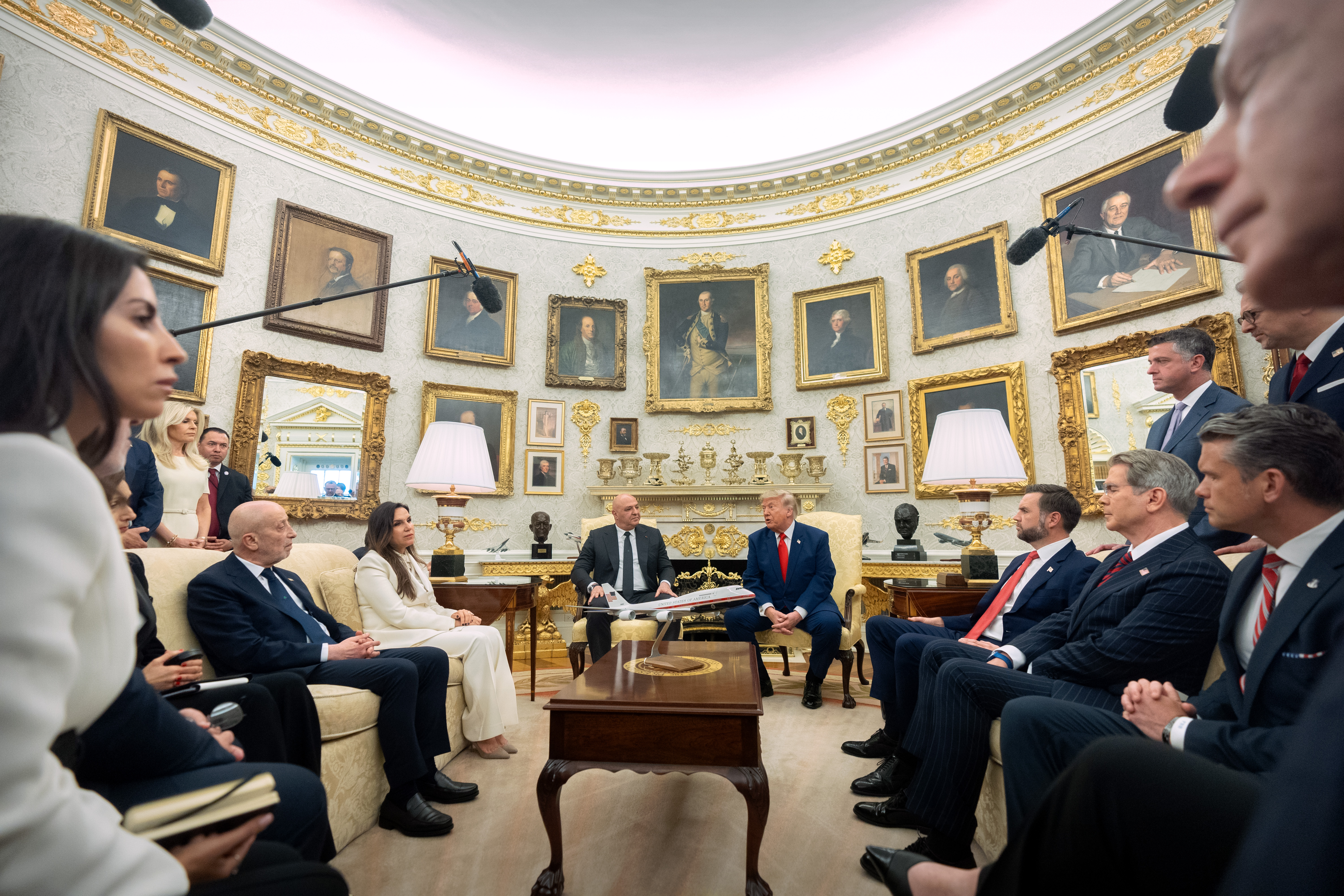
    President Donald Trump said that Secret Service officials have encouraged him to replace the current Oval Office, according to a new interview with Time magazine.

    “‘Sir, we think the Oval Office should be taken down, and we’ll build a new one, sir,’” said Trump, quoting a Secret Service official. “I said, ‘My ass, you can’t build a new one. This is a special place.’”

    The Secret Service has encouraged prior administrations to take steps to fortify the Oval Office, said four former officials, who spoke on the condition of anonymity to detail sensitive security matters. Past presidents have declined to do so because it would require them to relocate.

    A White House spokesman declined to offer further comment. A spokesman for the Secret Service did not immediately respond to questions about Trump’s remarks.

    The current Oval Office was constructed by President Franklin D. Roosevelt and become synonymous with high-profile events and speeches. Trump, who has redecorated it with gold as part of his sweeping changes to the White House, has called it the most intimidating office in the nation.

    Trump has listened to the Secret Service on other projects to fortify the presidential grounds, such as plans to build a permanent fence around Lafayette Square, the public park across the street from the mansion. The president also has invoked national security reasons to defend his most controversial construction projects, including a new White House ballroom and his planned triumphal arch.

    In the Time interview, the president said he was exploring the possibility of a new federal designation for the Oval Office, which he suggested could protect the office from being torn down and preserve his changes to it.

    “I’ve been asking Susie for six months to give me a statement. Will we save this room? Will we make it a federal landmark?” Trump said, invoking his chief of staff, Susie Wiles.

    The White House is already designated a National Historic Landmark, a federally conferred status that is intended to offer protections against sudden changes. But Congress exempted the White House from the National Historic Preservation Act, which has allowed presidents – including Trump – to swiftly remake parts of the building when they assume office.

    “The discussion of making it a landmark is legally meaningless,” said Greg Werkheiser, founding partner of Cultural Heritage Partners, a law firm focused on historical preservation. He also questioned why Trump was invoking historical preservation after disregarding it to tear down the White House’s East Wing, pave over the Rose Garden and make other changes.

    “There’s some irony of the president suggesting that he might use historic designation to protect the property after ignoring it so far,” Werkheiser said.

  • A former Philly woman who voted twice in the 2024 election was sentenced to three years of probation

    A former Philly woman who voted twice in the 2024 election was sentenced to three years of probation

    A former Philadelphia woman who voted twice in the 2024 presidential election was sentenced Thursday to three years of probation.

    Miya Pack, 40, who now lives in Georgia, pleaded guilty earlier this year to voting more than once in a federal election after prosecutors said she cast ballots in 2024 in Bergen County, N.J. — where she grew up — and in Philadelphia.

    Pack was not affiliated with any political party at the time, according to Pennsylvania voter records. And prosecutors did not specify which candidate she voted for.

    Pack also did not name her preferred candidate Thursday while addressing U.S. District Judge Joshua D. Wolson. Instead, she simply said she was “nervous” about the election’s outcome, but recognizes now that that was no excuse for voting twice.

    “I was wrong,” she said. “I’m very, very sorry.”

    Pack voted in-person in North Jersey on Oct. 26, 2024, court documents said, and then cast another ballot in-person in Philadelphia 10 days later, on Election Day.

    Assistant U.S. Attorney Nancy Potts said Pack’s crime “violates the trust that we have in one another to abide by the basic rules of society.”

    And Wolson, the judge, said Pack’s offense “strikes at the heart of democracy in many respects.”

    “There’s a degree of honor code in voting, and breaches of that undermine the public confidence in elections,” he said. “And our elections function in no small part because they rely on a public perception of confidence.”

    Pack said she understood. And both she and her attorney said Pack has been left “mortified” and “embarrassed” by the case, which has been covered by a variety of news outlets, making her name and background easy to find online.

    President Donald Trump has repeatedly made questionable or false statements about the prevalence of voter fraud, particularly in places like Philadelphia, where Democrats heavily outnumber Republicans.

    Election officials and other experts generally agree that voter fraud has not historically occurred on a large scale, or at rates that might undermine electoral results — particularly in national elections, such as presidential contests.

    Pack’s indictment was announced last year alongside the indictment of another man, Matthew Laiss, who voted twice for Trump in 2020. Laiss was sentenced earlier this year to six months of house arrest and three years of probation.

  • Philly sheriff’s office reneges on court-supervision deal, tells judge it found $20 million in city money

    Philly sheriff’s office reneges on court-supervision deal, tells judge it found $20 million in city money

    A top aide to Philadelphia Sheriff Rochelle Bilal revealed in court that an internal audit had recently uncovered $20 million in undisbursed money — including tax revenue and utility payments that should have gone into city coffers.

    The stunning disclosure of misplaced sheriff-sale proceeds — which amount to more than half the office’s annual budget — came during a two-day hearing as Bilal and her staff sought to back out of a judge’s plan to appoint an independent supervisor to monitor the office’s troubled process.

    That tentative deal, struck after an August hearing before Common Pleas Court Judge Paula Patrick, was meant to resolve years of delays in issuing deeds and distributing sale proceeds.

    But Patrick, supervisor of the court’s commerce division, ordered Bilal and her deputies back into her courtroom on Wednesday after the sheriff’s office reneged on the agreement.

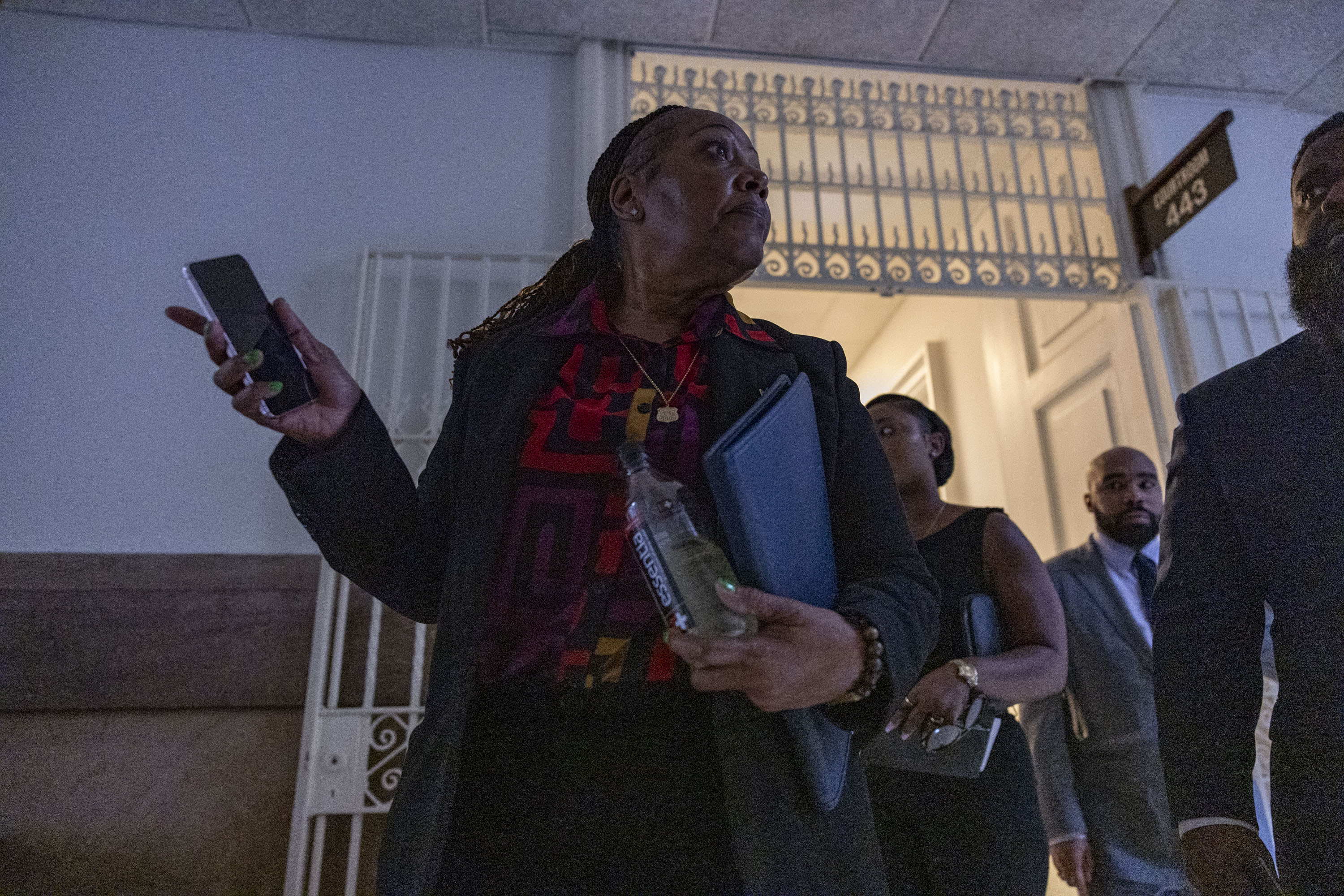
    The judge insisted that Bilal be in the room before the hearing began.

    “You need to have your client here,” the judge told Jonathan Rardin, a lawyer the city retained to represent Bilal. “She needs to be here to get started.”

    Bilal then walked in and took a seat behind the defense table without speaking.

    Steven Wakefield, a new deputy undersheriff hired in June to streamline the office’s property auctions, testified Wednesday morning that he had already fixed many of the operational issues that had caused the backlog.

    Under questioning from the judge, Wakefield also detailed the discovery that “checks had not been written” for some $20 million in sales proceeds, including uncollected property taxes and water bills that are meant to be recouped through sheriff sales.

    “A lot of that was money that was supposed to go to the city,” Wakefield said.

    The money was found during an audit that so far has gone only as far back as August 2025. Wakefield did not provide an explanation for why the money had remained in the sheriff’s office, but said it was recently transferred to the city.

    New procedures in the office allow executive staff to track when checks are written, he said.

    “We have much more robust information,” Wakefield said.

    Patrick appeared stunned by the revelation.

    “Twenty million dollars is a lot of money,” the judge said. Wakefield agreed.

    Patrick also questioned why Wakefield had not included that information in the records she had ordered the sheriff’s office to produce over the summer, including a list of every sheriff sale since Bilal took office in 2020 and how the money was distributed.

    On Wednesday afternoon, Bilal took the stand for the first time, testifying that she had not known about the backlog of unprocessed deeds until “2024 or 2025,” when she started receiving emails from real estate agents and City Council members about deeds not being recorded.

    “It was like Spidey senses. I’m getting more than one,” Bilal said of the emails. “Then every week.”

    The Inquirer first reported on the problem in July 2024, based on an analysis of city property records. Bilal’s staff initially denied there was a deed backlog, then weeks later said they would take corrective action. Yet the delays continued, and in some cases got worse, with banks, real estate agents, and investors saying as recently as May 2026 they have waited more than a year after auctions to receive their deeds.

    Bilal has repeatedly provided inaccurate information about sheriff sales and her office’s finances, including telling City Council in April that post-auction delays had been resolved.

    But under oath in court, Bilal said she agreed with Rardin’s assessment that the sheriff’s office had not been fulfilling its obligations until recently.

    “That’s what I’m starting to find out, yes,” Bilal said.

    While Bilal campaigned as a reformer in 2019, she testified she had only a rudimentary understanding of what the job entailed when she took office. She said she spent an extended amount of time interviewing staff to “figure out what the sheriff’s office actually does.”

    Now more than halfway into her second term, Bilal blamed the ongoing problems on chronic underfunding from City Hall, poor decisions by managers under her, antiquated technology, and staffers who struggled to handle the new office software that went live in 2024.

    Bilal’s testimony continued Thursday morning. Asked whether she would permit an outside compliance examiner to come into the office, she refused to answer the question.

    “We are in compliance,” Bilal said. “We got control of this.”

    A deal collapses

    This week’s hearing was not supposed to happen.

    Judge Patrick, frustrated with an onslaught of litigation over sheriff sales, ordered the August hearing at which Bilal’s staff was required to demonstrate why a “special master” or someone with similar expertise in real estate should not be brought in to temporarily oversee the auctions.

    That hearing was cut short after Bilal’s staff said it would allow the monitoring and report back to the court in six months. “It’s better that we come together, and make an agreement,” Bilal told reporters at the time.

    But Daniel Bernheim, the lawyer representing plaintiff JSB Property Group, whose March lawsuit over deed delays triggered the legal showdown, said in an interview Tuesday that Bilal’s legal team went silent after Patrick submitted a draft of a stipulated order that called for appointing a team to evaluate the office’s practices.

    Bernheim said Rardin then told him he could not reach “the key decision makers” in the office.

    “The ‘key decision maker,’” Bernheim said, “is the sheriff.”

    Then, Bernheim said, the sheriff’s office submitted what he described as “ludicrous” changes to Patrick’s proposal, including, according to Bernheim: requiring 48 hours’ notice for the independent supervisor to interview any sheriff’s office employee; removing the word comprehensive before review; and automatically terminating the supervision after six months regardless of the results.

    What happened?

    It is unclear why the sheriff’s office changed direction.

    Bilal did not respond to questions Wednesday during a break in the court proceedings. Standing near the defense table, she pointed her phone at an Inquirer reporter’s face and appeared to take a photograph. Her staff then formed a barricade around her.

    On Tuesday, Rardin submitted a memo arguing that Patrick had overstepped her authority. He wrote that the 2003 consent order at the center of the case — which requires the sheriff to issue deeds within 40 days from settlement — does not apply to Bilal because it had been brought against a previous sheriff, John Green, who was later imprisoned on federal bribery charges.

    Even if the order did apply to Bilal, Rardin wrote, the court’s legal authority was limited to holding her in contempt, not “open-ended structural oversight.”

    On the stand Wednesday, Wakefield told Patrick that sheriff-sale proceeds are now being distributed and deeds issued within weeks of settlement. He said the office has reorganized its workforce and is crafting new regulations for auctioning properties that will remain in place for future sheriffs.

    “I have personally signed hundreds and hundreds of deeds,” Wakefield said.

    Much of Wakefield’s and Bilal’s testimony over two days involved past practices in the sheriff’s office, as they guided attorneys through reams of financial and personnel records.

    At one point, Bernheim questioned why a sworn deputy sergeant was needed to, in Wakefield’s term, “babysit” staffers in the real estate division to make sure they were doing their jobs.

    “If we could trust everyone to do their job 100%,” Wakefield said, “we wouldn’t be here today.”

    “Amen to that,” Patrick responded.

    At the conclusion of the hearing Thursday, the judge said would take the new testimony under advisement and issue a ruling shortly.

  • Nearly 50 Montgomery County businesses face drug charges for selling illegal THC products, DA says

    Nearly 50 Montgomery County businesses face drug charges for selling illegal THC products, DA says

    Montgomery County prosecutors announced felony drug charges Wednesday against nearly 50 businesses that they say illegally sold powerful THC products, the latest effort in an ongoing crackdown against smoke shops selling unregulated drugs.

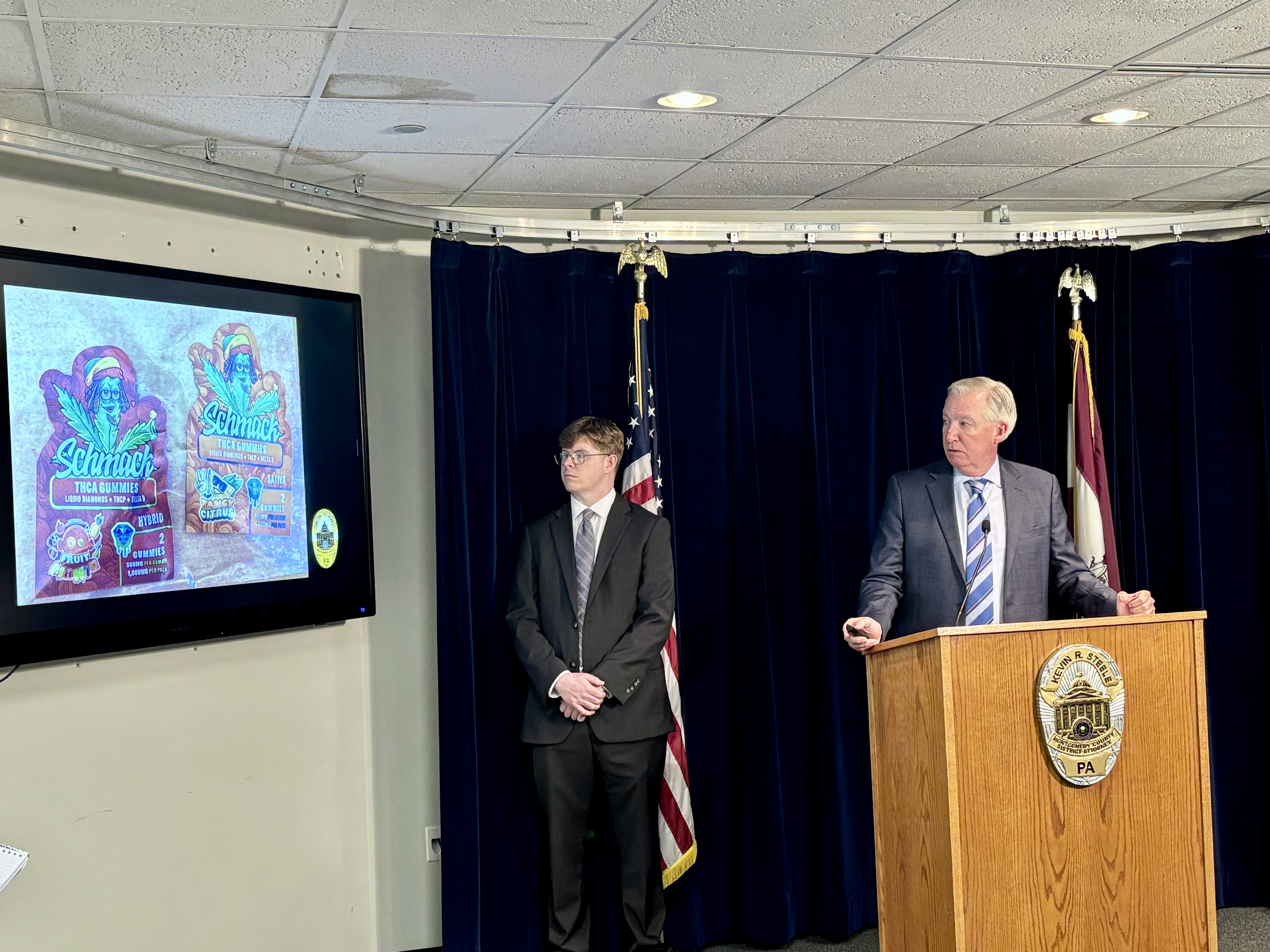
    District Attorney Kevin Steele said 46 retailers — including shops, gas stations, and corner stores throughout the county in towns including Haverford, Pottstown, and Narberth — ignored warnings from his office that some of the products on their shelves were illegal to sell in Pennsylvania outside of a medical marijuana dispensary.

    “I think folks thought we were blowing smoke, for lack of a better way to say this, about the things that were coming if they didn’t abide,” Steele said. “They haven’t abided, and so … they are facing felony possession with intent to deliver charges.”

    The crackdown comes about a year after Steele’s office issued a scathing grand jury report on the proliferation of smoke shops selling illegal THC products. The 107-page report was influenced in part by an Inquirer investigation that found some over-the-counter products were not legal at all — and often rife with harmful contaminants.

    The Inquirer began testing over-the-counter THC products in the spring of 2025, at a time when Pennsylvania law enforcement showed little interest in examining the products sold openly at smoke shops.

    But enforcement has risen steadily as storefronts multiply across the region — outnumbering schools in Montgomery County, according to Steele. The shops also peddle an array of other potentially dangerous products, from ultra-addictive 7-OH kratom pills masquerading as health supplements to unregulated psychedelic drugs baked into chocolate bars.

    Shops attempt to sell these supposedly legal THC products through a legal loophole set by the 2018 U.S. Farm Bill, which allows hemp-derived products to be sold if they contain minuscule amounts of Delta-9 THC.

    However, the vapes, gummies, and other items sold in the shops investigated by his office were potent, and had enough THC in them to be intoxicating, according to the prosecutor. Some, he said, contained as much as 2,000 mg of THC and were sold in colorful packaging that seemed to target children.

    These gummies, which contain an amount of THC illegal to sell outside of a medical marijuana dispensary, were allegedly sold at Eagleville Smoke Shop, according to Montgomery County prosecutors.Montgomery County District Attorney's Office

    The charges were not filed against individual owners, but against the businesses themselves, Steele said. Penalties can range from fines to the revocation of business licenses.

    If necessary, Steele added, his office could file more serious charges, including racketeering, against individual owners.

    He stressed, however, that his efforts are not “anti-business.”

    “What we’re trying to do here today is to get businesses operating in Montgomery County to comply with the law, because we care about kids and public safety in our community,” he said.

    Steele’s office sent warning letters to vape shops across the county in December after releasing the grand jury report.

    The letters warned the shops’ owners that the sale of high-THC products was illegal, and asked them to check their inventory and remove any offending products from their shelves.

    Follow-up checks by investigators in subsequent months found that 46 of them were still selling the products, triggering the criminal charges.

    “I had hoped when we did the grand jury report and put people on notice that would be enough,” Steele said. “It was not.”

    Last year’s grand jury report was the product of a joint investigation with prosecutors in Bucks and Chester Counties. It found many stores used “misleading packaging and fraudulent lab reports” to openly sell banned substances across all three counties, and called for greater enforcement of store operators who “knowingly violate the law.”

    Nearly 300 stores selling hemp operate in Montgomery County, outnumbering schools, according to the report, a reality it described as “a public health crisis unfolding in plain sight.”

    The report’s findings referenced the 2025 Inquirer investigation that found samples of these products purchased from different stores in the Philadelphia region exceeded the 0.3% Delta-9 THC potency level cited in the Farm Bill, making them illegal to sell in Pennsylvania.

    Those items contained Delta-9 THC at levels from 200% to more than 2,400% over the federal limit. Six samples, strengthened by other hemp-derived THC variants, were as potent as most dispensary-grade marijuana.

    The Inquirer also found that some companies deceived consumers about what was in their products by digitally altering lab results to remove evidence of contamination. Seven of the samples tested by The Inquirer contained a potentially harmful fungus. Three contained pesticides, including one illegal chemical.

    Owners of some of the stores investigated by Montgomery County in 2025 told detectives they removed illegal products from their shelves after The Inquirer’s investigation was published that July, according to the grand jury report.

    “We are trying to address this for the sake of the children in our community, for the sake of the public who is misinformed about what these items are, and to deface myths that are out there that if a store is selling something like that, it must not be harmful,” Steele said. “That is not the case.”

    Staff writer Max Marin contributed to this article.

  • U.S. is moving thousands of troops aboard ships to the Mideast as Trump weighs new strikes on Iran

    U.S. is moving thousands of troops aboard ships to the Mideast as Trump weighs new strikes on Iran

    WASHINGTON — The U.S. military is dispatching roughly 9,000 troops aboard a group of ships to the Middle East, a U.S. official said Thursday. The bolstering of the American military presence comes as President Donald Trump warned anew that new strikes against Iran could be on the horizon.

    He also said early indications suggest that Iran is linked to the co-pilot who stabbed his captain and tried to crash an Israel-bound flight on Wednesday.

    In an exchange with reporters at the White House, Trump raised the connection when asked by a reporter if there were any links between the pilot behind the attack and Tehran.

    “I would say the answer, based on what I’m hearing, is ‘yes,’ but we’re working on it right now,” Trump said, without offering details.

    Trump also warned that if the link is established to Iran, the United States would retaliate.

    “Oh they’ll be hit, very hard, don’t worry,” Trump said. “You just ask them. They know what happened. They’ll be hit very hard.”

    Meanwhile, the group of ships now en route to the Middle East together carry over 7,000 sailors and 2,000 Marines.

    It includes the USS Theodore Roosevelt carrier strike group, which recently deployed with the cruiser USS Chosin, and the USS Makin Island amphibious readiness group, which includes the USS John P. Murtha and USS Anchorage amphibious landing ships.

    It could mean that three carriers are in the region as early as the end of October, according to the U.S. official who spoke to The Associated Press on condition of anonymity to discuss sensitive military operations.

    Given the personnel already in place in the Middle East, the move would bring the U.S. naval presence to an unusually high number of more than 20,000 sailors and Marines and hundreds of aircraft. The Navy previously had three carrier strike groups in the Middle East in April for the first time since 2003.

    The carriers USS George H.W. Bush and the USS George Washington are in the region now, along with the USS Boxer amphibious readiness group. The Washington is typically deployed to Pacific Ocean but it was moved to the Middle East to relieve the USS Abraham Lincoln, whose arduous deployment resulted in the crew being at sea for more than 260 days straight.

    Trump, in a Time magazine interview published Thursday, also raised the prospects of new strikes, saying it is “possible” that he will ramp up bombing in Iran after the Nov. 3 elections in the United States.

    When pressed, Trump said he could not go further in detailing his strategy.

    “I can’t tell you that because look, you know, you’re asking, where are you going to bomb?” Trump said.

    He said in the interview, conducted Monday, that he rejected the latest ceasefire proposal from Iran because “things that I wouldn’t have approved a year ago I wouldn’t have today.”

    Trump cited as an example an offer from Iran to “open up” the Strait of Hormuz, the key energy shipping corridor, but said the overall proposal was “not good enough.”

    Asked if the increasingly unpopular war would threaten Republican Party chances in November, Trump at first responded, “It’s possible.” But then he added, “It should help, because Iran will not have a nuclear weapon.”

    The president said “100% of the people” oppose Iran having nuclear attack capabilities “including worldwide.”

    “So, when you say it that way, It would help,” Trump added. “If you don’t say that, it could hurt.”

  • Mortgage rates keep climbing, leading some buyers to riskier loans

    Mortgage rates keep climbing, leading some buyers to riskier loans

    Mortgage rates continue to creep higher, compounding an affordability crunch that has squeezed many Americans’ wallets. Now soaring rates are prompting some homebuyers to roll the dice that they will fall in a few years.

    The average 30-year, fixed-rate mortgage, the most popular home loan in the United States, rose to 7.28% this week, up from 7.03% last week and the highest since November 2023, mortgage financing giant Freddie Mac said Thursday.

    “Mortgage rates jumped to their highest level in almost three years, pushing borrowers to the sidelines,” said Joel Kan, deputy chief economist at the Mortgage Bankers Association, a trade group.

    Mortgage rates had fallen below 6% at the end of February but began to inch higher after the United States and Israel attacked Iran on Feb. 28. The war in Iran has driven up energy costs, which in turn has stoked inflation fears. In response, investors have pushed up the yield on the 10-year Treasury note, which on Thursday reached its highest level since 2002.

    The 10-year Treasury yield underpins a wide range of consumer and corporate borrowing, including mortgages. With the yield climbing quickly, the jump in mortgage rates this week was the biggest since October 2022.

    Adjustable-rate mortgages can be significantly lower than their fixed-rate counterparts, real estate experts say, sometimes as much as a full percentage point, a difference that can potentially save homebuyers thousands of dollars annually. The ARM, as the loan is known, also comes with the risk that rates will continue to climb, hurting owners when the loan resets.

    ARMs are an increasingly enticing option among buyers put off by the jump in fixed-rate mortgages, Kan said, adding, “They are looking for more ways to get into that home.”

    The association reported a recent uptick in the share of ARM applications, to 10.3% of overall mortgage applications, the highest in a year.

    Here’s what you need to know about adjustable-rate mortgages.

    How does an adjustable-rate mortgage work?

    Fixed-rate mortgages lock in one rate over the lifetime of the loan, usually 30 years. ARMs, on the other hand, offer a low “teaser” rate for a set time, typically five, seven, or 10 years, after which they readjust to the market rate, often annually, for the remainder of the loan. This helps owners keep their monthly payments lower during the introductory period.

    Borrowers who use ARMs are betting that mortgage rates will eventually fall, giving them the opportunity to refinance their loan at a lower rate or sell their home before the introductory period ends and the rate begins to fluctuate.

    ARMs make up a small portion of the overall mortgage market, which is dominated by fixed-rate products. But now that fixed-rate mortgages have climbed above 7%, interest in ARMs is starting to grow, said Archana Pradhan, the principal economist at Cotality, a provider of housing market data.

    The national average rate for an ARM with a five-year introductory rate that resets annually is 6.56%, according to Bankrate.com.

    “The wider the gap between ARM rates and the fixed rates, the stronger the incentive to choose an ARM,” Pradhan said.

    How safe is an ARM?

    ARMs offer savings for borrowers, but they also introduce market volatility.

    The loans were popular during the early 2000s housing bubble, peaking at around 36% of overall mortgage applications in 2005, according to data from the Mortgage Bankers Association. After the housing market crashed in 2008, the share of applications for ARMs plunged to about 6%.

    Stricter underwriting standards have made ARMs safer for consumers, who are protected by regulatory limits that prevent the variable rate from jumping too high.

    Still, they are not for everyone, said Nick Rocco, a mortgage loan officer in the Baltimore area. Borrowers need to have a plan for what to do after the introductory period ends regardless of where mortgage rates are. “There is no crystal ball,” he said.

    Who should apply for an ARM?

    Nearly 72% of homebuyers who take out an ARM have a chance within five years to refinance it into a 30-year fixed-rate mortgage that is at least 0.5 percentage points lower than their original rate, according to a report from Redfin, an online real estate marketplace.

    That can translate into big savings every month for some borrowers, Pradhan said. “It’s more meaningful for higher loans, because they are able to save hundreds of dollars compared to the lower amount of loans,” she said.

    Rocco said he recently worked with a couple who used an ARM to finance the purchase of a $750,000 home. The buyers had experience with ARMs, he said, and knew to put 20% down, which lowered their introductory rate.

    “They have a little more risk tolerance, and they’re a little bit more comfortable knowing the fact that they can refinance out of that adjustable rate,” he said.

    But Pradhan said ARMs made better sense for buyers who intended to sell after the introductory period ended. “You are not intending to live in the house forever,” she said.

    “Refinancing may be an exit strategy, but it’s not a guarantee,” she added. “One of the risks of an ARM is the higher payment in the future.”

    This article originally appeared in the New York Times.

  • After an identity hoax, one Philly educators’ group dissolves and another goes on hiatus

    After an identity hoax, one Philly educators’ group dissolves and another goes on hiatus

    After being duped by Hannah Gann, one organization closely affiliated with the Philadelphia School District teacher and activist is dissolving, and another is on a two-month hiatus pending a decision about its future.

    The moves come after Gann admitted she lied for years about her identity, claiming at times to be Palestinian, Tunisian, and Black — devastating both groups and drawing national attention to her deception. Gann recently admitted to being a white, Jewish woman, with relatives who she said were Israeli settlers.

    “After much reflection, Philly Educators for Palestine has made the decision to dissolve,” a statement read. “We are deeply grateful to everyone who participated, supported, organized, learned, taught, and stood alongside us. We are proud of what we accomplished together and of the community that was built through this work.”

    The group, which was not affiliated with the Philadelphia School District but whose members taught in the district, began in early 2024, after charter members, including Gann, organized a “teach-in” about Palestinian history and the conflict in Gaza.

    The Racial Justice Organizing Committee, established as an independent group in 2020, is “taking a two-month hiatus to rest, process, and decompress,” the joint statement said. “A decision regarding its future and next steps will be shared by the end of the year.”

    Gann’s deception was publicized by both groups earlier this month. The organizations’ members were “stunned, saddened, and angered by this betrayal,” they said at the time.

    Gann, in a 10-minute video released after the groups revealed her yearslong hoax, said that she “allowed half-truths and obfuscations to grow into outright lies,” but that she “genuinely wanted to commit to the work I was doing in spite of those lies.”

    She has said in a social media post that she was “so, so sorry. It’s so far from being enough, but I don’t know what else to say.”

    ‘Cosplaying Black’

    Most of the teachers and activists who organized with Gann have asked for privacy as they sort through the complicated “why” around her deception.

    But one organizer, furious at the damage done by Gann, shared details around Gann’s deception with The Inquirer. The activist asked that her name not be used because she feared reprisal from the community.

    Gann sought her out, deliberately befriending her, the organizer said.

    At times, the organizer said, Gann was “a little ambiguous” about her background.

    “She has moments when she tries to act extra Black, like cosplaying Black,” the organizer said. Gann often wore African print clothing and large earrings, and used African American Vernacular English. “She told people she was mixed. She told someone she was Lebanese.”

    But Gann seemed to act differently around different people, slipping on different identities as they suited her.

    Gann once talked about having attended an international school in Virginia, the organizer recalled. When the organizer asked Gann how her family, who Gann said had few resources, managed that, “she said, ‘I just used my grandmother’s address; you know how we do.’”

    And though it was not a secret that Gann attended the University of Pennsylvania, “she never ever talked about that stuff with me,” the organizer said. “She would always gloss over the Ivy League.”

    In some ways, Gann “was such a good friend; she’d do anything for you,” the organizer said — cook a dish, do a favor, show up when you needed her.

    But Gann also did things that, in hindsight, give the organizer pause.

    “She is intricately involved in teenagers’ lives, and that is very, very concerning to me,” the organizer said. “I’ve seen kids stay at her house because they got kicked out. I’ve seen her going to kids’ parties as a chaperone.”

    Members of the Racial Justice Organizing Coalition and the former Philly Educators for Palestine said in a statement they believed Gann, who teaches at the Workshop School, a project-based district high school, deserved consequences from her employer for her actions.

    A school district spokesperson said that the district cannot comment on personnel matters, but that support is being provided for any Workshop student or adult who needs it.

    The organizer agrees with the call from the Racial Justice Organizing Coalition and former Philly Educators for Palestine group for consequences.

    “I think Hannah should get fired,” the organizer said. “This has got to be so traumatizing for those kids. This is a group of kids that don’t trust adults anyway, living in Philly at this time. And they had an adult they thought they could trust, and she was lying about something so fundamental.”

    The organizer feels deeply personally duped, too.

    “She was trying to get my perspective as a Black woman, and she was white that whole time,” the organizer said. “It was disgusting. The emotional labor that she has utilized from me is so unbelievable — I can never get that time back, I can never get that trust back. I will never speak to her again in my life.”

    Further questions

    Gann’s actions had troubled some Jewish families in the district long before her deception came to light.

    Jason Holtzman, chief of the Jewish Community Relations Council of the Jewish Federation of Greater Philadelphia, said families in the district began raising concerns about Gann to the organization three years ago.

    “The communities whose identities and experiences she misrepresented were wronged by that deception and deserve honesty and respect,” Holtzman said in a statement.

    Gann’s admission that she lied about her identity “also raises serious questions about her conduct as a teacher,” Holtzman said.

    “Ms. Gann taught and spoke publicly about Israel and Palestinians while invoking a personal identity and lived experience she now acknowledges were not her own. She testified before the Board of Education as a Palestinian teacher, speaking about ‘our homeland’ and ‘my family living in a war zone.’”

    Black, Palestinian, and Tunisian communities “deserve to have their identities and experiences treated with honesty and respect,” Holtzman said. “Jewish students also deserve a classroom where they can be fully themselves, without feeling singled out or ashamed of their Jewish identity or their personal or familial connection to Israel.”

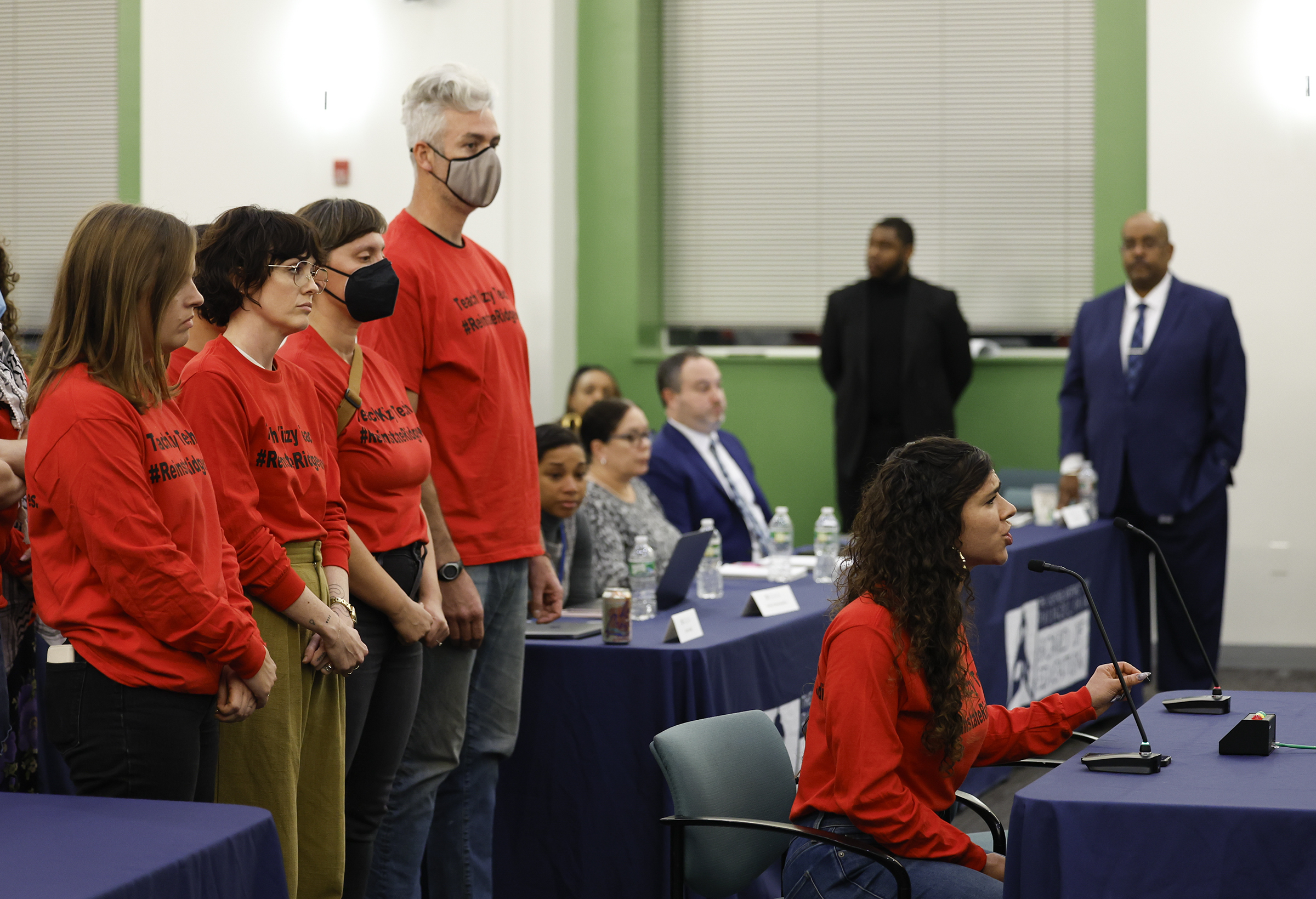
    The Jewish Federation of Greater Philadelphia in 2024 filed a complaint against Keziah Ridgeway, another Philadelphia teacher, accusing Ridgeway of injecting antisemitism into the curriculum and using her personal social media posts to threaten some Jewish parents.

    Ridgeway was ultimately kept out of the classroom for a year before she was reassigned to a new school. She has sued the district, alleging anti-Islamic bias. The suit is still pending.

    Gann was a staunch defender of Ridgeway, who posted on social media that she confronted Gann when her lies came to light.

    “I can no longer be in community with someone who caused so much harm,” Ridgeway wrote. “I hope that she gets the help that she needs.”

    This article has been updated to include the name of Jewish Community Relations Council chief Jason Holtzman.