Blog

  • ‘You know what happens if you don’t vote’: 7 takeaways from the GOP convention

    ‘You know what happens if you don’t vote’: 7 takeaways from the GOP convention

    Vice President JD Vance was billed as the headliner of the second night of the Republican convention, but President Donald Trump stole the show.

    With a hug and a handshake, Vance exited stage right after his speech as Trump returned to the place he likes most — center stage — to make his final pitch of the convention to keep Republicans in power.

    At one point Trump asked attendees to raise their right hands and pledge to him that he would vote with their family and friends. Dutifully, they did.

    “You know what happens if you don’t vote?” Trump said. “You go to hell.”

    The two-day rally in Dallas came as Trump’s approval has sagged below 40% and Republicans fear losing control of both the House and Senate. Republicans hoped the gathering would help energize a base beleaguered by high prices and the Iran war to turn out in droves. But the two days of red meat tossed from the stage seemed unlikely to satiate independent voters whose support has flagged.

    Here are seven takeaways from the convention:

    Vance makes his 2026 (and 2028) pitch

    Vance arrived in Dallas widely considered the front-runner in the 2028 Republican presidential primary. His speech offered some early clues about how he might approach a campaign.

    Vance focused on restoring the primacy of the traditional nuclear American family, a theme he has championed in the administration. He did not mention the war in Iran, an operation he has defended publicly but raised concerns about privately. But he issued a plea for conservatives not to abandon the White House over policy.

    “Do not throw the baby out with the bathwater,” he urged.

    Vance speaks in a far more scripted political style than Trump. He caught fire with the crowd when he snapped back at a protester who interrupted his remarks by waving Palestinian and Mexican flags. “My friend, if you love Mexico so much, get your ass over there,” he said.

    But he failed to sustain the kind of enthusiasm that Trump commanded either night. Nor did he win anything beyond perfunctory praise from the president, who quickly ushered him off the stage.

    As the balloons fell, it was the president alone, along with a tenor singing. Trump is not giving up his crown quite yet.

    Trump throws an affordability Hail Mary

    Trump has called affordability — a top buzzword for Democrats this year — a “hoax.” In his speech Wednesday night, the president claimed that prices are on their way down. At the same time, he rolled out an audacious plan to address people’s concerns about costs: a massive cash giveaway.

    He branded his dubious and detail-free plan to send $5,000 to every American adult a “Trump Dividend.”

    But Trump was virtually the only one talking about it.

    A day later, the splashy $1 trillion-plus plan barely made a ripple on the convention stage.

    The president’s own son, Donald Trump Jr., didn’t so much as mention it.

    Neither did the speaker of the House.

    Neither did the vice president.

    Only Trump did.

    If the president wants the dangled cash to be a major factor in the midterms, the rest of the Republican Party didn’t use the rest of the convention to sell it.

    Republicans have a new rogues’ gallery of liberal villains

    Forget about Nancy Pelosi.

    In Dallas, Republicans made clear that the former House speaker has been dethroned from her decades-long position as the party’s favorite political villain.

    Speaker after speaker assailed Hasan Piker, a leftist online streamer, and Abdul El-Sayed, the Democratic Senate nominee in Michigan, for pushing what they described as an extreme and anti-American agenda. Their images, including Piker’s naked torso, were broadcast on the jumbotron over the stadium. Even Rep. Alexandria Ocasio-Cortez of New York, who is a frequent target of the right, got less airtime.

    At one point, Speaker Mike Johnson outlined the new rogues’ gallery of liberals — “Hasan Piker and Bernie Sanders and AOC and Abdul El-Sayed and Zohran Mamdani” — while casting the rest of the Democratic Party as squishes who would succumb to them.

    In their attacks on Piker and El-Sayed, several convention speakers embraced anti-Muslim rhetoric, including a promise popular among conservative activists to “ban Shariah law.”

    “We must stand and defeat the Islamists,” Sen. Ted Cruz of Texas said in his speech.

    GOP frames the election as common sense versus crazy

    Republicans know that Trump is unpopular. They are banking on making Democrats unpopular, too — or at least unappealing and unelectable.

    Over and over, speakers cast Democrats as out of the mainstream, frequently calling them socialists, communists and even worse. At times they stretched the truth. Democratic socialists might have won a number of Democratic primary victories since 2024, but no serious figure in the party is promoting communism.

    “You guys are going to trigger the commies,” Donald Trump Jr., the president’s son, said at one point as the crowd chanted “USA! USA! USA!”

    Vance, in the closing of his speech, summed up the message so many had delivered before him over two days: “It’s about the party of common sense beating the party of the crazies.”

    Texas is a 2026 battleground

    Six months ago, when it first emerged that Republicans were likely to pick Dallas for this convention, it was unclear whether Texas would wind up as a top midterm battleground.

    It’s clear now.

    A parade of speakers — from the president on down — used their precious time onstage to talk about Texas’ razor-close Senate race. They sought to boost Ken Paxton, the Texas attorney general (even as Trump mocked his sartorial choices on back-to-back nights), and tear down James Talarico, the Democratic nominee. On the eve of the convention, Trump’s super political action committee had reserved $10 million in ads to help Paxton.

    “Tala-freako maybe tops the list,” Vance said of Trump’s nickname for Talarico.

    But it wasn’t just the Senate race. Republicans gerrymandered the state in 2025 to create as many as five new safely Republican House seats. But Republicans running in several of those seats appeared at the convention, seeking a boost in regions that Trump won handily.

    Was it must-see TV? Early signs suggest no

    Trump has long been known as a master of the television audience. Not this time. An average of 2.5 million people tuned in to watch his Wednesday night speech on Fox News, one of the few major TV networks that aired the remarks in full, according to preliminary figures from Nielsen. That was an average primetime audience for the network, based on the most recent quarterly statistics, and below the usual viewership for programs at that time.

    In other words, no Trump bump.

    To be fair, the president’s programming faced some steep competition. The first game of the National Football League season was on at the same time as his speech. The season’s second game was on Thursday during Vance’s and Trump’s speeches.

    Republicans make their bid to buck history

    Parties in power traditionally attempt to expand their appeal in midterm elections through targeted outreach to independent voters. That was not the strategy charted by Trump and his allies in Dallas.

    Only a handful of speakers offered any kind of outreach to moderate voters (one of those exceptions was Rep. Mike Lawler of New York). Far more focused their remarks on stoking fears of Shariah, transgender athletes and Democratic candidates who were repeatedly described as communists. Again and again, Trump begged his supporters to “pretend” that he would be on the ballot — an attempt to get enough of them out to prevent the usual losses for the party in power.

    Trump and his allies are staking their chances on their ability to drive their own voters to the polls. At the top of the list are Trump loyalists who typically skip midterm elections.

    This article originally appeared in The New York Times.
  • Saudi airstrikes hit Yemen’s rebel-held Mokha airport as Houthis take an island near a key strait

    Saudi airstrikes hit Yemen’s rebel-held Mokha airport as Houthis take an island near a key strait

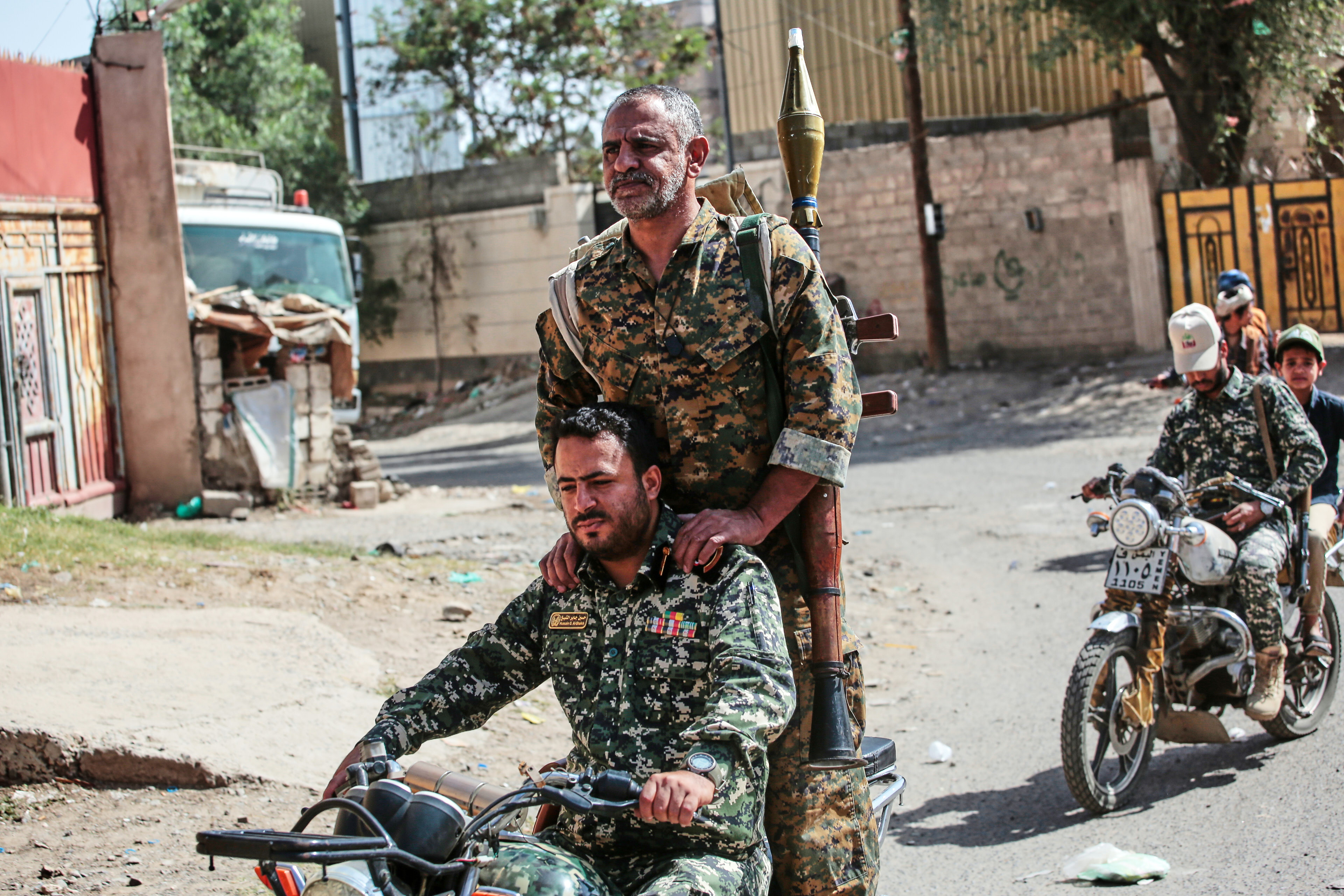
    CAIRO — Yemen ‘s Iranian-backed Houthi rebels captured a strategic island in the Bab el-Mandeb Strait at the entrance of the Red Sea, two officials said Friday in a swift advance that further threatens Saudi oil exports through one of the world’s key commercial lanes.

    Saudi Arabia responded with airstrikes against the airport in the key port city of Mokha that the Houthis seized on Thursday, a Houthi broadcaster said. There was no immediate report of damage or deaths.

    The capture of Mayun, a tiny, barren volcanic island in the strait, was confirmed by a senior military official with Yemen’s internationally recognized government and by a Houthi official. Both spoke on condition of anonymity because they were not authorized to talk to journalists.

    The island, also known as Perim, is about 3.5 kilometers (2 miles) off Yemen’s west coast.

    The strait is a key alternative to the Iran-choked Strait of Hormuz. But there is “no need for international concern,” Hazam al-Assad, a member of the rebels’ political bureau, told The Associated Press, saying they are responding to Saudi aggression, and “our forces have a bank of big important targets” in case Riyadh keeps up the strikes.

    Earlier Friday, Iran’s government called for an end to Saudi Arabia’s blockade of Yemen, throwing its support behind its ally, the Houthis. In its first statement since the rebels entered the port, Iran’s Foreign Ministry also called for a return to negotiations between Saudi Arabia and the Houthis.

    There was no immediate Saudi comment on Friday.

    The rebels’ capture of Mokha, overlooking tanker routes out of the Red Sea, could boost Iran’s strategy of driving up world oil and gas prices to pressure the United States, experts say. It also raises concerns of a new front opening after more than six months of war in the region – one in which Saudi Arabia is forced to respond.

    Experts say the developments in Yemen could give Tehran more leverage in any negotiations with the U.S. On Wednesday, the spokesperson for Iran’s powerful Revolutionary Guard called for any negotiated settlement with the U.S. to include Yemen, the first explicit reference to that front.

    Events threaten a key Strait of Hormuz alternative

    The Houthis’ entry into Mokha on Thursday was their biggest territorial gain in years against their Saudi-backed Yemeni opponents. It brought them within 50 miles (80 kilometers) of the Bab el-Mandeb, a strait that has become an important alternative for global shipping as Iran targets vessels in the Strait of Hormuz.

    A senior military official with Yemen’s internationally recognized government told the AP they were stunned that the Saudi air force didn’t strike the Houthis earlier, as they were advancing on Mokha. He assessed that Saudi Arabia didn’t get a green light from the U.S. to embark on a large-scale air campaign.

    The official, who spoke on condition of anonymity because he wasn’t allowed to speak to the media, also blamed “lack of coordination” between Yemen’s army and allied forces, saying it gave the Houthis “a priceless opportunity.”

    The Houthis had already attacked Saudi shipping in the Bab el-Mandeb and Red Sea since declaring a blockade there in July, as well as oil infrastructure inside Saudi Arabia. The Houthis said it was in response to the kingdom’s blockade of Houthi-held parts of Yemen, in place for years.

    New disruption to the waterway could mean trouble for all shipping and for the price of crude oil, which has now soared again. Saudi Arabia has increasingly relied on the Red Sea and Bab el-Mandeb to export its crude since Iran has been targeting vessels in the Strait of Hormuz. About 12% of the world’s goods are typically shipped through the strait.

    Shipping through the Bab al-Mandeb had fallen by about 60% since the Houthis began attacking some ships there in late 2023 while expressing solidarity with Palestinians in Gaza. Shipping increased this year as Saudi Arabia sought alternatives to the Strait of Hormuz, but renewed Houthi threats have “curtailed” that activity, according to Lloyd’s List Intelligence.

    Saudi Arabia, which earlier this week said it had always offered “opportunities for negotiation,” also has said it has the right to defend itself in response to the Houthis’ blockade. The foreign ministers of Iran and Saudi Arabia spoke Thursday about diplomatic efforts to “restore stability” to the region, Iran’s Foreign Minister Abbas Araghchi said on social media.

    The fighting risks a return to civil war

    In a statement released Friday, the National Defense Council of Yemen’s Saudi-backed and internationally recognized government on Thursday strongly condemned the Houthis’ renewed attacks on Saudi Arabia.

    The council also acknowledged that Yemen’s government is on the front line of freedom of navigation, and called for international support as the Houthis swept along the Red Sea coast toward the Bab el-Mandeb.

    The escalating fighting threatens to end a fragile truce that had largely halted Yemen’s civil war since 2022.

    At stake are the 40 million people in the Arab world’s poorest country who fear a return to the conflict that killed 150,000 and brought many others to the brink of famine.

    The surge in fighting in the past week has sent over 46,000 people fleeing, and “overnight, large numbers of people were reportedly seen leaving Mokha with their belongings,” the U.N. migration agency said Friday.

    The Houthis have been at war with Yemen’s government since 2014, when the rebels swept from their mountainous heartland and seized much of northern and central Yemen, and the capital of Sanaa. Saudi Arabia entered the war the following year on behalf of the government.

  • How a South Jersey woman is honoring her best friend’s memory and supporting kids with disabilities

    How a South Jersey woman is honoring her best friend’s memory and supporting kids with disabilities

    Alexus Mackenzye Dick and Trinity Jagdeo were 5 years old when they met on the blacktop at Mary F. Janvier School in rural Franklinville, Gloucester County.

    While Dick isn’t around to tell the story anymore, Jagdeo remembers it well: They played hopscotch, but not in the traditional way. Dick zipped through the squares in her wheelchair. Jagdeo, a Vineland resident, said it amazed her.

    “I’ve told the story 1,000 times,” said Jagdeo, 25. “But now that I think about it — and I’ve revisited the location — there was nothing else for her to do.”

    The pair quickly became best friends. They bickered over the Justin Bieber tattoo Dick got at 15, gossiped at sleepovers, and traded lip gloss recommendations.

    There’s a reason Jagdeo repeats those tales so often.

    When they were still teenagers, Jagdeo founded a nonprofit, From We Can’t to We Can, inspired by her best friend. She has self-published comic books that turn local kids with disabilities into superheroes, hosted fashion shows for models with disabilities, frequented local TV stations, and gifted thousands of pieces of medical equipment to families denied by insurance or who can’t afford the supplies. Jagdeo has talked about Dick on social media for years, including to her nearly 50,000 TikTok followers.

    The daily posts haven’t stopped since Dick died five months ago at 25 due to complications related to spinal muscular atrophy type 2, a genetic disease diagnosed in childhood that causes progressive muscle weakness.

    “One of the things she said was, ‘I wish I could help people.’ … And so, in my heart, I knew that at that point, I wasn’t going to just let that conversation stay there,” Jagdeo said.

    Now, another family is benefitting from the efforts to keep Dick’s memory alive.

    Domenique Meyer, 33, lives in Aberdeen Township, Monmouth County, with her husband Mike and two children, Mikey and Mia. Born prematurely at 30 weeks, a lack of oxygen to Mikey’s brain left him with severe spastic quadriplegic cerebral palsy.

    “He knows our voices, loves being talked to and cuddled, and has his own special way of showing us what he likes and dislikes,” Meyer said. “He has been fighting since the very beginning of his life.”

    At 3 years old, Mikey is blind, nonverbal, unable to sit independently, and has multiple seizures per day. He receives his nutrition through a gastrostomy tube since he has a hard time swallowing. His disabilities mean a lot of time spent on care, and on one income, it’s been hard to get by, Meyer said. Their family fell behind on household bills as medical expenses piled up.

    Mikey Meyer, 3, sits in a stroller given to him by From We Can’t to We Can in Aberdeen Township, Monmouth County.Domenique Meyer

    “When you have a medically complex child, life does not stop because bills are due,” Meyer said. “There have been so many times when Mikey needed us at an appointment, in the hospital, or at home, and work simply had to come second.”

    When Meyer reached out to From We Can’t to We Can for a medical stroller that would better suit Mikey’s needs, she explained their financial stressors to Jagdeo. Since the nonprofit had recently received thousands of dollars from anonymous donors, Jagdeo decided it was time to fulfill her best friend’s wish.

    The Alexus Mackenzye Legacy Fund provided Meyer and her family with about $5,500 that went toward their mortgage and brought their utility bills up to date. And while times are still hard, Meyer said the foundation’s support gave them hope.

    “For the first time in a while, it felt like we could breathe again and focus on our children instead of constantly worrying about what bill was coming next,” Meyer said.

    The Meyers will attend Roar for a Reason at the Edelman Fossil Park & Museum in Mantua on Saturday, the first major event and fundraiser the nonprofit has hosted since Dick died. There, Jagdeo said she plans to release a hundred butterflies, Dick’s favorite, and read a letter addressed to her best friend. Kids with disabilities will walk the runway, and Jagdeo will introduce her newest book, Jaiyana and the Jainosaurus, which takes place at the museum and is based on the experiences of a local child with autism and a rare brain condition. She’ll introduce the new legacy fund to the public, which she said she hopes will support a family in need annually from now on.

    Jagdeo has kept busy in the meantime. She still posts on social media every day, usually about Dick, and recently flew to Michigan to judge this year’s Miss Wheelchair USA competition. She’s been putting in hours on an outdoor memory garden for Dick in her yard, and she said she hopes monarch butterflies hatch this weekend in time for the celebration.

    “Some people say, ‘This person was my world,’” Jagdeo said. “And for me, she wasn’t just my world. She was the world. I created a world because of her.”

  • After 25 years, hers is the 9/11 story I can’t let go of

    After 25 years, hers is the 9/11 story I can’t let go of

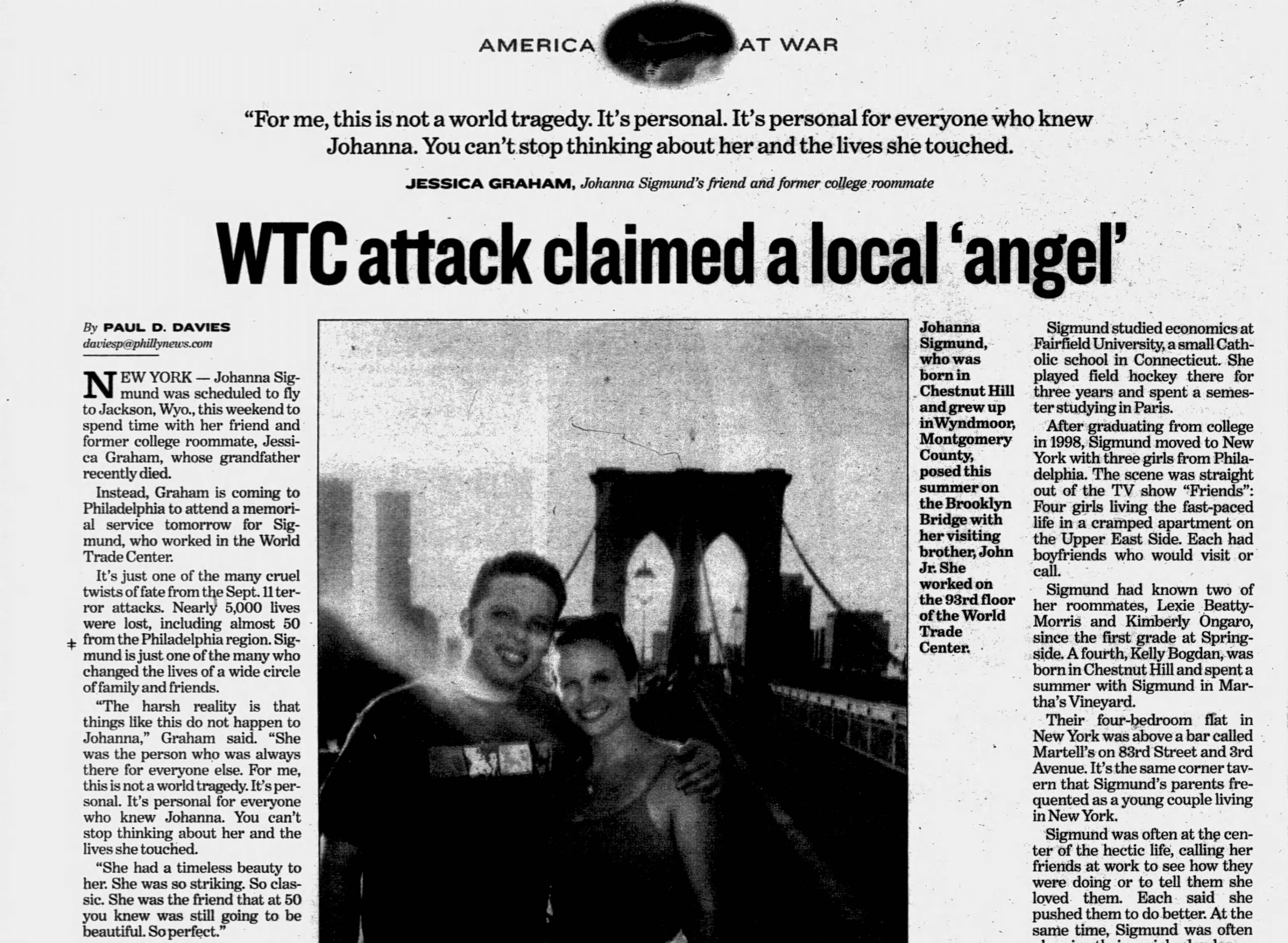
    In the weeks after the Sept. 11, 2001, terror attacks, I went to New York to report on a story about Johanna Sigmund, a young woman from Wyndmoor who perished after one of the hijacked planes rammed the north tower.

    Over the course of my career, I’ve spent more time than anyone would want writing pieces about people whose lives were cut short prematurely. One of the most memorable was Johanna, whose story and positive spirit remain seared into my soul.

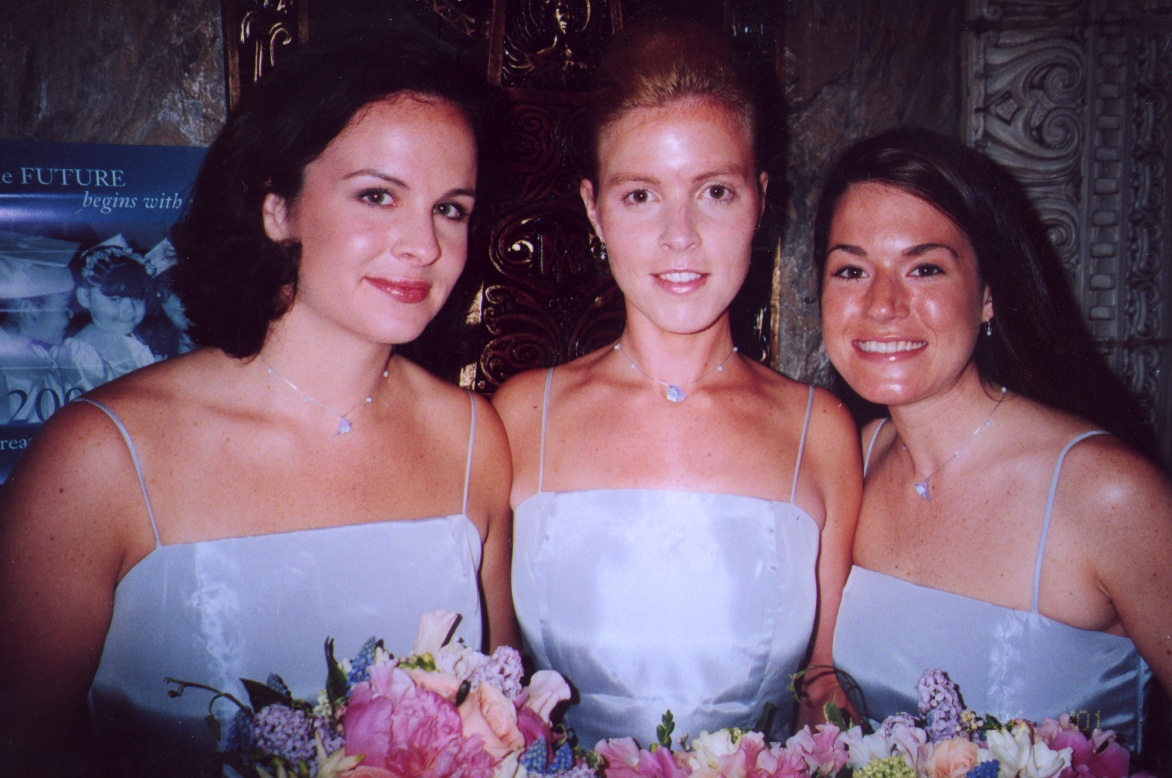
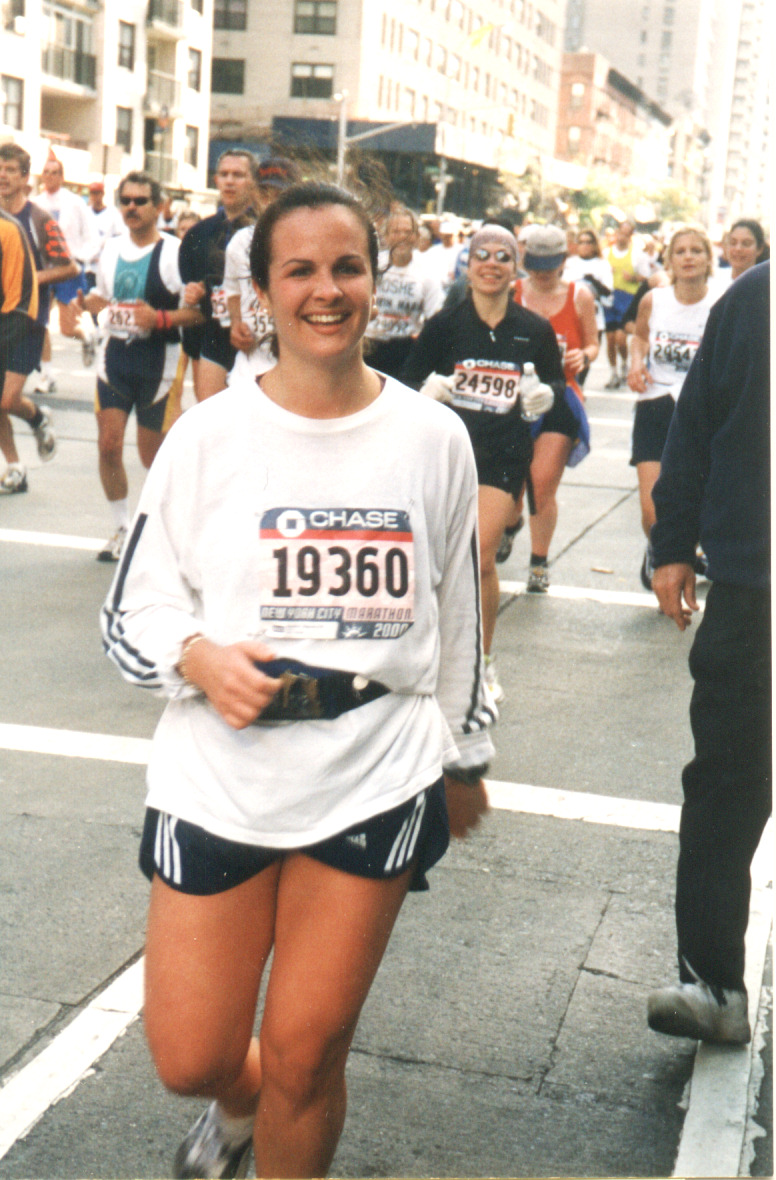
    Johanna’s parents invited me, a stranger, into their home at their worst hour. They took the time to tell me about their only daughter, and shared photograph after photograph after photograph — Johanna smiling after she ran the New York City Marathon, Johanna posing with her girlfriends at a wedding, and so on.

    One image stood out.

    It was a photo of Johanna, 25, and her brother, John, 23, smiling while standing arm in arm at the foot of the Brooklyn Bridge. The photo was taken two months before the terror attacks. In the background loomed the twin towers.

    An article by Paul Davies about Johanna Sigmund in the Oct. 19, 2001, edition of the Daily News.Staff

    Johanna’s story has stuck with me for a quarter century, but her life is emblematic of the promise and potential of so many others who were lost. At least 40 people with ties to Philadelphia and its western suburbs were killed in the attacks, including 18 from Bucks County, 11 from Montgomery County, five in Chester County, eight from Delaware County, and three from Philadelphia. It may be impossible for any of us to fathom how many other lives were forever impacted by the horrors of that day.

    I wondered how Johanna’s family and friends had fared over the years.

    So much has been lost in the 25 years since 9/11. Johanna would have turned 50 on the first day of summer — the longest day of sunlight. Her elegant beauty remains frozen in time, and — all these years later — her life remains a catalyst for good.

    A scholarship fund set up in her name continues to help students attend St. Malachy School in North Philadelphia, as well as another at her alma mater, Springside Chestnut Hill Academy.

    Johanna packed a lot into her brief time here. She was the captain of the field hockey, lacrosse, and squash teams in high school. She studied economics and played field hockey at Fairfield University, and spent a semester in Paris before moving to New York in 1998 with three friends from Philadelphia.

    When I met with Johanna’s roommates a few weeks after the attack, they shared stories of her love of cooking, dancing, and listening to U2, often replaying the song “Stuck in a Moment You Can’t Get Out Of” that begins, “I’m not afraid of anything in this world.”

    From left: Johanna Sigmund, Rory McDevitt, and Kim Ongaro were all bridesmaids at the wedding of their friend, Lexie Beatty, in May 2001. Sigmund was one of the victims in the 9/11 attacks.h

    Johanna cared for others. She distributed pizza and McDonald’s to the homeless people in her neighborhood. She helped a woman who was thrown from a taxi get to a hospital. Johanna spent the night by her side and returned home in the morning with blood on her clothes.

    Kimberly Ongaro, a roommate and friend from Springside, called her “an angel.”

    The toughest interview in the weeks after the attack was with Johanna’s boyfriend, Joe Bonavita. They had dated for several years and had discussed marriage.

    Their final weekend together was a whirlwind. They went to the Yankees game Friday night and drove to the U.S. Military Academy in West Point, N.Y., on Saturday, met up with friends, attended the Army football game, and walked through the cemetery for soldiers, which included Gen. George Armstrong Custer.

    On Sunday, Johanna competed in a 5K race down Broadway before continuing on as part of her training for the Philadelphia Marathon. She and Joe shared dinner that night.

    Johanna Sigmund and her boyfriend, Joe Bonavita, at the wedding of her friend Lexie Beatty Morris.

    Johanna did not feel well on Monday, but went to work. When she was still under the weather on Tuesday — Sept. 11 — Joe urged her to stay home.

    But she went into the office at an investment firm on the 93rd floor of the north tower.

    Joe worked near the Trade Center. As he exited the subway, he saw the first plane smash into the north tower.

    A life upended

    I located her brother, John, and emailed him. He responded a few minutes later and graciously agreed to speak. When we connected after 25 years, it almost felt like old friends catching up.

    John told me how 9/11 upended his life.

    He had planned to move to New York after college, but lost interest after the attack. He visited ground zero to commemorate the first anniversary. President George W. Bush greeted families, including John’s aunt, who offered veiled advice regarding the plans to invade Iraq. “I hope you are making a prayerful decision,” she told the president.

    Bush was taken aback, but continued shaking hands before circling back to tell John’s aunt that he prayed every day.

    A photograph of Johanna Sigmund running in the New York City Marathon in November 2000.

    After college, John, a Spanish speaker, spent a year with AmeriCorps teaching literacy to second graders in Kensington. After he explained to one class’s teacher why he wanted to take off for the anniversary of 9/11, she had her students write notes of support. John was struck by how many kids shared stories of loved ones they had lost to violence.

    “Everyone has their 9/11,” he said.

    Along the way, we all pay a price. Some more than others. But how one responds is a lesson for all as we navigate these trying times 25 years after 9/11.

    John said he wonders how his life would have been different if not for Sept. 11. After a year teaching in Philadelphia, he moved to Texas, in part to get away. He earned a master’s degree in art education at the University of Texas in Austin before going on to teach at Say Sí, an after-school arts program in San Antonio.

    John’s attempt to get away brought him back to New York. One of his students won an art award that included a trip for the student and teacher to Carnegie Hall. The artwork was displayed at the Winter Garden located near ground zero in May 2010.

    “My heart sank,” John said. “I didn’t want to go anywhere near ground zero.”

    Even then, nearly a decade after the towers fell, ground zero remained little more than a giant pit with the Freedom Tower slowly rising alongside it. In a macabre daily scene, tourists jammed the sidewalks, gawking and posing for pictures in front of what John could only see as a mass grave, while street hustlers sold photos of the hijacked planes crashing into the towers.

    John tried to maintain his composure as he made his way through the gauntlet to the Winter Garden, but a man stepped in front of him and tried to sell him a fiery photo from the attack.

    John snapped. He grabbed the stack of photos from the man, threw them in the air, and cussed him out. The two got into a tussle. After the fracas, John tried to gather himself by channeling his sister’s unflappable spirit.

    John Sigmund (center) holds a picture of his sister, Johanna, as he and his family run down Kelly Drive toward the finish line of the Philadelphia Marathon in November 2001.d

    “Johanna, help me,” he said to himself while overlooking ground zero. “I need to get it together.”

    ‘Beyond coincidence’

    John calmed down and carried on. After the event, he met friends at a nearby bar. John was telling them about the run-in with the street hustler when he suddenly saw Johanna’s old boyfriend, Joe Bonavita, across the bar.

    Joe had moved to New Orleans but, in a twist of fate, was in town for a 9/11 event. The two were not close but quickly bonded. John viewed the reunion as his sister’s handiwork.

    “Some things are beyond coincidence,” he said.

    Eventually, John did move to New York. The city helped him better find himself. After years of worrying about disappointing his parents or adding to their suffering, John told them he was gay. His parents, who have a deep Catholic faith, were supportive.

    Twelve years ago, John returned to Philadelphia and fell in love with the city, and especially Fairmount Park.

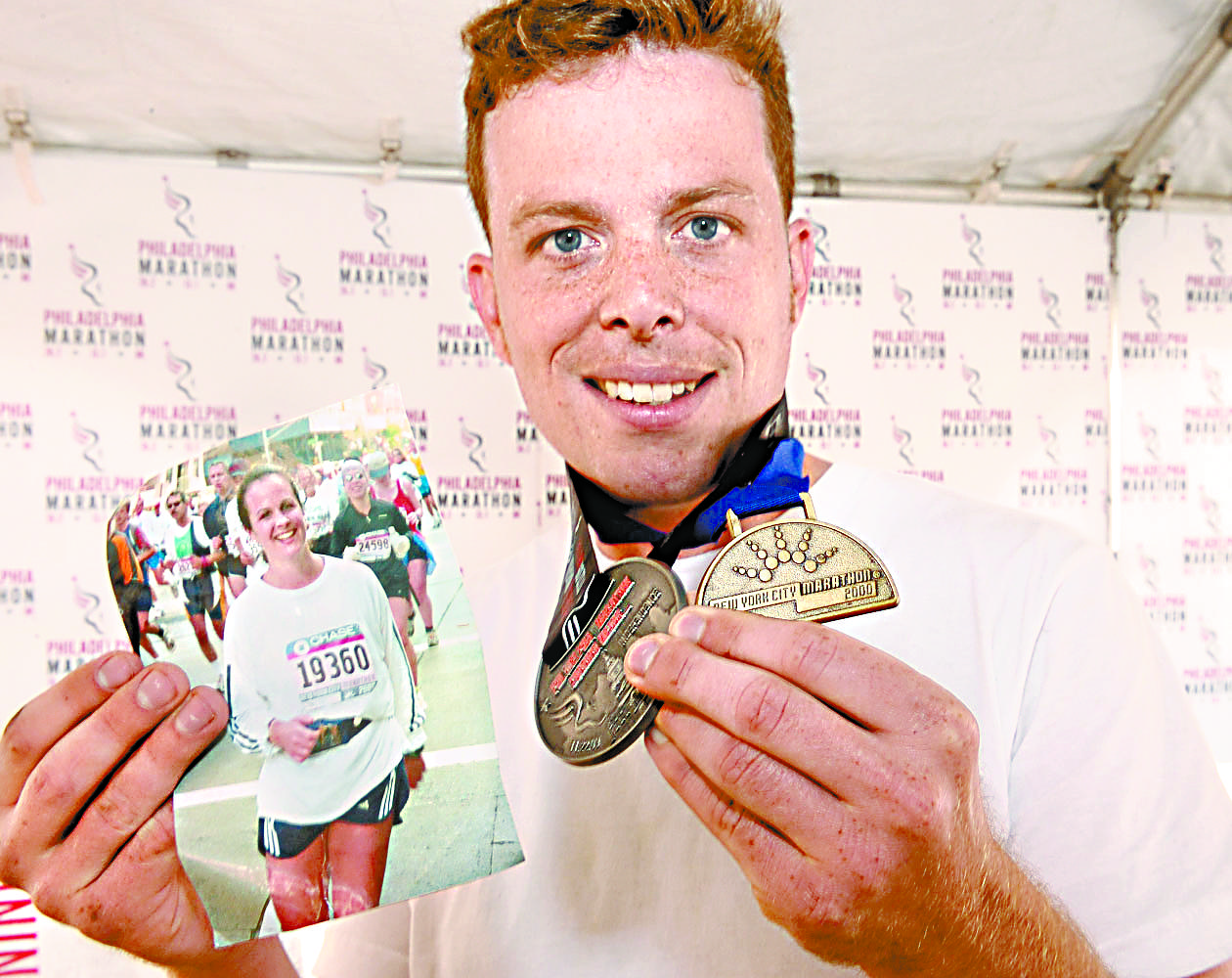
    After running the Philadelphia Marathon in November 2001, John Sigmund holds a photo of his sister, Johanna, and wears two medals around his neck — one he earned after finishing the race and another his sister won after completing the New York City Marathon in November 2000.Courtesy of Tony Webb / Office of the City Representative

    But tragedy struck again in September. Three days after the 20th anniversary of 9/11, his father died.

    For John, September remains the cruelest month. But he credits a strong support network of cousins and friends for helping him navigate life’s challenges — and added that Johanna always feels close by.

    “I have a thing with the wind,” John said. “When I think about her, the wind will kick up.”

    After losing his sister and father in September, John and his partner, Jaime, decided to add some positivity to the month. They got married last Sept. 26 and are planning an anniversary party in a couple of weeks.

    Expect a comforting breeze.

  • Her back hurt, then she couldn’t button her pants. The cause was alarming. | Medical Mystery

    Her back hurt, then she couldn’t button her pants. The cause was alarming. | Medical Mystery

    When her back began to ache, Maria Morales attributed the soreness to her job as a therapist for children with autism, where she often moved around and sat in “little kid” chairs.

    Then after a week with this pain, the 26-year-old from Miami started to feel like she had the flu, but a test for influenza was negative. The next day, she woke up with abdominal pain. At work, it seemed like her belly kept growing. “I couldn’t button my pants,” she said.

    She went home, where later that day her boyfriend checked on her. “He put pressure on my stomach, and I yelled out in pain,” she said.

    He took her to the emergency room, where a scan showed a mass on her right kidney surrounded by a pool of blood. Doctors said she had an angiomyolipoma, a benign tumor that is more common in women than in men. After undergoing a procedure to stop the bleeding, she was released from the hospital with a plan to monitor the tumor.

    But four months later, her bloating and fatigue persisted, and the mass continued to grow. The diagnosis she eventually received was much more serious, requiring treatments that caused life-changing complications. The diagnosis was also surprising, given that the condition is almost always found in young children.

    Scan finds a mass

    Morales, now 34, grew up healthy. She ran regularly and participated in CrossFit programs as a young adult. A cousin’s Down syndrome sparked her interest in helping children with special needs, leading her to become a behavioral therapist for kids with autism.

    When her back started to hurt in November 2018, she wasn’t surprised, given that therapy sessions can involve lifting children and twisting on the floor. But the abdominal pain she developed made her worry. When she arrived at the ER, doctors initially thought she might have appendicitis.

    A CT scan revealed a kidney mass nearly the size of a baseball, with bleeding around it. Morales was admitted to the hospital, where additional scans suggested the growth was an angiomyolipoma, doctors said. The noncancerous tumors, made of fat cells, muscle tissue, and blood vessels, are somewhat common, especially in women, typically in middle age. They are often discovered when people undergo imaging tests for other reasons.

    Morales said doctors assured her the problem wasn’t serious. “They said it was a very vascular tumor that burst, but it’s nothing to be concerned about,” she said. “We trusted them.”

    Four days after Morales arrived at the ER, doctors performed an embolization, using a catheter to insert tiny beads of gelatin into blood vessels around the tumor to reduce the risk of additional bleeding and to try to shrink the mass. The doctors continued to refer to the tumor as a likely angiomyolipoma, even though their report from the procedure said “its appearance was not characteristic” of that.

    Five days after the procedure, Morales was discharged from the hospital. Her pain subsided, but she still felt tired and her abdomen still seemed swollen.

    The next month, she had clinic visits at separate health systems with two urologic oncologists, who specialize in cancers of the kidneys and the urinary system. Both agreed with the diagnosis of an angiomyolipoma and called for another CT scan in three months, with the first urologist saying it would be better to wait until the bleeding subsided so the image would be clearer.

    By the time Morales next saw the first urologist three months later, in March 2019, a new CT scan showed the mass was growing. The doctor said he would continue to monitor the likely angiomyolipoma. He considered doing a biopsy to check if the tumor might be cancerous, according to medical records, but Morales said he didn’t do one. Doctors had not previously suggested she get a biopsy.

    Surprising diagnosis

    Morales returned to the second urologic oncologist, Mark Gonzalgo, at the University of Miami’s Sylvester Comprehensive Cancer Center. Gonzalgo, noting the large size of Morales’s apparent angiomyolipoma and now suspecting possible cancer, recommended removing the kidney, which would eliminate the root of the problem and allow for confirmatory testing.

    But Morales and her parents, having been told by the other doctors that her condition wasn’t serious, were taken aback by the idea of getting rid of her kidney. What if she developed a problem with her remaining kidney?

    Gonzalgo referred Morales to an interventional radiologist, who in April 2019 did two embolization procedures, like the one performed earlier in the hospital. When a CT scan showed the mass was still getting bigger, that doctor did another embolization in June 2019.

    In July 2019, an additional CT scan was troubling for two reasons. Not only was the mass continuing to grow, but lesions also appeared on her liver. Biopsies of her kidney and liver tissue revealed that she had Wilms tumor, a type of kidney cancer found almost exclusively in children younger than 5. About 600 cases are diagnosed each year in the United States, only about 3% of them in adults.

    The prognosis for children with Wilms tumor is good, but the outlook for adults is not as promising. A study in 2020 found that nearly 92% of children with the disease were alive 10 years later, compared with 70% of adults and roughly 52% of young adults.

    In August 2019, Gonzalgo removed Morales’s kidney and the tumor, confirming she had Stage 4 Wilms tumor that had spread to her liver. The mass had doubled in size from her initial scan nine months earlier, to the size of a large grapefruit. When Gonzalgo saw Morales in March 2019, he thought she might have renal cell carcinoma, the most common type of adult kidney cancer, though the condition is typically seen in older adults. He did not suspect Wilms tumor, which is named after the German surgeon who first described it in 1899.

    “It wasn’t at the top of the list, that’s for sure,” Gonzalgo said.

    Morales doesn’t have inherited genetic mutations that account for a small proportion of Wilms tumor cases, said Aditi Dhir, a pediatric oncologist at the Sylvester Comprehensive Cancer Center who treated her. She does have some family history of cancer: Her maternal grandmother died of breast cancer at age 62, and her father, a former smoker, was diagnosed with lung cancer last year.

    Treatment complications

    Morales received two weeks of radiation treatments and an intense regimen of chemotherapy, getting combinations of five drugs over more than a year. The infusions, overseen by Dhir and other pediatric oncologists familiar with Wilms tumor, were delivered at the cancer center’s clinic for children, where nurses wore scrubs festooned with cartoons.

    “It was me and a bunch of kids,” Morales said.

    A few weeks after the chemotherapy began, Morales’s skin turned yellow. She developed veno-occlusive disease of the liver, also known as sinusoidal obstruction syndrome, a potentially fatal side effect of chemo and radiation. Small blood vessels in the liver become blocked, causing jaundice and a buildup of fluids.

    Morales spent 10 days in intensive care, not allowed to leave her bed even to go to the bathroom. She had low levels of platelets, the blood cell fragments essential for clotting, and doctors worried movement might cause bleeding. Even today, her platelet count remains low, and she must be cautious about her activities.

    The cancer treatments triggered early menopause and left Morales infertile, with ultrasounds detecting no follicles or eggs. To manage menopausal symptoms, she wears an estrogen patch and has an intrauterine device that releases progesterone. If she wants to have children, she will need to use an egg donor or surrogate.

    For now, she and her husband, Octavio Goren, are uncertain about becoming parents. “I’ve had so much medical trauma. I don’t know if I want to experience more,” Morales said.

    She wonders if she could have avoided the complications of her aggressive treatments if the cancer had been diagnosed earlier, before it spread. “What would my life have been like if they’d done the biopsy right away and took it out then?” she said.

    Dhir said Morales’s cancer has been in remission since she finished chemotherapy in October 2020.

    “The five-year mark was a good celebration point,” Dhir said. “The further and further she keeps going on, the lesser chances of it ever coming back.”

    Shortly after Morales and Goren got married in 2024, they moved to the Denver area, where they enjoy hiking, camping, and exploring parks in the Rocky Mountains. They had visited Colorado in 2017, before Morales got sick, and became enamored with the scenery. When she later struggled with her cancer treatments, she vowed that if she survived, she would relocate and spend more time doing what she loves: appreciating nature.

    “You can be on the highway and there’s a hike right there, so we’ll just stop and do it,” she said. “Everything is breathtaking, no matter what angle you look at it.”

  • New iPhones arrive, but you can keep your old phone longer by caring for it

    New iPhones arrive, but you can keep your old phone longer by caring for it

    Apple’s latest iPhones, unveiled this week, come with new features, better cameras, and hefty price tags — including a folding model with a starting price of $1,999. If you’re planning to splurge on a new iPhone 18, you will want to take care of it to make it last as long as possible.

    Or save money by holding on to your current device, whether it is Apple or Android, to get the most life out of it.

    As smartphone technology has matured and innovations have become more incremental, people have stopped buying into the idea that they need to upgrade to the newest phone. There is also an environmental push to keep old phones out of landfills as electronic waste becomes a larger sustainability issue. Modern smartphones are also just sturdier and better able to survive dunks and drops.

    The typical smartphone replacement cycle is now four years, according to Counterpoint Research. Some device owners boast in online forums that they have had phones last more than seven years.

    Here are some pointers on extending your phone’s life:

    Take care of your phone’s battery

    The biggest factor in a phone’s longevity is the battery. A rechargeable battery’s life span is related to its “chemical age,” which is based not only on the manufacturing date but also on factors including “temperature history and charging pattern,” according to Apple. The company says that as lithium-ion batteries chemically age, they hold less charge, which results in “reduced peak performance.”

    Samsung warns against running a lithium-ion battery down completely, because that could shorten its life.

    “The battery is absolutely often the first thing to go in most people’s phones,” said Elizabeth Chamberlain, director of sustainability at the device-repair website iFixit.

    Lithium-ion batteries typically last about 300 to 500 charging cycles before degrading noticeably to the point that they can’t last a day without needing a charge, she said. “Many people will hit 500 cycles in two years. Heavy users will get there faster.”

    Batteries get stressed if they are completely drained or fully charged, Chamberlain said.

    So avoid letting your battery die, and also avoid charging it all the way to 100%, “unless you really need a full charge,” she said. “Aim to keep the battery between 20% and 80% charged.”

    If you are in the habit of plugging in your phone when you go to bed, Apple and Samsung both have charging optimization technology that improves battery life by delaying a full charge based on your daily routine.

    This feature, which is on by default in iOS, pauses charging at 80% and then charges to 100% just before you wake up.

    Phone batteries shouldn’t get too hot or cold

    Device makers warn against exposing phones to extreme heat or cold, both of which can damage batteries.

    Apple says batteries warm up as they charge, which can shorten their life span. It warns against using your phone or charging it in very hot temperatures, above 95 degrees.

    Samsung says you shouldn’t leave your phone in, for example, a car’s glove box when it is very hot or cold. And don’t put it in a freezer either — it’s a myth that it can prolong battery life.

    Google, which makes the Android operating system and Pixel phones, says hot batteries drain faster, even when they are not in use, and that can damage the battery.

    Adjust your phone’s power options to boost battery life

    Tweak your device settings so apps or features use less power, which extends your battery’s daily life and the time between charging cycles.

    You can turn down your phone’s screen brightness, turn on the dark theme and reduce the time for the screen to power off. Enable the auto-brightness feature, which adjusts screen brightness according to the level of ambient light. Also check battery usage in your settings to see if there are any power-hungry apps you can switch off or uninstall.

    If the power level dips below 10%, iPhone users can turn on low power mode to stretch their battery’s life before it needs recharging. Samsung’s Android phones have a similar “power saving mode.” You can also leave it on all the time, but it might affect your phone’s performance.

    Phone cases and screens are essential protection

    Phones are sleek capsules with glossy surfaces, meaning they can easily slip from your hand. A sturdy protective case is essential to help cushion the blow from accidental drops.

    However, beware that some phone cases can retain heat, so your phone might stay hot even if it seems cool, Chamberlain warns.

    Don’t forget a screen protector. Plastic versions are cheap but can scuff easily, according to iFixit, which recommends TPU film or tempered glass because they offer better protection against scratches and drops.

    Keep your device clean

    Keeping your phone in your pocket or purse means ports and sockets collect debris that needs to be cleaned out.

    Chamberlain said that when a phone stops charging, often the problem is simply that the charging port is jammed with lint, preventing the cable from connecting.

    You can buy kits with brushes, picks, swabs and dust blowers to give your phone’s ports, speaker and microphone grilles a thorough cleaning. But in a pinch, use a toothpick and a clean toothbrush.

    Update the software regularly

    Software is another important factor in a phone’s life span. Experts advise keeping your operating system and apps up to date so they have the latest privacy, security and battery management features.

    That will be easier to do as your phone ages because some device makers have been extending the time limit for providing updates.

    Google has pledged to provide Pixel 8 and newer phones with seven years of Android and security updates, compared with four to five years for older models. Samsung pledged in 2024 to extend its operating system updates to seven years.

    Apple said Wednesday that iOS 27 will be available on Sept. 14 and the oldest phone with which it will be compatible is iPhone 11, released in 2019.

    Some phones are designed to be easily repaired

    Sometimes your phone will have a problem that can only be solved by repairing it, usually involving paying someone else to fix it.

    But there are device makers that are making it easier to repair phones yourself. Netherlands-based Fairphone makes phones it says are designed for longevity, which come with a stripped-down version of Android and can be easily disassembled using a mini screwdriver. Replacement batteries, screens and other spare parts can be ordered online.

    Fairphone’s Chief Technical Officer Chandler Hatton said the company aims to have its devices last at least five years.

    “What we’re trying to do is to support people to be able to use their device for longer,” Hatton said.

  • Party animal | Editorial Cartoon

    Party animal | Editorial Cartoon

    Andy Winters is a freelance illustrator and editorial cartoonist focused on current events in Pennsylvania.

  • Why the Phillies should prioritize avoiding the Braves in the wild-card round. And one other baseball thought.

    Why the Phillies should prioritize avoiding the Braves in the wild-card round. And one other baseball thought.

    The Phillies are exactly where we probably should have expected them to be, which is exactly where they were a week ago. That is, four games behind the Braves with 15 to play heading into this weekend’s three-game series in Atlanta. That’s not necessarily a bad thing, believe it or not. Treading water is as important as making up ground.

    Right now, the Phillies number one goal shouldn’t be winning the National League East. It should be avoiding the Braves in the wild-card round. The NL playoff picture has changed considerably with the Dodgers winning seven straight and the Braves losing four of six.

    Now that L.A. has a 3½-game lead over Atlanta for the NL’s second bye, it’s looking increasingly likely that the eventual NL East division champs will end up hosting a best-of-three series against the No. 6 seed. Which means the Phillies should be just as focused on maintaining or growing their current 3½-game lead over the Padres, who entered Friday with a half-game lead over the Diamondbacks for the NL’s final playoff spot.

    Some folks will scoff at the idea of the Phillies fearing the Braves in an October series. But best-of-three is barely a series. This isn’t about fearing the Braves. It’s about fearing Chris Sale.

    Last weekend, the Phillies took their latest dose of medicine from one of the game’s all-time greats when Sale held them to two runs in six innings of a 5-2 Braves win. Atlanta’s presumptive Game 1 starter is not a problem the Phillies are magically going to solve just because the leaves are falling off trees.

    The Braves are 3-0 in Sale’s three starts against the Phillies this season and they’ve won five of his seven since joining the team in 2024. His numbers should make you gulp. In his last five starts against the Phillies dating back to May of last season, Sale has allowed a grand total of four runs in 31 innings. He has struck out 40 of the 118 batters he has faced. That’s 33.9%.

    Bryce Harper is one of the Phillies with bad career numbers against Chris Sale. He has just two hits in 18 at-bats against the lefty (.111).Yong Kim / Staff Photographer

    In a longer series, the Phillies would have a clear starting pitching advantage over the Braves. Grant Holmes and Tyler Mahle have both had some success against the Phillies, most recently holding them to a combined two runs in 12 innings of last weekend’s series. Holmes has allowed just five runs in 20⅔ innings against the Phillies over the last two seasons, while Mahle held them scoreless in seven innings and 5⅔ innings in two of his three starts prior to last weekend (albeit dating back to 2021). Regardless, the Phillies would have a significant advantage in three of the first four games of a five-game series.

    In a three-game series, Sale in Game 1 is a monumental equalizer of the odds. They’d much rather take their chances against the Cubs, who would presumably start Clay Holmes and Shota Imanaga, followed by a spin of the roulette wheel in Game 3.

    A sigh of relief

    Now, about that bullpen …

    Give interim manager Don Mattingly credit for getting Alex McFarlane back on the mound in the eighth inning on Wednesday. The 25-year-old right-hander got ground balls from three of the four Astros batters he faced to deliver an 11-7 lead to Jhoan Duran in the ninth. McFarlane didn’t record a strikeout but threw strikes on 12 of his 15 pitches. This wasn’t exactly a high-leverage situation, at least not compared to the last time he walked off the mound. But it was a situation where a true set-up man gets the ball, and Mattingly gave it to him. Which is exactly what the Phillies manager should be doing.

    Despite the homer he surrendered to Ronald Acuna Jr. last weekend, Alex McFarlane remains the Phillies’ greatest hope in the eighth inning.Elizabeth Robertson / Staff Photographer

    The underdiscussed aspect of McFarlane’s welcome-to-the-bigs moment against Ronald Acuna Jr. and the Braves on Sunday was the fact that he was on the mound at all. Mattingly easily could have pivoted after McFarlane allowed a one-out single to Mike Yastrzemski and a double to Drake Baldwin to bring Acuna up as the tying run in a 4-1 game with a base open. He had a lefty warming and Braves lefties Matt Olson and Michael Harris due up after Acuna. Conventional baseball wisdom says you don’t put the tying run on base. Still, it said something about the Phillies’ estimation of McFarlane that he both remained on the mound and challenged Acuna Jr. throughout the seven-pitch at-bat.

    It also says something that Mattingly didn’t flinch after McFarlane allowed a three-run, game-tying home run to Acuna.

    “I don’t think you learn anything yet,” Mattingly said after the Phillies’ eventual 5-4 loss. “I think we see how he responds. I feel about the way he’s going to respond. When everything’s going good it’s pretty smooth sailing. Everybody’s going to struggle, what happened to him today is going to happen to everybody if you play long enough. So we’ll see. I think he’ll be fine. He’s been a kid that’s handled everything. The disposition’s been good.”

    The Phillies are doing exactly what they should be doing with McFarlane. The first goal is to get to the postseason with an eighth-inning option that is something better than a flip of the coin. The second goal is to get there with somebody who actually gives them a significant advantage like the one they have in the ninth inning with Duran. On both counts, McFarlane is their best hope. Overwhelmingly so. There is nothing like exposure therapy for a big-league reliever. There will be plenty of big spots in October. The Phillies need McFarlane to become a guy who thrives in them.

  • How South Philly’s full-block light displays work

    How South Philly’s full-block light displays work

    The twinkling of colorful lights can make everything feel more vibrant — like the Miracle on South 13th Street display during Christmas.

    For some South Philadelphia blocks, however, holiday lights are not enough: They light up the night all year round.

    Wondering about the blocks with iconic lights strung across the street, a reader asked Curious Philly, The Inquirer’s forum for questions about the city: “How does one get the decorative street lights and who looks after them?”

    » ASK US: Have something you’re wondering about the Philly region? Submit your Curious Philly question here.

    For many residents, the lights had inhabited the streets before they even moved in, so the answer is not straightforward. But it seems to fall on block captains and rely on the neighbors agreeing and paying the bill.

    Anthony Scola III, 66, remembers when the decorative lights were set up on his block, the 1600 block of South 13th Street. He was 6 years old and his father, Anthony Scola II, was part of the neighborhood group that organized putting them up, he said.

    At first, Scola said, neighbors wanted the holiday lights only on the trees, then around their homes, and soon the light show continued to grow.

    He doesn’t remember the organizing process, or how the adults got the lights, and with his 94-year-old father recently dying, that part of neighborhood history remains untold.

    But, as he pointed to the tree outside, Scola showed how the lights connect through a window to an outlet inside his home. Most of the lights are on year-round, he said, but Christmas lights are not lit until the Saturday after Thanksgiving.

    If the lights are affecting his electric bill, he said, he hasn’t noticed it.

    At the end of the block, Julia Morrison and her husband, Michael Edmonds, are settling into the neighborhood. The couple moved in over the summer, after having lived around the corner for six years.

    “We always thought the lights were owned by the city, but the neighbors told us that everyone has to pay for the cost,” Edmonds said.

    According to Peco, how the string light displays are paid for depends on the specific installation and location.

    Some connections go directly into homes, and the cost comes out directly in each homeowner or resident’s electric bill. Other displays, however, can be paid for through a separate account specifically for the lights. Then that account gets billed instead of each individual neighbor with lights connected to their home.

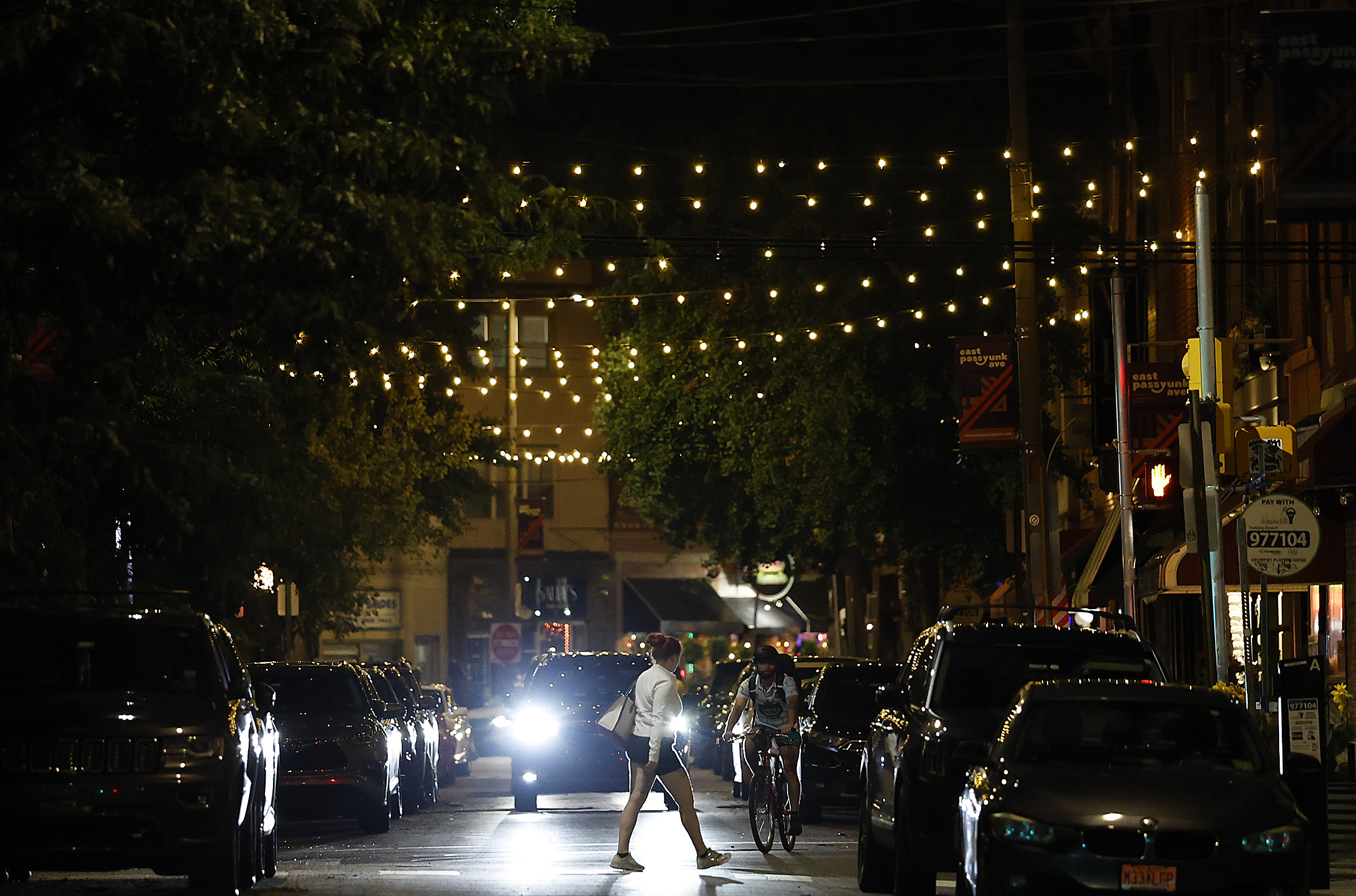
    Lights string across the street along East Passyunk in South Philadelphia on Thursday, Sept. 3, 2026.Yong Kim / Staff Photographer

    The couple is not sure how much the bill will be for the year-round lights. They are hoping to find out more after Thanksgiving, when everyone in the block comes out to set up the Christmas lights.

    Whatever the cost, they said, it is worth it for the effect on the block.

    “It brings the people together, and it’s just cheer,” Morrison said. “It brings the community street together, makes people feel closer.”

    On the 1200 block of Wolf Street, tiny blue, yellow, and red light bulbs dance in the wind on a zigzag above the street.

    They have been there for as long as Maryann Mooney, 69, remembers.

    “When I was a kid, it was magical to see the lights,” Mooney said.

    Over the years, she said, the tradition shrank to only putting big lighting displays out for Christmas, but small light fixtures remain all year round.

    She has moved away from the block but works at a hair salon in the area, and the lights continue to make her feel like “the block is alive,” she said.

    Karen Farrell, the salon owner, said the block captain comes to collect the money for the light bill, usually in December. He also is in charge of replacing any broken bulbs throughout the year, she said.

    “Last year they asked for $35,” Farrell said. “I like it. I think it is pretty. It makes it festive.”

    On the 2700 block of South Smedley Street, blue, red, and white lights hang from every house. They put up Christmas lights, too, but these ones are up all year long.

    Ryan Schubert, 31, moved to the block in 2022. The house, he said, belonged to his wife’s grandmother, so the lights hanging from his front porch preceded their ownership.

    Schubert does not know when exactly the lights arrived, but he keeps a postcard from 1991 that already features the lights across the home’s porch.

    “Right now, they are red, white, and blue for the Fourth of July, but the light bulb colors are changed depending on the occasion,” Schubert said.

    As far as Schubert knows, the block captain is in charge of changing the bulbs and asking neighbors for collaboration to pay the bill.

    “We chip in once a year. It’s not a requirement, and it’s a pretty cool time,” Schubert said.

    The most he has contributed is $100, but he has also given $20, he said.

    According to Peco, neighbors looking to set up an additional account for this type of lights can contact customer service for information through an online form or by calling 1-800-494-4000.

    “The Christmas display can be a little annoying because lots of people come, but I love it and it’s worth it because everyone seems happy,” Schubert said. “The all-year lights feel unique to our street, but to be honest I’m so used to big displays that I don’t even pay much attention or register the little ones.”

  • The Big Picture: The Phillies face some tough tests, the Union keep climbing, and the week’s best sports photos

    The Big Picture: The Phillies face some tough tests, the Union keep climbing, and the week’s best sports photos

    We’re days from the start of Eagles season, but Philly’s summer sports teams — the Phillies and Union — are still going strong as they head down the stretch. From Citizens Bank Park to Chester, it was a busy week for the two clubs, with the Phillies hosting the Braves and Astros and the Union hosting Cincinnati and Montreal. And at some point along the way, Temple opened its season with a win over Rhode Island at Lincoln Financial Field. The Owls will be back there Saturday when they host No. 16 Penn State, a day before the Eagles kick off against the Washington Commanders.

    As they do each Friday, Inquirer photo editors picked the best sports images from the last seven days to bring you this week’s Big Picture …

    Trea Turner hit a two-run home run in the sixth inning against the Houston Astros on Tuesday, but it wasn’t enough as the Phillies dropped the series opener, 6-5.Elizabeth Robertson / Staff Photographer
    Phillies outfielder Bryce Harper waits for a pitch during Monday’s series finale against the Atlanta Braves. The Phillies won, 1-0, to split the series with their division rivanl.David Maialetti / Staff Photographer
    Jesus Luzardo pitched his first complete-game shutout in the Phillies’ 1-0 win over Atlanta on Monday.David Maialetti / Staff Photographer
    A young fan named Jeremiah talks with Bryce Harper before Sunday’s game against the Braves at Citizens Bank Park, where the Phillies and Nemours Children’s Health hosted their Childhood Cancer Awareness Day.Monica Herndon / Staff Photographer
    Jeremiah rounds the bases after hitting an honorary home run before Sunday’s game. The Phillies could’ve used Jeremiah, as they lost to the Braves, 5-4. Monica Herndon / Staff Photographer
    José Alvarado reacts after striking out Braves first baseman Matt Olson to end the eighth inning of Saturday’s 4-2 Phillies’ win.Yong Kim / Staff Photographer
    Phillies pitcher Andrew Painter walks off the field after giving up four runs in the second inning against the Houston Astros on Tuesday. The Phillies rallied but their comeback attempt fell short, 6-5.Elizabeth Robertson / Staff Photographer
    Catcher J.T. Realmuto reacts after he lining into a crucial double play in the seventh inning of Tuesday’s loss.Elizabeth Robertson / Staff Photographer
    Temples quarterback Ajani Sheppard (right) cuts through Rhode Island’s defensive line during the second half of the Owls’ season-opening win.Tyger Williams / Staff Photographer
    Temple running back Keveun Mason carried the ball 20 times for 158 yards and a pair of touchdowns in the Owls’ win.Tyger Williams / Staff Photographer
    Cincinnati’s Kyle Smith (left) and the Union’s Quinn Sullivan battle for the ball during Philly’s big 5-0 win on Wednesday.Elizabeth Robertson / Staff Photographer
    CF Montréal’s Wikelman Carmona (left) and the Union’s Jesús Bueno (right) chase after a ball on Saturday. The Union have won three straight.Elizabeth Robertson / Staff Photographer
    The Union’s Bruno Damiani (front), seen here tangling with CF Montréal’s Dawid Bugaj, netted a hat trick in Wednesday’s win over Cincinnati.Elizabeth Robertson / Staff Photographer
    Kyle Schwarber’s sixth-inning grand slam helped the Phillies to their only win of the series against the Astros on Wednesday.Jose F. Moreno / Staff Photographer
    Brandon Marsh and the Phillies have cooled off, but are still in a wild-card spot with just over two weeks left in the season.Yong Kim / Staff Photographer
    Houston fans behind the Astros dugout celebrate their team’s win, while a Phillies fan in a red T-shirt shows his frustration over Tuesday’s loss.Elizabeth Robertson / Staff Photographer