Blog

  • The Houthi advance in Yemen raises concerns about a key shipping choke point

    The Houthi advance in Yemen raises concerns about a key shipping choke point

    FRANKFURT, Germany — The capture of the Red Sea port of Mokha and a strategic island by Iran-backed Houthi rebels in Yemen brings their forces to the heart of a key choke point for the global economy: the Bab el-Mandeb Strait leading out of the Red Sea.

    The Houthis took Mokha on Thursday and on Friday captured Mayun, also known as Perim, off Yemen’s coast, two officials said, in a swift advance that extends their reach near one of the world’s key commercial lanes.

    The strait had been a vital route for crude oil supplies from Saudi Arabia to Asia after shipping through the Strait of Hormuz was restricted due to threat of Iranian attack — until Houthi targeting of Saudi tankers largely ended that safety valve.

    The Houthi advance is focusing renewed attention on the Bab el-Mandeb Strait and further risks to shipping there, despite efforts by the Houthis to reassure shipowners that vessels other than those covered by their embargo on Saudi-linked shipping remain safe.

    Bab el-Mandeb was key workaround for Saudi oil exports

    The Strait of Hormuz was long the main highway for Saudi oil. But when Iran choked off most ship traffic at the Strait of Hormuz, the Saudis ramped up shipments through a pipeline running across the desert to Yanbu on the Red Sea.

    Oil loaded on tankers in Yanbu could head out of the Red Sea through the Bab el-Mandeb Strait and then east to Asia. That helped the Saudis maintain a share of their exports to customers there.

    The Red Sea route helped keep global oil prices in check, along with other improvised alternatives. In recent weeks the U.S. military has guided tankers through the Strait of Hormuz in defiance of Iranian demands that ships pass through a vetting lane near the Iranian coastline. And the United Arab Emirates has used a pipeline to Fujairah on the Gulf of Oman to skirt the Strait of Hormuz.

    Houthi attacks on shipping through the Bab el-Mandeb Strait started in late 2023 over Israel’s war in Gaza, leading many companies to abandon the route because of safety concerns. Traffic overall remains down some 60% from levels before then, although it remains a key freight route for goods moving between Asia and Europe.

    Alternate routes helped restore much of Middle East oil flows

    In August, alternative routes helped restore some two-thirds of the roughly 15 million barrels that transited Hormuz before the war. That took some of the economic pressure off the U.S. amid politically sensitive higher gas prices ahead of the midterm elections.

    However, Houthi threats have weighed heavily on Saudi oil exports in the Red Sea. In August, Red Sea oil loadings fell from 3.8 million barrels per day to 2.2 million barrels per day, according to the International Energy Agency. Overall, Saudi supply fell 2.3 million barrels per day to 6 million barrels, the lowest in three decades, according to the IEA.

    By now, “Saudi shipping has largely routed away from this risk anyway,” said Richard Meade, editor-in-chief of Lloyd’s List.

    While the Houthi advance “doesn’t change the immediate risk profile” because Saudi and Israeli shipping is already high risk, it does raise the question of whether the Houthis, who have insisted that other shipping is safe, will expand their threats if they face further attack, Meade said.

    “It puts the Houthis in a strong position to take further control if they want to,” he said.

    Meanwhile, increased attacks on shipping in the Strait of Hormuz this week have put use of the U.S. route on hold. Iran said it attacked 10 ships there Wednesday after the U.S hit five Iranian tankers.

    Suez Canal is a workaround for the workaround

    With the Houthis threatening Bab el-Mandeb, Saudi tankers have turned northwest instead of southeast from Yanbu and headed for the Suez Canal.

    Tankers that are too big to pass through the canal have offloaded oil at Ain Sokhna in Egypt to a pipeline to Sidi Kerir on the Mediterranean coast, where the oil is picked up by tanker. Some 70% of Yanbu crude exports are now heading that way, either by pipeline or by tanker, according to Lloyd’s.

    That, however, is a time-consuming and expensive workaround for customers in Asia, since ships must then transit the Mediterranean, pass the Strait of Gibraltar and sail around the Cape of Good Hope at the southern tip of Africa. The Suez route enables the Saudis to redirect as much as 3 million barrels per day.

    But that more than doubles transit time to an Asian destination like South Korea, from 24 days to 54 days, according to senior research analyst Victoria Grabenwöger at energy data firm Kpler.

    That adds to the cost, given that tankers cost tens of thousands of dollars per day to charter even in normal times, while prices have risen in some cases above $100,000 per day during the current global energy turmoil.

  • Pa. reports measles cases in 4 vaccinated residents. These rare cases account for less than 1% of the spreading outbreak

    Pa. reports measles cases in 4 vaccinated residents. These rare cases account for less than 1% of the spreading outbreak

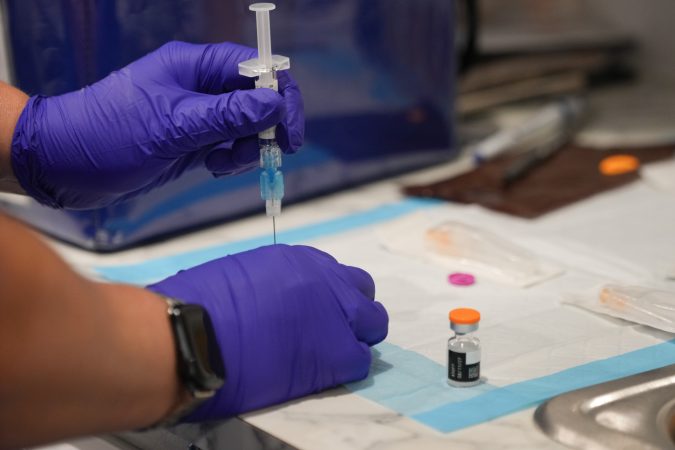
    Four Pennsylvanians who were vaccinated against measles have contracted the highly contagious illness, state officials announced Friday.

    Called “breakthrough cases,” such infections in vaccinated people are rare, but sometimes occur if someone’s immune system “did not respond as well” as most patients’ to the vaccine, the CDC says.

    Other times, vaccinated people can become sickened by the virus if they’re exposed for a long period to the disease — like living in a house where multiple unvaccinated people have measles. Vaccinated people tend to have a milder illness when this happens, and they’re less likely to spread measles to others.

    The four breakthrough cases reported in Pennsylvania occurred in three adults and one child in Centre, Jefferson, Lancaster, and Lycoming Counties.

    The state said that all of them were “appropriately vaccinated for their given ages.” None required hospitalization.

    Before Friday, the state had identified no cases this year in people who were fully vaccinated. The breakthrough cases reported Friday make up less than 1% of the total cases reported in the state this year.

    “When community transmission rises and our overall case numbers increase, we see that a handful of people who were vaccinated will get measles. Even so, vaccination still provides the best protection,” Pennsylvania health secretary Debra Bogen said at a news briefing.

    The Centers for Disease Control and Prevention estimates that about three in 100 people who received the two recommended doses of the measles, mumps, and rubella vaccine will contract the disease if exposed. About 7 in 100 people who received one dose will contract the disease.

    Sarah Long, a professor of pediatrics at Drexel University College of Medicine who previously served on two federal committees to recommend and license vaccines, called cases in vaccinated people “oddities.”

    “This is a fabulous vaccine and a fabulously transmissible virus,” she said, emphasizing that the vast majority of people who get measles are unvaccinated.

    A growing outbreak

    Pennsylvania is in the midst of the biggest measles outbreak in more than 30 years, with 676 cases reported and 124 people hospitalized as of Friday.

    The state recorded 52 new cases in the last two days alone. Local and state health officials have noted that it’s likely many cases are going unreported.

    The rapidly rising case count last month, especially among adults ages 25 and 49, merits attention, said Rémy Pasco, research associate at the University of Colorado who helped develop a measles outbreak simulator based on school vaccination rates. In past outbreaks nationally, cases have been more common among children who were not yet old enough to have received both MMR doses.

    He said those patterns could indicate the virus reached a community where both adults and children were largely unvaccinated.

    The state has reported two deaths associated with the outbreak — namely, deaths where evidence of measles is present, even when the disease may not be assessed by the coroner as the immediate cause of death.

    In its latest update Friday, the CDC still had not listed the deaths on its website highlighting data on ongoing measles outbreaks around the country.

    State and federal officials have clashed over whether the deaths were tied to the state’s measles outbreak.

    Lancaster County’s coroner has said he investigated one death caused by measles, in an infant with a severe genetic disorder, and another in an infant who contracted measles before birth and died shortly after. The coroner has said he does not believe measles caused that child’s death, but rather a lacerated spleen, yet prominent physicians have noted measles can weaken a person’s spleen, putting it at risk of rupture.

    Amid the outbreak, Pennsylvania is seeing more interest in vaccination, Bogen said Friday. Typically, healthcare providers in the Commonwealth give out 25,000 doses of the MMR vaccine a month, she said. In August, they gave out 46,000.

    “That is 46,000 times Pennsylvanians have chosen to help stop this outbreak by protecting themselves and others,” Bogen said.

    Measles alert signs in English and Spanish are posted on the front doors of an urgent care facility in Lancaster County last month.Jose F. Moreno / Staff Photographer

    Breakthrough infections

    People born before 1957, before the first measles vaccines became available, are generally considered protected against measles through natural immunity — because the disease was once prevalent in children.

    Between 1968 and 1989, most children in the United States received one dose of the MMR vaccine, which is about 93% effective against the virus.

    In 1989, measles cases among vaccinated schoolchildren prompted health officials to recommend children receive two doses of the vaccine, which together are 97% effective against the virus, a change that also prompted some older children to get a second shot.

    Measles rates plummeted during the 1990s, and the disease was declared eradicated in the United States in 2000.

    The MMR vaccine’s 97% effectiveness rate makes it “not perfect, but as good as our vaccines get,” said Rochelle Walensky, who served as CDC director during President Joe Biden’s administration and currently works as a professor of medicine at Harvard Medical School.

    Smaller outbreaks with dozens of cases — not hundreds — may not see any breakthrough cases.

    “The larger your outbreak, the more likely you’re going to see these,” Walensky said. “It’s just simple math.”

    Large outbreaks, with hundreds of cases, will inevitably include breakthrough cases, she said.

    Nationwide, 95% of the 3,294 measles cases logged by the CDC so far this year have been among unvaccinated people. The agency said 3% of those cases occurred in people with one dose of the MMR vaccine, and 3% in patients with two doses.

    The concern also arose in last year’s major measles outbreak in Texas. A vaccinated person in Bucks County was among those who contracted a mild case of measles last year after traveling there.

    Similar stories have emerged from Pennsylvania’s growing outbreak. For example, a mother in Lancaster County told The Inquirer earlier this summer that she was vaccinated and acquired the disease alongside her eight children, who were all unvaccinated; it’s unclear whether hers was one of the breakthrough cases recorded by the state.

    Breakthrough illnesses can be contagious, said Paul Offit, a physician and vaccine expert at the Children’s Hospital of Philadelphia who heads the hospital’s Vaccine Education Center.

    High levels of immunity in a given community protect everyone living there, Offit said. An unvaccinated person living around mostly vaccinated people is less likely to get measles because the virus has less chance to spread.

    But vaccinated people who live around many unvaccinated people are at higher risk of getting a breakthrough case, due to the virus having more opportunities to circulate, he said.

    Drexel’s Long recalled caring for children during a 1991 measles outbreak that sickened more than 1,000 people in Philadelphia and killed nine children.

    “It’s a horrible, horrible disease. We are extremely grateful we live in the U.S. where these vaccines are developed and proved to be safe and highly effective,” she said.

  • Cherry Hill’s special education PTA alleges discrimination after district bars back-to-school-night tables

    Cherry Hill’s special education PTA alleges discrimination after district bars back-to-school-night tables

    Cherry Hill Public Schools is battling with a group for parents of special education students about information tables at back-to-school night.

    The Cherry Hill Special Education PTA, known as CHSEPTA, said it has sponsored tables at district schools at the beginning of the school year for 12 years, but the request was denied this year by Superintendent Kwame Morton.

    It has filed a grievance with the nine-member school board after unsuccessfully lodging an appeal with Morton. The group has alleged discrimination by the district for refusing to allow an independent group to set up a table.

    “This is a clear-cut case of discrimination,” said Jennifer Naddeo, president of CHSEPTA. “Our families that have children with special needs need to have their own table with representation as well.”

    Naddeo said her group educates parents about their rights, offers assistance to help them get their children evaluated for services, and makes sure that individualized education plans, or IEPs, are followed. The group, which has about 400 parents on its mailing list, also brings in experts to speak, she said.

    The Cherry Hill school district, which enrolls nearly 11,000 students, has a parent-teacher association at each of its 18 schools as well as a Zone PTA, an umbrella group. It also has a special education advisory group, required by the state for every public school district.

    In a statement, the district said it “continues to review and strengthen procedures across the district to ensure greater consistency among our schools.”

    It said districtwide organizations like the special education PTA will coordinate a table with Zone PTA. Naddeo said that process has not been followed previously and her group had not been notified of any changes in procedures.

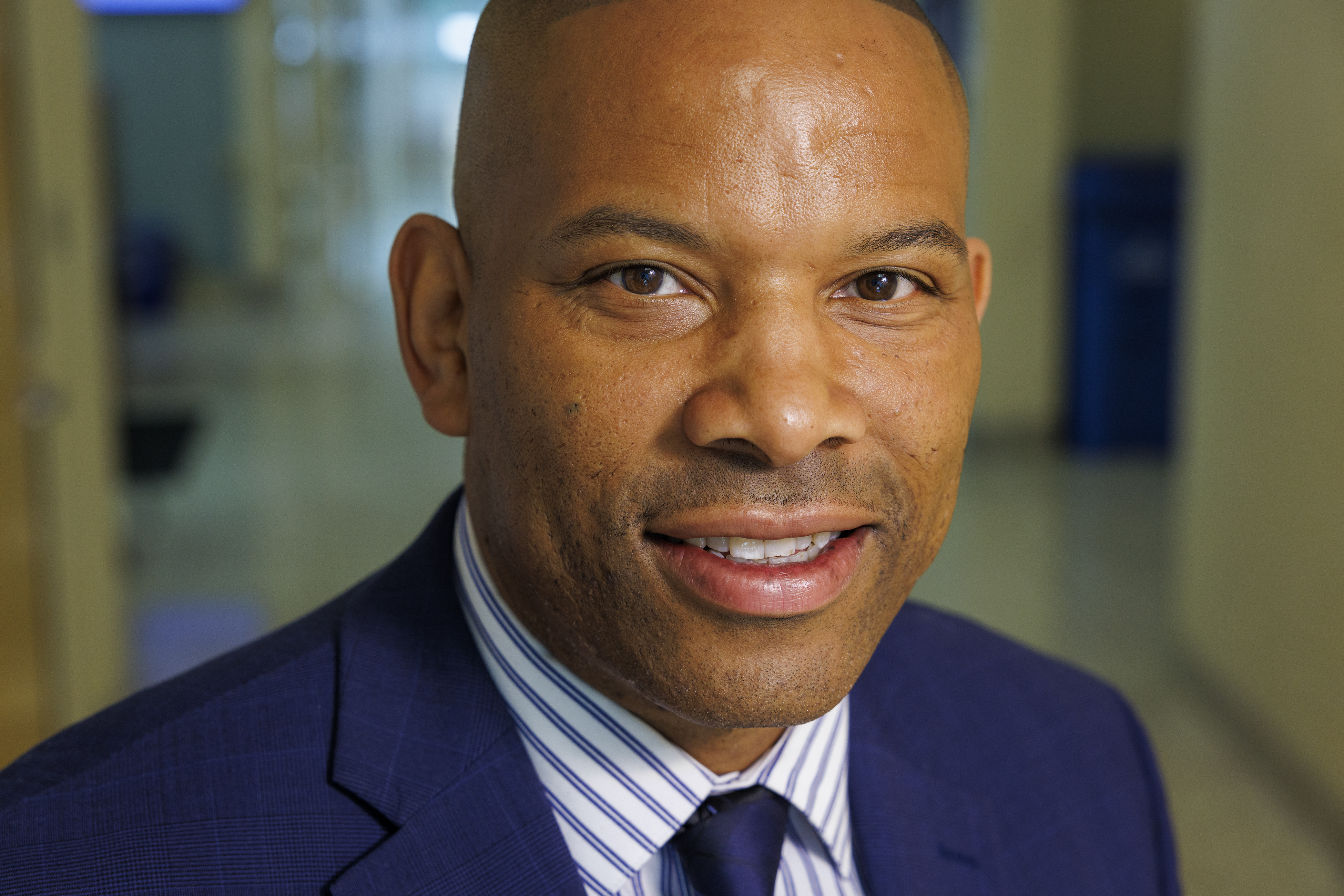
    Dr. Kwame Morton, Cherry Hill’s schools superintendent, at his office on June 3, 2024.Alejandro A. Alvarez / Staff Photographer

    “This approach provides a clear and consistent process for participation while continuing to support opportunities for parent organizations to connect with families throughout the district,” the district’s statement said.

    Naddeo said her group, which has about 80 dues-paying members, is a separate nonprofit and should not be required to seek permission from another group. The grievance asked the board to overturn Morton’s decision.

    About one-fourth of Cherry Hill’s students are classified as special education and have IEPs, according to Naddeo. Others have a 504 plan that accommodates disabilities. Cherry Hill also sends some students to a school or specialized program outside the district because the student needs services the district cannot provide.

    Cherry Hill Board of Education President Gina Winters told the special education PTA that the board lacked the authority to review an administrative decision by the superintendent.

    Peg Kinsell, policy director of the SPAN Parent Advocacy Network based in Newark, said the dispute was troubling. Naddeo’s group has a reputation as an active advocacy group for special education, she said.

    “I don’t know why you would want to put barriers in front of families getting information,” Kinsell said in an interview this week. ”I can’t figure out what the big deal is.”

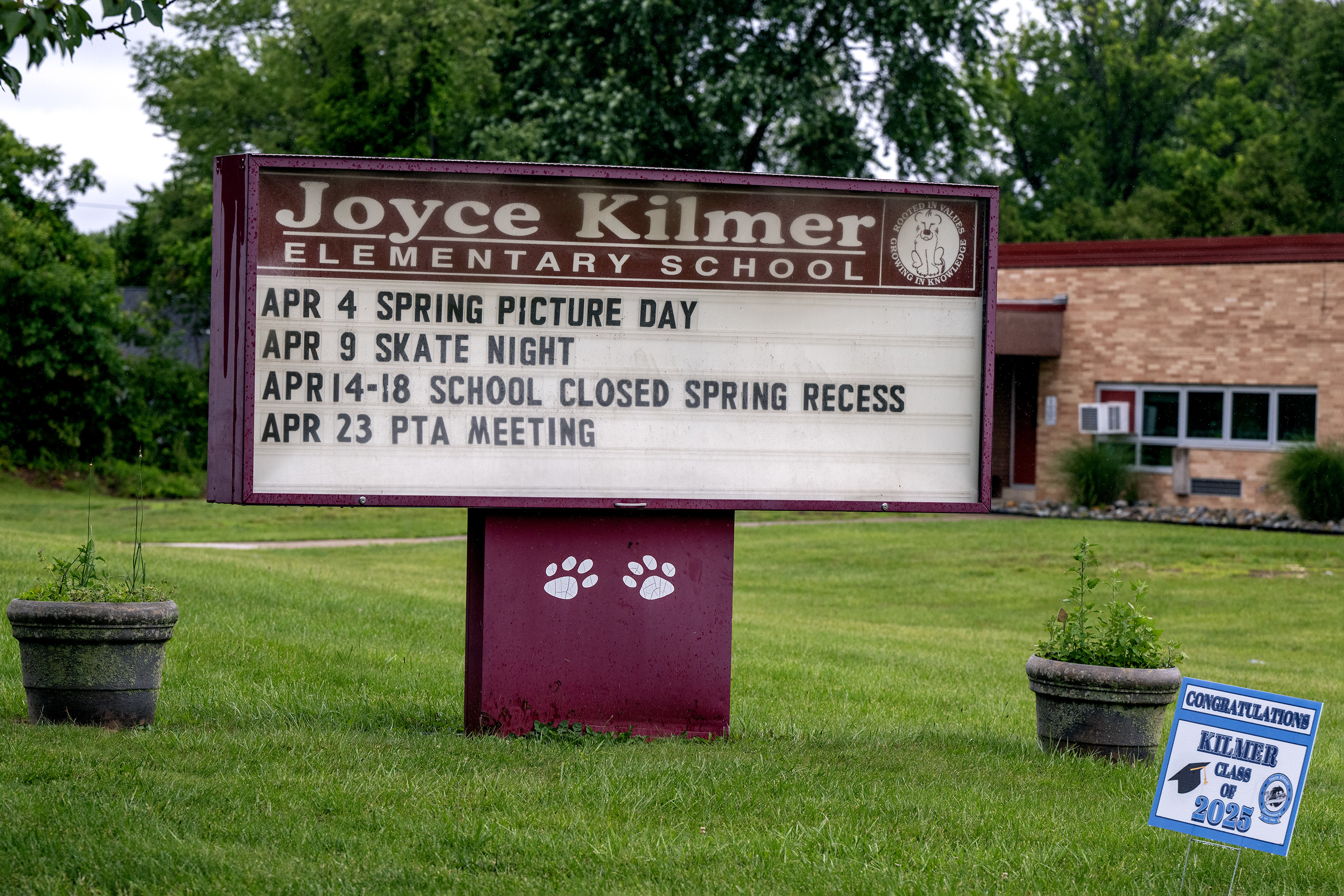
    Joyce Kilmer Elementary at 2900 West Chapel Ave. in Cherry Hill, May 28, 2025.Tom Gralish / Staff Photographer

    Naddeo said her group missed a back-to-school night held this week at Joyce Kilmer Elementary School because it was not given permission to have a table. The school PTA groups are geared toward general education students, she said.

    “When your child is struggling, you want to be represented,” Naddeo said.

    She said the group plans to set up information tables next month outside the Cherry Hill library and during the township’s Harvest Festival on Oct. 18.

  • Philadelphia man convicted in killing of homeless man whose mother says she never stopped fighting for him

    Philadelphia man convicted in killing of homeless man whose mother says she never stopped fighting for him

    For the seven months he lived on Manayunk’s streets before he was shot and killed, Joshua Daywalt’s mother said she tried to persuade him to come back to the life waiting for him.

    Jennifer Daywalt, of Phoenixville, ticked off the list: She regularly brought him bottled water, chips, and other easy-to-carry snacks at the encampment he frequented. She brought reassurance, too, reminding him that his family — three sisters, one brother, and two children — loved him and wanted him back home.

    Authorities recovered Daywalt’s body from the frigid waters of the Schuylkill near Kelly Drive and Midvale Avenue on Feb. 7, 2025. A day later, a city medical examiner determined he had been shot at least once in the head, just behind his right ear, turning what had been a death investigation into a homicide.

    And on Thursday, a Philadelphia judge found Roger Gosson guilty of killing Daywalt, 35, delivering the outcome his mother said she had been advocating for since the day she learned her son was gone.

    “I need people to know that not everyone who is homeless is unloved,” Jennifer Daywalt said. “I never stopped trying. I never stopped begging. I never stopped fighting for him.”

    Gosson, 63, was convicted of third-degree murder and related crimes in Daywalt’s shooting death, following the two-day bench trial in Philadelphia Common Pleas Court.

    Gosson — a homeless man living in an intricate, multilevel setup inside a hole in the Green Lane Bridge — became detectives’ lead suspect in part because of body-worn camera footage from a patrol officer who encountered him a month before the killing. In the video, Gosson complained that “somebody [has] got to do something about” Daywalt, whom he accused of stealing from other homeless people in the area.

    Later, inside Gosson’s living space, police recovered the gun they say was used to kill Daywalt .

    Gosson’s fingerprints and DNA, however, were not found on the handgun. And without cellphones to track his movements or street cameras to capture the shooting, prosecutors’ case against Gosson was, as Assistant District Attorney Ashley Toczylowski acknowledged during her closing argument on Thursday, anything but typical.

    “But,” she said, “that doesn’t mean we don’t know what happened.”

    Judge Charles Ehrlich spent less than 10 minutes deliberating before returning a guilty verdict Thursday afternoon. Even so, a case built largely from the testimony of other homeless men created obstacles for prosecutors and, at one point, threatened to unravel before it ever reached trial.

    The witnesses had told police in the weeks after Daywalt’s body was found that Gosson confessed to the killing in a series of conversations and, in one case, a note written on a napkin that was never recovered. But on Thursday, one of those witnesses disputed his previous account, blaming a drug-induced haze for his loose lips and claiming he couldn’t recall his videotaped interview with police.

    And last month, Gosson’s trial was postponed for the fifth time after prosecutors said police had been unable to locate that same witness. The delay prompted Gosson’s defense attorney, Gina Amarillo, to ask the judge to dismiss the case, arguing that prosecutors had already taken more than the 365 days allowed by law to bring Gosson to trial.

    Ehrlich denied her motion. And to ensure the trial could begin on Thursday with the key witness, prosecutors held him in jail on a material witness warrant ahead of the court date.

    At the delayed August trial date, Detective Craig Coulter testified that he’d tried to find the homeless witness for three weeks without success, calling him “a constant moving target.”

    “It’s like trying to find a squirrel in the woods,” he said. “That’s what all the witnesses in this case have been like.”

    Amarillo argued on Thursday that prosecutors had relied on speculation to accuse Gosson of a killing for which no hard evidence had been found implicating him. Changing unreliable witness testimony, she said, was “not enough to say Mr. Gosson did this beyond a reasonable doubt.”

    “My client was hoping for a different verdict based on the evidence presented,” Amarillo said in a phone interview Thursday night. She added that they will likely appeal the judge’s verdict.

    Outside the courtroom, Jennifer Daywalt remembered her son as a “brilliant artist” who’d first picked up pencils to draw at 4, she said. He gravitated toward portraits in pencil and charcoal, often of his favorite hard-rock bands, she said.

    Before he began living on the streets of Manayunk, Daywalt left four psychiatric hospitalizations intended to stabilize him after he stopped taking medication for his diagnosed paranoid schizophrenia and multiple personality disorder, Jennifer Daywalt said. His illnesses, she guessed, may have caused him to steal. “It made him feel as if he couldn’t conform to society,” she said.

    Jennifer Daywalt said she has appealed to lawmakers to change the state’s laws on hospital commitments, and will continue to fight for mandatory holding periods and follow-ups that she believes could have saved her son.

    For now, she said: “It felt good that the judge saw what the rest of us saw. It felt like Joshua’s voice was heard.”

    Gosson is scheduled to be sentenced in December.

  • Phillies Extra: Jeff Francoeur on the NL East race, why the Phillies are a postseason threat, and more

    Phillies Extra: Jeff Francoeur on the NL East race, why the Phillies are a postseason threat, and more

    The Phillies and Braves are set to square off again this weekend in Atlanta, so it’s the perfect time to check in with Jeff Francoeur, who played for both teams and calls Braves games on TV and radio. Francoeur joined Phillies Extra to help break down the race for NL East supremacy.

  • ‘You know what happens if you don’t vote’: 7 takeaways from the GOP convention

    ‘You know what happens if you don’t vote’: 7 takeaways from the GOP convention

    Vice President JD Vance was billed as the headliner of the second night of the Republican convention, but President Donald Trump stole the show.

    With a hug and a handshake, Vance exited stage right after his speech as Trump returned to the place he likes most — center stage — to make his final pitch of the convention to keep Republicans in power.

    At one point Trump asked attendees to raise their right hands and pledge to him that he would vote with their family and friends. Dutifully, they did.

    “You know what happens if you don’t vote?” Trump said. “You go to hell.”

    The two-day rally in Dallas came as Trump’s approval has sagged below 40% and Republicans fear losing control of both the House and Senate. Republicans hoped the gathering would help energize a base beleaguered by high prices and the Iran war to turn out in droves. But the two days of red meat tossed from the stage seemed unlikely to satiate independent voters whose support has flagged.

    Here are seven takeaways from the convention:

    Vance makes his 2026 (and 2028) pitch

    Vance arrived in Dallas widely considered the front-runner in the 2028 Republican presidential primary. His speech offered some early clues about how he might approach a campaign.

    Vance focused on restoring the primacy of the traditional nuclear American family, a theme he has championed in the administration. He did not mention the war in Iran, an operation he has defended publicly but raised concerns about privately. But he issued a plea for conservatives not to abandon the White House over policy.

    “Do not throw the baby out with the bathwater,” he urged.

    Vance speaks in a far more scripted political style than Trump. He caught fire with the crowd when he snapped back at a protester who interrupted his remarks by waving Palestinian and Mexican flags. “My friend, if you love Mexico so much, get your a— over there,” he said.

    But he failed to sustain the kind of enthusiasm that Trump commanded either night. Nor did he win anything beyond perfunctory praise from the president, who quickly ushered him off the stage.

    As the balloons fell, it was the president alone, along with a tenor singing. Trump is not giving up his crown quite yet.

    Trump throws an affordability Hail Mary

    Trump has called affordability — a top buzzword for Democrats this year — a “hoax.” In his speech Wednesday night, the president claimed that prices are on their way down. At the same time, he rolled out an audacious plan to address people’s concerns about costs: a massive cash giveaway.

    He branded his dubious and detail-free plan to send $5,000 to every American adult a “Trump Dividend.”

    But Trump was virtually the only one talking about it.

    A day later, the splashy $1 trillion-plus plan barely made a ripple on the convention stage.

    The president’s own son, Donald Trump Jr., didn’t so much as mention it.

    Neither did the speaker of the House.

    Neither did the vice president.

    Only Trump did.

    If the president wants the dangled cash to be a major factor in the midterms, the rest of the Republican Party didn’t use the rest of the convention to sell it.

    Republicans have a new rogues’ gallery of liberal villains

    Forget about Nancy Pelosi.

    In Dallas, Republicans made clear that the former House speaker has been dethroned from her decades-long position as the party’s favorite political villain.

    Speaker after speaker assailed Hasan Piker, a leftist online streamer, and Abdul El-Sayed, the Democratic Senate nominee in Michigan, for pushing what they described as an extreme and anti-American agenda. Their images, including Piker’s naked torso, were broadcast on the jumbotron over the stadium. Even Rep. Alexandria Ocasio-Cortez of New York, who is a frequent target of the right, got less airtime.

    At one point, Speaker Mike Johnson outlined the new rogues’ gallery of liberals — “Hasan Piker and Bernie Sanders and AOC and Abdul El-Sayed and Zohran Mamdani” — while casting the rest of the Democratic Party as squishes who would succumb to them.

    In their attacks on Piker and El-Sayed, several convention speakers embraced anti-Muslim rhetoric, including a promise popular among conservative activists to “ban Shariah law.”

    “We must stand and defeat the Islamists,” Sen. Ted Cruz of Texas said in his speech.

    GOP frames the election as common sense versus crazy

    Republicans know that Trump is unpopular. They are banking on making Democrats unpopular, too — or at least unappealing and unelectable.

    Over and over, speakers cast Democrats as out of the mainstream, frequently calling them socialists, communists, and even worse. At times they stretched the truth. Democratic socialists might have won a number of Democratic primary victories since 2024, but no serious figure in the party is promoting communism.

    “You guys are going to trigger the commies,” Donald Trump Jr., the president’s son, said at one point as the crowd chanted “USA! USA! USA!”

    Vance, in the closing of his speech, summed up the message so many had delivered before him over two days: “It’s about the party of common sense beating the party of the crazies.”

    Texas is a 2026 battleground

    Six months ago, when it first emerged that Republicans were likely to pick Dallas for this convention, it was unclear whether Texas would wind up as a top midterm battleground.

    It’s clear now.

    A parade of speakers — from the president on down — used their precious time onstage to talk about Texas’ razor-close Senate race. They sought to boost Ken Paxton, the Texas attorney general (even as Trump mocked his sartorial choices on back-to-back nights), and tear down James Talarico, the Democratic nominee. On the eve of the convention, Trump’s super political action committee had reserved $10 million in ads to help Paxton.

    “Tala-freako maybe tops the list,” Vance said of Trump’s nickname for Talarico.

    But it wasn’t just the Senate race. Republicans gerrymandered the state in 2025 to create as many as five new safely Republican House seats. But Republicans running in several of those seats appeared at the convention, seeking a boost in regions that Trump won handily.

    Was it must-see TV? Early signs suggest no

    Trump has long been known as a master of the television audience. Not this time. An average of 2.5 million people tuned in to watch his Wednesday night speech on Fox News, one of the few major TV networks that aired the remarks in full, according to preliminary figures from Nielsen. That was an average primetime audience for the network, based on the most recent quarterly statistics, and below the usual viewership for programs at that time.

    In other words, no Trump bump.

    To be fair, the president’s programming faced some steep competition. The first game of the National Football League season was on at the same time as his speech. The season’s second game was on Thursday during Vance’s and Trump’s speeches.

    Republicans make their bid to buck history

    Parties in power traditionally attempt to expand their appeal in midterm elections through targeted outreach to independent voters. That was not the strategy charted by Trump and his allies in Dallas.

    Only a handful of speakers offered any kind of outreach to moderate voters. (One of those exceptions was Rep. Mike Lawler of New York.) Far more focused their remarks on stoking fears of Shariah, transgender athletes, and Democratic candidates who were repeatedly described as communists. Again and again, Trump begged his supporters to “pretend” that he would be on the ballot — an attempt to get enough of them out to prevent the usual losses for the party in power.

    Trump and his allies are staking their chances on their ability to drive their own voters to the polls. At the top of the list are Trump loyalists who typically skip midterm elections.

    This article originally appeared in the New York Times.

  • Diesel jumps above $6 a gallon, adding to inflation pressure

    Mounting fears that widening clashes in the Middle East could further disrupt energy supplies briefly pushed the price of oil to about $110 a barrel Friday, while U.S. diesel prices rose above $6 a gallon.

    The jump in fuel prices has stoked fears of broader inflation. On Friday, a report showed overall inflation in the United States remained elevated at an annual pace of 3.4%.

    Concerns over oil supplies, already heightened by the U.S. war against Iran, broadened this week with reports that the Houthi militia had seized a critical port on the Red Sea, presenting a new threat to shipping in the area.

    The price of Brent crude oil, the international benchmark, surged before easing to about $103 a barrel, after the International Energy Agency lowered its forecast for global oil demand by 2.5 million barrels a day this year, from a drop of 1.6 million barrels a day it predicted last month.

    “The continuing impasse in negotiations between the United States and Iran delays the prospect of a normalization of flows into next year,” it said, adding that demand for oil is expected to rebound in 2027, “narrowly offsetting this year’s losses.”

    West Texas Intermediate crude, the U.S. standard, traded as high as $104 a barrel before falling to about $99.

    But the rise in oil prices “pales in comparison with those for refined products, where market tightness is now most acute,” the IEA wrote in its report.

    The average price of a gallon of diesel fuel jumped to $6.06, according to the AAA motor club, a 60% rise since the United States and Israel attacked Iran on Feb. 28.

    Iran has effectively blocked most ships from passing through the Strait of Hormuz, the narrow waterway between the Persian Gulf and the Gulf of Oman. During normal times, about a fifth of the world’s crude oil flows through the strait.

    With assistance from the U.S. Navy, a few tankers have been able to get through, but Iran has signaled in recent days that it was willing to be more aggressive in exerting control over the strait.

    U.S., European, African, and Asian oil refineries have increased production of diesel, gasoline, and other fuels to make up for the loss of supplies from the Middle East and Russia, where refineries have come under attack by Ukraine.

    But demand for energy is still outstripping supply. As a result, governments, businesses, and farmers are having to pay more for the diesel they need to run trucks, farm machinery, and other heavy equipment. And homeowners who use heating oil, which is similar to diesel, are growing concerned about their monthly bills as winter nears.

    Fuel accounts for as much as 30% of food costs in the United States, said Kate Gordon, a former senior adviser in the Department of Energy and now the chief executive of California Forward, a nonprofit business group.

    “So far, farmers and trucking companies have been absorbing a lot of this cost increase,” she said, “but with the war continuing on with no end in sight, they are going to pass through more and more of the price jump to consumers.”

    Oil remains elevated

    The price of Brent crude, which has been edging higher all week, was trading at about $104 a barrel.

    West Texas Intermediate crude, the U.S. benchmark, was around $99 a barrel.

    Gasoline prices rise

    The national average for gas prices rose to $4.30 a gallon, according to AAA. The price has risen 44% since the war began.

    Gas prices don’t move in lock step with crude, usually trailing increases or drops by a few days.

    This article originally appeared in The New York Times.

  • US officials declare an end to record-setting cyclospora outbreak, but its origin is still unknown

    US officials declare an end to record-setting cyclospora outbreak, but its origin is still unknown

    NEW YORK — The largest cyclospora food poisoning outbreak in U.S. history is over, U.S. health officials said Friday.

    U.S. Food and Drug Administration officials said they are confident that all recalled iceberg lettuce related to this specific outbreak is off the market.

    Nearly 13,000 reported cyclospora cases were tied to the multistate outbreak, federal officials say. They represent the bulk of an unprecedented surge in the parasitic diarrheal illness this year.

    Even with the outbreak deemed over, several questions remain, including about its origin. The parasite is spread through human feces, and it still isn’t clear how sewage could have contaminated enough food to sicken so many people.

    “This contamination can happen if produce is grown in soil or comes into contact with water that has been contaminated,” said Ellen Shumaker, director of outreach for a North Carolina State University food safety program, Safe Plates.

    Since May 1, the government has received reports of nearly 20,000 lab-confirmed cases, or more than 16 times the number reported during the same period last year. More than 6,100 suspected cases also have been reported.

    The worst previous year in the U.S. for infections was 2019, when about 4,700 illnesses were reported nationally.

    This year’s surge in cases was dominated by an outbreak in 21 states linked to iceberg lettuce. But there are thousands of other cases that have not been linked to that outbreak.

    Michigan was the hardest hit state, with the most reported cases and the two U.S. deaths tied to the outbreak.

    Cyclospora is a microscopic, spherical parasite that commonly causes watery diarrhea “with frequent and sometimes explosive bowel movements,” according to the CDC. Outbreaks tend to occur most often in the late spring and summer.

    The illness, called cyclosporiasis, is less common than foodborne illnesses caused by other germs, including salmonella and E. coli. Many cases are never linked to a specific food or other source.

    In this outbreak, investigators initially zeroed in on lettuce served at Taco Bell. Federal officials subsequently focused on Taylor Farms as the source of the lettuce, and the company recalled iceberg lettuce grown in central Mexico.

    The Taylor Farms recall involved thousands of packaged salad products combining iceberg lettuce with other vegetables. The products were shipped to major U.S. restaurant chains, including Yum Brands, which owns Taco Bell, Pizza Hut and KFC.

    The FDA has ended its on-site inspections and sample collection at iceberg lettuce growers and the processing facility in Mexico, the agency said Friday. Samples from the on-site inspections are pending analysis, the FDA said.

    The outbreak cast a spotlight on a worsening problem: U.S. regulators are conducting fewer international inspections to catch contaminated produce before it lands on American plates.

  • The Union’s Milan Iloski returns to San Diego with a point to prove to his old club

    The Union’s Milan Iloski returns to San Diego with a point to prove to his old club

    Players face their old teams all the time in every sport. So Milan Iloski knows there’s nothing new about what he’ll go through this Sunday when the Union visit San Diego FC (9 p.m., Apple TV).

    But this one does mean a lot, and not just because it’s his first game against San Diego since leaving there to come east just over a year ago. Or even factoring in that he’s from Escondido, Calif., a northern suburb of San Diego, which should make for a lot of Iloski jerseys in the stands.

    “I talked to the team administrator over there, and I talked to our guys here and told them to send me whatever you got,” he said regarding finding tickets for folks. Both teams agreed, Iloski expects a final total “anywhere from 75 to 100.”

    They will show up to watch a player who feels he has a point to prove, after a somewhat fractious departure. Iloski was initially in San Diego on a four-month loan from Denmark’s FC Nordsjælland, a team with the same owner through the Right To Dream player development network.

    Negotiations took place regarding a full deal, but the sides couldn’t agree on terms. So Iloski departed and arrived in Chester soon afterward.

    “I loved my time there and I have nothing but positive things to say about most of the people,” he said, particularly players who took him in and a coaching staff with many San Diego-area natives. “It’ll be nice to see them. But also, I’m there to show some people that they made a big mistake. I think I have a big chip on my shoulder, and I’m looking forward to the challenge, and they’re a good team that’s playing well.”

    That will be one storyline on Sunday. The Union’s resurgence since the World Cup will be another — and it will certainly put Cavan Sullivan, Neil Pierre, and Frankie Westfield in the spotlight, in the weekend before Mauricio Pochettino picks the U.S. roster for the upcoming friendlies.

    Perhaps Quinn Sullivan will get some attention too, and he deserves it. His all-around game against Cincinnati on Wednesday showed that while he isn’t quite fit for a full 90 minutes yet, he’s back to his pre-injury quality.

    Union’s Quinn Sullivan celebrates his first-half goal during the Union’s win against FC Cincinnati on Wednesday.Elizabeth Robertson / Staff Photographer

    If he continues, he might also get calls for a national team return down the road. He hasn’t forgotten walking down the hall at Subaru Park with Mauricio Pochettino last October, a few months after making his senior U.S. debut.

    Quinn Sullivan met Mauricio Pochettino at the mixed zone to walk (gingerly) toward the #USMNT locker room, which is the Union locker room.

    Nathan Harriel and Alejandro Bedoya followed a few steps later.

    [image or embed]

    — Jonathan Tannenwald (@jtannenwald.bsky.social) November 15, 2025 at 7:56 PM

    “I think everyone’s excited for an opportunity,” Sullivan said. “That was such a special honor to represent the team, and I want to do it again. I know the coaches watch all the games, and all we can do is continue to perform. And I know if the opportunity presents itself, everyone will be ready.”

    San Diego is also great at developing young players. Recent examples include 20-year-old left back Luca Bombino, just sold to English second-division club Stoke City for $5 million; 21-year-old centerback Manu Duah, who just signed a contract extension; and 20-year-old former Union midfielder David Vazquez. He’s now in his second year out west, and will face his old club for the first time.

    In a league so often headlined by veteran stars — Lionel Messi, Robert Lewandowski, Antoine Griezmann, and so on — it will be fun to see two teams that value homegrown talent get center stage.

    “It’s a similar business model, I would say, similar team model, to have a lot of young guys mixed in with some older guys who they can lean on and gain some experience with,” Iloski said. “It says a lot for them, and for us as well, that there’s a lot of good players in America, and there’s a lot of players that slip through the pipeline. And hopefully this new era coming up, with the Bombinos and the Sullivans, and Frankie and Neil, and the Manu Duahs and those kinds of guys, hopefully it’s a stepping stone for the future, and more teams see that success can be found in a lot of young players.”

    window.addEventListener(“message”,function(a){if(void 0!==a.data[“datawrapper-height”]){var e=document.querySelectorAll(“iframe”);for(var t in a.data[“datawrapper-height”])for(var r,i=0;r=e[i];i++)if(r.contentWindow===a.source){var d=a.data[“datawrapper-height”][t]+”px”;r.style.height=d}}});

  • A Pa. state lawmaker wants to turn Lake Erie into Lake Pennsylvania

    A Pa. state lawmaker wants to turn Lake Erie into Lake Pennsylvania

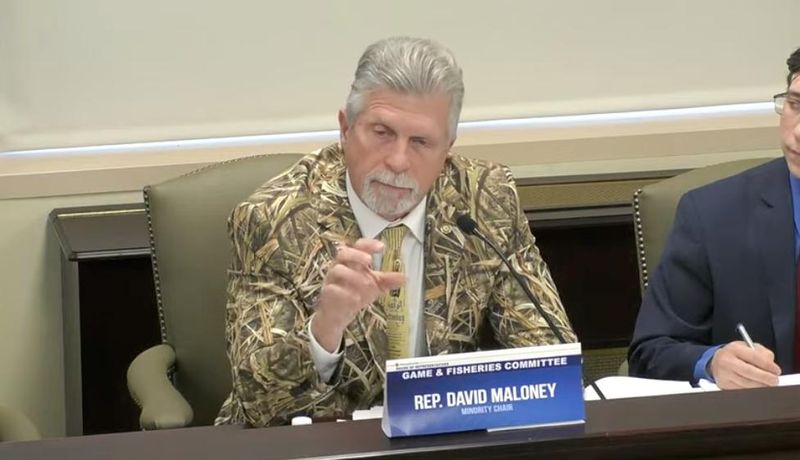
    Rep. David Maloney, a Republican who represents parts of Berks County, wants to rename Lake Erie to “Lake Pennsylvania,” arguing that the state’s only Great Lake has become increasingly important to Pennsylvania’s economy and identity.

    Maloney plans to introduce a resolution that would urge President Donald Trump, Congress, and the U.S. Secretary of the Interior to take the necessary steps to change the lake’s name, according to a recent news release.

    In a memo to fellow lawmakers, Maloney pointed to the millions of Pennsylvanians who visit nearby Presque Isle and the Erie Bluffs each year, and to tourism’s importance to Erie County. He also argued that Pennsylvania plays an outsized role in supporting the lake’s recreational fishery, despite having a small share of its shoreline. According to the Great Lakes Fishery Commission’s 2025 report, Pennsylvania stocked almost 500,000 yearling steelhead last year, or roughly 40% of all steelhead in the lake, and more than any other state or Canadian province.

    “This is Pennsylvania’s only Great Lake,” Maloney said in a post on X. “Its modern economy and identity are increasingly tied to the boaters, anglers, families and tourists who come to enjoy it.”

    “Ohio has plenty of shoreline. New York already has two Great Lakes. Canada has four others,” he said. “Pennsylvania has one. Let’s call it Lake Pennsylvania!”

    The proposal comes shortly after Trump ordered the federal government to begin calling Lake Ontario “Lake America.” Trump signed an executive order on Aug. 27 directing the Secretary of the Interior and the U.S. Board on Geographic Names to make the change in federal records.

    Maloney’s resolution has not yet been formally introduced in the Pennsylvania House.