Blog

  • Downpours expected to return to the Philly region this weekend, with a flood watch in effect

    Downpours expected to return to the Philly region this weekend, with a flood watch in effect

    The atmosphere may be ready to engage in some regressive behavior, with August-like downpours in the weekend outlooks.

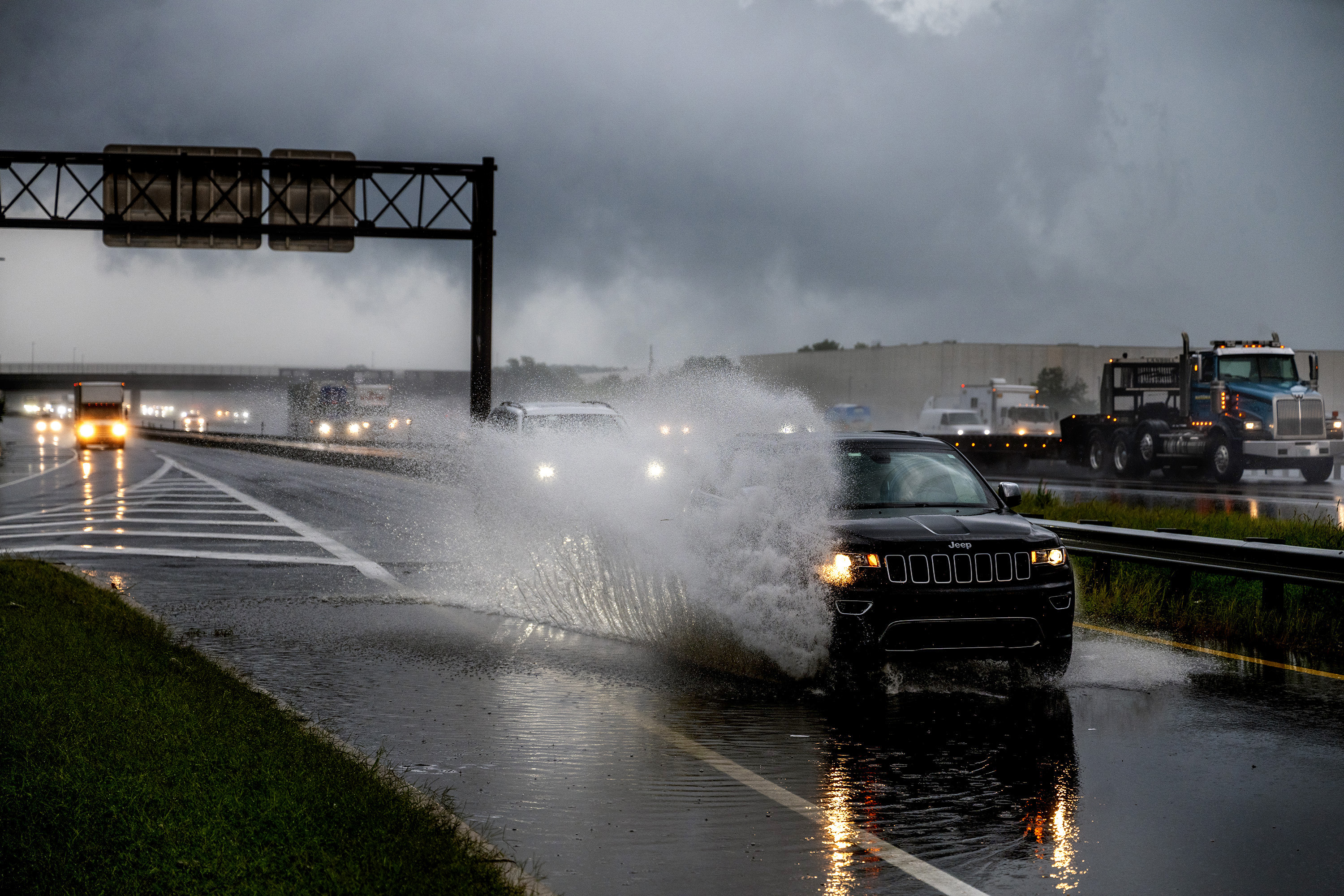
    The National Weather Service has posted a flash-flood watch in effect from 11:59 p.m. Saturday through noon Sunday for the entire region, except for Chester County, with heavy showers possible.

    “We have plenty of moisture coming up from the south,” said Frank Pereira, meteorologist with the federal Weather Prediction Center, in College Park, Md.

    The center has the I-95 urban corridor from central Virginia through Philadelphia with an enhanced probability of “excessive rainfall.”

    Widespread heavy rain amounts aren’t likely, said Pereira, but hefty totals could occur in a short period of time.

    The weather service office in Mount Holly said rainfall rates of two inches an hour would be possible.

    Fortunately, after a week’s respite from the episodic rains that so characterized July and August, setting off record numbers of flood warnings, the weather service notes that levels are low in the region’s major waterways.

    “The bigger concern with this event will be flash flooding,” the weather service said, the familiar likes of flooding along roads and near the smaller streams.

    While the downpours may evoke August, these would be a shade different in that they wouldn’t be driven by daytime heating, said Paul Fitzsimmons, meteorologist in the Mount Holly office. The sun is getting weaker, the days shorter.

    Setting off the rains would be an approaching cold front from the west and a warm front migrating northward.

    The rains could get an extra kick from very warm decks of clouds about two miles above the surface, said Pereira.

    “You have this very deep saturated warm layer,” he said. “This increases the efficiency of the rainfall,” along with producing larger raindrops.

    In any event, Saturday should be dry during the day, as should most of Sunday afternoon. On the plus side, drought conditions continue to recede.

    Is the drought officially, absolutely over in the Philly region?

    All of New Jersey remains under a state-declared drought warning; however, conditions throughout the Philadelphia region have improved immensely.

    After 16 consecutive months of below-normal precipitation in Philadelphia heading into July, the totals at Philadelphia International Airport are above normal for the year.

    In the latest interagency U.S. Drought Monitor update posted Thursday, most of the region was categorized as absolutely drought-free, a big change from just last week.

    All of Philly was drought-free. Last week, the entire city was designated as “abnormally dry” — the least-serious tier on the monitor’s scale.

    In Chester County, which had been under a state drought “warning” last month, 90% of the county was considered to be in the clear, an increase of 37% from the previous week.

    It might be time for a drought farewell party.

  • Assailants attack, steal handgun from off-duty Philadelphia police officer, authorities say

    Assailants attack, steal handgun from off-duty Philadelphia police officer, authorities say

    An off-duty Philadelphia police officer was beaten by multiple people and robbed of his gun late Thursday, police said.

    The gun — the officer’s service weapon — had not been recovered as of Friday, they said.

    The officer, whose name was not released by police, was taken to Temple University Hospital with cuts to his head and scrapes on his legs and feet. Police did not disclose his condition, but said the officer was stable Friday afternoon.

    Officer Tanya Little, a police spokesperson, said police were called to help the officer at about 11:45 p.m. Thursday on the 700 block of North 10th Street, between Brown Street and Fairmont Avenue in the West Poplar section of North Philadelphia, after the officer said he had been attacked by three people who stole his firearm.

    Little said that investigators took two people into custody for questioning, but charging information was not available.

    The investigation is ongoing, police said.

  • U.K. lawmakers vote down bill to allow assisted dying in England and Wales

    U.K. lawmakers vote down bill to allow assisted dying in England and Wales

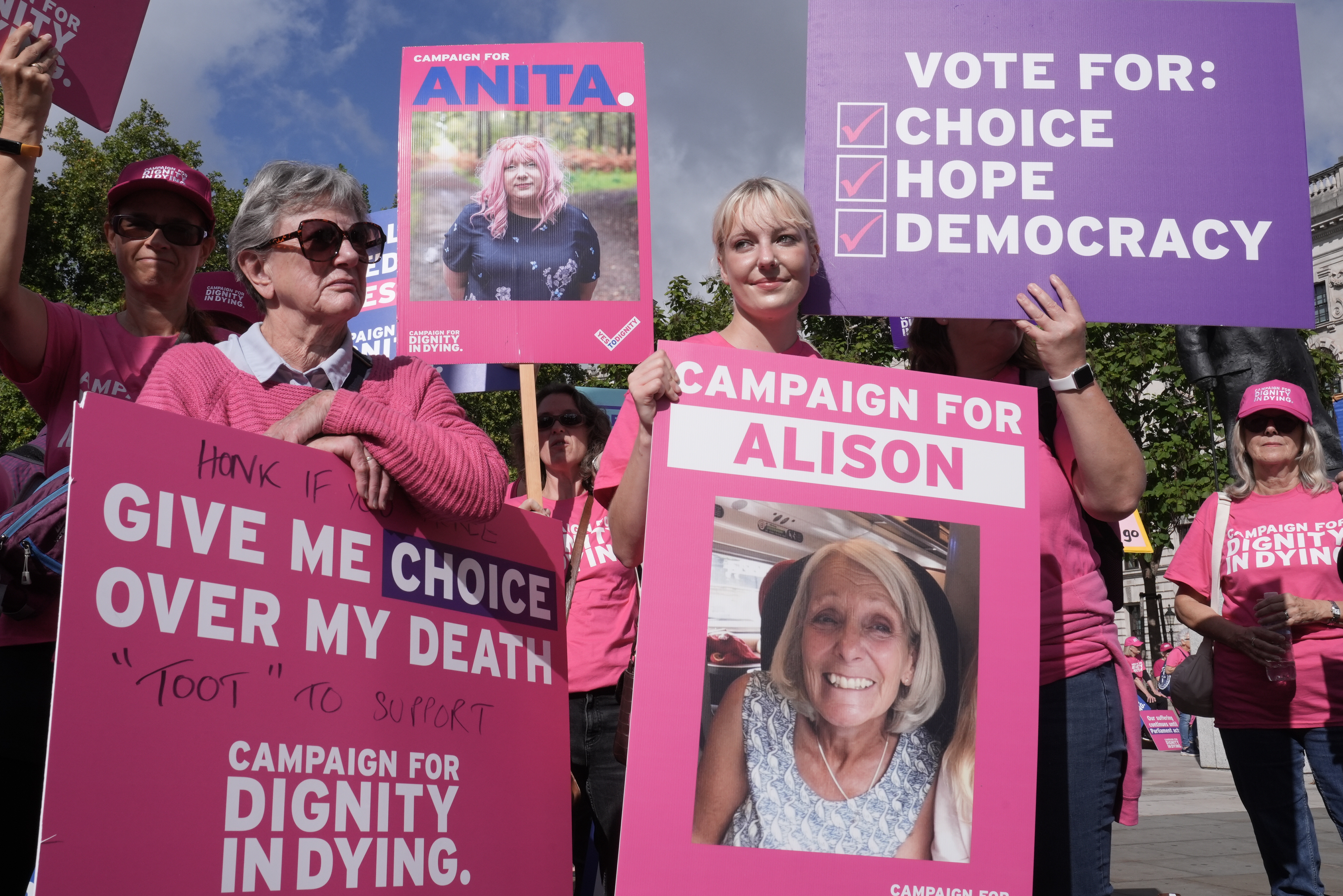
    LONDON — U.K. lawmakers on Friday voted down legislation to allow terminally ill adults in England and Wales to choose to end their lives.

    Following an impassioned four-hour debate in the elected House of Commons, the Terminally Ill Adults (End of Life) Bill was rejected 286 to 270. The outcome was somewhat surprising given that an almost identical bill had passed last year with a margin of 23 votes.

    The vote brings an end to a two-year debate in Parliament about assisted dying, during which the House of Commons had backed assisted dying on two previous occasions. Their backing wasn’t enough for it to become law because it was effectively filibustered by unelected lawmakers in the House of Lords.

    Back in the House of Commons on Friday, the bill had proposed allowing adults in England and Wales who have fewer than six months to live to apply for an assisted death subject to the approval of two doctors and an expert panel.

    Many individual lawmakers relayed their own stories both in favor of and against the proposal. The government took a neutral stance, meaning lawmakers voted according to their consciences rather than along party lines.

    One lawmaker who was among those to oppose the bill, having previously backed it, spoke about how “nightmares” prompted her to switch sides. Janet Daby said she dreamed of “dying and death” because she had not been “entirely comfortable” with her former position.

    The new U.K. leader, Prime Minister Andy Burnham, didn’t vote because he said he didn’t want to “unduly influence the debate.”

    Opponents branded the bill unsafe and unworkable, citing concerns around potential coercion of vulnerable people and a lack of safeguards for those with disabilities.

    Lawmaker and cancer surgeon Zubir Ahmed also noted uncertainty around a doctor’s prognosis.

    “I have to be honest with you,” he said. “When I am asked to prognosticate as to whether someone has six months to live or not, I am as often wrong as I am right.”

    The leader of Catholics in England and Wales, Archbishop Richard Moth, called the bill “wrong in principle” and “deeply flawed. The Church of England’s Archbishop of Canterbury, Sarah Mullally, also objected to the bill.

    Medical colleges, including the Royal College of Psychiatrists, had raised “serious concerns” about the bill, saying there were “too many unanswered questions about the safeguarding of people with mental illness.”

    Proponents of ” assisted dying ” — sometimes referred to as “assisted suicide” — had hoped it would mark the biggest change to social policy in the U.K. since abortion was partially legalized in 1967. The intention was to put an end to the practice of those near the end of their lives going to other countries, such as Switzerland, for an assisted death.

    Lauren Edwards, who reintroduced the bill to the House of Commons, said the rejection was “heartbreaking” but expressed hope that the issue will win parliamentary approval in the future.

    “Assisted dying will come in this country, as it is already doing all across the world, but not soon enough,” she said. “Parliament has dropped the ball today. It will be picked up again as it must be, because the law as it stands is simply too cruel and too unjust to be allowed to stand.”

    Other countries where assisted dying is legal include Australia, Belgium, and Spain, with regulations on qualifying criteria varying by jurisdiction.

  • Southwest Philly residents want to fight neighborhood blight, but say they need the city’s help

    Southwest Philly residents want to fight neighborhood blight, but say they need the city’s help

    It would be hard to imagine a vacant lot of abandoned cars, tires, and trash lasting long in Center City before it got taken care of. But a group of Southwest Philly residents say that’s exactly what’s happening in their neighborhood.

    Their relatively new group, the PA Solidarity Project, cataloged roughly 50 instances of blight over the spring, including abandoned cars and houses, illegal dumping, and potholes, and reported them to the city in early June. Longstanding blight is a common concern in the neighborhood, they said. But the city has only taken action on about half of those reported problems since then, the group said.

    “In other zip codes, this wouldn’t be allowed,” said Andrew Coates, 67, a block captain and Southwest Philly resident for over 30 years. He referenced a recent story by the Philadelphia Citizen, which found higher-income zip codes tend to get their 311 requests addressed more than 50% quicker than lower-income areas like Southwest Philly.

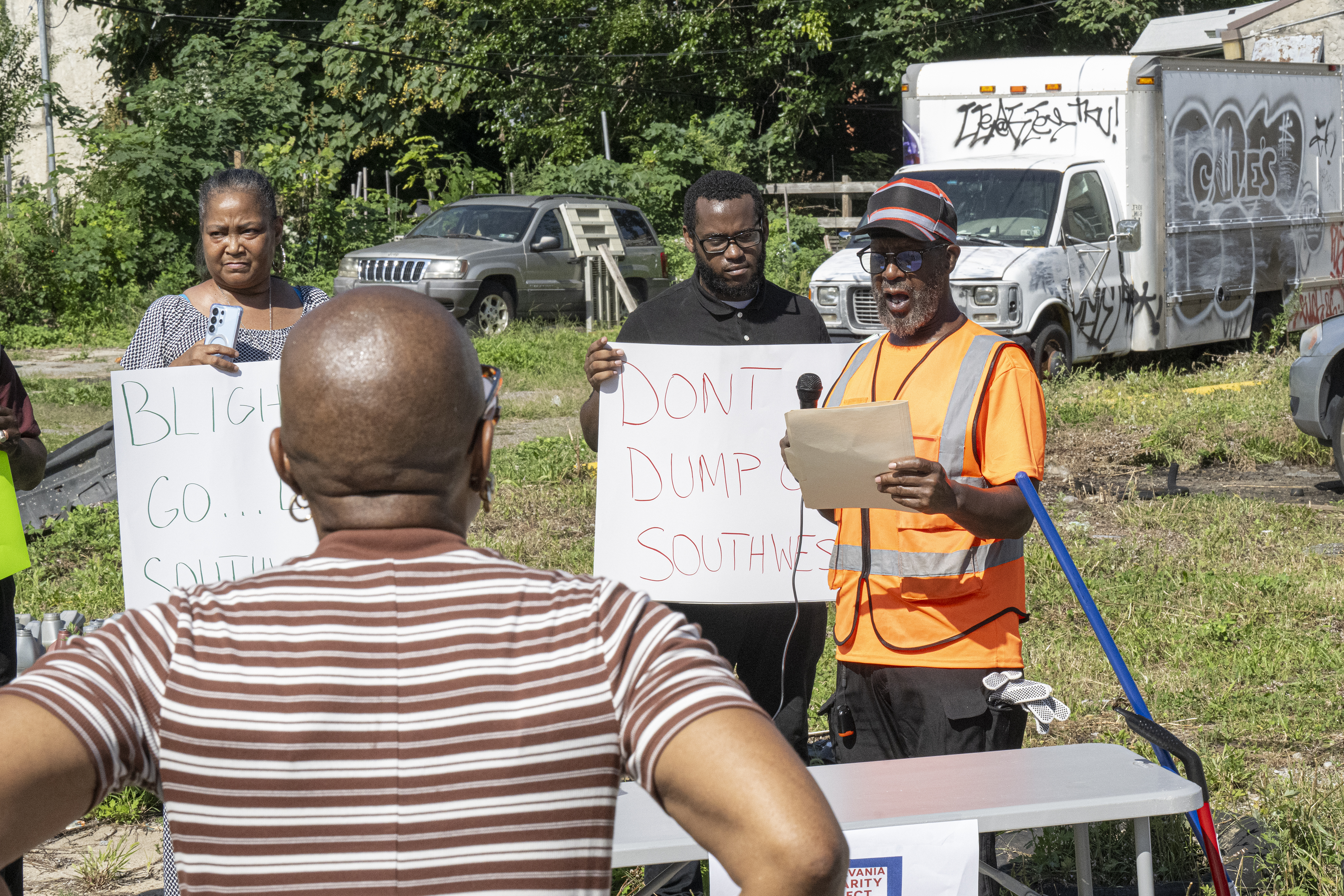
    Coates stood in front of the intersection of Paschall Avenue and South Vogdes Street on Thursday, where a vacant lot held several abandoned and busted cars, oil jugs, overgrown weeds, and other trash. He said the constant signs of blight weigh on everybody, and younger generations see them as an expected part of life in Southwest Philly.

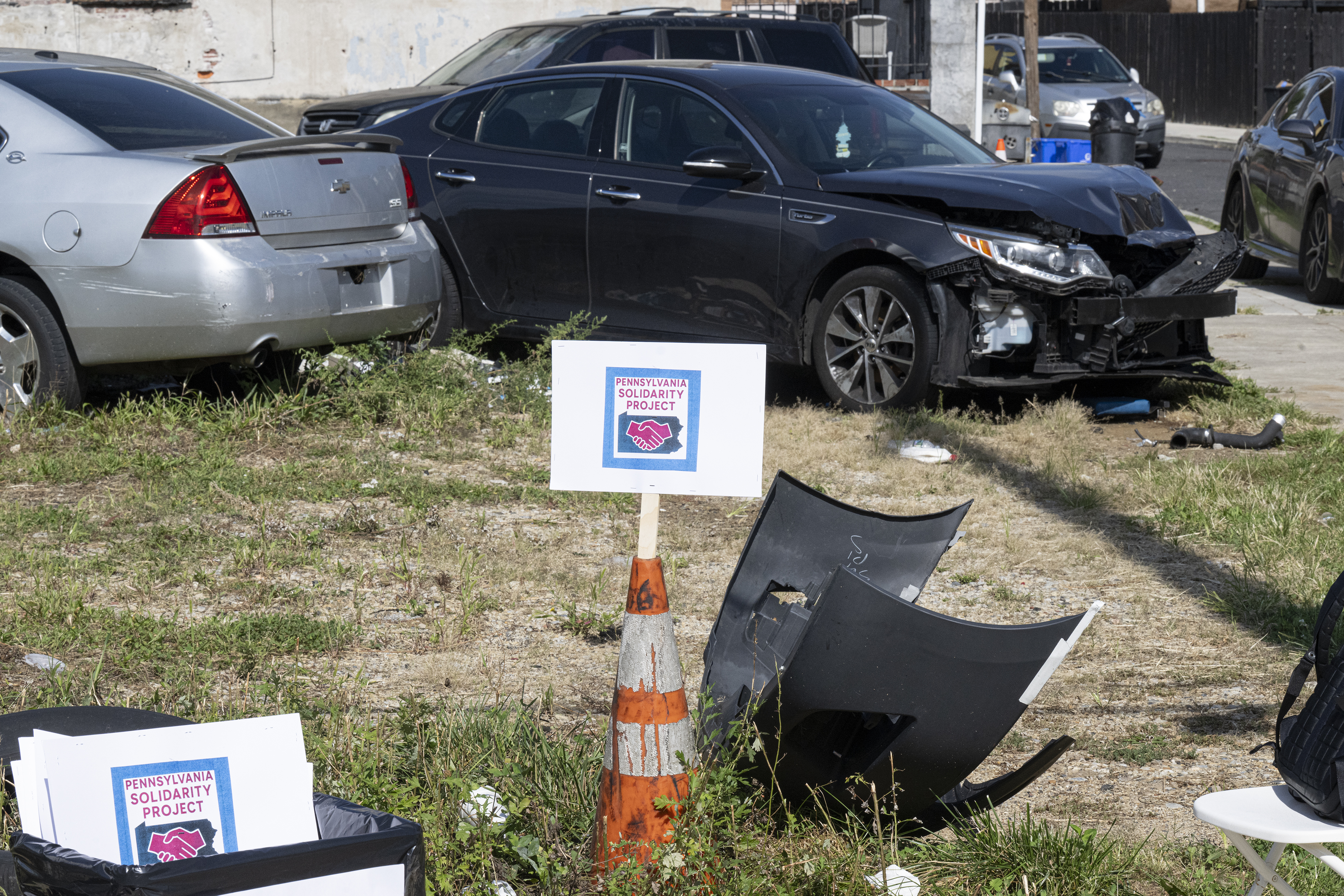
    Abandoned cars are shown in a vacant lot Thursday, Sept. 10, 2026, in Southwest Philadelphia. Residents have been trying to get the city to address longstanding blight in their neighborhood, including abandoned cars and illegal dumping.Jose F. Moreno / Staff Photographer

    “If you’ve grown up and this is all you’ve seen, you think it’s normal,” he said. The PA Solidarity Project aims to break that perception, and said it needs the city’s help.

    “We’re resolute about this. …We want the transformation,” he said.

    ‘A lack of respect’

    The PA Solidarity Project formed last fall, and began its work by surveying Southwest Philly residents to identify common issues they could act upon together. Blight was a common response, with residents highlighting how the neglect impacted their quality of life. Several auto shops tend to be the source of the abandoned cars and illegal dumping, residents said.

    “I’m talking about what our children have to see walking down the street. …They send a message that somehow this neighborhood doesn’t much matter,” said Morgana Jackson, 60, another member.

    “Southwest Philadelphia matters,” she said.

    But residents individually had mixed results submitting requests to 311, and decided the group, which has a small core of about six residents but has gotten about a hundred involved with various activities, needed to act collectively, the organization said.

    “When residents report a problem and nothing happens …I believe that shows a lack of respect,” said Towanda Robinson, 56, a PA Solidarity Project member.

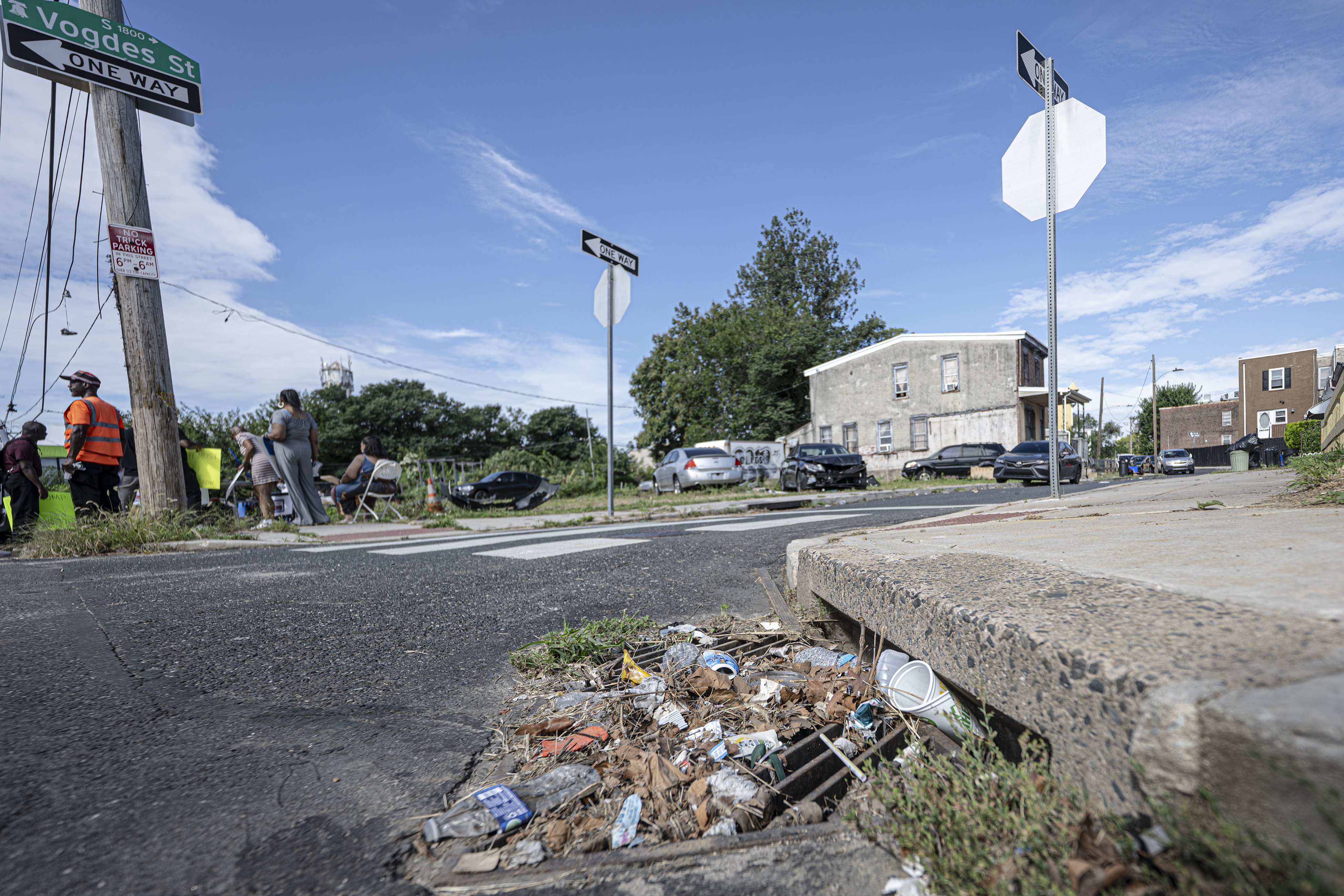
    Trash piles up near a vacant lot Thursday, Sept. 10, 2026, in Southwest Philadelphia. Residents have been trying to get the city to address longstanding blight in their neighborhood, including abandoned cars and illegal dumping.Jose F. Moreno / Staff Photographer

    The residents conducted a sweep of the neighborhood to note the most troublesome areas and examples, and presented their catalog of about 50 blight items to representatives from the city’s Neighborhood Community Action Centers program in early June. The initiative is designed to serve as hyper-local city halls in each City Council district, where residents can file complaints, receive benefits, or resolve problems with a city agency.

    Group members said they believed the city was receptive to their concerns, and were encouraged by the city’s promise at a late-June community meeting to put together an action plan for Southwest Philly.

    But since then, only about half of their cataloged requests have been addressed, and smaller but noticeable signs of neglect remain. While the residents said they appreciated the work the city has done so far, it hasn’t been enough.

    They said they are particularly frustrated since Mayor Cherelle L. Parker has spoken openly about tackling cleanliness and quality of life issues, but the push doesn’t feel like it has reached their corner of the city yet.

    City spokesperson Keisha McCarty said the Neighborhood Community Action Centers program has received reports of 16,578 issues citywide from constituents from October 2024 through August 2026, and it has resolved 94% of them. In the district that includes Southwest Philly, 92% of issues have been resolved, McCarty said.

    One explanation for the delays addressing the PA Solidarity Project’s full catalog is that a handful of the issues require coordination with the school district and with Verizon to address a wire box, according to McCarty.

    Still, “it’s disheartening,” when blight persists, Coates said.

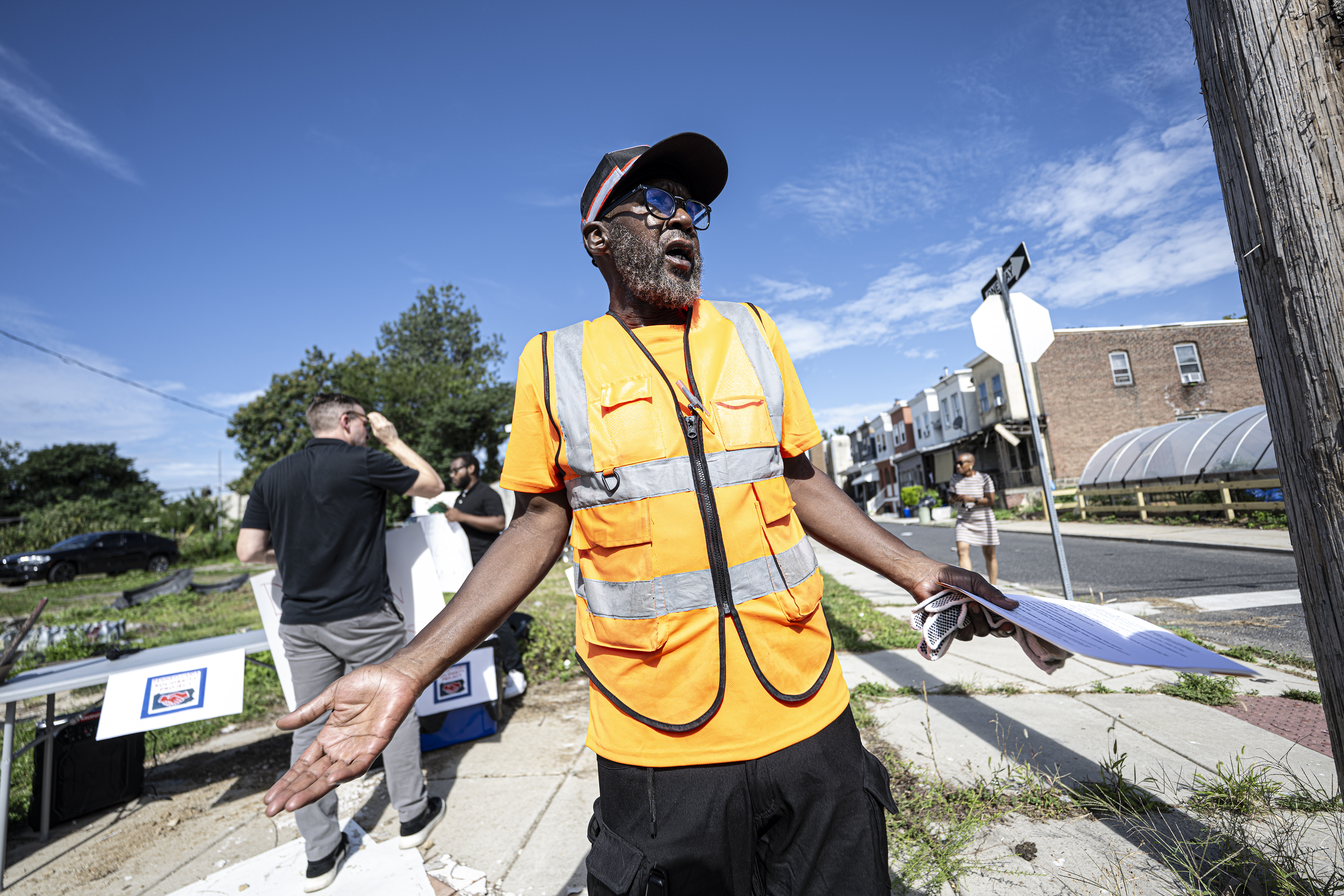
    A Southwest Philadelphia resident and block captain, Andrew Coates, speaks about the need to clean city streets and efforts to get the city to address longstanding blight in the neighborhood, including abandoned cars and illegal dumping, during a news conference near their homes Thursday, Sept. 10, 2026, in Southwest Philadelphia.Jose F. Moreno / Staff Photographer

    On Thursday, the PA Solidarity Project held a small event in front of the Paschall and Vogdes lot to call attention to the longstanding blight, and called the city to act. The residents who spoke were adamant that they and their neighbors care about the area, and are willing to do their part to fix the problems — Coates and other residents take it upon themselves to do street cleanups in the neighborhood from time to time.

    “People do care about this and people want it addressed. But people are limited about what they can do. … They can’t do what the city does,” Coates said.

    Jackson said she and the others point out the better care other neighborhoods receive, not to argue those blocks deserve less but instead to argue every zip code deserves equal attention.

    “Because we love it, we refuse to accept the idea that blight is something we have to live with,” Jackson said.

  • Construction began on the installation of the Rocky statue atop the Art Museum steps

    Construction began on the installation of the Rocky statue atop the Art Museum steps

    Rocky Balboa started his new era at the top of the Art Museum steps Friday.

    City crews officially began the installation of the 8-foot-6-inch Rocky statue, which is slated to be completed over the next two weeks and cost roughly $150,000 to install, according to Creative Philadelphia, the city arts office behind the proposal. The statue should be fully installed by the end of September.

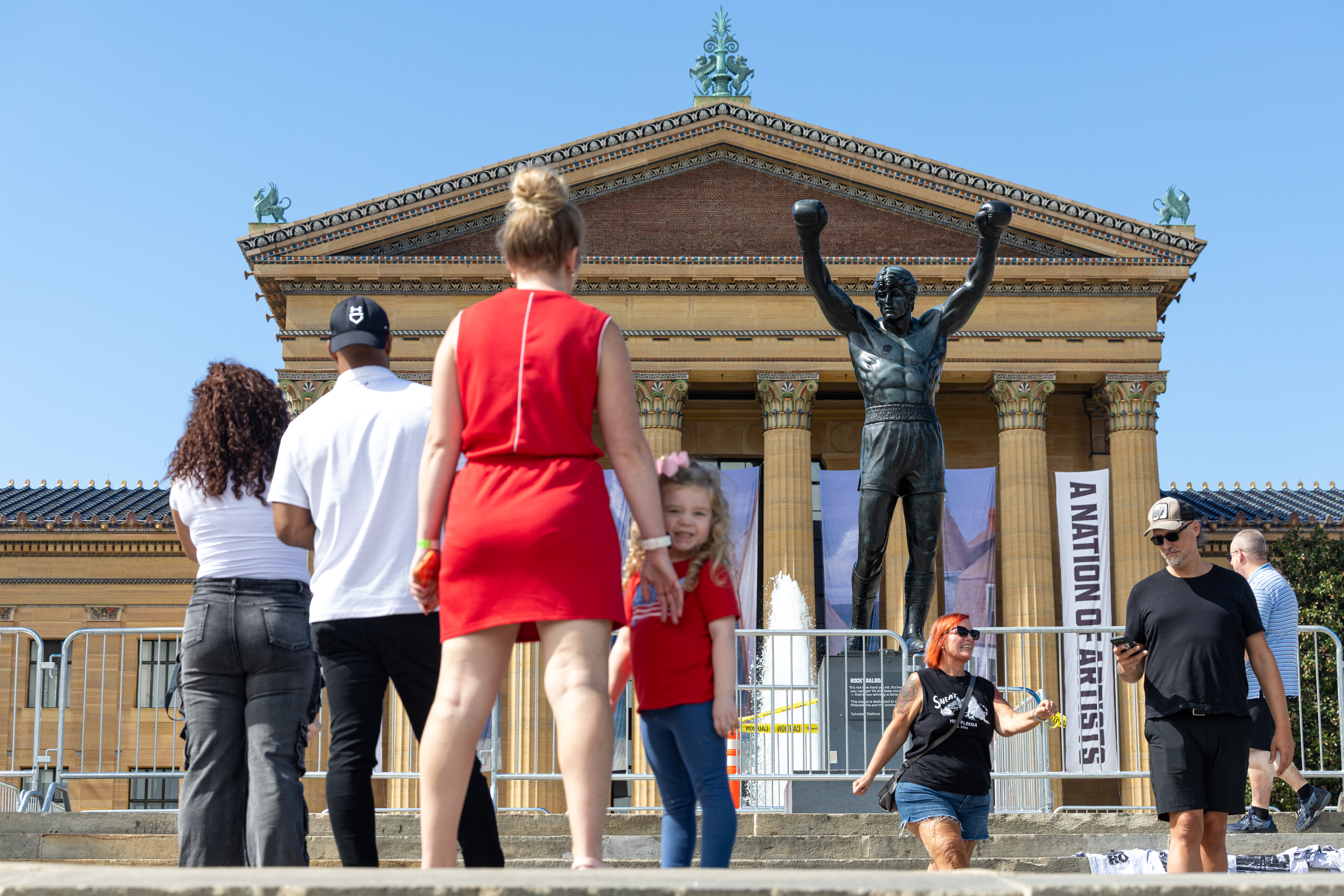
    Access to the fictional Philly boxer will be closed off to the public for the duration of the work. However, the bronze Italian Stallion will still be visible from behind barricades — tourists just won’t be able to touch him.

    Visitors take photos in front of the Rocky statue while a fence surrounds the statue before its installation begins in Philadelphia on Friday. Access to the statue at the top of the Philadelphia Museum of Art steps will be temporarily closed for the duration of the work. Rocky will remain visible throughout construction, but will be secured behind barricades limiting access.Aidan T. Gallo / Staff Photographer

    The statue, commissioned by Sylvester Stallone for Rocky III, in which it also appeared, depicts the famous moment in the first Rocky where Stallone thrusts his fists in the air as he takes in the city skyline after a rigorous training montage. An estimated four million tourists visit the statue each year to reenact the moment that inspired fans globally.

    Since 2006, the statue has sat at the bottom of the Art Museum steps. Before that, Rocky moved between the museum and the South Philly stadium complex at least six different times since the statue was originally revealed in 1981.

    Before the installation began Friday, the original statue had been housed inside the Art Museum for the exhibit “Rising Up: Rocky and the Making of Monuments” since March. The statue that welcomed fans throughout the summer and cursed World Cup teams whose fans put merch on it is from Stallone’s private collection and will be returned.

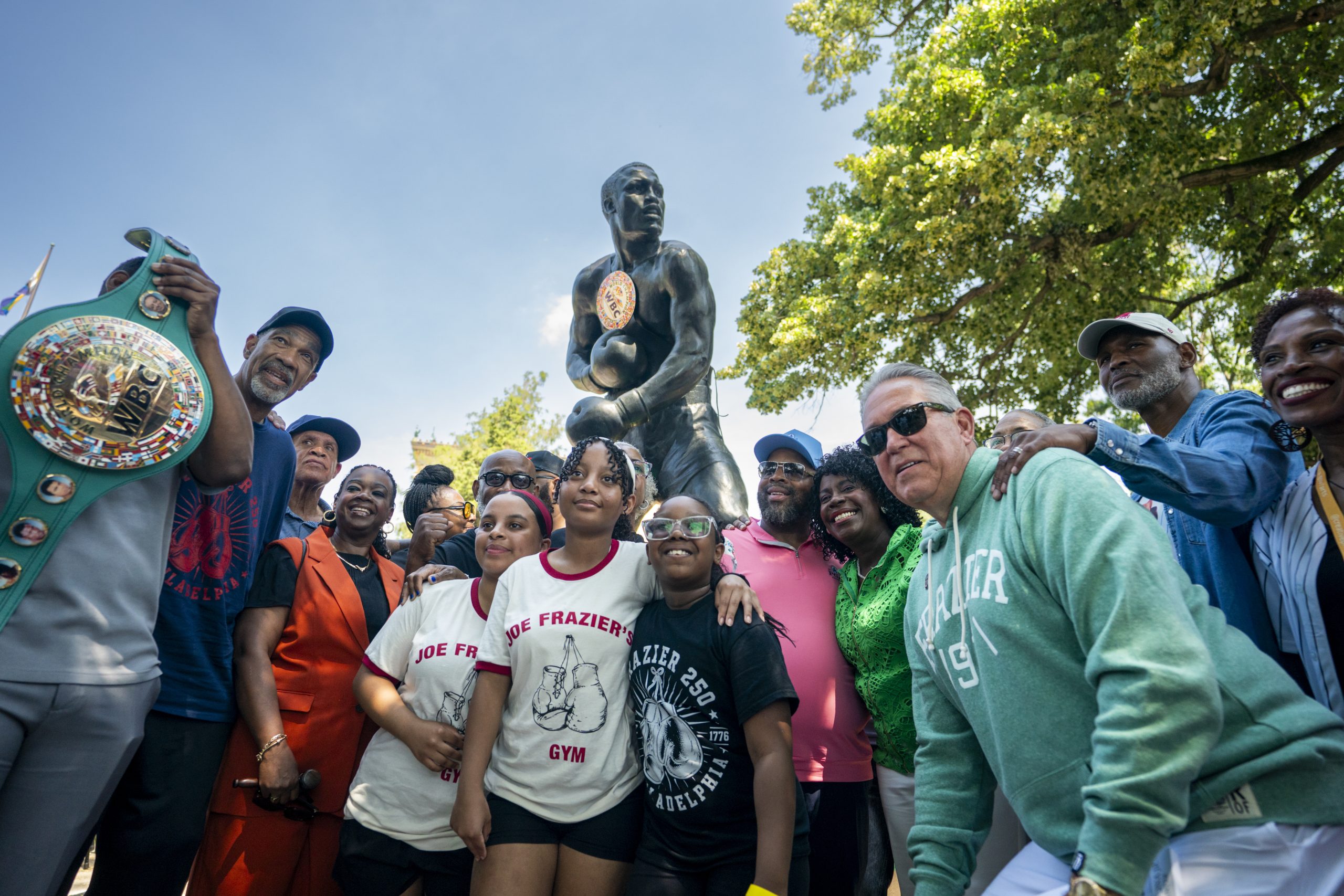
    The original statue will be placed on a pedestal around 14 feet back from the edge of the top step, next to where Rocky shoe prints are embedded into the walkway. At the bottom of the steps, where the bronze Balboa had been since 2006, now sits a statue of real-life Philly boxing legend “Smokin’” Joe Frazier.

    Mayor Cherelle L. Parker, Frazier family members, boxers, and other dignitaries unveil the new home for its statue of heavyweight boxing champion Joe Frazier on June 29. The statue is installed at the base of the steps of the Philadelphia Museum of Art where a statue of fictional boxer Rocky Balboa once stood.Jessica Kourkounis / For The Inquirer

    Placing Rocky at the top of the steps is contentious, though. In an Inquirer survey last fall, 46% of respondents said there shouldn’t be a Rocky statue at the top of the steps, but rather it should stay at the bottom where it had been for more than a decade. One out of five respondents said the city shouldn’t have a Rocky statue at all. Even when the statue was revealed more than 40 years ago, some local officials called it “unnecessarily strident.”

    Still, that doesn’t stop the millions of people who visit the Art Museum steps just for a glimpse of the bronze boxer. Soon, they’ll be doing it again at the same spot as the movie scene.

    Staff writer Nick Vadala contributed to this article.

  • How Minnesota became the front line in the fight over prediction markets

    How Minnesota became the front line in the fight over prediction markets

    Minnesota state Rep. Emma Greenman first became concerned about prediction markets early this year.

    Teachers had complained to Greenman that underage users were downloading apps like Kalshi and Polymarket. She said she had grown worried that the platforms were becoming a back door to sports betting, which the state had never legalized.

    “This wasn’t a problem we had, frankly, before 2025,” said Greenman, 47, a Democrat who also works as a voting rights lawyer. “We see it as both a public safety and public health issue.”

    So this spring, she worked with colleagues to introduce and pass a bipartisan bill to ban prediction markets, making Minnesota the first state to do so. A federal regulator and the companies immediately sued — and a federal judged paused the law’s enforcement, for now.

    The legal battle has put Minnesota on the front lines of an escalating fight between states and the federal government over who regulates prediction markets. The closely watched case is expected to help set a precedent on whether states can pass laws banning the prediction markets — or whether federal regulators have the ability to preempt them.

    “This is a test case of how much authority does the state have to step in,” said Richard Painter, a professor of securities law and legal ethics at the University of Minnesota Law School.

    Kalshi, Polymarket, and others have exploded in popularity over the last year, becoming part of the zeitgeist by allowing users to wager on everything from the timing of the Federal Reserve’s next rate increase to who will win the Super Bowl.

    But the platforms have caused growing alarm among states, about 20 of which have tried to enforce existing laws on sports betting and gambling — or, in Minnesota’s case, pass a new one.

    The companies and the Commodity Futures Trading Commission, the U.S. agency that oversees prediction markets, have fought back fiercely. With the backing of President Donald Trump, they have filed lawsuits arguing that the companies are regulated only at the federal level.

    The states have won some victories in recent weeks, with Washington and Nevada temporarily halting Kalshi, the largest platform in the United States, from operating in their states. And a federal appeals court ruled late last month that states had the ability to regulate prediction markets.

    In an August statement, Michael S. Selig, chair of the Commodity Futures Trading Commission, said Congress did not intend for prediction markets “to be regulated under a patchwork of state gaming laws.”

    “These are financial exchanges that offer financial instruments and operate across state lines,” he added.

    Rick Heaslip, Kalshi’s general counsel, said Minnesota lawmakers had rushed “to pass an unprecedented ban of a product they didn’t understand.”

    Minnesota allows some casinos and the lottery. But state legislative efforts to introduce the possibility of legalizing sports betting have hit roadblocks for at least a decade.

    Many lawmakers, including Greenman, took notice as Kalshi and Polymarket surged in popularity.

    In mid-March, she and others introduced bipartisan companion bills to outlaw betting on things like sports outcomes, the Oscars, assassinations, and trial verdicts. A few categories, like weather, were eventually carved out because of their potential to act as legitimate financial tools for farmers looking to hedge their risk.

    “What we really focused in on are things that look and act like gambling,” said state Sen. Jordan Rasmusson, a Republican co-author of the companion legislation in the Senate.

    As they pushed to pass the bills, Greenman and Rasmusson said, they and others became increasingly concerned. Kalshi fined and suspended three political candidates, including one from Minnesota, in April for betting on their own congressional races.

    “There’s broad consensus here that whether Minnesota does or does not expand sports betting — how we do it, if we did it — should be our decision,” Greenman said in a committee meeting that month.

    At the end of April, she helped attach the legislation to an omnibus public safety bill. That passed in May, and Gov. Tim Walz, a Democrat, signed it into law.

    Many in Minnesota are supportive of the pushback.

    Devon Bowker, a high school science teacher in St. Cloud, said he was alarmed at how openly his students discussed how they bet. It has become a way to connect and socialize, he said.

    He tried to remind his students that betting affects their brains, creating dopamine hits faster than they can assess the risk.

    “Do you want to be in control of your own destiny or leave it to chance on the app?” Bowker, 34, asked his students.

    Taylor Jensen, a software engineer who lives in Lakeville, said he considered the prediction markets “very speculative investing” with high risk and high volatility. They are also fairer and less predatory than traditional gambling, he contended.

    Jensen, 35, said he had first downloaded Kalshi in January while ice fishing with friends. They bet on a Chicago Bears football game, he added, but he decided to create a program to place bets on the weather. As of September, he was up just shy of $9,000 in earnings, he said.

    His wagering could continue under the new law, thanks to the weather carve-out. But he’s not a farmer hedging risks.

    Weather is “just another goofy thing to trade,” Jensen said.

    One day after Walz signed the law, the Commodity Futures Trading Commission filed a federal lawsuit, which Kalshi and Polymarket soon joined. “Minnesota has no authority to regulate — much less criminalize — event contracts listed on CFTC-regulated markets,” lawyers said in the filing.

    Minnesota Attorney General Keith Ellison was quick to counter.

    “Minnesota banned prediction markets because of how predatory, addictive, and harmful they can be,” Ellison said in a statement at the time. The platforms facilitate “gambling, plain and simple.”

    At the first hearing on July 2 in U.S. District Court in Minneapolis, Judge Kate M. Menendez heard arguments on whether she should issue an injunction.

    “Who is going to take the ‘educating the middle-aged judge’ set of questions?” Menendez, 55, asked at the start.

    Federal regulation preempts any state laws, argued Henry Dickman, a lawyer for the Commodity Futures Trading Commission. “We see this as a direct invasion of our jurisdiction,” he said.

    A lawyer for the state, Lindsey Middlecamp, countered that Kalshi and Polymarket were not “wrapped in federal immunity” as they claimed to be. She questioned the legitimacy of including wagers about Taylor Swift’s wedding choices under the commission’s federal mandate to regulate financial tools.

    Menendez halted the law’s enforcement until the conclusion of the court battle, which could take months. Still, she conceded that trading on the winner of the reality TV show Love Island, for example, would be hard to classify as a federally regulated financial tool.

    “One is hard-pressed to imagine the financial, economic, or commercial consequence of the occurrence or outcome of these events,” the judge wrote.

    Ellison said in a statement at the time that he acknowledged the complexity of the case. “We look forward to continuing to litigate this case and defend the state’s duly passed law,” he added. A pretrial conference is set for October.

    Greenman said she was hopeful the state would still prevail, in part because the bill was drafted carefully with a legal challenge in mind.

    “I feel confident in the arguments we’re making,” she added.

    This article originally appeared in The New York Times.
  • For the 25th time, New York marks a shattering loss

    For the 25th time, New York marks a shattering loss

    Gordon M. Aamoth Jr.

    Edelmiro Abad.

    Marie Rose Abad.

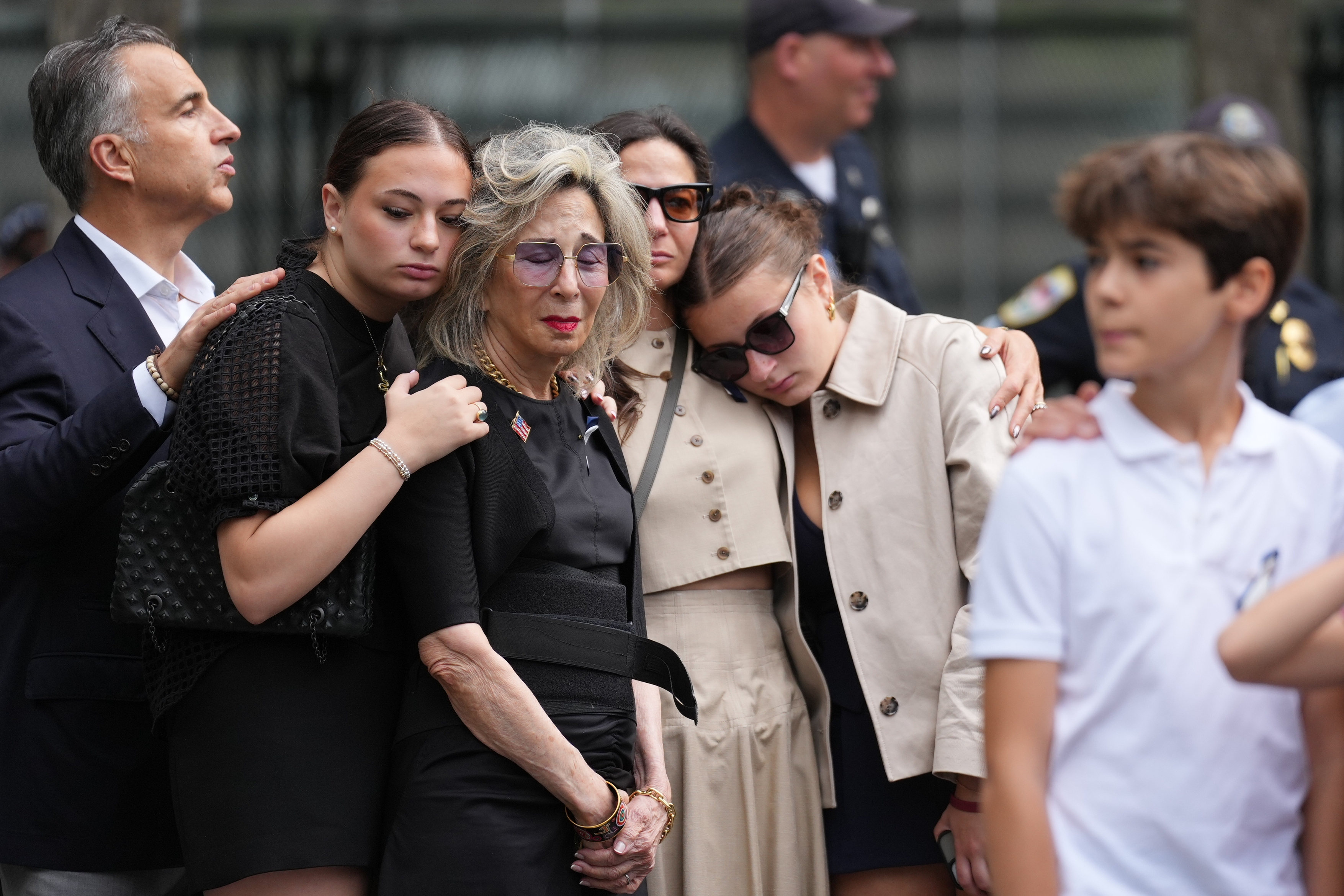
    A quarter-century after the terrorist attacks that shook New York City and the world — an ashen morning followed by years of grief and repair, rebuilding and war — dignitaries and mourners gathered once again in Lower Manhattan to read aloud the names of those killed when hijackers crashed airplanes into the World Trade Center and sent the twin towers crumbling to the ground.

    Milton G. Bustillo. Thomas M. Butler. Patrick Dennis Byrne.

    The ceremony on Friday took place beneath a canopy of swamp white oak trees between the two memorial pools where the towers once stood. The pools were designed to appear bottomless, and their cascading waters lent a whispering backdrop to the morning. Relatives held aloft photos of the dead, forever young, as children on the podium spoke directly to grandparents, aunts, and uncles they had never met.

    “My dad always talks about how wonderful you were,” one girl said after naming a lost relative. She is among the 100 million Americans born since that day.

    Some people used their turns at the microphone to criticize the federal government for continuing to work with Saudi Arabia in the years since the Sept. 11 attacks. Family members of those who died have sought to hold the kingdom responsible in federal court, claiming that its government provided support for the hijackers.

    Among them was Terry Strada, an official with 9/11 Families United, whose husband was killed in the attack. Her organization has tried for years to pursue legal action against the Saudi government. The kingdom has denied involvement.

    “It has been one betrayal after another,” Strada said from the podium. She urged the assembled elected officials to “stand with survivors, stand with Americans.”

    Later, a nephew of Lisa Marie Terry, who died in the attack, accused “the deep state” of hiding the truth. He called on President Donald Trump to “release the unredacted files that implicate Saudi Arabia, while what’s left of the victims’ families are still alive to see it.”

    Four living former presidents, from Bill Clinton to Joseph R. Biden Jr., stood silently nearby. Zohran Mamdani, the city’s first Muslim mayor, was also in attendance, despite a petition signed by thousands of people, including victims’ family members, urging him to stay away. He was joined by former Mayors Bill de Blasio, Michael Bloomberg, and — awkwardly — Rudolph Giuliani, who was in office on Sept. 11 and earlier this week said that Mamdani’s presence at the ceremony “offends me.”

    Mamdani nonetheless approached Giuliani at the ceremony. The two men shook hands, and Giuliani’s position seemed to have softened. Cameras captured him apparently telling Mamdani: “I’ll pray for you. It’s a really hard job.”

    Gov. Kathy Hochul was there, as was Gov. Mikie Sherrill of New Jersey and former Gov. George E. Pataki of New York, who had also called on Mamdani to skip the event.

    Vice President JD Vance stood in for Trump, who instead attended a ceremony at the Pentagon. In his remarks, the president talked about how Sept. 11 had changed America.

    “Twenty-five years after the attacks, we know the world will never return to the way it was at that dawn on that beautiful, peaceful Tuesday morning, 2001,” Trump said, “before the towers fell, before the Pentagon was hit, before the specter of evil, and this horrible, horrible evil came crashing into our lives.”

    In New York, as is custom, there were no speeches from elected officials, putting all the focus on the families. The names of the victims read on Friday included the six killed in the 1993 World Trade Center bombing.

    Uniformed firefighters present and past — many older now, grayer — gathered at the ceremony, at churches and, later, in the city’s barrooms, to raise glasses to their 343 fallen brothers.

    The effects of Sept. 11 played out for months, years. The Fire Department would go on to be further gutted by mass retirements of high-ranking officers. The Police Department lost 23 officers that day, and was reshaped by the introduction of new tactics, units, and equipment to fight terrorism.

    The day is a reminder of how the attacks’ long shadow has reached into many corners of life in the U.S. and beyond.

    The U.S.-led global war on terrorism included invasions of Iraq and Afghanistan — the latter Washington’s longest war — and detentions and harsh interrogation of terror suspects in an international network of secret CIA prisons. The U.S. found and killed al-Qaeda leader Osama bin Laden in Pakistan in 2011, but the accused 9/11 mastermind Khalid Sheikh Mohammed still awaits a trial 23 years after his capture.

    The attacks changed U.S. air travel, led to the creation of the Department of Homeland Security, prompted new federal surveillance and intelligence-gathering powers and banking regulations and generated ongoing debate over the balance between security and freedom.

    Sept. 11 engendered a culture of individual vigilance summed up by the slogan, ” If you see something, say something,” while a wave of patriotism propelled some Americans to join the military, fire departments and police forces.

    On Friday, there were the traditional six moments of silence, marked with the tolling of a bell: one for each of the towers struck, one for each building’s collapse, and two for the plane crashes at the Pentagon and in Shanksville, Pa.

    A seventh moment of silence was added this year to commemorate those who had died of Sept. 11-related illnesses. Mamdani’s administration this week released more than 170,000 pages of previously withheld city records about the air quality around ground zero after the attacks. The documents seem to suggest that New Yorkers were encouraged to return to the area before it was safe to do so.

    The mournful wail of bagpipes — a fixture at hundreds of Sept. 11 funerals — rang out at the start of the memorial. Elsewhere in the plaza, Yo-Yo Ma played his cello softly behind the reading of the names.

    Information from the Associated Press was used in this article.

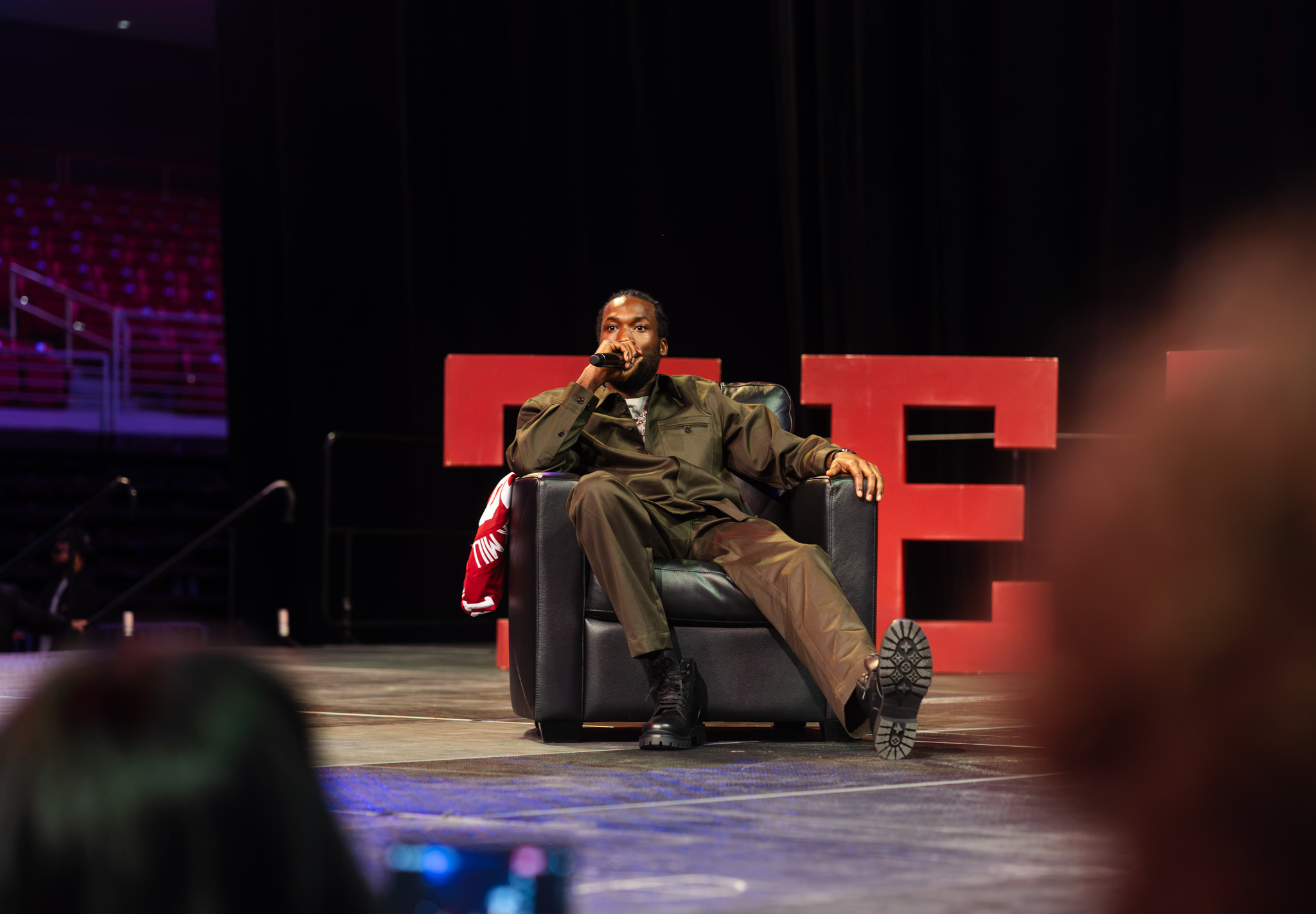
  • Meek Mill’s Dream Chasers Summit returns to Temple University after 13 years

    Meek Mill’s Dream Chasers Summit returns to Temple University after 13 years

    Hundreds of students darted from School District of Philadelphia buses and climbed Temple University’s Liacouras Center steps on Thursday, anticipating the arrival of multiplatinum artist Meek Mill.

    The North Philly native, who grew up just blocks away from the venue on North 18th and Berks Streets, was equally excited to hit the stage. But there was no concert or setlist on the agenda.

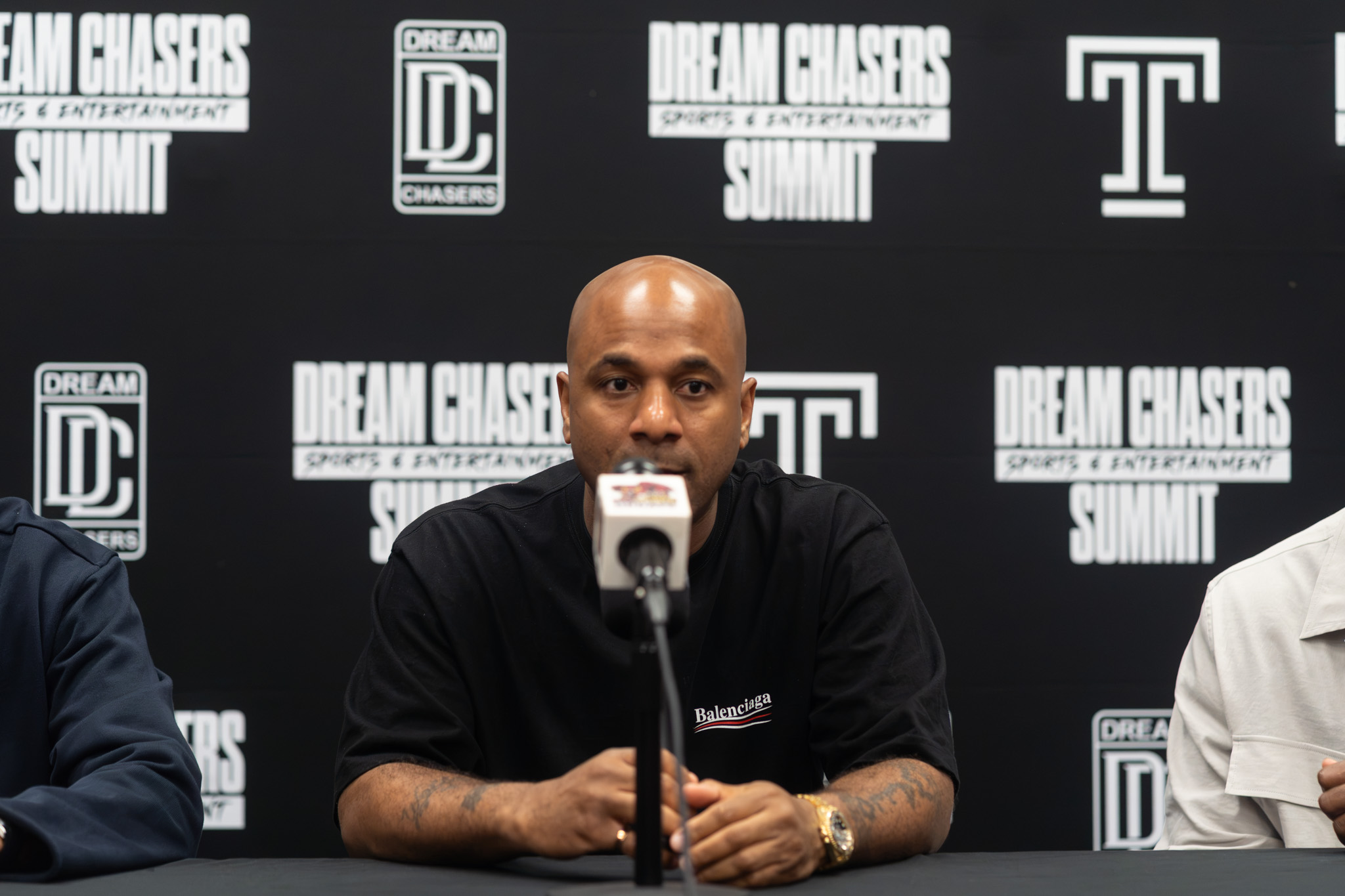
    Instead, Meek welcomed high school seniors and Temple students to the Dream Chasers Sports & Entertainment Summit, a daylong event of moderated discussions with industry leaders across sports, business, and entertainment.

    North Philly native and rap star Meek Mill pictured at the Dream Chasers Sports & Entertainment Summit at Temple University’s Liacouras Center on Sept. 10, 2026.Courtesy of Earl Hopkins

    Thursday marked the second iteration of the summit; the first was at Temple in 2013. “It feels good to be back in the city,” Meek said in the media room, hours before his keynote address.

    While he said this could’ve easily been a rap show, Meek was determined to put on an event that combined youth engagement and education.

    “I was looking at the events and things that were going on, and I [didn’t] see a lot of these types of events taking place,” he said. “I wanted to do this just to add another type of motivation to the city. We need more inspiration here in Philadelphia, and I thought this would be the right thing to do.”

    Speakers included Temple athletics director Arthur Johnson, Live Nation Urban president Shawn Gee, D.C. United president of business operations Danita Johnson, SDP superintendent Tony B. Watlington, Million Dollaz Worth of Game podcast host Wallo267, and others through the day.

    Attendees ranged from teens to Temple students and administrators, who remained engaged from the event’s opening until the ending “Dreams and Nightmares” session featuring Meek, Wallo267, and Larry Miller, chairman of the Jordan Brand Advisory Board.

    The themes of their discussions were based on popular Meek records such as “All Eyes on You,” “Dreams Worth More Than Money,” “Respect the Game,” and others. For second-year Temple student Amira Haynesworth, the summit offered more than just musical references.

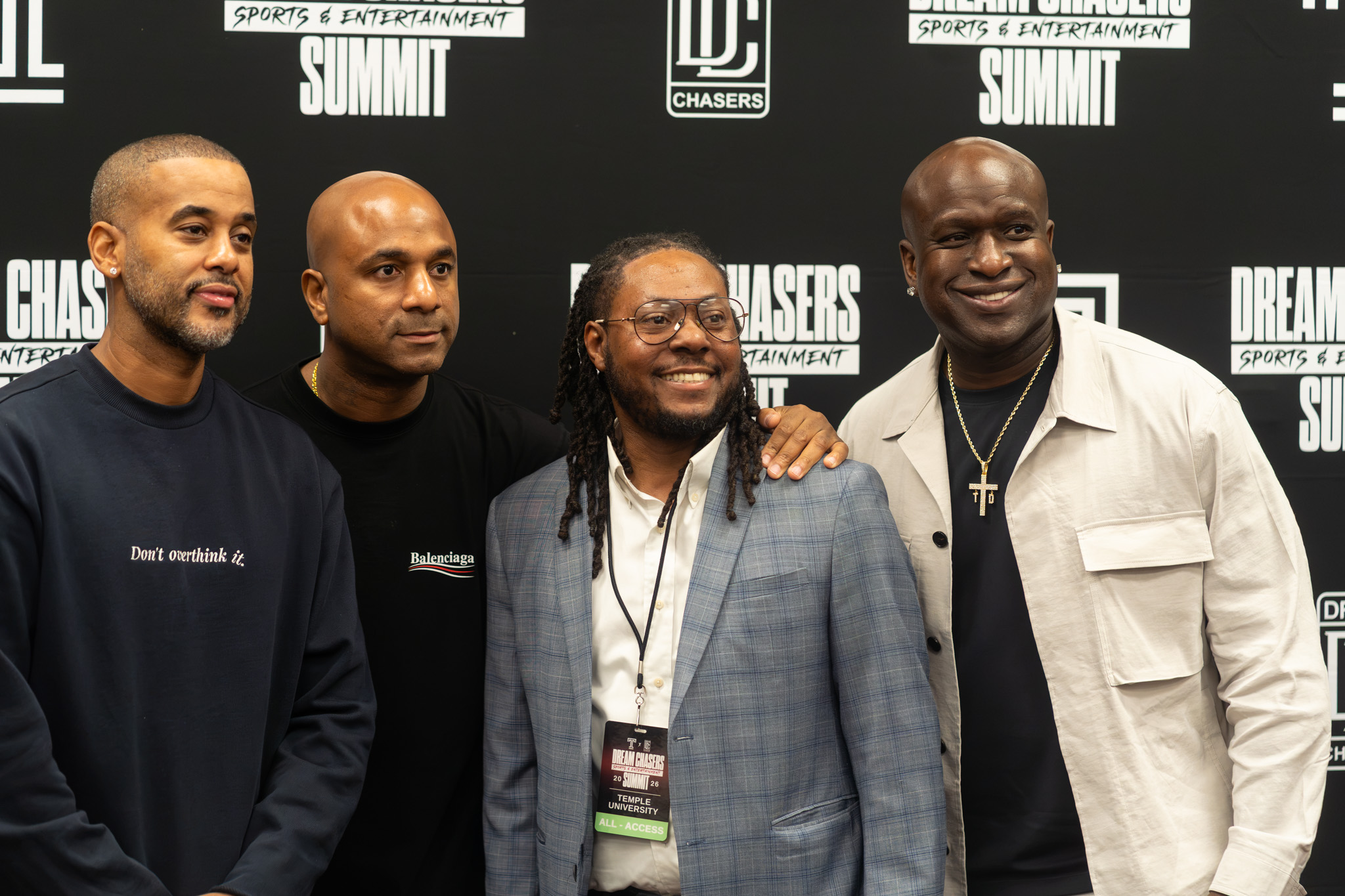
    Sports agents David Mulugheta and Tory Dandy are pictured with motivational speaker and podcaster Wallo267 at the Dream Chasers Sports & Entertainment Summit on Sept. 10, 2026.Courtesy of Earl Hopkins

    Haynesworth, who grew up in North Philly, said hearing Meek, Wallo, and other speakers retrace the obstacles they faced in their journeys gave her and other attendees a sense of self-empowerment.

    “They came from such hardship and still made a name for themselves,” Haynesworth, 19, said. “Being young, people tend to doubt themselves, and many feel like they’re not going to make it somewhere high in life. But they didn’t let that define them.”

    Meek said recruiting a mix of sports leaders, music executives, justice reform advocates, and athletic department heads was paramount, given how transformative this time period is in their young lives.

    “[The summit] is for everybody, but these people are already in that direction, so that was important,” he said. “When I was 17 and 18 years old, those were the most important years of my life when it came to decision-making. I just thought that we have to make sure we touch on the kids first or the younger adults.”

    That was the mission that inspired Meek to develop the summit, and inspired Temple leaders to partner for a second iteration.

    Temple athletics director Arthur Johnson, who helped steer the summit’s return to Temple, said Meek’s mission aligns with the university’s goals for student success and place-based impact for those who are integrated in both the Temple and North Philly community.

    “We’re the wind underneath the wings of all of our students who come and chase their dreams and their goals,” Johnson said. “Helping them understand they can be accountants, attorneys, a compliance person, CFOs, and explore many different careers and opportunities is important.”

    Motivational speaker and podcaster Wallo267 at the Dream Chasers Sports & Entertainment Summit on Sept. 10, 2026.Courtesy of Earl Hopkins

    City Council President Kenyatta Johnson, who greeted event speakers, attendees, and media members throughout the summit, said Meek’s decision to bring the event to North Philly speaks to his commitment to change young people’s lives in his community.

    “It shows the resiliency of Meek Mill, in terms of who he is as a person, the things that he has overcome, but most importantly, his heart and his passion and commitment to giving back,” he said.

    Arthur Johnson said the goal is to bring the summit back to Temple next year and to attract a wider swath of students whose upbringings and career ambitions mirror those shared by Meek and the other speakers he recruits. “Next year, I need double,” he said. “But we’ll plan for it. We’ll have a whole strategy around how do we do that.”

    Sports agents David Mulugheta (far left) and Tory Dandy (far right) are pictured with motivational speaker and podcaster Wallo267 (second from left) and Philadelphia City Councilmember Jeffery Young Jr. at the Dream Chasers Sports & Entertainment Summit on Sept. 10, 2026.Courtesy of Earl Hopkins

    While Meek intends for North Philly to remain the home base for future summits, he wants to expand its attendance and impact, as long as students leave with an endless sense of possibility.

    “My whole brand is Dream Chasers, like chasing a dream to live a better life,” he said. “If you could take something from here that could get you to the next level, or get your ideas sparked in your mind, that’s good enough for me.”

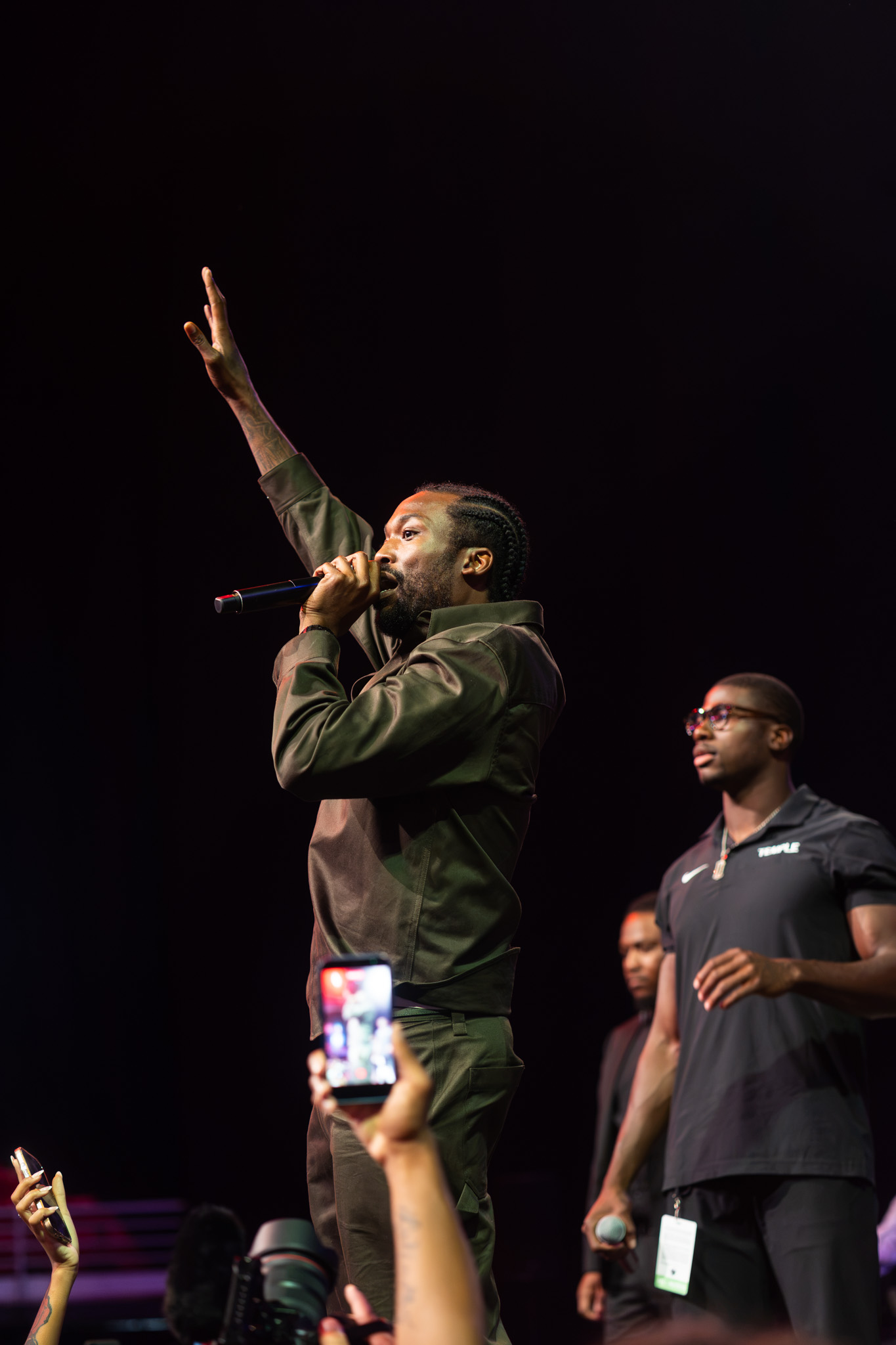
    While a concert wasn’t advertised for the day, Meek decided to surprise the crowd with a brief performance. Students descended onto the arena floor, pulling out their phone cameras and rapping the lyrics to Meek’s “Dreams and Nightmares.”

    “If you want it, you gotta see it with a clear-eyed view,” students yelled at half-court, bringing Meek’s message full-circle.

    North Philly native and rap star Meek Mill pictured at the Dream Chasers Sports & Entertainment Summit at Temple University’s Liacouras Center on Sept. 10, 2026.Courtesy of Earl Hopkins
  • Eagles edge rusher Jonathan Greenard ruled out for Sunday; rookie tight end Eli Stowers listed as questionable

    Eagles edge rusher Jonathan Greenard ruled out for Sunday; rookie tight end Eli Stowers listed as questionable

    The Eagles are heading into Sunday’s season opener against the Washington Commanders without their top outside linebacker.

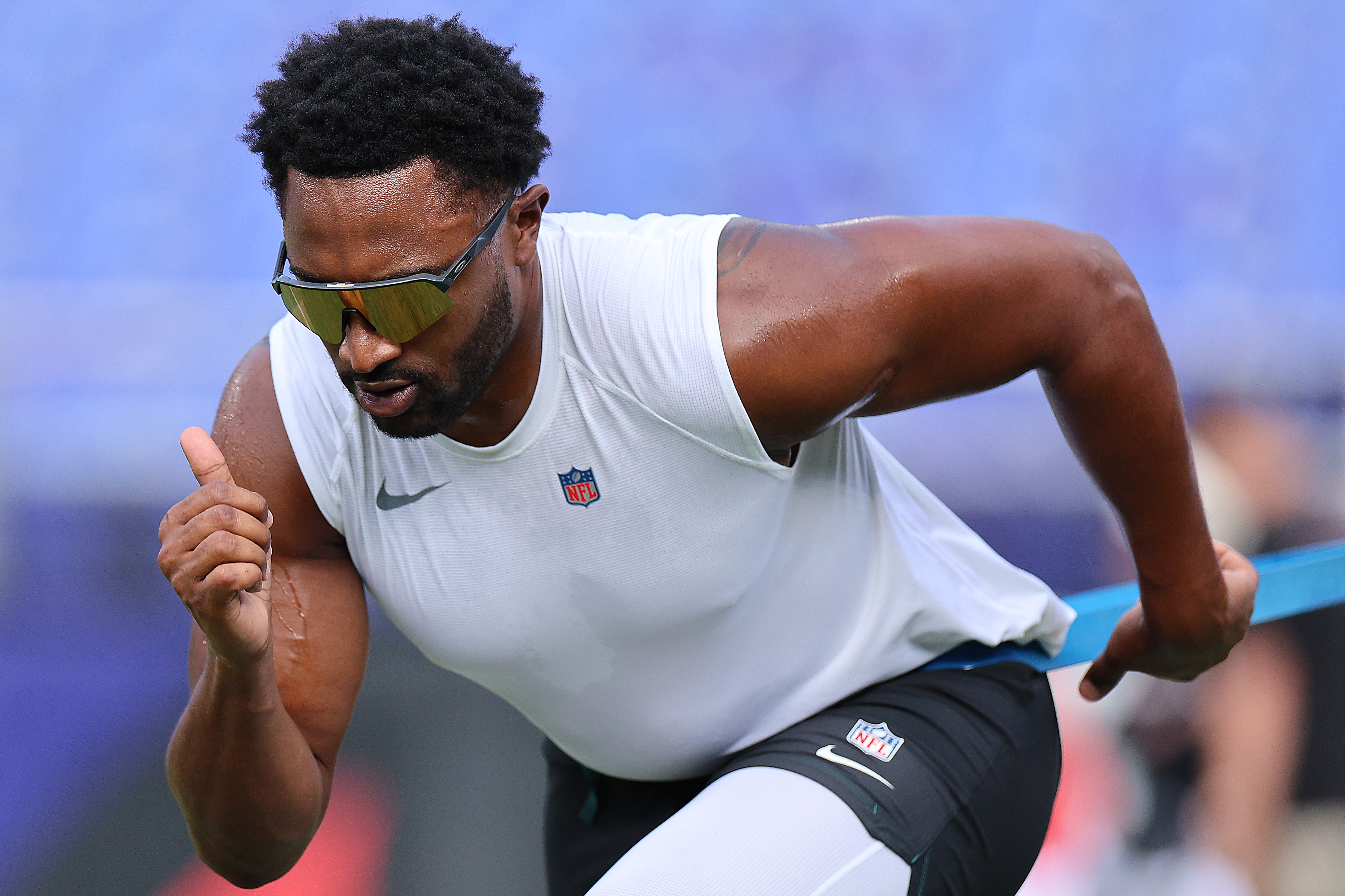
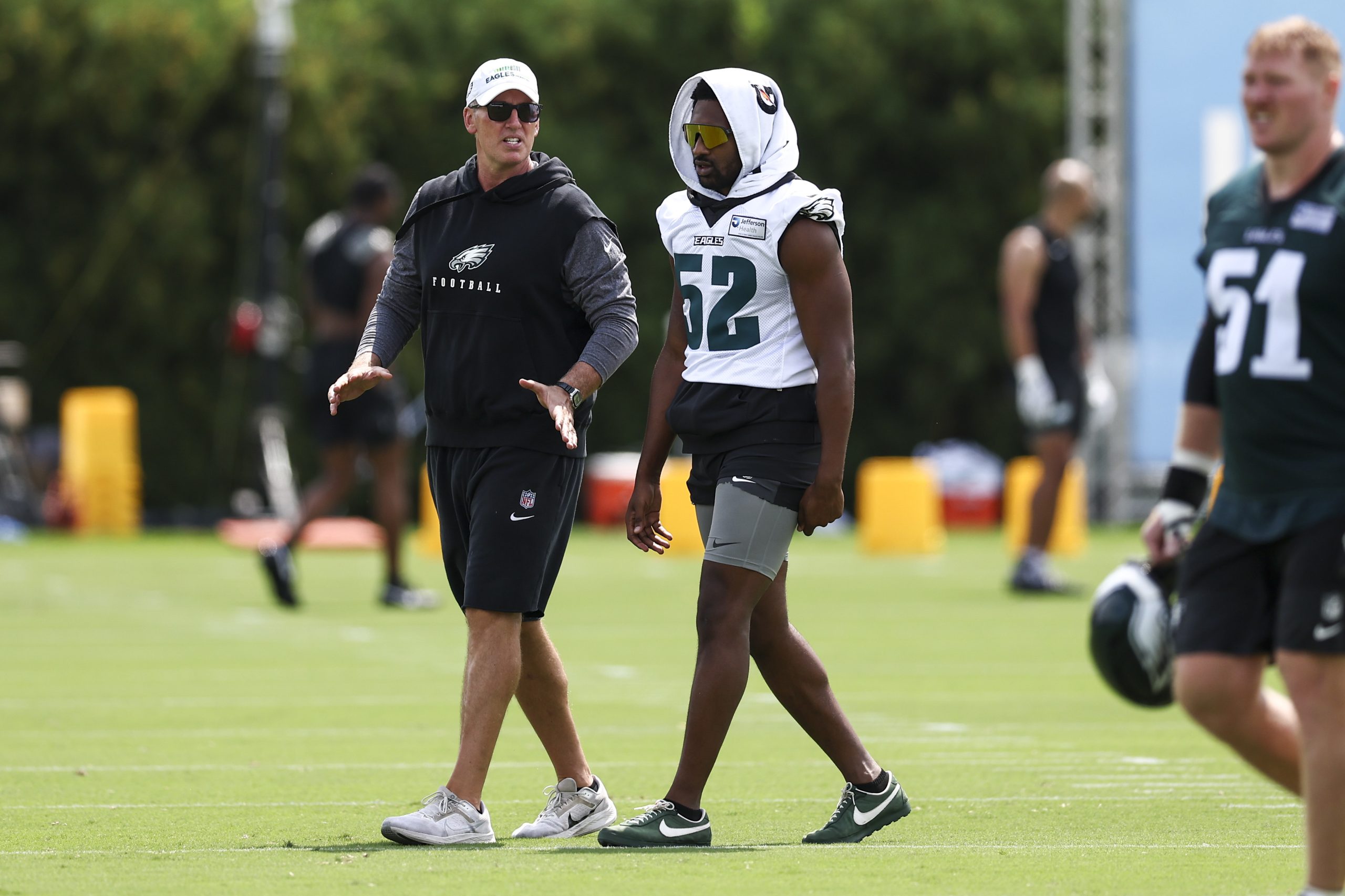
    Jonathan Greenard, the 29-year-old edge rusher, was ruled out on Friday as he works his way back from a pectoral injury that sidelined him throughout training camp. He was a limited participant in practice all week.

    Eli Stowers, the rookie tight end out of Vanderbilt, is listed as questionable to play with a hamstring injury. However, he said in the locker room on Friday that “the plan” for him is to play.

    Stowers was also a limited participant in practice this week.

    The Eagles acquired Greenard this offseason from the Minnesota Vikings and signed him to a contract extension, adding pass-rush prowess to the defense after Jaelan Phillips departed in free agency. Greenard said on Thursday that he feels good, but he wasn’t certain about his timeline to return to game action.

    Jonathan Greenard (52) missed training camp with a pectoral injury but had returned to practice earlier this week. Monica Herndon / Staff Photographer

    “I feel I’m in a good spot,” Greenard said. “Just know that. I know that I’m working every day to continue to try to get this thing stronger. We’re close, I know that.”

    He confirmed that he sustained the pectoral injury prior to camp while lifting. Greenard was sidelined during the offseason program, too, as he recovered from the shoulder surgery that prematurely ended his 2025 season with the Vikings.

    Defensive coordinator Vic Fangio acknowledged on Thursday that the Eagles have to be “careful” with Greenard given his lack of practice time, even when he is healthy enough to play.

    “It’s going to be a while before he’s game ready for a full load,” Fangio said. “It’ll be a pretty good rotation.”

    Stowers was added to the injury report the Monday after the Eagles’ second preseason contest against the New England Patriots. He did not practice during the final week of camp, nor did he play in the last preseason game against the Cincinnati Bengals.

    Eli Stowers dealt with injuries during his first NFL training camp. Yong Kim / Staff Photographer

    The second-round pick had a relatively quiet performance this summer, both in training camp and in the preseason. In his pair of preseason games, Stowers played 39 offensive snaps. His only production came in the first game against the Baltimore Ravens, when he had three receptions for 12 yards.

    Stowers also had 20 special-teams snaps through two games, finishing with one tackle.

    Despite his slow start, Ryan Mahaffey, the Eagles tight ends coach, spoke highly of his development since the start of training camp earlier this month.

    “I think for any rookie, as you’re coming into the NFL, it’s an adjustment, regardless of the position you play,” Mahaffey said. “And for him, I think he’s been very diligent about his preparation each and every single day. He’s growing each and every single rep that he has. So I’m excited about him, and I’m excited about the trajectory he’s on. I think he’s going to continue to get better just as he gets more time on task.”

  • More than 500,000 Russian troops killed in Ukraine, UK defense chief says

    More than 500,000 Russian troops killed in Ukraine, UK defense chief says

    KYIV, Ukraine — More than half a million Russian troops have been killed in Ukraine since the start of Moscow’s full-scale invasion in February 2022, a senior British defense official said Friday.

    The dead are part of 1.5 million Russian casualties in Ukraine, Air Chief Marshall Sir Richard Knighton, chief of the U.K’s Defense Staff, said.

    The U.K. figures roughly coincide with those published by the Ukrainian military. There was no immediate comment from Russian officials.

    Moscow’s bigger army is struggling to make headway on the battlefield. Western officials and analysts say the Russian rate of advance has slowed significantly this year.

    Russia’s armed forces have also lost an “enormous” amount of military materiel, Knighton told reporters. That includes more than 10,000 armored and protected vehicles, close to 3,000 air defense and artillery systems, and over 370 aircraft and helicopters, Knighton said.

    He didn’t say what Ukraine’s losses were.

    Neither Moscow nor Kyiv give regular updates on their battlefield losses.

    Russian drones target Kyiv gas stations

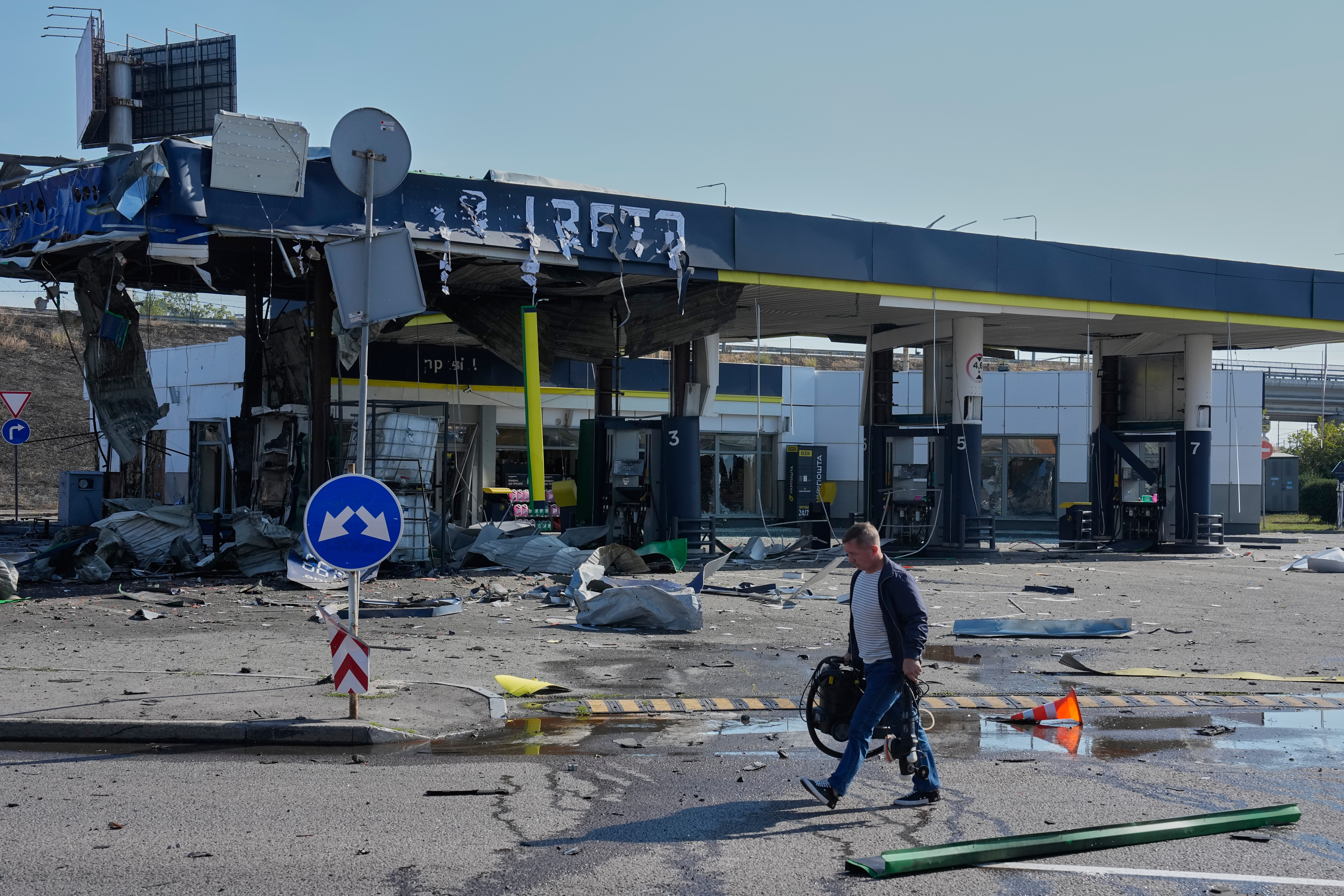
    Russian drones targeted roadside gas stations in Kyiv for a second straight day Friday, as Moscow broadened its air war in what Ukrainian officials say is an effort to rattle civilians.

    The attacks struck two Ukrnafta gas stations, killing two people and wounding six at one of them, the prosecutor’s office said.

    Russian strikes on urban gas stations have intensified in recent months, mostly in regions near the front line in eastern and southern Ukraine. It is part of a campaign to disrupt civilian life and weaken morale that has also included attacks on food distribution hubs, sporadically leaving some supermarket shelves bare in the Ukrainian capital.

    “Russia is systematically attacking places where it knows people will be spending their time going about their daily lives, seeking to maximize casualties, spread fear, and put pressure on Ukrainian society,” Foreign Minister Andrii Sybiha said on X late Thursday.

    Authorities have urged residents not to linger near gas stations and other exposed infrastructure during air raid alerts.

    Ukraine is urgently trying to improve its air defenses as Russia’s invasion stretches into its fifth year, and on Thursday won pledges of more support from Canada.

    Russian shopping mall strikes kill 5 in central Ukraine

    Pavlohrad, a city in central Ukraine, observed an official day of mourning Friday for five residents killed near shopping malls in broad daylight by Russian drones the previous day.

    The attack also wounded 67 people, Sybiha said on X.

    In the southern city of Zaporizhzhia, a 32-year-old woman and her 10-year-old son were wounded in an overnight Russian drone attack, Ukraine’s State Emergency Service said. The drones struck a nine-story apartment block and a shopping mall, it said.

    Efforts to put out the blazes were slowed by the constant threat of repeat strikes, forcing firefighters to stop working and take shelter, it added.

    In Dnipro, a city in central Ukraine, a Russian daylight attack Friday wounded 12 people, according to local officials.

    Russia says it stopped 777 Ukrainian drones

    Ukraine, meanwhile, has extended its own long-range drone campaign deep into Russia, straining air defenses across its bigger neighbor’s vast territory. On Thursday, its military reported hitting a refinery more than 1,800 miles away in Siberia as Kyiv tries to hurt Russia’s vital oil sector. Its strikes have caused fuel shortages in Russia, one of the world’s biggest energy producers.

    Russia’s oil product exports hit record lows in August, and Moscow is importing fuel from South Korea and India, the Center for Research on Energy and Clean Air said in a report.

    “Ukrainian strikes on Russia’s refining capacity have turned tables on the world’s once largest oil product exporter to see them start importing fuels, with imports surging to a record 172,000 metric tons (189,600 tons) in August — more than seven times the previous monthly high,” the Finland-registered nonprofit said Thursday.

    Ukraine launched a major barrage overnight from Thursday to Friday, with the Russian Defense Ministry saying air defenses intercepted 777 Ukrainian drones over 16 Russian regions, as well as occupied Crimea and the waters of the Azov and the Caspian seas.

    Two people were killed and three others wounded overnight in a Ukrainian drone attack on the Tula region south of Moscow, local officials said Friday.

    A Ukrainian drone strike during the night started a fire at the Saratov oil refinery in southwestern Russia, Russian independent online outlet Astra said Friday. Kyiv has repeatedly targeted that refinery, which was last hit in early August.

    Major online retailer Ozon said its logistics facility in the same city was struck and set ablaze by a Ukrainian drone, though no casualties were reported. Ozon is a competitor to Wildberries, whose facilities Ukraine has also targeted.

    Ukrainian President Volodymyr Zelensky said long-range strikes overnight hit eight Russian regions, including a business and an oil industry facility in the Saratov region.

    The attacks were “aimed at reducing Russia’s capacity to wage war,” he said on X Friday.