Blog

  • The Iran war is costing taxpayers up to $3 billion per month as Democrats make it a top campaign issue in Pa. districts

    The Iran war is costing taxpayers up to $3 billion per month as Democrats make it a top campaign issue in Pa. districts

    WASHINGTON — The war in Iran is costing the United States up to $3 billion per month and has tallied more than $38 billion in direct costs to the government since it began more than six months ago and became a flash point in voters’ frustrations over rising prices, according to a new and nonpartisan analysis.

    The estimate, released Tuesday by the Congressional Budget Office after a request from U.S. Rep. Brendan Boyle (D., Philadelphia), mostly represents munitions expenses as of Aug. 1. It does not include some other direct and indirect costs — such as the spike in gas prices felt by consumers — that likely make the total price tag for Americans far higher.

    But with the war on the minds of voters during the midterm elections this fall, the latest tally is the one of the clearest signs yet of the conflict’s impact on taxpayers.

    “It is now concrete evidence that when the administration was pretending like there wasn’t going to be a real cost to this war, they were wrong,” Boyle said in an interview Tuesday. “We have now paid $40 billion, and climbing, on the most reckless decision to go to war of at least my lifetime. So as the people go to the polls this November, they need to recognize that if they are voting for the president’s party, they’re voting for more of this.”

    The top Democrat on the House Budget Committee, Boyle requested the analysis in the first days of the conflict — when President Donald Trump said the campaign would last four or five weeks. The president and his allies said the goals were to root out Iran’s regime and to dismantle its capacity to build a nuclear weapon.

    Democrats and other critics warned of a reckless and potentially yearslong conflict.

    Trying to win control of Congress for the final two years of Trump’s term, they have largely framed their opposition to the war around the economic consequences — marrying an affordability message around rising healthcare and grocery costs with one about gas prices, which they say are even more directly connected to Trump’s actions.

    (function(){function e(){window.addEventListener(`message`,function(e){if(e.data[`datawrapper-height`]!==void 0){var t=document.querySelectorAll(`iframe`);for(var n in e.data[`datawrapper-height`])for(var r=0,i;i=t[r];r++)if(i.contentWindow===e.source){var a=e.data[`datawrapper-height`][n]+`px`;i.style.height=a}}})}e()})();

    Polls and interviews show that message could have an impact in the midterm elections this fall. In Pennsylvania, voters in four key battleground districts will decide whether to keep their Republican members of Congress, each of whom has supported the war to varying degrees.

    “This mess must stop,” Uber driver Miguel Vazquez, 60, of Allentown, said last week while filling up his 2021 Mitsubishi Outlander with $4.53-per-gallon fuel.

    The price of gas has remained elevated and has increased in recent weeks as fighting continues in the oil-rich region. On Tuesday, the average cost of a gallon of gas was $4.50 in Pennsylvania and $4.33 nationally.

    The war in Iran and tariffs have made daily living and working “a nightmare” that can be fixed only by “regime change,” Vazquez said. He said he plans to vote for Democrat Bob Brooks, a challenger to freshman Republican U.S. Rep. Ryan Mackenzie, who represents a swing district that covers the Lehigh Valley and the Poconos.

    “The [Republican] Party listens to Trump, who put us in Iran and set tariffs — making gas, food, and everything else expensive,” said Vazquez, a Democrat. “They have to go.”
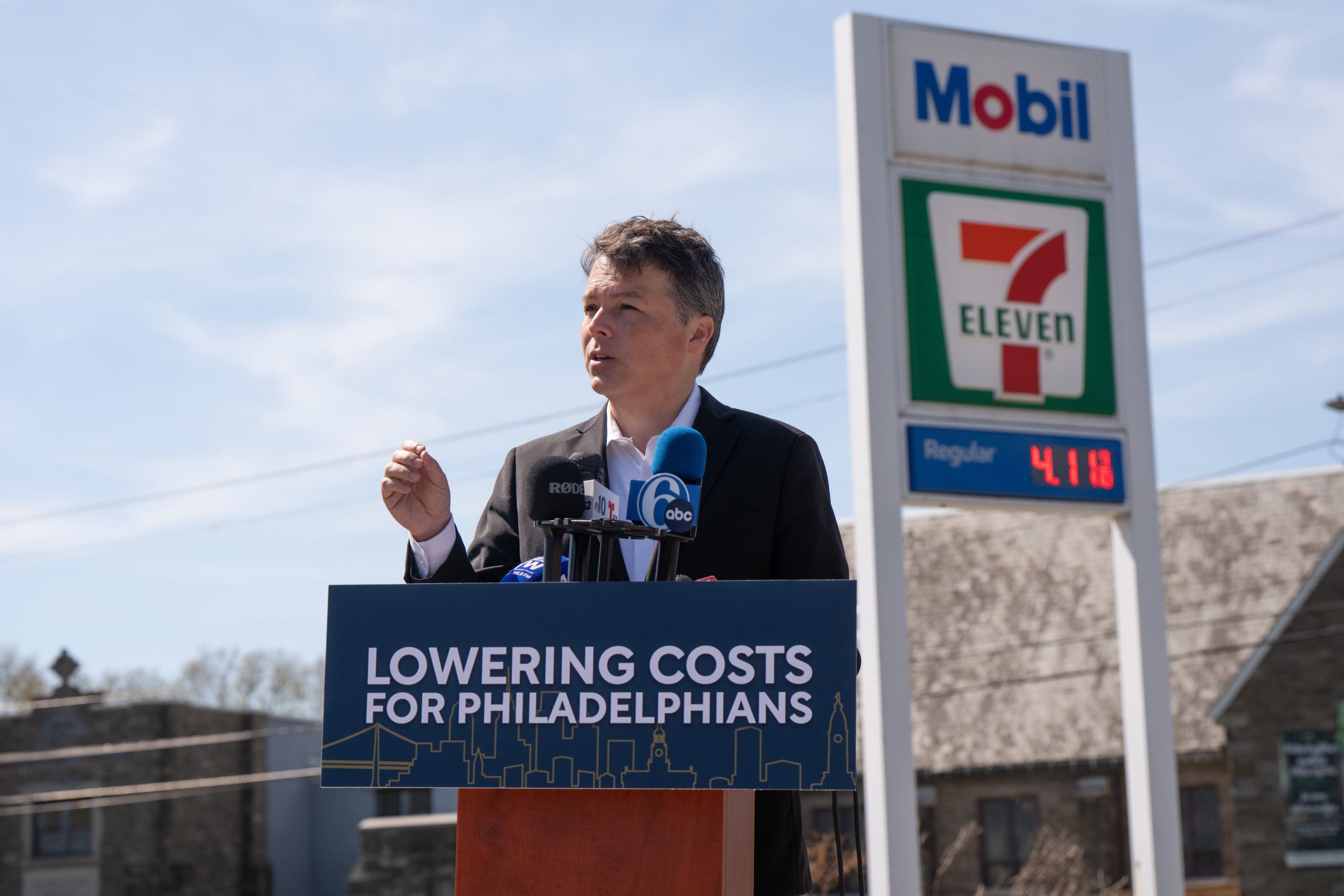
    U.S. Rep. Brendan F. Boyle holds a news conference at a Philadelphia gas station to announce legislation to suspend the federal gas tax whenever the national average price of gasoline exceeds $4.00 per gallon, in Philadelphia, Tuesday, April 14, 2026.Jessica Griffin / Staff Photographer

    The cost of war

    The report from the Congressional Budget Office, where nonpartisan staffers analyze federal policy for lawmakers on both sides of the aisle, largely aligns with other estimates of the war’s costs so far.

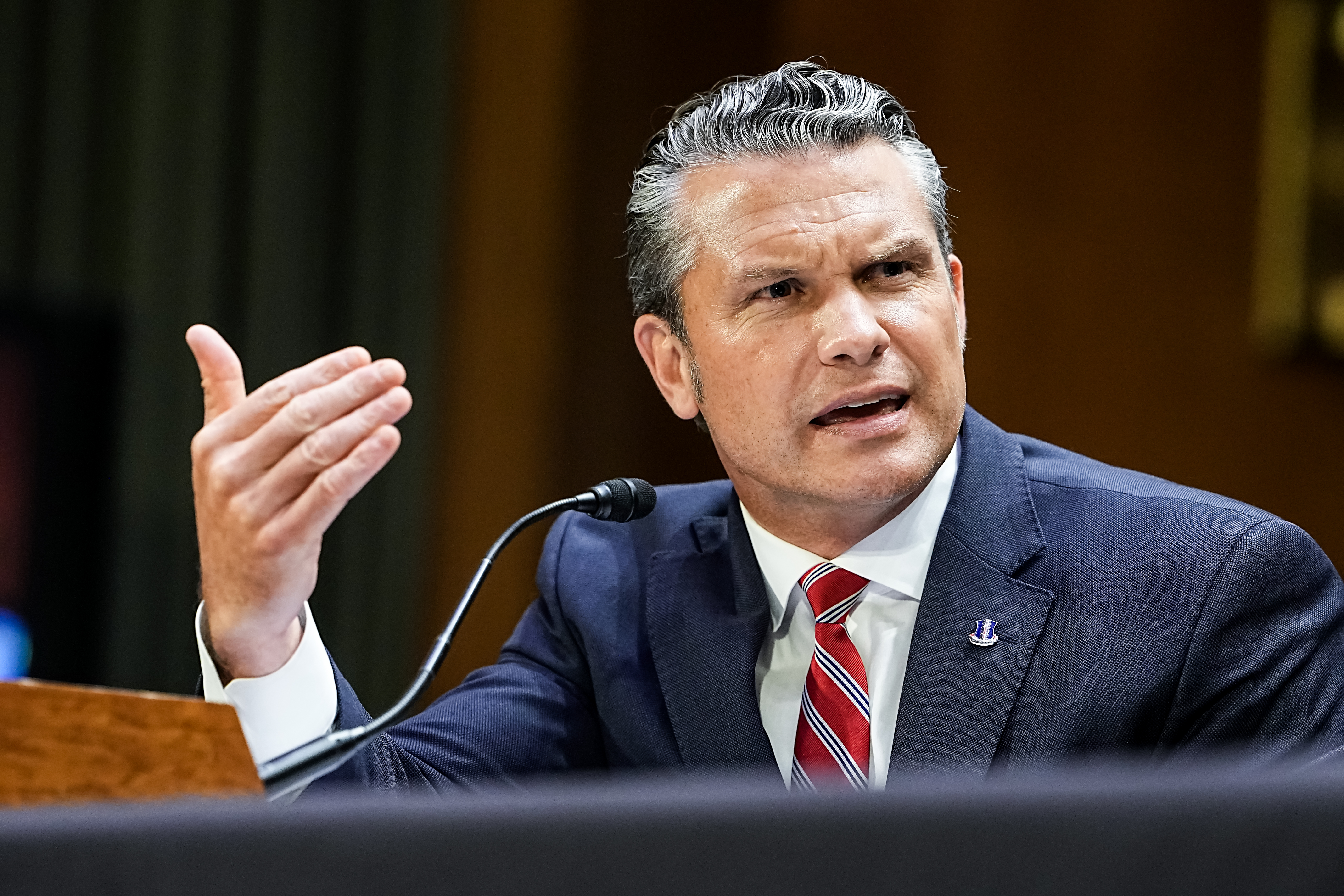
    The nearly $38.1 billion in direct costs as of Aug. 1 is slightly more than the $37.5 billion figure that Defense Secretary Pete Hegseth noted during congressional testimony in late July.

    The CBO’s estimate includes $21.7 billion to replace expended munitions, $10.4 billion for additional flying hours — which refers to the cost of the military’s deployment of aircraft in the region — and $2.7 billion due to higher fuel prices. The agency was unable to determine other costs, like the damage to U.S. facilities in the region or expenses related to diplomatic operations and foreign aid.

    (function(){function e(){window.addEventListener(`message`,function(e){if(e.data[`datawrapper-height`]!==void 0){var t=document.querySelectorAll(`iframe`);for(var n in e.data[`datawrapper-height`])for(var r=0,i;i=t[r];r++)if(i.contentWindow===e.source){var a=e.data[`datawrapper-height`][n]+`px`;i.style.height=a}}})}e()})();

    The overall price tag also does not include indirect costs that affect the U.S., such as inflation and interest rates — though it notes that both are impacted by the war. For instance, year-over-year inflation is expected to be 0.5 percentage points higher in the first quarter of 2027 because of the war.

    Independent analysts have noted those indirect costs are significant.

    An “Iran war energy cost tracker” from Brown University’s Watson School of International and Public Affairs shows that consumers have felt the brunt of nearly $107 billion in additional gasoline and diesel costs since the start of the war.

    Mark Zandi, the chief economist at Moody’s Analytics, who is based in Chester County, in June pegged the cost at $1,000 for a typical American household. The war has also fueled inflation and led to expectations that the Federal Reserve will raise interest rates this year instead of cutting them, he has said.

    “The net effect of the Iranian conflict on U.S. economic output is unclear at this time,” the CBO report states. “Higher prices erode the purchasing power of U.S. households and businesses, dampening consumption and investment growth. Conversely, supply disruptions increase demand for U.S. energy exports, spurring additional domestic energy production.”

    According to the analysis — for which the Pentagon did not provide information — it will “probably take at least five years” to replenish the significantly depleted weapons stockpile.

    “The shortfall would become especially problematic if a conflict arose with an opponent whose arsenal included large numbers of ballistic and cruise missiles,” the report states, adding that China maintains an arsenal that “would probably play a major role in a military conflict involving Taiwan.”

    The CBO report states that while the ongoing costs of the war are difficult to estimate, the U.S. military action is costing between $2 billion and $3 billion per month, depending on the level of hostilities.

    Fighting in recent weeks has included U.S. Central Command destroying five Iranian crude oil carriers after the Islamic Revolutionary Guard Corps targeted a U.S. Navy ship with ballistic missiles, Central Command announced last week. Eighteen U.S. service members have died in the war and several hundred have been wounded.

    Election messaging

    Boyle, who represents a safe Democratic district, has taken a leading role in helping craft his party’s response to Trump’s economic policies, including the president’s signature tax-cut bill in 2025 and the expiration of healthcare subsidies at the beginning of this year.

    When Trump unilaterally decided to join Israel in attacking Iran on Feb. 28, Boyle joined other Democrats in quickly denouncing the move and adding it to their list of economic grievances.

    Candidates challenging Republican incumbents in Pennsylvania have taken a similar tack.

    “Six months in, nobody in Washington is treating Iran like the emergency it is for families here,” Democrat Janelle Stelson, who is challenging Republican U.S. Rep. Scott Perry in a Harrisburg-based district, said in a video at a gas station on the six-month anniversary of the conflict.

    Perry, a hard-line conservative from York County, has supported Trump in his war efforts, while Stelson blamed him for the “astronomical” increase in gas prices.

    Perry has voted against Democratic-led war powers resolutions aimed at restricting Trump’s actions in Iran. Mackenzie and U.S. Rep. Rob Bresnahan (R., Luzerne), who are also running in competitive districts that could ultimately determine which party controls the House, have also voted against them.

    U.S. Rep. Brian Fitzpatrick (R., Bucks), another vulnerable incumbent in a battleground seat, initially supported the war but broke with his party to help Democrats pass a war powers resolution in June.

    Pennsylvania’s U.S. senators, Democrat John Fetterman and Republican Dave McCormick, have also both supported the war, rejecting war powers resolutions multiple times.

    U.S. Sen. Andy Kim (D., N.J.), who worked on national security issues in the Middle East before entering Congress in 2019, called the $38 billion cost “an unfathomable amount.”

    “[E]very family has paid money from their own wallets to fund Trump’s war,” Kim wrote on social media.

    On the campaign trail, Republicans have largely refrained from commenting on the war as they seek to retain control of the House and Senate.

    At the first-ever Republican midterm convention in Dallas last week, dozens of speakers — including Mackenzie, Bresnahan, and McCormick — did not address the largest-scale U.S. military engagement in the Middle East since the wars in Iraq and Afghanistan.

    Vice President JD Vance’s speech appeared to briefly refer to the disagreements around the war. While talking about Charlie Kirk, the conservative activist killed last year, Vance urged voters not to reject Republicans just because they do not agree with them “on every single issue,” like wars.

    “He just hated war. That was his view,” Vance said of Kirk. “Now, of course, there are people who love what we’ve done and people who don’t. I’m not here to litigate the disagreements between Charlie and some of the people that he disagreed with. But what I’m asking you to do is do what Charlie did. Do not throw the baby out with the bathwater. Don’t give the country over to a bunch of crazy people because you happen to disagree with us on a policy issue here or there.”

    Polls have shown widespread disagreement with Trump over the war. An Inquirer/New York Times/Siena University poll of likely Pennsylvania voters in August found that 30% of Trump’s 2024 voters and 66% of all voters disapproved of his handling of Iran — the most of any issue asked about in the survey. A national poll from the New York Times and Siena University published Tuesday similarly found two-thirds of likely U.S. voters, and three-quarters of independent voters, disapproved of the war.

    “I don’t see a reason to be there and pushing up gas prices,” said three-time Trump voter Greg Kerrick, 58, of Scranton.

    Kerrick said that the president was “mostly doing all right” and that he was supporting Bresnahan, the Republican incumbent, for reelection in the swing district. But he disagreed with the war.

    “I don’t drive but I feel for all the people paying $4.30 or whatever a gallon,” Kerrick said.

    Charles Grasty, 66, of Dickson City in Lackawanna County, said his objection to the war was on moral grounds. The Republican voter said the conflict feels like a grab for oil from Iran’s massive reserves.

    “We are literally trying to take stuff that belongs to other people,” said Grasty, who works for a fabric-manufacturing company near Scranton. “I’m a Christian and I’ve been taught you can’t bully people like that. We have to stay off their soil.”

    Boyle said the conflict is historically unpopular, based on consistent and strong opposition in polls since it began. The CBO report, he said, shows that part of the reason is the growing costs.

    “Americans are essentially paying for this twice,” Boyle said. “They’re paying for it directly through tens of billions of dollars of taxpayer money that is going to fund the war. But then they’re paying for it a second time in terms of increased costs at the pump, increased costs at grocery stores, and increased costs for consumer goods.”

  • Riley Armstrong on Jett Luchanko, Oliver Bonk, and the player that stood out most at rookie camp

    Riley Armstrong on Jett Luchanko, Oliver Bonk, and the player that stood out most at rookie camp

    With the NHL season just around the corner, and after a week where the Flyers’ top prospects gathered for rookie camp, Flyers director of player development Riley Armstrong joined Jackie Spiegel on the latest episode of Flyers Extra to take stock of the team’s prospects, including former first-round draft picks Jett Luchanko and Oliver Bonk.

  • An Upper Bucks man who shot at a DoorDash driver over a cheesesteak is sentenced to prison

    An Upper Bucks man who shot at a DoorDash driver over a cheesesteak is sentenced to prison

    An Upper Bucks man who shot at a DoorDash driver last year, irate that his cheesesteaks were late, was sentenced to four to 10 years in state prison Tuesday.

    Keilan McKeever, 33, pleaded guilty earlier this year to aggravated assault and related crimes, in exchange for prosecutors dropping an attempted murder charge for the 9mm bullet he fired at Khalik Lewis in March 2025.

    The gunshot struck the back windshield of Lewis’ Honda Civic, shattering it. Later, the then-19-year-old found the bullet stuck in the hood of his sweatshirt.

    Judge Steven Corr, in handing down the sentence, said he had been prepared to send McKeever, of Richlandtown, to prison for even longer, citing the “disgusting” nature of the case.

    But McKeever’s statement of contrition in court, including his detailed efforts to better himself while behind bars, moved Corr to exercise some leniency.

    Still, Corr was adamant that McKeever’s actions were unreasonable. It was only pure luck, he said, that Lewis was not killed, and that no one else was injured as McKeever opened fire on a residential street.

    “We have a young man out trying to make money, providing a service to you,” Corr said. “The way you treated him, I don’t know what causes someone to fire a shot at someone like that.”

    Video of the incident recorded from a neighbor’s security camera, played in court, showed Lewis pulling up to McKeever’s home on Cherry Street. Almost immediately, McKeever begins shouting and threatening Lewis.

    At one point, McKeever is heard saying “I’ll shoot you right now” and “see this” before a gunshot rings out.

    Pennsylvania State Police troopers who investigated the case wrote in court filings that McKeever initially lied to them, denying he shot anyone and saying, instead, that the noise heard by his neighbors was a car backfiring.

    Lewis, in an interview after Tuesday’s hearing, said McKeever came out of his house holding a loaded handgun. He was combative, Lewis said, and would not listen to him explain that his order was not late, as McKeever believed it was.

    McKeever followed Lewis as he walked back to his car, and stood behind him as he attempted to pull away. When Lewis did finally pull out of the driveway, he heard a bang and saw his windshield shatter.

    Lewis said he had no idea a bullet caused the damage.

    “Literally, my life was just inches away from ending,” Lewis said. “I still suffer from it: Loud noises trigger me, it’s hard to sleep at night.”

    He gave up driving for DoorDash, a side gig he had hoped would help pay for college and car repairs, right after the shooting.

    And Tuesday’s sentence did little to calm his fears.

    “I feel it could have been a much heavier sentence,” he said. “I feel like the judge could have seen it a little more from my point of view, instead of seeing the work he’s doing in jail. Everyone does that.”

    McKeever’s attorney, Riley Downs, told Corr during the proceeding that his client struggles with mental health issues, including anxiety and depression, that are debilitating when left untreated. At the time of the shooting, McKeever had not been taking his prescribed medication, Downs said, having lost his health insurance after being fired from his last job months earlier.

    His treatment, however, resumed after his arrest, along with therapy that McKeever said has helped him see what he did was wrong.

    “I know I have a lot of issues. I know I have some things I want to work,” McKeever said. “It’s just hard on the outside to find help.”

    McKeever apologized to Lewis and his family, saying he never intended to hurt him, only to scare him.

    “I failed myself and everyone else,” he said. “I hope you can forgive me for your sake, so you can forget and move on with your life.”

  • Just one Philly restaurant hits the New York Times’  best restaurant list this year

    Just one Philly restaurant hits the New York Times’ best restaurant list this year

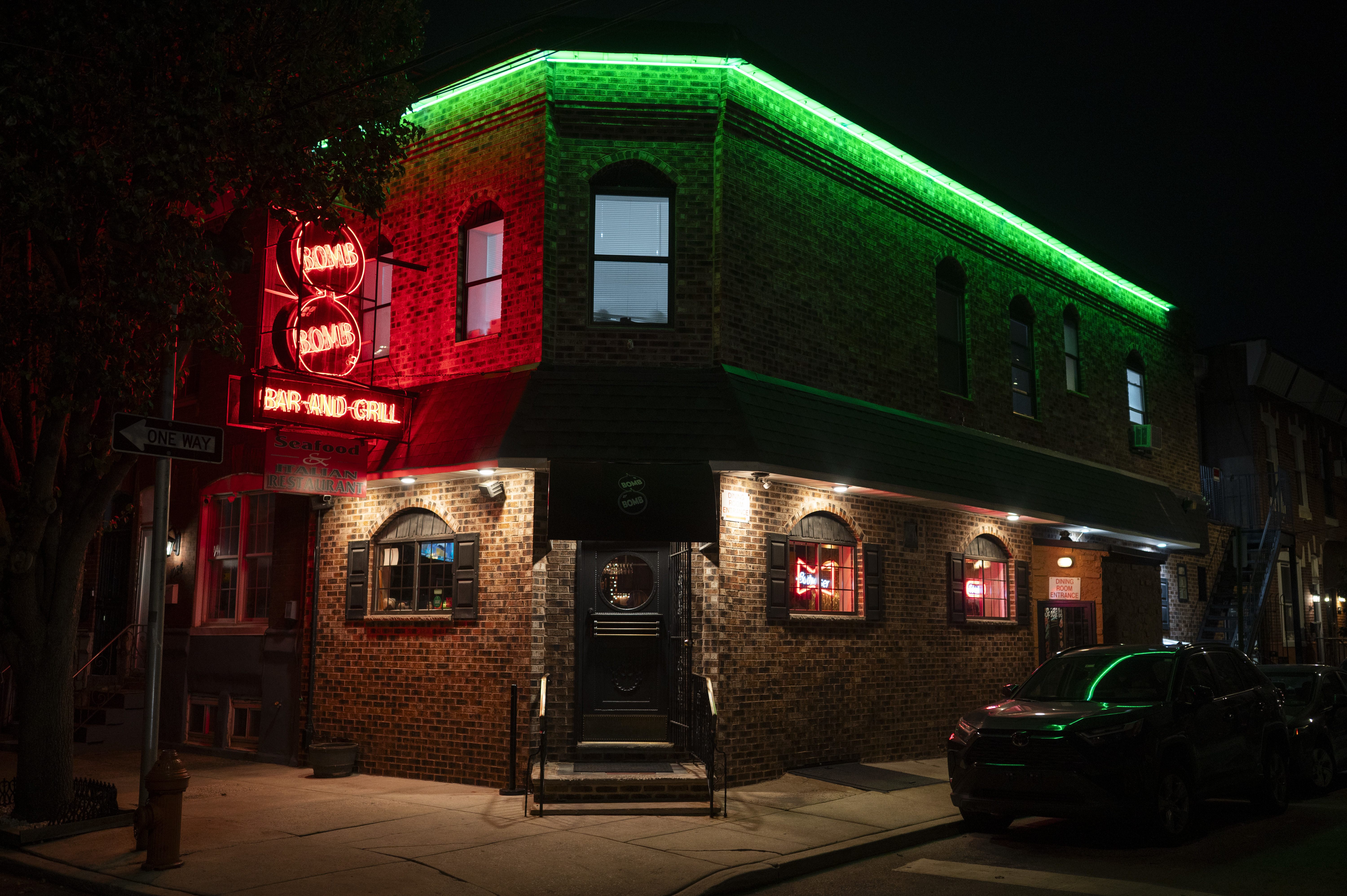
    Bomb Bomb Bar, the old-time South Philadelphia tavern revived last year by chef Joey Baldino, has been named to the New York Times’ 2026 list of the best restaurants in America — Philadelphia’s only entry this year.

    The city placed two restaurants — Mawn and Meetinghouse — on the list last year, Little Walter’s in 2024, and three — El Chingón, Kalaya, and My Loup — in 2023. Previous Philadelphia-area selections include Andiario, Gabriella’s Vietnam, Down North Pizza, Laser Wolf, and the now-closed Korshak Bagels.

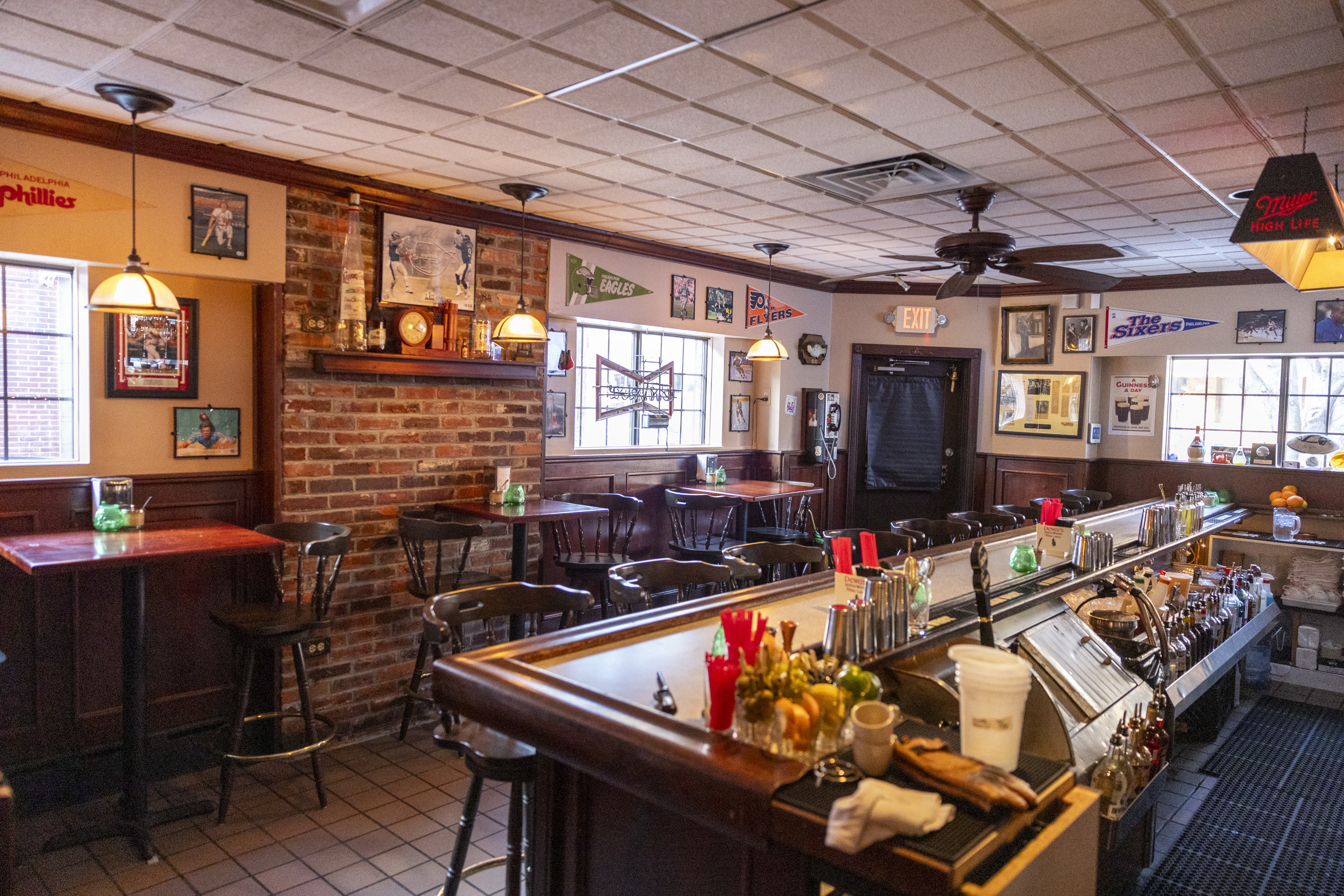
    The front bar area of Bomb Bomb Bar.Tyger Williams / Staff Photographer

    The Times praised Baldino’s ability to bridge old-school and contemporary red-sauce Italian cooking, describing him as a “singular talent” in the genre.

    Baldino also owns Palizzi Social Club in Passyunk Square — itself a lovingly restored South Philly institution — and Zeppoli, a 35-seat BYOB in Collingswood.

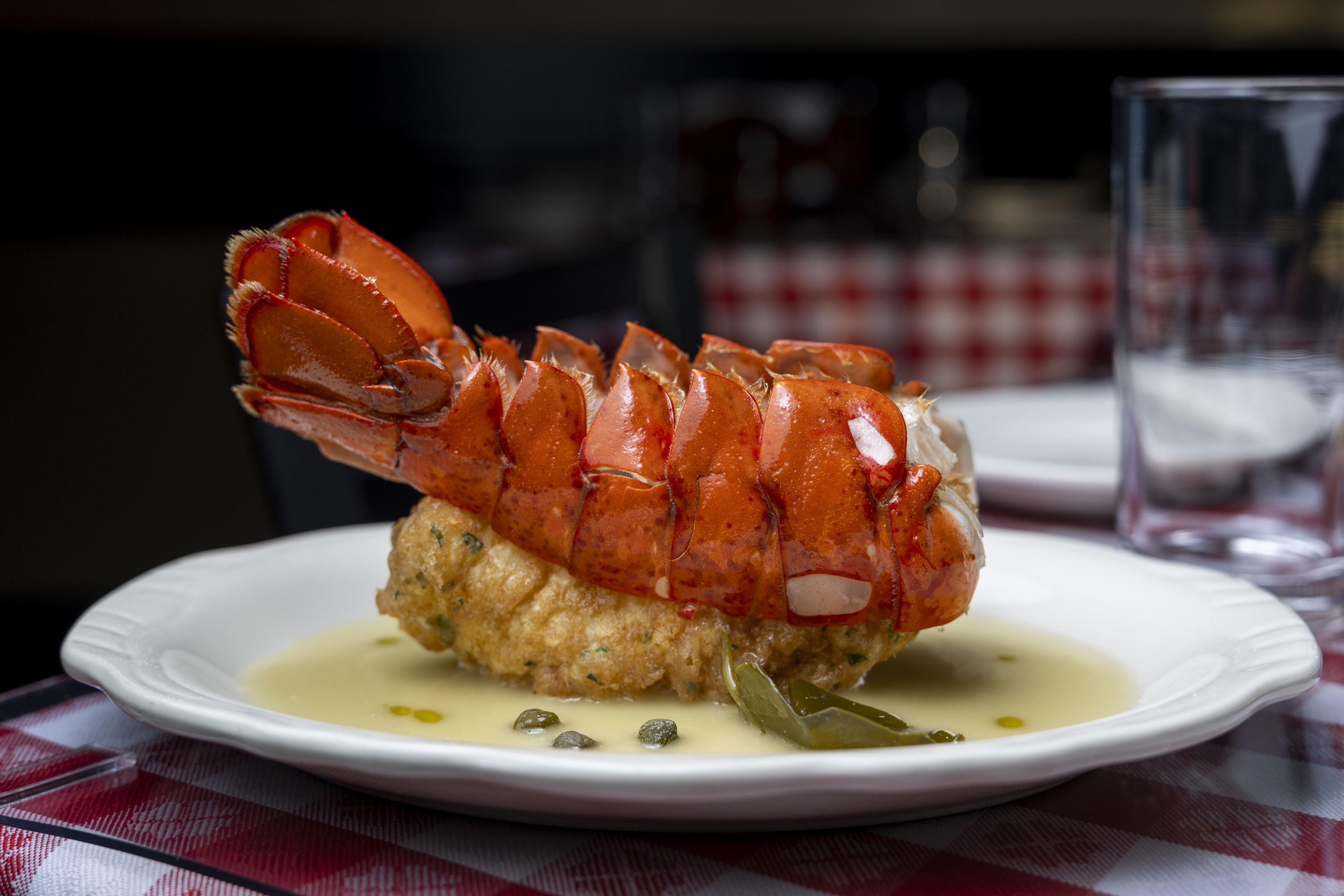
    Bomb Bomb still looks much like the Lower Moyamensing neighborhood bar it has long been, but the Times said its stuffed calamari, mussels fra diavolo, and lobster francese reveal the transformation. It called those dishes “as poetically reverent as a heartfelt eulogy” and summed up the experience as finding a remembered neighborhood joint “better than ever.”

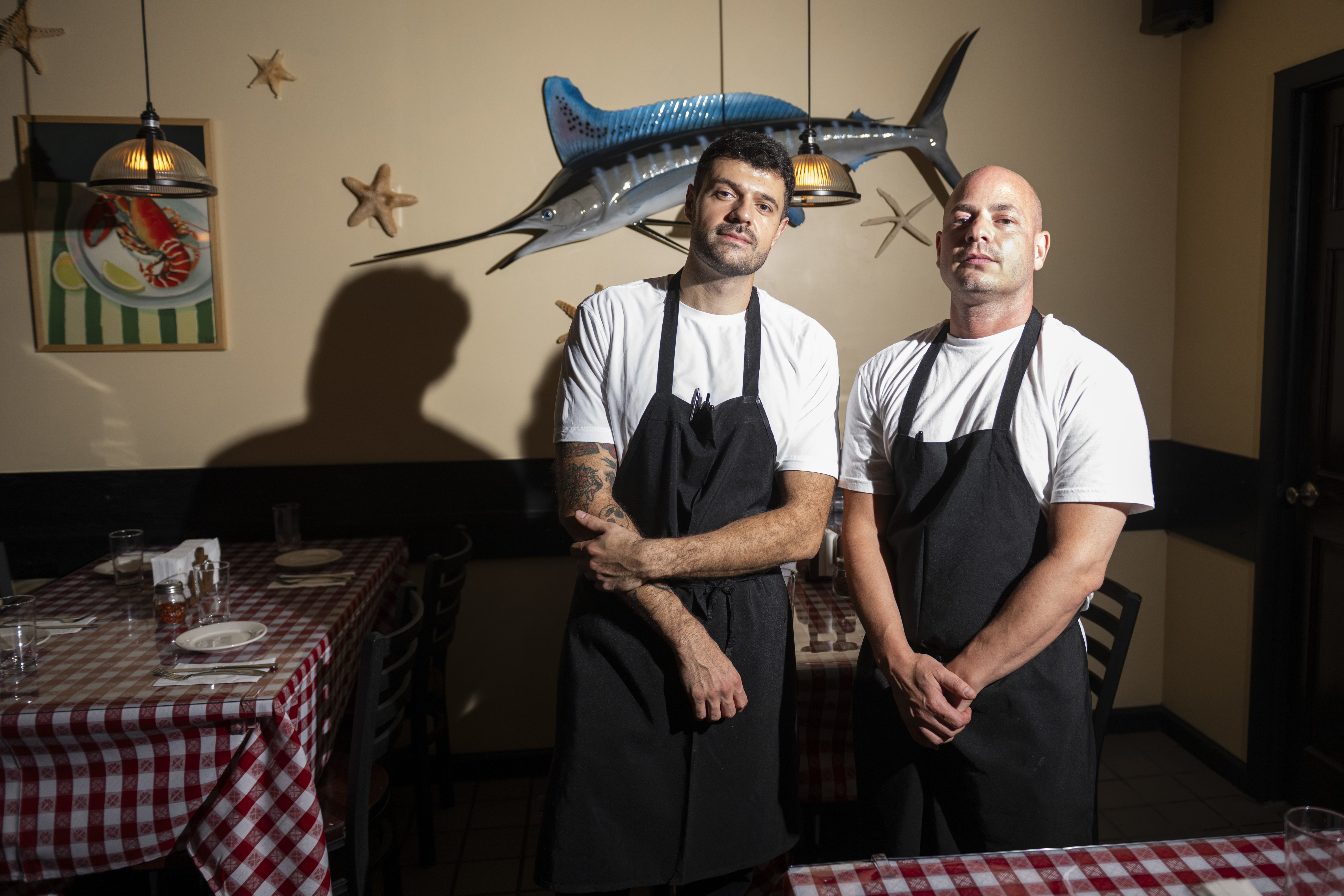
    Bomb Bomb Bar owner Joey Baldino (right) with chef de cuisine Max Hachey in the dining room.Allie Ippolito / For The Inquirer

    That assessment echoes Inquirer critic Craig LaBan’s February review, in which he called Baldino “Italian South Philly’s culinary preservationist-in-chief” and praised him for retaining Bomb Bomb’s essential character while elevating its seafood cooking and drinks.

    Bomb Bomb’s rear dining room offers a $65 fixed-price menu, while the front bar is more casual. LaBan particularly admired the mussels fra diavolo — among the best versions he had eaten — along with the lobster francese, stuffed calamari, crab cakes, and black-ink spaghetti. Inquirer staffers later singled out Bomb Bomb’s crab cake and lobster shells among their best dishes of the week.

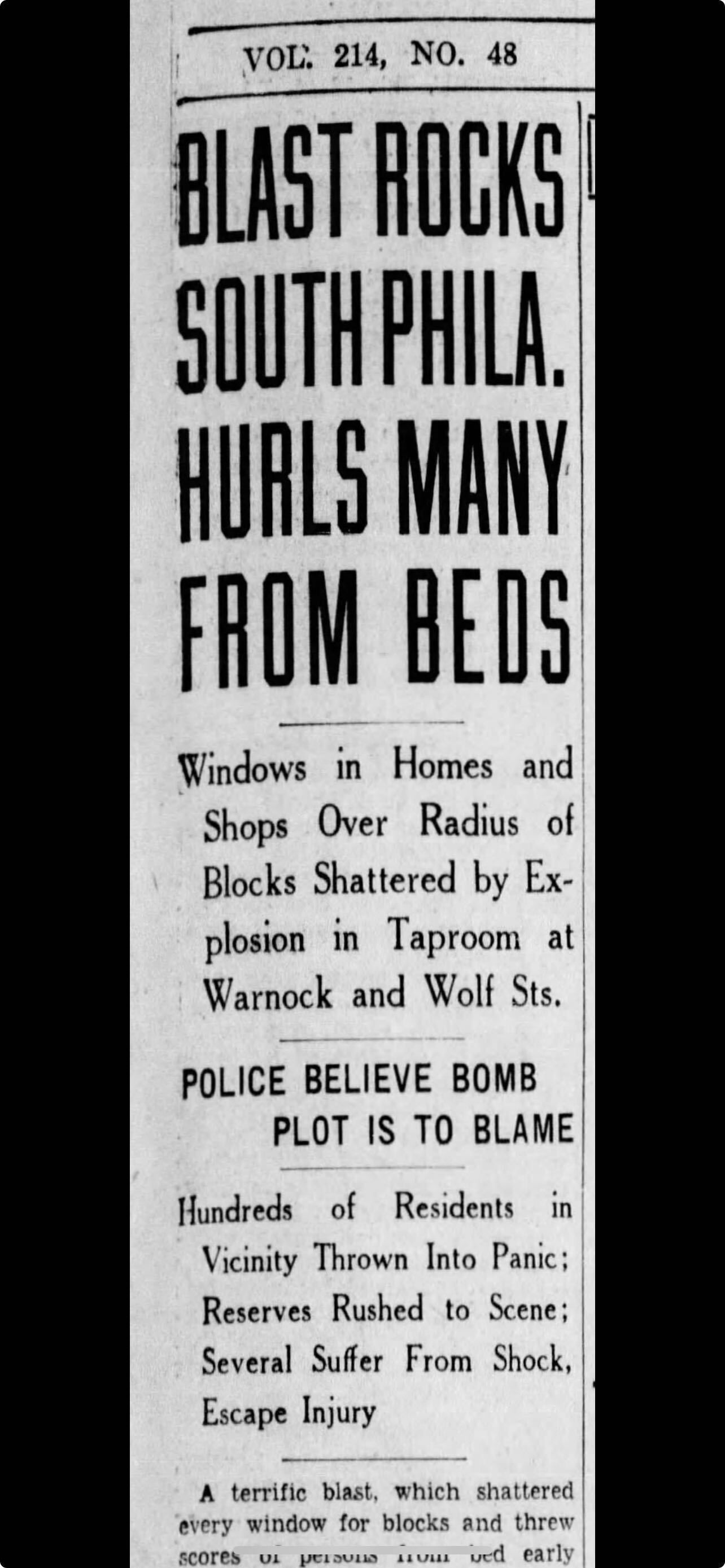
    The acclaim adds another chapter to a South Philly institution with an unusually colorful back story. As The Inquirer reported in 2024, it dates from 1936, when a chef left his job at a South Philadelphia bar and grill to work at Bob’s, a new bar at 1026 Wolf St. His former boss ordered him to return. When the chef refused, Bob’s was firebombed in the middle of the night. No one was injured, but the blast shattered windows and “rocked houses to their foundations,” as a news article reported.

    The Inquirer’s front-page story on Feb. 17, 1936, of a firebombing on the future site of Bomb Bomb Bar.Inquirer archives

    When the chef rebuffed his former boss again, a second bomb went off. This time, according to lore, the chef returned to his old job.

    By the time Frank Barbato Sr. bought Bob’s in 1951, everybody just called it the Bomb Bomb. Barbato began a 73-year family run built around seafood and red-gravy dishes and, later, barbecue, which was added to help the restaurant stand out. His son Frank Jr. and daughter-in-law, Deb, eventually took over.

    The couple retired in late 2024, and Baldino bought the business in early 2025. He reopened it that October after a deliberately restrained renovation.

    Reached by text Tuesday, Baldino called the Times recognition a “huge honor” and praised his staff, including chef de cuisine Max Hachey and manager Jack Kearney.

    “We may have been blown up twice but we’re still cranking out some great food,” he wrote, adding two bomb emojis.

    Bomb Bomb Bar at Warnock and Wolf Streets in South Philadelphia.Allie Ippolito / For The Inquirer
  • ‘The deal is off’ to limit development of Rock Hill Farm, attorney threatens, as officials seek more certainty in preserving land

    ‘The deal is off’ to limit development of Rock Hill Farm, attorney threatens, as officials seek more certainty in preserving land

    The “deal is off,” an attorney for a developer told Willistown elected officials Monday, as the board hesitated to accept a settlement that would preserve a great portion of Rock Hill Farm but still allow for housing to be built.

    The township’s three elected officials voted unanimously to table their decision, saying there was a lack of assurances in the settlement that guaranteed it would limit the amount of development and preserve a majority of the 222 acres of rolling hills, meadowlands, and woodlands at the historic farm.

    The board’s decision to hold off on agreeing to the settlement, which would conclude years of litigation over a proposal to build luxury homes on land that residents have advocated to keep as open space, drew opposition from Edmund Campbell, the attorney representing Rock Hill Farm LLC and developer Brian J. O’Neill, who purchased the land in 2021.

    “This settlement agreement has been negotiated for almost over a year,” he told the board Monday. “At the last minute, we were asked for additional concessions; we immediately replied … with a letter addressing those concessions and accepting changes that [the township’s solicitor] proposed. My client needs to make sure that the township understands that the deal is off if the settlement agreement is not approved tonight.”

    “I think we understand, and I can’t speak for my fellow supervisors, but I don’t have anywhere near enough information to make a decision,” board chairperson Molly Perrin responded.

    Campbell did not immediately respond to a message on whether the settlement had been withdrawn.

    The officials’ concern is whether the proposed settlement, which the township presented to the public last month, would bind certain mortgage holders to its terms.

    “Without some degree of surety there, we don’t feel that we can move forward,” said board member Bill Shoemaker. “We understand that, from the perspective of the applicant, this essentially, if they take it that way and choose not to continue, will void the agreements. So we’re back to square one.”

    A Chester County judge in July sided with the developer, overturning the township’s September 2024 denial of plans to build more than a dozen homes on the property. The township promptly appealed the ruling.

    Under the proposed settlement, the developer would radically scale down the plan that was before the court, preserving roughly 166 acres of the larger tract, or 75% of the land, under a conservation easement. The land would be subdivided into 18 lots, down from roughly 24, with all but one lot proposed for residential development. The one non-residential lot would be conserved as open space. The lots vary from about four acres to up to 26 acres.

    Separately, the developer has offered Willistown Conservation Trust the exclusive option to buy an adjacent 24-acre property, also purchased by the developer, if the settlement agreement is approved by the township and court. The township would plan to buy it from the trust using designated open space funds, and preserve the property as open land. The board voted to approve the purchase in February, officials said, though that is in jeopardy as part of the settlement.

    A number of residents who spoke last month responded positively to the proposal, but others were apprehensive.

    The community had rallied together to form a group, Save Rock Hill Farm, in an effort to stave off development of the land.

    “We appreciate the Supervisors’ efforts to address these issues carefully,” the group posted on Facebook after the meeting. “The Supervisors have heard the community’s substantial opposition and concerns about what could be lost if the proposal moves forward as presented.”

    But as the board prepared to take a vote, there was still uncertainty.

    Max O’Keefe, the solicitor for the township, said he and the counsel for Rock Hill Farm LLC discussed additional language, which was sent to the board of supervisors late Monday.

    “I certainly don’t anticipate that the board had any real meaningful opportunity to review or digest those proposed changes,” he said.

    The board concurred.

    “I never want to be the one who’s going to rush into a decision, especially a decision that’s so much value and importance to this community,” board member Matt McCarry said.

    This suburban content is produced with support from the Leslie Miller and Richard Worley Foundation and The Lenfest Institute for Journalism. Editorial content is created independently of the project donors. Gifts to support The Inquirer’s high-impact journalism can be made at inquirer.com/donate. A list of Lenfest Institute donors can be found at lenfestinstitute.org/supporters.

  • U.S. poverty rate drops slightly, but experts fear worse ahead

    U.S. poverty rate drops slightly, but experts fear worse ahead

    The U.S. poverty rate fell slightly last year as Americans’ incomes rose alongside rising prices, according to new census data published Tuesday. But the data from 2025 did not reflect cuts to social assistance this year that experts fear will cause a rise in poverty soon.

    Just over 1 in 10 Americans lived below the poverty line in 2025, the Census Bureau found, a half-percentage point drop since 2024.

    The median American household income rose more than 2% in inflation-adjusted terms, to $87,460. And the numbers reflected a narrowing of the income gap between men and women: Women’s earnings from full-time, year-round work rose about 3%, while men’s earnings remained mostly flat, meaning the average full-time female worker went from earning about 80% as much as an average man to about 83% as much.

    Officials touted the lowest official poverty rates on record for children and for Hispanic Americans, at about 13% of both groups.

    But advocates for people in poverty warned that the gains might be short-lived.

    The report reflects the number of people in poverty in America last year, before significant changes to the social safety net, passed by Congress in 2024 as part of a major tax and spending bill, took fuller effect this year. Experts who reviewed Tuesday’s numbers said they expect next year’s census data to show a substantial increase in poverty, due largely to cuts to the food stamps program.

    “The nature of an annual statistic might mask some of the volatility that families already started to experience,” said Megan Curran, a poverty expert at Columbia University. “We know the reality on the ground is going to be looking quite different from what the numbers were” a year ago.

    “This was the situation that families were in on the eve of the full implementation of these major changes to the safety net,” she said. “But it’s not reflecting what life is like for families who rely on SNAP and programs like that in September of 2026.”

    The Center on Budget and Policy Priorities found that 5 million people lost SNAP benefits between July 2025 and May 2026 as a result of the new legislation, which strengthens work requirements for food stamps and eventually shifts much more of the cost of the program onto states. In the first five months of this year, the organization found, the number of people receiving assistance fell in all but three states, and by as much as 20% in Arizona.

    This year’s Supplemental Poverty Measure — a more sophisticated method that takes into account families’ expenses and government benefits, rather than just marking whether their income falls above or below the poverty line — remained basically unchanged since last year, designating about 13% of Americans as impoverished. Advocates said they expect the SPM to rise next year as well, as government benefits decrease.

    Chastity Lord, president of an anti-poverty program for single mothers and their children, said rising prices have pushed women to take on more work this year to support their families, as reflected in the rising female income numbers. Overall, the average income for full-time, year-round work stayed flat this year while overall household income rose, reflecting more income from other sources including gig work, as well as retirement benefits and other inputs.

    “You’re talking about rising gas prices, rising food prices, rising utility prices. Those are baseline expenses that when they don’t get paid, the engine doesn’t run of life, and folks are having to do what they need to do,” said Lord, whose organization — Jeremiah Program — supports working mothers in nine cities around the country. “Where you’re really seeing supplement around that employment is the gig economy. We call it the ‘survival economy.’”

    She predicts a substantial increase in the SPM next year, when that gig work won’t be enough to replace widespread cuts to food stamps.

    Tuesday’s data also showed that 92% of Americans had health insurance for some or all of the year, a near-historic high that has held fairly steady for the past decade.

    But on health insurance, too, the 2025 numbers don’t reflect changes already underway this year. Substantial subsidies for people who buy their health insurance on the Affordable Care Act marketplace expired on Jan. 1, and the healthcare group KFF predicted that as many as 5 million people could lose marketplace coverage in 2026, either because high premiums deterred them from signing up or because they failed to make payments during the year.

    Meanwhile, premiums for employer-sponsored insurance spiked this year and are set to climb more next year, leading more people to choose to go without insurance.

    Tuesday’s data comes from the annual Current Population Survey, a sample conducted by the Census Bureau early each year. The full decennial census that counts every American will next run in 2030. Last week, the Trump administration proposed both adding a question about citizenship to the 2030 Census and leaving immigrants without permanent residency status out of the count.

  • Kennedy Center board votes to close after judge blocks returning Trump’s name to building

    Kennedy Center board votes to close after judge blocks returning Trump’s name to building

    WASHINGTON — The Trump-aligned Kennedy Center board voted on Tuesday to close most of the iconic performing arts venue just hours after a federal judge blocked the institution from returning President Donald Trump’s name to the building.

    In a social media post, Trump said the closure was needed for safety repairs. But he said the repairs, which Congress has allocated $257 million to cover, would only happen if the board was allowed to move forward with plans to add his name to the building. A federal judge has twice said that can’t happen without the approval of Congress.

    “Simply put, Defendants cannot install memorials for President Trump or anyone or anything else at the Kennedy Center without Congress’s blessing,” U.S. District Judge Christopher Cooper said in the latest ruling on Tuesday.

    Trump, who was named the Kennedy Center’s chairman last year by loyalists on the board, participated in the virtual board meeting and said on social media that the Justice Department would appeal Cooper’s ruling. He said he’d given $17 million to an endowment intended to support the institution.

    The meeting included testy exchanges at points between Trump and Rep. Joyce Beatty, an Ohio Democrat who has led the campaign to block efforts to memorialize the president at the Kennedy Center. At one point, Beatty referred to Trump as someone who caused “extreme harm,” according to a participant in the meeting who spoke on condition of anonymity to discuss private conversations.

    Trump said Beatty was “incompetent” and “holding up everything.”

    “You’re holding up the whole country,” she responded.

    The developments threw into limbo the fate of one of the nation’s most prominent cultural institutions, a place where presidents, lawmakers, and celebrities of all political ideologies have gathered for decades to recognize and celebrate the best in American arts and culture.

    The venue’s leaders have argued that the massive building, which began construction in 1965, was in dire need of renovations. A partial ceiling collapse in the building’s main hallway earlier this month intensified the calls for renovations.

    But Trump’s insistence on a physical recognition of his work on the building, reminiscent of his tendency to add his name to buildings as a real estate developer, has been a persistent sticking point — alienating many of the institution’s longtime supporters and facing repeated legal roadblocks.

    The fight over the Kennedy Center marks a rare setback in Trump’s second term bid to dramatically remake the nation’s capital in his gilded tastes. He’s demolished the East Wing of the White House and is replacing it with a ballroom and plans to build a triumphal arch near Arlington National Cemetery. He’s also eyeing a golf course renovation along the Potomac River.

    The Kennedy Center board voted in August to inscribe his name on the Kennedy Center’s facade so it would read “The John F. Kennedy Center for the Performing Arts Restored and Renovated By President Donald J. Trump.” If the Trump Kennedy Center Fund reached $100 million, another inscription would be added reading: “Endowed by the Trump Kennedy Center Fund.”

    The plaza in front of the Kennedy Center would also be renamed in Trump’s honor.

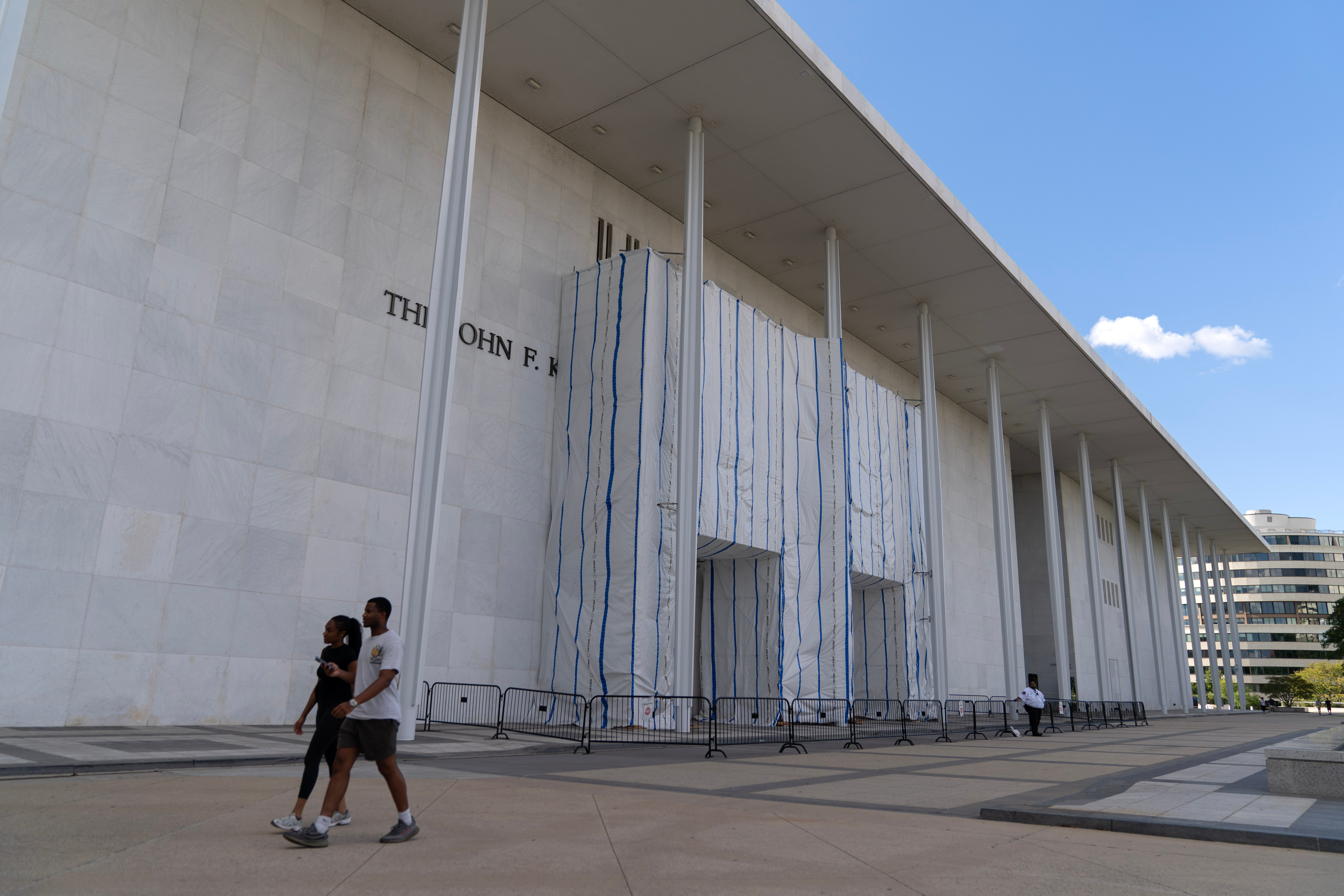
    Cooper ruled in May that the Kennedy Center illegally added Trump’s name to the building, ordering it removed. The institution’s leaders complied in June but left a tarp and scaffolding in place where Trump’s name once stood.

    Hanging over the hearing was the prospect that the administration may seek to demolish the Kennedy Center. In a filing earlier this week, administration lawyers told the court that absent recognition of the president, the Kennedy Center would struggle to raise money for renovations. Without that money, they suggested, the building may need to be demolished, a prospect that alarmed some given Trump’s swift moves last year to dismantle the East Wing.

    The Kennedy Center, the lawyers argued, “will deteriorate further into an unsafe, decrepit structure that will be required to be taken down, with a determination to follow on what to build on the site, such as a large outdoor amphitheater overlooking the Potomac River that has been proposed, by some, for many years.”

  • Prosecutors will not seek death penalty for Nick Reiner

    Prosecutors will not seek death penalty for Nick Reiner

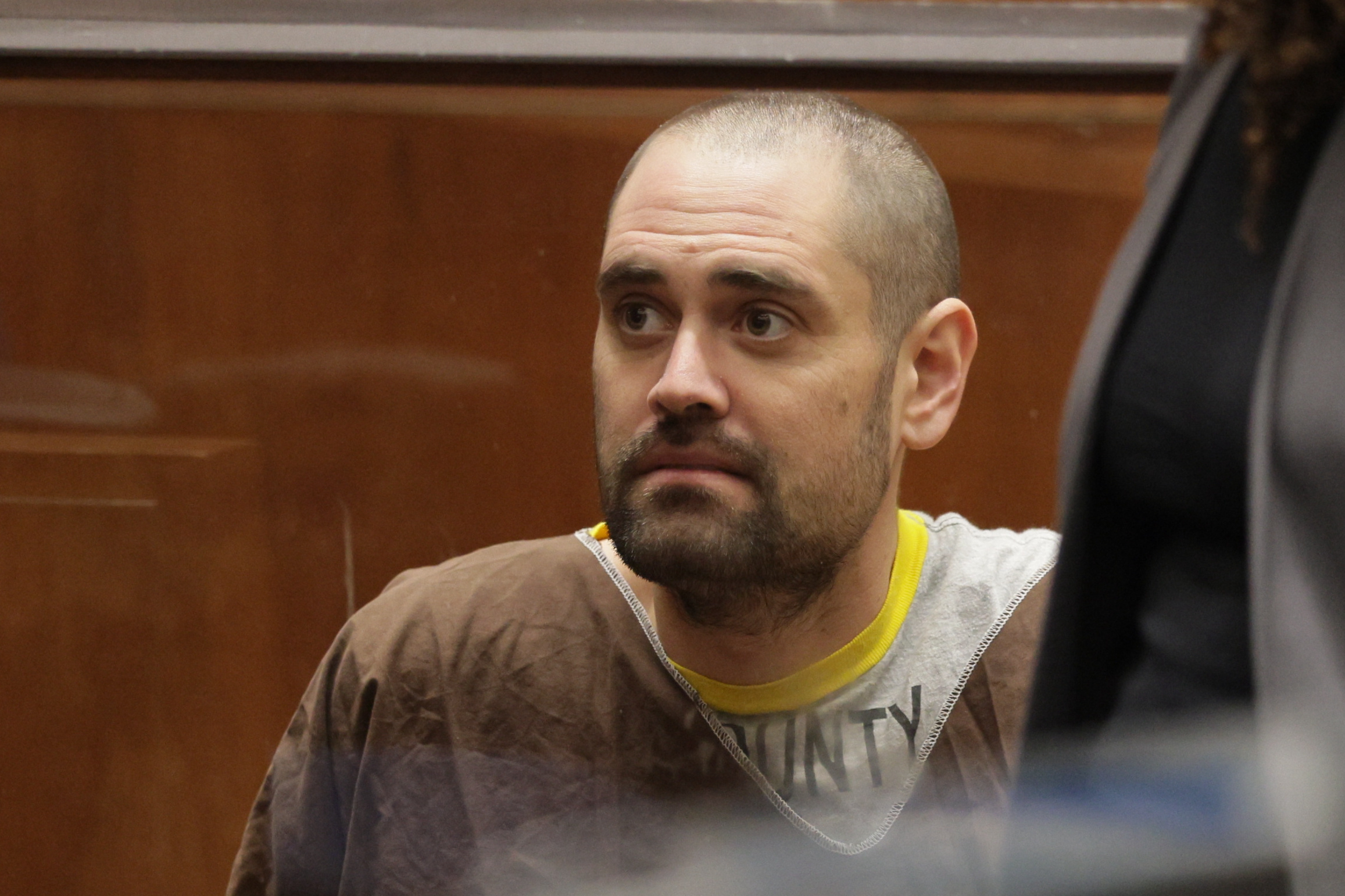
    LOS ANGELES — The Los Angeles County district attorney said Tuesday that his office would not seek the death penalty in the double murder case against Nick Reiner, who is accused of killing his parents, Hollywood director Rob Reiner and Michele Singer Reiner.

    Nathan J. Hochman, the district attorney, said in a news conference before a hearing in the case that the decision was made after “a rigorous review, where we look at the aggravating factors as well as the mitigating factors.”

    Hochman said the district attorney’s office had spoken with the victims’ family, prosecutors, and law enforcement.

    “We did speak with Nick Reiner’s siblings,” he said, referring to Jake and Romy Reiner. “They made their views very clear. We took their views into consideration in ultimately deciding not to seek the death penalty.”

    If Reiner, 33, is convicted, he would face a maximum sentence of life in prison without the possibility of parole. No trial date has been set.

    Rob Reiner and Michele Singer Reiner were found dead inside their home in the Brentwood neighborhood of Los Angeles in December. A grand jury indicted Nick Reiner on two counts of first-degree murder, to which he has pleaded not guilty.

    Reiner has been charged with murder under special circumstances — including the fact that there were multiple killings — which meant prosecutors could seek the death penalty. Other special circumstances included in the indictment were the allegations that he committed the murders “by means of lying in wait” and with a dangerous and deadly weapon, a knife.

    A public defender representing Reiner did not immediately respond to a request for comment.

    Reiner has been trying to gain access to a $1.6 million family trust fund so he can hire a private lawyer, but he has faced opposition from a financial steward who cited California’s “slayer statute.” The statute blocks people from inheriting money from someone they “feloniously and intentionally” kill.

    Reiner has a history of serious mental illness and drug addiction. He has been diagnosed at different times with schizophrenia and schizoaffective disorder, according to people familiar with the situation, and was placed into a yearlong mental health conservatorship in 2020. One of those people told the New York Times that Reiner had been struggling in the weeks before his arrest with a change in his medication.

    Few details have been shared publicly about what the authorities believe led to the killings and what Reiner’s motive could have been. A judge has issued a protective order, barring prosecutors or defense lawyers from releasing any discovery materials.

    Jake and Romy Reiner were both listed on the witness list for grand jury proceedings in July. In an interview with ABC that was broadcast last month, Jake Reiner recalled the discovery of his parents’ killings on Dec. 14, 2025, when his sister called him in distress.

    “Romy told me our dad was dead,” he said in the interview, “and then she said, ‘I can’t find mom.’”

    He declined to say whether he was surprised when he learned that his brother was considered the prime suspect.

    “I’ll never understand,” he said. “I don’t care how it’s explained to me, I don’t care what facts come out. I will never understand why this happened.”

    This article originally appeared in the New York Times.

  • Ivy Madness is coming to the PPL Center in Allentown starting in 2028

    Ivy Madness is coming to the PPL Center in Allentown starting in 2028

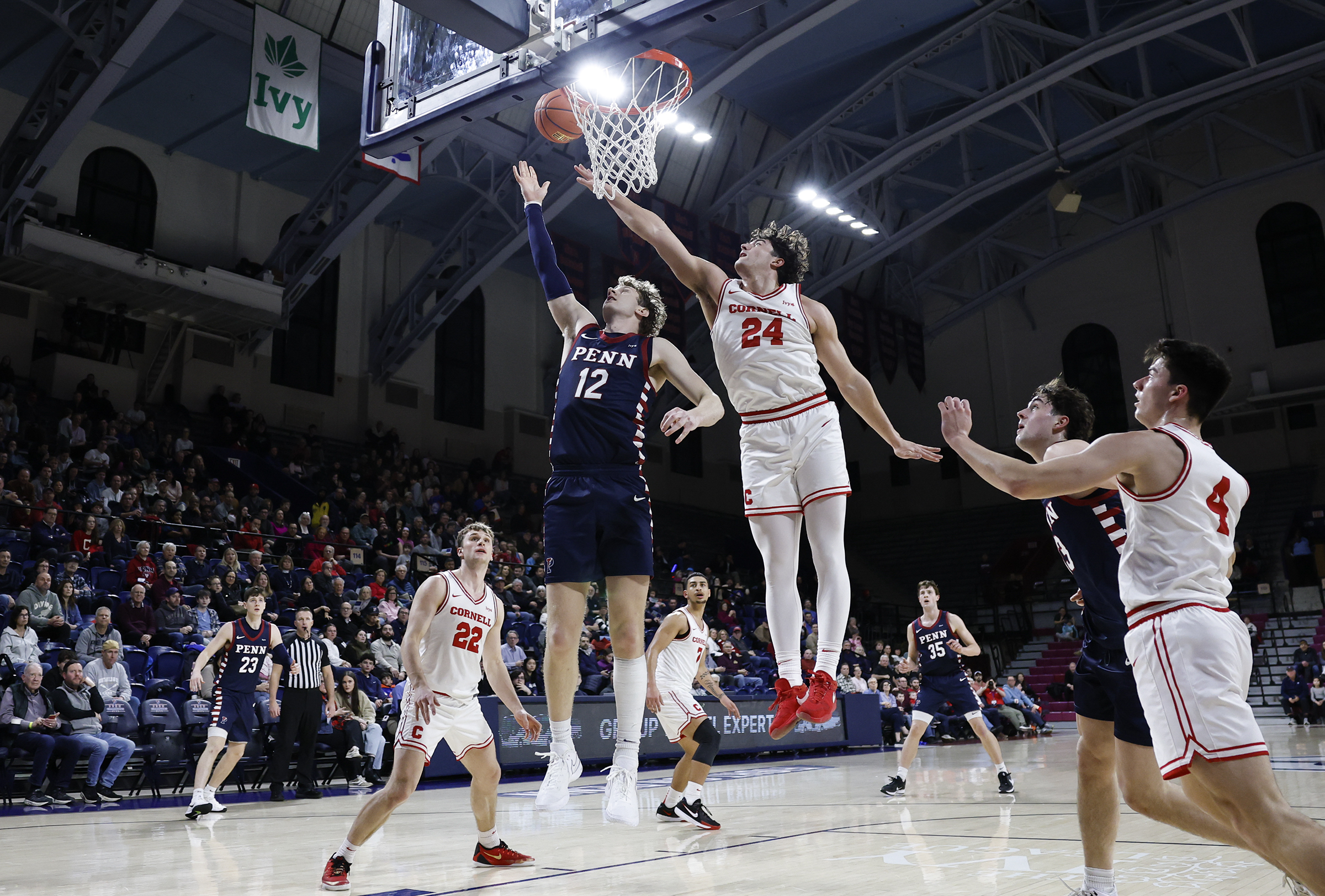
    The Ivy League is bringing its men’s and women’s conference basketball tournaments to Allentown.

    On Tuesday, the league announced that it has agreed to a three-year deal with the PPL Center to make the arena home to Ivy Madness starting in 2028. The Lehigh Valley Phantoms arena was selected due to its “centralized location within the league’s geographic footprint,” according to a release. The conference previously employed a rotation for the tournament around all eight of its teams’ arenas.

    “We are incredibly excited to bring Ivy Madness to PPL Center and the surrounding communities beginning in 2028,” Ivy League Executive Director Robin Harris said in a release. “Ivy Madness has grown into an incredible celebration of our student-athletes, institutions and the competitive excellence of Ivy League basketball.

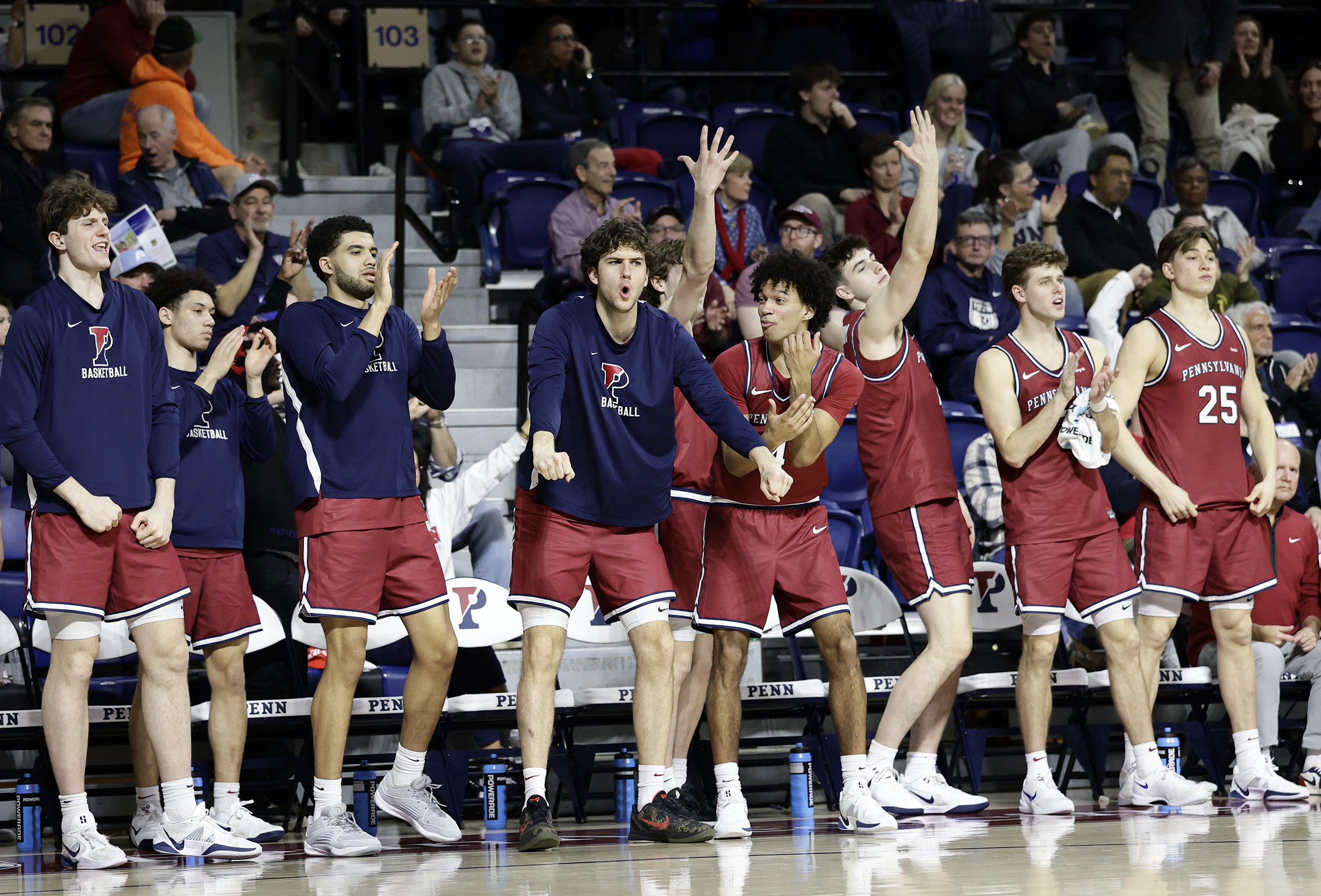
    The Penn bench reacts after a made basket by their teammates against Harvard.Yong Kim / Staff Photographer

    “The PPL Center provides a neutral site in a first-class venue, a vibrant downtown setting and a location that is accessible to so many of our alumni and fans. We believe this partnership creates an exciting opportunity to continue elevating the championship experience for our student-athletes and Ivy League basketball overall.”

    Penn will host Ivy Madness this season as a part of the Palestra’s 100th anniversary celebration. Dartmouth was originally scheduled to host the tournament but relinquished the opportunity because of the celebration. The Big Green are the only team in the Ivy League to never host the tournament after the rotating schedule began after 2018.

    In its release, the conference also noted that the PPL Center was selected due to its “premier arena setting.” The Ivy arenas, which previously held the tournaments, range dramatically in size. Harvard’s Lavietes Pavilion holds 1,636 people while the Palestra’s maximum capacity is 8,722. The PPL Center, which can hold up to 8,500 fans for Phantoms games, will provide Ivy Madness with consistent seating capacity.

    “PPL Center is thrilled to welcome Ivy Madness to the Lehigh Valley,” PPL Center co-owners Rob and Jim Brooks said. “As a hub for our community, we take pride in hosting a diverse range of events that bring people together. Ivy Madness is an exciting new addition to our calendar, offering a great experience for local fans while also welcoming visitors from across the region.”

  • Jalen Hurts donated $600,000 for AC at Philadelphia’s largest high school

    Jalen Hurts donated $600,000 for AC at Philadelphia’s largest high school

    Jalen Hurts was watching morning TV three years ago when he saw something that stopped him in his tracks.

    “I was very blown away by school not being canceled for snow, not for a hurricane or tropical storm, but for lack of AC,” the Eagles star quarterback said Tuesday.

    So Hurts went about doing something to fix that.

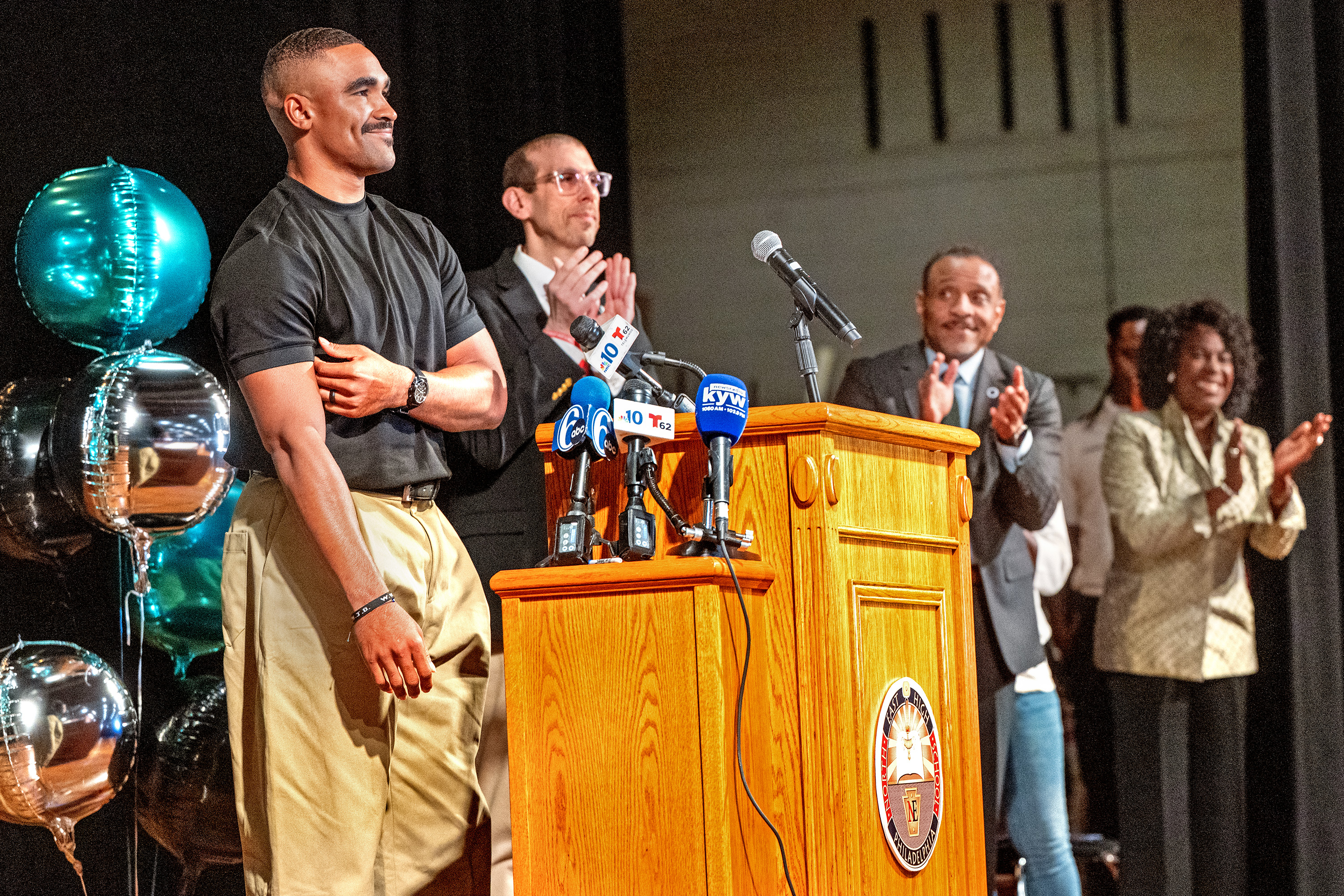
    On Tuesday, he stood on Northeast High’s stage to announce his foundation was putting up $600,000 to air-condition the school’s auditorium.

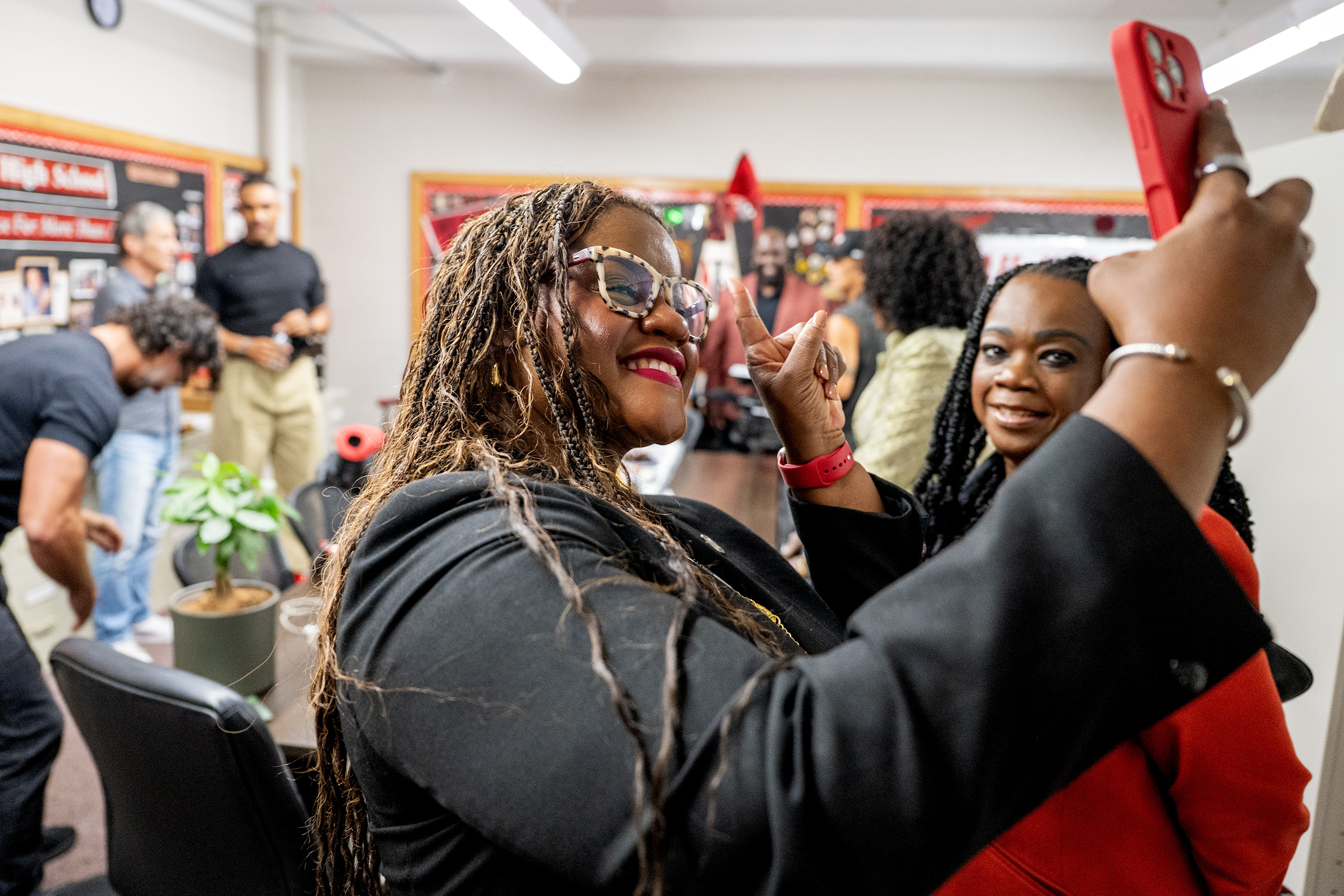
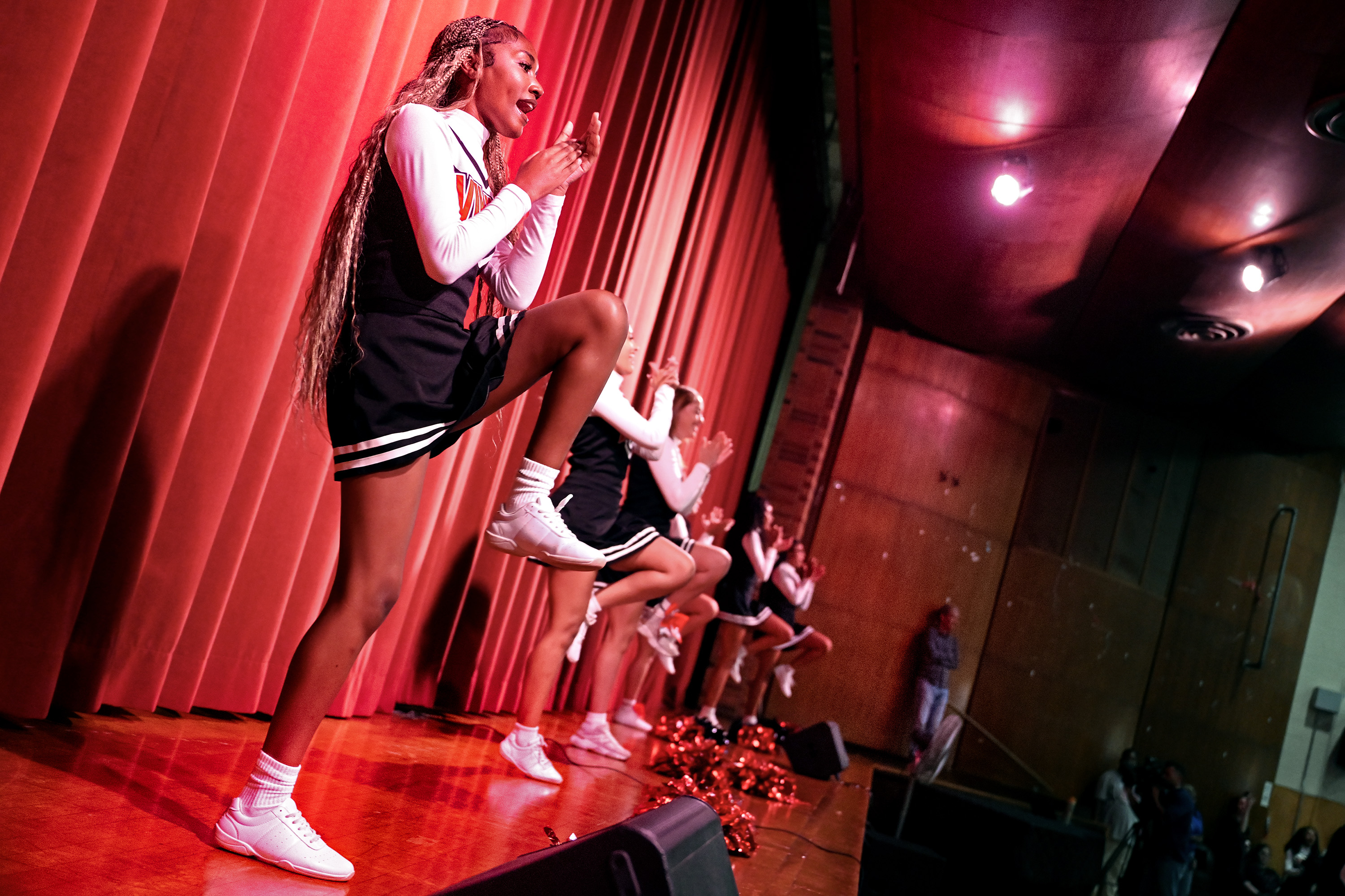
    The timing was good: Although temperatures were in the high 60s when Hurts made his announcement, it was sweltering in the auditorium, with more than 1,000 students, teachers, and dignitaries in the room. Sweat ran down the faces of members of the marching band toting heavy instruments and cheerleaders in long-sleeved uniforms. Mayor Cherelle L. Parker cooled herself with a small personal fan.

    When Hurts watched that TV spot, about half of the district’s schools were not air-conditioned. Hurts’ largesse has helped get the number down, but 52 schools — about a quarter of district buildings — still lack air-conditioning.

    Hurts, on Tuesday, said he wanted to move the needle more for Philadelphia schools.

    “Let’s get it to zero,” Hurts said of the number of schools without air-conditioning. “I want to get it to zero.”

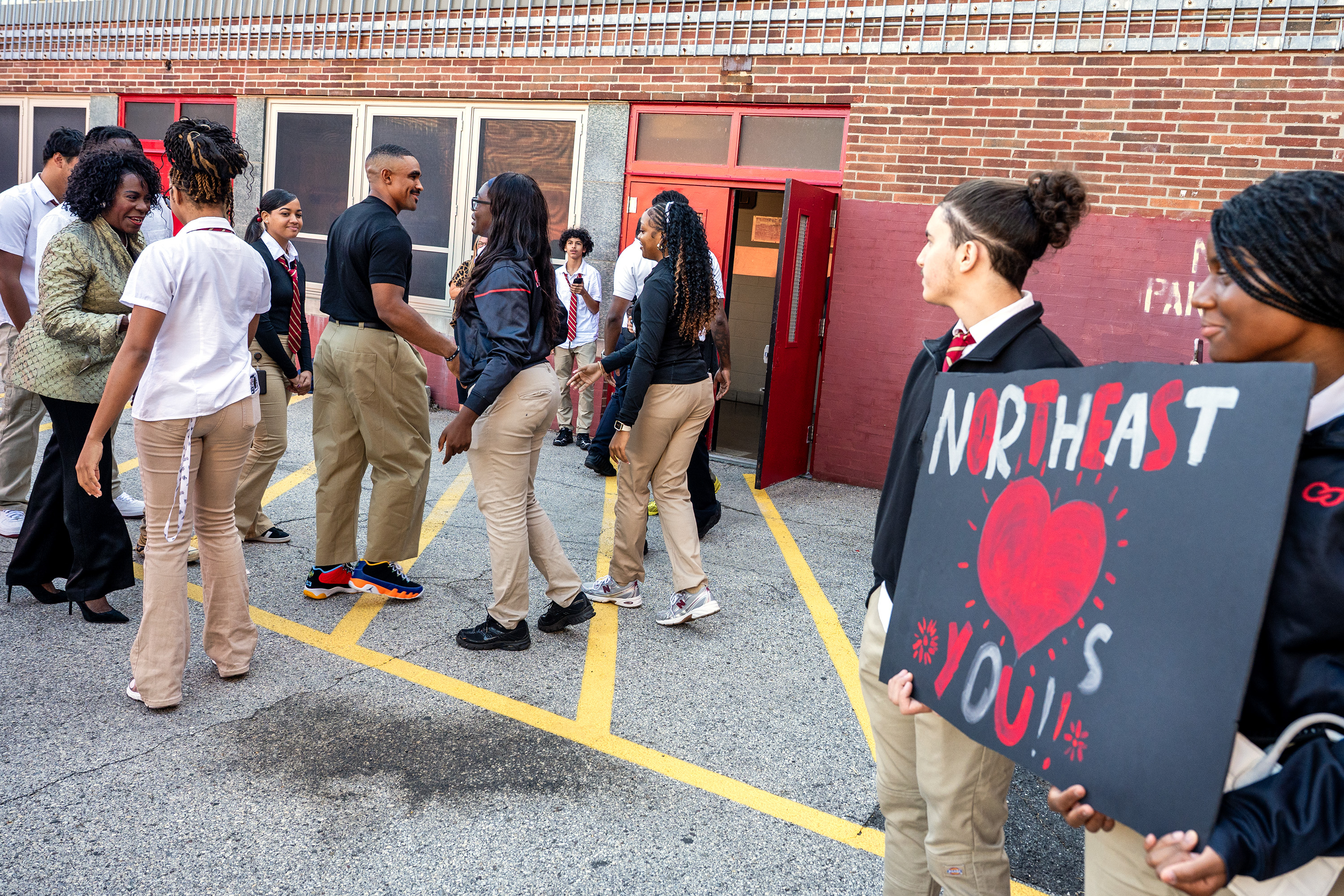
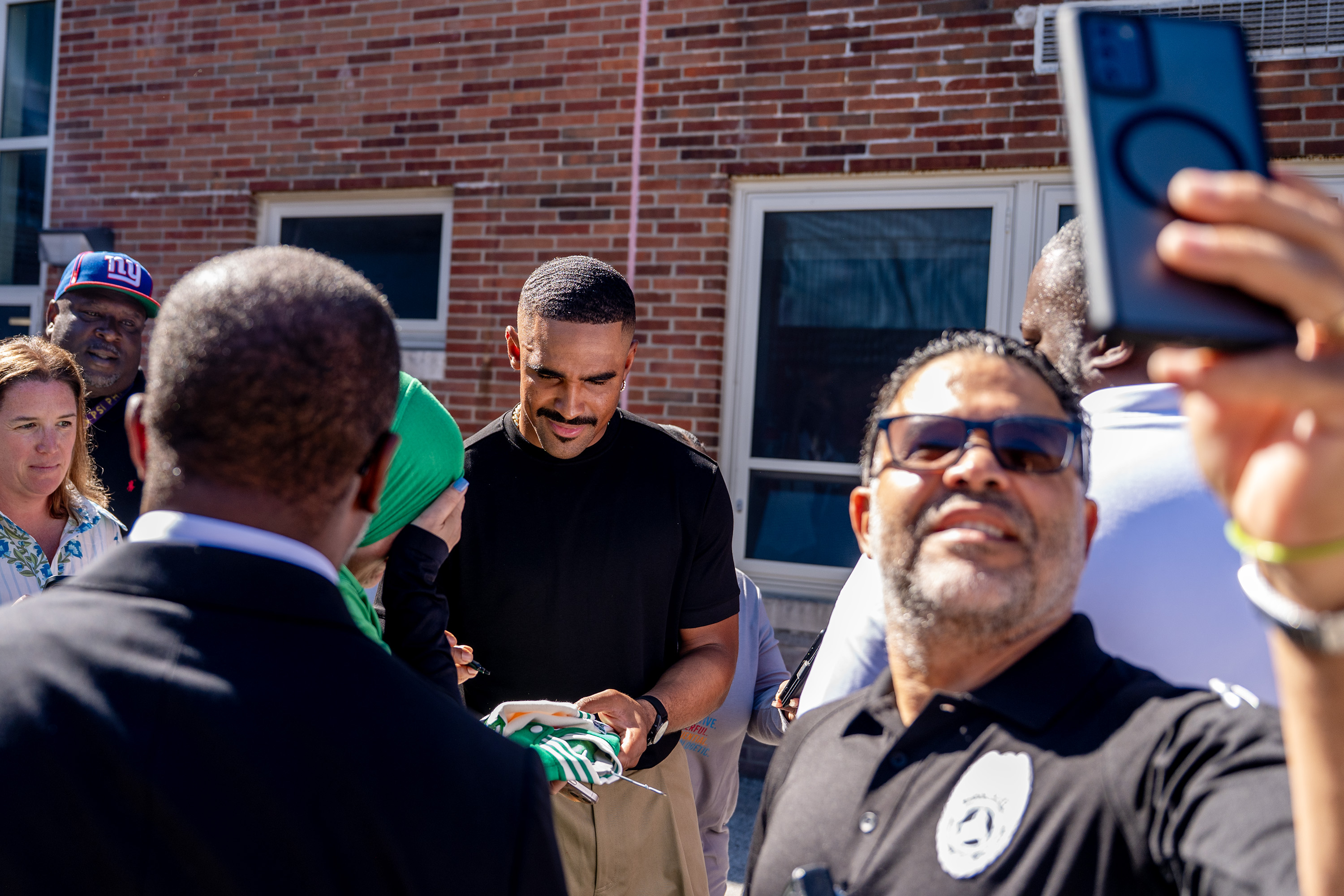
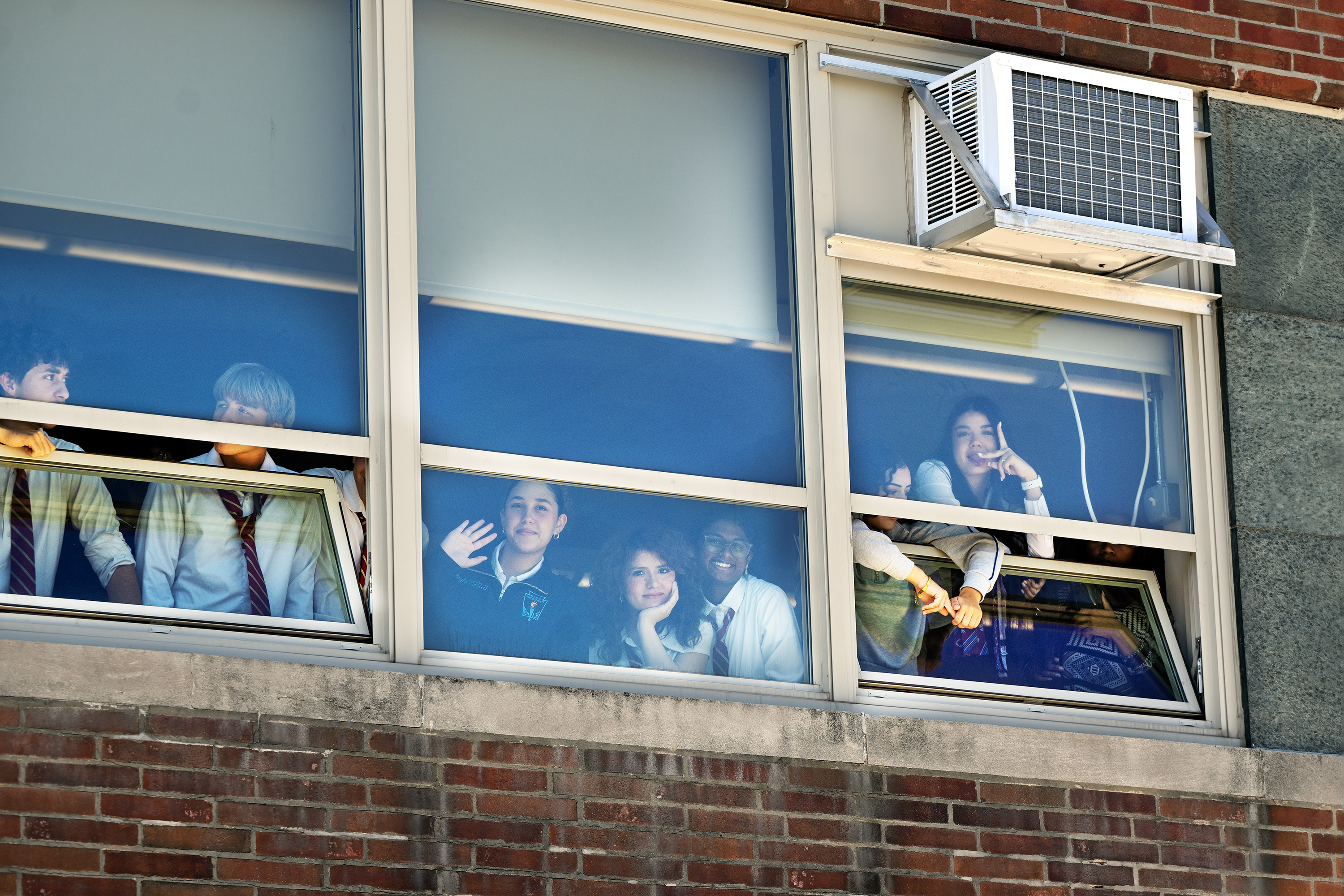
    Northeast High School watch from their classroom – with a window air conditioning unit – as Eagles quarterback Jalen Hurts leaves Tuesday, Sept. 15, 2026 following his appearance there to give the school $600k for an a new cooling system.Tom Gralish / Staff Photographer

    Asked why he was turning his attention to city schools, Hurts said he was influenced by his educator parents and the people who made a way for him.

    “It’s about service and showing up for those around you,” the quarterback said.

    Northeast High had window units cooling classrooms prior to Hurts’ announcement, but the auditorium, a hub of the school and the community, was tough to use in the spring and summer months, said Andrew Lukov, the school’s principal.

    “This changes everything for us,” Lukov said.

    A beaming Parker, who made sure to lead the adoring Northeast crowd in an E-A-G-L-E-S chant, spelled correctly, led the crowd in giving Hurts a standing ovation.

    “Jalen, on behalf of the entire city of Philadelphia, we say thank you for your gift,” Parker said. “You will have an impact on more than the 3,400 students who attend this school on a daily basis. You’ve also done something even more important: You’ve used your time, your treasure, and your celebrity to assist a constituency who will never be able to walk in your shoes.”

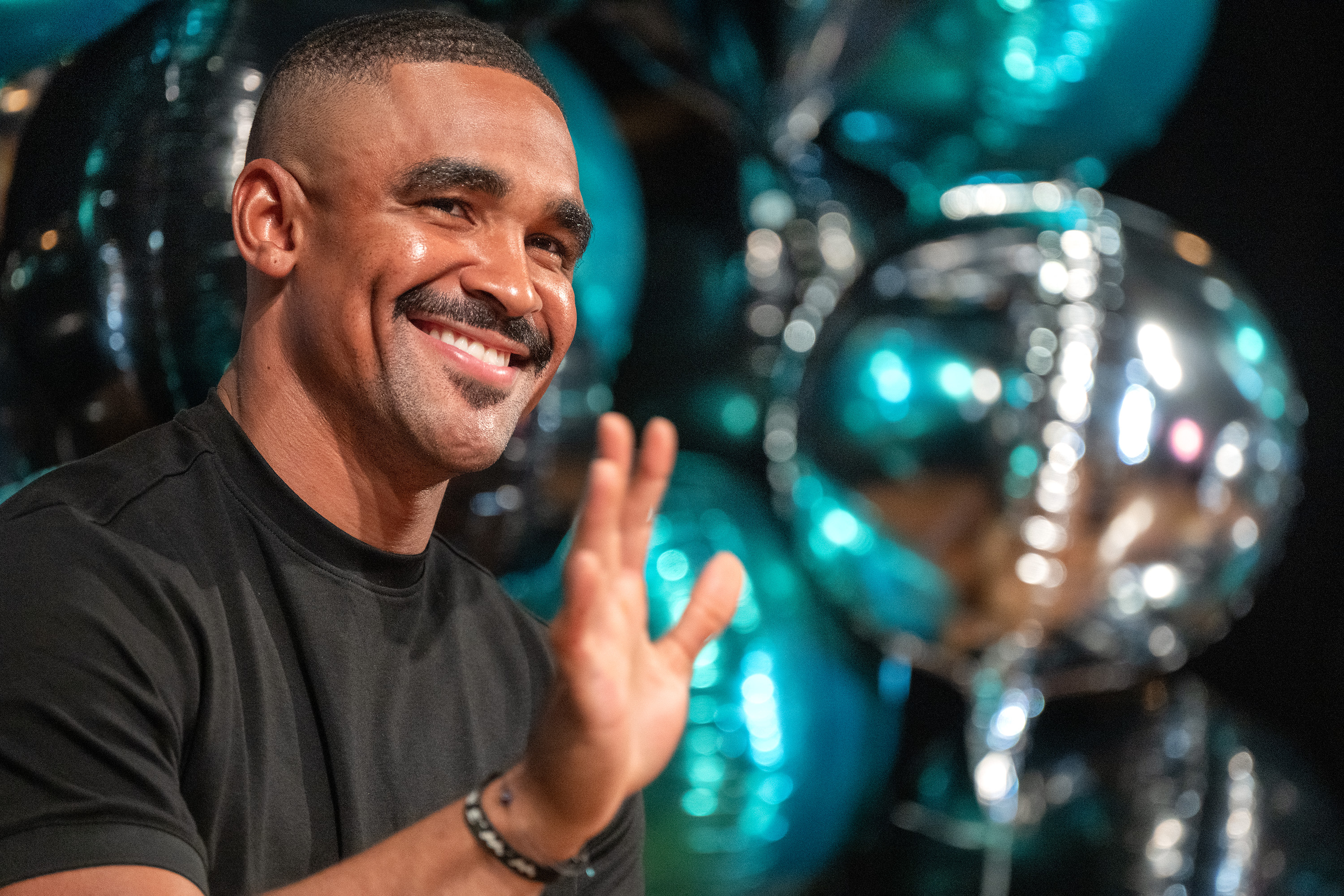
    Eagles quarterback Jalen Hurts as he appears at a rally in the auditorium at Northeast High School Tuesday, Sept. 15, 2026 to give the school $600k for an air conditioning system. With him onstage in the auditorium Northeast principal Andrew Lukov, School Superintendent Tony B. Watlington, Sr. and Mayor Cherelle L. Parker.Tom Gralish / Staff Photographer

    It feels a little surreal that a major space in an important school lacks adequate climate control in the United States, said Mekhriyona Ilkhomova, a Northeast senior whose speech earned a broad smile and a hands-over-heart gesture from Hurts.

    Hurts’ donation matters, not just because of the money but because of who he is, said Ilkhomova, a standout student and athlete.

    “It reminds us students of what we can become,” she said, “and what we can give back after becoming.”

    The state of the cool

    District officials had promised the entire system would be air-conditioned by 2027; the system appears off track to reach that goal.

    While Northeast is getting an upgrade, 52 schools lack air-conditioning.

    When temperatures are forecast to hit 85 degrees or higher by noon, those 52 schools are dismissed early. If the weather forecast calls for temperatures of 85 or higher before 9 a.m., those schools are closed for in-person instruction and remote learning days are called.

    That means unequal experiences, with students in some schools not missing instructional time when it’s hot, and those in a quarter of schools subject to interrupted schedules.

    School Superintendent Tony B. Watlington, Sr. (right) greets Eagles quarterback Jalen Hurts as he appears at a rally in the auditorium at Northeast High School Tuesday, Sept. 15, 2026 to give the school $600k for an air conditioning system. At left is Kathryn Epps, president & CEO, The Fund for the School District of PhiladelphiaTom Gralish / Staff Photographer

    Four weeks into a new school year, Philadelphia has had two heat-interrupted days at the 52 schools.

    Cooling the remainder of the 52 schools is not as simple as buying air-conditioning units: Many old buildings lack adequate electrical systems to support whole-school cooling.

    Those projects are complicated.

    An HVAC project at Kensington High went awry this summer, triggering asbestos issues that forced students and staff to relocate for the rest of the calendar year.