Blog

  • Philly nominees went home empty-handed at the 2026 Emmys, barring a lone ‘Task’ win

    Philly nominees went home empty-handed at the 2026 Emmys, barring a lone ‘Task’ win

    Philadelphia talent was on full display at the 2026 Emmy Awards in Los Angeles on Monday night, but only one of the nominated actors, crew members, or shows took home trophies.

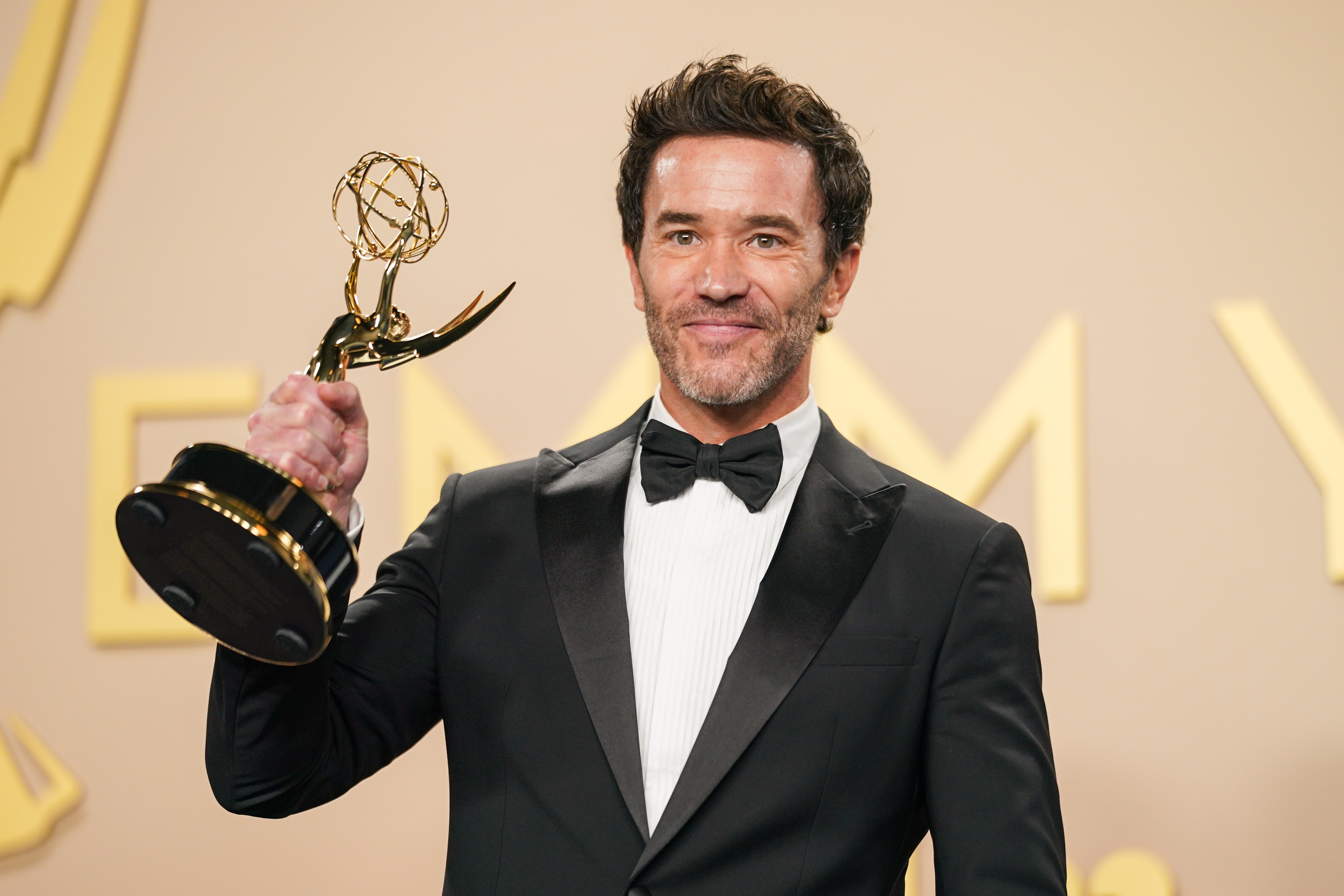
    The big, surprise exception was Tom Pelphrey, a Rutgers University alum from Howell Township, N.J., who won for outstanding supporting actor in a drama series for his performance as Robbie Prendergrast on Season 1 of the Delco-set HBO crime thriller Task.

    “I thank God for my life and my sobriety. I thank my family and my friends for all your love and support all these years, from Emmys to, you know, black box theaters and everything in between,” said Pelphrey in his acceptance speech before thanking Task creators including directors Jeremiah Zagar (son of South Philly mosaicist Isaiah Zagar) and Salli Richardson-Whitfield, and fellow cast members Mark Ruffalo, Emilia Jones, and Raúl Castillo.

    Ruffalo was nominated for outstanding lead actor in a drama for his role as Tom Brandis but lost to Noah Wyle of The Pitt. The Pittsburgh-set emergency room drama received a whopping 25 nominations and took home seven Emmys, including outstanding drama series; Pelphrey beat out three supporting actor nominees from The Pitt for his win.
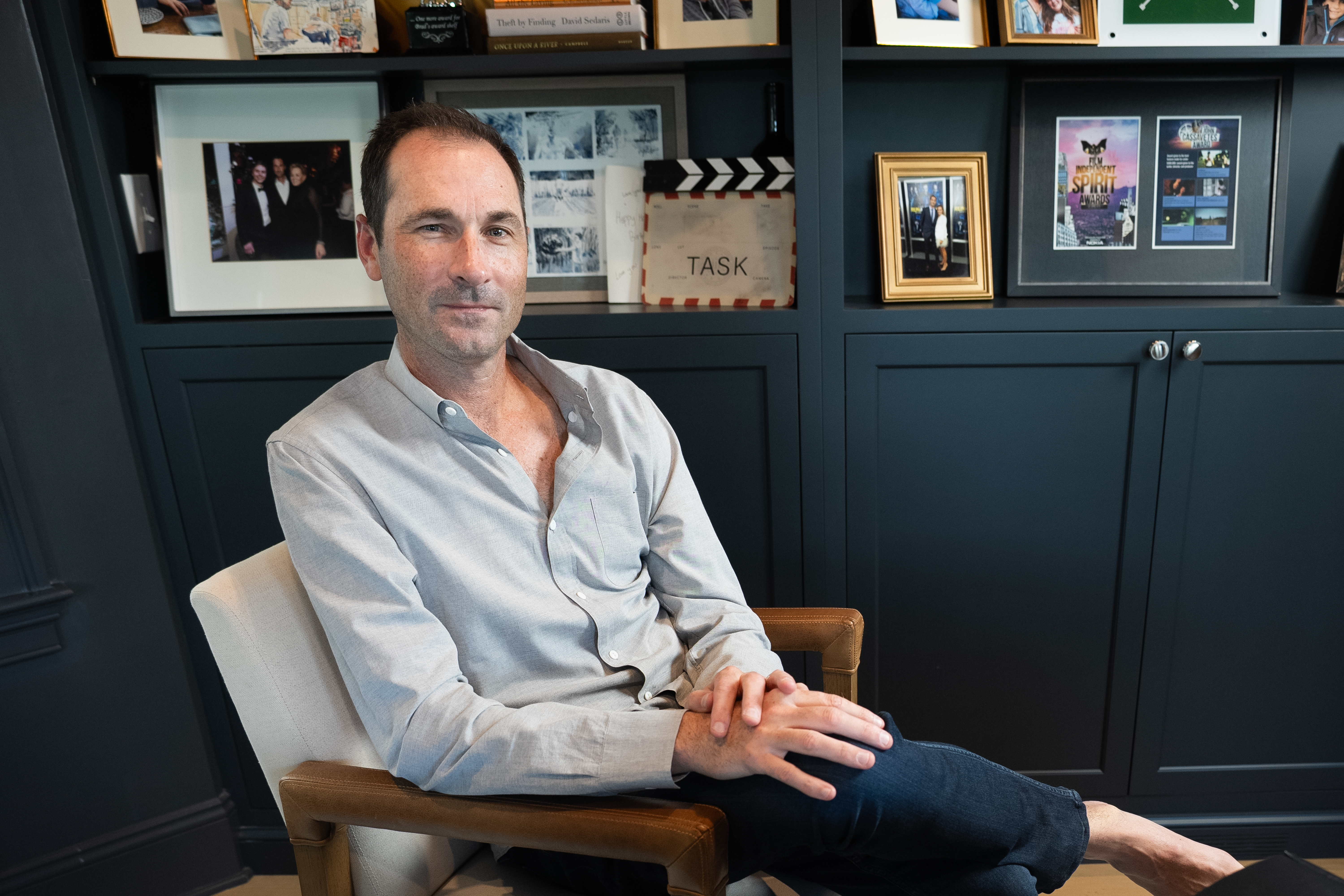
    Brad Ingelsby, writer/executive producer of “Task” and “Mare of Easttown,” in his office in Berwyn on July 17, 2025. Jessica Griffin / Staff Photographer

    “Thank you to Brad Ingelsby for this incredible role and this opportunity and your friendship. You are an amazing human being. I’m so proud to be your friend,” Pelphrey continued onstage as the camera showed a beaming Ingelsby, the Berwyn-based showrunner. Ingelsby is the writer/executive producer behind Task, which is currently shooting its second season in the Philadelphia area, and the Emmy-winning Mare of Easttown.

    In Task, Pelphrey played a heartfelt but troubled trash collector who begins stealing from drug houses in Philadelphia’s collar counties run by a local motorcycle gang that killed his brother. Starring alongside two-time Emmy winner Ruffalo, Pelphrey was a complicated foil to Ruffalo’s priest-turned-FBI agent who hunted him down. The recognition marks Pelphrey’s first Emmy win after he was previously nominated for outstanding guest actor in a drama in 2022 for his role in Ozark.

    “Brad is desperately insistent upon each individual’s humanity, so every character he writes is justified, in some sense, with a reason why they’re doing everything that they do — and that’s incredible, because usually that stuff gets sacrificed for plot,” Pelphrey told The Inquirer in a 2025 interview.
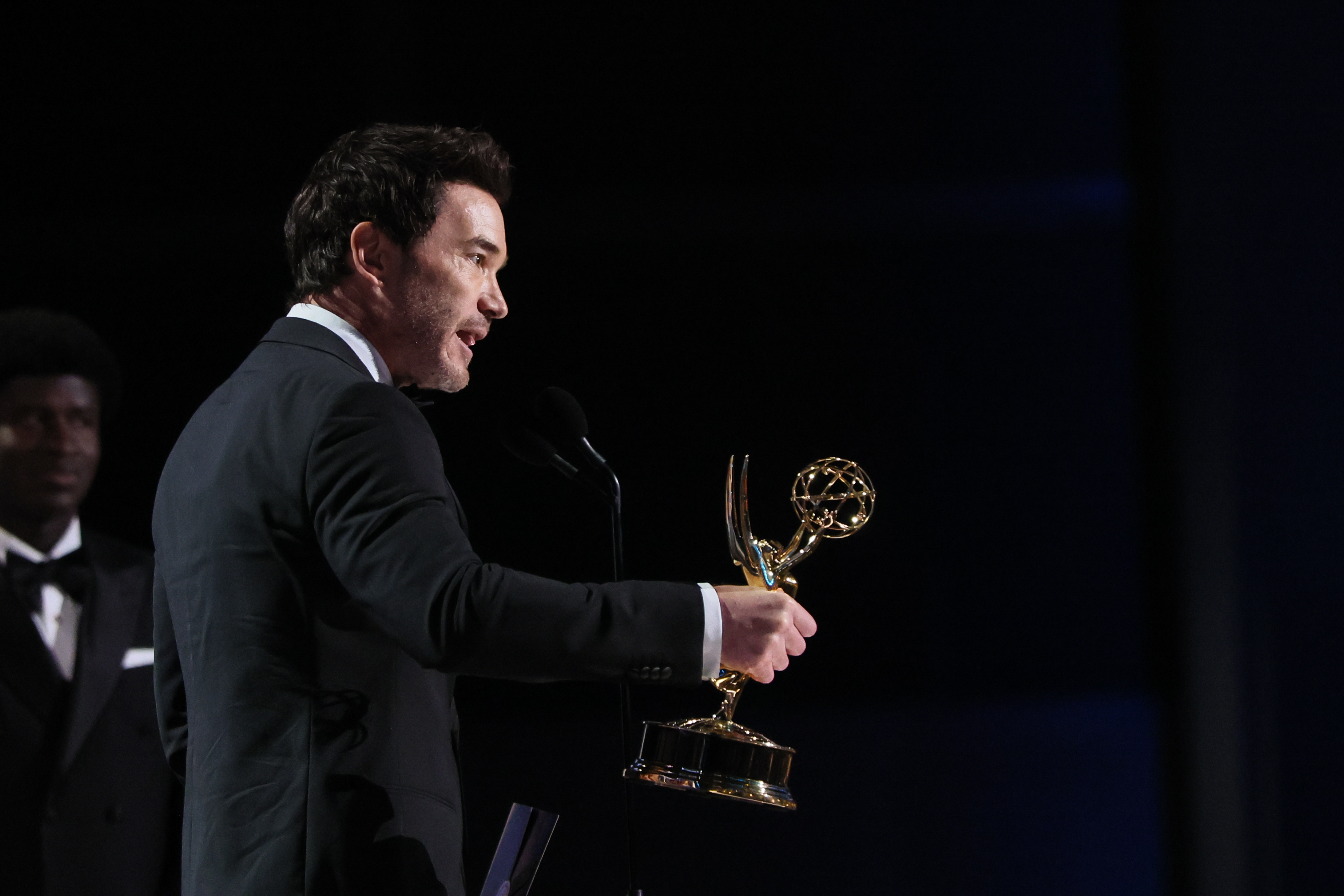
    Tom Pelphrey accepts the Emmy for Outstanding Supporting Actor in a Drama Series for “Task” at the Television Academy’s 78th Emmy Awards telecast at the Peacock Theater at L.A. LIVE on Monday, Sept. 14, 2026 in Los Angeles. (Photo by Danny Moloshok/Invision for the Television Academy/AP Content Services)AP Photo/Danny Moloshok

    Task received six Emmy nods, including outstanding writing for a drama (recognizing Ingelsby’s heart-wrenching finale), directing, picture editing, and cinematography. The dystopian Apple TV+ show Pluribus won for outstanding writing and picture editing, while the directing trophy went to the British spy show Slow Horses and cinematography went to Spider-Noir.

    Philly’s much-adored Abbott Elementary went into the evening with seven nominations for its fifth season, including West Philly comedian Quinta Brunson’s nod for outstanding lead actress in a comedy and outstanding writing for a comedy and director Randall Einhorn’s nod for his episode shot during a live Phillies game last year (featuring guest star Kyle Schwarber on the historic night when he hit four homers).
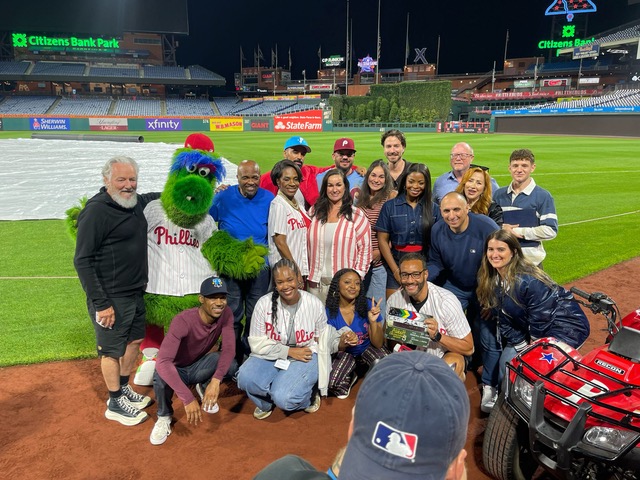
    “Abbott Elementary” cast and crew pose with the Phanatic and Phillies player Kyle Schwarber at Citizens Bank Park on Aug. 28, 2025.Vaughn C. Page Jr.

    However, the horror-tinged newcomer Widow’s Bay swept nearly all the comedy categories, dominating the stage with a record-breaking 14 wins. Abbott Elementary actors Tyler James Williams and Janelle James were up for outstanding supporting acting in their respective categories but both lost to Widow’s Bay.

    In the acting category, Brunson lost to Jean Smart as the Hacks star made history by becoming the first woman to win lead acting Emmy Awards for every season of a series. Smart’s costar Hannah Einbinder — an avid Eagles fan — was nominated for outstanding supporting actress in a comedy, which she won last year but lost this time to Kate O’Flynn for Widow’s Bay.

    Previous two-time Emmy-winner Brunson was briefly in the spotlight when Emmys host and Law & Order: Special Victims Unit star Mariska Hargitay asked celebrity attendees about their first jobs.

    “Oh, I was a student dance schoolteacher,” Brunson answered. Fellow West Philly-raised star Colman Domingo, who was nominated for outstanding guest actor in a drama for Euphoria and outstanding supporting actor in a comedy for Tina Fey’s The Four Seasons, also joined in. His first job, he said, was working the fries station at McDonald’s. (Domingo lost the former category to The Pitt and the latter to Widow’s Bay.)
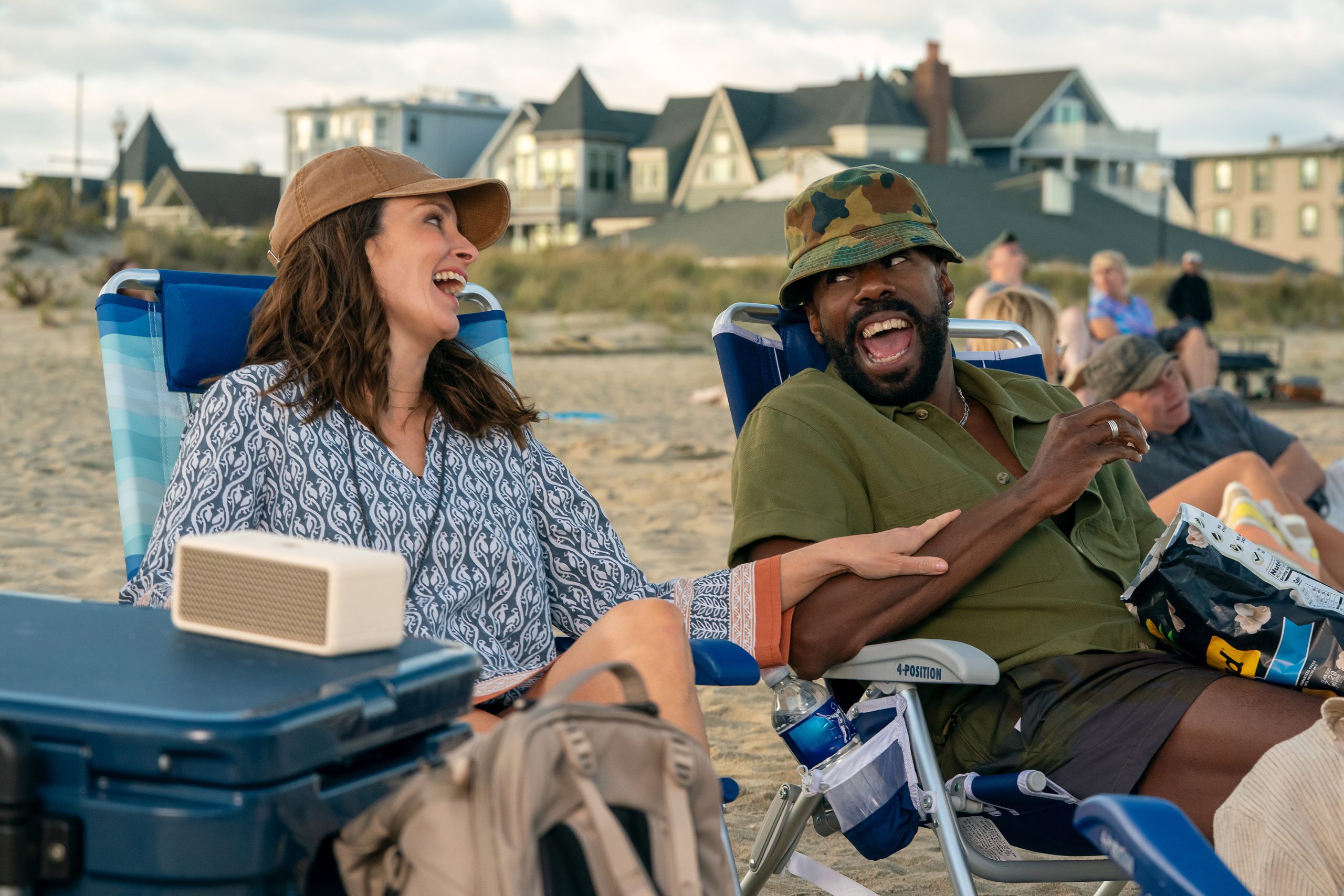
    Tina Fey as Kate and Colman Domingo as Danny in Season 2 of the Netflix comedy series “The Four Seasons.”Emily V. Aragones/Netflix

    To celebrate the 30-year anniversary of Buffy the Vampire Slayer, Villanova-raised actor and Malvern Prep alum David Boreanaz joined star Sarah Michelle Gellar for a reunion moment onstage. The son of famous 6abc weatherman Dave Roberts, Boreanaz played the vampire with a soul Angel and later received his own spinoff show. (He’s also a diehard Philly sports fan.)

    “You know, Sarah, I always thought that Buffy and Angel would end up together,” Boreanaz said as the pair reflected on the groundbreaking show. “Well, I guess we won’t find out,” Gellar replied in a pointed critique of the recent cancellation of the Buffy reboot that had been in the works.
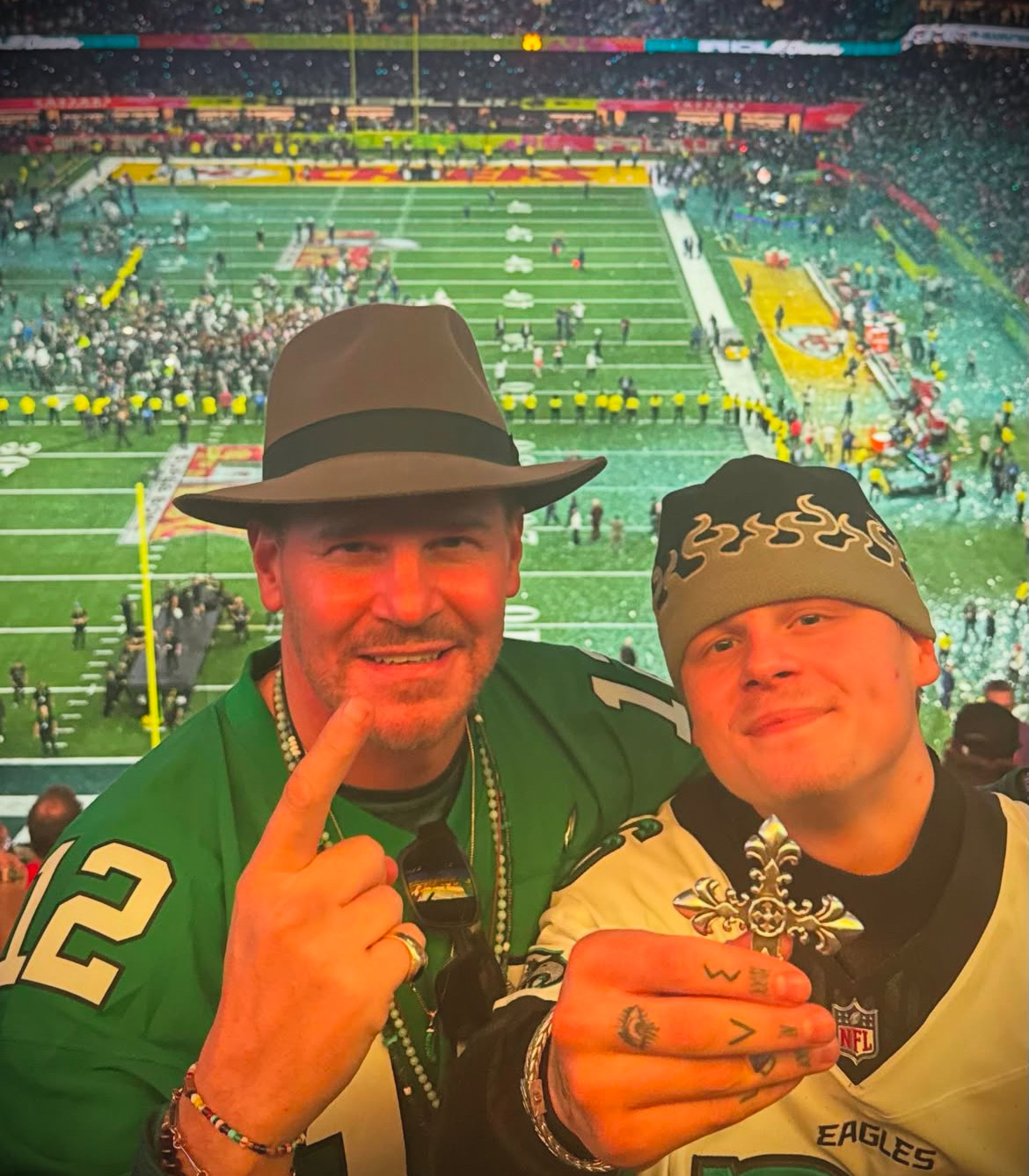
    Actor David Boreanaz, wearing a Randall Cunningham jersey, and his son, Jaden, in a Saquon Barkley jersey, at Super Bowl 59 in New Orleans.Courtesy of David Boreanaz

    Ahead of the 78th Primetime Emmy Awards ceremony, the Academy of Television Arts & Sciences hosted the Creative Arts Emmys in two events honoring artists behind the scenes in technical categories. Winners from those ceremonies included South Philly comedian Rob Mac — the showrunner behind It’s Always Sunny in Philadelphia — whose FX show Welcome to Wrexham won for outstanding sound mixing for a reality program. (It was also nominated for outstanding picture editing and outstanding unstructured reality program.)

    Bucks County pop star Sabrina Carpenter also won during the Creative Arts Emmys earlier this month for performing in and executive producing the 50th anniversary special of The Muppet Show, which earned a gold statue for outstanding variety special (prerecorded) — putting her halfway to EGOT status.

    Another Philadelphia-connected nominee was Tires, the Shane Gillis-led Netflix comedy recognized for outstanding sound mixing for a half-hour comedy or drama; the trophy went to Widow’s Bay.

    At Monday night’s ceremony, one more Pennsylvania celebrity made a cameo: Superstar singer Taylor Swift, who grew up in Reading was not in attendance, but appeared in a prerecorded skit with Hargitay spoofing Law & Order along with Swift’s cat, named for Hargitay’s character, Olivia Benson.


  • Trump’s effort to assert control over elections continues, despite court loss

    Trump’s effort to assert control over elections continues, despite court loss

    WASHINGTON — The Supreme Court dealt President Donald Trump a major blow Monday when it blocked his executive order to restrict mail ballots. But Trump’s battle to assert control over the election process is far from finished.

    The stymied attempt to have the U.S. Postal Service screen mail ballots was just one piece of a broader effort involving the full power of the federal government to take more control of state-run elections.

    Just days before the Supreme Court blocked Trump’s mail ballot order, the Justice Department sent threatening letters to at least 30 top election officials across the country, escalating a fight to gain access to private voter data and election records.

    Federal agents are scouring voter rolls managed by states for noncitizens, despite a lack of evidence of widespread fraud. Trump’s Homeland Security secretary recently pushed for an investigation into whether a commonly used voting machine can be trusted, casting doubt on digital voting systems.

    “This is far from over,” said Benjamin Hovland, who was ousted from the independent, bipartisan Election Assistance Commission by the Trump administration this year.

    Hovland acknowledged that the Supreme Court’s decision mitigated “real-world impact” on voters and election workers, particularly since voters in some states have already begun to mail in their ballots. But he said Trump’s actions were alarming.

    “What you’re seeing is using the apparatus of government, using federal agencies, using taxpayer dollars, to push that narrative that only undermines confidence in our democracy and ultimately hurts voters and election officials,” Hovland said.

    Trump argues that he is trying to secure the integrity of the vote, but his claims of widespread fraud in the election system have been investigated and debunked repeatedly, and critics say his actions needlessly sow doubt about the outcome of the vote.

    The White House did not immediately respond to requests for comment.

    There are stark differences between now and Trump’s first term, when his attempts to undermine the election results in 2020 ran into stiff pushback not only from the courts but also from his own government officials. In his second term, Trump has surrounded himself with loyalists willing to turn his obsession over the country’s election systems into a blitz of federal actions. He has also installed election deniers in key posts.

    The Supreme Court’s decision Monday did, however, add to a string of mounting losses for Trump, who said this year that he wanted to “take over” and nationalize elections. Even before the Supreme Court decision, two lower court judges ruled that Trump’s changes to mail-in balloting were most likely illegal and should not be imposed so close to the November elections.

    Trump administration lawyers had urged the Supreme Court to step in and clear the way for its plan to use the Postal Service to screen ballot envelopes after they are submitted by state elections officials. The new rules would require states to submit lists of voters approved to receive mail ballots. The Postal Service would then deliver mail ballots only to the voters on the lists.

    In addition to the loss Monday, Trump’s other attempts to pressure states over the election process have faced legal setbacks.

    The Justice Department has sued 30 states for unredacted voter lists, which include personal information such as driver’s license numbers and partial Social Security numbers.

    They have lost 23 of those cases. Decisions are pending in the rest.

    The federal actions, as well as the various court decisions, have caused alarm among local election officials and voters, according to election experts.

    This month, the chief election officials in seven Republican-controlled states filed a brief to the Supreme Court, arguing that with less than two months until Election Day, it was too close to the midterms to make any major changes to the election process.

    Some states including North Carolina, Delaware, and Alabama had already mailed out their ballots, even before the Supreme Court issued a final decision.

    “Attempting to implement the rule now will almost certainly lead to mistakes, delays, and confusion for both voters and election officials,” the brief stated.

    But it was not just the pending Postal Service rule that has caused confusion and upended coordination among local election officials and the federal government.

    The administration has also asked the Supreme Court to intervene to allow it to move forward with an effort to build citizenship lists by merging data from various agencies, including the Department of Homeland Security and the Social Security Administration. A lower court has so far blocked the use of that tool, which administration officials argue is needed to verify citizenship for voting, among other purposes.

    In July, Markwayne Mullin, the Homeland Security secretary, threatened election officials in a speech and said they could face prison time if they did not comply with the Trump administration’s efforts to change election policies. Officials in the Justice Department have also explored whether they could bring criminal charges against state or local election officials if the administration determined they had not sufficiently safeguarded their computer systems.

    The Federal Emergency Management Agency, which sits under the Homeland Security Department, is demanding that states change the way they conduct elections or risk losing tens of millions in federal terrorism-prevention funds.

    Kimball W. Brace, the president of Election Data Services, an organization that works with local governments on election preparedness, said he did not expect the Supreme Court decision to stop Trump’s broader effort to pursue his election grievances.

    “I don’t anticipate people on the Republican side not wanting to continue and push their side of the story as much as possible,” Brace said.

    Distrust of the election process among voters is growing as the November elections approach. A survey from the Associated Press and the NORC Center for Public Affairs Research and USAFacts showed that only 34% of U.S. adults trust government certifications of election results “a great deal” or “quite a bit,” down from 40% in 2024.

    Trump has also gutted the government’s election security infrastructure. Experts warn that his cuts to agencies tasked with coordinating election security with state governments could reduce visibility into foreign influence campaigns and cyberattacks.

    Brace said all the executive actions have fueled pressure on local election officials.

    “They don’t want to deal with this crazy pressure that various interests and various individuals have pushed on the election administration,” he said.

    This article originally appeared in the New York Times.

  • The Eagles have exclusive $1 mini art prints from vending machines, a first in the NFL

    The Eagles have exclusive $1 mini art prints from vending machines, a first in the NFL

    Anastasia Inciardi’s art has made the rounds — her mini prints have become desirable collectibles at museums, arenas, and VIP red carpets nationwide. But her latest collab is particularly special because of what it means to her family.

    This week, the Philadelphia Eagles announced that Inciardi’s mini-print vending machines would be stationed at Lincoln Financial Field all season. The machines are stocked with football-themed linocut art with designs ranging from a Go Birds sign to an Eagles pretzel.

    Inciardi’s worked with big names and brands before — ranging from Harry Styles to Snoopy and the Peanuts gang. But her work with the Eagles marks the artist’s first foray into the NFL.

    The Birds are touting the collab as an easy, affordable game-day souvenir. Prints cost $1, and they are about 2.5 inches by 3.5 inches — about the size of a playing card.

    For Inciardi, who lives in Portland, Maine, and grew up in Brooklyn, N.Y., the partnership was a no-brainer, given her family’s Philly ties. Her grandmother, two aunts, two uncles, and cousins all live in Philly.

    “It’s been an absolute dream come true to partner with the Eagles,” she said. “My family are all die-hard Philly sports fans, so it was an honor to create these prints as an homage to this incredibly dedicated fan base.”

    This is the fifth Philly location to host Inciardi machines. Her prints became available in the area in 2024, at book and magazine shop Another Corner, Di Bruno Bros. (the Italian Market bottle shop and Rittenhouse grocery locations), and the Fabric Workshop and Museum.

    “When I first started placing my vending machines, I wanted my grandmother to have one within walking distance,” Inciardi told The Inquirer last year. “She’s 85 and loves to walk to Di Bruno Bros., pick up some Romano, antipasti, and a few of my mini prints.”

    Anastasia Inciardi, a Maine-based linocut artist, poses with one of her popular art vending machines, which have been making appearances nationwide — including in Philadelphia.Courtesy of Anastasia Inciardi

    The novelty of vending-machine art has been on the rise because of the pieces’ small size and affordable pricing. Several other artists have since started putting their own spin on the concept — including Philly’s Fabiola Lara, a Latinx illustrator with machines all over town that hold her Riso-printed art. Those artists, including Lara, credit Inciardi for popularizing the concept.

    The Linc will host three mini-print vending machines with seven designs at the stadium during games, in Pepsi Plaza, Section 107, and Section 113.

    For fans not attending games, the machines will also be accessible at the stadium Pro Shop during the week.

    Each print is $1 and redeemable through tokens — not cash. Tokens can be purchased at Pro Shop locations. Additional designs will be added throughout the season, according to the Eagles.

  • Flyers GM Danny Brière provides updates on Matvei Michkov and clarifies previous ‘step back’ comment

    Flyers GM Danny Brière provides updates on Matvei Michkov and clarifies previous ‘step back’ comment

    General manager Danny Brière walked into the press room on the second floor of the Flyers Training Center on Tuesday morning for his annual preseason media news conference.

    The room is lined with windows on one side, and below, as he answered questions for approximately 20 minutes, players went through drills. But these weren’t the rookies, who had been in camp since Friday and were skating in the afternoon; these were the big boys in presumably their final captain’s practice before they officially hit the ice Thursday for the fourth training camp of Brière’s tenure.

    Among those on the ice were forwards Owen Tippett and Noah Cates, two players whose seasons ended early due to injury, and new guys like goaltender Joseph Woll.

    Here are the major topics the GM touched on before Thursday.

    On Matvei Michkov

    Coming off a roller coaster sophomore campaign, Matvei Michkov has acknowledged several times that he did not prepare properly entering last season, and it affected his game.

    Although he played better following the Olympic break, finishing with 20 goals and 51 points in 81 regular-season games, Michkov was scratched in the playoffs, struggled with the pace, and had just one assist in eight postseason contests.

    But Brière said that the winger is walking around the training center with “a different swagger” right now and wants to “prove that last year was just a little hiccup.” Through social media posts, pictures, and interviews with Russian media, it appears the 21-year-old also had a different mindset preparing for Year 3.

    One video posted on X features Michkov speaking about a member of the Flyers’ training staff, Lorne Goldenberg, who was hired in May as a performance development coach, going to Russia over the summer to work with him. According to Brière, it was Michkov and not the organization who requested that.

    After an up-and-down sophomore season, Matvei Michkov has a lot to play for, including a new contract, in Year 3.Yong Kim / Staff Photographer

    “I believe so,” Brière said when asked if he learned and responded well to how last season went.

    “I think we saw him mature as the season went on last year. Everybody has a different path. You all wish that guys were all like Sidney Crosby, and they were at 16 years old a total pro. But the reality is, those are really rare.

    “Everybody has a different path along the way. But what I was excited to see was, I think his maturity level increased as the season went on. In the offseason, seeing him here, he’s got a pep in his step. He feels good. He looks good. So I’m excited about Matvei’s season.”

    Unlike last year, the Flyers are no longer allowed to conduct fitness testing, with a new collective bargaining agreement going into effect at midnight on Tuesday. The CBA also has new rules regarding contracts, as teams are no longer allowed to sign players to eight-year deals; seven years is now the max. For Michkov, it is a big year as he will be a restricted free agent come July 1. The GM said there have been talks, but they are not close to signing an extension.

    “He’s a polarizing player, his personality and everything. He’s been a superstar since he was 14, 15 years old. I think he’s comfortable in the spotlight; that’s just who he is,” Brière said when asked about Michkov maybe having a quieter year off the ice.

    “But yeah, definitely things were overblown, and it goes both ways. They’re probably going to be overblown when it’s good; they’re going to be overblown when it’s bad. I think a lot of it is his personality. He’s very polarizing, and I think it’s not all that bad because he strikes me as one of those guys who, when things are good and he’s in the spotlight, he’s not afraid of the big moment.

    “So, I try to see the positive in it, but … I thought last year was overblown in his case.”

    Flyers general manager Danny Briere clarified one of his previous comments about “taking a step back” and stated that the goal remains making the playoffs.Jose F. Moreno / Staff Photographer

    No complacency

    On July 1, the GM said: “We took a big step forward last year, and there’s a chance, a good chance, that we take a little bit of a step back this year. We’re ready for that. But I’m excited where this young group of guys are going.”

    On Tuesday, he softened the blow of “a step back.” Brière said he didn’t explain himself properly, stating the foundation of it was that he did not want the young players to be complacent because they made it to the NHL and had a good start. Although he knows it’s a young team, he doesn’t want the players to take a step backward in their development.

    “Today the goal is to make the playoffs,” he said later. “The most important part for me, and that’s where you’re [the media] not going to like my answer, but we hope our young guys take another step. And if they do, I think we’ll be very competitive.

    “I think last year going into the season, we were just hoping to be competitive. We were hoping to be in the mix, in or out of the playoffs, was going to be a good season. I see us as more competitive than we were last year, and a better team than we were last year, so that’s where it leaves us. Time will tell, but certainly I’m hoping that after the players tasted the playoffs last year, and that they’re eager to get back there once again.”

    The complacency message goes for rising stars, like Porter Martone, Alex Bump, and Denver Barkey, and the veterans, too. Despite a shortened camp and the roster seemingly largely set, Brière is expecting some battles for spots, not just in the lineup but also for added responsibilities like the power play — which he said coach Rick Tocchet and his staff devoted toward trying to figure out how to pull it out of the NHL basement — and penalty kill.

    “We talked about the power play,” he said. “I said it last year, I expect our penalty kill unit to be better. So don’t get complacent. Don’t think that because you’ve been on special teams the last three or four years, that you’re automatically going to be on it. We have a lot of guys fighting for positions. So that’s kind of the message. Not just about roster spots; it’s also about responsibility within the roster.”

    Breakaways

    Brière said forward Nikita Grebenkin’s status for the start of training camp is a little up in the air and he could “miss the first couple days of camp.” He said the winger, who suffered an upper-body injury in March and missed the rest of the season and playoffs, “had a little flare-up last week.” Grebenkin spent the entire 2025-26 season in the NHL, a first in his career, and had four goals and 14 points in 55 games. He is the only player, Brière said, who, as of publish time, could miss the start of things on Thursday.

    Nikita Grebenkin (upper body) is the only member of the Flyers who might not be on the ice to start training camp.Elizabeth Robertson / Staff Photographer
  • Cacia’s Bakery in Haddonfield appears to be closed after 2 years, as the property is put on the market

    Cacia’s Bakery in Haddonfield appears to be closed after 2 years, as the property is put on the market

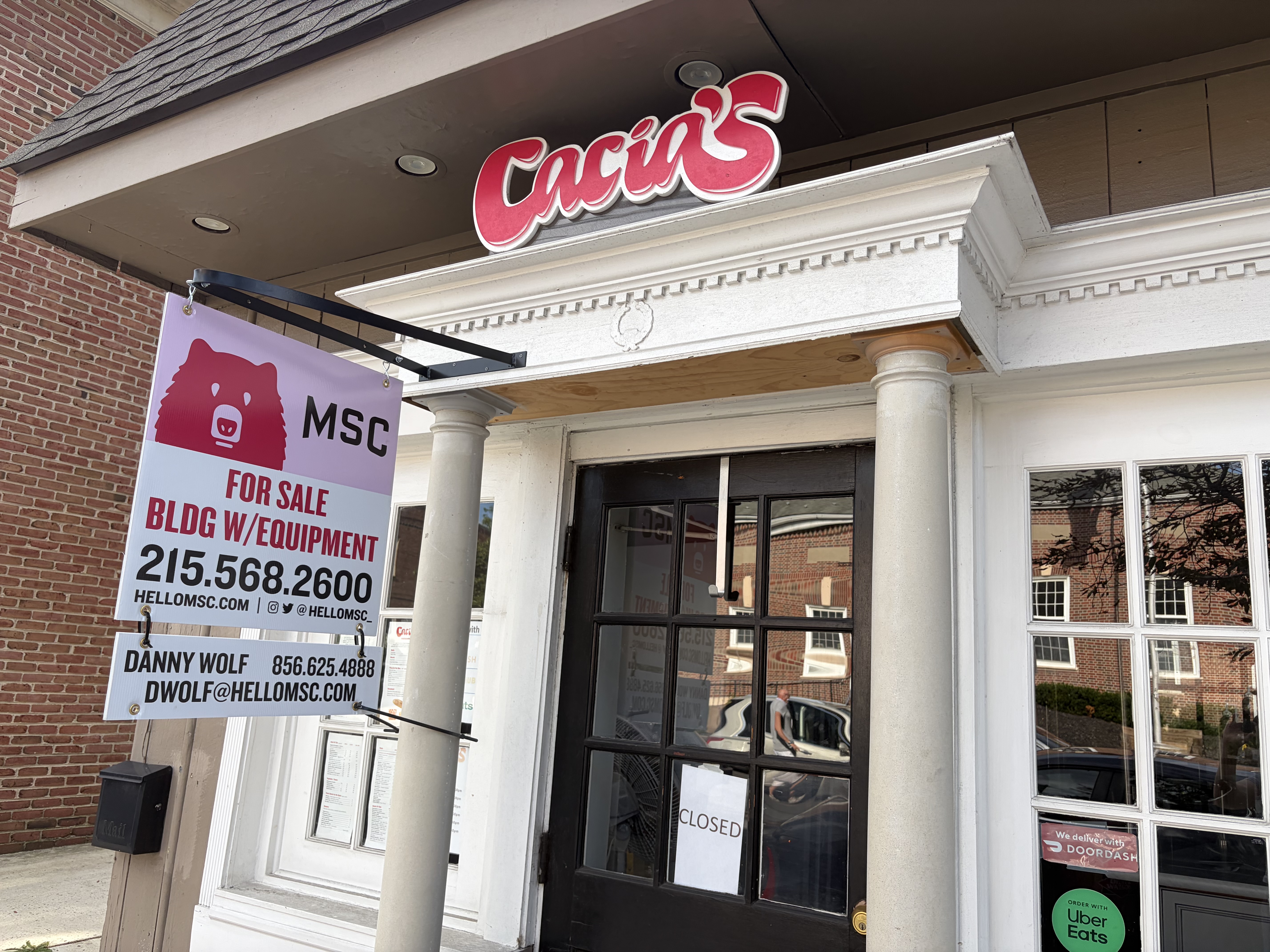
    Cacia’s Bakery in Haddonfield appears to have closed its doors without any fanfare after two years in business.

    A “closed” sign has been posted on the front door of the Italian bakery at 26 S. Haddon Ave., and the store was dark during a visit last week. Another sign advertises the 1,100-square-foot building and the equipment inside for sale.

    Cacia’s Bakery in Haddonfield has not made any public announcement about the closure, nor has the business responded to calls or emails requesting comment.

    Leonard Guerriero, who owns the Haddonfield Cacia’s, according to deed records, also did not return requests for comment on why the bakery closed.

    Cacia’s started more than 70 years ago in South Philly and continues today as a third- and fourth-generation family-owned bakery known for its square pizzas and thick-crusted rolls. The late Sam Cacia bought the city bakery on the corner of Mole and Ritner Streets in 1953.

    But the Cacia’s name has expanded across South Jersey over the years, with current spots in Williamstown, Cherry Hill, and Hammonton that sell Italian bread, strombolis, hoagies, cannoli, and more.

    Sam Cacia, a third-generation owner of the South Philly location, said his family taught Guerriero how to bake before he became the private owner of the Cherry Hill and Haddonfield locations.

    Cacia said the closure in Haddonfield was due in part to the tough parking situation and competition with sit-down restaurants downtown.

    “When you ride around the block looking for a spot, it becomes a bit of a challenge. It just came to, like, there wasn’t enough demand,” Cacia said. “It’s a shame. [He] tried to bring the product to a different set of people and it didn’t work that way.”

    Guerriero and co-owner Steven Santore opened the downtown Haddonfield bakery in the summer of 2024, NJ Pen reported, after their Audubon location was demolished by the New Jersey Department of Environmental Protection due to groundwater contamination. The bakery was across the street from the Haddonfield post office.

    The pair purchased the Haddonfield property for $375,000 in 2023, according to deed records, from the owners of Spice C, a noodle joint in Chinatown.

    The storefront previously occuped by Cacia’s in Haddonfield is now on the market.Sarah Nicell

    MSC, a Philly-based real estate brokerage firm, is managing the property sale. Danny Wolf, senior vice president at MSC, said the property hit the market in August and is listed for $495,000. The price includes the equipment inside the bakery, including a double Blodgett pizza oven.

    Wolf said the property already has potential buyers, though he declined to provide further details.

  • Gavin Newsom says he won’t run in 2028 if Kamala Harris does

    Gavin Newsom says he won’t run in 2028 if Kamala Harris does

    WASHINGTON — Gov. Gavin Newsom of California, who is widely expected to run for president in 2028, said in an interview published Monday by CNN that he would forgo a campaign if former Vice President Kamala Harris decided to run herself.

    “I wouldn’t run if she ran,” Newsom said during an interview recorded during a fly-fishing outing in Montana with Jake Tapper, the CNN anchor, adding: “I wouldn’t waste everyone’s time. Who needs that?”

    Newsom’s statement, volunteered as he and Tapper cast their lines at a scenic river, seemed to fly in the face of the presidential ambitions the governor has telegraphed since even before Harris lost the 2024 election.

    The surprising pledge, if taken at face value, might appear to constrain Newsom’s ambitions if Harris does in fact run again. He would be forced to either keep his word and not pursue an office he has openly coveted, or go back on his word and run against a fellow California Democrat with whom he has a long and complicated relationship.

    It is also possible that Newsom could announce a presidential campaign before Harris does, which could give him some wiggle room to argue that he had not broken any promises. Newsom might also believe that Harris will not run.

    A spokesperson for Newsom said he could not immediately offer more clarity on what the governor had meant.

    “They’ve been friends long enough that they wouldn’t play cat-and-mouse games on something this important,” said the spokesperson, Bob Salladay.

    The 2028 presidential primary race is expected to officially start as soon as late this year, after the midterm elections, and potential contenders including Newsom and Harris have made moves to maintain their national political profiles.

    This year, Newsom has made two trips to South Carolina, the first state on the Democratic Party’s presidential nominating calendar. Shortly after President Donald Trump took office for a second time, Newsom started a podcast in which he has interviewed guests from across the political spectrum, including Charlie Kirk before his assassination, Hunter Biden, and a series of Democratic governors.

    When Tapper laid out the case for why Harris, who has also expressed her interest in running for president again, might not be the best option because she has already been nominated and lost, Newsom agreed.

    “That would be the case you’d make, a pretty good one, actually, that’s objectively true,” he said. “But I know what that means. I know her base of supporters, I know her friends.” Referring to the overlap in their circles as “pure crossover,” he added, “I wouldn’t do that.”

    This article originally appeared in the New York Times.

  • Sheriff Rochelle Bilal’s new undersheriff has resigned just three months into the job

    Sheriff Rochelle Bilal’s new undersheriff has resigned just three months into the job

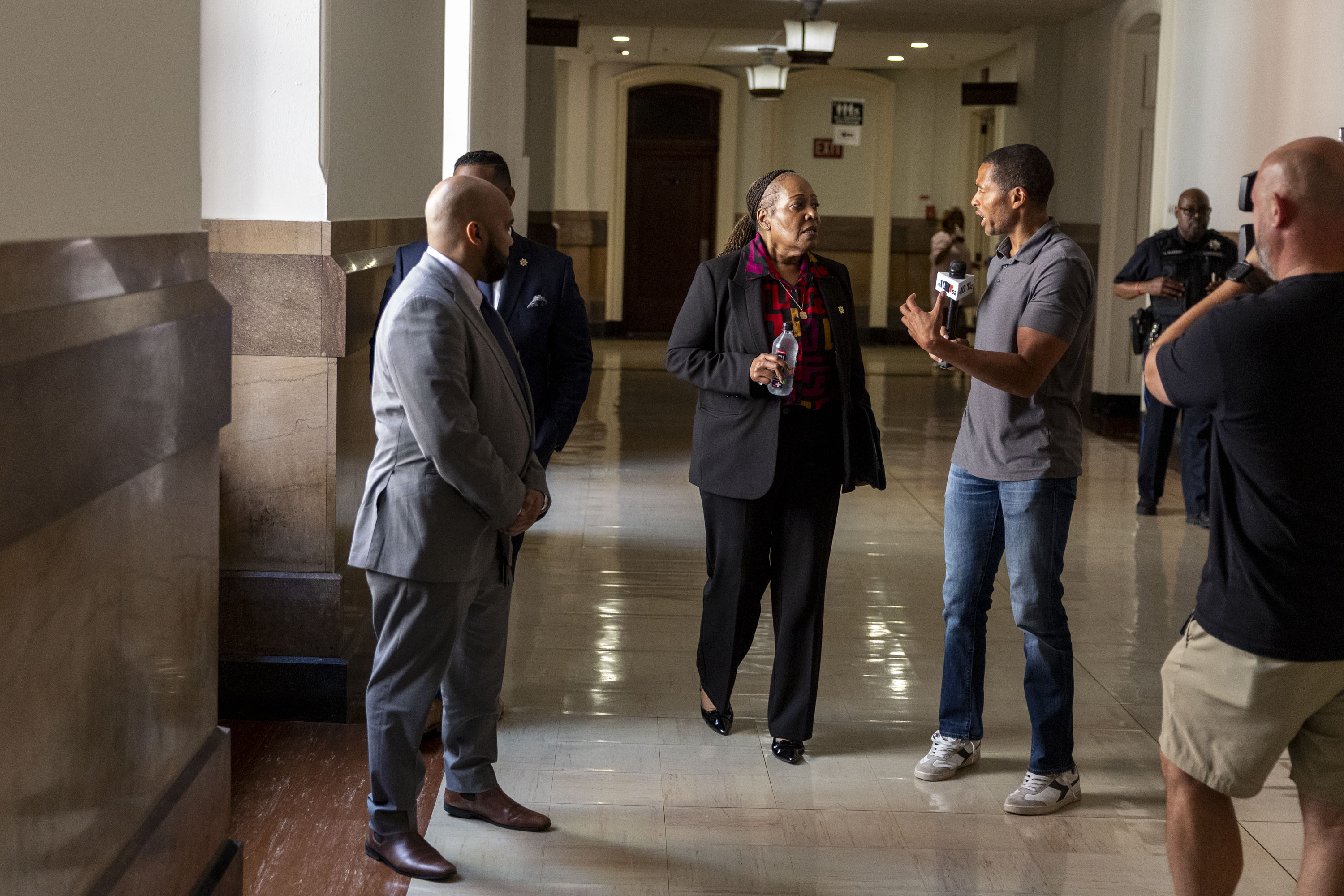
    Philadelphia Sheriff Rochelle Bilal’s new second-in-command has left the job — three months after he arrived.

    Undersheriff George Gossett Jr., whom Bilal hired in June as part of what she had described as a major “reorganization and modernization” initiative, confirmed Monday that he had resigned from the job effective last Friday.

    Gossett said through a spokesperson that he is “excited to pursue opportunities in the private sector” but provided no other explanation for his short tenure.

    Bilal’s office has been hit with three court orders since 2024 seeking to correct alleged mismanagement, most recently in May over delays in processing deeds of properties won at auction.

    Gossett, a Roxborough-based lawyer and former assistant district attorney, was tapped in June at an annual salary of $185,000, weeks after a Common Pleas Court judge ordered Bilal to fix the sheriff sale process or face consequences.

    According to a news release Bilal issued that month, Gossett was to “oversee daily operations, strategic planning initiatives, personnel management, and operational coordination across the agency.”

    “This reorganization is about building a stronger organization for the future,” Bilal said at the time.

    It is unclear where that plan now stands, with the new undersheriff having already departed.

    Gossett is the fourth undersheriff to serve Bilal since she took office in 2020. Bilal and her spokesperson, Teresa Lundy, declined to provide any details about why her top deputy would leave so soon after taking the job.

    Sources in the office said that the pair did not see eye-to-eye, and that Gossett was said to have made a remark about Bilal’s “anger management” issues, which may have escalated the situation.

    Separately, Bilal last week fired Mark Wilson, the office’s codirector of real estate. Wilson declined to comment.

    Gossett’s predecessors also had rocky terms in the sheriff’s office.

    In August 2020, seven months into the job, Undersheriff Sommer Miller resigned after she said she faced retaliation for reporting alleged theft in the advertising department, unauthorized spending of public funds, and instances of extreme sexual harassment. She later claimed in a whistleblower lawsuit that Bilal had been “reading and monitoring her emails in real time.”

    Miller’s replacement, Undersheriff Curtis Douglas, left in May 2021, about a week after reports that Bilal’s office had botched a contract meant to move sheriff sales to an online platform. A spokesperson at the time described Douglas’ departure as a planned retirement.

    In May 2026, Undersheriff Tariq El-Shabazz, a criminal defense attorney who came to personally oversee the handling of deeds related to sheriff sales, also retired. He left one day after the most recent court order dropped.

    Under Bilal, who was elected as a reformer in 2019, sales of foreclosed and tax-delinquent properties have been mired in post-auction delays, with winning bidders waiting a year or more to get their deeds.

    Many auctions were halted altogether between 2021 and 2024. Court security and inmate transportation, two other key functions of the office, have also been recurring problems, with judges saying they have felt unsafe.

    In addition to Gossett, Bilal recently hired William A. Brownlee Sr. as part of the office restructuring earlier this year.

    Brownlee, a West Philadelphia pastor, a motivational speaker, a real estate investor, and an entrepreneur with a checkered financial history, has previously described himself on his website and social media as the office’s “Deputy Chief Financial Officer.” His website has since gone dark, and Bilal’s office said Brownlee currently serves as project manager. Payroll records show he is being paid $95,000 a year.

    Another new hire, Steven A. Wakefield, is a former Philadelphia Law Department attorney serving as Bilal’s deputy undersheriff in charge of deed compliance. He is being paid $120,000 a year.

    Wakefield took the stand last month and told Common Pleas Court Judge Paula Patrick, supervisor of the court’s commerce division, that the office had previously misplaced records and lost track of the distribution of some auction proceeds. Wakefield blamed the situation on a since-terminated employee who allegedly concealed the problem from Bilal.

    Bilal did not testify at the hearing. Her city-appointed lawyer had filed a motion seeking to keep her off the stand, saying the sheriff had “limited personal knowledge” of how sheriff sales work.

    Wakefield said he had enacted operational reforms, speeding the deed issuance process while largely clearing out a backlog of deeds from earlier sales.

    Even so, Patrick took the rare step of imposing six months of outside supervision of sheriff sales.

    That independent monitor has yet to be appointed.

  • Krasner hasn’t said a word about a growing exoneration controversy — but his own court filing does

    Krasner hasn’t said a word about a growing exoneration controversy — but his own court filing does

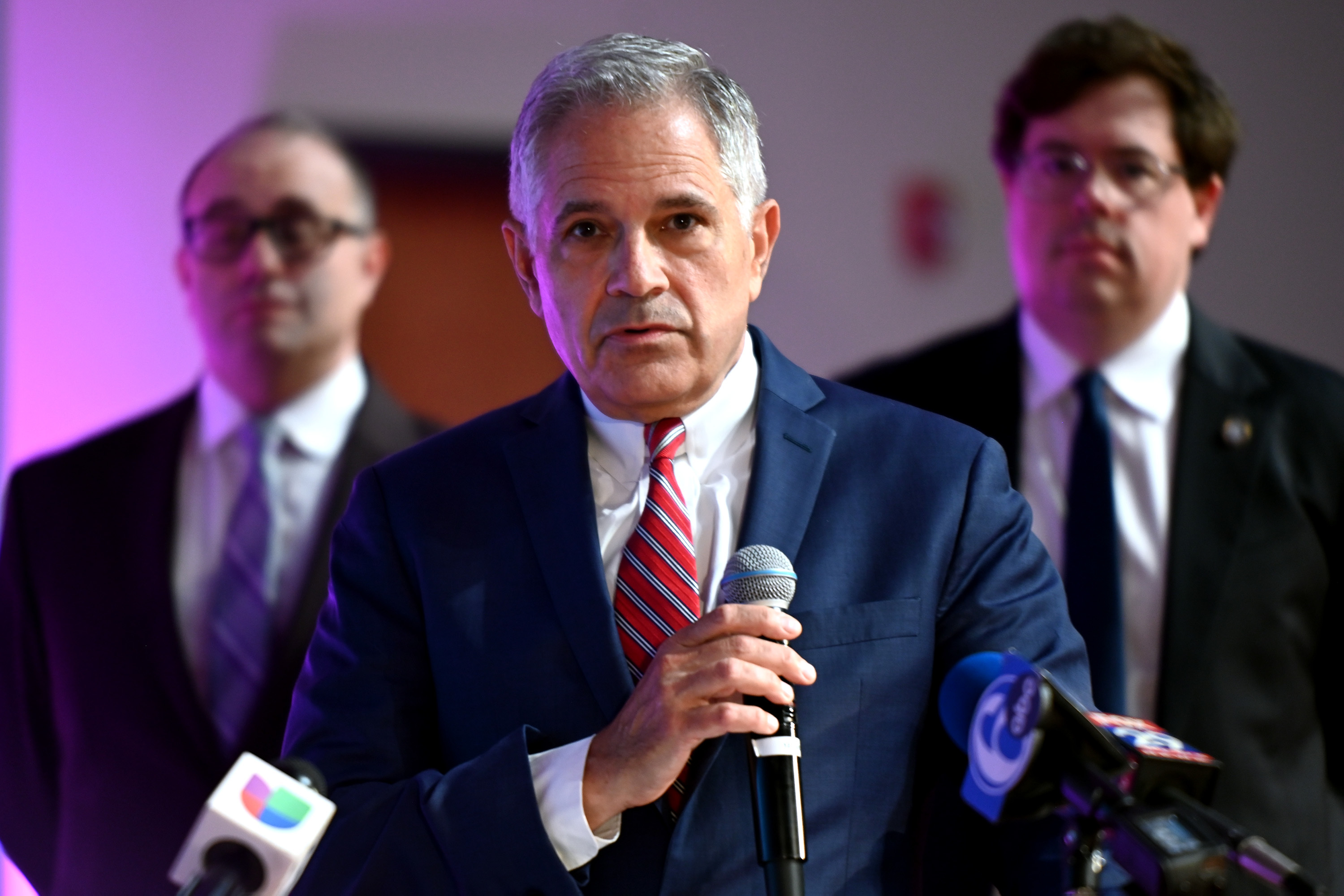
    District Attorney Larry Krasner didn’t attend the dramatic three-day evidentiary hearing recently in which four supervisors from his office testified about his conflicts of interest, job threats, and other inappropriate steps, following efforts to overturn a murder case.

    But Krasner’s take on the imbroglio can be found throughout a recent 47-page federal court filing by his office.

    The filing paints a picture of a district attorney unbowed by the controversy that has roiled his office. Krasner’s handling of the exoneration case has prompted one prosecutor in his office to step down following what they described as a loss of confidence in Krasner’s leadership. A federal judge presiding over the case also voiced concern about possible obstruction of justice, perjury, and criminal conspiracy.

    Despite admitting “serious errors” in the original motion that said Dennis Johnson was entitled to a new trial, the filing contains no contrition or introspection by Philadelphia’s DA.

    In the world according to Krasner, he’s right, and everyone else is wrong.

    Krasner’s worldview is hardened by his decades as a public defender and criminal defense attorney before getting elected district attorney in 2017. In the second paragraph of the filing, Krasner’s office blames prior district attorneys for violating “their constitutional duties” to secure convictions.

    The filing makes no apologies for how Krasner’s office handled the appeal by Johnson, who was found guilty of second-degree murder in 2009.

    After arguing for four years to overturn the verdict, Krasner’s office did a 180 in June, claiming its initial concession was “legally erroneous” and “not supported by the record.”

    The reversal came after U.S. District Judge Paul S. Diamond ordered an evidentiary hearing in May. That prompted supervisors in Krasner’s office to take a closer look at the case, in which they discovered “material omissions” in their initial concession claim.

    The blunder stems from the failure of Krasner’s office to fully investigate Johnson’s appeal, and its willingness to go along with the arguments put forward by his defense attorneys.

    Here’s the bigger problem: That appears to be the way Krasner’s office has handled other post-conviction cases. Under Krasner, more than 60 people convicted — mainly of murder — have been set free or had their sentences reduced following concessions despite no incontrovertible proof of the person’s innocence.

    Instead, Krasner’s office has conceded other cases by not mounting a substantive challenge to the arguments put forth by defense lawyers. In many exoneration cases, defendants claim their cases were harmed by their own ineffective lawyers or by prosecutors who withheld evidence; the latter, known in legal circles as a Brady violation, constitutes a major breach of the court’s rules.

    Full steam ahead

    Judge Diamond has yet to decide if Krasner’s office can continue handling Johnson’s case, or if it should be turned over to the state attorney general because of the issues aired during the evidentiary hearing.

    Regardless of the outcome, Krasner appears determined to keep conceding cases.

    “The current [district attorney’s office] administration will continue to do its duty under Brady and to self-correct moving forward, regardless of how the instant matter resolves,” the filing said.

    The full-steam-ahead approach seems obtuse given the controversy that has engulfed the office’s handling of several post-conviction cases.

    In recent months, supervisors in Krasner’s office have been disbarred and suspended for lying in federal court while seeking to overturn the death sentence of a man convicted of killing a couple in their home in East Mount Airy.

    In June, the state Supreme Court ordered judges to ask the state attorney general’s office to review any cases in which Krasner’s office wants to alter a sentence or overturn a past conviction.

    That unprecedented ruling came after the high court found prosecutors in Krasner’s office misled judges in several post-conviction cases. The court said it could no longer trust the word of Krasner’s prosecutors.

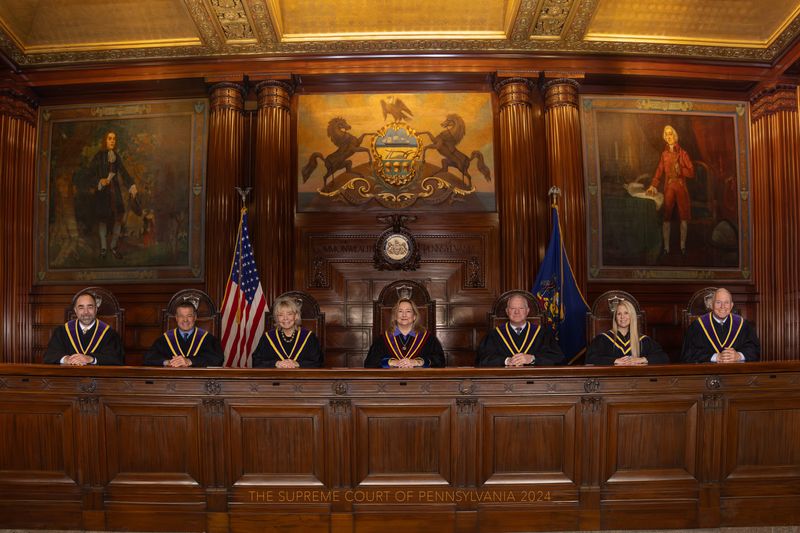
    Pennsylvania Supreme Court justices (from left): P. Kevin Bobson, David N. Wecht, Christine Donohue, Chief Justice Debra Todd, Kevin M. Dougherty, Sallie Updike Mundy, and Daniel D. McCaffery. In June, the court ordered judges to ask the state attorney general’s office to review any cases in which Larry Krasner’s office wants to alter a sentence or overturn a past conviction.Provided by Jen Barker Worley/Ad

    Office strife

    Amid that major setback came the Johnson case, which has splintered Krasner’s office.

    After Judge Diamond ordered the evidentiary hearing in May, Katherine Ernst, the chief of training in the law division, reviewed the initial motion to concede Johnson’s conviction and found multiple errors.

    Ernst worked with three other supervisors — Steven Wildberger, David Napiorski, and Peter Andrews — who all agreed the motion needed to be withdrawn.

    They met with Jaclyn Mason, the assistant district attorney who signed the original motion, and urged her to withdraw the concession and apologize to the judge. Mason argued that her supervisor, Matthew Stiegler, was largely responsible and should also have to sign the motion.

    Fearing she would be forced to take the blame, Mason quit in June. That set off a chain of events that exposed the sloppy handling of the matter.

    Mason testified in July that Stiegler, the head of the office’s Conviction Integrity Unit, colluded with defense attorneys to develop the legal rationale to have Johnson’s case thrown out.

    Mason, who was new to the DA’s office at the time of filing, testified she took direction from Stiegler, who told her that if Johnson’s claims were “good enough for the Innocence Project, it’s good enough for me.”

    To be sure, Mason bears some responsibility because she signed the motion and failed to fully investigate the defense claims. But her instinct that she would be thrown under the bus proved correct.

    The four other prosecutors testified last month that Stiegler proposed reviewing Mason’s other cases to find errors and tell the judge she was a “rogue” actor.

    Krasner backed that plan, telling the prosecutors Stiegler had a good idea.

    In the end, Krasner’s filing largely blamed Mason and said the judge “should not credit” her testimony.

    Posters featuring criminal justice analytics adorn the district attorney’s offices in May. The controversy over the handling of an exoneration case has splintered the office, Paul Davies writes.Tom Gralish / Staff Photographer

    “Mason signed and filed a brief rife with errors that supported the defense’s request for a new trial,” the filing said. “Mason has admitted that she did not review the relevant records, including the trial transcripts, before supporting overturning a murder conviction; she may have simply cribbed and modified the filings of the defense attorneys.”

    The filing said Stiegler “failed” to detect the errors, but largely lets him off the hook. Krasner even went out of his way to change a footnote in an earlier motion that initially said Stiegler “edited several drafts” of the original Johnson filing to instead say he “supervised its preparation.” Stiegler remains in charge of the Conviction Integrity Unit even after other supervisors voiced concerns about him.

    What conflict?

    Meanwhile, Krasner remains adamant his office has no conflict of interest in the Johnson case even after four supervisors withdrew from the case, arguing that they and Krasner had conflicts after the internal machinations went from the legal merits of Johnson’s case to the self-interest of protecting the office.

    Krasner’s filing waved away their arguments and said the prosecutors who left the case acted “without authority or a reasonable legal basis to do so.” He added that he “did not appreciate” his team’s “repeated, unsolicited, and wavering advice” to refer this case to the state attorney general.

    The filing said any potential conflicts have been resolved by Krasner’s recent hiring of an outside attorney, Jean Peters-Baker, a longtime prosecutor from Missouri, to handle Johnson’s case. The AG’s filing argued that Krasner’s conflict can’t be cured by handpicking an outside prosecutor.

    Krasner’s filing did not address the testimony from his own prosecutors who said he warned them there would be “consequences” if they raised the conflict issue with the court.

    The prosecutors also said that Krasner refused to refer the case to the state attorney general because he wanted to “protect the office.” Krasner’s filing said his efforts to maintain control of the case were “entirely appropriate.”

    The filing did not specifically address Krasner’s comments revealed by the supervisors who testified that he called prosecutors in the attorney general’s office “Nazis.” But it shed light on his hatred for the state AG’s office.

    The filing explained that Krasner had a “general mistrust” of prosecutors in the AG’s office “based upon decades of observing their work.” Indeed, several prosecutors Krasner pushed out after he was elected now work in the AG’s office.

    The filing added that “any animus he may have toward individual employees of that office based upon their own actions and inactions has nothing to do with whether he correctly declined to refer a case.”

    Krasner is also apparently not a fan of Diamond, whom he views as a hostile judge, according to people familiar with the matter. Krasner’s contempt stems, in part, from the fact that Diamond spent four years in the DA’s office in the late 1970s and early 1980s, and was nominated to the federal bench by former President George W. Bush, a Republican.

    So, by Krasner’s logic, is everyone who ever worked in the DA’s office before him tainted?

    Krasner’s filing contained a footnote complaining the judge only provided a week, which included a holiday weekend, to address the disqualification issue. The filing added that any ruling that removes his office from the case would be “an abuse of discretion.”

    That seems like a particular failure to read the room given the credibility issues exposed in Krasner’s handling of exoneration cases.

    Judge Diamond’s ruling will likely have a lot to say about this fiasco.

    I’m not a lawyer, but Krasner’s filing doesn’t even seem like the way to win friends and influence people, let alone succeed in a legal argument.

  • In fits and starts, the Supreme Court stands up to Trump

    In fits and starts, the Supreme Court stands up to Trump

    WASHINGTON — The Supreme Court has not been eager to tangle with President Donald Trump. For much of his second term, the court seemed to have settled on a strategy of deference, ducking, and delay.

    But sometimes the court put its foot down. It did so Monday night in rejecting Trump’s plan to make it harder to vote by mail by having the Postal Service screen mail ballots and determine which ones it would deliver.

    Election administrators of both parties were mystified and alarmed by the plan, which they said would result in the disenfranchisement of millions of voters. Just three weeks ago, the court’s conservative majority deferred a decision on the matter, saying it was not yet ripe.

    That punt, the court’s unsigned ruling said, did not mean it would approve the plan in the end. “On that score,” the majority wrote, “time will tell.”

    That time arrived Monday, and the message was clear. The majority blocked the plan, saying it was most likely unlawful.

    “There aren’t five votes for abject chaos,” said Justin Levitt, a law professor at Loyola Marymount University in Los Angeles.

    Trump, for his part, reacted to the decision with fury, lashing out at his three appointees, none of whom noted a dissent.

    “This Supreme Court is bullied and cajoled by the Radical Left into making decisions that have set America back at least a hundred years,” he wrote Tuesday morning on social media. “These are not the people I interviewed to serve on the United States Supreme Court, they are merely a shell of their original selves.”

    The decision on mail ballots is part of a pattern. The Trump administration met with overwhelming success in some 30 emergency applications to the Supreme Court since the president’s second term began, on what critics call its shadow docket. Those decisions were nominally provisional, but they often delivered lasting victories to the president.

    In rushed proceedings that mostly yielded decisions with scant or no reasoning, the court divided along partisan lines much more often than in cases on the court’s so-called merits docket, which require full briefing, oral arguments, and in-person deliberations.

    The theme of those emergency rulings was deference to presidential power.

    But the tide started to turn in December, when the court refused to allow the deployment of the National Guard in Illinois over the objection of local officials.

    The rebukes continued in the term that ended in June.

    The court rejected the centerpiece of Trump’s beloved tariffs program, leading to refunds of many billions of dollars in illegal levies. It also thwarted Trump’s attempt to fire a Fed governor and disagreed with his interpretation of a law that he said barred counting some ballots received after Election Day.

    After a preliminary ruling last year limiting the power of lower courts to order relief in a case that arose in the context of birthright citizenship — at the time perceived as a major victory for Trump — the court this summer returned to address the citizenship question directly. This time, it dealt Trump a stinging loss, ruling that his executive order seeking to curtail automatic citizenship for babies born in the United States violated the Constitution.

    The majority opinion about mail-in balloting Monday was just three sentences long, but it went further than it might have. Instead of ruling merely that the administration’s plan had been rolled out too close to the November election, a conclusion that might have suggested Trump might still win in the end, the majority signaled that the government was likely to lose on the merits.

    That move was at odds with one of Chief Justice John Roberts’ judicial touchstones. “If it is not necessary to decide more to dispose of a case,” he wrote in 2022, “then it is necessary not to decide more.”

    All the court had to do to block the postal regulation was to say it would cause more harm than good in the current election cycle, Josh Blackman, a law professor at South Texas College of Law Houston, wrote in a blog post Monday night.

    “But the chief justice didn’t want this case to come back, so he reached the merits,” Blackman wrote. “If there is no need to decide more, the court should not decide more. Except when Trump is involved.”

    That approach may be a response to the fire hose of executive orders, programs, initiatives, dodges, and feints from the Trump administration that have threatened to overwhelm and outpace the courts. However significant Trump’s losses in the Supreme Court may have been, he remains hard to constrain by a judicial system used to moving at a stately pace.

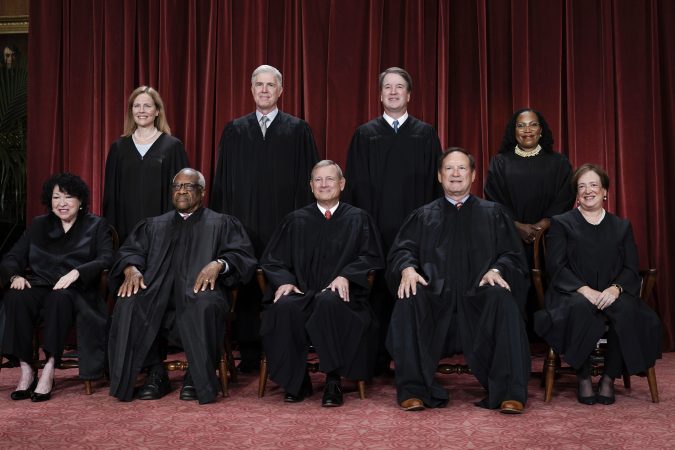
    The vote count in Monday’s ruling was not disclosed, but only Justice Samuel Alito, appointed by President George W. Bush, and Justice Clarence Thomas, appointed by President George H.W. Bush, publicly dissented.

    Those two justices are the most reliable votes for Trump’s agenda, while the court’s three Democratic appointees seldom vote for the president. That leaves the three Trump appointees and the chief justice, who was appointed by George W. Bush, at the court’s center.

    If the court is to check Trump in the typical case, then, at least one of his appointees must vote against him. And that has now happened in a series of major clashes.

    “This is not a MAGA court,” Donald B. Verrilli Jr., who served as solicitor general in the Obama administration, said at a briefing for reporters Tuesday at Georgetown University Law Center.

    The practical consequences of the court’s ruling are a mixed bag, election administrators said.

    “The feeling of relief here is palpable,” Marybeth Kuznik, the director of elections in Fayette County, Pa., said on an email forum for election law specialists. Still, she added, “with all the hullabaloo in the media, voters have become alarmed and many are afraid their mail-in votes may not be counted no matter what the ruling may be.”

    There was another election-related ruling last week, about an attempt to redraw Missouri’s voting map to give Republicans an advantage in the midterm elections. It also took two trips to the Supreme Court to resolve. Over the administration’s objections and without public dissent, the court rejected the map.

    Yet another election-related application from the administration is pending at the court. It asks the justices to allow the use of a government database that includes Social Security information to help verify whether potential voters are citizens. It is another example of the administration’s everything-all-at-once approach.

    Still, the combination of the Missouri ruling and the one Monday on the postal regulations sent a message for the coming election, Levitt said.

    “The court is effectively done with actors making sizable last-minute changes,” he said. “The rules are now what they are, and the election is going to be — as it should be — up to the voters.”

    This article originally appeared in the New York Times.

  • Lower Merion asks court to deny parents’ ‘fearmongering’ request to opt out of computers

    Lower Merion asks court to deny parents’ ‘fearmongering’ request to opt out of computers

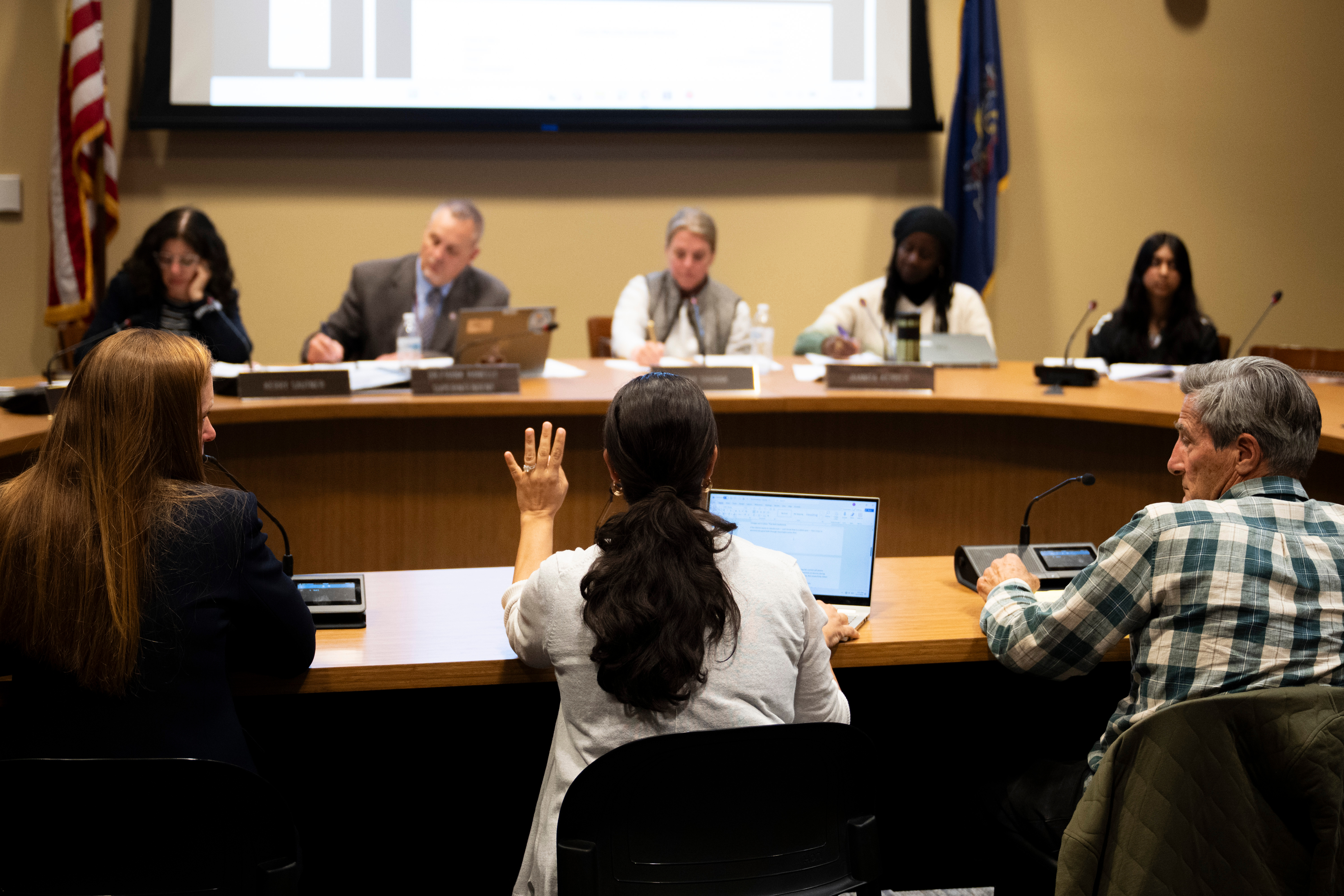
    The Lower Merion School District has urged a federal judge to deny a request from parents to opt their children out of school-assigned computers, accusing them of “fearmongering” about technology in schools and abusing the legal process to get their way.

    In a filing in U.S. District Court, lawyers for the district and school board said seven families who sued the district last month were trying to force the district to align with their preferred approach to instruction.

    “There is no constitutional right for a parent to choose which technology their child uses in a public school,” the district said in the Monday filing. It called the lawsuit “just the latest attempt by a small — but vocal — minority of the district community to pressure the duly-elected members of the board of school directors to kowtow to their peculiar views on technology in the classroom.”

    The affluent Montgomery County district has been a focal point of a national battle around technology use in schools. Since the spring, Lower Merion parents have been raising concerns about how much their kids are on screens — from worries about children gaming and accessing inappropriate content on their district-issued laptops to complaints about the quality of the educational software programs used by the district and fears that kids’ cognitive abilities are diminishing.

    The district revised its technology policy last month, specifying that students in kindergarten through second grades would no longer be assigned individual electronic devices. It also implemented guidelines for screen time by grade level and announced new tools for monitoring what kids are accessing on their laptops.

    But the new policy did not include a provision that had previously existed, which specified that district officials would work to accommodate students whose parents did not consent to being issued electronic devices. Parents organized under a Pencils Over Pixels group had pleaded with the board not to eliminate that provision, which was repealed in June.

    In their lawsuit filed last month — which one of the plaintiffs’ lawyers said he believed was the first of its kind — seven families accused the district of forcing a “digital free-for-all” on students, and violating their parental rights by requiring their children to use internet-connected computers to access their education without adequate safeguards.

    They also filed a motion for a preliminary injunction, asking a judge to order the district either to allow them to opt their kids out of personal devices or to pay for them to attend private schools. Three of the families who sued withdrew their kids from the district.

    In its response Monday, the district said parents had mischaracterized its former policy. Families were never permitted to opt out of technology entirely, the district said. While the policy had said officials would make their “best efforts” to work with students whose families declined personal devices, they were not guaranteed specific accommodations, the district said.

    The district accused parents of trying to force the school system to bend to their beliefs — and said the court would be setting a dangerous precedent if it sided with them.

    “This court should decline plaintiffs’ invitation to convert the American public school educational system into a private school, whereby each parent has the right to hand-select each and every aspect of their child’s education,” the district said.

    A debate around parents’ rights

    In asking Judge John M. Younge to deny the families’ request for a preliminary injunction that would allow them to decline an internet-connected computer, the district said families had not made their case on a number of grounds.

    Six of the seven families do not have standing to sue, the district said. It said four of the families did not have children enrolled in district schools at the time the new technology policy was adopted.

    Two families, meanwhile, only had children in elementary schools, where they “would not have been eligible to receive a district-issued electronic device under the one-to-one electronic device initiative because they are not in 5th grade or above,” the district said.

    While elementary school students in Lower Merion have had access to personal electronic devices, the district said that its one-to-one program was “never formally extended” to those grades. A district spokesperson did not immediately respond to a question Tuesday about how the iPads and Chromebooks previously assigned to elementary schoolers were not considered part of the one-to-one program.

    Families also have not shown the district is permanently harming them, the district said. Although several of the families are now sending kids to private school or homeschooling, those decisions do not constitute “irreparable harm” warranting a preliminary injunction, the district said. It noted that families could be compensated with monetary damages if the court ruled in their favor.

    The district also said the harms of using computers alleged by the families were “vague and speculative.” In their lawsuit, families had described risks to physical and mental health, citing manipulative practices by technology companies, the dangers of artificial intelligence chatbots, and warnings from the U.S. surgeon general and the FBI about youth social media use and groups targeting minors online.

    While the district has revised its policies and placed more restrictions on what kids can access, Andrew Liddell, a lawyer for the parents, said in a recent interview that the changes “aren’t even the bare minimum of what the district should have been doing in the 20 years they’ve been giving internet-connected computers to children.”

    Liddell, an Austin, Texas-based lawyer whose wife founded the EdTech Law Center, said he believed the lawsuit was the first that had been brought alleging school computers were violating parents’ constitutional rights. Lower Merion still is not adequately restricting screen time, he said, and is “putting more burden on parents” to monitor what kids are doing online.

    While Lower Merion is a wealthy suburb, and some of the suing parents are doctors who can afford private school, Liddell said, “you have a right to a public education.”

    The parents “just want our kids to be able to go back to school,” Liddell said.

    In its response Monday, the district said parents do not have the right to dictate what is taught in public schools.

    “At most, the district’s new technology policy (Board Policy 141) only incidentally interferes with a parent’s limited right to direct their child’s education,” the district said.

    It also said that granting the parents’ request would cause a “logistical and financial hardship for the district,” requiring it “to develop a non-technological curriculum for each of plaintiffs’ children.”