Blog

  • An anti-Trump backlash could decide N.J.’s midterms. Here’s what we’re watching.

    An anti-Trump backlash could decide N.J.’s midterms. Here’s what we’re watching.

    New Jersey voters in at least one district on Tuesday will help determine which party controls the U.S. House, in a midterm election widely seen as a referendum on President Donald Trump.

    Incumbent Republican U.S. Rep. Tom Kean Jr. faces long odds that voters will return him for a third term in the 7th Congressional District in Central and North Jersey, as Democratic momentum builds amid a national backlash against Trump that will potentially elevate former Navy helicopter pilot Rebecca Bennett to the seat.

    Voters’ frustration with the president is so severe that Democrats have expanded their map in the final weeks, increasing their support for Cape May Mayor Zack Mullock’s challenge against four-term Republican U.S. Rep. Jeff Van Drew in South Jersey’s 2nd District.

    Here’s what we’re watching as Garden State voters head to the polls Tuesday.

    Will the Kean brand survive?

    Beyond the national headwinds, Kean’s issues are compounded by questions around his fourth-month medical leave of absence from Congress to undergo treatment for depression. He didn’t disclose the reason for his absence until he returned to Washington in June.

    Across the country, observers have viewed the outcome of the 7th District contest between Kean and newcomer Bennett as a must win for Democrats who need to flip four seats blue to achieve a majority. Republicans hold a narrow majority of 218 to 214, with one independent.

    Trump’s unpopularity in New Jersey is expected to hurt Kean, who, with a few notable exceptions, has sided with the president on key issues, such as the war in Iran and international tariffs.

    Bennett — herself a Republican until she changed parties after Trump won the first time a decade ago — has campaigned on ending the war, which will help reduce energy costs. The 39-year-old health information executive and former U.S. Navy pilot said she would vote to overturn the “One Big Beautiful Bill” that cuts hundred of thousands of people who rely on Medicaid and SNAP food assistance benefits.

    Kean, 58, served nearly 20 years in the state Legislature before defeating Democratic Rep. Tom Malinowski in 2022 by roughly 3 points, after redistricting pushed the seat toward the GOP. He touts himself as a skillful bipartisan lawmaker who helped restore and expand the State and Local Tax, or SALT deduction — a big deal in a state with the highest property taxes in the nation.

    Republicans outnumber Democrats in District 7, 218,268 to 202,071, with about nearly as many unaffiliated voters, 212,745.

    U.S. Rep. Jeff Van Drew (right) and Democrat Zack Mullock shake hands after an Oct. 22 debate in the Campus Center Theatre at Stockton University.Tim Hawk / For The Inquirer

    It could take a ‘blue tsunami’ to beat Van Drew

    In the 2nd Congressional District, Mullock, 41 is challenging Van Drew, 73, who won the seat in 2018 as a Democrat. Van Drew switched parties to become a Republican a year later, pledging his “undying support” to Trump.

    Mullock has mocked Van Drew’s loyalty, saying he “looks up to the president like a child.”

    With his family, Mullock helped found the Harriet Tubman Museum and the Cape May Point Arts and Science Center. His family also owns the Cape May National Golf Club, where he works as vice president.

    National Democrats added the district to a growing list of targeted races earlier this month, but it’s less likely to flip than some other seats in New Jersey and Pennsylvania. The Democratic PAC, Project 218, has recently invested $1.2 million in ads targeting Van Drew.

    The 2nd District is a conservative one, where Republicans outnumber Democrats 201,759 to 178,060 but unaffiliated voters dominate, at 207,654, according to the state Division of Elections.

    But the odds are long that the anticipated blue wave would sweep up Mullock, said Micah Rasmussen, political science professor at Rider University. “We still need to see the blue tsunami getting bigger to reach this one,” he told columnist Tom Moran.

    The district contains Atlantic, Cape May, Cumberland and Salem Counties and portions of Gloucester and Ocean Counties.

    Trump won the district by 13 points in 2024, according to state election data.
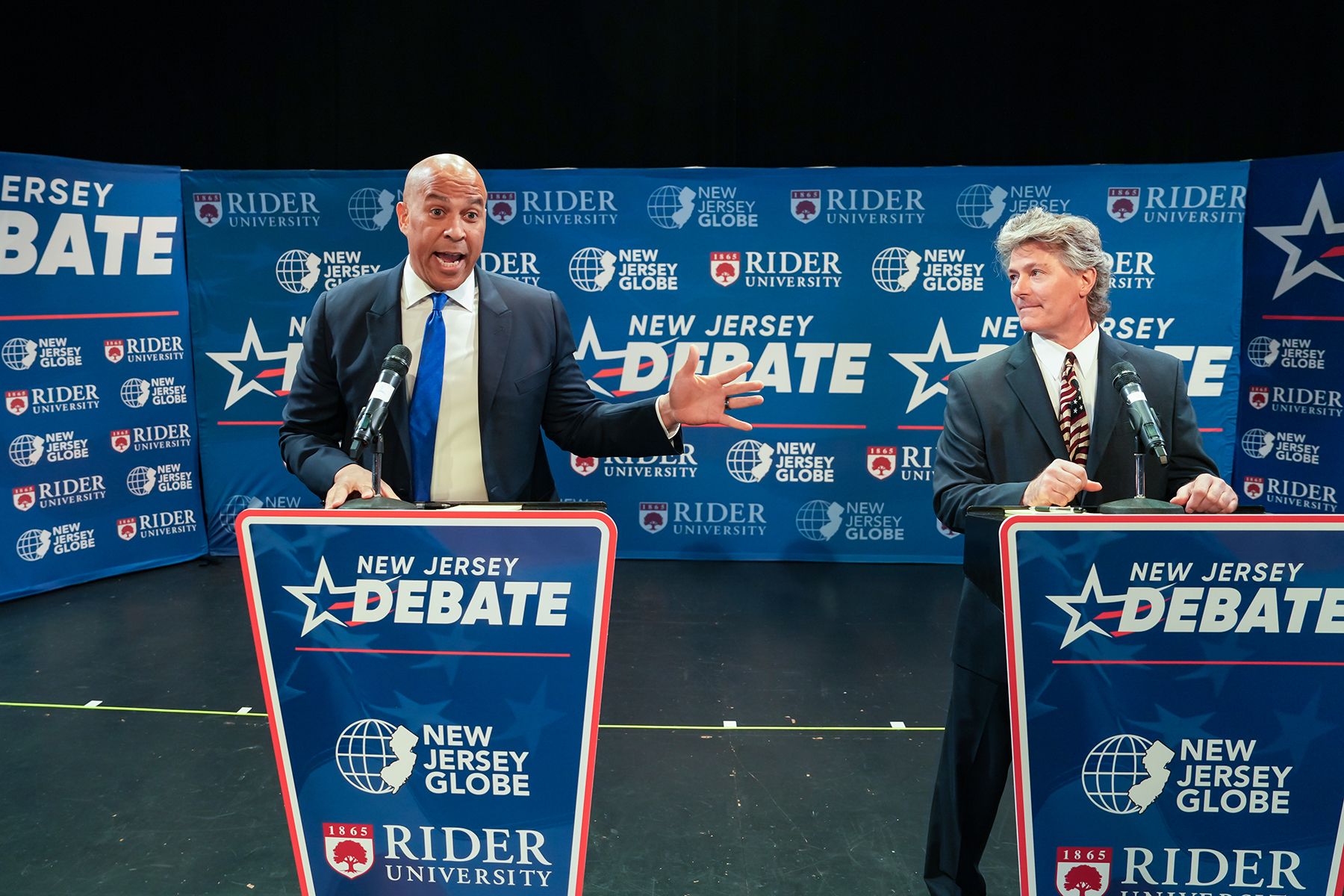
    Sen. Cory Booker (left) and his South Jersey Republican challenger Justin Murphy, on the debate stage Thursday night.Pete Borg / Rider University

    Booker eyes the future

    Democratic U.S. Sen. Cory Booker is also on the ballot, running in a low-key statewide race against Republican Justin Murphy, a U.S. Navy veteran, attorney, and former deputy mayor of Tabernacle in Burlington County.

    Booker, who has served in the U.S. Senate since 2013 and a frequent guest on the cable TV talk shows, is expected to win Nov. 3 and run in the presidential primary election in 2028.

    Murphy has raised $68,000 this election cycle in 2026, a fraction of Booker’s cash on hand this month of $22.9 million, according to the Federal Election Commission.

    Murphy is a Trump loyalist, defending the president’s decision to wage war on Iran, stating, it would be an “unbelievable, unmitigated disaster” if Iran got a nuclear weapon.

    “We are not in a quagmire,” Murphy said during a debate with Booker. “The president’s right to do this.”

    Booker, a fierce critic of the president, replied, “We do not need yahoo policy. We need sound people that use military force as a last resort, who know the power of diplomacy, who don’t insult your enemies and threaten to invade Canada and Greenland, but pull our allies together.”

    The candidates stake out starkly different views on immigration. Murphy said New Jersey is wrong for its sanctuary state policies and not cooperating with the Trump administration’s mass deportation campaign.

    “Sanctuary jurisdictions are a problem. They incentivize illegal immigration, and I don’t believe they help our state stay safe,” Murphy said during the debate.

    Booker defended state policy that maintains “bright lines between what is a federal responsibility and what is a county and state and local responsibility.”

    Staff writer Aliya Schneider contributed to this article.

  • Trump spends the day before midterm Election Day promoting his Reflecting Pool makeover

    Trump spends the day before midterm Election Day promoting his Reflecting Pool makeover

    WASHINGTON — As Republicans and Democrats were making their final pitch to voters on the eve of Election Day, President Donald Trump opted to forgo the campaign trail and instead focused on his renovations at the Lincoln Memorial Reflecting Pool, drawing attention to an expensive, problem-plagued repair job in a place far away from most of the people his party wants to persuade.

    It was an unusual closing argument for Republicans to keep control of Congress. But it conforms with the way the president has devoted considerable time, attention, and money in his second term on beautifying his Washington surroundings.

    Trump, wearing a white “USA” hat, even seemed to admit that he had spent much of his time focused on improving the capital city.

    “We have a lot of great things planned for Washington, and I could get into the nation, but for that, you don’t have enough time,” Trump said.

    Instead of focusing on issues voters have said they’re worried about, Trump dedicated a large portion of his remarks to his D.C. makeover and the pool, announcing its official reopening, joking that he wanted to name it after himself, and repeating his false claims that the repair work he ordered was vandalized.

    After he finished his remarks on Monday, Trump stood silently while triumphant music played and he held up a poster with an image of the previously algae-clogged pool. It was his last public appearance before Election Day.

    Democrats, for their part, were spending the last 24 hours before Election Day making their case in areas where Republicans have long dominated, while trying to contain the fallout from a messy intraparty split in Michigan. Democratic Senate candidate Abdul El-Sayed was brushing aside concerns that his prospects could be hurt after his former primary opponent threw her support behind his Republican opponent, Mike Rogers.

    In addition to giving the speech on Monday afternoon, Trump also was scheduled to participate in nine telerallies for Republicans, where he uses brief remarks on a mass phone call to plead for voters’ support.

    Vice President JD Vance, meanwhile, hit the campaign trail with more traditional stops in New York and Ohio, where Republicans were fighting for House and Senate seats.

    Trump touts renovations as voters worry about the economy

    The Reflecting Pool, a long, narrow basin at the foot of the Lincoln Memorial, is one of Washington’s most iconic sites. Martin Luther King, Jr. famously gave his “I Have a Dream” speech from the steps of the memorial in 1963, looking out over the pool.

    But this summer it became a focus of Trump’s attention, with the president frequently speaking about his plans for the shallow pool on social media, at the White House, and beyond. He displayed posters about the project in the Oval Office and even had his motorcade drive him over the resurfaced pool before it was refilled.

    The pool was soon clogged with algae blooms, and its “American-flag blue” liner began peeling and floating up in chunks. The Justice Department charged former Olympian David Hearn with intentionally damaging the Reflecting Pool but then dropped the case this summer after determining he was not responsible.

    But the president continues to repeat false claims that vandalism — rather than shoddy workmanship — was to blame for the new blue surface peeling away.

    On the platform where he spoke Monday, signs were hanging that said “Restoring Our Capitol” and “The Reflecting Pool.” A poster perched on a display board showed the reflecting pool under the words, “Back, and more beautiful than ever!”

    He waxed on about the particular color blue he selected to have the bottom of the pool painted, the kinds of grass and types of columns he had selected for repairs around Washington, and held up a series of blown-up images of rusted pipes taken during the renovation process.

    He then started repeating some of his midterm elections pitch, defending his record and attacking Democratic nominees, before eventually turning back to the pool.

    The president’s message in the closing days of the midterm campaign was similarly detached from voters’ concerns about the high cost of living. He’s called affordability a “hoax” while boasting to audiences far from the nation’s capital about his renovations of the Reflecting Pool and the White House, along with repeatedly praising the physiques of the GOP’s nominees.

    Vance stuck closer to the party message as he campaigned Monday in Rome, N.Y. As he campaigned for Republican House candidates Kailee Buller and Anthony Constantino, he touted Trump’s moves to end taxes on tips and overtime and secure the border while branding Democrats as “lunatics” who have contempt for American voters.

    Democrats try to flip Republican-favored seats while grappling with fractures

    Democratic candidates were working to capitalize on widespread disaffection over high prices, the fallout from Trump’s war with Iran, and historical trends that typically favor the party out of power in midterm elections.

    In places like Iowa, where voters have not elected a Democratic governor in two decades, Democrat Rob Sand was asking canvassers knocking on doors to help break that streak.

    He was appearing with Kentucky Gov. Andy Beshear, seen as a potential 2028 presidential candidate, who cited his own races as proof that a Democrat can win over Trump-backed candidates in states like his own and Iowa.

    “This is it,” said Sand, who faces Republican Zach Lahn. “We have 30-whatever hours to change the direction of the state of Iowa.”

  • A North Carolina man tried to ring the Liberty Bell, federal prosecutors say

    A North Carolina man tried to ring the Liberty Bell, federal prosecutors say

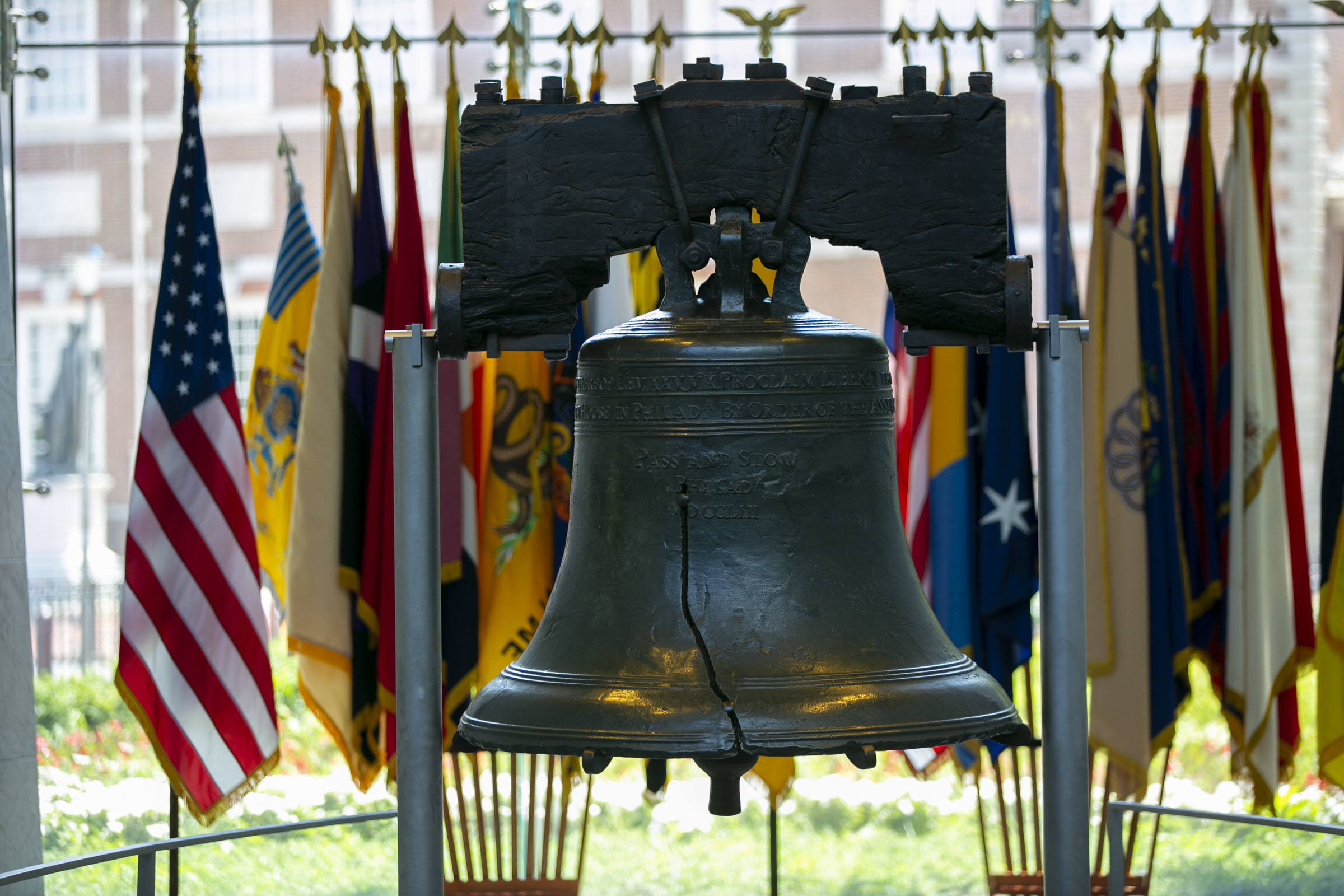
    Who among us hasn’t dreamed of hearing the long-lost toll of the Liberty Bell — the famously cracked symbol of our city, a 2,000-pound monument to American independence that has not been rung for 180 years?

    Sean Gerlach, 50, was apparently more than just idly curious, according to federal prosecutors.

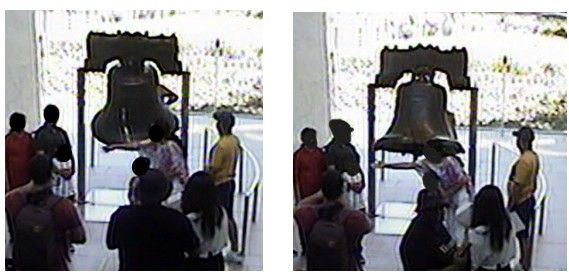
    In May, they said, while he was visiting Independence National Historical Park, Gerlach, of Fairview, N.C., jumped over a waist-high barrier protecting the bell — then began pushing it back and forth, hoping to make it chime.

    Federal prosecutors said Sean Gerlach tried to push and ring the Liberty Bell in May 2026.United States Attorney's Office court filings

    Gerlach has since been charged with two federal crimes, according to court documents unsealed Monday. He faces counts including trespassing and tampering with property on a national park.

    He also did not act alone, prosecutors said. Dawn Hawa, 50, of Ephrata, was charged with vandalism for “flicking an oily substance” onto the bell when she visited it with Gerlach.

    Prosecutors did not specify what thatwas, but said Hawa managed to hit the bell and some of the display area around it.

    Commissioned in 1751, the Liberty Bell — which has a Bible verse inscribed on it reading: “Proclaim Liberty throughout all the land unto all the inhabitants thereof” — has become an iconic symbol of Philadelphia and the United States.

    Standing about three feet high with a bottom lip that has a 12-foot circumference, the primarily copper behemoth is perhaps most famous for its vertical crack, which has prevented it from being rung since around 1846.

    It has moved from the city on occasion — including in 1777, according to the National Constitution Center, when it was hidden in an Allentown church to keep it from the British, who were viewed as a threat to melt it down and use it for cannons.

    The bell has also been taken for road trips to exhibitions and fairs over the years, according to the National Park Service, though the last time it did so was more than 100 years ago.

    The bell now resides in the Liberty Bell Center near Sixth and Chestnut Streets, with a view overlooking Independence Hall.

    Prosecutors did not report any damage from Gerlach and Hawa’s actions on May 16. The National Park Service ultimately cleaned the oily substance off it.

    Attempts to reach Gerlach and Hawa were not immediately successful Monday. Neither had an attorney listed in court records.

  • Karl Bushby embraces emotional mother as he completes his 28-year, 31,000-mile walk around world

    Karl Bushby embraces emotional mother as he completes his 28-year, 31,000-mile walk around world

    HULL, England — Karl Bushby embraced his weeping mother Monday as he returned to his northern England home to complete a 28-year odyssey to walk around the world.

    “Where have you been?” his mother, Angela, asked as he arrived outside the home he left in 1998 that was now decked with a banner saying “Welcome Home Son.”

    He didn’t need to tell her.

    Bushby set out from Punta Arenas, Chile, on Nov. 1, 1998, and walked 31,000 miles across four continents and 30 countries to get home. He navigated shifting ice over the Bering Strait and swam across the Caspian Sea and English Channel to avoid taking a boat or plane — or any transport — to propel him forward.

    He vowed not to return until he could complete the journey on foot. It was an eye-opening adventure full of danger and drudgery that was interrupted for years at a time by the unexpected: the 2008 financial crash that sapped funding from sponsors, the 2020 COVID-19 pandemic, and mountains of bureaucratic red tape to get across international borders.

    A trek made possible by kind strangers

    On the final day of the journey, Bushby pushed his cart toward a hero’s welcome at City Hall before setting off for the last stretch to see his mother.

    “Sorry to keep you waiting,” he joked to the crowd of hundreds who cheered his arrival. “Is that it, is it done?”

    The ex-paratrooper said he looked like he was 10 years old when he left his mother’s row house at the age of 29. He returned at 57 — softer, grayer, and weathered, but far more worldly.

    “They say it takes a village but literally it took a world to get me here,” Bushby said. “The kindness of strangers, so many, from individuals to nation states to get me back here today. I didn’t do this alone. There was a big team. The biggest team. Earth.”

    Idea started with a birthday card from his dad

    Bushby had a thirst for adventure, but his mission only came into focus when his father, Keith, sent him a birthday card in the mid-90s. His dad, an army veteran himself, mentioned an argument two special forces troops had about the possibility of walking from London to New York over the Bering land bridge, believed by some scientists to have been used by early humans to migrate from Asia to the Americas at a time of lower sea levels.

    Perilous jungles, scorching deserts, and frozen tundra slowed Bushby down, but bureaucratic holdups brought his adventure to a halt for long periods.

    Bushby originally calculated the distance could be covered in about five years, but he knew that was unrealistic.

    “You just dump a whole bucket full of reality on that,” he said. “We suspected that it was 12 years plus. And the plus was a big plus. But never in our wildest dreams would we ever have imagined 28 years.”

    Danger on land and sea followed by border problems

    He dodged Colombia’s armed conflict in the dangerous Darién Gap, the roadless and rugged jungle, rainforest, and mountains between South and Central America in 2001, and was then jailed for 18 days after crossing a restricted border zone in Panama.

    After being airlifted to safety during the 56-mile Bering Strait crossing in 2006 with American adventurer Dimitry Kieffer, they started again and faced a standoff with a polar bear, survived near-death plunges into freezing waters, and almost lost all their supplies when their sleds plunged in the sea. After managing the rare crossing, the pair were jailed and faced deportation for entering Russia illegally.

    It took Bushby almost 10 years to make his way through Russia in fits and starts because of visa struggles and weather that only allowed travel a few months a year. When Russia denied him a visa in 2012, Bushby walked in protest from Los Angeles to the Russian Embassy in Washington, D.C., which eventually led to him getting the proper paperwork.

    Family firsts and a long-awaited reunion

    Bushby has met several times over the decades with family members who have met up with him on his journey. He was greeted on the beach in Dover by his father and brothers after crossing the channel last month.

    He reunited with Adam, his 36-year-old son from an early marriage whom he had rarely seen, and he met his 12-year-old granddaughter for the first time, which he said was amazing.

    Bushby hadn’t seen his mother in a decade, setting the stage for an emotional and somewhat awkward reunion captured amid a throng of cameras and a documentary film crew.

    “Behave yourself, mother,” he joked, as his mother wrapped her arms around him and wept. “Get yourself together.”

    He said he had long tried to imagine that moment he would return to find his mother at the gate where he left her so long ago. He said it was an emotional reunion that was “one great, big, blurry mess” he was trying to process.

    “It was kind of almost shocking to see my mother after so long,” he said at a news conference later. “She’s changed a lot. We’ve all changed a lot in that time.”

    Next steps for a man who walked millions

    In the final days of his trip, Bushby spoke of his anxiety over the trip ending, not knowing what he would do next and coming to terms with having to live in his mom’s basement.

    “It’s like stepping across the event horizon into a black hole,” he told the Associated Press. “I have no idea what’s about to happen in my life.”

    There will be plenty to keep him busy. Six speaking engagements are scheduled in the next two months, a sequel to his memoir Giant Steps is due, and German filmmaker Werner Herzog is making a documentary on his trek.

    He expects to struggle with the ups and downs other adventurers have experienced after long journeys.

    “The only way I think, you know, you get over that is just get another mission, another passion, and get busy,” he said. “That’s what I intend on doing.”

  • Tuesday is Election Day in Pennsylvania. Here’s what we’re watching.

    Tuesday is Election Day in Pennsylvania. Here’s what we’re watching.

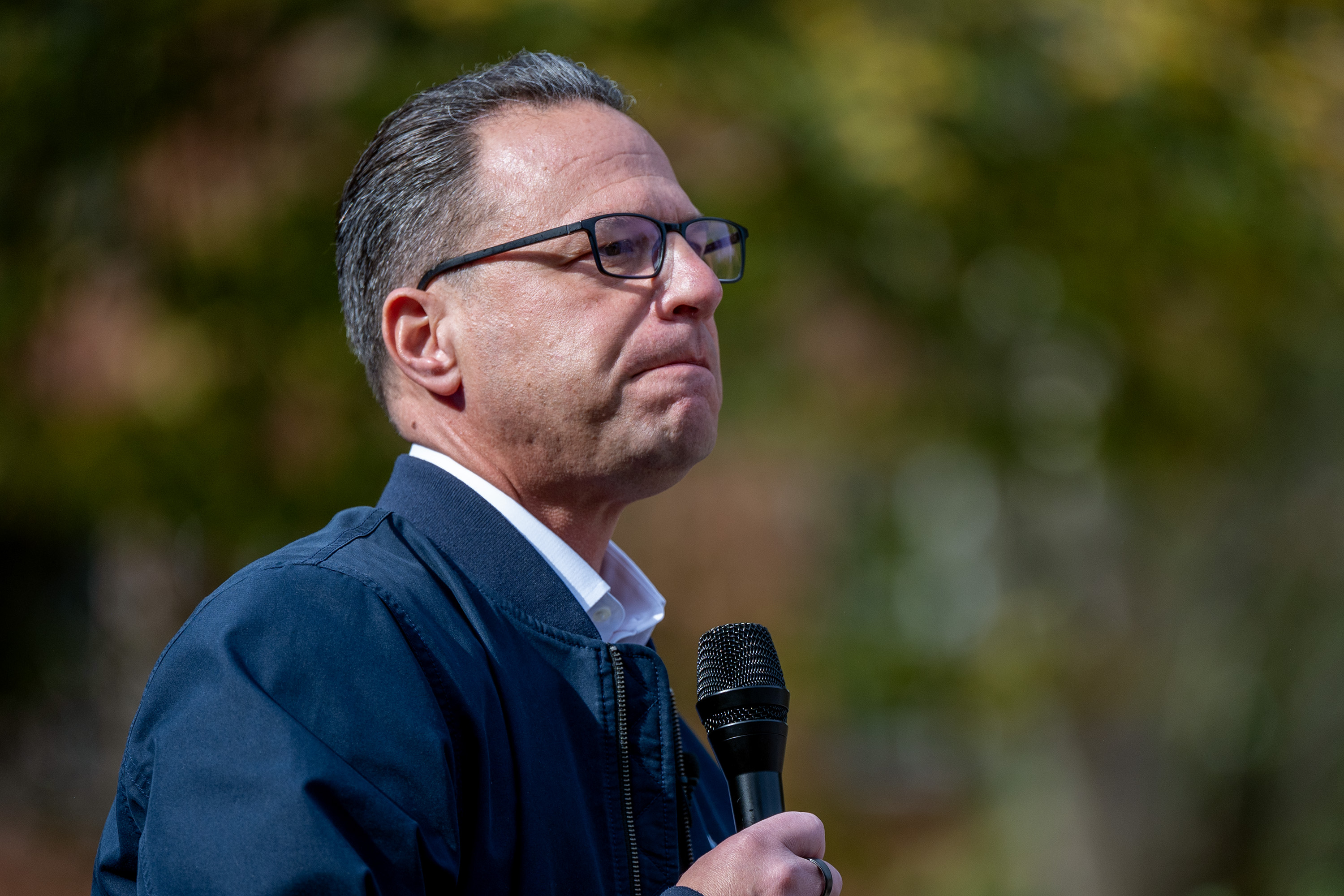
    With the governor’s race expected to be a reelection rout for Gov. Josh Shapiro, all eyes Tuesday will be fixed on four swing congressional districts that Democrats appear poised to flip and thereby win control of the U.S. House.

    The path to power in Washington runs straight through the Philly suburbs — not to mention who controls Harrisburg.

    For the first time in decades, Pennsylvania Democrats could also take full control of the legislature. That would give Shapiro — expected to easily cruise by Republican challenger Stacy Garrity — significantly more power to shape the direction of the state as he inches closer to announcing a 2028 presidential run.

    Democrats — with momentum of a favorable national environment at their backs — have been on offense over the final weeks of the campaign, just two years after Republicans swept all statewide races on President Donald Trump’s coattails.

    But the association with Trump isn’t helping this year.

    Republicans are defending a pair of congressional districts they flipped in 2024 and two more seats that have been in GOP hands for more than a decade.

    All in-person voting and mail ballots must be completed and submitted by 8 p.m.

    Here are the races to watch and how to vote.

    Gov. Josh Shapiro at a campaign event Sunday in Dickinson Square Park in South Philadelphia.Tom Gralish / Staff Photographer

    Shapiro’s November could dictate his 2028

    Shapiro, widely viewed as a likely contender for the 2028 presidency, has big ambitions Tuesday.

    More than just securing his own reelection against Garrity, the state’s treasurer, Shapiro hopes to run up the margin and carry down-ballot Democrats across the finish line.

    Another decisive win and a string of coattail victories would be a show of strength about his ability to perform in a key swing state that his party lost in the last presidential election. In a presidential primary, Shapiro could use that result to make an argument that he’s a strong general election candidate who can boost the Democratic brand.

    Barring a shocking surprise, Shapiro should easily emerge victorious Tuesday.

    Expect the race to be called early in the night based on Shapiro’s commanding lead in the polls. Pollster after pollster has found the governor leading by double digits (including The Inquirer and our partners at The New York Times and Siena University).

    He holds a historically large campaign war chest and astounding approval levels for a divided state.

    State Treasurer and Republican candidate for governor Stacy Garrity is seen on a big screen as she speaks to supporters before the arrival of President Donald Trump at Mack Trucks in Macungie on June 23. Trump did not mention Garrity when he later spoke to the crowd in the Lehigh Valley.Tom Gralish / Staff Photographer

    Garrity, who has been endorsed by Trump, broke the record in 2024 for the most number of votes received by a candidate running for state-level office in Pennsylvania. But support from the national GOP establishment has been limited, though her campaign said she saw a cash bounce after the Oct. 7 gubernatorial debate.

    As she faces off against a formidable incumbent, the question is: Was it all too little, too late?

    Will the blue wave hit Pa.? And will it reach Bucks County?

    There are four U.S. House districts in the eastern portion of Pennsylvania, targeted by both parties as must wins. In each, the Republican incumbents are seeking to fend off highly financed challengers amid deep frustration among voters with the leader of their party.

    Shapiro, the most popular Democrat in Pennsylvania, campaigned with each of the swing-district nominees in the final days before Election Day, while House Speaker Mike Johnson sought to boost the GOP incumbents.

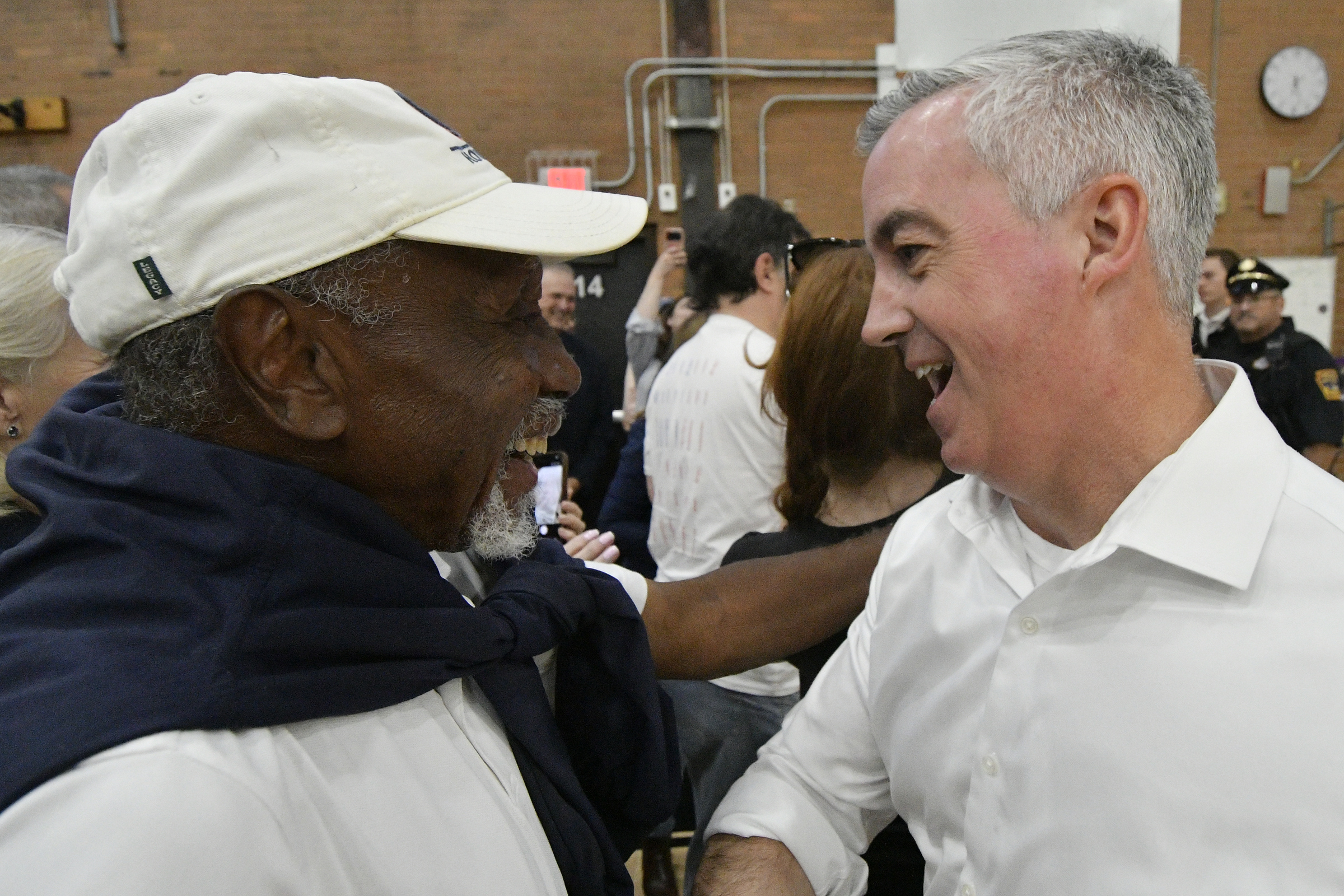
    Clyde W. Waite of Newtown greets Democratic congressional candidate Bob Harvie after House Democratic Leader Hakeem Jeffries and Pennsylvania Gov. Josh Shapiro held a rally for him at Charles Boehm Middle School in Yardley in October. Bastiaan Slabbers/ For the Inquirer

    1st Congressional District: Five-term Republican U.S. Rep. Brian Fitzpatrick faces a tough challenge from Bucks County Commissioner Bob Harvie in the district, which covers all of Bucks County and a portion of Montgomery County. But Fitzpatrick, a moderate who has survived previous blue waves, was trailing Harvie in the most recent Inquirer/NYT/Siena poll — a sign that the independent brand Fitzpatrick has aimed to build may be wearing thin. The race is now considered a toss-up by The Cook Political Report, a nonpartisan rating group.

    7th Congressional District: Freshman Republican U.S. Rep. Ryan Mackenzie narrowly flipped the Lehigh Valley district two years ago but is now widely seen as one of most vulnerable incumbents in Congress. He’s facing a formidable challenge from Democrat Bob Brooks, a retired firefighter and union leader whose blue-collar campaign has attracted support across the party’s ideological spectrum with endorsements from Shapiro and U.S. Sen. Bernie Sanders. Brooks is leading in the recent Inquirer/NYT/Siena poll, and multiple ratings groups now project the seat to flip for Democrats.

    President Donald Trump brings 7th District U.S. Rep. Ryan Mackenzie (right) to the stage as he travels to the Lehigh Valley to visit Mack Trucks in Macungie on June 23.Tom Gralish / Staff Photographer

    8th Congressional District: Freshman Republican U.S. Rep. Rob Bresnahan ousted a six-term incumbent in this district centered in former President Joe Biden’s hometown of Scranton two years ago. But as he faces a tough challenge from Scranton Mayor Paige Cognetti, Bresnahan has faced scrutiny over his stock trades and his vote to cut Medicaid — to pay for Trump’s tax cuts — despite a promise to protect the program. Cognetti led Bresnahan in the recent Inquirer/NYT/Siena poll, and especially over who voters trust most to tackle matters of corruption. The seat is considered a likely Democratic flip by multiple ratings groups.

    10th Congressional District: Republican U.S. Rep. Scott Perry, a close ally of Trump, faces a Tuesday rematch against Democrat Janelle Stelson, a former TV anchor, in the Harrisburg area district. Stelson consistently outraised Perry after narrowly losing in 2024, but the recent Inquirer/NYT/Siena poll show voters deadlocked over who they prefer to represent them. Still, many forecasters expect the seat to flip to Democrats.

    In addition to these four races both national parties have targeted, Shapiro has argued that the 9th Congressional District, where Democrat Rachel Wallace is taking on incumbent GOP U.S. Rep. Dan Meuser, is flippable — despite the strong GOP lean in the district, which stretches from Berks County to the New York state border. The district is home to two warehouses that Immigration and Customs Enforcement was planning to convert into detention centers before abandoning the plan after a backlash from residents.

    Eileen Hartnett Albillar (center) is challenging State Sen. Frank Farry in Bucks County’s 6th District.Hartnett Albillar Campaign

    Will Democrats flip the Pennsylvania Senate?

    In Harrisburg, Democrats hold an extremely narrow majority in the state House, but the Pennsylvania state Senate has been under Republican control for more than 30 years.

    This year, Shapiro wants to flip the chamber and win a trifecta to push forward his key priorities, such as codifying abortion access, raising the state’s minimum wage, and increasing funding for transit. Republicans currently hold 27 of the chamber’s 50 seats. Democrats, who currently hold 23 seats, need to win at least two additional seats and the governor’s office to win control of the chamber with the lieutenant governor as a tiebreaking vote.

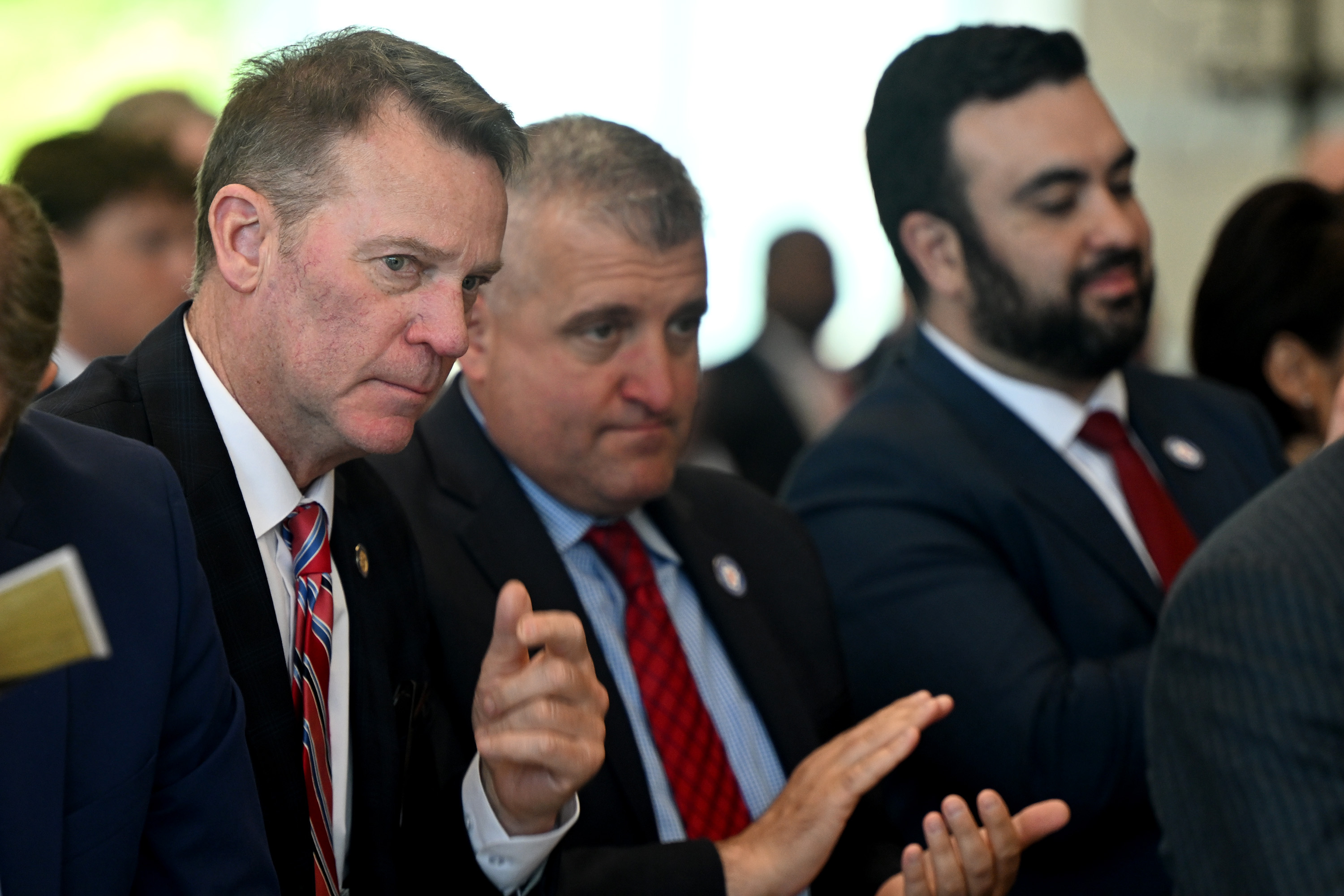
    From left: Dan Laughlin (R., Erie), Frank Farry (R., Bucks) and Nick Pisciottano (D., Allegheny) during a ceremonial meeting of the Pennsylvania Senate on May 5 at the National Constitution Center.Tom Gralish / Staff Photographer

    The seats, drawn advantageously for Republicans, have been stubbornly resistant to political change for decades.

    But this year a blue wave could usher in Democratic pickups in Philadelphia suburbs and the Lehigh Valley.

    Races to watch include:

    • Bucks County’s 6th District, where Republican incumbent State Sen. Frank Farry faces a challenge from Democrat Eileen Hartnett Albillar.
    • Montgomery County’s 24th District, where incumbent Republican State Sen. Tracy Pennycuick is up for reelection against Democrat Chris Thomas.
    • Bucks and Lehigh County’s 16th District, which will see a rematch race between incumbent Republican State Sen. Jarrett Coleman and Democrat Mark Pinsley, the Lehigh County controller.

    How can I vote?

    Voters can cast a ballot in person at their designated polling site. The Department of State has a link on its website to find the location nearest you.

    Pennsylvanians can also vote by mail with no excuse required, but time is running out to return yours.

    Completed mail ballots must be received — not just postmarked — by 8 p.m. on Election Day. Check your county’s election office to find a drop box near you.

    An application and mail ballot can be also completed in one visit at an election office Tuesday.

  • Trump faces a future without the rallies that made him a political force

    Trump faces a future without the rallies that made him a political force

    For 11 years, President Donald Trump’s raucous rallies have offered a signature spectacle to a political movement that remade the Republican Party and then the country. As Election Day approached, Trump appeared to be contemplating the end of an era.

    “I’m closing it down tonight,” Trump said Sunday as he opened his final rally in Salina, Kan., before the midterm elections. “This is it.”

    With 30 events in 32 days, Trump’s rallies in this midterm campaign have underscored his enduring dominance of the Republican Party and his determination to make himself the center of the election debate.

    The rallies provide a unique mix of politics and entertainment, combining the theatrics of a rock concert, the fervor of a Christian revival, and the fierce loyalties of a sporting event. In 2026, they have offered Trump a refuge from the political challenges confronting his presidency. (Though the bubble is punctured occasionally by protesters and empty seats.)

    But as Trump approaches the lame-duck phase of his presidency, he has begun contemplating a future without the friendly arenas where his historically low approval ratings disappear beneath the roar of thousands of adoring supporters.

    Trump on Sunday night celebrated the rally as “a unique thing that’s taken place.”

    “We’ve been doing this for 11 years, and there’s never been anything like it, and there probably never will be again,” Trump said before closing his speech at Salina Regional Airport in Kansas. “There’ll never be the crowds. There’ll never be the feeling.”

    The rallies have changed little since Trump first drew tens of thousands to a Mobile, Ala., football stadium in 2015. Today’s crowds are smaller and sometimes more subdued, but whether Trump is visiting ruby-red counties or battleground states where his presence could complicate the prospects of Republican candidates, the soundtrack, the grievances, and the elaborate rituals run on repeat.

    As thousands of supporters pour into college arenas and community entertainment centers, speakers blare Elvis Presley, Frank Sinatra, Sinéad O’Connor, and selections from Andrew Lloyd Webber musicals. Supporters in MAGA hats and T-shirts bearing the president’s likeness cheer as administration officials enter the arena. Supporters, ranging from senior citizens using walkers to parents holding young children in their arms, wait in lines for hours to see the show.

    Then a video begins to play, portraying Trump as a messianic figure chosen to save the country.

    “And on June 14, 1946, God looked down on his planned paradise and said, ‘I need a caretaker.’ So God gave us Trump,” the narrator declares, as a baby picture of the president appears on the screen.

    The opening strains of Lee Greenwood’s “God Bless the USA” signal Trump’s entrance. He surveys the crowd, often swaying to the music, sometimes tossing souvenir hats to the audience, before launching into his speech.

    No two speeches are exactly alike, but the rallies follow a familiar set list, typically lasting about 90 minutes, although at an early evening rally in Dubuque, Iowa, on Sunday, Trump spoke for a near-record two hours and two minutes. Trump urges supporters to pretend he is on the ballot and remarks on the number of “fake news” reporters in attendance. His personal attacks and disparagement of the Democrats draw boos and jeers from the crowd. He almost always boasts of the military’s swift capture of Nicolás Maduro in January and insists that the war against Iran is going fine and will be over soon.

    He recently expanded the script to include an unusual focus on what he insists is the handsomeness of his political allies, with frequent notes on male posteriors.

    He frequently dangles economic incentives, including a promise of $5,000 checks for every adult citizen if Republicans retain control of Congress. Even some of the president’s supporters have expressed skepticism that the checks will be distributed.

    On Sunday night, he said people could spend those checks at Mar-a-Lago, but warned that “unfortunately at Mar-a-Lago at $5,000, all you get would be one hamburger and a very small dessert. So I would say that’s probably not a wise, that’s not a wise choice.”

    The speeches always end with the same refrain, as Trump rattles off a series of promises to make the country powerful, wealthy, healthy, strong, and, finally, “to make America great again.”

    Then the Village People’s “Y.M.C.A.” begins to play. Trump pumps his fists and sways his hips, his feet planted in place, as supporters cheer, reach toward the stage, and raise their phones to capture one of the most recognizable rituals in American politics.

    Along with their stock theatrical bits, the rallies also come with stock villains, including the Democratic Senate candidates Abdul El-Sayed of Michigan and James Talarico of Texas and Rep. Ilhan Omar of Minnesota. As the campaign has stretched on, Trump has focused more and more on them, sometimes going for long stretches without mentioning the local candidates he traveled to support.

    Long criticized for their inflammatory rhetoric, violent episodes, and cult-like atmosphere, Trump’s rallies have offered a particularly stark display in these final weeks before Election Day.

    He has repeatedly attacked El-Sayed as a “jihadist” and accused him of being a member of the Muslim Brotherhood, which El-Sayed has repeatedly denied and for which Trump has offered no evidence.

    “If you’re Black or if you’re Jewish, and if you vote for Abdul, you’re crazy, OK?” he said at a rally last week in South Carolina and repeated Sunday in Dubuque. “You’re crazy. Yeah. You’re crazy anyway.”

    Also in South Carolina, he called Sen. Darline Graham’s Democratic opponent, Annie Andrews, “tranny Annie” as Republicans attacked the pediatrician’s record on trans issues. He has repeatedly referred to Talarico as “Talafreako” and claimed he’s “puking all over the place” as part of a routine where he alleges Talarico is a secret vegan who gets sick from eating BBQ. Talarico has repeatedly denied being a vegan.

    He’s focused extensively on Omar, a Somali American member of Congress. At the final rally in Kansas, he again claimed that she had married her brother. Omar and her representatives have denied the allegation, calling it a baseless conspiracy theory.

    He called Adam Hamilton, a Methodist pastor challenging Sen. Roger Marshall (R., Kan.), a “pervert” during an October rally and claimed that the pastor “openly mocks Jesus.”

    At that same rally, Trump used an antisemitic slur to defend Marshall’s aggressive medical-debt collection lawsuits.

    On Sunday night, Trump referred to Hamilton as a “possibly perverted pastor or pastor that’s caused a lot of problems with this church.”

    He has at times egged on supporters’ violent responses to protesters who interrupt him. At Clemson University in South Carolina, Trump praised an attendee for punching a demonstrator who was being escorted out of the venue.

    “That was great, man. Wow. Man, I loved that,” Trump said, comparing the person who threw the punch to former heavyweight boxing champion Evander Holyfield.

    In Kansas on Sunday, Trump spoke in front of an enthusiastic and especially young sea of people, including a baby, children, and many supporters under the age of 30. The crowd repeatedly broke into chants of “USA” as Trump spoke.

    “I wanted to make you the last, but the best,” Trump said.

    The president’s voice grew raspier as he delivered his final rally speech.

    “When God made vocal cords, he didn’t make them to do 30 rallies,” Trump said.

    At some of his events in October, Trump suggested that he would wear a brick suit for his final rally, in an homage to Blake Marnell, a supporter who attends almost every rally wearing a brick-patterned suit to symbolize his support for a border wall with Mexico.

    “I’m going to wear that suit one day,” Trump said Sunday. “It can’t be for this particular group, cause, Mr. Senator, I’m closing the sucker down. I’m getting out of here. I got to get a little sleep. I’ve been doing little too many of these.”

  • 2006 called. It wants its election back.

    2006 called. It wants its election back.

    The U.S. is fighting an unpopular war in the Middle East. A popular Democratic governor — who loves to tout his Philly sports fandom — is running for reelection. And an incumbent Republican with the last name Fitzpatrick is in a tough race in Bucks County.

    2006 called. It wants its election back.

    The backdrop of Tuesday’s high-stakes midterm elections feels eerily reminiscent of political conditions 20 years prior, when Democrats won majorities in both chambers of Congress amid a backlash against President George W. Bush over the war in Iraq.

    “This [year] feels very 2006 déjà vu,” said Amy Walter, the publisher of the Cook Political Report, a nonpartisan ratings group in a podcast interview on Pod Save America on Oct. 18. “You have a president with an approval rating under 40%, which is where George W. Bush was at this point in 2006, an unpopular war, and corruption being sort of the center of the conversation in Washington.”

    The top song on the Billboard charts in 2006 was Daniel Powter’s ubiquitous earworm “Bad Day.” And Republicans had a very bad day that midterm and polls suggest they could be in store for another one on Tuesday.

    President Donald Trump’s national approval rating is about 37%, according to the New York Times. Voters’ frustration with his decision to launch a war against Iran — and the ensuing impact to gas prices — is a big part of the reason why.

    But in Pennsylvania the parallels are even more striking than anywhere else.

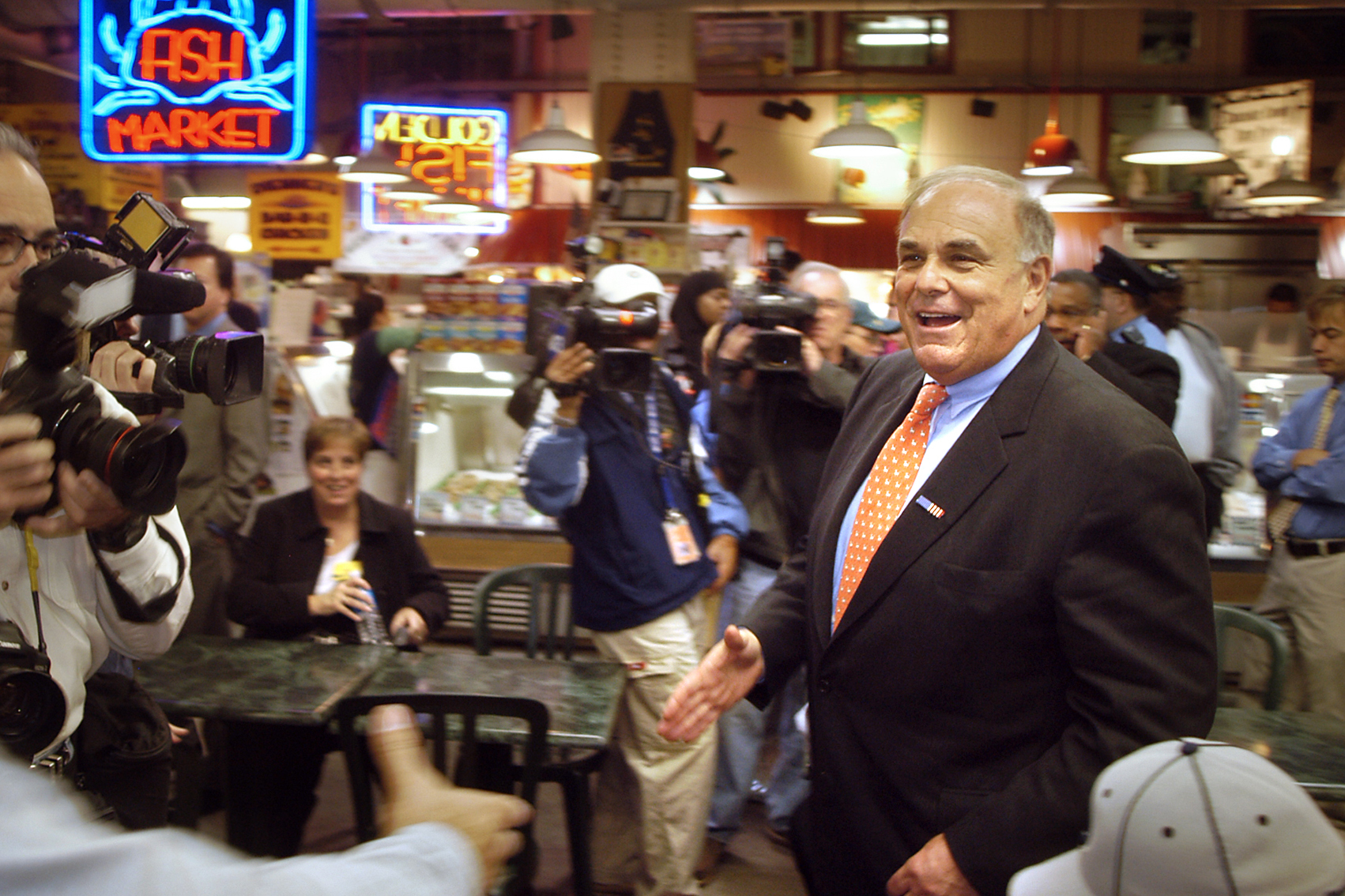
    Back then, Gov. Ed Rendell, a two-term Philadelphia mayor, was running for a second term as a Democrat in 2006 against a weak Republican opponent, former Pittsburgh Steelers receiver Lynn Swann.

    Rendell clobbered Swann at the polls, winning by 20 points.

    Gov. Josh Shapiro, who hails from the Philly suburbs and also cut his teeth in local politics, looks poised to win by a similar margin against Republican nominee Stacy Garrity, the state treasurer.

    Articles in The Philadelphia Inquirer the day after the election described Rendell’s popularity and his “unrivaled campaign war chest.” Sound familiar?

    Rendell helped pull other Democrats across the line. His party flipped a U.S. Senate seat that election and four U.S. House seats. Shapiro is trying to pull off a similar feat by boosting downballot Democrats.

    “I think both of us did a very good job in our first term in fighting problems that have been somewhat difficult to deal with in the commonwealth,” Rendell said, in an interview with The Inquirer last month.

    Rendell, who like Shapiro is Jewish, also sparked presidential rumors, but never ran for the job. Shapiro has begun taking much more substantial steps toward a White House run.

    No U.S. Senate race is on the ballot this year, but Shapiro’s targeting four GOP-held districts, including Bucks County’s 1st Congressional District.

    And that’s where the parallels really start to hit hard.

    In 2006, the late U.S. Rep. Mike Fitzpatrick, a Republican, lost his reelection bid in Bucks County to Democrat Patrick Murphy in a race decided by just over 1,500 votes.

    Twenty years later, Fitzpatrick’s younger brother, U.S. Rep. Brian Fitzpatrick, is locked in a race that looks like it could be a nail-biter as he faces a challenge from Democrat Bob Harvie, a two-term county commissioner.

    Fitzpatrick has been evoking his brother’s legacy as part of his closing pitch to voters.

    “I still think about Mike every day, working across the aisle and putting our community first. That’s who Mike was, and that’s who I’ve strived to be,” the GOP lawmaker says in an ad that recall his brother’s terminal cancer diagnosis in 2015 as an impetus for his entry into politics.

    The family has held the Bucks County congressional seat for most of the last two decades — except for a four-year period when Murphy, the first Iraq War veteran elected to Congress, held the district.

    Murphy, in an interview with The Inquirer, said he won the tight contest in 2006 after calling for troops to come home and for the U.S. to refocus on the hunt for Osama bin Laden.

    This time around, he said candidates should be focused on affordability.

    “You can’t you can’t look the other way when you see the gas prices over $1.25 more than they were just two years ago, where that electricity rates went up over 16%,” he said. “Affordability and the lack of young Americans’ ability to live the American dream is an indictment on foul leadership in Washington, D.C.”

    Murphy, who donated to Harvie’s campaign, predicted a close race in the purple district.

    “We’ve seen Bob Harvie and Brian Fitzpatrick all over Bucks County campaigning their hearts out, and it’s going to be one of closest races in the country,” he said.

    “Bucks County is the ultimate swing county in America.”

    That hasn’t changed in 20 years.

  • Floods swamp the arid Southwest, forcing evacuations and altering Election Day plans

    Floods swamp the arid Southwest, forcing evacuations and altering Election Day plans

    A massive amount of water from unusually heavy rain was flowing through flood-weary parts of the Southwest on Monday, forcing hundreds of evacuations and keeping swift-water rescue teams busy as elections officials in at least one town announced alternative voting plans for Election Day.

    One person died in the flooding, and police suspect a second death also is weather-related. The National Weather Service estimated as much as 4 inches of rain could fall across the Four Corners region — where New Mexico, Arizona, Colorado, and Utah meet — through Monday as the phenomenon fueled by the warming Pacific known as El Niño disrupts weather patterns.

    Over 20 trillion gallons of water have fallen on the Four Corners states and Nevada in the past two weeks, according to calculations by former National Oceanic and Atmospheric Administration chief scientist Ryan Maue.

    Officials had warned of “potentially catastrophic” flooding in Pagosa Springs, Colo., a town of more than 2,000 that was nearly wiped out in a 1911 flood when the San Juan River crested at approximately 17.8 feet. Readings late Sunday night showed the river reached 16.81 feet this time before receding Monday, the weather service said.

    Alternative voting plans were arranged for evacuated or marooned Pagosa Springs residents by the Colorado Secretary of State’s office. Other elections officials also made recommendations for voters to cast their ballots before the storms hit.

    More rivers rise, forcing more evacuations

    People had to leave their homes along the Animas River in southwestern Colorado, where Durango police Chief Brice Current said authorities were checking Monday on residents who rode out the flooding at home.

    “There is still a lot of people stranded,” Current said. “There’s a lot of emergency services being utilized today.”

    The Animas River was closed to kayaks and other recreational watercraft, and Current warned that sewage and chemicals flushed into the river could make people sick. Riverside trails and foot bridges were also closed, he said.

    “The water is very high right now,” Current said. “We don’t want to create any more emergencies by recreating.”

    Evacuations also were ordered along the San Juan River in New Mexico and on the Navajo Nation. The Utah Navajo Health System posted about highway closures and detours. The village of Chama in New Mexico was evacuated and cut off by road closures. Farther south, the rising Jemez River made campgrounds and fishing sites inaccessible.

    Dry creekbeds turned to raging torrents in Arizona

    Record rainfall numbers were reported across Arizona, including an eye-popping 7.3 inches over two days at Workman Creek, in a wilderness area northeast of Phoenix.

    The two-day total of 5.15 inches in Flagstaff contributed to the wettest Nov. 1 ever recorded for that city, which typically has less than a handful of days per year where rainfall tops an inch, said meteorologist Jennifer Tate with the NWS Weather Prediction Center.

    “What really stood out to me was that this wasn’t localized. It was a very broad system that brought a lot of rain to a lot of places,” Tate said Monday.

    In Flagstaff, where rain fell nearly nonstop Sunday, a man was seen falling into fast-moving floodwaters that went into a drainage tunnel near Northern Arizona University, police said. The body of Williams Singavarapu, 73, of New York, was found Monday, about 12 hours later, about 15 blocks from where he vanished in the flood.

    Flagstaff police said a second man, whose identity hasn’t been released, also was found dead Monday in a storm water drainage area. Police said it appeared to be weather-related but were awaiting an official cause and manner of death.

    In Sedona, officials ordered residents near Oak Creek to leave Sunday as floodwaters trapped multiple people in their homes. The heavy rain washed out part of a main highway between Flagstaff and Sedona, mangling guard rails and leaving the road littered with boulders and trees. Arizona Department of Transportation crews were working to clear the roads and repair the damage.

    Swift-water rescues also were happening in Tucson, where weather service meteorologist Aaron Hardin said, “We are getting two or three months of rain in a span of a couple of days.”

    And manhole covers were popping up in the Pinetop-Lakeside area of central Arizona, where residents reported sewage backing up into homes because of flooding, the region’s sanitary district announced.

    Flooding in Colorado tourist town affects voting plans

    In Pagosa Springs, town residents impacted by the floods who received a ballot by mail can get a replacement one at any vote center across the state, the secretary of state’s office said.

    Voters who cast in-person ballots outside their home county can vote for only statewide races, but mail ballots can be returned to any drop box or vote center in the state by 7 p.m. on Election Day. The La Plata County clerk will have special hours Tuesday to help.

    Pagosa Springs had just lifted an evacuation order from previous flooding last week, only to reimpose it Saturday.

    Katie German, owner and chef of Bruin Coffee in Pagosa Springs, said Sunday that downtown was evacuated and streets flooded. She was most worried about the one bridge into town washing out, blocking trucks carrying everything from food to fuel.

    “I’m worried about my business, worried about my employees, definitely worried for everybody in this town,” German said.

  • A Gloucester County man was arrested after he allegedly shot and killed his girlfriend

    A Gloucester County man was arrested after he allegedly shot and killed his girlfriend

    A Franklinville man was arrested Monday after he allegedly shot and killed his girlfriend and fled the scene, police said.

    Ricardo A. Ferrera, 32, is charged with first-degree murder and other charges related to possession of a weapon, the Gloucester County Prosecutor’s Office said in a statement.

    A witness called Franklin Township police at about 12:36 a.m. Monday to report a shooting at a home on Porchtown Road in Franklinville. While upstairs with her three children, she heard gunshots and went downstairs to find Christina Cruz, 30, lying in the living room.

    She told police that Ferrera and Cruz, his girlfriend, had argued two hours before the shooting.

    Ferrera drove off after the shooting, she told police.

    Police did not specify the witness’s relationship with Ferrera, and prosecutors could not share Monday who lived in the Franklinville home.

    Police found Cruz with two gunshot wounds. She was pronounced dead at the scene, according to the complaint.

    A second witness, who was in a first-floor bedroom at the time of the shooting, told police the argument was followed by “two gunshots and a thud.”

    Ferrera was also charged with possessing a firearm with the purpose to use it unlawfully against another person and knowingly having a firearm despite a previous gun-related conviction, according to the prosecutor’s office.

    Ferrera had previously been convicted of unlawfully possessing a firearm, according to the complaint.

    Rebecca Forand, public information officer for the Gloucester County Prosecutor’s Office, declined to discuss Ferrera’s previous charges.

  • K.C. Keeler shoulders some of the blame after Temple’s third straight loss

    K.C. Keeler shoulders some of the blame after Temple’s third straight loss

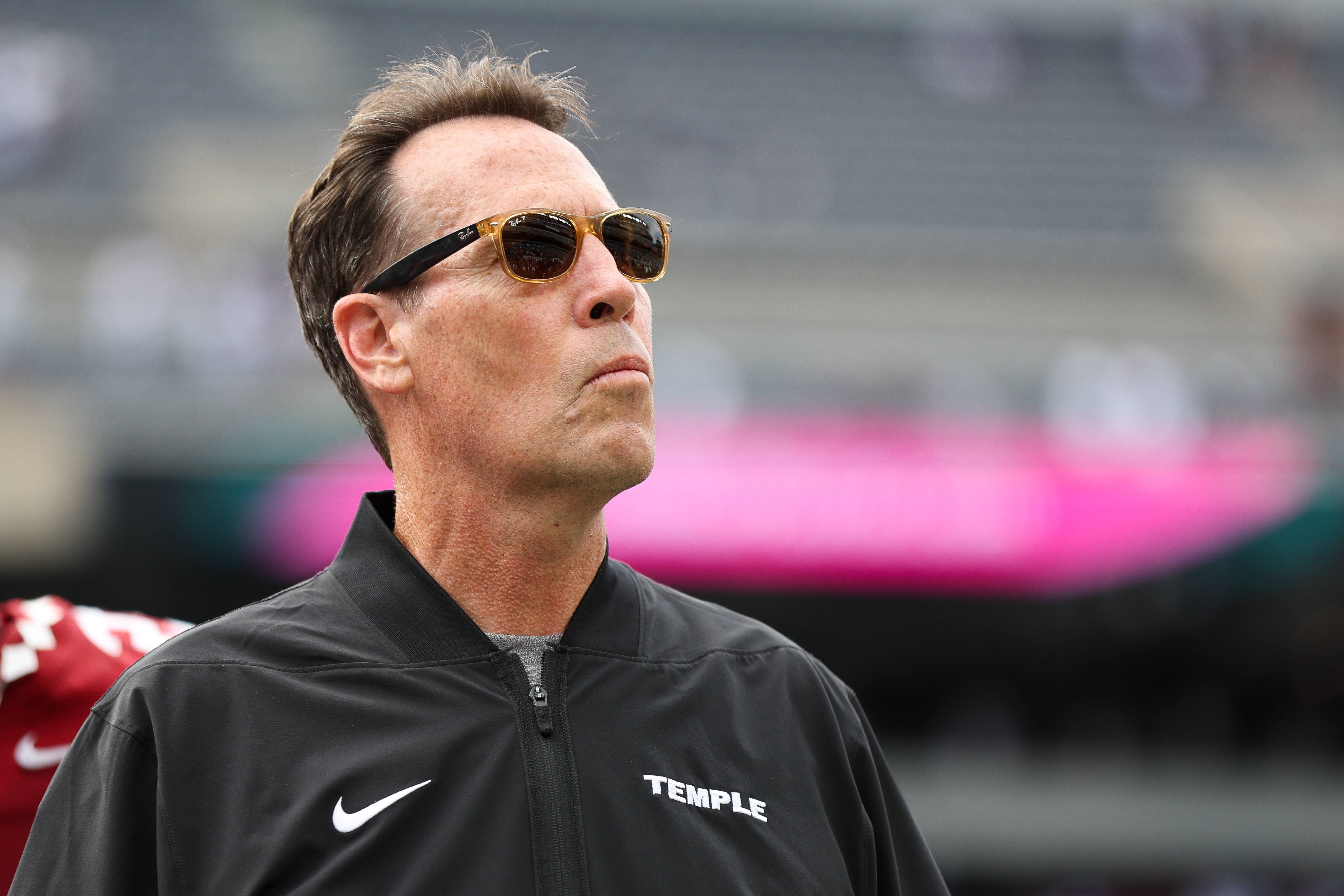
    K.C. Keeler has spent much of his second season as Temple’s head coach searching for answers.

    On Monday, he pointed to an issue with how he his managing the program.

    Following Temple’s 17-9 loss to East Carolina, Keeler acknowledged that the increasing administrative demands of college football diverted some of his attention away from overseeing his coaching staff and evaluating position meetings.

    “I got caught up with all the things that are part of college football now,” Keeler said, referencing revenue sharing and allocating money across positions.

    “I didn’t do a good enough job of [being involved], because I think some things were being shortcut, and it showed on the field.”

    The Owls (2-6, 1-3 American) have lost three consecutive games and six of their first eight, despite entering the season with expectations of taking a step forward. They’ll visit 2-6 Navy on Saturday (3:30 p.m., CBS Sports Network).

    ‘Last game at Temple’

    Senior tight end Peter Clarke may have played his final game for Temple after breaking his left fibula during Saturday’s loss to East Carolina, Keeler said.

    Clarke was carted off the field in the third quarter after making a reception. Although he has another year of eligibility, Keeler said returning to Temple might not be in Clarke’s best interest.

    “Probably his last game at Temple,” Keeler said. “He has another year of eligibility. I don’t know if it’s best to come back.”

    Peter Clarke (0) set Temple’s career record for receiving touchdowns by a tight end.Isaiah Vazquez / For The Inquirer

    Keeler said the program would help Clarke evaluate his future through conversations with NFL scouts, general managers, and his agent.

    Clarke set Temple’s career record for receiving touchdowns by a tight end earlier this season with 11. He’s developed into one of the program’s most respected leaders.

    Keeler praised Clarke’s commitment to the team and said his absence would affect more than the offense, which managed just 249 total yards against the Pirates.

    “His superpower is definitely between his ears,” Keeler said.

    Results on defense

    Temple held East Carolina to 17 points Saturday after allowing a combined 72 against UConn and Charlotte in its previous two games.

    Keeler credited cornerbacks coach Henry Baker for the improvements. Baker took over as interim defensive coordinator and play-caller after defensive line coach Cedric Calhoun was dismissed and defensive coordinator Brian L. Smith was reassigned.

    Rather than allowing the defensive linemen to aggressively pursue plays upfield, Baker has emphasized maintaining square shoulders, controlling individual gaps, and allowing linebackers to make tackles.

    “We’re going to build walls, and we’re going to take away their gaps,” Keeler said of Baker’s approach.

    Despite surrendering 222 rushing yards, Temple held ECU scoreless in the fourth quarter and generated several late defensive stops. The offense didn’t help, however, as quarterback Ajani Sheppard threw three interceptions in the second half.

    Offensive line seeks consistency

    One positive development for Temple was the return of offensive lineman Giakoby Hills, who started against East Carolina after missing five games with a fractured fibula.

    Hills suffered the injury in the season-opening victory over Rhode Island and was uncertain about when he would return.

    “It was like a weight off of me,” Hills said about getting back on the field.

    Hills avoided surgery and committed himself to rehabilitation, progressing from crutches to running on a specialized treadmill before returning to football activities.

    Keeler praised the medical staff’s approach and said the team deliberately gave Hills additional recovery time rather than rushing him back.

    The offensive line has experienced several injuries this season, including Eric King, John Watkins, and Kevin Terry.

    Keeler said those setbacks have disrupted a group who he believed had the potential to become one of the American’s best offensive lines.

    Now the coach’s main priorities are improving technique, strengthening accountability, and ensuring players maintain their effort regardless of the score.

    “Hopefully, each progress translates into next time and a win,” Keeler said.